Quelle que soit votre information, photographies.... Elle sera la bien venue... Pourriez-vous m'éclairer sur cette province, comment s'y rendre, son tissu économique, ses établissements scolaires ?
Ton message m'interpelle directement ! Je suis née à BIEN HOA, mais ai été obligée de quitter cette ville dans ma tendre enfance, en 1945 exactement, de manière dramatique... mais, ceci est une autre histoire.
J'ai cependant retrouvé ma province natale en 1996, lors d'un pélerinage aux sources et pour aller rendre visite à ma filleule, parrainée grâce aux bons soins des soeurs de Saint Paul de Chartres basée à BIEN HOA. J'y suis d'aileurs retournée en 2003.
BIEN HOA est situé à 28 km de SAIGON (HCM) et l'on peut s'y rendre très aisément, ne serait-ce que par les transports en commun. C'est maintenant une grande ville (300 000 habitants, je crois) et tu y trouveras certainement tout ce qui t'intéresse.
Merci pour ces belles images qui nous évoque une période lointaine ou encore trop proche, tout dépend des points de vue....
"Emmenez-moi au bout de la terre
Emmenez-moi au pays des merveilles
Il me semble que la misère
Serait moins pénible au soleil"..... Mon mari n'a de cesse de fredonner cet air... c'est amusant.
Bonjour,
Merci d'avoir pris le temps...
Je suis touchée par ces quelques lignes concernant cette autre histoire.....
J'ai aussi un lien avec cette province de part mon héritage culturel....
Je suis d'autant plus heureuse, ton témoignage me conduit vers les soeurs de Saint Paul de Chartres basée à BIEN HOA, une congrégation et une cause pour laquelle il me paraît naturel de m'associer. Au cours de mon séjour j'aimerais les rencontrer et proposer mon aide... Pourrais-tu me transmettre un maximum d'information, les personnes à contacter pour convenir d'un rendez-vous.....
Bien à toi !
C'est la banlieue industrielle de Saigon. Gros nuage de pollution, en travaux partout, assez ravage. Transport : 30 kms de SGN soit une heure d'embouteillage.
Quelle que soit votre information, photographies.... Elle sera la bien venue... Pourriez-vous m'éclairer sur cette province, comment s'y rendre, son tissu économique, ses établissements scolaires ?
Je vous donnerai toute info concernant Bien Hoa, quand je serai rentré, avec des photo récentes🙂.
Je dirai une ville agréable et les moyens de locomotion vers HCM ville sont variés et faciles. Les zones industrielles sont à l'écart de la ville.
De Bien Hoa vous pouvez partir vers d'autres destinations facilement.
Lucky that we have a home/Our Home is Nha May Man/Passing rain and dry seasons/In a full-of-love atmosphere/Besides my new family/I have brothers and sisters/The sun shines over the skies/Let's stay here, with all of us,
J'étais a Bien Hoa du 26 au 29/12/07 invité chez la famille d'un franco-vietnamien connu peu de temps auparavant sur Hanoi:
Pour y aller : nous avons prix le taxi depuis Saigon en environ 1h de trajet, embouteillage compris.
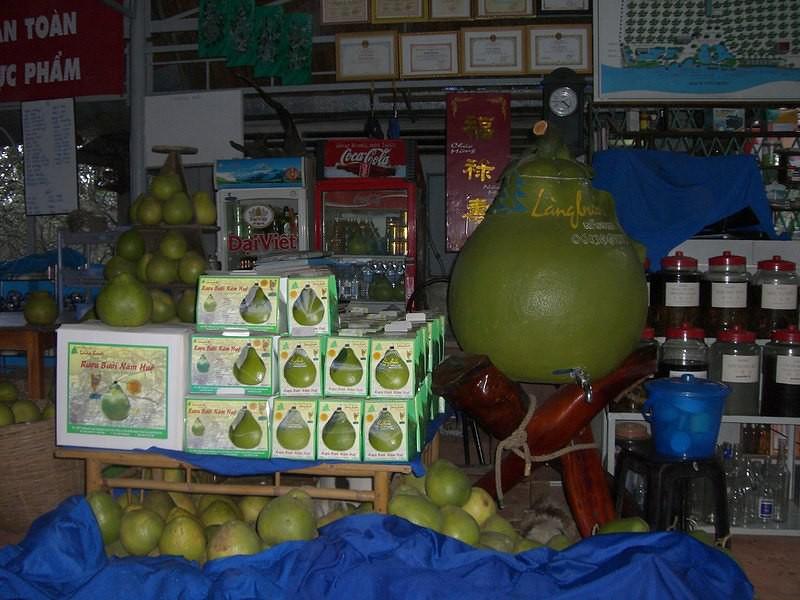
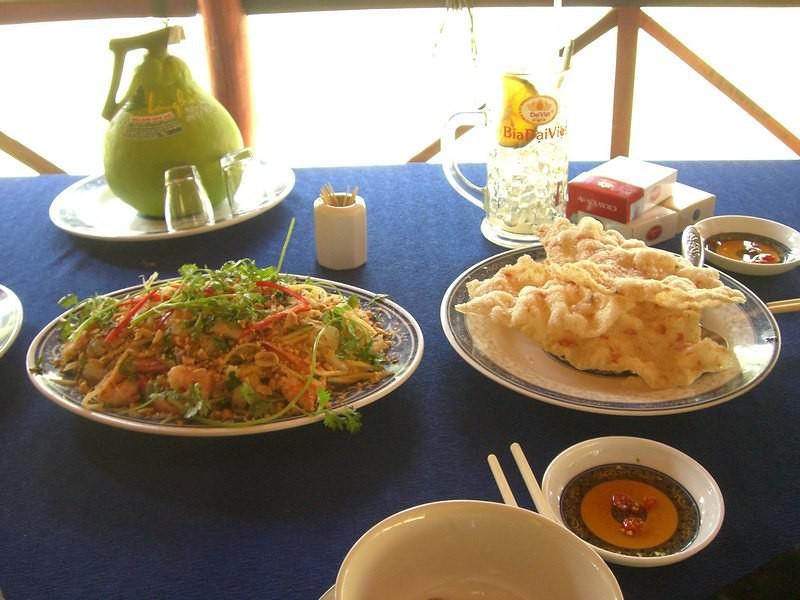
Je sais que le pamplemousse a la cote la bas, nous somme meme allé dans un restaurant qui en produisait son alcool dans des bouteilles en forme originale de...pamplemousse bien sur ! (voir photos)
Sinon, tu peux aller sur flickr et faire une recherche Bien Hoa, tu y trouvera bon nombre de photos récente...
Cordialement.
salut mamanjade, je viens tout juste de lire ton message du 12 fevrier 2008
je ne sais pas si t'en es revenu ou si tu pars prochainement làbas.
moi, je suis originaire de làbas . j'ai encore quelques souvenirs.
alors dis moi sur quoi je pourrai t'informer
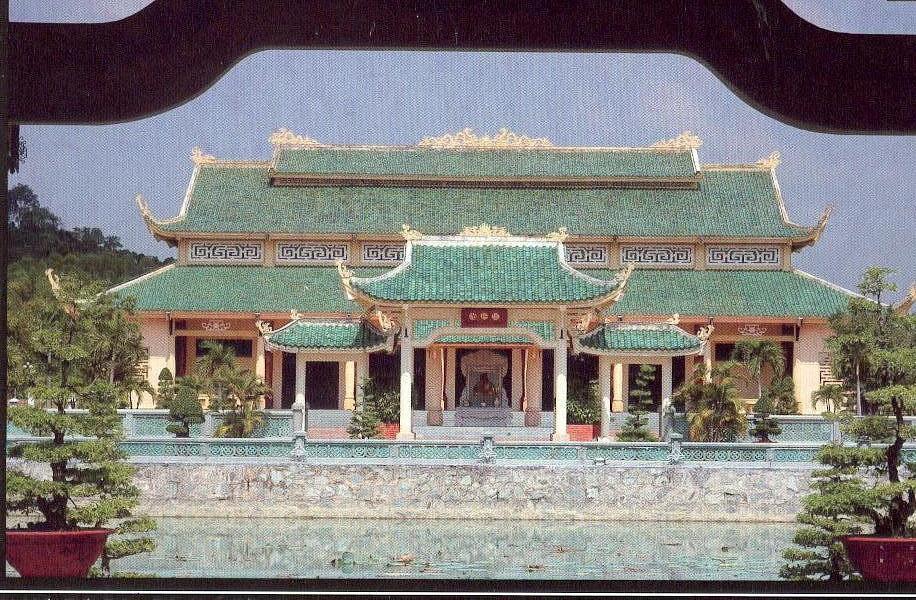
Je reviens de Bien Hoa où j'ai passé un mois, et j'ai écrit un petit compte rendu pour le site du guide du routard. Aujourd'hui Bien Hoa compte 470 000 habitants (la province 2 000 000), et c'est la quatrième ville du Vietnam (et non la troisième comme je l'ai écrit par erreur sur le site du guide du routard). C'est la grande oubliée des guides sur le Vietnam. Pourquoi ? La seule promenade le long de la Song Dong Nai en vaut la peine. La réponse est sans doute dans la présence de deux communautés génantes qui cadrent mal avec l'histoire officielle : les bac Ky 54 (réfugiés du Nord de 1954), et les Hoa ky (Chinois du Vietnam). La seule carte postale que l'on trouve à Bien Hoa est vendu à la poste. Elle représente "le temple de Confucius". Allez-y, ça en vaut la peine : Confucius est dehors, et un énorme buste de Ho Chi Minh dedans. Sa construction ne doit rien au hasard : la pagode se situe tout en haut de l'ancien village chinois. Deux anecdotes pour bien situer l'enjeu d'une telle présence : les Français avait construit une stèle à la mémoire du mandarin chinois qui est à l'origine de Bien Hoa. les autorités communistes l'ont démoli ! Dans les discours officiels la création de Bien Hoa remonterait à 1658, date à laquelle les Viets s'emparèrent du village chinois avant d'en faire autant avec Saigon en 1674, alors khmère, et du proche village chinois qui deviendra Cholon. Les Chinois du Vietnam ont obtenu la nationalité Vietnamienne en 1956, elle leur a été retirée en 1980 et on les a jeté à la mer sur des rafiots pourris après leur avoir fait payer le visa de sortie à prix d'or. Alors ne les oubliez pas, n'oubliez pas les Hoa Ky et les bac Ky 54, ce sont des gens charmants et peu de gens en ont autant bavé pendant tant et tant d'années !
Finalement le mieux est de publier le commentaire sur Bien Hoa que j'ai publié sur le site du guide du routard 😇
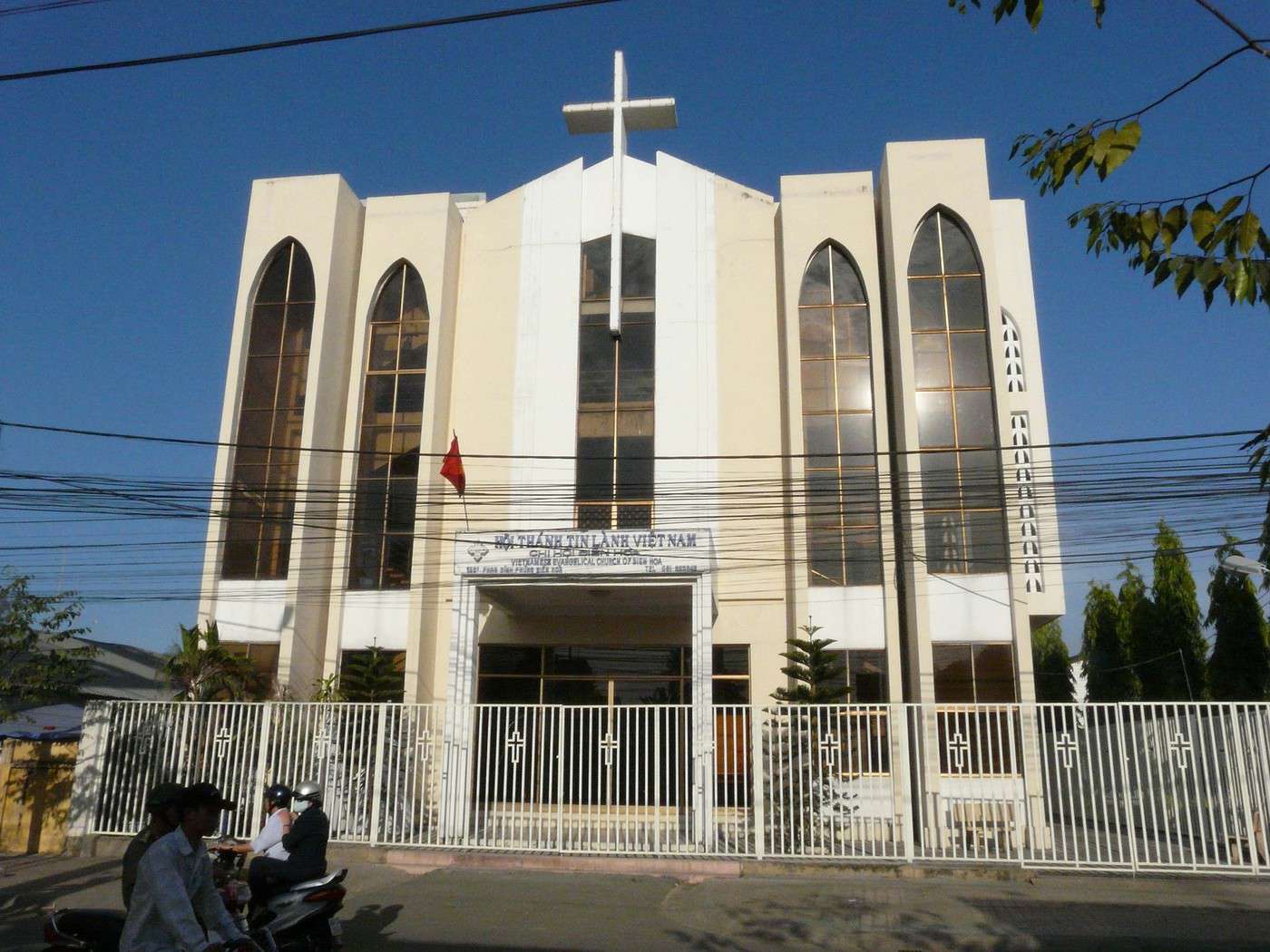
Vous êtes vous jamais demandé pourquoi on oublie souvent de parler de Biên Hòa quand on évoque le Viet Nam ? Avec ses 470 000 habitants (officiels), sauf erreur de ma part c’est la quatrième ville du pays après Sài Gòn, Hà Noi et Hai Phong, juste devant Hué et ses 400 000 habitants. On me dira peut-être qu'il n'y a rien à voir à Biên Hòa, que c'est une grosse ville industrielle et qu'on y trouve une église sans grand intérêt tous les 100 mètres. A y regarder de plus près, on confond souvent Ho Nai, peuplé comme tout l'Ouest de la ville de nombreux « Bac ky nam moue bon"» (gens du Nord 54) qui n'est qu'un quartier de Biên Hòa, avec la ville elle-même. D'ores et déjà la fréquentation des Bac Ky 54 est une expérience humaine exceptionnelle dont vous ne sortirez pas indemne. Chacun d'eux est porteur d'une histoire douloureuse. La fuite du Nord en 54, le regroupement par paroisse de ces catholiques persécutés depuis des siècles, les frères et les pères emprisonnés dans les camps de rééducation en 1975, les enfants privés d'école et d'université, l'humiliation de se voir chasser de leur propre maison en 1978 par d'autres Bac Ky, les « Bac Ky baï moue lam » - gens du Nord 75 ; les tentatives de fuite en mer, les pères, les frères, les maris, les parents, les enfants disparus…
Je suis resté un mois à Biên Hòa !
Pourquoi Biên Hòa ? D’abord parce que je m’y étais fait des amis via internet, et ensuite parce que j’avais commencé à apprendre le Vietnamien en France, et que je voulais le pratiquer sur place. Il se trouve que mes amis m’ont déniché un hôtel dans le quartier Quyêt Thâng (je dis bien un hôtel, pas un mini hôtel) où personne ne parlait ni français ni anglais, et pour un prix stupéfiant : 160 000 dông par jour (1 euro valant sur place 26000 dông), avec tout le confort moderne et le petit déjeuner compris.
Et j’ai découvert la ville ! D’abord ses habitants. Ici pas de racolage systématique des commerçants comme à Sài Gòn, les gens vous regardent simplement ; un petit sourire, un petit signe de tête, et ils vous sourient à leur tout. Des gens adorables, d’une discrétion et d’une gentillesse exemplaires. Pour prendre un exemple, un jour où j’étais rentré dans une pharmacie pour y acheter de l’aspirine, la pharmacienne m’a fait asseoir, m’a posé des tas de questions sur ma famille, et pour finir, après m’avoir offert le thé et un rafraîchissement, m’a vendu UN comprimé de paracétamol et UN comprimé d’Epheralgan. Bien sûr les ados sont plus agaçants, mais ça reste bien en de ça des limites de la correction, et ils engagent volontiers le dialogue, soit en anglais, soit en vietnamien, acceptant le recours à l’écriture quand j’avais du mal à me faire comprendre en Vietnamien.
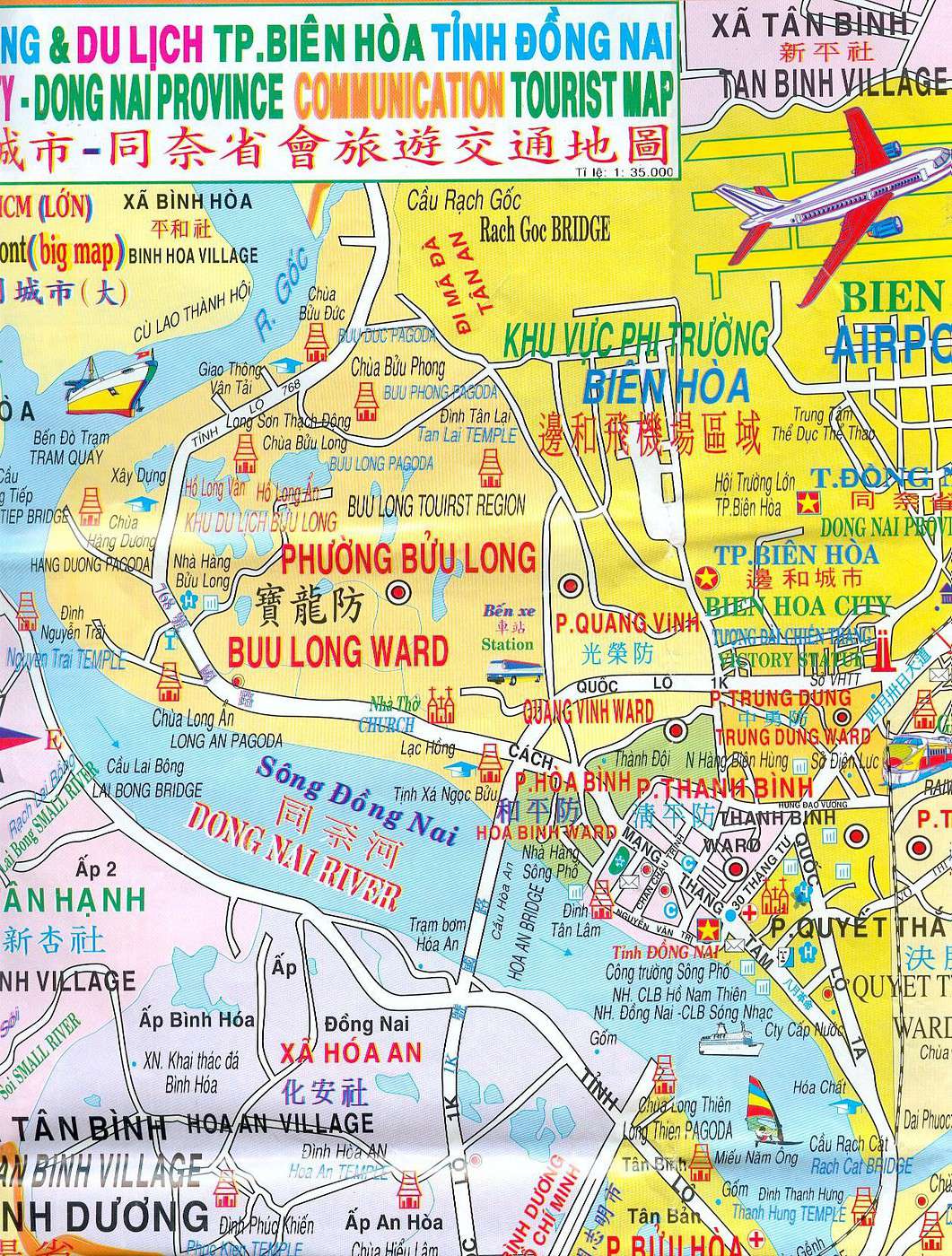
Et puis la ville elle-même ; je veux dire les quartiers centraux que constituent Quyêt Thâng, Thanh Binh, Trung Dung et Hoa Binh. Les lacs et les parcs, plus nombreux qu’à Sài Gòn, et la rivière, la Sông Dong Nai. Une rivière aussi large que l’un de nos fleuves, qui prend naissance du côté de Da Lat et qui au lieu de filer droit sur la mer musarde jusqu’à la rivière Sài Gòn dans laquelle elle se jette. Les trois kilomètres de promenade le long de la duong Nguyen van Tri, qui longe la rivière, est une des plus belles promenades que j’ai jamais vue ; avec la Sông Dong Nai limoneuse d’un côté qui charrie ce que je ne sais trop être des plantes aquatiques ou de la végétation arrachée en amont (comme le courant y est faible et capricieux certains bouquets voguent d’un côté, d’autres de l’autre et l’on ne sait plus très bien où est l’amont et où est l’aval) ; des kiosques, des massifs de fleur sur trois kilomètres entretenus au jour le jour, des arbres énormes avec des autels de l’autre ; des amoureux sur les bancs (c’est nouveau au Vietnam !). Tous les matins (ah oui, à 5 H on se réveille au son des haut-parleurs !) j’allais tourner avec les Vietnamiens autour du petit lac qui se trouve à une cinquantaine de mètres de l’hôtel, quelquefois je faisais le tour d’un lac beaucoup plus grand dans Trung Dung, et une à deux fois par jour je me payais ma petite (façon de parler) promenade le long de Nguyen van Tri. En face, de l’autre côté du boulevard, vous avez le vieux marché, une ruine qui doit disparaître dans quelques mois, et l’hygiène y gagnera ce que le pittoresque y perdra. J’ai mis trois semaines avant de me décider à pénétrer ce boyau obscur où deux personnes ne peuvent se croiser de face, et j’avoue ne pas l’avoir traversé de part en part tellement le sentiment d’oppression était prégnant !
A nuit tombée, les habitants de Biên Hòa et de Sài Gòn se retrouvent à « river side ». À l’extrême pointe de Quyêt Thâng vous passez un petit pont qui enjambe un arroyo et qui donne accès à une île sur le fleuve et au village de Hiêp Hòa. Là, dans des kiosques au bord de la rivière, au milieu des bambous géants et des frangipaniers, confortablement installés dans des fauteuils en osier, on sirote des jus de fruits ou du café et du thé glacés !
J’ai eu deux surprises de taille quand j’ai voulu me procurer un plan de Biên Hòa et des cartes postales. Sur le plan, il n’y a que quatre ou cinq rues dont le nom est indiqué, et il n’est possible de trouver des cartes postales qu’à la poste centrale. Et encore : UNE carte postale ! Celle représentant "la pagode de Confucius". Pagode qu'un ami me proposa de visiter. Il vint donc me chercher en moto et nous nous rendimes à Buu Long, ou Buu Dúc, que je sus ensuite être l’ancien village Hòa ky (c’est-à-dire des Vietnamiens d’origine chinoise, qui fondèrent Biên Hòa, à qui on accorda la nationalité Vietnamienne en 1956, avant de la leur retirer en 1980 et de les pousser à la mer sur des rafiots pourris après leur avoir fait payer le visa de sortie à prix d’or - l’un d’eux m’a montré son visa sur lequel était indiqué : nationalité Hòa ky)…
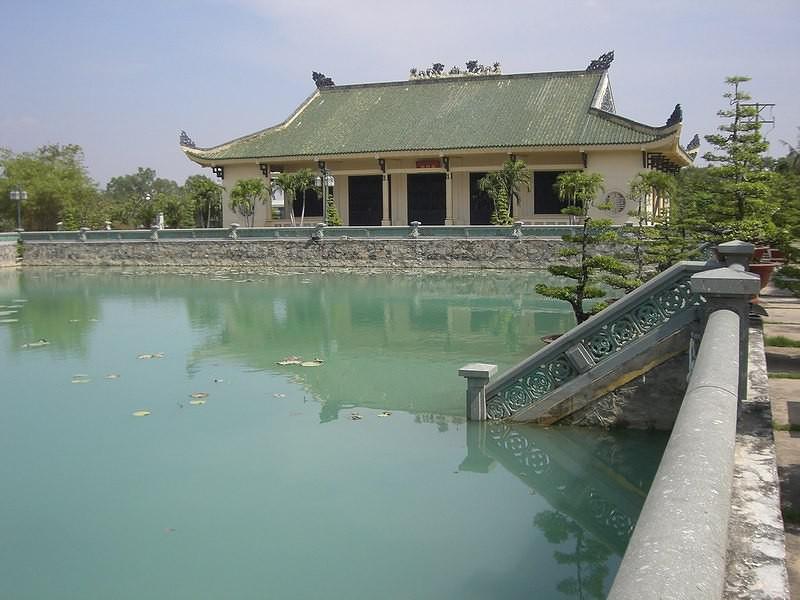
L’ensemble, je veux parler de la pagode, est surprenant car il comprend une dizaine de bâtiments dont le plus important se trouve au fond. Et là, devant le bâtiment principal, j’ai vu Confucius (enfin, son effigie), dehors (enfin, sous un abri qu’on avait construit récemment). Et dans la pagode un énorme buste… d’Ho Chi Minh ! L’ami prit le temps de me lire ce qui était gravé sur les stèles et qui étaient sensés représentés la vérité historique, à savoir que Ho Chi Minh était l’héritier des rois de la dynastie légendaire des Hung, puis des Ngo, de Lê Loi etc.
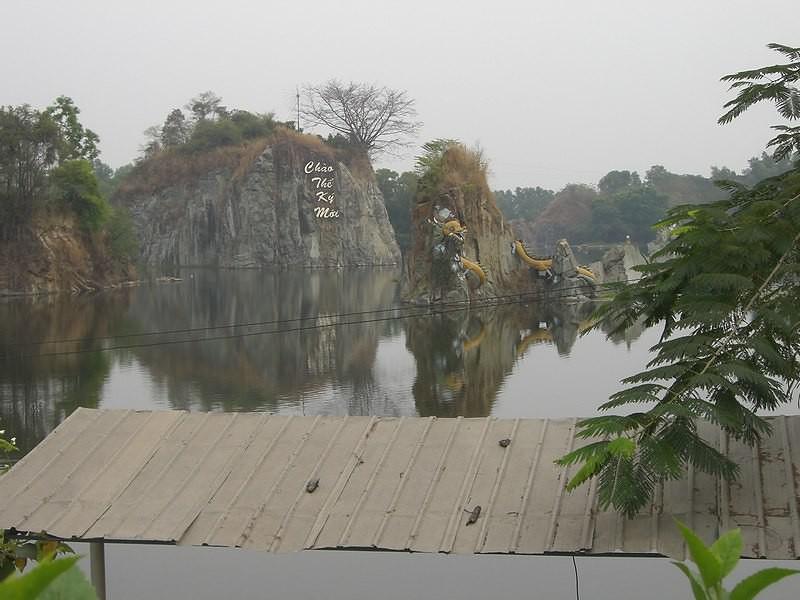
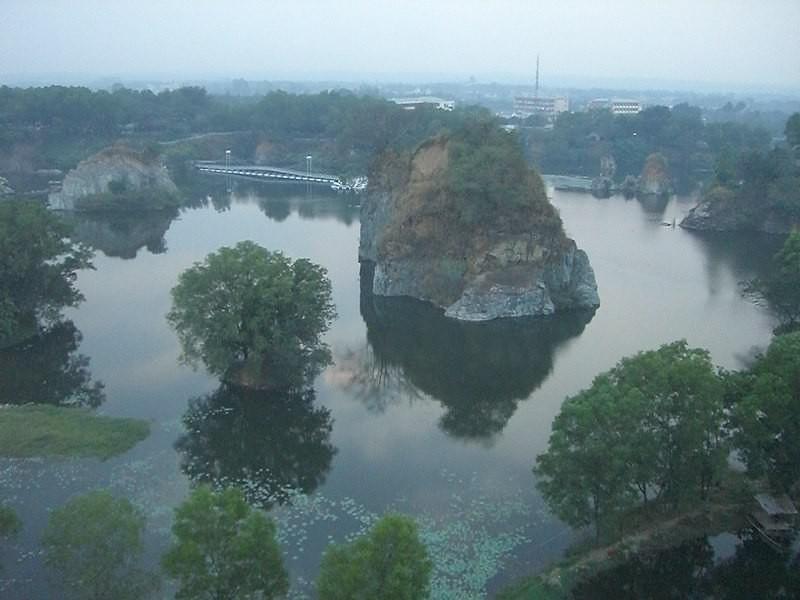
En revenant, l’ami s’arrêta à plusieurs reprises, pour me montrer les carrières de pierre qui peu à peu étaient devenues des lacs en se remplissant d’eau, l’un d’eux est même dû aux Japonais qui construisirent l’aéroport qui servit ensuite aux Américains… Il me montra les ateliers des derniers Hòa ky, ceux qui n’ont pas péri en mer et sont revenus d’exil, qui travaillent la pierre, tailleurs et sculpteurs (c’est la raison de leur installation ici plusieurs siècles avant que la région ne fut occupée par les Viets)…
Je dois dire que ce temple de Confucius fut un choc pour moi, et c’est sans doute ce qui m’a poussé un après-midi à refaire le chemin à pied. Une heure et demie à l’aller, autant au retour, depuis le centre-ville jusqu'à Buu Long. Et c’est là que je les ai vu aux trois quarts enfouies sous les herbes, tout au long de la route de Buu Long, jusqu’au fameux temple, comme un gigantesque et macabre jeu de piste. Les tombes. Les centaines, voire même les milliers de stèles de Hòa ky…
A Biên Hòa, même les morts se font oublier !
Merci Toidibo ! (je marche ?)
C'est une chance de pouvoir découvrir Bien Hoa sous votre "plume".
L'adresse de cet hôtel (où l'on ne parle ni français, ni anglais) m'intéresse beaucoup...
Je ne m'étais pas arrêtée sur ce chemin d'histoire... Je vais pouvoir interroger ma grand-mère (suis-je issue de bac Ky 54 ou de Hoa ky (Chinois du Vietnam) ? Affaire à suivre.
Bien à vous.
Oui, toi di bo = je marche, c'est ce que je répondais aux vélopousses et aux moto-taxis !
En fait on dit plutôt nguoi Hoa que Hoa Ky pour désigner les Chinois du Vietnam, pour les différencier des Américains (je n'ai pas très bien compris pourquoi, sans doute un mot Sinovietnamien que je ne connais pas et qui signifie étoile).
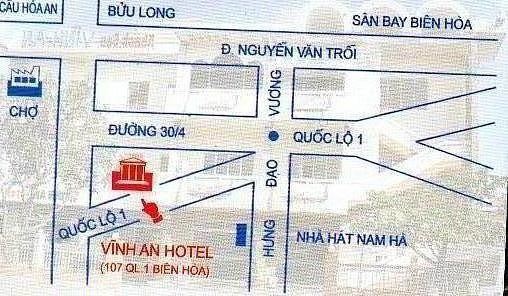
L'hôtel se trouve route du général Giap (en fait c'est l'ex rue nationale 1 A, elle fait un triangle avec duong cach mang thang tam, la rue de l'église de Quyêt Thâng et de l'école catholique et duong 30 thang tu, la rue de l'hôpital. Elle traverse Quyêt Thâng de part en part. Si vous visualiser le croisement où il y a une sculpture moderne avec un globe, et le grand lac un peu plus haut, c'est facile à trouver. De l'autre côté du carrefour, dans le prolongement de la rue au grand lac, il y a une rue avec un autre lac, plus petit, et un peu plus loin sur le même trottoir l'hôtel Vinh An. Il y a un (une) tilde sur le i de vinh que je ne peux reproduire ici. Demandez : tout le monde connait le Khach San Vinh An à Bien Hoa. Mais je vous donne quand même l'adresse exacte : 107 Quôc Lô I, P. Quyêt Thâng, Tel (061) 3822377 - 3827169 - 3917790. E-mail : hotelvinhan@yahoo.com.vn. J'avais la chambre 201. Si on vous donne la même saluez bien mon margouillat (lézard qui marche au plafond) de ma part. Et ne commettez pas la même maladresse que moi : si vous constatez qu'il n'y a pas de draps sur votre lit, juste un dessus de lit et une couverture en cotonnade, ne demandez pas de draps, vous déclencheriez une révolution. Du coup les lingères m'ont mis DEUX dessus de lit (et elles avaient raison : les draps tiennent trop chauds et la cotonnade absorbera la sueur mieux qu'ils ne le feraient). Ceci dit, il y a la clim ! Et les lingères sont charmantes quand elles vous ont pardonné (ça demande une petite semaine) et qu'elles cessent de crier "Em Oï" pour appeler la réceptionniste à l'aide quand elles vous croisent dans l'escalier. La multitude de petits conflits entre la réception de l'hôtel et le restaurant vont aussi vous pimenter la vie (l'un étant le sous-traitant de l'autre). Je ne dis pas ça pour vous décourager : ce sont des rapports humains VRAIS, vous serez bien obligé de parler Vietnamien, et ce sont des gens délicieux dès qu'ils vous ont accepté avec vos bizarreries de Tây.
Un bon croquis valant mieux que de longues explications, j'ai retrouvé le plan de cette partie de la ville ou se trouve Vinh An. La duong Hung Dao Vuong est la route qui mène à la gare !
Les Bac Ky 54 ayant quitté le Nord Vietnam en 1954 (comme leur nom l'indique), et vous étant née en 1945 (ou ayant quitté Bien Hoa cette année-là, du temps de l'occupation par les Japonais) vous n'avez aucune chance d'avoir des racines de ce côté-là 😏 !
Je serai de retour à Biên Hoa le 1er février, et pour deux mois. J'ai l'intention d'explorer la région de la Dông Nai en car (renseignements pris, il n'y a pas de syndicat d'initiative ou d'office du tourisme à BH, toute information contraire sera la bienvenue). Promis, juré, si je croise l'un(e) d'entre vous, on ne se parle qu'en vietnamien. 😏 Je suis conteur, et j'aimerais bien me rendre utile là-bas, en intervenant dans les écoles bilingues par exemple. Si quelqu'un peut me mettre en rapport avec les Eglises ou les assos humanitaires par exemple...
Je relis les notes que j’ai prises l’année dernière quand je suis revenu du Viet Nam et de Biên Hoà et je me demande s’il s’agit du même pays et de la même ville… L’an dernier je m’étais fait racolé deux fois en un mois, et je n’avais pas prêté plus d’attention que ça aux clubs de karaoké et aux salons de massage… Cette année, maîtrisant mieux la langue et y étant resté deux mois, la crise étant passée par là et des milliers d’ouvrières jetées sur le pavé sans revenus, le petit commerce menacé par des grandes surfaces comme Cora qui vont chercher la clientèle en car gratuitement dans un rayon de 25 kilomètres autour des villes moyennes avec des prix inférieurs au petit commerce tournant autour de 25 ou 28 % (avec des conditions d’hygiène infiniment meilleures il est vrai !), il ne s’est pas passé un jour sans que je ne me fasse racoler par des occasionnelles, quelquefois des ados de 15 ou 16 ans, pour un repas chaud ou une paire de chaussures… Je leur payais leur repas, et à défaut d’illusions ayant encore quelques principes moraux nous en restions là. Je dois dire que n’étant pas tenu au rendement elles prenaient et le temps et plaisir pour parler avec moi, l’écrit suppléant au manque de pratique quand j’avais du mal à maîtriser un mot vietnamien. Jusqu’à la commerçante qui me vendait ma bouteille d’eau minérale tous les matins qui m’a proposé une passe pour 500000 dõngs, et à la restauratrice où je mangeais à midi de faire « làm quen », (littéralement, « faire habitude », je reviendrai sur les làm quen).
Je pensais que Biên Hòa n’était pas une ville touristique, ce en quoi je me trompais, j’avais oublié les Chinois et les Coréens (d’où la profusion des clubs de karaoké et des salons de massage qui sont 3 à 4 fois plus nombreux que les écoles – et je dois être largement en dessous de la vérité)…
D’abord une anecdote plutôt amusante avant de vous parler du dramatique (pour moi, je vous prie de croire que je ne suis pas sorti indemne de l’aventure et il m’a fallu une semaine pour m’en remettre). Il y avait un bureau de poste à une quinzaine de mètres de mon hôtel, qui faisait aussi salon de coiffure et salon de massage. De temps à autre venait un postier professionnel qui connaissait son métier. Mais la plupart du temps il y avait un jeune abruti derrière un bureau qui à chaque fois ouvrait tous les tiroirs sans y trouver les timbres, et finalement allait chercher une jeune fille qui n’avait rien à br… à faire et qui parlait anglais (critère important entre pros et occasionnelles, je n’ai pas rencontré une seule occasionnelle qui parle anglais ou français). Le problème c’est qu’on lui avait appris à vendre des timbres à 800 dông, pas à 8500 pour la France ! Elle ne savait pas faire, tout simplement ! Alors j’allais vers le fleuve où se trouvait un bureau avec de vraies postières qui, il est vrai, avaient chacune un registre d’une année différente ce qui fait que je ne payais jamais deux fois le même tarif à 5 ou 800 dông près, après quoi, ma carte postale oblitérée, il fallait que je sorte la poster dans la boite devant la porte où elles iraient la chercher plus tard !
Et puis je m’étais fait un copain l’année dernière, un gentil cyclopousse qui voulait me faire faire le tour de ville gratuitement. Le gentil cyclopousse m’avait écrit une lettre où il m’expliquait qu’il souffrait de me voir ainsi transpirer, lettre qui avait presque arraché des larmes à ma prof de vietnamien en France.
Le lendemain de mon arrivée, paf ! Je tombe sur mon cyclopousse (qui depuis s’est payé une moto) qui se jette littéralement dans mes bras, et là je comprends que je ne peux pas couper à la balade en ville ! On prend rendez vous pour le soir même. Il vient me chercher en moto et me dit qu’il doit d’abord passer à son "home'. Une charmante maisonnette en pleine campagne, la vraie « petite maison dans la prairie ». Où se trouvent deux jeunes femmes, qu’il me présente comme "fend nhât" et "fend hai". Je suppose qu’il s’agit d’une déformation de friend, nhât signifiant première ou principale, et hai deux. Et là de but en blanc il me dit que « fend hai » est pour moi, et que je peux même frapper les deux si je veux. J’explique patiemment, et je m’étonne moi-même d’avoir trouvé aisément tous les mots en vietnamien (elles ne parlaient pas anglais) que je ne veux frapper personne, que je trouve « fend hai » ret dep(très belle) mais que j’ai déjà quelqu'un. Et ça dure, et ça dure jusqu’ à ce que « fend hai » dise que si je veux "thoc" le cyclo, c’est toujours possible. Je ne connais pas le mot, mais j’en comprends bien le sens, que je vérifierai dans le dictionnaire. « Không, Không, Không dâu », « non, non, pas du tout ! » Je n’en démords pas. Du coup nous quittons "la petite maison dans la prairie », et on retourne en ville, où je comprends enfin pourquoi certaines rues affichent " khu pho van hoa", ce qui signifie en gros "rue honorable". Là c'est dégueulasse, les ruelles, les gens... Je surprends les sourires et les regards lubriques des hommes, des femmes comme des enfants. Et je me retrouve dans son autre chez lui, son vrai "home', avec des murs en briques non crépites, le sol est peut être en terre battue, je ne peux pas l’affirmer. Il y a là un lit sans drap ni couverture, une femme, et deux gamines de 6 et 3 ans ! Sans doute une chaise puisque je me revois assis. Et il m’offre « de m’amuser » di choi) avec la gamine de trois ans ! Il faut vous imaginer des bandits partout et le fleuve à deux pas. Je crois que je me suis dédoublé ! Il y avait le moi qui disait « Không, Không, Không dâu », et celui qui disait « ne dis pas de connerie, ne fais pas de connerie » ! Et je lui rappelle qu’il m’a promis un tour en cyclopousse. Finalement on décolle, et il s'arrête dans un bar. Je me dis, compris, il va me faire le coup classique, un jus d’orange et un café pour 500 euros. Non il insiste pour payer, et me reparle de son "baby" qu’il m’offre. "Không, Không, Không dâu ! Et je veux réintégrer l'hôtel !" Il tente trois ou quatre fois le coup avec des restos chicos, mais c est "Không, Không, Không dau" ! Il s'arrête chez sa soeur pour me vendre une bière, "Không, Không, Không dâu" et je rentre à pied !
S’il avait su que j’avais deux mille cinq cent euros dans ma ceinture, je ne suis pas sûr que j’en serais sorti vivant !
Ah oui, sur le chemin du retour, qu’est ce qu’il y eu comme "fend" qui l’interpellent des bistrots ou de la rue ! Contente comme des droguées rencontrant leur dealer. Qu’est-ce qu’elles l’aimaient celui qui leur amenait money-money (le dernier jour j’ai su qu’il voulait me faire payer 500000 dông par femme, et 100000 pour lui (je n’ai pas demandé pour la gamine !) !
Quatre heures, ça a duré quatre heures !
J’ai bien tenté de raconter aux responsables de l’hôtel ce qui s’était passé. Ils savent, tous, mais ne veulent surtout pas qu’on en parle. Après le séisme qui a frappé l’indonésie une partie du tourisme sexuel s’est déplacé sur le Vietnam. Alors tant qu’on ne sait pas, ou qu’on veut ignorer, et que money-money !
Le lendemain il me faisait porter deux pamplemousses qui sont allés droit à la poubelle !
Un mot sur les Làm quen ; pratique qui tend à se développer. Une ouvrière se retrouve au chômage, une enseignante n’a pas envie d’être accablée par les heures supplémentaires pour s’en sortir, une commerçante ne peut plus vivre de son commerce, une marchande de billets de tombola ne fait pas une recette suffisante. Alors on lui cherche un làm quen, quelqu’un, un homme marié, un Chinois, un Coréen, voire même un Français, qui lui versera 75 euros par mois et qui lui rendra visite un mois par an ou de temps à autre, quelquefois au domicile des parents, avec les enfants dans la pièce à côté qui regardent la télé. Et on discute dans la famille ou entre amies, le soir dans les parcs, pour trouver un làm quen à une telle ou à une telle…
Je ne les juge pas, je ne suis ni femme, ni vietnamienne, et je n’ai pas vécu ce qu’elles ont vécu, mais je pense que ce pays est bien malade, et je ne crois pas que ce soit pour en arriver là que des millions de jeunes gens sont morts napalisés sur la piste Ho Chi Minh ou en combattant dans la jungle !
J’aurai pu vous parler de la circulation, autre grand bordel, avec 15 personnes pour un péage là où en France il n’y en a qu’un, mais pas un seul agent de la circulation dans une ville de 470 000 habitants comme Biên Hòa (quelquefois sont les étudiants qui s’y collent !), mais je note des progrès : on respecte les feux rouges et on met son casque (le plus souvent c’est un casque de merde, alors on ressort le casque de papa ou de grand-papa… Quand il était dans l’armée sud-vetnamienne !)
J’aurais pu vous parler davantage de la ville, de ses parcs, et de la province… Un autre jour peut- être !
la crise étant passée par là et des milliers d’ouvrières jetées sur le pavé sans revenus,
A propos de la cette crise, les viêtnamiens remercient la France d'avoir imposé une taxe arbitraire en 2006 de 16 % sur l'importation des chaussures. On disait à cette époque que cette taxe était provisoire de 2 ans, afin de permettre aux entreprises de chaussures de la CE de s'organiser pour faire face à la concurrence et qu'elle devrait prendre fin en 2008.
En 2008, malgré le soutien du premier ministre de la Hollande et du Danemark, alors que la France exerçait la présidence de la CE, la France a de nouveau prolongé cette taxe pour une durée inconnue.
Biên Hoa est célèbre pour ses usines de chaussures entre autres. Des milliers d'emplois sont ainsi perdus quand les commandes ont été raréfiées, au vu de ce protectionnisme arbitraire.
Donc merci la France! Et cela confirme toutes mes lectures d'antan quand la France exerçait son autorité sur le territoire du ViêtNam.
Je pensais que Biên Hòa n’était pas une ville touristique
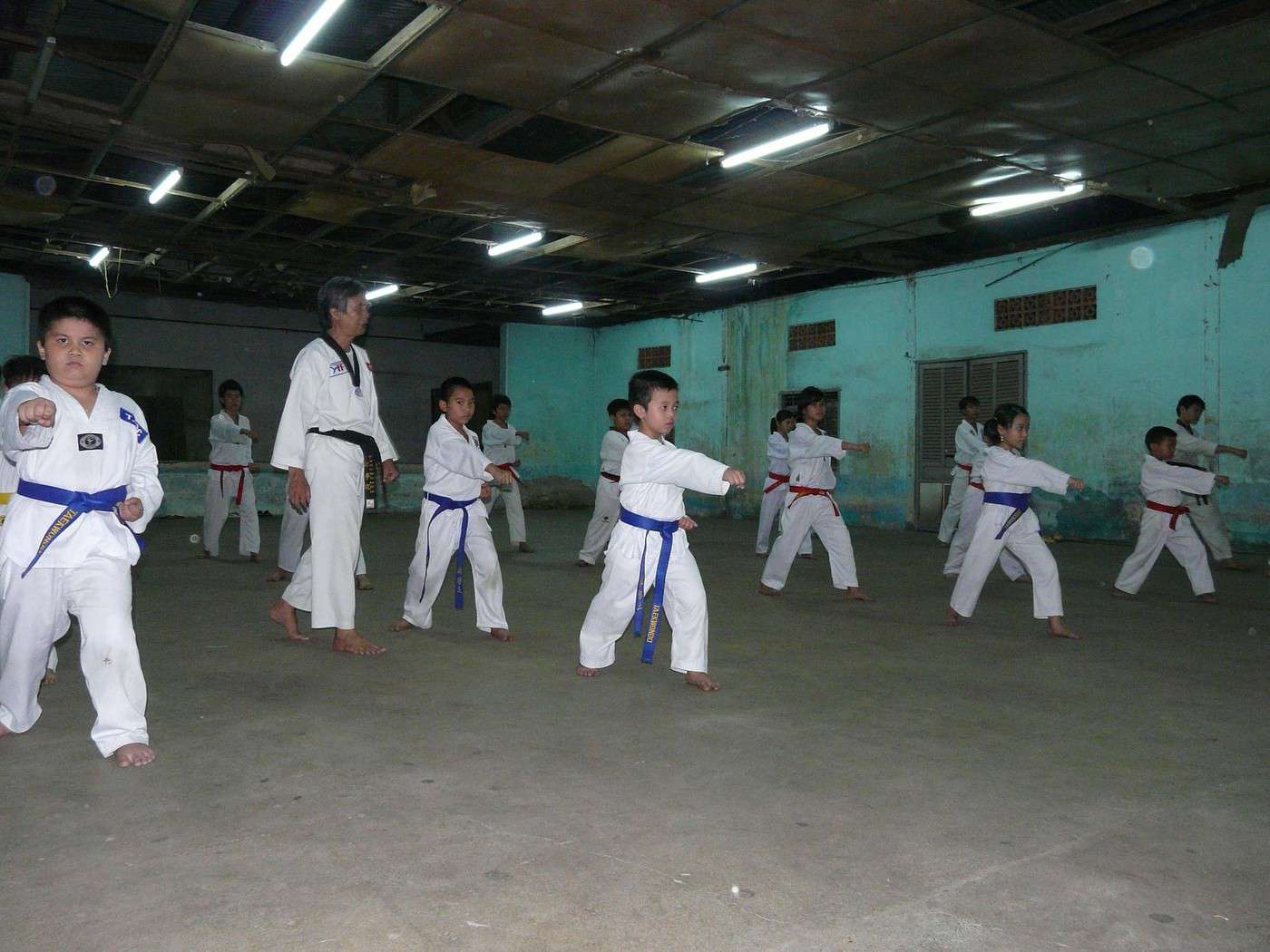
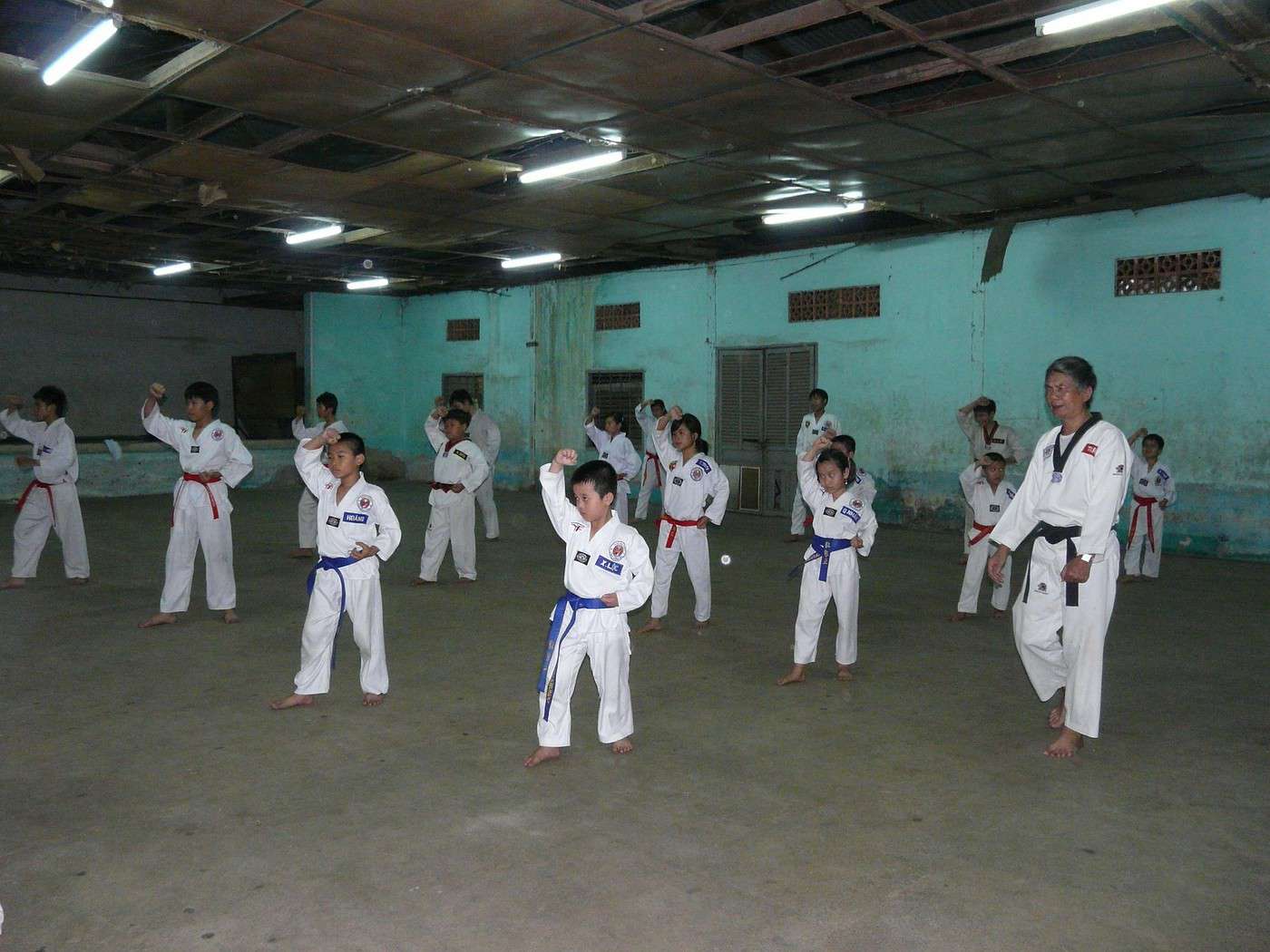
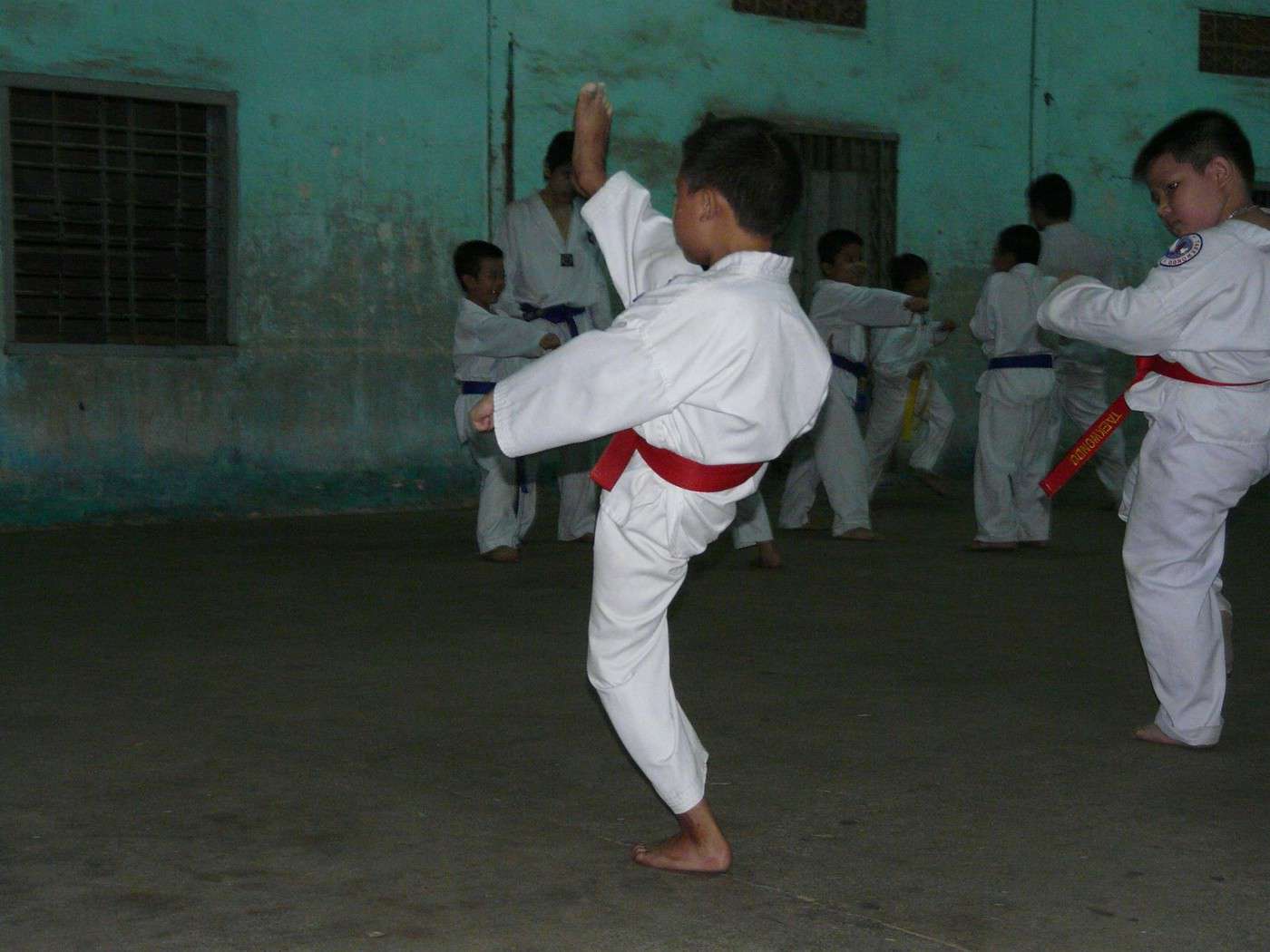
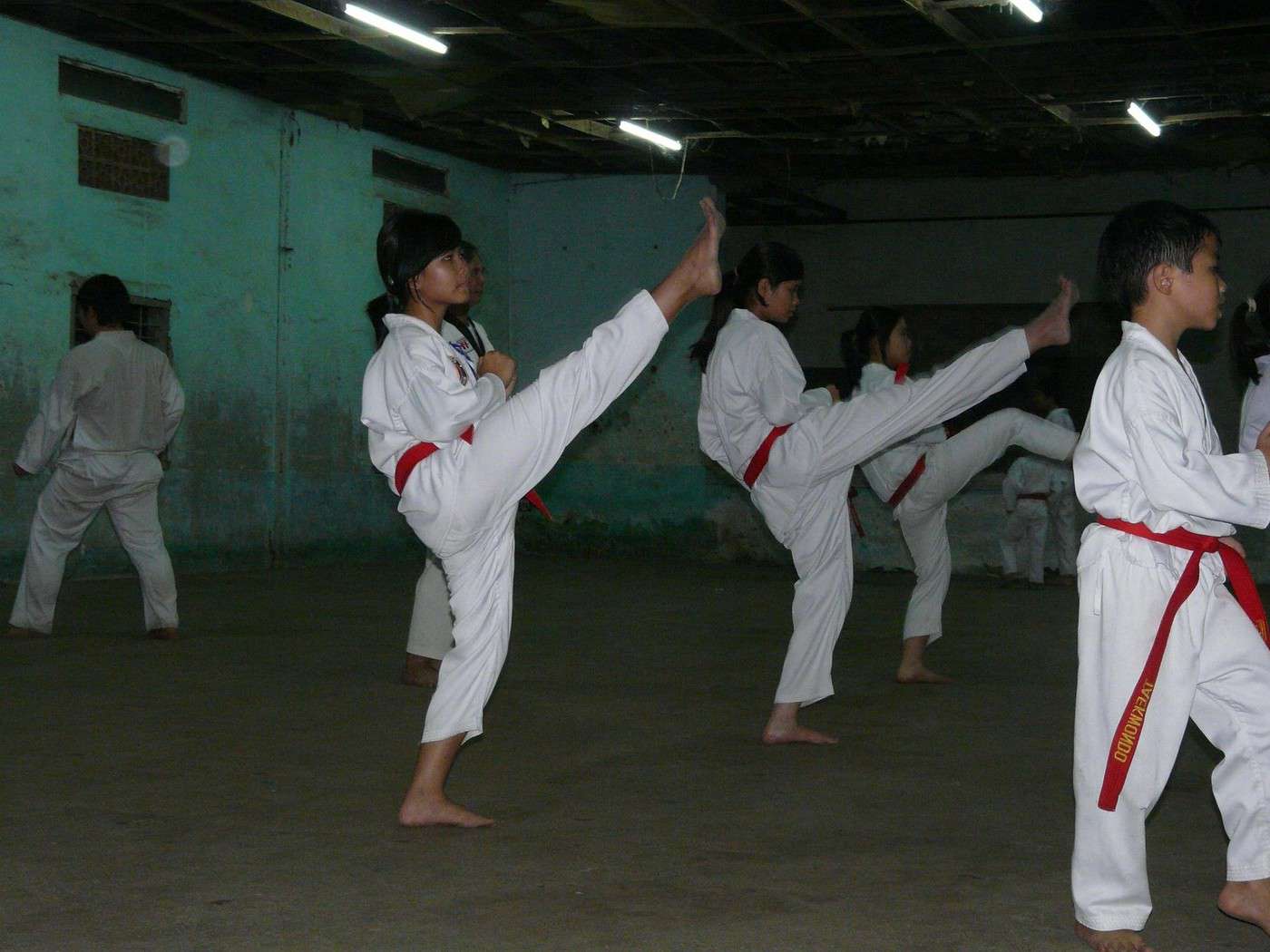
J'ai été dernièrement à Biên Hòa parce que j'avais envie de visiter une petite école de Taekwando. Avec mon faciès de viêtnamien et malgré mon sac à dos, je ne devais pas passer pour un touriste. Donc je n'ai jamais été sollicité pour quelque service que ce soit à connotation vénale.
Je ne remets pas en cause ton témoignage, mais il me semble que si cela existe, à l'adresse de touristes étrangers, une hypothèse probable serait que la demande a entrainé l'offre et de ce fait, ta vision ne serait qu'un effet optique. Le tourisme sexuel est-il passé par là?
Malgré la crise modiale, alors que le Viêtnam a l'espoir que la croissance de 2009 serait de 3.9 %, les experts de la World Bank ont révisé à la hausse de la croissance du ViêtNam aux alentours de 5.5 %. Finalement, la crise n'a fait que passer comme un coup de vent. Depuis 2 semaines, les entreprises recommandent à recruter les travailleurs, sauf bien sur les entreprises de chaussures.
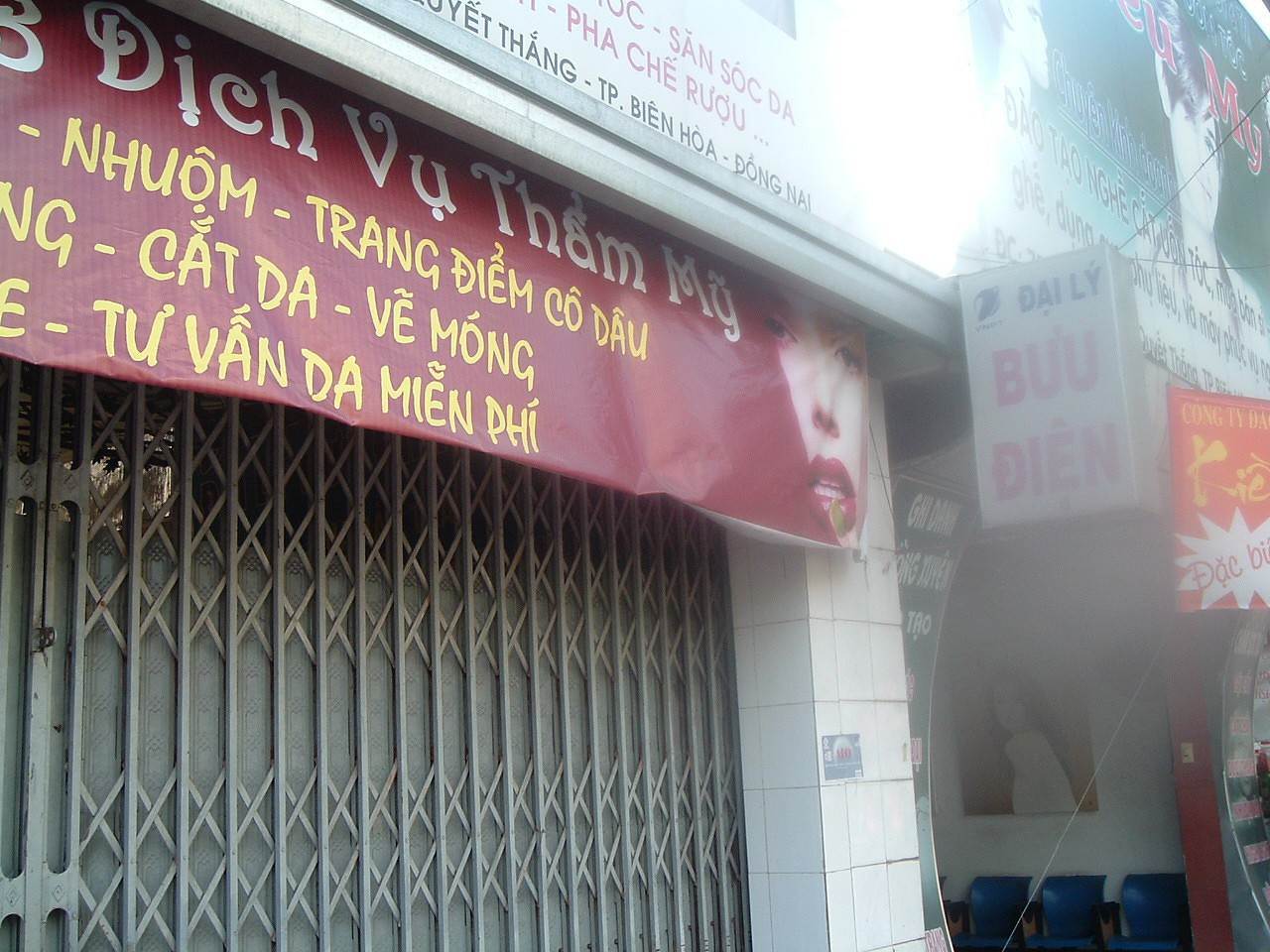
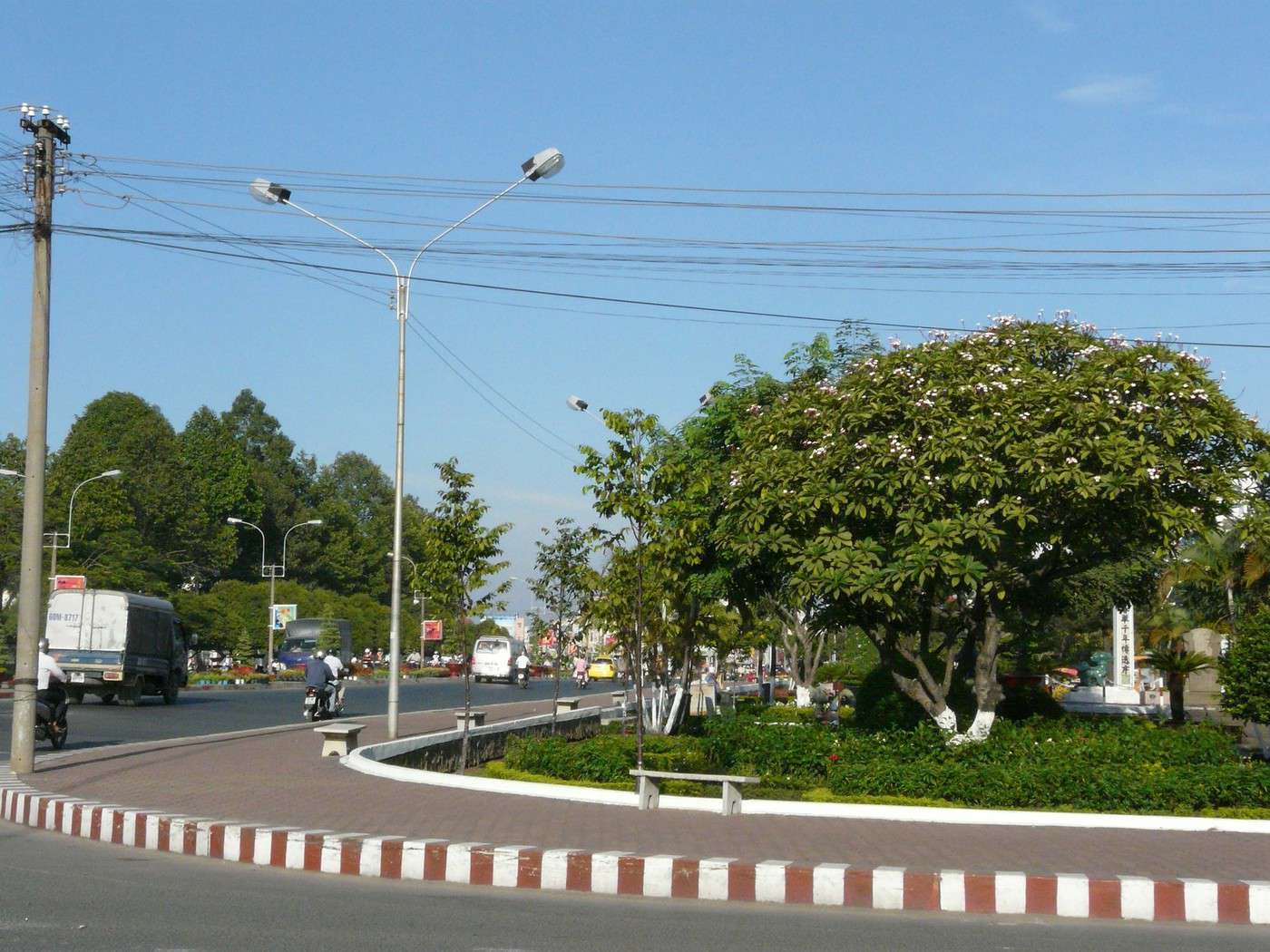
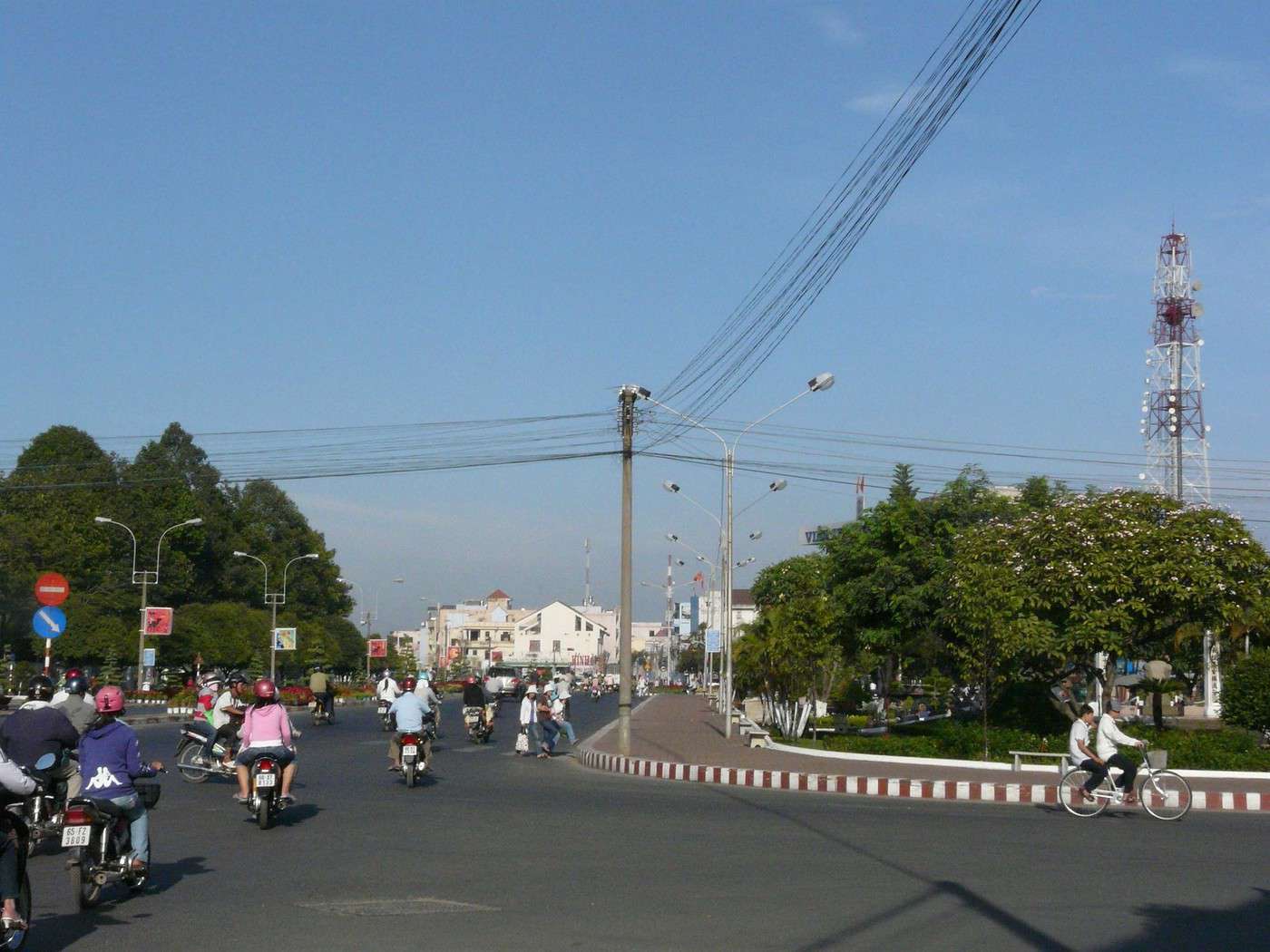
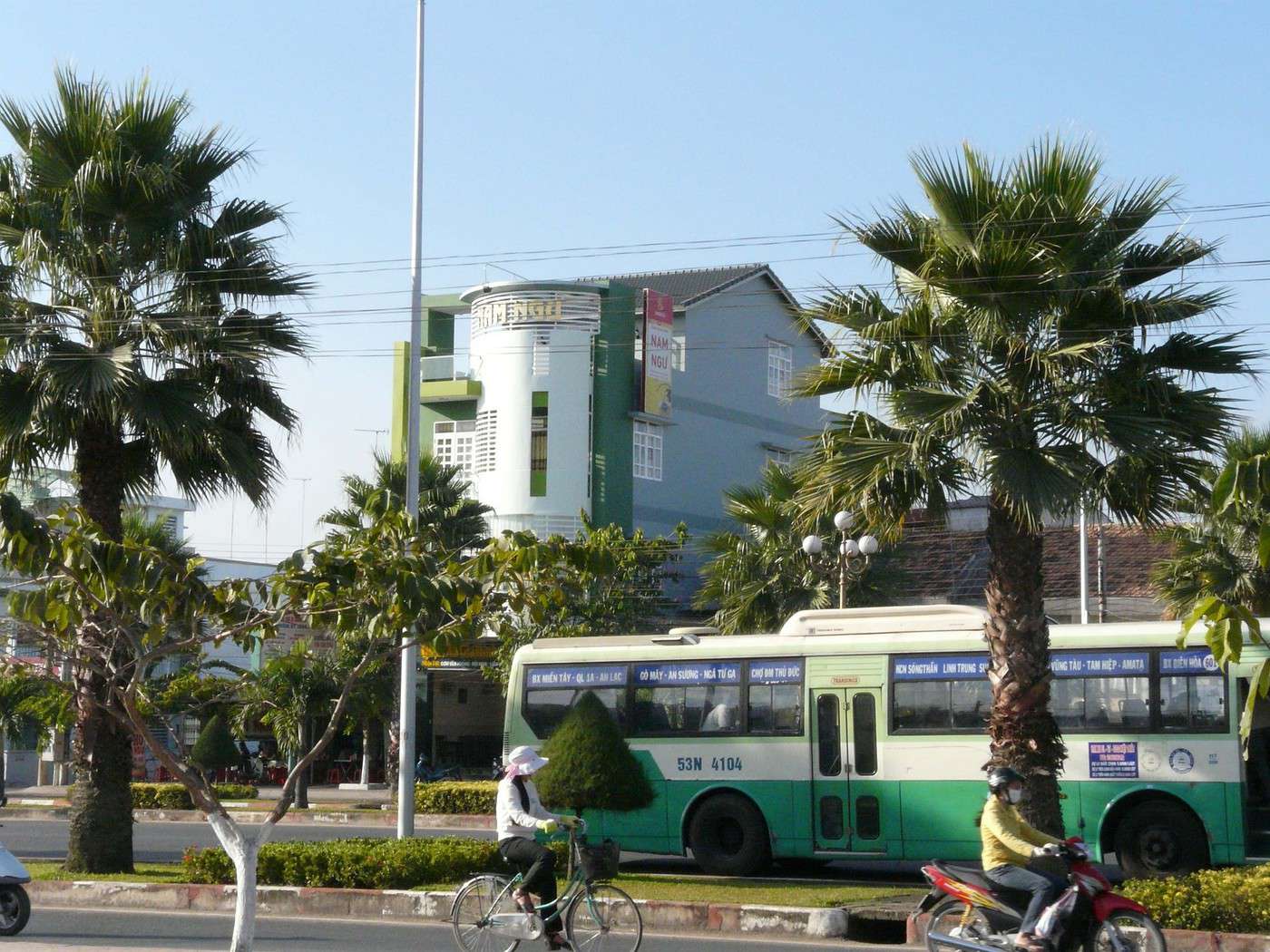
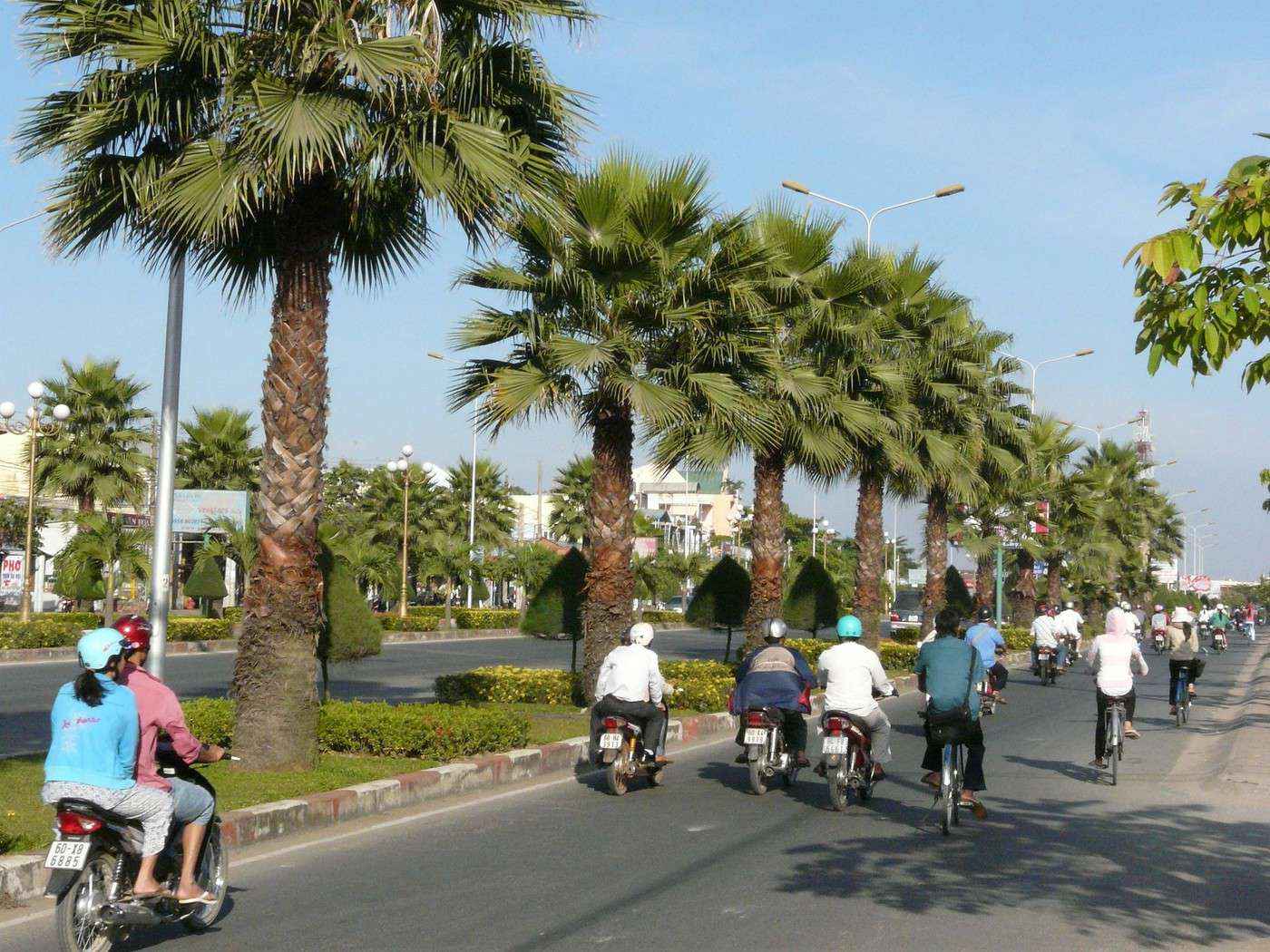
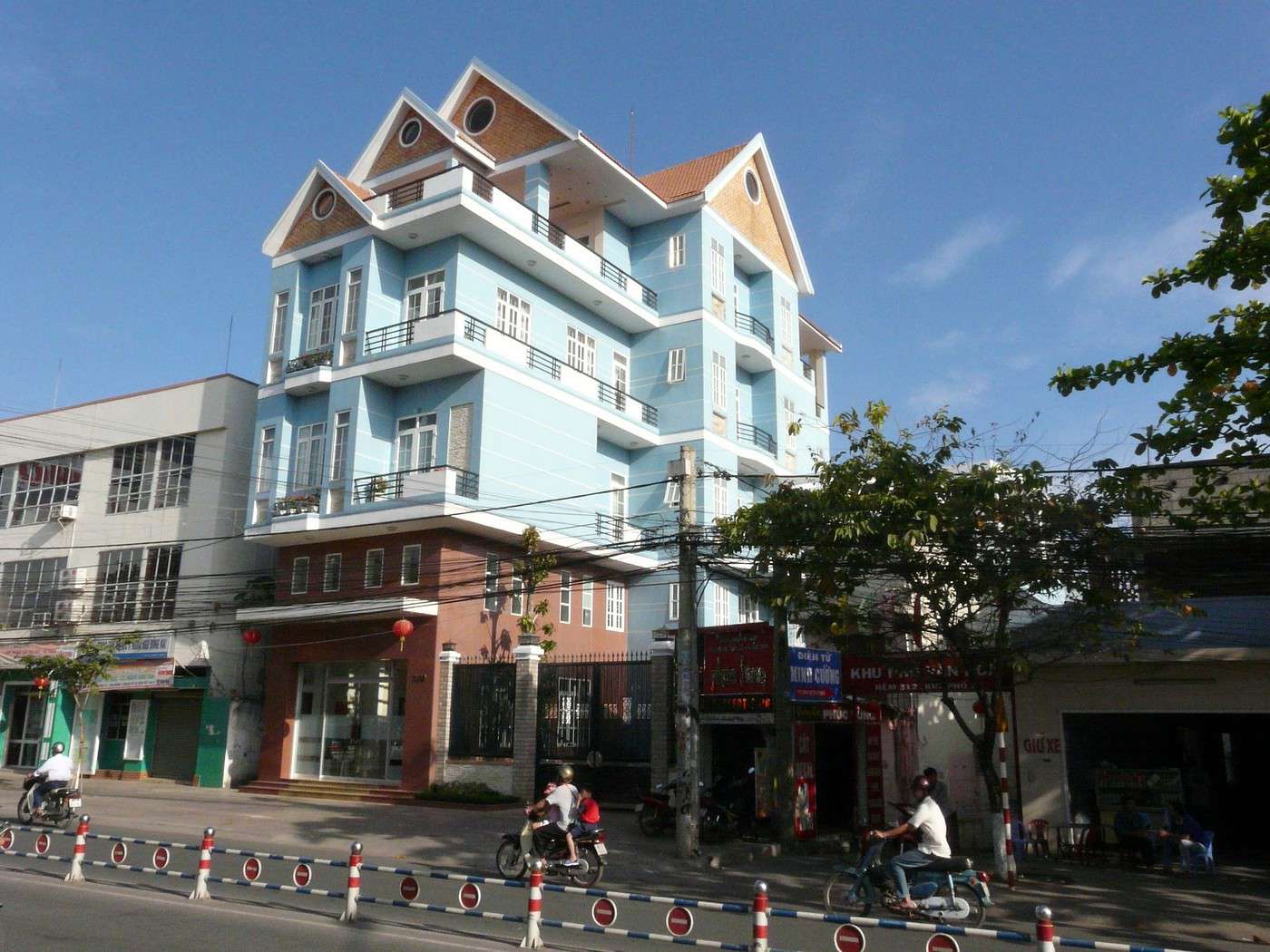
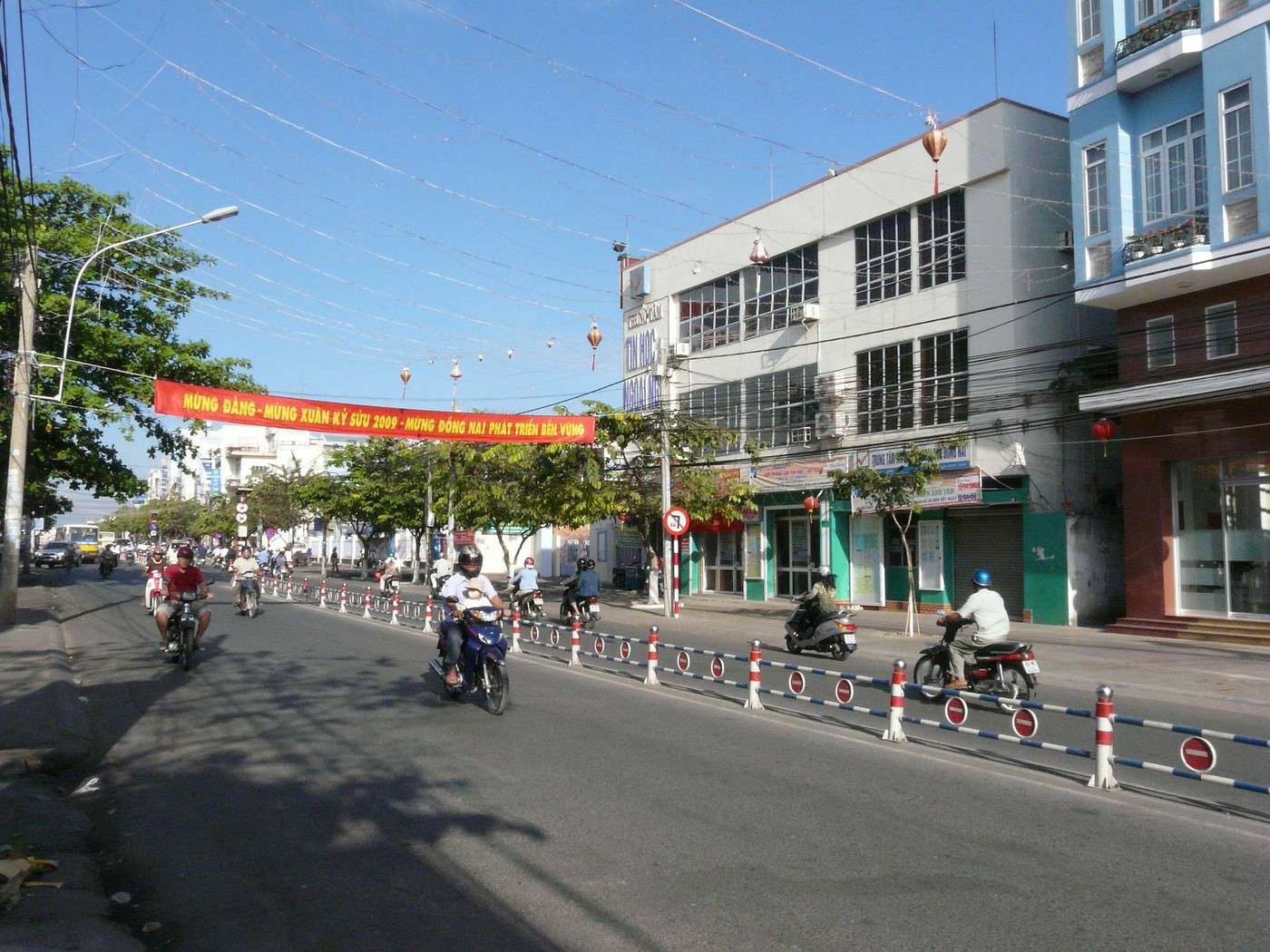
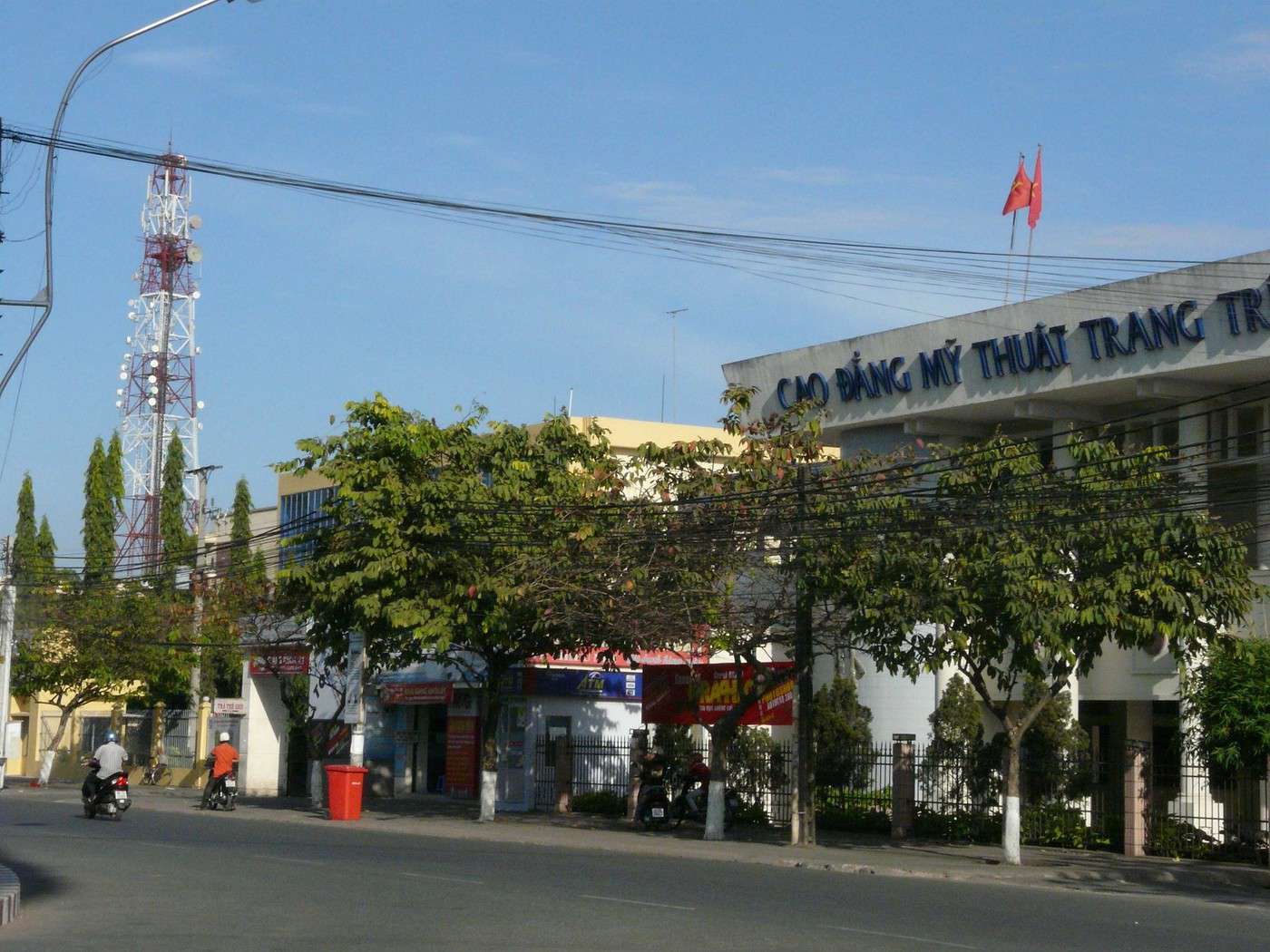
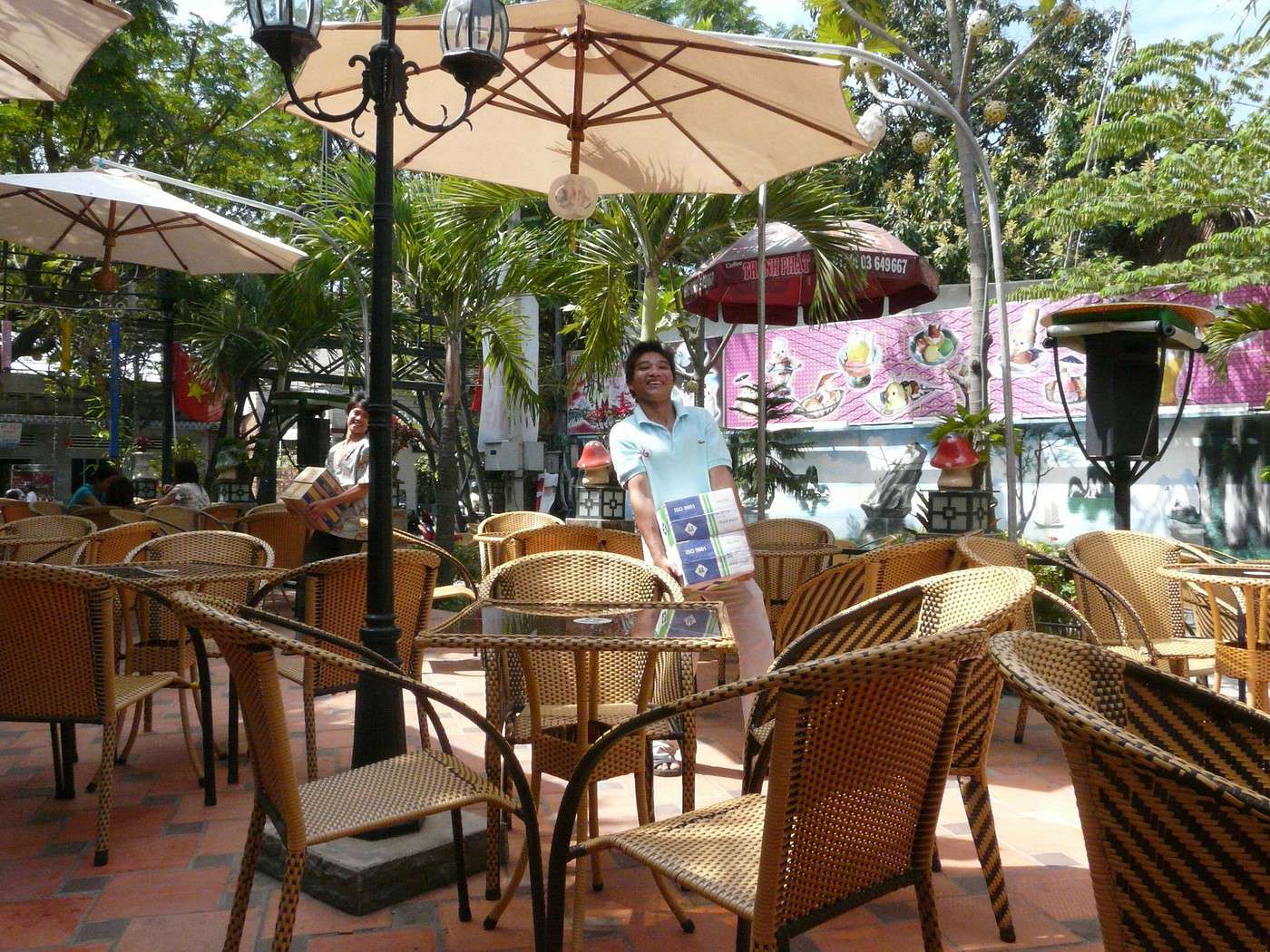
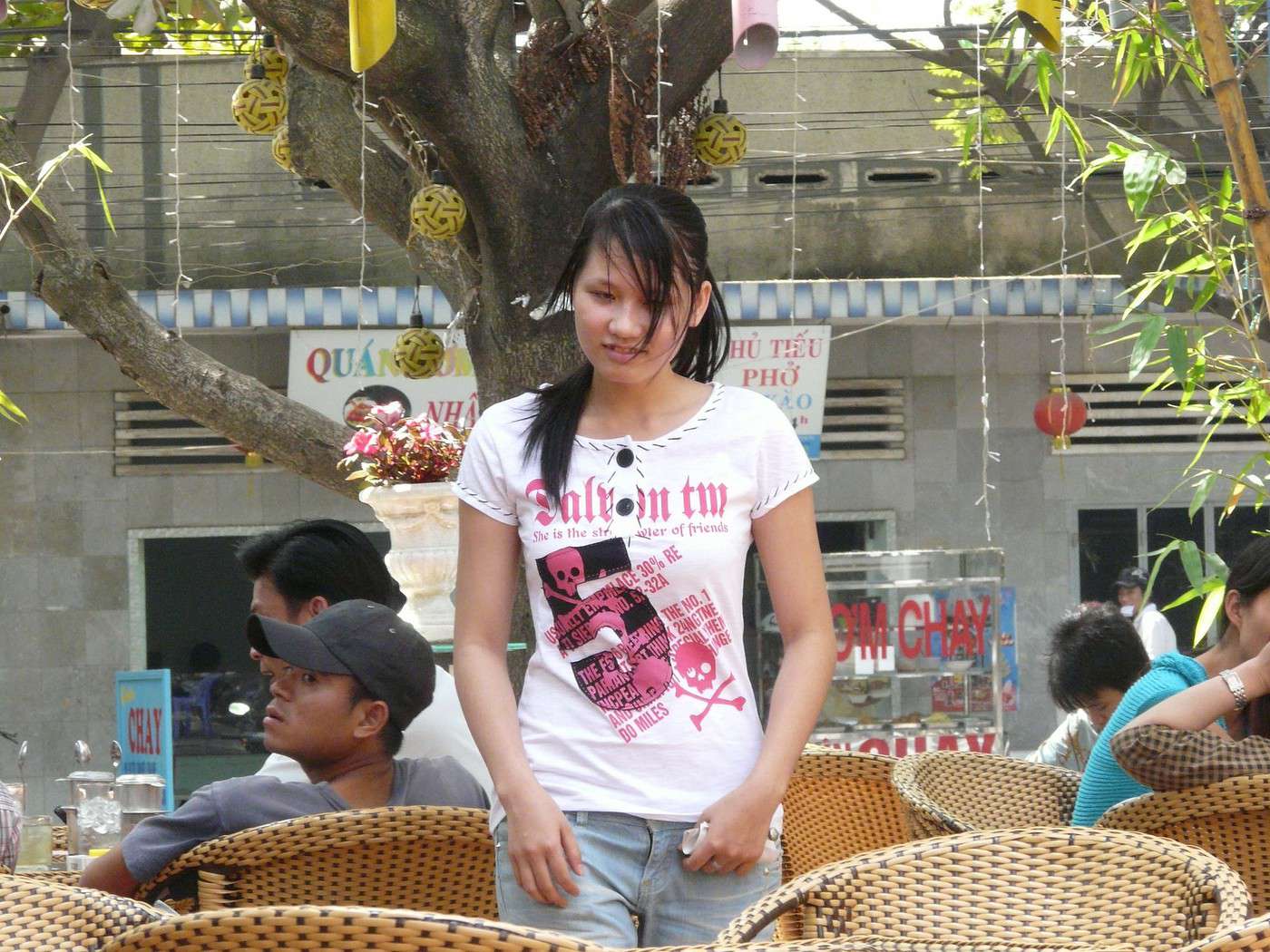
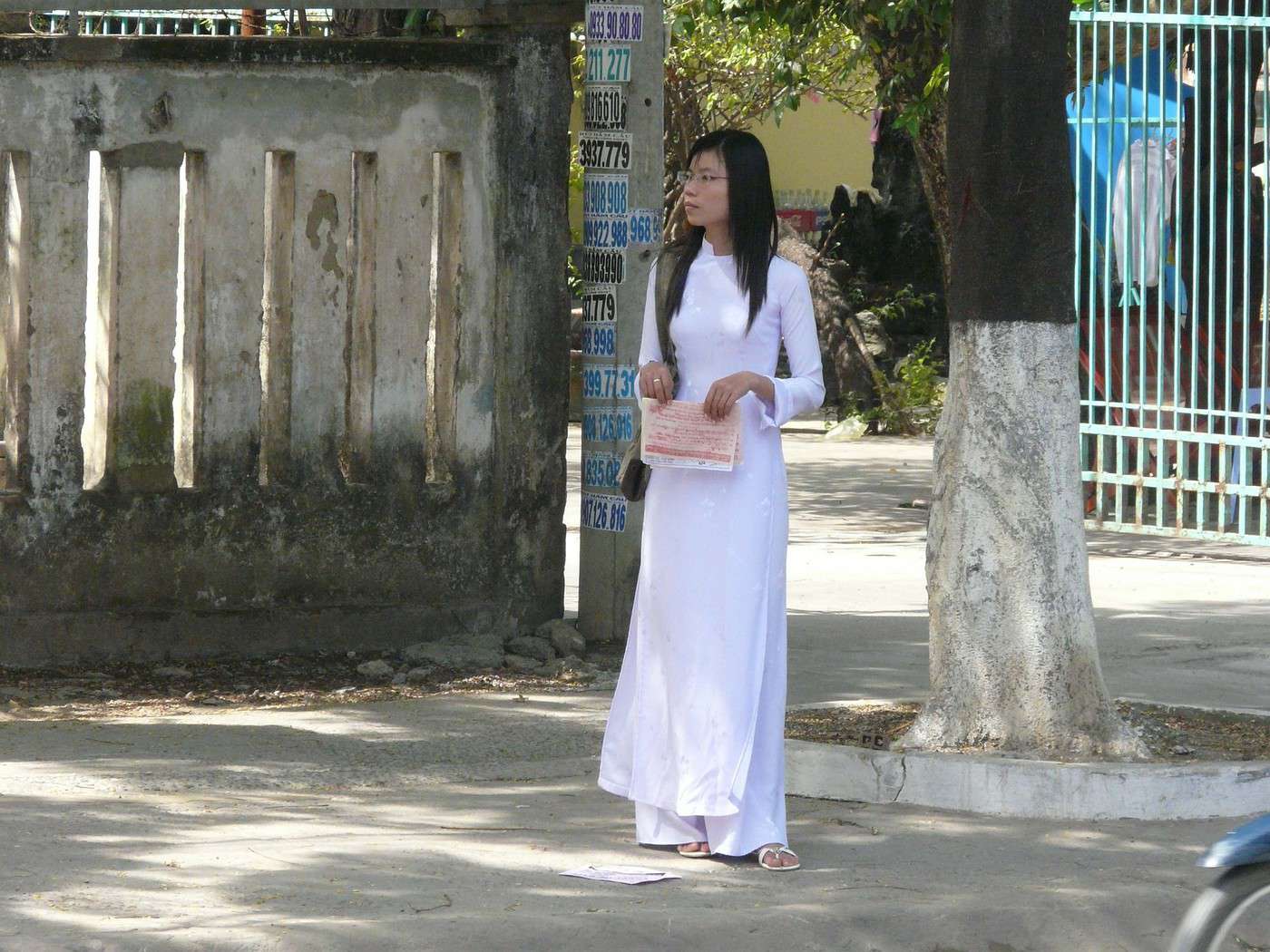
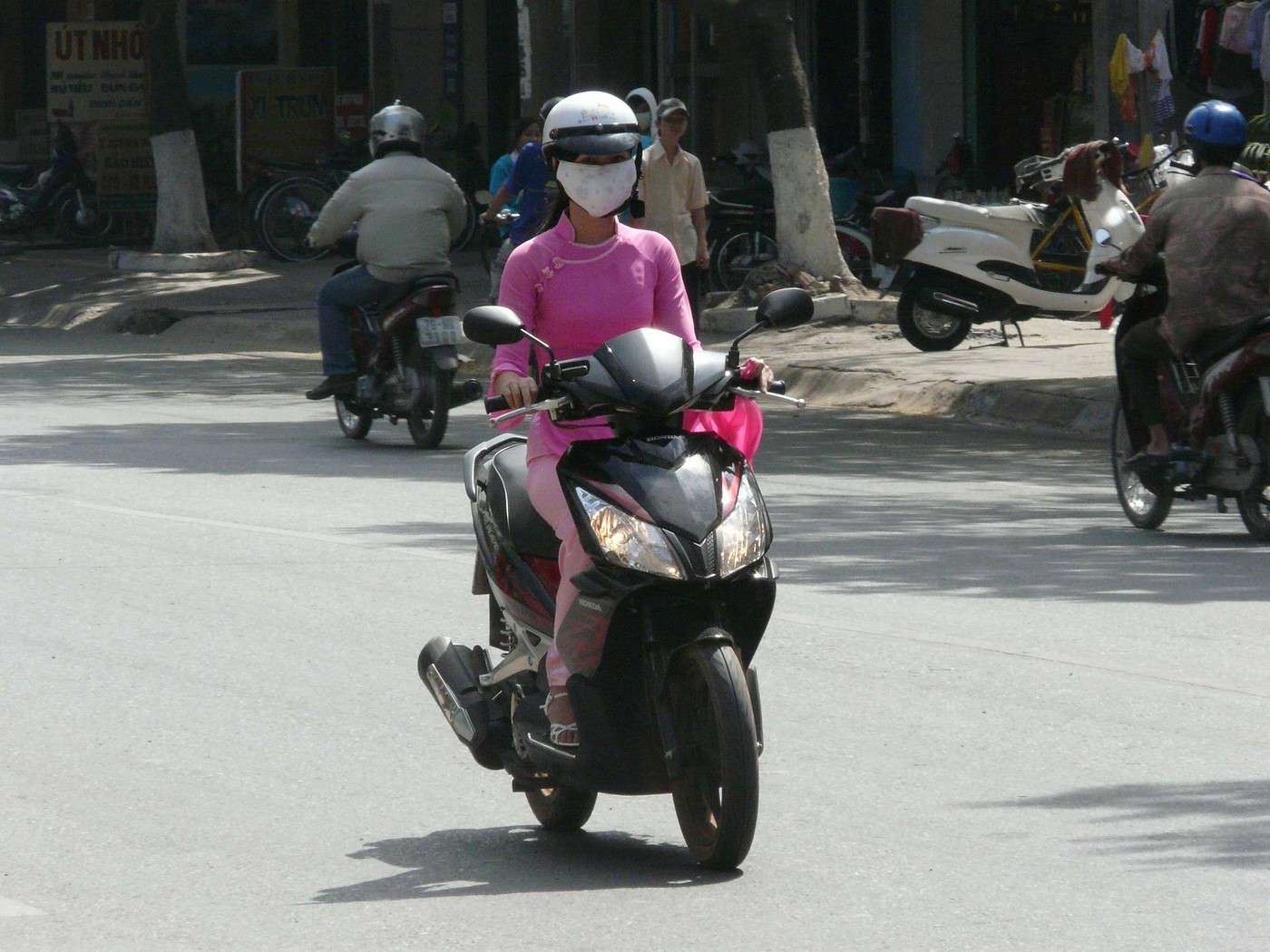
Je vais publier quelques photos de Biên Hoa prises il y a 2 mois, j'espère que tu reconnaisse la ville?
Photos 1, 2, 3, 4 : une grande avenue bien verte
Photos 5.6, 7, 8 : quelques immeubles du centre ville
Photos 9.10.11.12 : un café jardin que j'ai fréquenté et je n'ai jamais vu aucune offre vénale.
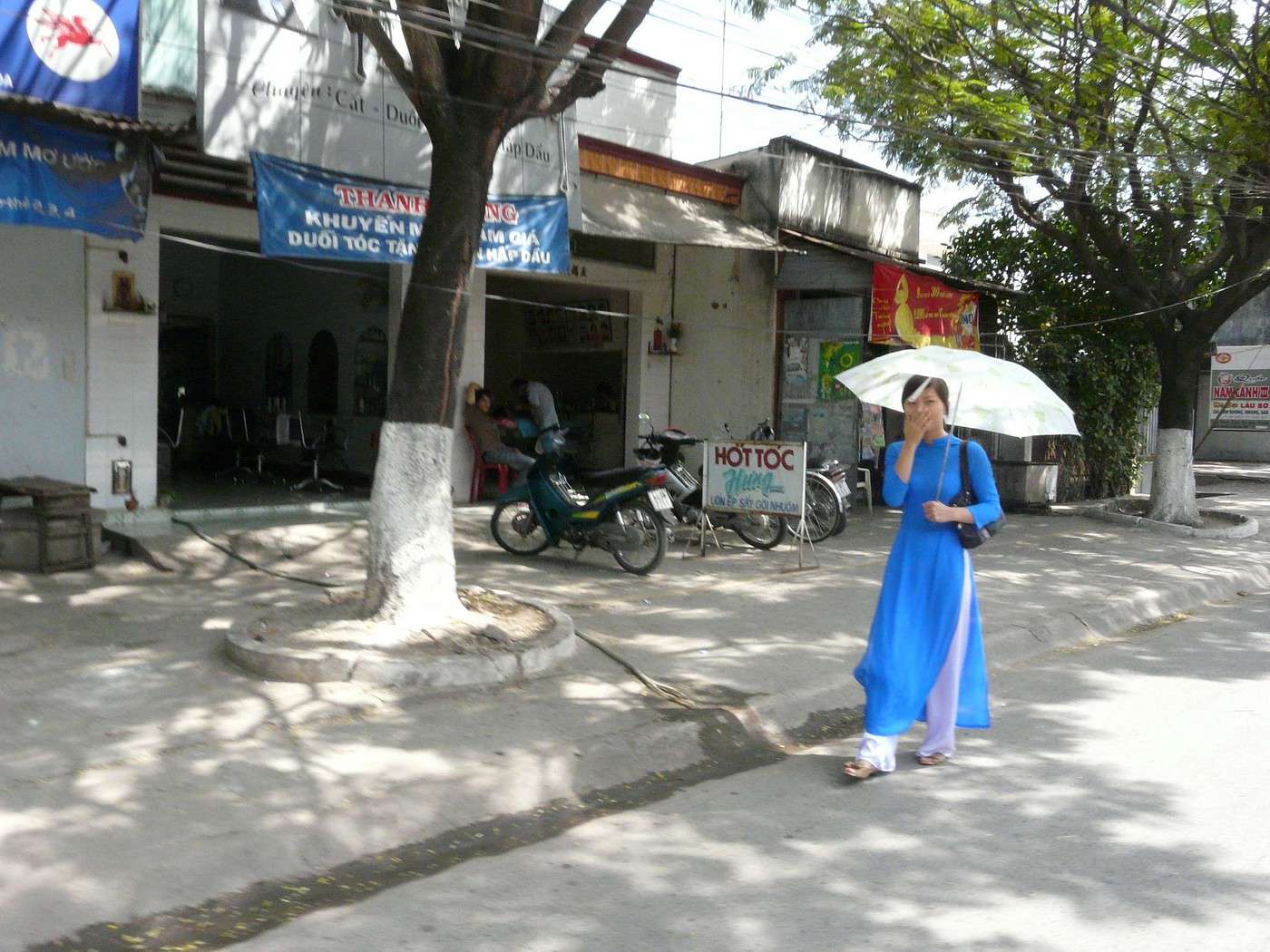
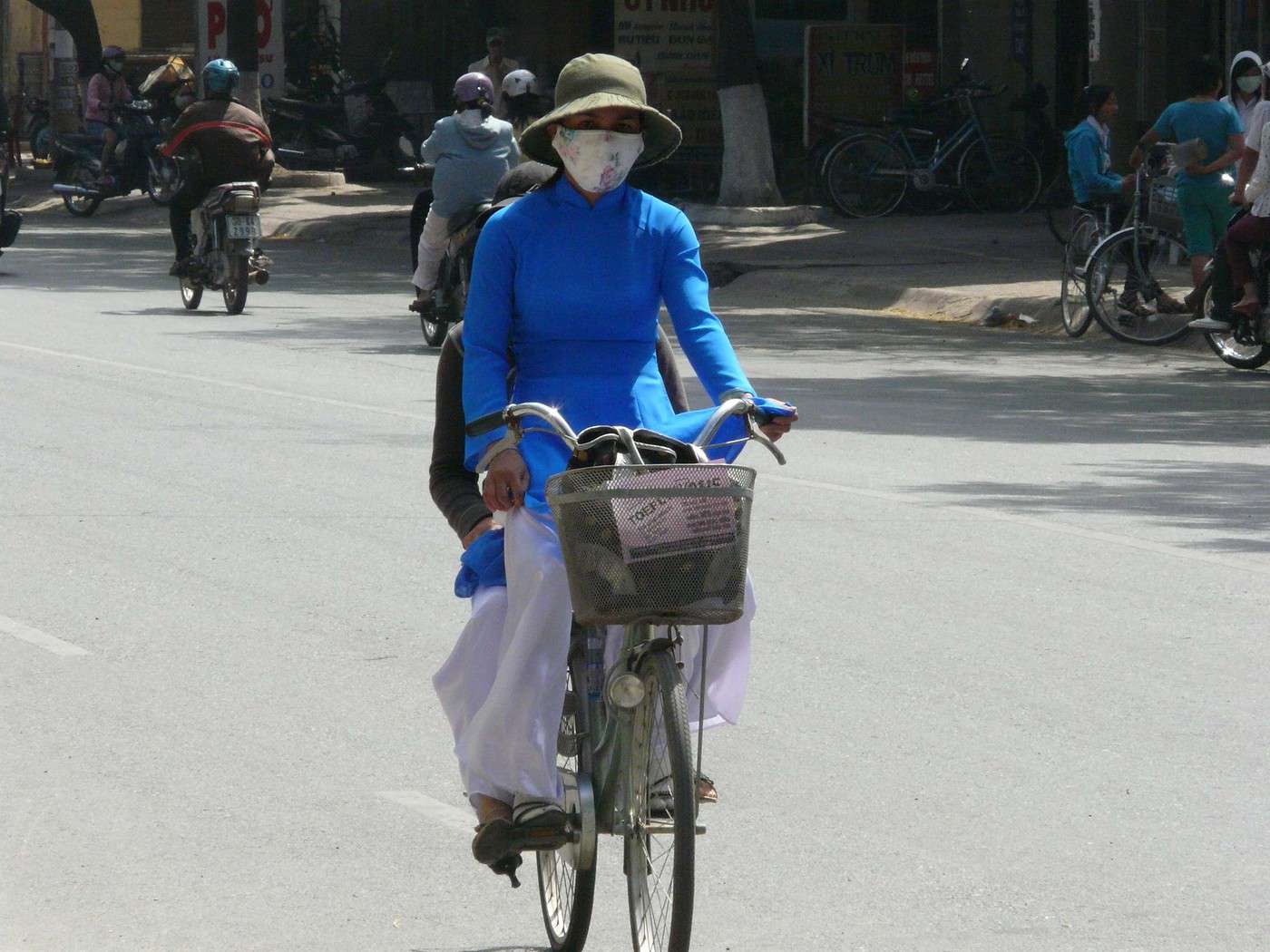
Photos 13, 14, 15, 16 : les lycéennes dans leur uniforme tradidionnelle sont bien là
Photos 17, 18.19, 20 : une classe de jeunes pratiquants d'arts martiaux qui me rappelle le passé qui a façonné mon tempérament.
Lucky that we have a home/Our Home is Nha May Man/Passing rain and dry seasons/In a full-of-love atmosphere/Besides my new family/I have brothers and sisters/The sun shines over the skies/Let's stay here, with all of us,
Malgré la crise modiale, alors que le Viêtnam a l'espoir que la croissance de 2009 serait de 3.9 %.... Finalement, la crise n'a fait que passer comme un coup de vent.
toujours aussi peu objectif oncle HO 😏
un peu d'infos plus réaliste
Le Vietnam pourrait revoir à la baisse ses ambitions de croissance pour 2009
L'économie vietnamienne risque de croître à un rythme moins soutenu que prévu - à quelque 5% au lieu de 6, 5% - a reconnu lundi le gouvernement lors d'une discussion avec des responsables provinciaux, selon un média local.
Cette révision à la baisse des ambitions vietnamiennes pourrait être entérinée, sur proposition du Premier ministre Nguyen Tan Dung, par la prochaine session de l'Assemblée nationale prévue à partir de mi-mai, précise le quotidien en ligne VNExpress.
Vendredi, le bureau des statistiques du gouvernement (GSO) avait annoncé la plus mauvaise performance du Produit intérieur brut (PIB) au premier trimestre sur la décennie passée: +3, 1%. Pour l'ensemble de 2009, il avait prédit une croissance de 4, 8 à 5, 6%, jugeant déjà intenable la précédente prévision de 6, 5% de Hanoï.
Le Fonds monétaire international (FMI) et la Banque mondiale ont tous les deux aussi récemment revu à la baisse leurs prévisions de croissance pour le pays, à respectivement 4, 75% et environ 5, 5%. Les taux sur lesquels comptent le Vietnam restent non négligeables à l'heure où nombre de pays s'enfoncent dans la récession. Mais ils traduisent tout de même un sérieux coup de frein : au premier trimestre 2008, la croissance était encore de 7, 4%.
Le Vietnam souffre depuis plusieurs mois des effets de la crise économique mondiale. En 2008 déjà, le pays communiste, qui devait alors aussi gérer une inflation galopante, avait enregistré sa plus mauvaise performance économique en près de dix ans (+6, 18%, chiffre légèrement révisé à la baisse vendredi).
Sont touchées les exportations -le Japon, les Etats-Unis, l'Union européenne sont des marchés majeurs pour le pays - mais aussi les investissements directs étrangers - le GSO estime qu'ils ont chuté de plus de 40%, à 6 milliards de dollars (4, 5 mds EUR) au premier trimestre sur un an. Pour faire face à ce ralentissement, et malgré une inflation toujours à deux chiffres (plus de 14% sur un an au premier trimestre), le Vietnam a lui-aussi décidé un plan de relance, estimé à environ un milliard de dollars (750 M EUR).
Tout d'abord merci à pour vos témoignages. VF regorge d'information et il en ressort un esprit de transmission, de partage!!!! J'ai encore besoin de vous, j'ai…
Voyager avec des enfants › Cambodge / Vietnam / Indonésie · 2 replies
Je pars 3 mois en Asie avec ma fille de 4 ans et je me pose une petite question: lorsque vous partez longtemps mangez vous 3 repas par jours au Resto ou est ce…
Ou me conseillez vous d'atterrir en provenance de la France en vue d'un périple vers Dien Bien Phu. (Laos ou Vietnam) Ou louer une moto sur place, tarif…
Je prépare mon voyage au Vietnam pour la fin du mois de janvier. Et il me reste quelque interrogation quand à la nourriture: -Est ce que les restaurants sont…
I’m starting a discussion about guides in the Mekong Delta because we’ve just finished our trip in this region and had a hard time finding a French-speaking guide. We had Thanh—she speaks French really well and travels all over the delta region, including Ho Chi Minh City. She’s super friendly and flexible. I recommend her wholeheartedly. If it can help someone...
Feel free to contact us for her number.
Hi everyone,
I couldn’t find any recent info on Kuching.
Can anyone recommend a hotel or guesthouse for under 100 RM that’s nice and affordable? No dorms, please.
Also, does it rain a lot in November, and is it still worth visiting Semenggoh or Bako?
We’ll be arriving in Phnom Penh this coming January and we’re thinking of starting our trip with a stop in Kampong Cham, then Kratie.
After Kratie, we’re considering heading toward Siem Reap with a stop in Kampong Thom.
That said, I’m not really sure how long the Kratie–Kampong Thom journey might take or how complicated it is.
Does this stop on the way to Siem Reap seem like a good idea to you?
If we don’t visit the Sambor Prei Kuk site, are there still any walks or sights worth checking out in Kampong Thom?
Silly question—backpack or hard-shell suitcase for the Sepilok, Kinabatangan, Tioman, KL trip?
I’m struggling to fit all my son’s and my stuff into the 70L backpack... and I’m thinking a suitcase would be easier, but I’m not sure if it’ll work for getting around.
Hi there,
I didn’t plan to return to Thailand this year, but my health conditions mean it’ll be the best place for me to stay between two trips to India. The tourism setup there is so well-organized that it’s the most "comfortable" country for a short visit. Thailand feels too sanitized for my taste, and there’s too much religion, Buddha, and the King, but it’s still the best option given how my health has been evolving. I’d considered two weeks in ThaTon for hiking, but I got too sick from the burn-offs during my trips to the mountains around Chiang Rai. So I’m not sure where to go this year. Definitely not the sea, touristy spots, or the mountains with burn-offs...
After a stay on Koh Phayam this coming November, I’d like to spend 2 or 3 days on Koh Phra Thong before heading further south.
Do you think it’s doable to leave Koh Phayam early enough to catch the 10 AM boat from Khura Buri to Koh Phra Thong? The next one isn’t until 4 PM, which would cost me a whole day.
I’m planning a trip to Indonesia, specifically Sulawesi and Java, in September for 10 days.
I don’t know this part of the world at all—any advice is welcome!
I’ll be traveling solo and would also love tips on meeting other travelers or locals.
Hello everyone,
Not long ago, I used to travel as a couple, but my husband has since passed away, and I’ve decided to set off again. The trip I took to Cambodia in January 2025 did me a world of good.
I’m now considering Thailand, a destination we never included in our plans because even 15 years ago, people said it was too touristy. Still, I’m thinking about the itinerary below, but I don’t feel up to arranging buses, trains, or guides on my own while I’m there. I’m looking for one or more drivers and have been in touch with an agency, but their offers are just copy-paste group tours that I don’t want.
So, if you have any contacts, experiences, or advice, I’d be so grateful if you’d share them with me. Here’s my rough plan:
Arrival in Bangkok
Ayutthaya (2 nights)
Kanchanaburi (2 or 3 nights)
Sangkhlaburi/Sai Yok (3 nights)
Sukhothai (2 nights)
Lampang (I’ve planned 3 nights, but that might be a bit much—it depends on what time I arrive in the city)
Chiang Mai
Chiang Dao
Pai
Chiang Rai
I was thinking about the Mae Hong Son loop—thoughts?
What do you think about staying overnight at the Golden Triangle?
When I look online, of course, I can find agencies that organize tours to national parks, etc.
I’m retired but in great physical shape. I’d rather go hiking than sit in hot springs with crowds of tourists who’ve all arranged meet-ups. I don’t want to spend a day at an elephant camp, and I don’t want to visit Karen villages.
I’d love to hear your advice.
Thank you all,
Hi,
On September 1st, we're heading to Kalimantan for six weeks, probably from Pontianak to the Derawan Islands.
I've scoured this site, which is usually my go-to 😉, and others like VoyageForum, but recent info is pretty scarce.
I'd love any tips on places you've visited—our itinerary is still a work in progress.
We're two couples traveling with backpacks, using buses, boats, guesthouses, and homestays.
Thanks in advance!
Hi everyone,
Could you share your thoughts on my 3-week itinerary?
We’re a small group (family + friends) of 12 people, planning to leave around January 21, 2027.
Here’s my itinerary:
3 nights in Bangkok
4 nights in Chiang Mai
3 nights on Koh Samui
3 nights on Koh Phangan
4 nights in Krabi
4 nights in Phuket
I’m also open to any great tips you might have...
Thanks, everyone! Alain.
Hi,
From Malacca to get to Jerantut, is it better to go back to KL and take a bus from there, or take a bus to Tampin and then a train? Any feedback on the "Jungle Train"? (duration, price, comfort, etc.). Thanks
Hi there,
We’re planning a 3-week family trip next summer with our three kids, who’ll be 8, 8, and 7 years old.
After some research, we’re leaning toward Malaysia to combine nature/forests and paradise beaches. The idea is to introduce our kids to the country’s culture, nature, and wildlife.
We want a great trip but without splurging on luxury options like high-end lodges and resorts. We’re looking for comfort with a touch of authenticity—basically, a good middle ground.
I’ve started putting together an itinerary and would love your expert advice and tips to help us build this amazing trip with our little ones.
Day 1: Departure from France
Day 2: Kuala Lumpur
Stay at a hotel near the airport or KL Sentral.
Just one night.
Day 3: Morning flight to Sandakan (Borneo).
Stay in Sepilok
Day 4: Sepilok:
* Orangutan Center
* Malayan Sun Bear Center
* Rainforest Discovery Centre
Day 5: Depart for Kinabatangan.
Boat safari in the late afternoon.
Day 6: Sunrise safari.
Jungle walk.
Evening safari.
Day 7: Final safari.
Return to Sandakan.
Flight to Kuala Lumpur, then to Kota Bharu (or overnight transit depending on schedules).
Day 8: Transfer to the port.
Boat to the Perhentian Islands.
Days 9 to 13: Perhentian Besar
5 full days.
* Snorkeling
* Hiking
* Turtle watching
* Wild beaches
* Relaxation
Day 14: Return to the mainland.
Bus or private car to Taman Negara.
Hi there,
I’m planning a family trip (my wife and I, both 47, and our two sons, aged 5 and 12) to Malaysia for the last week of June and the first two weeks of July 2027.
We used to love road trips as a couple, then as a trio, but since our second child arrived, we’ve taken a break with "camping village" style trips.
Now feels like the right time to get back to our old habits, while adjusting the pace for the kids.
We’re craving Asia. We’ve been lucky enough to visit Thailand, Indonesia (Bali and Lombok), and Sri Lanka before.
Friends have raved about Malaysia, so we’re definitely tempted.
For those who know and love Malaysia, what would be a good itinerary starting from Kuala Lumpur, with a maximum of 3-4 stops? We’d like a mix of culture, nature, and relaxation (just to clarify, we’re not big beach fans). All of this without rushing, of course.
Hi everyone,
We’re heading to Flores and then Bali at the end of September.
We’ve already visited both but this time, once we’re in Labuan Bajo, we’d like to take a boat to the Komodo Islands to see the famous Komodo dragons.
I don’t want to sleep on the boat—just a day trip would be perfect.
Does anyone know a reliable and friendly provider to recommend?
Thanks in advance, and have a great summer!
Summer seems to be the best time weather-wise for Bali.
And since summer’s when we can take a long trip, let’s go for Bali... even though we know it’ll be *packed* with people!
So we’ll steer clear of the island’s south...
Our current plan (19 days on the ground, 7 stops):
- 4 Nights (3 days) in Ubud
2 days for rice terraces / activities (Tegallalang, Campuhan Ridge, Monkey Forest, Bird Park, coffee plantation, market (?), dance "pestacle," cooking class and/or spa)
1 day with a driver for the Temples (Pura Gunung Kawi, Tirta Empul Spring, Pura Mengening, Goa Gajah...)
- 2 nights in Sidemen (1 day for Pura Kehen + Batur Caldera + Pura Besakih and 1 day to relax in the rice terraces)
- 3 nights on Gili Meno (Rest and beaches) from Padangbai
- 2 nights in Amed (1 day from Padangbai with the Abang rice terrace and Tirta Gangga baths, and the next day a boat tour in Amed)
- 4 nights in Pemuteran (1 day for transfer and rest, 1 day to visit Kawah Ijen, and 2 days of snorkeling at Menjangan Island)
- 2 nights in Munduk (1 day with the Dayang rice terrace and the 3-waterfall hike, 1 day at Pura Ulun Danu Bratan)
- 2 nights in Jatiluwih (1 day in the rice terraces, and on the last day, we’ll stop by Pura Taman Ayun in Mengwi and Pura Tanah Lot before catching our red-eye flight).
Accommodations in homestays or hotels.
Transportation to be arranged on-site with the lodgings (?)
Boat to Gili Meno to book in advance (?)
Kawah Ijen excursion to plan ahead (?)—check with the homestay (?)
Thanks for your thoughts/comments to help us explore this destination...
After reading and researching, we're planning the following stops in Cambodia in January 2027:
- Phnom Penh
- Kampong Cham
- Kratie
- Siem Reap
- Battambang
- Kampot (round trip)
I'm wondering about the direction of these stops, which could also influence our international flights.
Either a round trip from Phnom Penh in the order above.
Or landing in Siem Reap with the following order:
This second option would save us the Battambang - PP - Kampot trip but means doing a round trip to Battambang from Siem Reap and placing the "highlight of the trip" (Angkor) at the beginning of our stay.
We’ll be arriving in Phnom Penh this coming January and we’re thinking of starting our trip with a stop in Kampong Cham, then Kratie.
After Kratie, we’re considering heading toward Siem Reap with a stop in Kampong Thom.
However, I’m not quite sure how long the Kratie–Kampong Thom journey might take or how complicated it is.
Does this stop on the way to Siem Reap seem like a good idea to you?
If we don’t visit the Sambor Prei Kuk site, are there still some walks and/or things to see in Kampong Thom?
Hi there,
We’re planning to travel from Chiang Rai to Luang Prabang next November.
We’d like to take a slow boat from Chiang Khong—or rather from Huay Xai in Laos—with an overnight stop in Pakbeng.
Could you let us know if the boat still leaves Huay Xai in the late morning? If so, what time roughly, and what’s the price for the trip?
Thanks for your help!
Alod
We (3 adults: 68, 65, and 25 years old) are just back from a short trip to the Philippines, and I’d like to share a little summary of our journey. First of all, I’d like to thank everyone who contributes to this forum about this destination and answers the questions of those who aren’t familiar with it. I should also mention that my comments are personal and don’t reflect anyone else’s opinions. Since I don’t have any literary or photographic talent, I’ll stick to the facts and share a few details about the sights, hotels, and restaurants.
Preparations:
We chose this destination in December and quickly booked our flight tickets (540 € with Turkish Airlines) for a departure on February 16 and return on March 5, 2019. We then contacted two French-speaking tour operators based in Manila, asking them to put together an itinerary based on our wishes (places to visit, type of accommodation) and our budget. We wanted to see the rice terraces in northern Luzon, the hanging coffins in Sagada, before flying to the Visayas (Bohol, Siquijor, etc.), and the Taal Volcano, while limiting our nights in Manila as much as possible. In the end, we opted for Alize, whose itinerary and quote matched our request almost perfectly. Our exchanges helped us refine our circuit.
International flights:
The round-trip flights went smoothly. Turkish Airlines, while not at the level of Asian or Gulf airlines, does the job just fine.
Day 1:
We landed on time (6:15 PM) on Monday, February 16, at Terminal 3. We exchanged our euros (near the car rental counters), and I can confirm the exchange rate was very good. On the way to the St. Giles Hotel (decent and affordable for a transit night), we got our first glimpse of Manila’s dense traffic. The Makati district, where our hotel was located, offers a wide choice of restaurants, so we grabbed a quick bite to recover from the trip.
Day 2:
This day was dedicated to transferring to Banaue. Fortunately, we had a comfortable van and an excellent driver for this journey, which took all day (8 to 9 hours with stops). We got a taste of driving in the Philippines—and it’s terrifying. You wouldn’t want to drive on these roads. The first thing that struck us was the relatively good condition of the roads and the cleanliness (a change from other Southeast Asian countries). This impression lasted throughout our trip. Around 6 PM, we checked into our room at the Banaue Hotel (large, charm-free, but with a beautiful view of the rice terraces).
Day 3:
With the help of a local guide, we took a jeepney to Batad. And then—wow! The rice terraces form an amphitheater overlooking the small village. Under the sun, it’s simply spectacular and breathtaking! Even though we’re familiar with rice terraces (Sapa, Bali, Thailand, etc.), we were dazzled by so much beauty. We spent the day walking along the terrace walls. This place is timeless and fully deserves its UNESCO World Heritage status. However, we returned to the hotel exhausted (due to our ages and lack of exercise). We had dinner with our driver at the Las Vegas restaurant in the center of Banaue. The meal was decent, cheap, and the Filipino owner played the guitar to accompany our dinner.
Day 4:
Today, our driver took us to Sagada. The mountain road offered spectacular landscapes (about 1.5 to 2 hours). Along the way, we stopped in Bontoc to visit the small but interesting anthropological museum. It features old photos and various objects from the Ifugao tribes, as well as a reconstruction of primitive dwellings.
We then went on a short hike in Sagada with a very friendly local guide who explained the region’s funeral rites. The walk started at the communal cemetery before reaching “Echo Valley,” where we saw the first coffins hanging on the cliff. We continued to the “Underground River” and a small waterfall, ending our journey in the “Lumiang Cave” burial cave. All in all, this day was very interesting. On the way back, we made a few photo stops.
In the evening, on our driver’s recommendation, we ate at the “Bistro,” a French enclave in the center of Banaue (good pizza, roasted quail, homemade fries).
Day 5:
Today was a transfer day. To limit fatigue and nights in Manila, our tour operator arranged a flight from Clark to Tagbilaran (Bohol), saving us 2 to 3 hours of driving. But to catch our flight, we had to leave very early: 5:30 AM. Our kind driver dropped us off on time at the airport. To use it, we had to pay a 150 PHP tax per person. The Philippine Airlines flight (15 minutes) left early and was far from full. Upon arrival, we were taken to the Loboc River Hotel, on the banks of the river of the same name. A very charming lodge lost in a tropical garden. We stayed in a stilt cottage overlooking the river. We relaxed a bit in the lovely pool. This place is really great—the staff is charming, and the food is excellent for a reasonable price.
Day 6:
This day was dedicated to exploring Bohol. The program was classic, starting with the tarsier sanctuary. We saw a few specimens in a small garden, each pointed out by a staff member. It was both good and disappointing because the animals were in pseudo-freedom in a small enclosure. Then we went to the “Chocolate Hills” and climbed 240 steps to admire the panoramic view of the hills—but by 10 AM, it was crowded. On the way back, we stopped at the butterfly garden, which was uninteresting: tiny, with few butterflies. We consoled ourselves by photographing beautiful flowers. To please our teen, we stopped at the Loboc Eco Tourism Adventure Park and crossed the river lying down, suspended from a steel cable (300 PHP). Finally, we had the traditional lunch-cruise on the Loboc River. It was a factory-like experience, and the meal was unremarkable. The only good thing was the singer on each boat and the lush vegetation. Afterward, we visited colonial churches and the cathedral, remnants of the Spanish presence, before returning to the hotel for a well-deserved dip in the pool. Note that for those interested, there’s an arena near the hotel where cockfights are held every Sunday—something Filipinos are passionate (if not obsessed) about.
Day 8:
Very early departure for the port. We boarded a *banca* in search of dolphins. After about an hour of sailing, we were lucky enough to spot around a hundred dolphins. Our boat then headed to the small and charming island of Pamilacan. After a walk through the little village, we came across locals traditionally building a boat. They told us it takes about a month to finish their outrigger boat. Then we had to choose our snorkeling spot between the coral garden, the fish park, and the turtle enclosure. Note that a fee is charged for each spot: 150 PHP per place and per person. It felt a bit like we were being ripped off, especially since the spots weren’t amazing—we’d see much better on Apo for much less. We had lunch on the island at one of the many small eateries (350 PHP per person).
Days 9 and 10:
On our return, we were taken to the Bohol Sea Resort on Panglao Island, where we stayed for 2 nights. It’s a small, recent establishment in a quiet corner of the island. It’s relaxing—maybe a bit too much. It has a nice pool and access to Danao Beach, but the view is blocked by a flotilla of boats. We didn’t try their diving school. The meals were good. If we had to do it again, we’d skip this stop to spend more time in Negros.
Days 11 and 12:
We took a fast ferry (Ocean Jet) from Tagbilaran port to Dumaguete and were taken to the Thalatta Resort, about 20 km away near Zamboanguita. We stayed there for 2 nights. Let’s just say it was our favorite. It’s a small place facing Apo Island. The rooms are simple, and the pool, nestled in a magnificent tropical garden, is fantastic. The staff is friendly, and the meals are very good. The hotel has its own diving center (snorkeling gear provided) and its own boats. We booked the Apo Island excursion: 1,350 PHP per person, including lunch. It was incredible: magnificent corals, colorful fish, and turtles of all sizes. The crew was endlessly kind and didn’t hesitate to dive to guide us to the best spots. In short, a perfect day. This site is ranked among the top 5 diving spots in the Philippines.
Since we were lucky enough to be there on a Wednesday morning, we explored the surprising Malapay Market, a 10-minute walk from our hotel. You’ll find numerous stalls selling vegetables, fruits, live or dried fish, and handicrafts. Enclosures are set up for selling livestock (calves, zebu, pigs). There are also restaurants. We were lucky to see two pigs roasted traditionally on a spit. There are few Europeans, and the people are warm. A great moment.
We left this beautiful place with regret because we didn’t have time to visit the island or go swimming with whale sharks.
Days 12 to 15:
From Dumaguete port, we took a short crossing (1 hour with Ocean Jet) to Siquijor Island to reach the Coco Grove Beach Resort. A beautiful hotel nestled in a spacious tropical garden. Several restaurants and bars, 4 pools. Despite the size of the place, it remains intimate. You can snorkel (corals and fish) right in front of the beautiful beach. We stayed in a very pleasant duplex suite. For those interested, there’s a spa and a diving center. You can also take the Apo Island excursion (offered at 1,950 PHP).
We spent our days relaxing between the pool and the beach. In the evening, the sunsets over Negros and Apo were stunning.
We booked an island tour with a comfortable tricycle from the hotel (1,500 PHP). The circuit was classic and allowed us to go around the island. We discovered beaches, the famous 400-year-old ficus tree with its enormous roots, and its equally famous foot bath with its cleaning fish. Then we visited the St. Isidore Convent before heading to the Cambugahay waterfalls and their four pools. The setting is idyllic, and the water is surprisingly good—we had a lot of fun swimming. We had dinner at a restaurant overlooking the island, where you can see Apo, Cebu, and Negros. In the end, Siquijor turned out to be a real little tropical paradise.
Since the hotel restaurants were expensive, we dined at nearby establishments: Fuego (clean, good—excellent raw fish—and quiet), Chekesch (louder), and the very pleasant Baha Bar, which brews its own beer and offers more refined cuisine.
Days 15 to 16:
We left at dawn to return to Dumaguete and its airport by ferry. We had breakfast at the Coco Grande Hotel, an annex of the previous one. The Philippine Airlines flight went smoothly. A driver took us to the town of Taal. We stayed at Paradores Del Castillo, right in the heart of the old town. It’s a charming old house with only 6 rooms. The various rooms are decorated with antiques—a real little museum. The garden is pleasant and opens onto the town.
It’s an old early 19th-century house converted into a hotel, beautifully arranged with 6 rooms in the heart of the city. The restaurant in the garden is very pleasant and offers a panoramic view.
We visited an old Spanish house before heading to the beautiful Basilica of St. Martin of Tours, one of the most beautiful religious buildings in the Philippines. A mass was in progress, allowing us to gauge the Filipinos’ fervor before we could visit. When we left, it was dark, and we could admire the illuminated building. We ended our evening by exploring the night market with its many fruit and skewer stalls. A nice surprise.
In the morning, we were taken to the shores of Taal Lake, an ancient caldera where a second volcano has formed in the middle of the lake, which in turn contains another lake. We boarded a *banca* to reach the island in the middle of the lake. This was followed by an uphill walk, made difficult by the high temperature (36°C) and the dust on the path. The dust was worsened by the many horses carrying (or bringing back) the less courageous. To illustrate the difficulty of the climb, the trail is marked by the Stations of the Cross and its 14 stations. We were panting while our guide trotted far ahead. Our effort was rewarded when we reached the summit and its viewpoints over the inner lake and the surroundings. The wisps of smoke seen here and there confirmed we were on an active volcano. Inside the lake, there are supposedly 45 small volcanoes, one of which emerged during its last eruption in 1911.
On the way back, we had lunch by the lake before returning to Manila and the Bayleaf Hotel, whose main merit is its location in the Intramuros district. In the late afternoon, we walked along the walls of the old city.
We had dinner on the hotel’s panoramic terrace overlooking the city and the bay.
Day 17:
Last day! Our tour operator joined us for a tour of the Intramuros district. He enriched the visit with comments on the history, geopolitics, and economy of the Philippines. We visited the Manila Cathedral, destroyed 7 times in the past (6 earthquakes and the 1945 bombing). It’s beautiful, and its stained glass is magnificent. We couldn’t enter the San Agustin Church, the oldest Catholic building in Manila. We passed by the memorial to the Battle of Manila, which claimed over 100,000 lives. We visited the area around Casa Manila, which was closed on Monday, and had a drink at Barbara’s cabaret, located in a historic house. A very enriching morning.
Then we went to the Mall of Asia, the world’s largest shopping mall, to buy some souvenirs (Kultura store) before being taken to the airport. We exchanged our last pesos at the buying rate right after check-in.
The return flight went smoothly. We regretted not being able to use the facilities of Istanbul’s new airport, as its opening was delayed by another month.
Finances:
In the end, we spent 1,640 € for the international flights, 4,200 € for the stay (hotels, visits, various transports) with the agency (whose professionalism we can only praise), and about 700 € for meals, tips, and souvenirs.
Summary:
Luckily, we had beautiful weather throughout our stay, with temperatures between 26 and 35°C. Discovering the Philippines was a wonderful experience. The diversity of the landscapes, the kindness of the Filipinos, the cleanliness, and the truly delicious fruits (especially pineapples and mangoes). We were never harassed, unlike in many touristy countries. On the other hand, the food, though generally cheap, wasn’t exceptional.
Since this country is so vast, we might return in the near future.
Though I’m not a specialist on this destination, I’m happy to answer your questions based on my experience.
So, my flight tickets have just been booked for a trip to Cambodia from November 4th to 27th, 2025.
I’ll be traveling solo and want to explore this amazing country while getting a bit off the beaten path.
I’m arriving in Phnom Penh and also departing from Phnom Penh.
My goal is to travel as much as possible by bus and scooter.
What itinerary would you recommend?
What are the must-do things?
I’m open to all tips and info.
Thanks in advance for your help and responses.
We got back enchanted from a 6-week trip to Cambodia!
Our itinerary: Kampot - Kampong Chhnang - Battambang - Siem Reap - Kampong Cham - Sen Monorom (Mondulkiri) - Banlung (Ratanakiri) - Kratie - Kampong Thom - Phnom Penh.
We traveled by bus, minivan, boat (between Battambang and Siem Reap), overnight bus, scooter, tuk-tuk, and rickshaw for shorter distances. We stayed in guesthouses, homestays, and even in the jungle during a trek.
While the Angkor temples are fabulous, it’s the people you should visit Cambodia for—the "Land of Smiles" truly lives up to its nickname! Tourists gather in Angkor but are quite rare elsewhere, even though the country is easy to travel around.
I won’t describe our trip in detail but instead highlight a few favorite moments.
From Kampot, don’t hesitate to head out around 6 AM to see the fishermen return and their wives selling their catch (just 10 minutes away by the coast). Guaranteed picturesque!
In Battambang, known for its food scene, we discovered a cooking class with Smokin’ Pot (authentic Khmer cooking class). They pick you up from your guesthouse to shop for ingredients (we made fish amok and beef lok lak) at their village market, then cook and eat together. A private class—just the two of us! They also send the recipes via WhatsApp as a PDF. +855 12 821 400
In Siem Reap, I can recommend a francophone tuk-tuk driver who was very attentive to our wishes. We visited tourist spots but also more remote villages and local grilled-pork restaurants with him. He’s a wealth of information about local life, and chatting with him was a real pleasure—we left with regret! You can reach him on WhatsApp: Vung Hem, +855 96 614 0146.
We did a 2-day, 1-night trek in Mondulkiri. Don’t expect a super dense jungle—it looks more like a forest similar to ours. But Nara, our Bunong ethnic guide, made the experience adventurous and ultimately very immersive! WhatsApp +855 86 630 489
Bee Bee’s Chalets homestay: If you pass through Banlung in Ratanakiri, we *loved* this family and their budget-friendly bungalows. Playing Uno, enjoying Nita’s cooking (ask for her fish amok—amazing!), it was a true homestay experience! Contact Nita on WhatsApp: +855 88 818 5525.
In Kratie, rent a scooter and follow the Mekong north for 40 km at your own pace. Being so close to the locals was a treat! Same goes for heading south if you have time.
Kampong Thom: Head 25 km out to visit the pre-Angkorian temples of Sambor Prei Kuk. Around a hundred monuments spread across three sites… and hardly anyone there!
A few practical tips:
Though prices are often listed in dollars, you can always pay in riels (1 USD = 4000 riels), which is what we preferred.
PassApp: An app to book tuk-tuks or rickshaws (and most importantly, know the price upfront).
Virak Buntham: A bus company connecting several cities, bookable online.
Feel free to ask me questions about places, accommodations, etc.—I’d be happy to answer!
We’re planning our second trip to Thailand (2 weeks on-site, late April/early May) as a family with our 5- and 7-year-olds.
On our first trip, we visited Bangkok, Ayutthaya, the River Kwai, Koh Lipe, Koh Phi Phi, and Khao Lak. We especially loved Koh Phi Phi for its limestone cliffs and lush vegetation, as well as Koh Lipe for its crystal-clear waters and snorkeling.
This time, I’m thinking of spending 7 days on the islands. I was considering Koh Tao and Koh Phangan. We’d like some scenery, snorkeling right from the beach, and a bit of atmosphere—but not too much (just enough to grab dinner in the evening).
For the other part of the trip, we’re torn between Chiang Mai and Khao Sok. One or the other… or both? We don’t want to rush, but we’re really nature-focused, so we won’t be hitting too many temples…
Hi there, I’ll be on vacation in Malaysia in November and plan to spend 5 days in Penang. After that, I’d like to visit some temples and places in Butterworth or nearby, and also explore the city. Since I usually get around on foot, which neighborhood would be best for me—meaning within a 30-minute walk of attractions, street food stalls, bus lines, etc.? Thanks in advance for your help!
Françoise
Hello, it’s been a while since I last asked for your help on this forum—I’ve really missed it! I hope you’re all doing well, whether you're new or returning members.
I’m planning a trip from February 6 to 18, 2027, with my sister (we’re 47 and 50—time flies!). I’ve got my eye on a flight from Paris that lands in Bangkok on February 7 at 3 PM, with a return flight from Bangkok on February 18 at noon.
My sister has never been to this destination, and it’ll be her first time in Asia. Her priorities: beaches, sunshine, and cocktails by the shore. For me, I love that too, but I also enjoy exploring, nature, forests, and a bit of comfort (mixing guesthouses and higher-end hotels with pools). A little evening entertainment would be great, but not too much—good cocktails in a nice atmosphere rather than a rave party ;-). And I can’t help but dream of taking her on a little trek through a tropical forest (guaranteed memories and laughs, though she might curse me at the time) and showing her some karst landscapes.
I’ve been to Thailand before, but it was 15 years ago...
The idea is to give her a taste of Bangkok for 1 or 2 nights, a few days on an island (but which one...?), a tropical forest excursion with 1 or 2 nights on-site (Khao Sok?), and then back to Bangkok.
For the "main" island, even after reading the *Guide du Routard*, I’m still undecided. It’s hard to find a place that ticks all the boxes without feeling as crowded as the French Riviera in August: Koh Lanta? Khao Lak (though it’s not an island)? Koh Tao (I could maybe get my PADI certification, but I’m afraid she’d get bored, and it might be better to save that for a solo trip)? Koh Yao Yai (I worry we’d be bored in the evenings)? What a dilemma!
Thank you if you’ve read this far! Feel free to share any advice—it’ll all be warmly welcomed.
Here’s a rough outline of the itinerary (I’d rather skip a night in Bangkok if needed):
· Saturday, February 6, 2027: departure (overnight flight)
· Sunday, February 7, 2027: arrival at 3 PM, probably at the hotel by 6 PM, evening in Bangkok (overnight in Bangkok)
· Monday, February 8, 2027: day in Bangkok (Wat Pho and a floating market?) (overnight in Bangkok)
· Tuesday, February 9, 2027: travel to Koh Lanta or another island (flight to Phuket or Krabi?) (overnight on island "x")
· Wednesday, February 10, 2027: beach and walks (overnight on island "x")
· Thursday, February 11, 2027: beach and walks (overnight on island "x")
· Friday, February 12, 2027: beach and walks (overnight on island "x")
· Saturday, February 13, 2027: beach and walks (overnight on island "x")
· Sunday, February 14, 2027: beach and walks (overnight on island "x")
· Monday, February 15, 2027: travel to Khao Sok—nighttime excursion to Khao Sok (overnight in Khao Sok)
· Tuesday, February 16, 2027: exploration and hike in Khao Sok (overnight in Khao Sok)
· Wednesday, February 17, 2027: return trip to Bangkok (overnight in Bangkok)
· Thursday, February 18, 2027: return flight to Paris at noon
I’m planning a trip to Cambodia and was set on visiting the Ratanakiri region, which seemed to match what we love most in terms of landscapes: forests, jungle, greenery...
However, as I started looking into the area, I read that deforestation there is massive, and some of the info on the topic is years old—the situation hasn’t improved since, unfortunately.
So my question is: is Ratanakiri still worth visiting, and does it justify the long travel time and distance to get there?
I’ve seen that jungle treks are possible, but from experience, I know guides sometimes hesitate to venture deep into the forest and stick to shorter walks along the edges of parks.
Hi there,
I’ve found so many tips and reviews on this forum, so it’s my turn to contribute a little.
We spent just over two weeks with our family, with the following itinerary:
- Hanoi: 5 days
- Halong Bay: 3 days and 2 nights
- Tam Coc: 3 days
- Mai Chau: 2 days
- Sapa: 3 days
We got around by bike, scooter, Grab, and bus.
Our main accommodations were homestays and hotels in Hanoi.
We visited lots of museums, temples, and neighborhoods in Hanoi.
We did a 2-day, 1-night trek in Sapa with May, a Hmong local, without going through an agency.
A few small regrets: the weather was overcast, and we couldn’t make it to Fansipan, but nothing major 😅. We also couldn’t find transport to get from Sapa to Mu Cang Chai.
Other than that, this trip will stay in our memories for the kindness of the Vietnamese people, the connections we made, the food (street food, homestays...), the coffee 😋, the landscapes, and how easy it was to get around...
Our goal was to take our time and focus only on a small part of northern Vietnam.
If you need any tips or recommendations, don’t hesitate to ask.
Looking forward to hearing from you.
Cédric.
Hi there, we’re landing at Hanoi Airport and would like to head straight to Cao Bang without going into Hanoi. Does anyone know if there are buses that go directly from the airport to Cao Bang (especially in the early afternoon)? Thanks in advance!
Hi everyone,
I’m currently working on a 30-day itinerary for May/June 2027.
10 days in eastern Java (Malang, Bromo, waterfalls, Meru Beriti Park, Banyuwangi, and Ijen), a short transit in Ubud for a few days, then Flores before heading back to Jakarta.
We’ll spend 15 days in Flores (the classic route: Moni, Bajawa, Riung, Ruteng, ending in Labuan Bajo).
I’d love some firsthand feedback on flights to Maumere or Ende from Bali Denpasar. I know there are no direct routes and that you have to connect through Labuan Bajo or Timor (I think), which isn’t an issue in itself.
But I’ve read here and there that flights to these destinations can be delayed—or worse, canceled—and that it’s better to fly in and out of Labuan Bajo, which isn’t exactly ideal...
Thanks for any tips or experiences you can share!


 Il est grand temps de rallumer les étoiles! (Vietnam)FR
 Découverte des ethnies minoritaires du nord du VietnamFR
 Le Tonkin, une région superbe et accueillanteFR
 De Hô-Chi-Minh au Cambodge via le MékongFR
 Un mois au Vietnam, des montagnes du nord au delta du MékongFR
 Dormir chez les Lolos Noirs sans guideFR
 22 jours au VietnamFR