Devenir fou pas grave , mais devenir folle là c'est grave , faire gaffe . 😏😏😏😏
LOL
Il y a aussi justement tout ce harcèlement sexuel exercé par de superbes filles "un peu folles" 😉 sur de
pauvres touristes qui passaient (à Pattaya) par hasard ...
🙂
Si vous avez compris tout ce que je viens de vous dire, c'est que j'ai dû faire une erreur quelque part. - Alan Greenspan
Science sans conscience n'est que ruine de l'âme - Rabelais
Effectivement : le travail c'est la santé !!! A rien faire moi je vais devenir fou... Peut-être que je le suis déjà!?!?😉
Ah bon, ça fait 17 ans que je suis libéré de l'esclavage du boulot et des petits chefs franchouillards , je me suis jamais porté aussi bien mentalement et physiquement.
Ne plus dépendre des autres ou d'horaires c'est formidable je trouve.
A part 1h de sport 6j par semaine pour être physiquement bien je ne fais strictement rien et je m'en trouve bien.
Je m'emploie à rester en bonne santé car j'ai l'intention de devenir l'homme le plus vieux du monde dans 60 ans.
Et pourquoi es-ce que ça serait les Russes et Chinois qui aurait la soupe pourrie. Avez-vous été en Thaïlande il y a 20 ans et plus. Et bien maintenant c'est terrible. J'ai voulu montrer Pat Pong à mon mari qui ne connaissait pas en 08. Avant les filles et les Catoyes étaient très gentilles. Allez dans un bar maintenant, c'est carrément l'agression. Mon mari voulait absolument rentrer pour voir, de suite il y a eu 6 à 8 filles qui nous ont sauté dessus, avec chacune un verre et il aurait du payer toutes ces consommations ??? Et bien oui, il a du car il s'est fait griffer, et ensuite pour pouvoir partir sans que les gros bras ne lui fasse une manchette. Car derrière il y a les petits Thaï, bien maigres, mais qui font de la boxe, Aie! aie! ça fait mal.
Mais laissons tranquille le sud avec encore quelques îles paradisiaques, et le nord. Le reste allez voir.
Les Suisses sont stupides, car cet amis à marié il y a passé 30 ans sa Thaï, qui avait de faux papier, pourtant il a du fournir tous les papiers nécessaires. Mais maintenant que c'est plus contrôlé, elle se trouve aussi bézet, car elle avait un passeport Suisse, et bien bernicle maintenant c'est plus elle qui peut revenir.
Mais par contre durant toutes ces années elle se plaignait de ne jamais avoir d'argent. Mais actuellement elle à plusieurs maisons en Thaïlande, un magasin à BKK, un appart bien placé dans la ville du terrain. Et le cretin de Suisse, qui a tout vendu, il n'a plus rien, et vit en Suisse chez des amis ou l'été dans une cabane de jardin. Es-ce acceptable ?
Pour celui qui avait investi son argent, je ne sais pas comment il a fait mais en tout cas il a été menacé de partir car toutes la famille de sa copine lui sont tombés dessus, et interdiction de revenir en Thaïlande autrement couic....
C'est pas tout rose, un autre Suisse qui avait aussi investi, et bien lui il a passé sous le bus à BKK Raide.... Il était avec des Thaïs, et quand on sait que les bus passent à contre sens, personne n'a pu dire si c'était lui qui s'était jetté sous le bus ou si il s'est fait poussé, mais les Thaïs rigolent bien.
Deux autres amis on cloturés leurs propriétés des choses pas possible, dont l'un a un magnifique étang, à chaque fois que les poissons sont bien gras, par le St Esprit, ils s'envolent, plus un seul.
Il hésite à mettre de l'électricité dans les barbelés sur les murs car il a peur qu'un voleur se tue et qu'ils se vengent. Donc il ne fait rien que remettre des poissons pour les suivants.
C'est pas une vie. Quand on voit la Chine on vient d'y passer plus de 4 mois, et la Corée du Sud on y est pour 3 mois c'est autre chose.
Là quand même un peu fort, c'est bon pour la Colombie ou le Brésil et pas partout, mais pas pour la Thaïlande, coincés sans Kalachnikof car les représaillent sont terrible. Torture et tout et ensuite dans les kongs ni vu ni connu.
Bon faut pas plaisanté, vous allez aller sur les îles, Kosami c'est plus ce que c'était mais si vous aimez les boites de nuit ok ça vous ira. Ko Fangan fini la belle îles de rêve et Ko Tao, que j'ai connu avec une dizaine de bungalow en bois sans eau et sans électricité fini, c'est un centre mondial de la plongée. Ok vous faites de la plongée vous adorerez
Pattaya c'est absolument infect. Pukket, si vous allez dans les Resorts bien cher ok avec piscine et tout le tralala. Mais pour les petits bungalow pas cher, tout au sud vous trouverez encore pour 500 Baths. Krabi c'était le rêve, ça peut l'être si vous ne connessiez pas avant.
Il reste encore quelques petites îles sympa, ko Bulon, Ko Lipe, Ko Jam, Ko Lanta, Ko Chang, et quelques Ko, mais dépêchez vous. Par contre le nord vous adorerez si vous aimez les belles choses hors des boites de nuit.
Vous allez tous en Thaïlande parce que c'est facile de voyager, et vous avez peur des pays moins connus tel que la Chine, la Corée du Sud, le Myanmar, le Vietnam et j'en passe. Je ne parlerai pas du Japon car c'est hors de prix. C'est comme l'Indonésie vous parlez de ce pays on vous répondra Bali, mais il n'y a pas que ça. Nous avons fait 20 îles dans ce pays en 13 mois et bien quelle merveille.
Vous avez tout à fait raison, mais je n'exagère pas, es-ce que c'est bien de vivre la peur au ventre, barricadé, en lâchant à tout moment des poignées de Baths pour se faire bien voir, et avoir la paix. Je trouve que c'est terrible. Les personnes que je connais qui vivent en Thaïlande on la peur au ventre en plus ils doivent se présenter tout le temps à l'immigration même marié et vivant depuis plus de 12 ans. Ils arrosent les enfants de leur femme, plus la famille élargie car la femme est toujours entrain de demander de l'argent pour une vache qui a crevé, pour un toit qui fuit, pour la mère qui doit aller à l'hôpital, etc etc.
Je n'y ai jamais vécu, mais si je compte le nombre de fois où j'y ai été, depuis les années 80 et bien j'y aurai bien passé plus de 2 à 3 ans. Mais là la dernière fois en 08, ça m'a débordé.
Donc je vais dans d'autres pays. Depuis plus de 3 ans en continu, 15 pays visités et seulement en Asie c'est autre chose que la Thaïlande.
On ne se sent pas des portes-monnaies ambulants.
je ne dois pas vivre dans la même Thaïlande que beaucoup d'entre vous
prix fareng prix thaï, OK dans bien des endroits il y a deux prix, si vous êtes résident vous avez un permis de conduire thaï, vous sortez votre permis et vous payez le prix thai, pour le Mémorial à Pattaya, je n'ai pas l'impression qu'il y a deux prix, mais dernière visite, il y a 10 jours, j'ai payé 250 baht, sans sortir mon permis thai
Questions sécurité, je me promène en soirée aussi bien qu'en fin de nuit, dans n'importe quel quartier de Pattaya, et je ne me suis jamais senti en insécurité.
J'ai eu il y a 6 mois un accident de moto, entièrement de ma faute, mes amis thaï se sont décarcassés pour que cela se termine le mieux possible.
j'ai été contrôler par la police plusieurs fois avec défaut de permis de conduire, je n'ai jamais été verbalisé, pour les sens interdit, c'est une fois sur deux.
Tout n'est pas parfait loin de là, mais je peux vous garantir qu'il est préférable d'être un étranger en Thaïlande, qu'un étranger en France.
Les Suisses sont stupides, car cet amis à marié il y a passé 30 ans sa Thaï, qui avait de faux papier, pourtant il a du fournir tous les papiers nécessaires. Mais maintenant que c'est plus contrôlé, elle se trouve aussi bézet, car elle avait un passeport Suisse, et bien bernicle maintenant c'est plus elle qui peut revenir.
Mais par contre durant toutes ces années elle se plaignait de ne jamais avoir d'argent. Mais actuellement elle à plusieurs maisons en Thaïlande, un magasin à BKK, un appart bien placé dans la ville du terrain. Et le cretin de Suisse, qui a tout vendu, il n'a plus rien, et vit en Suisse chez des amis ou l'été dans une cabane de jardin. Es-ce acceptable ?
il a ete voir un avocat juste pour voir, meme sans argent en payant un % sur l'argent recuperer... car usage de faux, enfin plutot usurpation d'identiter, c'est un delit grave.. apres aucune idee comment il a fait les papiers, acheter ses biens... mais a creuser . il y a des lois en thailande.
menace de mort etc, c'est beau de parler, meurtre premiditation en thailande c'est perpete, tentative de meurtre c'est 3-4ans de taule..donc je dis juste que ca parle beaucoup.. mais apres il faut voir hein et c'est pas les prisons 5 etoiles europeenes... ;p
Deux autres amis on cloturés leurs propriétés des choses pas possible, dont l'un a un magnifique étang, à chaque fois que les poissons sont bien gras, par le St Esprit, ils s'envolent, plus un seul.
Il hésite à mettre de l'électricité dans les barbelés sur les murs car il a peur qu'un voleur se tue et qu'ils se vengent. Donc il ne fait rien que remettre des poissons pour les suivants.
C'est pas une vie.
oui enfin il y a aussi des cambriolage en suisse... c'est pas 3 poissons qui sont voler, en plus d'avoir retourner l'appart , a geneve pas une semaine sans des agressions avec arme blanche ou pas, sans parler de la faune des dealer et autres...en habitant vers la gare tu comprends...
Pourquoi des millions de touristes vont en Thaïlande, vous le savez très bien. Pour ma part je trouve dégeulasse de voir tout des hommes libidineux avec à leurs bras de jeunes garçons, des fois bien jeunes.
Et vous croyez qu'il se passe quoi dans les bars, derrière les bars. Et pourquoi y a t'il des organismes qui luttent contre la pédophilie.
Je ne dis pas que tout le monde va pour ça non, mais......Peut-être que vous êtes de ceux là ???
En Thaïlande ils ne ventent pas les Pâquis, mais leurs jeunes enfants.
Allez à Pattaya, à Pukket ou à Bangkok dans certains quartiers, il y a une concentration de touriste au m2.
Vous avez entièrement raison, mais la question est que la Thaïlande est pourrie. Nous avons fait 5 mois en 08 à moto à travers toute la Thaïlande avec plaque Thaï, nous n'avons jamais eu de problème. C'est vrai que sorti des endroits de Catoyes et prostituées qui seront bientôt en minorité, c'est encore dans certains endroit un pays merveilleux. Mais il n'y a pas que la Thaïlande en Asie. J'ai eu le malheure de connaître la Thaïlande dans les année 80. Là je ne veux plus y mettre les pieds.
Et il n'est pas question de racistes en Thaïlande, mais ils adorent votre porte-monnaie. Et vous ne vous ferez jamais d'amis sincères même entre eux ils se méfient et n'ont pas d'amis vrais. J'ai des amies Thaï, elles se jalousent, se méfient même quand elles vivent en dehors de leur pays.
C'est comme la Chine tout le monde disait c'est des porcs, ils vous crachent sur les pieds, etc etc. Oui c'est vrai, mais quel beau pays, ils conduisent comme des cinglés, ils vous écraseraient, mais on adore.
Vous avez tout à fait raison, mais je n'exagère pas, es-ce que c'est bien de vivre la peur au ventre, barricadé, en lâchant à tout moment des poignées de Baths pour se faire bien voir, et avoir la paix. Je trouve que c'est terrible. Les personnes que je connais qui vivent en Thaïlande on la peur au ventre en plus ils doivent se présenter tout le temps à l'immigration même marié et vivant depuis plus de 12 ans. Ils arrosent les enfants de leur femme, plus la famille élargie car la femme est toujours entrain de demander de l'argent pour une vache qui a crevé, pour un toit qui fuit, pour la mère qui doit aller à l'hôpital, etc etc.
Je n'y ai jamais vécu, mais si je compte le nombre de fois où j'y ai été, depuis les années 80 et bien j'y aurai bien passé plus de 2 à 3 ans. Mais là la dernière fois en 08, ça m'a débordé.
Donc je vais dans d'autres pays. Depuis plus de 3 ans en continu, 15 pays visités et seulement en Asie c'est autre chose que la Thaïlande.
On ne se sent pas des portes-monnaies ambulants.
lacher des poignee de bahts ? ou ca ? jamais senti obliger de sortire des bahts, enfin si anniversaire marriage etc.. (mais ca c'est partout.... :p )
si tu souhaites donner a la famile c'est ton choix, tu vois quand tu vas voir ta belle famille les premieres fois, ensuite tu demande les dettes et autres... tu sais ou tu met les pieds.. avant que ca devienne serieux avce ma femme j'ai demander , possedant quelque 100aine de rai, je m'inquiete pas trop ils m'ont deja emprunte de l'argent des 50milles bahts pas enorme, en me disant dans X temps ca sera rembourser.. et ben les dettes toujours honorer , y'a des gens honnetes et d'autre non... faut pas generaliser
N'oublier pas que la Suisse est l'un des seule pays qui accord que les filles puissent se prostitué dès 16 ans🤪.. Et désolé de vous le dire vous parler de pédophilie dans les bar qui faudrait lutter... Et au niveau de nos belles églises sa se passe comment?
Là vous me faite rire, effectivement il y a la prison, mais vous croyez que certains meurtres se découvrent, ils sont assez malins. Puis sachez que la police est pourrie, il y avait un réseau sur Chang Mai, qui pendant que les touristes faisaient des treks dans la forêt vierge, prenaient les passeports et cartes de crédit dans les safes des guesthouse, faisaient des achats fictifs à BKK sans y aller, et remettaient les passeports et cartes de crédit. Demandez à Visa ou American Express, ils connaissent bien le cas. C'est eux qui se ramassaient, car avec preuve que nous étions en Trek.
Alors.....Tout est possible.
OK! Alors les personnes qui je connais et qui vivent comme je l'ai écrit sont des exceptions mais je trouve que je connais beaucoup d'exceptions dommage pour moi. J'aimerais bien connaître un étranger vivant en Thaïlande qui est complètement heureux et sans soucis. Ca me ferait plaisir
Oui là vous avez entièrement raison, mais j'ai un ami qui a marié une Thaï, elle venait d'arriver à Pattaya depuis Bkk. Elle avait été vendue par sa famille à des Chinois qui lui avait fait un contrat fictif. Elle a du travailler dur sur les chantiers à BKK à porter le mortier, quand ils ont vu qu'elle en avait marre, là ils lui ont proposé de travailler au bord de la mer, de gagner plus. Elle a accepté et s'est retrouvée dans un bar à la prostitution. Cet amis est arrivé à ce moment là, il a du l'acheter à la mama Sam, il l'a mariée, elle serait où maintenant ?
Plus il y a de touristes qui demandent plus il y aura de filles embarquées contre leur gré. Ensuite elle ne veulent plus quitter ce job, des organisations veulent les aider mais elle ne veulent pas, elle aime l'argent. Je parle de filles mais je pense qu'actuellement il y a plus de garçon c'est effrayant.
Comme tout le monde naturellement, mais c'est une façon dur de gagner sa vie.
OK! Alors les personnes qui je connais et qui vivent comme je l'ai écrit sont des exceptions mais je trouve que je connais beaucoup d'exceptions dommage pour moi. J'aimerais bien connaître un étranger vivant en Thaïlande qui est complètement heureux et sans soucis. Ca me ferait plaisir
depend quels types de soucis, car je connais pas de personnes sans aucun soucis dans le monde ;p vivant en thailande, j'ai pas de probleme special avec les thais, sourtout avec des farangs.
je peux vous garantir qu'il est préférable d'être un étranger en Thaïlande, qu'un étranger en France.
🤪 attention a ce qe tu avanceS , des étrangers en france profiteNT de la gratuité de la sécurité sociale , des minima sociaux et bien d autres avantages , l étranger en thailande avec peu de sous.. 🏴☠️ il doit dégager vite bien fait....
la police est pourrie, il y avait un réseau sur Chang Mai, qui pendant que les touristes faisaient des treks dans la forêt vierge, prenaient les passeports et cartes de crédit dans les safes des guesthouse, faisaient des achats fictifs à BKK sans y aller, et remettaient les passeports et cartes de crédit. Demandez à Visa ou American Express, ils connaissent bien le cas. C'est eux qui se ramassaient, car avec preuve que nous étions en Trek.
🤪 moi je me suis fait pirater trois fois ma carte de credit , la je n en utilise plus aucune en thailande , 😏 mais la police qui s y met.. c est nouveau.. 😏OUI TOUT EST POSSIBLE EN THAILANDE
si vous êtes résident vous avez un permis de conduire thaï, vous sortez votre permis et vous payez le prix thai,
Esaye donc d'entrer au parc national Doi Inthanon en payant le prix thai avec ton permis thai, au night safari de Chiangmai etc...etc...tu entres où avec les prix thais ?
Elle avait été vendue par sa famille à des Chinois qui lui avait fait un contrat fictif. Elle a du travailler dur sur les chantiers à BKK à porter le mortier, quand ils ont vu qu'elle en avait marre, là ils lui ont proposé de travailler au bord de la mer, de gagner plus. Elle a accepté et s'est retrouvée dans un bar à la prostitution. Cet amis est arrivé à ce moment là, il a du l'acheter à la mama Sam, il l'a mariée, elle serait où maintenant ?
😇 ABSOLUMENT , cela se pratique .. mais pas que par les chinois , de tout bord les plus pauvres sont exploités.
Véridique ma fille... a l age de 13 ans...c est vu offrir un contrat de sponsor pour devenir chanteuse...contrat valable pour six ans... la maison de disque lui offrait a l age de 14 ans une chambre en ville AVEC UN COUPLE , travaillant dans le business de la chanson , tout ça gratuit... l arriere pensée de ces gens etait qu ils croyait que ma fille était une pauvre thai sans père( elle ne se vante jamais ma fille d avoir un farang comme père , plutot bouche cousus sur ça) , bon moi j ai sentit l arnaque et je suis allé voir ses gus en ville , et leurs demandés des explications , benh tout d abords ils sont tombés des nues en voyant débarquer un papa farang.
Bon je leurs est dit que SI malheur arriverais a ma fille je les tuerais.....il n y a jamais eu de suite a ce contrat , c était bidon , tout simplement ils croyaient s emparer de ma fille pour l exploiter.....
La police qui s'y met, mais c'est pas nouveau du tout, ça fait même longtemps que ça dure, au détriment de Visa etc. Mais ce n'est pas qu'en Thaïlande que les autorités sont pourries.
OK! Alors les personnes qui je connais et qui vivent comme je l'ai écrit sont des exceptions mais je trouve que je connais beaucoup d'exceptions dommage pour moi. J'aimerais bien connaître un étranger vivant en Thaïlande qui est complètement heureux et sans soucis. Ca me ferait plaisir
Personnellement je suis heureux autant qu'on peut l'être en vivant avec mes moyens et sans chercher à vivre au dessus, exemple j'ai une vieille bagnole et pas de quoi en acheter une neuve comptant puisque ici on n'a pas de crédit, bon c'est comme ça et je me considère pas malheureux pour autant, c'est de ma faute je bouffe mon fric en fiestas et voyages.
Alors concernant la pédophilie dont tu parles dans un autre post ça n'existe quasiment plus ça s'est déplacé sur le Cambodge .Je connaissais la Thailande du début des années 80 ça n'a plus rien à voir.
Je connais une personne qui a une carte d'invalide et qui l'a montrée mais c'était début 07 à l'expo florale qui a diré 1 an. Elle a eu le demi tarif.
En plus il faut être malin. Actuellement nous avons nos cartes de police Indonésienne à cause d'un visa de 1 an qui nous a coûté la peau des fesses. Et bien nous les avons avec nous, et durant plus de 4 mois en Chine où tous les sites, les visites en forêt et tout se paye, avec ça nous avons eu le demi tarif, ou même des fois gratuit. Ici nous les présentons aussi, ça marche mais pas à Seoul où ils parlent anglais. Le reste fantastique ça marche et pourtant elle est échue à mai 09.
Donc en Thaïlande ça devrait marcher des fois en insistant, juste une carte avec photo
La police qui s'y met, mais c'est pas nouveau du tout, ça fait même longtemps que ça dure, au détriment de Visa etc. Mais ce n'est pas qu'en Thaïlande que les autorités sont pourries.
Le gros problème c'est qu'ici dans de nombreux commerces une seule signature suffit pour faire une achat CB et ils ne contrôlent jamais ton identité.
Aussi carte perdue ou empruntée = carte piratée
Oui c'est vrai que ça se déplace, mais c'est encore réel actuellement mais par derrière, il faut connaître beaucoup de Thaï pour capter la réalité. Mais ils sont très discret, et même en vivant là-bas, le farang sera toujours le farang.
Vous aimez voyager, pourquoi rester en Thaïlande, nous ça fait passé 3 ans que nous tournons en Asie, 15 pays visité, il y a des endroits de rêve partout. Actuellement en Corée du Sud, c'est vrai que c'est plus cher, nourriture, Motels, location de voiture il faut compter 1'200 Euros par pers sans se priver. En Thaïlande c'est la moitié, et sur certaines îles d'Indonésie c'est encore la moitié de la moitié.
La police qui s'y met, mais c'est pas nouveau du tout, ça fait même longtemps que ça dure, au détriment de Visa etc. Mais ce n'est pas qu'en Thaïlande que les autorités sont pourries.
Le gros problème c'est qu'ici dans de nombreux commerces une seule signature suffit pour faire une achat CB et ils ne contrôlent jamais ton identité.
Aussi carte perdue ou empruntée = carte piratée
ce que j'ai toujours trouver etrange avec les carte de credit, ils t'obligent a la signer derriere, sinon elle peux etre refuser au paiement etc... et ils acceptent en majoriter du temps que la signature dans les commerces ( 2ans sans utiliser en suisse mais c'etait aussi le cas) donc immiter une signature super facile si en plus elle se trouve au dos de la carte, pourquoi ne pas mettre son code PIN au dos de sa carte bancaire=) ca devrait etre generaliser signature+code PIN a l'achat
Mais parce que j'ai pas les moyens de vivre éternellement hotel/restaurant/locations de voiture.
Faut bien en ce cas un pied à terre, autant le prendre dans un pays sécuritaire y compris médical.
j'adore aussi la Chine mais eux se foutent totalement de nous donner les visas pour y vivre à l'année.
Quant à l'Indonésie aucune sécurité médicale , bon pour les suicidaires qui veulent crever avec leurs microbes dans leurs hopitaux.
A Pattaya on entre presque partout avec le prix thai, même le musée de cire du Royal garden, qui pourtant est anglais, tu montres ton permis thaï et tu payes le prix thaï.
Mais il me semble qu'effectivement que les parcs nationaux, ne pratiquent pas le prix thaï, mais je n'ai pas eu beaucoup de refus jusqu'à présent
Thailande pays pourri... il n y pas que tout ce que tu as ennoncé... il y a aussi la dictature .. je te mets le commentaire de l avocat des red shirt qui a déposé plainte contre le pouvoir thai en place auprès du tribunal international pour avoir tué 100 personnes et blessé plus de milles en mai dernier.
In a surreal interview given to AsiaTimes Online, Abhisit Vejjajiva recently insisted that the Thai military is under civilian control. Even for a Prime Minister whose detachment from reality is legendary, this statement is extraordinarily imaginative. Considering that he owes his job to the generals, the Prime Minister should know better. Indeed, the lack of civilian control over the military is highlighted not only by the continued existence of CRES, but also the daily windbaggery of General Prayuth Chan-ocha. Unlike his predecessor, General Prayuth finds it hard to resist the temptation of constantly reminding everyone that he is running the show.
The reality is that the Thai military rarely has been under civilian control. What is worse, the generalshave more power today than they have had in decades. Having staged more coups than any modern army, the Thai military's views still figure into every political calculus. And while its budget has more than doubled since the 2006 coup, the events of April and May have shown that its competence and commitment to democratic values are beyond the pale of analysis. If Thailand is ever to become a democracy, that must change. In a real democracy, most citizens have no idea who the army chief is — much less are they confronted with the possibility of a coup and the army chief's bloviations on a daily basis.
We are certainly not the first to point out that the Thai military does not function as instrument of external defense, but rather as a private guard that protects Thailand's Establishment (which includes prominent generals) from the people's democratic aspirations. This position confers upon the military the ultimate veto role in Thailand's network of political power.
While the Establishment has made a habit out of portraying itself and its dominance of the political system as a product of "Thainess, " on this count its workings are anything but uniquely Thai. In fact, the Thai armed forces are genetically related to brutal military leadership of countries like Brazil, Chile, and Argentina during the 1970s and early 1980s. In his book Militarization, Democracy, and Development, Kirk Bowman describes Latin American militaries in these terms:
First, there is a long and enduring tradition of Latin American security forces exhibiting an almost spiritual calling to protect the citizens of the Patria from progressive values and to reinforce traditional conservative values […] Latin American militaries have a long tradition of internal focus and self-appointed and often constitutionally sanctioned authority to override civilian governments, human rights, and political rights if the Patria is perceived to be threatened.
Second, Latin America has been strongly affected by the actions and policies of the United States […], really turned up the pressure for Latin American armies to fight internal enemies.
Third, […] countries with challenging internal threat environments and limited external threats will have weak civilian institutions, weak state capacity, and an inward-oriented military with a proclivity to seize political power.
Bowman's words should sound familiar to observers of Thai politics. Much like the caudillos of Latin American armies, the Thai military has never shied away from human rights violations, massacres, and military takeovers when democracy threatened the Establishment and the conservative interests it embodies. Thanks to American support and the existence of limited external threats, over the past several decades the Thai military has wholly dedicated itself to maximizing its own power and budget at the expense of the rule of law, civilian institutions, state capacity, and the Thai people's freedoms.
The difference is that while countries like Argentina, Brazil, and Chile (to say nothing of South Korea and Taiwan) have been under civilian control for two decades or more — Brazil recently elected a former guerrilla who suffered torture at the hands of the army in the 1970s— Thailand's military is as strong, meddlesome, and brutal as ever. Indeed, it is becoming increasingly difficult to imagine Thailand's future as a democratic, developed nation so long as an organization so powerful, so corrupt, and so eager to turn its guns against its own people continues to exist.
Ultimately, disbanding the armed forces entirely — following the example set by countries like Costa Rica and, more recently, Panama — may prove easier that attempting to reform an institution that is so doggedly committed to the cause of preventing Thailand from ever becoming a normal country.
WordPress.com | Thanks for flying with WordPress!
Manage Subscriptions | Unsubscribe | Express yourself. Start a blog.
Trouble clicking? Copy and paste this URL into your browser: http://subscribe.wordpress.com
Vous avez tout à fait raison, mais je n'exagère pas, es-ce que c'est bien de vivre la peur au ventre, barricadé, en lâchant à tout moment des poignées de Baths pour se faire bien voir, et avoir la paix. Je trouve que c'est terrible. Les personnes que je connais qui vivent en Thaïlande on la peur au ventre en plus ils doivent se présenter tout le temps à l'immigration même marié et vivant depuis plus de 12 ans. Ils arrosent les enfants de leur femme, plus la famille élargie car la femme est toujours entrain de demander de l'argent pour une vache qui a crevé, pour un toit qui fuit, pour la mère qui doit aller à l'hôpital, etc etc.
Je n'y ai jamais vécu, mais si je compte le nombre de fois où j'y ai été, depuis les années 80 et bien j'y aurai bien passé plus de 2 à 3 ans. Mais là la dernière fois en 08, ça m'a débordé.
Donc je vais dans d'autres pays. Depuis plus de 3 ans en continu, 15 pays visités et seulement en Asie c'est autre chose que la Thaïlande.
On ne se sent pas des portes-monnaies ambulants.
BON VENT PERCE NEIGE , reste dans les autres pays et ne vient pas en Thaïlande.......... J'ai fait plusieurs séjours en Thaïlande et je n'ai jamais vécu la peur au ventre, je fréquente une Thaï et je n'arrose pas toute sa famille... Je suis dans un pays étranger au mien et je respecte les lois ( immigration et visa )..... Je paie parfois plus qu'un simple Thaï pour aller dans un parc, mais je le prends comme une bonne action vis à vis du peuple Thaï et je relativise toujours par rapport au prix d'un parc d'attraction en Europe..................
Je vis en France et comme le dit la majorité des forumeurs c'est pas la joie, alors la crise du pauvre Français qui a un super boulot, mais pas assez d'argent pour revenir faire un tour au pays et qui devient fou en Thaïlande ou du pauvre Suisse qui préfère aller ailleurs en voyage cela me rend triste............... On ne vous force pas, cela ne vous plait pas, vous partez ou n'y aller pas......
Regarder ailleurs comment cela se passe, on croirait les caprices de petits garçons............ 😛😛😛
Je crois que lorsqu'on vit à l'étranger il faut se poser les questions:
- est-ce qu'avec mes moyens je serais plus heureux en France et y vivrais mieux
- est-ce que le climat me convient mieux qu'en France
- est-ce que ma sécurite y sera assurée y compris médicalement au cas ( ce qui exclut tout de même ceux en santé précaire puisqu'il n'y a qu'exceptionnellement un service d'ambulance auprès de certains hopitaux et que les médecins ne se déplacent jamais à domicile y compris pour urgences, mais il y a tout de même des services de dialyse compétents et des possibilités d'oxygénation à domicile.)
- est-ce que je pourrais au cas me payer des services à la personne
Le reste ma foi soit on s'adapte soit c'est impossible de vivre hors de France où que ce soit sauf en pays francophone.
Mais pour moi merci bien, même l'Afrique francophone logement à l'oeil j'en veux pas.Eh oui patron il a pas envie de se faire enfler chaque 10m, cambrioler sans cesse ou de se prendre des avoinées s'il ose se pointer dans certains quartiers ! hurlez pas les franchouillards là-bas, je sais vous c'est pas pareil ils vous adorent et si vous perdez votre porte monnaie ils vous le ramènent avec des fleurs !
Et bien nous les avons avec nous, et durant plus de 4 mois en Chine où tous les sites, les visites en forêt et tout se paye, avec ça nous avons eu le demi tarif, ou même des fois gratuit. Ici nous les présentons aussi, ça marche mais pas à Seoul où ils parlent anglais. Le reste fantastique ça marche et pourtant elle est échue à mai 09.
Donc en Thaïlande ça devrait marcher des fois en insistant, juste une carte avec photo
Là, je voudrais comprendre...
Tu craches sur la Thailande depuis plusieurs pages en parlant de corruption, vice, tricherie, vol, etc. et puis tu te vantes de faire pareil... Cherchez l'erreur...
Actuellement nous avons nos cartes de police Indonésienne à cause d'un visa de 1 an qui nous a coûté la peau des fesses.
- --je comprends pas, qu'est-ce que c'est ces cartes de police indonésiennes ?et en quoi sont-elles acceptées en Chine où ils ne lisent pas l'Indonésien ?
Bizarre ce 'raisonnement'. Ca me rappelle le consternant La France tu l'aimes ou tu la quittes. Alors parce qu'il vit en Thailande il n'a pas le droit d'exercer son esprit critique? Et le fait de ne pas etre originaire d'un pays interdit de pointer ses dysfonctionnements? Et puis tu parles comme si il y avait une entite 'Thailande' a laquelle il devait etre redevable mais c'est une vue de l'esprit voyons! Pour finir crois tu qu'il n'ait rien apporte au pays de son cote ?
Eh! bien la sécurité y compris médicale, là si vous voyagez vous pourrez voir combien les hôpitaux dans ces pays sont de haut niveau. Nous avons partagé un appartement à Kuala Lumpur, ( pays hyper facile à vivre, 90 jours gratuit, un aller et retour soit sur Singapour tout près ou sur la Thaïlande ) On peut y vivre longtemps comme ça.
Nous avons du rester 4 mois à Kuala Lumpur, car nous avions loué une moto au lieu d'une voiture, et juste avant d'arriver à l'appartement la roue avant d'est dégouflée subitement, nous étions à 20 kms/h, le pire, je me suis foulée la cheville et le poignet, mais mon mari lui c'était carrément la fricassée, 8 côtés cassées dont une devant et derrière, la clavicule et le poumon perforé. IL n'a plus d'assurance maladie et accident depuis notre départ il y a plus de 3 ans. Donc 5 jours en soins intensif, radios, scanner, et caméra en continu 24h/24. Total de la facture ( hôpital privé ) 1'200 Euros. 3 mois de cotisations maladie/ accident. Soins supers. Ensuite une fois remis, nous avons été aux Philippines, là on a appris qu'un hôpital mondialement connu, opérait les yeux, simplement pour ne plus avoir de lunettes. Eté en consultation sans rendez-vous un lundi à 9h, contrôles complet pour les deux. Moi pas opérable car je vois trop bien loin, mon mari tout ok. On a demandé quand l'opération, et bien le lendemain, les deux yeux, 1/2 h et c'était fait. Plus des contrôles par 2 x. Le coût et bien une paire de lunette en Suisse, 1'000 Euros, et cet hôpital est à la pointe dans tous les domaines. Nous avons eu pas mal de travail chez les dentistes, soit en Colombie, a Kuala Lumpur autant en profiter, en Chine gros travail. Et en Suisse ça n'est pas pris en compte par l'assurance. Des économies fénoménales. En Suisse le dentiste nous prend 20 minutes par une de plus et ça dure des mois. Dans ces pays on reste la bouche ouvert 2,3 voir 4 heures, et le travail avance super rapidement et nous en sommes ravis. Donc regardez sur Internet, par exemple le San Luke hospital de Manille. En Malaisie si vous allez dans un hôpital d'état, c'est 5 US$ d'admission et tout le reste est gratuit. Vous attendrez et aurez une chambre commune avec une quantité de patients, mais vous serez très bien soignée.
Pour les visas à l'année vous avez raison, c'est très difficile, mais comme je l'ai déjà dit sur ce site, nous avons obtenu à Kuala Lumpur des visas valabes 2 ans, multiples entry, séjours de 180 jours. C'est quand même pas mal. Mais je vous vois mal vivre en Chine. Par contre actuellement nous sommes en Corée du Sud, là c'est un pays fantastique. Propre, fait pour les handicapés, tout est prévu, les ascenseurs, les rampes dans tous les endroits publics, les parcs les supers marchers où ils fournissent même des chaises roulantes. Il y a des toilettes un peu partout aussi en chaise roulante, hyper propre, avec du papier, du savon et gratuits. En chine les toilettes sont immondes certaines fois et on doit en plus payer, je ne parle pas de l'Indonésie où on a meilleurs temps d'aller derrière un arbre.
Hôtels/ restaurants / location de voiture, mais c'est parce que nous aimons visiter et non rester plantés dans un coin, il viendra peut-être un moment où nous trouverons notre coin de rêve où nous construirons notre maison en bambou.
Oui vous avez raison, mais les cartes de crédit son très utile dans les pays comme la Chine, Indonésie etc pour les toilettes, il n'y a jamais de papier alors on s'essuye avec les doigts et après on se nettoye les ongles avec. 🏴☠️
Ce n'est qu'une récupération, on nous a arnaqué pour ces cartes, il faut les rentabiliser. Et je n'ai pas écrit des pages et des pages. Il ne faut pas tout mélanger. Nous ne volons personnes si ils acceptent nos cartes, on ne les force pas. Quand ils refusent on paye le prix normal
Nous avions eu des cartes fiscales, des cartes de police, un passeport Indonésien et la kitas card. Voilà tout ça pour un visa de 1 ans payé 800 Euros par visa. Une arnaque car on nous avons donné un prix nous avons été à Singapour et retour, et à l'arrivée c'était un autre prix. Et si nous voulions y renoncer il aurait fallu payer 400 Euros chacun. l'arnaque. Donc nous n'avions pas le choix, ce qui nous a quand même permis de visiter 20 îles en 13 mois.
Donc un jour en Chine j'ai eu l'idée de présenter ces cartes car tout est très cher dans ce pays, même pour marcher dans la forêt et ça nous bouffait notre budget. Comme ça a marché, vous pouvez le faire aussi avec n'importe quelle carte plastifiée pourvu qu'il y aie votre photo.
Donc en Corée, nous faisons pareil, comme ils ne comprennent rien à cette carte en Indonésie effectivement ça marche, pas toujours mais si ils acceptent et bien, on ne vole personne comme certains sur ce site nous le disent. Si vous pouvez payer 6 Euros au lieu de 12 euros. Qu'es ce que vous faites ? Je suis certaine pareil
Depuis 2006, je séjourne 7 mois en Thaïlande (Bangkok/Pattaya), puis je retourne à l'Île Maurice où j'occupe un appartement proche du lagon (Nord).
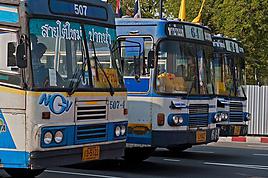
Quelle surprise, en constatant que les gens ne souriaient pas, de l'indélicatesse des chauffeurs de bus pressés par des courses effrénées, des passagers à qui ils manquaient le sourire.... des employés des administrations peu aimables et ce sourire qui ne venait toujours pas.... du personnel des télécom à l'accueil mesuré, avec juste un bonjour banal sans marque de "bonne humeur"...
Il y aurait une quantité d'exemples identiques donc j'écourte en me disant que je vais très bientôt reprendre mon billet retour vers BKK avec l'intention de m'y installer pour enfin et toujours retrouver des gens accueillants, gentils, conciliants, et SOURIANTS...
Effectivement on prend une "douche froide" à l'arrivée (Maurice-Réunion-France)... Ceci est ressenti personnel !
Cordialement à tous,
Très belle fête de réveillon, et très belle année de voyages au "pays du sourire".
Pierre-Alexandre
La Thaïlande si belle, si vaste, si accueillante et si chaleureuse soit-elle, ne se mérite que si on la respecte et si on l'aime...
Effectivement c est bon de rappeler les points positifs ici : des gens accueillants, gentils, conciliants, et SOURIANTS...
Peuple accueillant et sanouk (amusant ) , sourire parfois superficiel ou faux , parfois pas conciliants du tout , mais c est plus sympa que des gens qui font la tete du matin au soir stresse par leur travail et la grisaille 🙂
Vive la vie et happy new year .
C'est certain que dans les îles que vous citez, si les gens sont comme en métropole, et bien merci pas drôle.
Par contre la Thaïlande c'est vrai que les gens sont tout sourire, mais quand à y habiter c'est une autre paire de manche. Si vous voulez, j'ai un ami qui vis depuis pas mal d'années en Thaïlande près de Kanchanaburi et qui veut rentrer en Suisse car il en a marre, mais voilà il avait en son temps vendu sa villa entre Genève et Lausanne, maintenant les prix ont plus que doublé, il ne va plus pouvoir acheter une maison pareille et en Thaïlande et bien, il n'arrive pas à vendre, car c'est une superbe maison avec piscine interieur, parc, grand étang muré partout.
Parce que comme beaucoup, il en a marre des sourires devant et par derrière les coups tordus. Un autre ami lui est marié depuis 13 ans, il ne fait même pas confiance à sa femme qui le vole ( avec le sourire )
A part ça j'ai des amies Thaï qui sont très gentilles.
Et puis si vous n'allez qu'à BKK et pattaya, vous ne connaissez pas la Thaïlande profonde. Je sais ce que vous aimez. Pattaya il y a passé 20 ans c'était encore praticable, mais maintenant misère ça n'est pas la Thaïlande c'est je n'ose pas dire le mot. Mais chacun ses goûts.
Il est difficile d'être heureux longtemps au même endroit, nous avons besoin de nous ressourcer soit en France, soit en Suisse, soit dans les îles pour avoir les idées plus claires...... Bien sur que les Thaïlandais n'apprécient pas tous cette affluence de touristes ......
Allez en Corse et vous verrez des Corses heureux de vous voir en été dépenser votre argent et heureux de vous voir partir aussi............... Sur la cote d'azur aussi c'est la même chose...................
Beaucoup de Thaï sont choqués par le comportement des touristes venus pour le sexe et par notre comportement vis à vis de l'argent et de pouvoir avoir tout avec l'argent........ On peut comprendre que certains sourires soient de façades.....
Même nos relations avec les femmes Thaï sont faussées et si elles nous volent parfois, c'est que la relation était surtout basée sur l'argent en échange de ........ Et la femme Thaï n'oublie pas.....
Mais la culture Bouddhiste, la culture asiatique est plus nonchalante, il y a moins de conflits ouverts, il y a plus de tolérance, plus de facilité à vivre.......... Encore faut il vivre comme eux et non comme un européen installé en Asie..............
Ton ami veut revenir en Suisse, mais après quelques mois, il voudra revenir en Asie en sachant se qu'il a perdu là bas et se qu'il n'a pas ici........................😏😏😏
Bonne et heureuse année 2011 à tous, moi je pars pour 3 mois dans 15 jours en Thaïlande........................
tu as vecu en Thailande perceneige ? un ami si, un ami ca.. ta jamais entendu que les gens aiment se plaindre constament. si sa vie est si moche il a qu'a rentrer en suisse, il comprendra que la vie n'est pas rose comme dans ses souvenirs (qu'on idealise souvent).
mais vu qu'il le fait pas, certain qu'il sait aussi ce qui la pousser a partire,
combien te la mettes bien profond en suisse? allume ta tv et ecoute les politiciens pour voir combien ils te la mettent, et la aussi avec le sourire ...mais c'est pour ton bien=)
y'a des couple qui fonctionne en suisse mais vu le taux de divorce , je doutes que ca soit tout rose ... ton ami suisse qui se fais "voler" par sa femme il a qu'elle age ? et sa femme ? 40ans de difference d'age, un couple d'amour ? aller soit pas naif elle est la pour le fric il le sait depuis le debus, mais sa libido le pousse a rester avec et c'est peux etre une femme docile , menagere , qui ferme les yeux quand il va voir ailleurs.... hormis ses ecarts "depensier"
et tes comparaissons tu vis ou en suisse? Geneve, lausanne s'est pas la suisse regarde ils ont pas l'habit appenzelois des campagnes profonde..
Paris jamais vu un francais avec un beret et sa baguette, si tu vis pas dans l'arriere pays basque t'es pas Francais.. faut arreter..
Je viens d'effectuer une réservation pour un vol Bangkok/Chaing Mai: - J'ai effectué ma recherche via le site Kayak.fr. - Une fois que j'ai choisi mon horaire…
Le gouverneur du tourisme indique que les touristes internationaux devront attendre le 4eme trimestre pour faire du tourisme en Thaïlande, et encore pas…
Le delai pour obtenir min visa de 2 mois pour la Thaïlande est trop court. Mais mon billet est du 21 janvier au 21 mars. J'ai entendu dire qu'il y avait des…
"La décision de ne pas organiser des activités de célébration sur cette courte rue est venue après la réunion de plusieurs agences gouvernementales et privées…
Hi fellow travelers,
First trip to Vietnam.
We’ll be arriving in Ho Chi Minh City during Tet.
Is it complicated to find accommodation and get around during this period?
Any tips would be welcome.
Thanks for your replies.
Hi, is anyone there in Flores right now? According to some websites, everything is closed and the situation is tough. But our guide says it's fine. Who should we believe? We're supposed to leave on September 2nd. Thanks to anyone in Flores at the moment!
Hi everyone.
I’m planning my trip, and based on all the posts I’ve read, this country is amazing.
Of course, I’ve got a ton of questions for you.
Here’s a possible itinerary: Vientiane - Vang Vieng - Phonsavan - Sam Neua - Nong Khiaw + villages - Phongsali - Luang Namtha and the area - Udomxai - Huay Xai - Luang Prabang and back to Vientiane.
What do you think?
We’re planning to prioritize local transport—is it possible to do this loop?
We’d also love to go kayaking, but I’m not sure if the season’s right or where the best spot is.
For trekking—I read that Phongsali is the most authentic spot to visit villages and see wildlife. Do you know of a reliable agency and a guesthouse with reasonable prices?
Is it worth taking a slow boat for a stretch on the Mekong, and if so, which route?
For accommodations, is it better to book through Booking.com and Agoda or look when we arrive?
Are mosquitoes bad in Laos, and should we take malaria prophylaxis?
What’s the average daily budget (accommodation, food, visits)?
Is renting scooters a good option for exploring towns, and if so, which ones?
From what I’ve read, it’s best to carry cash—euros or dollars? Is it risky to walk around with that much cash?
I’ve still got tons of questions. Thanks to anyone who can help, and I’m open to all tips, info, etc.
Thanks again
Hi there,
I’m planning a trip to Vietnam in February, specifically Da Nang and Hoi An.
Does anyone know a French-speaking guide in the area?
Thanks for your help
Hi there,
I’m planning a family trip (my wife and I, both 47, and our two sons, aged 5 and 12) to Malaysia for the last week of June and the first two weeks of July 2027.
We used to love road trips as a couple, then as a trio, but since our second child arrived, we’ve taken a break with "camping village" style trips.
Now feels like the right time to get back to our old habits, while adjusting the pace for the kids.
We’re craving Asia. We’ve been lucky enough to visit Thailand, Indonesia (Bali and Lombok), and Sri Lanka before.
Friends have raved about Malaysia, so we’re definitely tempted.
For those who know and love Malaysia, what would be a good itinerary starting from Kuala Lumpur, with a maximum of 3-4 stops? We’d like a mix of culture, nature, and relaxation (just to clarify, we’re not big beach fans). All of this without rushing, of course.
Hello,
We’re a family of four with two teens aged 16 and 18. We’re heading to Thailand this summer. We’ll arrive in Bangkok and plan to take a flight to Luang Prabang.
I’ve seen there are some great visits and excursions to do (temples, markets, waterfalls) and maybe even venture a bit north to places like Nong Khiaw, Muang Xay, Muang Ngoy, or Oudom Xay.
But I’ve also heard about the Bokeo region with the Gibbon Experience.
Since we won’t be able to do everything, I’d love to hear about your experiences, impressions, and advice on the two options I’m considering, especially since we’ll be meeting family in Chiang Mai, Thailand, afterward.
Option 1: A loop from Luang Prabang heading slightly north, then a flight from Luang Prabang to Chiang Mai.
Option 2: A few days in Luang Prabang, exploring within a few dozen kilometers around, then heading to Bokeo province for the 2-day/1-night Gibbon Experience. For this option, I saw on Rome2Rio that it’s possible to book a ferry trip on the Mekong from Luang Prabang to Huay Xay—they mention about 8 hours. But is that realistic? What type of boat is it?
Then, to get to Chiang Mai, there aren’t many options—bus or minivan—but how does crossing the border work?
Finally, for those of you who’ve been to Laos in August, what was the weather like?
We’ve already visited Thailand, Vietnam, and Cambodia during the same period over the past four years and weren’t really bothered by bad weather.
I’m starting a discussion about guides in the Mekong Delta because we’ve just finished our trip in this region and had a hard time finding a French-speaking guide. We had Thanh—she speaks French really well and travels all over the delta region, including Ho Chi Minh City. She’s super friendly and flexible. I recommend her wholeheartedly. If it can help someone...
Feel free to contact us for her number.
Hi everyone,
I couldn’t find any recent info on Kuching.
Can anyone recommend a hotel or guesthouse for under 100 RM that’s nice and affordable? No dorms, please.
Also, does it rain a lot in November, and is it still worth visiting Semenggoh or Bako?
We’ll be arriving in Phnom Penh this coming January and we’re thinking of starting our trip with a stop in Kampong Cham, then Kratie.
After Kratie, we’re considering heading toward Siem Reap with a stop in Kampong Thom.
That said, I’m not really sure how long the Kratie–Kampong Thom journey might take or how complicated it is.
Does this stop on the way to Siem Reap seem like a good idea to you?
If we don’t visit the Sambor Prei Kuk site, are there still any walks or sights worth checking out in Kampong Thom?
Silly question—backpack or hard-shell suitcase for the Sepilok, Kinabatangan, Tioman, KL trip?
I’m struggling to fit all my son’s and my stuff into the 70L backpack... and I’m thinking a suitcase would be easier, but I’m not sure if it’ll work for getting around.
Hi there,
I didn’t plan to return to Thailand this year, but my health conditions mean it’ll be the best place for me to stay between two trips to India. The tourism setup there is so well-organized that it’s the most "comfortable" country for a short visit. Thailand feels too sanitized for my taste, and there’s too much religion, Buddha, and the King, but it’s still the best option given how my health has been evolving. I’d considered two weeks in ThaTon for hiking, but I got too sick from the burn-offs during my trips to the mountains around Chiang Rai. So I’m not sure where to go this year. Definitely not the sea, touristy spots, or the mountains with burn-offs...
After a stay on Koh Phayam this coming November, I’d like to spend 2 or 3 days on Koh Phra Thong before heading further south.
Do you think it’s doable to leave Koh Phayam early enough to catch the 10 AM boat from Khura Buri to Koh Phra Thong? The next one isn’t until 4 PM, which would cost me a whole day.
I’m planning a trip to Indonesia, specifically Sulawesi and Java, in September for 10 days.
I don’t know this part of the world at all—any advice is welcome!
I’ll be traveling solo and would also love tips on meeting other travelers or locals.
Hello everyone,
Not long ago, I used to travel as a couple, but my husband has since passed away, and I’ve decided to set off again. The trip I took to Cambodia in January 2025 did me a world of good.
I’m now considering Thailand, a destination we never included in our plans because even 15 years ago, people said it was too touristy. Still, I’m thinking about the itinerary below, but I don’t feel up to arranging buses, trains, or guides on my own while I’m there. I’m looking for one or more drivers and have been in touch with an agency, but their offers are just copy-paste group tours that I don’t want.
So, if you have any contacts, experiences, or advice, I’d be so grateful if you’d share them with me. Here’s my rough plan:
Arrival in Bangkok
Ayutthaya (2 nights)
Kanchanaburi (2 or 3 nights)
Sangkhlaburi/Sai Yok (3 nights)
Sukhothai (2 nights)
Lampang (I’ve planned 3 nights, but that might be a bit much—it depends on what time I arrive in the city)
Chiang Mai
Chiang Dao
Pai
Chiang Rai
I was thinking about the Mae Hong Son loop—thoughts?
What do you think about staying overnight at the Golden Triangle?
When I look online, of course, I can find agencies that organize tours to national parks, etc.
I’m retired but in great physical shape. I’d rather go hiking than sit in hot springs with crowds of tourists who’ve all arranged meet-ups. I don’t want to spend a day at an elephant camp, and I don’t want to visit Karen villages.
I’d love to hear your advice.
Thank you all,
Hi,
On September 1st, we're heading to Kalimantan for six weeks, probably from Pontianak to the Derawan Islands.
I've scoured this site, which is usually my go-to 😉, and others like VoyageForum, but recent info is pretty scarce.
I'd love any tips on places you've visited—our itinerary is still a work in progress.
We're two couples traveling with backpacks, using buses, boats, guesthouses, and homestays.
Thanks in advance!
Hi everyone,
Could you share your thoughts on my 3-week itinerary?
We’re a small group (family + friends) of 12 people, planning to leave around January 21, 2027.
Here’s my itinerary:
3 nights in Bangkok
4 nights in Chiang Mai
3 nights on Koh Samui
3 nights on Koh Phangan
4 nights in Krabi
4 nights in Phuket
I’m also open to any great tips you might have...
Thanks, everyone! Alain.
Hi,
From Malacca to get to Jerantut, is it better to go back to KL and take a bus from there, or take a bus to Tampin and then a train? Any feedback on the "Jungle Train"? (duration, price, comfort, etc.). Thanks
Hi there,
We’re planning a 3-week family trip next summer with our three kids, who’ll be 8, 8, and 7 years old.
After some research, we’re leaning toward Malaysia to combine nature/forests and paradise beaches. The idea is to introduce our kids to the country’s culture, nature, and wildlife.
We want a great trip but without splurging on luxury options like high-end lodges and resorts. We’re looking for comfort with a touch of authenticity—basically, a good middle ground.
I’ve started putting together an itinerary and would love your expert advice and tips to help us build this amazing trip with our little ones.
Day 1: Departure from France
Day 2: Kuala Lumpur
Stay at a hotel near the airport or KL Sentral.
Just one night.
Day 3: Morning flight to Sandakan (Borneo).
Stay in Sepilok
Day 4: Sepilok:
* Orangutan Center
* Malayan Sun Bear Center
* Rainforest Discovery Centre
Day 5: Depart for Kinabatangan.
Boat safari in the late afternoon.
Day 6: Sunrise safari.
Jungle walk.
Evening safari.
Day 7: Final safari.
Return to Sandakan.
Flight to Kuala Lumpur, then to Kota Bharu (or overnight transit depending on schedules).
Day 8: Transfer to the port.
Boat to the Perhentian Islands.
Days 9 to 13: Perhentian Besar
5 full days.
* Snorkeling
* Hiking
* Turtle watching
* Wild beaches
* Relaxation
Day 14: Return to the mainland.
Bus or private car to Taman Negara.
Hi everyone,
We’re heading to Flores and then Bali at the end of September.
We’ve already visited both but this time, once we’re in Labuan Bajo, we’d like to take a boat to the Komodo Islands to see the famous Komodo dragons.
I don’t want to sleep on the boat—just a day trip would be perfect.
Does anyone know a reliable and friendly provider to recommend?
Thanks in advance, and have a great summer!
Summer seems to be the best time weather-wise for Bali.
And since summer’s when we can take a long trip, let’s go for Bali... even though we know it’ll be *packed* with people!
So we’ll steer clear of the island’s south...
Our current plan (19 days on the ground, 7 stops):
- 4 Nights (3 days) in Ubud
2 days for rice terraces / activities (Tegallalang, Campuhan Ridge, Monkey Forest, Bird Park, coffee plantation, market (?), dance "pestacle," cooking class and/or spa)
1 day with a driver for the Temples (Pura Gunung Kawi, Tirta Empul Spring, Pura Mengening, Goa Gajah...)
- 2 nights in Sidemen (1 day for Pura Kehen + Batur Caldera + Pura Besakih and 1 day to relax in the rice terraces)
- 3 nights on Gili Meno (Rest and beaches) from Padangbai
- 2 nights in Amed (1 day from Padangbai with the Abang rice terrace and Tirta Gangga baths, and the next day a boat tour in Amed)
- 4 nights in Pemuteran (1 day for transfer and rest, 1 day to visit Kawah Ijen, and 2 days of snorkeling at Menjangan Island)
- 2 nights in Munduk (1 day with the Dayang rice terrace and the 3-waterfall hike, 1 day at Pura Ulun Danu Bratan)
- 2 nights in Jatiluwih (1 day in the rice terraces, and on the last day, we’ll stop by Pura Taman Ayun in Mengwi and Pura Tanah Lot before catching our red-eye flight).
Accommodations in homestays or hotels.
Transportation to be arranged on-site with the lodgings (?)
Boat to Gili Meno to book in advance (?)
Kawah Ijen excursion to plan ahead (?)—check with the homestay (?)
Thanks for your thoughts/comments to help us explore this destination...
After reading and researching, we're planning the following stops in Cambodia in January 2027:
- Phnom Penh
- Kampong Cham
- Kratie
- Siem Reap
- Battambang
- Kampot (round trip)
I'm wondering about the direction of these stops, which could also influence our international flights.
Either a round trip from Phnom Penh in the order above.
Or landing in Siem Reap with the following order:
This second option would save us the Battambang - PP - Kampot trip but means doing a round trip to Battambang from Siem Reap and placing the "highlight of the trip" (Angkor) at the beginning of our stay.
We’ll be arriving in Phnom Penh this coming January and we’re thinking of starting our trip with a stop in Kampong Cham, then Kratie.
After Kratie, we’re considering heading toward Siem Reap with a stop in Kampong Thom.
However, I’m not quite sure how long the Kratie–Kampong Thom journey might take or how complicated it is.
Does this stop on the way to Siem Reap seem like a good idea to you?
If we don’t visit the Sambor Prei Kuk site, are there still some walks and/or things to see in Kampong Thom?
Hi there,
We’re planning to travel from Chiang Rai to Luang Prabang next November.
We’d like to take a slow boat from Chiang Khong—or rather from Huay Xai in Laos—with an overnight stop in Pakbeng.
Could you let us know if the boat still leaves Huay Xai in the late morning? If so, what time roughly, and what’s the price for the trip?
Thanks for your help!
Alod
We (3 adults: 68, 65, and 25 years old) are just back from a short trip to the Philippines, and I’d like to share a little summary of our journey. First of all, I’d like to thank everyone who contributes to this forum about this destination and answers the questions of those who aren’t familiar with it. I should also mention that my comments are personal and don’t reflect anyone else’s opinions. Since I don’t have any literary or photographic talent, I’ll stick to the facts and share a few details about the sights, hotels, and restaurants.
Preparations:
We chose this destination in December and quickly booked our flight tickets (540 € with Turkish Airlines) for a departure on February 16 and return on March 5, 2019. We then contacted two French-speaking tour operators based in Manila, asking them to put together an itinerary based on our wishes (places to visit, type of accommodation) and our budget. We wanted to see the rice terraces in northern Luzon, the hanging coffins in Sagada, before flying to the Visayas (Bohol, Siquijor, etc.), and the Taal Volcano, while limiting our nights in Manila as much as possible. In the end, we opted for Alize, whose itinerary and quote matched our request almost perfectly. Our exchanges helped us refine our circuit.
International flights:
The round-trip flights went smoothly. Turkish Airlines, while not at the level of Asian or Gulf airlines, does the job just fine.
Day 1:
We landed on time (6:15 PM) on Monday, February 16, at Terminal 3. We exchanged our euros (near the car rental counters), and I can confirm the exchange rate was very good. On the way to the St. Giles Hotel (decent and affordable for a transit night), we got our first glimpse of Manila’s dense traffic. The Makati district, where our hotel was located, offers a wide choice of restaurants, so we grabbed a quick bite to recover from the trip.
Day 2:
This day was dedicated to transferring to Banaue. Fortunately, we had a comfortable van and an excellent driver for this journey, which took all day (8 to 9 hours with stops). We got a taste of driving in the Philippines—and it’s terrifying. You wouldn’t want to drive on these roads. The first thing that struck us was the relatively good condition of the roads and the cleanliness (a change from other Southeast Asian countries). This impression lasted throughout our trip. Around 6 PM, we checked into our room at the Banaue Hotel (large, charm-free, but with a beautiful view of the rice terraces).
Day 3:
With the help of a local guide, we took a jeepney to Batad. And then—wow! The rice terraces form an amphitheater overlooking the small village. Under the sun, it’s simply spectacular and breathtaking! Even though we’re familiar with rice terraces (Sapa, Bali, Thailand, etc.), we were dazzled by so much beauty. We spent the day walking along the terrace walls. This place is timeless and fully deserves its UNESCO World Heritage status. However, we returned to the hotel exhausted (due to our ages and lack of exercise). We had dinner with our driver at the Las Vegas restaurant in the center of Banaue. The meal was decent, cheap, and the Filipino owner played the guitar to accompany our dinner.
Day 4:
Today, our driver took us to Sagada. The mountain road offered spectacular landscapes (about 1.5 to 2 hours). Along the way, we stopped in Bontoc to visit the small but interesting anthropological museum. It features old photos and various objects from the Ifugao tribes, as well as a reconstruction of primitive dwellings.
We then went on a short hike in Sagada with a very friendly local guide who explained the region’s funeral rites. The walk started at the communal cemetery before reaching “Echo Valley,” where we saw the first coffins hanging on the cliff. We continued to the “Underground River” and a small waterfall, ending our journey in the “Lumiang Cave” burial cave. All in all, this day was very interesting. On the way back, we made a few photo stops.
In the evening, on our driver’s recommendation, we ate at the “Bistro,” a French enclave in the center of Banaue (good pizza, roasted quail, homemade fries).
Day 5:
Today was a transfer day. To limit fatigue and nights in Manila, our tour operator arranged a flight from Clark to Tagbilaran (Bohol), saving us 2 to 3 hours of driving. But to catch our flight, we had to leave very early: 5:30 AM. Our kind driver dropped us off on time at the airport. To use it, we had to pay a 150 PHP tax per person. The Philippine Airlines flight (15 minutes) left early and was far from full. Upon arrival, we were taken to the Loboc River Hotel, on the banks of the river of the same name. A very charming lodge lost in a tropical garden. We stayed in a stilt cottage overlooking the river. We relaxed a bit in the lovely pool. This place is really great—the staff is charming, and the food is excellent for a reasonable price.
Day 6:
This day was dedicated to exploring Bohol. The program was classic, starting with the tarsier sanctuary. We saw a few specimens in a small garden, each pointed out by a staff member. It was both good and disappointing because the animals were in pseudo-freedom in a small enclosure. Then we went to the “Chocolate Hills” and climbed 240 steps to admire the panoramic view of the hills—but by 10 AM, it was crowded. On the way back, we stopped at the butterfly garden, which was uninteresting: tiny, with few butterflies. We consoled ourselves by photographing beautiful flowers. To please our teen, we stopped at the Loboc Eco Tourism Adventure Park and crossed the river lying down, suspended from a steel cable (300 PHP). Finally, we had the traditional lunch-cruise on the Loboc River. It was a factory-like experience, and the meal was unremarkable. The only good thing was the singer on each boat and the lush vegetation. Afterward, we visited colonial churches and the cathedral, remnants of the Spanish presence, before returning to the hotel for a well-deserved dip in the pool. Note that for those interested, there’s an arena near the hotel where cockfights are held every Sunday—something Filipinos are passionate (if not obsessed) about.
Day 8:
Very early departure for the port. We boarded a *banca* in search of dolphins. After about an hour of sailing, we were lucky enough to spot around a hundred dolphins. Our boat then headed to the small and charming island of Pamilacan. After a walk through the little village, we came across locals traditionally building a boat. They told us it takes about a month to finish their outrigger boat. Then we had to choose our snorkeling spot between the coral garden, the fish park, and the turtle enclosure. Note that a fee is charged for each spot: 150 PHP per place and per person. It felt a bit like we were being ripped off, especially since the spots weren’t amazing—we’d see much better on Apo for much less. We had lunch on the island at one of the many small eateries (350 PHP per person).
Days 9 and 10:
On our return, we were taken to the Bohol Sea Resort on Panglao Island, where we stayed for 2 nights. It’s a small, recent establishment in a quiet corner of the island. It’s relaxing—maybe a bit too much. It has a nice pool and access to Danao Beach, but the view is blocked by a flotilla of boats. We didn’t try their diving school. The meals were good. If we had to do it again, we’d skip this stop to spend more time in Negros.
Days 11 and 12:
We took a fast ferry (Ocean Jet) from Tagbilaran port to Dumaguete and were taken to the Thalatta Resort, about 20 km away near Zamboanguita. We stayed there for 2 nights. Let’s just say it was our favorite. It’s a small place facing Apo Island. The rooms are simple, and the pool, nestled in a magnificent tropical garden, is fantastic. The staff is friendly, and the meals are very good. The hotel has its own diving center (snorkeling gear provided) and its own boats. We booked the Apo Island excursion: 1,350 PHP per person, including lunch. It was incredible: magnificent corals, colorful fish, and turtles of all sizes. The crew was endlessly kind and didn’t hesitate to dive to guide us to the best spots. In short, a perfect day. This site is ranked among the top 5 diving spots in the Philippines.
Since we were lucky enough to be there on a Wednesday morning, we explored the surprising Malapay Market, a 10-minute walk from our hotel. You’ll find numerous stalls selling vegetables, fruits, live or dried fish, and handicrafts. Enclosures are set up for selling livestock (calves, zebu, pigs). There are also restaurants. We were lucky to see two pigs roasted traditionally on a spit. There are few Europeans, and the people are warm. A great moment.
We left this beautiful place with regret because we didn’t have time to visit the island or go swimming with whale sharks.
Days 12 to 15:
From Dumaguete port, we took a short crossing (1 hour with Ocean Jet) to Siquijor Island to reach the Coco Grove Beach Resort. A beautiful hotel nestled in a spacious tropical garden. Several restaurants and bars, 4 pools. Despite the size of the place, it remains intimate. You can snorkel (corals and fish) right in front of the beautiful beach. We stayed in a very pleasant duplex suite. For those interested, there’s a spa and a diving center. You can also take the Apo Island excursion (offered at 1,950 PHP).
We spent our days relaxing between the pool and the beach. In the evening, the sunsets over Negros and Apo were stunning.
We booked an island tour with a comfortable tricycle from the hotel (1,500 PHP). The circuit was classic and allowed us to go around the island. We discovered beaches, the famous 400-year-old ficus tree with its enormous roots, and its equally famous foot bath with its cleaning fish. Then we visited the St. Isidore Convent before heading to the Cambugahay waterfalls and their four pools. The setting is idyllic, and the water is surprisingly good—we had a lot of fun swimming. We had dinner at a restaurant overlooking the island, where you can see Apo, Cebu, and Negros. In the end, Siquijor turned out to be a real little tropical paradise.
Since the hotel restaurants were expensive, we dined at nearby establishments: Fuego (clean, good—excellent raw fish—and quiet), Chekesch (louder), and the very pleasant Baha Bar, which brews its own beer and offers more refined cuisine.
Days 15 to 16:
We left at dawn to return to Dumaguete and its airport by ferry. We had breakfast at the Coco Grande Hotel, an annex of the previous one. The Philippine Airlines flight went smoothly. A driver took us to the town of Taal. We stayed at Paradores Del Castillo, right in the heart of the old town. It’s a charming old house with only 6 rooms. The various rooms are decorated with antiques—a real little museum. The garden is pleasant and opens onto the town.
It’s an old early 19th-century house converted into a hotel, beautifully arranged with 6 rooms in the heart of the city. The restaurant in the garden is very pleasant and offers a panoramic view.
We visited an old Spanish house before heading to the beautiful Basilica of St. Martin of Tours, one of the most beautiful religious buildings in the Philippines. A mass was in progress, allowing us to gauge the Filipinos’ fervor before we could visit. When we left, it was dark, and we could admire the illuminated building. We ended our evening by exploring the night market with its many fruit and skewer stalls. A nice surprise.
In the morning, we were taken to the shores of Taal Lake, an ancient caldera where a second volcano has formed in the middle of the lake, which in turn contains another lake. We boarded a *banca* to reach the island in the middle of the lake. This was followed by an uphill walk, made difficult by the high temperature (36°C) and the dust on the path. The dust was worsened by the many horses carrying (or bringing back) the less courageous. To illustrate the difficulty of the climb, the trail is marked by the Stations of the Cross and its 14 stations. We were panting while our guide trotted far ahead. Our effort was rewarded when we reached the summit and its viewpoints over the inner lake and the surroundings. The wisps of smoke seen here and there confirmed we were on an active volcano. Inside the lake, there are supposedly 45 small volcanoes, one of which emerged during its last eruption in 1911.
On the way back, we had lunch by the lake before returning to Manila and the Bayleaf Hotel, whose main merit is its location in the Intramuros district. In the late afternoon, we walked along the walls of the old city.
We had dinner on the hotel’s panoramic terrace overlooking the city and the bay.
Day 17:
Last day! Our tour operator joined us for a tour of the Intramuros district. He enriched the visit with comments on the history, geopolitics, and economy of the Philippines. We visited the Manila Cathedral, destroyed 7 times in the past (6 earthquakes and the 1945 bombing). It’s beautiful, and its stained glass is magnificent. We couldn’t enter the San Agustin Church, the oldest Catholic building in Manila. We passed by the memorial to the Battle of Manila, which claimed over 100,000 lives. We visited the area around Casa Manila, which was closed on Monday, and had a drink at Barbara’s cabaret, located in a historic house. A very enriching morning.
Then we went to the Mall of Asia, the world’s largest shopping mall, to buy some souvenirs (Kultura store) before being taken to the airport. We exchanged our last pesos at the buying rate right after check-in.
The return flight went smoothly. We regretted not being able to use the facilities of Istanbul’s new airport, as its opening was delayed by another month.
Finances:
In the end, we spent 1,640 € for the international flights, 4,200 € for the stay (hotels, visits, various transports) with the agency (whose professionalism we can only praise), and about 700 € for meals, tips, and souvenirs.
Summary:
Luckily, we had beautiful weather throughout our stay, with temperatures between 26 and 35°C. Discovering the Philippines was a wonderful experience. The diversity of the landscapes, the kindness of the Filipinos, the cleanliness, and the truly delicious fruits (especially pineapples and mangoes). We were never harassed, unlike in many touristy countries. On the other hand, the food, though generally cheap, wasn’t exceptional.
Since this country is so vast, we might return in the near future.
Though I’m not a specialist on this destination, I’m happy to answer your questions based on my experience.
So, my flight tickets have just been booked for a trip to Cambodia from November 4th to 27th, 2025.
I’ll be traveling solo and want to explore this amazing country while getting a bit off the beaten path.
I’m arriving in Phnom Penh and also departing from Phnom Penh.
My goal is to travel as much as possible by bus and scooter.
What itinerary would you recommend?
What are the must-do things?
I’m open to all tips and info.
Thanks in advance for your help and responses.
We got back enchanted from a 6-week trip to Cambodia!
Our itinerary: Kampot - Kampong Chhnang - Battambang - Siem Reap - Kampong Cham - Sen Monorom (Mondulkiri) - Banlung (Ratanakiri) - Kratie - Kampong Thom - Phnom Penh.
We traveled by bus, minivan, boat (between Battambang and Siem Reap), overnight bus, scooter, tuk-tuk, and rickshaw for shorter distances. We stayed in guesthouses, homestays, and even in the jungle during a trek.
While the Angkor temples are fabulous, it’s the people you should visit Cambodia for—the "Land of Smiles" truly lives up to its nickname! Tourists gather in Angkor but are quite rare elsewhere, even though the country is easy to travel around.
I won’t describe our trip in detail but instead highlight a few favorite moments.
From Kampot, don’t hesitate to head out around 6 AM to see the fishermen return and their wives selling their catch (just 10 minutes away by the coast). Guaranteed picturesque!
In Battambang, known for its food scene, we discovered a cooking class with Smokin’ Pot (authentic Khmer cooking class). They pick you up from your guesthouse to shop for ingredients (we made fish amok and beef lok lak) at their village market, then cook and eat together. A private class—just the two of us! They also send the recipes via WhatsApp as a PDF. +855 12 821 400
In Siem Reap, I can recommend a francophone tuk-tuk driver who was very attentive to our wishes. We visited tourist spots but also more remote villages and local grilled-pork restaurants with him. He’s a wealth of information about local life, and chatting with him was a real pleasure—we left with regret! You can reach him on WhatsApp: Vung Hem, +855 96 614 0146.
We did a 2-day, 1-night trek in Mondulkiri. Don’t expect a super dense jungle—it looks more like a forest similar to ours. But Nara, our Bunong ethnic guide, made the experience adventurous and ultimately very immersive! WhatsApp +855 86 630 489
Bee Bee’s Chalets homestay: If you pass through Banlung in Ratanakiri, we *loved* this family and their budget-friendly bungalows. Playing Uno, enjoying Nita’s cooking (ask for her fish amok—amazing!), it was a true homestay experience! Contact Nita on WhatsApp: +855 88 818 5525.
In Kratie, rent a scooter and follow the Mekong north for 40 km at your own pace. Being so close to the locals was a treat! Same goes for heading south if you have time.
Kampong Thom: Head 25 km out to visit the pre-Angkorian temples of Sambor Prei Kuk. Around a hundred monuments spread across three sites… and hardly anyone there!
A few practical tips:
Though prices are often listed in dollars, you can always pay in riels (1 USD = 4000 riels), which is what we preferred.
PassApp: An app to book tuk-tuks or rickshaws (and most importantly, know the price upfront).
Virak Buntham: A bus company connecting several cities, bookable online.
Feel free to ask me questions about places, accommodations, etc.—I’d be happy to answer!
We’re planning our second trip to Thailand (2 weeks on-site, late April/early May) as a family with our 5- and 7-year-olds.
On our first trip, we visited Bangkok, Ayutthaya, the River Kwai, Koh Lipe, Koh Phi Phi, and Khao Lak. We especially loved Koh Phi Phi for its limestone cliffs and lush vegetation, as well as Koh Lipe for its crystal-clear waters and snorkeling.
This time, I’m thinking of spending 7 days on the islands. I was considering Koh Tao and Koh Phangan. We’d like some scenery, snorkeling right from the beach, and a bit of atmosphere—but not too much (just enough to grab dinner in the evening).
For the other part of the trip, we’re torn between Chiang Mai and Khao Sok. One or the other… or both? We don’t want to rush, but we’re really nature-focused, so we won’t be hitting too many temples…
Hi there, I’ll be on vacation in Malaysia in November and plan to spend 5 days in Penang. After that, I’d like to visit some temples and places in Butterworth or nearby, and also explore the city. Since I usually get around on foot, which neighborhood would be best for me—meaning within a 30-minute walk of attractions, street food stalls, bus lines, etc.? Thanks in advance for your help!
Françoise







 Vous avez tout à fait raison, mais je n'exagère pas, es-ce que c'est bien de vivre la peur au ventre, barricadé, en lâchant à tout moment des poignées de Baths pour se faire bien voir, et avoir la paix. Je trouve que c'est terrible. Les personnes que je connais qui vivent en Thaïlande on la peur au ventre en plus ils doivent se présenter tout le temps à l'immigration même marié et vivant depuis plus de 12 ans. Ils arrosent les enfants de leur femme, plus la famille élargie car la femme est toujours entrain de demander de l'argent pour une vache qui a crevé, pour un toit qui fuit, pour la mère qui doit aller à l'hôpital, etc etc.
Je n'y ai jamais vécu, mais si je compte le nombre de fois où j'y ai été, depuis les années 80 et bien j'y aurai bien passé plus de 2 à 3 ans. Mais là la dernière fois en 08, ça m'a débordé.
Donc je vais dans d'autres pays. Depuis plus de 3 ans en continu, 15 pays visités et seulement en Asie c'est autre chose que la Thaïlande.
On ne se sent pas des portes-monnaies ambulants.
Vous avez tout à fait raison, mais je n'exagère pas, es-ce que c'est bien de vivre la peur au ventre, barricadé, en lâchant à tout moment des poignées de Baths pour se faire bien voir, et avoir la paix. Je trouve que c'est terrible. Les personnes que je connais qui vivent en Thaïlande on la peur au ventre en plus ils doivent se présenter tout le temps à l'immigration même marié et vivant depuis plus de 12 ans. Ils arrosent les enfants de leur femme, plus la famille élargie car la femme est toujours entrain de demander de l'argent pour une vache qui a crevé, pour un toit qui fuit, pour la mère qui doit aller à l'hôpital, etc etc.
Je n'y ai jamais vécu, mais si je compte le nombre de fois où j'y ai été, depuis les années 80 et bien j'y aurai bien passé plus de 2 à 3 ans. Mais là la dernière fois en 08, ça m'a débordé.
Donc je vais dans d'autres pays. Depuis plus de 3 ans en continu, 15 pays visités et seulement en Asie c'est autre chose que la Thaïlande.
On ne se sent pas des portes-monnaies ambulants.