Hi there,
I’m facing a rather unusual issue with SAUDI AIRLINES.
I booked a flight to Jakarta with a layover in Jeddah for July directly on their website on February 25th, paying for our three tickets via PAYPAL.
I quickly received confirmation that my flight was booked and our e-tickets were issued.
However, after several days, I noticed we were never charged for the tickets, and I saw on our PayPal account that the payment authorization was still pending.
At first, I chalked it up to cross-border or banking delays… but since I use PayPal often and the debit from my bank account is usually almost immediate, I called PayPal. They told me that neither they nor I had anything more to do: when a transaction is paid using their solution, the payment is systematically validated by the seller before the transaction (an automated process, I imagine). However, PayPal confirmed that SAUDI hadn’t done this and that they had a month to do so, otherwise the transaction would be canceled by PAYPAL and SAUDI wouldn’t receive the funds. There must have been a technical glitch because normally, I shouldn’t have received the tickets until they had received the payment.
Given the reviews I’ve read about their customer service, I’m worried they might cancel our tickets without notice once they realize their mistake—or that they’ll ask us to pay the amount at that point (since the closer we get to the date, the higher the price goes).
So, I’ve been trying to contact them nonstop via their app (I’ve submitted about 10 tickets), I’ve called them, messaged them on Messenger and Instagram, and so far, I haven’t gotten any response. Either they don’t read my message to the end and just reply that the flight is confirmed + resend the tickets, or more recently, they tell me the issue is being handled by another department. We tried calling them again on Saturday, but no luck—the French-speaking agents were always busy. On Messenger, they keep asking for the secret code sent by SMS at the start of the conversation, but of course, I never receive anything even though my number is correctly registered in my SAUDI account.
I don’t know what else to do, and I’m not sure if I’m right to worry they might cancel our tickets.
I’m afraid this could jeopardize our dream trip, for which I’ve already booked hotels and activities… and we were really looking forward to it.
I hope you can shed some light on this?
Thanks for taking the time to read this
Popular discussions
Discussions with 10 or more participants posted in various forum sections.
Showing 181–210 of 45,835 discussions.
I’d like to hike the GR 34 this summer with my 17-year-old son. We’re planning to start at Mont Saint-Michel, aiming for around 20 km/day. We’ll be using a tent.
If anyone’s done this trail before, could you share some insights on how challenging it is, how easy it is to find campsites along the GR, and what the average daily distance is like?
If anyone’s done this trail before, could you share some insights on how challenging it is, how easy it is to find campsites along the GR, and what the average daily distance is like?
struggling to find a decent flight to Thailand?????
Hi everyone, I’ve been traveling in Asia for over 30 years, often to Thailand, but only during the school holidays in February, April, and especially in the summer, departing from Marseille or Lyon.
For some time now, I’ve noticed it’s really hard to find a flight at a reasonable price (under 900 €) and, more importantly, with a decent itinerary (we’re often offered 2 or 3 layovers with total travel times of 40 or even 50 hours), and this is the case almost a year in advance. This is something we never saw even 4 years ago—I’m wondering: are there fewer flights available now...?
Marsyork
Before I begin, I’d like to thank Michèle Buisson and her "Misha’s travel journals," which really helped me plan this trip. It’s tough to find information about this part of India, which is quite different from the "more traditional India." I’m so grateful to her for introducing me to a family who hosted me for 4 nights and 3 days. I can’t wait to return the favor and welcome you all to my place in early July!
Thursday, March 20th. The alarm goes off super early, but I’m already awake—I was too worried I’d sleep through it. I leave the house at 4:00 AM. The rain has stopped, and at this hour, there aren’t many trucks on the road. I arrive at Barcelona Airport easily by 6:20 AM, let the valet know I’m there, and he quickly picks up my car. This time, I’m flying with Etihad Airways again. I booked the ticket during my trip to Cambodia: Barcelona/Kolkata, Delhi/Barcelona for 567 €. At that price, I didn’t hesitate for long—I knew I had to take it. And I’m glad I did because, by the time I returned, the price had gone up to 700 €. I can already hear the reactions: "Wow, how’d you get a ticket for that price? What site did you use? You’re amazing, MarieJo!" One thing’s for sure—I’m really happy with this deal. The flights from Barcelona to Abu Dhabi and Abu Dhabi to Kolkata go smoothly, and we arrive on time at 2:55 AM. There aren’t many people at immigration, so I get through quickly. My luggage isn’t on the carousel yet. After collecting my bag, I check in for my next flight with IndiGo, a 5:40 AM flight to Guwahati, arriving at 7:00 AM. I’m starting to feel pretty tired, so I take a taxi from the airport to Gruham Sojourn Homestay. The house is upstairs, and the neighborhood seems quiet, with restaurants lining the street. The room won’t be ready until 10:00 AM, so I rest on the bench in the meantime. Once in the room, I take a shower—it really helps me feel refreshed. I need to exchange some euros, so I look up a nearby exchange bureau on Google and head out to find it. I locate it easily, and the staff are super friendly. I get a great rate (1 € = 90 INR). I wander around the neighborhood. The train station isn’t far, and small markets line the streets. I head back to my area, walking along the main avenue. About 500 meters from my street, I discover a museum. The visit is fascinating—I see the famous Majuli masks, among other things.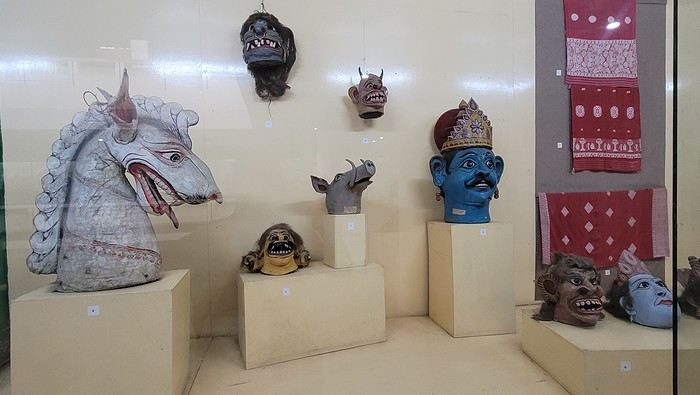

I’m not far from the Brahmaputra River, and the temptation to visit is too strong to resist. I’d hoped to find a promenade along the river, but that doesn’t exist here. I walk back calmly and notice several restaurants in my street. On the doorstep of my accommodation, I spot a pastry shop with cakes that look more like the ones we have in France than the typical ones here in India. A visit is a must, and I’m not disappointed!
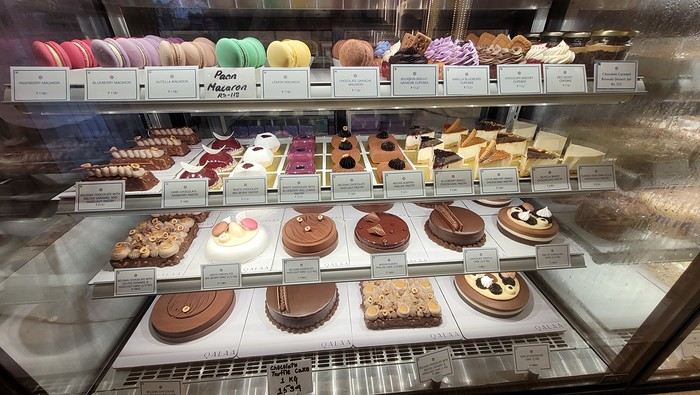
Tonight, I’m dining at a restaurant in the street. The menu is a bit disappointing—burgers, pizzas, pasta—nothing very Indian. So, I’ll go with tomato pasta.
Thursday, March 20th. The alarm goes off super early, but I’m already awake—I was too worried I’d sleep through it. I leave the house at 4:00 AM. The rain has stopped, and at this hour, there aren’t many trucks on the road. I arrive at Barcelona Airport easily by 6:20 AM, let the valet know I’m there, and he quickly picks up my car. This time, I’m flying with Etihad Airways again. I booked the ticket during my trip to Cambodia: Barcelona/Kolkata, Delhi/Barcelona for 567 €. At that price, I didn’t hesitate for long—I knew I had to take it. And I’m glad I did because, by the time I returned, the price had gone up to 700 €. I can already hear the reactions: "Wow, how’d you get a ticket for that price? What site did you use? You’re amazing, MarieJo!" One thing’s for sure—I’m really happy with this deal. The flights from Barcelona to Abu Dhabi and Abu Dhabi to Kolkata go smoothly, and we arrive on time at 2:55 AM. There aren’t many people at immigration, so I get through quickly. My luggage isn’t on the carousel yet. After collecting my bag, I check in for my next flight with IndiGo, a 5:40 AM flight to Guwahati, arriving at 7:00 AM. I’m starting to feel pretty tired, so I take a taxi from the airport to Gruham Sojourn Homestay. The house is upstairs, and the neighborhood seems quiet, with restaurants lining the street. The room won’t be ready until 10:00 AM, so I rest on the bench in the meantime. Once in the room, I take a shower—it really helps me feel refreshed. I need to exchange some euros, so I look up a nearby exchange bureau on Google and head out to find it. I locate it easily, and the staff are super friendly. I get a great rate (1 € = 90 INR). I wander around the neighborhood. The train station isn’t far, and small markets line the streets. I head back to my area, walking along the main avenue. About 500 meters from my street, I discover a museum. The visit is fascinating—I see the famous Majuli masks, among other things.
I’m not far from the Brahmaputra River, and the temptation to visit is too strong to resist. I’d hoped to find a promenade along the river, but that doesn’t exist here. I walk back calmly and notice several restaurants in my street. On the doorstep of my accommodation, I spot a pastry shop with cakes that look more like the ones we have in France than the typical ones here in India. A visit is a must, and I’m not disappointed!
Tonight, I’m dining at a restaurant in the street. The menu is a bit disappointing—burgers, pizzas, pasta—nothing very Indian. So, I’ll go with tomato pasta.
Hi there,
Do you know any tricks for traveling on a budget? With flight prices constantly rising, it’s a real lifesaver!
Do you know any tricks for traveling on a budget? With flight prices constantly rising, it’s a real lifesaver!
It's all in the title—I'm 70, and I've been traveling by bike (tent and camp stove) for five years now. Statistically, how many more years do I have left to plan my destinations and see (almost) everything?
Question is half realistic, half humorous.
To keep it simple: how old are you, fellow senior cyclists still on the road? And what are your biggest challenges?
Personally, I'm in good physical shape, though my cruising speed has dropped from 3–4 km/h over the past five years.
But arthritis (hip) is starting to make it tricky to swing my leg over the frame.
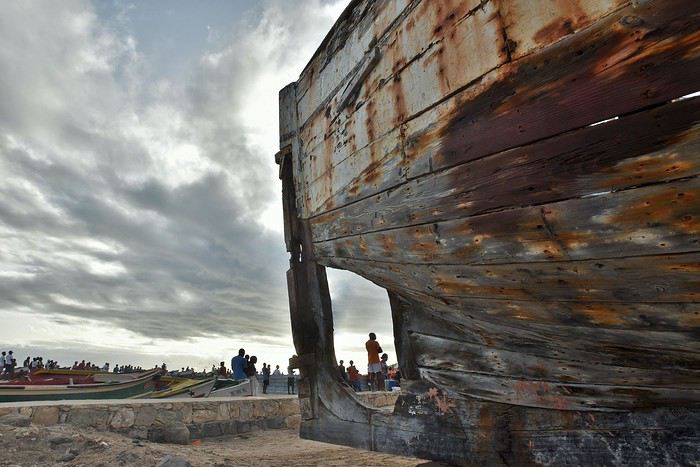
It’s been a month and a half since our family returned from Cape Verde, and I’ve finally found the time to write this travel journal about this beautiful yet little-known destination.
Cape Verde is a small volcanic archipelago made up of ten isolated islands in the middle of the Atlantic Ocean. At the crossroads of maritime routes between three continents—Africa, the Americas, and Europe—its name is tied to the history of slavery.
But today, this little piece of Africa with Creole influences has a lot to offer travelers craving a change of scenery and adventures off the beaten path.
We visited three of these ten lovely islands rising from the ocean: Maio, the wild and authentic island; Fogo, the volcanic one; and Santiago, the cosmopolitan hub.
MAIO: THE SMALL, WILD, AND AUTHENTIC ISLAND
To travel between the neighboring islands of Santiago, where we landed from France, and Maio, the first stop on our trip, there are two options: plane or boat. To avoid the risk of the boat being canceled due to rough seas—and to save time—we chose to fly. The flight takes just fifteen minutes, while the boat ride lasts three hours. Since our stay was only fifteen days, saving that half-day was a big deal.
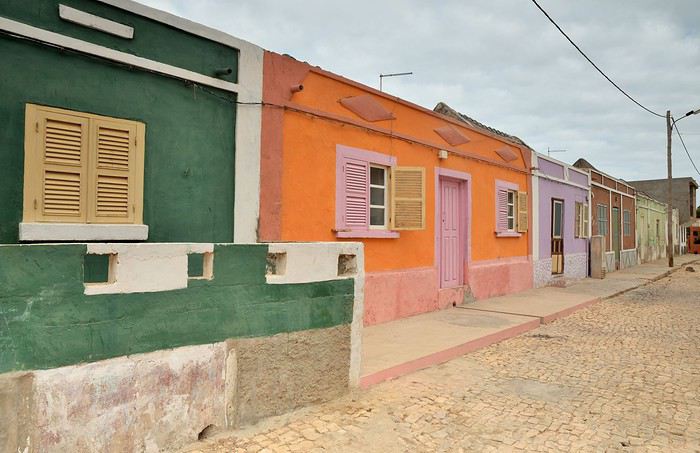 The colorful houses of Vila de Maio
Our first day on the island didn’t let us see the sun. It’s mid-August, the very start of the rainy season—which should really be called the cloudy season. This “rainy” period has nothing to do with what happens in other parts of the world, like Southeast Asia, where the monsoon can be devastating. Here, locals hadn’t seen a drop of rain in nearly a year, and for them, it’s a tragedy. That’s why the ground is so dry and the vegetation so sparse.
As a result, fruits and vegetables are scarce, and livestock are suffering so much that some farmers are forced to cull their herds. Ironically, back in France, we’d just come out of a miserable winter with nearly five months of nonstop gray skies and frequent rain, especially in some regions. Is our climate out of whack?...
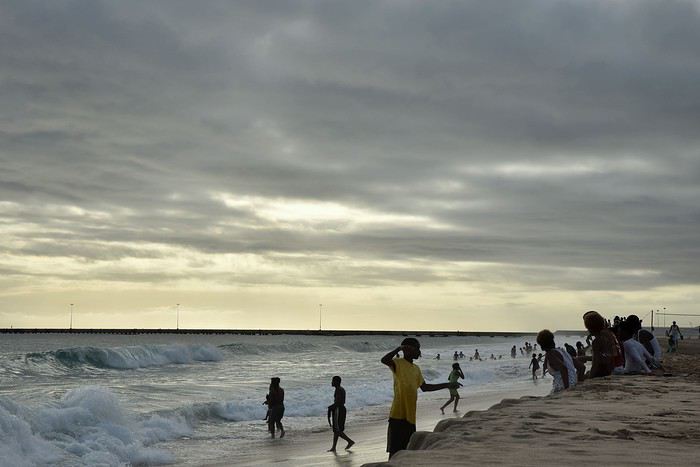
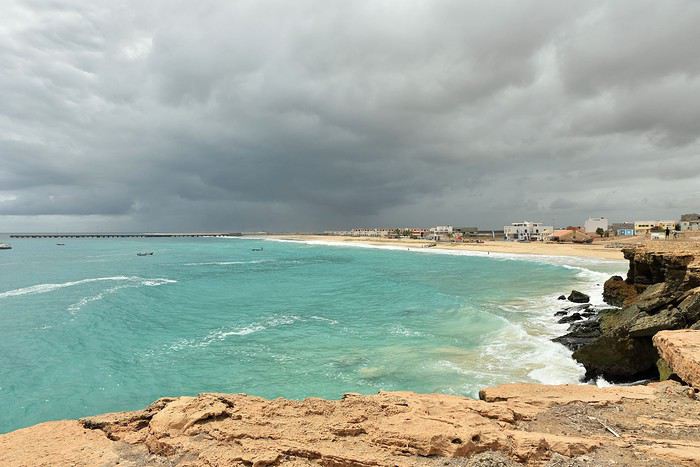 The beach bordering the village of Vila de Maio
We stayed a week on Maio. We were lodged at Stella Maris Village, a small residence at the edge of Vila. A shared pool, perched on a small cliff, overlooks the deep blue sea.
 Sunset at Stella Maris Village
The cliff isn’t very high, but it offers a nice view of the surroundings.

From the residence, it’s just a ten-minute walk through the village to reach the beach.
> The beach and the fishermen
We didn’t choose Maio just for its calm, wild, and authentic vibe. It was also so Victor and Arthur, our two sons, could earn their Level 1 scuba certification in Cape Verde’s beautiful waters, known for their abundant marine life but still relatively untouched by divers—for now...
On the first day, we met Bernard, who runs AAA Maio Plongée, to plan the five dives needed for their certification.
The dive sites are accessible by boat, but to reach it, you have to cross the surf. The waves vary in strength, and while they were gentle for our first snorkeling trip, getting past them with scuba tanks on our backs was a bit more of a workout for the later dives.
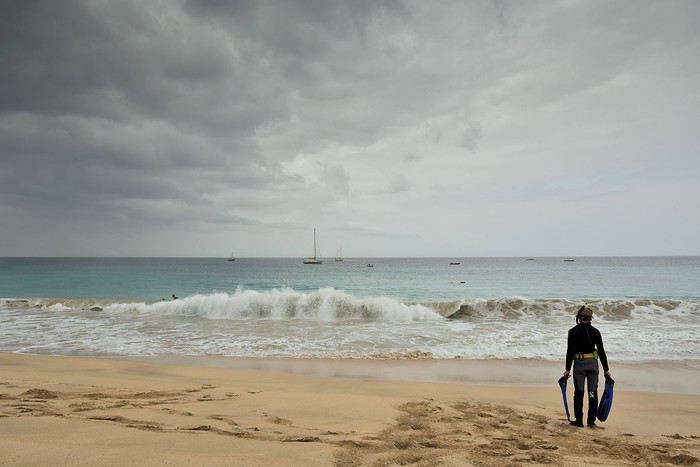
Snorkeling trip: this time, the waves were gentle...
The week of diving with Bernard went perfectly, in Cape Verde’s surprisingly fish-rich waters. On the morning of the last dive, while checking the sea to cross the surf safely, we even spotted a pod of dolphins swimming across the bay in the distance. Always a magical moment...
In a week, the beach at Vila, where the dive club is located, was the liveliest spot we saw on the whole island. All day long, fishing boats returned loaded with fish of all sizes.
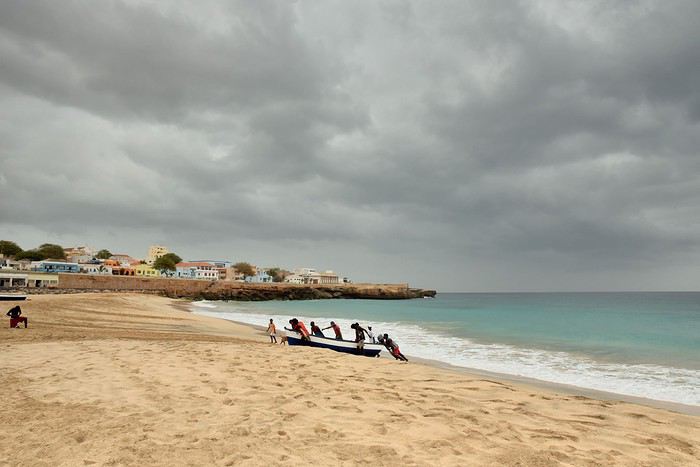 Return from fishing
Here, fishermen have a strong sense of solidarity because they can’t pull their boats out of the water alone, especially when the waves are rough.
So, all day long, whenever a boat comes in, the fishermen on the beach rush to help drag it ashore and secure it higher up on the sand, away from the sea.
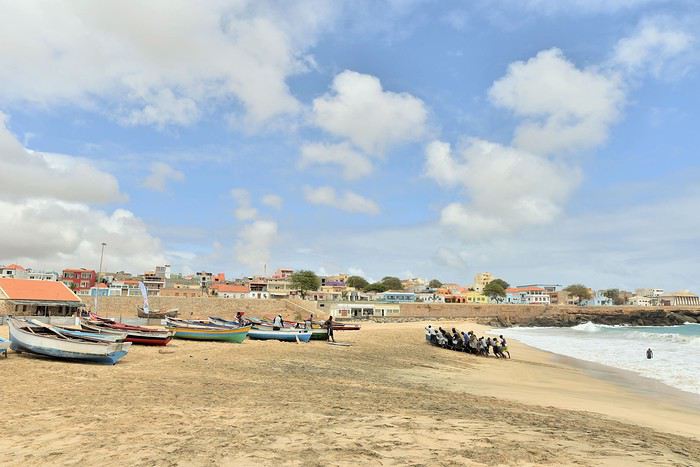
The sight of these colorful fishing boats on the beach is something we saw everywhere in Cape Verde.

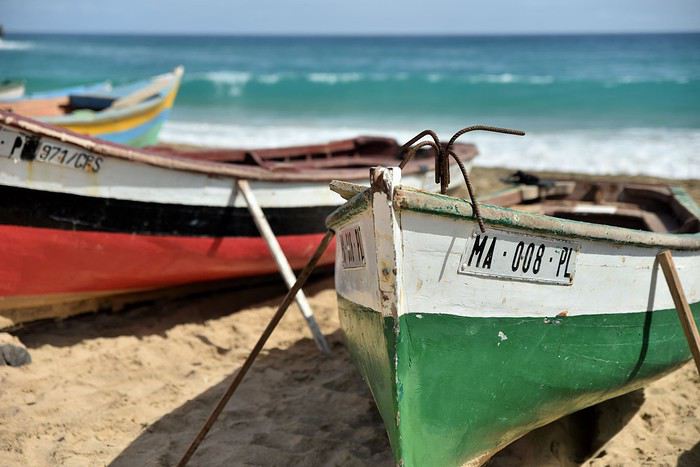
Sometimes, the fishermen bring back impressive catches. Instead of carrying the fish by hand to a proper spot, they clean them right on the beach.
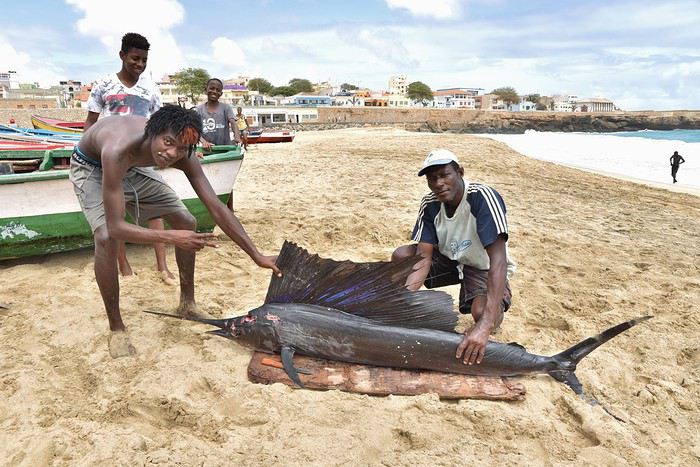
Sailfish
But every evening during our stay, this beach also hosted Maio’s annual soccer tournament. Residents from villages across the island gathered here at the end of the day to compete, including a few women’s teams.
Players were cheered on by hundreds of spectators—which is a lot for a small island with barely 8,000 inhabitants.
The beach doubled as a stadium: sand replaced grass, and the fishermen’s colorful boats served as seats and bleachers. The celebration had a laid-back vibe, with loudspeakers blasting music and the smell of grilled fish in the air.
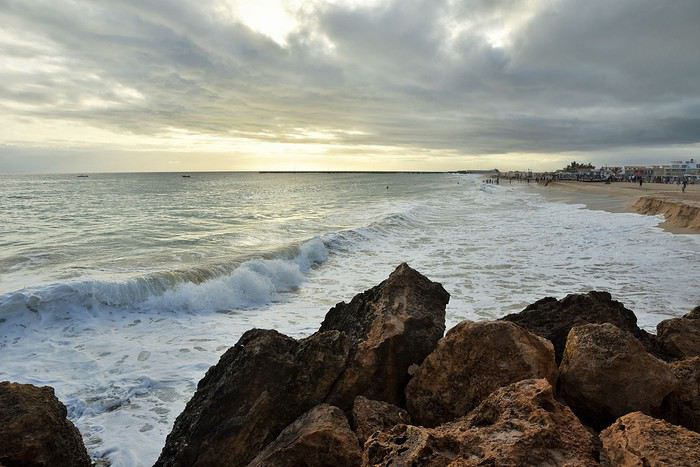
Meanwhile, kids splashed around in the sea, which could sometimes be dangerous. The waves could be strong, but the currents were the real concern.
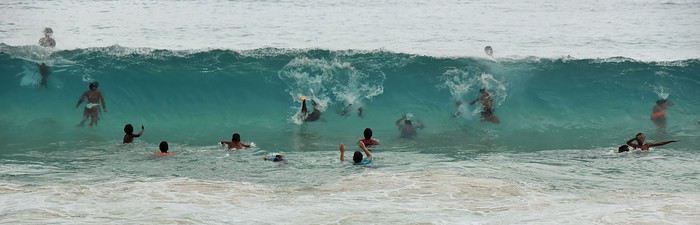
Hello,
We’re planning our trip for October 2017!! (Yes, it’s still far off—but planning it is already like a vacation.) We’re interested in the Ban Gioc Waterfalls, but I can’t quite make up my mind about them. Will there still be water in October? Is this stop worth it? (Even if there’s no water?) Thanks for your replies! Happy travels to everyone, Eric
We’re planning our trip for October 2017!! (Yes, it’s still far off—but planning it is already like a vacation.) We’re interested in the Ban Gioc Waterfalls, but I can’t quite make up my mind about them. Will there still be water in October? Is this stop worth it? (Even if there’s no water?) Thanks for your replies! Happy travels to everyone, Eric
Hi everyone,
We’re seriously considering a two-week trip in August 2026 with our kids, who’ll be 11 and 10 years old.
That’s where we’re torn on the destination. For those who’ve been to both, could you share the main differences? I get the impression that in Botswana, the landscapes are a bit samey everywhere, while Namibia offers more diversity? We’re looking for an "off-the-beaten-path" adventure: safaris, meeting local communities, etc., and not too many touristy spots. Thanks for your help!
Olivia
Hi there,
There have already been quite a few travel journals about Naples, so this is more of a photographic stroll. There aren’t too many practical tips, but feel free to ask! This trip took place in May 2019.
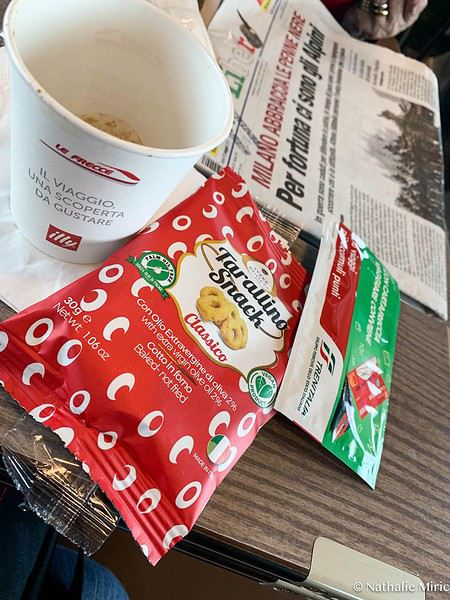
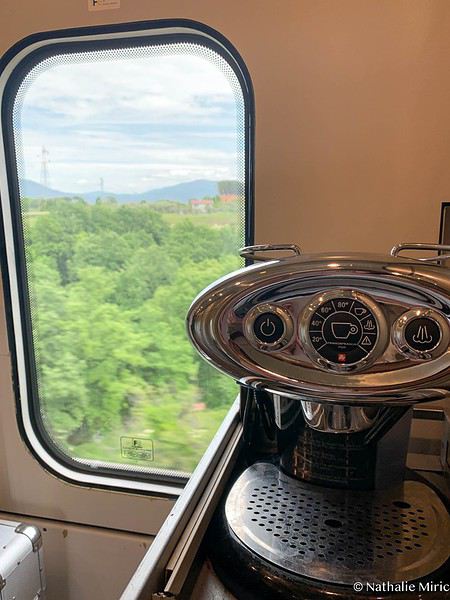
It’s the day before departure, and I’m excited as can be! I’ve wanted to see Naples and its region for a while—this city everyone calls bubbling with life. While I’m packing my bags, I get a message from the airline saying there’s going to be an air traffic controllers’ strike and my flight might not take off... What? How? You’re kidding, right? I’ve been waiting for this trip for weeks. I check online, and yes, it’s true... What to do?!? I look up the train schedule and find out the train leaves a few hours earlier, with a stop in Milan and then straight to Naples. Decision made—I’m taking the train; it’s a new experience. I leave at 5 AM on an almost empty train, arrive in Milan 4.5 hours later, and rush to catch the train to Naples. This is my first time taking the train in Italy, and I love it. After an hour of travel, a gentleman arrives with a small cart and an authentic coffee machine on top. He asks me: *caffè, signora?* Si, si, si! And he starts the machine—here’s my first Italian espresso with little biscuits.
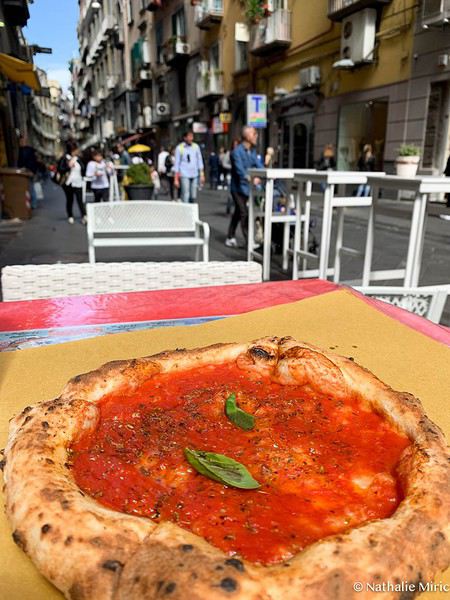
I arrive in Naples in the early afternoon. The station is packed, cars everywhere, and I’m already soaking up the atmosphere. I drop my things off at the B&B and head out to explore the city. There are incredible crowds everywhere, noise, food on every street corner, and every scene is a real photographic delight :) I’m in the Chiaia neighborhood and try my first street pizza, made right in front of me—how can I say it? Excellent. In the late afternoon, I wander through the streets before grabbing an aperitivo on one of the many terraces.
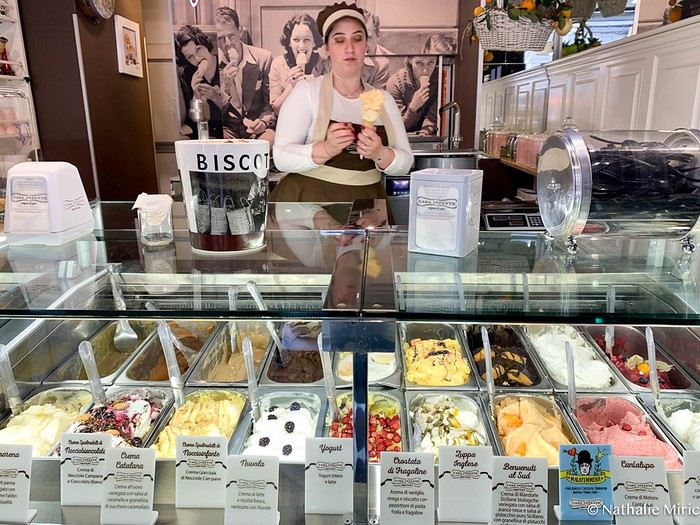
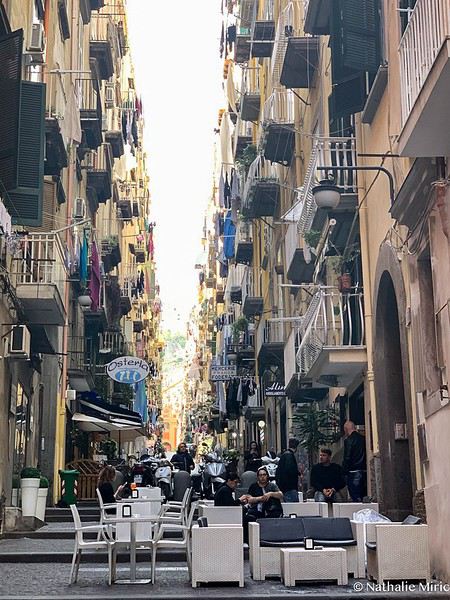
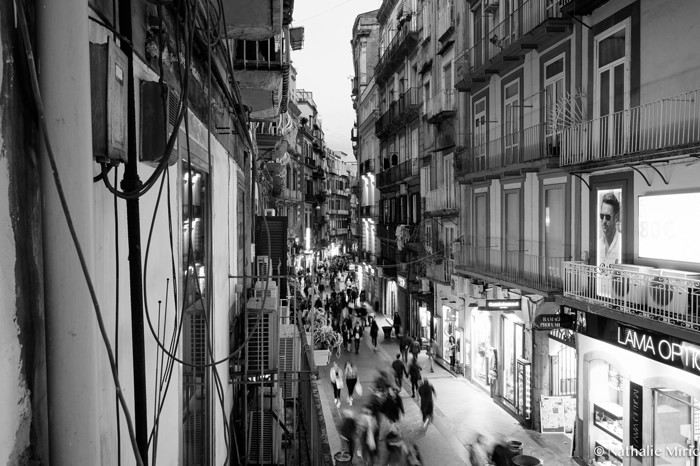
The next day, I head to Capri... It’s true, Capri is very touristy, but it’s worth seeing once in your life. After a choppy crossing, I’ve earned a good shower, a plate of pasta, and a limoncello. Then I set off for a walk through the little streets that go up and down endlessly. The view is stunning, and the kilometers add up... I’ve definitely earned a break by the pool with a gelato :)
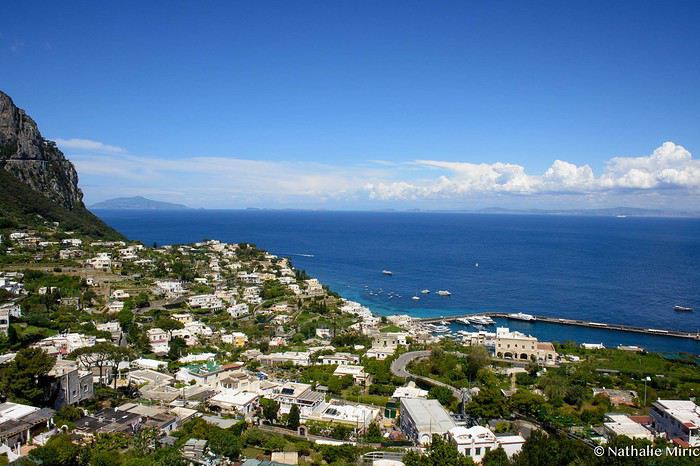
There have already been quite a few travel journals about Naples, so this is more of a photographic stroll. There aren’t too many practical tips, but feel free to ask! This trip took place in May 2019.
It’s the day before departure, and I’m excited as can be! I’ve wanted to see Naples and its region for a while—this city everyone calls bubbling with life. While I’m packing my bags, I get a message from the airline saying there’s going to be an air traffic controllers’ strike and my flight might not take off... What? How? You’re kidding, right? I’ve been waiting for this trip for weeks. I check online, and yes, it’s true... What to do?!? I look up the train schedule and find out the train leaves a few hours earlier, with a stop in Milan and then straight to Naples. Decision made—I’m taking the train; it’s a new experience. I leave at 5 AM on an almost empty train, arrive in Milan 4.5 hours later, and rush to catch the train to Naples. This is my first time taking the train in Italy, and I love it. After an hour of travel, a gentleman arrives with a small cart and an authentic coffee machine on top. He asks me: *caffè, signora?* Si, si, si! And he starts the machine—here’s my first Italian espresso with little biscuits.
I arrive in Naples in the early afternoon. The station is packed, cars everywhere, and I’m already soaking up the atmosphere. I drop my things off at the B&B and head out to explore the city. There are incredible crowds everywhere, noise, food on every street corner, and every scene is a real photographic delight :) I’m in the Chiaia neighborhood and try my first street pizza, made right in front of me—how can I say it? Excellent. In the late afternoon, I wander through the streets before grabbing an aperitivo on one of the many terraces.
The next day, I head to Capri... It’s true, Capri is very touristy, but it’s worth seeing once in your life. After a choppy crossing, I’ve earned a good shower, a plate of pasta, and a limoncello. Then I set off for a walk through the little streets that go up and down endlessly. The view is stunning, and the kilometers add up... I’ve definitely earned a break by the pool with a gelato :)
Hi everyone,
So great to be back on this forum😉
I just lightened my wallet by 3000 € for 3 tickets: Paris > Tokyo > Osaka > Paris (well, not just mine—I’m exaggerating, there are two of us). For my daughter’s 10th birthday, we’re heading to Japan—it’s her "decade gift," though I thought she’d pick London🏴☠️. But I’ve been dreaming of going back to Japan since my 2013 trip, so I’ll admit this trip is (a lot) for me too. We’re traveling during school holidays, so the ticket prices are unfortunately sky-high. Maybe I could’ve gotten a better deal if I’d waited, but who knows... oh well, it’s done now. We leave at the end of October, so we still have a few months to prepare. That said, I’d rather start early to make sure we don’t miss anything (like the Ghibli Museum—I couldn’t go last time, and anyway, I’ll have to wait until September to book). Last time, there were three adults, so it was pretty straightforward. Eleven years later, well, now it’s two adults with a 10-year-old😛.
So I’m wondering how many days to spend in Tokyo. My daughter idealizes the city (that’s why she wants to go to Japan), and she’s really drawn to Japanese culture and food. Actually, what first got her interested in Japan were all the *kawaii* character products... Tokyo is such a fascinating city, but it can also be exhausting—especially for a kid, and I’m not sure what to expect. Beyond Tokyo, honestly, I’m not entirely sure. I was thinking of Hakone and maybe stopping by Fujikyu Highlands. Then heading down to Osaka for a few days in Kyoto before flying home (our return flight is from Osaka). We only have 11 days there (not counting the arrival day, and since our flight leaves at 11:30 PM on departure day, we’ll have the whole day), so it’s not a ton of time. I already spent a week in Kyoto on my last trip (huge crush on it), and I’d love to have two months there, but... well, you know how it is.
For example: 5 days in Tokyo 2 days in Hakone 4 days in Osaka/Kyoto
What do you think? If you’ve done this trip with kids, do you have any tips for family-friendly accommodations in Tokyo and Hakone? My daughter would love to try an onsen. We have a decent budget, but it’s not unlimited. We’d like to book as we go to spread out the costs a bit.
Thanks in advance for your thoughts
Hi everyone, I’ve spent two solid months reading the Lonely Planet and pretty much every post about Thailand here, plus French and English blogs. Now I’d love to get your expert opinions on our itinerary.
We’re heading off in August 2025 with our 7-year-old daughter. We only have a maximum of three weeks off, and I’m keeping an eye on flight prices before booking (1400 € per person really stings 😕).
So here’s what I’ve planned—let me know if you spot any major issues or if I’ve been way too "optimistic."
D1 - Arrival in Bangkok / rest, quick visit, overnight stay D2 - More temple visits, etc. D3 - Morning flight to Chiang Mai D4 - More Chiang Mai sightseeing D5 - Day trip to Chiang Rai (guided tour to book: blue and white temple), return to Chiang Mai late in the evening D6 - More Chiang Mai visits / Elephant Nature Park in the afternoon D7 - Morning flight to Koh Samui, sightseeing D8 to D10 - More Koh Samui visits D11 to D13 - Ferry to Koh Phangan D14 to D15 - Ferry to Koh Tao D16 - Return to Koh Samui, then flight to Bangkok D17 - Day trip to Ayutthaya, return to Bangkok in the evening D18 - Flight back to France :(
I know a lot of you recommend heading straight to Chiang Mai to recover from the international flight, but my partner and I NEVER sleep on planes (personally, I’ve been flying to Taiwan since I was little and have never slept more than an hour on a 14-hour flight...), so it’s essential for us to rest upon arrival . That’s also why I opted for domestic flights instead of the sleeper train—I know we’d lose over 10 hours and wouldn’t be able to rest properly in those conditions. And I’m sure you’ll also say BKK > North > South is too much for three weeks, but I really want to see as much as possible. Given how much the flights will cost, I’m not sure when we’ll be able to come back 🏴☠️.
So, questions: 1. Since we’ll only be in Bangkok for a maximum of two nights and need to easily reach the airport with luggage (and a child), which neighborhood should we prioritize? We’d love to experience the evening vibe of Asian night markets, ideally within walking distance of the hotel or just a few metro stops away. I’ve looked at Chinatown, but the BTS seems far... Should we go for somewhere near BTS Saphan Taksin or BTS Krungthonburi? But is the area lively in the evening with food courts, etc.? We’d also like to treat ourselves to a hotel with a pool.
2. Have we planned too many days in the south? Should I skip Koh Tao and just do Koh Samui + Koh Phangan? My partner and daughter aren’t strong swimmers, so we’re looking for beautiful beaches without too much current. Crowded beaches don’t bother us—we just want stunning turquoise waters without killer waves . Going all the way to Koh Tao and then back to Koh Samui to catch the flight to Bangkok seems too stressful. Is it still possible these days (I haven’t seen any recent posts on this) to head to Koh Samui in August and decide on the spot how many nights to spend in Koh Phangan or Koh Tao based on how we feel, booking hotels as we go? Or is that too risky?
If you have any better suggestions for fitting all this in while reducing internal flights, I’m all ears for your great tips
IRELAND - INTRODUCTION
We planned our 15-day trip to Ireland several months in advance to create an itinerary that would let us see a multitude of tourist attractions across various regions of the Republic of Ireland and Northern Ireland.
We researched the main attractions in each region and noted their GPS coordinates.
After that, we used Google Maps to create a packed but realistic daily route. We printed all the itineraries, and they proved extremely useful since some attractions weren’t listed on the GPS a friend lent us, and some roads aren’t clearly marked.
This way, we were able to stick to our daily schedule.
Three months before our departure, we rented a car directly from Autoescape’s website for 136.44 € over 14 days. The rental was with BUDGET, and the car we got was a ŠKODA Citigo.
This rate includes unlimited mileage, collision damage waiver (CDW), theft protection (TP) with a 1,500 € excess, and unlimited third-party liability coverage.
Some roads in Ireland are very narrow, so a compact car is much appreciated. Don’t forget that driving is on the left, and there are plenty of roundabouts.
Luckily, my partner finds driving this way easy, and our travels went smoothly.
It’s worth mentioning how courteous and patient Irish drivers are—it’s truly phenomenal.
Two weeks before our trip, we booked our accommodations at various places like B&Bs, hotels, and university campuses through Hotels.com. We’ll talk more about each of them later.
When we arrived at Dublin Airport, going through customs was quite tedious. There are two lines: one for EU citizens and another for other foreigners. The wait for non-EU travelers is significantly longer.
The car rental isn’t directly at the terminal. You have to take a shuttle to the rental center. Once there, a company representative finalizes the contract and hands over the keys to our rental car.
And off we went on our adventure!
It’s also important to note that some roads have tolls. For most of them, you pay directly at a toll booth, and the fees are usually under 2 €.
However, the M50 motorway around Dublin works differently—it’s a prepaid toll. You’re charged when you drive between Junction 6 (N3 Blanchardstown) and Junction 7 (N4 Lucan). A large purple sign warns you as you approach one of these junctions.
Cameras automatically record your license plate, and fees are applied based on your vehicle category. For a standard car, the fee is 3.10 €.
You have until 8:00 PM the next day to pay at an authorized retailer or online at https://www.eflow.ie/.
We prepaid these fees directly on the site mentioned above.
If you don’t pay within the required time, you’ll be charged substantial penalties.
For dining, most grocery stores and gas stations offer a great selection of hot and cold meals at very reasonable prices. That’s why we mostly bought our food at places like SuperValu, Lidl, Spar, and Centra.
We invite you to keep reading about our adventure in the next section.
Hi there, I’ve been traveling for 18 years now, at least 6 months a year, and as the years go by, I actually enjoy coming back to France more and more—a feeling I struggled with at first. I mean, we always think the grass is greener elsewhere.
But in the end, I find meaning in that saying about how there’s no place like home. I still love traveling just as much, but now my trips are shorter, and I enjoy spending more time in our beautiful country, even though I don’t hesitate to criticize it.
How about you? How do you handle coming back from your travels?
Hi everyone,
I’m looking into a trip to Paris around mid-February. I’d love to know more about the temperature (weather) in Paris, museum access (closures or anything else), how easy it is to get around on foot (slippery due to ice?), public transport, etc.
Also, are there any events or activities I absolutely shouldn’t miss? I could adjust my dates based on what you know.
On another note, I’d love to catch a hockey game. Are there any around Paris? I’m happy to watch a few games no matter the level 🏒🥅
FYI, I’m not afraid of the cold since I’m from Quebec 😁😆😆🧑🌾
Thanks in advance for your help! 👍😊❤️❤️
Hi,
We’d like to book a shuttle for a transfer from Lille to Brussels Zaventem. I’ve found several shuttle companies online. Which one should we go with for reliability? We want to be sure someone will pick us up for both the outbound and return trips. We came across Holidays Airport, which offers a round trip for 2 adults and 2 kids at 205 €, and A3 at 180 €. I’m a bit surprised because the price difference is pretty big.
What do you recommend? I’ll also check the rates with Aero-Trans and STNavette (though I’ve heard people had issues with STNavette).
Thanks for your advice and experiences!
Tuesday, September 12
We had to get up early that day to leave our house at 3:30 AM, as our flight from Lyon Saint-Exupéry was scheduled for 6:35 AM. In the end, our Transavia flight took off with a delay.

I’d found a round-trip flight from Lyon to Porto on the Transavia website for 58 € per person, including only a carry-on bag.

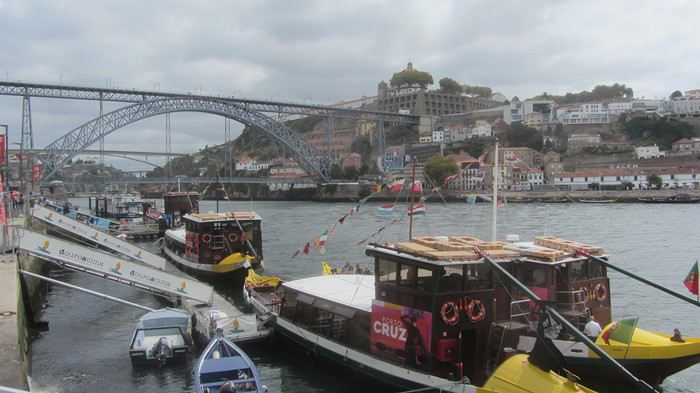
Before landing at Porto Airport, we flew over the Douro River and the famous bridge between Porto and Vila Nova de Gaia.

The Douro flows into the Atlantic Ocean.
From the airport, we took the metro, which starts above ground before diving into Porto’s underground.

Once we’d dropped off our bags at the hotel, we set off to explore Porto.

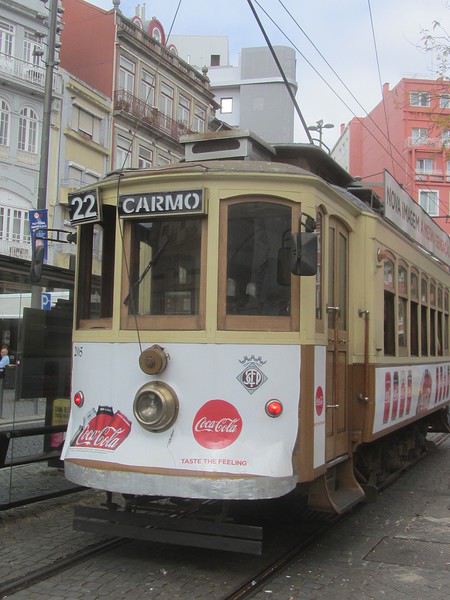
 You can’t go to Portugal without riding a tram—it’s a must! So we took an old tram (Line 1) to the beach.


The Guindais Funicular connects Praça da Batalha, high up in the city, to Ribeira in the historic center near the quays.
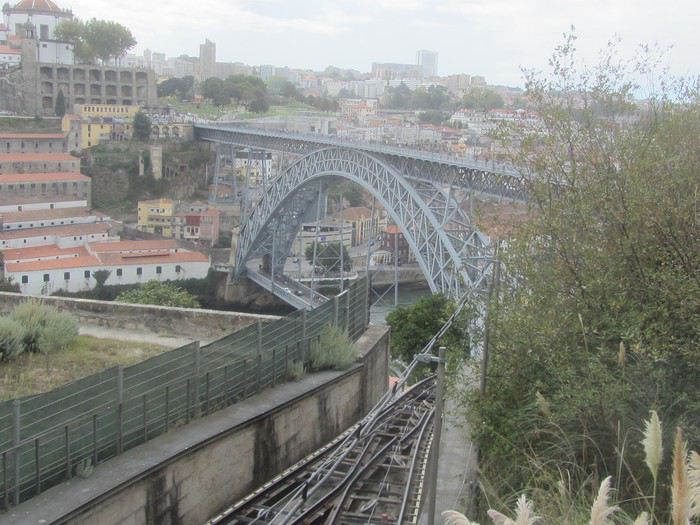
We didn’t take it—going down the stairs was fine. A one-way ticket costs 2.5 €.
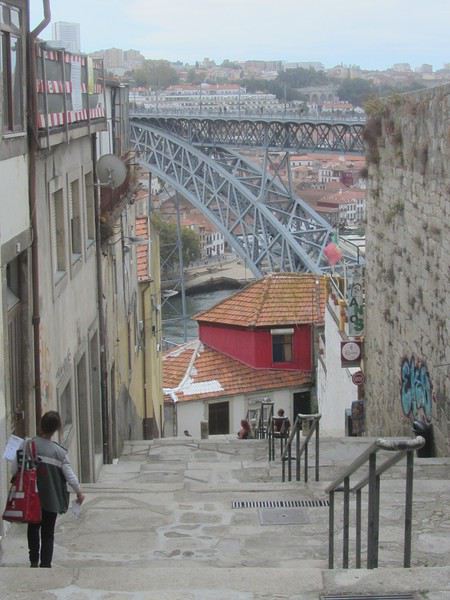
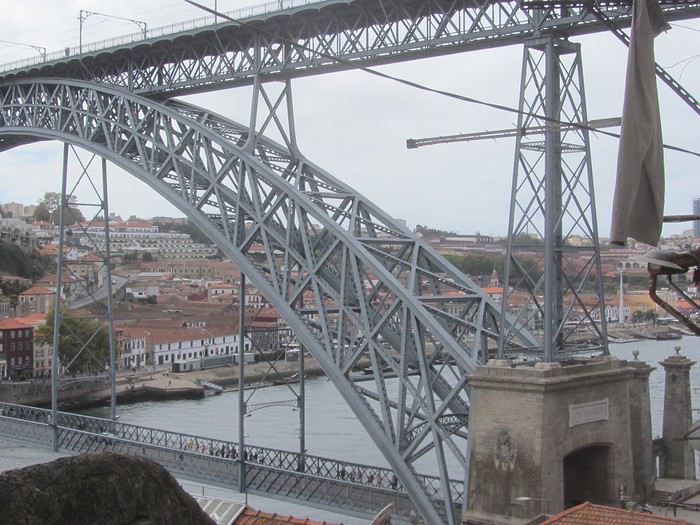
The Dom Luís I Bridge is one of the city’s icons. Built between 1881 and 1886 by engineer Théophile Seyrig, a disciple of Gustave Eiffel,


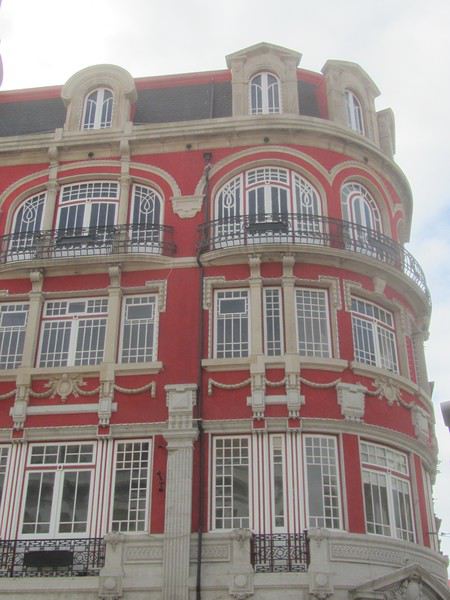
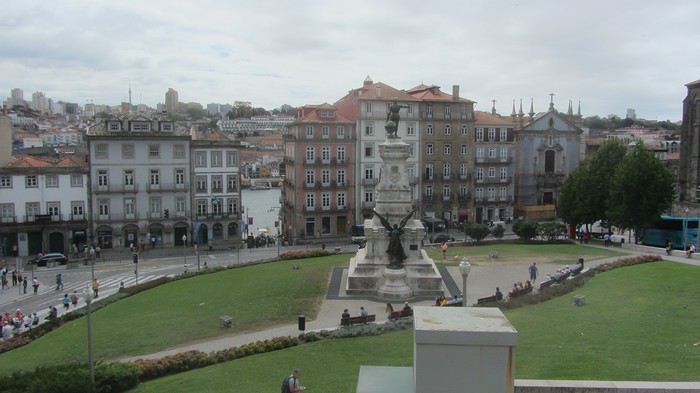
The historic Ribeira district, once run-down, is undergoing an urban revival. Porto is gradually regaining its former splendor.

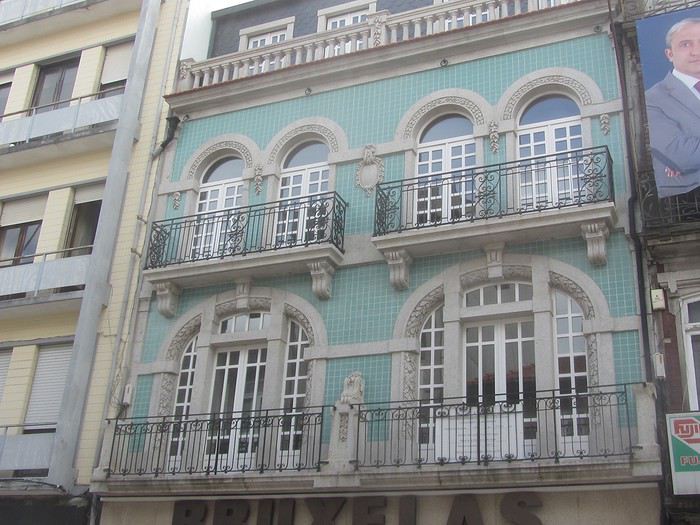
Old mansions with crests are being restored, splendid façades adorned with azulejos, Baroque-style churches, yellow trams, ancient shops, trendy restaurants, hip bars, boutiques, and design hotels!

I’d found a round-trip flight from Lyon to Porto on the Transavia website for 58 € per person, including only a carry-on bag.
Before landing at Porto Airport, we flew over the Douro River and the famous bridge between Porto and Vila Nova de Gaia.
The Douro flows into the Atlantic Ocean.
From the airport, we took the metro, which starts above ground before diving into Porto’s underground.
Once we’d dropped off our bags at the hotel, we set off to explore Porto.
You can’t go to Portugal without riding a tram—it’s a must! So we took an old tram (Line 1) to the beach.The Guindais Funicular connects Praça da Batalha, high up in the city, to Ribeira in the historic center near the quays.
We didn’t take it—going down the stairs was fine. A one-way ticket costs 2.5 €.
The Dom Luís I Bridge is one of the city’s icons. Built between 1881 and 1886 by engineer Théophile Seyrig, a disciple of Gustave Eiffel,
The historic Ribeira district, once run-down, is undergoing an urban revival. Porto is gradually regaining its former splendor.
Old mansions with crests are being restored, splendid façades adorned with azulejos, Baroque-style churches, yellow trams, ancient shops, trendy restaurants, hip bars, boutiques, and design hotels!
Dear VoyageForum members,
For the past two months, I’ve been checking flight ticket prices to spend 4.5 weeks in Thailand from early July to early August. I’m traveling from Brussels with a young child, so I want to avoid layovers. That’s why I’m only looking at Thai Airways’ website and only choosing direct flights.
At the end of August, I saw tickets for 955 € per person. On October 1st, they were 1,225 €. Today (October 22nd), the price is the same as on October 1st. (Same dates: Departure: July 4th, Return: August 7th.)
My question is: Is it possible these prices will drop significantly in the coming months?
Note: I clear my browser cache before every search, which I always do during the week and in the evening. This time, I also checked with my work computer, which has a VPN. So, the price isn’t influenced by cookies.
Thanks in advance for your feedback and tips.
Damien
Preamble:
.
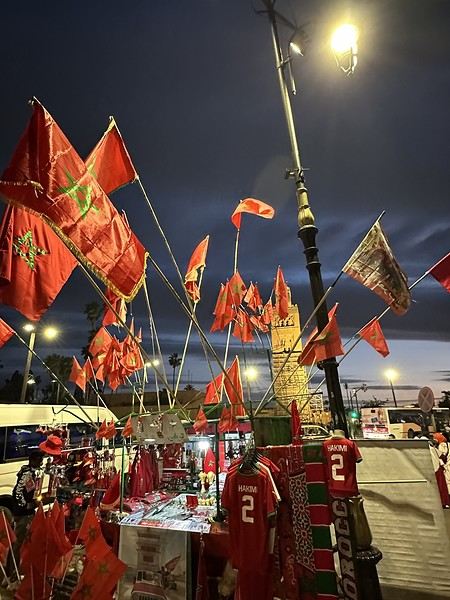
This isn’t about drumming up business for a new professional venture—just sharing, under pressure from eager Vf members hungry for juicy anecdotes, my 10-day trip to Marrakech with 10 friends.
I’d mentioned during the planning discussion for this trip ((https://voyageforum.com/forum/questions-excursions-autour-marrakech-d10685703/)) that there wouldn’t be a travel journal... And since I’m a man of my word—but also stuck with a nasty calf muscle tear at the end of the trip that’s keeping me immobile for 15 days (more on that later)—I’ve got some time to dedicate to this. So, after this preamble, off we go to the Medina!
 .
Day 1: Friday, May 2nd – The Day the Group Split
Before we dive in, let’s talk about the trip prep. Among my friends, I’ve got a rep as the go-to independent travel expert (thanks to a few trips, some with this same crew). So, naturally, the task of planning this one fell to me—and I took it on gladly (you’re never better served than by yourself, right?). The prep and itinerary were hashed out over multiple meet-ups (excuses?) during shared meals at one another’s places, guided by yours truly. Travel style, accommodation, sightseeing—all decisions were made together, trying to balance everyone’s wishes over a good bottle (generic term, not numerical!)
So, a group of five—including me and my girlfriend—set off for Geneva at 3 AM that Friday, while the rest would join us on Sunday due to family or work commitments. We’ll skip the EasyJet flight—it was nothing special, just a means to get us there safely (which, in itself, is already a win). We landed in Marrakech at 9 AM local time. There, a spotless Dacia Logan was waiting for us, chartered by MEDLOC, whose impeccable service I’ll praise here (thanks, friends, for the tip!). My first challenge, after loading the suitcases into the trunk: reaching the riad booked for our first two nights as the advance team. https://www.astradamusmarrakesh.top/fr/
I was a little nervous about driving here—Marrakech’s driving reputation precedes it. The hiccup? While setting up Google Maps for the route, I accidentally added a level-5 difficulty and enabled pedestrian mode... Imagine a rental car stubbornly trying for over half an hour to navigate the Medina (the riad was in the north), cursing all the pedestrians in streets too narrow for the car, and having to reverse multiple times because “it won’t fit,” ignoring the many Marrakechis waving to signal the street was impassable (but what are they trying to sell me now? 🤪)... Until my co-pilot, holding my phone, asked if it was “normal for the route to be dotted on Google Maps?” Yes, it’s normal—pedestrian mode was on.... We’ll still be laughing about this in the nursing home in 40 years, but at the time, I was genuinely surprised by what driving in Morocco had in store for me—and for good reason! After fixing the Google Maps settings, we arrived more calmly at the private parking lot (90 dirhams per night) and then at the riad, where we received a warm welcome while our rooms were being prepared.
After freshening up, we crossed the souks for the first time to have lunch at Jemaa el-Fna Square, at Zeitoun Café, where we enjoyed our first couscous or tagine on its terrace. We’d return to Jemaa el-Fna that evening after a restorative nap at the riad, another late afternoon in the souk, and an evening at this famous UNESCO World Heritage site. This time, it was the restaurant Lafarmacie (you can’t make this up!) that won us over, despite the lack of a rooftop. I recommend this place to everyone—the prices are great, the welcome is extraordinary, and the food is excellent...
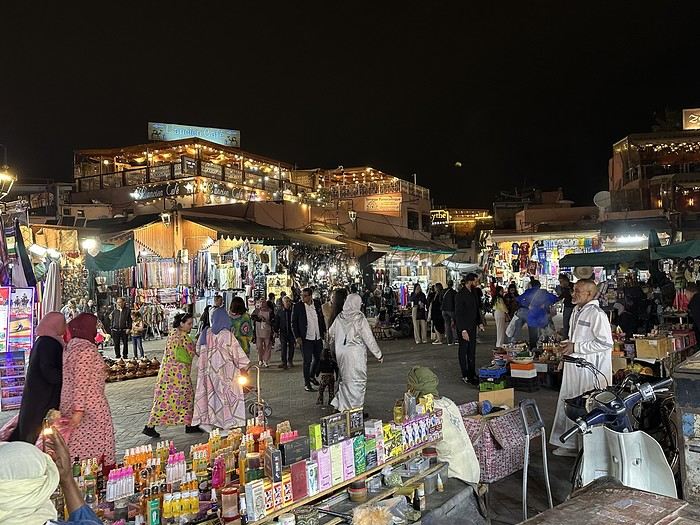
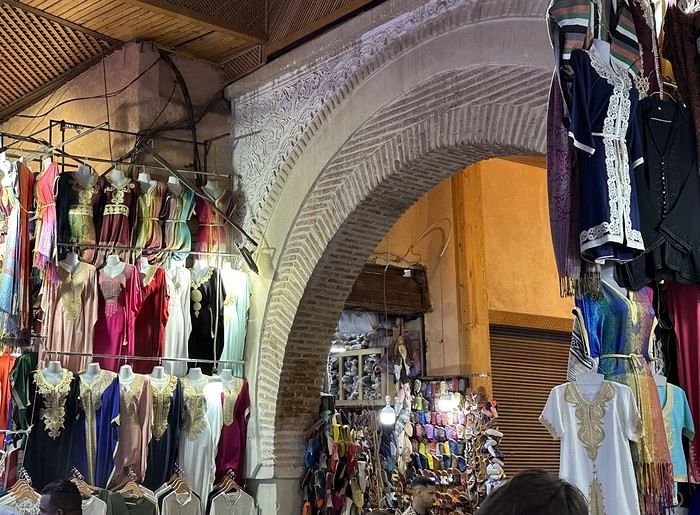
Returning after 11 PM, we learned the hard way that the souk has its own entry points and hours, and the path to our beds was full of detours and closed doors. Fortunately, we were guided by friendly locals who showed us the right way (in exchange for a fiercely negotiated tip each time...)
.Day 1: Friday, May 2nd – The Day the Group Split
Before we dive in, let’s talk about the trip prep. Among my friends, I’ve got a rep as the go-to independent travel expert (thanks to a few trips, some with this same crew). So, naturally, the task of planning this one fell to me—and I took it on gladly (you’re never better served than by yourself, right?). The prep and itinerary were hashed out over multiple meet-ups (excuses?) during shared meals at one another’s places, guided by yours truly. Travel style, accommodation, sightseeing—all decisions were made together, trying to balance everyone’s wishes over a good bottle (generic term, not numerical!)
So, a group of five—including me and my girlfriend—set off for Geneva at 3 AM that Friday, while the rest would join us on Sunday due to family or work commitments. We’ll skip the EasyJet flight—it was nothing special, just a means to get us there safely (which, in itself, is already a win). We landed in Marrakech at 9 AM local time. There, a spotless Dacia Logan was waiting for us, chartered by MEDLOC, whose impeccable service I’ll praise here (thanks, friends, for the tip!). My first challenge, after loading the suitcases into the trunk: reaching the riad booked for our first two nights as the advance team. https://www.astradamusmarrakesh.top/fr/
I was a little nervous about driving here—Marrakech’s driving reputation precedes it. The hiccup? While setting up Google Maps for the route, I accidentally added a level-5 difficulty and enabled pedestrian mode... Imagine a rental car stubbornly trying for over half an hour to navigate the Medina (the riad was in the north), cursing all the pedestrians in streets too narrow for the car, and having to reverse multiple times because “it won’t fit,” ignoring the many Marrakechis waving to signal the street was impassable (but what are they trying to sell me now? 🤪)... Until my co-pilot, holding my phone, asked if it was “normal for the route to be dotted on Google Maps?” Yes, it’s normal—pedestrian mode was on.... We’ll still be laughing about this in the nursing home in 40 years, but at the time, I was genuinely surprised by what driving in Morocco had in store for me—and for good reason! After fixing the Google Maps settings, we arrived more calmly at the private parking lot (90 dirhams per night) and then at the riad, where we received a warm welcome while our rooms were being prepared.
After freshening up, we crossed the souks for the first time to have lunch at Jemaa el-Fna Square, at Zeitoun Café, where we enjoyed our first couscous or tagine on its terrace. We’d return to Jemaa el-Fna that evening after a restorative nap at the riad, another late afternoon in the souk, and an evening at this famous UNESCO World Heritage site. This time, it was the restaurant Lafarmacie (you can’t make this up!) that won us over, despite the lack of a rooftop. I recommend this place to everyone—the prices are great, the welcome is extraordinary, and the food is excellent...
Returning after 11 PM, we learned the hard way that the souk has its own entry points and hours, and the path to our beds was full of detours and closed doors. Fortunately, we were guided by friendly locals who showed us the right way (in exchange for a fiercely negotiated tip each time...)
We're heading to Rome from May 21st to 24th. Does anyone know some good spots (restaurants) for affordable meals in the city center while we're sightseeing? Thanks
Hello everyone,
I’d like to invite you on a new adventure in Kenya.
Back in 2010, my husband Ben and I fell in love with Kenya, and we’ve been traveling there regularly ever since. This 2025 safari marked the first weeks of an important milestone in my life: retirement.
Of course, Felix—our guide and friend for all these years, whom some of you may even know from this forum—joined us again.
We chose an itinerary that takes us through the parks and reserves we particularly love in Kenya: Tsavo East (3 nights), Tsavo West (2 nights), a transition day in Embu, Samburu (5 nights), Meru NP (4 nights), Nanuyki to visit the Mount Kenya Animal Orphanage (https://mountkenyawildlifeconservancy.org/) (1 night), and Aberdare NP (2 nights).
This safari wasn’t our most prolific in terms of wildlife sightings and photos (all taken by Ben), but I still think it’s worth sharing our experiences and impressions of the places we visited. Maybe other travelers will find useful information here to help them fulfill their dream of a Kenyan safari one day...
Living in Brittany, we left from Nantes on Wednesday, January 8, 2025, on the 6 AM Air France flight to CDG, then took the direct flight to Nairobi at 10:50 AM. No issues this time on either flight (unlike in October 2023...).
We arrived in Nairobi at 9:20 PM local time (there’s a two-hour time difference with France at this time of year). Going through passport control and collecting our luggage went smoothly. The hotel shuttle (https://67airporthotel.co.ke/) was waiting for us. We shared it with a friendly Swiss couple who were there to climb Mount Kenya. We arrived at the hotel around midnight. The 67 Airport Hotel is 10-15 minutes from Jomo Kenyatta Airport and offers great value for money. Plus, it’s close to the Mombasa road, which is handy when heading that way the next morning.
On Thursday, January 9, we had breakfast at the hotel restaurant at 6:30 AM, and as planned, Felix arrived around 7 AM. We got to check out his brand-new 4x4 Nissan—we’d be the first to test it! 🙂
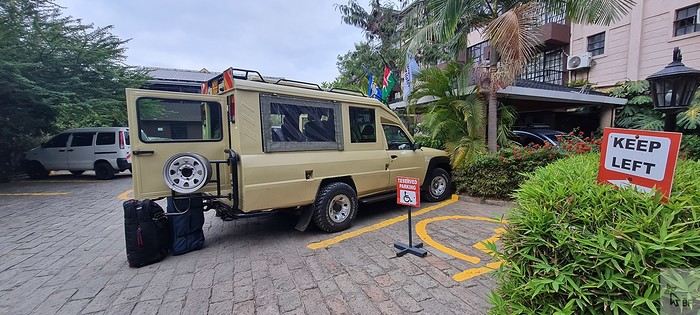
We set off for Voi, making our usual stop in Mtito Andei. Traffic was heavy on the Mombasa road, with lots of trucks.
We arrived at the entrance of Tsavo East around 1 PM and made it to Sentrim Camp (https://www.sentrim-hotels.com/sentrim-tsavo.html) just in time for lunch.
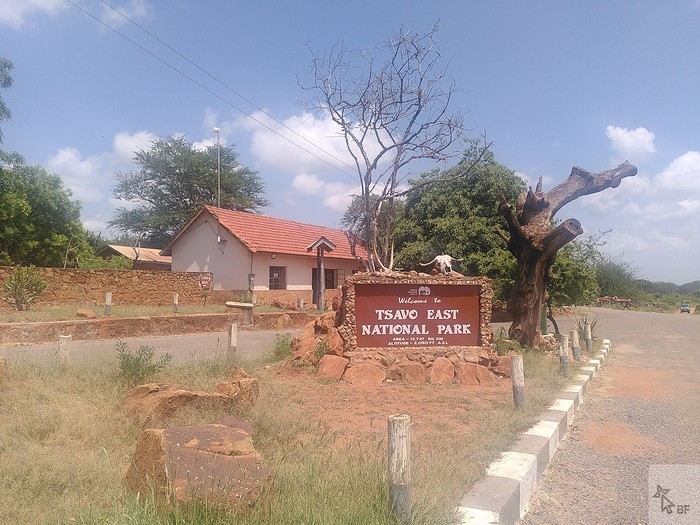
We found Tsavo East unusually green—there had been heavy rains in December, which isn’t typical. As a result, the animals were scattered and harder to spot. The watering hole visible from the camp’s dining area was completely deserted, whereas it’s usually bustling with herds of elephants and other mammals.
Our tent, No. 9, for 3 nights.
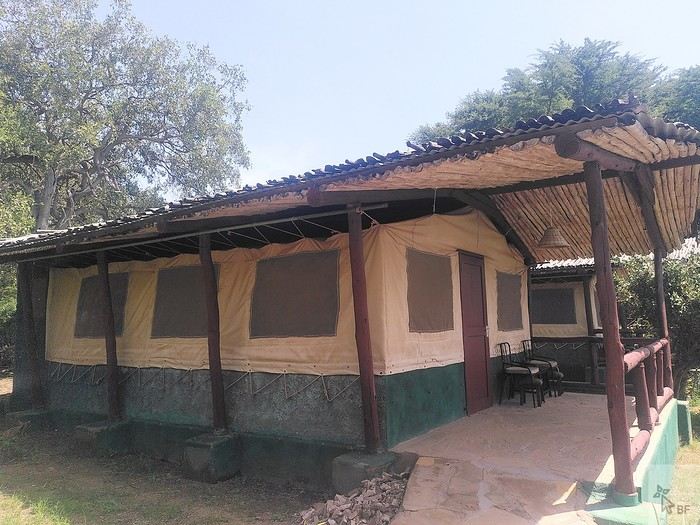
This camp is well-located inside the park. It’s simple but comfortable enough for our tastes, the staff is super friendly (as is often the case in Kenya), and the buffet-style meals are varied and good. Tsavo is the main destination for tourists staying on the coast who come for a night or two on safari. In January, some days at the camp are very quiet, while some evenings, the restaurant is packed with groups (lots of Italians, in particular).
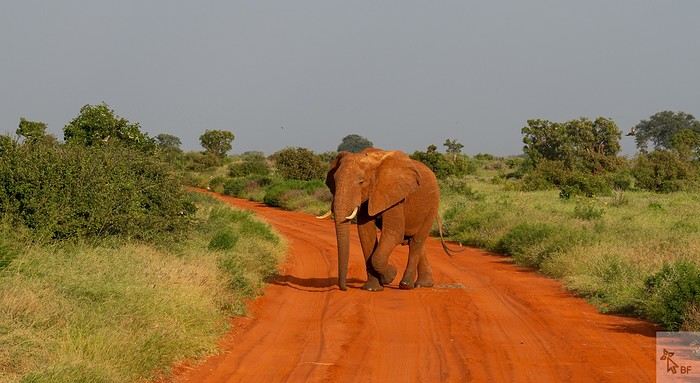
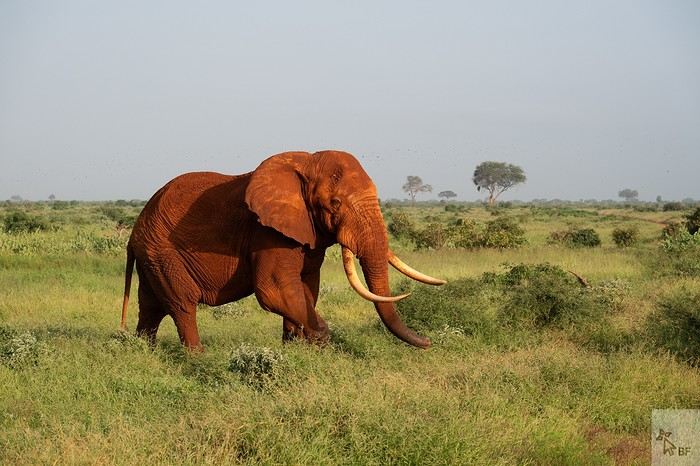
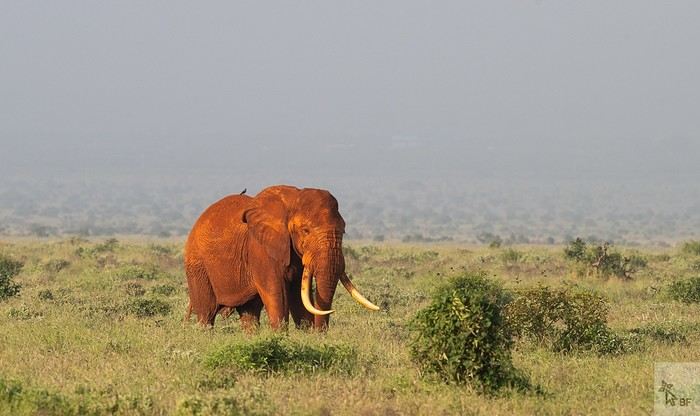
Tsavo is, of course, famous for its elephants. This time, we didn’t see many large herds, but we did have some great encounters with solitary males.
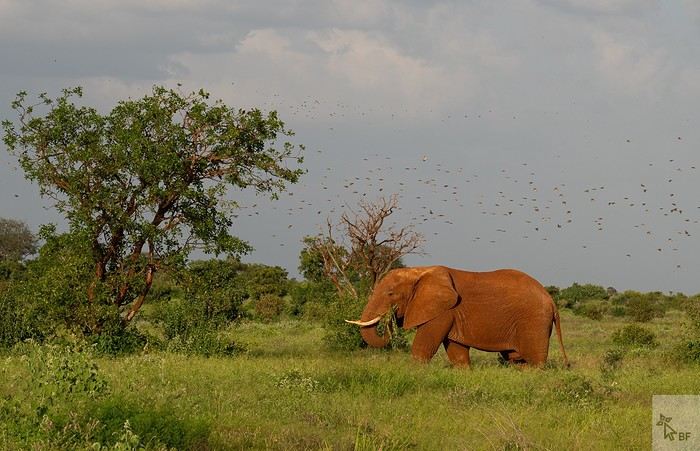
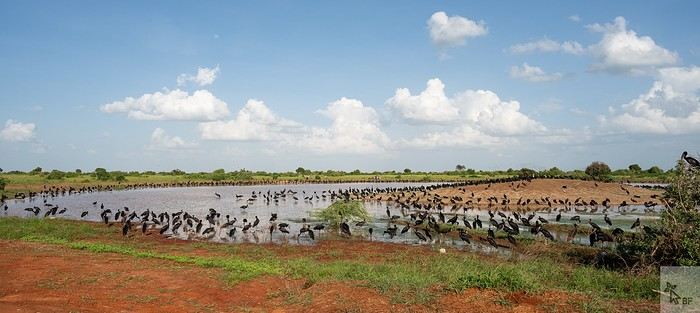
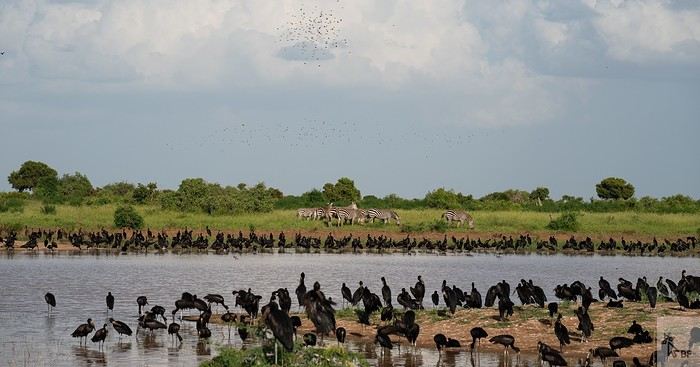
Around this small watering hole, we saw a gathering of African open-billed storks—we’d never seen so many before!
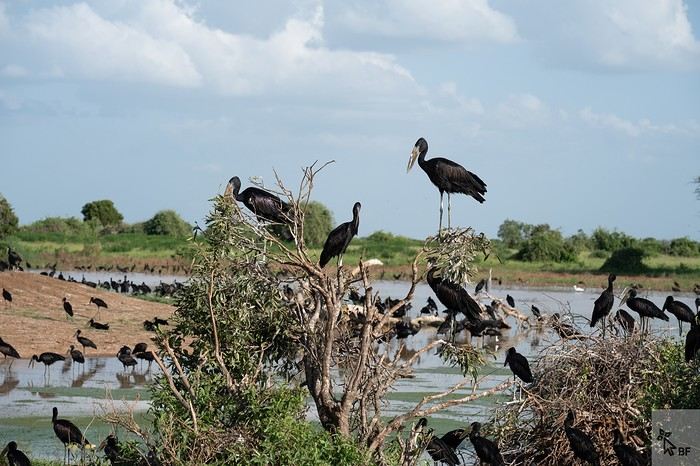
I’d like to invite you on a new adventure in Kenya.
Back in 2010, my husband Ben and I fell in love with Kenya, and we’ve been traveling there regularly ever since. This 2025 safari marked the first weeks of an important milestone in my life: retirement.
Of course, Felix—our guide and friend for all these years, whom some of you may even know from this forum—joined us again.
We chose an itinerary that takes us through the parks and reserves we particularly love in Kenya: Tsavo East (3 nights), Tsavo West (2 nights), a transition day in Embu, Samburu (5 nights), Meru NP (4 nights), Nanuyki to visit the Mount Kenya Animal Orphanage (https://mountkenyawildlifeconservancy.org/) (1 night), and Aberdare NP (2 nights).
This safari wasn’t our most prolific in terms of wildlife sightings and photos (all taken by Ben), but I still think it’s worth sharing our experiences and impressions of the places we visited. Maybe other travelers will find useful information here to help them fulfill their dream of a Kenyan safari one day...
Living in Brittany, we left from Nantes on Wednesday, January 8, 2025, on the 6 AM Air France flight to CDG, then took the direct flight to Nairobi at 10:50 AM. No issues this time on either flight (unlike in October 2023...).
We arrived in Nairobi at 9:20 PM local time (there’s a two-hour time difference with France at this time of year). Going through passport control and collecting our luggage went smoothly. The hotel shuttle (https://67airporthotel.co.ke/) was waiting for us. We shared it with a friendly Swiss couple who were there to climb Mount Kenya. We arrived at the hotel around midnight. The 67 Airport Hotel is 10-15 minutes from Jomo Kenyatta Airport and offers great value for money. Plus, it’s close to the Mombasa road, which is handy when heading that way the next morning.
On Thursday, January 9, we had breakfast at the hotel restaurant at 6:30 AM, and as planned, Felix arrived around 7 AM. We got to check out his brand-new 4x4 Nissan—we’d be the first to test it! 🙂
We set off for Voi, making our usual stop in Mtito Andei. Traffic was heavy on the Mombasa road, with lots of trucks.
We arrived at the entrance of Tsavo East around 1 PM and made it to Sentrim Camp (https://www.sentrim-hotels.com/sentrim-tsavo.html) just in time for lunch.
We found Tsavo East unusually green—there had been heavy rains in December, which isn’t typical. As a result, the animals were scattered and harder to spot. The watering hole visible from the camp’s dining area was completely deserted, whereas it’s usually bustling with herds of elephants and other mammals.
Our tent, No. 9, for 3 nights.
This camp is well-located inside the park. It’s simple but comfortable enough for our tastes, the staff is super friendly (as is often the case in Kenya), and the buffet-style meals are varied and good. Tsavo is the main destination for tourists staying on the coast who come for a night or two on safari. In January, some days at the camp are very quiet, while some evenings, the restaurant is packed with groups (lots of Italians, in particular).
Tsavo is, of course, famous for its elephants. This time, we didn’t see many large herds, but we did have some great encounters with solitary males.
Around this small watering hole, we saw a gathering of African open-billed storks—we’d never seen so many before!
Friday, November 4
My flight Barcelona - Abu Dhabi - Delhi went smoothly, it’s on time, and here I am back in India after 3 long years.
As I step off the plane, we head toward customs. It’s 3 AM, I’m tired but happy. The huge customs hall is below ground level and buzzing with people who’ve just arrived. In the end, they’re well organized—Indians to the left, foreigners to the right, and all along the hall, the customs officers’ posts, who remain very zen despite the crowd. It took me less than 2 hours to get out of the airport, which was pretty quick.
For this return trip, I got in touch with a driver from the "Lovers of India" group who was supposed to take me from the airport to Udaipur, passing through non-touristy villages like I love. This French-speaking driver had convinced me to travel by car, which was supposed to make moving from village to village easier. Two or three days before departure, I receive a message from the driver saying he was sick with a cold and sending another driver, his very kind brother who knows Rajasthan well but doesn’t speak French. I’m a bit disappointed by this message and doubtful about the driver’s sincerity, but I don’t have time to find another driver, so I stick to my plans, though I’m not at ease.
At the exit, the driver hasn’t arrived, and I wait half an hour before seeing him show up with a big smile, "Namaste." We don’t waste time and head to the car, which is clean and new.
We get to know each other in the car and hit the road toward Alwar. Along the way, we stop for lunch and to taste my first masala chai, which wakes up my taste buds.
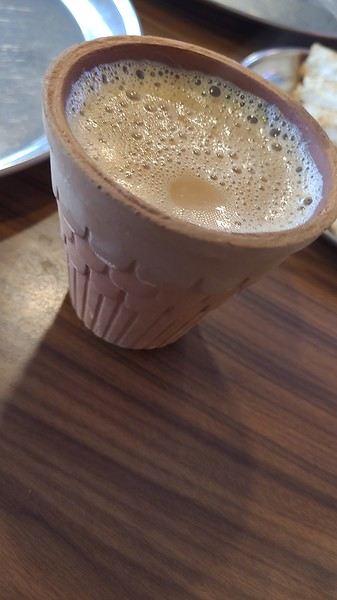
I doze off during the drive, and we arrive at the Atlantic Hotel in Alwar at 10:30 AM. My room is on the ground floor, and I settle in quickly. The Wi-Fi isn’t working, but the staff do everything they can to fix it. At noon, Gajender, the driver, suggests visiting the Qila Fort, which is on the heights of Alwar. The fort is closed for restoration, but safari tours are offered—jeep, guide, driver, and visit for 1600 Rs.
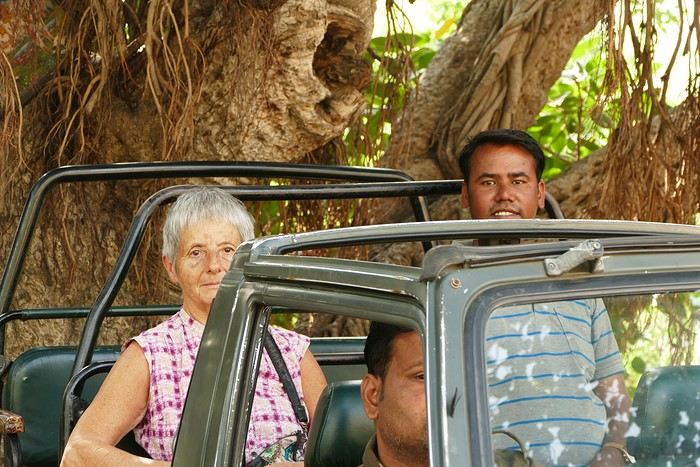
We follow the great wall, which is impressive—the second largest in India and the third in the world.
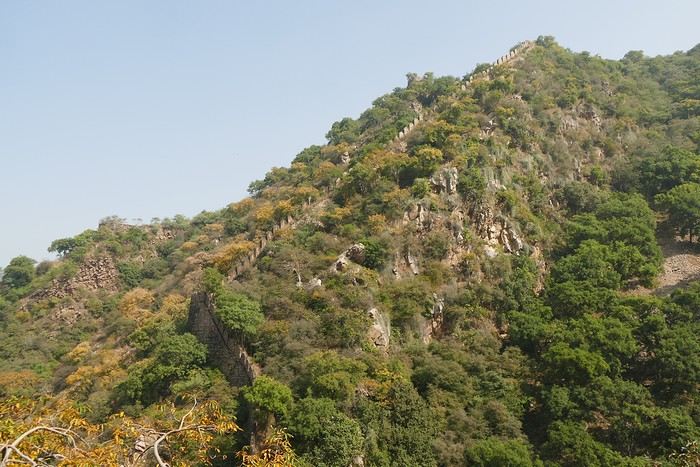
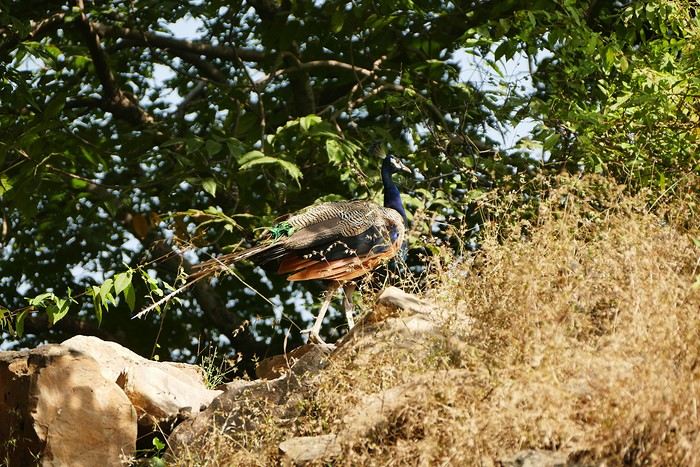
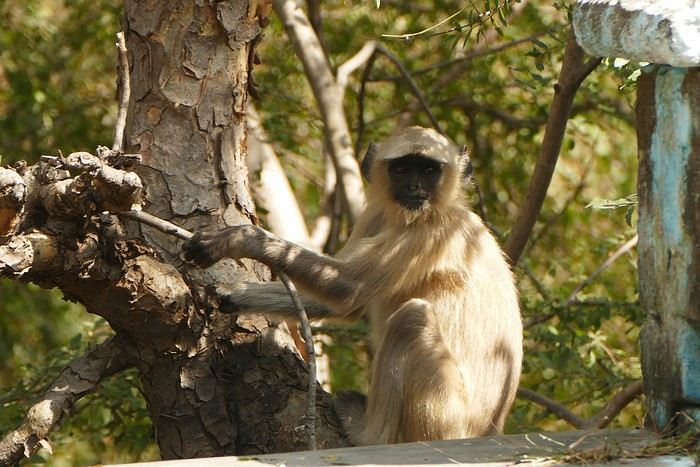
We spot peacocks and monkeys.
The guide shows me an old stepwell lost in nature. It’s always my thing to check out these baoris, which can be stunning, but this one isn’t anything special. We arrive at the palace overlooking the city.
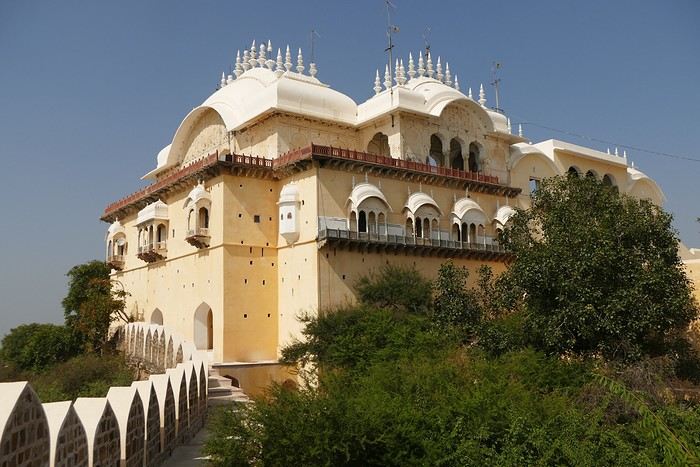
We walk around the palace, and I discover another stepwell that’s not worth lingering over.
The tour is over, and I had a great time despite the fatigue. We head back down to Alwar, near the City Palace, which has been turned into administrative offices. Gaju (the driver’s nickname) finds a parking spot near a dhaba where we have lunch (paneer masala, chapatis, chai)—it’s delicious. With my energy restored, we head to the palace. On the top floor is a museum that I visit.
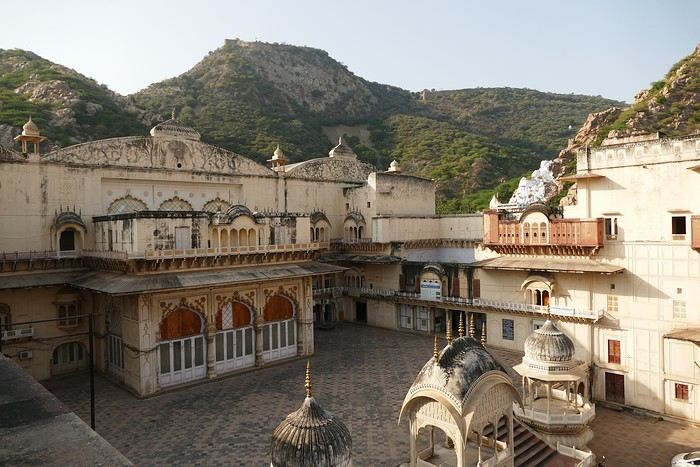
At the exit of the museum, we have to go back down and walk around the palace to get to the Moosi Maharani Chhatri. I’ve been here once before and really liked it, and the place is still the same—calm and relaxing.
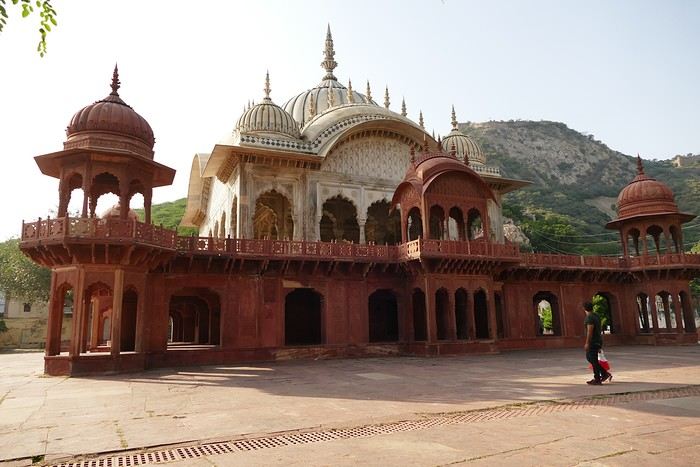
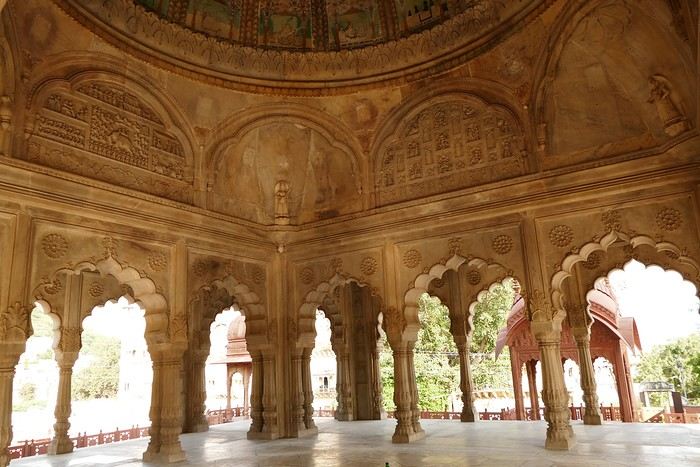
"This monument is the most artistic in Alwar and also the most royal, filled with fascinating history. Maharaja Vinay Singh of Alwar built this two-story cenotaph in 1815 in memory of his father, Maharaja Bakhtawar Singh. It’s also known as Moosi Maharani ki Chhatri, named after the king’s mistress, who performed sati upon his death. After the sati, she was accepted as the king’s wife. It’s an elegant monument, shaped like a flower and built with a mix of brown sandstone and white marble. The first floor is made of sandstone, while the upper floor and the chhatris (cenotaphs) are in white marble. Its sculpted pavilion has dome-shaped arches with intricate lace-like and exquisite floral patterns. There are complex motifs that shine brightly in the sunlight. The colorful circular ceiling is an important part of Moosi Maharani Ki Chhatri and is adorned with faded gold-leaf paintings of mythological figures and scenes. The footprints of Maharaja and Moosi Rani are engraved in marble inside the cenotaph, and locals pay their respects to them."
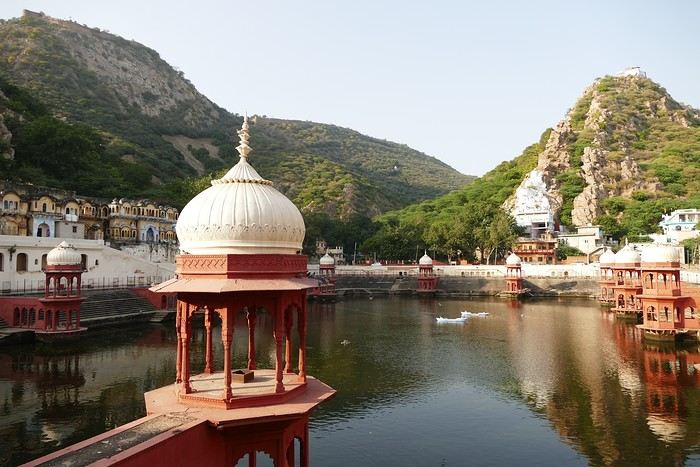
Near the chhatri, there’s a large water reservoir with a magnificent view. The place is peaceful and relaxing, and I stay here for a while, contemplating and daydreaming before heading back to the hotel for some well-deserved rest. The Wi-Fi is working now. I’m the only foreign guest, and since my room is near the entrance, I’ll be well taken care of throughout my stay.
I doze off during the drive, and we arrive at the Atlantic Hotel in Alwar at 10:30 AM. My room is on the ground floor, and I settle in quickly. The Wi-Fi isn’t working, but the staff do everything they can to fix it. At noon, Gajender, the driver, suggests visiting the Qila Fort, which is on the heights of Alwar. The fort is closed for restoration, but safari tours are offered—jeep, guide, driver, and visit for 1600 Rs.
We follow the great wall, which is impressive—the second largest in India and the third in the world.
We spot peacocks and monkeys.
The guide shows me an old stepwell lost in nature. It’s always my thing to check out these baoris, which can be stunning, but this one isn’t anything special. We arrive at the palace overlooking the city.
We walk around the palace, and I discover another stepwell that’s not worth lingering over.
The tour is over, and I had a great time despite the fatigue. We head back down to Alwar, near the City Palace, which has been turned into administrative offices. Gaju (the driver’s nickname) finds a parking spot near a dhaba where we have lunch (paneer masala, chapatis, chai)—it’s delicious. With my energy restored, we head to the palace. On the top floor is a museum that I visit.
At the exit of the museum, we have to go back down and walk around the palace to get to the Moosi Maharani Chhatri. I’ve been here once before and really liked it, and the place is still the same—calm and relaxing.
"This monument is the most artistic in Alwar and also the most royal, filled with fascinating history. Maharaja Vinay Singh of Alwar built this two-story cenotaph in 1815 in memory of his father, Maharaja Bakhtawar Singh. It’s also known as Moosi Maharani ki Chhatri, named after the king’s mistress, who performed sati upon his death. After the sati, she was accepted as the king’s wife. It’s an elegant monument, shaped like a flower and built with a mix of brown sandstone and white marble. The first floor is made of sandstone, while the upper floor and the chhatris (cenotaphs) are in white marble. Its sculpted pavilion has dome-shaped arches with intricate lace-like and exquisite floral patterns. There are complex motifs that shine brightly in the sunlight. The colorful circular ceiling is an important part of Moosi Maharani Ki Chhatri and is adorned with faded gold-leaf paintings of mythological figures and scenes. The footprints of Maharaja and Moosi Rani are engraved in marble inside the cenotaph, and locals pay their respects to them."
Near the chhatri, there’s a large water reservoir with a magnificent view. The place is peaceful and relaxing, and I stay here for a while, contemplating and daydreaming before heading back to the hotel for some well-deserved rest. The Wi-Fi is working now. I’m the only foreign guest, and since my room is near the entrance, I’ll be well taken care of throughout my stay.
Hi everyone,
I bought tickets for Martinique in April 2025 for 15 days, without really looking into what there was to do, and with the idea in my head that we could: hike, do water activities, swim, visit rum distilleries...
But... I’m worried I’ll get bored over 15 days and I’m considering maybe spending 1 week in Guadeloupe and 1 week in Martinique. For example, I don’t know how to spend a whole afternoon at the beach. 2 hours, max.
I know it’s a personal question and depends on how you travel, but I’d love to hear your thoughts if you’ve done it: - Did you feel too rushed? - Is it reasonable to do? - How much time would you spend on each island?
I’m open to all your comments.
Thanks so much.
Have a lovely afternoon! :)
Hi everyone,
I’d love to share a little travel journal from our 14-day/12-night road trip with our two teens (14 and 17) in February/March 2020. A huge thank you to all of you who helped me plan this trip to South Africa—your patience with my endless questions was amazing!
We left Lyon on Saturday, February 22 at 7:00 AM and arrived in Johannesburg at 10:00 PM after a short layover in Amsterdam. Flights cost 440 € per person (booked in October), with carry-on luggage. We added just one checked bag for the whole family (80 € round-trip with the free Flying Blue membership). Since we’d be moving around a lot, we packed light! In Lyon, we reserved parking at P5 in advance for 70 € for 14 days. The Air France/KLM flight was smooth. When we landed, we picked up our bags and had booked a night at the Aero Guest Lodge, just 5 minutes from the airport, with a free shuttle and breakfast. All you have to do is send a WhatsApp message when you arrive at the airport to let the shuttle driver know. The tricky part? Finding him in the terminal—he wasn’t holding a sign with the hotel’s name. 🤪 A South African called him for me since my English wasn’t great (and I had to get used to the accent 😛), and helped us spot the driver (who was actually less than 5 meters away!) with other guests. When we got to the hotel: all good, except we were 10 people in a van meant for 7. The room was spacious—one king-size bed and two single beds for the kids—with a simple but clean bathroom, a garden, pool, and breakfast (which we didn’t try). All for 65 €, so an awesome value!
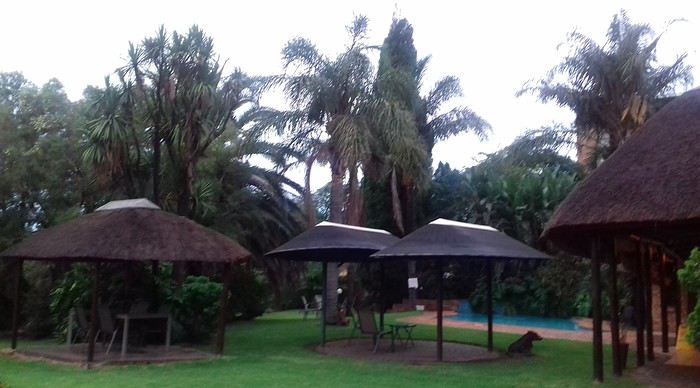 After a restful night, we woke up at 6:00 AM to catch the shuttle back to the airport. Just a heads-up: there’s only one shuttle per hour in the morning, and Kulula canceled our 9:00 AM flight, moving it to 8:00 AM—so no time for breakfast (it starts at 6:30).
We waited 15 minutes in the lovely garden for the driver, who dropped us off at the airport in 5 minutes.
We checked in for our flight to Cape Town, which cost around 40 € (including two checked bags per person).
We grabbed breakfast at the airport instead (less than 20 € for all four of us—one of the nice surprises of South Africa!), and arrived in Cape Town at 10:20 AM.
 After quickly picking up our bags, we headed to the Avis counter and left with a Toyota Corolla for 80 € for 4 days (rented with the Flying Blue card—free additional driver).
Everything’s on the left... not easy, but it works if you plan your route well.
We drove to our Airbnb in Constantia. We were surprised to see animals, bikes, and pedestrians on the highway!
We arrived around 11:30 AM at our rental—a huge house in the vineyards, in a super secure neighborhood, about 15-20 minutes from Hout Bay. It felt like Beverly Hills, but with super-high walls and barbed wire around the villas. 😕

We dropped off our bags, changed into shorts (it was around 30°C/86°F), and headed to the Bay Harbour Market in Hout Bay. We had lunch there—such a great vibe! We wandered through the stalls, everyone picked their own dish, and we sat down on the terrace. There was music, artisans of all kinds... a really nice moment.

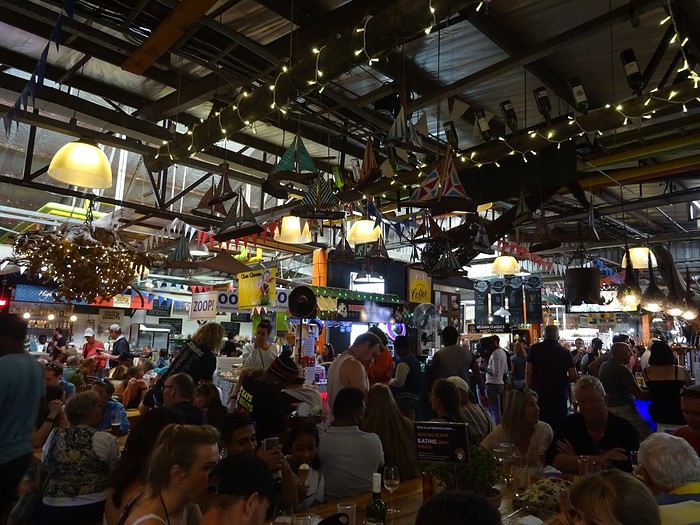
I’d withdrawn 50 € before leaving... and that gave me change to pay the parking attendant. Lunch cost around 30 € for four, including food and drinks.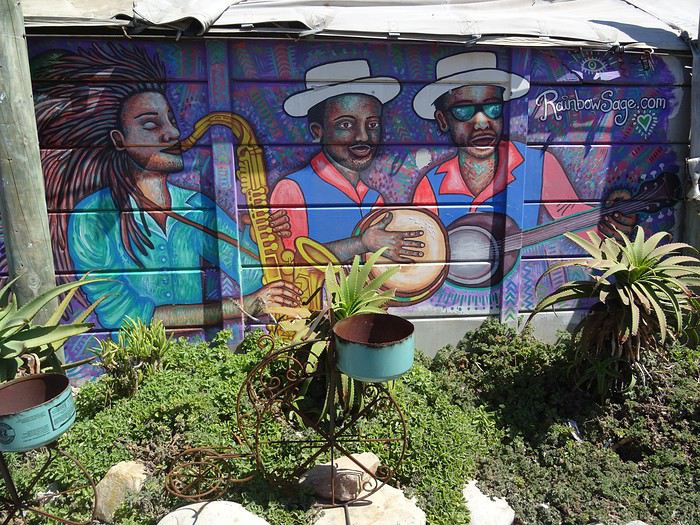

After browsing the artisan stalls, we headed to Hout Bay Beach near the restaurant, Marina Wharf (another small tip for the parking attendant—we’d have to get used to that!). We stopped to admire the sea lions. An ice cream for 1 €? No way we were saying no! 🙂
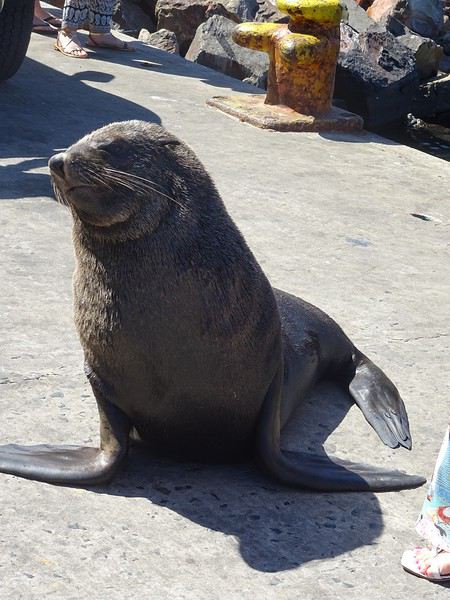
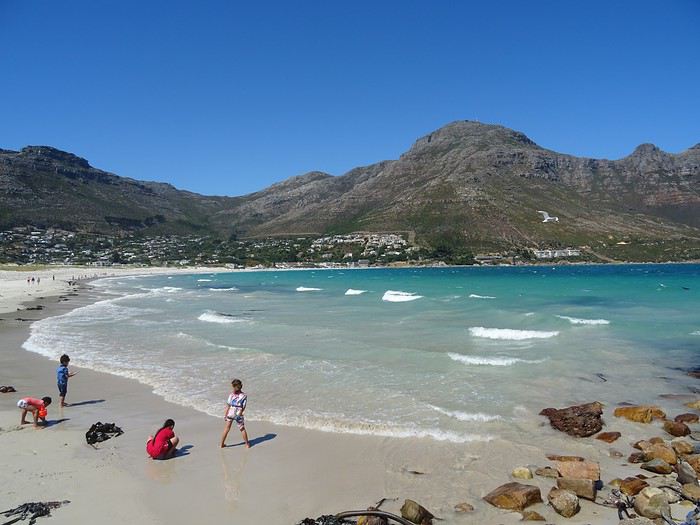
The fatigue was starting to hit, so we headed to the grocery store 10 minutes away (Constantia shopping center) and then had an aperitif in front of the vineyards, opening a delicious bottle of white wine.
I’d love to share a little travel journal from our 14-day/12-night road trip with our two teens (14 and 17) in February/March 2020. A huge thank you to all of you who helped me plan this trip to South Africa—your patience with my endless questions was amazing!
We left Lyon on Saturday, February 22 at 7:00 AM and arrived in Johannesburg at 10:00 PM after a short layover in Amsterdam. Flights cost 440 € per person (booked in October), with carry-on luggage. We added just one checked bag for the whole family (80 € round-trip with the free Flying Blue membership). Since we’d be moving around a lot, we packed light! In Lyon, we reserved parking at P5 in advance for 70 € for 14 days. The Air France/KLM flight was smooth. When we landed, we picked up our bags and had booked a night at the Aero Guest Lodge, just 5 minutes from the airport, with a free shuttle and breakfast. All you have to do is send a WhatsApp message when you arrive at the airport to let the shuttle driver know. The tricky part? Finding him in the terminal—he wasn’t holding a sign with the hotel’s name. 🤪 A South African called him for me since my English wasn’t great (and I had to get used to the accent 😛), and helped us spot the driver (who was actually less than 5 meters away!) with other guests. When we got to the hotel: all good, except we were 10 people in a van meant for 7. The room was spacious—one king-size bed and two single beds for the kids—with a simple but clean bathroom, a garden, pool, and breakfast (which we didn’t try). All for 65 €, so an awesome value!
After a restful night, we woke up at 6:00 AM to catch the shuttle back to the airport. Just a heads-up: there’s only one shuttle per hour in the morning, and Kulula canceled our 9:00 AM flight, moving it to 8:00 AM—so no time for breakfast (it starts at 6:30).
We waited 15 minutes in the lovely garden for the driver, who dropped us off at the airport in 5 minutes.
We checked in for our flight to Cape Town, which cost around 40 € (including two checked bags per person).
We grabbed breakfast at the airport instead (less than 20 € for all four of us—one of the nice surprises of South Africa!), and arrived in Cape Town at 10:20 AM.
After quickly picking up our bags, we headed to the Avis counter and left with a Toyota Corolla for 80 € for 4 days (rented with the Flying Blue card—free additional driver).
Everything’s on the left... not easy, but it works if you plan your route well.
We drove to our Airbnb in Constantia. We were surprised to see animals, bikes, and pedestrians on the highway!
We arrived around 11:30 AM at our rental—a huge house in the vineyards, in a super secure neighborhood, about 15-20 minutes from Hout Bay. It felt like Beverly Hills, but with super-high walls and barbed wire around the villas. 😕We dropped off our bags, changed into shorts (it was around 30°C/86°F), and headed to the Bay Harbour Market in Hout Bay. We had lunch there—such a great vibe! We wandered through the stalls, everyone picked their own dish, and we sat down on the terrace. There was music, artisans of all kinds... a really nice moment.
I’d withdrawn 50 € before leaving... and that gave me change to pay the parking attendant. Lunch cost around 30 € for four, including food and drinks.
After browsing the artisan stalls, we headed to Hout Bay Beach near the restaurant, Marina Wharf (another small tip for the parking attendant—we’d have to get used to that!). We stopped to admire the sea lions. An ice cream for 1 €? No way we were saying no! 🙂
The fatigue was starting to hit, so we headed to the grocery store 10 minutes away (Constantia shopping center) and then had an aperitif in front of the vineyards, opening a delicious bottle of white wine.
Hi everyone.
We’ve been feeling like there’s a big drop in activity on our forum...
Probably due to the current situation... Have any of you canceled or postponed your upcoming trips?
The forum is also facing competition from social media like Facebook and others, which play a big role in the political situation but are pretty limited when it comes to planning an individual trip.
The mandatory ads for new members on the forum are also a major turn-off that should be removed.
As for the current situation, I’m in Nosy Be, and there’s no problem here. I’d love to hear your thoughts on the future. I feel like this crisis is different this time and could lead to real change. Hope I’m not wrong!
Thanks for your replies!
As I mentioned before, I’m heading to Istanbul next summer, and I’ve heard there have been quite a few attacks by Kurds in Turkey recently, which is making me hesitate about my trip.
What do you all think? :( I’m wondering if it’s really a good idea to go...
What do you all think? :( I’m wondering if it’s really a good idea to go...
Hey fellow travelers,
As a huge Asia lover, I don’t usually post trip reports here since I find it so easy to get around in those countries (whether online beforehand or on the spot). But after 15 days in Zanzibar, I figured our experience (we’re traveling as a couple) might help some of you.
To sum it up, this island is absolutely stunning but not exactly a walk in the park for independent travelers!
**TRANSPORTATION**
Since we’re not Bill Gates, we have to make choices—especially in Zanzibar, which is way pricier than Asia.
One option was taking the *dalla dalla* (local minibuses) to get around the island, but it was just too complicated for us. For example, going from Nungwi to Matemwe takes half an hour by car but hours by *dalla dalla* because you *have* to go back through the capital!
Taking taxis from one hotel to another didn’t interest us since we see travel as a way to immerse ourselves in the country and get as close to locals as possible (sounds a bit pompous, but I couldn’t find a better way to put it!!).
So, we decided to rent a car to move freely and stop wherever we wanted. If you’re looking for info on the Dolphin Tour, Spice Tour, or Safari Blue… you can skip this part—we didn’t do any of that (I know, it’s a shame, but we can’t do everything, right? 😉). There are agencies everywhere that can organize those for you without any hassle.
Long story short, after some searching, we rented a car from Ally Keys (found on *Le Routard*), a small Toyota 4x4 for $350 for 11 days (we drove about 900 km and spent 80 € on gas).
The roads are basically wide boulevards—just watch out for pedestrians and cyclists constantly. Once you leave Stone Town, though, there’s hardly any traffic.
**The police—quite the love story for us!!** First off, no paranoia needed: police checkpoints stop *every* car, not just the ones with "white" people.
In 11 days of driving around the island, we were stopped… 13 times, no joke!!
Every time, they asked for our international driver’s permit and the Tanzanian permit Ally gave us for free before we left. They were all super friendly and didn’t give us any trouble (a few words in Swahili can help). Except once, when they noticed the insurance had expired *two days* earlier 🤪.
We hadn’t paid attention, and neither had Ally—our bad.
It turned into quite the scene, lasting about 2 hours, but Ally, who we called, negotiated with them. The fine went from $200 down to $20, and Ally even reimbursed us afterward!! Quite the experience, to say the least.
**THE PEOPLE**
Okay, I’ll try to explain our experience *without getting "stoned," please*. I’m not judging anyone—I just want to share what we felt during these 15 days (way too short to really understand, of course).
My go-to motto, "If you smile, they’ll smile back," didn’t really work there. We found the locals weren’t exactly approachable, especially the women.
That said, we *did* meet some genuinely kind and selfless people: one in Stone Town, sometimes in the local eateries where we ate, and with hitchhikers (male and female) we picked up whenever we saw them (the only way we found to share a bit of our "wealth" with them). But overall, I found it *really* tough.
At the same time, it clarified things. Every time someone approached us in a friendly, warm way, they had something to offer (a restaurant, a shop to visit, a snorkeling tour, a taxi…). No issues with them—they were lovely, just like the staff at all the hotels we stayed in.
In Matemwe, we walked through the village every morning and evening for 5 days. I made an effort to smile and say hello every day, morning and night, but even by the end, the best I got was a nod.
We learned a few words in Swahili (hello, how are you…) to break the ice, but it was pretty much a lost cause, with a few exceptions.
Obviously, since I’d never experienced anything like this, I tried to find an explanation—but we were there too briefly to really figure it out. Here are my hypotheses:
- The strong Muslim presence (even little girls wear veils). Maybe they see us white people as "depraved," even though we always dressed modestly.
- Smiling might not be part of their communication style (sounds dumb, but you never know!).
- Maybe there’s some resentment toward white people, which, honestly, I’d totally understand. Let me explain: two worlds share this island without really mixing. 50% of tourists stay in Nungwi and Kendwa, 25% stay in resorts all around the island, 23% go from hotel to hotel by taxi or *dalla dalla*, and maybe 2% travel like we did (totally unscientific stats, obviously).
In 11 days of exploring the island (except Stone Town and the beaches), we *never* saw a white person outside a hotel or taxi (no exaggeration)—never in villages, markets…
Luxury resorts sit right next to villages in extreme poverty (no running water, no electricity, etc.), and the tourism money barely trickles down to locals. It’s enough to make you ashamed of being white—I felt that way more than once!
Anyway, if anyone here knows Zanzibaris well, I’d *love* to hear their perspective.
**PHOTOS**
Given what I just said, you can imagine it wasn’t easy.
The women were the hardest to approach—I gave up on taking their photos after 3 or 4 clear refusals (they’d cover their faces, not angrily, but firmly).
Most men I asked agreed.
With kids, anything goes:
- Some pose for a photo and laugh hysterically when they see themselves.
- Some pose but then demand a dollar, shillings, pens, or even your hair tie if that’s all you’ve got!!
Some happily agree when you ask, while others shout a big "Nooooo" or even threaten to throw rocks at you *before* you’ve even turned on your camera!!
Once again, I put myself in their shoes and watched how "white" people behave. They walk by without a word, raise their camera, snap a shot, and leave without even a wave. When you see yourself in that mirror, it really puts things into perspective!
**STONE TOWN**
Like everyone else, we started our trip in Stone Town—one of the most beautiful cities I’ve ever seen (no exaggeration!). Despite being super touristy, it’s managed to keep its soul, which is pretty rare.
The sea and its *dhows* (boats with triangular sails straight out of another era), colonial buildings everywhere (some renovated, others run-down but still beautiful), narrow alleys with stunning doors (not just in hotels, as I thought), women in colorful veils all over the streets, the call to prayer echoing through the alleys, and, of course, the Darajani Street market—not to be missed if you want even a tiny taste of African life. Pure magic!
The only downside? Quite a few shady guys offering all kinds of services, some of them drug users and a bit unsettling (one even waited for hours outside our hotel after we told him we didn’t need anything). We stayed polite and friendly, and it went fine, but it did create a slightly "sketchy" vibe at times.
For our hotel, we spent the first two nights at Karibu Zanzibar Inn, found online for $65 a night. Right in the heart of the old town, perfect for us—clean, quiet, rooftop terrace for breakfast, welcoming staff. Nothing to complain about, except maybe the price!
For the last two nights before leaving, we found a place on the spot, super well-located, for $45 a night (DM me for details if you’re interested).
We also rented bikes to get around—great for $5 a day per bike.
**MONEY**
Money’s a bit tricky here, I found. Some hotels supposedly only accept dollars (not the ones we stayed in, though), and a lot of prices are listed in that currency. Either way, you can leave your euros at home—several exchange bureaus won’t take them. My advice? Bring enough dollars to avoid credit card fees (you can’t withdraw more than 190 € at a time from ATMs, so you’d pay a fee each time).
For our budget, we spent 800 € per person for 14 days, staying in hotels averaging $45 a night (not easy to find, by the way) and eating often in local eateries (more on that below). Meals in touristy restaurants cost between 6 and 9 € per person, a beer is 2 €, a Coke is 1 €…
Don’t forget, for two people: $100 for visas, $60 for airport-port round-trip taxis, and $160 for Dar-Stone Town round-trip boats.
**FOOD & ACCOMMODATION**
We ate in local restaurants about ten times: chicken or beef skewers with fries or rice for 1.50 € per person. But:
1 – You have to find the "restaurant" that doesn’t look like one (usually a roadside shack).
2 – With a shady spot to sit, which isn’t always possible.
3 – For the squeamish, hygiene conditions are *way* below standard (no fridge, well water used to wash dishes, flies everywhere)!!
We figured if locals eat there, it’s probably a good sign, and honestly, the food was good, and we never got sick.
Plus, it’s the best way to meet Zanzibaris.
Hotels were tough to find under $50. Thankfully, we had the car to scout around (prices in guidebooks had gone up!). We chose to stay 5 days in the north of the island (Matemwe) and 5 days in the south (Jambiani), which let us explore almost the whole island.
We decided that on the spot after checking things out.
In Matemwe, we didn’t overthink it—we stayed at Allykeys Bungalow, whose owner rented us the car! At first, we were a bit wary of his offer, but after checking it out, we loved it. Simple bungalows but with everything we needed, a great setting facing the sea, sun loungers to relax, a restaurant and bar by the water, and—best of all—a very local vibe (about 50 *dhows* leaving for fishing every morning between 5:30 and 6:00, and their return around 1:00 PM with haggling over fish prices on the beach—pure bliss).
Just so you know, it’s pretty noisy (I love the call to prayer, but at 4:30 and 5:30 AM, it’s *early*—especially when it goes on for so long!!), no hot water (just lukewarm), and no Wi-Fi. But for that, there’s a great deal at the Green… at the very north end of the beach. Just by ordering a drink (3 € for a beer, 2 € for a Coke), you can enjoy the Wi-Fi and pool all afternoon. Super friendly welcome at this luxury hotel, even for "bumpkins" like us!!
In Jambiani, we found Pakachi Beach Resort—a dream come true. Listed at over $60 online, they offered us a beachfront bungalow (a big bed downstairs, another upstairs with a sea view and ocean breeze included), a bathroom with hot water, Wi-Fi in common areas, and a pool (low tide is *really* low there!!) for $45 a night. It was so amazing we wondered if they mistook us for *Le Routard* guides since we arrived alone with our car!!
It was also super quiet—only three plugs in use, including ours, which might explain it!!
**THE BEACHES**
Quick rundown:
- The most beautiful aesthetically and for swimming anytime: Kendwa, no question. The downside? Way too many resorts for our taste and no local life. We went for a day before heading back to Matemwe.
- The most tourist-packed: Nungwi, obviously. Not our cup of tea, but I guess it’s great for young people who want to party.
- Best for local life: Matemwe, hands down. The daily fishing returns are a highlight, plus village life, seaweed gatherers, kids on the beach—we *loved* it.
- Best for peace and beauty (but no swimming at low tide): Pongwe, Uroa, Kiwengwa, Jambiani, and a special mention for Dongwe, which we found absolutely gorgeous.
- If you want to feel like you’re in the middle of nowhere but still by the water: Kae Kuu and Unguja Ukuu.
There you go—that’s pretty much everything we saw!
Sorry for the novel. I doubt many of you made it to the end of my "prose." At least no one can say I didn’t share my experience this time 😉.
If you’ve got questions, don’t hesitate.
See you soon, and happy travels!
My question might seem a bit out of place in a "travel" forum, but I’m giving it a shot anyway.
I’m thinking about sponsoring a child in Vietnam.
After some online research, I’ve found a lot of organizations that offer this, but I’m struggling to make a choice.
Could anyone guide me in making my decision?
Thanks in advance and have a great day.
Hi everyone,
We’ve wanted to visit Alsace for a long time to see the famous and well-known "Christmas markets."
Apart from the one in Strasbourg, could you give us some tips on other markets (Sélestat, Colmar, Mulhouse)?
Also, any recommendations for hotels, restaurants, or things to see, etc.?
I know my question is a bit "basic," but we really need some expert advice.
Thanks in advance to all.
Hi there,
We’re back from our 3-week trip to South Africa in July. It was a family trip with our four grown-up kids (ages 18 to 25).
First off, I’d like to thank everyone on this forum for their great tips—they really helped us plan this trip!
The trip: We spent 15 days between Port Elizabeth and Cape Town, then a week around Kruger (including Blyde River Canyon). We found South Africans to be welcoming and always ready to help. We never felt unsafe (just followed basic safety rules). The police are very visible, especially on the roads.
Logistics: We’d booked our accommodations in advance but made a few changes on the spot based on how we felt at the time. We rented two vehicles from Firefly (Hertz). No complaints—recent cars, quick returns, and the deposit wasn’t charged. We’d gotten our international driver’s permits... which stayed in France! Luckily, no one asked for them. Driving on the left wasn’t an issue (it wasn’t our first time). The roads we took were in good, even great, condition. Only a few tracks to lodges or parks were rough and required extra caution. Lots of pedestrians on the sides of roads, even highways. And plenty of very slow trucks. But they pull over to let you pass. It’s also common for cars to cross into the opposite lane to overtake, even with white lines. We took two domestic flights: one early in the morning (Johannesburg to Port Elizabeth) and one in the late afternoon (Cape Town to Johannesburg) to save time.
We had some highlights and a few disappointments—all part of the journey! More details coming soon.
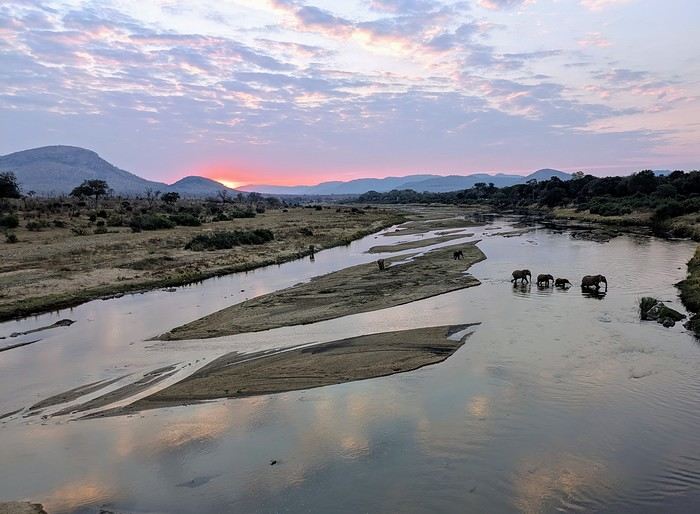
We’re back from our 3-week trip to South Africa in July. It was a family trip with our four grown-up kids (ages 18 to 25).
First off, I’d like to thank everyone on this forum for their great tips—they really helped us plan this trip!
The trip: We spent 15 days between Port Elizabeth and Cape Town, then a week around Kruger (including Blyde River Canyon). We found South Africans to be welcoming and always ready to help. We never felt unsafe (just followed basic safety rules). The police are very visible, especially on the roads.
Logistics: We’d booked our accommodations in advance but made a few changes on the spot based on how we felt at the time. We rented two vehicles from Firefly (Hertz). No complaints—recent cars, quick returns, and the deposit wasn’t charged. We’d gotten our international driver’s permits... which stayed in France! Luckily, no one asked for them. Driving on the left wasn’t an issue (it wasn’t our first time). The roads we took were in good, even great, condition. Only a few tracks to lodges or parks were rough and required extra caution. Lots of pedestrians on the sides of roads, even highways. And plenty of very slow trucks. But they pull over to let you pass. It’s also common for cars to cross into the opposite lane to overtake, even with white lines. We took two domestic flights: one early in the morning (Johannesburg to Port Elizabeth) and one in the late afternoon (Cape Town to Johannesburg) to save time.
We had some highlights and a few disappointments—all part of the journey! More details coming soon.