Bonjour,
Je suis actuellement étudiante à l'école du Louvre en section indologie, j'envisage la possibilité de faire un master et éventuellement un doctorat dans ma discipline. Je n'ai pas encore de sujet précis pour l'instant, selon ma prof il y a du travail à faire sur la dynastie Pandya qui a été relativement peu étudiée, mais un travail sur les rapports entre inde et occident au travers des missions jésuites m'interresserait également.
Pour commencer, on a plein de rapports de fouilles, de documents photos, mais c'est souvent incomplet, et ça ne vaux pas le contact terrain.
Donc, quand on est un universitaire étranger en Inde:
_Est-ce qu'on doit consulter les facs sur place? Qui sont les tenants en matière d'archéo/histoire/histoire de l'art sur place?
_Les archives, comment ça marche? comment on y entre? Quelles sont les logiciels permettant de savoir ce qu'ils sont en stock?
_Pour visiter les temples, est-ce qu'il vaux mieux s'habiller local?
_Est-ce que les photos dans les temples et le grimpage sur les façades pour prendre des détails en photo n'est pas trop mal vu?
... le grimpage sur les façades pour prendre des détails en photo ...
Non mais ça va pas la tête 😠 tu veux pas prendre une échelle tant que tu y es !
Les seuls autorisés à grimper sur les façades sont les singes et les écureuils mais eux au moins ne prennent pas de photo.
Il y a eu le 3 janvier un message : "Lien entre art et sacré en Inde: quelle région?" qui pourrait t'apporter certaines réponses; notamment celle de Ragamuffin.
(photo) et ne grimpez pas sur les édifices !!
Le mauvais goût ou les opinions bizarres rendent la coexistence très difficile, mais leur interdiction la rend absolument impossible.
Daniel Innenarity
Je sais bien que c'est moyen, mais dans ce cas là comment je fais pour les études iconographiques?
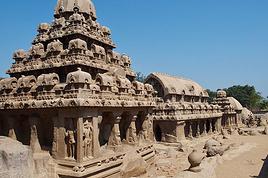
Les sous-bassements des temples sont souvent richement sculptés avec parfoi des programmes très interressants qu'il est urgent d'étudier, et sont souvent très hauts surtout que je ne suis pas très grande, alors à part un escabeau...
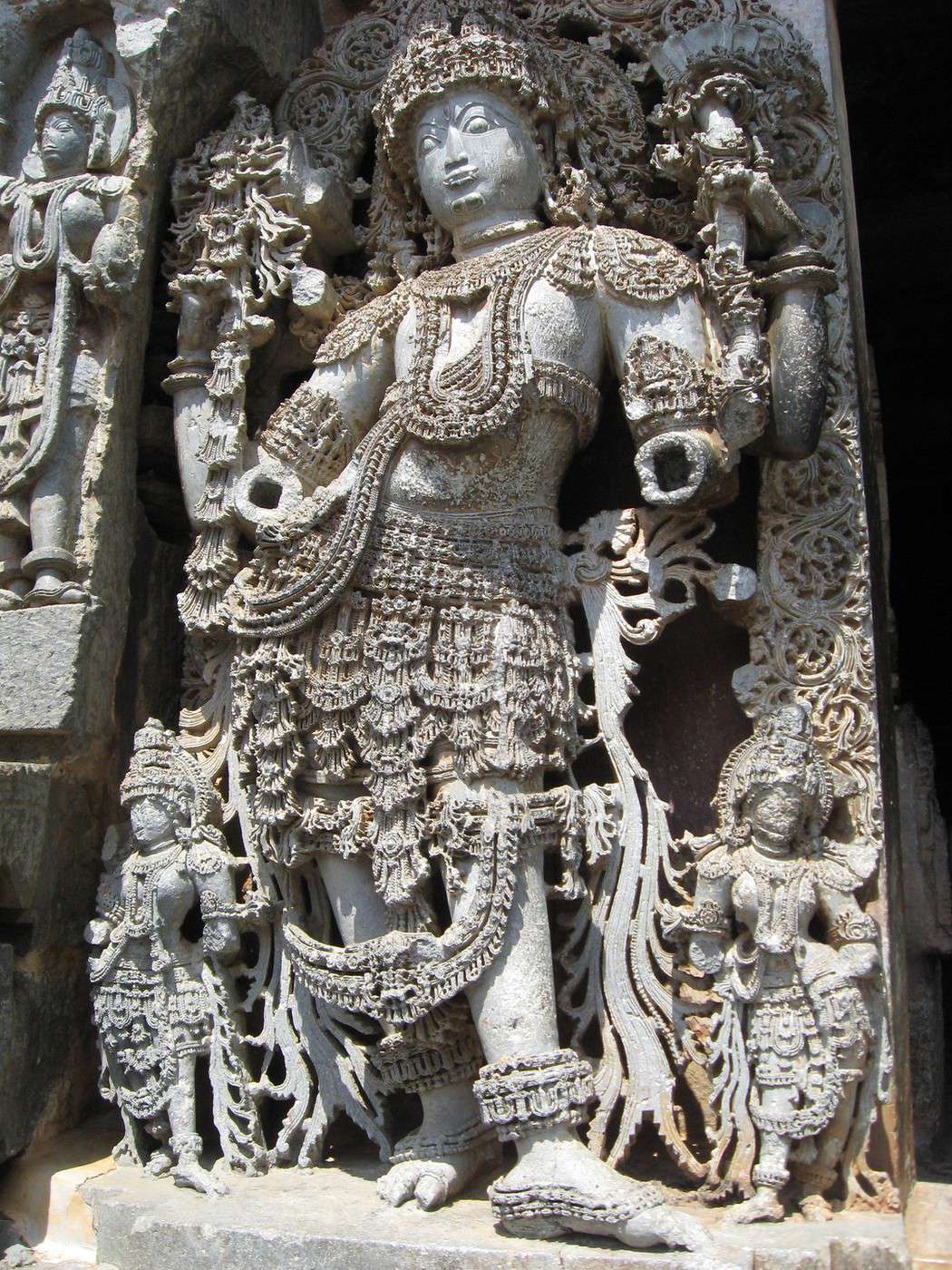
Et je ne parle même pas des Digpala en façade...
Donc sachant que ça se fait pas de grimper, mais que, selon mon sujet il faudra bien que je le fasse, je fais quoi pour ne pas me faire arrêter ou gêner dans mon travail, je me procure une sorte "d'autorisation de photographie pour la recherche", comme pour les "autorisations de fouille" en france, ça se fait?
Sinon merci pour l'indication que vous me faites par rapport à cette "école d'art" financée par un Maharaja local, mais je n'ai pas l'impression qu'il s'agisse d'archéologie/histoire de l'art, mais plutôt d'art appliqué contemporain, ce n'est pas du tout la même chose...si vous avez d'autres pistes...
Quelles que soient vos motivations, grimper sur un monument est totalement antinomique avec la protection du patrimoine.
Je ne veux pas m'appesantir sur ce sujet car en tant qu'étudiante en art vous devez quand même en être bien consciente.
Imaginez des gens grimpant sur les cathédrales pour en photographier les détails ou pire pour se faire prendre en photo (ce qui est pour certains monuments hélas souvent le cas)
En 2000, j'ai rencontré, à Kathmandu, une Italienne qui était étudiante en iconograhie à l'Université de Vadodara.
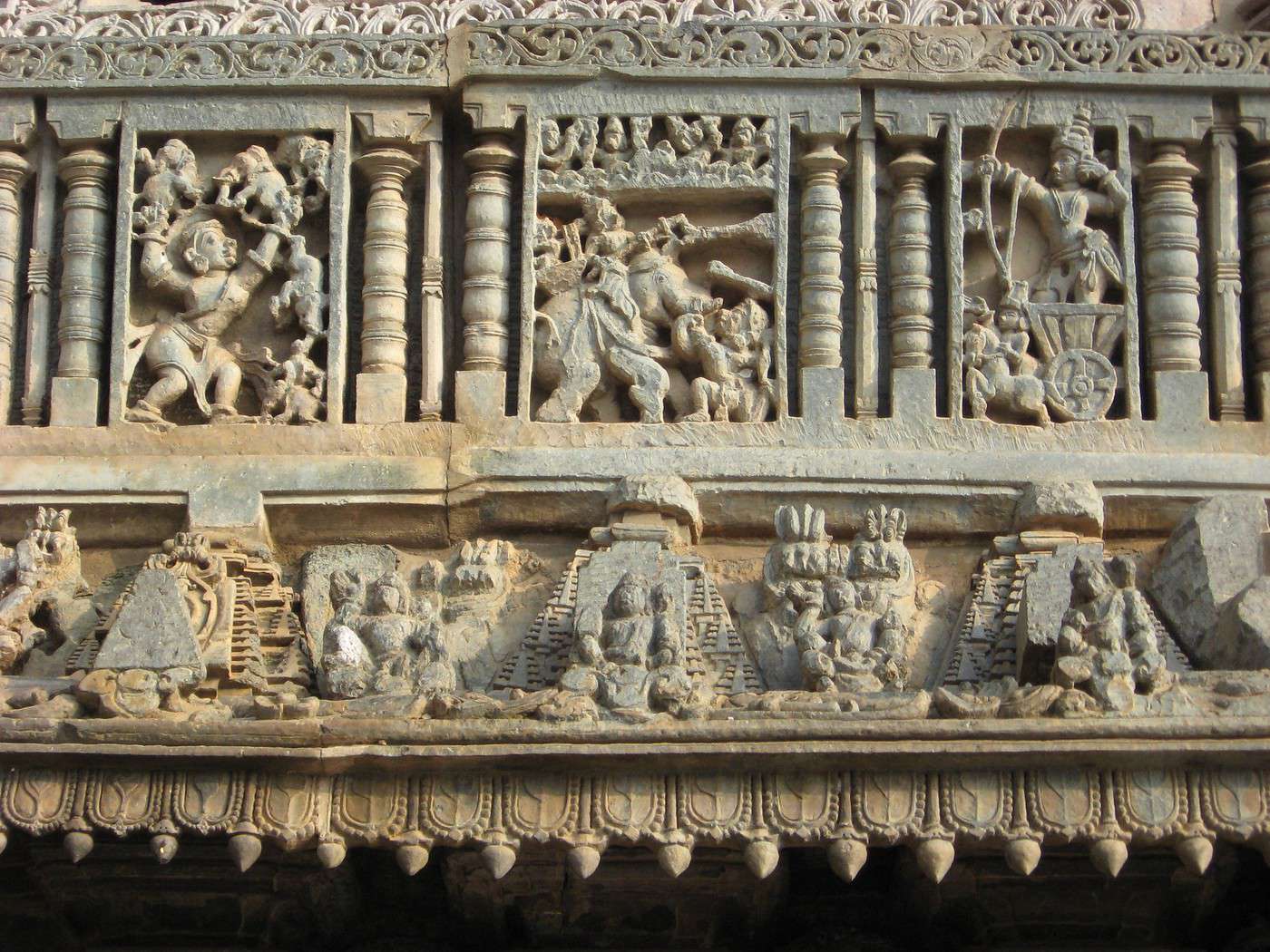
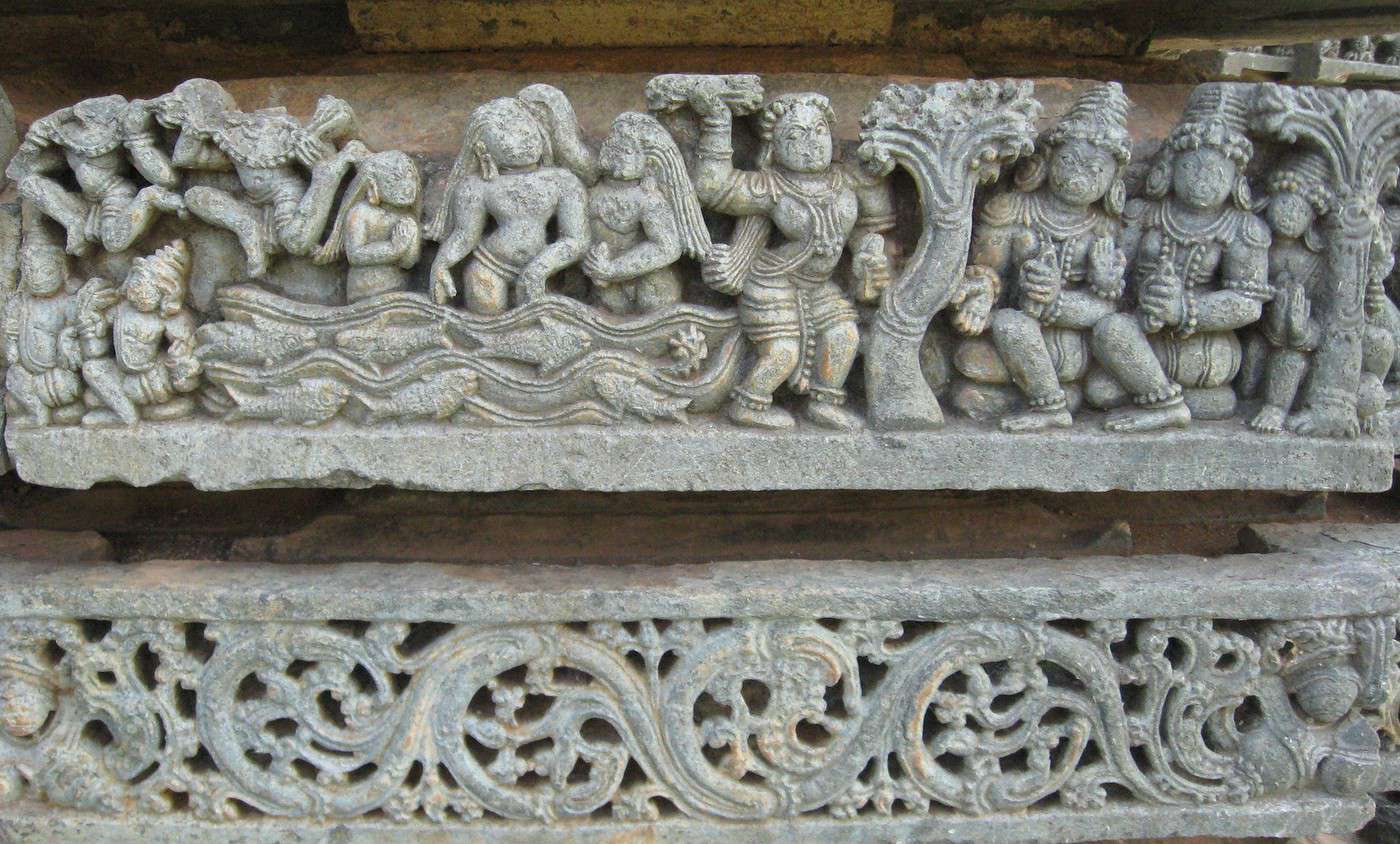
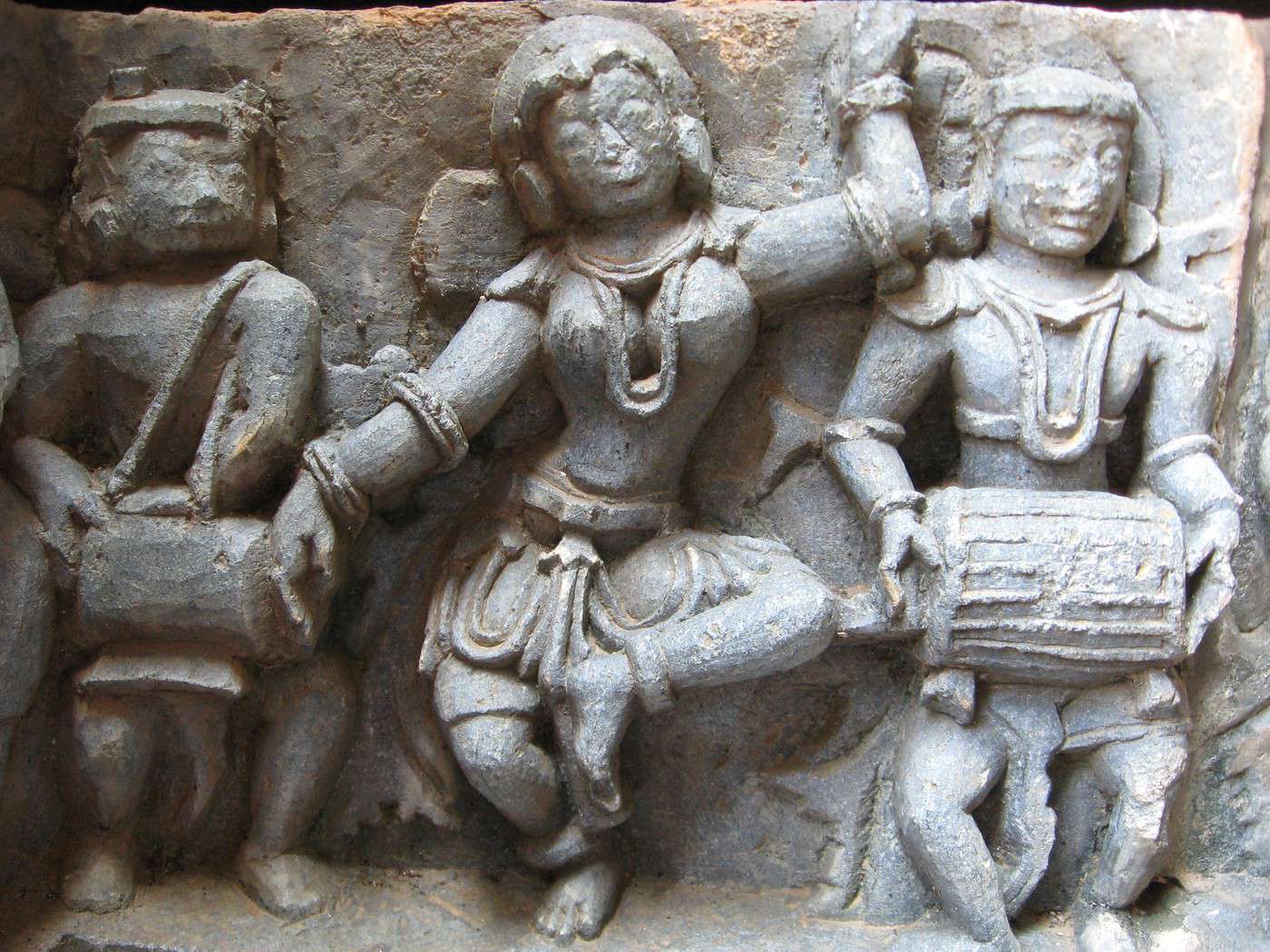
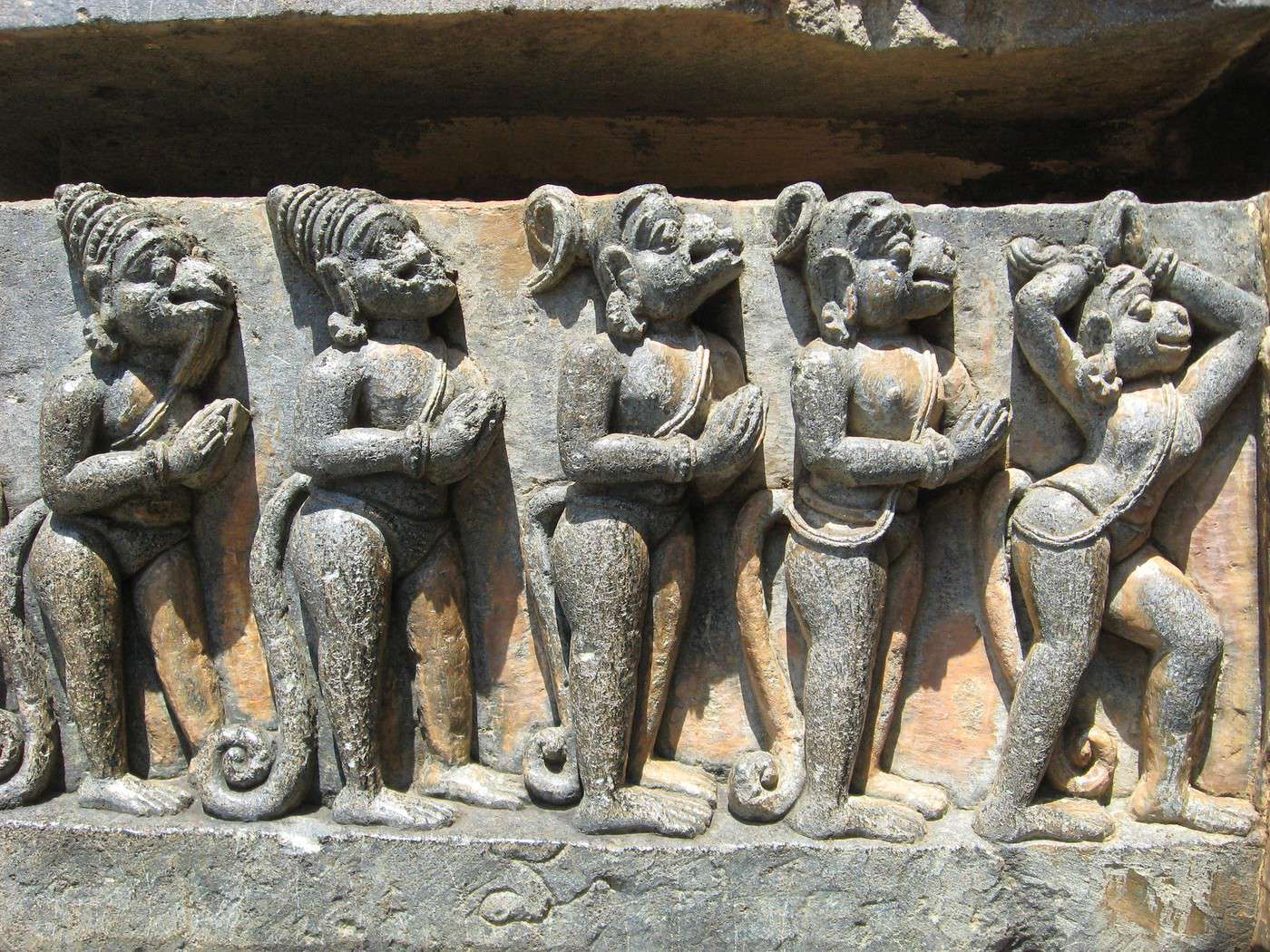
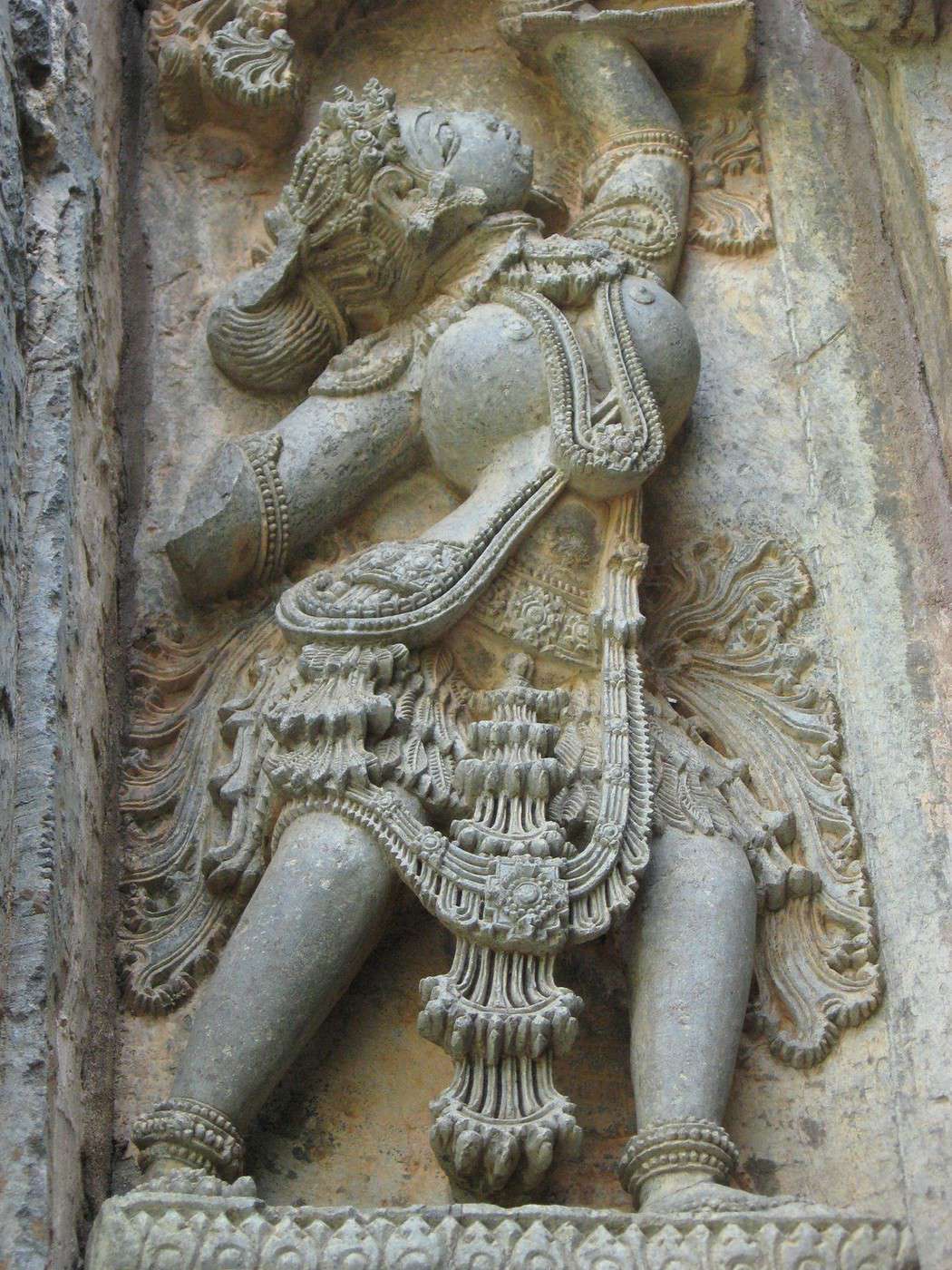
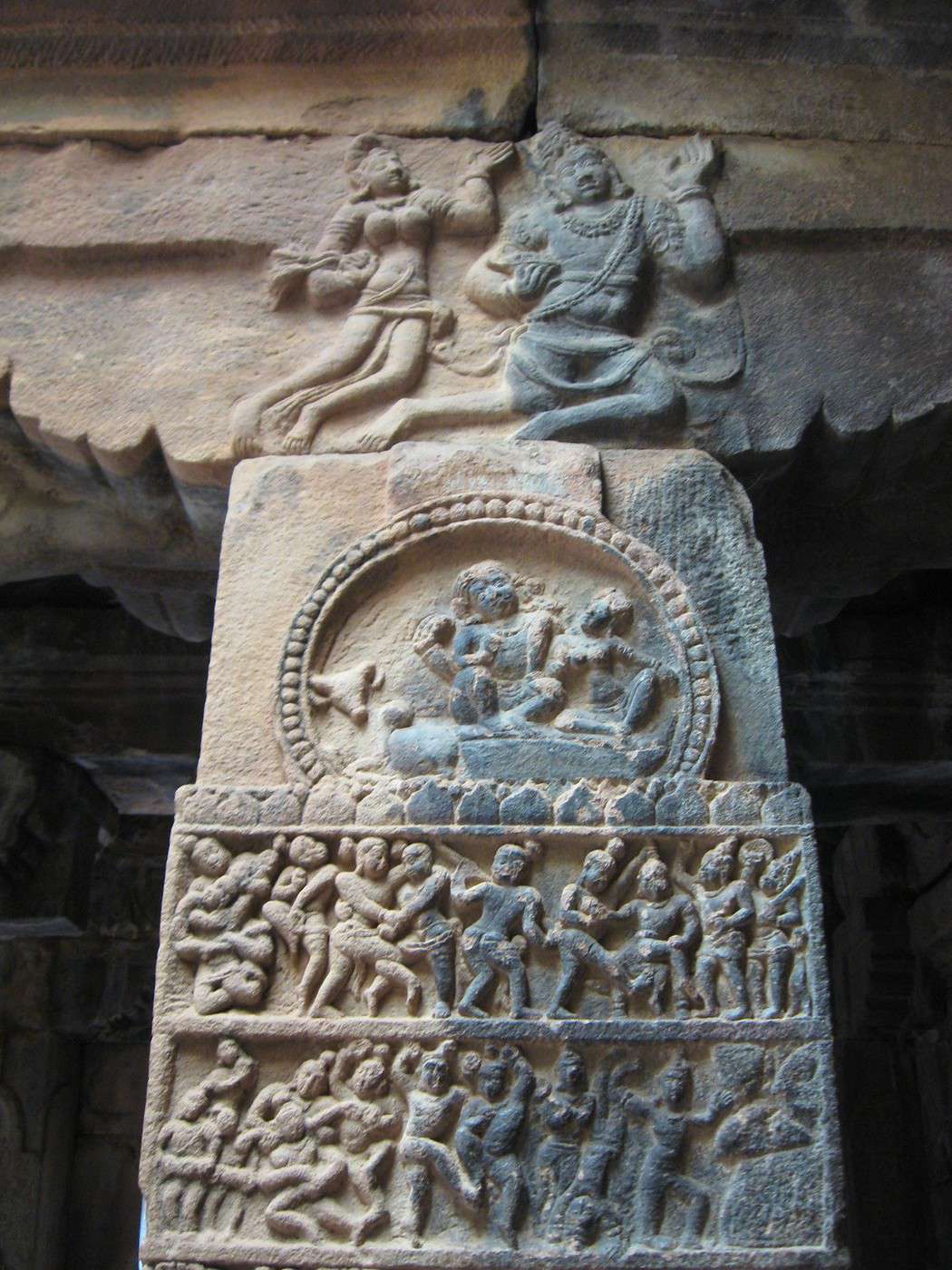
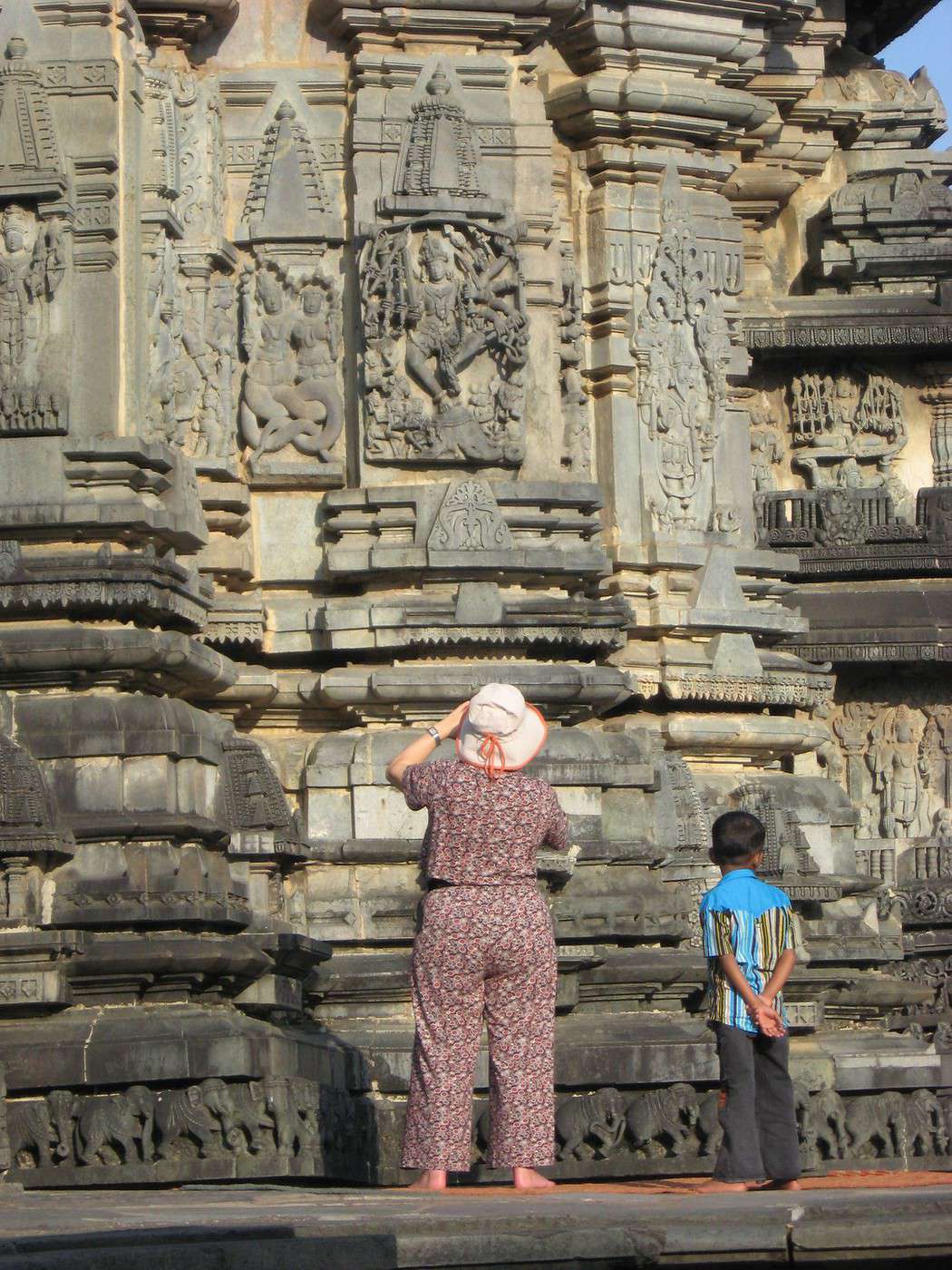
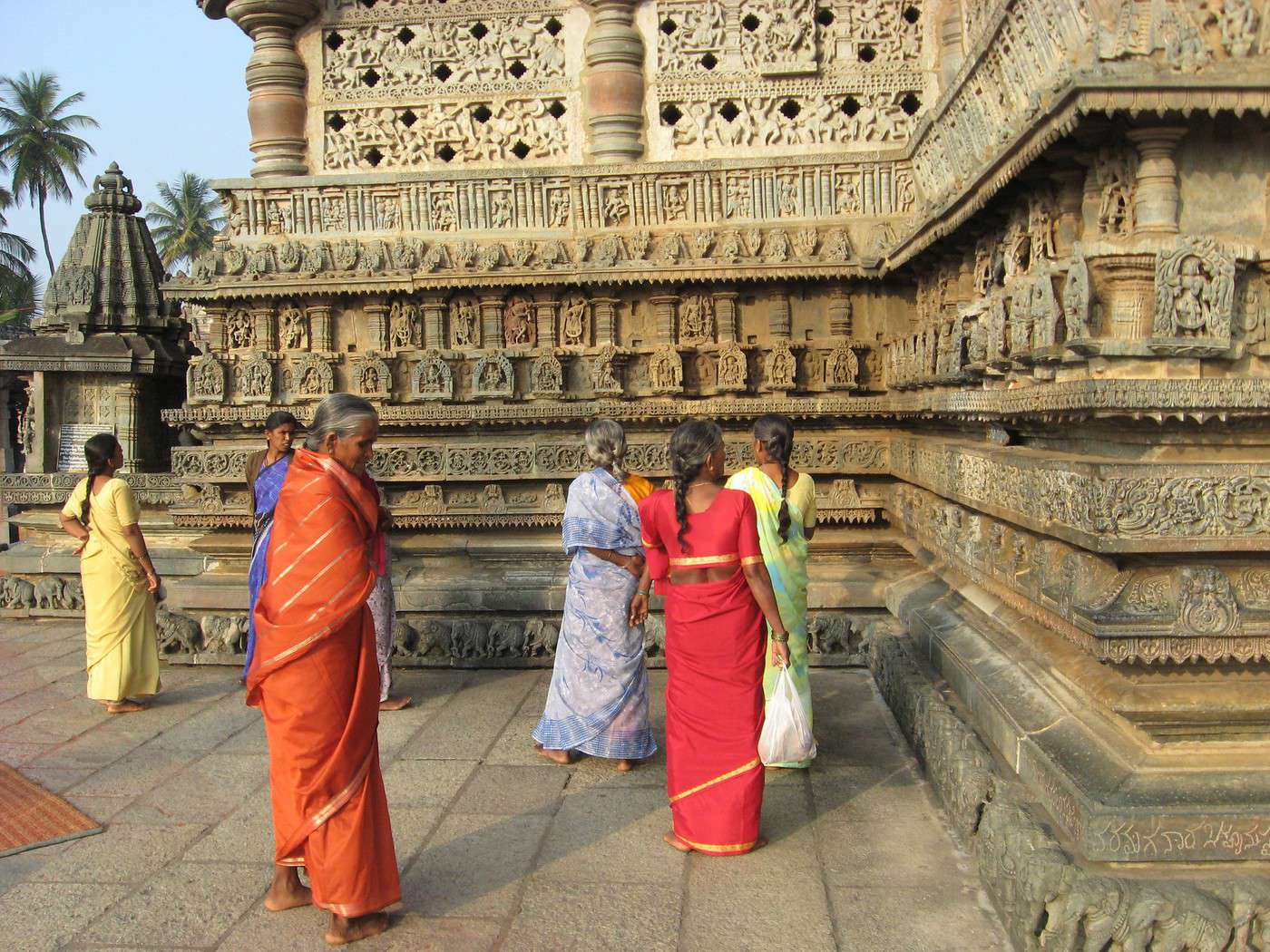
Quelques photos (Belur, Halebd et Pattadakal) pour vous mettre en appétit mais de grâce évitez de devenir une iconoclaste sans intention de le devenir si vous voyez ce que je veux dire 😎
Le mauvais goût ou les opinions bizarres rendent la coexistence très difficile, mais leur interdiction la rend absolument impossible.
Daniel Innenarity
Je suis bien consciente que les monuments sont fragiles, je m'énerve après assez les touristes au Louvre qui grimpent après les statues pour se faire prendre en photo (ce qui n'a pas l'air de géner les gardiens outre-mersure) mais à un moment, si l'on veux les étudier en détail, il faut bien avoir ses sources(à moins que vous connaissiez, un site, une base en ligne, qui ressence de façon explicite l'ensemble des sculptures des temples, et pas seulement les statues principales dans les niches).
Et puis je ne suis pas à moi seule un troupeau de touristes négligents, je suis sensibilisée à ces problématiques et je sais que la roche, ça casse ou ça s'effrite; il est quand même loin le temps ou pour faire de l'archéologie on prenanit son maillet et son burin et on ramenait la caillasse chez soi pour l'étudier au frais.😏
Les exemples que Pattadakal et de Halebid que vous donnez sont d'ailleurs éloquents, Pattadakal, déjà très étudiée, parceque ses bas-reliefs possèdent une iconographies partielle mais relativement bien dévellopée du Ramayana selons les vertues choisies à mettre en exergue. Ces reliefs sont placés très haut sur le sous-bassement, un peu plus que la hauteur d'un homme, et je suis bien contente que mes professeurs aient pu acceder d'une façon ou d'une autre à ces reliefs pour pouvoir nous les montrer et de fait déduir comment était envisagée cette épopée sous la dynastie Calukya et quels étaient les épisodes les plus repésentés(qui ne sont pourtant souvent pas les plus importants), et dans quel but.
Quand à Halebib, je ne vous apprend pas que le foisonnement "baroque" du style Hoysala donne à voir des détails de partout. Alors certes les divinités principales du temple donnent leur sens au temple, mais une fois qu'on sait que selon si le temple est dédié à Visnu ou Siva il y aura dans les niches soit des avatars, soit la famille sivaite(ou non, ce qui est interressant). Après, quand on fait de la recherche, on regarde aussi autour...qui sont les assistants, les yaksa, les scènes narratives s'il y en a...et pour étudier ces personnages secondaires moins appréciés des touristes, il faut bien en garder la trace d'une façon ou d'une autre.
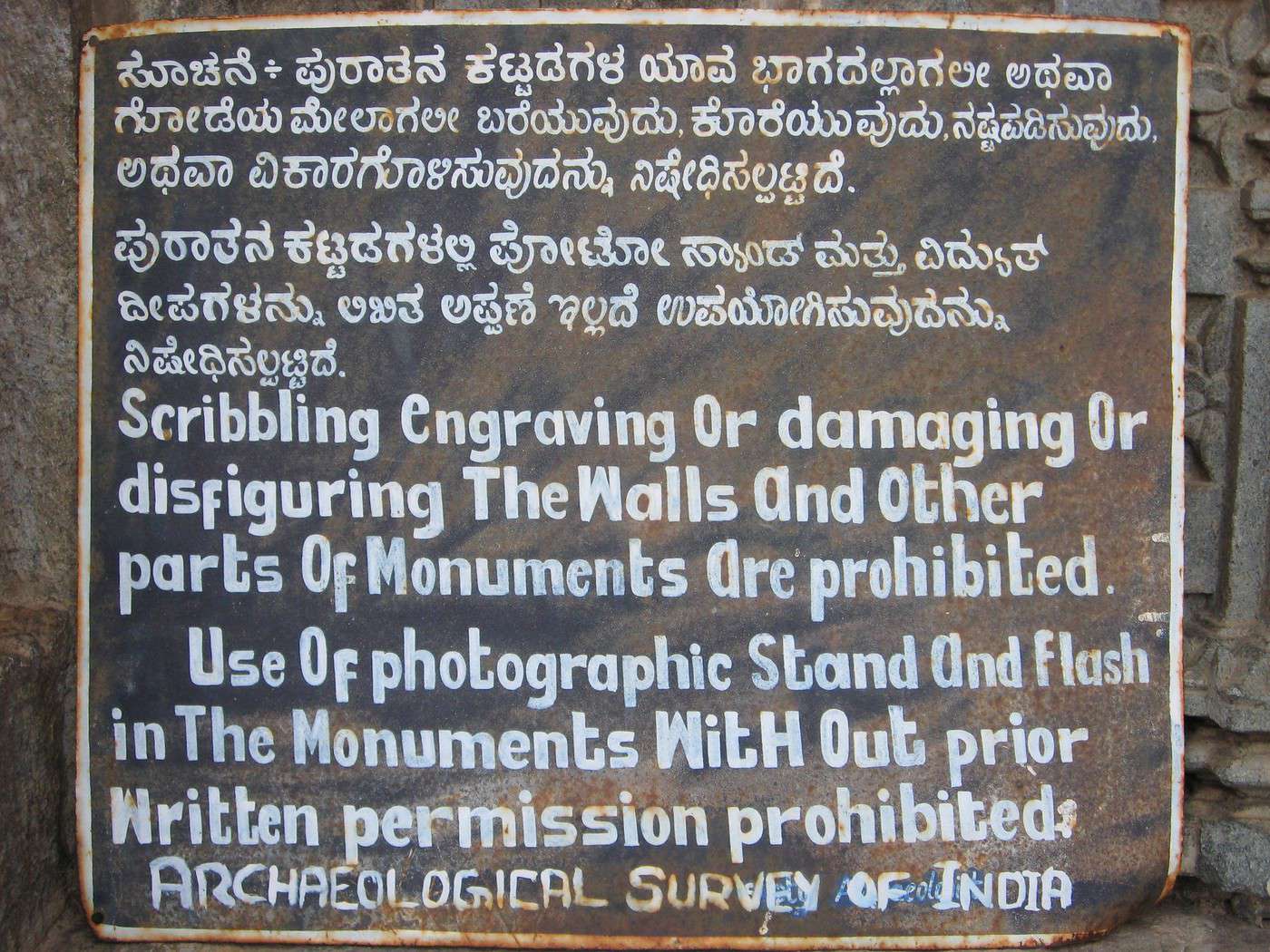
Pour ce qui est de prendre des photos à l'intérieur, le panneau dont vous avez mis la photo précise qu'il faut une autorisation délivrée par la société archéologique de l'Inde pour pouvoir le faire, vous savez dans quelles condition les contacter et obtenir cette autorisation?(il est possible que cette autorisation marche aussi pour les photos en extérieur je suppose).
Je pense que vous avez compris les raisons de mon courroux.
Je ne connais pas grand chose en iconographie mais l'Art est la motivation principale dans mes voyages.
Je considère par ailleurs qu'aucun pays n'est digne de son héritage patrimoniale par manque d'éducation.
Il m'arrive souvent en Inde ou ailleurs de dire aux gens que je viens dans leur pays pour y voir leur passé avant qu'il ne soit détruit. Je parle ici du (petit) patrimoine urbain et pas des monuments emblématiques comme le Taj Mahal, Khajuraho, etc.
Je ne peux pas t'aider pour les démarches d'autorisations diverses.
Les sculptures sont souvent situées à hauteur de regard puisqu'elles sont destinées à être vues.
As-tu déjà été en Inde ? N'oublie pas de prendre des jumelles.
2 photos (Halebid et Belur)
Le mauvais goût ou les opinions bizarres rendent la coexistence très difficile, mais leur interdiction la rend absolument impossible.
Daniel Innenarity
Salut,
Attention, sur certains sites, les gardiens t'interdiront même de marcher sur la pelouse pour prendre la photo que tu veux.
Alors prendre des photos de fresques (avec un flash) ou autres....oublie tout de suite.
Tu peux espérer acheter les gardiens pour qu'ils regardent ailleurs, mais bon, pas très sérieux ni pratique.
A savoir aussi que l'intérieur de certains temples sont interdits aux non-hindous.
En fait, si tu veux faire une étude sérieuse, prends donc contact avec l'ambassade d'Inde?...Ton école devrait aussi pouvoir appuyer tes demandes d'autorisations?
L'administration Indienne est très procédurière et archaïque...faut des autorisations pour tout et n'importe quoi.
Et ne compte pas non plus pouvoir accéder aux archives, réserves, etc... Et je doute fortement qu'il existe un database accessible par internet de leur contenu.
Le mieux c'est de leur écrire directement...et de préparer le terrain avant le départ...a l'arrache, ca va pas le faire.
mon avis: Fait des recherches pour trouver un spécialiste (universitaire) local, du sujet qui t'intéresse,
pour qu'il t'invite officiellement, ensuite fait jouer du prestige de ton école pour obtenir les autorisations...
Enfin bref, c'est juste mon avis, j'y entrave rien en archéologie et j'ai pas saisi exactement ton projet...
Mais ce qui est certain, c'est qu'un papier "officiel" t'ouvrirai toutes les portes, et qu'avec un contact local, ils seront ravis de te dévoiler leurs trésors...
Et qui sait... te construire un échafaudage en bambou pour tes photographies exotiques...
Houla a raison: un bon zoom résout bien des problèmes. Je suis très satisfait du mien (Lumix FZ 10).
Voici par exemple, ci-joint, un zoom d'un détail d'un gopuram du temple de Shiva, à Chidambaram (Tamil Nadu). Tu peux voir que tous les détails sont bien rendus.
Pour l'innaccessible et tout le reste, demande conseil aux chercheurs en indologie de l'Institut Français de Pondichéry, qui est l'un des centres d'indologie les plus réputés au monde.
J'ajouterai tout de même qu'en Inde, un temple est un lieu sacré, et que les photos de certaines parties des edifices, surtout à l'intérieur des salles, ne sont pas autorisées. Grimper sur les sculptures relève alors du sacrilège. Candidats au lynchage ne vous génez pas.
Lorsque le temple est désaffecté, c'est tout de même un monument historique protégé.
Pour la tenue, occidentale ou indienne, peu importe du moment qu'elle est décente. Ton pseudo semble indiquer que tu es une fille: ne montre ni tes jambes, ni tes épaules.
Si tu ouvres tes yeux d'enfant, le voyage commence au seuil de ta maison
C'est déjà encourageant si il y a moyen d'avoir des autorisations ...
Merci pour ces jolies images aussi!
Pour l'appareil photo, je suppose que c'est un appareil pro? J'ai un petit numérique pas trop mauvais mais je n'ai jamais réussi à avoir cette qualité.
Sinon autre question,
pour aller sur place de façon plus poussé que juste du tourisme, pensez vous qu'il soit nécessaire de lire le dévanagari ou tout est rigoureusement traduit en anglais?
Je suis très vaguement sanscritiste sur quelques mots par ci par là sur quelques termes techniques inutilisables, mais je n'ai aucune notion d'hindi, de tamul et autre, c'est un problème?
Le Lumix FZ 10 de Panasonic n'est pas un appareil professionnel, mais le plus perfectionné de la catégorie amateur. J'ai pu lire dans un magazine, qu'on le classait "amateur éclairé".
Tout n'est pas traduit en anglais (la deuxième langue nationale officielle) en Inde, en dehors des pancartes des bâtiments d'Etat, comme les administrations, les gares, ou les aéroports.
Les commerces écrivent leurs enseignes dans la langue de leur choix, les panneaux sur les petites routes sont plutôt écrits dans la langue régionale, celle parlée et lue par l'homme de la rue, lequel n'est pas toujours bilingue.
Le sanskrit est à réserver aux pandits, car tous les brahmanes ne le parlent pas correctement, même quand ils psalmodient.
Dans les grandes villes, on s'en tire toujours avec l'anglais, car on trouve des interlocuteurs. Dans les campagnes, c'est souvent différent, et il faut faire confiance aux explications du chauffeur de taxi, quand il parle anglais, ou de l'étudiant qui offre de guider contre menue monnaie...
L'alphabet devanagari n'est utile que sur le territoire que les linguistes appellent l'hindi belt, en Inde du Nord, où plusieurs langues indo-aryennes, comme l'hindi, le maharati, le bihari, s'écrivent avec cet alphabet.
Mais d'autres langues indo-aryennes comme le gujarati, le penjabi, le bengali, s'écrivent avec leur propre alphabet.
Il en va de même des langues dravidiennes en Inde du Sud (tamoul, malayalam, télougou, kannada).
Si tu ouvres tes yeux d'enfant, le voyage commence au seuil de ta maison
Hi,
I’m looking for real first-hand experiences from adults who’ve done a language stay in Canada, specifically in Vancouver or Toronto.
There are so many different schools and reviews that are both negative and positive (how can you tell if they’re genuine?!) that I’d rather hear from real people.
I’m looking for fun courses where you really make progress in speaking and comprehension.
+ Homestay accommodation: good or bad idea?
I’m 35—this would be a once-in-a-lifetime experience for me since I’ve dreamed about it since I was 17!
I really don’t want to mess this up, especially given how much it costs!
Hi,
I’m leaving on September 4th for Vancouver as a tourist for 6 months.
My boyfriend works there, so I’m going to visit him. I’d like to take the opportunity to learn English at a school during October and November.
Could you recommend any schools—price, activities, location, reputation, etc.?
Hi! I’m 76 and have traveled a lot in my life, and now I’m looking to settle in Réunion.
I’ve seen a retirement community in Saint-Pierre (Ravine des Cabris) and a residence called Village d’Or in Sainte-Clotilde.
I have a feeling that living in Saint-Joseph might be better.
I’ve submitted both applications and would love your thoughts—also if you know of any friendly small residences for rent, or if you have experience living there.
My pension is 1,460 €.
Thanks so much for your help!
Looking forward to hearing from you—warm regards to everyone
After living for many years in the West (Belgium, Italy, Switzerland),
I’ve decided to return and settle in Cameroon, my home country.
Currently an entrepreneur in real estate and transport, I’m looking for a partner / partners / foundation to collaborate on an agriculture project, as I own 10 hectares of land.
The hectares have remained unused for years due to a lack of financial means, since the project requires what I’d call a considerable investment. As the main stakeholder, I have a minimal contribution to offer.
I believe it’s time to bring this space to life to meet pressing needs and serve the common good of society.
The project is simple:
1) Grow maize + build a processing plant to produce flour
2) Open a mini supermarket + a modern bakery using the flour for pastries, etc.
3) Build a healthcare service
4) Build a nursery and primary school
5) Construct free housing for retired expatriates in exchange for their voluntary contributions in their respective fields.
This is a project I truly believe in, and I invite anyone interested to add their personal touch—whether through advice, guidance, or involvement.
Note: This project has national and international potential in terms of employment.
Hi everyone, my son’s school is offering him a one-month Erasmus trip to Ireland, but he has to find a junior cycle school that will accept him and a host family on his own. Honestly, we’re struggling—we’ve contacted two schools and haven’t heard back! If you have any leads...
What price should I expect to pay for a modest small apartment or a large room in a bedroom community in Quito? Are restaurants and food expensive? And which airline is best to travel from Montreal? Thanks for your answers
I’m considering moving to Miami to live and work for a few years.
If anyone knows what the administrative formalities are—both for getting a work permit and for the steps and reputable organizations to contact (since I imagine there are scammers in this space) when buying a studio in Miami or Miami Beach—I’d love any info you can share!
Hi, I was wondering if anyone has already had the experience of working abroad?
I don’t have a specific country in mind yet, so I’m open to hearing about your experiences on this topic—the pros and cons, etc.
Hi there!
I’m a young Malian looking to work in Morocco. Besides a passport, what other documents are required at the **Moroccan** border?
Thanks for your help!
Hi there. I’m planning to move to Luxembourg around December 2025 or January 2026. I’ll be looking for a job and settling in. My question is: is it too complicated to find housing? Is the job market more advantageous and easier than in France? I’m open to any information that could help me.
Thanks in advance for your advice.
I’d love to hear your thoughts and experiences about marrying a Cuban and moving to Cuba (not the other way around!). Yes, some of us actually *want* to stay on the island! Is it possible to work there without too much hassle, or is it really complicated?
I’m heading to Bangkok for a 5-month internship, and I’m wondering about the budget because I’ve read all sorts of things—so I decided to post here to get answers tailored to my situation! :D
I found housing that costs me 7,000 baht (I know it’s a bit pricey, but it’s super convenient...), which works out to about 160 € all-inclusive. So, I was wondering if it’s realistic to live on 500 or 600 € per month, and if so, under what conditions? Is that enough, considering I’ll be working 40 hours a week?
Thanks in advance for your replies—I hope they’ll reassure me!
WEP offers loads of different projects, including one I really like: helping and volunteering on a farm, particularly in South America (Peru or Argentina).
I’d love to know if anyone has tried this project or knows someone who has... or has done something similar? I’d like to get some feedback before diving into the adventure.
If so, could you share your thoughts on the project, any tips, etc.?
Hi there,
Our departure time is getting closer (we have less than 2 years left—it’s both a long time and so short!). To start preparing seriously, we’ll need quite a bit of info. If anyone knows the rates charged by movers for a crate to French Polynesia, or what pitfalls to avoid (I know you can get quotes directly from movers, but I’d love insights from actual customers😉).
Are there any special requirements before leaving France (aside from taxes...)?
Thanks to everyone for your help—every bit of info is useful. We’re aiming for a departure around 06/2010 (just need to save up a little more...).
Thanks again!
Hi, I’m a self-employed physiotherapist in France, and as my wife (a nurse) and I look into working abroad in about two years, I’ve been offered an equivalence to become a respiratory physiotherapist in Switzerland. Actually, I’m currently doing a postgraduate diploma in pediatric respiratory physiotherapy and want to specialize in that area. Anyway, that’s not the main point—could anyone explain the pros and cons of doing this job in Switzerland? Based on the paperwork I’ve received, the equivalence seems purely administrative or almost... What about working conditions, quality of life, salaries, etc.?
Thanks for your replies.
PS: Same question for my wife, a nurse, regarding her integration.
I’m looking for information about jobs in early childhood in New Caledonia. I’m currently a childminder in a MAM (multi-accueil) and I’ve also worked for about 6 years in several daycare centers as a childcare assistant.
In the summer of 2026, my husband is being transferred to New Caledonia. We’ll be living near Nouméa. Do you know if the early childhood sector is a good field for jobs there?
Can’t wait to discover this island! Right now, we’re in the middle of all the administrative paperwork for our 3 kids, finding housing, bringing our cat to the territory, and so on!
Thanks for your feedback!!
Hi there,
I’ve been living in Bali for a month now, but unfortunately on a VOA visa. I’m looking for a European company that’s set up in Indonesia. I’m in electrotechnical maintenance—air conditioning, cold rooms, 220V/380V electricity. I’ve been a tradesperson for 3 months and can bring my full professional toolkit. If anyone’s interested, let me know!
You can send me a message.
Best regards,
I’d love to go to Japan to travel, and if things go well, work there too.
Has anyone tried finding a job there? Is it even possible without speaking Japanese?
I’m thinking of starting out in restaurants (dishwashing or serving) and then moving into my field, IT.
I’d like to move to Spain, specifically to Málaga.
To do that, I’d like to know if I’ll need any official documents from France to work there, or anything like that...
I’d also love to hear from people who’ve moved to Spain for work—do Spaniards like the French? Is it hard to fit in? What are the salary ranges for a ready-to-wear salesperson? And is it easy to find housing?
My partner and I currently live in Antibes—we’re both freelancers working remotely. We’re thinking about potentially moving to Italy.
We’d like to settle near the French border, between Ventimiglia and San Remo (this is important because we need access to Nice Airport twice a month). ✈️
I’d love to hear about life in this region! We’re looking for a quiet spot close to the sea. Any recommendations? As for the paperwork, is it difficult to get everything official? Is finding housing tough in this area? What kind of guarantees are usually required? If any kind soul could shed some light on this, we’d really appreciate it! 🥺🏻
I'm looking for an au pair who'd like to come to Bournemouth in the south of England, and I'd love to know what the best websites are to find one, please.
I’d like to get some information about my eligibility for the DV Lottery.
About my background:
• I earned a *Bac Pro* through VAE (*Validation des Acquis de l’Expérience*), issued by the *Éducation nationale*.
• I also have a professional certification as a *Conseiller en Insertion* (Employment Counselor), issued by the Ministry of Labor.
• Altogether, this adds up to a *Bac+2* level.
I’d like to know if this level qualifies me to apply for the DV Lottery.
Regarding my work experience:
• I work as an *Employment Counselor*.
• I checked on O*Net Online for the classification: Job Zone 4, SVP Range: 7.0 – <8.0.
• I only have one year of experience, but I handle similar tasks in business creation.
So my question is: can I apply for the DV Lottery despite my relatively short experience, given that my job falls under Job Zone 4?
I’m looking for info on villages around Aix, like Fuveau, Bouc-Bel-Air, or even Éguilles and Venelles?
We’re a couple with a child living in the Paris region, and I’ll be relocating to Aix-en-Provence in spring 2026. We’d love to swap our apartment for a house with a pool within 20-30 minutes max of central Aix, with a budget of around 650k €.
In terms of climate and geography, I’ve read that Aix is in a basin where it can get really hot. What about the surrounding villages that are a bit more elevated, like Venelles? Is it just as stifling?
Starting this spring, we want to settle near Aix-en-Provence. We're tired of living in the mountains with all the snow—we really need some sunshine and a fresh start. Is it hard to find a house to rent there? What about prices? If you have any great tips or useful info about the area, we’d love to hear it. I work in education and want to do prevention work in Marseille or Aix—are there jobs in the social sector?
Anyway, we need tons of info, but we’re sure we’re going to take the leap—no hesitation, adventure is adventure!!!
Thanks for your help and any experiences you can share.
I’m an osteopath and I’d like to set up and open an osteopathy practice in Thailand. I don’t have a precise location in mind yet, but I’m thinking maybe Hua Hin.
I saw there’s an osteopath based in Phuket, so I wrote to him for some info, but he still hasn’t replied🤪!
So I’m reaching out to people who live there or know the country well:
I’d like to know what the best ways are to advertise and get known in Thailand. Are there any local classifieds newspapers?
First, I’d like to practice from my apartment. Is that allowed in Thailand?
Ideally, I’d like to work part-time in a private hospital as an osteopath. I’m thinking that in Thailand, the medical field is much more open than in Europe!!! Has anyone seen an osteopath or chiropractor working in a Thai hospital? Do you know the price of a consultation?
Any info you can share will be super helpful! Thanks in advance[;)!!!]
Hello everyone,
We’re a small family from the south of France, with a 2-year-old little boy, and we’re dreaming of starting a new adventure abroad by opening our own business. For now, we haven’t chosen a specific destination yet.
We mainly speak French, with a basic level of Spanish and English, and we’re ready to improve these two languages if needed. We’re looking for a multicultural, safe country with quality healthcare and good schools accessible for our son. We’d also love a pleasant place with a mild climate where life is good.
Our idea is to travel to different countries to explore, compare, and refine our project. We’d be really happy to read your tips, experiences, or anecdotes if you’ve already undertaken a similar project or if you know key points to anticipate.
Thanks in advance for your shares and help—it would really help us move forward with our project! 😄