Inside South Africa
FR

Translated into English.

DO Dolma Globetrotter ·
So, a few snippets of Southern France?

When the prose is beautiful (actually, I skip the ugly stuff—you know that), I much prefer it in snippets or even tiny fragments rather than long blocks. So whether they’re from France or elsewhere, I’ll take your snippets and savor them...

Dolma
VO Voyajou Globetrotter ·
Would you like a Mocha?

Colonization, slave trade, apartheid.

Whether they paint or sculpt, photograph or film, contemporary African artists draw their inspiration from a painful history. That of the continent. And more than drawing from it, it undoubtedly imposes itself upon them—a bitter brew.

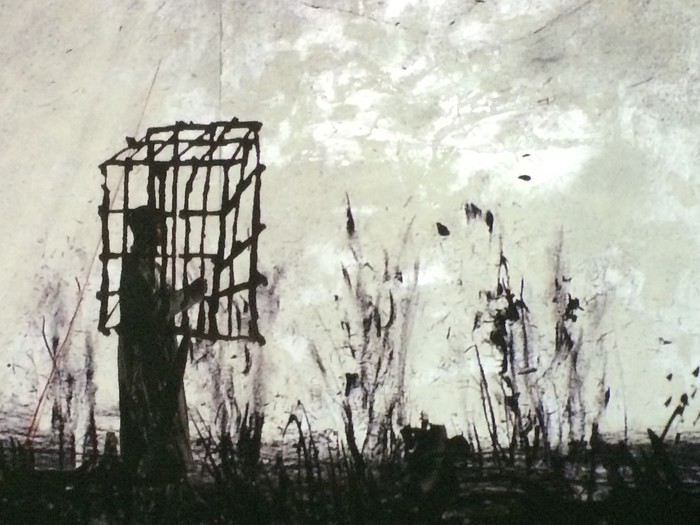
From a dimly lit room where a stunning black-and-white video fresco unfolds across multiple screens, depicting lines of Black individuals carrying the world, to the next, drenched in gold and light, the introduction is striking. Further on, gleaming bodies, weapons, fury. As you move through the rooms and corridors—architectural constraints oblige—the experience may be uneven, but the artists always seem close to their roots, with the possible exception of the Afro-American contributors.

The Zeitz MOCAA (Museum of Contemporary Art Africa) is built within the old grain silos of Cape Town’s port, from which the country once exported its cereals to Europe. An architectural feat, the surgical hollowing out of these silos—once the tallest structure in sub-Saharan Africa—preserved their spirit while making way for their new purpose. You enter in silence, at the heart of a cathedral’s grand organ.

Black artists, White visitors, White funding, Black workers. A story of wheat, always—exported in the past, now imported. Once thousands of farmers and laborers, now one investor and ten million tourists.

The scenography could be improved. Few major individual works, but the collective intent is powerful. A youthful misstep, likely, since most of the works displayed at the opening (September 22, 2017) came from a private collection. The founder is aware of this, seeing his initiative as a platform to enrich. Yet, communication demands it, and the MOCAA evokes the MoMA or the Tate as if it already played in that league. At the same time, it aspires to welcome Africans from all walks of life and has an education centre in the basement. Considering that in a room of about 150 square meters with classic proportions, only four small photographs are displayed, serious explanatory work will indeed be needed for the residents of townships who share makeshift shacks with entire families. And since space isn’t lacking, dedicating an area to the site’s memory would be entirely fitting.

The museum shares the silos with a new, overly high-end hotel—a night of international kitsch costs six months of a housekeeper’s salary—at the top of which a bar overlooks the city. In a whirl, the ports, urbanization, the mountain, and the ocean unfold, all the way to Robben Island, where Mandela was imprisoned. They serve a strong coffee with a hint of acidity worthy of the best mochas.

Many port cities have now "rehabilitated" their disused docks (unloved?). While often successful, these new uses are always unsettling.

(strange coincidence: these fleeting notes from a first visit are jotted down in a Moleskine notebook gifted by... Nespresso)


The museum’s website: zeitzmocaa.museum/

*

Diplomatic Luggage

With the decision to fly made late, the usual airlines’ offers seemed unappealing, while Ethiopian Airlines spread welcoming wings and upgraded for just a handful of birrs. Off we go, eastward bound, with Africa from takeoff.

At Roissy, the baggage check-in line for Paris/Addis Ababa is a slow, endless snake. Each passenger pushes a pyramid-like stack of suitcases, meticulously organized yet wobbling—something like a herd of diplodocus, back to Jurassic Park. The cargo hold will only be three-quarters full, but the weight onboard will certainly remain unchanged.

Dismayed, I express my gratitude to my roommate, who can’t give up her small import-export business and finds a thousand ways to fill a checked suitcase—just one—both ways. A diplomatic suitcase, whose essential contents I only discover late in the game.

*

Burglars

And of a kind that never read Arsène Lupin or listened to Jacques Dutronc.

Marlene lives on a small farm the size of a township, and the winter was harsh. In particular, she struggled with hungry baboons, which she wards off as best she can, refusing the only radical solution. While she was in town, the gentleman baboons broke in by smashing the windows, opened cupboards and fridges, looted everything, defecated on the excess, and trashed the rest.

*

Agriculture and Development

I stubbornly maintain a tiny patch of lawn, a legacy of the English in the desert. At the slightest neglect, it falls apart—and there’s been no shortage of neglect while I’ve been cultivating elsewhere. I reseed two or three rows of Kikuyu grass, which, according to the packet’s instructions, should be fertilized. Two schools of thought clash: compost or mineral? The former’s advocates argue for its sustainability, harmlessness, and the fact that the plant, having to synthesize nutrients itself, would grow stronger. The latter emphasize the efficiency and speed of pre-digested, easily absorbable nutrition.

Similarly, it’s better not to give those who lack everything but to teach them to fend for themselves.

I don’t recall a past life as a Kikuyu, but in this one, if I have a need, it’s not for the morality of the privileged.

*

"The best way to afford a suit is to work."

From their shelters on the outskirts, dozens came on foot to the farm. Before the sun rose, they climbed into the backs of pickup trucks. Dressed in tattered rags and wearing beanies worn thin by use, they huddled against the cold. Ten minutes down the dirt road before they could warm up all day at the end of shovels and pickaxes.

*

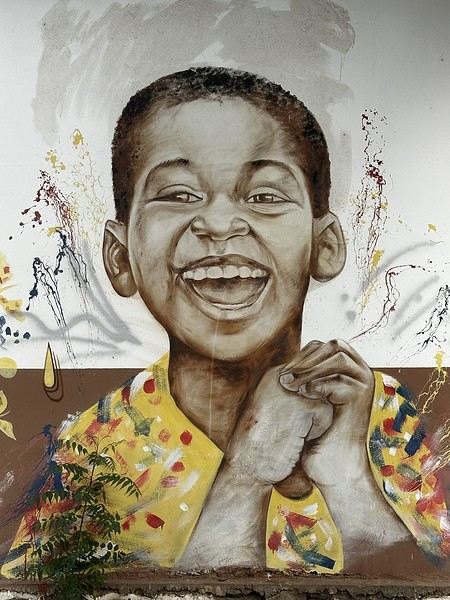
Denver is toothless, literally and figuratively. Yet, he has a dazzling smile—in his eyes. The only way to wipe it off is to scold him. Then, a dull gaze and a round mouth. As a result, I now only give him compliments.

*

Blonde Colleen used to wear her hair long, sometimes flowered, waving in the spring breezes. Then came haymaking season, she got it cut, and soon after, she withered.

*

According to the memory of the English and even the Afrikaners, and further back, the Khoisans confirm it: never had the rain forgotten the land with such consistency for so many years.

That the desert lacks water is nothing unusual, you might say. But now, the local gardening society received a delegation of Capetonians in grand style, searching for drought-resistant plants. Cape Town enjoys a Mediterranean climate with winter rainfall, but at the start of spring, its water reserves are at 27% when they should be around 80%. It’s said that swallows no longer fly this far.

The idea of a human sacrifice is gaining traction among those who think this newly arrived Breton would be perfect for the role. I’ll trade my divining rod for a club.

*

On the gable of an outbuilding facing the savanna, I’ve made a large opening fitted with a period sash window. Inside, I’ve placed a canvas chair, a folding table, and two mail trunks, then scattered a few fetish objects.

On a brick ledge, a perfect wooden replica of an off-road vehicle, like the ones children sculpt here. I regret it, but I won’t be leaving in a Toyota.

*

MA Magryelle Regular ·
Hi Jean Luc, We’ve talked a lot about your little Karoo town, and I still love your writing. But enough joking around—I’d go back to Cape Town just to see that famous museum!
MA Max68 Globetrotter ·
Hello, tireless traveler,

I still love your updates, well done! 🙂

You don’t want a Toyota anymore, and you don’t want a Def either? 😮
SL Slpb56 Regular ·
hi Jean Luc

What else can I say that others haven’t already? I don’t want to weigh down your whole story, but I just love your little pieces of Africa. To me, they’re like tiles that make up a mosaic, and when everything falls into place, you start to glimpse the complexity of that world. Here in my corner of Brittany, I love reading what so vividly describes these places I discover year after year—they brighten up my everyday life on those drizzly, gloomy days. Hope our paths cross someday, here or there. Sylvie and Sylvain.
MA Magryelle Regular ·
We really loved your little Karoo town

Sorry: 'we really loved your little Karoo town'
VO Voyajou Globetrotter ·
You should definitely visit the MOCAA. Especially since my notes are a bit harsh—I’ve been in the bush so long, all I can think about is going back.

And I totally understood that you were so enchanted by the little town where I have my habits that you were at a loss for words. 😉
VO Voyajou Globetrotter ·
Thanks Jeff. The square wheel of the legendary Defender or the ugly perfection of the Levant—that’s my conundrum. 🤪
VO Voyajou Globetrotter ·
When it comes to compliments, you can never give too many or lay it on too thick. 🙂 You were really inspired to go that way. I was thinking of writing, but you’ve taught me I’m actually a mosaicist—it all makes sense now. All I’ve got to do is not mix up the tiles.
SL Slpb56 Regular ·
Good evening Jean Luc, and yes, mosaic artist too! 😉
VO Voyajou Globetrotter ·
Guineafowl in Southern Africa Oh sure, they don’t have manes or trunks, their horn reduced to a crest, their size like a rugby ball—so they rarely get mentioned in safari reports. And I’ve never seen one in a restaurant or on store shelves. Yet they trot around in numbers in the bush, always busy, even in the public spaces of upscale suburbs where no one would dream of plucking them. But their meat is both delicate and flavorful, nothing like domestic poultry. I’m told you can sometimes find them in a remote butcher shop in the backcountry (way out there). Or you’d have to hunt them yourself.

But there’s another kind of guineafowl. That’s what a young friend who’s been living in Cape Town for ten years tells me, giggling delightfully. She’s frantically pecking through her stash—*where did I put it?*—before triumphantly brandishing the object of her hunt: a book! A Guineafowl’s Life in South Africa, written by a French correspondent for northern newspapers, is a delicious read. Though young, the author isn’t a newbie: whether she’s visiting a sangoma or hitting the shebeens of Soweto with her rainbow crew, telling a car-jacker to fuck off, or sipping wine in a posh Stellenbosch estate, Sophie Bouillon serves up cracking, spicy portraits in her own style. (Incidentally, this book greatly enriched my vocabulary: eye-liner, blush, nail bar...)

P.S. I was skimming the last chapter, titled « Opposite Sex » with sections like Giver of Orgasms, Flirting at the Font, Let’s Talk About Sex, Baby!, Sexcapades for Whites Only, Sappho Unleashed, etc., when—you won’t believe this—for the first time, a little flock of guineafowl crossed my slice of desert. My next read is all set: *The Jungle Book*. I’m already slipping into my mini-short made of zebra hide. *

Dual Culture The small town where I spend a lot of time grew up on the fertile lands of a vast farm at the foot of the mountain that waters it. This was the era of pioneers leaving cities and coasts with an ox-drawn wagon carrying all their possessions. The journey ended near a river or a spring. Today, the town still preserves its smallholdings, properties of a few hectares where alfalfa and fruit trees grow, and sheep and horses graze. At the same time, it’s proud to have the country’s third-oldest library—proof that a dual culture thrives here. *

The Godfather The new neighbor from Central Europe, whose fortune’s origins are debated, was marrying off his son. The town braced for squadrons of helicopters and fleets of limousines. Instead, two wasps and half a dozen luxury SUVs showed up, the other guests arriving as they were. And there he was—the feared man, built like an inverted pyramid, quick with his fists and trigger, now cheerfully bow-tied behind the wheel of a vintage convertible GMC, driving the newlyweds. *

Multi-Taskers Many here juggle several jobs (what are the unions doing?). In the morning, Sipho is a server at a coffee shop; in the afternoon, he washes cars. Brent is a hairdresser and raises chickens and sheep. Volgens writes promising wellness books, roasts the district’s best coffee, hosts open-table lunches, and sells eggs from his happy hens. Madelyn is a singer, journalist, and French tutor, but the record-holder is Herman: he teaches yoga, massage, and cooking (separately), runs a restaurant with his Indian partner where they serve mostly local produce (a challenge), and is also a real estate agent. Sometimes he even practices aromatherapy with an excellent curry. Meanwhile, most residents of the nearby township struggle to land even one job. *

Bush Rave Dark, silent night except for the gentle breath of the mesquite (Prosopis glandulosa) fire, an inexhaustible sentinel that will watch over us until dawn. Suddenly, I crave different music, so Keith Jarrett lifts La Scala—restrained yet dazzling, building to chaos, ending like the first morning of the world. Whether they play Bach or improvise, musicians spend their days and evenings tied to the piano. The former are like translators, the latter like interpreters; the improvisers, like writers, face a blank score. That’s where the difference lies between craftsman and artist. *

Taste Week Another British legacy: a bird-feeding platform hanging from a ficus tree. Sometimes I offer a crust of bread, hoping they’ll sing in return—no luck. They demand a contract, and I haven’t managed to ban them from my airspace either. But I’d forgotten a small leftover seafood risotto in the fridge (not exactly locavore, I’ll admit). My dining companion bets they’ll only eat the rice, ignoring the fish they don’t know—even if it were breaded. I disagree: these fierce carnivores snatch grasshoppers and butterflies mid-flight, bigger than their beaks, and shake them until they pass out. They’ll surely try a tentacle or a saffron mussel. A few hours later, the desert birds had made up their minds: they turned up their beaks at... the peas. No trace of seafood. *

Another Matter of Taste I’d been dreading this moment, but it was inevitable. Her reputation preceded her, and we’d crossed paths anonymously before. Very old local family, unlimited properties, known for being difficult. I accepted an invitation to visit a construction site without realizing what I was getting into. Then a white 4x4 pickup screeches to a halt, and out steps a force of nature. ‘The owner,’ my architect-guide whispers, suddenly pale. Tall and slender, salt-lake eyes swept by a wavy silver mane, leather boots, predator’s stance, cheetah-like presence. During introductions, she sizes me up as if it were a dating scenario. Finally, she relaxes and welcomes us. Then she drives off with her truck loaded, leaving me behind (as they say in poker when you fold). *

It’s abnormally cold this spring, and climate change is to blame: battalions of icebergs have broken off from Antarctica and are half-encircling the country. The Atlantic doesn’t mind—it’s used to its northern cousin’s frosts—but the Indian Ocean shudders. *

I wish the poet would tell me in verse (and against all odds, even though I’m on the other side of the world) why this princess in glass slippers, with whom I shared a mint julep before takeoff—a quiet woman who keeps her thoughts to herself—why is she here tonight when she lives in Vaires (Marne)? It can’t be the color of the desert. *
MA Mamsissi Regular ·
Hooked from the first hit with no cash to score my fix, I mainline the travel tales of all the junkies of the southern lands. As an insider supplier, you’re top-tier. To your gazelle with glass-slipper hooves, greetings from a local of Vaires.
VO Voyajou Globetrotter ·
What a twist of fate for a native of Vaires to find herself so unprepared! Young grasshopper, didn’t you push past the midnight curfew your dad set? But hey, money isn’t everything—there are other kinds of riches. Your username reminds me of that sign at the entrance to Lesotho via Sani Pass: "Lesotho is not for sissies".

Thanks for the sweet high of compliments.
MA Mamsissi Regular ·
🙂
VO Voyajou Globetrotter ·
Misery (2x2) I didn’t dare ask him under what circumstances he’d lost them, but he no longer has either. He slowly makes his way up the gentle slope of the endless Church Street—I just hope he’s not searching for a miracle. Hobbling a few steps behind, dressed in flamboyant rags, just as ageless as he is, his wife keeps pace with the wheels. Both seem utterly spent—stripped of strength by necessity. But how does this double amputee manage to have frayed trouser legs still sticking out from the seat of his manual wheelchair? *

3x3, then 4x4 Leaning on his cane, he starts to leave the coffee shop with no access ramp. The path is tough but familiar. First, two steps, straight down (crack-crack-thump), then a right turn between planters and a railing he leans on. Two more steps cleared. Once on level ground, it’s painful to watch him swing one leg after the other for almost no progress. His wife, a spry round woman, has already bounded down the stairs and been in the passenger seat for ages. The old man circles the car and pulls himself into the driver’s seat using just his arms. Then, the Jeep Wrangler’s V6 engine growls. He’ll be home at the bottom of Church Street faster than it took him to leave the café. *

8x8 Per-Paol Jacq (let’s call him that) is the editor-in-chief of a magazine dedicated to off-road travel. We’ve been in touch for a few years, ever since he decided to buy a 4x4 in South Africa, but now he’s visiting me. While he waxes poetic month after month about the best the market has to offer, and his job has him testing untouchable vehicles, what do you think he bought for his vacation? A Defender from the last century! It’s baffling. In the driveway, the two beasts parked side by side make a convincing 8x8. *

Imagine I was at a conference by an elderly Xhosa sage—a myopic visionary—who in his youth smoked dagga with John Lennon—Imagine! « First, we’ll need to eradicate religions (by placing black banners on the front of places of worship: Praying kills. Excessive gullibility seriously harms). After that, borders will be all the easier to abolish since they’ll already have little physical existence. The longest step will be mandatory and widespread intermingling. Finally, we’ll need to distribute resources fairly. Then, no more bad reasons for fighting among the variants of the species. » All the listeners, as one—and me with them, even though I knew it would just be a fresh start, a reset, and we’d have to reprogram and cultivate human nature—immediately signed up to the project. We were ready to fight to impose such a vision...

With the same sense of charity that’s inherent to him, the guy next to me on the bench jabs his elbow into my ribs, snapping me out of the daydream: I’d dozed off during the reverend’s sermon—same old tune—which is the required ticket to hear the renowned men’s choir. A two-thousand-year-old Imagine that’s still just an incantation. *

Avoova (Is it the Year of the Fowl in South Africa?) In ostriches, everything is useful. First raised for their feathers (a century ago, no self-respecting Western lady would go out without them), they’re now mainly farmed for their skin, their meat (of little interest compared to local wild game), and, incidentally, their eggs (you need a hammer to crack one before cooking an omelet for a dozen people with just one). And now, reviving the San people’s tradition of making necklaces and bracelets from them, Avoova uses the broken shells to create art objects. This community initiative employs around fifty mosaic artisans in a workshop closed to the public. Some pieces take over a month to complete: painting, composing, assembling, inlaying, polishing. Most turn out well—harmonious, with a restrained extravagance that avoids kitsch. *

Evolution According to the sage, to live a successful life, a man must father a child, write a book, and plant a tree. Yet here we are, raising a Tamagotchi and keeping a blog while deserts grow. *

Little Madame Sans-Gêne Sitting on the terrace of the historic hotel—which has heard its share of epic tales—she talks to her mirror, a silver model with an apple logo, held twenty centimeters from her face, staring intently: We saw animals by the thooousands... and all five Big Five too... and Robert almost died... (interrupted by the mirror asking a question) ... yes, the weather’s nice... well, no... it’s not like home... it’s changeable... (the mirror chimes in again) ... the car’s fine, yes... but the driving... It’s the quiet hour, and the regulars take advantage—glances meet, eyebrows raise, then everyone goes back to their reading. I’m at the opposite end of the terrace, but I hear her epic tale as if she’s shouting in my ear, and it’s all the more annoying because this foreign language is familiar to me. Biting my tongue, I approach their table to let them know the sparse audience might not be interested, especially in French. The little madame pauses, then continues two notches quieter. Robert’s eyes widen as if he’s just spotted the sixth Big Five. *

Restoration Veld restoration is Sue’s profession. More than a job, it’s her mission, her life’s work. It involves sowing or planting indigenous plant species in the veld and eradicating aliens. Don’t mention palm trees, cacti, or mesquites to her—they’re adapted and widespread, but they don’t belong here. They weren’t brought by the wind or antelope droppings but by human will. Her own garden is a manifesto; she doesn’t intervene in it at all. Sand, pebbles, scrawny shrubs—that’s her ethos. Her ancestors arrived from Holland over three centuries ago, but she has no plans to return, as it would allow the veld to reclaim its original inhabitants. *

Turtledoves (It *is* the Year of the Fowl in South Africa) The feeling that no matter where you take refuge in the world, they’ll be there. Their relentless cooing grates on my nerves. What, so little vocabulary and in just one language, yet they dominate the international stage like this? I’ve dug out my slingshot, which has kept more than one baboon at bay at the campsite. The target’s smaller, but my aim’s improved. As for projectiles, no worries: I’ve got a pile of river gravel waiting (about 162,000 projectiles). *
RJ Rjulie95 Globetrotter ·
A Defender from the last century! It's mind-boggling.

It's the mythical side of the beast and its, pseudo, reliability that drew him in.

It’s now mainly valued for its hide and meat (of little interest compared to local game meat).

It’s true that finding anything other than beef in a restaurant in South Africa is quite the feat, yet ostrich meat is really good—I eat it regularly in France.

And so, reviving the San people’s tradition of making necklaces and bracelets from them, Avoova uses broken shells to create art objects.

Their creations are stunning.

Sitting on the terrace of the historic hotel that,

Is this hotel in your area?
TI Ticapi Globetrotter ·
I’m also a silent reader, but full of admiration. This travel journal is gorgeous and so informative.

We just got back from South Africa—Cape Town and the surrounding area. Unfortunately, we didn’t have time to visit the new contemporary art museum. Sometimes you have to make choices, and ours leaned more toward nature and hiking.

Thanks, Jean-Luc, for sharing! 🙂

Carmen
MA Max68 Globetrotter ·
"In the alley, the two animals side by side make a convincing 8x8." YEESSS! 🙂 😎 😉
VO Voyajou Globetrotter ·
Yeah, but no. I just got back from ten days of 2x1 (one bike for beginners), backpack on, and I can’t believe some people do this for fun 😉. Then there was the time spent figuring out the breakdown (another hose issue, surprise), finding the part (ended up in Durban), sending the payment, waiting for it to arrive, and finally fitting it. In the end, the Defender fits my idea of travel perfectly: room for the unexpected.
VO Voyajou Globetrotter ·
Thanks for breaking your silence because, whatever the proverb says, it’s the silver words that make the gold of a forum. 😉

Note that it’s possible to hike around the Zeitz MOCAA using the black spiral staircases that serve the five or six levels. 😏

Similar discussions

You might also like