Que voir aux Canaries ?
Pour préparer votre futur voyage, un aperçu des principaux sites et lieux à visiter dans l'archipel (carte).
L'archipel des Canaries est constitué de sept îles principales : El Hierro, Fuerteventura, Gomera, Grande Canarie, La Palma, Lanzarote et Tenerife.
1- EL HIERRO
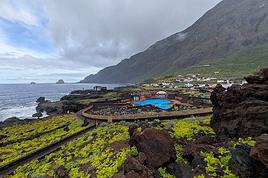
La Frontera : seconde commune de l'île située dans sa partie sud-ouest. On peut randonner dans ses environs parmi de beaux paysages.La Restinga : c'est le village (de pêcheurs) le plus au sud d'El Hierro. Il est connu pour ses plages de sable noir et surtout ses possibilités au niveau plongée. Le village a été évacué lors de l'éruption volcanique de 2011.Valverde : c'est le bourg principal d'El Hierro. Le port et l'aéroport de l'île sont sur son territoire.2- FUERTEVENTURA
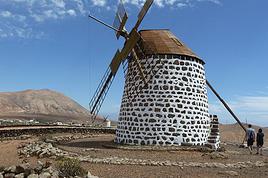
Betancuria : un village de l'ouest avec plusieurs petites églises.Corralejo : grande station balnéaire du nord avec de belles plages où on pratique le kitesurf et des dunes dans le Parc Naturel de Corralejo tout proche. On peut également visiter en bateau et randonner sur l'Isla de los Lobos juste en face.La Oliva : commune du nord, à l'entrée des dunes du Parc Naturel de Corralejo. On peut y voir de petits moulins en pierre et un tunnel de lave souterrain.Morro Jable : seconde station balnéaire de l'île, à l'extrémité sud.Puerto del Rosario : commune de la côte est avec des plages pour surfeurs et des hôtels. C'est aussi la capitale de Fuerteventura et sa porte d'accès au niveau transports.Patrimoine naturelParc Naturel de Corralejo : une vaste zone dunaire, assez touristique, au sud de la ville du même nom.Parc Naturel de Jandía : cette péninsule rocheuse à l'extrémité sud de Fuerteventura offre des paysages désertiques. On y trouve aussi de très belles plages et plusieurs complexes balnéaires dont celui de Morro Jable.3- GOMERA
Hermigua : au coeur d'une vallée étroite où poussent des milliers de bananiers. La plage de sable noir au bout de la vallée est appréciée des surfeurs.Playa de Santiago : la seconde station balnéaire, au sud de la Gomera.San Sebastian de la Gomera : c'est la capitale et le port ferries de l'île.Valle Gran Rey : cette municipalité de l'ouest est la station balnéaire la plus populaire de la Gomera. Outre les plages de sable noir, on profite également de ses possibilités de randonnées dans les montagnes voisines ou de l'observation des baleines en saison.Vallehermoso : on peut voir sur cette commune du nord de l'île de belles orgues basaltiques plongeant dans la mer.Patrimoine naturelParc National de Garajonay : ce parc montagneux au centre de l'île est classé à l'UNESCO pour sa végétation et sa belle forêt humide. On peut y randonner.4- GRANDE CANARIE
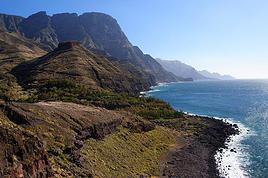
Aguïmes : petite ville de la côte est avec un vieux centre restauré. Tout autour des plages et des spots de plongée réputés.Galdar : bourgade du nord avec quelques édifices anciens et un petit patrimoine archéologique.Barranco de Guayadeque : une vallée avec des habitations troglodytes.Las Palmas de Gran Canaria : la plus grande ville des Canaries avec quelques vieux édifices, un petit centre historique et plusieurs musées. L'agglomération compte également plusieurs plages dans ses environs.Maspalomas : c'est la plus importante zone touristique de l'archipel avec tous les équipements et services qui vont avec. Elle inclut plusieurs stations balnéaires comme Playa del Ingles, Arguineguin ou Puerto Rico, et de bons spots pour le surf ou la plongée. A sa périphérie on peut également voir les "Dunes de Maspalomas" et le jardin botanique-parc zoologique "Palmitos Park".Mogan : plusieurs plages sur cette commune du sud-ouest.San Bartolomé de Tirajana : c'est la ville du centre, en altitude, entourée de montagnes (dont le Pico de Las Nieves) et de forêts. Des balades et de beaux panoramas dans toutes cette partie de l'île.Telde : seconde agglomération de Grande Canarie, juste à côté de l'aéroport international. La ville abrite une des plus vieilles églises de l'archipel et de très nombreux petits sites archéologiques, ainsi que des plages.Patrimoine naturel
Dunas de Maspalomas : une zone dunaire classée réserve naturelle aux portes de Maspalomas.5- LA PALMALos Lanos de Aridane : c'est la plus grande ville de La Palma avec quelques plages dans ses environs.Puerto Naos : cet ancien village de pêcheurs de la côte ouest est devenu un (petit) centre touristique pour ses plages et autres activités.Santa Cruz de La Palma : la capitale et l'accès principal à l'île en matière de transports. Elle possède quelques édifices anciens.Patrimoine naturelCumbre Vieja : ce volcan toujours en semi-activité au sud de La Palma est apprécié pour ses paysages et la randonnée.Parc National de la Caldera de Taburiente : une zone volcanique montagneuse protégée avec de beaux paysages parmi lesquels on peut marcher. A son sommet se trouve l'Observatoire du Roque de los Muchachos.6- LANZAROTE
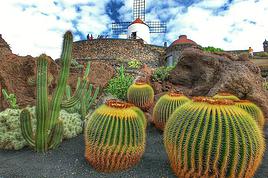
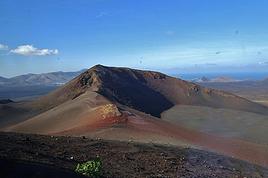
Arrecife : c'est la capitale de Lanzarote et une des principales portes d'accès à l'archipel.Costa Teguise : importante station balnéaire au nord d'Arrecife. On y vient notamment pour les plages, la plongée, la planche à voile et son parc aquatique.Playa Blanca : c'est la station balnéaire la plus au sud de Lanzarote avec de belles plages.Puerto del Carmen : une des trois grosses stations balnéaires de l'île. On y pratique la plongée.Teguise : une des plus anciennes communes des Canaries avec encore quelques édifices d'époque. Juste à côté, à Guatiza, on peut visiter le Jardin de Cactus.Tinajo : la commune abrite quelques grottes et plusieurs édifices religieux comme l'Ermitage de los Dolores.Vallée de La Geria : cette vallée de la partie sud de l'île est une zone viticole malgré son sol volcanique.Patrimoine naturelArchipel de Chinijo : au nord de Lanzarote cinq petites îles volcaniques (dont Graciosa est la seule habitée) classées réserve naturelle. On peut y voir nombre d'oiseaux et profiter des ses plages et paysages agréables.Cueva de los Verdes : ces grottes sont en fait un tunnel volcanique de plus de 6 kilomètres de long qu'on peut en partie visiter. A l'une des extrémités se trouve le "Jameos del Agua" qui est un aménagement de l'architecte César Manrique.Los Hervideros : des grottes sous-marines sous des champs de laves descendant sur la mer en bordure du Parc national de Timanfaya.Mirador del Rio : ce promontoire rocheux situé à l'extrême nord domine l'océan du haut de ses 475 m. Il a été aménagé par l'architecte César Manrique et offre un magnifique panorama.Parc national de Timanfaya : cette vaste zone volcanique possède de superbes paysages désertiques et des côtes découpées comme du côté d'El Golfo. Il existe des possibilités de randonnées dans le parc.Salinas de Janubio : des salines en bordure du Parc national de Timanfaya.7- TENERIFE
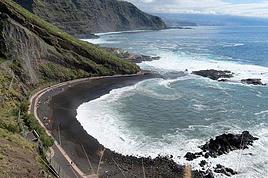
Arico : joli village de montagne au départ duquel on peut trekker ou pratiquer la grimpe dans les environs.Candelaria : avec sa basilique, cette ville au sud de Santa Cruz est un lieu de pèlerinage.El Medano : la station balnéaire de la côte sud a une renommée internationale auprès des véliplanchistes et amateurs de kitesurf.Garachico : une bourgade de l'ouest avec une assez belle architecture coloniale.Güimar : ce village de la côte est abrite six petites pyramides à l'origine inconnue.La Laguna : ou officiellement San Cristobal de La Laguna. Cette grande ville universitaire à la périphérie de Santa Cruz possède un centre historique classé à l'UNESCO.La Orotava : jolie ville agréable du nord de l'île avec pas mal de monuments.Los Gigantes : station balnéaire de la côte ouest entourée de belles falaises, dont certaines de plus de 500 m de hauteur, tombant dans la mer.Playa de las Américas : cette station balnéaire de la côte sud est réputée pour son animation et sa vie nocturne. Avec ses deux voisines, Los Cristianos et Costa Adeje, la zone concentre plus des deux-tiers de l'hébergement de Tenerife.Puerto de la Cruz : l'ancien port de La Orotava est maintenant une station balnéaire plutôt familiale, avec un vieux quartier, et un important jardin zoologique et botanique (le Loro Parque).Santa Cruz de Tenerife : c'est la capitale des Canaries. Des musées, quelques édifices anciens ou au contraire résolument modernes, un carnaval reconnu et des plages.Patrimoine naturelAcantilados de Los Gigantes : ce sont de belles falaises, dont certaines de plus de 500 m de hauteur, tombant dans la mer dans les environs de la station de Los Gigantes. C'est un des sites les plus visités de l'île.Barranco del Infierno : cette petite vallée sur la commune d'Adeje est appréciée des randonneurs. Elle abrite aussi pas mal de petites grottes dont certaines ont une valeur archéologique.Cueva del Viento : un immense tube volcanique (grotte) situé au nord de Tenerife sur la commune de Icod de los Vinos.Massif de l'Anaga : à la pointe nord de l'île la zone montagneuse est un superbe mélange de reliefs, de côtes et de plages parmi lesquels on peut randonner.Massif del Teno : à la pointe ouest de l'île le Teno est apprécié pour ses paysages, la marche et ses spots de plongée.Parc National de Teide : au coeur de l'île cette vaste zone désertique abrite le pic de Teide qui avec ses 3 718 m est le sommet des Canaries. On peut y accéder par un téléphérique ou en randonnée. Avec ses magnifiques paysages, le parc est classé à l'UNESCO. Celui-ci est également traversé par la Carretera Dorsal qui offre de superbes panoramas.8- LE PLUS APPRÉCIÉ
Fuerteventura : Parc Naturel de Corralejo.
Gomera : Parc National de Garajonay.
La Palma : Parc National de la Caldera de Taburiente.
Lanzarote : Cueva de los Verdes; Mirador del Rio; Parc national de Timanfaya.
Tenerife : Acantilados de Los Gigantes; La Laguna; Massif de l'Anaga; Parc National de Teide.
Je pars le 13 avril à Gran canaria avec ma fille de 17 ans. Je souhaiterais savoir ce qu'il y a à voir et quelle autre île nous pourrions visiter (nous avons…
Nous partons le 15 octobre sur Fuenteventura pour 8 jours. Bien sur le but est de se reposer et passer un petit moment sur la plage; mais je me connais, au…
Lors de notre croisière Mer des Caraïbes (transat retour) nous ferons escale à santa Cruz de Ténérife. Que faire/voir là bas? Nous y serons de 8h à 17h. Merci…
Europe de l'Ouest › Canaries (îles) / Malte / Grèce · 3 replies
Je souhaiterai être aiguillée sur ma prochaine destination voyage, en juin. J'hésite entre les canaries, malte et la créte. Recherches: dépaysement, visites et…
Je suis nouveau, donc me présente: sébastien, 38ans (en mars), agt sncf depuis 15ans., en couple sans enfant. Voilà je pars à Fuerteventura du 01/03 au…
Summer 2027 is going to be Norwegian for us!
We’re heading to the Lofoten Islands first, then Senja, near Tromsø, and finally the North Cape.
We’ll likely start from northern Finland (flight tickets and car rentals are more affordable there).
I’d like to book accommodations early to have more options.
Good value-for-money places go fast in these pricey Nordic destinations...
But where should we book?
We’re planning to stay around ten nights in the Lofoten Islands.
What’s the best approach?
One place in the central part and explore from there?
One place in the south and another in the center?
Or one in the south, one in the center, and one in the north (3-4-3 nights)?
Hi,
My daughter is heading to Iceland for a 4- to 5-day trek. Our Belgian network doesn’t cover Iceland. What’s the best alternative to stay reachable as much as possible, even while hiking?
Thanks
Hi there, my husband and I are planning a trip to Iceland in mid-October 2026.
Would you have any advice on the best places to visit for a first trip to this destination? Thanks
Hi there, a friend will be visiting Great Britain in August and would like to explore some representative spots in Denmark before heading back to Canada.
What affordable activities could you recommend to him?
He’d really appreciate it, as he has a deep appreciation for Nordic countries—probably because of his own Nordic roots.
Thanks
Hi, I'm heading to Italy soon and I wanted to know if Italian banks charge fees when you withdraw cash at an ATM, or if, like in Spain or Greece, it's better to avoid taking out money and bring cash instead. Looking forward to your replies... Thanks
We’re planning a short trip at the end of July to explore the legendary mountains and valleys of the Bernese Oberland: round trip from Nancy (Swiss highway vignette planned), 2 nights in a room with a small kitchen in Adelboden, then 2 nights in a hotel at the Gletscherblick in Grindelwald, both with half-board included.
Could you share some tips on the best road routes to take, as well as some walking hikes (we’re not as fit as we used to be, so nothing longer than 2-3 hours)? Maybe also 1 or 2 cable car rides—I was thinking of Oeschinensee Lake above Kandersteg and the First gondola above Grindelwald for better panoramic views of the Eiger, Mönch, and Jungfrau... all while keeping it doable with our schedule. We’ve ruled out the "premium" trip up to the Jungfraujoch for this time.
I’m also guessing that paying to access Wengen or Mürren only makes sense if we’re staying there for a few days, right?
- Is the road through the narrow valley of the White Lütschine toward Lauterbrunnen and beyond still worth it in terms of views and scenery?
On the way back, if we have a little time to explore Bern’s historic old town, what’s the best parking plan for a 1- or 2-hour stop?
Thanks in advance for your advice, fellow travelers familiar with this beautiful region! 😉
Hi,
I’ll be in Barcelona at the end of October.
I can choose to be there over the weekend or during the week. Probably 4 nights.
Is there a big difference in terms of crowds in the city and in the museums?
Little or no difference would simplify my itinerary on the way.
Hi there,
I’ll be in Rome from April 1st to 13th, 2026—it’s coming up fast!
I’ve been searching online for tickets to visit the Borghese Gallery, but either there’s no availability or the tickets offered are ridiculously expensive.
Could someone guide me to a website where I can book 2 skip-the-line tickets (I’ve heard you have to reserve in advance online)?
Hi everyone,
I rented a car through Klaus Wagen, picking it up in downtown Porto and returning it in downtown Lisbon.
After paying, I read some pretty negative reviews about them.
So, can anyone reassure me with positive experiences they’ve had with them?
Thanks in advance!
Hello, VoyageForum friends, and happy holidays!
I’m planning a trip with my 19-year-old grandson to Milan for Easter Saturday, Sunday, and Monday in 2025.
I’d love your insights on what we can visit in Milan that would interest both my grandson and me (I’m 75). Of course, I’m thinking of the must-sees, but not just those—cozy little restaurants, trendy neighborhoods, and anything else you’d recommend. I’m also looking for a comfortable hotel in the city center that isn’t too expensive!
I’m sure the VoyageForum community will help me uncover some hidden gems! Looking forward to your replies.
Hi there,
I’m heading to Setúbal at the end of June with my granddaughter, and I can’t seem to find clear info on the best way to get from Lisbon Airport to Setúbal. It looks like there’s a train or bus, but I can’t find the exact names of the bus (or train) companies or the precise departure points. Thanks if anyone can help me out! 😉 Just to clarify, I’m on a tight budget and have already ruled out taxis or similar options.
Hello,
We’re heading to Puglia at the end of May. We’re a senior couple. We arrive in Bari, where we’ve booked accommodation for 2 nights. We’ve rented a car.
Day 1: Bari
Day 2: Polignano a Mare – Monopoli
Day 3: Ostuni – Brindisi
Day 4: Lecce
Day 5 & 6: Exploring the coast from Otranto to Santa Maria di Leuca
Day 7 & 8: Gallipoli area
Day 9 & 10: Matera
We’re considering renting a place near Lecce for 5 days and using it as a base to explore the region.
Hi there,
I visited the Faroe Islands in late March 2026 for about ten days. I was invited by a friend who lives near Tórshavn, so I don’t have any info on tourist accommodations or car rentals. Still, I’d like to share a few thoughts about my trip:
- Before leaving, I consulted travel guides and blogs. I was surprised by how repetitive and unoriginal the featured sites were. This leads hurried travelers to follow the same overcrowded routes, which can annoy locals. I found that all Faroese villages were interesting—they reflect the country’s identity, even without the iconic grass-roofed houses. Those are indeed harmonious and beautiful, but they feel like an exotic cliché. For activities, I loved the lively ports that keep the country running.
- I was annoyed by the paid trails in tourist spots. Locals explained that these paths cross private land, and owners are responsible for maintenance and safety. There are plenty of free trails, too—signs at the start detail their features. While not alarmist, the extreme and unpredictable weather is a key factor to consider before setting out.
- The wind’s strength really impressed me. The architecture, with doors and windows opening outward to prevent gusts from blowing roofs off, speaks to the harsh climate. Some days, relentless rain and squalls made going outside unappealing. I realized that in this country, it’s best to plan for flexible indoor days.
- Distances are relatively short. I was happy to be based near Tórshavn because it was easy to explore one or more places in a day. The roads are in great condition. In late March, diesel was 2 €. Tunnel tolls can add up (~26 € per crossing), making a fixed base less practical than I’d thought.
- Everyone agrees: the landscapes are breathtaking. Nature feels untamed here—except for the short grass, thanks to all the woolly sheep.
- The flight from Paris to the Faroe Islands (and back) was long in March—11 hours with three legs: Paris-Amsterdam, Amsterdam-Copenhagen, Copenhagen-Vágar. In bad weather, Vágar Airport can close, causing delays. During tourist season, Atlantic Airways offers a direct Paris-Faroe Islands flight, which is more comfortable and cheaper.
- I found a book recommendation in a guide that fascinated me after my trip: *Les collectionneurs d'images* by Joanes Nielsen. Through its sometimes caricatured characters, it offers a glimpse into Faroese mentalities from the 1950s to 1970s—attitudes that likely persist today.
In conclusion, I’ve traveled a lot and I’m tired of destinations that all start to look the same. The Faroe Islands were a delight—a country stunning in its landscape, climate, and culture, where tourism has barely altered its authenticity.
Hi there,
We’re planning a trip for October to visit Naples (6 nights) and the Amalfi Coast (5 nights). We’ve already got the historic center and the Lapis Museum in Naples, Pompeii, Herculaneum, Procida, Sorrento, and Ravello on our list. Any suggestions, addresses, or tips?
Thanks for your help.
Hello,
We’re heading to Rome from 21/09, arriving in the early afternoon, and returning on 28/09, leaving in the morning. We’ve already booked our flight tickets and our accommodation in the city center: Via Ezio.
I’d love to get your feedback on our itinerary and if there are any visits we should book right now:
Monday 21 afternoon:
Largo di Torre Argentina: a sacred spot for cats.
Tuesday 22:
The Vatican: Vatican Museums and Sistine Chapel in the morning. Afternoon: St. Peter’s Basilica, the dome, and if possible, the necropolis.
Wednesday 23:
Morning: Colosseum, Roman Forum, and Palatine Hill. Afternoon: Trastevere neighborhood and the Monumento a Garibaldi.
Thursday 24:
Piazza Navona, Church of St. Louis of the French, the Pantheon, Campo de’ Fiori, Piazza Venezia, Piazza Santa Maria Maggiore, Trevi Fountain.
Friday 25:
Villa Borghese, Piazza del Popolo, Spanish Steps, Quirinale, Piazza della Repubblica, and Santa Maria degli Angeli.
Saturday 26:
Aventine and Testaccio neighborhoods, the Capuchin Crypt.
Sunday 27:
Ostia.
Monday 28:
Departure.
Are any days too packed, or should we add more visits?
Thanks for your input and help!
Cheers!
Anne
Hi there,
I’m looking for some great tips for a stay in Palma de Mallorca this summer.
I need cheap flights departing from Toulouse and affordable accommodation for 4 people.
What do you recommend?
Best regards,
I’d love to get your thoughts on the following itinerary (late May). I like to take my time in ruins and museums, and beaches don’t interest me. I’ll be staying in hostels and using public transport. Do you see any major omissions or things that aren’t worth it?
Thanks!
Day 1: Arrival in CATANIA
Day 2: Catania – visit (fish market, cathedral, Biscarri Palace, etc.)
Day 3: Mount Etna (day trip)
Day 4: Morning trip to TAORMINA, visit the town
Day 5: Alcantara Gorge (day trip) + more time in Taormina
Day 6: Trip to SYRACUSE, visit Ortigia
Day 7: Ortigia
Day 8: NOTO (day trip) (or another Baroque town?)
Day 9: Syracuse Archaeological Park + more time in Ortigia (or leave for Enna?)
Day 10: Transport via Enna? TO BE RESOLVED (long, 2 or 3 changes, limited accommodation in Enna...)
Day 11: AGRIGENTO: town and Scala dei Turchi (optional)
Day 12: Valley of the Temples + archaeological museum
Day 13: Departure for TRAPANI (4h), afternoon: town (+ salt flats?)
Day 14: Segesta (day trip) + town/Erice
Day 15: Monte Cofano Nature Reserve (hike + summit) (day trip)
Day 16: Zingaro Nature Park (coastal route out, ridge route back) (day trip)
Day 17: Departure for the AEGADIAN ISLANDS: Levanzo and Favignana (bike), overnight if possible
Day 18: Egadi Islands
Day 19: Departure for PALERMO + first visits
Day 20: The city
Day 21: The city (Monreale?)
Day 22: Options:
- Capo Gallo hike (3.5h round trip) (via Mondello)
- Cefalù (45 min by train)
Day 23: Return flight
Hello,
We’re heading to Bavaria from May 13 to 23, with a side trip to Austria.
Here’s our itinerary:
Day 1: Brussels-Munich
Day 2: Munich
Day 3: Munich and departure for Salzburg
We’ll be staying three nights in Salzburg.
Then we’ll head to Garmisch-Partenkirchen, where we’ll stay for five nights.
Visiting Munich and Salzburg isn’t too tricky.
Once in Garmisch, we’re planning a day in Innsbruck, a day for Neuschwanstein Castle, and the rest is still up in the air.
What’s really got me stumped is that we’d love to see Königssee Lake—everyone says it’s a must-see.
We’d also like to visit the Eagle’s Nest (Kehlsteinhaus), where the landscapes are supposedly stunning.
This would either be a round trip while we’re in Salzburg or on the way between Salzburg and Garmisch, but I’m guessing it’s impossible to do the drive from Salzburg to Garmisch, the Eagle’s Nest, *and* Königssee Lake all in one day.
Plus, the Alpine route between Salzburg and Garmisch seems prettier than the highway.
But honestly, I’m feeling a bit overwhelmed with the planning.
We should’ve added a stop between Salzburg and Garmisch, but the hotels are already booked.
Thanks for any advice on the itinerary and visits!
Another question: How far in advance should we book Neuschwanstein, Königssee, and the Eagle’s Nest in May?
Thanks so much in advance for your tips and ideas!
hi
I’m wondering if anyone can give me some info on how to get from Mallorca to Menorca.
Since flights are cheaper to Mallorca, I’d like to go that way.
Thanks so much for your help!
We’re planning a trip to Finland and Norway this summer, starting in Oulu to explore Lapland, heading up to the North Cape, and then making our way down to Bergen.
This route means renting a car in Finland and dropping it off in Norway. My initial searches are showing rental rates that are... astronomical—about three times the price compared to returning it at the starting point.
I’m guessing I’m not the only one wanting to visit both countries. Are there any great tips to drastically reduce the cost of renting a car?
Hi there, we’re a couple of bikers planning a trip to Majorca in June 2026, and I’d love to organize a half-day or full-day boat or catamaran outing. Which coast do you think is the nicest for this, and do you have any suggestions or personal experiences to share? Thanks in advance!
Hi there,
Does anyone know if there are any works in progress at Torcello, and if so, what type of works and how long they’re expected to last?
Thanks in advance
Hi everyone,
I’m sharing my draft itinerary with you because I just booked our flight tickets, and I feel like it’s quite late in the season. So, I’d like to be sure about my stops before reserving the hotels. I’ll be traveling alone with my two adult children. We want to prioritize outdoor walks, avoid too many indoor visits (both for budget and preference), and not spend too much time on the road.
D1: Arrival at 9 AM in Malaga, day in Malaga and overnight stay
D2: Head straight to Nerja (1-hour drive) and spend the night there
D3: Head straight to Granada (1.5-hour drive), spend the day and night there
D4: Granada. Visit the Alhambra (Nasrid Palaces tour at 5 PM) and spend the night
D5: Head to Ronda (2.5-hour drive) and spend the night
D6: White Villages and overnight in Ronda
D7: Head straight to the Costa del Sol (e.g., Estepona), spend the day and night there
D8: Return to Malaga to catch our flight
There you go! This itinerary takes into account that we’d like to do a circuit starting from Seville in a few years. That said, it’d be a shame to miss something doable from Malaga.
Questions:
Since the Alhambra visit is only at 5 PM, and we’d already have the day to explore Granada, would arriving the day before be a mistake? Or should we skip this day and dedicate it elsewhere (Costa del Sol? Head toward Tabernas?)? The old town appeals to me, but maybe the Sacromonte neighborhood isn’t essential...
Same question for Ronda: should we dedicate a full day to it, or combine Ronda and the White Villages in one day?
Note that we love wandering around villages outside, so that might answer my question! :)
Final question: Is it better to rent the car at Malaga Airport or in the city? If we rent at the airport, we’d need a hotel with parking, which doesn’t seem easy. Or stay outside the city and park for free near the center if possible? I’ve read comments about taking a taxi to Malaga and then picking up the rental car at the airport the next morning. The taxi would really need to be affordable...
Thanks so much for your feedback and suggestions for visits during this little circuit.
Have a great day, everyone!
Christine
Hello,
we’re a couple planning a 2-week road trip this August, with a must-stop (about 3 days on Skye). Any route suggestions? Hotel recommendations? Photo spots?