Que voir en Lorraine ?
Pour préparer votre futur voyage ou week-end, un aperçu des principaux sites et lieux à visiter dans la région (carte).
La Lorraine est l'une des 22 régions de la France métropolitaine. Elle est composée des départements de la Meurthe et Moselle (54), Meuse (55), Moselle (57), Vosges (88).
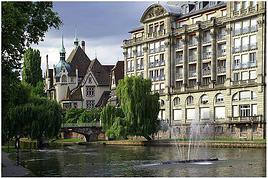
1- MEURTHE-ET-MOSELLE (54)Baccarat : la petite ville mondialement reconnue pour sa cristallerie a un tourisme qui tourne logiquement autour de ce thème (manufacture, musée).Basilique de Saint-Nicolas-de-Port : bel édifice religieux de style gothique situé dans la commune du même nom.Briey : cette bourgade du nord du département offre plusieurs attraits avec ses vestiges (remparts, fortifications…), ses petits châteaux, quelques vieilles maisons et surtout la Cité radieuse Le Corbusier connue des amateurs d'architecture. Château de Cons-la-Grandville : une forteresse plus ou moins de style Renaissance dans la commune du même nom.Château d'Haroué : un joli château du XVIIIe siècle au sud de Nancy.Longwy : réputée à l'origine pour ses aciéries, Longwy n'en possède pas moins un ensemble de fortifications classées d'ailleurs indirectement à l'UNESCO via le "réseau des sites majeurs de Vauban".Lunéville : cette sous-préfecture possède un joli château largement inspiré du château de Versailles.Nancy : sans être des plus touristiques, la préfecture du 54 est une ville agréable avec une belle architecture dans son centre historique et notamment ses places dont trois sont classées à l'UNESCO.Pont à Mousson : au niveau touristique, la ville propose la visite de l'Abbaye des Prémontrés de même que quelques églises, vieilles maisons et autres bâtiments anciens.Toul : cette sous-préfecture est connue pour sa cathédrale même si la ville possède en plus quelques autres édifices intéressants.Patrimoine naturel
Lac de Madine : petit lac artificiel sur les départements 54 et 55 dédié à la plaisance et la baignade.Parc naturel régional de Lorraine : ce vaste parc couvre plus de 10% de la Lorraine. C'est une zone vallonnée, faite en partie de forêts et d'étangs où nichent nombre d'oiseaux.2- MEUSE (55)
Bar le Duc : la préfecture de la Meuse abrite le Château des Ducs de Bar qui est la principale attraction de la ville.Basilique d'Avioth : basilique gothique du XIVe siècle dans la commune du même nom.Commercy : ville-sous préfecture, Commercy possède un joli château construit au début du XVIIIe siècle.Douaumont : dans une forêt aux abords de Verdun, le site est connu pour abriter l'impressionnant Ossuaire de Douaumont qui est une nécropole militaire de la première Guerre mondiale.Forêt d'Argonne : cette forêt faisant partie de l'Argonne abrite divers témoignages de la première Guerre mondiale lorsque l'endroit fut le théâtre de la Bataille de l'Argonne en 1915.Marville : un village avec un petit patrimoine architectural datant entre autres du Moyen Age.Montmédy : cette ville proche de Sedan et la Belgique a une histoire militaire. On peut y voir une imposante citadelle de même que des fortifications datant de l'époque de Vauban ou encore des ouvrages de la ligne Maginot.Verdun : une des villes symboles de la première Guerre mondiale à travers la bataille qui s'y déroula en 1916. Le "tourisme de mémoire" y est très présent aussi bien sur la ville que ses environs proches : citadelle souterraine de Verdun, cimetières militaires, mémorial de Fleur, forts de Vaux et Troyon, ossuaire et fort de Douaumont…Patrimoine naturel Lac de Madine : petit lac artificiel sur les départements 54 et 55 dédié à la plaisance et la baignade.Parc naturel régional de Lorraine : ce vaste parc couvre plus de 10% de la Lorraine. C'est une zone vallonnée, faite en partie de forêts et d'étangs où nichent nombre d'oiseaux.3- MOSELLE (57)Bitche : une ville au passé militaire comme en témoignent sa citadelle, les vestiges de ses fortifications ou encore des ouvrages de la ligne Maginot.Château des Ducs de Lorraine : un château médiéval commencé au XIe siècle et situé aux frontières entre la France, l'Allemagne et le Luxembourg.Château de Malbrouck : c'est un bel édifice perché du XVe siècle dans la commune de Manderen. Dabo : dans ce village entre Nancy et Strasbourg on peut voir nombre de maisons troglodytiques et des monolithes. On peut également randonner dans les environs.Forbach : la sous-préfecture est une des principales villes du département. "La mine" : cette ancienne mine de charbon située à Petite-Rosselle est désormais un musée qui permet de découvrir notamment les galeries souterraines de celle-ci. D'autres éco-musées similaires dans le département à Neufchef et Aumetz.Ligne Maginot : de cette série de fortifications datant de la seconde Guerre mondiale le département a gardé plusieurs édifices qu'on peut pour certains visiter comme à Aumetz, Cattenom, Simserhof, Veckring…Metz : c'est à la fois la préfecture du département et de la région. Labélisée "Ville d'art et d'histoire", Metz possède un centre et une cathédrale qui méritent la visite.Parc archéologique européen de Bliesbruck-Reinheim : à cheval sur deux communes et deux pays (France et Allemagne) ce musée en plein air présente plusieurs vestiges datant de la préhistoire à l'antiquité.Rodemack : joli petit bourg médiéval d'ailleurs classé parmi les "plus beaux villages de France".Saint-Avold : cette commune à la frontière allemande abrite le plus grand cimetière militaire américain de toute l'Europe.Saint-Louis Arzviller : c'est sur ces deux communes qu'on peut découvrir le "plan incliné-ascenceur à bateaux" du Canal de la Marne au Rhin dont le but est de remplacer les écluses.Saint-Quirin : la bourgade est classée parmi les "plus beaux villages de France".Schorbach : petit village connu localement pour son " Calendrier pour la Paix" qui est une énorme sculpture représentant 366 portraits sous forme de calendrier.Thionville : entre Metz et le Luxembourg, l'ancienne cité sidérurgique est la seconde ville de Moselle.Uckange : en pleine région de la sidérurgie (sinistrée), la ville a développé un tourisme industriel permettant la visite d'anciens haut-fourneaux et autres vestiges du genre.Patrimoine naturel
Parc naturel régional de Lorraine : ce vaste parc couvre plus de 10% de la Lorraine. C'est une zone vallonnée, faite en partie de forêts et d'étangs où nichent nombre d'oiseaux.Pays des étangs : une zone d'étangs naturels et artificiels de la région de Sarrebourg dans laquelle on peut voir nombre d'oiseaux. Dans son périmètre le Parc animalier de Sainte-Croix présente une centaine d'espèces de la faune européenne.Parc naturel régional des Vosges du Nord : à cheval sur le Bas-Rhin et la Moselle c'est un parc de forêts, de falaises et de zones humides. On peut y randonner, observer les oiseaux et visiter plusieurs vestiges de châteaux forts (Baerenthal, Ramstein, Waldeck…) ou encore des verreries (Goetzenbruck, Meisenthal…).4- VOSGES (88)
Domrémy-la-Pucelle : cette commune de la Vallée de la Meuse abrite la maison natale de Jeanne d'Arc (1412).Epinal : c'est la préfecture du département. On peut y visiter le musée des images d'Epinal.Forteresse de Châtel-sur-Moselle : c'est un des plus grands châteaux fort d'Europe bâti au XIe siècle dans la commune du même nom, Gérardmer : construite au bord d'un lac, la troisième ville des Vosges est aussi une station de ski. Grand : c'est dans ce village qu'on peut découvrir le principal sanctuaire gallo-romain de la région.La Bresse : la principale des sept stations de sports d'hiver des Vosges.Pays des Abbayes : une petite vallée dans laquelle on peut visiter les abbayes d'Etival, Moyenmoutier et Senones.Saint-Dié des Vosges : la seconde ville du département possède quelques édifices intéressants dont sa cathédrale. Senones : cette localité fut au XVIIIe siècle la capitale de la Principauté de Salm-Salm. Au niveau touristique, une relève de la garde (en costume) y a toujours lieu en saison. On peut randonner ou faire du vélo dans ses environs.
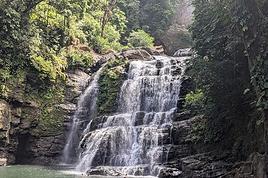
Vittel : ville thermale connue pour son eau minérale.Patrimoine naturel Cascades de Tendon : au milieu d'une forêt, c'est la principale cascade du département sur la commune du même nom.Massif du Hohneck : même s'il ne dépasse pas les 1 400 m d'altitude ce massif à la fois lorrain et alsacien est apprécié des alpinistes.Parc naturel régional des Ballons des Vosges : sur trois régions et quatre départements (68, 70, 88, 90), le parc est un des plus vastes de France. C'est aussi bien un espace naturel que culturels. On peut randonner (et faire du ski) dans les environs du Ballon d'Alsace et ses 1 247 m.Route des Crêtes : cette route d'une centaine de kilomètres traverse le massif vosgien dans d'assez beaux paysages. Elle donne aussi accès à plusieurs stations de ski.5- LE PLUS APPRÉCIÉ...
Meurthe-et-Moselle : Briey;Nancy.
Meuse : Douaumont; Verdun.
Moselle : "La mine"; Parc naturel régional des Vosges du Nord; Rodemack.
Vosges : Parc naturel régional des Ballons des Vosges; Route des Crêtes.
Je me permets d'ajouter que les férus d'histoire seront peut être intéressés par la visite de la maison natale de Jeanne d'Arc à Domrémy-la-Pucelle dans les Vosges. Je suis aussi très surprise (et surtout froissée) de lire que Metz ne fait pas partie des lieux les plus appréciés de Moselle. Ville d'Art et d'Histoire riche d'un patrimoine architectural très bien restauré. Sans oublier son Centre Pompidou qui draine quand même pas mal de monde.
Simple curiosité de ma part 😊. Est-il possible de connaître les ressources à partir desquelles sont rédigés ces "que voir en... " ? Merci.
Je trouve par ailleurs que d' autres villes de la région sont évoquées aussi de manière quelque peu lacunaire , comme Nancy (sans citer la patrimoine Art nouveau de l' École de Nancy) ou Bar-le-Duc (magnifique ensemble Renaissance de la Ville Haute omis , réduit à un seul bâtiment) .
Ces "Que voir..." sont tirés pour la plupart d'un ensemble de données créé il y a déjà longtemps (avant VF) à partir d'expériences de voyageurs et bien sûr aussi de la synthèse de différentes sources touristiques. Le tout étant tenu à jour depuis et amélioré au fil du temps comme ici avec les commentaires des membres VF.
En fait, ces aperçus ne sont qu'une petite partie d'un ensemble bien plus conséquent qui servira de base aux guides collaboratifs à venir (on programme encore) qui traiteront aussi bien des destinations que des thématiques. Certaines choses ont déjà été publiées dans le passé, hors VF, sur différents supports.
Tels que présentés actuellement, ces "Que voir" ont pour but de proposer une première idée ou un récapitulatif des lieux à voir sur une destination, surtout lorsqu'on a pas ou peu de connaissances dessus. C'est aussi volontairement que nous avons fait succinct, avec juste une ou deux phrases de présentation. Bref, ils sont juste là pour donner une vision générale qui sera beaucoup, beaucoup plus complète et détaillée lorsqu'ils se trouveront dans les guides.
Hi there,
I need to plan a trip to mainland France for the first time with my family (my partner and our two kids, aged 16 and 5). We arrive at Paris Orly on the evening of JANUARY 12th and leave on January 30th.
Do you have any city recommendations to visit during this period, or hotels you’d suggest?
We’ll be traveling by train and would like to spend at least 4 nights in each city.
Thanks in advance for your tips!
Delphine
I want to rent an economy-class car in France for 12 days. I checked prices on several sites mentioned in this forum, and they’re pretty comparable—around 350 € or $470 CAD.
Strangely, Auto Europe is showing prices between $300 and $330 CAD for an economy-class vehicle. That seems too good to be true. What do you think?
Hi everyone,
I’m heading to Corsica for 12 days:
- One week in Ajaccio
- One week in Porto-Vecchio
I’m renting a car at Ajaccio airport.
Any special visit ideas?
Thanks
Hello,
I’ve visited Corsica several times with our kids, and we loved the warm welcome and friendliness of the locals as we explored many villages. We’re originally from the JURA region.
Now that we’re retired, we’d like to live somewhere between Bastia and Porto-Vecchio.
Which village or town would you recommend for a peaceful and welcoming lifestyle?
We’ll be back from a river cruise with a stop in Strasbourg for just the afternoon and evening. We’d like to spend the afternoon in either Colmar or Kaysersberg and then return to Strasbourg for dinner and a stroll afterward. I’d love your advice on which spot—Colmar or Kaysersberg—you’d recommend. I’ve noticed there’s a bus line 145 that runs from Colmar to Kaysersberg, taking about 40 minutes and costing around 5 €.
Is there a train or another way to get directly from Strasbourg that’s quick and affordable? I think a taxi would be pretty expensive. The issue is we don’t have much time—our flight is the next morning. We’ve already visited Strasbourg, Colmar, Eguisheim, Ribeauvillé, and Riquewihr about 10 years ago and loved them all. Our river cruise covers the Main, Rhine, and Danube.
We’re really looking forward to seeing places in Germany, like Rothenburg ob der Tauber, among others.
Hi there,
This question is for a friend who lives in Munich and needs to come to Paris in May 2027.
Could you share any tips on the easiest way to get to Paris (flight or train) and then to La Défense Arena?
I don’t know anything about it, and my friend is just as lost when it comes to planning her trip.
Thanks in advance if you have any advice! :-)
We’re planning to spend a few days in Valencia and the surrounding area. Can you recommend the must-see sights?
PS: If you know any great restaurants, we’re all ears!
It’s official: our Lyon weekend is confirmed from June 12th to 14th (girls only, no kids!). Do you have any must-see spots to recommend? Are there any exhibitions happening around that time?
Which places do you suggest for going out and having a good time?
Hi,
Our son, currently in Central America, will board a sailboat on 04/16 to cross the Atlantic. He’s expected to arrive around 05/31 in Port-Saint-Louis-du-Rhône, and we’d like to welcome him on the day he arrives.
I’m looking for accommodation in the area for a few days around that date, from which we can explore the Camargue. We’ll be bringing our e-bikes.
Could you tell me which towns to look in and which areas to avoid, please? I think Port-Saint-Louis isn’t a great option if we want to avoid the toll for the ferry every time we leave by car.
Thanks for your tips.
Claire
PS: Are there a lot of mosquitoes in late May/early June?
Hi everyone! I’m Loubna, I’m Algerian. My friends and I are planning a trip to France, but we don’t know this region at all. Could you help us out? Thanks in advance!
Hi there, I’m facing a pretty big and important dilemma—I moved to Argentina (Buenos Aires) when I was 20, and now, at 30, I’m coming back to France.
I’m looking for a city to live in and build a life for the next several years. I’m a single guy, so that’s the context.
The thing is, I have quite a few strict criteria...
First and foremost, I *need* a city that’s bustling with people everywhere—I really don’t like quiet, small countryside towns.
Nightlife is super important to me, especially on weekends. It’s crucial that there’s a wide range of options for going out in the evening (mostly bars—I’m not really into nightclubs, but I’d like to be one day if possible).
The social aspect is the *most* important thing (honestly, the *only* thing that matters to me). I don’t care at all about living conditions, safety, cleanliness, or whether things work smoothly.
But I *do* need a place where people are generally "chill"—not cold, rigid, or overly professional, with social norms that don’t make my head spin. I know I’ll never find the same Latin vibe here in France, haha, but I’m trying to survive anyway.
In France, I’ve always lived in Essonne (91), around Bures-sur-Yvette / Les Ulis / Gif / Orsay, etc. I *hate* it—way too quiet, empty streets, and zero activities that suit me. There’s not a single proper bar in any of the surrounding towns, just PMU tobacco shops, and nightlife is nonexistent.
I went to Hossegor once with friends—great vibe, nightlife, bars, beach, etc. But I’m guessing it’s *super* expensive to buy a place there, close to the action (and I’m not even sure if it’s a nice place to live overall).
When I came back to France, I spent 3 months in Paris because I thought it would obviously be the closest to what I was looking for. I still have horrible memories of it—it haunted me so much that I had to escape the capital in a hurry... And I was (I think?) in one of the best neighborhoods for my tastes: Belleville.
So here I am, going in circles because I don’t know enough about French cities. All my friends love quiet, small provincial towns or even living alone in the mountains.
A couple told me about Montreuil, but they were there a long time ago, so I don’t know what it’s like now. They said there was activity, that the city was pretty big, and that there was a good nightlife scene (bars, nightclubs, all kinds of outings), plus the metro (which would make it easy to get to Paris or for people to come to Montreuil from Paris).
So, for now, Montreuil is my only option, but I’m scared and would love other opinions (on Montreuil and other possibilities).
Sorry for the novel, but this is *really* important to me—my future depends on it, in a way ^^'
Thanks so much for reading and for any help you can give!
Hello,
At the beginning of June, we’ll be spending a few days in Sardinia. We’ve decided to return via a detour through Corsica and want to make the crossing from Santa Teresa di Gallura to Bonifacio (2 people and 1 car). There are currently two companies, Moby Lines and Ichnusa Lines, that operate this route. Unfortunately, we don’t know either of them at all. The prices and crossing times are pretty much the same, and we’d like to choose the most reliable one (punctuality/risk of cancellation for a booked crossing) and, if possible, the more comfortable of the two. Could you share your thoughts on either company to help us decide? Thanks in advance for your replies.
Have a great day.
I’m thinking about planning several short trips in France outside peak tourist seasons, especially in spring and autumn.
The idea would be to prioritize:
- fewer crowds at tourist sites
- more affordable accommodation prices
- a more local atmosphere
However, I also have some concerns about:
- attractions or restaurants sometimes being closed
- more unpredictable weather depending on the region
- less frequent transportation in certain areas
For those of you who’ve traveled in France off-season before, what do you think were the main pros and cons?
Are there any regions or specific times that are particularly worth prioritizing?
I’m looking for a ski resort in the Massif Central for a family trip—two adults and three kids (ages 4, 5, and 6)—for a week between late February and early March.
The main goal is to introduce my kids to skiing, so I’m looking for a resort that’s really "family-friendly." But honestly, almost every resort (Super-Besse, Mont-Dore, Lioran, etc.) claims to be family-friendly, so I’m not sure which one to choose. Plus, it’s not always easy to check the location of accommodations on booking sites.
For what I have in mind, we don’t need 30 km of slopes. What would be ideal, though, is a resort that’s mostly pedestrian-friendly, with lodging within a reasonable distance from the base of the slopes and a ski school available.
I’ve read some things here about places like "Chalmazel-Jeansagnière," but the thread is a bit old.
Hi,
We’re heading to Corsica at the end of July, and after a 4-night stay in Zonza, I’d like to head toward Cargèse or Porto to visit the Calanques de Piana. What’s the actual travel time? Maps says 2h40/3h, but I’m wondering if that’s really accurate.
How long does it take to get back to Ajaccio Airport afterward?
Thanks!
I’m planning a trip to Normandy and, after reading quite a few posts here, I still have some questions about the most logical order to avoid spending too much time on the road.
The idea is to have a fairly smooth itinerary, taking the time to enjoy the places, over about ten days (possibly a little more), combining the coast and the inland areas.
I’m particularly wondering about:
– The best starting point (starting with Mont-Saint-Michel or saving it for the end)
– The balance between the coastline and more inland areas
– The areas where it’s really worth slowing down the pace
If any of you have done a route that felt particularly coherent, your feedback would really help me fine-tune the planning.
Hi,
I saw that the first tram from Pont du Garigliano leaves at 5:15 AM, and by taking the RER B at Cité Universitaire afterward, I’d arrive at Roissy at 6:30 AM—2 hours before my international flight.
Is this doable, or not? If anyone’s done this before, I’d love to hear about it.
Thanks
Hi there,
We’re about to finalize a booking for late July near the Pink Granite Coast. We’re wondering about the traffic jams that could make our trip miserable, given how famous the place is—we’re excited to see it too. Could it get pretty bad?
Thanks for sharing your experiences.
In June 2020, my wife and I will be visiting Brittany and Normandy. We’d especially love to explore villages that aren’t part of the usual tourist routes. We enjoy traveling off the beaten path.
We’re reaching out to you all to share which villages we should check out in these two regions.
Thanks.
Here’s the account of the start of our 5/7-day trip in Normandy (then off to the neighbors in... Brittany):
Day 01 from Valenciennes to Mont Saint-Michel: Sunday, September 6, 2020.
After a detour through the south of Lille (picking up our son), we head southwest around 10:00 AM, taking the highways via Amiens, the Pont de Normandie, and Avranches to arrive at "the Mount" around 4:00 PM after 515 km.
Parking P3 (14.20 € for 24 hours) for residents and hotels, located 50 meters from the start of the free round-trip shuttle included in the parking price (not too many tourists at this "late" Sunday hour), and we arrive at the hotel around 4:30 PM.
Triple room with a view of the bay at Hôtel Du Guesclin for 1 night.
From 5:15 PM to 6:30 PM, we tackle the complete tour of the ramparts counterclockwise from the Porte de l’Avancée, via the Tour du Nord (near the abbey entrance), passing in front of the abbey to reach the Tour Gabriel, and back to the start: stunning, not crowded, great weather, and amazing views.
Dinner in the beautiful panoramic restaurant of the hotel, with a bay view at a "window" table (such a nice touch!).
Of course, the day isn’t over, and we can then wander through a deserted main street and its unique atmosphere (photos below labeled "night" even though it’s only 9:15/9:30 PM). What a privilege!
Day 02 from Mont Saint-Michel to Saint-Cast: Monday, September 7, 2020.
After a memorable sunrise over the bay and a sit-down breakfast, we climb the steps to the Abbey for our online-reserved time slot (9:30 AM, 11 € per person).
The "masked group" is quite large, though within normal limits, and the one-way Covid-marked route (with a small brochure) prevents crowds. No need to rush, and 1 hour 15 minutes later, we’re done. Sure, it doesn’t have the charm of a guided tour, but we’re not complaining about being there!
We pick up our bags at the hotel, take the shuttle back, grab the car at Parking P3, and head "south" to Dol-de-Bretagne, 26 km/25 minutes away.
Around noon, the small town is very quiet, and parking in front of the Saint-Samson Cathedral** is free. Across the street, the tourist office is generous with info and gives us a great walking map/circuit: Cathedral, a stroll near the ramparts, the historic center** with its typical shopping streets and half-timbered houses, all covered at a leisurely pace in 45 minutes. Then a picnic on-site.
It’s another 50 km/50 minutes to Saint-Cast-le-Guildo and the Armor Conseil agency for the apartment keys (Résidence du Casino, 72 m², 5th floor, 2 bedrooms, beach 20 meters away, insane morning and evening views, bed linen rental at Ohier 50 meters away, Carrefour City supermarket, and a bakery 200 meters away, plus a town center that hasn’t changed much in 25/30 years. Really, really nice.
After settling in, a short walk is a must up to the heights of the Isle neighborhood behind the seaside residence... memories. Strangely, the well-known Crêperie Bretan’Or seems to be closed, as does the venerable Hôtel du Centre et des Plages (formerly "des Voyageurs")??
And for this reunion evening with the resort, a great crêpe/galette dinner at La Régal’ette, just 100 meters away.
Day’s total: 12 km of walking for sightseeing.
I’m traveling alone from my remote Pyrenees home to Roissy Airport, arriving at Austerlitz Station. I’m a bit nervous about getting to the airport—could you suggest a route?
While you’re at it, maybe you could recommend a budget hotel near the airport?
I’m looking into a trip to Paris around mid-February. I’d love to know more about the temperature (weather) in Paris, museum access (closures or anything else), how easy it is to get around on foot (slippery due to ice?), public transport, etc.
Also, are there any events or activities I absolutely shouldn’t miss? I could adjust my dates based on what you know.
On another note, I’d love to catch a hockey game. Are there any around Paris? I’m happy to watch a few games no matter the level 🏒🥅
FYI, I’m not afraid of the cold since I’m from Quebec 😁😆😆🧑🌾
This summer, we’re planning a family trip to Corsica.
We’ve chosen Sari Solenzara because we want to combine: sea, mountain hikes, natural pools, canyoning, and peace and quiet. Does this choice seem like a good one to you?
Second question: which airport should we prioritize to have the easiest roads to access?
Hi everyone,
We’ve wanted to visit Alsace for a long time to see the famous and well-known "Christmas markets."
Apart from the one in Strasbourg, could you give us some tips on other markets (Sélestat, Colmar, Mulhouse)?
Also, any recommendations for hotels, restaurants, or things to see, etc.?
I know my question is a bit "basic," but we really need some expert advice.
Thanks in advance to all.
I’m planning to spend three days in the Annecy region. What would you recommend visiting? Just so you know, I love nature and enjoy walking, but I prefer hikes that aren’t longer than two hours.
My husband, our 1-year-old son, and I have decided to head to southern France in mid-September.
We don’t know the region at all—it’ll be our first time.
We only have 9 days, and we’re really torn between Provence for its gorgeous villages, its "slow" vibe, Provençal markets, flavors, and colors, and the famous French Riviera for its beaches, ports, and because it’s intrigued us for so long.
I found a beautiful place to stay in a *mas*, but it’s not in the region at all (it’s in the Gard).
My husband found a place he really likes in Saint-Aygulf, but before booking, I’m hesitating and wanted to get some advice.
Obviously, with only 9 days, we clearly have to choose. I thought about splitting the trip in two, but that seems like a bad idea for two reasons: first, we’re traveling with a little one, and second, if we spread ourselves too thin, we risk not seeing anything properly.
Since we don’t know the area at all, I’m worried the coastline might be too built-up with big buildings, etc., like Lloret de Mar (no offense to anyone who loves it—it’s just not what we’re looking for).
Anyway… what would you recommend for a first 9-day trip to the south?
Hi
Does anyone know a reliable and affordable shuttle service from Roissy airport to Lille train station?
I know there are TGVs, but we’d like to avoid a long wait at Roissy station.
Thanks in advance for your tips!
BD