Je reviens d'un voyage de deux semaines au Cambodge et en thailande. Ayant beaucoup puisé d'infos sur le forum, je me dois aujourd'hui de faire part de mon expérience :
Nous sommes partis ma femme et mes deux filles (7 et 11 ans) du 9 au 23 février.
Vol Gulf Air jusqu'à Bangkok via Barhain, sans retard ni problème particulier (580 € le billet A/R pris en octobre 2007) puis quelques heures plus tard vol airasia vers Phnom Penh (+/- 60 € AR), également sans le moindre soucis.
Grosse chaleur au Cambodge par rapport à mon dernier voyage de novembre 2007. Logés au Goldiana Hôtel 58$ la chambre (pour les 4 avec petit dej) : bien situé avec piscine à l'étage, je conseille aussi l'Anise hôtel deux rues plus loin, moins cher et avec plus de cachet et de meilleurs petits déjeûners. Repas pris juste à côté au Khmer Surin très bon restaurant à notre avis.
Massage chez Amret tenu par une française également très propres et pro (pas glauque du tout).
Nous sommes ensuite partis dans un village au sud ouest de Phom Penh durant le reste de la semaine puisque cette semaine était consacrée à de l'humanitaire dans le cadre de l'association que ma femme cambodgienne a montée.
La route nous menant au village qui s'améliore d'année en année nous a encore permi de constater le développement des grands ouvrages (barrages, usines) se multipiant dans le secteur.
Puis 6 jours parmis les villageois (nous dormions chez l'habitant). Pour ceux qui seraient intéressés d'en savoir plus sur notre association, un petit message privé et je serai à votre disposition.
Retour sur Phnom Penh puis vol vers Bangkok, quelques heures après décollage pour Phuket (vol air asia 50€ AR). Arrivés sans avoir réservé d'hôtels, aucun problème un taxi pour 350 bath nous enmène à Phuket Town après une pause chez une centrale de résa (boisson offerte au chauffeur par l'agence en remerciement) où nous bookons une nuit au Plazza hôtel à 30 € pour les 4 petit dej compris(hôtel simple pour passer une nuit de transit à Phuket)et achetons nos billets de bateau pour koh phi phi le lendemain (500 bath par adulte, 300 pour enfant 11 ans, gratuit pour celui de 7 ans).
Le soir on mange à Phuket town aux abord d'un espèce de marché où seuls les stands périphériques étaient ouverts, on mange bien et pour rien (10 € pour les 4 Singha comprise)
Le lendemain matin transfert à Rasada compris dans le ticket et 1h30 après arrivée à Koh Phi Phi.
Premier constat : tout se fait très simplement en Thailande, aucune embrouille (peut être a-ton payé un peu cher le billet du bateau ? peut être aurions-nous pu trouver un hôtel plus sympa pour le même prix ? Peut être bien sûr mais globalement, n'ayant rien anticipé à ce niveau là (Phuket) on trouve s'en sortir pas mal.
Koh Phi Phi : Qu'en dire ? J'ai tout lu sur Koh Phi Phi : du pire au meilleur, eh bien pour moi tout est vrai. Il y a le pire et le meilleur.
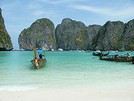
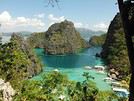
Globalement mon jugement est que cette île est magnifique de part son emplacement, ses eaux, mais c'est une êle qui a souffert de son succès et du Tsunami bien sûr. Les stygmates sont encore là : palmiers ététés, sacs de remblaiement encore entassés, No man's land dès l'arrière du front de mer, et globalement il faut bien le dire : ça sent très mauvais !! l'île pue (au niveau de Tonsaï bien sûr)
Ile surchargée de touristes (dont nous) anglo saxons fêtards mais bon enfants, koréen et chinois grossiers et irrespectueux (selon ma vision d'occitental) peu de thai à par le personnel des resort, long tail et petites échoppes.
Beaucoup de farang accompagnés d'une thaie lady, ridicules, amoureux ou dominateur ne voyant pas que la thaie baille et s'ennuie dès qu'il ne la regarde pas.
Par contre magnifiques plages isolées si l'on prend la peine de s'éloigner de Tonsaï : Loh moh Dee, Bamboo island, Lolhanna Beach, ...
Hôtel Bay view resort chambre grande delux villa qui n'a que grande, deluxe et villa que le nom (et le prix 85 € la nuit!!) A ce prix là c'est du vol mais c'est koh phi phi : Le grande deluxe villa du Bay view resort n'est qu'un bungalow standart rien de plus.
5 jours sur place en bougeant un peu tous les jours (Maya bay à 7h30 du mat ainsi que Monkey Beach de manière à y être avant que les speed boat ne vomissent à la chaine leur flot incessant de touristes,
Retour heureux vols OK.
Retournerons nous à Koh Phi Phi ? Je ne pense pas avant quelques années.
A la disposition de ceux qui veulent plus de précision sur un aspect de mon voyage familial
merci pour ton recit,
a qq mois prés, on aurait pu se rencontrer,
j'y etait avec mon epouse Thaï et le petit de 5 ans,
pas eu l'impression quelle s'ennuyait....
Beaucoup de farang accompagnés d'une thaie lady, ridicules, amoureux ou dominateur ne voyant pas que la thaie baille et s'ennuie dès qu'il ne la regarde pas.
on aurai pu se croisé on était à phi phi autour du 8 février jusqu'au 13 après on est allé à krabi.
on était au phi phi island village la plage était magnifique.
tu es allé au cambodge. on aimerai bien y allé mais le problème c'est les vaccin à faire ou le risque de palu est ce qu'il est grand ?
A phnom Penh ou Siem reap je dirais (mais je ne suis pas médecin) qu'il n'y a pas de risque. Pour le reste, dans les campagnes ce qui était notre cas, il y aurait des risques. En tout cas nous nous astreignons à des traitements coûteux pour prendre aucun risque : Doxicicline ou Mallarone dont ton médecin te parlera mieux que moi.
Je ne comprend pas trop ta logique, tu ne court aucun risque par ce que ton traitement est couteux ?
Les anti paludéin ne font que masquer les symptomes il n'empèche pas de l'avoir ...
Les prix exhorbitant de ces médicament, ne le sont pas pour amortir le cout de la recherche ou ne reflette pas le prix des matière première. Non le prix exhorbitant est du à un lobbing basée sur des peurt et la méconnaissance des francais quand à cette maladie ...
De nombreux pays ne conseille pas la prise de médicament pour des zones ou les labo francais eu le prescrivent, pourquoi ?
Philo
"J'ai refait tous les calculs, notre projet est irréalisable, il ne nous reste plus qu'une chose à faire, le réaliser". Latecoere
dyslexique
ces médicaments contre le paludisme me rende malade j'arrive pas à les prendre c'est pour sa que je me renseigne. angkor c'est pareille y a aussi le palu et le vietnam aussi je crois.
1 - je vais voir mon médecin en France et lui dit que je vais trainer une semaine dans la campagne cambodgienne
2- il me prescrit un traitement qu'il me présente comme anti palu : Mallarone, en m'informant qu'il coûte cher et qu'il n'est pas remboursé
3 - j'achète en pharmacie ce traitement et je le prends car quelqu'en soit le coût je souhaite préserver ma santé et celle de ma famille
4- je reviens du Cambodge en bonne santé
Alors peut-être que dans d'autres pays on ne conseille rien, peut être que le traitement ne sert à rien (s'il ne fait que masquer les effets), j'ai pas fait médecine ni une enquête auprès des Pays de l'UE pour savoir si tout le monde était d'accord sur le fait de prendre ou pas un traitement anti palu avant d'aller dans la campagne cambodgienne.
Je fais juste confiance aux campagne d'information que je vois dans les aéroports diligentées par le Ministère de la Santé et je fais juste confiance à mon médecin traitant qui lui-même a l'habitude d'aller dans des zones à risques et qui systématiquement prend ce genre de traitement.
Ah mais je ne remet pas en cause tes choix, chaqu'un fait ce qu'il veut, je réagissait à:
"En tout cas nous nous astreignons à des traitements coûteux pour prendre aucun risque"
J'ai comprit ta phrase dans le sens: par ce que ces traitements sont couteux on ne court aucun risque ...
et je me suis juste permit de t'expliquer pourquoi les prix sont élevé pour ces médicaments et ne sont en rien lié à l'efficacité du produit, mais uniquement à un effet merketing.
Pour te répondre sur ton médecin, le mien voyages dans le monde également et dans ces zones, sans jamais prendre d'antipaludéens ... personne n'a de réponse universel à la question et chaqu"un fait comme il veut ...
Philo
"J'ai refait tous les calculs, notre projet est irréalisable, il ne nous reste plus qu'une chose à faire, le réaliser". Latecoere
dyslexique
Ce n'est pas parce qu'il y a des risques de palu que tu vas attraper le palu. Le raisonnement est valable pour toutes les maladies et heureusement, car sinon il n'y aurait plus d'homme sur terre.
De toutes façons, il faut se protéger des piqûres de moustiques qui peuvent inoculer bien d'autres maladies que le palu.
Pour moi, le traitement préventif antipalu n'est qu'une illusion savamment entretenue par les labos pharmaceutiques.
Philobate l'a dit plus haut, un traitement préventif n'empêche pas de choper le palu, la différence est que les symptômes ne se déclareront qu'après arrêt du traitement.
De tous les bons connaisseurs de l'ASE que j'ai croisés (expats ou voyageurs), aucun ne prenait de traitement préventif.
Certains ont attrapé le palu et se sont soignés.
En revanche, beaucoup de voyageurs qui partent 3 semaines en Thaïlande prennent un traitement, cherchez l'erreur.
Nous partons dans le sud de la Thailand en familleavec 2 ados, dans 5 semaines maintenant, et KO PHI PHI fait parti de notre voyage (3 nuits). Nous souhaitons nous aussi faire les visites traditionnelles, maya, bamboo etc, mais comme toi, tôt le matin pour éviter un maximum de nos congénères touristes...
Peux-tu me donner + de précisions, as-tu loué un longtail ? pour une journée? combien d'heures la journée si départ 7H30, combien de Baths ? est-il facile de se faire comprendre des conducteurs?
Pour les exursions nous avons voulu éviter les speedboats bondés et préférer les longtails que nous réservions le soir pour le lendemain matin à Tonsaï.
Après c'est la négo pour les prix fonction d'une part de la distance à parcourir (à cause du carburant évidemment) et du temps passé par le conducteur à vous attendre sur place.
Avons nous eu de bons prix : les habitués répondront mais voici ce que nous avons fait et obtenu
Maya Bay avec tour de Pee Pee Leah pendant 4 heures, le longtail restant avec nous : 1 000 bath
Départ à 7h00 arrivée 7h30 à Maya Bay nous y sommes seuls mais le soleil ne brille pas encore sur la plage qui n'offre donc pas son plus beau visage.
Lorsque le soleil inonde enfin "The Beach" vers 9h00/9h30 les speedboats sont hélas là avec leurs centaines de touristes, la plage n'est plus "The Beach" tout est gaché tant la partie mer remplie de bateaux, que la partie plage, que la quiétude (bruits de moteurs)
Monkey Beach puis Bamboo island : durée 5 heures pour 2 000 bath
Monkey Beach à 8h30 c'est bien parcequ'il n'y a pas de speedboat mais c'est pas bien parceque les singes n'étaient pas au rendez vous (on nous a dit qu'ils arrivaient plus tard vers 11h heures) donc Monbkey beach sans Monkey.
Ensuite direction Bamboo island (sans bamboo d'ailleurs) mais c'est une super excursion. Il faut s'loigner des quelques longtails qui s'amarrent au même endroit en contournant l'île jusqu'à se trouver face à Mosquito island et là vous êtes seuls au monde (penser à amener un pique nique). Magnifique, prendre masques et tubas.
Loh Moh Dee : plage isolée située au Sud Est de Phi Phi don : 500 bath pour nous y emener depuis Tonsaï et venir bous y chercher 6 heures plus tard (le longtail repart donc). Très belle plage où nous seront quasiment seuls une petite cabane tenue par un gars sympa vous dépannera d'eau, de bière et éventuellement d'un truc à gringoter (nous avions acheté un poulet grillé à Tonsaï). Bien pour la baignade, pour la plongée (masques et tuba) il faut avancer un peu pour trouver coraux et poissons.
Retour Monkey Beach puis Lolhanna Beach sur Phi Phi toujours pour 6 heures : 800 bath mais en partant de la plage opposée au port (Ao Dalum ?? de mémoire) qui permet d'éviter au longtail de contourner toute l'île pour aller à Monkey Beach (donc moins cher).
Monkey beach à 10 heures avec les Monkeys mais apparament d'après le thai de faction pas les monkeys qui fréquentent habituellement la plage et donc habitués à l'homme. Là ils étaient un peu plus gros et bien moins paisibles, donc nous avons gardé nos distances et vus les singes charger quelques touristes imprudents.
Puis donc direction lolhanna beach mangifique seuls également (pas de plongée possible) et nous avons mangé pas loin du Phi Phi village resort chez un suisse très sympa (Monkey Bar de mémoire) dont la femme thaie cuisine magnifiquement bien.
Un grand merci pour cette réponse rapide et complète que je vais m'emprésser d'imprimer pour la glisser dans mon guide de voyage.
Et pour se faire comprendre des conducteurs est-ce facile, un anglais sommaire nous suffira t'il ?
Les cachets de traitement préventif que tu vas prendre ne protègent pas totalement contre le "palu résistant", psalmodium falciparum, le seul vraiment inquiétant et très dangereux. Les effets secondaires de ce traitement peuvent être méchants, rien ne t'empêche de le suivre outre les précautions habituelles. Les femelles de moustique, qui transmettent le palu, piquent après la nuit tombée. La clim les met KO.
Mais il te faut emmener impérativement un traitement curatif, genre Halfan, à prendre sous contrôle médical, au cas où ... . Les médecins là-bas connaissent bien, par contre les cachets sont quasi introuvables. Le Lariam a une assez mauvaise presse dans les mileux bien informés ... ...
A ton retour pense à mettre dans ton portefeuille un avis pour signaler les dates de ton séjour. Il y a des cas de palu foudroyants et ça met tout de suite l'interne de garde sur la piste. J'ai eu un collègue qui était parti seul en train le vendredi soir, violente crise le samedi, mort dans la nuit. C'est rare mais ça n'arrive qu'aux autres. Et si tu pars un week-end à la pêche ou en montagne, n'oublie pas ta petite boite d'Halfan.
En général l'incubation est de 3 semaines, donc si tu passes 1 ou 2 semaines là-bas ... risque infinitésimal et nanoscopique. Alors bon séjour !
PS : de nombreux avis sur le net conseillent de consulter un médecin diplomé en médecine tropicale et ça me parait être un bon raisonnement
je pense aussi que c'est mieux d'avoir les renseignement d'un médecin spécialisé dans la médecine tropicale pour ne pas prendre de risque inutil surtout que j'ai déjà des ennuye de santé. c'est pour sa que je me renseigne avant.
ces médicaments contre le paludisme me rende malade j'arrive pas à les prendre c'est pour sa que je me renseigne. angkor c'est pareille y a aussi le palu et le vietnam aussi je crois.
A titre personnel pour etre allé à Angkor 6 jours et très bientot au Vietnam (dans 15 jours 😉), je ne prends rien du tout. Idem pour la Thailande (meme dans le Nord). C'est à mon avis inutile. Mais c'est vrai que je dors pas à la belle étoile facon commando et prefere un certain confort hotelier.
"Dans vos phrases, n'utilisez qu'un sujet, un verbe, un complément d"objet direct ; Quand vous aurez besoin d'un adjectif, venez me trouver." (Georges Clemenceau)
je pense qu'il faut plus de mefier de la Dengue au cambodge, les risques en journées sont aussi importantes que le soir . Il y a un voyageur sur le forum " Routard.com" qui a été rapatrié d'urgence pour fievre hémorragique . Proteger vous avec un bon deet efficace
oui oui je sais que la dangue est super dangereuse ma belle soeur l'avais attrapé et quant elle était en indonésie sur une petite ile et elle a du être rapatrié à saingapour.
bonjour phil99
forcément ça affole un peu un message comme le tien avec ton collègue morte en une nuit !
Peux tu nous dire d'où elle rentrait de voyage? et quel type de voyage il avait fait?
Ce compte rendu ne donne pas envie d'aller a Ko phi phi 😕, dommage, j'aimerais bien allé jeter un oeil un jour, rien que pour faire plaisir a l'oeil, pour l'"image".
Mais de la a rester 5 jours en plus alors que ca avait pas l'air terrible... Pourquoi ne pas etre allé ailleurs ? L'objectif etait de se reposer pendant l'hiver ?
Quant au palu, les toubibs generalistes ne sont pas tous des kadors en medecine. Certains vont se contenter de regarder les sources generalistes, et bien sur, de suite prescrire le truc style malarone...
En fouillant bien sur le net, on trouve des cartes montrant le risque en fonction du lieu. Ainsi au Cambodge, une carte montre que sur PP, ainsi que la zone entre PP et Siem Reap, le palu semble absent. En revanche, dans les temples d'Angkor, un peu limite. Mais si on n'y reste pas la nuit, peu de risque.
Bref, c'est un avis personnel et pas une recommendation, on n'a pas pris de preventif au cambodge pour nous et nos 2 filles de 5 et 7 ans l'annee derniere. Idem le mois dernier au Vietnam. Inconscience ou non ? Chacun aura son avis. Recemment, une pediatre connaissant le Vietnam avait conseillé aux parents de ne pas prendre de preventif type malarone, pour les raisons evoquees (lieux visités, prevention a base de repulsif et vetements bien plus importants) et aussi le fait que la malarone est recente, alors elle le sentait pas bien pour des enfants, meme en dosage enfant.
En tout cas, se precipiter chez le pharmacien parce que le generaliste a dit qu'il en fallait, c'est pas forcement ce que je conseillerais systematiquement.
D'ailleurs certains centres de maladies tropicales n'ont pas un avis tres tranché sur la question.
-
Namast Web - Après 8 ans d'absence en Asie, retour en famille à partir de 2006 (Thailande, Cambodge, Vietnam, Maroc, Jordanie, Chili, Bali, Inde)
http://www.namast.com/
Nous ne sommes pas allés ailleurs car nous avions réservé et payé d'avance nos nuits à Koh Phi Phi via sawadee (avec toujours aucun problème).
Comme je l'ai dit j'ai trouvé à Koh Phi Phi tout ce que j'avais lu sur le forum de bon comme de mauvais, il y a donc du bon :
le paysage rocheux avec cette végétation, les plages isolées où l'on peut se retrouver seuls ou presque (bamboo island, Loh Moh Dee, Lolhanna Beach, ...) la clarté des eaux, les fonds marins.
Peut être l'année prochaine retournerai-je à Koh Tao que j'avais bien appréciée (ah !! Jamson Bay !!)
Pour conclure je pense qu'il faut voir Koh Phi Phi si on en a l'occasion et y passer au moins 3 jours. Pas moins si l'on n'y est jamais allé auparavant.
Bonjour Isa,
C'était un retour de séjour de travail en Afrique inter-tropicale.
C'est quand même très rare en Europe, mais ... plus d'1 million de décès par an dans le monde !
Alors toujours avoir sur soi un traitement curatif, et un papier dans son porte-feuille indiquant les dates du séjour.
si tu veux voir des photos de phi phi va sur mon blog si tu clic sur mon nom tu aura l'adresse.
phi phi c'est clair que pour moi si tu vas à tonsai c'est l'enfer. j'y suis allé je suis rester 10 min. mais y a tellement de plage tranquille tout autour de l'ile.
nous on était au phi phi island village la plage est magnifique et s'était super tranquille.
on y est allé 4 nuit. c'est pas si long on voulais allé voir maya bay profiter de la plage parsque avant le début du voyage était assez fatiguant.
Bonjour
Grand merci pour ttes ces infos
Nous sommes deux nouveaux retraités ( 61 ans) et nous envisageons de nous rendre en 2009 au cambodge et vietnam une quinzaine de jour pour commencer
A votre avis, quelle est la meilleure période
Quand vous indiquez 580 euros le billet AR est-ce par personne ?
Aviez-vous réserve les hotels de france ? si oui, comment ( internet ?)
Pourriez-vous nous en dire un peu plus sur votre action humanitaire ( nous nous débrouillons bien en anglais pour communiquer, mais pas plus !!!)
Merci de votre réponse
Jean-Louis
Bonjour Jean-Louis
Concernant le Cambodge le meilleur moment c'est le mois de Décembre. Il ne pleut plus, et les températures sont agréables.
Je conseille un minimum de deux semaines au Cambodge.
Il n'y a pas de vols directs pour Phnom Penh. Concernant le prix indiqué par "jphm" : 580 € c'est pour une personne A/R Paris Bangkok.
Tu peux prendre un vol Paris- BKK puis BKK- Phnom-Penh. Le moins cher c'est avec "Air Asia", billets sur internet : http://www.airasia.com/site/en/home.jsp
Tu peux également aller au Cambodge de Bangkok par voie terrestre mais je déconseille cette formule (long et très fatiguant) le seul avantage le prix.
Pour la visite d'Angkor je conseille un minimum de trois jours, si tu es passionné il est préférable de prendre le pass de 7 jours.
Pour le budget sur place (pour deux personnes, 18 jours) en Décembre 06, nous avions dépensé environ 950 €. Nous avions des hôtels de 15 à 20 $, deux pass de 7 jours pour le site d'Angkor (70 $ x 2). Repas 3 à 6 $...
Tu trouves des guesthouses correctes (mais au confort très simple) pour 10 $ pour deux personnes. A partir de 15 – 20 $ tu trouveras des hôtels très corrects avec clim, salle de bain…
J'avais réservé par internet un hôtel à Phnom Penh pour notre arrivée et également un hôtel à Siem Reap pour une semaine mais nous y avons prolongé notre séjour (9 jours) et nous avons ensuite improvisé.
Je te déconseille de passer par une agence sur place, comme tu parles bien l'anglais tu n'auras aucun problème.
Je suis désolé mais je n'arrive pas avoir la bonne info! J'arrive en thailande le 23 Septembre et en repars le 8 Novembre avec un vol sur Jet Airways. Je…
Carnets de voyage › Thaïlande / Cambodge · 24 replies
Je voulais remercier toutes les personnes qui m'ont aidé à faire ce merveilleux voyage, je vais donc essayer de faire un résumé de notre séjour avec les…
Asie du Sud-Est › Cambodge / Thaïlande · 26 replies
Nous voici de retour de notre petit (trop petit) mois de voyage au Cambodge essentiellement et en ThaÏlande (uniquement 10 jours de balnéaire, attendus par les…
Bonjour je souhaite diviser mon séjour en 2 parties soit 15 jours à phuket et 15 jours sur krabi. Savez-vous si je peux louer une voiture et la rendre a krabi lors de mon retour en France
Merci de vos retours
Bon dimanche
Martine
Bonjour précieuse communauté,
J'envisage de me rendre au Cambodge cet hiver, juste après Noël, pour un premier voyage seule, et mon premier voyage en Asie. Pour deux semaines (oui, je sais, c'est peu, mais je ne peux vraiment pas plus...). J'ai deux grandes envies: Siem Reap, et la campagne, les villages, le Mekong...
Que pensez-vous de cet itinéraire? Arrivée à Siem Reap, départ de Phnom Penh
SR: 5 jours (1 jour pour l'arrivée, 3 pour les temples, 1 pour le lac et ses villages)
Kratie (étape sur la route du Mondolkiri): 3 jours (1 jour de trajet, 2 jours sur place)
Mondolkiri/Sen Monorom: 4 jours (1 jour de trajet, 1 jour sur place, 2 jours de treks)
PP: 3 jours (1 jour de trajet, 2 jours de visite)
Je pense qu'il faut que j'enlève un jour quelque part, si je pars du samedi au samedi, ou du dimanche au dimanche. A Kratie, peut-être? à PP? et je rate le trajet en bateau que tout le monde conseille (SR-Battambang), mais je ne vois pas où le caser. Sauf à faire un PP-PP en commençant par l'est, laisser tomber Kratie ou vraiment juste une nuit, puis SR, puis PP).
Dans mon timing, j'ai l'impression que le Mondolkiri est plus proche que le Ratanakiri, qui me tentait aussi beaucoup! Est-ce que cela restera pas trop compliqué toute seule? Je pense faire appel à des guides locaux, ou une petite agence locale, pour faire une escapade dans la nature et les villages.
Je lis qu'il y a beaucoup de monde à SR entre Noël et Nouvel An, je peux aussi faire le circuit dans l'autre sens. Mais je trouvais plus facile de me familiariser avec le pays en arrivant en territoire touristique, je me trompe peut-être...
Merci pour vos conseils et avis!
Hi fellow travelers,
First trip to Vietnam.
We’ll be arriving in Ho Chi Minh City during Tet.
Is it complicated to find accommodation and get around during this period?
Any tips would be welcome.
Thanks for your replies.
Hi, is anyone there in Flores right now? According to some websites, everything is closed and the situation is tough. But our guide says it's fine. Who should we believe? We're supposed to leave on September 2nd. Thanks to anyone in Flores at the moment!
Hi everyone.
I’m planning my trip, and based on all the posts I’ve read, this country is amazing.
Of course, I’ve got a ton of questions for you.
Here’s a possible itinerary: Vientiane - Vang Vieng - Phonsavan - Sam Neua - Nong Khiaw + villages - Phongsali - Luang Namtha and the area - Udomxai - Huay Xai - Luang Prabang and back to Vientiane.
What do you think?
We’re planning to prioritize local transport—is it possible to do this loop?
We’d also love to go kayaking, but I’m not sure if the season’s right or where the best spot is.
For trekking—I read that Phongsali is the most authentic spot to visit villages and see wildlife. Do you know of a reliable agency and a guesthouse with reasonable prices?
Is it worth taking a slow boat for a stretch on the Mekong, and if so, which route?
For accommodations, is it better to book through Booking.com and Agoda or look when we arrive?
Are mosquitoes bad in Laos, and should we take malaria prophylaxis?
What’s the average daily budget (accommodation, food, visits)?
Is renting scooters a good option for exploring towns, and if so, which ones?
From what I’ve read, it’s best to carry cash—euros or dollars? Is it risky to walk around with that much cash?
I’ve still got tons of questions. Thanks to anyone who can help, and I’m open to all tips, info, etc.
Thanks again
Hi there,
I’m planning a trip to Vietnam in February, specifically Da Nang and Hoi An.
Does anyone know a French-speaking guide in the area?
Thanks for your help
Hi there,
I’m planning a family trip (my wife and I, both 47, and our two sons, aged 5 and 12) to Malaysia for the last week of June and the first two weeks of July 2027.
We used to love road trips as a couple, then as a trio, but since our second child arrived, we’ve taken a break with "camping village" style trips.
Now feels like the right time to get back to our old habits, while adjusting the pace for the kids.
We’re craving Asia. We’ve been lucky enough to visit Thailand, Indonesia (Bali and Lombok), and Sri Lanka before.
Friends have raved about Malaysia, so we’re definitely tempted.
For those who know and love Malaysia, what would be a good itinerary starting from Kuala Lumpur, with a maximum of 3-4 stops? We’d like a mix of culture, nature, and relaxation (just to clarify, we’re not big beach fans). All of this without rushing, of course.
Hello,
We’re a family of four with two teens aged 16 and 18. We’re heading to Thailand this summer. We’ll arrive in Bangkok and plan to take a flight to Luang Prabang.
I’ve seen there are some great visits and excursions to do (temples, markets, waterfalls) and maybe even venture a bit north to places like Nong Khiaw, Muang Xay, Muang Ngoy, or Oudom Xay.
But I’ve also heard about the Bokeo region with the Gibbon Experience.
Since we won’t be able to do everything, I’d love to hear about your experiences, impressions, and advice on the two options I’m considering, especially since we’ll be meeting family in Chiang Mai, Thailand, afterward.
Option 1: A loop from Luang Prabang heading slightly north, then a flight from Luang Prabang to Chiang Mai.
Option 2: A few days in Luang Prabang, exploring within a few dozen kilometers around, then heading to Bokeo province for the 2-day/1-night Gibbon Experience. For this option, I saw on Rome2Rio that it’s possible to book a ferry trip on the Mekong from Luang Prabang to Huay Xay—they mention about 8 hours. But is that realistic? What type of boat is it?
Then, to get to Chiang Mai, there aren’t many options—bus or minivan—but how does crossing the border work?
Finally, for those of you who’ve been to Laos in August, what was the weather like?
We’ve already visited Thailand, Vietnam, and Cambodia during the same period over the past four years and weren’t really bothered by bad weather.
I’m starting a discussion about guides in the Mekong Delta because we’ve just finished our trip in this region and had a hard time finding a French-speaking guide. We had Thanh—she speaks French really well and travels all over the delta region, including Ho Chi Minh City. She’s super friendly and flexible. I recommend her wholeheartedly. If it can help someone...
Feel free to contact us for her number.
Hi everyone,
I couldn’t find any recent info on Kuching.
Can anyone recommend a hotel or guesthouse for under 100 RM that’s nice and affordable? No dorms, please.
Also, does it rain a lot in November, and is it still worth visiting Semenggoh or Bako?
We’ll be arriving in Phnom Penh this coming January and we’re thinking of starting our trip with a stop in Kampong Cham, then Kratie.
After Kratie, we’re considering heading toward Siem Reap with a stop in Kampong Thom.
That said, I’m not really sure how long the Kratie–Kampong Thom journey might take or how complicated it is.
Does this stop on the way to Siem Reap seem like a good idea to you?
If we don’t visit the Sambor Prei Kuk site, are there still any walks or sights worth checking out in Kampong Thom?
Silly question—backpack or hard-shell suitcase for the Sepilok, Kinabatangan, Tioman, KL trip?
I’m struggling to fit all my son’s and my stuff into the 70L backpack... and I’m thinking a suitcase would be easier, but I’m not sure if it’ll work for getting around.
Hi there,
I didn’t plan to return to Thailand this year, but my health conditions mean it’ll be the best place for me to stay between two trips to India. The tourism setup there is so well-organized that it’s the most "comfortable" country for a short visit. Thailand feels too sanitized for my taste, and there’s too much religion, Buddha, and the King, but it’s still the best option given how my health has been evolving. I’d considered two weeks in ThaTon for hiking, but I got too sick from the burn-offs during my trips to the mountains around Chiang Rai. So I’m not sure where to go this year. Definitely not the sea, touristy spots, or the mountains with burn-offs...
After a stay on Koh Phayam this coming November, I’d like to spend 2 or 3 days on Koh Phra Thong before heading further south.
Do you think it’s doable to leave Koh Phayam early enough to catch the 10 AM boat from Khura Buri to Koh Phra Thong? The next one isn’t until 4 PM, which would cost me a whole day.
I’m planning a trip to Indonesia, specifically Sulawesi and Java, in September for 10 days.
I don’t know this part of the world at all—any advice is welcome!
I’ll be traveling solo and would also love tips on meeting other travelers or locals.
Hello everyone,
Not long ago, I used to travel as a couple, but my husband has since passed away, and I’ve decided to set off again. The trip I took to Cambodia in January 2025 did me a world of good.
I’m now considering Thailand, a destination we never included in our plans because even 15 years ago, people said it was too touristy. Still, I’m thinking about the itinerary below, but I don’t feel up to arranging buses, trains, or guides on my own while I’m there. I’m looking for one or more drivers and have been in touch with an agency, but their offers are just copy-paste group tours that I don’t want.
So, if you have any contacts, experiences, or advice, I’d be so grateful if you’d share them with me. Here’s my rough plan:
Arrival in Bangkok
Ayutthaya (2 nights)
Kanchanaburi (2 or 3 nights)
Sangkhlaburi/Sai Yok (3 nights)
Sukhothai (2 nights)
Lampang (I’ve planned 3 nights, but that might be a bit much—it depends on what time I arrive in the city)
Chiang Mai
Chiang Dao
Pai
Chiang Rai
I was thinking about the Mae Hong Son loop—thoughts?
What do you think about staying overnight at the Golden Triangle?
When I look online, of course, I can find agencies that organize tours to national parks, etc.
I’m retired but in great physical shape. I’d rather go hiking than sit in hot springs with crowds of tourists who’ve all arranged meet-ups. I don’t want to spend a day at an elephant camp, and I don’t want to visit Karen villages.
I’d love to hear your advice.
Thank you all,
Hi,
On September 1st, we're heading to Kalimantan for six weeks, probably from Pontianak to the Derawan Islands.
I've scoured this site, which is usually my go-to 😉, and others like VoyageForum, but recent info is pretty scarce.
I'd love any tips on places you've visited—our itinerary is still a work in progress.
We're two couples traveling with backpacks, using buses, boats, guesthouses, and homestays.
Thanks in advance!
Hi everyone,
Could you share your thoughts on my 3-week itinerary?
We’re a small group (family + friends) of 12 people, planning to leave around January 21, 2027.
Here’s my itinerary:
3 nights in Bangkok
4 nights in Chiang Mai
3 nights on Koh Samui
3 nights on Koh Phangan
4 nights in Krabi
4 nights in Phuket
I’m also open to any great tips you might have...
Thanks, everyone! Alain.
Hi,
From Malacca to get to Jerantut, is it better to go back to KL and take a bus from there, or take a bus to Tampin and then a train? Any feedback on the "Jungle Train"? (duration, price, comfort, etc.). Thanks
Hi there,
We’re planning a 3-week family trip next summer with our three kids, who’ll be 8, 8, and 7 years old.
After some research, we’re leaning toward Malaysia to combine nature/forests and paradise beaches. The idea is to introduce our kids to the country’s culture, nature, and wildlife.
We want a great trip but without splurging on luxury options like high-end lodges and resorts. We’re looking for comfort with a touch of authenticity—basically, a good middle ground.
I’ve started putting together an itinerary and would love your expert advice and tips to help us build this amazing trip with our little ones.
Day 1: Departure from France
Day 2: Kuala Lumpur
Stay at a hotel near the airport or KL Sentral.
Just one night.
Day 3: Morning flight to Sandakan (Borneo).
Stay in Sepilok
Day 4: Sepilok:
* Orangutan Center
* Malayan Sun Bear Center
* Rainforest Discovery Centre
Day 5: Depart for Kinabatangan.
Boat safari in the late afternoon.
Day 6: Sunrise safari.
Jungle walk.
Evening safari.
Day 7: Final safari.
Return to Sandakan.
Flight to Kuala Lumpur, then to Kota Bharu (or overnight transit depending on schedules).
Day 8: Transfer to the port.
Boat to the Perhentian Islands.
Days 9 to 13: Perhentian Besar
5 full days.
* Snorkeling
* Hiking
* Turtle watching
* Wild beaches
* Relaxation
Day 14: Return to the mainland.
Bus or private car to Taman Negara.
Hi everyone,
We’re heading to Flores and then Bali at the end of September.
We’ve already visited both but this time, once we’re in Labuan Bajo, we’d like to take a boat to the Komodo Islands to see the famous Komodo dragons.
I don’t want to sleep on the boat—just a day trip would be perfect.
Does anyone know a reliable and friendly provider to recommend?
Thanks in advance, and have a great summer!
Summer seems to be the best time weather-wise for Bali.
And since summer’s when we can take a long trip, let’s go for Bali... even though we know it’ll be *packed* with people!
So we’ll steer clear of the island’s south...
Our current plan (19 days on the ground, 7 stops):
- 4 Nights (3 days) in Ubud
2 days for rice terraces / activities (Tegallalang, Campuhan Ridge, Monkey Forest, Bird Park, coffee plantation, market (?), dance "pestacle," cooking class and/or spa)
1 day with a driver for the Temples (Pura Gunung Kawi, Tirta Empul Spring, Pura Mengening, Goa Gajah...)
- 2 nights in Sidemen (1 day for Pura Kehen + Batur Caldera + Pura Besakih and 1 day to relax in the rice terraces)
- 3 nights on Gili Meno (Rest and beaches) from Padangbai
- 2 nights in Amed (1 day from Padangbai with the Abang rice terrace and Tirta Gangga baths, and the next day a boat tour in Amed)
- 4 nights in Pemuteran (1 day for transfer and rest, 1 day to visit Kawah Ijen, and 2 days of snorkeling at Menjangan Island)
- 2 nights in Munduk (1 day with the Dayang rice terrace and the 3-waterfall hike, 1 day at Pura Ulun Danu Bratan)
- 2 nights in Jatiluwih (1 day in the rice terraces, and on the last day, we’ll stop by Pura Taman Ayun in Mengwi and Pura Tanah Lot before catching our red-eye flight).
Accommodations in homestays or hotels.
Transportation to be arranged on-site with the lodgings (?)
Boat to Gili Meno to book in advance (?)
Kawah Ijen excursion to plan ahead (?)—check with the homestay (?)
Thanks for your thoughts/comments to help us explore this destination...
After reading and researching, we're planning the following stops in Cambodia in January 2027:
- Phnom Penh
- Kampong Cham
- Kratie
- Siem Reap
- Battambang
- Kampot (round trip)
I'm wondering about the direction of these stops, which could also influence our international flights.
Either a round trip from Phnom Penh in the order above.
Or landing in Siem Reap with the following order:
This second option would save us the Battambang - PP - Kampot trip but means doing a round trip to Battambang from Siem Reap and placing the "highlight of the trip" (Angkor) at the beginning of our stay.
We’ll be arriving in Phnom Penh this coming January and we’re thinking of starting our trip with a stop in Kampong Cham, then Kratie.
After Kratie, we’re considering heading toward Siem Reap with a stop in Kampong Thom.
However, I’m not quite sure how long the Kratie–Kampong Thom journey might take or how complicated it is.
Does this stop on the way to Siem Reap seem like a good idea to you?
If we don’t visit the Sambor Prei Kuk site, are there still some walks and/or things to see in Kampong Thom?
Hi there,
We’re planning to travel from Chiang Rai to Luang Prabang next November.
We’d like to take a slow boat from Chiang Khong—or rather from Huay Xai in Laos—with an overnight stop in Pakbeng.
Could you let us know if the boat still leaves Huay Xai in the late morning? If so, what time roughly, and what’s the price for the trip?
Thanks for your help!
Alod
We (3 adults: 68, 65, and 25 years old) are just back from a short trip to the Philippines, and I’d like to share a little summary of our journey. First of all, I’d like to thank everyone who contributes to this forum about this destination and answers the questions of those who aren’t familiar with it. I should also mention that my comments are personal and don’t reflect anyone else’s opinions. Since I don’t have any literary or photographic talent, I’ll stick to the facts and share a few details about the sights, hotels, and restaurants.
Preparations:
We chose this destination in December and quickly booked our flight tickets (540 € with Turkish Airlines) for a departure on February 16 and return on March 5, 2019. We then contacted two French-speaking tour operators based in Manila, asking them to put together an itinerary based on our wishes (places to visit, type of accommodation) and our budget. We wanted to see the rice terraces in northern Luzon, the hanging coffins in Sagada, before flying to the Visayas (Bohol, Siquijor, etc.), and the Taal Volcano, while limiting our nights in Manila as much as possible. In the end, we opted for Alize, whose itinerary and quote matched our request almost perfectly. Our exchanges helped us refine our circuit.
International flights:
The round-trip flights went smoothly. Turkish Airlines, while not at the level of Asian or Gulf airlines, does the job just fine.
Day 1:
We landed on time (6:15 PM) on Monday, February 16, at Terminal 3. We exchanged our euros (near the car rental counters), and I can confirm the exchange rate was very good. On the way to the St. Giles Hotel (decent and affordable for a transit night), we got our first glimpse of Manila’s dense traffic. The Makati district, where our hotel was located, offers a wide choice of restaurants, so we grabbed a quick bite to recover from the trip.
Day 2:
This day was dedicated to transferring to Banaue. Fortunately, we had a comfortable van and an excellent driver for this journey, which took all day (8 to 9 hours with stops). We got a taste of driving in the Philippines—and it’s terrifying. You wouldn’t want to drive on these roads. The first thing that struck us was the relatively good condition of the roads and the cleanliness (a change from other Southeast Asian countries). This impression lasted throughout our trip. Around 6 PM, we checked into our room at the Banaue Hotel (large, charm-free, but with a beautiful view of the rice terraces).
Day 3:
With the help of a local guide, we took a jeepney to Batad. And then—wow! The rice terraces form an amphitheater overlooking the small village. Under the sun, it’s simply spectacular and breathtaking! Even though we’re familiar with rice terraces (Sapa, Bali, Thailand, etc.), we were dazzled by so much beauty. We spent the day walking along the terrace walls. This place is timeless and fully deserves its UNESCO World Heritage status. However, we returned to the hotel exhausted (due to our ages and lack of exercise). We had dinner with our driver at the Las Vegas restaurant in the center of Banaue. The meal was decent, cheap, and the Filipino owner played the guitar to accompany our dinner.
Day 4:
Today, our driver took us to Sagada. The mountain road offered spectacular landscapes (about 1.5 to 2 hours). Along the way, we stopped in Bontoc to visit the small but interesting anthropological museum. It features old photos and various objects from the Ifugao tribes, as well as a reconstruction of primitive dwellings.
We then went on a short hike in Sagada with a very friendly local guide who explained the region’s funeral rites. The walk started at the communal cemetery before reaching “Echo Valley,” where we saw the first coffins hanging on the cliff. We continued to the “Underground River” and a small waterfall, ending our journey in the “Lumiang Cave” burial cave. All in all, this day was very interesting. On the way back, we made a few photo stops.
In the evening, on our driver’s recommendation, we ate at the “Bistro,” a French enclave in the center of Banaue (good pizza, roasted quail, homemade fries).
Day 5:
Today was a transfer day. To limit fatigue and nights in Manila, our tour operator arranged a flight from Clark to Tagbilaran (Bohol), saving us 2 to 3 hours of driving. But to catch our flight, we had to leave very early: 5:30 AM. Our kind driver dropped us off on time at the airport. To use it, we had to pay a 150 PHP tax per person. The Philippine Airlines flight (15 minutes) left early and was far from full. Upon arrival, we were taken to the Loboc River Hotel, on the banks of the river of the same name. A very charming lodge lost in a tropical garden. We stayed in a stilt cottage overlooking the river. We relaxed a bit in the lovely pool. This place is really great—the staff is charming, and the food is excellent for a reasonable price.
Day 6:
This day was dedicated to exploring Bohol. The program was classic, starting with the tarsier sanctuary. We saw a few specimens in a small garden, each pointed out by a staff member. It was both good and disappointing because the animals were in pseudo-freedom in a small enclosure. Then we went to the “Chocolate Hills” and climbed 240 steps to admire the panoramic view of the hills—but by 10 AM, it was crowded. On the way back, we stopped at the butterfly garden, which was uninteresting: tiny, with few butterflies. We consoled ourselves by photographing beautiful flowers. To please our teen, we stopped at the Loboc Eco Tourism Adventure Park and crossed the river lying down, suspended from a steel cable (300 PHP). Finally, we had the traditional lunch-cruise on the Loboc River. It was a factory-like experience, and the meal was unremarkable. The only good thing was the singer on each boat and the lush vegetation. Afterward, we visited colonial churches and the cathedral, remnants of the Spanish presence, before returning to the hotel for a well-deserved dip in the pool. Note that for those interested, there’s an arena near the hotel where cockfights are held every Sunday—something Filipinos are passionate (if not obsessed) about.
Day 8:
Very early departure for the port. We boarded a *banca* in search of dolphins. After about an hour of sailing, we were lucky enough to spot around a hundred dolphins. Our boat then headed to the small and charming island of Pamilacan. After a walk through the little village, we came across locals traditionally building a boat. They told us it takes about a month to finish their outrigger boat. Then we had to choose our snorkeling spot between the coral garden, the fish park, and the turtle enclosure. Note that a fee is charged for each spot: 150 PHP per place and per person. It felt a bit like we were being ripped off, especially since the spots weren’t amazing—we’d see much better on Apo for much less. We had lunch on the island at one of the many small eateries (350 PHP per person).
Days 9 and 10:
On our return, we were taken to the Bohol Sea Resort on Panglao Island, where we stayed for 2 nights. It’s a small, recent establishment in a quiet corner of the island. It’s relaxing—maybe a bit too much. It has a nice pool and access to Danao Beach, but the view is blocked by a flotilla of boats. We didn’t try their diving school. The meals were good. If we had to do it again, we’d skip this stop to spend more time in Negros.
Days 11 and 12:
We took a fast ferry (Ocean Jet) from Tagbilaran port to Dumaguete and were taken to the Thalatta Resort, about 20 km away near Zamboanguita. We stayed there for 2 nights. Let’s just say it was our favorite. It’s a small place facing Apo Island. The rooms are simple, and the pool, nestled in a magnificent tropical garden, is fantastic. The staff is friendly, and the meals are very good. The hotel has its own diving center (snorkeling gear provided) and its own boats. We booked the Apo Island excursion: 1,350 PHP per person, including lunch. It was incredible: magnificent corals, colorful fish, and turtles of all sizes. The crew was endlessly kind and didn’t hesitate to dive to guide us to the best spots. In short, a perfect day. This site is ranked among the top 5 diving spots in the Philippines.
Since we were lucky enough to be there on a Wednesday morning, we explored the surprising Malapay Market, a 10-minute walk from our hotel. You’ll find numerous stalls selling vegetables, fruits, live or dried fish, and handicrafts. Enclosures are set up for selling livestock (calves, zebu, pigs). There are also restaurants. We were lucky to see two pigs roasted traditionally on a spit. There are few Europeans, and the people are warm. A great moment.
We left this beautiful place with regret because we didn’t have time to visit the island or go swimming with whale sharks.
Days 12 to 15:
From Dumaguete port, we took a short crossing (1 hour with Ocean Jet) to Siquijor Island to reach the Coco Grove Beach Resort. A beautiful hotel nestled in a spacious tropical garden. Several restaurants and bars, 4 pools. Despite the size of the place, it remains intimate. You can snorkel (corals and fish) right in front of the beautiful beach. We stayed in a very pleasant duplex suite. For those interested, there’s a spa and a diving center. You can also take the Apo Island excursion (offered at 1,950 PHP).
We spent our days relaxing between the pool and the beach. In the evening, the sunsets over Negros and Apo were stunning.
We booked an island tour with a comfortable tricycle from the hotel (1,500 PHP). The circuit was classic and allowed us to go around the island. We discovered beaches, the famous 400-year-old ficus tree with its enormous roots, and its equally famous foot bath with its cleaning fish. Then we visited the St. Isidore Convent before heading to the Cambugahay waterfalls and their four pools. The setting is idyllic, and the water is surprisingly good—we had a lot of fun swimming. We had dinner at a restaurant overlooking the island, where you can see Apo, Cebu, and Negros. In the end, Siquijor turned out to be a real little tropical paradise.
Since the hotel restaurants were expensive, we dined at nearby establishments: Fuego (clean, good—excellent raw fish—and quiet), Chekesch (louder), and the very pleasant Baha Bar, which brews its own beer and offers more refined cuisine.
Days 15 to 16:
We left at dawn to return to Dumaguete and its airport by ferry. We had breakfast at the Coco Grande Hotel, an annex of the previous one. The Philippine Airlines flight went smoothly. A driver took us to the town of Taal. We stayed at Paradores Del Castillo, right in the heart of the old town. It’s a charming old house with only 6 rooms. The various rooms are decorated with antiques—a real little museum. The garden is pleasant and opens onto the town.
It’s an old early 19th-century house converted into a hotel, beautifully arranged with 6 rooms in the heart of the city. The restaurant in the garden is very pleasant and offers a panoramic view.
We visited an old Spanish house before heading to the beautiful Basilica of St. Martin of Tours, one of the most beautiful religious buildings in the Philippines. A mass was in progress, allowing us to gauge the Filipinos’ fervor before we could visit. When we left, it was dark, and we could admire the illuminated building. We ended our evening by exploring the night market with its many fruit and skewer stalls. A nice surprise.
In the morning, we were taken to the shores of Taal Lake, an ancient caldera where a second volcano has formed in the middle of the lake, which in turn contains another lake. We boarded a *banca* to reach the island in the middle of the lake. This was followed by an uphill walk, made difficult by the high temperature (36°C) and the dust on the path. The dust was worsened by the many horses carrying (or bringing back) the less courageous. To illustrate the difficulty of the climb, the trail is marked by the Stations of the Cross and its 14 stations. We were panting while our guide trotted far ahead. Our effort was rewarded when we reached the summit and its viewpoints over the inner lake and the surroundings. The wisps of smoke seen here and there confirmed we were on an active volcano. Inside the lake, there are supposedly 45 small volcanoes, one of which emerged during its last eruption in 1911.
On the way back, we had lunch by the lake before returning to Manila and the Bayleaf Hotel, whose main merit is its location in the Intramuros district. In the late afternoon, we walked along the walls of the old city.
We had dinner on the hotel’s panoramic terrace overlooking the city and the bay.
Day 17:
Last day! Our tour operator joined us for a tour of the Intramuros district. He enriched the visit with comments on the history, geopolitics, and economy of the Philippines. We visited the Manila Cathedral, destroyed 7 times in the past (6 earthquakes and the 1945 bombing). It’s beautiful, and its stained glass is magnificent. We couldn’t enter the San Agustin Church, the oldest Catholic building in Manila. We passed by the memorial to the Battle of Manila, which claimed over 100,000 lives. We visited the area around Casa Manila, which was closed on Monday, and had a drink at Barbara’s cabaret, located in a historic house. A very enriching morning.
Then we went to the Mall of Asia, the world’s largest shopping mall, to buy some souvenirs (Kultura store) before being taken to the airport. We exchanged our last pesos at the buying rate right after check-in.
The return flight went smoothly. We regretted not being able to use the facilities of Istanbul’s new airport, as its opening was delayed by another month.
Finances:
In the end, we spent 1,640 € for the international flights, 4,200 € for the stay (hotels, visits, various transports) with the agency (whose professionalism we can only praise), and about 700 € for meals, tips, and souvenirs.
Summary:
Luckily, we had beautiful weather throughout our stay, with temperatures between 26 and 35°C. Discovering the Philippines was a wonderful experience. The diversity of the landscapes, the kindness of the Filipinos, the cleanliness, and the truly delicious fruits (especially pineapples and mangoes). We were never harassed, unlike in many touristy countries. On the other hand, the food, though generally cheap, wasn’t exceptional.
Since this country is so vast, we might return in the near future.
Though I’m not a specialist on this destination, I’m happy to answer your questions based on my experience.
So, my flight tickets have just been booked for a trip to Cambodia from November 4th to 27th, 2025.
I’ll be traveling solo and want to explore this amazing country while getting a bit off the beaten path.
I’m arriving in Phnom Penh and also departing from Phnom Penh.
My goal is to travel as much as possible by bus and scooter.
What itinerary would you recommend?
What are the must-do things?
I’m open to all tips and info.
Thanks in advance for your help and responses.
We got back enchanted from a 6-week trip to Cambodia!
Our itinerary: Kampot - Kampong Chhnang - Battambang - Siem Reap - Kampong Cham - Sen Monorom (Mondulkiri) - Banlung (Ratanakiri) - Kratie - Kampong Thom - Phnom Penh.
We traveled by bus, minivan, boat (between Battambang and Siem Reap), overnight bus, scooter, tuk-tuk, and rickshaw for shorter distances. We stayed in guesthouses, homestays, and even in the jungle during a trek.
While the Angkor temples are fabulous, it’s the people you should visit Cambodia for—the "Land of Smiles" truly lives up to its nickname! Tourists gather in Angkor but are quite rare elsewhere, even though the country is easy to travel around.
I won’t describe our trip in detail but instead highlight a few favorite moments.
From Kampot, don’t hesitate to head out around 6 AM to see the fishermen return and their wives selling their catch (just 10 minutes away by the coast). Guaranteed picturesque!
In Battambang, known for its food scene, we discovered a cooking class with Smokin’ Pot (authentic Khmer cooking class). They pick you up from your guesthouse to shop for ingredients (we made fish amok and beef lok lak) at their village market, then cook and eat together. A private class—just the two of us! They also send the recipes via WhatsApp as a PDF. +855 12 821 400
In Siem Reap, I can recommend a francophone tuk-tuk driver who was very attentive to our wishes. We visited tourist spots but also more remote villages and local grilled-pork restaurants with him. He’s a wealth of information about local life, and chatting with him was a real pleasure—we left with regret! You can reach him on WhatsApp: Vung Hem, +855 96 614 0146.
We did a 2-day, 1-night trek in Mondulkiri. Don’t expect a super dense jungle—it looks more like a forest similar to ours. But Nara, our Bunong ethnic guide, made the experience adventurous and ultimately very immersive! WhatsApp +855 86 630 489
Bee Bee’s Chalets homestay: If you pass through Banlung in Ratanakiri, we *loved* this family and their budget-friendly bungalows. Playing Uno, enjoying Nita’s cooking (ask for her fish amok—amazing!), it was a true homestay experience! Contact Nita on WhatsApp: +855 88 818 5525.
In Kratie, rent a scooter and follow the Mekong north for 40 km at your own pace. Being so close to the locals was a treat! Same goes for heading south if you have time.
Kampong Thom: Head 25 km out to visit the pre-Angkorian temples of Sambor Prei Kuk. Around a hundred monuments spread across three sites… and hardly anyone there!
A few practical tips:
Though prices are often listed in dollars, you can always pay in riels (1 USD = 4000 riels), which is what we preferred.
PassApp: An app to book tuk-tuks or rickshaws (and most importantly, know the price upfront).
Virak Buntham: A bus company connecting several cities, bookable online.
Feel free to ask me questions about places, accommodations, etc.—I’d be happy to answer!
We’re planning our second trip to Thailand (2 weeks on-site, late April/early May) as a family with our 5- and 7-year-olds.
On our first trip, we visited Bangkok, Ayutthaya, the River Kwai, Koh Lipe, Koh Phi Phi, and Khao Lak. We especially loved Koh Phi Phi for its limestone cliffs and lush vegetation, as well as Koh Lipe for its crystal-clear waters and snorkeling.
This time, I’m thinking of spending 7 days on the islands. I was considering Koh Tao and Koh Phangan. We’d like some scenery, snorkeling right from the beach, and a bit of atmosphere—but not too much (just enough to grab dinner in the evening).
For the other part of the trip, we’re torn between Chiang Mai and Khao Sok. One or the other… or both? We don’t want to rush, but we’re really nature-focused, so we won’t be hitting too many temples…