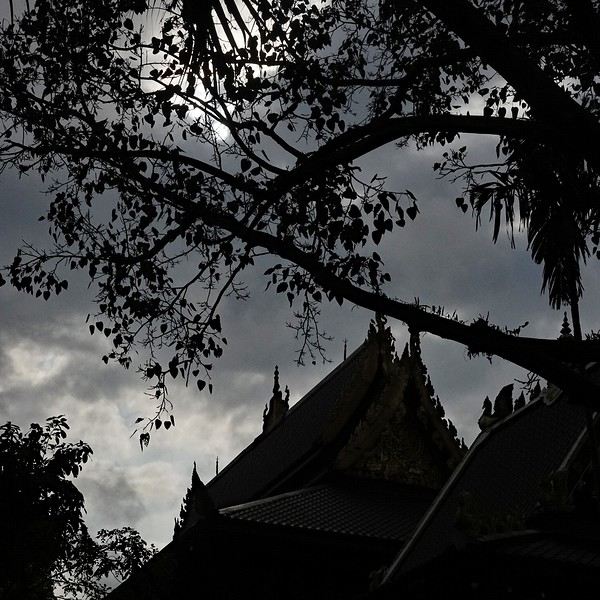
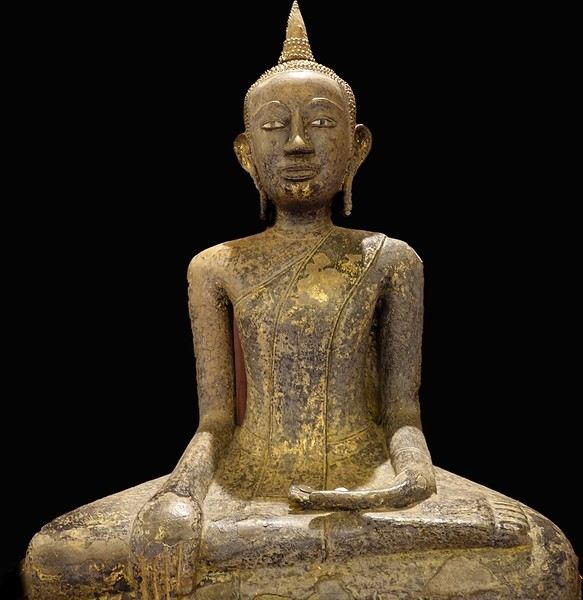
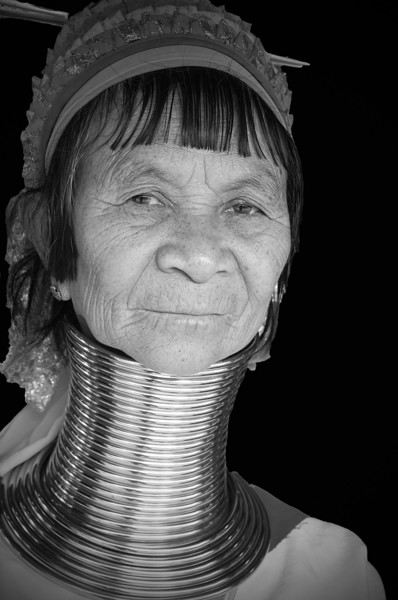
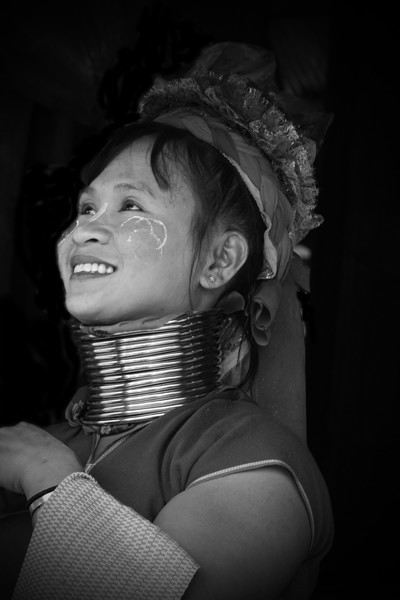
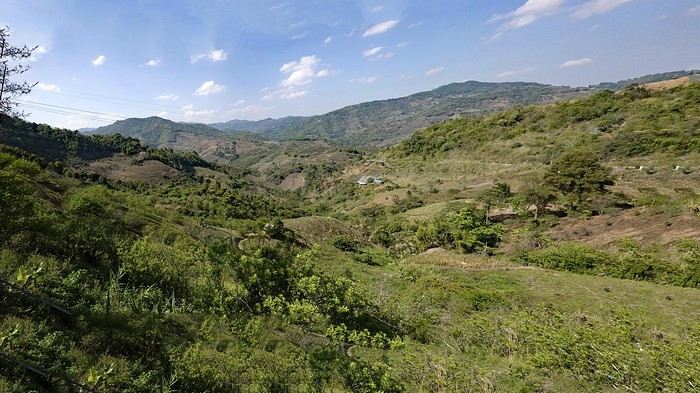
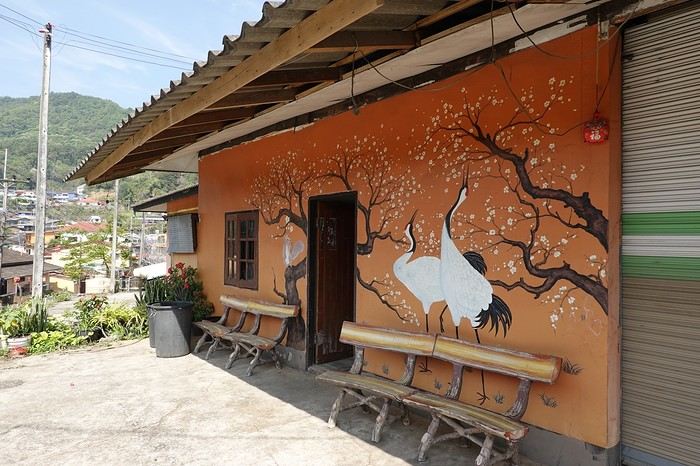
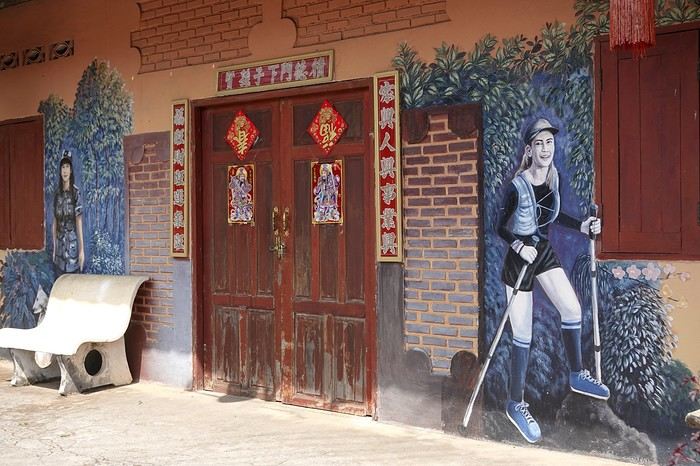
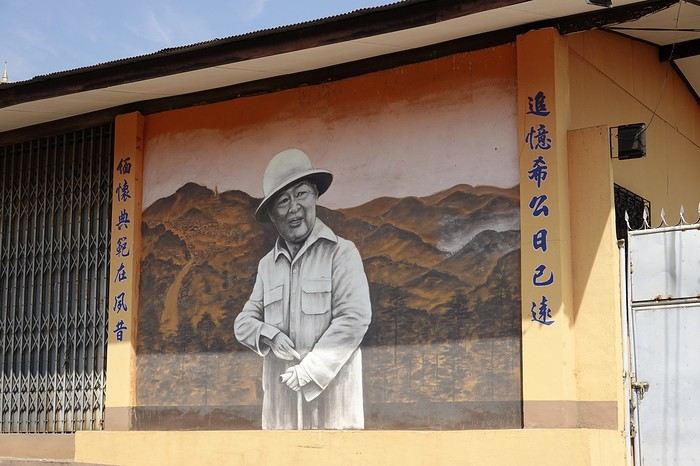
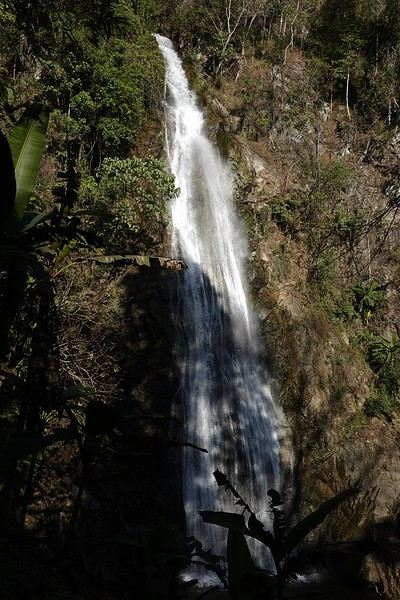
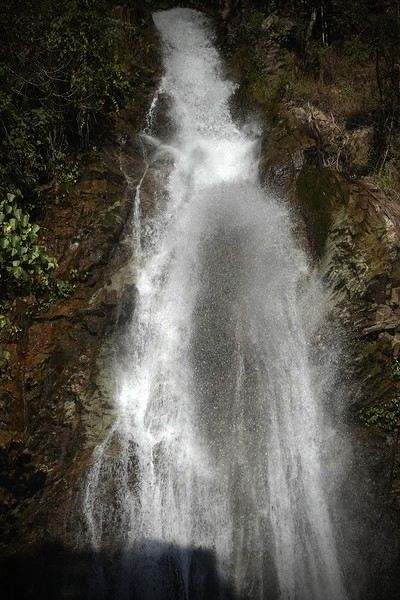
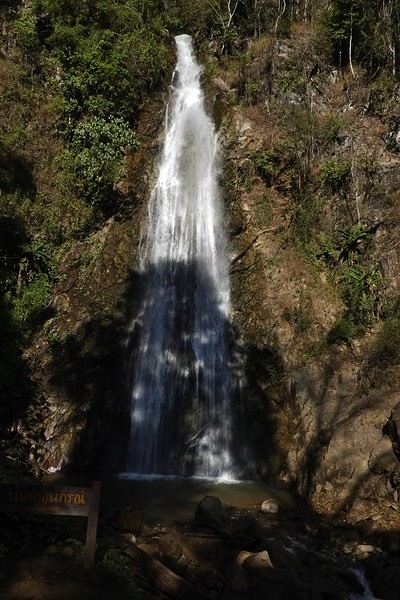
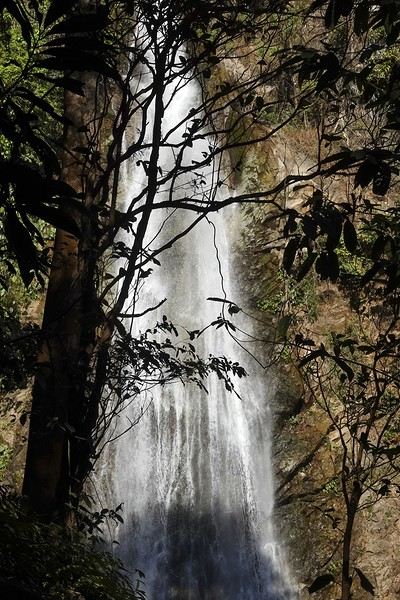
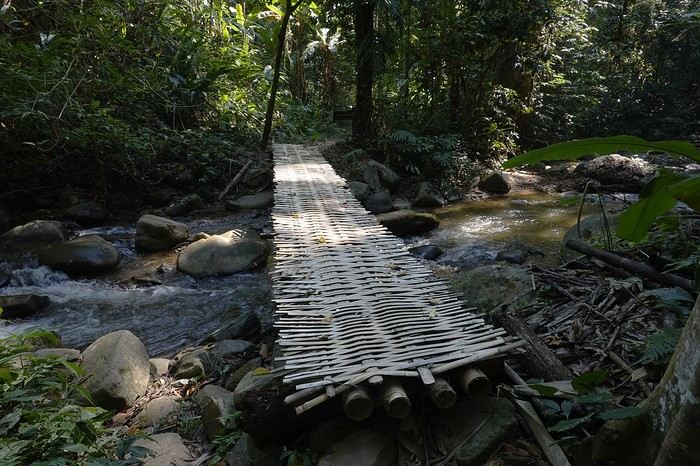
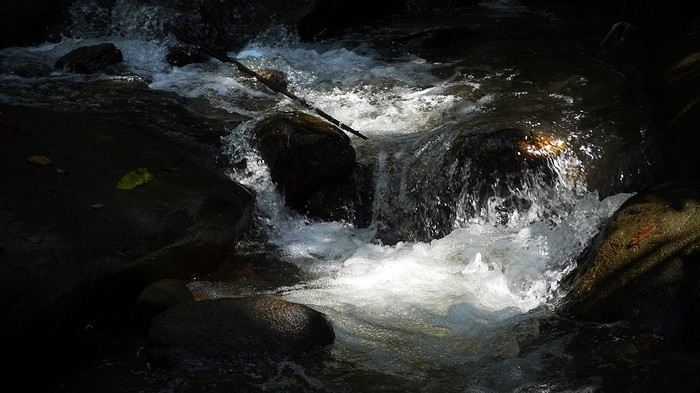
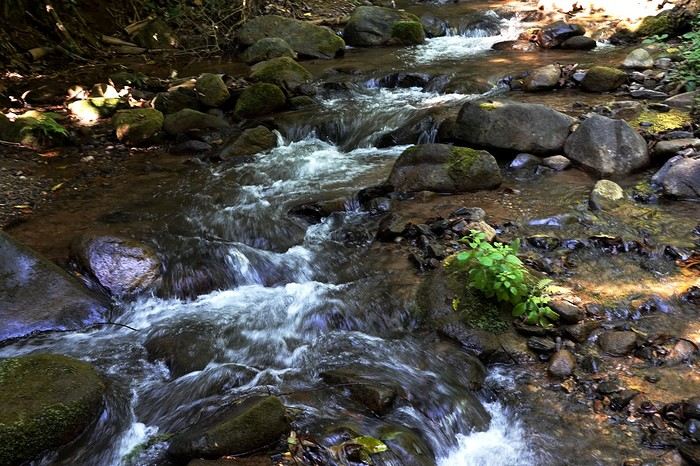
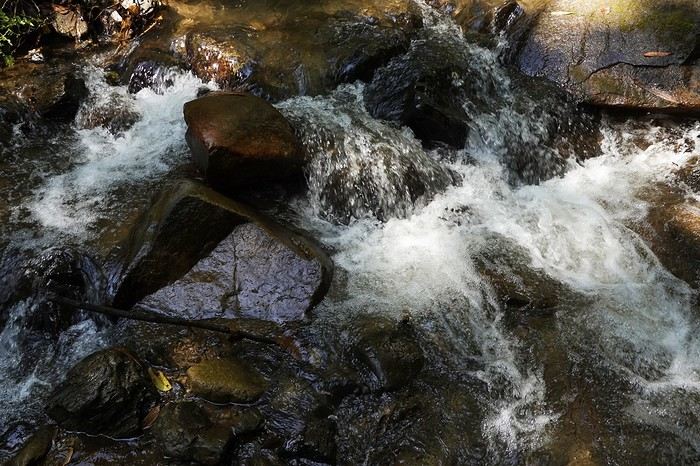
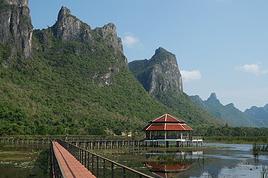
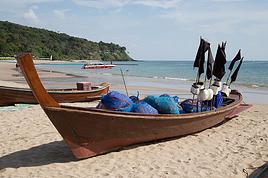
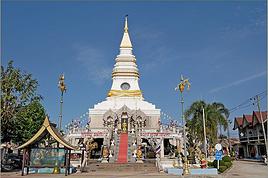
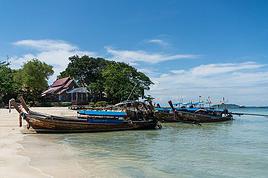
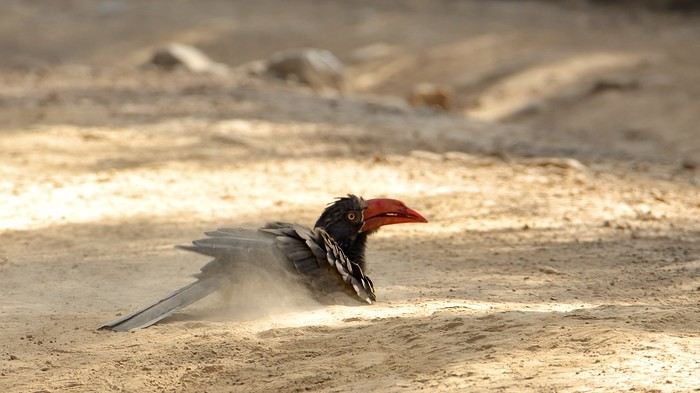
Another side of my trip to Thailand: Villages, nature, countryside, mountains...
FR

Translated into English.

MA Marien33 Veteran ·
Maybe it's precisely because instead of going through Booking, you went through Boobing. If you don't know what "boobing" is, I invite you to Google it because the prudish VF admins might censor me if I explained it here 😄

I hadn't noticed the "typo", even though I usually keep an eye out for them. But at least you made me laugh and added a bit of spice to this sleepy travel journal... And you taught me something in the process—I had no idea what boobing was. But I can't correct the mistake or your comment wouldn't make sense anymore... Have a great weekend!

I'm heading into the mountains in northern Kerala for a few days, so you'll have to wait a bit for the next update. Unless the "northeast monsoon" and its untimely rains (shoutout to those following my Kerala journal) keep me cooped up in my room...
Je rencontrai sur mon chemin tant de difficultés Qu’elles furent toutes surmontées MIRZA GHALIB poète urdu (1796 -1869) https://www.telling-india-pictures.com https://youpic.com/marien
PA Pagaljavab Globetrotter ·
But you can bet that many people go to Thailand specifically to practice boobing, and a site like that would be really useful!
TI Ticapi Globetrotter ·
I hope we won’t have as many issues with drivers and accommodations. It’ll annoy me quickly if that’s the case. Anyway, I’m looking forward to reading the rest. 🙂
TI Ticapi Globetrotter ·
you’re adding a bit of punch to this sleepy travel journal...

The forum in general seems pretty quiet. 🙁 There are so few discussions—it’s kinda frustrating.
MA Marien33 Veteran ·
I hope we won’t have as many issues with the drivers and accommodations. It’d quickly get on my nerves if that were the case. Anyway, I’m looking forward to reading the rest.🙂

As for drivers, the first one in Chiang Mai didn’t work out for me, even though he was a nice guy... But we just didn’t click. At least not from his side to mine... But every person is different—drivers and travelers alike—so my experience is just my experience. The second driver in Chiang Rai was an older guy, a bit quirky. A real character, and since I’m one too, we got along great. You’ll see that in the next part. Same goes for the accommodation...
Je rencontrai sur mon chemin tant de difficultés Qu’elles furent toutes surmontées MIRZA GHALIB poète urdu (1796 -1869) https://www.telling-india-pictures.com https://youpic.com/marien
JO Jojoone1 Globetrotter ·
The second driver in Chiang Rai was a bit of an odd old guy. A real character, and since I’m one too, we got along great. You’ll see more about that later.

That’s exactly what I’d told myself—exactly. Still, it was a bit of a gamble. I’m really glad I called it right. But most of all, I’m relieved—for both of us—because when you misjudge something, you end up feeling doubly responsible...
« Tout le monde s'interroge sur comment laisser une meilleure planète à nos enfants, mais on devrait plutôt penser à laisser de meilleurs enfants pour notre planète. » Clint Eastwood
JO Jojoone1 Globetrotter ·
I hope we won’t have as many issues with drivers and accommodations. It’ll annoy me quickly if that’s the case. Anyway, I’m looking forward to reading the rest.🙂

You can tell right away when the guy is responsive, understands immediately, and the exchanges with him aren’t confusing. Those are the ones you should pick. Anyway, I’ve got quite a bit of experience, and I’ve had to pay to learn a few things, as they say.
« Tout le monde s'interroge sur comment laisser une meilleure planète à nos enfants, mais on devrait plutôt penser à laisser de meilleurs enfants pour notre planète. » Clint Eastwood
MA Marien33 Veteran ·
I’m really glad I hit the mark. But most of all, I’m relieved—for both you and me—because when you get your estimate wrong, you feel doubly responsible...

And I’m happy you’re happy because I knew, I know, that you always care about making sure your help is effective. And you’re always afraid of being wrong. But at the end of the day, we’re not responsible for the advice we give, and nothing’s more foolish (not to say something worse) than someone who gets upset when you don’t follow their advice!
Je rencontrai sur mon chemin tant de difficultés Qu’elles furent toutes surmontées MIRZA GHALIB poète urdu (1796 -1869) https://www.telling-india-pictures.com https://youpic.com/marien
MA Marien33 Veteran ·
When you don’t write a travel journal on the spot, you kind of lose track of what comes next... - Wait, where was I? What did I write last time? Juggling two journals at once, plus daily life in India—household chores, the market, meal prep, laundry, and my morale dipping now and then—doesn’t exactly let me keep a steady writing pace for this journal. I had to reread everything I’d written last time just to avoid repeating myself. And honestly, I’m pretty happy with what I wrote. Stepping back and reading it as if it were someone else’s story, I think I’d have enjoyed that last episode just the way it’s told. - Aren’t your ankles swelling a bit? - No, my ankles aren’t swelling—I’m not being self-satisfied. But when I pull off a nice cake, a great photo, or even just a clean house, I’m aware I’ve done what I set out to do...

What I wrote last time was the *yesterday evening* version. It was February 23rd. I was exhausted and so disappointed... This morning, February 24th, I see things differently... So here’s today’s version.

I’m embarrassed and feel guilty for being so angry yesterday. I realize that young woman must have been really upset by my reproaches—and, let’s be honest, my anger. I even think she cried over it. What set me off was that from the start, I’d tried—very calmly and politely—to negotiate a refund, saying I’d leave the next day, but she didn’t seem willing to give me my money back. All she said was, *I’ll move you to another room.* I felt trapped, and I was mostly mad at Booking.com, whose payment system forces you to pay by bank transfer in some hotels, even if you’ve booked for 15 days or three weeks—like in Chiang Mai. So if you’re disappointed, canceling and getting a refund is difficult, if not impossible.

She must have thought it over and maybe understood my anger, but mostly that I might leave her a terrible review on Booking.com or complain to Thai tourism services. This morning, at the crack of dawn, she shows up at my door with a wad of bills: - Here’s your money. I’m refunding you in full, and I won’t even charge you for the night you stayed. You can leave... For my part, I’m touched by how distressed she was last night. I also thought that the driver living so close to this homestay—20 km from the city—was a plus for me. But mostly, I feel guilty for upsetting her so much. So I tell her: - Since you’re promising me a bigger, better room, I’ll give it a try and stay one more day. And if I’m happy, I won’t leave... But we’ll see about the room change when I get back, because right now I’m waiting for the driver. I want to visit the temples early to avoid the crowds, and I don’t have time to move everything now. I can tell she’s relieved by my change of heart. Maybe she urgently needed the cash? - Don’t worry, we’ll help you move everything to the new room...

Just before 7 AM, Phajon arrives with his pickup. I really appreciate his punctuality. I think back to my conversation with Joël about him: - You see now what I meant when I said his rates are great? 1000 baht is fine for a day in the city. He doesn’t dare ask for the real price... I guess you’ll do like us and give him a little extra... Yeah, of course I get it... But it’s not a real taxi... It’s a service vehicle, a pickup. No car, no AC either. I think that’s why he’s giving me such a low rate. Plus, there’s the fuel on top. He said: 500 baht every morning, and more if needed. (But he didn’t say *less* if we don’t go far 😄) - Don’t worry, Joël, I know what I’m doing—whether to tip or not. I’m a big boy, after all. 😏😄 Actually, Phajon isn’t a real driver. He must have been one before, but I think he lost his license. He’s probably retired or something.

- Yesterday, I tried to use my translator, which worked fine with the other driver, but now it’s all over the place. It’s not translating properly—just gibberish. Apparently, there’s an issue with the last stop: Chiang Saen, 60 km away, and Wat Phra That Pha Ngao—but I don’t know which one he’s talking about. I don’t understand what he’s trying to say... - He knows Chiang Saen well; he took us there. Make sure he takes you to Khun Korn Waterfall—70 meters high with a nice path to get there. - Where’s that? Near Chiang Saen?

I’ve really underprepared for this trip—me, who used to plan every visit and move so carefully. That’s when I realize I’ve really slowed down these past two years, what with being sick, the meds, etc... My cognitive abilities have taken a hit. I notice I rely way more on improvisation now than before, when every step was meticulously planned. Maybe it adds a bit of adventure to the trip, but it also leaves me feeling a bit adrift, not in control like I used to be. Still, I try to enjoy every moment and go with the flow.

I’d planned to “get rid of” the temple visits on the first day so I could spend the rest of my stay focused on nature. I’d picked Wat Phra Kaeo, Wat Phra Singh (200 m away), Wat Mung Muang in the same area (400 m from Phra Kaeo, according to Joël), Wat Jed Yod, the Oub Kham Museum, Wat Rong Suea Ten (the Blue Temple), and the White Temple at the end of the day, since it’s very close to my accommodation.

Phajon decides not to follow my “visit order.” He says we *have* to start with the Blue Temple first because it’ll be almost empty at this early hour—it’s barely 7:30 AM—whereas by 9 AM, it’ll be swarmed by tourist buses.

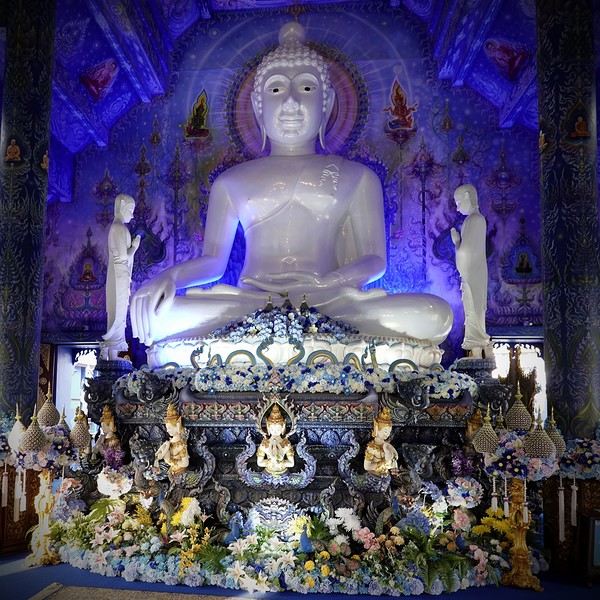
Sure enough, there are hardly any visitors, which lets me wander and take nice photos—dark ones, like I prefer, rather than blindingly bright ones.


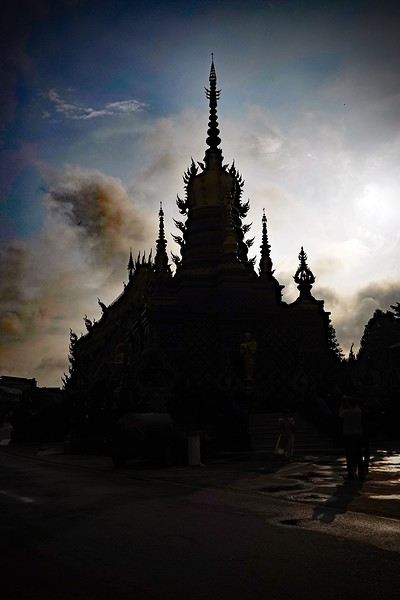
The sun’s just come up, and the sanctuary is bathed in a kind of morning mist, perfect for mysterious, backlit effects.


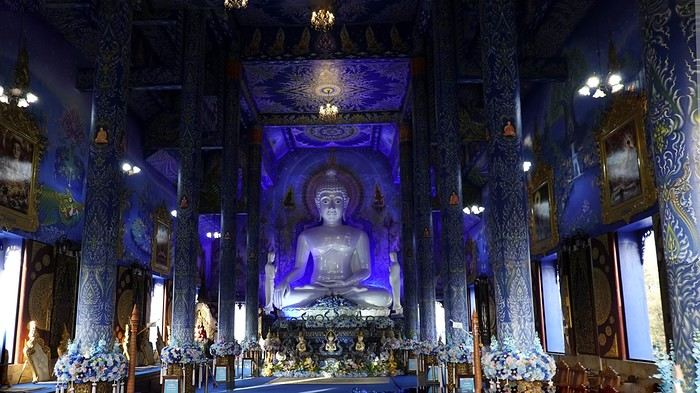
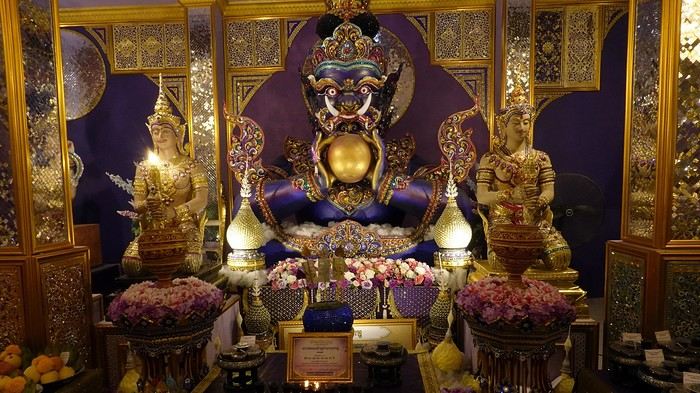
Unlike you, Joël, I *love* this temple and all its shades of blue, inside and out. As I’ve said before, all that ostentatious gold has started to put me off visiting temples. If not for the sobriety of style—because the Blue Temple is anything but sober—Thailand’s excess would’ve gotten to me. At least the use of a single color finally brings some originality. And yet, blue isn’t even my favorite color.


Less than an hour after I arrive, the first monstrous buses start unloading their crowds of visitors, discouraging even the most patient photographer who’d want a shot without some clown making faces or goofing off in front of the lens. I’m annoyed once again by tourist behavior. Here, it’s not so much the individual tourists—like those half-naked young people hanging around Chiang Mai. It’s actual hordes of Westerners and Asians—lots of older folks—brought in by the busload to Chiang Rai’s two major temples. Thousands of people—it’s madness!

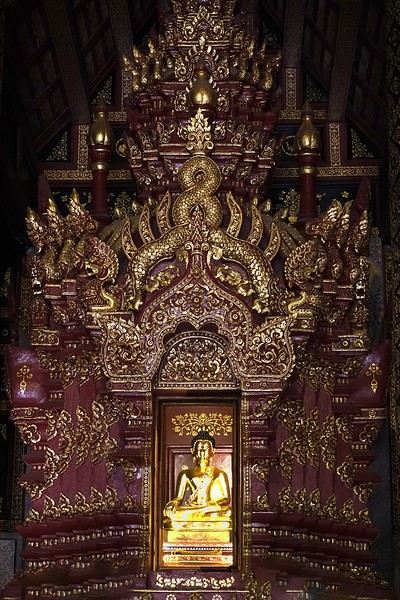
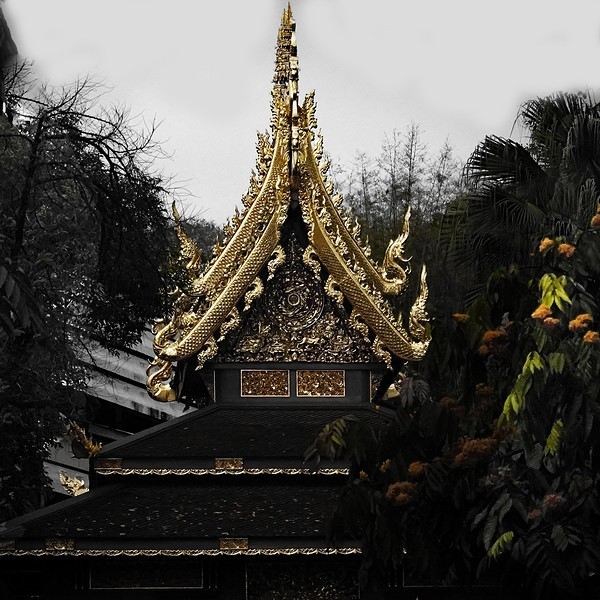
Wat Phra Kaeo and Wat Phra Singh don’t particularly appeal to me, and we circle Wat Jed Yod several times without finding the entrance. Unless it’s Wat Mung Muang? These last two don’t seem to be Phajon’s favorites either—he insists I wouldn’t miss much by skipping them. After the previous temples, that just reinforces my idea that *too much is too much*. Especially when it comes to gold.


As for the Oub Kham Museum, it’s not open yet when we get there, and this sweet, quirky old driver isn’t thrilled—*not thrilled at all*—about taking me back later in the morning. He’s horrified by the price hike. - It was 100 baht, and now it’s 300! Honestly, the old guy’s starting to annoy me with his personal censorship! But I don’t know where else to go while I wait, and I’m afraid of seeing more Buddha statues—statues and *more* statues—so I let myself be convinced. Especially since I also think the entry fee jumping from 100 to 300 baht is ridiculous.

He’s really proud that I don’t want to pay that much. He piles it on: - They’re scammers! 300 baht just to look! Later, Joël tells me it’s a very interesting ethnographic museum, and even at 300 baht, the price is totally justified...

I’m a little embarrassed to give Joël a negative report on this driver he recommended so highly, but I’ll have to set him straight and tell him *I’m* the boss and decision-maker, not him. I’ll save the rest of my day for next time—it’d be too long in one post. So let’s jump to the end of this first exploration.

To sum up, I don’t know Chiang Rai well. We only visited three temples—four, actually. Including Chiang Rai’s must-sees: the Blue Temple and the White Temple.


The view from my terrace while I eat is stunning. A beautiful wooden terrace in an old wooden house. Another storm’s brewing—there was a huge one in Chiang Mai the night before I left, and here too last night. This morning, it was really cold when I woke up in that awful room. Then I was boiling hot during the day, and now it’s thundering, the sky’s pitch black. I can’t see anything now because it’s nighttime. I was comfortable on my terrace, but I just came inside—it’s pouring rain, and it’s cold. No need for AC tonight. Yesterday, in the other room, I was swarmed by millions of gnats by the door. I had to lock myself in and turn on the AC by 6:30 PM to avoid being overrun. Tonight, I could spend the evening on the lovely terrace—no mosquitoes, no gnats. I think they stay downstairs, drawn to the lights.

I’m embarrassed again tonight and feel guilty for being so angry yesterday. That young woman really went out of her way—*and then some*—to set me up in this other room, much bigger and with this huge terrace with a great view, furnished with sofas and a coffee table, so I can eat my meals here when I stay in. In the room, she set up a big clothes rack with lots of hangers, two chairs, a coffee table for my computer, and other useful things. The best part? When I got back from my day out, they’d moved *everything* to the new room—every little thing, nothing forgotten. And not just dumped anywhere—they’d arranged it all neatly. The clothes were hung up on the rack, except for the shirts, which I took out of the suitcase myself. I don’t know why they were still in there. I didn’t have to do a thing—it was a huge surprise, and it really touched me. At the same time, what an invasion of my privacy through their kindness. 😏
Je rencontrai sur mon chemin tant de difficultés Qu’elles furent toutes surmontées MIRZA GHALIB poète urdu (1796 -1869) https://www.telling-india-pictures.com https://youpic.com/marien
PA Pagaljavab Globetrotter ·
Hi Jean-Marie,

Gorgeous photos! I don’t know much about photography, as you know, but I think they turned out really well.

When you don’t write a travel journal right away, you kind of lose track of your own story... - Wait, where was I? What did I write last time? Juggling two journals at once, plus daily life in India—household chores, the market, meal prep, laundry, and sometimes low morale—doesn’t leave me much time to keep a steady writing pace. I had to reread everything I’d written last time just to avoid repeating myself.

Just as I was thinking almost exactly that after reading Anne’s message about my journal yesterday, I came across your new post! When you’re swamped with a million other things and only manage to write an entry every 10 or 15 days, diving back into memories, rereading what you’ve written to avoid repetition, deciding which events are worth sharing, and figuring out how to write them—all of that takes time. It eats into the already limited time you have to write, and the gaps between entries just keep growing...

All this effort leaves me feeling like if I had more time, I could’ve done better. Unlike you, I’m only moderately happy with the result. But it is what it is—this could easily be a full-time job, and with the little time I have, I can’t do any better. That’s why, in a different style, I really enjoyed writing my 2018 Tamil Nadu travel journal almost in real time. But I can’t do it that way anymore...

I didn’t have to do anything—it was a huge surprise and really moved me. At the same time, what an invasion of my privacy through their kindness.

As the Rolling Stones said, "You can’t always get what you want." Which is better than when they said, "I can’t get no satisfaction" 😄
MA Marien33 Veteran ·
One of the reasons I’ve been spacing out my posts is that I don’t remember much—if anything—about my travels anymore. Hoping to jog my memory with the notes and messages I might have sent to loved ones, I just spent nearly two days digging through my archives, with little to show for it. I thought photos would be a good way to recall things, but no.

Actually, I think not much happened during that last part of the trip. It makes me wonder what makes a trip successful or a failure. And I realize it’s simply what stays in our memory. For example, what comes to mind is that overall, I had a great trip, especially this last stretch in Chiang Rai. Yet, reading these notes, I see I complained a lot about Phajon. And yet, I’d still recommend him to anyone looking for a good driver in the Chiang Rai area.

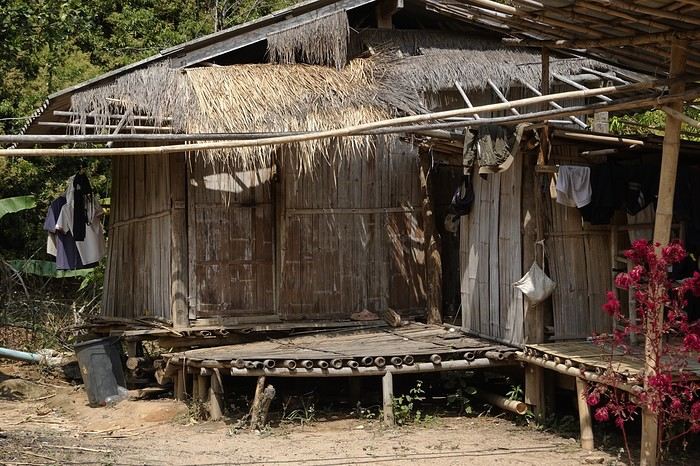
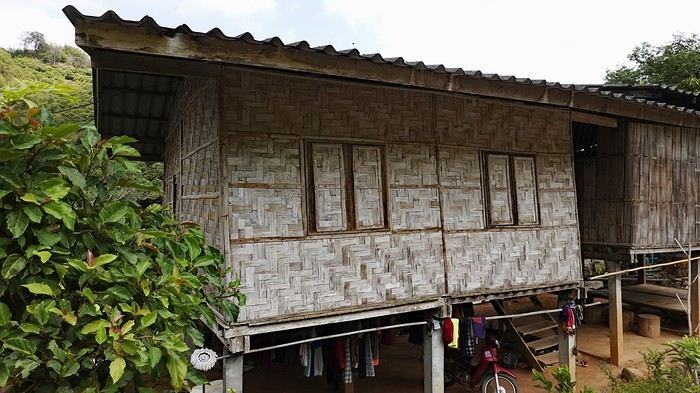
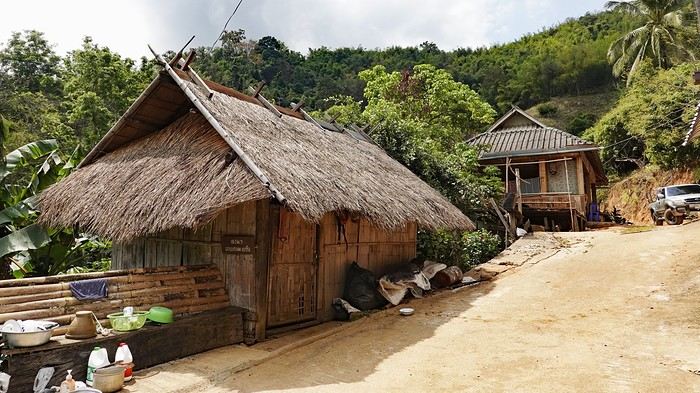
So, back to my first day in Chiang Rai with Phajon. After a rushed visit to the temples and him discouraging me from going to the museum, he asks if I’d be interested in visiting tribal villages. Of course, I say yes right away. I imagine us heading into the countryside to discover these villages. But... He takes me to a strange place: the Union of Hill Tribe Villages. It’s basically a "reconstruction" of several villages from different tribes in the same geographic area. An extremely touristy spot where four or five pseudo-villages of different tribes are grouped together—Karen, Akha, Yaho, Lahu. It’s basically a "shopping center." Along a well-marked path, there’s a series of craft shops made of bamboo and palm roofs, each representing a different ethnic group. Why not, if their sales can help preserve their culture? But what deeply disappoints, annoys, and even shocks me is the "tourist show" aspect. All these women—most of them quite, if not very, old—seem "dressed up" without any authenticity.


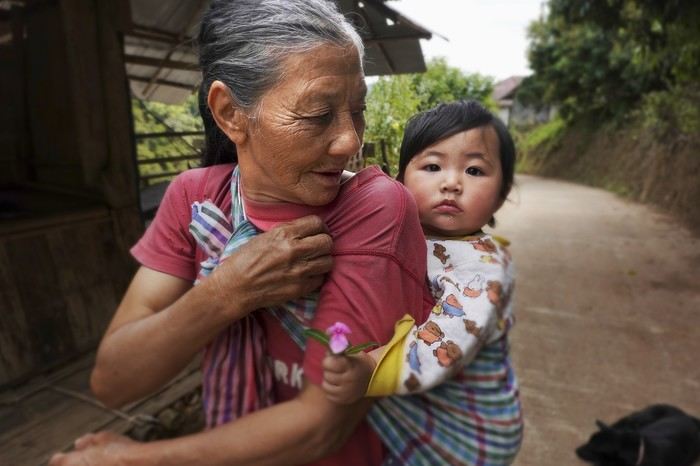
They weave or spin, as if putting on a show to be photographed. I feel like I’m walking through a zoo, where the "animals" are these women. The few men around go about their business and don’t take part in this burlesque comedy. Grotesque "shows" complete the scene, much to the delight of busloads of tourists—you should see the size of the bus parking lot!—who are thrilled to take part in these so-called village activities and snap endless selfies. Their behavior toward these women, especially those wearing those huge, heavy copper rings that seem to stretch their necks unnaturally, makes me even more uncomfortable, like I’m in a human zoo. People are speaking a lot of Spanish and Italian, some French, and many Asian languages. I struggle to take a few photos of the rare reconstructed houses. I feel ashamed and keep my distance from the groups. I’d rather focus on the roosters with their dazzling colors or the calves nursing from their mothers. I finally give in and take a few portraits of women who smile at me sadly. Except for one who just made a big sale and looks radiant.

Fortunately, there’s still the spontaneity of childhood.


To ease my conscience, I buy a few items, even though I don’t need them.

I don’t linger in this farce and quickly return to the pickup, where Phajon clearly doesn’t understand why I didn’t enjoy the visit. - You said you were interested in visiting tribal villages... - But what I saw weren’t tribal villages. It’s a carnival! Right after this visit, I ask him to take me to a "real" Akha village, one I’d seen a sign for on our way. He’s skeptical. - There’s no Akha village here. I have to insist. He’s starting to annoy me with his need to control everything.

When we arrive at this village, it’s deserted. The houses are poor but made of cement. We spot two women, and he asks if we’re in the right Akha village, but they think we’re looking for the place we just came from and quickly disappear into their house. I guess most of the other women are over there. This confirms my impression that it’s all staged for tourists. Here, even though it’s an Akha village, the locals aren’t "performing" in costumes and accessories.

While we eat at a very friendly little eatery, he asks if I’d be interested in visiting a park where I could take beautiful photos of flowers and landscapes. Again, I agree, even though I would’ve liked to spend the day wandering around Chiang Rai. For him, it’s pointless. He "decides" we’ve already seen everything worth seeing in this city. He’s in a hurry to take me to this park. No downtime. I sense, I understand, that he’s used to the average tourist who wants to see as much as possible in the least amount of time. And he’s thrown off by the desires of the guy who hired him for a day of exploring.

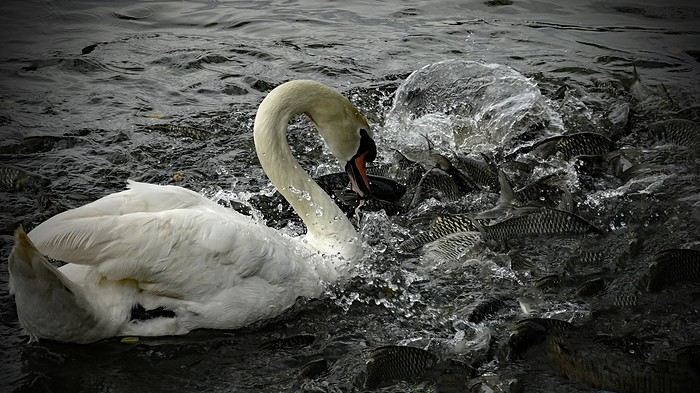
Singha Park is actually a huge tea plantation owned by a very wealthy man who turned it into an ecotourism site with various spots, like a small lake with swans,

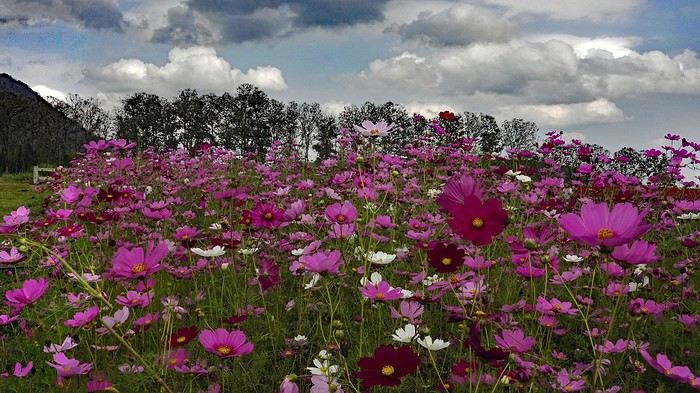
vast fields of flowers,


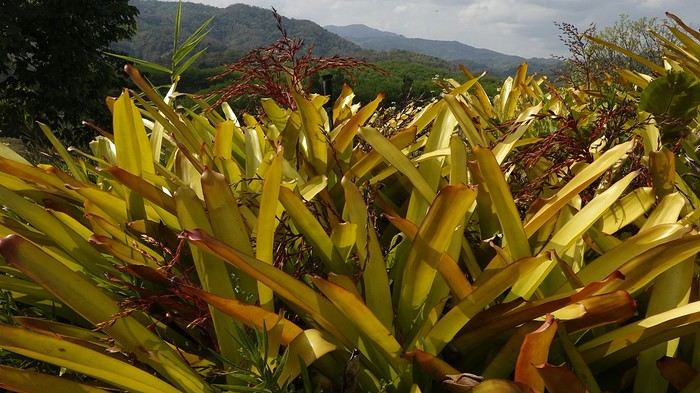
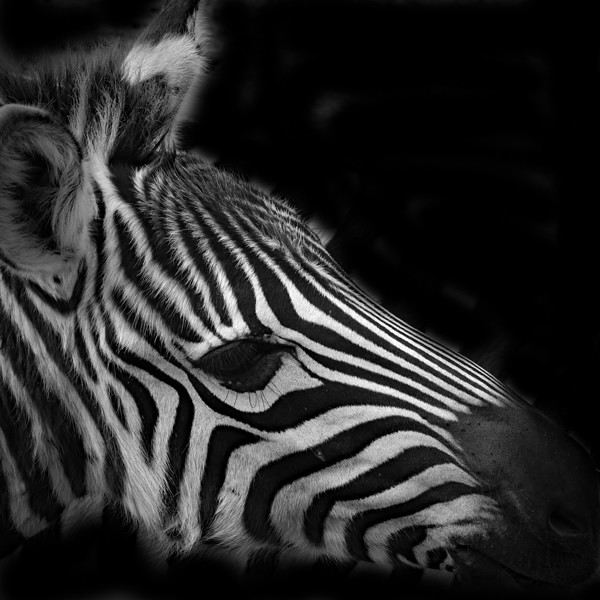
endless tea gardens, and even a mini zoo with zebras and giraffes. Before I know it, I’m whisked onto a hybrid vehicle—a "tourist train" and electric rickshaw—without really understanding what kind of attraction it is. It takes me less than five minutes to realize: this is exactly the kind of tourist trap I always avoid. But it’s too late to turn back. I have no choice but to follow the set route with its main stops. Luckily for someone like me who likes to take his time, visitors are free to spend as much time as they want at each attraction, because a fleet of these vehicles, like tram cars, regularly drop off passengers and pick up new ones for the next part of the tour. I take this unexpected detour in stride and use it to take lots of photos for fun, playing with shutter speeds, apertures, and ISO settings.


Especially a very long series of photos of the zebras


and flower beds. I think I’ve never taken so many flower photos in my life as I did during this trip to Thailand. I’m having fun, but I could’ve just as easily skipped this tour—interesting, but not essential.

The last stop is a tea, coffee, and soda area with plenty of spots to relax while sipping a drink. I don’t know if it’s to boost business, but I’m left stranded. No more "tourist trains" in sight. Over an hour of doing nothing, forced to wait for an unlikely vehicle, while thinking about my poor driver who must be waiting and wondering what I’m doing. Sure enough, when I finally catch up with him, he doesn’t miss the chance to remind me—several times—that he waited for three hours, forgetting that he’s the one who imposed this visit on me, which wasn’t part of my "program" at all and that I could’ve easily done without.

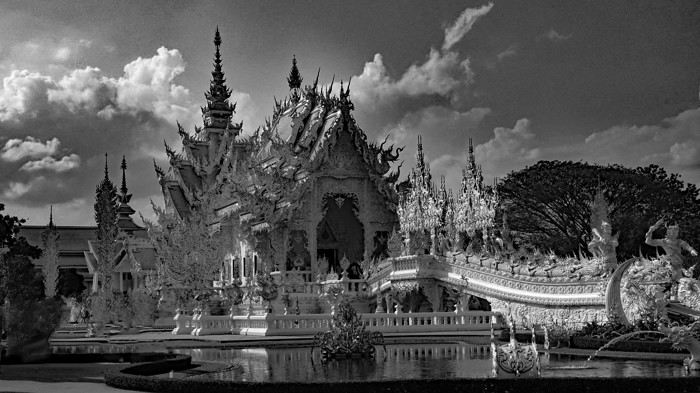
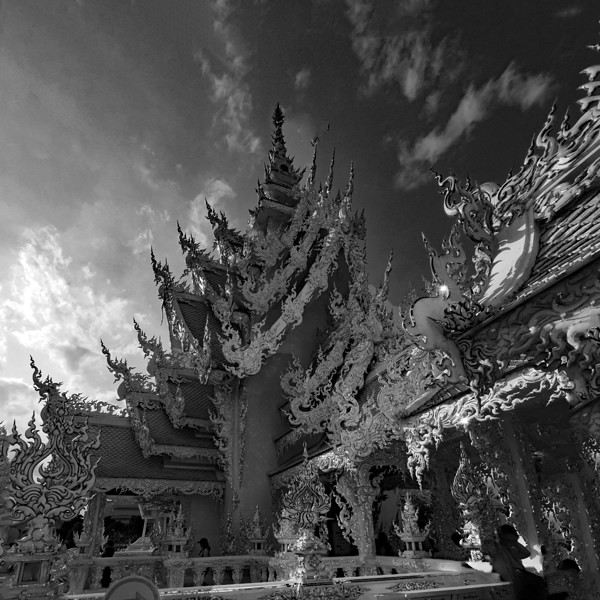
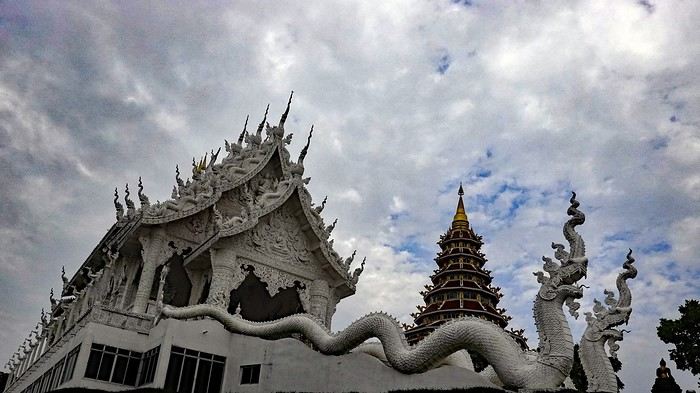
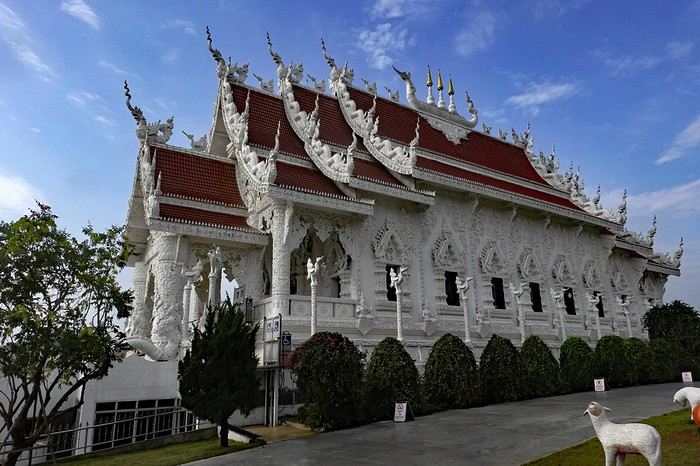
We end the day at the White Temple, and I face the crowd with a philosophical attitude since I was expecting it. I get the same impression as this morning at the Blue Temple, which made Joël say they’re horrible concrete monsters. Yes, I agree, but here too, I appreciate that the gold isn’t dripping everywhere, and I still admire the artistic feats of the people who shaped—if not sculpted—these kilometers of white lace-like concrete,


gleaming under a heavy stormy sky, perfect for dramatic photography.


Back at my accommodation, I ask him how much I owe for yesterday and today. He answers right away: - Yesterday doesn’t count! It was just to get to know you. I appreciate the gesture because it was quite a trip—over 20 km (plus the return) to pick me up at the bus station. So I give him 1,500 baht instead of the 1,000 he asked for. As agreed at the start of the day, we put 500 baht worth of fuel in his pickup’s tank. He’s confused, keeps repeating: It’s too much! It’s too much!

But for tomorrow’s program, he starts nitpicking again. Especially about the Huay Waterfall on Doi Hang, 25 km away, and the visit to the small Akha village Joël mentioned. He claims he’s been told it’s too dangerous and seems like he’s never been there. And I wonder again who of the three of us is confused. Luckily, suddenly, torrential rain pours down. A spectacular storm interrupts our discussion before we can finish. Maybe that’s why he says the waterfall is dangerous? I didn’t understand his explanation. So I don’t know if I should insist on the waterfall. I hate arguing with drivers when they don’t agree.

Anyway, overall, I’m really happy with my day and feel grateful to Joël for putting me in touch with this quirky little guy. But tomorrow, before we leave, I absolutely need to make things clear: I’m the one who decides where I want to go. He can, of course, suggest things to visit, but not at the expense of my plans by substituting his own. I end my day with a little dinner on my terrace, but with the rain, storm, and wind, it’s gotten quite cold, so I take refuge in my new pretty room.
Je rencontrai sur mon chemin tant de difficultés Qu’elles furent toutes surmontées MIRZA GHALIB poète urdu (1796 -1869) https://www.telling-india-pictures.com https://youpic.com/marien
JO Jojoone1 Globetrotter ·
That’s why your photos are a bit dark: you’re a master of dramatic photography... Why didn’t you tell me sooner? 😎

For the future, make sure to note: - Take a notebook or travel journal and jot things down on the spot, in the evening—what happened during the day. That’s what I’ve been doing from the start. Sure, it’s a bit of a hassle, but there’s no risk of forgetting anything, even the most insignificant anecdote. - Before publishing your travel journal on VF, draft it on your computer using a "notepad" on your desktop. No more worries about accidental deletions. - Be on the lookout when selecting a driver. Those who are quick-witted, understand what you want, remember it, and apply it aren’t common, but their attitude and reactions make them easy to spot right away. You might say, "Yeah, but either you get lucky or you have to struggle and go through several." Unfortunately, yes. - If you’ve prepared your itinerary well, you can consider translating it on Google and printing the result. By showing it to the driver, they can photograph it with their smartphone and have it in their own language—no risk of forgetting, and they can check it the night before. Don’t get too optimistic, though: even that often turns out to be insufficient.

At first glance, it’s shocking how most drivers don’t know the majority of points of interest, even places located near their homes. First, few tourists venture off the beaten path or even want to. Second, many modest Thais work non-stop and don’t have the time or means to explore their own region. Finally, they live in the present; the past and future are concepts they don’t engage with much, and they tend to forget what’s behind them.
« Tout le monde s'interroge sur comment laisser une meilleure planète à nos enfants, mais on devrait plutôt penser à laisser de meilleurs enfants pour notre planète. » Clint Eastwood
MA Marien33 Veteran ·
That’s why your photos are a bit dark: you’re a master of dramatic photography... Why didn’t I keep quiet about it before? 😎

Otherwise, for the future, you should note: - Take a notebook or travel journal and jot things down on the spot, in the evening, about what happened during the day. That’s what I’ve been doing from the start. Sure, it’s a bit of a hassle, but there’s no risk of forgetting anything, even the most insignificant anecdote. - Before publishing your travel journal on VF, draft it on your computer using a "notepad" on your desktop. No more worries about accidental deletions. - Be on the lookout when selecting a driver. Those who are quick-witted, understand what you want, remember it, and apply it aren’t common, but their attitude and reactions make them easy to spot right away. You might say: "Yeah, but either you have to get lucky or go through a bunch of them first." Sadly, yes. - If you’ve planned your itinerary well, you can consider translating it on Google and printing the result. By showing it to the driver, they can take a photo with their smartphone and have it in their own language—no risk of forgetting and the ability to check the day before. Don’t get your hopes up too high, though: even that often turns out to be insufficient.

At first glance, it’s shocking how most drivers don’t know the majority of points of interest, even places near where they live. First, few tourists venture off the beaten path or even want to. Second, many modest Thais work non-stop and don’t have the time or means to explore their own region. Finally, they live in the present; the past and future are concepts they don’t engage with much, and they tend to forget what’s behind them.

Thanks so much to the Master of the travel journal. We’ll try to do better next time—or better yet, not do it at all...🤦‍♂️
Je rencontrai sur mon chemin tant de difficultés Qu’elles furent toutes surmontées MIRZA GHALIB poète urdu (1796 -1869) https://www.telling-india-pictures.com https://youpic.com/marien
PI Pierre38 Regular ·
Thanks so much, Jean-Marie! I really loved your photos. Pierre
MA Marien33 Veteran ·
Thanks so much, Jean-Marie! I really loved your photos. Pierre

Thank you, Pierre, for your consistency and loyalty. The days fly by at such a pace. I don’t have time for anything. If it weren’t for my morning walk—which is sacred and usually takes me 3 hours—I wouldn’t do any of the things I want to do when a new day begins.

I don’t have young kids anymore, but housework, dishes, laundry, grocery shopping, meal prep, tending to the plants, and a few other chores eat up my days. By the time evening rolls around and I can finally think about myself, I no longer feel like writing on an abandoned forum. And I totally get why so many people have left... So, a big thank you to those who still read me and to those who take the time to drop a little encouraging word.

My next trip to Thailand is fast approaching, and I feel like I’ll be leaving without having finished last year’s travel journal. And you can imagine I’ll have other things to do while I’m there than logging onto the forum...
Je rencontrai sur mon chemin tant de difficultés Qu’elles furent toutes surmontées MIRZA GHALIB poète urdu (1796 -1869) https://www.telling-india-pictures.com https://youpic.com/marien
MI Milou2008 Globetrotter ·
but I still follow your stories with great pleasure, my friend—it lets me keep traveling from my living room...
MA Marien33 Veteran ·
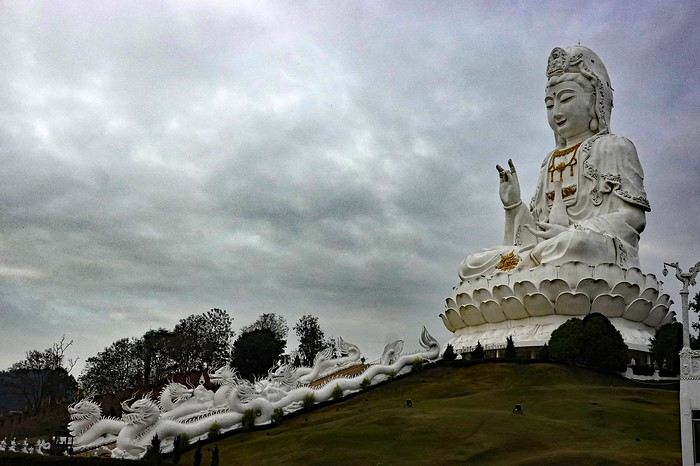
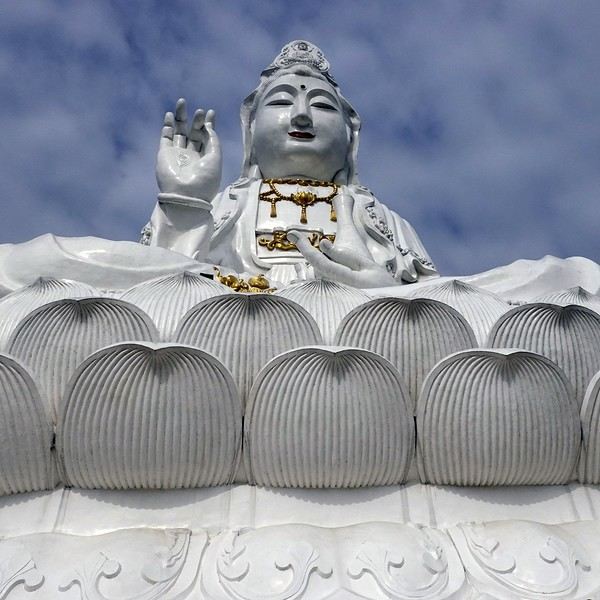
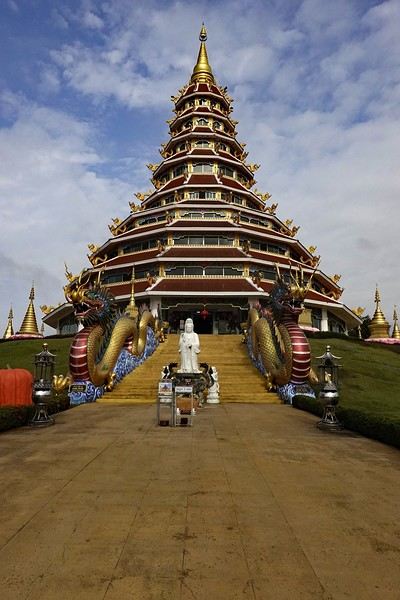
Today, February 25th, my Thailand trip finally begins as I’d imagined it in my head for months… It was about time, since I only have 9 days left! But the day starts off badly. I want to go to Wat Tham Pla, which isn’t well-known among tourists and, if I understood correctly, is located in the middle of the countryside. Yet Phajon keeps trying to take me somewhere else… To Wat Huay Pla Kang. Last night, I let him know I’d like to be in charge of my own trip, and this morning, I made it clear again. - "But it’s on our way, really close by, and I’m sure you’ll love it!" It’s a Buddhist temple dedicated to the goddess of compassion, Guan Yin, who is actually the Chinese version (not Thai) of Avalokiteshvara, the Buddha of Compassion I saw so much of in Ladakh and Zanskar, who became a female figure in China. But I won’t give you a lecture here—you can find all the info online. https://fr.wikipedia.org/wiki/Guanyin

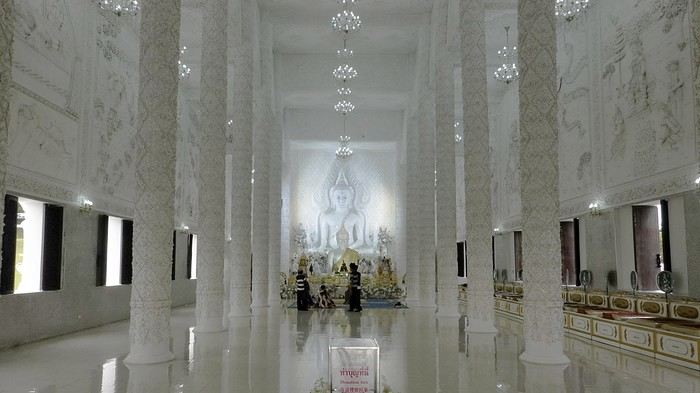
Another all-white temple.


The gigantic statue stands in the middle of the countryside, and you can see it from very far away.


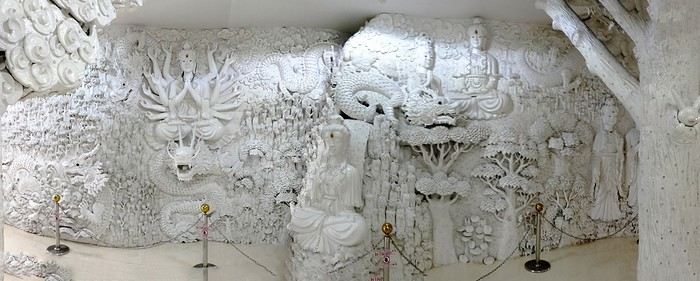
The interesting part of this visit is that the statue is hollow, and you can go inside. An elevator—nothing short of amazing—takes me up into its head. Once again, it’s an overwhelming sight: countless statues of Buddhas, dragons, and nagas, all immaculate, making my head spin.


I’m a bit annoyed by a group of Western kids running around nonstop and acting wild, with their “chaperones” not keeping them under control. And it’s only when it’s time for the group souvenir photo that the mother proudly tells me they’re her twelve kids—I even wonder today if it wasn’t 14—with the oldest being no more than 16. Finnish, I think I remember. They got married, were very happy, and had lots of children… Except, seeing this family, I get the feeling it’s more about a “religious necessity to procreate” than the result of love in the marital bed. Some things you just *sense* spontaneously…

The statue’s eyes are actually windows that offer a breathtaking view of the endless countryside.


There’s so much to say and show about this temple alone, but time is pressing, and we need to move on with the rest of the day… and this travel journal. So I’ll keep the text short and let the photos speak for themselves—they’ll tell you as much, if not more, than my words.


I can’t really blame Phajon for this detour because the visit impresses me and I’m not disappointed. Plus, not only is the price dirt cheap, but he’s not counting his time. He picked me up at 7 AM this morning, so we’ve got plenty of time.
Je rencontrai sur mon chemin tant de difficultés Qu’elles furent toutes surmontées MIRZA GHALIB poète urdu (1796 -1869) https://www.telling-india-pictures.com https://youpic.com/marien
GA Gaura Veteran ·
Wow! The Thais can’t seem to stop coming up with over-the-top temple ideas! When you’ve got money, you can do whatever you want in Thailand. It’s amusing for tourists. If we had the equivalent back home, France would be covered in gigantic pseudo-Gothic concrete cathedrals, decked out with sculptures or cheap glasswork, depending on the billionaires’ tastes. In the end, I appreciate the work of France’s Historical Monuments, and even urban planning rules—without them, the worst would definitely happen.
gaura
MA Marien33 Veteran ·
After Wat Huay Pla Kang, which I mentioned in my previous post, I had planned to visit Wat Tham Pla. Once again, I can’t find any notes, and I didn’t tell friends or family about this day either—even though it was packed with strong emotions. But that’ll be the topic of my next post. It’s the photos that bring this day back to me.

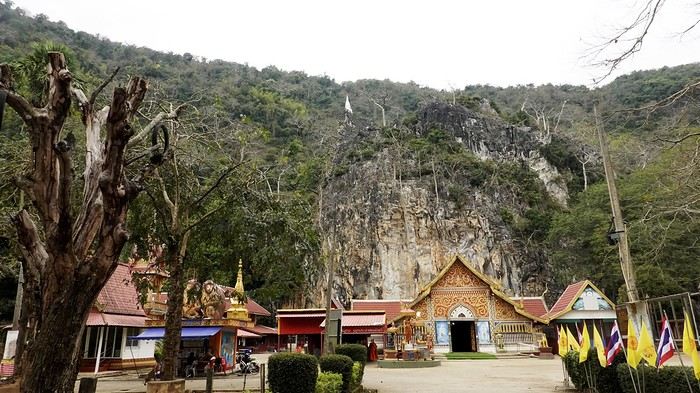
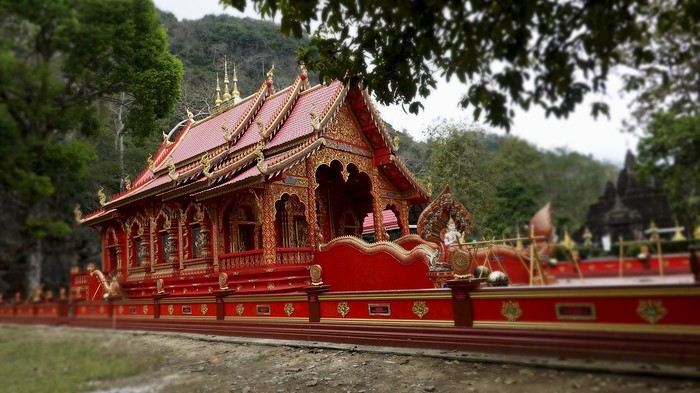
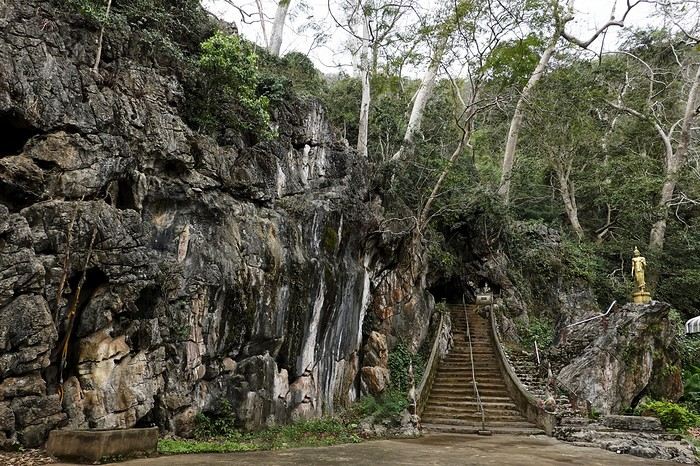
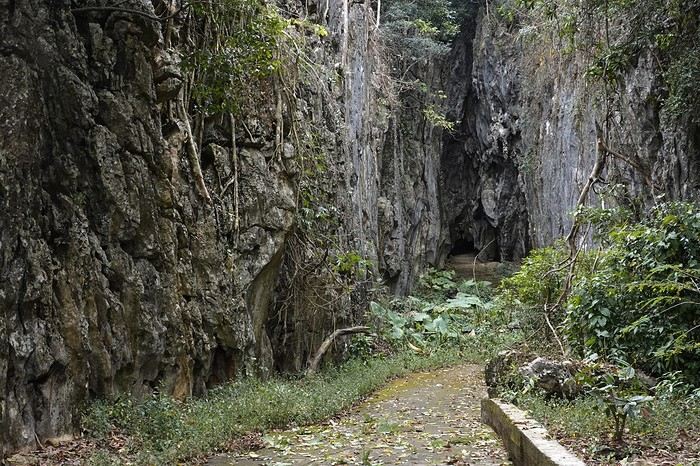
For now, we arrive in front of the temple, and I’m struck by the beauty of the place and its extraordinary atmosphere. In the foreground, right in front of me, is the temple, but what really catches my eye is the backdrop—it looks like a theater set. A massive cliff, as if sliced from the surrounding forested mountain, seems to be there just to highlight the temple like a jewel in its case. And to be honest, I don’t find the temple itself particularly exceptional. The photo’s not great. The weather was overcast, and I messed up my settings. It’s just to give you an idea.


What fascinates me is the natural surroundings—worth the trip on their own. Phajon, though, is all about the monkeys. He starts giving me a long lecture about how dangerous the place is because of the simian locals.

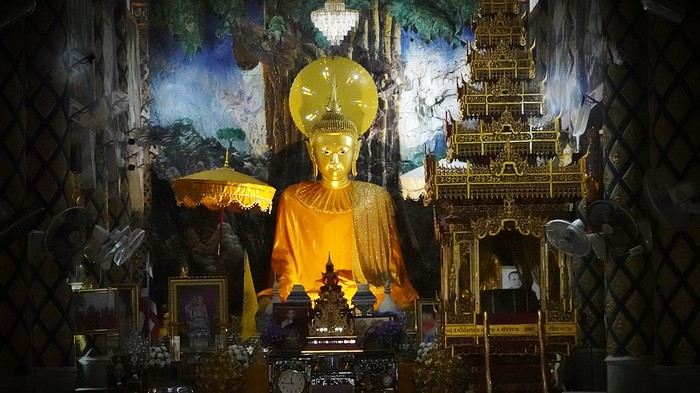
I won’t go into the inside of the building. I appreciate its serene atmosphere—even though there’s another large golden Buddha draped in shimmering fabrics, the darkness of the space and the cleverly lit base of the cliff forming the back wall invite reflection and meditation.


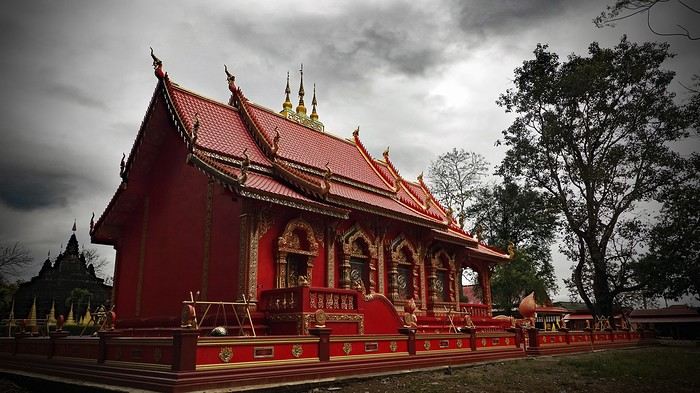
Phajon doesn’t seem too keen on lingering. He’s already heading toward his pickup. He almost makes me miss the most interesting part. As I’m walking away (to the right in the photo), I spot a bright red building, but he declares: - There’s nothing to see over there, it’s not interesting. He really hasn’t learned his lesson… So I snap back: - Well, listen, if you’re not interested, *I* am! I want to see what that red building is. I’ll decide for myself if it’s worth it. And I’m glad I did—it’s another sanctuary. It’s closed, but I find it incredibly photogenic.


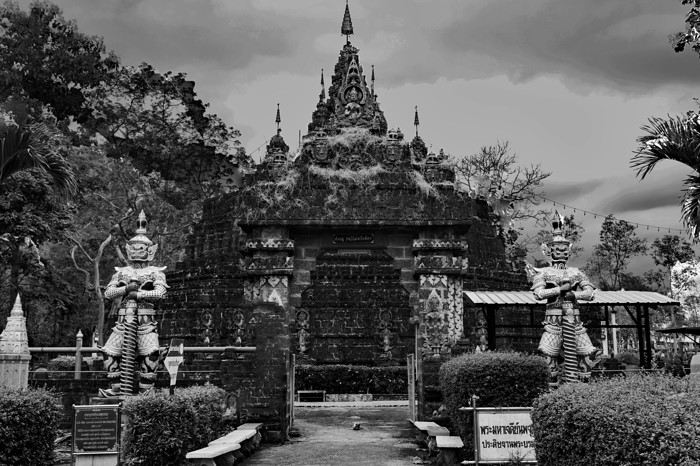
As I walk a little further, I come across an old historical chedi, just as interesting with its strange, massive structure—perfect for a “dramatic” photo (hey Joel 😜).


Then, as I’m retracing my steps but this time going behind the red temple—just as majestic from the back as from the front,


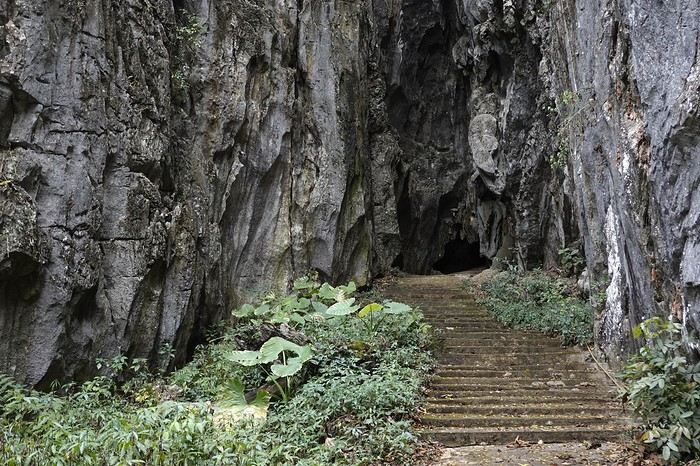
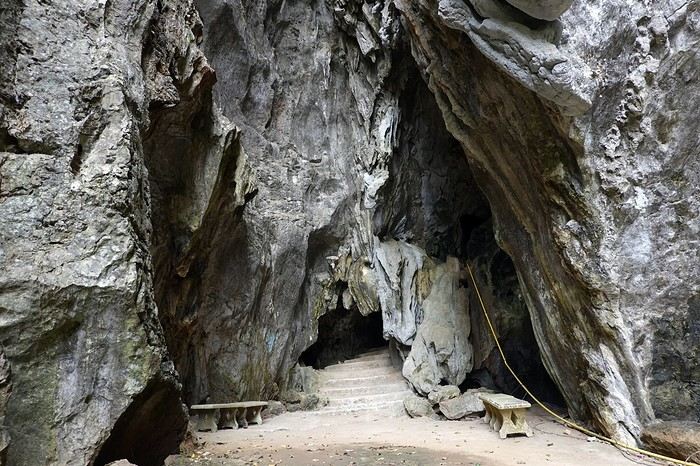
I spot a monumental staircase leading up to a cave. - No, don’t go there, there’s nothing—it’s just a cave! You won’t see anything, it’s pitch black… I hadn’t even noticed it—Phajon had followed me and was watching my every move.


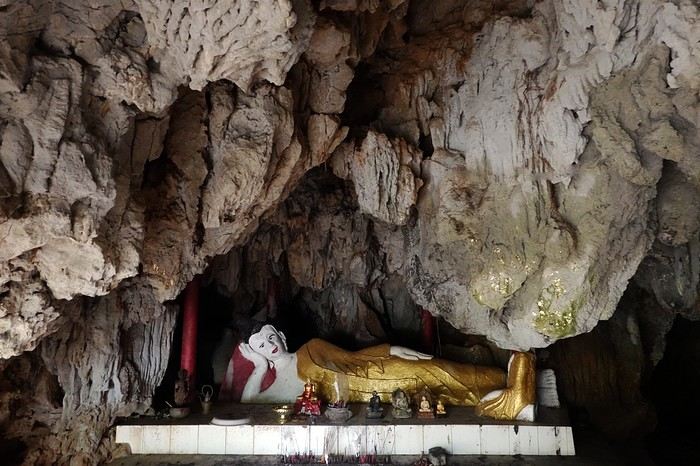
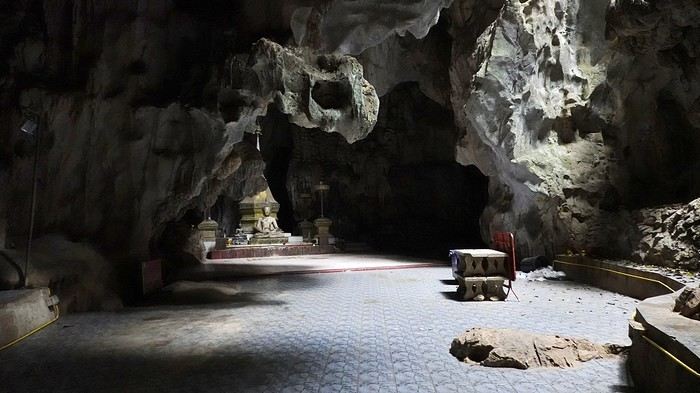
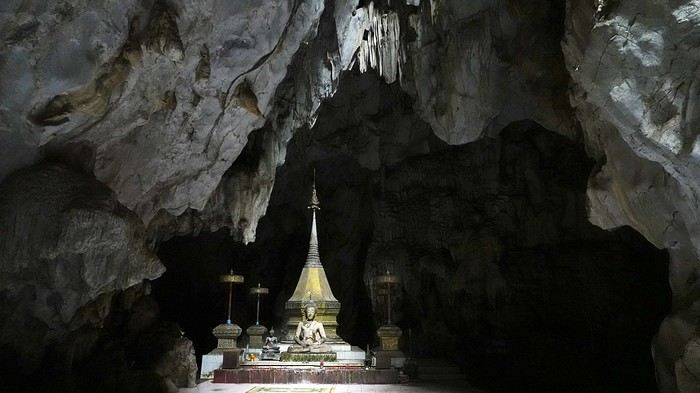
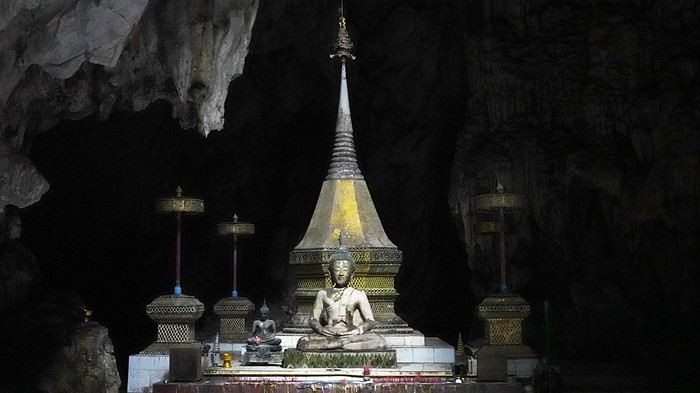
This time, even though I’m getting annoyed, I pretend I didn’t hear him. As casually as possible, despite his repeated calls, I start climbing the steps toward the cave. Sure, it’s dark, but there’s enough light to reveal a golden reclining Buddha beneath the stalactites.


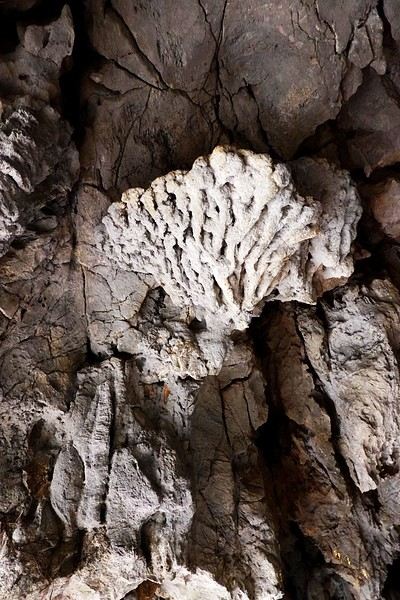
Catholics—especially Indians—put a Virgin Mary in all kinds of caves, even building cement ones to mimic Lourdes. So why not a Buddha? I take my time exploring the cave, which extends into the mountain, and take some—dare I say—phantasmagorical photos of the strange limestone formations. Along the way, I spot a colony of bats.


I feel like I’ve stepped into a tomb, and if I shouted, “Lazarus! Rise and walk!” I’d see him emerge from the cave’s dark depths.

But I’m not done being surprised…

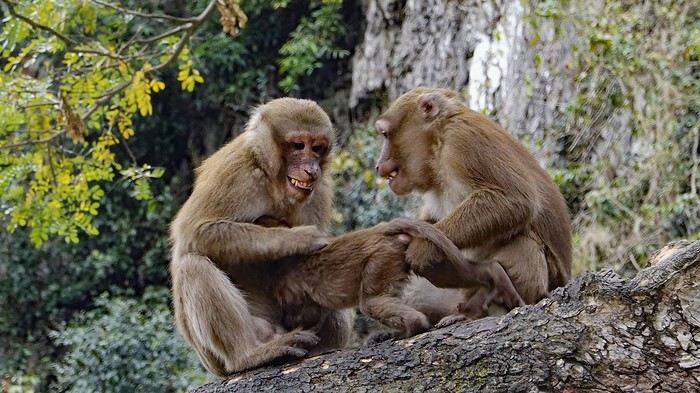
When I come back down, Phajon is gone. Phew! Did he finally get that I’m tired of him sticking to me like glue? - You really think so? my inner voice chimes in. Look—he’s over there, busy with the monkeys! Actually, I realize he’s terrified of them. When we arrived, he painted me a doomsday scenario I didn’t buy into because I’m used to monkeys in India—both in these kinds of places and in the wild. If you ignore them, they ignore you. But *he* bought a slingshot and is chasing the monkeys, even though they’re minding their own business, just hanging out with their families!


https://voyageforum.com/images/posts/small/1766065022-tkYVFi3rPqgBqMg.jpg
Je rencontrai sur mon chemin tant de difficultés Qu’elles furent toutes surmontées MIRZA GHALIB poète urdu (1796 -1869) https://www.telling-india-pictures.com https://youpic.com/marien
MA Marien33 Veteran ·
I take advantage of Phajon being busy with his hunt to pick up the pace and manage to shake him off, far behind. Then, at the other end of the site, I discover a large basin and a crowd. But also, on my right, a new monumental staircase even more impressive than the previous one.


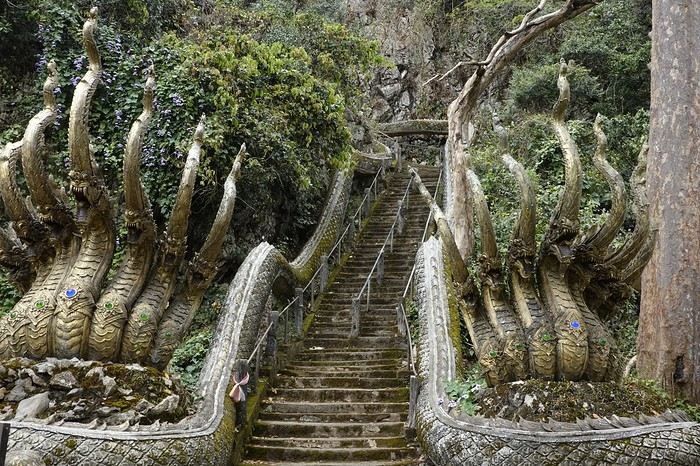
I’m tempted to satisfy my curiosity by approaching the basin, but before Phajon catches up with me, I prefer to take the staircase, which, like the Nagas flanking it, seems to snake up the mountain.


I quickly gain altitude and overlook the basin. Seeing the amazement of all these people, I realize the attraction—literally—since they’re all clustered there, while I was alone everywhere else, even now. They’re feeding what I assume are sacred fish.

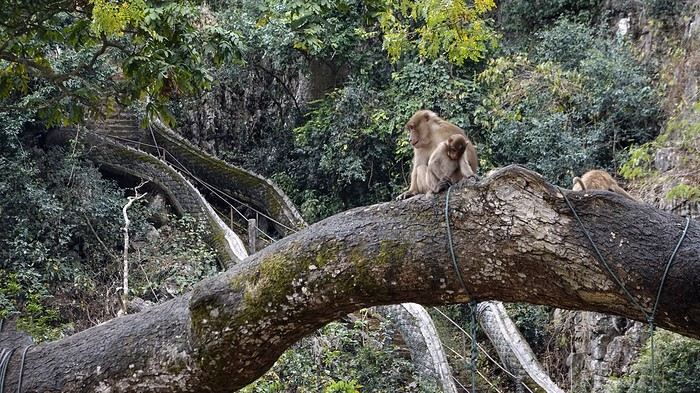
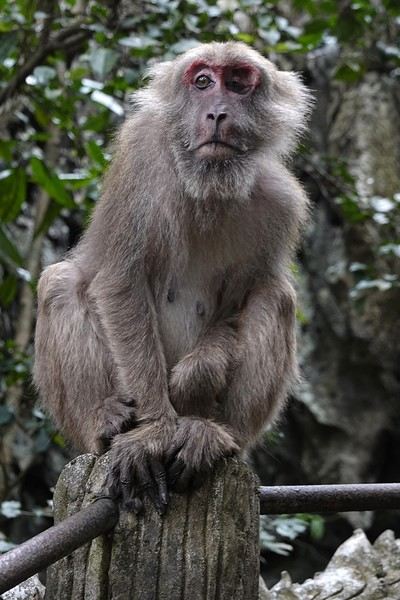
Step after step... And suddenly, the first "wild" monkeys appear. I say wild because the ones down below, though they may be, are used to crowds of visitors, while the ones I’m encountering now seem to live their lives in the wild. It also looks like this is the domain of the "old-timers." So, who knows how they’ll react to my intrusion? I set off on a whim, with the sole idea of losing Phajon. And suddenly, the worst-case scenarios my dear driver warned me about come flooding back. I know the rule when you meet monkeys: ignore them and, above all, don’t make eye contact. This one, perched on a pillar supporting the railing, seems more intrigued by my arrival than I am worried about his reception. He looks very old but good-natured. - What are you doing here? he seems to say.


And on top of that, I take his picture! Wild animals hate that. They associate the camera with some kind of dangerous hunting tool that will kill them or harm them. I think I mentioned in my very first travel journal, Journey through the Himalayan regions of the west, how an eagle I tried to photograph mistook my camera for a rifle and swooped down on Johnny and me. That’s when we realized the gigantic size of these birds, which seem so small, so cute, and majestic in the air. With its wings fully spread, it was wider than the huge 4x4 driving us through the Himalayas. But this monkey is much less touchy than our eagle and lets me take his picture several times without batting an eye. Oh! And now this one, sitting on the last step, with his sideways glance, who also seems to ask, - Where are you going, my friend?


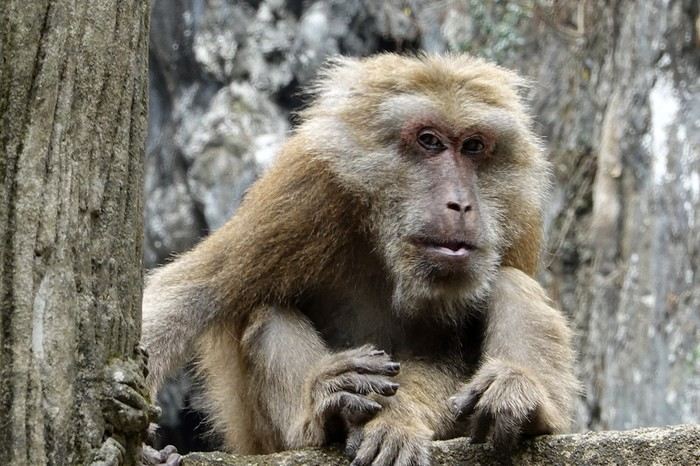
But as I approach, he moves slightly to the left as if to show me that a flight of steps leads to a platform from which you can see a magnificent landscape stretching over the surrounding countryside as far as the eye can see. When I come back down, he stands in front of me, crosses his arms, and makes all sorts of faces, as if to say: - So, aren’t you going to take my picture? So I oblige and take a series of photos, each one more expressive than the last, and I don’t know which one to post here to do him justice.

Then he seems to indicate that I should follow this narrow path, perfect for a simian ambush.


I continue on my way and spot the entrance to a cave in the distance. Things seem to be getting more complicated—am I going to come face to face with a tiger or a bear?


But, bravely, I step inside and discover a vast sacred space where a Buddha statue sits, much more in line with my expectations and tastes.


I take the time to explore this sacred cave thoroughly, happily soaking in its positive energy and serenity with no one around.


And I think fondly of my friend Phajon, who must be worrying down below, wondering if a nasty monkey hasn’t kidnapped me to feed me to his little crocodile friends, because I forgot to mention that Phajon told me there were also crocodiles somewhere on the site.

Sure enough, when I meet up with him again, I find him in a state, unable to imagine that I’d ventured up those stairs. When I tell him about my exploration, he admits, sheepishly, that he’s never had the courage to climb up there because of all those steps. But I laugh to myself, thinking that he was probably more afraid of facing Hanuman’s army. fr.wikipedia.org/wiki/Hanumān Even if they’re retired and living in peaceful rest.
Je rencontrai sur mon chemin tant de difficultés Qu’elles furent toutes surmontées MIRZA GHALIB poète urdu (1796 -1869) https://www.telling-india-pictures.com https://youpic.com/marien
JO Jojoone1 Globetrotter ·
Besides the dramatic photos, the ones of the monkeys turned out really well too.

By the way, *wat* = temple, *tham* = cave, *pla* = fish :)
« Tout le monde s'interroge sur comment laisser une meilleure planète à nos enfants, mais on devrait plutôt penser à laisser de meilleurs enfants pour notre planète. » Clint Eastwood
YA Yan55 Veteran ·
Haha! I really enjoyed this story... It reminded me of an adventure that happened to Yannick and me in Thailand. We had entered a very deep cave near a temple; it was quite late in the day. Of course, this cave had a large reclining Buddha. We had reached the very back of the cave when, suddenly, the lights went out! We were plunged into total darkness and were really worried because we thought it was closing time and we’d be locked in there all night!!! What a nightmare... Luckily, we were able to use our phones for a bit of light, and as we got closer to the exit (or rather, the entrance), the lights came back on. Phew! Quickly, we got out of the cave, and just then, we saw people entering and putting coins into a small machine that lights up the inside for a set amount of time (like in some churches and crypts). We simply hadn’t noticed the machine! Especially since the previous visitors had put in coins that were lighting up the cave when we entered... So, be careful before entering a cave—check for a coin machine!!!
Anne Mes récits de voyages : www.unendroitoualler.fr
MA Marien33 Veteran ·
The monkey photos turned out really well.

Thanks for them!

By the way, wat = temple, tham = cave, pla = fish 🙂

Really? So what? What’s missing most is "monkeys" in the temple’s name, especially since that’s what it’s best known for among locals 😜
Je rencontrai sur mon chemin tant de difficultés Qu’elles furent toutes surmontées MIRZA GHALIB poète urdu (1796 -1869) https://www.telling-india-pictures.com https://youpic.com/marien
MA Marien33 Veteran ·
at that moment we saw people going in and putting some coins into a small machine that allowed the inside to light up for a set time (like in some churches and crypts). We simply hadn’t noticed that machine! Especially since the previous visitors had put in coins that were lighting up the cave when we entered...

That might have been the case for the one I’m talking about—I see in the photos there are also boxes. I didn’t pay attention to them on the spot. With travel experience in these countries, I always have a headlamp in my bag 😅
Je rencontrai sur mon chemin tant de difficultés Qu’elles furent toutes surmontées MIRZA GHALIB poète urdu (1796 -1869) https://www.telling-india-pictures.com https://youpic.com/marien
MA Marien33 Veteran ·
“What adventures for a future travel journal full of color and memories in the VF chronicles!!!! It worried me while running errands that you were stuck like that today. I was so relieved when you called me back!”

This message is from our friend Jojoone1 and is the only record I kept of that day! And for good reason—I’d run out of phone battery and couldn’t take any notes. Plus, the end of the day was so packed with emotions that once I got back to my room, I needed to unwind, relax, and indulge (maybe a little too much) in the selection of cakes, ice cream sundaes, and smoothies my accommodation offered.

Before I go on, I’d like to say to those who don’t appreciate black-and-white photos: I preferred them over the flashy colors of the statues, since I had to make a choice to stay within the 10-photo limit.

So, I’ll do my best with my memory, even if it’s a bit fuzzy... When I was in my sixties, I already had memory lapses. I’d done all sorts of tests and in-depth exams, and after several years of investigations, the doctor was clear: - You’ll never get Alzheimer’s. You’re not *really* losing your memory. Your brain just filters what you deem important or not. And that “importance” is entirely subjective. You skip what you don’t think is worth remembering... and you remember what you *want* to remember.

So, let’s see what I’ve retained from that day.

I’ve already shared the morning’s events... The last photo at the “Monkey Temple” was taken at 11:27 AM. The first one in Mae Sai (at the Scorpion Temple) is timestamped 1:21 PM, and the last there at 3:02 PM. That timing is key for the rest of the day...

I don’t remember—this is starting well—who recommended Wat Phrathat Doi Wao, also known as the “Scorpion Temple,” but one thing’s for sure: what I found there was nothing like what I expected. It starts with the access—we couldn’t find it. I had in mind that the temple was on a hill, accessible via an impressive staircase flanked by two giant Nagas. Apparently, Phajon had never been here. Yet I distinctly remember Joël telling me he’d visited Mae Sai and this temple. When he asks where the entrance is, we’re directed to a narrow uphill street... but it’s not practical for parking or even arriving. Phajon finds a spot on the main street and says: - It’s best if I stay here. I’ll wait for you right here, I won’t move. You take this uphill street, and at the top, you’ll find the temple entrance. Okay, at least this time he’s not following me like a loyal puppy, and I’ll feel free to go where I want, take my time, and snap all the photos I want without feeling his disapproving—and impatient—glance.

When I reach the top, I don’t see any staircase. But from there, these “little-train-tuk-tuks”—I don’t know what to call them—so popular with Thai tourists (and others) take off. They spare people the effort of climbing a few steps. - People are happy to worship Buddha, but they don’t want to put in too much effort! - When I ask where the staircase is, I’m told the only way up is by this vehicle. And they add: - But the ticket price doesn’t include the “sky walk.” Ah! Another sky walk! They’re the latest tourist trend in Thailand—I’ve seen them everywhere. I already mentioned them during my outings in Chiang Mai with my other driver. So, first frustration: I *love* those long staircases. First, because they’re part of my daily exercise, and second, because they often offer stunning viewpoints for photos.

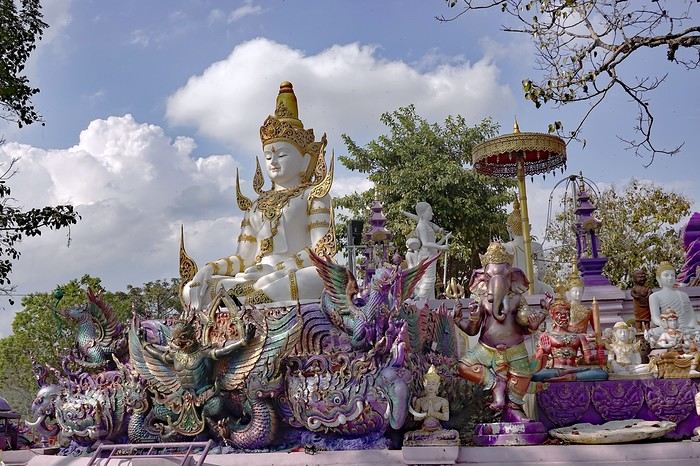
I’d read that this was a famous temple where a revered chedi contained Buddha relics, making it an important pilgrimage site not just for Thais but also for neighboring countries like Myanmar and Laos, which border Mae Sai. When I arrive, I don’t feel like I’m entering a temple or temple grounds but rather a fairy-tale village, all pastries and sweets, like the “Palace of Lady Tartine.” The statues compete in “flashy-metallic” colors where purple, pink, and bright green dominate. Once again, this undeniable kitsch delights me with its naivety and exaggeration (the trademark excess of Thailand).


The importance of having the photo timestamps is that I feel like I spent hours wandering the alleys—both on the spot and now, as I tell you about it. It was particularly hot that day, and I didn’t feel very comfortable walking around. Again, I didn’t feel supported by my legs, with that incredible sensation that I might suddenly collapse. But it’s become so chronic that I’ve gotten used to this uncomfortable state.


I’ll open a parenthesis to say that today, after nearly two years of this discomfort, I discovered I was simply suffering from malnutrition. https://www.google.com/search?client=opera&q=sous+nutrition&sourceid=opera&ie=UTF-8&oe=UTF-8 A victim—you could say—of a doctor obsessed with the ketogenic diet, insulin, and intermittent fasting. I lost 15 kg, and sure, I’m completely cured of my diabetes, but due to his poor management of this “therapy,” he put me in serious danger. My new doctor, who I hadn’t told about it (suspecting she’d be against such practices), was shocked when I finally confessed: - All the tests you’re having me do won’t lead anywhere because I think I’ve figured out the cause: I’m not eating enough, I’m undernourished. And I told her what and how I was eating... Since then, I’ve put on a few kilos and... I can stand on my own two legs again.

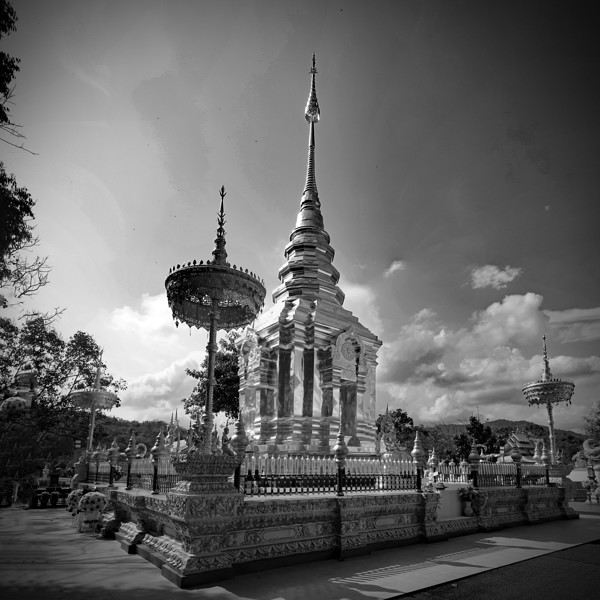
The chedi containing the relics is drowning in gold. So, I prefer to take another “dramatic” black-and-white photo rather than a flashy one.


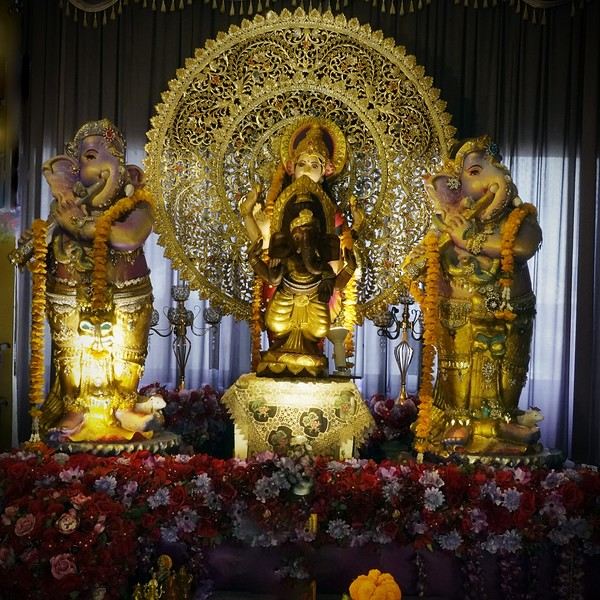
Wandering through this maze of sweets, I come to a building entirely dedicated to Ganesh, combining precious metal with kitschy colors.


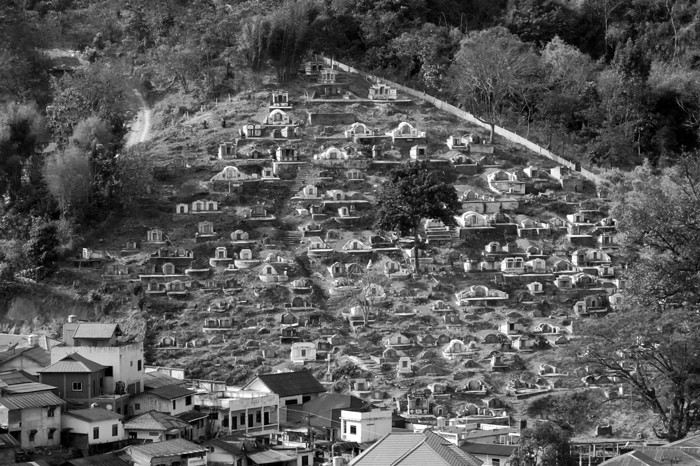
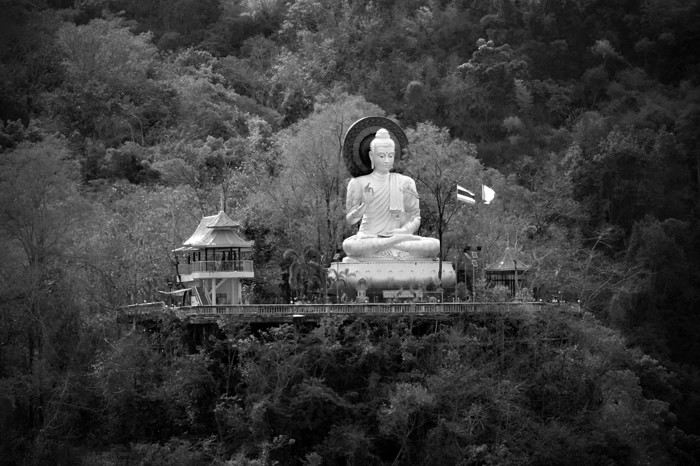
The sky-walk, in my humble opinion, isn’t worth all the praise—especially when you’ve been to the top of Bangkok’s tallest tower and seen the capital of Thailand at your feet... But it did allow me to take some photos I like, including an incredible hillside cemetery


and a giant Buddha,


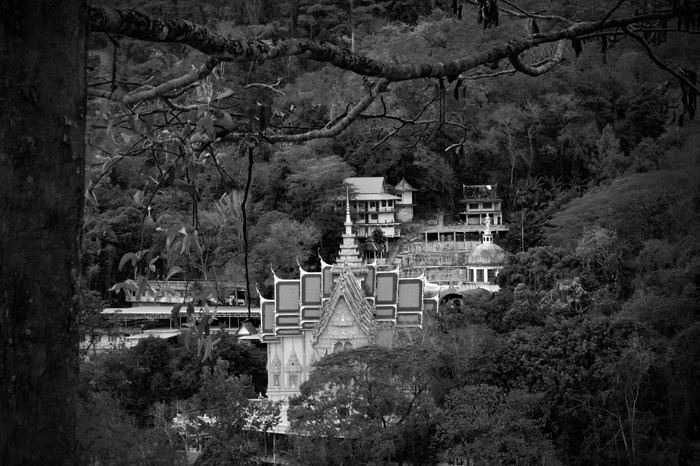
as well as another temple, lost in the surrounding jungle,


also in black and white because after so many colors, my camera found the environment quite dull.

The “circuit” ends in a huge hall reminiscent of the “Hall of Mirrors at Versailles,” but filled with local deities, just as gilded and kitschy as those outside.


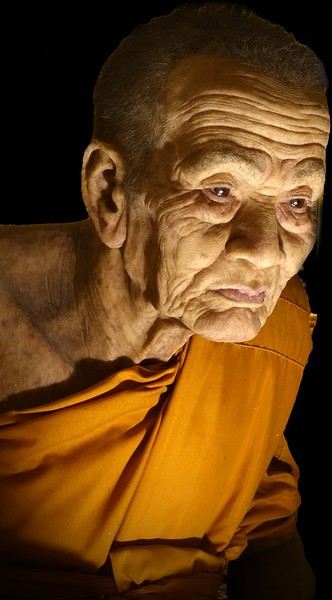
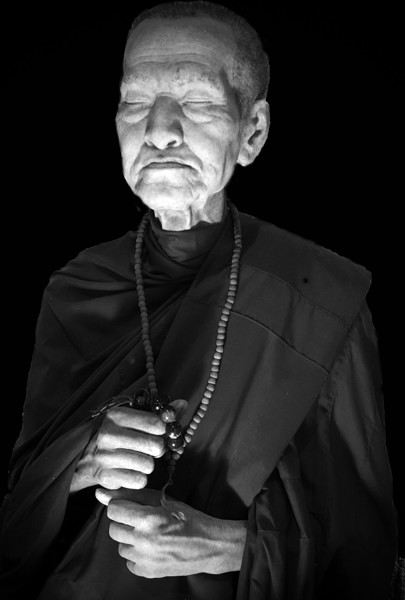
While I’m carefully choosing the best settings and angles for my photos, a monk calls out to me. He must have noticed something in my behavior or appearance because he asks: - Are you Buddhist? - Yes, Tibetan Buddhist, Lamaist... Like the last time, when I’d struck up a conversation with the kind monk who blessed me and gave me an amulet, I catch a compassionate smile that seems to say: - Poor guy, he’s not in the *real* Buddhism! Not the true faith, not the right path... He wants to tie a protective bracelet on me. I hold out my left wrist, since I already have two on my right. No, he shakes his head—on the right. And now I’m protected three times over. I realize that on my left wrist, I also have a Lamaist protection cord that I cherish because I’ve had it since my last trip to Ladakh in 2016. Protection and memory blend together. But would the good monk object to mixing his bracelet with that of a lama? He blesses me anyway with a vigorous swish of dried leaves, accompanied by a good splash of holy water and his warmest smile. I believe in his blessing for the rest of my trip (and soon the end of it) and... the continuation of my life, full of obstacles and ill will. A little further on, as I’ve seen elsewhere, a few statues of Ascended Masters, more lifelike than real in the details of their faces and hands, are lined up on a stage.


I feel like I’ve spent hours wandering here and think of Phajon, who must be getting impatient. So, I hurry to catch the next hybrid vehicle to get back to my starting point. But alas, it doesn’t take the same route down as it did up, and all the landmarks I’d memorized are useless. We end up on the main road where some Thai tourists are getting off. Since I recognize the spot by a detail, I know the pickup isn’t far, and rather than being taken back to the starting point, I get off early to return to Phajon sooner. - No, no, we stopped here for them, but this isn’t the right stop. You have to keep going to return to the starting point... - But I’d rather get off here because my driver is parked nearby...

After about fifty meters on foot, I’m back where I left Phajon. But... he’s not there! - Damn, he must have gotten tired of waiting. Maybe he went for a walk, or someone told him he wasn’t allowed to park there... The problem with him is that he doesn’t have WhatsApp, and I suddenly remember that I only got a SIM card for data because I told the person who renewed my plan that I needed a lot of data and had no one to call in Thailand. Bad move! I didn’t realize that a hotel or driver might not have WhatsApp and that I might need to call for a reservation or for any reason—like now. - Don’t panic, everything will be fine... He can’t have gone far... Walk back up the street—the main road—toward the border post...

The big end-of-day market has just set up along the street, and I suddenly understand what happened. Someone must have asked him to move his vehicle to make room for the stalls... But where did he go? How can I reach him? I look around at all the nearby parked vehicles, thinking he must be worried too and might have tried to let me know. But nothing. No pickup, no Phajon on foot. Since he’s not stupid, he must have gone to pick me up at the starting point of the vehicles going to the temple, not realizing the return point wasn’t the same. I need to go back there too... - Yes, but while you’re going back there, he might come back to where he dropped you off. So wait where he parked the pickup when you left. Where I’m standing now, I see a huge POLICE sign. The office is a little further back. What if I went to the police? - Oh no, don’t do that! He’s not officially registered as a driver. It would cause him serious trouble... That little voice... of wisdom that sometimes mocks me...

I see the time passing... Little by little, the panic of an old man who’s lost takes over. Completely distraught, I spot a lifeline... I call Joël, who can reach Phajon by phone... and Joël replies: - I’m in the middle of running errands, my wife isn’t with me, and she’s the one with Phajon’s contact info. I can’t reach her... It’s a dead end... Time keeps slipping away. I feel like I’ve been waiting and searching for hours, the day is fading... I make a few more trips up and down the avenue, looking to see if I recognize Phajon in the traffic... All these pickups look the same... Just as I’m about to give in to panic as night falls, my little voice advises: - Why not call the owner of your guesthouse? I send an SOS via WhatsApp. At least she’s on WhatsApp and can reach him by phone. - Tell her I can’t find the pickup. I’m in front of the police station—there’s a big POLICE sign. She can’t miss me. I click “send,” and at that very moment, as if I’d clicked “turn off my phone,” nothing. Black screen. No battery! Total panic. Did the message go through?... I stand on the sidewalk, completely lost. I’ve just thrown a message in a bottle. Will it arrive? Won’t it? At worst, I can get a room in a nearby hotel if night falls... But my passport is in my bag, in the pickup... And without battery, without a phone, these days you’re LOST! I hope she gets my message in time... An interminable time seems to pass, night is approaching... And suddenly, all cheerful and even laughing: - What happened? It’s Phajon, on foot, while I was waiting for him in his vehicle... I could have hugged him... And we walk, and walk... At least a kilometer, probably more... I find the pickup in the exact same spot, where all my lost landmarks are...

Well, we got back safely, a little after 7 PM. Actually, it was my mistake. The little train that took me to the temple took a detour on the way back. We’d agreed with Phajon that I’d return to the pickup where he’d wait for me. He could have come with me for free, but he didn’t want to. Too bad. And on the way back, that same little train took a completely different route. I was dropped off much further away, but I didn’t notice because this main street is huge, very long, and everything looks the same—especially the shops and restaurants I’d used as landmarks... So I looked for our vehicle, thinking it must be nearby. That’s how I got it wrong—it was actually parked *much* further away than where I thought I was. So the driver wasn’t worried at all; he was waiting, finding the time long... And when my guesthouse owner called him, he was stunned... Well, all’s well that ends well. I don’t think he understood what happened or my explanations. The importance of the photo timestamps is that they show I didn’t spend as long as I thought at the Scorpion Temple or stranded afterward—even though it felt like hours had passed.

But I’m a bit annoyed because he’s very, very kind, but he tends to only do what he has in mind and ignores my plans. For him, the main attraction in Mae Sai was the market. And I’m not interested in markets anymore—they’re all the same, and I have nothing to buy there. I wanted to see the Scorpion Temple, and he wasn’t even aware it existed. And everywhere we went, he admitted it was his first time there, and at Wat Tham Pla, he’d only been twice with his family—just to the first temple, right by the entrance—and he’d never gone anywhere else. He didn’t know about the huge staircase or the caves.

The most annoying thing is that he does everything to skip the waterfalls. He really doesn’t want to go see them, saying it’s rained too much and it’s slippery, etc. Before leaving him tonight, I brought it up again, and he balked. It’s really frustrating—I don’t want to argue. He only wants to take me to places he knows well, to attractions everyone goes to.

He really doesn’t want to go to Doi In Cee. Very few people go there... (10 km west of Chiang Rai, according to Joël) or the Huay Waterfall on Doi Hang, 25 km away, with a visit to the small Akha village. Same for the hot springs at Huai Mak Lium or those at Phra Soet...

Post Scriptum: I spent my entire day writing this post...
Je rencontrai sur mon chemin tant de difficultés Qu’elles furent toutes surmontées MIRZA GHALIB poète urdu (1796 -1869) https://www.telling-india-pictures.com https://youpic.com/marien
YA Yan55 Veteran ·
And a big thank you for spending the day there!!! Because I found it really informative... and fun! (Maybe not for you, though). Luckily, you’ve got plenty of energy!!!
Anne Mes récits de voyages : www.unendroitoualler.fr
CA Calaf Regular ·
Hello Marien,

What a beautiful page, so finely told and richly illustrated.

But what guilt hanging over me for indulging in such a time-consuming activity...

Take care of yourself and respect your body.

Best regards,

Calaf
GA Gaura Veteran ·
The adventure continues, including for you readers!
gaura
MA Marien33 Veteran ·
New VF bug!!! I’m no longer getting notifications for replies you post on this travel journal. I only stumbled on the latest ones here by pure chance, and I was disappointed not to have gotten any reaction to this last episode... Plus, I’m not getting notifications for activity in the India or Thailand forums either
Je rencontrai sur mon chemin tant de difficultés Qu’elles furent toutes surmontées MIRZA GHALIB poète urdu (1796 -1869) https://www.telling-india-pictures.com https://youpic.com/marien
YA Yan55 Veteran ·
Happy New Year Jean Marie!!! And have a great trip to Thailand... Don't forget to bring your travel journal to treat us to your new story!!!
Anne Mes récits de voyages : www.unendroitoualler.fr
MA Marien33 Veteran ·
Happy New Year Jean Marie!!! And have a great trip to Thailand...

Hi Anne, and thank you for your message and your wishes, which I’m returning to you 😊🤗 Another post I wasn’t notified about and only discovered by chance while checking this travel journal as an anonymous visitor. Unbelievable.

Don’t forget to bring your notebook to treat us to your new story!!!

You can’t exactly say "never again"... But I don’t think there’ll be another travel journal for various reasons, including the fact that I don’t know how to rush my work, so it takes way too much time at the expense of my own blog. I’m already struggling to finish this one. And I don’t think I’ll be going back to Thailand—it’s way too touristy, westernized, and sanitized for mass tourism. This time, I’m going against my better judgment because the flight ticket is already booked, and it’s too late to back out... I’ve chosen two bases, but I have no idea what I’ll do there. I’ll improvise on the spot, which isn’t my usual way of traveling at all... Partly because of last year’s failure and disappointments. It’s entirely my own fault. I’m leaving for 35 days, and I don’t even know if the visa exemption has been reduced to 30 days. That’s how little interest I have in this trip...

I’ve neglected my blog, and I’m sorry about that. I need to get back to it, and my travel stories can still be read by all my readers who appreciate them. The format doesn’t matter as long as the content is enjoyed.
Je rencontrai sur mon chemin tant de difficultés Qu’elles furent toutes surmontées MIRZA GHALIB poète urdu (1796 -1869) https://www.telling-india-pictures.com https://youpic.com/marien
JO Jojoone1 Globetrotter ·
No, it's still 60 days. However, within the 72 hours before arrival, remember to complete the TDAC (digital arrival card).
« Tout le monde s'interroge sur comment laisser une meilleure planète à nos enfants, mais on devrait plutôt penser à laisser de meilleurs enfants pour notre planète. » Clint Eastwood
MA Marien33 Veteran ·
No, it's still 60 days. However, within the 72 hours before arrival, make sure to complete the TDAC (digital arrival card).

Thanks so much, Joël! I hadn’t thought about the TDAC. Another one of those annoying and super stressful things—because from where I’m coming, in the 72 hours before my arrival, I’ll be in an airport without easy access to my computer and dealing with spotty internet. So, stress level: through the roof!
Je rencontrai sur mon chemin tant de difficultés Qu’elles furent toutes surmontées MIRZA GHALIB poète urdu (1796 -1869) https://www.telling-india-pictures.com https://youpic.com/marien
MA Marien33 Veteran ·
I don’t even know how many times I’ve tried to post my new article, and it keeps glitching out when I’m almost done. I’ve already made 5 or 6 attempts. It’s awful in the evening! I’m throwing in the towel and going to bed. I saw Jojo was online, but I couldn’t even say hi… Alright, see you tomorrow! !
Je rencontrai sur mon chemin tant de difficultés Qu’elles furent toutes surmontées MIRZA GHALIB poète urdu (1796 -1869) https://www.telling-india-pictures.com https://youpic.com/marien
MA Marien33 Veteran ·
I really need to speed things up. I’m leaving (again) for Thailand on January 18th, and I absolutely have to finish this travel journal before I go because I won’t be coming back to it—neither while I’m there nor, even less, when I return...

So I might trim my text, skip some steps, and prioritize photos for the delight of some... I’m thinking of my friend Songsam, to whom I promised photos for his travel journal of rural Thailand. It’ll make him happy, even if he’s mad at me right now.

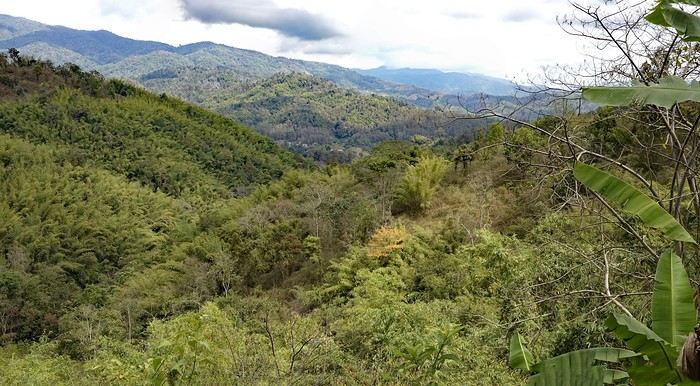
Today, February 26th, I’m thrilled. It might be the first day since I arrived in Thailand that I’ve been able to do exactly what I wanted—walking in the mountains, through the forest, alone, taking my time...

I took 660 photos of this day, filled with stunning landscapes. Of course, a lot of them will end up in the trash—some are duplicates, even triplicates, because I tried different settings and angles.

I don’t know if Joël called Phajon or if Phajon was just perceptive, but he told some tourists we met at the end of the day: “Today, he’s happy.”

So today, fully recovered from the previous day’s events, we’re finally heading to Huay Kaew Waterfall (in Chiang Rai—I should specify because there’s another one with the same name that I also visited in Chiang Mai).

Since he was still reluctant last night, I put my foot down: - Let’s go, and I’ll see once we’re there if it’s impassable or not. This morning, he tells me as we arrive: - It didn’t rain last night, so we can go... I don’t say anything, just relieved I finally convinced him. Because the weather is much worse this morning than any other day. The sky is overcast, and I’m really afraid we’re in for a downpour.

I don’t know if all drivers do this, but every time we go out, instead of taking small roads that would let me see the countryside, he takes this kind of highway that’s totally uninteresting, practically all the way to our destination. We don’t see eye to eye on this either. The goal of the day’s trip is to get to a certain place, so we go, but by the route that suits him best, even if a scenic, rural route would’ve been much more fitting. He doesn’t deviate from “his” rule this morning until we reach the small road leading to the waterfall. And then it’s pure enchantment!

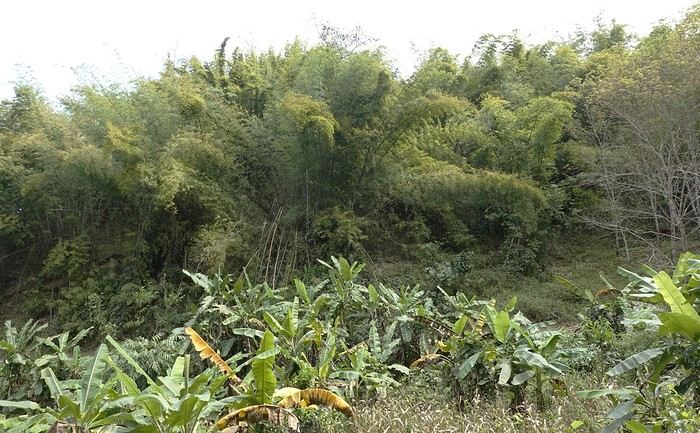
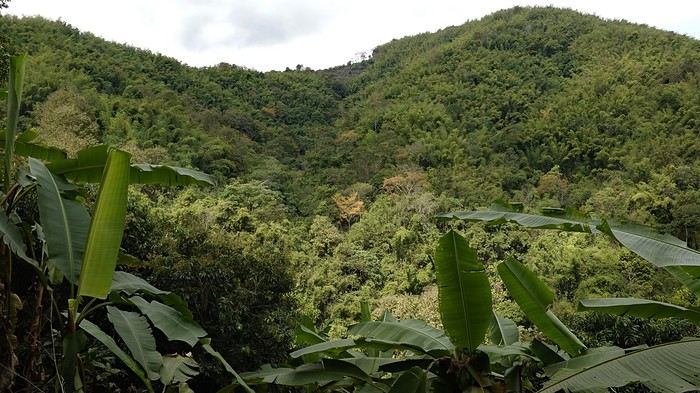
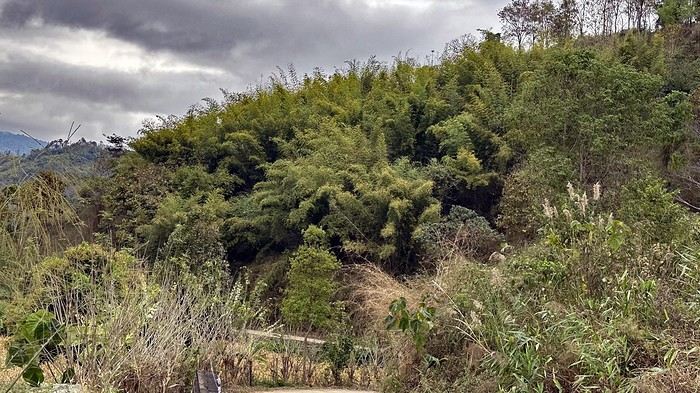
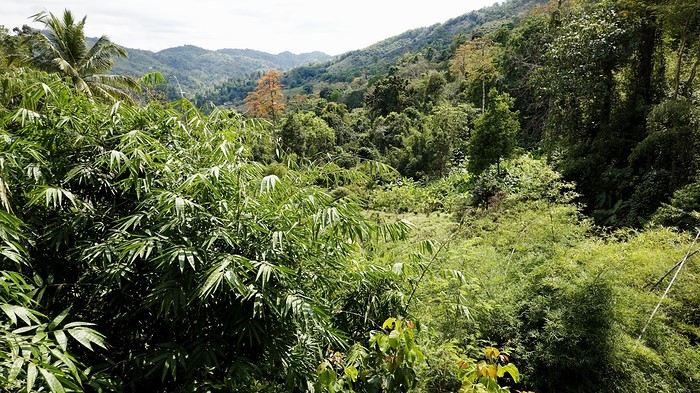
I don’t know how many kilometers we cover, but at every turn, I’m amazed. The landscape is magnificent. I’m particularly captivated by these real forests of bamboo—fluid and vaporous, like ostrich feathers on Marie Antoinette’s hairstyles.


It’s too bad the sky is so gray and ugly, but according to my weather app, it’s not going to rain. At least with this overcast weather, I’ll benefit from less brightness, and the “white” of the waterfalls won’t be “burned out” like it usually was in Chiang Mai.

I have to repeat myself several times: - Listen, you’re going to stop, and I’ll continue on foot. I don’t know how many kilometers this road is to the falls, but I’d rather walk than stay in the vehicle. I think he doesn’t understand because he doesn’t respond or stop. Actually, he’s hard of hearing. I noticed because often when other people talk to him or call out, he doesn’t hear them or react. It’s not that he’s unwilling—he just can’t hear well. That doesn’t stop me from thinking he really doesn’t get why someone would enjoy walking. It’s a concept that’s completely foreign to him.

The road suddenly ends in front of a dilapidated shack with a big billboard: *Akha hill house, bungalow with hot shower, balcony, fan, free wifi, mountain view. For rent. 200 m away. Phone or WhatsApp...* A big red arrow points to the path leading to the bungalow. I can’t help thinking that spending two or three days in this paradise must be incredible...


But anyway, I came to see the waterfall, so I head down the path indicated by the red arrow, assuming the bungalow must be near the falls. Phajon stops me in my tracks: - It’s not that way, it’s here! And he points to a sign in Thai indicating a trail leading into the forest. Before starting the right path to the waterfall, I tell Phajon: - On the way back, I’m walking down!

The trail is easy at first, but as I go further, it gets more complicated. It climbs a lot. It’s really slippery because of the rain these past few days. There’s mud, and the rocks are covered in moss. I have to climb over these boulders blocking the path—they’re extremely slippery. I don’t have a walking stick; I’d need one. I try to break off a bamboo stalk, but it’s impossible—they’re too strong and resilient! I’d need one that’s already broken, but I don’t find any. Somehow, I keep going, and at one point, it gets so difficult that I’m ready to give up, like I told him yesterday and like I’ve done before in the Himalayas when my boldness risked danger. This isn’t the time to break a leg or something. But my inner voice disagrees: - Try a little longer—you might make it soon...


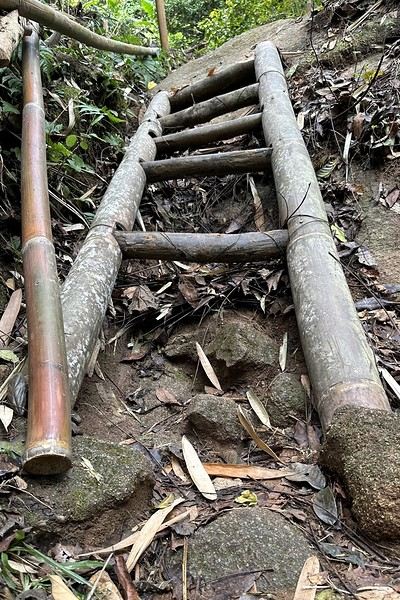
So I push on, clinging to the rocks. And on top of that, there are no trees or branches to hold onto. I slip, bend my knees, and at times, I’m practically crawling on my butt, gripping the rocks on all fours... Then suddenly, I start hearing the roar of water. It sounds close, but I can’t see it yet. Still, it encourages me to keep going. At one point, I see a very steep ladder fixed to the rock face—like a cliff. The path has disappeared. You can’t go any further without using the ladder. It’s all wet, and I think: *What if it’s rotten and I climb it... or if I slip and miss a rung?* Plus, the rungs are pretty far apart.


I invoke Ganesh and take the plunge...

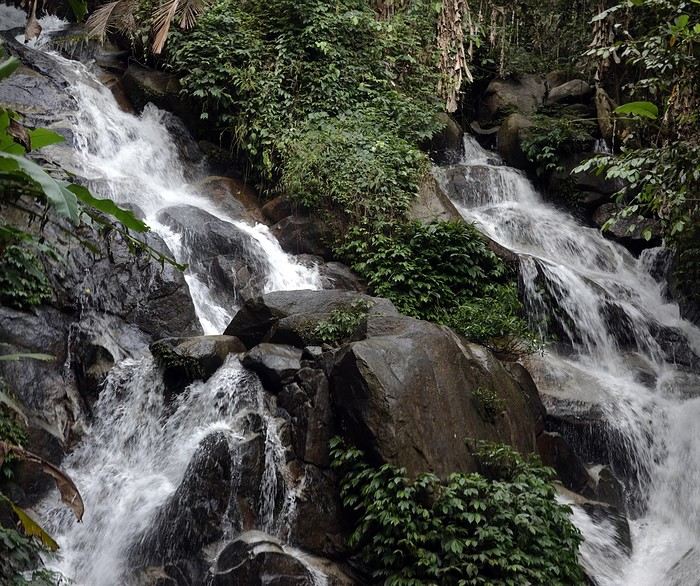
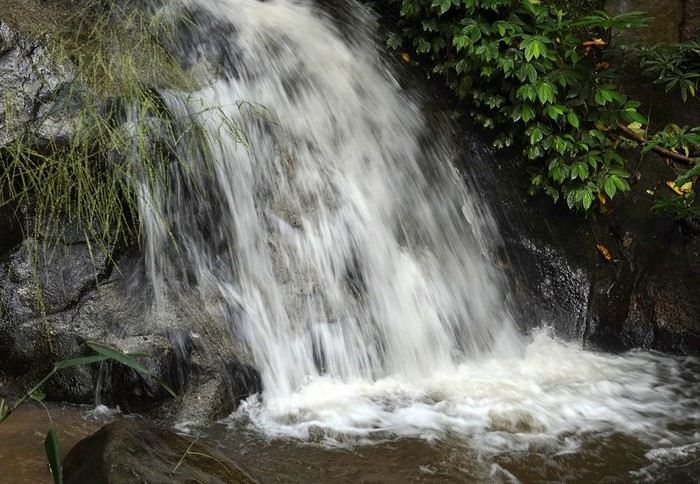
I’m rewarded for my perseverance. Once I’m up there, I see the waterfall all at once. It crashes and bounces off the rocks, and I’m left in awe. I end up on a wet, moss-covered rocky platform—super slippery. Luckily, there’s a kind of bamboo railing to lean on, letting me move closer to the falls.


I move forward to get as close as possible to the waterfall for photos. But as soon as I put my hand on a bamboo stalk, it suddenly collapses, pulling me into the void above the torrent from the waterfall. Luckily, the other end of the railing held, and even though my torso was thrown forward, my feet—well-equipped with excellent hiking shoes—stayed firmly planted on the rock, letting me regain my balance. Phew! That was close! - Serves you right, my inner voice says. You always want more! You could’ve taken your photos from where you were. She’s right, and I don’t hold back. I snap away. I took so many that I don’t know which ones to choose today to illustrate this story.


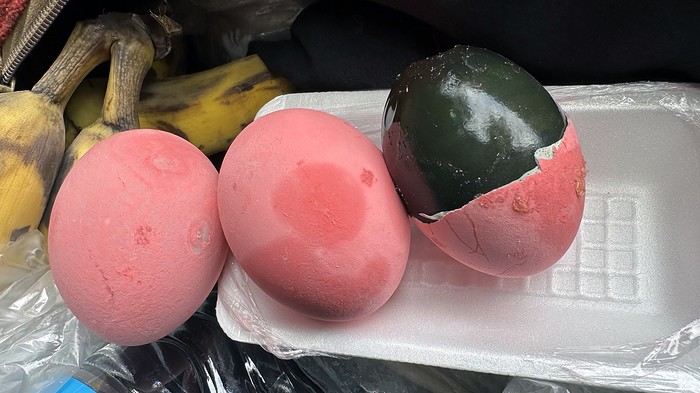
It’s a little past 10 AM now, and I unpack my little breakfast: a few bananas and some bright pink eggs. A Thai curiosity I wanted to try. This exceptional setting is perfect for an exceptional breakfast with exceptional eggs. For those reading who’ve never been to Thailand, here’s the explanation: The Thai name for the pink egg is *khai yiao ma*, which literally translates to “horse urine egg.” A common misconception—or rather, a myth—is that these eggs are prepared by soaking them in horse urine. Obviously, that’s not true. The myth probably comes from the ammonia smell these eggs give off. The pink egg is a Thai version of the Chinese century egg, where eggs are preserved for several weeks or months using a process involving clay, ash, salt, quicklime, and rice husks. The result completely transforms the egg: it turns pink on the outside and greenish-black—not very appetizing—after removing the shell.


At first, I’m put off by the strong smell. But since I decided to try them, my climb made me hungry, and I only have a few small bananas to go with them, so I dive in. Well, it’s not great—actually, it’s not good at all. At least, I don’t like it. But I get a kick out of telling myself I ate Thai pink eggs, just like when I ate iguana in the Antilles...

Once I’m recharged and have descended the ladder backward without seeing where I’m stepping, the return trip is a bit easier, though some downhill sections are even more treacherous than the climb. But I’m happy with myself—happy to have seen the waterfall, happy to have taken great photos this time without being bothered by too much brightness. I don’t know if you’ll be able to open this video. On my computer, it’s gorgeous, but on YouPic, the colors are really off, and it only opens in fits and starts. But you’ll see the precarious railing to keep from falling into the torrent below, and especially the tumult of the rushing water. https://youpic.com/marien/898453947927462/1059212578933760

And I keep insisting to Phajon that I’m walking back down. - But you’re crazy—it’s unsafe, it’s too long... There are so many kilometers... - Listen, while we were climbing, I estimated the distance based on how long it took us to get here. In my opinion, it’s no more than 4 or 5 km. I’m used to walking—I can do it. Back home in India, and even in France, I walk 8 to 10 km every morning. You go ahead, and you can wait for me at the bottom. Without continuing the discussion, I set off, leaving him looking stunned and bewildered.

I have a blast the whole way down and enjoy taking photos of the landscapes and flowers. I meet some really friendly, smiling people who say hello, and it’s a complete change from the mindset in Chiang Mai, where vendors are willing to compromise anything for a little cash (I call it something else), even though they’re exasperated by the excesses of tourists—especially all those young partiers and others...


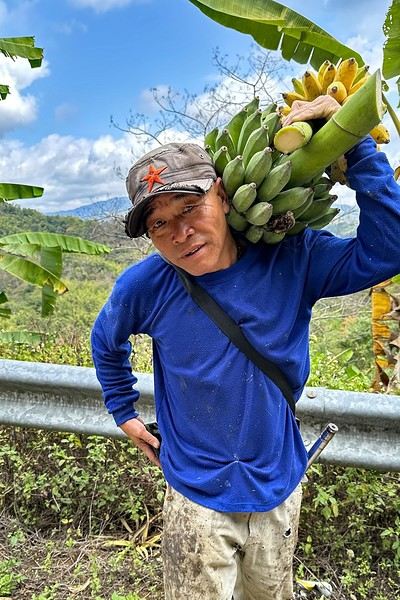
At one point, I meet a young guy carrying a big bunch of bananas on his shoulder. I ask if I can take his photo. He agrees with a big smile, then cuts off part of his bananas and offers them to me. I’m both touched and embarrassed by this gift—there’s a lot, it’s heavy (at least 2 kg), and it’s really cumbersome for taking photos. I manage to wedge them into my belt so I don’t have my hands and pockets full when they’re already stuffed with my camera, phone, accessories, and water bottle... But luck is on my side: About 1 km later, the driver has stopped, so I can give him this hefty gift.


And while I continue on foot, much to my companion’s dismay, he stops about every kilometer. That wasn’t our agreement, but I find his initiative smart and really kind. I can tell he’s genuinely worried about me. At each stop, he doesn’t fail to ask how I’m feeling and if I’d rather finish the trip in the pickup with him.


And we have no idea that an unwelcome surprise is waiting for us...
Je rencontrai sur mon chemin tant de difficultés Qu’elles furent toutes surmontées MIRZA GHALIB poète urdu (1796 -1869) https://www.telling-india-pictures.com https://youpic.com/marien
YA Yan55 Veteran ·
More, more... You're really dragging this out!!!
Anne Mes récits de voyages : www.unendroitoualler.fr
MA Marien33 Veteran ·
More, more... You're killing me with suspense!!!

Enjoying the present moment and savoring it...
Je rencontrai sur mon chemin tant de difficultés Qu’elles furent toutes surmontées MIRZA GHALIB poète urdu (1796 -1869) https://www.telling-india-pictures.com https://youpic.com/marien
MA Marien33 Veteran ·
I tried uploading a video from my YouPic gallery for the first time. Let me know if you can see it and what it looks like. Here, with my crappy connection, it won’t open—just plays in short bursts, and even though the video looks amazing on my iPhone and computer, it’s all messed up with ugly colors on YouPic... At least you can see how precarious the railing is...
Je rencontrai sur mon chemin tant de difficultés Qu’elles furent toutes surmontées MIRZA GHALIB poète urdu (1796 -1869) https://www.telling-india-pictures.com https://youpic.com/marien
YA Yan55 Veteran ·
I tried inserting a video from my YouPic gallery for the first time. Let me know if you can see it and how it looks. Here, with my crappy connection, it won’t open. It only plays in short bursts, and even though the video looks amazing on my iPhone and computer, it’s got awful colors on YouPic... But at least you can see how flimsy the railing is...

Nope, can’t open it on my phone either... But it works great on my computer!!! Yeah, that railing doesn’t look too sturdy...
Anne Mes récits de voyages : www.unendroitoualler.fr
JO Jojoone1 Globetrotter ·
What a scary thought to learn you almost disappeared in a waterfall! Really cool photo of the guy with his bunch of bananas. Great framing.
« Tout le monde s'interroge sur comment laisser une meilleure planète à nos enfants, mais on devrait plutôt penser à laisser de meilleurs enfants pour notre planète. » Clint Eastwood
MA Marien33 Veteran ·
The sequel, the sequel... You're really dragging this out! Can't wait!

Here’s the rest—it would’ve been too long to add to the previous post, which was already pretty hefty for those with big appetites.

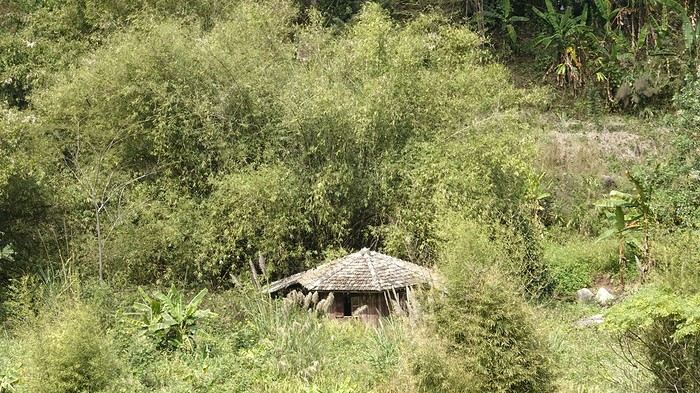
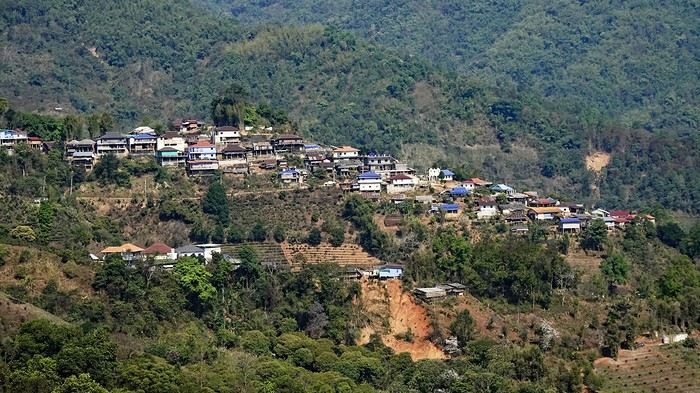
When we finally reach the bottom, I tell him: - Okay, now I’d like to visit the Akha village in this area. - But there’s no village around here! - Yes, there is—there’s an Akha village nearby, I’m sure of it. Joël told me about it; there’s a small, traditional village I really want to see. I look around and spot a cluster of shacks, little huts, simple houses... - Maybe that’s it? - No, no, those are just houses. That’s not a village. There’s no Akha village here... His tone is final. But so is mine: - But there *is* an Akha village around here—Joël assured me. I *really* want to visit it, especially after the disappointment of the "human zoo" he took me to on the first day.

I have to insist. It’s exhausting and draining to argue with him all the time just to get where I want to go. I realize that if I don’t push back, I’ll miss the village again. - No, no—I *REALLY* want to see this Akha village.

Finally, he goes to ask some people standing in front of a nearby house. He explains his request, and then the negotiations start—it drags on forever. It makes me laugh because, in the end, they’re a bit like Indians—or at least like the Malayalees—talking a lot to say very little. It goes on and on and on. I don’t understand Thai, but I can tell both sides are repeating the same thing 36 times, just like the Malayalees do. Eventually, he comes back to the car, exclaiming: - Oh là là (he probably didn’t say that! Foreigners, at least in the countries I visit, get a kick out of our very French "oh là là")—can you believe it? It’s where we were earlier, up there. Where we parked next to the tea shop!... Except I have no idea which tea shop he’s talking about or where we stopped—I didn’t see one! I wasn’t paying attention when he parked while I was heading to the waterfall. He cries out in dismay: - We have to go all the way back up. Are we still going? - Well, yes—I *really* want to see this village...

So off we go again, and I retrace the route for the third time—once driving up, once walking down, and now driving back up. It gives me a chance to take some new shots from different angles and viewpoints.


As we’re driving back up, he explains: - From here, the path you wanted to take to the waterfall—that’s the one you need to take to get to the village. 200 meters farther, and there’s the village. Sure enough, I notice now that the shack is actually a tea stall—but it was closed, so I didn’t pay attention. He continues, clearly annoyed: - They could’ve said on the sign there was a village. It just said: "Bungalow for rent—amazing view, hot water, etc., quiet, call this WhatsApp number." They could’ve mentioned it was the road to the village. They could’ve written: "Akha village 200m." He keeps repeating: - Why didn’t those idiots say it was the village? That the bungalow was *in* the village? And it even said 200 meters! Why didn’t they write that on the sign?... They could’ve said... I’m not sure if he’s angry at the people who put up the sign or mad at me for making him go back up. So I cut off his rant: - Well, that’s how it is... He keeps grumbling endlessly, just like he does about everything. And I realize—now that he’s speaking English—that this is exactly how they do things in their culture: repeating the same thing 36 times when once would be enough.


The village is deserted. We meet a few locals, but not a single tourist. And it’s almost noon by now. Phajon tells me there haven’t been any tourists in the area since Covid. He claims it used to be packed, but now tourists don’t come to Chiang Rai anymore. That’ll be his refrain for the nine days he spends with me. He seems desperate. I don’t. It’s nice to finally be in Thailand and not some recreated Europe. I don’t really see the connection to the pandemic—if tourists have come back elsewhere, why not here?


So I’m alone here, just like I was alone going to the waterfall, alone coming back, alone walking back down, alone going back up, and now alone again in this Akha village—even though it *should* attract visitors. The villagers are incredibly warm and welcoming, but behind their smiles, I sense their distress. As I start looking at their crafts, I suddenly feel awful for being happy there’s not a soul in the streets. I can tell they’re poor, even if it doesn’t show in their appearance. I think about the injustice that fills other people’s pockets elsewhere... where there are crowds of tourists.


I’m their only hope for a sale. They’re not harassing me, they’re not rushing the "rich" white guy like Indians might in the same situation. They just smile and show their wares without insisting, each hoping to make a sale and each afraid it’ll be the neighbor who gets the lost tourist. I look at their beautiful traditional houses—nothing like the staged "human zoo" Phajon took me to on the first day. I take some photos of the houses but not of the people.


Suddenly, an elderly woman carrying a child on her back asks me to photograph the little one. Immediately, it’s like a reverse stampede—people come running from everywhere to get their picture taken... and to invite me into their homes.


There are no shops, but almost every house has a little stall in front of the door—sometimes just a table or a chair. I smile back, but I’m not exactly thrilled by their handicrafts. Still, I tell myself I’m not going to just look without buying anything. They all seem so desperate, so hopeful for a sale. Who should I buy from? Why this one and not that one? Suddenly, I wish I had a ton of money to buy something from everyone... So I think: okay, if I buy a little cheap thing from each... That’s fine...

And then, out of nowhere, in this tiny tribal village in the middle of Thailand, a whole chunk of my past hits me like a ton of bricks. I think back to my life years ago. I came *so* close to extreme wealth—*very* extreme wealth. I won’t go into details here, but it was the kind of life with 3000-franc bottles of champagne, caviar by the spoonful... And at the same time, I also saw the most miserable poverty. And nuns—"good sisters," as they say—including one who was a real saint. You must be gone by now, Jeanine, but I honor you here. And "whores." I say the word without judgment, just with affection for Cécilia, who insisted we say "whore" or "slut" instead of "sex worker." It drove her crazy... She must be gone too by now... I honor you too, Cécilia...

And as all this comes rushing back, I make a *huge* mistake.

I spot a great photo opportunity.


It looks like a bar counter, and I even see a coffee machine. Two older women, seeing me hesitate—since the place is really run-down—call out to me: - Come, come look. No need to buy, just look... I feel like I’m back in India... - Can I get a coffee? - No, no coffee—only tea... And honestly, I’m not even sure if they’re offering tea... Maybe a soda, Coca-Cola, or who knows what... - No, no—I want coffee... I point at the coffee machine... - No coffee, and the machine doesn’t work. Then one of them shows me what she’s selling: pretty little rugs, but the colors aren’t great. There’s one that’s not bad... if you like blue. Which I don’t. There’s a lot of work in it, though—it’s beautiful.

At that moment, my "Good Samaritan" side kicks in, and I consider buying it. I’ll give it to someone who likes blue... But the old woman isn’t very clear about the price—she doesn’t really say... We talk for a while, and I gather it’s 1000 baht. That can’t be right—1000 baht for something handwoven? I’ve woven by hand for 15 years of my life. Patterns like that take *insane* work! It should be 10,000 baht. But 10,000 baht is way too expensive... Something doesn’t add up. I’ll ask Phajon to translate. - I don’t have any money on me. My wallet’s in my bag, which I left in the pickup. I’ll be back...

Again, they pull me along to take photos and visit "house fronts." I don’t even know what to call it. Then the driver gets involved, dragging me from house to house—I forget I was supposed to get my bag, forget about the blue rug...

I remember it when I see a similar rug in another house. This one’s in shades of red, orange, and green—*exactly* my favorite colors.

And that’s when I mess up. I want to see what price she’ll give me compared to the other one. Just to compare, not to buy. But that’s the *one* thing you should *never* do in bargaining countries. The second you ask the price, it’s over—you’re locked into the negotiation. And you *have* to buy. I’ve known this for years. But suddenly, it slips: - And "this"—how much is it? I point at the object of my desire after already buying a few cheap woven bracelets from her. She doesn’t hesitate—she’s very clear: - 1000 baht! And I won’t lower the price! - It’s a steal! A steal! my little voice says. It can’t be handwoven. That’s a month’s work—or more! - But it’s not handwoven? It’s machine-made. - Yes, yes, yes—it’s handwoven. We do it like this and like that... And she shows me the motions I know so well from doing them for hours, days, *years* over 15 years...

I try to check the edges—it’s the only way to tell. But to hide the imperfections of handwoven edges and make the work look "cleaner," there’s a hem. I’m not about to undo the hem to check if it’s really handwoven.

And now Phajon jumps in: - Yes, yes—it’s handwoven. Everyone here weaves by hand; it’s not machine-made. Take it—it’s a great deal!

Before I realize it, the rug is already in a bag... and the two women from the blue rug are beside me. Oops—I’d completely forgotten about them... Of course, they’re disappointed: - But you were going to get money, you left me hanging, you bought *here*, you didn’t buy mine... She’s not speaking English, but I don’t need English to understand. Just look at her. She’s not angry, not yelling, not making a scene—but I can see her disappointment, her sadness at missing the sale. I’d rather she’d yelled at me, made a scene. She’d have been right to. I don’t know where to look—I just want to disappear... I turn to the driver: - Tell her the other one was blue, and blue’s not my color, and hers didn’t have nice colors, but this one’s red—I prefer red tones.

To make up for it, I buy some bracelets and coin purses from her sister, daughter, niece, or whoever for a total of 450 baht. They’re really pretty, and I think: *these* are small enough to be handmade—but the big rug? I have my doubts.

Once we’re back down, we eat at a no-frills roadside stall, and the dish I choose is *delicious*.


Then Phajon takes me to his place, and I’m deeply moved by his poverty and his wife’s poor health. I get back to my accommodation at 4:20 PM and treat myself to an extravagant ice cream and pastry binge, lounging in one of the homestay’s comfy café chairs.


By the end of the day, I still have big doubts. The rug is *huge*—there’s so much work in it, so many intricate patterns. It’s impossible for 1000 baht to be handwoven. I remember reading in one of my paper guides that praised the tribes’ handicrafts but warned they sometimes sell mass-produced Chinese knockoffs.

So I examine my rug like a pro. I check how it was made, I undo the hem a little... Turns out it’s a *piece* of a much larger fabric, woven on a big mechanical loom—maybe semi-electric and manual. Then they cut small rugs from it, stitch the edges so they don’t unravel, and hem them to hide the trick. They must cut 20 or 30 rugs from the same piece. And they sell them to tourists for 1000 baht when they’re barely worth 100 or 200 baht wholesale.

But in the end, if the work is pretty and looks just like handwoven, and you’re happy with a big, nice rug for 1000 baht... no regrets...
Je rencontrai sur mon chemin tant de difficultés Qu’elles furent toutes surmontées MIRZA GHALIB poète urdu (1796 -1869) https://www.telling-india-pictures.com https://youpic.com/marien
PA Pagaljavab Globetrotter ·
It's for stories like this that I read your travel journals, even when the destination isn't—at first glance—my cup of tea.

And suddenly, I don’t know why, in this tiny tribal village deep in Thailand, a whole chunk of my past life just hits me out of nowhere.

So, why did it all hit you like that in that moment? What’s the connection between those poor women who were desperate to sell you (literally!) trinkets and that duo of a nun and a sex worker when you were bouncing between opulence and hardship in your past life? 🤔😄
MA Marien33 Veteran ·
What’s the connection between those poor women who wanted to sell you trinkets at all costs (quite literally) and that duo of a nun and a sex worker when you were alternating between opulence and hardship in your past life? 🤔😄

Your question makes me uncomfortable. Answering it requires delving into very personal considerations. What will you think if I don’t answer? And why reply privately to a question asked in public? There’s no rational answer to seek. First, I wasn’t *alternating*—as you put it—between opulence and hardship. I lived in both worlds simultaneously. It was simply a chain of thoughts that followed one after another, spontaneously, without my control. Those famous Freudian free associations. The trigger was, of course, hand weaving. A very intense period of my life, rich in encounters with people and situations. The other related trigger: poverty and life’s injustices. Everything connected in my mind that day, in that tribal village. Forty years ago, I could have become a “celebrity” in my field. A billionaire patron I met at an Expo in Paris, thrilled by my creations, had decided to take me under his wing. That’s how I entered the world of the wealthy. At the same time, during that very period, I was working with an AIDS advocacy group, supporting people in deep distress, watching many of them drop like flies. Those two activities weren’t compatible. I had to make a choice.

Meeting those tribal women and their weaving, their struggles to sell their work—and especially their art—made me think of my own creations, which I had a hard time selling at rock-bottom prices in my modest studio-shop, while they were being sold for dizzying sums in high-end boutiques once the wealthy took an interest. The connection between those poor Akha women and Cecilia and Jeanine is that I gave up the path that was open to me, choosing instead to commit to humanitarian work.

Otherwise—you’ll see when you reach my age—when you feel like you’re in the final stretch of life, the smallest detail, the slightest word, the tiniest event brings back memories of people or situations you’d completely forgotten or buried deep...
Je rencontrai sur mon chemin tant de difficultés Qu’elles furent toutes surmontées MIRZA GHALIB poète urdu (1796 -1869) https://www.telling-india-pictures.com https://youpic.com/marien
MA Marien33 Veteran ·
February 28th. Another wasted day. I’m really upset. We were supposed to go to Doi Mae Salong—it was going to be a hike in the mountains and a visit to a village with the same name. I’d talked to him about it the night before, and he’d said yes, that’s what we’d do tomorrow.

So I dressed accordingly. I put my hiking shoes back on... Along the way, I didn’t understand why I kept seeing signs for Mae Salong without him taking that direction. Instead, he followed the signs for Chiang Saen. - We’re going to Doi Mae Salong, right? - No, no, no, we’re going to Chiang Saen. - You should’ve told me you changed your mind because I put on my hiking shoes thinking we were going to the mountains. And now we’re visiting a city and temples. I’ll have to take off my shoes, untie the laces, take off my socks... It’s really complicated for me. I can’t bend down easily anymore, let alone stand back up. If you’d warned me, I would’ve worn my sandals, obviously.

He really doesn’t understand anything I say. He replies: - We’ll buy some, it’s no problem. - I have some, I don’t need to buy any... I don’t wear the same shoes depending on where we’re going. I know I’ll be annoyed all day having to tie/untie my shoes, take off/put on my socks. If I don’t tie the very long laces, I have to stuff them into the shoe under the sole of my foot, but over a long distance, all day, it hurts and causes irritation, even blisters. So I tie them to the side, but after a while, they come undone, drag on the ground, I step on them, and I fall...

We start with Wat Pha That Pha Ngao, which I don’t like much. I take a few interesting photos of the nagas. Interesting from a photographer’s point of view, because a photo is never the same even if the subject doesn’t change... But I’ve had enough of nagas; I can’t stand them anymore.
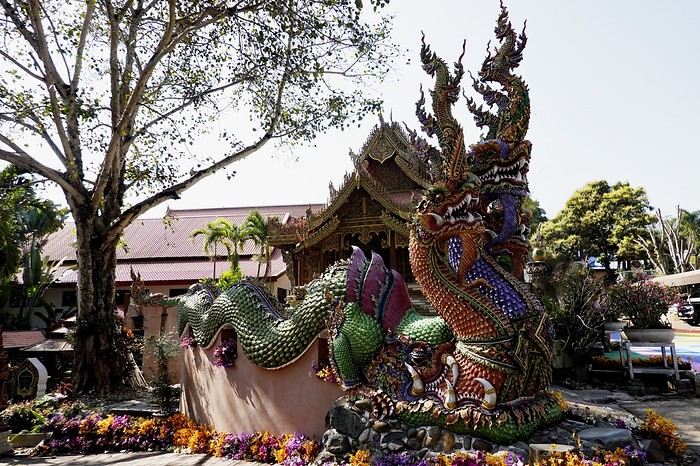
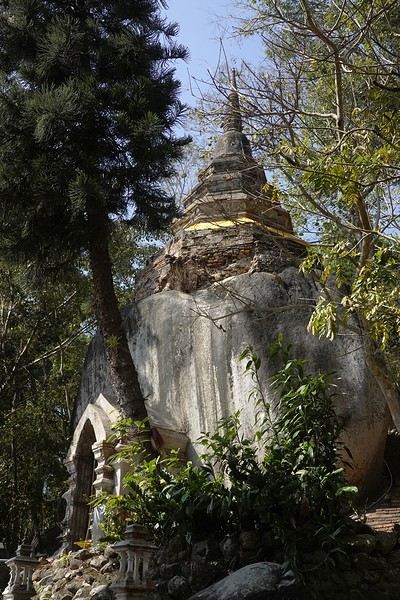


Wandering through the various sanctuaries, I spot a staircase disappearing into the depths of the forest it climbs through. A very steep staircase with hundreds of steps, flanked by majestic five-headed nagas. That means there must be a temple, or some religious building, waiting gloriously at the top. I hesitate for a long time before taking it... I think out loud: - So many steps! There must be 200 or 300... That’s not for me... - You have to go up, my guardian angel whispers. - No way! Have you seen how many steps there are? And maybe there’s nothing interesting to see at the top. - Go up, I’m telling you! - This staircase looks completely abandoned. It’s not maintained, it’s overrun with dead leaves and debris... That means no one uses it. Maybe there’s just a ruin at the top... - Go up, I’m telling you. And don’t argue!
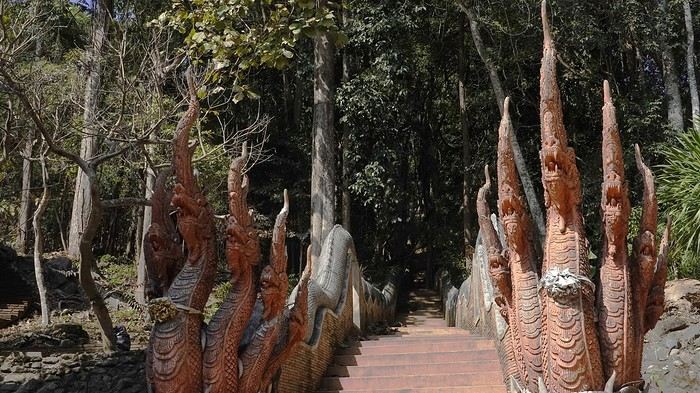


So I comply under these uncompromising orders. As I climb, I discover small landings that aren’t visible from below, which makes the distance seem even longer. Some steps are much higher than others. Some are flatter. A real workout for the ankles, knees, and... the heart. (I counted them on the way down: about 300!)
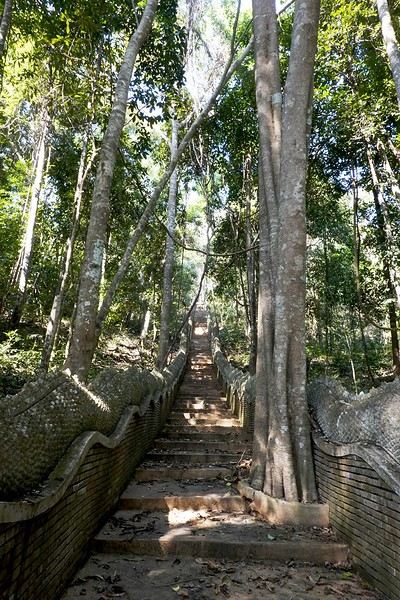


When I reach the top, what a nice surprise!
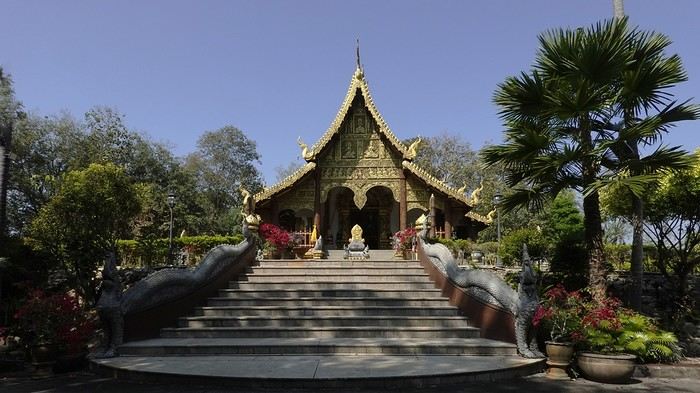


A very pretty temple, much nicer than the ones down below. Clearly, the driver doesn’t know about it. A sign indicates it’s Wat Phra That Chom Chan. I enter the temple. Here too, I’m all alone. It’s different from what you usually see. Gorgeous gilded relief paintings depicting episodes from the Buddha’s life adorn the upper walls. But this “gold” is coppery, a color leaning toward bronze. The whole decoration has a “precious wood” dark aspect. It’s far from the usual flashy glitz. I really appreciate this sobriety.
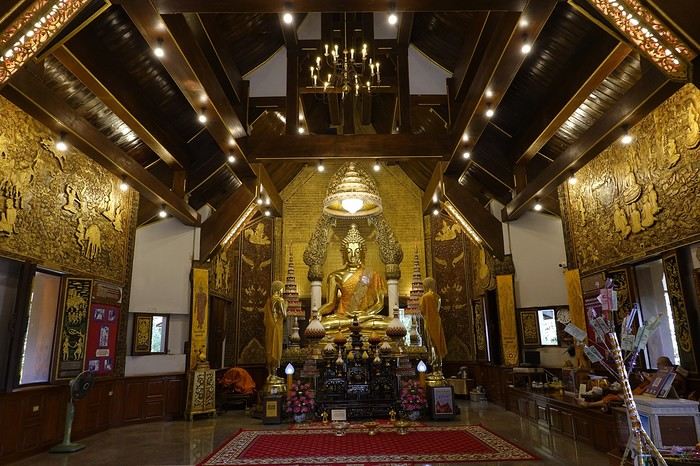


A monk is there. While I take my photos, indifferent to his presence—because I don’t know if my intrusion in this seemingly ignored, or at least little-frequented place, bothers him or disrupts his devotion—he keeps watching me attentively. I decide to look at him. He smiles widely and calls me over. He invites me to sit in front of him... - Where are you from? Which country? - India - ... ? - Yes, India - India? India... India? I, I... I don’t see... I don’t know which country you’re talking about. I don’t know that country... My eyes must be popping out of my head. He must not have understood, it’s not possible... He repeats “India” so many times that he can’t not have understood me. And the pronunciation of “India” is really the same everywhere. No possible confusion. So I repeat, with a big smile, both puzzled and embarrassed at not being understood or bothered by his ignorance of a country as important as India, known worldwide: - Yes, India... Bodhgaya! I think that by naming the sacred city, the city of the bodhi tree where Prince Siddhartha attained enlightenment and became the Buddha, it will ring a bell... (To understand better, I recommend checking out https://fr.wikipedia.org/wiki/Siddhartha_Gautama) The word is magical. He exclaims: - Ah! Ah, you’re from Bodhgaya? - I’m not from Bodhgaya, but I’ve been there... Luckily, he doesn’t ask if I’m Buddhist, and I don’t tell him, remembering the reactions of other monks before. And I don’t feel like talking about my own beliefs and my rejection of all this ostentatious gilding, prayers, and religious displays completely at odds with the Buddha’s teachings, let alone what I think of the clergy, all religions combined. In other times, I’d be good for the stake. I ask too many questions. I challenge too many ecclesiastical assertions and behaviors.

I’ve already been blessed at the Scorpion Temple, receiving a new bracelet. This one pulls one from the depths of his “ka sa wa phat” (the monastic robe) https://safarine-news.over-blog.com/sikrak-des-moines-thailandais and ties it to my right wrist with the two previous ones while reciting a long, fervent prayer. I suppose these are really protection prayers, as others have told me, and many monks and lamas in Ladakh, Zanskar, and... Bodhgaya have also given me. Now I have three protection bracelets on my right wrist, one on my left wrist, and the cord around my neck... I can travel in peace and confidence... I walk all around the temple in a sort of neat little park and access a terrace arranged as an exceptional belvedere
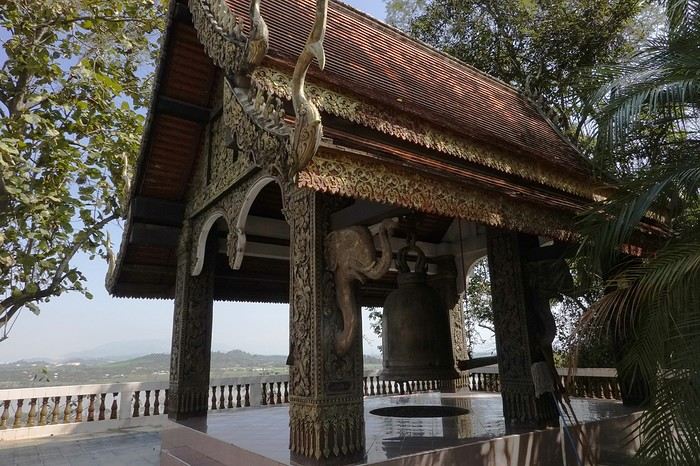


that allows me to enjoy a free extraordinary view of the Mekong, its banks, its traffic, and, a little further in the mist, the town of Ton Pheung in Laos. I say free because I’ll discover shortly after that they’ve also set up a sky walk here to admire the same view as from this unknown belvedere.
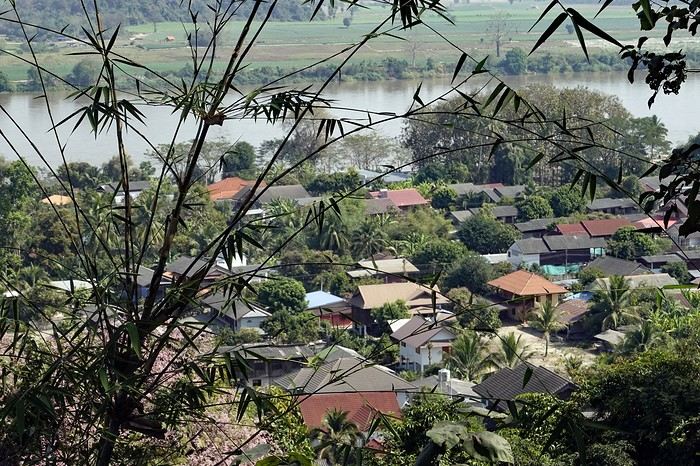
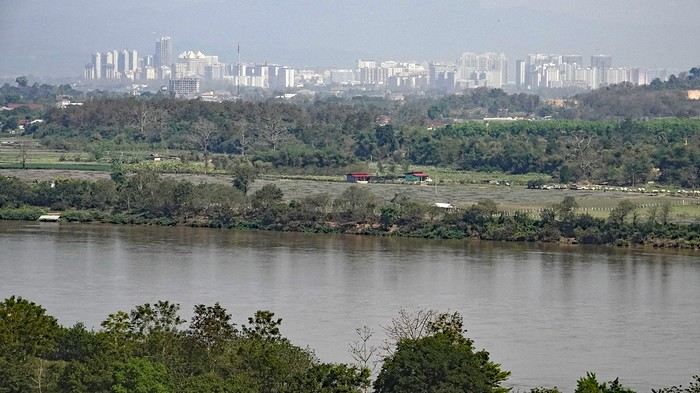


I come down filled with grace and bliss, after which everything goes wrong because Phajon takes me to Wat Chedi Luang Wiang, an ancient Lanna temple of which only the ruins of the base remain, on which they’ve built a modern structure that I don’t find aesthetically successful. Most of the rest of the temple is open. They haven’t rebuilt anything on top. It’s very good like that. It’s open like a large shed, but the Buddha statue isn’t extraordinary. I feel like I’m wasting my time and start getting annoyed, which spoils the mental well-being I’ve just enjoyed. I don’t know if there’s anything interesting to see in Chiang Saen, but I want to walk around the city and discover it on my own. Even if there’s nothing touristy to see, I like strolling through a city and opening my eyes, nostrils, ears wide...

- Park somewhere and let me out, I’m going to walk around the city a bit. Again, he doesn’t understand, simply because he can’t imagine that I’d enjoy wandering on foot through a city or village. So, I clarify: - Anyway, it’s already 12:30, we’re not going to do like the other days, we’ll eat now. I’m hungry. - Okay, he agrees. And he heads toward the city exit and starts driving, driving, driving... - Wait, didn’t you understand? I want us to go eat. - Yes, yes, we’re going... And he adds: - We’re going to the golden something... I don’t understand what he’s saying, and while I try to piece together the sounds I heard to guess and grasp the meaning of his words, I see signs on the road: Golden Triangle. So, I’m completely lost: The Golden Triangle is a region, a very busy tourist area. It’s exactly what I’m avoiding. And it’s a whole circuit, from what I’ve understood in the guides. You can’t do the Golden Triangle circuit in an afternoon, it’s not possible. It’s at least 550 km, the triangle tour. And I keep seeing signs, ads for accommodations or restaurants: Golden Triangle... Suddenly, a big sign: Welcome to the Golden Triangle. - We’re here! he tells me.

It’s an awful tourist spot. There are tourist shops everywhere, everywhere, everywhere... It feels like Lourdes or Mont Saint-Michel! And they all sell the same things, as usual in these places. But, curiously, there are practically no tourists. Phajon notices it too: - It’s impressive, there’s no one! Usually, it’s packed! I scan the place with a scrutinizing look, and automatically count: There are twelve to fifteen of us tourists... - It’s impressive, Phajon repeats, who likes to say the same thing 10 times, there’s no one left. It’s money, money, money... People don’t have money anymore, people don’t have money... I feel like telling him that Chiang Mai is packed with tourists... I think rather that this place has been overused, people have gotten tired of it, it’s gone out of style...

The current tourist trend isn’t going where everyone else goes (except for the Bidochons on the southern beaches)—I say that based on the photos and videos some have posted here on VF, I’ve never set foot there and never will. The current tourist trend is precisely the famous “beaten paths.” So much so that (if you pay attention to travel agency ads and other tourism players) the current ad to attract customers is “authentic,” “off the beaten path,” “wild,” “nature,” “tribes.” And what’s funny is that these off-the-beaten-path sites become overrun in barely a year. That’s why I still and always advise not to publicly disclose, in any way, exceptional places, but to share them sparingly in private with people “who deserve it.”
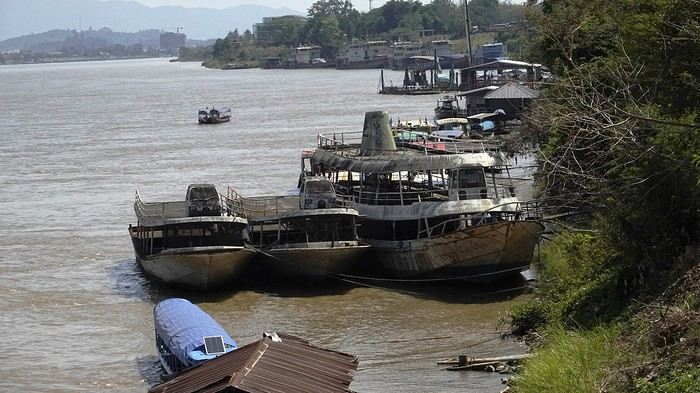


The sun beats down as much as it can. Not a bit of shade, unbearable heat. I’m exhausted, all I want is to leave. So I drag a bit, take a few photos, but this stop wastes a good hour for nothing. When we leave, it’s 1:30 PM. He sees I’m sulking and that we won’t be going back early, especially after not doing anything interesting all day (except for my escapade to Wat Pha That Chom Chan and my “spiritual” encounter with that monk). - What would you like to see? - I’d like to see mountains, I’d like to take small roads, see mountain villages. I’m sick of temples, I don’t want to see any more temples... He thinks for a moment, then: - I don’t know where to go, I don’t see any place to go in this region... I know there are plenty of nice little tourist spots in this area. I’ve read about them in guides or online blogs. But I didn’t write anything down, I trusted him. But he doesn’t know them. And neither do I. I know they exist but I’ve forgotten the names. How can I tell him? - I know where I’m taking you... Same as always: I know where I’m taking you but without telling me, without specifying where he’s actually taking me.

And off we go again, driving, driving, driving. I have no idea where we’re going in relation to my accommodation or the place we just left. And we end up in a huge tea plantation in Mae Chan. It has nothing to do with “my” tea plantations in India, in Munnar or Ooty or Coorg, which are hilly, wild, wonderfully picturesque. Here, it looks like the vineyards in Bordeaux or Blaye. Again, I find it artificial and too neat, like a public park. I find this atmosphere, this “sterile” aspect of Thailand. The whole thing is very artificial: even a fake lake, here too, to make it pretty in the “scenery.” And, in fact, yes, it’s pretty, but it’s cold, too orderly, too well arranged... I hate the “French-style” gardens of our castles. Here, it’s a bit the same... - Stop grumbling, the little voice intervenes. You have to stay positive, that’s what they all say... So stay positive! You’ll be able to buy teas different from Indian teas. You’ll surely find some “Oolong” that you bought in Darjeeling and that was very expensive not being a “local” tea...

The sales area, which looks like a Western luxury shop, is packed with tourists of all kinds. The teas are all at an astonishing, exorbitant price. 400 baht for a small 150 g or 200 g packet. When I tell Phajon what I saw, he starts his rant about money again: - Everything’s going up, everything’s going up! They all want to make money... They’re changing everything... And off he goes on an endless diatribe against Buddhists (he’s Christian): - They keep building new temples... They ask for money everywhere... They want money, money, they do everything to get money... And then, with that money, they build new temples... And what’s the point of new temples?

After getting back in the vehicle, we drive, drive, drive, drive, drive on this highway for I don’t know how many kilometers. At one point, I show him a direction sign: - Is that where we’re going tomorrow? Obviously, he doesn’t understand me. He thinks I want to go there now and answers: - Yes, but not now... Not now... Tomorrow... But not by this road, because it turns too much. It’s dangerous, it turns too much... Then I realize it’s really his own decision to take the highway, even though he’d told me there were no small roads. For him, small roads are of no interest... - We go through lots of villages, we waste time... he justifies. For him, the highway is comfortable. He speeds at 90, 100... And I see suburbs, factories, buildings with no interest at all whizzing by.

It takes us almost two hours to get back. We arrive even later than the other days. I’m pretty annoyed. On the way, I decided to ask the hotel owner to translate for me that I only want mountains, that I don’t want to take the highway anymore, because, really, he doesn’t understand what I’m asking for. Today, I pay him for the day: only 1000 baht, as agreed. No question of a tip as a thank you, and I reaffirm: - Tomorrow, we’re really going to the mountains! - Yes, yes, yes... I have the feeling he’s not listening to me, so I insist: - I really want to go to the mountains, I don’t want to go to the city anymore, I don’t want to see any more temples, I’m sick of temples... - Yes, yes, it’s the mountains... And I add: - And on small roads... (I say: small road) He repeats: rod, rod, rod... He doesn’t understand what I mean. So I take out my translator and show him the screen where I’ve translated into Thai: - Ah yes! Road? And I add: - Today, I didn’t like it at all. We spent hours and hours driving on the highway. Both ways. - Ah, yes! But there was no other way to get there. Tomorrow it’ll be only small roads like the one here, from the village...
Je rencontrai sur mon chemin tant de difficultés Qu’elles furent toutes surmontées MIRZA GHALIB poète urdu (1796 -1869) https://www.telling-india-pictures.com https://youpic.com/marien
JO Jojoone1 Globetrotter ·
At the same time, during that period, I was working for an association fighting against AIDS, and I was supporting people in great distress—many of them were dropping like flies. These two activities weren’t compatible. I had to make a choice.

The common thread between those poor Akha women and Cecilia and Jeanine is that I gave up the path that was open to me, choosing instead to get involved in humanitarian work.

It was Siddhartha’s path. Honor and respect.
« Tout le monde s'interroge sur comment laisser une meilleure planète à nos enfants, mais on devrait plutôt penser à laisser de meilleurs enfants pour notre planète. » Clint Eastwood
PA Pagaljavab Globetrotter ·
Your question embarrasses me. Answering it requires delving into very personal considerations. What will you think if I don’t answer? And why reply privately to a question asked in public?

I wasn’t necessarily expecting an answer from you. This passage intrigued me, and since the elements were strangely juxtaposed, I had this thought. But in the end, I got a bonus answer!

Otherwise—you’ll see when you reach my age—when you feel like you’re in the final stretch of life, the smallest detail, the slightest word, the tiniest event brings back memories of people or situations you’d completely forgotten or buried deep...

I’m convinced of it.
MA Marien33 Veteran ·
February 28th. We’re heading to the mountains today, to Mae Salong via Doi Salong. I’ll try to keep this short since, while not a total disaster, the day wasn’t exactly packed with highlights. It started off on the wrong foot when Phajon completely misunderstood what I wanted. Sure, we didn’t take the highway but a lovely mountain road… where he drove like a maniac, way too fast. I repeat what I told him yesterday: He still doesn’t get that the fun and the point of the trip isn’t just the final destination for me—it’s the whole journey. I was hoping to leave the paved road and hike a bit on trails through the mountains and forests, but all we did was drive. Normally, with all my drivers, I set my camera’s shutter speed to 1/2000. That usually lets me take great photos without making the driver stop every five minutes or every 100 meters to capture a nice view. Then I crop and edit out any unwanted roadside elements. But today, he was driving so fast that by the time I pressed the shutter, whatever I wanted to photograph was already gone.
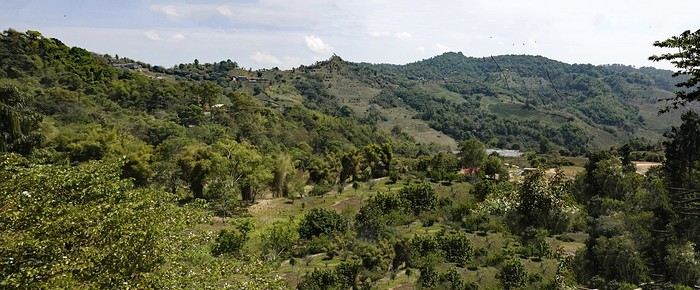


When we arrived in Mae Salong, I asked him to stop, park, and let me walk through the village. He reacted like I’d said something outrageous: - But the village is really long! It’s at least 1 or 2 km… I don’t care—it’s not that far for me. All these pretty houses have walls covered in decorative paintings, real works of art. I want to take street art photos. I don’t want to spend the whole day in the car like yesterday. So I set off on foot to explore the village.
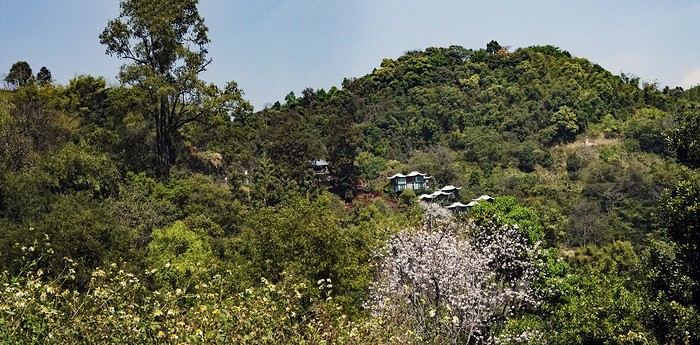
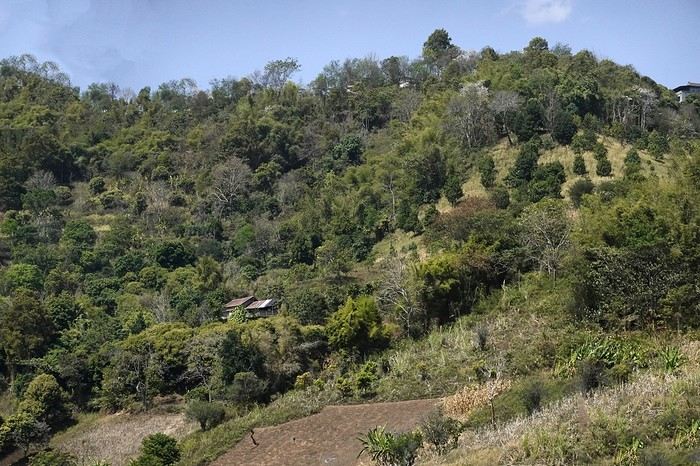


Mae Salong is completely deserted. It’s shocking! This is a big tourist village, packed with shops selling all kinds of local products. But most are closed. And in the few that *are* open, the shopkeepers look miserable—they’re not smiling at all! They don’t even react when I walk in. Like that young woman who didn’t look up from her phone the whole time I was there.


It didn’t exactly make me want to buy anything. It’s even worse than yesterday. I’m the *only* tourist in the whole village! Unbelievable!


At first, I thought we’d arrived too early and that’s why the shops weren’t open, but Phajon set me straight: - No, no, it’s because there are no customers. They’re not going to waste time opening their shops if they won’t sell anything. So they stay home in the city. They don’t even come here anymore. And he goes on and on about money and how people don’t have any. I’m still convinced, like yesterday, that it has nothing to do with money. It’s that tourists just aren’t interested in places like this anymore. I don’t see any other explanation—after all, I saw them by the thousands crowded in the same spot yesterday, like at the tea plantation.

In the center of the village, along the main road, I see a sort of square where you’d imagine a market. But there’s only one stall selling gourds and a few local products, including honey. Here too, the women look like they’ve been sucking on lemons. I buy a jar of honey with the comb still in it to compare with the mountain honeys from India, especially the Himalayas. The woman doesn’t even crack a smile. She doesn’t seem happy to have sold her jar of honey. I try to strike up a conversation with the two women to break the ice. They confirm that no one comes here anymore.


How could such a touristy place suddenly become this deserted?

It’s gotten to the point where there’s nothing to eat! All the restaurants are closed. The few that *are* open are little hole-in-the-wall places with nothing to sell! It’s absolutely crazy. When I ask for food, they tell me there’s nothing to cook. Over a kilometer or more, if there are three or four open, that’s the max. They’re open, but they’re actually closed 🤯 🤯 🤯 since they have nothing to offer. I get sent from one to the other, and it’s the same everywhere. I finally find one that agrees to make me some fried chicken wings—it’s terrible, not spicy, no flavor, not even salty. For 150 baht, when all these past days I’ve been eating at little eateries where I’ve had amazing dishes for just 50 baht.


There’s nothing to do here. So we leave, and I ask Phajon to drive and let me walk along the road. He’s horrified. - But you’re not going to walk 30 km? - I’m not going to walk 30 km, but 8 or 10 doesn’t scare me. Why not even more? I tell him to stop every two or three kilometers to pick me up if I get tired. At least now I can take photos.

The landscapes are beautiful, but after going to the Himalayas, you get picky. I take lots of photos of what seem like stunning landscapes, but when I look at them on my computer later, I’ll probably be disappointed. The images don’t capture the scale of the panorama or the charm of the different shades of green. Green in nature is often hard to capture in photos, especially when vegetation takes up most of the shot, but today it’s particularly bad. I find my photos lifeless and uninteresting.


Still, I manage to buy some Oolong tea from a warehouse along the road. The price is ridiculously low, and when I ask if it’s “organic,” the young woman says yes, yes, “original.” I stock up for myself and to give as gifts. It’s not as amazing as the Oolong from the tea gardens in Darjeeling that I bought in Kolkata, though.


Still, I’m happy with my day when we get back to my accommodation. I did see some beautiful landscapes and got to walk a bit along the road. I wasn’t stuck in the pickup all day like yesterday. My hiking app says I walked 12 km (according to GPS), but I think I did a lot more (based on my step count) over the course of the day.


That’s all I’m taking away from Doi Salong. And as I write this, I realize Mae Salong and Doi Salong are places our friend Songsam recommended as nice to visit this year. So I’ll definitely go back to see if the village has woken up. As you know, I don’t like crowded places, but this is the other extreme—so deserted that there’s nothing to eat in the restaurants. It’s a huge contrast! I’m really curious to see what it’ll be like this year.


Phajon is a very friendly and funny driver—his way of being and his comments about Buddhists make him a hoot. He drives well too, though way too fast for my taste—so I’d still recommend him. I was planning to hire him again for my next stay. But after all these annoying points, especially how he says “yes, yes” but does whatever he wants because he thinks he’s doing me a favor by taking me to touristy spots when I want the exact opposite… But the rare gems, the “hidden treasures” that any good driver knows? He doesn’t know any. He just sticks to what most tourists ask for—being driven around and leaving everything up to the driver. So I’m having second thoughts. But his rate is so good that it’s worth reconsidering. Before leaving, he tells me: - I saw you like the mountains and taking photos, so tomorrow I’ll take you to a great spot for that… Has he finally *really* understood what I like (and don’t like)? We’ll find out tomorrow…

My trip to Thailand is coming to an end—tomorrow’s March 1st, I leave Chiang Rai on the 3rd and Thailand on the 5th… It’s about time I had one of those “unforgettable” experiences!
Je rencontrai sur mon chemin tant de difficultés Qu’elles furent toutes surmontées MIRZA GHALIB poète urdu (1796 -1869) https://www.telling-india-pictures.com https://youpic.com/marien
MA Marien33 Veteran ·
I’m adding a page with no comments, just to show you how sad these pretty decorations on closed, boarded-up, abandoned houses look... Just for documentary purposes, no cropping or editing.


Je rencontrai sur mon chemin tant de difficultés Qu’elles furent toutes surmontées MIRZA GHALIB poète urdu (1796 -1869) https://www.telling-india-pictures.com https://youpic.com/marien
GA Gaura Veteran ·
Hi there, I’ve been following you and I still don’t get why you visited Mae Salong—I went there 10 years ago. You go for its historical interest and the museum that tells the whole story: the anti-communist Chinese, etc. I took photos but never got around to translating the signs into English. You also go to see the tea plantations because they’re so picturesque and it’s something you’ve never seen before—that was my case! To buy tea, which is supposedly excellent (I brought some back as gifts for the tea lovers in my life). Okay, maybe you’re saturated with tea since yours comes from India... But you also go for the huge ethnic market that’s held every day between 6 and 8 in the morning. The Akkhas and other ethnic groups come to sell fruits, vegetables, and meats. There are food stalls everywhere... and monks begging for alms. We spent a night in a pretentious Chinese hotel—cold decor, icy staff. There weren’t many options, and the food wasn’t memorable either. Very Chinese, you know! We visited Thai Buddhist temples that might’ve interested you: one was very modern to my taste—classic architectural style but with great color restraint. No gold except around the Buddha, just burgundy red to highlight the architectural lines. Another temple was under construction, dedicated to the local black rooster, a culinary specialty of Mae Salong. There were plaster roosters everywhere (not edible ones!). It promised to be *super* kitsch. After thirty years of traveling to Thailand (often just a few days in passing to visit neighboring countries), I’ve become pretty selective when it comes to temples. I took a lot of photos of the market, using the built-in flash on my camera because it was dark most of the time. I also got some nice shots of the tea plantations during the morning watering and photos of the modern temple. But for my mountain shots, it’s like back home—you need the right light, which is never midday. I don’t have the same strategy as you for drivers: after a few bad experiences early in my travels, I now ask for recommendations from my guesthouse, which I choose based on good ratings, location, and affordability. They know that if the client isn’t happy with the driver, there’ll be bad reviews online. I negotiate with the driver, and it usually goes well. In Mae Salong’s case, he knew the area well and took us to places that weren’t in the guidebooks, dropping us off on shaded paths to walk around the tea plantations. If you’d like, I can post some of my photos here and remove them once you’ve seen them.
gaura
MA Marien33 Veteran ·
Today, I’m going to treat myself (less work) and treat you (photos) by splitting my story into different parts of the day. Indeed, Phajon, with his incredible kindness to please me after the setbacks of the first few days, multiplied the number of sites to visit that might appeal to me. I wouldn’t have been able to fit enough photos of the different places into a single post.

We start the day with Khun Korn Waterfall. I’m not a waterfall enthusiast, but I admit they can be spectacular at times. This one is about average compared to the ones I’ve seen on this trip. Its appeal—in my humble opinion—lies only in its rather dizzying height.


An unintentional effect of nature lets me take a photo I particularly like, where you don’t see the shadow of the vegetation on the waterfall, but the waterfall cascading over the shadow.


But what I appreciate most is the dual (on foot) route to reach the falls (and leave) that gives me the illusion of progressing through an inhospitable and dark jungle where deadly snakes, venomous spiders, mischievous monkeys, colorful birds, not to mention tigers and leopards ready to pounce on the daring traveler who invades their territory with their unwelcome presence, might be hiding.


Crossing small bamboo bridges that seem, if not precarious, at least very unstable, adds an adventurous touch to the escapade, even if at this time of year the stream isn’t very full.


The stark contrast between the darkness of the lush vegetation and the sparkling brightness of the stream’s swirls is far from lacking charm. And in the end, I enjoy photographing the stream at its different points more than the waterfall itself.


One of Phajon’s strengths is that he doesn’t mind leaving early in the morning, especially today. So once again, I’m alone battling my jungle adventurer illusions. The solitude and silence amplify this fantasy. It’s only around 11 AM when I return to the vehicle that the first visitors arrive at the site.
Je rencontrai sur mon chemin tant de difficultés Qu’elles furent toutes surmontées MIRZA GHALIB poète urdu (1796 -1869) https://www.telling-india-pictures.com https://youpic.com/marien

Similar discussions

You might also like