Je suis tout à fait d'accord avec toi sur le fait que le liquide pourrait aisément passer de la bouteille posée sur le bar au verre du passager sans nécessiter obligatoirement l'intervention d'un PNC et qu'il serait en effet assez déplacé de se lever et d'attendre devant le bar qu'un PNC vienne nous servir.
Cependant, lors de mon dernier vol en J sur AF (un vol CDG-EZE en 772), un PNC passait régulièrement pour proposer aux personnes réveillées de leur servir quelque chose si ils le désiraient, et ceci en plus du bar l'Espace. Mais bon, si il/elle était pas là, les gens se levaient et se servaient leur boissons comme des grands
Par contre, et c'était scandaleux, il n'y avait aucun PNC posté dans les toilettes pour tirer la chasse, de nombreuses personnes ont donc du le faire par elle-mêmes ! 😛

 Terminal 2E, porte 12.
Point de rencontre La Première. Un bagagiste nous est annoncé, mais il n'y avait personne.
Terminal 2E, porte 12.
Point de rencontre La Première. Un bagagiste nous est annoncé, mais il n'y avait personne. Vous vous demandez si c'est le nouveau salon Première ? Ne soyez pas déçu, c'est le nouveau vestibule d'enregistrement ! Plus de contact désormais avec un AEC. Le passager s'assied là, commande s'il le désire une boisson, et attends qu'on lui amène sa carte embarquement. La valise est laissée à l'entrée du vestibule et enregistrée (normalement) jusqu'à destination.
Je dois avouer que ce vestibule m'a laissé une impression un peu partagée. Les sièges sont très confortables, et l'ensemble assez joli; mais l'endroit est cruellement impersonnel, et le contact avec l'AEC, bien que succinct, avait un certain charme.
Vous vous demandez si c'est le nouveau salon Première ? Ne soyez pas déçu, c'est le nouveau vestibule d'enregistrement ! Plus de contact désormais avec un AEC. Le passager s'assied là, commande s'il le désire une boisson, et attends qu'on lui amène sa carte embarquement. La valise est laissée à l'entrée du vestibule et enregistrée (normalement) jusqu'à destination.
Je dois avouer que ce vestibule m'a laissé une impression un peu partagée. Les sièges sont très confortables, et l'ensemble assez joli; mais l'endroit est cruellement impersonnel, et le contact avec l'AEC, bien que succinct, avait un certain charme. L'enregistrement a été interminable, quinze longues minutes à attendre seul dans cette grande pièce. Impression de patienter dans la salle d'attente d'une grande entreprise.
 Une fois la carte d'embarquement récupérée, le parcours est très fluide et c'est un réel plaisir d'arriver au salon en moins de deux minutes. Voici quelques photos du salon :
 Pièce intérieure principale du salon.
 Espace restauration, une douzaine de tables.

 Excellent petit déjeuner, servi par un personnel extrêmement courtois et serviable. Un service de grande classe, des produits de haute qualité, des couverts Christofle et des assiettes en porcelaine Haviland de Limoges. Le service, proposé à l'assiette, est assuré par les équipes d'Alain Ducasse, et l'on perçoit une différence abyssale avec celui du Park Hyatt.
Seul regret : l'absence d'omelettes au petit déjeuner.
Excellent petit déjeuner, servi par un personnel extrêmement courtois et serviable. Un service de grande classe, des produits de haute qualité, des couverts Christofle et des assiettes en porcelaine Haviland de Limoges. Le service, proposé à l'assiette, est assuré par les équipes d'Alain Ducasse, et l'on perçoit une différence abyssale avec celui du Park Hyatt.
Seul regret : l'absence d'omelettes au petit déjeuner. Espace travail assez design, mais seuls trois ordinateurs étaient mis à disposition.
 Le nouveau Bar, sympathique et convivial, mais un peu hors de propos pour les vols du matin.
 Espace relaxation. Univers teinté de pureté et de sérénité, mais peut être un peu trop aseptisé.
 Le lieu me plait beaucoup, bien que l'intimité que ne soit pas assurée. Mais c'est un lieu de repos, pas une "alcôve" comme le présente Air France.
 Les toilettes et la douche sont très réussies.


 Une montée en gamme des voitures utilisées pour le transport des passagers jusqu'au pied de l'avion est à saluer. Air France se calque enfin sur Swiss, Lufthansa et Qatar Airways.

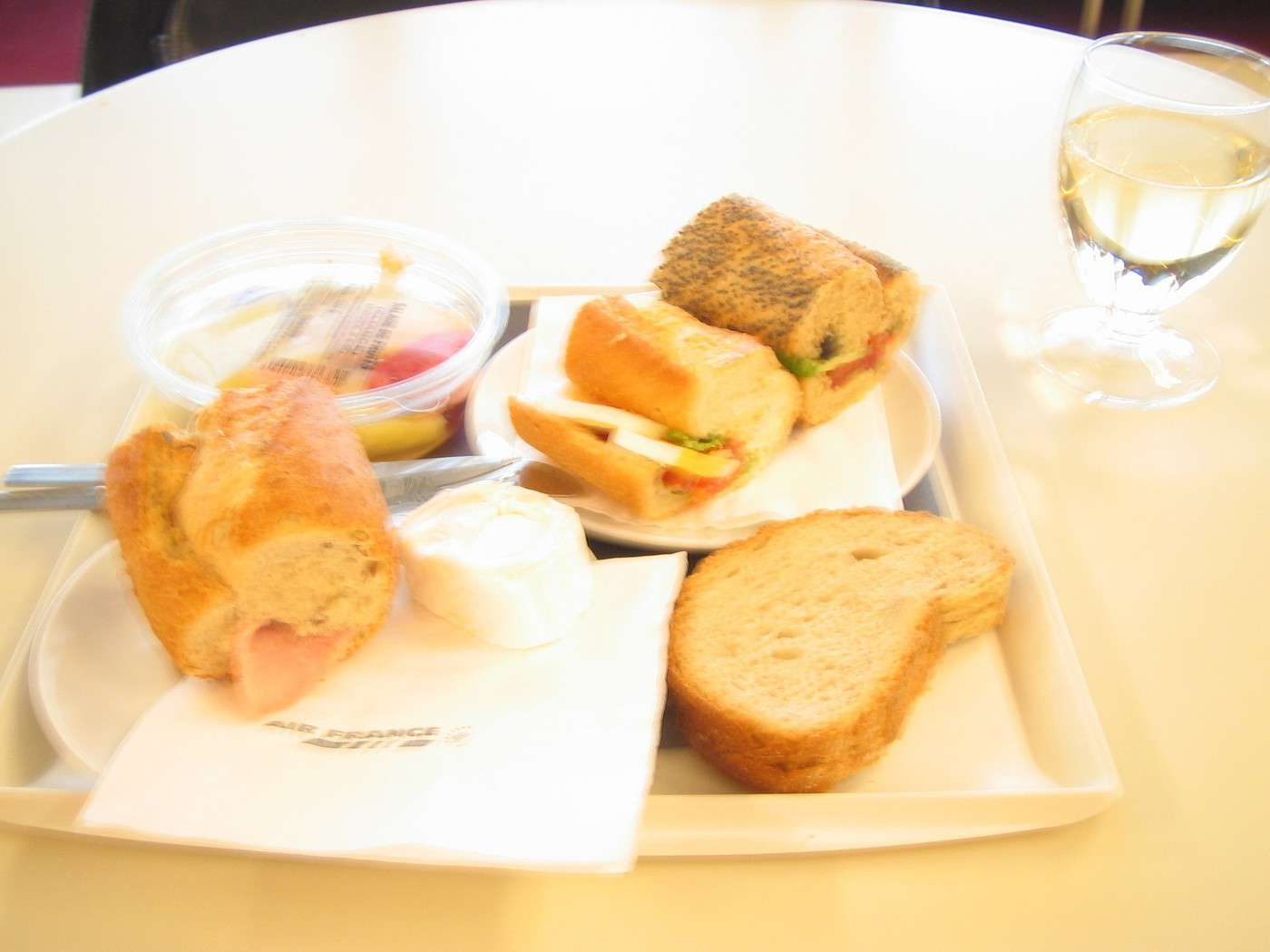
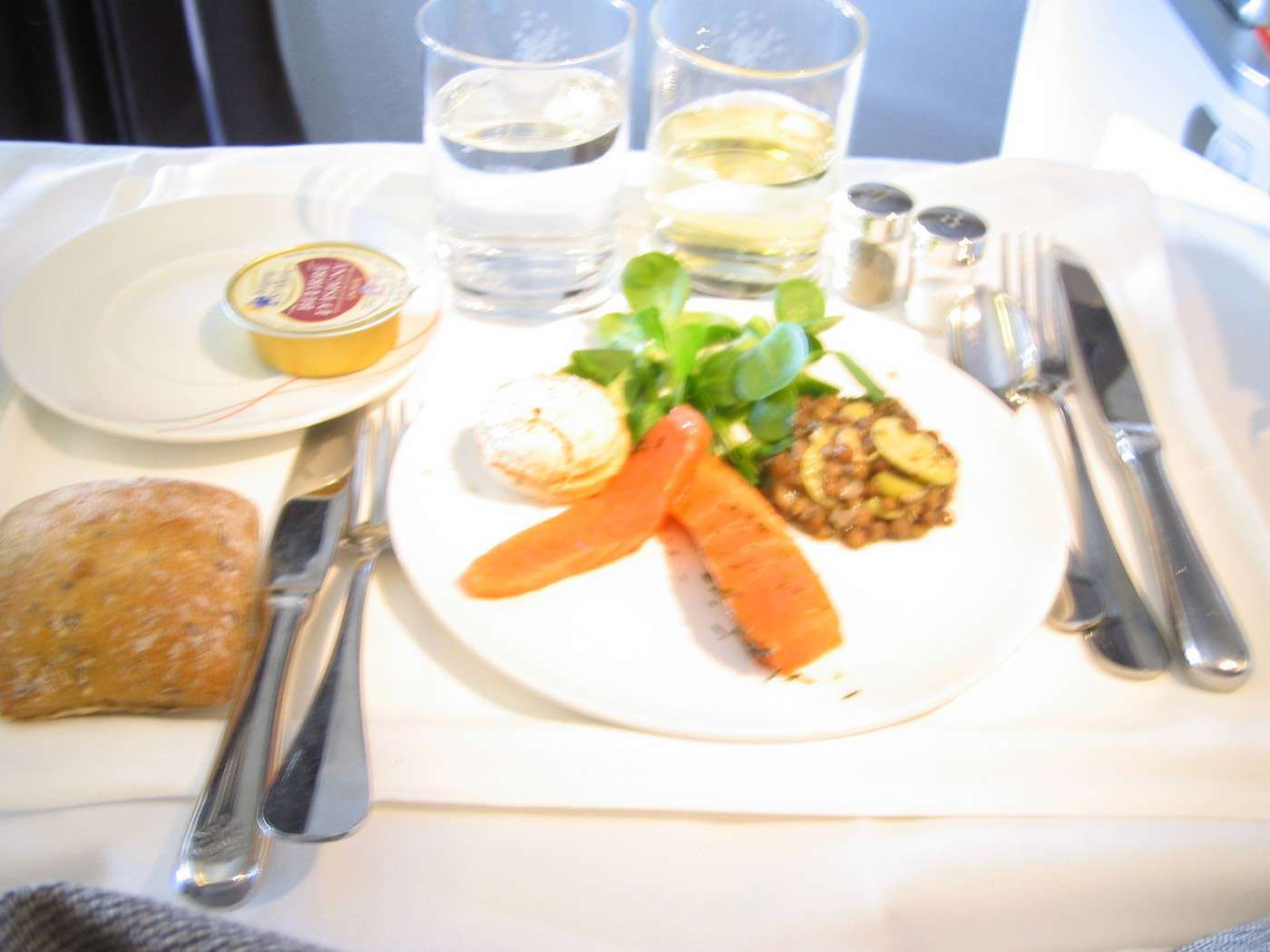
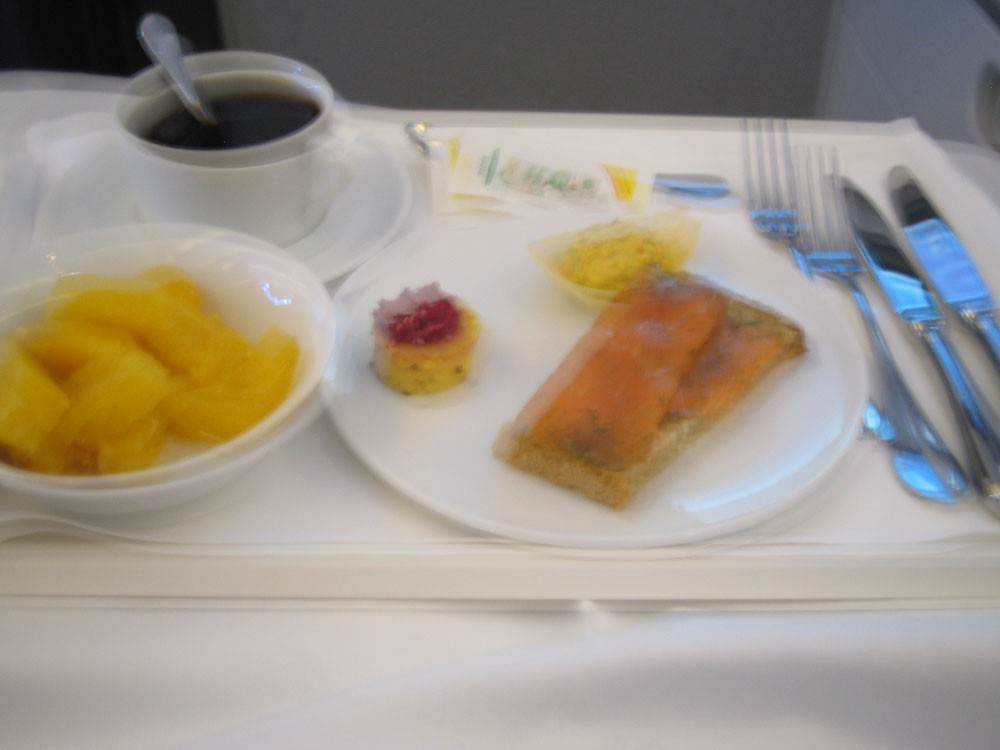
 Mise en bouche : Crevette au radis blanc et raifort, fois gras et magret de figues, palet de betterave au mascarpone et ciboulette.
 Noix de Saint-Jacques, légumes et blettes acidulées.
Insipides.
Noix de Saint-Jacques, légumes et blettes acidulées.
Insipides.
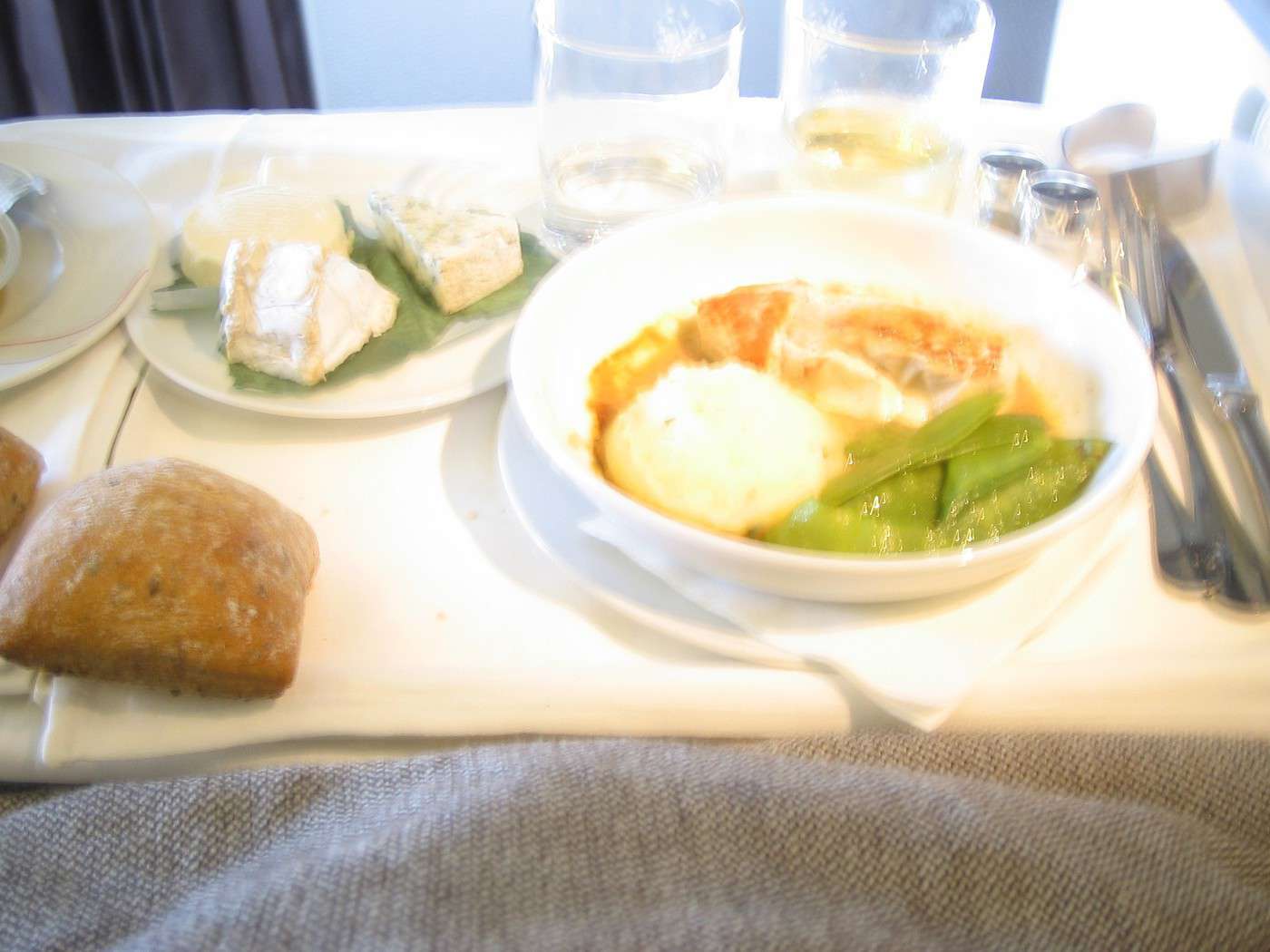
 Filet de poulet fermier au jus. Préparé par nos chefs pour votre plaisir, ce filet de poulet fermier vous est offert sur le vol d'aujourd'hui, servi avec un jus de citron au sel et aux tomates séchées, accimpagné de tofu et de frois gras poêlés.
Plat très lourd et sans saveur. Poulet et foie gras poêlé s'accomodent assez mal.
Filet de poulet fermier au jus. Préparé par nos chefs pour votre plaisir, ce filet de poulet fermier vous est offert sur le vol d'aujourd'hui, servi avec un jus de citron au sel et aux tomates séchées, accimpagné de tofu et de frois gras poêlés.
Plat très lourd et sans saveur. Poulet et foie gras poêlé s'accomodent assez mal. Camembert, Fourme de Montbrison, Sainte-Maure, Gratte-Paille, Comté.
Fromages très froids et sans saveur. Inacceptable pour une compagnie française, au départ de Paris.
Camembert, Fourme de Montbrison, Sainte-Maure, Gratte-Paille, Comté.
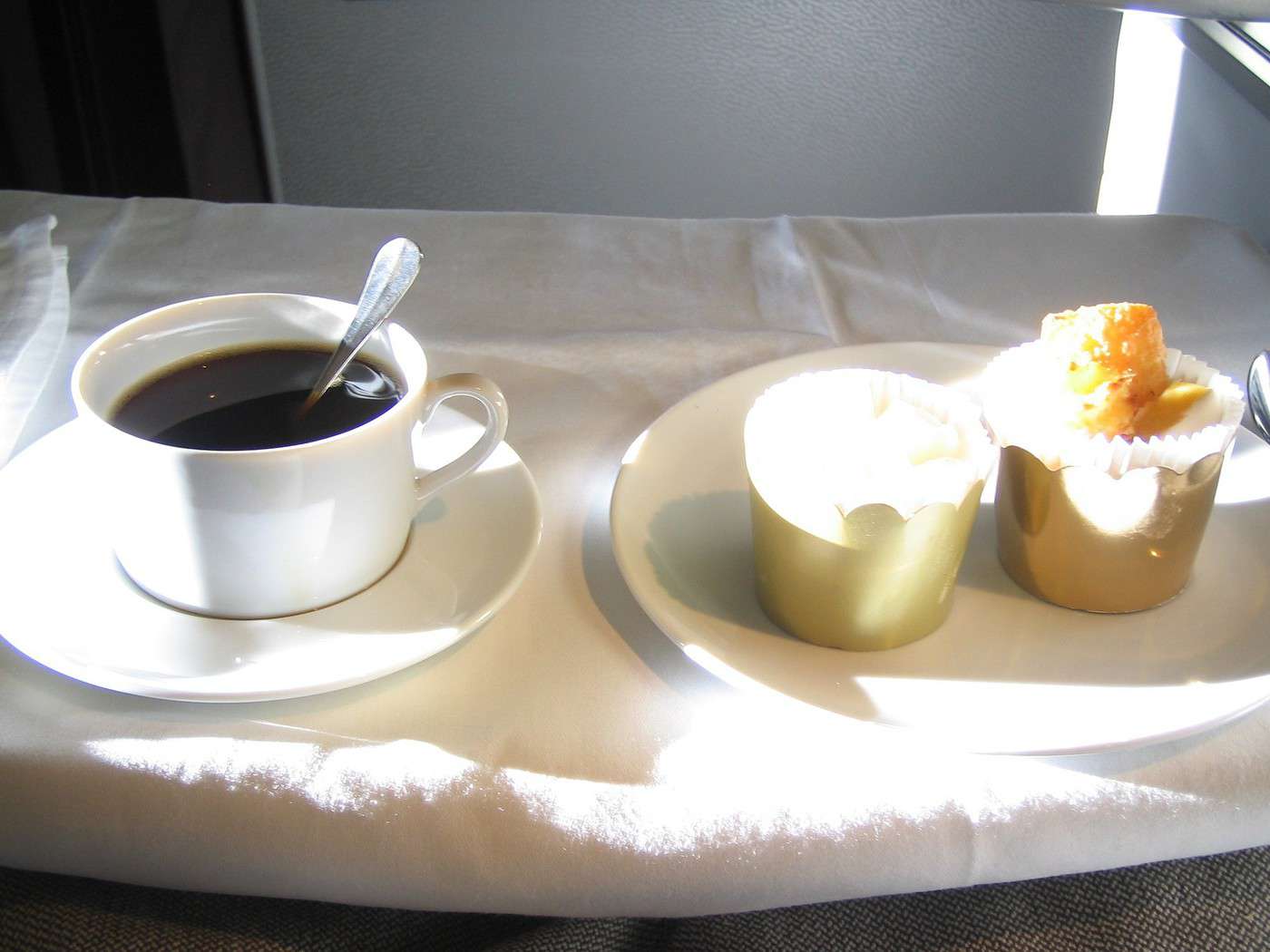
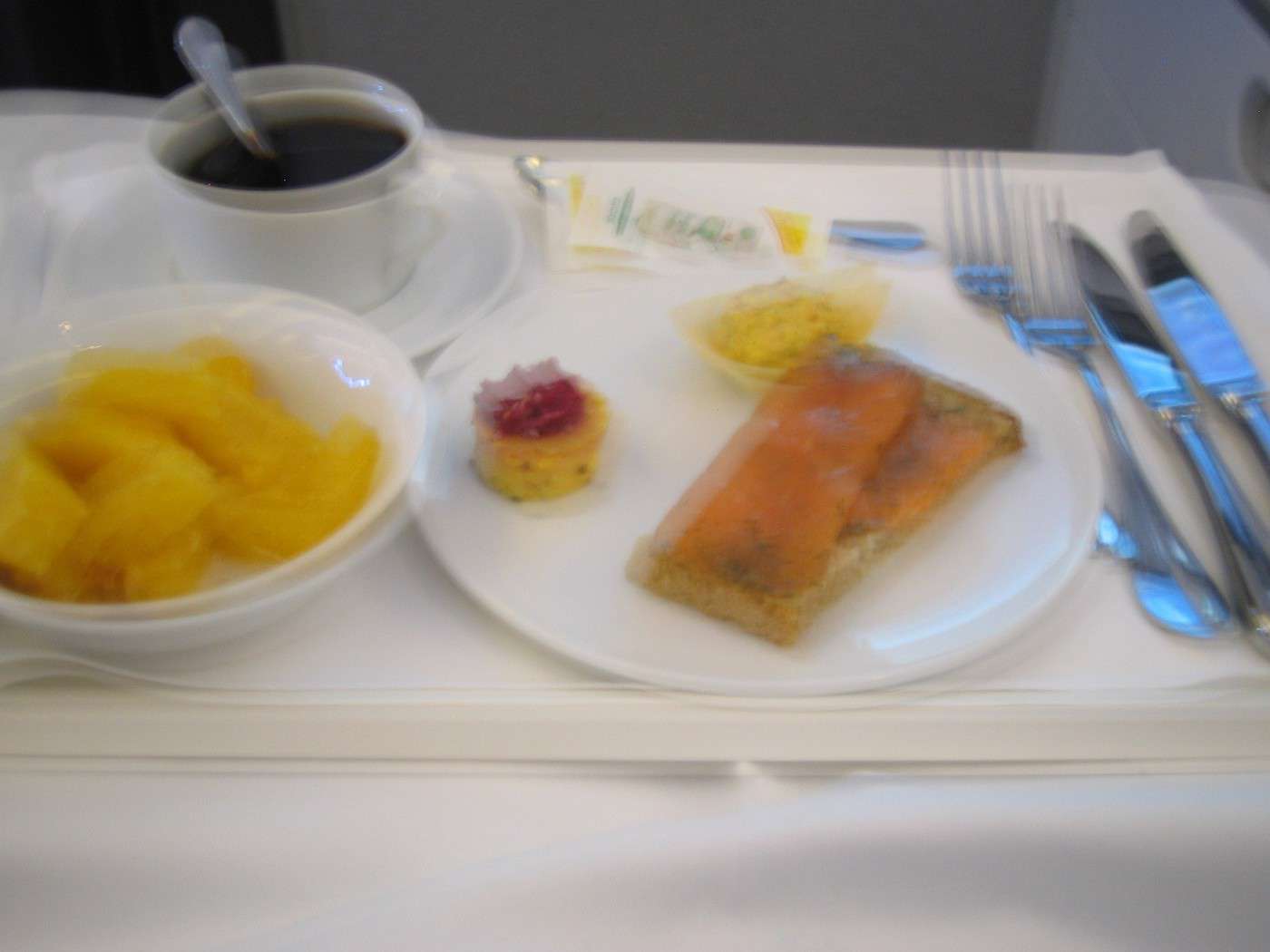
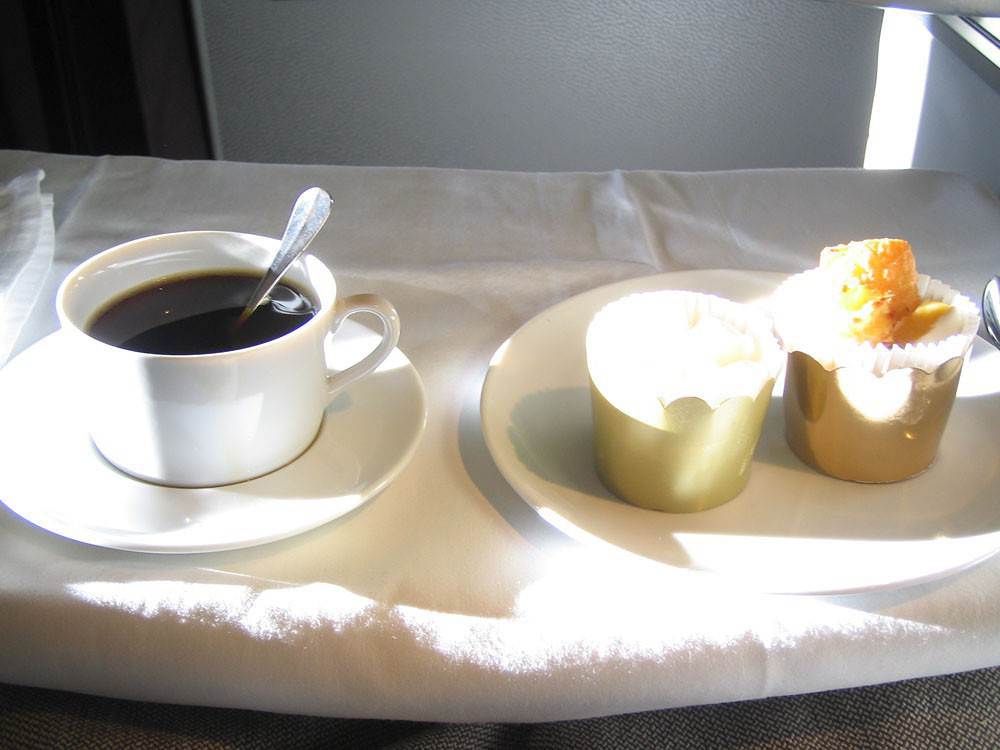
Fromages très froids et sans saveur. Inacceptable pour une compagnie française, au départ de Paris. Ananas rôti au poivre et mousseline à la cannelle, petits fours frais, sorbets et petits fours secs, assortiment de fruits frais.
Très bons desserts, comme toujours en P sur Air France.
Ananas rôti au poivre et mousseline à la cannelle, petits fours frais, sorbets et petits fours secs, assortiment de fruits frais.
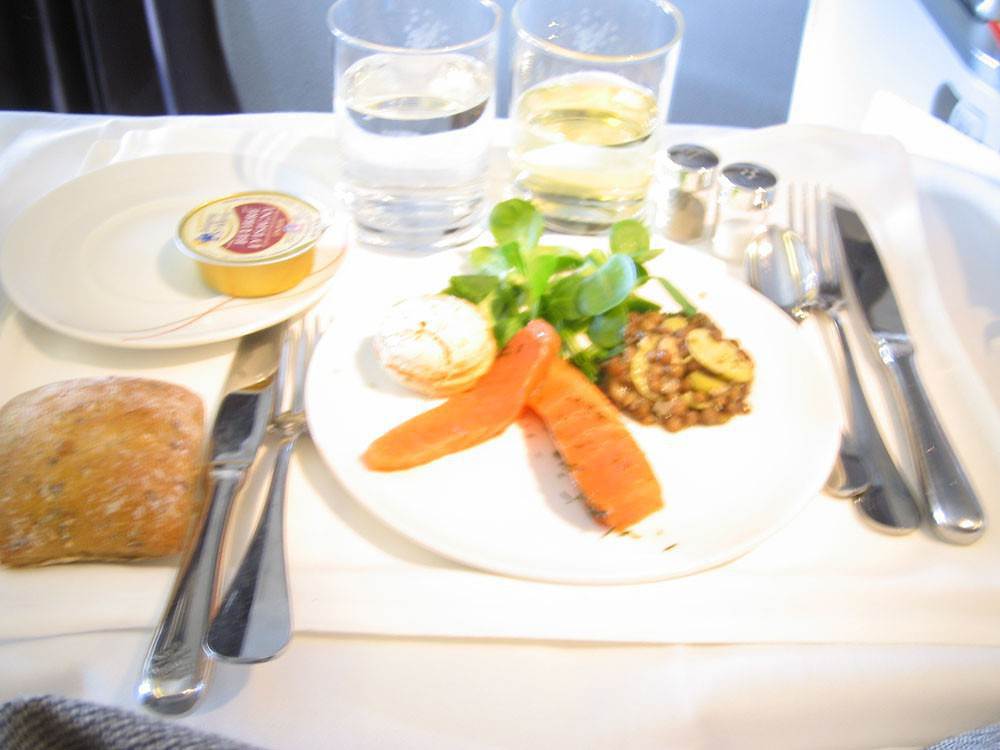
Très bons desserts, comme toujours en P sur Air France. Gambas justes saisies, mangue acidulée, flan à la coriandre.
Immangeable, crevettes filamenteuses.
Gambas justes saisies, mangue acidulée, flan à la coriandre.
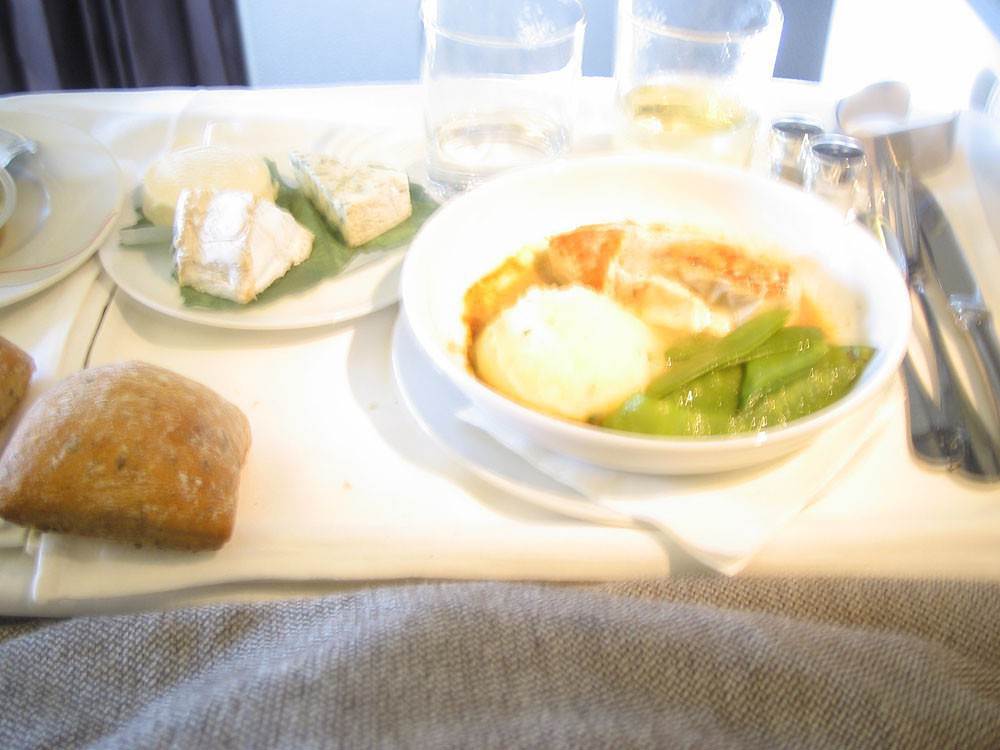
Immangeable, crevettes filamenteuses. Filet de boeuf jus de tomate à la citronenelle, tranche de céleri et tapenade.
Le boeuf était tendre et savoureux, mais le plat manquait de relief dans l'ensemble. Fromage toujours aussi mauvais.
Les deux repas étaient mauvais, mais accompagnés d'un excellent Bordeaux - Pauillac Château Lych Bages 2004 Grand Cru classé.
Filet de boeuf jus de tomate à la citronenelle, tranche de céleri et tapenade.
Le boeuf était tendre et savoureux, mais le plat manquait de relief dans l'ensemble. Fromage toujours aussi mauvais.
Les deux repas étaient mauvais, mais accompagnés d'un excellent Bordeaux - Pauillac Château Lych Bages 2004 Grand Cru classé.








Hello,
Since it came into force, Regulation 261/2004 of the European Parliament and Council, which defines air passenger rights, has faced fierce resistance from airlines, backed by IATA (the association representing almost all passenger airlines).
Beyond the airlines' often abusive—and even frequently bad-faith—resistance to passenger rights, IATA has been lobbying EU institutions for years, with the Council paying close attention for a long time.
As a result, the Council and the Commission have been proposing revisions to Regulation 261/2004 for years that are particularly unfavorable to passengers. The latest attempt nearly eliminated the right to compensation for delays of 3 hours or more upon arrival at the final destination.
However, since this is a regulation of both the European Parliament AND the Council, the two bodies had to agree.
But the European Parliament has always stood firm, consistently responding that passenger rights must be preserved.
After 11 years of struggle, it seems likely that we’re finally nearing the end of the match between the European Commission, the Council (the 27 heads of state or government), and the European Parliament.
Indeed, the Commission and the European Parliament have agreed on a text that will be debated again on Monday, July 6, 2026, with a vote scheduled for July 7, 2026. It’s very likely that this text, which would come into force in a year, will be adopted.
The main changes would be as follows: - Families with children will no longer be forced to pay to sit together on planes; - A flight will be considered canceled (not just delayed) if it departs more than one hour late; - Right to compensation for arrival at the final destination if the delay exceeds 3 hours (no longer "3 hours OR more"). The arrival time will be when the plane, having reached its parking spot, engages its parking brakes (no longer when the aircraft door opens); - Airlines can no longer refuse boarding or charge extra on the return flight for a passenger who didn’t take the outbound flight; - If a flight is canceled, the airline must, at the same time as informing passengers of the event, offer the choice between a refund and re-routing, and inform them of their rights to assistance and, if applicable, compensation; - The airline must, without undue delay, inform passengers of the reason; - In the case of a connecting flight, if the connection is missed and the delay at the final destination entitles the passenger to compensation, the responsible airline will be liable. This is very different from the current situation, where, under the KLM ruling, any airline operating a segment of the flight is liable for compensation. This promises more disputes that the Court of Justice of the European Union will have to resolve if two separate airlines operating segments of a connecting flight are both responsible for the delay. See this case for an example: https://retardimportantavion.wordpress.com/2026/04/18/swiss-international-air-lines-la-mauvaise-foi/ Moreover, this case demonstrates in advance another potential dispute: It could be argued that it wasn’t a missed connection since the flight was canceled before the first leg even departed. - Within 96 hours of a flight that could entitle passengers to compensation, the airline must contact them to inform them of their rights and explain the next steps. - Passengers must claim their right to compensation within 9 months. This is very different from the current situation, as Regulation 261/2004 sets no time limit. Currently, national law applies—in France, the limit is 5 years. The airline must respond within 30 days. If the airline refuses compensation on the grounds of "extraordinary circumstances," it must specify which type of case it refers to from the list in the annex of the new regulation. If the case isn’t on the list, the airline must explain what the event was, why it qualifies as extraordinary circumstances with "clear, substantial, and concise" explanations, and why it’s directly linked to the reason given. It must also declare what "reasonable measures" were taken to mitigate the issue. This is, of course, a huge change in the regulation, with the clear goal of preventing airlines from declaring just anything as "extraordinary circumstances" to avoid compensation. - If, within 3 hours of a last-minute canceled or delayed flight, the airline hasn’t offered re-routing under comparable transport conditions and as soon as possible—whether on one of its own flights or another airline’s—the passenger will have the right to arrange their own re-routing and demand a refund for the new ticket, up to 400% of the original ticket price. This is a significant improvement that would have likely prevented the case described here: https://retardimportantavion.wordpress.com/2024/01/12/reacheminement-catastrophique-droit-indemnisation-meme-circonstances-extraordinaires-2/ - If a flight is canceled due to "extraordinary circumstances," the airline will only be required to offer up to 3 nights in a hotel. This is a major change, as there’s currently no limit. Expect disputes if the extraordinary circumstances end while the passenger hasn’t been re-routed. - The price of a flight, as first displayed, must obligatorily include a cabin bag. This doesn’t prevent the airline from offering a price reduction if the passenger waives the cabin bag. This will put an end to abnormal practices, such as (just one example) Condor charging extra for a cabin bag on long-haul flights like Frankfurt (Germany)–Puerto Plata (Dominican Republic)–Santo Domingo (Dominican Republic)–Frankfurt. - Free correction of a passenger’s name if requested 48 hours before departure. Note: This can’t be used to replace one passenger with another—just to correct a typo, e.g., Dupont instead of Dpont. - Airlines’ websites and apps must include information on how to file a claim.
It’s clear that, despite a few details, these changes are very positive for upholding passenger rights. It remains to be seen whether this text will be definitively adopted on July 7, 2026, as is very likely, and, more importantly, whether IATA will encourage airlines to loyally respect these new rules or persist in their old habits.
Best regards,
Since it came into force, Regulation 261/2004 of the European Parliament and Council, which defines air passenger rights, has faced fierce resistance from airlines, backed by IATA (the association representing almost all passenger airlines).
Beyond the airlines' often abusive—and even frequently bad-faith—resistance to passenger rights, IATA has been lobbying EU institutions for years, with the Council paying close attention for a long time.
As a result, the Council and the Commission have been proposing revisions to Regulation 261/2004 for years that are particularly unfavorable to passengers. The latest attempt nearly eliminated the right to compensation for delays of 3 hours or more upon arrival at the final destination.
However, since this is a regulation of both the European Parliament AND the Council, the two bodies had to agree.
But the European Parliament has always stood firm, consistently responding that passenger rights must be preserved.
After 11 years of struggle, it seems likely that we’re finally nearing the end of the match between the European Commission, the Council (the 27 heads of state or government), and the European Parliament.
Indeed, the Commission and the European Parliament have agreed on a text that will be debated again on Monday, July 6, 2026, with a vote scheduled for July 7, 2026. It’s very likely that this text, which would come into force in a year, will be adopted.
The main changes would be as follows: - Families with children will no longer be forced to pay to sit together on planes; - A flight will be considered canceled (not just delayed) if it departs more than one hour late; - Right to compensation for arrival at the final destination if the delay exceeds 3 hours (no longer "3 hours OR more"). The arrival time will be when the plane, having reached its parking spot, engages its parking brakes (no longer when the aircraft door opens); - Airlines can no longer refuse boarding or charge extra on the return flight for a passenger who didn’t take the outbound flight; - If a flight is canceled, the airline must, at the same time as informing passengers of the event, offer the choice between a refund and re-routing, and inform them of their rights to assistance and, if applicable, compensation; - The airline must, without undue delay, inform passengers of the reason; - In the case of a connecting flight, if the connection is missed and the delay at the final destination entitles the passenger to compensation, the responsible airline will be liable. This is very different from the current situation, where, under the KLM ruling, any airline operating a segment of the flight is liable for compensation. This promises more disputes that the Court of Justice of the European Union will have to resolve if two separate airlines operating segments of a connecting flight are both responsible for the delay. See this case for an example: https://retardimportantavion.wordpress.com/2026/04/18/swiss-international-air-lines-la-mauvaise-foi/ Moreover, this case demonstrates in advance another potential dispute: It could be argued that it wasn’t a missed connection since the flight was canceled before the first leg even departed. - Within 96 hours of a flight that could entitle passengers to compensation, the airline must contact them to inform them of their rights and explain the next steps. - Passengers must claim their right to compensation within 9 months. This is very different from the current situation, as Regulation 261/2004 sets no time limit. Currently, national law applies—in France, the limit is 5 years. The airline must respond within 30 days. If the airline refuses compensation on the grounds of "extraordinary circumstances," it must specify which type of case it refers to from the list in the annex of the new regulation. If the case isn’t on the list, the airline must explain what the event was, why it qualifies as extraordinary circumstances with "clear, substantial, and concise" explanations, and why it’s directly linked to the reason given. It must also declare what "reasonable measures" were taken to mitigate the issue. This is, of course, a huge change in the regulation, with the clear goal of preventing airlines from declaring just anything as "extraordinary circumstances" to avoid compensation. - If, within 3 hours of a last-minute canceled or delayed flight, the airline hasn’t offered re-routing under comparable transport conditions and as soon as possible—whether on one of its own flights or another airline’s—the passenger will have the right to arrange their own re-routing and demand a refund for the new ticket, up to 400% of the original ticket price. This is a significant improvement that would have likely prevented the case described here: https://retardimportantavion.wordpress.com/2024/01/12/reacheminement-catastrophique-droit-indemnisation-meme-circonstances-extraordinaires-2/ - If a flight is canceled due to "extraordinary circumstances," the airline will only be required to offer up to 3 nights in a hotel. This is a major change, as there’s currently no limit. Expect disputes if the extraordinary circumstances end while the passenger hasn’t been re-routed. - The price of a flight, as first displayed, must obligatorily include a cabin bag. This doesn’t prevent the airline from offering a price reduction if the passenger waives the cabin bag. This will put an end to abnormal practices, such as (just one example) Condor charging extra for a cabin bag on long-haul flights like Frankfurt (Germany)–Puerto Plata (Dominican Republic)–Santo Domingo (Dominican Republic)–Frankfurt. - Free correction of a passenger’s name if requested 48 hours before departure. Note: This can’t be used to replace one passenger with another—just to correct a typo, e.g., Dupont instead of Dpont. - Airlines’ websites and apps must include information on how to file a claim.
It’s clear that, despite a few details, these changes are very positive for upholding passenger rights. It remains to be seen whether this text will be definitively adopted on July 7, 2026, as is very likely, and, more importantly, whether IATA will encourage airlines to loyally respect these new rules or persist in their old habits.
Best regards,