Skip to content
Photo Safaris in Kenya
Kenya › Travel journals Rouquine38

Photo Safaris in Kenya

Translated into English.
Add a reply…

Sign in to reply

Your reply to “Photo Safaris in Kenya” is one step away. We’ll bring you right back to it.

Create a free account

Why become a member?

354 replies

Rouquine38OP· 2 years ago
Buffalo Springs – Ol Pejeta

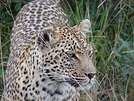
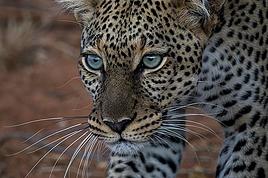
This morning, we quickly grab breakfast—our suitcases are packed while it’s still dark out. Félix arrives with a big smile. It’s not even 6 a.m. when we’re under the acacia tree. The prey is gone, but the beautiful leopard is there, standing in the tree, licking her chops and watching us. A piece of gazelle is wedged between two branches next to her—what she managed to haul up before the other predators arrived. The night must’ve been pretty wild at the foot of that acacia.
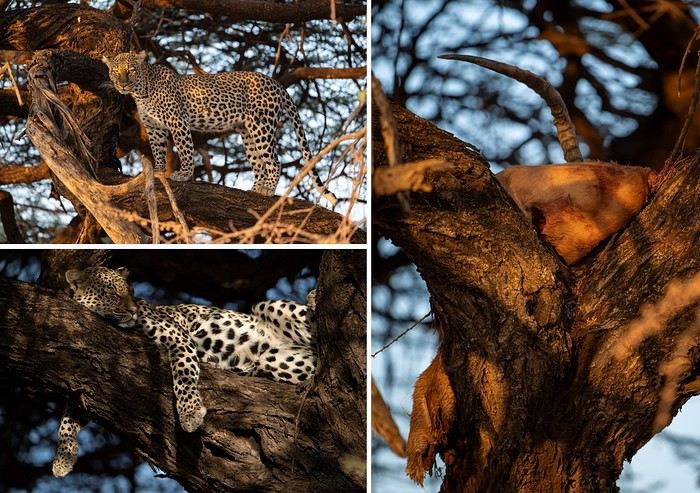


We leave after half an hour once she’s gone, off for a long nap with a full belly.

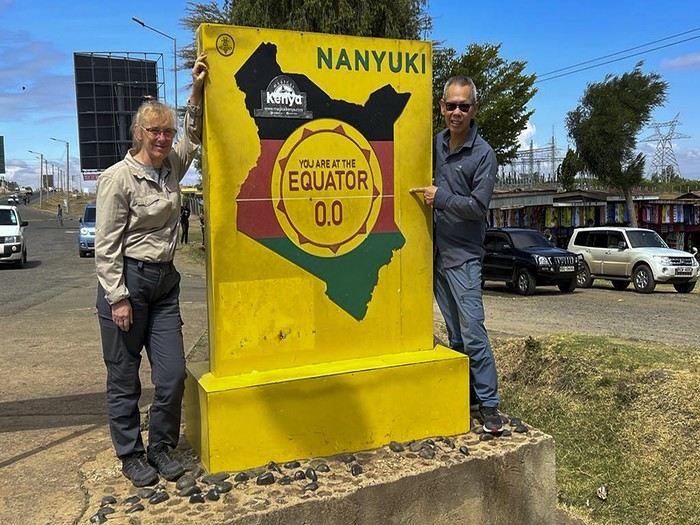
Our destination for the day is Ol Pejeta. The Sweetwaters Serena Camp, where we’re staying for the night, is 130 km away. On the way, we stop in Nanyuki, right on the Equator line, for a break.


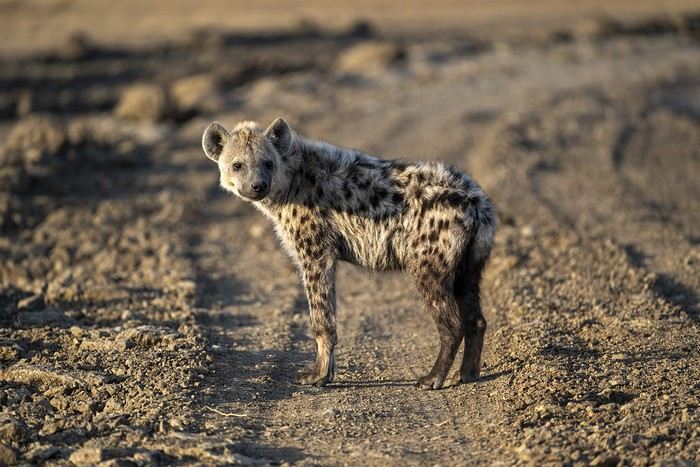
Along the way, a spotted hyena demands right of way.


From Buffalo Springs, it takes us 3 hours to reach Ol Pejeta, and we arrive just in time for lunch.

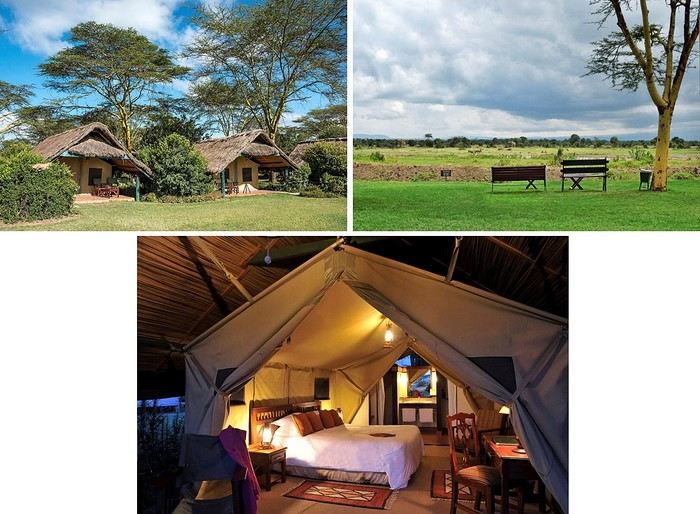
The lodge is lovely, with a watering hole where animals come to drink. The tents with en-suite facilities are super luxurious.


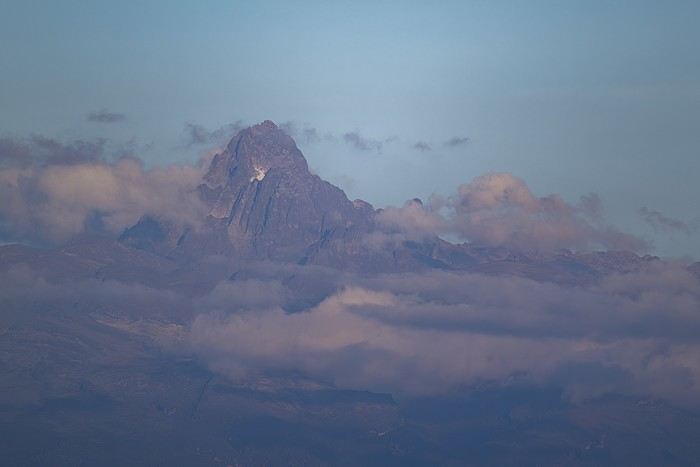
Ol Pejeta Reserve sits between the Aberdare Range and Mount Kenya, visible in the distance.
Rouquine38OP· 2 years ago
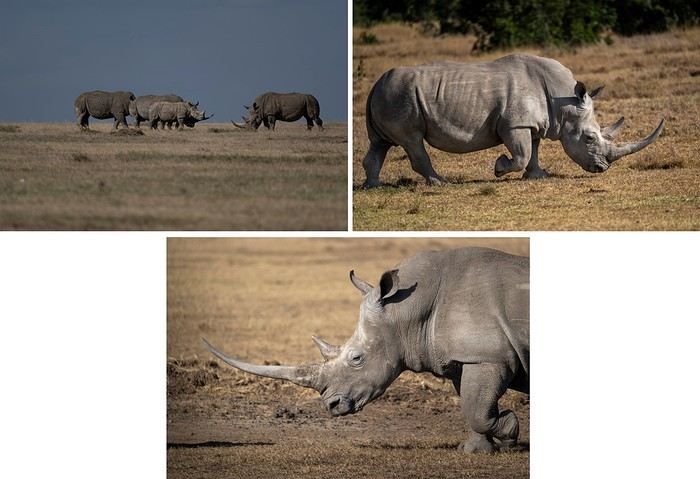
This is a private and protected reserve dedicated to wildlife conservation, especially black and white rhinos.

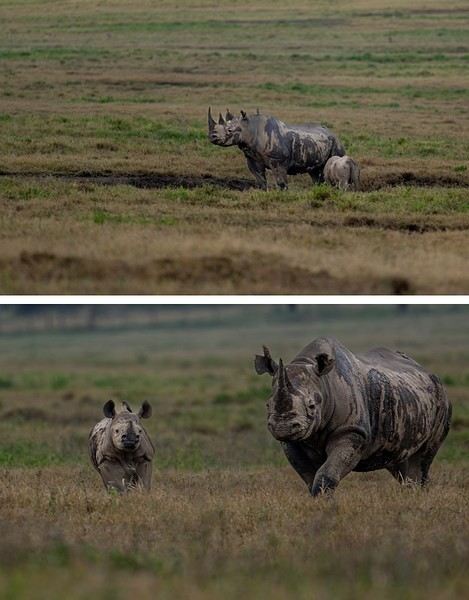
The black rhino is classified as critically endangered, while the white rhino is considered near threatened, with one subspecies, the northern white rhino, on the brink of extinction.

As for the color of rhinos, they’re all gray. Actually, the name "white rhino" is a mistranslation of the Afrikaans word "weit," which means "wide" and refers to the square lips of white rhinos, which they need for grazing. Black rhinos have hooked lips since they prefer browsing in bushes. Black rhinos are also smaller, more solitary, shy, and aggressive than white rhinos, which is why the latter are easier to spot and approach.

We encountered magnificent white rhinos—from afar, up close, and *very* close.


Our most beautiful encounter with black rhinos was this mother and her calf in the distance who came closer to us.


The reserve’s unique feature is that it’s home to the last two northern white rhinos in the world—a mother and her daughter. We can’t see them; they’re well protected.

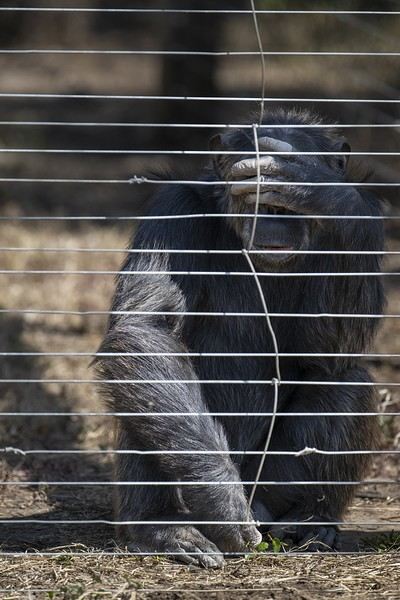
The reserve also has a sanctuary for orphaned or mistreated chimpanzees. Even though these primates aren’t native to Kenya, the reserve provides a refuge for them. It’s a really wonderful initiative, but what really bothered us was when the guide called the chimps by their names. Several came right up to the barrier, and this one clearly shows his disapproval.


A little anecdote that still makes me laugh today: in the evening and at night, it’s *not* warm at all... it felt like we were in Aberdare. The tent fabric doesn’t really block the cold. While my husband was busy unloading the photos, I got into bed to warm up. I opened the covers and spotted a dark mass at the bottom—I screamed and curled up! My husband, worried, asked what was wrong, but I couldn’t speak—I was laughing too hard once I realized that what I’d mistaken for a critter was actually a hot water bottle in a furry cover that looked like a genet. Oh, what a treat to have that kind of little attention for cold-sensitive guests like me!

On the road to the lakes region—check it out here
Did0764· 2 years ago
Hi, I’m heading back on a virtual trip after my September 2024 itinerary, which looks a lot like the start of this one—same camps in Samburu (3 nights) and Meru (3 n), different ones in Buffalo Springs (2 n) and Ol Pejeta (2 n), ending at Lake Nakuru (2 n).

You’ve got some great sightings—same here! I only spotted bat-eared foxes in Ol Pejeta; I wasn’t expecting to see those little critters at all... Looking forward to the rest! Thanks for this travel journal.
Rouquine38OP· 2 years ago
Hi Didier, Your trip is still so fresh—mine from September 2024 feel like ages ago now! 😅 You’ve got to share all the details in a travel journal 😊 Writing one is such a great way to relive the moments and look back at photos. Yeah, those otocyons (bat-eared foxes) are tough to spot—they’re so skittish! The rest will come soon… sorting through all the photos takes forever 😩
Girardinpho· 2 years ago
Hello,

A really beautiful travel journal I’d missed. Caught up now! Hope there’s still room in the 4x4 for the rest of the adventure?

The photos are stunning, and I can confirm that the gear + the photographer can work wonders.
Rouquine38OP· 2 years ago
Hello,

A really beautiful travel journal I’d missed. I’m all caught up now! Hope there’s still room in the 4x4 for the rest of the adventure?

The photos are stunning, and I can confirm that the gear + the photographer can work wonders.


Welcome to this travel journal, Nathalie! 😊 There’s always room for Africa and animal lovers! 🦁
Blesl· 2 years ago
Huge congratulations to add to the well-deserved ones from the gang!

Congrats on the text—always interesting—and on your travel choices, and, last but not least, on the photos! Well taken, well framed, and well post-processed—they make me drool. There we go, my keyboard is all sticky now, yuck!

It’s for travel journals like yours that we’re so glad VF is back up and running (and that we realize how much we missed it...).

Asante sana!

BL
Rouquine38OP· 2 years ago
Congrats on top of the well-deserved praise from the gang!

Kudos for the text—always interesting—for your travel choices, and, last but not least, for the photos! They’re well-taken, well-framed, and well-edited. I’m drooling over them—my keyboard’s all sticky now, yuck!

It’s travel journals like yours that make us so glad VF is back up and running (and make us realize how much we missed it…).

Asante sana!

BL


Thanks, Bernard! 😊 I’m really flattered by all these compliments 😊 But I’m so happy this travel journal is going over well. It takes quite a bit of time, and this one even more than the others since I didn’t take any notes—just memories and, luckily, photos! 😍
Rouquine38OP· 2 years ago
Nakuru

During our two trips to Kenya, we stopped at Lake Nakuru, which is also a national park.

Lake Nakuru is located in the Great Rift Valley (separation of the African plate).

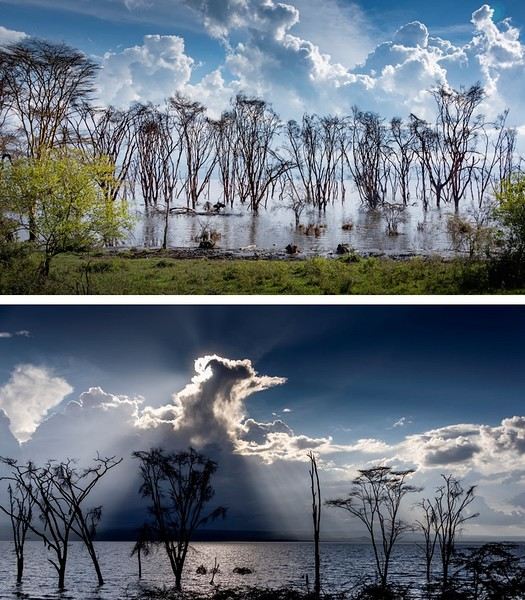
In 2021, rising water levels due to the heavy rainfall in 2020 made the surroundings and some access points impassable. The trees are in the water, and the landscapes are otherworldly.


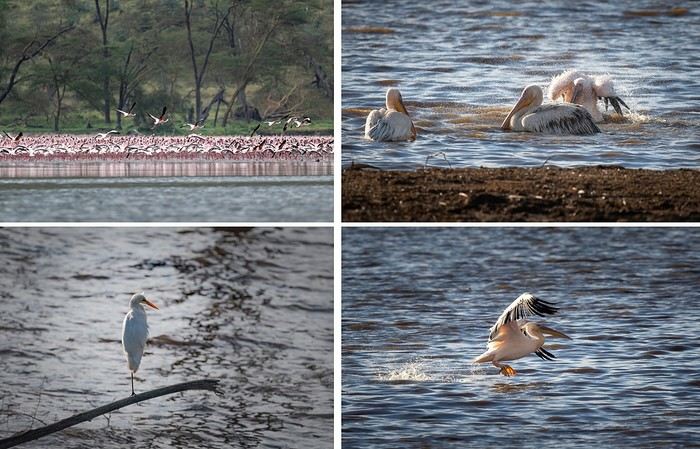
This lake is a saline lake, like Lake Bogoria, which we’ll see later. Lesser flamingos and great white pelicans have made it their home.


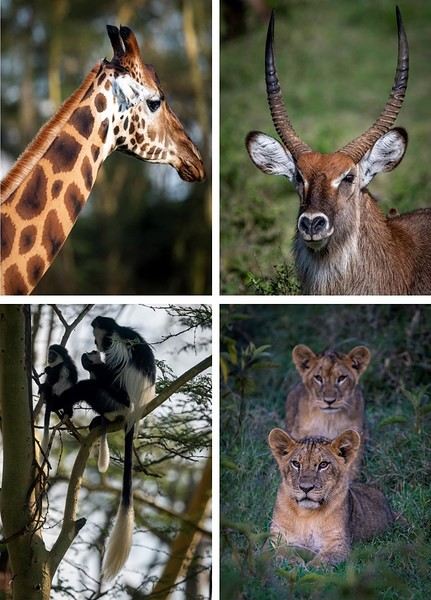
The park isn’t very accessible, and the animals are hard to spot. Still, we encounter a Rothschild’s giraffe showing off its best profile, a defassa waterbuck wondering what we’re doing there, a heartwarming family scene of Colobus guerezas, and two playful lion cubs.


Half a day in the park left us wanting more. Plus, we slept in Nakuru, not inside the park.
Rouquine38OP· 2 years ago
Two years later, in 2023, the landscapes are quite different—the water has returned to a more normal level. The access points and paths are now passable. We really don’t feel like we’re in the same place.

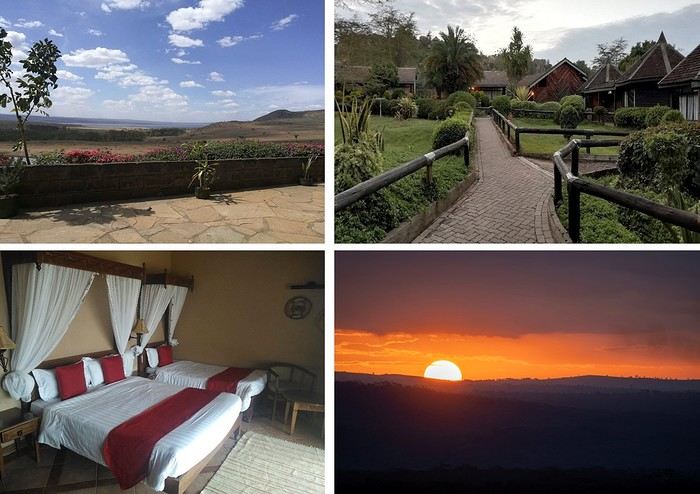
This time, we’re staying inside the park at Lake Nakuru Lodge. The rooms are spacious, and the food is excellent. I highly recommend it for visiting Nakuru Park.

It’s perfectly located, slightly elevated to enjoy the view of the park. On our way to dinner, we’re treated to a beautiful sunset.


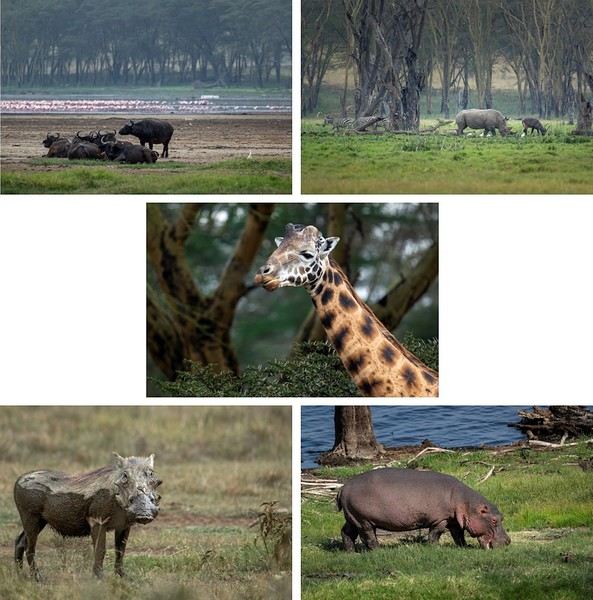
We’re seeing many more mammals—rhinoceroses, giraffes, buffaloes, zebras...

Show 10 more replies
Rouquine38OP· 2 years ago
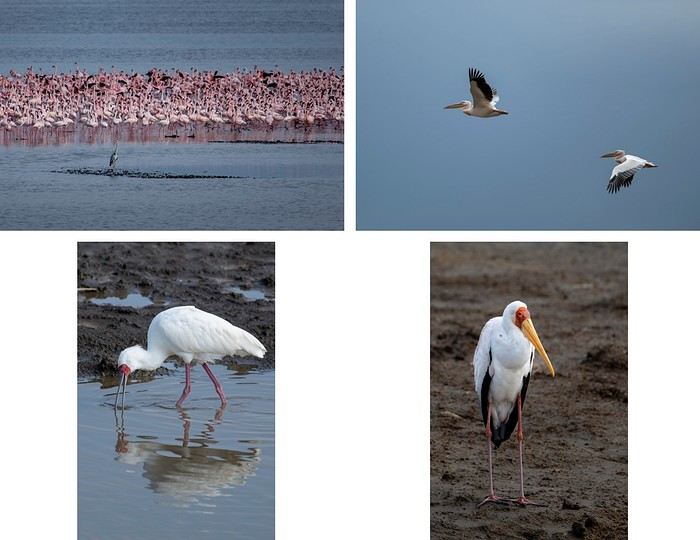
Birds are also very present, from those around the lake like flamingos, pelicans, egrets, and other waders.


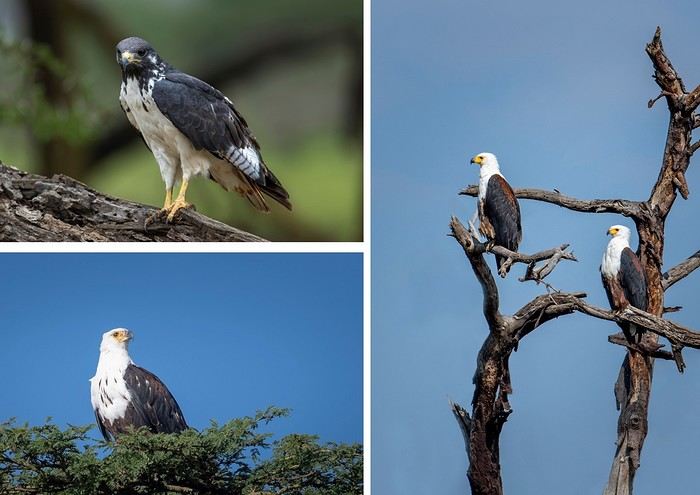
Birds of prey are very visible, like the African fish eagle, but especially the African fish eagles—there are so many perched in the trees everywhere.


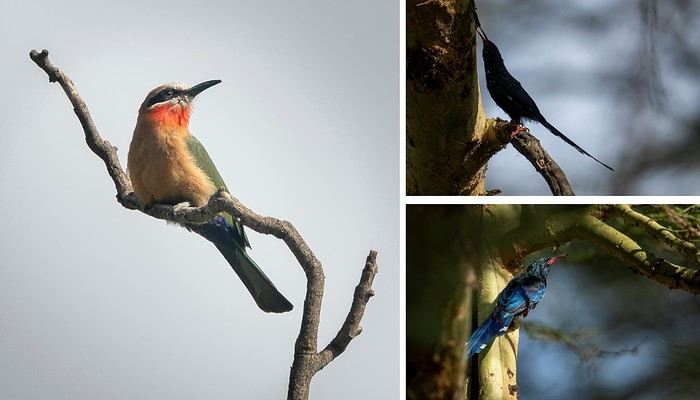
Of course, there are also small, well-known birds like this bee-eater and others we haven’t encountered yet.

Rouquine38OP· 2 years ago
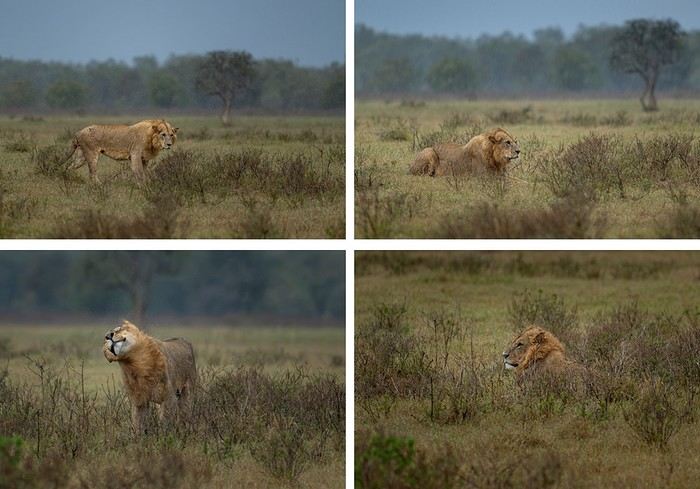
But the animal we encounter the most is the lion. Between the afternoon and the next morning, we saw more than a dozen of them... our cameras got a workout!

Some solitary lions, like this one—just like me, he doesn’t like water. Safely inside the vehicle, we spent almost an hour just watching him.


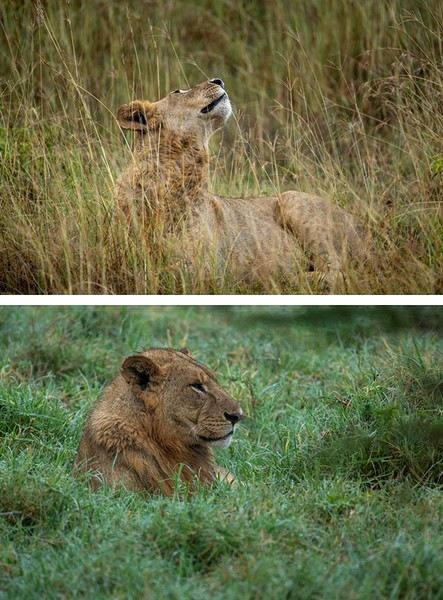
A lion lounging in the tall grass, another where you can only see its head.


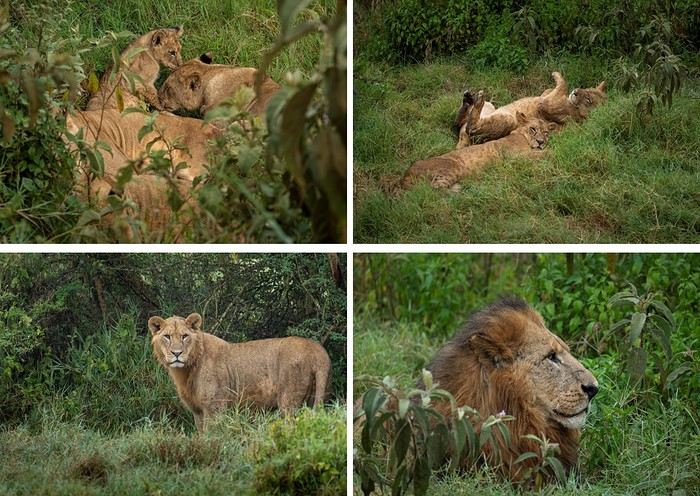
A family—males, females, and cubs. They were very close to us, but the vegetation hid them.


It was really with regret that we left this park.

Let’s continue exploring the lakes here
Rouquine38OP· 2 years ago
Yeah, it just goes to show—you can take the same trip and still discover new landscapes, animals... On the flip side, you might be disappointed because it’s not what you loved anymore. I’m thinking of Muriel, who didn’t have the same conditions at all in Samburu .
Muriel18· 2 years ago
That’s so sweet of you to think of me! 😊

Well, I also regret going to Naivasha instead of Nakuru... guess I’ll have to go back! 😎
Rouquine38OP· 2 years ago
That’s so sweet of you to think of me!

Well, I also regret going to Naivasha instead of Nakuru... guess I’ll have to go back! 😎


Yeah, I can only recommend going back, but Nakuru today might be different from tomorrow. And that goes for pretty much any place, really 😄
Solene40· 2 years ago
Yeah, the difference is really striking. It just goes to show that asking other travelers if a place is worth it isn’t all that helpful. The same spot can evoke completely different feelings depending on when you visit it. As usual, I love all your photos, but those Colobus kisses 🤗🤗🤗—I’m totally obsessed! Thanks again for sharing, Isabelle
Rouquine38OP· 2 years ago
Yes, Christelle, you can go to the same place multiple times and not have the same feeling 🤔.

So, as you said, it’s hard to give advice—just share what we liked or didn’t like. It’s just one opinion, take it or leave it 😄.
Rouquine38OP· 2 years ago
Baringo

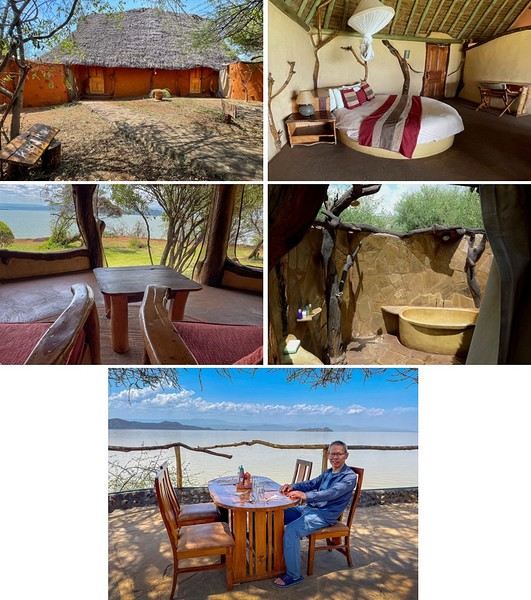
From Nakuru to Tumbili Cliff Lodge, our accommodation on the shores of Lake Baringo, it's less than 150 km. However, you shouldn’t dawdle, as it takes nearly 3 hours to get there.

Like Lake Nakuru, Lake Baringo experienced record water levels in 2021. Tumbili Cliff Lodge is inaccessible by car, so we have to reach it by boat.

That’s where we sadly say goodbye to Félix—yes, our trip is split into two very distinct parts. We leave Félix’s services, an independent Kenyan driver/guide, for those of Melting Pot Safari (MPS).

The lodge is stunning, and the location is truly top-notch. The rooms overlook the lake, our bed is round—a first for us. The huge bathroom is outdoors.

Our son Joffrey joins us; he arrives directly from Nairobi with an MPS driver.

We’re almost alone, feeling like VIP guests. The food is excellent—pure paradise...


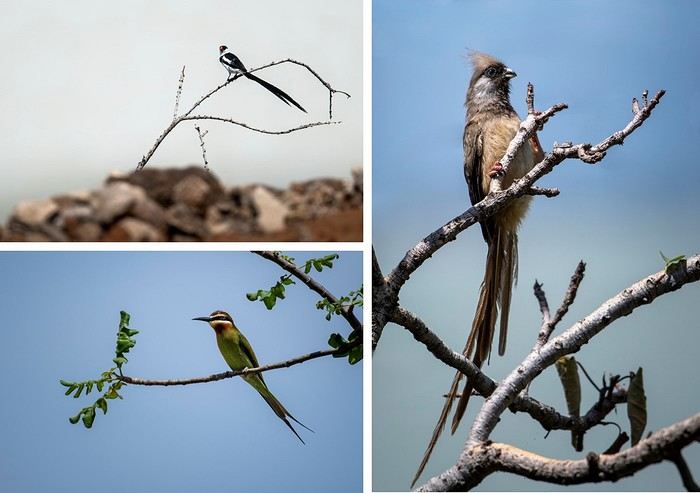
Kenya’s parks are teeming with all kinds of birds, and Lake Baringo is a true paradise for ornithologists. Even right outside the lodgings, it’s a feast for the eyes—we’re delighted: Dominican widow, bee-eater...


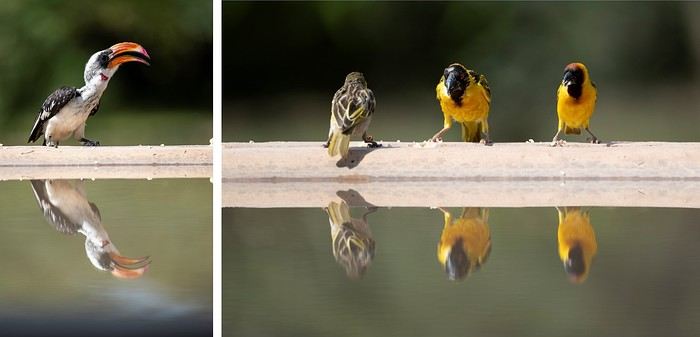
In 2023, next to the pool, a drink station was set up to keep us entertained between outings. Hornbills and small passerines visit, but it’s not really our cup of tea—too much concrete.

Rouquine38OP· 2 years ago
In 2021, our first outing takes place on a boat, among the bushes surrounding the lodge. We’re with Titus, who was born on the shores of the lake—he’s the one guiding us for these few days.

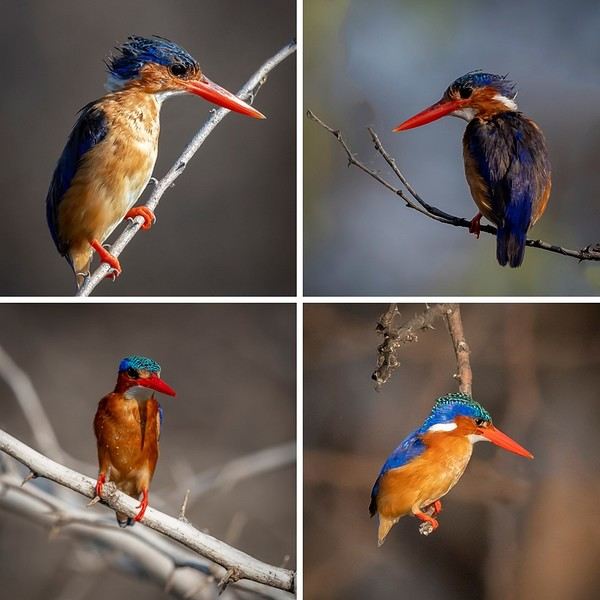
We encounter malachite (or pied) kingfishers, and we get really close to them.


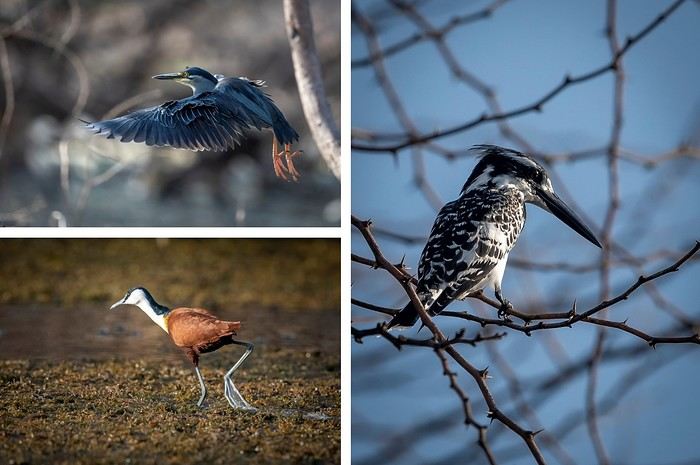
Other birds also show up: bitterns, pied kingfishers, and jacanas.


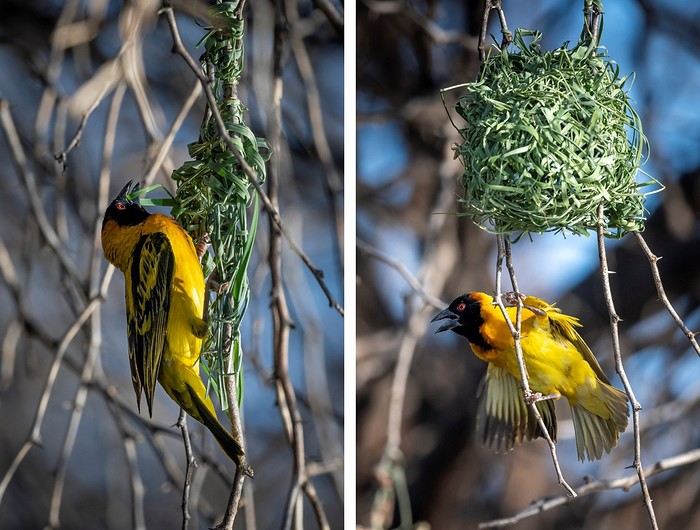
It’s fascinating to watch weaver birds building their nests.

You might also like