Photo Safaris in Kenya
Translated into English.
354 replies
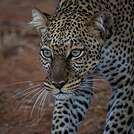

Masai Mara: The Big Cats (continued)
Of course, the most common big cats in the Masai Mara are lions.
Unlike other big cats, lions live in large family groups (prides), which gives them strength for both hunting and defending themselves against others. The male lion only hunts occasionally; his role is to fight off intrusions into the territory and threats to the pride. Lionesses are faster and can reach speeds of up to 60 km/h over short distances—they’re the ones who do the hunting. Young males stay in the family group for two to three years before being driven out by the dominant male. They become nomadic and form a “coalition” together, trying to take over a pride by ousting the dominant male—who, if he loses, becomes solitary. Females, on the other hand, stay for life, which helps avoid inbreeding.
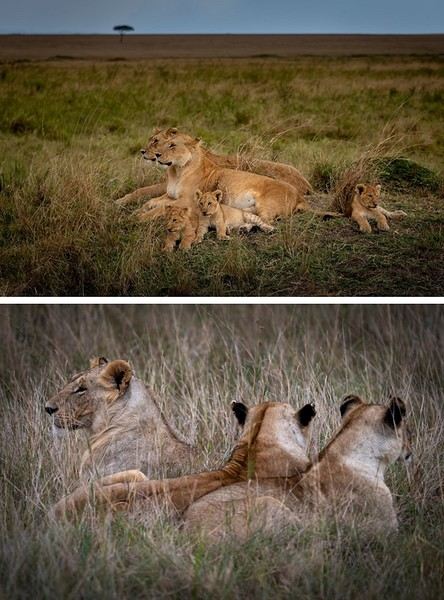
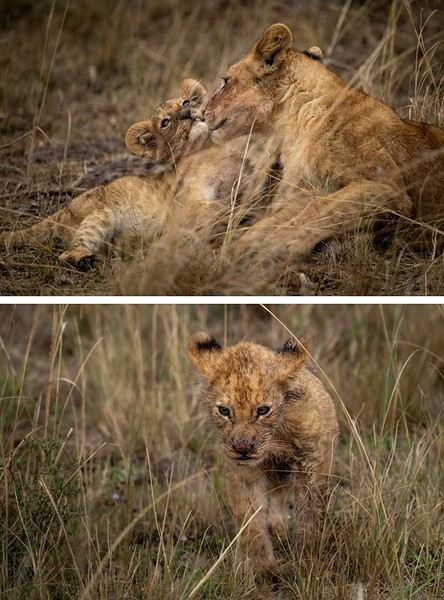
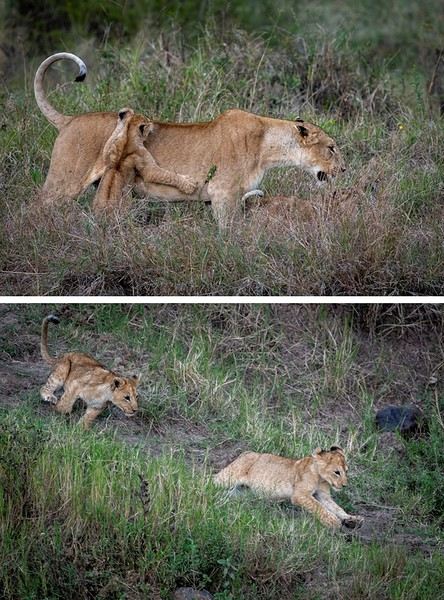
Sometimes, certain females are ousted or leave a group—like these two, Yaya and her daughter Pamoja. We met them during our first trip. Yaya had three mischievous cubs, and Pamoja had two slightly older ones. Together, they were raising all five cubs. We spent a long time with them, watching the little ones play together while the mothers moved a short distance away to get some peace. It was a beautiful moment of family tranquility—I never get tired of it.
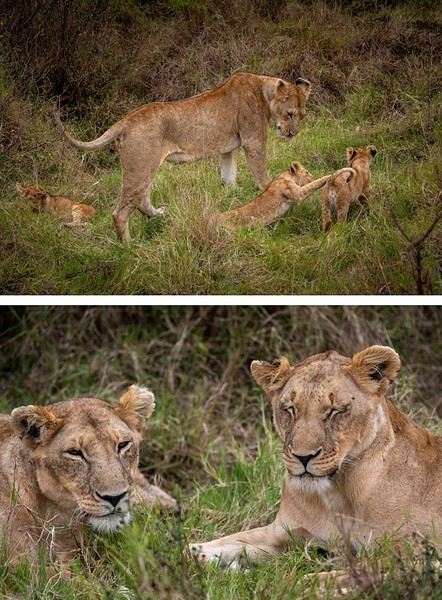
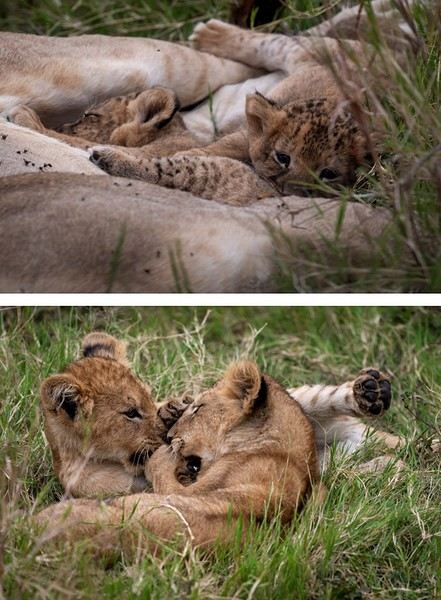
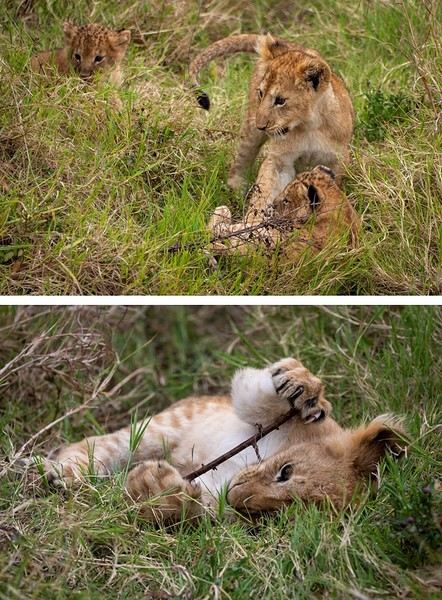
Unfortunately, Yaya’s three cubs were killed in the fall, and Pamoja not long after. Yaya raised her two grandchildren alone: Simba and Pamoja 2.
Most of the time, the prides lounge around in the savanna.
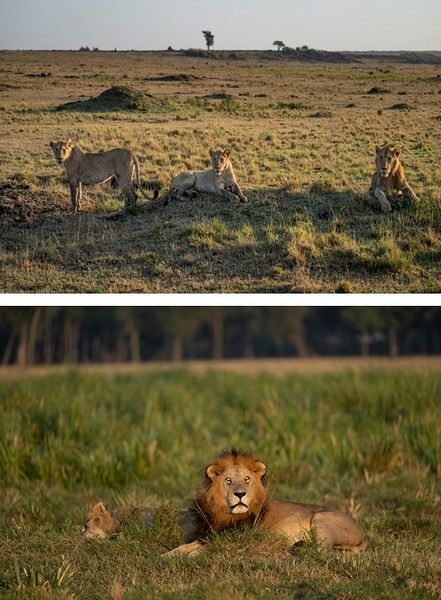
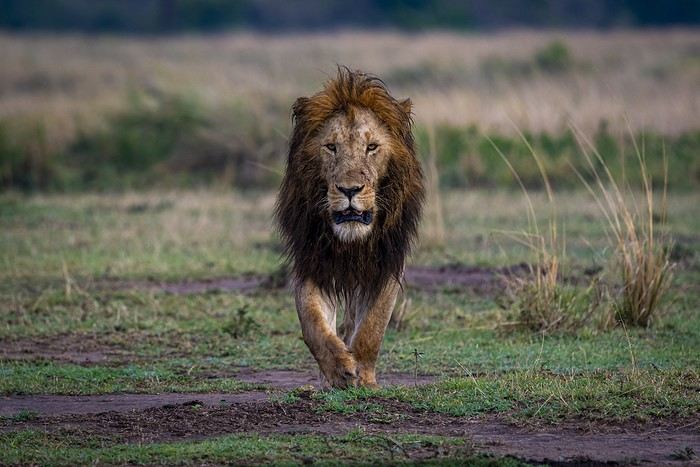
The male, meanwhile, patrols his kingdom.
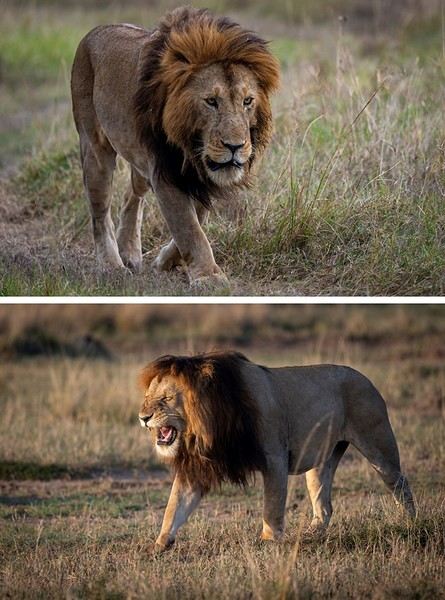
Of course, the most common big cats in the Masai Mara are lions.
Unlike other big cats, lions live in large family groups (prides), which gives them strength for both hunting and defending themselves against others. The male lion only hunts occasionally; his role is to fight off intrusions into the territory and threats to the pride. Lionesses are faster and can reach speeds of up to 60 km/h over short distances—they’re the ones who do the hunting. Young males stay in the family group for two to three years before being driven out by the dominant male. They become nomadic and form a “coalition” together, trying to take over a pride by ousting the dominant male—who, if he loses, becomes solitary. Females, on the other hand, stay for life, which helps avoid inbreeding.
Sometimes, certain females are ousted or leave a group—like these two, Yaya and her daughter Pamoja. We met them during our first trip. Yaya had three mischievous cubs, and Pamoja had two slightly older ones. Together, they were raising all five cubs. We spent a long time with them, watching the little ones play together while the mothers moved a short distance away to get some peace. It was a beautiful moment of family tranquility—I never get tired of it.
Unfortunately, Yaya’s three cubs were killed in the fall, and Pamoja not long after. Yaya raised her two grandchildren alone: Simba and Pamoja 2.
Most of the time, the prides lounge around in the savanna.
The male, meanwhile, patrols his kingdom.
But life in the bush isn’t always so peaceful—you’ve got to eat. We witnessed a lion attack on a buffalo.
A group of seven young lions—one male and six females—were resting quietly until three lionesses set off to hunt and attacked a buffalo.
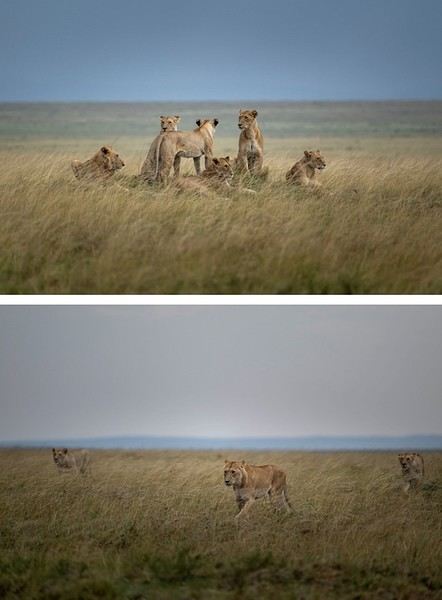
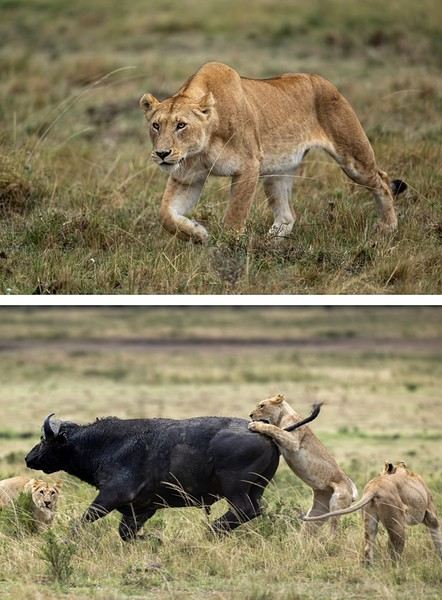
Their prey didn’t go down without a fight. The other lions came to help, but the buffalo managed to keep them at bay by fleeing. That’s when an elephant charged in, trumpeting—it was incredible! It scared off the whole pride. More elephants arrived soon after to back it up. The attack only lasted 5 minutes, and then everything went back to normal, though the elephants stuck around to keep an eye on the lions.
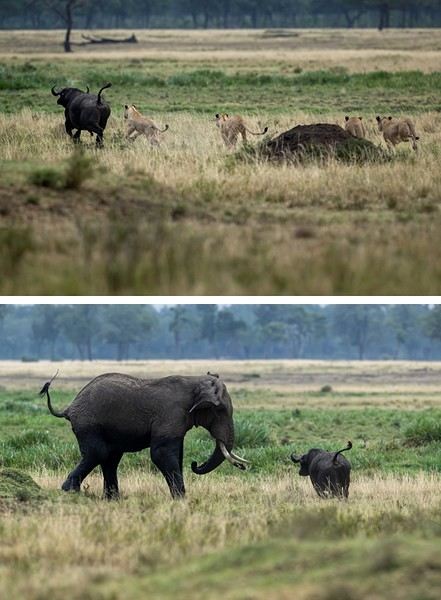
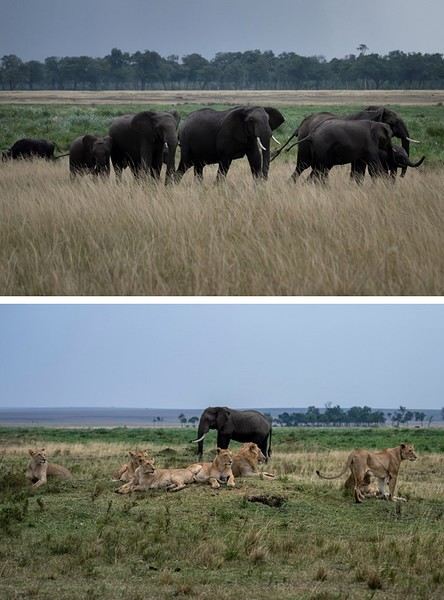
Who said the lion is the king of the jungle? Isn’t it the elephant instead?
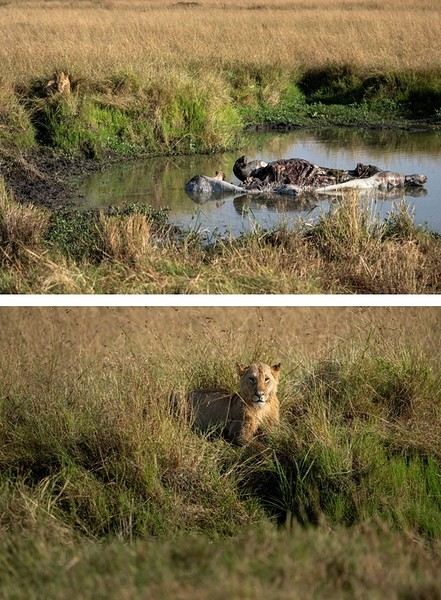
This hippo wasn’t so lucky. A lioness keeps watch over the remains while vultures wait nearby for their share of the feast.
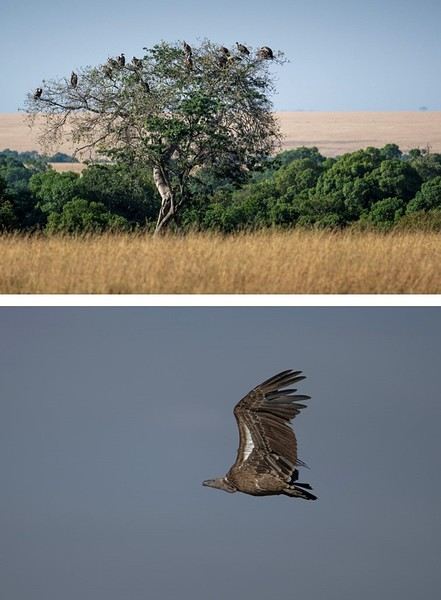
Their prey didn’t go down without a fight. The other lions came to help, but the buffalo managed to keep them at bay by fleeing. That’s when an elephant charged in, trumpeting—it was incredible! It scared off the whole pride. More elephants arrived soon after to back it up. The attack only lasted 5 minutes, and then everything went back to normal, though the elephants stuck around to keep an eye on the lions.
Who said the lion is the king of the jungle? Isn’t it the elephant instead?
This hippo wasn’t so lucky. A lioness keeps watch over the remains while vultures wait nearby for their share of the feast.
At the first light of dawn that morning, we came across two lions that had just killed a young hippo. Once again, we didn’t stay because it wasn’t dead yet while the lions were already eating it.
For me, this kind of scene isn’t bearable, even if it’s the harsh reality of life. I sat back in my seat so I wouldn’t have to watch. David looked at me in the rearview mirror and asked, "Shall we go?"
Just as we were leaving, one of the two walked away to drink from the nearby river, covered in blood.
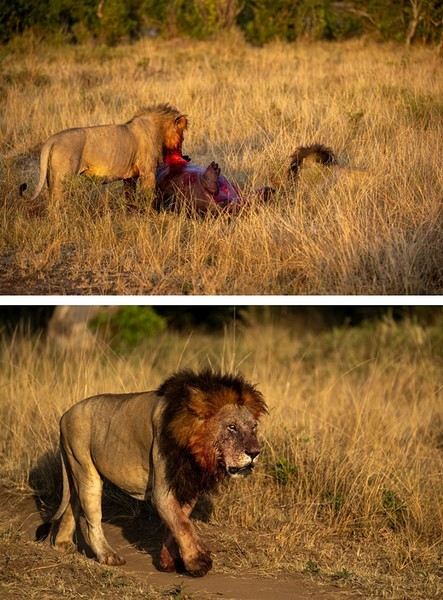
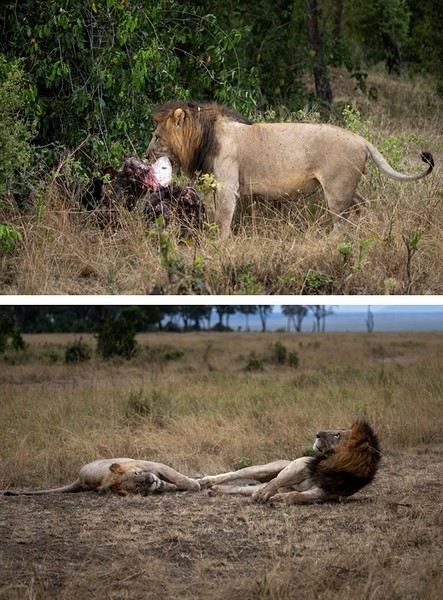
Two days later, on our way back to camp in the evening, David checked on the lions, knowing full well they’d still be around. Sure enough, while one was resting, the other dragged the remains of the carcass toward a bush. There really wasn’t much left of the little hippo. It rejoined its companion and lay down to digest peacefully.
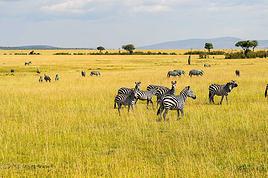
Nighttime on the savanna can’t be easy for herbivores, as this zebra lying on the path shows. Two little lions are playing nearby, their bellies full.
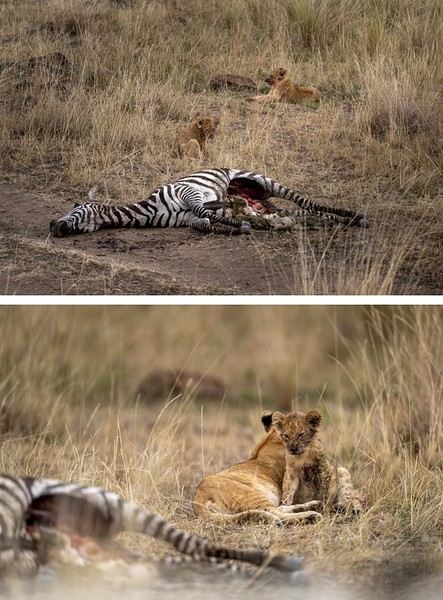
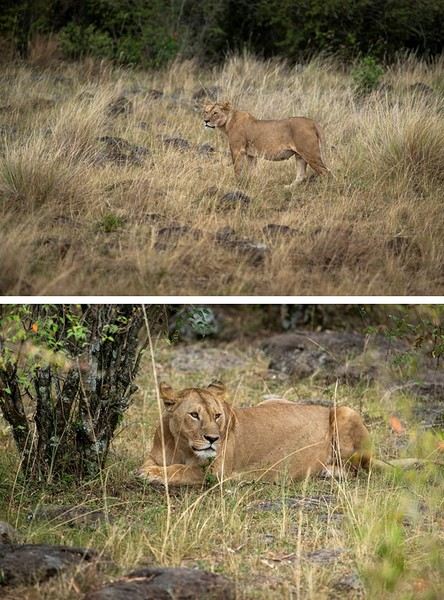
The mother arrived a little while later—she must have gone to quench her thirst at a nearby watering hole. She lay down in the shade of a thicket, keeping an eye on her cubs.
Two days later, on our way back to camp in the evening, David checked on the lions, knowing full well they’d still be around. Sure enough, while one was resting, the other dragged the remains of the carcass toward a bush. There really wasn’t much left of the little hippo. It rejoined its companion and lay down to digest peacefully.
Nighttime on the savanna can’t be easy for herbivores, as this zebra lying on the path shows. Two little lions are playing nearby, their bellies full.
The mother arrived a little while later—she must have gone to quench her thirst at a nearby watering hole. She lay down in the shade of a thicket, keeping an eye on her cubs.
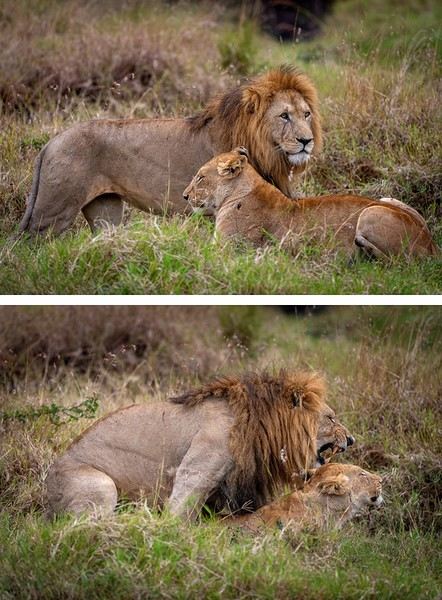
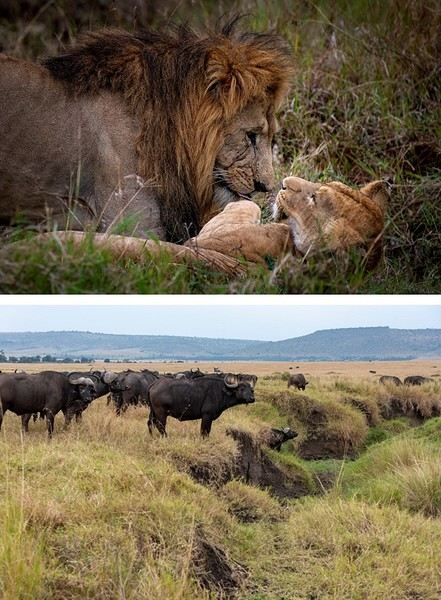
Fortunately, not every scene is like that. We come across a lion and his beauty far from the family group. They’re enjoying a perfect moment together in the tall grass, even though this herd of buffaloes is trying to scare them off.
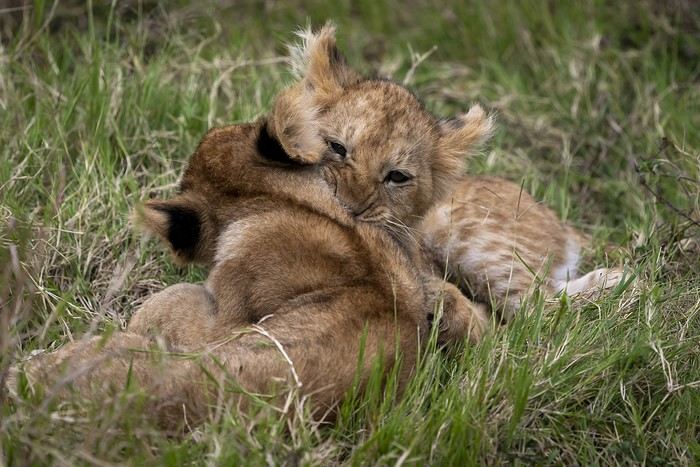
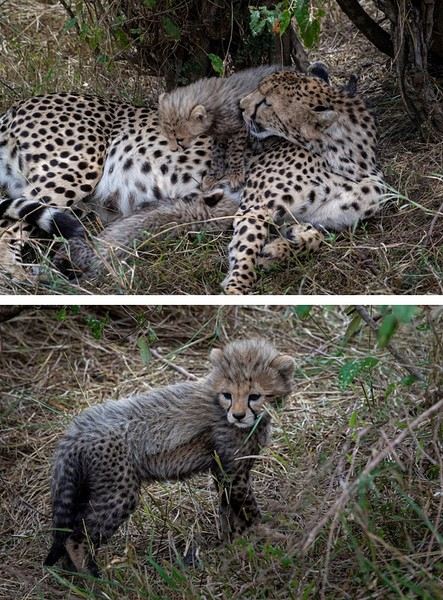
All these big cats—cheetahs, leopards, servals, lions—are so endearing, like these little rascals playing around, but we mustn’t forget that the law of the jungle rules here.
More from the Masai Mara with the herbivores here
All these big cats—cheetahs, leopards, servals, lions—are so endearing, like these little rascals playing around, but we mustn’t forget that the law of the jungle rules here.
More from the Masai Mara with the herbivores here
Looking at your lion photos made me think of a book I really loved: "Among Predators" by Colin Niel. I’ll go ahead and recommend it if you haven’t read it already 🙂
Thanks Kate for the tip, but no, I don’t know it. Unfortunately, I don’t have much time to read—almost all the books I buy are mostly photos [;]
Ticapi· 2 years ago
Unfortunately, Yaya’s three little ones were killed in the fall, and Pamoja shortly after. Yaya raised her two grandchildren alone: Simba and Pamoja 2
Why and by whom?😢
I’m like you—I don’t handle hunting scenes well, like the one with the baby hippo. It’s life, I know… but it’s so sad and, in a way, cruel too.
Show 10 more replies

Unfortunately, Yaya’s three little ones were killed in the fall, and Pamoja shortly after. Yaya raised her two grandchildren alone: Simba and Pamoja 2
Why and by whom?😢
I’m like you—I couldn’t handle a hunting scene like the one with the little hippo. That’s life, I know… but it’s so sad and, in a way, cruel too.
Yes, it’s the circle of life… While I’m not bothered when there’s just a carcass left, I really struggle when the animal isn’t dead yet… I’m too sensitive 😢
Jojoone1· 2 years ago
Only twice in 15 years have I seen documentaries where lion cubs were seriously injured, particularly after the family was charged by buffaloes.
One of the documentaries showed—for what felt like an eternity—the cub trying for hours to follow its family with only its two front legs still working.
If I’d known in advance, I wouldn’t have watched. Those scenes must have really traumatized me because on certain occasions, they come back to me painfully in my memory. As much as it’s life and nature, it’s still absolutely unbearable.
If I’d known in advance, I wouldn’t have watched. Those scenes must have really traumatized me because on certain occasions, they come back to me painfully in my memory. As much as it’s life and nature, it’s still absolutely unbearable.
As much as it’s life and nature, it’s still absolutely unbearable.
Yeah, Joël, I totally agree with you—personally, I really struggle with it.
Blesl· 2 years ago
Good evening,
Warning for sensitive souls—like me—those kills can be traumatic, even if they’re part of Nature. I still have the sad memory of a little boy in tears in front of a Mara river crossing with wildebeest/crocodiles while his dad kept filming nonstop and his older brother tried in vain to comfort him.
But let’s move on to something less sad—this travel journal is gorgeous, amazing, magical, an irresistible invitation to go on safari in Africa!
Thanks for this beautiful gift!
BL
Good evening,
Warning for sensitive souls, like myself—kills can be traumatic, even if they’re part of Nature. I still remember a little boy in tears in front of a Mara river crossing with wildebeest/crocodiles while his dad kept filming nonstop and his older brother tried in vain to comfort him.
But let’s move on to something less sad—this travel journal is stunning, amazing, magical, an irresistible invitation to go on safari in Africa!
Thanks for this beautiful gift!
BL
I should’ve specified for this part: *sensitive souls abstain* 😉
Thank you, thank you for these incredibly flattering compliments about my journal
For those who love animals, I hope you find what you’re looking for 😉
For those who love animals, I hope you find what you're looking for 😉
Yes, yes, we're thrilled!🙂
Phew! I'm relieved now 😌

Montagnard74· 2 years ago
For those who love animals, I hope you find what you're looking for
You’d have to be really hard to please not to enjoy this—it feels like flipping through a National Geographic issue!!
For those who love animals, I hope you find what you're looking for here
You’d have to be really hard to please not to enjoy this—it’s like stepping into a *Geo* magazine spread!!
You’re not just sucking up a little, are you?
You might also like
 Happiness Settles in the Heart of the Maasai Mara
Travel logs › Kenya·161 photos
 Kenya - January 2025 - Tsavo East - Tsavo West - Samburu - Meru NP - Aberdare NP
Travel logs › Kenya·289 photos
 That's Kenya too...
Travel logs › Kenya·123 photos
 Kenya February 2020: From Tsavo to Samburu via Meru National Park
Travel logs › Kenya·201 photos
 In the midst of Kenya's wildlife, October 2025
Travel logs › Kenya·300 photos
 From Ol Pejeta to Tsavo West (Kenya)
Travel logs › Kenya·330 photos
 Masai Mara and Melting Pot Safari... So disappointed!
East and Southern Africa › Kenya·29 photos
 Photo Safaris in Kenya
Travel logs › Kenya·238 photos