Summer 2026 - 3 weeks in the Azores
FR

Translated into English.

Original post
BL
I love islands...

I love islands. So it’s no surprise that the Azores have been catching my eye for a few years now. The first time I suggested them to my dear partner back in 2021, he preferred the Lofoten Islands—an excellent choice, as it turned out, since we got to visit them with hardly any crowds. But for various reasons, the opportunity didn’t come up again in the following years. Until last year, that is. But by then, we’d left it too late—too late for the Azores, I mean—and the choice of accommodations on Flores and São Jorge was extremely limited. We decided to skip it without even looking at car rentals. So this year, we booked our flights, lodgings, and cars well in advance (between December of last year and early this year).

The Azores consist of nine islands, so you have to make choices. I quickly ruled out São Miguel, which deserves a week all to itself: from reading various blogs, some travelers seemed disappointed after visiting the other islands, even feeling it lacked the charm unique to the Azores. True or not, that was reason enough to leave it out.

In the end, we wanted to go to Flores for its lush nature (and because it’s reputed to be the most breathtaking), to São Jorge for its rural/nature vibe, and to Terceira for its cultural side and its *impérios* (more on that later). With the time we had, we could add another island without rushing. We like to take our time and wander a bit. Generally, whether it’s a viewpoint or a hike, we always spend more time than everyone else. Pico won out over Faial thanks to its wine culture. And of course, there’s Corvo, which is usually visited as a day trip from Flores. I thought it’d be nice to spend the night there to experience the atmosphere once most tourists had left. I hesitated between one or two nights and ultimately went with two (so we wouldn’t be rushed by the boat schedule). It was an excellent decision.

Here’s how it all panned out:

August 25: departure for Terceira via Lisbon at 7:40 AM; August 25–29: Terceira; August 29: flight to Corvo. It was supposed to take half a day, and we were meant to arrive in the early afternoon, but between schedule changes and delays, it ended up taking almost the whole day; August 29–31: Corvo; August 31: boat to Flores around 8:30 AM; August 31–September 5: Flores; September 5: flight to Faial in the early afternoon (originally scheduled for the morning, but the times changed)—visit to Horta; September 6: boat to São Jorge around 9:00 AM; September 6–11: São Jorge; September 11: boat to Pico at 11:15 AM; September 11–16: Pico; September 16: flight to Paris via Lisbon from Pico around 10:30 AM.

We had to juggle a bit to optimize the prices of our flight tickets from Paris and the inter-island travel.
BL Bluequark Veteran ·
Before starting the story, a few practical points and a general overview:

Transportation

Car: After comparing options, we used discoverscar.com, which gives access to different providers. We rented four cars from three different local rental companies. The rental companies were pretty chill. Make sure to get a car with enough power for São Jorge—the access to the fajãs can be really steep. For Flores and São Jorge in particular, book way in advance. Boat: Booked well ahead for Corvo-Flores since the boat is tiny—only 12 people total. For other routes, we booked a few days before, and it seemed like there were still spots available the same day. To book ferries: https://www.atlanticoline.pt/en/homepage. The "Time table" tab lets you see how many seats are still available by checking the "availability" box. Inter-island flights: Azores Airlines, of course. As I’d read multiple times, the schedules changed between booking and the actual day. Anyway, the planes don’t always leave on time, if only because of the weather. So don’t plan too tightly.

Bookings:

I booked our whale-watching tour in Pico when we were in São Jorge—the morning slots were starting to fill up, so just a few days before. You have to book Gruta das Torres in Pico. Don’t forget to do it if the site’s booking function is working again; otherwise, you’ll have to go in person or maybe call.

You need to book restaurants, at least for dinner, up to 48 hours in advance. I find that really (too) restrictive.

Cost: The flight ticket to get there is pretty expensive—way more than what I’d read online (and I bought our tickets before the war in Iran and the Strait of Hormuz issues, and no, it wasn’t cheaper for São Miguel). Car rental on some islands, especially Flores, is also pricey. In supermarkets, it’s cheaper than what I usually pay. Restaurants, on the other hand, have prices that seem pretty disconnected from the standard of living on these islands—almost Parisian prices.

Don’t forget in your suitcase:

Cap/hat, sunscreen, sunglasses: the sun can really beat down. Snorkel mask: There are often lots of fish in the natural pools—it’d be a shame to miss out. On the other hand, water shoes, which I’d read were a must-have, don’t seem essential to me. We brought ours—leftovers from a previous trip—but quickly gave up on using them. The natural pools are well-maintained, so you don’t need to walk on rocks, and the submerged rocks are smooth. Sure, we saw sea urchins once at the edge of a pool (easy to avoid). But flip-flops or other plastic sandals can be handy to avoid burning your feet before getting into the water. A good rain jacket. I’ll come back to this. Hiking shoes. You can visit the Azores without hiking, but walking through these landscapes lets you discover them better. The tourism office’s website lists several hikes per island: https://trails.visitazores.com/en/azores-trails. Some hikes—the most exposed ones, like the Flores trail "Ponta Delgada - Faja Grande"—are marked as closed on the site and at the entrance. Generally, there aren’t many people on the trails. For some, we were completely alone. The trails are well-marked. Cash. Both in Flores and São Jorge, we were asked to pay in cash several times, and ATMs aren’t everywhere.

What not to bring:

Too many warm clothes (unless you’re climbing Mount Pico, which we didn’t do). I was in shorts the whole time except for the day of the "Mistérios Negros" hike in Terceira—but I should’ve been in shorts anyway; it would’ve saved my pants from getting ruined. And it wasn’t for climate reasons. In our accommodations, I stayed in shorts. Still, bring a sweater or fleece for the planes and especially the boat. For the Faial-São Jorge trip, we were partly inside because of the rain, and it was freezing.

The weather:

Yes, islands in the middle of the ocean are humid—very humid. We had rain and lots of fog-clouds. We often struggled to dry our clothes, and some days, clothes we hung out slightly damp came back even damper (without rain!). The weather can also change quickly from one place to another or from one moment to the next. You have to adapt and be prepared for not always having the best conditions. Our awesome Gore-Tex rain jacket—a recent investment—gave us precious comfort. That said, there wasn’t a single day without sun, and even with the fog, it’s still really pretty. A site to check the weather elsewhere on an island (webcams): https://spotazores.com.

We found that people interacting with tourists spoke remarkably good English—much better than in France.

Make sure to download the map from maps.me (or another app)—not all islands have good network coverage.

We picnicked almost every lunchtime, except twice, because we felt restaurants took too much time—especially since we didn’t leave early in the morning—and it offers more flexibility. We went to restaurants a few times in the evening, but having to book was a real deterrent to going more often.

A quick recap: We really loved our stay. The choice of places and pace suited us well. Beyond the stunning landscapes, there’s something in the atmosphere I’d call the "Azores spirit"—the kindness of the people, their trust. The Azores are so much more than just landscapes; it’s also a culture, a way of life. The facilities at campismo sites and natural pools are a great example.

Okay, now the story can begin.

PS: There are two of us. After traveling for many years with our kids, we now travel as a couple. Let’s just say we’re called Hippolyte and Philomène.
AT Attila Globetrotter ·
A destination that’s really catching my eye! Despite the weather...
SO Solene40 Globetrotter ·
I’m also joining Bluequark since we share a not-so-original common interest: a love for islands 😄. Like Agnès, I’ve been eyeing the Azores without really knowing what’s there. You’re going to shed some light on things with your amazing itinerary—thanks in advance! 😊 Christelle
BL Bluequark Veteran ·
Don’t hesitate. I think you’ll like it.
BL Bluequark Veteran ·
without really knowing what we’d find there

Gorgeous landscapes, friendly people, green everywhere, rain, sunshine, cows, windmills, hydrangeas, natural pools, volcanoes, Cory’s shearwaters, lakes, waterfalls, caves…
BL Bluequark Veteran ·
Good evening everyone,

July 25th - departure day.

Very early flight (7:40 AM). Even earlier wake-up. We’ll be dozing off nicely on the two planes we need to take to get to Terceira.

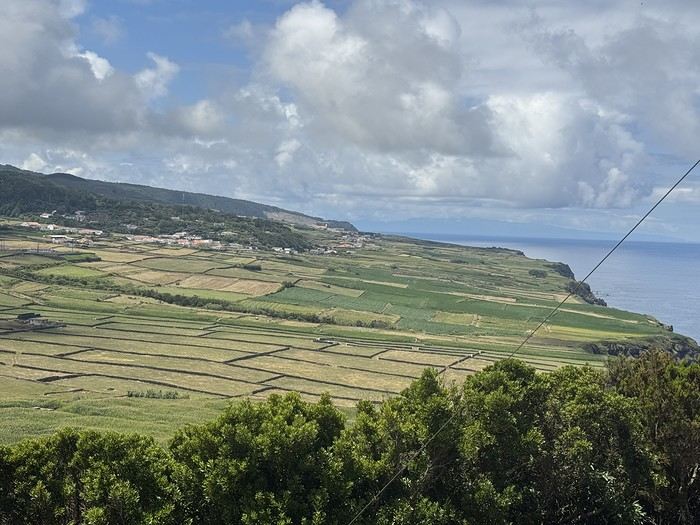
Terceira isn’t very big (20 minutes by car to cross, let’s say two-thirds of the island via the expressway; of course, longer on the other roads, but that gives you an idea). What strikes you when you arrive is the greenery, the volcanic stone walls bordering the fields, the cows, and... the hydrangea hedges. Many roads are lined with very tall, very dense, and super blooming hydrangeas. Sometimes there are even hydrangeas in the middle of the fields.

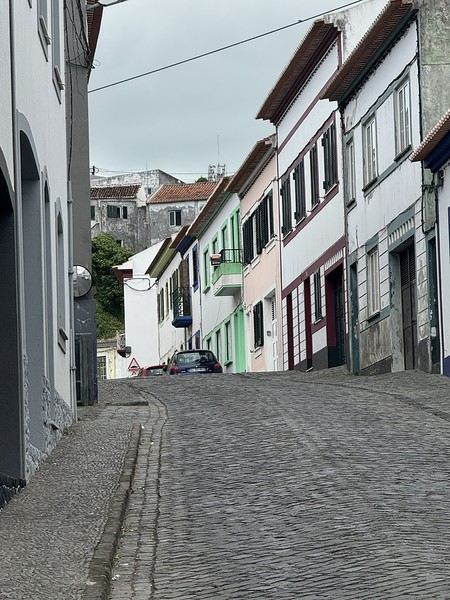
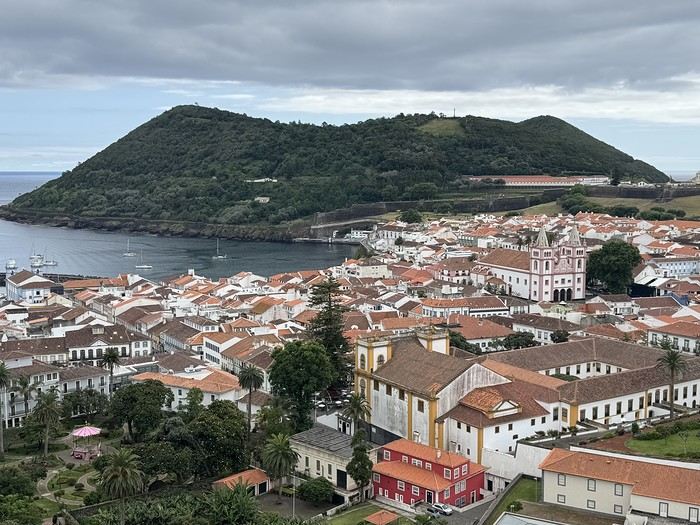
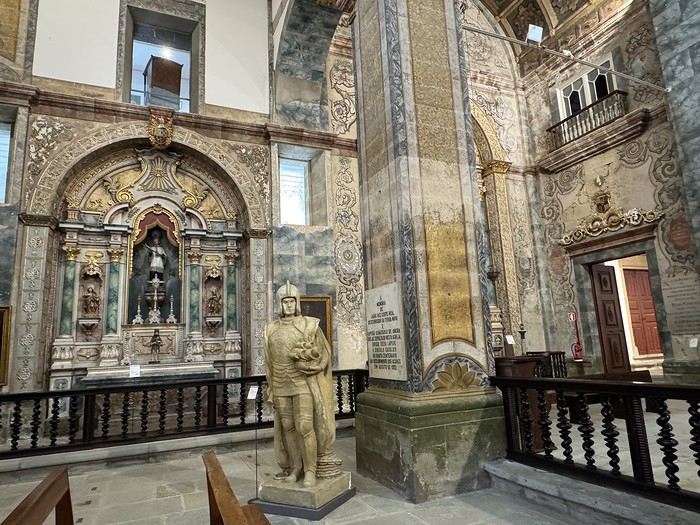
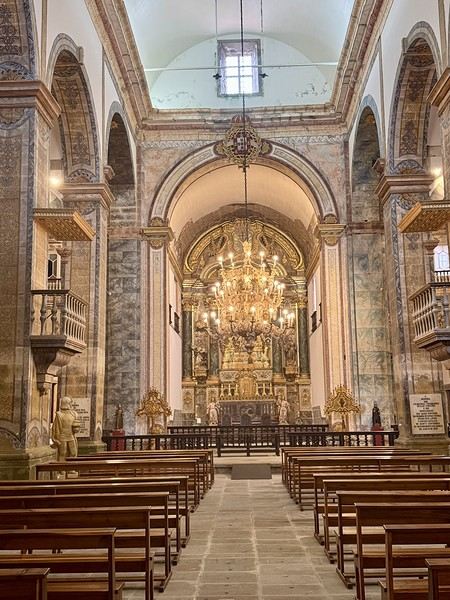
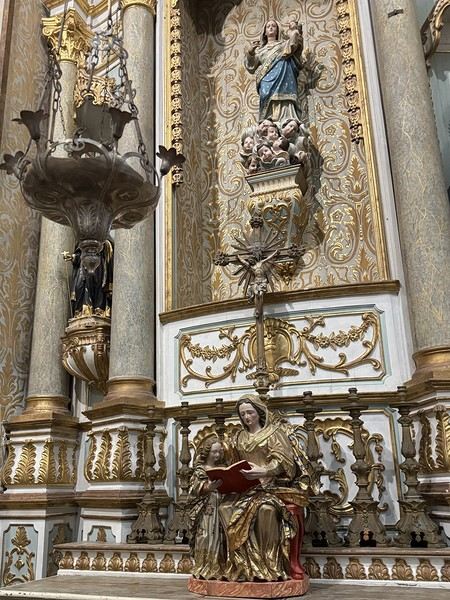
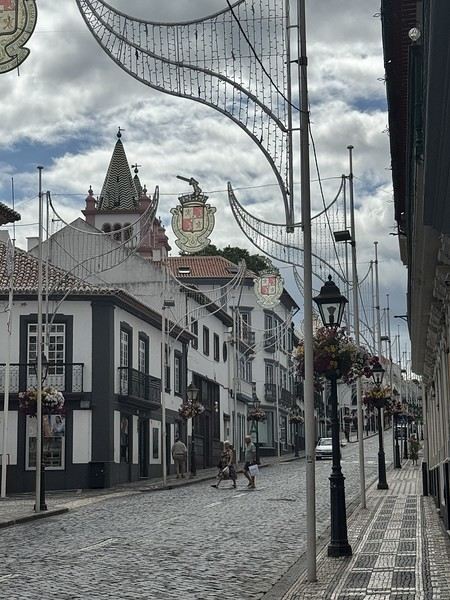
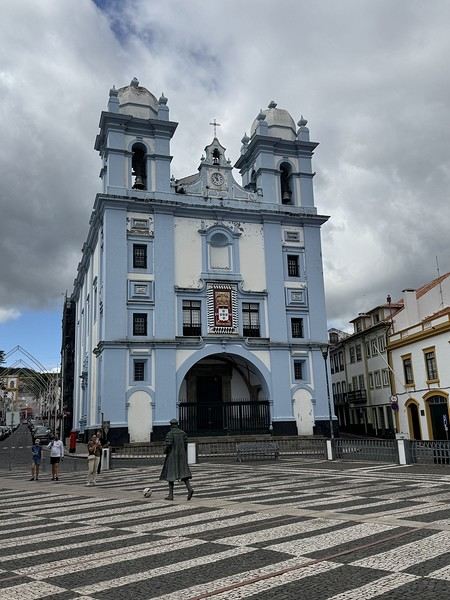
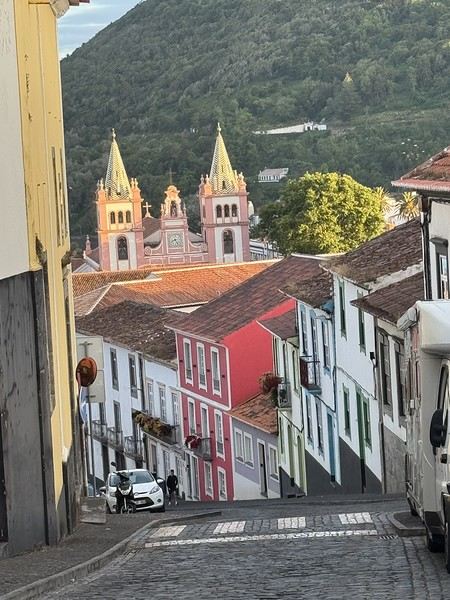
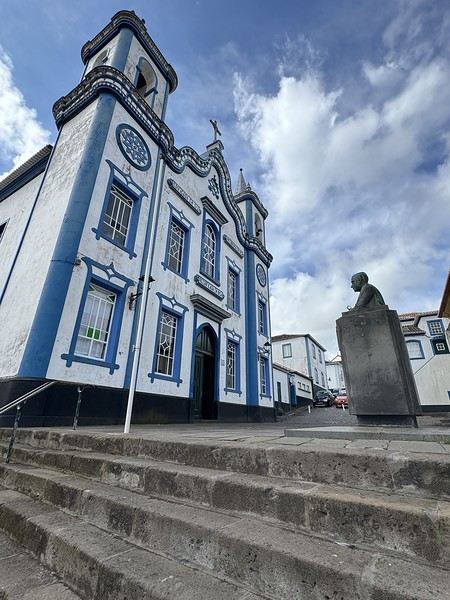
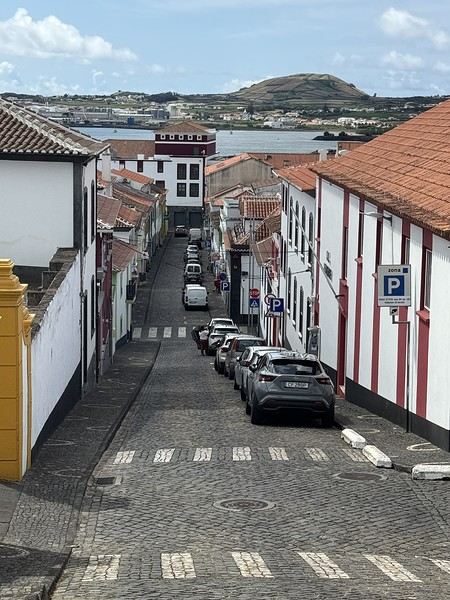
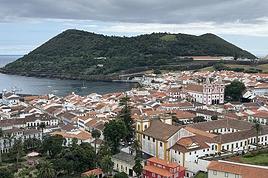
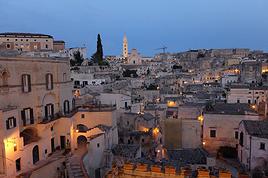
We’re staying in Angra do Heroísmo, a former colonial-style city that had its heyday. After settling in, we start a little walk around the city. It’s all slopes, colorful houses, and ornate balconies. We start from the top and visit as we go down. Nice. A stop at the Angra Museum lets us learn more about the city’s history and, above all, admire the Church of Nossa Senhora da Guia and the adjoining cloister - not to be missed (for just two euros, no less).


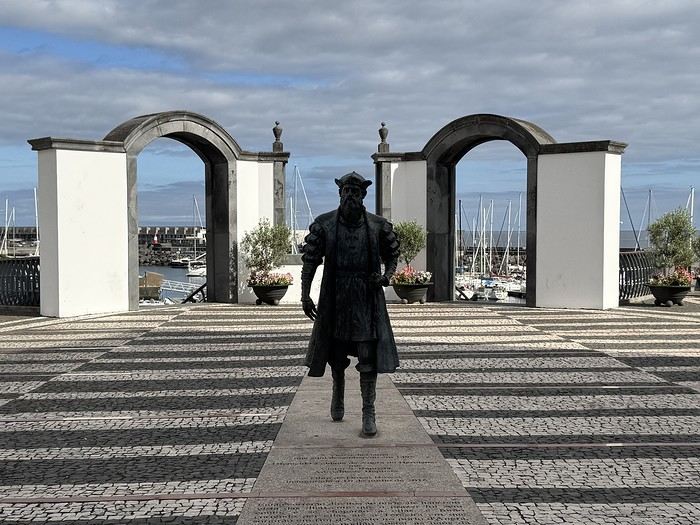
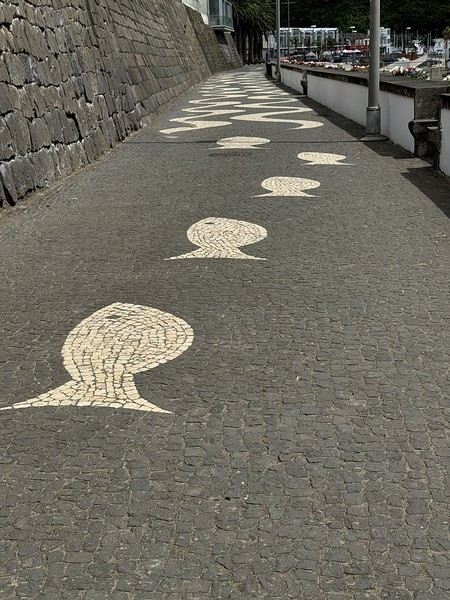
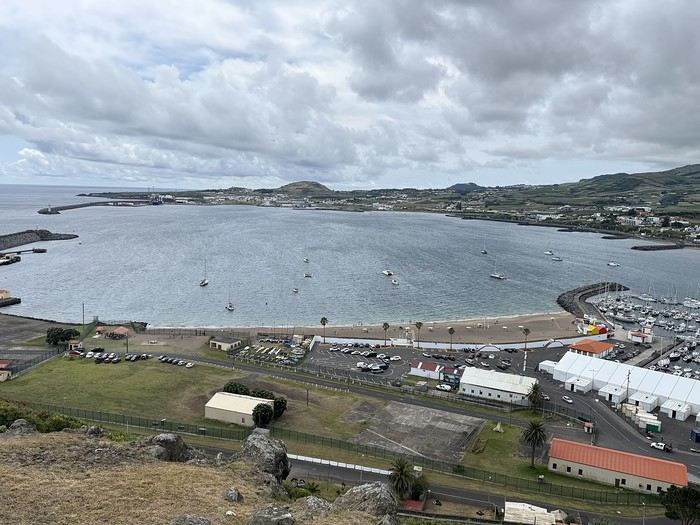
We end our stroll at the port, small and very well protected. And it’s ice cream time. (There’s no wrong time for ice cream time.) Good ice cream shop by the port (note: we didn’t come across any other ice cream shops on Terceira besides this one, and ice cream doesn’t seem to be a common thing here, which is a shame).


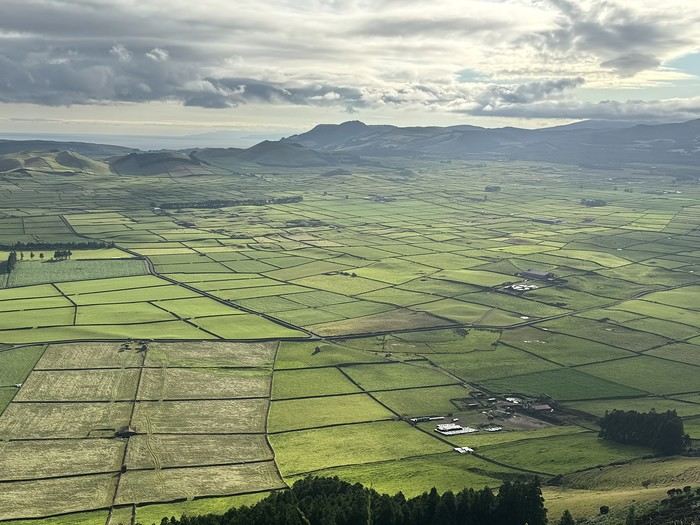
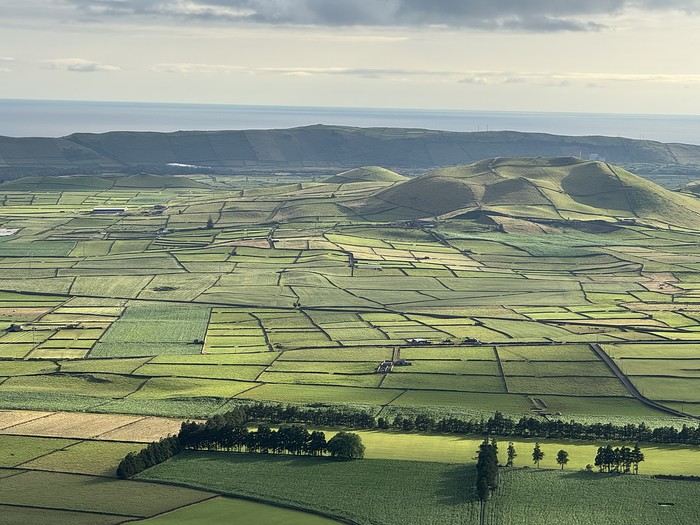
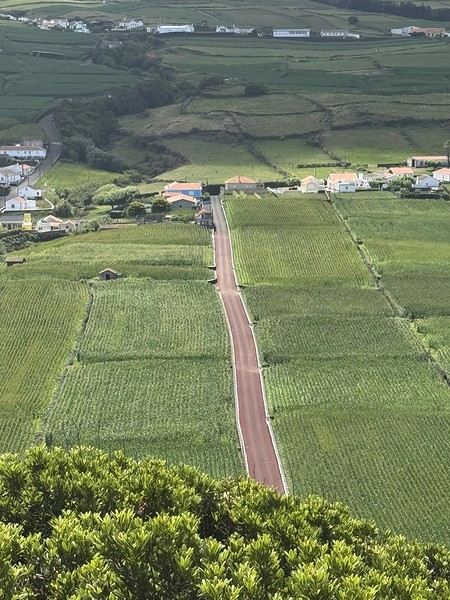
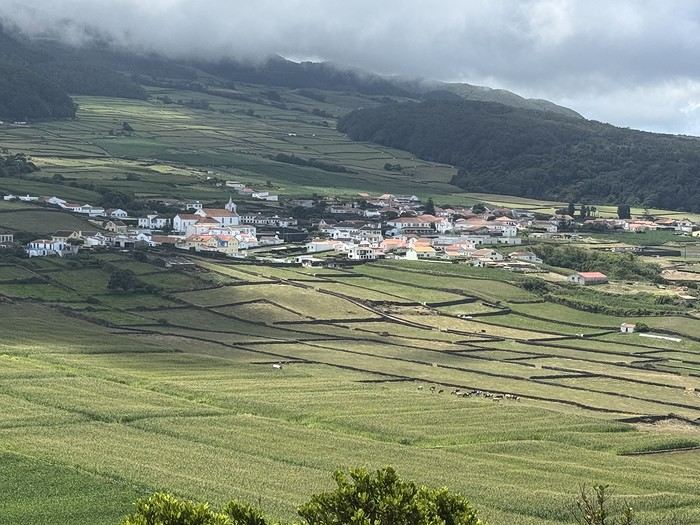
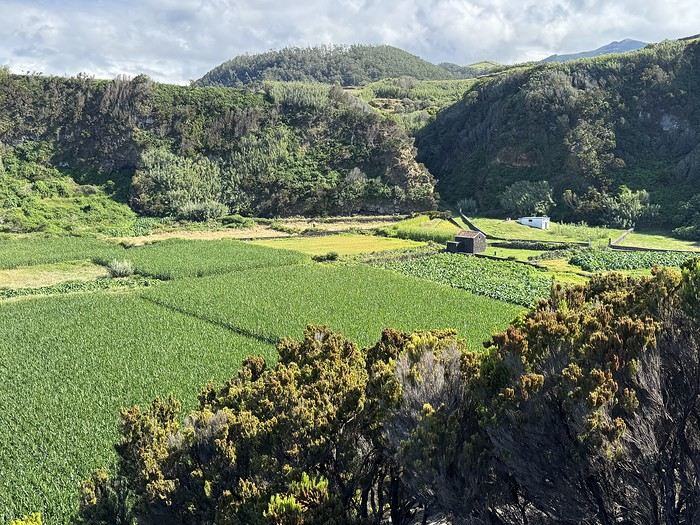
To wrap up the day, we take the car to the Serra de Cume viewpoint. The Serra de Cume is full of fields separated by those famous stone walls. Along the way, gorgeous hydrangeas in the middle of conifers (no photos because they were along a narrow two-way road with no visibility; the ones I’m posting are further away, less beautiful but still pretty nice). The view from the viewpoint is stunning. We spend a long time there... Then we descend on the other side. Really lovely. We’re completely immersed in the landscape.


Groceries and back home.
BL Bluequark Veteran ·
And to wrap up the day

CA Captainbang Veteran ·
Good evening everyone,

I also have a particular love for islands, and I’ve been to the Azores four times: First in 1987 to São Miguel, then in 1989 to São Miguel, Terceira, Faial, and Pico (originally, São Jorge was planned, but due to weather, the flight was canceled and replaced with a stay in Terceira. Those are the little quirks of Azores weather 🙂). Back then, there were really few tourists in the Azores.

I returned to São Miguel in 2015 with my wife and daughter (in 1989, I was still single), and since they loved it so much, we went back to São Miguel in 2016. Personally, I’ve never felt that São Miguel had less charm than the other islands I’ve visited, and my wife told me after our 2015 trip that she finally understood why I’d talked so much about the Azores. All these islands are stunning and full of charm. The landscapes are beautiful, the people are really kind, the food is excellent, and they produce wine, tea, and pineapples, among other things... I can only recommend everyone to go (though maybe we shouldn’t shout it from the rooftops—excessive tourism has caused so much damage in many places). For my part, I still always want to go back.

In 2015 and 2016, compared to my first trips, São Miguel had of course changed somewhat—there are better roads, which is obviously a good thing, and yes, there are tourists, but it’s still reasonable, and there are plenty of places that haven’t fundamentally changed and remain very peaceful.

I think the Azores’ changeable and very humid climate is an asset: it protects these beautiful islands to some extent from the tourist invasion seen, for example, in the Canary Islands, which have a drier climate...
HO Holigirl Veteran ·
Hi there!

On my way to the Azores, thanks! 🙂 I went to São Miguel a few years ago in July. Personally, I was pretty disappointed. Not that the destination doesn’t have anything to offer, but the bad weather kind of ruined the trip. And most of all, we visited it a year after Madeira, which had blown us away and which we preferred. So I’m excited to see the other islands through your experiences. Anyway, the Azores and Madeira are easy trips to plan and budget-friendly—totally worth it!
CA Captainbang Veteran ·
Ah, the humid and unpredictable climate of the Azores! There’s no way around it—you just have to accept it! It’s the price to pay for discovering these beautiful islands.

Looking back at my different trips to the Azores: 1987 – two weeks in São Miguel in September: Mostly great weather with just a few showers. 1989: An 18-day circuit covering São Miguel – São Jorge – Faial – Pico, in September: Nice weather in São Miguel, but on the day we left for São Jorge, our plane was diverted to Terceira due to terrible weather in São Jorge. So I ended up staying in Terceira for the time I’d planned for São Jorge. Just one rainy day during my stay in Terceira, then I went as planned to Faial and Pico, where I had good weather. 2015: 8 days in São Miguel in July: It rained the day we arrived, then two days of alternating frequent showers and sunny spells. The rain didn’t stop us from exploring the island or relaxing in the hot springs of Furnas (pure bliss!). The rest of the stay was sunny. 2016: 10 days in São Miguel in July: We had a day and a half of rain, and the rest of the stay was sunny.

Overall, we had good weather—some rain, sure, but still plenty of sunshine. For the Azores, it’s essential to pack a lightweight, fully covering rain jacket, like a cape or poncho—something you can fold up and stash in your bag after the shower.

After that, just hit the road without hesitation: bad weather can quickly give way to sunshine, and on the larger islands, the weather can vary from one place to another. For example, on São Miguel, you might have rain on the south coast, thick fog on the peaks, and sun on the north coast—all on the same day! That’s just how the Azores are!
BL Bluequark Veteran ·
Hi,

It's funny because for us, it's kind of the opposite: we really liked Madeira but without the wow effect—granted, we went in February, so there was quite a bit of rain and it wasn’t very warm—whereas we *loved* the Azores, which we found really exotic. Maybe it’s a question of the island...
BL Bluequark Veteran ·
July 26

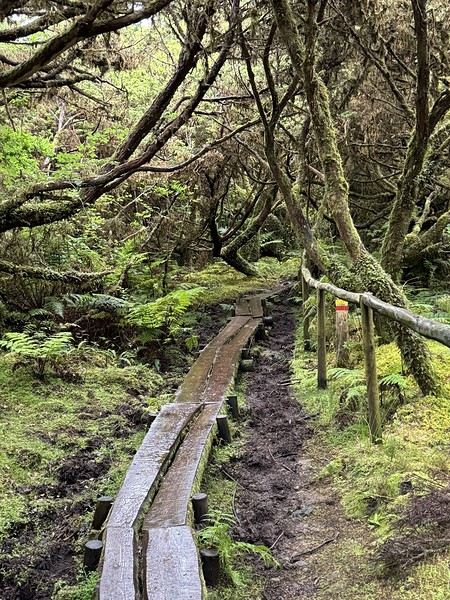
We decide to tackle the center of the island with the famous "Mistérios Negros" hike. (Note: don’t change it—it’s the name. Locals apparently couldn’t explain the origin of the volcanic formations.) This hike takes you through diverse landscapes and lets you discover endemic vegetation. It’s a bit elevated, so it’s naturally humid. It drizzles a little at the start, but it calms down before raining properly in the highest part (thanks to the jackets we bought at the hostel). We cross enchanted forests, climb (a little) lava rocks... It’s nice despite the rain and the lack of a clear view at the "summit." At the end of the hike, there’s a little extra option by climbing Pico do Gaspar. The slight ascent gives access to the center of the caldera, completely covered in vegetation. After the enchanted forest, it’s *Jurassic Park* that welcomes us.


A quick bite at the hike parking lot (so much for Hippolyte lugging the picnic) and we continue to the Gruta da Natividade, located just nearby. The Gruta da Natividade is actually a lava tunnel. Nice, but we’ve seen prettier/more impressive ones (or maybe we’re getting jaded).

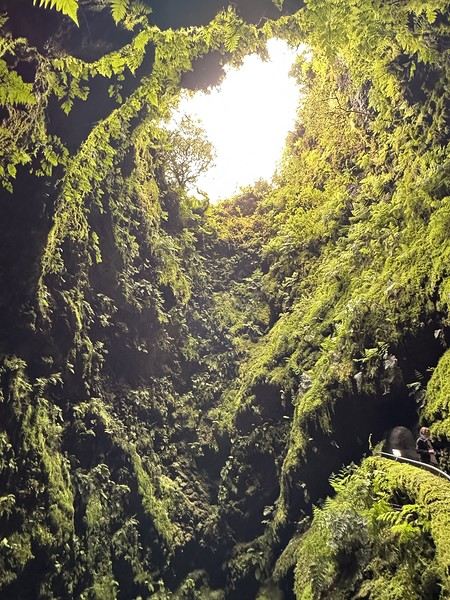
A short drive later, and we’re at Algar do Carvão—and this is *really* impressive and very pretty too—don’t miss it. It’s a volcanic chimney about a hundred meters deep (no worries, there are stairs). At the entrance, lots of vegetation borders the light well, then a large cavity with impressive proportions, and at the bottom, a small bluish lake.


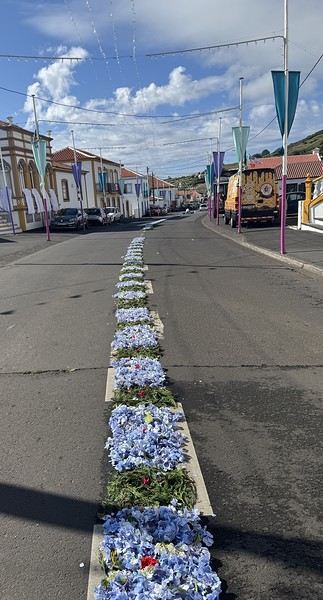
The next stop is Furnas do Enxofre, a small field of fumaroles. Nice and stinky. We decide to head back the scenic way, along the southwest coast of the island. Stops at churches and *impérios* (I’ll come back to those). Along the way, we pass through a village preparing for a festival. The locals are covering the center of the road with flower petals.


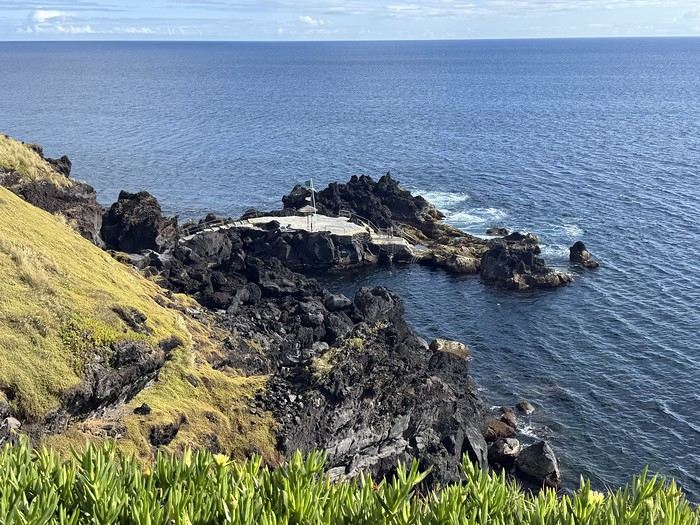
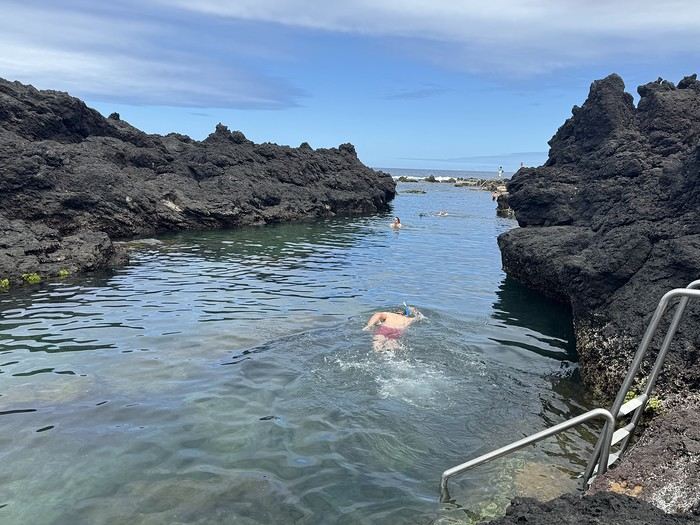
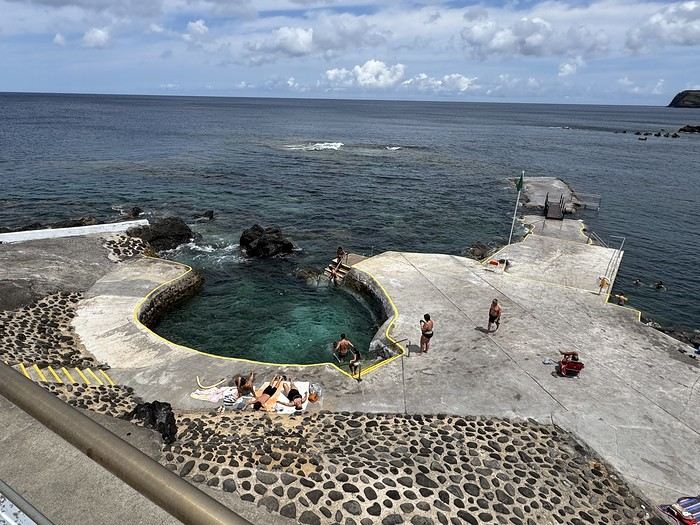
A quick dip in the natural pools at Cinco Ribeiras helps us get familiar with the concept: you take a spot with rocks forming a basin and protection, add a little concrete to make esplanades, ladders, and stairs to get into the water, and voilà. Said like that, it doesn’t sound dreamy, but in reality, it’s done quite harmoniously and it’s really practical/nice for swimming with enough water to actually swim, and for sunbathing for those who like to soak up the sun. Plus, there’s no sand getting everywhere and sticking to your feet. We’ve become big fans of natural pools.


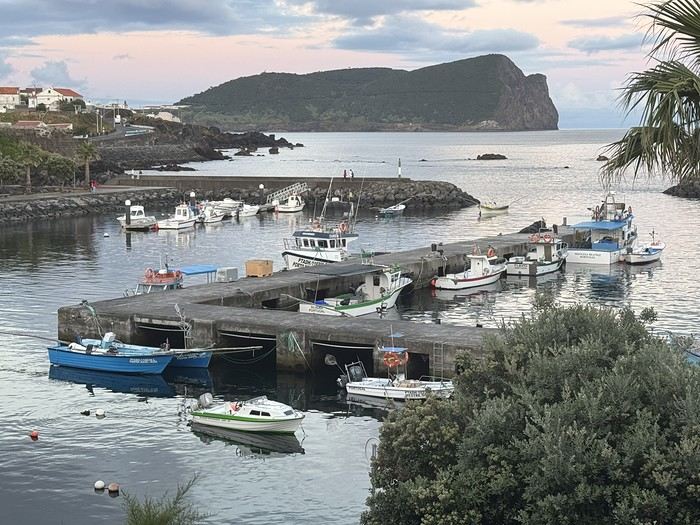
For dinner, the plan was to go to São Mateus to eat at a fish restaurant and try the specialty fish soup served in a bread bowl, but it’s packed. Oh well! There’s pasta at home. Still, a photo of the little port.

BL Bluequark Veteran ·
July 27th.

This day is dedicated to the western half of the island. We pass through places we saw yesterday but don’t stop, then head off to the *miradors* (viewpoints), which, depending on the spot, offer views of the coast or the island’s interior with its famous walled fields. The vibe on this part of the island is a bit different—more rural, quieter, with smaller villages and pickup trucks (utilities).


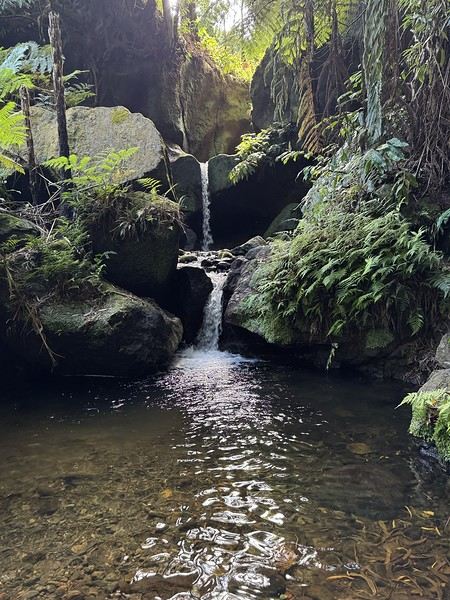
For lunch, we decide to settle in at the natural pools of Biscoitos. It’s good to know that near tourist spots, there are always picnic areas with tables, benches, barbecues, and water points. Similarly, natural pools are almost always equipped with toilets and showers. The Biscoitos natural pools are renowned as the most beautiful on the island, and they really are great. Hippolyte spots tons of fish while snorkeling (not Philomène, who forgot her contacts—silly her). After this marine exploration, we stay in the aquatic theme with a waterfall hike. Again, right next to it, there’s a super well-equipped picnic area and kids’ play zone, but it’s deserted. In fact, we only come across one family during the whole walk. The waterfalls are nice, and the forest provides some welcome coolness. These waterfalls are seriously underrated.


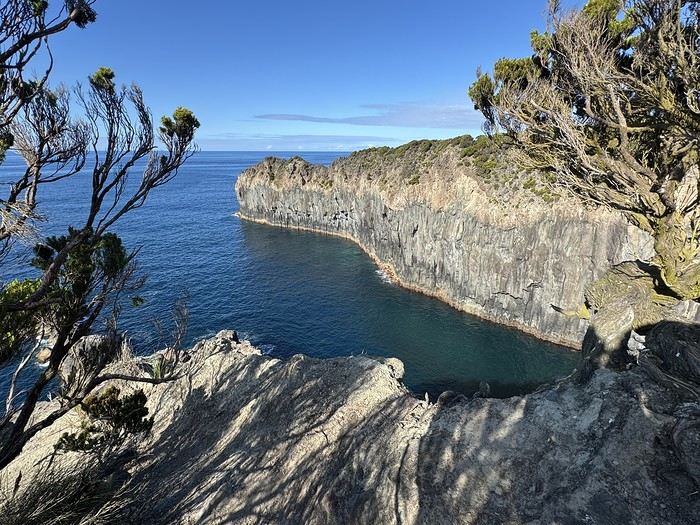
Late afternoon rolls around, and the sun starts to fade. It’s time to head back to the coast and explore the Alagoa point—its cliffs, volcanic rocks, birds, and *fajã*. We take little detours on foot around the area.


Back home. Dinner at a restaurant—nothing memorable. We try (I’ve forgotten the name) a kind of porridge made of “breadcrumbs, fish in a mash, and egg yolk,” a Portuguese specialty (though not Azorean, if I understood correctly). It’s not bad. And we have a wine from Terceira, a bit acidic and slightly salty—unusual, but we like it.
CA Captainbang Veteran ·
Hi there,

The dish you enjoyed is a açorda de peixe, a popular dish throughout Portugal. As for Terceira’s wine, it’s produced in Biscoitos, which is one of the 3 PDOs (Protected Designation of Origin) in the Azores. Biscoitos wine does indeed have a salty note and some acidity—it’s perfect with seafood! Like you, I had the chance to taste it. It’s truly a privilege to try this wine since production is so limited: The Azores: The incredible story behind Biscoitos wines | Diogo Winemaker

BL Bluequark Veteran ·
Good evening,

Thanks for the info. And thanks for the link. Otherwise, I agree with what you said in your other post: in the end, it’s probably for the best that the weather isn’t always great—fewer people come. That said, I’ll still repeat here that it’s really a fantastic destination despite the unpredictable weather, and you shouldn’t let that put you off.
BL Bluequark Veteran ·
July 28:

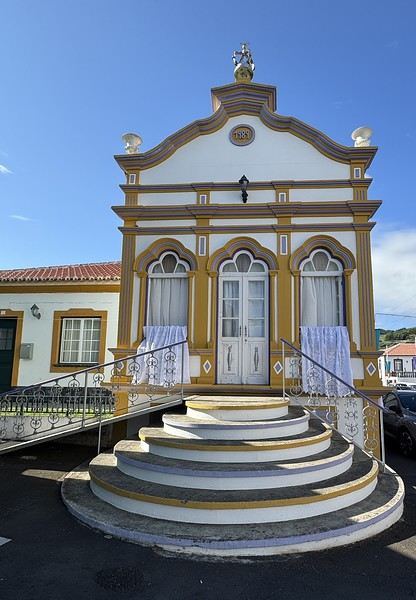
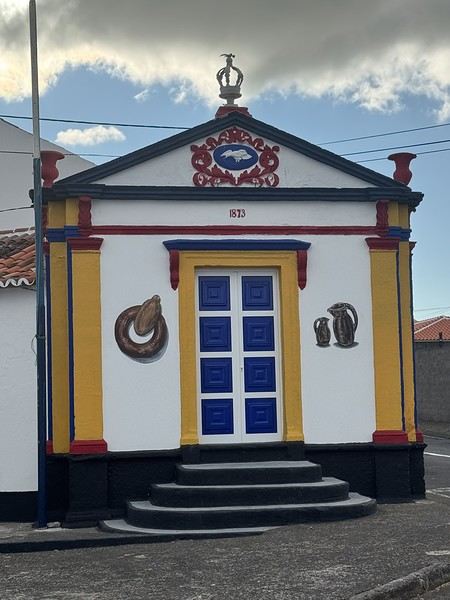
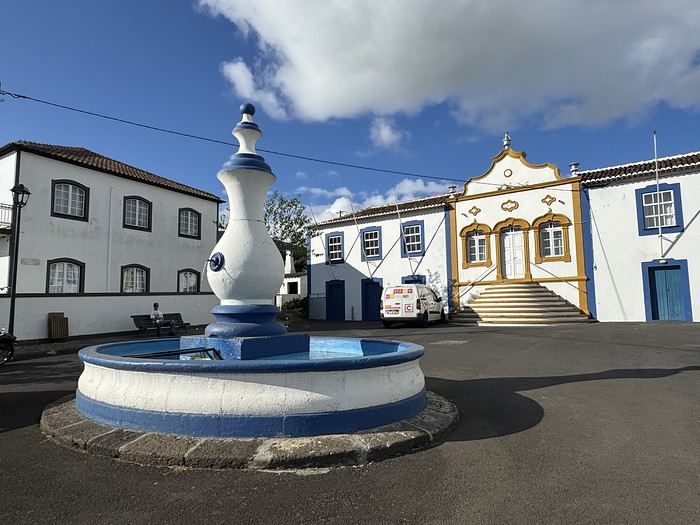
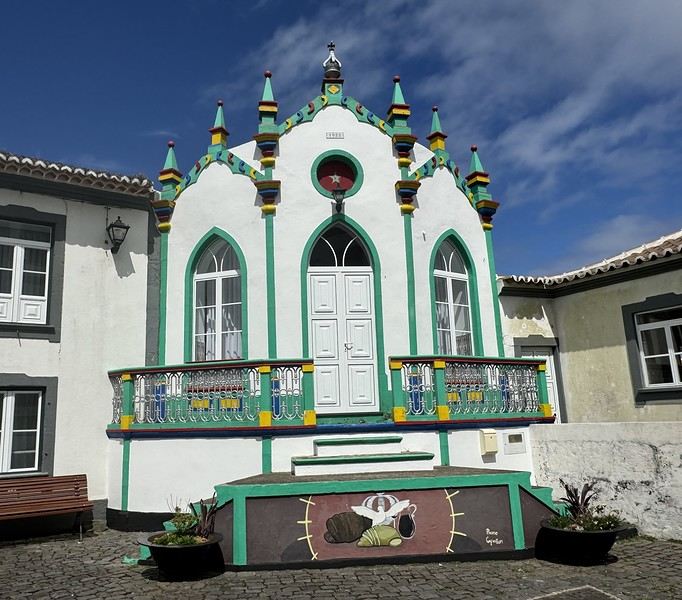
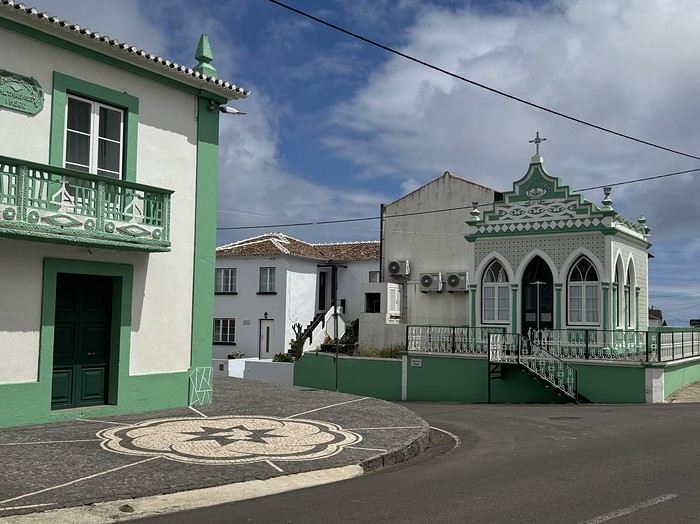
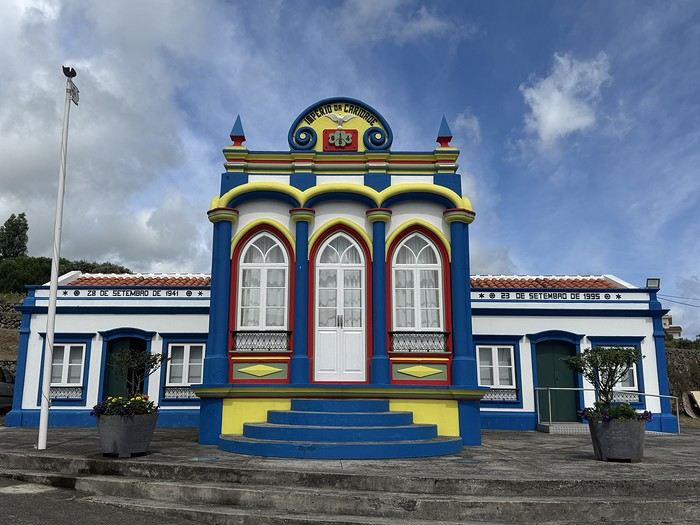
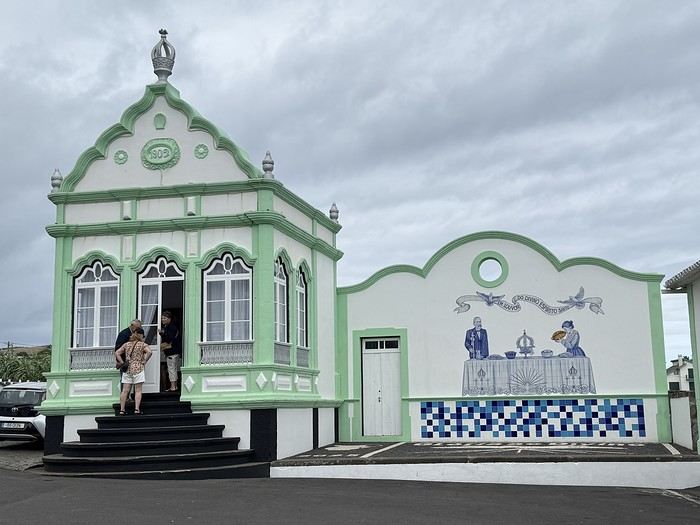
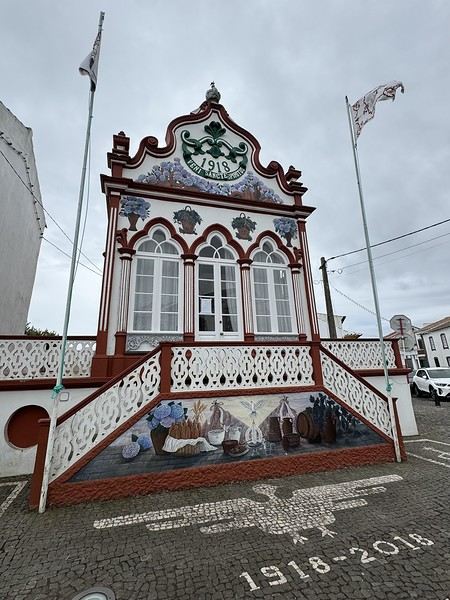
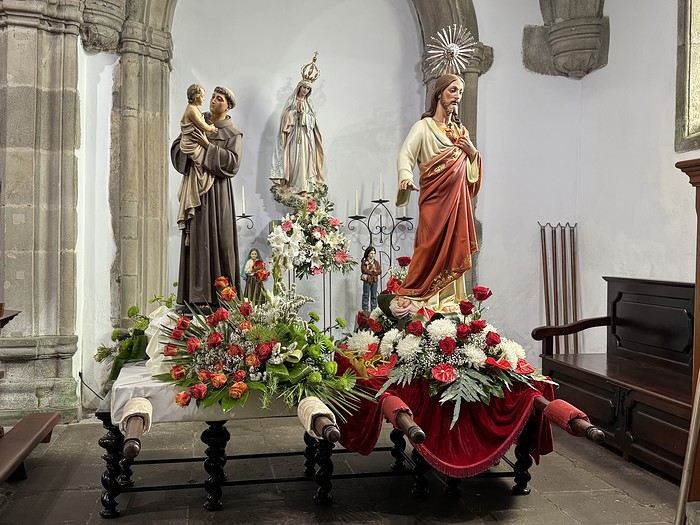
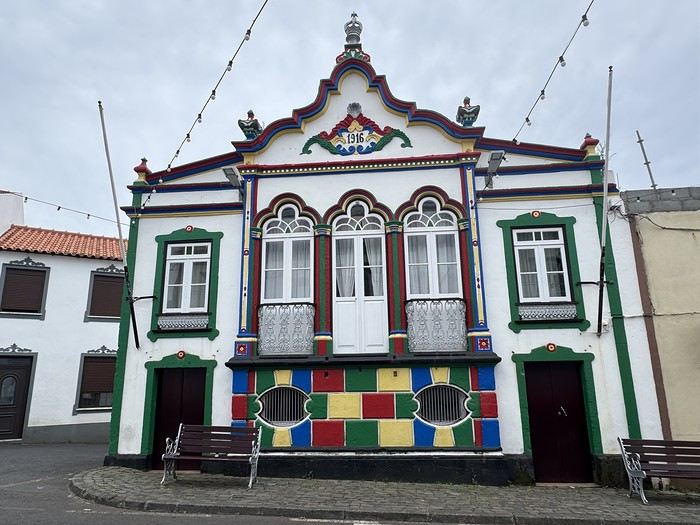
Overcast skies, clouds clinging to the hills... Hmm, we might not go hiking today after all! We’ll see. For now, we’re heading to Praia do Vitória, the island’s second-largest city, to explore its churches, waterfront, and shopping street—but it’s pretty quiet. We start with the *império*. Time to explain these *impérios* a bit more. An *império* is a small building near a church (but not attached) dedicated to the Holy Spirit. Azoreans, and especially those from Terceira, have a real devotion to the Holy Spirit, with festivals and processions in its honor. On Terceira, *impérios* are literally everywhere—dozens across the island. At first, Philomène didn’t quite get it and made Hippolyte stop at every single one before becoming a bit more selective. The one in Praia is one of the most highly rated.



Praia is a cute little town but also feels a bit deserted—few people in the streets, not much going on. Fun fact: There’s a Portuguese-American military base in Lajes (where the airport is, right next to Praia). Terceira’s location in the middle of the Atlantic makes it strategically important, and Praia hosted up to a thousand American families during the Gulf War (around a hundred now—I need to double-check those numbers since I couldn’t cross-reference sources). We even saw some (big) U.S. military planes parked along the runway and spotted three taking off during our walks.


After exploring the town, we check out two viewpoints, including one that’s particularly unique—right above the airport runway and next to a military transmission station. The weather’s overcast, which is a shame. There’s also a wind strong enough to knock the horns off a bull—pretty impressive!


After all that, isn’t it time for a little dip (and some food)? Of course! Off to the natural pools of Escaleiras and its picnic area. Luckily, the pools are sheltered from the wind, so Philomène can swim without freezing while Hippolyte prefers to lounge in the shade under an umbrella. He’s digesting.


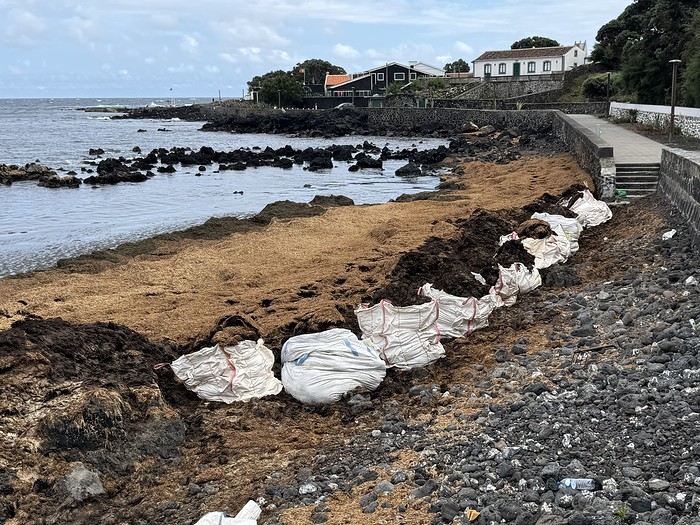
Alright, back to exploring—this time the south coast. Can’t say we’re heading toward better weather. Our first stop is Porto Martins and Baía das Canas. It’s peaceful and cute. There are some poor guys shoveling tons of washed-up seaweed... There’s *so* much of it, and it stinks. I wonder if it’s toxic. (I read somewhere that invasive algae can release toxic gases as they decompose, but maybe these aren’t the same.)


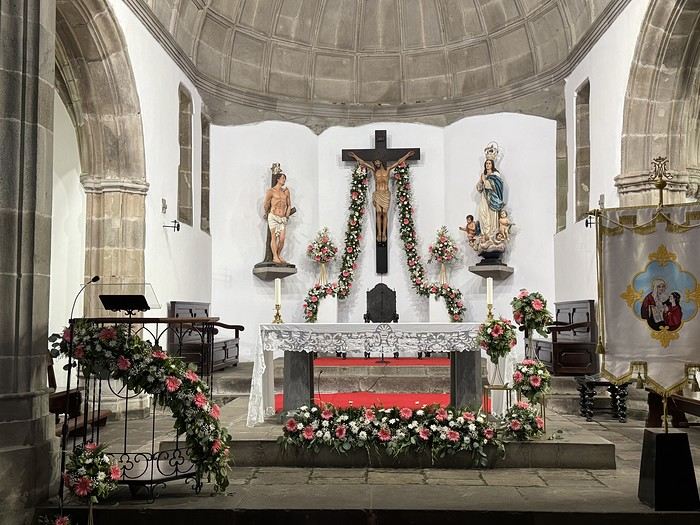
A detour to São Sebastião lets us discover another highly rated *império*. Next to it, the church is all decked out with flowers, and a procession is being prepared. So adorable.


BL Bluequark Veteran ·


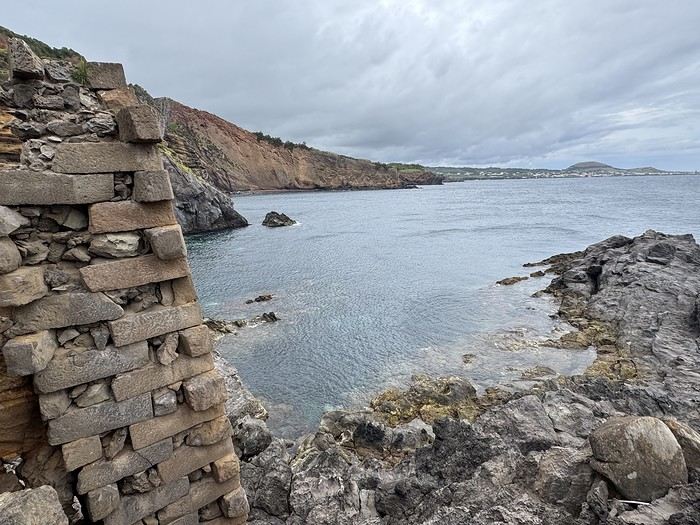
Heading to the sea to discover Forte do Bom Jesus. Truth be told, there’s not much left of the fort—it’s pretty rickety—but as Hippolyte says, "It’s not about the fort but the scenery." Still, if nothing’s done, there’ll soon be nothing left at all.


The next stop, Gruta das Agulhas, is a bust and sparks a heated debate between Hippolyte and Philomène: "But that *is* the cave—you can see there’s nothing beyond it" (Hippolyte’s take) versus "No way, that can’t be it—it’s ridiculously small" (Philomène’s version). Turns out, it wasn’t the cave after all—it was closed for renovations or something like that.


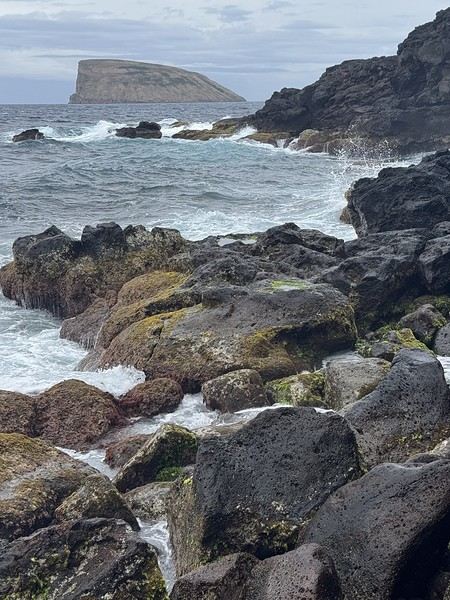
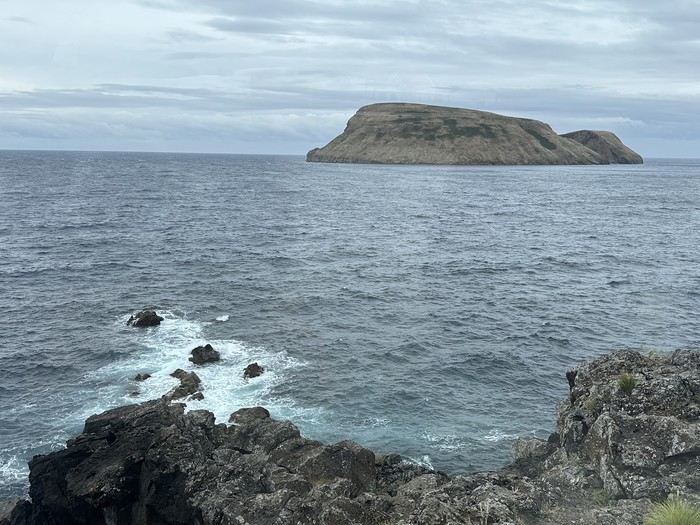
The last stop is Miradouro da Cruz do Canário, which offers an amazing view of Ilhéus das Cabras, especially at sunset. How to put it? The island’s there, but the sun? Not so much. The sky’s getting cloudier by the minute, and the streets are deserted. Feels like we’re here off-season. The upside? No parking problems.


Alright, one last *império* (small chapel), then a stop to fill up on gas for our departure tomorrow morning.

Back at the apartment: laundry, packing.

We head out for dinner and discover *açordas*—bread soup with mint and a poached egg. A fun, hearty dish! And then there are *patelles* (limpets in English, *lapas* in Portuguese). Hippolyte isn’t a fan, so Philomène gets the whole plate to herself. On the way back, the light drizzle from earlier has turned into steady rain.

Verdict on Terceira: a great introduction. The Azores have already won us over. Maybe it’s because we’re here in July, but there aren’t many people around, and parking’s a breeze—even at spots like the natural pools in Biscoitos. Pretty surprising, really.

You might also like