Morocco: Four Medinas for One Enchantment
FR

Translated into English. 13 replies on this page are not translated yet and are shown in French.

GR Groschats Veteran ·
Hi Kate, hi Richard!

First time in Tangier? Hope you enjoy it!

RI RichardXI Regular ·
Day Two: The Museums of Tangier, a Journey Through a Composite Past

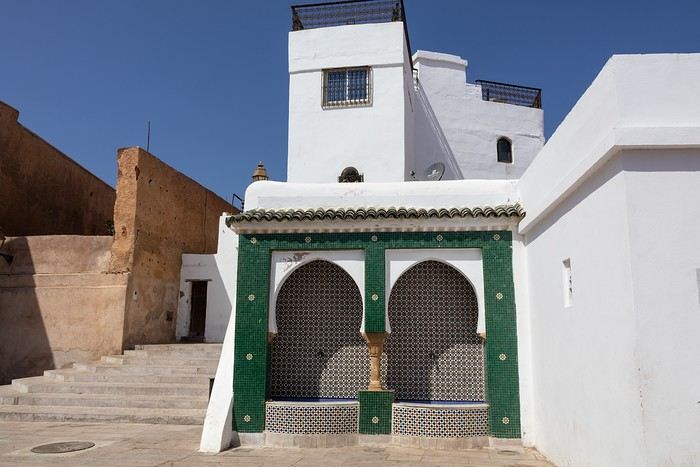
After diving into Tangier’s present yesterday, today we set off to explore its past, visiting two major museums: Dar-el-Makhzen and Dar Niaba. We take the same route as the day before this morning. Up to the Kasbah, a coffee break on the square—“good morning, Mr. Expat, how’s it going?”—a glance from the borj over the strait, and down to the Mechouar, the all-white esplanade where the Museum of Mediterranean Cultures is housed in the Dar-el-Makhzen, the former palace of Sultan Moulay Ismail.

The entire history of Tangier unfolds within this magnificent Arab-Andalusian palace. A journey through time where generations of people, each developing their own civilization, succeeded one another: Berbers, Phoenicians, Greeks, Romans, Arabs, Europeans. Blending their influences in peace or war. Until, as a symbol, the city took on the status of an international zone in the mid-1920s.

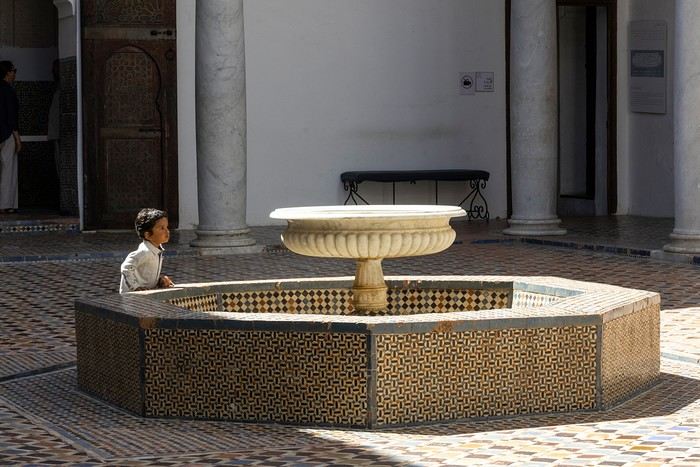
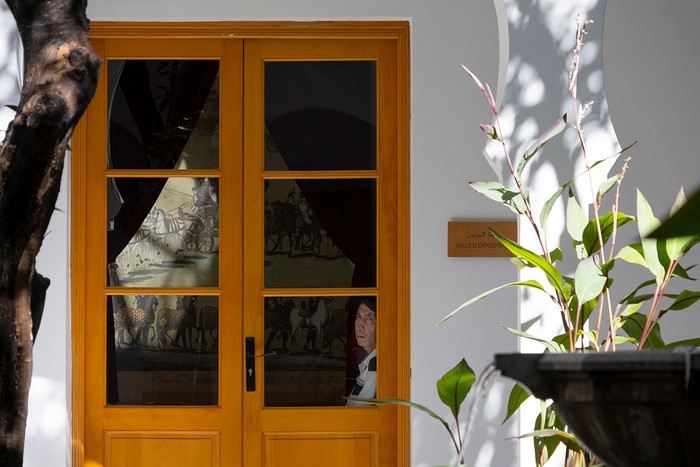
We wander from room to room starting from the large open-air patio, paved with polychrome zellige tiles. While I carefully examine the different display cases to try to understand the threads of the past, Kate prefers to stay in the large courtyard to capture those little scenes of life she loves. Here, as always in Arab palaces, the exterior is inside: we eventually emerge into a beautiful Andalusian garden, all geometry, freshness, and greenery.


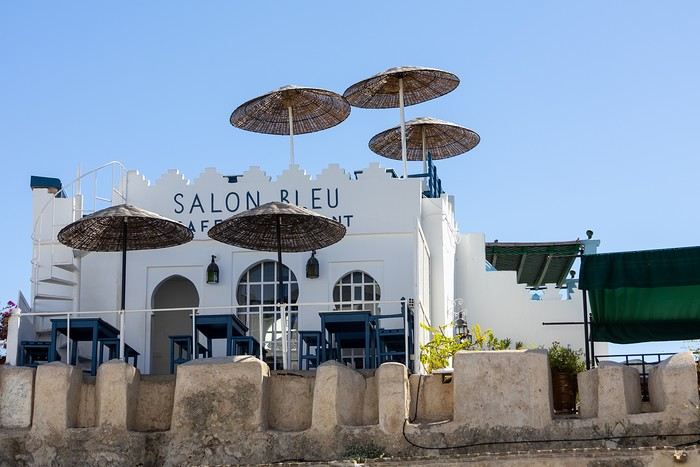
As we leave the museum, the light reflecting off the white walls of the square is dazzling, but the sea breeze is gentle, slightly cool, and we decide to have tea on the rooftop terrace of the café overlooking the esplanade, “Le Salon Bleu.” More and more often, Moroccan café owners ask if you want mint tea with or without sugar. So, it’ll be “blaa sukkar.” The view from the rooftop is stunning—the Mechouar on one side, the bay and the strait on the other.

As I gaze over the city, I think about its name: Tangier. A familiar name I heard during my childhood in Sète, watching the comings and goings of the ferry “L’Agadir” from the dock, which operated the route from Sète. That boat seemed enormous to me with its big red flag and green star painted on the funnel. And those Moroccan families boarding with cars packed to the roof. Those people who looked so different.

Tangier... that name fascinated and slightly worried me. Tangier-danger, and the almost perfect anagram of the word *strange*.

And here I am, many years later, sipping my tea on this lovely terrace and looking at this city spread out at my feet, feeling almost at home.


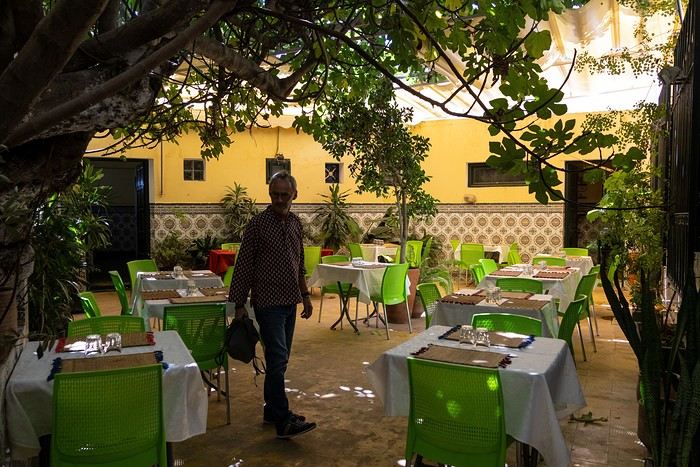
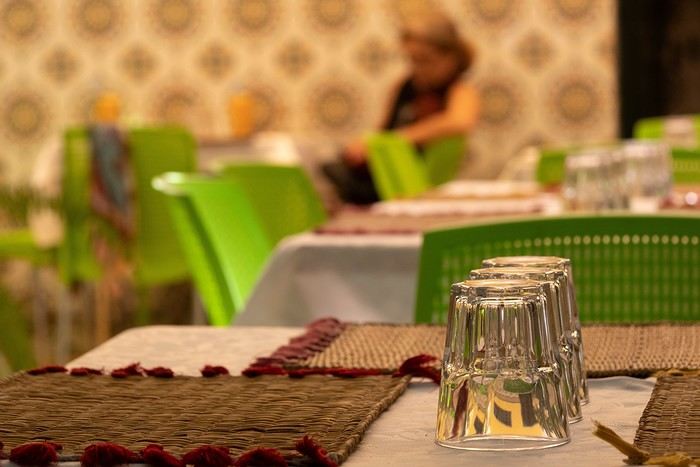
For lunch, we spot an address in the *Routard* that catches our eye: “Restaurant de la Maison Communautaire des Femmes Darna,” located in a small street just above the Grand Socco. According to the guide, it’s, and I quote, an associative restaurant for the economic integration of women. A volunteer from the association welcomes us and leads us into a lovely inner courtyard in the shade of a large fig tree. We both opt for sardines stuffed with chermoula, a marinade made from coriander, parsley, garlic, lemon juice, and olive oil, with added cumin and paprika.


After lunch, we head back to the medina, Rue Siaghine, to visit Dar Niaba, also known as the Museum of Traveling Artists. Both a museum of Tangier’s diplomatic history and an Orientalist museum, it’s located in the former French consulate general, built in the early 19th century.

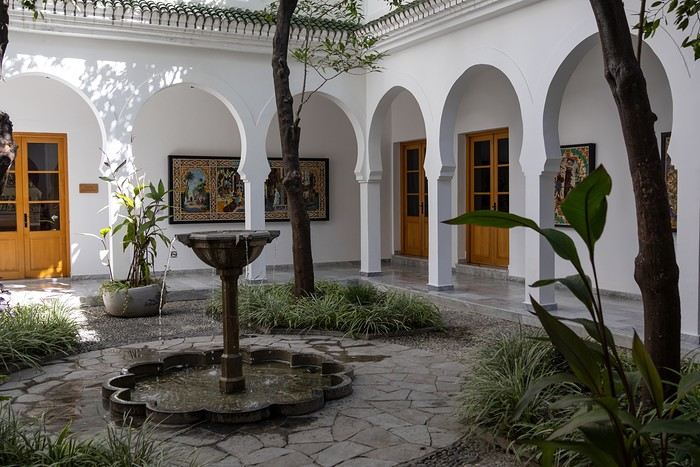
Passing through the large stone gate, we enter a vast patio planted with orange trees and surrounded by a gallery of horseshoe arches with dazzling whiteness. Once again, the charm of these Moroccan palace-houses, built to keep out the hustle and bustle of the nearby street and offer visitors the hushed calm of an intimate world, takes effect. The rooms dedicated to traveling artists are on the second floor. That’s where I discover the works of a Spanish portraitist I’d never heard of, Diego Marín López. The wall of the room is covered with these striking small portraits painted directly on wood. Notables or beggars, with deep gazes, sharp features, and skin texture almost palpable. A vision of the Orient, not fantasized, but certainly lived by this adventurous painter.


Back in the bustling Rue Siaghine, we turn right onto Rue Touahine to visit the museum of the Fondation Lorin. Housed in a former synagogue, this place of worship has become a cultural space with a theater and an interesting collection of photos and newspaper clippings telling the story of Tangier’s “roaring twenties” during the international zone era.

The day stretches on, we’re a bit tired, especially since Kate keeps complaining of stomachaches. One last tea, though, on the terrace of the café “Colón” to enjoy the street scene. Across from us, the Alcazar cinema is showing a film about the “Avengers.” Morocco is also part of the global village. Tonight, we’ll stay quietly in our apartment. There’s still so much to discover in Tangier, which hasn’t revealed all its present or its composite past to us yet. Tomorrow, we’re taking the train to Rabat.


RI RichardXI Regular ·
Hi Olivier! So nice to hear from you. Hope you're doing well.
RI RichardXI Regular ·
Rabat

In Islamic tradition, Al Boraq was the name of the magical horse that whisked the Prophet from Mecca to the Al-Aqsa Mosque in Jerusalem in the blink of an eye. Today, it’s the name of Morocco’s TGV. Fast, comfortable, and punctual, it takes us to Rabat Agdal station in under 1.5 hours—a bright and spacious place that feels like an airport.

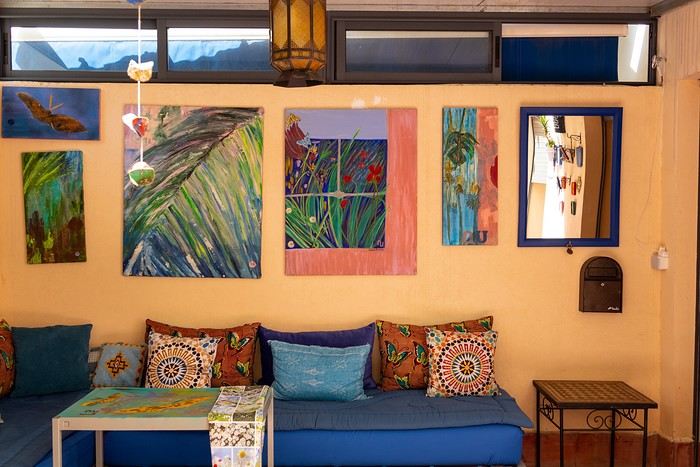
The accommodation we chose is just steps from the medina, but we need a taxi to get there. I’m still terrible at negotiating—100 dirhams for a 15-minute ride. Kate is fuming. Okay, fair enough: you handle the haggling, and I’ll plan the discovery routes. The apartment is in a fairly modern building, but it’s super cute. Fahima, the owner, named it “Artist’s Gallery.” The decor is meticulous, and the walls are covered in colorful paintings. The living room overlooks an inner courtyard—perfect for our two and a half days in Rabat.


Once settled, we wait for Martine, a friend of Kate’s who lives in Essaouira. She’ll be joining us for the rest of the trip. A tall, quiet woman with measured movements, we’ve traveled with her in southern Morocco before. I know we’ll get along, but it won’t just be the two of us—Kate and me—anymore. We’ll have to shift from couple mode to group dynamics. Martine arrives in the mid-afternoon, pretty exhausted—the drive was long and grueling in the heat.

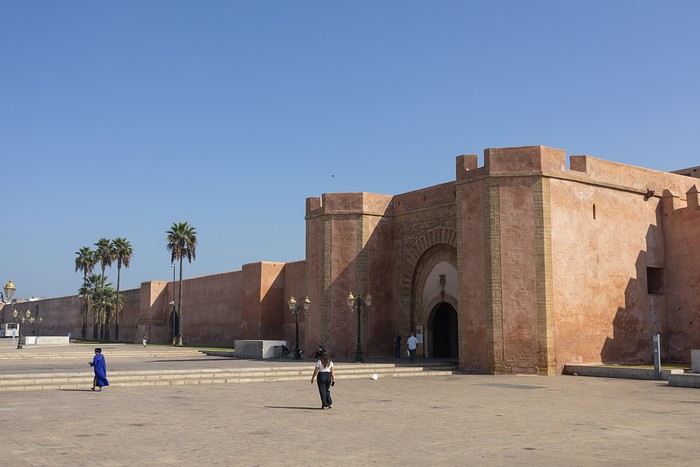
We get our bearings in the neighborhood; the medina is right nearby. I take a quick look at the pinkish-ochre ramparts. Martine and I pick up some groceries for breakfast and hunt down a pharmacy for Kate, who’s still struggling with her stomach. We sit down at a small local restaurant for our first dinner and a much-needed catch-up. As night falls, the calls to prayer rise from the medina’s mosques.

RI RichardXI Regular ·
"Behind the Doors: The Medina, the Kasbah of the Oudayas, and the Hassan Tower"

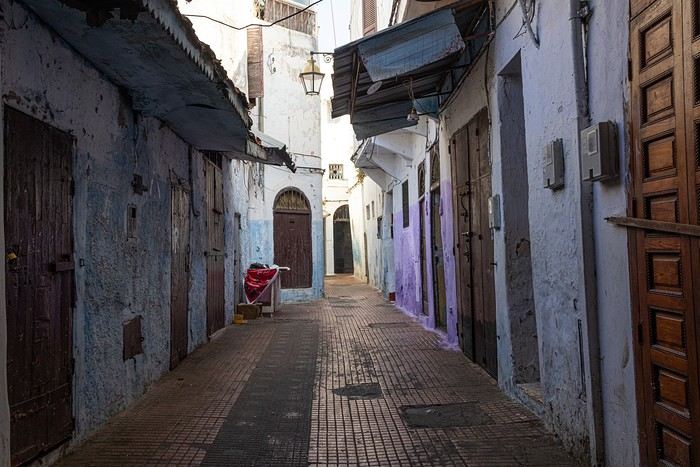
The medina of Rabat is quite different from those you typically encounter in Morocco. Dating back to the 17th century, it was laid out on an orthogonal plan, making it relatively easy to navigate. It’s nothing like the labyrinths of Fez or Marrakech.

After passing through the majestic Almohad gate Bab al Had, which marks the entrance, we emerge onto a sunlit square lined with shops. At small wooden tables protected by parasols, a dozen men sit behind their old typewriters, serving clients. They’re public scribes. Kate whips out her Canon to capture the scene but lacks discretion this time. A man spots her and starts shouting, "Who do you think you are? I’m not a monkey—this isn’t a zoo! You could’ve at least asked!" We nearly have a diplomatic incident. Kate looks flustered. I can tell she’s torn between wanting to apologize and defending her position. The photographer’s instinct seems to win out. Used to handling conflicts, I step in gently. Things calm down, and we move on. I chuckle to myself. "Well, you really got an earful!" She just shrugs.

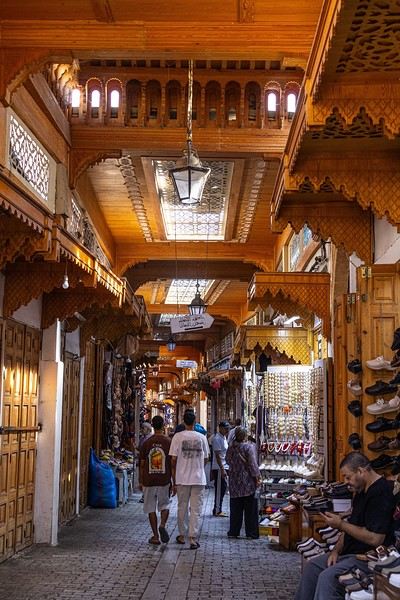
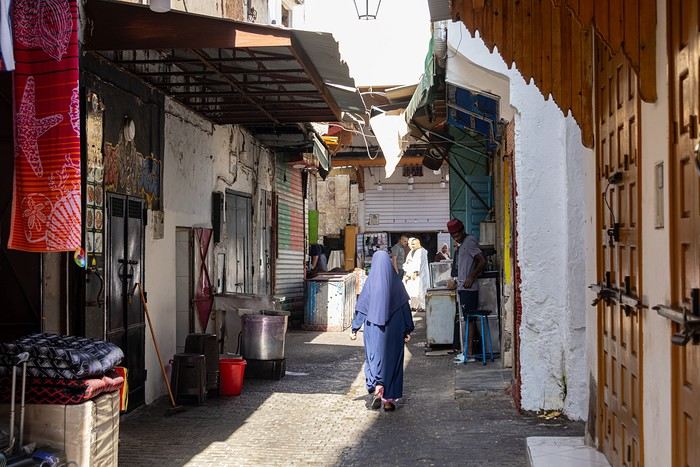
We now walk along Souika Street and the Sebat Souk, where shops of all kinds line up—typical of Moroccan souks: carpets, clothing, handicrafts, spices. A world of colors and scents. This medina is truly pleasant to explore, with its wide, straight streets offering endless escape routes for new discoveries. Above our heads, beautiful wooden frameworks embedded with translucent glass create a unique atmosphere, playing with light and shadow. There are people around—tourists, of course—but the merchants seem to do most of their business with locals, far from the relentless "Come see my shop!" of Marrakech vendors.


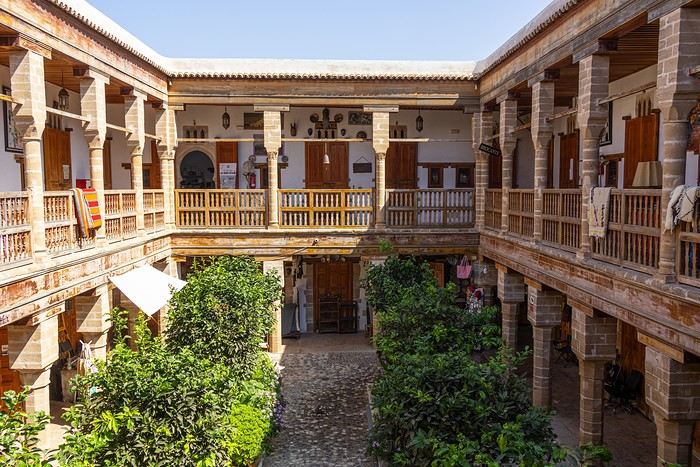
From the Street of the Consuls, we enter through a discreet door into a large rectangular courtyard paved in gray and planted with small orange trees. The space is bordered by galleries supported by pink sandstone pillars, rising two stories high. Small rooms on both the ground floor and upper level: we’re in an old caravanserai, the Fondouk Ben Aïcha. Caravanserais were inns reserved for traveling merchants who crisscrossed the Muslim world: rooms on the first floor, and on the ground level, shops for storing goods and stables for animals. Carefully restored, this one now houses artisan shops, a cultural center, and a traditional Moroccan pastry shop. It’s the perfect time to linger, sit down, and enjoy a mint tea before tackling the climb to the Kasbah of the Oudayas.


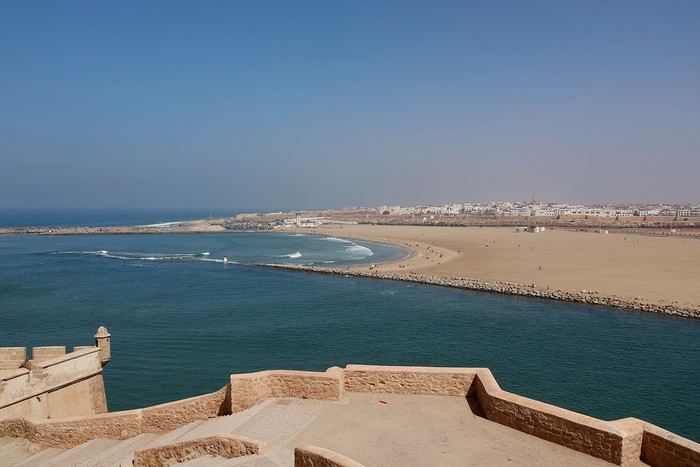
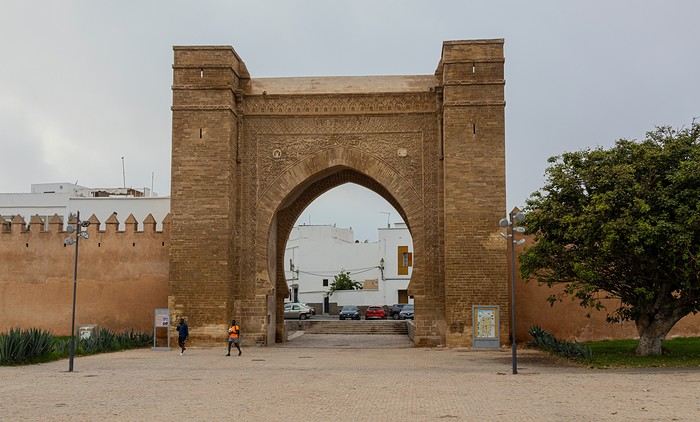
The Kasbah of the Oudayas! Its name rings out like a joyful youyou. The main entrance is through a monumental gate visible from the lower part of the medina, the "Bab el-Kebir." Built at the end of the 12th century by Sultan Yacoub el Mansour, it takes the form of a massive horseshoe arch, finely decorated with geometric and floral motifs in shades of ochre and red. It’s the guardian of the fortress, itself perched on a rocky promontory overlooking the Bouregreg River and facing the ocean.


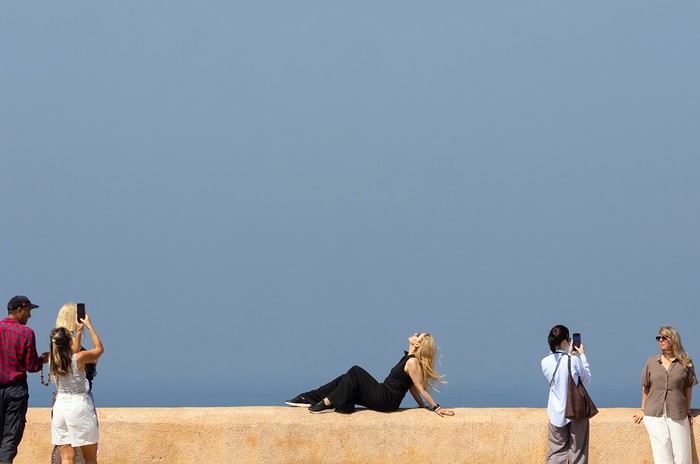
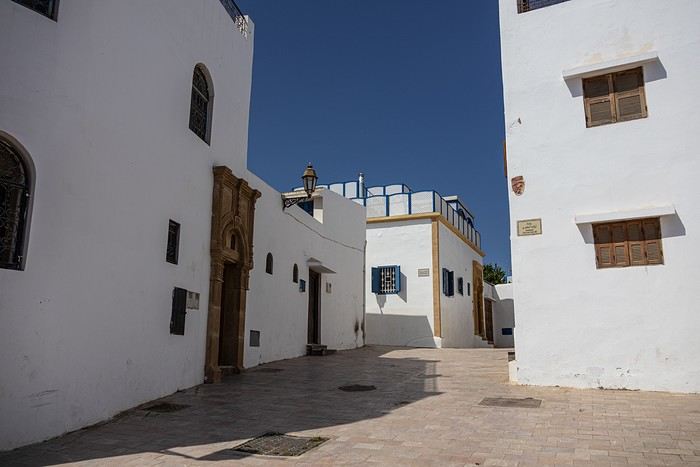
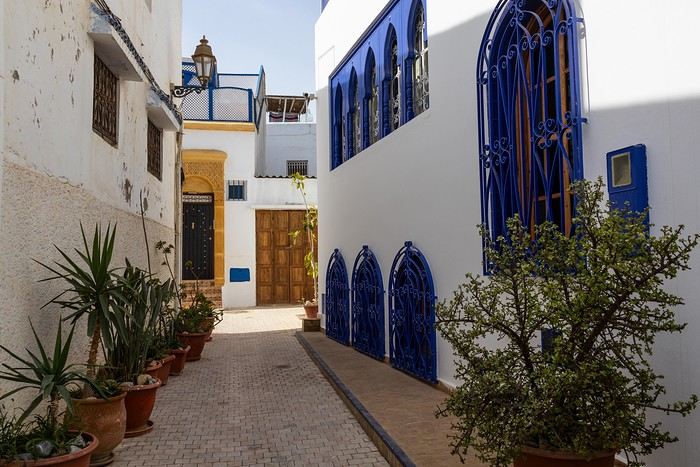
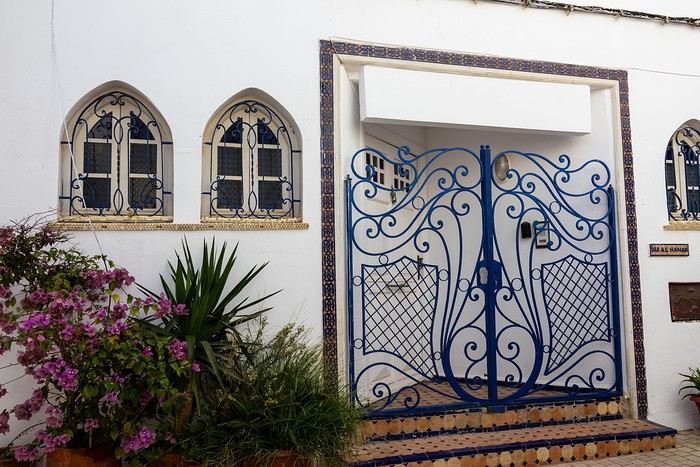
We step into a meticulously maintained space of charming whitewashed houses with flat roofs, door and window frames highlighted in blue, intricately wrought iron grilles, and carefully paved alleys lined with plants and climbing flowers. The main street leads to a vast esplanade overlooking the river and ocean, where everyone loves to take photos.


Then we descend through the maze of alleys toward Dar el Karam Square, right next to the Andalusian garden. A café-tea salon spreads its tables across small terraces overlooking the river. The walk is full of charm in this picturesque, somewhat museum-like setting. Far from the bustle that must have reigned here when the Oudayas garrison occupied the area.


RI RichardXI Regular ·
"Behind the doors: the medina, the Kasbah of the Oudayas, the Hassan Tower" (continued)

For lunch, we prefer to dive back into the lively atmosphere of the medina.


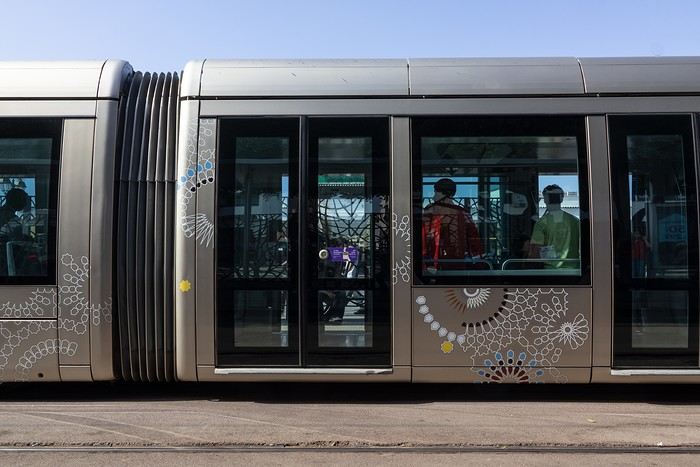
The afternoon is dedicated to visiting the Hassan Tower and the Mausoleum of Mohammed V. In just a few stops, the tramway—with its very contemporary look and highly graphic decor, featuring stylized patterns reminiscent of Moroccan zellige tiles—transports us to a more modern part of the city, developed during the Protectorate era.


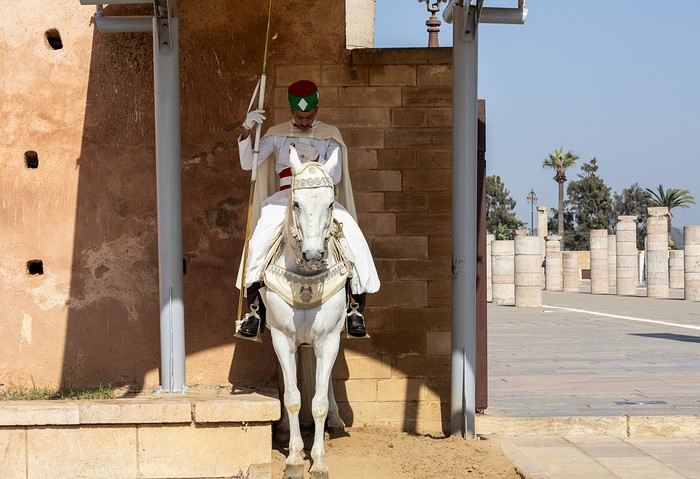
The entrance to the site is solemnly guarded by riders in white attire, red belts, and green headgear, as motionless as their mounts.


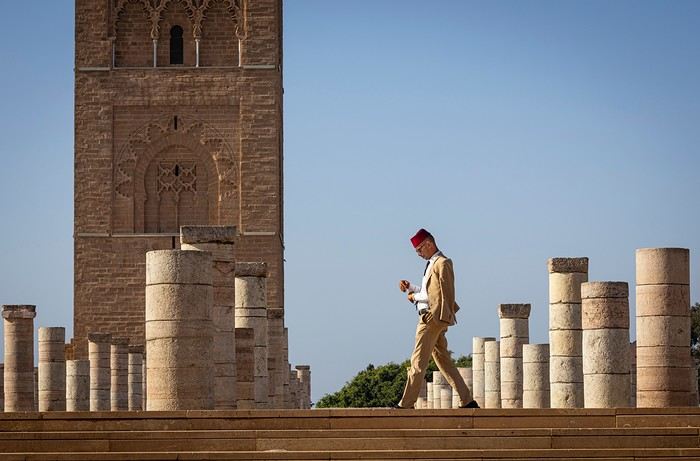
The 12th-century Hassan Tower, with its ochre hues, never completed, still looms 40 meters high over this astonishing esplanade covered with the bases of truncated columns. What was meant to be one of the largest mosques in the Muslim world now reveals its amputated verticality, its stone skeleton—a witness to an unfinished past. The sun beats down fiercely in this mineral landscape, and before visiting the Mausoleum of Mohammed V, we take shelter in the welcome shade of the mosque adjacent to the monument. Kate takes advantage of this moment to capture the beautiful perspectives offered by the vanishing points of the esplanade. The muezzin then calls to prayer, and as often happens, time seems to stand still during the brief moment of his chant.


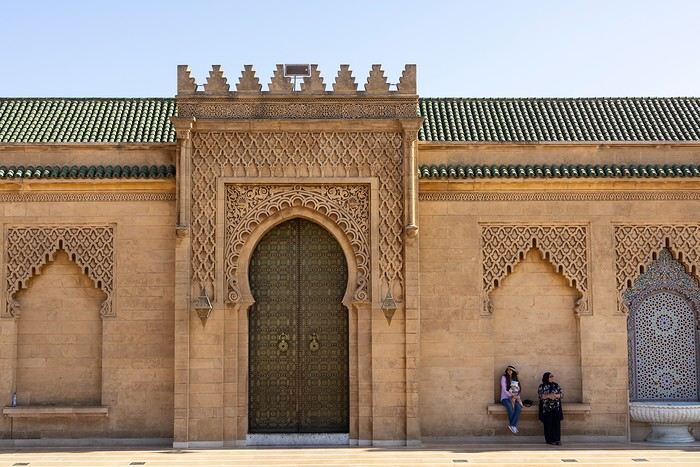
We then head toward the white marble mausoleum. However, we won’t be visiting the tomb of the Alaouite sovereigns Mohammed V and Hassan II. Closed for renovations.

Tonight, we’re dining at home. Martine prepares a simple meal in the peaceful courtyard of our apartment. The day comes to an end—it’s time to close the doors again.

HE Hermès1964 ·

Not translated into English yet. Original French text:

Lire vos carnets à quatre mains reste un enchantement et un partage très intéressant qui donne juste envie de suivre vos traces...merci 😎
HE Hermès1964 ·

Not translated into English yet. Original French text:

Lire ton carnet me fait forcément penser à ceux écrits pour nos voyages entre amis...avec toujours l'impression d'être conviés à partager ces chemins en votre compagnie...alors, merci de nous donner accès à ce récit de voyage
KA Kate Globetrotter ·

Not translated into English yet. Original French text:

Lire vos carnets à quatre mains reste un enchantement et un partage très intéressant qui donne juste envie de suivre vos traces...merci 😎

Finalement, même quand on voyage chacun de son côté, on continue un peu à voyager ensemble grâce aux récits de Richard 😉
VO Voyajou Globetrotter ·

Not translated into English yet. Original French text:

Finalement, Tanger n'a rien perdu de son attrait pour les artistes. Ils y viennent désormais en couple.

Il raconte une histoire, elle (se) fait un film. Il interroge les pierres, elle son Canon. De kasbah en medina, entre deux musées se prélassent en terrasses et maudissent les marches, la chaleur et les bactéries. Voir Tanger et partir ?

La tour Hassan du XIIe siècle aux reflets ocrés, jamais achevée (...) Ce qui aurait dû être une des plus grandes mosquées du monde musulman offre aux regards sa verticalité amputée, son squelette de pierre, témoin d’un passé inabouti.

Sans compter que Kate la raccourcit encore. 😇
RI RichardXI Regular ·

Not translated into English yet. Original French text:

Salut Jean-Luc, Très bien ta petite intervention. Bien dans ton style. 😉Sympa en tout cas de ta part de nous suivre.
RI RichardXI Regular ·

Not translated into English yet. Original French text:

De la nécropole de Chellah à la Kasbah des Oudayas : histoires de taxis

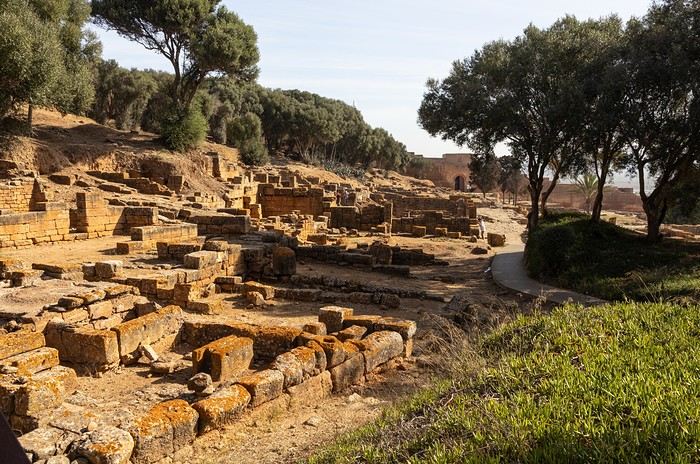
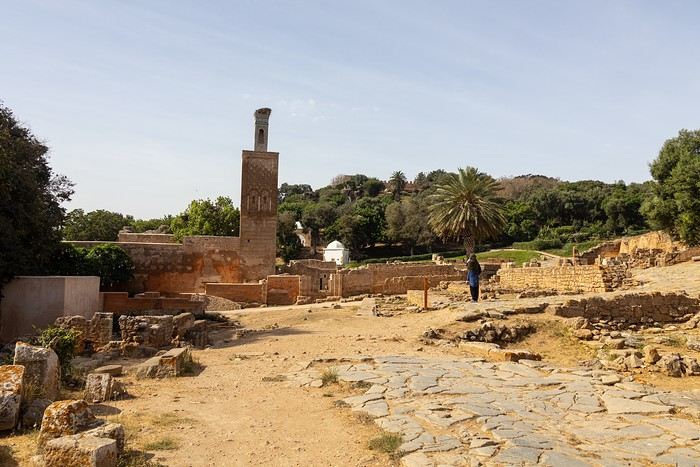
Ce matin le chauffeur du petit taxi bleu qui doit nous transporter à la nécropole de Chellah en périphérie du centre-ville a mis son compteur. Moins de 40 dirhams, tout va bien. Le site archéologique de Chellah combine les vestiges de deux grandes périodes de l’histoire : une cité romaine du IIe av JC et une nécropole islamique de l’époque mérinide des XIIe-XIVème siècles. Le soleil est encore doux, nous descendons tranquillement un jardin arboré qui nous mène au cœur d’un vaste ensemble de ruines. Comme souvent pour les vestiges antiques la lecture est difficile. Nous déambulons au milieu de bases de maisons et sur des pavés disjoints usés par le temps sans trop savoir ce que nous regardons.


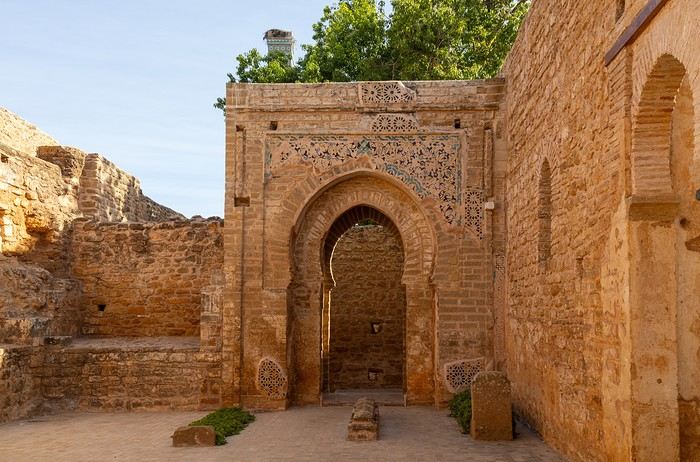
La visite du complexe funéraire mérinide est, elle, beaucoup plus parlante avec ses panneaux informatifs. Les tombeaux bâtis en belle pierre ocre sont assez bien conservés, on découvre également les vestiges d’une mosquée, d’un hammam., d’une medersa. Etrange lieu où la vie et la mort semblent s’être côtoyées dans le raffinement et l’élégance des arcs outrepassés.

Le site est vraiment agréable à parcourir, d’autant qu’il y a peu de monde en cette heure assez matinale. Nous terminons le parcours à l’ombre d’un jardin andalou en contrebas du site.


Kate propose alors de retourner à la Kasbah des Oudayas prendre encore quelques clichés qu’elle n’avait pu faire la veille.

Nous repassons la porte monumentale et cherchons un taxi. Un homme nous interpelle. « Taxi ? OK. Attendez un peu il arrive ! ». Kate semble se méfier. Pourquoi attendre, il suffit de remonter la rue et de prendre une course à la volée. Martine et moi préférons attendre sagement. Au bout de 10 minutes, un van tout blanc arrive et nous prend en charge ainsi que deux touristes anglais. Kasbah des Oudayas. On ne négocie pas. Le chauffeur très disert, trop, nous assomme d’un flot de paroles et de questions. Nous répondons par monosyllabes. Arrivés devant la kasbah, la sentence tombe. 200 dirhams ! Les deux touristes anglais tout de même un peu surpris règlent leur part sans sourciller. Kate endosse alors le costume de guerrière et refuse de payer. L’affrontement est inévitable. Toute en colère outrée et cheveux roux au vent, elle parle d’honnêteté, de prix juste... Je suis impressionné par son aplomb. On dirait la Kahina ! Le chauffeur de plus en plus mal à l’aise face à tant de fougue s’embrouille dans des explications alambiquées, je le sens faiblir. Après cinq minutes de palabres tendues il finit par rompre le combat et accepte les 50 dirhams que je lui tends. « Non, mais !!! »

« Pour le déjeuner, nous redescendons vers la médina et retournons dans la petite gargote de la veille, sous les arcades près du marché couvert. Saïd, le jeune serveur, nous reconnaît. Il nous serre la main avec chaleur : « Salam aleikoum. Labess ? ». Martine, qui a quelques notions de darija, répond par des formules de politesse. En voyage à l’étranger, il faut sans cesse s’orienter, s’adapter aux lieux, aux gens, à l’inconnu. Et j’aime ces moments particuliers où l’on se sent un peu chez soi, où l’on trouve enfin quelques repères solides qui donnent le sentiment d’être en territoire familier.

RI RichardXI Regular ·

Not translated into English yet. Original French text:

Retrouvailles à Salé

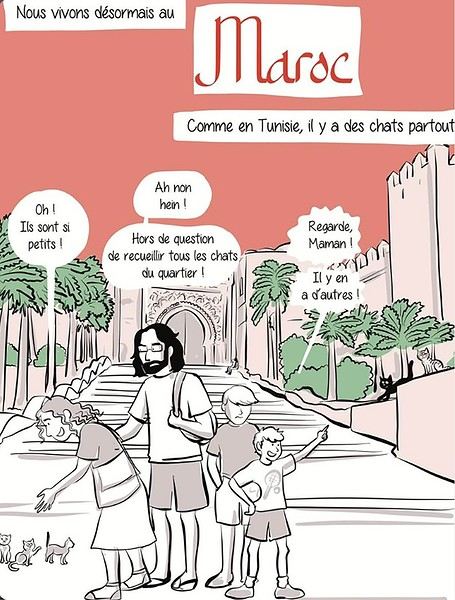
Cet après-midi nous avons rendez-vous à Salé avec des copains expats qui viennent de s’installer à Rabat depuis quelques semaines à peine. Boris et Anna, deux collègues profs d’histoire-géo avec qui j’avais travaillé au lycée Lacroix de Narbonne. Boris, un grand gaillard à l’allure placide et au timbre de voix profond (utile dans le métier !). Anna, à la fine silhouette et au regard malicieux. Amoureux du Maghreb, ils avaient déjà enseigné en Tunisie des années auparavant. Anna est également dessinatrice de BD, elle a publié plusieurs albums dont un qui raconte avec humour sa vie de prof et un autre qui évoque justement son expérience tunisienne avec Boris.

Anna Chronique

Ce sont eux qui m’ont proposé Salé comme lieu de rencontre, face à Rabat, de l’autre côté du fleuve Bouregreg. Après avoir pris le tramway et traversé le pont Hassan II, nous pénétrons dans la médina par la Bab Mrisa l’ancienne porte monumentale qui défendait cette redoutable cité de corsaires.


Après quelques minutes d’attente je les vois arriver avec leurs deux jeunes garçons. Je suis ravi de les retrouver. Je me hausse un peu sur la pointe des pieds pour claquer la bise à Boris, et redescends sur mes talons pour embrasser Anna. Les présentations faites, nous remontons tous ensemble la rue principale pour nous attabler à une terrasse face à un parc urbain. Je leur trouve l’air un peu fatigué. Apparemment leur installation a été un peu précipitée et j’imagine sans mal l’énergie qu’ils ont dû déployer pour préparer leur départ et organiser leur arrivée. Mais ils sont pleins d’entrain et heureux de commencer une nouvelle vie au Maroc. Nous échangeons ainsi pendant une bonne heure et demie, sur leur travail d’enseignant, les relations qu’ils commencent à nouer, l’intégration des enfants... Les deux gamins suivent un cursus normal, mais ils apprennent aussi l’arabe littéraire et le darija. Je les vois faire des allées et venues car apparemment ils veulent s’acheter des vêtements et qu’il faut négocier. « En darija, tu dis quelques mots en darija ». Les parents les laissent se débrouiller. Excellente école de la vie ! L’heure avance et demain tout le monde a cours. Il est temps de se séparer. Embrassades. Un dernier signe de la main et nous les laissons à leur histoire marocaine. Bon vent les amis...


Dans la nuit rabatie

Le soir tombe déjà sur Rabat. Si l’on excepte bien sûr la médina, la kasbah et sans doute aussi les périphéries plus populaires, la ville a vraiment des allures de capitale moderne, avec ses grandes artères commerçantes, ses immeubles bien alignés, ses parcs et jardins taillés au cordeau, son tramway aux lignes contemporaines, ses promenades coquettes.

Pour clore cette dernière journée, Martine propose d’aller dîner dans un des nombreux restos qui s’alignent en enfilade le long de la grande muraille des Andalous en parallèle au boulevard Hassan II. L’endroit est très animé. Rabatis comme touristes sont nombreux à s’installer là, pour profiter de la douceur du soir. La population est très mélangée. Des jeunes à l’allure métropolitaine, des familles plus traditionnelles, des filles cheveux au vent, d’autres couvertes de l’hidjab, certaines même en niqab. Un condensé de la société marocaine, faite ici comme ailleurs, de tensions, mais aussi de nécessaires acceptations de l’autre. Dans la nuit qui enveloppe la ville monte encore une fois l’appel à la prière. Certains sans doute n’y prêtent plus attention, comme la sonnerie des cloches chez nous. Pour d’autres, l’appel est entendu, c’est un moment sacré, de piété. Pour moi, c’est un des sons du Maroc.

Demain nous partons pour Fès…


MU Muriel18 Globetrotter ·

Not translated into English yet. Original French text:

Ne connaissant pas du tout le Maroc, j'ai du mal à faire coïncider votre voyage avec celui d'Agnès (Attila) malgré les étapes communes. Pour moi, c'est presque 2 voyages différents 🤪... avec chacun sa sensibilité.
KA Kate Globetrotter ·

Not translated into English yet. Original French text:

Pour moi, c'est presque 2 voyages différents 🤪... avec chacun sa sensibilité.

Je t'avais dit que tu aurais deux visions différentes ! C'est ce qui fait la richesse des carnets sur VF. On pioche ici et là ce qui, a priori, devrait nous intéresser 😉
RI RichardXI Regular ·

Not translated into English yet. Original French text:

Je n'ai pas encore parcouru le récit d'Attila, et ce intentionnellement pour rester dans la bulle de notre voyage. Mais dès que j'aurai terminé ce p... de carnet, j'irai me plonger avec elle dans son royaume du kif. Ce sera intéressant pour moi de voir comment elle a vécu son périple marocain.
AT Attila Globetrotter ·

Not translated into English yet. Original French text:

Richard et Kate ont effectué un voyage nettement plus urbain et sans location de voiture. Ils ont également passé plus de temps dans chaque lieu.

Richard cisèle les mots, Kate cisèle les photos.

Je marche beaucoup plus que Kate. Mais moins que Richard sans Kate...

Ceci explique cela.🙂
RO Rouquine38 Globetrotter ·

Not translated into English yet. Original French text:

Pour moi, c'est presque 2 voyages différents 🤪... avec chacun sa sensibilité.

Je t'avais dit que tu aurais deux visions différentes ! C'est ce qui fait la richesse des carnets sur VF. On pioche ici et là ce qui, a priori, devrait nous intéresser 😉

Oui, en effet, on n'a pas l'impression de faire le même voyage 😏 Lorsque je vais préparer le mien, il faudra que je relise bien les deux et piocher dans chacun 😊
KA Kate Globetrotter ·

Not translated into English yet. Original French text:

Lorsque je vais préparer le mien, il faudra que je relise bien les deux et piocher dans chacun 😊

-Pour les bons restos, dénicher la picole, les hébergements chics et tranquilles, les bons itinéraires, le rural plutôt que l'urbain, les randos légères: Attila ! -Pour les négociations, les hébergements en immersion, les petits restos dans leur jus, les endroits photogéniques, les bancs publics, l'urbain plutôt que le rural: Kate !

Mais aussi: -Pour les visites culturelles guidées et l'organisation optimale d'une journée: Richard !

PS: le cru photos de ce voyage est très moyen. Mais j'ai une excuse ! J'ai été malade durant tout le séjour. Quand Richard me demande un renseignement je suis incapable de lui retranscrire le déroulé d'une journée 🏴‍☠️

Similar discussions

You might also like