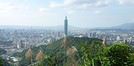
We watched the show "Rendez-vous en terre inconnue" in Guizhou Province, China. Those stunning landscapes really made us want to go trekking in the region.
Do you have any valuable tips to share to help us plan this trip?
Yes, it's a really beautiful report. The reporters spent an enormous amount of time finding these kinds of remote villages. In other words, they're still inaccessible for the average tourist because there's no road infrastructure or accommodation. But for backpackers, absolutely.
All the accessible and well-equipped areas are often heavily altered by mass tourism and bear no resemblance to the villages in "En terre inconnue" (Unknown Lands).
I'll be in Guizhou in May. Following the tourist circuit of Miao or Dong villages isn't my thing. I plan to use Zhaoxing—a hyper-touristy Dong village—as a base for comfort, internet, etc. From Zhaoxing, I intend to explore on foot and backpack through the small, lost villages in the mountains south of Zhaoxing. I've created my own highly detailed maps, which are available on my smartphone. I plan to set off for several days on small mule trails, moving from village to village without being sure of comfortable food or lodging. In short, adventure far from the tourists.
It’s definitely a stunning place to visit, but it’s not easy. This is China’s poorest province, and tourist infrastructure is minimal (except for a few sites). It’s really tough to explore in an interesting way without some Mandarin skills. I wouldn’t recommend it for a first trip to China.
Yes, really beautiful report. The reporters spent an enormous amount of time finding this kind of remote village. In other words, it's still inaccessible for the average tourist because there are no road infrastructures or accommodation. But for the backpacking adventurer, yes.
All the accessible and equipped areas for visitors are often heavily modified by mass tourism and no longer resemble the village from "En terre inconnue" (Unknown Lands).
I’ll be in Guizhou in May. Doing the tourist circuit of Miao or Dong villages isn’t my thing. I’ve planned to use Zhaoxing—a hyper-touristy Dong village—as a base to have comfort, internet, etc. From Zhaoxing, I intend to explore on foot and with my backpack the small, lost villages in the mountains south of Zhaoxing. I’ve made my own highly detailed maps available on my smartphone. I plan to set off for several days on small mule trails, going from village to village without being sure of eating or sleeping comfortably. In short, adventure far from tourists.
Thanks for your reply.
We’re used to doing itinerant trips off the beaten track, away from road infrastructures, and occasionally doing without modern comforts and technology.
Because of this, your adventure of setting off for several days really interests us. Would it be possible, please, for you to share your experience afterward?
We’re thinking of doing this trip next autumn.
Thanks in advance,
Geneviève
It’s indeed a stunning place to visit but not easy. It’s the poorest province in China, and tourist infrastructure is minimal (except for a few sites). It’s really hard to visit (in an interesting way) without some Mandarin. Not a destination I’d recommend for a first trip to China.
Thanks for your reply.
You mention:
- “tourist infrastructure is minimal (except for a few sites)”. Which ones, please?
- “hard to visit without some Mandarin”. Is it possible to find a local guide? Do you have an address?
Thanks in advance.
Geneviève
It really is a stunning place to visit, but it's not easy. It's the poorest province in China, and the tourist infrastructure is minimal (except for a few sites). It's very difficult to visit (in an interesting way) without some knowledge of Mandarin. I wouldn't recommend it for a first trip to China.
Thanks for your reply.
You say:
- “the tourist infrastructure is minimal (except for a few sites)”. Which ones, please?
- “difficult to visit without some knowledge of Mandarin”. Is it possible to find a local guide? Do you have an address?
Thanks in advance.
Geneviève
Hello,
I confirm Jianadaren and Danniello’s answers. The village featured in this amazing report reminded me of the hamlets around Zhaoxing, but much more isolated.
I have doubts about the possibility of finding a local guide who speaks a language other than Mandarin, but with the tourist development in Zhaoxing—which was still very remote when I visited—who knows...
Guizhou really isn’t easy to get your head around if you don’t speak Mandarin.
I went there in 2015, around the village of Jiaju. You’ll find several isolated villages with no roads—they even hide the kids when you arrive. No hotels or restaurants either. Take a look at my travel journal here (page 2):
In Guizhou, it's important to distinguish between visiting well-known, well-organized tourist spots and exploring lost villages like those in *En terre inconnue*. On these tourist circuits, don’t expect to find the same atmosphere as in the show’s villages. It’s not easy to mix the two.
In the France 2 program, you see villagers who are super welcoming and very communicative. But the director came three months earlier to prepare the villagers to host the two volunteer tourists. In reality, arriving in a lost village in China is completely different. The villagers won’t come to you. You have to find a way to make contact. Speaking Mandarin definitely helps break the ice more easily. All young Chinese who go to school speak Mandarin fluently, while those over forty struggle with it or don’t speak it at all.
Since last year, a new TGV connecting Guangzhou to Guiyang and a brand-new highway have further widened the gap between remote areas and tourist zones. On this map http://goo.gl/tD8i7u, you can see these tourist zones radiating around Guiyang and scattered along the rail line.
I watched the show you mentioned, and they really did find a beautiful spot. From my own experience in Guizhou, it’s not that hard to come across places like that—around the small village of Jiaju, where I stayed for a few days, I was able to walk through or see villages quite similar to the one in the report. That said, staying overnight in those villages is a different story if you don’t speak the local language (not everyone speaks Mandarin in the remote villages). But with a base in a slightly more accessible village like the one I stayed in, you can easily explore these kinds of places without any issues.
My last post tried to explain the difference between following the classic tourist circuit and an adventure circuit. Toth, your trip to Guizhou really highlights all the implications and challenges of a truly custom journey.
If you're planning a trip to Guizhou, make sure to read Toth's travel journal. Look for: *Morceaux de Chine, un bout de Sichuan et du Guizhou*
If you really want to venture into remote villages like in the France 2 show, it's not easy, but it's definitely doable. However, this kind of trip requires a bit more preparation and often finding private transportation.
As a photographer myself, I really appreciated your high-quality photos. They make me want to get lost in the depths of Guizhou.
On the other hand, when it comes to staying in these villages, without speaking the local language (not everyone speaks Mandarin in remote villages), there’s little chance that’ll happen.
There’s no particular issue with finding accommodation in China, even without speaking Mandarin. It’s actually much easier to get lodging in China without speaking the local language than in some regions of India, for example.
I quickly checked out F2’s thing. The Miao is the Chinese name for the Hmong—it’s actually the main ethnic group in Laos. So if you want to meet Miao people, you just need to look for Laotians in France, and 9 times out of 10 they’ll be Hmong.
It’s not as isolated a village as they make it sound. They’re exaggerating the idea of remoteness.
For example, the arrival trail obviously isn’t the real path connecting the small hamlet to the road.
Yeah, I think they exaggerate the isolation aspect too, and there’s probably a dirt road leading to the village. To get to the village where I was, we stopped on the road and then walked for two hours through the rice fields, but a dirt road did lead to the village. It’s the same for all the other surrounding villages I visited—they all had electricity and a dirt road. This is China, and connecting minorities by road and electricity is also a way for the government to control these ethnic groups. Even this village—https://www.flickr.com/photos/romimages/16171639631/in/album-72157647312223634/—which was across from my village and looked quite small and isolated, had a road and electricity.
Thanks to everyone for your comments.
I’ve been quiet, but rest assured I’m reading all your messages carefully.
All your photos are really beautiful. But Daniello’s photos, in a different style, are just as great.
Thanks again for sharing your tips.
Geneviève
Yes, I can confirm that every village, no matter how small, has a motorable access road.
I’ve just planned a route that’ll take me through about ten remote villages. Everywhere, there are these roads that were recently built in a rush. But the old, charming paths connecting these little villages are still there.
Personally, I use Google Earth, Google Maps, and Baidu.com to plan my hiking routes. It's not comparable to our famous French IGN maps, but I haven't found anything better.
Hi there,
Genetam’s post might have inspired some of you to check out this documentary. For the past few days, the DVD of this show has been available on Amazon for around 10 € and on iTunes for about 2 €.
The village’s location at the top of a hill is truly idyllic. I’m sure this show will make a lot of people want to go discover this little village. In the episode, they don’t mention the name of the village (I wouldn’t either, to respect their peace and quiet). It’s tucked away in the YueLiangShan mountains, about sixty kilometers south of Rongjian. With such difficult access, it’s clear that travel agencies won’t be offering it to tourists anytime soon.
Hi everyone!
I’m planning the Cape Town part of our trip and would love to hike up Table Mountain via Platterklip Gorge and take the cable car back down.
Is it safe to hike this trail in early January without a guide (there are 4 of us: 3 adults and a teen)?
If a guide is highly recommended, do you know a good one?
If we end up taking the cable car both ways, is it safe to hike the summit without a guide (Mc Lear's Beacon trail)?
Same question for Lion’s Head: with or without a guide?
We’re used to hiking technical trails (Réunion Island), so my question is more about the risk of mugging on these trails.
Thanks for your feedback!
Malijp
We’re two people looking to do a somewhat off-the-beaten-path trip in Mauritania, heading toward Adrar, Atar, and Chinguetti.
We’re pretty active and are aiming for hiking days of 4–8 hours.
Would anyone have a local guide to recommend?
I'm developing a free and open-source web app for planning walking and cycling trips (and even car trips). You can create a route by clicking directly on the map to add waypoints, and it can consist of multiple stages. The app provides tools to edit the stages and the overall route, and to display useful information (distances, altitudes, and elevation changes). A relief profile can be shown as a graph for a specific stage or the entire route.
Once the route is ready, it can be exported as a GPX file, which can then be used with a GPS or a mobile navigation app.
The app is built in JavaScript and runs entirely in the web browser. It uses the Leaflet library and several OpenStreetMap-based services. Initially developed for my personal needs (I enjoy hiking and cycle touring), I’d be happy to share it with anyone who might find it useful. It’s free to use, doesn’t require an account, and the source code is available.
Stay tuned for trip reports from a series of 5 treks between Zanskar and Ladakh from early August to early September 2026, always solo and fully self-sufficient with around 20 kg of gear. Make sure to bring good equipment for cold nights at high altitude, even in summer, a sturdy tent to handle thunderstorms and hail, and a solid pair of sandals for crossing the many glacial streams. If you don’t fly directly into Leh but, like me, come from Kargil, you won’t find gas canisters... In that case, I used a small alcohol stove with thinner bought locally since denatured alcohol is impossible to find in India. The thinner worked perfectly as fuel, even at high altitude—it’s sold for just 120 rupees per liter in paint shops.
I did these two treks in Himachal Pradesh in September 2026. The Pin Parvati trek absolutely must be done before mid-September to have favorable weather conditions, while the Bara Banghal trek can be done until the end of September. In both cases, the weather window is limited because these treks are only feasible between the post-monsoon period (early September) and the more or less early arrival of the first snowfalls (mid-October or even earlier). I chose to do these two treks back-to-back with just a few days in between, taking a welcome break in the village of Kasol, which is really pleasant with its German bakeries on every corner, set in the stunning Parvati Valley—much better than the unremarkable village of Barsheni. From Kasol, there are plenty of bus connections to the Kullu Valley, but they’re long due to the narrow, winding, and sometimes badly damaged roads. From Kullu, Manali is very close and easy to reach.
Completed the trek in 6 days from October 23 to October 28, 2026, fully self-sufficient (pack around 18 kg at the start), starting from Phalyagaon and ending in Marpha. Approximately 90 km and 5,000 m of elevation gain.
For transportation, take a bus from Pokhara to Beni (400 NRP), then a bus or shared jeep from Beni to Phaliyagaon (700 NRP by bus or 1,000 NRP by jeep after negotiating...). Allow a full day for the journey.
Homestay in Phaliyagaon at the village entrance and before the suspension bridge to reach Mauri.
Most agencies start from Mauri, but it's hard to find public transport...
The trail currently extends to Boghan because of a massive hydroelectric project under construction, which is altering the valley.
Phaliyagaon to Boghan is 27 km with quite a bit of elevation gain, but doable in one long day for an experienced hiker.
From Boghan, the real trail begins under forest cover up to the Sallagari lodge, then the high mountain starts. Camping is possible at Italien Campsite, but it's a real factory. If you've got the energy, you can continue to Swiss Campsite in about 2 hours, but with a steep climb. Plan for water.
Above the Swiss camp, the glacial moraine and then the snow cover begin.
Base camp at 4,600 m before crossing the French Pass, often crowded but plenty of space (on the snow!). Freezing temperatures at night. I was lucky with little wind, which isn’t always the case!
The ascent of the French Pass is fairly steady, with a trail easy to follow in the snow unless there’s been recent snowfall! Beautiful views of Dhaulagiri...
Polar temperatures and freezing nights in the Hidden Valley with violent winds that make it even colder. Impossible to heat water in the morning because it was frozen and the wind was too strong. This wind continued during the entire ascent of the Dhampus Pass, then the long traverse of a plateau descending but still around 5,000 m (8 to 10 km), always in the snow, before finally starting the final descent to Marpha.
Last night recommended at Alu Bari at 3,800 m rather than Yak Karka, with a stunning view of the Annapurna range if the weather is clear, of course! From Alu Bari, an easy trail leads to Marpha, 1,000 m lower and about 5 km away...
Note that at the various camps, you can get hot water from the agency cooks if you ask politely, of course! It’s a great help, especially since the available water is usually freezing and takes a long time to heat with just a stove...
The trek doesn’t present any technical difficulties if you’re well-acclimatized and in good physical condition to handle high-mountain conditions. Perfect weather is imperative, which was the case for me.
The trek is doable without agencies or mandatory guides; only the ACAP permit is required for the Dhampus Pass (3,000 NRP), but no one ever asked me for it. Issued in 10 minutes in Pokhara.
An interesting trek, far from the crowds of the Annapurnas or Everest Base Camp.
After Seoul, I’m back on the forum again 😏, to talk about Inwol in Jirisan. I’ve planned to stay there for 3 nights to hike the Jirisan Dulle-gil trail—two sections, partly... I’m really struggling to find accommodations in Inwol that are close to the trail. I know it’s early and not all options are listed yet, but even when I set dates closer together, it’s still not obvious... If you know the area, I’d love any tips! My whole itinerary depends on finding a place to stay...
I know there are plenty of discussions on VF about the Poon Hill trek, but most seem outdated and/or don’t provide info specific to February. That’s why I’m bringing this topic back up.
Here’s my plan:
- Spending about two weeks in Nepal in the first half of February.
- Maybe extending by a few days to a week if needed.
- Heading to Pokhara—first time for my partner, second for me (I was there in September/October 1982!).
- Doing a relatively easy 4- to 5-day trek. We’re not exactly spring chickens anymore (though we’re in pretty good shape for our age).
- We don’t want to go above 3,000–3,500 meters, deal with difficult sections if there’s too much snow, or face daytime temperatures below 10°C. No problem if it drops to 0–5°C at night since we’ll be sheltered somewhere.
So, I’m wondering if the Mardi Himal trek might be too demanding for us, and if we’d be better off sticking with Poon Hill.
What do the experts think?
My partner, our daughter, and I are planning a walking trip to Madagascar in July-August 2027.
We’d love any tips or info you can share about this plan.
Which regions should we prioritize?
Is a local guide better than a well-established agency?
Where’s the best place to buy our flight tickets from Réunion?
Thanks for your input!
Hi everyone, we’re traveling by bike, but the same question comes up for hiking: what simple products can we find in towns or villages to eat/cook and get enough nutrition for physical effort, all while keeping costs affordable? Otherwise, where can we find inexpensive dietary supplements? Since I’m on cortisone, I have to be careful about what I eat. Thanks in advance, Aichatou
We're planning to go at the end of November/beginning of December to visit (with a rental car) and hike on La Palma and El Hierro for 15 full days, including 1 day for inter-island ferry transfers. What’s the best split between the two islands—8 days on La Palma and 6 on El Hierro, or even more time for La Palma? Should we have one or two home bases on La Palma? Thanks for your tips!
Annie
Hi there,
We’re planning an 8-day backpacking trip on the island of São Nicolau. We’re torn between taking the boat from São Vicente or an inter-island flight. I’ve heard the boats don’t always run?
We’d like to make three homestay stops to travel in a star pattern from each of the three points.
First stop around Juncalinho, second stop near Cachaco, and finally a third leg near Tarrafal. We’re looking for simple but authentic guesthouses (no hotels). Any suggestions?
Thanks
Hello,
In mid-November, we’ll be in Mindelo and Santo Antão.
We’ve booked transportation with Kapverden Tours.
One trip is from Porto Novo to Ponta do Sol, including the hike from Corda to Coculi.
What’s the trail like?
Then we’ll be staying in Ponta do Sol,
Here’s what we’re planning:
A hike to Fontainhas—what’s the best direction, considering we’re not great with climbs? No problem with flat terrain or descents.
Take an aluguer to Ribeira Grande and continue along the coastal road.
With the agency:
An excursion to Cruzinha with a short walk.
Return to Porto Novo via the path from Cova to… I’m not sure where yet, to pick up the car for Porto Novo, since we’ll be taking the ferry that evening.
We’ll have a guide for this hike.
We’d love to spend a day in Tarrafal, but getting back requires a boat or taxi, and it’s really expensive!
We’re a couple, 78 and 76 years old.
What do you think of this itinerary?
I’m planning to do the Mercantour crossing following the Randoxygène route in mid-July.
I’m used to hiking in the mountains, but I sometimes get vertigo, for example on ridges with drops on both sides. I wanted to check if there are any T4 or T3-T4 sections and find out if there are any very exposed passages—and if so, where—so I can plan an alternative route.
Can anyone give me some info on this?
Thanks!
hi how can I get internet when I arrive at Haneda? I mean in areas without free wifi. Is it more interesting to buy a SIM card? If so, at the airport? thanks for your help
Hi there,
I’m planning to cross the Gourgs Blancs Pass at the end of the month, from La Soula Refuge to Portillon Refuge. On this section near the pass, I don’t have any trail marked on my IGN map. Is the path well signposted, or should I use a compass?
Also, beyond the physical effort, are there any technical, exposed, or vertigo-inducing sections on this part?
Since I’m finding very little info, I’m being thorough with my questions.
Not very well known: Hokkaido Island has national parks that rival those in North America. Hiking there is free (even many mountain huts) and requires no formalities. These treks are described in the LP *Hiking in Japan* guide—you can just buy the Hokkaido PDF. It’s way better than Mount Fuji. Of course, everything depends on the weather, which is very unstable in the Japanese mountains (frequent strong winds). The trails are often obstacle courses.
The Daisetsu Zan traverse is a stunning hike through volcanic terrain with a remote section in the middle that requires at least one night of camping (there are basic huts for the rest, which is popular with Japanese hikers): 4 to 6 days.
The Shiretoko traverse takes 2 days with views including an island in Russia, but the ridge is brown bear territory—there are even more here than in Denali National Park in Alaska (brown bears and grizzlies are the same). I ran into 7 in just 6 hours of hiking!
Hi everyone,
I’m leaving on Monday, August 3rd for my very first long-distance trek: the GR223 from Coutances to Mont Saint-Michel, over 6-7 days (~11-14 miles/day), solo.
I’m looking for tips from people who know this section well (Coutances → Regnéville-sur-Mer → Hauteville-sur-Mer → Bréhal → Granville → Genêts → bay crossing):
Budget-friendly accommodations: I’m struggling to find affordable stopover lodgings (a lot of what I find online are expensive vacation rentals, not really suited for a solo hiker). If you have any great spots (hostels, hiker-friendly B&Bs, nice campgrounds), I’d love to hear them!
Bay crossing: Any feedback on guides/providers leaving from Genêts for the final crossing?
General tips for a first long-distance trek: What you wish you’d known before your first time, pitfalls to avoid, etc.
Hi,
We’re planning to do the 4-day trek from Mestia to Ushguli without an agency. The descriptions mention that there are accommodations at each stop, but we can’t find any details about them. Has anyone got info or feedback on this route?
New to this forum, I’m planning a pretty big project for 2028.
I’m heading to Nepal to do a trek from Kathmandu all the way to Everest Base Camp (a cool 5,300 m 😄).
This trek is a bit special because even though I’ll be part of a group, I’m going solo (so far, no problem—I’m used to it). But it’s my first real trek, and it’s also a humanitarian one: once I reach base camp, I’ll stay an extra week to help clean up the waste left by tens of thousands of climbers! Since I’m originally from South America, from two countries that share the Andes, I have a deep respect for mountains—they fascinate me. So Everest… it’s kind of the trip of a lifetime!
So, a little question for those who’ve done treks to Everest before… any tips for good mental preparation (I’m already working on the physical side)?
We're planning to trek in Peru and Bolivia and would love to find some local agencies.
If you know any, could you share details on prices and, of course, the names of the agencies?
Which trek would you recommend?
Elocine
I'm heading out on a fully self-sufficient trek in Morocco (10 days) from Imilchil to Aghbalou.
Can I find screw-on gas canisters (Coleman, Primus) in Marrakech (any addresses?) or in villages between Imilchil and Aghbalou?
If not, are Butagaz canisters for camping gas (small 230g size) available?
Thanks in advance for your tips!
Hello, I’d like to embark on a little trip in my home country, Switzerland. I’ll start walking from La Cure, heading toward Le Noirmont first, then I’ll improvise my route—but it’ll probably follow the French border... at least as far as Lac de Joux.
I’ll decide day by day how much farther to go after that. My goal is to stay in nature as much as possible, wander around for as long as I can, and restock food in villages or towns along the way.
I’m thinking of mostly camping, but we’ll see if I end up in a hotel or another campsite depending on my route.
I’d love to reach La Chaux-de-Fonds on foot... maybe even Delémont.
The whole thing should take about a week, give or take.
I’ll be bringing my dog, and I’m preparing for this as soon as I’m ready.
Any tips to make sure everything goes smoothly for us? Things I should know—or avoid? What about shepherds with their flocks of sheep? And isn’t hunting season open right now?
I’m not sure if what I’m planning is even doable, which is why I’m asking around.
This’ll be my first time doing something like this—wandering in nature *and* with a dog. I’m really excited for this adventure... and I need it. Thanks!
We’re really keen on ecosystems and want to hike in "natural" ancient forests—not planted woods or areas heavily degraded by human activity. Travel guides (like Lonely Planet) don’t provide much info on this. Could you point us to the most interesting spots?
Thanks in advance for your tips.
We wish you happy holidays and a fantastic 2026, full of discoveries!
Claire and Albert
Hi, this might not be the right section, but I’d like to know if it’s possible to start mountaineering with another person without necessarily hiring a guide. We’ve done quite a bit of hiking but not mountaineering—we’ll just do a half-day glacier course. After that, we were thinking of starting with La Grande Motte and the Pointe de la Traversière, which were recommended to us. Honestly, for things like roping up and knots, I’ll learn at home with lots of videos and a book.
I’d love to know if anyone has done treks in the Rwenzori Mountains and how much it costs on average, what the infrastructure is like, the landscapes, and safety in the area. Thanks so much! I’m really looking forward to your replies.
We’re leaving in 9 days for a two-week trip to Madeira, mainly to hike.
From my research, I’ve found that since last year, access to most trails—and systematically for the most popular ones—is now paid. You have to pay an access fee of 4.50 € per person per classified hike in 2026, and even 10.50 € for the most iconic hike: Pico Arieiro to Pico Ruivo. When paying, you also have to choose a day and a 30-minute time slot for your start time. Of course, this reservation is neither changeable nor refundable, even if the weather that day is terrible.
Personally, given the massive influx of tourists to the island in recent years, I don’t mind paying a fee to help maintain the trails. Similarly, setting a limit on the number of people who can hike them per day is certainly preferable to preserve this priceless heritage.
However, what’s much less fair is that in reality, most of the available spots are reserved: 1/ for Madeira residents (which is normal); 2/ for "economic operators" (meaning local tour operators). For example, if you’re a non-resident (independent tourist), no booking is possible for the Pico Arieiro hike for an early morning start before September! So, unfortunately, we’ll have to skip this hike.
It’s the same issue for Ponta de São Lourenço, the 25 Fontes, Pico Ruivo... in short, all the most popular hikes. Oh well, we’ll skip those too!
So my question is: which hikes do you recommend where we won’t face the huge crowds that the others get? And where we can book the day before for the next day, taking the weather into account?
Finally, a quick accommodation question: we’ve booked the first week in Funchal, but I haven’t decided yet for the second week. Do you have any advice on where to stay in the south or north, preferably avoiding overly concrete-heavy and touristy spots?
I’m reposting about the logistics for Samaria Gorge.
I’d love to get recent info, especially about whether it’s possible to park my car in Omalos, do the hike, and then catch a bus back to my vehicle.
In theory, it’s doable, but when you check the KTEL website, there aren’t any feasible schedules listed. If anyone has recently organized this with reliable, verified details, I’d really appreciate it. Thanks in advance!
 On the Silk Road: Chronicles of a Sixty-Something Traveling Completely Independently
 Travel Journal - 28 Days in China in August 2025
 Two Sides of China: Urban Shanghai and Rural Yangshuo
 Polynesia: How to choose between the Society Islands, Tuamotu, and the Marquesas?
 A Few Days in Turkmenistan from Uzbekistan
 Slovak travel journal
 14 Days in Japan – September-October 2026
 Trek in Norway: Jotunheimen and Dovrefjell, you’ll adapt to the rain...