Three weeks in Japan with the family
FR

Translated into English.

Original post
BL
Hi everyone,

Actually, we ended up going to Japan almost by chance. I’d caught glimpses of the country during business trips, and it had been on my “wish list” for a while, but I thought we’d go “when the kids were grown up.”
But this summer (2016), the kids couldn’t agree on a destination—their wishes were completely opposite. Then, realizing that flight tickets weren’t outrageously priced—and having read that Japan wasn’t as expensive as people think—we, the parents, suggested Japan… while warning that it would be scorching hot and humid and that no one should complain. Our eldest (18) was immediately thrilled: “Oh! Mom! I’ve always dreamed of going to Japan!” She convinced her brother (16) that it was the perfect destination. Deal sealed: we’re going to Japan, but no one complains about the heat.
After some forum discussions and family brainstorming, I settled on the following itinerary. One non-negotiable shaped part of our choices: being in Hiroshima on August 6th to attend the lantern floating ceremony. To avoid overloading the trip with extra transport, we skipped Nara, Nikko, and Kamakura.

Day 1 - Arrival at 8:30 AM in Osaka – Kyoto - around the station Day 2 - Kyoto - East - night: Kyoto Day 3 - Kyoto - North and center - night: Kyoto Day 4 - Osaka (stroll with Osaka Safari) - Fushimi Inari -night : Kyoto Day 5 - Train - Naoshima - night: Uno Day 6 - Teshima -night: Uno Day 7 - Naoshima – Hiroshima - night: Hiroshima Day 8 - Hiroshima – Commemorations - night: Hiroshima Day 10 - Miyajima- night: Miyajima Day 10 - Miyajima - Himeji Castle - night: Osaka Day 11 - Osaka - night: Osaka Day 12 - Kyoto - West -night: Osaka Day 13 - Kanazawa to Ainokura - night: Ainokura Day 14 - Shirakawa-go - Takayama - night: Takayama Day 15 - Kamikochi night: Takayama Day 16 - Takayama - return to Kanazawa night: Kanazawa Day 17 - Kanazawa -night: Kanazawa Day 18 - Travel to Tokyo (Shibuya) -night: Tokyo Day 19 - Tokyo (visit with Tokyo Free Guide – Yoyogi Park - Meiji Shrine - Harajuku - Takeshita-dori - Omote Sando - Odaiba) - night: Tokyo Day 20 - Tokyo (with Tokyo Safari) - night: Tokyo Day 21 - Tokyo (Tsukiji, Hama-Rikyu Onshi Teien, Asakusa and Senso-ji, Kappabashi, Ameyoko, and Ueno) - night: Tokyo Day 22 - Tokyo (Shibuya-Yoyogi Park again - Ikebukuro - Shinjuku (Tokyo Metropolitan Government Building, Omoide-yokocho, Golden Gai) - night: Tokyo Day 23 - Tokyo (Yanaka – Ueno – Edo-Tokyo Museum - Takashita-Dori again - back to Shibuya) - departure at 10:50 PM for Paris

(You can access the published days directly by clicking on them).

The itinerary perfectly matched our expectations: a good pace, a wide variety of visits, the must-sees, but also a first taste of rural Japan. If we were to do it again, I’d do exactly the same (except for the back-and-forth between Kyoto and Osaka on Days 4 and 12, which were due to my desire to explore Osaka with Osaka Safari). Of course, we had to skip some sights, especially in Kyoto where we missed a few “highlights,” but that was a deliberate choice—I’d limited our time in the city, which is known for being stifling in summer.

For accommodations, we mixed Airbnb apartments and quadruple rooms in guesthouses and ryokan. It worked out perfectly. The apartments gave us more space and the chance to dine in some evenings, while the guesthouses and ryokan helped us experience Japanese customs.

First, a quick recap: all four of us were enchanted by our trip. Japan is a constant source of wonder, just like the preface of *Tokyo Sanpo* by Florent Chavouet describes—I’ll take this opportunity to plug the book, which I read with great pleasure after our vacation. That’s exactly it: everything is a reason for amazement. Everything is so different from home. I wanted to photograph everything around me constantly. I promise, I won’t say “photograph like a Japanese” anymore—during this trip, *I* was the Japanese. And I better understand the culture shock Japanese travelers experience in Europe.

As a friend of mine put it: “It’s simple—they have ten fingers, so they count in base 10. Otherwise, they do everything differently from us.” Well summarized.

Another thing: everything is easy. Everything seems to have its place and be exactly where it should be. The smallest detail seems to have been thought out to make life easier. Things that come to mind: the incredibly well-designed signage in train stations and the subway, the ubiquitous public toilets, designated smoking areas, those hyper-detailed maps with all the useful information available at every place we visited… These maps are so well done that we got into the habit of picking them up systematically. It’s that simple: I came back to Paris with a complete collection. And when we arrived in Takayama by car, our first stop was at the train station to get THE map. But this order goes beyond all these practical elements. There’s a certain *je ne sais quoi* that makes you feel like everything is exactly where it should be. Even during rush hour, in the crowds, people manage to avoid each other in a smooth, collision-free flow—the opposite of the Paris metro. Anyone who’s experienced certain transfers in Paris at certain times will understand.

The exquisite politeness of the Japanese and their desire to be helpful are another highlight of the trip. Every person we met tried to help us and make our lives easier. It was really great.

Oh! I almost forgot: Japan’s hyper-safe side. I’ve rarely felt as safe as I did in Japan. No need to keep an eye on your belongings—they’re not going anywhere. One example among many: in Tokyo, Japanese women leave their bags open with their smartphones casually placed on top. Even I could’ve taken them without them noticing, let alone a pickpocket… No wonder France is seen as dangerous.

That said, I’m not claiming Japanese society is flawless. The role of women and gender relations are downright shocking and archaic from our European perspective. I also don’t think I could live in such a codified society, where the individual is so dissolved into the collective. But for a vacation, it’s simply delightful. On that note, I recommend *Nââânde?!* by Eriko Nakamura, which I discovered after our trip on the recommendation of our eldest’s friend. It’s the story of a Japanese woman married to a Frenchman living in Paris, recounting her astonishment at French habits and customs. Even though I tried to be careful, I’m sure I made quite a few blunders.

As for the climate, it didn’t stop us from enjoying our trip. Sure, we were hot—*really* hot—but by protecting ourselves from the sun (hat for me, caps for the others, plus umbrellas—Japanese-style parasols) and drinking liters and liters of water, it was manageable and didn’t bother us too much, even if we probably had a slower pace than we would’ve with milder weather. That said, with small children, we would’ve struggled more.

Last point before diving into the trip details: the cost. Despite what I’d read, traveling in Japan is still expensive. I’m not talking about our specific trip, where—using our daughter’s 18th birthday and our 20th wedding anniversary as an excuse—I splurged on a few extras that drove up the cost. I was particularly surprised by the price of quadruple rooms, which is roughly the same as two double rooms. So for a family, that’s a significant extra cost. The various paid sites in Kyoto also add up. As for food, it’s generally cheap, but it would be a shame not to budget for a few extras to try some less affordable specialties—like Hida beef in our case.


BL Bluequark Veteran ·
Friday, July 29 – Saturday, July 30: Paris-Osaka-Kyoto

Departure from Paris in mid-morning, with a layover in Amsterdam. The flight goes smoothly. Smoothly? Well, not entirely: one of our suitcases is missing upon arrival (the one with the comfy shoes🙁). After filling out the forms and exchanging our JR Passes (the daily pass, the cheapest option for the airport-Kyoto train ride, and the 14-day pass with a deferred start date), we’re off to Kyoto. The landscape whizzes by, and I’m amused by the changing habitats outside the window, but my eyelids are heavy. Hard not to doze off.

Once in Kyoto, we head straight to the Airbnb apartment we booked near the station. Drop off the bags, and we’re off to grab a bite. With all the waiting and the train ride, it’s already lunchtime. First taste of Japanese curry—mildly spiced. A surprise.

First taste of Japanese urban planning too.


For this first day, I planned visits around the station and our apartment.

First, the Kikoku-tei garden… which we nearly circled before finding the entrance… and where we endured a full-on mosquito attack. Still really pretty, though.


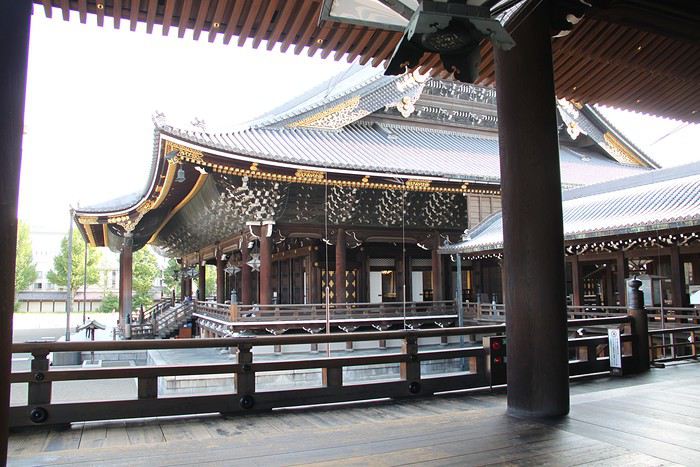
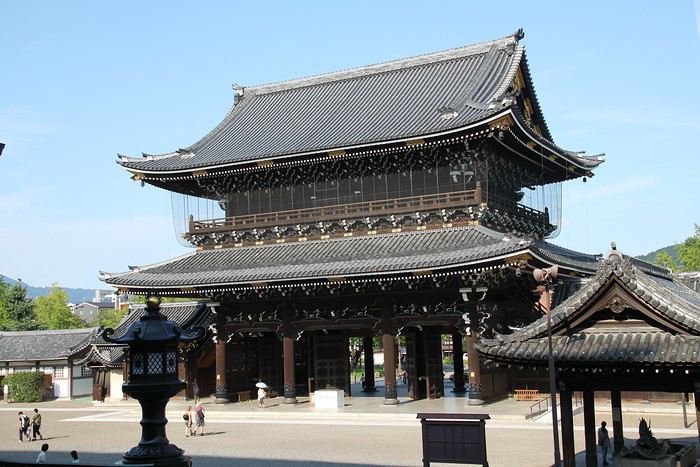
Then, the Higashi Honganji temple.


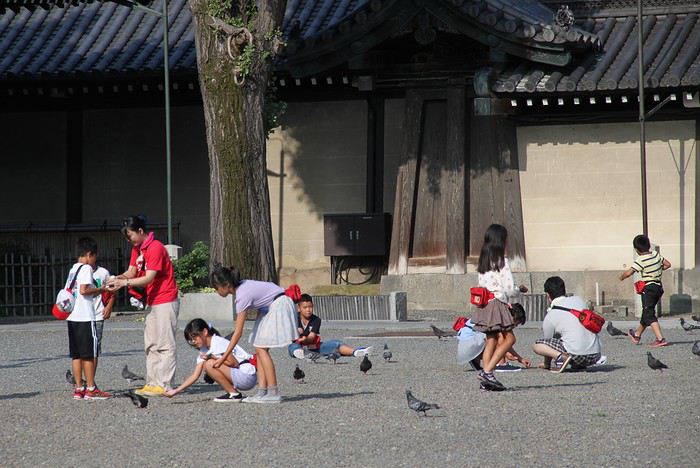
While some of us rest on the steps in the shade of the roof, others prefer feeding the locals.
BL Bluequark Veteran ·
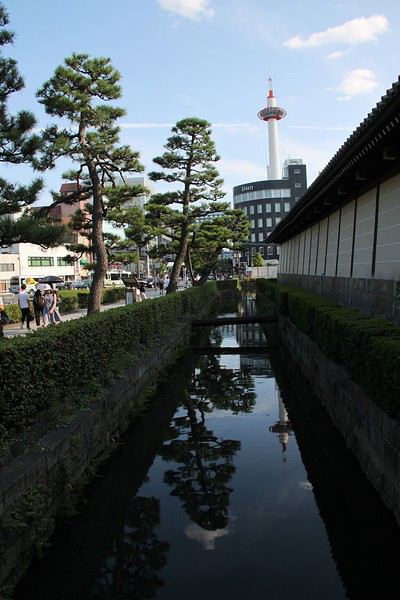
Next, we head to Kyoto Tower.


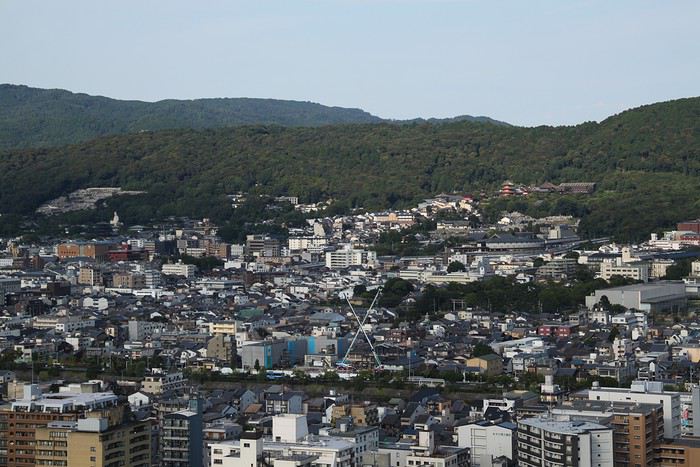
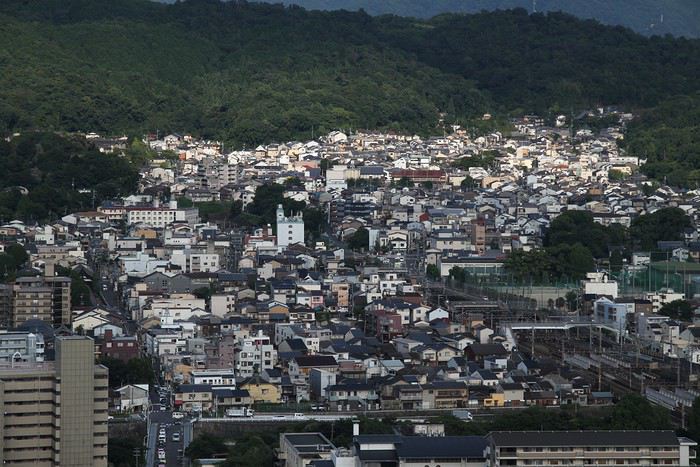
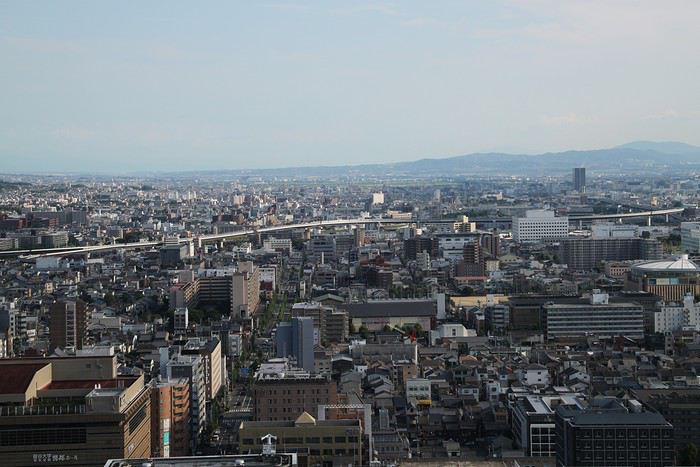
From there, we can admire the city. Undoubtedly, it’s nestled in a basin, which explains the intense heat in summer. I really liked having this overall view.

Toward the north


And toward the south.


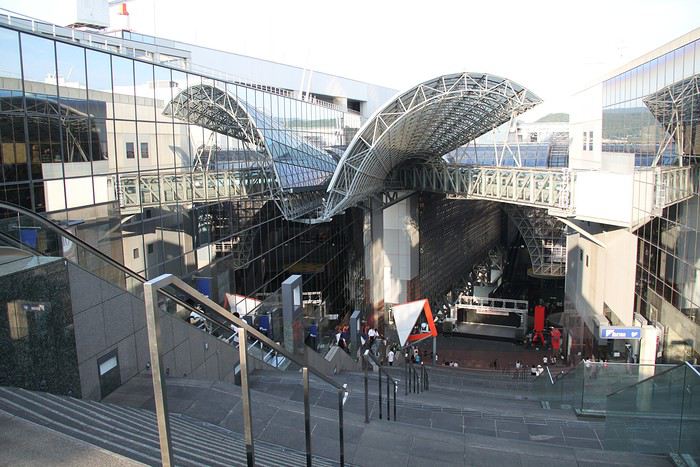
The next stop is the train station—a city within a city—with its restaurants and supermarket. Japanese train stations are on a completely different scale compared to those in France and are true hubs of activity. This one is 60 meters tall, and over 240,000 passengers pass through it every day. With its futuristic architecture, it’s reportedly one of Kyoto’s most visited landmarks. On the other hand, we had no choice but to pass through to catch the train. :)



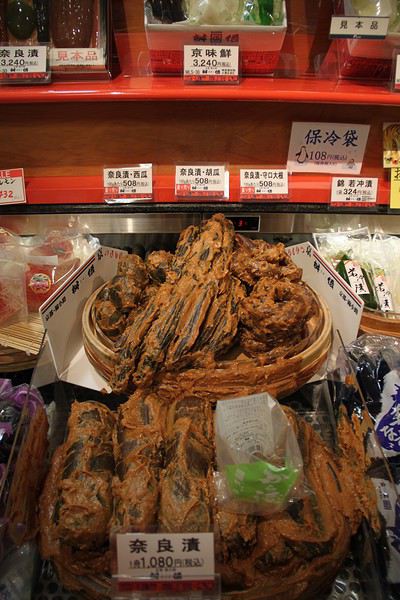
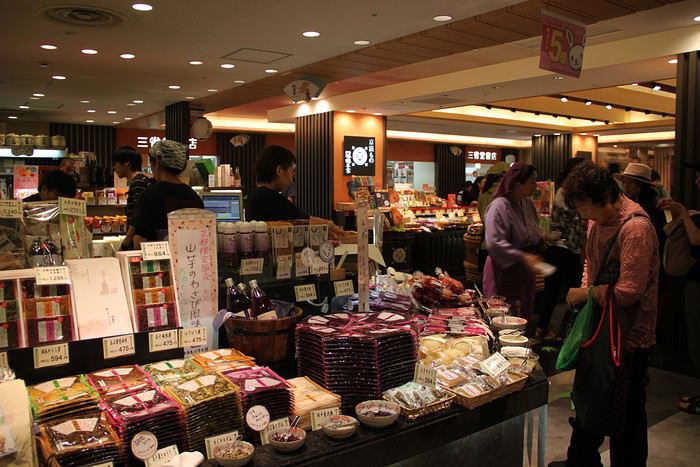
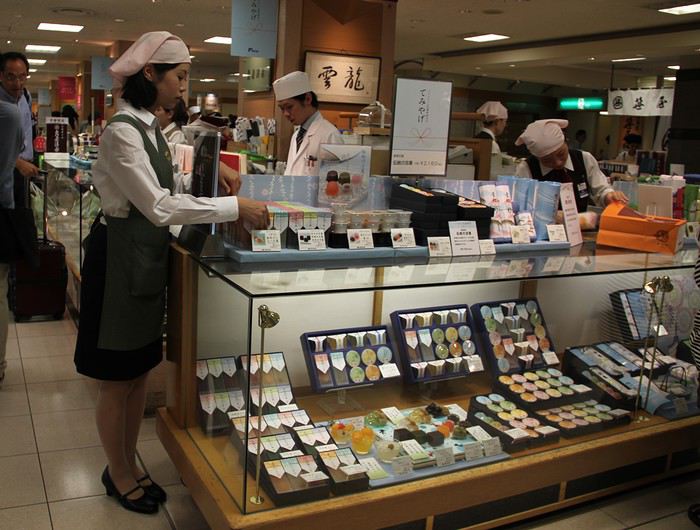
We couldn’t miss a visit to Isetan, the luxury supermarket in the basement. Supermarket visits in Japan are always a highlight: the delight at the countless charming little details, the surprise of discovering unfamiliar (or at least unusual) foods, and the shock at the price of fruit. I’d already had the chance to visit a Japanese supermarket before, but for the others, it was all new. They were completely blown away.


We stopped by a *combini* to grab some snacks for tonight and tomorrow morning before heading back to the apartment.

A quick aside about Airbnb in Japan: First, for every rental, we received an ultra-detailed step-by-step guide to the apartment, complete with plenty of photos. That’s the practical side of Japan. Then, we often picked up and left the keys in the mailboxes. That’s the safety side of Japan. Finally, the apartments were always super well-stocked with cleaning supplies and trash bags. :)
MA Masterpo Globetrotter ·
First off, Japan is a constant wonder, just as beautifully described in the preface of Tokyo Sanpo by Florent Chavouet—I’ll take this opportunity to plug the book, which I read with great pleasure after my vacation.

I find Florent Chavouet a bit lost in his later works. While Tokyo Sanpo and especially Manabeshima (after reading it, I *had* to go there) are fabulous, his more recent books are a bit disappointing.

I was particularly surprised by the price of rooms for four, which is pretty much the same as for two double rooms. So for a family, that’s a significant non-savings.

Yeah, often, accommodation prices are per person. The worst part: in some hotels, a room for two costs the same as two single-occupancy bookings of the same room!!! Something to keep in mind when booking their semi-double rooms (= microscopic)...

On the flip side, what’s not great for a family of four works out well for a solo traveler, who’ll only pay half the price of a double room.
MA Masterpo Globetrotter ·
Finally, the apartments were always really well equipped with cleaning supplies and trash bags.

And they often provide a Pocket WiFi...
KU Kujila Globetrotter ·
As a friend of mine put it: "It’s simple—since they have ten fingers, they count in base 10. Otherwise, they do everything differently from us."

And yet, we don’t even count the same way or use the same fingers from 1 to 10 😛...

The role of women and relationships between genders are simply staggering and archaic from our European perspective.

Still, be careful with snap judgments or interpretations from a Western point of view... Many women in Japan don’t work once they’re married, true—but generally, they themselves can’t imagine continuing to work if "Mr." has a well-paid job... It’s not out of obligation that they stop working...

What’s more, they’re completely free to move around: in the evenings, restaurants have about as many men as women, and just as many tables of men as tables of women or mixed tables...

I don’t think I could live in such a rigidly coded society, where the individual is so dissolved into the collective.

It’s a matter of culture and conditioning. What might shock a Westerner is often seen as normal in Japan. And not everyone there has such a rigidly structured life (some of my Japanese friends even have lives that are *less* structured than those of many French people...).
IV Ivert Veteran ·
The status of women and gender relations are simply staggering and archaic from our European perspective. I also don’t think I could live in such a codified society, where the individual is so dissolved into the collective.

Are you equally outraged by the status of women in Muslim societies?

On the other hand, I much prefer Japanese society with its codes, its collective consciousness, its focus on the group (without being communist...), and the fact that it protects itself by remaining homogeneous (much to the chagrin of the nation-wreckers governing us), rather than our societies (French, North American, etc.) that are individualistic, as egocentric as can be, and completely disconnected from reality, conditioned by the power of the media... To each their own.
CA CalamityGin Globetrotter ·
Besides, I much prefer Japanese society and its codes, its collective consciousness, its focus on the group (without being communist...) and the fact that it protects itself by remaining homogeneous (much to the chagrin of the nation-wreckers who govern us), rather than our societies (French, North American, etc.) which are individualistic, as self-centered as can be, and completely disconnected from reality and conditioned by the power of the media... To each their own.

Unfortunately, the grass isn’t any greener in Japan than elsewhere. Some things are better there, some worse. The vision we have of it from the outside and/or as visitors, filtered by the polished image the country projects to foreigners, hides some of Japan’s darker aspects.

Individualism, self-centeredness, disconnection from reality, and the power of the media are problems in Japan too... Films like *Nobody Knows* by Kore-eda tackle some of the less flattering aspects of Japanese society (the treatment of single mothers and unregistered children, the irresponsibility of some fathers, society’s blind eye, among others). I also remember a harrowing film based on sadly very real events about horrific and senseless crimes committed by teenagers and how the self-righteous society and media relentlessly hounded both the suspects and their families, with consequences we can hardly imagine here (the dissolution of entire families and their reduction to social exile, etc.). There’s a proliferation of cults that, while not reaching the murderous activities of Aum Shinrikyo, are just as harmful. Organized crime still has a strong presence, and politics—both local and national—is far from transparent or perfectly honest...
IV Ivert Veteran ·
Alas, the grass isn’t any greener in Japan than elsewhere. Some things are better there, some are worse. The outside view—and even the fleeting impression you get as a visitor—filtered through the country’s polished image for foreigners, hides some of the darker sides of the country.

Oh, I totally agree. I didn’t mean to idealize Japan. 😉 I could say the same about Canada, which some people romanticize without really knowing the country. If you just go by what the media spins, you’d think Trudeau’s Canada is some kind of paradise...

Still, in Japan, there *does* seem to be a stronger collective (national) consciousness than in the West...
CA CalamityGin Globetrotter ·
Still, in Japan, there seems to be a collective (national) consciousness far more developed than in the West...

Since the Japanese are human like the rest of us, they suffer from the same illusion as we do—that they descend directly from Heaven and are "different" (read: "superior") from the rest of the world... 😎
YU Yuean Regular ·
Finally, a recent travel journal about Japan. More, more!! :)
BL Bluequark Veteran ·
Good evening everyone,

I didn’t expect to spark a debate like this 😮. I really should’ve realized the topic was a sensitive one.

It’s a matter of culture and conditioning. What might shock a Western perspective is often considered normal in Japan.

We’re on the same page. I actually made sure to say "from our European point of view." Likewise, I specified "I don’t think I could," which is just about me and not a judgment on Japanese society at all. It’s really first and foremost a question of upbringing. That’s actually what struck me most in Japan: how, with a completely different education, people can have such a different worldview.
BL Bluequark Veteran ·
Good evening Yuean,

Thanks for the little encouragement.

I’ll continue then.

Sunday, July 31: Eastern Kyoto – Yasaka Pagoda – Kiyomizu-dera, Sannenzaka and Ninenzaka alleys, Ishibe-Koji, Maruyama Park, Yasaka-jinja, Chion-In, Gion, Shirakawa, Pontocho

The most logical way to explore Kyoto is to try to group visits by geographic areas. For this first day, we headed east with a walk starting at Kiyomizu-dera and ending in the evening at Pontocho. (This more or less matches the "Southern Higashiyama" itinerary in the Lonely Planet.)

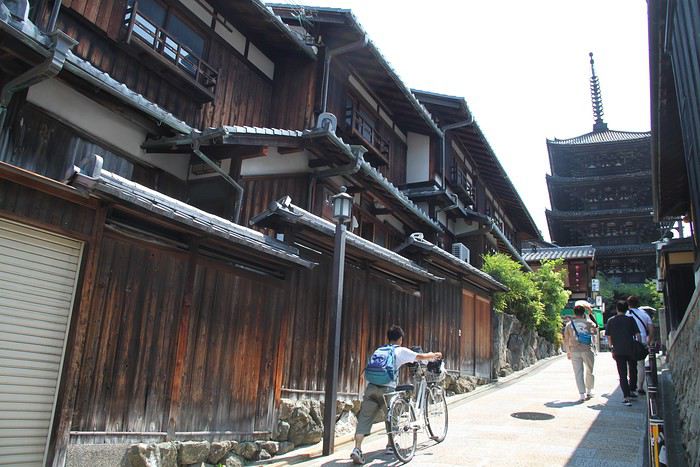
Off we go! We catch the bus almost right outside our place, which drops us off below Kiyomizu-dera. A mistake in choosing the stop—though we should’ve suspected it: all the tourists got off at the previous stop—lets us discover the little alleys and the Yasaka Pagoda. A blessing in disguise, then.


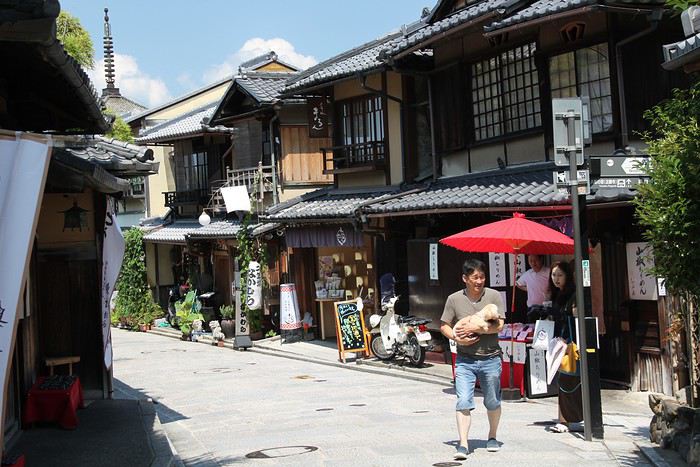
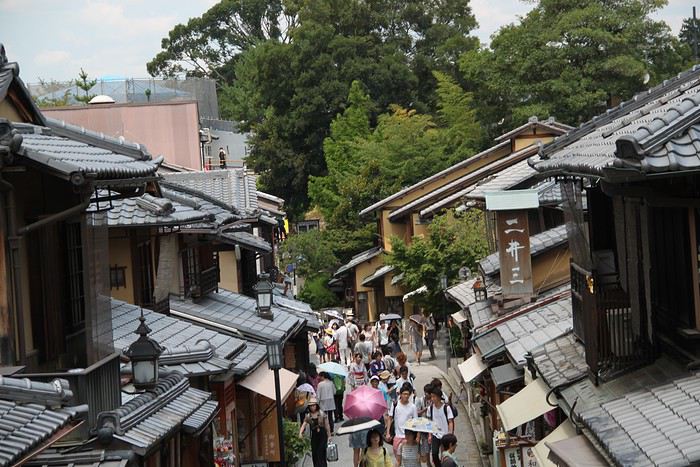
Very charming. There aren’t many people yet, and we’re delighted by these so-called traditional homes. Sure, it’s packed with restaurants and souvenir shops, but it’s still nice.


Under the weight of the heat, we switch to Japanese mode and stop at a shop to buy… two umbrellas that double as parasols. Ridiculous? Not at all—here, it’s actually very common, especially among women who take great care to protect themselves from the sun. Another sign of this constant concern for protection: the long gloves they wear up to their mid-arms in the sweltering heat, particularly when biking. With our two umbrellas—one gray, one pistachio green—we’re all set!

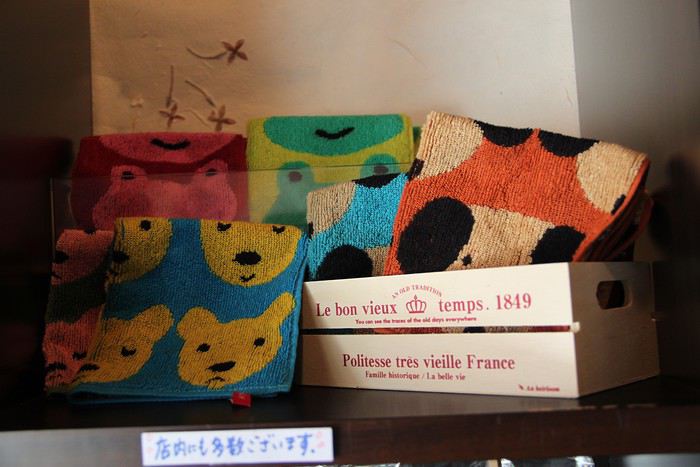
This stop also lets us notice for the first time that French is undeniably trendy. Throughout our trip, we’ll regularly come across shops and products with more or less French-sounding names. The famous *franponais* (nippon.fr/fr/archives/843), which sometimes results in some pretty bizarre things.

BL Bluequark Veteran ·
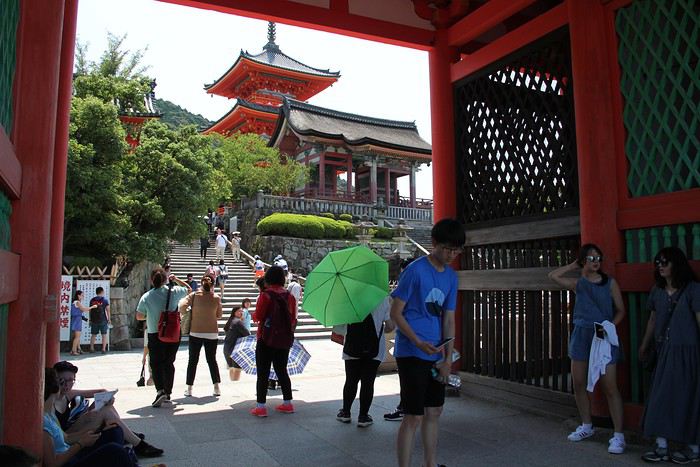
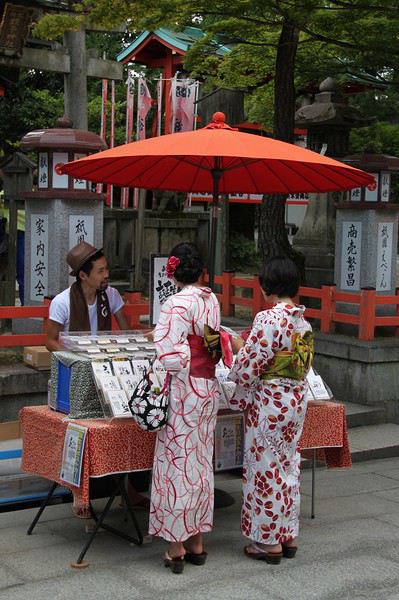
And there we go! Here's Kiyomizu-dera. Already way more crowded! The place is swarming with Asian tourists—we later learned they're mostly Chinese and Korean. Lots of people, or rather, lots of women, are wearing yukatas, summer kimonos (which you can rent). Great for photos.


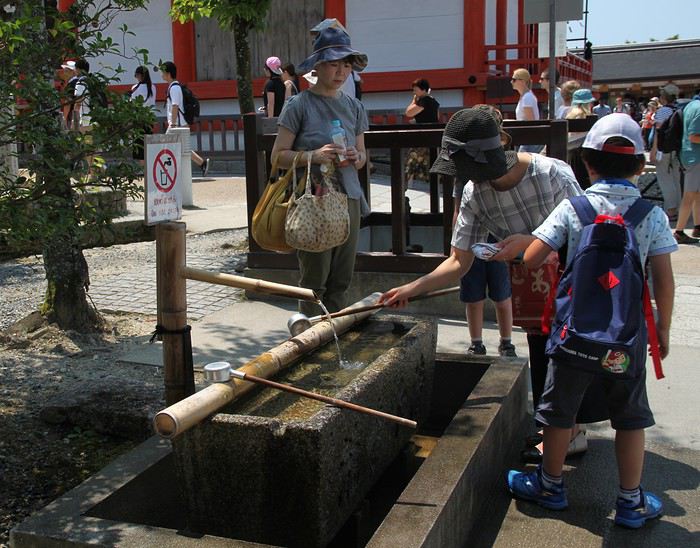
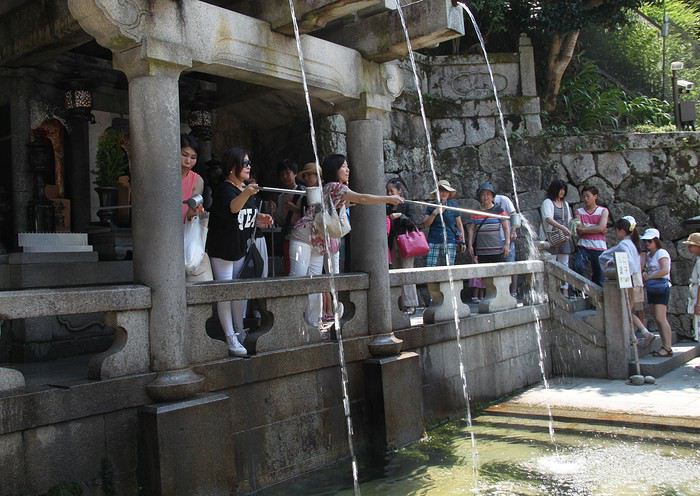
At the entrance, the purification fountains greet us. At first, I thought—we all thought—that they were for cooling off. But after watching the locals, we realized it’s actually a purification ritual: the right hand holds the ladle to wash the left hand, then it’s the left hand’s turn to wash the right, then the left hand again to pour water into the right hand to rinse the mouth. Or at least, that’s what we *think* we figured out. Either way, it’s refreshing.


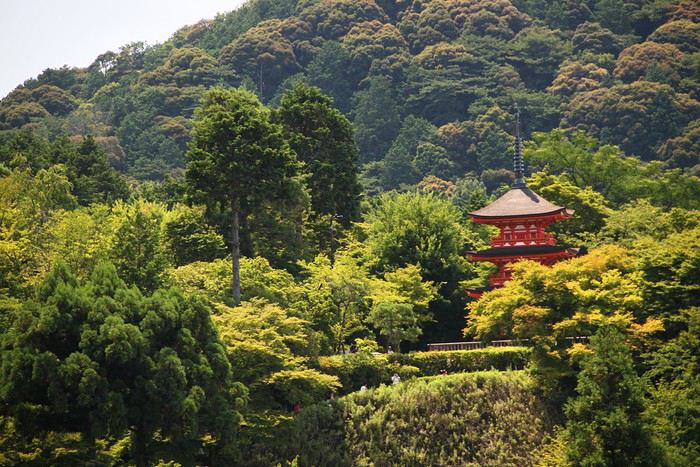
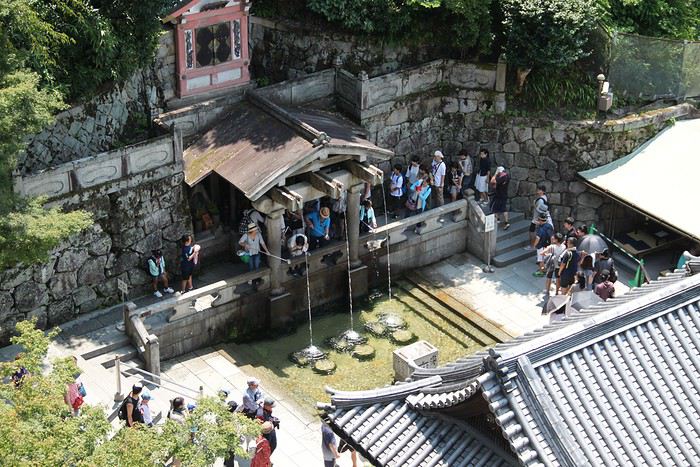
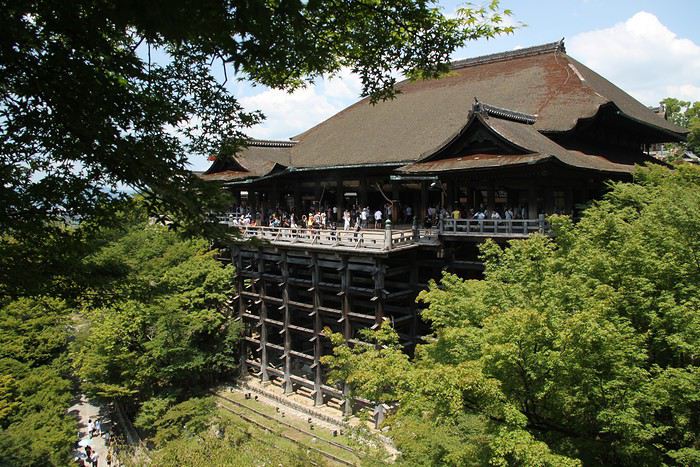
The shade of the main hall, the Hondo, with its wide open-air platform, is a welcome relief. Nearby, the *fūrin* (Japanese wind chimes) tinkle in the breeze. In the distance, a pagoda peeks through the trees, its red standing out against the green. Below, Otowa-no-taki, the sacred waterfall, famous for bringing longevity and vitality, waits for the tourist-pilgrims. Sure, it’s packed, but it’s still pretty cool.


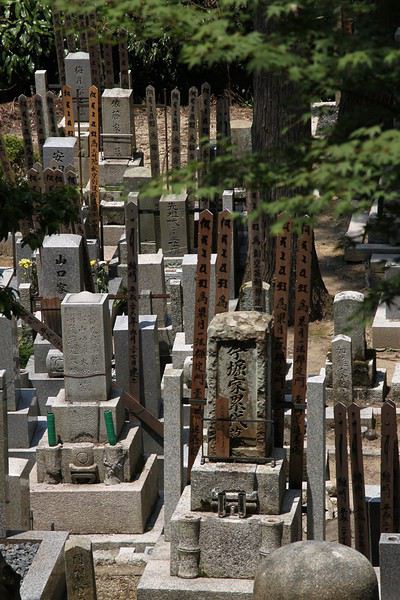
The rest of the visit offers a nice view of the Hondo. Then it’s down to the waterfall. Along the way, the cemetery catches my eye—I slip away from the tourist flow for a moment. Honestly, I’m not sure if it’s actually allowed—no one else was going there—but I looked around and didn’t see any "keep out" signs. So I went for it.


The waterfall


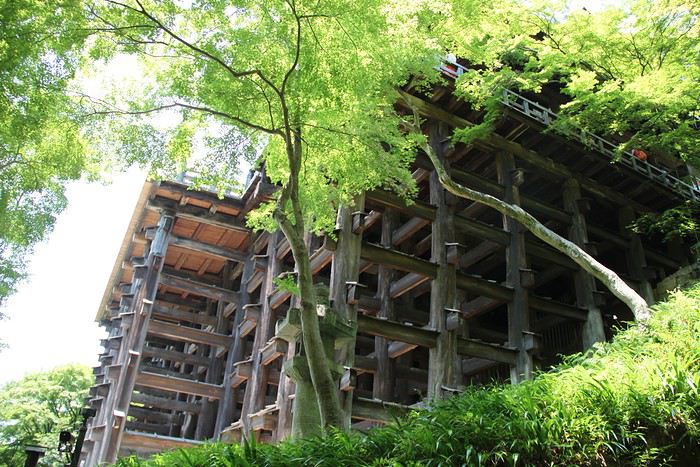
Now *that’s* a pillar!


A staircase leads back up to the temple and other pavilions. All in all, it’s really nice.


BL Bluequark Veteran ·
We’ve finished at Kiyomizu-dera, backtracked, and are now heading down through the alleys lined with old houses. More people than on the way up.


Our stomachs are growling, so we find our way to a tiny—just like so many places in Japan—restaurant run by a lovely granny who keeps saying “haï” (“yes” in Japanese) throughout the meal, her smile lighting up when we say “Misu, kudasaï” (“Water, please”). The only available seats are the ones with traditional Japanese seating, meaning on the floor. Our oldest gets a laugh from the neighbors when she takes off not just her shoes but her socks too before settling onto the tatami. The meal is simple but high quality, and not too pricey for such a touristy spot. Japan’s reputation is well deserved. For dessert, we grab a matcha tea ice cream from one of the many ice cream shops along the way that have been teasing us for a while—just the first of many for me, since the kids aren’t big fans and their dad isn’t either.

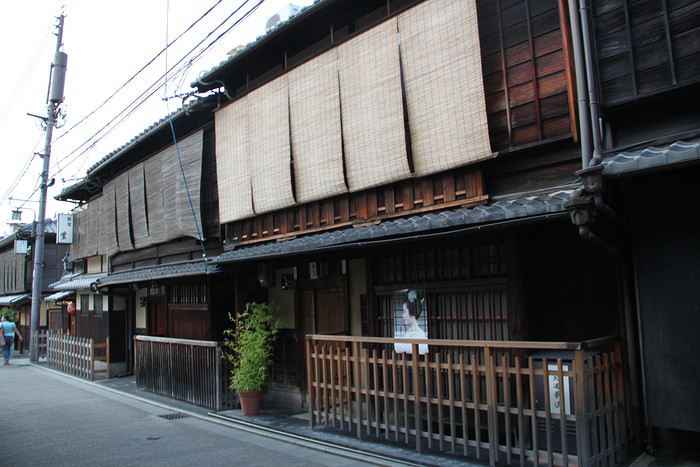
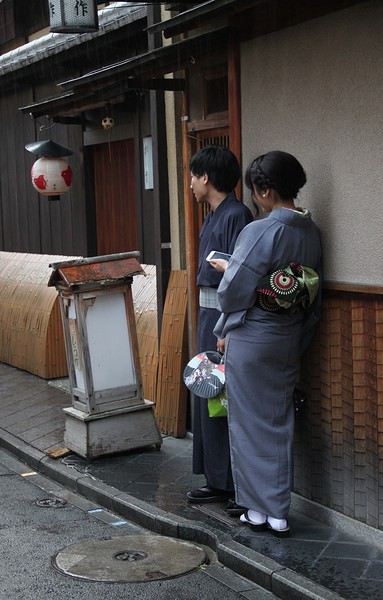
Time is flying, so we decide to skip Koadai-ji, even though it’s well known. We do make sure to take a detour through Ishebe-Koji, which is really charming. That’s where we spot one of the two geishas we’ll see during our trip, all dolled up in white makeup and a stunning kimono. It’s also our first brush with Japanese kindness: a local approaches us, asks a few questions, is thrilled to chat, and insists on taking our photo—with our camera—in the middle of the alley “for the memory.”


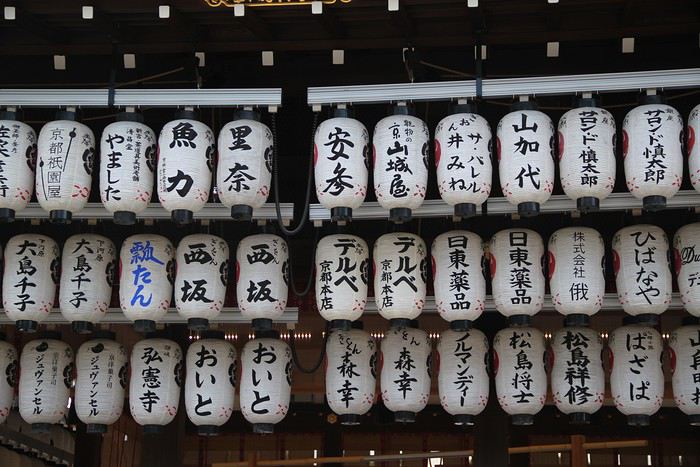
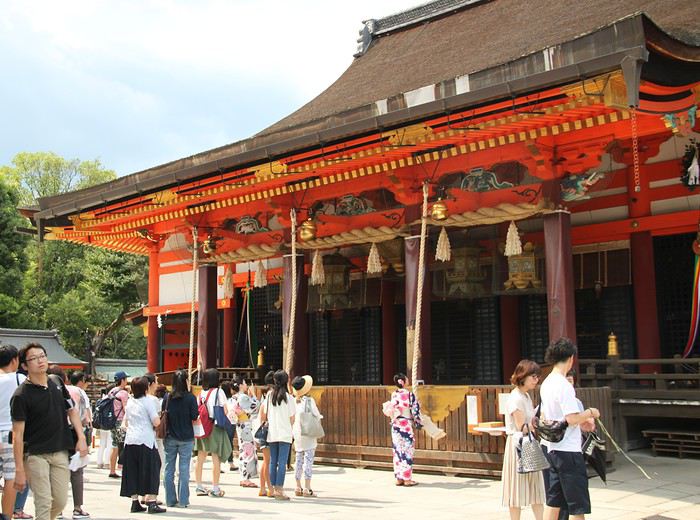
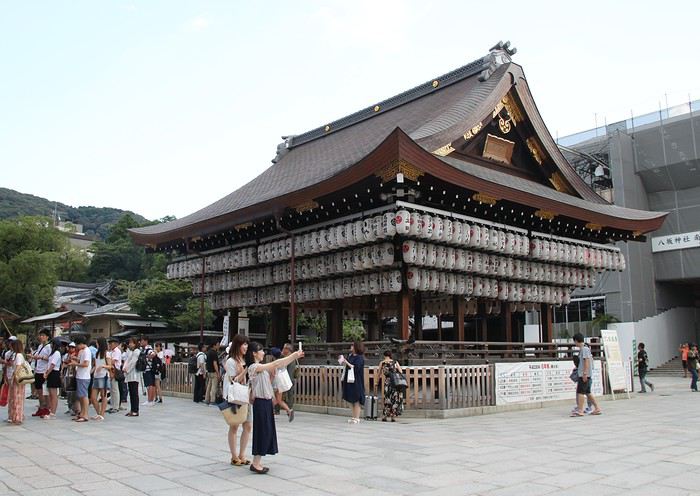
A few hundred meters later, we reach Maruyama Park and the super-friendly Yasaka Shrine with its pretty white lanterns.


One last push and we’re at Chion-in. Too bad a large part of the buildings is closed.


I take a break to call our luggage delivery service.

AF-KLM called us earlier to say they could deliver our bag the next morning but didn’t give us a time. When we pushed for a more precise slot, the person gave us a whole list of numbers to call. The family unanimously decided—minus one vote—that it would be my job to handle it. With some apprehension, I dive in, since our limited experience in Japan has shown that communicating in English can be tough. But oh joy, the person I speak to has perfect English! We reschedule the delivery for late afternoon the next day. Everything seems to be going smoothly until they ask for the address in kanji. Uh-oh! I stop the first passerby—luckily, we have our host’s paper with the address on it—but they’re not Japanese! I call the cashier over to help. She doesn’t understand what I’m saying. No problem, I hand her the phone, and off she goes for a long chat. I wonder how it can be so complicated. Still, she sorts it out with a smile, apologizes for having to pause the conversation to hand out two tickets, and even thanks me at the end. I shower her with “arigatō gozaimasu.” Okay, it’s not the right way to say thank you, but it’s the best I’ve got! First taste of the incredible helpfulness we’ll experience throughout our trip.
BL Bluequark Veteran ·
Done with temples and shrines for today—we're heading to Gion.


Done with temples and shrines? Not quite—just one more small neighborhood shrine.


A quick detour through the alleys lets us spot our second and last geisha of the day.

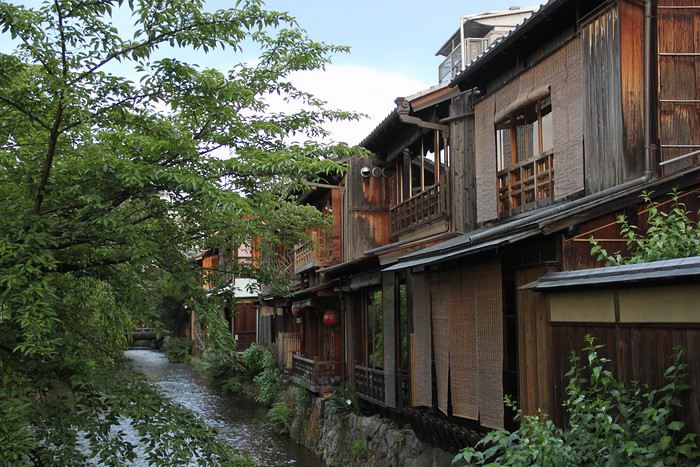
Then it's north to Shirakawa, with its traditional houses—this time by the water.


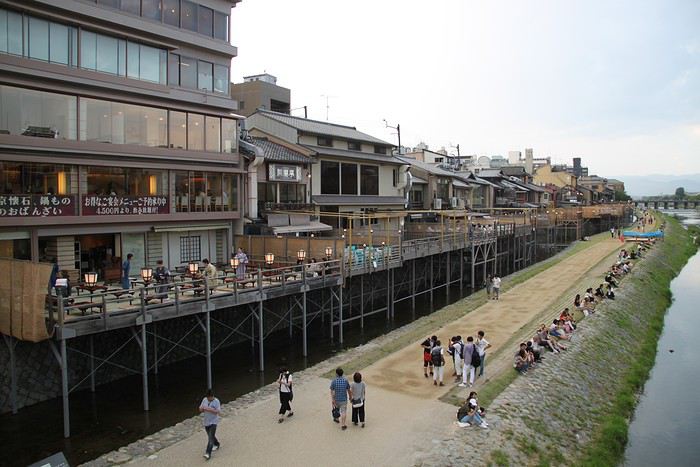
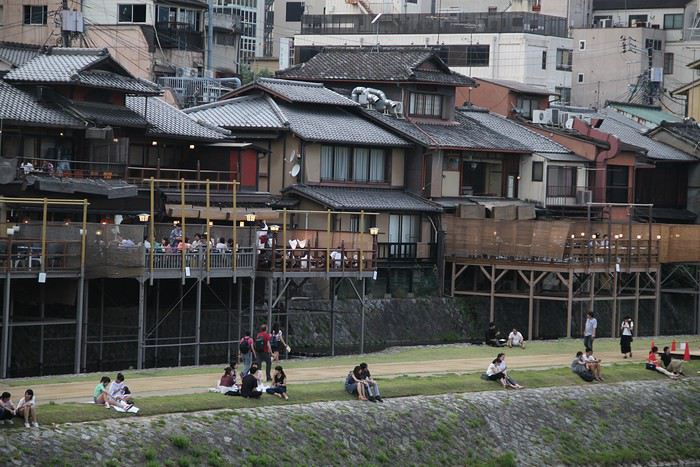
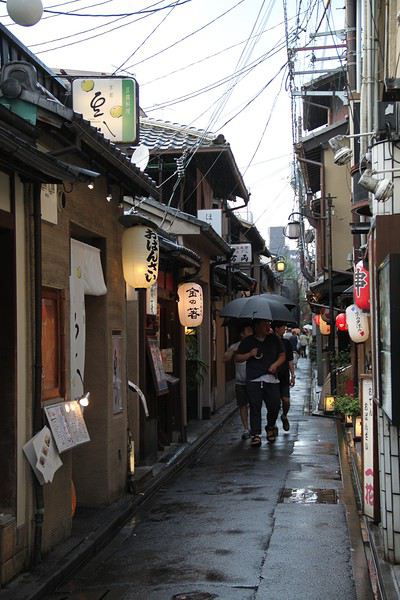
As evening approaches, we make our way to Pontocho. From the bridge over the Kamogawa, we see people strolling along the banks in the gentle evening air, and the terraces of this famous district’s restaurants. I’d initially thought about eating there, but the prices quickly put us off—this side of the street is mostly high-end restaurants. We ended up on the "land" side instead. A little rain catches us in Pontocho, so our umbrellas came in handy for that too.


After some hesitation, we land in a yakitori restaurant, chosen for its bustling crowd. A bit pricey, but delicious. A few last nighttime photos, and then it’s back home. Time for bed.


CA CalamityGin Globetrotter ·
I keep saying « aligatô gozaimasu ». Okay, it’s not the correct form of ‘thank you,’ but it’s the best I’ve got…

No matter the grammatical form, it’s the clear expression of your gratitude that counts and will stick in that person’s mind. Even if you’d said "merci de votre aide" in French, it would’ve been appreciated just as much.

In a situation like this, you can say "(Dômo) arigato gozaimash'ta", "Arigato gozaimash'ta", or "Dômo sumimasen" (the last one implies you recognize you’ve received an extraordinary favor).
BL Bluequark Veteran ·
Good evening,

Thanks for these explanations. I’ll do better next time. Because there will definitely be another trip to Japan.

Monday, August 1st: Northern and central Kyoto - Kinkaku-ji - Ryoan-ji - Nijo Castle - Nishiki Market - Teramachi shopping arcade

For this day, the plan is to start the morning in the north with the Golden Pavilion, then continue to the surrounding temples before heading back toward the city center to explore Nishiki Market in particular. To get to Kinkaku-ji, we take the bus again—probably not as fast as the subway, but it lets us comfortably discover the city.

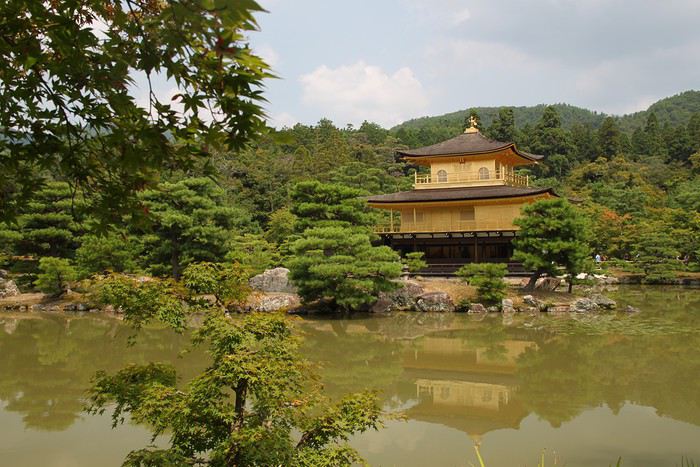
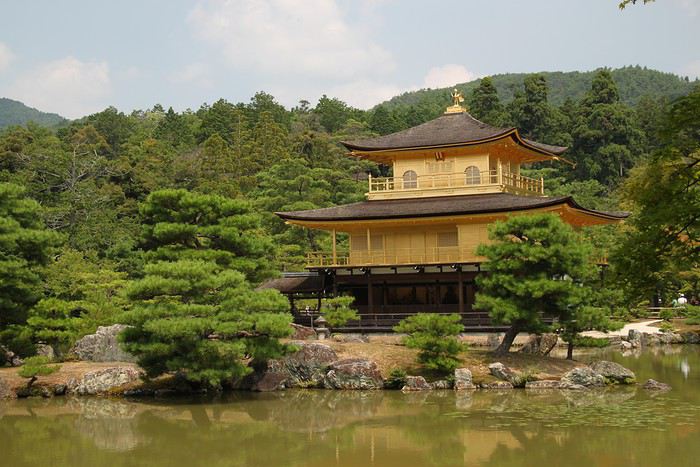
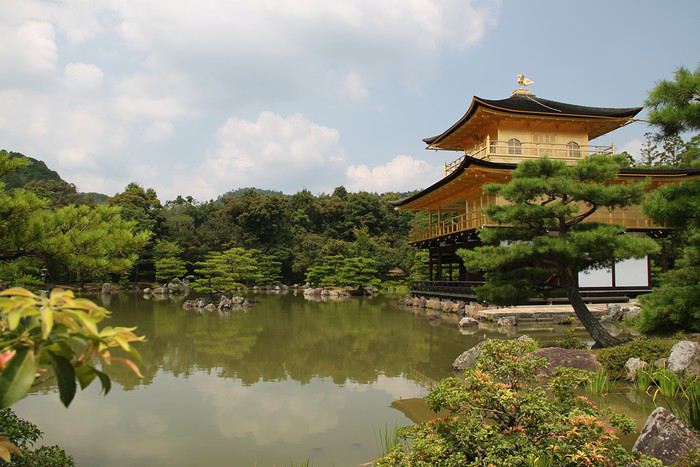
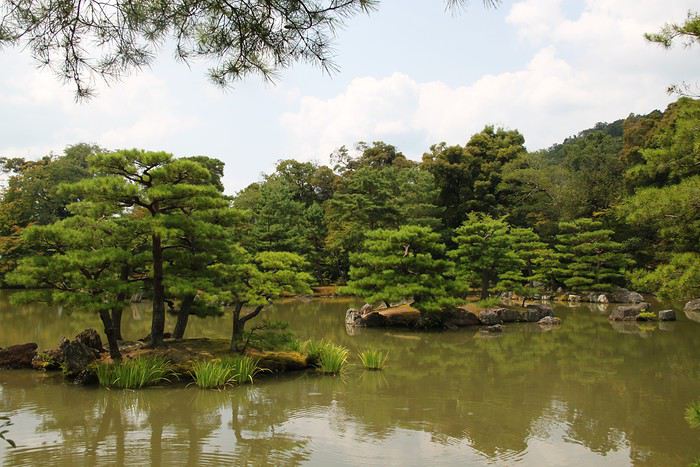
It’s true, the pavilion is harmonious, golden against a backdrop of greenery. Its reflection in the lake, dotted with small islands, creates a timeless image.


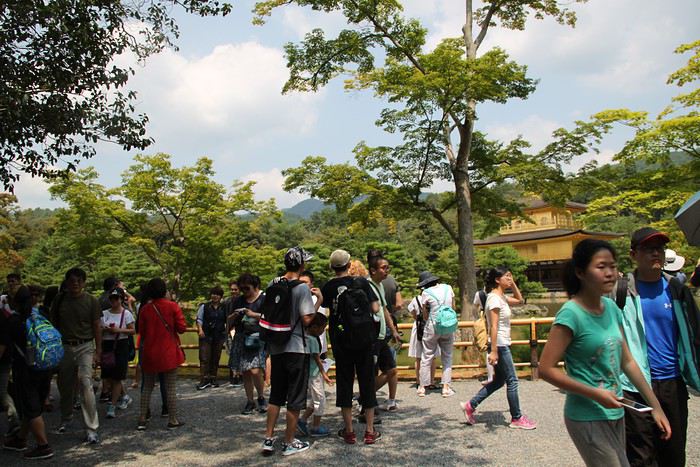
Well, the flip side is this. Less appealing. What’s really annoying is all the selfies and the “let me take a photo in front of the pavilion” moments. We manage to find a little spot to settle in and enjoy the scenery unfolding before us. Looking at the pavilion, I can’t help but think of Mishima’s book and that monk who put his shoes on his head.


BL Bluequark Veteran ·
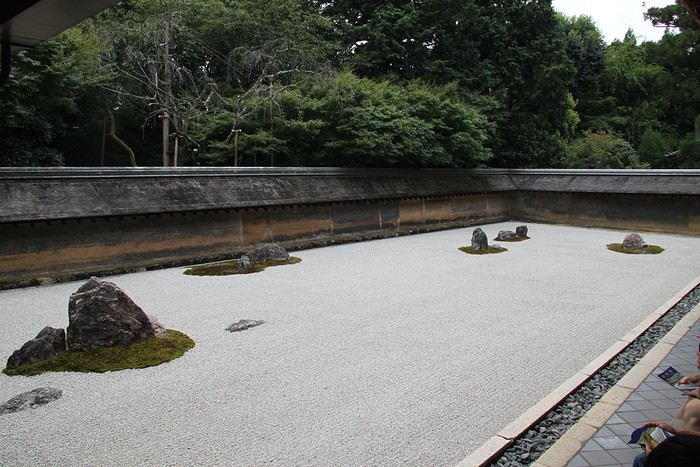
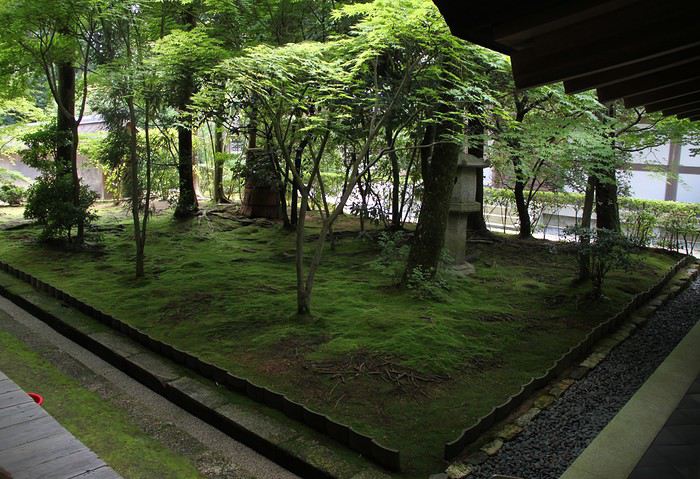
The next stop is Ryoan-ji, famous for its Zen garden made of rocks and sand. Its unique feature is that it has 15 rocks, but you can never see more than 14 at the same time. Though it's one of Kyoto's iconic sights, we only partly connect with it. It's amusing, but that's about it. Could it be because it's really hot (the sand radiates heat quite strongly) or that we don't spend enough time soaking in the place (one probably goes with the other)? We enjoy the mossy garden at the back more—it's easier to access and, most importantly, cooler.


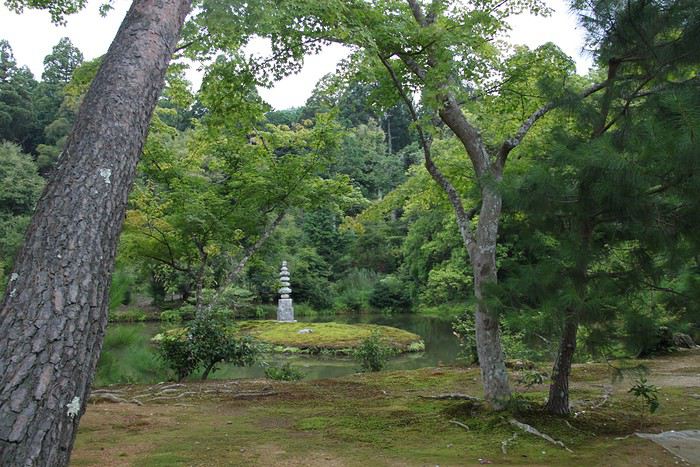
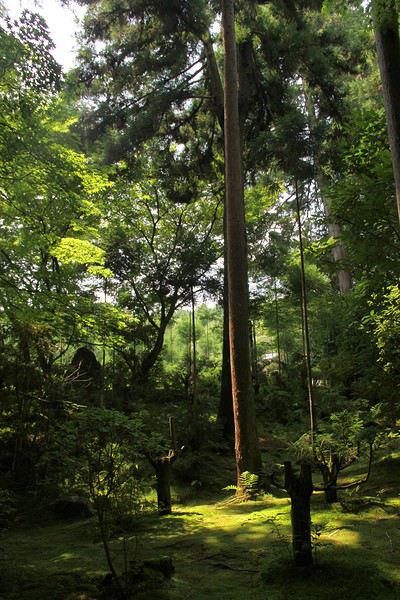
A walk around the pond then lets us discover a lovely "forest" made of pines, moss, shade, and light.


Alright, time to eat! There isn't much around. Our pocket Wi-Fi, provided as part of our rental, and Google Maps save the day by helping us find a nearby restaurant. What we find isn't so much a restaurant as the feeling of walking into someone's home. But the food is good, hearty enough, and most of all, really nice.
BL Bluequark Veteran ·
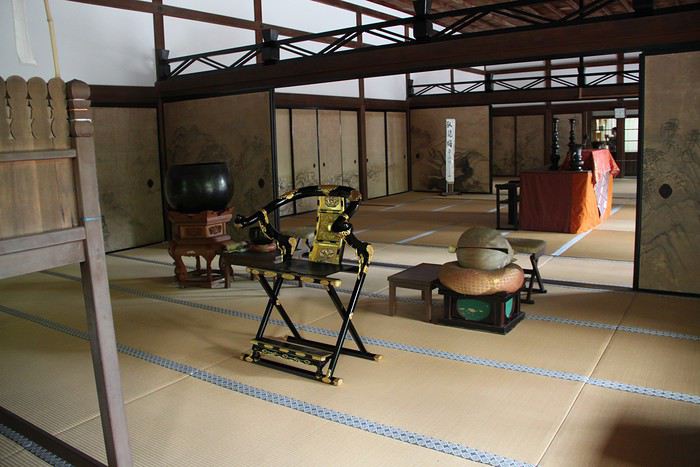
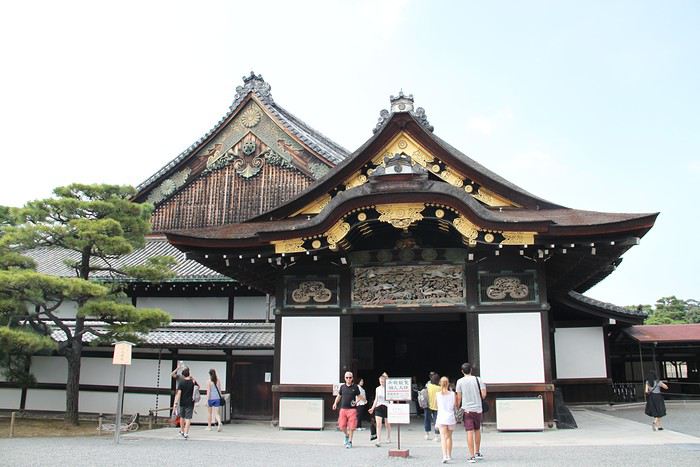
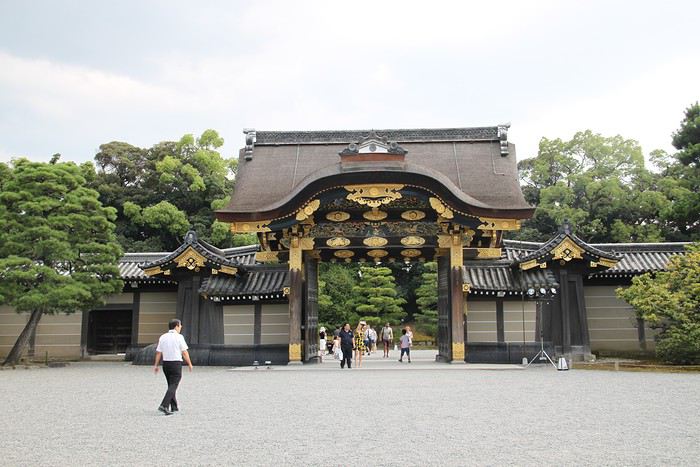
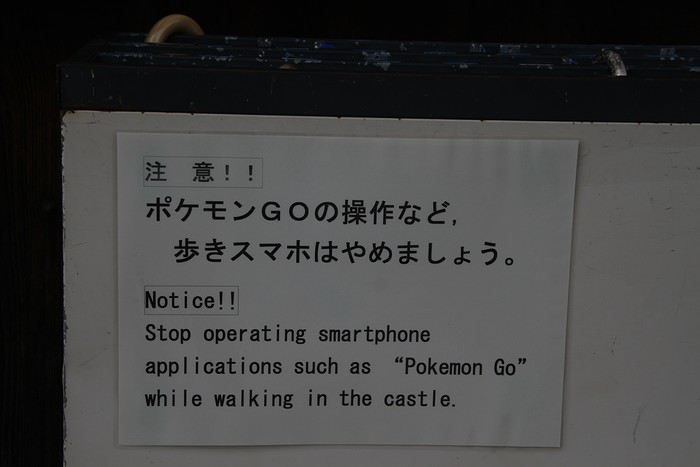
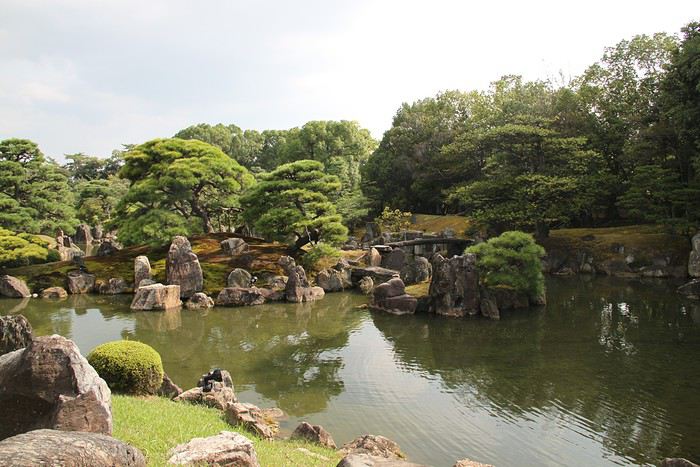
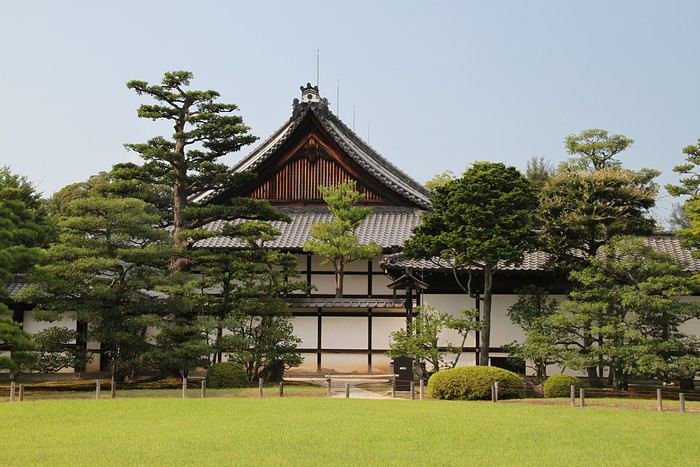
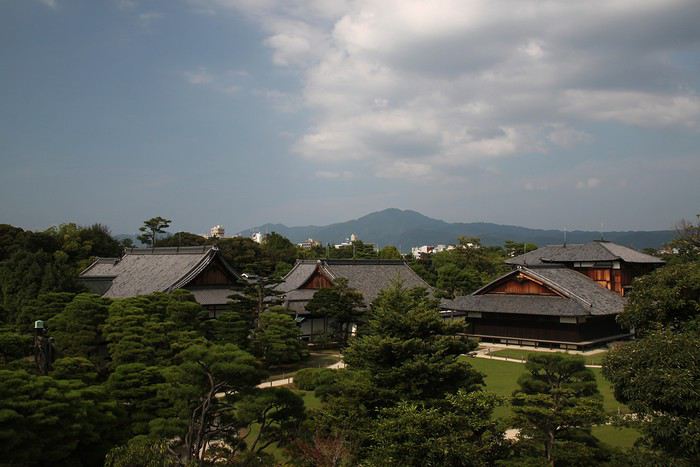
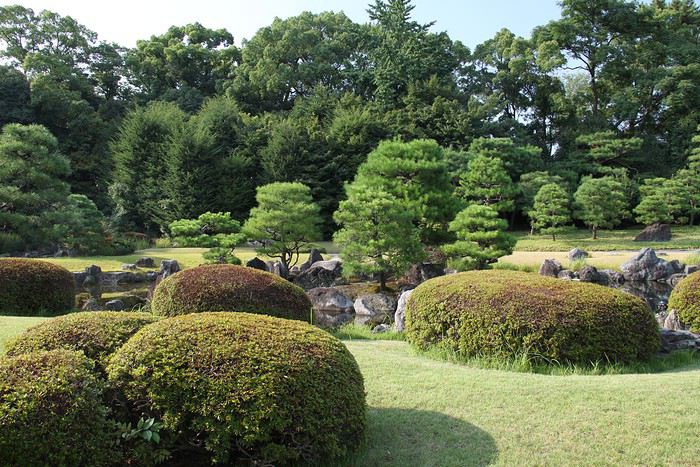
To mix things up, we skip Ninna-ji (it’s not too far) and take a bus to Nijo Castle instead. This castle is far from the traditional image of Japanese castles with their multiple cascading floors topped by soaring roofs. Nijo Castle is actually a more or less staggered succession of rooms on stilts. What makes it really worth visiting is its decoration: paintings and the famous "nightingale" flooring, which creaks underfoot to alert you to any intruders. No photos allowed… and Pokémon hunting is banned. It’s surrounded by a stunning garden that we don’t miss exploring. The ramparts offer some fun views of the surroundings, and we feel like we’re in a bubble of calm and greenery right in the middle of the city’s hustle and bustle.


Similar discussions

You might also like