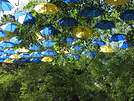
The capital of this region, Audenarde (Oudenaarde), flourished in the 16th century thanks to tapestry weaving. Today, it’s a quiet little town of 28,000 people. If you're in the area, it’s well worth spending a few hours there. From Brussels, a train leaves every 32 minutes from the central station, heading toward Kortrijk, and reaches Audenarde in 55 minutes.
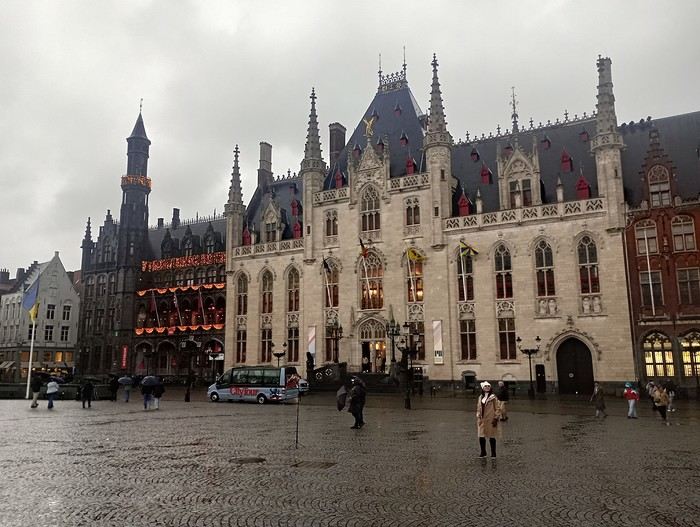
From the station, just walk straight down Stationstraat and then Nederstraat to reach the Grand-Place, with its Renaissance houses and magnificent Town Hall—a Brabantine Gothic masterpiece from the first half of the 16th century.

The fountain in front of the town hall dates back to the French occupation (1667–1708). It was built in honor of Louis XIV and still works today.

In the oldest part of the Town Hall, the Cloth Hall (dating from the 14th century), you’ll find the MOU, the Museum of Oudenaarde and the Flemish Ardennes:
- On the ground floor, the history of the town and notable locals is told. Among others, it covers Margaret of Parma (1522–1586), the illegitimate daughter of Charles V and the daughter of a tapestry weaver from Audenarde. Recognized at age 7 by Charles V and raised at court, she was used as a pawn in the political maneuvers of the time throughout her life. 😕
- On the first floor is the room I came for: the tapestries room. A collection of Verdures from the 16th century is on display. In tapestry terms, a Verdure is a wall hanging with a primarily vegetal design. Animals or humans may be depicted within this foliage.
Along with my entry ticket, I received a leaflet describing the various tapestries... on-site, you have to match the descriptions to the tapestries in front of you (the names aren’t labeled).
 The crown offered to Alexander,
 Alexander before the high priest Iaddo

- On the second floor, there’s a section explaining how tapestries are restored. Those who want to see the restoration work can head to the other side of the Scheldt, to the House of Lalaing at No. 9, Bourgondiestraat.
- The third and fourth floors showcase silverware collections: religious art, everyday life items, and a room dedicated to Margaret of Parma’s collection.
A little farther to the right of the town hall is St. Walburga’s Collegiate Church (the town’s patron saint)... an unusual name, but it’s also the name of a neighborhood in Liège, which is also linked to St. Walburga. 🙂

In the neighborhood, you’ll find the Tour of Flanders Museum (Centrum Ronde van Vlaanderen). The race takes place every year in early April, since 1919. The next one is scheduled for April 5, 2020, starting in Antwerp.
A little farther on, you come to the small Béguinage, which still has around forty houses and two chapels. Occupied by Béguines since the 15th century, it has been a retirement home for elderly women since 1960.

From there, you’re not far from the river, which you can cross via the bridge at the end of Krekelputstraat. After crossing the bridge, the House of Lalaing is immediately to your left. To the right, there’s a fountain whose history I don’t know:

Once on this side of the Scheldt, you quickly feel like you’re in the countryside. You pass by Onze Lieve Vrouw van Pamelekerk (Our Lady of Pamele). Le Petit Futé says: "Built in the 13th century by Arnulf, Lord of Pamele, in place of a chapel, the church is in Scheldt Gothic style. The interior is quite rich. The stained glass is from the 20th century. Made of Tournai stone, the remarkable building and its turret-flanked façade are worth a visit." It’s true—this side of the Scheldt suits it well... the area would look even better without that crane, but we’ll just have to live with it...


A little farther along the same bank, you’ll discover the Maagdendale Abbey complex. It’s a former Cistercian nunnery founded in the 13th century. It was heavily damaged by iconoclasts and later suppressed during the French Revolution. Of this large complex, not much remains: the 13th-century basilica, the abbess’s quarters (from the 17th century), the cloister, and a gateway. The abbey house has been restored and now houses the city’s administrative services and the Royal Academy of Visual Arts.
Here’s an overview, with Our Lady of Pamele at the far left and the administrative center at the other end with the green walls; the abbey house and cloister are in white in the middle:

If you’re interested, you can also visit the Liefmans Brewery every day except Sunday: https://www.liefmans.be/en/brewery/brewery-tour
 (Here, cyclamens and witch hazels in bloom in mid-February)


 The statue was created by the French artist Jules Bertin in 1866.


















































 Roundabouts are particularly interesting because they feature emblems of Turkmen culture, like the dog, a carpet, the Ahal Teke horse, or Muslim symbols, even though the presence of Islamic artifacts is quite limited.





 Why this country?
After visiting Hungary, Slovenia, Romania, and Poland in recent years, I’ve fallen in love with Eastern European countries. I adore the Slavic soul, its Austro-Hungarian villages, the gentle landscapes, the Carpathian Mountains, and that slightly mysterious atmosphere.
Slovakia evokes a certain imagination with its deep forests, medieval castles, and cobbled villages.
After seeing photos of the High Tatras—especially Lake Štrbské Pleso and Spiš Castle—I thought, "Let’s do it! We’re going!"
So, will Slovakia live up to what I imagine?
We’ll find out together.
We decided to travel as a group of six (five adults and a six-year-old child), by car (we needed two).
Here’s the day-by-day itinerary for this family trip, which started with a 3-day stay in Vienna (see the dedicated travel journal):















 When it comes to the Caribbean island of Saint-Martin, it's customary to praise its coastline and dreamy beaches—and they certainly deserve it.
But in this story, I’d like to highlight other memories, aspects, and impressions for a slightly different change of scenery.
Enjoy the read—some text and, above all, lots of photos.
« Byenveni sou zile Sen Maten! » (Welcome to the island of Saint-Martin)















































 Come along, I'm taking you to this country where it's so nice to wander and slow down...












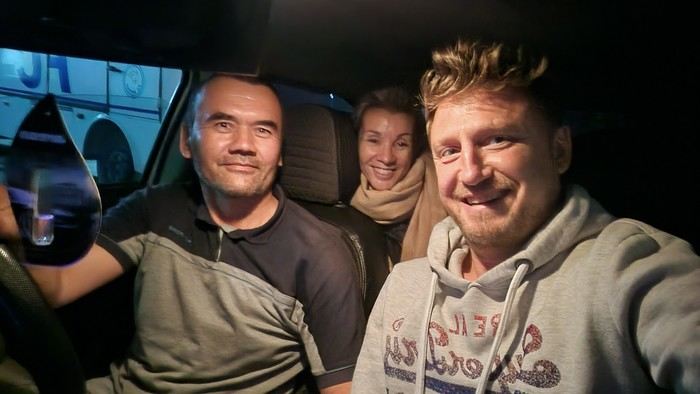
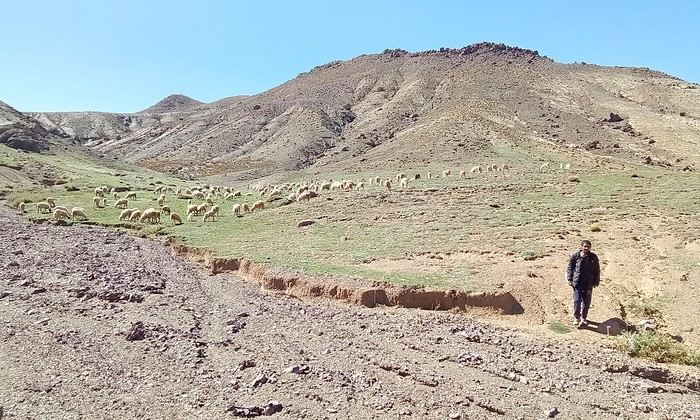
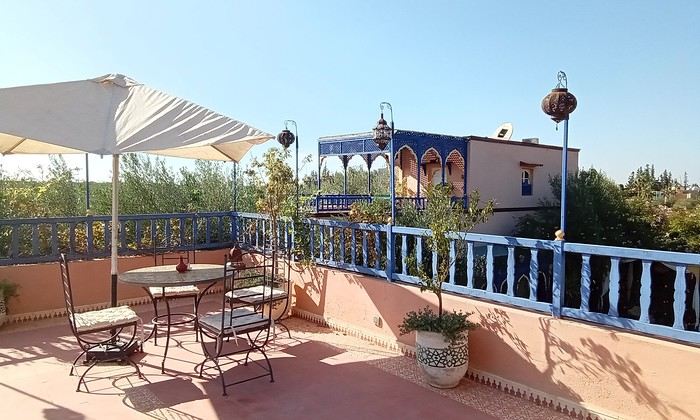
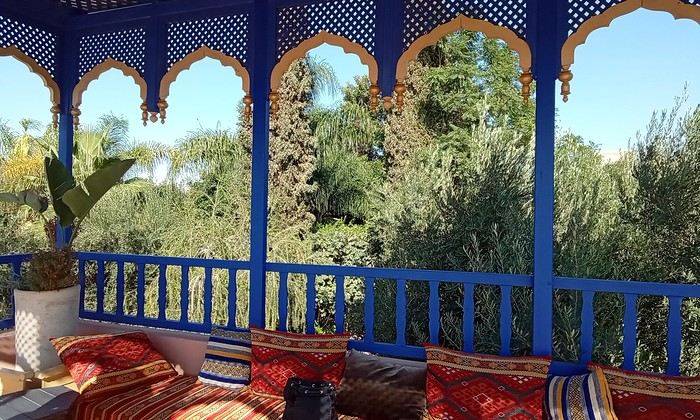 Last October, we landed in Marrakech to spend a few days with family exploring Morocco’s roads.
Transport: a rented Dacia.
Accommodations: small guesthouses.