Hi everyone,
Could you share your thoughts on my 3-week itinerary?
We’re a small group (family + friends) of 12 people, planning to leave around January 21, 2027.
Here’s my itinerary:
3 nights in Bangkok
4 nights in Chiang Mai
3 nights on Koh Samui
3 nights on Koh Phangan
4 nights in Krabi
4 nights in Phuket
I’m also open to any great tips you might have...
Thanks, everyone! Alain.
2,761 similar discussions in English
Hello everyone,
we got back from our trip to Kashmir and Ladakh three weeks ago.
We spent 4 weeks there, including one in Kashmir.
We’re really happy with our stay in Srinagar and Sonamarg. The Kashmiris gave us a very warm welcome and seemed pleased to see tourists who weren’t Indian. In fact, over the 4 days we spent in Srinagar, we only saw 4 people who looked European... Srinagar is stunning with its lakes and the lively Mughal gardens. No trouble getting around, whether by shikara, rickshaw, taxi, or on foot. The houseboats are gorgeous, unfortunately controlled by consortiums. We took a taxi to Sonamarg (20 €).
Sonamarg (two nights) and its glacier are easy to explore, either on horseback or on foot, but it’s becoming a leisure spot for Indians. To get to Ladakh afterward, we opted for a private taxi (quite expensive at 100 €, but the road is long). Since we’re a couple, it allowed us to stop whenever we wanted... and the route is beautiful all the way to Lamayuru, with our first snow-covered pass under snow when we crossed around May 21st. Then we stopped in Mulbek and Kargil before arriving in Lamayuru (three nights). We took another taxi to Alchi (26 €), spent one night there, and took the local bus at around 8 AM to Leh (3 €, a comfortable one-hour ride). We arrived in Leh around 9:30 AM, and Gyatsel from Tsarap Guesthouse came to pick us up with our backpacks. His guesthouse is located 500 meters from the market square in Leh, in a quiet little alley with no traffic. We highly recommend it because Gyatsel is invaluable for arranging taxis and organizing off-agency circuits...
His accommodation is super comfortable, and he cooks with vegetables from his garden. His wife also helps out... It’s Gyatsel’s mother who tends the garden. Through him, we arranged permits for the Nubra Valley up to Turtuk, then the Pangong and Tso Moriri lakes (we didn’t do the latter due to snow overnight!). We also crossed the Changtang (magnificent) to reach Thiksey, Stakna, Hemis, and returned to Leh. Six days in a private taxi (400 €). Since the roads were clear, we headed to Zanskar for 5 days in a shared taxi (28 € round trip for both of us). The route from Leh to Zangla follows the Zanskar gorges (impressive!).
We discovered Padum, Pibiting, Karsha, and Puktal, which you can reach via a small 7 km road and a 45-minute walk to finish, plus the sacred summit on the way to Manali.
Back in Leh, we extended our permit to visit the Aryan Valley by taxi (round trip, two days, 90 €). We spent our last two days resting in Leh—the altitude is really tiring...
I’m sharing these taxi prices as a guide for a couple. Accommodation ranged from 12 € in Leh to 30 € at Pangong Lake (the most expensive), but averaged around 15-17 € per night.
We’re not trekkers, but we love walks, discovery, and meeting people along the way. It was an amazing trip, and we even discovered a very old monastery a few kilometers before Lamayuru, where a monk took us—timeless...
I’m sharing these details because it’s hard to find precise information about Kashmir.
Hello, South Sulawesi loop: Makassar-Ramang Ramang-Rantepao-Sengkang-Lake Tempe-Bira. Which direction should I take for this loop, starting and ending in Makassar?
Public transport preferred, and about 3 weeks in total.
Any nice homestays? And tips for solo travel?
Thanks, Françoise
It's all in the title.
Thanks in advance
Hi everyone,
Back from my summer vacation, and it's already time to start planning the next one! I mean, I work to go on vacation and explore with my family—don’t you?
Next destination: Mexico (Yucatán and Quintana Roo),
When: February/March 2026,
Duration: 17 nights there (+1 arrival night, either a layover or late in the evening),
Who: Two adults and two young kids (3 and 8 years old),
Transport: Rental car
Interests: Culture, a little relaxation, hiking (though I’m not sure if the destination is ideal for that), and nature exploration.
The plan is to do the classic route but stay longer in each place—it’s easier to manage with kids. Here’s what I had in mind:
Valladolid = 3 nights to visit Ek Balam, Chichén Itzá, and a cenote. Mérida = 3 nights for a stop in Izamal on the way, exploring Mérida, then Uxmal + a trip to Celestún. Campeche = 2 nights to see the Xtacumbilxunaan cave and the Edzná Maya site. Calakmul = 1 night Bacalar = 3 nights for the Lagoon of Seven Colors, Fort San Felipe, some downtime, and a possible day trip to Cozumel if needed. Tulum = 5 nights to visit Cobá, Tulum, cenotes, the beach, Sian Ka’an + Muyil. Then back to the airport (1h30 drive or 2h if flying into Cancún).
Does this seem well-balanced? Could I improve it by grouping accommodations more? I’m guessing Palenque/Yaxchilán is too far (even if I cut other things from the itinerary)? It still sounds like an amazing trip... Thanks,
Since I used this forum a lot to prepare our trip, here’s a little feedback from our 15-day self-drive adventure in southwestern Uganda.
For those who have questions, don’t hesitate! I’ll do my best to answer them 😉
We’d already traveled quite a bit in South Africa and once in Namibia, always self-driving. When the idea of visiting Uganda came up, we debated—especially me 😛—whether to go solo or with a guide. My husband quickly convinced me to do it self-drive, so I started planning and organizing the trip accordingly. We began preparations and bookings in June 2019 for a trip scheduled during the first two weeks of February 2020. We deliberately chose to explore just a small part of Uganda and take our time. We traveled as a group of four, with our oldest son and his partner.
Here’s our itinerary: - February 1: Departure from Brussels, arrival and overnight in Entebbe - February 2: Drive to Lake Mburo and overnight there - February 3: Drive to Lake Bunyonyi and overnight there - February 4: Boat ride on the lake, then departure for Kisoro. Overnight there - February 5: Trek in Mount Mgahinga National Park for the youngsters. Overnight in Kisoro - February 6: Drive to Bwindi Impenetrable Forest. Overnight in Rushaga - February 7: Gorilla tracking in Rushaga. Overnight in Rushaga - February 8: Drive to Queen Elizabeth National Park – Southern sector – Overnight on the park’s edge - February 9: Morning in the southern sector of the park, then crossing to the northern part – Short safari in the late afternoon – Overnight by the Kazinga Channel - February 10: Safari and boat cruise – Second night on site - February 11: Drive to Kibale Forest – Overnight there - February 12: Chimpanzee tracking in the morning – Bigodi swamps in the afternoon – Second night there - February 13: Scenic drive to see the crater lakes + walk at Lake Nkuruba Nature Reserve – Third night there - February 14: Return to Entebbe - February 15: Morning boat ride in the Mabamba swamps – Afternoon by Lake Victoria and midnight flight to Brussels. That’s the broad outline of our trip.
We fell in love with this country: the people, the kids shouting "muzungu," the colors, the landscapes, the wildlife... But we were also saddened by the poverty in some villages and the child labor, especially in "quarries."
I’ll try to post a day-by-day account if it interests anyone.
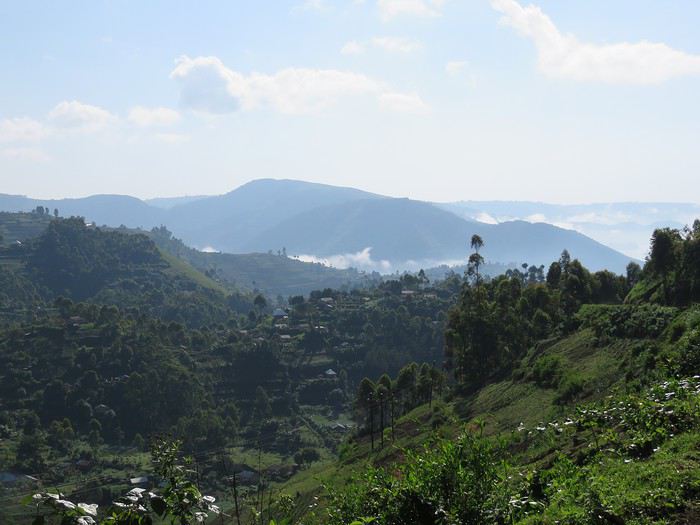
We’d already traveled quite a bit in South Africa and once in Namibia, always self-driving. When the idea of visiting Uganda came up, we debated—especially me 😛—whether to go solo or with a guide. My husband quickly convinced me to do it self-drive, so I started planning and organizing the trip accordingly. We began preparations and bookings in June 2019 for a trip scheduled during the first two weeks of February 2020. We deliberately chose to explore just a small part of Uganda and take our time. We traveled as a group of four, with our oldest son and his partner.
Here’s our itinerary: - February 1: Departure from Brussels, arrival and overnight in Entebbe - February 2: Drive to Lake Mburo and overnight there - February 3: Drive to Lake Bunyonyi and overnight there - February 4: Boat ride on the lake, then departure for Kisoro. Overnight there - February 5: Trek in Mount Mgahinga National Park for the youngsters. Overnight in Kisoro - February 6: Drive to Bwindi Impenetrable Forest. Overnight in Rushaga - February 7: Gorilla tracking in Rushaga. Overnight in Rushaga - February 8: Drive to Queen Elizabeth National Park – Southern sector – Overnight on the park’s edge - February 9: Morning in the southern sector of the park, then crossing to the northern part – Short safari in the late afternoon – Overnight by the Kazinga Channel - February 10: Safari and boat cruise – Second night on site - February 11: Drive to Kibale Forest – Overnight there - February 12: Chimpanzee tracking in the morning – Bigodi swamps in the afternoon – Second night there - February 13: Scenic drive to see the crater lakes + walk at Lake Nkuruba Nature Reserve – Third night there - February 14: Return to Entebbe - February 15: Morning boat ride in the Mabamba swamps – Afternoon by Lake Victoria and midnight flight to Brussels. That’s the broad outline of our trip.
We fell in love with this country: the people, the kids shouting "muzungu," the colors, the landscapes, the wildlife... But we were also saddened by the poverty in some villages and the child labor, especially in "quarries."
I’ll try to post a day-by-day account if it interests anyone.
Hello everyone...
Well, here I am, back again...
By chance, a bit like Mrs. Attila, my route roughly followed the same paths I took 8 and 6 years ago... I even thought of various travel journal titles like... "Where the grass has grown back!"
And then. People who know me (and some forum members) must be wondering:
"Why come back so often, almost every year since the 2000s, to this part of the world?"
Usually, I answer:
For the people, the landscapes, the animals. Because it’s a big country, a very big one where the horizon feels even farther away.
A country with so much variety—deserts, mountains, oceans, cities...
Because it’s a country that’s quite easy for "average" Europeans to navigate in terms of hygiene, food, driving, and way of life... Because you can plan your entire trip from your living room, all by yourself.
And because there’s still a pioneer spirit in the air.
And most of all, it’s a country that has turned toward the future without forgetting its past, giving the word "forgiveness" its full meaning.
Well, all that... those are just words.
Here comes, little by little, an example of a "classic" itinerary—simple, reliable, efficient, and balanced. Three weeks of discoveries, a first taste of this country!
Hence the final title of this travel journal:
Why South Africa? A simple example!
Well, here I am, back again...
By chance, a bit like Mrs. Attila, my route roughly followed the same paths I took 8 and 6 years ago... I even thought of various travel journal titles like... "Where the grass has grown back!"
And then. People who know me (and some forum members) must be wondering:
"Why come back so often, almost every year since the 2000s, to this part of the world?"
Usually, I answer:
For the people, the landscapes, the animals. Because it’s a big country, a very big one where the horizon feels even farther away.
A country with so much variety—deserts, mountains, oceans, cities...
Because it’s a country that’s quite easy for "average" Europeans to navigate in terms of hygiene, food, driving, and way of life... Because you can plan your entire trip from your living room, all by yourself.
And because there’s still a pioneer spirit in the air.
And most of all, it’s a country that has turned toward the future without forgetting its past, giving the word "forgiveness" its full meaning.
Well, all that... those are just words.
Here comes, little by little, an example of a "classic" itinerary—simple, reliable, efficient, and balanced. Three weeks of discoveries, a first taste of this country!
Hence the final title of this travel journal:
Why South Africa? A simple example!
Hi,
On September 1st, we're heading to Kalimantan for six weeks, probably from Pontianak to the Derawan Islands.
I've scoured this site, which is usually my go-to 😉, and others like VoyageForum, but recent info is pretty scarce.
I'd love any tips on places you've visited—our itinerary is still a work in progress.
We're two couples traveling with backpacks, using buses, boats, guesthouses, and homestays.
Thanks in advance!
Hello,
We’re planning a two-week trip to Cape Verde at the end of July/beginning of August 2027 with our two teens (14 and 16). We’d like a mix of hiking, beach time, and soaking up the local vibe. We were thinking of sticking to São Vicente and Santo Antão to minimize transfers.
I’ve read that it’s the start of the rainy season and it can get pretty hot. Is hiking still doable despite that?
Thanks for your tips!
I’ve read that it’s the start of the rainy season and it can get pretty hot. Is hiking still doable despite that?
Thanks for your tips!
Hello,
After a successful first trip in 2025, with the help of forum members, we’d love to return to this amazing cultural melting pot in 2026 for three weeks (2 adults, 2 kids aged 13 and 16).
We’d like to explore new places in the Northeast: fly into Khon Kaen and explore the region—Loei, Nong Khai, perhaps? A detour to the center to visit Sukhothai would be a great addition.
I’ll admit, planning this itinerary is a bit trickier for me since I’m less familiar with these areas and what they have to offer. The distances also seem longer than our previous transfers (BKK-Kanchanaburi-Kaeng Krachan-Sam Roi Yot...).
Do you have any suggestions or hidden gems to explore in the Northeast and Central regions that keep travel time between stops reasonable (3-4 hours)?
Thanks for your input!
Hello,
Active and fit senior here—I’ll be in Thailand and neighboring countries for 3 months starting mid-December. I know these places well after spending many winters there over the years, but I’m not keen on traveling solo anymore, even though you do meet people along the way when you’re on your own.
I haven’t bought my flight ticket yet.
If you’d like to chat about it, I’d be happy to. Jeanette
Hi there,
I’m planning my next trip outside Europe for next year, but unfortunately, I don’t have a choice with the dates—it’s late June to early July. Last year, I went to Japan for three weeks, and it was constantly 36-37°C with over 90% humidity. It wasn’t easy, but it wasn’t impossible either.
For Egypt, I know it’s a period to avoid if possible, but I’m thinking that by the sea, it might be manageable. Otherwise, I’ll consider another destination.
Day 1: Arrival in Hurghada in the evening Day 2, 3, 4: Hurghada Day 5: Hurghada, then drive to Luxor in the early afternoon Day 6: Luxor Day 7: Luxor, then drive back to Hurghada in the late afternoon Day 8, 9, 10, 11: Hurghada Day 12: Return flight
For the Hurghada trip, either rent a car or—easier—a private car/van. Is it worth adding an extra day in Luxor?
During the stay, we’re planning activities like camel rides, quad biking, jeep tours, snorkeling, and jet skiing.
Thanks for your replies
Hi there,
I’m planning my next trip outside Europe for next year, but unfortunately, I don’t have a choice with the dates—it’ll be late June to early July. Last year, I went to Japan for three weeks, and it was a constant 36-37°C with over 90% humidity. It wasn’t easy, but it wasn’t impossible either.
For southern Morocco, I know it’s a period to avoid if possible, but for those who’ve been there in early July, did it cause any major issues? Otherwise, I’ll start thinking of another destination.
Here’s the rough itinerary I had in mind, renting a car for the whole trip:
Day 1: Arrival in Marrakech late morning Day 2: Marrakech Day 3: Marrakech -> Aït Ben Haddou -> Ouarzazate Day 4: Ouarzazate -> Vallée des Roses -> Dadès Gorges Day 5: Dadès Gorges -> Tinghir -> Todra Gorges -> Erfoud Day 6: Erfoud -> Merzouga (Erg Chebbi desert) Day 7: Merzouga -> Ouarzazate Day 8: Ouarzazate -> seaside? Agadir or Essaouira Day 9: ?? Day 10: ?? Day 11: Return to Marrakech and flight back late afternoon
Is this schedule too rushed? Does Ouarzazate deserve an extra night? The seaside isn’t a must, as long as we can swim somewhere—pool or lake. We’re planning activities like horseback riding, camel treks, quad biking, and jeep tours.
Thanks for your input
Hi there,
Back in 2002, we spent two weeks in Playa del Carmen. We did day trips to Cozumel, Isla Mujeres, Chichén Itzá, Tulum, and Xcaret.
We’re heading back at Christmas with our two daughters, aged 15 and 19. I’m sure it’s changed a lot with the booming tourism.
Flights are booked: Paris-Cancún on 19/12 (arriving at 8:20 PM) and Cancún-Paris on 01/01 at 1:30 PM. We’re still finalizing the itinerary because we want to explore but don’t want to switch hotels too often. We’ll be there for 13 nights and 12 days, so we’re choosing among: - Playa del Carmen - Cozumel - Holbox - Valladolid - Tulum - Mahahual
We won’t do everything, so any tips would be great! I’m also unsure if renting a car is the best option.
Thanks in advance!
Stéphane
Hi there,
I’m heading to Thailand at the end of June (I know it’s not the best time, but I don’t have a choice) for three and a half weeks, and I’d love your advice on the itinerary.
I’d like to visit Koh Lanta, Ko Lipe, Ko Chang, and Ko Kood. What do you think is the ideal order based on the travel logistics?
My initial plan was this, after a night in Bangkok to recover from the flight:
1: Flight Bangkok – Krabi, then boat Krabi – Koh Lanta
2: Boat Koh Lanta – Ko Lipe
3: Boat Koh Lanta – Krabi, then flight Krabi – Bangkok, then flight Bangkok – Trat, and finally boat Trat – Ko Chang (quite a long day!)
4: Boat Ko Chang – Ko Kood
5: Boat Ko Kood – Trat, then flight Trat – Bangkok for the return trip.
Is there a better order or a more efficient way to organize this? (For example, starting with Ko Lipe from Hat Yai and then taking a boat to Koh Lanta?) Anyway, thanks in advance for your thoughts and tips, and have a great weekend!
Is there a better order or a more efficient way to organize this? (For example, starting with Ko Lipe from Hat Yai and then taking a boat to Koh Lanta?) Anyway, thanks in advance for your thoughts and tips, and have a great weekend!
Hello fellow travelers,
I’m starting to plan a trip to Tanzania + Zanzibar in August 2027 for 2 to 3 weeks with my partner.
I’ve never been there before and I’d love some advice, especially for Tanzania where we’re planning to do several safaris in the North.
Specifically:
Do you recommend using a travel agency to organize the trip, or are guidebooks and internet recommendations enough? If you’ve used a local agency (rather than one in France), which one? Would you recommend hiring a guide for the entire stay in Tanzania, or is it better to travel independently except in the parks where I’ve read that guides are mandatory? If you’ve used a local agency (rather than one in France), which one and at what price? Have you had any bad surprises (hidden fees, inexperienced guide, poor vehicle condition)?
Looking forward to reading your tips! 🙂 Thanks in advance
Hi everyone, I’ve spent two solid months reading the Lonely Planet and pretty much every post about Thailand here, plus French and English blogs. Now I’d love to get your expert opinions on our itinerary.
We’re heading off in August 2025 with our 7-year-old daughter. We only have a maximum of three weeks off, and I’m keeping an eye on flight prices before booking (1400 € per person really stings 😕).
So here’s what I’ve planned—let me know if you spot any major issues or if I’ve been way too "optimistic."
D1 - Arrival in Bangkok / rest, quick visit, overnight stay D2 - More temple visits, etc. D3 - Morning flight to Chiang Mai D4 - More Chiang Mai sightseeing D5 - Day trip to Chiang Rai (guided tour to book: blue and white temple), return to Chiang Mai late in the evening D6 - More Chiang Mai visits / Elephant Nature Park in the afternoon D7 - Morning flight to Koh Samui, sightseeing D8 to D10 - More Koh Samui visits D11 to D13 - Ferry to Koh Phangan D14 to D15 - Ferry to Koh Tao D16 - Return to Koh Samui, then flight to Bangkok D17 - Day trip to Ayutthaya, return to Bangkok in the evening D18 - Flight back to France :(
I know a lot of you recommend heading straight to Chiang Mai to recover from the international flight, but my partner and I NEVER sleep on planes (personally, I’ve been flying to Taiwan since I was little and have never slept more than an hour on a 14-hour flight...), so it’s essential for us to rest upon arrival . That’s also why I opted for domestic flights instead of the sleeper train—I know we’d lose over 10 hours and wouldn’t be able to rest properly in those conditions. And I’m sure you’ll also say BKK > North > South is too much for three weeks, but I really want to see as much as possible. Given how much the flights will cost, I’m not sure when we’ll be able to come back 🏴☠️.
So, questions: 1. Since we’ll only be in Bangkok for a maximum of two nights and need to easily reach the airport with luggage (and a child), which neighborhood should we prioritize? We’d love to experience the evening vibe of Asian night markets, ideally within walking distance of the hotel or just a few metro stops away. I’ve looked at Chinatown, but the BTS seems far... Should we go for somewhere near BTS Saphan Taksin or BTS Krungthonburi? But is the area lively in the evening with food courts, etc.? We’d also like to treat ourselves to a hotel with a pool.
2. Have we planned too many days in the south? Should I skip Koh Tao and just do Koh Samui + Koh Phangan? My partner and daughter aren’t strong swimmers, so we’re looking for beautiful beaches without too much current. Crowded beaches don’t bother us—we just want stunning turquoise waters without killer waves . Going all the way to Koh Tao and then back to Koh Samui to catch the flight to Bangkok seems too stressful. Is it still possible these days (I haven’t seen any recent posts on this) to head to Koh Samui in August and decide on the spot how many nights to spend in Koh Phangan or Koh Tao based on how we feel, booking hotels as we go? Or is that too risky?
If you have any better suggestions for fitting all this in while reducing internal flights, I’m all ears for your great tips
Hi everyone,
Here’s a recap of our self-drive trip in Tanzania.
Tanzania is a stunning country, but it’s changing fast, which means that any self-drive info you gather in advance might be outdated by the time you travel.
Still, here’s some info for future self-drivers.
The vehicle: After lots of research, thinking, and calculations, we had our 4x4 with roof tents shipped from South Africa through our rental company of two years, Safari4x4Hire. The price for 31 days came to $247.00 per day. That’s cheaper than some Tanzanian rental companies (Shawsafaris: $380.00 per day, total with 18% tax) and just a little more expensive than others (Tanzanian Pionners), but with the guarantee of having a well-maintained and reliable vehicle. You can check out the discussion I started: here
Traffic: The speed limit is 80 km/h on roads and 50 km/h in villages. Watch out—there are lots of police checks at village entrances (speed radar). In villages and towns, also be careful with minibuses, which are everywhere and stop and start without signaling. As for paved roads, most are in good condition, and many tracks are brand new or being renovated (the Chinese are in the area!).
Campsites: It’s very easy to find a spot in Tanzanian campsites (few self-drivers), so no need to book in advance (we were often alone in campsites outside the parks). Inside the parks, it’s easy to book public campsites at the gates. With roof tents, the downside is that sites are usually designed for travelers with ground tents, but we always found space for our vehicle. Another downside is making a fire—it’s nearly impossible to find wood (Tanzanians don’t usually make fires for cooking or ambiance). Campsite prices outside the parks range from $5.00 to $15.00 (price with 18% tax). I’ll list the prices for campsites inside the parks below.
Food: There are very few supermarkets in Tanzania, and prices can be steep if you’re not careful (European brands). For fruits and vegetables, you can easily find roadside vendors. For other groceries, you can shop at supermarkets (Dar es Salaam, Arusha). In Arusha, there’s a brand-new Shoppers Supermarket—clean and well-stocked—and for meat, don’t hesitate to visit the Meat King butcher. It’s also often possible to eat well at campsites with restaurants for around $10.00 (price with 18% tax).
Some other info: 1. At gas stations, you almost always pay in cash, usually in Tanzanian shillings.
2. Park entries, campsites, and Ngorongoro are paid with a card (Visa, etc.) directly at the gates. Exception: Selous, where you need a permit in advance (we didn’t have one when we arrived at the north gate, but we were still able to enter thanks to the kindness of the gate attendant).
3. Watch out—some regions outside the parks have a tax: the Wildlife Management Fee. Payment is a bit unclear: - For Lake Chala, we paid at the gate in cash. - For Lake Natron, you can’t pay at the gate—we had to arrange it with the campsite. - For the area between Tarangire Gate and Lake Burungi (to reach a campsite), you can’t pass the gate without paying in Arusha first.
4. For divers, you can do amazing dives in Pangani with Kasa Divers.
Park entry and campsite prices in July/August 2018:
Saadani National Park:
Park entry per person: $30 + 18% (for 24 hours)
Park entry for vehicle (under 2000 kg): $40 + 18% (for 24 hours)
Night at Public Campsite per person: $30 + 18%
Arusha National Park:
Park entry per person: $45 + 18% (for 24 hours)
Park entry for vehicle (under 2000 kg): $40 + 18% (for 24 hours)
We slept outside the park.
Serengeti National Park:
Park entry per person: $60 + 18% (for 24 hours)
Park entry for vehicle (under 2000 kg): $40 + 18% (for 24 hours)
Night at Public Campsite per person: $30 + 18%
We couldn’t get a night in a Special Campsite.
Ngorongoro Conservation Area:
Park entry per person: $60 + 18% (for 24 hours)
Park entry for vehicle (under 2000 kg): $40 + 18% (for 24 hours)
Night at Public Campsite per person: $30 + 18%
Night at Special Campsite per person: $60 + 18%
Descent into the crater for vehicle: $250 + 18% (you don’t need a guide to go into the crater).
Tarangire National Park:
Park entry per person: $45 + 18% (for 24 hours)
Park entry for vehicle (under 2000 kg): $40 + 18% (for 24 hours)
Night at Public Campsite per person: $30 + 18%
Ruaha National Park:
Park entry per person: $30 + 18% (for 24 hours)
Park entry for vehicle (under 2000 kg): $40 + 18% (for 24 hours)
Night at Public Campsite per person: $30 + 18%
Selous Game Reserve:
Park entry per person: $75 + 18% (for 24 hours)
Park entry for vehicle (under 2000 kg): $50 + 18% (for 24 hours)
Night at public campsite per person: $30 + 18% (You don’t need a guide to visit Selous, but a GPS with the Tracks4Africa map is essential—there are lots of tracks).
Conclusion: We loved the northern parks, but they’re really crowded, especially with safari vehicles (though that does make it easier to spot wildlife—just follow the cars). Still, we preferred the southern parks—they’re wilder, less crowded, and almost no safari vehicles. In the campsites, you can often find yourself alone (just how we like it 😏!). But both north and south have amazing wildlife and friendly people!
If you’re interested in more info about Tanzania, I’d be happy to help.
Hi,
Do you have any tips for renting a car in Croatia? I’m leaving from central Zagreb on June 6th and returning to Dubrovnik Airport on June 19th, so a total of 14 days.
I’ve got a quote for 655 € for an automatic economy car, including two drivers, GPS, zero-excess insurance, ferries, and cross-border travel. Pretty much everything, really.
What do you think?
Any agencies you’d recommend?
Thanks!
Marie
I’ve never done a travel journal on VF before... so I’m giving it a go this year 😉. Just to share a bit of my 3-week trip around the West.
Since I couldn’t find anyone to share the trip with this year, I decided to go solo for 3 weeks at the last minute. So, it wasn’t a super organized or original trip—flight tickets booked last-minute, a loosely planned itinerary—but it was a choice I made.
I wanted to book zero hotels and just drive wherever I felt like. No set hikes or specific goals. Just a classic route through places I already knew for the most part, taking the time to soak in the landscapes. So, don’t expect a story about epic hikes leading to caves or hidden arches in unusual spots. It was more like a return to the roots of my first trip, with one twist: I wanted to explore some areas by mountain bike. Just to see things a little differently.
First up, instead of photos, I’ll share a little time-lapse I made during the trip.
Thursday, October 31: Left Nice early in the morning for Phoenix via London.
The trip was a bit long because I had to wait 5.5 hours in London. My flight ticket was booked kinda late, so I didn’t have much choice.
And then it hit me—when you’re prepping for a trip, you always think you’ll forget something. It was in London that I realized I’d left my driver’s license on my living room shelf. I searched everywhere, but nope, I didn’t bring it.🤪
Luckily, I had an international permit, but the rental contract clearly stated that both licenses had to be presented.
I called a friend to ask her to overnight it to my first hotel, crossing my fingers that the mail wouldn’t take two weeks to arrive.
The flight with British Airways went pretty well. Comfortable enough to watch two movies, eat, take a little nap, and boom—I was in Phoenix.
Around 8 PM local time, I got to the Alamo car rental agency, and surprise—they didn’t care about my license at all. They glanced at the international permit, told me to bring the other one when I got it (basically, they didn’t give a damn), and handed me my car! Woohoo! 😛

I headed to my hotel (the only one I’d booked for my first night), explained to the front desk that my license should arrive by mail so they’d be in the loop, and crashed for a well-deserved first night in the U.S.
Friday, November 1 (And yes! It was a holiday in France, which would complicate my mail situation later.)
I woke up super early with my first goal: find a decent mountain bike at a good price but sturdy enough to handle some national park trails.
As I mentioned earlier, I decided to switch things up this year and explore some mountain bike trails—or just ride whenever I got the chance 😉.
I checked two Walmarts before finally finding a solid bike for under $150. Some might wonder why I bought one—well, the reason’s simple. Renting a bike costs between $40 and $70 a day. My trip lasted 22 days. QED (that’s "quod erat demonstrandum" for those who didn’t get it).
I bought the bike, which fit in my Jeep Compass by folding down the back seats (not super convenient, but it worked).

Off I went on my first adventures.
I decided to head to Apache Junction.
First stop: the Apache Trail at Goldfield Ghost Town. Pretty cute, though super touristy. Some classic Western decor, a little chapel overlooking everything, a museum, a mine, a small Disneyland-style train, souvenir shops, and places to grab a snack. Nothing mind-blowing, but still a fun little visit—especially if you’ve got kids.


I got lucky and explored the ghost town with two school buses—about a hundred excited kids. Total chaos for a ghost town, but hilarious to watch from a distance 😎.
A little further down the Apache Trail, there’s Lost Dutchman State Park. I didn’t linger too long because my goal was to reach the lakes, and after my Walmart adventure and some driving, it was already almost 1 PM. I munched on a bag of chips and hit the road (lots of 20–25 mph speed limits).
I spotted N 1st Water Road along the way, planning to come back in a few days.
My plan to get to the lakes ASAP got derailed when I found a parking lot with a horse trail right in the middle of the saguaros.
I asked a ranger in the lot if I could ride the trail on my mountain bike. He said it’d probably be tough but gave me the green light.
Off I went in my padded shorts and helmet. First bike ride through the cacti with my trusty travel companion (my bike, obviously).

I started off super excited on what seemed like an easy trail, but I quickly realized horse trails don’t account for some key biking challenges 😎—like climbing rocks isn’t exactly a breeze on a mountain bike 😛. No biggie, I carried the bike a few times but got to see my first saguaros up close! A pretty cool way to explore—I don’t regret buying the bike at all!
I got back on the road after drinking 1.5 liters of water (even in November, the sun’s no joke) and headed toward Canyon Lake. With vibes like Lake Powell, I was blown away by the scenery and decided to hang out a bit—just to "soak it in" and enjoy the quiet to end my day. I didn’t see more of the Apache Trail because night falls fast, and for my first day, I figured that was plenty.


I’d decided not to stress about seeing everything at all costs since I’ve traveled a lot in the U.S. and plan to keep coming back. Whatever I missed, I’d catch next time—but I wanted to fully enjoy a few landscapes.
I drove back to Phoenix, grabbed a good burger, and spent the evening in my hotel room planning the next day. Originally, I was only supposed to stay one night in Phoenix, but with my license still MIA, I changed my plans. In the end, I was solo, no reservations anywhere, so I’d just take it day by day!
Saturday, November 2:
I decided to wake up early and head to Tucson for the day. The drive from Phoenix was pretty easy. About 2 hours later, I was at the entrance of Saguaro National Park.
And guess what? There was a little trail perfect for mountain biking. I parked my Jeep at the park entrance and hopped on my bike. I ended up biking the whole park from start to finish—about 20 kilometers, with a paved main road and a gorgeous central trail right through the saguaros! Stunning!

Even being careful, I still got a few cactus spines in my left arm from brushing too close (it stings!). Not easy to remove, so I’d advise anyone with the same idea to be more careful than I was. You’ll figure it out fast! 😉
I spent most of the day in this amazing park—it’s totally worth the detour. It feels like hundreds of chimneys all lined up at equal distances. A unique landscape you’ve gotta see.
Next, I headed to Tucson to check out the airplane boneyard. I’d seen it in a movie years ago and always wanted to see it for myself. Mission accomplished! It was pretty intense, but unfortunately, it didn’t seem possible to get to the most interesting plane alignments. There’s a museum with different types of planes and a guided tour. I settled for peeking through the fences at the planes guarded by military patrols.

I left around 6 PM and got back to Phoenix around 7:30–8 PM, super happy with my day of biking through the cacti!
Sunday, November 3:
Morning by the pool, lounging around—pure bliss. Around 11 AM, I headed to the Premium Outlets. Feeling pretty pleased with myself, I bought 5 pairs of Levi’s for the price of one in France. Just for that, I knew coming to the U.S. was worth it! After that, nothing super exciting—except a cotton field south of Phoenix that I couldn’t stop admiring for a good hour.

I drove around the city—pretty dead on a Sunday—and headed back to the Apache Trail to tackle N 1st Water Road, which I’d spotted two days earlier. A really fun trail to bike if you’ve got a mountain bike 😉. It gives access to several hikes and offers some great scenery. Highly recommend it.


Since I couldn’t find anyone to share the trip with this year, I decided to go solo for 3 weeks at the last minute. So, it wasn’t a super organized or original trip—flight tickets booked last-minute, a loosely planned itinerary—but it was a choice I made.
I wanted to book zero hotels and just drive wherever I felt like. No set hikes or specific goals. Just a classic route through places I already knew for the most part, taking the time to soak in the landscapes. So, don’t expect a story about epic hikes leading to caves or hidden arches in unusual spots. It was more like a return to the roots of my first trip, with one twist: I wanted to explore some areas by mountain bike. Just to see things a little differently.
First up, instead of photos, I’ll share a little time-lapse I made during the trip.
Thursday, October 31: Left Nice early in the morning for Phoenix via London.
The trip was a bit long because I had to wait 5.5 hours in London. My flight ticket was booked kinda late, so I didn’t have much choice.
And then it hit me—when you’re prepping for a trip, you always think you’ll forget something. It was in London that I realized I’d left my driver’s license on my living room shelf. I searched everywhere, but nope, I didn’t bring it.🤪
Luckily, I had an international permit, but the rental contract clearly stated that both licenses had to be presented.
I called a friend to ask her to overnight it to my first hotel, crossing my fingers that the mail wouldn’t take two weeks to arrive.
The flight with British Airways went pretty well. Comfortable enough to watch two movies, eat, take a little nap, and boom—I was in Phoenix.
Around 8 PM local time, I got to the Alamo car rental agency, and surprise—they didn’t care about my license at all. They glanced at the international permit, told me to bring the other one when I got it (basically, they didn’t give a damn), and handed me my car! Woohoo! 😛
I headed to my hotel (the only one I’d booked for my first night), explained to the front desk that my license should arrive by mail so they’d be in the loop, and crashed for a well-deserved first night in the U.S.
Friday, November 1 (And yes! It was a holiday in France, which would complicate my mail situation later.)
I woke up super early with my first goal: find a decent mountain bike at a good price but sturdy enough to handle some national park trails.
As I mentioned earlier, I decided to switch things up this year and explore some mountain bike trails—or just ride whenever I got the chance 😉.
I checked two Walmarts before finally finding a solid bike for under $150. Some might wonder why I bought one—well, the reason’s simple. Renting a bike costs between $40 and $70 a day. My trip lasted 22 days. QED (that’s "quod erat demonstrandum" for those who didn’t get it).
I bought the bike, which fit in my Jeep Compass by folding down the back seats (not super convenient, but it worked).
Off I went on my first adventures.
I decided to head to Apache Junction.
First stop: the Apache Trail at Goldfield Ghost Town. Pretty cute, though super touristy. Some classic Western decor, a little chapel overlooking everything, a museum, a mine, a small Disneyland-style train, souvenir shops, and places to grab a snack. Nothing mind-blowing, but still a fun little visit—especially if you’ve got kids.
I got lucky and explored the ghost town with two school buses—about a hundred excited kids. Total chaos for a ghost town, but hilarious to watch from a distance 😎.
A little further down the Apache Trail, there’s Lost Dutchman State Park. I didn’t linger too long because my goal was to reach the lakes, and after my Walmart adventure and some driving, it was already almost 1 PM. I munched on a bag of chips and hit the road (lots of 20–25 mph speed limits).
I spotted N 1st Water Road along the way, planning to come back in a few days.
My plan to get to the lakes ASAP got derailed when I found a parking lot with a horse trail right in the middle of the saguaros.
I asked a ranger in the lot if I could ride the trail on my mountain bike. He said it’d probably be tough but gave me the green light.
Off I went in my padded shorts and helmet. First bike ride through the cacti with my trusty travel companion (my bike, obviously).
I started off super excited on what seemed like an easy trail, but I quickly realized horse trails don’t account for some key biking challenges 😎—like climbing rocks isn’t exactly a breeze on a mountain bike 😛. No biggie, I carried the bike a few times but got to see my first saguaros up close! A pretty cool way to explore—I don’t regret buying the bike at all!
I got back on the road after drinking 1.5 liters of water (even in November, the sun’s no joke) and headed toward Canyon Lake. With vibes like Lake Powell, I was blown away by the scenery and decided to hang out a bit—just to "soak it in" and enjoy the quiet to end my day. I didn’t see more of the Apache Trail because night falls fast, and for my first day, I figured that was plenty.
I’d decided not to stress about seeing everything at all costs since I’ve traveled a lot in the U.S. and plan to keep coming back. Whatever I missed, I’d catch next time—but I wanted to fully enjoy a few landscapes.
I drove back to Phoenix, grabbed a good burger, and spent the evening in my hotel room planning the next day. Originally, I was only supposed to stay one night in Phoenix, but with my license still MIA, I changed my plans. In the end, I was solo, no reservations anywhere, so I’d just take it day by day!
Saturday, November 2:
I decided to wake up early and head to Tucson for the day. The drive from Phoenix was pretty easy. About 2 hours later, I was at the entrance of Saguaro National Park.
And guess what? There was a little trail perfect for mountain biking. I parked my Jeep at the park entrance and hopped on my bike. I ended up biking the whole park from start to finish—about 20 kilometers, with a paved main road and a gorgeous central trail right through the saguaros! Stunning!
Even being careful, I still got a few cactus spines in my left arm from brushing too close (it stings!). Not easy to remove, so I’d advise anyone with the same idea to be more careful than I was. You’ll figure it out fast! 😉
I spent most of the day in this amazing park—it’s totally worth the detour. It feels like hundreds of chimneys all lined up at equal distances. A unique landscape you’ve gotta see.
Next, I headed to Tucson to check out the airplane boneyard. I’d seen it in a movie years ago and always wanted to see it for myself. Mission accomplished! It was pretty intense, but unfortunately, it didn’t seem possible to get to the most interesting plane alignments. There’s a museum with different types of planes and a guided tour. I settled for peeking through the fences at the planes guarded by military patrols.
I left around 6 PM and got back to Phoenix around 7:30–8 PM, super happy with my day of biking through the cacti!
Sunday, November 3:
Morning by the pool, lounging around—pure bliss. Around 11 AM, I headed to the Premium Outlets. Feeling pretty pleased with myself, I bought 5 pairs of Levi’s for the price of one in France. Just for that, I knew coming to the U.S. was worth it! After that, nothing super exciting—except a cotton field south of Phoenix that I couldn’t stop admiring for a good hour.
I drove around the city—pretty dead on a Sunday—and headed back to the Apache Trail to tackle N 1st Water Road, which I’d spotted two days earlier. A really fun trail to bike if you’ve got a mountain bike 😉. It gives access to several hikes and offers some great scenery. Highly recommend it.
Hi everyone! So happy to be back on this forum—it’s packed with such useful info! 🙂 My husband and I are planning a 2.5-week self-drive trip to Colombia at the end of the year, including some domestic flights. My first question is: is it possible, easy, and safe to do a road trip in Colombia?
Below is our draft itinerary (with questions at each stop):
29/11: France → Colombia. Overnight in Bogotá. 30/11: Exploring Bogotá: La Candelaria and Montserrate. 01/12: Gold Museum (closed on Mondays). Drive to Zipaquirá (1.5 hrs) to visit the Salt Cathedral. Then drive to Villa de Leyva (3 hrs). Explore the town. Overnight in Villa de Leyva. 02/12: Return to Bogotá via Laguna de Guatavita (5 hrs). Is it worth the detour? Overnight in Bogotá. 03/12: Flight to Pereira. Drive to Salento. Overnight in Salento. 04/12: Cocora Valley (hike among the wax palms) followed by a drive around the area. Are there any waterfalls or other sights nearby? 05/12: Visit a coffee finca—any recommendations? Then explore the surroundings: Filandia, Manizales, waterfalls? Hot springs? Which ones? 06/12: Flight to Medellín. 07/12: Exploring Medellín: Centro, Plaza Botero, Comuna 13. How do you visit Comuna 13? Is it easy to get around Medellín? Metro? Buses? 08/12: Drive to Guatapé (2 hrs). Visit the town, stroll around the lake, then El Peñol. Overnight in Guatapé. 09/12: Return to Medellín. 10/12: Flight to Santa Marta. Drive to a hotel near Tayrona Park. 11/12: Tayrona—El Zaino entrance. 12/12: Tayrona—Palangana entrance, then Bahia Concha and Santa Marta. What do you think? 13/12: Drive to Minca (45 mins). Can we reach the village by car? Pozo Azul and Marinka waterfalls. Overnight in Minca (or back in Tayrona?). 14/12: Drive to Puerto Nao (5 hrs). Stop in Ciénaga on the way + boat tour in Nueva Venecia and/or Buena Vista? Not enough time? Overnight in Puerto Nao. 15/12: Exploring Cartagena: Centro, Getsemaní, the walls + La Boquilla if we have time. 16/12: La Boquilla (is it really worth it?) if we didn’t have time yesterday, then back to the beach. 17/12: Return to France.
So, what do you think? Is this doable, or should we tweak it? Thanks in advance for your invaluable feedback and tips! 🙂
Hello VF friends!
We’re planning to leave Marrakesh by rental car—this will be our second trip to Morocco. While we want to revisit some places, we also hope to explore new regions. Here’s the start of our itinerary, which could take 2 to 3 weeks. We don’t want to cover too many kilometers each day.
- Depart Marrakech for Essaouira, stopping to visit the Inzerki beehive. We’ll stay 3 nights in Essaouira to explore the city and the surrounding area. - Head toward Tamanar or that region for another 3 nights, exploring on a star-shaped route. We’d like to see the Paradise Valley and the coast. Not really keen on stopping in Agadir.
We’ve been to Tafraoute before, but I’d love to see some *greniers* (granaries) again, so we’re considering 1 or 2 nights there.
- Tiznit for 2 nights, making our way to Plage Blanche. - Guelmin and the Tighmert oasis for 2 nights. - Tata for 2 nights, visiting Akka Iguane and other villages.
After that, we’ll head east.
We’d love to hear about your experiences, great tips, and recommendations!
Thanks so much, and happy holidays!
Hey everyone,
I travel quite a bit, and I’m here to share my thoughts about an upcoming trip to Indonesia, specifically the Togian Islands.
I’m planning to go for 3 or 4 weeks in July-August and looking for a sunny destination that’s not too expensive (flights + cost of living), with varied points of interest. About fifteen years ago, I had planned a trip to the Togian Islands, but it didn’t happen, so I’m revisiting this destination (Sulawesi, Toraja country) + maybe others? Given that in Indonesia, I’ve already done volcanoes in Java, Bali, part of Lombok, and the Gili Islands. The issue is that I’ve read some posts about the plastic waste problems around the Togians, and it seems like they’re not the paradise islands they once were.
So, I have a few questions: I’d love to hear recent feedback from travelers who’ve been to the Togians to get an objective opinion (?) or if you’d recommend other paradise-like islands in Indonesia (not overcrowded).
If you confirm that it’s still an exceptional destination, what did you pair it with? The Moluccas and which islands in particular? Or Flores/Komodo? For my part, I don’t scuba dive—just snorkeling.
Finally, if you have other dream-island destinations (affordable and sunny), I’m all ears.
Thanks in advance!
Hello,
We’ve booked our tickets for July—there’ll be 4 of us, maybe 6 (all in our sixties). We’d like to visit 4 islands: Arrival in Praia on July 8th Return from São Vicente on July 29th
Between those dates, I’m not sure how to split our time across each island. We’ll definitely spend at least a week on Santo Antão. We’re planning to visit Santiago, Fogo, São Vicente, and Santo Antão. We’re looking for easy hikes, diving, sightseeing, and a little beach time (but not too much). How do you think we should divide the 3 weeks among the islands? Is 3 days in Fogo enough? Are guides essential, and can we easily find them on the spot? Should we rent a car, given we won’t just be hiking?
Thanks in advance for your advice, tips, warnings, and anything else you can share… and I’ve still got plenty more questions! Valéry
Hi everyone!
My mom (75 years old, in great shape!) and I (40) are planning a trip to Tanzania between October 26th and November 16th (duration: 2 to 3 weeks). Yes, it’s a bit short notice to organize, but we don’t really have a choice :)
Here’s the rough idea:
Exploring the country on the go, with a touch of spontaneity and local encounters (not a 100% fixed itinerary). Personally, I’m used to total improvisation when traveling solo, but in this case, I’d prefer to be a bit more informed/structured.
Potentially climbing Kilimanjaro (for me) before ending with a few relaxing days in Zanzibar.
Maybe renting a 4x4 to stay independent?
No luxury requirements: we prioritize authenticity over comfort (as long as it’s at least clean). We’re not opposed to camping either if it lets us do some cool stuff! Not a huge budget, but this time we’re not completely broke either :)
I’m reaching out to you here for:
Ideas for off-the-beaten-path itineraries.
Advice on whether a guide is necessary in certain places or recommendations for reliable and friendly local contacts/tour operators.
If you have any recommendations, experiences, or great tips, we’re all ears! Thanks in advance for your advice and kindness.
See you soon.
Hello everyone,
I’d like to invite you on a new adventure in Kenya.
Back in 2010, my husband Ben and I fell in love with Kenya, and we’ve been traveling there regularly ever since. This 2025 safari marked the first weeks of an important milestone in my life: retirement.
Of course, Felix—our guide and friend for all these years, whom some of you may even know from this forum—joined us again.
We chose an itinerary that takes us through the parks and reserves we particularly love in Kenya: Tsavo East (3 nights), Tsavo West (2 nights), a transition day in Embu, Samburu (5 nights), Meru NP (4 nights), Nanuyki to visit the Mount Kenya Animal Orphanage (https://mountkenyawildlifeconservancy.org/) (1 night), and Aberdare NP (2 nights).
This safari wasn’t our most prolific in terms of wildlife sightings and photos (all taken by Ben), but I still think it’s worth sharing our experiences and impressions of the places we visited. Maybe other travelers will find useful information here to help them fulfill their dream of a Kenyan safari one day...
Living in Brittany, we left from Nantes on Wednesday, January 8, 2025, on the 6 AM Air France flight to CDG, then took the direct flight to Nairobi at 10:50 AM. No issues this time on either flight (unlike in October 2023...).
We arrived in Nairobi at 9:20 PM local time (there’s a two-hour time difference with France at this time of year). Going through passport control and collecting our luggage went smoothly. The hotel shuttle (https://67airporthotel.co.ke/) was waiting for us. We shared it with a friendly Swiss couple who were there to climb Mount Kenya. We arrived at the hotel around midnight. The 67 Airport Hotel is 10-15 minutes from Jomo Kenyatta Airport and offers great value for money. Plus, it’s close to the Mombasa road, which is handy when heading that way the next morning.
On Thursday, January 9, we had breakfast at the hotel restaurant at 6:30 AM, and as planned, Felix arrived around 7 AM. We got to check out his brand-new 4x4 Nissan—we’d be the first to test it! 🙂
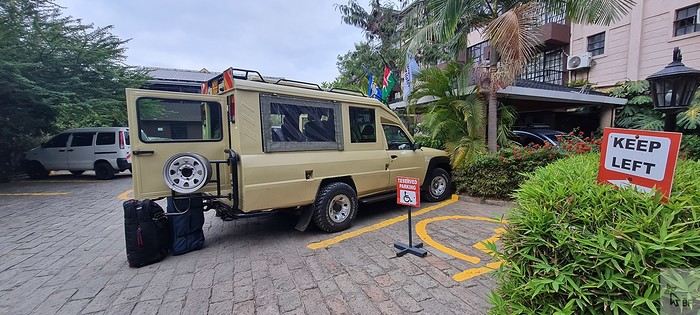
We set off for Voi, making our usual stop in Mtito Andei. Traffic was heavy on the Mombasa road, with lots of trucks.
We arrived at the entrance of Tsavo East around 1 PM and made it to Sentrim Camp (https://www.sentrim-hotels.com/sentrim-tsavo.html) just in time for lunch.
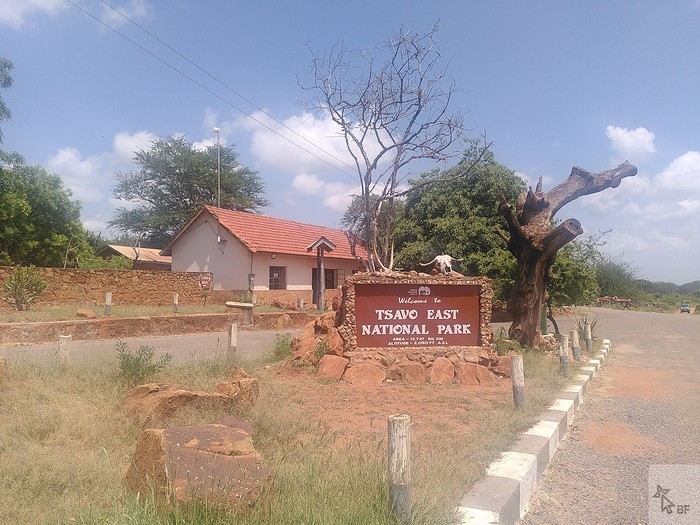
We found Tsavo East unusually green—there had been heavy rains in December, which isn’t typical. As a result, the animals were scattered and harder to spot. The watering hole visible from the camp’s dining area was completely deserted, whereas it’s usually bustling with herds of elephants and other mammals.
Our tent, No. 9, for 3 nights.
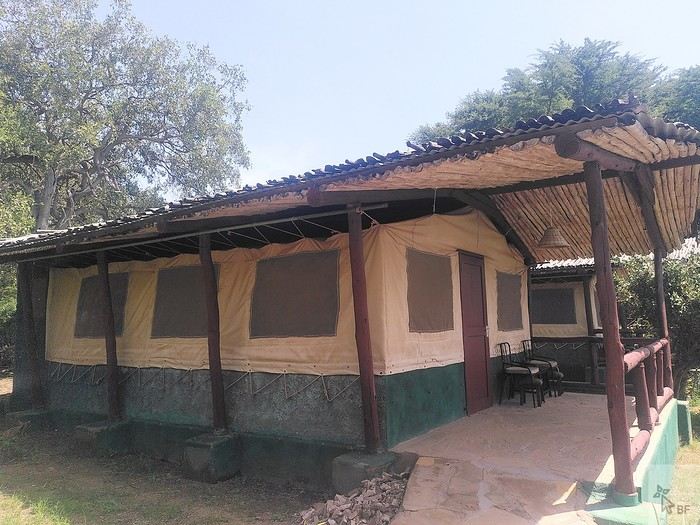
This camp is well-located inside the park. It’s simple but comfortable enough for our tastes, the staff is super friendly (as is often the case in Kenya), and the buffet-style meals are varied and good. Tsavo is the main destination for tourists staying on the coast who come for a night or two on safari. In January, some days at the camp are very quiet, while some evenings, the restaurant is packed with groups (lots of Italians, in particular).
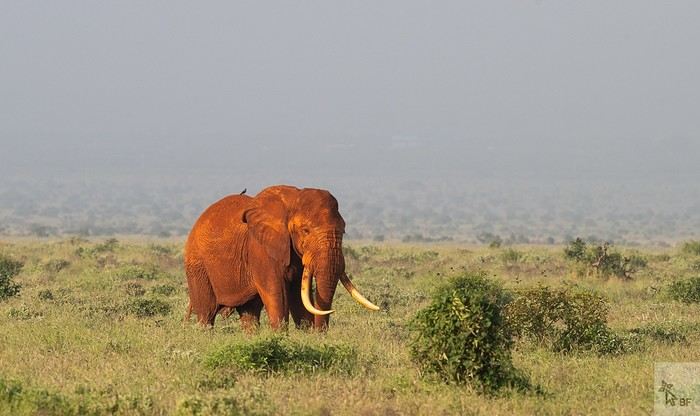
Tsavo is, of course, famous for its elephants. This time, we didn’t see many large herds, but we did have some great encounters with solitary males.
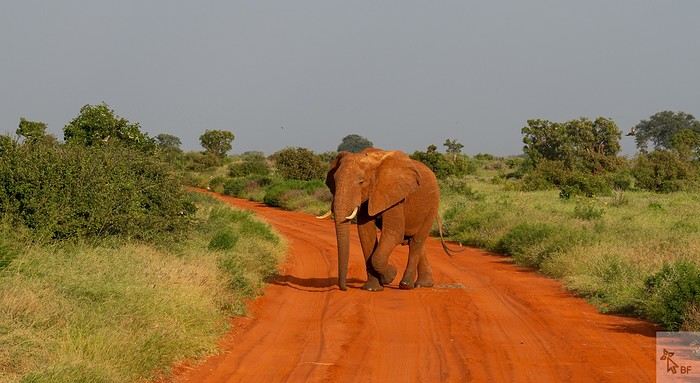
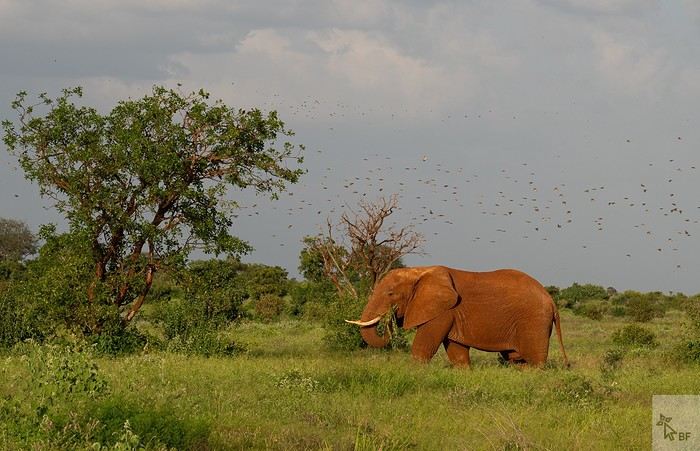
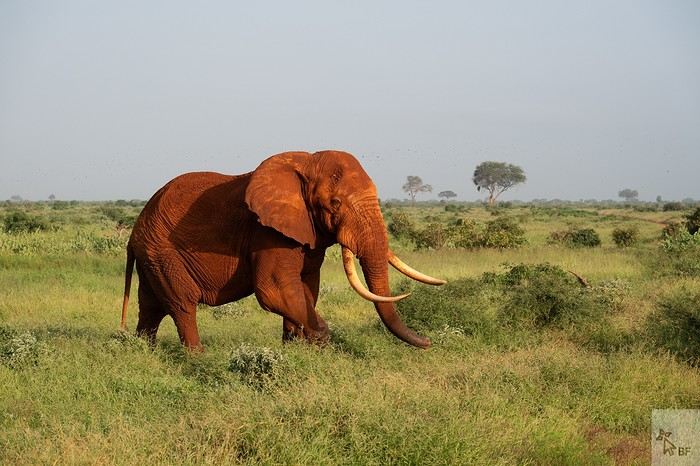
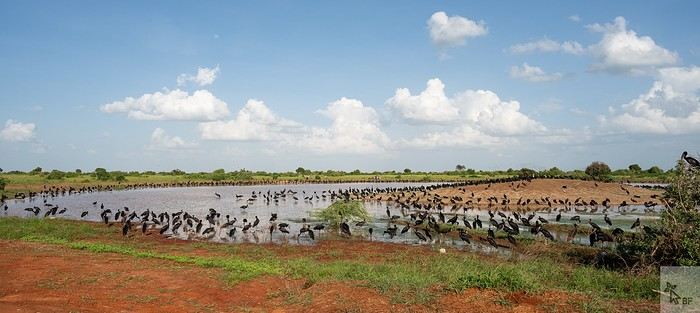
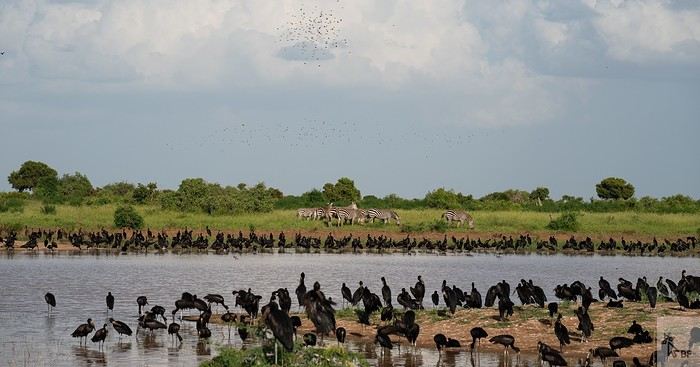
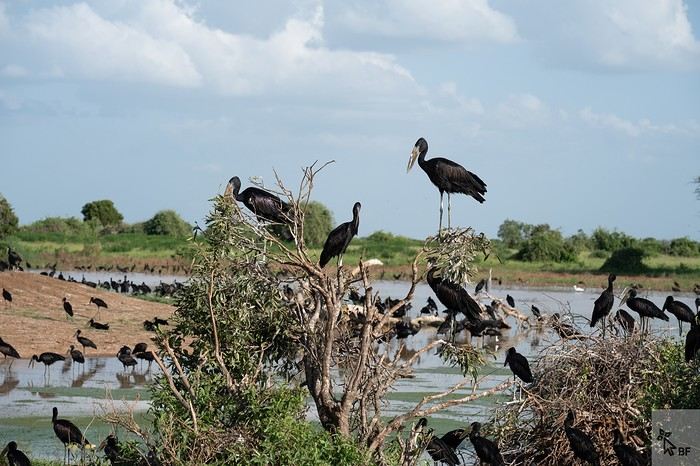
Around this small watering hole, we saw a gathering of African open-billed storks—we’d never seen so many before!
I’d like to invite you on a new adventure in Kenya.
Back in 2010, my husband Ben and I fell in love with Kenya, and we’ve been traveling there regularly ever since. This 2025 safari marked the first weeks of an important milestone in my life: retirement.
Of course, Felix—our guide and friend for all these years, whom some of you may even know from this forum—joined us again.
We chose an itinerary that takes us through the parks and reserves we particularly love in Kenya: Tsavo East (3 nights), Tsavo West (2 nights), a transition day in Embu, Samburu (5 nights), Meru NP (4 nights), Nanuyki to visit the Mount Kenya Animal Orphanage (https://mountkenyawildlifeconservancy.org/) (1 night), and Aberdare NP (2 nights).
This safari wasn’t our most prolific in terms of wildlife sightings and photos (all taken by Ben), but I still think it’s worth sharing our experiences and impressions of the places we visited. Maybe other travelers will find useful information here to help them fulfill their dream of a Kenyan safari one day...
Living in Brittany, we left from Nantes on Wednesday, January 8, 2025, on the 6 AM Air France flight to CDG, then took the direct flight to Nairobi at 10:50 AM. No issues this time on either flight (unlike in October 2023...).
We arrived in Nairobi at 9:20 PM local time (there’s a two-hour time difference with France at this time of year). Going through passport control and collecting our luggage went smoothly. The hotel shuttle (https://67airporthotel.co.ke/) was waiting for us. We shared it with a friendly Swiss couple who were there to climb Mount Kenya. We arrived at the hotel around midnight. The 67 Airport Hotel is 10-15 minutes from Jomo Kenyatta Airport and offers great value for money. Plus, it’s close to the Mombasa road, which is handy when heading that way the next morning.
On Thursday, January 9, we had breakfast at the hotel restaurant at 6:30 AM, and as planned, Felix arrived around 7 AM. We got to check out his brand-new 4x4 Nissan—we’d be the first to test it! 🙂
We set off for Voi, making our usual stop in Mtito Andei. Traffic was heavy on the Mombasa road, with lots of trucks.
We arrived at the entrance of Tsavo East around 1 PM and made it to Sentrim Camp (https://www.sentrim-hotels.com/sentrim-tsavo.html) just in time for lunch.
We found Tsavo East unusually green—there had been heavy rains in December, which isn’t typical. As a result, the animals were scattered and harder to spot. The watering hole visible from the camp’s dining area was completely deserted, whereas it’s usually bustling with herds of elephants and other mammals.
Our tent, No. 9, for 3 nights.
This camp is well-located inside the park. It’s simple but comfortable enough for our tastes, the staff is super friendly (as is often the case in Kenya), and the buffet-style meals are varied and good. Tsavo is the main destination for tourists staying on the coast who come for a night or two on safari. In January, some days at the camp are very quiet, while some evenings, the restaurant is packed with groups (lots of Italians, in particular).
Tsavo is, of course, famous for its elephants. This time, we didn’t see many large herds, but we did have some great encounters with solitary males.
Around this small watering hole, we saw a gathering of African open-billed storks—we’d never seen so many before!
Hello, I need your help. We’re a family of four (kids aged 5 and 8), and we’re really excited to explore North Sulawesi for three weeks in August! We’re planning to visit Manado, Bunaken, Tangkoko, the Togian Islands, and possibly Makassar and Bira. Does anyone know how to get from the Togian Islands to Makassar without too much hassle/difficulty? (Fast boat, stops, etc.)
Hello forum,
We’re a family of 4 adults (2 grown daughters) planning our first trip to South Africa for 3 weeks in August 2025, traveling independently. I’ve been drawing inspiration from several posts on the forum. I’d like to book our flight tickets and nights in Kruger Park as soon as possible since that’s the most urgent part to finalize, if I understood correctly.
Here’s a first draft of our itinerary (with lots of unknowns about what there’ll be to see/do in Eswatini, Lesotho, Durban, etc.—I feel like the Lesotho leg involves a lot of driving).
I’d really appreciate input from the experts to help us craft a great trip. Thanks in advance!
Day 1
Departure from Paris Day 2
Morning Early arrival in Johannesburg Pick up rental car Groceries Afternoon Sightseeing Night in AirBNB near Johannesburg (1/1) Day 3
Morning Drive to Blyde River Canyon (500 km - 6h30) Afternoon Visit the canyon Night in AirBNB near Blyde River Canyon (1/1) Day 4
Morning Drive to central Kruger (200 km - 3h30) Night in Rest Camp (1/2) Day 5
Night in Rest Camp (2/2) Day 6
Morning Drive to southern Kruger (150 km - 3h) Night in Rest Camp (1/3) Day 7
Night in Rest Camp (2/3) Day 8
Night in Rest Camp (3/3) Day 9
Morning Drive to Mbabane (Eswatini) (250 km - 4h) Night in AirBNB or other (1/1) Day 10
Morning Drive to Maputaland (300 km - 4h) Afternoon Swimming (hippos and crocs?) Night in AirBNB or other (1/1) Day 11
Morning Drive to Hluhluwe-Umfolozi (130 km - 2h) Night in Rest Camp (1/2) Day 12
Night in Rest Camp (2/2) Day 13
Morning Drive to Durban (250 km - 3h) Night in AirBNB (1/1) Day 14
Morning First half of drive to Lesotho (225 km - 4h) Night in AirBNB or other (1/1) Day 15
Morning Second half of drive to Lesotho (225 km - 4h) Night in AirBNB or other (1/1) Day 16
Morning First half of drive to Drakensberg (250 km - 4h) Night in AirBNB or other (1/1) Day 17
Morning Second half of drive to Drakensberg (250 km - 4h) Night in AirBNB or other (1/2) Day 18
Night in AirBNB or other (2/2) Day 19
Morning Drive to Johannesburg (300 km - 4h) Night in AirBNB (1/2) Day 20
Night in AirBNB (2/2) Day 21
Morning Departure in early afternoon Day 22
Arrival in Paris
Fellow travelers,
Don’t they say "never two without three"? It seems so. Here I am again on the forum to share—and let’s be honest, indulge a bit of selfish pleasure—by recounting the story of this third installment in the Land of the Rising Sun.
Where? It’s all in the title. On the island of Kyushu in southern Japan, more precisely in the northwest between Fukuoka and Nagasaki. I hope to take you along with me for 19 nights and 18 full days this autumn of 2024. On the itinerary: gastronomy, crafts, festivals, waterfalls, encounters, and leisurely strolls in all simplicity.
A last-minute flight booked just 7 days before departure, and the route evolved regularly based on whims and accommodation availability, eventually settling on this:
- 5 nights in Fukuoka: Fukuoka city, Ukiha, Itoshima, Dazaifu, Yanagawa - 4 nights in Hasami, Nagasaki Prefecture: Okawachiyama, Arita, Takeo, Kashima, Yobuko, Karatsu, Kabeshima - 6 nights in Nagasaki: Ureshino, Higashi-Sonogi, Nagasaki city, Unzen, Sotome - 4 nights in Fukuoka: Karatsu, Fukuoka city
Most of the trip was done by car for practical reasons—easier access to certain places and freedom of movement—but also for the sheer joy of it. Despite slow traffic at times, driving in rural Japan is a delight.
If the program interests you, see you soon for the start of the journey.
Hello everyone, after our trip was canceled due to COVID, I’ve decided to travel alone at 66 since my husband is no longer healthy enough to join me. I speak a little English and, while I’m taking this trip as a challenge, I’ll admit it stresses me out a bit. I’ll be leaving in May for 3 weeks. If it’s easy to plan the route and accommodations with Airbnb, I’m a little worried about transportation. Do you think it’s better to hire a guide for visiting the cities? I’d love all your tips. Corinne