Hi there,
We’re planning a two-week trip to Colombia with our two kids at the end of July – early August, with a round-trip flight to Cartagena.
What itinerary would you recommend, knowing we’d prefer to avoid domestic flights?
We were thinking of Cartagena, Tayrona Park, Mompox, and maybe an island.
Do you think it’s a shame to skip big cities like Bogotá or Medellín?
Thanks so much in advance for your help!
2,761 similar discussions in English
Hi everyone,
We’re planning our 3-week trip to Sri Lanka from July 31 to August 21, 2025. Our itinerary is coming together, but we could use some advice for our arrival. Our flight lands at 2:40 AM. What should we do? Book a hotel near the airport? Or in Negombo? Head straight to Colombo? What about currency exchange offices at 3 AM? And what about getting a SIM card?
Thanks in advance for your tips or firsthand experiences!
Have a great day.
Hi everyone,
We’re heading to Vienna in 3 weeks for a 5-day trip! After reading a few travel journals and discussions about this destination, I still can’t quite figure out what the must-sees are. Your itineraries are so varied that it’s hard to narrow it down!
Ideally, we’d like to explore Vienna without feeling like we’re stuck in museums. If you have recommendations for little green oases, short urban walking routes, or addresses for charming cafés, we’d love to hear them!
Thanks in advance for your help! !
Hi everyone,
I’m planning a 3-week solo trip to South Korea in April/May 2025. Here’s my current wishlist on the map—I need to check how realistic it is.
Questions: The DMZ: I haven’t planned to go, and I’m struggling to see the appeal. What do you think? Jeju: I’m on the fence about Jeju. It seems like the *place to be*, but I’m not sure what makes it so charming or what’s really a must-do there?
On my map, I’m hesitating about Hahoe. I’m definitely going to Jeonju because there are several sites in that area. For Hahoe, I’m unsure because I’d need to stop overnight and arrange transfers between Andong and Hahoe. Is Hahoe the same as Jeonju? (Hanok village)—if so, I’ll skip Hahoe.
Last question: In the south, there are lots of sites that interest me, but I’m wondering about transportation. Can I stay in one place for several days and do day trips to each site? Is that possible with buses?
Anyway, thanks in advance for your tips! Sabrina
Hi everyone,
Here’s my feedback from my trip to Slovakia this summer. It’s a really great destination, still off the beaten tourist track, and perfect if you love old stones and hiking. Super budget-friendly too!
When: July 3–17, 2019 Flight tickets CRL-BTS: 60 € per person with Ryanair, booked 4 weeks in advance Accommodation budget: 601 € (double room with private bathroom, no breakfast) Car rental: Škoda Fabia for 180 € for 14 days with Budget + 90 € for gas (about 1300 km) GPS: Google Maps on my phone, routes saved and available offline Cost of living: 4.50 € for a plate of bryndzové halušky (gnocchi with sheep cheese), 1.50 € for a half-liter of beer (alcoholic or non-alcoholic)
To prepare for this first road trip, since I started planning in June and the destination was chosen based on the flight price (thanks, Skyscanner!), I drew a lot of inspiration from this thread: voyageforum.com/...-slovaquie-d6596505/
Itinerary: Wednesday, July 3: Arrival in Bratislava, picked up the car, visited and stayed overnight in Pezinok Thursday, July 4: Visited Červený Kameň and Trnava on the way to Trenčín, stayed overnight in Trenčín Friday, July 5: Visited Trenčín and stayed overnight in Trenčín Saturday, July 6: Visited Bojnice on the way to the Malá Fatra, stayed overnight in Terchová Sunday, July 7: Hiked in the Malá Fatra (Jánošíkove Diery trail), stayed overnight in Terchová Monday, July 8: Visited Vlkolínec, Oravský Podzámok, Zuberec on the way to Poprad, stayed overnight in Poprad Tuesday, July 9: Visited Spišská Sobota, hiked around Tatranská Lomnica, stayed overnight in Poprad Wednesday, July 10: Hiked near Štrbské Pleso, stayed overnight in Poprad Thursday, July 11: Visited Kežmarok, stayed overnight in Poprad Friday, July 12: Hiked in Slovenský raj (Suchá Belá trail), stayed overnight in Poprad Saturday, July 13: Visited Levoča and Spiš Castle on the way to Košice, stayed overnight in Košice Sunday, July 14: Visited Košice and drove to Banská Štiavnica, visited and stayed overnight in Banská Štiavnica Monday, July 15: Originally planned to return to Bratislava in the morning, but we ended up spending the day in Banská Štiavnica, stayed overnight in Bratislava Tuesday, July 16: Visited Bratislava and stayed overnight Wednesday, July 17: Bratislava, returned to Charleroi
If I were to do it again: - I’d spend one less night in Trenčín. The castle and old town can be seen quickly; - And I’d spend an extra night in the Malá Fatra. I’m even thinking of going back for a full week just to hike there. The accommodation was perfectly located and very comfortable: www.montanask.eu/; - I’d bring a down jacket for hiking in the Tatras. We had 12°C and rain 4 out of 5 days; - I’d spend more time in Banská Štiavnica, the real highlight of this trip; - The drive between Košice and Banská Štiavnica was too long; it should’ve been split into two; - I didn’t visit any wooden churches—another reason to go back!
Random notes: - Slovakia is 1.5 times the size of Belgium but has half the population. As a result, cities are a manageable size and not overcrowded, and you come across tiny villages very often. - The historic centers are generally well preserved, but I’m disappointed that not all of them are pedestrian-only. Seeing a car parked in front of a UNESCO-listed building is a bit of an eyesore. - Speaking of cars, most parking lots are paid and expensive (1 € or 2 € per hour). Be sure to look up free parking spots using Google Maps, Tripadvisor, etc. - So, around Poprad, leave your car at the hotel and take the mountain train that stops at all the ski resorts in the High Tatras. A day pass costs 4 €, and a weekly pass is 16 €—much cheaper than daily parking. - Nature is everywhere and perfect for hiking: primeval forests, via ferratas, high mountains—you’re spoiled for choice. - Tourism felt very “local” to me; I got the impression that Slovaks travel and hike a lot within their own country. - I visited many castles (Červený Kameň, Bojnice, Trenčín, Oravský Podzámok, Kežmarok, Spiš, Banská Štiavnica), and no two were alike. Unfortunately, for many, guided tours are mandatory and only available in Slovak. Still, expect to pay between 7 € and 10 € for entry. - Same goes for the silver mines in Banská Štiavnica: the visit was basically a 2 km underground walk with stops for explanations that were incomprehensible but sounded interesting. - You eat well and cheaply, especially in *kolibas*—log cabins serving traditional dishes. Fun fact: the weight of the dish is listed on the menu. - The local wines are excellent and often sold by the deciliter (1 dl = 0.70 €). Don’t hesitate to take the wine route near Pezinok, but beware—zero tolerance for drinking and driving. - From Bratislava, between June and September, you can go to Vienna by taking a Danube cruise. By road or train, Vienna is only an hour away from the Slovak capital. So, if flights to Vienna are too expensive, consider a detour via Bratislava, which can be visited very quickly.
In pictures: Trenčín Castle
Bojnice Castle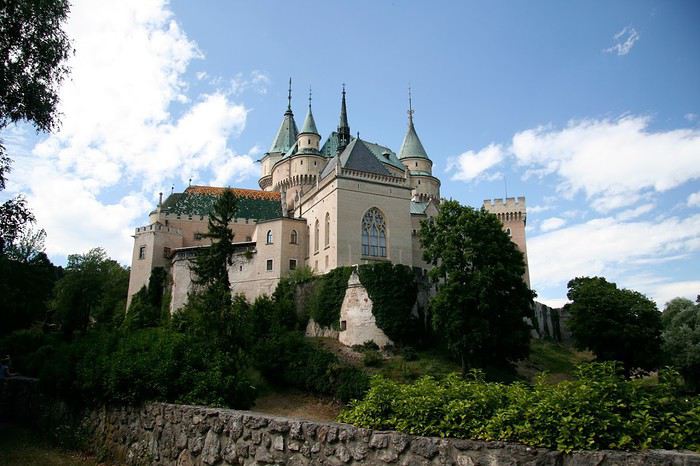
Hiking in the Malá Fatra
Vlkolínec (UNESCO World Heritage site)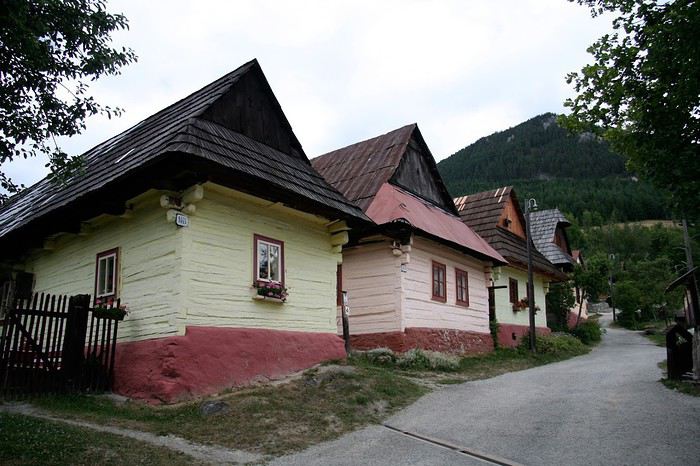
Oravský Podzámok
Zuberec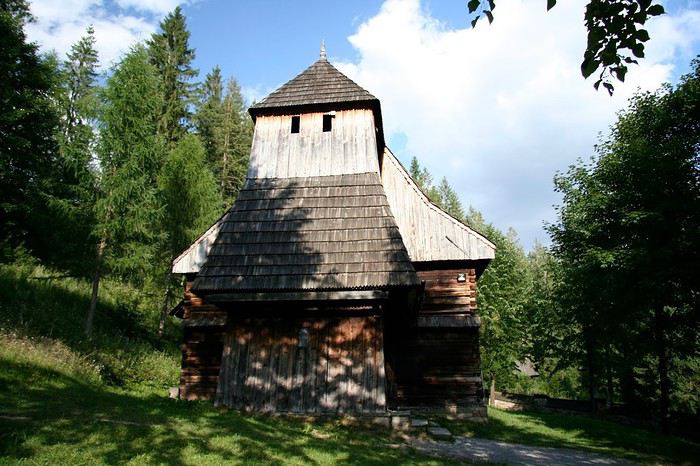
Spišská Sobota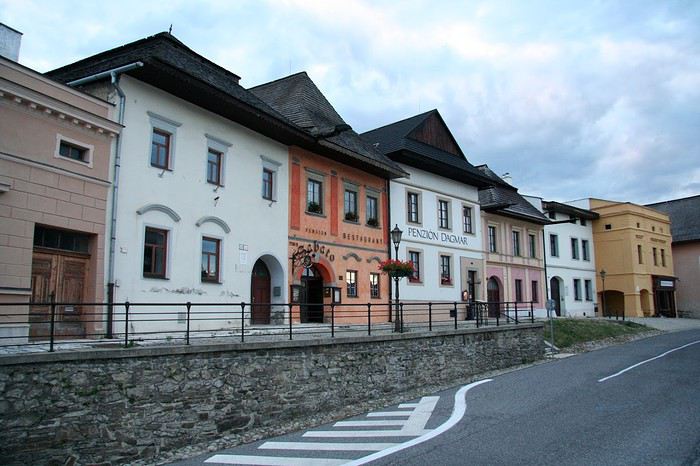
Štrbské Pleso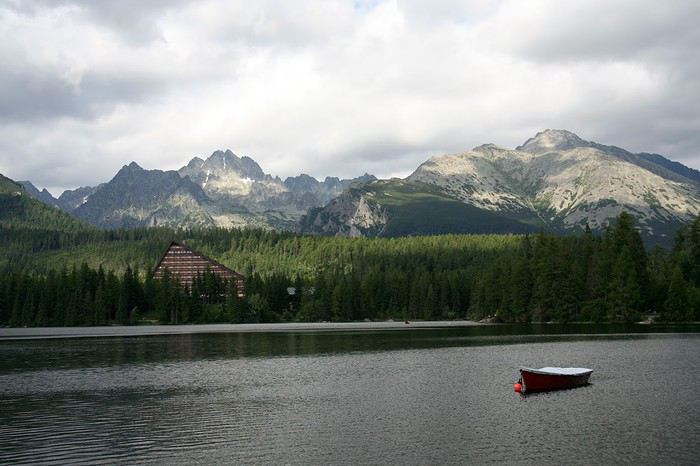
Spiš Castle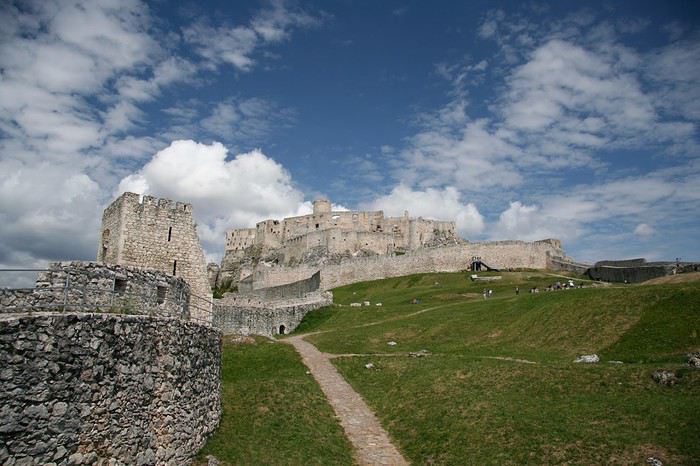
Banská Štiavnica (UNESCO World Heritage site)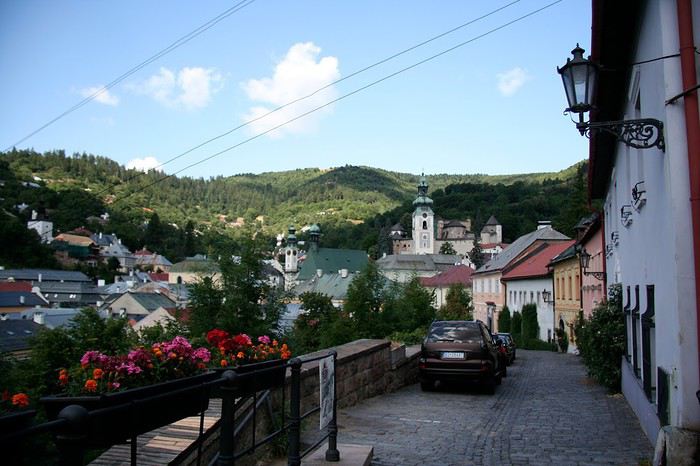
Bratislava
Here’s my feedback from my trip to Slovakia this summer. It’s a really great destination, still off the beaten tourist track, and perfect if you love old stones and hiking. Super budget-friendly too!
When: July 3–17, 2019 Flight tickets CRL-BTS: 60 € per person with Ryanair, booked 4 weeks in advance Accommodation budget: 601 € (double room with private bathroom, no breakfast) Car rental: Škoda Fabia for 180 € for 14 days with Budget + 90 € for gas (about 1300 km) GPS: Google Maps on my phone, routes saved and available offline Cost of living: 4.50 € for a plate of bryndzové halušky (gnocchi with sheep cheese), 1.50 € for a half-liter of beer (alcoholic or non-alcoholic)
To prepare for this first road trip, since I started planning in June and the destination was chosen based on the flight price (thanks, Skyscanner!), I drew a lot of inspiration from this thread: voyageforum.com/...-slovaquie-d6596505/
Itinerary: Wednesday, July 3: Arrival in Bratislava, picked up the car, visited and stayed overnight in Pezinok Thursday, July 4: Visited Červený Kameň and Trnava on the way to Trenčín, stayed overnight in Trenčín Friday, July 5: Visited Trenčín and stayed overnight in Trenčín Saturday, July 6: Visited Bojnice on the way to the Malá Fatra, stayed overnight in Terchová Sunday, July 7: Hiked in the Malá Fatra (Jánošíkove Diery trail), stayed overnight in Terchová Monday, July 8: Visited Vlkolínec, Oravský Podzámok, Zuberec on the way to Poprad, stayed overnight in Poprad Tuesday, July 9: Visited Spišská Sobota, hiked around Tatranská Lomnica, stayed overnight in Poprad Wednesday, July 10: Hiked near Štrbské Pleso, stayed overnight in Poprad Thursday, July 11: Visited Kežmarok, stayed overnight in Poprad Friday, July 12: Hiked in Slovenský raj (Suchá Belá trail), stayed overnight in Poprad Saturday, July 13: Visited Levoča and Spiš Castle on the way to Košice, stayed overnight in Košice Sunday, July 14: Visited Košice and drove to Banská Štiavnica, visited and stayed overnight in Banská Štiavnica Monday, July 15: Originally planned to return to Bratislava in the morning, but we ended up spending the day in Banská Štiavnica, stayed overnight in Bratislava Tuesday, July 16: Visited Bratislava and stayed overnight Wednesday, July 17: Bratislava, returned to Charleroi
If I were to do it again: - I’d spend one less night in Trenčín. The castle and old town can be seen quickly; - And I’d spend an extra night in the Malá Fatra. I’m even thinking of going back for a full week just to hike there. The accommodation was perfectly located and very comfortable: www.montanask.eu/; - I’d bring a down jacket for hiking in the Tatras. We had 12°C and rain 4 out of 5 days; - I’d spend more time in Banská Štiavnica, the real highlight of this trip; - The drive between Košice and Banská Štiavnica was too long; it should’ve been split into two; - I didn’t visit any wooden churches—another reason to go back!
Random notes: - Slovakia is 1.5 times the size of Belgium but has half the population. As a result, cities are a manageable size and not overcrowded, and you come across tiny villages very often. - The historic centers are generally well preserved, but I’m disappointed that not all of them are pedestrian-only. Seeing a car parked in front of a UNESCO-listed building is a bit of an eyesore. - Speaking of cars, most parking lots are paid and expensive (1 € or 2 € per hour). Be sure to look up free parking spots using Google Maps, Tripadvisor, etc. - So, around Poprad, leave your car at the hotel and take the mountain train that stops at all the ski resorts in the High Tatras. A day pass costs 4 €, and a weekly pass is 16 €—much cheaper than daily parking. - Nature is everywhere and perfect for hiking: primeval forests, via ferratas, high mountains—you’re spoiled for choice. - Tourism felt very “local” to me; I got the impression that Slovaks travel and hike a lot within their own country. - I visited many castles (Červený Kameň, Bojnice, Trenčín, Oravský Podzámok, Kežmarok, Spiš, Banská Štiavnica), and no two were alike. Unfortunately, for many, guided tours are mandatory and only available in Slovak. Still, expect to pay between 7 € and 10 € for entry. - Same goes for the silver mines in Banská Štiavnica: the visit was basically a 2 km underground walk with stops for explanations that were incomprehensible but sounded interesting. - You eat well and cheaply, especially in *kolibas*—log cabins serving traditional dishes. Fun fact: the weight of the dish is listed on the menu. - The local wines are excellent and often sold by the deciliter (1 dl = 0.70 €). Don’t hesitate to take the wine route near Pezinok, but beware—zero tolerance for drinking and driving. - From Bratislava, between June and September, you can go to Vienna by taking a Danube cruise. By road or train, Vienna is only an hour away from the Slovak capital. So, if flights to Vienna are too expensive, consider a detour via Bratislava, which can be visited very quickly.
In pictures: Trenčín Castle
Bojnice Castle
Hiking in the Malá Fatra
Vlkolínec (UNESCO World Heritage site)
Oravský Podzámok
Zuberec
Spišská Sobota
Štrbské Pleso
Spiš Castle
Banská Štiavnica (UNESCO World Heritage site)
Bratislava
Lombok, Indonesia: A Forgotten Paradise?
We’ve just returned from 3 weeks (yes, only that!) in Lombok, an island next to Bali, just a few miles away. Since I found very little information before leaving—except about the Gili Islands and organized Rinjani treks—I’ve tried to gather some details that might be useful for a Voyage Forum member looking to explore the area. Nothing exhaustive, but maybe a few great tips.
For those considering a Lonely Planet *Bali & Lombok* guide, be aware that the prices are wrong (expect a 30% increase, especially due to rising fuel costs), much of the info is outdated (the latest edition must be at least 2 or 3 years old), and the real good deals aren’t included. In short, don’t bother weighing down your bag (we already had 17kg of luggage for two—we’re getting soft!). A good map will be far more useful.
Climate: We went in late August to mid-September, so the weather was ideal in this region (best from June to September). It was pleasant, not too hot, with a light breeze keeping the Bintang cold in the evening—pure bliss!
Getting There: The cheapest way is to fly to Kuala Lumpur (Malaysia Airlines), then switch airports (getting to the LCC terminal costs 1.5 ringgit by bus) and take an AirAsia flight to Bali (booked in advance online). Once in Bali, to reach Lombok: either another flight—around 30 €—on a small propeller plane (probably a Dutch legacy); or by boat, but since you have to get to Padangbai in eastern Bali to catch the ferry, you “lose” (a very relative term when traveling) a lot of time (at least 6 hours total) to save a few euros. Since we were already mid-afternoon and didn’t want to spend a night in Bali, we opted for the “tuk-tuk with propellers” 😉. It was the first time I was weighed with my bag before boarding a plane! I know I’ve put on weight lately, but still…
After arriving in the late afternoon in Mataram, Lombok, we decided to find a bed nearby. Headed to Senggigi, Lombok’s main beach resort. We ended up at the first guesthouse, “Lina Cottages,” for 75,000 IDR a night. Exhausted, we headed straight to dreamland. I woke up around midnight, thinking I heard Massimo!??!! I hadn’t even had too much Bintang—was the jet lag giving me hallucinations ? No, I really did hear Massimo belting out a song! After a few seconds of “lost in translation,” I realized the Marina, Senggigi’s trendy bar, had—like every night—a live band playing, and these guys were covering that French classic (sic) you’ve probably heard at least once. Coming all this way just to hear “Massiiiimooooo, Massiiimmoooo, Massiiimmooomooooo…” blasting in your ears like you’re at a campsite in Juan-les-Pins—enough to depress anyone! Anyway, we left ASAP. Just enough time to check out Senggigi: its 4 or 5 bars, 10 restaurants, 3 or 4 luxury hotels—still far from Kuta Bali, but not really our scene anyway. We quickly realized there’s very little organized transport (except for a few Perama bus routes, almost all passing through Senggigi) in Lombok. To avoid spending our 3 weeks in bemos, we quickly opted to rent a car (too old for a two-person motorbike, though we’d done it in Bali… Turns out we made the right call—the roads in Lombok are way too rough for bikes). Senggigi is one of the few places on the island where you can rent a car and withdraw cash. After some tough negotiation, I got a Suzuki Katana for 120,000 IDR/day (instead of the usual 200,000 IDR). I was a bit frustrated—thought it was expensive. A local on vacation in Lombok (he’s lived in Australia for years) later told me he couldn’t even get that rate, saying prices had jumped with the fuel hike (from 2,500 IDR/liter two years ago to 5,000 IDR now).
Anyway, we left Massimo to his interplanetary success and headed south. I was curious to see if we could stay on a small island off Lombok’s southwest peninsula. After 60km and 1.5 hours, we arrived in Taun, where we found a “captain” willing to take us to Gili Nanggu. There seemed to be a guesthouse on the island. After some *very* tough negotiation, we got a round-trip price of 150,000 IDR for two days later (a guide taking tourists to the island for the day later told me he pays 185,000 IDR for the same trip). The island is barely a few hundred meters across, and the only guesthouse, “Gili Nanggu Cottages” (165,000 IDR/night), offered us a charming bungalow in traditional Lombok style. No negotiating possible—we were stuck on the island anyway! By mid-afternoon, the day-trippers (often from Senggigi) left. There were about ten of us staying overnight. The sand was white, the water crystal-clear with fish, and the sunsets stunning… but the coral was pretty damaged.
Next, we headed south to Kuta Lombok. The most direct route via Sepi was marked as “small” on the map… mmm… The Lonely Planet—this was the *only* time it was “useful” (sic)—had a special warning saying many readers had been robbed in the area. Wanting to clear this up for my Voyage Forum friends, we took the plunge! The road was *completely* wrecked—potholes everywhere, and if you ignore the rain-carved ravines, it was like a pothole per square meter! I was searching for tarmac to park my wheels! After 80km and 3 hours of bone-rattling driving, with stunning views of Lombok’s arid southern countryside and deserted turquoise bays, we arrived in Kuta Lombok. On the way, instead of robbers and thieves, we only met schoolchildren with big smiles shouting cheerful “hellloooo’s.” We didn’t see a single other car the whole trip.
Kuta is nothing like its Balinese namesake. It stretches just a few hundred meters along a beautiful round-sand bay (yes, round—it rolls under your feet). About ten deserted restaurants and just as many guesthouses (5% occupancy, I was told—we only saw about ten Westerners in 3 days). No guesthouses face the beach; they’re all on the other side of the road in an inner garden. A bit of a shame. Still, the bay is gorgeous, and a few fishing families live in very basic huts on the beach. We decided to check out the Novotel to get a feel for the area. The lush vegetation contrasted with the surrounding aridity, two pools… all that fresh water being used, plus the Accor flag, made me want to head back to the fishermen’s huts. Finally, we found a guesthouse on the beach at the eastern end of Kuta Bay, just before the Novotel: “Lombok Baru.” It’s the only one on the beach. The bungalow was spotless, right by the sea, for 105,000 IDR/night. The Chinese-Indonesian family running the place told me they’d only been open for 3 years and were growing slowly as they saved up. A new bungalow was under construction, and the “garden” was still a work in progress.
The Tanjung Aan bay, a few kilometers east of Kuta, is stunning—huge, white sand, and almost no one except a few persistent sarong sellers. The bay is definitely worth a visit (if not a sunburn). A toothless old man even tried to sell us a coconut, improvising a song (after my girlfriend started singing to ignore them 😉). With his three words of broken English, he sang: “Coconut mist’errrr… mister coconuttttee… If no coconut, no monyyyy… Coconut mister…” for at least 10 minutes! A rare moment, a beautiful encounter. The song stuck with us for the rest of the trip—even now, I hum it to avoid getting too depressed about being back home. One evening, a Balinese waiter who’d been living in Lombok for 7 years gave us lots of info about the area, the culture, and the people. He talked about the security issues in Kuta—yes, there are frequent thefts (money, cars, etc.). For him, it’s due to the lack of education among many locals, who don’t see beyond their immediate needs and risk scaring tourists away (which is why Kuta is so deserted). After a few days there, you do get the sense that you shouldn’t tempt fate by flashing money or jewelry amid such poverty in southern Lombok. But calling it a “dangerous area” is a stretch! That won’t stop me from going back, though!
Next, we headed east—northeast, actually. I was curious about the small islands on my map, and I hadn’t found *anyone* who’d been there to give me tips. So we drove to Labu Pandan (115km, 3 hours—I may have pushed the Katana a bit…). What looked like a small village was actually just a guesthouse and a few fishing boats on the beach. The “Pondok Gili Lampu” guesthouse also sold basic supplies to locals and had a simple restaurant with 5 or 6 basic bungalows (60,000 IDR/night) and a beautiful deserted black-sand beach. They offered snorkeling trips to Gili Lampu and camping there (organized by the guesthouse), but there were no facilities or water on the island. The strong wind made us decide to stay on the beach—poor visibility for snorkeling and sand in the sleeping bags didn’t sound appealing… The owner, Yanto, didn’t speak a word of English but was absolutely lovely. Another heartwarming encounter that did us so much good. Life was sweet, and we let ourselves drift to the rhythm of faraway relaxation.
Then we headed to Sembalun Lawang, the least crowded starting point for the Rinjani trek (most people start from Senaru). The southern route was fine—we crossed a 1,700m pass. The only person we met was an ice cream vendor on a motorbike overtaking us on the climb—he must’ve been in a hurry, which is ironic for an ice cream seller! After 65km and 1h15 of winding roads, we arrived in Sembalun Lawang and parked our trusty Katana at “Sembalun Nauli,” which had 4 standalone bungalows (90,000 IDR/night) in the middle of nowhere. There was nothing around—just the Rinjani looming ahead, our goal for the next 3 days. The guesthouse arranged our gear (sleeping bags, tent), hired two porters, and bought food. I got a price of 1,400,000 IDR for 2 people for 3 days. I think you could get it down to 1,000,000 or 1,200,000 if you did it yourself, but we hadn’t seen a single person in SL (not a restaurant in sight—even the Rinjani Trekking Center was closed, the guy was supposedly napping…). I didn’t feel like stressing over it. It was a far cry from the 170 USD/person quoted in Senggigi!
The 3-Day Rinjani Trek was a unique experience—not just for the scenery but also for the (relative) “sharing” with the porters: Mister Adi (who spoke a little English) and Mister An (who only spoke Sasak and Indonesian). On the first day, we went from Sembalun to base camp: 1,700m elevation gain under the sun, 6 solid hours of hiking (not counting breaks). My shared backpack, weighing around 10kg, felt heavy on the climb. We took breaks to drink, while our porters smoked!! I don’t know how they did it! The next day, we left at 2:30 AM to reach the summit (1,500m elevation gain) by 6 AM for sunrise. The last 300 meters were brutal—a 35/40° slope, straight up in sand and small stones. Those who say you move a meter forward and slide 50cm back haven’t seen the slope! It’s more like 20cm forward and sometimes 20cm back… tough stuff. But we made it to the summit (3,726m)—not everyone does. A word to the wise: you’d better be in good shape and, above all, have the right mindset! More beautiful than the sunrise was the moonrise—almost full and reddish—around 4 AM. It was stunning! As for vertigo, sure, you’re walking along a ridge, but even for someone like me who’s not a fan of heights, it was fine. Back at base camp, Mister An had made delicious banana pancakes—a local ritual, apparently, and a treat for us! Then we descended to Segara Anak Lake in the crater. It was steep, and with our legs like telephone poles, it wasn’t easy: “Adeng adeng, Mister An!!!” We enjoyed the hot springs (40°C!) and I even swam in the lake itself—the water must’ve been around 20°C, incredibly pure. I was alone facing Gunung Baru, the active volcanic cone: unforgettable! On the third day, we climbed back out of the crater, then descended 2,000m to Senaru, where ojek (motorcycle taxis) were waiting to take us back to Sembalun to retrieve our car, still parked at Sembalun Nauli. Then we drove to Senggigi (2 hours, flat out), where this time we stayed at Dharmarie (150,000 IDR instead of 300,000 IDR)—spotless room, nice bathroom, much quieter than Lina! We returned our Suzuki Katana 3 days late (I thought they’d have a heart attack—they’d been looking for us everywhere, even going to Kuta!). Anyway, I paid for 2 extra days out of the 3, and we headed to catch the Perama boat directly to Gili Air from Senggigi (70,000 IDR/person).
We chose Gili Air based on the posts I’d read on Voyage Forum (thanks 😉). Somehow, we ended up with a French friend at Hotel Gili Air (yes, I know—after our Rinjani adventure, we treated ourselves…) on the north side of the island, where we negotiated the room down to 225,000 IDR/night from the listed 38 USD. The included breakfast was huge, and the seawater pool was a nice touch (if not the hotel staff…). The island was pretty nice—white sand, pretty fish, turtles—but the coral was damaged in many places. Hammock, snorkeling, grilled fish, and Bintang—a simple pleasure
After 3 days, the travel bug bit us again. We wanted to reach Komodo by boat. Two agencies offered 4-day one-way trips to Flores: Perama (1,400,000 IDR/person for deck sleeping) and another (name forgotten) for 850,000 IDR. Couldn’t negotiate with Perama—the next departure was in 5 days (every 6 days, I think). We went with the other one. Everything seemed fine (the boat actually left from Labuhan Lombok, east of Lombok, which we reached by bus from Gili Air) until the agency told us there were only 2 flights a week from Labuan Bajo in Flores back to Bali, which would leave us stuck for 3 days in Flores and make us miss our return flight to Kuala Lumpur. To top it off, the agency lady said we were only 6 people signed up, and the boat wouldn’t leave with fewer than 8… so it fell through. We decided to end our trip with a few days in Bali to see how the island had changed since our last visit in 2003.
I won’t go on about Bali—it’s much better known than Lombok—but here are 3 great spots: - Ubud: So much construction since 2003! You’d think you were in a French city center with all the shops! “Nick’s Pension,” near the top of Monkey Forest—take a small alley to the left as you go up, all the way to the end. A green paradise in the middle of rice fields, quiet, just 50m from Monkey Forest. Nice pool. 300,000 IDR/night, negotiated down to 150,000 IDR. - Amed: “Wa Wa We We II” (120,000 IDR/night)—gorgeous infinity pool, charming bungalows, “relax” vibe. - Jimbaran: “Villa Puri Royan” (from 120,000 IDR)—like a hacienda on 3 levels with a pool in the middle. Right next to the beach warungs. *The* good deal in Jimbaran.
When you go from Lombok to Bali, you notice a clear difference. First, in terms of development. In Lombok, cars are rare outside Mataram/Senggigi. Development is far behind Bali—probably what Bali was like 20 years ago! I heard that construction on an international airport in Praya, central Lombok, started on August 1, 2006… Even if it takes 5 or 10 years to build, maybe it’s time to go. Then there’s the “people” factor—culture or religion plays a role. It’s true that it’s less easy than in Bali (which is so unique…), and relationships can be tougher, even tense at times. Maybe it’s just less accessible for “whirlwind travelers” like us. The car also saved us from many hassles (negotiating bemos, ferry arrivals, etc.). Still, we had some amazing encounters and never felt unsafe. I imagine other experiences could be different, especially if you’re easily intimidated.
I hope you’ll find some useful info in this post. When you visit this part of the world, try to get off the beaten path of the Gili Islands or Senggigi. Lombok and its people are well worth a detour.
Selamat Jalan
Hi,
I’m planning a trip to Namibia for 3 weeks in November: should I take malaria prophylaxis, which medication, when to take it, and are there any side effects?
At the end of my trip, I’ll spend 5 days up north near the Angolan border and in Etosha National Park.
Thanks for sharing your travel tips and advice!
Martine
Hi everyone,
This September, my partner and I are heading to North Sulawesi for 3 weeks. Our international flight is with Malaysia Airlines, departing from Paris. We have a layover in KL, then fly to Denpasar, followed by a domestic flight from Denpasar to Manado. We land in Bali Denpasar on 05/09 around 12:00 PM, and our flight to Manado is on 07/09 at 1:30 AM. The plan was to have at least one night (from the 5th to the 6th of September) between our international flight and our flight to Manado, just to recharge a bit since we're not 20 anymore 😛. My question is, given the very short stop in Bali (a day and a half), is it better to stay in Denpasar rather than go to Ubud for the night? I’ve been to Bali before, and from what I remember, even though the distances are short, transfers take a long time because of the extremely heavy traffic—but I was there in July, not September. I’m not sure if that makes a big difference? If the answer is "it’s better to stay in Denpasar," are there any nice places to visit? There’s very little feedback about the city since tourists usually don’t stick around. Thanks in advance for your replies.
This September, my partner and I are heading to North Sulawesi for 3 weeks. Our international flight is with Malaysia Airlines, departing from Paris. We have a layover in KL, then fly to Denpasar, followed by a domestic flight from Denpasar to Manado. We land in Bali Denpasar on 05/09 around 12:00 PM, and our flight to Manado is on 07/09 at 1:30 AM. The plan was to have at least one night (from the 5th to the 6th of September) between our international flight and our flight to Manado, just to recharge a bit since we're not 20 anymore 😛. My question is, given the very short stop in Bali (a day and a half), is it better to stay in Denpasar rather than go to Ubud for the night? I’ve been to Bali before, and from what I remember, even though the distances are short, transfers take a long time because of the extremely heavy traffic—but I was there in July, not September. I’m not sure if that makes a big difference? If the answer is "it’s better to stay in Denpasar," are there any nice places to visit? There’s very little feedback about the city since tourists usually don’t stick around. Thanks in advance for your replies.
Hi,
I’m starting to plan a great trip for the last three weeks of January 2027 (my first time in South Africa).
After spending a few hours (!) browsing this forum, here’s a rough first draft of my itinerary:
D0 Arrival at JNB D1, D2 Blyde River Canyon D3, D4, D5, D6, D7: Kruger D8, D9, D10: St Lucia and surrounding area D11, D12, D13, D14: Drakensberg + Lesotho
D15 A very long driving day to the south (hope the AC doesn’t break down!)
D16, D17, D18, D19 southwest coast (so far I’ve noted Oudtshoorn, Robberg Nature Reserve, Wilderness NP, De Hoop Reserve, and a bit of the wine route) D20, D21 Cape Town (peninsula and a bit of the city) + domestic flight and return flight (departure from JNB at 11 PM)
A few questions before refining this: - Do you see any major issues with this itinerary?
- We don’t have a choice on dates, and personally, I prefer green landscapes to desert ones anyway, but do you really see far fewer animals in January than in the dry season? Five days in Kruger should give us enough time to spot plenty of different animals despite the tall grass, right? As for the heat, we’re from Réunion, so we’re relatively used to it, even though I know it’s not the same type of heat.
- Can I trust the distances and driving times given by Google Maps?
- Picking up the vehicle in Johannesburg and dropping it off in Cape Town: how much might that cost us? I’m thinking it probably won’t be worse (in terms of time or money, since there are five of us—2 adults + 3 kids) than going back to Joburg after Lesotho, taking a flight to Cape Town, and renting another vehicle... but maybe I’m wrong.
- Finally, wouldn’t it be better to focus on just one of the two regions (either the northeast or Cape Town and the south coast)? If it were up to me, I’d stick to the first part and extend a few stops... but not everyone agrees! And we’re thinking that since it’ll be really hot, a second part of the trip that’s a bit """cooler""" would be welcome.
Thanks for your help
Hi everyone,
My partner and I are heading to Thailand for three weeks (exactly 21 days there) at the beginning of July for our first trip to Asia. During this trip, we want to discover a new culture, beautiful landscapes, eat well, do some beach time (with snorkeling), all while trying to keep it authentic and close to nature.
After some research, I’ve come up with this itinerary—what do you think?
Arrival in Bangkok on Tuesday, July 7 in the morning = 2 days Ayutthaya = 1 day Travel to Chiang Mai = 1 day (flight) Chiang Mai = 2 days Trek = 2 days Travel to Khao Sok = 1 day (flight to Surat Thani + bus) Khao Sok = 3 days (4 nights total) = For this part of the trip, would you recommend staying in Khao Sok village and doing day trips, or planning an overnight stay on the lake? Travel to Koh Phangan = 1 day (bus + ferry) Koh Phangan = 4 days (we’re thinking of staying in the northeast part of the island) Koh Tao = 2 days Return to Bangkok = 1 day (taking a ferry to Chumphon then a flight) Bangkok = 1 day
Thanks for your feedback!
Got my flight ticket! Arriving in Bangkok on January 9th. Returning to France on March 9th. I’ll meet up with a travel buddy upon arrival for 2 or 3 weeks. 3 days in Bangkok, then heading south. What’s next for destinations?... If you’re also traveling solo, we can stay in touch and maybe our paths will cross.
Looking forward to hearing from you in a friendly and cheerful spirit!
Jeanette (Paris area)
Hello,
Following a cancellation, I’m looking for someone to join me for 3 weeks in Sri Lanka.
Hi there,
For a trip planned next summer, I’m considering this itinerary for a maximum of 3 weeks:
Kalamata Pylos Foinikounta Kardamyli Limeni? Areopoli Mezapos (just a quick stop along the way) Gerolimenas Elafonissos Then we’ll head back up toward Nafplio And Athens for the return flight.
My questions: - Is it possible to find a direct flight to Kalamata, or will we have to go through Athens for a domestic flight? - For Limeni, can we get there from Areopoli? - The drives from Gerolimenas to Elafonissos and from Elafonissos to Nafplio are a bit long—any ideas for stops? Though that might make too many stops overall?!
Thanks for your help in optimizing this itinerary!
My partner and I are planning a 2-week trip to Goa from late September to early October. It’s sandwiched between a trip to Nepal (September) and our return home to Thailand. We can’t stay longer, but cutting it shorter wouldn’t be worth the effort or flight costs.
I’ve visited several regions of India in the past (between 2000 and 2020) and spent a total of about 4 months there. My only time in Goa was a few days in Palolem in 2007—I didn’t like it. I found the place almost sordid with all the crowds... not at all the India I love.
But I have an Indian friend with 2 or 3 apartments in a residence in North Goa who keeps telling me to visit. I’m tempted. But where should we go? I don’t want to rent from him because it’s expensive (high-end) and I don’t want to feel too dependent on him either.
After 2 days in Panaji (since it’s near GOI), I’ve booked 5 days in Mandrem, which I’ve heard great things about. This’ll let us explore the Arambol area. I’m hesitant to stay there longer—if we don’t like it or get bored after a few days, spending the full 2 weeks there isn’t ideal! I’m thinking of trying South Goa instead, somewhere between Benaulim and Agonda. The downside? All the rumors about the vibe in different spots—loud techno here, jet skis there, "paunchy English tourists" elsewhere, package tours everywhere... not to mention the expected influx of Russians and/or Israelis (I’ve seen this in other parts of India, Thailand, and Vietnam). Plus, accommodation options are way more limited in the south.
Basically, I’m leaning toward Agonda—relaxed but not too quiet or isolated. But there’s so little availability on sites like Booking and Agoda...
Any recent tips or advice from folks who’ve been to Goa lately? I’d really appreciate it, thanks in advance!
Hello,
For our trip in September 2025 from mid-September to early October (3 weeks), we’ve planned 8 days in San Pedro, then a transit night in Santiago, 8 days in Chilean Patagonia, and 3 days for Santiago/Valparaíso before heading back. Is it possible to easily explore with a rental car from a lodge based in Puerto Natales, including visiting Torres del Paine National Park? Or does that mean too much driving in a day, or would it be better to plan an overnight stay in the park or nearby?
We applied for our international driver’s permit in January 2025 for September, hoping to get it in time—I checked the forum about this. Regarding the car rental, do we really need a credit card (not debit) in the main driver’s name for the deposit?
How far in advance should we book entry tickets to the national parks for this period?
Best regards,
Odile
Hi everyone, I’m really keen to visit Iran for three weeks in mid-March 2015.
What worries me a bit isn’t so much traveling alone—I’m used to it and know the Middle East well—but rather the current events (Islamic State) that could potentially become dangerous.
Flights are pretty cheap at the moment, and I’d like to book before prices go up.
Any advice from people who know the ground situation and Iranian current affairs better than I do would be much appreciated! :)
Any advice from people who know the ground situation and Iranian current affairs better than I do would be much appreciated! :)
Hi there,
I bought a one-way flight (Ryanair) and a return flight (EasyJet) to spend a week in Morocco in April. My passport expires 3 weeks after the return date. Some websites say the passport must be valid for 3 months at the time of entry. However, it will still be valid both on entry and return, but its validity will only be 1 month at the time of entry (and 3 weeks on the return date, everything prepaid).
It's an individual family trip.
The consulate can't give me an answer—they're still looking into it (really!)
Will Ryanair let me board in Beauvais in 3 weeks?
Thanks for your advice—this is a bit urgent 😕😕😕😕
Hi everyone,
My partner and I are planning a 3-week trip to Kazakhstan in August and would love your input to refine our itinerary.
We’re thinking of spending the first part of the trip in the Almaty region, including the following spots:
Singing Barkhan (singing dune)
Altyn-Emel National Park
Charyn Canyon National Park
Ozora Ushchel'ya Reki Kensu (Kensu River Valley lakes)
possibly Ile-Alatau National Park
After that, we’d like to explore the Mangystau region around Aktau, with highlights like:
Airakty
Tuzbair Salt Lake
Kyzylkup ("Tiramisu")
Gora Bokty
Bozzhyra
Three Brothers Peaks
We’re planning to rent a 4x4 in each region and have a few questions:
Could you recommend any reliable 4x4 rental companies in both the Almaty and Aktau/Mangystau regions?
I’ve read that the Mangystau region can get extremely hot in August. Do you think it’s better to start with Almaty and finish with Aktau to hopefully have milder temperatures (less extreme😛)? For us, doing the reverse would be simpler in terms of international flights, the domestic flight, and it’d also be significantly cheaper.
Regarding the places listed above, do you think there are any must-see spots we should add, or conversely, any sites that aren’t worth the detour?
More generally, do you have any practical tips for a 3-week trip to Kazakhstan in August (road conditions, fuel availability, reservations, weather, safety, etc.)?
Thanks so much for your feedback and advice! P.S.: We’re used to traveling independently and driving 4x4s in sometimes challenging conditions (Namibia, Tanzania, Bolivia—South Lipez, Chile, etc.), and we’re also experienced hikers, used to self-sufficient treks (Patagonia, Huayhuash, Three Peaks in Nepal, among others). We’re just mentioning this to give you an idea of our level of self-sufficiency for this kind of trip.
hello
I’m looking for advice for a last-minute trip—about 3 weeks (half Montenegro, half Croatia).
I’m traveling solo, backpacker style (low budget, hostels). I’m 40 and love exploring cool spots—cities, beaches, mountains, sports activities, you name it.
I’m torn between renting a car or just going with the flow using buses once I’m there. A car would definitely be more convenient, but it might be pricier—plus, parking (is it paid?) and having to return it to the same place. My plan is to start in Montenegro (flying into Podgorica or Albania) and finish in Croatia, so I’d either need to do short-term rentals per country or one-way.
In Montenegro, here are the spots I’ve noted: - Ulcinj and Velika Plaža beach - A side trip to Lake Skadar and Virpazar - Budva, Sveti Stefan, and Petrovac - Cetinje and Lovćen National Park - Kotor / Perast - Žabljak and Durmitor National Park + rafting in the Tara Canyon Is 8–10 days enough?
And in Croatia, I’ve got: - Dubrovnik - Korčula - Hvar - Split + Trogir and Krka National Park - Zadar - Plitvice Lakes National Park - Croatian Istria / Rovinj / Pula - Zagreb Around 10–12 days.
Any tips on the stops (adding or cutting some from my list) or transportation options?
Thanks in advance!
Hi there,
Just a quick question about filling out the TM6 (TDAC) for Thailand. I'm going for 2 months and 3 weeks (I bought a round-trip ticket) and I'll arrive under the 60-day visa exemption since I didn't get a visa.
However, I bought an exit ticket to a neighboring country before the 60 days are up to avoid any hassle at Paris airport.
For the TM6, they ask for the return date—what should I put? My actual return date? The website doesn’t give me the option to upload my exit ticket from Thailand.
Thanks!
Hi there,
Do I need a return ticket? Proof of insurance and a hotel reservation?? I’m French.
Also, is there any control on meds and sleeping pills?? Thanks a bunch!
Hi there,
The round trip to Bangkok is almost booked.
Here’s the itinerary I’ve planned for this new trip to Thailand:
Arrival – 2 nights in Bangkok (any hotel recommendations? Very quiet, near Chinatown or by the river)
Train or taxi (which app should I use for Thailand?) to Phetchaburi – 2 nights (any hotel recommendations?)
Daytime train to Surat Thani – 1 night there (any hotel recommendations?)
Pick up the rental car and head to Khao Sok – 1 night there (any hotel recommendations?)
Drive to Ko Kho Khao – 3 nights – relaxation (any hotel recommendations?)
Drive to Phang Nga Bay – 1 night (any base recommendations?)
Excursion in the bay, then drive to Krabi – 2 nights (any hotel recommendations) or any other spot with beautiful, quiet beaches that you might know?
Return to Surat Thani – overnight train to Bangkok, then Ayutthaya (any hotel recommendations?)
Visit the site and transfer to the airport – sniff, time to head back!
If you have other suggestions, keeping in mind the trip’s vibe: beach time without crowds or entertainment, a bit of nature, a bit of culture, no stress... No domestic flights and charming accommodations (not at 150 € per night, even though the budget is reasonable!)
Not sure I’ll follow them all, but all your ideas are welcome! 😉
Thanks. 🙂
The round trip to Bangkok is almost booked.
Here’s the itinerary I’ve planned for this new trip to Thailand:
Arrival – 2 nights in Bangkok (any hotel recommendations? Very quiet, near Chinatown or by the river)
Train or taxi (which app should I use for Thailand?) to Phetchaburi – 2 nights (any hotel recommendations?)
Daytime train to Surat Thani – 1 night there (any hotel recommendations?)
Pick up the rental car and head to Khao Sok – 1 night there (any hotel recommendations?)
Drive to Ko Kho Khao – 3 nights – relaxation (any hotel recommendations?)
Drive to Phang Nga Bay – 1 night (any base recommendations?)
Excursion in the bay, then drive to Krabi – 2 nights (any hotel recommendations) or any other spot with beautiful, quiet beaches that you might know?
Return to Surat Thani – overnight train to Bangkok, then Ayutthaya (any hotel recommendations?)
Visit the site and transfer to the airport – sniff, time to head back!
If you have other suggestions, keeping in mind the trip’s vibe: beach time without crowds or entertainment, a bit of nature, a bit of culture, no stress... No domestic flights and charming accommodations (not at 150 € per night, even though the budget is reasonable!)
Not sure I’ll follow them all, but all your ideas are welcome! 😉
Thanks. 🙂
Hi there,
I’ve got a few questions about my upcoming 3.5-week trip to Tamil Nadu and Kerala (January 2025).
On the itinerary, we’re supposed to spend 3 or 4 days in Thanjavur (Tanjore). I thought the location would let us explore the surrounding area, but I’m realizing everything I want to see won’t fit into the schedule! I’d planned: 1 day to arrive from Pondicherry 1 day to go to Darasuram 1 day to go to Tiruchirappalli 1 day to head to Madurai with a stop in Chettinad Basically, we won’t see anything of Thanjavur itself! Should I skip one of the destinations?
In Kerala, after 3 days in Munnar, I’ve planned to spend a few days in Munroe Island since I didn’t get great feedback about Alleppey. I wanted to "wander" through the backwaters. Has anyone been there?
Finally, we’re ending the trip in Cherai. After booking, I realized the beaches seemed unusable (trash, rough sea...) and I’m pretty frustrated about not being able to swim. Unless there’s a better spot nearby?
Thanks for your input!
Hi there,
Barely back from my trip (autumn 2025) and I already want to go again!
I’ve already done a 3-week stay (Tokyo-Kamakura-Nikko-Japanese Alps-Kyoto-Osaka-Koyasan-Nara).
So this time, a different trip: Day 1: departure Day 2: arrive in Osaka (stroll around the center in the afternoon) Day 3: day trip to Minoh Falls + Katsuo-ji Temple Day 4: Universal Studios. 1h20 train in the evening to Okayama Day 5: visit Okayama (Korakuen Gardens and the castle), then a 25-minute train to Kurashiki (evening stroll) Day 6: 45-minute bus to Fukuyama (day trip to Tomo no Ura). 20-minute train in the evening to Onomichi Day 7: electric bike excursion on the Shimanami Kaido (70 km round trip), return to Onomichi in the evening Day 8: stroll around the heights of Onomichi. In the afternoon, 1h20 train to Takehara Day 9: stroll in Takehara. In the afternoon, train to Hiroshima Day 10: day trip to Miyajima Day 11: explore Hiroshima, then train to Kyoto Day 12: Kyoto (Kinkaku-ji and Ryoan-ji area in the morning). Bus to Takao/Togano in the afternoon Day 13: Kyoto (northeast area—Shugakuin Imperial Villa and nearby temples in the morning), relaxed return to Gion in the afternoon via less crowded neighborhoods/temples Day 14: day trip to Uji Day 15: Kyoto (northern Arashiyama area in the morning). Train to Nakatsugawa in the afternoon Day 16: Day 1 of the Nakasendo Trail to Nagiso Day 17: Day 2 to Kiso Fukushima Day 18: Day 3 to Matsumoto (with train from Narai-juku) Day 19: train to Tokyo Day 20: Tokyo (still figuring this out). I’ve seen Shinjuku, Shibuya, and Asakusa. Day 21: return flight Day 22: arrival
Yes, there are a lot of short transports, but that doesn’t bother me.
Any thoughts? Thanks, Patrick
Hi there,
We’re planning a trip to Thailand with my husband and our two 7-year-old kids. Three weeks in February/March. Our rough itinerary is: arriving in Bangkok for 3-4 days, then Chiang Mai and the surrounding area, and finally an island in the south.
-We land in Bangkok around 7 AM. Any hotel recommendations? We’d love to rest right after we arrive. Budget is around 40 € per night.
For the rest, I’m open to any tips or suggestions:
-Accommodation in Chiang Mai, and maybe a night in an elephant sanctuary park...
-Should we take the overnight train to Chiang Mai on the way there or on the way back?
-Which island should we choose?
We love authentic experiences and connecting with locals...
Thanks so much!!!
Elodie.
Hi there,
My partner is running the Tokyo Marathon on March 1st, 2026. So we’re planning a 3-week trip to Japan to include this event! We’ll likely be traveling from February 21st to March 14th.
Our current idea is to visit: 1) Kyoto 2) Tokyo 3) The Five Lakes region (e.g., Mt. Odake, Mitsutogeyama, Lake Kawaguchi, Lake Sai, Mt. Ryugatake, Myōjinyama...) 4) Kyushu (for example: Mt. Kujū, Mt. Aso, Eboshi-dake, Mt. Karakuni, Kirishima Mountains, Takachihonomine....)
We found a flight that would let us arrive in Osaka and depart from Kutakyushu. We really want to soak up Japanese culture but don’t want to spend all our time just in cities. Museums, exhibits, etc., aren’t really our thing, and we’d like to include some hikes.
1) Do you think this itinerary is realistic for 3 weeks? 2) In Kyushu, we’d like to rent a car—do you think it’d also be a good idea to rent one for the Five Lakes region? 3) I’d love to stay in a temple to take part in monks’ rituals. Any tips on that?
Anyway, this is just a very rough first draft, and before diving in completely, I’d love to get some initial feedback, your thoughts, and your critiques ;) Thanks in advance! :)
Hi there, we're heading to Antarctica in February for the trip of a lifetime!
After spending 3 weeks on the boat, we'd love some advice on how to extend our trip.
We were thinking of staying in Buenos Aires, which we’ll have visited on the way there.
So we’re considering exploring the areas around the capital. Any ideas for a week of discoveries?
Thanks so much for your input!
/hello, coming from China-Beijing - on 07/04 we're thinking of heading to Korea for 3 weeks. First off, we'd like to know what to expect weather-wise
Hi there,
We’re planning a family trip (with 2 teens) to Java in June 2026 (2 to 3 weeks). After reading a lot of forum posts and travel journals, I’ve put together an itinerary and would love your thoughts and advice on the stops and routes.
Day 1: Arrive in Yogyakarta in the afternoon Day 2: Prambanan in the afternoon Day 4: Explore Yogyakarta Day 5: Morning at Borobudur, then visit the surrounding area for the rest of the day Day 6: Train to Malang, then Grab or private driver to Tumpak Sewu. Overnight in Tumpak Sewu. Day 7: Visit waterfalls and explore the area for the rest of the day. Overnight in Tumpak Sewu. Day 8: Trip to Cemoro Lawang by Grab or private driver. Hike up Bromo in the afternoon. Overnight in Cemoro. Day 9: Sunrise at Bromo. Trip to Surabaya by Grab or private driver. Overnight in Surabaya. Day 10: Trip to Jepara. Overnight in Jepara. Day 11: Karimunjawa Day 12: Karimunjawa Day 13: Karimunjawa Day 14: Karimunjawa Day 15: Bus back to Yogyakarta. Overnight in Yogyakarta. Day 16: Return flight
Does this itinerary seem doable? My main question is about optimizing the route between Cemoro and Jepara. Can we connect to Jepara from Surabaya? Any suggestions for things to see along the way?
Thanks in advance for your help and suggestions!
Hi everyone, here are some practical tips from my 5 weeks in Mongolia in February.
The famous Lonely Planet paper guide mostly gives wrong information—we often got let down.
From the airport to the city center (25 km), there are normally buses, but it’s not straightforward, especially for your return trip. Check with the tourism office on Genghis Khan Square.
If you need to stay more than 30 days, your hotel can request an extension for you online. Do this immediately because it can take time. At customs, you’ll get an extra stamp. Each day costs a very small fee, and no photo is needed.
I only travel by public transport. Don’t follow the paper guide, and remember there are buses running daily between Ulaanbaatar and Ölgii (and other routes).
The main issue is finding out the departure time and location. Insist strongly with your hotel—the bus might pass in the middle of the night. Locals have the drivers’ numbers and will let them know there are passengers to pick up. You pay on the bus.
From Karakorum Monastery, if you want to reach Arvaikheer via the mountains, the route is truly stunning. The postal service has a 6-seater van that leaves around 1 PM from the post office—ask around. This avoids going back to Ulaanbaatar. Plus, the van stops right in the center of Arvaikheer, next to a hotel that’s a really ugly red but has good rooms, great prices, and friendly staff.
The Black Market isn’t far, and neither are the city’s two museums.
The yurt camp next to the monastery is well-maintained, with very kind people. It gets too hot in winter, so you’ll have to sleep with the door open.
Ulaanbaatar There are two main long-distance bus stations: "Dragon Station." They’re far from the city center, so take a bus or a taxi—allow plenty of time to get there.
The city is constantly congested and polluted. Climate change is a very visible issue here.
To see a wrestling match in Ulaanbaatar, go directly to the "stadium" on Peace Avenue. Matches often take place at 11 AM, and tickets are sold on-site. Bus No. 1 goes there, among others.
For the Black Market, taking the bus is faster. You’ll find everything for daily life—fabrics, dishes, etc. But be careful: the "antique dealers" don’t provide authenticity papers, and you could get stopped at customs. Stick to the antique dealers in the city center.
I was really disappointed by the Lunar New Year—nothing happens outside, shops and banks are closed. Make sure to bring food, though ATMs work.
To exchange money, go to the 4th floor of the "state store" across from Beatles Park on Peace Avenue. The exchange rate seems good.
There are many great museums in Ulaanbaatar and smaller towns—worth a visit, even if you sometimes have to hunt for the keys and lights. However, the art galleries in Ulaanbaatar no longer exist (at least not when I was there).
I stayed at GoldenGobi Guesthouse—very family-like atmosphere, right in the center, and budget-friendly. They can also help organize things. There’s a kitchen and a terrace for summer, and it’s just a short walk from the "state store" and museums.
The Thousand Camel Festival in Dalanzadgad takes place at the end of January—check the dates, as climate change may shift them.
There’s a direct bus from "Dragon Station" very early in the morning. For accommodation, I stayed at "Happy Bee Hostel," which is well-located on the festival route. It has 3 nice dorms and a small kitchen, and the owner is very friendly. The place was clean.
The festival is 5 km away, but hitchhiking works really well. It lasts 3 days and is free. Day 1: Introductions, networking, and handicrafts. Day 2: Archery (men’s and women’s), camel presentations, and camel polo. Day 3: Camel races, beauty contests, and training demonstrations. There are several yurts where you can enjoy culinary tastings—very pleasant when it’s a bit windy and cold.
You can eat on-site throughout the festival.
There’s also the Ice Festival in the north, which lasts 3 weeks—look into it.
Alcohol (vodka and very strong Mongolian alcohol—cheap) I never encountered any issues on the road—there are lots of police checks. However, I did witness several nighttime fights in hotels. I always made sure my door locked and let the shouting and punches fly. I only took out my whistle if I heard a woman screaming, but usually, it’s just men drinking in their rooms.
I didn’t experience any specific issues as a woman.
Health: Don’t forget your prescriptions. I used SMECTA (a digestive aid), which helped when I couldn’t refuse mutton dumplings—I’m not a big meat eater.
That’s all—I’m sure I forgot some things. I chose winter to attend the Camel Festival and also because there are no tourists or 4x4s everywhere. The downside is that there’s a lot of snow, especially near the Kazakh region, and sometimes it’s impossible to go off the beaten path. Near Ölgii, summer must offer some great hikes. Marie