Recherche toutes informations utiles pour voyage en camping-car en Roumanie, Moldavie, Bulgarie de fin juin à mi-août. Remerciements
Bonjour ,
avec une amie , nous allons passer 3 semaines en Bulgarie au mois de septembre.
Nous recherchons un hébergement à Sofia , auberge de jeunesse, ou autre lieu , bien situé pour commencer agréablement la découverte de Sofia.
Avec mes remerciements.
Marijo
Bonjour,
Cet été, nous avons choisi de visiter la Bulgarie après trois voyages en Roumanie.
Nous voyageons en caravane et mon problème est que je ne trouve aucun camping à Plovdiv ou dans les environs immédiats. Les guides de voyage que tout le monde connaît déclarent forfait au niveau des campings. Les renseignements sont souvent très évasifs ou tout simplement oublié . Tout le monde ne voyage pas en hôtel et ne possèdent pas un camping-car pour être autonome. A ce sujet, le forum ne comporte pas de rubrique " Voyage en caravane "! Un oubli ? Apparemment, sur Plovdiv, les adresses de campings sont fantaisistes ! Etonnant qu'une ville aussi touristique ne possède pas de camping ou d'hôtel-camping !
Je me tourne donc vers ceux qui ont effectué un voyage en Bulgarie ou les bulgares qui passent sur ce forum pour me renseigner sur un camping à Plovdiv.
Merci à tous pour votre aide.
Cet été, nous avons choisi de visiter la Bulgarie après trois voyages en Roumanie.
Nous voyageons en caravane et mon problème est que je ne trouve aucun camping à Plovdiv ou dans les environs immédiats. Les guides de voyage que tout le monde connaît déclarent forfait au niveau des campings. Les renseignements sont souvent très évasifs ou tout simplement oublié . Tout le monde ne voyage pas en hôtel et ne possèdent pas un camping-car pour être autonome. A ce sujet, le forum ne comporte pas de rubrique " Voyage en caravane "! Un oubli ? Apparemment, sur Plovdiv, les adresses de campings sont fantaisistes ! Etonnant qu'une ville aussi touristique ne possède pas de camping ou d'hôtel-camping !
Je me tourne donc vers ceux qui ont effectué un voyage en Bulgarie ou les bulgares qui passent sur ce forum pour me renseigner sur un camping à Plovdiv.
Merci à tous pour votre aide.
Bonjour à tous, et surtout au peu de gens qui auront visité la Macédoine, l'Albanie, et la Bulgarie !!
Désireux de rallier avec mon amie Sofia à Tirana en passant par la Macédoine, et recherchant les routes voire pistes ou chemins les plus isolés (en terme de traffic), nous aimerions savoir l'état des routes.
Nous avons regardé les plus petites qui à notre avis sont des pistes, mais qui doivent monter énormément; nous voudrions savoir si les plus grosses, genre, en Macédoine Bitola - Ohrid, sont pratiquables à vélo, en terme de trafic essentiellement, où si nous devons à tout prix rechercher des routes secondaires .....
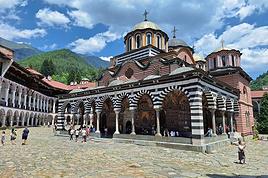
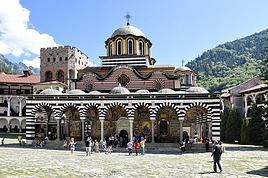
De même, pour la route Sofia - Rila (monastère): est-ce très touristique ...
Bref, si quelqu'un peut nous aider, ça serait super cool ... sinon ... on tentera ... et on verra ...
Merci à tous !!
De même, pour la route Sofia - Rila (monastère): est-ce très touristique ...
Bref, si quelqu'un peut nous aider, ça serait super cool ... sinon ... on tentera ... et on verra ...
Merci à tous !!
Bonjour!
Y a t-il des gens qui sont en allés en Bulgarie en tant que touristes ?
Nous aimerions passer quelque temps en Bulgarie en juillet prochain, mais on a entendu dire par de la famille que ce n'était pas prudent et même dangereux d'aller en Bulgarie en tant que touristes . 😕
Quelqu'un peut t-il nous en parler ?
De plus, est-il facile de se rendre en campagne et est-ce prudent?
Merci beaucoup!!! 🙂
Y a t-il des gens qui sont en allés en Bulgarie en tant que touristes ?
Nous aimerions passer quelque temps en Bulgarie en juillet prochain, mais on a entendu dire par de la famille que ce n'était pas prudent et même dangereux d'aller en Bulgarie en tant que touristes . 😕
Quelqu'un peut t-il nous en parler ?
De plus, est-il facile de se rendre en campagne et est-ce prudent?
Merci beaucoup!!! 🙂
Hi there,
In spring 2023, I headed to Romania by motorcycle. I’ve been going there for over 20 years—by car, bike, and plane—and I’ve really fallen for this country. I feel so at home there. The big difference this time? I had all the time in the world, no constraints at all.
I left the Paris region (IDF) and headed for the Sundgau, avoiding the motorways. I know a little hotel tucked away in the countryside there. The next day, I followed the Swiss border on a small road along the Lucelle River, which acts as the frontier. Around a bend, you cross to the other side and then back into France—kind of fun.

I crossed Switzerland via the motorway—I know the route well, so no sightseeing. I arrived in Austria, which I also know pretty well, and took the Arlberg Pass. It was deserted, everything was closed, and there was still snow.

The weather wasn’t great—it was raining—so I stopped for the night at a remote inn. Perfect for drying off! I set off in the rain the next morning and kept going. Gradually, the rain stopped. I took a detour through the Trentino-Alto Adige region and the Sella Pass. Up there, it was rain, snow, and a bit of black ice in a tunnel (wind + rain + sub-zero temps = skating rink).

I arrived in Burgenland to see the famous giant glass-and-metal grape cluster, the largest in Europe. The region is hilly, full of tiny roads, and covered in vineyards.

Burgenland

Then into Slovenia.

I stopped for the night at a winegrower’s B&B perched on a ridge straddling the Croatian border. The welcome was fantastic—I spent the evening with the owners and their friends who arrived later. The white wine was amazing! The next day, I hit the road again.

I headed for Vukovar, on the Danube, a symbol of resistance during the Balkan War. I found a really comfortable B&B by the river and stayed for two nights to explore. What a strange monument!

I visited the water tower, which you can go inside—it’s riddled with bullet holes. There’s an exhibition inside. I also checked out a museum of equipment used during the Balkan War. Since it’s in a barracks, it’s guarded. I asked if I could bring my motorcycle in, and a Croatian officer came to meet me and gave me permission, along with a sticker to put on the bike. I met some fellow bikers from Marseille riding beautiful vintage bikes.

I left Vukovar following the Danube toward Serbia. The rain caught up with me. The roads were busy, with construction causing mud everywhere and crazy truck drivers. At one point, I cut through the construction zone! I stopped for coffee in a village—it had a *Deliverance* vibe. Total silence when I walked in, and the owner gave me a suspicious look. Finally, the Romanian border... and the sun came out! The Romanian customs officer asked if I had anything to declare. "Yes—just happy to be back in Romania!" I stopped for the night at a *cabana* (mountain hut) lost in the forest. Chaos ensued—a tourist! So they rushed to get supplies, quench my thirst, give me a room, and then the owner took charge: țuică (plum brandy), omelette, beers... Everyone bent over backwards to make me happy.
I love these Romanian roads!


I passed through Băile Herculane, which isn’t as beautiful as it once was—everything’s run-down. What are they waiting for to restore this *Mittel Europa*-style spa town that’s still active?
I stopped at the birthplace of Constantin Brâncuși.

Keep your eyes peeled on the roads!

Via the Jiu Valley, I arrived in Craiova to visit my in-laws. A few days of laughs and outings. I picked up my wife at the airport.
My favorite brand

We took a trip to Horezu, a village famous for its beautiful ceramics.


After those few days together, I dropped my wife off at the airport, and the next day, I set off for Dobrogea, a region split in two after the war with Bulgaria. The road was dull—flat as far as the eye could see—but the sun was out. I followed a military convoy of about fifty vehicles, with orders not to overtake. I stopped by the roadside for some homemade *ciorbă* (sour soup). That evening, I stopped in Călărași. The next day, I crossed the Danube by ferry. There are two ferries—one goes to Bulgaria, the other stays in Romania.

A priest on board came over to bless the motorcycle, the rider, and the ferry. I arrived on the other side with some traffic. Dobrogea

It’s like that all the way to the Bulgarian border—no restaurants, hotels, or gas stations, just old collective farms. And it’s the same in Bulgaria! I stopped at Adamclisi, site of a major battle in Moesia (now Dobrogea) in 101–102 BC, one of Trajan’s most important Dacian Wars.

An oasis in the agricultural steppe.

I arrived at the Bulgarian border.

A customs officer—built like a weightlifter, shaved head, thick neck, and as square as a truck—saw me take this photo and came over to ask me to delete it. I did... but I didn’t empty the trash! The weather turned stormy. I arrived in Balchik, a resort town where the last queen of Romania, Maria, used to vacation.
The Black Sea and the Bulgarian coast

The weather wasn’t great, so I headed back to Romania to follow the coastline. Constanța and its casino

Then came the seaside resorts—just as ugly as each other: Neptun, Mangalia, Eforie Nord, Eforie Sud. I stopped at a B&B near the Danube Delta, in some random village. The welcome was nice. The next day, I headed for Dunavățu de Jos, the last stretch of tarmac in Romania. After that, it’s the Danube Delta. The area is flat and sandy, with typical houses featuring reed roofs.

Now, I’m following the Ukrainian border. I passed the last active quarantine station in Europe. I came across a funeral procession—it’s customary to honk as you pass. If you’re on foot, you cross yourself. When I arrived in Galați, it was raining. I boarded the ferry in a downpour. On board, we were packed in like sardines. As soon as the ramp hit land, the drivers rushed out, revving their engines and honking. I let them go and exited calmly. I continued toward the Székely Land. These are Hungarians who, back in the day, were border guards for the king. They’ve kept their own script (it looks like runes), their flag, and their independence streak. For them, Romania is Hungarian, despite the Treaty of Sèvres in 1920. There are still clashes between Romanians and Székely Hungarians now and then. Since I speak a bit of Romanian, I used it—logical, since it’s the language there—and it put everyone in a good mood! Székely flag

I passed through Bicaz Chei, arriving via one of my favorite kinds of roads. During a break, a bear came to check me out from a distance.

Bicaz Chei

I arrived at the "Heart of Jesus" monument, built by public subscription to thank God for sparing the village from severe flooding.

Now, I’m heading west—next stop, Transylvania, with the in-laws. On the road

Roma house

Bozorka—a Hungarian specialty... 450 grams of meat!
I made it back to France without any issues, already thinking about my next trip. Actually, I just got back from one!
I left the Paris region (IDF) and headed for the Sundgau, avoiding the motorways. I know a little hotel tucked away in the countryside there. The next day, I followed the Swiss border on a small road along the Lucelle River, which acts as the frontier. Around a bend, you cross to the other side and then back into France—kind of fun.
I crossed Switzerland via the motorway—I know the route well, so no sightseeing. I arrived in Austria, which I also know pretty well, and took the Arlberg Pass. It was deserted, everything was closed, and there was still snow.
The weather wasn’t great—it was raining—so I stopped for the night at a remote inn. Perfect for drying off! I set off in the rain the next morning and kept going. Gradually, the rain stopped. I took a detour through the Trentino-Alto Adige region and the Sella Pass. Up there, it was rain, snow, and a bit of black ice in a tunnel (wind + rain + sub-zero temps = skating rink).
I arrived in Burgenland to see the famous giant glass-and-metal grape cluster, the largest in Europe. The region is hilly, full of tiny roads, and covered in vineyards.
Burgenland
Then into Slovenia.
I stopped for the night at a winegrower’s B&B perched on a ridge straddling the Croatian border. The welcome was fantastic—I spent the evening with the owners and their friends who arrived later. The white wine was amazing! The next day, I hit the road again.
I headed for Vukovar, on the Danube, a symbol of resistance during the Balkan War. I found a really comfortable B&B by the river and stayed for two nights to explore. What a strange monument!
I visited the water tower, which you can go inside—it’s riddled with bullet holes. There’s an exhibition inside. I also checked out a museum of equipment used during the Balkan War. Since it’s in a barracks, it’s guarded. I asked if I could bring my motorcycle in, and a Croatian officer came to meet me and gave me permission, along with a sticker to put on the bike. I met some fellow bikers from Marseille riding beautiful vintage bikes.
I left Vukovar following the Danube toward Serbia. The rain caught up with me. The roads were busy, with construction causing mud everywhere and crazy truck drivers. At one point, I cut through the construction zone! I stopped for coffee in a village—it had a *Deliverance* vibe. Total silence when I walked in, and the owner gave me a suspicious look. Finally, the Romanian border... and the sun came out! The Romanian customs officer asked if I had anything to declare. "Yes—just happy to be back in Romania!" I stopped for the night at a *cabana* (mountain hut) lost in the forest. Chaos ensued—a tourist! So they rushed to get supplies, quench my thirst, give me a room, and then the owner took charge: țuică (plum brandy), omelette, beers... Everyone bent over backwards to make me happy.
I love these Romanian roads!
I passed through Băile Herculane, which isn’t as beautiful as it once was—everything’s run-down. What are they waiting for to restore this *Mittel Europa*-style spa town that’s still active?
I stopped at the birthplace of Constantin Brâncuși.
Keep your eyes peeled on the roads!
Via the Jiu Valley, I arrived in Craiova to visit my in-laws. A few days of laughs and outings. I picked up my wife at the airport.
My favorite brand
We took a trip to Horezu, a village famous for its beautiful ceramics.
After those few days together, I dropped my wife off at the airport, and the next day, I set off for Dobrogea, a region split in two after the war with Bulgaria. The road was dull—flat as far as the eye could see—but the sun was out. I followed a military convoy of about fifty vehicles, with orders not to overtake. I stopped by the roadside for some homemade *ciorbă* (sour soup). That evening, I stopped in Călărași. The next day, I crossed the Danube by ferry. There are two ferries—one goes to Bulgaria, the other stays in Romania.
A priest on board came over to bless the motorcycle, the rider, and the ferry. I arrived on the other side with some traffic. Dobrogea
It’s like that all the way to the Bulgarian border—no restaurants, hotels, or gas stations, just old collective farms. And it’s the same in Bulgaria! I stopped at Adamclisi, site of a major battle in Moesia (now Dobrogea) in 101–102 BC, one of Trajan’s most important Dacian Wars.
An oasis in the agricultural steppe.
I arrived at the Bulgarian border.
A customs officer—built like a weightlifter, shaved head, thick neck, and as square as a truck—saw me take this photo and came over to ask me to delete it. I did... but I didn’t empty the trash! The weather turned stormy. I arrived in Balchik, a resort town where the last queen of Romania, Maria, used to vacation.
The Black Sea and the Bulgarian coast
The weather wasn’t great, so I headed back to Romania to follow the coastline. Constanța and its casino
Then came the seaside resorts—just as ugly as each other: Neptun, Mangalia, Eforie Nord, Eforie Sud. I stopped at a B&B near the Danube Delta, in some random village. The welcome was nice. The next day, I headed for Dunavățu de Jos, the last stretch of tarmac in Romania. After that, it’s the Danube Delta. The area is flat and sandy, with typical houses featuring reed roofs.
Now, I’m following the Ukrainian border. I passed the last active quarantine station in Europe. I came across a funeral procession—it’s customary to honk as you pass. If you’re on foot, you cross yourself. When I arrived in Galați, it was raining. I boarded the ferry in a downpour. On board, we were packed in like sardines. As soon as the ramp hit land, the drivers rushed out, revving their engines and honking. I let them go and exited calmly. I continued toward the Székely Land. These are Hungarians who, back in the day, were border guards for the king. They’ve kept their own script (it looks like runes), their flag, and their independence streak. For them, Romania is Hungarian, despite the Treaty of Sèvres in 1920. There are still clashes between Romanians and Székely Hungarians now and then. Since I speak a bit of Romanian, I used it—logical, since it’s the language there—and it put everyone in a good mood! Székely flag
I passed through Bicaz Chei, arriving via one of my favorite kinds of roads. During a break, a bear came to check me out from a distance.
Bicaz Chei
I arrived at the "Heart of Jesus" monument, built by public subscription to thank God for sparing the village from severe flooding.
Now, I’m heading west—next stop, Transylvania, with the in-laws. On the road
Roma house
Bozorka—a Hungarian specialty... 450 grams of meat!
I made it back to France without any issues, already thinking about my next trip. Actually, I just got back from one!