I’ve been busy—here’s another travel journal on Rajasthan, with some new discoveries as always.
Thursday, January 25:
I left home at 4:30 AM and headed to Barcelona airport. The roads weren’t blocked by farmers yet, so I made the trip without any issues. I arrived at the airport at 7:10 AM, called Parkvia, and someone picked up my car 15 minutes later. All that was left was to check in my luggage.
My Etihad flight was at 10:25 AM, which gave me time for breakfast. We landed in Abu Dhabi at 7:30 PM. The flight to Delhi was at 10:15 PM, the transfer went smoothly without any stress, and we arrived in Delhi at 3:00 AM. I couldn’t waste any time upon arrival because I had a flight to Jodhpur at 6:55 AM.
I got to customs, and what a nice surprise—the hall was empty. I went through immediately, had my passport and visa checked, and everything was fine. I grabbed my bag quickly and looked for the transfer to T2, which is outside. You have to walk along the taxi parking lot and take the long corridors—it’s well signposted, and the transfer took 10 minutes. At first, I was a little stressed, not knowing how long customs would take, but in the end, I was early for my 6:55 AM flight. I’m even glad I booked this one, as it got me to Jodhpur at 8:20 AM.
When I arrived, I took an auto-rickshaw to Jodhpur Palace GH, which I’d booked on Booking. The welcome was nice, and I was given a room right away. I was hoping to rest a bit, but unfortunately, it was very noisy. I settled in, took a shower, and was ready to go out and explore the city. The owner stopped me as I was leaving and told me I had to change rooms—I had to repack my bag before heading out. He showed me the way to the clock tower, which is about a 15-minute walk away.
A market lines the street leading to the tower, and the traffic is intense.
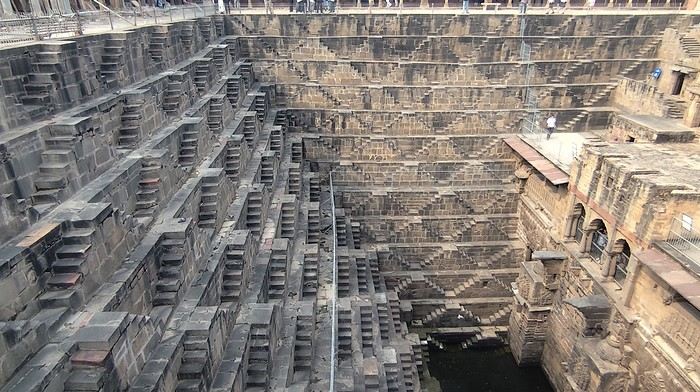
I set off in search of the stepwells and Gulab Sagar, a large basin with three water jets and a great view of Mehrangarh Fort. And yes, more baoris!
Toorji Ka Jhalra Bawdi isn’t far away. It’s a meet-up spot for tourists, with restaurants and terraces lining the area. The place is nice.
I looked for Mahila Bagh Ka Jhalra, went around in circles a bit, and finally found it right across from Gulab Sagar, where I’d already been. It’s not in good condition—it’s a shame it hasn’t been restored.
I went back through the clock tower area, found a currency exchange with a good rate, and booked my train tickets for the whole trip.
The street was lively, with heavy traffic.
I was tired and headed back to the guesthouse. When I got there, I realized my phone wasn’t showing the right time, which gave me a chance to rest before going out for dinner. The Indigo restaurant is nearby and will be perfect.
This journal recounts a trip to Rajasthan that’s already over a year old and that I’ve only now found the chance to write about. The summer of 2024 marked my return to India—my tenth trip—after six long years away since my last solo wanderings in Tamil Nadu in 2018 (the journal of which is published on this site). That absence was partly (but not only) due to the long COVID and post-COVID period, which saw a complete halt and then a major slowdown in global tourism. To top it off, Voyage Forum announced its closure in an end-of-the-world atmosphere. A sad time for our favorite social activity…
A few weeks after returning from Rajasthan, I tried to motivate myself to start writing a journal to publish on a forum claiming to be VF’s successor, which I’d eventually signed up for out of desperation. But I kept hesitating and putting the project off because, for one, I no longer have the time I used to. For another, the vibe wasn’t really taking off on that forum—it was overrun with ads and not very active, contrary to what its host’s name suggested. Despite its good intentions and commendable role as a stopgap, it also turned out to be very impractical to use, especially when you don’t have much time like me. I’ll admit I’d occasionally check back on VF to see if anything was happening. But all the discussions remained frozen in time, stuck in that fateful year, 2020. Then, rumors swirled online about shady reasons behind its closure, leaving little room for hope.
And then, one fine morning, I got a message at work from Marien informing me that VF had reopened. What a huge surprise! Even though the forum’s “end” had played out in a somewhat apocalyptic atmosphere, the memories of passionate and heated discussions, the frank debates, and the useful exchanges that made this site a traveler’s goldmine and a unique hub of conviviality all came rushing back to me like a breath of fresh air. I finally saw a sign and tried to motivate myself to find the time to publish the journal of this tenth trip to India and fifth to Rajasthan. But in the end, I got bogged down in professional and family obligations and never managed to find the time to get started. That’s now fixed, though, because I had two reasons for wanting to do it: I find that looking back on a trip to tell others about it is a highly beneficial introspective exercise. Also, I thought this journal could be useful to other travelers on a few points.
Because, “do we really need yet another journal about Rajasthan?” you might rightly ask! Especially in a time when so many journals about the “Land of Kings” have been published since VF’s return, not to mention the countless stories you can already find online about this region, one of India’s most touristy. And I’d add, why go back to Rajasthan for a fifth time, where I’ve already dragged my feet more than enough—through its forts, deserts, temples, cities, villages, bumpy roads, train stations, tasty street food stalls, cheap guesthouses, and more? Where some might see just another overhyped tourist destination full of the same old *Arabian Nights* clichés, worn to a thread, that I mentioned earlier, when there’s so much else to see in India?
Well, first because it’s a magnificent country I never tire of, where I started an academic study and made so many connections. It’s also packed with places where you won’t find a single tourist (right, Marie-Jo?), even in the heart of well-trodden paths and classic itineraries. And most importantly, as I said earlier, things have changed in recent years. First, after six years without traveling far, the urge to go back to India was getting stronger. But this time, no more solo trips (often) or duo adventures (sometimes)—now it’s a team of four that has to come along! And even if you can argue with that, what better place than Rajasthan to introduce India to people who’ve never seen it? To kids you want to amaze?
Plus, traveling with your new little family to your favorite country isn’t the same as going solo in often spartan conditions that only affect you. It’s a different challenge, but ultimately probably much harder. So, is it really reasonable to take two kids to India, including a two-year-old baby? That’s one of the main goals of this journal (but not the only one)—to try to answer that question.
As you can tell, it’s not so much the destination but the slightly unusual setup of this trip that, in my opinion, will make this journal interesting. Despite my experience and expertise (yes, I dare say it) in India, there were plenty of questions before we finalized the plan and said, “Alright, let’s go!” The questions were flying for us parents. Is it wise to travel to India with a two-year-old? What would we do (it happened) if the kids got very sick? Would they be able to handle a road trip on Rajasthan’s bumpy, dusty roads using public transport? Could they handle the shock of such a different world—the dirt, poverty, pollution, noise (…and the smell, as they say), the spicy food, monkeys, mosquitoes, snakes, tigers, leopards, and so on? In short, all the clichés that I usually joke about suddenly became potential realities. Another concern: as a mixed Franco-African family (not me, but my partner and her oldest), wouldn’t we risk not always being well received, given what you sometimes hear about that in India? How would Indians react to seeing a mixed-race family, the ultimate taboo in a country of purity and social segregation, which would undoubtedly raise many questions for them? Of course, not everything went as expected… Because, as you know, with India—and what makes it charming for some—there are always complications: sometimes where you don’t expect them… and sometimes where you do. I’ll go into detail about that in the journal to come (not right away) and in the final review (even later). These experiences could be useful to travelers who find themselves in similar situations and have the same questions we did before embarking on such a journey. And maybe it’ll spark the curiosity of those who aren’t concerned and will read yet another Rajasthan journal, but with its own unique twists.
Despite my unchanged constraints, which mean I have little time to write this, I don’t want to rush the story, so I’ll take my time. There will probably be lulls. I hope that won’t stop people from coming to react, debate, share their impressions, or ask for information.
Au milieu de toute cette morosité, je me lance dans un nouveau carnet indien qui vous changera les idées, je l’espère. Un nouveau séjour de deux semaines pendant les vacances d’hiver, du 21 au 6 mars. Mon 15ème voyage en Inde, mais mon 1er dans le grand sud.
Cette année, ce sera une petite partie du Tamil Nadu, un petit tour de 1000 km à peu près, de Chennai à Chennai (Kanchipuram, Gingee, Tirunmavallai, Chidambaram, Tranquebar, Kumbakonam, Trichy, le Chettinad, Tanjore, Pondichery et Mahabalipuram) avec une amie. Nous avons volontairement zappé Madurai et Rameshvaram, ce sera pour une autre fois, nous n’avions pas envie de faire trop de km et nous avons déjà beaucoup de chose au programme...
Comme d’habitude, location d’une voiture avec chauffeur, et nous ne le regrettons pas, tant nous avons vu de lieux, quelquefois bien perdus, que nous n’aurions jamais pu atteindre en transport en commun, ou certainement pas en 14 jours.
J’ai consulté les carnets et blogs de Pagaljavad et Yann55 entre autre et je les remercie pour leurs tuyaux. J’ai eu des conseils d’Aleph, qui quand elle écumait le Tamil Nadu, ne postait pas encore de carnet. J’ai lu et relu les pages sur le Tamil Nadu sur le site Purattatva, un must pour moi depuis toujours. Et cherché, lu et relu, sur internet et sur papier (j’ai un vieux guide bleu de 1984 trouvé sur une brocante que je conserve précieusement et consulte pour chaque voyage car la qualité des guides a bien baissé culturellement depuis …)
A l’aéroport de Chennai, nous faisons connaissance avec notre chauffeur, Pandi. Départ immédiat pour Kanchipuram, à 65 km de là. Chennai sera pour une prochaine fois … Nous arrivons en fin de journée, il fait quasi nuit. Après le dîner, nous nous lançons à l’assaut des petites rues de Kanchipuram pour aller au temple de Kamaskhi, (une forme de Parvati), le plus proche, avec ses gopurams illuminés, son bassin sacré, des familles indiennes.
La photo n'est pas terrible car mon APN ne gère pas bien l'obscurité ...
I’m adding my small contribution to the reopening celebration by posting this travel journal from India, made in January 2024.
We’re 4 friends (2 couples), and we did a 3-week loop in Rajasthan, stopping by Delhi and Agra (which, as everyone knows, aren’t in Rajasthan 😛).
Delhi - Agra - Jaipur - Bundi - Udaipur - Jodhpur - Jaisalmer - Delhi
We're off! After exploring the north, the four friends have now discovered the south.
We’re excited to share this new travel journal, dedicated to our little group and our strong friendship, written by Richard and illustrated with Kate’s photos.
I’ll chime in from time to time with practical tips.
First of all, a big thank you to everyone on VoyageForum who helped us plan this trip. It would’ve been quite different if we’d just relied on guidebooks.
The itinerary lasted just over 3 weeks: Mahabalipuram, Pondicherry, Thanjavur, the Chettinad region, Madurai, Munnar, Munroe Island, Cochin, and Chennai.
We traveled by train, taxi, and private car with a driver, took a domestic flight, and stayed in guesthouses, Airbnb apartments, and hotels.
For each of us, including flights, the total budget barely reached 2000 €, and we didn’t hold back—knowing we avoid resorts and love street food and small Indian restaurants.
Some of you have mentioned missing the activity on this Indian "page," so let’s try to liven things up a bit—with joy and good vibes (mandatory with me 😜). Plus, it’ll make Jojoone happy 😊.
As big lovers of India—we’ve been six times—my co-traveler husband and I decided to explore Rajasthan this time around. The reason we waited so long to come here? We were dreading the tourist crowds in this state. But thanks to the timing (late March to early April 2024, which is starting to get pretty hot) and Aleph’s great tips, we were *very* far from mass tourism.
We spent three weeks getting around on our own for transport: mostly taxis and trains.
And I’ll admit, we had a rather "Arabian Nights" experience, far from the "real" India (Marien, if you’re reading this 😉). So this travel journal makes no claims other than to share what we saw, experienced, and felt—with all our ignorance about this country (which I’m fully aware of).
But fair warning: I go overboard with emojis, and this journal is super casual because it’s the one I share, almost in "live" mode, with our loved ones.
So, if you’re here, consider yourself almost part of the family 😄.
Friday, April 18
Night in Guwahati
Before leaving the guesthouse, I drop off a small bag that I’ll pick up when I return.
I take a tuk-tuk at 7:40 AM to get to the sumo departure point for Shillong, the capital of Meghalaya.
My bag is loaded onto the roof, my seat is assigned, and we have to wait for the car to fill up.
While waiting, I watch the street come to life. I have fun photographing the different modes of transport passing by.
Time passes faster when you’re occupied.
We leave at 8:20 AM, and the driver does door-to-door service along the way. We make our first stop for 25 minutes at 9:10 AM, then another for breakfast at 10:10 AM. The scenery is very different from Assam and Nagaland. We drive alongside a pine forest and a large lake. There are beautiful viewpoints, but the driver isn’t stopping for sightseeing, so I have to settle for looking through the car windows.
We finally arrive in Shillong at 11:45 AM. The driver stops in the middle of nowhere, so I have to walk up the street to find a taxi. I flag one down, and he agrees to take me to my new guesthouse, the Rockski Boutique Bed & Breakfast. No sooner do I arrive than a storm with a heavy downpour welcomes me.
When I arrived in Guwahati at the end of October, I’d booked a guide with a car for this week. There’s no public transport to get from village to village, so I had to take a car to visit.
The tourism manager, Sachin, sent me a message to let me know that the driver, Welbis, will pick me up tomorrow morning at 8 AM.
The temperature is much cooler here—only 19°C.
At 2:30 PM, the rain stops, and I take the opportunity to explore the city. I start with the cathedral. Today is Good Friday, so I’m going to see how it’s celebrated here. Meghalaya is a Catholic state. The cathedral isn’t far from the guesthouse—it’s huge and all blue.
I arrive during mass, and it’s impossible to enter—the faithful are numerous outside in the parking lot. Giant screens broadcast the ceremony.
Hi everyone,
We're back in India for the 7th time (for the other trips, check here:
https://www.unendroitoualler.fr/asie/) ... But this time, no more exploring or trekking! With age, we're just spending a quiet month in southern India, a country we particularly love...
Our journey starts in Kovalam, then Monroe Island, Varkala, Kochi, Kannur, Udupi, and finally, as in recent years, Gokarna.
No problem getting around—there’s the train all along the coast...
Night in Trivandrum
Prepaid taxi to the « Safire Residency », where we stayed last year. This hotel is still just as nice and welcoming (980 INR). Then, dinner at the restaurant « Ariya Niwas » where we enjoyed those delicious dosas again! (We missed them!)
Nous étions en Inde du Sud en février-mars 2020 (25 jours sur place).
Comme nous avons passé les 70 ans nous avons pensé que nous ne reviendrons plus en Inde (il y a encore tant d'autres pays encore à aller visiter et il nous reste finalement assez peu d'années pour cela). Du coup à l'Inde du Sud nous avons rajouté Hampi ainsi que les sites d'Ajanta et Ellora. Programme ambitieux !
Le plus difficile en Inde c'est de décider de ce que l'on ne pourra pas voir parmi les "incontournables" en tous genres qui sont annoncés dans tous les guides, forums et carnets de voyage divers. Que les adeptes des "hors des sentiers battus" se rassurent, s'ils veulent aller en Inde il n'y a que ça dans tout le pays aussi.
Donc après une première liste de ce qu'il fallait absolument ne pas rater, mon estimation de la durée du voyage s'est établie à 35 jours. Trop pour nous. Deuxième liste réduite avec beaucoup de difficulté : 25 jours sur place. OK ! Il n'y a plus qu'à organiser le circuit et vérifier sa faisabilité car l'Inde du Sud c'est très grand et les endroits que nous avons choisis sont répartis sur une vaste zone :
Moyens de transports : dans un premier temps j'avais pensé combiner bus de luxe, train et taxi. Compte tenu désormais de notre âge mon épouse a été catégorique : ce sera voiture avec chauffeur et si besoin avion (lignes intérieures). Effectivement les trajets en bus et en train relatés dans différents carnets de voyage le sont par des gens qui ont 15 à 20 ans de moins que nous. Et des bus et trains de toutes sortes nous les avons pratiqués un peu partout dans le monde ces dernières décennies - nous connaissons donc bien et ne le regrettons pas. Par ailleurs la formule voiture avec chauffeur est finalement assez courante en Inde et financièrement abordable.
Merci aux différents carnets de voyage de VoyageForum pour l'aide précieuse apportée, et particulièrement merci à Xiongmao, que je salue, qui nous a bien aidé à choisir notre principal prestataire. Le circuit fut donc choisi comme suit :
Arrivés à CHENNAI le 14 février 2020 (vol Air India avec escale à Delhi),
Repartis de BOMBAY le 10 mars 2020 (vol Air India avec escale et contrôle immigration à Delhi),
et arrivés ce même 10 mars chez nous à 21h00 . . . et confinés le 17 mars à 12h00
NOTA : 4 400 photos prises par ma femme et moi (un vrai délire !). On a beau se dire qu'il faut se limiter à l'essentiel, comme du temps où chaque photo était payante, il est tellement facile d'en faire avec les appareils numériques et les smartphones qui maintenant sont très corrects qu'on se laisse aller. Choix drastique, nous n'avons retenu que 250 photos pour ce carnet de voyage (et c'est déjà trop, je m'en excuse par avance).
Formalités : e-visas envoyés le 20 janvier et reçus "granted" le 21 !
Super rapide donc, mais par contre la rédaction extrêmement minutieuse du formulaire en ligne ainsi que la confection des pièces jointes selon les normes très strictes nécessite environ deux heures pour chaque demande.
Températures : pendant ces 3 ½ semaines la température moyenne en journée a été de 30°C, sauf à MUNNAR où elle est descendue vers 24°C et à HAMPI où elle était de 34°C.
Vendredi 14 février et samedi 15 Février 2020
Nous ne nous sommes pas arrêtés à CHENNAI. Nous avons immédiatement pris un taxi pour MAHABALIPURAM (nous avions demandé ce service à l'hôtel déjà réservé mais il aurait été possible facilement de prendre un "pré-paid taxi" juste à la sortie de l'aéroport).
15h15 : atterrissage à CHENNAI
16h20 : départ de notre taxi
18h00 : arrivée à l'hôtel à MAHABALIPURAM
De 18h15 à 19h30 : change dans un bureau de change ( 100 € contre 7 750 INR soit 100 INR = 1,3 €) puis achat et mise en service d'une carte SIM indienne (valable dans toute l'Inde, pour appels en Inde pendant 28 jours avec 1,5 Go/jour de données internet, le tout pour 550 roupies, soit 7 € : autant dire rien pour un internet quasi illimité et une durée d'appels largement suffisante pour l'utilisation en local).
MAHABALIPURAM :
Centre-ville sympa bien que très touristique. Tout peut se faire à pied (éventuellement retour en tuk-tuk de l'ensemble de temples des Cinq Rathas).
Dès notre première visite au Shore Temple (Temple du rivage) nous découvrons la règle que nous verrons systématiquement par la suite : les indiens paient 15 fois moins cher que les étrangers :
Vu notre niveau de vie comparé à celui moyen des indiens on ne va pas se plaindre. C'est juste qu'on n'est pas habitué à cette distinction (discrimination ?) en France.
Le Shore Temple (temple du rivage) a un intérêt limité mais intéressant pour un premier contact avec cette culture et architecture :
En revanche l'ensemble de temples des Cinq Rathas est vraiment intéressant. Beaucoup de touristes indiens d'ailleurs.
Sur le chemin, beaucoup de magasins de sculpteurs sur pierre. C'est apparemment une activité importante de cette ville:
et activités touristique et scolaire importantes aussi :
L'ensemble des temples des Cinq Rathas est assez compact mais riche en sculptures :
Notre motivation de ce 3 ème voyage en Inde et de visiter les sites de Ellora et Ajanta et c’est ce qui va déterminer notre trajet qui s’étale sur près de 6 semaines.
En 2012 notre voyage s’était arrêté à Hampi et en 2017 notre voyage en Inde après le Gujarat avait commencé à Bhopal.
Il a paru logique de commencer celui ci un peu au dessus de Hampi pour le terminer du moins dans sa première mouture vers Bundi.
La préparation se fait avec les guides papiers classiques mais surtout en consultant VF et des blogs d’autres voyageurs. Sur VF, nous suivons les anciens et les nouveaux « forumeurs » à qui je n’hésite pas à demander des conseils et je remercie ici ceux nombreux avec qui je suis entrée en contact et ceux dont j’ai profité simplement et anonymement de leurs récits et interventions de manière plus passive.
Voyager en Inde s’apprend et nos 3 voyages ont été formateurs. Le premier dans le sud avec chauffeur et soutien logistique d’une petite agence locale. Le deuxième au Gujarat avec chauffeur pendant 3 semaines et ensuite par nous mêmes de Bhopal à Dehli. Pour ce dernier on est prêt à voyager autant en transport en commun qu'en taxi, nous savons maintenant que ce n'est pas compliqué de se déplacer dans ce pays.
Nous ne sommes donc un couple de retraités plus si jeune et nous pouvons nous permettre de voyager autrement qu’en routard mais nous fuyons autant que possible les groupes et les hôtels et restos qui leurs sont réservés! Indépendants, nous essayons autant que faire se peux de partager la vie des Indiens, le fait de voyager à deux facilite grandement les rencontres et peut être aussi est ce un privilège d’avoir les cheveux gris…
Nous aimons autant que possible nous adapter calmement quand nous débutons un voyage, absorber la fatigue du voyage et le décalage horaire, s'acclimater donc...
Aussi cette année nous passerons 3 jours à Goa pour débuter. Pas question de commencer dans les galères, pas envie non plus de plages et vous pensez bien que l’ambiance fêtarde que l’on vient habituellement chercher dans cet état n’est pas de notre gout.
En me promenant sur ce blog https://sudhagee.com conseillé par Chris70 je découvre notre premier point de chute : Aldona dans le nord de Goa.
Atteints par le virus "Inde" depuis notre premier voyage en 2013 , (seulement😮 ! ), nous y revoilà pour un 8° séjour ( du 14 au 28 janvier 2020).
Cette fois-ci notre périple nous amènera de Calcutta à Varanasi en passant par des petits villages du Westbengal et par Bodhgaya..
Nous prendrons ensuite notre vol de retour de Delhi à Nice .
Je me lance enfin pour rédiger mon premier cahier de voyage en remerciant aux passage tous ceux et celles qui ont alimenté ce forum en postant carnets, photos et commentaires, fort utiles à la préparation d'un voyage.
Je demande d'avance un peu d'indulgence concernant ce récit, où quelques fautes vont peut-être s'immiscer par ci par là car, même si je vis en France depuis longtemps, ma langue maternelle reste l'allemand. Vous voilà prévenus 🙂!
Notre séjour débute à Kolkata ou nous resterons 2 jours entiers.
Nous logeons dans un petit hôtel de College street . Le personnel est très sympathique et très serviable, notre chambre très propre, que demander de plus? Certes , c'est bruyant côté rue mais l'avantage d'un petit balcon nous permet d'observer tout le trafic d'en bas. Celui -ci ne s'arrête guère même pendant la nuit...Ceci dit, nous dormons très bien, le voyage a été long !
Le vol Toulouse -Mumbai avec la Lufthansa s'est bien passé et nous arrivons même une demi heure en avance .
L'enregistrement du e-visa de 5 ans se fait sans problème.
Mon sac récupéré, je m'installe dans le hall pour attendre mon train qui part de la gare Bandra qui n'est pas très loin de l'aéroport. J'ai eu une bonne idée d'attendre à l'aéroport car cette gare est très petite , et les personnes présentes sont étendues au sol et dorment.
Mon train pour Vadodara part à 05h10 et est à l'heure.
J'ai réservé un billet en 2ème classe ce qui me permet d'avoir une couchette et de bien me reposer pour arriver en forme à Vadodara à 10h45.
J'ai réservé une chambre à l'hôtel 7 apple qui est à moins de 2 kms de la gare. Cet hôtel est accueillant, propre avec un restaurant et un supermarché .
Une fois bien installée, douchée je pars découvrir cette ville . Je pars à pieds avec l'aide de google maps à la recherche d'un bureau de change.
De là, je prends un rickshaw qui me conduit au Palais Laxmi Vilas.(entrée 500rs ).
Ce palais a été construit en 1890 par le Maharaja Sayajirao Gaekwad III et ce sur un ancien palais, de style indo-saracenic, et il fait quatre fois le Bukingham Palace.
Il est interdit de faire des photos à l'intérieur et uniquement avec le téléphone à l'extérieur.
C'est le plus grand palais de l'Inde avec 170 chambres et plusieurs ascenseurs.
en arrivant dans le parc du palais nous tombons sur cette façade qui donne envie d'en voir un peu plus
sur le coté
à la sortie
la vue sur les jardins et le terrain de golf où l'on ne peut pas accéder
la vue d'ensemble tout de même ...ça jette
La visite terminée je quitte le parc et au bout d'un petit moment je réalise que je n'ai pas vu le baori. Je reviens donc sur mes pas à sa recherche , je vais demander au guichet et on ne peux plus y accéder car il est en travaux. dommage.
Je trouve dans la rue des stands où l'on peut manger des omelettes et je m'y arrête avant de rentrer me reposer à l'hôtel.
La première journée a bien commencé et je me sens bien à Vadodara .
Our decision is our decision. And it’s firm and final. Next winter, our plane will spread its great wings toward the island of Ceylon! "Wait a minute... Ceylon... Ceylon... that name rings a bell, but I can’t quite place it on the globe Grandma gave me for Christmas! Ceylon... Oh right, I’ve got it: Ceylon is the name of my tea!" Exactly. But the name on your pretty tea box is also the one used until 1972 for this island nation, a speck on the Indian Ocean at the southern tip of the Indian subcontinent: Sri Lanka!
For this new adventure, I’m exceptionally leaving my Flo behind, cowardly replaced by a double dose of testosterone. To write the book of this journey with me, I’m bringing along my brother, who’s used to this kind of thing, and... a guest star: My model of resilience. My dad! All aboard! Or rather, all aboard our tuk-tuk! Yes, you read that right: A real tuk-tuk, a little colorful rolling box that putters along at two miles an hour. The idea? Well, Sri Lanka and its winding roads overlooking the vastness of lush nature are tailor-made for this kind of vehicle. And since it’s one of only two countries in the world that allow foreigners to rent and drive these mini speedsters, we’ll be crisscrossing the island in our two-square-meter rolling box. Plus, adopting this mode of transport is a surefire way to connect directly with the locals, who’ll surely be curious to see a foreigner driving their iconic vehicle. Not to mention the... let’s say... spicy anecdotes it might generate. I mean, heading into a subtropical zone with my jet-black dad and his unpredictable digestive flora while deliberately choosing the tuk-tuk as our *only* means of transport? That’s the winning combo for an unforgettable adventure! "More seriously, Dad, Sullivan, I’m already loving the idea of living this adventure together, the three of us—brothers and father..."
So, does the intro to this new adventure get your salivary glands going? Yes? Too bad. Because unfortunately, the program handed out by the lady at the entrance has been slightly... let’s say *crumpled*. Some might even say "scrunched up and nearly tossed in the trash." First, six days ago, as the countdown echoed in us like a call to adventure, Cyclone Ditwah grabbed Sri Lanka, played with it like a rag doll, and left it battered on the ground. The toll is devastating: over a thousand dead, thousands of homes wiped out by relentless rains, roads and railways swallowed by massive mudslides. A country wounded once again, after the civil war, the 2004 tsunami, and the post-Covid economic crisis.
But as if this weather disaster wasn’t enough to shake our unbreakable adventurer spirit, fate decided to mess with us further by cutting our trio down to two. The victim? My brother, violently turned away because of a simple date on his passport that didn’t match the border officials’ expectations. Return to sender!
So now it’s just the two of us allowed to board the Qatar Airways Airbus A380 for this trip. If he were here, Denis Brognart would say, "And in the end, only one remains!" Except I know you’ll be with us, following our adventures! Right?
Before I begin, I’d like to thank Michèle Buisson and her "Misha’s travel journals," which really helped me plan this trip. It’s tough to find information about this part of India, which is quite different from the "more traditional India." I’m so grateful to her for introducing me to a family who hosted me for 4 nights and 3 days. I can’t wait to return the favor and welcome you all to my place in early July!
Thursday, March 20th.
The alarm goes off super early, but I’m already awake—I was too worried I’d sleep through it. I leave the house at 4:00 AM. The rain has stopped, and at this hour, there aren’t many trucks on the road. I arrive at Barcelona Airport easily by 6:20 AM, let the valet know I’m there, and he quickly picks up my car.
This time, I’m flying with Etihad Airways again. I booked the ticket during my trip to Cambodia: Barcelona/Kolkata, Delhi/Barcelona for 567 €. At that price, I didn’t hesitate for long—I knew I had to take it. And I’m glad I did because, by the time I returned, the price had gone up to 700 €. I can already hear the reactions: "Wow, how’d you get a ticket for that price? What site did you use? You’re amazing, MarieJo!" One thing’s for sure—I’m really happy with this deal.
The flights from Barcelona to Abu Dhabi and Abu Dhabi to Kolkata go smoothly, and we arrive on time at 2:55 AM. There aren’t many people at immigration, so I get through quickly. My luggage isn’t on the carousel yet.
After collecting my bag, I check in for my next flight with IndiGo, a 5:40 AM flight to Guwahati, arriving at 7:00 AM. I’m starting to feel pretty tired, so I take a taxi from the airport to Gruham Sojourn Homestay. The house is upstairs, and the neighborhood seems quiet, with restaurants lining the street. The room won’t be ready until 10:00 AM, so I rest on the bench in the meantime.
Once in the room, I take a shower—it really helps me feel refreshed. I need to exchange some euros, so I look up a nearby exchange bureau on Google and head out to find it. I locate it easily, and the staff are super friendly. I get a great rate (1 € = 90 INR).
I wander around the neighborhood. The train station isn’t far, and small markets line the streets.
I head back to my area, walking along the main avenue. About 500 meters from my street, I discover a museum. The visit is fascinating—I see the famous Majuli masks, among other things.
I’m not far from the Brahmaputra River, and the temptation to visit is too strong to resist. I’d hoped to find a promenade along the river, but that doesn’t exist here.
I walk back calmly and notice several restaurants in my street. On the doorstep of my accommodation, I spot a pastry shop with cakes that look more like the ones we have in France than the typical ones here in India. A visit is a must, and I’m not disappointed!
Tonight, I’m dining at a restaurant in the street. The menu is a bit disappointing—burgers, pizzas, pasta—nothing very Indian. So, I’ll go with tomato pasta.
My train to Mathura is at 2 PM, and we’ll arrive an hour late—all good. I booked a hotel on booking, but unfortunately, it’s really far from the ghats. Walking there is out of the question—what a shame.
The hotel itself is fine, and there are several restaurants right across the street, which will be handy for dinner. This won’t be an exception, though—starting at 10 PM, they must wake up because I can hear them talking loudly, and music is playing along. My room faces the entrance, so it’s going to be tough. At midnight, I ask them to lower the volume, but they don’t listen. By 1 AM, I lose my temper, and this time, everything stops. Finally, I can get some sleep—until 4 AM, when they start up again for a little while before quiet returns until 6 AM. But when do they sleep? The noise never seems to bother them—it’s unbelievable, and I’m finding it harder and harder to tolerate. It makes a huge difference.
The next morning, as I leave, they tell me they’ll give me another room for the following night. Oh, two nights like that wouldn’t be possible—I’m exhausted.
I head out to explore the ghats and take a rickshaw, which I share with a family, to Vrindavan, a city of temples dedicated to Krishna. I visit several while wandering through the lively streets, surrounded by a crowd of devotees. By 1 PM, I’m near the Bankey Bihari Temple, but I can’t go in—it just closed. Nearby, there are restaurants, so I take the opportunity to grab my usual aloo paratha with a lassi.
The work women do here is incredibly hard, and their pay must be miserable.
I want to leave Vrindavan for Govardhan.
Two young guys on a motorcycle in front of the temple approach me, and the driver offers to take me part of the way. I’m pretty skeptical, but he insists, and I eventually agree. I didn’t fully understand what was happening. Once on the bike, his friend hops on too, and suddenly I’m sandwiched between them for a multi-kilometer ride—*travel Indian-style*. We quickly drop off the friend, and I breathe easier for the rest of the trip. At an intersection, he stops—Govardhan is straight ahead, but to get to his village, he needs to turn right. We wait for the bus for a few minutes, and he flags it down so I can hop on and continue my journey. What an adventure.
Friday, November 4
My flight Barcelona - Abu Dhabi - Delhi went smoothly, it’s on time, and here I am back in India after 3 long years.
As I step off the plane, we head toward customs. It’s 3 AM, I’m tired but happy. The huge customs hall is below ground level and buzzing with people who’ve just arrived. In the end, they’re well organized—Indians to the left, foreigners to the right, and all along the hall, the customs officers’ posts, who remain very zen despite the crowd. It took me less than 2 hours to get out of the airport, which was pretty quick.
For this return trip, I got in touch with a driver from the "Lovers of India" group who was supposed to take me from the airport to Udaipur, passing through non-touristy villages like I love. This French-speaking driver had convinced me to travel by car, which was supposed to make moving from village to village easier. Two or three days before departure, I receive a message from the driver saying he was sick with a cold and sending another driver, his very kind brother who knows Rajasthan well but doesn’t speak French. I’m a bit disappointed by this message and doubtful about the driver’s sincerity, but I don’t have time to find another driver, so I stick to my plans, though I’m not at ease.
At the exit, the driver hasn’t arrived, and I wait half an hour before seeing him show up with a big smile, "Namaste." We don’t waste time and head to the car, which is clean and new.
We get to know each other in the car and hit the road toward Alwar. Along the way, we stop for lunch and to taste my first masala chai, which wakes up my taste buds.
I doze off during the drive, and we arrive at the Atlantic Hotel in Alwar at 10:30 AM. My room is on the ground floor, and I settle in quickly. The Wi-Fi isn’t working, but the staff do everything they can to fix it.
At noon, Gajender, the driver, suggests visiting the Qila Fort, which is on the heights of Alwar.
The fort is closed for restoration, but safari tours are offered—jeep, guide, driver, and visit for 1600 Rs.
We follow the great wall, which is impressive—the second largest in India and the third in the world.
We spot peacocks and monkeys.
The guide shows me an old stepwell lost in nature.
It’s always my thing to check out these baoris, which can be stunning, but this one isn’t anything special.
We arrive at the palace overlooking the city.
We walk around the palace, and I discover another stepwell that’s not worth lingering over.
The tour is over, and I had a great time despite the fatigue.
We head back down to Alwar, near the City Palace, which has been turned into administrative offices. Gaju (the driver’s nickname) finds a parking spot near a dhaba where we have lunch (paneer masala, chapatis, chai)—it’s delicious.
With my energy restored, we head to the palace. On the top floor is a museum that I visit.
At the exit of the museum, we have to go back down and walk around the palace to get to the Moosi Maharani Chhatri. I’ve been here once before and really liked it, and the place is still the same—calm and relaxing.
"This monument is the most artistic in Alwar and also the most royal, filled with fascinating history. Maharaja Vinay Singh of Alwar built this two-story cenotaph in 1815 in memory of his father, Maharaja Bakhtawar Singh. It’s also known as Moosi Maharani ki Chhatri, named after the king’s mistress, who performed sati upon his death. After the sati, she was accepted as the king’s wife. It’s an elegant monument, shaped like a flower and built with a mix of brown sandstone and white marble.
The first floor is made of sandstone, while the upper floor and the chhatris (cenotaphs) are in white marble. Its sculpted pavilion has dome-shaped arches with intricate lace-like and exquisite floral patterns. There are complex motifs that shine brightly in the sunlight.
The colorful circular ceiling is an important part of Moosi Maharani Ki Chhatri and is adorned with faded gold-leaf paintings of mythological figures and scenes. The footprints of Maharaja and Moosi Rani are engraved in marble inside the cenotaph, and locals pay their respects to them."
Near the chhatri, there’s a large water reservoir with a magnificent view. The place is peaceful and relaxing, and I stay here for a while, contemplating and daydreaming before heading back to the hotel for some well-deserved rest. The Wi-Fi is working now. I’m the only foreign guest, and since my room is near the entrance, I’ll be well taken care of throughout my stay.
L'ascension d'un 6000 m, et le plus haut col du monde à VTT ! Ce genre de défi, c'est plutôt réservé aux jeunes, mais nous, retraités sexagénaires plutôt physiquement en forme, nous nous sentons la capacité de le faire, sans passer par une agence de voyage, uniquement par nos propres moyens. Christian est plutôt vélo, moi plutôt montagne, mais comme nous sommes polyvalents et bien entraînés pour ces deux activités, c'est décidé, on y va !
Eté 2016
Après recherches, ce sera le Stok Kangri, 6154m, pour la montagne, et le Kardhung La, 5600m, pour le VTT, revendiqué comme le plus haut col carrossable du monde. Ces deux objectifs ont l'avantage d'être facilement accessibles depuis Leh, la capitale du Ladakh. Et puis il y a aussi la célèbre route impossible Manali - Leh et ses cols mythiques, dont le fameux Keylong pass, les paysages du Ladakh, sa population, ses temples et mosquées, et bien sûr la situation politique de la région, souvent tendue et bouillonnante. Serons-nous à la hauteur de notre projet ?
MENU
1- Bordeaux - Delhi - Manali: rapide prise de contact
2- Manali - Old Manali : bus de nuit et courte rando
3- Manali - Ghosol - Vashit : la vie de village
4- Manali - Jispa : la route de l'impossible, 1° jour
5- Jispa – Leh : la route de l'impossible, 2° jour. Mes amis anglais
6- Leh : cartes postales
7- Leh - Lamayuru : en route pour un premier trek d'acclimatation
8- Lamayuru – Wanla : 1° jour. Le trek pour nous seuls
9- Wanla - Phonjila - Hinju : 2° jour. Dur dur quand on est malade
10- Hinju - Sumda : 3° jour. Le point haut
12- Sumda - Ezas - Leh : 4° jour. La bonne affaire
13- Leh, vallée de l'Indus : road trip en Royal Enfield
14- Camp 2 du Stok Kangri : 1° jour, une promenade de santé
15- Camp 2 - sommet - camp 1 : 2° jour. Un 6000, c'est pas les Pyrénées !
16- Camp 1 - Leh : 3° jour
17- Leh : et maintenant, le VTT
18- Kardhung La à VTT : une demi réussite
19 - Leh, vallée de l'Indus : carte postale en Royal Enfield
20- Leh - Delhi - Agra : en serrant les fesses
21- Agra : carte postale
22- Fatephur Sikri : carte postale
22- Agra – Delhi : Laurel et Hardi sur le quai
Après le Kenya en 2018 et le Botswana en 2019 (qui m'ont clairement rendu accro aux safaris photo) je cherchais une nouvelle destination, je me dirigeais vers Madagascar et sa faune endémique malheureusement pour une question de budget, cela ne se ferait pas en 2020 😕...
Au fil des semaines le "besoin" se faisait de plus en plus pressant jusqu'au jour ou je suis tombé par hasard sur un article sur internet parlant du Sri Lanka...
En creusant un peu j'ai appris que c'était une destination réputé pour l'observation de sa faune et en creusant plus loin je suis tombé sur une agence locale spécialisée dans les voyages safari, notre destination 2020 était choisie.
Après quelques échanges avec l'agence sur nos envies, nous parvenons à un itinéraire qui nous convient et dans notre budget. Voila donc notre voyage booké bien avant la crise du COVID-19...
Notre programme de 15 jours et 14 nuits :
J1 : Paris - Colombo par Qatar airways départ à 8h35 arrivée à 1h15 du matin
Nuit au Suriya Arana Resort
J2 : Route vers le Wilpattu NP, premier safari l'après midi.
Nuit Big game camp Wilpattu
J3 - J4 : Full day safari à Wilpattu.
Nuits au Big game camp Wilpattu
J5 : Route jusqu'à Habarana, safari l'après midi dans le Minneriya NP.
Nuit au Sorowwa Hotel
J6 : Route vers Kandy, visite de la Forteresse de Sigirya puis du temple de la dent à Kandy.
Nuit au Thilanka
J7 : Route vers le Udawalawe NP et premier safari l'après midi
Nuit au Big game camp Udawalawe
J8 : Full day safari dans le Udawalawe NP
J9 : Route vers Bundala NP - Safari matinal - Route vers Yala - Safari au Yala NP
Nuit au au Big game camp Yala
J10 - J11 : Full day safari à Yala.
Nuits au au Big game camp Yala
J12 : safari matinal dans le Yala NP puis route jusqu'à Tangalle observation nocturne des tortues de mer sur la plage de Rekawa
Nuit au Cue Ceylon
J13 : Route vers Mirissa, obervation des baleines bleues en bateau
Nuit au Paradise Beach Club
J14 : Route vers Colombo et visite de la ville
Vol retour Colombo - Paris par Qatar départ à 1h15 le matin - arrivée à 13h30
Le programme à été modifiée le soir du 10eme jour à Yala, le gouvernement Sri Lankais ayant décidé de fermer tous les parcs nationaux pour deux semaines. nous avons avancé notre départ de Yala pour Tangalle et passé le J11 en farniente (pas trop mon truc d'ailleurs)
Petites infos pratique :
- Les trajets sont assez cours entre les points mais les temps de trajet sont long, les routes sont bonnes mais peu de voies rapides, traversées de villes et bien sur la conduite, donc pour 250km comptez 4h à peu près.
- Les permis internationaux et Français ne sont pas reconnus, pour avoir le droit de conduire vous devez passer votre permis Sri Lankais donc chauffeur/guide obligatoire.
- Les sites sont chers, comptez 35$ pour Sigyria et entre 15 et 25$ l'entrée des parcs nationaux.
- Les parcs ouvrent à 6h du matin mais vous aurez de la route à faire donc départ entre 5h15 et 5h30.
- Les safaris matinée ou après durent 4h, les full day durent 12h de 6h à 18h.
March 2nd — Departure by bus from Latour at 6:50 AM. The journey isn’t direct: we pass through Elne then Corneilla. In Perpignan, I switch to a BlablaBus heading to Barcelona’s northern bus station. Before reaching Le Perthus, French police stop us to check IDs. Several people aren’t in order, but after about fifteen minutes, we’re on our way again. We’re checked again at La Jonquera: this time, the wait lasts almost forty-five minutes while police identify those in violation and wait for a vehicle to pick them up. The driver then tries to make up for lost time; we finally arrive at our destination half an hour late.
I quickly head to the Arc de Triomphe metro station, located 200 meters away: you have to cross the bridge along the bus parking lot, then walk through a large garden; the station is on the right before the garden entrance. The trip to the airport isn’t direct: I have to change at Tomasso and take the line to the airport, where I arrive at 1 PM.
At the Emirates counter, I learn my flight was just canceled due to the war in Iran; they offer me another flight for the next day. I have to wait at the airport until 7 PM before being taken to a hotel; the next morning, I’ll take a flight to Vienna (with an 8-hour layover), then an Air India flight to Delhi, and finally a flight to Kolkata. I agree: I don’t know Vienna, so it’ll be an unexpected discovery.
At 7 PM, a small group is taken to the hotel, 35 minutes from the airport, where we’re served a light dinner upon arrival.
March 3rd — A taxi picks me up at 6:30 AM; the flight to Vienna takes off at 9:30 AM and arrives at noon. I’m free until 7 PM; the metro is direct to the city center. The weather is pleasant and not too cold, luckily, since my clothes are light.
When I exit the metro, I spot the St. Stephen’s Cathedral tower in the distance and approach it: the roof, made of glazed tiles, is remarkable.
Entry is free, and the interior, a mix of Gothic and Baroque styles in the center, is stunning.
Not far from there is St. Anne’s Church
, also Baroque, adorned with beautiful frescoes
—a music concert adds an enchanting atmosphere to the visit.
I continue my walk at random through the pedestrian streets lined with magnificent buildings: I’m charmed by the city.
Before heading back to the airport, I stop at a lovely tea salon. My flight will eventually leave with a delay.
Wednesday, March 4th — Delhi and a little luggage scare
We arrive in Delhi shortly after noon. Immigration is quick, and good news: my bag was checked through from Barcelona to Kolkata. I head to the connecting terminal and arrive half an hour before boarding: the flight goes smoothly. Upon arrival, the luggage comes out quickly… except mine. After filing a report, I’m told my bag is in Delhi—I have to retrieve it before taking another flight. I didn’t know (or had forgotten): with the delays, I wouldn’t have had time to pick it up and make the connection.
I take a taxi to the Ichamati Hotel. The welcome is warm, and the room is clean but very small. Without my bag, I feel a bit lost—I have nothing to change into.
Tonight, I’m dining with Raja and his friends at a beautiful restaurant, an old colonial house turned into a hotel.
We’re happy to see each other and have a comforting evening together.
Hazaribagh
I’ve got a meet-up with Adam Iman, a guide and painter. He picks me up from the hotel at 10 AM. Another traveler from Bangalore is supposed to join us, but while we wait for him to arrive, Adam takes me to see the paintings his mother and sister created at Hazaribagh station.
The town became famous thanks to these murals, which can also be found in several surrounding villages. This art form has earned recognition and is now protected, a sign of its cultural importance.
Once the visit is over, we go to pick up the other traveler and then head to our first village: Belwara, where Sohrai art is practiced. At the entrance, a sign proudly announces that we’re entering an artists’ village, where this art is created by women organized into micro-enterprises. Some even offer workshops for those who’d like to learn this tradition.
Sohrai art is tied to the harvest season, from October to mid-November. The motifs, in natural colors, celebrate fertility and abundance. The artists use pigments from the earth: red oxides, ochre, white kaolin, and black manganese. On the walls, you’ll see animals, fish, birds—all symbols of life and prosperity.
As I look closer at the murals, I start to realize that each motif tells a story. Large animals like cows or bulls often take center stage. Their bodies are filled with intricate, almost hypnotic patterns. They symbolize wealth and prosperity for the household, as well as the deep respect for cattle, which are essential to daily life. On some facades, elephants stand out—massive and decorated with the same precision. They evoke quiet strength and protection.
But it’s when I stop in front of one of the houses that I really take the time to look. The wall, a soft ochre, is entirely covered in murals. Two large animals stretch out on either side of the door, their elongated bodies fitting the length of the wall. Their silhouettes are filled with geometric patterns and incredibly fine curved lines, as if every space was patiently filled. Around them, stylized plants, flowers, and small decorative elements fill every gap. The door, dark and worn, becomes almost the silent center of the composition, framed by these living, protective forms. To the right, a more colorful motif catches the eye—a flower or a stylized lamp—like a touch of light on the earth. The whole thing gives an impression of perfect balance, between the rigor of the patterns and the freedom of the gesture.
Elsewhere, birds and freer forms bring movement. Peacocks, recognizable by their stylized silhouettes, embody beauty and vitality, while fish symbolize water, fertility, and the continuity of life.
On some paintings, the scenes become almost narrative: you can make out figures, everyday gestures, like a memory of the village inscribed in the walls. The decorative frames around the doors aren’t left to chance either—they symbolically protect the house, like a boundary between the inside and the outside world.
During the Sohrai festival, cattle are led into the jungle in the morning. Meanwhile, the women finish the *aripans*—these floor paintings—and continue the wall murals. Around noon, the animals return to the village, and the bulls’ horns are anointed with oil and vermilion in a gesture of gratitude, amid the vibrant colors adorning the houses.
We visit several artists, including Parvat Devi, a well-known woman who has received many awards. Her arms are adorned with intriguing tattoos, which I’ll talk about in more detail later.
On another wall, the style changes completely. Here, no massive animals—just birds occupying the space, light and graceful, as if caught in mid-movement. Two silhouettes face each other, their long necks arched almost like mirrors, while their outstretched wings seem to vibrate with the patterns that compose them.
The design is more graphic, almost airy. The lines are smoother, more fluid, as if drawn in one confident stroke. The birds’ bodies aren’t solid—they’re filled with repetitive motifs like scales, stylized feathers, and spirals, giving a sense of continuous movement. Around them, everything comes to life: flowers burst open, arabesques swirl, and even the simplest shapes seem alive.
What strikes me here is the sense of lightness. Where the large animals evoked stability and grounding, these birds bring something freer, almost joyful. They seem to embody movement, the circulation of life, like a breath flowing through the village.
The colors remain the same—deep reds, intense blacks, and chalky white—but the rhythm is different. Faster, more spontaneous. As if each wall had its own personality, while still speaking the same language.
That’s probably why I’m so moved. I’d heard about these paintings from my friend Raja, and last year, I saw an exhibition in a village near my home. That first encounter made me want to come here. But seeing them in person is a whole different experience.
These paintings are unique. This ancient art is passed down from mother to daughter, or mother-in-law to daughter-in-law, in a quiet, deeply living continuity. At first glance, it might seem almost childlike in its simplicity and pared-down forms. And yet, everything is thought out, balanced, mastered. Nothing is left to chance.
That apparent simplicity, combined with such rich symbolism, touches me deeply. There’s something sincere and essential in these walls—and that’s what moves me.
Hi everyone,
I’d like to share some photos from my trip to Uttarakhand in June 2025.
It’s a destination that isn’t too crowded, which I chose at the last minute last year due to the skirmishes between India and Pakistan. I had planned to go to Ladakh and Zanskar, but as a precaution, I changed my plans...
Here’s a quick rundown of my itinerary: Delhi - Rishikesh - Uttarkashi - Gangotri - Haridwar - Devprayag - Ranikhet - Delhi.
Throughout my trip, I only came across a few Western tourists, and only in Rishikesh...
I was really surprised in Rishikesh, where I saw unbelievable traffic jams just to get in and out of the city! It was my first real glimpse of domestic tourism in India—when all the city-dwellers escape the summer heat for the cooler mountains...
The crowds of pilgrims in Haridwar, coming to purify themselves in the Ganges on the ghats, were just as intense as what you see in Varanasi. Fascinating and... colorful!
The small town of Devprayag is interesting because it’s located at the confluence of the Bhagirathi and Alaknanda rivers, which form the Ganges. The spot is popular with pilgrims who come to purify themselves there.
I made sure to visit the remote village of Gangotri, located on the Bhagirathi River. Just a few kilometers away, the river’s source flows from the glacier at Gaumukh (only accessible on foot after an 18 km trek). It’s an important pilgrimage site in India, as one of the sources of the Ganges.
All in all, Uttarakhand was a wonderful discovery and gave me a chance to see new sides of India.
Hello,
We recently went to Rajasthan.
For the duration, I’d recommend about 3 weeks if you can, so you can explore the region at a relaxed pace.
We also wanted to experience "the real Indian life," and our driver showed us small markets, little temples, and his village near Ranakpur in the Marwar region.
For your info, here are some hotels where we stayed—there’s a huge hotel scene in Rajasthan. No need to book in advance; day by day works really well. You arrive, visit, and if you don’t like it, you just move on—it’s no problem in India. No upfront payment, and you can even negotiate on the spot with this approach, which gives you flexibility with your itinerary.
Here are some hotels we stayed at:
Madhuban in Jaipur (Haveli house) and also in Jaipur, the Khandela Haveli, which we preferred
In Jodhpur, the Kuchaman Haveli
In Ranakpur (Ranakpur Hill Resort) with a great pool
Bikaner: Hotel Laxmi Niwas
Udaipur: Hotel Savroopvilas
Jaisalmer: Hotel Rang Mahal
Here’s the itinerary we followed over nearly three weeks:
1 - When we arrived in Delhi, we headed straight north to Nawalgarh and Mandawa (towns with Havelis = painted houses). Along the way, we stopped in Jhunjhunu to see the Rani Sati Temple. We slept in Mandawa (we arrived in the evening and explored the next morning).
2 - Then we drove to Bikaner (Junagarh Fort, but if you have to choose, the forts in Jodhpur and Jaipur are more interesting in our opinion). After that, we took the road to Deshnoke (temple with sacred rats) and before that, we saw a small temple on the way with white rats. In Deshnoke, the rats move freely among people. We’re not too squeamish, so it was fine. Anyway, it was interesting to see.
3 - Next, we headed to Pushkar, where we took a camel ride (you have to negotiate the price; it varies depending on the camel’s quality, the saddle, and its decoration). One to two hours is more than enough. There’s always someone riding with you on the camel (at least that’s how it was for us). There are also things to see along the way.
4 - From Pushkar, we went to Jodhpur (Mehrangarh Fort, Clock Tower, Jaswant Thada). From Jodhpur, we visited villages (including our driver’s village, which was ideal for connecting with locals, having tea, and exploring the village with part of the community tagging along—I think we went into almost every house). We also did a train safari in the hills. Then Ranakpur (splendid Jain temple, Adinath Temple). With a bit of luck, you might spot Raikas, nomadic herders. Then Kumbhalgarh Fort, and after that, Udaipur. Along the way, we spent the night in a very small town called Jojawar at the Rawla Jojawar hotel, owned by the former Maharaja. A wonderful memory.
5 - In Udaipur (City Palace; Monsoon Palace = depends on the weather—if it’s not clear, you won’t see much, but if it is, the view is stunning).
6 - On the way to Jaipur: Sas-Bahu Temple; then in Jaipur: City Palace, Jantar Mantar, Hawa Mahal (Palace of the Winds), the Hanuman Temple, etc.
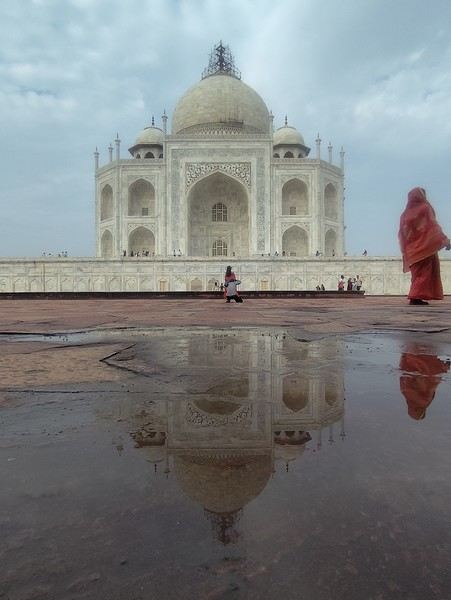
7 - Heading toward Agra, the Galta Valley with lots of monkeys. We finished with Fatehpur Sikri and then Agra. Agra is *very* touristy, so people are less friendly and can be pushy about selling things or offering their services as guides. You have to stay polite but firm and not let them sweet-talk you. Hotels are also pricier and there’s not always much choice. For the Taj Mahal (closed on Fridays), go very early in the morning when it opens. It’s best to arrive the evening before and spend the night at a hotel before visiting. Inside the Taj Mahal site, it’s already calmer. After that, we visited Akbar’s mausoleum (in Sikandra, near Agra) and the so-called "Baby Taj" (in Agra). For the Taj, I’ve heard they’re doing renovations, but it’s still a must-see.
8 - In Delhi, if you still have time, check out the Jama Masjid mosque and Mahatma Gandhi’s tomb. Also see Humayun’s Mausoleum (in the Nizamuddin East neighborhood).
In Jaisalmer (spend a night in the dunes after a camel ride), Chittorgarh, Bundi, Ranthambore Park, Orchha, and Khajuraho. Actually, you’ll have to make choices, or you’ll spend your whole vacation traveling. The average driving speed is about 50–60 km/h.
Our other trips in India: Gujarat (we love it and have been twice), Himachal Pradesh, Punjab, and also Haridwar and Varanasi. In the south, Kerala, Tamil Nadu, and Karnataka.
In some cities, we visited with a local guide (about two hours), and some spoke French or English.
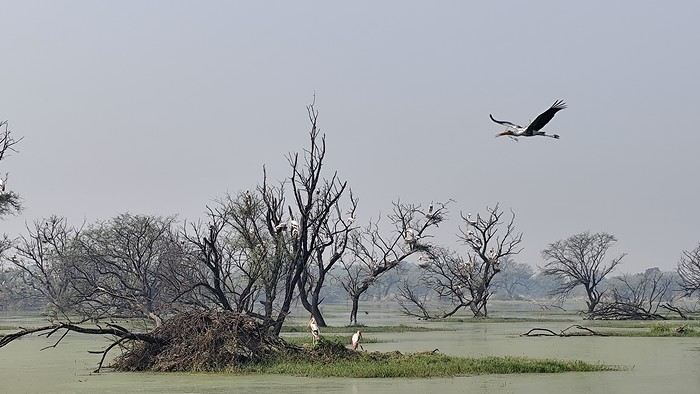
One last thing that comes to mind: if you go to Jaisalmer, check out Gadi Sagar Lake. Also worth seeing: the Demoiselle Cranes in Kichan, not far from Jodhpur. These are thousands of common cranes that migrate near the region’s lakes during the winter months. A beautiful ornithological spectacle. And Kichan or Keechan.
Happy trip planning!
Jean
For those planning a trip to Kerala, here’s a quick, practical summary.
For the most part: the stunning landscapes, the natural kindness of the locals, their cuisine, and their culture—you’ll get to enjoy all of that once you’re there...
Flight (arrival and departure to/from Cochin)
Avoid Air India and opt for flights via the Middle East: Saudi Arabia, Qatar, United Arab Emirates, Oman, etc.
Price: between 500 € and 600 €
Accommodations
Average price: 20 € per night for a couple (max: 40 €, min: 10 €, often including breakfast), via the usual booking sites.
Homestays (staying in the owner’s house) are of a higher standard.
Only 2 nights were spent in questionable cleanliness. The rest were good, even very good, or even *very* very good.
Car with Driver
All-inclusive daily price: tolls, fuel, driver’s lodging and meals... and of course, we often shared our meals with our driver too.
Toyota sedan (e.g., Corolla) for 4 travelers (1 in front, 3 in the back): 50 € / day,
Toyota SUV (e.g., Innova) for up to 6 travelers: 60 € / day
DM me if you’d like more details.
Overall budget (excluding flights and shopping)
Around 1500 € for 1 couple for the 3 weeks... in "2-couple mode"!
(i.e., sharing the driver’s cost).
Itinerary
Night 1: Arrival in Cochin in the morning, departure for Attirappily
Beautiful waterfalls
Night 2: Thrissur
Via Vallachira, not much tourist interest, a stop to ease into the trip and shorten the journey to Wayanad
Nights 3, 4, 5: Wayanad, staying in Sultan Battery
Coffee and tea plantations, dam lake, URAVU (bamboo craft workshop), ...
Night 6: Ooty
Botanical garden, then a really fun tourist train the next afternoon to Metupalaiyam
Night 7: Toward Coimbatore
Nights 8, 9, 10: Munnar
City visit, stunning tea plantations
Nights 11, 12: Thekkady/Kumilly
Amazing tea plantations, sightseeing, Jeep ride, not-so-interesting boat tour on Periyar Lake, trekking options
Night 13: Marari Beach (near Alleppey)
4-hour backwaters tour, then beach (swimming, dinner)
Nights 14, 15, 16: Munroe Island
Super chill, walks around the island (small coir rope factory), sunrise by boat or canoe, sunset
Night 17: Varkala
Gorgeous beaches, shopping
Night 18: Trivandrum
City center visit, then train back to Cochin the next day in 3 hours.
Night 19: Cochin
Fort Kochi is a lovely way to wrap up the trip
Have a great trip in this incredible region, so unique in India!
Hi there,
I just got back from a trip to Sri Lanka from December 18th to January 1st with 2 adults and 2 kids (12 years old).
If it helps, here’s my itinerary.
We left on December 18th from Madrid with Qatar Airways. No complaints. I booked my tickets back in March for 800 € per person. (I flew from Madrid because I live near the Spanish border and was too worried about strikes in France.)
We arrived on December 19th at 4 PM (local time). Before leaving France, I’d booked a taxi through MyTransfer for 59 € to Sigiriya. A van was waiting for us at the airport exit.
A never-ending 3-hour drive to Sigiriya. We stayed at Samana Guesthouse—very simple, clean, with a pool and an excellent Sri Lankan breakfast. Shower and straight to bed.
Friday, December 20th: Beautiful weather, but very humid and hot. We visited Lion Rock (36 € for adults) and then Pidurangala.
I loved both sites—they’re a must-do in my opinion.
Spent the late afternoon by the pool.
Saturday, December 21st: Another gorgeous day. The guesthouse manager offered us a free 2-hour tuk-tuk tour. We first visited a lake, rice fields, the temple, and the Sigiriya market, plus the usual tourist trap—the botanical garden (no pressure to buy anything at the end).
Then we took a tuk-tuk to Dambulla Temple, the Golden Buddha, and the wholesale market.
Sunday, December 22nd: Still beautiful weather. I’d booked a taxi for 8 AM. We did all the long trips by taxi to save time. I’d ask for prices from 2 or 3 WhatsApp taxi agencies 2 days or the day before—super responsive, always got replies within 5 minutes. We headed to Ella (4-hour drive) for 22,000 LKR.
Arrived in the afternoon at Rest Full Homestay—a small, family-run guesthouse. Clean, cozy, and an amazing Sri Lankan breakfast.
In the afternoon, we went to Nine Arches Bridge. It was a Sunday, a Sri Lankan holiday, so it was *packed*—mostly locals and very few white tourists! Even though it was crowded, it was cool because it was all Sri Lankans. We waited an hour for the train. It’s worth seeing, but honestly, I didn’t think it was that amazing.
Then we headed to the station to check if we needed to book tickets for the train to Haputale—turns out, no.
Monday, December 23rd: Beautiful weather. We hiked Ella Rock—a gorgeous trek. The final stretch is steep but shaded, so it wasn’t as tough as I’d read. The whole hike is stunning from start to finish. We saw the train pass twice (one blue, one red) and lots of women picking tea.
After that, we did Little Adam’s Peak. It’s not hard, but it was *packed* with tourists—meh. Luckily, at the top, you can walk a bit farther (down one side and back up) to get some space to yourself.
What I *didn’t* like was the commercial vibe at the big café/restaurant with a pool at the entrance of Little Adam’s Peak. Loud music, all that money being made right next to little souvenir stands run by Sri Lankans or tea-picking women. Felt off.
Ended the day buying souvenirs at one of the few shops we found during the trip.
Tuesday, December 24th: Beautiful weather. Took the train to Haputale. We got to the station 30 minutes before the 9:30 AM train. We could’ve taken 2nd or 3rd class—I went with 2nd (160 LKR per person).
It was crowded, but we managed to get seats—first 2, then 3. Only a 1-hour ride, but I *loved* it—windows and doors open the whole time.
Arrived in Haputale around 11 AM, and the mist was already rolling in.
We walked to our guesthouse, The Mist Holiday Bungalow. Simple but clean, with a great view of the tea plantations. The owner’s wife is Vietnamese and used to work for French tour operators, so her French is still pretty good—helpful for us since our English is terrible. They booked us a tuk-tuk for 4:45 AM the next day (2,000 LKR) to Lipton’s Seat.
Spent the afternoon wandering around Haputale. Not much charm, but there’s a nice fruit and veggie market and a short walk through the tea plantations.
Wednesday, December 25th: Beautiful weather. The tuk-tuk was on time to take us to Lipton’s Seat. We were the first ones there—the sky was just starting to turn pink. In the end, only about ten of us watched the sunrise. The guesthouse had packed us breakfast, and we walked back down (half on the road, half through the plantations). Didn’t see any tea picking since it was Christmas, but the walk was still incredible. We took detours through villages full of kids.
After that, we visited the tea factory. The tour was really interesting, and we took the bus back down to Haputale. Such a great moment—whole families were heading to mass, dressed up and made up. All so beautiful.
At noon, we left for Udawalawe National Park. Taxi for 14,000 LKR. Stayed at River Inn Safari Cottage. *Warning*: It’s the same place as Eagle Safari Cottage. I don’t recommend it. We’d always stayed with families before, but here it was just staff—totally different vibe. The pool was nice but not very clean (water was murky). The bungalow was big and fine, but it was brand new—so new the asphalt floor wasn’t fully dry. It’s in the middle of nowhere, so we had to eat on-site. Couldn’t leave a review on Booking because they never confirmed we’d stayed, and they canceled our reservation the next day.
Thursday, December 26th: Beautiful weather. I’d booked a safari through the hotel for 5:30–10 AM for 54 USD. Honestly, yes, there are a lot of jeeps, but it was great. The kids loved it—we saw everything there was to see.
Left by taxi at 11:30 AM for Welligama (12,000 LKR).
We didn’t stay in Welligama city but at Coconut Beach, between Welligama and Midigama. *Total crush* on the guesthouse: Sky Mountain Café with View. Such a lovely family. The mom makes amazing meals at reasonable prices. The view from the hill over the sea is unreal.
Spent the afternoon walking along the beach.
Friday, December 27th: Beautiful weather. My kids are surfers. Unfortunately, there weren’t any boards their size to rent at Coconut, so we took a tuk-tuk to Welligama Bay (1,000 LKR). They surfed from 8 AM to 5 PM—rental was 5,000 LKR for the day. Meanwhile, we walked the beach and swam. Water was 29°C.
Saturday, December 28th: Beautiful weather, rain from 4 PM until midnight. Same surf day. They were so well-behaved the whole trip, so this was their reward.
Sunday, December 29th: Beautiful weather. Beach day at Coconut. *Warning*: It’s a reef break. For surfers, there are three spots (Coconut Left, Middle, and Right). The boys bodysurfed (with fins) all morning, and at 1 PM, we took the bus to Hikkaduwa.
Stayed at Hotel Universal Beach. Nothing special—right on the water, but the rooms were dark even though they were clean. The manager was super nice, but the rest was meh, and breakfast was mediocre compared to what we’d had before (2 eggs and 3 slices of toast). Plus, it was late—8 AM.
First impression of Hikkaduwa wasn’t great—way too many Russians for our taste.
Monday, December 30th: Beautiful weather. Spent the whole day exploring. Turtle Beach, then the other side of the beach (toward Galle) near the fishing port. The beach there is much wider, with scattered hotels and super quiet. It’s beautiful—I should’ve booked somewhere in that area. Ended up having a great day away from the crowds.
Tuesday, December 31st: Overcast, then beautiful, rain at 4 PM. Had to end the year (and the trip) with some surf. Rented boards for the kids (3,000 LKR per board for the day). Bad luck—the waves were on a reef break but small. Not great for them, but no big deal. They still got out of the water by 2 PM. Walked the beach (which is gorgeous), had a juice, and went for a swim. Then back to surfing in the rain at 4 PM.
Wednesday, January 1st: Left by taxi at 5 AM (18,000 LKR). Flight at 10 AM. Arrived in Madrid at 8 PM.
Je rentre juste du Ladakh où j'ai réussi à observer la très discrète panthère des neiges appelée aussi léopard des neiges (tiré du nom anglais snow leopard).
Grosse réussite car j'en ai observé 10 (dont une femelle et ses 2 petits) en 18 jours !
J'ai vu aussi 6 lynx, 5 loups du Tibet, 1 renard roux, des ibex, des barrals et des urials par dizaines ainsi que plein d'oiseaux qui restent dans ces vallées enneigées malgré le froid.
Pour réaliser ces observations, je me suis rendu dans le parc national d'Hemis au Ladakh à côté de la ville de Leh. Puis je suis allé aussi dans la vallée d'Uley.
Dans les 2 endroits, j'ai été hébergé en "homestay", c'est à dire chez l'habitant dans de tous petits hameaux. Les gens étaient adorables et me faisaient aussi à manger et du feu le soir et le matin.
A chaque fois, j'avais un guide local qui scrutait chaque rocher et chaque crevasse à la recherche de la panthère des neiges et de tout autre animal.
Le guide avait une super longue vue Swarovski avec un zoom 20-60 (indispensable car les animaux se trouvent souvent loin). J'avais amené aussi ma longue vue Kowa avec zoom 20-60.
Les panthères des neiges sont vraiment difficiles à voir car extrêmement discrètes et très bien camouflées.
Les guides ont l'habitudes de les chercher pendant des heures et connaissent bien leurs comportements.
Personnellement, je suis passé par l'agence Exotic Travel tenu par monsieur Phunchok Tsering.
Il m'a offert un service parfait à un prix incomparable.
Je pense pouvoir dire que si vous rester au moins une 10aine de jour, vous verrez forcément la panthère des neiges.
N'oubliez pas que la meilleure période est de Novembre à Mars.
Attendez vous à des nuits glaciales autour de -20°C !
Bonnes observations !
N'hésitez pas à me contacter si vous avez des questions.
Compte rendu d'un voyage en Inde à 4 personnes (ma femme, mon fils de 24 ans, un ami et moi) du 28 juillet au 22 Aout 2019.
Nous avons visité les régions suivantes: Shekhawati, Jaipur, Jodhpur, Mt Abu, Patan, Palitana, Ahmedabad, Ajanta, Ellora, Mumbai.
Voilà les détails:
Shekawati: rejoint directement depuis un hotel proche de l'aéroport de Delhi (approx 5h de taxi). Nous avons logé à Mandawa à l'hotel Chabdar Haveli. A cette saison loger à Mandawa est parfait, c'est un tout petit village très agréable. En pleine saison il doit y avoir plus de touristes que d'habitants! dans ce cas là il est possible de se loger à Nawalgar qui doit être plus adapté car plus grand. Nous avons visité Mandawa (très bien) et Nawalgar à 45 min de taxi (très bien aussi). Ensuite nous avons fait un tour au Nadine haveli à Fathepur sur la route de Jaipur (3h de taxi depuis Mandawa), ça nous a plu mais sans plus (un peu trop restauré).
Jaipur: logement au Jaipur Haveli en plein centre de la Pink City, famille très accueillante, chambres mignonnes, terrasse...la ville est chaotique mais on a beaucoup aimé. Visite à pied du palais et de l'observatoire et balade dans les rues. Visite du fort d'Amber (AR en tuk tuk). ça vaut vraiment le coup.
Jodhpur: trajet en train. Hotel Ratan Villas (luxe avec piscine et repas aux chandelles...). La forteresse de Merhangarh a été un des points forts de notre voyage, ne pas rater la boutique de souvenirs vers la fin, elle se trouve dans des pièces magnifiques avec vitraux et peintures, on y trouve des souvenirs de luxe (foulards et sacs) mais qui font le plaisir des yeux (un en cas dans le café chicos de la dernière cours vous fait vous sentir maharadjah, c'est cher pour l'Inde mais très copieux et le cadre...). Se balader dans les rues de la vieille ville avec ses maisons bleues, ses petites rues et la vie qui va avec est aussi un vrai bonheur (paradis des photographes). On est allé à l'office de 20h au temple Achal Nat, c'est quelque chose! L'excursion d'une demi journée à Osian avec visite des 2 temples principaux (hindou et jain) et balade dans les rues du village nous a beaucoup plu.
Mont Abu: trajet en taxi (il y a un train mais on n'a pas réservé à temps). Logement à Connaught House. Il semble y avoir un micro-climat assez brumeux et humide à cette saison mais la visite des temples Jain justifie le déplacement. A part ça on peut se contenter d'y passer une journée (sauf si on veut faire de la sociologie du tourisme indien du WE où les gens du Gujarat viennent car ils peuvent acheter de l'alcool! ça reste très calme, rassurez vous).
Taxi vers Patan via Sidhpur: Sidhpur est sans le moindre touriste, on y a juste passé quelques heures mais les maisons des marchands valent le coup et le village est joli. On a été au bassin sacré et voir un temple: c'est très basique mais c'est de l'inde profonde.
Patan: apple residency (hotel parfait, il parait que c'est le seul à Patan qui soit de ce niveau de gamme, le restaurant qui va avec est lui aussi nickel). Le rani ki vav (puit) vaut le voyage à lui seul (on peut aussi visiblement y aller à la journée depuis Ahmedabad). La visite du musée atelier de Patola (double ikat) est elle aussi passionnante car faite par un des membres de la famille qui maintient cet art. Patan est aussi une petite ville bien agréable.
Route vers Palitana via Modhera (temple du soleil à voir) et Becharaji (temple célèbre pour héberger des transgenres qui bénissent les gens et des pèlerinages), intéressant aussi.
Palitana: hotel Sumeru (personne dedans et un personnel très agréable, on peut y manger, on a trouvé le restau de Palitana donné dans les guides très nul). Sinon on peut se faire héberger dans les daramsala gratuitement). Pendant la mousson les Jains ne montent pas sur la montagne sacrée pour ne pas écraser les nombreux insectes. On a donc visité avec peu de monde (pas de touriste européens mais des hindous). C'est assez extraordinaire quand on arrive en haut et qu'on voit cette forêt de temples. On y a passé plusieurs heures. Arrivé presque au sommet il y a une bifurcation, on a pris à droite pour aller aux temples les plus hauts, depuis ces temples on peut rejoindre le reste du site en zigzagant entre les terrasses et les marches, ce n'est pas la peine de redescendre pour remonter par la branche de gauche. départ à 5h du mat mais on n'a pas regretté: 3500 marches sous la chaleur, ça ne nous tente pas. En plus il y a déjà des pèlerins dans le temple en bas.
Route Palitana Ahmedabad: ras
Ahmedabad: hotel French haveli (bien placé, gens charmants aussi). Visite de la ville: le "heritage walk" permet vraiment de comprendre pourquoi la ville est au patrimoine mondial. On passe dans les petites rues et dans des endroits où on n'oserait jamais aller seul de peur de déranger, c'est absolument passionnant. Sinon la partie bazar est super, il y a une rue avec uniquement des boutiques de saris et costumes d'apparat qui en met plein les yeux. On a aussi vu un puit en centre ville (pas le célèbre juste en dehors) pas mal et le temple Jain lui aussi très agréable.
Trajet vers Ajanta: avion sur Nasik et train Nasik Jalgaon. Hotel Silver Palace (le meilleur restau du voyage). Visite d'Ajanta, pas grand monde, on avait déjà visité en 1992 mais maintenant il y a de l'éclairage LED, une navette etc..site fabuleux à voir.
Nuit à Ellora, hotel Kailas (encore un accueil super, on a pu garder la chambre jusqu'à notre trajet du soir sans problème car il n'y avait pas grand monde). Encore un site extraordinaire. On est parti pour l'ouverture et on a commencé par le Kailasnata car ensuite il est plein de monde, ne pas rater la partie des temples Jain. On peut sortir et re-rentrer même si ce n'est pas marqué: à la sortie demander à un garde qui va conserver votre ticket/jeton que vous pourrez récupérer si vous allez manger dehors en coupant la visite en deux (tout voir est très long).
Avion Aurangabad Mumbai.
Mumbai: logement dans un Airbnb à Colaba (très cher). Visite du musée Chhatrapati Shivaji Maharaj , vaut le coup. Pour Elephanta (déjà vu en 92) on est plus mitigé: ça prend plus de 2 heures en bateau AR (mais on voit les gros bateaux) et sur place il n'y a que la statue à voir (certe extraordinaire), le reste est abimé ou non accessible, surtout n'allez pas voir les autres grottes à droite en sortant de la premiere, il n'y a rien. Ok si vous êtes passionné ou si vous avez plein de temps.
Taxi pour l'aeroport: 25 km en 1h30...
Pratique:
Visa: pris online avant le voyage, pas d'attente à l'aéroport, tous les guichets occupés à 1h du matin, gens aimables, on croit rêver quand on connait les aéroports de Paris (ou Toulouse pour ce qui nous concerne).
Aéroport Delhi: prendre un taxi prépayé à l'intérieur, si on va dehors arnaque assurée. Les hotels localisés dans l'aeroport sur booking.com sont en fait à quelques km (évitez l'hotel Greeen Heights).
Argent: on avait acheté des roupies par yeschange avant de partir. Sinon il y a des distributeurs partout (limite de retrait typique de 10000 INR). On paye CB les hotels et les sites chers. mais toujours avoir du liquide car ça peut ne pas marcher.
résa avions: Air India, ras, arriver à l'avance car il y a plein de controlse (peur des terroristes) mais sur les vols intérieurs il n'y a pas foule.
Réservation train: le site marche très bien mais il faut regarder les tutoriels sur comment ça fonctionne et être (très) patient (par exemple pour payer par CB sur internet les quelques centimes qui permettent d'etre inscrit). On n'a pris que quand on était confirmé et pas sur waiting list. Pas cher du tout en classe supérieure, places numérotés, aucun problème. Pour attendre il y a sur les quais des panneaux electroniques qui affichent le type de wagon (par ex A1) et le train s'arrete juste au bon endroit, aucun stress.
Taxi: resa par l'hotel la veille ou sur internet (on a utilisé Gozocabs par internet depuis la france pour le 1er trajet puis 2 autres fois en Inde: nickel). Pour 2 une petite voiture doit aller, pour 4 il faut prendre une 6 places car il n'y a pas de coffre (même si dans notre cas on avait juste une valise cabine avion par personne). Le trajet le plus cher, approx 300 km en aller simple entre Patan et Palitana nous est revenu à 85€. la durée des trajets dépends de l'etat de la route: globalement bonne sur nos trajets sauf en ce moment vers Ajanta Ellora.
Tuk tuk: utilisé à plein d'endroits, on se met d'accord sur le prix au départ et ça va (pas cher dans tous les cas). Pour rentrer à l'hotel ils ont presque tous un smartphone avec GPS donc pas de risque de se perdre!
Mousson: on a eu de la chance peut etre mais aucune pluie diluvienne et plein de jours sans pluie du tout. Il fait chaud mais supportable. ca ne nous a vraiment pas géné, de plus au vu des infrastructures dispos dans certain sites, la haute saison doit être cauchemardesque. Dans notre cas on n'a jamais eu plus de 3 personnes devant nous aux guichets.
Accueil: extrêmement agréable, on a eu aucun problème que ce soit dans les hotels, restaux en ville et en bord de route, visites etc...On se débrouille partout avec l'anglais même si les gens qui n'ont pas été à l'école assez longtemps ne le parlent pas. Il y aura toujours quelqu'un pour traduire dans la langue locale. Aucun stress d'être volé ou agressé nulle part de jour comme de nuit. On a eu droit plusieurs fois à des histoires grandioses par des gens qui disent être courtiers en pierres précieuses, qui parlent de la France et de l'Europe etc..Ils sont tellement forts qu'on ne s'aperçoit que c'est de la tchatche que quand ils nous invitent dans leur boutique... Mais il suffit alors de ne pas acheter et on a eu droit à une pièce de théatre privée de premier ordre!
Nourriture: les restaus en bord de route dans lesquels on est allé quand le trajet en taxi était long et autour de midi sont souvent très bien. sinon dans les villes il y a tout ce qu'il faut.
We traveled as a couple from October 20 to December 11, 2025, for our second trip to India and our first time in Rajasthan, plus Mathura and Agra, which are in Uttar Pradesh but right on the border, and a 4-day flight hop to Varanasi.
Here’s a non-detailed trip report—just to share some info we found useful for other travelers, along with a few places and addresses we particularly enjoyed.
First off, a big thank you to (I’m using usernames) Aleph240758, Solene40, Montagnard74, and Pagaljavab, who took the time to reply to me. Some of them even take the time to create detailed and illustrated travel stories. Since I only started planning the trip in mid-August, I didn’t have much time and used the trip reports on VoyageForum to build our itinerary.
One more note: everyone travels differently and has their own preferences... so I’ll just share our personal feelings, which are obviously subjective.
We bought a physical SIM card upon arriving at the airport. The Airtel stand only offers one package for 500 rupees (just under 5 €) for 28 days, with 1.5 GB of data, unlimited national SMS, and calls—more than enough. Contrary to what we’d read, we asked for activation at the counter, and it was active within 10 minutes. The SIM worked well everywhere.
Watch out—like in all airports, there’s a tendency to take advantage of tourists. The Airtel counter offers to exchange money directly, and we saw people paying 20 € for the SIM.
Since we arrived at night, the metro wasn’t running anymore. Plus, if you don’t know the city, we’d recommend taking a prepaid taxi—the price is fixed, and the driver knows the destination.
Be careful: the prepaid taxi counter is on the right as you exit the hall, with large fixed signs above. Many counters put out a card on the desk saying "prepaid taxi," and even the Airtel stand tries to offer supposedly prepaid taxis, which is completely false. The price they ask for could be double or triple.
Here’s an app that was super useful for us
In most big cities, we used "Rapido," an Indian app like Uber, to book auto-rickshaws (you can also book motorbikes or cars). You need a local phone number for this.
The big advantage? The price is fixed, though you can still leave a tip. It tracks your ride, and most importantly, the destination is entered—way more practical than hailing an auto-rickshaw on the street, where the driver says "yes, yes," gives a price, and then doesn’t know where to go once you’re on the way. No need to enter a credit card. There’s also OlaCabs, which is similar, but we couldn’t get it to work.
For transportation between stops, we used government buses (RSRTC, blue buses), sometimes taxis via apps or by asking the guesthouse for visits and hard-to-reach places. This choice was really personal and made on the spot.
- **Pros:** Buses leave almost every 30 minutes everywhere, giving you a lot of freedom. Every time we left from the bus station (bus stand), we had seats. Several times, we even got to sit in the driver’s cabin! The trip takes longer than a taxi, but not *that* much longer. The price is ridiculously low—1.30 € for 100 km for men, 70 cents for women. The bus stations are in the city centers, unlike many private bus companies. We met some great people.
- **Cons:** It’s not exactly clean, and you’re obviously not in the comfort of a taxi. It’s not door-to-door service, so you need to travel light. You can’t stop along the way. If you need to catch the bus mid-route, it’s usually full, and you’ll have to elbow your way in without hesitation.
For a short trip, I think hiring a taxi for the whole stay makes sense. Like I said, there’s no one-size-fits-all choice, but there’s no need to be apprehensive about taking public buses.
Here’s our route map, showing the number of nights spent at each stop.
Compared to our initial plan, we slept one night in Barmer instead of two because we had time to visit the market in the afternoon, saw the Kiradu site the next morning, and didn’t see the point in staying longer.
We cut two of the six nights in Shekhawati. After our flight to Varanasi was canceled, we had to stay in Delhi, which actually turned out well—it let us arrive in Varanasi earlier and more rested.
The timing worked well for us, with longer stops in Bundi and Udaipur.
I won’t go into detail about each stop here, but I’d be happy to answer any questions.
The accommodations and restaurants mentioned are the ones that had that little something extra, and the hearts (❤️❤️❤️) mark the sites we particularly loved.
Tijana Fort Palace
- Accommodation and recovery from the trip
Alwar
- Palace with museum
- Moosi Maharani Ki Chhatri
- Large reservoir
Bharatpur
Accommodation: Iora Guesthouse, 14 €/night without breakfast—great value, cheap, good meals, close to the reserve
Morning at Keoladeo Reserve by bike
Mathura
- Ghats (Yamuna Ghats, Vishram Ghat) to visit in the evening
- Market (Chattu Bazar)
- Hindu temple Shri Dwarkadheesh dedicated to Krishna
- Vrindavan temple Banke Bihari, ❤️❤️❤️ a very important temple with incredible religious fervor
- Vrindavan Hindu temple Balaram ISKCON
Agra
Accommodation: Shivalayaa - The Divine Abode, 16 €/night with breakfast on Booking—welcoming, clean, close to the Taj Mahal
- Mausoleum of Akbar the Great (in Sikandra) ❤️❤️❤️
- Mausoleum of Itimad-ud-Daulah (mini Taj) ❤️❤️❤️
- Visit the Taj early in the morning (closed on Fridays) ❤️❤️❤️
- Agra Fort ❤️❤️❤️
Dholpur
- Machkund Temple with its water body
- Clock Tower Ghanta Ghar
- Royal stepwell Dhaulpur Bavdi
Karauli
- City Palace, private visit with a guard ❤️❤️❤️
- Shri Madan Mohan Temple for the puja starting at 5:30 PM ❤️❤️❤️
- Wandering the streets
We loved this stop, which is off the main tourist trail, for its pleasant atmosphere
Bhandarej
This is a stop as a starting point to visit the Chand Baori stepwell in Abhaneri ❤️❤️❤️
Accommodation: Bhadrawati Palace, 53 €/night with breakfast in Bhandarej—nice, an old palace, warm welcome, booked via Hotels.com
We were the only guests and had dinner with the current manager, the grandson of the Maharaja.
There’s a pretty stepwell in the village, and we visited a tiny neighborhood temple where we were invited to join in the singing and dancing. Walking through the market was really enjoyable because of the kindness of the locals, who aren’t used to tourism ❤️❤️❤️
Jaipur
- Hawa Mahal (Palace of Winds)
- Jal Mahal
- Gaitore Ki Chhatriyan ❤️❤️❤️
- Amber Fort ❤️❤️❤️
- Panna Meena Ka Kund stepwell
- Galta Ji Temple (Monkey Temple) ❤️❤️❤️
- Bagru, 33 km away: visit to a fabric printing workshop with block prints (I’d noted some addresses on Google Maps). The first workshop wasn’t very welcoming and had no workers because of the humid weather. We were lucky to find another, more welcoming workshop. When the sun came out, the three female workers arrived and started their work—it was a great visit ❤️❤️❤️.
Bundi
Accommodation: Hotel Bundi Inn, 25 €/night with breakfast—lovely room in a haveli, good meals with a rooftop view of the fort
- Garh Palace
Don’t miss: at the exit of the palace, to the left, you can access a beautiful garden with a pool and, at the back, a large hall called Chitrashala ❤️❤️❤️
- Raniji Ki Baori ❤️❤️❤️
- Nahar Dhunk Ki Baori
- Chaurasi Khambun Ki Chhatri (cenotaph with 84 pillars)
- Ksar Bagh, an interesting set of royal cenotaphs at the end of Jait Sagar Lake. On the other hand, we could’ve skipped Sukh Mahal and its museum.
Bundi is still pleasant but is no longer a secret spot.
Concilier la Chine et l'Inde dans un voyage si court ? Pourquoi donc ? Chacun des ces deux pays offrent tant à offrir, pourquoi aller dans les deux en si peu de temps ? Pour plusieures raisons:
- j'ai toujours été fasciné par les comparaisons culturelles entre la Chine et l'Inde. Les concilier dans un seul voyage permet de réfléchir bien plus objectivement qu'entre 2 voyages éloignés par des mois
- depuis que je suis petit, les routes aériennes "exotiques me fascinent". Déjà quand j'avais 12 ans, je passais des heures sur TripAdvisor à voir quels vols directs existent entre toutes destinations improbables. Lorsque j'ai vu qu'il y avait un vol direct Calcutta-Kunming, j'ai immédiatement voulu le prendre. Prendre un vol entre 2 pays est un très bon moyens de voir les relations qu'ils ont. Prenez un vol Shanghai San-Francisco et vous voyez tout ces chinois partant étudier aux Etats-Unis, et ces américains ingénieurs allant faire des missions en Chine. Prenez un vol entre Muscat et Delhi et vous vous rendez compte de l'importance économique des indiens émigrés au Moyen-Orient. Les aéroports sont des lieux formidables pour faire du "people watching".
Avertissement le texte ci-dessous est tiré de ma page Facebook au gré de parutions périodiques. Il peut donc s'en ressentir quelques trous dans le suivi du récit ... Par ailleurs, il s'agit ici de mon premier voyage en Inde, quel es spécialistes et autres habitués de cet incroyable pays me pardonnent de mes imprécisions.
Incredible India ! Bon j’ai rien inventé c’est carrément le slogan de l’office du tourisme indien. Mais faut reconnaître qu’ils ont tapé juste. L’Inde intrigue, l’Inde fascine, l’Inde fait peur, l’Inde.
Déjà à l’atterrissage de notre vol Emirates. L’immigration. Les fonctionnaires sont souriants, te souhaitent la bienvenue et t’invitent dans un gros fauteuil confortable, presque comme un ami, pour les formalités. Le numéro de ton visa est peu lisible sur ta photocopie ? Pas grave, l’officier sourit de ses dents blanches et fait les recherches lui-même.
Une fois les sacs récupérés, est-ce que Arafat sera là ? Arafat c’est celui qui va nous louer deux Enfield 500 pour 18 jours. Pas de site internet, juste une communication via WhatsApp. Et oui il est là, avec un panneau, parmi la foule qui attend un proche ou un touriste, tout sourire lui aussi.
Il nous confie au chauffeur qui va nous emmener à Fort Cochin, quelque 40 km plus loin. Et nous faisons connaissance avec la circulation indienne dans la périphérie de Ernakulam, la grande ville qui compose aussi Cochin. Ici il n’y a qu’une règle à connaître : c’est qu’il n’y en a pas, de règles. Le danger est permanent et il peut venir de partout.
Une bonne heure, c’est qu’il nous faudra pour atteindre le Fresh Choice, le petit restaurant que tient Arafat en plus de la location de motos et d’autres services touristiques. Un léger repas, du thé, mais il nous importe de voir les brêles. Elles ont vécu, la route les a un peu cabossées. Mais Arafat a fait ça bien. Sachant qu’on part pour environ 2500 km, il a mis des pneus neufs et a changé le kit chaîne. Recommandations, change d’argent, installation d’un chargeur USB sur la batterie. C’est l’heure de prendre la route, par la coastal Road, direction sud. Un bonheur de route. Bordée de palmiers, paisible. La moto nous permet de prendre de minuscules chemins et de nous retrouver au cœur des villages, à nous voir accueilli par les larges sourires des Keralais. Dieu que les femmes sont belles ici, avec leurs longs cheveux noirs, leur sari coloré, leurs dents blanches contrastants avec le teint foncé de leur peau.
Il règne aussi une odeur étrange, agréable mais étrange. Un mélange d’épices, de lessive ou de savon, une moiteur olfactive à laquelle on identifie ce sous-continent indien. Les spécialistes de l’Inde disent que le Kerala est un état à part dans l’immensité du pays. Sans doute, tout comme le Ladakh parcouru en 2017. Mais quelles couleurs, quels sourires, quelles routes (bonnes à notre grande surprise). Le point commun au reste de l’Inde est sans doute le comportement des chauffeurs de bus. Ces gars-là sont des malades, des grands malades, des fous. Ici tu apprends très vite que ta vie dépend de la rapidité à comprendre que face à un bus, tu ne cherches pas la confrontation. Tu t’inclines, tu te pousses.
Fin d’après-midi au bord de la mer d’Arabie, le long de la plage d’Allepey. Un lassi aux ananas frais, une petite brise du large. Et cette odeur, encore et toujours. Cette Incredible odeur...
L’eau. Toute la vie autour d’Allepey est conditionnée par l’eau. Vous avez sans doute entendu parler des backwater du Kerala. Mais saviez-vous qu’ils sont composés de plus de 1500 kilomètres de canaux, de lacs et de divers plans d’eau, alimentés par plus de 40 fleuves qui descendent des montagnes ? 1500 kilomètres !!!! On y vit sur les bords (et parfois dessus) on y fait la lessive, on s’y lave, on y pêche, on y navigue pour aller au travail ou à l’école. L’eau.
Aujourd’hui, Biju le boss de la Bella Homestay, nous a organisé un tour à la journée sur les labyrinthes des canaux. Le tuktuk est pile à l’heure pour nous emmener au terminal des bateaux pour s’enfoncer dans les terres, mais sur l’eau, quel paradoxe. Un bateau genre mouette genevoise mais taille XXL, avec un gros diesel bien fumant comme moteur. Un moteur qui ne démarre pas tout de suite, crachotant quelques hoquets avant de caler. Un homme descend dans la cale avec un tournevis, deux ou trois coups par-ci par-là et ça démarre dans l’hilarité générale. Ce bateau, c’est celui qui transporte les Indiens et nous sommes donc en compagnie des habitants du coin. Regards, sourires. L’activité ici, c’est d’emporter des touristes sur l’eau, peu importe l’embarcation. Cela va même jusqu’aux bateaux privatifs presque luxueux (pour les standards indiens) avec cabine pour y passer la nuit. Sans doute un peu trop aseptisé, mais pourquoi pas pour ceux qui aiment ça. Pour nous ce sera plus modeste, avec environ 5 heures en canoë conduit par un gars du coin. L’avantage du canoë est de pouvoir prendre les petits canaux, la où les grosses embarcations ne peuvent accéder. Et on y voit la vie sur les berges, la lessive des femmes, les pêcheurs ou simplement les habitants devant leurs (belles) maisons. Ici, certaines habitations sont construites sur une digue d’à peine 5-6 mètres de large séparant deux plans d’eau. Mieux qu’une moto sur la terre ferme, ici c’est une barque que chacun se doit de posséder.
Les backwater abritent de nombreux villages, avec leurs petits commerces et leurs écoles. Ici, on amène ses enfants aux cours (en uniforme) en bateau. Ils sont nombreux à courir, crier et se chamailler sur les berges les gosses du coin. Des enfants d’une beauté extrême, tout sourire, autant que leur maman. Comme ailleurs, tout est couleur sur ces eaux. Les plantes aquatiques d’un beau vert, les barques multicolores et même les libellules qui sont rouges !
Afin de faire profiter les familles locales, celle qui s’occupe de nous va nous préparer à manger dans leur (très) modeste demeure. Un thali (plusieurs plats différents sur une feuille de bananier) composé de riz, de pois chiches aux épices locales, un chutney de mangue et quelques autres mets dont nous n’avons pu savoir ce que c’était faute de compréhension mutuelle. Et évidemment c’était délicieux.
Retour à Allepey à nouveau par le bateau officiel, à nouveau avec les gens du coin.
Allepey. Une petite ville côtière, sans charme ni monuments particuliers si ce n’est deux petits temples. Une plage aussi, non surveillée et pas nettoyée. Mais on s’y sent bien au coucher de soleil et sans doute pour y faire trempette dans les flots de la mer d’Arabie. Ou pour y boire un chaï, un lassi ou un jus de fruit frais sous la brise.
Dire qu’Allepey a du charme serait mentir. Mais la magie du Kerala opère. Ça grouille, ça vit, ça bouge, sur les routes avec les innombrables tuktuk, bus et voitures, sur leurs bords avec les commerces en tout genre, de l’étal de fruit au commerce d’or, avec la foule en constant mouvement. Les gens nous regardent, nous dévisagent parfois, mais jamais avec agressivité ou malhonnêteté. Nous sommes loin des clichés qui nous effrayaient au sujet de l’Inde. Pour l’instant.
Soyons complet sur Allepey. Nous avons trouvé refuge à la Bella Homestay. Un petit havre de paix et de calme, un accueil à la fois discret et chaleureux. Et une chambre hyper propre et confortable.
L’eau, et une journée sans moto. Mais demain nous reprenons la route direction les ghats, à savoir les montagnes dans lesquelles nous allons rouler durant les 3 prochains jours.
Ce sera nos premières vraies expériences sur les routes indiennes, j’y consacrerai quelques lignes...
Je reconnais, j’ai mis du temps à inscrire l’Inde sur ma liste. Que de clichés, que de préjugés. Une fois encore, sans doute que le Kerala ne reflète pas la réalité plus difficile de quelques autres villes comme Calcutta ou Benares, une première approche en douceur en quelque sorte.
Mais ici les sens et les émotions surgissent. Et je sens que cela va continuer.
Petite leçon de conduite motocycliste à l’indienne ...
Comme vous le savez évidemment, en Inde on roule à gauche héritage britannique oblige. Première habitude à prendre. Si tu veux additionner les kilomètres en sécurité, il est d’ailleurs FORTEMENT recommandé de rester le plus à gauche possible, soit contre le bord de la route. Pourquoi ? Parce que dans la chaîne alimentaire des routes locales, le plus gros passe avant les autres et ainsi de suite jusqu’en bas. Quelle que soit la situation. Vous comprendrez donc facilement qu’à part les vélos et les piétons, les motos ne font peur à personne. Revenons à la position sur la route. Pourquoi à l’extrême gauche ? Parce qu’en face ça dépasse à tout va. Les bus dépassent les camions et les voitures dépassent les bus qui dépassent les camions. Vous voyez pourquoi il vaut mieux être tout au bord ?
Deuxième règle : ne t’arrête jamais aux carrefours ou aux intersections. Si tu mets le pied par terre t’es foutu, tu vas rester coincé là. Le truc c’est de rester en mouvement, de toujours avancer, même au pas, et dès que tu vois ou tu sens un trou tu t’insères. Ça peut foutre la trouille au début mais ça marche nickel quand t’as compris le truc. Le problème c’est que tout le monde fait pareil. Genre t’es sur une grande route et t’as une plus petite voie qui arrive sur ta gauche et bien, le tuktuk ou la moto qui arrive va venir sur ta trajectoire sans même te jeter un coup d’œil.
Troisième règle essentielle : le klaxon est ton assurance-vie. Ici les rétroviseurs font une chouette décoration sur les véhicules mais à part ça ... en gros, si t’es un bon conducteur indien tu te dois de klaxonner au minimum toutes les 8-10 secondes parfois plus dans les villes ou les endroits où il y a plus de monde. Klaxonner, juste pour dire que tu es là et que tu arrives. Pigé ? Alors ça peut faire peur, mais franchement on s’y fait vite, il faut juste ne jamais relâcher son attention, parce que le danger peut surgir n’importe quand et de n’importe où... mais revenons à notre road trip.
Ce matin, nous sortons sans souci de Allepey par une route rectiligne et rapide, bordée de rizières. Ça roule assez vite et il faut bien garder l’œil sur ce qui arrive en face (voir ci-dessus). Nous avions téléchargé l’application Maps.me et les cartes de l’Inde du sud, impressionnant ! Avec encore un petit chargeur USB et un support pour l’IPhone sur le guidon, nous sommes complètement autonomes et la précision des informations nous conduits sans souci sur les bonnes routes. Nous avions décidé volontairement de ne pas prendre la voie rapide vers Kumily, dans les montagnes, pour prendre des détours sur des voies de moindre importance. Rapidement, le paysage devient vallonné, les courbes se multiplient, la circulation diminue. Au moment de dépasser un tuktuk, je m’aperçois que mon klaxon est mort. Damned (voir ci-dessus). Mais dans ce pays, les ateliers, ou plutôt les cahuttes, qui bricolent les deux roues sont légion. Et je ne mets que quelques kilomètres à trouver un gars qui va me réparer tout ça. Ça démonte le phare où se trouve un fusible du klaxon (...), ça change une pièce, ça ressert des connexions... et ça marche. 50 petites roupies pour 20 minutes de boulot efficace (70 cts, oui je sais c’est moins cher que chez HD...).
Au hasard de la route, nous nous retrouvons au cœur d’une fête visiblement religieuse aux abords d’un temple. Que des hommes, torse et pieds nus, le visage et quelques parties du corps peintes. On les prend bien sûr en photo, mais eux aussi !
Toujours au hasard des routes, nous trouvons un family restaurant pour notre lunch. Alors là, c’est un peu galère parce que personne n’y parle anglais. Alors on y va au bol et on se retrouve avec une table trop petite pour contenir tout ce qu’on nous apporte... les saveurs sont là, le feu aussi. En Inde, on ne mange pas avec des services, mais avec la main, la droite. La gauche est réservée pour des pratiques plutôt impures. Alors la règle est qu’avant tout repas on va généreusement se laver les mains aux lavabos qui sont toujours à proximité de la salle à manger. Ceci dit pas si facile de manger du riz et toutes ces succulentes sauces avec ses doigts, il reste un peu de pratique à obtenir.
Kumily se rapproche, notre GPS nous indiquait une étape de 155 kilomètres aujourd’hui. Mais sur les routes indiennes et en moto, 155 kilomètres c’est minimum 4 heures de routes, sans compter les arrêts. L’après-midi est donc entamée lorsque Kumily est en vue. Cette petite ville est perchée à 900 mètres et l’air moite et chaud des plaines laisse la place à une “fraîcheur” bienvenue. C’est aussi le début des collines de plantations de thé. D’ailleurs au détour d’un virage, un groupe de femmes ramasse les jeunes feuilles qui dépassent du haut des buissons. Elles ne sont pas loin de la route et nous grimpons la pente pour aller à leur rencontre. Un pur moment de fraîcheur au vu de leurs sourires éclatants et de leurs rires bruyants lorsqu’on parle de nos prénoms ou de nos enfants. Petite séance photos et selfies, merci Mesdames pour cette bonne humeur malgré votre dur labeur.
Kumily. Bruyante, poussiéreuse, indienne... certains y viennent pour aller à la rencontre des animaux dans la réserve voisine de Periyar, mais il faut avoir le temps que nous n’avons pas pris pour cette étape.
Tradition oblige, passage chez le barbier. Jamais, jamais je n’emmène de quoi me raser en voyage. Et le barbier de Kumily ne m’aura pas déçu.
Soirée plus fraîche et à la lumière tamisée sur le rooftop de notre Homestay, petite musique d’ambiance. L’Inde est bruyante, grouillante, mais également spirituelle et relaxante sous certains aspects. Une culture compliquée, mais que nous essayons d’apprivoiser au mieux pendant ce très court séjour.
Demain cap sur Munnar, au cœur des plantations de thé, toujours en altitude des ghâts.
Quel trip, sur la route, mais aussi dans le coeur et la tête.
Fantastique. Fantastique et galère un peu quand même. La route entre Kumily et Munnar est une voie qui circule dans les montagnes, appelées ici les ghats. Des reliefs couverts de végétation en tout genre, mais si verte, si dense. Le bitume est parfait, la route est toute en courbes, un virage tous les 30-40 mètres, le tout avec un très faible trafic. A la limite de l’orgasme de l’asphalte, du kamasutra du bitume, tant rouler dans ces paysages paisibles et splendides amène un plaisir indescriptible. Nous traversons régulièrement de petites villes ou villages moins animés que les cités des plaines, des rues colorées par les saris des des femmes, par les murs des maisons ou par des nombreux panneaux publicitaires qui ornent les commerces. La vitesse de croisière est rassurante, un petit 40 km/h qui nous permet de lever les yeux pour en prendre plein.
Jusqu’au moment où. Au moment où une voiture freine et s’arrête en face de moi dans sa voie. Mais pourquoi ??? Devant l’absence de danger apparent, je freine à peine, continuant à avancer. Sauf que là, juste devant moi un serpent d’au moins 2,50 mètres traverse la chaussée en ondulant en S. Plus le temps de l’éviter... et je passe à moins de 50 centimètres de sa tête, j’ai même vu ses yeux tellement il était prêt de mon mollet ...
Galère. Oui quand même. Parce que la route Kumily-Munnar est en réfection. Alors des détours sont signalés. Des détours qui nous poussent sur des tronçons défoncés, des chemins étroits, dans des pentes dignes de la Streif et surtout qui rallongent le temps de route que nous avions prévu. De 4 heures, nous sommes passés à 6,5 heures.
Galère. Parce que mon Enfield tousse sérieusement depuis quelques kilomètres, comme si le carburateur était bouché. Et elle pousse même à s’éteindre au ralenti sans vouloir redémarrer. Mais comme il y a un mécano dans tous villages, je prends cette précaution de m’arrêter. Et ce sont bientôt trois spécialistes qui se penchent sur le cas de la malade. Ca cherche, ça vide le carbu, ça ressert un truc à la sortie de l’échappement et après 30 minutes ça a l’air de fonctionner. Payer ? Même pas, le sourire et “je vous ai rendu service Sir, c’est mon plaisir”...
Munnar est en vue, des paysages à couper le souffle au cœur des plantations de thé. Des buissons quasi à perte de vue, même dans les pentes assez raides des coteaux. La route est redevenue belle, l’asphalte est neuf. Le bonheur est de retour, même si les fusibles de la moto continuent de lâcher ce qui me prive de mon klaxon, un élément essentiel ici.
30 kilomètres après Munnar, toujours au cœur de cette si belle nature au cœur des ghats, nous trouvons la Pavithra Riverview Homestay, en contrebas du village de Lakkam. Une petite pension familiale au bord des champs de thé, dans un décor fantastique, à l’accueil si chaleureux. Shankar est au soin pour ses visiteurs. Il nous amène le thé sur le petit toit qui surplombe une partie de la maison. Un toit face à la vallée, une vue magnifique sur la nature environnante. Et toujours ce sourire si éclatant. Juste au-dessous de la pension, un chemin part au cœur des plantations où il serait possible de se balader durant des heures. Quel labeur de cueillir les jeunes pousses sur les buissons. La Pavithra, dans un petit village du Kerala, nous y prendrons notre repas du soir, garanti pas épicé et qui pourtant brûle le bord des lèvres.
La Pavithra, une chambre simple, avec douche et WC, le tout très propre, une nuit calme, bercée par le bruit reposant de la rivière sous nos fenêtres. L’Inde, loin de la frénésie des villes.
Munnar et ses environs. Nous y passerons encore demain, avant d’avancer dans ce périple indien si attachant. On savait que le dépaysement serait garanti. Il est non seulement garanti, mais total.
Munnar, part II. A la Pavithra le petit-déjeuner se prend sur le toit, dès que le soleil pointe vers 08h30. La vue y est bien sûr splendide au matin et la nourriture que Shankar nous apporte réjouit nos estomacs. Shankar veut développer sa petite affaire, alors il nous demande ce que nous les occidentaux mangeons le matin. Nous lui parlons de Muesli, de miel, de fruits, de yaourt.. il enregistre, prend des notes, sûr, il sait se débrouiller le garçon.
Ce même Shankar nous donne l’adresse d’un de ses frères à Munnar, lequel pourrait nous aider à résoudre mon problème de fusibles qui lâchent. Sur place, on obtient l’adresse d’un mécano et un chauffeur de tuktuk qui écoutait la conversation de loin, mais d’assez près pour flairer la course, nous propose de le suivre pour être certains de trouver. Problème, le gars est mécano mais ne fait pas les pannes électriques. Alors le chauffeur nous amène à l’autre bout de la petite ville chez un autre mécano qui lui ne fait que l’électricité. On lui explique le souci, il hoche la tête. Il va voir. Du coup, on lui laisse la moto et nous partons voir Munnar, son marché aux fruits et légumes coloré comme d’habitude, ses petites boutiques marchandes, ses stands de rue, ses gargotes, sa foule bigarrée. Une petite ville bruyante, animée et poussiéreuse, indienne, au cœur des montagnes. La moto est prête, un bon bout du faisceau a été refait et il me montre même les photos de ce qui était défectueux. A un prix dérisoire pour nous évidemment.
Les environs de Munnar sont magnifiques. Plantations de thé, cascades et même deux lacs artificiels où les indiens vont en famille. Bien kitsch évidemment, mais on y croise la vie locale. C’est donc là que nous allons, voir les jeunes couples se tenir pudiquement par la main, les enfants réclamer des jouets dans les stands qui bordent l’endroit. L’après-midi est bien entamée lorsque nous retournons à la Pavithra dans le village de Lakkam. Il y a une belle cascade derrière le village et en moins de 30 minutes, nous voilà au pied de chutes, malgré le peu d’eau vu la saison.
Shankar et sa famille nous ont concocté un autre excellent repas ce soir, et pas épicé cette fois, partagé avec quelques autres voyageurs au long cours. Échanges et partages d’expérience autour d’une table indienne.
Munnar et sa région. A voir, à respirer, à goûter, à ressentir.
La route qui redescend sur les plaines comporte un tronçon privé vu qu’elle traverse de part en part une plantation de thé. Évidemment elle est ouverte à tous, mais il y a tout de même une barrière et son préposé à chaque extrémité de la propriété qui pourrait fermer ce tronçon de quelques kilomètres et bloquer ainsi l’accès à Munnar depuis le nord-est. Original.
Vu que nous traversons une plantation, les paysages sont juste féeriques. Du vert à gauche, à droite, en-dessous et en-dessous. Des buissons de thé à perte de vue sur les pentes de ces ghats. Une splendeur.
Quelques kilomètres à peine, les chutes d’eau de Lakkam sont annoncées. Un arrêt obligatoire. Les singes sont là, prêts à chiper tout ce qui leur passera à portée de main, surtout de la nourriture. Une petite marche d’approche et nous voilà au pied des cascades. Des familles indiennes sont déjà là, dans l’eau fraîche de quelques gouilles. Les femmes se baignent entièrement habillées contrairement aux hommes et aux enfants. Sourires de bienvenue et les moins timides d’entre eux nous font signe d’aller dans l’eau ! On ne peut pas rater ça. Hop, en slip et c’est parti pour une baignade matinale rafraîchissante. Évidemment et comme toujours, on vient nous demander d’où nous venons, où nous allons, le dialogue est facile avec les Indiens tant ils sont curieux face à un occidental.
Reprise de la route, direction les plaines du Tamil Nadu voisin, avec pour but final la ville d’altitude de Kodaikanal sur l’autre versant des ghats. La température remonte au fur et à mesure que nous perdons de l’altitude pour devenir vraiment chaude. Les paysages perdent de leur verdure pour être remplacés par une nature plus sèche, plus jaunie.
Nous ne sommes pas des connaisseurs de l’Inde, mais après avoir traversé quelques villages, nous sentons une différence avec le Kerala voisin. Plus rustique, plus rude, plus pauvre sans doute, le Tamil Nadu s’apparente plus à l’idée que nous nous faisions de cet énorme pays. Le contact avec les gens y est moins facile. Non pas qu’ils soient moins souriants ou moins aimables, mais il est plus difficile de rencontrer des locaux parlant anglais, ce qui limite forcément les contacts lorsque nous nous arrêtons pour boire un thé ou demander une direction pour confirmer notre GPS.
Un GPS qui nous sort régulièrement des sentiers battus pour nous faire prendre de petites routes à travers les campagnes, passant parfois au cœur de villages dont les habitants sont ébahis de voir des Blancs à moto traverser leur monde. Aucune agressivité pourtant, juste ces regards appuyés et parfois déstabilisants.
Bien que moins verdoyants, les paysages demeurent fantastiques, il y a toujours quelque chose à voir, dans les champs, sur le bord des routes, dans les villages. L’humain est partout ici, plus d’un milliard d’individus, alors impossible de rouler quelques minutes sans croiser des gens. Et le spectacle est continu, toujours ces saris en couleur chez les femmes ou les habits typiques des paysans. Dépaysement total, abandon de nos codes, de nos vérités ou de nos certitudes. Nous sommes en Inde.
Les contreforts des ghats apparaissent, nous entamons la longue montée vers Kodaikanal. Une route tournante, évidemment splendide. Nous rattrapons souvent quelques camions ou bus, qui ne sont pas faciles à dépasser car ils ne laissent pas d’ouverture. A toi de te débrouiller, voire de prendre quelques risques infimes. Il n’est pas rare non plus de voir des véhicules arrêtés sur le bord de la route avec un ou des passagers vomissant sur le bas-côté. L’Indien des plaines n’aime pas les virages.
A mi-montée, arrêt à une gargote dans un virage. Thés noirs, beignets de légumes, pause pour les fesses. Les bus s’y arrêtent aussi, faisant le beurre du tenancier. Alors bien sûr, quatre Blancs là au milieu ça attire les regards.
Kodaikanal est en vue, perchée à ses 2000 mètres d’altitude. Un village pour l’Inde, une petite ville pour nous. Les habitants aisés des plaines viennent y prendre la fraîcheur et la relative pureté de l’air. Quelques activités ici, comme la balade en minuscule bateau à pédales sur un petit lac au centre de la bourgade. Un lac entouré d’une petite route où les couples circulent en tandem, où les enfants font une balade sur des chevaux dociles devant leurs parents qui mitraillent la scène avec des dizaines de photos. Des stands aussi, de nourriture bien sûr. Notamment celui des succulents pois chiches cuits mélangés à des oignons, du riz soufflés, des épices, le tout servi dans un cône de papier prélevé dans un journal ou un magazine et que tu te débrouilles de manger avec les doigts. Des articles et jouets encore, tous plus kitsch les uns que les autres. Il faut que cela soit clinquant, fluo de préférence. Bref, une bien belle activité autour de ce lac, de belles scènes de rue.
La chance. La chance que nous sommes dimanche et que nous croisons une sorte de procession chrétienne, où les fidèles portent de lourdes et énormes décors à la gloire de Dieu. La foule suit le cortège au son de tambours, de trompettes et de clarinettes. Un cortège festif et coloré.
Nous aurons aussi été sur la promenade à flanc de montagne de Coaker’s Walk. On y verrait les plaines du Tamil Nadu à des dizaines de kilomètres. S’il n’y avait pas cette forte brume qui empêche toute vue spectaculaire. Le spectacle est plutôt sur la promenade elle-même. Les jeunes Indiens viennent s’y prendre en photo. Les filles adoptant plutôt des positions glamour mettant en valeur leur beauté, alors que les garçons se la jouent plus macho, lunettes de soleil et peu de sourire. Le tout sans gêne devant tout le monde.
Ah cette Inde, ses paysages qui fascinent autant que ses habitants, que ses épisodes de vie, que ses scènes de rue.
Kodaikanal, rien d’exceptionnel au final, juste le plaisir d’y être venu et d’observer.
Malgré l’altitude et la fraîcheur à l’ombre, dès que le soleil apparaît sur Kodaikanal, la température augmente rapidement. Ce qui n’empêche pas l’Indien des plaines de porter bonnet et veste chaude d’ailleurs.
Depuis le début de ce trip c’est l’application Maps.me qui nous guide sur les routes indiennes. Et il faut bien reconnaître que les concepteurs de cette application gratuite ont sacrément bien bossé. Tiens prenons aujourd’hui par exemple. Notre but du jour est Madurai, une ville de province du Tamil Nadu, à quelque 130 kilomètres de Kodaikanal. On va être franc, on n’a clairement aucune idée du chemin à prendre pour s’y rendre, d’autant plus qu’en Inde à part sur les très grands axes, les panneaux routiers font figure d’absents. Alors on s’en remet à Maps.me. Et là, et dieu sait comment, ce GPS a dû sentir que nous n’en avions pas encore assez de ces petites routes dans les ghats. Car au lieu de nous amener au plus vite sur les grands axes de la plaine, il nous a embarqués sur des chemins de travers le plus longtemps possible.
Petites routes, parfois pistes, à travers des villages d’un autre temps où la rudesse de la vie se lit sur certains visages burinés, à travers les forêts d’eucalyptus. Nous faisons confiance et suivons à l’aveugle le tracé sur nos téléphones portables arnachés au guidon. Une chance. Que dis-je, un privilège. Quel touriste vient dans ces coins isolés des montagnes du Tamil Nadu ? Pas beaucoup à voir la mine et les regards surpris des personnes croisées lors de ces quelques dizaines de kilomètres. Et lorsque nous avons un doute lors d’une intersection, il suffit d’arrêter une moto et la vieille dame qui monte en amazone à l’arrière nous indique la direction dans son dialecte local, tout sourire, alors que son mari ajoute que nous devons être prudents sur ces petites routes.
La dernière descente, à flanc de montagne, sera mémorable de beauté avec une vue incroyable sur les plaines du Tamil Nadu en contrebas.
Enfin un village, avec des commerces, un arrêt de bus. Il fait chaud désormais, chaud et soif. Il est temps de faire une pause après une conduite tout de même éprouvante durant quelque 60 kilomètres.
Une gargote de bord de route, un avant-toit qui procure un peu d’ombre, un préposé au thé, quelques beignets de légumes qui viennent d’être frits, c’est là qu’il faut s’arrêter. Et on ne le regrettera pas. Évidemment, les personnes présentes veulent savoir d’où on vient, où on va, à qui sont les motos. Et voilà qu’on nous offre une tournée de ... concombres frais achetés au vendeur de rue 10 mètres plus loin, coupés en deux dans le sens de la longueur avec un peu de sel pimenté. La fraîcheur du légume face à la légère brûlure du piment. « Welcome to India » nous dit-on avec toujours ce sourire désormais traditionnel. Thés noirs, chaud et sucré, les petits beignets, les concombres de bienvenue, la pause s’est transformée en repas de midi. Il est temps de reprendre la route et au moment de payer, le patron des lieux nous dit que nous sommes ses invités avec de longues poignées de main. Ce n’était pas une pause en fait, mais une leçon. Une leçon de vie et d’accueil.
Il reste tout de même quelques dizaines de kilomètres jusqu’à Madurai. Avalés sur des voies rapides. Une autoroute même, mais à la indienne. A savoir que des motos roulent à contresens sur la bande d’arrêt, que des piétons la traversent et que même des vélos l’empruntent.
L’arrivée à Madurai est assez épique. On ne rentre pas dans une ville indienne de plus d'un million d’habitants sans devoir affronter sa circulation frénétique, archaïque et anarchique. Encore plus qu’ailleurs, aucune règle n’a cours aux abords de Madurai. Ça force, ça pousse, ça bouchonne, ça bataille et évidemment ça klaxonne. En permanence. Redoublement d’attention, concentration, celui qui aura piloté ici est paré pour bon nombre d’éventualités.
Le Moskva Hotel est non seulement à une distance raisonnable du fameux temple Sri Meenakshi, mais il a aussi un petit garage souterrain pour éviter de laisser les motos à la rue. Les motos, dont la mienne a toujours ce foutu problème de fusibles qui lâchent. Mais la aussi, le Moskva est tout près d’un atelier Enfield. Alors le réceptionniste m’y amène comme passager sur son scooter et je reviendrai y poser la moto. Moto prise en charge tout de suite, avec un changement d’un bout du faisceau électrique défectueux dans le pare-boue arrière.
Demain visite de la ville et surtout du temple. A pied, ça reposera nos fesses endolories.
Madurai. Notre première grande ville indienne. Un cocktail local dont les ingrédients sont bruit, pollution, foule, klaxons, poussière. Le tout bien secoué et servi chaud. Madurai en Inde. Une ville qui fourmille, en perpétuel mouvement, des rues parfois de terre, des scènes de rue tous les mètres. Aucun charme particulier, mais une ambiance particulière. La ville semble être découpée en zone d’activités. Le Moskva Hotel où nous logeons est dans la zone des pièces détachées pour les véhicules. Des échoppes, de minuscules ateliers, à même la rue, sans aucun standard de sécurité, à la débrouille totale. Un fouillis indescriptible. Et pourtant extraordinaire. La où nous trions, jetons, gaspillons, ici tout se conserve dans un coin, tout se répare, tout sert à quelque chose. Dans d’autres zones, ce sont les textiles, les pneus, l’outillage ou encore les cartes de vœux ou d’anniversaire (...). Tu cherches quelque chose de particulier, choisis ton quartier.
Il s’était injuste de dire que la ville est sale. Poussiéreuse oui, mais sale non. Les scènes de rue disait-on. Comme les vaches en plein carrefour. Comme cet artisan qui repasse des chemises avec son fer à charbon. Comme les gens qui prient un dieu peint sur un mur. Madurai, le spectacle est permanent, comme le bruit. Les mendiants se sont comptés sur les doigts d’une seule main, les sourires eux, étaient innombrables.
Mais si on vient à Madurai, c’est pour visiter le temple du Sri Meenakshi, un des plus célèbre d’Inde du sud. un temple érigé il y a plusieurs siècles en l’honneur de la déesse Shiva. Une splendeur architecturale avec ses tours ornées de milliers de statues colorées. Les Indiens y viennent en pèlerinage pour prier, de loin parfois, les touristes y viennent pour en prendre plein les yeux. Certaines parties intérieures sont réservées à ces pèlerins, puisque les non hindous ne peuvent y pénétrer. Le temple se visite pieds nus et les jambes couvertes, tout y est superbe. Sans photo malheureusement, appareil et téléphone y étant scrupuleusement interdits. Madurai, le détour en valait vraiment la peine. Dernière soirée ici, dernier plaisir à Madurai : un excellent repas sur le roof top du Suprême Hôtel. A l’air et au-dessus des toits de la ville.
Madurai. On a adoré.
Sortir de Madurai n’a pas été si compliqué finalement. Peut-être que nous nous habituons à cette conduite indienne, toute en fluidité, sans véritable règle ? Direction nord aujourd’hui pour la petite ville de Palani, toujours au Tamil Nadu. C’est notre ami Shankar qui nous avait conseillés de faire un stop à cet endroit plutôt que dans la grande ville de Coimbatore. Palani, des maisons, ses commerces, sa population, au pied du Murugan Temple perché sur la colline 600 marches plus haut. Un temple de pèlerinage pour les Hindous, où l’on monte les escaliers de pierre, parfois brûlants sous le soleil, à pieds nus. Nous sommes les seuls Blancs à l’horizon et notre présence étonne. Mais comme partout, les sourires éclairent les visages. Étonnement sans aucun doute, Palani n’est pas sur l’itinéraire des guides et autres tour operator. Du coup, l’occidental s’y fait rare. Et c’est bien ce qui fait le charme de cette ville où nous sommes plongés au cœur de la culture et la religion locales, sans artifice ni intérêt touristique.
Difficile de se faire comprendre ici, car quasi rien n’est indiqué en anglais. Comment monter au temple, doit-on acheter des tickets, comment cela fonctionne-t-il ? Notre désarroi doit se voir à des kilomètres à la ronde, puisqu’un vendeur ambulant de jouets vient nous expliquer, dans sa propre langue et à grands renforts de gestes équivoques, que nous devons laisser nos chaussures à une consigne avant d’entamer la longue montée. Nous comprenons aussi que l’accès au temple est gratuit. Décidément ces Indiens sont particulièrement accueillants avec le touriste perdu dans les méandres de la culture locale. Gravir 600 marches n’est pas si simple avec la chaleur du Tamil Nadu comme accompagnante. Certains portent de jeunes enfants, quelques femmes transportent de lourds sacs de nourriture en équilibre sur la tête, nous ne sommes pas les pires lotis.
La mode ici pour les hommes c’est le selfie avec le premier Blanc que l’on croise. Alors durant la montée, nous sommes sollicités à de nombreuses reprises pour finir sur les cartes mémoire de smartphones. Et quand il s’agit d’un groupe, évidemment que chacun veut sa photo, avec son appareil à lui, ça prend donc un peu de temps. Les filles, elles, sont moins hardies, elles se contentent de grands sourires et de signes de la main. On se sent bien dans cette Inde, chaleureuse et accueillante, on en oublie cette poussière constante, la pollution des véhicules et les déchets qui jonchent le bord des routes et chemins.
Évidemment que depuis le Murugan Temple la vue est splendide sur la campagne environnante 600 marches sous nous. Sur cette esplanade, les codes sont incompréhensibles pour nous. Plusieurs entrées, des gens couchés au sol qui attendent dieu sait quoi, certains amènent des offrandes d’autres pas, toute la complexité indienne sur cette colline. Alors nous y allons à la chance, on rentre là où l’on pense pouvoir, on suit des pèlerins, on regarde et on observe discrètement. Toujours sans réellement comprendre.
Et on se pose à l’ombre, pour contempler le spectacle des gens. Leurs habits colorés, leurs mimiques, leurs yeux si noirs et leurs sourires si éclatants. On ne s’en lasse pas.
Retour à notre logement du soir à deux pas de la montée vers le temple, au cœur des petits stands de rue. Le Patthia Naidu Palace, un petit hôtel local tout simple et bon marché, rien d’un Palace, mais rien du tout. Mais qui est au petit soin pour nous. Le soir tombe sur Palani, l’animation se fait plus discrète. Un petit air souffle sur les plaines du Tamil Nadu. On est bien.
Nouvelle étape et une longue. Un peu plus de 170 kilomètres direction nord pour rejoindre la station de Coonoor, dans le massif des Nigrilis à plus de 1800 mètres. Retour dans les montagnes. 170 kilomètres de moto en Inde, c’est un minimum de 6 heures, arrêts compris.
Une fois n’est pas coutume, le GPS choisit lui-même notre tracé du jour. Un savant mélange de routes de campagne, de traversées de village et même d’une grande ville (Tirrupur), d’autoroute que nous aurons prise durant un kilomètre à contresens (sans que les autres usagers n’y trouvent quoi que ce soit d’anormal) ayant raté un embranchement. Un cocktail de Tamil Nadu l’espace d’une journée. Des arrêts aussi, pour reposer l’arrière-train qui encaisse sans trop sourciller les bosses, dos d’âne, malformations et autres imperfections chroniques des routes indiennes. Une première pause dans une petite échoppe de bord de route pour ce qui est devenu la tradition : un thé, chaud et sucré, soit noir pour deux d’entre nous, soit au lait pour les deux autres. Et c’est alors que notre regard tombe sur un plat de pois chiches aux épices Masala. Mettez-en une soucoupe svp. La femme derrière le comptoir ne parle pas l’anglais, alors ce sont les clients de la petite salle qui vont traduire. Nous voilà à nouveau au centre des attentions. Et pendant qu’on y est, rajoutez-nous de cette friture d’oignons qui a l’air si bonne et que vous venez de nous faire goûter, merci Madame. Une première pause qui se termine par une tournée de selfies, casque et lunettes de soleil sur la tête, prêts au départ.
Une seconde pause dans une petite ville cette fois, avec encore une série de thé, accompagnée de fruits achetés sur le stand d’à côté. Melon mûr à souhait, mandarines juteuses, de beaux et bons fruits locaux. Il faut avouer que les fruits sont une des seule nourriture qui n’emporte pas la bouche par le feu des épices, notamment du piment. Les Indiens s’y mettent déjà le matin au petit-déjeuner (pas aux fruits, mais bien au piment), alors une petite pause doucereuse et sucrée dans la tourmente des plats épicés , ça ne peut que faire du bien.
Les contreforts de la montagne arrivent et avec eux, le début de la montée. La vitesse va ralentir et la conduite va se faire plus difficile. Nous sommes pris entre deux feux. Se faire dépasser par les voitures qui grimpent pied au plancher et tenter de dépasser les bus et camions qui subissent la pente, le tout en ne prenant aucun risque. Car à la descente, les bus et camions n’ont rien à envier aux voitures. Ça roule à fond et ça coupe sérieusement les virages. Une odeur de caoutchouc brulé prouve que les freins sont sacrément sollicités. Nous avions lu qu’il fallait être fou pour conduire des motos en Inde. Mais voyager dans ces bus qui ne connaissent aucune limite doit être tout autant périlleux si ce n’est plus, vu leur état.
Coonoor est en vue, l’air y est frais évidemment, moins moite. On y reste demain encore avant de rouler vers notre seconde grande ville : Mysore, dans l’état du Karnakata. Le soleil est toujours au rendez-vous, on va en prendre plein les yeux. Une fois de plus.
Un jour et demi à Coonoor. Retour donc dans les montagnes, au cœur des Nigrilis dans les Western Ghats. Une petite ville d’altitude, animée comme il se doit, mais surtout au cœur d’une région superbe où les plantations de thé occupent le terrain. A Coonoor même, il n’y a pas grand chose à faire. Son marché couvert et quotidien peut-être, où l’on trouve de tout, fruits et légumes, textiles, nécessaires de maison, outillage, épices, fleurs, bref de tout. Un endroit vivant et odorant (souvent très agréable ne nous méprenons pas) au gré des étals. Mais ce qui vaut la peine à Coonoor, c’est partir se balader aux environs en moto. Au belvédère de Dolphin’s Nose par exemple. Bien sûr que la vue sur les montagnes environnantes et plus loin sur les plaines du Tamil Nadu est impressionnante. Mais ce qui fait son charme à ce nez de dauphin, ce sont les 11 kilomètres de route pour s’y rendre. Une petite route, parfois à flancs de montagne, coincée entre les buissons verts des théiers de part et d’autre de la chaussée, sinuant dans une nature préservée et bien sûr splendide. La brume au loin rend la lumière plus tamisée, mais les monts aux alentours se découpent dans le bleu du ciel. Un bonheur total que ce mélange de couleurs. C’est bien entendu un peu l’attraction du coin, alors on y est pas seul sur cette route. Prudence. En arrivant à son terme, les chalands attendent le voyageur avec leurs petits stands proposant des boissons, de la nourriture simple ou des bricoles à acheter. Mais il n’y a pas que les chalands qui se réjouissent de la venue des touristes. Les singes aussi. Toujours prêts à chaparder ce qui traîne à portée de main, quitte à se montrer assez entreprenant. Malgré cela, la vue vaut la peine depuis Dolphin’s Nose.
Sur le chemin du retour, une manufacture de thé propose des visites expliquant les différentes étapes depuis la cueillette jusqu’à votre tasse du petit-déjeuner. Une usine installée là par les Britanniques au siècle dernier. Et les infrastructures n’ont pas vraiment changé depuis.
Une autre visite à faire, le Sim’s Park, un jardin botanique à l’indienne, beaux arbres et plantes diverses, où une petite gouille permet à quelques pédalos de promener des touristes, quasi exclusivement Indiens. Car ici encore, le Blanc est rare. Rien d’exceptionnel donc, juste un moment paisible en nature, loin du bruit.
Coonoor « centre », on y est allé pour changer de l’argent. Un seul bureau pour avoir des Roupies car les banques n’en fournissent pas. Un peu dur à trouver car cet office est perdu au milieu des dizaines d’autres commerces de la ville. Et visiblement peu savent qu’on peut y faire du change.Les dollars que nous amenons sont scrutés, ils se doivent d’être impeccables. Deux billets nous seront d’ailleurs refusés, à cause d’une petite tache dans un coin. Ce qui paraît être une formalité prend au final pas loin d’une heure. Et quand un couple d’Indiens rentre dans le bureau et veut changer un billet de 1000 francs suisses, nous n’y croyons pas nos yeux. Un couple en voyage de noces, dont l’époux habite à Bâle. Le monde est soudainement petit.
Nous aurions pu manger a notre guesthouse, mais nous avons trouvé un petit resto familial dans la rue principale de la ville. Une petite échoppe sans prétention, tenue par un couple, mais qui prépare du poulet de différentes façons (toutes bien épicées), ainsi que plusieurs variétés de riz frit et de nouilles sautées. A peine arrivés qu’on nous trouve une place dans l’espace très restreint de l’endroit. Un accueil chaleureux, où l’on se sent rapidement bien, malgré que personne n’y parle vraiment l’anglais. Coonoor, l’immersion indienne. Dans l’assiette et dans l’ambiance.
Retour de nuit à notre guesthouse, sur les hauteurs de la ville à quelque 5 kilomètres. On s’était promis de limiter les trajets de nuit. Exception. Mais c’est vrai, on n’y voit pas grand chose et les dangers sont les mêmes qu’en pleine journée, sauf qu’on ne les voit plus !
Coonoor ou la fin du périple en montagne. Retour demain dans les plaines chaudes et moites. Et passage dans l’état du Karnataka, direction Mysore et son palais. Nul doute qu’on n’y verra aucune différence. Les sourires seront toujours présents nous y serons parfaitement accueillis. Comme partout.
L’air est frais au petit matin dans les Nigrilis. Quel contraste avec les plaines où la température ne fraîchit même pas vraiment la nuit. Avant de partir vers le nord, petit coup de chapeau tout de même aux autorités locales. Toute cette région de montagne des Nigrilis est Plastic Free. Alors, à voir ce qui traîne encore par terre, la mesure ne doit pas être si ancienne. Néanmoins, ici on emballe dans du papier journal et on te donne un petit sac de coton pour embarquer tes courses du marché. Même les pailles des Lassis sont en carton ! Bref, l’Inde le fait et y arrive. Pas comme chez nous... comme quoi les donneurs de leçons ne sont pas toujours ceux que l’on croit.
Direction donc Mysore, par les routes de montagnes pour sortir du massif. Après Wellington la militaire (une importante garnison de l’armée indienne est stationnée là), voici Ooty la célèbre. Une station assez huppée des Nigrilis, où les hôtels et autres lieux de villégiature vantent leurs chambres luxueuses. Ooty, très en vogue auprès des classes aisées à ce qu’il se dit. Une seule route, bien sinueuse en plus, et surtout bien encombrée. Un véritable défi lorsqu’on se retrouve collé derrière un camion, avec un bus qui pousse derrière. On ne le dira jamais assez, les chauffeurs de bus indiens, c’est du lourd. Vitesse excessive, dépassement téméraire, aucun fairplay ni considération pour les autres, en voir un dans le rétroviseur de la moto rend nerveux.
La descente sur la plaine est longue et la route n’est pas toujours en bon état. Quelques tronçons qui n’ont pas encore vu d’asphalte, trous voire cratères, dos d’âne (particulièrement efficaces), il convient d’être prudent. Heureusement, l’Enfield 500 n’est pas une machine qui incite à mettre du gaz. Un couple d’enfer, une maniabilité incroyable et malgré tout c’est du solide. Parce que des trous et des dos d’âne, on en a ramassé quelques dizaines depuis le départ.
Peu avant d’atteindre le plat des plaines, nous traversons une incroyable forêt d’eucalyptus, des arbres géants et droits comme des i. A se sentir soudainement petit au milieu des ces messieurs de bois. Mais le meilleur reste à venir.
Il est temps de dire au revoir aux ghats, à ces montagnes aux si belles routes. Une autre Inde que celle des villes et des campagnes. Des paysages majestueux, des courbes douces, de la fraîcheur. Du plaisir intense. L’air s’est considérablement réchauffé maintenant. Une grande porte annonce la Mudumalai Tiger Reserve que la route traverse de part en part. Une route incroyablement belle au milieu d’arbres splendides. Les employés de la réserve brûlent les abords directs de la chaussée, sans doute pour éviter que certains animaux s’en approchent. Singe, biches, petits cervidés et même un éléphant traversant la route, le tout dans leur habitat. Pas de tigre bien sûr, si félins il y a encore dans le coin, nul doute qu’ils restent à l’abri des regards.
Le Karnataka est en vue. Pas de réelle transition car une autre réserve, celle de Bandipur, prend immédiatement le relais pour quelques superbes kilomètres de plus. Notre pain blanc mangé, la suite du trajet se fait sur des voies rapides et même une autoroute, que les automobilistes et camions paient, mais pas les deux roues. Toujours cette autoroute où l’on peut se retrouver en présence d’une vache sur le terre-plein central. Et comme d’habitude des motos en contresens, des tracteurs, des vélos et des piétons qui la traversent. Une autoroute indienne.
Comme aux abords de toute les grandes villes en Inde, la circulation devient anarchique au fur et à mesure que Mysore approche. Redoublement d’attention, rester sagement dans sa voie et être attentif à tout ce qui se présente. Les mots d’ordre à suivre pour arriver à bon port. Le bon port à Mysore, c’est le Mannar’s Residency, pas loin des deux attractions que nous sommes venus voir ici. Pas le temps d’enlever les casques que le préposé qui gère le trottoir devant l’immeuble nous fait signe de le suivre. Les motos seront mises à l’abri dans un parking fermé au sous-sol.
Les chambres sont prises, la douche nous a requinqués, départ pour le Devarja Market, à quelques minutes à pied. Principalement fleurs, fruits et légumes, ce qui surprend ici, c’est l’effort pour présenter un étal esthétiquement accueillant. A l’image du pays, tout y est coloré dans ce marché. Alors oui, ici on voit du touriste occidental, et on nous sollicite. Mais un refus poli et souriant permet de ne pas être harcelé.
Balade dans les rues et ruelles de Mysore. Plus qu’ailleurs, le nombre de vaches vivant au cœur de la ville est impressionnant. A qui sont-elles ? Les commerçants leur donnent de l’eau dans des seaux, voire de la nourriture, ce qui leur évite de faire les poubelles. Par contre, elles sont totalement indépendantes et se promènent la où elles veulent, traversent les carrefours et grandes avenues. Sujet de vénération, une jeune femme la touche et se signe, non pas de la Croix bien sûr, mais d’un autre mouvement à caractère religieux.
Demain, suite de la visite de Mysore. On continuera de répondre à la sempiternelle question « hello, where are you from ? ».
Une autre journée en Inde. La visite de Mysore. Une ville de province, à peine 1,5 millions d’âmes vivant ici. Difficile de dire que c’est une belle ville, mais disons qu’il y a des choses à y voir, une ambiance, du spectacle de rue (mais comme partout). Première étape, vu que le Devarja Market a déjà été visité hier, le fameux et célèbre palais de Mysore. Un palais, celui d’un Maharadja, pas un temple religieux. Un édifice d’une splendeur inouïe, tant depuis l’extérieur qu’à l’intérieur, au cœur de la ville. Une visite à pieds nus, traversant une partie du palais, mais une partie magnifique. Ils avaient bon goût les Maharadjas du coin ! On y reviendra ce soir, car un spectacle sons et lumière vient égayer ce lieu splendide chaque soir de la semaine.
En prenant un tuktuk, on apprend que Mysore abrite quelques ateliers fabriquant d’excellentes huiles essentielles. Évidemment que notre chauffeur en connaît une, où il touchera une commission pour un peu que nous y fassions quelques achats. Et nous en ferons, car ces huiles aux vertus indéniables sont bien plus chères chez nous.
En Inde, le textile est roi. Alors, chemises, tshirts, blouses, robes, bref tout ce qui touche à l’habillement vaut la peine de s’y pencher. Quelques achats plus tard, un petit lassi dans une échoppe nous rafraîchira.
Il suffit de se poser dans la rue, là où il y a du trafic et de la vie. Se poser et observer. Que de scènes de rue, que de visages, que de couleurs, que de dépaysement. Tout est sujet à étonnement, à découverte, à émotions. L’Inde se vit avec les yeux, avec le nez, mais aussi et peut-être surtout avec le coeur. On le savait, soit on aime, soit on déteste. Le milieu n’existe pas. Mais là, c’est bon, notre choix est fait.
La nuit tombe il est temps de retourner au palais. 19 heures pile, des milliers d’ampoules s’allument pour une féerie de lumières sur le palais de Mysore. Des musiciens jouent des airs traditionnels indiens au pied du palais, rediffusés par des haut-parleurs puissants. Une féerie.
Un rooftop. L’endroit idéal pour la dernière soirée à Mysore. Un rooftop à la brise rafraichissante et un magnifique buffet de bon nombres de plats différents, tous bien épicés et parfois brûlants, mais que de saveurs. L’endroit idéal pour terminer cette étape incontournable et inoubliable. Mysore, son marché, son palais, ses rencontres, on en voudrait encore. Fascinante Inde.
L’Inde n’est pas une lève-tôt. Les rues de Mysore sont calmes en ce début de matinée, la circulation y est encore parsemée. Ça tombe bien, car il nous faut sortir de la ville. Direction retour vers le Kerala, retour vers la côte à quelque 200 kilomètres vers l’ouest. 200 kilomètres. En Suisse, à peine 2 heures. Ici, environ 6 à 7 heures en fonction des arrêts.
Pour une fois, nous n’avons pas laissé notre GPS nous conduire, on lui a un peu forcé la main pour passer sur des voies moins rapides, de plus petites routes. Et on va être gâtés. Tout commence par la traversée de campagnes, de villages ruraux, des lieux d’un autre temps, où justement ce temps n’a pas l’air d’avoir d’emprise sur les gens. Tout semble s’y dérouler sur un rythme indolent. Certains sont assis sur le bord de la route, devant une maison, sur un vélo, à attendre dieu sait quoi. Dans ces campagnes, nous sommes loin des palais de Maharadjas, loin des fastes. L’Inde rural, des tracteurs si anciens qu’ils n’ont plus d’âge et pour les moins fortunés, une vache pour labourer. Des habitations réduites au strict minimum : fournir un toit, une protection. Et pourtant cette Inde là, vue depuis nos Enfield, nous envoûte aussi, tant le décalage est puissant.
Une autre réserve animalière et forestière, la Nagarahole Tiger Reserve, se met sur notre chemin. Pas de chance aujourd’hui, ni tigre, ni éléphant, seuls quelques cervidés et singes sur le bord des routes. Mais une route sinueuse est splendide au cœur d’une nature préservée et respectée.
Cela fait plusieurs dizaines de kilomètres que nous sommes partis, la réserve ne permettait aucun arrêt puisqu’on n’y croise aucun village. Des habitations sont en vue, quelques petits commerces aussi. Un village de campagne, sans grande activité visible. Un petit resto tout simple, quelques tables et tabourets en plastique. Mais du thé, comme partout, deux assiettes de Byriani (riz et poulet), 2 beignets de banane et surtout des sourires, des questions, du contact. Ici tu manges et bois pour quelques francs et c’est toujours bon. Mais autant que le repas et son prix, c’est cet accueil indien qui fait la différence. Peu importe les tabourets en plastique, peu importe la grande simplicité des lieux, tu t’y sens bien dans ces gargotes.
Depuis le début du périple, Maps.me nous la jouait sérieux, mais voilà, il fallait qu’il fasse son taquin. Au détour d’une belle route, il nous indique une voie plus petite, peu asphaltée. Alors on se dit que la voie en question est un raccourci de quelques centaines de mètres. Peu d’asphalte s’est transformé en piste de terre. Petite voie est devenue chemin pédestre étroit. À trous, flaques de boue, bosses et autres réjouissances pour un fessier déjà bien endolori par les nombreuses heures passées sur la selle. Une heure. Il a fallu une heure pour retrouver une route digne de ce nom. Alors certes, j’avoue, on se demandait quand et comment on sortirait de cet endroit (en fait on était carrément paumé). Mais après coup on a bien ri. Sacré Maps.me.
La journée de la vache. Plus que tout autre jour, nous en avons vu des dizaines. Tiens, cela a commencé ce matin alors que je sortais devant notre hôtel de Mysore, une belle vache était en train de se faire traire. En pleine ville et en pleine rue... puis dans les champs, les villages et surtout sur la route. Et on ne sait jamais ce qui se passe entre leurs cornes, à ces bovidés indiens. L’idée de traverser devant la moto leur prend souvent et voir une vache sur ou au bord de la route incite à la plus grande prudence.
Les 40 derniers kilomètres qui nous séparent de Kozhikode (appelée aussi Calicut) sont une succession de petites villes, sur des routes où la circulation est dense et parfois périlleuse. Rester concentré malgré la fatigue. Le GPS ne nous fera pas d’autres facéties, il a eu sa dose du jour, et nous emmène directement au Calicut Inn, un hotel absolument correct sur une grande avenue. Un demi-million d’habitants dans cette ville, mais une impression qu’ils sont tous dans les rues en cette fin d’après-midi ! Un tuktuk, et qui mettra le compteur s’il vous plaît, nous emmène sur Kozhikode Beach, le soleil s’y couche dans la mer. Des centaines de gens, de familles, assis dans le sable ou marchant à la limite de l’eau, prenant juste du bon temps. Malgré une eau très chaude, personne ne se baigne.
Les petits stands sont également présents, proposant du thé évidemment, mais aussi d’autres spécialités locales. Telles que du chou fleur frit ou des petits œufs (de caille ?) en sauce bien relevée.il faut goûter. Et c’est évidemment très bon. Le gars qui tient le stand nous demande évidemment d’où l’on vient et semble même assez fier d’avoir servi des Suisses ! Il proposait aussi des moules passées dans la friture, mais là j’avoue ne pas avoir osé.
Balade le long de cette longue plage et pas un Blanc à l’horizon. Alors évidemment, on nous toise, on nous sourit, on nous fait des signes amicaux. Et on nous demande de poser pour des selfies. Encore et toujours. On surprend souvent les moins téméraires à faire semblant de prendre une photo dans notre direction pour nous avoir en cliché !
Il ne reste que peu de kilomètres, peu de nuits, peu à vivre de ce périple en Enfield dans ce pays envoûtant. On va en profiter jusqu’à la dernière seconde.
Kozhikode le matin, comme très souvent depuis le début de notre périple, c’est assez tranquille. Nous avons atteint la côte, le but maintenant c’est de redescendre vers la ville où tout a commencé, Kochi. L’avantage d’avoir la mer à proximité fait qu’elle nous sert de guide, de fil conducteur, de repère. Alors on rejoint Kozhikode Beach et on va rester le plus longtemps possible le long des plages, quelle que soit la taille de la route ou du chemin. D’ailleurs assez rapidement, la route qui descend vers le sud s’écarte de la mer. Qu’à cela ne tienne, on prend les petits chemins qui s’immiscent dans les villages ou les habitations plus proches de l’eau. Et on rejoint le bord, sur des voies parfois pas plus larges qu’un trottoir.
Nous roulons désormais au Kerala, depuis hier déjà. Ce n’est pas faire injure aux habitants du Tamil Nadu et du Karnataka que de dire que le Kerala reste une expérience à part. Plus qu’ailleurs, les gens nous saluent, nous souhaitent la bienvenue, nous sourient. Une sorte de marque de fabrique. S’il fallait ne retenir qu’une chose de ce périple en moto, ce serait avant les paysages, avant le dépaysement total, avant ces cinglés de chauffeurs de bus, oui bien avant, ce serait cette gentillesse qui anime le peuple indien. Partout, vraiment partout, nous avons été reçus par des sourires et des témoignages d’accueil extraordinaires. Et au Kerala tout particulièrement.
Exemple aujourd’hui : nous suivions la grande route un peu encombrée, lorsque deux jeunes en scooter viennent à ma hauteur, en me disant de prendre une petite rue sur la droite pour rejoindre le bord de la mer. Et ils passent devant, me montrent la voie, m’accompagnent sur plusieurs kilomètres en me vantant la beauté de ce littoral indien. Ils pousseront jusqu’à nous ramener sur la grande route en m’indiquant le chemin à prendre pour continuer notre route, avant de partir dans la direction opposée, tout sourire et le pouce en l’air en guise de d’adieu avec un « welcome to India » ! Alors oui, nous pouvons voir la pauvreté extrême, la misère parfois, la pollution permanente dans les villes, les déchets dans les rues ou aussi la nature, la poussière qui pénètre tout jusqu’aux pores de la peau, oui nous pouvons voir et ressentir cette Inde. Mais la gentillesse de son peuple occulte cette vision.
Retour sur notre périple du jour. Quelque part sur un de ces petits chemins le long des plages, nous croisons des pêcheurs qui réparent leurs filets, à l’abri du soleil sous de grandes bâches. Arrêt photos, on descend des motos pour aller voir. Le dialogue est compliqué, l’anglais n’est pas la langue commune. Par contre, pour les selfies, là, aucun souci, on se comprend vite. Plus loin, ce sont une bande de jeunes qui nous stoppe pour des photos, avec de grands éclats de rire. Les plages, oui nous en apercevons quelques-unes le long de la mer. Mais étrangement, la majeure partie de ce littoral est composé d’une haute et hideuse digue faite de gros cailloux. Sans doute une digue de protection pour de fortes marées ou lors de gros mauvais temps quand la mer peut se déchaîner. Et il semblerait que les indiens ne soient pas plus attirés par le côté balnéaire que ça. Bref, si vous cherchez eau et plage idylliques, ce n’est pas sur cette côte qu’il faudra choisir votre destination.
Le soleil frappe sérieusement et malgré la proximité de l’eau, aucune brise. Alors quand un cabanon en bois proposant quelques rafraîchissement apparaît, le stop est obligatoire. Une dizaine de jeunes sont là et entament une conversation avec nous. Pas de thé dans cette gargote, mais une autre spécialité locale. Un bloc de glace, à râper avec une sorte de rabot pour l’émietter, que l’on recouvre d’ingrédients soit salés, soit sucrés. Nous goûterons au deux, franchissant au passage quelques règles de prudence quant à l’origine du bloc de glace. Les jeunes sont visiblement heureux que des touristes s’arrêtent dans leur petit univers local. Poignées de main au moment de partir, des bye-bye et évidemment des ... sourires !
Rouler au bord de la mer nous éloigne aussi parfois des voies rapides. Et pour éviter un détour, c’est un bac qui va nous faire traverser un petit bras de mer. Acheter les billets est une expérience en soi, la préposée aux tickets ne parle que la langue locale. A coups de gestes et en montrant les motos, nous tendons un billet de 100 roupies (1,40 CHF) et nous recevons deux tickets et de la monnaie. 15 centimes le passage. Pour la moto et deux personnes. Évidemment, nous serons les seuls blancs de l’embarcation et le fait d’être en moto intrigue l’Indien.
Guruvayur. Notre but du jour. Avant d’atteindre cette destination, il nous faut changer de l’argent pour finir le périple. En Inde, les banques ne proposent pas de change. Il faut aller dans les échoppes spécialisées ou alors utiliser les DAB (appelés ATM ici comme dans tous les pays anglophones). C’est à Chavakkad que nous trouverons un office de change. Contrairement à la transaction faite à Coonoor, tout va vite et nous repartons avec quelques milliers de roupies.
Guruvayur donc. Une étape choisie pour visiter son temple assez célèbre dans le coin. Sauf que. Sauf qu’il est interdit aux non-hindous. Soit, pas de temple. Un tuktuk nous conduira donc à Chavakkad Beach que l’on s’attendait à trouver assez touristique, comme Kozhikode Beach. Mais Chavakkad Beach en fin d’après-midi, c’est essentiellement le retour des pêcheurs, dont les grandes barques sont tirées sur la plage par de puissants tracteurs. Un véritable spectacle. Le poisson est amené dans le sable, posé au sol, et commence alors une sorte de vente à la criée à même la plage. Nous ne comprenons pas tout, certains prennent des notes, d’autres téléphonent, des transactions se font. Un spectacle local, la vie et l’activité des pêcheurs, sur une plage du sud de l’Inde. Nous y boirons un ultime thé dans un food truck Mercedes qui a dû retrouver une seconde jeunesse en Inde alors qu’un soleil rougeâtre se couche dans les flots de la mer d’Arabie. Avant de revenir dans la nuit à Guruvayur. Repas dans un petit resto, passage chez le barbier. Demain retour sur Kochi, les heures se comptent pour le retour vers la froide Europe. Froide en température, mais froide aussi dans les gens. Autant l’arrivée en Inde demandait une préparation à l’affronter, autant le retour ne va pas être simple.
L’ultime étape. Le retour sur Kochi, lieu du départ il y a 17 jours. 2000 kilomètres, nous avons roulé quasi 2000 kilomètres sur une Royal Enfield dans le sud de l’Inde, sans guide ni assistance. Il n’y a aucune fierté à tirer de ce constat, mais jamais je n’aurais imaginé un tel périple. Cela paraissait un peu fou, téméraire, alors que 17 jours plus tard, nous nous sommes habitués à ces conditions si particulières sur les routes indiennes, à cette nourriture pimentée dès le matin ou encore au spectacle quotidien de la vie dans ce pays si peuplé. Il est des voyages qui te réjouissent sur l’instant présent sans laisser de trace ensuite et d’autres qui te touchent au cœur de ta poitrine. Cette Inde du sud en moto aura été un de ceux-là.
Mais revenons à l’itinéraire du jour. Tout comme hier, dès le départ de Guruvayur, nous ciblons le bord de mer et les petites routes. Il est finalement assez facile de rouler sur la route la plus proche de l’eau car la moto à l’avantage de passer partout. Le problème, c’est que la plage et même l’eau, on ne la voit pas. Toujours cette digue d’énormes cailloux qui a été construite tout le long de la côte, sur des kilomètres et des kilomètres, sans doute pour protéger les habitations installées en bord de mer. Ce qui se comprend, mais du coup l’intérêt d’être au bord de l’eau diminue à vitesse grand V.
Au nord de Fort Cochin se trouve l’île toute en longueur de Vypin. Une île sur laquelle on retrouve un grand nombre de Homestay, voire de resorts assez luxueux. La plupart, voire presque tous, propose des soins ayurvédiques. Et heureusement, car les plages de Vypin ne sont guère entretenues, il y a toujours cette digue et l’eau n’est pas très encourageante (peut-être est-ce le sable qui brasse et qui lui donne cette couleur vert-brun ?). De plus, l’activité sur l’île semble être assez limitée, donc une fois dans ton resort, tu y restes. Autant être là-bas en cure du coup.
Il y a deux façons de rejoindre Fort Cochin depuis Vypin Island. Affronter la circulation et passer via Ernakulam, une grande ville attenante à notre destination, ou prendre un ferry fatigué pour franchir le bras de mer qui sépare l’île de la ville. Le ferry. C’est la cohue et l’anarchie pour y monter, ça force de tous les côtés, il ne faut pas manquer sa place sous peine de devoir attendre le suivant. 10-15 minutes de traversée à peine et nous voilà en ville, à quelques minutes de rendre nos machines. Mais d’abord, cap sur notre ultime Homestay, chez Robin, pour décharger les sacs et nous installer avant la restitution. Une chambre simple mais fonctionnelle, parfaitement propre, un proprio très sympa, prix 600 roupies (env 8,50 CHF).
Nous retrouvons Arafat, notre loueur d’Enfield. « Hello my friend ! ». Il est quand même assez ébahi du tour que l’on a fait. Un loueur honnête, il me rembourse les réparations faites en route (j’avais gardé les factures) et un jour de trop de location. On se quitte bons amis, au revoir madame Enfield, toi qui m’auras fait découvrir ce fantastique pays et que l’on aura pas ménagée.
Fort Cochin. En une heure, j’aurai vu plus de touristes blancs que pendant les 17 derniers jours réunis. Une ville à l’architecture plus européenne, au vu des diverses vagues de colons qui sont passés dans le coin, notamment les Portugais et les Hollandais au temps des comptoirs. Retour du tourisme, retour de ses effets. Les prix sont au minimum deux fois plus élevés qu’ailleurs, l’Indien y est tout de même un peu moins accueillant ou tout du moins son coté business et intéressé apparaît bien plus nettement. On aura le temps de la parcourir demain, avant notre vol de nuit. Mais on a déjà repéré un endroit où tu achètes ton poisson ou tes crevettes pêchés du jour et tu vas te les faire griller au stand d’à côté. Une bonne manière de terminer le séjour.
Fort Cochin donc. De petits bâtiments restés dans le style colonial, un quartier de maisons par religion (chrétienne, musulmane et hindoue), des églises, une synagogue, des mosquées, des temples, le tout sans problème apparent. Tout du moins pour les touristes que nous sommes.
Des restaurants, plein de restaurants, qui servent de la nourriture plus occidentalisée (et surtout plus chère). Des guesthouse, des Homestay, bref vous l’aurez compris, Fort Cochin vit au rythme des touristes. Même les chauffeurs de tuktuk sont limite insistants. Il faut dire qu’ils sont nombreux et que la concurrence est rude pour harponner le touriste. D’ailleurs, ils proposent tous un tour de ville avec les principales attractions pour un prix dérisoire. Mais le vrai prix à payer, c’est la visite de toutes les boutiques où ils vont t’amener. Et où les commerçants essayeront de te vendre un truc. Les chauffeurs, eux, s’en balancent que tu achètes quelque chose ou pas. Ils toucheront un coupon des commerçants qu’ils convertiront en Roupies. On avoue, on l’a fait, on avait du temps à tuer. Le parfait piège à touristes. Et dire que toutes ces boutiques vendent exactement les mêmes articles.
Le soir, la populace et les touristes se retrouvent sur la jetée des Chinese Fishing Net afin d’admirer le coucher du soleil. Des filets que les pêcheurs du coin abaissent dans l’eau pour attraper ce qui passe. Une méthode qui est surtout devenue une attraction touristique en fin de journée. Des stands, de la nourriture, de l’animation, un bon moment à passer. C’est là que tu peux acheter ton poisson ou tes crevettes et te le faire griller. Un bon deal.
L’ennemi numéro 1 à Fort Cochin, c’est le moustique. La ville est entourée d’eau et même au milieu des rues, il n’est pas rare de rencontrer un petit canal aux eaux noirâtres et quasi stagnantes. Alors dès la nuit tombée, il vaut mieux ne pas avoir oublié son spray, parce que ça attaque et ça pique sans relâche.
Ce bon Robin nous a organisé le transport en taxi jusqu’à l’aéroport qui est tout de même à une heure de route. Un immense édifice, neuf et quasi vide vu le peu d’avions qui posent ici. Comme à l’aller, un vol qui va transiter par Dubai avant de rejoindre la Suisse. Cette fois, ça sent vraiment la fin d’un périple extraordinaire.
La moto. Quelle que soit sa marque, sa cylindrée, un voyage en moto aura toujours une saveur spéciale. Quel autre type de voyage te procure autant de plaisir, de découvertes, de liberté, de choix ? Parcourir l’Inde du sud au guidon de nos Enfield a été une sacré aventure. Chemins de traverse, routes de montagne, pistes, traversées de villes et de villages, paysages fabuleux, scènes de vie, rencontres sur et au bord de la route, arrêts pour des pauses thé, des sourires, encore des sourires, cette gentillesse du peuple indien... une sacré aventure. Que l’on n’est pas prêt d’oublier.
Incredible India ...
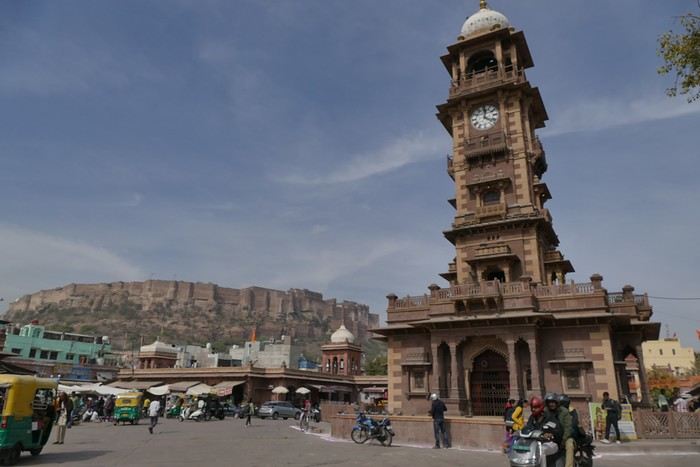
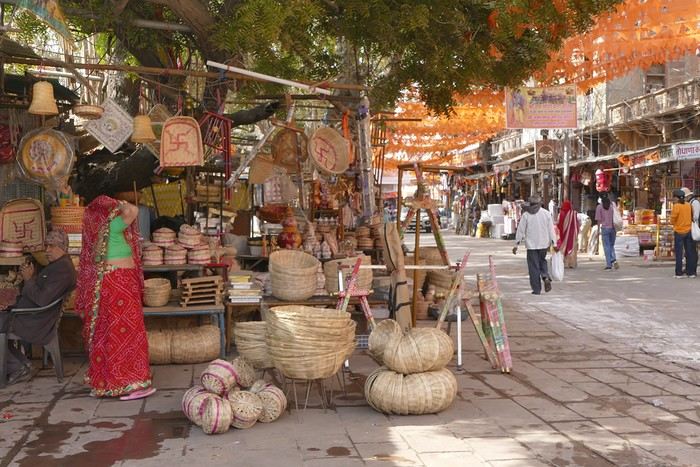
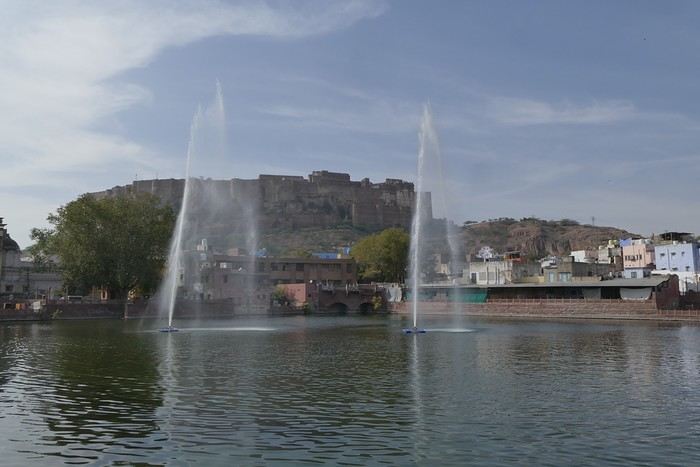
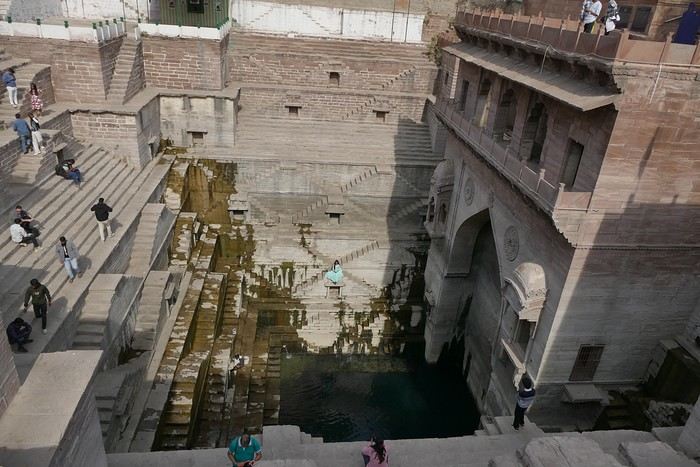
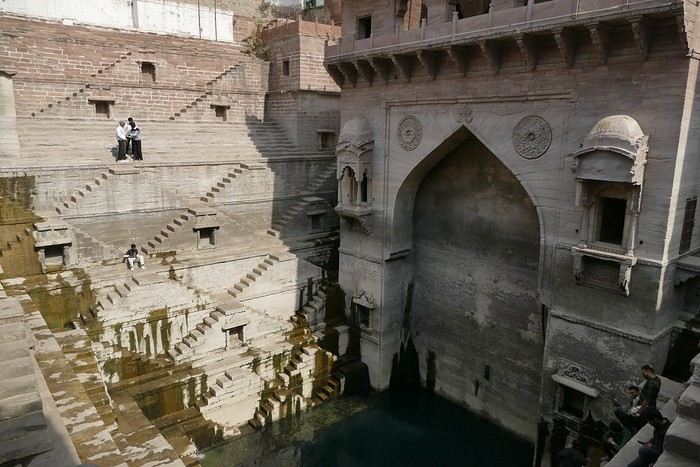
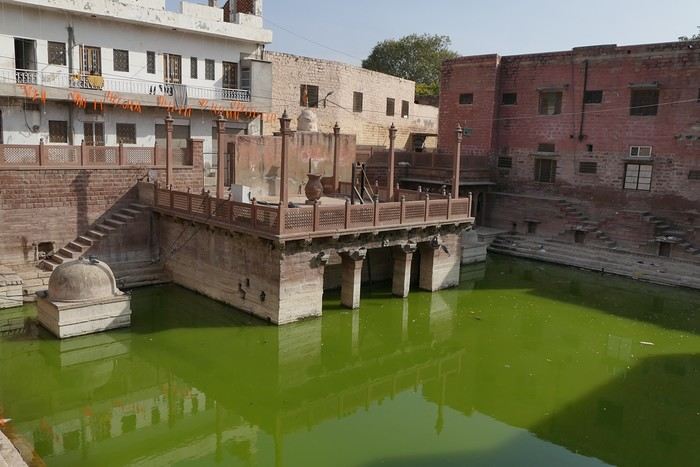
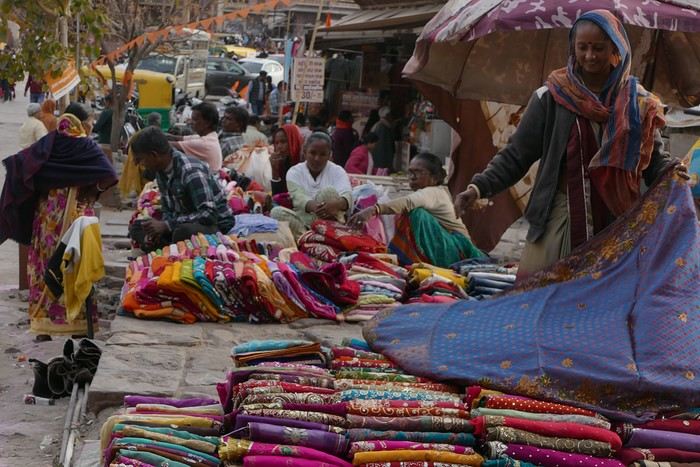
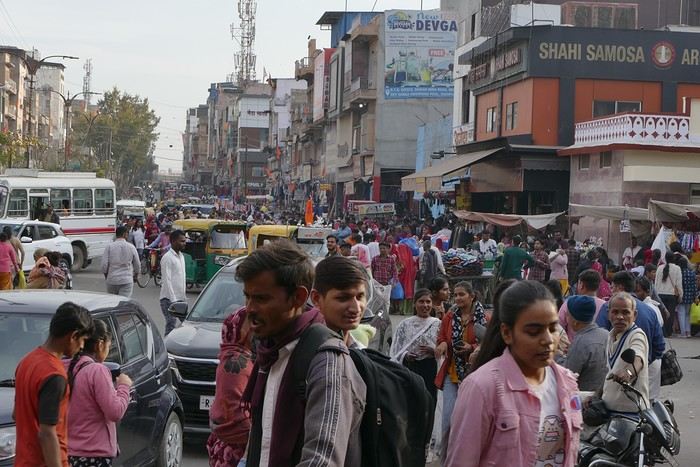
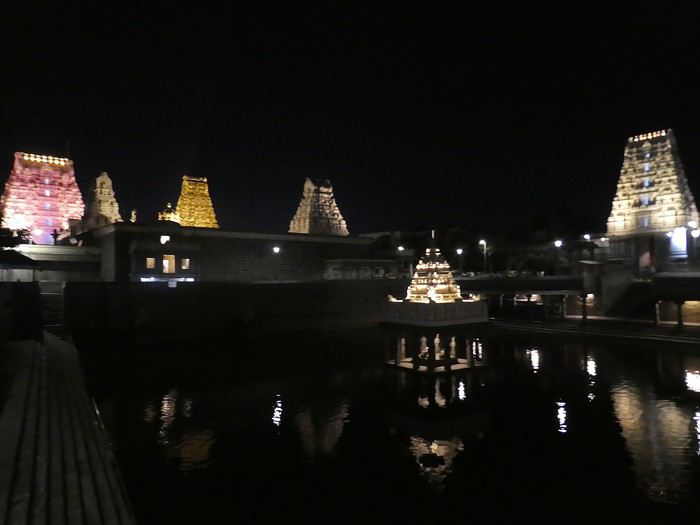
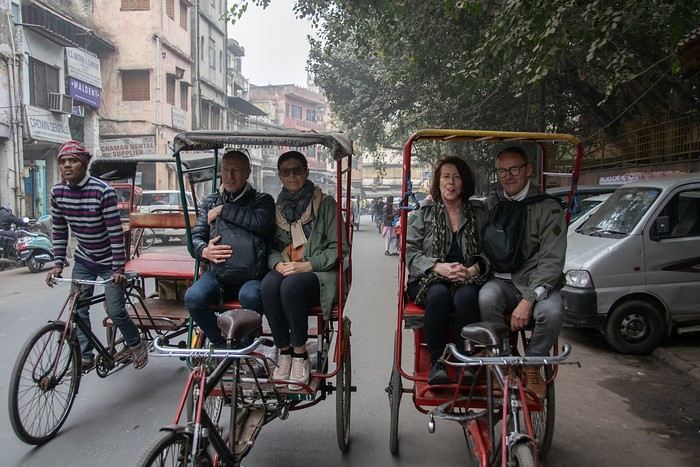
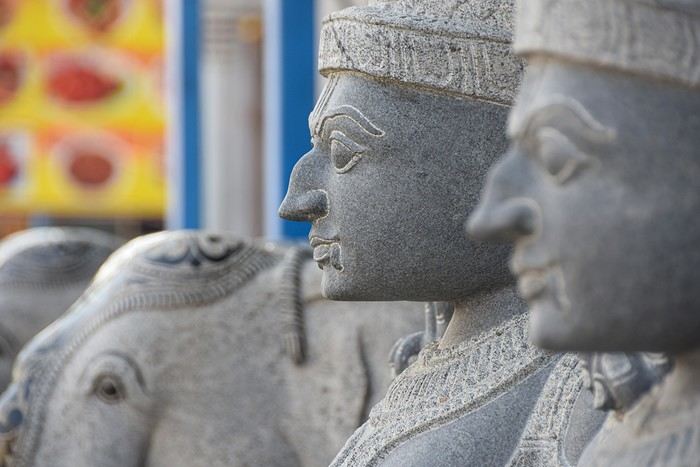

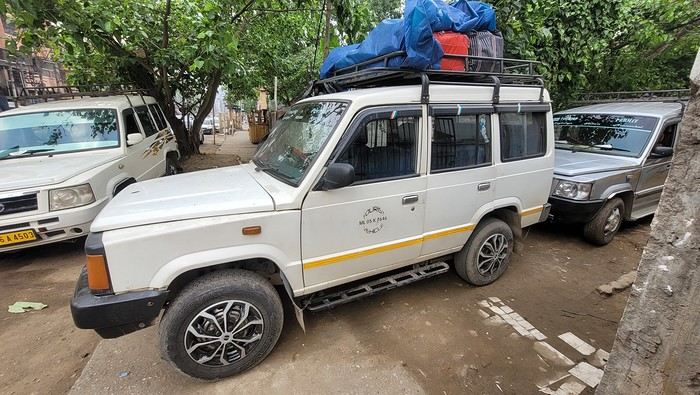
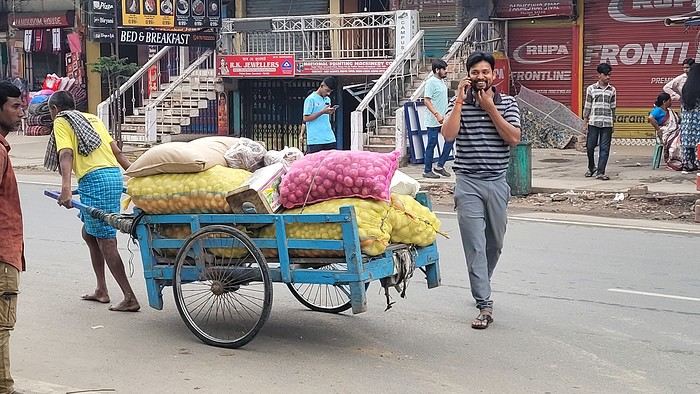
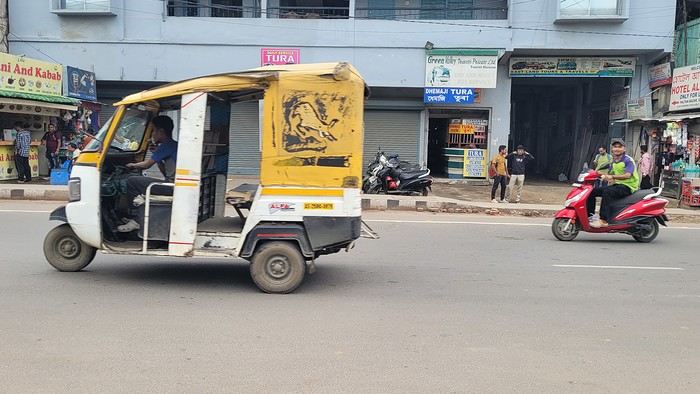
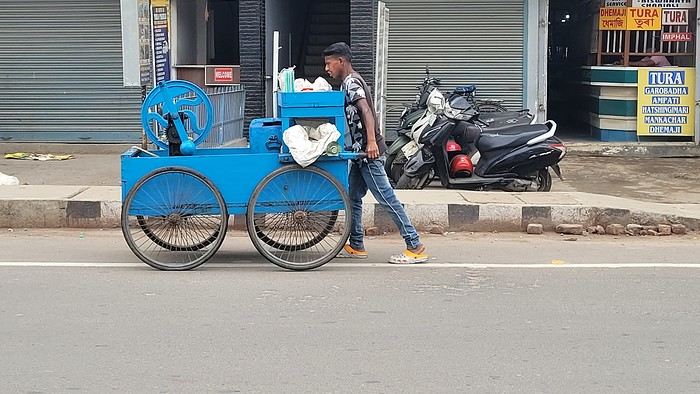
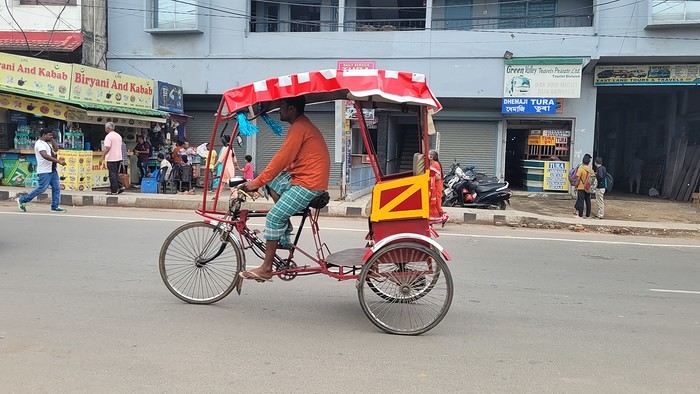
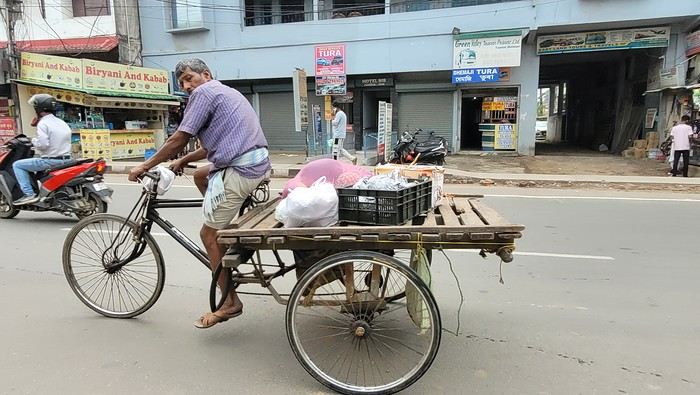
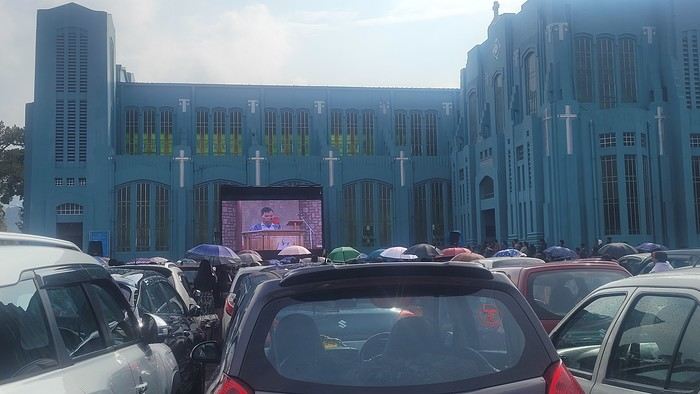

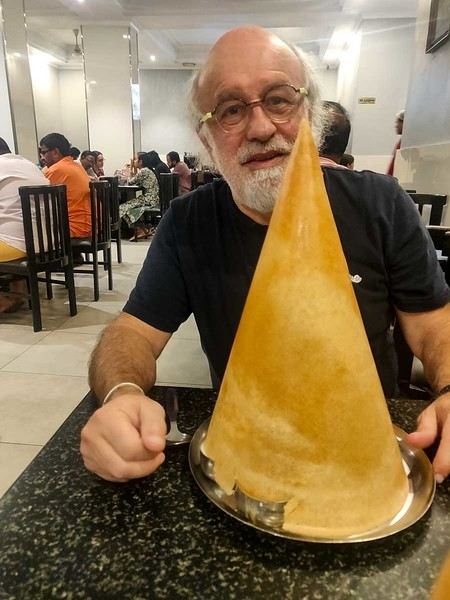
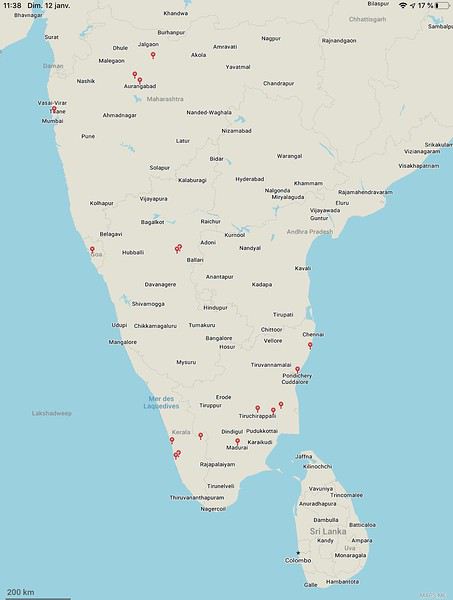
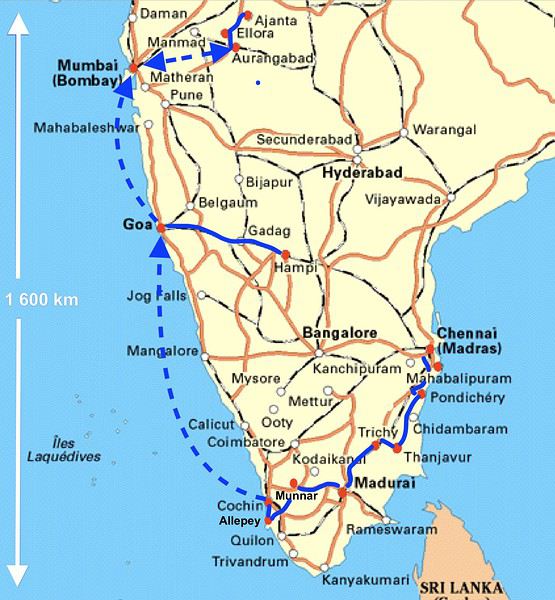
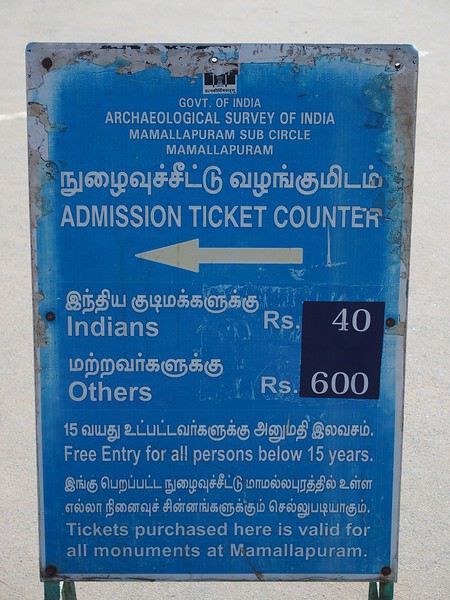
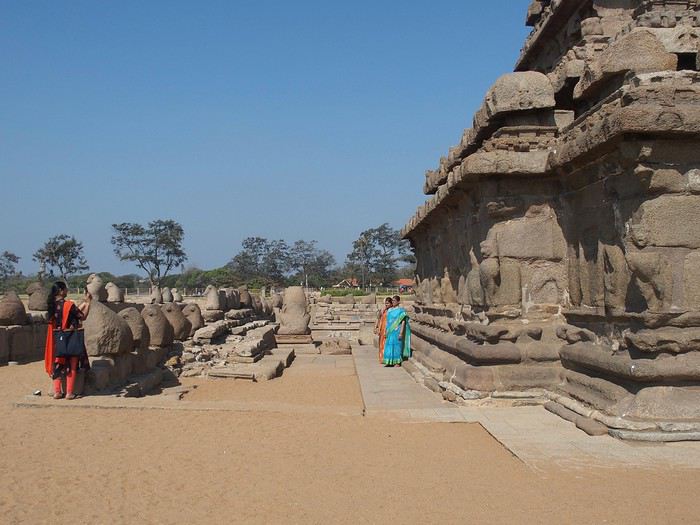
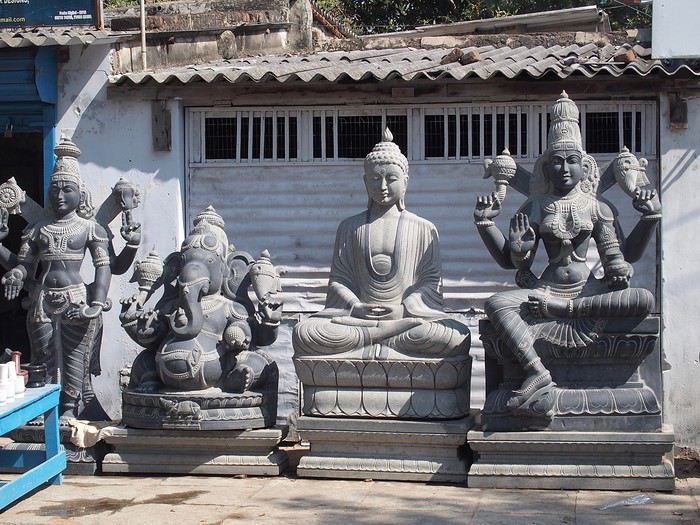
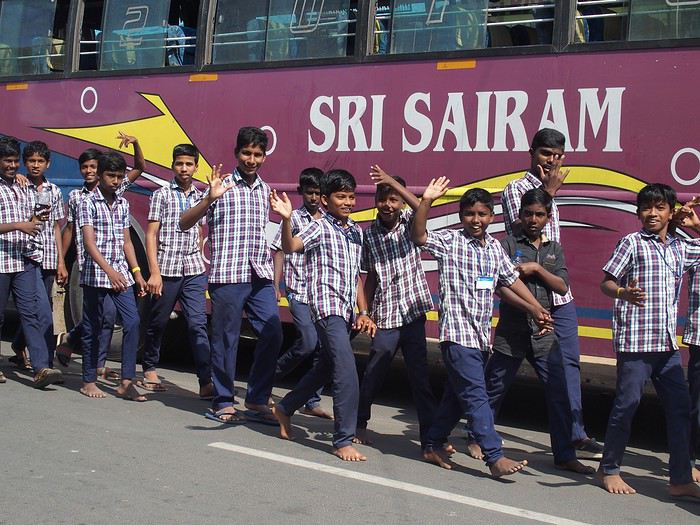
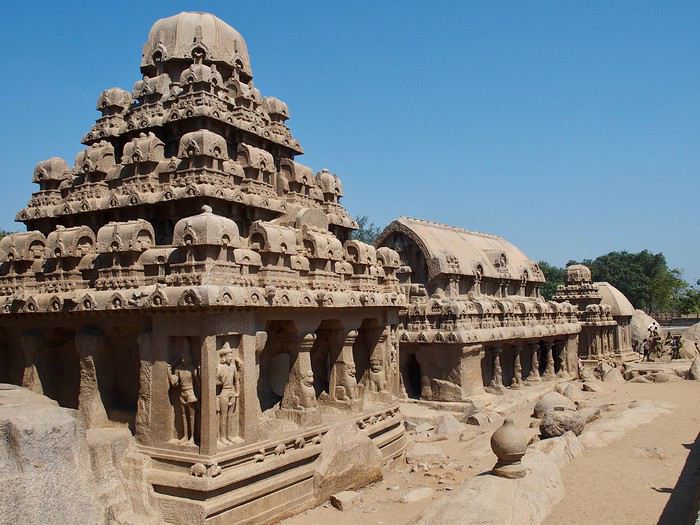
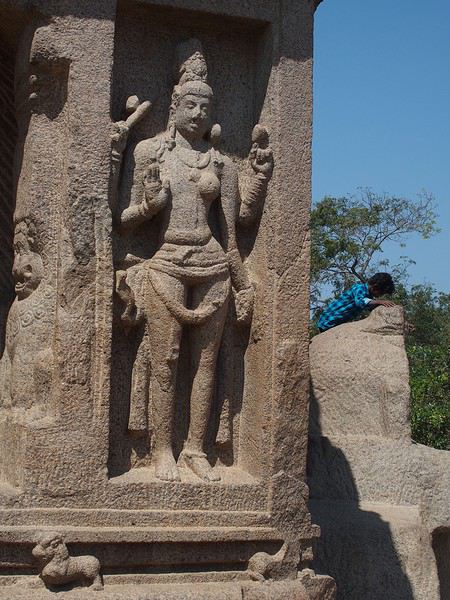
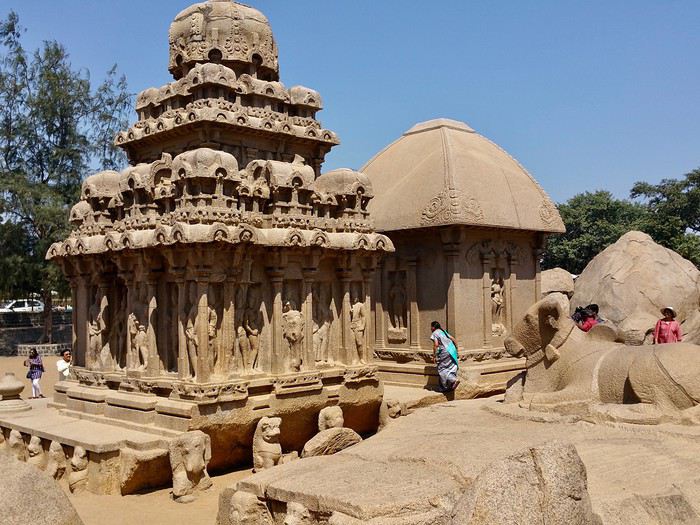
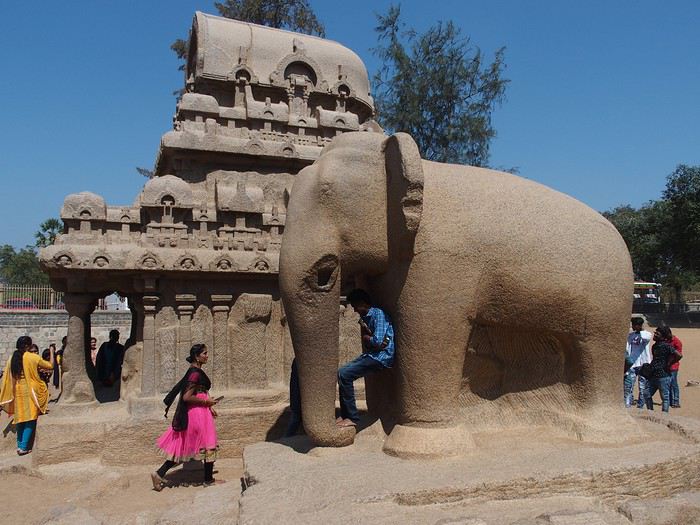
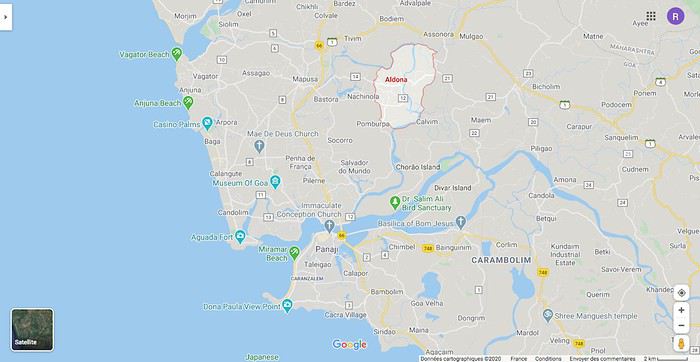
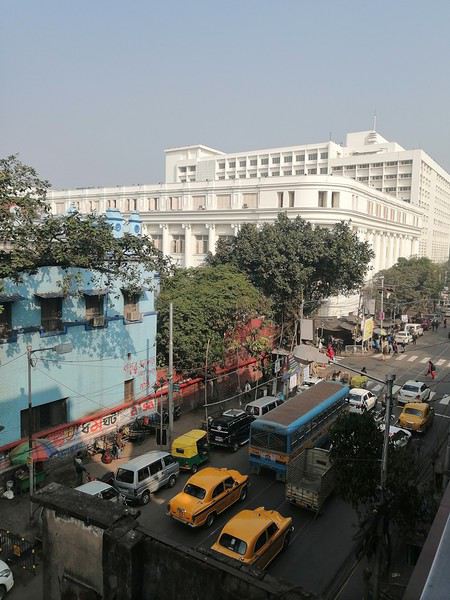
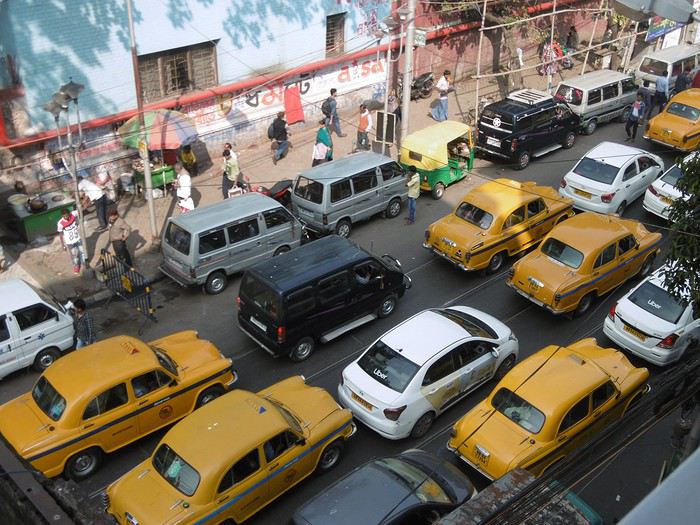
 Vue du balcon de l'hôtel

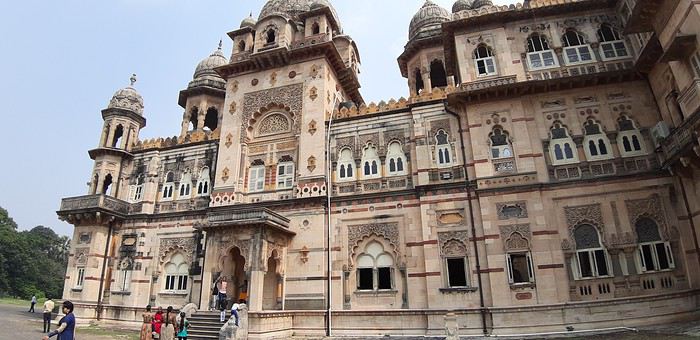
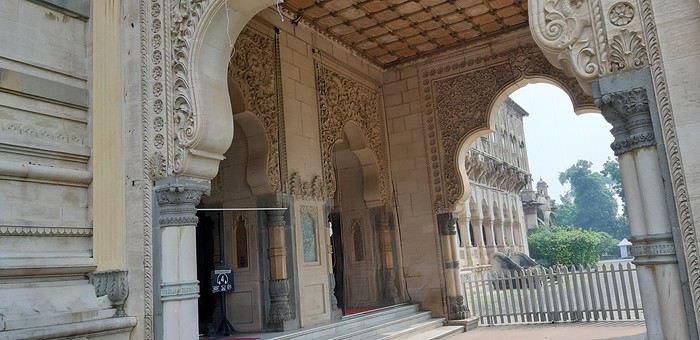
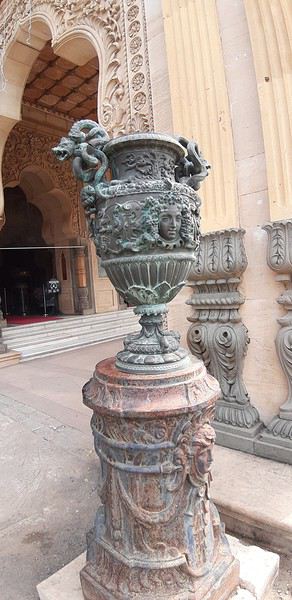


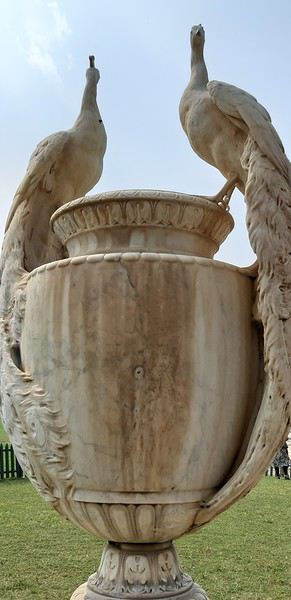


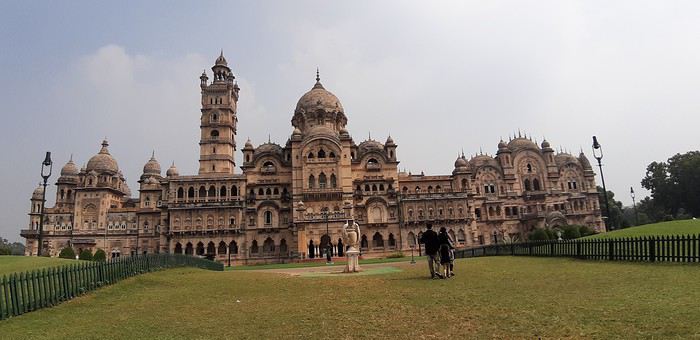
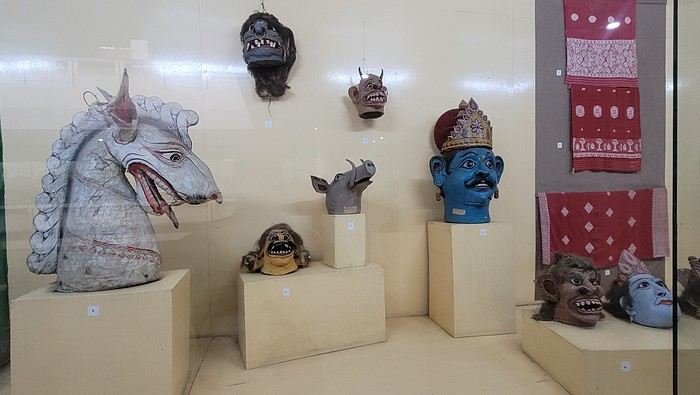

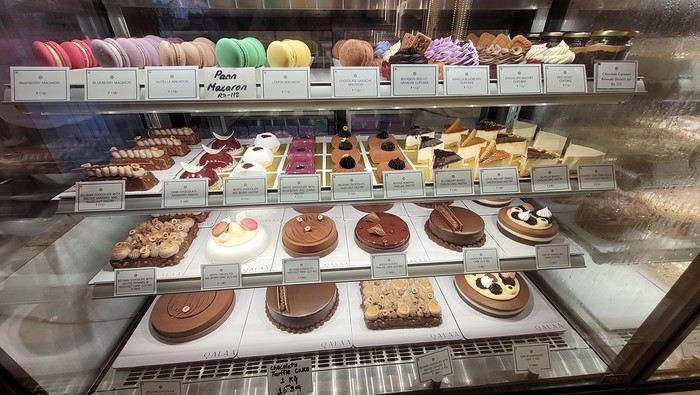

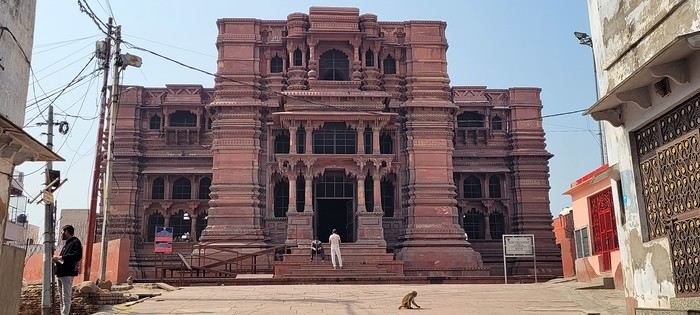

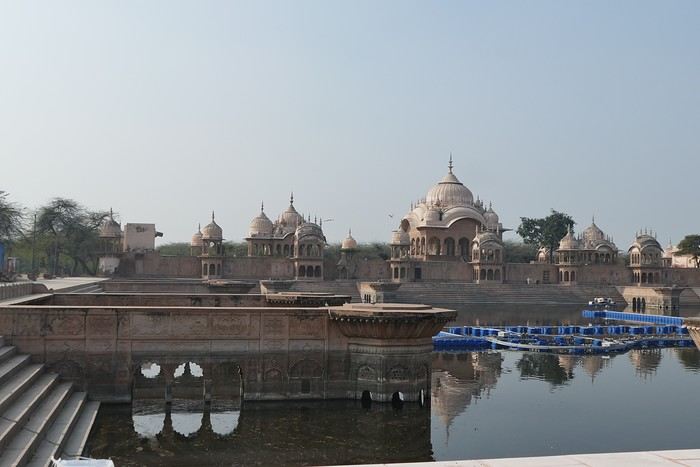
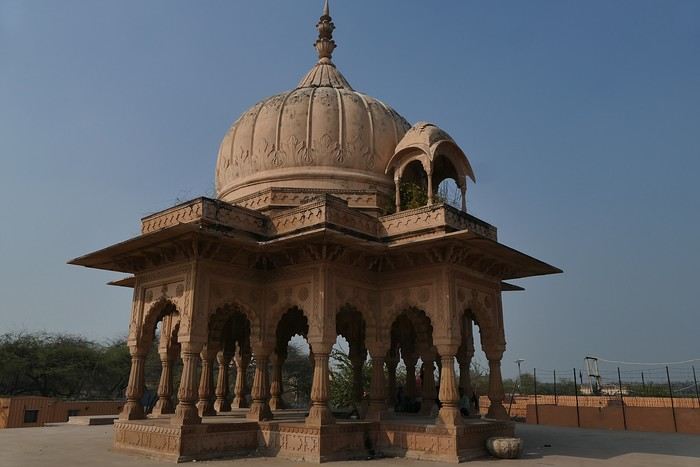
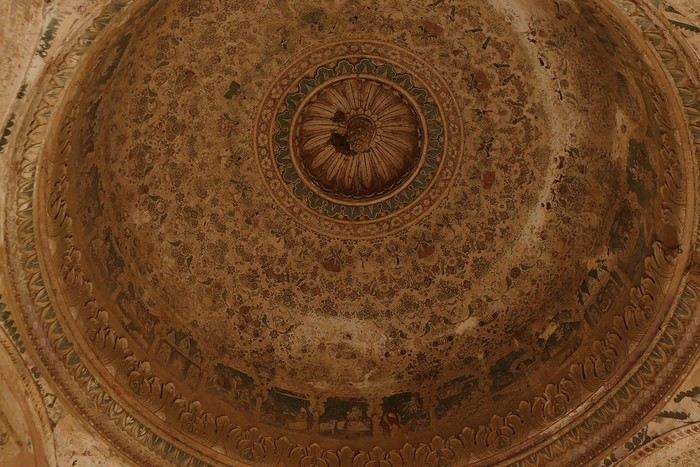
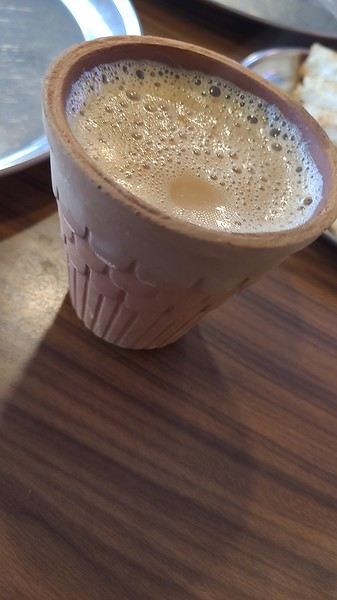
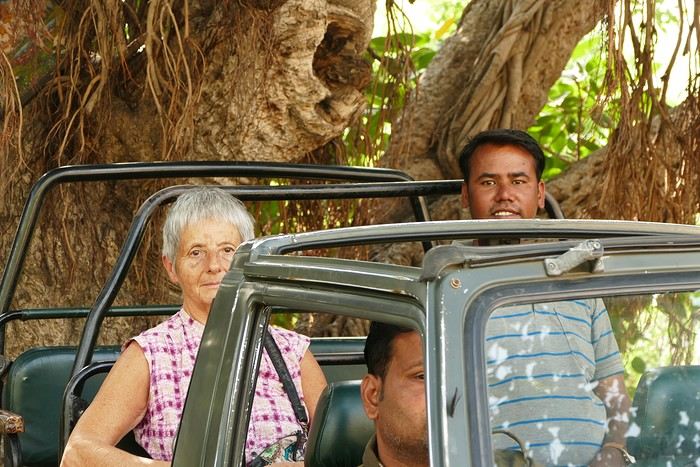
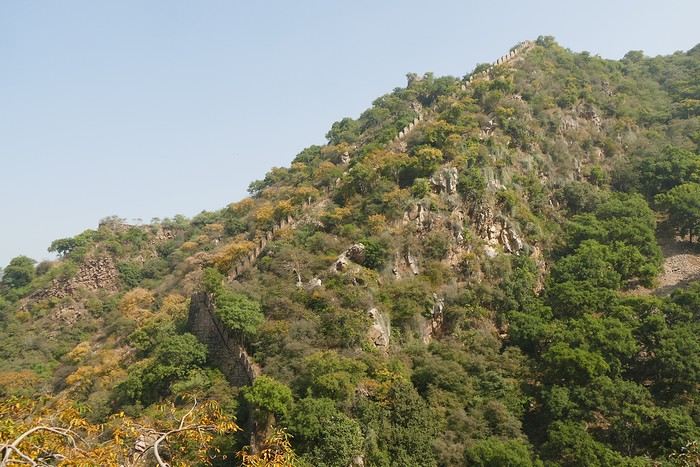
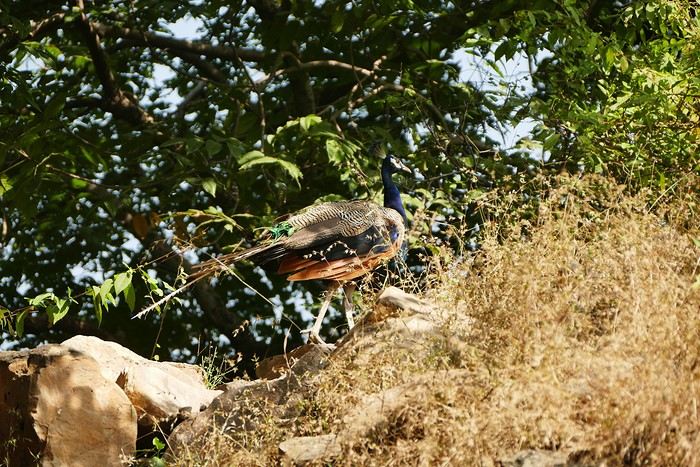
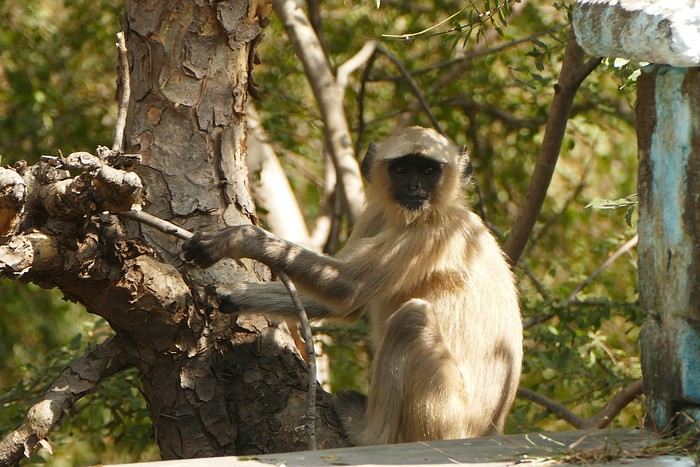
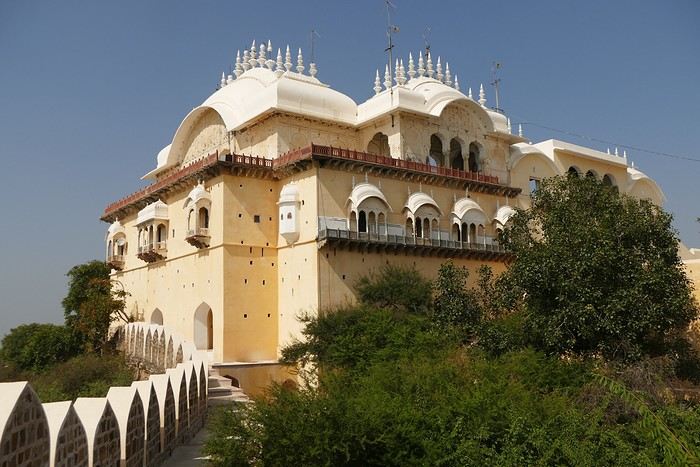
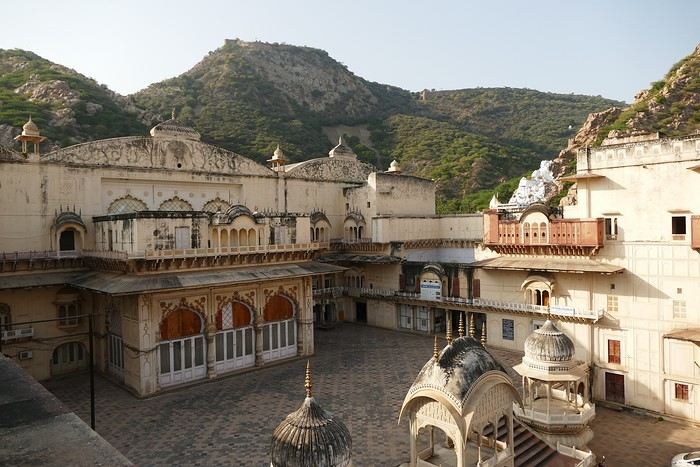
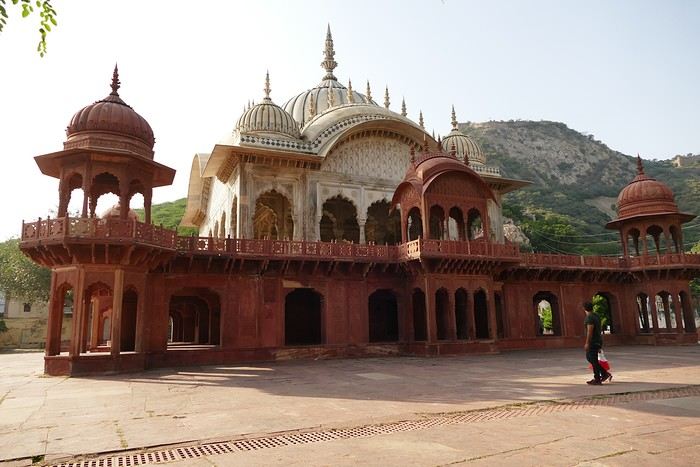
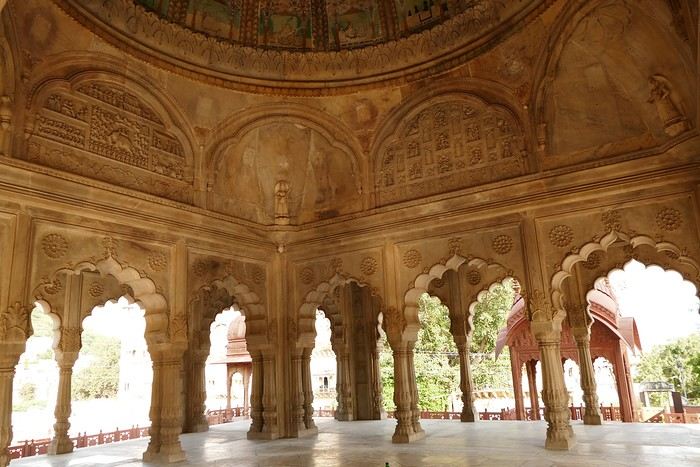
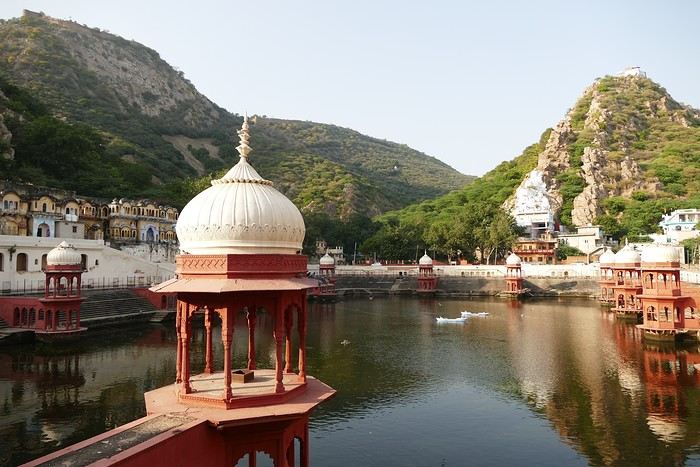
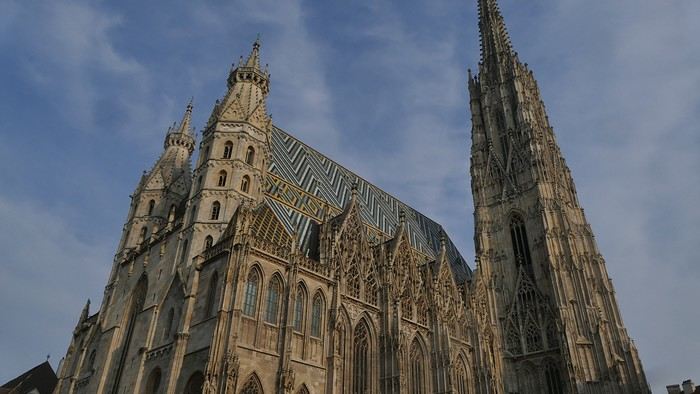
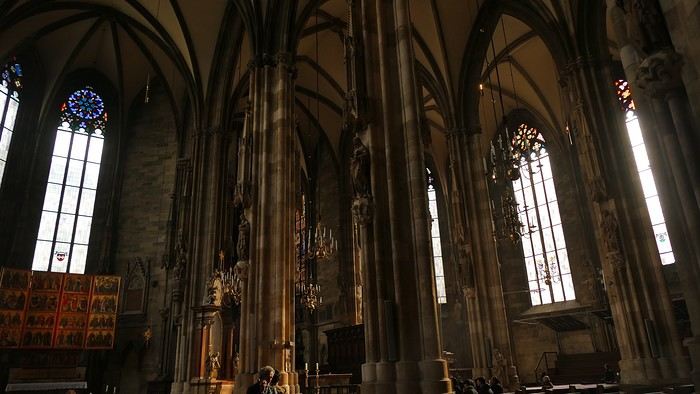
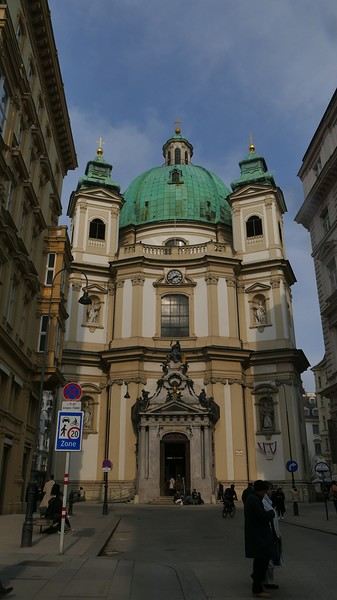
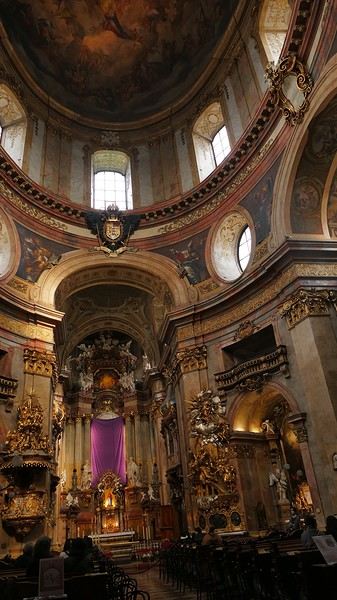
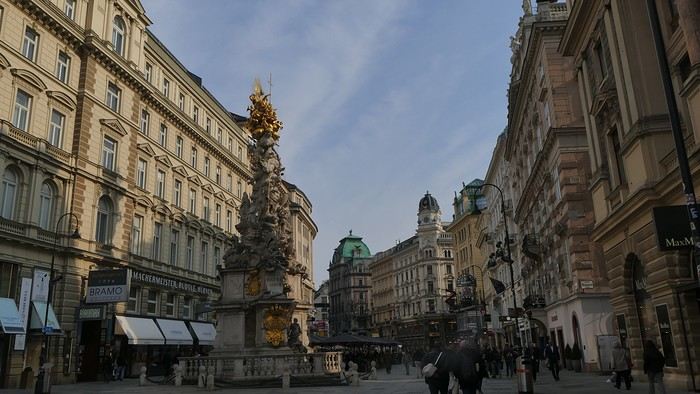
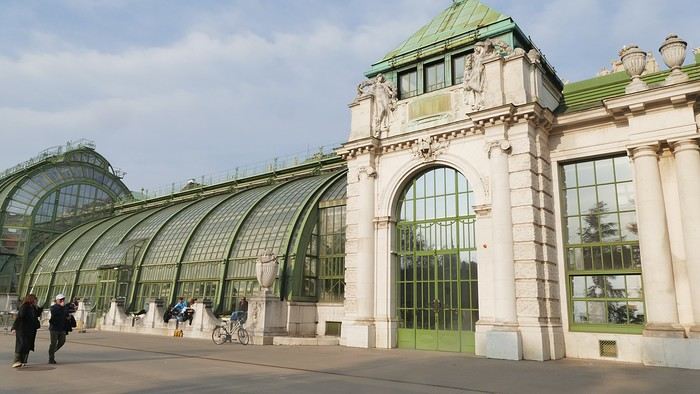
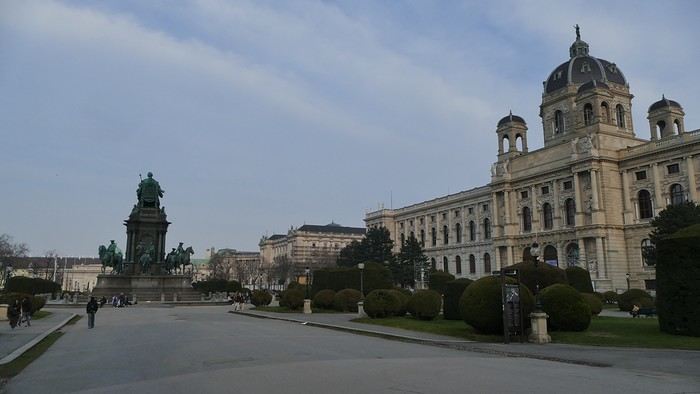
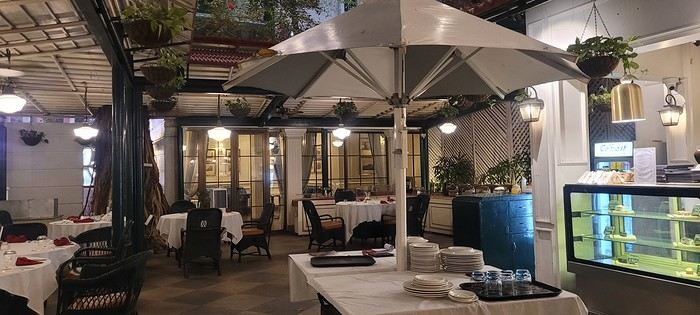
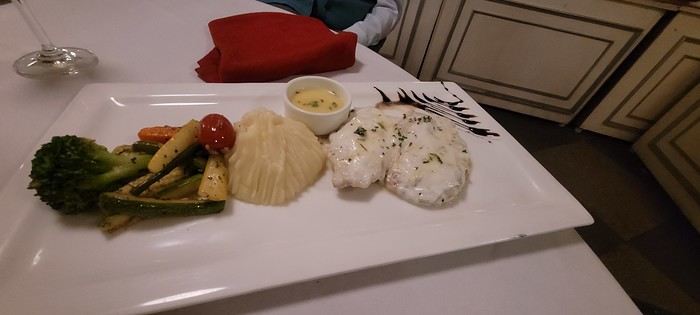
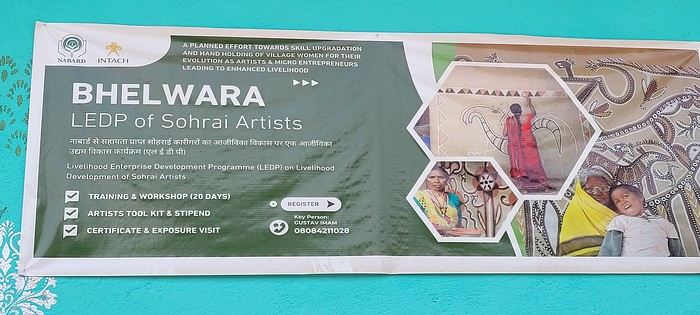
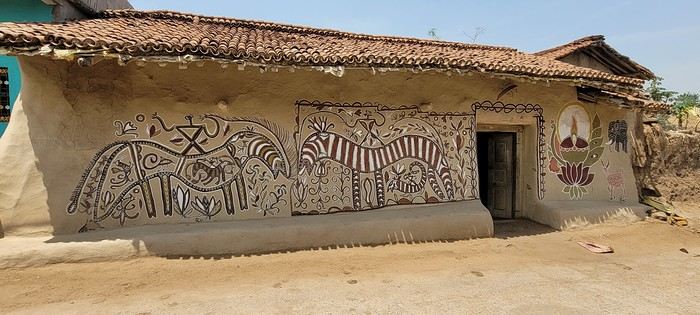
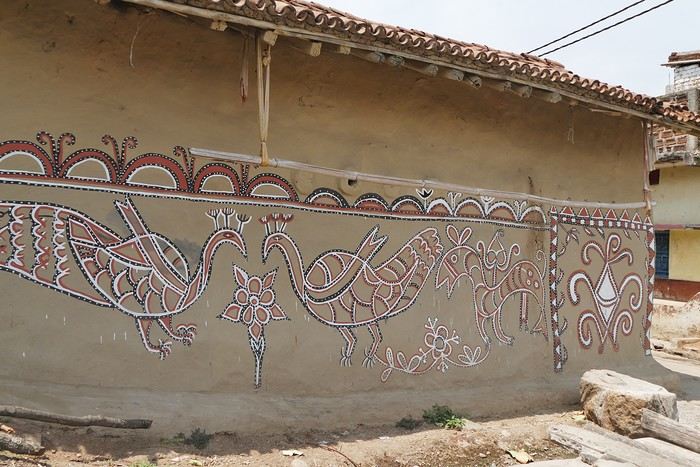 On some paintings, the scenes become almost narrative: you can make out figures, everyday gestures, like a memory of the village inscribed in the walls. The decorative frames around the doors aren’t left to chance either—they symbolically protect the house, like a boundary between the inside and the outside world.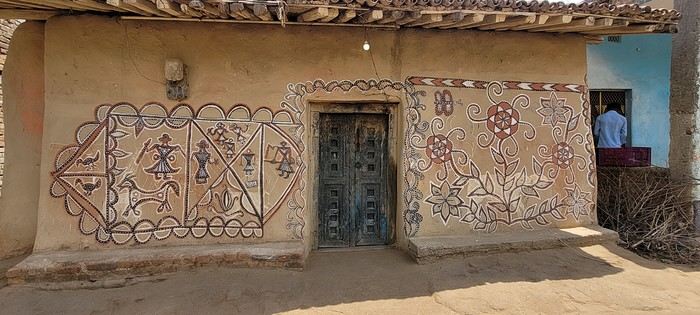
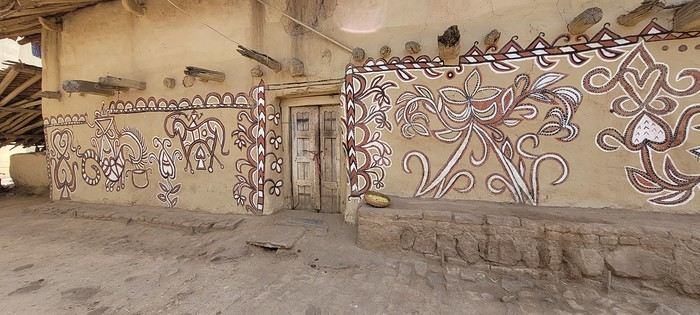
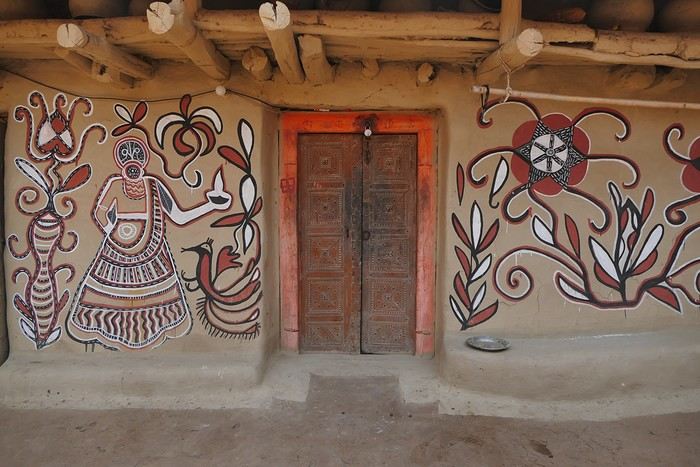
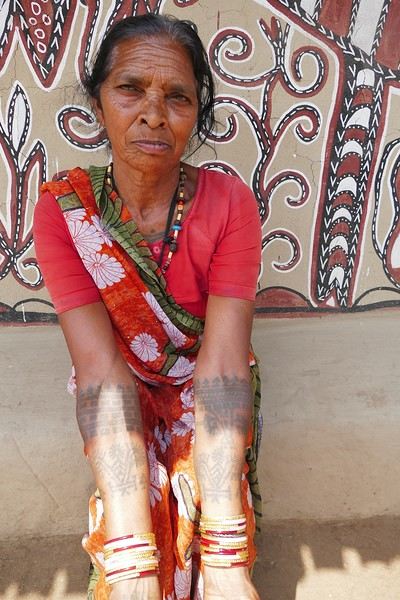
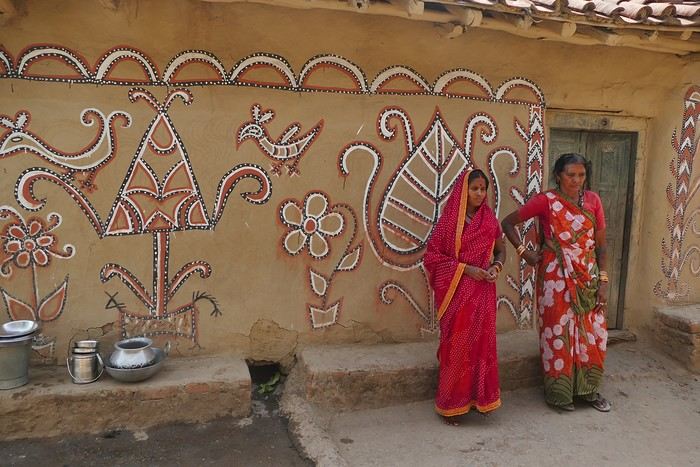
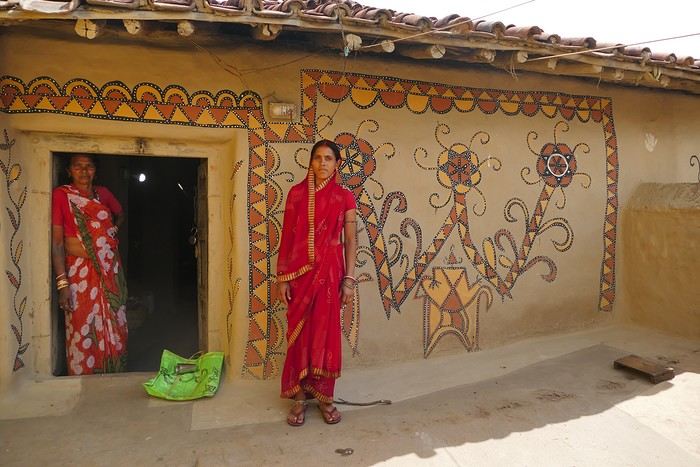
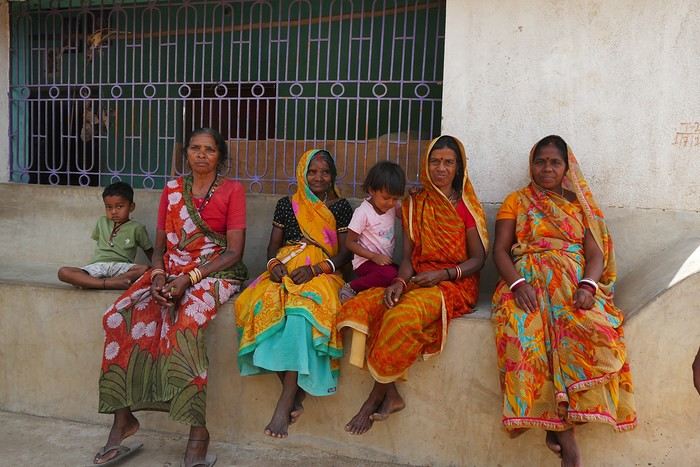
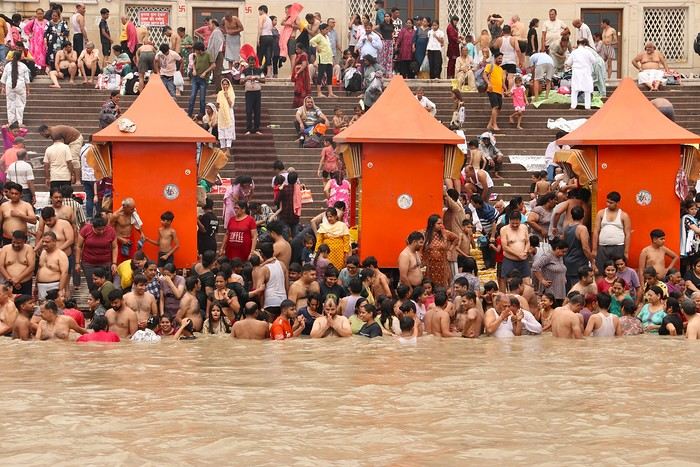
 Compared to our initial plan, we slept one night in Barmer instead of two because we had time to visit the market in the afternoon, saw the Kiradu site the next morning, and didn’t see the point in staying longer.
We cut two of the six nights in Shekhawati. After our flight to Varanasi was canceled, we had to stay in Delhi, which actually turned out well—it let us arrive in Varanasi earlier and more rested.
The timing worked well for us, with longer stops in Bundi and Udaipur.
Compared to our initial plan, we slept one night in Barmer instead of two because we had time to visit the market in the afternoon, saw the Kiradu site the next morning, and didn’t see the point in staying longer.
We cut two of the six nights in Shekhawati. After our flight to Varanasi was canceled, we had to stay in Delhi, which actually turned out well—it let us arrive in Varanasi earlier and more rested.
The timing worked well for us, with longer stops in Bundi and Udaipur.