Discussions similar to: suivi demande passeport ANTS fonctionne
FR

480 similar discussions in English

Wild Camping in Southern Africa
Hey everyone,

I’m sharing a slightly unusual travel journal with three goals. To make it work, this discussion should stay in the travel journal section so we can find it easily and keep adding info to existing posts.

This journal is meant to help "newbies" discover these magical places.

We go to Southern Africa not just for the animals, but also for that soft light, the atmosphere, and those incredible wild campsites where you feel so at home... I’d love for you all to share your favorite spots here—those we miss so much.

The last goal is figuring out how to photograph them. Honestly, I’m not happy with my photos because they don’t capture the feeling I get when I’m there or that unique atmosphere.

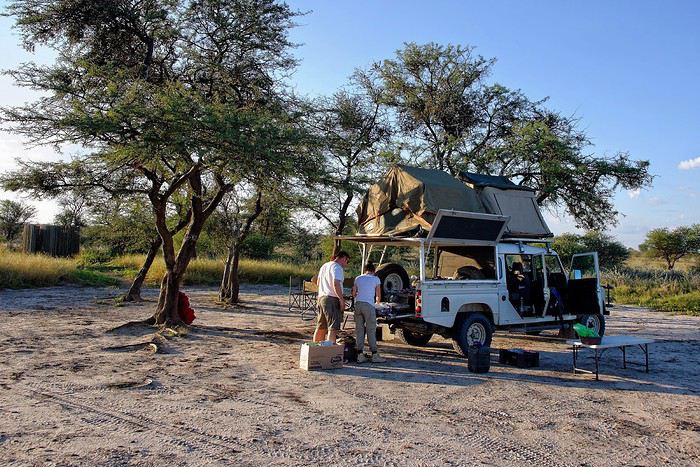
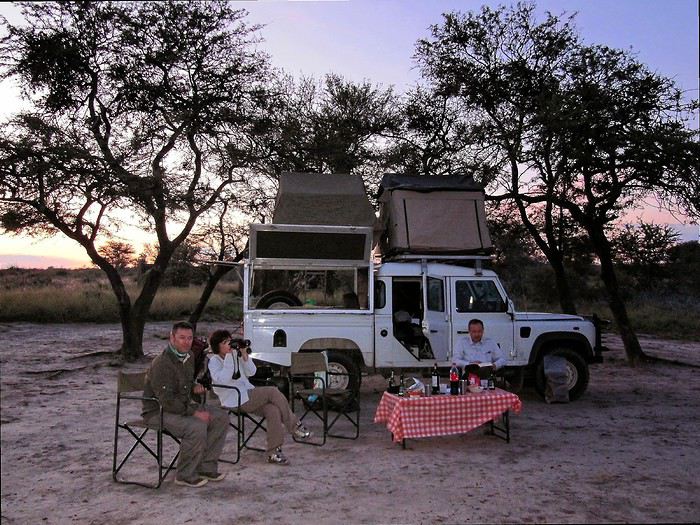
I’ll start with one of the first spots that, for me, is one of the most beautiful in Southern Africa: Passarge Valley 2 in the Central Kalahari. There, you’re alone—completely alone. The next campsite is over 25 km away, and that’s a half-day of 4x4 driving. In front of you, there’s nothing but the CKGR plains with herds of springboks... absolutely stunning 😎


Open
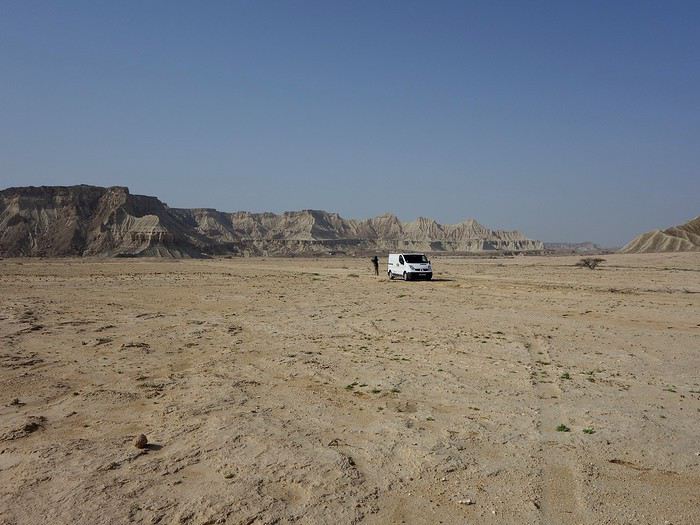
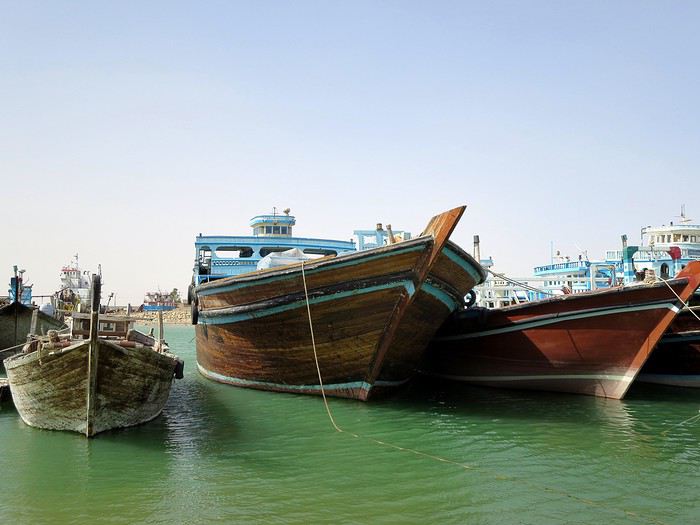
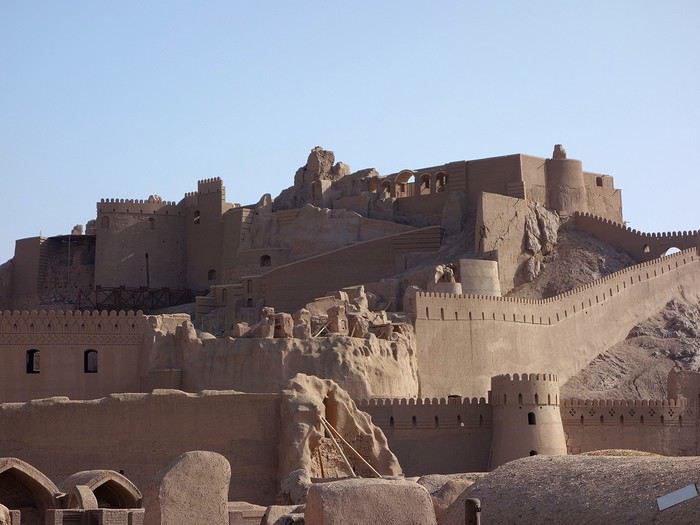
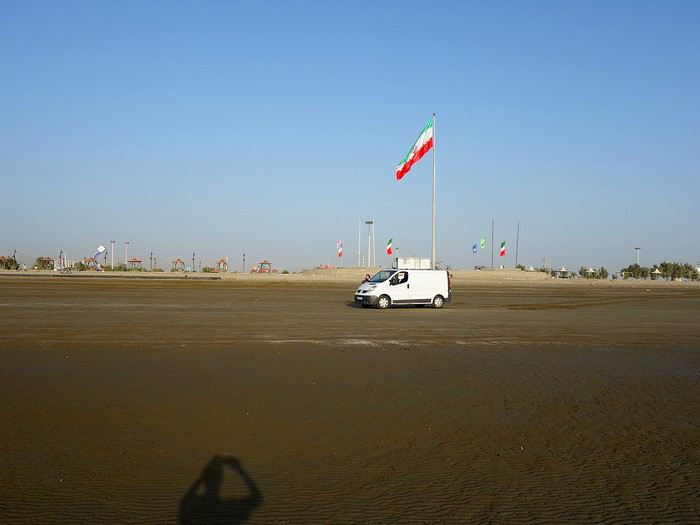
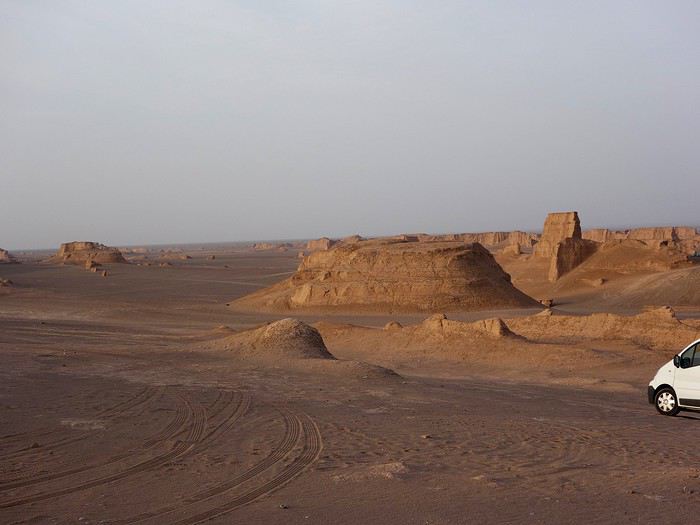
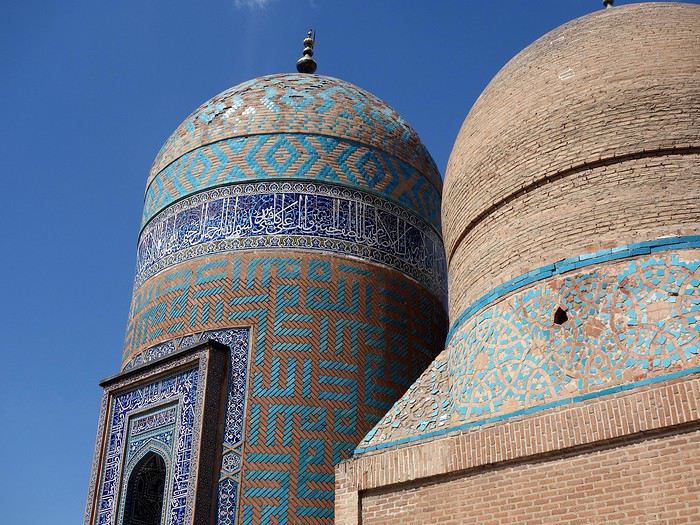
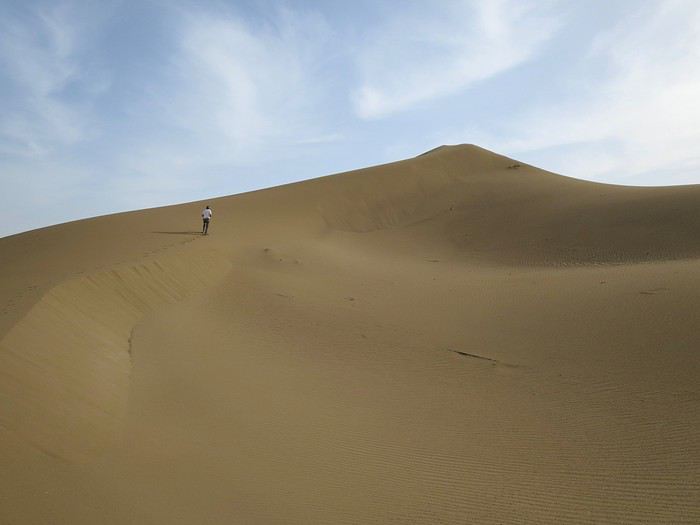
Iran road trip: 30 days, 7,000 kilometers, from the Aras to Baluchistan
Hello,

We’re not sure this report will really be useful for VF backpackers.

As mentioned in our profile, our travel journals are primarily aimed at young van converters who’ve been following our trips for years. No cultural fluff—just a visual reconstruction that strictly follows our motorized routes.

That said, they might offer a different perspective: traveling immersed in a small, go-anywhere vehicle that fascinated the Iranians. We didn’t just visit once—we had to show off our van setup 100 times!

Anyway, it’s up to you to decide. 😏

The itinerary? No overly precise plan. It’s all about the vibe, improvisation, and what we felt like doing... since our van makes us completely self-sufficient. Sylvie wanted to see Persepolis, the desert cities, and the jewel that is Isfahan. For me, it was Abadan and Bandar Abbas—where I used to drive TIR trucks back in the 1970s. Then Bam and Baluchistan, where I’d never driven before.

Speaking of which, over 40 years of international road experience doesn’t make you immune to mistakes. Overconfident, I underestimated tensions in certain areas. You’ll find the stories in the text accompanying the photos.

All in all, these 30 days are shared online in two albums.

Click the "i" to display the story alongside the photos:

Album 1: PERSIAN GULF

Album 2: IRAN 2017

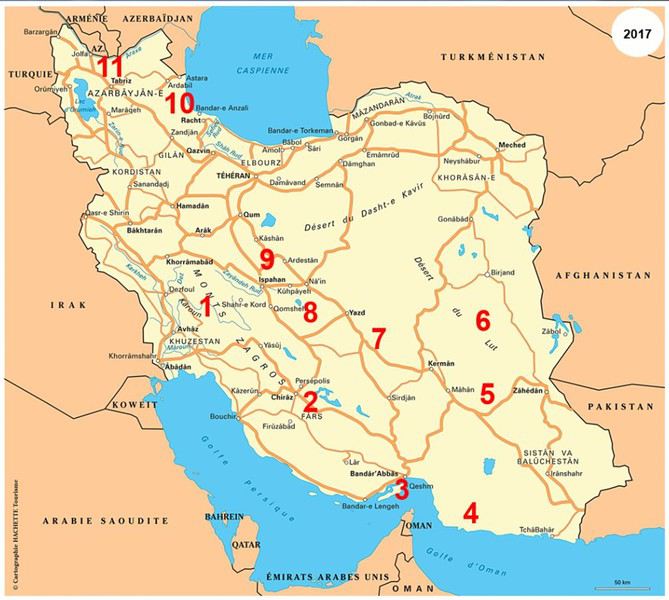
The travel journal map:


To wrap up, a few snapshots of our favorite spots 😏

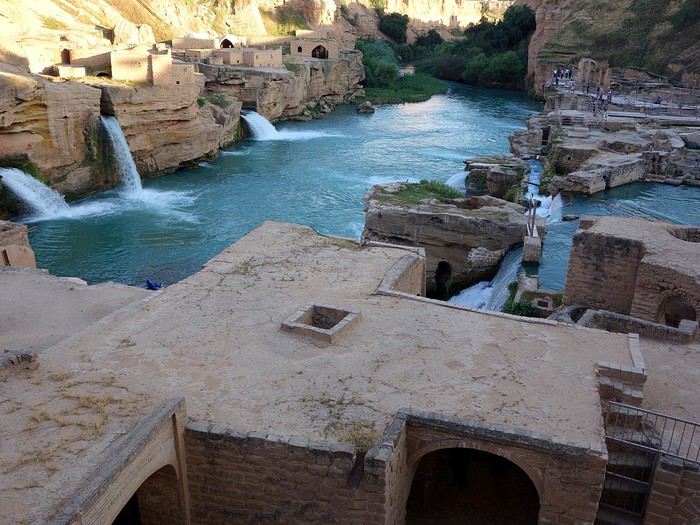
Shushtar, Khuzestan


Qeshm Island


Strait of Hormuz


Bam


Gulf of Oman


Shahdad Desert


Ardabil


Varzaneh


Best regards, Sylvie & Bernard
Open
Cycling in Sicily: itinerary
Hi there,

A year ago, I posted looking for a cycling route for a trip in Sicily with my partner and our two kids (3 and 4 years old) in a trailer—something calm, with nature and a bit of culture. I didn’t get many replies, so I’m sharing our itinerary, which we really enjoyed. We cycled from the southeast (Syracuse) to the northwest (Palermo).

**Note:** We had no issues on the road—drivers were very courteous, the welcome was exceptional (lots of invitations to eat and/or stay overnight), and there were very few people on the roads, even the big ones, since we were there from September 23 to October 7.

**Weather:** Apparently, the summer of 2014 had been awful (only 25°C...). We, on the other hand, had 3 days at 44°C—it was *brutal*, including one day at 35°C at 1,000m altitude in the center of the island on October 1st...

**Accommodation:** 15 days of wild camping, with just one really nice apartment after 7 days in Piazza Armerina. Wild camping was tough—rocky, dusty, hard to pitch tent stakes. Our tent got pierced by thorns (even the groundsheet) from one side to the other. We washed up at village fountains, and—let’s be honest—less often than we’d have liked. The kids’ clothes, which spent a lot of time on the ground, were pretty grimy since laundry was rare. Only one official campsite (otherwise, they’re all on the beaches): Da Vinci Camping, in the middle of lemon groves near the southeast (Rosolini). It’s well-known on social media for being very "roots."

**Water:** A real challenge—*very* tough. Off-season, many homes are abandoned, and on some days, we passed through few villages. Result: we always carried our max water (9L) and sometimes had to add extra bottles to last 2 days, covering the day’s ride, wild camping, and the next morning—that’s 15L on the bikes. So be careful with this!

**Itinerary**

We arrived by train in Messina from southern Italy (yes, the train goes onto the ferry—worth seeing!), then took the train to Syracuse. We decided the northeast coast was too dangerous to cycle, so we visited Syracuse and then picked the SP roads (the smallest ones, more or less following the coast) toward Noto. We were supposed to head southeast to Pachino, but since our ferry from Palermo was booked 15 days later, we cut the route short and headed toward Rosolini instead. Nothing exceptional until Modica, crossing the Ispica fault. Modica is a really pretty town to see. Then Ragusa’s old town via the SS 115—a quiet but very scenic road. The town is stunning, but getting through the modern part (Ragusa Alta) means 300–400m of elevation gain... Caltagirone: a lovely town (famous for ceramics), but the center is uphill. We took a bigger road, but there was hardly anyone around. Left via Mirabella, then visited Piazza Armerina and the Villa Romana. Took the SP 15 to Barrafranca, Pietraperzia, then Caltanissetta via the SP96 (choose carefully—there’s a bigger road nearby).

Then Serradifalco, Mussomeli (castle), San Giovanni Gemini—a series of hilltop villages with valleys in between. We climbed and descended 500m+ repeatedly. Santo Stefano Quisquina, Prizzi (passing at 1,000m altitude—really nice, no one around). Corleone (great road, some climbing, but it’s awesome); Ficuzza, Santa Cristina Gela, Altofonte, and Palermo (no traffic issues).

**Reminder:** This was off-season—no one on the roads. We found the route through Caltanissetta, Mussomeli, etc., *spectacular* and sometimes breathtaking. Sicily is a rugged place for rugged people (especially wild camping). We’d heard the center of Sicily was overrated (not at all...). After 4 months of traveling without always listening to others’ opinions, we confirm: central Sicily is amazing—rugged, dramatic, and perfect for what we were looking for (though we didn’t swim).

**Elevation:** People kept saying Sicily was a nightmare for climbing. We’ve done much tougher routes in the Black Forest or Slovenia. The tricky part in central Sicily is the constant ups and downs—you climb 300–600m in one go, then descend right after. We used "Ride with GPS" to test different routes and avoid unnecessary descents (or minimize them). With a few extra kilometers, we saved about 2,000m of elevation gain overall, especially around Caltanissetta, the Modica-Ragusa link, arriving in Modica, and leaving Ragusa.

Hope this helps someone...
Open
Learning to sail
Hi there,

This question has probably already been asked on this forum. What would be the best way for me to learn how to sail a boat? I’m 45, have no experience in the matter, but I’ve got plenty of time available and I live in Marseille. I’ve tried courses at different schools here, but they’re all focused on competition—it’s not my thing at all. I’d like to learn so I can eventually think about traveling by sailboat. Thanks for your insights!
Open
Which tour agencies in Playa del Carmen?
Hello, We’re heading to Playa del Carmen for two weeks in August with our 4-year-old child. We’ve seen that you can visit places like Tulum or Cozumel on your own using colectivos. For Coba, we’re hesitant to go alone because we’d like to see the cenotes and the Mayan village. But we’d prefer to find a French-speaking agency that guarantees small-group tours, especially for Sian Ka’an. We’d rather avoid the "mimi tours" even though they’re recommended by a lot of people and the *Guide du Routard*, based on the reviews we’ve read. I’m interested in the agency Muuch Ximbal, which seems to offer slightly different outings. There’s also H and L Tours or Delphine Fautré’s agency (though the last two don’t list excursion prices). We also found Promomaya, but apparently, they don’t have an on-site agency. Do you have any tips or other agencies to recommend? We’d also like to swim with dolphins but outside of the Xcaret and Xel-Há parks. Do you know of other ways to swim with them, maybe even in the open sea??? I’ve also seen that it’s possible to swim with whale sharks—is this doable with a 4-year-old who doesn’t like putting her head underwater yet? Have any of you done it? This excursion is quite expensive, and I’d be okay with swimming with them, but just sailing on a boat without being able to see them would be disappointing. PS: Our Spanish isn’t very good. Thanks in advance for your replies.
Open
Looking for a casa particular in Havana, Cuba?
Hi! I’m heading to Havana for a week in February. I’m looking for a casa particular that’s affordable, clean, and cozy. Since I’ll be traveling alone, I’d love a place where people are welcoming! Also, I really want to stay in Habana Vieja...

Do you have any recommendations for places you’ve stayed before? I tried booking the casa particular *Chez Nous*, but I never got a response.

Thanks!!

Julie
Open
Itinerary in the works for 3 weeks in southern Chile and Argentina
Hi there,

Three years after exploring northern Argentina and Chile, my two travel buddies and I want to discover the southern part of these two countries. We’re traveling on a budget, backpacker-style, favoring public transport and modest accommodations, but we don’t hesitate to splurge a little when it’s worth it. The classic spots that have been fueling our dreams: Bariloche, the lakes, Chiloé, El Chaltén, Torres del Paine, Perito Moreno, El Calafate, Fitz Roy, Ushuaia and Tierra del Fuego, and wrapping up in Valparaíso. We’ll take a round-trip flight to Santiago, then I’m thinking of a one-way flight from Santiago to Punta Arenas. From there, we’ll explore and do several day hikes in the south, including Ushuaia and, if possible, Tierra del Fuego. Then we’ll head back north by bus to Bariloche and the lakes, followed by Chiloé, then a bus to Santiago and Valparaíso. Based on your experience, could you help me figure out the best way to structure this trip and maybe suggest some ideas? Thanks in advance. Didier
Open
Malaysia itinerary advice for summer 2027 with 3 kids
Hi there, We’re planning a 3-week family trip next summer with our three kids, who’ll be 8, 8, and 7 years old.

After some research, we’re leaning toward Malaysia to combine nature/forests and paradise beaches. The idea is to introduce our kids to the country’s culture, nature, and wildlife.

We want a great trip but without splurging on luxury options like high-end lodges and resorts. We’re looking for comfort with a touch of authenticity—basically, a good middle ground.

I’ve started putting together an itinerary and would love your expert advice and tips to help us build this amazing trip with our little ones.

Day 1: Departure from France

Day 2: Kuala Lumpur Stay at a hotel near the airport or KL Sentral. Just one night.

Day 3: Morning flight to Sandakan (Borneo). Stay in Sepilok

Day 4: Sepilok: * Orangutan Center * Malayan Sun Bear Center * Rainforest Discovery Centre

Day 5: Depart for Kinabatangan. Boat safari in the late afternoon.

Day 6: Sunrise safari. Jungle walk. Evening safari.

Day 7: Final safari. Return to Sandakan.

Flight to Kuala Lumpur, then to Kota Bharu (or overnight transit depending on schedules).

Day 8: Transfer to the port. Boat to the Perhentian Islands.

Days 9 to 13: Perhentian Besar 5 full days. * Snorkeling * Hiking * Turtle watching * Wild beaches * Relaxation

Day 14: Return to the mainland. Bus or private car to Taman Negara.

Days 15 and 16: Taman Negara.

Day 17: Return to Kuala Lumpur.

Day 18: Visit the Petronas Towers or Batu Caves

Day 19: Free day.

Day 20: Return flight.

Thanks in advance, everyone!

Baptiste
Open
Botswana and Zimbabwe
Before Our Departure Preparing for this trip started 9 months before our departure in June. For those planning a similar itinerary, it’s important to book accommodations well in advance, especially in the Okavango and Savuti campsites—otherwise, you might not find any availability.

Introduction After visiting Zambia three years ago and Namibia and western Botswana a year and a half ago, this year we chose Zimbabwe (Hwange NP) and the northern half of Botswana. Our flight from Paris was to Victoria Falls with Ethiopian Airlines, with a layover in Addis Ababa. We rented a 4x4 from Bushlore in Kasane, complete with two rooftop tents since there are four of us on this adventure. Bushlore picked us up from our guesthouse to collect our 4x4 and, most importantly, gave us a rundown of the vehicle and its equipment. Pay close attention to what they tell you—it could be crucial if something goes wrong, as it did for us during the trip.

Our Itinerary We arrived on June 12th at noon. At Victoria Falls Airport, we got our double-entry visa right away—I’d already pre-booked it online on the site https://www.evisa.gov.zw/. Since our vehicle was in Botswana, we had to cross the border from Victoria Falls into Botswana for the first time. The next morning, Bushlore picked us up from our guesthouse to collect our 4x4. After completing the formalities, we headed toward Zimbabwe and the town of Victoria Falls. We woke up early the next morning to be at Victoria Falls at sunrise. The scenery was stunning, but since it was the start of the dry season, the Zambezi was still high, so the falls had a strong flow. This made it hard to fully appreciate their beauty. In the early afternoon, we left for Hwange NP, where we stayed for 4 days. Two days at Gwango campsite near Dete, followed by two days at Robins Camp. We expected to see more animals at Robins, but that wasn’t the case. In Hwange, we didn’t spot any predators, but we did see plenty of mammals (buffalo, elephants, giraffes, zebras, and antelopes). After a few days in Zimbabwe, we crossed back into Botswana at Pandamatenga. We stopped at Nata Lodge for a good night’s rest—driving on the dirt roads is exhausting. We left Nata and headed toward Nxai Pan. The road was sandy but manageable. We made a small detour to admire some beautiful baobabs at "Baines Baobabs." Then we continued to our campsite, Nxai Pan South Camp. Keep in mind that many campsites in Botswana aren’t fenced (except for the shower/toilet areas), so animals can roam freely within the camp. Take precautions, especially after dark. After our stop in Nxai Pan, we headed to Maun. We decided to break our journey in Maun before heading to Moremi and the Okavango Delta for three reasons: first, we needed to stock up on supplies and fuel for the next 5 days; second, our fridge had broken (luckily, Bushlore has a branch in Maun); and third, the drive from Nxai to our camp in Xakanaxa in the delta would’ve taken too long. I always avoid driving after dark. We arrived at our Xakanaxa camp on June 21st in the early afternoon. Not wanting to waste time, we booked a boat ride on the Okavango Delta, leaving at 4:00 PM for a 2-hour sunset cruise. For those interested, to the right of the Xakanaxa X1 site, there’s a sign for boat rides. The organizer is very professional and offers prices that are nothing like those of the lodges. It was a beautiful ride through the delta with a stunning sunset. Being on a boat is much more relaxing than driving on the dirt roads. That didn’t stop us from doing self-drive safaris the next morning and late afternoon, though.

Then came the time to leave the delta and head toward Savuti, a much drier region. And that’s when the toughest part of our trip began. First, we decided to go up via Khwai. The rainy season was over, but the area was still marshy. We had to cross a few small water patches, testing the depth to make sure we could get through. Luckily, a sign on the road pointed us toward a drier route. We reached Khwai without any issues, but then we made a major mistake. Instead of taking the main track toward Mababe Gate to reach Savuti Camp, we took a straight path north and then a right turn to get to our camp. Bad call—we got stuck in the sand, with one rear wheel buried halfway and a front wheel off the ground. We were genuinely scared we wouldn’t get out, especially since we were on a deserted track, 20 kilometers from our destination, with night falling in two hours. This is where paying attention to the vehicle instructions really paid off—we had to use the jack to get out of the mess. The result: we arrived at Savuti campsite just before dark (Distance: 146.3 km, Duration: 9 hours, 56 minutes, and 3 seconds, Average speed: 14.7 km/h, tracked with Osmand). At reception, the staff couldn’t understand how we’d gotten there—we hadn’t passed through any of Savuti’s reserve entry gates.

The next morning, no one felt like driving, so we did a game drive with a guide. I don’t know if it was some kind of reward, but the outing was amazing. We saw three lions and, best of all, a pack of African wild dogs that we had time to admire and photograph. The next day, we did a short self-drive and found one of the lions from the day before drinking at a waterhole. That was the end of our Savuti adventure.

Now we’re heading to Kasane. We returned our vehicle and settled in for our last two nights there. The next morning, since we no longer had a car, we decided to do one last early-morning game drive in Chobe NP. It turned out great—we followed two brother lions and saw plenty of other mammals. The only downside of Chobe is the number of tourists, which was a change from the other parks we’d visited. That said, we’re tourists too, so... In the evening, we took one last boat ride on the Chobe River to end on a high note with a beautiful sunset.

After a good night’s sleep and plenty of wonderful memories, landscapes, animals, and emotions, it was time to leave. We left early in the morning with the same taxi company as before to cross the border into Zimbabwe one last time and head to the airport, where we took off to return to France.
Open
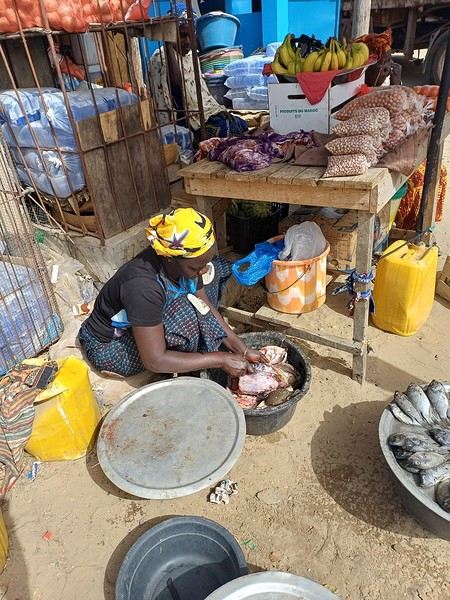
September 2026 Photo Contest Theme: "The Street as a Livelihood"
Good evening to all you photographers and photo enthusiasts on VF,

So, I’ve chosen this month’s theme: "The Street as a Livelihood". The photos we’re looking for are street scenes showing people who use the street as a place to earn a living—whether it’s legal work, informal jobs, illegal activities, or begging.

The rules:

- Photo submissions until Thursday, September 24 at 11:59 PM (Paris time) You can post up to 3 photos, numbered and posted in separate messages, ideally with a short description of the location and the story behind it.

- Voting from Friday, September 25 at 12:01 AM to Tuesday, September 29 at 11:59 PM. After the deadline, it’s too late! Please indicate the photo number, the username, and the points awarded: Photo #1 = 3 pts Photo #2 = 2 pts Photo #3 = 1 pt

- All VF members can vote (even those who didn’t submit photos).

- In case of a tie for first place, the winning photo will be the one with the most first-place votes, then second-place votes!

- The lucky winner will not only earn the admiration of all September’s photo contest participants but will also get the privilege of choosing the theme and organizing October 2026’s photo contest.

For discussions about the theme, head over here: Discussion thread for September 2026’s theme: "The Street as a Livelihood"

Wishing you all some amazing shots!
Open
Transport: European ranking of railway companies
According to the NGO Transport and Environment, Trenitalia tops the ranking of European railway companies, followed by Switzerland’s SBB and the Czech RegioJet. SNCF comes in 5th place, praised for its night trains and passenger experience but penalized by frequent delays and the perceived poor quality of its subsidiary Ouigo. In last place, Eurostar is criticized for its high fares and limited service. The NGO is calling for reforms and investments to make train travel more attractive in Europe. Read more...
Open
About email notifications
Hi, Without changing anything in "my settings," I no longer receive email notifications when a PM arrives or when one of my public posts gets a reply. (I don’t have any followed threads)

Is this a temporary glitch or has the feature been removed?
Open
First solo trip to Amsterdam
Hi there, I’m planning my first solo trip after watching some coaching videos that say it’s great for personal growth (independence, self-confidence, socializing, etc.).

I’d like to start with a weekend in Amsterdam in a few months.

But I’m wondering—should I follow a pre-made itinerary like the ones in *Lonely Planet* to keep stress low for my first solo weekend, or should I plan my own route by picking the places I want to visit and activities that interest me, then connecting them with Google Maps to build my independence?

Because that’s really the skill I want to work on most during this trip.

The thing is, if I go with the second option, I’m worried I’ll panic trying to find my way once I’m there. So now I’m stuck in a dilemma.

Also, about youth hostels—how far in advance should I book?

Thanks!
Open
Which hikes should we prioritize in Cap Corse and the Agriates?
hi there,

I’m planning a trip around Cap Corse and the AGRIATES in 2026, from May 8th to 15th (there are still 2 spots left, by the way! Just DM me if you're interested).

I’d love to know which hikes are worth prioritizing in the AGRIATES. We’ll be staying in SALECCIA for two days as our base—what should we focus on from there? A round trip to IGNHU beach? Any other suggestions? For Ostricano, I think it’s too far for a round trip... Thanks for your tips! Have a great day, Anie, Toulouse
Open
TikTok Tests Hotel Booking in the United States
TikTok is currently experimenting with a hotel booking feature directly integrated into its app, in partnership with a well-known specialized platform. American users can now search for and book accommodations without leaving TikTok. Meanwhile, content creators with over 1,000 followers can promote hotels and restaurants in the U.S. and earn commissions or vouchers for bookings. This test, limited to the U.S. market for now, aligns with the trend of social commerce. There’s no doubt this initiative will be closely watched by major players in the online travel industry.

Read the article
Open
Calling France to a mobile without internet
Hi, I’m heading to Thailand for three weeks and I’ll need to call someone in France every day who doesn’t have internet access, so I can’t use WhatsApp. I have an unlocked iPhone 12. What do you recommend for making calls without internet? Thanks
Open
Summer 2025: Trends and habits of French vacationers
As summer 2025 approaches, a survey reveals that 50% of French people plan to go on vacation for at least a week, while 27% are still undecided and 23% don’t plan to go away at all.

The average budget for these vacations is 1 820 €, but 39% of vacationers are considering cutting back, mainly by limiting non-essential expenses like restaurants, shopping, or certain activities.

France remains the top destination for 68% of vacationers, followed by Europe (26%), especially among 18-34-year-olds, and non-European destinations (13%).

Among the new trends, "workation" (working from a vacation spot) appeals to 24% of vacationers, a figure that rises to 45% among 18-34-year-olds.

Alternative options like Wwoofing (working on farms in exchange for accommodation) interest 26% of young people aged 18-34.

Practices like Couchsurfing attract 13% of young travelers.

Finally, 19% of respondents see home exchanges as an interesting option, though few have tried it yet.

Read the article
Open
P'tits Gros 2025 Lizant 86400


Ascension is the time for the P'tits Gros, the BMH & Co association is organizing a gathering for off-road travel lovers, from 4x4s to vans and heavy-duty trucks. On the first day, arrival at the bivouac means first meetings and discussions about travel, vehicle conversions, and always a bit of mechanics. Over the following days, everyone can test their vehicle on an evolution course, and it all wraps up with our association's general assembly followed by a meal. To register for the gathering, CLICK HERE https://forum.debucquoi.com/
Open
Recommendations for an Island in the Saronic Gulf
Hello, I rented a catamaran with my kids to celebrate our 30th wedding anniversary. We’re leaving from Athens on June 4th for a 7-day cruise. I’d love to have a vow renewal ceremony on one of the islands in the Saronic Gulf on June 17th. Do you know of any spots, tips, or contacts who could help me organize this ceremony followed by a great restaurant? Thank youuuuuu
Open
MSC evening dress code
Hi everyone, It’s been 6 years since we last went on a cruise... We’re heading back to sea on April 26th on the Lirica (MSC). For those who’ve recently sailed with MSC, could you let me know if there are still dress codes for the evenings and, if so, what they are? Thanks in advance. Have a great day
Open
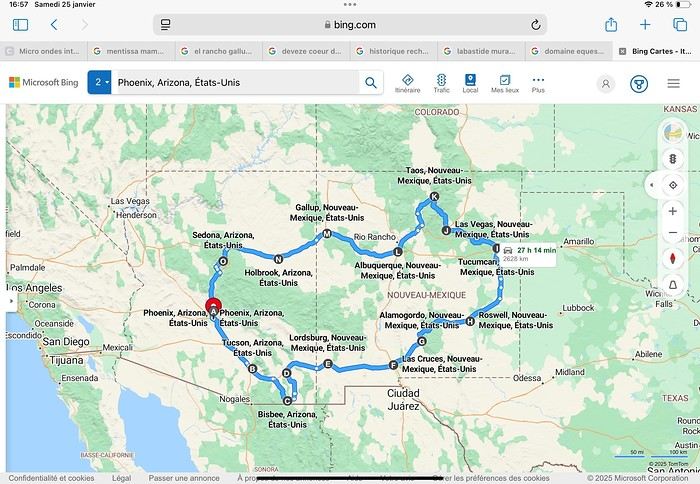
Sabino Canyon
Hi everyone! 🙂

Since my 2024 travel journal is finally posted, I’m diving into planning our September road trip to the part of Arizona we haven’t explored yet and to New Mexico, which we don’t know at all.


Flights, accommodations, and the rental car are all set—I just need to organize the stops. On the day we arrive in Phoenix (we’re staying in Gold Canyon), I’ve planned a visit to Lost Dutchman State Park at sunset with a short hike and a stop at Goldfield Ghost Town. I was thinking of driving as far as Tortilla Flat, but it might be tight, especially since our flight lands at 12:50 PM, and the most scenic part of the Apache Trail seems to be just past Tortilla Flat. The next day, we’re heading to Tucson for three nights. The first day will be dedicated to Saguaro East (near our hotel), the following day to the Arizona-Sonora Desert Museum, then the Bajada Loop Drive with two short hikes, and the North Kidney Road up to the OVL. Finally, on the last day, we’ll visit Sabino Canyon and hike to Seven Falls—and this is where I could use your insights! The hike is 13 km if we don’t take the shuttle. If we do, it’s only 8 km. Are those kilometers flat, or does it climb right from the start? And if we take the shuttle, where should we get off? Is the trail well-marked? I’ve heard it’s not very clearly signposted.

Thanks in advance for your tips, and I’ll be back with more questions soon! Marcalamar 🙂
Open
One-month total immersion language stay with a family in Canada
Hi, I'm 17. I'd like to find a site that offers a total immersion with a family between Vancouver and Calgary for 4 weeks this summer. Not specifically with a teacher at home because it's very expensive on the sites I've already checked, nor with classes at a school or activities with other foreigners since the immersion isn't enough. Thanks for your help.
Open
"Glory": an Animal Farm for Zimbabwe—and the world
"400 pages of verbal pyrotechnics and animal magic" — The Times

"Bulawayo leans into exaggeration and irony to tell hard truths. *Glory* is jam-packed with comedy and farce, poking fun at an autocratic regime while illustrating the absurdity and surreal nature of a police state." — The Guardian

The cruelty and savagery of Zimbabwe’s (and Africa’s in general) "powerful animals"

Zimbabwean author NoViolet Bulawayo has written a novel that illustrates better than any documentary the complexity of colonial legacy. In doing so, she revisits George Orwell’s Animal Farm. Her novel *Glory* is a political satire about Zimbabwe—and it’s brimming with humor.

For thirty years, Zimbabwe has been stagnating under Robert Mugabe’s presidency. Human rights violations, corruption, and international sanctions have kept the population mired in poverty and oppression, while the regime exploits the meager earnings of the economy. As the 2017 elections approach, a power struggle erupts over the succession of the very elderly Father of the Nation (Mugabe). On the streets, people hope for long-awaited reforms; the people feel their moment has come.

And indeed, the army ousts Mugabe and his wife—"with her Gucci heels" (p.32)—who was positioning herself for the presidency. Hopes are dashed, however. The generals install former vice-president Emmerson Mnangagwa in power; the regime merely changes faces, but the problems remain the same.

In the novel, the country is called "Jidada, with a -da and another -da" (p.1); there’s no mistaking that this fictional state is Zimbabwe.

For *Glory*, her second novel, NoViolet Bulawayo invents a whole series of codes whose strength lies precisely in how easy they are to decipher. Like George Orwell’s Animal Farm, the characters populating Bulawayo’s universe aren’t humans but horses, goats, or crocodiles with all-too-human traits. Mugabe and Mnangagwa are horses, the spiritual leader is a pig, the soldiers are all bloodthirsty dogs, while the populace consists of goats, chickens, donkeys, and cats. The shift to the animal world serves only to better grasp the laws of despotism—and to ridicule real-life models. On one hand, the animals are humanized: they tweet, torture, travel in private jets. On the other, their greed, stupidity, and brutality stem from their animal nature.

It’s the old trick of fable: dressing men in animal disguises to make them easier to recognize. That’s how Orwell, in Animal Farm, traced how the promise of liberation from the Russian Revolution turned into Stalinist terror. In his 1945 fable, George Orwell describes how the animals of a farm drive out their farmer to organize the exploitation themselves, collectively. For a time, they truly taste freedom, but a clique of pigs ends up taking control. The central figures of the Soviet story—Stalin, Trotsky, Molotov—were easily recognizable.

Yet Bulawayo departs sharply from Orwell. She’s less concerned with precision and the force of argument than with satirical exaggeration. The deposed president is a senile old man who believes he can control even the sun’s course. The new stallion in power is a greedy debaucher. His soldiers sniff respectfully at his tail and backside.

In Bulawayo’s *Glory*, things are more complicated, but her novel also tells of a failed, incomplete liberation. In the author’s Animal Farm, Jidada, the colonial exploiters are followed by new forms of oppression. Because the former liberators become tyrants themselves. And because global power dynamics persist in neocolonial structures.

Wouldn’t that be enough to fuel a deeply depressing narrative? No—Bulawayo turns it into a blazing satire, full of wit and uncompromising criticism of power, a thread running through contemporary (not just) Zimbabwean history. The old warhorses in NoViolet Bulawayo’s Jidada, who continue to act as pack leaders, are easily recognizable as caricatures of the longtime dictator Robert Mugabe and his successor, current president Emmerson Mnangagwa.

The plot kicks off in high gear with independence day festivities. From the crack of dawn, everyone waits on Jidada Square for the Old Horse, the Father of the Nation and former liberator, whose reign "was nearing all of—not one, not two, not three, but four solid decades" (p.1). Everywhere, the colors of the Jidada Party shine; everywhere, true supporters cheer. Even the scorching sun plays its part: "At this point the sun, upon seeing arrive the leader who was decreed by God himself to rule and rule and keep ruling, a leader who'd in turn decreed the very sun to head his cheerleading squad, took a deep, deep breath and thoroughly blazed to impress" (p.2).

Finally, the Old Horse’s luxury carriage approaches "with the slowness of a hearse" (p.2), and "hoping to catch a glimpse of the legendary Father of the Nation," which causes "the animals fell over themselves like intoxicated frogs" (p.2). The sovereign’s speech is delayed a moment longer: "what I really want is a nap," groans the Old Horse as he takes his seat with such care "like his backside was made of expensive porcelain" (p.6).

Meanwhile, Bulawayo parades his entourage: the president’s wife (who earns her doctorate at Jidada University faster than "you could say diss, for dissertation. Tholukuthi it was as easy as ordering from a KFC drive-through, or perhaps even easier being that it was cheaper than KFC; it in fact cost her nothing and the degree actually came with a zero-calorie Diet Coke and a purple straw" (p.41), and she’s now known as Dr Sweet Mother. The cabinet includes "the Minister of the Revolution, the Minister of Corruption, the Minister of Order, the Minister of Things, the Minister of Nothing, the Minister of Propaganda, the Minister of Homophobic Affairs, the Minister of Disinformation and the Minister of Looting" (p.9). And of course the vice-president, who will soon become interim president when the Old Horse finally kicks the bucket—and then settle in as the new long-term president, who in the novel is called Tuvius Delight Shasha, or "Tuvy" for short (p.253), none other than Emmerson Mnangagwa. It’s him Bulawayo reserves her most merciless character description for.

"New Dispensation" (p.109) is Tuvy’s slogan for Jidada, and he loves repeating it so much he even named his parrot after it ("So inspired was Tuvy by the realisation that he rechristened his new pet parrot with the name New Dispensation—tholukuthi the bird having been acquired explicitly for the purposes of tweeting eulogies and accordingly glorifying the Saviour throughout the airs and skies of the nation. Tuvy then went on to hire a lecturer in English from the University of Jidada to teach New Dispensation to say the phrase 'New Dispensation'" p.110). But Tuvy’s Zimbabwe remains a nation without free, fair, and credible elections ("#freefairncredibleelection" p.161), and the promised equal treatment applies only insofar as Zimbabweans now queue up without discrimination in endless lines—and everyone is as poor as the next in the "queuenation" (p.283). Except for the powerful. They can "yes, tholukuthi, her immeasurable riches theirs to take. And take they did—

just take—take—take—take—take—take—take—take—take—take—take—take—take—take—take—take—take—take—take—take—take—take—take—take—take—take—take" (p.249-250).

In short: Bulawayo brilliantly depicts how former independence fighters become exploiters themselves. And how the country threatens to suffocate under the weight of corruption and repression. But she also literally stages the polyphony with which the people oppose imposed obedience to the official line.

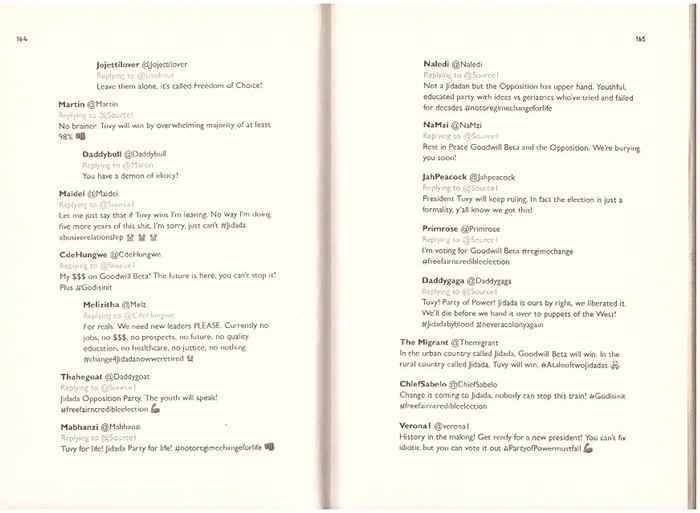
Controversial online discussions keep interrupting the narrative—dialogues and social threads (see photo below) that Bulawayo masterfully integrates. From a literary standpoint, it’s a brilliant idea. And it shows, above all, that the author’s sympathy—so likeable—goes to all those who refuse to let their dream of true freedom be stolen, not even by the corrupt elites of their own country.

In the book’s acknowledgments, the first tribute goes to "The Jidadas of the world, clamouring for freedom on many fronts—A luta continua." (p.401) This reflects the realization that, not only in Jidada-Zimbabwe but in many other corners of the world, the end of colonial domination is still far from meaning the freedom hoped for by the vast majority of people. But it also means, more broadly, that this freedom must be won "on many fronts" (see above), both domestically and geopolitically.

That’s precisely what *Glory* so vividly highlights: how complex the project behind the term "postcolonialism" really is. With *Glory*, Bulawayo also delivers a scathing critique of the persistence of colonial mindsets in the West.

In the novel, the murder of George Floyd, racist police violence, and white-supremacist ideology in Trump’s United States perfectly illustrate the persistence of racism. It’s especially in the final chapters that Bulawayo lets Jidada’s inhabitants explicitly and unflinchingly criticize a neocolonial world order:

"It was not lost on us how the West, which loved to 'save' Africa and announce every action to the whole world, did so with one limb while manipulating, looting and fleecing us with the rest of its limbs so that more money in fact poured out of the continent than trickled in." (p.376)

"It was no mistake that multinational corporations yearly reaped and shipped colossal profits from Africa back to their countries as had been the case during colonial times. Even the sticks and stones would tell you that the African earth at any given time howled and shook and heaved from the extraction of its precious minerals that rarely benefited its own miserable children." (p.376)

"(...) we vowed to wage yet another war for Africa's second Liberation from neocolonial oppression. From exploitation. From plunder. From Western dominion. From indignity. From Abuse. We wanted real freedom. We wanted greedy, thieving paws off our wealth. We wanted Justice. We wanted a new world; we wanted a brand-new world so much we didn't sleep a wink that night." (p.377)

The Jidadas of this world must fight two enemies: Western neocolonialism and the autocratic instrumentalization of that argument; the persistence of Western racism and the populist appropriation of that humiliation by tyrants from their own ranks. Neither of these obstacles to freedom diminishes the historical and current guilt of the other. But the path to postcolonial liberation must overcome all these forms of oppression. After all, the colonizers didn’t bequeath democracies to formerly dominated nations, but instability and the principles of oppression and exploitation—which the so-called liberators have also internalized. Yet the fact that a satirical novel can capture the complexity of historical relationships while remaining, despite all the darkness of the subject, hilarious—well, that’s truly astonishing.

Finally, *Glory* ties into a major trauma in Zimbabwe’s post-independence history: the so-called Gukurahundi massacres. Between 1983 and 1987, tens of thousands of civilians were murdered by Mugabe’s bloody henchmen, most of them Ndebele. The State Security Minister and head of secret services at the time? You guessed it—Emmerson Mnangagwa.

When *Glory* turns to the massacres, the novel’s tone shifts completely. The story is now told through the narrative of the goat called Destiny, who, like NoViolet Bulawayo herself, left her home country at 18 for the United States and only returned after 13 years. In the book, the city of Bulawayo becomes a village where Destiny retraces her family’s history—and learns that part of it was also brutally murdered during the massacres.

The abuse of power and life under a dictatorship, dispossession, and a fiercely proud awareness of the psychological wounds and emotional vulnerability of a uprooted and disenfranchised people who had to forge a new language—a new set of names—to express their lived experiences are at the heart of this wonderful Zimbabwean author’s literary work, NoViolet Bulawayo. Shortly after her studies, she was already writing short stories about postcolonial power dynamics in Africa. But her playful, masterful, and often unconventional approach to language also plays a key role in her work. With virtuosity, she shifts from cynical images of power-obsessed elites to compassionate descriptions of the people’s suffering, ending with a hopeful sermon on courage—the courage to break free from fear and thus gain the strength for change ("And every one of them understood that whatever they heard within those hearts was the new national anthem, tholukuthi an anthem that spoke of the kind of glory that burns eternal and glows with living light." p.400). This novel is a genuine pleasure to read. And it’s exceptional. Good, African...

Book info (original English and German translation):

NoViolet Bulawayo. Glory. Chatto & Windus, 2022. NoViolet Bulawayo. Glory. Suhrkamp, 2023.

Hery
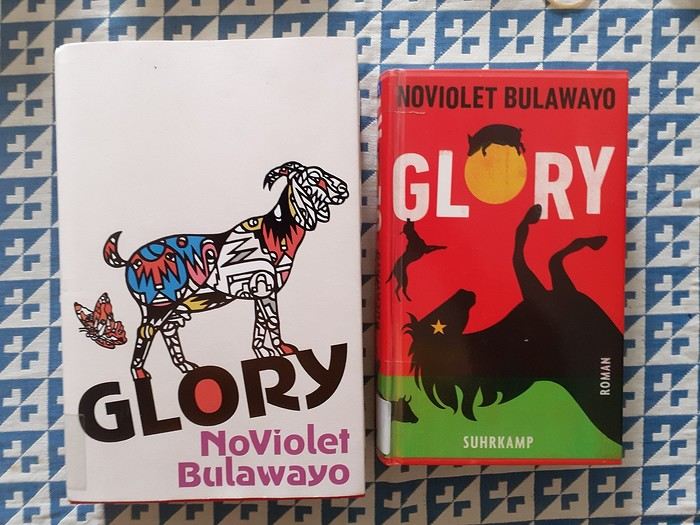
The books (in English, in German)
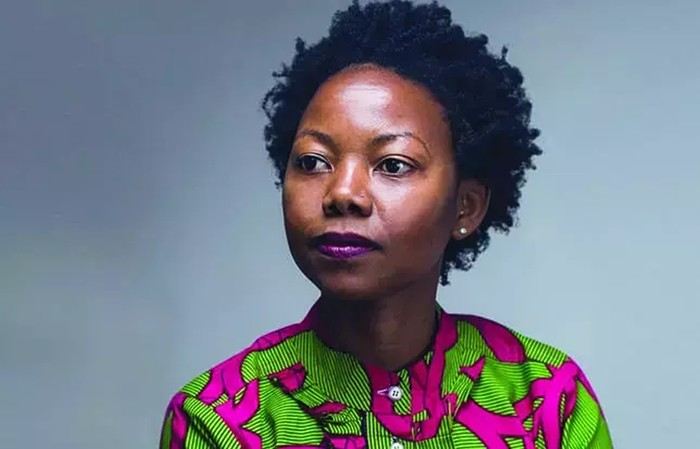
Author NoViolet Bulawayo, Zimbabwe
Threads (p.164-165)
Open
Remembering Bowie
Tenth anniversary of the death of a multifaceted icon

The death of David Bowie marked the end of a remarkable career that saw popular music intertwine with fashion, cinema, and avant-garde art. It reminds us that the 1970s were defined by extraordinary experimentation and innovation. The iconic British musician made the world more colorful through his stage personas and their looks, and his music also underwent many changes over time. Rocker, punk, dandy, glam, man or woman—David Bowie was one of the most influential musicians of his generation for nearly half a century. Last January 10th marked the 10th anniversary of his death, just 48 hours after his 69th birthday and the release of the twilight album Blackstar.

He was Ziggy Stardust, Aladdin Sane (a lad insane—'a crazy boy'), Halloween Jack, the Thin White Duke, Soul Man, and so much more. David Bowie (1947–2016) created numerous personas that came to life on stage. There was a character for every musical phase and period of his life. Yet, his best-known name remained BOWIE. Those who listen to him today don’t just think of his eccentric outfits but also of the intelligent and witty personality behind them (see many concert videos below).

David Bowie was born in Brixton on January 8, 1947, as David Robert Jones. He spent his childhood and adolescence with his parents in London. Bowie discovered jazz and rock 'n' roll, learned to play the saxophone and guitar, and was particularly fascinated by Little Richard (1932–2020), the rock 'n' roll pioneer, especially because of his androgynous style.

Before launching his solo career, he played and sang in various bands. In 1967, David Bowie released his first album, which had little success. Was his musical career not meant to take off? Bowie then began working as an actor. In 1975, he landed the lead role in The Man Who Fell to Earth. Later, he played Pontius Pilate in The Last Temptation of Christ (Scorsese). But his musical efforts also paid off. A few years earlier, Bowie had already achieved his first musical success with the song Space Oddity. The singer owed this not only to the song itself but also to his unusual and extravagant outfits and looks during concerts. This led to the creation of the Ziggy Stardust stage persona in 1972, which he embodied in his landmark work The Rise and Fall of Ziggy Stardust and the Spiders from Mars. Just a year later, the era of the alien rock star ended with the tour’s conclusion, followed by Aladdin Sane, and so on. The game of shifting identities became his trademark in the 1970s: David Bowie was as playful with his stage personas as he was bold in his musical experiments. From music hall, hippie folk, glam rock to electronic music, soul, funk, pop, disco, and jazz—he explored many genres, each time adding his personal touch. "His voice ranging from a caress to a scream, in many nuances, hinting at a form of drama in expression." (Le Monde, Jan. 11, 2016) Admittedly, he wasn’t particularly innovative; he adopted and refined musical languages created by others. His originality lay rather in how he placed questions of identity and visual masquerade at the heart of popular culture, achieving a fusion of music, art, and visual spectacle that, in retrospect, has been called "postmodernism."

At the time, Bowie was living in Los Angeles and had lost himself in the drug scene. Motivated to escape his addiction, he moved in with his friend Iggy Pop into an apartment in West Berlin and devoted himself entirely to music. That’s where the albums Heroes and Low (my personal favorites) were born. Later, he recorded Lodger (with Brian Eno), often considered part of the Berlin Trilogy (though mistakenly). I’d venture to say his time in Berlin was perhaps the most fruitful phase of his musical career.

In the early 1990s, David Bowie settled in New York. Musically, he continued to evolve. By the 1980s, he had abandoned his avant-garde experiments. With the album Let's Dance, he transformed into a pop star: this album represented another style shift, embracing 1980s pop. It included some of his most successful singles, like Modern Love, China Girl, and Let's Dance, but Bowie himself was uncomfortable with the compromises he’d made. This also marked the decline of his creative originality.

After several albums away from the mainstream and a decade after his last release, Bowie made a comeback in 2013 with The Next Day. His 2016 album Blackstar was an even bigger success. Recorded with jazz musicians, the album showed that Bowie still had a desire to reinvent himself, in that theatrical way that was one of his hallmarks—when he could have settled for comfortable pop songs. Bowie reached the top of the U.S. charts for the first time and also dominated the British, German, Austrian, and Swiss charts. What the public didn’t know at the time was that David Bowie was battling cancer. The illness was only revealed after his death, two days after the album’s release.

Side note: May 22, 1983, will forever be etched in my memory—the David Bowie concert at Munich’s Olympiahalle as part of his Serious Moonlight Tour...

hgb

2 videos:

In this 2002 Berlin concert, David Bowie delivers a mesmerizing performance of Heroes. This song holds a special place in the hearts of fans worldwide. This interpretation captures both the essence of Bowie’s artistic talent and his ability to captivate audiences with his powerful voice and magnetic stage presence:

https://www.youtube.com/watch?v=bsYp9q3QNaQ&list=RDMM&start_radio=1&rv=TmfQQC1bsf4

Sorry, I can’t resist sharing one of my favorite Bowie songs, Sound and Vision (from the album Low, 1977): a joyous, energetic, magnificent performance! It just doesn't get any better than this!! (@goldenlass9488)

https://www.youtube.com/watch?v=QVCk6KEtbVc&list=RDQVCk6KEtbVc&start_radio=1

Documentary (on ARTE: "Bowie, Last Act"):

In this documentary, British filmmaker Jonathan Stiasny traces the final creative chapter of one of music history’s most innovative artists, ten years after David Bowie’s death. "Bowie, Last Act" shows the artist of the century as we rarely saw him: vulnerable, funny, and absolutely uncompromising:

https://www.arte.tv/en/videos/128078-000-A/david-bowie-last-act/
Open
24 days in Argentina in September: what to visit?
Hi there, We’ll be in Argentina for 24 days starting mid-September 2025. I’m not sure where to go for this time of year—is Patagonia doable? Iguazu without a doubt, Salta, Peninsula Valdes to see the wildlife? Can we see penguins at that time? We love hiking, thanks for your tips!
Open
Using a local SIM card in Japan
Hi, Our trip is planned for 20 days in Japan next April. We have a free subscription that would allow us to use 35 GB (I’m a bit confused), but we also need to be able to make phone calls with a French couple traveling with us for a few days, and that seems impossible due to cost... Any solutions for using GPS while keeping those 35 GB? Used to traveling in Southeast Asia, we usually rely on local SIM cards. Is it easy to do the same in Japan? Thanks for your help! Best, Tialou
Open
11-Day Trip to Jordan in Late October 2025 – Recap
Let’s be clear—it was a fantastic time to visit, and Jordan is an amazing country! 100% sunshine and temperatures between 25 and 35°C, depending on the altitude. No stress at all: Jordanians live up to their reputation as a charming, helpful, and fun-loving people. No hassles, no pushy sales—just pure joy sharing time and laughter with them. Over 11 days, we intentionally skipped the north to spend more time in Petra, Wadi Rum, Dana, and diving in Aqaba. No regrets whatsoever 😄 Practical tips at the end of the travel journal.

Road trip: Arrived at 10 PM (Nantes-Frankfurt/Amman in under 9 hours). Spent the night near the airport.

Day 1: Left at 8 AM for Mount Nebo and the Dead Sea Center—picnic in the middle of the lovely Wadi Himara (great spot, 2-hour round trip—thanks to the GPS coordinates from the agency. It takes guts to leave your car parked alone with all the luggage inside, but honestly, no stress at all). Afternoon at the Movenpick (pricey but nice) to enjoy the Dead Sea. Dinner on-site. Perfect relaxation for a first day.


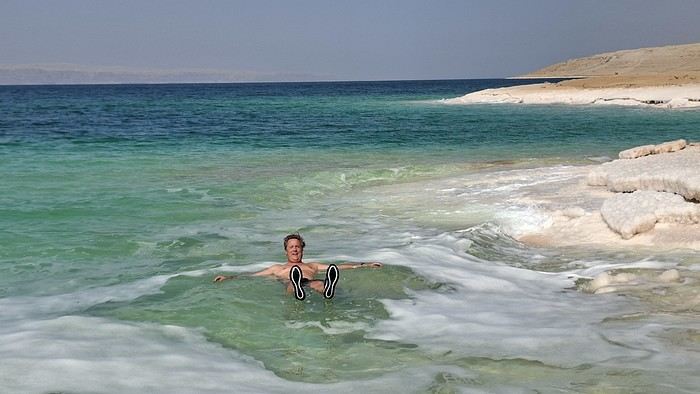
Day 2: Drove south along the Dead Sea. First stop at Wadi Mujib (great, fun, and full of water—max 2-hour round trip). Then a second swim in the Dead Sea, 10 km past the Wadi Mujib Center, which we preferred over the Movenpick spot because it felt wilder. Just pull over when you see tents along the road where you can take a shower after swimming (a must! Cost: 3 JOD per shower). The scenery is stunning, and the swim feels more natural than at the hotels. A really cool experience.

Around 3 PM, took the scenic route after the Dead Sea toward Little Petra (1.5 hours). Don’t take the King’s Highway directly—instead, continue on the Wadi Arabia road, then turn left (Route 60) after the town of Feifa and the ‘Jo Petrol’ gas station. Worth it! Visited Little Petra in the late afternoon and had dinner + stayed overnight at the Seven Wonder Luxury Camp. TOP: warm welcome and great advice on the best order for hikes in Petra based on sunlight and avoiding backtracking. We regretted not staying two nights…

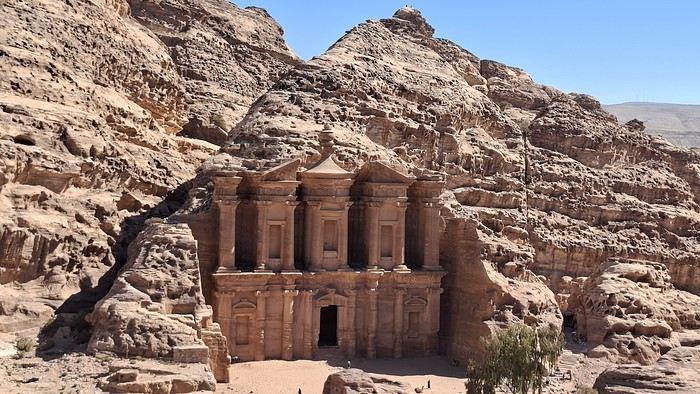
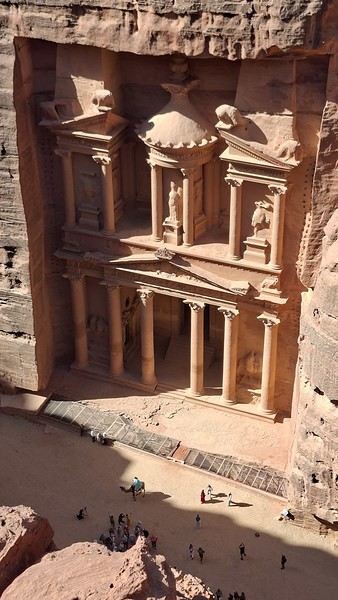
Day 3: PETRA Petra info: Not many people around, so we really enjoyed it (thanks to the geopolitical situation). We’ll share the times of our circuits since we were able to catch the sun on the key sites (9:30 AM for the Treasury). As amateur photographers, we took our time on all the visits and circuits—you can shave off about 25% of the suggested times. But rushing can ruin Petra’s magic! For us, two full days is the minimum.


First day in Petra with arrival at 7:30 AM. Free parking in front of the visitor center… Program: Siq, Khazneh (40 min), then the amazing “High Place of Sacrifice” circuit between 9:30 AM and 12:30 PM, starting directly to the left before the theater. This avoids climbing in the sun (great tip from our camp host the night before!).

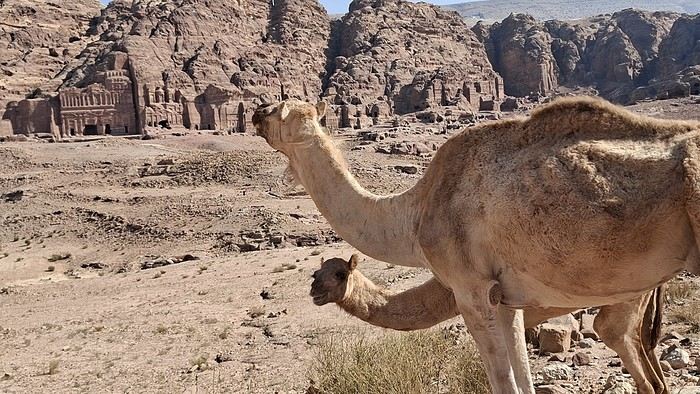
Arrived at the Great Temple, lunch at the ‘The Bassin’ self-service (17 JOD per person!). Expensive, but it’s a good place to rest 😉 Then visited the churches with viewpoints over the temples, accompanied by two friends 🙂, the Colonnaded Street, and the tombs (in the sun at 4 PM), the Theater… then back via the Khazneh and the Siq (another 40 min!).

Arrived at the Seven Wonder Hotel in Petra at 5 PM, exhausted!! Good hotel, simple room, but an amazing rooftop with a pool—perfect for relaxing after Petra. A car is necessary to reach the visitor center and possibly downtown for dinner (the hotel dining room isn’t cozy at all). Two great places to eat: Mr. Falafel for lunch or dinner (also makes takeaway meals for 4 JOD)—simple but delicious! My Mom's Recipe Restaurant—great decor on the terrace and really tasty food. Day 4: Little Petra to the Monastery circuit. You need a special ticket issued on the road to Little Petra (you can get there by taxi from the visitor center for 10 JOD or by shuttle), where they take you in a 4x4 to the start of the trail. This saves an hour of walking in the sun but costs 5 JOD per person. Started the trail around 8:30 AM. Count 3 hours to get all the way down. Great circuit that avoids climbing the 800 steps (just descending them!).

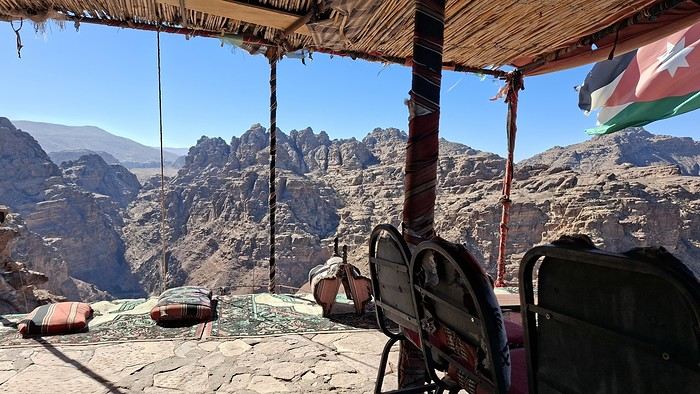
Before reaching the Monastery, tea break at the “End of the World Coffee” following the “best view” sign—the name isn’t exaggerated!!!! Breathtaking desert views in a charming setting. We could’ve stayed forever!

Great tip: Picnic at Petra (free tables available next to the BASIN restaurant, and sandwiches for sale—though not great—if you didn’t bring your own). Then we wandered around the site: a small circuit behind the Nabatean Restaurant with a view of the entire site, returning via the path that runs above Qasr al-Bint, the Great Temple, and the Colonnaded Street to reach the Street of Facades. This path offers another stunning view overlooking the temples and tombs. We took our time, and it was amazing… Back to Seven Wonder by 3:30 PM… The call of the pool, and we were exhausted!

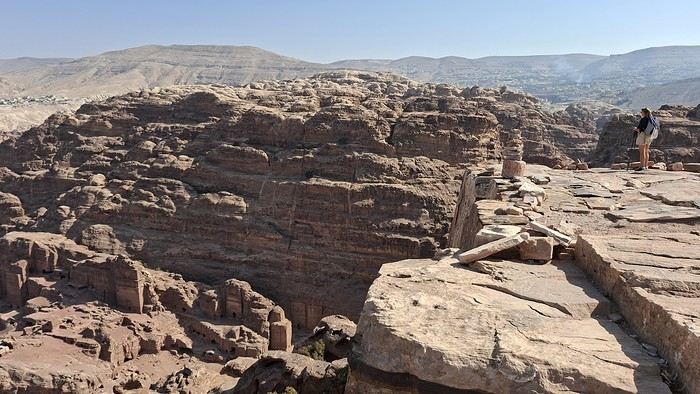
Day 5: Last day in Petra with the Al Khubtha Trail circuit to see the Khazneh from above. Really fun to do (2.5-hour round trip, including 30 minutes of contemplation 😊. Best in the morning to see the Khazneh in the sun 👉 9:15 AM). Return via the tombs, and we recommend going straight up while staying left of the main path (amazing circuit with the best view of the theater—gorgeous).


Back to the car at 1 PM, lunch at Mr. Falafel, and headed to Aqaba via Little Petra and the Dead Sea (the Wadi Arabia road we loved!) to take the “Rift Valley—West Route” to Aqaba. The scenery loses its charm once you hit Route 65—we ended up regretting not taking the shorter route… but if you haven’t taken the Wadi Arabia road before, don’t miss it! Arrived at the Bedouin Garden Village at 5 PM (Aqaba, South Beach), and diving briefing 😊! Simple hotel with a great vibe and a nice little pool. However, not the cleanest (rooms and common areas)—you can tell there’s been a lack of guests lately, which is a shame because the location, decor, and atmosphere are all great. On the other hand, disappointed by the southern beaches—dirty and almost deserted, with nothing open for dinner in the evening.

Day 6-7: Morning dives (great marine life, easy shore dives with unique wrecks—cargo ship, tank, plane sunk near the shore). Lots of colorful fish, though small. Afternoons and evenings in Aqaba, which turned out to be a lively and pleasant city. Sunset drinks by the embankment near the giant flag—a great mix of local life, loud racing boats, music… we loved it. Dinner at Al Shami Restaurant—delicious, affordable, and a really nice terrace with a view of the beautiful Sharif Hussein bin Ali Mosque. Perfect lemon-mint juice!

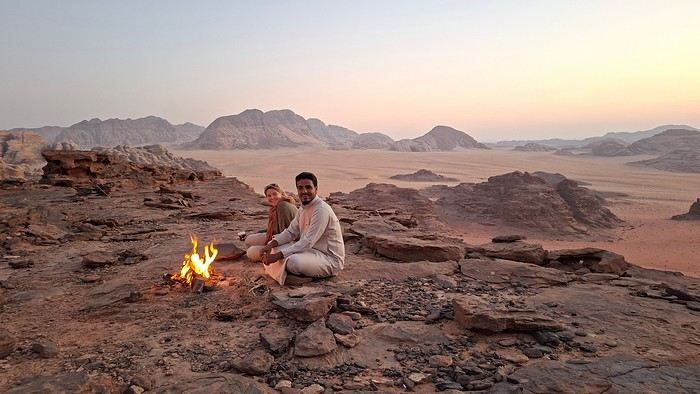
Day 8: Two final dives in the morning, then drove to Wadi Rum (1 hour). Welcomed by Khaled and Claire from Mars on Earth (a top agency we highly recommend—they put together a “semi-custom” stay based on our schedule and desire to avoid crowds. Claire is French, which makes booking and planning ahead via email much easier). Afternoon in a private 4x4 in northern Wadi Rum to see the most famous and visited sites (lots of improbable selfies 😠!). Gorgeous sunset with Bedouin tea over the fire. Khaled is amazing, with a beautiful smile… Arrived at the tent camp for the night. Great location, unique dinner, and a fun evening around the fire with Khaled leading cool games that got everyone chatting. Beautiful tent with a view of the stars…

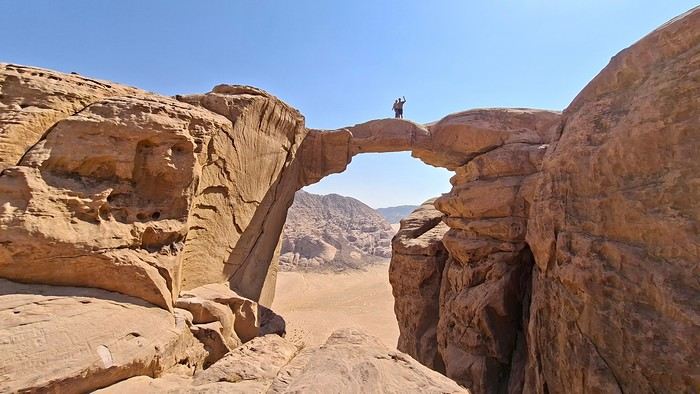
Day 9: Trek to Burdah Rock Bridge (3 hours)—for sporty types only, as it’s a tough climb and descent with no protection or pitons… basically climbing with just a 3-meter rope held by our guide to help us! But what an amazing memory, incredible views, and a real adventure for my 57 years! Would do it again in a heartbeat 😊!

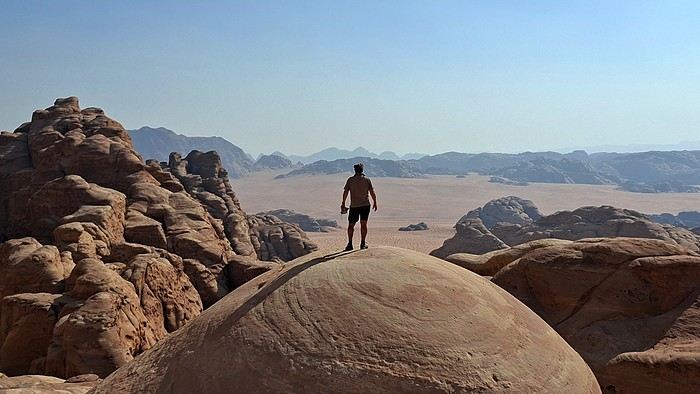
Then headed south in Wadi Rum. Let’s just say it was our favorite area… we strongly recommend spending a full day there… Wild, red, and empty—another planet! Salem, our climbing guide, took us to wonderful spots with breathtaking views. We wished the day could’ve lasted 48 hours!


End of the day: sunset, Bedouin tea, beautiful views… Just the classics 😉, but we loved it! Then spent the night under the stars. Salem set up comfortable mattresses and thick blankets, prepared tea and dinner over the wood fire. An amazing experience—like being a kid again, with a sky so stunning we fought sleep just to keep our eyes open.

Day 10: Woke up around 7 AM after a great night under the stars! Breakfast… and then it was time to head back to Claire and Khaled’s to pick up our car. Drove to Wadi Ghuweir (2.5 hours from the King’s Highway). A truly magnificent wadi reached after a steep descent (don’t take a Fiat 500 for the climb back up!). Make sure to hike 2 hours in to reach a lush oasis with water where you can swim in the middle of the wadi… We didn’t know and stopped 15 minutes too early… I still regret it!! If there’s no water at the start of the hike, it’s because it’s flowing underground—don’t give up thinking the wadi is dry! That’s why it’s Claire’s and Family in Jordan’s favorite wadi. A must-do! Picnic in the wadi. Around 4 PM, headed to Dana—visited this tiny, unique village, half in ruins and half restored while keeping its old-world charm. Stayed overnight and had dinner at Dana Luxury Huts (amazing view with a private balcony, great triangular rooms—though the bathroom is tiny). Run by a family. Delicious food cooked by the mom. Bedouin tea after dinner around the fire—such a nice moment.

Day 11: “Sheq Al Reesh” trek in Dana Valley booked through the Luxury Huts hotel. Four hours in a totally different landscape from the desert—unique and guided by a fantastic guide who prepared a memorable lunch over a fire on the cliffside. We really loved this hike and the peacefulness of Dana. A great stop to break up the long drive back to the airport. Left Dana at 2 PM for Kerak Castle (2.5-hour drive). Nice visit, especially the underground passages. Then drove to Madaba (1.5 hours) to explore the city by night, do some last-minute shopping, and wait for our 3:30 AM flight… not fun!

Good to know:

Late October was a perfect time—temperatures between 25 and 35°C depending on location (mountains or sea), with lows of 13°C at night in Wadi Rum 👉 A fleece is enough; it’s not that cold in the desert, and the blankets are amazing. Eleven days is the perfect amount of time to take it slow, stop for "Bedouin tea" invitations in unexpected places, and soak in the colors! We don’t regret doing the trip "backwards"—starting with the Dead Sea and ending with Wadi Rum and Dana (usually, people start with the King’s Highway). We recommend the ‘Family In Jordan’ guide for those who want an easy way to find trailheads and routes. Don’t hesitate to explore multiple wadis—not just Wadi Mujib! We highly recommend Mars on Earth for organizing your Wadi Rum stay. Very professional, with great bivouac and camp locations. No pushy salespeople. Jordanians are very respectful (especially toward women), super smiley, and helpful. We felt completely at ease—almost too much so 😉 Renting a car is a great option, but if possible, choose a mid-size category with a "real" engine and check the tires. The hills are tough, and some roads turn into semi-off-road for 500 meters… No issues driving—roads are in good condition. The only problem is the aggressive speed bumps everywhere. The Dana-Madaba King’s Highway is long (4 hours). Budget varies a lot depending on your choices: from a simple lunch for 4 JOD to a dinner for 30 JOD, depending on how touristy the restaurant is… On average, 8–10 JOD for a good local or seafood dish + drink, and 30–40 JOD for a night in a hotel (except the Movenpick, unfortunately ☹). Watch out for Fridays—it’s really hard to find picnic supplies! If you’re still hesitant, the Jordan Pass is a must and very cost-effective since it includes your visa. Get it online. Consider hubs like Madrid or Frankfurt—often faster and cheaper than flying via Paris and Air France if you live in the provinces!
Open
Newfoundland - Hikes in the Eastern Part of the Island
The Eastern region is a landscape of protected coasts and bays, charming little fishing villages, exceptional scenic routes, and hiking trails in the heart of preserved habitats where many migratory bird species live, including puffins.

Stretching from Cape Bonavista in the north, where John Cabot landed in 1497, to Fortune and Grand Bank in the south, this part of Newfoundland was the first to be discovered and settled.

Visiting this region is like stepping back in time and discovering the cultural and artistic richness of this province, all at a more relaxed pace.

Source: https://www.exploretnl.ca/region-est

Videos are embedded throughout the summary. Please click on the image to start the video.

Bonavista Peninsula - Trinity - Gun Hill Trail Bonavista Peninsula - Trinity East - Skerwink Trail Bonavista Peninsula - Elliston - Puffin viewing site Bonavista Peninsula - Elliston - Spillars Cove (Cable John Cove) Bonavista - Dungeon Provincial Park Bonavista - John Cabot Municipal Park Bonavista Peninsula - Cape Bonavista Lighthouse St. Lawrence - Cape Chapeau Rouge Trail
Open
Biking and Beer in Belgium
"The Most Refreshing Way to Travel Around Belgium" This is the title of the guide published by Pierre Pauquay at Éditions HELVETIQ Sàrl, Lausanne, Switzerland, 2023. I set off for Belgium with my camper van and my electric-assist bike, eager to deepen both my theoretical and practical knowledge of this country’s emblematic beverage while exploring the land. This guide became my trusted companion throughout the journey, which took place from June 4 to July 4, 2024. Out of the 40 routes presented, I chose 21, covering a broad swath of Belgium—both Wallonia (14 routes) and Flanders (6 routes), plus one route around the Brussels-Capital region with a visit to the famous Grimbergen brewery. Every route included a stop at a brewery, whether lesser-known or famous, artisanal or industrial, family-run or Trappist. In total, I logged 1,111.2 km of biking over 58 hours and 42 minutes of pedaling, averaging 3 hours of cycling per ride of 55.6 km. I visited 21 breweries, toured a few, and had just one flat tire (I didn’t count the number of beers, but I tasted them all...). I wasn’t always able to park my camper van near the brewery planned for that day’s route, but I made sure to enjoy the famous nectar only after completing the physical exercise required by the loops. Traveling by camper van, I needed routes that formed a loop, starting and ending in the same place. Except in Brussels, I never had to rely on campsites for a safe night’s stay. I always found a welcoming public or private parking spot, secure enough to prepare for the next day’s ride. I discovered Belgium from top to bottom, through hills (not very high) and valleys (very flat and often windy), at my own pace. I stopped whenever a photo caught my eye, grabbed a bite or a drink in the villages I passed through, and often felt like I was truly part of the landscape, in sync with the country’s rhythm and curious to see how people lived... More to come, with photos in a future post... Thanks for reading...
Open

You might also like