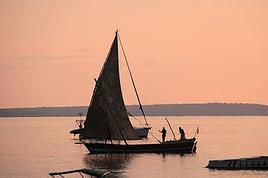
After several months of delay, Madagascar has just launched an electronic entry visa for the island, available online. It allows tourists to stay for 30 (35 €), 60 (40 €), or 90 days (50 €).
Read more...
Salut a tous,
Voila c est enfin disponible pour les futurs voyageurs le visa en ligne : www.evisa-mada.com
Une tres nouvelle pour les amoureux du pays je trouve, ca va faciliter bien des choses a l arriver.
Eric
Bonjour cher internautes
Je viens vous demander quelques informations au sujet de l'achat d'un véhicule pour madagascar, à savoir que nombreux d'entre vous ici sont assez calé sur le sujet et en espérant trouver une réponse ici. Alors il s'agit d'une question toute simple, y a t-il une différence au niveau de la douane malgache pour tout ce qui concerne procédure et prix de dédouanement pour un véhicule qui serait d'origine de France ou d'un autre pays(ici dubai). Je viens vous posez cette question parce que dans un avenir prochain(d'ici 6 à 7mois) j'ai l'intention d'acquérir un véhicule neuf et j'ai remarqué une différence aux niveaux des prix pour ces 2 pays du coup je me suis demandé si cela pourrais avoir un impact au niveau de la douane malgache.
Je viens vous demander quelques informations au sujet de l'achat d'un véhicule pour madagascar, à savoir que nombreux d'entre vous ici sont assez calé sur le sujet et en espérant trouver une réponse ici. Alors il s'agit d'une question toute simple, y a t-il une différence au niveau de la douane malgache pour tout ce qui concerne procédure et prix de dédouanement pour un véhicule qui serait d'origine de France ou d'un autre pays(ici dubai). Je viens vous posez cette question parce que dans un avenir prochain(d'ici 6 à 7mois) j'ai l'intention d'acquérir un véhicule neuf et j'ai remarqué une différence aux niveaux des prix pour ces 2 pays du coup je me suis demandé si cela pourrais avoir un impact au niveau de la douane malgache.
J'en ai un peu marre des illuminés... et je tiens à donner une correction indispensable pour ceux qui veulent rester plus de 3 mois à Mada. On demande au consulat un visa de 3 mois, et une fois à Mada on peut, obtenir au ministère de l'intérieur à Tana, une seconde fois 3 mois, la loi est ainsi. Que d'inventions j'ai lu à ce sujet par de gentils incapables, disant qu'il fallait sortir du pays après 3 mois...C'EST FAUX.... quand on veut aider on donne de bonnes informations ou on se tait. On peut donc rester 6 mois à Mada, si on est suisse ou français...ok J'ai aussi lu des inepties telles que...il faut 1600 euros par mois pour vivre. Un maison normale coûte de 200 à 300 euros, même à Nosy Be, belle, neuve et meublée à 350 euros. Ensuite au kg, fruits 1500A-0, 5 e, légumes 1000A-0, 33 e, viande 6000A-2 euros, poisson 8000A-2, 6 euros. Vin blanc ou rouge moins de 5000A-1, 6 e, rhum, wishky idem, bière 1400A-0, 45 e. Essence 2720A-0, 9 e le litre. Electricité 141 A le KWH, eau 360 A le m3.
Oui, mada est chère pour les malgaches, pas pour nous. A chacun de voir ce qu'il dépense, tout ce que je peux dire c'est que la vie est 10 fois moins chère qu'en Suisse.
Informations pour les suisses: www.madagascar-diplomatie.ch
Ambassade et consulat à Genève, 022.74o.16.50
Pour la France proche: www.consmadalyon.fr/visas.htm
Bonjour,
Je souhaiterai passer un séjour d'un mois à Madagascar. Je voudrai arriver le 31 juillet à Tana. Jusqu'à quelle date puis je rester pour que ça fasse 1 mois pile ? Car je ne voudrai pas avoir de problème avec le service de l'immigration.
Merci
Kristell
Je souhaiterai passer un séjour d'un mois à Madagascar. Je voudrai arriver le 31 juillet à Tana. Jusqu'à quelle date puis je rester pour que ça fasse 1 mois pile ? Car je ne voudrai pas avoir de problème avec le service de l'immigration.
Merci
Kristell
Bonjour,
Je suis une infirmière de 56 ans qui souhaite se rendre disponible en 2011 pour entre autres, effectuer un séjour de 3 mois (voire plus si possible) à Madagascar, au cours duquel j'aimerais donner un coup de main à des associations (option santé ou autre) et des dispensaires.
Mais je me rends compte qu'il est assez difficile de trouver des contacts et quand on en trouve, de les "fidéliser" - Or, j'aimerais partir avec déjà des points de chute "surs" car comme je ne connais pas encore Madagascar, cela m'aidera je pense à ne pas "m'égarer" ni perdre trop de temps (3 mois, çà passe vite!!)
J'aimerais aussi avoir si possible des contacts avec des bénévoles oeuvrant déjà sur place ou ayant fait ce genre d'expériences : leur témoignage m'interesse !!
merci infiniment de votre aide ..... et de vos conseils éventuellement,
cordialement,
Jacqueline
je voulais simplement vous faire part de l'agression d'un ami revenant de st marie. Sur la route de Tamatave à Tana il a été agressé le 31/12 vers minuit à la pause des taxi-brousse destiné à prendre une collation. L'ensemble des occupants du véhicule dinaient à l'intérieur du restaurant pendant que je prenais l'air pour dégourdir mes jambes. Au bout de cinq minutes d'arret des individus éméchés sont venus poser des cales au taxi-brousse. Devant cette interrogation il a prévenu le chauffeur qui n'a pu que constater les faits. Etant le seul wahaza ils lui ont demandé tout l'argent disponible et devant son refus ils l'ont tabassé gravement. Il a pris un clou dans le ventre, de nombreuses contusions avec plaies et à été soigné en France.
La conclusion est d'éviter de rouler la nuit
Bonjour à tous!
Nous nous rendons 3 semaines en août à Madagascar. On aimerait faire Fiana, Manakara entre autres... 1ère question: Quelqu'un sait quel temps fera-t-il à cette période de l'année? 2ème question: Quelqu'un aurait un circuit à me proposer? Des activités, visites à faire pour ces 3 semaines de vacances?
Merci d'avance! Adresse mail : gdiana@hotmail.fr
Nous nous rendons 3 semaines en août à Madagascar. On aimerait faire Fiana, Manakara entre autres... 1ère question: Quelqu'un sait quel temps fera-t-il à cette période de l'année? 2ème question: Quelqu'un aurait un circuit à me proposer? Des activités, visites à faire pour ces 3 semaines de vacances?
Merci d'avance! Adresse mail : gdiana@hotmail.fr
Coucou tout le monde !
On est 2 filles de la région toulousaine, et on part le 12juin pour un mois à Madagascar puis à la réunion. On s'est un peu renseignée sur ce qu'on pouvait faire et voir la-bas, notamment le train fianarantsoa-manakara (apparement c'est à faire!). Après vu qu'on ne va rester que 15jours à madagascar et 10jours à la réunion, je voulais savoir si vous auriez des trucs à nous conseiller histoire qu'on profite un maximum du temps qu'on aura là-bas ;-) Etant donné qu'on part un peu à l'aventure, sans un programme très défini, et sans beaucoup de sousou... je me demandais si vous auriez des contacts de confience qui pouraient nous héberger quelques jours... ou des références d'hotel pas trops cher... (à madagascar ou la réunion) Enfin, on se disait que si il y a des gens qui partent pendant la meme période, on peut se mettre en contact, ça peut toujours etre simpa de se croiser là-bas ;-) Bon voilà, en gros, on prend toute info qui vienne ! (meme si je me doute que un tel sujet a déjà du etre aborder mille fois...)
On est 2 filles de la région toulousaine, et on part le 12juin pour un mois à Madagascar puis à la réunion. On s'est un peu renseignée sur ce qu'on pouvait faire et voir la-bas, notamment le train fianarantsoa-manakara (apparement c'est à faire!). Après vu qu'on ne va rester que 15jours à madagascar et 10jours à la réunion, je voulais savoir si vous auriez des trucs à nous conseiller histoire qu'on profite un maximum du temps qu'on aura là-bas ;-) Etant donné qu'on part un peu à l'aventure, sans un programme très défini, et sans beaucoup de sousou... je me demandais si vous auriez des contacts de confience qui pouraient nous héberger quelques jours... ou des références d'hotel pas trops cher... (à madagascar ou la réunion) Enfin, on se disait que si il y a des gens qui partent pendant la meme période, on peut se mettre en contact, ça peut toujours etre simpa de se croiser là-bas ;-) Bon voilà, en gros, on prend toute info qui vienne ! (meme si je me doute que un tel sujet a déjà du etre aborder mille fois...)
bonjour je vais en juin sur l'ile Sainte Marie ( une semaine)que pouvez vous me conseiller comme hotel pour un couple (50 60 Ans)?joli si possible sur la plage ;maximum 40 e (disons moyen de gamme).J'en ai vu des tres beaux mais je n'ai malheureusement pas le budjet.et d'autres qui me parraissent un peu trop "routard" pour nous Pourriez vous m'en conseiller ?Merci de votre aide
Bonjour,
je suis nouveau et je dois faire bref....et oui je suis au Boulot... Pour être bref : moi, ma femme et mes 2 enfants (3 et 8 ans), nous voudrions partir entre 6 mois et un an...peut être plus pour faire quelque chose d'utile pour les autres. Nous nous sommes installé à la Reunion il y a 1 an et nous rencontrons le même problême qu'en France : Travailler pour quoi : gagner de l'argent pour une télé, voiture, .... on est pas des babas cools loin de la, mains on aimeraient donner un sens à notre existence !
Par contre, niveau qualification utile ? Moi caviste et ma femme travaillait dans une morgue...
Mais on a 2 bras et 2 cerveaux qui fonctionnent pas mal et nous sommes plein de bonne volonté.
La question est connaissez vous des assos d'aide aux enfants succéptibles de nous accueillir avec les enfants ? Il est évidents que nous sommes bénénvoles et ne demandant que le gite et le couvert.
N'hésitez pas à nous répondre c'est une décision mûrement réflechie !!!
Vous pouvez me joindre sur le forum
a l'avance merci !!
je suis nouveau et je dois faire bref....et oui je suis au Boulot... Pour être bref : moi, ma femme et mes 2 enfants (3 et 8 ans), nous voudrions partir entre 6 mois et un an...peut être plus pour faire quelque chose d'utile pour les autres. Nous nous sommes installé à la Reunion il y a 1 an et nous rencontrons le même problême qu'en France : Travailler pour quoi : gagner de l'argent pour une télé, voiture, .... on est pas des babas cools loin de la, mains on aimeraient donner un sens à notre existence !
Par contre, niveau qualification utile ? Moi caviste et ma femme travaillait dans une morgue...
Mais on a 2 bras et 2 cerveaux qui fonctionnent pas mal et nous sommes plein de bonne volonté.
La question est connaissez vous des assos d'aide aux enfants succéptibles de nous accueillir avec les enfants ? Il est évidents que nous sommes bénénvoles et ne demandant que le gite et le couvert.
N'hésitez pas à nous répondre c'est une décision mûrement réflechie !!!
Vous pouvez me joindre sur le forum
a l'avance merci !!
Bonjour😉
Un sujet qui va nous permettre de pouvoir débattre de tous les avantages et inconvénients que possèdent Madagascar pour son futur développement touristique qui tarde à venir, 😕 quoique que nous en connaissons un peu les raisons en ce moment en pleine crise politique🙁.......mais essayons d'anticipiter l'avenir avec un brin d'optimisme qui des fois, ne fait pas de mal.😏
J'aimerais tout particulièrement que ce post reste dans le contexe uniquement touristique.........😮
Merci
Un sujet qui va nous permettre de pouvoir débattre de tous les avantages et inconvénients que possèdent Madagascar pour son futur développement touristique qui tarde à venir, 😕 quoique que nous en connaissons un peu les raisons en ce moment en pleine crise politique🙁.......mais essayons d'anticipiter l'avenir avec un brin d'optimisme qui des fois, ne fait pas de mal.😏
J'aimerais tout particulièrement que ce post reste dans le contexe uniquement touristique.........😮
Merci
Bonjour à tous,
Je suis revenue de mada fin août, bien triste (jai pleuré tout le trajet de l'avion lol)
J'ai beaucoup aimé ce voyage, et je compte bien y retourner un jour (mais quand?)
Quel beau pays! très pauvre aussi, mais dans la mesure où on ne la vit pas...avec nos euros on est le roi du pétrole lol
La vie ne paraît peut-être pas chère pour nous mais l'est pour ce que les gens gagnent là bas.
Mada va beaucoup me manquer, surtout la bouffe lol j'aime beaucoup les brochettes de zébu avec le manioc frit et achard de papaye mmmmm j'ai eu l'habitude de prendre en photo tout ce que je mangeais mais je n'aimerais pas élever les hostilités en les postant sur le forum ;)
J'ai eu l'occasion de découvrir un peu la côte Est, en allant à Tamatave, Foulpointe, Mahambo (aller/retour taxi brousse) apparemment ce fut un miracle que pendant les 4 jours où on y était on n'a pas eu de pluie, il a seulement plu la nuit de la veille de notre retour à Tana :). Nous ne sommes pas allés à Ste Marie ce qui était prévu à la base car pas de budget avion possible et pas possibilité non plus de prendre l'avion (trop dangereux selon la maman de mon copain).
J'ai également découvert un petit peu la côte Ouest, en allant à Majunga (taxi brousse): paysage superbe, sec mais des couleurs très chaleureuses et magnifiques Quelle chaleur à Majunga!! Logés dans notre petit bungalow au villa mena en hauteur, la pente était heu...épuisante dans l'heure digestive!!! Pousse-pousse, étals de mofo gasy et compagnie, égayent nos matinées commençant par une promenade au bord devenue notre rituel, des amis à nous sont arrivés quelques jours après, installés eux à Amborovy donc ils nous envoyaient leur chauffeur afin qu'on puisse les rejoindre Enfin bref les vacances sont passées si vite !!! quelle nostalgie maintenant que je prend un peu le temps de vous raconter mon voyage..
Et bien sur, tananarive, là où j'ai passé le plus de temps, j'ai trouvé la capitale très jolie aussi, j'aime beaucoup comment elle est bâtie, un peu dans tous les sens, cela change du plat de Paris, et toujours, les couleurs chaudes comme la terre battue.. Serais-je tombée amoureuse de mada?
Mes restos coup de coeur? hmm tamatave : piment banane, tout récent, mais quel charme! majunga : la petite cour (ohhh le coulant au chocolat avec sa glace vanille hii, et la serveuse très jolie aussi) tana : hmm sakamanga, simple, mais bon!! un peu déçus par la varangue par contre..
Bien à vous, et bonne journée :)
coco
Mada va beaucoup me manquer, surtout la bouffe lol j'aime beaucoup les brochettes de zébu avec le manioc frit et achard de papaye mmmmm j'ai eu l'habitude de prendre en photo tout ce que je mangeais mais je n'aimerais pas élever les hostilités en les postant sur le forum ;)
J'ai eu l'occasion de découvrir un peu la côte Est, en allant à Tamatave, Foulpointe, Mahambo (aller/retour taxi brousse) apparemment ce fut un miracle que pendant les 4 jours où on y était on n'a pas eu de pluie, il a seulement plu la nuit de la veille de notre retour à Tana :). Nous ne sommes pas allés à Ste Marie ce qui était prévu à la base car pas de budget avion possible et pas possibilité non plus de prendre l'avion (trop dangereux selon la maman de mon copain).
J'ai également découvert un petit peu la côte Ouest, en allant à Majunga (taxi brousse): paysage superbe, sec mais des couleurs très chaleureuses et magnifiques Quelle chaleur à Majunga!! Logés dans notre petit bungalow au villa mena en hauteur, la pente était heu...épuisante dans l'heure digestive!!! Pousse-pousse, étals de mofo gasy et compagnie, égayent nos matinées commençant par une promenade au bord devenue notre rituel, des amis à nous sont arrivés quelques jours après, installés eux à Amborovy donc ils nous envoyaient leur chauffeur afin qu'on puisse les rejoindre Enfin bref les vacances sont passées si vite !!! quelle nostalgie maintenant que je prend un peu le temps de vous raconter mon voyage..
Et bien sur, tananarive, là où j'ai passé le plus de temps, j'ai trouvé la capitale très jolie aussi, j'aime beaucoup comment elle est bâtie, un peu dans tous les sens, cela change du plat de Paris, et toujours, les couleurs chaudes comme la terre battue.. Serais-je tombée amoureuse de mada?
Mes restos coup de coeur? hmm tamatave : piment banane, tout récent, mais quel charme! majunga : la petite cour (ohhh le coulant au chocolat avec sa glace vanille hii, et la serveuse très jolie aussi) tana : hmm sakamanga, simple, mais bon!! un peu déçus par la varangue par contre..
Bien à vous, et bonne journée :)
coco
Bonjour à tous!!!!😉
Je vais vous demandez un avis personnel à chacun de vous qui connaissez si bien Mada
quelle est pour vous la région la plus belle?
merci de votre participation et bonne journée à tous!😄
Je vais vous demandez un avis personnel à chacun de vous qui connaissez si bien Mada
quelle est pour vous la région la plus belle?
merci de votre participation et bonne journée à tous!😄
Bonjour
Je serais curieux de connaître la qualité des vols"et des avions Air Madagascar " Marseille Antanarivo" pour les liaisons intérieures je connais mais je ne connais pas les 767- 300 (place- accueil- services etc ...) merci du suivi cordialement
Je serais curieux de connaître la qualité des vols"et des avions Air Madagascar " Marseille Antanarivo" pour les liaisons intérieures je connais mais je ne connais pas les 767- 300 (place- accueil- services etc ...) merci du suivi cordialement
J'avais pris la précaution de réserver 6 places d'avion bien à l'avance pour bénéficier " soi-disant d'un bon un prix "et être bien placé dans l'avion ( ce qui n'est pas négligeable pour un vol de plus de 11 h 00 ) . Nous devions partir de MARSEILLE . Un mois avant le départ, AIR AUSTRAL nous informe que le vol réservé pour St Denis de la REUNION était annulé . Comme j'avais prévu un circuit à MADAGASCAR, cette annulation remettait le programme de ce voyage ( déjà réglé ) en question, puisqu'on me proposait de partir 2 jours après, toujours de MARSEILLE . Après négociation, nous avons été mis ( nous sommes 6, originaires de la région de NICE ) sur un vol d'AIR AUSTRAL prévu au départ de PARIS le 26 SEPTEMBRE 2012 à 23h . J'ai accepté cette proposition car elle nous permettait de poursuivre dans la foulée, notre voyage jusqu'à TAMATAVE( même si nous devions prendre un TGV à MARSEILLE pour rejoidre CDG ) et de réaliser le programme du voyage prévu . LE 20 Septembre 2012, à midi, ( soit 6 jours avant le départ ) , je reçois un nouveau message d'AIR AUSTRAL m'annonçant l'annulation du vol que nous devions prendre après la suppression du vol de MARSEILLE . Le vol du 26 SEPTEMBRE 2012 au départ de PARIS, était annulé . J'ai à nouveau pris contact avec AIR AUSTRAL qui m'a proposé de partir le lendemain et attendre à LA REUNION 2 jours pour avoir la correspondance pour TAMATAVE. Certes des excuses banales ont été formulées, mais aucune considération pour un voyage à MADAGASCAR fichu en l'air (!) , aucune compensation financière proposée, ils se foutent véritablement du monde . AIR AUSTRAL est une compagnie aérienne à éviter à tout prix . Je suis scandalisé devant autant de désinvolture et devant un tel manque de professionnalisme . AIR FRANCE va aussi à MADAGASCAR, pourquoi ne pas avoir choisi AIR FRANCE ? . Je suis parti plusieurs fois avec AIR FRANCE; J'ai été déçu par les horaires des vols ( arrivée à TANA en pleine nuit et retour en pleine nuit ), aucun équipage dans les couloirs dès le service de repas terminé et au retour, 2h après le départ, c'est l'extinction des feux et on ne revoit plus personne jusqu'à une heure 30 avant d'arriver à CDG, " pour le petit déjeuner "; de plus les avions utilisés sur cette ligne ne sont plus de toute première jeunesse . Je voulais essayer une autre compagnie aérienne, j'ai choisi AIR AUSTRAL; ce choix s'est avéré encore plus catastrophiqiue . Pauvre MADAGASCAR, un si beau pays qui ne mérite absolument pas ce manque de considération de la part des compagnies aériennes . CONSTERNANT !
Bonjour!!!
je suis obligé de constater que la situation politique dans ce pays se dégrade à nouveau et que cela risque de prendre le même chemin que celui du début d'année, alors, il faut rester sur ses gardes et suivre attentivement l'évolution de la situation. Car, suite à des nouvelles téléphoniques de ce jour de la capitale Tana et bien les grêves ont repris et des barrages se forment.
A+😕
je suis obligé de constater que la situation politique dans ce pays se dégrade à nouveau et que cela risque de prendre le même chemin que celui du début d'année, alors, il faut rester sur ses gardes et suivre attentivement l'évolution de la situation. Car, suite à des nouvelles téléphoniques de ce jour de la capitale Tana et bien les grêves ont repris et des barrages se forment.
A+😕
Bonjour!!!!!
Suite de la conversation qui vient d'être fermer!!!!!!
A+😉
Suite de la conversation qui vient d'être fermer!!!!!!
A+😉
bonjour.
Notre association (sur Madagascar) recherche des personnes souhaitant s'impliquer en France dans nos actions. (developper le réseau d'adhérents, organiser des manifestations, valorisation de l'assoc etc..)
Nous offrons aussi la possibilité de partir en mission sur place (une participation est demandée) pour s'occuper d'une bibliothèque, faire du soutien scolaire, de l'alphabétisation, mettre en place des actions de préventions et aider les communautés dans leur quotidien
Ni journaliste-reporter, ni militant, ni touriste "bronze-cul", je voudrais juste partager quelques images de cette "île aux parfums" si controversée, mais si attachante !🙂
Des faits-divers sordides (dont l'actualité récente s'est faite écho), une réputation sulfureuse, une image souvent ternie par le comportement de "vazaha" en quête de plaisirs exotiques éphémères, ont fait de Nosy-Bé une destination mal-aimée.
Et pourtant !!! Quelle douceur de vivre, quel charme et quelle quiétude (surtout venant de "notre" 101è département "français" de Mayotte !)
Voulant éviter toute moralisation ou procès d'intention, parfaitement conscient que Nosy-Bé n'est pas représentative de Madagascar grâce aux "revenus" du tourisme , que la population est quand même une des plus pauvres du monde ( le salaire d'une femme de ménage du B and B moyen où nous sommes allés est de 30€ par mois !!!.....) que pour nous, touristes occidentaux, le coût de la vie est dérisoire, après 6 séjours à Mada, je reste subjugué par tant de gentillesse, de culture, de couleurs, lumières, visages ou paysages à couper le souffle.
Alors je propose, sans plus de commentaires, une petite ballade malgache en images.
En commençant par l'avenir: Les enfants.
Avant de rentrer en classe : Cour de récré

 Au travail


Sortie des classes
Voulant éviter toute moralisation ou procès d'intention, parfaitement conscient que Nosy-Bé n'est pas représentative de Madagascar grâce aux "revenus" du tourisme , que la population est quand même une des plus pauvres du monde ( le salaire d'une femme de ménage du B and B moyen où nous sommes allés est de 30€ par mois !!!.....) que pour nous, touristes occidentaux, le coût de la vie est dérisoire, après 6 séjours à Mada, je reste subjugué par tant de gentillesse, de culture, de couleurs, lumières, visages ou paysages à couper le souffle.
Alors je propose, sans plus de commentaires, une petite ballade malgache en images.
En commençant par l'avenir: Les enfants.
Avant de rentrer en classe :
Cour de récré
Au travail
Sortie des classes
Bonjour, voilà nous sommes deux , moi et ma meilleure amie et nous rêvons depuis toujours de voyager et de découvrir d'autres cultures et paysages . Maintenant que nous avons 18 ans passé , on envisage de monter notre projet mais nous n'avons très peut de conseils pour le faire correctement ! :s en plus de cela le budget n'est pas fixé et nous cherchons une destination peut coûteuse . De plus nous n'avons aucune idée des démarches à faire , si quelqu'un qui a de l'expérience dans le voyage avec sac à dos pouvez nous prendre sous sa tutelle pour nous guider correctement et nous conseiller , sa serrai avec grand plaisir !! :) en attendant je suis prenant de tout vos conseils
un article intéressant qui décrit un peu la débandade depuis 2009 et l'arrivée du pseudo dj au pouvoir,
Déjà que c'était pas rose avant ça en devient épique🤪
http://www.lemonde.fr/afrique/article/2012/08/03/corruption-insecurite-et-inflation-les-repercussions-de-la-crise-politique-dans-le-quotidien-des-malgaches_1742054_3212.html#xtor=AL-32280515
Déjà que c'était pas rose avant ça en devient épique🤪
http://www.lemonde.fr/afrique/article/2012/08/03/corruption-insecurite-et-inflation-les-repercussions-de-la-crise-politique-dans-le-quotidien-des-malgaches_1742054_3212.html#xtor=AL-32280515
Bonjour aux amis internautes
Je souhaite envoyer un véhicule de tourisme à Madagascar pour mes déplacements personnels dans le cadre de mes séjours réguliers. Aussi, je suis à la recherche de précisions de la part de personnes ayant déjà réalisés de tels envois, afin d'avoir des précisions sur les modalités administratives à surmonter et les frais de dédouanement. Je connais le texte qui précise les frais à supporter, TVA et dédouanement, mais quels sont les justificatifs de papiers qui sont demandés, et comment connaitre la valeur vénale sur laquelle s'appuient les douanes (Gasynet) pour calculer les frais ? Et quels sont les pièges à éviter ?
NB : j'ai rencontré sur place des gasy qui importaient des taxis brousses (fourgons), l'un de Hong Kong, et l'autre de Belgique, mais je me voyais mal leur demander des précisions sur leur business.
A vous lire Cordialement Daniel
Je souhaite envoyer un véhicule de tourisme à Madagascar pour mes déplacements personnels dans le cadre de mes séjours réguliers. Aussi, je suis à la recherche de précisions de la part de personnes ayant déjà réalisés de tels envois, afin d'avoir des précisions sur les modalités administratives à surmonter et les frais de dédouanement. Je connais le texte qui précise les frais à supporter, TVA et dédouanement, mais quels sont les justificatifs de papiers qui sont demandés, et comment connaitre la valeur vénale sur laquelle s'appuient les douanes (Gasynet) pour calculer les frais ? Et quels sont les pièges à éviter ?
NB : j'ai rencontré sur place des gasy qui importaient des taxis brousses (fourgons), l'un de Hong Kong, et l'autre de Belgique, mais je me voyais mal leur demander des précisions sur leur business.
A vous lire Cordialement Daniel
Salut à tous , hier aprés -midi je regardé un reportage sur Arte sa me semblait paradisiaque plage de sable blanc , eau turquoise , gentillese des Malgaches etc... et ce matin je lis l' express de Mada c'est le far-west ! Maintenant je suppose que les quartiers cités dans la rubrique fait divers son principalement ceux de Tana ? D'ici quelques temps j'aimerai venir passer quelques mois , c'est jouable ou ça craint trop ? Merci .
Five years of an unintended break... The closure of VF, COVID... What a joy to rediscover the pleasure of sharing!
I’ve stayed true to my habits: the following account is a collection of practical tips rather than a travel journal...
Madagascar is as big as France and Belgium combined. In three weeks, choices have to be made! It was the Great Tsingy that inspired our trip. We decided to focus on the southwest and the RN7. We skipped the Deep South and the North. Oh well...
OUR ITINERARY IN 3 WEEKS:
Fri 6 June – Direct AF flight to Tana – Flight arrives at 10:30 PM – Tana Sat – Antsirabe Sun – Miandrivazo Mon – Drive to the Masiakampy pier – Descent of the Tsiribihina River by pirogue - Bivouac Tue – Descent of the Tsiribihina River by pirogue - Bivouac Wed – Descent of the Tsiribihina River by pirogue – Bekopaka Thu – Pirogue on the Manambolo River and Small Tsingy of Bemaraha – Bekopaka Fri – Great Tsingy of Bemaraha – Bekopaka Sat – Avenue of the Baobabs – Morondava Sun – Belo sur Mer Mon – Free day – Belo sur Mer Tue – Manja Wed – Andavadoaka Thu – Free day – Andavadoaka Fri – Salary Lagoon – Mangily Sat – Ranohira Sun – Isalo National Park - Ranohira Mon – Anja Reserve - Ambalavao - Fianarantsoa Tue – FCE train canceled – Visit to a Tanala village - Manakara Wed – Pirogue on the Pangalanes Canal – Ranomafana Thu – Ranomafana NP – Ranomafana Fri – Ambositra – Antsirabe Sat 28 June – AF flight to Paris – Flight departs at 11:55 PM
TRIP ORGANIZATION: I prepared my trip using the usual guides (LP and Rough Guide), the internet, and the Freytag & Berndt map (1:1,000,000). I’m old-school—I still love visualizing my route on a paper map, even though in Madagascar, it’s misleading because some National Roads are only national in name!...
The agency: Since we couldn’t deal directly with a driver-guide (we lacked reliable info to take the plunge), we went through an agency to organize the logistics of our trip. We didn’t feel like using bush taxis (not enough time) or driving a 4x4 ourselves (neither the skills nor the boldness). The French agency connected us with a local agency, to whom I sent my detailed itinerary by email. A few exchanges via email and WhatsApp calls allowed us to finalize everything quickly after some adjustments. As you’ve gathered... we multiplied the commissions, which inflated the budget. That said, in the end, we were thrilled with our decision and our choice. Our trip was booked by the end of 2024, and reservations were made immediately. No bad surprises: the bookings in the planned hotels were honored, often with one of the best rooms. On our last day in Tana, before departure, we were lucky enough to meet the director I’d been communicating with, who helped build and validate our circuit. A very warm debriefing.
The driver-guide: The agency assigned us Faly, 33, a driver-guide for over 10 years. He stayed with us from start to finish: he picked us up at the airport on arrival and dropped us off 23 days later. A very experienced driver (which is important here), an open and cultured guide, reliable, punctual, and a great companion. And a provider of good advice throughout the trip. We made the most of the long stretches on dirt roads or highways to listen to him talk about daily life, rituals, wildlife, and flora... No time wasted! With a great playlist in the background, we combined business with pleasure! Faly’s accommodation and meals were included (quite often, hotels offer free lodging and meals to driver-guides who bring clients), as was the fuel. That didn’t stop us from inviting Faly to share a beer or our evening meal sometimes. He didn’t always accept, wanting to let us "enjoy our romantic evenings," as he put it. Present without being intrusive! Faly is fully capable of organizing a tailor-made trip directly. I recommend him without any hesitation—we were delighted with his service. I’ll gladly share his contact details via PM to anyone who asks.
Local guides: It’s the national guide’s prerogative to choose the local guides (mandatory in the parks). Thanks to his experience, Faly always booked us amazing, competent, and interesting local guides.
Hotels: I told the agency I wanted charming, comfortable accommodations, without falling into flashy luxury. We loved all the hotels (except the Hôtel Kanto in Manja). The rooms, mostly bungalows, were always spacious and clean. Unfortunately, I can’t give the prices—I didn’t get the details. Breakfast is always included, usually fresh and hearty. Very often, a small bottle of water is provided in the room.
Tana Hôtel Les 3 Métis Power cuts are common (!) in Tana. Bring a headlamp.
Antsirabe Ecolodge – Les chambres du voyageur Maybe our favorite! A few bungalows, beautifully arranged in a splendid tropical garden. The dog Kodak welcomes us warmly.
Miandrivazo Hôtel Princesse Tsiribihina Magnificent view of the valley.
Bekopaka Hôtel Orchidée du Bemaraha 2 (yes, 2) beautiful pools, a large open common room.
Morondava Hôtel Baobab Café Brand new or at least, according to Faly, just renovated. Very comfortable but without much charm (international style).
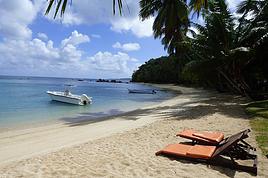
Belo sur Mer Ecolodge du Menabe The bungalows, all made of wood, bamboo, and thatch, are set on the beach. Very spacious and fully equipped! Large open-air restaurant by the sea. No hot water from the tap—it’s available in plastic bottles heated by the sun in front of each bungalow. Actually, we never used it... Another very, very beautiful spot.
Manja Hôtel Kanto The only hotel on this leg of the journey, so no choice. The owner knows it and, as a result, doesn’t bother. It’s a real dive! Tiny, dark room, a sordid bathroom with only a trickle of water—we skipped the shower! Clean sheets, though. Obviously, no Wi-Fi. The only place where I didn’t leave a tip. We were well warned about the discomfort of this stop, both by the agency and Faly. We weren’t surprised, and it even became a running joke during the trip. On the other hand, we found a nice little market in town.
Andavadoaka Manga Lodge What bliss! Especially after the horrible Hôtel Kanto. A paradise-like spot, overlooking three beautiful deserted white-sand beaches. Meals are served on the terrace facing the sea. Stunning sunset. We loved spending a day lounging here! We were the only guests and were pampered.
Mangily (Ifaty) Mangily is the "suburb" of Ifaty. Hôtel Vovo Telo A large beachfront bungalow complex. More touristy but pleasant—we spent a lovely evening there with our feet in the sand.
Ranohira Le Relais de la Reine A splendid resort built by a Frenchman, at the foot of the rocks, very well integrated into the environment. Beautiful marked trail starting from the garden.
Fianarantsoa Villa Sylvestre Contrary to what its name suggests, it’s a hotel right in the city center. Quite decent, though.
Manakara Parthenay Club Pretty bungalows in a large garden by the sea, but swimming isn’t safe—the water is too dangerous and rough.
Ranomafana Hôtel Thermal Very spacious rooms.
Meals: Not all our meals were included. It’s really not expensive. 1 meat or fish dish: around 35,000 Ar 1 full menu (starter, main, dessert): around 70,000 Ar 1 large THB beer (65 cl): between 8,000 and 12,000 Ar 1 piña colada: 15,000 Ar 1 flavored rum: 6,000 Ar (sometimes free) 1 glass of baobab juice (!): 5,000 Ar
We always ate very well. Rice is everywhere, served in large quantities. Zebu meat is quite good if not overcooked. Personally, I prefer fish, and I feasted: grouper, captain, crab, small lobsters...
We happily discovered baobab juice (especially in Belo, on the west coast). And of course, flavored rums!
We bought 2 packs of 6 bottles of mineral water at Carrefour (!) (about 5,000 Ar per large bottle) at the start of our trip. That was enough, especially since we often got water in the bungalows.
We had a few picnics included in our trip. Instead of picking up the hotel’s lunchbox, Faly prepared delicious, fresh, and varied picnics for us: tuna pasta salad, fried rice with eggs, grilled vegetables, and avocado...
An exceptional address not to miss: Mad Zébu – Belo sur Tsiribihina A highly reputed restaurant, a favorite of LP and Rough Guide, and rightly so! Gourmet cuisine, refined and elegant. Barely more expensive than elsewhere, and it’s worth it. We stopped there on our way up to Bekopaka and the Tsingy NP. Fully booked! So Faly reserved for our return, three days later. We’re still thanking him! What a treat!
THE BUDGET: Ariary exchange rate: 5,000 Ar = 1 €
Pre-trip expenses: Direct Air France flights: 930 € per person round trip Cost of the circuit with the agency: 2,880 € per person
The visa: Issued on arrival, very quickly. 35 € per person for a stay under 30 days. Super simple. Super fast.
On-site expenses: As soon as we arrived at the airport (it was nearly midnight), Faly advised us to exchange our euros for all our needs. There are few opportunities on our route to find an ATM or an open bank with a good rate. To be more comfortable, he took us to a small office under military protection just outside the airport. I exchanged 1,200 € (I had asked the agency for advice on the amount to bring) at a rate of 4,750 Ar and became a millionaire. Faly recounted all the stacks. That covered all our expenses (meals, drinks, tips) without ever feeling deprived. Personal purchases were made at the end of the trip. Convenient—it served as an adjustment variable. We spent our last million (200 €) on marquetry and vanilla. Tip: We asked for 200,000 Ar in 5,000 Ar bills for tips. That wasn’t too much—I even ran short of small bills in the last two days.
Tips: Madagascar is a poor country where every service deserves a small reward. While not mandatory, it’s customary. But no one ever demanded or expected it openly. On the contrary, I sometimes had to remind a porter to give them my small bill. We never carried our luggage—porters were always present when the car arrived or waiting at our door to watch for our departure. I gave each of them 5,000 Ar. In restaurants, I rounded up to the nearest ten and left the change. Local guides also expect a tip: I gave around 20,000 Ar per day for the two of us. Finally, the national guide also expects a gratuity. I had read online to budget 5 € per day per person. I added more since we were so happy with his services. The tip was given at the end of the trip, in euros, outside the budget.
Total budget all included (excluding personal purchases): 8,690 € Clearly, Madagascar is a country where life isn’t expensive, but travel costs add up quickly due to the need to rent a 4x4 with a driver.
HIGHLIGHTS:
· The dirt roads Yes, I’m listing them among the highlights! We loved those long hours spent driving at 20 km/h on rocky, muddy, white, red, or gray sand tracks... surrounded by tropical vegetation, palm trees, pandanus, mango trees... The experiences were sometimes thrilling: crossing a river on a ferry (just planks of wood fixed on two motorized pirogues side by side) or crossing a river without a ferry, with just a kid running ahead of the 4x4 to show the way; soft sand where the 4x4 easily gets stuck... The tracks are quite narrow, and crossing paths with a bush taxi, a zebu cart, or a herd of goats is always epic. So many beautiful images, so many beautiful photos! Much more beautiful than on asphalt. So yes, we loved those long stretches on dirt roads. For us, it was clearly part of the journey. Faly was particularly careful, and the 4x4 was comfortable. No injuries, no fatigue, even after 7 or 8 hours on rough tracks. The national roads (including the famous RN7) are badly damaged by cyclones, huge trucks, and lack of maintenance. Potholes have turned into ostrich nests, and we didn’t drive much faster than on the dirt roads.
· The landscapes, villages, encounters... We crossed a variety of stunning landscapes: mountains with slopes covered in terraced crops, rice fields from apple green to emerald green, sugarcane fields, then tropical forests, baobab forests (they deserve a special paragraph below), traveler’s tree forests. And then coastlines with white sand dunes against a backdrop of blue hues!... Magical! We also passed through many villages with houses whose architecture varied by region. The Betsileo houses display beautiful decorative brick reliefs. On the west coast, the houses are more precarious, made of bamboo with palm-thatched roofs. In the Highlands region, we found solid houses with pastel plaster. Each region has its own landscape, crops, habitat, and clothing. Zebu carts are often the only means of transport in remote villages. We saw them very frequently. Again, the cart’s decoration depends on the region. And then, we met many villagers coming out of the bush and walking to the next market, carrying their crops on their heads or shoulders. More beautiful photos!
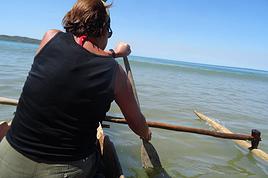
· The descent of the Tsiribihina River We boarded around 9 AM in a long pirogue with Gana, the local guide, and two pirogue men. So, five of us. The pirogue is long but narrow, about 65 cm wide. We sat one behind the other at the front on seats padded with what would become our mattresses during the bivouacs. We only took the bare essentials for two nights. A little goodbye to Faly, whom we’d see again in three days! Don’t forget us! The river is silty—meaning orange, opaque but clean. We glided along silently. Gana showed us the trees, birds, crocodiles (we saw five—apparently, we were lucky). The pirogue men rowed to get us as close as possible to these crocs sunbathing on the roots of big trees. Yeah, right!... as soon as we got too close, *splash*, they disappeared into the water. We marveled at the mini rice fields lining the river. Every tiny plot, no matter how small, is cultivated. Above them, banana fields. And on the water, a whole life of fishermen and villagers living with and from the river. Gana warned us we’d eat on the pirogue because the journey was long. So, I expected chips... But no—fried rice and zebu steak, cooked right in the pirogue!! Incredible! In the middle of the afternoon, we reached a small beach where we disembarked. Gana led us about a hundred meters to a sublime waterfall. We were alone there. We had time to swim. We’d brought our swimsuits and a towel (bought at the Carrefour in Antsirabe on Faly’s wise advice!). This swim in this paradise-like spot remains one of our best memories. We found our pirogue again and set off until our first bivouac. We’d sailed for 7 hours today. The tents were set up on a wide beach, without a single tree. A moment of solitude... Uh, where can we go to the bathroom?... Especially since it was a full moon, so we felt like we were in the spotlight. Anyway... we did as everyone else—walked away, dug a hole, and the others turned their backs. A hearty meal on the beach before a comfortable and silent night. The next day, same program, with slightly different landscapes. The gorges widened, the trees were different. But still many colorful birds. Again, we ate on the pirogue: grilled chicken and vegetables. 9 hours of sailing. A similar bivouac. This time, we got it. On the third day, we finished the descent with 5 hours of sailing. So, 7 hours, 9 hours, 5 hours... doing nothing. It might sound boring... but it wasn’t. Like the dirt roads, these were contemplative moments. It glides, it’s calm, relaxing, and there’s a lot of life on this river, animal and human. Contemplation. Suspended time. On arrival, we disembarked at a sort of joyful, bustling river port. Of course, Faly was already there to pick us up.
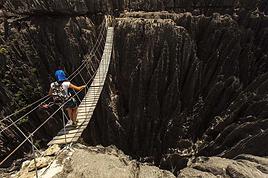
· The Tsingy de Bemaraha NP (Small and Great) I have vertigo. During my research, several agencies advised me against visiting the Great Tsingy. "Stick to the Small ones," they said. Grrr, no, not what I wanted—we’ve dreamed of this for years! The agency we chose also warned me but didn’t discourage me. So we started with the Small Tsingy, quite close to Bekopaka, guided by Alisha. This forest of sharp limestone rocks is impressive. No vertigo issues here. The day was completed with a short pirogue ride on the Manambolo River and a visit to two caves with pretty formations. The next day, Faly and Alisha drove us to the Great Tsingy (a good hour on a terrible track). Arriving at the park entrance, Alisha equipped us with harnesses, carabiners, and gave us some safety instructions. Faly was also equipped. Wait? He’s coming with us? I quickly understood he was there for me—if I got stuck, he could go back with me, and Philippe could continue with Alisha. A wise precaution that delighted and reassured me. In the end, it was unnecessary since the famous bridge crossing was fully secured by the harness and carabiners. 18 meters on planks, one by one, it didn’t sway too much—I walked looking straight ahead, not a glance down. I even managed to smile in the middle of the crossing—I have a photo to prove it! I was overjoyed! The circuit in the Great Tsingy is a loop, so we didn’t have to cross the bridge again. We climbed to viewpoints offering breathtaking panoramic views. It’s extraordinary, unique, incredible. All this to say that if you have vertigo, don’t hesitate! It’s doable! It’s completely safe and really worth pushing your limits a bit! For those who’ve done treetop adventure courses, it’s similar. Also, no need to be a great athlete—just a bit of agility to climb a few ladders and high steps. Don’t censor yourself! I even had a small regret—the loop was a bit short (about 2 hours). I would’ve liked to continue or even redo it, with less apprehension. Tip: Do the Small Tsingy before the Great ones, or not at all. And if you can only do one, do the Great ones without hesitation.
· Canoeing in the Belo mangrove The Belo sur Mer ecolodge lends small individual canoes for free to go to the mangrove. We left at high tide, paddled for about twenty minutes to reach a fairly sparse forest where we could easily venture in. Very shallow water, crystal clear—we could see the roots of all these trees, schools of tiny fish... It was quite surprising. Until then, I only knew impenetrable, tangled mangroves. Here, nothing like that—we walked through an aquatic forest. We loved this adventure so much we left a bit late. The tide had gone out, and we had to carry our canoes for the last few meters... Of course, the staff came to help (probably laughing silently!). The lodge owners gave all the necessary explanations and lent a waterproof bag for the phone (because yes, it’s worth taking photos!). A very useful precaution—the canoes are small, low in the water, and paddling quickly soaks you. Again, this isn’t just for Tony Estanguet! It didn’t cause us any problems, not even sore muscles the next day. A great experience. It’ll take about 2 hours.
· Isalo NP Big surprise when we saw this huge rocky massif appear on the RN7! A massif of colored sandstone, carved with crevasses giving it a ruined look. Le Relais de la Reine is a little gem cleverly nestled in the heart of these rocks. A small marked trail starts from the garden. We picked up the description at reception and set off. Without a guide, alone following the markers, it took us 2 hours to complete this magnificent little trail, giving us a first glimpse of the massif before the hike the next day. And we enjoyed being completely alone for this walk. It’s free, easy, and well-signposted. Don’t miss it. In the evening, Faly took us to the so-called Isalo Window site—a hole in a wall through which we could see the sunset. We met all the tourists in the area here. We weren’t blown away by the show... The next day, we left early to reach the start of the hike. We met Zozoly at the guides’ office in the small town of Ranohira. During this hike, we climbed through the rocks to a viewpoint offering stunning 360° views of the massif. Then we reached a site called the "natural pool," breathtakingly beautiful, especially since we were alone again. A sort of oasis, a cascading waterfall, palm trees and tree ferns, fine sand, all nestled at the bottom of a small canyon. Paradise-like. We resisted swimming, but it was really tempting. A long walk on the plateaus then led us to a well-equipped picnic site where a local team prepared grills. Concrete tables were tiered in a spacious, shady clearing where a whole family of ring-tailed lemurs frolicked. They knew the tourists’ habits and tried to snatch food. Playful and not very shy, they amused us with their antics! We had to resist not luring them with a piece of banana!! Thousands of photos!! After the meal, we set off again with Zozoly for another landscape. This time, we were by a small river at the bottom of a canyon with high walls covered in vegetation. The trail was narrow and slippery, on a ledge of the wall. We progressed carefully. No danger, though. We first reached the Blue Pool, which only turns blue in photos (surprise!), then the Black Pool fed by a shower of waterfalls. Two magnificent spots that showed us a completely different aspect of the massif.
· Anja Reserve This ficus forest is home to many groups of lemurs. Used to humans, whom they don’t fear, they move around us, ignoring us completely. It’s almost annoying... The best place on our trip to see lemurs.
· The FCE train To the great regret of Manakara’s inhabitants, the FCE train hasn’t reached here for over a year and a half. As a result, there are far fewer tourists—the train was part of the experience. We drove there and didn’t regret coming to this port on the east coast.
· Visit to a Tanala village This visit wasn’t part of our program—it was added by the agency to compensate for the train not running. Which was the case. Not big fans of this kind of visit, where we feel like we’re at a zoo, voyeuristic, lacking authenticity, we followed the local guide with some skepticism and exchanged dubious looks. And yet... the guide’s explanations about village life and the warm, smiling welcome from the villagers charmed us and dispelled all our concerns. We learned a lot, met smiling families, and were able to enter these beautiful bamboo houses. A very pleasant surprise, rich in lessons.
· The Pangalanes Canal Arriving in Manakara, we crossed a bridge overlooking the Pangalanes Canal. A cry of surprise: the water is turquoise! We took a short pirogue ride with a team of three pirogue men and Joël, a local guide who explained the drama caused by the train’s halt. We stopped in a fishing village where Joël bought fish for the barbecue. We ended up on a beach where the team prepared the meal while we went to watch the fishermen return on the nearby beach. We admired the fishermen’s dexterity in untangling their nets, sorting their fish, cleaning their gear. On our return, we found a small table set up on the beach, in the shade of palm trees and casuarinas. Lobsters, captain fish, grilled vegetables, sautéed potatoes. A real feast (included in the trip cost).
· Ranomafana NP A 4-5 hour hike (some climbing) in a dense secondary forest to look for lemurs. As usual, we were accompanied by a local guide who, while waiting to find our furry friends, gave us lots of info on the vegetation, birds, and Tanala ethnic rituals. In the forest, we met 4 or 5 trackers, armed with radios to alert guides of their findings. In the end, we saw several lemurs of different types. Quite far, quite high... A nice complement to our lemur encounters in Isalo. Here, it rains 200 days a year. We started the hike in thick fog, but the forest’s density protected us from the humidity. Be careful—it can be a bit frustrating to see the lemurs so far away, so high. Nothing like the Anja Reserve or Isalo NP. Here, what’s fun is the hunt.
· The baobabs We were captivated by these kings of the forest, noble, imposing, majestic. We spotted them from very far away, towering over the rest of the vegetation. Alone, in small groups, or in forests, our trip allowed us to see hundreds of them! Mainly on the west coast. All different—bald, hairy, shaggy, short and stout, tall and thin, like Laurel and Hardy. Philippe took to naming them. Respectfully!
OUR FAVORITES: · The variety of landscapes. · The Tsingy NP.
OUR DISAPPOINTMENTS: · The Avenue of the Baobabs, very overrated and the only place where we saw crowds. We saw many other "forests" of baobabs that were much more impressive. · It’s hard to approach the population calmly as swarms of children run up as soon as we arrive, asking for sweets. Without any aggression, their smiles and laughter quickly made us forget this small inconvenience. We never gave out candy, clothes, or money. We left pens at a school and clothes with Faly.
IF WE WERE TO DO IT AGAIN: · Same period, same duration, same pace, same itinerary, but if we were to do it again today, I’d go through Faly directly! · Maybe we should’ve stayed in Ambalavao instead of Fianarantsoa. · Plan a longer loop in the Great Tsingy—it felt a bit too short.
MISCELLANEOUS: The welcome: ‘Samala Vazaha,’ there are many, many kids, sometimes overwhelming, never aggressive. We were impressed by the villagers’ smiles and good humor, towards us or even among themselves—laughter was everywhere. Safety: No problems. Out of (excessive?) caution, we spread all our money across several bags that we padlocked whenever we left the hotel. Bribes: We were stopped several times on the road by police or gendarmes. They checked our papers, sometimes our passports. Faly was perfectly in order. No discussion, no bribes, a cordial greeting from the officers. However, several times we found ourselves at small "tolls" on the tracks for villagers who had leveled the road or filled a hole, or for the young guy who ran through the river to show the way... Faly complied without discussion: every service deserves a small bill. Language: French is still widely spoken. Credit card: Unused. Cash: You need it! The climate at this time: Ideal—blue skies, sunshine, and mild temperatures (20-25°C) throughout our trip. Temperatures started to drop by our departure—winter was setting in. Clothing: T-shirt or polo and a vest sometimes in the evening, sandals on our feet, hiking shoes for all the hikes. Tip: We left a bag in the car (completely safe) with things we didn’t need daily and dirty laundry. The two bags to take out at each stop were much lighter. Before leaving, we left several polos and T-shirts with Faly, which, once washed, will make a few people happy. Tourist crowds at this time: Low—we were sometimes the only guests at the hotel. Faly explained that at the Isalo picnic site, in high season, you have to queue for a table, whereas we had our pick. Photos: Lots! Too many! That’s the problem with digital—we take so many! Health issues: Nothing serious, just the usual mild traveler’s diarrhea. Mosquitoes: They’re voracious. We took anti-malaria treatment. I’m still not sure if it was the right thing to do... I’m always very skeptical about such precautions. Internet: Free Wi-Fi at the lodges’ reception (except at Hôtel Kanto!), sometimes (rarely) in the bungalows. Phone: We didn’t try to get a local SIM card—the evening Wi-Fi was enough for us to make calls and send messages via WhatsApp. Make sure to turn off mobile data and switch to airplane mode (I activated it a bit late—received calls, spam ones at that, were charged...). Electricity: French plugs. Personal purchases: Beautiful wooden objects (sculptures and marquetry) or zebu horn items in Ambositra. 1 kg of vanilla (400,000 Ar – 80 € per kg) in Tana.
IN CONCLUSION: A trip of contemplation. A pause for admiration, as our local guide in Isalo NP said. Nothing else to do but walk, look, and enjoy. Here, there are no old stones, no museums—it’s a trip where nature reigns supreme. And what nature!
I’ve stayed true to my habits: the following account is a collection of practical tips rather than a travel journal...
Madagascar is as big as France and Belgium combined. In three weeks, choices have to be made! It was the Great Tsingy that inspired our trip. We decided to focus on the southwest and the RN7. We skipped the Deep South and the North. Oh well...
OUR ITINERARY IN 3 WEEKS:
Fri 6 June – Direct AF flight to Tana – Flight arrives at 10:30 PM – Tana Sat – Antsirabe Sun – Miandrivazo Mon – Drive to the Masiakampy pier – Descent of the Tsiribihina River by pirogue - Bivouac Tue – Descent of the Tsiribihina River by pirogue - Bivouac Wed – Descent of the Tsiribihina River by pirogue – Bekopaka Thu – Pirogue on the Manambolo River and Small Tsingy of Bemaraha – Bekopaka Fri – Great Tsingy of Bemaraha – Bekopaka Sat – Avenue of the Baobabs – Morondava Sun – Belo sur Mer Mon – Free day – Belo sur Mer Tue – Manja Wed – Andavadoaka Thu – Free day – Andavadoaka Fri – Salary Lagoon – Mangily Sat – Ranohira Sun – Isalo National Park - Ranohira Mon – Anja Reserve - Ambalavao - Fianarantsoa Tue – FCE train canceled – Visit to a Tanala village - Manakara Wed – Pirogue on the Pangalanes Canal – Ranomafana Thu – Ranomafana NP – Ranomafana Fri – Ambositra – Antsirabe Sat 28 June – AF flight to Paris – Flight departs at 11:55 PM
TRIP ORGANIZATION: I prepared my trip using the usual guides (LP and Rough Guide), the internet, and the Freytag & Berndt map (1:1,000,000). I’m old-school—I still love visualizing my route on a paper map, even though in Madagascar, it’s misleading because some National Roads are only national in name!...
The agency: Since we couldn’t deal directly with a driver-guide (we lacked reliable info to take the plunge), we went through an agency to organize the logistics of our trip. We didn’t feel like using bush taxis (not enough time) or driving a 4x4 ourselves (neither the skills nor the boldness). The French agency connected us with a local agency, to whom I sent my detailed itinerary by email. A few exchanges via email and WhatsApp calls allowed us to finalize everything quickly after some adjustments. As you’ve gathered... we multiplied the commissions, which inflated the budget. That said, in the end, we were thrilled with our decision and our choice. Our trip was booked by the end of 2024, and reservations were made immediately. No bad surprises: the bookings in the planned hotels were honored, often with one of the best rooms. On our last day in Tana, before departure, we were lucky enough to meet the director I’d been communicating with, who helped build and validate our circuit. A very warm debriefing.
The driver-guide: The agency assigned us Faly, 33, a driver-guide for over 10 years. He stayed with us from start to finish: he picked us up at the airport on arrival and dropped us off 23 days later. A very experienced driver (which is important here), an open and cultured guide, reliable, punctual, and a great companion. And a provider of good advice throughout the trip. We made the most of the long stretches on dirt roads or highways to listen to him talk about daily life, rituals, wildlife, and flora... No time wasted! With a great playlist in the background, we combined business with pleasure! Faly’s accommodation and meals were included (quite often, hotels offer free lodging and meals to driver-guides who bring clients), as was the fuel. That didn’t stop us from inviting Faly to share a beer or our evening meal sometimes. He didn’t always accept, wanting to let us "enjoy our romantic evenings," as he put it. Present without being intrusive! Faly is fully capable of organizing a tailor-made trip directly. I recommend him without any hesitation—we were delighted with his service. I’ll gladly share his contact details via PM to anyone who asks.
Local guides: It’s the national guide’s prerogative to choose the local guides (mandatory in the parks). Thanks to his experience, Faly always booked us amazing, competent, and interesting local guides.
Hotels: I told the agency I wanted charming, comfortable accommodations, without falling into flashy luxury. We loved all the hotels (except the Hôtel Kanto in Manja). The rooms, mostly bungalows, were always spacious and clean. Unfortunately, I can’t give the prices—I didn’t get the details. Breakfast is always included, usually fresh and hearty. Very often, a small bottle of water is provided in the room.
Tana Hôtel Les 3 Métis Power cuts are common (!) in Tana. Bring a headlamp.
Antsirabe Ecolodge – Les chambres du voyageur Maybe our favorite! A few bungalows, beautifully arranged in a splendid tropical garden. The dog Kodak welcomes us warmly.
Miandrivazo Hôtel Princesse Tsiribihina Magnificent view of the valley.
Bekopaka Hôtel Orchidée du Bemaraha 2 (yes, 2) beautiful pools, a large open common room.
Morondava Hôtel Baobab Café Brand new or at least, according to Faly, just renovated. Very comfortable but without much charm (international style).
Belo sur Mer Ecolodge du Menabe The bungalows, all made of wood, bamboo, and thatch, are set on the beach. Very spacious and fully equipped! Large open-air restaurant by the sea. No hot water from the tap—it’s available in plastic bottles heated by the sun in front of each bungalow. Actually, we never used it... Another very, very beautiful spot.
Manja Hôtel Kanto The only hotel on this leg of the journey, so no choice. The owner knows it and, as a result, doesn’t bother. It’s a real dive! Tiny, dark room, a sordid bathroom with only a trickle of water—we skipped the shower! Clean sheets, though. Obviously, no Wi-Fi. The only place where I didn’t leave a tip. We were well warned about the discomfort of this stop, both by the agency and Faly. We weren’t surprised, and it even became a running joke during the trip. On the other hand, we found a nice little market in town.
Andavadoaka Manga Lodge What bliss! Especially after the horrible Hôtel Kanto. A paradise-like spot, overlooking three beautiful deserted white-sand beaches. Meals are served on the terrace facing the sea. Stunning sunset. We loved spending a day lounging here! We were the only guests and were pampered.
Mangily (Ifaty) Mangily is the "suburb" of Ifaty. Hôtel Vovo Telo A large beachfront bungalow complex. More touristy but pleasant—we spent a lovely evening there with our feet in the sand.
Ranohira Le Relais de la Reine A splendid resort built by a Frenchman, at the foot of the rocks, very well integrated into the environment. Beautiful marked trail starting from the garden.
Fianarantsoa Villa Sylvestre Contrary to what its name suggests, it’s a hotel right in the city center. Quite decent, though.
Manakara Parthenay Club Pretty bungalows in a large garden by the sea, but swimming isn’t safe—the water is too dangerous and rough.
Ranomafana Hôtel Thermal Very spacious rooms.
Meals: Not all our meals were included. It’s really not expensive. 1 meat or fish dish: around 35,000 Ar 1 full menu (starter, main, dessert): around 70,000 Ar 1 large THB beer (65 cl): between 8,000 and 12,000 Ar 1 piña colada: 15,000 Ar 1 flavored rum: 6,000 Ar (sometimes free) 1 glass of baobab juice (!): 5,000 Ar
We always ate very well. Rice is everywhere, served in large quantities. Zebu meat is quite good if not overcooked. Personally, I prefer fish, and I feasted: grouper, captain, crab, small lobsters...
We happily discovered baobab juice (especially in Belo, on the west coast). And of course, flavored rums!
We bought 2 packs of 6 bottles of mineral water at Carrefour (!) (about 5,000 Ar per large bottle) at the start of our trip. That was enough, especially since we often got water in the bungalows.
We had a few picnics included in our trip. Instead of picking up the hotel’s lunchbox, Faly prepared delicious, fresh, and varied picnics for us: tuna pasta salad, fried rice with eggs, grilled vegetables, and avocado...
An exceptional address not to miss: Mad Zébu – Belo sur Tsiribihina A highly reputed restaurant, a favorite of LP and Rough Guide, and rightly so! Gourmet cuisine, refined and elegant. Barely more expensive than elsewhere, and it’s worth it. We stopped there on our way up to Bekopaka and the Tsingy NP. Fully booked! So Faly reserved for our return, three days later. We’re still thanking him! What a treat!
THE BUDGET: Ariary exchange rate: 5,000 Ar = 1 €
Pre-trip expenses: Direct Air France flights: 930 € per person round trip Cost of the circuit with the agency: 2,880 € per person
The visa: Issued on arrival, very quickly. 35 € per person for a stay under 30 days. Super simple. Super fast.
On-site expenses: As soon as we arrived at the airport (it was nearly midnight), Faly advised us to exchange our euros for all our needs. There are few opportunities on our route to find an ATM or an open bank with a good rate. To be more comfortable, he took us to a small office under military protection just outside the airport. I exchanged 1,200 € (I had asked the agency for advice on the amount to bring) at a rate of 4,750 Ar and became a millionaire. Faly recounted all the stacks. That covered all our expenses (meals, drinks, tips) without ever feeling deprived. Personal purchases were made at the end of the trip. Convenient—it served as an adjustment variable. We spent our last million (200 €) on marquetry and vanilla. Tip: We asked for 200,000 Ar in 5,000 Ar bills for tips. That wasn’t too much—I even ran short of small bills in the last two days.
Tips: Madagascar is a poor country where every service deserves a small reward. While not mandatory, it’s customary. But no one ever demanded or expected it openly. On the contrary, I sometimes had to remind a porter to give them my small bill. We never carried our luggage—porters were always present when the car arrived or waiting at our door to watch for our departure. I gave each of them 5,000 Ar. In restaurants, I rounded up to the nearest ten and left the change. Local guides also expect a tip: I gave around 20,000 Ar per day for the two of us. Finally, the national guide also expects a gratuity. I had read online to budget 5 € per day per person. I added more since we were so happy with his services. The tip was given at the end of the trip, in euros, outside the budget.
Total budget all included (excluding personal purchases): 8,690 € Clearly, Madagascar is a country where life isn’t expensive, but travel costs add up quickly due to the need to rent a 4x4 with a driver.
HIGHLIGHTS:
· The dirt roads Yes, I’m listing them among the highlights! We loved those long hours spent driving at 20 km/h on rocky, muddy, white, red, or gray sand tracks... surrounded by tropical vegetation, palm trees, pandanus, mango trees... The experiences were sometimes thrilling: crossing a river on a ferry (just planks of wood fixed on two motorized pirogues side by side) or crossing a river without a ferry, with just a kid running ahead of the 4x4 to show the way; soft sand where the 4x4 easily gets stuck... The tracks are quite narrow, and crossing paths with a bush taxi, a zebu cart, or a herd of goats is always epic. So many beautiful images, so many beautiful photos! Much more beautiful than on asphalt. So yes, we loved those long stretches on dirt roads. For us, it was clearly part of the journey. Faly was particularly careful, and the 4x4 was comfortable. No injuries, no fatigue, even after 7 or 8 hours on rough tracks. The national roads (including the famous RN7) are badly damaged by cyclones, huge trucks, and lack of maintenance. Potholes have turned into ostrich nests, and we didn’t drive much faster than on the dirt roads.
· The landscapes, villages, encounters... We crossed a variety of stunning landscapes: mountains with slopes covered in terraced crops, rice fields from apple green to emerald green, sugarcane fields, then tropical forests, baobab forests (they deserve a special paragraph below), traveler’s tree forests. And then coastlines with white sand dunes against a backdrop of blue hues!... Magical! We also passed through many villages with houses whose architecture varied by region. The Betsileo houses display beautiful decorative brick reliefs. On the west coast, the houses are more precarious, made of bamboo with palm-thatched roofs. In the Highlands region, we found solid houses with pastel plaster. Each region has its own landscape, crops, habitat, and clothing. Zebu carts are often the only means of transport in remote villages. We saw them very frequently. Again, the cart’s decoration depends on the region. And then, we met many villagers coming out of the bush and walking to the next market, carrying their crops on their heads or shoulders. More beautiful photos!
· The descent of the Tsiribihina River We boarded around 9 AM in a long pirogue with Gana, the local guide, and two pirogue men. So, five of us. The pirogue is long but narrow, about 65 cm wide. We sat one behind the other at the front on seats padded with what would become our mattresses during the bivouacs. We only took the bare essentials for two nights. A little goodbye to Faly, whom we’d see again in three days! Don’t forget us! The river is silty—meaning orange, opaque but clean. We glided along silently. Gana showed us the trees, birds, crocodiles (we saw five—apparently, we were lucky). The pirogue men rowed to get us as close as possible to these crocs sunbathing on the roots of big trees. Yeah, right!... as soon as we got too close, *splash*, they disappeared into the water. We marveled at the mini rice fields lining the river. Every tiny plot, no matter how small, is cultivated. Above them, banana fields. And on the water, a whole life of fishermen and villagers living with and from the river. Gana warned us we’d eat on the pirogue because the journey was long. So, I expected chips... But no—fried rice and zebu steak, cooked right in the pirogue!! Incredible! In the middle of the afternoon, we reached a small beach where we disembarked. Gana led us about a hundred meters to a sublime waterfall. We were alone there. We had time to swim. We’d brought our swimsuits and a towel (bought at the Carrefour in Antsirabe on Faly’s wise advice!). This swim in this paradise-like spot remains one of our best memories. We found our pirogue again and set off until our first bivouac. We’d sailed for 7 hours today. The tents were set up on a wide beach, without a single tree. A moment of solitude... Uh, where can we go to the bathroom?... Especially since it was a full moon, so we felt like we were in the spotlight. Anyway... we did as everyone else—walked away, dug a hole, and the others turned their backs. A hearty meal on the beach before a comfortable and silent night. The next day, same program, with slightly different landscapes. The gorges widened, the trees were different. But still many colorful birds. Again, we ate on the pirogue: grilled chicken and vegetables. 9 hours of sailing. A similar bivouac. This time, we got it. On the third day, we finished the descent with 5 hours of sailing. So, 7 hours, 9 hours, 5 hours... doing nothing. It might sound boring... but it wasn’t. Like the dirt roads, these were contemplative moments. It glides, it’s calm, relaxing, and there’s a lot of life on this river, animal and human. Contemplation. Suspended time. On arrival, we disembarked at a sort of joyful, bustling river port. Of course, Faly was already there to pick us up.
· The Tsingy de Bemaraha NP (Small and Great) I have vertigo. During my research, several agencies advised me against visiting the Great Tsingy. "Stick to the Small ones," they said. Grrr, no, not what I wanted—we’ve dreamed of this for years! The agency we chose also warned me but didn’t discourage me. So we started with the Small Tsingy, quite close to Bekopaka, guided by Alisha. This forest of sharp limestone rocks is impressive. No vertigo issues here. The day was completed with a short pirogue ride on the Manambolo River and a visit to two caves with pretty formations. The next day, Faly and Alisha drove us to the Great Tsingy (a good hour on a terrible track). Arriving at the park entrance, Alisha equipped us with harnesses, carabiners, and gave us some safety instructions. Faly was also equipped. Wait? He’s coming with us? I quickly understood he was there for me—if I got stuck, he could go back with me, and Philippe could continue with Alisha. A wise precaution that delighted and reassured me. In the end, it was unnecessary since the famous bridge crossing was fully secured by the harness and carabiners. 18 meters on planks, one by one, it didn’t sway too much—I walked looking straight ahead, not a glance down. I even managed to smile in the middle of the crossing—I have a photo to prove it! I was overjoyed! The circuit in the Great Tsingy is a loop, so we didn’t have to cross the bridge again. We climbed to viewpoints offering breathtaking panoramic views. It’s extraordinary, unique, incredible. All this to say that if you have vertigo, don’t hesitate! It’s doable! It’s completely safe and really worth pushing your limits a bit! For those who’ve done treetop adventure courses, it’s similar. Also, no need to be a great athlete—just a bit of agility to climb a few ladders and high steps. Don’t censor yourself! I even had a small regret—the loop was a bit short (about 2 hours). I would’ve liked to continue or even redo it, with less apprehension. Tip: Do the Small Tsingy before the Great ones, or not at all. And if you can only do one, do the Great ones without hesitation.
· Canoeing in the Belo mangrove The Belo sur Mer ecolodge lends small individual canoes for free to go to the mangrove. We left at high tide, paddled for about twenty minutes to reach a fairly sparse forest where we could easily venture in. Very shallow water, crystal clear—we could see the roots of all these trees, schools of tiny fish... It was quite surprising. Until then, I only knew impenetrable, tangled mangroves. Here, nothing like that—we walked through an aquatic forest. We loved this adventure so much we left a bit late. The tide had gone out, and we had to carry our canoes for the last few meters... Of course, the staff came to help (probably laughing silently!). The lodge owners gave all the necessary explanations and lent a waterproof bag for the phone (because yes, it’s worth taking photos!). A very useful precaution—the canoes are small, low in the water, and paddling quickly soaks you. Again, this isn’t just for Tony Estanguet! It didn’t cause us any problems, not even sore muscles the next day. A great experience. It’ll take about 2 hours.
· Isalo NP Big surprise when we saw this huge rocky massif appear on the RN7! A massif of colored sandstone, carved with crevasses giving it a ruined look. Le Relais de la Reine is a little gem cleverly nestled in the heart of these rocks. A small marked trail starts from the garden. We picked up the description at reception and set off. Without a guide, alone following the markers, it took us 2 hours to complete this magnificent little trail, giving us a first glimpse of the massif before the hike the next day. And we enjoyed being completely alone for this walk. It’s free, easy, and well-signposted. Don’t miss it. In the evening, Faly took us to the so-called Isalo Window site—a hole in a wall through which we could see the sunset. We met all the tourists in the area here. We weren’t blown away by the show... The next day, we left early to reach the start of the hike. We met Zozoly at the guides’ office in the small town of Ranohira. During this hike, we climbed through the rocks to a viewpoint offering stunning 360° views of the massif. Then we reached a site called the "natural pool," breathtakingly beautiful, especially since we were alone again. A sort of oasis, a cascading waterfall, palm trees and tree ferns, fine sand, all nestled at the bottom of a small canyon. Paradise-like. We resisted swimming, but it was really tempting. A long walk on the plateaus then led us to a well-equipped picnic site where a local team prepared grills. Concrete tables were tiered in a spacious, shady clearing where a whole family of ring-tailed lemurs frolicked. They knew the tourists’ habits and tried to snatch food. Playful and not very shy, they amused us with their antics! We had to resist not luring them with a piece of banana!! Thousands of photos!! After the meal, we set off again with Zozoly for another landscape. This time, we were by a small river at the bottom of a canyon with high walls covered in vegetation. The trail was narrow and slippery, on a ledge of the wall. We progressed carefully. No danger, though. We first reached the Blue Pool, which only turns blue in photos (surprise!), then the Black Pool fed by a shower of waterfalls. Two magnificent spots that showed us a completely different aspect of the massif.
· Anja Reserve This ficus forest is home to many groups of lemurs. Used to humans, whom they don’t fear, they move around us, ignoring us completely. It’s almost annoying... The best place on our trip to see lemurs.
· The FCE train To the great regret of Manakara’s inhabitants, the FCE train hasn’t reached here for over a year and a half. As a result, there are far fewer tourists—the train was part of the experience. We drove there and didn’t regret coming to this port on the east coast.
· Visit to a Tanala village This visit wasn’t part of our program—it was added by the agency to compensate for the train not running. Which was the case. Not big fans of this kind of visit, where we feel like we’re at a zoo, voyeuristic, lacking authenticity, we followed the local guide with some skepticism and exchanged dubious looks. And yet... the guide’s explanations about village life and the warm, smiling welcome from the villagers charmed us and dispelled all our concerns. We learned a lot, met smiling families, and were able to enter these beautiful bamboo houses. A very pleasant surprise, rich in lessons.
· The Pangalanes Canal Arriving in Manakara, we crossed a bridge overlooking the Pangalanes Canal. A cry of surprise: the water is turquoise! We took a short pirogue ride with a team of three pirogue men and Joël, a local guide who explained the drama caused by the train’s halt. We stopped in a fishing village where Joël bought fish for the barbecue. We ended up on a beach where the team prepared the meal while we went to watch the fishermen return on the nearby beach. We admired the fishermen’s dexterity in untangling their nets, sorting their fish, cleaning their gear. On our return, we found a small table set up on the beach, in the shade of palm trees and casuarinas. Lobsters, captain fish, grilled vegetables, sautéed potatoes. A real feast (included in the trip cost).
· Ranomafana NP A 4-5 hour hike (some climbing) in a dense secondary forest to look for lemurs. As usual, we were accompanied by a local guide who, while waiting to find our furry friends, gave us lots of info on the vegetation, birds, and Tanala ethnic rituals. In the forest, we met 4 or 5 trackers, armed with radios to alert guides of their findings. In the end, we saw several lemurs of different types. Quite far, quite high... A nice complement to our lemur encounters in Isalo. Here, it rains 200 days a year. We started the hike in thick fog, but the forest’s density protected us from the humidity. Be careful—it can be a bit frustrating to see the lemurs so far away, so high. Nothing like the Anja Reserve or Isalo NP. Here, what’s fun is the hunt.
· The baobabs We were captivated by these kings of the forest, noble, imposing, majestic. We spotted them from very far away, towering over the rest of the vegetation. Alone, in small groups, or in forests, our trip allowed us to see hundreds of them! Mainly on the west coast. All different—bald, hairy, shaggy, short and stout, tall and thin, like Laurel and Hardy. Philippe took to naming them. Respectfully!
OUR FAVORITES: · The variety of landscapes. · The Tsingy NP.
OUR DISAPPOINTMENTS: · The Avenue of the Baobabs, very overrated and the only place where we saw crowds. We saw many other "forests" of baobabs that were much more impressive. · It’s hard to approach the population calmly as swarms of children run up as soon as we arrive, asking for sweets. Without any aggression, their smiles and laughter quickly made us forget this small inconvenience. We never gave out candy, clothes, or money. We left pens at a school and clothes with Faly.
IF WE WERE TO DO IT AGAIN: · Same period, same duration, same pace, same itinerary, but if we were to do it again today, I’d go through Faly directly! · Maybe we should’ve stayed in Ambalavao instead of Fianarantsoa. · Plan a longer loop in the Great Tsingy—it felt a bit too short.
MISCELLANEOUS: The welcome: ‘Samala Vazaha,’ there are many, many kids, sometimes overwhelming, never aggressive. We were impressed by the villagers’ smiles and good humor, towards us or even among themselves—laughter was everywhere. Safety: No problems. Out of (excessive?) caution, we spread all our money across several bags that we padlocked whenever we left the hotel. Bribes: We were stopped several times on the road by police or gendarmes. They checked our papers, sometimes our passports. Faly was perfectly in order. No discussion, no bribes, a cordial greeting from the officers. However, several times we found ourselves at small "tolls" on the tracks for villagers who had leveled the road or filled a hole, or for the young guy who ran through the river to show the way... Faly complied without discussion: every service deserves a small bill. Language: French is still widely spoken. Credit card: Unused. Cash: You need it! The climate at this time: Ideal—blue skies, sunshine, and mild temperatures (20-25°C) throughout our trip. Temperatures started to drop by our departure—winter was setting in. Clothing: T-shirt or polo and a vest sometimes in the evening, sandals on our feet, hiking shoes for all the hikes. Tip: We left a bag in the car (completely safe) with things we didn’t need daily and dirty laundry. The two bags to take out at each stop were much lighter. Before leaving, we left several polos and T-shirts with Faly, which, once washed, will make a few people happy. Tourist crowds at this time: Low—we were sometimes the only guests at the hotel. Faly explained that at the Isalo picnic site, in high season, you have to queue for a table, whereas we had our pick. Photos: Lots! Too many! That’s the problem with digital—we take so many! Health issues: Nothing serious, just the usual mild traveler’s diarrhea. Mosquitoes: They’re voracious. We took anti-malaria treatment. I’m still not sure if it was the right thing to do... I’m always very skeptical about such precautions. Internet: Free Wi-Fi at the lodges’ reception (except at Hôtel Kanto!), sometimes (rarely) in the bungalows. Phone: We didn’t try to get a local SIM card—the evening Wi-Fi was enough for us to make calls and send messages via WhatsApp. Make sure to turn off mobile data and switch to airplane mode (I activated it a bit late—received calls, spam ones at that, were charged...). Electricity: French plugs. Personal purchases: Beautiful wooden objects (sculptures and marquetry) or zebu horn items in Ambositra. 1 kg of vanilla (400,000 Ar – 80 € per kg) in Tana.
IN CONCLUSION: A trip of contemplation. A pause for admiration, as our local guide in Isalo NP said. Nothing else to do but walk, look, and enjoy. Here, there are no old stones, no museums—it’s a trip where nature reigns supreme. And what nature!
Une connaissance d'Alsace, revient de deux mois à Madagascar, (juillet et août) Tana et autres. Je lui annonce fièrement mon prochain voyage à Mada, réponse :" tu es fou, je suis rentrée et content d'être en France, là-bas, attaques au couteau, vols, etc.... au moins une agression par jour à Tana par des jeunes, y compris envers de jeunes femmes malgaches" . D'après lui, sortir le jour ou la nuit serait dangereux!!!!!!!!!!
Il faudrait tout de même que nous soyons informer du danger ou pas d'aller à Mada en septembre ou octobre. Les avis de préférence de vahazas vivants à Mada et plutôt à Tana, me seraient utiles, car je me pose pas mal de question depuis cette discussion. Cet homme a déjà fait 3 fois 2 mois de séjour en 3 années et affirme que la situation est de plus en plus critique! J'ai insisté pour lui dire qu'il abusait un peu, il maintient ses affirmations.
Revenant d'un séjour(où je n'ai eu pas de bol) de 5 jours dans la capitale Malgache j'aimerais faire part de mon expérience aux internautes qui prévoient d'y séjourner dans un futur proche.
A peine débarqués d'un vol UU mes amis et moi sommes mis au parfum par la police des frontières.Une dame venant à notre rencontre nous demande nos billets retour, les fiches d'immigration, les passeports plus 15000 ariary par pax pour que ça aille plus vite.Le vol étant à moitié rempli nous refusons et préférons attendre notre tour.Mais la dame décide persévérer et nous explique ses conditions difficiles espérant nous attrister puis finit par abandonner face notre inflexibilité.
Arrivés au niveau des douanes nous sommes accueillis par les grands sourires des agents nous demandant d'ouvrir les valises.Son attention se porte sur la vingtaine de livres que j'ai emmené pour les offrir à la directrice du collège de France pour ses élèves.Je lui explique que ces livres sont destinés aux enfants puis il me répond qui lui aussi il a des enfants et me demande un "petit café" de 20000 ariary comme "aide humanitaire". Face à mon refus il me menace d'une confiscation des livres et face à ce chantage je lui demande de me dresser un procès verbal avec son nom d'agent.....il finit aussi par laisser tomber.
Le soir après un repas bien copieux au Louvres je décide de laisser mes amis au restaurant pour rentrer à l'hôtel Colbert se trouvant à deux minutes à pied.Le guide et ami de mes compagnons de voyage décide de m'accompagner malgré tout pour des raisons de sécurité.Nous sommes abordés par 3 policiers qui nous demande la carte d'identité et mon passeport sauf que je n'avais que sa photocopie(j'ai déjà perdu mon passeport de part le passé). Et c'est à ce moment que tout s'enclenche:
- Le policier:"Monsieur vous n'avez pas vos papiers veuillez nous accompagner au poste de police pour une garde à vue de 24h". - Moi :" l'hôtel se trouve juste à côté donnez moi 2 minutes pour que je vous le ramène" - Le policier :" vous n'avez pas vos papiers vous êtes hors la loi et la loi c'est la garde à vue". - Moi:"c'est un peu disproportionné vous ne trouvez pas????je reconnais de ne pas être en règle aussi pour vous prouver ma bonne foi et afin de régulariser cette situation je vous demande juste 2 minutes le temps que je le prenne à l'hôtel" - Le policier : "pas question vous nous suivez au poste de police" qui se trouve au fond d'une ruelle sombre. - Mon guide et ami: "s'il va au poste de police je viens avec lui" - Le policier :"non vous vous restez à l'écart car ça ne vous regarde pas". - Le guide:"non je ne le laisserai pas tomber" Le policier me bouscule me forçant presque à descendre cette rue et finit par me mettre à distance de mon ami , de mon côté je suis en plein cauchemar et n'ose imaginer à quoi ressemblent les prisons Malgaches. - Le policier:"pour que nous oublions l'affaire vous nous donnez 200 000 ariary" - Moi : "c' est trop je ne les ai pas sur moi" - le policier:" ok pour 120 000 tout de suite" J'appelle mes amis qui sont encore au restaurant sauf que le policier me l'interdit mais je leurs fais croire que mes amis vont m'apporter de quoi leur payer. - Le guide:"Fred tu ne paies rien du tout je suis témoin de leur corruption" S'ensuit d'une dispute entre le guide et les policiers.Mes amis finissent par arriver l'un d'eux rentre à l'hôtel pour récupérer mon passeport et le présente aux policiers qui ne veulent rien entendre car omnibulés par l'appât du gain. - Moi: "voilà de toute façon j'ai régularisé ma situation, je reconnais mon erreur de ne pas vous avoir présenté mon passeport au moment de l'interpellation maintenant nous rentrons à l'hôtel si vous ne voulez pas me rendre le passeport c'est une détention abusive de pièce administrative et au cas où vous changez d'avis vous n'aurez qu'à le déposer à l'hôtel en tout cas je ne vous donnerez pas un sous, mes amis sont témoin de votre tentative de corruption" En nous dirigeant vers l'hôtel le policier finit par céder et c'est discrètement qu'il remet au guide mon passeport.
Conclusion:pour ceux ou celles qui se rendent à Tananarive pour la première fois ayez toujours un passeport sur vous pour éviter d'avoir affaire à ces policiers véreux qui continuent d'extorquer les touristes qui par peur se font plumer.
- Le policier:"Monsieur vous n'avez pas vos papiers veuillez nous accompagner au poste de police pour une garde à vue de 24h". - Moi :" l'hôtel se trouve juste à côté donnez moi 2 minutes pour que je vous le ramène" - Le policier :" vous n'avez pas vos papiers vous êtes hors la loi et la loi c'est la garde à vue". - Moi:"c'est un peu disproportionné vous ne trouvez pas????je reconnais de ne pas être en règle aussi pour vous prouver ma bonne foi et afin de régulariser cette situation je vous demande juste 2 minutes le temps que je le prenne à l'hôtel" - Le policier : "pas question vous nous suivez au poste de police" qui se trouve au fond d'une ruelle sombre. - Mon guide et ami: "s'il va au poste de police je viens avec lui" - Le policier :"non vous vous restez à l'écart car ça ne vous regarde pas". - Le guide:"non je ne le laisserai pas tomber" Le policier me bouscule me forçant presque à descendre cette rue et finit par me mettre à distance de mon ami , de mon côté je suis en plein cauchemar et n'ose imaginer à quoi ressemblent les prisons Malgaches. - Le policier:"pour que nous oublions l'affaire vous nous donnez 200 000 ariary" - Moi : "c' est trop je ne les ai pas sur moi" - le policier:" ok pour 120 000 tout de suite" J'appelle mes amis qui sont encore au restaurant sauf que le policier me l'interdit mais je leurs fais croire que mes amis vont m'apporter de quoi leur payer. - Le guide:"Fred tu ne paies rien du tout je suis témoin de leur corruption" S'ensuit d'une dispute entre le guide et les policiers.Mes amis finissent par arriver l'un d'eux rentre à l'hôtel pour récupérer mon passeport et le présente aux policiers qui ne veulent rien entendre car omnibulés par l'appât du gain. - Moi: "voilà de toute façon j'ai régularisé ma situation, je reconnais mon erreur de ne pas vous avoir présenté mon passeport au moment de l'interpellation maintenant nous rentrons à l'hôtel si vous ne voulez pas me rendre le passeport c'est une détention abusive de pièce administrative et au cas où vous changez d'avis vous n'aurez qu'à le déposer à l'hôtel en tout cas je ne vous donnerez pas un sous, mes amis sont témoin de votre tentative de corruption" En nous dirigeant vers l'hôtel le policier finit par céder et c'est discrètement qu'il remet au guide mon passeport.
Conclusion:pour ceux ou celles qui se rendent à Tananarive pour la première fois ayez toujours un passeport sur vous pour éviter d'avoir affaire à ces policiers véreux qui continuent d'extorquer les touristes qui par peur se font plumer.
Le français est de moins en moins parlé à Madagascar, il n'y a qu'à entrer dans les alliances françaises de l'île pour le constater aujourd'hui....
Lorsqu'on fréquente quotidiennement pendant un mois un de ces " hauts lieux culturels" de province, on constate très vite que le français est paradoxalement très peu parlé à l'intérieur des locaux !
Le personnel d'accueil s'exprime en langue locale et il faut par conséquent beaucoup d'imagination pour croire que l'on vient apprendre ou se perfectionner dans la langue de Molière .
L'alliance est essentiellement fréquentée par des jeunes étudiants qui, en fait, utilisent ses locaux surtout pour jouer aux échecs ou à d'autres jeux de société ainsi que pour faire leurs devoirs du soir dans de bonnes conditions d'éclairage et d’accueil, le silence est souvent la langue la plus utilisée d'où ce doute à croire que l'on vient ici pour chercher à améliorer son français....
Beaucoup aussi, de très jeunes enfants venant ici pour regarder les bandes dessinées baignées dans un univers très éloigné de leur quotidien.....
En fait, ces locaux sont l'unique lieu de rencontre d'une jeunesse de province utilisant cet endroit comme une bouée de sauvetage de leur ennui, faisant passer la connaissance du français en mode accessoire et forcé ....
Que dire aussi des emprunts de livres qui révèlent, à eux seuls, le désintérêt général pour la lecture ...
Aux vues des fiches d'emprunts, on est amusé de constater que parmi les auteurs les plus emblématiques de notre culture tels Maupassant (2002), Balzac ( 2007), St Saint-Exupéry ( 2005) , Colette ( 2007), Kessel ( 2001), Sagan ( 2007) n'ont pas vu de lecteurs depuis ces dates relevées sur les fiches d'emprunt de ces auteurs !
L'établissement fréquenté dispose d'un Cyber qui n'est utilisé essentiellement que par des jeunes filles de la petite bourgeoisie locale qui surfent sur leur Facebook en malgache...et lorsque vous vous décidez à une recherche personnelle sur google, la version anglaise apparaît d'office .....
Le français est devenu uniquement "une langue alimentaire" permettant encore à un petit nombre de malgaches d'espérer un travail en relation avec l'extérieur ( tourisme en particulier ) et aux filles, de bénéficier d'un atout supplémentaire pour faire des rencontres en vue d'un hypothétique mariage bien que cela soit loin d'être d'une absolue nécessité ....
Madagascar n'est plus un pays vraiment francophone, ni bien sûr un pays anglophone mais un pays qui se retranche derrière sa langue nationale pour des raisons faciles à comprendre confirmant ainsi son isolement culturel du plus grand nombre.....
Bonjour,
je dois partir à madagascar début septembre 2012 durant trois mois pour du bénévolat. je suis à deux doigts d'acheter mes billets (vu qu'à l'avance c'est moins cher), et de me faire vacciner. seulement voilà, j'ai une amie qui vit depuis bientôt deux ans là-bas, et qui revient en france fin mars car elle trouve que le pays devient de moins en moins sécurisé du fait des futurs évènements politiques. si je devais partir maintenant elle ne se ferait pas trop de soucis pour moi, mais d'ici à septembre elle pense fortement que la situation va dégénérer et me déconseille d'y aller. honnêtement je ne sais pas quoi faire. est-ce que des malgaches ou des immigrés peuvent me dire ce qu'ils pensent de la situation actuelle? a-t-elle raison de s'inquiéter? cela va-t'il empirer comme en 2009? j'hésites à me faire vacciner si finalement je ne pars pas. pour être plus précise, je serais prés de Tana et aussi un peu à Tamatave. merci d'avance pour vos conseils.
je dois partir à madagascar début septembre 2012 durant trois mois pour du bénévolat. je suis à deux doigts d'acheter mes billets (vu qu'à l'avance c'est moins cher), et de me faire vacciner. seulement voilà, j'ai une amie qui vit depuis bientôt deux ans là-bas, et qui revient en france fin mars car elle trouve que le pays devient de moins en moins sécurisé du fait des futurs évènements politiques. si je devais partir maintenant elle ne se ferait pas trop de soucis pour moi, mais d'ici à septembre elle pense fortement que la situation va dégénérer et me déconseille d'y aller. honnêtement je ne sais pas quoi faire. est-ce que des malgaches ou des immigrés peuvent me dire ce qu'ils pensent de la situation actuelle? a-t-elle raison de s'inquiéter? cela va-t'il empirer comme en 2009? j'hésites à me faire vacciner si finalement je ne pars pas. pour être plus précise, je serais prés de Tana et aussi un peu à Tamatave. merci d'avance pour vos conseils.