Hi there,
I can’t seem to complete the payment for my trip on the IRCTC (Indian Railways) site. No matter which payment method I choose, my Visa card isn’t accepted.
Has anyone here managed to do it, and if so, could you share the method you used?
Thanks in advance!
Charlie
526 similar discussions in English
Hi everyone,
Here’s a little account of our two-week family trip (with two boys aged 7 and 10) to Corfu. I hope it helps other travelers! We chose Corfu because there are direct flights from Paris, and we were looking for a destination where it’d be easy to swim with the kids. We were there from August 14 to 28.
Since I wasn’t sure about the distances and had read quite a bit about Greek driving and the state of the roads, I decided to split the trip into three parts: Corfu Town, the North, and the South.
Corfu Town (3 nights) Day 1: We landed in the late afternoon. Booked three nights via Booking on the edge of the old town (Sueno Garden Apartment), which is walkable from the airport—no need to rent a car for the first few days or stay in Corfu Town. First evening in the old town, dinner at Pane e Souvlaki on Dimarchiou Square. Touristy, but good vibes.
Day 2: Visited the Old Fort. Nice for the Church of St. George, which looks like an ancient Greek temple, and especially for the 360° view from the top. By 11 a.m., the sun was already beating down. Left the fort and strolled through the People’s Gardens. Lunch at Mouragia a bit further away, then backtracked to let the kids swim at Faliraki Bathing Beach.
Day 3: We took bus line 2A from Spinada (in front of the Old Fort) to the end of the runway (stop ΚΑΛΟΚΑΙΡΙ Ε). Poorly signposted when you’re at the top—you have to go down via the bar. Not well set up, which is a shame. The Panagia Vlacherna Monastery is pretty on its little island, but don’t turn around—the landings are impressive. Returned via the 2A with a stop at Mon Repos Beach, where the kids loved jumping off the pier.
North (6 nights) Day 4: Headed to Sidari, rented a small Fiat Panda from Europcar—no issues with this rental company (I booked late, so it’s probably possible to find cheaper). We’d also booked via Booking at Blue Dreams Apartment, just south of Sidari. A family-run hotel with a nice pool, we had a great stay (it’s just been taken over by Belgians who speak French). We wandered around Sidari to the Canal d’Amour. Not easy to access—you have to walk through all the bars, and the tiny beach is pretty dirty. Still, it’s fun for a swim and exploring the cave.
Day 5: Quick breakfast to be at Cap Drastis by 9 a.m. Parked at the top, but there’s very little space (we couldn’t park on the way back), and it’s a dirt road. The signs saying “To the sea” actually lead to a boat dock for a cape tour. You only see the cape from above, not below. A bit of a letdown, but since it was early and no one was down there yet, we treated ourselves to a quick swim. Brunch back in Sidari at Eviva—I recommend it: not Greek at all, but high quality. Agios Stefanos in the late afternoon after the heat. The port is awful (dirty and uninteresting), but there’s a swimming spot just before the beach, near the old port (park above, by the church). No one was there—great moment with the kids.
Day 6: Left around 9 a.m. for Mount Pantokrator. A bit of a climb at the end in the Fiat Panda—it’s steep! The road is long, but I think it’s worth it for the lunar landscape at the top, the monastery-antenna, and the 360° view. Then down to Kassiopi (we paid 5 euros for the Kassiopi Car Park—I think it’s the best option, as there’s no big free parking like in Sidari) and a swim at Paralia Mpataria (small but nice). Really relaxing in the late afternoon. Walked around the peninsula and saw several dolphin pods with amazing jumps. Unforgettable. Kassiopi is more family-friendly than Sidari and has more charm (Sidari has none, so that’s easy!).
Day 7: Morning off at the hotel, then afternoon at Paralia Kalamaki for the inflatable playground the kids had spotted on the way back from Kassiopi. 10 euros per person for an hour, not many people around 4 p.m., and we had a blast. Shallow sandy beach. Not much marine life, but safe for young kids. Note: free freshwater shower. Dinner at Nikos Family Restaurant in Roda. Great welcome and atmosphere. The stifado and soutzoukakia were delicious, and the Greek desserts were amazing too. Next door, at Roda Park restaurant, there was a Greek party with traditional dancing and plaster plate-smashing. Even though we didn’t eat there, everyone was invited to join in the street—it was fun. Probably touristy, but pretty spontaneous, and it was a good time.
Day 8: I’d booked two dives in Paleokastritsa with Achilleon Diving Center, directly via WhatsApp. Great international vibe, two easy but interesting dives (a barracuda school and a “cow” nudibranch at Colovri Reefs, cool crevasses and holes at Donald’s Place). In the afternoon, we visited the Paleokastritsa Monastery (well-maintained, pretty nice) and spent some time at the beach (very crowded).
Day 9: Day off—we enjoyed the hotel pool and went to Olea next door to buy a small olive wood souvenir. Note that the old man who works the wood doesn’t have many fingers left…
South (5 nights) Day 10: Headed to Lefkimmi. Stopped at Achilleion on the way. I knew from reviews that only the gardens were accessible, but I think it’s worth it, even at 7 euros. We passed by the French military cemetery nearby (nothing special, poorly signposted but quiet and peaceful) and ate at Elia Tavern right next door: super good, best calamari of the trip. We’d booked our accommodation at Villa Rosa South Corfu, a bit outside Lefkimmi, near Alikes. Pretty isolated, but the beach is a 3-minute walk away, right next to the old salt pans. On the way, we saw a poster (use Google Lens to translate) for a local festival near Linia. We went that evening: barbecue, concert, and local dancing. Lots of people, but only locals—it was a great time.
Day 11: Short “hike” to Arkoudilas. We parked at the exit of Kavos, just before The Rose Tree restaurant. Some people drive all the way to the beach, but it’s very rocky. We followed the “Monastery” path to see Cape Asprokavos and the ruins of the monastery nearby. To avoid backtracking, we continued through the woods after the monastery to reach Arkoudilas Beach. Nice shaded walk, but dusty road. Dinner at Agali on the Potami Canal (friendly family vibe, but long wait).
Day 12: Boat trip to Sivota with Pegasus. A wooden boat, human-sized. Crowded, but not cramped. Two swimming stops (Blue Lagoon in the morning and a beach in the afternoon) and a 2-hour stop at noon in Sivota. We knew it’d be touristy, but the vibe was good, with some dancing on the way back. Not too many people at the swimming stops.
Day 13: Kouris Museum in Lefkimmi. Okay, don’t go for the history—the guide cracks more jokes than gives rational explanations. Still, we laughed a lot and had a great time. Lunch at The Village on the main road: very fresh, very good. Perfect homemade dip platter. Not the best location since it’s right on the road, but it’s worth it. Free ice cream for the kids, super-friendly owner. Fresh ratatouille (finally, some veggies!). Afternoon at Paralia Issos. View of Korission Lagoon and a walk through the sand dunes, a bit like the Sahara in places (hard to do before 5 p.m., even 6 p.m., because of the heat).
Day 14: I’d booked a visit/tasting at Pontiglio Winery. Short tour of the small site and tasting of the 4 wines produced there: 2 whites, 1 red, 1 rosé. Fresh homemade snacks, fruit for the kids, great welcome. Then to Paralia Kanoula Beach. Mikro Nisi Bar, sunbeds at 20 euros—expensive. But a nice beach with some rocks, so a bit of marine life. We saw octopuses while snorkeling with the kids—great moment.
Honest take on Corfu The island is dirty—not just at the garbage sites, which aren’t collected often enough and overflow constantly, but everywhere. Not a single square meter without cigarette butts, even if you get off the main paths. Stray cats everywhere, wasps everywhere, sewage smells often.
The natural heritage is stunning but ruined by private encroachment on the coastline. Bars and restaurants take over the land right up to the sea. I’d only been to Santorini and Paros about ten years ago, and I don’t remember it being like this at all. Maybe the Cyclades are different now. From talking to a few tourists here and there, it seems Crete is better managed. We still had a good vacation, even if it was sometimes hard to overlook the dirtiness.
Zou! is the public transport service for the Région Sud Provence-Alpes-Côte d'Azur. We're Canadian and our plan was to hike the Mercantour Great Crossing (GR52). After landing in Nice, we needed to find transport to the trailhead in the village of Entraunes. It took us two months to figure out that the only service available was Zou!'s shuttle, and—after countless calls (not easy from Canada)—to actually speak to someone at the company. Even though they confirmed our reservation, on the day of the trip, they weren’t waiting for us. We ended up stranded in Guillaumes because the driver hadn’t been "informed" that he was supposed to go all the way to the terminus that day. In 40 years of traveling the world, I’ve never encountered a situation where customer service was this nonexistent and access to a region this difficult. I just wanted to share this experience to warn you if you’re planning to rely on public transport to reach the GR52...
We're about to go on an organized trip to South Africa, including Kruger Park. We were told that Malarone should preferably be taken in the evening at the same time during a meal. But it's hard to know what time we'll have dinner, especially since I've read that in South Africa, dinner is usually around 6 PM.
I'd love to hear from people who've been on organized trips to this destination and could share their experience. We were thinking of taking Malarone around 7:30 PM, assuming dinner would be closer to 7 PM than 6 PM. Also, if the meal ends up being earlier or later than when we take the pill, would a cookie or a piece of bread be enough to take with Malarone?
Thanks for your replies!
I just planned my itinerary, but I feel like it's too rushed. I’ll have to make some choices, but I don’t know how—everything looks interesting.
Oct 24: Arrival in Bangkok, flight to Chiang Rai (overnight) Oct 25: Chiang Rai to Chiang Khong (overnight) Oct 26: Chiang Khong to Houei Sai (overnight) Oct 27: Houei Sai (Shampoo Cruise boat) to Pakbeng (overnight) Oct 28: Pakbeng (2nd day of cruise) to Luang Prabang Oct 29–30–31, Nov 1–2: Luang Prabang (5 nights) Nov 2: Luang Prabang to Vientiane by train Nov 3–4–5: Vientiane (That Luang) (4 nights) Nov 6: Vientiane to Vang Vieng Nov 7–8: Vang Vieng (3 nights) Nov 9: Vang Vieng to Luang Prabang Nov 10: Luang Prabang to Nong Khiaw Nov 11: Nong Khiaw Nov 12: Nong Khiaw to Muang Ngoi Nov 13–14: Muang Ngoi Nov 15: Muang Ngoi to Nong Khiaw to Oudomxai Nov 16: Oudomxai to Luang Namtha Nov 17–18: Luang Namtha Nov 19: Luang Namtha to Muang Sing Nov 20–21: Muang Sing Nov 22: Muang Sing to Luang Namtha to Houeisai Nov 23: Houeisai to Chiang Rai Nov 24: Chiang Rai flight at 18:55 to Bangkok Nov 25: Bangkok flight at 01:15 to Barcelona
Thanks for your suggestions!
Hi everyone,
We're currently planning our itinerary for this summer (late July - August) in China. Our travel style is more backpacker-oriented—we're used to traveling in Latin America, booking things just 3 days in advance. Could you share your thoughts on this route?
We’re particularly wondering about: - Yangshuo (which seems very touristy) → Xingping instead? The park Bajiaozhai? - How to get around and find accommodation in the small Miao and Dong villages? - Should we book trains and hotels in advance for late July and early August?
Thanks so much!
28-Jul Monday Kunming: Bamboo Temple Dian Chi Lake Kunming 29-Jul Tuesday Visit the city center Lake bike tour Dali Dali 30-Jul Wednesday Three Pagodas / Cangshan Mountain Dali Dali 31-Jul Thursday Transport to Shaxi - visit 1 - Dali Old Town Coach Station (大理古城客运站) 2 - Arrive Jianchuan Coach Station 3 - Local green or yellow minibuses to Shaxi Dali → Jianchuan → Shaxi Shaxi 01-Aug Friday Quick visit Shaxi → Lijiang Shaxi Shaxi 02-Aug Saturday Quick visit Shaxi → Lijiang Shaxi Lijiang 03-Aug Sunday Tiger Leaping Gorge trek 04-Aug Monday Tiger Leaping Gorge Qiatou Lijiang / Dali 05-Aug Tuesday Dali → Kunming → Kaili Full-day transport Kaili 06-Aug Wednesday Langde Miao Village - Xijiang Miao Village Kaili 07-Aug Thursday Visit village Kaili 08-Aug Friday Visit village Zhaoxing 09-Aug Saturday AM: Train to Guilin - PM: Elephant Trunk Hill / night barbecue Zhaoxing → Guilin (1h) Guilin 10-Aug Sunday Bajiaozhai (Park / hike) Ziyuan 11-Aug Monday Bajiaozhai (Park / hike) Ziyuan 12-Aug Tuesday Yangshuo Yangshuo 13-Aug Wednesday Yangshuo Yangshuo 14-Aug Thursday Yangshuo Yangshuo 15-Aug Friday Guilin → HK (3.5h) Guilin → HK (3.5h) 16-Aug Saturday Hong Kong
Originally planned for an official opening on July 3, 2025, the Grand Egyptian Museum in Cairo, which has already been partially open since autumn 2024, has had its official inauguration pushed back to the end of the year. This decision, made due to growing tensions in the Middle East, was motivated by the desire to give the event the international dimension it deserves.
Spanning 500,000 m²—larger than the Louvre (which has 360,000 m² of total space, including 73,000 m² of exhibition areas)—the museum will house up to 100,000 artifacts, including the complete collection of Tutankhamun and a monumental statue of Ramses II. It can already welcome 4,000 visitors per day with limited access, with a future capacity estimated at 13,000 per day once fully open.
Read the article
Between composition and improvisation: Anthony Braxton
For over half a century, the American Anthony Braxton—a composer, multi-instrumentalist, music theorist, university professor, mentor, and visionary—has been one of the key figures in avant-garde contemporary music. Braxton himself describes his music as "creative music," drawing inspiration from jazz, European New Music (Schönberg, Stockhausen, and Xenakis are among the composers who influenced him), and music from various world cultures. In other words, his work uniquely oscillates between composition and improvisation. His body of work includes around 700 compositions, over 200 albums, and a dozen theoretical books.
Anthony Braxton is one of the most striking and brilliant figures in contemporary jazz. As a member of the Creative Construction Company (with violinist Leroy Jenkins and trumpeter Leo Smith) and the quartet Circle (with Chick Corea, Dave Holland, and Barry Altschul—whose double album Circle. Paris Concert is a landmark of contemporary jazz), with his groundbreaking solo alto saxophone album For Alto (1968), his duo with drummer Max Roach, Birth and Rebirth (1978), and especially his own ensembles and large formations, he set out to "redefine the space of music" (Braxton). In doing so, he gave decisive impetus to the development of jazz, making him a star of the avant-garde in the 1970s, with a recording contract from a major label.
Born in 1945 in the South Side, an African-American neighborhood of Chicago, Braxton was always a bit of an outsider, not doing what everyone else did. While the boys in his neighborhood hung out and goofed around, he stayed home pondering chess games or practicing the saxophone. Later, he became a leading figure in the Chicago musicians' organization AACM (Association for the Advancement of Creative Musicians), a mutual aid network for many African-American musicians in Chicago's new jazz scene. He then led his own formations for years, including musicians like George Lewis, John Lindberg, Marilyn Crispell, Gerry Hemingway, Kenny Wheeler, Dave Holland, Barry Altschul, Mark Dresser, Ray Anderson, and Mark Helias. In the mid-1980s, Braxton settled down a bit by accepting a teaching position at Mills College at the University of California, Berkeley. He was a tenured professor at Wesleyan University in Middletown, Connecticut, for many years. From his "school" emerged musicians of the younger generation, such as Taylor Ho Bynum (trumpet), Aaron Siegel (percussion), Jay Rozen (tuba), Jessica Pavone (violin, viola, flute), and Mary Halvorson (guitar).
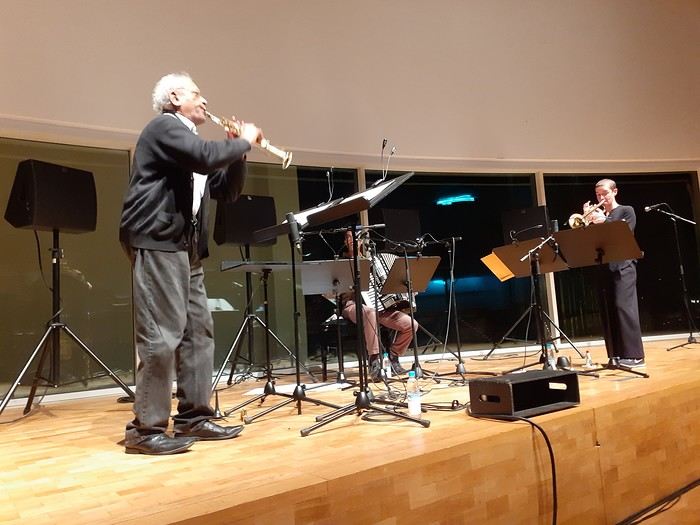
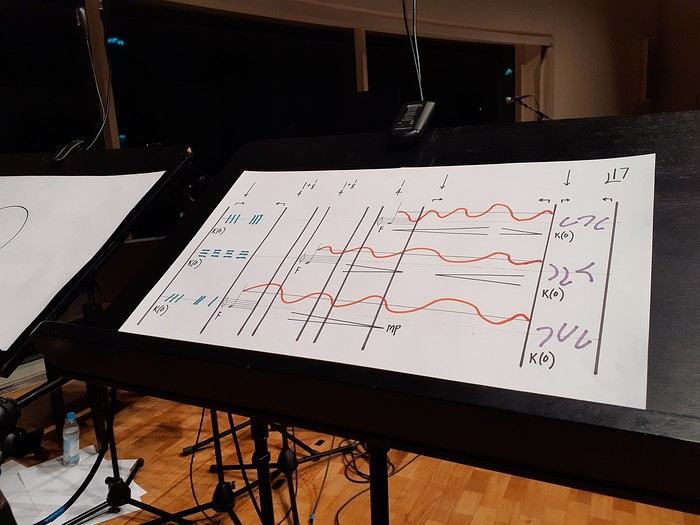
I’ve seen Anthony Braxton in concert many times: the first time at the Moers Jazz Festival (1976) in a duo with George Lewis (trombone)—I still remember it vividly—the last time in November 2021 in Ulm with his Diamond Curtain Wall Trio (with the incredible Portuguese trumpeter Susanna Santos Silva; see the photos).
Just a few days ago, on June 4, this exceptional figure celebrated his 80th birthday. Congratulations!
hgb
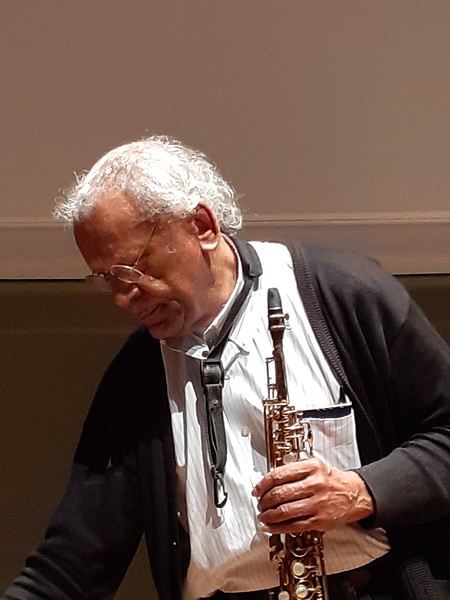
For over half a century, the American Anthony Braxton—a composer, multi-instrumentalist, music theorist, university professor, mentor, and visionary—has been one of the key figures in avant-garde contemporary music. Braxton himself describes his music as "creative music," drawing inspiration from jazz, European New Music (Schönberg, Stockhausen, and Xenakis are among the composers who influenced him), and music from various world cultures. In other words, his work uniquely oscillates between composition and improvisation. His body of work includes around 700 compositions, over 200 albums, and a dozen theoretical books.
Anthony Braxton is one of the most striking and brilliant figures in contemporary jazz. As a member of the Creative Construction Company (with violinist Leroy Jenkins and trumpeter Leo Smith) and the quartet Circle (with Chick Corea, Dave Holland, and Barry Altschul—whose double album Circle. Paris Concert is a landmark of contemporary jazz), with his groundbreaking solo alto saxophone album For Alto (1968), his duo with drummer Max Roach, Birth and Rebirth (1978), and especially his own ensembles and large formations, he set out to "redefine the space of music" (Braxton). In doing so, he gave decisive impetus to the development of jazz, making him a star of the avant-garde in the 1970s, with a recording contract from a major label.
Born in 1945 in the South Side, an African-American neighborhood of Chicago, Braxton was always a bit of an outsider, not doing what everyone else did. While the boys in his neighborhood hung out and goofed around, he stayed home pondering chess games or practicing the saxophone. Later, he became a leading figure in the Chicago musicians' organization AACM (Association for the Advancement of Creative Musicians), a mutual aid network for many African-American musicians in Chicago's new jazz scene. He then led his own formations for years, including musicians like George Lewis, John Lindberg, Marilyn Crispell, Gerry Hemingway, Kenny Wheeler, Dave Holland, Barry Altschul, Mark Dresser, Ray Anderson, and Mark Helias. In the mid-1980s, Braxton settled down a bit by accepting a teaching position at Mills College at the University of California, Berkeley. He was a tenured professor at Wesleyan University in Middletown, Connecticut, for many years. From his "school" emerged musicians of the younger generation, such as Taylor Ho Bynum (trumpet), Aaron Siegel (percussion), Jay Rozen (tuba), Jessica Pavone (violin, viola, flute), and Mary Halvorson (guitar).
I’ve seen Anthony Braxton in concert many times: the first time at the Moers Jazz Festival (1976) in a duo with George Lewis (trombone)—I still remember it vividly—the last time in November 2021 in Ulm with his Diamond Curtain Wall Trio (with the incredible Portuguese trumpeter Susanna Santos Silva; see the photos).
Just a few days ago, on June 4, this exceptional figure celebrated his 80th birthday. Congratulations!
hgb
Hi everyone,
I’m looking for a quiet village or town by the Black Sea in Romania to spend 2 nights (hotel, guesthouse, Airbnb) away from the crowds and resort towns—we’re traveling by motorcycle.
Thanks
Thanks for the replies.
I'm looking for a bus that takes me from Colca Canyon to Arequipa—I can’t find anything online (I only see Chivay to Puno, but I’m doing it the other way around).
Hi everyone,
We’re planning to return to China next fall. Destination: Shanghai, followed by a trip through Gansu and then Hunan. I’ll admit that international flights are leaving me a bit puzzled—I’m wondering how far in advance I should book to get the best deals. For most other international destinations, I usually book 6 to 9 months ahead, but for China, it’s a whole different story... For example, when I look at flight comparisons, the best prices are around 500 € or even less for departures within the next 3 months with Chinese airlines (Air China, China Southern, etc.). Not the most practical timing for planning a trip... Those same tickets jump to over 1,000 € for departures around October 20th. 🏴☠️ There are also flights in October at very reasonable prices with Finnair + Juneyao Airlines. Has anyone heard of them? I’m worried that if the first flight (Finnair) is delayed, it might be impossible to get rebooked on the next Juneyao flight... Anyway, if you have any recent experiences to share... 😇 Thanks in advance! !
We’re planning to return to China next fall. Destination: Shanghai, followed by a trip through Gansu and then Hunan. I’ll admit that international flights are leaving me a bit puzzled—I’m wondering how far in advance I should book to get the best deals. For most other international destinations, I usually book 6 to 9 months ahead, but for China, it’s a whole different story... For example, when I look at flight comparisons, the best prices are around 500 € or even less for departures within the next 3 months with Chinese airlines (Air China, China Southern, etc.). Not the most practical timing for planning a trip... Those same tickets jump to over 1,000 € for departures around October 20th. 🏴☠️ There are also flights in October at very reasonable prices with Finnair + Juneyao Airlines. Has anyone heard of them? I’m worried that if the first flight (Finnair) is delayed, it might be impossible to get rebooked on the next Juneyao flight... Anyway, if you have any recent experiences to share... 😇 Thanks in advance! !
We just got back from a nearly 3-week trip to Costa Rica in March. For the occasion, we used EVANEOS to plan our trip based on our preferences.
After some setbacks with ADOBE RENT-A-CAR—they refused the Visa Premier card and forced us to pay for extra insurance (which is usually covered by the Visa Premier)—we finally set off to explore the country.
Observation: Apart from nature, wildlife, and flora, there isn’t much else to see, but it’s so beautiful! Some people criticize the country as insignificant, with bland food and unwelcoming locals. I think those people didn’t really explore—maybe they stayed in their hotel near the beach (UVITA?) without venturing out. Otherwise, there wouldn’t be so many Europeans living in Costa Rica who don’t even consider going back to their home countries.
For our part, we found Costa Ricans very kind and welcoming. It’s often said they’re thieves, but personally, we left a small suitcase in a restaurant. When we returned after driving 20 km round trip, the staff were trying to find our phone number to contact us. I think it’s like anywhere—even in France, I’d tell tourists not to leave anything in their car to avoid… well, you know.
Food: Traditional dishes, fish plates (tilapia was excellent), and especially ceviche (around 15 € per person)—really good—and lobster (around 30 to 35 € per person), all served with fruit batidos (around 3 € per person).
Car: We had a 2-wheel-drive vehicle, which kept us from visiting some sites that require a 4x4, like Boruca, the town of artisan masks. Some lodges are also only accessible via rough, rocky trails that are tough to navigate in a regular car. Don’t hesitate to insist on a 4x4.
Keep in mind that driving fast in Costa Rica isn’t possible. Some roads are in poor condition, and there are often unmarked speed bumps that are much worse than the ones in France. You’ll average about 50 to 60 km/h on a leg of the trip.
I also recommend bringing a road map to cross-check the routes suggested by Waze or Google Maps. Sometimes, these apps will send you down completely wrecked roads to save time! A paper map will help you verify the road type. It’s better to drive an extra 20 km than to get stuck on a rocky path.
- San José to Barra de Pacuare (much less crowded than Tortuguero). Sea turtles are still rare this time of year. Via the canals, we spotted howler monkeys, sloths, and birds, and on land, we saw venomous spiders, poisonous frogs, and a leatherback turtle conservation site.
Explored a primary tropical forest with its many species of flora and fauna (monkeys, snakes, sloths, toucans, raccoons, etc.).
- Barra de Pacuare to Cahuita: Explored Cahuita National Park (howler monkeys, capuchin monkeys, raccoons, sloths, blue crabs, leaf-cutter ants, etc.) and walked along the trail by Puerto Viejo’s beach.
- Cahuita to Bambú: Visited the Bribri tribe and their customs. This isn’t a tourist trap—it’s a deep immersion into a community living almost self-sufficiently. To get there, you take a motorized canoe for over an hour. But be warned:
1 - The restroom cleanliness leaves a lot to be desired
2 - There’s no hot water
3 - A waterfall hike is offered. The first two-thirds are fine, but the last third is very dangerous, especially if it’s rained, even with sneakers. You need sturdy shoes. Our guide turned back halfway…
- Bambú to Sarapiquí:
- La Fortuna: Explored the Mistico Park tropical forest. A 3+ km trail lets you discover animals and lush vegetation. Sixteen suspension bridges, some up to 45 meters high, offer stunning views of the canopy.
Walked around Arenal Volcano: Big disappointment for seeing lava flows. After 2 km, a viewpoint shows vegetation that’s taken over—only a few volcanic rocks hint at the 1968 eruption.
- La Fortuna to Carara: Spotted crocodiles at the Tarcoles Bridge.
- Carara to Uvita: Relaxed. Uvita is a small tourist town with nothing particularly original, but it’s the place to try CEVICHE, a typical dish of raw fish “cooked” in lime juice. Delicious! We recommend Mestizo for very affordable prices.
- Osa to Corcovado National Park: This park is gorgeous. You’ll see all four monkey species, tapirs, scarlet macaws, etc.
From Drake Bay, it takes about 1 hour 15 to 1 hour 30 to cross to the park. After navigating the mangroves, the boat heads into open sea until reaching the beach, where you’ll wade ashore (water up to your thighs—bring shoes for the slippery rocks).
National Geographic called the park a "jewel of humanity" that must be preserved at all costs due to its incredible biodiversity. The park represents 3% of the world’s biodiversity. You can observe countless monkeys (all four species are present), crocodiles, tapirs, and scarlet macaws.
Our guided hike with a French-speaking guide lasted 4 hours before returning by boat to the lodge.
WARNING: There’s strict control at the park entrance:
- No plastic bottles
- No knives
- No plastic items
- No bare feet. Closed-toe shoes are required (in addition to a pair for the boat)
- Osa to Zona de los Santos: This is the coffee region and home to the quetzal, a stunning but hard-to-spot bird that’s also Guatemala’s symbol. Paraíso Quetzal Lodge has a platform with a spotting scope to try to see the bird in the forest. CAUTION: This beautiful lodge is at 2,650 meters altitude. The rooms have incredible forest views, but it’s VERY VERY cold!
- Zona de los Santos to San José: Detour to Irazú Volcano. WARNING: Buy tickets before arriving. The staff kindly bought them for us via their phone. Small disappointment: The crater lake hasn’t existed for years! The ads are misleading about this.
- San José: A city we found uninteresting.
Hi there, here’s the first draft of the itinerary I’m considering for Africa, leaving in late/mid-October 2025 for a duration of 5 months.
The idea is to cross Africa from the Atlantic to the Indian Ocean. Just to clarify, I don’t have a driver’s license, but I’m used to traveling by hitchhiking, carpooling, or any other type of transport. My must-sees, which I really want to visit, are the Namib and Kalahari deserts, the Okavango Delta, Victoria Falls, and the sandbanks of Vilankulos.
So if anyone has already done this route, more or less, I’d love to hear all your practical tips, especially for getting around within these areas.
Travel style: no problem with big contrasts—whether it’s sleeping in a tent/hammock or a fancy hotel. Budget: flexible (I think).
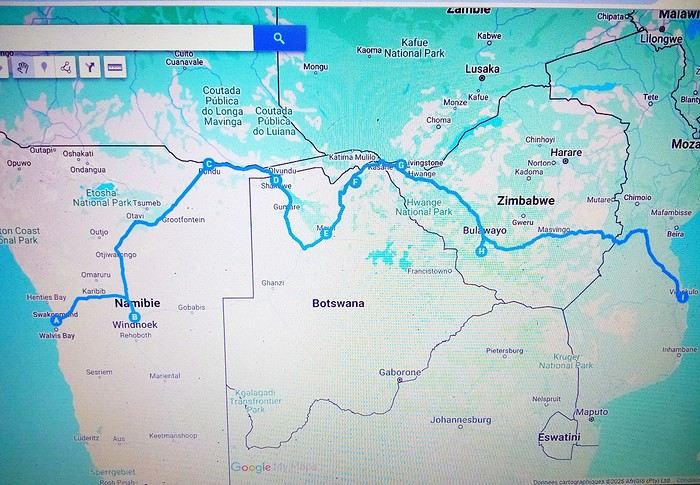
The idea is to cross Africa from the Atlantic to the Indian Ocean. Just to clarify, I don’t have a driver’s license, but I’m used to traveling by hitchhiking, carpooling, or any other type of transport. My must-sees, which I really want to visit, are the Namib and Kalahari deserts, the Okavango Delta, Victoria Falls, and the sandbanks of Vilankulos.
So if anyone has already done this route, more or less, I’d love to hear all your practical tips, especially for getting around within these areas.
Travel style: no problem with big contrasts—whether it’s sleeping in a tent/hammock or a fancy hotel. Budget: flexible (I think).
Sunday, November 26, 2023
Melbourne - Hobart
Flawless journey to Hobart. Our stay in the southernmost land we’ve ever visited. And indeed, everything’s different. The climate—14°C, rain that varies in intensity but never stops, the landscapes… It’s a shock! But, apart from the bad weather, Dom is thrilled.
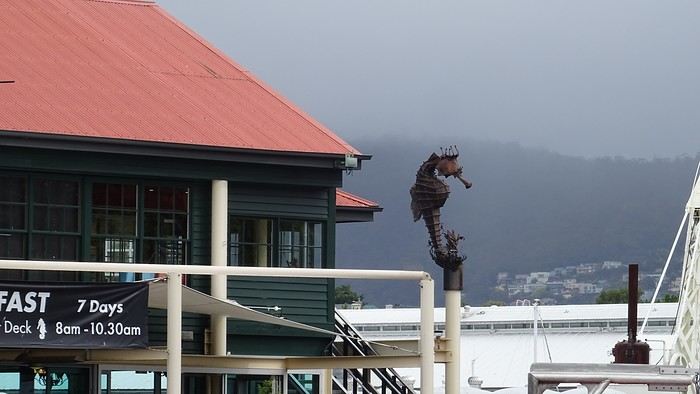
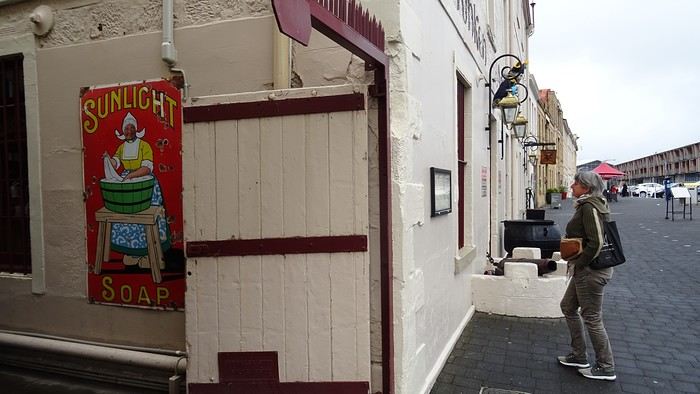
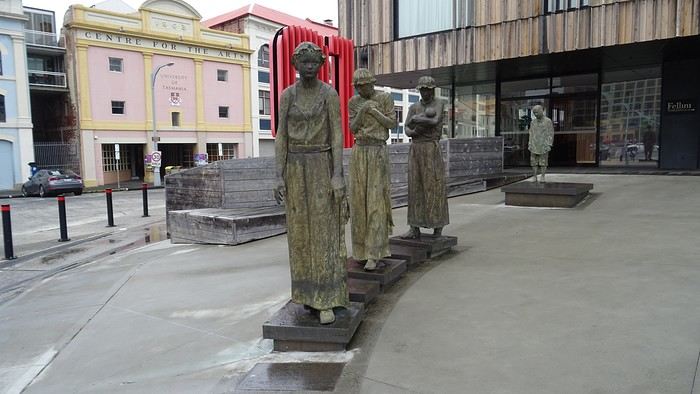
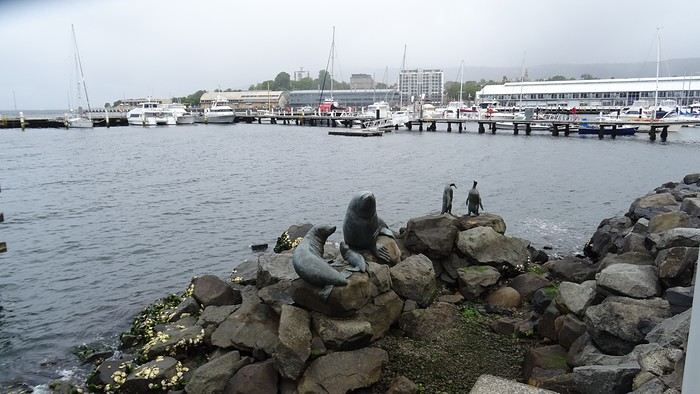
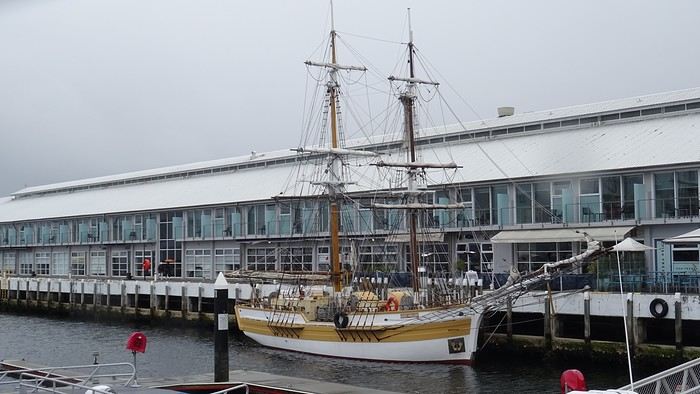
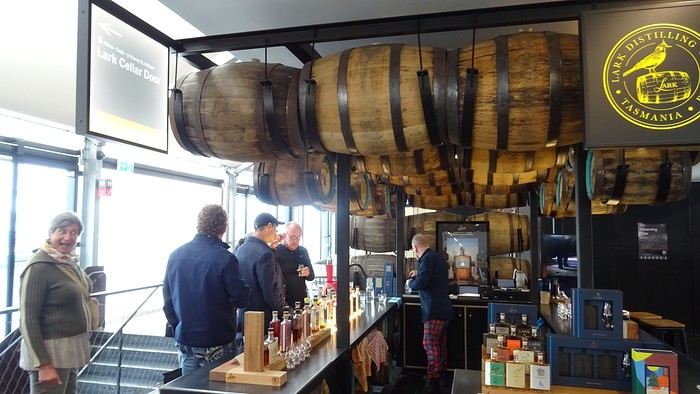
We’ve also downgraded our accommodations. We’ve got a tiny room, and the bathroom—private, at least—is two hallways away… But the price is reasonable (under 100 €) and the location is central.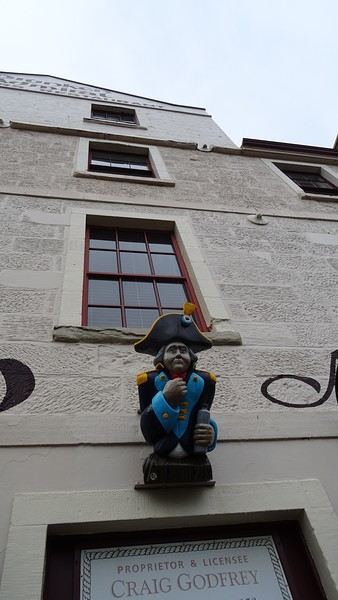
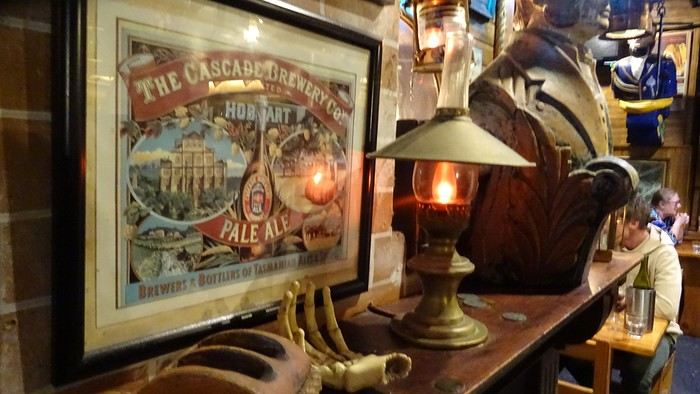
We cheered ourselves up by dining at *The Drunken Admiral* (reservations are a must—we barely snagged a table for 8 PM!). The decor is straight out of an old ship, complete with cheeky statues in the style of *Pirates of the Caribbean*… We had fun! The food was decent, but pricey. Dom loved it; I was less impressed.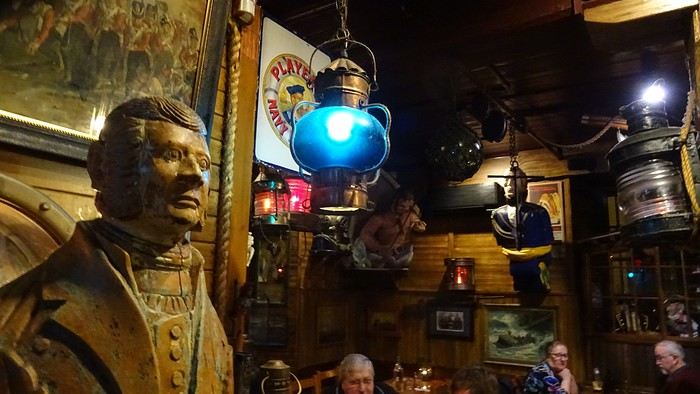
We bailed on the British series *Emma*, based on Jane Austen. We couldn’t take it anymore. The boredom was so intense that the specter of a collective suicide loomed over us. This show, where the world’s most insufferable bourgeoisie—the English nobility—lives out love stories with such improbable naivety that I wanted to scream, is pure torture. Mercy, I surrender! I’ll tell you anything you want, just make it stop! We got rid of it. We’re safe now!
We’ve also downgraded our accommodations. We’ve got a tiny room, and the bathroom—private, at least—is two hallways away… But the price is reasonable (under 100 €) and the location is central.
We cheered ourselves up by dining at *The Drunken Admiral* (reservations are a must—we barely snagged a table for 8 PM!). The decor is straight out of an old ship, complete with cheeky statues in the style of *Pirates of the Caribbean*… We had fun! The food was decent, but pricey. Dom loved it; I was less impressed.
We bailed on the British series *Emma*, based on Jane Austen. We couldn’t take it anymore. The boredom was so intense that the specter of a collective suicide loomed over us. This show, where the world’s most insufferable bourgeoisie—the English nobility—lives out love stories with such improbable naivety that I wanted to scream, is pure torture. Mercy, I surrender! I’ll tell you anything you want, just make it stop! We got rid of it. We’re safe now!
Hi there,
I’m looking for a ferry or Ro-Ro passage for my vehicle and two passengers from Mexico to Costa Rica. I haven’t found anything online. If you know of any regular routes, I’d love to hear about them!
I’m looking for a ferry or Ro-Ro passage for my vehicle and two passengers from Mexico to Costa Rica. I haven’t found anything online. If you know of any regular routes, I’d love to hear about them!
Hello, I spent a month cycling in Thailand earlier this year with a touring bike equipped with two rear panniers. I loved being able to ride and stop at a hotel every night, and eat just about anywhere. I tried India two months ago but gave up because of the road conditions and chaotic traffic.
I’m looking for countries where I can cycle "without autonomy"—so no tent, no stove, just the bare minimum. Ideally, I’d like to stop at hotels or similar accommodations regularly, without having to cover 200 km a day!
I’d love to hear from your experiences—what countries make it easy to travel this way? Thanks!
Hi. Does anyone know what time the Superrich on level -2 at Suvarnabhumi Airport stays open for currency exchange? I’ve got a flight arriving at night. Thanks.
Hi there,
For my upcoming trip to Thailand, I’ve narrowed it down to Emirates and Air India and would love to hear recent feedback from members who’ve flown with them.
I’ve noticed on several sites that reviews for both airlines are pretty negative. I’m not surprised about Air India, but I read they’ve been acquired.
I flew Emirates twice in 2018 and was surprised by the drop in recent reviews. It almost makes me think of Etihad, which I initially liked but then declined (I’m not sure what their situation is like now).
Hi,
I’m really surprised by the wide range of prices charged by car rental companies in Chile, so I’d like to know which type of vehicle is best suited for the roads in the Lake District: Puerto Montt and Ensenada, between Ensenada and Pucón, and between Pucón and Currarrehue, for example. I have the choice between 4x4s (expensive!), 4x2s (I don’t know what that is), SUVs (also expensive), and more classic vehicles.
Thanks in advance!
JJC
Hi everyone, I’m thinking of visiting Sri Lanka at the end of February 2025, but I’m worried about the economic situation (shortages of food, electricity, internet, fuel, etc.) as well as the political and social climate (strikes, protests, etc.). Has anyone here been there recently and can describe what it’s like?
Is the current situation stable enough to travel in this beautiful country without any issues? Thanks for your replies.
Is the current situation stable enough to travel in this beautiful country without any issues? Thanks for your replies.
Hi there,
We’ve just returned from 15 days in Cape Verde, including 8 days of hiking in Santo Antão. It was a fantastic trip with great weather and heat that stayed manageable. Everything was organized by a highly competent local agency that really listened to our requests. I’m happy to share more details about the hikes, hotels, etc. if you’d like!
Because of a miscalculation on extra costs (non-hotel expenses and transfers), I’ve got 18,000 escudos left—I’d be more than happy to exchange them for a more widely used currency!
Hi there,
We’re heading to the Dominican Republic for two weeks in January. We’d like to get from Bayahibe to Las Terrenas using public transport. Is it doable in a day? Thanks for your help!
hi,
I’m heading to Guadeloupe in December for 12 days with my family—teenager, younger child, and my wife.
I’m looking for folks who can help me plan this trip. I already have accommodation in the hills of Saint-François.
Still need to map out daily outings and budget for meals.
Thanks in advance!
Hello, now that I'm retired, I'd like to go to Greece from January until the end of April. So I'd love to know which island and part of the island has the mildest climate (warmth and wind) for that period. I've done some research, and the islands that come up most often are Crete and Rhodes.
I'm looking forward to your suggestions.
Thanks!
I'm looking forward to your suggestions.
Thanks!
Back from two weeks in Karamoja, northeastern Uganda, from Moroto to Kidepo Valley National Park.
A few notes from a few months ago for those who might be interested and whom this area wouldn’t leave indifferent. And rightly so.
First, about access to the region: There have been huge improvements to the infrastructure lately. Although not yet finished, the roadworks have made a big difference, and it’ll be even quicker to get there soon. Currently, allow 8 hours. First from Kampala to Mbale, then from Mbale to Moroto via Soroti. The Jinja to Mbale section is under construction, so that slows things down—count 3.5 to 4 hours from Kampala if there aren’t too many traffic jams on the way out or back. From Mbale to Moroto via Soroti, allow another 4 hours, with only a few kilometers of good dirt road left now that the tarmac is being laid. In a few months, it’ll be done, maybe even sooner.
You can do it in two legs with an overnight in Mbale itself or at Sipi Falls, or go direct. In Mbale, stay at Nurali’s if you really want to keep costs down—also a great spot for Indian food. The vibe is nostalgic, like stepping back in time with granny’s oilcloth table cover (if your granny were Indian). Otherwise, Wash and Wills has a nice pool and a view of the mountains across the way. Lovely garden.
For those who don’t mind driving on dirt roads when it hasn’t rained too much, or who aren’t afraid of taking longer, I’d still recommend going via Nakapiripirit from Mbale. It’s longer, more tiring, and tougher (and if it rains a lot, it can be a real hassle), but wow, is it ever more beautiful. Your call.
Once you arrive in Karamoja, it’s time to enjoy the region you’ve taken the time to reach. So many people only go for Kidepo—what a shame, since the area has so much more to offer. The people are incredibly friendly, and the local culture is so diverse and fascinating.
In Moroto, accommodation options are multiplying like loaves and fishes. At Tita’s, the Karatunga campsite, and of course the institution, Mount Moroto Hotel, which feels a bit stuck in time but is where you’ll find a bit of Moroto’s history. In short, something for every taste and budget. The same goes for meals—you can eat for 5,000 UGX (1.25 €) in local spots or 25,000 UGX (6 €) at the fancier places in town. No risk of going broke here.
Same in Kaabong. From a sleepy little town, it’s slowly but surely moving toward a gentle, steady kind of modernity. There are hotels and guesthouses like Kaabong Resort, which I’d recommend. Forget the name and the appearances—ignore the "Resort" part that’s just there to lure you in. In the end, it’s a cozy little place where you’ll hear both local radio and Madonna’s greatest hits (from the late ‘90s). The staff are welcoming and attentive. They really want to make you happy, and it shows. Here too, you can eat for 5,000 UGX in the village or 15,000–20,000 UGX at the hotels.
Between Moroto and Kaabong, stop in Kotido—more new developments there too. And more guesthouses and restaurants with very reasonable prices. La Maison is a spot that, for the more Francophone among us, will feel like a little taste of France. But Kotido is really worth it for the Karamoja region’s biggest livestock market, held on Wednesdays. Colors, noise, smells—so much joy in being there, right in the middle of all that energy pulsing with the pastoral life of Karamoja. Not a single herder will refuse a photo, proudly sporting the "Karamojong package": a vibrant piece of fabric, a military jacket harking back to the Karamojong’s glorious fighting days, an ostrich-feather hat (or a Guangzhou knockoff), a walking stick, and the dual-purpose stool (for sitting or resting your head, used vertically or horizontally depending on how tired you are and how much local beer you’ve had).
In Moroto, take the local tracks—either across the plains or along the Mount Moroto range. The area is mostly pastoral, with manyattas seeking protection not just from raiders (now rare) but also from grazing animals. On the tracks along the mountains, you’ll cross a few small streams and see some camps for gold prospectors or marble cutters, as well as other geological wonders that are putting pressure on the area from unscrupulous investors. You can also follow the tracks into the valleys to discover the Tepeth villages—more agricultural, more remote, surrounded by unexpected greenery.
KaraTunga can help you explore all this. It’s a local agency I haven’t used myself, but they can provide guides and offer services like mountain hikes or manyatta visits...
Hi there,
I’ve just finished putting together a little article with my notes, photos, impressions, and feelings from my two-week trip visiting Ethiopia: Abyssinia, Erta Ale, and Dallol.
You can read it at the link below:
http://voyagesalain26.over-blog.com/2019/04/ethiopie-abyssinie-erta-ale-dallol.html
Happy reading and safe travels!
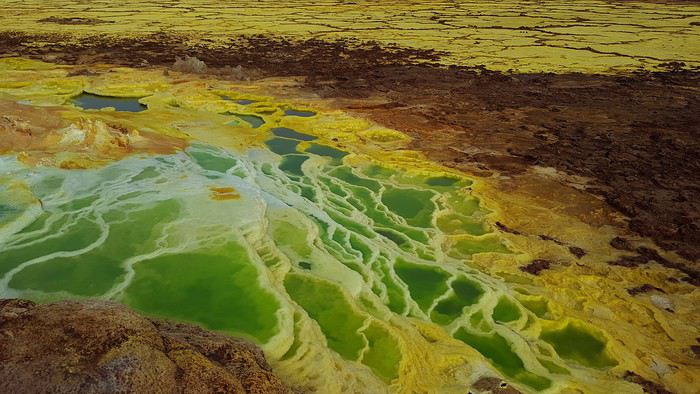
http://voyagesalain26.over-blog.com/2019/04/ethiopie-abyssinie-erta-ale-dallol.html
Happy reading and safe travels!
Hi there,
I’m planning a trip from France to Benin, passing through Morocco, Mauritania, Senegal, Mali, and Burkina Faso with a vehicle. I’d like to fill my trunk with equipment I need over there: solar panels, chargers, expansion tanks for solar water heaters, miscellaneous gear... I know the region a bit and, intuitively, I think it’s a bad idea—I’ll probably get shaken down every 100 km by police, customs officers, gendarmes, and others... Has anyone done this kind of route with a fully loaded trunk, and how did it go, especially at customs checkpoints (from Ceuta to Porga or earlier) and elsewhere? Thanks in advance for your experiences. R.
I’m planning a trip from France to Benin, passing through Morocco, Mauritania, Senegal, Mali, and Burkina Faso with a vehicle. I’d like to fill my trunk with equipment I need over there: solar panels, chargers, expansion tanks for solar water heaters, miscellaneous gear... I know the region a bit and, intuitively, I think it’s a bad idea—I’ll probably get shaken down every 100 km by police, customs officers, gendarmes, and others... Has anyone done this kind of route with a fully loaded trunk, and how did it go, especially at customs checkpoints (from Ceuta to Porga or earlier) and elsewhere? Thanks in advance for your experiences. R.
Oh wow, what a scam!
With a name like that, I should’ve been suspicious of this online ticket-buying site! I booked a ticket on their site. I received an invoice and an online booking confirmation.
"Thank you for your online reservation. This confirmation also serves as your invoice. You will receive a second email within 24 hours containing your e-ticket."
12 hours later, I got this message:
"You booked a flight under reservation number 5TJ5HF on our website CheapTickets.be. Unfortunately, we must inform you that we cannot issue your ticket at the original price. After consulting the participating airlines, we were unable to find a solution to issue your ticket at the initial price. We can offer you an alternative that matches your request, which we have already reserved for you. The recalculated price is 161.33 €. (...) If we do not receive your confirmation by tomorrow at 9 AM, we will no longer be able to issue your ticket at the newly recalculated price and will have to cancel your reservation."
That’s nearly a 20% increase!
Is this even legal? What can I do about it?
I checked their site again—the ticket was still listed at the same price!
On top of that, calling their customer service costs 0.34 cents per minute. They keep you waiting for 20 minutes (that’s 6 €) before you get to speak to an advisor.
I’m devastated. I’ve never seen anything like this! Apparently, I’m not the only one: http://voyageforum.com/voyage/achat_billets_cheaptickets_D649310/
Are there others in the same situation? What can we do collectively?
Hi everyone,
Back in 2003, we traveled through Norway—you can check out the journal here: http://norway2003.elgar.be. And in 2007, we headed back to Finland and Norway: http://scan2007.elgar.be.
I hope you get the chance to discover these amazing Nordic countries one day. Feel free to ask me any questions!
Happy reading,
Vivien
I'm arriving at Chicago O'Hare Airport on April 23rd at Terminal 5 and need to catch another flight at Terminal 3—is it complicated? Could someone guide me? Thanks