Prologue
This journal recounts a trip to Rajasthan that’s already over a year old and that I’ve only now found the chance to write about. The summer of 2024 marked my return to India—my tenth trip—after six long years away since my last solo wanderings in Tamil Nadu in 2018 (the journal of which is published on this site). That absence was partly (but not only) due to the long COVID and post-COVID period, which saw a complete halt and then a major slowdown in global tourism. To top it off, Voyage Forum announced its closure in an end-of-the-world atmosphere. A sad time for our favorite social activity…
A few weeks after returning from Rajasthan, I tried to motivate myself to start writing a journal to publish on a forum claiming to be VF’s successor, which I’d eventually signed up for out of desperation. But I kept hesitating and putting the project off because, for one, I no longer have the time I used to. For another, the vibe wasn’t really taking off on that forum—it was overrun with ads and not very active, contrary to what its host’s name suggested. Despite its good intentions and commendable role as a stopgap, it also turned out to be very impractical to use, especially when you don’t have much time like me. I’ll admit I’d occasionally check back on VF to see if anything was happening. But all the discussions remained frozen in time, stuck in that fateful year, 2020. Then, rumors swirled online about shady reasons behind its closure, leaving little room for hope.
And then, one fine morning, I got a message at work from Marien informing me that VF had reopened. What a huge surprise! Even though the forum’s “end” had played out in a somewhat apocalyptic atmosphere, the memories of passionate and heated discussions, the frank debates, and the useful exchanges that made this site a traveler’s goldmine and a unique hub of conviviality all came rushing back to me like a breath of fresh air. I finally saw a sign and tried to motivate myself to find the time to publish the journal of this tenth trip to India and fifth to Rajasthan. But in the end, I got bogged down in professional and family obligations and never managed to find the time to get started. That’s now fixed, though, because I had two reasons for wanting to do it: I find that looking back on a trip to tell others about it is a highly beneficial introspective exercise. Also, I thought this journal could be useful to other travelers on a few points.
Because, “do we really need yet another journal about Rajasthan?” you might rightly ask! Especially in a time when so many journals about the “Land of Kings” have been published since VF’s return, not to mention the countless stories you can already find online about this region, one of India’s most touristy. And I’d add, why go back to Rajasthan for a fifth time, where I’ve already dragged my feet more than enough—through its forts, deserts, temples, cities, villages, bumpy roads, train stations, tasty street food stalls, cheap guesthouses, and more? Where some might see just another overhyped tourist destination full of the same old *Arabian Nights* clichés, worn to a thread, that I mentioned earlier, when there’s so much else to see in India?
Well, first because it’s a magnificent country I never tire of, where I started an academic study and made so many connections. It’s also packed with places where you won’t find a single tourist (right, Marie-Jo?), even in the heart of well-trodden paths and classic itineraries. And most importantly, as I said earlier, things have changed in recent years. First, after six years without traveling far, the urge to go back to India was getting stronger. But this time, no more solo trips (often) or duo adventures (sometimes)—now it’s a team of four that has to come along! And even if you can argue with that, what better place than Rajasthan to introduce India to people who’ve never seen it? To kids you want to amaze?
Plus, traveling with your new little family to your favorite country isn’t the same as going solo in often spartan conditions that only affect you. It’s a different challenge, but ultimately probably much harder. So, is it really reasonable to take two kids to India, including a two-year-old baby? That’s one of the main goals of this journal (but not the only one)—to try to answer that question.
As you can tell, it’s not so much the destination but the slightly unusual setup of this trip that, in my opinion, will make this journal interesting. Despite my experience and expertise (yes, I dare say it) in India, there were plenty of questions before we finalized the plan and said, “Alright, let’s go!” The questions were flying for us parents. Is it wise to travel to India with a two-year-old? What would we do (it happened) if the kids got very sick? Would they be able to handle a road trip on Rajasthan’s bumpy, dusty roads using public transport? Could they handle the shock of such a different world—the dirt, poverty, pollution, noise (…and the smell, as they say), the spicy food, monkeys, mosquitoes, snakes, tigers, leopards, and so on? In short, all the clichés that I usually joke about suddenly became potential realities. Another concern: as a mixed Franco-African family (not me, but my partner and her oldest), wouldn’t we risk not always being well received, given what you sometimes hear about that in India? How would Indians react to seeing a mixed-race family, the ultimate taboo in a country of purity and social segregation, which would undoubtedly raise many questions for them? Of course, not everything went as expected… Because, as you know, with India—and what makes it charming for some—there are always complications: sometimes where you don’t expect them… and sometimes where you do. I’ll go into detail about that in the journal to come (not right away) and in the final review (even later). These experiences could be useful to travelers who find themselves in similar situations and have the same questions we did before embarking on such a journey. And maybe it’ll spark the curiosity of those who aren’t concerned and will read yet another Rajasthan journal, but with its own unique twists.
Despite my unchanged constraints, which mean I have little time to write this, I don’t want to rush the story, so I’ll take my time. There will probably be lulls. I hope that won’t stop people from coming to react, debate, share their impressions, or ask for information.
42 similar discussions in English
Hi everyone, after a trip to India last October, I stayed in touch with an Indian guide who speaks French. His dream is to visit France. To get his visa, he told me he needs a letter from me confirming that I met him during my trip to his country and that I’m able to host him. He has other contacts in France, and he mentioned he’s asked them for the same thing. I’m reaching out to see if his request is legitimate or if he’s taking advantage of my kindness. I’m sorry if I offend anyone—it’s not my intention. I’m very spontaneous and don’t want to put myself in a bad situation. Thanks for your feedback. Have a great weekend. Florence/florie73
During the 60s and 70s, thousands of travelers hit the road to India. Some were backpackers or hippies, but not all. In this collective anthology featuring around twenty contributors (including GeorgesOz), you’ll also find truth-seekers, a couple who went on their honeymoon to get married in Bengal... and "crazy" folks who set off on VéloSolex bikes...
Worth noting: all contributors donated their royalties to support the Céline Hegron clinic in a poor neighborhood of Varanasi.
Worth noting: all contributors donated their royalties to support the Céline Hegron clinic in a poor neighborhood of Varanasi.
Before I begin, I’d like to thank Michèle Buisson and her "Misha’s travel journals," which really helped me plan this trip. It’s tough to find information about this part of India, which is quite different from the "more traditional India." I’m so grateful to her for introducing me to a family who hosted me for 4 nights and 3 days. I can’t wait to return the favor and welcome you all to my place in early July!
Thursday, March 20th. The alarm goes off super early, but I’m already awake—I was too worried I’d sleep through it. I leave the house at 4:00 AM. The rain has stopped, and at this hour, there aren’t many trucks on the road. I arrive at Barcelona Airport easily by 6:20 AM, let the valet know I’m there, and he quickly picks up my car. This time, I’m flying with Etihad Airways again. I booked the ticket during my trip to Cambodia: Barcelona/Kolkata, Delhi/Barcelona for 567 €. At that price, I didn’t hesitate for long—I knew I had to take it. And I’m glad I did because, by the time I returned, the price had gone up to 700 €. I can already hear the reactions: "Wow, how’d you get a ticket for that price? What site did you use? You’re amazing, MarieJo!" One thing’s for sure—I’m really happy with this deal. The flights from Barcelona to Abu Dhabi and Abu Dhabi to Kolkata go smoothly, and we arrive on time at 2:55 AM. There aren’t many people at immigration, so I get through quickly. My luggage isn’t on the carousel yet. After collecting my bag, I check in for my next flight with IndiGo, a 5:40 AM flight to Guwahati, arriving at 7:00 AM. I’m starting to feel pretty tired, so I take a taxi from the airport to Gruham Sojourn Homestay. The house is upstairs, and the neighborhood seems quiet, with restaurants lining the street. The room won’t be ready until 10:00 AM, so I rest on the bench in the meantime. Once in the room, I take a shower—it really helps me feel refreshed. I need to exchange some euros, so I look up a nearby exchange bureau on Google and head out to find it. I locate it easily, and the staff are super friendly. I get a great rate (1 € = 90 INR). I wander around the neighborhood. The train station isn’t far, and small markets line the streets. I head back to my area, walking along the main avenue. About 500 meters from my street, I discover a museum. The visit is fascinating—I see the famous Majuli masks, among other things.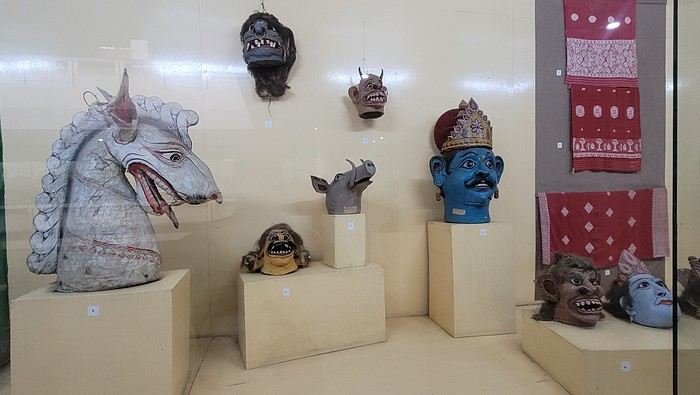

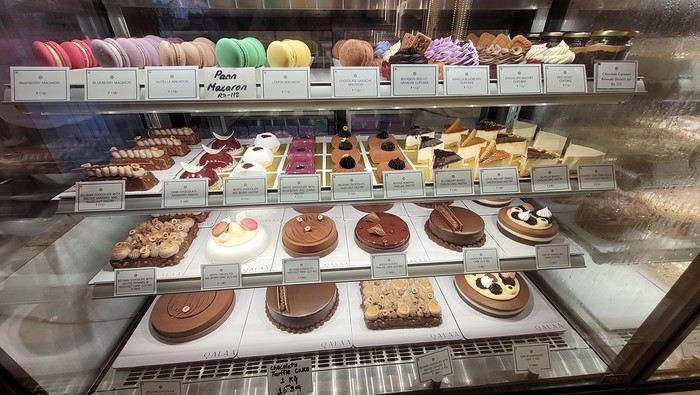
I’m not far from the Brahmaputra River, and the temptation to visit is too strong to resist. I’d hoped to find a promenade along the river, but that doesn’t exist here. I walk back calmly and notice several restaurants in my street. On the doorstep of my accommodation, I spot a pastry shop with cakes that look more like the ones we have in France than the typical ones here in India. A visit is a must, and I’m not disappointed!
Tonight, I’m dining at a restaurant in the street. The menu is a bit disappointing—burgers, pizzas, pasta—nothing very Indian. So, I’ll go with tomato pasta.
Thursday, March 20th. The alarm goes off super early, but I’m already awake—I was too worried I’d sleep through it. I leave the house at 4:00 AM. The rain has stopped, and at this hour, there aren’t many trucks on the road. I arrive at Barcelona Airport easily by 6:20 AM, let the valet know I’m there, and he quickly picks up my car. This time, I’m flying with Etihad Airways again. I booked the ticket during my trip to Cambodia: Barcelona/Kolkata, Delhi/Barcelona for 567 €. At that price, I didn’t hesitate for long—I knew I had to take it. And I’m glad I did because, by the time I returned, the price had gone up to 700 €. I can already hear the reactions: "Wow, how’d you get a ticket for that price? What site did you use? You’re amazing, MarieJo!" One thing’s for sure—I’m really happy with this deal. The flights from Barcelona to Abu Dhabi and Abu Dhabi to Kolkata go smoothly, and we arrive on time at 2:55 AM. There aren’t many people at immigration, so I get through quickly. My luggage isn’t on the carousel yet. After collecting my bag, I check in for my next flight with IndiGo, a 5:40 AM flight to Guwahati, arriving at 7:00 AM. I’m starting to feel pretty tired, so I take a taxi from the airport to Gruham Sojourn Homestay. The house is upstairs, and the neighborhood seems quiet, with restaurants lining the street. The room won’t be ready until 10:00 AM, so I rest on the bench in the meantime. Once in the room, I take a shower—it really helps me feel refreshed. I need to exchange some euros, so I look up a nearby exchange bureau on Google and head out to find it. I locate it easily, and the staff are super friendly. I get a great rate (1 € = 90 INR). I wander around the neighborhood. The train station isn’t far, and small markets line the streets. I head back to my area, walking along the main avenue. About 500 meters from my street, I discover a museum. The visit is fascinating—I see the famous Majuli masks, among other things.
I’m not far from the Brahmaputra River, and the temptation to visit is too strong to resist. I’d hoped to find a promenade along the river, but that doesn’t exist here. I walk back calmly and notice several restaurants in my street. On the doorstep of my accommodation, I spot a pastry shop with cakes that look more like the ones we have in France than the typical ones here in India. A visit is a must, and I’m not disappointed!
Tonight, I’m dining at a restaurant in the street. The menu is a bit disappointing—burgers, pizzas, pasta—nothing very Indian. So, I’ll go with tomato pasta.
Today I ended up being denied boarding at CDG. I booked the trip through a physical travel agency with no assistance for the visa application. I applied in plenty of time and got the approval. Except I put the 9th (the day I left France) as the date instead of the 10th, which is the arrival date in India. That’s what caused the denial. I’m guessing I don’t have any recourse? Thanks for your replies.
hi,
sorry for the accents, I’m in Dubai right now. I just got back from India after a short 10-day trip to the Golden Triangle (Delhi-Jaipur-Agra).
I noticed a lot of hippie-style Anglo-Saxon tourism. Sure, there’s the change of scenery, the temples, the Taj Mahal, and the low cost of living, but personally, all I saw was: misery, filth, chaotic traffic, non-stop honking, diarrhea despite eating at restaurants recommended in the *Routard* and *Lonely Planet* guides, noise, lots of homeless people, delayed trains with uncomfortable first-class carriages, pushy vendors, rickshaw drivers, and beggars, humid heat, dust, nothing worth bringing back, no sidewalks so you’re constantly on edge, questionable hygiene in hotels and restaurants, and locals who treat visitors like cash cows.
So my question: What do people really love about India for those who go multiple times, especially on the same circuit?
Personally, I think it’s just the fact that you can spend without worrying about your budget, and that’s what attracts the French during this period of low purchasing power.
sorry for the accents, I’m in Dubai right now. I just got back from India after a short 10-day trip to the Golden Triangle (Delhi-Jaipur-Agra).
I noticed a lot of hippie-style Anglo-Saxon tourism. Sure, there’s the change of scenery, the temples, the Taj Mahal, and the low cost of living, but personally, all I saw was: misery, filth, chaotic traffic, non-stop honking, diarrhea despite eating at restaurants recommended in the *Routard* and *Lonely Planet* guides, noise, lots of homeless people, delayed trains with uncomfortable first-class carriages, pushy vendors, rickshaw drivers, and beggars, humid heat, dust, nothing worth bringing back, no sidewalks so you’re constantly on edge, questionable hygiene in hotels and restaurants, and locals who treat visitors like cash cows.
So my question: What do people really love about India for those who go multiple times, especially on the same circuit?
Personally, I think it’s just the fact that you can spend without worrying about your budget, and that’s what attracts the French during this period of low purchasing power.
I’ve been busy—here’s another travel journal on Rajasthan, with some new discoveries as always.
Thursday, January 25: I left home at 4:30 AM and headed to Barcelona airport. The roads weren’t blocked by farmers yet, so I made the trip without any issues. I arrived at the airport at 7:10 AM, called Parkvia, and someone picked up my car 15 minutes later. All that was left was to check in my luggage. My Etihad flight was at 10:25 AM, which gave me time for breakfast. We landed in Abu Dhabi at 7:30 PM. The flight to Delhi was at 10:15 PM, the transfer went smoothly without any stress, and we arrived in Delhi at 3:00 AM. I couldn’t waste any time upon arrival because I had a flight to Jodhpur at 6:55 AM. I got to customs, and what a nice surprise—the hall was empty. I went through immediately, had my passport and visa checked, and everything was fine. I grabbed my bag quickly and looked for the transfer to T2, which is outside. You have to walk along the taxi parking lot and take the long corridors—it’s well signposted, and the transfer took 10 minutes. At first, I was a little stressed, not knowing how long customs would take, but in the end, I was early for my 6:55 AM flight. I’m even glad I booked this one, as it got me to Jodhpur at 8:20 AM.
When I arrived, I took an auto-rickshaw to Jodhpur Palace GH, which I’d booked on Booking. The welcome was nice, and I was given a room right away. I was hoping to rest a bit, but unfortunately, it was very noisy. I settled in, took a shower, and was ready to go out and explore the city. The owner stopped me as I was leaving and told me I had to change rooms—I had to repack my bag before heading out. He showed me the way to the clock tower, which is about a 15-minute walk away.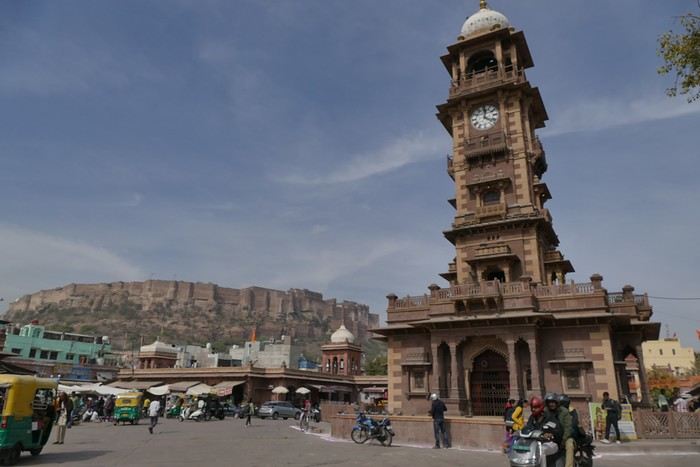
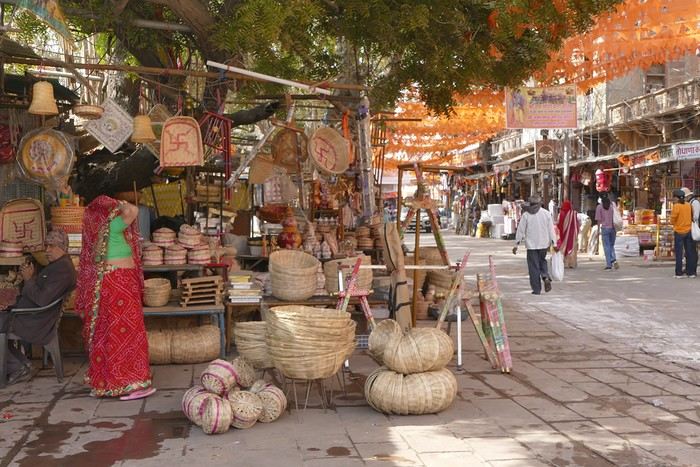
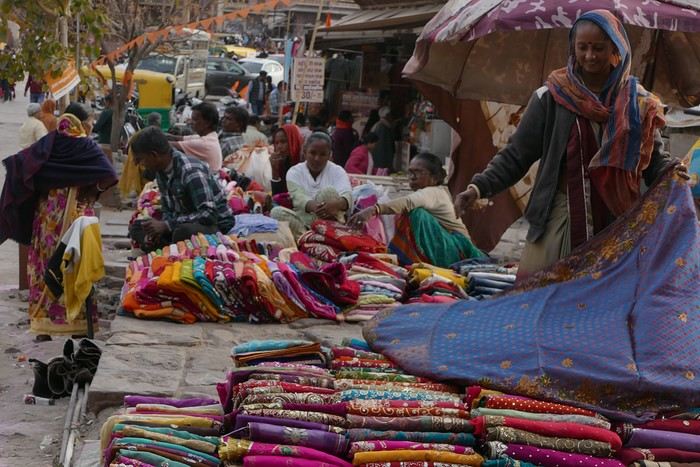
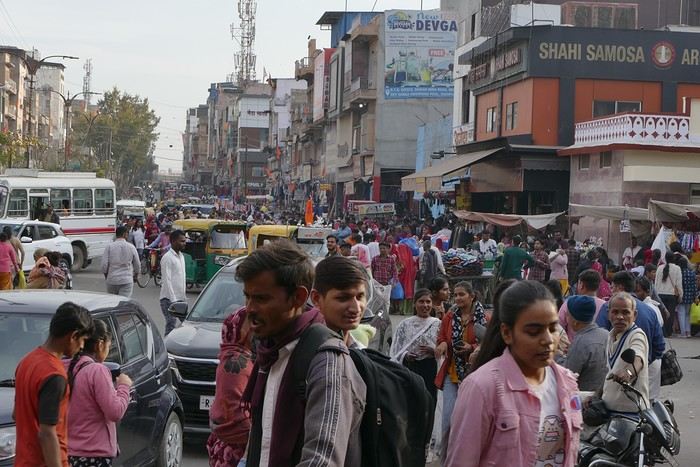
A market lines the street leading to the tower, and the traffic is intense.
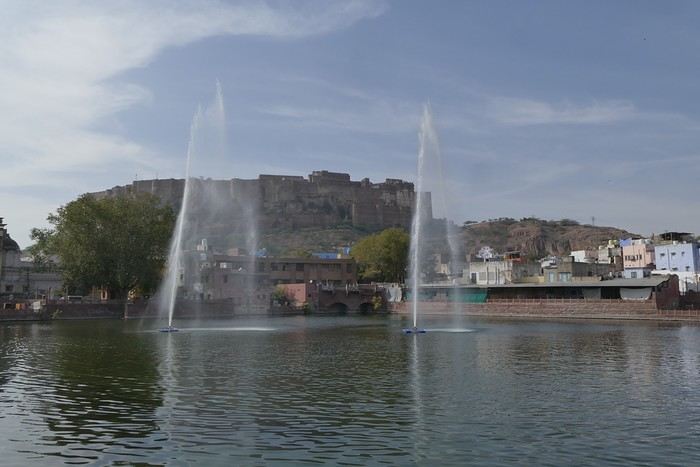
I set off in search of the stepwells and Gulab Sagar, a large basin with three water jets and a great view of Mehrangarh Fort. And yes, more baoris!
Toorji Ka Jhalra Bawdi isn’t far away. It’s a meet-up spot for tourists, with restaurants and terraces lining the area. The place is nice.
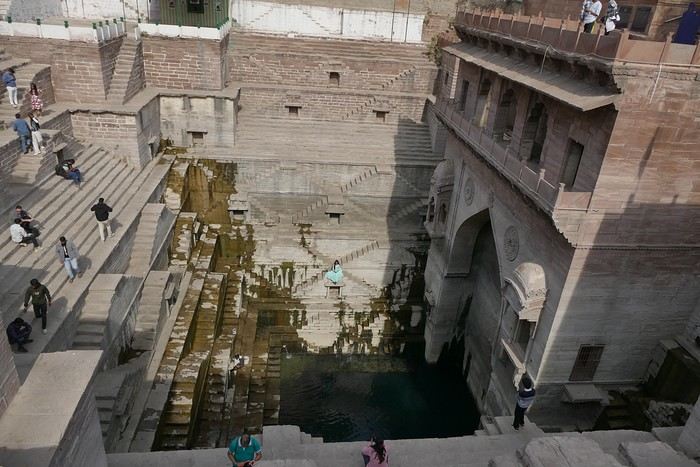
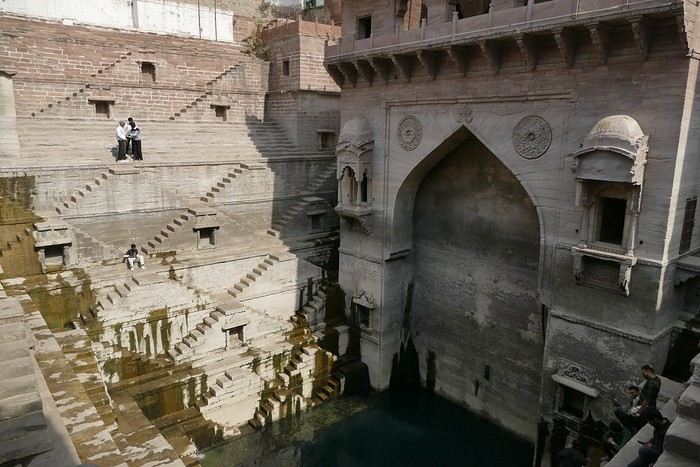
I looked for Mahila Bagh Ka Jhalra, went around in circles a bit, and finally found it right across from Gulab Sagar, where I’d already been. It’s not in good condition—it’s a shame it hasn’t been restored.
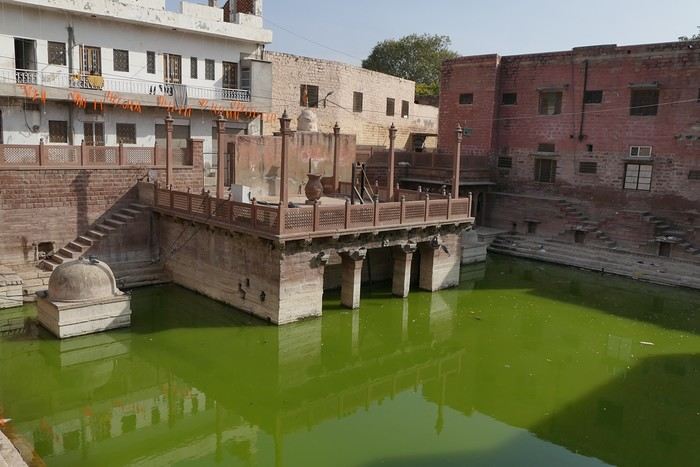
I went back through the clock tower area, found a currency exchange with a good rate, and booked my train tickets for the whole trip. The street was lively, with heavy traffic.
I was tired and headed back to the guesthouse. When I got there, I realized my phone wasn’t showing the right time, which gave me a chance to rest before going out for dinner. The Indigo restaurant is nearby and will be perfect.
Thursday, January 25: I left home at 4:30 AM and headed to Barcelona airport. The roads weren’t blocked by farmers yet, so I made the trip without any issues. I arrived at the airport at 7:10 AM, called Parkvia, and someone picked up my car 15 minutes later. All that was left was to check in my luggage. My Etihad flight was at 10:25 AM, which gave me time for breakfast. We landed in Abu Dhabi at 7:30 PM. The flight to Delhi was at 10:15 PM, the transfer went smoothly without any stress, and we arrived in Delhi at 3:00 AM. I couldn’t waste any time upon arrival because I had a flight to Jodhpur at 6:55 AM. I got to customs, and what a nice surprise—the hall was empty. I went through immediately, had my passport and visa checked, and everything was fine. I grabbed my bag quickly and looked for the transfer to T2, which is outside. You have to walk along the taxi parking lot and take the long corridors—it’s well signposted, and the transfer took 10 minutes. At first, I was a little stressed, not knowing how long customs would take, but in the end, I was early for my 6:55 AM flight. I’m even glad I booked this one, as it got me to Jodhpur at 8:20 AM.
When I arrived, I took an auto-rickshaw to Jodhpur Palace GH, which I’d booked on Booking. The welcome was nice, and I was given a room right away. I was hoping to rest a bit, but unfortunately, it was very noisy. I settled in, took a shower, and was ready to go out and explore the city. The owner stopped me as I was leaving and told me I had to change rooms—I had to repack my bag before heading out. He showed me the way to the clock tower, which is about a 15-minute walk away.
A market lines the street leading to the tower, and the traffic is intense.
I set off in search of the stepwells and Gulab Sagar, a large basin with three water jets and a great view of Mehrangarh Fort. And yes, more baoris!
Toorji Ka Jhalra Bawdi isn’t far away. It’s a meet-up spot for tourists, with restaurants and terraces lining the area. The place is nice.
I looked for Mahila Bagh Ka Jhalra, went around in circles a bit, and finally found it right across from Gulab Sagar, where I’d already been. It’s not in good condition—it’s a shame it hasn’t been restored.
I went back through the clock tower area, found a currency exchange with a good rate, and booked my train tickets for the whole trip. The street was lively, with heavy traffic.
I was tired and headed back to the guesthouse. When I got there, I realized my phone wasn’t showing the right time, which gave me a chance to rest before going out for dinner. The Indigo restaurant is nearby and will be perfect.
Hello everyone!
We're off! After exploring the north, the four friends have now discovered the south. We’re excited to share this new travel journal, dedicated to our little group and our strong friendship, written by Richard and illustrated with Kate’s photos. I’ll chime in from time to time with practical tips.
First of all, a big thank you to everyone on VoyageForum who helped us plan this trip. It would’ve been quite different if we’d just relied on guidebooks.
The itinerary lasted just over 3 weeks: Mahabalipuram, Pondicherry, Thanjavur, the Chettinad region, Madurai, Munnar, Munroe Island, Cochin, and Chennai. We traveled by train, taxi, and private car with a driver, took a domestic flight, and stayed in guesthouses, Airbnb apartments, and hotels. For each of us, including flights, the total budget barely reached 2000 €, and we didn’t hold back—knowing we avoid resorts and love street food and small Indian restaurants.
We're off! After exploring the north, the four friends have now discovered the south. We’re excited to share this new travel journal, dedicated to our little group and our strong friendship, written by Richard and illustrated with Kate’s photos. I’ll chime in from time to time with practical tips.
First of all, a big thank you to everyone on VoyageForum who helped us plan this trip. It would’ve been quite different if we’d just relied on guidebooks.
The itinerary lasted just over 3 weeks: Mahabalipuram, Pondicherry, Thanjavur, the Chettinad region, Madurai, Munnar, Munroe Island, Cochin, and Chennai. We traveled by train, taxi, and private car with a driver, took a domestic flight, and stayed in guesthouses, Airbnb apartments, and hotels. For each of us, including flights, the total budget barely reached 2000 €, and we didn’t hold back—knowing we avoid resorts and love street food and small Indian restaurants.
Hi everyone,
We're back in India for the 7th time (for the other trips, check here:
https://www.unendroitoualler.fr/asie/) ... But this time, no more exploring or trekking! With age, we're just spending a quiet month in southern India, a country we particularly love...
Our journey starts in Kovalam, then Monroe Island, Varkala, Kochi, Kannur, Udupi, and finally, as in recent years, Gokarna.
No problem getting around—there’s the train all along the coast...
Night in Trivandrum
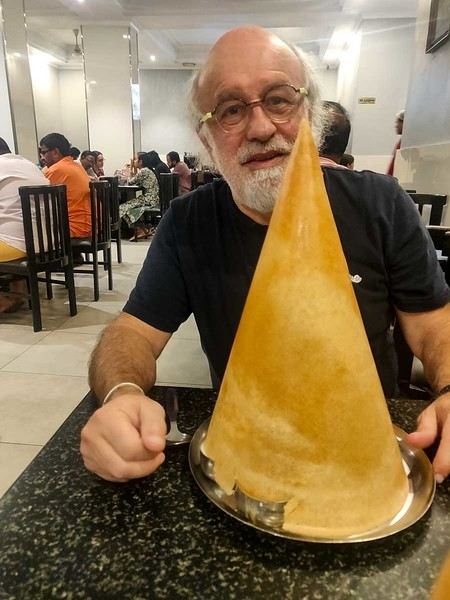
Prepaid taxi to the « Safire Residency », where we stayed last year. This hotel is still just as nice and welcoming (980 INR). Then, dinner at the restaurant « Ariya Niwas » where we enjoyed those delicious dosas again! (We missed them!)
Night in Trivandrum
Prepaid taxi to the « Safire Residency », where we stayed last year. This hotel is still just as nice and welcoming (980 INR). Then, dinner at the restaurant « Ariya Niwas » where we enjoyed those delicious dosas again! (We missed them!)
Hi,
I'm about to open an account (payment card) with N26 Black (seems more transparent in its presentation and explanations) or maybe Revolut (but it seems to hide quite a few things).
Has anyone here used either of these two cards (or both) in India?
Thanks for your feedback and experience with this payment method.
Hi there,
Like every time I travel to India, I get an Indian phone line to have phone access and 4G at a ridiculously low cost compared to what my French operator charges me. Unfortunately, this year, my online purchases (transport bookings on Cleartrip or IRCTC...) aren't going through because my bank requires SMS verification on my French line, which I don’t have ;(( Before, I had the option to receive the verification code by email, but not anymore. My bank isn’t responding to my requests to update my phone number... So now, I’m stuck. I tried opening a Paytm account since PayPal doesn’t work in India, but again, I need to verify my card with an SMS code... I also tried funding my Paytm account via a PayPal transfer, but apparently, that’s not possible. Does anyone have a solution to my problem?
Thanks, Fred
Like every time I travel to India, I get an Indian phone line to have phone access and 4G at a ridiculously low cost compared to what my French operator charges me. Unfortunately, this year, my online purchases (transport bookings on Cleartrip or IRCTC...) aren't going through because my bank requires SMS verification on my French line, which I don’t have ;(( Before, I had the option to receive the verification code by email, but not anymore. My bank isn’t responding to my requests to update my phone number... So now, I’m stuck. I tried opening a Paytm account since PayPal doesn’t work in India, but again, I need to verify my card with an SMS code... I also tried funding my Paytm account via a PayPal transfer, but apparently, that’s not possible. Does anyone have a solution to my problem?
Thanks, Fred
Hi there,
I’ve been reading conflicting info about whether an Indian visa might be required for a few-hour layover in Mumbai.
Do we need anything besides the Sri Lankan ETA if we’re just transiting through India without leaving Terminal 2 at the airport? We’re flying from Brussels via Frankfurt and then Mumbai with Lufthansa.
Thanks so much—I’m totally lost here! 😅
I’ve been reading conflicting info about whether an Indian visa might be required for a few-hour layover in Mumbai.
Do we need anything besides the Sri Lankan ETA if we’re just transiting through India without leaving Terminal 2 at the airport? We’re flying from Brussels via Frankfurt and then Mumbai with Lufthansa.
Thanks so much—I’m totally lost here! 😅
Hi there,
We’re a group of 7 people heading to SRI LANKA in March.
We’re transiting through Mumbai (Air India flight), then after a few hours, we’ll take a SriLankan Airlines flight to Colombo.
The return trip follows the same route 26 days later.
The issue is about the Indian visa.
1- Do we need an Indian visa since we’ll only be at Mumbai Airport for a few hours (no checked baggage)?
2- Do we need a double-entry visa?
Thanks for your help—everything I’ve read online is pretty unclear.
We’re a group of 7 people heading to SRI LANKA in March.
We’re transiting through Mumbai (Air India flight), then after a few hours, we’ll take a SriLankan Airlines flight to Colombo.
The return trip follows the same route 26 days later.
The issue is about the Indian visa.
1- Do we need an Indian visa since we’ll only be at Mumbai Airport for a few hours (no checked baggage)?
2- Do we need a double-entry visa?
Thanks for your help—everything I’ve read online is pretty unclear.
Hey fellow travelers! 🙂
I’m heading to India in January with a tourist multi-entry ETA (is it still called an e-visa?).
First things first, if I’ve understood correctly: I can enter and exit India as many times as I want, as long as my total stay doesn’t exceed 180 days in a full year and no single stay goes over 90 days.
Okay, that’s the theory.
Now, how does it work in practice?
I plan to spend 3 months in India (Rajasthan, then the Ganges Valley up to Varanasi, then Sikkim), then head to Nepal for another 3 months (Kathmandu, Pokhara), and return to India for 3 more months before flying back to France.
But here’s the thing—I’ve got the impression (maybe I misunderstood) that renewing the Indian visa has to be done in Kathmandu or Pokhara, and only in one of those two Nepali cities.
Yet, on *Le Routard*, I thought I read that you just need to "cross the border and come back," meaning you can enter Nepal at any border point, which would be way more practical...
Imagine someone who wants to spend 6 months in northern India and starts from Shimla—they’d have to travel all the way to Kathmandu, then back to Shimla, crossing a big chunk of Nepal just to renew their Indian visa. That seems pretty convoluted, especially since the northwest border with India is so far from Kathmandu.
I used this example because I originally wanted to spend 6 months only in northern India, and while waiting for clear answers, I’ve planned an alternative route (the one I described at the start of this post).
Could someone explain exactly how this Nepal border crossing thing works for renewing an Indian visa (and getting another 90 days, within the 180-day annual limit, of course)? How long does it take? How much does it cost?
Can’t wait to hear from you, and thanks in advance for your valuable insights! 🙂 !
Could someone explain exactly how this Nepal border crossing thing works for renewing an Indian visa (and getting another 90 days, within the 180-day annual limit, of course)? How long does it take? How much does it cost?
Can’t wait to hear from you, and thanks in advance for your valuable insights! 🙂 !
Hi everyone!
So great to be back on this Forum!
My question is in the title: is it possible to reach Bhutan from Kolkata by entering through the Phuntsholing border crossing? If anyone has already done this route, it would really put my mind at ease... 😉
Thanks in advance for all your replies! 🤪
Lydie
Hi there,
We're planning to spend 2 to 3 weeks in South India (Kerala) in January or February 2025.
We'd like to use a travel agency to help us make this trip happen.
Can you recommend a reliable agency that can tailor a trip to our needs?
Thanks! 😊
Hi there,
I bought a flight ticket with Air India departing from Paris and arriving in Bangkok with a layover in Delhi. I didn’t include my third given name when booking, but it’s on my passport. Could this cause a problem at boarding?
Also, with an 8-hour layover in Delhi—no need to recheck bags or leave the international zone—do I need an Indian transit visa?
Thanks for your help!
Also, with an 8-hour layover in Delhi—no need to recheck bags or leave the international zone—do I need an Indian transit visa?
Thanks for your help!
Hello,
my Indian fiancé and I are getting married in France in a few weeks. Like many couples before us, we had extreme difficulties finding out the steps to follow in India to obtain the necessary documents for our marriage. We received no useful information from the Indian Embassy in Paris. It took us hours of research on traveler forums to gather scattered information and piece together the puzzle. I decided to summarize here the steps that allowed my fiancé to obtain the required papers, so other couples can struggle a little less than we did in the future.
I hope this post helps!
Context reminder: the list of documents required for a non-EU national to marry in France (see also www.service-public.fr):
Certificate of Custom: This is an explanation in French of the rules governing marriage eligibility in your country of origin. I read that some countries include proof that the applicant is indeed eligible. This is not the case for India.
Single-status certificate/marital capacity certificate. This is simply proof that you are eligible to marry under the laws of your country of origin.
Birth certificate.
All these documents must be less than 6 months old at the date of the banns publication.
The birth certificate and the single-status certificate must be apostilled. This procedure is linked to the international Hague Convention, of which both France and India are members. The apostille is a kind of stamp affixed to an official document by the authorities of the country where it was issued, giving it legal value in a third country.
How we obtained these documents:
The certificate of custom is very easy to obtain if you already live in France. You just need to go to the Indian Embassy in Paris with the required documents and pay the fees. We received it by mail the next day. The instructions on the Indian Embassy in Paris website are very clear (spring 2019). See also the VFS Global website (the company to which the embassy outsources consular activities).
Obtaining the single-status certificate was much more complicated. In France, a birth certificate is enough to prove whether you are married or not, as annotations are added for every major life event. In contrast, the Indian administration, although it can prove that someone is already married, is unable to prove that someone is still single. The only way to resolve this is to produce an affidavit. It took several trials and errors before we succeeded, as the administrators we dealt with generally did not know the procedure. Here’s what finally worked:
Prepare the affidavit on 100-rupee bond paper (first party: signatory; second party: Sub-Divisional Magistrate) at the Sub-Divisional Magistrate’s office in your place of birth. See Model No. 1 below. It must be signed by you and the Sub-Divisional Magistrate. For my fiancé, the latter only agreed to sign after presenting a certificate from the Tahsildar of his birth Taluk stating that he knew my fiancé was still single. If you don’t know the Tahsildar well, it might be useful to first request such a certificate from the "village accountant" before approaching the Tahsildar. We don’t know if the process would be the same in other districts than my fiancé’s. Attestation at the Regional Commissioner’s (RC) office. The Ministry of External Affairs will only apostille documents that have been attested this way. In our case, we found clear information about the procedure on the Regional Commissioner’s website (required documents, cost, bond paper value). The RC asked us to justify why my fiancé needed a single-status certificate. Such certificates are usually requested by people wishing to join the army, in which case the RC receives a request letter. I asked the mayor of my village to sign such a letter (see Model No. 2, which I wrote myself). I come from a very small town, which was lucky here, as the mayor knows both of us personally and immediately agreed to do it. I have no idea if it would be as easy in a larger town. Once the document was submitted to the RC, it was sent back to the administrator who issued it for authentication. This back-and-forth should not take more than 25 days, but it may be useful to follow the progress of the procedure by calling or visiting the offices of both administrations regularly. Send the attested documents to the Ministry of External Affairs (MEA) for apostille. In 2019, the Indian MEA only accepts apostille requests through private operators, whose list is available on the MEA website.
The birth certificate, once obtained from the municipality of your place of birth, follows the same procedure as the single-status certificate: attestation by the Regional Commissioner, then apostille at the Ministry of External Affairs.
Note: The Indian Embassy in Paris offers to issue a birth certificate. We recommend NOT GOING THROUGH THEM. The procedure is expensive, and they simply copy the information available on your passport. We seriously doubt the validity of such a document for marriage.
A few tips:
Obtaining these documents in India will require a lot of time, patience, and creativity! For us, more than 4 months passed between the moment my fiancé signed his single-status certificate and the day we had it apostilled in hand. In the meantime, there were dozens of phone calls and visits to various local administrations, a lot of brainstorming, and money wasted on canceled flights due to the monsoon.
If you have contacts in the local administration, don’t hesitate to use them. Also, if possible, closely monitor the progress of the procedures by calling or visiting the offices regularly, as mistakes are very common.
I recommend only requesting the certificate of custom once you’re close to having the other documents in hand, as it’s expensive, its issuance is very quick (at least if you both live in France; otherwise, I don’t know), and it’s only valid for 6 months.
All the steps for the birth certificate and the single-status certificate must be done in person, which can be complicated if you already live outside India. Some companies offer to handle it for you if you’re willing to pay. My fiancé bypassed the problem by designating his brother as an "Authorised representative" (a step taken at the notary of his birth Taluk). Once the single-status certificate was established in person, my fiancé’s brother was able to take over and complete the rest of the steps on his behalf. Finally, we asked the service provider handling the apostille to send the documents to our address in France via DHL (we don’t trust the postal service, as we’ve had mail stuck at customs for several weeks before).
My fiancé first tried to establish his single-status certificate at the notary of his birth Taluk. It didn’t work because the Regional Commissioner categorically refused to attest it. Indeed, it is generally forbidden to make any modifications to a document signed by a notary.
Once the birth certificate and the single-status certificate arrive in France, you must have them translated by a sworn translator registered with the Court of Appeal in your area. You can find the list on your Court of Appeal’s website. There are no sworn translators for all Indian languages! So, check beforehand if one exists for the language in which your certificates will be issued, or ensure they are issued in English.
Model No. 1 - Single-status certificate, affidavit
I, (name of applicant), son of (name of father) and (name of mother), with permanent address (address in India), solemnly affirm and declare as follows: 1. That I am a citizen of India 2. That I was born in (place of birth) on the (date of birth) 3. That I am holding a valid Indian passport bearing the number (passport number) issued at (place of issue) and valid from (date of issue) to (date of expiry). 4. That I am unmarried (single) and have no living spouse at present either in India or abroad 5. That I am eligible to marry an Indian or a person of any other nationality according to law. 6. That I am of sound health and in mentally fit condition 7. I further state that whatever stated therein is correct to the best of my knowledge.
I am aware that suppression of facts or furnishing false/misleading information is punishable under Indian law, under section 193(2), 199, 200 of the Indian Penal Code.
Solemnly declared at (place of signature) on (date of signature).
(your signature) (the subdivisional magistrate’s signature)
Model No. 2 – Request letter from the French mayor to the Indian Regional Commissioner
Dear Sir/Madam, (English version below) I, the undersigned (Mayor’s name), Mayor of the Commune of xxx, department of xxx, France, certify as follows. Firstly, that Mr./Ms. (Name of the Indian future spouse), citizen of India, passport No. xxx, issued in xxx on xxx, valid until xxx, residing at (address), INDIA, and Ms./Mr. (Name of the French future spouse), citizen of France, passport No. xxx, residing at (address), FRANCE, have requested that I solemnize their marriage in my Commune under French law.
Secondly, that French law requires me to request from Mr./Ms. (Name of the Indian future spouse) a certificate attesting to their single status.
Issued for all legal purposes.
(Place, date, stamp, and signature of the mayor)
Note: Prepared on the town hall’s letterhead, directly in both French AND English to avoid needing a translator.
Context reminder: the list of documents required for a non-EU national to marry in France (see also www.service-public.fr):
Certificate of Custom: This is an explanation in French of the rules governing marriage eligibility in your country of origin. I read that some countries include proof that the applicant is indeed eligible. This is not the case for India.
Single-status certificate/marital capacity certificate. This is simply proof that you are eligible to marry under the laws of your country of origin.
Birth certificate.
All these documents must be less than 6 months old at the date of the banns publication.
The birth certificate and the single-status certificate must be apostilled. This procedure is linked to the international Hague Convention, of which both France and India are members. The apostille is a kind of stamp affixed to an official document by the authorities of the country where it was issued, giving it legal value in a third country.
How we obtained these documents:
The certificate of custom is very easy to obtain if you already live in France. You just need to go to the Indian Embassy in Paris with the required documents and pay the fees. We received it by mail the next day. The instructions on the Indian Embassy in Paris website are very clear (spring 2019). See also the VFS Global website (the company to which the embassy outsources consular activities).
Obtaining the single-status certificate was much more complicated. In France, a birth certificate is enough to prove whether you are married or not, as annotations are added for every major life event. In contrast, the Indian administration, although it can prove that someone is already married, is unable to prove that someone is still single. The only way to resolve this is to produce an affidavit. It took several trials and errors before we succeeded, as the administrators we dealt with generally did not know the procedure. Here’s what finally worked:
Prepare the affidavit on 100-rupee bond paper (first party: signatory; second party: Sub-Divisional Magistrate) at the Sub-Divisional Magistrate’s office in your place of birth. See Model No. 1 below. It must be signed by you and the Sub-Divisional Magistrate. For my fiancé, the latter only agreed to sign after presenting a certificate from the Tahsildar of his birth Taluk stating that he knew my fiancé was still single. If you don’t know the Tahsildar well, it might be useful to first request such a certificate from the "village accountant" before approaching the Tahsildar. We don’t know if the process would be the same in other districts than my fiancé’s. Attestation at the Regional Commissioner’s (RC) office. The Ministry of External Affairs will only apostille documents that have been attested this way. In our case, we found clear information about the procedure on the Regional Commissioner’s website (required documents, cost, bond paper value). The RC asked us to justify why my fiancé needed a single-status certificate. Such certificates are usually requested by people wishing to join the army, in which case the RC receives a request letter. I asked the mayor of my village to sign such a letter (see Model No. 2, which I wrote myself). I come from a very small town, which was lucky here, as the mayor knows both of us personally and immediately agreed to do it. I have no idea if it would be as easy in a larger town. Once the document was submitted to the RC, it was sent back to the administrator who issued it for authentication. This back-and-forth should not take more than 25 days, but it may be useful to follow the progress of the procedure by calling or visiting the offices of both administrations regularly. Send the attested documents to the Ministry of External Affairs (MEA) for apostille. In 2019, the Indian MEA only accepts apostille requests through private operators, whose list is available on the MEA website.
The birth certificate, once obtained from the municipality of your place of birth, follows the same procedure as the single-status certificate: attestation by the Regional Commissioner, then apostille at the Ministry of External Affairs.
Note: The Indian Embassy in Paris offers to issue a birth certificate. We recommend NOT GOING THROUGH THEM. The procedure is expensive, and they simply copy the information available on your passport. We seriously doubt the validity of such a document for marriage.
A few tips:
Obtaining these documents in India will require a lot of time, patience, and creativity! For us, more than 4 months passed between the moment my fiancé signed his single-status certificate and the day we had it apostilled in hand. In the meantime, there were dozens of phone calls and visits to various local administrations, a lot of brainstorming, and money wasted on canceled flights due to the monsoon.
If you have contacts in the local administration, don’t hesitate to use them. Also, if possible, closely monitor the progress of the procedures by calling or visiting the offices regularly, as mistakes are very common.
I recommend only requesting the certificate of custom once you’re close to having the other documents in hand, as it’s expensive, its issuance is very quick (at least if you both live in France; otherwise, I don’t know), and it’s only valid for 6 months.
All the steps for the birth certificate and the single-status certificate must be done in person, which can be complicated if you already live outside India. Some companies offer to handle it for you if you’re willing to pay. My fiancé bypassed the problem by designating his brother as an "Authorised representative" (a step taken at the notary of his birth Taluk). Once the single-status certificate was established in person, my fiancé’s brother was able to take over and complete the rest of the steps on his behalf. Finally, we asked the service provider handling the apostille to send the documents to our address in France via DHL (we don’t trust the postal service, as we’ve had mail stuck at customs for several weeks before).
My fiancé first tried to establish his single-status certificate at the notary of his birth Taluk. It didn’t work because the Regional Commissioner categorically refused to attest it. Indeed, it is generally forbidden to make any modifications to a document signed by a notary.
Once the birth certificate and the single-status certificate arrive in France, you must have them translated by a sworn translator registered with the Court of Appeal in your area. You can find the list on your Court of Appeal’s website. There are no sworn translators for all Indian languages! So, check beforehand if one exists for the language in which your certificates will be issued, or ensure they are issued in English.
Model No. 1 - Single-status certificate, affidavit
I, (name of applicant), son of (name of father) and (name of mother), with permanent address (address in India), solemnly affirm and declare as follows: 1. That I am a citizen of India 2. That I was born in (place of birth) on the (date of birth) 3. That I am holding a valid Indian passport bearing the number (passport number) issued at (place of issue) and valid from (date of issue) to (date of expiry). 4. That I am unmarried (single) and have no living spouse at present either in India or abroad 5. That I am eligible to marry an Indian or a person of any other nationality according to law. 6. That I am of sound health and in mentally fit condition 7. I further state that whatever stated therein is correct to the best of my knowledge.
I am aware that suppression of facts or furnishing false/misleading information is punishable under Indian law, under section 193(2), 199, 200 of the Indian Penal Code.
Solemnly declared at (place of signature) on (date of signature).
(your signature) (the subdivisional magistrate’s signature)
Model No. 2 – Request letter from the French mayor to the Indian Regional Commissioner
Dear Sir/Madam, (English version below) I, the undersigned (Mayor’s name), Mayor of the Commune of xxx, department of xxx, France, certify as follows. Firstly, that Mr./Ms. (Name of the Indian future spouse), citizen of India, passport No. xxx, issued in xxx on xxx, valid until xxx, residing at (address), INDIA, and Ms./Mr. (Name of the French future spouse), citizen of France, passport No. xxx, residing at (address), FRANCE, have requested that I solemnize their marriage in my Commune under French law.
Secondly, that French law requires me to request from Mr./Ms. (Name of the Indian future spouse) a certificate attesting to their single status.
Issued for all legal purposes.
(Place, date, stamp, and signature of the mayor)
Note: Prepared on the town hall’s letterhead, directly in both French AND English to avoid needing a translator.
I'm looking for a small, not-too-touristy restaurant in Fort Kochi. Do you know one not too far from Jacob Road?
Thanks
Hi,
I’d like to arrive in India at New Delhi Airport with some cash. I was wondering if the exchange rates at the airport are any good or if it’s best to avoid them (and exchange in the city instead?).
Thanks for your help.
Thanks for your help.
Practical tips from my 105 days of erratic wandering in India
Day 1 (10/10/2006): arrived in Mumbai around noon. Bus No. 338 5 Rs + 5 Rs (bag) 20' to Andheri station. Train 6 Rs to Dadar. Train 41 Rs to Lonavla 2h30 Hotel Chandralok 500 Rs **
Day 2: bike rental 7 Rs/h (too expensive, normal price 2-3 Rs/h) visit to the caves of Bhaja and Karla.
Day 3: train 28 Rs to Pune 1h20 Hotel National 416 Rs *
Day 4: train 141 Rs (with reservation) to Satara 2h45 Hotel Sagar 364 Rs **
Day 5: bus 110 Rs to Pandharpur 4h Hotel Aishwarya 450 Rs ***
Day 6: bike rental 2 Rs/h
Day 7: bus 125 Rs to Ahmadnagar 4h20 Hotel Parijat 250 Rs *
Day 8: train 151 Rs (!ticket for a mini 600 km trip!) to Jalgaon 5h30 Hotel Plaza 200 Rs **
Day 9: round-trip bus 38 Rs to Ajanta 1h30 + shuttle 6 Rs 5' Site entrance 250 Rs
Day 10: train 47 Rs to Khandwa 3h + bus 40 Rs to Omkareshwar 2h Ganesh G.H. 150 Rs *
Day 11 to 13: Omkareshwar
Day 14: bus 35 Rs to Maheshwar 2h45 Akashdeep Rest House 200 Rs **
Day 15: bus 8 Rs to Dhamnod 20' bus 20 Rs to crossroads 14 km from Mandu 1h40 bus 9 Rs to Mandu 20' Ram Mandir Dharamshala 100 Rs + 5 Rs for hot water *
Day 16: bike rental 3 Rs/h
Day 17: bus 50 Rs to Indore 4h Hotel Neelam 209 Rs
Day 18 to 20: Indore + round-trip bus 30 Rs to Ujjain 1h45
Day 21: train 82 Rs to Bhopal 5h30 Hotel Ranjeet 358 Rs *
Day 22: train 10 Rs to Sanchi 1h20 Jaiswal Lodge 200 Rs + 15 Rs for hot water! *
Day 23 and 24: visit to Sanchi + bike rental to visit the caves of Udayagiri
Day 25: train 69 Rs to Jhansi 5h + tempo 5 Rs to bus station + tempo 10 Rs + 5 Rs (bag) to Orccha 25' Sri Mahant G.H. 200 Rs **
Day 26 and 27: bike rental + train 20 Rs to Datia 30' + bemo 6 Rs to city center. Return bus 15 Rs 1h15
Day 28: bus 100 Rs to Khajuraho 4h Yogi Lodge 150 Rs **
Day 29: bike rental 30 Rs/day to visit the temples
Day 30: bus 70 Rs to Satna 4h + train 56 Rs to Jabalpur 3h Hotel Banjara 350 Rs **
Day 31: bike rental 2 Rs/h and visit to the Marble Rocks (50 km round trip)
Day 32: bus 50 Rs to Mandla 3h Hotel Satyam 250 Rs ** Round-trip bus 15 Rs to Ramnagar 1h15
Day 33: bus 60 Rs to Dindori 4h + bus 45 Rs to Amarkantak 3h (hellish road) Sarvodya Lodge 250 Rs °
Day 34: Amarkantak
Day 35: bus 25 Rs to Pendra Road 1h30 + train 120 Rs + 109 Rs (reservation) to Nagpur 8h Hotel Grand 257 Rs **
Day 36 and 37: bike rental + round-trip 25 Rs to Ramtek 1h40
Day 38: train 141 Rs + 125 Rs to Hyderabad 10h Hotel 3 Castles 200 Rs ° + Hotel Suhail 200 Rs °
Day 39 to 41: stay in Hyderabad
Day 42: train 48 Rs to Warangal 3h30 Hotel Surya 410 Rs **
Day 43: 60 Rs to Vijayawada 4h15 Hotel Sindhuri 275 Rs **
Day 44: round-trip bus 21 Rs to Amaravati 2h
Day 45: train 98 Rs to Visakhapatnam 7h30! (normally 6h) Hotel Sri Sampath Residency 250 Rs **
Day 46: train 111 Rs + 95 Rs to Puri 11h30 Travellers Inn 100 Rs ° + Hotel Z 300 Rs ***
Day 47 to 52: Puri + round-trip to Konarak
Day 53: train 38 Rs to Bhubaneshwar 1h15 Hotel Upasana 275 Rs *
Day 54: train 70 Rs to Balasore 4h bus 26 Rs to Baripada 1h40 Hotel Ambika 225 Rs °
Day 55: bus 25 Rs to Balasore 1h40 train 66 Rs + 68 Rs to Calcutta 6h30 Hotel Paragon 270 Rs * Hotel Crystal 350 Rs **
Day 56 to 62: Calcutta
Day 63: 60 Rs to Bishnupur 5h Hotel Monalisa 200 Rs *
Day 64: stay in Bishnupur no bike rental!
Day 65: bus 20 Rs to Bankura 1h30 bus 20 Rs to Durgapur 1h15 bus 28 Rs to Bolpur 2h15 Hotel Nisa 150 Rs *
Day 66 and 67: visit to Bolpur/Shantiniketan. Refused bike rental at ... 100 Rs/day!!! (Communist state of Bengal!!!)
Day 68: bus 20 Rs to Sainthia bus 35 Rs to Baharampur 4h30 bus 7 Rs to Murshidabad 40' Hotel Manjusha 350 Rs **
Day 69: bike lent by the friendly hotel owner and visit to Murshidabad
Day 70: bus 8 Rs to Baharampur 35' bus 60 Rs to Malda 6h (hellish road) Hotel Pratapaditya 231 Rs **
Day 71: train 66 Rs + 70 Rs to New Jalpaiguri 4h Hotel Holydon 250 Rs °
Day 72: train 52 Rs to Darjeeling 9h30! (normally 7h) Hotel Pineridge 500 Rs **
Day 73 to 75: Darjeeling
Day 76: train to New Jalpaiguri 9h30 + overnight train 271 Rs
Day 77: Patna Hotel President 482 Rs **
Day 78: stay in Patna
Day 79: train 18 Rs to Gaya 3h10 tempo 10 Rs to Bodhgaya 30' Deep G.H. 400 Rs!! °°
Day 80: return to Patna
Day 81: round-trip train 36 Rs to Rajgir 4h! (normally 3h)
Day 82: train 75 Rs to Varanasi 5h! (normally 4h) Yogi Lodge 150 Rs *
Day 83 to 87: Varanasi
Day 88: overnight train 310 Rs to Jaipur Evergreen G.H. 250 Rs **
Day 89: bike rental 30 Rs/day round-trip to Amber
Day 90: bus 59 Rs to Sikar 2h30 bus 23 Rs to Fatehpur 1h30 Rajshri Rest House 300 Rs *
Day 91: round-trip bus 12 Rs to Mandawa 30'
Day 92: round-trip bus 17 Rs to Churu 1h30
Day 93: bus 80 Rs to Jaipur 3h30 Evergreen G.H.
Day 94: bus 105 Rs to Bundi 5h30 Shivam G.H. 200 Rs **
Day 95: bike rental 3 Rs/h
Day 96: auto-rickshaw to station 45 Rs 25' train 44 Rs + 50 Rs to Chittorgarh train 21 Rs to Udaipur (total trip 8h) Badi Haveli 330 Rs **
Day 97 to 99: Udaipur + round-trip bus 45 Rs to Ranakpur 3h30
Day 100: bus 143 Rs to Ahmedabad 5h30 Hotel Manila 300 Rs **
Day 101: Ahmedabad
Day 102: bus 99 Rs to Bhavnagar 4h30 Hotel Vrindavan 200 Rs *
Day 103: round-trip bus 22 Rs to Palitana 1h10
Day 104: bus 85 Rs! to Ahmedabad 5h30 + overnight train ? Rs (feels like the end of the trip!)
Day 105 (January 22, 2007): train 6 Rs from Dadar to Andheri 20' + bus 5 Rs + 5 Rs (bag) to International Airport 20'
More figures British Airways flight price Brussels-London-Mumbai-London-Brussels 576 € Exchange rate from 55 Rs to 58.6 Rs per euro Average room price 272 Rs/night Daily budget 11 € Chai from 1 Rs (Calcutta-Bengal) to 6/7 Rs (Rajasthan) Bottle of water from 6 Rs (Udaipur), 8 Rs (Varanasi) to 12/13 Rs Internet from 8 Rs (Warangal), 10 Rs (Calcutta, Indore, Hyderabad), 20 Rs (often) to 40/60 Rs!! (Rajasthan) Beer in a restaurant from 85/100 Rs (often) to 150/165 Rs (Varanasi/Udaipur) More details on request
More figures British Airways flight price Brussels-London-Mumbai-London-Brussels 576 € Exchange rate from 55 Rs to 58.6 Rs per euro Average room price 272 Rs/night Daily budget 11 € Chai from 1 Rs (Calcutta-Bengal) to 6/7 Rs (Rajasthan) Bottle of water from 6 Rs (Udaipur), 8 Rs (Varanasi) to 12/13 Rs Internet from 8 Rs (Warangal), 10 Rs (Calcutta, Indore, Hyderabad), 20 Rs (often) to 40/60 Rs!! (Rajasthan) Beer in a restaurant from 85/100 Rs (often) to 150/165 Rs (Varanasi/Udaipur) More details on request
Hi there,
I can’t seem to complete the payment for my trip on the IRCTC (Indian Railways) site. No matter which payment method I choose, my Visa card isn’t accepted. Has anyone here managed to do it, and if so, could you share the method you used? Thanks in advance! Charlie
I can’t seem to complete the payment for my trip on the IRCTC (Indian Railways) site. No matter which payment method I choose, my Visa card isn’t accepted. Has anyone here managed to do it, and if so, could you share the method you used? Thanks in advance! Charlie
Hi there,
Have you ever traveled with this airline? It seems like they have a real monopoly on some destinations and are also much cheaper.
Thank youuuu.
Have you ever traveled with this airline? It seems like they have a real monopoly on some destinations and are also much cheaper.
Thank youuuu.
Valérie (Alexval2) convinced me to publish this travel journal about our trip to Rajasthan, so here I go, sharing what will be my first travel journal! 🙂
But first, why India? This question has already been discussed on the forum. For me, I had these idealized images in mind: maharajahs, palaces, elephants, and friends who gave me glowing reviews. We’ve already been to Asia and wanted to do something different. We weren’t disappointed.
So, after spending what felt like hundreds of hours 😛 researching forums, blogs, and various guides, the Rajasthan region stood out as the perfect choice for a first discovery.
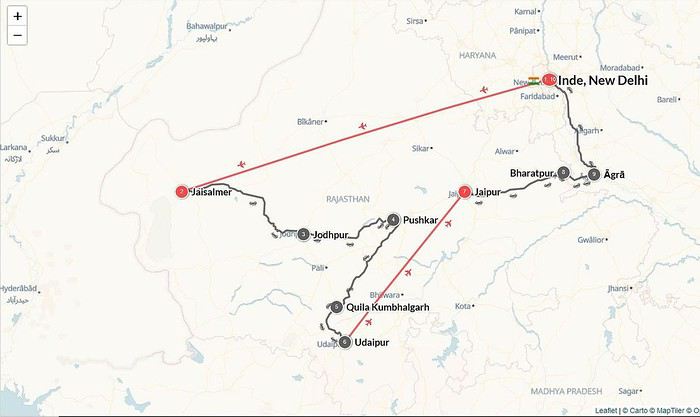
We managed to plan this itinerary, which is quite classic but structured around a must-see: the Pushkar Camel Fair. I’d read reviews and watched videos about it, all very enticing. We’ll see later how it turned out.
As usual, I had everything booked in advance because I don’t like wasting time looking for solutions once we’re there.
Our Air France flight arrived on time at 11:15 PM. We’d read the recommendations, and after collecting our luggage, we headed to the prepaid taxi booth. We got the receipt, and two charming guys took our suitcases to the taxi. When we arrived at the taxi, they asked for 500 INR for the porter service. Of course, I resisted, and with the driver’s help, we settled on 200 INR. Welcome to India.
We agreed with the friendly driver that he’d pick us up from the hotel (Ibis, great breakfast) for our flight to Jaisalmer. It was 2 AM, we collapsed into bed, but the night was short since we had to wake up at 5 AM.
But first, why India? This question has already been discussed on the forum. For me, I had these idealized images in mind: maharajahs, palaces, elephants, and friends who gave me glowing reviews. We’ve already been to Asia and wanted to do something different. We weren’t disappointed.
So, after spending what felt like hundreds of hours 😛 researching forums, blogs, and various guides, the Rajasthan region stood out as the perfect choice for a first discovery.
We managed to plan this itinerary, which is quite classic but structured around a must-see: the Pushkar Camel Fair. I’d read reviews and watched videos about it, all very enticing. We’ll see later how it turned out.
As usual, I had everything booked in advance because I don’t like wasting time looking for solutions once we’re there.
Our Air France flight arrived on time at 11:15 PM. We’d read the recommendations, and after collecting our luggage, we headed to the prepaid taxi booth. We got the receipt, and two charming guys took our suitcases to the taxi. When we arrived at the taxi, they asked for 500 INR for the porter service. Of course, I resisted, and with the driver’s help, we settled on 200 INR. Welcome to India.
We agreed with the friendly driver that he’d pick us up from the hotel (Ibis, great breakfast) for our flight to Jaisalmer. It was 2 AM, we collapsed into bed, but the night was short since we had to wake up at 5 AM.
Hey fellow travelers! 🙂
I'm planning a trip to India in January 2025 for 3 months.
This will be my second trip to India. The first time was in 2009, when I was just 21 (doesn’t make me feel any younger!).
My issue is this: on the India visa application form, I’m asked if I’ve been to India before, and if so, to provide the visa number from that trip.
The problem is, since 2009, I’ve changed passports (and no longer have the old one), so I can’t fill out the form correctly.
I thought about answering "no" to the question ("Have you been to India before?"), but that stresses me out because I hate "cheating" or lying. Especially since I figure they might cross-check their databases, and it could seem odd that I answered "no" when I’ve actually been there before. Maybe my visa could even be denied.
So, I’d love to know if any of you have been in this situation and how you handled it.
Looking forward to your replies! 🙂
Hi everyone,
Two years ago, I got a 5-year visa. But I had to change my plans and haven’t used it yet.
Do you think it’s still valid? I’d like to go to India at the beginning of the year.
I’ve got a big doubt. Do you know where I can find this info?
Thanks a bunch!
India is introducing an electronic arrival card for foreign travelers. The measure is effective for all travelers starting October 1st.
India is now adopting the electronic arrival card. Presenting this "e-Arrival Card" is now mandatory for all arrivals in India as of October 1, 2025. This formality replaces the paper card previously filled out on the plane or upon arrival. India aims to streamline traveler tracking. The requirement applies to travelers of all nationalities, both adults and minors, for all entry points into India. It’s an additional mandatory formality alongside the e-Visa or visa. The e-Arrival Card must be completed online within three days prior to arrival in the country. Available in English only, it’s free and can be done on the official Indian authorities' website. The document is valid only for the declared arrival day. "This means you’ll need to complete it for each new arrival," clarifies RapideVisa, an agency specializing in visa services. Travelers must provide standard information to obtain the document (passport number, purpose of stay, countries visited in the 6 days before arrival, etc.).
Once completed, a document with a QR code to present to authorities upon arrival is generated. With this new system, India aims to facilitate traveler tracking and reduce congestion at airport counters. Nearly 19 million international visitors traveled to India in 2023. Among them, 189,000 were French.
Source: https://www.lechotouristique.com/article/inde-une-nouvelle-formalite-obligatoire-pour-voyager
https://www.youtube.com/watch?v=1WaPqVyUmuY
India is now adopting the electronic arrival card. Presenting this "e-Arrival Card" is now mandatory for all arrivals in India as of October 1, 2025. This formality replaces the paper card previously filled out on the plane or upon arrival. India aims to streamline traveler tracking. The requirement applies to travelers of all nationalities, both adults and minors, for all entry points into India. It’s an additional mandatory formality alongside the e-Visa or visa. The e-Arrival Card must be completed online within three days prior to arrival in the country. Available in English only, it’s free and can be done on the official Indian authorities' website. The document is valid only for the declared arrival day. "This means you’ll need to complete it for each new arrival," clarifies RapideVisa, an agency specializing in visa services. Travelers must provide standard information to obtain the document (passport number, purpose of stay, countries visited in the 6 days before arrival, etc.).
Once completed, a document with a QR code to present to authorities upon arrival is generated. With this new system, India aims to facilitate traveler tracking and reduce congestion at airport counters. Nearly 19 million international visitors traveled to India in 2023. Among them, 189,000 were French.
Source: https://www.lechotouristique.com/article/inde-une-nouvelle-formalite-obligatoire-pour-voyager
https://www.youtube.com/watch?v=1WaPqVyUmuY
Hello fellow travelers!
I’m adding my small contribution to the reopening celebration by posting this travel journal from India, made in January 2024. We’re 4 friends (2 couples), and we did a 3-week loop in Rajasthan, stopping by Delhi and Agra (which, as everyone knows, aren’t in Rajasthan 😛). Delhi - Agra - Jaipur - Bundi - Udaipur - Jodhpur - Jaisalmer - Delhi
We rented a car with a driver from Agra to Jaisalmer, 550 € for 14 days. https://chauffeurpriveeninde.com/fr/
We took the train from Delhi to Agra and the plane (Spicejet) from Jaisalmer to Delhi.
Most of the accommodations were booked on Booking before we left.
I’m sharing this story written by Richard and illustrated by me. We dedicate it to Nathalie and Bruno, our amazing travel companions.
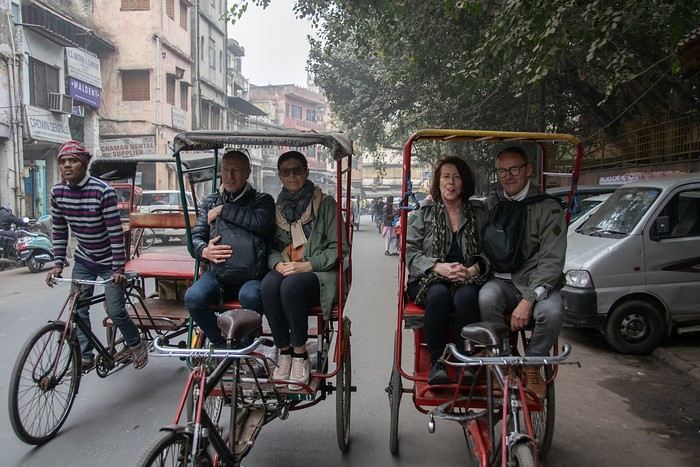
I’m adding my small contribution to the reopening celebration by posting this travel journal from India, made in January 2024. We’re 4 friends (2 couples), and we did a 3-week loop in Rajasthan, stopping by Delhi and Agra (which, as everyone knows, aren’t in Rajasthan 😛). Delhi - Agra - Jaipur - Bundi - Udaipur - Jodhpur - Jaisalmer - Delhi
We rented a car with a driver from Agra to Jaisalmer, 550 € for 14 days. https://chauffeurpriveeninde.com/fr/
We took the train from Delhi to Agra and the plane (Spicejet) from Jaisalmer to Delhi.
Most of the accommodations were booked on Booking before we left.
I’m sharing this story written by Richard and illustrated by me. We dedicate it to Nathalie and Bruno, our amazing travel companions.
Hello,
There’s a big debate among travelers who are attached to India and have been visiting often, regularly, for 15 years or more.
I’ve experienced it—and still do—in every sense of the word, first as a tourist, then from the inside by living there for 12 years. I feel it has changed a lot and continues to change at a dizzying pace, year after year, almost month after month.
It all depends on how you see it, how you visit it, where you stay, etc... North or south, and so on...
The debate is open—no animosity or arguments if opinions differ. Just your own take, your personal experiences, your travel conditions, what you’ve noticed and still notice today... Let’s try to be objective, if possible, though it’s a tough exercise.
Hello my fellow travelers,
I’m leaving for 43 days in India from January 19, 2026, to March 1. How do I handle my e-visa if I don’t necessarily want a one-year visa? The one-month one will be too short... darn it!!
I just found out there’s an additional formality for the visa that came into effect on October 1. Could someone explain to me what it involves and exactly what I need to do? I’d really appreciate it—thank you so much in advance!
Wishing you all wonderful end-of-year celebrations, and may 2026 be filled with love and travels for each of you.
Régine
I’m leaving for 43 days in India from January 19, 2026, to March 1. How do I handle my e-visa if I don’t necessarily want a one-year visa? The one-month one will be too short... darn it!!
I just found out there’s an additional formality for the visa that came into effect on October 1. Could someone explain to me what it involves and exactly what I need to do? I’d really appreciate it—thank you so much in advance!
Wishing you all wonderful end-of-year celebrations, and may 2026 be filled with love and travels for each of you.
Régine