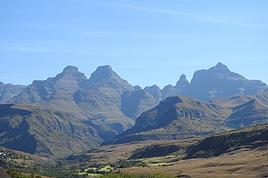
Hi! In March, we’ll be spending two weeks in the Drakensberg region and Golden Highlands National Park (Clarens). From what I understand, you have to pay to hike if you're in a national park. I can’t find the rates or info on whether there are multi-day passes if we hike for several days. Could you help me out, please?
Thanks
Hello everyone,
We’ve decided to head to Quebec next year—it’s been a dream for the whole family (after watching so many travel shows and the like...). There’ll be five of us: 2 adults, 2 teens (16 and 13), and a child (8 years old). We’re all pretty good walkers, though maybe the teens a little less so—it’s just that age, you know? 😊 That said, they’ve got no problem doing 15 km hikes, just not every single day.
We’re planning to go from July 23 to August 14, arriving and departing from Montreal, so almost 3 weeks. I’ve started looking into logistics and accommodation prices, but before I dive into bookings, I’d love some advice on the itinerary. I’ve read a few threads here and there. Our idea is to visit between 3 and 5 different places over the 3 weeks, so that means the same number of accommodations. The goal is to optimize travel as much as possible—I’ve realized that getting around can take a long time. I think the first two days will be in Montreal to adjust to the time difference, and the last two in Quebec City, though that’s not set in stone.
Anyway, I’m not really sure about the route. I’ve got time to plan everything, but I know the longer we wait, the more expensive and scarce accommodations will get. Same goes for budget—we’ve set aside a mid-range budget, flights included: 3k per person (1k for the flight). So if you’ve got any great tips or advice, we’re all ears!
I was thinking of going up the St. Lawrence River, but I’m not sure how long that takes or where to stop. Maybe there are other places worth visiting farther away...
Anyway, thanks for reading this far! If you’ve got any questions, don’t hesitate.
Thanks, everyone.
We’re planning to go from July 23 to August 14, arriving and departing from Montreal, so almost 3 weeks. I’ve started looking into logistics and accommodation prices, but before I dive into bookings, I’d love some advice on the itinerary. I’ve read a few threads here and there. Our idea is to visit between 3 and 5 different places over the 3 weeks, so that means the same number of accommodations. The goal is to optimize travel as much as possible—I’ve realized that getting around can take a long time. I think the first two days will be in Montreal to adjust to the time difference, and the last two in Quebec City, though that’s not set in stone.
Anyway, I’m not really sure about the route. I’ve got time to plan everything, but I know the longer we wait, the more expensive and scarce accommodations will get. Same goes for budget—we’ve set aside a mid-range budget, flights included: 3k per person (1k for the flight). So if you’ve got any great tips or advice, we’re all ears!
I was thinking of going up the St. Lawrence River, but I’m not sure how long that takes or where to stop. Maybe there are other places worth visiting farther away...
Anyway, thanks for reading this far! If you’ve got any questions, don’t hesitate.
Thanks, everyone.
Hi there,
This August, I hiked the Vosges section (Vosges massif) of the GR5 (Lauterbourg-Wissembourg-gr53-gr5-Belfort) using the TopoGuide "Traversée du Massif des Vosges" (ref 502, April 2024 edition). My experience was partly ruined by a few things I feel I should share here to help others avoid the same pitfalls—or at least disappointments.
Having used "TopoGuide" books before, I’d always trusted them for organizing treks lasting several weeks, or even months.
Beyond the satisfactory mapping (reproductions of IGN 1:25,000 maps), these guides include route descriptions that are usually enough to find your way. On that point, I have no serious criticism of the Vosges crossing guide.
In addition to the route details, the guide provides "average" time estimates for traveling from point A to point B—useful info for gauging effort and planning likely stages. However, I eventually realized I couldn’t rely on these time estimates. I’d assumed they were calculated by the FFRP, considering that 100m of positive elevation gain roughly equals 1km on flat terrain, with an average walking speed of 4km/h. So, I’d recommend anyone using this guide to recalculate all the time estimates to avoid nasty surprises on tight stages. 🤪
Another key feature of the guide, in my opinion, is its info on accommodation options—especially budget-friendly ones suited for long-distance hikers on a tight budget. A section called "préparation des étapes" includes a table with a column meant to highlight "refuges" and "gîtes d'étapes." That column had me feeling optimistic: these budget accommodations were listed as plentiful along the route. After all, we were in the territory of the famous Club Vosgien—it made sense there’d be plenty of hiker-friendly lodging options. The reality on the ground was quite different. The TopoGuide wasn’t really to blame here, except that a serious warning wouldn’t have hurt. First, regarding the "refuges," most were run by associations. With rare exceptions, the volunteers only opened them on weekends. You can’t really blame people for not volunteering on weekdays, but it makes things tricky when the info about weekend-only openings often turns out to be wrong. As for the "gîtes d'étape," I was mostly disappointed when I was told that a place was booked for weeks: the vast majority of what was listed as a "gîte d'étape" turned out to be "gîtes ruraux." The advice here? If you don’t want to—or can’t—camp, double-check all the accommodation details before you set off. It’s time-consuming and tedious, but if you can, camping is still the best option. 😐 On a brighter note, during the first part of my trip, I came across several cabins that offered alternatives to camping. 🙂
P.S.: Even the youth hostel in Saverne was closed in the middle of August... 😕
Having used "TopoGuide" books before, I’d always trusted them for organizing treks lasting several weeks, or even months.
Beyond the satisfactory mapping (reproductions of IGN 1:25,000 maps), these guides include route descriptions that are usually enough to find your way. On that point, I have no serious criticism of the Vosges crossing guide.
In addition to the route details, the guide provides "average" time estimates for traveling from point A to point B—useful info for gauging effort and planning likely stages. However, I eventually realized I couldn’t rely on these time estimates. I’d assumed they were calculated by the FFRP, considering that 100m of positive elevation gain roughly equals 1km on flat terrain, with an average walking speed of 4km/h. So, I’d recommend anyone using this guide to recalculate all the time estimates to avoid nasty surprises on tight stages. 🤪
Another key feature of the guide, in my opinion, is its info on accommodation options—especially budget-friendly ones suited for long-distance hikers on a tight budget. A section called "préparation des étapes" includes a table with a column meant to highlight "refuges" and "gîtes d'étapes." That column had me feeling optimistic: these budget accommodations were listed as plentiful along the route. After all, we were in the territory of the famous Club Vosgien—it made sense there’d be plenty of hiker-friendly lodging options. The reality on the ground was quite different. The TopoGuide wasn’t really to blame here, except that a serious warning wouldn’t have hurt. First, regarding the "refuges," most were run by associations. With rare exceptions, the volunteers only opened them on weekends. You can’t really blame people for not volunteering on weekdays, but it makes things tricky when the info about weekend-only openings often turns out to be wrong. As for the "gîtes d'étape," I was mostly disappointed when I was told that a place was booked for weeks: the vast majority of what was listed as a "gîte d'étape" turned out to be "gîtes ruraux." The advice here? If you don’t want to—or can’t—camp, double-check all the accommodation details before you set off. It’s time-consuming and tedious, but if you can, camping is still the best option. 😐 On a brighter note, during the first part of my trip, I came across several cabins that offered alternatives to camping. 🙂
P.S.: Even the youth hostel in Saverne was closed in the middle of August... 😕
Hi there,
I’m planning to do the Mercantour crossing following the Randoxygène route in mid-July. I’m used to hiking in the mountains, but I sometimes get vertigo, for example on ridges with drops on both sides. I wanted to check if there are any T4 or T3-T4 sections and find out if there are any very exposed passages—and if so, where—so I can plan an alternative route. Can anyone give me some info on this? Thanks!
I’m planning to do the Mercantour crossing following the Randoxygène route in mid-July. I’m used to hiking in the mountains, but I sometimes get vertigo, for example on ridges with drops on both sides. I wanted to check if there are any T4 or T3-T4 sections and find out if there are any very exposed passages—and if so, where—so I can plan an alternative route. Can anyone give me some info on this? Thanks!
Hi there, my partner and I want to hike the GR34 over several years, in stages of 8 to 10 days of walking during May or June.
We're 53 and 55, pretty fit, and used to hiking.
Our goal is to complete the whole trail starting from Mont Saint-Michel, but maybe some sections aren’t worth it?
So I’ve got a few questions about logistics:
- backpack size and what essentials to pack
- where to sleep affordably (camping, hotels, or a mix?)
Thanks for your tips!
Hi there,
I’m planning to cross the Gourgs Blancs Pass at the end of the month, from La Soula Refuge to Portillon Refuge. On this section near the pass, I don’t have any trail marked on my IGN map. Is the path well signposted, or should I use a compass?
Also, beyond the physical effort, are there any technical, exposed, or vertigo-inducing sections on this part?
Since I’m finding very little info, I’m being thorough with my questions.
Thanks in advance for your replies.
Thanks in advance for your replies.
Hi everyone,
We’re planning to visit a small part of Indonesia in October 2026 with our kids (8 years old).
Ideally, do you think it’s possible to visit Kinabatangan (3 days), Yogyakarta or Borobudur, and finish with some beginner snorkeling on the Gili Islands in 2 weeks?
Thanks for your valuable feedback! 😊
Hi there,
I’m planning a 6-day trip from Orléans to Tours.
There are very few detailed maps to figure out the main stages and what you’ll find along the way. Even though I’ve downloaded the Miam Miam Dodo app, it’s pretty tedious (everything is split into small map sections).
I’ve settled on the first leg: Orléans to Meung-sur-Loire, about 18 km. For the next one, I’m hesitating because I’d like to do around 20–25 km, but I see Beaugency is only about 10 km away, and Mer is almost 30 km. So, I’m stuck.
On top of that, I’m torn between taking the GR 3 route or the GR 655 (south).
If any of you know the area or have already done this hike/pilgrimage, I’d love to hear your tips for this section that goes through Blois and ends in Tours.
For the last legs, I’ve planned Blois -> ? Chaumont (no accommodations) -> Amboise -> Tours, knowing the final stage is about 30 km.
Thanks in advance for your help! 😉
Thanks in advance for your help! 😉
Hello.
I’m a 56-year-old man who’s done several treks in Nepal and elsewhere. Also passionate about photography. I’m looking for one or more people to form a group for a trek in Nepal. The trek is the Annapurna and Manaslu circuit (24 days), including a stop at Tilicho Lake. I’ve got a great itinerary and the local company seems solid. The price is around $1600. I’ll be in Nepal from April 5 to May 12, 2026, so the trek would need to happen within those dates.
Daniel, Québec, Canada
I’m a 56-year-old man who’s done several treks in Nepal and elsewhere. Also passionate about photography. I’m looking for one or more people to form a group for a trek in Nepal. The trek is the Annapurna and Manaslu circuit (24 days), including a stop at Tilicho Lake. I’ve got a great itinerary and the local company seems solid. The price is around $1600. I’ll be in Nepal from April 5 to May 12, 2026, so the trek would need to happen within those dates.
Daniel, Québec, Canada
Hi,
I’ll be arriving in Nice from Quebec on June 20th. I’m planning to rent a car for 7 days to do day hikes in Mercantour Park. Which village would be best to stay in? Saint-Martin-Vésubie? Barcelonnette? Or split my time between both to access different areas of the park and avoid too much driving? Also, are there hikes in lush, flower-filled valleys (like alpine meadows)?
Thanks,
Sylvie
Hello, I’d like to embark on a little trip in my home country, Switzerland. I’ll start walking from La Cure, heading toward Le Noirmont first, then I’ll improvise my route—but it’ll probably follow the French border... at least as far as Lac de Joux.
I’ll decide day by day how much farther to go after that. My goal is to stay in nature as much as possible, wander around for as long as I can, and restock food in villages or towns along the way.
I’m thinking of mostly camping, but we’ll see if I end up in a hotel or another campsite depending on my route.
I’d love to reach La Chaux-de-Fonds on foot... maybe even Delémont. The whole thing should take about a week, give or take.
I’ll be bringing my dog, and I’m preparing for this as soon as I’m ready.
Any tips to make sure everything goes smoothly for us? Things I should know—or avoid? What about shepherds with their flocks of sheep? And isn’t hunting season open right now?
I’m not sure if what I’m planning is even doable, which is why I’m asking around.
This’ll be my first time doing something like this—wandering in nature *and* with a dog. I’m really excited for this adventure... and I need it. Thanks!
I’ll decide day by day how much farther to go after that. My goal is to stay in nature as much as possible, wander around for as long as I can, and restock food in villages or towns along the way.
I’m thinking of mostly camping, but we’ll see if I end up in a hotel or another campsite depending on my route.
I’d love to reach La Chaux-de-Fonds on foot... maybe even Delémont. The whole thing should take about a week, give or take.
I’ll be bringing my dog, and I’m preparing for this as soon as I’m ready.
Any tips to make sure everything goes smoothly for us? Things I should know—or avoid? What about shepherds with their flocks of sheep? And isn’t hunting season open right now?
I’m not sure if what I’m planning is even doable, which is why I’m asking around.
This’ll be my first time doing something like this—wandering in nature *and* with a dog. I’m really excited for this adventure... and I need it. Thanks!
hi,
we’d like to do a trek in Nepal, and we’re thinking of the Annapurna Circuit—it’s cheaper than the Everest trek.
Our plan is to do it without a guide or porter. We’re used to the mountains, not so much to high altitude, but if we acclimate well, there’s no reason it should go wrong ;)
No guide = handling permits, transport, and accommodation on our own...
So my question is: is it possible to book lodges in advance before departure? Or, even better, day by day?
I’ve read some older posts, so I’m asking again to get up-to-date info on what’s happening now. We’re planning to go mid-November 2026 or March 2027.
Thanks for your tips! :)
No guide = handling permits, transport, and accommodation on our own...
So my question is: is it possible to book lodges in advance before departure? Or, even better, day by day?
I’ve read some older posts, so I’m asking again to get up-to-date info on what’s happening now. We’re planning to go mid-November 2026 or March 2027.
Thanks for your tips! :)
Hi there,
We’re heading to South Africa in August 2025 and planning a classic loop that I’d love to finish with the Drakensberg (I’m a big hiking fan) before returning to Johannesburg to catch our flight.
I’ve got 3 nights for this part of our trip. But I’m wondering if it’s actually a good idea to hike in the Drakensberg in August, since it’s the Southern Hemisphere winter (I’m from Réunion and we hike year-round there, but I don’t know what the climate’s like in South Africa, especially the Drakensberg).
I’m particularly worried about getting stuck because of snow and missing our flight... ;)
I’ve read so many different things that I’m totally confused!
If it’s okay to hike at this time of year, what would you recommend? I’m torn between Champagne Valley and Royal Natal National Park.
Thanks in advance for your firsthand tips!
Malijp
Hi there,
We’re flying from Montreal to Lyon this August to go hiking in the French Alps. We’ve rented a car and will be staying at campgrounds. We’re planning to do day hikes and want to stay a few days in one spot, do a few hikes, then move on to our next camping spot. Could you share your favorite spots or any recommendations for places to spend a few days with great hikes?
A few details: We arrive in early August and leave in early September. We’re looking for day hikes (or shorter), moderate difficulty, with a cumulative elevation gain of no more than 1000m, and of course, beautiful scenery! We’d prefer not to drive too much—maybe it’s best not to head too far south and deal with unnecessary heat? Along the same lines, if you know of any great campgrounds where we can start our hike directly without needing the car, we’d love to hear your suggestions!
Thanks! :-)
A few details: We arrive in early August and leave in early September. We’re looking for day hikes (or shorter), moderate difficulty, with a cumulative elevation gain of no more than 1000m, and of course, beautiful scenery! We’d prefer not to drive too much—maybe it’s best not to head too far south and deal with unnecessary heat? Along the same lines, if you know of any great campgrounds where we can start our hike directly without needing the car, we’d love to hear your suggestions!
Thanks! :-)
Hello! I’m so excited to be back on this forum—it’s helped me so much in the past! I need your expert advice for our next trip, which will take us to Central Asia: Uzbekistan, Tajikistan, Kyrgyzstan, and Kazakhstan.
We have a month, and here’s the itinerary I have in mind: Arrival in Tashkent – 2 days Bukhara – 2 days Samarkand – 3 days Panjakent – 1 day The Seven Lakes + Iskanderkul – 3 days Khujand – 2 days Fergana Valley – 3 days Song Kol Lake – 2 days Issyk-Kul Lake – 3 days Charyn Canyon – 1 day Kaindy Lake – 1 day Altyn Emel Park – 1 day Almaty – 1 day and departure
I know the travel times, especially in the mountains, can be long, but I’ve tried to optimize it so we can rest after the long drives. Our family includes three kids aged 5, 13, and 17. We’re used to backpacking. But I have *so* many questions: -Will it be extremely hot in Uzbekistan, but manageable in the other regions on my itinerary? -I’ve read conflicting things about trains in Uzbekistan: is it possible to book train tickets in advance from France? -For the Seven Lakes and Iskanderkul, do I need to hire a driver? Is it easy to find one? Since there are five of us, we’d need a large car… or is it possible to rent a car in Panjakent and drop it off in Khujand? -What’s worth visiting in the Fergana Valley? -I’d prefer to avoid domestic flights, so I planned to break up the Osh-Issyk-Kul Lake route by stopping at Song Kol Lake and taking a horseback ride. Is that realistic? Again, do I need to find a driver, or can we do it independently? -Where’s the best base for Issyk-Kul Lake? The main goal is to relax and swim (is it acceptable for women to wear swimsuits in these regions?) -For the last part of the trip—Charyn Canyon and Kaindy Lake from Issyk-Kul—is it doable, or do I need a driver once more? -Is Altyn Emel Park doable in the summer, or is it too hot? The idea is to see the views and do a short 3-hour hike.
Thanks so much for any firsthand tips or experiences you can share!
We have a month, and here’s the itinerary I have in mind: Arrival in Tashkent – 2 days Bukhara – 2 days Samarkand – 3 days Panjakent – 1 day The Seven Lakes + Iskanderkul – 3 days Khujand – 2 days Fergana Valley – 3 days Song Kol Lake – 2 days Issyk-Kul Lake – 3 days Charyn Canyon – 1 day Kaindy Lake – 1 day Altyn Emel Park – 1 day Almaty – 1 day and departure
I know the travel times, especially in the mountains, can be long, but I’ve tried to optimize it so we can rest after the long drives. Our family includes three kids aged 5, 13, and 17. We’re used to backpacking. But I have *so* many questions: -Will it be extremely hot in Uzbekistan, but manageable in the other regions on my itinerary? -I’ve read conflicting things about trains in Uzbekistan: is it possible to book train tickets in advance from France? -For the Seven Lakes and Iskanderkul, do I need to hire a driver? Is it easy to find one? Since there are five of us, we’d need a large car… or is it possible to rent a car in Panjakent and drop it off in Khujand? -What’s worth visiting in the Fergana Valley? -I’d prefer to avoid domestic flights, so I planned to break up the Osh-Issyk-Kul Lake route by stopping at Song Kol Lake and taking a horseback ride. Is that realistic? Again, do I need to find a driver, or can we do it independently? -Where’s the best base for Issyk-Kul Lake? The main goal is to relax and swim (is it acceptable for women to wear swimsuits in these regions?) -For the last part of the trip—Charyn Canyon and Kaindy Lake from Issyk-Kul—is it doable, or do I need a driver once more? -Is Altyn Emel Park doable in the summer, or is it too hot? The idea is to see the views and do a short 3-hour hike.
Thanks so much for any firsthand tips or experiences you can share!
Hi everyone,
I’ve read the forum a lot and found a wealth of information. I’ve tried to compile all of it into our itinerary and would love your feedback to finalize the bookings (we’re planning this *very* last-minute).
Here’s what we’re thinking of doing: 22 July: arrival in Johannesburg Night of 22–23: Johannesburg Nights of 23–26: Marloth Park (with Kruger visits on the 24th, 25th, and a crossing visit on the 26th) Nights of 26–28: Graskop (visiting the canyon and Panorama Road on the 27th and 28th) Nights of 28–30: Hoedspruit (visiting the central area of Kruger on the 29th?) Nights of 30 July–1 August: Balule Park (private reserve with safari) Nights of 1–5 August: flight from Hoedspruit to Cape Town, then 2 days in Cape Town, 1 day on the peninsula, and 2 days for wine (just the route) or something else based on your advice (we don’t know where to stay—whether to stay all 5 nights in Cape Town and where in the city, or do 2 nights in Cape Town and 3 nights nearby—but where?) Night of 5–6 August: Kelders for penguins and whales Nights of 6–8 August: Tsitsikamma (what is there to do/see?) Nights of 8–10 August: Addo Park on the 9th 10 August: flight from Port Elizabeth to Johannesburg and back home
What do you think? Is there a lot of driving time?
We’d really appreciate your comments and suggestions. Thanks!
Nadia
I’ve read the forum a lot and found a wealth of information. I’ve tried to compile all of it into our itinerary and would love your feedback to finalize the bookings (we’re planning this *very* last-minute).
Here’s what we’re thinking of doing: 22 July: arrival in Johannesburg Night of 22–23: Johannesburg Nights of 23–26: Marloth Park (with Kruger visits on the 24th, 25th, and a crossing visit on the 26th) Nights of 26–28: Graskop (visiting the canyon and Panorama Road on the 27th and 28th) Nights of 28–30: Hoedspruit (visiting the central area of Kruger on the 29th?) Nights of 30 July–1 August: Balule Park (private reserve with safari) Nights of 1–5 August: flight from Hoedspruit to Cape Town, then 2 days in Cape Town, 1 day on the peninsula, and 2 days for wine (just the route) or something else based on your advice (we don’t know where to stay—whether to stay all 5 nights in Cape Town and where in the city, or do 2 nights in Cape Town and 3 nights nearby—but where?) Night of 5–6 August: Kelders for penguins and whales Nights of 6–8 August: Tsitsikamma (what is there to do/see?) Nights of 8–10 August: Addo Park on the 9th 10 August: flight from Port Elizabeth to Johannesburg and back home
What do you think? Is there a lot of driving time?
We’d really appreciate your comments and suggestions. Thanks!
Nadia
Hi everyone,
After letting our backpacks gather dust for several years, we’ve decided to set off on another adventure—this time as a family, with our 10- and 12-year-old kids! We’re planning a trip from mid-June to the end of July, with two stops: Cambodia (2 weeks) and Indonesia (4 weeks). But before diving into the details, we’ve got quite a few questions and doubts.
About Cambodia: We know this period is the rainy season. Is it really a good idea to go then? And if so, is it better to start with Cambodia and then move on to Indonesia, or does the order not matter from a climate perspective? Here are the activities and sites we’ve shortlisted: · The Mekong and Irrawaddy dolphins: do we actually have a chance of seeing them? · The Mondulkiri Project (elephant sanctuary): is this an ethical project? We want to avoid any form of animal exploitation. · The temples of Angkor: are 2 or 3 days enough to fully enjoy them? · Floating villages: where should we go for an authentic experience? Is it possible to spend the night there? · Hikes with waterfalls, lakes, etc.: are there any must-do treks? · And most importantly, what activities or sites would appeal to kids?
For Indonesia: We were there 15 years ago and loved our itinerary: Yogyakarta / Borobudur → Bromo → Kawah Ijen → Bali → Gili Trawangan. This time, we’re torn: · Retracing part of that route to share it with our kids (even if revisiting the same places isn’t super appealing), · Or exploring new regions. What’s almost certain is that we’d like to spend about two weeks in Raja Ampat. For the other two weeks, we’re undecided. We’re looking for kid-friendly ideas for places and activities, while avoiding too many connections for budget and environmental reasons. Since we’ll already see temples in Cambodia, we’d like to mix things up.
And finally… On our last trip to the region, we traveled without kids and went super free-spirited: only the round-trip tickets were booked, and we improvised the rest day by day without any major issues finding accommodation, food, or accessing the activities we’d spotted. Do you think this style of travel is still doable with two kids? Or has it become too risky or stressful? Are there regions where the "backpacker" approach is still possible, and others where it’s better to book in advance? And for certain activities or sites, is it recommended to hire guides?
Thanks in advance for your tips and experiences!
After letting our backpacks gather dust for several years, we’ve decided to set off on another adventure—this time as a family, with our 10- and 12-year-old kids! We’re planning a trip from mid-June to the end of July, with two stops: Cambodia (2 weeks) and Indonesia (4 weeks). But before diving into the details, we’ve got quite a few questions and doubts.
About Cambodia: We know this period is the rainy season. Is it really a good idea to go then? And if so, is it better to start with Cambodia and then move on to Indonesia, or does the order not matter from a climate perspective? Here are the activities and sites we’ve shortlisted: · The Mekong and Irrawaddy dolphins: do we actually have a chance of seeing them? · The Mondulkiri Project (elephant sanctuary): is this an ethical project? We want to avoid any form of animal exploitation. · The temples of Angkor: are 2 or 3 days enough to fully enjoy them? · Floating villages: where should we go for an authentic experience? Is it possible to spend the night there? · Hikes with waterfalls, lakes, etc.: are there any must-do treks? · And most importantly, what activities or sites would appeal to kids?
For Indonesia: We were there 15 years ago and loved our itinerary: Yogyakarta / Borobudur → Bromo → Kawah Ijen → Bali → Gili Trawangan. This time, we’re torn: · Retracing part of that route to share it with our kids (even if revisiting the same places isn’t super appealing), · Or exploring new regions. What’s almost certain is that we’d like to spend about two weeks in Raja Ampat. For the other two weeks, we’re undecided. We’re looking for kid-friendly ideas for places and activities, while avoiding too many connections for budget and environmental reasons. Since we’ll already see temples in Cambodia, we’d like to mix things up.
And finally… On our last trip to the region, we traveled without kids and went super free-spirited: only the round-trip tickets were booked, and we improvised the rest day by day without any major issues finding accommodation, food, or accessing the activities we’d spotted. Do you think this style of travel is still doable with two kids? Or has it become too risky or stressful? Are there regions where the "backpacker" approach is still possible, and others where it’s better to book in advance? And for certain activities or sites, is it recommended to hire guides?
Thanks in advance for your tips and experiences!
Hello!
After a long travel hiatus, we’re (finally) back on the road for some getaways! Now with two kids in tow, we’re heading to Thailand for two weeks next February (a destination that’s stood us up twice before but seems perfect for our first big family trip).
We’d have loved to stay longer, but two weeks is already a great start and will be plenty enjoyable.
Key points: - Experience Thailand, not just live our usual routine in Thailand - Avoid crowds as much as possible, even though February will be busy - Not big city fans, so Bangkok (BKK) will be kept to a minimum - Focus on nature, the sea, forests, waterfalls, hiking, kayaking...
At this stage, here’s the rough itinerary I’m considering: - Arrival at 7 AM + a day in BKK
- DEPART for SURAT THANI (BUS) - Transfer + Khao Sok (overnight on the lake / in the trees)
- RETURN to Ko Samui - Transfer to Koh Pha Ngan or Koh Tao (snorkeling)
- RETURN to Khao Lak. While there: * Visit Ao Phang Nga Park by kayak * Excursion to caves / Ko Khao Phing Kan (the "007 beach" lol) * ALTERNATIVE = SIMILAN ISLANDS
- RETURN to KRABI or Koh Phi Phi * Visit Koh Hong or Koh Yao Yai
* Flight from SURAT THANI to BKK - If time left in BKK: - Explore BKK: Wat Pho / floating market / Maeklong Railway Market / Chinatown... - Or a day trip to Ayutthaya - Or a day at Erawan Waterfall (Haew Suwat) - Day +1 = Return to France
Questions I’m pondering: - Is this too ambitious? I think it might be... but since we’d rather see as much as possible than just lounge on a beach... - How to get around on this route? Bus or rental vehicle (which I’d prefer to avoid) - Are there any inconsistencies in the plan I’ve outlined? - Should I adjust any connections or prioritize differently? - Krabi vs. Koh Phi Phi? - Koh Hong vs. Koh Yao Yai?
We’ve booked the first night (using some leftover backpacking perks), but nothing else—so open to all ideas!
If you know a local agency that can offer advice (for a fee), that could work too, since the options feel endless...
Thanks so much for reading this far, and even more if you’ve got tips or suggestions to share!! Best wishes ;)
After a long travel hiatus, we’re (finally) back on the road for some getaways! Now with two kids in tow, we’re heading to Thailand for two weeks next February (a destination that’s stood us up twice before but seems perfect for our first big family trip).
We’d have loved to stay longer, but two weeks is already a great start and will be plenty enjoyable.
Key points: - Experience Thailand, not just live our usual routine in Thailand - Avoid crowds as much as possible, even though February will be busy - Not big city fans, so Bangkok (BKK) will be kept to a minimum - Focus on nature, the sea, forests, waterfalls, hiking, kayaking...
At this stage, here’s the rough itinerary I’m considering: - Arrival at 7 AM + a day in BKK
- DEPART for SURAT THANI (BUS) - Transfer + Khao Sok (overnight on the lake / in the trees)
- RETURN to Ko Samui - Transfer to Koh Pha Ngan or Koh Tao (snorkeling)
- RETURN to Khao Lak. While there: * Visit Ao Phang Nga Park by kayak * Excursion to caves / Ko Khao Phing Kan (the "007 beach" lol) * ALTERNATIVE = SIMILAN ISLANDS
- RETURN to KRABI or Koh Phi Phi * Visit Koh Hong or Koh Yao Yai
* Flight from SURAT THANI to BKK - If time left in BKK: - Explore BKK: Wat Pho / floating market / Maeklong Railway Market / Chinatown... - Or a day trip to Ayutthaya - Or a day at Erawan Waterfall (Haew Suwat) - Day +1 = Return to France
Questions I’m pondering: - Is this too ambitious? I think it might be... but since we’d rather see as much as possible than just lounge on a beach... - How to get around on this route? Bus or rental vehicle (which I’d prefer to avoid) - Are there any inconsistencies in the plan I’ve outlined? - Should I adjust any connections or prioritize differently? - Krabi vs. Koh Phi Phi? - Koh Hong vs. Koh Yao Yai?
We’ve booked the first night (using some leftover backpacking perks), but nothing else—so open to all ideas!
If you know a local agency that can offer advice (for a fee), that could work too, since the options feel endless...
Thanks so much for reading this far, and even more if you’ve got tips or suggestions to share!! Best wishes ;)
Hi everyone!
New to this forum, I’m planning a pretty big project for 2028. I’m heading to Nepal to do a trek from Kathmandu all the way to Everest Base Camp (a cool 5,300 m 😄). This trek is a bit special because even though I’ll be part of a group, I’m going solo (so far, no problem—I’m used to it). But it’s my first real trek, and it’s also a humanitarian one: once I reach base camp, I’ll stay an extra week to help clean up the waste left by tens of thousands of climbers! Since I’m originally from South America, from two countries that share the Andes, I have a deep respect for mountains—they fascinate me. So Everest… it’s kind of the trip of a lifetime!
So, a little question for those who’ve done treks to Everest before… any tips for good mental preparation (I’m already working on the physical side)?
Thanks in advance for your advice! 🙂
New to this forum, I’m planning a pretty big project for 2028. I’m heading to Nepal to do a trek from Kathmandu all the way to Everest Base Camp (a cool 5,300 m 😄). This trek is a bit special because even though I’ll be part of a group, I’m going solo (so far, no problem—I’m used to it). But it’s my first real trek, and it’s also a humanitarian one: once I reach base camp, I’ll stay an extra week to help clean up the waste left by tens of thousands of climbers! Since I’m originally from South America, from two countries that share the Andes, I have a deep respect for mountains—they fascinate me. So Everest… it’s kind of the trip of a lifetime!
So, a little question for those who’ve done treks to Everest before… any tips for good mental preparation (I’m already working on the physical side)?
Thanks in advance for your advice! 🙂
Spots where we can camp, bivouac, and find water sources
I want to do sections of the Collioure-Cadaqués trail. I plan to stay in Collioure first to hike the paths on the French side using the bus. Speaking of which, I’m wondering if it’ll be easy to find a seat on the buses at the end of April, beginning of May.
After that, I’ll head to Figueres to do sections of the trail on the Spanish side. I’m worried the buses might not be too crowded at the end of April.
Here’s what I’m interested in: Llanca - Port de la Selva: Figueres - Llanca by train in the morning and Port de la Selva - Figueres on the way back Port de la Selva - Cadaqués: Figueres - Port de la Selva in the morning and Cadaqués - Figueres on the return trip
I’d also like to go to Cadaqués from Figueres as a day trip. I’m concerned about how busy this route might be at the end of April.
I’m wondering if I need to get tickets in advance and where to buy them.
After that, I’ll head to Figueres to do sections of the trail on the Spanish side. I’m worried the buses might not be too crowded at the end of April.
Here’s what I’m interested in: Llanca - Port de la Selva: Figueres - Llanca by train in the morning and Port de la Selva - Figueres on the way back Port de la Selva - Cadaqués: Figueres - Port de la Selva in the morning and Cadaqués - Figueres on the return trip
I’d also like to go to Cadaqués from Figueres as a day trip. I’m concerned about how busy this route might be at the end of April.
I’m wondering if I need to get tickets in advance and where to buy them.
Spots where we could pitch the tent near a stream
Hi there,
I’d like to get some info about the GR10 Pyrenees traverse. I need help planning the daily stages and accommodations—my wife isn’t an experienced hiker but walks a lot, so I’d like to schedule shorter walking days and thus a longer overall trip in terms of number of days.
Could anyone give me some help and advice? Best regards,
I’d like to get some info about the GR10 Pyrenees traverse. I need help planning the daily stages and accommodations—my wife isn’t an experienced hiker but walks a lot, so I’d like to schedule shorter walking days and thus a longer overall trip in terms of number of days.
Could anyone give me some help and advice? Best regards,
Hi there.
I’ve hiked the GR trail mentioned in the title from Wissembourg all the way to Menton.
Now I’ve got the section from Wissembourg to Rotterdam left.
But I can’t find any maps for this route—I’m looking for someone who’s done this part of the trail.
Thanks in advance! 😊
A really nice nature walk at the entrance to the lake in the Natura 2000-listed nature reserve. It’s a great opportunity to see lots of bird species, plants, and the famous European pond turtle, as well as some beautiful medieval architecture remnants with Thomas II’s castle. The walk is slightly spoiled by the noise from the Savoie parachute club’s planes, which take off every fifteen minutes and dump fuel on the site non-stop, even after nightfall.
Hi,
I’m planning the Switzerland-Paris hike for 2026. If any of you know a route where I can stay with locals or in other lodging (no camping), I’d really appreciate your tips.
Thanks!
M Brunner
Is wild camping possible? Are there campsites and places to restock along the way, and is water available?
Thanks for your answers!
Pierrick
hi there
I live near Dole, so not too far away, and I sometimes go hiking (Camino de Santiago, Saint-Guilhem-le-Désert, etc.), and I’d love it if someone could suggest a trek in the Vosges—I really don’t know the area well. (Yeah, I know, I’m a little embarrassed about that.)
If you could recommend a nice route.
Arrival by car or train, doesn’t matter.
Thanks so much!
Hi there, I’m struggling to get back into hiking and I’m considering tackling the GR5 from Lake Geneva to the Mediterranean shores in August-September.
Since I can’t plan daily distances in advance, I’ll be bringing gear to bivouac.
I’m not familiar with this route and wanted to get an idea of water resupply options before setting off: are sources and streams still flowing easily in late summer on this GR, or should I prepare for long dry stretches? 😐
Since I can’t plan daily distances in advance, I’ll be bringing gear to bivouac.
I’m not familiar with this route and wanted to get an idea of water resupply options before setting off: are sources and streams still flowing easily in late summer on this GR, or should I prepare for long dry stretches? 😐
Hi,
I was wondering if this forum is still active. The last discussions seem to be from several years ago?...
If so, I’m looking for information on these hikes—the **Tour de l'Aubrac** in 8 days and the **Chemin de Stevenson** in 12 days...
Lists of accommodations with:
- Locations
- Prices
- Capacity (how many people they can host)
The stages— I’d like to do these routes with a group of 8 to 10 people. Thanks in advance... Jean-Claude BOULET Email: marcheur117@gmail.com Phone: 06 67 49 28 22 Residence: Royan 17, Charente-Maritime
The stages— I’d like to do these routes with a group of 8 to 10 people. Thanks in advance... Jean-Claude BOULET Email: marcheur117@gmail.com Phone: 06 67 49 28 22 Residence: Royan 17, Charente-Maritime