I want to improve my English. Are there any free learning or improvement websites?
Thanks for your reply
51 similar discussions in English
Hello,
I’m a 76-year-old "senior" who’s still active and full of energy.
I ski, swim, hike, and keep traveling a lot, including to the other side of the world. My most recent trip: The Philippines (winter 2026).
I’d love to gather a small group of friendly seniors to first plan some short trips in France together. If everything goes well, we could venture farther and for longer.
What matters to me in a foreign country: a change of scenery, trying to understand the locals and their way of life, architectural heritage (cities in particular), and of course the beauty of natural sites. I’m not really into "road trips."
I live in Paris and am available the second half of August and the first week of September (2026). Nothing’s set yet for 2027.
Hope to meet you soon!
Granviajera.
A little link...
St Lucia is the capital of "urban" hippos... with behavior that’s not always very urban.
https://www.citizen.co.za/zululand-observer/news-headlines/local-news/2025/05/01/watch-provoked-hippo-charges-group-of-people-in-st-lucia/
St Lucia is the capital of "urban" hippos... with behavior that’s not always very urban.
https://www.citizen.co.za/zululand-observer/news-headlines/local-news/2025/05/01/watch-provoked-hippo-charges-group-of-people-in-st-lucia/
My Montpellier-Fez flight was canceled by Air Arabia and rescheduled with only 1 day on site instead of 4, making the trip pointless. Customer service is unresponsive. If you’re also affected by this flight (or a similar one), join me to consider a group action. Contact me here or via DM! #AirArabia #PassengerRights
Hi, I’m taking a cruise in Japan on the Diamond Princess from May 23 to June 5 and would love to hear from anyone who’s done it. Also, can we pay on board with Euros? Is it easy to use Wi-Fi when we’re ashore? What’s the weather like—do we need warm clothes or not? Are the excursions essential, or can we manage on our own outside of Tokyo, where we have a guide? If not, which excursions would you recommend? Thanks in advance for your replies.
Betty from the islands
Hi everyone.
I wanted to share a little feedback from our trip to Guatemala—we got back a month ago, and I really appreciated the well-commented posts here that helped us out. So, in turn, I wanted to share our own little recap.
We’ve traveled quite a bit together (we’re 38 and 42), and Guatemala had been on our radar for a while. But with so much info out there, it was hard to sort through it all—especially since we only had 3 weeks on the ground and didn’t want to waste time.
Here’s the itinerary we followed: Antigua, the Pacific coast, Lake Atitlán, a private coffee and bird reserve, Chichicastenango, Sayaxché, El Remate, Río Dulce, and Lake Izabal.
We rented a 4x4, which was essential given the state of some roads.
Our highlights: * **Pacific coast**: So authentic and preserved. We met sea turtles, cooked and baked coconut bread with a women’s community—such a meaningful exchange—and kayaked through a pristine mangrove full of birds. * **Lake Atitlán**: Even though we were worried it might feel too touristy, a private tour let us discover local crafts, hidden workshops (weaving, pottery), and the stunning views from the boat. * **Sayaxché**: The starting point for the Aguateca and Dos Pilas sites—one of our favorite outings. The site is breathtaking: walking through the canyon and jungle-covered ruins with almost no one around. We stayed in a little bungalow on an island, totally off the grid. * **In Petén**, we met an Itza Maya tribe—an unforgettable day sharing a meal and plant-based healing rituals. Wow. This tribe resisted the conquistadors and still lives traditionally. We also took a tour on Lake Petén and swam at hidden little beaches. Tikal was nice, but we preferred Yaxhá. * **Río Dulce**: A day at a private cocoa plantation—an adventure in a buggy with the owner himself. We harvested cocoa and ate the chocolate paste afterward, then swam in a waterfall on the property. Since it’s private, there was no one else around. A real privilege. * **Boat tour on the Río Dulce**: For us, the highlight. We visited a school where they’re committed to giving kids a solid education while blending Maya rituals. * **Lake Izabal**: A peaceful end to the trip in a magical setting. We visited Quiriguá.
We went through an organizer who knows the country really well. We weren’t initially planning on that, but thanks to her, we had experiences we never would’ve found on our own. On top of that, we actually paid less for the trip overall because of her local rates. I’m not getting anything out of this—I just think it could help other travelers. Her business is Secretplaceincostarica (she also does Costa Rica, which we’re now eager to explore).
On the ground, we felt completely safe. The people are lovely, the roads can be a little chaotic at times, but we loved every minute of it.
Happy travels to all! Marie
Hi there,
Hi, I just bought a flight ticket on eDreams. My account was debited, but I haven’t received the tickets. I checked my spam folder, but no luck. Could you provide me with a contact number or a link to their site so I can file a complaint? Alternatively, if anyone has a solution, I’d be interested in getting a refund. I contacted my bank, but since the amount has already been debited, what can they do? Thanks in advance!
Hi, I just bought a flight ticket on eDreams. My account was debited, but I haven’t received the tickets. I checked my spam folder, but no luck. Could you provide me with a contact number or a link to their site so I can file a complaint? Alternatively, if anyone has a solution, I’d be interested in getting a refund. I contacted my bank, but since the amount has already been debited, what can they do? Thanks in advance!
Well, here we go,
despite the lack of info on Zambia, I managed to pull off this pretty special trip.
I’d posted asking for tips but got very few replies. So I leaned heavily on Giradhino’s travel journal to plan the route.
The context: After visiting Kenya, then Namibia, then Botswana, I wanted to see another Southern African country—hence Zambia. This time, we’re two couples: us (of course) and our friends we’ve traveled with to the last two countries mentioned. The idea was to do a self-drive trip, picking up a 4x4 at the airport and figuring it out as we went.
We rented our fully equipped vehicle from Hemingways, an agency in Livingstone. Great agency (really), I’ll talk more about them later. It came with rooftop tents and all the gear for cooking and everything... However, our goal was to sleep in lodges and only use the tents as a last resort. Mission accomplished—we never even unfolded the tents. Guess we’re getting old 🙂
The route (summary): Lusaka - Kasanka NP - Bangweulu NP - Mutinondo - Kapishya - North Luangwa - South Luangwa and back to Lusaka.
That said, let’s hit the road for this travel journal of a pretty lively trip. Reminder: I’m more of a filmmaker, so I’ve got tons of footage but very few photos. The ones I have were taken on my phone, so they’re not great quality. My wife’s the one who handles that side of things.
Day 1:
At 9 a.m. sharp (or close enough), we leave the Lyon area, heading to Paris CDG. Our flight’s at 9:30 p.m., but it’s a busy Saturday with holiday traffic, so we play it safe to avoid jams—especially since the Olympics (hosted in Paris, in case you didn’t know) are causing extra traffic issues.
We’re relaxed and happy to be on our way. The drive goes smoothly. We take the eastern route around Paris to reach a hotel with parking at a better price than the airport lots. We leave the car there, and a shuttle takes us to Terminal 2. Bad luck—we’re actually flying from Terminal 1! The transfer between terminals is quick, though, so no stress.
After the usual formalities (with Rwandair), we end up in the Duty Free.
A rare rant-free moment: Usually, I let off steam in my travel journals now and then, but this time it’s the opposite. I had a terrible memory of CDG and had been avoiding it for years. But this time—Olympics effect? A big change? What a pleasant surprise! The staff were plentiful and super friendly at every pre-flight step, making everything easier. Comfortable seats for waiting to board. Well done, CDG!
We buy Ricard, Jack Daniel’s, and Get 27 to handle any situation that might come up. We board on time, and that’s when our adventures with Rwandair really begin. Yep, the first hiccup!
We’d booked our tickets back in October and (since we don’t hold back!) had paid extra for preferred seats on all our flights. Since October, we’d received emails about schedule changes—just a few minutes here and there. Unfortunately, we never got an email saying that *on top of* the schedule change, the plane’s configuration had also changed. So when we boarded with our seats (all four of us together at row 25), we were furious to see that the preferred seats were now row 23. We’d been *completely* scammed. We’d paid extra to end up in seats we’d been trying to avoid! You could say Rwandair double-dipped on the same seats. What a rip-off! We tried to negotiate an upgrade, but the flight was full. So our flight to Kigali started with a real sense of anger.
The +: We’re on our way The -: Rwandair
Hey everyone, so happy the site is back!
After traveling solo across Iran and the Stan countries from one end to the other,
this time I’m heading to Southeast Asia with my wife and our 3-year-old.
I went to the Philippines almost 10 years ago and actually met some forum members there. It was love at first sight.
I’ve booked tickets from January 10 to March 31 for Bangkok (amazing price from Milan). I was thinking of spending: 3 weeks in Thailand 3 weeks in Vietnam 1 month in the Philippines.
Don’t worry, I won’t spam the forum with a thousand messages asking how to get from point A to point B :)))
I’m reaching out to the experts or regulars here for suggestions and ideas!
For Thailand, Obviously, some beautiful beaches wouldn’t hurt for a bit of relaxation. I was thinking of Koh Phayam or Koh Kood (or Koh Chang). If anyone knows a nice spot, even if it’s not on an island, I’m all ears. It’s tricky to ask this for Thailand, but I’m looking for a bit of tranquility (so I’ll probably avoid Phuket, Koh Samui, etc.). (Though I know sometimes you just need to get off the beaten path to find some peace, but I’m not sure if that’s the case in Thailand.)
Vietnam—I have no idea!! A friend mentioned Danang, which could be a good base to explore the countryside/inland areas.
And the Philippines—I had a huge crush on the country (Bantayan, Dumaguete, Sipalay, Siquijor) and really want to go back, maybe to new places/islands.
I have one constraint: We’ll stay in the same place each time. With a kid, it’s tough to move every 2 days (unlike when I’m solo), and I hope this will let us connect with locals by staying put for 3 weeks at a time. (Plus, my budget is pretty tight, so the idea is to negotiate a good price for 3 weeks in the same accommodation.) (My rough budget is 1000 € per month for the three of us: 450 € for lodging, 450 € for food, and 100 € for a scooter. This doesn’t include boat, bus, etc. transfers.)
If you have any ideas, tips, or experiences to share, I’m all ears! I’m totally open to shortening or extending our stays in each country, even if it means skipping one of the three.
This is where we chat, not on the contest thread

Vast, diverse, and multifaceted China! During a recent journey across part of this fascinating country, I enthusiastically discovered so many aspects of it. But such variety seems hard to condense into a single story. So, for this travel journal, I’ve focused on two main facets of China. First, a modern and urban China—the sprawling city of Shanghai—and then, in a second part, a China that’s the complete opposite: a rural and more traditional side explored around Yangshuo, where nature is absolutely stunning. Ready for a tour of China, city first, then countryside? Travel stories, descriptions, and impressions are on the program, with plenty of room for photos. Enjoy the journey and happy reading!
--
Urban China: Shanghai
As soon as you explore the city, it’s clear: the Chinese wanted to turn Shanghai—once a small fishing village—into a showcase of a modern, powerful, and forward-looking China. The megacity is immense, with around 24 million people bustling through its avenues or stuck in monstrous traffic jams at the foot of some of the world’s tallest skyscrapers. Towers so high they almost touch the sky—well, almost. But this gigantism is just one side of this southern metropolis in the Middle Kingdom.
Away from the towers and business districts, you discover another side of Shanghai—more traditional and, some would say, more human. This is where my travel story begins: on a quiet morning among smiling, relaxed locals. We’re in one of the city’s parks, specifically Fuxing Park.
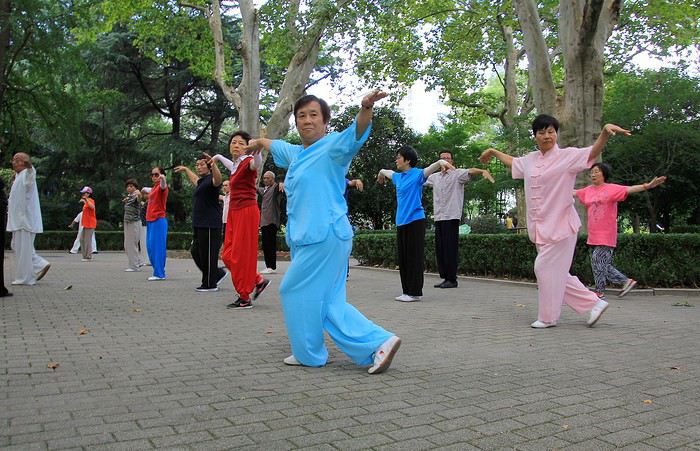
As everyone knows, the Chinese love practicing Tai Chi Chuan, in groups or solo, so it’s no surprise to see so many here, moving slowly and precisely through their sequences. Here’s a first group, their movements and postures perfectly coordinated.
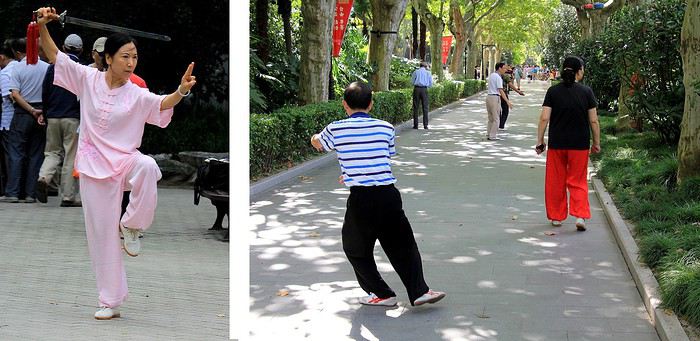
In another alley, a lone practitioner is deep in concentration, executing his movements with focus. I watch him for a few moments, discreetly and from a distance, so as not to disturb him. To his right, a woman in bright red pants keeps walking, almost as if she’s marching in place. A strange ballet: a series of steps forward, then backward, and so on...
Nearby, this elegant athlete (or artist) performs Tai Chi with a sword—almost like a choreography, her movements resembling a true sword dance.
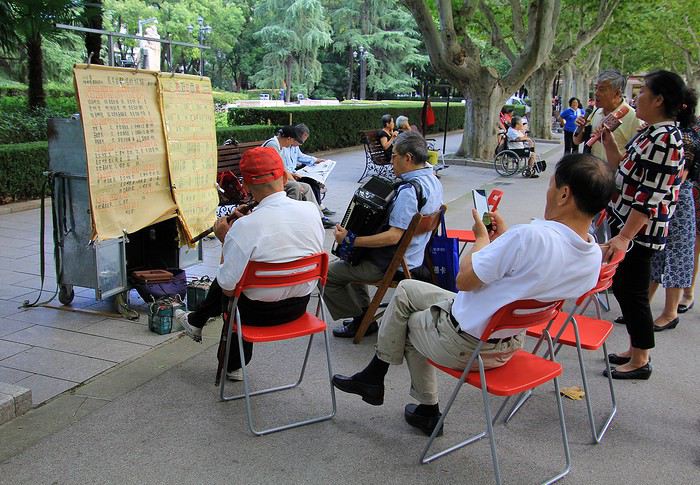
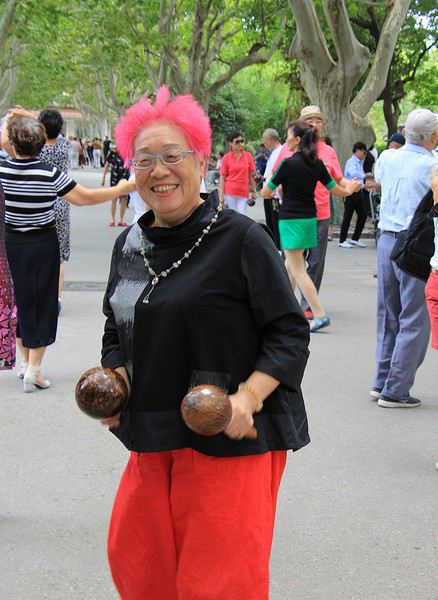
Further on, the atmosphere is more relaxed and melodic. People are playing music and dancing joyfully, like this woman with her colorful, original hairstyle, all smiles with maracas in hand. You almost want to clap along—her energy is so contagious!
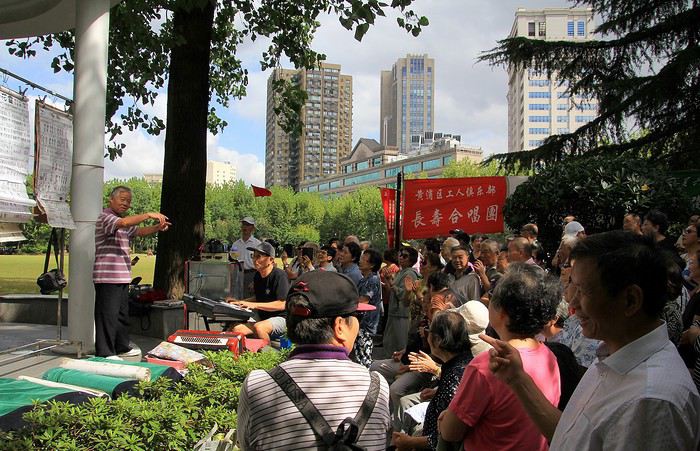
The mood is lighthearted among this group of retirees. Their choir alternates between patriotic hymns and lighter songs. Someone must have told them some French people were watching, because suddenly they start singing an old French tune: « Vive le vent, vive le vent d’hiver... » And the cheerful choir leader invites us to sing along—all together! The result was a fun cacophony: us in French, them in Chinese. But it was so charming!
These Chinese locals definitely passed on their good mood. It’s a joy to see all these retirees—you can imagine them leaving their small apartments to get some fresh air and meet up in the park for these morning activities. But let’s not kid ourselves: while they seem so happy and content with those big smiles, most of them probably didn’t have an easy life. Food shortages, draconian regulations, propaganda, the one-child policy—just to name a few! No, what many endured in their daily lives didn’t always give them reason to smile so brightly. But now, they’re making the most of it, and as I wrote earlier, it’s wonderful to see them like this.
Encouraged by these shared moments, I decide to keep going. Without hesitation, I join a Tai Chi session. I tried my best to follow the movements of my neighbors practicing this traditional exercise, but I’ll admit—it wasn’t easy!
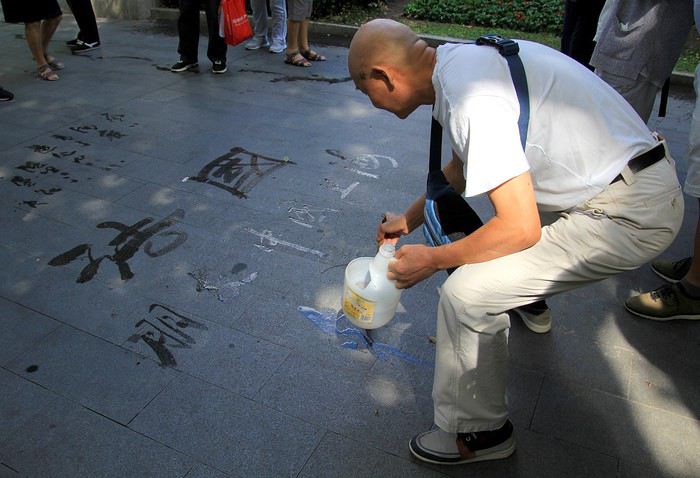
This artist, especially attentive, rewards us with a calligraphed phrase about France. A lover of Chinese calligraphy, he writes these sinograms in ancient characters directly on the ground. Is it writing or drawing? It’s hard to say—the result is so aesthetic. An ephemeral phrase, written in water that slowly fades as it dries, before disappearing entirely.
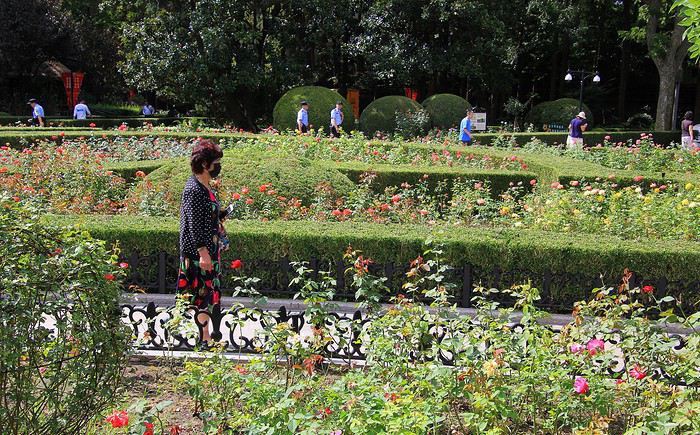
As we walk, we approach one of the park’s exits—so beautifully flowered. These flowerbeds and their blooms hint at the name of this charming place: Parc des Roses—and it’s even written in French!
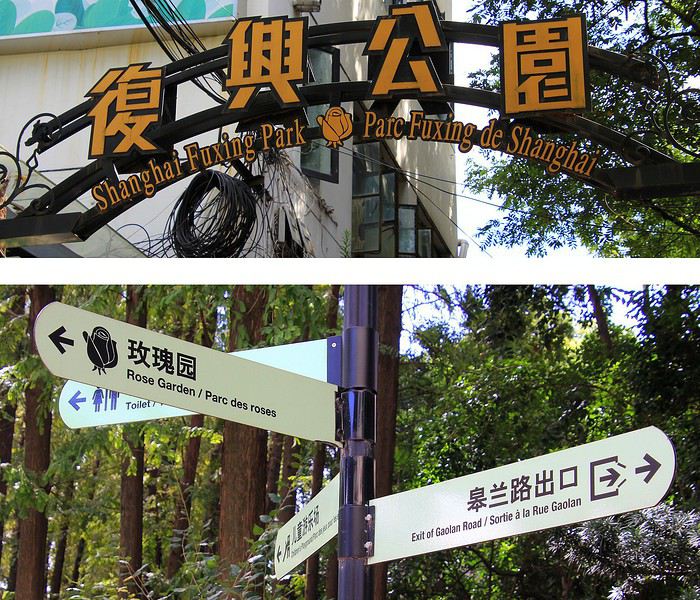
--
We’re now in the former French Concession of Shanghai, which explains the French inscriptions. The era of foreign concessions in Shanghai is an old story, dating back to the 1840s—a time when China opened its market to international trade. Several nations, including European ones, established trading posts in the city. There were British, American, Japanese, Russian, Italian, German, and French communities. This part of Shanghai was under French administration for a time, starting in 1846.
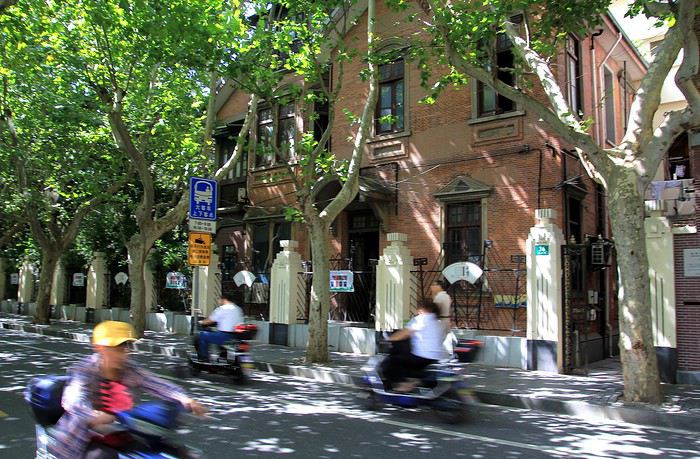
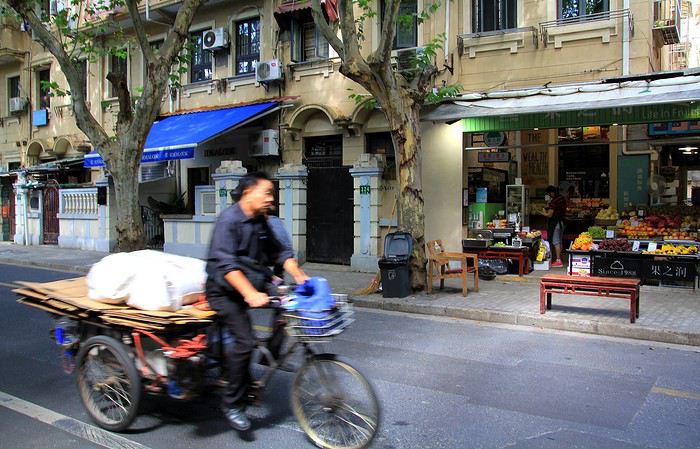
Some buildings in the area still bear witness to that time, like these ones, with bikes and scooters passing by. The architecture popular at the time blended European influences with the style of Shanghai’s elegant residences: stone arches above entrances, brick walls, and pleasant inner courtyards. Large homes often divided into several apartments today.
--
Traditional Chinese architecture shines in all its splendor at this tea house. With pagoda-style roofs—corners turned up toward the sky—refined colors and decorations, and a small corner tower on the right, this Huxinting Pavilion dates back to 1784. It was built in the middle of a pond, offering beautiful reflections. A truly charming spot where you can savor the subtle flavors of Oriental teas in the interior rooms.
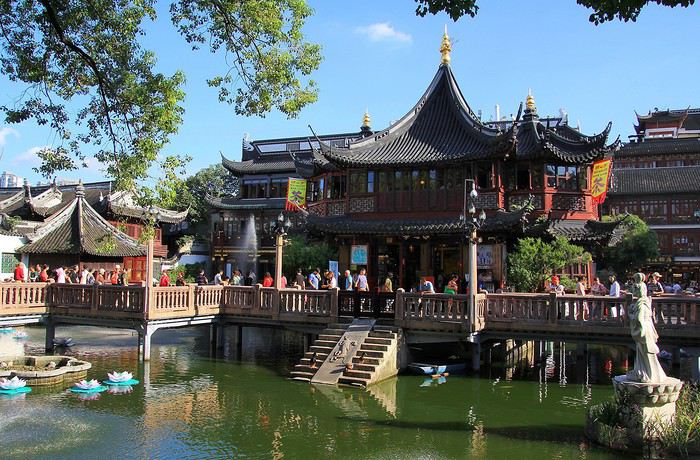
Just steps from this picturesque spot, don’t miss the Yuyuan Pavilions and Garden. The whole complex is stunning and gives a glimpse of imperial-era homes and parks from the Ming Dynasty.
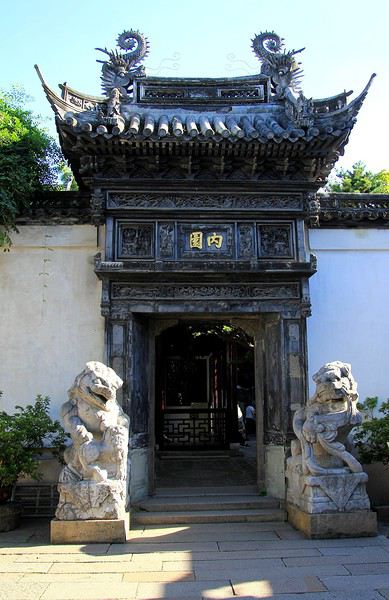
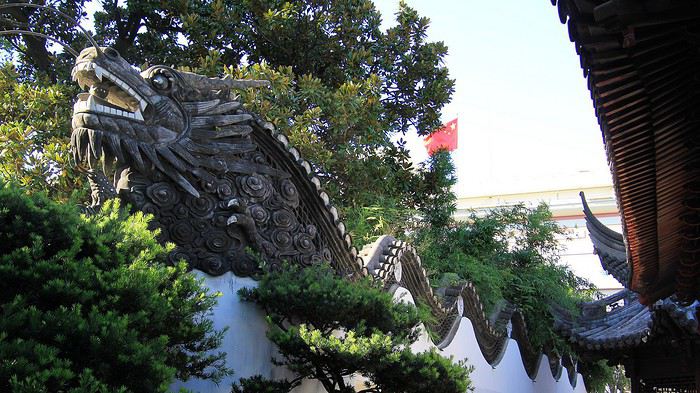
Pass through the entrance gate to enter this opulent property, well protected by a high surrounding wall. On one of them, a dragon sculpture sprawled at full length—about 7 meters—is impressive. The symbol represents power but also happiness.
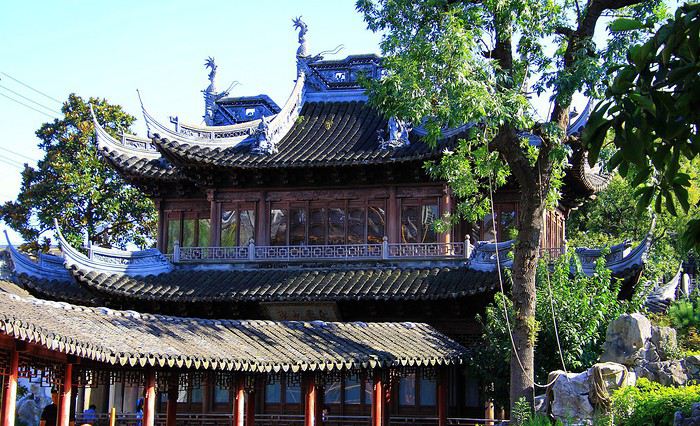
Created in 1577 by the Pan family, wealthy dignitaries of the time, the visit takes you from pavilions with poetic names like the Pavilion of Three Ears to the Pavilion of Spring’s Announcement. Charming!
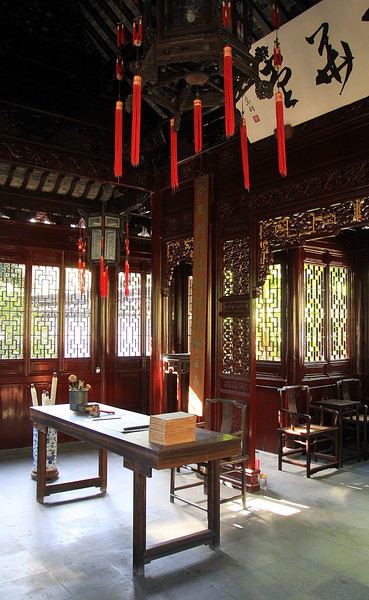
The interiors are decorated with woodwork from walls to ceilings, where beautiful Asian lanterns hang. But the real charm is outside. These shaded gardens, rustling with bamboo, are adorned with several ponds surrounded by impressive rock formations. A world that recreates (in miniature) the mountain and water landscapes of rural China.
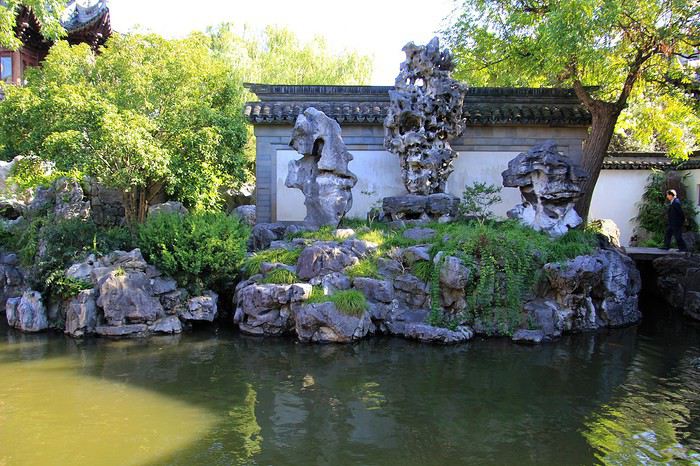
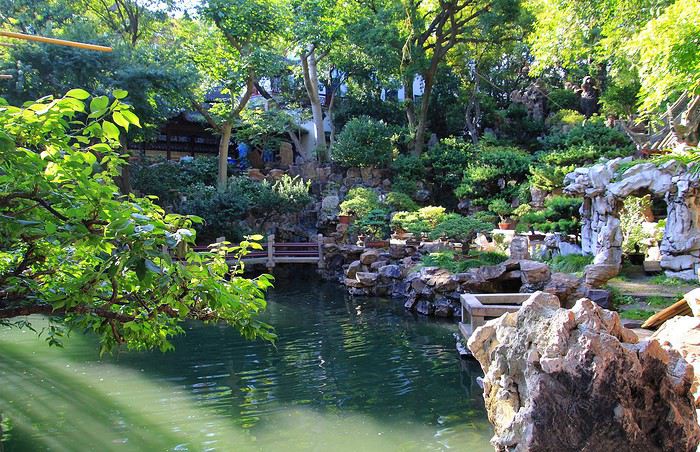
This historic Yuyuan Garden, in the heart of the city, took about 18 years to design and build (pavilions and gardens). Its current appearance is the result of a faithful renovation—much needed, because in 1942, during the so-called Opium War, British officers made it one of their residences. It was partly destroyed by bombings, and later, French troops ransacked it after an attack on their concession.
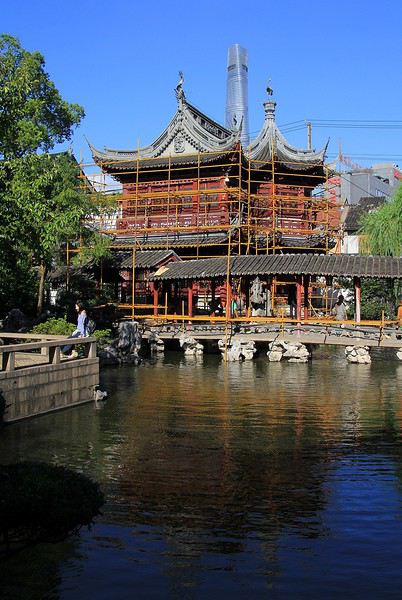
The site is still under construction—maintenance and renovation—with scaffolding as proof. The garden’s enclosure was set to close for work the day after our visit (for a few weeks, until the end of October 2019). That’s probably why crowds of visitors were rushing in, making the atmosphere a bit less peaceful than this beautiful architectural ensemble might suggest. For the photos, I had to be a bit clever, avoiding the crowds to give an impression of tranquility—this historic place deserves it.
--
To be continued in the next post...
This three-week trip to Namibia was a big first for us:
- Visiting a country in winter, for someone who starts feeling comfortable at 25°C (77°F).
- Camping, when we usually feel at home in a starred hotel.
- Sleeping on the roof of a car—what an idea... when a comfy bed is waiting just a bit further.
- Grocery shopping, cooking, doing the dishes... all the things we usually avoid to fully enjoy our vacation.
- Washing up when and how we can, when we can’t imagine going a day without a shower.
- Driving a big 4x4 on the left, with a manual transmission, when we usually opt for an automatic for more comfort.
Yep! You guessed it—we stepped way out of our comfort zone during this trip.
I had quite a few doubts while planning this adventure, but the more I read travel journals about Namibia, the more I wanted to go.
Personally, without this forum, I never would’ve dared to hit the Namibian roads in a 4x4. I was really anxious during the planning, so I want to thank everyone who contributed with their journals and forum discussions for helping me leave more peacefully.
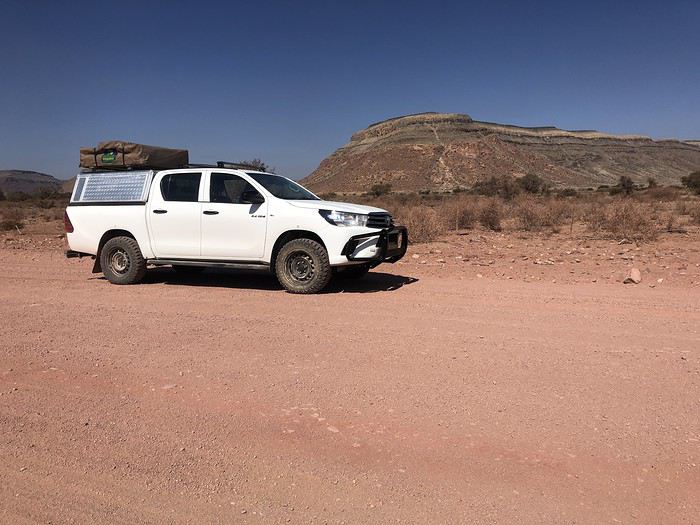
At first, I wasn’t even considering sleeping in a tent. But after my husband’s persuasion—and my own curiosity to experience what I’d read in those travel journals—I gave in. So off we went in a double-cab Hilux with a rooftop tent.
And of course, let’s talk about me—the big cold-weather wimp. One of the biggest pre-trip challenges was choosing a sleeping bag. After a while, sleeping bags had no more secrets for me: temperature ratings (comfort, limit, extreme), shapes (mummy, rectangular), fillings (synthetic, down), compression rate, and weight... all these factors were a real puzzle. In the end, to make sure I wouldn’t be put off camping in winter (Australian winter, mind you), I went for a sleeping bag with a comfort rating of -10°C. And just to be *extra* sure I wouldn’t get cold, I bought a liner (never knew what that was before) in Thermolite, which boosts the sleeping bag’s temperature by 11°C. There are liners that add up to 15°C, but let’s not exaggerate—we’re not heading to the North Pole! My husband, on the other hand, got a sleeping bag with a -5°C comfort rating and a silk liner.
Was it enough? You’ll find out soon. In the meantime, another big thank you to everyone who helped me make this choice with their advice and experience.
Over a year in advance, we planned a three-week itinerary for our first trip to Namibia—classic route, nothing too out there. We chose to do the circuit clockwise because we wanted to finish on a high note in Etosha and its wildlife. They say it’s like Noah’s Ark out there! And why not, the cherry on top... some big cats.
We used Tourmaline’s services to book our accommodations and the 4x4.
Here’s our planned itinerary with campsites and lodgings—yes, there are a few solid roofs in there; we didn’t want to push it too far.
Day 1: Windhoek – Windhoek Gardens Guesthouse Day 2: Kalahari Anib Campsite Day 3: Namibrand Family Hideout Day 4: Sesriem Camp Day 5: Sesriem Camp Day 6: Rostock Ritz Camp Day 7: Swakopmund - Sea Breeze Guesthouse Day 8: Swakopmund - Sea Breeze Guesthouse Day 9: Spitzkoppe Camp Tented Day 10: Brandberg White Lady Campsite Day 11: Grootberg Lodge Day 12: Opuwo Country Campsite Day 13: Epupa Camp Day 14: Hobatere Lodge Day 15: Etosha Olifantsrus Camp Day 16: Etosha Okaukuejo Camp Day 17: Etosha Halali Camp Day 18: Etosha Namutoni Camp Day 19: Cheetah Eco Lodge Day 20: Windhoek – Londiningi B&B
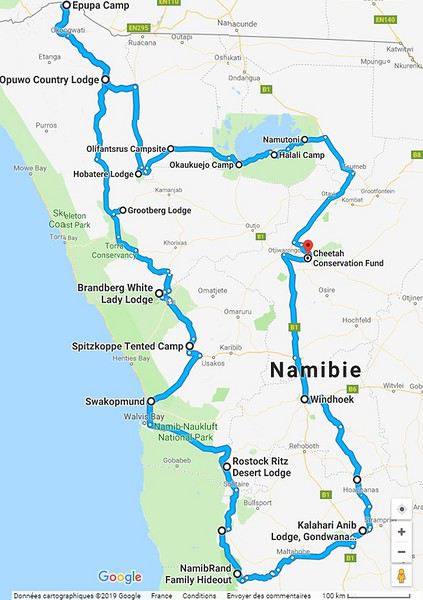
Alright! Are you ready to follow this adventure with us in our Hilux?
Yep! You guessed it—we stepped way out of our comfort zone during this trip.
I had quite a few doubts while planning this adventure, but the more I read travel journals about Namibia, the more I wanted to go.
Personally, without this forum, I never would’ve dared to hit the Namibian roads in a 4x4. I was really anxious during the planning, so I want to thank everyone who contributed with their journals and forum discussions for helping me leave more peacefully.
At first, I wasn’t even considering sleeping in a tent. But after my husband’s persuasion—and my own curiosity to experience what I’d read in those travel journals—I gave in. So off we went in a double-cab Hilux with a rooftop tent.
And of course, let’s talk about me—the big cold-weather wimp. One of the biggest pre-trip challenges was choosing a sleeping bag. After a while, sleeping bags had no more secrets for me: temperature ratings (comfort, limit, extreme), shapes (mummy, rectangular), fillings (synthetic, down), compression rate, and weight... all these factors were a real puzzle. In the end, to make sure I wouldn’t be put off camping in winter (Australian winter, mind you), I went for a sleeping bag with a comfort rating of -10°C. And just to be *extra* sure I wouldn’t get cold, I bought a liner (never knew what that was before) in Thermolite, which boosts the sleeping bag’s temperature by 11°C. There are liners that add up to 15°C, but let’s not exaggerate—we’re not heading to the North Pole! My husband, on the other hand, got a sleeping bag with a -5°C comfort rating and a silk liner.
Was it enough? You’ll find out soon. In the meantime, another big thank you to everyone who helped me make this choice with their advice and experience.
Over a year in advance, we planned a three-week itinerary for our first trip to Namibia—classic route, nothing too out there. We chose to do the circuit clockwise because we wanted to finish on a high note in Etosha and its wildlife. They say it’s like Noah’s Ark out there! And why not, the cherry on top... some big cats.
We used Tourmaline’s services to book our accommodations and the 4x4.
Here’s our planned itinerary with campsites and lodgings—yes, there are a few solid roofs in there; we didn’t want to push it too far.
Day 1: Windhoek – Windhoek Gardens Guesthouse Day 2: Kalahari Anib Campsite Day 3: Namibrand Family Hideout Day 4: Sesriem Camp Day 5: Sesriem Camp Day 6: Rostock Ritz Camp Day 7: Swakopmund - Sea Breeze Guesthouse Day 8: Swakopmund - Sea Breeze Guesthouse Day 9: Spitzkoppe Camp Tented Day 10: Brandberg White Lady Campsite Day 11: Grootberg Lodge Day 12: Opuwo Country Campsite Day 13: Epupa Camp Day 14: Hobatere Lodge Day 15: Etosha Olifantsrus Camp Day 16: Etosha Okaukuejo Camp Day 17: Etosha Halali Camp Day 18: Etosha Namutoni Camp Day 19: Cheetah Eco Lodge Day 20: Windhoek – Londiningi B&B
Alright! Are you ready to follow this adventure with us in our Hilux?
We watched the show "Rendez-vous en terre inconnue" in Guizhou Province, China. Those stunning landscapes really made us want to go trekking in the region.
Do you have any valuable tips to share to help us plan this trip?
I’m sharing my successful e-Visa application experience because I’ll admit—I really struggled with the website and gathering all the required documents.
https://www.thaiembassy.fr/fr/visa-rdv/les-types-de-visa-et-les-documents-necessaires/visa-touristique/
I recommend preparing everything in advance according to the instructions below and trying to complete the 60-day TR tourist e-Visa application in one go. You can save and return to it later, but I didn’t find the site very intuitive (it took a lot of time to figure out how it works, etc.). For the 60-day TR tourist e-Visa, it took me about 2 to 3 hours to prepare all the required documents and fill out the online form completely. (Next time, though, it’ll take me much less time since I’ll know how it works better, etc.).
I received my e-Visa 15 days later, but according to the embassy, the processing time can be much longer (the embassy recommends in section 4.3: “We advise you to submit your visa application between 2 and 3 months before your planned departure.”)
https://www.thaiembassy.fr/fr/visa-rdv/infos-generales/
⚠️ RECOMMENDATION: 4 months before applying (so 6 months before your trip if you apply 2 months ahead), make sure your bank statements show a minimum balance of 700 € for each of the 3 months prior to your application.
DOCUMENTS REQUIRED FOR THE 60-DAY TR SINGLE-ENTRY E-VISA IN THAILAND
A digital copy of your passport: Color copy of the double-page spread with your photo. It must show the entire machine-readable zone (the two lines of characters at the bottom) and all four corners of the page. Your passport must be valid for at least 6 months after your departure date. (Format: JPEG or PDF) A color ID photo: Official ID photo on a plain white background, max 3 MB in size, and taken within the last 6 months. If you use the same photo as the one printed in your passport (if it was issued 2 years ago, for example), the system will detect the inconsistency and reject your application. The background must be strictly white, with no shadows, no glasses, and your face must be fully visible. Proof of financial means: Official bank statements (checking and/or savings) for the last 3 months. They must clearly display your name and show a minimum balance of 700 € for each month (1,000 € is preferable), per person (even for couples). Bank statement format and date: Screenshots from mobile banking apps (without your name or the bank’s logo) are systematically rejected. You must provide the full official statement in PDF format, downloaded from your online banking. Additionally, the most recent statement must be less than 30 days old at the time of submission. Don’t forget to merge the 3 statements into a single PDF, as only one document can be uploaded per category. Entry and exit tickets: A reservation or confirmation of flight tickets showing your entry into and exit from Thailand. The document must include the PNR (Passenger Name Record: a 6-character booking code used as a reference by the airline) and/or the e-ticket number.
90-day rule: Your exit flight date must not exceed 90 days after your arrival in Thailand. If you have separate tickets: If you have two different tickets for entry and exit, merge them into a single document showing only the entry and exit from Thailand within 90 days (exclude other flights). For example, if you have a round-trip Paris-Bangkok ticket spaced 6 months apart but plan to stay in Indonesia after 60 or 90 days, only submit the inbound flight to Thailand from your first ticket (exclude the return flight that’s 6 months later) and the outbound flight from Thailand to Indonesia (without the flight out of Indonesia, which is likely separate). Merge the two PDFs into one.
Proof of residence in France (less than 3 months old): Mobile phone, landline, internet, or electricity bill in your name. This document must prove that you currently reside in the country from which you’re applying. (Format: PDF or JPEG)
Hotel reservation in your name: Covering the first few nights with your name on it, or an official invitation letter signed by your host along with a copy of their ID. (Format: PDF or JPEG)
⚠️ FOR COUPLES: The official confirmation of your first accommodation in Thailand (hotel, Airbnb) must clearly display the names of BOTH members of the couple, as it will need to be attached to each individual e-Visa application. The second name is essential because each visa applicant must provide proof of accommodation in their name. If your partner’s name doesn’t appear anywhere on the hotel document, their visa application may be blocked or rejected, even if you include a marriage certificate. Prepare the addresses of the first two hotels for the online form; Write down (on paper) the exact address of the first hotel and the next one, as the form also asks for the address of the second hotel (without requiring proof of reservation). Look up the name of the sub-district, district, and province of these establishments online. When applying for the e-Visa, you’ll need to enter the exact address and select the province, district... from dropdown menus. How to add your partner’s name to the hotel reservation?
Log in to your account (Agoda, Booking, etc.), go to your reservations, and look for the option to modify traveler details. You can often add the second person’s name or, in the main traveler name field, enter both names separated by a slash or comma. If you can’t modify it online, ask the hotel for an official reservation confirmation letter (“Confirmation Letter”) explicitly stating: “Room booked for and ”. Thai hotels are used to this process for visas and will send it to you quickly by email in PDF format.
How to merge PDF files? To combine your multiple bank statements or flight tickets in the correct order into a single PDF, you can use a free and intuitive online tool like iLovePDF or Smallpdf. No software to download—everything is done online.
PS: I’ve shared the steps I followed to get my e-Visa. I put them together by comparing recommendations from several AIs and the official e-Visa website. ID photo: I had 6 ID photos taken in an automatic photo booth (found in shopping malls). I cut one out and scanned it in color with a regular scanner. Bank statements: I downloaded the last 3 official monthly bank statements in PDF format and merged them into one. However, 3 years ago, a friend told me he didn’t submit his statements but instead provided a document from his bank (requested from his banker, with stamps, the bank’s logo, and the banker’s signature) clearly stating he had the required funds. I don’t know if this option is still available, but I’m mentioning it. File names: For all files (PDF, JPEG) attached to my e-Visa application, I used my name followed by a description of the document (e.g., “Name photo”).
We just got back from a nearly 3-week trip to Costa Rica in March. For the occasion, we used EVANEOS to plan our trip based on our preferences.
After some setbacks with ADOBE RENT-A-CAR—they refused the Visa Premier card and forced us to pay for extra insurance (which is usually covered by the Visa Premier)—we finally set off to explore the country.
Observation: Apart from nature, wildlife, and flora, there isn’t much else to see, but it’s so beautiful! Some people criticize the country as insignificant, with bland food and unwelcoming locals. I think those people didn’t really explore—maybe they stayed in their hotel near the beach (UVITA?) without venturing out. Otherwise, there wouldn’t be so many Europeans living in Costa Rica who don’t even consider going back to their home countries.
For our part, we found Costa Ricans very kind and welcoming. It’s often said they’re thieves, but personally, we left a small suitcase in a restaurant. When we returned after driving 20 km round trip, the staff were trying to find our phone number to contact us. I think it’s like anywhere—even in France, I’d tell tourists not to leave anything in their car to avoid… well, you know.
Food: Traditional dishes, fish plates (tilapia was excellent), and especially ceviche (around 15 € per person)—really good—and lobster (around 30 to 35 € per person), all served with fruit batidos (around 3 € per person).
Car: We had a 2-wheel-drive vehicle, which kept us from visiting some sites that require a 4x4, like Boruca, the town of artisan masks. Some lodges are also only accessible via rough, rocky trails that are tough to navigate in a regular car. Don’t hesitate to insist on a 4x4.
Keep in mind that driving fast in Costa Rica isn’t possible. Some roads are in poor condition, and there are often unmarked speed bumps that are much worse than the ones in France. You’ll average about 50 to 60 km/h on a leg of the trip.
I also recommend bringing a road map to cross-check the routes suggested by Waze or Google Maps. Sometimes, these apps will send you down completely wrecked roads to save time! A paper map will help you verify the road type. It’s better to drive an extra 20 km than to get stuck on a rocky path.
- San José to Barra de Pacuare (much less crowded than Tortuguero). Sea turtles are still rare this time of year. Via the canals, we spotted howler monkeys, sloths, and birds, and on land, we saw venomous spiders, poisonous frogs, and a leatherback turtle conservation site.
Explored a primary tropical forest with its many species of flora and fauna (monkeys, snakes, sloths, toucans, raccoons, etc.).
- Barra de Pacuare to Cahuita: Explored Cahuita National Park (howler monkeys, capuchin monkeys, raccoons, sloths, blue crabs, leaf-cutter ants, etc.) and walked along the trail by Puerto Viejo’s beach.
- Cahuita to Bambú: Visited the Bribri tribe and their customs. This isn’t a tourist trap—it’s a deep immersion into a community living almost self-sufficiently. To get there, you take a motorized canoe for over an hour. But be warned:
1 - The restroom cleanliness leaves a lot to be desired
2 - There’s no hot water
3 - A waterfall hike is offered. The first two-thirds are fine, but the last third is very dangerous, especially if it’s rained, even with sneakers. You need sturdy shoes. Our guide turned back halfway…
- Bambú to Sarapiquí:
- La Fortuna: Explored the Mistico Park tropical forest. A 3+ km trail lets you discover animals and lush vegetation. Sixteen suspension bridges, some up to 45 meters high, offer stunning views of the canopy.
Walked around Arenal Volcano: Big disappointment for seeing lava flows. After 2 km, a viewpoint shows vegetation that’s taken over—only a few volcanic rocks hint at the 1968 eruption.
- La Fortuna to Carara: Spotted crocodiles at the Tarcoles Bridge.
- Carara to Uvita: Relaxed. Uvita is a small tourist town with nothing particularly original, but it’s the place to try CEVICHE, a typical dish of raw fish “cooked” in lime juice. Delicious! We recommend Mestizo for very affordable prices.
- Osa to Corcovado National Park: This park is gorgeous. You’ll see all four monkey species, tapirs, scarlet macaws, etc.
From Drake Bay, it takes about 1 hour 15 to 1 hour 30 to cross to the park. After navigating the mangroves, the boat heads into open sea until reaching the beach, where you’ll wade ashore (water up to your thighs—bring shoes for the slippery rocks).
National Geographic called the park a "jewel of humanity" that must be preserved at all costs due to its incredible biodiversity. The park represents 3% of the world’s biodiversity. You can observe countless monkeys (all four species are present), crocodiles, tapirs, and scarlet macaws.
Our guided hike with a French-speaking guide lasted 4 hours before returning by boat to the lodge.
WARNING: There’s strict control at the park entrance:
- No plastic bottles
- No knives
- No plastic items
- No bare feet. Closed-toe shoes are required (in addition to a pair for the boat)
- Osa to Zona de los Santos: This is the coffee region and home to the quetzal, a stunning but hard-to-spot bird that’s also Guatemala’s symbol. Paraíso Quetzal Lodge has a platform with a spotting scope to try to see the bird in the forest. CAUTION: This beautiful lodge is at 2,650 meters altitude. The rooms have incredible forest views, but it’s VERY VERY cold!
- Zona de los Santos to San José: Detour to Irazú Volcano. WARNING: Buy tickets before arriving. The staff kindly bought them for us via their phone. Small disappointment: The crater lake hasn’t existed for years! The ads are misleading about this.
- San José: A city we found uninteresting.
Hi, I'm looking for someone who could teach me Kabyle, thanks.
I took a few days to get some fresh air outside the Schengen-NATO prison. Between March 18, 2026, and March 25, 2026, as shown by the passport stamps:
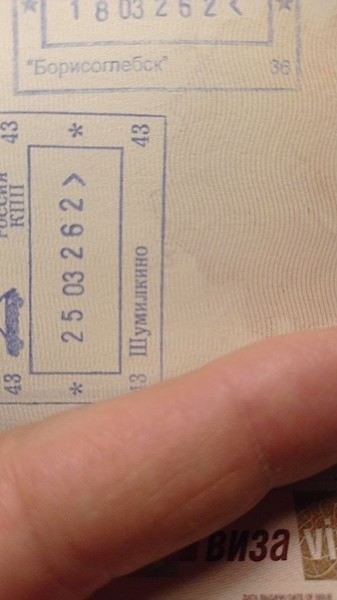
Borisoglebsk is the Russian border checkpoint after Kirkenes, on the road to Murmansk.
Kirkenes is a tiny town with a correspondingly small airport. Nothing has changed there: the minibuses to Murmansk wait on the right as you exit the airport. They’re synchronized with the two daily flights from Oslo—the SAS around 11:00 AM and Norwegian around 11:30 AM. They stop in Kirkenes at the corner of the Scandic for an hour, where other passengers can board, then head straight to the nearby border.
This is the least hassle Frontex/Schengen border. The Norwegian agent quickly scans your passport, and that’s it. No customs, since Norway is Schengen but not in the EU. On the Russian side, there’s a passport check and a quick customs inspection. All in all, crossing both the Norwegian and Russian checkpoints takes about 15 minutes.
A paper visa is required; e-visas aren’t accepted.
Two companies run the route: Avto Ekspress and Borodin: https://ae51.ru/routes/kirkenes-murmansk/ https://borodinbus.com/
The one-way fare is 5,500 ₽. You can either buy it online in rubles with a MIR card or make a formal reservation and pay in NOK cash to the driver. I took Borodin, and the price in NOK was much more expensive than in ₽.
=========================
On March 25, I left from Pskov via the Estonian border post at Luhaama. I spent three days in Murmansk, flew to St. Petersburg (SPB), stayed there for two days, then took an evening train to Pskov.
Since the end of February—and reportedly until the end of May—the Estonians have restricted the opening hours of the two border crossings near Pskov: Koidula (Pechory on the Russian side) and Luhaama (Izborsk on the Russian side). They’re closed at night between 7:00 PM and 7:00 AM. Right now, there’s a bus from Pskov at 7:00 AM to the border. It drops you off at the end of the road where truckers—many Kazakh and Serbian—are parked on the side. You finish the rest on foot to the barrier, where there’s a quick initial check for Ukrainian stamps in passports. Then you walk to the customs building, followed by passport control at the kiosk for motorists. After that, it’s a 500-meter walk to the Estonian checkpoint. At the moment, things seem calmer. Passport control is quick. The usual silly questions in English: "Where were you? Where are you going?" I just gave my most clueless smile: "Sorry, I don’t understand." Yeah, right—I don’t speak English, especially not at an Estonian border with a French passport. If they’re in a mood, though... A very quick bag inspection. Once you exit the Estonian post, walk to the bus stop sign by the road where another coach takes you to Riga.
The catch: in my case, last Wednesday, there were two passengers (Russians) with old Ukrainian stamps in their passports. The bus from the Estonian post to Riga was supposed to leave around 9:30 AM. We ended up leaving around noon after the two were grilled by the FSB. Since it was a weekday outside of holidays, the bus was half-empty. The fuller the bus and the more people with Ukrainian stamps, the worse the nightmare. Don’t book a same-day flight from Riga. I had a flight at 6:00 PM, so it worked out.
=============
The Kirkenes-Murmansk route is still clearly the easiest and fastest. But it’s not the most convenient since it’s way up north.
Next, I’d say the Gdansk-Kaliningrad route in the middle of the week. Avoid weekends and holiday departures/returns.
Avoid the Narva-Ivangorod route during Christmas, Easter, May 9, and *all* summer.
==============
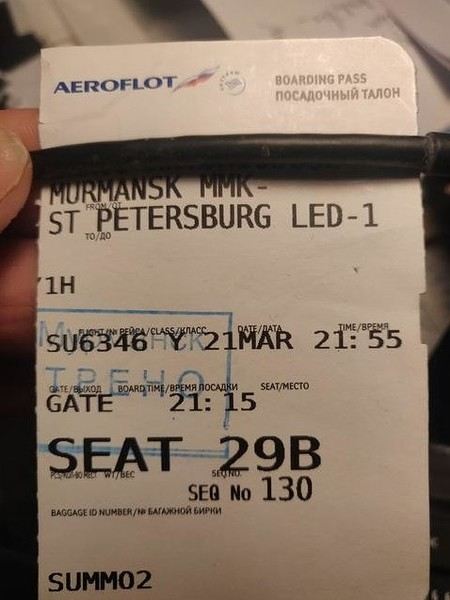
About flights from Murmansk to St. Petersburg: prices are good. I bought my ticket the day before departure on Rossiya for 7,500 ₽, including 10 kg of luggage + a handbag.
It’s the tail end of the northern lights season, and there were still crowds of Chinese tourists.
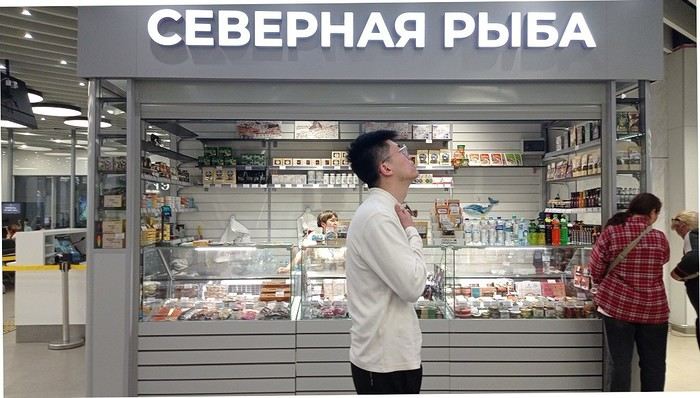
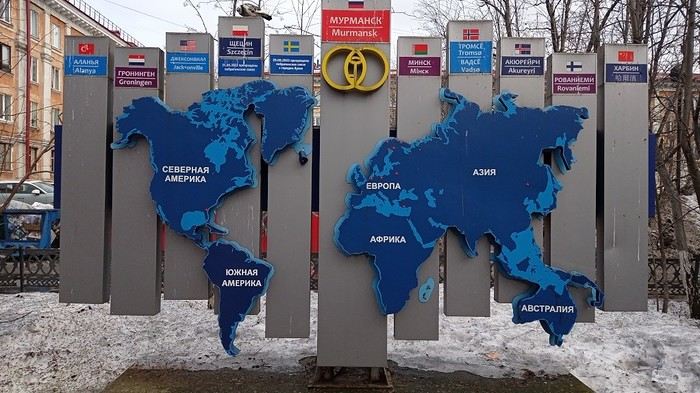
By the way, Murmansk is twinned with Harbin:
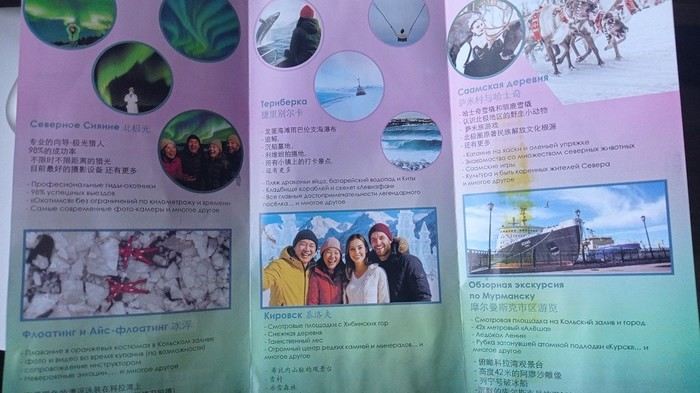
Chinese tourists are the largest foreign group, followed by Indians, then a mix of others from the Far East, Turks, Arabs, etc. Brochures are bilingual—Russian and Chinese:
============================
But let’s talk practical stuff. --
My domestic SIM card was restricted for SMS and internet for 24 hours. After that, if you want to keep using SMS, don’t turn off your phone—restarting triggers another 24-hour purgatory.
My Russian SIM cards (Megafon, MTS, Beeline) were activated as soon as I logged into their respective apps with my credentials.
Internet --
Telegram is heavily slowed down by authorities. To use it, you need to connect through proxy servers, which you load into the latest version of the app. Traffic is then rerouted internally within Telegram to servers outside Russia (Germany, Poland, Sweden, etc.). You can find these proxies on various channels. One is ChatVPN—check their website too.
For general internet use, like browsing the web, VPNs that work right now use the VLESS protocol. You can find several on Telegram by searching "VPN." A few free days, then payment in rubles or crypto.
Rozkomnadzor’s team are experts at this, so things can change. It’s a constant cat-and-mouse game.
Pskov is a special case. The city is near Estonia and has a large military base. Depending on NATO drone swarms launched from the Baltics, Wi-Fi can be completely suspended except for the most essential mobile apps. The drone swarms use the 4G network, and the powerful electronic jamming and drone suppression systems cause periods without Wi-Fi—including in hotels. Wired connections aren’t affected.
Borisoglebsk is the Russian border checkpoint after Kirkenes, on the road to Murmansk.
Kirkenes is a tiny town with a correspondingly small airport. Nothing has changed there: the minibuses to Murmansk wait on the right as you exit the airport. They’re synchronized with the two daily flights from Oslo—the SAS around 11:00 AM and Norwegian around 11:30 AM. They stop in Kirkenes at the corner of the Scandic for an hour, where other passengers can board, then head straight to the nearby border.
This is the least hassle Frontex/Schengen border. The Norwegian agent quickly scans your passport, and that’s it. No customs, since Norway is Schengen but not in the EU. On the Russian side, there’s a passport check and a quick customs inspection. All in all, crossing both the Norwegian and Russian checkpoints takes about 15 minutes.
A paper visa is required; e-visas aren’t accepted.
Two companies run the route: Avto Ekspress and Borodin: https://ae51.ru/routes/kirkenes-murmansk/ https://borodinbus.com/
The one-way fare is 5,500 ₽. You can either buy it online in rubles with a MIR card or make a formal reservation and pay in NOK cash to the driver. I took Borodin, and the price in NOK was much more expensive than in ₽.
=========================
On March 25, I left from Pskov via the Estonian border post at Luhaama. I spent three days in Murmansk, flew to St. Petersburg (SPB), stayed there for two days, then took an evening train to Pskov.
Since the end of February—and reportedly until the end of May—the Estonians have restricted the opening hours of the two border crossings near Pskov: Koidula (Pechory on the Russian side) and Luhaama (Izborsk on the Russian side). They’re closed at night between 7:00 PM and 7:00 AM. Right now, there’s a bus from Pskov at 7:00 AM to the border. It drops you off at the end of the road where truckers—many Kazakh and Serbian—are parked on the side. You finish the rest on foot to the barrier, where there’s a quick initial check for Ukrainian stamps in passports. Then you walk to the customs building, followed by passport control at the kiosk for motorists. After that, it’s a 500-meter walk to the Estonian checkpoint. At the moment, things seem calmer. Passport control is quick. The usual silly questions in English: "Where were you? Where are you going?" I just gave my most clueless smile: "Sorry, I don’t understand." Yeah, right—I don’t speak English, especially not at an Estonian border with a French passport. If they’re in a mood, though... A very quick bag inspection. Once you exit the Estonian post, walk to the bus stop sign by the road where another coach takes you to Riga.
The catch: in my case, last Wednesday, there were two passengers (Russians) with old Ukrainian stamps in their passports. The bus from the Estonian post to Riga was supposed to leave around 9:30 AM. We ended up leaving around noon after the two were grilled by the FSB. Since it was a weekday outside of holidays, the bus was half-empty. The fuller the bus and the more people with Ukrainian stamps, the worse the nightmare. Don’t book a same-day flight from Riga. I had a flight at 6:00 PM, so it worked out.
=============
The Kirkenes-Murmansk route is still clearly the easiest and fastest. But it’s not the most convenient since it’s way up north.
Next, I’d say the Gdansk-Kaliningrad route in the middle of the week. Avoid weekends and holiday departures/returns.
Avoid the Narva-Ivangorod route during Christmas, Easter, May 9, and *all* summer.
==============
About flights from Murmansk to St. Petersburg: prices are good. I bought my ticket the day before departure on Rossiya for 7,500 ₽, including 10 kg of luggage + a handbag.
It’s the tail end of the northern lights season, and there were still crowds of Chinese tourists.
By the way, Murmansk is twinned with Harbin:
Chinese tourists are the largest foreign group, followed by Indians, then a mix of others from the Far East, Turks, Arabs, etc. Brochures are bilingual—Russian and Chinese:
============================
But let’s talk practical stuff. --
My domestic SIM card was restricted for SMS and internet for 24 hours. After that, if you want to keep using SMS, don’t turn off your phone—restarting triggers another 24-hour purgatory.
My Russian SIM cards (Megafon, MTS, Beeline) were activated as soon as I logged into their respective apps with my credentials.
Internet --
Telegram is heavily slowed down by authorities. To use it, you need to connect through proxy servers, which you load into the latest version of the app. Traffic is then rerouted internally within Telegram to servers outside Russia (Germany, Poland, Sweden, etc.). You can find these proxies on various channels. One is ChatVPN—check their website too.
For general internet use, like browsing the web, VPNs that work right now use the VLESS protocol. You can find several on Telegram by searching "VPN." A few free days, then payment in rubles or crypto.
Rozkomnadzor’s team are experts at this, so things can change. It’s a constant cat-and-mouse game.
Pskov is a special case. The city is near Estonia and has a large military base. Depending on NATO drone swarms launched from the Baltics, Wi-Fi can be completely suspended except for the most essential mobile apps. The drone swarms use the 4G network, and the powerful electronic jamming and drone suppression systems cause periods without Wi-Fi—including in hotels. Wired connections aren’t affected.
Hi there,
I just booked a round-trip flight from Brussels to Da Nang on eDreams, with a layover in Hong Kong on Cathay Pacific. Does anyone know the check-in procedure for these flights?
1) For flight CX294 BXL-HKG, I’ll need to check in on the Cathay Pacific website,
2) For the next flight CX5552 HKG-DAD, what should I do? I only have a 2h25 layover. Will I need to collect my luggage, go through immigration, and then recheck in at the airport counter, etc.?
I’m pretty worried about this layover—I thought check-in could be done on the airline’s website and that my luggage would be transferred automatically during the layover, like with most other airlines...
Thanks so much for any help from those who’ve been in this situation!
Hi,
I’m planning a trip to Australia—Paris to Melbourne.
I’m flying with Etihad and have a 1-hour connection in Abu Dhabi.
Does that seem doable to you?
Thanks for your feedback and experiences!
Hi there,
I can’t seem to complete the payment for my trip on the IRCTC (Indian Railways) site. No matter which payment method I choose, my Visa card isn’t accepted. Has anyone here managed to do it, and if so, could you share the method you used? Thanks in advance! Charlie
I can’t seem to complete the payment for my trip on the IRCTC (Indian Railways) site. No matter which payment method I choose, my Visa card isn’t accepted. Has anyone here managed to do it, and if so, could you share the method you used? Thanks in advance! Charlie
Hi everyone,
In this age of zero-commission cards and fee-free accounts, I’m curious why some travelers still prefer to set off with a wallet stuffed with bills and exchange money on the spot.
I get it for those whose income comes from undeclared activities, but what about everyone else?
Between the risk of theft, scams at exchange counters, and fees that often end up being higher, I’m really puzzled.
The last time I traveled with a wad of cash was because I had to pay for accommodation in cash only, the local currency was the dollar (easy to exchange at a very low cost), and I was still paying some fees.
I’m still wondering about my next trip to Argentina because the situation there is very specific, but otherwise?
Is it an allergy to modern payment methods?
A budget so tight that an extra 20 € (the fees some local banks charge for withdrawals) on a 2000 € budget would be impossible to manage?
Thanks for shedding some light on this!