Discussions similar to: logiciel montage photo utilisez vous
FR

51 similar discussions in English

Time-Lapse Video of My Road Trip in the Western USA – November 2013 & Travel Journal
I’ve never done a travel journal on VF before... so I’m giving it a go this year 😉. Just to share a bit of my 3-week trip around the West.

Since I couldn’t find anyone to share the trip with this year, I decided to go solo for 3 weeks at the last minute. So, it wasn’t a super organized or original trip—flight tickets booked last-minute, a loosely planned itinerary—but it was a choice I made.

I wanted to book zero hotels and just drive wherever I felt like. No set hikes or specific goals. Just a classic route through places I already knew for the most part, taking the time to soak in the landscapes. So, don’t expect a story about epic hikes leading to caves or hidden arches in unusual spots. It was more like a return to the roots of my first trip, with one twist: I wanted to explore some areas by mountain bike. Just to see things a little differently.

First up, instead of photos, I’ll share a little time-lapse I made during the trip.

Thursday, October 31: Left Nice early in the morning for Phoenix via London.

The trip was a bit long because I had to wait 5.5 hours in London. My flight ticket was booked kinda late, so I didn’t have much choice.

And then it hit me—when you’re prepping for a trip, you always think you’ll forget something. It was in London that I realized I’d left my driver’s license on my living room shelf. I searched everywhere, but nope, I didn’t bring it.🤪

Luckily, I had an international permit, but the rental contract clearly stated that both licenses had to be presented.

I called a friend to ask her to overnight it to my first hotel, crossing my fingers that the mail wouldn’t take two weeks to arrive.

The flight with British Airways went pretty well. Comfortable enough to watch two movies, eat, take a little nap, and boom—I was in Phoenix.

Around 8 PM local time, I got to the Alamo car rental agency, and surprise—they didn’t care about my license at all. They glanced at the international permit, told me to bring the other one when I got it (basically, they didn’t give a damn), and handed me my car! Woohoo! 😛


I headed to my hotel (the only one I’d booked for my first night), explained to the front desk that my license should arrive by mail so they’d be in the loop, and crashed for a well-deserved first night in the U.S.

Friday, November 1 (And yes! It was a holiday in France, which would complicate my mail situation later.)

I woke up super early with my first goal: find a decent mountain bike at a good price but sturdy enough to handle some national park trails.

As I mentioned earlier, I decided to switch things up this year and explore some mountain bike trails—or just ride whenever I got the chance 😉.

I checked two Walmarts before finally finding a solid bike for under $150. Some might wonder why I bought one—well, the reason’s simple. Renting a bike costs between $40 and $70 a day. My trip lasted 22 days. QED (that’s "quod erat demonstrandum" for those who didn’t get it).

I bought the bike, which fit in my Jeep Compass by folding down the back seats (not super convenient, but it worked).


Off I went on my first adventures.

I decided to head to Apache Junction.

First stop: the Apache Trail at Goldfield Ghost Town. Pretty cute, though super touristy. Some classic Western decor, a little chapel overlooking everything, a museum, a mine, a small Disneyland-style train, souvenir shops, and places to grab a snack. Nothing mind-blowing, but still a fun little visit—especially if you’ve got kids.


I got lucky and explored the ghost town with two school buses—about a hundred excited kids. Total chaos for a ghost town, but hilarious to watch from a distance 😎.

A little further down the Apache Trail, there’s Lost Dutchman State Park. I didn’t linger too long because my goal was to reach the lakes, and after my Walmart adventure and some driving, it was already almost 1 PM. I munched on a bag of chips and hit the road (lots of 20–25 mph speed limits).

I spotted N 1st Water Road along the way, planning to come back in a few days.

My plan to get to the lakes ASAP got derailed when I found a parking lot with a horse trail right in the middle of the saguaros.

I asked a ranger in the lot if I could ride the trail on my mountain bike. He said it’d probably be tough but gave me the green light.

Off I went in my padded shorts and helmet. First bike ride through the cacti with my trusty travel companion (my bike, obviously).


I started off super excited on what seemed like an easy trail, but I quickly realized horse trails don’t account for some key biking challenges 😎—like climbing rocks isn’t exactly a breeze on a mountain bike 😛. No biggie, I carried the bike a few times but got to see my first saguaros up close! A pretty cool way to explore—I don’t regret buying the bike at all!

I got back on the road after drinking 1.5 liters of water (even in November, the sun’s no joke) and headed toward Canyon Lake. With vibes like Lake Powell, I was blown away by the scenery and decided to hang out a bit—just to "soak it in" and enjoy the quiet to end my day. I didn’t see more of the Apache Trail because night falls fast, and for my first day, I figured that was plenty.


I’d decided not to stress about seeing everything at all costs since I’ve traveled a lot in the U.S. and plan to keep coming back. Whatever I missed, I’d catch next time—but I wanted to fully enjoy a few landscapes.

I drove back to Phoenix, grabbed a good burger, and spent the evening in my hotel room planning the next day. Originally, I was only supposed to stay one night in Phoenix, but with my license still MIA, I changed my plans. In the end, I was solo, no reservations anywhere, so I’d just take it day by day!

Saturday, November 2:

I decided to wake up early and head to Tucson for the day. The drive from Phoenix was pretty easy. About 2 hours later, I was at the entrance of Saguaro National Park.

And guess what? There was a little trail perfect for mountain biking. I parked my Jeep at the park entrance and hopped on my bike. I ended up biking the whole park from start to finish—about 20 kilometers, with a paved main road and a gorgeous central trail right through the saguaros! Stunning!


Even being careful, I still got a few cactus spines in my left arm from brushing too close (it stings!). Not easy to remove, so I’d advise anyone with the same idea to be more careful than I was. You’ll figure it out fast! 😉

I spent most of the day in this amazing park—it’s totally worth the detour. It feels like hundreds of chimneys all lined up at equal distances. A unique landscape you’ve gotta see.

Next, I headed to Tucson to check out the airplane boneyard. I’d seen it in a movie years ago and always wanted to see it for myself. Mission accomplished! It was pretty intense, but unfortunately, it didn’t seem possible to get to the most interesting plane alignments. There’s a museum with different types of planes and a guided tour. I settled for peeking through the fences at the planes guarded by military patrols.


I left around 6 PM and got back to Phoenix around 7:30–8 PM, super happy with my day of biking through the cacti!

Sunday, November 3:

Morning by the pool, lounging around—pure bliss. Around 11 AM, I headed to the Premium Outlets. Feeling pretty pleased with myself, I bought 5 pairs of Levi’s for the price of one in France. Just for that, I knew coming to the U.S. was worth it! After that, nothing super exciting—except a cotton field south of Phoenix that I couldn’t stop admiring for a good hour.


I drove around the city—pretty dead on a Sunday—and headed back to the Apache Trail to tackle N 1st Water Road, which I’d spotted two days earlier. A really fun trail to bike if you’ve got a mountain bike 😉. It gives access to several hikes and offers some great scenery. Highly recommend it.


Open
Collaborative travel journal for lovers of the American West!
Hi everyone!

So, I’m putting into action an idea I had two years ago... I’m inviting anyone who’s interested to help build a beautiful collaborative project—a shared travel journal!!!

The concept: one post =

a photo you’ve taken in the American West that means something to you and your thoughts on that photo or about it: where and when it was taken, the story behind it, why it’s special to you...

Grab your pens!!!! (And I hope this doesn’t flop, but if it does, at least I’ll have tried!!!)

And I’ll kick things off in the next post!
Open
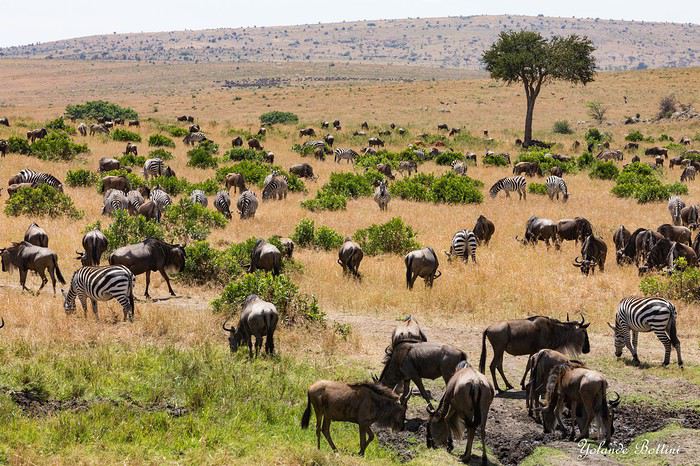
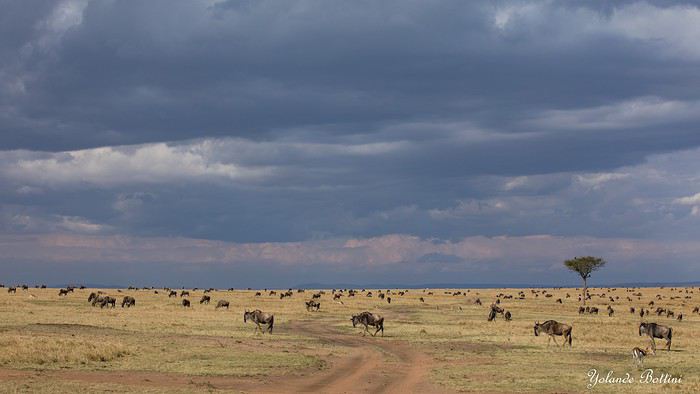
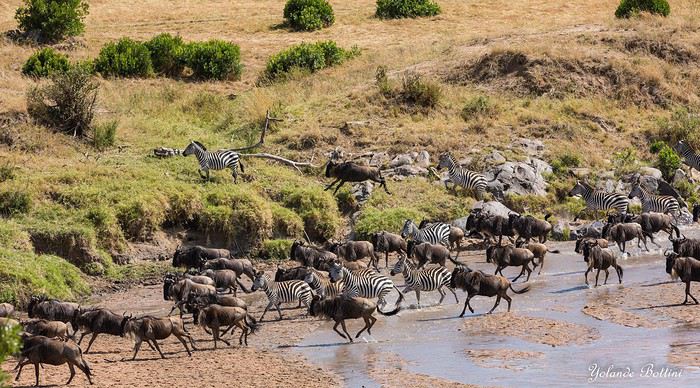
Happiness Settles in the Heart of the Maasai Mara
(October 2018).

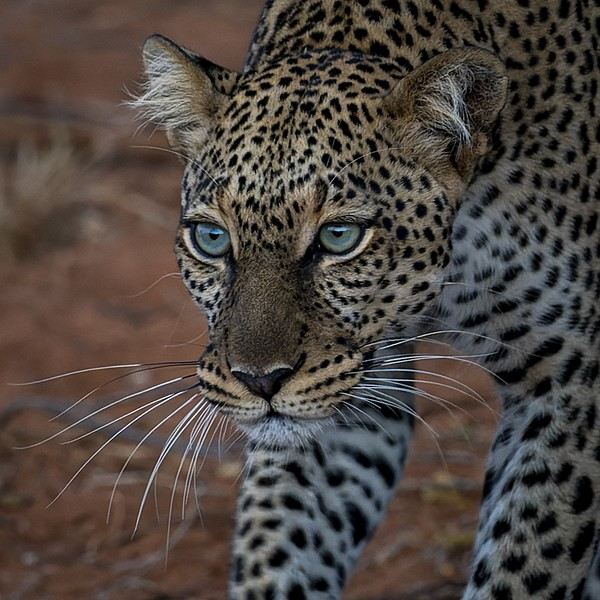
This account of a short stay in Kenya was originally meant for our friends and family, but to pass the time—for both us and you—and to add some content to the increasingly quiet columns of Voyage Forum during these weeks of confinement, when travelers can only journey in their minds, we decided to share the 25 pages of my ramblings, illustrated with Yolande’s photos, from an extraordinary stay in the Maasai Mara National Reserve. We waited until the two previous discussions on this same topic, filled with stunning photos and started by Régis and then Claire—sometimes in agreement, sometimes differing but always full of insights—had quieted down a bit before jumping in. Well, we’ll give it a try.

Let’s clarify: one of us claims to be a beginner photographer, and the other is just an unrepentant dreamer and modest writer. We often pursued our passions separately—Yolande with her mentor and me with an incomparable tracker—so sometimes the photos don’t quite match the text, or vice versa.

We hope you enjoy reading this lengthy post, which is longer than usual in VF’s sections (except, of course, for Mr. Voyajou). A thousand apologies for straying off the beaten path.

Alright, here we go!


Open
Converting a heavy-duty bus/coach/truck into a motorhome
I'm currently converting a DAF/HEULIEZ MB205 bus.

Cheaper and more spacious than a regular vehicle, the paperwork (in France) isn't too difficult for approval.

I'm ready to help anyone who wants to tackle this kind of project. Those who know, help those who want to....
Open
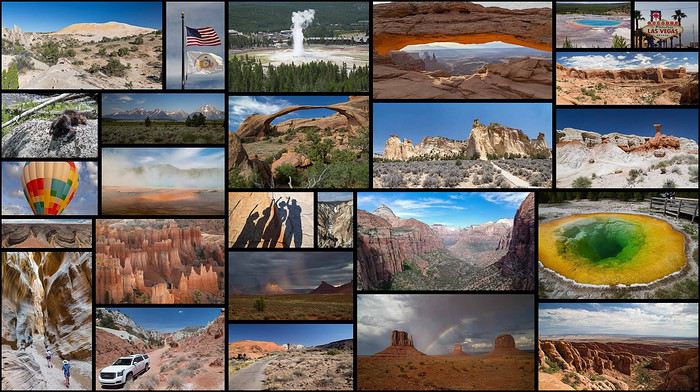
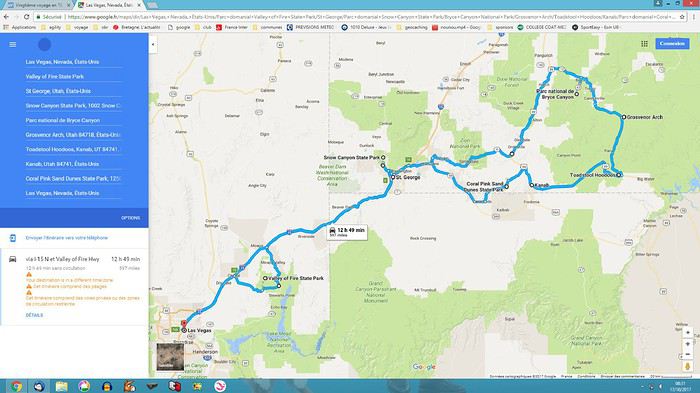
USA 2018 - Las Vegas, St George, Bryce, Kanab, Yellowstone, Moab: SUV + RV trip – mosquitoes in the North, storms in the South


Nine Bretons in the USA from June 24 to July 20, 2018: Greenery and mosquitoes in the North, heat and storms in the South

Choosing the trip:

After returning from the USA in 2014 (travel journal here), it was clear we’d go back, this time with the firm intention of bringing our kids. 😇

2015 was the year of Scotland (travel journal here), 2016 was a work year, and 2017 was the discovery of Aragon in Spain (travel journal here)… Meanwhile, our kids’ age still seemed like a hurdle for this kind of trip. The long wait turned out to be an advantage, letting us refine the project and rally others: what started as a two-week trip for four turned into three weeks for nine!! JF’s parents (M&P, who’d already been in 2014) and JF’s brother (C&D&Y) joined our little family (C&JF&A&L)!!😎 After plenty of family discussions, route tweaks, travel journal reads, and advice from VF (plus some specialized books like Photographing the Southwest by Laurent Martrès), we made up our minds—fully aware of the constraints—and split the trip in two:

- First week, just the four of us in an SUV + hotels, looping from LV (Valley of Fire, Saint George, Bryce, Kanab), focusing on rocky, sandy, and colorful hikes: - Followed by two weeks with nine people in 2 RVs + campgrounds, as close to nature as possible in the parks (Snow Canyon, Kodachrome, Yellowstone, Arches, Canyonlands, Dead Horse, Monument Valley, Grand Canyon): 🙂Before going further, we want to thank the forum members who took the time to answer our questions. Your patience and kindness are amazing! We might forget someone, but thank you all: Jpg13, Mlefebvre, Kast13,Glll2012New, PCecile, Aquilegia, Adumas4, Ju45, Mycovtt, Natb72, Soula1, Orionide, Simonic, Hiacinthe, etc.
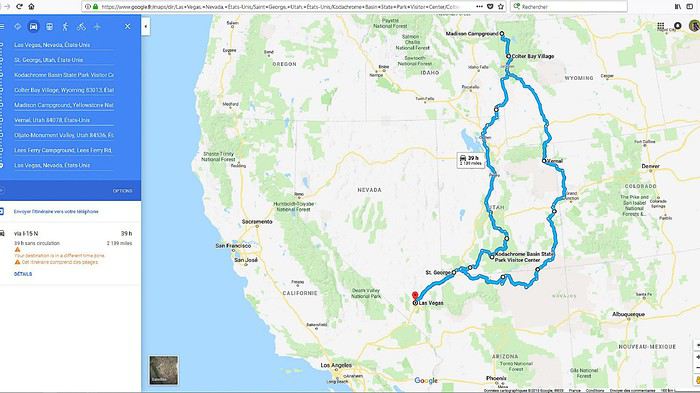
Traveling with nine people (ages 9 to 76, including three kids!!) requires some serious logistics and near-perfect timing to avoid wasting time. The plan went off without a hitch😎… well, almost—we’ll get into the details later…😛🏴‍☠️🙂 In the end, we came back enchanted and happy!! 🙂The family aspect played a big part, but we also discovered spots that were much less crowded, definitely less known to the general public and the hordes of Asian tourists… The kids returned with stars in their eyes, and the adults with just as many memories (plus around 1,200 photos and 130 GB of GoPro video to sort through)!!😎 We’re already feeling the itch to go back—a Denver loop is starting to take shape…😇

Thoughts on the Americans we met and places we visited: They haven’t changed since 2014… Still cool, optimistic, and smiling, always ready to strike up a conversation and offer help—even without the lure of our tourist dollars. (Only two cold locals at Monument Valley clearly made little effort to help us.) We noticed a few changes in the parks😕: some infrastructure was less well-maintained (wobbly wooden walkways, for example), French info pamphlets disappeared from entrance huts, and there were fewer rangers (Lee’s Ferry ranger station was closed). These changes are likely due to Trump’s restrictive policies toward national parks. On the economic side, gas prices rose by 30% since 2014, now around 0.85 € per liter, and with the current exchange rate, conditions are much less favorable for European tourists than in 2014. But this area is so beautiful—too bad Americans have such an idiot for a president!😠

The flights: Round-trip Paris CDG to Las Vegas LAS Roissy to Los Angeles with Air Tahiti Nui, then American Airlines for Los Angeles to Las Vegas. The A340s were impeccable, and service was great with Air Tahiti Nui (the tiare flower given at boarding), and no complaints about AA either.🙂

The hotels: All booked in advance, either through Hotels.com or directly on the hotel’s website (like the Planet Hollywood in Las Vegas). No surprises, everything met expectations.🙂 It’s a real plus for a family of four to have two beds in every room… Still rare in France.

The campgrounds: Except for one night at Lee’s Ferry, all were booked from France through NPS, Xanterra, and KOA sites. No surprises here either—everything met expectations and was well-organized (fire rings and tables at every site, for example).🙂

The vehicles:

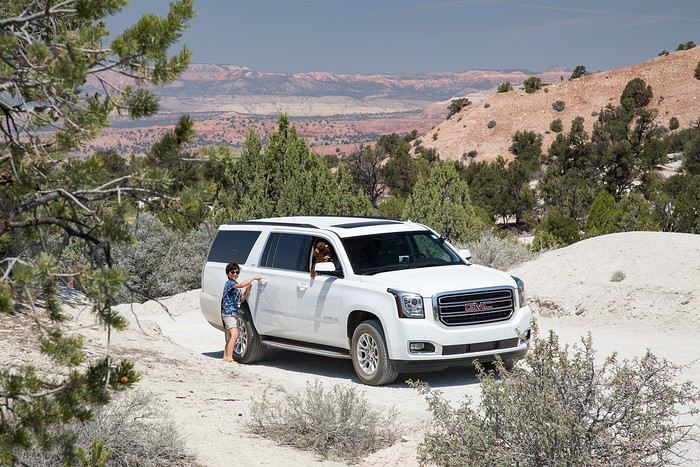
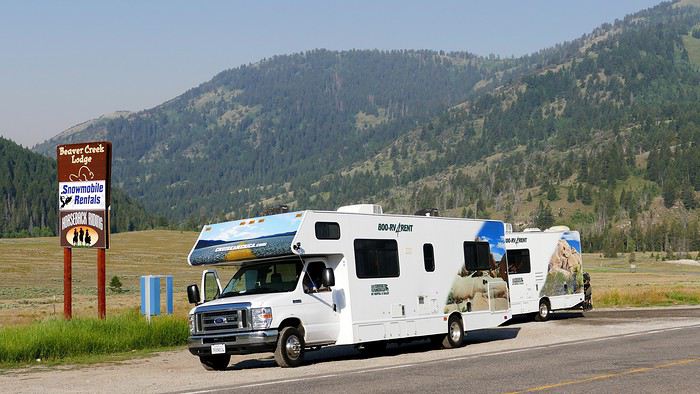
First week: Four people in a GMC Yukon XL from HERTZ, at Las Vegas airport for 327 €, unlimited miles, second driver, and insurance. A typically American beast—355 hp, seven seats: it’s long, big, wide, and tall😮😎😎!! Impeccable condition, quiet, super comfortable with tons of safety features and gadgets (like weather updates tied to GPS!!), and it averaged about 12 L/100 km in 2WD (in 4WD, we nearly hit 19 L on the Stukumpah Road…). A total win thanks to the HERTZ GOLD card, following Jpg13’s advice (Jean-Pierre, you’re my idol!!😎). It let us skip the counter lines (we didn’t even stop there!), pick up the car, and leave the parking lot in under seven minutes… Even less time for the return! Second and third weeks: Nine people in two RVs. A 30-foot RV + a 25-foot RV from CRUISE AMERICA in Las Vegas for 5000 €, unlimited miles, kitchenware, and linens/towels/comforters. A love story in 2014 with this same agency, but unfortunately, this year was much more mixed: aging RVs, ineffective AC in the C30, a leak in the C25’s skylight, a leak in the C25’s toilet drain valve (imagine the dump every time we opened the drain plug…😠🙁), late delivery of both RVs (after 5 PM, though the contract said 4 PM max), abnormal wear on the front tires (we’d discover that later😠), trouble closing the door, etc.In short, a disappointment.😠 Note that other rental companies (El Monte and Road Bear) are probably gaining market share—we saw a lot of their vehicles on the road, and they offer much newer models (at least on the outside) for similar prices…🙂 But setting aside those issues, the vehicles still did their job: letting us sleep as close to nature as possible in the parks and enjoy beautiful sunrises/sunsets with family campfires and marshmallows flambéed with Jack Daniel’s Tennessee Honey😇!!😎 Also worth noting: Cruise America’s solid roadside assistance (we’ll talk more about that later), and how easy it was to drive these beasts—nearly 10 meters long! (Our walkie-talkies were super handy for communication between the two RVs.) And for the last day, a Ford Transit 12-seater from Hertz, at Las Vegas airport for 145 € for 24 hours. Perfect for a day with nine people and nine suitcases + nine bags!! Everything fit in the trunk, and it let us explore LV independently (including a trip to the outlet) for less than three taxis would’ve cost…😎
There you have it—the scene is set! If you’re interested in the rest, feel free to join in. The travel journal is done on the computer, and we’re up to day 11 for photos… We should be posting daily!!🙂

See you soon. Christelle & JF
Open
The Via Rhôna: 700 kilometers by bike from Lake Geneva to the sea! (Travel journal and video, July 2018)
Hey everyone, travelers! Here’s a little post to share our bike trip this summer. We did the Via Rhôna from Geneva all the way to the Mediterranean Sea. It was a truly amazing adventure—no hitches, lots of independent greenways, and we felt like we had the Rhône all to ourselves as our guide for 700 km over 7 days. That averages out to 100 km a day. We thought we’d do less, but the Via Rhôna is flat and not too tiring, which let us push to around 100 km each day!

Here’s the full video of our route: www.youtube.com/watch?v=x_cpBro6Df8

We’re not seasoned cyclists—we just love biking, and this trip was our first big bike touring adventure. As for our bikes (see photo), we had road bikes, sturdy ones with fairly large wheels and rear racks for our gear.

Speaking of gear, here’s what we brought: just the essentials for 7 days of biking and camping—1 tent for 2, two sleeping bags, a few clothes (not too many), 1 book each, toiletries, phone chargers, a basic bike repair kit... and maybe 2 or 3 things I’m forgetting. The idea is to travel light so you’re carrying as little as possible!

We camped every night. Along the Rhône, it’s pretty easy to find campgrounds, and they’re cheap too! Each morning, we’d decide on our destination for the evening (usually based on available campgrounds) and call during the day to book. We always managed to get a spot right away (except when we reached the Mediterranean coast, but we should’ve seen that coming 😛).

For expenses, we slept at campgrounds (between 15 and 25 € per site for 2) and either picnicked or ate at restaurants. Other than that, there weren’t really any other costs besides a few small souvenirs here and there. In total, we spent about 500 € for two over 7 days (so 35 € per person per day). I think it’s possible to spend even less—we decided not to restrict ourselves when it came to restaurants and campground prices.

For us, the most beautiful part was between Geneva and Lyon! The Rhône is still a bit wild there, as are its banks. Not too many roads, highways, trains, or factories around—just nature and peace. You gradually leave the Alps behind and head further south. It was truly stunning. We also loved the "Rhône Valley" after Lyon. The succession of dozens of suspension bridges and little villages, each more charming than the last, really enchanted us.

The trickiest part was leaving Lyon... The Via Rhôna disappears for a long stretch, forcing you to alternate between roads, traffic, danger, and pollution. We had to wait until Givors, further south, to finally get back to the quiet bike path and the Rhône showing us the way. Also, after Lyon, the Rhône becomes a bit more industrial—you pass by dams, factories, and power plants more often. But it’s really just a small detail, the exception that proves the rule of this magnificent Via Rhôna.

The Via Rhôna is a fantastic way to see how water from the mountains of Lake Geneva flows, travels, and winds its way for hundreds of kilometers to reach the sea. With this trip, you get closer to the Rhône—it becomes your accomplice, your guide. Plus, you cross a beautiful part of France, with its charm and little villages. It’s the France we love, and it’s great to explore your own country like a tourist.

That’s it for our little travel journal. I didn’t go into too much detail about our days since everyone will follow the same route, and everyone can go at their own pace :) But I’m happy to answer any questions (logistics, technical stuff, routes, etc.)—I’d be glad to help!

Here’s the video of our route again—I also composed the music, so I hope you’ll like it: www.youtube.com/watch?v=x_cpBro6Df8

Happy travels,

Flo
Open
One country, 5 snapshots
Hi there,

I suggest we take a little visual trip around the world while we wait to experience some of these destinations on your future travels. 😉

The concept is simple: one country, 5 photos that, for you, capture the essence of that country. The same country can be shared by multiple participants.

Everything goes, and the thread is open to anyone who wants to join—budding photographers, pros, or complete newbies...

Just one rule: no bad vibes! 🙂
Open
No, I Won’t Be Going Back to China
Hello forum,

Did any of you feel the same things we did in China?

We spent a good twenty days there in August. First, we traveled solo around Chengdu, then joined an organized tour for 12 days (Beijing, Pingyao, Xi'an, Guilin, Xingping, Yangshuo, Shanghai, Wuzhen) and extended our stay by 4 extra days to visit Zhangjiajie.

The landscapes were stunning, and we have unforgettable memories... but we were really disappointed by the following points:

- The food: way too spicy. Lacking in flavor, not much taste. I’m speaking "in general" because we did enjoy some good steamed dumplings, smoked pork, and other dumplings... But compared to Thailand, Cambodia, or India, Chinese cuisine didn’t impress us at all.

- The behavior of the Chinese: disrespectful, rushed, agitated. You constantly have to fight—people push, crowd, and overwhelm you... At the entrance to the Terracotta Army (and other sites), it’s a human tidal wave... and I mean that literally. We were carried by the crowd without even touching the ground. It was like a situation where you have one bowl of rice and 20,000 starving people diving for it...

You’re at a ticket counter, and they cut in front of you. You’re in line for boarding, suitcase ready to go on the conveyor belt, and someone shows up out of nowhere to put THEIR suitcase down... even though they have a flight ticket with THEIR seat number and won’t be leaving before you!!!! You’re getting on the bus, and someone shoves past you just so they don’t end up behind you.

It’s like these people only think about themselves. I didn’t see a single person let someone else go first or even ask—it’s as if politeness and respect are completely foreign to them.

It’s honestly exhausting and draining...

- Communication: In every other country we’ve visited, whether in Asia or Europe, we always manage—with English, a few words of Italian, French, or Spanish. In China, I’ll be blunt: if you don’t speak Chinese, you’re screwed. And yet, a pair of kids around ten or twelve years old asked us in English where we were from :)

- Understanding: Here’s the rule. Even if the person you’re talking to speaks a little English and says they understand you... make sure they *really* do, because 9 times out of 10, they don’t. Out of pride or just cluelessness, they’ll give you a big smile and nod, but in reality, they didn’t get what you were saying.

Several times with our group, in the evening at a restaurant, if we hadn’t been helped by someone at another table who spoke a little English, we’d still be there. The classic example: the waiter brings one menu (for 10 people at the table), and we’re all trying to explain that we need 4 or more menus. Five minutes later, he’s still staring at us with that same blank smile...

In 3* or 4* hotels, you go to the front desk for a hot water or AC issue. Three or four staff members just stand there beaming at you. You try to explain with photos or a translator, but in the end, you leave with the problem unresolved.

They don’t speak—they shout... on buses, in hotels...

We were also surprised to find that self-service laundromats were almost nonexistent. We got scammed once at a hotel with an astronomical bill!

As for flights, we flew Air China on the way there and Austrian Airlines on the way back—no comparison. Air China had zero service and food that was "baby food" quality. Austrian Airlines had multiple services, a decent meal, and smiling flight attendants.

I don’t know if any of you had the same experience in this country, but I’m definitely not eager to go back. Whereas if someone offered me India, Thailand, or Vietnam tomorrow, I’d be there in a heartbeat!!!
Open
Cycling trips—how old is too old?
It's all in the title—I'm 70, and I've been traveling by bike (tent and camp stove) for five years now. Statistically, how many more years do I have left to plan my destinations and see (almost) everything? Question is half realistic, half humorous. To keep it simple: how old are you, fellow senior cyclists still on the road? And what are your biggest challenges? Personally, I'm in good physical shape, though my cruising speed has dropped from 3–4 km/h over the past five years. But arthritis (hip) is starting to make it tricky to swing my leg over the frame.
Open
Biking (MTB) along the Canal between the Two Seas (France)
Why bike (MTB) along the canal between the Two Seas: the lateral canal of the Garonne from Bordeaux to Toulouse, and the Midi Canal from Toulouse to the Mediterranean?

This canal was created to connect the Mediterranean to the Atlantic without going around Spain, and along its entire length, there’s an old towpath (used to pull barges). Since this path is closed to traffic (except for service vehicles from Voies Navigables de France), no cars drive on it—it’s dangerous, noisy, and polluting. The Canal between the Two Seas was built for transporting goods, so it passes through many towns you can explore without dealing with traffic. You can stock up on supplies or spend the night. You’ll discover the varied landscapes of the countryside, always in the serenity brought by the calm and slow flow of the canal’s water. Most of the time, you’ll be in the shade of trees planted to stabilize the banks with their roots. All you have to do is follow this blue—or rather green—ribbon without needing to consult a map. But the biggest advantage is that it’s flat! Of course, on the Canal du Midi, water flows from the watershed divide at Naurouze eastward to the Mediterranean and westward to Toulouse. On the lateral canal of the Garonne, water flows toward Bordeaux. But this slope is almost imperceptible, which is a huge plus when you want to travel by bike for several days with luggage.

When I say "bike," I really mean MTB because, while the towpath has been replaced in some places by a paved bike path, it mostly resembles a dirt trail—sometimes smooth, sometimes rocky, and often cluttered with roots from the magnificent trees lining it. Since the canal was classified as a UNESCO World Heritage site, improvements have been underway, but it won’t be tomorrow that you’ll be able to ride from Bordeaux to Sète on a road bike. And I’m afraid the first sections of the path will be worn out before the rest is finished. You might even run into construction work for this bike path. That’s what happened to me during the spring of 2007.

Sunday, 03/11 – Valence d'Agen 08:15 to Toulouse (Rangueil) 16:30 97 km in 8h15 (6h on the bike) I started on the recently paved path along the lateral canal of the Garonne. The first locks appeared, and as I approached Moissac, the path turned into a billiard table until Castelsarrasin. After the Cousteau port, I was back on the classic dirt towpath with its rocks, roots, and nutria holes. But not for long—soon, I hit ruts left by backhoes and bulldozers, which, fortunately, were resting for the Sunday. A pile of rubble taller than me blocked the entire width of the path. I didn’t want to turn back to find the previous bridge and ride on the other bank, which was just as impassable (dense grass). It wasn’t easy to carry a bike with full panniers, so I lifted it over several mounds. I kept going, sometimes on foot, unsure how far the construction extended. Another bulldozer—luckily, the ground was dry. The work went all the way to Montech, making the path impassable. I recommend taking the N113, which runs parallel (that’s what I did on the way back). In Montech, the famous water slope was at rest, waiting for tourists. For many kilometers, I was back on the traditional towpath. The closer I got to Toulouse, the better the surface became, and the more cyclists and pedestrians I saw—until the city center, where there was nonstop bike traffic, especially students heading to Rangueil.

Monday, 03/12 – Rangueil 09:10 to Revel 16:30 86 km in 7h20 (5h30 on the bike) As soon as you reach Toulouse, you make a 90° turn to follow the connection between the lateral canal and the Canal du Midi. Heading east, you pass the barge selling the famous Toulouse violet souvenirs. A real bike path has been built for 50 km to Port Lauragais. It’s a true joy for Toulousains and travelers. Restrooms have been installed or shared with highway rest areas, allowing you to refill water (of course, bikes are banned from ASF rest areas, but cleverly placed racks let you secure your bike and walk in). At Port Lauragais, it’s another rest area shared by highway users, cyclists, and boaters. You’ll find a cafeteria, restaurant, hotel, and a shop selling regional souvenirs. But the real pleasure is reaching the watershed divide at Naurouze, where water flows toward the Mediterranean on one side and the Atlantic on the other. There, I decided to leave the Canal du Midi, which continues toward Castelnaudary with a much rougher towpath, to follow the *Rigole* that feeds the canal with water from the Saint-Ferréol basin. For me, it was like returning to the source—a bit like a pilgrimage in honor of the brilliant Pierre-Paul Riquet, the designer of this magnificent work. I followed the service trail along the *Rigole*. It’s actually a variant of the GR 653, leading to Revel alongside this artificial waterway. It’s fed by water from the Montagne Noire, and I was worried about a steep climb. But that wasn’t the case—the *Rigole* winds for 40 km, flowing gently under the trees. It was better than a dream: a smooth dirt path with the crunch of pine needles under the wheels, where I only crossed paths with a few fishermen... And to soothe sore buns, the last kilometers were on packed earth—a paradise (ATVs, stay away!). More walkers and cyclists appeared there.

Tuesday, 03/13 After a restful night in Revel, I started the morning with a walk around Lake Saint-Ferréol. A very pleasant 10 km hike, but I don’t recommend it for mountain bikers unless you’re used to mountain terrain and have strong calves. Otherwise, you can take the road—there are at least two hotels near the lake. In the afternoon, I began the return trip to Tarn-et-Garonne via the same path, with the same pleasure.

Total: 378 km of suffering and bliss, for which I must thank the departmental and regional councils for their funding, Voies Navigables de France for maintenance, and the volunteers who mark the hiking trails. And don’t you think you’re exaggerating a bit with your 378 km of bliss and the paradise of the *Rigole*?

Okay, fine—it wasn’t always idyllic. Sometimes the path was downright *pierrique*... but I had great weather, and the landscapes were so beautiful (water, sun, vegetation). In the rain or mud, it would’ve been less fun. What does *pierrique* even mean?

*Pierrique* is worse than rocky. I know a Pierrick, and he’s tough. And why *Facteur4*?

It’s France’s goal to reduce greenhouse gas emissions by a factor of 4 by 2050. I’m doing my part by biking to work 3 out of 4 times. And your cassoulet?

Guilty as charged. I ate the best cassoulet of my life at the Hôtel du Midi in Revel. But it was very productive in methane. My stomach hurt so much I couldn’t sleep and ended up writing my postcards between 3 and 4 AM. So many great memories!
Open
Photo Safaris in Kenya
Back on the forum, I’m starting to write up two 3-week trips to Kenya in August 2021 and 2023. In 2021, Quynh and I traveled with Régis (Rjulie95 on VF). Our son joined us in Baringo for the second half of the trip. In 2023, we went with two friends who’d been dreaming of seeing wild animals ever since we got back from Kenya. We didn’t need much convincing to go with them!

The two itineraries are almost identical (well, when you love something...) but we did make a few tweaks.

- The first part of the trip was with a local driver/guide, Félix, who was recommended by Sylvie56. Sylvie and her husband Ben are Kenya enthusiasts—they’ve been there countless times, always with Félix... and for good reason! He’s fantastic!

- The second part was with Melting Pot Safari, an agency that adapted to our photography needs. Tony Crocetta, the co-founder (along with his Kenyan friend Simon Chebon), is a wildlife photographer himself.

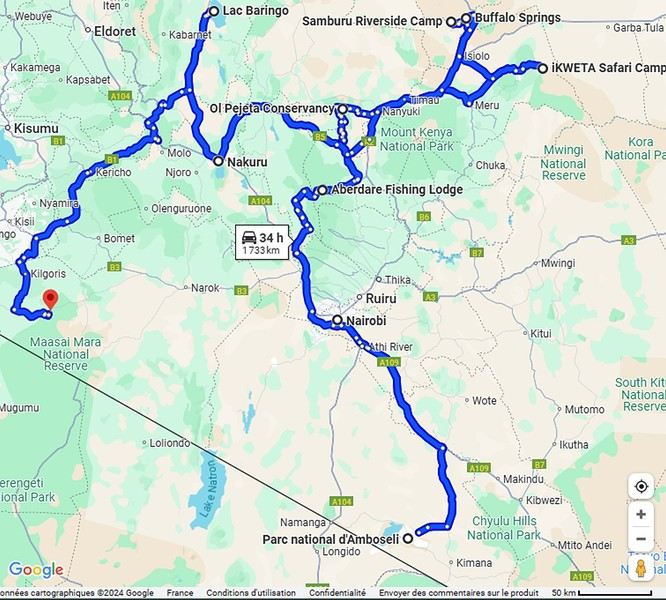
Here are the itineraries for both trips, including accommodations:

In 2021: Day 0: Paris / Nairobi - 67 Airport Hotel Day 1: Nairobi / Amboseli - Simba Cottage Day 2: Amboseli - Simba Cottage Day 3: Amboseli / Aberdares - Fishing Lodge Day 4: Aberdares - Fishing Lodge Day 5: Aberdares - Fishing Lodge Day 6: Aberdares / Samburu - Riverside Camp Day 7: Samburu - Riverside Camp Day 8: Samburu - Riverside Camp Day 9: Samburu / Nakuru - Merica Hotel Day 10: Nakuru / Baringo - Tumbili Cliff Lodge Day 11: Baringo - Tumbili Cliff Lodge Day 12: Baringo - Tumbili Cliff Lodge Day 13: Baringo / Maasai Mara – Meltingpot Bush Camp Day 14 to 18: Maasai Mara – Meltingpot Bush Camp Day 19: Maasai Mara / Nairobi – Roussel Guest House Day 20: Nairobi / Paris

In 2023: Day 0: Lyon / Paris / Nairobi - 67 Airport Hotel Day 1: Nairobi / Meru - Ikweta Camp Day 2: Meru - Ikweta Camp Day 3: Meru - Ikweta Camp Day 4: Meru / Samburu - Riverside Camp Day 5: Samburu – Riverside Camp Day 6: Samburu / Buffalo Springs – Samburu Simba Day 7: Buffalo Springs / Ol Pejeta – Sweetwater Camp Day 8: Ol Pejeta / Amboseli - Simba Cottage Day 9: Amboseli - Simba Cottage Day 10: Amboseli - Simba Cottage Day 11: Amboseli / Nakuru – Lake Nakuru Lodge Day 12: Nakuru / Baringo - Tumbili Cliff Lodge Day 13: Baringo - Tumbili Cliff Lodge Day 14: Baringo - Tumbili Cliff Lodge Day 15: Baringo / Maasai Mara – Meltingpot Bush Camp Day 16 to 20: Maasai Mara – Meltingpot Bush Camp Day 21: Maasai Mara / Nairobi / Paris

Here’s an itinerary—it’s not exactly what we did, but a combination of both.


Ready to join us on safari to see some wild animals?

Open
Adventure in Morocco
I’m not going back, the trip is in the past. I’m posting it anyway because the country probably hasn’t changed enough to make the story outdated, and the astonishing beauty of the place deserves to be shared here.

Saturday, May 31, 2014 Mulhouse - Marrakech

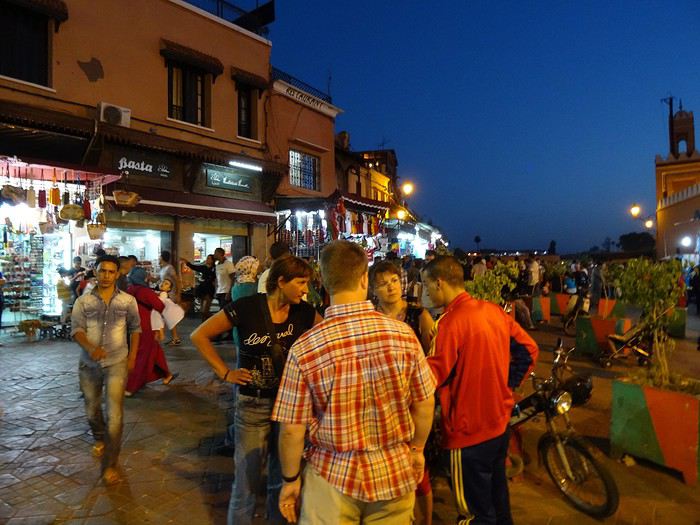
A flight that drags on for three and a half hours. Everything goes smoothly until immigration. Like almost everywhere, you have to fill out a little form with your details and arrival address. The problem comes when you hand it to the customs officer with your passport. Right away, you see the lines are way too long for the number of officers working. I steer Dom toward a line further to the left that’s clearly moving faster than the middle ones. Then I firmly pull him to the far left where I think I spotted a new counter opening. Big mistake. Huge. Because that line is notorious for how slowly the security agent checks each person. At 10 minutes per person, with about fifteen ahead of us, we’re looking at two and a half hours. The wait becomes torture. Everyone gets edgy. We watch enviously as people who were way behind us initially zip through the other lines. You feel like complaining. My advice? Don’t. You have no idea how much a pissed-off customs officer can ruin your day! The rule: stay calm and suck it up. Once that hurdle’s over, a taxi and boom, we’re at the Gallia, a no-frills but charming hotel just steps from Jemaa El Fna square. This place is insane! It’s teeming with people. You stick out like a sore thumb with your camera—suddenly, a ton of people want to be your best friend! You’re basically a walking wallet!


We’ve got a meet-up with friends who are here on a work trip with their company’s social committee.


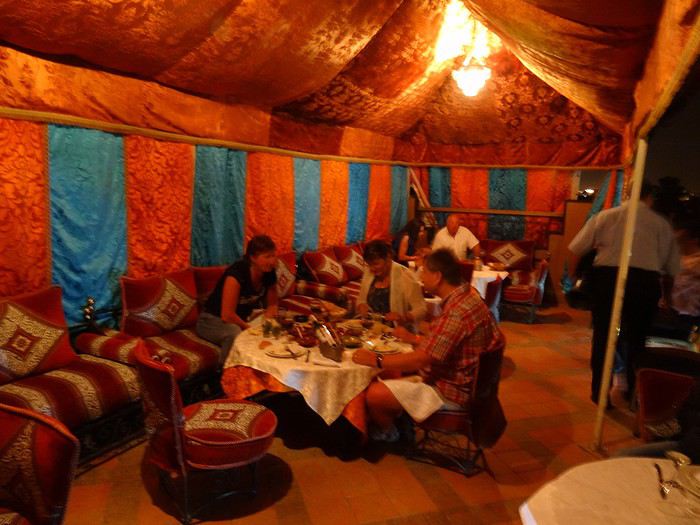
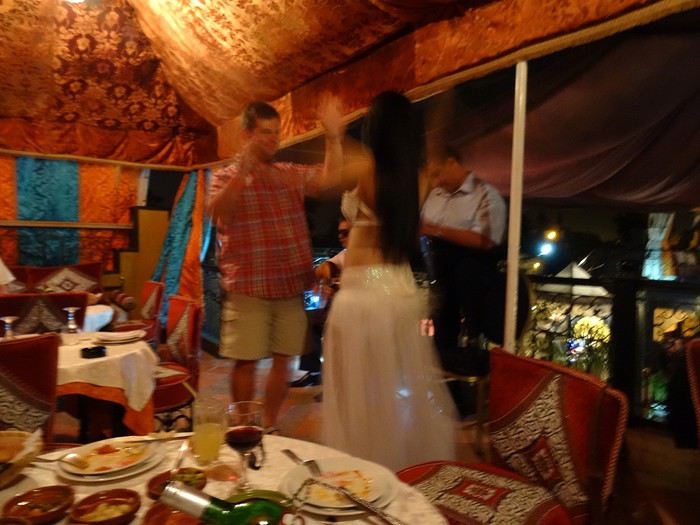
We fully embrace our tourist roles—eating at restaurants made for us, with belly dancers who insist we join in. We go with the flow, we’re not prudes, we have a great evening, no way we’re missing out on the fun...


Sunday, June 1, 2014 Marrakech

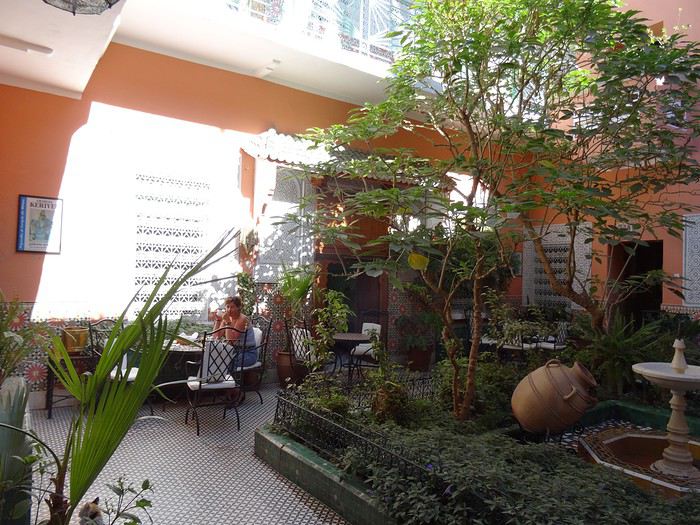
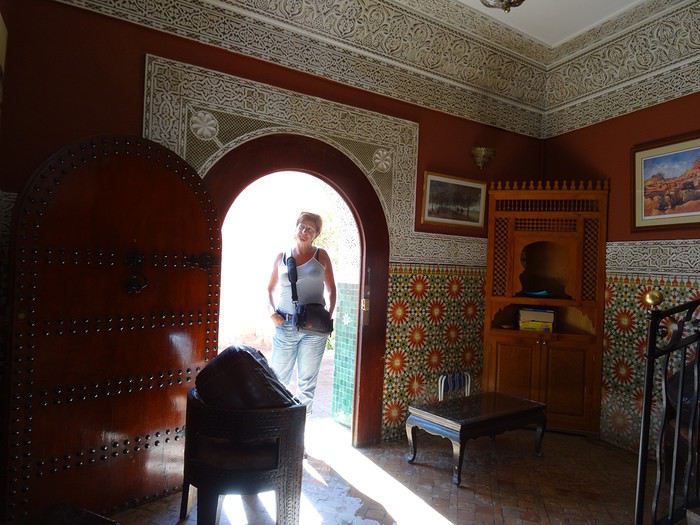
Super nice breakfast in the hotel’s patio, a real riad, beautifully decorated.


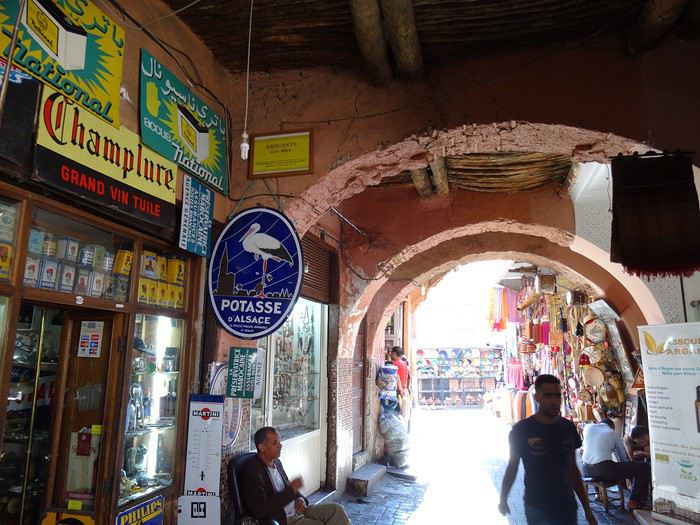
Originally, we’d planned a trip to the Atlas Mountains, but we ended up wandering around the city instead. Before we knew it, we were in the middle of the central souk’s labyrinth. It’s a feast for the eyes, ears, and especially the nose!

Open
Autumn trip from Puglia to Naples via Basilicata...
Hi everyone!!!

I’m finally getting around to writing about this 20-day trip to southern Italy: we didn’t travel this summer, and luckily, we found beautiful light and dreamy weather there at the end of September.

First, here’s the context of the trip: we’re both "confirmed seniors" but still curious and alert enough to enjoy the itinerary we’d imagined! We wanted a mix of discoveries—culture, cities, and nature—with guaranteed sunshine and the occasional short hike... We’re flying to Naples, round-trip, because the flight times work better for us. We rented a car online, picked it up at the airport (details to come... and it won’t be the highlight of the trip!), and booked our hotels in advance.

A quick overview of the itinerary: leaving Naples on September 15th, early in the morning, we’ll drive straight across the boot of Italy to Bari. After 11 days in Puglia, we’ll head back toward our starting point, taking our time: Matera in Basilicata, Maratea by the sea, and finally Paestum with its incredible temples.

Day 1: Brussels-Naples flight (Brussels Airlines) went smoothly; it landed an hour early, and we were thrilled, thinking we could use that time for a quick visit or two... Everything went well until we left the airport. We took the shuttle to the car rental offices, and at first glance, we realized this wouldn’t be smooth sailing!!! In front of every office (they’re side by side), there were already lines and kids sitting on suitcases—everyone looked exhausted... We resigned ourselves to waiting: nothing moved until tempers flared at the counters, and two people nearly came to blows. Things sped up a little, and after 2 (two...) hours of waiting, we finally got our chariot: a black Fiat Tipo, dirty, with a few dents and scratches that we made sure to note in the contract... but it ran!

Off to Bari, then: no time for sightseeing along the way! From there, we headed straight to our hotel in the countryside near Polignano a Mare.


A recurring detail: this happened constantly during our travels. We’d installed our own GPS, fully updated... In recent years, many dirt roads have become drivable, and lots of hotels and hostels have opened in the outskirts of towns. It was extremely rare for our ‘guide’ to recognize the street—let alone the number—we entered. Often, we got by calling the hotel reception: it might seem like a small thing, but it happened so often it became frustrating. In hindsight, it seems like without Google Maps, we’d have been lost!

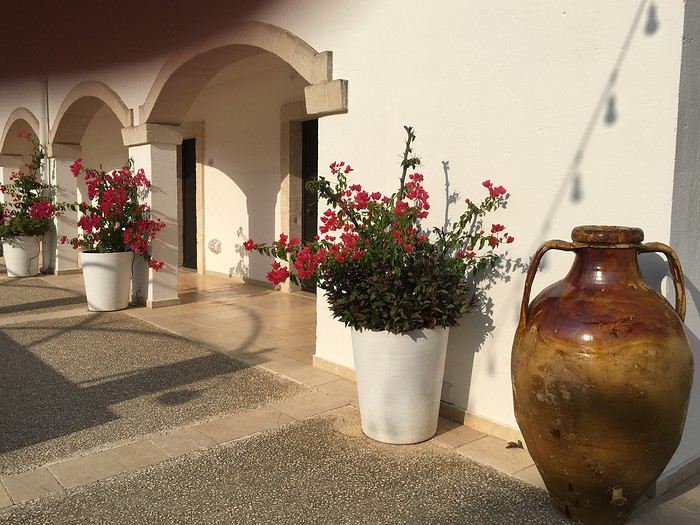
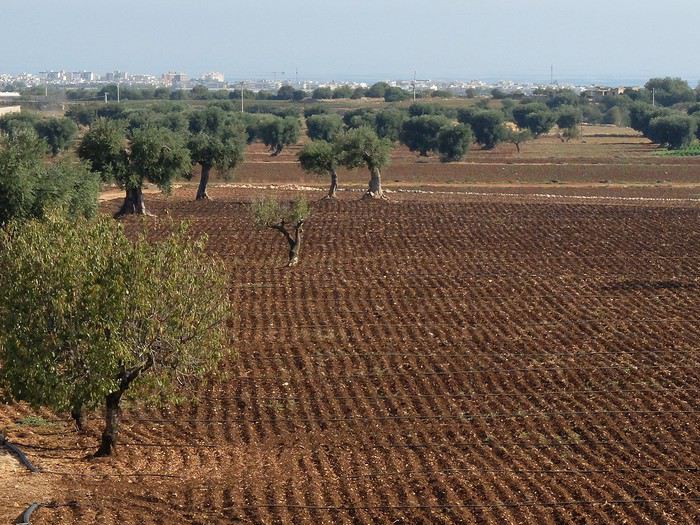
Anyway, we were beautifully settled, with a terrace overlooking olive groves and the sea in the distance: all was well.


To be continued...
Open
Between Réunion and Nosy Bé
Saturday, September 28, 2019

On the Orly-Saint-Denis flight, under the pretext that Air France had paired their delicious chicken with mushrooms meal with a little bottle of rum, Dom noticed that some passengers hadn’t even opened theirs. So he bribed a flight attendant to bring him the abandoned mini bottles! Needless to say, the guy slept like a baby!


Sunday, September 29, 2019 Saint-Pierre

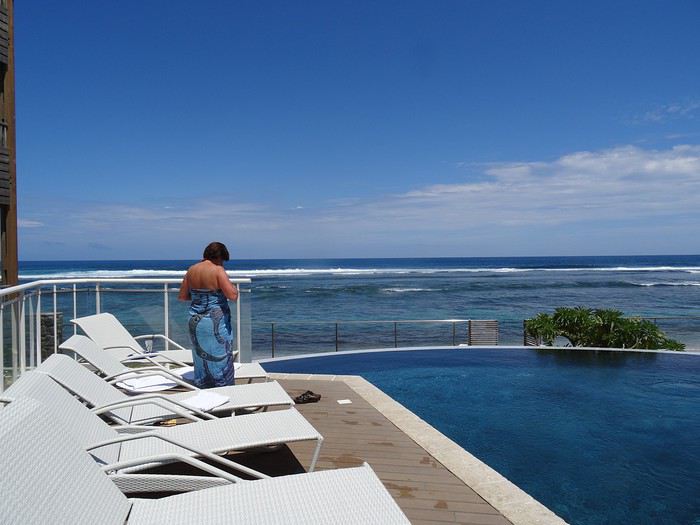
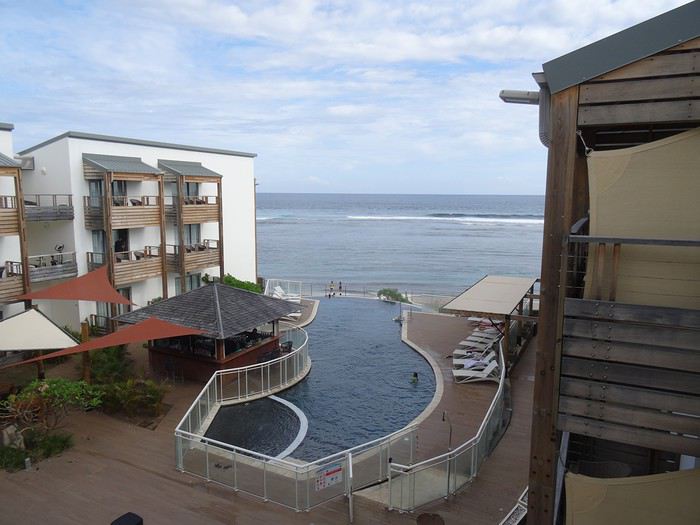
A flawless journey (well, except for a minor distraction in the massive Hertz queue that led me to cut in front of a few young couples, who weren’t too happy about it—though I joked with the agent about it: *"It happens!"*). We ended up at Hôtel Le Battant des Lames in Saint-Pierre, a gorgeous combo of an infinity pool and the Indian Ocean. We rushed straight into the pool—after over ten hours of sitting on a plane, it felt *amazing*!


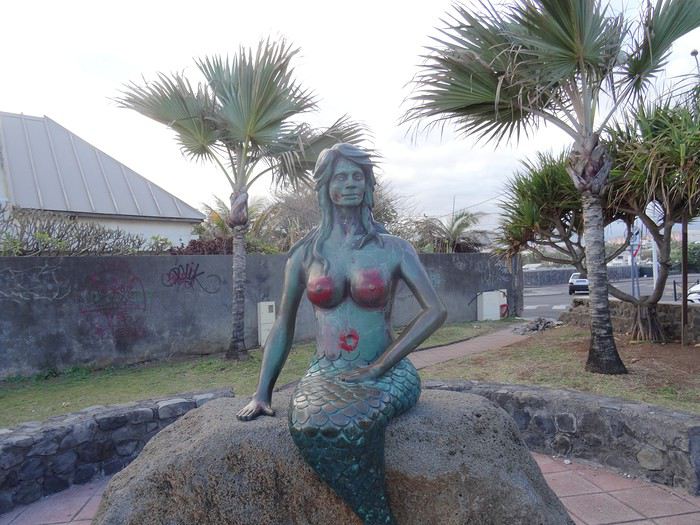
We didn’t waste any time—you know Dom—exploring the city on foot. It’s lovely: the seaside is well-developed, it’s tropical, but with the budget of a wealthy country.


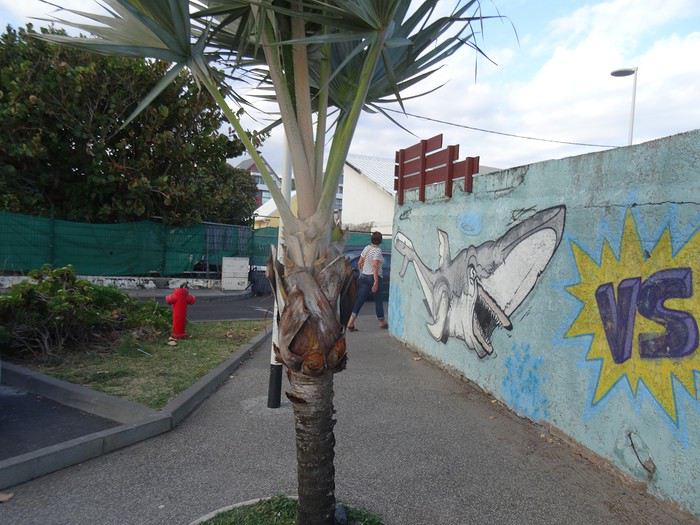
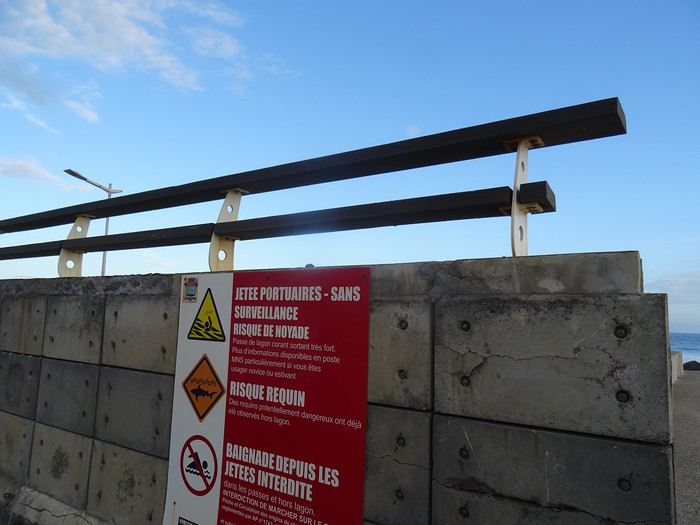
Réunion is also famous for its killer sharks…


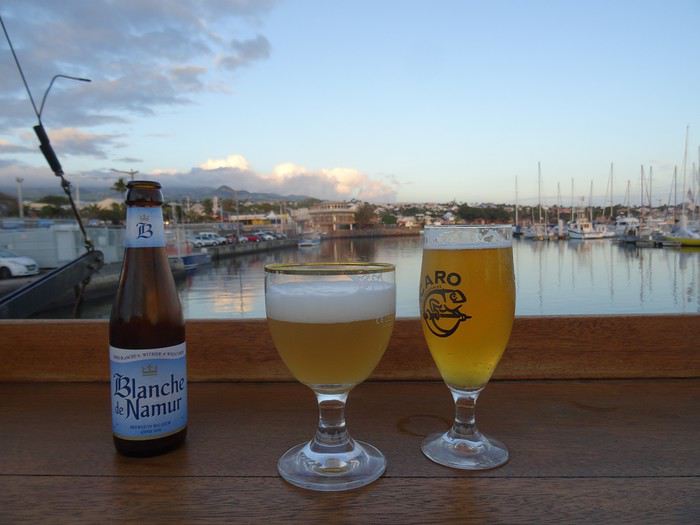
A Creole music group was playing at a seaside bar, so we settled in.


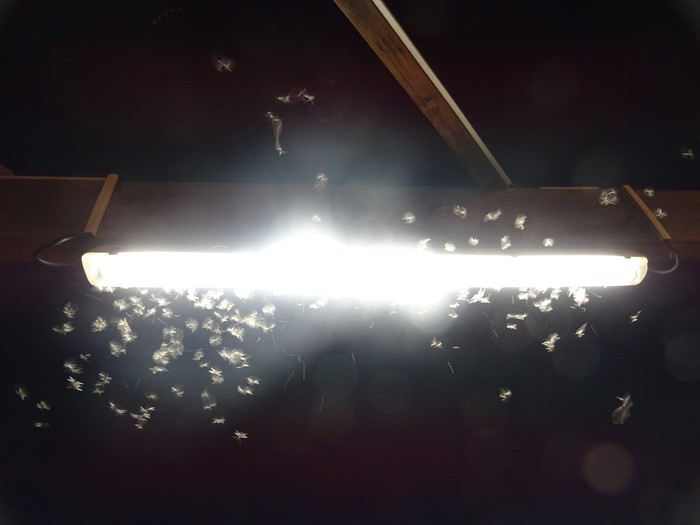
Night fell, and with it, swarms of insects suddenly invaded the city!


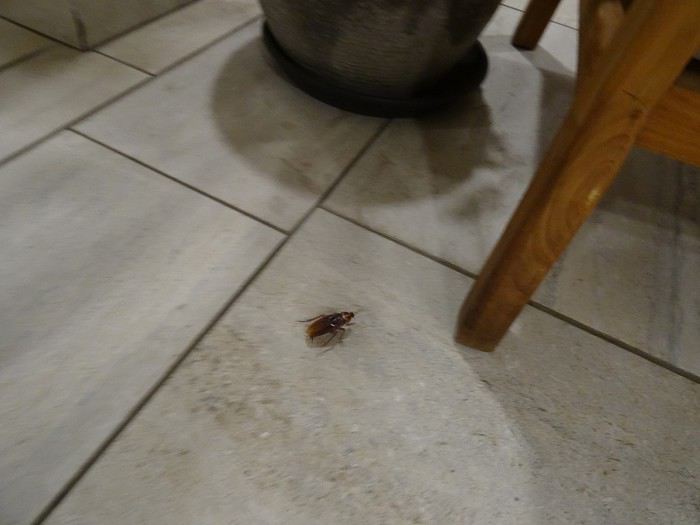
One of the few signs of the tropics here! Insects, geckos, and cockroaches...


Monday, September 30, 2019

Saint-Pierre


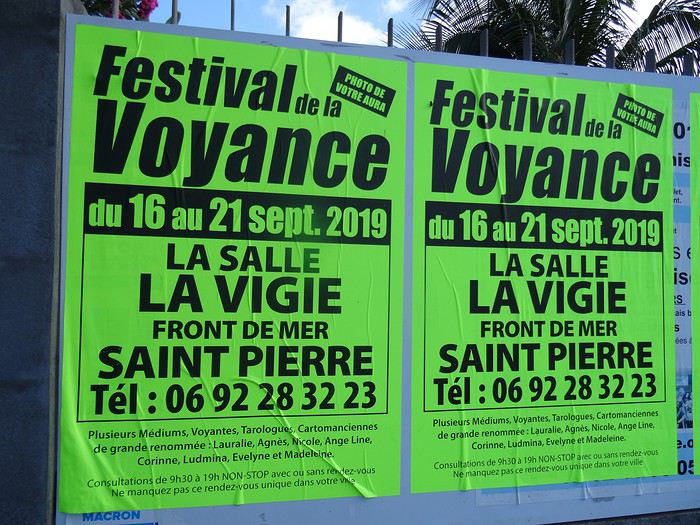
We were disappointed, of course! We could’ve gotten a photo of our *aura* and missed the chance by just a week! In tears, we decided to tackle the island’s most famous site.

Excursion to Piton de la Fournaise. The plan was to head to one of the nearby parking lots and take a relaxed stroll. But it quickly turned into… something else.

First, I realized the built-in GPS operates on a pretty basic algorithm—like the earliest models. If there’s a bumpy road that even the toughest Mitsubishi 4x4 struggles with, a path through a junkyard, or any shortcut to save a few meters, it’ll proudly suggest it. So instead of taking the main road—the royal route to the famous volcano—we ended up on charming little mountain roads…


Open
Inside South Africa
Inside South Africa

The Burst Hose. The passenger is so impatient to arrive that the coachman whips a horse that barely tolerates the mistreatment. I can tell she’s gearing up for a kick, and suddenly, at full gallop, she stops responding. If I press the spur, she cuts out but accepts a half-pressed pedal. She pulled this stunt last year, right in the middle of the Kalahari Desert, and I can guess the trick: she blew a hose! An hour at a slow trot brings us to a Ford garage. A workshop manager, as sullen as he is efficient, has the necessary parts removed to reach the hose, then announces he doesn’t have the spare part and will need a week to get it. I suggest taking advantage of the access to make a temporary repair on the tear, but he refuses, arguing the pressure is so high that the patch would give way immediately—"It’s not a Testarossa, after all!" After reassembly, he refuses to charge us anything and advises us to head to the next town, 200 kilometers away—off we go for another four hours. Semi-trailers overtake us without mercy; I’m reminded of *Duel*. At the Land Rover dealership, we learn the part will take two working days to arrive, and it’s Thursday. I decide to have the hose delivered to the house without wheels—I’ll change it myself. Five hours later, climbing the pass in first gear, we reach the object of her desires. * Hide and Seek In Brittany, my neighbor is a taciturn, touchy fisherman. He’s anchored his old boat in the middle of the estuary that separates two departments and uses it as a storage space. It’s a jumble of nets, buoys, and traps. The old wooden vessel is falling apart, and the hull’s paint is nothing but a distant memory—so much so that the Maritime Affairs Directorate of his department orders him to remove it or repaint it. Asterix also runs a restaurant on the harbor, where he treats customers to his catch. One Sunday afternoon, we see him loading cooks, servers, and dishwashers armed with rollers, brushes, and paint cans into dinghies. Off they go for two hours of slapdash painting and laughter. Once the starboard side is done, everyone returns to prepare for the evening service. The port side will wait until the Maritime Affairs Directorate from the other department reacts. This story came back to me when I got home: the side visible from the road had been repainted, but the other side was left as is. * The Blonde, the Red, the White, and the Black Many workers are paid at the end of each week, but alcohol sales for takeaway are banned on Saturdays and Sundays. So, on Friday nights, the bars are packed, and liquor stores never empty—of people who are already full. Their limited means reduce them to cheap, harsh wines or bland beers. Yet, they still end up wasted.

* Seven In mainland France, you can easily raise seven sheep per hectare. In the Great Karoo, it takes seven hectares of sparse but tasty vegetation to feed just one sheep. Not to mention the energy spent moving around. Add to that the fact that a French sheep produces about one and a half lambs per year, while here, between droughts and jackals, it’s closer to 0.7, and you’ll understand why, with a 7,000-hectare farm—the local basic unit—a South African farmer’s income barely exceeds that of a farm a hundred times smaller in Brittany. This weekend, the annual agricultural show is taking place at the fairgrounds. Some come from far away, so a procession of pickups, trailers, and trucks loaded with sheep makes its way up the main street: we’re definitely in the Karoo. I expected a competition of lean, wiry ascetics, able to pass on traits useful to the environment, but I suspect these bodybuilder show animals don’t just graze on the bush and are doped with alfalfa. Besides, I caught a dealer red-handed with a bag of pellets. * They’re Not Dolls Ken is a professional hunting guide, working independently. When it’s not hunting season, he goes fishing for clients, mainly in the United States. He says Trump’s election—whom he slightly resembles, though younger—would be good for his business, but he doesn’t like Trump, nor, it seems, his clients much. He wanted to be a farmer, but in the post-apartheid context, taking over a farm was a gamble. His wife, who’s more beautiful than Barbie and Melania, silently agrees. * Neighbors That’s the problem with women: their *it girl* side. Within a year of her moving in, we got two new neighbors. One on the other side of the track, the other half an hour away (here, that’s *next door*). One only travels at the controls of his black helicopter, the other aboard his private Boeing 737. The first is a very wealthy farmer from the northeast of the country who’s expanding into the Karoo. He just bought two non-contiguous farms of 6,000 hectares each. I still don’t know what the owner of the farm in between is thinking. The newcomer plans to create a wildlife reserve for breeding purposes; our future neighbors will be giraffes, rhinos, and antelopes, including rare species like the Sable. They say he’s a man in a hurry, determined: when the municipality dragged its feet on his request to refurbish the public track that serves as our border, he just went ahead and did it himself. It was a historic farm, crossed by paths leading to other farms, home to a pond full of birds where water from the mountain ends up after the villagers have taken their share. That’s where the golf course I was about to become the 29th member of was located. Now, it’s all closed off, fenced, and lined with monumental gates. The Wild West in the Western Cape. Is it because his name ends in ‘-ski’ that rumors link him to Slavic mafias and advise against crossing him? The same rumors say he’s involved in the uranium market—well, there’s uranium in the Karoo’s subsoil. The second neighbor is a Saudi prince who just bought a modestly sized farm—3,500 hectares—but don’t think he’s a minor prince. He paid four and a half times the market price to get it! The farm had been in the same family for two centuries, and the owners refused to even consider selling. The prince’s agent—money, in this case, black gold—kept coming back every week despite repeated refusals, finally saying his client wanted this farm at any price. A price they were asked to set. And that’s how you sell your ancestors’ graves. There are plenty of huge farms for sale here, but the prince was looking for a property where he wouldn’t see any roads, tracks, or other houses or farms. He’ll come a few days a year to hunt. However, he’s annoyed: the runway at the nearest airport, two hours away, isn’t long enough for his private jet, so he’ll have to land in Cape Town, like me, and endure nearly two hours by helicopter. That’s how it goes in South Africa. I’d be curious to know what Julius Malema, leader of the EFF (Economic Freedom Fighters), who advocates the Zimbabwean model of land redistribution, thinks about it.

* Biko The autobiography of a journalist and politician of European descent, South African, is published this week. In 1977, this rookie got her editor’s permission to investigate the death in detention of black leader Steve Biko. The apartheid regime’s political police claimed he had died from a hunger strike. The bold young woman discovered that the medical examiners reported a slightly overweight corpse, and later, it was revealed that Biko had died from abuse, if not torture. Under pressure after publishing her investigation, Helen Zille, disillusioned, gave up journalism and turned to politics. She is one of the white South Africans who fought against apartheid, and it’s reassuring that some people have a conscience that transcends class or race. *

You Have the Watches... …we have the time. Anyone who’s worked with Africans knows this response they occasionally throw at us. Willem, the inconsistent gardener, couldn’t stand the observation: running around the place at top speed, even with a pitchfork over his shoulder, wasn’t getting the job done. So Jan replaced him. We share the same first name—no doubt we’ll accomplish great things. He’s known to be reliable, meaning he shows up for work, and he only speaks Afrikaans. We communicate like at the circus: thumbs up, thumbs down. Jan has the build of a bushman but the bone structure and features of a mixed-race person—multiple mixes. He’s a sprite, always moving, sometimes without purpose or destination (the journey is the path). I lose sight of him—it’s not exactly a virgin forest—and he reappears elsewhere, busy. Jan doesn’t understand wasted water—he must think the same of us trying to cultivate the desert. He’s a gardener like I’m a violinist, virtuosos of playback. After a very light lunch, he lies down on the ground in the shadow of the stables and falls asleep. If his arrival time in the morning is variable, it’s never before the agreed hour, but his departure time is unchanging: it’s 3 PM, no matter what. No point trying to fool him; he can count and shows me the fancy watch eating up his thin wrist. * Colours Veldrift, Oyster Catcher, Lobster Red, Namib, Dune, Lion's Den, Kalahari, Bush Fire, Karoo Dawn, Cape Fynbos, Safari Trail, African Pan, Bushveld Plains, African Queen, Karoo Drift. A bestiary? A herbarium? No, the colors offered by the country’s top paint manufacturer. All the shades of the continent from an armchair. * Pets She loves three mastiffs, a meter tall at the withers. Is it for their beauty? Their breed? Their deterrent power, because knowing these beasts exist, no one would dare enter her property without an invitation? A bit of all that, probably. She won’t say. She loves pets but likes other people’s less, especially the poor ones. So, she actively participates in the campaign to sterilize dogs and cats in the neighboring township. Just think, the poor things can’t afford to feed or care for them, meaning they can’t ensure them a decent life. She and others justify the pets section of the local mini-supermarket. Whether your pet is a puppy, adult, or mature, whether it likes fish or prefers beef (no one thought of a dog-based reference from the township?), you’ll find your happiness. While you order, many locals will only have access to the parking lot to beg. * Democracy in Africa

What would Tocqueville say about Democracy in America this fall? After the father, we had the son; after the husband, and by default, we might get the wife. No one else, really? Let’s not talk about France and its current vaudeville. A Ivorian academic believes African peoples aren’t ready for "Western-style" democracy (caricatured as a free T-shirt buying a vote). Does he know the same is true elsewhere, where many voters vote not for a vision, a project, or convictions, but to protect their own interests? Here in South Africa, national elections were held recently, confirming the ANC’s decline in favor of the Democratic Alliance (DA). Historically (since the end of apartheid) seen as the party of whites (who make up less than 10% of the population), it has managed to rally those disillusioned by the clientelism, incompetence, and corruption of Mandela’s unworthy heirs. The DA now governs five of the country’s six largest cities. In the neighboring township, long after the vote ended, ANC and DA T-shirt wearers cross paths courteously. Today, it’s different. The DA’s national leader is holding a rally in a vacant lot. A few hundred people are there, including a good third of children, three-quarters of them ragged. Not an ANC T-shirt in sight amid the smoke of braais and deafening music. Fewer than ten pale faces: the journalist I’m driving, a local official, and activists. A small convoy of limousines arrives—just four, fewer than any of President Zuma’s offspring’s private stables. The crowd stirs, flags wave, and ululations ring out. Mmusi Maimane is a light-skinned mixed-race man, towering over the assembly, which he gently parts, joining in the dances and posing for selfies. He’ll give his speech, half in English, half in Afrikaans, perched on a truck platform—the meeting’s cost must be bearable for taxpayers. A mediocre populist orator, no doubt, but skilled. Two hours later, in the evening, another gathering. This time in a historic town property. A hundred and fifty people, casual chic, all white except for three mixed-race individuals... and the DA President. A Rotary Club vibe: everyone the town has in terms of farmers, shopkeepers, and entrepreneurs has paid their dues to honor Mmusi Maimane’s visit. His admirers see him as a new Mandela or compare him to Obama; his opponents think he’s being manipulated, and his detractors call him a traitor. He’s under forty, intelligent, and his wife is white. The chance he’ll become President of South Africa isn’t zero. * Posh Port Out, Starboard Home. Sonja, who walks the desert at dawn, calls one of her acquaintances posh, meaning snobbish. She’s got a sharp tongue. Wealthy English people (not the ones sent to Australia as convicts one-way) traveling to India would book their cabin on the port side on the way out and starboard on the way back. That way, they had a view of the coast throughout the journey instead of the ocean’s emptiness—whatever Kersauzon says. I didn’t know that by choosing my seat on the plane, depending on the route and time, so the sun lights up the landscape instead of blinding me, I was being posh. * Cosmopolitan Wine Tasting A pale lookalike of Jacob Zuma, a painter teaching his art in Europe; an Antwerp writer in South Africa; a desert gardener with a surfer look; an Irishwoman teaching yoga in the Karoo; an Afrikaner passionate about world history; another, our host, up to his neck in wine; and two French observers—observed observers. Conversations flow, then bottles, just before some hosts leave. Recurring corruption scandals involving President Zuma and his inner circle. A Chenin Blanc. Napoleon, who could have changed the course of South African history. An unwooded Chardonnay. The snake, a puff adder, one found in her garden. A Sauvignon Blanc. The kudu hit by a car at the village exit, which didn’t survive. A Pinotage. The bloody Anglo-Boer War. A Shiraz named Down to Earth. * Little Patagonia A story of pressure or depression, temperature differentials, or perhaps an age-old war between the elements—almost every day at the end of the afternoon, as if tucking in, the wind rushes down the mountain and gives a free haircut. When it falls, you don’t know where, and you hope it hurt itself and won’t get back up. I’m going to build a mast on the house, hoist the sails, trim them, and sail across the desert—it will remember the sea. *

Meeting in the township.


Since a cover is needed (in black and white)...
Open
Three weeks in Japan with the family
Hi everyone,

Actually, we ended up going to Japan almost by chance. I’d caught glimpses of the country during business trips, and it had been on my “wish list” for a while, but I thought we’d go “when the kids were grown up.”

But this summer (2016), the kids couldn’t agree on a destination—their wishes were completely opposite. Then, realizing that flight tickets weren’t outrageously priced—and having read that Japan wasn’t as expensive as people think—we, the parents, suggested Japan… while warning that it would be scorching hot and humid and that no one should complain. Our eldest (18) was immediately thrilled: “Oh! Mom! I’ve always dreamed of going to Japan!” She convinced her brother (16) that it was the perfect destination. Deal sealed: we’re going to Japan, but no one complains about the heat.

After some forum discussions and family brainstorming, I settled on the following itinerary. One non-negotiable shaped part of our choices: being in Hiroshima on August 6th to attend the lantern floating ceremony. To avoid overloading the trip with extra transport, we skipped Nara, Nikko, and Kamakura.

Day 1 - Arrival at 8:30 AM in Osaka – Kyoto - around the station Day 2 - Kyoto - East - night: Kyoto Day 3 - Kyoto - North and center - night: Kyoto Day 4 - Osaka (stroll with Osaka Safari) - Fushimi Inari -night : Kyoto Day 5 - Train - Naoshima - night: Uno Day 6 - Teshima -night: Uno Day 7 - Naoshima – Hiroshima - night: Hiroshima Day 8 - Hiroshima – Commemorations - night: Hiroshima Day 10 - Miyajima- night: Miyajima Day 10 - Miyajima - Himeji Castle - night: Osaka Day 11 - Osaka - night: Osaka Day 12 - Kyoto - West -night: Osaka Day 13 - Kanazawa to Ainokura - night: Ainokura Day 14 - Shirakawa-go - Takayama - night: Takayama Day 15 - Kamikochi night: Takayama Day 16 - Takayama - return to Kanazawa night: Kanazawa Day 17 - Kanazawa -night: Kanazawa Day 18 - Travel to Tokyo (Shibuya) -night: Tokyo Day 19 - Tokyo (visit with Tokyo Free Guide – Yoyogi Park - Meiji Shrine - Harajuku - Takeshita-dori - Omote Sando - Odaiba) - night: Tokyo Day 20 - Tokyo (with Tokyo Safari) - night: Tokyo Day 21 - Tokyo (Tsukiji, Hama-Rikyu Onshi Teien, Asakusa and Senso-ji, Kappabashi, Ameyoko, and Ueno) - night: Tokyo Day 22 - Tokyo (Shibuya-Yoyogi Park again - Ikebukuro - Shinjuku (Tokyo Metropolitan Government Building, Omoide-yokocho, Golden Gai) - night: Tokyo Day 23 - Tokyo (Yanaka – Ueno – Edo-Tokyo Museum - Takashita-Dori again - back to Shibuya) - departure at 10:50 PM for Paris

(You can access the published days directly by clicking on them).

The itinerary perfectly matched our expectations: a good pace, a wide variety of visits, the must-sees, but also a first taste of rural Japan. If we were to do it again, I’d do exactly the same (except for the back-and-forth between Kyoto and Osaka on Days 4 and 12, which were due to my desire to explore Osaka with Osaka Safari). Of course, we had to skip some sights, especially in Kyoto where we missed a few “highlights,” but that was a deliberate choice—I’d limited our time in the city, which is known for being stifling in summer.

For accommodations, we mixed Airbnb apartments and quadruple rooms in guesthouses and ryokan. It worked out perfectly. The apartments gave us more space and the chance to dine in some evenings, while the guesthouses and ryokan helped us experience Japanese customs.

First, a quick recap: all four of us were enchanted by our trip. Japan is a constant source of wonder, just like the preface of *Tokyo Sanpo* by Florent Chavouet describes—I’ll take this opportunity to plug the book, which I read with great pleasure after our vacation. That’s exactly it: everything is a reason for amazement. Everything is so different from home. I wanted to photograph everything around me constantly. I promise, I won’t say “photograph like a Japanese” anymore—during this trip, *I* was the Japanese. And I better understand the culture shock Japanese travelers experience in Europe.

As a friend of mine put it: “It’s simple—they have ten fingers, so they count in base 10. Otherwise, they do everything differently from us.” Well summarized.

Another thing: everything is easy. Everything seems to have its place and be exactly where it should be. The smallest detail seems to have been thought out to make life easier. Things that come to mind: the incredibly well-designed signage in train stations and the subway, the ubiquitous public toilets, designated smoking areas, those hyper-detailed maps with all the useful information available at every place we visited… These maps are so well done that we got into the habit of picking them up systematically. It’s that simple: I came back to Paris with a complete collection. And when we arrived in Takayama by car, our first stop was at the train station to get THE map. But this order goes beyond all these practical elements. There’s a certain *je ne sais quoi* that makes you feel like everything is exactly where it should be. Even during rush hour, in the crowds, people manage to avoid each other in a smooth, collision-free flow—the opposite of the Paris metro. Anyone who’s experienced certain transfers in Paris at certain times will understand.

The exquisite politeness of the Japanese and their desire to be helpful are another highlight of the trip. Every person we met tried to help us and make our lives easier. It was really great.

Oh! I almost forgot: Japan’s hyper-safe side. I’ve rarely felt as safe as I did in Japan. No need to keep an eye on your belongings—they’re not going anywhere. One example among many: in Tokyo, Japanese women leave their bags open with their smartphones casually placed on top. Even I could’ve taken them without them noticing, let alone a pickpocket… No wonder France is seen as dangerous.

That said, I’m not claiming Japanese society is flawless. The role of women and gender relations are downright shocking and archaic from our European perspective. I also don’t think I could live in such a codified society, where the individual is so dissolved into the collective. But for a vacation, it’s simply delightful. On that note, I recommend *Nââânde?!* by Eriko Nakamura, which I discovered after our trip on the recommendation of our eldest’s friend. It’s the story of a Japanese woman married to a Frenchman living in Paris, recounting her astonishment at French habits and customs. Even though I tried to be careful, I’m sure I made quite a few blunders.

As for the climate, it didn’t stop us from enjoying our trip. Sure, we were hot—*really* hot—but by protecting ourselves from the sun (hat for me, caps for the others, plus umbrellas—Japanese-style parasols) and drinking liters and liters of water, it was manageable and didn’t bother us too much, even if we probably had a slower pace than we would’ve with milder weather. That said, with small children, we would’ve struggled more.

Last point before diving into the trip details: the cost. Despite what I’d read, traveling in Japan is still expensive. I’m not talking about our specific trip, where—using our daughter’s 18th birthday and our 20th wedding anniversary as an excuse—I splurged on a few extras that drove up the cost. I was particularly surprised by the price of quadruple rooms, which is roughly the same as two double rooms. So for a family, that’s a significant extra cost. The various paid sites in Kyoto also add up. As for food, it’s generally cheap, but it would be a shame not to budget for a few extras to try some less affordable specialties—like Hida beef in our case.
Open
Draw Me Your Japan...
Hi there!

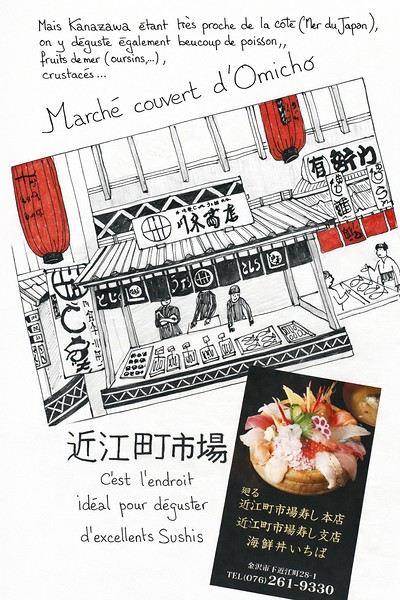
I’m inviting you on a stroll through my drawings—a completely subjective, far from exhaustive, and totally personal take, since it’s based on my own sketches. I put this travel journal together after returning in late 2024, mostly using felt-tip pens and pencils, with a few collages thrown in. I worked from our personal photos.
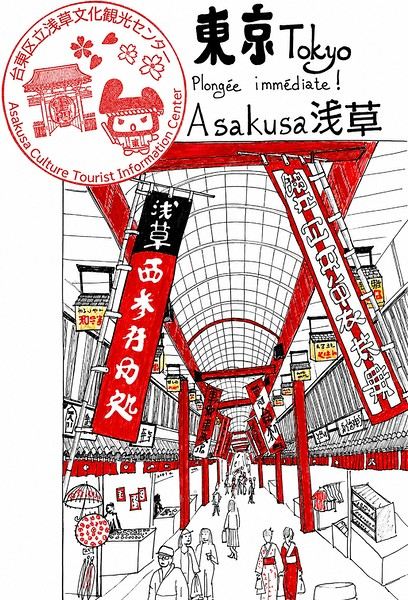
Let’s start with the shotengai...


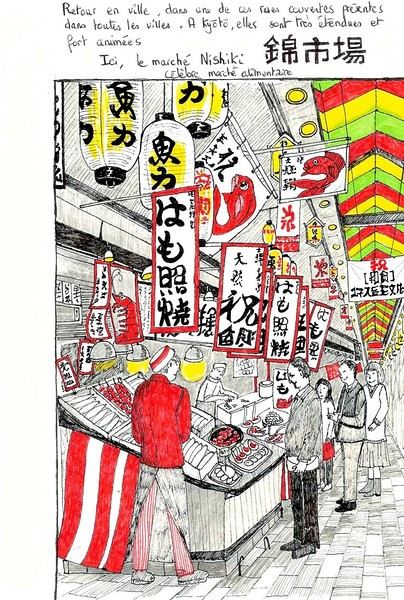
Our first "wow" moment came as we stepped out of the subway in Asakusa, the Tokyo neighborhood where we’d booked our hotel for our first five nights. Exhausted after our long flight, we finally arrived and took an exit that led straight into a shotengai—one of those covered shopping streets that pop up in city centers and flourished between the 1950s and 1980s.

It was an instant aesthetic shock, like a close encounter of the third kind between the modern city, a typical Asian market with its street stalls, the vintage vibe of the arcade, the sheer abundance of goods, and the bustling crowd—a mix of tourists, pilgrims (thanks to nearby Senso-ji Temple), and locals (it’s a very working-class area). In the end, it set the tone for a feeling we’d experience throughout the trip. Wherever we went, shotengai turned out to be fantastic spots for finding little restaurants, shops, or even fresh produce. Some are like real mazes, like in Kyoto, where we spent ages trying to relocate a restaurant we’d loved ;-)

In Kanazawa, the Omicho Market: And in Kyoto, Nishiki Market:

To be continued...
Open
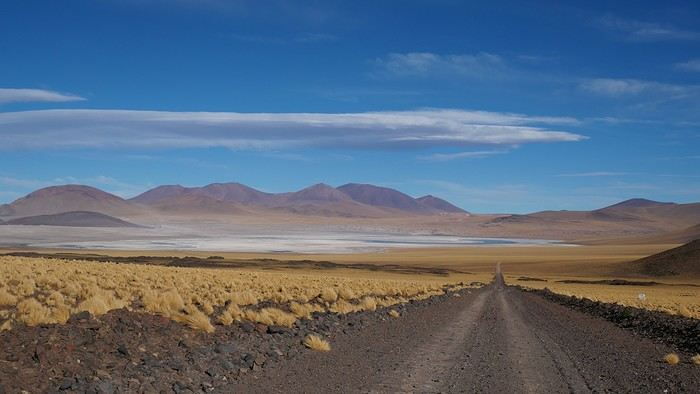
Northern Chile, Andean impressions.
Alright, this year, we're heading back to South America!

The initial plan was to retrace the route we imagined in the summer of 2020: a trip to northern Argentina starting from Córdoba.

Unfortunately, the flight to Córdoba no longer exists, and airfares to Javier Milei’s country are both outrageously priced and involve multiple layovers.

So, I tweaked Google Flights every which way and finally found a flight within my budget—departing from Clermont-Ferrand!

Not to Argentina, though...

Our transatlantic flight will cross the snow-capped Andes, landing in Santiago, Chile, with a return from Lima!

In between, two domestic flights and a big road trip loop starting from the coastal city of Arica to explore the treasures of northern Chile.

Our mode of transport: a pseudo 4x4 that won’t take us through sand dunes or devilish tracks but will let us tackle the entire secondary network, including unpaved main roads, while still being insured.

Is the suitcase packed with all-season clothes?

Are the driver’s license and passport ready?

Bank cards and a few euros too?

Off we go for just over 3 weeks of southern wanderings!


--/--

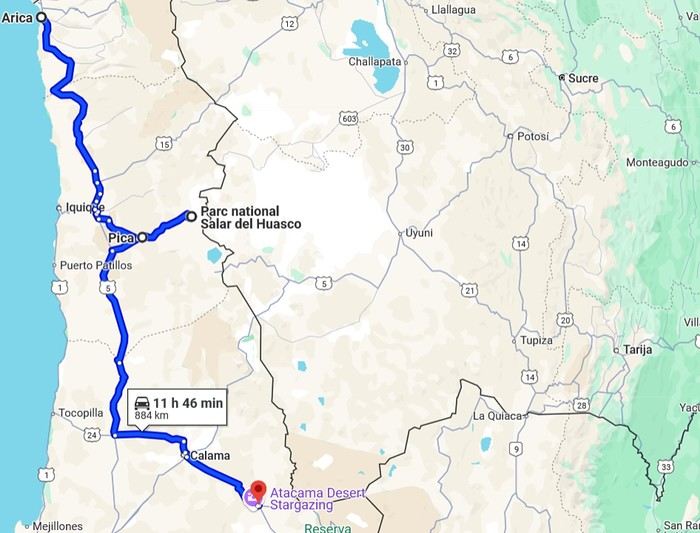
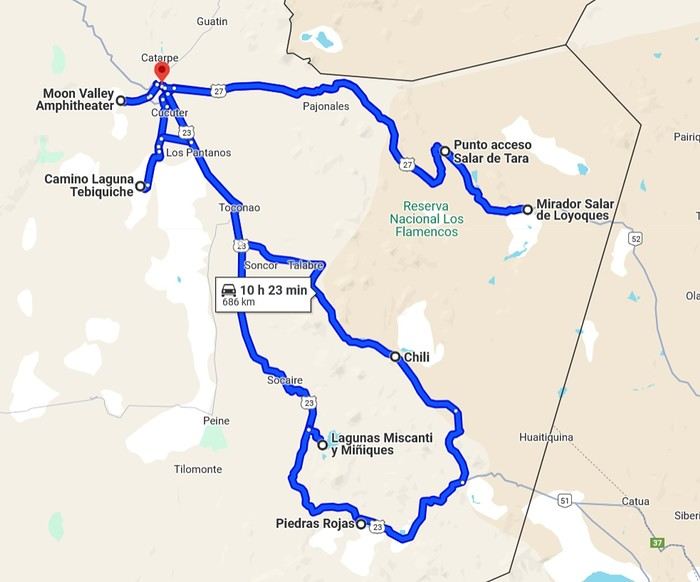
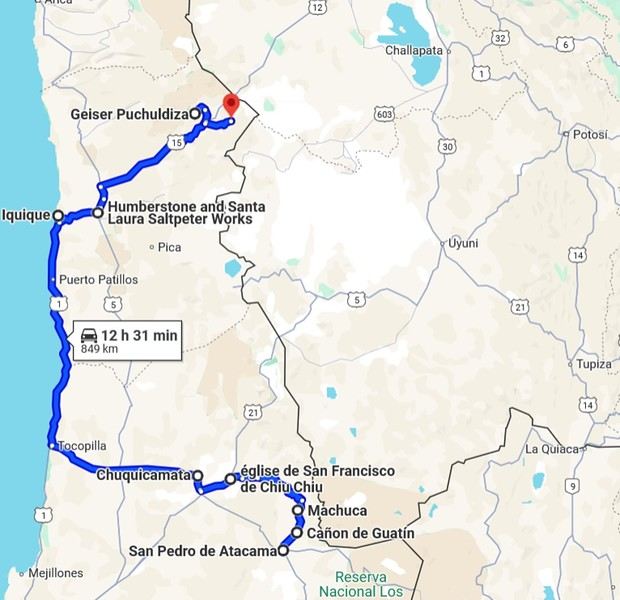
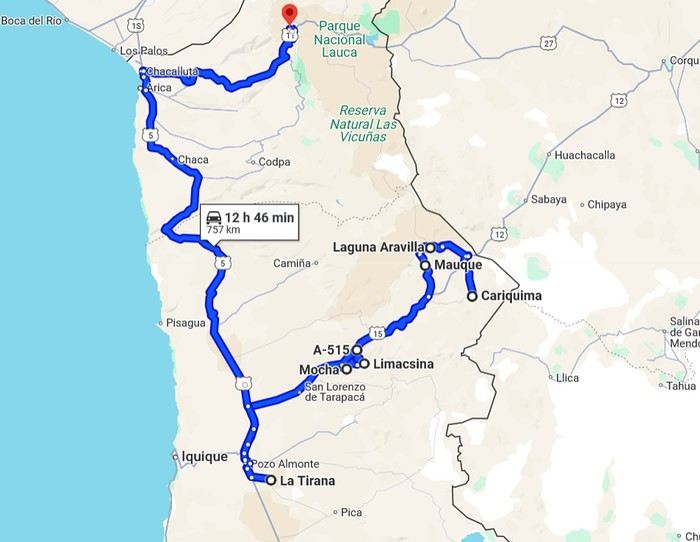
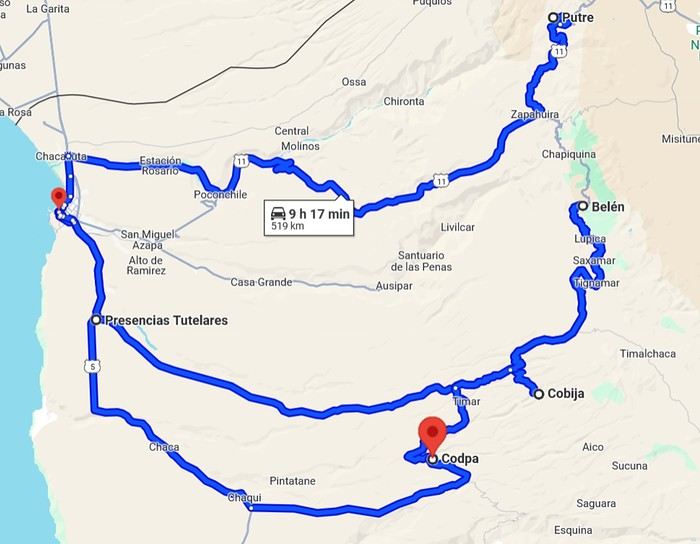
To keep all my esteemed readers on track, here are a few maps outlining the Arica-Arica loop!

1- From Arica to San Pedro de Atacama via Pica and the Salar de Huasco

2- Around San Pedro



3- From San Pedro to Cariquima


4- From Cariquima to Putre


5 - From Putre to Arica


Gas stations in this part of Chile are located in Arica, Iquique, Pozo Almonte, Pica, Calama, and San Pedro de Atacama.
Open
Cycling in Sicily: itinerary
Hi there,

A year ago, I posted looking for a cycling route for a trip in Sicily with my partner and our two kids (3 and 4 years old) in a trailer—something calm, with nature and a bit of culture. I didn’t get many replies, so I’m sharing our itinerary, which we really enjoyed. We cycled from the southeast (Syracuse) to the northwest (Palermo).

**Note:** We had no issues on the road—drivers were very courteous, the welcome was exceptional (lots of invitations to eat and/or stay overnight), and there were very few people on the roads, even the big ones, since we were there from September 23 to October 7.

**Weather:** Apparently, the summer of 2014 had been awful (only 25°C...). We, on the other hand, had 3 days at 44°C—it was *brutal*, including one day at 35°C at 1,000m altitude in the center of the island on October 1st...

**Accommodation:** 15 days of wild camping, with just one really nice apartment after 7 days in Piazza Armerina. Wild camping was tough—rocky, dusty, hard to pitch tent stakes. Our tent got pierced by thorns (even the groundsheet) from one side to the other. We washed up at village fountains, and—let’s be honest—less often than we’d have liked. The kids’ clothes, which spent a lot of time on the ground, were pretty grimy since laundry was rare. Only one official campsite (otherwise, they’re all on the beaches): Da Vinci Camping, in the middle of lemon groves near the southeast (Rosolini). It’s well-known on social media for being very "roots."

**Water:** A real challenge—*very* tough. Off-season, many homes are abandoned, and on some days, we passed through few villages. Result: we always carried our max water (9L) and sometimes had to add extra bottles to last 2 days, covering the day’s ride, wild camping, and the next morning—that’s 15L on the bikes. So be careful with this!

**Itinerary**

We arrived by train in Messina from southern Italy (yes, the train goes onto the ferry—worth seeing!), then took the train to Syracuse. We decided the northeast coast was too dangerous to cycle, so we visited Syracuse and then picked the SP roads (the smallest ones, more or less following the coast) toward Noto. We were supposed to head southeast to Pachino, but since our ferry from Palermo was booked 15 days later, we cut the route short and headed toward Rosolini instead. Nothing exceptional until Modica, crossing the Ispica fault. Modica is a really pretty town to see. Then Ragusa’s old town via the SS 115—a quiet but very scenic road. The town is stunning, but getting through the modern part (Ragusa Alta) means 300–400m of elevation gain... Caltagirone: a lovely town (famous for ceramics), but the center is uphill. We took a bigger road, but there was hardly anyone around. Left via Mirabella, then visited Piazza Armerina and the Villa Romana. Took the SP 15 to Barrafranca, Pietraperzia, then Caltanissetta via the SP96 (choose carefully—there’s a bigger road nearby).

Then Serradifalco, Mussomeli (castle), San Giovanni Gemini—a series of hilltop villages with valleys in between. We climbed and descended 500m+ repeatedly. Santo Stefano Quisquina, Prizzi (passing at 1,000m altitude—really nice, no one around). Corleone (great road, some climbing, but it’s awesome); Ficuzza, Santa Cristina Gela, Altofonte, and Palermo (no traffic issues).

**Reminder:** This was off-season—no one on the roads. We found the route through Caltanissetta, Mussomeli, etc., *spectacular* and sometimes breathtaking. Sicily is a rugged place for rugged people (especially wild camping). We’d heard the center of Sicily was overrated (not at all...). After 4 months of traveling without always listening to others’ opinions, we confirm: central Sicily is amazing—rugged, dramatic, and perfect for what we were looking for (though we didn’t swim).

**Elevation:** People kept saying Sicily was a nightmare for climbing. We’ve done much tougher routes in the Black Forest or Slovenia. The tricky part in central Sicily is the constant ups and downs—you climb 300–600m in one go, then descend right after. We used "Ride with GPS" to test different routes and avoid unnecessary descents (or minimize them). With a few extra kilometers, we saved about 2,000m of elevation gain overall, especially around Caltanissetta, the Modica-Ragusa link, arriving in Modica, and leaving Ragusa.

Hope this helps someone...
Open
Istanbul, Men and Cats
Sunday, October 20, 2019

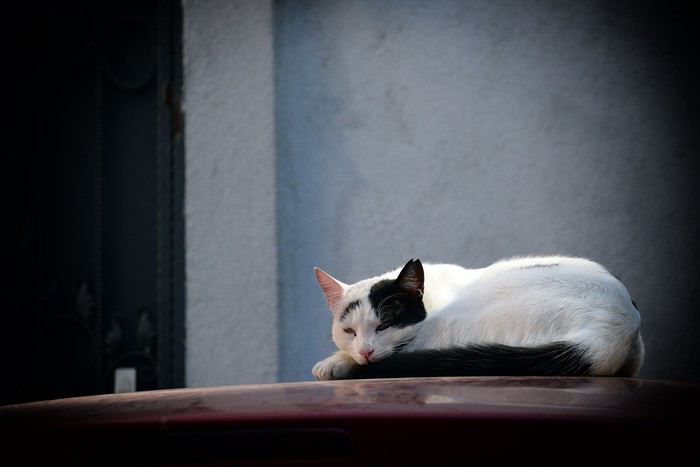
Glancing at the Bosphorus through the bay window of my room, I absentmindedly scatter my things while quietly settling in. Then I turn around, looking for my passport, my cash, my camera battery, eager to join the buzz of the street below. But for the past few minutes, I’ve felt a presence—something moved on the balcony. Suddenly, I spot a black-and-white furball half-hidden behind a pot, nearby. I approach to introduce myself: "Here, kitty, kitty..." I don’t know how to say "kitty" in Turkish, but the rather rude furball hisses in my face, and its ridiculous little tail doubles in size. Okay. Not friendly. I grab what’s within reach—a cream capsule—and offer it as a peace offering. It lunges at me, swipes the object away with a quick paw, and scratches me in the process.

I’m in Istanbul *


* For the title of my travel journal, I was inspired by the lovely film: "Kedi, Cats and Men" by Ceyda Torum
Open
Back from Skoura (Morocco)
A big thank you to the VoyageForum members who shared their experiences with us! We spent 3 wonderful days at "La Kasbah la Palmeraie" in Skoura. Coming from Marrakech (a stunning drive after the Tichka Pass via Telouet and Ait-Benhaddou), our stay at the Palmeraie was pure bliss: Mohammed and Ghizlane’s warm welcome, delicious breakfasts on the terrace overlooking the palm grove (wood-fired bread, honey pancakes made by Ghizlane), and equally delicious and hearty evening meals shared as a family around a cozy fire. We felt right at home and learned so much about the local way of life. The excursions offered were always interesting and off the beaten tourist track—from there, we explored the Dades Valley and Gorges, the Almond Blossom Valley (gorgeous!), and the palm grove. The region is home to magnificent kasbahs, including our hosts’. A different way to "visit" Morocco!
Open
5 weeks in Guatemala in November 2024
A fantastic trip, dominated by the Altiplano, volcanoes, and especially the Mayan people!

Our route: Antigua – San Lucas de Toliman (Lake Atitlán) – Chichicastenango – Sayaxché – El Remate – Flores – Río Dulce – Livingston – Antigua I won’t describe our trip in detail but will highlight a few points that go beyond the usual routes and really won us over. In Antigua, it’s easy to take a chicken bus from the bus station next to the central market in the eastern part of the city to visit nearby villages. We went to Santa María de Jesús on a Sunday without seeing any other Westerners. We got lost in its colorful market, ate at a *comedor* with local dishes we didn’t find anywhere else, and were surrounded by incredibly welcoming Mayans. Several villages around Lake Atitlán are well-covered by travelers and guides like *Routard* and *Lonely Planet*, but if you want to stay somewhere more authentic, I recommend San Lucas de Toliman (we stayed at *Casa Qatzil*—great place!). It’s in the southeast of the lake, with a market on Tuesdays and Fridays, a central square full of locals (more of those super-friendly Mayans!), and the option to visit other villages by *lancha* (boat) for the day. A walk toward the lake lets you pass by the washhouses, and there are hikes accessible by *pick-up* (shared transport), like the twin volcanoes Tolimán and Atitlán or Cerro del Oro (less challenging!). We loved visiting Santa Catarina Palopó—get lost in its maze of steep alleys, admiring the blue facades with their characteristic paintings. There are direct *chicken bus* connections to Chichicastenango in 1.5 hours. Cheap and convenient, though a bit bumpy! Chichicastenango is famous for its market, described as the largest in Central America, on Thursdays and Sundays. A flood of tourists arrives between 10 AM and 1 PM, shuttled in by organized buses from Lake Atitlán and Antigua. But if you have time, stay overnight the day before and enjoy the market before 10 AM or in the afternoon. This little town (more of those welcoming Mayans!) is worth lingering in for a day or two to visit the cemetery, extraordinarily colorful and a site of Mayan rituals. Also take time to go to *Plaza Baktun*, a site considered sacred in Mayan culture where religious ceremonies take place around seven sculptures several meters tall. The ruins of Aguateca are barely excavated (most structures are still covered in vegetation) and are only accessible by boat, traveling up a tributary of the Río de la Pasión to the sound of howler monkeys and birdsong (1.5 hours from Sayaxché). We felt like we got a sense of daily life in the ancient city—not just its religious dimension—with its ravine for sheltering women and children during attacks, its cliff, and defensive walls. Alone with our *lancha* driver, who acted as our guide in the barely cleared jungle, this site doesn’t overlap with Tikal at all—the vibe is completely different. We stayed in El Remate instead of Flores to visit Yaxhá and Tikal, at *Posada Ixchel* (great place!). This quiet little town lets you stroll along the lake and hike in *Cerro Cahui*, a protected biotope leading to a viewpoint. Plus, it’s on the way to the sites, saving 45 minutes per trip.

Feel free to ask me questions about the places, accommodations, etc.—I’d be happy to answer!
Open
DLL File Conflict
Hi there, I use video and photo editing software for my "work".

A conflict has been showing up lately when I open the software. Photo attached.

Is there a specialist around who could help me out?

Thanks in advance.
Open
Travel Journal: A Christmas in Quebec
Hi everyone, we’re sharing our day-by-day travel journal from Quebec in December. 10 days in Montreal and Quebec City during the holiday season and deep winter.

Quebec in winter is something truly exceptional to experience. The Christmas period is magical, especially in Quebec City. We share our story in this travel journal.
Open
Making a living from travel photography?
While researching this topic myself, I came across a discussion thread http://voyageforum.com/voyage/est_t_il_possible_gagner_un_peu_argent_avec_tres_belles_photos_D2577539/ that I found a bit disheartening...

First off, I want to say that this recurring dream isn’t impossible:

http://www.pixfan.com/entretien-avec-eric-lafforgue/

That said, it won’t just fall into your lap by chance! ;-) Believe me, just because no degree is required doesn’t mean you can approach this project as an amateur.

You’ll need to be a technical expert, invest thousands of euros in gear and software, have a unique aesthetic vision, sharp business sense, and a rigorous approach at every stage of your work—because this *is* a profession. Without a minimum of commitment and professionalism, you won’t get far... But then again, other careers aren’t exactly easier...

So, for those who already have a portfolio that triggers uncontrollable gasps of wonder at every slide show at Aunt Monique’s place, here are some great places to test your determination and skills:

http://www.lonelyplanetimages.com/prospective_photographers

http://www.theimageworks.com/cu_prosphoto.php

http://www.pacificstock.com/photographer_guidelines.asp

For those who think they’ve already created some high-resolution masterpieces, you can also invest in internationally renowned competitions:

http://worldinfocuscontest.com/

http://www.tpoty.com/2009/about.html

http://www.thecolorawards.com/

http://journals.worldnomads.com/scholarships/post/32554.aspx

Finally, you might want to start by simply showcasing your work online at low cost and submitting your photos to a massive, not-always-agreeable-but-not-hostile audience for feedback:

http://www.flickr.com/photos/28421453@N07/sets/72157614525899920/

By the way, I hope you're already fluent in English...

Happy travels!
Open

You might also like