Discussions started by Michael7759
14 results on this page.
More options
Many results are in French, the community’s main language. English translations are added over time.
Search results
Visiting La Paz
Here’s one of our favorite cities in South America. I didn’t dare call it the "capital" because it’s pretty complex for this city.
When I set foot in La Paz, I was immediately struck by its bustling energy and striking contrasts. Perched at over 3,600 meters above sea level, the city blends tradition and modernity in a surprising way. We wandered between the colonial buildings of Plaza Murillo, discovered the secrets of the Witches’ Market with its mysterious potions and amulets, and gained some altitude thanks to the cable car, which offers incredible views of the city and the mountains. For thrill-seekers, we tested the famous Death Road by mountain bike—adrenaline was definitely on tap! Of course, the altitude can be a challenge, so in my article, I also share tips for acclimatizing, great places to stay, and detailed itineraries to make the most of your trip, whether you’re there for a day or three. Anyway, during our trip, we realized that the city is often used as a quick stopover where people don’t linger. And that’s a real shame. Out of 3 weeks in Bolivia, we spent 3 full days in the city and would’ve happily stayed longer. If you want to know more, check it out here: 👉 Read the full article
When I set foot in La Paz, I was immediately struck by its bustling energy and striking contrasts. Perched at over 3,600 meters above sea level, the city blends tradition and modernity in a surprising way. We wandered between the colonial buildings of Plaza Murillo, discovered the secrets of the Witches’ Market with its mysterious potions and amulets, and gained some altitude thanks to the cable car, which offers incredible views of the city and the mountains. For thrill-seekers, we tested the famous Death Road by mountain bike—adrenaline was definitely on tap! Of course, the altitude can be a challenge, so in my article, I also share tips for acclimatizing, great places to stay, and detailed itineraries to make the most of your trip, whether you’re there for a day or three. Anyway, during our trip, we realized that the city is often used as a quick stopover where people don’t linger. And that’s a real shame. Out of 3 weeks in Bolivia, we spent 3 full days in the city and would’ve happily stayed longer. If you want to know more, check it out here: 👉 Read the full article
The Peace Museum in Hiroshima
Summary of my article: Visiting the Hiroshima Peace Memorial Museum
This museum is a deeply moving place that left a profound impact on us. Located in the heart of Peace Park, it doesn’t just recount history—it invites reflection on the consequences of war and the importance of preserving peace.
Through poignant exhibits, multimedia testimonies, and striking artifacts like the tricycle of a child victim or the fossilized shadows, you grasp the full scale of the tragedy. Peace Park, with its iconic monuments such as the Genbaku Dome, the Cenotaph, and the Flame of Peace, extends this reflection in a solemn setting.
In an article I wrote on the topic, I also explain how to organize your visit: transportation options, recommended routes through the park, and accommodations to fit every budget. And if you have extra time, I suggest exploring other must-see sites in Hiroshima, like the castle or Miyajima Island, to round out your stay.
This is a place that moved and inspired us, and I hope my article will encourage you to discover it for yourself while carrying a message of remembrance and peace.
https://un-tour-dans-le-sac.fr/musee-de-la-paix-hiroshima/
https://un-tour-dans-le-sac.fr/musee-de-la-paix-hiroshima/
5 days on Easter Island
Easter Island, located between Tahiti and Chile, fascinated me with its volcanic landscapes and legendary Moai statues, erected by the first Polynesian inhabitants to honor their ancestors. Mysterious and iconic, this isolated land intrigues with its history and the enigmas that researchers and explorers are still trying to unravel.
To help you prepare for your trip, here’s my five-day itinerary. I was able to explore major sites while leaving room for some free and adventurous moments. Here’s the program I followed:
Day 1: Discovering Hanga Roa and nearby moais
For my arrival, I started slowly by visiting the village of Hanga Roa. I took the time to stroll around, check out some local shops, and especially admire the first moais accessible for free, to ease into the island’s fascinating history.
Day 2: The must-see sites with a guide (Vaihu, Te Pito Kura, Anakena, Tongariki, Rano Raraku)
The second day was dedicated to the highlights. With a guide, I explored the island’s iconic sites, including the imposing aligned moais of Tongariki and the ancient "statue factory" of Rano Raraku. This intense day helped me understand more about the island’s culture and mysterious history, especially with the paradise-like beach of Anakena at the end of the day.
Day 3: Historical sites and museum (Orongo, Rano Kau, Puna Pau, Akivi)
On the third day, I continued with a guided morning, particularly at the ceremonial village of Orongo, perched atop Rano Kau. After visiting Puna Pau and Akivi, I spent the afternoon at the museum to deepen my knowledge of the Rapa Nui civilization.
Day 4: Bike ride in nature
Craving freedom, I devoted this day to a bike ride along the coastline and through the island’s natural spots. It was the perfect opportunity to explore at my own pace and stop at secret coves, enjoying the tranquility of the landscapes.
Day 5: Hike to the summit of Terevaka
For my last day, I set off on a hike to the summit of Terevaka, the island’s highest point. From there, the 360° view of the island and the ocean is breathtaking and gave me a memorable souvenir of this trip.
This five-day stay was a real journey through time, landscapes, and the mysteries of Easter Island!
If you want more details on my favorite spots, accommodation ideas, or practical tips, you can check out my article: https://un-tour-dans-le-sac.fr/ile-de-paques-5-jours/
Que voir en deux jours à Hong Kong?
Hong Kong est une mégalopole étonnante avec ses gratte-ciels qui semblent défier les lois de l'apesanteur, ses temples tranquilles au milieu de la frénésie urbaine et ses artères débordantes de vie où commerçants et visiteurs s'agitent.
Mais Hong Kong , n 'est pas que cette image de la ville à la densité de population vertigineuse et son horizon saturé de buildings. C'est aussi des paysages de moyennes montagnes tapissées de jungle, des treks en pleine nature, des plages presque exotiques et des villages perdus, à une heure du centre-ville.
Savant mélange de culture britannique et asiatique, Hong Kong est surprenant.
Souvent, on s'y arrête le temps d'une escale avant une autre destination asiatique. Alors les heures sont comptées pour visiter la ville. Dans notre cas, nous y sommes restés 2 jours / 2 nuits. Voici un programme que l'on a optimisé au maximum afin de bien en profiter :
Jour 1 : - VICTORIA PEAK : le plus haut sommet de l'ile de Hong Kong qui offre des vues magnifiques sur la ville - TEMPLE MAN MO : un temple coup de cœur avec ses photogéniques spirales d'encens - SHEUNG WAN : un quartier sur l'ile de Hong Kong qui a su garder son authenticité. Notre quartier préféré à Hong Kong ! - FERRY ET PROMENADE SUR KOWLOON : le "must" de Hong Kong ? La traversée en bateau de la baie victoria, qui pourrait presque s'apparenter à une mini-croisière, est fabuleuse. Le quartier tout au sur de Kowloon très animé, touristique et commerçant. C'est aussi le cœur culturel de la ville avec musées et opéra.
JOUR 2 : - ÎLE LANTAU : un coin de verdure à 1h en transport en commun de Hong Kong. Une mise au vert bien sympa où on en profite pour admirer le fameux "Bouddha assis" - TEMPLE DE WONG TAI SIN : un temple magnifique de couleurs et d'harmonie, tant dans ses jardins qu'à l'intérieur des batiments. - LE MARCHÉ DE TEMPLE STREET : un immense bazar de nuit à ciel ouvert pour acheter de tout et manger sur le pouce…
Si tu veux en savoir davantage sur notre itinéraire, nos émerveillements, nos déceptions, tu peux aller voir notre article et guide complet sur Hong Kong en 2 jours.
Comment ne pas revenir ruiné de Norvège?
Nous avons fait plusieurs fois un voyage dans ce pays superbe. Mais le souci lors d'un voyage en Norvège : c'est le coût ! Le pays est magnifique mais le budget est un problème pour beaucoup de voyageurs. Voici nos conseils pratiques (et testés !) pour rendre un voyage en Norvège moins cher...
C est ici : https://un-tour-dans-le-sac.fr/norvege-pas-chere/
C est ici : https://un-tour-dans-le-sac.fr/norvege-pas-chere/
Bali hors des sentiers battus
Bali hors des sentiers battus, c’est possible ?
Un “Bali autrement”, authentique : on en rêve..! Mais il ne faut pas se le cacher, l’île des dieux est convoitée. Étant adepte des grands espaces et du “hors sentiers battus”, Bali nous a fait hésiter. Et sur place, on a effectivement été confronté à une urbanisation galopante, aux foules de touristes, aux rabatteurs, aux enseignes tapageuses, aux boutiques de grandes marques et d’autres choses que l’on préfère fuir ! Alors sortir des sentiers battus quand on va à Bali est très difficile. Malgré cela, on te donne quelques idées, anecdotes et conseils pour vivre un Bali autrement, un Bali authentique, un Bali hors des sentiers battus. Et au final, cette île nous a offert une belle dose d’aventures et sincérité. On ne pouvait pas louper ça ! Ah, ça t’intéresse ? On a quelques secrets à te livrer. Mais chut…il ne faut pas trop l’ébruiter. Tu veux lire l'article que nous avons écrit en entier ? Voici le guide complet :https://un-tour-dans-le-sac.fr/bali-autrement/
Un “Bali autrement”, authentique : on en rêve..! Mais il ne faut pas se le cacher, l’île des dieux est convoitée. Étant adepte des grands espaces et du “hors sentiers battus”, Bali nous a fait hésiter. Et sur place, on a effectivement été confronté à une urbanisation galopante, aux foules de touristes, aux rabatteurs, aux enseignes tapageuses, aux boutiques de grandes marques et d’autres choses que l’on préfère fuir ! Alors sortir des sentiers battus quand on va à Bali est très difficile. Malgré cela, on te donne quelques idées, anecdotes et conseils pour vivre un Bali autrement, un Bali authentique, un Bali hors des sentiers battus. Et au final, cette île nous a offert une belle dose d’aventures et sincérité. On ne pouvait pas louper ça ! Ah, ça t’intéresse ? On a quelques secrets à te livrer. Mais chut…il ne faut pas trop l’ébruiter. Tu veux lire l'article que nous avons écrit en entier ? Voici le guide complet :https://un-tour-dans-le-sac.fr/bali-autrement/
Visiter l'estuaire de Sainte-Lucie (Afrique du Sud)
Nous serons à St Lucia en aout.
On cherche un bon plan pour aller sur l estuaire et observer les hippopotames. L idéal serait une petite embarcation pas trop cher... (ha ha... je rêve ?)
Avez vous des retours d expériences ? des conseils ?
Merciiiiiiiiiiiiii
Merciiiiiiiiiiiiii
Sumatra: Off the Beaten Path in Asia
Here’s the thing: ever since Sumatra, I’ve become picky.
I don’t want the grey-green of the North Sea anymore. I want turquoise, crystal-clear waters—so clear you can see the coral 10 meters down. You see it, right?
I don’t want those "equatorial greenhouses" you visit politely in well-maintained park alleys. I want wild, humid, buzzing jungle—hostile yet captivating at the same time.
I don’t want wheat that becomes flour that becomes bread that dips into soup. I want jade-green rice terraces rippling in the wind through distant valleys, where you can enjoy a nasi goreng.
I want more! I want coconut trees in sight, fine sand underfoot, smiles in the streets, and the world’s largest volcanic lake with a charming little island inside. Simple, really!
Here’s the 26-day itinerary across this island:
LAKE TOBA: 4 days It’s the story of a volcanic island at the bottom of a lake at the bottom of a volcano. The lake is Toba. The island is Samosir. Time here is for pausing. Time is for savoring lobsters, swimming in calm waters, enjoying the mild climate without the tourist crowds. And when time isn’t for pausing, it’s for wandering at a leisurely pace—walking, canoeing, or scootering. You’ll discover lush jungle landscapes, Batak villages (a Christian ethnic group) with surprising architecture, small inner lakes, and breathtaking views from the summit. Tuk Tuk, the main village on Samosir, offers plenty of charming restaurants and accommodations. But you can also venture into lost villages and find a peaceful haven with locals... and never want to leave. If you want to know more and see all the photos, it’s here: Lake Toba.
BERASTAGI: 2 days We’re in the heart of Sumatra’s volcanoes. Berastagi is the starting point for climbing the smoking, sulfurous mountains nearby. The town itself isn’t interesting, but you’ll find everything you need (markets, lodging, warungs, restaurants...). For the volcanoes, the most accessible is Gunung Sibayak. No guide needed—the hike only takes a few hours (depending on where you start). All accommodations provide clear directions. The summit is only 2,095 meters high. Oh, this volcano isn’t all that impressive. But it’s really nice to feel the earth’s warmth in this lunar, ochre-yellow landscape, through the hissing fumaroles escaping the rocks. The place is stunning on a clear day, or even better if you’re lucky enough to rise above the clouds. Across from it, you’ll see the splendid view of a more turbulent neighboring volcano: Mount Sinabung and its dramas.
The jungle KETAMBE: 4 days
This is the real jungle. Not the Hollywood studio kind or the city zoo version. No: the jungle. Teeming, dense, humid, and noisy. With the help of a specialized guide, we spotted plenty of insects and birds, long-tailed macaques, "Thomas leaf monkeys," and the much-anticipated orangutan... Ketambe is less touristy than Bukit Lawang. The animals are completely wild, not "semi-tame." This part of Gunung Leuser National Park is also harder to access, but the experience remains authentic even as tourism grows. In these times of deforestation advancing like a terrestrial cancer, experiencing the jungle is a unique, moving, essential moment: it’s "For the wild beauty of the last primary forests" (Le Monde, November 13, 2013). Leech socks and a small backpack: you’re ready for a multi-day trek? Off you go for muddy slopes, liters of sweat, hot rivers, endless green... and primates! Sleeping at least one night is a memorable adventure: the sounds of the jungle in total darkness deliver their dose of sensations, chills, and lifelong memories. If you want to know more and see all the photos, it’s here: the Ketambe jungle.
PULAU WEH: 5 days It’s all here: turquoise waters, fishing villages, thrilling scuba diving, lush jungle, coconut trees, warungs, and fresh fish on abandoned beaches with seashells and crustaceans. A small island north of Sumatra (50 minutes by ferry), Pulau Weh is slowly recovering from the 2004 tsunami. For now, the place isn’t overrun by tourists. But the infrastructure is more pleasant than in the rest of Sumatra. You’ll find some charming bungalows right on the water. Rent a scooter, and you can easily find yourself alone on a paradise-like cove for a romantic sunset. For the party scene, uh... it’s pretty quiet! People come here mainly for scuba diving with its colorful corals (though some have bleached) and lively marine life. Snorkeling also reveals beautiful sights. If you’re not here to swim, there’s always lazing on the beach in a hammock, sipping while gazing at the turquoise waves. That’s great too! If you want to know more and see all the photos, it’s here: Pulau Weh.
LAKE MANINJAU: 2 days The mist yawns slowly over the waters at dawn. When it finally lifts, you discover a blue treasure at the bottom of the old volcano’s caldera. In central-west Sumatra, Lake Maninjau is home to the Minang Kabau people. Less touristy than Lake Toba, it still offers equally beautiful landscapes. By scooter, a full day is enough to circle the lake (40 km) through villages, jungle, and rice terraces: it’s very pleasant, especially the southern part where traffic is light. You’ll find bungalows by the water, mainly near the village of Maninjau (yes, same name as the lake). From the crater’s heights, you can admire the whole of Maninjau (the lake!). To get there, you can navigate the 44 hairpin turns (!) by motorized vehicle from Maninjau (the village!) or tackle the path climbing from Bayur to Puncak Lawang, where the view is... top (yes, same name as the village).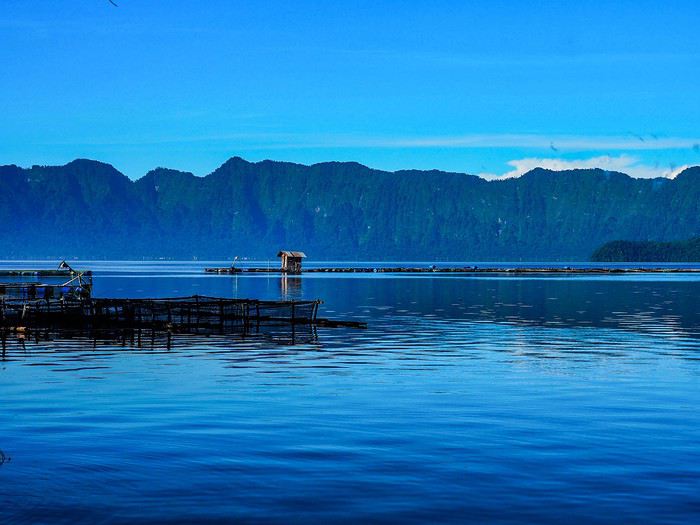
HARAU VALLEY: 3 days Magnificent rice terraces surrounded by towering cliffs and cascading waterfalls. That’s what awaits the adventurer—happy like Ulysses after a long journey to the fertile Harau Valley. It’s peaceful, off the beaten path, and rejuvenating. Few tourists here, and few accommodations. The well-known Abdi Homestay offers quiet bungalows, slightly set back from the main road, in a stunning setting. Again, renting a scooter is a great idea, but here, "happiness is in the fields"—well, the rice terraces. So, park your two wheels and venture along the paths crisscrossing the terraces, following small streams, brushing past villages lost in the valley. If you want to know more and see all the photos, it’s here: Harau Valley.
BEACHES SOUTH of PADANG: 4 days 20 km south of Padang lies Bungus Beach. But that’s not it yet... You’ll need to take a fisherman’s boat for 40 minutes south to land on a peninsula inaccessible by car. That’s the minimum to reach this little paradise, nestled between jungle and sea, far from Padang’s pollution and hustle. An Eden on an isolated beach, with nothing but small bungalows and possible excursions to the nearby islands. The only way to get around: by boat and on foot... Pure bliss, toes in the water. And on the blog "Un tour dans le sac", nothing is spared—especially not the description to make your mouth water (Indian Ocean water, that is): sublime turquoise waters, postcard-perfect coconut trees, lazing in your favorite hammock.
For the practical side, here’s some info:
Sumatra Travel: Itinerary Summary My thoughts Sumatra is a magnificent Indonesian island and still relatively untouched. Tourists mainly flock to Java and Bali. It’s especially suited for nature lovers who’ll appreciate its volcanoes, paradise islands, jungle, and rice terraces. Sumatra is huge: in 3 weeks, we only visited the northern half of the island... And even then, we barely scratched the surface of this stunning part of Sumatra. That said, this itinerary offers an exceptional variety of landscapes: beaches, volcanoes, rice terraces, jungle—the winning combo!
Overall, Sumatra is still lacking in infrastructure, and maybe that’s a good thing: it’s far from Bali’s rampant "hotel urbanization." That said, you’ll have to accept spartan comfort: Sumatra, as beautiful as it is, is only for backpackers, adventurers, and travelers who can do without cozy 3-star hotels. In short, Sumatra is earned, but the effort is well worth it, and the warm welcome from the locals will make you forget the minor travel inconveniences.
A disappointment? The food isn’t as good as Bali’s (check out our article on the subject (link)). The stop in Berastagi is nice but not essential, especially if you’ve already seen Java’s impressive volcanoes.
A favorite? There were so many! But if I had to choose, I’d pick the Ketambe jungle. It was my first experience in a natural environment I didn’t know: a primary forest and memories that’ll last!
Would I do the Sumatra trip again? I regret not going to the Mentawai Islands. This archipelago, off Sumatra’s west coast, has long remained isolated: some inhabitants still live traditionally. These "flower men" live in harmony with nature. Unfortunately, their way of life is threatened by modern influences, and their fragile, unique culture risks disappearing. I would’ve loved to spend time with this incredible ethnic group. But it takes time: a week seems necessary. I would’ve had to skip some stops in our itinerary—maybe the peninsula south of Bungus and Berastagi?
Budget: It’s really cheap, especially the food, which, let’s be honest, isn’t amazing. Backpackers who can settle for spartan comfort (small bungalows without AC or hot water) and local food in warungs can easily get by on 20 € per day for two people (food + lodging). The cost of flights from Europe to Sumatra remains high. For our part, we found great deals on Paris-Hong Kong tickets (350 € round trip). Then you just need to reach Medan by low-cost airline.
No mandatory tipping in restaurants or accommodations. However, it’s more common to tip guides or taxi drivers.
Like many places in Indonesia, everything is negotiable. If you’re new to this, it’s not easy at first... Especially when dealing with a population poorer than us, "rich Westerners." But bargaining is part of the local culture! And you’ll get used to it—it even becomes fun. Plus, you don’t want to be that tourist paying the "tourist price" they’ll likely quote first, right?
To negotiate, be firm, respect your counterpart, smile, stay polite... Clearly show it’s too expensive or that the deal is done (by shaking hands, for example). Typing the numbers on your phone helps communicate the price. Learning a few words in the local language ("It’s too expensive," "How much?") is appreciated! Okay, it’s a rough tip, but here’s a base: dividing the first price by 2 gets you close to a fair negotiation.
Currently, 15,000 Indonesian rupiahs are worth about 1 €.
Accommodation Infrastructure is underdeveloped in Sumatra. You’ll find fewer "charming lodgings" than in Bali. Still, there are some very pleasant places. If you read our Sumatra articles, we recommend Abdi Homestay in Harau Valley and Silimalumbo at Lake Toba. In Pulau Weh, the choice is wider, but we suggest trying the seafood pasta at Bixio Café!
Health We didn’t get sick in Sumatra. By following a few simple rules (avoiding tap water, not swimming in stagnant freshwater), you’ll avoid the main issues. Hygiene is improving anyway. Anti-malaria treatment is still recommended, but cases are rare.
Also, keep in mind that Sumatra has a hot, humid climate—adjust your behavior accordingly (stay hydrated, protect yourself from the sun, etc.).
Here’s the 26-day itinerary across this island:
LAKE TOBA: 4 days It’s the story of a volcanic island at the bottom of a lake at the bottom of a volcano. The lake is Toba. The island is Samosir. Time here is for pausing. Time is for savoring lobsters, swimming in calm waters, enjoying the mild climate without the tourist crowds. And when time isn’t for pausing, it’s for wandering at a leisurely pace—walking, canoeing, or scootering. You’ll discover lush jungle landscapes, Batak villages (a Christian ethnic group) with surprising architecture, small inner lakes, and breathtaking views from the summit. Tuk Tuk, the main village on Samosir, offers plenty of charming restaurants and accommodations. But you can also venture into lost villages and find a peaceful haven with locals... and never want to leave. If you want to know more and see all the photos, it’s here: Lake Toba.
BERASTAGI: 2 days We’re in the heart of Sumatra’s volcanoes. Berastagi is the starting point for climbing the smoking, sulfurous mountains nearby. The town itself isn’t interesting, but you’ll find everything you need (markets, lodging, warungs, restaurants...). For the volcanoes, the most accessible is Gunung Sibayak. No guide needed—the hike only takes a few hours (depending on where you start). All accommodations provide clear directions. The summit is only 2,095 meters high. Oh, this volcano isn’t all that impressive. But it’s really nice to feel the earth’s warmth in this lunar, ochre-yellow landscape, through the hissing fumaroles escaping the rocks. The place is stunning on a clear day, or even better if you’re lucky enough to rise above the clouds. Across from it, you’ll see the splendid view of a more turbulent neighboring volcano: Mount Sinabung and its dramas.
The jungle KETAMBE: 4 days
This is the real jungle. Not the Hollywood studio kind or the city zoo version. No: the jungle. Teeming, dense, humid, and noisy. With the help of a specialized guide, we spotted plenty of insects and birds, long-tailed macaques, "Thomas leaf monkeys," and the much-anticipated orangutan... Ketambe is less touristy than Bukit Lawang. The animals are completely wild, not "semi-tame." This part of Gunung Leuser National Park is also harder to access, but the experience remains authentic even as tourism grows. In these times of deforestation advancing like a terrestrial cancer, experiencing the jungle is a unique, moving, essential moment: it’s "For the wild beauty of the last primary forests" (Le Monde, November 13, 2013). Leech socks and a small backpack: you’re ready for a multi-day trek? Off you go for muddy slopes, liters of sweat, hot rivers, endless green... and primates! Sleeping at least one night is a memorable adventure: the sounds of the jungle in total darkness deliver their dose of sensations, chills, and lifelong memories. If you want to know more and see all the photos, it’s here: the Ketambe jungle.
PULAU WEH: 5 days It’s all here: turquoise waters, fishing villages, thrilling scuba diving, lush jungle, coconut trees, warungs, and fresh fish on abandoned beaches with seashells and crustaceans. A small island north of Sumatra (50 minutes by ferry), Pulau Weh is slowly recovering from the 2004 tsunami. For now, the place isn’t overrun by tourists. But the infrastructure is more pleasant than in the rest of Sumatra. You’ll find some charming bungalows right on the water. Rent a scooter, and you can easily find yourself alone on a paradise-like cove for a romantic sunset. For the party scene, uh... it’s pretty quiet! People come here mainly for scuba diving with its colorful corals (though some have bleached) and lively marine life. Snorkeling also reveals beautiful sights. If you’re not here to swim, there’s always lazing on the beach in a hammock, sipping while gazing at the turquoise waves. That’s great too! If you want to know more and see all the photos, it’s here: Pulau Weh.
LAKE MANINJAU: 2 days The mist yawns slowly over the waters at dawn. When it finally lifts, you discover a blue treasure at the bottom of the old volcano’s caldera. In central-west Sumatra, Lake Maninjau is home to the Minang Kabau people. Less touristy than Lake Toba, it still offers equally beautiful landscapes. By scooter, a full day is enough to circle the lake (40 km) through villages, jungle, and rice terraces: it’s very pleasant, especially the southern part where traffic is light. You’ll find bungalows by the water, mainly near the village of Maninjau (yes, same name as the lake). From the crater’s heights, you can admire the whole of Maninjau (the lake!). To get there, you can navigate the 44 hairpin turns (!) by motorized vehicle from Maninjau (the village!) or tackle the path climbing from Bayur to Puncak Lawang, where the view is... top (yes, same name as the village).
HARAU VALLEY: 3 days Magnificent rice terraces surrounded by towering cliffs and cascading waterfalls. That’s what awaits the adventurer—happy like Ulysses after a long journey to the fertile Harau Valley. It’s peaceful, off the beaten path, and rejuvenating. Few tourists here, and few accommodations. The well-known Abdi Homestay offers quiet bungalows, slightly set back from the main road, in a stunning setting. Again, renting a scooter is a great idea, but here, "happiness is in the fields"—well, the rice terraces. So, park your two wheels and venture along the paths crisscrossing the terraces, following small streams, brushing past villages lost in the valley. If you want to know more and see all the photos, it’s here: Harau Valley.
BEACHES SOUTH of PADANG: 4 days 20 km south of Padang lies Bungus Beach. But that’s not it yet... You’ll need to take a fisherman’s boat for 40 minutes south to land on a peninsula inaccessible by car. That’s the minimum to reach this little paradise, nestled between jungle and sea, far from Padang’s pollution and hustle. An Eden on an isolated beach, with nothing but small bungalows and possible excursions to the nearby islands. The only way to get around: by boat and on foot... Pure bliss, toes in the water. And on the blog "Un tour dans le sac", nothing is spared—especially not the description to make your mouth water (Indian Ocean water, that is): sublime turquoise waters, postcard-perfect coconut trees, lazing in your favorite hammock.
For the practical side, here’s some info:
Sumatra Travel: Itinerary Summary My thoughts Sumatra is a magnificent Indonesian island and still relatively untouched. Tourists mainly flock to Java and Bali. It’s especially suited for nature lovers who’ll appreciate its volcanoes, paradise islands, jungle, and rice terraces. Sumatra is huge: in 3 weeks, we only visited the northern half of the island... And even then, we barely scratched the surface of this stunning part of Sumatra. That said, this itinerary offers an exceptional variety of landscapes: beaches, volcanoes, rice terraces, jungle—the winning combo!
Overall, Sumatra is still lacking in infrastructure, and maybe that’s a good thing: it’s far from Bali’s rampant "hotel urbanization." That said, you’ll have to accept spartan comfort: Sumatra, as beautiful as it is, is only for backpackers, adventurers, and travelers who can do without cozy 3-star hotels. In short, Sumatra is earned, but the effort is well worth it, and the warm welcome from the locals will make you forget the minor travel inconveniences.
A disappointment? The food isn’t as good as Bali’s (check out our article on the subject (link)). The stop in Berastagi is nice but not essential, especially if you’ve already seen Java’s impressive volcanoes.
A favorite? There were so many! But if I had to choose, I’d pick the Ketambe jungle. It was my first experience in a natural environment I didn’t know: a primary forest and memories that’ll last!
Would I do the Sumatra trip again? I regret not going to the Mentawai Islands. This archipelago, off Sumatra’s west coast, has long remained isolated: some inhabitants still live traditionally. These "flower men" live in harmony with nature. Unfortunately, their way of life is threatened by modern influences, and their fragile, unique culture risks disappearing. I would’ve loved to spend time with this incredible ethnic group. But it takes time: a week seems necessary. I would’ve had to skip some stops in our itinerary—maybe the peninsula south of Bungus and Berastagi?
Budget: It’s really cheap, especially the food, which, let’s be honest, isn’t amazing. Backpackers who can settle for spartan comfort (small bungalows without AC or hot water) and local food in warungs can easily get by on 20 € per day for two people (food + lodging). The cost of flights from Europe to Sumatra remains high. For our part, we found great deals on Paris-Hong Kong tickets (350 € round trip). Then you just need to reach Medan by low-cost airline.
No mandatory tipping in restaurants or accommodations. However, it’s more common to tip guides or taxi drivers.
Like many places in Indonesia, everything is negotiable. If you’re new to this, it’s not easy at first... Especially when dealing with a population poorer than us, "rich Westerners." But bargaining is part of the local culture! And you’ll get used to it—it even becomes fun. Plus, you don’t want to be that tourist paying the "tourist price" they’ll likely quote first, right?
To negotiate, be firm, respect your counterpart, smile, stay polite... Clearly show it’s too expensive or that the deal is done (by shaking hands, for example). Typing the numbers on your phone helps communicate the price. Learning a few words in the local language ("It’s too expensive," "How much?") is appreciated! Okay, it’s a rough tip, but here’s a base: dividing the first price by 2 gets you close to a fair negotiation.
Currently, 15,000 Indonesian rupiahs are worth about 1 €.
Accommodation Infrastructure is underdeveloped in Sumatra. You’ll find fewer "charming lodgings" than in Bali. Still, there are some very pleasant places. If you read our Sumatra articles, we recommend Abdi Homestay in Harau Valley and Silimalumbo at Lake Toba. In Pulau Weh, the choice is wider, but we suggest trying the seafood pasta at Bixio Café!
Health We didn’t get sick in Sumatra. By following a few simple rules (avoiding tap water, not swimming in stagnant freshwater), you’ll avoid the main issues. Hygiene is improving anyway. Anti-malaria treatment is still recommended, but cases are rare.
Also, keep in mind that Sumatra has a hot, humid climate—adjust your behavior accordingly (stay hydrated, protect yourself from the sun, etc.).
La Sardaigne en hiver
Orgosolo, Bosa, Cala Luna… des noms qui sentent bon la Dolce Vita ! Et on t'y emmène à bord de notre "macchina" pour un road trip rafraîchissant à travers les paysages somptueux de la Sardaigne. Cette destination est également très appréciable en hiver où on y a trouvé calme et authenticité...
https://un-tour-dans-le-sac.fr/visiter-la-sardaigne/

https://un-tour-dans-le-sac.fr/visiter-la-sardaigne/
Cuisine balinaise: un goût d'exotisme
Exquise, savoureuse, parfumée... Les mots ne manquent pas pour définir la cuisine balinaise. On n'a pas pu s'empêcher de faire un petit article sur le sujet.
Tour d'horizon des délices goutées lors d'un voyage à Bali. Miam ! j'en salive.
https://un-tour-dans-le-sac.fr/cuisine-bali/
https://un-tour-dans-le-sac.fr/cuisine-bali/
Jordanie en hiver: quel wadi pour randonner?
Bonjour !
comme le titre l indique , nous partons 9 jours plein (du 10 au 20 février) en Jordanie. Atterrissage à Amman et location de voiture. Nous sommes 2, en bonne condition physique, aimons la nature et les hors sentiers battus.
Nous avons comme grossière idée de faire Dana, la mer morte, petra, aqaba (plongée) et wadi rum.
ma 1ere question assez générale est : des conseils ? des idées ? des immanquables ? des coins secrets hors des sentiers battus ?
ma 2eme question + pointue est : on voulait faire un trail dans le wadi mujib mais on s est rendu compte que le trail le plus sympa (siq trail) est fermé en hiver. Y a t il d autres randonnées / d autres wadi qui s'approcheraient de ce trail (canyon, couleur ocre...) qui pourraient ravir nos yeux avides de paysages et accessibles en février ? On a entendu parlé du ibex trail (dans Wadi Mujib), de wadi dana et wadi Ghwayr ?
J ai lu sur ce site qu'il existait beaucoup d autres wadi mais difficile de se faire un avis. peut etre en avez vous testé un ? https://www.le-voyage-autrement.com/mag/jordanie/balade-au-gre-des-wadis.php
Voilà ! merci d avance !
Sumatra: "booking or not booking"?
Bonjour
je prépare mon voyage de 3 semaines en aout à Sumatra.
Pour les logements, nous avons opté pour des réservations en hôtel, bungalows ou chez l'habitant via les plateformes genre b**ing.com et RbNb... (vous voyez ?)
Pourtant, j ai eu pas mal de réponses des propriétaires du logement me disant que la chambre m est réservé et de ne pas réserver par ces plateformes voire d annuler la réservation. La conversation entre le propriétaire et moi servirait de preuve de la "réservation".
Avez vous eu ce genre de pratique (à Sumatra ou ailleurs ?). Quel bilan en tirez vous ? Est ce fiable ? Merciiiiiiii
Aller à Pulau Weh depuis Sumatra?
Bonjour,
nous projetons d aller sur l ile de Pulau Weh en aout à partir de Banda Aceh. Nous avons vu qu'il y avait un ferry. A priori, le dernier part à 16h 00. Or, nous risquons fort de le rater (arrivée vers 17 h ?). Existe t il un autre moyen de rejoindre l ile le soir meme ? Demander à des pecheurs à Banda Aceh ? autres solutions ??
Merciiiiiiiiiii
Temps de correspondance à Kuala Lumpur entre KLIA et KLIA2
Bonjour,
J aimerais savoir combien de temps d'escale minimum il faudrait entre un vol atterissant à Klia et décollant à Klia 2 ? (et inversement ?)
Pour info, nous atterissons à Klia à 8h 05 et décollons de Klia2 à 10h 50 (donc 2h 45 d escale)
Et pour le retour nous aterrissons à 17h 20 à Klia2 et décollons à 20h50 de Klia (3h30 d esclae)
Est ce suffisant pour ne pas rater les correspondances ?
Merciiiiiiiiii