Results for "Afrique+du+Sud+souvenir+artisanat"
About 48,831 results.
More options
Many results are in French, the community’s main language. English translations are added over time.
Search results
Animaux: adulte et jeune sur le même cliché
Férue de photographie animalière ... J'aimerais lancer l'idée d' un topic photos d'animaux "adulte-jeune sur un même cliché" 😉
1.& 2 Nyalas 3. Babouin 4. Vervet Monkey
1.& 2 Nyalas 3. Babouin 4. Vervet Monkey
Vos deux films préférés cultes d'aventure ou de voyage
Salut tout le monde,
Quels sont vos films préférés ayant un rapport avec l'aventure ou le voyage.
Pour moi, un des plus grands film de tous les temps c'est :Lawrence d'Arabie (en Arabie, théoriquement, tourné ailleurs)
Vient ensuite :Aguirre, le Colère de Dieu (en Amazonie)
A vous ....
Quels sont vos films préférés ayant un rapport avec l'aventure ou le voyage.
Pour moi, un des plus grands film de tous les temps c'est :Lawrence d'Arabie (en Arabie, théoriquement, tourné ailleurs)
Vient ensuite :Aguirre, le Colère de Dieu (en Amazonie)
A vous ....
Un objet de rêve!
Salut!!l'objet de vos rêves, est un objet que vous-avez acheté a l'étranger a lors de l'un de de vos voyages, un objet qui a une valeur inestimable a vos yeux( qui n'a rien a voir avec l'argent), un objet qui vous fait replonger a l'intérieur de vos souvenirs les plus lointain, un objet qui incite a la rêverie...quel est cet objet qui vous rapelle l'exaltation de votre dernier voyage????
Freiheit!!
Freiheit!!
Reflex Argentique ou Compact Numérique?
Bonjour, je pars en voyage à la fin de l'été pour plusieurs mois en Europe et en Asie et j'aime bien la photographie. Comme je n'ai pas les moyens de me procurer du Reflex Numérique, je suis bien embêté entre choisir un Reflex Argentique ou un Compact Numérique...
Bien entendu que je peux prendre beaucoup plus de photographies en numérique, mais aucune création.. ou presque..
Que me conseillez-vous? Que pensez-vous du Canon Rebel T2 (Reflex Argentique)?!
Merci!! 😉
Vincent
Bien entendu que je peux prendre beaucoup plus de photographies en numérique, mais aucune création.. ou presque..
Que me conseillez-vous? Que pensez-vous du Canon Rebel T2 (Reflex Argentique)?!
Merci!! 😉
Vincent
Cuba: nouveau délire d'un dictateur sénile...
Dernier délire en date de la dictature cubaine et de son dirigeant sénile : l'obligation faite aux cubains, y compris et surtout ceux travaillant dans le tourisme, de limiter au maximum les contacts avec les étrangers et l'interdiction d'accepter des cadeaux et autres pourboires de leur part sous peine de devoir les restituer ensuite aux autorités cubaines ! Lorsqu'on sait qu'un cubain travaillant dans un hôtel à touristes gagne en moyenne l'équivalent d'une quinzaine de dollars US/mois, on imagine facilement les conséquences.
Quant au but officiel de la manoeuvre, il s'agit de "défendre la pureté de la révolution castriste et des valeurs socialistes", dixit le Ministre cubain du tourisme. Lamentable...
Votre avis sur Thomas Cook
J'ai réservé pour voyage de noces à Hacienda dominicus avec T Cook car meilleur prix. Mais j'ai entendu qu'il y avait des problèmes avec eux: pourriez vous me donner vos expériences, tant positives que négatives? Merci, car je stresse un peu...
16 days with family in La Gomera (Canary Islands)
Preamble: Why La Gomera?
When we started looking for a summer destination a few months ago, our first criterion was to avoid extreme heat and heatwaves. We had already been to Norway two years ago and are considering going back in the future for other occasions. So, we had some fun asking ChatGPT which destinations enjoyed a mild climate during the summer without going too far. Among the list provided by the AI were the Canary Islands... The idea of a place we wouldn’t have thought of first, both not too far away and exotic enough, appealed to us: “Hmm, why not?”
This destination had never really attracted me, though Magali was a bit more interested. Five years earlier, COVID had caused a short break in my professional activity, and I had planned a trip because the flight price was attractive, and I was looking for a destination different from what usually appeals to me, more than out of deep interest. From a distance and with a social judgment I acknowledge (it’s not great, but it’s not completely wrong), I had the image of a destination for party-goers enjoying the sun without the slightest interest in local culture, with concrete coastlines and denatured landscapes—everything I detest the most. Still, I had done some quick research on the different islands and spotted Lanzarote for its beautiful volcanic landscapes, hiking trails, beaches, and the impression of a good balance between activity and fewer crowds than Tenerife or Gran Canaria. Then I dropped the idea of going, without ever reconsidering traveling to the Canaries...
Until now! Because we started researching the different islands of the archipelago to see which ones might appeal to us the most. It was La Gomera, the third smallest island of the archipelago, more praised for its hiking trails and preserved nature than for its beaches, away from mass tourism (fifty times fewer tourists than Tenerife) but still a bit more developed than its wild neighbor El Hierro, that caught our attention. Contrary to what might be suggested later, I’m not at all addicted to AI, but I use it from time to time to synthesize quick research or simply for experimentation. Since ChatGPT had started anticipating my tastes lately as if it had become my buddy (often successfully, sometimes off the mark), I asked which Canary Island would suit me best for a trip with my family. The tool answered first with... La Gomera. So, I tested it and teased it a bit to see if this suggestion was well-founded, as the method sometimes makes it contradict itself. But no luck: “You’d appreciate the wild nature of El Hierro, but with family, you’ll find little activity for the kids. You won’t like the touristy vibe of the big islands like Tenerife, Gran Canaria, Lanzarote, and Fuerteventura. You could consider La Palma, but it’s really La Gomera that will suit you best, based on your interests and the criteria given.” So, we dug deeper into our research and were convinced without a shadow of a doubt that this island was the one waiting for us.
Without knowing it, we had Canarians in our circle who revealed their origins when they heard about our travel plans. One from Tenerife insisted we’d be better off choosing Tenerife (obviously...) because it also has preserved spots and that La Gomera, “you can explore it in two or three days, you’ll get bored quickly...” The other, a colleague from Gran Canaria who had never visited La Gomera, still recommended it without hesitation because it turned out her parents had just gone there on vacation: they loved it and had encountered few tourists. She also tended to think this destination was usually the subject of short stays, but according to what her parents told her, taking your time there was also a great idea. However, in our research, the idea that La Gomera is an island you can explore in three or four days max kept coming up. So, we considered combining its visit with La Palma or El Hierro, the other two that caught our eye. But hopping between islands by ferry represents a significant budget for non-Canarians, even more so for a family of four. Then, scrutinizing Google Maps, it seemed obvious that two weeks were too short to discover two islands as they deserve, and that there seemed to be plenty to see in La Gomera, given its very unique culture. After all, we read that some people spend several months a year there, others never even leave... Finally, these landscapes and this atmosphere, which seemed to us a mix of Europe, North Africa, and Latin America, tempted us. So, it would be two weeks in La Gomera, deal!
La Gomera is therefore the second... well, the third smallest island of the Canaries since La Graciosa was recently recognized as a fully inhabited island. It has the shape of a rough circle about 20 to 25 kilometers in diameter and has just over 20,000 inhabitants, half of them in its capital, San Sebastián de la Gomera, the only real town. Like its Canarian sisters, La Gomera is a volcanic formation that rose about 10 million years ago. The island is very mountainous and rugged, covered with red and black rocky landscapes. Geological activity has shaped, between the sprawling massifs that end in steep cliffs in the ocean, six coastal valleys with tropical vegetation that have favored human settlement. They divide the island like slices of a cake; from the north clockwise: the agricultural Vallehermoso, the rustic Agulo, the green, humid, and fertile Hermigua, the sunny capital San Sebastián de la Gomera, the southern and isolated Alajeró-Santiago, and the seaside Valle Gran Rey. They constitute the six municipalities (more like cantons to our French understanding) of the territory.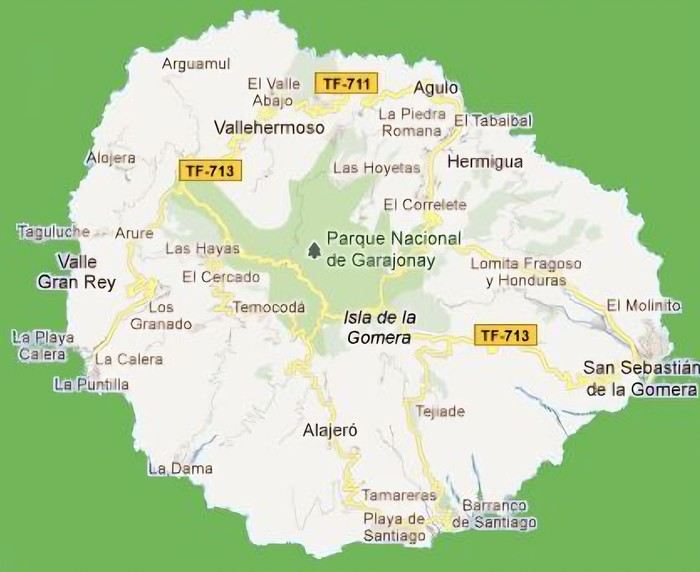 The large solidified magma massifs that shape the heart of the island have created a large depression more protected from the sun at its center, allowing the growth of a vast laurel forest, today grouped within the Garajonay National Park, La Gomera’s green lung, which has earned it the status of a World Biosphere Reserve. Its completely European appearance contrasts sharply with the rocky and tropical landscapes of the rest of the island. Thus, the climate varies greatly from one point to another on the island: in summer, you can quickly go from a dry and sunny valley at 35°C to a humid forest area at altitude at 18°C.
La Gomera was populated late. As with the rest of the Canaries, human presence is thought to have begun about 2,000 years ago. Groups of animist Berbers, probably fleeing persecution, gradually populated the archipelago, especially the western islands and La Gomera, becoming its small aboriginal population: the Guanches (or later Gomeros). The animist and pastoral civilization of the Guanches thrived until the Spanish takeover in the 15th century, which, after a short period of harmony and mixing with the indigenous people, suddenly ended in bloodshed... La Gomera later became the “Columbus Island” after Christopher Columbus’s stopover, increasing the blending of populations. In the 20th century, many Gomeros emigrated to Cuba and other Latin American countries in search of a better life, bringing back a mix of cultures and traits quite palpable in today’s Gomeran culture. It is, however, in La Gomera that the vestiges of Guanche culture seem to have left the most traces, in the language, gastronomy, social practices... Moreover, most Gomeros, especially in remote villages, have a particular identifiable type and proudly claim their ancestral roots, even making La Gomera a bit exotic in the eyes of other Canarians.
Perhaps that’s why it has never really wanted to develop its tourist infrastructure too much. If we set aside the tourists who visit for the day by bus or boat from Tenerife on a marked itinerary (and whom we ultimately rarely encounter), La Gomera has remained a hidden gem, a destination focused on nature discovery that attracts hikers, nature-loving divers, and scientists for its fauna and flora, and to a lesser extent, beachgoers who don’t seek overly developed coastlines. Tourist activity is therefore limited. Roughly speaking, you’ll find a majority of Spaniards, including a substantial number of residents from other Canary Islands, many Germans who have a particular fondness for La Gomera and spend long stays there or own second homes, to the point that the German cultural footprint is clearly noticeable in some places (it’s said to be Angela Merkel’s favorite holiday spot), and still quite a few French. The presence of other nationalities seemed negligible to us. Most travelers come mainly for hiking, but it’s also a prime spot for whale watching. Additionally, the seaside resorts of La Gomera—San Sebastián, Santiago, and especially Valle Gran Rey—are well-known destinations for hippies, especially German ones, ranging from chic boho hippies to old-school hippies who’ve been there for decades, quite similar to those you’d meet in India in Goa, Rishikesh, or Paharganj. Thus, practices like naturism, vegetarianism, and local organic production are quite well established in some areas.
Some practical info: - The round-trip flight from Paris to Tenerife cost us 365 € per person (outbound with Transavia, return with EasyJet), including checked luggage and three seats reserved side by side. - We chose two bases to explore the island: one week in Valle Gran Rey, reputed to be the most pleasant of the three seaside resorts, and one week in Hermigua, more mountainous and close to the natural park. We booked two houses with balconies and views: the first at 120 € per night, the second at 99 €. - The round-trip ferry between Tenerife and La Gomera cost us 270 € with the company Baleària Canarias, including discounts for children aged 4 and 12, but I don’t have the exact details. It was a bit cheaper than with the other company, Fred Olsen. - Finally, we rented a car through the agency Cicar for 360 € for 16 days, which comes to 22.50 € per day. - Apart from that, we didn’t plan anything and decided the day before or even the morning of what we wanted to do. We didn’t invest in any paper guide on the Canaries, as information on La Gomera was scarce, but we used the very comprehensive site La Gomera Travel, a travel guide published by the Canary Islands Tourism Council, a real goldmine of almost exhaustive information on the island.
Alright, off we go for 16 days of adventure discovering La Gomera!
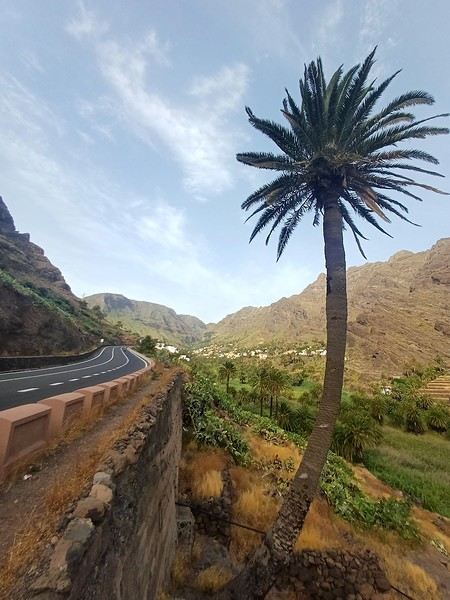
And we start the trip with music!
We start the trip with music!
When we started looking for a summer destination a few months ago, our first criterion was to avoid extreme heat and heatwaves. We had already been to Norway two years ago and are considering going back in the future for other occasions. So, we had some fun asking ChatGPT which destinations enjoyed a mild climate during the summer without going too far. Among the list provided by the AI were the Canary Islands... The idea of a place we wouldn’t have thought of first, both not too far away and exotic enough, appealed to us: “Hmm, why not?”
This destination had never really attracted me, though Magali was a bit more interested. Five years earlier, COVID had caused a short break in my professional activity, and I had planned a trip because the flight price was attractive, and I was looking for a destination different from what usually appeals to me, more than out of deep interest. From a distance and with a social judgment I acknowledge (it’s not great, but it’s not completely wrong), I had the image of a destination for party-goers enjoying the sun without the slightest interest in local culture, with concrete coastlines and denatured landscapes—everything I detest the most. Still, I had done some quick research on the different islands and spotted Lanzarote for its beautiful volcanic landscapes, hiking trails, beaches, and the impression of a good balance between activity and fewer crowds than Tenerife or Gran Canaria. Then I dropped the idea of going, without ever reconsidering traveling to the Canaries...
Until now! Because we started researching the different islands of the archipelago to see which ones might appeal to us the most. It was La Gomera, the third smallest island of the archipelago, more praised for its hiking trails and preserved nature than for its beaches, away from mass tourism (fifty times fewer tourists than Tenerife) but still a bit more developed than its wild neighbor El Hierro, that caught our attention. Contrary to what might be suggested later, I’m not at all addicted to AI, but I use it from time to time to synthesize quick research or simply for experimentation. Since ChatGPT had started anticipating my tastes lately as if it had become my buddy (often successfully, sometimes off the mark), I asked which Canary Island would suit me best for a trip with my family. The tool answered first with... La Gomera. So, I tested it and teased it a bit to see if this suggestion was well-founded, as the method sometimes makes it contradict itself. But no luck: “You’d appreciate the wild nature of El Hierro, but with family, you’ll find little activity for the kids. You won’t like the touristy vibe of the big islands like Tenerife, Gran Canaria, Lanzarote, and Fuerteventura. You could consider La Palma, but it’s really La Gomera that will suit you best, based on your interests and the criteria given.” So, we dug deeper into our research and were convinced without a shadow of a doubt that this island was the one waiting for us.
Without knowing it, we had Canarians in our circle who revealed their origins when they heard about our travel plans. One from Tenerife insisted we’d be better off choosing Tenerife (obviously...) because it also has preserved spots and that La Gomera, “you can explore it in two or three days, you’ll get bored quickly...” The other, a colleague from Gran Canaria who had never visited La Gomera, still recommended it without hesitation because it turned out her parents had just gone there on vacation: they loved it and had encountered few tourists. She also tended to think this destination was usually the subject of short stays, but according to what her parents told her, taking your time there was also a great idea. However, in our research, the idea that La Gomera is an island you can explore in three or four days max kept coming up. So, we considered combining its visit with La Palma or El Hierro, the other two that caught our eye. But hopping between islands by ferry represents a significant budget for non-Canarians, even more so for a family of four. Then, scrutinizing Google Maps, it seemed obvious that two weeks were too short to discover two islands as they deserve, and that there seemed to be plenty to see in La Gomera, given its very unique culture. After all, we read that some people spend several months a year there, others never even leave... Finally, these landscapes and this atmosphere, which seemed to us a mix of Europe, North Africa, and Latin America, tempted us. So, it would be two weeks in La Gomera, deal!
La Gomera is therefore the second... well, the third smallest island of the Canaries since La Graciosa was recently recognized as a fully inhabited island. It has the shape of a rough circle about 20 to 25 kilometers in diameter and has just over 20,000 inhabitants, half of them in its capital, San Sebastián de la Gomera, the only real town. Like its Canarian sisters, La Gomera is a volcanic formation that rose about 10 million years ago. The island is very mountainous and rugged, covered with red and black rocky landscapes. Geological activity has shaped, between the sprawling massifs that end in steep cliffs in the ocean, six coastal valleys with tropical vegetation that have favored human settlement. They divide the island like slices of a cake; from the north clockwise: the agricultural Vallehermoso, the rustic Agulo, the green, humid, and fertile Hermigua, the sunny capital San Sebastián de la Gomera, the southern and isolated Alajeró-Santiago, and the seaside Valle Gran Rey. They constitute the six municipalities (more like cantons to our French understanding) of the territory.
The large solidified magma massifs that shape the heart of the island have created a large depression more protected from the sun at its center, allowing the growth of a vast laurel forest, today grouped within the Garajonay National Park, La Gomera’s green lung, which has earned it the status of a World Biosphere Reserve. Its completely European appearance contrasts sharply with the rocky and tropical landscapes of the rest of the island. Thus, the climate varies greatly from one point to another on the island: in summer, you can quickly go from a dry and sunny valley at 35°C to a humid forest area at altitude at 18°C.La Gomera was populated late. As with the rest of the Canaries, human presence is thought to have begun about 2,000 years ago. Groups of animist Berbers, probably fleeing persecution, gradually populated the archipelago, especially the western islands and La Gomera, becoming its small aboriginal population: the Guanches (or later Gomeros). The animist and pastoral civilization of the Guanches thrived until the Spanish takeover in the 15th century, which, after a short period of harmony and mixing with the indigenous people, suddenly ended in bloodshed... La Gomera later became the “Columbus Island” after Christopher Columbus’s stopover, increasing the blending of populations. In the 20th century, many Gomeros emigrated to Cuba and other Latin American countries in search of a better life, bringing back a mix of cultures and traits quite palpable in today’s Gomeran culture. It is, however, in La Gomera that the vestiges of Guanche culture seem to have left the most traces, in the language, gastronomy, social practices... Moreover, most Gomeros, especially in remote villages, have a particular identifiable type and proudly claim their ancestral roots, even making La Gomera a bit exotic in the eyes of other Canarians.
Perhaps that’s why it has never really wanted to develop its tourist infrastructure too much. If we set aside the tourists who visit for the day by bus or boat from Tenerife on a marked itinerary (and whom we ultimately rarely encounter), La Gomera has remained a hidden gem, a destination focused on nature discovery that attracts hikers, nature-loving divers, and scientists for its fauna and flora, and to a lesser extent, beachgoers who don’t seek overly developed coastlines. Tourist activity is therefore limited. Roughly speaking, you’ll find a majority of Spaniards, including a substantial number of residents from other Canary Islands, many Germans who have a particular fondness for La Gomera and spend long stays there or own second homes, to the point that the German cultural footprint is clearly noticeable in some places (it’s said to be Angela Merkel’s favorite holiday spot), and still quite a few French. The presence of other nationalities seemed negligible to us. Most travelers come mainly for hiking, but it’s also a prime spot for whale watching. Additionally, the seaside resorts of La Gomera—San Sebastián, Santiago, and especially Valle Gran Rey—are well-known destinations for hippies, especially German ones, ranging from chic boho hippies to old-school hippies who’ve been there for decades, quite similar to those you’d meet in India in Goa, Rishikesh, or Paharganj. Thus, practices like naturism, vegetarianism, and local organic production are quite well established in some areas.
Some practical info: - The round-trip flight from Paris to Tenerife cost us 365 € per person (outbound with Transavia, return with EasyJet), including checked luggage and three seats reserved side by side. - We chose two bases to explore the island: one week in Valle Gran Rey, reputed to be the most pleasant of the three seaside resorts, and one week in Hermigua, more mountainous and close to the natural park. We booked two houses with balconies and views: the first at 120 € per night, the second at 99 €. - The round-trip ferry between Tenerife and La Gomera cost us 270 € with the company Baleària Canarias, including discounts for children aged 4 and 12, but I don’t have the exact details. It was a bit cheaper than with the other company, Fred Olsen. - Finally, we rented a car through the agency Cicar for 360 € for 16 days, which comes to 22.50 € per day. - Apart from that, we didn’t plan anything and decided the day before or even the morning of what we wanted to do. We didn’t invest in any paper guide on the Canaries, as information on La Gomera was scarce, but we used the very comprehensive site La Gomera Travel, a travel guide published by the Canary Islands Tourism Council, a real goldmine of almost exhaustive information on the island.
Alright, off we go for 16 days of adventure discovering La Gomera!
And we start the trip with music!
We start the trip with music!
Iceland: A Week on the Land of Ice and Fire in April
4 years... it’s been so long!!!
What a pleasure to be back on VF and, most of all, to see all the forum members again 🙂
And what a joy to read the travel journals of those travel addicts who were quicker than their own shadow to share their discoveries. Their keyboards and mice must’ve been itching
I’ll admit I’m feeling a bit of that itch too, but I’m way too lazy to dive into the story of our latest trip—last summer in the northwest USA. I’ll probably get to it later, but it might take a while! So, I’m jumping into the short recap of our *way* too short trip to Iceland at the end of April 2024. And even though it’s not the done thing, I’m going to spoil it and start with the conclusion: it was *amazing*!!!
Back in February, on the eve of leaving for a few days’ holiday in Alsace, we started wondering what we could do for Easter break. Scotland and Iceland were the top contenders. The boys are growing up, but they still travel with us often, and they tipped the scales in favor of Iceland. Since we decided a bit late, before booking the flights, I took a quick look at available accommodations. There wasn’t much left, and some were at crazy prices, but I managed to line up a decent itinerary with places that seemed like good value for money. I read travel journals on VF and blogs I could find, picked up bits of info from Facebook groups, and the route quickly took shape—even if I struggled with the place names, mixing them up and forgetting them. The dream could begin...
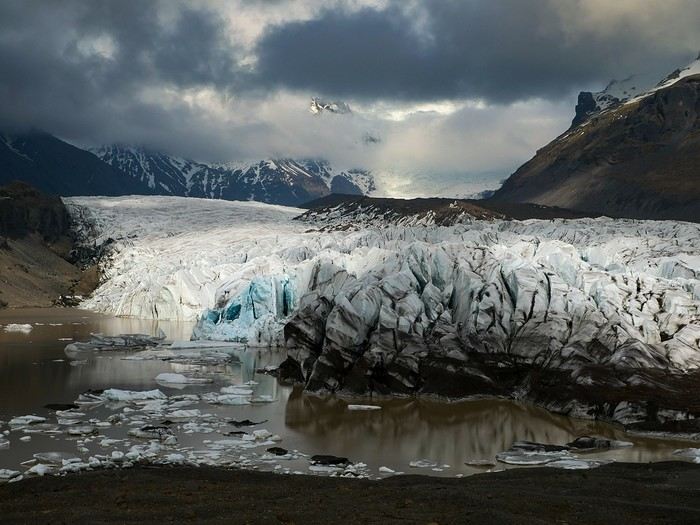
Bookings
Flight tickets bought directly from Fly Play’s website: 1520 € for the four of us (adult fare), with just two checked bags and one carry-on each. It was the compromise we found to keep costs down while still fitting all the bulky clothes we’d need. Late April isn’t quite winter anymore, but it’s not quite spring either, so we packed for chilly weather. Fly Play is Icelandair’s low-cost airline. No complaints: check-in was quick, service was efficient, and the flights were on time.
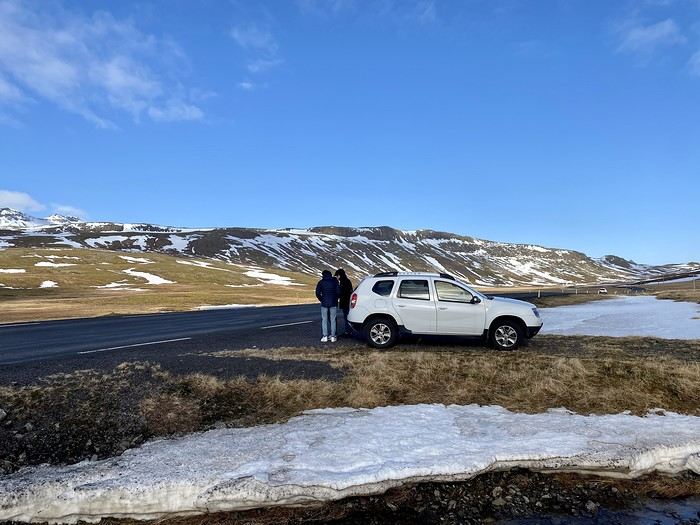
The car. Booked with Golden Circle car rental, a small family-run business with offices just 5 minutes from the airport. I’d read good things about them, and I can confirm everything went smoothly with our Dacia Duster—it wasn’t brand new, but it was reliable and spacious. We paid 463 € for the week, with full insurance included. The manager picked us up at the airport 10 minutes after I messaged him on WhatsApp to say we’d arrived. For the return trip, since our flight was super early and the agency wasn’t open yet, we agreed to leave the car in the airport parking lot and sent him a photo of the spot so he could find it. Super convenient! I read *so* many questions on Facebook groups about insurance: *Should I get the max coverage or not? I’ve got a Visa Premier, I’ve never had an accident, it adds 100 €...* Between sandstorms that can damage the bodywork and skidding off the road due to bad weather (we saw a few cars in ditches!), we decided to go for the rental company’s max insurance to be safe. It was also a requirement for leaving the car in the airport parking lot on our way back, since we couldn’t do the final inspection.
Accommodations were all booked on Booking.com and Hotels.com: - 2 nights in a cottage at Fossatun Country Hotel, near Borgarnes (we rented the sunset cottage—great spot, with a nice view and separate from the other lodgings) - 1 night in an apartment at Bakki Hostel and Apartments, in Eyrarbakki (top-notch) - 1 night in a gorgeous (and pricey!) apartment at Vik Apartments - 2 nights in a family room at Adventure Hof Hotel (perfect location) - 1 night at Blue Viking Studio near the airport (meh, but fine for a few hours’ sleep before an early flight) Total: 1234 €, averaging 176 € per night for 4-person accommodations.
The itinerary Day 1: Arrival around noon at the airport - Hraunfossar / Night at Fossatun Country Hotel Day 2: Snæfellsnes Peninsula / Night at Fossatun Country Hotel Day 3: Bruarfoss - Geysir - Gullfoss - Reykjadalur hot springs / Night in Eyrarbakki Day 4: Seljalandsfoss and Gljúfrafoss - DC-3 wreck (the one near Seljalandsfoss) - Skógafoss - Kvernufoss - Sólheimajökull (hike to the foot of the glacier) - Dyrhólaey - Reynisfjara Beach / Night in Vík Day 5: Fjaðrárgljúfur Canyon - Vatnajökull (3-hour hike to Svartifoss and Skaftafell) / Night in Hof Day 6: Múlagljúfur Canyon (2h45 hike) - Fjallsárlón - Jökulsárlón and Diamond Beach - Svínafellsjökull / Night in Hof Day 7: Drive back - Reykjavik - Sky Lagoon / Night in Keflavík Day 8: Flight back at 6 AM
That’s the practical side covered. I’ll leave you with a photo of our trusty steed.
And what a joy to read the travel journals of those travel addicts who were quicker than their own shadow to share their discoveries. Their keyboards and mice must’ve been itching
I’ll admit I’m feeling a bit of that itch too, but I’m way too lazy to dive into the story of our latest trip—last summer in the northwest USA. I’ll probably get to it later, but it might take a while! So, I’m jumping into the short recap of our *way* too short trip to Iceland at the end of April 2024. And even though it’s not the done thing, I’m going to spoil it and start with the conclusion: it was *amazing*!!!
Back in February, on the eve of leaving for a few days’ holiday in Alsace, we started wondering what we could do for Easter break. Scotland and Iceland were the top contenders. The boys are growing up, but they still travel with us often, and they tipped the scales in favor of Iceland. Since we decided a bit late, before booking the flights, I took a quick look at available accommodations. There wasn’t much left, and some were at crazy prices, but I managed to line up a decent itinerary with places that seemed like good value for money. I read travel journals on VF and blogs I could find, picked up bits of info from Facebook groups, and the route quickly took shape—even if I struggled with the place names, mixing them up and forgetting them. The dream could begin...
Bookings
Flight tickets bought directly from Fly Play’s website: 1520 € for the four of us (adult fare), with just two checked bags and one carry-on each. It was the compromise we found to keep costs down while still fitting all the bulky clothes we’d need. Late April isn’t quite winter anymore, but it’s not quite spring either, so we packed for chilly weather. Fly Play is Icelandair’s low-cost airline. No complaints: check-in was quick, service was efficient, and the flights were on time.
The car. Booked with Golden Circle car rental, a small family-run business with offices just 5 minutes from the airport. I’d read good things about them, and I can confirm everything went smoothly with our Dacia Duster—it wasn’t brand new, but it was reliable and spacious. We paid 463 € for the week, with full insurance included. The manager picked us up at the airport 10 minutes after I messaged him on WhatsApp to say we’d arrived. For the return trip, since our flight was super early and the agency wasn’t open yet, we agreed to leave the car in the airport parking lot and sent him a photo of the spot so he could find it. Super convenient! I read *so* many questions on Facebook groups about insurance: *Should I get the max coverage or not? I’ve got a Visa Premier, I’ve never had an accident, it adds 100 €...* Between sandstorms that can damage the bodywork and skidding off the road due to bad weather (we saw a few cars in ditches!), we decided to go for the rental company’s max insurance to be safe. It was also a requirement for leaving the car in the airport parking lot on our way back, since we couldn’t do the final inspection.
Accommodations were all booked on Booking.com and Hotels.com: - 2 nights in a cottage at Fossatun Country Hotel, near Borgarnes (we rented the sunset cottage—great spot, with a nice view and separate from the other lodgings) - 1 night in an apartment at Bakki Hostel and Apartments, in Eyrarbakki (top-notch) - 1 night in a gorgeous (and pricey!) apartment at Vik Apartments - 2 nights in a family room at Adventure Hof Hotel (perfect location) - 1 night at Blue Viking Studio near the airport (meh, but fine for a few hours’ sleep before an early flight) Total: 1234 €, averaging 176 € per night for 4-person accommodations.
The itinerary Day 1: Arrival around noon at the airport - Hraunfossar / Night at Fossatun Country Hotel Day 2: Snæfellsnes Peninsula / Night at Fossatun Country Hotel Day 3: Bruarfoss - Geysir - Gullfoss - Reykjadalur hot springs / Night in Eyrarbakki Day 4: Seljalandsfoss and Gljúfrafoss - DC-3 wreck (the one near Seljalandsfoss) - Skógafoss - Kvernufoss - Sólheimajökull (hike to the foot of the glacier) - Dyrhólaey - Reynisfjara Beach / Night in Vík Day 5: Fjaðrárgljúfur Canyon - Vatnajökull (3-hour hike to Svartifoss and Skaftafell) / Night in Hof Day 6: Múlagljúfur Canyon (2h45 hike) - Fjallsárlón - Jökulsárlón and Diamond Beach - Svínafellsjökull / Night in Hof Day 7: Drive back - Reykjavik - Sky Lagoon / Night in Keflavík Day 8: Flight back at 6 AM
That’s the practical side covered. I’ll leave you with a photo of our trusty steed.
Review of a Mediterranean cruise on the Splendida and 24 hours in Venice – October 2024
Hi everyone,
What a joy to be back here and pick up where we left off after all these months of hiatus.
I hope you’ll enjoy the story of this little trip around the Eastern Mediterranean. This cruise was the perfect way to satisfy our longing to return to Greece and Istanbul. The end of the season, until late November, is the best time to visit the Mediterranean in my opinion—when climate disruptions don’t get in the way.
Departing from Trieste, our stops were Katakolon, Piraeus, Kusadasi, Istanbul, Corfu, and Bari, before returning to Trieste and then Venice, where we planned a very short 24-hour stay.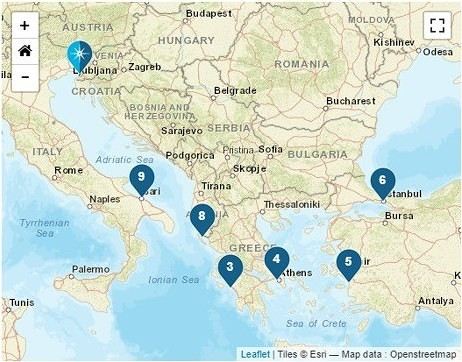
We left home at 6:15 AM—our first cruise departure since moving to Normandy. What I miss most about living in the Gard is how close we were to Marseille Airport. No more hopping over to Marignane in an hour; now we have to plan for a three-hour trip to CDG, even under the best conditions on an early Sunday morning.
It was impossible to book a hotel night before our flight because, starting in April, the Ibis was priced at 450 € per night, and the Mercure was flirting with 800 €—breakfast not included, of course. 😏
I had a feeling there must’ve been a conference or something going on… Turns out, it was just the auto show. They simply adjusted the room prices to match the cost of the cars. 😛
Our flight took us to Venice, where we caught a FlixBus to Trieste. We arrived at Trieste’s train station in the afternoon and walked to our hotel in the city center.
After treating ourselves to an amazing pizza at a restaurant (Di Napoli Maestri Pizzaioli, Via Armando Diaz 10) for a very reasonable price, we enjoyed the mild evening temperature while exploring the stunning buildings of this charming city by night. These magnificent structures are a testament to the city’s past. Trieste became Austrian in 1382 due to its complicated relationship with Venice, and it wasn’t until 1918, at the end of World War I, that it became Italian again. The city’s lighting beautifully highlights the architecture of the buildings.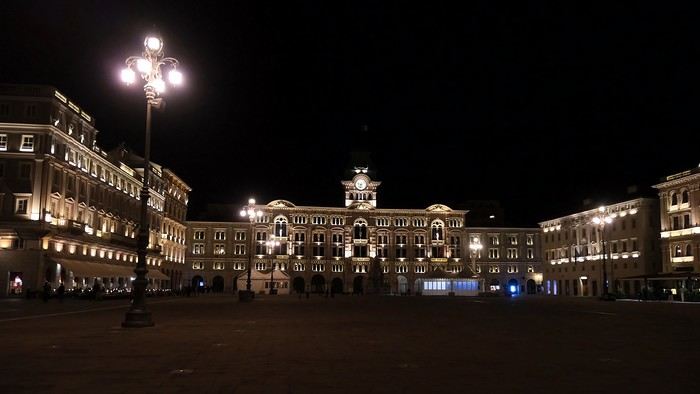
The terraces were lively, and the atmosphere was so warm and inviting that we wanted to stay out even longer.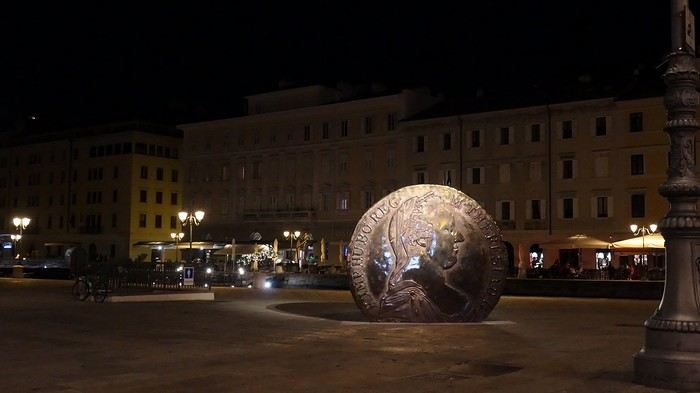
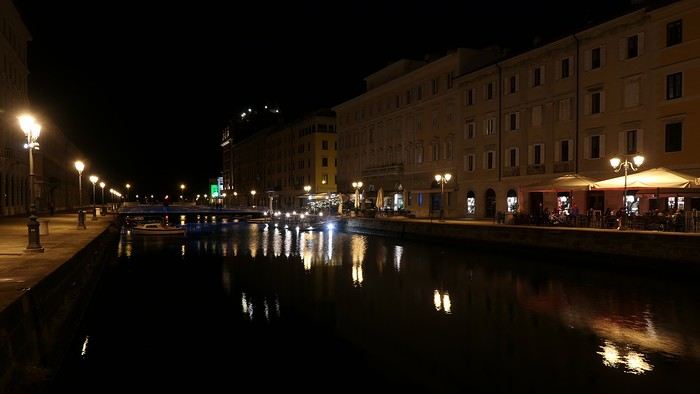
But we’d been up since 4 AM, so we were happy to retreat to the quiet of our hotel, located in the pedestrian center just a few steps from the port (Urban Hotel Design—highly recommended).
More to come soon.
What a joy to be back here and pick up where we left off after all these months of hiatus.
I hope you’ll enjoy the story of this little trip around the Eastern Mediterranean. This cruise was the perfect way to satisfy our longing to return to Greece and Istanbul. The end of the season, until late November, is the best time to visit the Mediterranean in my opinion—when climate disruptions don’t get in the way.
Departing from Trieste, our stops were Katakolon, Piraeus, Kusadasi, Istanbul, Corfu, and Bari, before returning to Trieste and then Venice, where we planned a very short 24-hour stay.
We left home at 6:15 AM—our first cruise departure since moving to Normandy. What I miss most about living in the Gard is how close we were to Marseille Airport. No more hopping over to Marignane in an hour; now we have to plan for a three-hour trip to CDG, even under the best conditions on an early Sunday morning.
It was impossible to book a hotel night before our flight because, starting in April, the Ibis was priced at 450 € per night, and the Mercure was flirting with 800 €—breakfast not included, of course. 😏
I had a feeling there must’ve been a conference or something going on… Turns out, it was just the auto show. They simply adjusted the room prices to match the cost of the cars. 😛
Our flight took us to Venice, where we caught a FlixBus to Trieste. We arrived at Trieste’s train station in the afternoon and walked to our hotel in the city center.
After treating ourselves to an amazing pizza at a restaurant (Di Napoli Maestri Pizzaioli, Via Armando Diaz 10) for a very reasonable price, we enjoyed the mild evening temperature while exploring the stunning buildings of this charming city by night. These magnificent structures are a testament to the city’s past. Trieste became Austrian in 1382 due to its complicated relationship with Venice, and it wasn’t until 1918, at the end of World War I, that it became Italian again. The city’s lighting beautifully highlights the architecture of the buildings.
The terraces were lively, and the atmosphere was so warm and inviting that we wanted to stay out even longer.
But we’d been up since 4 AM, so we were happy to retreat to the quiet of our hotel, located in the pedestrian center just a few steps from the port (Urban Hotel Design—highly recommended).
More to come soon.
The "Must-Sees" of the American West
This adventure began during Covid... Yep, Covid turned a lot of things upside down, but most of all, it kept us cooped up for a few months and stopped us from traveling for a while—even longer for a die-hard fan of the American West like me.
While borders were closed, I started imagining what an ideal itinerary might look like—one that would string together all the Southwest must-sees in just two weeks, during the best time of year: September and October. When the U.S. announced in September 2021 that borders would reopen in the coming weeks, I regained hope and began scouting flight tickets for a departure in September 2022.
But here’s the thing: tackling solo hikes, each one tougher than the last, right in the heart of the Wilderness, could be a risky—even reckless—endeavor for a father of three. After a quick chat with some virtual friends who are just as passionate about the Southwest as I am, with good physical condition and nearly the same list of must-visit spots, Franck and his brother Sullivan were in! 🙂
In November, we snagged flight tickets from Nice to San Francisco for the modest sum of 400 €, and a few days later, I booked a Toyota Tacoma pickup for 840 € !
It’s not cheap for just 15 days, and a pickup isn’t exactly ideal for luggage, but the prices for full-size 4x4s have become totally outrageous! Due to border closures, rental companies had to offload a lot of these big 4x4s, which tourists love. Then, supply and demand did the rest !
Franck and I spent the winter and spring trying to cram the equivalent of three weeks of hikes into two. But even with physical limits, we had to stay reasonable! Three to four months before departure, we entered the lotteries for different must-see spots: The Subway, Coyote Buttes North (home to the famous Wave), and Coyote Buttes South (CBS).
The Wave is the holy grail for any Southwest enthusiast. Since 2015, we’ve tried our luck with the online and on-site lotteries about ten times, but the spots are unfortunately limited: just 20 per day. A glimmer of hope, though—since early 2022, that number has increased to 64 people allowed per day, with 48 spots awarded via the online lottery.
After all three of us tried our luck for The Wave, on June 1st at exactly 5 PM, I got an email that started with, "Congratulations! You were successful in the Coyote Buttes North (The Wave) September 2022 Permit Lottery at Coyote Buttes North (The Wave)...". At 5:01 PM, I called Franck, whose dream it’s been for over 20 years—ever since the first photos were published in a travel magazine! He didn’t believe me when I told him, and I had to forward the email for him to finally accept the unbelievable: we were going to The Wave and all the incredible spots scattered across the protected area of Coyote Buttes North.
I’ve already been to Coyote Buttes South twice, but there are areas I couldn’t explore in the middle of summer because they were too remote. So, I had no trouble letting my buddies convince me to go back for a third time. Plus, given how hard it is to access, we had no trouble securing a permit online as long as we logged in at exactly 8 PM on the dot!
For The Subway, all three of us struck out. No big deal—we won at CBN and CBS!
Among the sites to visit, there are two that I’m particularly attached to because I know my chances of wanting to see them again are slim. The first is Angel Arch, one of the most legendary arches in the Southwest, due to its remoteness from any trace of civilization. To get there, the recommended hike is Upper Salt Creek, and you’re looking at a 50 km round-trip in an area with no water (in September) and populated by bears.
The second site is the Hopi Salt Trail, in Navajo land, which, after a very tough hike, lets you marvel at the turquoise-blue waters of the Little Colorado before it meets the Colorado River. The Hopi Salt Trail is, like The Wave, the holy grail for any Southwest enthusiast, and the windows of opportunity to see the water in that magical color are very short each year. For this, you have to monitor the Little Colorado’s gauges downstream from Cameron: if the level stays at its lowest for 10 consecutive days—meaning no rain—you can hope for turquoise water. The ideal period rarely exceeds 30 days a year, and it’s usually in June that all the stars align.
But unfortunately, one month before departure, while the flow rate at Cameron looked promising, several storms in September dashed our hopes of doing the Hopi Salt Trail, even at the end of the road trip.
We still had two consolation prizes, though:
After a last-minute cancellation, while keeping an eye out for available spots for The Subway, it turned out that three spots opened up exactly on the day we’d planned to go—so we rushed to grab them!! Regarding the 4x4 rental, the prices for full-size models dropped by several hundred dollars, and we ended up finding a Chevrolet Tahoe for less than $1000. A steal and a serious boost in comfort, so we could store all our gear and food without worry!
Here’s the initial plan in a perfect world: D1 The White Domes - Camping D2 Sunrise at The White Domes - The Subway D3 Coyote Buttes North D4 Coyote Buttes South - White Pocket D5 Wahweap Hoodoos - Sidestep Canyon - Colourful Canyon - White Rocks - Sunset at Yellow Rock D6 Broken Bow Arch - Reflection Canyon D7 Coyote Gulch D8 The Volcano (or The Oasis - Zebra Slot Canyon if the weather’s good) - North Caineville Mesa D9 The Needles: Squaw Canyon - Lost Canyon combo - Druid Arch - Chesler Park D10 Upper Salt Creek Day 1 - Camping D11 Upper Salt Creek Day 2 D12 Hopi-Navajo Territory: Ha Ho No Geh Canyon, Coal Mine Canyon, Bends of the Little Colorado D13 Grand Canyon: South Kaibab Trail and Bright Angel Trail D14 Upper East Zion: East Temple Loop, Jughandle Arch, Center of the Universe, and Checkerboard Mesa Summit And several backup options in case of bad weather, including Spencer Trail, West Cove, and Buffington Pockets.
Enough talking—time for action!
While borders were closed, I started imagining what an ideal itinerary might look like—one that would string together all the Southwest must-sees in just two weeks, during the best time of year: September and October. When the U.S. announced in September 2021 that borders would reopen in the coming weeks, I regained hope and began scouting flight tickets for a departure in September 2022.
But here’s the thing: tackling solo hikes, each one tougher than the last, right in the heart of the Wilderness, could be a risky—even reckless—endeavor for a father of three. After a quick chat with some virtual friends who are just as passionate about the Southwest as I am, with good physical condition and nearly the same list of must-visit spots, Franck and his brother Sullivan were in! 🙂
In November, we snagged flight tickets from Nice to San Francisco for the modest sum of 400 €, and a few days later, I booked a Toyota Tacoma pickup for 840 € !
It’s not cheap for just 15 days, and a pickup isn’t exactly ideal for luggage, but the prices for full-size 4x4s have become totally outrageous! Due to border closures, rental companies had to offload a lot of these big 4x4s, which tourists love. Then, supply and demand did the rest !
Franck and I spent the winter and spring trying to cram the equivalent of three weeks of hikes into two. But even with physical limits, we had to stay reasonable! Three to four months before departure, we entered the lotteries for different must-see spots: The Subway, Coyote Buttes North (home to the famous Wave), and Coyote Buttes South (CBS).
The Wave is the holy grail for any Southwest enthusiast. Since 2015, we’ve tried our luck with the online and on-site lotteries about ten times, but the spots are unfortunately limited: just 20 per day. A glimmer of hope, though—since early 2022, that number has increased to 64 people allowed per day, with 48 spots awarded via the online lottery.
After all three of us tried our luck for The Wave, on June 1st at exactly 5 PM, I got an email that started with, "Congratulations! You were successful in the Coyote Buttes North (The Wave) September 2022 Permit Lottery at Coyote Buttes North (The Wave)...". At 5:01 PM, I called Franck, whose dream it’s been for over 20 years—ever since the first photos were published in a travel magazine! He didn’t believe me when I told him, and I had to forward the email for him to finally accept the unbelievable: we were going to The Wave and all the incredible spots scattered across the protected area of Coyote Buttes North.
I’ve already been to Coyote Buttes South twice, but there are areas I couldn’t explore in the middle of summer because they were too remote. So, I had no trouble letting my buddies convince me to go back for a third time. Plus, given how hard it is to access, we had no trouble securing a permit online as long as we logged in at exactly 8 PM on the dot!
For The Subway, all three of us struck out. No big deal—we won at CBN and CBS!
Among the sites to visit, there are two that I’m particularly attached to because I know my chances of wanting to see them again are slim. The first is Angel Arch, one of the most legendary arches in the Southwest, due to its remoteness from any trace of civilization. To get there, the recommended hike is Upper Salt Creek, and you’re looking at a 50 km round-trip in an area with no water (in September) and populated by bears.
The second site is the Hopi Salt Trail, in Navajo land, which, after a very tough hike, lets you marvel at the turquoise-blue waters of the Little Colorado before it meets the Colorado River. The Hopi Salt Trail is, like The Wave, the holy grail for any Southwest enthusiast, and the windows of opportunity to see the water in that magical color are very short each year. For this, you have to monitor the Little Colorado’s gauges downstream from Cameron: if the level stays at its lowest for 10 consecutive days—meaning no rain—you can hope for turquoise water. The ideal period rarely exceeds 30 days a year, and it’s usually in June that all the stars align.
But unfortunately, one month before departure, while the flow rate at Cameron looked promising, several storms in September dashed our hopes of doing the Hopi Salt Trail, even at the end of the road trip.
We still had two consolation prizes, though:
After a last-minute cancellation, while keeping an eye out for available spots for The Subway, it turned out that three spots opened up exactly on the day we’d planned to go—so we rushed to grab them!! Regarding the 4x4 rental, the prices for full-size models dropped by several hundred dollars, and we ended up finding a Chevrolet Tahoe for less than $1000. A steal and a serious boost in comfort, so we could store all our gear and food without worry!
Here’s the initial plan in a perfect world: D1 The White Domes - Camping D2 Sunrise at The White Domes - The Subway D3 Coyote Buttes North D4 Coyote Buttes South - White Pocket D5 Wahweap Hoodoos - Sidestep Canyon - Colourful Canyon - White Rocks - Sunset at Yellow Rock D6 Broken Bow Arch - Reflection Canyon D7 Coyote Gulch D8 The Volcano (or The Oasis - Zebra Slot Canyon if the weather’s good) - North Caineville Mesa D9 The Needles: Squaw Canyon - Lost Canyon combo - Druid Arch - Chesler Park D10 Upper Salt Creek Day 1 - Camping D11 Upper Salt Creek Day 2 D12 Hopi-Navajo Territory: Ha Ho No Geh Canyon, Coal Mine Canyon, Bends of the Little Colorado D13 Grand Canyon: South Kaibab Trail and Bright Angel Trail D14 Upper East Zion: East Temple Loop, Jughandle Arch, Center of the Universe, and Checkerboard Mesa Summit And several backup options in case of bad weather, including Spencer Trail, West Cove, and Buffington Pockets.
Enough talking—time for action!
Les Cyclades en juillet: Anafi, Amorgos, Astypaléa
GENESE
Comme tous, le COVID a chamboulé nos plans. Normalement nous devions aller à Madagascar pendant un mois, projet reporté à l’année prochaine. Seulement, n’ayant jamais arrêté de travailler, malgré le confinement et le Covid j’avais réellement besoin de faire une « pause ».
Souhaitant limiter les risques de restrictions de déplacements nous ne quitterons pas l’Europe en nous centrant sur des endroits que nous avons toujours voulu visiter, mais habituellement trop fréquentés pour nous. Il y avait la Suisse avec ses montagnes et ses trains de légende, l’Islande et les îles Grecques.
Au final c’est l’attrait du soleil qui l’a emporté … enfin surtout auprès de madame ! Nous avions « entrevu » Santorin et Myconos lors d’une croisière en méditerranée en 2007 avec les enfants. Nous avions adoré … sauf la fréquentation !
Le premier élément à choisir est le point d’entrée, accessible en avion. Il y a Santorin et Myconos dans les Cyclades. Comme je rêvais de revoir la caldera de Santorin, le choix fut rapide. Ensuite je voulais des îles peu fréquentées ne nécessitant pas de trop long trajet en ferry. Sur 2 semaines 3 îles m’a paru être le bon choix. Avec le recul je confirme que c’est un bon dosage. Je me suis beaucoup servi du site Hellenica et Cycladen.be, qui sont très bien, pour faire mes choix.
La première sera Anafi, dans la catégorie « peu fréquentée » elle est très bien placée, en plus elle est petite, montagneuse et avec de belles plages. Une des raisons de sa faible fréquentation est le peu de liaison maritimes, ce sera donc à partir de cette contrainte que s’articulera le voyage.
Le second choix sera Astypalea car il y a un aéroport pour repartir, en plus c’est aussi une île peu fréquentée par les étrangers. Elle fait partie des Dodécanèse mais géographique se trouve proche des Cyclades.
Amorgos se glissera très naturellement entre les deux.
Une fois le planning établi j’ai réservé les vols chez Volotea qui a le bon goût de partir de Strasbourg … mauvais choix car les vols seront annulés 2 semaines plus tard.🏴☠️ Je me suis retourné vers Easy Jet qui part de Bâle Mulhouse, finalement tout aussi proche de chez nous que Strasbourg. Il faut dire qu’en Alsace nous avons la chance d’avoir pas mal d’aéroports dans un rayon de 3 heures autour de chez nous (en plus des deux précités il y a surtout Zurich et Frankfurt). Nous ferons donc BSL – Athènes – Santorin puis Astypalea – Athènes – BSL.
J’ai réservé par internet en direct les pensions : Villa Kalamiotissa pour Anafi Emprostiada Traditional Guest House et Pano Gitonia pour Amorgos Studio Killindra pour Astypalea Je réserve aussi une voiture à Amorgos puisque l’île est assez grande … et au final, suite à un échange avec mon logeur, également à Anafi.
Le roadbook sera assez rapide à établir … tant mieux car je n’ai que très peu de temps disponible, relancer mon entreprise suite au Covid-19 a accaparé tout mon temps.
En voiture ... pour ceux qui veulent 🙂
Comme tous, le COVID a chamboulé nos plans. Normalement nous devions aller à Madagascar pendant un mois, projet reporté à l’année prochaine. Seulement, n’ayant jamais arrêté de travailler, malgré le confinement et le Covid j’avais réellement besoin de faire une « pause ».
Souhaitant limiter les risques de restrictions de déplacements nous ne quitterons pas l’Europe en nous centrant sur des endroits que nous avons toujours voulu visiter, mais habituellement trop fréquentés pour nous. Il y avait la Suisse avec ses montagnes et ses trains de légende, l’Islande et les îles Grecques.
Au final c’est l’attrait du soleil qui l’a emporté … enfin surtout auprès de madame ! Nous avions « entrevu » Santorin et Myconos lors d’une croisière en méditerranée en 2007 avec les enfants. Nous avions adoré … sauf la fréquentation !
Le premier élément à choisir est le point d’entrée, accessible en avion. Il y a Santorin et Myconos dans les Cyclades. Comme je rêvais de revoir la caldera de Santorin, le choix fut rapide. Ensuite je voulais des îles peu fréquentées ne nécessitant pas de trop long trajet en ferry. Sur 2 semaines 3 îles m’a paru être le bon choix. Avec le recul je confirme que c’est un bon dosage. Je me suis beaucoup servi du site Hellenica et Cycladen.be, qui sont très bien, pour faire mes choix.
La première sera Anafi, dans la catégorie « peu fréquentée » elle est très bien placée, en plus elle est petite, montagneuse et avec de belles plages. Une des raisons de sa faible fréquentation est le peu de liaison maritimes, ce sera donc à partir de cette contrainte que s’articulera le voyage.
Le second choix sera Astypalea car il y a un aéroport pour repartir, en plus c’est aussi une île peu fréquentée par les étrangers. Elle fait partie des Dodécanèse mais géographique se trouve proche des Cyclades.
Amorgos se glissera très naturellement entre les deux.
Une fois le planning établi j’ai réservé les vols chez Volotea qui a le bon goût de partir de Strasbourg … mauvais choix car les vols seront annulés 2 semaines plus tard.🏴☠️ Je me suis retourné vers Easy Jet qui part de Bâle Mulhouse, finalement tout aussi proche de chez nous que Strasbourg. Il faut dire qu’en Alsace nous avons la chance d’avoir pas mal d’aéroports dans un rayon de 3 heures autour de chez nous (en plus des deux précités il y a surtout Zurich et Frankfurt). Nous ferons donc BSL – Athènes – Santorin puis Astypalea – Athènes – BSL.
J’ai réservé par internet en direct les pensions : Villa Kalamiotissa pour Anafi Emprostiada Traditional Guest House et Pano Gitonia pour Amorgos Studio Killindra pour Astypalea Je réserve aussi une voiture à Amorgos puisque l’île est assez grande … et au final, suite à un échange avec mon logeur, également à Anafi.
Le roadbook sera assez rapide à établir … tant mieux car je n’ai que très peu de temps disponible, relancer mon entreprise suite au Covid-19 a accaparé tout mon temps.
En voiture ... pour ceux qui veulent 🙂
Kenya February 2020: From Tsavo to Samburu via Meru National Park
Good evening everyone,
I hope you're all doing well despite this very unusual time…
Here’s a new travel journal to get you back on the Kenyan trails.
It was a really great idea to buy those flight tickets to Nairobi back in December. When Benoit suggested this new safari in February, I hesitated a little (very little): it was the season with particularly high temperatures, and the short rainy season in November/December had been very heavy, raising concerns about the state of the tracks… Given the current situation, no regrets, of course… We quickly organized the safari with our usual guide, and we booked the accommodations ourselves directly. (If we’d waited just a few more weeks, we might’ve regretted it…)
For once, we were able to leave from the airport near where we live (Lorient - Lann Bihoué), which is really convenient: no driving, no parking… We left home at 2 PM on Tuesday, February 18th, and arrived in Nairobi at 6 AM the next morning—perfect. (With a layover in CDG, of course 😉) Upon arrival, after a forehead temperature check by airport staff, we got our visas very quickly (forms filled out before departure). The customs agents congratulated us on our passports full of Kenyan stamps… but we still had to pay the 40 € for the visa.
All that was left was to collect our luggage, and we’d be ready to leave the airport shortly after landing. But there was a small issue: the baggage conveyor belt was broken… Eventually, the suitcases and bags were brought out by hand… Hakuna Matata, as they say here—no problem, as long as they’re all there. Benoit sent a message to Félix, our guide, to come meet us in the airport parking lot. After catching up with our respective families, we set off toward the Mombasa road, heading to Voi.
Traffic in Nairobi is still as heavy as ever, and the pollution is very noticeable (cars, but also cement factories…). The current lockdown has changed things. On social media, Mount Kenya and Kilimanjaro seem visible from Nairobi now!…
The first stop on this safari was a place we hadn’t visited before: the LUMO Community Wildlife Conservancy lumoconservancy.com/. It’s a small reserve located west of Tsavo West and near the Taita Hills. The reserve is managed by the local community, and entry fees are lower than in Tsavo’s national parks. We had initially planned to spend three days in Tsavo East, but since the accommodation wasn’t available for that long, we ended up choosing this option, which turned out to be a great discovery. Since the reserve is small, I think it’s hard to spend more than two days there. The advantage is that, since it’s not a national park, activities like walks or night safaris can be offered.
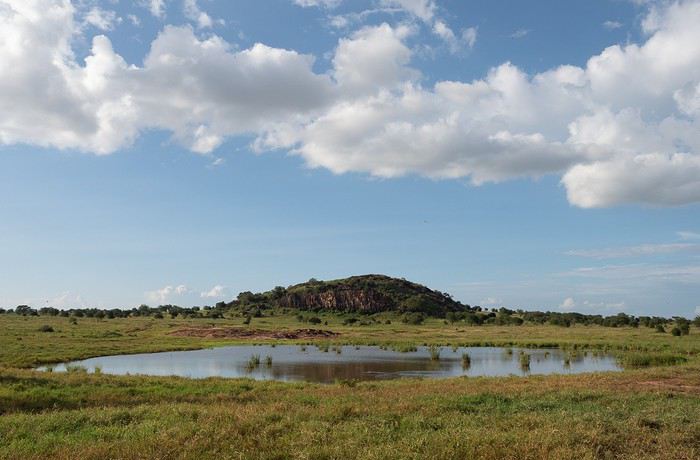
Alright, here are a few images to set the mood.
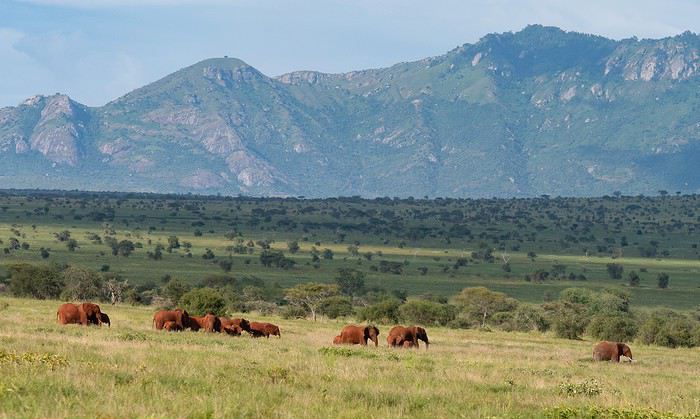
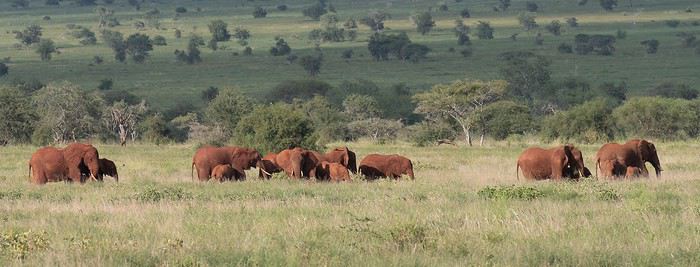
Elephants, but also hartebeests and lots of giraffes in a light we really liked.
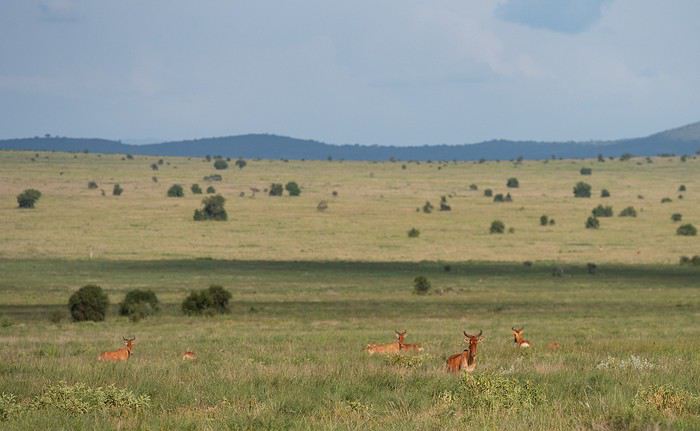
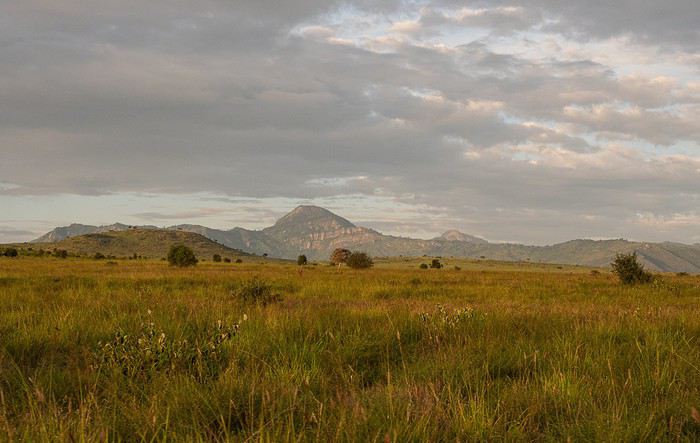
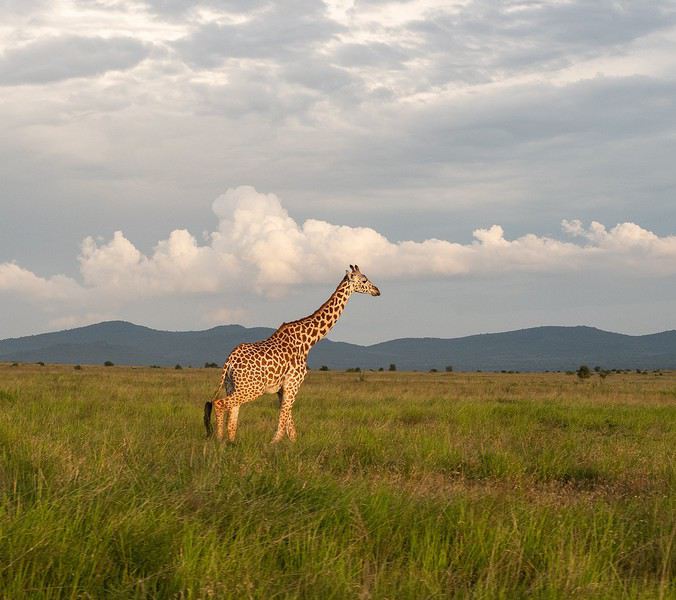
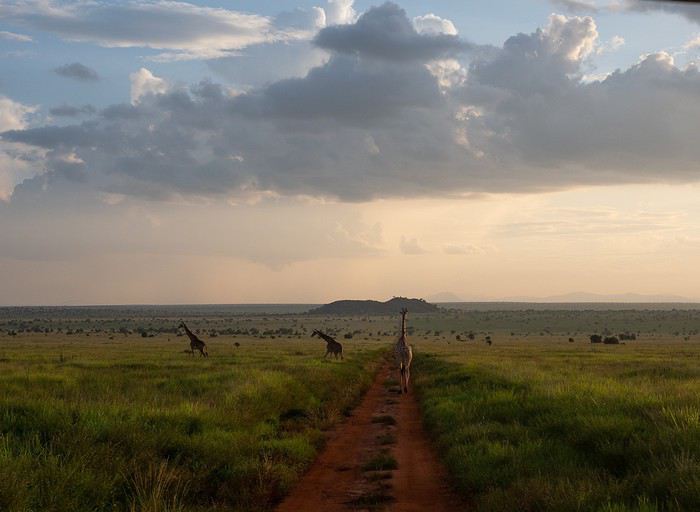
It was a really great idea to buy those flight tickets to Nairobi back in December. When Benoit suggested this new safari in February, I hesitated a little (very little): it was the season with particularly high temperatures, and the short rainy season in November/December had been very heavy, raising concerns about the state of the tracks… Given the current situation, no regrets, of course… We quickly organized the safari with our usual guide, and we booked the accommodations ourselves directly. (If we’d waited just a few more weeks, we might’ve regretted it…)
For once, we were able to leave from the airport near where we live (Lorient - Lann Bihoué), which is really convenient: no driving, no parking… We left home at 2 PM on Tuesday, February 18th, and arrived in Nairobi at 6 AM the next morning—perfect. (With a layover in CDG, of course 😉) Upon arrival, after a forehead temperature check by airport staff, we got our visas very quickly (forms filled out before departure). The customs agents congratulated us on our passports full of Kenyan stamps… but we still had to pay the 40 € for the visa.
All that was left was to collect our luggage, and we’d be ready to leave the airport shortly after landing. But there was a small issue: the baggage conveyor belt was broken… Eventually, the suitcases and bags were brought out by hand… Hakuna Matata, as they say here—no problem, as long as they’re all there. Benoit sent a message to Félix, our guide, to come meet us in the airport parking lot. After catching up with our respective families, we set off toward the Mombasa road, heading to Voi.
Traffic in Nairobi is still as heavy as ever, and the pollution is very noticeable (cars, but also cement factories…). The current lockdown has changed things. On social media, Mount Kenya and Kilimanjaro seem visible from Nairobi now!…
The first stop on this safari was a place we hadn’t visited before: the LUMO Community Wildlife Conservancy lumoconservancy.com/. It’s a small reserve located west of Tsavo West and near the Taita Hills. The reserve is managed by the local community, and entry fees are lower than in Tsavo’s national parks. We had initially planned to spend three days in Tsavo East, but since the accommodation wasn’t available for that long, we ended up choosing this option, which turned out to be a great discovery. Since the reserve is small, I think it’s hard to spend more than two days there. The advantage is that, since it’s not a national park, activities like walks or night safaris can be offered.
Alright, here are a few images to set the mood.
Elephants, but also hartebeests and lots of giraffes in a light we really liked.
Faut-il organiser le tour de France en 2020?
c'est un peu en dehors de notre mouvement, mais la question peut se poser
https://www.cyclismactu.net/news-tour-de-france-une-epidemiologiste-tire-la-sonnette-d-alarme-90384.html
Et vous qu'en pensez vous ?
"Tu te crois libre parce que tu pars, et tu emportes tes pantoufles."
Ah oui, je crois que c’est juste, ne serait-ce pour assurer les besoins vitaux, respirer, dormir, boire, manger, éliminer et, très vite s’établissent les petits rituels qui s’empilent au fil des jours…
J’ai trouvé ma liste de petits gestes quotidiens et j’crois que beaucoup ont les mêmes, il y en a tant des petits gestes rituels en voyage.
Un p’tit florilège pas prise de tête ! :
- Entrer dans la chambre ou le lieu réservé dans la journée ou arriver par hasard et se dire : « tidiou, c’est super beau » ou « tidiou, c’est crade et vachement précaire, heureusement qu’on y reste qu’une nuit » - Vérifier le niveau de carburant, soit le soir avant l’étape, soit le matin avant de démarrer la journée. - Laver sa petite culotte et parfois la remettre encore humide (beurq !)
- Etaler sa serviette qui pue sur un dossier de chaise (rebeurq !)
- Chercher en vain cette petite paire de ciseaux, ce bout d’ongle qui accroche fait vraiment mal - Trouver la p’tite épicerie pour acheter ce qui s’apparentera à un pique-nique et qui doit tenir dans la sacoche de réservoir.
- Refaire le sac en défroissant du plat de la main l’unique change qu’on mettra demain. - Appuyer très fort sur le flacon de shampooing pour en attraper les dernières gouttes, heureusement il reste le bloc de savon multi-usage ( wow les beaux cheveux !)
- Faire sécher les fringues mouillées sur tout support existant - Ne pas trouver le code-wifi et se sentir exaspérée - Planter la tente et tordre les sardines dans les cailloux - Trouver un p’tit coin sympa et discret pour déféquer et n’avoir rien pour s’essuyer si ce n’est des herbes coupantes. - Chercher ses moufles et comme d’habitude n’en trouver qu’une - Etre sure d’avoir mis le passeport là, exactement là dans cette poche de blouson et défaire tout le barda pour enfin le retrouver dans la poche zippée du pantalon - Démarrer la journée avec un mal de dos fracassant et n’avoir plus aucun antalgique - Taper la destination envisagée dans le gps le matin - Photographier chaque énorme gâteau que je vois (envoyer la photo à la bonne date, avec un mot pour chaque enfant et petit-enfant et ami dont c’est l’anniversaire). Tous les pays ont leurs pâtisseries.
- Remonter les jambes du pantalon, tenir entre les dents le blouson encombrant et, en équilibre précaire et instable trouver sa position sur des toilettes à la turc où l’odeur d’ammoniaque soulève le coeur . - Regarder dans le porte-monnaie si on a assez de pépètes pour deux, trois jours - Lire le soir, enfin couchée, les trucs sympas qu’on peut voir dans le coin, s’enthousiasmer et se dire le lendemain : « on va plus loin, rien à fiche de ce musée ou de ce château ou de ce resto ou de cette randonnée facile » - Bien crevée, bien gelée, sous la pluie se dire « qu’est-ce que je fous ici » - Se dire qu’on a un bol incroyable de voir de tels paysages.
Et se sentir les rois du monde chaque jour parce qu’on réussit à dépasser les difficultés, parce que la journée a été exceptionnelle, parce qu’on se sent profondément heureux d’être ensemble et de vivre l’aventure dont on avait tant rêvé.
P'têtre que vous aussi z'avez des gestes quotidiens en voyage, en vacances ?
Un p’tit florilège pas prise de tête ! :
- Entrer dans la chambre ou le lieu réservé dans la journée ou arriver par hasard et se dire : « tidiou, c’est super beau » ou « tidiou, c’est crade et vachement précaire, heureusement qu’on y reste qu’une nuit » - Vérifier le niveau de carburant, soit le soir avant l’étape, soit le matin avant de démarrer la journée. - Laver sa petite culotte et parfois la remettre encore humide (beurq !)
- Etaler sa serviette qui pue sur un dossier de chaise (rebeurq !)
- Chercher en vain cette petite paire de ciseaux, ce bout d’ongle qui accroche fait vraiment mal - Trouver la p’tite épicerie pour acheter ce qui s’apparentera à un pique-nique et qui doit tenir dans la sacoche de réservoir.
- Refaire le sac en défroissant du plat de la main l’unique change qu’on mettra demain. - Appuyer très fort sur le flacon de shampooing pour en attraper les dernières gouttes, heureusement il reste le bloc de savon multi-usage ( wow les beaux cheveux !)
- Faire sécher les fringues mouillées sur tout support existant - Ne pas trouver le code-wifi et se sentir exaspérée - Planter la tente et tordre les sardines dans les cailloux - Trouver un p’tit coin sympa et discret pour déféquer et n’avoir rien pour s’essuyer si ce n’est des herbes coupantes. - Chercher ses moufles et comme d’habitude n’en trouver qu’une - Etre sure d’avoir mis le passeport là, exactement là dans cette poche de blouson et défaire tout le barda pour enfin le retrouver dans la poche zippée du pantalon - Démarrer la journée avec un mal de dos fracassant et n’avoir plus aucun antalgique - Taper la destination envisagée dans le gps le matin - Photographier chaque énorme gâteau que je vois (envoyer la photo à la bonne date, avec un mot pour chaque enfant et petit-enfant et ami dont c’est l’anniversaire). Tous les pays ont leurs pâtisseries.
- Remonter les jambes du pantalon, tenir entre les dents le blouson encombrant et, en équilibre précaire et instable trouver sa position sur des toilettes à la turc où l’odeur d’ammoniaque soulève le coeur . - Regarder dans le porte-monnaie si on a assez de pépètes pour deux, trois jours - Lire le soir, enfin couchée, les trucs sympas qu’on peut voir dans le coin, s’enthousiasmer et se dire le lendemain : « on va plus loin, rien à fiche de ce musée ou de ce château ou de ce resto ou de cette randonnée facile » - Bien crevée, bien gelée, sous la pluie se dire « qu’est-ce que je fous ici » - Se dire qu’on a un bol incroyable de voir de tels paysages.
Et se sentir les rois du monde chaque jour parce qu’on réussit à dépasser les difficultés, parce que la journée a été exceptionnelle, parce qu’on se sent profondément heureux d’être ensemble et de vivre l’aventure dont on avait tant rêvé.
P'têtre que vous aussi z'avez des gestes quotidiens en voyage, en vacances ?
Après les vacances, l'école...
Et voilà, les chicoufs ont repris le chemin de l’école, collège, lycée.
Les vacances joyeuses sont terminées.
Nous, grands-parents soufflons. Ca crépitait de vie, de rires, de cris, de galopades et de bonheur et le silence léger dans la maison est étrange.
Le même jour de rentrée que chez nous, j’ai reçu la photo d’un copain chinois fier de sa fillette de deux ans, adorable avec ses deux petites couettes, qu’il conduisait pour la première fois à l’école. Le même jour aussi, une copine enseignante en Lituanie m’envoyait une photo d’un supermarché dont les rayons d’alcool était barricadé de planche de bois : le jour de la rentrée des classes, la vente d’alcool est interdit.
Deux jeunes femmes russes que nous avions rencontré l’année dernière en Sibérie et qui sont venues chez nous en vacances cet été ont, elles, raconté que la rentrée des classes s’appelle « la Journée de la Connaissance est que dans leur village, les enfants revêtent leurs vêtements traditionnels de fête et apportent des fleurs ou des bonbons à leur institutrice.
Tant de pays, tant de traditions, c’est chouette.
L’année scolaire pour tous les enfants du monde qui ont la chance de s’instruire est une année d’apprentissage, coupée par les vacances. Si nous ne sommes pas le pays aux vacances d’été les plus longues, le découpage est différent ailleurs. Je crois qu’au Japon, les grandes vacances ne sont pas synonyme de changement de niveau, est-ce le seul pays dans ce cas, je ne sais pas. Les enfants en Inde sont en uniforme comme dans nombre de pays. C’est joli de voir sortir de l’école des nuées d’enfants, les fillettes avec leurs tresses entrelacées de rubans et les cartables qui tressautent dans le dos.
Nous avons eu la chance de passer une journée dans en gymnasium à Novossibirsk, de manger à la cantine et d’apprendre qu’à partir de 9h les enfants pouvaient venir prendre un repas et lorsque les parents le souhaitent, ils peuvent déjeuner avec leur enfant. Il n’y a pas de cour de récréation, il fait trop froid l’hiver, mais de vastes couloirs colorés. Les enfants ont école soit le matin, soit l’après-midi.
Tout est si différent, partout . Vous qui lisez ce sujet, pouvez-vous apporter vos connaissances sur l’école, les vacances, les devoirs et les leçons et tout ce qui est donné pour engranger les savoirs ? Pas en France, mais partout dans le monde. J’aimerais bien...
Cet été empli d’enfance, de fraîcheur, d’innocence est fini et eux, mes chicoufs ont rejoint tous les enfants, ceux d’ici comme ceux d’ailleurs sur cette longue route d’apprentissage qui leur semble si interminable et qui est, pourtant, si brève dans notre vie.
Le même jour de rentrée que chez nous, j’ai reçu la photo d’un copain chinois fier de sa fillette de deux ans, adorable avec ses deux petites couettes, qu’il conduisait pour la première fois à l’école. Le même jour aussi, une copine enseignante en Lituanie m’envoyait une photo d’un supermarché dont les rayons d’alcool était barricadé de planche de bois : le jour de la rentrée des classes, la vente d’alcool est interdit.
Deux jeunes femmes russes que nous avions rencontré l’année dernière en Sibérie et qui sont venues chez nous en vacances cet été ont, elles, raconté que la rentrée des classes s’appelle « la Journée de la Connaissance est que dans leur village, les enfants revêtent leurs vêtements traditionnels de fête et apportent des fleurs ou des bonbons à leur institutrice.
Tant de pays, tant de traditions, c’est chouette.
L’année scolaire pour tous les enfants du monde qui ont la chance de s’instruire est une année d’apprentissage, coupée par les vacances. Si nous ne sommes pas le pays aux vacances d’été les plus longues, le découpage est différent ailleurs. Je crois qu’au Japon, les grandes vacances ne sont pas synonyme de changement de niveau, est-ce le seul pays dans ce cas, je ne sais pas. Les enfants en Inde sont en uniforme comme dans nombre de pays. C’est joli de voir sortir de l’école des nuées d’enfants, les fillettes avec leurs tresses entrelacées de rubans et les cartables qui tressautent dans le dos.
Nous avons eu la chance de passer une journée dans en gymnasium à Novossibirsk, de manger à la cantine et d’apprendre qu’à partir de 9h les enfants pouvaient venir prendre un repas et lorsque les parents le souhaitent, ils peuvent déjeuner avec leur enfant. Il n’y a pas de cour de récréation, il fait trop froid l’hiver, mais de vastes couloirs colorés. Les enfants ont école soit le matin, soit l’après-midi.
Tout est si différent, partout . Vous qui lisez ce sujet, pouvez-vous apporter vos connaissances sur l’école, les vacances, les devoirs et les leçons et tout ce qui est donné pour engranger les savoirs ? Pas en France, mais partout dans le monde. J’aimerais bien...
Cet été empli d’enfance, de fraîcheur, d’innocence est fini et eux, mes chicoufs ont rejoint tous les enfants, ceux d’ici comme ceux d’ailleurs sur cette longue route d’apprentissage qui leur semble si interminable et qui est, pourtant, si brève dans notre vie.
Retour sur 15 jours en Russie
Bonjour,
Voyage Forum m’a bien aidé à construire mon voyage en Russie , je vous livre donc mon rapport de voyage
Ca y'est j'ai mes photos 😇
- Les généralités: Nous sommes un couple avec deux ado (14 & 16) , qui aimons voyager par nos propres moyens , en itinérant , en en marchant … et nous adorons jouer au Uno dans les endroits mythiques Pour ce voyage craignant les soucis de communication j’avais appris à lire le cyrillique et les phrases typiques du voyageurs en russe
- La logistique :
Nous sommes partis en avion , logé dans des appart (booking ou Airbnb) , nous sommes déplacés en train et bus
- Le voyage :
Je ne voulais pas faire que de la ville nous aovns donc décidé de faire une halte entre Moscou & St-Petersburg , voilà donc notre ‘périple’ : Du 07 au 11 Aout : Moscou Du 12 au 17 : ‘campagne Russe’ (Borovno Lake – Valday – Novgorod) Du 17 au 22 : Saint Petersburg
- Le bilan Nous avons adoré la Russie ! C’est propre, sécurisant et contrairement à ce que l’on peut penser les gens sont très accueillants. On y a bien mangé, le cout de la vie est moins chère qu’en France Contrairement à bcp de commentaires nous avons préféré Moscou à SPB Le temps était mitigé les 8 premiers jours mais magnifiques pour notre fin de circuit
Et voilà le détail jour par jour
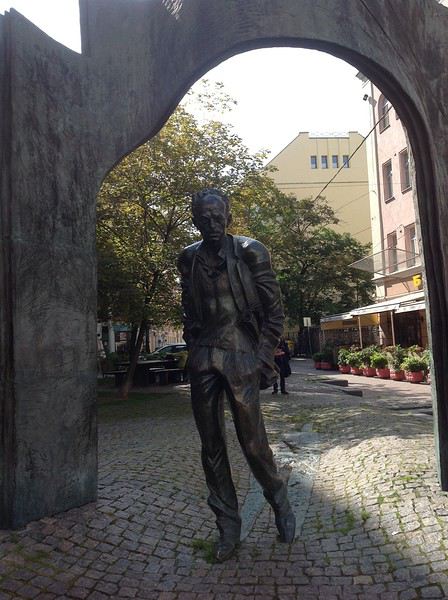
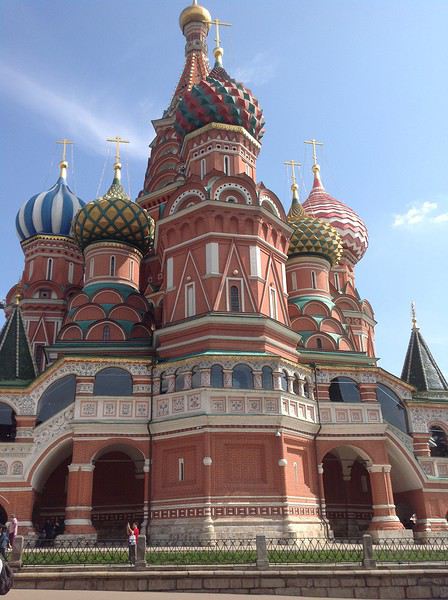
1er jour Nous avons pris un vol depuis Luxembourg , escale à Frankfort et arrivée à Moscou vers midi Je m’étais bien renseigné sur le prix du taxi pour aller jusqu’au centre et j’ai bien fait car – comme partout – les prix annoncés était entre deux et trois fois plus cher ! Nous avons finalement utilisé en taxi Yandex (l’équivalent d’Uber en Russie) et ca fonctionne impec ! pour info c’est 2000 RUB le trajet Arrivée à l’appart (rue Novy Arbat) nous avons profité du temps couvert mais non pluvieux pour aller faire une 1ere visite. Elle fut bien évidemment pour la Place Rouge ! J’ai été déçue de voir qu’il y avait des échafaudages sur toute la place (ils préparaient le Military Tatoo) , les bâtiments étaient accessibles bien sûr mais on n’avait pas de vue d’ensemble 🙁
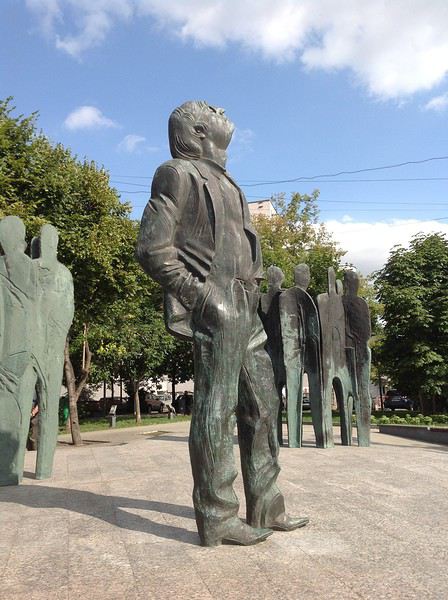
Voilà qq photos , mon mari étant le pro je n'ai que mes photos d'Ipad qui donnemt quand même une bonne idée ...
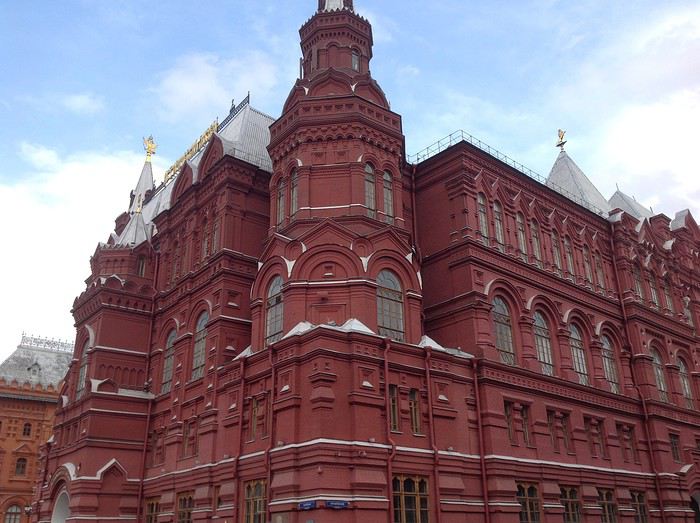
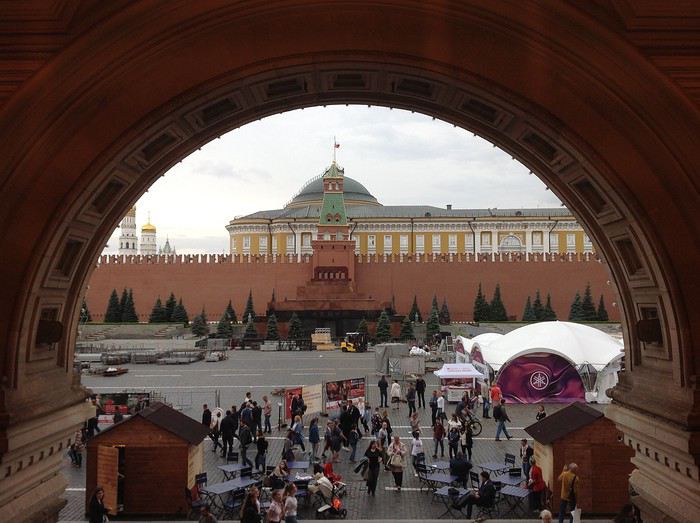
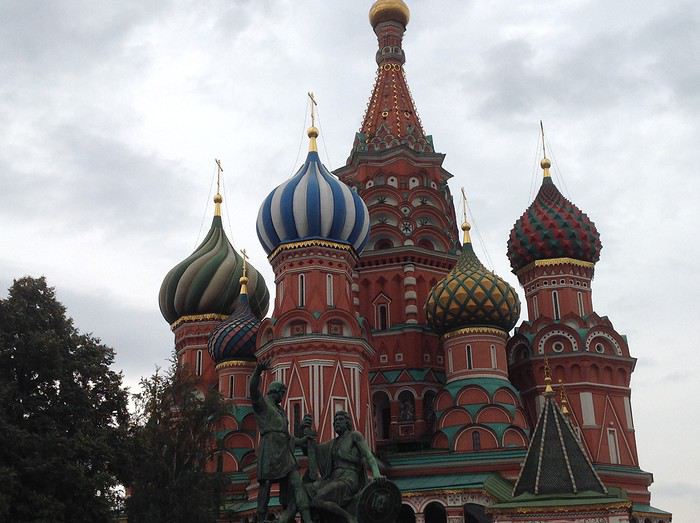
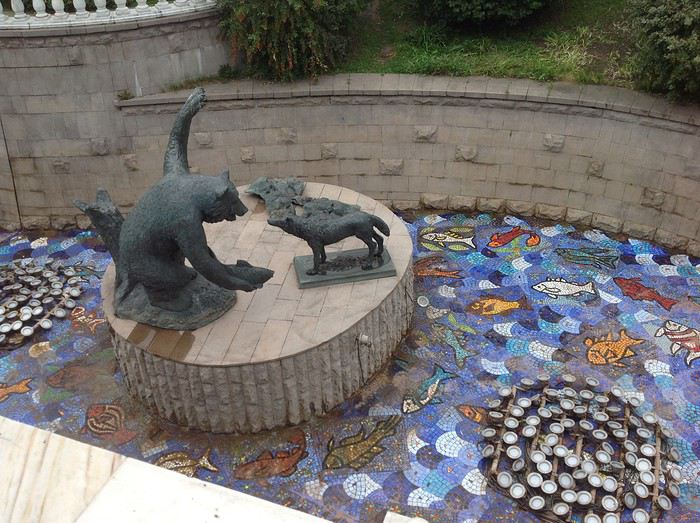
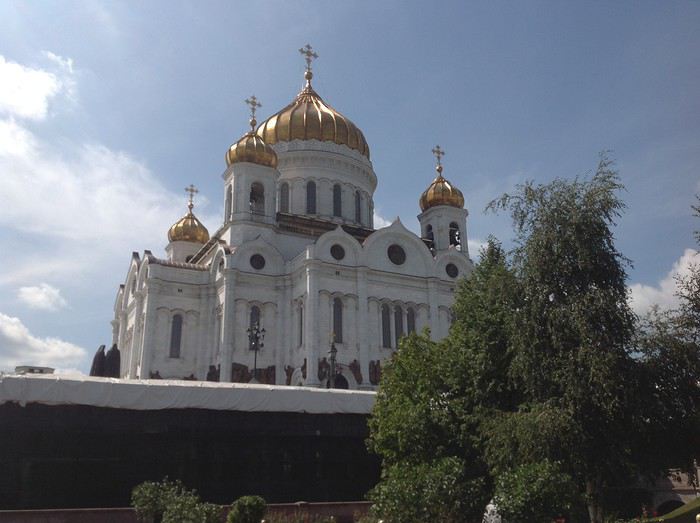
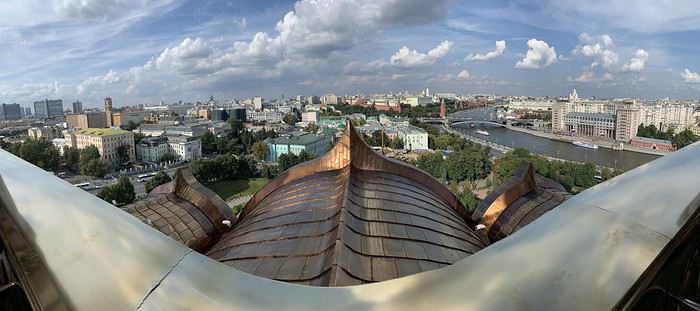
2eme jour Un grand soleil ! on retourne sur la place en passant par la Rue Arbat , nous mangeons à la ‘cantine soviétique’ du Goum : bon c’est pas cher mais je n’ai pas trouvé ça top (on prend son plateau on choisit les plats –souvent frits- et on paye à la caisse) L’aprèm nous allons voir la cathédrale de Christ-Sauveur (l’entrée est gratuite mais les hommes doivent être en pantalon long et les femmes tête couverte) , nous avons également pris l’option de monter en haut et c’est superbe , on a une vue dégagée sur toute la ville. Le soir on passe le pont du patriarche (en rénovation) pour finir au park Gorky , un bon moment de repos après cette grosse journée !
- Les généralités: Nous sommes un couple avec deux ado (14 & 16) , qui aimons voyager par nos propres moyens , en itinérant , en en marchant … et nous adorons jouer au Uno dans les endroits mythiques Pour ce voyage craignant les soucis de communication j’avais appris à lire le cyrillique et les phrases typiques du voyageurs en russe
- La logistique :
Nous sommes partis en avion , logé dans des appart (booking ou Airbnb) , nous sommes déplacés en train et bus
- Le voyage :
Je ne voulais pas faire que de la ville nous aovns donc décidé de faire une halte entre Moscou & St-Petersburg , voilà donc notre ‘périple’ : Du 07 au 11 Aout : Moscou Du 12 au 17 : ‘campagne Russe’ (Borovno Lake – Valday – Novgorod) Du 17 au 22 : Saint Petersburg
- Le bilan Nous avons adoré la Russie ! C’est propre, sécurisant et contrairement à ce que l’on peut penser les gens sont très accueillants. On y a bien mangé, le cout de la vie est moins chère qu’en France Contrairement à bcp de commentaires nous avons préféré Moscou à SPB Le temps était mitigé les 8 premiers jours mais magnifiques pour notre fin de circuit
Et voilà le détail jour par jour
1er jour Nous avons pris un vol depuis Luxembourg , escale à Frankfort et arrivée à Moscou vers midi Je m’étais bien renseigné sur le prix du taxi pour aller jusqu’au centre et j’ai bien fait car – comme partout – les prix annoncés était entre deux et trois fois plus cher ! Nous avons finalement utilisé en taxi Yandex (l’équivalent d’Uber en Russie) et ca fonctionne impec ! pour info c’est 2000 RUB le trajet Arrivée à l’appart (rue Novy Arbat) nous avons profité du temps couvert mais non pluvieux pour aller faire une 1ere visite. Elle fut bien évidemment pour la Place Rouge ! J’ai été déçue de voir qu’il y avait des échafaudages sur toute la place (ils préparaient le Military Tatoo) , les bâtiments étaient accessibles bien sûr mais on n’avait pas de vue d’ensemble 🙁
Voilà qq photos , mon mari étant le pro je n'ai que mes photos d'Ipad qui donnemt quand même une bonne idée ...
2eme jour Un grand soleil ! on retourne sur la place en passant par la Rue Arbat , nous mangeons à la ‘cantine soviétique’ du Goum : bon c’est pas cher mais je n’ai pas trouvé ça top (on prend son plateau on choisit les plats –souvent frits- et on paye à la caisse) L’aprèm nous allons voir la cathédrale de Christ-Sauveur (l’entrée est gratuite mais les hommes doivent être en pantalon long et les femmes tête couverte) , nous avons également pris l’option de monter en haut et c’est superbe , on a une vue dégagée sur toute la ville. Le soir on passe le pont du patriarche (en rénovation) pour finir au park Gorky , un bon moment de repos après cette grosse journée !
Elles voyagent seules...
Elles voyagent seules .
Pour le plaisir pour certaines , par obligation pour d’autres .
Vous les avez peut être rencontrées au cours de vos voyages .
Un homme qui voyage seul ça se fond dans le paysage , une femme ça intrigue souvent , ça interroge , en avez vous rencontré ? Quelles interrogations , envie , peur , perplexité ont émergé de ces rencontres .
Si vous voyagez seule quelles sont vos motifs , vos expériences , vos conseils , vos motivations . Précision , je voyage seule et en couple chaque année . Le voyage en solitaire est pour moi source de plaisir et de liberté depuis plus de quarante ans et je ne saurais m’en passer .
A vos claviers d’ete 😎😎😎
Si vous voyagez seule quelles sont vos motifs , vos expériences , vos conseils , vos motivations . Précision , je voyage seule et en couple chaque année . Le voyage en solitaire est pour moi source de plaisir et de liberté depuis plus de quarante ans et je ne saurais m’en passer .
A vos claviers d’ete 😎😎😎
Et maintenant quel pays où l'on ne risque plus rien à voyager?
Je me demande quel part de risque suis-je prêt a prendre pour ma famille a vouloir leur faire découvrir le joli coté des cartes postales de voyages idylliques quand la violence et les risques sont chaque jour plus grands partout. Le plaisir des voyages est désormais entaché ou que l'on aille par des violences aveugles.
Loueur de 4x4 à Salta dans le Nord-Ouest argentin
Bonjour,
Je souhaite programmer pour juillet 2020 un voyage de 3 semaines prévus dans le Nord-Ouest argentin, dont 10 jours sur les hauts plateaux désertiques. Nous sommes une famille de 5 personnes : 2 adultes et 3 enfants (9, 13 et 15 ans en 2020).
Voici les étapes successives sur ces 11 jours : Iruya – La Quiacas- Susques – San Antonio de los Cobres – Tolar grande (2 nuits) – Antofalla – Antofagasta de la Sierra (2 nuits) – El Penon (2 nuits).
Le point clé pour la réussite de ce périple sera le 4x4. Sur ce site de l'office de tourisme de Salta sont répertoriés toutes les agences de location.
Dans la catégorie F 4x4, la plupart des agences ne proposent que des pick-up. Un certain nombre d'agences indiquent qu'il est possible d'embarquer 5 passagers, 2 grandes valises et 2 petites.
Question très bête mais qui me turlupine quand je vois certaines photos de pick-up : les pick-up ont-ils tous un coffre fermé (ou hard-top à hauteur réduite au niveau de la structure métallique de l'arrière du pick-up) ? Ou risquons-nous de nous pointer avec des valises que nous n'arriverons pas à mettre en sécurité, avec un arrière de pick-up ouvert sans coffre fermé 🏴☠️ ?? Sur certains sites, on voit des photos de pick-up ouverts. Et pourtant d'autres loueurs garantissent le fait de pouvoir voyager à 5 personnes + 2 grandes valises + 2 petites...
Certaines agences ont retenu mon attention : - 2 agences qui proposent des 4x4 autres que Pick-up : on aurait alors la garantie du coffre, mais valent-ils les pick-up en terme de franchissement ?
1. ORANGE Rent a Car http://www.rentacar-orange.com/vehiculos Chevrolet S10 4x4 2 grands valise + 2 petites Ou Chevrolet Captiva 4x4 5 places 3 grandes valises + 3 petites
2. DUO Rent A Car https://duorentacar.com/ PickUp ou ALTA GAMA 4x4
- Et 2 autres agences qui déclarent garantir une assurance mécanique et « semblent » plus sérieuses que les dizaines d'autres (mais c'est purement subjectif...)
3. Alpha Rentacar http://www.rentacarensalta.com/ Au choix : TOYOTA HILUX, VW AMAROK ou FORD RANGER 4x4
4. Andar Salta http://www.andarsalta.com.ar/web/index/flota/ 4x4 TOYOTA 5 pers : 2 grandes valises et 2 petites
L'un d'entre vous a t-il testé l'une de ces agences, ou alors toute autre qui s'est avérée fiable, avec des véhicules récents et/ou une assistance ?
Je n'en ai encore contacté aucune, mais je n'ai aucun doute que toutes les agences contactées me garantiront tout ce que j'ai envie d'entendre... : véhicules neufs, assistance H24, coffre fermé. 🤪
Merci d'avance pour toute info qui me permettrait de choisir ou éliminer tel ou tel loueur ! Guillaume
Voici les étapes successives sur ces 11 jours : Iruya – La Quiacas- Susques – San Antonio de los Cobres – Tolar grande (2 nuits) – Antofalla – Antofagasta de la Sierra (2 nuits) – El Penon (2 nuits).
Le point clé pour la réussite de ce périple sera le 4x4. Sur ce site de l'office de tourisme de Salta sont répertoriés toutes les agences de location.
Dans la catégorie F 4x4, la plupart des agences ne proposent que des pick-up. Un certain nombre d'agences indiquent qu'il est possible d'embarquer 5 passagers, 2 grandes valises et 2 petites.
Question très bête mais qui me turlupine quand je vois certaines photos de pick-up : les pick-up ont-ils tous un coffre fermé (ou hard-top à hauteur réduite au niveau de la structure métallique de l'arrière du pick-up) ? Ou risquons-nous de nous pointer avec des valises que nous n'arriverons pas à mettre en sécurité, avec un arrière de pick-up ouvert sans coffre fermé 🏴☠️ ?? Sur certains sites, on voit des photos de pick-up ouverts. Et pourtant d'autres loueurs garantissent le fait de pouvoir voyager à 5 personnes + 2 grandes valises + 2 petites...
Certaines agences ont retenu mon attention : - 2 agences qui proposent des 4x4 autres que Pick-up : on aurait alors la garantie du coffre, mais valent-ils les pick-up en terme de franchissement ?
1. ORANGE Rent a Car http://www.rentacar-orange.com/vehiculos Chevrolet S10 4x4 2 grands valise + 2 petites Ou Chevrolet Captiva 4x4 5 places 3 grandes valises + 3 petites
2. DUO Rent A Car https://duorentacar.com/ PickUp ou ALTA GAMA 4x4
- Et 2 autres agences qui déclarent garantir une assurance mécanique et « semblent » plus sérieuses que les dizaines d'autres (mais c'est purement subjectif...)
3. Alpha Rentacar http://www.rentacarensalta.com/ Au choix : TOYOTA HILUX, VW AMAROK ou FORD RANGER 4x4
4. Andar Salta http://www.andarsalta.com.ar/web/index/flota/ 4x4 TOYOTA 5 pers : 2 grandes valises et 2 petites
L'un d'entre vous a t-il testé l'une de ces agences, ou alors toute autre qui s'est avérée fiable, avec des véhicules récents et/ou une assistance ?
Je n'en ai encore contacté aucune, mais je n'ai aucun doute que toutes les agences contactées me garantiront tout ce que j'ai envie d'entendre... : véhicules neufs, assistance H24, coffre fermé. 🤪
Merci d'avance pour toute info qui me permettrait de choisir ou éliminer tel ou tel loueur ! Guillaume
Problème avec Costa Croisières
Nous avons effectué par le passé de nombresuses croisieres avec COSTA
Cette année nous avons fait le tour de SINGAPOUR avec phuket bangkok malaisie kho qsamui et sihanoukville
Tout se dégrade dans les prestations COSTA
¨Prix excursions exhorbitants avec prestations guide en ANGLAIS alors qu'il n'y avait que des francophones*
Service à table avec une seule personne(débordée) au lieu de auparavant -2 serveurs et une personne pour les boissons
Prestations du forfait BOISSONS réduites avec suppression des coktails !
Pour les nouveaux croisiéristes ils n''en sauront rien mais je déconseille maintenant d'aller chez COSTA pour une croisière
Costa a été racheté par un groupe américain qui réduit tous les couts au dépens des passagers
A bon entendeur salut !