Results for "Guatemala"
About 5,053 results.
More options
Many results are in French, the community’s main language. English translations are added over time.
Search results
Destinations sécuritaires pour 2 voyageuses en Amérique latine?
Bonjour à toutes et à tous...
J'envisage de partir en Amérique Centrale ou en Amérique du sud avec une amie, pour une période d'environ 1 mois et demi, à l'été 2004. Toutefois, il semble que les pays de ces régions ne soient pas tous très sécuritaires, particulièrement pour deux filles voyageant seules. Plusieurs personnes ont même tentées de me décourager de mon projet. Est-ce que vous pourriez me renseigner sur les pays les plus sécuritaires ? Est-ce que c'est totalement fou de penser que deux débutantes en matières d'aventure à l'étranger peuvent profiter, en toute quiétude, d'un tel voyage ?
Merci ! 🙂
Infos pratiques pour le Costa Rica
Je pense rejoindre le Costa Rica au mois de décembre et y séjourner un moment, J'ai pas mal de question qui me serait bien utile: 1) Ou peut-on trouver des hebergements à bon prix de préférence proche de la mer, quels sont les meilleurs spots? (camping, bengalow, cabinas, chez l'habitant, etc...) 2) Que pouvez me conseiller comme itinéraire de "visite découverte" sans passer par des tours operator? 3) y a t'il au Costa des possibilités de décrocher des petits boulots ou des activités en echange de repas et logement? 4) Quel est en moyenne le coût de la vie (bus, repas, visite, ...)? 6) La population est elle accueillante?
Merci d'avance et Pura Vida!😉
Merci d'avance et Pura Vida!😉
Passage de Panama à l'Equateur
bonjour
j'aurais voulu connaitre le moyen de transport le plus sûr pour aller de panama jusqu'en equateur
le bateau serait-il un bon moyen???
Merci d'avance
bonne journée
j'aurais voulu connaitre le moyen de transport le plus sûr pour aller de panama jusqu'en equateur
le bateau serait-il un bon moyen???
Merci d'avance
bonne journée
Cherche toute info sur le Panama
bonjour j aimerais savoir si il y une persone qui pourrais me donner des renseignements general sur le panama merci
Ouvrir un compte bancaire aux États-Unis
Bonjour a tous;
pour éviter le risque du vole ou de perdre mon argent pendant mon voyage, J'aimerai bien savoir si je peux ouvrir un compte bancaire a l'USA (afin d'avoir une carte bancaire "visa") sachant que je part a l'USA comme touriste ou je dois m'inscrire dans un école de formation d'anglais pour pouvoir l'ouvrir.
- qu'elle est la meilleur banque dans le cas ou je peux ouvrir un compte.
Meilleurs salutations.
Coeurbleu
Nord de la thailande avec 2 enfants
nous prévoyons un voyage en thailande en janvier 2004 avec nos enfants de 6 et 8 ans, et contrairement à la plupart des gens, je ne suis pas spécialement attirée par le sud du pays, mais bien plus par le nord.
Nous resterons 4 petites semaines, mais cela n'est il pas trop long pour se cantonner au Nord seulement ?
Quels conseils pour visiter cette région ?
Une extension au Laos, voir même jusqu'en Chine pourrat-elle être envisageable ? ou au Cambodge ?
Merci d'avance pour les conseils
Nous resterons 4 petites semaines, mais cela n'est il pas trop long pour se cantonner au Nord seulement ?
Quels conseils pour visiter cette région ?
Une extension au Laos, voir même jusqu'en Chine pourrat-elle être envisageable ? ou au Cambodge ?
Merci d'avance pour les conseils
3 weeks in Laos, stress-free
 Come along, I'm taking you to this country where it's so nice to wander and slow down...
This trip was in 2023, but when I wanted to write my travel journal, VF was still closed to contributions... So, now that I've just finished my Japan travel journal here, I figured it was high time to honor this destination we came back from so enchanted. Disclaimer 1: This is a written travel journal. There’ll be text! Too much, for some! Disclaimer 2: This is an illustrated travel journal. There’ll be photos! Too many, for some!
I have to say, every time I try to discipline myself, to keep it shorter, to include fewer photos... I end up adding more. It feels like my dear Aunt Nicole, who exhausted us with her slide-show evenings in the 70s/80s, decided to take her revenge. The upside for you, readers, is that you can slip away anytime without offending Aunt Nicole. I won’t even notice!
Anyway, since I love maps, here’s one to give you an idea of where I’m taking you. As you can see, we only saw a tiny part of Laos (the areas circled in red); we only had 3 weeks for ourselves (my husband’s newly retired, I still work), and we prefer taking our time over rushing around like crazy.

In broad strokes, it was very classic:
First, we “settled in” at Luang Prabang (8 days), because we wanted and needed to. From there, we took three days to venture a little further north—not far in kilometers, but as we know, distances aren’t just about km! Then we flew south to Paksé, letting ourselves drift down to the 4,000 Islands while stopping by the pre-Angkorian archaeological sites. We wrapped up with the Bolaven Plateau.
A few practical notes: We arrived via Bangkok, then took a Bangkok-Luang Prabang flight, having picked up our luggage in Bangkok to check it in for Luang Prabang. No issues—the Bangkok airport, which many of you know, is very well organized. We got our visas on arrival in Luang Prabang. Quick, but to be fair, we were on a “small” plane, and the big flights had arrived earlier, so we weren’t too crowded in line! At the end of our trip, we didn’t fly out of Paksé but from the nearby airport in Thailand, Ubon Ratchathani (a 2.5-hour drive from Paksé), then Bangkok and Paris. You’ll notice we skipped Vientiane to stay longer in Luang Prabang. That said, there’s now a high-speed train between Vientiane and Luang Prabang—good to know—and soon the (Chinese) train will go all the way to Bangkok and even Kuala Lumpur!
With that intro out of the way, let’s dive into the heart of the matter. To be continued: Slowing down the pace... in Luang Prabang
Megacom SIM card, how does it work?
Hi there,
I’ve never bought a SIM card abroad or even used prepaid cards in France...
So I’m wondering how it all works?
You buy a SIM card and pop it into your phone. Okay, so far so good... 😏
But after that?
I can’t find the price of prepaid cards or how they work with MegaCom.
If someone could give me a step-by-step guide... 😊
Thanks! 🙂
Back in Tunisia (live account)
Hi there,
On this forum, I shared my first trip to Tunisia from mid-February to early March (https://voyageforum.com/forum/impressions-tunisiennes-en-direct-d11460662/), a stay I enjoyed so much that six weeks later, I’m back in Tunisia for a full 15 days (I return on April 27).
This time, I landed in Monastir on a direct flight from Nice, again with Tunisair. We left about ten minutes late, and the flight lasted around 1 hour 30 minutes. A meal was served on board (cucumber salad with Edam-like cheese, carrots, and two small portions of dishes I couldn’t identify—semolina with peppers, olives, and parsley, two small rolls, a square of processed cheese, and a chocolate cake). It’s worth noting because it’s not common on flights this short.
In February, France and Tunisia were in the same time zone, but now Tunisia is one hour behind. This time difference and the flight duration work perfectly for a short 15-day trip since it takes me a few days to adjust to jet lag.
Luckily, I’d asked my hotel about the taxi fare from the airport because the drivers (there were several around me) didn’t hesitate to quote outrageous prices. The actual fare is 20 dinars, but one asked for 120 dinars. I refused, and another offered 60 dinars. I replied, "That’s too expensive—I’ll take the metro!" (Having tried the Tunis metro, I had no desire to repeat the experience in Monastir with a suitcase!). I started walking toward the metro, and one of the drivers caught up with me, saying, "20 dinars is fine!" I’ll skip the details, but the negotiation took a little while. When I arrived at the hotel, I told the receptionist someone had asked for 120 dinars. He put his hands to his head and said, "They’re awful!" He remembered our phone call two days earlier when I’d booked (he’s the one who told me I could take the metro).
The Mezri Hotel isn’t expensive. I got a sea-view room for 75 dinars (22 €). (I’d booked a balcony room for 90 dinars but wouldn’t have had time to enjoy it.) It’s well-located but noisy because there’s no double glazing. The receptionist is a very kind older gentleman. He called a friend whose wife is from Tozeur to find out if I should take a bus or a *louage* tomorrow and what time.
I arrived at the hotel around 7:00 PM and had time to stroll along the corniche to the ribat. Despite some run-down buildings, the seaside seemed livelier and cheerier than Sousse’s.
Monastir is the hometown of former president Bourguiba. I passed his mausoleum by taxi. There are Tunisian flags along the avenue by the sea because every year on April 6—the anniversary of Habib Bourguiba’s death—the president of the Republic visits the Bourguiba Mausoleum in Monastir to pay respects.
The taxi driver mentioned other Tunisian presidents. He complained about rising prices and insecurity, blaming President Kaïs Saïed (I’d already heard that security was better under Ben Ali).
At the end of my stay, I’ll take time to explore Monastir, but tomorrow morning, I’m off to Tozeur—a long bus ride awaits me.

TO BE CONTINUED....
On this forum, I shared my first trip to Tunisia from mid-February to early March (https://voyageforum.com/forum/impressions-tunisiennes-en-direct-d11460662/), a stay I enjoyed so much that six weeks later, I’m back in Tunisia for a full 15 days (I return on April 27).
This time, I landed in Monastir on a direct flight from Nice, again with Tunisair. We left about ten minutes late, and the flight lasted around 1 hour 30 minutes. A meal was served on board (cucumber salad with Edam-like cheese, carrots, and two small portions of dishes I couldn’t identify—semolina with peppers, olives, and parsley, two small rolls, a square of processed cheese, and a chocolate cake). It’s worth noting because it’s not common on flights this short.
In February, France and Tunisia were in the same time zone, but now Tunisia is one hour behind. This time difference and the flight duration work perfectly for a short 15-day trip since it takes me a few days to adjust to jet lag.
Luckily, I’d asked my hotel about the taxi fare from the airport because the drivers (there were several around me) didn’t hesitate to quote outrageous prices. The actual fare is 20 dinars, but one asked for 120 dinars. I refused, and another offered 60 dinars. I replied, "That’s too expensive—I’ll take the metro!" (Having tried the Tunis metro, I had no desire to repeat the experience in Monastir with a suitcase!). I started walking toward the metro, and one of the drivers caught up with me, saying, "20 dinars is fine!" I’ll skip the details, but the negotiation took a little while. When I arrived at the hotel, I told the receptionist someone had asked for 120 dinars. He put his hands to his head and said, "They’re awful!" He remembered our phone call two days earlier when I’d booked (he’s the one who told me I could take the metro).
The Mezri Hotel isn’t expensive. I got a sea-view room for 75 dinars (22 €). (I’d booked a balcony room for 90 dinars but wouldn’t have had time to enjoy it.) It’s well-located but noisy because there’s no double glazing. The receptionist is a very kind older gentleman. He called a friend whose wife is from Tozeur to find out if I should take a bus or a *louage* tomorrow and what time.
I arrived at the hotel around 7:00 PM and had time to stroll along the corniche to the ribat. Despite some run-down buildings, the seaside seemed livelier and cheerier than Sousse’s.
Monastir is the hometown of former president Bourguiba. I passed his mausoleum by taxi. There are Tunisian flags along the avenue by the sea because every year on April 6—the anniversary of Habib Bourguiba’s death—the president of the Republic visits the Bourguiba Mausoleum in Monastir to pay respects.
The taxi driver mentioned other Tunisian presidents. He complained about rising prices and insecurity, blaming President Kaïs Saïed (I’d already heard that security was better under Ben Ali).
At the end of my stay, I’ll take time to explore Monastir, but tomorrow morning, I’m off to Tozeur—a long bus ride awaits me.
TO BE CONTINUED....
From Mexico to the Wonderful Chiapas
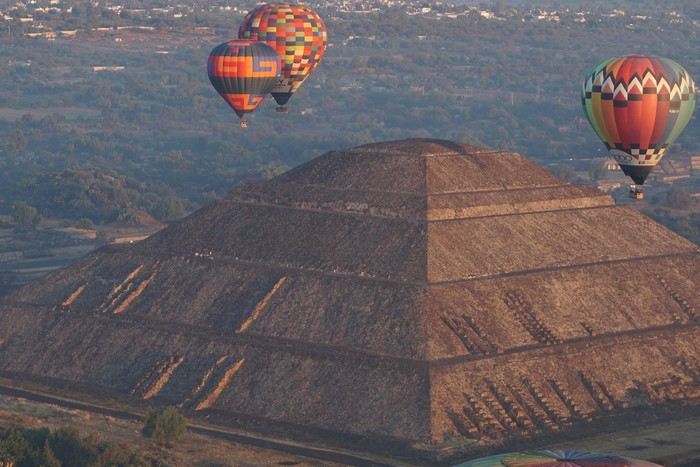
This one-month trip, from January 18 to February 17, 2026, allowed us to visit Mexico City and travel through the states of Puebla, Oaxaca, and Chiapas. We mainly used buses (ADO company) for medium and long distances and colectivos or taxis (or Uber) for shorter trips. Before leaving, I had contacted several people on the ground: Harry, a Vendéan settled in Oaxaca offering, among other things, discoveries of artisan villages or the Monte Albán site, and Oscar in Comitán de Domínguez. I’ll come back to our meeting with Oscar, who runs a local agency (CVL Travel Turismo Alternativo & Corre la voz) and owns a very pleasant hostel, a real highlight of our trip. Our journey took place in 8 stages on a loop starting from Mexico City. The connections between each were made by day or night buses depending on the trip duration. I had booked our seats in advance, either directly on the ADO company’s website or through booking platforms depending on the rates offered. Note that by planning ahead, I was able to benefit from very interesting "Early Booking" rates. There are several comfort classes. For all our trips, I had booked seats in Primera class buses, except for two in GL (Grand Luxe) class. The rates are very reasonable, and the buses turned out to be comfortable or even very comfortable (only the basic seat recline might surprise you).
Our itinerary and number of days per stage: Stage 1 – Mexico City: 4 days Stage 2 – Puebla: 2 days Stage 3 – Oaxaca: 4 days Stage 4 – San Agustinillo: 4 days Stage 5 – San Cristóbal de las Casas: 3 days Stage 6 – Comitán de Domínguez: 6 days Stage 7 – Palenque: 4 days Stage 8 – Mexico City: 2 days If I were to do it again, I’d remove one day from Palenque and add it either to Puebla or San Cristóbal to visit nearby sites or villages, or to San Agustinillo to enjoy one more day by the Pacific Ocean.
Stage 1: Mexico City (2,200 m / 9.2 million inhabitants) We arrived in the Mexican capital around 10:00 PM. The simplified customs process was very quick. After exchanging some money at the airport, we took a taxi to our youth hostel. We got around the capital on foot, of course, but also by metro. Signs are very rare, and we took the train in the wrong direction several times. After a few mistakes, we systematically asked on the platform if we were going the right way. The metro is very affordable. You need to get a rechargeable card (the Tarjeta de Movilidad Integrada) and top it up as needed. This card (less than 1 €) isn’t personal, so there’s no need to get one per person.
Mexico City: Day 1.
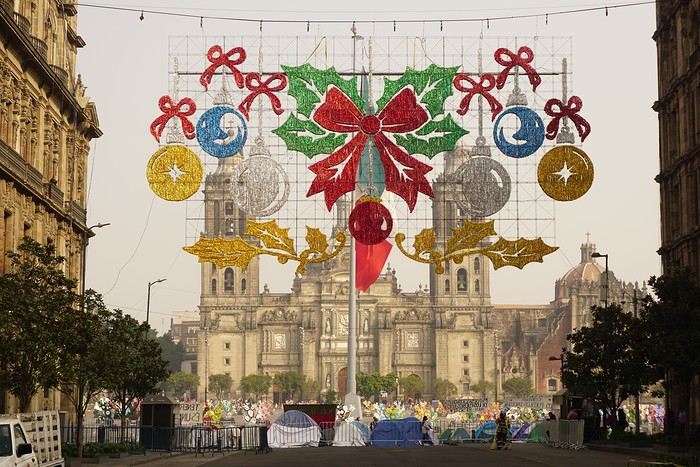
Visits and walks of the day (note: many museums are closed on Mondays): The Zócalo or Constitution Square: it’s one of the most beautiful, largest (195m x 240m), and oldest squares in the world. This is where Cortés decided to build the center of the new Spanish city on the site of the former Tenochtitlan market. Stones from the pyramids were used to pave the esplanade and build the surrounding colonial churches and buildings. During our visit, the huge square was covered with (resin) cacti, the theme of the temporary exhibition at the time. Indeed, temporary events or exhibitions take place here throughout the year. It’s also the endpoint for many protest marches.
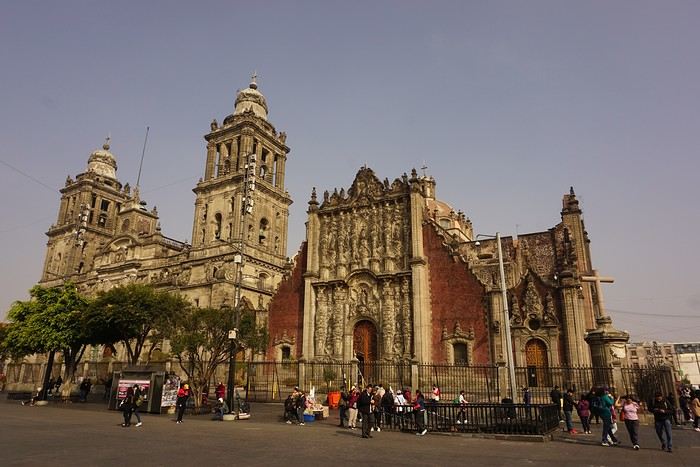
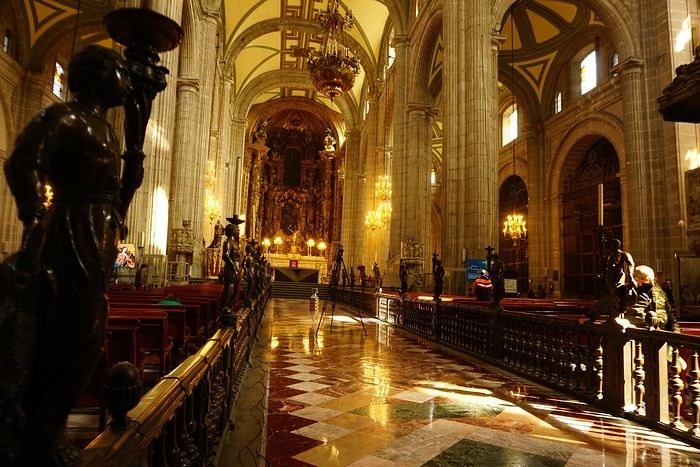


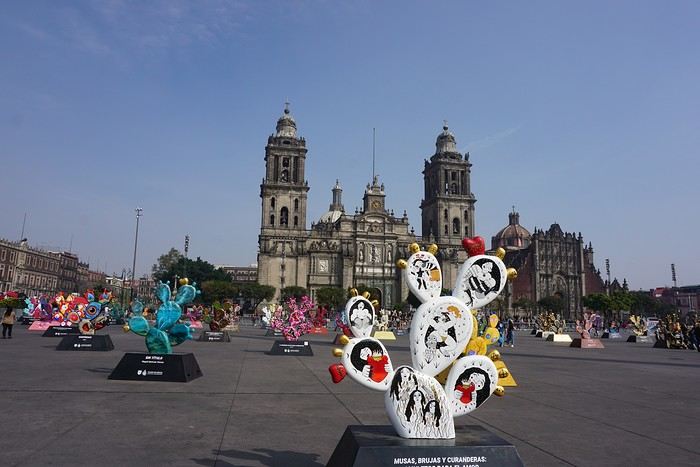
The cathedral: it’s sinking by one centimeter per year despite massive stabilization work (the collapse of many Mexican buildings—30 cm/year—is due to groundwater pumping). It was built starting in 1571 and completed in... 1813. The modest remains of the Templo Mayor (exterior view): they have high symbolic value, as this monument was the most important in the Mexica Empire.
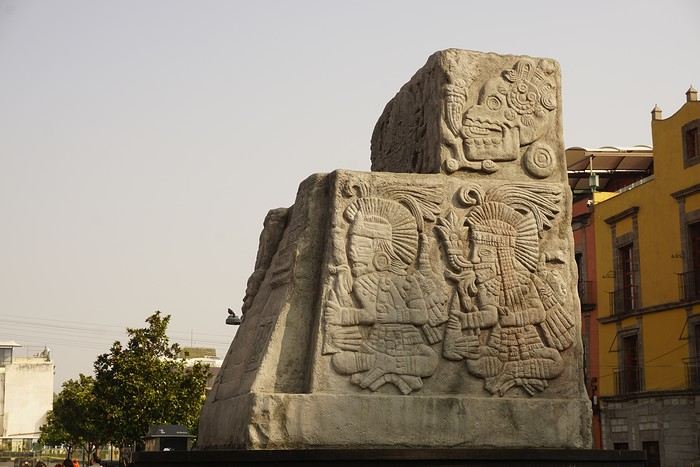 We then walked through the streets of the historic center to the Santísima Church, unfortunately closed for renovation work.
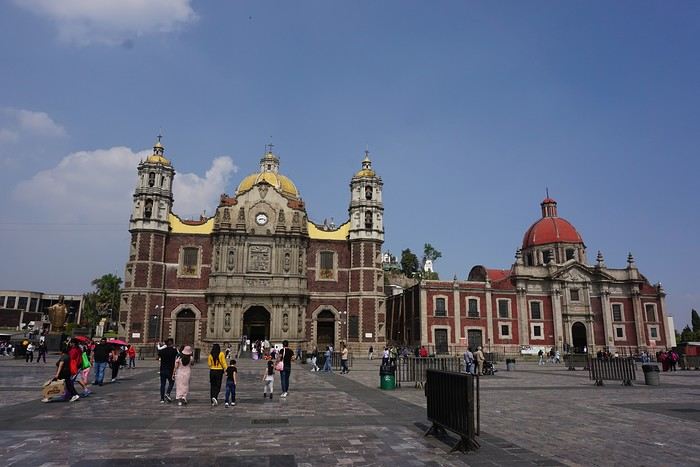
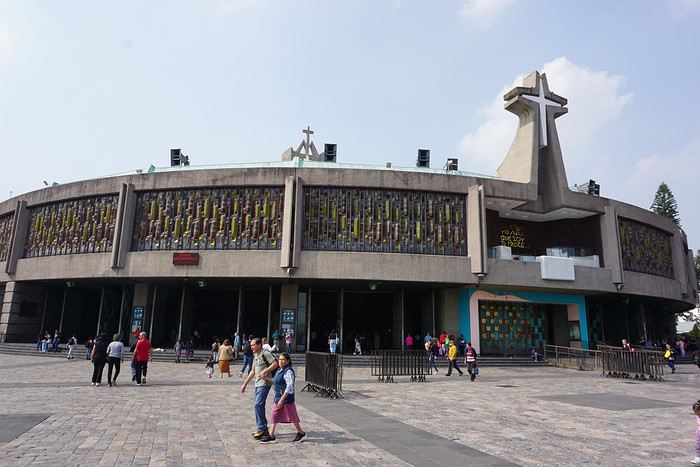
Next, we took the metro to visit one of Mexico’s most important pilgrimage sites: the Insigne y Nacional Basílicas de Santa María de Guadalupe, as well as the Capilla del Cerrito on the hill.
The first, dating from the colonial era, is really leaning a lot.
The second, shaped like a rotunda, is very impressive from the inside.
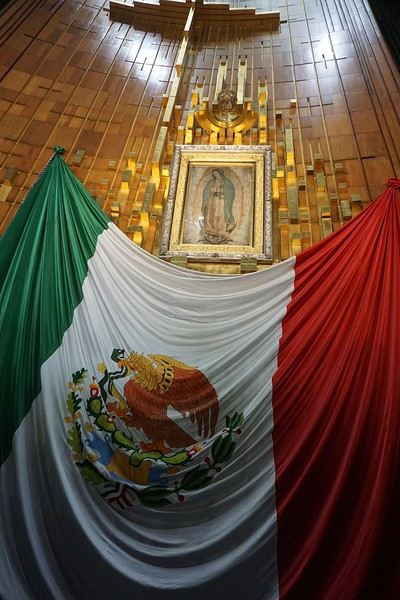
In the basement, there’s a sacred tunic where, in 1531, an image of the Virgin Mary is said to have appeared. A real mystery for scientists, the garment has never deteriorated since that date. Slow-moving conveyor belts allow pilgrims to admire it, preventing crowds from gathering in front of the image for hours. Well thought out!
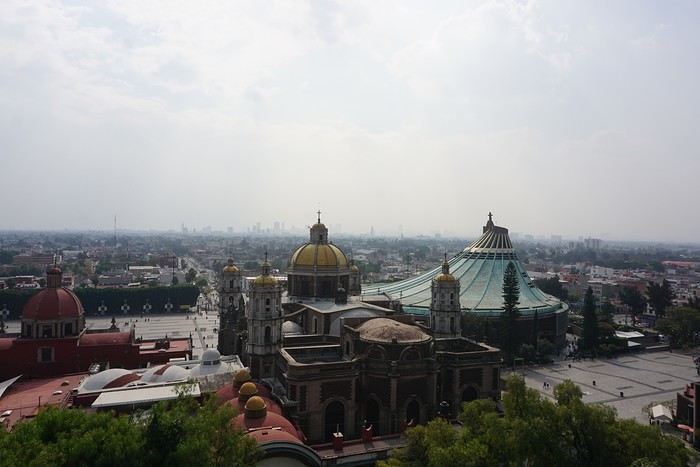
 From the top of the Capilla del Cerrito, you get beautiful views of huge Mexico City.
Societal Evolution
Hello everyone,
It’s something we often notice in this forum—and many others—this behavioral shift.
A long-time member, or even a new one, asks a question. They get one or more answers, some brief, some detailed, and then... nothing???
Not even a simple thank you!!!
From what I’ve gathered, if the answers don’t align with what they wanted to hear, it seems natural for the asker to just disappear!! 😕 Unless—(and I fear this is the case)—basic politeness is no longer part of our society????
Please forgive my little rant.
Wishing everyone all the best. Cheers,
Puma2A

...
It’s something we often notice in this forum—and many others—this behavioral shift.
A long-time member, or even a new one, asks a question. They get one or more answers, some brief, some detailed, and then... nothing???
Not even a simple thank you!!!
From what I’ve gathered, if the answers don’t align with what they wanted to hear, it seems natural for the asker to just disappear!! 😕 Unless—(and I fear this is the case)—basic politeness is no longer part of our society????
Please forgive my little rant.
Wishing everyone all the best. Cheers,
Puma2A
...
Some trips are born twice - Peru April - May 2025
Some trips are born twice.
Ours was supposed to happen in 2020. Everything was ready: the itinerary, the flight tickets, hotel reservations and Machu Picchu, the rental car, dreams of high altitudes and wide-open spaces. And then the world stopped.
Like so many other plans, our trip to Peru was put on hold. Disappointment was followed by a more concrete reality: paperwork, endless back-and-forth, and battles to recover some of the costs we’d already paid.
The years went by. Life moved on, with its shifting priorities and unexpected twists. Rescheduling this trip wasn’t possible until 2025.
The itinerary stayed mostly true to what we’d imagined five years earlier. One major difference, though—in 2020, we’d planned to rent a car and explore the roads completely independently. Most importantly, we hadn’t included the three-day Ausangate trek, due to lack of time.
For 2025, our plans evolved. 4x4 rental prices had skyrocketed, and when we looked at our schedule more closely, we realized quite a few days didn’t actually need a vehicle. So we made a different choice and opted for private drivers instead. A decision we never regretted. Always punctual, thoughtful, and available... they were so much more than just drivers.
All our reservations were made in January, except for the trek, which we booked in February.
Finding reliable drivers on our own was tough, so we asked Laurent from Tout Pérou to handle it for us. Going through Tout Pérou also gave us a discount on the train ride to Aguas Calientes, so Laurent booked those tickets too. He also bought our Machu Picchu entrance tickets at the same price we would’ve paid on the official website. When comparing domestic flight prices, we found it was cheaper to book from Peru, so Laurent took care of those as well.
This time, nothing was going to stop us. Peru was waiting. And we were ready. 🙂
Tunisian Impressions (Live)
Hi there,
I arrived in Tunisia this afternoon for a full 14-day stay.
I took a direct Tunisair flight from Nice, which departed about thirty minutes late (that’s nothing compared to the "nightmares" I’ve had on some of my recent trips).
The flight lasts around 1 hour and 20 minutes, and a small snack was served on board (a sort of quiche with chickpea purée, a small bread roll, a portion of cheese like La Vache qui rit, and a small chocolate cake). It’s worth mentioning because it’s becoming increasingly rare on short flights. I was seated between two Tunisian gentlemen who gave me some great tips for my trip, especially about negotiating prices. One of them is a former cameraman for France Télévisions, very cultured and well-traveled—his daughter is a journalist at France Télévisions (I found some of her articles online). In short, the flight was very pleasant and quick.

I’m staying at the Hôtel Royal Victoria. I booked it yesterday afternoon by email without providing my credit card number. The room costs 241 TND (71 €) with breakfast included. It has heating, a small fridge, a safe, a hairdryer, Wi-Fi, and a TV with international channels. There’s a police van permanently parked in the square where the hotel is located.
This hotel is housed in the former British consulate and later embassy. It has a lot of charm with its painted wood ceilings and doors, and its bathroom covered in ceramic tiles. The tiny elevator is from another era. The main advantage of the hotel is its location between the medina and Avenue Bourguiba. Nearby, there’s the Magasin Général, where you can find groceries and some typical products like rose water, geranium water, and tons of halwa (a customer kindly explained how to eat it and which is the best).
After nightfall, I took a short stroll down Avenue Bourguiba. There weren’t many people around—it’s windy and cold.
I’ve already noticed the warm welcome from Tunisians. The supermarket cashier welcomed me to Tunisia, and a gentleman I asked for directions to the Magasin Général (I was about to climb stairs leading to a mosque!) insisted on inviting me for coffee, but I declined.
The rest of my itinerary will depend on the weather. If it doesn’t rain tomorrow, I might visit Carthage since the Bardo Museum is closed on Mondays, as are the museums in Sidi Bou Said.
TO BE CONTINUED...


I arrived in Tunisia this afternoon for a full 14-day stay.
I took a direct Tunisair flight from Nice, which departed about thirty minutes late (that’s nothing compared to the "nightmares" I’ve had on some of my recent trips).
The flight lasts around 1 hour and 20 minutes, and a small snack was served on board (a sort of quiche with chickpea purée, a small bread roll, a portion of cheese like La Vache qui rit, and a small chocolate cake). It’s worth mentioning because it’s becoming increasingly rare on short flights. I was seated between two Tunisian gentlemen who gave me some great tips for my trip, especially about negotiating prices. One of them is a former cameraman for France Télévisions, very cultured and well-traveled—his daughter is a journalist at France Télévisions (I found some of her articles online). In short, the flight was very pleasant and quick.
I’m staying at the Hôtel Royal Victoria. I booked it yesterday afternoon by email without providing my credit card number. The room costs 241 TND (71 €) with breakfast included. It has heating, a small fridge, a safe, a hairdryer, Wi-Fi, and a TV with international channels. There’s a police van permanently parked in the square where the hotel is located.
This hotel is housed in the former British consulate and later embassy. It has a lot of charm with its painted wood ceilings and doors, and its bathroom covered in ceramic tiles. The tiny elevator is from another era. The main advantage of the hotel is its location between the medina and Avenue Bourguiba. Nearby, there’s the Magasin Général, where you can find groceries and some typical products like rose water, geranium water, and tons of halwa (a customer kindly explained how to eat it and which is the best).
After nightfall, I took a short stroll down Avenue Bourguiba. There weren’t many people around—it’s windy and cold.
I’ve already noticed the warm welcome from Tunisians. The supermarket cashier welcomed me to Tunisia, and a gentleman I asked for directions to the Magasin Général (I was about to climb stairs leading to a mosque!) insisted on inviting me for coffee, but I declined.
The rest of my itinerary will depend on the weather. If it doesn’t rain tomorrow, I might visit Carthage since the Bardo Museum is closed on Mondays, as are the museums in Sidi Bou Said.
TO BE CONTINUED...
Chatting by the water
For those who want to chat quietly by the riverbanks, this is the place!
Berlin impressions (live)
Hi there,
I arrived in Berlin last night. In another discussion, I shared how much of a "nightmare" the flights from Nice were.
I’ll be posting some impressions here—what I liked and what I didn’t like as much.
This is my first time in Berlin. I’m staying for two weeks. For now, I’m alone, but I’ll be joined by someone in a few days.
Just to clarify, I won’t be posting any photos because my camera gave up the ghost the day before I left. It refused to read memory cards, and I don’t have a smartphone—just a tablet that I leave at the hotel.
Speaking of photos, a few years ago, at the Ducasse d’Ath in Belgium, I met a retired teacher who wasn’t taking any pictures of the festival. I asked her, "You’re not taking any photos?" She told me that during a trip to Nicaragua, she’d photographed howler monkeys and only noticed when looking at the pictures later that the males had huge testicles—something she hadn’t realized in person. She said, "Since then, I don’t bother with photos anymore!" I’ve thought about that often and wonder if I should do the same and stop taking pictures. Still, I’ll probably get a smartphone since it’s hard to go without one these days.
Which less touristy regions to visit in Mexico?
Hi everyone,
My partner and I would like to travel to Mexico during the Christmas holidays. We’re well aware that this is a peak tourist season, but it’s the only time of year when we can take a long trip (over two weeks) due to work commitments.
We’re looking to avoid overly touristy areas and travel independently (renting a car). We want to explore Mexico’s history, take our time, and enjoy nature and the sea.
I’ve never been to Mexico before, and I’m considering the following regions (not all of them, of course): Yucatán (outside Quintana Roo), Baja California, Oaxaca, or Chiapas.
I’ve more or less ruled out Chiapas for safety reasons (even though the nature there looks amazing), and I’d love to hear your thoughts on the other regions. From experience, I know that even in highly touristy areas, you can often find quieter spots with good planning and by avoiding the main hotspots. For example, we were in Thailand last year during the same period, and aside from 2-3 places, we had a very peaceful trip—sometimes even being the only Westerners around. Would the same be true for Yucatán or Baja California?
Do you have any recommendations for nice, less touristy spots? What are your thoughts on the regions I mentioned?
Thanks so much for your help, and I hope you have a great weekend!
Malaysia or Mexico for a family trip: nature, beach, and culture?
Hi everyone!
We’re a family of 4: 2 adults and 2 kids aged 3 and 6.
I’m looking for a nature-beach-culture destination for May 2026. Right now, I’m torn between Mexico and Malaysia. I’ve read about the Yucatán, for example—it’s easy for a first trip to Mexico, but I’m worried I won’t get that authentic Mexican vibe, especially if we have to rent a car. I don’t want our trip to just be a checklist of beautiful sites. I love Asia for the atmosphere and the ease of traveling independently. Anyway, can you share your thoughts on these two destinations and help me with my research? Thanks!
Hélène
Thoughts on 3 Weeks of Travel in Costa Rica
We just got back from a nearly 3-week trip to Costa Rica in March. For the occasion, we used EVANEOS to plan our trip based on our preferences.
After some setbacks with ADOBE RENT-A-CAR—they refused the Visa Premier card and forced us to pay for extra insurance (which is usually covered by the Visa Premier)—we finally set off to explore the country.
Observation: Apart from nature, wildlife, and flora, there isn’t much else to see, but it’s so beautiful! Some people criticize the country as insignificant, with bland food and unwelcoming locals. I think those people didn’t really explore—maybe they stayed in their hotel near the beach (UVITA?) without venturing out. Otherwise, there wouldn’t be so many Europeans living in Costa Rica who don’t even consider going back to their home countries.
For our part, we found Costa Ricans very kind and welcoming. It’s often said they’re thieves, but personally, we left a small suitcase in a restaurant. When we returned after driving 20 km round trip, the staff were trying to find our phone number to contact us. I think it’s like anywhere—even in France, I’d tell tourists not to leave anything in their car to avoid… well, you know.
Food: Traditional dishes, fish plates (tilapia was excellent), and especially ceviche (around 15 € per person)—really good—and lobster (around 30 to 35 € per person), all served with fruit batidos (around 3 € per person).
Car: We had a 2-wheel-drive vehicle, which kept us from visiting some sites that require a 4x4, like Boruca, the town of artisan masks. Some lodges are also only accessible via rough, rocky trails that are tough to navigate in a regular car. Don’t hesitate to insist on a 4x4.
Keep in mind that driving fast in Costa Rica isn’t possible. Some roads are in poor condition, and there are often unmarked speed bumps that are much worse than the ones in France. You’ll average about 50 to 60 km/h on a leg of the trip.
I also recommend bringing a road map to cross-check the routes suggested by Waze or Google Maps. Sometimes, these apps will send you down completely wrecked roads to save time! A paper map will help you verify the road type. It’s better to drive an extra 20 km than to get stuck on a rocky path.
- San José to Barra de Pacuare (much less crowded than Tortuguero). Sea turtles are still rare this time of year. Via the canals, we spotted howler monkeys, sloths, and birds, and on land, we saw venomous spiders, poisonous frogs, and a leatherback turtle conservation site.
Explored a primary tropical forest with its many species of flora and fauna (monkeys, snakes, sloths, toucans, raccoons, etc.).
- Barra de Pacuare to Cahuita: Explored Cahuita National Park (howler monkeys, capuchin monkeys, raccoons, sloths, blue crabs, leaf-cutter ants, etc.) and walked along the trail by Puerto Viejo’s beach.
- Cahuita to Bambú: Visited the Bribri tribe and their customs. This isn’t a tourist trap—it’s a deep immersion into a community living almost self-sufficiently. To get there, you take a motorized canoe for over an hour. But be warned:
1 - The restroom cleanliness leaves a lot to be desired
2 - There’s no hot water
3 - A waterfall hike is offered. The first two-thirds are fine, but the last third is very dangerous, especially if it’s rained, even with sneakers. You need sturdy shoes. Our guide turned back halfway…
- Bambú to Sarapiquí:
- La Fortuna: Explored the Mistico Park tropical forest. A 3+ km trail lets you discover animals and lush vegetation. Sixteen suspension bridges, some up to 45 meters high, offer stunning views of the canopy.
Walked around Arenal Volcano: Big disappointment for seeing lava flows. After 2 km, a viewpoint shows vegetation that’s taken over—only a few volcanic rocks hint at the 1968 eruption.
- La Fortuna to Carara: Spotted crocodiles at the Tarcoles Bridge.
- Carara to Uvita: Relaxed. Uvita is a small tourist town with nothing particularly original, but it’s the place to try CEVICHE, a typical dish of raw fish “cooked” in lime juice. Delicious! We recommend Mestizo for very affordable prices.
- Osa to Corcovado National Park: This park is gorgeous. You’ll see all four monkey species, tapirs, scarlet macaws, etc.
From Drake Bay, it takes about 1 hour 15 to 1 hour 30 to cross to the park. After navigating the mangroves, the boat heads into open sea until reaching the beach, where you’ll wade ashore (water up to your thighs—bring shoes for the slippery rocks).
National Geographic called the park a "jewel of humanity" that must be preserved at all costs due to its incredible biodiversity. The park represents 3% of the world’s biodiversity. You can observe countless monkeys (all four species are present), crocodiles, tapirs, and scarlet macaws.
Our guided hike with a French-speaking guide lasted 4 hours before returning by boat to the lodge.
WARNING: There’s strict control at the park entrance:
- No plastic bottles
- No knives
- No plastic items
- No bare feet. Closed-toe shoes are required (in addition to a pair for the boat)
- Osa to Zona de los Santos: This is the coffee region and home to the quetzal, a stunning but hard-to-spot bird that’s also Guatemala’s symbol. Paraíso Quetzal Lodge has a platform with a spotting scope to try to see the bird in the forest. CAUTION: This beautiful lodge is at 2,650 meters altitude. The rooms have incredible forest views, but it’s VERY VERY cold!
- Zona de los Santos to San José: Detour to Irazú Volcano. WARNING: Buy tickets before arriving. The staff kindly bought them for us via their phone. Small disappointment: The crater lake hasn’t existed for years! The ads are misleading about this.
- San José: A city we found uninteresting.
Which island(s) should we prioritize for 4 weeks in Indonesia?
Hi everyone,
As part of a four-month world trip with our kids (ages 6, 12, and 13), we’ll be spending four weeks in Indonesia. Choosing destinations is so tough because everything is just so appealing! We’ll be spending some time on Java and will likely make a "quick trip" to Borneo for the orangutan reserve. We also want to experience Bali’s culture and the small islands of the Lesser Sundas, with their incredible marine life... but which ones should we prioritize? For a few days of diving and relaxation, do you think we should go for Nusa Penida, the Gili Islands, or Moyo Island? Is Sumbawa complicated to explore? Is it worth taking the time to visit? Can it be crossed by car to then reach Komodo National Park? Anyway, any advice would be greatly appreciated. Our goal is to avoid overly touristy spots (but not places that feel too unsafe with the kids), to discover local culture and villages, and to be amazed both underwater and above. Thanks so much for your help!
As part of a four-month world trip with our kids (ages 6, 12, and 13), we’ll be spending four weeks in Indonesia. Choosing destinations is so tough because everything is just so appealing! We’ll be spending some time on Java and will likely make a "quick trip" to Borneo for the orangutan reserve. We also want to experience Bali’s culture and the small islands of the Lesser Sundas, with their incredible marine life... but which ones should we prioritize? For a few days of diving and relaxation, do you think we should go for Nusa Penida, the Gili Islands, or Moyo Island? Is Sumbawa complicated to explore? Is it worth taking the time to visit? Can it be crossed by car to then reach Komodo National Park? Anyway, any advice would be greatly appreciated. Our goal is to avoid overly touristy spots (but not places that feel too unsafe with the kids), to discover local culture and villages, and to be amazed both underwater and above. Thanks so much for your help!
Japan: First Discovery!
Here’s a little story about my first trip to Japan with my partner.
We went for our first visit from October 29 to November 13, 2024.
I had planned this entire trip back in November 2020, but given the health situation at the time, I had to cancel...
Here’s the classic route we took: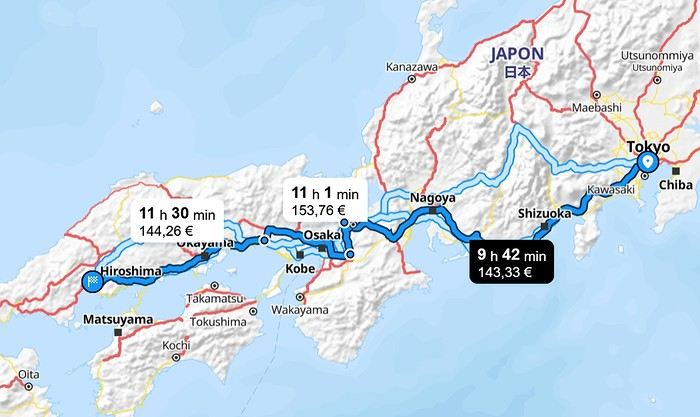
We booked everything ourselves and got a regional pass for the area from Kyoto to Hiroshima. The hotels were reserved 3 months in advance on Book... and Agod... (1030 € for 2 people for 13 nights = 80 €/night). For the flight, we chose a Qatar Airways flight with a layover to break up the long journey (950 € per person). We also got a pass on the same site (Japan-Experience) to take the train connecting Narita Airport to Shibuya Station (the N'EX Narita Express). Since the airport is 75 km from central Tokyo, we opted for this mode of transport, even though there are cheaper alternatives. After reading various posts on VoyageForum, I understood how important it was to have a Welcome Suica card to pay for public transport (subway, tram, bus, boat throughout the country), and we were able to buy one at Narita Airport. It turned out to be super useful! After a long but smooth journey, we found ourselves at Narita Airport in the evening. Even though we had a pass for the Narita Express, we had to go to a counter to make a reservation for the train (mandatory). Then, once we arrived at Shibuya Station, we took the subway for 2 stops and finally reached our hotel, exhausted (Hotel Asia Center of Japan – 270 € for 3 nights with breakfast included).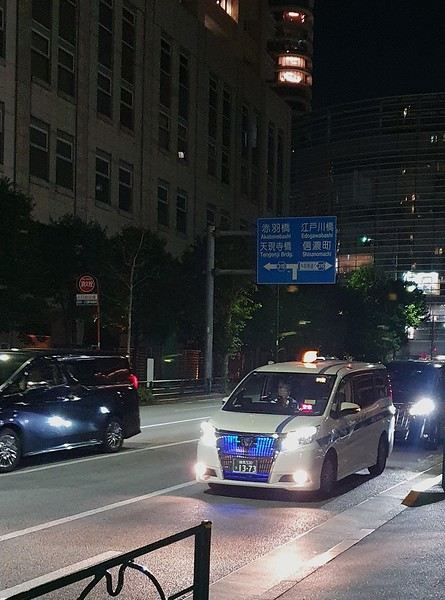
I had planned this entire trip back in November 2020, but given the health situation at the time, I had to cancel...
Here’s the classic route we took:
We booked everything ourselves and got a regional pass for the area from Kyoto to Hiroshima. The hotels were reserved 3 months in advance on Book... and Agod... (1030 € for 2 people for 13 nights = 80 €/night). For the flight, we chose a Qatar Airways flight with a layover to break up the long journey (950 € per person). We also got a pass on the same site (Japan-Experience) to take the train connecting Narita Airport to Shibuya Station (the N'EX Narita Express). Since the airport is 75 km from central Tokyo, we opted for this mode of transport, even though there are cheaper alternatives. After reading various posts on VoyageForum, I understood how important it was to have a Welcome Suica card to pay for public transport (subway, tram, bus, boat throughout the country), and we were able to buy one at Narita Airport. It turned out to be super useful! After a long but smooth journey, we found ourselves at Narita Airport in the evening. Even though we had a pass for the Narita Express, we had to go to a counter to make a reservation for the train (mandatory). Then, once we arrived at Shibuya Station, we took the subway for 2 stops and finally reached our hotel, exhausted (Hotel Asia Center of Japan – 270 € for 3 nights with breakfast included).