Results for "Géorgie+sécurité"
About 5,498 results.
More options
Many results are in French, the community’s main language. English translations are added over time.
Search results
Première fois à Las Vegas pour un circuit de douze jours
Bonjour à tous,
Je suis très content d'avoir trouvé un endroit ou on pourra me renseigner parfaitement sur quelques points qui m'inquiètent.
Comme indiqué dans le titre, c'est mon premier voyage à las vegas, aux etats-unis aussi d'ailleurs.
Déscription de mon voyage:
1 nuit à las vegas hotel bally's
1 nuit grand canyon Best western squire inn
1 nuit Page best western lake powell
1 nuit kayenta Best western Wetherill inn
2 nuits Moab Aarchway inn
1 nuit brice canyon Best western Ruby's inn
1 nuit st george Holiday inn saint george
1 nuit death valley Furnace creek ranch
2 nuits las vegas Excalibur hotel
départ le 22/05 et retour le 02/06.
Pour ce voyage, j'ai loué une voiture chez hertz (les seuls, je crois, à louer des mustang).prise et remise à l'aéroport, voici le montant de la location. Le tarif inclut : Remboursement des frais de concession aéroport
Rachat partiel de franchise en cas de perte
Taxe
Supplément assurance responsabilité civile
GOV SERVICE FEE
CUSTOMER FACILITY CHARGE
VEHICLE LICENSING COST RECOVERY
Votre carte de crédit sera débitée au moment de la réservation 445.98 EUR
Prépaiement requis pour ce tarif Ce tarif est garanti Montant total de la location 445.98 EUR
Options non incluses dans le tarif
Les montants des options n'incluent pas les taxes et autres charges Assurance accident personnelle (PAI) / effets personnels 3.76 EUR Par jour
Pour tout cela, j'ai quelques questions. 1) faut-il rajouter des assurances sur place pour la location de la voiture? pas envie de prendre des trucs inutiles. 2)quelles formalités faut-il faire entre deux avions? bruxelles-atlanta-las vegas? récupérer bagages, check in??? ben oui hein première fois là bas. pfttt 3) quel type de vêtements pour dinner dans les casinos? et pour jouer? 4) fonctionnement des parkings des hotels? 5) et tout ce qu'il faut savoir d'autres que j'ai oublié de demander.
merci d'avance à tous, c'est un plaisir de lire vos récits de voyages et un mine de renseignements.
Pour tout cela, j'ai quelques questions. 1) faut-il rajouter des assurances sur place pour la location de la voiture? pas envie de prendre des trucs inutiles. 2)quelles formalités faut-il faire entre deux avions? bruxelles-atlanta-las vegas? récupérer bagages, check in??? ben oui hein première fois là bas. pfttt 3) quel type de vêtements pour dinner dans les casinos? et pour jouer? 4) fonctionnement des parkings des hotels? 5) et tout ce qu'il faut savoir d'autres que j'ai oublié de demander.
merci d'avance à tous, c'est un plaisir de lire vos récits de voyages et un mine de renseignements.
Formalités pour les pays du Caucase?
Bonjour
Je prépare un voyage dans les pays du Caucase et j’aurais besoin d’informations claires et précises. J’arrive à Tbilissi en Géorgie le 30 avril. De la j’aimerais partir vers l’Azerbaïdjan. Savez vous si oui ou non je peux prendre un visa à la frontière entre ces deux pays ? Que me faut-il comme document ? Une invitation ? Un billet de retour ? Autre chose ? Autrement en arrivant à Tbilissi, peut être que je peux me procurer le visa à l’ambassade d’Azerbaïdjan en Georgie ? Que faut-il alors comme document ? Invitation ? Coût ? Photos d’identité ?
Une fois que, j’aurais visité l’Azerbaïdjan je compte aller en Arménie. Du coup il faut que je repasse par la Georgie. Savez vous si je peux prendre un visa entre la frontière Georgienne et Arménienne ? Que faut-il comme document ? Autrement peut être que je dois passer à Tbilissi pour aller prendre le visa a l’ambassade arménienne en Georgie ? Que faut-il comme document ? Tarif ? Photo d’identité ?
Comment feriez vous vous qui connaissez ces coins la et qui peut être avez suivi le même parcours ?
Puis de l’Arménie je repasserais en Georgie pour aller en Turquie afin de rejoindre Istanbul fin juin… Voilà J’aimerais avoir des renseignements sur ces questions de visa entre les trois pays du caucase. Autrement je suis preneur de tout autre renseignement pratique. (Ah oui, j’aime la lecture, connaissez-vous des auteurs des pays caucasiens ? ) Merci François
Une fois que, j’aurais visité l’Azerbaïdjan je compte aller en Arménie. Du coup il faut que je repasse par la Georgie. Savez vous si je peux prendre un visa entre la frontière Georgienne et Arménienne ? Que faut-il comme document ? Autrement peut être que je dois passer à Tbilissi pour aller prendre le visa a l’ambassade arménienne en Georgie ? Que faut-il comme document ? Tarif ? Photo d’identité ?
Comment feriez vous vous qui connaissez ces coins la et qui peut être avez suivi le même parcours ?
Puis de l’Arménie je repasserais en Georgie pour aller en Turquie afin de rejoindre Istanbul fin juin… Voilà J’aimerais avoir des renseignements sur ces questions de visa entre les trois pays du caucase. Autrement je suis preneur de tout autre renseignement pratique. (Ah oui, j’aime la lecture, connaissez-vous des auteurs des pays caucasiens ? ) Merci François
Croisière sur le Carnival Victory
Bonjour je vais faire une croisière sur le carnaval victory il y a des gens qui me disent que ce n'est pas un beau bateau et d'autre qui me disent le contraire j'aimerais avoir votre avis sur le sujet et si vous avez déja fait des excurssions a ochos rios, iles cayman et cozumel merci pour vos commentaires
bye dodo😉
Circuit de trois semaines dans l'Ouest canadien en 2009
Bonjour,
Ns souhaitons mettre en place le circuit suivant, pour l'été 2009 :
J1 : Paris / Vancouver
J2/3 : Vancouver
J4 : Vancouver / Victoria
J5 : Victoria / Tofino
J6 : Tofino
J7 : Tofino / Campbell River
J8 : Campbell River / Port Hardy
J9 : Traversée Port Hardy / Prince Ruppert
J10 : Prince Ruppert / Smithers
J11 : Smithers / Prince George
J12 : Prince George / Jasper
J13/14 : Jasper
J15 : Jasper / Lac Louise
J16 : Lac Louise
J17 : Lac Louise / Banff
J18 : Banff
J19 : Banff / Calgary
J20 : Calgary
J21 : Calgary /Paris
Nous ferions ce parcours par ns mêmes, en louant un 4x4 et en essayant de loger dans des bred and breakfast. Ns sommes une familles de 2 adultes et 2 ados.
Nous avons déjà fait ce genre de circuit dans l'ouest américain et la route n'est pas un problème.
Ns aimerions conaitre vos avis sur ce circuit, vos bonnes adresses pour loger et vos tuyaux pour réduire le coût de ce circuit qui revient tout de même très cher.
Est ce que la traversée entre PORT HARDY et PRINCE RUPPERT vaut vraiment le détour, car nous avons tout entendu en bien comme en mal.
Parmi toutes ces excursions, quelles sont selon vs, celles qui valent vraiment le détour : survol en hydravion de Vancouver ou Victoria l'observation des ours en zodiac depuis Tofino l'observation des baleines depuis Tofino
Merci pour vos réponses !
Eric 76 !
Croisières dans les Caraïbes...
Bonjour! Est-ce qu'il y a des gens sur ce site qui embarquent sur le Navigator of the sea le 19 janvier 2008 à partir de Fort Lauderdale? Des gens qui ont déjà fait le parcours suivant: Fort Lauderdale, Florida; Ocho Rios, Jamaica; George Town, Grand Cayman; Fort Lauderdale, Florida . Ou des gens sur ce site qui ont été sur le Navigator? Comentaires svp. merci! J'aimrerais conaître vos impressions ....Ou trouver des personnes qui seront à bord du Navigator le 19 janvier 2008. C'est notre première croisière. Écrivez-moi..... Au revoir et à bientôt peut-être.....
La colère monte en Birmanie
La colère monte en Birmanie: prise d'otages dans un monastère bouddhiste  Moines bouddhistes en prière à Rangoun
© AFP/Archives Saeed Khan
Le mouvement de protestation contre la vie chère a franchi un nouveau seuil jeudi en Birmanie où des centaines de moines bouddhistes en colère ont pris en otage vingt responsables locaux dans une ville du centre, selon des habitants.
La crise s'est dénouée au bout d'environ six heures. Il s'est agi du plus grave incident depuis le début des manifestations contre l'augmentation massive des prix des carburants et des transports en commun décidée il y a trois semaines par la junte militaire de ce pays d'Asie du Sud-Est extrêmement pauvre.
Mercredi, à Pakokku, petite ville située à plus de 500 kilomètres au nord-ouest de Rangoun, des soldats avaient tiré des coups de semonce et fait usage de cannes en bambou pour disperser plus de 300 moines qui manifestaient, en priant, leur solidarité avec la population.
Au moins trois moines avaient été blessés, selon des habitants, suscitant une vive émotion dans cette localité connue pour être un grand centre d'éducation religieuse bouddhiste.
Jeudi, vingt responsables locaux, y compris de la sécurité, sont venus au monastère d'Aletaik, où résident quelque 700 moines, pour présenter leurs excuses après les violences de la veille.
Ils se sont retrouvés enfermés dans le bâtiment et quatre de leurs véhicules ont été incendiés, ont indiqué des habitants.
Un haut responsable militaire régional est arrivé à Pakokku dans l'après-midi mais n'a pas immédiatement cherché à engager le dialogue, alors que des tractations impliquant des dignitaires religieux se poursuivaient, selon des habitants.
Au bout de cinq heures, cinq otages ont été libérés et les autres ont été relâchés 45 minutes plus tard, selon ces sources.
Les responsables libérés sont repartis à pied par une porte dérobée, les deux véhicules restants ayant été renversés, ont indiqué des habitants, ravis du coup de force organisé par les moines.
"C'est bien que les moines aient agi ainsi. Ils montrent au monde entier la réalité de ce qui se passe ici", a dit un résidant de Pakokku.
La religion bouddhiste est prédominante en Birmanie où des moines avaient participé à un soulèvement en 1988, qui avait été réprimé dans le sang.
"Si les moines s'impliquent, c'est très mauvais pour les forces de sécurité", a estimé l'analyste birman Win Min exilé en Thaïlande.
La Birmanie a été gouvernée par des juntes successives depuis 1962.
Le 15 août dernier, le régime du généralissime Than Shwe a brusquement augmenté les prix des principaux carburants (essence: +66%, diesel +100%, gaz naturel comprimé: +535%), ce qui a entraîné le doublement immédiat des tarifs dans les transports.
D'ex-leaders étudiants et des membres de la Ligue nationale pour la démocratie (LND) dirigée par l'opposante Aung San Suu Kyi, toujours assignée à résidence, ont défié la junte en prenant la tête de petits défilés, systématiquement dispersés par les autorités.
Selon Amnesty International, plus de 150 personnes ont été arrêtées depuis le 19 août.
Mercredi, à Sydney, le président américain George W. Bush avait qualifié d'"inexcusable" le "comportement tyrannique" du régime.
Jeudi, un militant connu du mouvement pro-démocratie, Htay Kywe, qui se cache depuis le début des événements, a envoyé une lettre au secrétaire général de l'ONU Ban Ki-moon pour demander "un soutien pratique cette fois afin d'empêcher la possibilité réelle de nouvelles violences
Moines bouddhistes en prière à Rangoun
© AFP/Archives Saeed Khan
Le mouvement de protestation contre la vie chère a franchi un nouveau seuil jeudi en Birmanie où des centaines de moines bouddhistes en colère ont pris en otage vingt responsables locaux dans une ville du centre, selon des habitants.
La crise s'est dénouée au bout d'environ six heures. Il s'est agi du plus grave incident depuis le début des manifestations contre l'augmentation massive des prix des carburants et des transports en commun décidée il y a trois semaines par la junte militaire de ce pays d'Asie du Sud-Est extrêmement pauvre.
Mercredi, à Pakokku, petite ville située à plus de 500 kilomètres au nord-ouest de Rangoun, des soldats avaient tiré des coups de semonce et fait usage de cannes en bambou pour disperser plus de 300 moines qui manifestaient, en priant, leur solidarité avec la population.
Au moins trois moines avaient été blessés, selon des habitants, suscitant une vive émotion dans cette localité connue pour être un grand centre d'éducation religieuse bouddhiste.
Jeudi, vingt responsables locaux, y compris de la sécurité, sont venus au monastère d'Aletaik, où résident quelque 700 moines, pour présenter leurs excuses après les violences de la veille.
Ils se sont retrouvés enfermés dans le bâtiment et quatre de leurs véhicules ont été incendiés, ont indiqué des habitants.
Un haut responsable militaire régional est arrivé à Pakokku dans l'après-midi mais n'a pas immédiatement cherché à engager le dialogue, alors que des tractations impliquant des dignitaires religieux se poursuivaient, selon des habitants.
Au bout de cinq heures, cinq otages ont été libérés et les autres ont été relâchés 45 minutes plus tard, selon ces sources.
Les responsables libérés sont repartis à pied par une porte dérobée, les deux véhicules restants ayant été renversés, ont indiqué des habitants, ravis du coup de force organisé par les moines.
"C'est bien que les moines aient agi ainsi. Ils montrent au monde entier la réalité de ce qui se passe ici", a dit un résidant de Pakokku.
La religion bouddhiste est prédominante en Birmanie où des moines avaient participé à un soulèvement en 1988, qui avait été réprimé dans le sang.
"Si les moines s'impliquent, c'est très mauvais pour les forces de sécurité", a estimé l'analyste birman Win Min exilé en Thaïlande.
La Birmanie a été gouvernée par des juntes successives depuis 1962.
Le 15 août dernier, le régime du généralissime Than Shwe a brusquement augmenté les prix des principaux carburants (essence: +66%, diesel +100%, gaz naturel comprimé: +535%), ce qui a entraîné le doublement immédiat des tarifs dans les transports.
D'ex-leaders étudiants et des membres de la Ligue nationale pour la démocratie (LND) dirigée par l'opposante Aung San Suu Kyi, toujours assignée à résidence, ont défié la junte en prenant la tête de petits défilés, systématiquement dispersés par les autorités.
Selon Amnesty International, plus de 150 personnes ont été arrêtées depuis le 19 août.
Mercredi, à Sydney, le président américain George W. Bush avait qualifié d'"inexcusable" le "comportement tyrannique" du régime.
Jeudi, un militant connu du mouvement pro-démocratie, Htay Kywe, qui se cache depuis le début des événements, a envoyé une lettre au secrétaire général de l'ONU Ban Ki-moon pour demander "un soutien pratique cette fois afin d'empêcher la possibilité réelle de nouvelles violences
Livres sur la Birmanie
Bonjour,
Quels livres vous me conseillez avant mon voyage en Birmanie? Romans, récits de voyages etc....Peu de titres d'ailleurs.
Merci de votre aide!
fab
Quels livres vous me conseillez avant mon voyage en Birmanie? Romans, récits de voyages etc....Peu de titres d'ailleurs.
Merci de votre aide!
fab
Inde-France par voie terrestre: passage par le Moyen-Orient
Donc, comme je le disais dans une autre rubrique, je m'apprete (dans 6 mois, c'est long! 😕) a rentrer en France par voie terrestre, au depart du Cambodge! (meme si on vient de me dire que Birmanie/ Thailande seulement faisable en avion!).
Bref, passons!
Donc, une fois que je suis en Inde, je souhaiterais aller au Pakistan. quel est le passage frontiere le plus facile?par quel moyen? le Pakistan est il un pays difficile pour une femme seule? est il possible de voyager de nuit? comment entrer en Afgha du Pakistan?
La suite du voyage est donc l'Afgha est ce facile d'obtenir un visa pour l'Afgha du Pakistan? combien de temps d'attente? la situation securitaire (si les visas sont a nouveau emis, n'est ce pas!) est elle dangereuse pour une femme? quels sont les modes de transport envisageables?
Et puis, l'Iran: est il possible d'obtenir un visa depuis l'Agha, ou mieux faut il s'en preocupper au Pakistan ou en Inde? quel est le mode de transport le plus pratique pour une femme seule? est il possible de voyager de nuit?
Puis de l'Iran, je vais en Turquie, l'Europe deja 😕!! quel est le passage frontiere le plus facile? y a t il des formalites administratives? quel est le mode de transport le plus pratique pour une femme seule? est il possible de voyager de nuit?
Merci pour toutes vos reponses et pour tous vos recits de voyage, qui me font languir de me mettre en route! Laure
La suite du voyage est donc l'Afgha est ce facile d'obtenir un visa pour l'Afgha du Pakistan? combien de temps d'attente? la situation securitaire (si les visas sont a nouveau emis, n'est ce pas!) est elle dangereuse pour une femme? quels sont les modes de transport envisageables?
Et puis, l'Iran: est il possible d'obtenir un visa depuis l'Agha, ou mieux faut il s'en preocupper au Pakistan ou en Inde? quel est le mode de transport le plus pratique pour une femme seule? est il possible de voyager de nuit?
Puis de l'Iran, je vais en Turquie, l'Europe deja 😕!! quel est le passage frontiere le plus facile? y a t il des formalites administratives? quel est le mode de transport le plus pratique pour une femme seule? est il possible de voyager de nuit?
Merci pour toutes vos reponses et pour tous vos recits de voyage, qui me font languir de me mettre en route! Laure
République Dominicaine ou Cuba?
À ceux qui sont allés aux 2 endroits, que recommandez-vous, République Dominicaine ou Cuba???
Merci!
Merci!
Caviar en Pologne?
bonjour ?
est il possible de trouver du caviar en pologne et plus precisement a varsovie ?
quelqu un a t il une adresse ?
autre question !! ou peut on trouver le marché de varsovie et quel jour de la semaine ?
merci !!
sylvain...
est il possible de trouver du caviar en pologne et plus precisement a varsovie ?
quelqu un a t il une adresse ?
autre question !! ou peut on trouver le marché de varsovie et quel jour de la semaine ?
merci !!
sylvain...
Noël à Nassau (Bahamas) avec deux adolescentes
Bonjour,
Je débute mes recherches pour nos prochaines vacances. J'aimerais connaître votre avis sur ce qu'il y a à faire et à voir à Nassau. Nous y serons pour 2 semaines. Nous apprécions les beautés naturelles et les lieux historiques. N'hésitez pas à me donner votre avis. Si quelqu'un a déjà émis un commentaire, j'apprécierais que vous renchérissiez sur celui-ci car ça donne du poids lorsque plusieurs personnes sont du même avis. Sur un site, j'ai lu qu'il y avait plusieurs tours de ville. Lequel est le meilleur? Avez-vous un site de plongée en apnée à me conseiller? Y a-t-il des incontounables? Nous voyageons avec deux adolescentes de 14 et 12 ans. Des suggestions pour elles? Est-il facile et/ou dispendieux de voyager d'une île à l'autre?
Merci à l'avance pour vos précieux conseils.
Je débute mes recherches pour nos prochaines vacances. J'aimerais connaître votre avis sur ce qu'il y a à faire et à voir à Nassau. Nous y serons pour 2 semaines. Nous apprécions les beautés naturelles et les lieux historiques. N'hésitez pas à me donner votre avis. Si quelqu'un a déjà émis un commentaire, j'apprécierais que vous renchérissiez sur celui-ci car ça donne du poids lorsque plusieurs personnes sont du même avis. Sur un site, j'ai lu qu'il y avait plusieurs tours de ville. Lequel est le meilleur? Avez-vous un site de plongée en apnée à me conseiller? Y a-t-il des incontounables? Nous voyageons avec deux adolescentes de 14 et 12 ans. Des suggestions pour elles? Est-il facile et/ou dispendieux de voyager d'une île à l'autre?
Merci à l'avance pour vos précieux conseils.
Compagnie aérienne avc look voyage?
bonjour, j'aimerai la compagnie aérienne pour les voyages chez look? y a til des compagnies à éviter à tt prix?
merci
Camping-car par cargo par conteneur ou ro-ro et carte ATA
Bonjour,
j'aimerais connaitre les differences entre le transport d'un CC par Cargo par Conteneur ou Ro-Ro
Ce que j'ai compris dans d'autres discussions, le Ro-Ro est moins cher mais suppose que le CC soit vide !? connaissez vous un miracle par lequel quand on part pour qq années avec enfants, velos etc etc on peut vider un CC le temps d'un voyage? Ceci suppose donc laisser les clefs du CC pour l'embarquement. et pendant le trajet. S'agit il d'une raison de responsabilités de la part du transporteur ? Peut-on y laisser des choses en securisant comme on peut a nos risques? Ou c'est une condition absolue?
Par contre, le Conteneur, comme son nom l'indique, le CC semble enfermé dedans donc inviolable? Quel est le rapport de prix entre ces deux cas?
Dans tous les cas, si vous avez des conseils de securité pour l'envoi d'un camping car par cargo, ils seront les bienvenus...
Aussi, connaissez vous la carte ATA? Que signifie't-elle? Est-elle une alternative mondiale a l'aberrant carnet de passage en douanes? Je sais que a ce sujet il y a eu d'autres discussions, je les ais meme eus au tel (l'automobile club), c'est tellement aberrant qu'ils ont meme l'air genés a force de se faire engueuler par tous les voyageurs motorisés...
Merci beaucoup et bon courage
Aussi, connaissez vous la carte ATA? Que signifie't-elle? Est-elle une alternative mondiale a l'aberrant carnet de passage en douanes? Je sais que a ce sujet il y a eu d'autres discussions, je les ais meme eus au tel (l'automobile club), c'est tellement aberrant qu'ils ont meme l'air genés a force de se faire engueuler par tous les voyageurs motorisés...
Merci beaucoup et bon courage
2/3 mois au Canada et Etats-Unis
Bonjour à tous...
Je vais partir pour 2-3 mois au Canada et aux Etats-Unis(je suis routier à mon compte et je prendre des vacances quand je veux), et je voulais savoir si c'était plus économique de loué un vans ou emporté le miens que j'ai en Suisse pas bâteau?
Car j'ai fais mes comptes, et pour 2-3 mois la 2ème méthode revient moins cher😇
Autre chose:J'ai déjà visité l'Ontario, le Québec, l'Alberta, et la Colombie-britannique au Canada et j'aurais voulu avoir votre avis sur le Yukon et Les "Northwest territorys"?
Et pour les USA, j'ai surtout visité le centre et le nord(Michigan, Minnesota, Wisconsin, Iowa, Kansas, Missouri...) et les états montagneux(Wyoming(pour moi l'un des plus beau état), Utah, Nevada, Idaho(il n'y a vraiment pas grand chose), et un petit peu la Californie)...
Pourriez-vous me donnez des bonnes destinations à découvrir?
PS:Les états du Sud, comme la louisianne, le texas, l'alabama, la géorgie, la floride, m'inéressent pas beaucoup.😛
Merci si vous me répondez🙂
PS:Les états du Sud, comme la louisianne, le texas, l'alabama, la géorgie, la floride, m'inéressent pas beaucoup.😛
Merci si vous me répondez🙂
"Glory": an Animal Farm for Zimbabwe—and the world
"400 pages of verbal pyrotechnics and animal magic" — The Times
"Bulawayo leans into exaggeration and irony to tell hard truths. *Glory* is jam-packed with comedy and farce, poking fun at an autocratic regime while illustrating the absurdity and surreal nature of a police state." — The Guardian
The cruelty and savagery of Zimbabwe’s (and Africa’s in general) "powerful animals"
Zimbabwean author NoViolet Bulawayo has written a novel that illustrates better than any documentary the complexity of colonial legacy. In doing so, she revisits George Orwell’s Animal Farm. Her novel *Glory* is a political satire about Zimbabwe—and it’s brimming with humor.
For thirty years, Zimbabwe has been stagnating under Robert Mugabe’s presidency. Human rights violations, corruption, and international sanctions have kept the population mired in poverty and oppression, while the regime exploits the meager earnings of the economy. As the 2017 elections approach, a power struggle erupts over the succession of the very elderly Father of the Nation (Mugabe). On the streets, people hope for long-awaited reforms; the people feel their moment has come.
And indeed, the army ousts Mugabe and his wife—"with her Gucci heels" (p.32)—who was positioning herself for the presidency. Hopes are dashed, however. The generals install former vice-president Emmerson Mnangagwa in power; the regime merely changes faces, but the problems remain the same.
In the novel, the country is called "Jidada, with a -da and another -da" (p.1); there’s no mistaking that this fictional state is Zimbabwe.
For *Glory*, her second novel, NoViolet Bulawayo invents a whole series of codes whose strength lies precisely in how easy they are to decipher. Like George Orwell’s Animal Farm, the characters populating Bulawayo’s universe aren’t humans but horses, goats, or crocodiles with all-too-human traits. Mugabe and Mnangagwa are horses, the spiritual leader is a pig, the soldiers are all bloodthirsty dogs, while the populace consists of goats, chickens, donkeys, and cats. The shift to the animal world serves only to better grasp the laws of despotism—and to ridicule real-life models. On one hand, the animals are humanized: they tweet, torture, travel in private jets. On the other, their greed, stupidity, and brutality stem from their animal nature.
It’s the old trick of fable: dressing men in animal disguises to make them easier to recognize. That’s how Orwell, in Animal Farm, traced how the promise of liberation from the Russian Revolution turned into Stalinist terror. In his 1945 fable, George Orwell describes how the animals of a farm drive out their farmer to organize the exploitation themselves, collectively. For a time, they truly taste freedom, but a clique of pigs ends up taking control. The central figures of the Soviet story—Stalin, Trotsky, Molotov—were easily recognizable.
Yet Bulawayo departs sharply from Orwell. She’s less concerned with precision and the force of argument than with satirical exaggeration. The deposed president is a senile old man who believes he can control even the sun’s course. The new stallion in power is a greedy debaucher. His soldiers sniff respectfully at his tail and backside.
In Bulawayo’s *Glory*, things are more complicated, but her novel also tells of a failed, incomplete liberation. In the author’s Animal Farm, Jidada, the colonial exploiters are followed by new forms of oppression. Because the former liberators become tyrants themselves. And because global power dynamics persist in neocolonial structures.
Wouldn’t that be enough to fuel a deeply depressing narrative? No—Bulawayo turns it into a blazing satire, full of wit and uncompromising criticism of power, a thread running through contemporary (not just) Zimbabwean history. The old warhorses in NoViolet Bulawayo’s Jidada, who continue to act as pack leaders, are easily recognizable as caricatures of the longtime dictator Robert Mugabe and his successor, current president Emmerson Mnangagwa.
The plot kicks off in high gear with independence day festivities. From the crack of dawn, everyone waits on Jidada Square for the Old Horse, the Father of the Nation and former liberator, whose reign "was nearing all of—not one, not two, not three, but four solid decades" (p.1). Everywhere, the colors of the Jidada Party shine; everywhere, true supporters cheer. Even the scorching sun plays its part: "At this point the sun, upon seeing arrive the leader who was decreed by God himself to rule and rule and keep ruling, a leader who'd in turn decreed the very sun to head his cheerleading squad, took a deep, deep breath and thoroughly blazed to impress" (p.2).
Finally, the Old Horse’s luxury carriage approaches "with the slowness of a hearse" (p.2), and "hoping to catch a glimpse of the legendary Father of the Nation," which causes "the animals fell over themselves like intoxicated frogs" (p.2). The sovereign’s speech is delayed a moment longer: "what I really want is a nap," groans the Old Horse as he takes his seat with such care "like his backside was made of expensive porcelain" (p.6).
Meanwhile, Bulawayo parades his entourage: the president’s wife (who earns her doctorate at Jidada University faster than "you could say diss, for dissertation. Tholukuthi it was as easy as ordering from a KFC drive-through, or perhaps even easier being that it was cheaper than KFC; it in fact cost her nothing and the degree actually came with a zero-calorie Diet Coke and a purple straw" (p.41), and she’s now known as Dr Sweet Mother. The cabinet includes "the Minister of the Revolution, the Minister of Corruption, the Minister of Order, the Minister of Things, the Minister of Nothing, the Minister of Propaganda, the Minister of Homophobic Affairs, the Minister of Disinformation and the Minister of Looting" (p.9). And of course the vice-president, who will soon become interim president when the Old Horse finally kicks the bucket—and then settle in as the new long-term president, who in the novel is called Tuvius Delight Shasha, or "Tuvy" for short (p.253), none other than Emmerson Mnangagwa. It’s him Bulawayo reserves her most merciless character description for.
"New Dispensation" (p.109) is Tuvy’s slogan for Jidada, and he loves repeating it so much he even named his parrot after it ("So inspired was Tuvy by the realisation that he rechristened his new pet parrot with the name New Dispensation—tholukuthi the bird having been acquired explicitly for the purposes of tweeting eulogies and accordingly glorifying the Saviour throughout the airs and skies of the nation. Tuvy then went on to hire a lecturer in English from the University of Jidada to teach New Dispensation to say the phrase 'New Dispensation'" p.110). But Tuvy’s Zimbabwe remains a nation without free, fair, and credible elections ("#freefairncredibleelection" p.161), and the promised equal treatment applies only insofar as Zimbabweans now queue up without discrimination in endless lines—and everyone is as poor as the next in the "queuenation" (p.283). Except for the powerful. They can "yes, tholukuthi, her immeasurable riches theirs to take. And take they did—
just take—take—take—take—take—take—take—take—take—take—take—take—take—take—take—take—take—take—take—take—take—take—take—take—take—take—take" (p.249-250).
In short: Bulawayo brilliantly depicts how former independence fighters become exploiters themselves. And how the country threatens to suffocate under the weight of corruption and repression. But she also literally stages the polyphony with which the people oppose imposed obedience to the official line.
Controversial online discussions keep interrupting the narrative—dialogues and social threads (see photo below) that Bulawayo masterfully integrates. From a literary standpoint, it’s a brilliant idea. And it shows, above all, that the author’s sympathy—so likeable—goes to all those who refuse to let their dream of true freedom be stolen, not even by the corrupt elites of their own country.
In the book’s acknowledgments, the first tribute goes to "The Jidadas of the world, clamouring for freedom on many fronts—A luta continua." (p.401) This reflects the realization that, not only in Jidada-Zimbabwe but in many other corners of the world, the end of colonial domination is still far from meaning the freedom hoped for by the vast majority of people. But it also means, more broadly, that this freedom must be won "on many fronts" (see above), both domestically and geopolitically.
That’s precisely what *Glory* so vividly highlights: how complex the project behind the term "postcolonialism" really is. With *Glory*, Bulawayo also delivers a scathing critique of the persistence of colonial mindsets in the West.
In the novel, the murder of George Floyd, racist police violence, and white-supremacist ideology in Trump’s United States perfectly illustrate the persistence of racism. It’s especially in the final chapters that Bulawayo lets Jidada’s inhabitants explicitly and unflinchingly criticize a neocolonial world order:
"It was not lost on us how the West, which loved to 'save' Africa and announce every action to the whole world, did so with one limb while manipulating, looting and fleecing us with the rest of its limbs so that more money in fact poured out of the continent than trickled in." (p.376)
"It was no mistake that multinational corporations yearly reaped and shipped colossal profits from Africa back to their countries as had been the case during colonial times. Even the sticks and stones would tell you that the African earth at any given time howled and shook and heaved from the extraction of its precious minerals that rarely benefited its own miserable children." (p.376)
"(...) we vowed to wage yet another war for Africa's second Liberation from neocolonial oppression. From exploitation. From plunder. From Western dominion. From indignity. From Abuse. We wanted real freedom. We wanted greedy, thieving paws off our wealth. We wanted Justice. We wanted a new world; we wanted a brand-new world so much we didn't sleep a wink that night." (p.377)
The Jidadas of this world must fight two enemies: Western neocolonialism and the autocratic instrumentalization of that argument; the persistence of Western racism and the populist appropriation of that humiliation by tyrants from their own ranks. Neither of these obstacles to freedom diminishes the historical and current guilt of the other. But the path to postcolonial liberation must overcome all these forms of oppression. After all, the colonizers didn’t bequeath democracies to formerly dominated nations, but instability and the principles of oppression and exploitation—which the so-called liberators have also internalized. Yet the fact that a satirical novel can capture the complexity of historical relationships while remaining, despite all the darkness of the subject, hilarious—well, that’s truly astonishing.
Finally, *Glory* ties into a major trauma in Zimbabwe’s post-independence history: the so-called Gukurahundi massacres. Between 1983 and 1987, tens of thousands of civilians were murdered by Mugabe’s bloody henchmen, most of them Ndebele. The State Security Minister and head of secret services at the time? You guessed it—Emmerson Mnangagwa.
When *Glory* turns to the massacres, the novel’s tone shifts completely. The story is now told through the narrative of the goat called Destiny, who, like NoViolet Bulawayo herself, left her home country at 18 for the United States and only returned after 13 years. In the book, the city of Bulawayo becomes a village where Destiny retraces her family’s history—and learns that part of it was also brutally murdered during the massacres.
The abuse of power and life under a dictatorship, dispossession, and a fiercely proud awareness of the psychological wounds and emotional vulnerability of a uprooted and disenfranchised people who had to forge a new language—a new set of names—to express their lived experiences are at the heart of this wonderful Zimbabwean author’s literary work, NoViolet Bulawayo. Shortly after her studies, she was already writing short stories about postcolonial power dynamics in Africa. But her playful, masterful, and often unconventional approach to language also plays a key role in her work. With virtuosity, she shifts from cynical images of power-obsessed elites to compassionate descriptions of the people’s suffering, ending with a hopeful sermon on courage—the courage to break free from fear and thus gain the strength for change ("And every one of them understood that whatever they heard within those hearts was the new national anthem, tholukuthi an anthem that spoke of the kind of glory that burns eternal and glows with living light." p.400). This novel is a genuine pleasure to read. And it’s exceptional. Good, African...
Book info (original English and German translation):
NoViolet Bulawayo. Glory. Chatto & Windus, 2022. NoViolet Bulawayo. Glory. Suhrkamp, 2023.
Hery
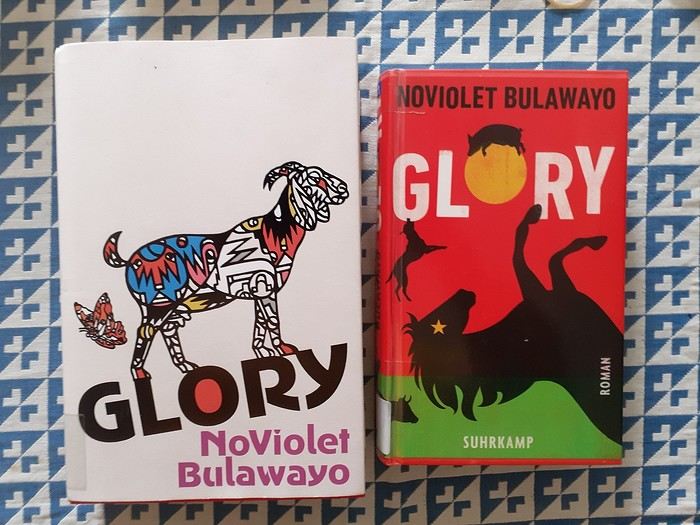 The books (in English, in German)
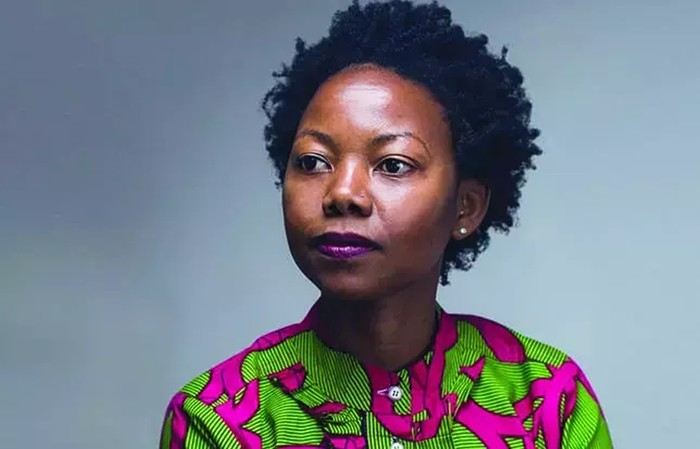 Author NoViolet Bulawayo, Zimbabwe
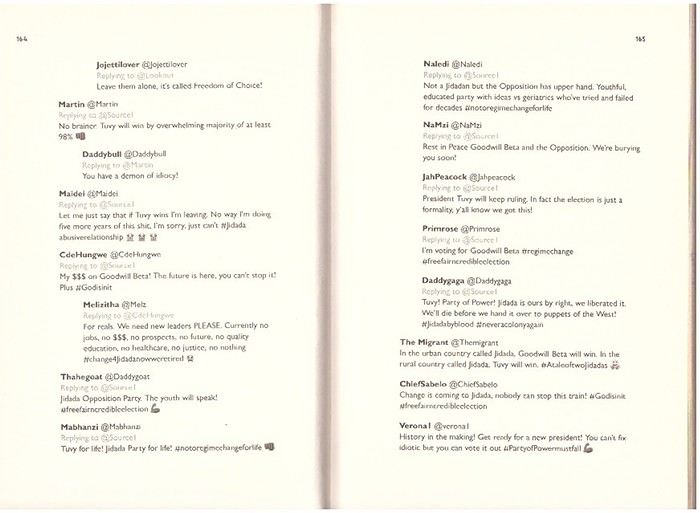 Threads (p.164-165)
"Bulawayo leans into exaggeration and irony to tell hard truths. *Glory* is jam-packed with comedy and farce, poking fun at an autocratic regime while illustrating the absurdity and surreal nature of a police state." — The Guardian
The cruelty and savagery of Zimbabwe’s (and Africa’s in general) "powerful animals"
Zimbabwean author NoViolet Bulawayo has written a novel that illustrates better than any documentary the complexity of colonial legacy. In doing so, she revisits George Orwell’s Animal Farm. Her novel *Glory* is a political satire about Zimbabwe—and it’s brimming with humor.
For thirty years, Zimbabwe has been stagnating under Robert Mugabe’s presidency. Human rights violations, corruption, and international sanctions have kept the population mired in poverty and oppression, while the regime exploits the meager earnings of the economy. As the 2017 elections approach, a power struggle erupts over the succession of the very elderly Father of the Nation (Mugabe). On the streets, people hope for long-awaited reforms; the people feel their moment has come.
And indeed, the army ousts Mugabe and his wife—"with her Gucci heels" (p.32)—who was positioning herself for the presidency. Hopes are dashed, however. The generals install former vice-president Emmerson Mnangagwa in power; the regime merely changes faces, but the problems remain the same.
In the novel, the country is called "Jidada, with a -da and another -da" (p.1); there’s no mistaking that this fictional state is Zimbabwe.
For *Glory*, her second novel, NoViolet Bulawayo invents a whole series of codes whose strength lies precisely in how easy they are to decipher. Like George Orwell’s Animal Farm, the characters populating Bulawayo’s universe aren’t humans but horses, goats, or crocodiles with all-too-human traits. Mugabe and Mnangagwa are horses, the spiritual leader is a pig, the soldiers are all bloodthirsty dogs, while the populace consists of goats, chickens, donkeys, and cats. The shift to the animal world serves only to better grasp the laws of despotism—and to ridicule real-life models. On one hand, the animals are humanized: they tweet, torture, travel in private jets. On the other, their greed, stupidity, and brutality stem from their animal nature.
It’s the old trick of fable: dressing men in animal disguises to make them easier to recognize. That’s how Orwell, in Animal Farm, traced how the promise of liberation from the Russian Revolution turned into Stalinist terror. In his 1945 fable, George Orwell describes how the animals of a farm drive out their farmer to organize the exploitation themselves, collectively. For a time, they truly taste freedom, but a clique of pigs ends up taking control. The central figures of the Soviet story—Stalin, Trotsky, Molotov—were easily recognizable.
Yet Bulawayo departs sharply from Orwell. She’s less concerned with precision and the force of argument than with satirical exaggeration. The deposed president is a senile old man who believes he can control even the sun’s course. The new stallion in power is a greedy debaucher. His soldiers sniff respectfully at his tail and backside.
In Bulawayo’s *Glory*, things are more complicated, but her novel also tells of a failed, incomplete liberation. In the author’s Animal Farm, Jidada, the colonial exploiters are followed by new forms of oppression. Because the former liberators become tyrants themselves. And because global power dynamics persist in neocolonial structures.
Wouldn’t that be enough to fuel a deeply depressing narrative? No—Bulawayo turns it into a blazing satire, full of wit and uncompromising criticism of power, a thread running through contemporary (not just) Zimbabwean history. The old warhorses in NoViolet Bulawayo’s Jidada, who continue to act as pack leaders, are easily recognizable as caricatures of the longtime dictator Robert Mugabe and his successor, current president Emmerson Mnangagwa.
The plot kicks off in high gear with independence day festivities. From the crack of dawn, everyone waits on Jidada Square for the Old Horse, the Father of the Nation and former liberator, whose reign "was nearing all of—not one, not two, not three, but four solid decades" (p.1). Everywhere, the colors of the Jidada Party shine; everywhere, true supporters cheer. Even the scorching sun plays its part: "At this point the sun, upon seeing arrive the leader who was decreed by God himself to rule and rule and keep ruling, a leader who'd in turn decreed the very sun to head his cheerleading squad, took a deep, deep breath and thoroughly blazed to impress" (p.2).
Finally, the Old Horse’s luxury carriage approaches "with the slowness of a hearse" (p.2), and "hoping to catch a glimpse of the legendary Father of the Nation," which causes "the animals fell over themselves like intoxicated frogs" (p.2). The sovereign’s speech is delayed a moment longer: "what I really want is a nap," groans the Old Horse as he takes his seat with such care "like his backside was made of expensive porcelain" (p.6).
Meanwhile, Bulawayo parades his entourage: the president’s wife (who earns her doctorate at Jidada University faster than "you could say diss, for dissertation. Tholukuthi it was as easy as ordering from a KFC drive-through, or perhaps even easier being that it was cheaper than KFC; it in fact cost her nothing and the degree actually came with a zero-calorie Diet Coke and a purple straw" (p.41), and she’s now known as Dr Sweet Mother. The cabinet includes "the Minister of the Revolution, the Minister of Corruption, the Minister of Order, the Minister of Things, the Minister of Nothing, the Minister of Propaganda, the Minister of Homophobic Affairs, the Minister of Disinformation and the Minister of Looting" (p.9). And of course the vice-president, who will soon become interim president when the Old Horse finally kicks the bucket—and then settle in as the new long-term president, who in the novel is called Tuvius Delight Shasha, or "Tuvy" for short (p.253), none other than Emmerson Mnangagwa. It’s him Bulawayo reserves her most merciless character description for.
"New Dispensation" (p.109) is Tuvy’s slogan for Jidada, and he loves repeating it so much he even named his parrot after it ("So inspired was Tuvy by the realisation that he rechristened his new pet parrot with the name New Dispensation—tholukuthi the bird having been acquired explicitly for the purposes of tweeting eulogies and accordingly glorifying the Saviour throughout the airs and skies of the nation. Tuvy then went on to hire a lecturer in English from the University of Jidada to teach New Dispensation to say the phrase 'New Dispensation'" p.110). But Tuvy’s Zimbabwe remains a nation without free, fair, and credible elections ("#freefairncredibleelection" p.161), and the promised equal treatment applies only insofar as Zimbabweans now queue up without discrimination in endless lines—and everyone is as poor as the next in the "queuenation" (p.283). Except for the powerful. They can "yes, tholukuthi, her immeasurable riches theirs to take. And take they did—
just take—take—take—take—take—take—take—take—take—take—take—take—take—take—take—take—take—take—take—take—take—take—take—take—take—take—take" (p.249-250).
In short: Bulawayo brilliantly depicts how former independence fighters become exploiters themselves. And how the country threatens to suffocate under the weight of corruption and repression. But she also literally stages the polyphony with which the people oppose imposed obedience to the official line.
Controversial online discussions keep interrupting the narrative—dialogues and social threads (see photo below) that Bulawayo masterfully integrates. From a literary standpoint, it’s a brilliant idea. And it shows, above all, that the author’s sympathy—so likeable—goes to all those who refuse to let their dream of true freedom be stolen, not even by the corrupt elites of their own country.
In the book’s acknowledgments, the first tribute goes to "The Jidadas of the world, clamouring for freedom on many fronts—A luta continua." (p.401) This reflects the realization that, not only in Jidada-Zimbabwe but in many other corners of the world, the end of colonial domination is still far from meaning the freedom hoped for by the vast majority of people. But it also means, more broadly, that this freedom must be won "on many fronts" (see above), both domestically and geopolitically.
That’s precisely what *Glory* so vividly highlights: how complex the project behind the term "postcolonialism" really is. With *Glory*, Bulawayo also delivers a scathing critique of the persistence of colonial mindsets in the West.
In the novel, the murder of George Floyd, racist police violence, and white-supremacist ideology in Trump’s United States perfectly illustrate the persistence of racism. It’s especially in the final chapters that Bulawayo lets Jidada’s inhabitants explicitly and unflinchingly criticize a neocolonial world order:
"It was not lost on us how the West, which loved to 'save' Africa and announce every action to the whole world, did so with one limb while manipulating, looting and fleecing us with the rest of its limbs so that more money in fact poured out of the continent than trickled in." (p.376)
"It was no mistake that multinational corporations yearly reaped and shipped colossal profits from Africa back to their countries as had been the case during colonial times. Even the sticks and stones would tell you that the African earth at any given time howled and shook and heaved from the extraction of its precious minerals that rarely benefited its own miserable children." (p.376)
"(...) we vowed to wage yet another war for Africa's second Liberation from neocolonial oppression. From exploitation. From plunder. From Western dominion. From indignity. From Abuse. We wanted real freedom. We wanted greedy, thieving paws off our wealth. We wanted Justice. We wanted a new world; we wanted a brand-new world so much we didn't sleep a wink that night." (p.377)
The Jidadas of this world must fight two enemies: Western neocolonialism and the autocratic instrumentalization of that argument; the persistence of Western racism and the populist appropriation of that humiliation by tyrants from their own ranks. Neither of these obstacles to freedom diminishes the historical and current guilt of the other. But the path to postcolonial liberation must overcome all these forms of oppression. After all, the colonizers didn’t bequeath democracies to formerly dominated nations, but instability and the principles of oppression and exploitation—which the so-called liberators have also internalized. Yet the fact that a satirical novel can capture the complexity of historical relationships while remaining, despite all the darkness of the subject, hilarious—well, that’s truly astonishing.
Finally, *Glory* ties into a major trauma in Zimbabwe’s post-independence history: the so-called Gukurahundi massacres. Between 1983 and 1987, tens of thousands of civilians were murdered by Mugabe’s bloody henchmen, most of them Ndebele. The State Security Minister and head of secret services at the time? You guessed it—Emmerson Mnangagwa.
When *Glory* turns to the massacres, the novel’s tone shifts completely. The story is now told through the narrative of the goat called Destiny, who, like NoViolet Bulawayo herself, left her home country at 18 for the United States and only returned after 13 years. In the book, the city of Bulawayo becomes a village where Destiny retraces her family’s history—and learns that part of it was also brutally murdered during the massacres.
The abuse of power and life under a dictatorship, dispossession, and a fiercely proud awareness of the psychological wounds and emotional vulnerability of a uprooted and disenfranchised people who had to forge a new language—a new set of names—to express their lived experiences are at the heart of this wonderful Zimbabwean author’s literary work, NoViolet Bulawayo. Shortly after her studies, she was already writing short stories about postcolonial power dynamics in Africa. But her playful, masterful, and often unconventional approach to language also plays a key role in her work. With virtuosity, she shifts from cynical images of power-obsessed elites to compassionate descriptions of the people’s suffering, ending with a hopeful sermon on courage—the courage to break free from fear and thus gain the strength for change ("And every one of them understood that whatever they heard within those hearts was the new national anthem, tholukuthi an anthem that spoke of the kind of glory that burns eternal and glows with living light." p.400). This novel is a genuine pleasure to read. And it’s exceptional. Good, African...
Book info (original English and German translation):
NoViolet Bulawayo. Glory. Chatto & Windus, 2022. NoViolet Bulawayo. Glory. Suhrkamp, 2023.
Hery
The books (in English, in German)
Author NoViolet Bulawayo, Zimbabwe
Threads (p.164-165)Accès à la plage de Balos (Crète) avec un bébé de 9 mois?
Bonjour,
Nous partons la semaine prochaine pour deux semaines en Crète avec notre fille de 9 mois
La plage de Balos est elle accessible en voiture avec un enfant de cet âge ? D'après ce que j'ai pu lire, une partie du trajet est assez mouvementée.
Merci d'avance
Nous partons la semaine prochaine pour deux semaines en Crète avec notre fille de 9 mois
La plage de Balos est elle accessible en voiture avec un enfant de cet âge ? D'après ce que j'ai pu lire, une partie du trajet est assez mouvementée.
Merci d'avance
Ponant: la compagnie où la main droite ignore ce que fait la main gauche et chacun dans son coin!
A suivre avec prochainement exemples concrets , expériences -hélas- vécues .....
Voyage dans l'Ouest américain et chaînes de supermarchés
Bonjour à tous,
je prépare un voyage dans l'ouest américain et me demandais quelles sont les chaînes de supermarché à privilégier ou renommer pour faire le plein de salades ou aliments pour sandwich du midi .... (en dehors des fastfoods bien sûr!)
Merci beaucoup
je prépare un voyage dans l'ouest américain et me demandais quelles sont les chaînes de supermarché à privilégier ou renommer pour faire le plein de salades ou aliments pour sandwich du midi .... (en dehors des fastfoods bien sûr!)
Merci beaucoup
Excursions organisées par MSC ou par soi-même lors des escales? (Antilles)
Bonjour, nous partons en croisière en janvier, ( escales Martinique , Guadeloupe, Castries , Bridgetown, Port of spain, St Georges, St vincent the grenadines) j aimerai savoir si c 'est simple de visiter ces îles par ces propres moyens ou il est préférable de prendre les excursions proposées par MSC. Merci pour les conseils que vous pouvez m 'apporter.
Isabelle
Voyage en Macédoine et passage frontière Kosovo - Serbie
Bonjour j’espère que quelqu’un pourra me donner des informations récentes car cela a pu changer. Je pensais faire macédoine Kosovo et Serbie. Dans le lonely planet édition 2017 ils disent que le Kosovo n’étant pas reconnu par la Serbie, on ne peut pas rentrer en Serbie depuis le Kosovo (a moins d’être passé en Serbie avant) est ce toujours le cas ? Merci