Results for "Ghana"
About 2,200 results.
More options
Many results are in French, the community’s main language. English translations are added over time.
Search results
Africa: A Heartfelt Love for a Continent
“When the Whites came to Africa, we had the land and they had the Bible. They taught us to pray with our eyes closed: when we opened them, the Whites had the land and we had the Bible.” Jomo Kenyatta (p.7)
The Maggi cube, an unchallenged hegemony, and so much more
“The hopeless continent,” headlined The Economist, a British magazine, in July 2000 about Africa. Eleven years later, the same magazine headlined “Africa rising” instead. Images of Africa in the prosperous North constantly oscillate between apocalyptic scenarios and enthusiastic projections. A key issue with such images lies in the generalization they entail. If you look at the continent, considerable contrasts emerge depending on space and time. It’s no surprise that a region of the world encompassing such diverse ecological zones, maintaining such varied ties with other continents, comprising nearly fifty nation-states in sub-Saharan Africa alone, and characterized by a great diversity of languages, belief systems, and historical paths, doesn’t share a single destiny.
And yet, for many people outside Africa, as well as for many Africans, the continent constitutes a single entity, defined by criteria such as skin color, a colonial past, poverty, and the art of survival. Until now, these perspectives were generally accompanied by the idea that Africa had to—or should have—followed a single path together, sometimes called development, sometimes modernization, sometimes liberation, then a market economy. None of these paths delivered on their promises.
The two writers Alain Mabanckou and Abdourahman Waberi—one from Congo, the other raised in Djibouti, both long settled in France and now professors at renowned North American universities (Los Angeles, Washington)—have had enough of pessimistic scenarios: “We are aware that Africa is in the world and the world is in Africa. The same goes for all other continents, as our destinies are inextricably linked for better or worse. We refuse to see Africa as a reservoir of misfortunes or a continent cursed by atavistic misfortune and characterized by ethnic conflicts. [...] It’s this passionate flame we wanted to capture in a book [...] a kind of stroll through African cultures, without any demands, each letter of the alphabet leading us to a notion, a practice, a concept, a moment in history, literature, painting, politics, economics, cuisine, etc.” (p.10-11). Africa, they write, is on the verge of “imposing a signature, a style, a way of being in the world and in relation to the rest of the world.” (p.11) To put words to the continent’s diversity and dynamism, the two authors created a “rambling ABC,” a kind of portrait—or more precisely, a mythography—that lets you see and feel the pulse of a vast continent whose cultural power is unfolding before our eyes. Once marginalized or even mocked, the voice and importance of the Continent in global affairs are now undeniable” (p.11), containing over a hundred entries, mostly concise, written in a relaxed and casual style. The optimistic, even exuberant tone is set from the brief introduction. The duo of authors wants to “sing a love song to the cultures of our continent, to its inhabitants past and present, to its exceptional resources and its spectacular globalization despite a certain pollution that still clouds our skies due to the unmatched duration of dictatorships in some of our regions.” (p.12) In doing so, they don’t want to be too distracted by today’s Afewerki-Biya-Bongo-Déby & Co. ...
Of course, you’ll find tributes to great precursors like Frantz Fanon (“[...] it was a love story and admiration that wasn’t dimmed by the four decades separating his birth from ours. Let’s add that we were born while the native of Fort-de-France had left the world’s stage four years earlier, in the prime of life” p.141), Mongo Beti (“You must read and reread Mongo Beti, a genius who used his fame to support often just causes in Africa, like defending oppressed groups. His place is already in History. His oppressors, like the dictators Ahmadou Ahidjo and Paul Biya, can’t compete in the same category” p.64), the Malian Amadou Hampâté Bâ
(“Posterity remembers him mainly as an tireless defender of African cultures. His plea for the collection and preservation of traditional African knowledge remains a major event for all men and women of good will. One day in 1960, at the UNESCO podium, the native of Bandiagara sounded the alarm: ‘[...] Since we’ve admitted that the humanity of each people is the heritage of all humanity, if African traditions aren’t collected in time and written down, they’ll one day be missing from the universal archives of humanity.’” p.51),
Kwame Nkrumah, “one of the founders of Pan-Africanism, father of Ghana’s independence” (p.239), as well as the historian Cheikh Anta Diop, the writer, poet, and politician Aimé Césaire, and the economist and thinker Samir Amin, but also very warm tributes to certain contemporary African intellectuals like Souleymane Bachir Diagne and Achille Mbembe
(“A few years ago, in dominant economic circles, a rumor often resurfaced, usually disguised as a cold and scientifically proven analysis: Africa is useless. It’s a burden for the rest of the human community. With its 2% share in world trade, it would disappear from stock market radars without anyone noticing. So? Maybe it’ll be pulled up by other continents. Wanting to surpass itself is a crazy bet for Africans, they concluded. Arrogant or clueless, President Nicolas Sarkozy declared before an audience of students and teachers at Cheikh Anta Diop University in Dakar: ‘The African man hasn’t entered history enough [...] He only knows the eternal repetition of time marked by the endless repetition of the same gestures and words.’ That was in 2007. For decades, armed only with reason, an intellectual often steps up to debunk prejudices, lazy readings, and dishonest frameworks used as false fronts by those who, like Nicolas Sarkozy or former journalist Stephen Smith, out of ignorance, contempt, or condescension, distort African reality. This intellectual is none other than the historian and political scientist Achille Mbembe. This heir of Frantz Fanon, Amílcar Cabral, Jean-Marc Ela, and Fabien Eboussi-Boulaga was born in 1957 in Cameroon, in the Bassa region. Marked early by the upheavals of a fratricidal war, Achille Mbembe became the guardian of the memory of martyrs. After brilliant studies in Paris, he went on to teach at the best American universities, but the call of the Continent was stronger than anything else. In Dakar, he once directed CODESRIA (Council for the Development of Social Science Research in Africa) before joining the University of the Witwatersrand in Johannesburg, South Africa. Even though the author of *Critique of Black Reason* (Éditions La Découverte, 2015) spends a few months at Duke University in North Carolina, his observation post remains South Africa. From Johannesburg, Achille Mbembe scrutinizes Africa and the whole world. A lucid observer with an elegant and generous pen, Achille Mbembe knows how to blend big and small history: ‘I was born one day in July, as the month was drawing to a close. It was 1957, in that part of Africa recently named ‘Cameroon,’ a memory of the wonder that seized Portuguese sailors in the 15th century when, sailing up the river near Douala, they couldn’t help but note the presence of a multitude of crustaceans, and named it *Rio dos Camarões*, meaning ‘River of Shrimp.’ I grew up in the shadow of this nameless land, since, in a way, the name it bears is only the product of someone else’s astonishment: a lexical mistake, if you will.’ From this mistake or wound, he made leaven, a springboard to compose a rich work, recognized worldwide. To denounce barriers and barbarians too. But that’s not enough. Among his peers in circles of thought and action, Achille Mbembe passionately and consistently defends human dignity and the beauty of the world. In doing so, he fulfills the mission Frantz Fanon entrusted to him.” (p.227-229),
as well as entries dedicated to lesser-known artists and intellectuals, like the French journalist and activist Rokhaya Diallo, daughter of Senegalese and Gambian parents, or the Ethiopian filmmaker Haile Gerima, who has long lived in the United States. Other names from politics, sports, music, art, and literature: Kofi Annan, p.36; Barack Obama, p.243; Thomas Sankara, p.277; Ousmane Sow, p.285; Yambo Ouologuem, p.250; Léopold Sédar Senghor, p.282; Muhammad Ali, p.30; Nuruddin Farah, p.146; Salif Keita, p.203; Ahmadou Kourouma, p.206; Ngũgĩ wa Thiong’o, p.236; Winnie Mandela, p.224; Kylian Mbappé, p.226 ...
The authors, who resolutely commit to a “mythography” (p.11) of Africa, also pay special attention to local social movements, cultural events, and aspects of daily life. *Y’en a marre*, “which also meant ‘we’re fed up with sitting on our hands’” (p.320-321), emerged about a decade ago in Senegal as a citizen movement of peaceful resistance and symbolizes, the authors emphasize, the fact that African youth are increasingly fed up “with the political circus deployed in Africa since independence, as our parents would say, ‘since the White man left’...” (p.321). A full entry is dedicated to the Maggi bouillon cube, which has flooded African markets for about forty years and enjoys immense popularity (“It’s everywhere in Africa, from Dakar to Djibouti, and from Tangier to Cape Town. It’s in every pot, every stew. Little hands put it in every sauce, every local or adapted dish. An unchallenged hegemony! You’ll find it in diasporas too. The culinary strolls in Paris, in the [...] neighborhood” p.90). Critics blame it not only for impoverishing the aromatic diversity of local dishes but also for being harmful to health. And yet, “he poorest Africans, those who eat only once a day, a few spoonfuls of white beans and a ball of *foufou*, for example, are the most fervent users of the magic cube.” (p.92-93)
For *fonio*, “the new trendy cereal. [...] From the millet family, fonio is probably the oldest cereal cultivated in West Africa, and mainly in its sub-Saharan part, for millennia. [...] Easy to grow, water-efficient, fonio grows everywhere except on clay soils. Long neglected because it was considered the poor man’s crop, fonio is now a source of pride for the farmers who cultivate it and cherish it like the apple of their eye” (p.156-157), the authors immediately offer a detailed recipe, letting the reader know that “e can’t resist sharing this fonio with chicken recipe from Mali with you:
Ingredients: 1 chicken 3 large ripe red tomatoes 4 tbsp tomato paste 4 large onions 1 garlic clove 1/2 cup oil 2 Maggi cubes or salt 2 large carrots 1 turnip 1 large cabbage 2 large potatoes 1 celery stalk 1 packet pre-cooked fonio 4 okra (or okra powder) salt, pepper
Preparation: 1. Prepare the sauce: wash and cut the chicken. Peel the onions, garlic, and vegetables. 2. In a pot, fry the chicken pieces. 3. Dice the onions, tomatoes, carrots, and turnip very small and add them to the pot. 4. Add the tomato paste, salt, and pepper. 5. Simmer for 15 min, then add 2 L of water and the cooked chicken pieces. 6. Simmer for 30 min, then add the crushed garlic and celery, plus the cabbage cut into 4 and the potatoes cut in half. 7. Prepare the fonio: cover it with warm water, let it rest for 15 min, and cook it over low heat. 8. In a small pot, boil the okra and crush them. 9. Mix the crushed okra with the cooked fonio, then salt. Serve hot.” (p.158-159)
The comedy *Black Mic Mac*, released in French theaters in 1986 and addressing France’s increasingly restrictive immigration policy at the time, also gets an entry, as do *Tintin in the Congo*, the popular comic, and *Jip’s Café* (“[...] a little Africa in the heart of Paris, with passersby stopping to admire the ‘ambianceurs’ on the dance floor or attend the cultural events offered by the place” (p.194), an African establishment in Paris that Alain Mabanckou already immortalized in one of his novels.
The duo of authors also tackles thorny subjects like jihadism (p.119), the Rwandan genocide (p.272), the CFA franc (p.82), and dictatorship (p.110). While the two strike the right tone here, many entries leave a slightly bitter taste. Two examples: why doesn’t the text on Barack Obama mention the great disappointment of many people in Africa, who expected more from the African policy of the first U.S. president with African roots than just occasional warm words? Why do the comments on Winnie Mandela gloss over the fact that she was a highly controversial icon of the anti-apartheid movement due to her involvement in kidnappings, acts of torture, and murders of alleged apartheid collaborators? Instead, there’s a compassion that brings tears to the eyes: “She was often reduced to a secondary role, the wife of a great man” or “When victory came, she didn’t taste its fruits. Divorced, isolated. She would never be a ‘first lady’ in an evening gown, posing before a bed of chrysanthemums. They’d keep her far from the circles of power” (p.224-225). At this point, I would’ve liked the authors to take a slightly more critical stance...
That said, these “weaknesses” (if you can call them that) shouldn’t overshadow the book as a whole. It remains an informative, sometimes very entertaining, and often even original work in its own way.
Book information (the original French and the German translation):
Alain Mabanckou/Abdourahman Waberi. Dictionnaire enjoué des cultures africaines. Fayard, 2019. Alain Mabanckou/Abdourahman Waberi. Der Puls Afrikas. Eine Liebeserklärung von A bis Z. Reclam, 2022.
Hery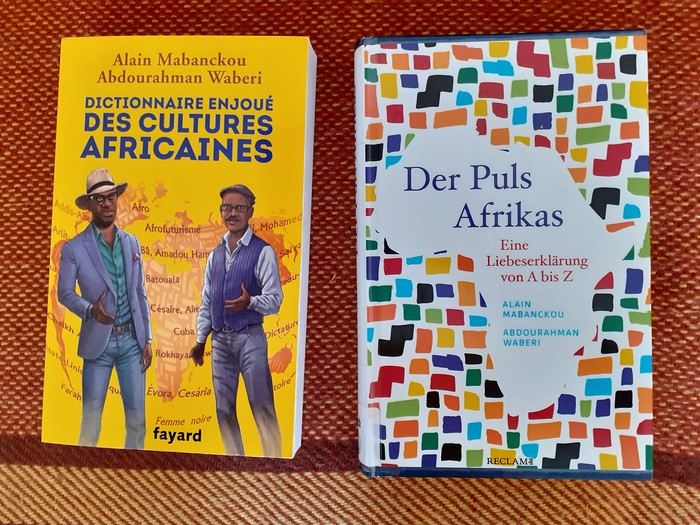
The Maggi cube, an unchallenged hegemony, and so much more
“The hopeless continent,” headlined The Economist, a British magazine, in July 2000 about Africa. Eleven years later, the same magazine headlined “Africa rising” instead. Images of Africa in the prosperous North constantly oscillate between apocalyptic scenarios and enthusiastic projections. A key issue with such images lies in the generalization they entail. If you look at the continent, considerable contrasts emerge depending on space and time. It’s no surprise that a region of the world encompassing such diverse ecological zones, maintaining such varied ties with other continents, comprising nearly fifty nation-states in sub-Saharan Africa alone, and characterized by a great diversity of languages, belief systems, and historical paths, doesn’t share a single destiny.
And yet, for many people outside Africa, as well as for many Africans, the continent constitutes a single entity, defined by criteria such as skin color, a colonial past, poverty, and the art of survival. Until now, these perspectives were generally accompanied by the idea that Africa had to—or should have—followed a single path together, sometimes called development, sometimes modernization, sometimes liberation, then a market economy. None of these paths delivered on their promises.
The two writers Alain Mabanckou and Abdourahman Waberi—one from Congo, the other raised in Djibouti, both long settled in France and now professors at renowned North American universities (Los Angeles, Washington)—have had enough of pessimistic scenarios: “We are aware that Africa is in the world and the world is in Africa. The same goes for all other continents, as our destinies are inextricably linked for better or worse. We refuse to see Africa as a reservoir of misfortunes or a continent cursed by atavistic misfortune and characterized by ethnic conflicts. [...] It’s this passionate flame we wanted to capture in a book [...] a kind of stroll through African cultures, without any demands, each letter of the alphabet leading us to a notion, a practice, a concept, a moment in history, literature, painting, politics, economics, cuisine, etc.” (p.10-11). Africa, they write, is on the verge of “imposing a signature, a style, a way of being in the world and in relation to the rest of the world.” (p.11) To put words to the continent’s diversity and dynamism, the two authors created a “rambling ABC,” a kind of portrait—or more precisely, a mythography—that lets you see and feel the pulse of a vast continent whose cultural power is unfolding before our eyes. Once marginalized or even mocked, the voice and importance of the Continent in global affairs are now undeniable” (p.11), containing over a hundred entries, mostly concise, written in a relaxed and casual style. The optimistic, even exuberant tone is set from the brief introduction. The duo of authors wants to “sing a love song to the cultures of our continent, to its inhabitants past and present, to its exceptional resources and its spectacular globalization despite a certain pollution that still clouds our skies due to the unmatched duration of dictatorships in some of our regions.” (p.12) In doing so, they don’t want to be too distracted by today’s Afewerki-Biya-Bongo-Déby & Co. ...
Of course, you’ll find tributes to great precursors like Frantz Fanon (“[...] it was a love story and admiration that wasn’t dimmed by the four decades separating his birth from ours. Let’s add that we were born while the native of Fort-de-France had left the world’s stage four years earlier, in the prime of life” p.141), Mongo Beti (“You must read and reread Mongo Beti, a genius who used his fame to support often just causes in Africa, like defending oppressed groups. His place is already in History. His oppressors, like the dictators Ahmadou Ahidjo and Paul Biya, can’t compete in the same category” p.64), the Malian Amadou Hampâté Bâ
(“Posterity remembers him mainly as an tireless defender of African cultures. His plea for the collection and preservation of traditional African knowledge remains a major event for all men and women of good will. One day in 1960, at the UNESCO podium, the native of Bandiagara sounded the alarm: ‘[...] Since we’ve admitted that the humanity of each people is the heritage of all humanity, if African traditions aren’t collected in time and written down, they’ll one day be missing from the universal archives of humanity.’” p.51),
Kwame Nkrumah, “one of the founders of Pan-Africanism, father of Ghana’s independence” (p.239), as well as the historian Cheikh Anta Diop, the writer, poet, and politician Aimé Césaire, and the economist and thinker Samir Amin, but also very warm tributes to certain contemporary African intellectuals like Souleymane Bachir Diagne and Achille Mbembe
(“A few years ago, in dominant economic circles, a rumor often resurfaced, usually disguised as a cold and scientifically proven analysis: Africa is useless. It’s a burden for the rest of the human community. With its 2% share in world trade, it would disappear from stock market radars without anyone noticing. So? Maybe it’ll be pulled up by other continents. Wanting to surpass itself is a crazy bet for Africans, they concluded. Arrogant or clueless, President Nicolas Sarkozy declared before an audience of students and teachers at Cheikh Anta Diop University in Dakar: ‘The African man hasn’t entered history enough [...] He only knows the eternal repetition of time marked by the endless repetition of the same gestures and words.’ That was in 2007. For decades, armed only with reason, an intellectual often steps up to debunk prejudices, lazy readings, and dishonest frameworks used as false fronts by those who, like Nicolas Sarkozy or former journalist Stephen Smith, out of ignorance, contempt, or condescension, distort African reality. This intellectual is none other than the historian and political scientist Achille Mbembe. This heir of Frantz Fanon, Amílcar Cabral, Jean-Marc Ela, and Fabien Eboussi-Boulaga was born in 1957 in Cameroon, in the Bassa region. Marked early by the upheavals of a fratricidal war, Achille Mbembe became the guardian of the memory of martyrs. After brilliant studies in Paris, he went on to teach at the best American universities, but the call of the Continent was stronger than anything else. In Dakar, he once directed CODESRIA (Council for the Development of Social Science Research in Africa) before joining the University of the Witwatersrand in Johannesburg, South Africa. Even though the author of *Critique of Black Reason* (Éditions La Découverte, 2015) spends a few months at Duke University in North Carolina, his observation post remains South Africa. From Johannesburg, Achille Mbembe scrutinizes Africa and the whole world. A lucid observer with an elegant and generous pen, Achille Mbembe knows how to blend big and small history: ‘I was born one day in July, as the month was drawing to a close. It was 1957, in that part of Africa recently named ‘Cameroon,’ a memory of the wonder that seized Portuguese sailors in the 15th century when, sailing up the river near Douala, they couldn’t help but note the presence of a multitude of crustaceans, and named it *Rio dos Camarões*, meaning ‘River of Shrimp.’ I grew up in the shadow of this nameless land, since, in a way, the name it bears is only the product of someone else’s astonishment: a lexical mistake, if you will.’ From this mistake or wound, he made leaven, a springboard to compose a rich work, recognized worldwide. To denounce barriers and barbarians too. But that’s not enough. Among his peers in circles of thought and action, Achille Mbembe passionately and consistently defends human dignity and the beauty of the world. In doing so, he fulfills the mission Frantz Fanon entrusted to him.” (p.227-229),
as well as entries dedicated to lesser-known artists and intellectuals, like the French journalist and activist Rokhaya Diallo, daughter of Senegalese and Gambian parents, or the Ethiopian filmmaker Haile Gerima, who has long lived in the United States. Other names from politics, sports, music, art, and literature: Kofi Annan, p.36; Barack Obama, p.243; Thomas Sankara, p.277; Ousmane Sow, p.285; Yambo Ouologuem, p.250; Léopold Sédar Senghor, p.282; Muhammad Ali, p.30; Nuruddin Farah, p.146; Salif Keita, p.203; Ahmadou Kourouma, p.206; Ngũgĩ wa Thiong’o, p.236; Winnie Mandela, p.224; Kylian Mbappé, p.226 ...
The authors, who resolutely commit to a “mythography” (p.11) of Africa, also pay special attention to local social movements, cultural events, and aspects of daily life. *Y’en a marre*, “which also meant ‘we’re fed up with sitting on our hands’” (p.320-321), emerged about a decade ago in Senegal as a citizen movement of peaceful resistance and symbolizes, the authors emphasize, the fact that African youth are increasingly fed up “with the political circus deployed in Africa since independence, as our parents would say, ‘since the White man left’...” (p.321). A full entry is dedicated to the Maggi bouillon cube, which has flooded African markets for about forty years and enjoys immense popularity (“It’s everywhere in Africa, from Dakar to Djibouti, and from Tangier to Cape Town. It’s in every pot, every stew. Little hands put it in every sauce, every local or adapted dish. An unchallenged hegemony! You’ll find it in diasporas too. The culinary strolls in Paris, in the [...] neighborhood” p.90). Critics blame it not only for impoverishing the aromatic diversity of local dishes but also for being harmful to health. And yet, “he poorest Africans, those who eat only once a day, a few spoonfuls of white beans and a ball of *foufou*, for example, are the most fervent users of the magic cube.” (p.92-93)
For *fonio*, “the new trendy cereal. [...] From the millet family, fonio is probably the oldest cereal cultivated in West Africa, and mainly in its sub-Saharan part, for millennia. [...] Easy to grow, water-efficient, fonio grows everywhere except on clay soils. Long neglected because it was considered the poor man’s crop, fonio is now a source of pride for the farmers who cultivate it and cherish it like the apple of their eye” (p.156-157), the authors immediately offer a detailed recipe, letting the reader know that “e can’t resist sharing this fonio with chicken recipe from Mali with you:
Ingredients: 1 chicken 3 large ripe red tomatoes 4 tbsp tomato paste 4 large onions 1 garlic clove 1/2 cup oil 2 Maggi cubes or salt 2 large carrots 1 turnip 1 large cabbage 2 large potatoes 1 celery stalk 1 packet pre-cooked fonio 4 okra (or okra powder) salt, pepper
Preparation: 1. Prepare the sauce: wash and cut the chicken. Peel the onions, garlic, and vegetables. 2. In a pot, fry the chicken pieces. 3. Dice the onions, tomatoes, carrots, and turnip very small and add them to the pot. 4. Add the tomato paste, salt, and pepper. 5. Simmer for 15 min, then add 2 L of water and the cooked chicken pieces. 6. Simmer for 30 min, then add the crushed garlic and celery, plus the cabbage cut into 4 and the potatoes cut in half. 7. Prepare the fonio: cover it with warm water, let it rest for 15 min, and cook it over low heat. 8. In a small pot, boil the okra and crush them. 9. Mix the crushed okra with the cooked fonio, then salt. Serve hot.” (p.158-159)
The comedy *Black Mic Mac*, released in French theaters in 1986 and addressing France’s increasingly restrictive immigration policy at the time, also gets an entry, as do *Tintin in the Congo*, the popular comic, and *Jip’s Café* (“[...] a little Africa in the heart of Paris, with passersby stopping to admire the ‘ambianceurs’ on the dance floor or attend the cultural events offered by the place” (p.194), an African establishment in Paris that Alain Mabanckou already immortalized in one of his novels.
The duo of authors also tackles thorny subjects like jihadism (p.119), the Rwandan genocide (p.272), the CFA franc (p.82), and dictatorship (p.110). While the two strike the right tone here, many entries leave a slightly bitter taste. Two examples: why doesn’t the text on Barack Obama mention the great disappointment of many people in Africa, who expected more from the African policy of the first U.S. president with African roots than just occasional warm words? Why do the comments on Winnie Mandela gloss over the fact that she was a highly controversial icon of the anti-apartheid movement due to her involvement in kidnappings, acts of torture, and murders of alleged apartheid collaborators? Instead, there’s a compassion that brings tears to the eyes: “She was often reduced to a secondary role, the wife of a great man” or “When victory came, she didn’t taste its fruits. Divorced, isolated. She would never be a ‘first lady’ in an evening gown, posing before a bed of chrysanthemums. They’d keep her far from the circles of power” (p.224-225). At this point, I would’ve liked the authors to take a slightly more critical stance...
That said, these “weaknesses” (if you can call them that) shouldn’t overshadow the book as a whole. It remains an informative, sometimes very entertaining, and often even original work in its own way.
Book information (the original French and the German translation):
Alain Mabanckou/Abdourahman Waberi. Dictionnaire enjoué des cultures africaines. Fayard, 2019. Alain Mabanckou/Abdourahman Waberi. Der Puls Afrikas. Eine Liebeserklärung von A bis Z. Reclam, 2022.
Hery
Crossing Borders by Car: Zambia, Malawi, Tanzania
Hi there,
We’re doing a staged tour of Africa in our Citroën Dyane 2CV.
We left Belgium and our car is currently in Zambia. We’ll be joining it at the start of 2025 to continue on to Malawi and Tanzania.
We’d love to chat with overlanders who’ve already crossed these borders with a vehicle—without necessarily having a carnet de passage, given the costs and guarantees required.
Thanks
France-Benin Trip via Senegal
Hello fellow travelers,
I've made the France-Benin trip several times via the Mali "Route de l'Espoir," and the last journey was pretty tense—2013, 🥵🔥 military convoys and all the chaos in Mali from the border to Bamako. 😅
So, I’m planning to take the route again but this time via Senegal and Côte d'Ivoire, with a good old J9 (the mayor’s vehicles I used to travel in… 😎. Though the Mercedes 308 wasn’t bad either).
Has anyone done this recently?
A friend of mine did it 4 years ago, but things can change pretty quickly.
If you’d like to share your latest experiences, I’m all ears! 😊 Have a great weekend! 👋
Ce n'était pas mieux avant et ce n'est pas mieux après
j ai connu un âge d or des voyages en pays etrangers. En gros des annees 1980 aux annees 2000.
avant c était les avions pour les privilégiés, des zones entieres sans hôtels , des chambres et des lits datant du moyen âge et parfois d immenses difficultés pour se comprendre. une bonne partie du monde pour des aventuriers au dos solide et au sommeil facile
apres c est devenu l invasion touristique , les paysages défigurés , la mer souillée , les bourrins en bus et sur paquebots , le tourisme local avec les défauts occidentaux et pas leurs qualités. une bonne partie du monde a vous gâcher le paysage avec leurs minables selfies
Il y a pour tout une période optimale. Avant c est trop tôt, apres ca devient difficile. Ce n est pas Voyagesforum qui me contredira........
avant c était les avions pour les privilégiés, des zones entieres sans hôtels , des chambres et des lits datant du moyen âge et parfois d immenses difficultés pour se comprendre. une bonne partie du monde pour des aventuriers au dos solide et au sommeil facile
apres c est devenu l invasion touristique , les paysages défigurés , la mer souillée , les bourrins en bus et sur paquebots , le tourisme local avec les défauts occidentaux et pas leurs qualités. une bonne partie du monde a vous gâcher le paysage avec leurs minables selfies
Il y a pour tout une période optimale. Avant c est trop tôt, apres ca devient difficile. Ce n est pas Voyagesforum qui me contredira........
Voyage seule au Togo et excursions
je viens vers vous pour avoir des tuyaux pour mon voyage au togo
je pars seule 4 semaines en janvier 2021
J aimerais avoir des renseignements sur les escurtions a faire
comment les organiser
et es ce dengeureux de partir seule dans ce pays quand on est une femme
merci de vos reponses
Situation au Burkina Faso
Bonjour,
Je vous contacte pour savoir si certains d'entre vous continuent de se rendre au Burkina Faso (hors pandémie actuelle liée au Covid qui stoppe tous les déplacements pour raisons sanitaires).
Je souhaitais évoquer ici la situation du Burkina depuis 2018, et notamment les risques terroristes et d'enlèvements.
En effet, nous y allons mon compagnon et moi depuis de nombreuses années, très régulièrement et souvent les discours alarmistes du gouvernement nous semblaient inadaptés au contexte local. Nous nous rendons systématiquement à Tengrela (commune proche de Banfora) où la zone a longtemps été en rouge sur le site diplomatique.gouv alors qu'il ne s'y passait absolument rien.
Mais cette fois, la situation (je précise hors COVID qui est encore un autre sujet) semble s'être vraiment détériorée. Les actes terroristes, notamment au Nord semblent être de plus en plus virulents et le reste du pays assez menacé. L'enlèvement d'E. Blais et de son compagnon de voyage (libérés depuis peu), me semble être le symptôme d'un risque d'enlèvement effectif...
Qu'en pensez-vous ? La zone de Banfora est en orange sur la carte du gouvernement actuellement.
Nous souhaiterions cette fois emmener notre fille d'un an et demi (2 au moment ou nous imaginons partir, cet hiver), il est donc pour nous crucial de savoir dans quelle situation nous mettons les pieds et ne souhaitons prendre aucun risque avec elle.
Merci à vous pour vos retours (si tant est que certains d'entre vous puissent être en mesure d'en faire vu le contexte...).
Virginie
Je vous contacte pour savoir si certains d'entre vous continuent de se rendre au Burkina Faso (hors pandémie actuelle liée au Covid qui stoppe tous les déplacements pour raisons sanitaires).
Je souhaitais évoquer ici la situation du Burkina depuis 2018, et notamment les risques terroristes et d'enlèvements.
En effet, nous y allons mon compagnon et moi depuis de nombreuses années, très régulièrement et souvent les discours alarmistes du gouvernement nous semblaient inadaptés au contexte local. Nous nous rendons systématiquement à Tengrela (commune proche de Banfora) où la zone a longtemps été en rouge sur le site diplomatique.gouv alors qu'il ne s'y passait absolument rien.
Mais cette fois, la situation (je précise hors COVID qui est encore un autre sujet) semble s'être vraiment détériorée. Les actes terroristes, notamment au Nord semblent être de plus en plus virulents et le reste du pays assez menacé. L'enlèvement d'E. Blais et de son compagnon de voyage (libérés depuis peu), me semble être le symptôme d'un risque d'enlèvement effectif...
Qu'en pensez-vous ? La zone de Banfora est en orange sur la carte du gouvernement actuellement.
Nous souhaiterions cette fois emmener notre fille d'un an et demi (2 au moment ou nous imaginons partir, cet hiver), il est donc pour nous crucial de savoir dans quelle situation nous mettons les pieds et ne souhaitons prendre aucun risque avec elle.
Merci à vous pour vos retours (si tant est que certains d'entre vous puissent être en mesure d'en faire vu le contexte...).
Virginie
Vol de retour depuis Bissau
Bonjour
Est-ce quelqu'un sait si la "Tap "organise toujours des vols depuis Guinée- Bissau, soit directement sur Genève ou stop à Lisbonne possible aussi , mon mari devrait rentrer sous peu et comme je parle pas portugais , je peux pas aller voir les infos dans leurs journaux locaux
Merci de votre aide
Merci de votre aide
Voyage Nantes-Dakar en voiture en février 2020 (propose covoiturage)
Bonjour à Tous
Je dois en février 2020 faire le voyage Nantes-Sénégal Dakar en voiture. Ce voyage a pour but de livrer des livres pour enfants dans une école du Sénégal, dans le cadre d'une démarche d'entraide. Il y a déjà sur le net énormément de bons conseils, mais je suis preneur des dernières recommandations de ceux qui ont fait un tel voyage en 2019. Par ailleurs je propose une place de co voiturage (avec participation aux frais). Je précise que j'ai tout mon temps et que je n'entends pas faire le voyage non stop, mais prendre le temps de quelques haltes.
La voiture que j'utiliserai est en bon état et confortable.
Au plaisir d'avoir des nouvelles...
Guy
Je dois en février 2020 faire le voyage Nantes-Sénégal Dakar en voiture. Ce voyage a pour but de livrer des livres pour enfants dans une école du Sénégal, dans le cadre d'une démarche d'entraide. Il y a déjà sur le net énormément de bons conseils, mais je suis preneur des dernières recommandations de ceux qui ont fait un tel voyage en 2019. Par ailleurs je propose une place de co voiturage (avec participation aux frais). Je précise que j'ai tout mon temps et que je n'entends pas faire le voyage non stop, mais prendre le temps de quelques haltes.
La voiture que j'utiliserai est en bon état et confortable.
Au plaisir d'avoir des nouvelles...
Guy
Ai-je besoin d'un visa de transit pour Alger-Montréal via Francfort?
Bonjour,
Je voyage pour Montreal (Quebec, Canada) depuis Alger (Algérie) en passant par Francfort (Allemagne) ou je dois faire une escale de 4 heures.
Je ne compte pas quitter l'aéroport de Francfort, car je ne détiens pas de visa Schengen. Dans ce cas la, ai-je besoin d'un visa transit quand meme? en notant que j'ai un passeport Algérien et un visa Canadien.
Merci
Je voyage pour Montreal (Quebec, Canada) depuis Alger (Algérie) en passant par Francfort (Allemagne) ou je dois faire une escale de 4 heures.
Je ne compte pas quitter l'aéroport de Francfort, car je ne détiens pas de visa Schengen. Dans ce cas la, ai-je besoin d'un visa transit quand meme? en notant que j'ai un passeport Algérien et un visa Canadien.
Merci
Projet: tour de l'Afrique en voiture aménagée
Bonjour, j'ai pour projet de partir en voiture aménagée faire le tour de l'Afrique en Septembre 2019, voici mon itinéraire (grossièrement) :
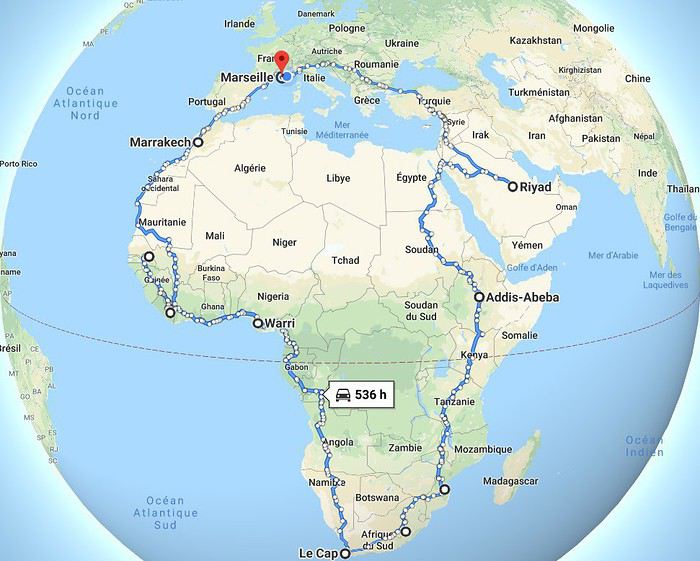
Soit environ plus de 35 pays et 100 000km, avec aucune limite de temps.
Voilà la voiture que j'ai choisi pour ce projet :
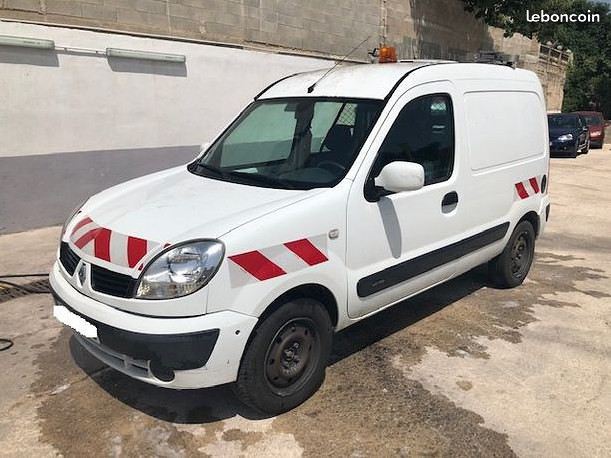
Le projet est déjà travaillé, j'ai la plupart des renseignements qu'il me fallait mais je suis toujours d'avis de prendre un maximum de renseignements ou de conseils, voilà pourquoi je me tourne vers vous, vous êtes probablement beaucoup à connaître ces pays et à avoir de bons conseils.
En revanche je ne cherche pas de commentaires démoralisants, d'insultes ou de jugements, le but n'étant pas de savoir si c'est possible, mais comment c'est possible. Merci beaucoup !
J'ai fais un article plus en détail sur le projet si ça vous intéresse : the-wild-trip.fr/...e-en-septembre-2019/
En vous souhaitant une très bonne journée !
Soit environ plus de 35 pays et 100 000km, avec aucune limite de temps.
Voilà la voiture que j'ai choisi pour ce projet :
Le projet est déjà travaillé, j'ai la plupart des renseignements qu'il me fallait mais je suis toujours d'avis de prendre un maximum de renseignements ou de conseils, voilà pourquoi je me tourne vers vous, vous êtes probablement beaucoup à connaître ces pays et à avoir de bons conseils.
En revanche je ne cherche pas de commentaires démoralisants, d'insultes ou de jugements, le but n'étant pas de savoir si c'est possible, mais comment c'est possible. Merci beaucoup !
J'ai fais un article plus en détail sur le projet si ça vous intéresse : the-wild-trip.fr/...e-en-septembre-2019/
En vous souhaitant une très bonne journée !
Canicule en France fin juin: la Death Valley ridiculisée?
lu sur la page daccueil du pc
"canicule: en France plus chaud qu'à la vallée de la mort"
bizarre, j en juin j avais 51° !!!
"canicule: en France plus chaud qu'à la vallée de la mort"
bizarre, j en juin j avais 51° !!!
L'anti-Atlas à vélo
Bonsoir,
Quelques infos suite à notre périple de 12 jours à vélo au sud de Agadir.
La route de Sidi ifni à Guelmin est sympa .
La route de l'oasis de Tigmert par Fask jusqu'à Tagnjicht est vraiment superbe , paysages grandioses rappelant par endroits ceux des États Unis.Au départ de Amtoudi ,18 km d une piste en excellent état puis goudron jusqu'à Tafraoute et là encore , des paysages somptueux . Superbe route également d Asni vers le lac de Lalla Takerkoust ;sur ce plateau , la moisson battait son plein d où de magnifiques scènes de vie campagnardes.
Nous n'avons pas du tout souffert de la chaleur car il y avait toujours du vent et des températures proches de 25 degrés . Bergot
Bonjour
Laquelle de ces 3 destinations choisiriez-vous?
bjrs!!!
a tous
je m'appelle Nathalie et je suis nouvelle sur ce forum
pourriez vous me conseiller jai 4 enfants et je souhaite partir en vacances avec mes enfants
de ces 3 déstinations la quelle est plus approprier avec 4 enfants?
merci de vos reponses
Voyager oui, mais sans parler anglais ou espagnol
Bonsoir,
Des envies de voyages à 50 ans , j'en ai plein , mais les etudes sont loin, ne restent que quelques notions d'anglais et rien d'espagnol que je n'ai jamais appris !! Alors quoi ? Je ne pars pas ? Je prends des cours ? Je parle avec les mains , LOL .. Dites moi, si vous vous avez eu des appréhensions ( à moins d'etre bilingue) ou pas . Cordialement, Christophe
Des envies de voyages à 50 ans , j'en ai plein , mais les etudes sont loin, ne restent que quelques notions d'anglais et rien d'espagnol que je n'ai jamais appris !! Alors quoi ? Je ne pars pas ? Je prends des cours ? Je parle avec les mains , LOL .. Dites moi, si vous vous avez eu des appréhensions ( à moins d'etre bilingue) ou pas . Cordialement, Christophe
Visas pour la Guinée et autres pays d'Afrique de l'Ouest
Bonjour,
Je compte partir 6 mois en Afrique de Juin à Décembre. J'atteris au Maroc et je repartirai de l'afrique du sud. Je vais commencer par le maroc, mauritanie, Sénégal ( pas de probleme pour les visas). C'est apres que ça se gate. Apres le Sénégal Je veux aller en Guinée Conakry par voie terrestre en taxi brousse et bus jusqu'a la frontiere. Je pensai qu'on pouvait faire son visa au poste frontiere mais visiblement non... comment puis-je faire ? sachant que je n'ai pas de justificatif d'entrée et de sorti du pays étant donné que je ne viendrais pas par avion. Le probleme risque de se répéter puisqu'apres la guinée Conakry je souhaite aller en bus jusqu'a la cote d'ivoire. Puis cote d'ivoire- Cameroun en avion , Cameroun-gabon en bus... Pouvez-vous m'éclairer svp? Merci
Je compte partir 6 mois en Afrique de Juin à Décembre. J'atteris au Maroc et je repartirai de l'afrique du sud. Je vais commencer par le maroc, mauritanie, Sénégal ( pas de probleme pour les visas). C'est apres que ça se gate. Apres le Sénégal Je veux aller en Guinée Conakry par voie terrestre en taxi brousse et bus jusqu'a la frontiere. Je pensai qu'on pouvait faire son visa au poste frontiere mais visiblement non... comment puis-je faire ? sachant que je n'ai pas de justificatif d'entrée et de sorti du pays étant donné que je ne viendrais pas par avion. Le probleme risque de se répéter puisqu'apres la guinée Conakry je souhaite aller en bus jusqu'a la cote d'ivoire. Puis cote d'ivoire- Cameroun en avion , Cameroun-gabon en bus... Pouvez-vous m'éclairer svp? Merci
Moped rental for Togo - Benin trip
Hi,
A friend and I want to do a Togo-Benin loop by moped in early October for about 15 to 20 days.
We're looking for info and tips on:
1 / Moped rental places
2 / The most scenic route
3 / Accommodations—simple but clean, possibly homestays
And anything else you think might be useful.
Thanks in advance!
Best,
Didier
Nazinga au départ de Ouagadougou en juillet (avec enfants)
Bonjour à toutes et tous !
Nous prévoyons (couple + 2 enfants de 11 et 9 ans) un périple de 5 ou 6 jours au départ de Ouagadougou en juillet pour visiter Tîébélé et alentours et pourquoi pas le parc de Nazinga. Nous disposerons d'un 4x4 avec un chauffeur aguerri.
Qui peut me donner des infos sur les choses à voir autour de Tiébélé, les hotels et leur niveau d'équipement (photos ?)? Le parc animalier est il accessible en juillet et y voit on alors bien les animaux ? J'ai lu dans Tripadvisor qu'il y avait un hôtel à l'intérieur du parc ?? Infos ? Qui a testé ?
Je compte sur chacune ou chacun de vous pour vos infos et avis qui nous permettrons de découvrir ces lieux ou d'autres si vous avez des suggestions.
Merci ++++ par avance !
Bonne et heureuse année remplie de voyages !
Discussion autour du thème du mois de novembre 2018: "Eh bien, dansez maintenant"
Discussion autour du thème 2018: "EH BIEN, DANSEZ MAINTENANT...."
L'espace de discussion autour de la danse, c'est bien ICI: Pour poster les photos du concours, c'est là: voyageforum.com/...4867;live=1;#9204867
L'espace de discussion autour de la danse, c'est bien ICI: Pour poster les photos du concours, c'est là: voyageforum.com/...4867;live=1;#9204867
Voyage au Rajasthan avec enfants de 6 et 9 ans
Bonjour,
Nous sommes actuellement en voyage avec nos 2 enfants pour 4 mois. Nous allons passer 21 jours en Inde ( Delhi, Agra et Rajasthan) en novembre.
Cela fait des mois que je regarde les forums, que je lis les guides et j'ai monté un programme très proche de celui du rough guide. 17 jours sur la route, avec seulement 2 nuits consécutives dans le même endroit et beaucoup de route ( puis Agra et Delhi). Je n'ai cependant pas encore réservé de chauffeur (heureusement?). Mes enfants sont plutôt sages et toujours cools en voiture ( vives les consoles portatives + lecture). Donc, ça me semblait faisable.
Mais voilà, on est en Égypte depuis 10 jours, et ce n'est pas aussi facile que la Thaïlande ( 2 mois avec eux l'année dernière), l'Espagne ou le Portugal. Ils commencent à fatiguer des tombes et temples et réclament la piscine ( il fait en moyenne 38°). A leur âge cela peut se comprendre.
Je me rends compte que je me suis sans doute leurré sur leur résilience ( et la mienne). Mon grand a fait un malaise à Abou Simbel ( chaleur), le petit n'aime pas la nourriture locale ( on n'est pas fans non plus, surtout comparé au Maroc) et mange beaucoup de biscuits, j'ai eu un épisode de tourista...
Du coup, mon idée de circuit avec chauffeur en speed ( parce qu'à 50€ la journée: derniers chiffres qu'on m'a donnés, on ne veut pas rester 3 nuits au même hôtel pour faire de la piscine et parce qu'il y a plein de choses à voir) risque de tourner au cauchemar.
Résultat: de gros doutes et un sérieux casse-tête: les villes qui m'attirent le plus sont Jaisalmer, Udaipur et Agra et on arrive à Delhi: donc de toute façon beaucoup de route. Il faut que je supprime de nombreuses choses pour apprécier ce que l'on fait et prendre des temps de repos qui seront nécessaires. On va sans doute essayer de se limiter à 5, 6 ou 7 (max) villes et hôtels pour 21 jours ( 23 nuits). Du coup laisser tomber l'idée d'un chauffeur pour l'ensemble du voyage. Peut-être essayer de prendre un vol intérieur et les trains ( ou cars?) + locations de voiture avec chauffeur à la journée.
Avez-vous des conseils sur ce qu'il ne faut surtout pas rater et ce qu'il vaut mieux laisser tomber avec 2 enfants de 6 et 9 ans?
Les trains, est-ce possible? de nuit? Les cars inter-villes sont-ils aussi dangereux que j'imagine? J'ai des frissons en me souvenant des trajets en cars il y a 10 ans en Inde du sud. Peut-on réserver des voitures avec chauffeurs pour des trajets inter-villes individuels? Quels prix?
Merci d'avance pour l'aide que vous pourrez nous apporter.
Pierre-Yves.
Nous sommes actuellement en voyage avec nos 2 enfants pour 4 mois. Nous allons passer 21 jours en Inde ( Delhi, Agra et Rajasthan) en novembre.
Cela fait des mois que je regarde les forums, que je lis les guides et j'ai monté un programme très proche de celui du rough guide. 17 jours sur la route, avec seulement 2 nuits consécutives dans le même endroit et beaucoup de route ( puis Agra et Delhi). Je n'ai cependant pas encore réservé de chauffeur (heureusement?). Mes enfants sont plutôt sages et toujours cools en voiture ( vives les consoles portatives + lecture). Donc, ça me semblait faisable.
Mais voilà, on est en Égypte depuis 10 jours, et ce n'est pas aussi facile que la Thaïlande ( 2 mois avec eux l'année dernière), l'Espagne ou le Portugal. Ils commencent à fatiguer des tombes et temples et réclament la piscine ( il fait en moyenne 38°). A leur âge cela peut se comprendre.
Je me rends compte que je me suis sans doute leurré sur leur résilience ( et la mienne). Mon grand a fait un malaise à Abou Simbel ( chaleur), le petit n'aime pas la nourriture locale ( on n'est pas fans non plus, surtout comparé au Maroc) et mange beaucoup de biscuits, j'ai eu un épisode de tourista...
Du coup, mon idée de circuit avec chauffeur en speed ( parce qu'à 50€ la journée: derniers chiffres qu'on m'a donnés, on ne veut pas rester 3 nuits au même hôtel pour faire de la piscine et parce qu'il y a plein de choses à voir) risque de tourner au cauchemar.
Résultat: de gros doutes et un sérieux casse-tête: les villes qui m'attirent le plus sont Jaisalmer, Udaipur et Agra et on arrive à Delhi: donc de toute façon beaucoup de route. Il faut que je supprime de nombreuses choses pour apprécier ce que l'on fait et prendre des temps de repos qui seront nécessaires. On va sans doute essayer de se limiter à 5, 6 ou 7 (max) villes et hôtels pour 21 jours ( 23 nuits). Du coup laisser tomber l'idée d'un chauffeur pour l'ensemble du voyage. Peut-être essayer de prendre un vol intérieur et les trains ( ou cars?) + locations de voiture avec chauffeur à la journée.
Avez-vous des conseils sur ce qu'il ne faut surtout pas rater et ce qu'il vaut mieux laisser tomber avec 2 enfants de 6 et 9 ans?
Les trains, est-ce possible? de nuit? Les cars inter-villes sont-ils aussi dangereux que j'imagine? J'ai des frissons en me souvenant des trajets en cars il y a 10 ans en Inde du sud. Peut-on réserver des voitures avec chauffeurs pour des trajets inter-villes individuels? Quels prix?
Merci d'avance pour l'aide que vous pourrez nous apporter.
Pierre-Yves.
Chambre chez l'habitant urgent au Togo
Bonjour nous sommes 4 jeunes et on rentre au togo le mois de novembre nous cherchons à loger chez l'habitant pour pas cher .
Les prix de logements sont exorbitants et certaines agences en jouent, notre but n'est pas de payer une caution sachant qu'on ne va pas rester pour des années ou un an, on passera que trois semaines. Nous aimerions loger à moindre cout.
Partager la vie des togolais et découvrir le pays à travers les valeurs, nous espérions qu'on nous accueille comme dit souvent certains que le pays est accueillant!!
Mais l'argent prend le dessus, si vous lisez ce message et que vous pouvez nous loger, à des prix raisonnables nous vous seront reconnaissants.
Contactez nous, merci
Thomas
Contactez nous, merci
Thomas