Results for "Melbourne+|+11+>+237"
2663 results found.
Vol France-Australie et à l'intérieur du pays? English translation pending
Bonjour,
j'ai quelques petites questions, j'ai beau chercher sur le forum je ne trouve pas de réponse.
Je regarde les tarifs pour un vol pour 2 au départ de Lyon pour aller à Perth, les tarifs vont du simple au double si l'on choisi aller simple ou aller-retour. Est ce normal ?
On souhaite atterrir à Perth en novembre 2011 et décoller de Sydney en avril 2012. Lorsque je cherche les tarifs passent de 1000 et quelques euros l'aller retour Lyon perth à 1000€ l'aller seul. Comment faire ? Faut il dans ce cas prendre un vol Sydney Perth ? Cela nous couterai moins cher ? J'ai trouvé des billets de 200€ pour un aller Sydney Perth pour une personne, est ce le prix ?
Que pouvez vous me conseiller ? Jai beau chercher j'ai vraiment du mal 😉
Merci beaucoup !
j'ai quelques petites questions, j'ai beau chercher sur le forum je ne trouve pas de réponse.
Je regarde les tarifs pour un vol pour 2 au départ de Lyon pour aller à Perth, les tarifs vont du simple au double si l'on choisi aller simple ou aller-retour. Est ce normal ?
On souhaite atterrir à Perth en novembre 2011 et décoller de Sydney en avril 2012. Lorsque je cherche les tarifs passent de 1000 et quelques euros l'aller retour Lyon perth à 1000€ l'aller seul. Comment faire ? Faut il dans ce cas prendre un vol Sydney Perth ? Cela nous couterai moins cher ? J'ai trouvé des billets de 200€ pour un aller Sydney Perth pour une personne, est ce le prix ?
Que pouvez vous me conseiller ? Jai beau chercher j'ai vraiment du mal 😉
Merci beaucoup !
Voyager en Malaisie avec quatre enfants: 11 ans, 9 ans, 6 ans et 1 mois English translation pending
bonjour a tous,
Nous partons pour la Malaisie du 20 juillet au 22 aout avec nos 4 enfants dont un qui va naitre au mois de juin. Nous allons essayer de faire un peu le tours du pays . Auriez vous des conseils pratique a me faire partager.ce qu'il faut faire ou ne pas faire...etc
merci d'avance cordialement
Nous partons pour la Malaisie du 20 juillet au 22 aout avec nos 4 enfants dont un qui va naitre au mois de juin. Nous allons essayer de faire un peu le tours du pays . Auriez vous des conseils pratique a me faire partager.ce qu'il faut faire ou ne pas faire...etc
merci d'avance cordialement
Budget pour deux mois en Australie? English translation pending
Hello les voyageurs😉
Depuis longtemps je rêve de parcourir l'Australie, du moins une partie...et cette année ça y est je me lance, j'aimerais partir en septembre et octobre dans ce beau pays. Comme la money money compte, je voulais savoir combien il faut prévoir en comptant les billets d'avion, le transport sur place (bus ou voiture de loc), bouffe, toit pour dormir pour ces 2 mois d'aventure.
Je me disais comme j'ai entendu que ça se faisait beaucoup, prendre un ptit job comme cueilleuse de fruits sur place, genre 1-2 semaines, si qn a de bonnes adresses je suis preneuse🙂.
Et si des personnes ont déjà fait un tel périple, pouvez-vous me dire quels endroits vous ont marqué le plus, ceux qu'ils ne faut surtout pas louper et des adresses sympas pour dormir pour pas trop cher, of course...
Me réjouis de vous lire et si quelqu'un partirait aux mêmes dates et recherche un compagnon de route, je ne dis pas non😎
A+
Oli
Depuis longtemps je rêve de parcourir l'Australie, du moins une partie...et cette année ça y est je me lance, j'aimerais partir en septembre et octobre dans ce beau pays. Comme la money money compte, je voulais savoir combien il faut prévoir en comptant les billets d'avion, le transport sur place (bus ou voiture de loc), bouffe, toit pour dormir pour ces 2 mois d'aventure.
Je me disais comme j'ai entendu que ça se faisait beaucoup, prendre un ptit job comme cueilleuse de fruits sur place, genre 1-2 semaines, si qn a de bonnes adresses je suis preneuse🙂.
Et si des personnes ont déjà fait un tel périple, pouvez-vous me dire quels endroits vous ont marqué le plus, ceux qu'ils ne faut surtout pas louper et des adresses sympas pour dormir pour pas trop cher, of course...
Me réjouis de vous lire et si quelqu'un partirait aux mêmes dates et recherche un compagnon de route, je ne dis pas non😎
A+
Oli
Qui part en mai 2011 dans l'Ouest américain à moto? English translation pending
Bonjour à tous,
Tous est dis dans le titre, qui part en mai 2011 dans l'Ouest (phoenix, route 66, los angeles, san francisco)?
je sais je suis curieux 😏
bib
bib
Achat d'un appartement aux États-Unis English translation pending
bonjour, j'aimerais acheter un appart aux USA, plus précisément a Miami. je recherche des personnes qui ont déjà fais un achats aux USA pour répondre a plusieurs question que je me pose.
En attente de réponse, je vous remercie.
Australie: visite du Kakadu National Park et ses alentours avec quelle organisation? English translation pending
Bonjour,
je vais atterrir à Darwin le 10 avril et quitter la région le 15. J'aimerais visiter le Kakadu NP qui a l'air magnifique. Pensez-vous que j'aurais le temps de voir autre chose dans ce coin? Ou vaut-il mieux me concentrer sur le parc Kakadu pendant ces 4 jours? (en avril, si je ne me trompe pas, tout ne sera pas accessible à cause du niveau des eaux?)
Est-il possible de faire une randonnée à cheval ou une balade dans ce coin? Je trouve facilement des adresses pour d'autres régions sur internet, mais rien sur Darwin et les parcs nationaux alentours...
je vais atterrir à Darwin le 10 avril et quitter la région le 15. J'aimerais visiter le Kakadu NP qui a l'air magnifique. Pensez-vous que j'aurais le temps de voir autre chose dans ce coin? Ou vaut-il mieux me concentrer sur le parc Kakadu pendant ces 4 jours? (en avril, si je ne me trompe pas, tout ne sera pas accessible à cause du niveau des eaux?)
Est-il possible de faire une randonnée à cheval ou une balade dans ce coin? Je trouve facilement des adresses pour d'autres régions sur internet, mais rien sur Darwin et les parcs nationaux alentours...
Louer un van en Australie English translation pending
Bonjour,
nous passerons 6 semaines en Australie de fin mai a début juillet 2010. Nous prévoyons de louer un van pendant 4 semaines au départ de Darwin jusqu'à Sidney.
Nous avons contacté différents loueurs. L'un d'eux a annonce que les vans etaient interdits dans le territoire du nord. Est-ce vrai?
Pensez-vous qu'en cette saison il soit préférable de louer en avance ou bien y a-t-il un avantage a ne pas réserver (prix plus bas)?
Pour les devis, nous avons contacté pour un Hitop, les loueurs suivants: breezer, britz, apollo. Le moins cher propose 1800 AUD incluant les frais d'abandon pour 30 jours de loc. Cela vous parait-il un bon prix? Est il faisable de négocier? Vaut-il mieux negocier sur place? Faut il éviter certaines compagnies? Au contraire, en conseillez-vous?
Merci d'avance a tous les contributeurs pour vos reponses! Vince et Ariane, sur les routes du monde, www.aroundzeworld.com
Nous avons contacté différents loueurs. L'un d'eux a annonce que les vans etaient interdits dans le territoire du nord. Est-ce vrai?
Pensez-vous qu'en cette saison il soit préférable de louer en avance ou bien y a-t-il un avantage a ne pas réserver (prix plus bas)?
Pour les devis, nous avons contacté pour un Hitop, les loueurs suivants: breezer, britz, apollo. Le moins cher propose 1800 AUD incluant les frais d'abandon pour 30 jours de loc. Cela vous parait-il un bon prix? Est il faisable de négocier? Vaut-il mieux negocier sur place? Faut il éviter certaines compagnies? Au contraire, en conseillez-vous?
Merci d'avance a tous les contributeurs pour vos reponses! Vince et Ariane, sur les routes du monde, www.aroundzeworld.com
Périple en Australie sur quatre semaines? English translation pending
Bonjour,
Nous avons 9 mois de préparation avant notre périple en Australie . Qui pourrait nous proposer son road book ? Nous envisageons de commencer par la barrière de corail , descendre la cote est, la cote sud/est et remonter vers le centre rouge et Alice- Spring. Nous pensons réaliser ce voyage sur 4 semaines.
Merci à tous ceux que leur expérience pourrait nous aider.
Philippe
Nous avons 9 mois de préparation avant notre périple en Australie . Qui pourrait nous proposer son road book ? Nous envisageons de commencer par la barrière de corail , descendre la cote est, la cote sud/est et remonter vers le centre rouge et Alice- Spring. Nous pensons réaliser ce voyage sur 4 semaines.
Merci à tous ceux que leur expérience pourrait nous aider.
Philippe
Voler avec Malaysia Airlines? English translation pending
Bonjour,
Nous devons repartir à Bali en juin prochain. Nous avions emprunté l'année dernière Cathay Pacific.
Nous avons une proposition de prix intéressante sur MALAYSIA AIRLINES, et sur un temps de voyage moins long (moins d'attente entre les 2 avions) que sur CATHAY et QATAR, et une arrivée en tout début d'après midi à Denpasar.
Merci à ceux qui ont déjà voyagé par cette compagnie, d'avoir la gentillesse de me faire savoir ce qu'ils en pensent. Qualité des prestations, confort des avions (B777) nous connaissons les A330 et savons que c'est bien...
Nous devrions booker nos billets la semaine prochaine, merci par avance de vos informations.
Dans cette attente...
Nous devons repartir à Bali en juin prochain. Nous avions emprunté l'année dernière Cathay Pacific.
Nous avons une proposition de prix intéressante sur MALAYSIA AIRLINES, et sur un temps de voyage moins long (moins d'attente entre les 2 avions) que sur CATHAY et QATAR, et une arrivée en tout début d'après midi à Denpasar.
Merci à ceux qui ont déjà voyagé par cette compagnie, d'avoir la gentillesse de me faire savoir ce qu'ils en pensent. Qualité des prestations, confort des avions (B777) nous connaissons les A330 et savons que c'est bien...
Nous devrions booker nos billets la semaine prochaine, merci par avance de vos informations.
Dans cette attente...
Votre avis sur notre itinéraire d'un tour du monde? English translation pending
Bonjour,
Mon ami et moi avons un projet de voyage autour du monde d'ici 2 ans. Nous avons commencé à y réfléchir, et nous avons déterminé un pré-itinéraire... Pourriez-vous me dire ce que vous en pensez ? (climat, intérêt des sites, pays manquants selon vous).
Départ de Paris le 1er novembre Du 1er novembre au 8 décembre: Inde Du 8 décembre au 31 janvier : Laos, Cambordge, Vietnam Du 1er février au 8 mars : Mongolie, Népal Du 8 au 30 mars : Chine Du 1er au 21 avril : Japon Du 21 avril au 30 mai : Australie Du 1er au 15 juin : Nouvelle-Zélande Du 15 au 22 juin : Ile de Pâques Du 22 juin au 8 juillet : Chili Du 8 au 30 juillet : Pérou Du 1er au 15 août : Argentine Retour à Paris le 15 août
Ce trajet a été réfléchi selon plusieurs critères : - Météo (à priori on sera bons pour l'Asie du Sud-Est, et pour la fleuraison des cerisiers au Japon... mais du coup on tombe mal en Océanie je pense ) - Impératifs de date : on sera obligés de partir en novembre... Par contre on peut tout à fait faire notre tour dans l'autre sens !
Nous prévoyons un TDM de 10-11 mois (budget de 15000 euros/personne, billets inclus), qui pourrait donc nous mener jusqu'à mi-octobre. Comme vous le voyez, pour l'instant on s'arrête mi-août. On commence à avoir pas mal de trajets en avion, donc je ne sais pas s'il vaut mieux rajouter encore des stops ailleurs (Thaïlande ? Afrique ? Brésil ? Indonésie ?), ou alors prolonger les durées sur place dans certains pays.
Dernier point, mon homme fantasme sur un arrêt dans une île paradisiaque... que nous conseillez-vous, comme île de rêve pas trop chère, qui pourrait s'intégrer dans notre circuit ? On pensait à une île d'Océanie à la base, mais on va tomber en plein hiver austral...
Merci beaucoup pour votre aide, qui va nous aider à y voir plus clair !
Mon ami et moi avons un projet de voyage autour du monde d'ici 2 ans. Nous avons commencé à y réfléchir, et nous avons déterminé un pré-itinéraire... Pourriez-vous me dire ce que vous en pensez ? (climat, intérêt des sites, pays manquants selon vous).
Départ de Paris le 1er novembre Du 1er novembre au 8 décembre: Inde Du 8 décembre au 31 janvier : Laos, Cambordge, Vietnam Du 1er février au 8 mars : Mongolie, Népal Du 8 au 30 mars : Chine Du 1er au 21 avril : Japon Du 21 avril au 30 mai : Australie Du 1er au 15 juin : Nouvelle-Zélande Du 15 au 22 juin : Ile de Pâques Du 22 juin au 8 juillet : Chili Du 8 au 30 juillet : Pérou Du 1er au 15 août : Argentine Retour à Paris le 15 août
Ce trajet a été réfléchi selon plusieurs critères : - Météo (à priori on sera bons pour l'Asie du Sud-Est, et pour la fleuraison des cerisiers au Japon... mais du coup on tombe mal en Océanie je pense ) - Impératifs de date : on sera obligés de partir en novembre... Par contre on peut tout à fait faire notre tour dans l'autre sens !
Nous prévoyons un TDM de 10-11 mois (budget de 15000 euros/personne, billets inclus), qui pourrait donc nous mener jusqu'à mi-octobre. Comme vous le voyez, pour l'instant on s'arrête mi-août. On commence à avoir pas mal de trajets en avion, donc je ne sais pas s'il vaut mieux rajouter encore des stops ailleurs (Thaïlande ? Afrique ? Brésil ? Indonésie ?), ou alors prolonger les durées sur place dans certains pays.
Dernier point, mon homme fantasme sur un arrêt dans une île paradisiaque... que nous conseillez-vous, comme île de rêve pas trop chère, qui pourrait s'intégrer dans notre circuit ? On pensait à une île d'Océanie à la base, mais on va tomber en plein hiver austral...
Merci beaucoup pour votre aide, qui va nous aider à y voir plus clair !
Itinéraire de cinq semaines en Australie en juillet-août 2010 English translation pending
Bonjour
Tout est dans le titre ; je commence à réfléchir sur un itinéraire pour 5 semaines en Australie en juillet aout 2010 (nous partons à 2)
Avant de rentrer dans le détail je voudrais savoir si je ne fais pas de grosses erreurs, notamment compte tenu de la saison
En gros, ça donne ça, le découpage sera à affiner : - 1 semaine à Sydney et environs, sans véhicule, excursion dans les Blue Mountains - par avion jusqu'à Brisbane et/Cairns, 1 semaine pour faire un peu de voilier et de plongée, peut être une partie de trajet en train - par avion jusqu'à Darwin, 1 semaine pour randonner dans les parcs et rencontrer les aborigènes - par avion jusqu'à Alice Springs, 1 semaine en autotour, pour randonner également, voir Uluru... - en train jusqu'à Adelaide, puis 1 semaine pour découvrir la ville, barossa valley et kangaroo island - trajet retour depuis Adelaide
Ca semble comment ?
Tout est dans le titre ; je commence à réfléchir sur un itinéraire pour 5 semaines en Australie en juillet aout 2010 (nous partons à 2)
Avant de rentrer dans le détail je voudrais savoir si je ne fais pas de grosses erreurs, notamment compte tenu de la saison
En gros, ça donne ça, le découpage sera à affiner : - 1 semaine à Sydney et environs, sans véhicule, excursion dans les Blue Mountains - par avion jusqu'à Brisbane et/Cairns, 1 semaine pour faire un peu de voilier et de plongée, peut être une partie de trajet en train - par avion jusqu'à Darwin, 1 semaine pour randonner dans les parcs et rencontrer les aborigènes - par avion jusqu'à Alice Springs, 1 semaine en autotour, pour randonner également, voir Uluru... - en train jusqu'à Adelaide, puis 1 semaine pour découvrir la ville, barossa valley et kangaroo island - trajet retour depuis Adelaide
Ca semble comment ?
Prix d'un billet tour du monde? English translation pending
Bonjour,
Constatant lors de ma preparation pour mon voyage autour du monde qu'aucun post ne faisait un recapitulatif des prix des billets TDM et que ce prix est important pour le calcul du budget, je propose que chacun détaille son trajet avec le prix et le groupe ou la compagnie aerienne auprès de qui le billet a été acheté.
Cela aidera les personnes qui preparent leur voyage.. (chanceux)
Date du tour du monde : juil à dec 2007 Achat du billet : 3 mois avant le départ Contact : British Airways France 0825 825 400 (0.15€/mn). Trajet : Paris / Delhi / Bangkok // HCMC / Cairns / Ayers Rock / Sydney / Santiago / Iles de Paques / Santiago / Punta Arenas // Rio / Paris Prix : 2750 € ttc
Constatant lors de ma preparation pour mon voyage autour du monde qu'aucun post ne faisait un recapitulatif des prix des billets TDM et que ce prix est important pour le calcul du budget, je propose que chacun détaille son trajet avec le prix et le groupe ou la compagnie aerienne auprès de qui le billet a été acheté.
Cela aidera les personnes qui preparent leur voyage.. (chanceux)
Date du tour du monde : juil à dec 2007 Achat du billet : 3 mois avant le départ Contact : British Airways France 0825 825 400 (0.15€/mn). Trajet : Paris / Delhi / Bangkok // HCMC / Cairns / Ayers Rock / Sydney / Santiago / Iles de Paques / Santiago / Punta Arenas // Rio / Paris Prix : 2750 € ttc
Étudier aux États-Unis avec Campus B de Calvin Thomas? English translation pending
Bonjour tt le monde!!!
Aprés ma terminale, j'aimerais partir faire mes études aux USA, avec campus b de calvin thomas. J'aimerais savoir si c'est un organisme sérieux, et avoir plusieurs infos de personnes qui sont déja partis ac eux, ou qui en on déja entendu parler. J'attends vos réponse ac impatience. merci.
Aprés ma terminale, j'aimerais partir faire mes études aux USA, avec campus b de calvin thomas. J'aimerais savoir si c'est un organisme sérieux, et avoir plusieurs infos de personnes qui sont déja partis ac eux, ou qui en on déja entendu parler. J'attends vos réponse ac impatience. merci.
Voyage de noce pour trois semaines en Australie au mois d'août English translation pending
Bonjour,
Voilà, je me marie cet été et je souhaiterais partir dans la foulée en voyage. Je ne suis pas trop plage pendant 2 semaines, je préfère partir visiter de nouveaux horizons !! Le seul problème c'est qu'en aout, plusieurs destinations me paraissent difficiles (amerique centrale, asie) et j'ai vraiment envie de visiter l'Australie. Nous ne disposerons que de 3 semaines, donc faudra faire des choix mais je pense que déjà on aura un bon aperçu. Nous ne sommes pas trop voyages organisés, d'autant plus pour un voyage de noce donc nous souhaiterions voyager à deux, quitte à se greffer à un petit groupe pour quelques excursions.
Pensez vous qu'il vaut mieux passer par un agence en France qui nous fera un voyage à la carte où est-il possible d'acheter les vols et de se débrouiller seuls une fois là bas? Est ce que ca ne sera pas trop difficile de trouver un hôtel à cette période?
J'ai regardé rapidement un guide et je pense faire un tour classique, à savoir Sydney, Adelaide et Kangaroo Island, Uluru, Cairns et la barrière de corail, Brisbane. Je voudrais savoir si à cette période, le climat serait favorable pour qu'on passe 2 jours dans un hôtel au bord de la plage.
Enfin, dernière question (pour l'instant :) ), quel budget dois-je prévoir pour un voyage de ce type, sachant que pour les hôtels, j'opterais pour des hôtels de catégorie moyenne, c'est à dire propres avec chambre et salle de bain toilettes individuelles.
Merci par avance pour vos réponses. En échange, si vous voulez des infos sur les Pérou, n'hésitez pas, je suis partie 3 semaines l'an dernier à sac à dos et j'ai ADORE !
Séverine
Voilà, je me marie cet été et je souhaiterais partir dans la foulée en voyage. Je ne suis pas trop plage pendant 2 semaines, je préfère partir visiter de nouveaux horizons !! Le seul problème c'est qu'en aout, plusieurs destinations me paraissent difficiles (amerique centrale, asie) et j'ai vraiment envie de visiter l'Australie. Nous ne disposerons que de 3 semaines, donc faudra faire des choix mais je pense que déjà on aura un bon aperçu. Nous ne sommes pas trop voyages organisés, d'autant plus pour un voyage de noce donc nous souhaiterions voyager à deux, quitte à se greffer à un petit groupe pour quelques excursions.
Pensez vous qu'il vaut mieux passer par un agence en France qui nous fera un voyage à la carte où est-il possible d'acheter les vols et de se débrouiller seuls une fois là bas? Est ce que ca ne sera pas trop difficile de trouver un hôtel à cette période?
J'ai regardé rapidement un guide et je pense faire un tour classique, à savoir Sydney, Adelaide et Kangaroo Island, Uluru, Cairns et la barrière de corail, Brisbane. Je voudrais savoir si à cette période, le climat serait favorable pour qu'on passe 2 jours dans un hôtel au bord de la plage.
Enfin, dernière question (pour l'instant :) ), quel budget dois-je prévoir pour un voyage de ce type, sachant que pour les hôtels, j'opterais pour des hôtels de catégorie moyenne, c'est à dire propres avec chambre et salle de bain toilettes individuelles.
Merci par avance pour vos réponses. En échange, si vous voulez des infos sur les Pérou, n'hésitez pas, je suis partie 3 semaines l'an dernier à sac à dos et j'ai ADORE !
Séverine
Infirmier samu en Suisse? English translation pending
Bonjour,
Je suis infirmiere siamu en belgique, cela fait 5 ans que je travail a bruxelles et j'aimerais decouvrir d'autres horizons. J'ai trouver un site: mediemploi.ch qui offre des postes d'infirmiers en suisse et des logements. Quelqun est il deja patie en suisse avec eux? Qu'elle fut votre experiance? Sinon connaissez vous des hopitaux a conseiller en suisse dans le domaine des Urgences et des SAMU?
Deuxieme question: qu'en est il au niveau financier? Je sais que la vie est plus chere en suisse mais est il possible de vivre normallement et de mettre un peu d'argent de coter?
Merci a tous
mamamamama
Je suis infirmiere siamu en belgique, cela fait 5 ans que je travail a bruxelles et j'aimerais decouvrir d'autres horizons. J'ai trouver un site: mediemploi.ch qui offre des postes d'infirmiers en suisse et des logements. Quelqun est il deja patie en suisse avec eux? Qu'elle fut votre experiance? Sinon connaissez vous des hopitaux a conseiller en suisse dans le domaine des Urgences et des SAMU?
Deuxieme question: qu'en est il au niveau financier? Je sais que la vie est plus chere en suisse mais est il possible de vivre normallement et de mettre un peu d'argent de coter?
Merci a tous
mamamamama
Que faire en Australie en un peu moins de trois semaines? English translation pending
Bonjour,
J'ai regardé un peu des commentaires, carnets de voyages (mais n'est pas encore acheté mon Lonely Planet !) et je vois pas mal de personnes qui ont vues de très belles choses en Australie... mais en souvent 2 mois !!!
- Blue mountains - Kings Canyon - Broken Hill - Sydney - Darwin - Kakadu National Park - Alice Springs - Uluru - Bluff Knoll - Flinders ranges - Hervey Bay - Kinchega National Park - Perth - Western Australia
Voici les infos prévues pour ce voyage:
Départ: jeudi 6 novembre 2008 (arrivée à Sydney le vendredi 7 novembre dans la soirée) Retour prévu: lundi 24 ou mardi 25 novembre 2008 (arrivée une journée après en France)
Nous avons un point de chute à Canberra où nous resterions au moins un week-end !!!
J'attend vos conseils et même si je sais qu'on ne pourra pas tout faire. Je veux faire un choix pour profiter au mieux de ce que l'on verra.
D'avance merci pour vos contributions. Julien
J'ai regardé un peu des commentaires, carnets de voyages (mais n'est pas encore acheté mon Lonely Planet !) et je vois pas mal de personnes qui ont vues de très belles choses en Australie... mais en souvent 2 mois !!!
- Blue mountains - Kings Canyon - Broken Hill - Sydney - Darwin - Kakadu National Park - Alice Springs - Uluru - Bluff Knoll - Flinders ranges - Hervey Bay - Kinchega National Park - Perth - Western Australia
Voici les infos prévues pour ce voyage:
Départ: jeudi 6 novembre 2008 (arrivée à Sydney le vendredi 7 novembre dans la soirée) Retour prévu: lundi 24 ou mardi 25 novembre 2008 (arrivée une journée après en France)
Nous avons un point de chute à Canberra où nous resterions au moins un week-end !!!
J'attend vos conseils et même si je sais qu'on ne pourra pas tout faire. Je veux faire un choix pour profiter au mieux de ce que l'on verra.
D'avance merci pour vos contributions. Julien
Quel film vous a le plus épris de liberté et de voyage? English translation pending
Personellement "carnets de voyage" le voyage en moto de Granados et Guevara. Pour les paysages magnifiques, le sentiment de liberte qui se degage de partir a l'aventure, le parcours de l'Amerique du Sud.......
Si vous avez d'autres films dans le genre ou bien touchant au voyage......
Se rencontrer en Nouvelle-Zélande ou Australie du 30 octobre au 2 février 2009? English translation pending
Bonjour à tous et à toutes!
Je suis Garry, je suis fonctionnaire pour l'état Belge 😎
C'est bon, j'ai mon aller simple pour « Bruxelles-Auckland » le 30 octobre 2008. Le retour se fera de Sydney le 2 février 2009. Me voilà donc avec trois mois pour visiter la Nouvelle-Zélande et l'Australie. J'ai deux buts: rendre visite à une amie à Wellington et passer le nouvelle an à Sydney.
J'écris se message pour deux choses.
Si il y a des gens qu'il veulent faire une rencontre, se rejoindre sur dans une ville, faire un bout de chemin ou juste boire un verre dans l'un des deux pays...je suis partant. Je serais présent à l'heure et au lieu indiqué. Je décide de partir seul pour rencontrer des tas de gens, des locaux, des voyageur bref la totale!!! La deuxième chose est pour avoir des infos utiles, des critiques (bonnes et mauvaises), bref tout ce qui peut m'aider, car je planche déjà sur un itinéraire.
Bref mon arrivée à Auckland sera le 1 novembre 2008.
Je compte y rester 3 jours: visite de la ville, achat d'une voiture et visite des alentours en voiture. (2, 3, 4 novembre 2008)
Ensuite direction Thames pour 2 jours pour visiter le Coromorel Park. (5 et 6 novembre 2008) Direction Hahei pour visiter Cathedral Dove et Hot Water Beach. (7 et 8 novembre 2008) Après j'irais à Tauraga pour une journée. (9 novembre 2008)
J'irais vers Rotorua pour y passer deux jours et visiter les alentours (10 et 11 novembre 2008). Je passerais par Taupo, Huka falls, , Taupo lake et Tongariro National Park.. (12, 13, 14, 15 et 16 novembre 2008). Je terminerais l'ïle du Nord par Wellington ou je dois voir mon ami. (17, 18, 19, 20 et 21 novembre 2007).
Voilà ma première étape, donc vos avis et vos infos sont les bien venus!! Ensuite direction l'ïle du Sud et puis l'Australie.
A tout bientôt!
Garry
C'est bon, j'ai mon aller simple pour « Bruxelles-Auckland » le 30 octobre 2008. Le retour se fera de Sydney le 2 février 2009. Me voilà donc avec trois mois pour visiter la Nouvelle-Zélande et l'Australie. J'ai deux buts: rendre visite à une amie à Wellington et passer le nouvelle an à Sydney.
J'écris se message pour deux choses.
Si il y a des gens qu'il veulent faire une rencontre, se rejoindre sur dans une ville, faire un bout de chemin ou juste boire un verre dans l'un des deux pays...je suis partant. Je serais présent à l'heure et au lieu indiqué. Je décide de partir seul pour rencontrer des tas de gens, des locaux, des voyageur bref la totale!!! La deuxième chose est pour avoir des infos utiles, des critiques (bonnes et mauvaises), bref tout ce qui peut m'aider, car je planche déjà sur un itinéraire.
Bref mon arrivée à Auckland sera le 1 novembre 2008.
Je compte y rester 3 jours: visite de la ville, achat d'une voiture et visite des alentours en voiture. (2, 3, 4 novembre 2008)
Ensuite direction Thames pour 2 jours pour visiter le Coromorel Park. (5 et 6 novembre 2008) Direction Hahei pour visiter Cathedral Dove et Hot Water Beach. (7 et 8 novembre 2008) Après j'irais à Tauraga pour une journée. (9 novembre 2008)
J'irais vers Rotorua pour y passer deux jours et visiter les alentours (10 et 11 novembre 2008). Je passerais par Taupo, Huka falls, , Taupo lake et Tongariro National Park.. (12, 13, 14, 15 et 16 novembre 2008). Je terminerais l'ïle du Nord par Wellington ou je dois voir mon ami. (17, 18, 19, 20 et 21 novembre 2007).
Voilà ma première étape, donc vos avis et vos infos sont les bien venus!! Ensuite direction l'ïle du Sud et puis l'Australie.
A tout bientôt!
Garry
Avis sur l'itinéraire pour un tour du monde à partir d'octobre 2009? English translation pending
BONJOUR A VOUS
notre projet est de partir en octobre 2009 c'est le temps qu'il nous faut pour économiser... on sais decidés pour un itineraire mais tout peut changer on aimerait prendre un billet tdm (one world, star alliance)qu'en pensez vous? voici notre itinéraire:
INDE:6 semaines (fin sep et octobre)
THAILANDE: 8 SEMAINES ( novembre et decembre)
INDONESIE:6 SEMAINES(janvier et debut fevrier)
AUSTRALIE:3 SEMAINES(fevrier)
NOUVELLE ZÉLANDE:3 SEMAINES ( mars)
NOUVELLE CALEDONIE:3 SEMAINES(fin mars mi avril)
POLYNÉSIE:3 SEMAINES( mi avril dedut mai )
ILE DE PAQUE: 1 SEMAINES(mai)
BOLIVIE:5 SEMAINES( fin mai fin juin)
BRESIL:7 SEMAINEs (juillet aout)
CUBA :3 SEMAINEs (septembre)
pensez vous que c'est cohérant faisable? par rapport au climat? au temps prevu sur place pour bien profiter? on aura un budjet de 20 000 euro pour 2 .billet compris pour l'inde? on pense de bombay au kerala "a pied" (bus, train ect...) la thailande de bangok a phucket...? indonesie . java bali lombok a pied et en bateau pour ralier les iles. australie: on sait pas trop c'est tellement grand peut etre sydney melboure cairns? polynésie thaiti moorea bolivie bresil: est ce possible d'arrivée en bolivie est d'aller jusqu'a rio par voie terrestre? cuba si on a encore des sous sa nous fais rever et que pensez vous au niveau des vols pour rejoindre tous ces pays. pour les grand pays inde, bresil, australie, est ce possible de louer une voiture et de la rendre a un autre endroit ou utiliser les transports en commun locaux ou les vols interne? ça fait beaucoup de question mais on espere avoir plein de reponse merci d avance
notre projet est de partir en octobre 2009 c'est le temps qu'il nous faut pour économiser... on sais decidés pour un itineraire mais tout peut changer on aimerait prendre un billet tdm (one world, star alliance)qu'en pensez vous? voici notre itinéraire:
INDE:6 semaines (fin sep et octobre)
THAILANDE: 8 SEMAINES ( novembre et decembre)
INDONESIE:6 SEMAINES(janvier et debut fevrier)
AUSTRALIE:3 SEMAINES(fevrier)
NOUVELLE ZÉLANDE:3 SEMAINES ( mars)
NOUVELLE CALEDONIE:3 SEMAINES(fin mars mi avril)
POLYNÉSIE:3 SEMAINES( mi avril dedut mai )
ILE DE PAQUE: 1 SEMAINES(mai)
BOLIVIE:5 SEMAINES( fin mai fin juin)
BRESIL:7 SEMAINEs (juillet aout)
CUBA :3 SEMAINEs (septembre)
pensez vous que c'est cohérant faisable? par rapport au climat? au temps prevu sur place pour bien profiter? on aura un budjet de 20 000 euro pour 2 .billet compris pour l'inde? on pense de bombay au kerala "a pied" (bus, train ect...) la thailande de bangok a phucket...? indonesie . java bali lombok a pied et en bateau pour ralier les iles. australie: on sait pas trop c'est tellement grand peut etre sydney melboure cairns? polynésie thaiti moorea bolivie bresil: est ce possible d'arrivée en bolivie est d'aller jusqu'a rio par voie terrestre? cuba si on a encore des sous sa nous fais rever et que pensez vous au niveau des vols pour rejoindre tous ces pays. pour les grand pays inde, bresil, australie, est ce possible de louer une voiture et de la rendre a un autre endroit ou utiliser les transports en commun locaux ou les vols interne? ça fait beaucoup de question mais on espere avoir plein de reponse merci d avance
Australie: avion, bus, train, 4X4? English translation pending
Bonjour à tous,
Je pars en tour du monde en septembre 2008...et serai en Australie début novembre pour un mois...si tout va bien !
Je n'ai pas encore acheté mes billets d'avion, ça urge ! J'ai besoin de vous pour me décider pour l'achat des billets. En effet j'ai (un peu) potassé le sujet et je me disais qu'un trip Darwin-Adelaide pourrait être sympa. Mais je me suis renseigné et j'ai l'impression qu'il faut un 4X4 pour cette partie sous peine de se taper des routes interminables sans intérêt contrairement aux pistes. Quelqu'un pourrait-il me confirmer cette info ?
La location d'un 4X4 sur un mois revient assez cher (minimum 4600 $AUS), contrairement aux locations de voitures, bien moins chères. Est-ce que le surcout vaut vraiment la peine ?
Dernière question : Ne vaut-il pas mieux que j'achète des billets d'avion entre Darwin et Alice Springs puis entre Alice Springs et Adelaide et prendre des locations sur place ? d'autres alternatives (bus, train) ?. Le train a l'air hors de prix. Le bus relie les destinations touristiques mais une fois sur place comment bouge-t-on ?
Question bonus : Avez vous mieux comme itinéraire sur un mois ? (j'aime surtout les trips nature, les villes moins) Je pense à Cairns que je zappe dans mon itinéraire.
En tout cas merci à celles et ceux qui pourront me filer un coup de main.
TCHO !
Je pars en tour du monde en septembre 2008...et serai en Australie début novembre pour un mois...si tout va bien !
Je n'ai pas encore acheté mes billets d'avion, ça urge ! J'ai besoin de vous pour me décider pour l'achat des billets. En effet j'ai (un peu) potassé le sujet et je me disais qu'un trip Darwin-Adelaide pourrait être sympa. Mais je me suis renseigné et j'ai l'impression qu'il faut un 4X4 pour cette partie sous peine de se taper des routes interminables sans intérêt contrairement aux pistes. Quelqu'un pourrait-il me confirmer cette info ?
La location d'un 4X4 sur un mois revient assez cher (minimum 4600 $AUS), contrairement aux locations de voitures, bien moins chères. Est-ce que le surcout vaut vraiment la peine ?
Dernière question : Ne vaut-il pas mieux que j'achète des billets d'avion entre Darwin et Alice Springs puis entre Alice Springs et Adelaide et prendre des locations sur place ? d'autres alternatives (bus, train) ?. Le train a l'air hors de prix. Le bus relie les destinations touristiques mais une fois sur place comment bouge-t-on ?
Question bonus : Avez vous mieux comme itinéraire sur un mois ? (j'aime surtout les trips nature, les villes moins) Je pense à Cairns que je zappe dans mon itinéraire.
En tout cas merci à celles et ceux qui pourront me filer un coup de main.
TCHO !
Réservation d'hôtels en Australie English translation pending
Bonsoir,
Quelqu'un aurait-il déjà réservé un hôtel en Australie avec ce site wotif.com ?
Merci pour votre réponse.
Amicalement.
Quelqu'un aurait-il déjà réservé un hôtel en Australie avec ce site wotif.com ?
Merci pour votre réponse.
Amicalement.
Nombre de mois à prévoir pour visiter l'Océanie? English translation pending
Bonjour,
Combien de mois pour visiter: AustralieFidjiIle MarshallMicronésieNiueNorfolkNouvelle CalédonieNouvelle ZélandePalauPapouasie Nouvelle GuinéeSamoaSamoa américainesTasmanieTongaTuvaluVanuatuWallis et Futuna
Merci
Jen
Combien de mois pour visiter: AustralieFidjiIle MarshallMicronésieNiueNorfolkNouvelle CalédonieNouvelle ZélandePalauPapouasie Nouvelle GuinéeSamoaSamoa américainesTasmanieTongaTuvaluVanuatuWallis et Futuna
Merci
Jen
Photos perdues English translation pending
bjr,
j'ai sorti ma carte mémoire de mon app photo numérique, je la branche sur le PC, et là, rien du tt alors qu' d'habitude, ça marche tt seul🤪.....plus rien, et l'app photo numérique affiche "aucune image"...j'ai reessayé, il remarche normalement.Peut-on récuperer les photos? heureusement, c'était des photos de WE local et pas de voyage😛
Karine
Karine
Ravitaillement sur la route Alice Springs Darwin English translation pending
Bonjour,
alors ça y est ; départ lundi soir pour l'Australie🙂
quelques questions me viennent encore à l'esprit, dont 2 d'aspect très matériel j'en conviens 😊; pour notre itinéraire Alice Springs Darwin via Ayers Rock, nous serons en camping car ; je pense faire le plein de nourriture à Alice Springs avant notre départ, mais trouve t on des magasins sur la route ?
et la suivante : nous n'aurons pas de portable et en cas de problème sur la route trouve t on des cabines téléphoniques régulièrement ?
Merci de vos réponses
MARIE
Recherche job sur voilier partant d'Australie English translation pending
Salut a tous
Je viens de retourner en Australie, et recherche a travailler sur 1 voilier ou catamaran en partance d'Australie et peu importe la destination, car la raison principale est d'acquerir 1 premiere experience sachant que je cuisine et suis tres motive a apprendre a naviguer et tout ce qui a rapport a la navigation
Je pense monter a Cairns et voir sur la cote est, a partir de la, longer la cote vers le sud, si necessaire, le temps de chercher et faire le tour des ports
si vous avez des infos, des experiences dans les voyages en bateau, des sites a conseiller ou autre, je vous remercie d'avance
😎keep cOOl bANANA'ssSSS
Je viens de retourner en Australie, et recherche a travailler sur 1 voilier ou catamaran en partance d'Australie et peu importe la destination, car la raison principale est d'acquerir 1 premiere experience sachant que je cuisine et suis tres motive a apprendre a naviguer et tout ce qui a rapport a la navigation
Je pense monter a Cairns et voir sur la cote est, a partir de la, longer la cote vers le sud, si necessaire, le temps de chercher et faire le tour des ports
si vous avez des infos, des experiences dans les voyages en bateau, des sites a conseiller ou autre, je vous remercie d'avance
😎keep cOOl bANANA'ssSSS
25h de vol avec enfant de 2 ans? English translation pending
Qui a déjà fait seule avec un enfant de deux ans, 25h de vol?comment ça se passe?
Tour de l'Asie du sud-est, avion? English translation pending
Bonjour à tous
je prépare un tour d'Asie du sud Est (Nepal, Thailande, Laos, Cambodge, Vietnam, Malaisie, Indonésie, Australie, à priori)
Savez vous quelle est la meilleure formule en avion, s'il en existe ?
Merci
je prépare un tour d'Asie du sud Est (Nepal, Thailande, Laos, Cambodge, Vietnam, Malaisie, Indonésie, Australie, à priori)
Savez vous quelle est la meilleure formule en avion, s'il en existe ?
Merci
australie visa vacances travail English translation pending
depart mi mars .
6 mois prevus en australie.
travailler, decouvrir, echanger cote est de sydney a darwin, alice springs.
voila en qq mots mon voyage ou au moins la base de mon programme.
si qq un veut faire un bout de chemin ou pour faire de la coloc ou autre....
Africa: A Heartfelt Love for a Continent
“When the Whites came to Africa, we had the land and they had the Bible. They taught us to pray with our eyes closed: when we opened them, the Whites had the land and we had the Bible.” Jomo Kenyatta (p.7)
The Maggi cube, an unchallenged hegemony, and so much more
“The hopeless continent,” headlined The Economist, a British magazine, in July 2000 about Africa. Eleven years later, the same magazine headlined “Africa rising” instead. Images of Africa in the prosperous North constantly oscillate between apocalyptic scenarios and enthusiastic projections. A key issue with such images lies in the generalization they entail. If you look at the continent, considerable contrasts emerge depending on space and time. It’s no surprise that a region of the world encompassing such diverse ecological zones, maintaining such varied ties with other continents, comprising nearly fifty nation-states in sub-Saharan Africa alone, and characterized by a great diversity of languages, belief systems, and historical paths, doesn’t share a single destiny.
And yet, for many people outside Africa, as well as for many Africans, the continent constitutes a single entity, defined by criteria such as skin color, a colonial past, poverty, and the art of survival. Until now, these perspectives were generally accompanied by the idea that Africa had to—or should have—followed a single path together, sometimes called development, sometimes modernization, sometimes liberation, then a market economy. None of these paths delivered on their promises.
The two writers Alain Mabanckou and Abdourahman Waberi—one from Congo, the other raised in Djibouti, both long settled in France and now professors at renowned North American universities (Los Angeles, Washington)—have had enough of pessimistic scenarios: “We are aware that Africa is in the world and the world is in Africa. The same goes for all other continents, as our destinies are inextricably linked for better or worse. We refuse to see Africa as a reservoir of misfortunes or a continent cursed by atavistic misfortune and characterized by ethnic conflicts. [...] It’s this passionate flame we wanted to capture in a book [...] a kind of stroll through African cultures, without any demands, each letter of the alphabet leading us to a notion, a practice, a concept, a moment in history, literature, painting, politics, economics, cuisine, etc.” (p.10-11). Africa, they write, is on the verge of “imposing a signature, a style, a way of being in the world and in relation to the rest of the world.” (p.11) To put words to the continent’s diversity and dynamism, the two authors created a “rambling ABC,” a kind of portrait—or more precisely, a mythography—that lets you see and feel the pulse of a vast continent whose cultural power is unfolding before our eyes. Once marginalized or even mocked, the voice and importance of the Continent in global affairs are now undeniable” (p.11), containing over a hundred entries, mostly concise, written in a relaxed and casual style. The optimistic, even exuberant tone is set from the brief introduction. The duo of authors wants to “sing a love song to the cultures of our continent, to its inhabitants past and present, to its exceptional resources and its spectacular globalization despite a certain pollution that still clouds our skies due to the unmatched duration of dictatorships in some of our regions.” (p.12) In doing so, they don’t want to be too distracted by today’s Afewerki-Biya-Bongo-Déby & Co. ...
Of course, you’ll find tributes to great precursors like Frantz Fanon (“[...] it was a love story and admiration that wasn’t dimmed by the four decades separating his birth from ours. Let’s add that we were born while the native of Fort-de-France had left the world’s stage four years earlier, in the prime of life” p.141), Mongo Beti (“You must read and reread Mongo Beti, a genius who used his fame to support often just causes in Africa, like defending oppressed groups. His place is already in History. His oppressors, like the dictators Ahmadou Ahidjo and Paul Biya, can’t compete in the same category” p.64), the Malian Amadou Hampâté Bâ
(“Posterity remembers him mainly as an tireless defender of African cultures. His plea for the collection and preservation of traditional African knowledge remains a major event for all men and women of good will. One day in 1960, at the UNESCO podium, the native of Bandiagara sounded the alarm: ‘[...] Since we’ve admitted that the humanity of each people is the heritage of all humanity, if African traditions aren’t collected in time and written down, they’ll one day be missing from the universal archives of humanity.’” p.51),
Kwame Nkrumah, “one of the founders of Pan-Africanism, father of Ghana’s independence” (p.239), as well as the historian Cheikh Anta Diop, the writer, poet, and politician Aimé Césaire, and the economist and thinker Samir Amin, but also very warm tributes to certain contemporary African intellectuals like Souleymane Bachir Diagne and Achille Mbembe
(“A few years ago, in dominant economic circles, a rumor often resurfaced, usually disguised as a cold and scientifically proven analysis: Africa is useless. It’s a burden for the rest of the human community. With its 2% share in world trade, it would disappear from stock market radars without anyone noticing. So? Maybe it’ll be pulled up by other continents. Wanting to surpass itself is a crazy bet for Africans, they concluded. Arrogant or clueless, President Nicolas Sarkozy declared before an audience of students and teachers at Cheikh Anta Diop University in Dakar: ‘The African man hasn’t entered history enough [...] He only knows the eternal repetition of time marked by the endless repetition of the same gestures and words.’ That was in 2007. For decades, armed only with reason, an intellectual often steps up to debunk prejudices, lazy readings, and dishonest frameworks used as false fronts by those who, like Nicolas Sarkozy or former journalist Stephen Smith, out of ignorance, contempt, or condescension, distort African reality. This intellectual is none other than the historian and political scientist Achille Mbembe. This heir of Frantz Fanon, Amílcar Cabral, Jean-Marc Ela, and Fabien Eboussi-Boulaga was born in 1957 in Cameroon, in the Bassa region. Marked early by the upheavals of a fratricidal war, Achille Mbembe became the guardian of the memory of martyrs. After brilliant studies in Paris, he went on to teach at the best American universities, but the call of the Continent was stronger than anything else. In Dakar, he once directed CODESRIA (Council for the Development of Social Science Research in Africa) before joining the University of the Witwatersrand in Johannesburg, South Africa. Even though the author of *Critique of Black Reason* (Éditions La Découverte, 2015) spends a few months at Duke University in North Carolina, his observation post remains South Africa. From Johannesburg, Achille Mbembe scrutinizes Africa and the whole world. A lucid observer with an elegant and generous pen, Achille Mbembe knows how to blend big and small history: ‘I was born one day in July, as the month was drawing to a close. It was 1957, in that part of Africa recently named ‘Cameroon,’ a memory of the wonder that seized Portuguese sailors in the 15th century when, sailing up the river near Douala, they couldn’t help but note the presence of a multitude of crustaceans, and named it *Rio dos Camarões*, meaning ‘River of Shrimp.’ I grew up in the shadow of this nameless land, since, in a way, the name it bears is only the product of someone else’s astonishment: a lexical mistake, if you will.’ From this mistake or wound, he made leaven, a springboard to compose a rich work, recognized worldwide. To denounce barriers and barbarians too. But that’s not enough. Among his peers in circles of thought and action, Achille Mbembe passionately and consistently defends human dignity and the beauty of the world. In doing so, he fulfills the mission Frantz Fanon entrusted to him.” (p.227-229),
as well as entries dedicated to lesser-known artists and intellectuals, like the French journalist and activist Rokhaya Diallo, daughter of Senegalese and Gambian parents, or the Ethiopian filmmaker Haile Gerima, who has long lived in the United States. Other names from politics, sports, music, art, and literature: Kofi Annan, p.36; Barack Obama, p.243; Thomas Sankara, p.277; Ousmane Sow, p.285; Yambo Ouologuem, p.250; Léopold Sédar Senghor, p.282; Muhammad Ali, p.30; Nuruddin Farah, p.146; Salif Keita, p.203; Ahmadou Kourouma, p.206; Ngũgĩ wa Thiong’o, p.236; Winnie Mandela, p.224; Kylian Mbappé, p.226 ...
The authors, who resolutely commit to a “mythography” (p.11) of Africa, also pay special attention to local social movements, cultural events, and aspects of daily life. *Y’en a marre*, “which also meant ‘we’re fed up with sitting on our hands’” (p.320-321), emerged about a decade ago in Senegal as a citizen movement of peaceful resistance and symbolizes, the authors emphasize, the fact that African youth are increasingly fed up “with the political circus deployed in Africa since independence, as our parents would say, ‘since the White man left’...” (p.321). A full entry is dedicated to the Maggi bouillon cube, which has flooded African markets for about forty years and enjoys immense popularity (“It’s everywhere in Africa, from Dakar to Djibouti, and from Tangier to Cape Town. It’s in every pot, every stew. Little hands put it in every sauce, every local or adapted dish. An unchallenged hegemony! You’ll find it in diasporas too. The culinary strolls in Paris, in the [...] neighborhood” p.90). Critics blame it not only for impoverishing the aromatic diversity of local dishes but also for being harmful to health. And yet, “he poorest Africans, those who eat only once a day, a few spoonfuls of white beans and a ball of *foufou*, for example, are the most fervent users of the magic cube.” (p.92-93)
For *fonio*, “the new trendy cereal. [...] From the millet family, fonio is probably the oldest cereal cultivated in West Africa, and mainly in its sub-Saharan part, for millennia. [...] Easy to grow, water-efficient, fonio grows everywhere except on clay soils. Long neglected because it was considered the poor man’s crop, fonio is now a source of pride for the farmers who cultivate it and cherish it like the apple of their eye” (p.156-157), the authors immediately offer a detailed recipe, letting the reader know that “e can’t resist sharing this fonio with chicken recipe from Mali with you:
Ingredients: 1 chicken 3 large ripe red tomatoes 4 tbsp tomato paste 4 large onions 1 garlic clove 1/2 cup oil 2 Maggi cubes or salt 2 large carrots 1 turnip 1 large cabbage 2 large potatoes 1 celery stalk 1 packet pre-cooked fonio 4 okra (or okra powder) salt, pepper
Preparation: 1. Prepare the sauce: wash and cut the chicken. Peel the onions, garlic, and vegetables. 2. In a pot, fry the chicken pieces. 3. Dice the onions, tomatoes, carrots, and turnip very small and add them to the pot. 4. Add the tomato paste, salt, and pepper. 5. Simmer for 15 min, then add 2 L of water and the cooked chicken pieces. 6. Simmer for 30 min, then add the crushed garlic and celery, plus the cabbage cut into 4 and the potatoes cut in half. 7. Prepare the fonio: cover it with warm water, let it rest for 15 min, and cook it over low heat. 8. In a small pot, boil the okra and crush them. 9. Mix the crushed okra with the cooked fonio, then salt. Serve hot.” (p.158-159)
The comedy *Black Mic Mac*, released in French theaters in 1986 and addressing France’s increasingly restrictive immigration policy at the time, also gets an entry, as do *Tintin in the Congo*, the popular comic, and *Jip’s Café* (“[...] a little Africa in the heart of Paris, with passersby stopping to admire the ‘ambianceurs’ on the dance floor or attend the cultural events offered by the place” (p.194), an African establishment in Paris that Alain Mabanckou already immortalized in one of his novels.
The duo of authors also tackles thorny subjects like jihadism (p.119), the Rwandan genocide (p.272), the CFA franc (p.82), and dictatorship (p.110). While the two strike the right tone here, many entries leave a slightly bitter taste. Two examples: why doesn’t the text on Barack Obama mention the great disappointment of many people in Africa, who expected more from the African policy of the first U.S. president with African roots than just occasional warm words? Why do the comments on Winnie Mandela gloss over the fact that she was a highly controversial icon of the anti-apartheid movement due to her involvement in kidnappings, acts of torture, and murders of alleged apartheid collaborators? Instead, there’s a compassion that brings tears to the eyes: “She was often reduced to a secondary role, the wife of a great man” or “When victory came, she didn’t taste its fruits. Divorced, isolated. She would never be a ‘first lady’ in an evening gown, posing before a bed of chrysanthemums. They’d keep her far from the circles of power” (p.224-225). At this point, I would’ve liked the authors to take a slightly more critical stance...
That said, these “weaknesses” (if you can call them that) shouldn’t overshadow the book as a whole. It remains an informative, sometimes very entertaining, and often even original work in its own way.
Book information (the original French and the German translation):
Alain Mabanckou/Abdourahman Waberi. Dictionnaire enjoué des cultures africaines. Fayard, 2019. Alain Mabanckou/Abdourahman Waberi. Der Puls Afrikas. Eine Liebeserklärung von A bis Z. Reclam, 2022.
Hery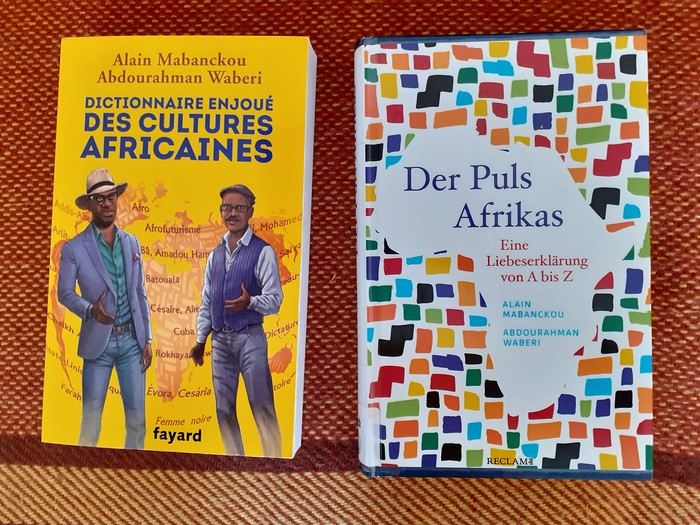
The Maggi cube, an unchallenged hegemony, and so much more
“The hopeless continent,” headlined The Economist, a British magazine, in July 2000 about Africa. Eleven years later, the same magazine headlined “Africa rising” instead. Images of Africa in the prosperous North constantly oscillate between apocalyptic scenarios and enthusiastic projections. A key issue with such images lies in the generalization they entail. If you look at the continent, considerable contrasts emerge depending on space and time. It’s no surprise that a region of the world encompassing such diverse ecological zones, maintaining such varied ties with other continents, comprising nearly fifty nation-states in sub-Saharan Africa alone, and characterized by a great diversity of languages, belief systems, and historical paths, doesn’t share a single destiny.
And yet, for many people outside Africa, as well as for many Africans, the continent constitutes a single entity, defined by criteria such as skin color, a colonial past, poverty, and the art of survival. Until now, these perspectives were generally accompanied by the idea that Africa had to—or should have—followed a single path together, sometimes called development, sometimes modernization, sometimes liberation, then a market economy. None of these paths delivered on their promises.
The two writers Alain Mabanckou and Abdourahman Waberi—one from Congo, the other raised in Djibouti, both long settled in France and now professors at renowned North American universities (Los Angeles, Washington)—have had enough of pessimistic scenarios: “We are aware that Africa is in the world and the world is in Africa. The same goes for all other continents, as our destinies are inextricably linked for better or worse. We refuse to see Africa as a reservoir of misfortunes or a continent cursed by atavistic misfortune and characterized by ethnic conflicts. [...] It’s this passionate flame we wanted to capture in a book [...] a kind of stroll through African cultures, without any demands, each letter of the alphabet leading us to a notion, a practice, a concept, a moment in history, literature, painting, politics, economics, cuisine, etc.” (p.10-11). Africa, they write, is on the verge of “imposing a signature, a style, a way of being in the world and in relation to the rest of the world.” (p.11) To put words to the continent’s diversity and dynamism, the two authors created a “rambling ABC,” a kind of portrait—or more precisely, a mythography—that lets you see and feel the pulse of a vast continent whose cultural power is unfolding before our eyes. Once marginalized or even mocked, the voice and importance of the Continent in global affairs are now undeniable” (p.11), containing over a hundred entries, mostly concise, written in a relaxed and casual style. The optimistic, even exuberant tone is set from the brief introduction. The duo of authors wants to “sing a love song to the cultures of our continent, to its inhabitants past and present, to its exceptional resources and its spectacular globalization despite a certain pollution that still clouds our skies due to the unmatched duration of dictatorships in some of our regions.” (p.12) In doing so, they don’t want to be too distracted by today’s Afewerki-Biya-Bongo-Déby & Co. ...
Of course, you’ll find tributes to great precursors like Frantz Fanon (“[...] it was a love story and admiration that wasn’t dimmed by the four decades separating his birth from ours. Let’s add that we were born while the native of Fort-de-France had left the world’s stage four years earlier, in the prime of life” p.141), Mongo Beti (“You must read and reread Mongo Beti, a genius who used his fame to support often just causes in Africa, like defending oppressed groups. His place is already in History. His oppressors, like the dictators Ahmadou Ahidjo and Paul Biya, can’t compete in the same category” p.64), the Malian Amadou Hampâté Bâ
(“Posterity remembers him mainly as an tireless defender of African cultures. His plea for the collection and preservation of traditional African knowledge remains a major event for all men and women of good will. One day in 1960, at the UNESCO podium, the native of Bandiagara sounded the alarm: ‘[...] Since we’ve admitted that the humanity of each people is the heritage of all humanity, if African traditions aren’t collected in time and written down, they’ll one day be missing from the universal archives of humanity.’” p.51),
Kwame Nkrumah, “one of the founders of Pan-Africanism, father of Ghana’s independence” (p.239), as well as the historian Cheikh Anta Diop, the writer, poet, and politician Aimé Césaire, and the economist and thinker Samir Amin, but also very warm tributes to certain contemporary African intellectuals like Souleymane Bachir Diagne and Achille Mbembe
(“A few years ago, in dominant economic circles, a rumor often resurfaced, usually disguised as a cold and scientifically proven analysis: Africa is useless. It’s a burden for the rest of the human community. With its 2% share in world trade, it would disappear from stock market radars without anyone noticing. So? Maybe it’ll be pulled up by other continents. Wanting to surpass itself is a crazy bet for Africans, they concluded. Arrogant or clueless, President Nicolas Sarkozy declared before an audience of students and teachers at Cheikh Anta Diop University in Dakar: ‘The African man hasn’t entered history enough [...] He only knows the eternal repetition of time marked by the endless repetition of the same gestures and words.’ That was in 2007. For decades, armed only with reason, an intellectual often steps up to debunk prejudices, lazy readings, and dishonest frameworks used as false fronts by those who, like Nicolas Sarkozy or former journalist Stephen Smith, out of ignorance, contempt, or condescension, distort African reality. This intellectual is none other than the historian and political scientist Achille Mbembe. This heir of Frantz Fanon, Amílcar Cabral, Jean-Marc Ela, and Fabien Eboussi-Boulaga was born in 1957 in Cameroon, in the Bassa region. Marked early by the upheavals of a fratricidal war, Achille Mbembe became the guardian of the memory of martyrs. After brilliant studies in Paris, he went on to teach at the best American universities, but the call of the Continent was stronger than anything else. In Dakar, he once directed CODESRIA (Council for the Development of Social Science Research in Africa) before joining the University of the Witwatersrand in Johannesburg, South Africa. Even though the author of *Critique of Black Reason* (Éditions La Découverte, 2015) spends a few months at Duke University in North Carolina, his observation post remains South Africa. From Johannesburg, Achille Mbembe scrutinizes Africa and the whole world. A lucid observer with an elegant and generous pen, Achille Mbembe knows how to blend big and small history: ‘I was born one day in July, as the month was drawing to a close. It was 1957, in that part of Africa recently named ‘Cameroon,’ a memory of the wonder that seized Portuguese sailors in the 15th century when, sailing up the river near Douala, they couldn’t help but note the presence of a multitude of crustaceans, and named it *Rio dos Camarões*, meaning ‘River of Shrimp.’ I grew up in the shadow of this nameless land, since, in a way, the name it bears is only the product of someone else’s astonishment: a lexical mistake, if you will.’ From this mistake or wound, he made leaven, a springboard to compose a rich work, recognized worldwide. To denounce barriers and barbarians too. But that’s not enough. Among his peers in circles of thought and action, Achille Mbembe passionately and consistently defends human dignity and the beauty of the world. In doing so, he fulfills the mission Frantz Fanon entrusted to him.” (p.227-229),
as well as entries dedicated to lesser-known artists and intellectuals, like the French journalist and activist Rokhaya Diallo, daughter of Senegalese and Gambian parents, or the Ethiopian filmmaker Haile Gerima, who has long lived in the United States. Other names from politics, sports, music, art, and literature: Kofi Annan, p.36; Barack Obama, p.243; Thomas Sankara, p.277; Ousmane Sow, p.285; Yambo Ouologuem, p.250; Léopold Sédar Senghor, p.282; Muhammad Ali, p.30; Nuruddin Farah, p.146; Salif Keita, p.203; Ahmadou Kourouma, p.206; Ngũgĩ wa Thiong’o, p.236; Winnie Mandela, p.224; Kylian Mbappé, p.226 ...
The authors, who resolutely commit to a “mythography” (p.11) of Africa, also pay special attention to local social movements, cultural events, and aspects of daily life. *Y’en a marre*, “which also meant ‘we’re fed up with sitting on our hands’” (p.320-321), emerged about a decade ago in Senegal as a citizen movement of peaceful resistance and symbolizes, the authors emphasize, the fact that African youth are increasingly fed up “with the political circus deployed in Africa since independence, as our parents would say, ‘since the White man left’...” (p.321). A full entry is dedicated to the Maggi bouillon cube, which has flooded African markets for about forty years and enjoys immense popularity (“It’s everywhere in Africa, from Dakar to Djibouti, and from Tangier to Cape Town. It’s in every pot, every stew. Little hands put it in every sauce, every local or adapted dish. An unchallenged hegemony! You’ll find it in diasporas too. The culinary strolls in Paris, in the [...] neighborhood” p.90). Critics blame it not only for impoverishing the aromatic diversity of local dishes but also for being harmful to health. And yet, “he poorest Africans, those who eat only once a day, a few spoonfuls of white beans and a ball of *foufou*, for example, are the most fervent users of the magic cube.” (p.92-93)
For *fonio*, “the new trendy cereal. [...] From the millet family, fonio is probably the oldest cereal cultivated in West Africa, and mainly in its sub-Saharan part, for millennia. [...] Easy to grow, water-efficient, fonio grows everywhere except on clay soils. Long neglected because it was considered the poor man’s crop, fonio is now a source of pride for the farmers who cultivate it and cherish it like the apple of their eye” (p.156-157), the authors immediately offer a detailed recipe, letting the reader know that “e can’t resist sharing this fonio with chicken recipe from Mali with you:
Ingredients: 1 chicken 3 large ripe red tomatoes 4 tbsp tomato paste 4 large onions 1 garlic clove 1/2 cup oil 2 Maggi cubes or salt 2 large carrots 1 turnip 1 large cabbage 2 large potatoes 1 celery stalk 1 packet pre-cooked fonio 4 okra (or okra powder) salt, pepper
Preparation: 1. Prepare the sauce: wash and cut the chicken. Peel the onions, garlic, and vegetables. 2. In a pot, fry the chicken pieces. 3. Dice the onions, tomatoes, carrots, and turnip very small and add them to the pot. 4. Add the tomato paste, salt, and pepper. 5. Simmer for 15 min, then add 2 L of water and the cooked chicken pieces. 6. Simmer for 30 min, then add the crushed garlic and celery, plus the cabbage cut into 4 and the potatoes cut in half. 7. Prepare the fonio: cover it with warm water, let it rest for 15 min, and cook it over low heat. 8. In a small pot, boil the okra and crush them. 9. Mix the crushed okra with the cooked fonio, then salt. Serve hot.” (p.158-159)
The comedy *Black Mic Mac*, released in French theaters in 1986 and addressing France’s increasingly restrictive immigration policy at the time, also gets an entry, as do *Tintin in the Congo*, the popular comic, and *Jip’s Café* (“[...] a little Africa in the heart of Paris, with passersby stopping to admire the ‘ambianceurs’ on the dance floor or attend the cultural events offered by the place” (p.194), an African establishment in Paris that Alain Mabanckou already immortalized in one of his novels.
The duo of authors also tackles thorny subjects like jihadism (p.119), the Rwandan genocide (p.272), the CFA franc (p.82), and dictatorship (p.110). While the two strike the right tone here, many entries leave a slightly bitter taste. Two examples: why doesn’t the text on Barack Obama mention the great disappointment of many people in Africa, who expected more from the African policy of the first U.S. president with African roots than just occasional warm words? Why do the comments on Winnie Mandela gloss over the fact that she was a highly controversial icon of the anti-apartheid movement due to her involvement in kidnappings, acts of torture, and murders of alleged apartheid collaborators? Instead, there’s a compassion that brings tears to the eyes: “She was often reduced to a secondary role, the wife of a great man” or “When victory came, she didn’t taste its fruits. Divorced, isolated. She would never be a ‘first lady’ in an evening gown, posing before a bed of chrysanthemums. They’d keep her far from the circles of power” (p.224-225). At this point, I would’ve liked the authors to take a slightly more critical stance...
That said, these “weaknesses” (if you can call them that) shouldn’t overshadow the book as a whole. It remains an informative, sometimes very entertaining, and often even original work in its own way.
Book information (the original French and the German translation):
Alain Mabanckou/Abdourahman Waberi. Dictionnaire enjoué des cultures africaines. Fayard, 2019. Alain Mabanckou/Abdourahman Waberi. Der Puls Afrikas. Eine Liebeserklärung von A bis Z. Reclam, 2022.
Hery
A trip to Australia: Far North Queensland
Thursday, November 9, 2023
Cairns
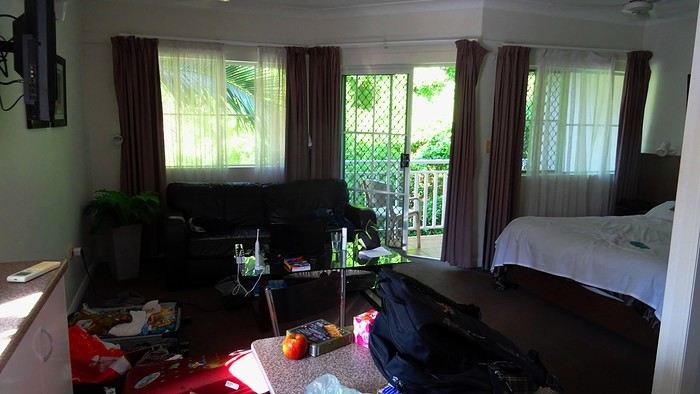
TV scriptwriters are a funny bunch. As soon as their ordinary mug starts becoming recognizable on the street thanks to success, their egos start swelling. They walk on clouds. So, one of the guys who worked on the script for our trip—the one who specifically came up with the bit about the SD card being ejected into the great beyond—has built himself a nice little reputation. The kind that can sometimes launch a real career. Then, inevitably, they just can’t stop. That’s how this guy had the poor idea of adding one last twist to the sequence that made him a one-day star. An idea that’s basically about squeezing the lemon until the very last drop, if you know what I mean. The little bag I take everywhere with my essentials—car keys, camera, phone—has also hosted a bunch of secondary items over time. Tissues, a book, city maps... whatever. It became a mess! So I finally decided to sort it out. I empty it onto a table. And there, stunned, I find the memory card that Dom and I desperately searched for on all fours on Cahill’s Crossing walkway, remember? Under the shocked gaze of a little Australian girl. It had ejected straight into my bag! What do you think? Should we fire the scriptwriter? It’s way too improbable! Stuff like that doesn’t happen in real life, right?
We head out to explore Cairns. The city is mostly about the waterfront, the Esplanade. You’ll find tons of bronze plaques there, most of them in memory of a deceased loved one. All you have to do is shell out a few hundred euros, and one day, a bewildered tourist will read your prose, charmed by your lovely turns of phrase. Vanity is a thriving business!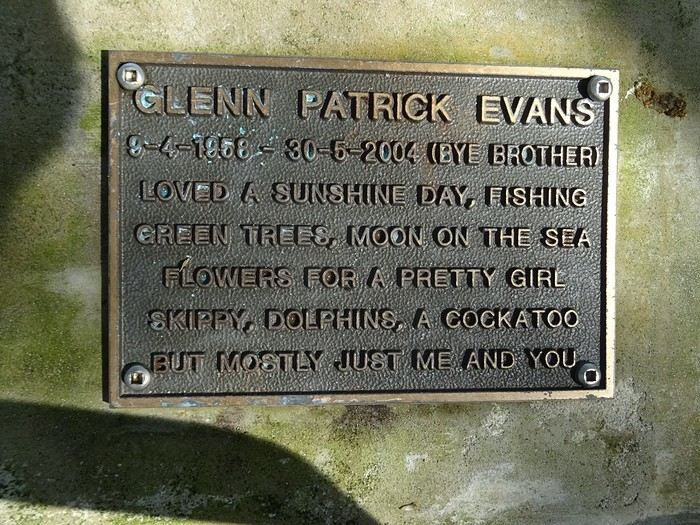
It makes for some reading... We spot our parakeets again... What were they called? Oh right, in abundance! Everywhere, banyan fig trees provide shade from a sun that never seems to tire. Parks... Here, kids are king.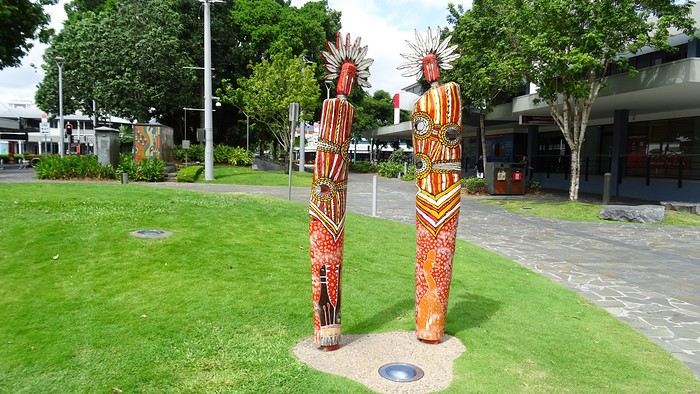 Luxury hotels with their infinity pools...
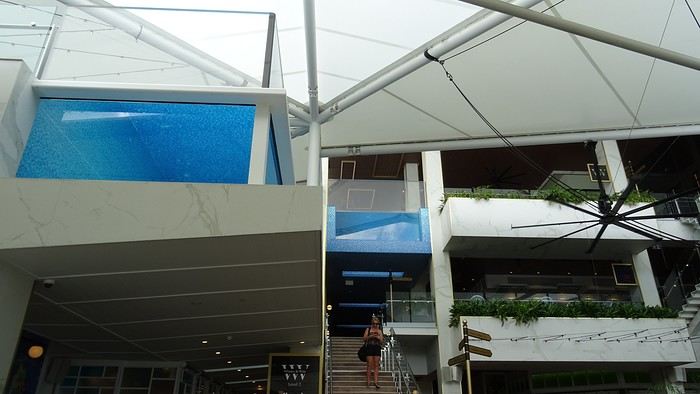
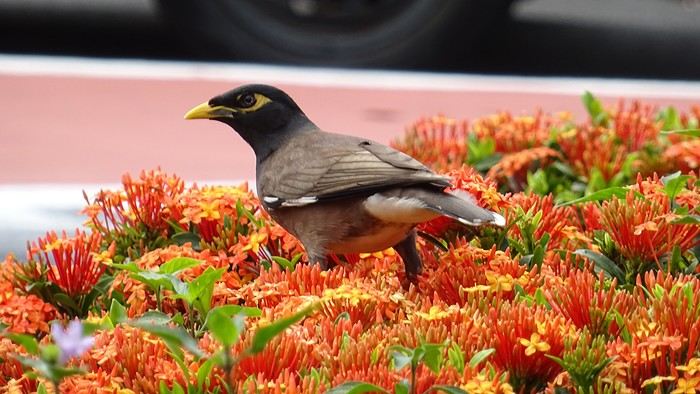 You don’t know where to look first... You’ve got to go all out. Google... Where can we rent bikes? When we finally track down the only operator in town, we find the place closed. A bit further on, a Visitor’s Center might find us an alternative? We meet a charming young guy, super dynamic and a great communicator. We leave without bikes but with a full snorkeling package for the day after tomorrow! I call the shop that let us down... Well done! The owner was at the doctor’s; he’s back now, and we can make a deal!
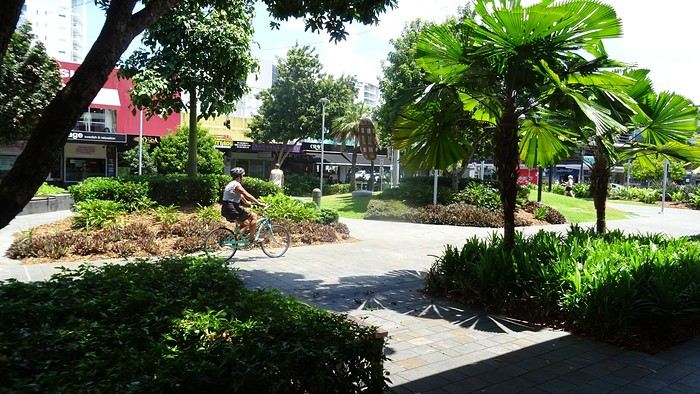
- Oh, Dominique, where are you off to like that, so proudly and at full speed? - Me? To the Botanic Garden, of course! It’s huge and free!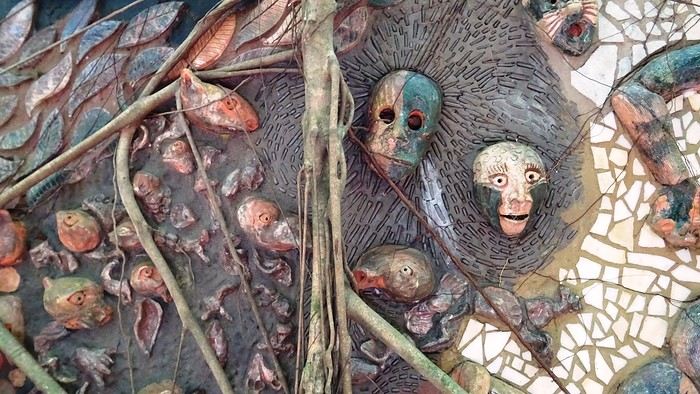
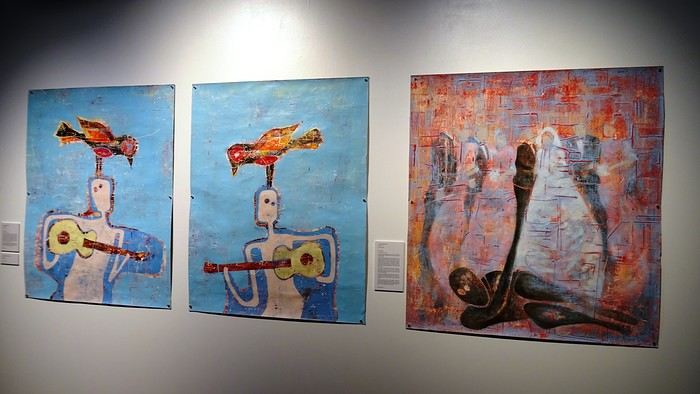
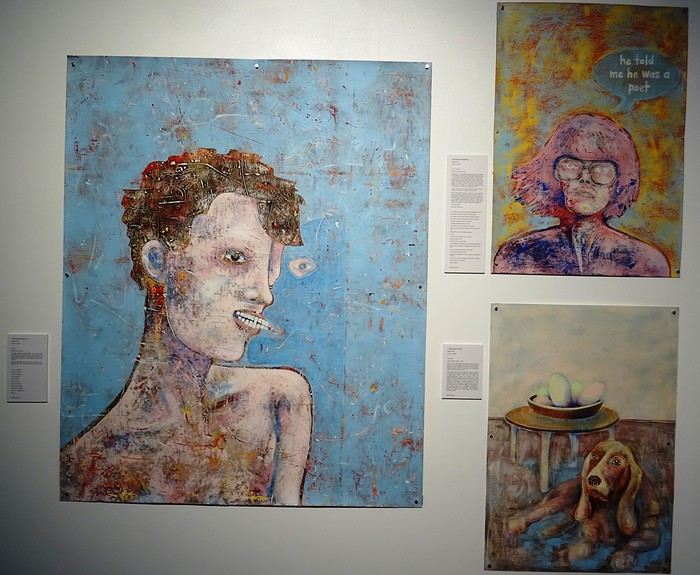
They’ve recycled oil tanks into art galleries!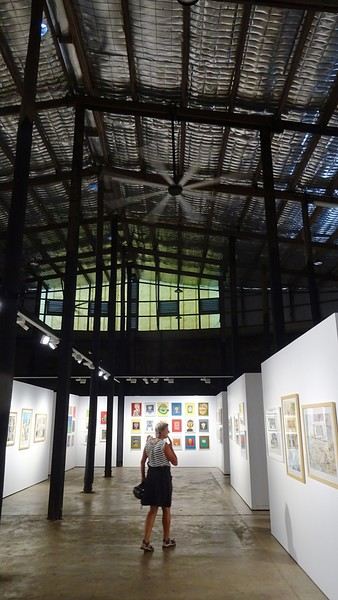
TV scriptwriters are a funny bunch. As soon as their ordinary mug starts becoming recognizable on the street thanks to success, their egos start swelling. They walk on clouds. So, one of the guys who worked on the script for our trip—the one who specifically came up with the bit about the SD card being ejected into the great beyond—has built himself a nice little reputation. The kind that can sometimes launch a real career. Then, inevitably, they just can’t stop. That’s how this guy had the poor idea of adding one last twist to the sequence that made him a one-day star. An idea that’s basically about squeezing the lemon until the very last drop, if you know what I mean. The little bag I take everywhere with my essentials—car keys, camera, phone—has also hosted a bunch of secondary items over time. Tissues, a book, city maps... whatever. It became a mess! So I finally decided to sort it out. I empty it onto a table. And there, stunned, I find the memory card that Dom and I desperately searched for on all fours on Cahill’s Crossing walkway, remember? Under the shocked gaze of a little Australian girl. It had ejected straight into my bag! What do you think? Should we fire the scriptwriter? It’s way too improbable! Stuff like that doesn’t happen in real life, right?
We head out to explore Cairns. The city is mostly about the waterfront, the Esplanade. You’ll find tons of bronze plaques there, most of them in memory of a deceased loved one. All you have to do is shell out a few hundred euros, and one day, a bewildered tourist will read your prose, charmed by your lovely turns of phrase. Vanity is a thriving business!
It makes for some reading... We spot our parakeets again... What were they called? Oh right, in abundance! Everywhere, banyan fig trees provide shade from a sun that never seems to tire. Parks... Here, kids are king.
Luxury hotels with their infinity pools...
You don’t know where to look first... You’ve got to go all out. Google... Where can we rent bikes? When we finally track down the only operator in town, we find the place closed. A bit further on, a Visitor’s Center might find us an alternative? We meet a charming young guy, super dynamic and a great communicator. We leave without bikes but with a full snorkeling package for the day after tomorrow! I call the shop that let us down... Well done! The owner was at the doctor’s; he’s back now, and we can make a deal!
- Oh, Dominique, where are you off to like that, so proudly and at full speed? - Me? To the Botanic Garden, of course! It’s huge and free!
They’ve recycled oil tanks into art galleries!