Results for "escalade+|+11+>+237"
10401 results found.
Le centre rouge australien English translation pending
Bonjour à toutes et tous....🙂
Nouveau sur ce forum, je me présente brièvement : ingénieur sexagénaire marié à une chef de cabine d'Air France et papa d'un garçon de 13 ans... Passionné d'humain et d'humanisme et par conséquent de voyages...😎
Je prépare actuellement notre voyage des vacances de cet été et je me permets de venir vers vous car l'Australie est au programme (entre le Cambodge et l'Ile de Paques) et je me pose des questions sur la visite du Centre Rouge (Uluru, Kata Tjuta et Kings Canyon...).
Compte tenu des prix exorbitants des hôtels d'Ayers Rock, j'envisagerais de n'y passer qu'une nuit et d'établir notre base à Alice Springs. Le programme serait alors le suivant :
Jour 1 : Route Alice Springs -> Ayers Rock en passant par Kata Tjuta et coucher de soleil sur Uluru...
Jour 2 : Lever de soleil sur Uluru, Kings Canyon et retour sur Alice Springs...
Est-ce que ceux qui connaissent les sites peuvent me rassurer sur la faisabilité de ce programme, et en particulier si les différents sites sont facilement accessibles en voiture de location classique, ou s'il faut se munir d'un 4 x 4...
Merci par avance à ceux qui pourront me répondre, et bien sûr à charge de revanche si je peux aider quelqu'un par mon expérience autour du monde....
Nouveau sur ce forum, je me présente brièvement : ingénieur sexagénaire marié à une chef de cabine d'Air France et papa d'un garçon de 13 ans... Passionné d'humain et d'humanisme et par conséquent de voyages...😎
Je prépare actuellement notre voyage des vacances de cet été et je me permets de venir vers vous car l'Australie est au programme (entre le Cambodge et l'Ile de Paques) et je me pose des questions sur la visite du Centre Rouge (Uluru, Kata Tjuta et Kings Canyon...).
Compte tenu des prix exorbitants des hôtels d'Ayers Rock, j'envisagerais de n'y passer qu'une nuit et d'établir notre base à Alice Springs. Le programme serait alors le suivant :
Jour 1 : Route Alice Springs -> Ayers Rock en passant par Kata Tjuta et coucher de soleil sur Uluru...
Jour 2 : Lever de soleil sur Uluru, Kings Canyon et retour sur Alice Springs...
Est-ce que ceux qui connaissent les sites peuvent me rassurer sur la faisabilité de ce programme, et en particulier si les différents sites sont facilement accessibles en voiture de location classique, ou s'il faut se munir d'un 4 x 4...
Merci par avance à ceux qui pourront me répondre, et bien sûr à charge de revanche si je peux aider quelqu'un par mon expérience autour du monde....
Tour des Annapurnas English translation pending
Salut à tous,
Je viens de rentrer du Tour des Annapurnas. Qq verités vecues : tout d'abord c merveilleux 🙂. Physiquement faisable pour qui fait un peu de sport quand même. D'un point de vue electricite j'avais camera digitale et appareil photo digital. 3 accus pour l'appreil photo deux pour la camera et ça suffit ! Il y a moyen de recharger a peu pres tout les trois jours. Qui plus est j'ai fabriqué un panneau solaire qui marche nickel. Pour les douches, tout les jours sans faute, mais pas toujours chaude ! Nous n'avons pas vu de Maoïstes mais ils existent et rançonnent pour 12€ et vous fournissent une attestation ! Donc allez-y sans stress (sauf Katmandou la polluée) et amusez-vous.
Si vous avez des questions, n'hésitez pas !
Patrick
Je viens de rentrer du Tour des Annapurnas. Qq verités vecues : tout d'abord c merveilleux 🙂. Physiquement faisable pour qui fait un peu de sport quand même. D'un point de vue electricite j'avais camera digitale et appareil photo digital. 3 accus pour l'appreil photo deux pour la camera et ça suffit ! Il y a moyen de recharger a peu pres tout les trois jours. Qui plus est j'ai fabriqué un panneau solaire qui marche nickel. Pour les douches, tout les jours sans faute, mais pas toujours chaude ! Nous n'avons pas vu de Maoïstes mais ils existent et rançonnent pour 12€ et vous fournissent une attestation ! Donc allez-y sans stress (sauf Katmandou la polluée) et amusez-vous.
Si vous avez des questions, n'hésitez pas !
Patrick
Itinéraire Salvador? English translation pending
Bonjour, je voudrais savoir si y'a qqun qui a déjà fait la route longeant le pacifique au Salvador (La libertad, Zacatecoluca, Usulutan et San miguel) ou alors la ruta de la paz (de la Esperanza au Honduras à San francisco Gotera), ou autres périples Salvadoriens pour glaner quelques impressions. Merci.
Mais où vont-ils? English translation pending
En lisant le post d'ALAN, je me suis mis a penser(ca m'arrive) a que sera devenus dans 50 ou 100 ans l'industrie du voyage.Je parle aussi bien pour le voyage "tout inclus" que pour le "routard".Quelle seront les changements majeurs, les destinations phares?
Y auras t'il de nouveaux spots qui seront sorti de terre???
Ben j'ai bien une petite idée mais je laisse la main !
Bons plans à Sosua (République Dominicaine) English translation pending
Bonjour je vais a sosua pour 15 jours du 9 au 23 janvier 2004, si vous avez des suggestions de place a visité, me le faire savoir.
J'aime beaucoup me louer une moto et aller voir les endroits un peu moins touristique.
Des petits resto bar du coin ou l'on peut s'arreter sans probleme .
Toute suggestion sera la bienvenue.
Merci et bon voyage a tous
J'aime beaucoup me louer une moto et aller voir les endroits un peu moins touristique.
Des petits resto bar du coin ou l'on peut s'arreter sans probleme .
Toute suggestion sera la bienvenue.
Merci et bon voyage a tous
Bon plan pour la haute altitude pour tous au Mexique English translation pending
Un bon plan pour faire connaissance avec la haute altitude sans depender quasiment rien et sans necesairement etre un alipiniste chevronne:
Le Citalteptl (ou Pico de Orisaba) au Mexique, le point culminant. A Mexico, aller au Club Alpin Mexicain, louer piolet et crampon (pas besoin de beaudrier). Se rendre a Cuidad Cerdan, aller a l'uniaue hotel de la ville, demander Don Illario (sans rapport avec Hillary), c'est un guide. Negocier un peu le prix, en gros 150 euros maxi. Ensuite, vamos. montee en 4x4 jusqu'a 4400, montee au refuge a 4600, nuit au refuge, ne pas oublier les aspirines, puis 1100 m a faire dans la matinee, ce n'est pas la mer a boire, il faut aller a son rythme. C'est une experience tres interessante, et c'est depaysant, dans ce pays. Je ne parlais pas espagnol a l'epoque, je baragouinais en espanglais. Ca le faisait. Comme quoi, tout ca est assez simple. Bonne promenade.
Si vous aussi, vous connaissez des 5000 ou meme des 6000 a portee, n'hesitez pas.
Loopkin
Le Citalteptl (ou Pico de Orisaba) au Mexique, le point culminant. A Mexico, aller au Club Alpin Mexicain, louer piolet et crampon (pas besoin de beaudrier). Se rendre a Cuidad Cerdan, aller a l'uniaue hotel de la ville, demander Don Illario (sans rapport avec Hillary), c'est un guide. Negocier un peu le prix, en gros 150 euros maxi. Ensuite, vamos. montee en 4x4 jusqu'a 4400, montee au refuge a 4600, nuit au refuge, ne pas oublier les aspirines, puis 1100 m a faire dans la matinee, ce n'est pas la mer a boire, il faut aller a son rythme. C'est une experience tres interessante, et c'est depaysant, dans ce pays. Je ne parlais pas espagnol a l'epoque, je baragouinais en espanglais. Ca le faisait. Comme quoi, tout ca est assez simple. Bonne promenade.
Si vous aussi, vous connaissez des 5000 ou meme des 6000 a portee, n'hesitez pas.
Loopkin
Marrakech et Agadir cet été English translation pending
bonjour tout le monde,
je suis un marocain de 17 ans qui vit à casablanca & qui voyagent toutes l'année un peu partout au MAROC !
si quelqun est interessé par des rencontres ( en tout bien tout honneur ) je suis là
@ bon entendeur salut 😏
je suis un marocain de 17 ans qui vit à casablanca & qui voyagent toutes l'année un peu partout au MAROC !
si quelqun est interessé par des rencontres ( en tout bien tout honneur ) je suis là
@ bon entendeur salut 😏
Projet Afrique de l'Ouest English translation pending
Salut ami(e)s voyageurs(ses),
Je voudrais réaliser un rêve, qui est de partir en Afrique pour une période de 6 mois environ, en passant par les pays tels que le Maroc, la Mauritanie, le Sénégal, le Mali, Bénin, Togo.... Sur place, je voudrais avoir des points de chutes dans des associations, communautés.. à qui je proposerais mon aide pendant 1 à 3 semaines en échange d'être nourri et logée. Si vous avez des conseils, infos, renseignements, idées, adresses, contacts... je suis preneuse! Si mon projet aboutit, je compte partir soit vers janvier 2004, soit septembre 2004. Pour l'instant, je partirai seule donc si quelqu'un est intéressé........
Merci d'avance 😉!!!!
A bientôt!!!
June 2026 Theme Thread: Such a Beautiful Landscape
This is where we chat.
Love at First Sight in Kenya
Hello,
After several years, I’ve finally decided to repost a travel journal on the forum. We returned a few weeks ago from an incredible trip to Kenya, and it’s reignited my desire to share our emotions in the face of these animals.
Kenya wasn’t originally a priority for us in terms of safari—we had the impression it was too touristy. So, we started with other destinations: Namibia, Tanzania, Botswana, and South Africa. But as I did more research, especially on the forum (thanks in part to Sylvie’s many trips), I eventually convinced myself that Kenya could be magnificent, as long as we chose our itinerary carefully and avoided peak seasons.
We ended up going in January, from the 17th to the 31st. We worked with a travel agency (TP) that crafted a custom itinerary for us: Samburu-Ol Pejeta-Naivasha-Maji Moto-Maasai Mara-Diani. They partnered with a local French-speaking agency, and everything was perfectly organized. Our trip exceeded all our expectations, and none of it would’ve been as amazing without our guide, Alfred. He accompanied us for 10 days and was a fantastic travel companion—professional, respectful of the animals, and always in good spirits. We formed a great bond with him in such a short time.
- **January 17th** After meeting up with Juliette and Charlotte in Rennes the night before, we left at 4 AM for Roissy Charles de Gaulle Airport. The thick fog made the drive pretty rough, but we arrived safely around 7:45 AM. A Blue Valet driver was waiting to take our car. Check-in went smoothly, and we waited patiently for our 10:40 AM flight. Unfortunately, despite boarding on time, a passenger was missing, and we had to find a replacement last minute. Then, another passenger who had checked in and dropped off their luggage wasn’t on the plane, so they had to unload their bags. After a long period of uncertainty and spotty communication from the crew, we finally took off over an hour late.
We arrived in Nairobi in the late afternoon, 45 minutes behind schedule. The administrative formalities were endless—it took nearly 1.5 hours from landing to leaving the airport with our luggage. When we stepped out, Alfred, our guide, was waiting with a big smile and drove us to the Eka Hotel, not far from the airport. Exhausted from the long journey, we fell asleep quickly.
- **January 18th** Alfred met us at 7 AM for a long drive to Samburu Reserve. We had a peaceful night, unlike the girls, who barely slept because their neighbors were talking loudly all night. Things even escalated when Charlotte started shouting insults to get them to quiet down, but it didn’t work.
It was Sunday, so traffic around Nairobi and along the route was light. Aside from a quick "technical stop," we drove straight through and arrived in Samburu after just under 6 hours. Because of the lower altitude (around 1,000m on average), it was hot—over 30°C in mid-January.
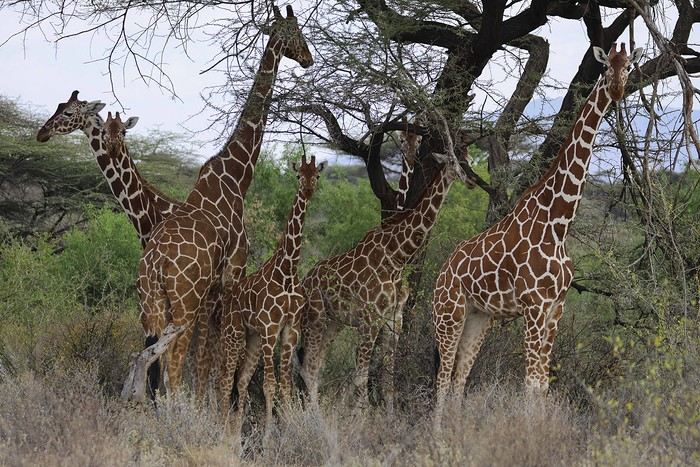
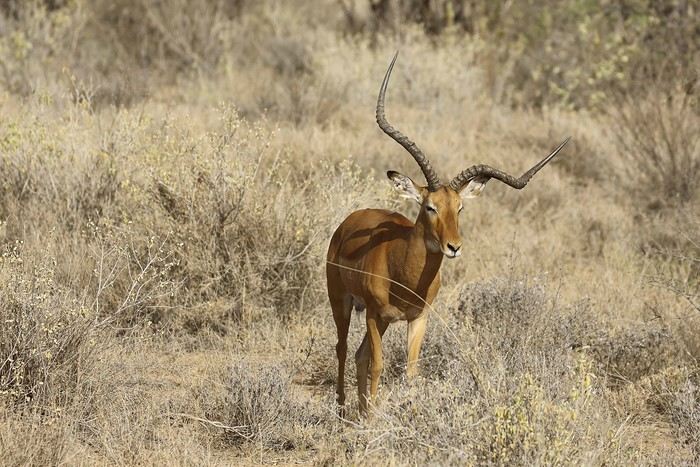
As soon as we entered the reserve, we spotted some impalas and quickly came across one of the region’s endemic species: the reticulated giraffe, which is absolutely stunning.
While heading to our camp for lunch, Alfred crossed paths with another vehicle and learned that a leopard was nearby. We started searching, and a few minutes later, Anny spotted a shape in a tree—it was our leopard!
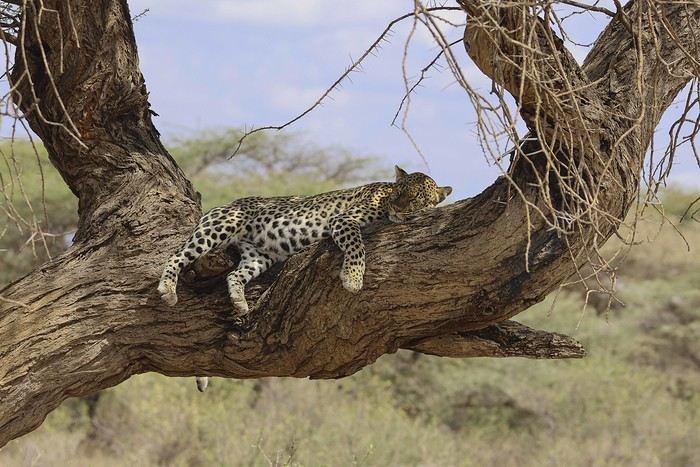
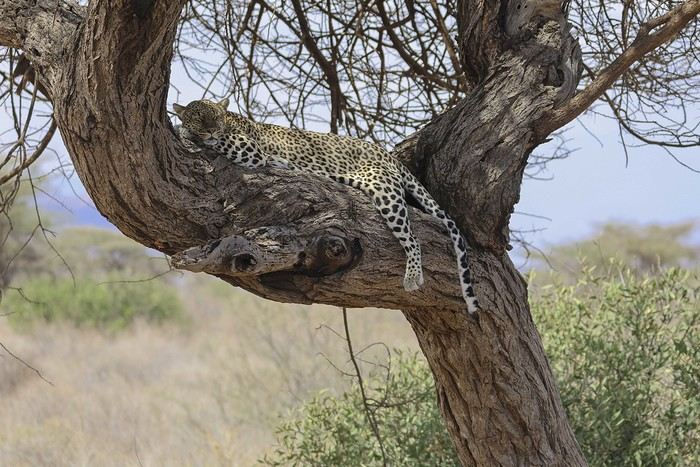
There were actually two of them—a mother and her adolescent. The young one was perched high in the tree, in the shade. We got to observe them for a good half-hour in excellent conditions, with just one other vehicle nearby.
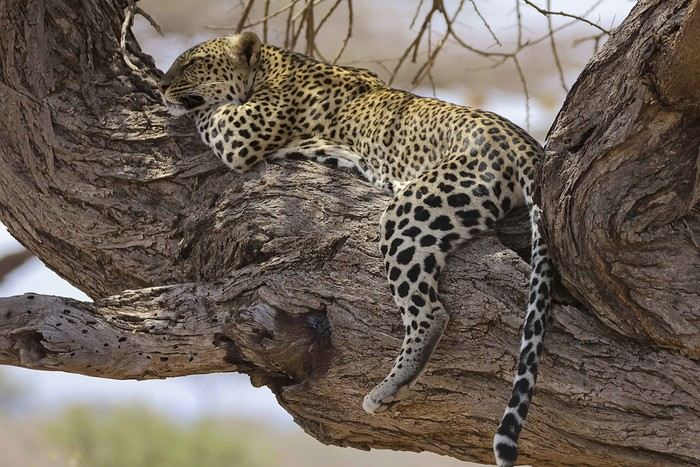
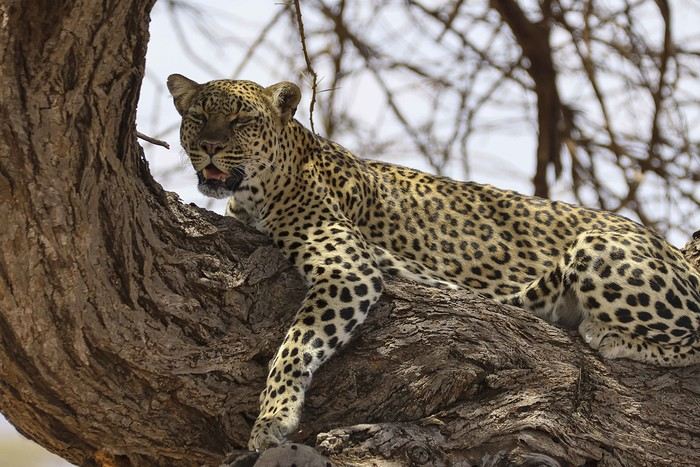
Alfred also noticed that the mother had hidden prey (a gerenuk gazelle) in the vegetation, away from prying eyes.
It was time to head to our camp, the Ashnil Samburu Camp, located in the Buffalo Springs area, by the river, in an idyllic setting surrounded by the region’s typical vegetation.
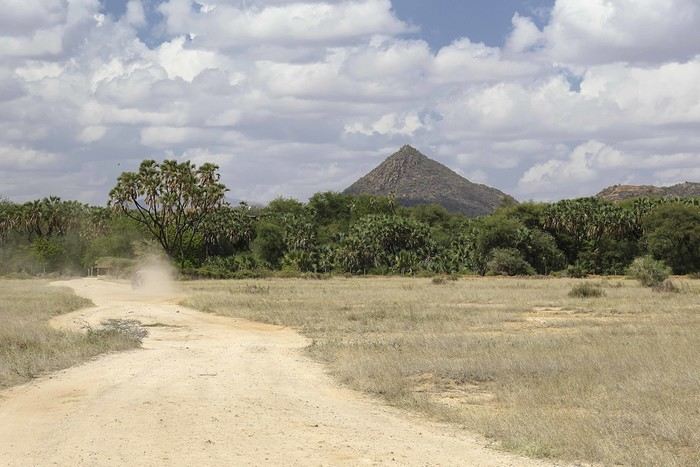
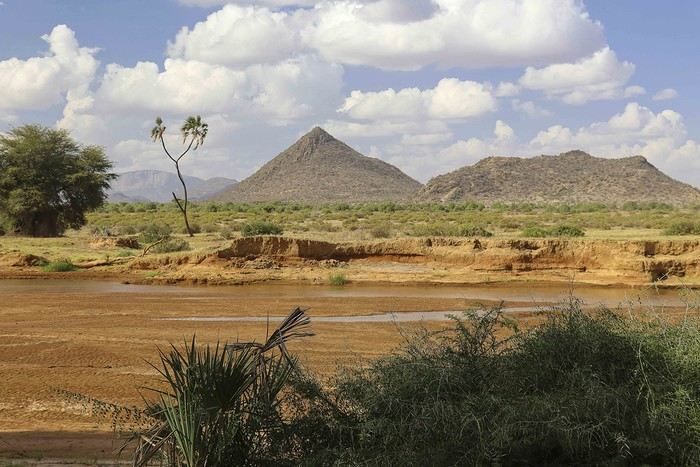
The welcome was fantastic—we immediately felt at home, and that feeling lasted throughout our 3-day stay in the reserve. It was 2 PM, but no one rushed us to the table. Our waitress, Sheila, who took care of us the whole time, was as lovely as the rest of the team. Barely seated, we were invited to watch an elephant passing right by the camp, in front of the restaurant. This trip was off to a great start!
After lunch, we relaxed by the pool. Monkeys, especially vervets, were everywhere, and a camp employee was assigned to keep an eye on them and shoo them away if needed (especially the baboons).
A little before 4 PM, we met up with Alfred for our first game drive. Just outside the camp, a few elephants were in the valley near the river.
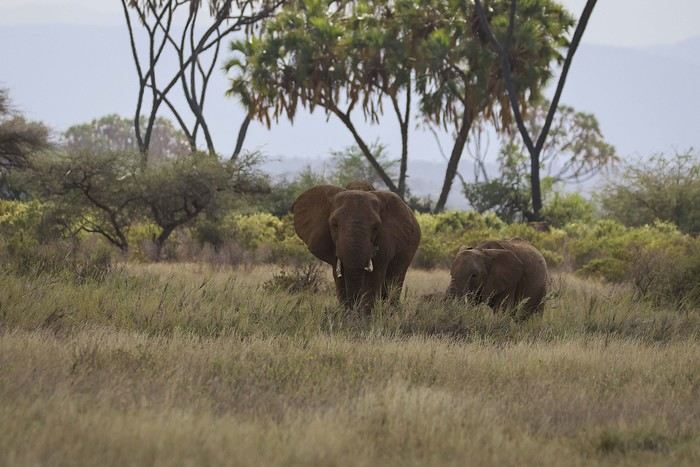
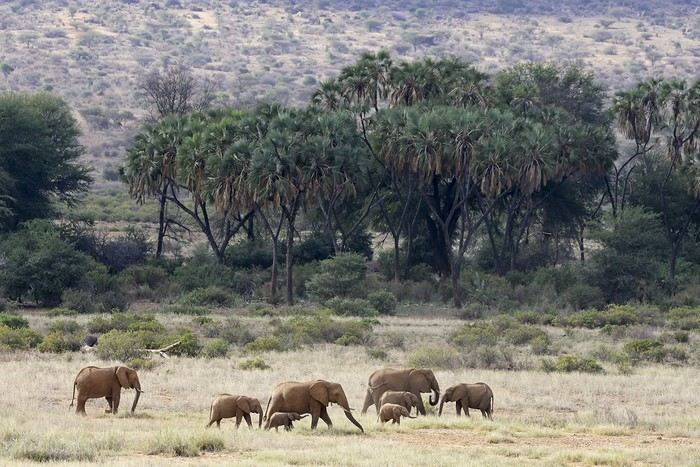
We’d see them in the same area almost every day. We also spotted some gazelles.
After several years, I’ve finally decided to repost a travel journal on the forum. We returned a few weeks ago from an incredible trip to Kenya, and it’s reignited my desire to share our emotions in the face of these animals.
Kenya wasn’t originally a priority for us in terms of safari—we had the impression it was too touristy. So, we started with other destinations: Namibia, Tanzania, Botswana, and South Africa. But as I did more research, especially on the forum (thanks in part to Sylvie’s many trips), I eventually convinced myself that Kenya could be magnificent, as long as we chose our itinerary carefully and avoided peak seasons.
We ended up going in January, from the 17th to the 31st. We worked with a travel agency (TP) that crafted a custom itinerary for us: Samburu-Ol Pejeta-Naivasha-Maji Moto-Maasai Mara-Diani. They partnered with a local French-speaking agency, and everything was perfectly organized. Our trip exceeded all our expectations, and none of it would’ve been as amazing without our guide, Alfred. He accompanied us for 10 days and was a fantastic travel companion—professional, respectful of the animals, and always in good spirits. We formed a great bond with him in such a short time.
- **January 17th** After meeting up with Juliette and Charlotte in Rennes the night before, we left at 4 AM for Roissy Charles de Gaulle Airport. The thick fog made the drive pretty rough, but we arrived safely around 7:45 AM. A Blue Valet driver was waiting to take our car. Check-in went smoothly, and we waited patiently for our 10:40 AM flight. Unfortunately, despite boarding on time, a passenger was missing, and we had to find a replacement last minute. Then, another passenger who had checked in and dropped off their luggage wasn’t on the plane, so they had to unload their bags. After a long period of uncertainty and spotty communication from the crew, we finally took off over an hour late.
We arrived in Nairobi in the late afternoon, 45 minutes behind schedule. The administrative formalities were endless—it took nearly 1.5 hours from landing to leaving the airport with our luggage. When we stepped out, Alfred, our guide, was waiting with a big smile and drove us to the Eka Hotel, not far from the airport. Exhausted from the long journey, we fell asleep quickly.
- **January 18th** Alfred met us at 7 AM for a long drive to Samburu Reserve. We had a peaceful night, unlike the girls, who barely slept because their neighbors were talking loudly all night. Things even escalated when Charlotte started shouting insults to get them to quiet down, but it didn’t work.
It was Sunday, so traffic around Nairobi and along the route was light. Aside from a quick "technical stop," we drove straight through and arrived in Samburu after just under 6 hours. Because of the lower altitude (around 1,000m on average), it was hot—over 30°C in mid-January.
As soon as we entered the reserve, we spotted some impalas and quickly came across one of the region’s endemic species: the reticulated giraffe, which is absolutely stunning.
While heading to our camp for lunch, Alfred crossed paths with another vehicle and learned that a leopard was nearby. We started searching, and a few minutes later, Anny spotted a shape in a tree—it was our leopard!
There were actually two of them—a mother and her adolescent. The young one was perched high in the tree, in the shade. We got to observe them for a good half-hour in excellent conditions, with just one other vehicle nearby.
Alfred also noticed that the mother had hidden prey (a gerenuk gazelle) in the vegetation, away from prying eyes.
It was time to head to our camp, the Ashnil Samburu Camp, located in the Buffalo Springs area, by the river, in an idyllic setting surrounded by the region’s typical vegetation.
The welcome was fantastic—we immediately felt at home, and that feeling lasted throughout our 3-day stay in the reserve. It was 2 PM, but no one rushed us to the table. Our waitress, Sheila, who took care of us the whole time, was as lovely as the rest of the team. Barely seated, we were invited to watch an elephant passing right by the camp, in front of the restaurant. This trip was off to a great start!
After lunch, we relaxed by the pool. Monkeys, especially vervets, were everywhere, and a camp employee was assigned to keep an eye on them and shoo them away if needed (especially the baboons).
A little before 4 PM, we met up with Alfred for our first game drive. Just outside the camp, a few elephants were in the valley near the river.
We’d see them in the same area almost every day. We also spotted some gazelles.
Gosuslugi with biometrics: for SIM cards and banks, among others.
Gosuslugi / Госуслуги is the Russian administrative portal. EBS / ЕБС is the unified biometric system.
Since 2025, foreigners (residents or not) must have a biometric profile in addition to a Gosuslugi profile to obtain SIM cards and open a bank account.
Administrative services are mostly centralized in MFCs, МФЦ (Multi-Functional Center), nicknamed "My Documents" Мои документы.
A non-resident foreigner can register with the pension fund, which provides a social security number, SNILS / СНИЛС. To do this, you must present your passport and a notarized translation at an MFC. The SNILS can be issued on the spot or within a maximum of five days. If not issued immediately, you receive a receipt, and the deadline is communicated by the administrative agent. You return to the MFC after the deadline to collect the certificate with the SNILS.
Once the SNILS is obtained, you revisit an MFC counter to register on the Gosuslugi portal. You must present your passport and notarized translation again, along with a phone number and email. The Gosuslugi portal authenticates users with three pieces of data: SNILS, email or phone number, and password. The agent creates the profile and completes the initial email and SMS confirmations on your phone.
After the Gosuslugi profile is active, you register on the biometric portal. If last year’s law centralization measures are fully implemented, you can do this at any MFC; otherwise, you go to a SBERBANK (or VTB) branch. Again, as always for foreigners, you must present your passport with its translation and show your open Gosuslugi profile on your phone. The employee records your voice (reading a series of numbers) and takes a photo of your face.
After that, you can go to a telecom agency to buy a SIM card. The staff will take your passport details with the translation and your Gosuslugi profile info. Then, they’ll take a photo with their webcam, which is verified by the online EBS biometric portal. However, procedures may vary depending on the provider (Megafon, MTS, Beeline), and some employees may not be familiar with the process.
Potential delays can be caused by network maintenance or slowdowns due to peaks in administrative activity.
I’ll illustrate this process as I experienced it in February and April 2025 in the next post. Just need to gather the photos I took on the spot.
Since 2025, foreigners (residents or not) must have a biometric profile in addition to a Gosuslugi profile to obtain SIM cards and open a bank account.
Administrative services are mostly centralized in MFCs, МФЦ (Multi-Functional Center), nicknamed "My Documents" Мои документы.
A non-resident foreigner can register with the pension fund, which provides a social security number, SNILS / СНИЛС. To do this, you must present your passport and a notarized translation at an MFC. The SNILS can be issued on the spot or within a maximum of five days. If not issued immediately, you receive a receipt, and the deadline is communicated by the administrative agent. You return to the MFC after the deadline to collect the certificate with the SNILS.
Once the SNILS is obtained, you revisit an MFC counter to register on the Gosuslugi portal. You must present your passport and notarized translation again, along with a phone number and email. The Gosuslugi portal authenticates users with three pieces of data: SNILS, email or phone number, and password. The agent creates the profile and completes the initial email and SMS confirmations on your phone.
After the Gosuslugi profile is active, you register on the biometric portal. If last year’s law centralization measures are fully implemented, you can do this at any MFC; otherwise, you go to a SBERBANK (or VTB) branch. Again, as always for foreigners, you must present your passport with its translation and show your open Gosuslugi profile on your phone. The employee records your voice (reading a series of numbers) and takes a photo of your face.
After that, you can go to a telecom agency to buy a SIM card. The staff will take your passport details with the translation and your Gosuslugi profile info. Then, they’ll take a photo with their webcam, which is verified by the online EBS biometric portal. However, procedures may vary depending on the provider (Megafon, MTS, Beeline), and some employees may not be familiar with the process.
Potential delays can be caused by network maintenance or slowdowns due to peaks in administrative activity.
I’ll illustrate this process as I experienced it in February and April 2025 in the next post. Just need to gather the photos I took on the spot.
The Foam of Days
Now that the curtain has fallen on the past year, it’s time to see what’s happening around here.
It seems pretty quiet, but I’ll read more in detail later.
First, I need to tell you all an anecdote.
My eldest little girl, in her third year of law school, was really scared she wouldn’t pass the year. I told her: “Trust yourself, you’ve worked so hard, and worst case, if you fail, you’ll just redo the year.” “But I don’t think I’ll make it—they changed the rules, and if I mess up even one unit, I have to start all over.” I knew her grades weren’t exactly stellar, and with what I was about to say, I wasn’t taking much of a risk. “Here’s the deal, sweetheart: if you pass, I promise I’ll take you to India, just the two of us.” I have to admit, India is a country I’ve talked about so much to all my grandchildren that in their minds, it’s become a magical, mythical place (hmm).
July had barely begun when my phone rang, her name flashing on the screen. “Mamido, I did it!” My promise came rushing back—oh no, oh no, oh no! “Congratulations, sweetheart!” A little shyly, she said: “Is the India trip still on?”
And me, replying: “Of course it is!”
And that’s that—a promise is a promise, or you risk losing that precious trust that keeps hearts warm and at peace.
We’re leaving in February. Only 8 days—yikes, the carbon footprint! But we can’t miss her tutorials, or she’ll be kicked out. Personally, that works just fine for me.
Going to India has become a challenge for me. It’s far, it’s exhausting, I sweat, I hate mosquitoes, the spices bother my mouth when I used to love them. There’s noise all the time—at night, the dogs bark nonstop, and we almost get run over. I’ll get lost in the streets because my sense of direction has vanished. I don’t like rice anymore. All that chaos and those cultural differences that once enchanted me now just overwhelm me. But I promised.
The upside—and it’s a big one—Raman, the same driver I’ve had forever, will be at the airport with a sign with our names. We’ll stop at the same little shop for chai (or tea, plain and simple) with that aroma that intoxicates me, halfway through the trip.
It’ll be a tiny trip—staying with friends, I’ll show her a few places I love: Chidambaram, Mamallapuram, and the clinic where I worked. Then we’ll head back. My little girl will go home to her parents.
As for me, I’ll leave right away for our Scottish island with Homme for our chilly winter.
How can you love a country so much you want to live there, then suddenly reject it, no longer able to appreciate what once made it special? That’s the mystery of love, I guess.
First, I need to tell you all an anecdote.
My eldest little girl, in her third year of law school, was really scared she wouldn’t pass the year. I told her: “Trust yourself, you’ve worked so hard, and worst case, if you fail, you’ll just redo the year.” “But I don’t think I’ll make it—they changed the rules, and if I mess up even one unit, I have to start all over.” I knew her grades weren’t exactly stellar, and with what I was about to say, I wasn’t taking much of a risk. “Here’s the deal, sweetheart: if you pass, I promise I’ll take you to India, just the two of us.” I have to admit, India is a country I’ve talked about so much to all my grandchildren that in their minds, it’s become a magical, mythical place (hmm).
July had barely begun when my phone rang, her name flashing on the screen. “Mamido, I did it!” My promise came rushing back—oh no, oh no, oh no! “Congratulations, sweetheart!” A little shyly, she said: “Is the India trip still on?”
And me, replying: “Of course it is!”
And that’s that—a promise is a promise, or you risk losing that precious trust that keeps hearts warm and at peace.
We’re leaving in February. Only 8 days—yikes, the carbon footprint! But we can’t miss her tutorials, or she’ll be kicked out. Personally, that works just fine for me.
Going to India has become a challenge for me. It’s far, it’s exhausting, I sweat, I hate mosquitoes, the spices bother my mouth when I used to love them. There’s noise all the time—at night, the dogs bark nonstop, and we almost get run over. I’ll get lost in the streets because my sense of direction has vanished. I don’t like rice anymore. All that chaos and those cultural differences that once enchanted me now just overwhelm me. But I promised.
The upside—and it’s a big one—Raman, the same driver I’ve had forever, will be at the airport with a sign with our names. We’ll stop at the same little shop for chai (or tea, plain and simple) with that aroma that intoxicates me, halfway through the trip.
It’ll be a tiny trip—staying with friends, I’ll show her a few places I love: Chidambaram, Mamallapuram, and the clinic where I worked. Then we’ll head back. My little girl will go home to her parents.
As for me, I’ll leave right away for our Scottish island with Homme for our chilly winter.
How can you love a country so much you want to live there, then suddenly reject it, no longer able to appreciate what once made it special? That’s the mystery of love, I guess.
EBC trek early April: should we book lodges in advance?
Hi everyone,
We’re a group of 5 heading to the Everest Base Camp trek in early April. We won’t have a porter or guide—we’re used to hiking independently and have already done the Langtang trek and the Annapurna Circuit (back in 2003!).
I’d love to know if it’s necessary to book lodges in advance or if we’ll easily find availability during this busy season. Also, will we find lodges all along the route between the main stopover villages, or only in those villages? I remember there were plenty everywhere on the Annapurna Circuit. We want to stay as flexible as possible.
Thanks for your feedback!
We’re a group of 5 heading to the Everest Base Camp trek in early April. We won’t have a porter or guide—we’re used to hiking independently and have already done the Langtang trek and the Annapurna Circuit (back in 2003!).
I’d love to know if it’s necessary to book lodges in advance or if we’ll easily find availability during this busy season. Also, will we find lodges all along the route between the main stopover villages, or only in those villages? I remember there were plenty everywhere on the Annapurna Circuit. We want to stay as flexible as possible.
Thanks for your feedback!
Scotland - Skye Trail and a little extra
After our amazing experience in the Lofoten Islands in summer 2023, I suggested to Jean Marie another trek I’d been wanting to do for a long time: the Skye Trail in Scotland.
A few photos of this stunning island and he was sold and ready to go.
The route is available on the excellent WalkHighlands site HERE (there’s also a Cicerone guide on the subject). And since I thought it was a shame it avoided the Black Cuillins, I added a 3-day detour in that area.
We took advantage of the May bank holidays in 2024, partly to avoid the peak tourist season and also the midge period—because for some reason, mosquitoes love me 😠!!
27/04 – Day 1 – Transfer to Skye and start of the trek: Rubha Hunish - Flodigarry 28/04 – Day 2 – Flodigarry – just before the Old Man of Storr 29/04 – Day 3 – Old Man of Storr – Portree, then bus to Sligachan 30/04 - Day 4 - Sligachan - Glenbrittle campsite via the Fairy Pools 01/05 – Day 5 – Round trip to Sgùrr na Banachdich from Glenbrittle campsite 02/05 – Day 6 – Round trip to Coire Lagan and walk on the Rubh an Dùnain peninsula 03/05 – Day 7 – Return (hitchhiking) to Sligachan campsite and hike in the Red Cuillins 04/05 – Day 8 – Resuming the Skye Trail – Sligachan – Elgol 05/05 – Day 9 – Elgol – Somewhere on the climb to Bla Bheinn 06/05 – Day 10 – Somewhere on the climb to Bla Bheinn - Broadford 07/05 – Day 11 – Visit to the Armadale Castle and park 08 & 09/05 – Return to Glasgow, visit the city, and return flight And here’s the summary
A few photos of this stunning island and he was sold and ready to go.
The route is available on the excellent WalkHighlands site HERE (there’s also a Cicerone guide on the subject). And since I thought it was a shame it avoided the Black Cuillins, I added a 3-day detour in that area.
We took advantage of the May bank holidays in 2024, partly to avoid the peak tourist season and also the midge period—because for some reason, mosquitoes love me 😠!!
27/04 – Day 1 – Transfer to Skye and start of the trek: Rubha Hunish - Flodigarry 28/04 – Day 2 – Flodigarry – just before the Old Man of Storr 29/04 – Day 3 – Old Man of Storr – Portree, then bus to Sligachan 30/04 - Day 4 - Sligachan - Glenbrittle campsite via the Fairy Pools 01/05 – Day 5 – Round trip to Sgùrr na Banachdich from Glenbrittle campsite 02/05 – Day 6 – Round trip to Coire Lagan and walk on the Rubh an Dùnain peninsula 03/05 – Day 7 – Return (hitchhiking) to Sligachan campsite and hike in the Red Cuillins 04/05 – Day 8 – Resuming the Skye Trail – Sligachan – Elgol 05/05 – Day 9 – Elgol – Somewhere on the climb to Bla Bheinn 06/05 – Day 10 – Somewhere on the climb to Bla Bheinn - Broadford 07/05 – Day 11 – Visit to the Armadale Castle and park 08 & 09/05 – Return to Glasgow, visit the city, and return flight And here’s the summary
Renting a car in the USA and driver's civil liability.
Hi everyone.
I’ve been wondering: Is it still reasonable to rent a car in the U.S.?
Apparently, since early January 2025—and very quietly—the most important insurance coverage, namely the driver’s civil liability, has seen its coverage amount drop from $1 million to just $300,000. This coverage is supposed to protect us from damages we might be responsible for while driving. We can go decades without a single scrape (especially if it’s our fault), but anything can happen in a split second. A motorcycle appearing out of nowhere, a misjudgment at one of those huge intersections with staggered traffic lights, and suddenly we could be deemed at fault for the accident. We’d then have to pay out of pocket for the other party’s medical expenses. Given what hospitals charge... it can easily exceed $300,000 and turn into a nightmare in no time!!! Plus, anyone who’s driven on American roads has seen those billboards for lawyers offering their services to accident victims. So on top of the sky-high medical bill, the lawyer will demand compensation worthy of a Hollywood movie!!!! So, is it even worth getting behind the wheel in America anymore? Well... that’s just my take! And on top of that, I haven’t found any insurance company that offers such high civil liability coverage. Chapka and others do offer coverage in the millions, but motor vehicles are excluded.... So here’s the thing... Unless I’ve "missed something," I’ve come to this conclusion: Renting a car in the U.S. is like playing Russian roulette! But maybe I’m being too pessimistic? What do you think?
I’ve been wondering: Is it still reasonable to rent a car in the U.S.?
Apparently, since early January 2025—and very quietly—the most important insurance coverage, namely the driver’s civil liability, has seen its coverage amount drop from $1 million to just $300,000. This coverage is supposed to protect us from damages we might be responsible for while driving. We can go decades without a single scrape (especially if it’s our fault), but anything can happen in a split second. A motorcycle appearing out of nowhere, a misjudgment at one of those huge intersections with staggered traffic lights, and suddenly we could be deemed at fault for the accident. We’d then have to pay out of pocket for the other party’s medical expenses. Given what hospitals charge... it can easily exceed $300,000 and turn into a nightmare in no time!!! Plus, anyone who’s driven on American roads has seen those billboards for lawyers offering their services to accident victims. So on top of the sky-high medical bill, the lawyer will demand compensation worthy of a Hollywood movie!!!! So, is it even worth getting behind the wheel in America anymore? Well... that’s just my take! And on top of that, I haven’t found any insurance company that offers such high civil liability coverage. Chapka and others do offer coverage in the millions, but motor vehicles are excluded.... So here’s the thing... Unless I’ve "missed something," I’ve come to this conclusion: Renting a car in the U.S. is like playing Russian roulette! But maybe I’m being too pessimistic? What do you think?
Back from a 3-week trip to South Africa and Mozambique
Hi everyone,
We’ve just returned from a 3-week trip to South Africa:
2 weeks in Kruger Park, Manyeleti, and White River
5 days in Vilankulo
1 day in Johannesburg
If you have any questions or are planning your trip, don’t hesitate! 🙂
Cantal—have you heard of it?
...
After Southern Tanzania, I’m sharing a travel story about the Cantal region with you...
...
For us, at the start of 2025, Le CANTAL was a true “Terra Incognita”!!
After seeing some tempting TV reports, we decided to fill this gap—especially in terms of landscapes. On the same trip, we’ll also head to the Arcachon Basin, the International Seaplane Gathering in Biscarrosse, and my native Landes region...
So, on May 20th, we left Marseille in the rain and thunder, heading toward Nîmes, Saint-Hippolyte, Mont Aigoual, Florac, and stopping in Marvejols to give my arthritic back a break for the night.
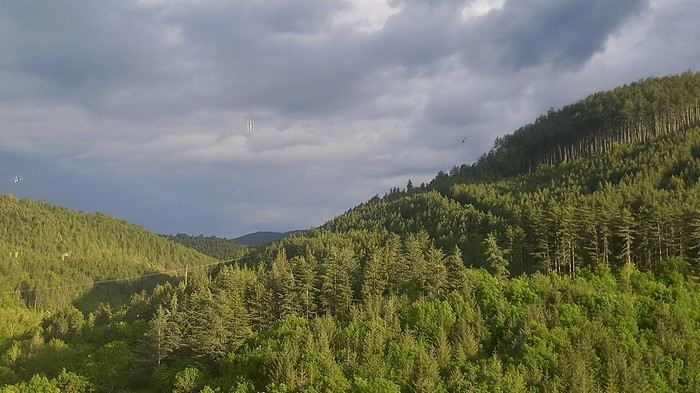
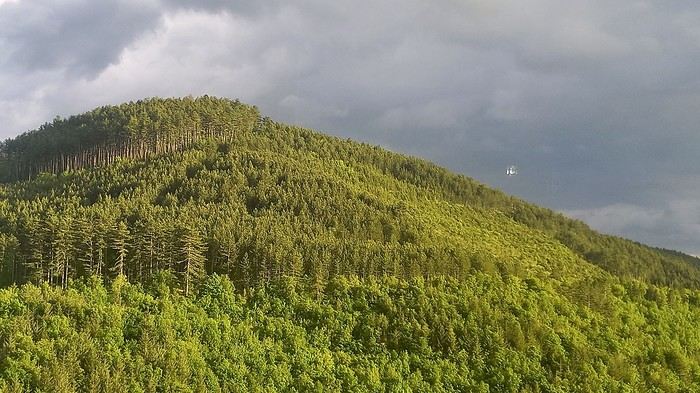
The next morning, we decided to revisit the Parc aux Loups du Gévaudan (Europe’s largest wolf park). As someone used to photo safaris in the wilds of East Africa, I’m not a fan of zoos at all—but I *do* have a deep admiration for wolves!!
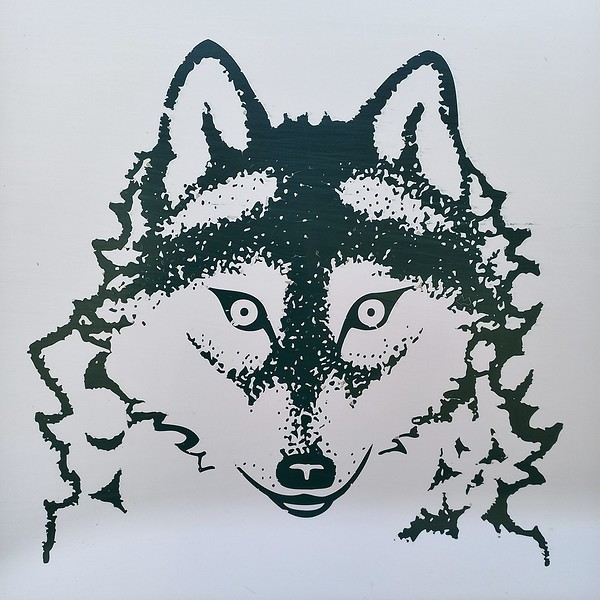
Since it’s pretty unlikely I’ll ever see one in the wild, I’ll settle for this Parc aux Loups in Marvejols. This will be our third visit to this incredible gathering of these fascinating canines.
Some are still finishing their chilly night...
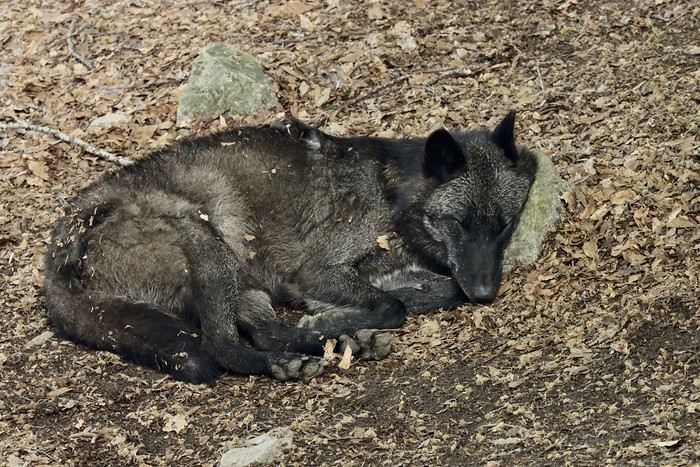
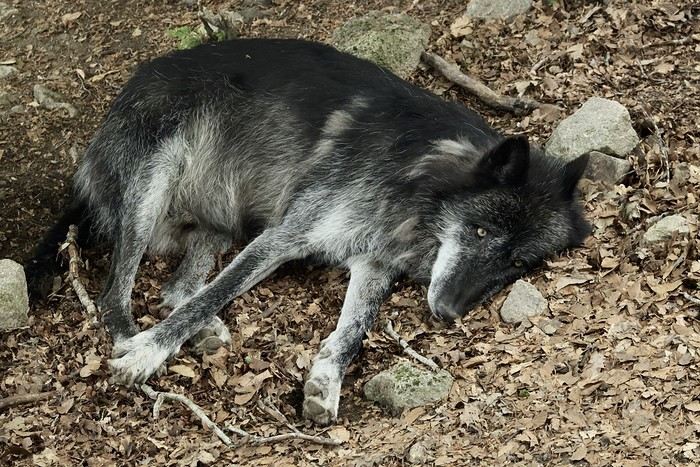
...
After Southern Tanzania, I’m sharing a travel story about the Cantal region with you...
...
For us, at the start of 2025, Le CANTAL was a true “Terra Incognita”!!
After seeing some tempting TV reports, we decided to fill this gap—especially in terms of landscapes. On the same trip, we’ll also head to the Arcachon Basin, the International Seaplane Gathering in Biscarrosse, and my native Landes region...
So, on May 20th, we left Marseille in the rain and thunder, heading toward Nîmes, Saint-Hippolyte, Mont Aigoual, Florac, and stopping in Marvejols to give my arthritic back a break for the night.
The next morning, we decided to revisit the Parc aux Loups du Gévaudan (Europe’s largest wolf park). As someone used to photo safaris in the wilds of East Africa, I’m not a fan of zoos at all—but I *do* have a deep admiration for wolves!!
Since it’s pretty unlikely I’ll ever see one in the wild, I’ll settle for this Parc aux Loups in Marvejols. This will be our third visit to this incredible gathering of these fascinating canines.
Some are still finishing their chilly night...
...
Meghalaya: A Very Rainy Week
Friday, April 18
Night in Guwahati
Before leaving the guesthouse, I drop off a small bag that I’ll pick up when I return.
I take a tuk-tuk at 7:40 AM to get to the sumo departure point for Shillong, the capital of Meghalaya.
My bag is loaded onto the roof, my seat is assigned, and we have to wait for the car to fill up.
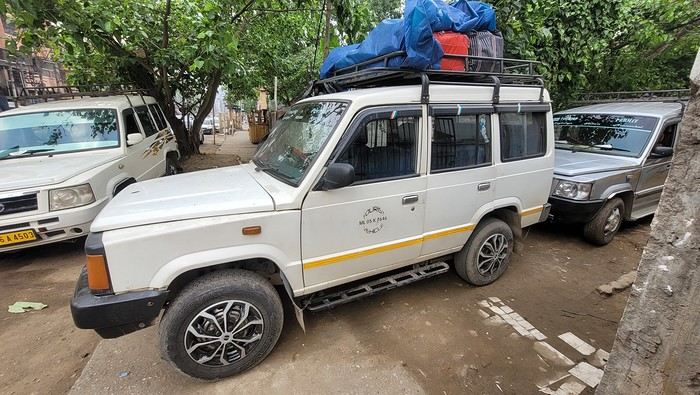
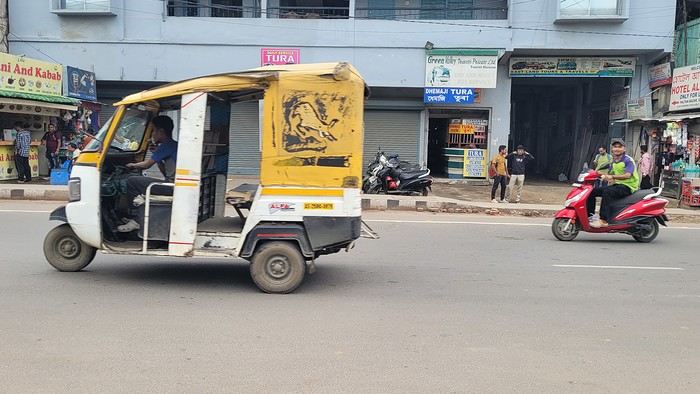
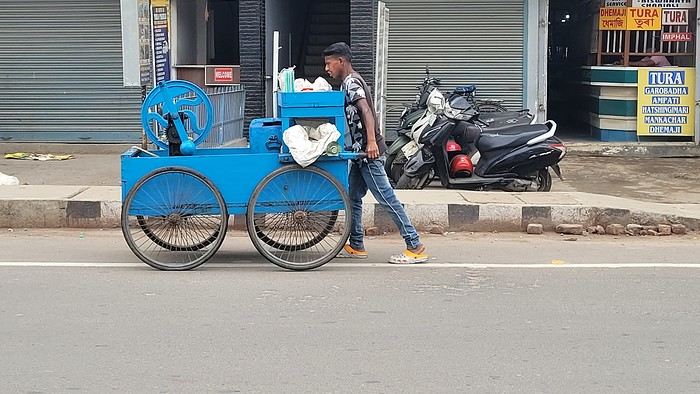
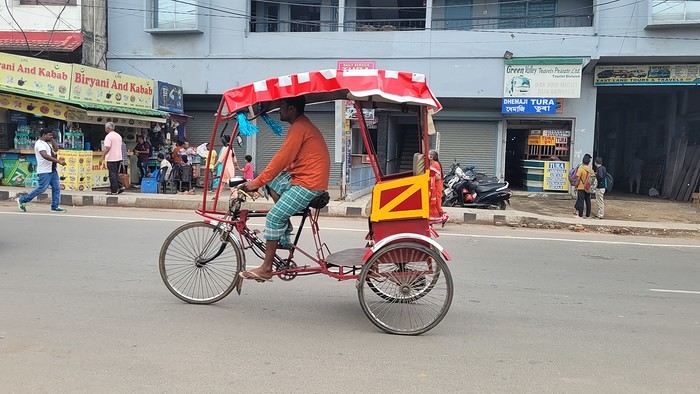
While waiting, I watch the street come to life. I have fun photographing the different modes of transport passing by.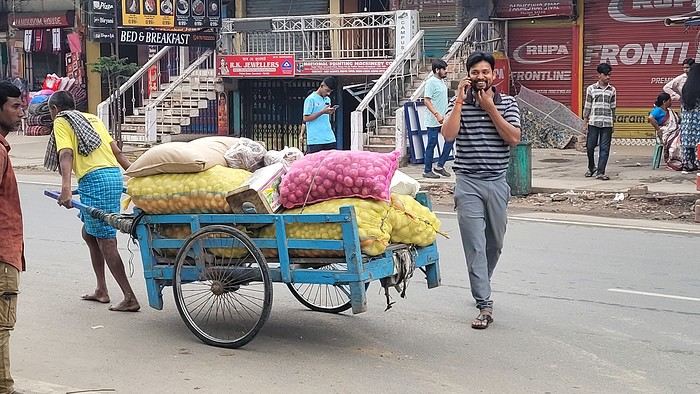
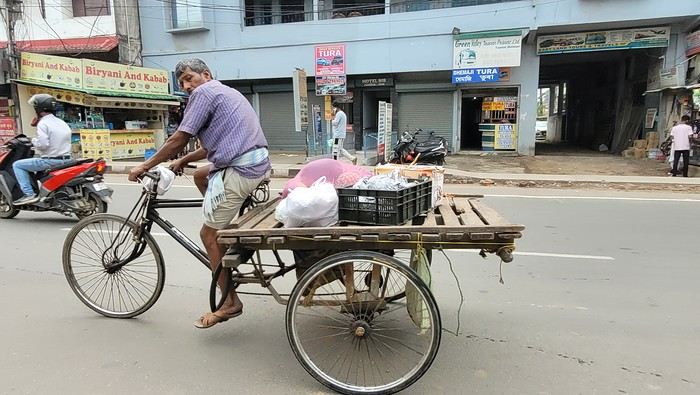
Time passes faster when you’re occupied. We leave at 8:20 AM, and the driver does door-to-door service along the way. We make our first stop for 25 minutes at 9:10 AM, then another for breakfast at 10:10 AM. The scenery is very different from Assam and Nagaland. We drive alongside a pine forest and a large lake. There are beautiful viewpoints, but the driver isn’t stopping for sightseeing, so I have to settle for looking through the car windows.
We finally arrive in Shillong at 11:45 AM. The driver stops in the middle of nowhere, so I have to walk up the street to find a taxi. I flag one down, and he agrees to take me to my new guesthouse, the Rockski Boutique Bed & Breakfast. No sooner do I arrive than a storm with a heavy downpour welcomes me. When I arrived in Guwahati at the end of October, I’d booked a guide with a car for this week. There’s no public transport to get from village to village, so I had to take a car to visit. The tourism manager, Sachin, sent me a message to let me know that the driver, Welbis, will pick me up tomorrow morning at 8 AM. The temperature is much cooler here—only 19°C. At 2:30 PM, the rain stops, and I take the opportunity to explore the city. I start with the cathedral. Today is Good Friday, so I’m going to see how it’s celebrated here. Meghalaya is a Catholic state. The cathedral isn’t far from the guesthouse—it’s huge and all blue.
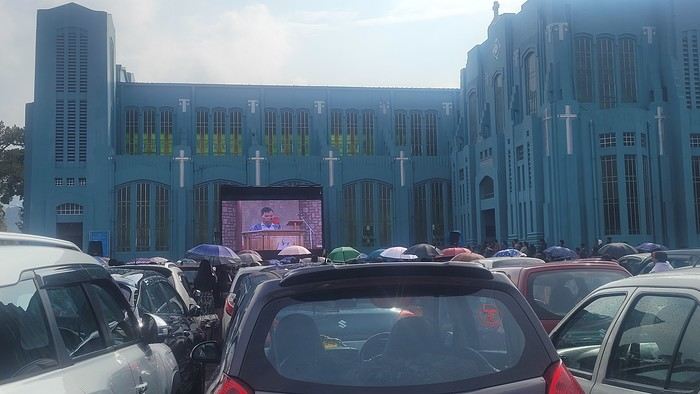
I arrive during mass, and it’s impossible to enter—the faithful are numerous outside in the parking lot. Giant screens broadcast the ceremony.

While waiting, I watch the street come to life. I have fun photographing the different modes of transport passing by.
Time passes faster when you’re occupied. We leave at 8:20 AM, and the driver does door-to-door service along the way. We make our first stop for 25 minutes at 9:10 AM, then another for breakfast at 10:10 AM. The scenery is very different from Assam and Nagaland. We drive alongside a pine forest and a large lake. There are beautiful viewpoints, but the driver isn’t stopping for sightseeing, so I have to settle for looking through the car windows.
We finally arrive in Shillong at 11:45 AM. The driver stops in the middle of nowhere, so I have to walk up the street to find a taxi. I flag one down, and he agrees to take me to my new guesthouse, the Rockski Boutique Bed & Breakfast. No sooner do I arrive than a storm with a heavy downpour welcomes me. When I arrived in Guwahati at the end of October, I’d booked a guide with a car for this week. There’s no public transport to get from village to village, so I had to take a car to visit. The tourism manager, Sachin, sent me a message to let me know that the driver, Welbis, will pick me up tomorrow morning at 8 AM. The temperature is much cooler here—only 19°C. At 2:30 PM, the rain stops, and I take the opportunity to explore the city. I start with the cathedral. Today is Good Friday, so I’m going to see how it’s celebrated here. Meghalaya is a Catholic state. The cathedral isn’t far from the guesthouse—it’s huge and all blue.
I arrive during mass, and it’s impossible to enter—the faithful are numerous outside in the parking lot. Giant screens broadcast the ceremony.
Newfoundland - Hikes in the Avalon Peninsula
The Avalon Peninsula, located in the southeast of Newfoundland Island, isn't just a picturesque place—it's also teeming with natural wonders: icebergs, whales, migratory seabirds, and wild caribou.
It was the first region of the province to be settled. Moreover, it's rich in legends, traditions, and the history of the early adventurers who conquered the New World.
St. John's, the capital, is one of the oldest and easternmost cities in North America. With its colorful houses nestled in the heart of steep rocky hills, it has the traditional charm of a small port town.
Below are the hikes we did in this region. A link is attached to each hike to give you quicker access to the relevant information.
Videos are embedded throughout the summary. Please click on the image to start the video.
Chance Cove Coastal Hiking Trail Cape St. Mary's Ecological Reserve Holyrood - Salmonier Nature Park La Manche Provincial Park - Suspension Bridge Trail Cape Spear - Lighthouse Trail St. John's - Deadman's Bay Trail Quidi Vidi - Sugarloaf Trail St. John's - Signal Hill National Historic Site St. John's - North Head Trail Loop - Signal Hill Salmon Cove - Salmon Cove Sands Provincial Park
It was the first region of the province to be settled. Moreover, it's rich in legends, traditions, and the history of the early adventurers who conquered the New World.
St. John's, the capital, is one of the oldest and easternmost cities in North America. With its colorful houses nestled in the heart of steep rocky hills, it has the traditional charm of a small port town.
Below are the hikes we did in this region. A link is attached to each hike to give you quicker access to the relevant information.
Videos are embedded throughout the summary. Please click on the image to start the video.
Chance Cove Coastal Hiking Trail Cape St. Mary's Ecological Reserve Holyrood - Salmonier Nature Park La Manche Provincial Park - Suspension Bridge Trail Cape Spear - Lighthouse Trail St. John's - Deadman's Bay Trail Quidi Vidi - Sugarloaf Trail St. John's - Signal Hill National Historic Site St. John's - North Head Trail Loop - Signal Hill Salmon Cove - Salmon Cove Sands Provincial Park
Newfoundland - Hikes in the Central Region of the Island
A land of adventure, the central region of Newfoundland is a vast area of dense forests and rugged coastlines.
To the north, between April and June, icebergs from Greenland drift along the famous "Iceberg Alley."
Inland, forests, lakes, and rivers dominate—once precious resources for Indigenous peoples and European settlers.
To the east lies Terra-Nova National Park and its typical habitat, made up of islands, ponds, bogs, and forests.
Finally, the southern coast, dotted with spectacular fjords, is home to several isolated fishing villages as well as the Miawpukek First Nation of Conne River, the province’s only recognized reserve.
Source: https://www.exploretnl.ca/region-centre
Below is a list of the hikes we did in this region. Each hike has a link attached so you can quickly access more information about it.
Videos are embedded throughout the summary. Click on the image to start the video.
King's Point - Alexander Murray Trail Grand Falls-Windsor - Thunder Brook Falls Trail King's Point - Rattling Brook Falls Trail Harbour Breton - Gun Hill Lookout Trail Harbour Breton - Deadman's Cove Trail Harbour Breton - Rocky Point Lighthouse Trail Harbour Breton Community Dildo Run Provincial Park - Black Head Trail Twillingate - Lower Little Harbour Trail Twillingate - Rockcut Twillingate Trails Twillingate - Lower Head Loop Trail Twillingate - Cuckhold's Point Trail Twillingate - Top of Twillingate Trail Terra-Nova National Park - Mill Cove Lookout Trail Eastport - Sandy Cove Lookout Trail
To the north, between April and June, icebergs from Greenland drift along the famous "Iceberg Alley."
Inland, forests, lakes, and rivers dominate—once precious resources for Indigenous peoples and European settlers.
To the east lies Terra-Nova National Park and its typical habitat, made up of islands, ponds, bogs, and forests.
Finally, the southern coast, dotted with spectacular fjords, is home to several isolated fishing villages as well as the Miawpukek First Nation of Conne River, the province’s only recognized reserve.
Source: https://www.exploretnl.ca/region-centre
Below is a list of the hikes we did in this region. Each hike has a link attached so you can quickly access more information about it.
Videos are embedded throughout the summary. Click on the image to start the video.
King's Point - Alexander Murray Trail Grand Falls-Windsor - Thunder Brook Falls Trail King's Point - Rattling Brook Falls Trail Harbour Breton - Gun Hill Lookout Trail Harbour Breton - Deadman's Cove Trail Harbour Breton - Rocky Point Lighthouse Trail Harbour Breton Community Dildo Run Provincial Park - Black Head Trail Twillingate - Lower Little Harbour Trail Twillingate - Rockcut Twillingate Trails Twillingate - Lower Head Loop Trail Twillingate - Cuckhold's Point Trail Twillingate - Top of Twillingate Trail Terra-Nova National Park - Mill Cove Lookout Trail Eastport - Sandy Cove Lookout Trail
Newfoundland: Hikes in Gros Morne National Park
INTRODUCTION
Creating a masterpiece like Gros Morne National Park wasn’t done overnight. So, when you first discover this extraordinary place, it’s easy to understand why Mother Nature took over 485 million years to bring it to life.
Here, glacial valleys, forests, rugged coastline, beaches, and peat bogs follow one another and intertwine to form a unique ecosystem, one that’s rare in the world. After all, this is where geologists found tangible evidence of the theory of continental drift, and it’s one of the few places on Earth where you can see—and even walk on—the Earth’s mantle. This site is a true celebration of the raw, enigmatic power and beauty of the physical world.
Designated a national park in 1973 and later a UNESCO World Heritage Site in 1987, it’s an 1,805 km² playground just waiting for the adventurer in you. Whether you’re traveling solo, with family, or with friends, for a few days or several weeks, you won’t run out of things to do here.
Source: https://www.exploretnl.ca/parc-national-gros-morne
The hikes we did in this region are listed below. Each hike has a link so you can quickly access more information about it.
Videos are embedded throughout the summary. Click on the image to start the video.
Stanleyville Trail Trout River Pond Trail Trout River Pond Trail (Return) Green Gardens Trail Tablelands Trail Scenic Route 431 Lookout Hills Trail Southeast Brook Falls Trail Gros Morne Mountain Trail (James Callaghan Trail) Berry Hill Trail Baker's Brook Falls Trail Berry Hill Pond Trail Western Brook Pond Trail Boat Tour on Western Brook Pond Steve’s Trail Shallow Bay Beach
Creating a masterpiece like Gros Morne National Park wasn’t done overnight. So, when you first discover this extraordinary place, it’s easy to understand why Mother Nature took over 485 million years to bring it to life.
Here, glacial valleys, forests, rugged coastline, beaches, and peat bogs follow one another and intertwine to form a unique ecosystem, one that’s rare in the world. After all, this is where geologists found tangible evidence of the theory of continental drift, and it’s one of the few places on Earth where you can see—and even walk on—the Earth’s mantle. This site is a true celebration of the raw, enigmatic power and beauty of the physical world.
Designated a national park in 1973 and later a UNESCO World Heritage Site in 1987, it’s an 1,805 km² playground just waiting for the adventurer in you. Whether you’re traveling solo, with family, or with friends, for a few days or several weeks, you won’t run out of things to do here.
Source: https://www.exploretnl.ca/parc-national-gros-morne
The hikes we did in this region are listed below. Each hike has a link so you can quickly access more information about it.
Videos are embedded throughout the summary. Click on the image to start the video.
Stanleyville Trail Trout River Pond Trail Trout River Pond Trail (Return) Green Gardens Trail Tablelands Trail Scenic Route 431 Lookout Hills Trail Southeast Brook Falls Trail Gros Morne Mountain Trail (James Callaghan Trail) Berry Hill Trail Baker's Brook Falls Trail Berry Hill Pond Trail Western Brook Pond Trail Boat Tour on Western Brook Pond Steve’s Trail Shallow Bay Beach
Newfoundland - Hikes in the Western Part of the Island
INTRODUCTION
Trip taken in 2021, but still relevant for exploring the island of Newfoundland.
We went on multiple hikes in this Canadian province, which offers a unique and breathtaking landscape.
GPS coordinates: 46.20884, -60.24498 Marine Atlantic Ferry
To do this, we traveled to North Sydney, Nova Scotia, to board a Marine Atlantic ferry that took us to Port aux Basques in Newfoundland. The crossing takes about 7 hours.
The ferry *Highlanders* features spacious cabins for two or four people, a restaurant, a retail store, and a play area for kids.
The reclining seats are comfortable and include a headphone jack and a USB charging port.
We went out on the open-air panoramic observation deck several times to admire the Atlantic Ocean, hoping to spot some marine wildlife. Unfortunately, we didn’t see any.
This short video gives you an overview of the facilities. For more details, I invite you to check out Marine Atlantic’s website at the following address: https://www.marineatlantique.ca/.
https://youtu.be/oV9_7AcJnEQ
Trip taken in 2021, but still relevant for exploring the island of Newfoundland.
We went on multiple hikes in this Canadian province, which offers a unique and breathtaking landscape.
GPS coordinates: 46.20884, -60.24498 Marine Atlantic Ferry
To do this, we traveled to North Sydney, Nova Scotia, to board a Marine Atlantic ferry that took us to Port aux Basques in Newfoundland. The crossing takes about 7 hours.
The ferry *Highlanders* features spacious cabins for two or four people, a restaurant, a retail store, and a play area for kids.
The reclining seats are comfortable and include a headphone jack and a USB charging port.
We went out on the open-air panoramic observation deck several times to admire the Atlantic Ocean, hoping to spot some marine wildlife. Unfortunately, we didn’t see any.
This short video gives you an overview of the facilities. For more details, I invite you to check out Marine Atlantic’s website at the following address: https://www.marineatlantique.ca/.
https://youtu.be/oV9_7AcJnEQ
Albania in Autumn Colors
A new work assignment means our vacation dates can't stay the same.
We had planned to go to the Canary Islands, but flight prices are skyrocketing with this new holiday schedule.
So, I’m looking for an alternative to Gran Canaria and El Hierro and found two round-trip flights with Wizz Air to Tirana.
398 €, including baggage and seats—perfect!
Plus, the departure and return times are great, which is pretty rare for a low-cost flight!
All that’s left is to rent a car, plan the route, and book accommodations.
With two weeks, we’ll have to make some choices!
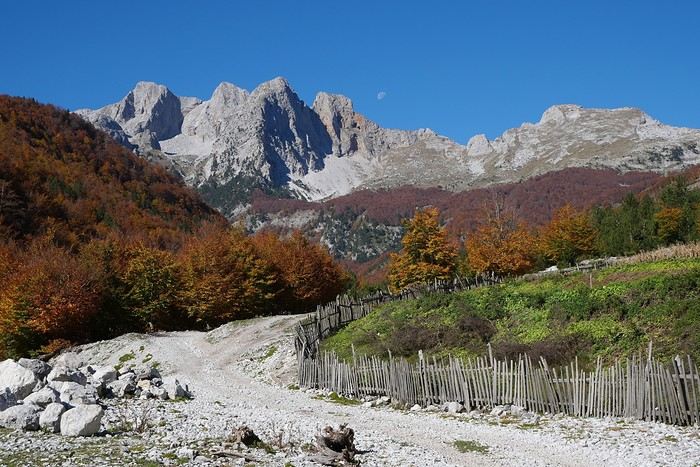
Here’s the final itinerary: Shkodra (2 nights), Valbonë (3 nights), Tirana (1 night), Lake Ohrid (1 night), Korçë (1 night), Përmet (1 night), Gjirokastër (1 night), Himarë (2 nights), Berat (2 nights), and Krujë (1 night).
A mix of countryside and small towns, a bit of the Mediterranean, and some mountains!
Late October isn’t the best season, so let’s keep our fingers crossed for the rest...
We had planned to go to the Canary Islands, but flight prices are skyrocketing with this new holiday schedule.
So, I’m looking for an alternative to Gran Canaria and El Hierro and found two round-trip flights with Wizz Air to Tirana.
398 €, including baggage and seats—perfect!
Plus, the departure and return times are great, which is pretty rare for a low-cost flight!
All that’s left is to rent a car, plan the route, and book accommodations.
With two weeks, we’ll have to make some choices!
Here’s the final itinerary: Shkodra (2 nights), Valbonë (3 nights), Tirana (1 night), Lake Ohrid (1 night), Korçë (1 night), Përmet (1 night), Gjirokastër (1 night), Himarë (2 nights), Berat (2 nights), and Krujë (1 night).
A mix of countryside and small towns, a bit of the Mediterranean, and some mountains!
Late October isn’t the best season, so let’s keep our fingers crossed for the rest...
Renting an off-road SUV or AWD Jeep in Salt Lake City
Hi there,
I’m looking to find a company at Salt Lake City airport that rents vehicles for gravel roads: Burr Trail, Cottonwood Canyon, etc.
Thanks
4x4 Expeditions in Southern Africa
Hi there,
Here’s a quick summary of six trips across Southern Africa, covering South Africa, Namibia, Botswana, Zimbabwe, and more. I traveled for a total of 23 months, over 100,000 km, and crossed 9 countries from South Africa to Tanzania. To do this, I bought an old Land Cruiser—a 1989 BJ 75 with a long chassis and a 3.4L turbo engine—which I converted into a bush camper set up for self-sufficiency in Africa: dual fuel tanks (235 L total) plus 2 x 20-liter jerry cans of diesel, 2 spare tires, a compressor, a toolbox with repair gear, a 50-liter water tank plus 2 x 30-liter and 2 x 10-liter jerry cans, a roof tent, multiple storage boxes, a sturdy roof rack, and even a paramotor. I also packed a first-aid kit and shipped the camper to South Africa by freight. My son joined me for part of the journey.
Key countries and highlights: South Africa in every direction, including its wildlife parks; in Namibia, the classics like Etosha, Fish River, Sossusvlei, Kaudum, but especially Damaraland and Kaokoland; in Botswana, a full loop of the Okavango, crossing the Makgadikgadi Pan, Moremi Park, the Linyanti River; and a tour of Zimbabwe with its national parks. During the last trip in 2020, due to COVID, we found refuge on a 250 km² Namibian farm with its own wildlife reserve. While crossing Damaraland and Kaokoland, we were completely self-sufficient, with supplies for over a month and 130 L of water.
In South Africa and Namibia, one issue that surprised us was the fences stretching for millions of kilometers along the tracks. Namibia is one and a half times the size of France but has a population of only about 2.5 million, mostly concentrated in a dozen small towns of 10,000 to 50,000 people—except for the capital, Windhoek (296,000). Paradoxically, compared to France, the space for freedom is extremely limited. Everything is private and requires payment. Even the Namib Desert is fenced... and you need a permit just to pick up a rock! For someone used to wild camping, it can get frustrating. Sometimes we ignored the rules, but the best solution is to ask a farmer (a real one, like a sheep or cattle rancher—not the ones with 3-meter electrified fences, which are lodges or private reserves) if you can camp on their land.
To truly enjoy freedom in Namibia, you need to venture into the northwest, along the Skeleton Coast, in Damaraland and Kaokoland. However, it’s essential to know your vehicle inside out, be a good mechanic, bring spare parts, and plan for potential breakdowns. Take care of your ride because a major issue out there can be a matter of survival. My motto: "Don’t break down, don’t break down, don’t break down..." Safari pros only venture into this region with two 4x4s. In Messum Crater, we met a couple waiting for rescue (thanks to a satellite device from their rental company) after their driveshaft broke. Keep in mind that in these areas, you’ll cover about 80 km in 8 hours.
Here are some of the issues we faced: a broken rear suspension leaf, several broken bolts on the front leaf springs, the spare tire mount breaking multiple times (replaced on the spot), a cracked water radiator in 1998 causing overheating and a seized valve stem in its guide, plus a bent rocker arm (field repair, valve adjustment, damaged head gasket, daily radiator refills, and a scratched cylinder—engine fully rebuilt upon return). Five roof rack mounts broke and were repaired at a technical high school in South Africa. The battery mount also broke (fixed with a steel plate found on the trail). The fuel filter clogged several times (changed or cleaned on the spot). A huge impact on the windshield from a piece of coal falling from a power plant supply truck (temporary repair with Araldite). The brake master cylinder failed in Marienfluss (repaired, seals replaced in Tsumeb). Multiple flat tires from acacia thorns. The rear door latch broke (homemade aluminum rod repair in Franschhoek). The voltmeter and ammeter failed (repaired on the spot). During the freight trip, despite locking the doors and having a partition between the front and back, someone managed to get in through the small side window, forced open the locks on two accessible storage boxes, and stole my tools (replaced later). A ball joint on the paramotor frame came loose mid-flight, damaging the wing and propeller (propeller shipped from France, homemade repair).
Health issues on the way to Tanzania: a painful sciatica and many sleepless nights (cortisone injection in Dodoma).
Kaokoland, Namibia—the northwest region: https://youtu.be/DzGepFsrnZs
Damaraland: https://youtu.be/DITQj8NvLZ4
Botswana: https://youtu.be/TEvDG0S62hg
Kaudom and Mohembo Parks: https://youtu.be/wq_Yf7jNLhw
Here’s a quick summary of six trips across Southern Africa, covering South Africa, Namibia, Botswana, Zimbabwe, and more. I traveled for a total of 23 months, over 100,000 km, and crossed 9 countries from South Africa to Tanzania. To do this, I bought an old Land Cruiser—a 1989 BJ 75 with a long chassis and a 3.4L turbo engine—which I converted into a bush camper set up for self-sufficiency in Africa: dual fuel tanks (235 L total) plus 2 x 20-liter jerry cans of diesel, 2 spare tires, a compressor, a toolbox with repair gear, a 50-liter water tank plus 2 x 30-liter and 2 x 10-liter jerry cans, a roof tent, multiple storage boxes, a sturdy roof rack, and even a paramotor. I also packed a first-aid kit and shipped the camper to South Africa by freight. My son joined me for part of the journey.
Key countries and highlights: South Africa in every direction, including its wildlife parks; in Namibia, the classics like Etosha, Fish River, Sossusvlei, Kaudum, but especially Damaraland and Kaokoland; in Botswana, a full loop of the Okavango, crossing the Makgadikgadi Pan, Moremi Park, the Linyanti River; and a tour of Zimbabwe with its national parks. During the last trip in 2020, due to COVID, we found refuge on a 250 km² Namibian farm with its own wildlife reserve. While crossing Damaraland and Kaokoland, we were completely self-sufficient, with supplies for over a month and 130 L of water.
In South Africa and Namibia, one issue that surprised us was the fences stretching for millions of kilometers along the tracks. Namibia is one and a half times the size of France but has a population of only about 2.5 million, mostly concentrated in a dozen small towns of 10,000 to 50,000 people—except for the capital, Windhoek (296,000). Paradoxically, compared to France, the space for freedom is extremely limited. Everything is private and requires payment. Even the Namib Desert is fenced... and you need a permit just to pick up a rock! For someone used to wild camping, it can get frustrating. Sometimes we ignored the rules, but the best solution is to ask a farmer (a real one, like a sheep or cattle rancher—not the ones with 3-meter electrified fences, which are lodges or private reserves) if you can camp on their land.
To truly enjoy freedom in Namibia, you need to venture into the northwest, along the Skeleton Coast, in Damaraland and Kaokoland. However, it’s essential to know your vehicle inside out, be a good mechanic, bring spare parts, and plan for potential breakdowns. Take care of your ride because a major issue out there can be a matter of survival. My motto: "Don’t break down, don’t break down, don’t break down..." Safari pros only venture into this region with two 4x4s. In Messum Crater, we met a couple waiting for rescue (thanks to a satellite device from their rental company) after their driveshaft broke. Keep in mind that in these areas, you’ll cover about 80 km in 8 hours.
Here are some of the issues we faced: a broken rear suspension leaf, several broken bolts on the front leaf springs, the spare tire mount breaking multiple times (replaced on the spot), a cracked water radiator in 1998 causing overheating and a seized valve stem in its guide, plus a bent rocker arm (field repair, valve adjustment, damaged head gasket, daily radiator refills, and a scratched cylinder—engine fully rebuilt upon return). Five roof rack mounts broke and were repaired at a technical high school in South Africa. The battery mount also broke (fixed with a steel plate found on the trail). The fuel filter clogged several times (changed or cleaned on the spot). A huge impact on the windshield from a piece of coal falling from a power plant supply truck (temporary repair with Araldite). The brake master cylinder failed in Marienfluss (repaired, seals replaced in Tsumeb). Multiple flat tires from acacia thorns. The rear door latch broke (homemade aluminum rod repair in Franschhoek). The voltmeter and ammeter failed (repaired on the spot). During the freight trip, despite locking the doors and having a partition between the front and back, someone managed to get in through the small side window, forced open the locks on two accessible storage boxes, and stole my tools (replaced later). A ball joint on the paramotor frame came loose mid-flight, damaging the wing and propeller (propeller shipped from France, homemade repair).
Health issues on the way to Tanzania: a painful sciatica and many sleepless nights (cortisone injection in Dodoma).
Kaokoland, Namibia—the northwest region: https://youtu.be/DzGepFsrnZs
Damaraland: https://youtu.be/DITQj8NvLZ4
Botswana: https://youtu.be/TEvDG0S62hg
Kaudom and Mohembo Parks: https://youtu.be/wq_Yf7jNLhw
How surprising this Sultanate of Oman is
Hey fellow travelers,
We’re a couple in our fifties who’ve been traveling independently for ages—mostly in Asia, a bit in Africa, very little in the Americas, and never ever in West Asia until November 2023, when we discovered the Sultanate of Oman.
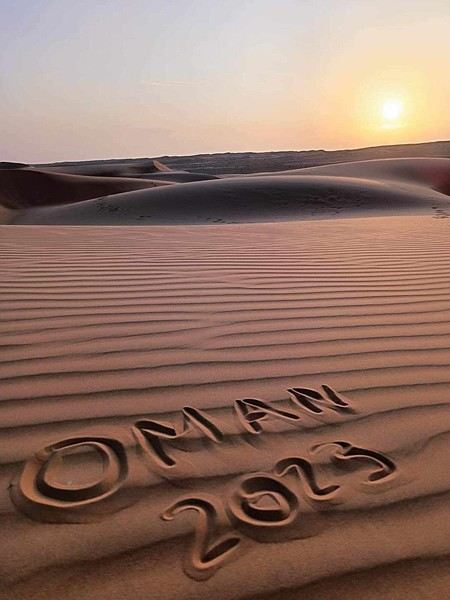
If we waited so long to explore this part of the world, it’s because a few questions were nagging at us, like: Can two Landais party lovers like us survive 15 days without apéro 😄? Or, more seriously: Can a feminist like me enjoy traveling in such a conservative country?
That is the question (and I feel your pain with this unbearable suspense 😅).
Ready to dive in?
PS: Apologies in advance for the casual tone of this travel journal—it’s the one I shared with our loved ones in real time, which explains everything.
We’re a couple in our fifties who’ve been traveling independently for ages—mostly in Asia, a bit in Africa, very little in the Americas, and never ever in West Asia until November 2023, when we discovered the Sultanate of Oman.
If we waited so long to explore this part of the world, it’s because a few questions were nagging at us, like: Can two Landais party lovers like us survive 15 days without apéro 😄? Or, more seriously: Can a feminist like me enjoy traveling in such a conservative country?
That is the question (and I feel your pain with this unbearable suspense 😅).
Ready to dive in?
PS: Apologies in advance for the casual tone of this travel journal—it’s the one I shared with our loved ones in real time, which explains everything.
To the Top West End
In this time of general travel-journal scarcity, I’m stepping up to tell you about a far-too-short getaway to the Top West End, a local term for the very northern part of Western Australia, right on the border ( ;) ) with the Northern Territory.
As usual, I didn’t manage to keep it short, but this time I’ve got photos to go with it!
August 2020. Since the opportunities to explore the world are extremely limited right now, all we (R&X) can do is explore our own island! Well, just a part of it, because with the state borders still closed, we’re stuck in Western Australia (WA).
Luckily, we’re pretty fortunate because this state is huge: over 2.5 million km² (that’s more than four times the size of France or 1.5 times Quebec). What’s more, stretching over 20 degrees of latitude between the Antarctic Ocean and the Timor Sea, you’ll find climates ranging from Mediterranean to arid to tropical. That’s actually why we decided to head as far north as possible. Sick of the endless rainy winter in Perth, bring on the heat of the Kimberley... way up Nooorth!
Friday. At the airport, the main terminal was closed (not enough flights), so we ended up in the annex (where flights to the various mines usually depart from). There was no crowd at the gate, and in this huge, single departure lounge, empty seats were plentiful. Only three flights were listed on the screens for the rest of the morning: the first to Coondewanna (?), the second to Darwin, and ours to Kununurra (code KNX).
A cool breeze swept through the half-open corridors along the runways. At the top of the walkway leading to the Fokker 100 (the Airbuses and Boeings are now parked!), a flight attendant greeted us with a basket full of sanitary masks. We were actually the only masked passengers (the staff weren’t wearing them either). With zero Covid-19 cases in WA at the time, the only rule was to maintain social distancing—something pretty hard to do on a full plane!
It was also my first time wearing a mask—it felt weird, pretty uncomfortable, and after a while, painful behind the ears. I really feel for those who have to wear one all day, every day. The flight lasted three long hours, but luckily, I had a good book. From the window, I watched an endless expanse of salt lakes in all shapes and sizes—round, elongated, gray, white, sometimes blue and green—and an infinity of winding, capricious meanders, along with long straight lines that led nowhere. The last half-hour got more interesting as rocky, swollen formations and long, sloping plateaus appeared. Against the vast ochre landscape, green patches became more frequent.
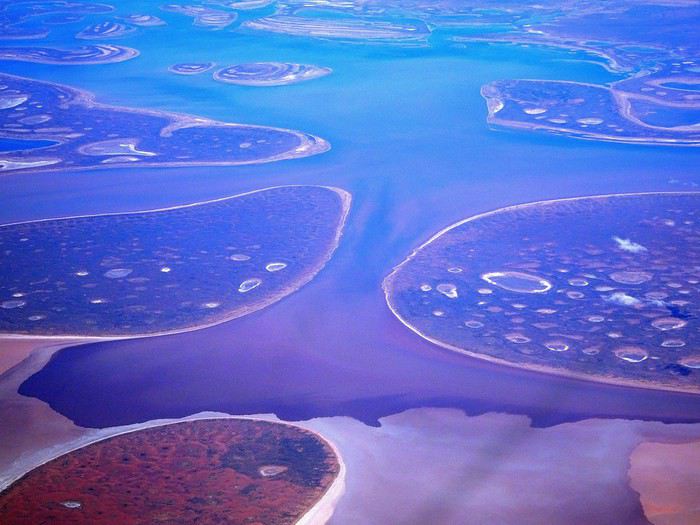
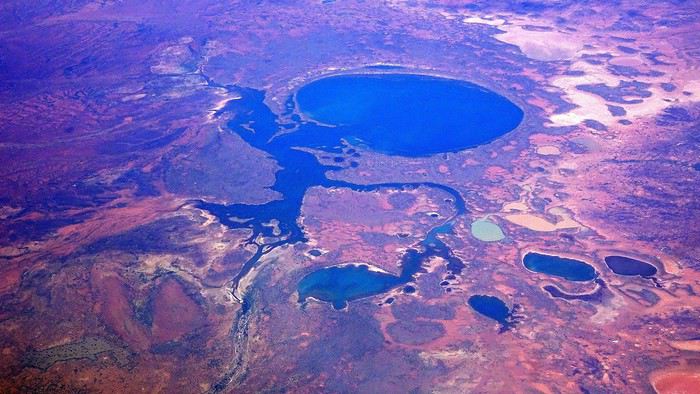
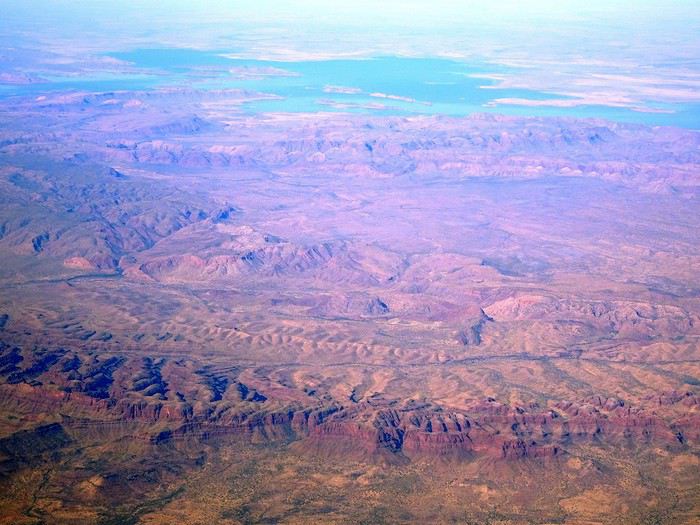
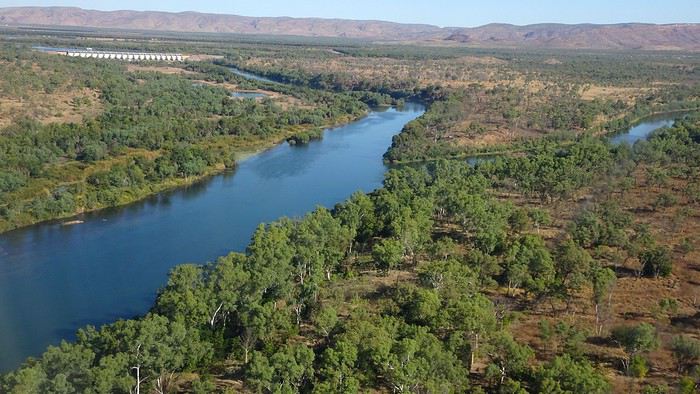
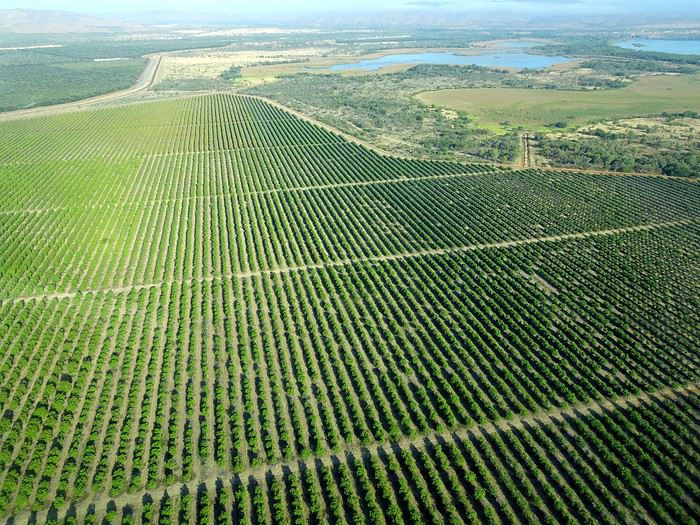
Just before landing, rows of green fields briefly appeared, along with an surprisingly wide river—but we were already rolling down the tarmac. A few hangars, a myriad of small, stationary planes, and a tiny terminal topped with a sign: “Welcome to Kununurra.”
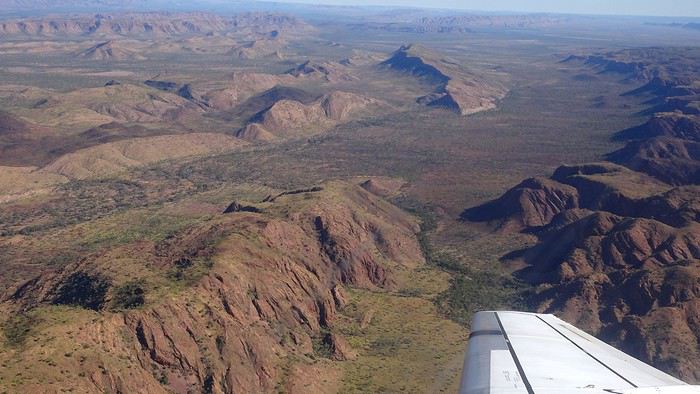
We wanted heat, and here it was—34°C the moment we stepped off the plane! We felt alive again and totally ridiculous in our jeans and sweaters. We quickly grabbed our suitcase and picked up the 4x4 we’d rented—more out of necessity, since only that type of vehicle can access the national parks we planned to visit.
Just four kilometers separated us from Kununurra, a town of 5,000 people founded in 1961 during the construction of the Lake Argyle Dam and the development of the Ord River Irrigation Area Scheme (more on that later). On the horizon, mountain ranges (a bit of an exaggeration, since we know Mt. Meharry, WA’s highest ‘mountain,’ doesn’t even reach 1,250 meters!) and closer to the road, a few irrigation canals cutting through stretches of bush, then a huge park overlooking a small lake lined with reeds.
A row of baobabs (yes, there are baobabs in Australia too!), a series of motels with immaculate lawns, a gas station, and there’s the main street leading to the town center—that is, the parking lots of the two supermarkets, the bottleshop, the pub, the Town Hall, the municipal pool, and the Tourist Office (already closed!), and at the next roundabout, another park, the Presbyterian church, and a few other shops. In short, two or three green blocks that you can explore in no time.
One road leads to the small industrial area and one of the town’s three or four campgrounds, while another heads toward the residential neighborhoods, which look just like the typical suburbs you find in any Australian city—except with tropical vegetation. We stocked up at Coles, an identical copy of the one near our place, and—surprise—the prices were practically the same.
We checked into one of the motels. The receptionist listed the town’s three or four restaurants, insisting that it’s always better to book a table. She recommended the Pump House, a bit outside town on the lake’s edge. “Best spot to watch the sunset, but hurry up.” she told us. It was only 5:00 PM!
When we got there half an hour later, the place was packed, and the sun had already disappeared behind a row of trees! Sure enough, we’d see a few days later that the sunset can be a stunning spectacle—if you wait a bit for the sky (especially if it’s cloudy) to blaze and reflect in the lake’s calm waters. A little disappointed, we headed back into town, where we easily found the other lively spot in town: the pub (nothing like an old English pub). Above the long L-shaped bar, several giant screens (thankfully muted) were broadcasting live footy, rugby league, etc. In one corner, players circled the pool table, while in another, customers were digging into plates of the day’s special. Instead of rooms, there were various patios where groups of friends and coworkers (easily recognizable by the fluoro vests they were still wearing) were gathered. We found a table under a mango tree—unfortunately, a little too close to the guitarist strumming his entire Country Music repertoire, complete with Keith Urban-style tremolos. Guaranteed culture shock!
Since it’s the custom here, we called the Country Club to book a table before the kitchen closed! The CC is the town’s—and even the region’s—fancy spot. Dark decor, modern furniture, dim lighting, and the air conditioning blasting. The twenty or so customers had taken refuge on the vast terrace, lit by torches. The view of the tall eucalyptus trees, illuminated by spotlights shifting from red to blue, was breathtaking.
The menu was minimal, but the grilled salmon was excellent, and the Pavlova (the meringue dessert Kiwis and Aussies have been arguing over since 1906) with melon and watermelon was absolutely divine.
It wasn’t even 9:00 PM, and we were already in bed. Had we already adopted the Top West End’s chicken schedule?!
To be continued... Journal dedicated to Attila
As usual, I didn’t manage to keep it short, but this time I’ve got photos to go with it!
August 2020. Since the opportunities to explore the world are extremely limited right now, all we (R&X) can do is explore our own island! Well, just a part of it, because with the state borders still closed, we’re stuck in Western Australia (WA).
Luckily, we’re pretty fortunate because this state is huge: over 2.5 million km² (that’s more than four times the size of France or 1.5 times Quebec). What’s more, stretching over 20 degrees of latitude between the Antarctic Ocean and the Timor Sea, you’ll find climates ranging from Mediterranean to arid to tropical. That’s actually why we decided to head as far north as possible. Sick of the endless rainy winter in Perth, bring on the heat of the Kimberley... way up Nooorth!
Friday. At the airport, the main terminal was closed (not enough flights), so we ended up in the annex (where flights to the various mines usually depart from). There was no crowd at the gate, and in this huge, single departure lounge, empty seats were plentiful. Only three flights were listed on the screens for the rest of the morning: the first to Coondewanna (?), the second to Darwin, and ours to Kununurra (code KNX).
A cool breeze swept through the half-open corridors along the runways. At the top of the walkway leading to the Fokker 100 (the Airbuses and Boeings are now parked!), a flight attendant greeted us with a basket full of sanitary masks. We were actually the only masked passengers (the staff weren’t wearing them either). With zero Covid-19 cases in WA at the time, the only rule was to maintain social distancing—something pretty hard to do on a full plane!
It was also my first time wearing a mask—it felt weird, pretty uncomfortable, and after a while, painful behind the ears. I really feel for those who have to wear one all day, every day. The flight lasted three long hours, but luckily, I had a good book. From the window, I watched an endless expanse of salt lakes in all shapes and sizes—round, elongated, gray, white, sometimes blue and green—and an infinity of winding, capricious meanders, along with long straight lines that led nowhere. The last half-hour got more interesting as rocky, swollen formations and long, sloping plateaus appeared. Against the vast ochre landscape, green patches became more frequent.
Just before landing, rows of green fields briefly appeared, along with an surprisingly wide river—but we were already rolling down the tarmac. A few hangars, a myriad of small, stationary planes, and a tiny terminal topped with a sign: “Welcome to Kununurra.”
We wanted heat, and here it was—34°C the moment we stepped off the plane! We felt alive again and totally ridiculous in our jeans and sweaters. We quickly grabbed our suitcase and picked up the 4x4 we’d rented—more out of necessity, since only that type of vehicle can access the national parks we planned to visit.
Just four kilometers separated us from Kununurra, a town of 5,000 people founded in 1961 during the construction of the Lake Argyle Dam and the development of the Ord River Irrigation Area Scheme (more on that later). On the horizon, mountain ranges (a bit of an exaggeration, since we know Mt. Meharry, WA’s highest ‘mountain,’ doesn’t even reach 1,250 meters!) and closer to the road, a few irrigation canals cutting through stretches of bush, then a huge park overlooking a small lake lined with reeds.
A row of baobabs (yes, there are baobabs in Australia too!), a series of motels with immaculate lawns, a gas station, and there’s the main street leading to the town center—that is, the parking lots of the two supermarkets, the bottleshop, the pub, the Town Hall, the municipal pool, and the Tourist Office (already closed!), and at the next roundabout, another park, the Presbyterian church, and a few other shops. In short, two or three green blocks that you can explore in no time.
One road leads to the small industrial area and one of the town’s three or four campgrounds, while another heads toward the residential neighborhoods, which look just like the typical suburbs you find in any Australian city—except with tropical vegetation. We stocked up at Coles, an identical copy of the one near our place, and—surprise—the prices were practically the same.
We checked into one of the motels. The receptionist listed the town’s three or four restaurants, insisting that it’s always better to book a table. She recommended the Pump House, a bit outside town on the lake’s edge. “Best spot to watch the sunset, but hurry up.” she told us. It was only 5:00 PM!
When we got there half an hour later, the place was packed, and the sun had already disappeared behind a row of trees! Sure enough, we’d see a few days later that the sunset can be a stunning spectacle—if you wait a bit for the sky (especially if it’s cloudy) to blaze and reflect in the lake’s calm waters. A little disappointed, we headed back into town, where we easily found the other lively spot in town: the pub (nothing like an old English pub). Above the long L-shaped bar, several giant screens (thankfully muted) were broadcasting live footy, rugby league, etc. In one corner, players circled the pool table, while in another, customers were digging into plates of the day’s special. Instead of rooms, there were various patios where groups of friends and coworkers (easily recognizable by the fluoro vests they were still wearing) were gathered. We found a table under a mango tree—unfortunately, a little too close to the guitarist strumming his entire Country Music repertoire, complete with Keith Urban-style tremolos. Guaranteed culture shock!
Since it’s the custom here, we called the Country Club to book a table before the kitchen closed! The CC is the town’s—and even the region’s—fancy spot. Dark decor, modern furniture, dim lighting, and the air conditioning blasting. The twenty or so customers had taken refuge on the vast terrace, lit by torches. The view of the tall eucalyptus trees, illuminated by spotlights shifting from red to blue, was breathtaking.
The menu was minimal, but the grilled salmon was excellent, and the Pavlova (the meringue dessert Kiwis and Aussies have been arguing over since 1906) with melon and watermelon was absolutely divine.
It wasn’t even 9:00 PM, and we were already in bed. Had we already adopted the Top West End’s chicken schedule?!
To be continued... Journal dedicated to Attila
La symphonie du nouveau monde English translation pending
2 septembre 2095
Dans trois semaines, j’ai 85 ans. Ca va passer vite. Ce matin ma hanche me fait souffrir. Le médecin que j’ai eu en téléconsultation m’a dit qu’une intervention ne serait pas intéressante pour moi compte tenu du contexte. J’ai vu le Bourdon de la Santé Sociale se poser sur le perron d’Adrien. Depuis quelques jours ceux de la Brigade Géronte volaient en rase motte. Je vais ouvrir les volets, aérer la maison, boire mon verre d’eau et saluer Adrien, lui souhaiter bon voyage éternel.
Depuis les années 2040 les établissements pour personnes âgées et dépendantes n’existent plus et les vieillards restent chez eux jusqu’au bout de leur vie autorisée.
La grande guerre sanitaire de 2020 à 2024 a profondément modifié l’existence et, avec les changements climatiques , les forêts desséchées et les campagnes désertiques se sont multipliées. Les gouverneurs des cinq continents, l’Afrique, l’Asie, l’Europe, l’Amérique et l’Océanie ont édicté la LMN (loi du monde nouveau) et chaque habitant sur la planète s’est adapté à cette nouvelle donne. Les voyages d’agrément et d’affaires n’existent plus depuis longtemps et les sites de voyageurs se sont éteints les uns après les autres.
En ville, les gens courent en tout sens les yeux rivés sur leur écran et, en dehors du bruit sourd des voitures électriques, du bourdonnement des climatiseurs qui tournent à plein régime malgré les lourdes taxes, on dirait des villes de fantômes où les passants, visages penchés, évitent leur congénères en douceur. Durant la GGS (grande guerre sanitaire), les masques obligatoires avaient subtilement modifié les rapports, mais quand les villes avaient pu s’équiper de dômes, bulles transparentes enveloppant les cités et pulsant un air pur débarrassé de particules nocives, les gens qui craignaient l’hypercapnie avaient enfin respiré librement.
Il y a plusieurs mois que je n’y vais plus.
Pour voyager, il suffit de cliquer sur le Mur de Vie installé dans toute habitation. Il est possible de naviguer dans le passé, visiter chaque pays de l’ancien temps exactement comme si on y vivait et sans risques sanitaires. Bruits et odeurs sont diffusés et pour peu que l’on anticipe, le drone d’alimentation peut livrer des plats lyophilisés du pays choisi. Très souvent, je me projette en Inde et me promène dans les rues surpeuplées, grimpe sans fatigue les marches des temples. Un plaisir oublié sans transpiration, sans microbe, sans saleté.
Je vais sucer ma pastille de tétrahydrocannabinol. Depuis que j’ai 80 ans , j’ ai droit à 8 par mois. Dès 70 ans, j’en recevais 4, délivrées par le drone de Santé Sociale. C’est un médicament obligatoire et gratuit que chaque personne doit prendre. La vérification de l’absorption est simple. Il faut poser une infime goutte de sang dans un boîtier santé branché sur le dernier modèle de compteur Linky.
Ainsi, nous sommes tous bien pris en charge au nom de l’Egalité pour Tous inscrit dans la loi des derniers traités trans-mondiaux.
L’effet est apaisant sur ma hanche, il me ramollit le cerveau mais je vais me brancher sur les Cyclades que je ne connais pas et me laisser bercer…
A demain.
Dans trois semaines, j’ai 85 ans. Ca va passer vite. Ce matin ma hanche me fait souffrir. Le médecin que j’ai eu en téléconsultation m’a dit qu’une intervention ne serait pas intéressante pour moi compte tenu du contexte. J’ai vu le Bourdon de la Santé Sociale se poser sur le perron d’Adrien. Depuis quelques jours ceux de la Brigade Géronte volaient en rase motte. Je vais ouvrir les volets, aérer la maison, boire mon verre d’eau et saluer Adrien, lui souhaiter bon voyage éternel.
Depuis les années 2040 les établissements pour personnes âgées et dépendantes n’existent plus et les vieillards restent chez eux jusqu’au bout de leur vie autorisée.
La grande guerre sanitaire de 2020 à 2024 a profondément modifié l’existence et, avec les changements climatiques , les forêts desséchées et les campagnes désertiques se sont multipliées. Les gouverneurs des cinq continents, l’Afrique, l’Asie, l’Europe, l’Amérique et l’Océanie ont édicté la LMN (loi du monde nouveau) et chaque habitant sur la planète s’est adapté à cette nouvelle donne. Les voyages d’agrément et d’affaires n’existent plus depuis longtemps et les sites de voyageurs se sont éteints les uns après les autres.
En ville, les gens courent en tout sens les yeux rivés sur leur écran et, en dehors du bruit sourd des voitures électriques, du bourdonnement des climatiseurs qui tournent à plein régime malgré les lourdes taxes, on dirait des villes de fantômes où les passants, visages penchés, évitent leur congénères en douceur. Durant la GGS (grande guerre sanitaire), les masques obligatoires avaient subtilement modifié les rapports, mais quand les villes avaient pu s’équiper de dômes, bulles transparentes enveloppant les cités et pulsant un air pur débarrassé de particules nocives, les gens qui craignaient l’hypercapnie avaient enfin respiré librement.
Il y a plusieurs mois que je n’y vais plus.
Pour voyager, il suffit de cliquer sur le Mur de Vie installé dans toute habitation. Il est possible de naviguer dans le passé, visiter chaque pays de l’ancien temps exactement comme si on y vivait et sans risques sanitaires. Bruits et odeurs sont diffusés et pour peu que l’on anticipe, le drone d’alimentation peut livrer des plats lyophilisés du pays choisi. Très souvent, je me projette en Inde et me promène dans les rues surpeuplées, grimpe sans fatigue les marches des temples. Un plaisir oublié sans transpiration, sans microbe, sans saleté.
Je vais sucer ma pastille de tétrahydrocannabinol. Depuis que j’ai 80 ans , j’ ai droit à 8 par mois. Dès 70 ans, j’en recevais 4, délivrées par le drone de Santé Sociale. C’est un médicament obligatoire et gratuit que chaque personne doit prendre. La vérification de l’absorption est simple. Il faut poser une infime goutte de sang dans un boîtier santé branché sur le dernier modèle de compteur Linky.
Ainsi, nous sommes tous bien pris en charge au nom de l’Egalité pour Tous inscrit dans la loi des derniers traités trans-mondiaux.
L’effet est apaisant sur ma hanche, il me ramollit le cerveau mais je vais me brancher sur les Cyclades que je ne connais pas et me laisser bercer…
A demain.
De Tahiti en Nouvelle-Zélande en bateau-stop English translation pending
Papeete, Tahiti - Vendredi 30 août 2019
Je m’installe à bord du Mariposa dans l’après-midi. Mon amie Danièle m’emmène à la marina. Je lui dis au revoir avec le pincement au cœur, comme toujours... Sur Mariposa, je fais la connaissance d’Anne-Sophie et de Daniel, qui ont fait la traversée avec Pierre depuis la France. Ils sont absolument adorables. Le bateau est splendide. C’est un outremer de 51 pieds. Je n’en reviens pas ! À moi la mer, l’horizon, les coucher et lever de soleil sur le bleu de l’océan. L’occasion de me laisser bercer par le bruit des vagues et de parcourir des îles reculées de tout. Et entre deux vomissements (car j’ai le mal de mer, bien entendu) apprendre un peu la voile.
Raiatea – Mercredi 4 septembre
Départ pour Niue ! Mal de mer déjà au bout de 2 heures de navigation. Je m’allonge et observe les nuages dans le ciel. « Attendre que « ça passe. » Paraît-il... Dans l’attente, j’ingurgite deux « mer calme ». Ces putains de médocs m’assomment. Je passe la nuit dans la cabine bâbord arrière, ça tabasse bien moins qu’à l’avant. Merci capitaine !
Niue - lundi 9 septembre
Je me réveille avec un magnifique lever de soleil sur l’île de Niue. L’île se présente plutôt grande, et verte. On scrute les baleines à l’horizon. Mais où sont-elles, bon sang ? Il fait beau, il fait chaud. Mariposa avance à 1 nœud et en attendant que les autorités nous donnent leur ok, moi, je me jette à l’eau. J’ai 1’000 m. de vide bleu entre les jambes. Superbe ! Le bleu est beau, il est aussi immense qu'intense. L’eau est bonne. La visibilité doit être d’au moins 30 mètres. L’océan se fait sublime. Je demande à Pierre de me rejoindre parce que ça me rassure toujours d’avoir quelqu’un avec moi dans l’eau. Lui, il n’en a pas peur, de l’eau... Il fait quelques apnées. Je le regarde, hésitante. Je nage, je l’observe. Je stresse puis je déstresse... Ça me fait toujours bizarre, toute cette vastitude... Puis je finis par le suivre. Mon canard est nul, mais je descends un peu, puis un peu plus. Ça fait tellement longtemps que j’ai pas retenu ma respiration dans l’océan. Au moins 8 mois. Et tout à coup, le grandiose se produit... Je lève la tête, et je regarde à la surface. C’est tellement beau ! Putain j’avais oublié à quel point c’est merveilleux, là-dessous... Le fond m’attire. Merde, j’ai plus envie de remonter. Cette tranquillité, cette paix, ce calme... Et à nouveau cette question qui n’avait alors pas franchi la barrière de mon conscient depuis des mois me traverse soudainement en un éclair :" Suis-je vraiment obligée de remonter là-haut ?" "La vie est faite de choix", dit toujours mon père. Ce choix-là ne tient-il qu’à moi ? Intérieurement, je soupire. Ce n’est pas le moment de penser à quoi que ce soit. D’ailleurs, je ne pense à rien. Je suis juste là, posée en apesanteur au milieu de l’océan, émerveillée par les rayons de soleils qui le transpercent. Mon trop-plein de CO2 dans le sang me rappellent pourtant qu’il faudra que je respire à nouveau rapidement. Et me voilà à m’observer en train de palmer en direction du monde des humains... Tant pis, et tant mieux, aussi. En remontant sur le bateau, je fais un petit bilan hygiénique : J’ai pris qu’une douche en six jours et ça doit faire 48 heures que je ne me suis pas brossée les dents. Le mal de mer m’a tuée. Je file me brosser les dents. La douche ? Je dis à Pierre : "Le plouf dans l’océan, c’était ma baignade du mois !" Il me regarde, les deux mains posées sur les hanches, un sourcil haussé et secoue la tête en me répondant : "J’y crois pas, t’es encore pire que moi... !" Je ris. Je suis trop heureuse d’être là. Nous mettons le bateau au corps mort puis allons à terre avec nos papiers. Le mal de terre ne se fait pas trop sentir et je suis super heureuse de mettre mes pieds nus dans l’herbe. On mange, on choppe internet, on trouve une bagnole à louer pour le lendemain. Le soir, je décide de dormir dehors, sur le trampoline. La lune se fait belle et est presque pleine. La vie est belle.
Archipel de Vava’u, Tonga - dimanche 15 septembre
On arrive tôt le matin. Surprise ! C’est dimanche. Apparemment, on a passé une des lignes de changement de dates. Encore une invention humaine à laquelle je ne comprends pas grand chose. On passe vite fait en ville, tout est fermé. On remonte sur Mariposa et partons plus au sud. On passe dans une passe d’une vingtaine de mètres de large : c’est chaud chaud chaud !! Mais une fois passée... Qu’est-ce que c’est beau ! On y a trouvé un coin de paradis pour y passer la fin de journée et la nuit. Au programme de cet après-midi : sieste et snorkeling. Ce soir, nous avons droit à un incroyable lever de pleine lune. (Même deux levers de lune : un dans le ciel et un à bord de Mariposa. (Comprendra qui pourra... Merci Eric ! ). Après quelques rhums (pour les copains) et un coca (pour Lise), bain de minuit et rire à n’en plus finir. Je lis un moment et m’endors sur le trampoline. J’arrête pas de me dire que la vie est trop belle. Merci la vie, merci !
Port Vila, Vanuatu - jeudi 3 octobre
La paperasse est en ordre: je peux débarquer quand je veux. Demain, normalement... Pierrot et Éric vont monter sur Espiritu Santo, puis sur la PNG. Je fais un peu de shopping aujourd’hui et je profite d’Internet dans un bar. Tout le monde regarde le match de rugby, il y a une bonne ambiance. Je ne me soucie pas trop de trouver un embarquement sur Lifou ou Nouméa. Ici, il y a plein de bateaux et je ne suis qu’à quelques miles de la Nouvelle-Cal...
Pahia, Bay of Islands, Nouvelle-Zélande - lundi 18 octobre
Terre en vue ! Gros vent et grains à l’approche des côtes. Ah, enfin un peu d’action, mon moussaillon ! J’ai un big smile sur la face, à moi la NZ ! Nous arrivons à 16h tout juste. Timing parfait, puisqu'on a le temps de faire la paperasse et de converser avec les autorités. Je crains qu’ils me demandent une preuve de sortie du pays, mais ils tamponnent mon passeport sans piper mot. 3 mois de visa touristique donc, superbe ! Je le prolongerai en temps voulu. On décide d’aller au restau de la marina pour fêter notre arrivée. On y va et j’ai a peine fais deux pas dans le restaurant que j’entends un « Hey, Lise ! ». Je me retourne et qui c’est que je vois pas ? Mon pote James ! Putain, James est là ! "Mais c’est, celui-là ? » C’est un mec en or, un Australien Skipper qui est passionné par son job et qui m’avais contactée sur FB suite à l'annonce que j’avais posté lorsque je cherchais un bateau pour le pacifique sud. On s’était croisé dans un restau (par hasard) à Raiatea et sommes restés en contacte depuis. Je suis trop refaite de le retrouver ici !
Je lève le pouce, tout sourire. J’ai une sensation grisante de liberté et ne pourrais être plus heureuse qu’en cet instant. Le soleil brille dans un ciel dénué de nuages. La vie coule dans mes veines, je transpire de bonheur et respire la joie de vivre. J'ai des guilis dans le ventre, quand je pense à l’aventure qui m’attend. Il me reste de la route à faire, avant de marcher, mais déjà, l’idée du Te Araroa rempli tous mes sens d’allégresse et de béatitude. Y’a plus qu’à !
Vous voulez découvrir d’autres aventures autour du globe ? Rejoignez-moi sur ma page FB Lise Blanc @lesvoyagesdelise ou sur mon blog https://www.lesvoyagesdelise.com
Je m’installe à bord du Mariposa dans l’après-midi. Mon amie Danièle m’emmène à la marina. Je lui dis au revoir avec le pincement au cœur, comme toujours... Sur Mariposa, je fais la connaissance d’Anne-Sophie et de Daniel, qui ont fait la traversée avec Pierre depuis la France. Ils sont absolument adorables. Le bateau est splendide. C’est un outremer de 51 pieds. Je n’en reviens pas ! À moi la mer, l’horizon, les coucher et lever de soleil sur le bleu de l’océan. L’occasion de me laisser bercer par le bruit des vagues et de parcourir des îles reculées de tout. Et entre deux vomissements (car j’ai le mal de mer, bien entendu) apprendre un peu la voile.
Raiatea – Mercredi 4 septembre
Départ pour Niue ! Mal de mer déjà au bout de 2 heures de navigation. Je m’allonge et observe les nuages dans le ciel. « Attendre que « ça passe. » Paraît-il... Dans l’attente, j’ingurgite deux « mer calme ». Ces putains de médocs m’assomment. Je passe la nuit dans la cabine bâbord arrière, ça tabasse bien moins qu’à l’avant. Merci capitaine !
Niue - lundi 9 septembre
Je me réveille avec un magnifique lever de soleil sur l’île de Niue. L’île se présente plutôt grande, et verte. On scrute les baleines à l’horizon. Mais où sont-elles, bon sang ? Il fait beau, il fait chaud. Mariposa avance à 1 nœud et en attendant que les autorités nous donnent leur ok, moi, je me jette à l’eau. J’ai 1’000 m. de vide bleu entre les jambes. Superbe ! Le bleu est beau, il est aussi immense qu'intense. L’eau est bonne. La visibilité doit être d’au moins 30 mètres. L’océan se fait sublime. Je demande à Pierre de me rejoindre parce que ça me rassure toujours d’avoir quelqu’un avec moi dans l’eau. Lui, il n’en a pas peur, de l’eau... Il fait quelques apnées. Je le regarde, hésitante. Je nage, je l’observe. Je stresse puis je déstresse... Ça me fait toujours bizarre, toute cette vastitude... Puis je finis par le suivre. Mon canard est nul, mais je descends un peu, puis un peu plus. Ça fait tellement longtemps que j’ai pas retenu ma respiration dans l’océan. Au moins 8 mois. Et tout à coup, le grandiose se produit... Je lève la tête, et je regarde à la surface. C’est tellement beau ! Putain j’avais oublié à quel point c’est merveilleux, là-dessous... Le fond m’attire. Merde, j’ai plus envie de remonter. Cette tranquillité, cette paix, ce calme... Et à nouveau cette question qui n’avait alors pas franchi la barrière de mon conscient depuis des mois me traverse soudainement en un éclair :" Suis-je vraiment obligée de remonter là-haut ?" "La vie est faite de choix", dit toujours mon père. Ce choix-là ne tient-il qu’à moi ? Intérieurement, je soupire. Ce n’est pas le moment de penser à quoi que ce soit. D’ailleurs, je ne pense à rien. Je suis juste là, posée en apesanteur au milieu de l’océan, émerveillée par les rayons de soleils qui le transpercent. Mon trop-plein de CO2 dans le sang me rappellent pourtant qu’il faudra que je respire à nouveau rapidement. Et me voilà à m’observer en train de palmer en direction du monde des humains... Tant pis, et tant mieux, aussi. En remontant sur le bateau, je fais un petit bilan hygiénique : J’ai pris qu’une douche en six jours et ça doit faire 48 heures que je ne me suis pas brossée les dents. Le mal de mer m’a tuée. Je file me brosser les dents. La douche ? Je dis à Pierre : "Le plouf dans l’océan, c’était ma baignade du mois !" Il me regarde, les deux mains posées sur les hanches, un sourcil haussé et secoue la tête en me répondant : "J’y crois pas, t’es encore pire que moi... !" Je ris. Je suis trop heureuse d’être là. Nous mettons le bateau au corps mort puis allons à terre avec nos papiers. Le mal de terre ne se fait pas trop sentir et je suis super heureuse de mettre mes pieds nus dans l’herbe. On mange, on choppe internet, on trouve une bagnole à louer pour le lendemain. Le soir, je décide de dormir dehors, sur le trampoline. La lune se fait belle et est presque pleine. La vie est belle.
Archipel de Vava’u, Tonga - dimanche 15 septembre
On arrive tôt le matin. Surprise ! C’est dimanche. Apparemment, on a passé une des lignes de changement de dates. Encore une invention humaine à laquelle je ne comprends pas grand chose. On passe vite fait en ville, tout est fermé. On remonte sur Mariposa et partons plus au sud. On passe dans une passe d’une vingtaine de mètres de large : c’est chaud chaud chaud !! Mais une fois passée... Qu’est-ce que c’est beau ! On y a trouvé un coin de paradis pour y passer la fin de journée et la nuit. Au programme de cet après-midi : sieste et snorkeling. Ce soir, nous avons droit à un incroyable lever de pleine lune. (Même deux levers de lune : un dans le ciel et un à bord de Mariposa. (Comprendra qui pourra... Merci Eric ! ). Après quelques rhums (pour les copains) et un coca (pour Lise), bain de minuit et rire à n’en plus finir. Je lis un moment et m’endors sur le trampoline. J’arrête pas de me dire que la vie est trop belle. Merci la vie, merci !
Port Vila, Vanuatu - jeudi 3 octobre
La paperasse est en ordre: je peux débarquer quand je veux. Demain, normalement... Pierrot et Éric vont monter sur Espiritu Santo, puis sur la PNG. Je fais un peu de shopping aujourd’hui et je profite d’Internet dans un bar. Tout le monde regarde le match de rugby, il y a une bonne ambiance. Je ne me soucie pas trop de trouver un embarquement sur Lifou ou Nouméa. Ici, il y a plein de bateaux et je ne suis qu’à quelques miles de la Nouvelle-Cal...
Pahia, Bay of Islands, Nouvelle-Zélande - lundi 18 octobre
Terre en vue ! Gros vent et grains à l’approche des côtes. Ah, enfin un peu d’action, mon moussaillon ! J’ai un big smile sur la face, à moi la NZ ! Nous arrivons à 16h tout juste. Timing parfait, puisqu'on a le temps de faire la paperasse et de converser avec les autorités. Je crains qu’ils me demandent une preuve de sortie du pays, mais ils tamponnent mon passeport sans piper mot. 3 mois de visa touristique donc, superbe ! Je le prolongerai en temps voulu. On décide d’aller au restau de la marina pour fêter notre arrivée. On y va et j’ai a peine fais deux pas dans le restaurant que j’entends un « Hey, Lise ! ». Je me retourne et qui c’est que je vois pas ? Mon pote James ! Putain, James est là ! "Mais c’est, celui-là ? » C’est un mec en or, un Australien Skipper qui est passionné par son job et qui m’avais contactée sur FB suite à l'annonce que j’avais posté lorsque je cherchais un bateau pour le pacifique sud. On s’était croisé dans un restau (par hasard) à Raiatea et sommes restés en contacte depuis. Je suis trop refaite de le retrouver ici !
Je lève le pouce, tout sourire. J’ai une sensation grisante de liberté et ne pourrais être plus heureuse qu’en cet instant. Le soleil brille dans un ciel dénué de nuages. La vie coule dans mes veines, je transpire de bonheur et respire la joie de vivre. J'ai des guilis dans le ventre, quand je pense à l’aventure qui m’attend. Il me reste de la route à faire, avant de marcher, mais déjà, l’idée du Te Araroa rempli tous mes sens d’allégresse et de béatitude. Y’a plus qu’à !
Vous voulez découvrir d’autres aventures autour du globe ? Rejoignez-moi sur ma page FB Lise Blanc @lesvoyagesdelise ou sur mon blog https://www.lesvoyagesdelise.com
Douze jours en Slovénie en famille et Venise en bonus (été 2020) English translation pending
Hello les voyageurs et voyageuses 🙂
Je me suis longtemps demandé si j'aurais la chance d'avoir matière à rédiger un carnet de voyage cette année. Finalement, les astres se seront bien alignés pour nous offrir une jolie découverte pas très loin de chez nous 😎
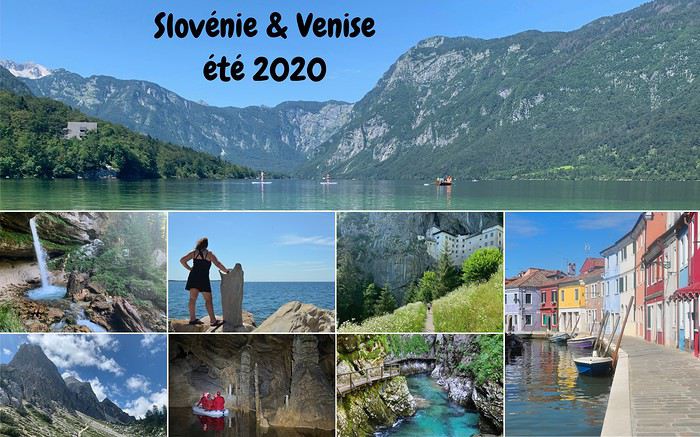
Au départ, nous devions passer 3 semaines en Géorgie, un voyage tant attendu car nous avions dû l'annuler une première fois en 2016. Mais un petit virus à couronne a décidé d'y mettre son grain de sel .... Fin mai, Georgian Airways ayant annulé nos vols et l'espoir étant mince à ce moment-là de pouvoir voyager hors zone UE, on a cherché une alternative (si possible sans prendre d'avion).
Grâce au très beau carnet de Joleeeene (je vous invite à le lire ici) et après vérification de la liste des pays qui autorisaient l'entrée des belges, on a opté pour la Slovénie. Pour organiser le séjour, vu le déai assez court, je me suis référée à l'excellent blog de Florent, un expat qui vit là-bas : https://slovenie-secrete.fr/ et au Lonely Planet qui au finla m'a très peu servi.
Le stress est resté jusque même après la dernière minute, la Slovénie ayant opté pour une liste restrictive de pays autorisés sans quarantaine (dont la Belgique ne faisait pas partie 😕) 2 jours après que nous ayons tout réservé et bien sûr payé 😎 Mais il faut parfois croire en sa bonne étoile, et le 4 juillet, 1er jour théorique de notre séjour, les autorités slovènes ajoutaient la Belgique sur leur liste de pays autorisés sans quarantaine 😇😇
Je vous emmène donc dans un pays où on peut aller crapahuter sous terre, randonner en montagne, lézarder en bord de mer, se rafraichir dans les lacs, découvrir des châteaux et de charmantes petites villes, passer sous les chutes d'eau, déambuler dans des gorges .... le tout sur une superficie plus petite que la Belgique.
Les découvertes du voyage (complètées au fur et à mesure de la rédaction)
3 - 6 juillet - un weekend sur les lacs en France avant le départ - c'est par ici 7 juillet - 1ere découverte des montagnes slovènes, le sommet du Visevnik - c'est par ici 8 juillet (partie 1) - les gorges de Pokljuka - c'est par ici 8 juillet (partie 2) - les gorges de Vintgar - c'est par ici xxx
Notre 3 TOP pour la partie Slovénie 🙂🙂
to be completed
Pascale
Je me suis longtemps demandé si j'aurais la chance d'avoir matière à rédiger un carnet de voyage cette année. Finalement, les astres se seront bien alignés pour nous offrir une jolie découverte pas très loin de chez nous 😎
Au départ, nous devions passer 3 semaines en Géorgie, un voyage tant attendu car nous avions dû l'annuler une première fois en 2016. Mais un petit virus à couronne a décidé d'y mettre son grain de sel .... Fin mai, Georgian Airways ayant annulé nos vols et l'espoir étant mince à ce moment-là de pouvoir voyager hors zone UE, on a cherché une alternative (si possible sans prendre d'avion).
Grâce au très beau carnet de Joleeeene (je vous invite à le lire ici) et après vérification de la liste des pays qui autorisaient l'entrée des belges, on a opté pour la Slovénie. Pour organiser le séjour, vu le déai assez court, je me suis référée à l'excellent blog de Florent, un expat qui vit là-bas : https://slovenie-secrete.fr/ et au Lonely Planet qui au finla m'a très peu servi.
Le stress est resté jusque même après la dernière minute, la Slovénie ayant opté pour une liste restrictive de pays autorisés sans quarantaine (dont la Belgique ne faisait pas partie 😕) 2 jours après que nous ayons tout réservé et bien sûr payé 😎 Mais il faut parfois croire en sa bonne étoile, et le 4 juillet, 1er jour théorique de notre séjour, les autorités slovènes ajoutaient la Belgique sur leur liste de pays autorisés sans quarantaine 😇😇
Je vous emmène donc dans un pays où on peut aller crapahuter sous terre, randonner en montagne, lézarder en bord de mer, se rafraichir dans les lacs, découvrir des châteaux et de charmantes petites villes, passer sous les chutes d'eau, déambuler dans des gorges .... le tout sur une superficie plus petite que la Belgique.
Les découvertes du voyage (complètées au fur et à mesure de la rédaction)
3 - 6 juillet - un weekend sur les lacs en France avant le départ - c'est par ici 7 juillet - 1ere découverte des montagnes slovènes, le sommet du Visevnik - c'est par ici 8 juillet (partie 1) - les gorges de Pokljuka - c'est par ici 8 juillet (partie 2) - les gorges de Vintgar - c'est par ici xxx
Notre 3 TOP pour la partie Slovénie 🙂🙂
to be completed
Pascale