Results for "Morteau+|+127"
6074 results found.
Les révélations qu'on peut avoir lors d'un voyage English translation pending
J'ouvre un nouveau sujet:
on a tous connu des moments plus ou moins marquants lors de nos voyages. Certains instants étaient même si forts qu'ils ont contribué à une révélation. Par exemple untel a compris que le plus important, finalement, était de rester en vie, un autre qu'il devait se mettre à tel instrument, un autre enfin qu'en Occident, on était quand même gâtés, par rapport à plein d'autres endroits. Il peut s'agir d'une prise de conscience sur soi, ou sur le monde, ou les deux...
Je vous invite donc à nous faire part de vos récits de "révélations". Racontez l'évènement vécu, et le déclic qu'il a produit en vous. Ces moments de forte émotions passionneront, j'en suis sûr, beaucoup de personnes du forum. Voire, les interpelleront parce qu'elles auront senti les choses d'une façon similaire.
on a tous connu des moments plus ou moins marquants lors de nos voyages. Certains instants étaient même si forts qu'ils ont contribué à une révélation. Par exemple untel a compris que le plus important, finalement, était de rester en vie, un autre qu'il devait se mettre à tel instrument, un autre enfin qu'en Occident, on était quand même gâtés, par rapport à plein d'autres endroits. Il peut s'agir d'une prise de conscience sur soi, ou sur le monde, ou les deux...
Je vous invite donc à nous faire part de vos récits de "révélations". Racontez l'évènement vécu, et le déclic qu'il a produit en vous. Ces moments de forte émotions passionneront, j'en suis sûr, beaucoup de personnes du forum. Voire, les interpelleront parce qu'elles auront senti les choses d'une façon similaire.
Torture de milliers d'ours en Chine English translation pending
🙁Prenez quelques minutes SVP pour lire ce message de la plus grande importance.
Des ours sont sous torture dans 247 « fermes » mises en place par le gouvernement chinois depuis 20 ans pour extraire 7 000 litres de leur bile par an. La bile d’ours est utilisée dans des remèdes, du vin, des shampooings et des aphrodisiaques. Pourtant, il existe des produits de substitution. Plus de 100 000 litres de bile de synthèse sont commercialisés chaque année.
Une preuve de la grande détresse des ours dans ces fermes est le comportement des mères ourses qui vont jusqu’à tuer leurs bébés dès la naissance. Cette mortalité n’empêche pas les fermiers de continuer leur commerce ignoble avec des oursons capturés dans la nature.
😕Les braconniers profitent de l’absence de la mère, partie en quête de nourriture, pour enlever les oursons âgés de quelques jours. Parfois la mère est tuée et un grand nombre de bébés meurent de ce traumatisme
Les survivants sont parqués dans un enclos pour les habituer à leur futur enfermement dans une cage étroite. Puis, à l’âge de 3 ans, ils subissent une opération qui les mutile à vie. Les fermiers implantent un cathéter dans la vésicule biliaire pour drainer leur bile. Ce tube reste en permanence, et laisse une plaie à vif qui s’infecte et n’est jamais soignée. Quatre ours sur cinq meurent pendant ou après l’opération d’implantation.
🙁Les ours qui survivent sont transférés dans des cages si petites qu’ils ne peuvent ni bouger, ni même se coucher. Pour exprimer leur angoisse et leur souffrance, ils n’ont pas d’autres choix que de se cogner la tête contre les barreaux et de se mordre les pattes jusqu’au sang. Ces gestes de grande détresse entraînent de graves infections.Comprimés dans les cages, parfois jusqu’à l’écrasement de leurs organes, les ours subissent deux fois par jour la torture de l’extraction. Elle est effectuée pendant qu’ils sont nourris et abreuvés, pour stimuler la bile. Les ours gémissent, hurlent et se tordent de douleur, en se tenant l’estomac.
Pour voyager intelligement et ne pas etre le complice d'une torture immonde, prenez quelques minutes pour visiter ce site :
http://www.onevoice-ear.org/
Merci beaucoup. Mon seul but est de vous informer.
David😐
Des ours sont sous torture dans 247 « fermes » mises en place par le gouvernement chinois depuis 20 ans pour extraire 7 000 litres de leur bile par an. La bile d’ours est utilisée dans des remèdes, du vin, des shampooings et des aphrodisiaques. Pourtant, il existe des produits de substitution. Plus de 100 000 litres de bile de synthèse sont commercialisés chaque année.
Une preuve de la grande détresse des ours dans ces fermes est le comportement des mères ourses qui vont jusqu’à tuer leurs bébés dès la naissance. Cette mortalité n’empêche pas les fermiers de continuer leur commerce ignoble avec des oursons capturés dans la nature.
😕Les braconniers profitent de l’absence de la mère, partie en quête de nourriture, pour enlever les oursons âgés de quelques jours. Parfois la mère est tuée et un grand nombre de bébés meurent de ce traumatisme
Les survivants sont parqués dans un enclos pour les habituer à leur futur enfermement dans une cage étroite. Puis, à l’âge de 3 ans, ils subissent une opération qui les mutile à vie. Les fermiers implantent un cathéter dans la vésicule biliaire pour drainer leur bile. Ce tube reste en permanence, et laisse une plaie à vif qui s’infecte et n’est jamais soignée.
Quatre ours sur cinq meurent pendant ou après l’opération d’implantation.🙁Les ours qui survivent sont transférés dans des cages si petites qu’ils ne peuvent ni bouger, ni même se coucher. Pour exprimer leur angoisse et leur souffrance, ils n’ont pas d’autres choix que de se cogner la tête contre les barreaux et de se mordre les pattes jusqu’au sang. Ces gestes de grande détresse entraînent de graves infections.
Comprimés dans les cages, parfois jusqu’à l’écrasement de leurs organes, les ours subissent deux fois par jour la torture de l’extraction. Elle est effectuée pendant qu’ils sont nourris et abreuvés, pour stimuler la bile. Les ours gémissent, hurlent et se tordent de douleur, en se tenant l’estomac.Pour voyager intelligement et ne pas etre le complice d'une torture immonde, prenez quelques minutes pour visiter ce site :
http://www.onevoice-ear.org/
Merci beaucoup. Mon seul but est de vous informer.
David😐
Inde: 1200 ours torturés par des gitants kalandars English translation pending
Prenez SVP quelques minutes pour lire ce message, il s'agit d'une torture qui NE DOIT PLUS durer. Merci
Plus de 1200 ours à miel sont torturés par des gitans Kalandars qui forcent les ours à exécuter un simulacre de danse pour divertir les touristes. Cette pratique barbare, issue d’une tradition du XVIe siècle, enferme à tout jamais les ours dans la terreur et la douleur. Depuis 1972, il existe pourtant une loi de protection de la faune sauvage qui interdit de vendre des ours et des parties de leur corps. Une autre loi condamne les méthodes de dressage. Les braconniers attendent que la mère ourse sorte pour chercher de la nourriture, et enlèvent l’ourson âgé de quelques jours. Les mères qui surprennent les malfaiteurs défendent leurs petits au prix de leur vie. Le nouveau-né, transporté dans un sac pendant de longues heures, est drogué à l’opium pour empêcher la faim et les cris de détresse. Nombre d’entre eux meurent en chemin. Les survivants sont vendus aux Kalandars. À l’âge de 3 mois, avant d’être exhibé sur les routes et devant les hôtels, l’ourson, déjà traumatisé, subit des actes d’une extrême barbarie.
Les gitans perforent sa cavité nasale avec un tisonnier chauffé à blanc pour y insérer une corde qui ressort par la narine. Cette terrible mutilation est effectuée sans anesthésie.
😕En Inde, la population est révoltée par les tortures infligées aux ours par les gitans, en totale infraction avec la loi. Ces pratiques perdurent parce que les touristes donnent de l’argent aux Kalandars pour voir danser les ours.😠
🙂Prenez quelques minutes pour visiter ce site internet suivant, afin de voyager intelligent !!!!
http://www.onevoice-ear.org/
Merci
David
Suggestions de films - puisque l'on ne peut pas voyager tout le temps... English translation pending
Voici quelques films qui permettent de voyager un peu alors que le budget se fait trop restreint
Baraka de R. Fricke, un incontournable
Kundun de scorsese, pour les amateurs du Tibet
Little Buddha de Bertoluci, conseillé par un boudhiste (Pettit Boudha)
Ulysse's Gaze de Theopoulos, pour ceux qui aiment les voyages intiatiques (Le Regard d'Ulysse)
A River Run's Throught it de Redford, pour les paysages et la simplicité (La Rivière du 6ème Jour)
3 Seasons de Bui, encore pour la beauté de la simplicité, mais version vietnamiène cette fois (Trois saisons)
la liste pourrait encore être longue, mais je dois vous laisser un peu de place pour me faire une suite...
Baraka de R. Fricke, un incontournable
Kundun de scorsese, pour les amateurs du Tibet
Little Buddha de Bertoluci, conseillé par un boudhiste (Pettit Boudha)
Ulysse's Gaze de Theopoulos, pour ceux qui aiment les voyages intiatiques (Le Regard d'Ulysse)
A River Run's Throught it de Redford, pour les paysages et la simplicité (La Rivière du 6ème Jour)
3 Seasons de Bui, encore pour la beauté de la simplicité, mais version vietnamiène cette fois (Trois saisons)
la liste pourrait encore être longue, mais je dois vous laisser un peu de place pour me faire une suite...
Quoi visiter à Halifax? English translation pending
Je vais aller a Halifax pour apprendre mon anglais durant le prochain printemps et j'aimerais savoir ce qu'il y a faire dans cette ville et autour, dans la Nouvelle-ecosse. Si quelqun a des bons endroits, j'aimerais bien les connaitres, merci
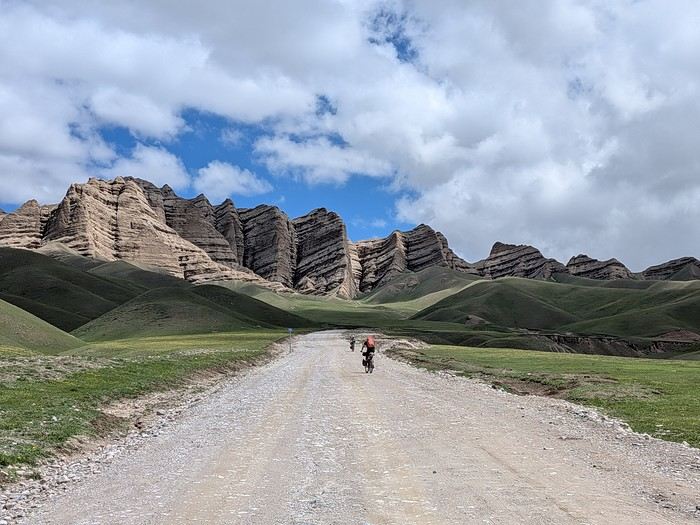
Breathtaking Kyrgyzstan!
This trip had been on my mind for about fifteen years.
But the discomfort of overnight stays, the difficulty of communication, and the prices of the few car rental options kept making me postpone the project.
And then, everything suddenly fell into place—I told myself, it’s time!
The preparations took longer than usual; the destination is still far from mainstream.
A bit of Kazakhstan? Not in the end.
The south or not the south? Yes, in the end.
Pre-book or go with the flow? Only two stops were a leap into the unknown.
To help me find the ideal route, I made great use of this forum (thanks to everyone for patiently answering my questions!), pored over travel journals and blogs (Christian, Jeff), zoomed in on Google Maps and Yandex, and bought the guide published by OunTravela about this destination (the guide has been updated since).
---/---
You’ve got your passport, international driver’s license, bank cards, and euros?
Off we go to Lyon—just one night left before our early morning flight.
Tomorrow night, we’ll be sleeping in Bishkek! (Steak for my partner’s mischievous nephews...)
You’ll find here a post with some practical information.
And here, the version of the travel journal without comments.
---/---
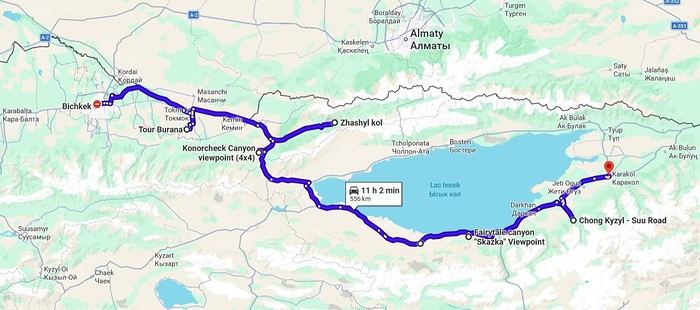
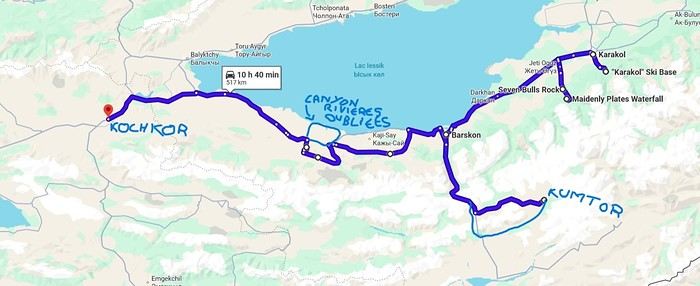
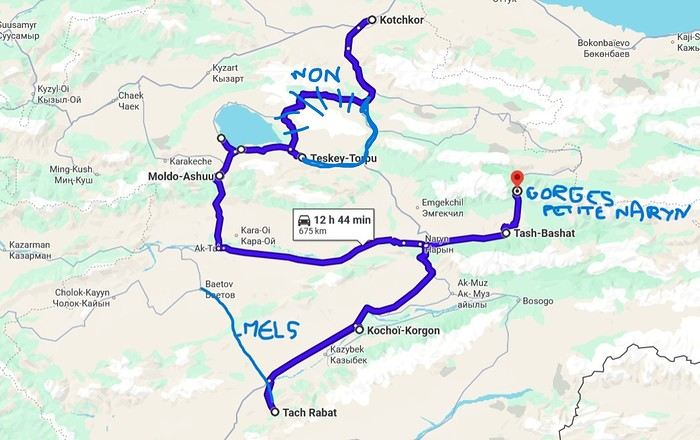
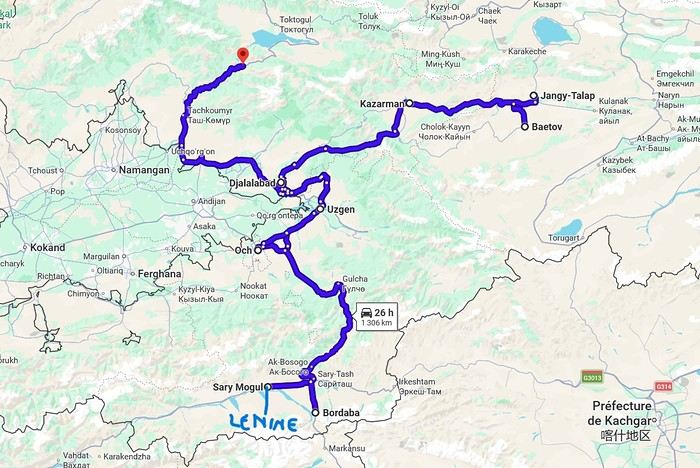
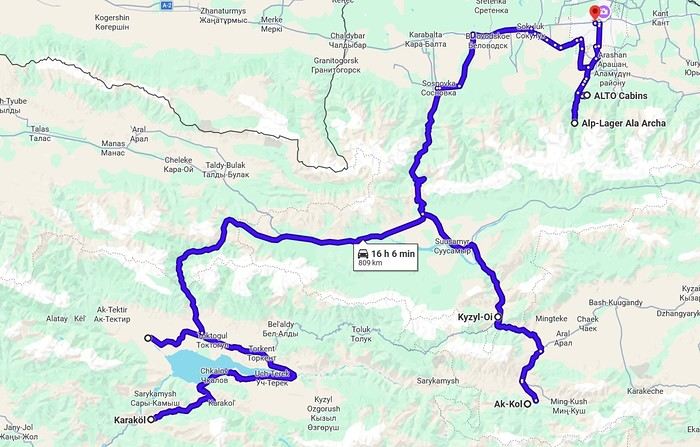
As a supplement, the route track. Not necessarily ultra-accurate since Google has serious gaps for this destination...
From Bishkek to Karakol:
From Karakol to Kochkor:
From Kochkor to Baetov:
From Baetov to Kara-Köl:
From Kara-Köl to Bishkek:

But the discomfort of overnight stays, the difficulty of communication, and the prices of the few car rental options kept making me postpone the project.
And then, everything suddenly fell into place—I told myself, it’s time!
The preparations took longer than usual; the destination is still far from mainstream.
A bit of Kazakhstan? Not in the end.
The south or not the south? Yes, in the end.
Pre-book or go with the flow? Only two stops were a leap into the unknown.
To help me find the ideal route, I made great use of this forum (thanks to everyone for patiently answering my questions!), pored over travel journals and blogs (Christian, Jeff), zoomed in on Google Maps and Yandex, and bought the guide published by OunTravela about this destination (the guide has been updated since).
---/---
You’ve got your passport, international driver’s license, bank cards, and euros?
Off we go to Lyon—just one night left before our early morning flight.
Tomorrow night, we’ll be sleeping in Bishkek! (Steak for my partner’s mischievous nephews...)
You’ll find here a post with some practical information.
And here, the version of the travel journal without comments.
---/---
As a supplement, the route track. Not necessarily ultra-accurate since Google has serious gaps for this destination...
From Bishkek to Karakol:
From Karakol to Kochkor:
From Kochkor to Baetov:
From Baetov to Kara-Köl:
From Kara-Köl to Bishkek:
Page by Page on the Assisi Way – 1,200 km on Foot
Preamble
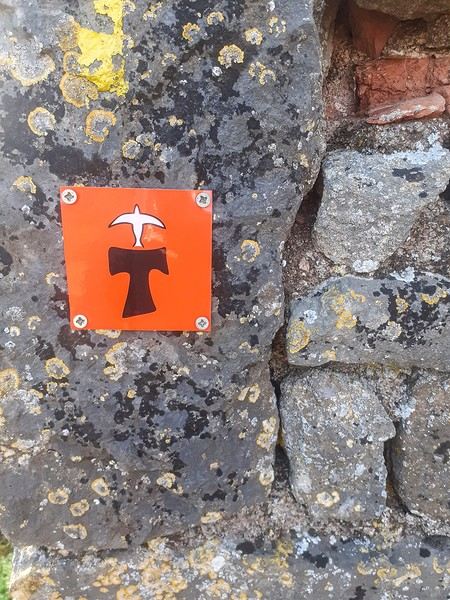
June 2024. While hiking with my brother on the GR 36 Tour du Morvan, I catch sight now and then of strange rectangular markers fixed to tree trunks. Against a bright orange background, a deep black Greek tau topped with a white dove. My first encounter with the Assisi Way. The Way of St. Francis: a pilgrimage route linking Vézelay in Burgundy to Assisi in Italy, covering nearly 1,800 km. It felt like an obvious next step—I immediately knew I’d take it on, attempt the adventure solo.
In the months that followed, I talked about my project to everyone—family, friends, my partner. An avalanche of comments, more or less the same but varying depending on each person’s character and life experiences. But deep down, it all boiled down to one legitimate question: why?
And the answers? Hesitant, awkward, partial, even confused. I quickly realized they weren’t so easy to find. It was as if my project seemed more like a whim, a kind of intimate caprice, rather than a well-thought-out plan. Of course, I knew the reasons that pushed me to leave—you always have to give some. Loved ones need to understand to feel reassured, and that’s understandable. But I fear that when I list them, they’ll sound like the same old checklist anyone embarking on this kind of journey might give. Of all the reasons I could mention, I’ll highlight just one here: the call of the road, the solo adventure that brings a powerful sense of freedom. A bit like Monsieur Seguin’s goat, who from her comfortable pen gazes longingly at the unconstrained horizon of the mountain. But if I’m being honest, I think I didn’t really know what I was looking for—or, more importantly, what I’d find. Deep down, when I reflect on it, one word keeps coming up that explains nothing and everything at once: desire.
Now well past sixty, I know that when I ask myself who I am or where I’m going, two things bring me fully back to myself: hiking and writing. And my intention was also to anchor this adventure through words, day by day. Writing down my feelings, emotions, discoveries, and reflections each evening. The famous travel journal that grounds the daily experience in reality. When I discovered the app "Polarstep," which was initially just meant to keep my loved ones updated and reassured, inform them of my progress, and maintain a connection, I found an opportunity to do it a little differently than usual. No retrospective notes polished up after returning, but spontaneous writing—recounting everything that crossed my mind during the day and publishing it immediately. A journey lived in real time.
This text is the exact transcription of my daily writings. Rereading them, I didn’t change a thing—just corrected a few mistakes and tweaked some awkward phrasing here and there. Short texts, fitting the format imposed by this kind of app. Writing as if addressing others.
Now, all that was left was to walk. April 18, 2026 – Vézelay.
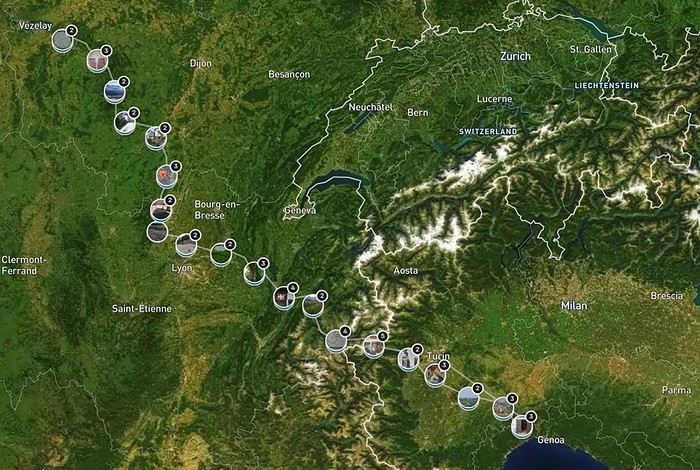
June 2024. While hiking with my brother on the GR 36 Tour du Morvan, I catch sight now and then of strange rectangular markers fixed to tree trunks. Against a bright orange background, a deep black Greek tau topped with a white dove. My first encounter with the Assisi Way. The Way of St. Francis: a pilgrimage route linking Vézelay in Burgundy to Assisi in Italy, covering nearly 1,800 km. It felt like an obvious next step—I immediately knew I’d take it on, attempt the adventure solo.
In the months that followed, I talked about my project to everyone—family, friends, my partner. An avalanche of comments, more or less the same but varying depending on each person’s character and life experiences. But deep down, it all boiled down to one legitimate question: why?
And the answers? Hesitant, awkward, partial, even confused. I quickly realized they weren’t so easy to find. It was as if my project seemed more like a whim, a kind of intimate caprice, rather than a well-thought-out plan. Of course, I knew the reasons that pushed me to leave—you always have to give some. Loved ones need to understand to feel reassured, and that’s understandable. But I fear that when I list them, they’ll sound like the same old checklist anyone embarking on this kind of journey might give. Of all the reasons I could mention, I’ll highlight just one here: the call of the road, the solo adventure that brings a powerful sense of freedom. A bit like Monsieur Seguin’s goat, who from her comfortable pen gazes longingly at the unconstrained horizon of the mountain. But if I’m being honest, I think I didn’t really know what I was looking for—or, more importantly, what I’d find. Deep down, when I reflect on it, one word keeps coming up that explains nothing and everything at once: desire.
Now well past sixty, I know that when I ask myself who I am or where I’m going, two things bring me fully back to myself: hiking and writing. And my intention was also to anchor this adventure through words, day by day. Writing down my feelings, emotions, discoveries, and reflections each evening. The famous travel journal that grounds the daily experience in reality. When I discovered the app "Polarstep," which was initially just meant to keep my loved ones updated and reassured, inform them of my progress, and maintain a connection, I found an opportunity to do it a little differently than usual. No retrospective notes polished up after returning, but spontaneous writing—recounting everything that crossed my mind during the day and publishing it immediately. A journey lived in real time.
This text is the exact transcription of my daily writings. Rereading them, I didn’t change a thing—just corrected a few mistakes and tweaked some awkward phrasing here and there. Short texts, fitting the format imposed by this kind of app. Writing as if addressing others.
Now, all that was left was to walk. April 18, 2026 – Vézelay.
New adventures from Perpignan to Ranchi (Jharkhand)
March 2nd — Departure by bus from Latour at 6:50 AM. The journey isn’t direct: we pass through Elne then Corneilla. In Perpignan, I switch to a BlablaBus heading to Barcelona’s northern bus station. Before reaching Le Perthus, French police stop us to check IDs. Several people aren’t in order, but after about fifteen minutes, we’re on our way again. We’re checked again at La Jonquera: this time, the wait lasts almost forty-five minutes while police identify those in violation and wait for a vehicle to pick them up. The driver then tries to make up for lost time; we finally arrive at our destination half an hour late.
I quickly head to the Arc de Triomphe metro station, located 200 meters away: you have to cross the bridge along the bus parking lot, then walk through a large garden; the station is on the right before the garden entrance. The trip to the airport isn’t direct: I have to change at Tomasso and take the line to the airport, where I arrive at 1 PM.
At the Emirates counter, I learn my flight was just canceled due to the war in Iran; they offer me another flight for the next day. I have to wait at the airport until 7 PM before being taken to a hotel; the next morning, I’ll take a flight to Vienna (with an 8-hour layover), then an Air India flight to Delhi, and finally a flight to Kolkata. I agree: I don’t know Vienna, so it’ll be an unexpected discovery.
At 7 PM, a small group is taken to the hotel, 35 minutes from the airport, where we’re served a light dinner upon arrival.
March 3rd — A taxi picks me up at 6:30 AM; the flight to Vienna takes off at 9:30 AM and arrives at noon. I’m free until 7 PM; the metro is direct to the city center. The weather is pleasant and not too cold, luckily, since my clothes are light.
When I exit the metro, I spot the St. Stephen’s Cathedral tower in the distance and approach it: the roof, made of glazed tiles, is remarkable.
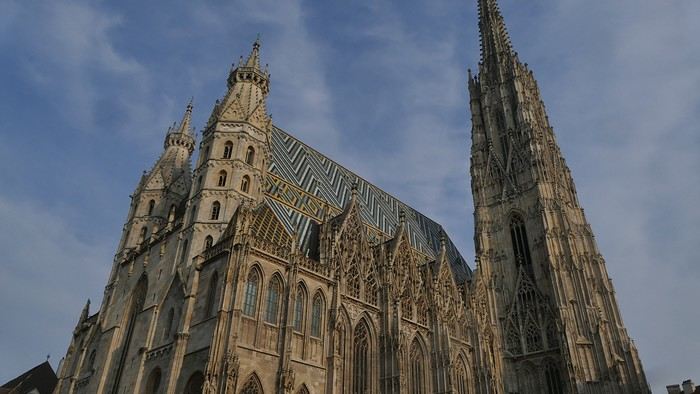
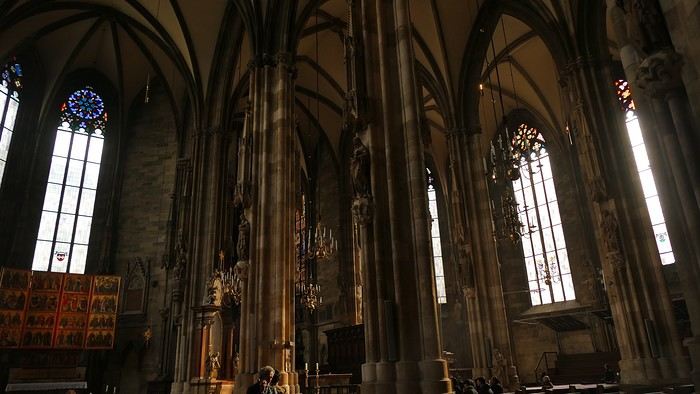
Entry is free, and the interior, a mix of Gothic and Baroque styles in the center, is stunning.
Not far from there is St. Anne’s Church
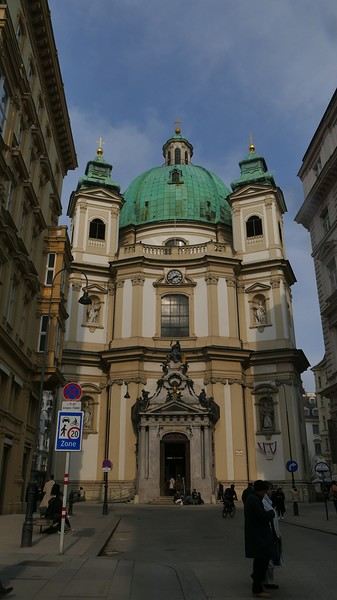
, also Baroque, adorned with beautiful frescoes
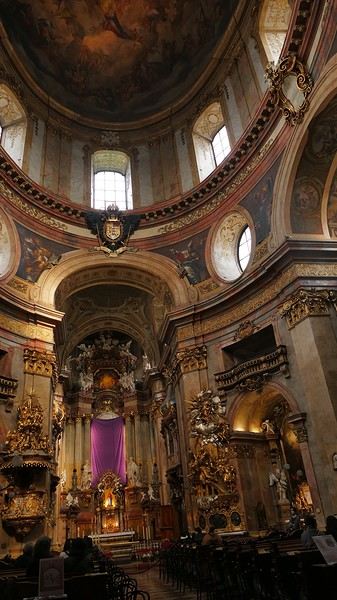
—a music concert adds an enchanting atmosphere to the visit. I continue my walk at random through the pedestrian streets lined with magnificent buildings: I’m charmed by the city.
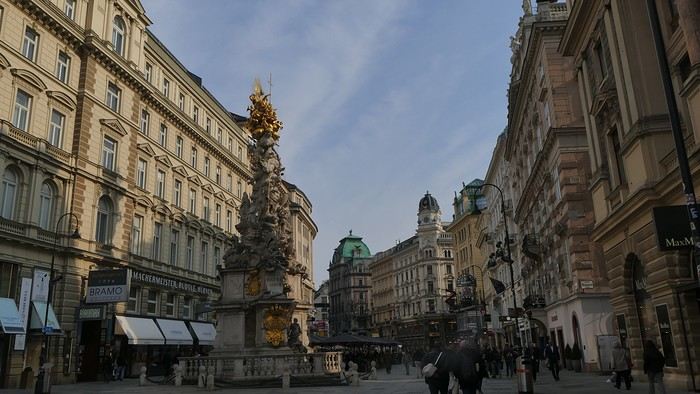
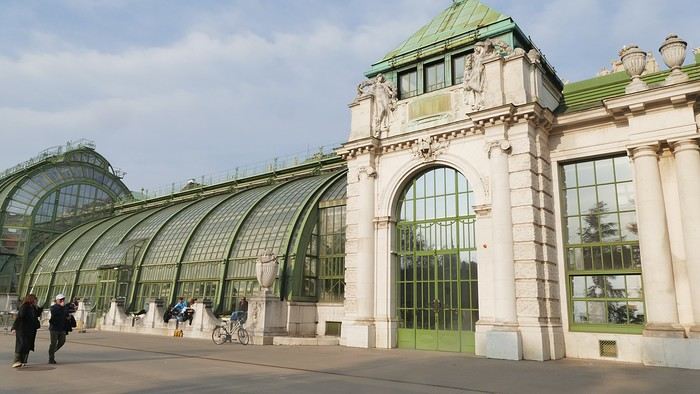
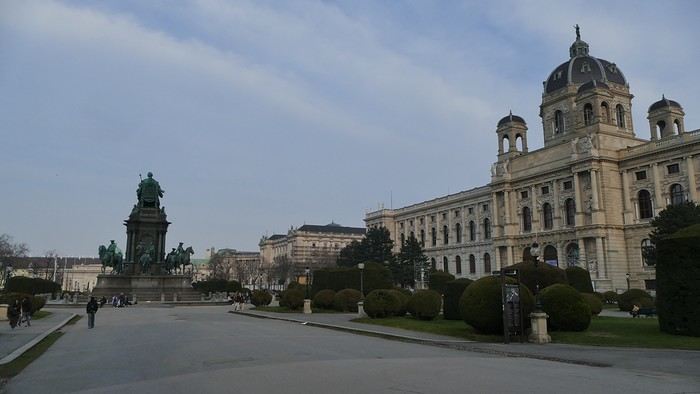
Before heading back to the airport, I stop at a lovely tea salon. My flight will eventually leave with a delay.
Wednesday, March 4th — Delhi and a little luggage scare We arrive in Delhi shortly after noon. Immigration is quick, and good news: my bag was checked through from Barcelona to Kolkata. I head to the connecting terminal and arrive half an hour before boarding: the flight goes smoothly. Upon arrival, the luggage comes out quickly… except mine. After filing a report, I’m told my bag is in Delhi—I have to retrieve it before taking another flight. I didn’t know (or had forgotten): with the delays, I wouldn’t have had time to pick it up and make the connection.
I take a taxi to the Ichamati Hotel. The welcome is warm, and the room is clean but very small. Without my bag, I feel a bit lost—I have nothing to change into.
Tonight, I’m dining with Raja and his friends at a beautiful restaurant, an old colonial house turned into a hotel.
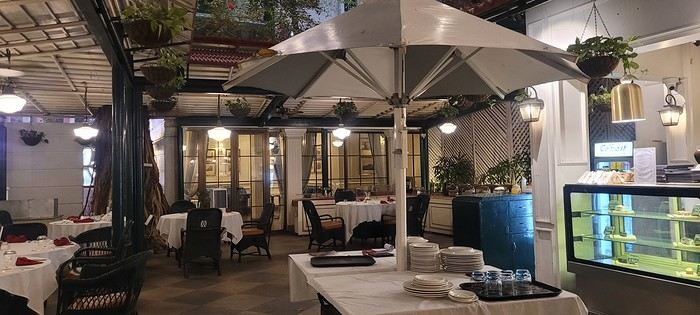
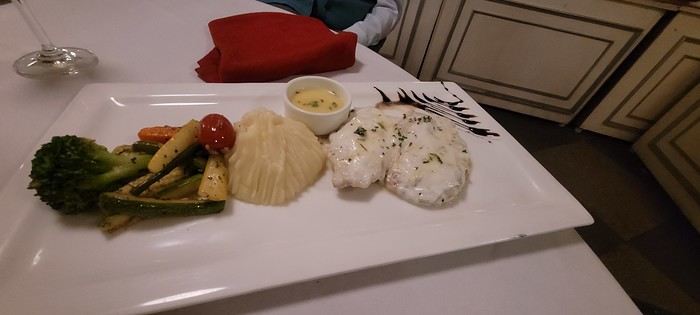
We’re happy to see each other and have a comforting evening together.
I quickly head to the Arc de Triomphe metro station, located 200 meters away: you have to cross the bridge along the bus parking lot, then walk through a large garden; the station is on the right before the garden entrance. The trip to the airport isn’t direct: I have to change at Tomasso and take the line to the airport, where I arrive at 1 PM.
At the Emirates counter, I learn my flight was just canceled due to the war in Iran; they offer me another flight for the next day. I have to wait at the airport until 7 PM before being taken to a hotel; the next morning, I’ll take a flight to Vienna (with an 8-hour layover), then an Air India flight to Delhi, and finally a flight to Kolkata. I agree: I don’t know Vienna, so it’ll be an unexpected discovery.
At 7 PM, a small group is taken to the hotel, 35 minutes from the airport, where we’re served a light dinner upon arrival.
March 3rd — A taxi picks me up at 6:30 AM; the flight to Vienna takes off at 9:30 AM and arrives at noon. I’m free until 7 PM; the metro is direct to the city center. The weather is pleasant and not too cold, luckily, since my clothes are light.
When I exit the metro, I spot the St. Stephen’s Cathedral tower in the distance and approach it: the roof, made of glazed tiles, is remarkable.
Entry is free, and the interior, a mix of Gothic and Baroque styles in the center, is stunning.
Not far from there is St. Anne’s Church
, also Baroque, adorned with beautiful frescoes
—a music concert adds an enchanting atmosphere to the visit. I continue my walk at random through the pedestrian streets lined with magnificent buildings: I’m charmed by the city.
Before heading back to the airport, I stop at a lovely tea salon. My flight will eventually leave with a delay.
Wednesday, March 4th — Delhi and a little luggage scare We arrive in Delhi shortly after noon. Immigration is quick, and good news: my bag was checked through from Barcelona to Kolkata. I head to the connecting terminal and arrive half an hour before boarding: the flight goes smoothly. Upon arrival, the luggage comes out quickly… except mine. After filing a report, I’m told my bag is in Delhi—I have to retrieve it before taking another flight. I didn’t know (or had forgotten): with the delays, I wouldn’t have had time to pick it up and make the connection.
I take a taxi to the Ichamati Hotel. The welcome is warm, and the room is clean but very small. Without my bag, I feel a bit lost—I have nothing to change into.
Tonight, I’m dining with Raja and his friends at a beautiful restaurant, an old colonial house turned into a hotel.
We’re happy to see each other and have a comforting evening together.
Villages around Hazaribagh in West Bengal
Wednesday, April 1st
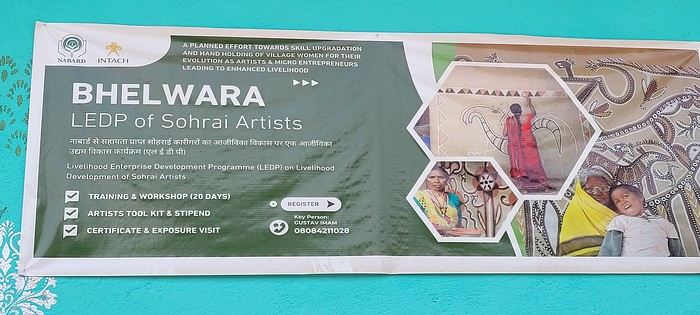
Hazaribagh I’ve got a meet-up with Adam Iman, a guide and painter. He picks me up from the hotel at 10 AM. Another traveler from Bangalore is supposed to join us, but while we wait for him to arrive, Adam takes me to see the paintings his mother and sister created at Hazaribagh station. The town became famous thanks to these murals, which can also be found in several surrounding villages. This art form has earned recognition and is now protected, a sign of its cultural importance. Once the visit is over, we go to pick up the other traveler and then head to our first village: Belwara, where Sohrai art is practiced. At the entrance, a sign proudly announces that we’re entering an artists’ village, where this art is created by women organized into micro-enterprises. Some even offer workshops for those who’d like to learn this tradition.
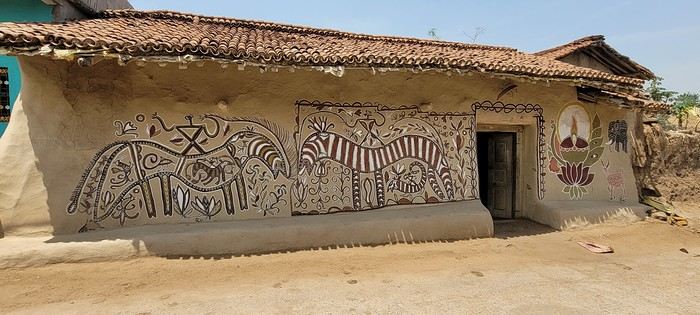
Sohrai art is tied to the harvest season, from October to mid-November. The motifs, in natural colors, celebrate fertility and abundance. The artists use pigments from the earth: red oxides, ochre, white kaolin, and black manganese. On the walls, you’ll see animals, fish, birds—all symbols of life and prosperity. As I look closer at the murals, I start to realize that each motif tells a story. Large animals like cows or bulls often take center stage. Their bodies are filled with intricate, almost hypnotic patterns. They symbolize wealth and prosperity for the household, as well as the deep respect for cattle, which are essential to daily life. On some facades, elephants stand out—massive and decorated with the same precision. They evoke quiet strength and protection. But it’s when I stop in front of one of the houses that I really take the time to look. The wall, a soft ochre, is entirely covered in murals. Two large animals stretch out on either side of the door, their elongated bodies fitting the length of the wall. Their silhouettes are filled with geometric patterns and incredibly fine curved lines, as if every space was patiently filled. Around them, stylized plants, flowers, and small decorative elements fill every gap. The door, dark and worn, becomes almost the silent center of the composition, framed by these living, protective forms. To the right, a more colorful motif catches the eye—a flower or a stylized lamp—like a touch of light on the earth. The whole thing gives an impression of perfect balance, between the rigor of the patterns and the freedom of the gesture.
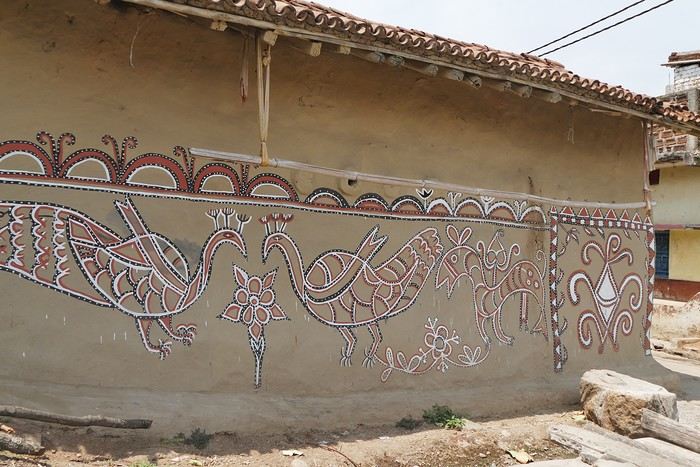
Elsewhere, birds and freer forms bring movement. Peacocks, recognizable by their stylized silhouettes, embody beauty and vitality, while fish symbolize water, fertility, and the continuity of life.
 On some paintings, the scenes become almost narrative: you can make out figures, everyday gestures, like a memory of the village inscribed in the walls. The decorative frames around the doors aren’t left to chance either—they symbolically protect the house, like a boundary between the inside and the outside world.
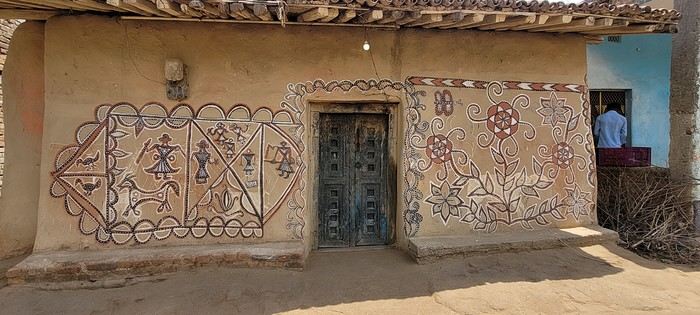
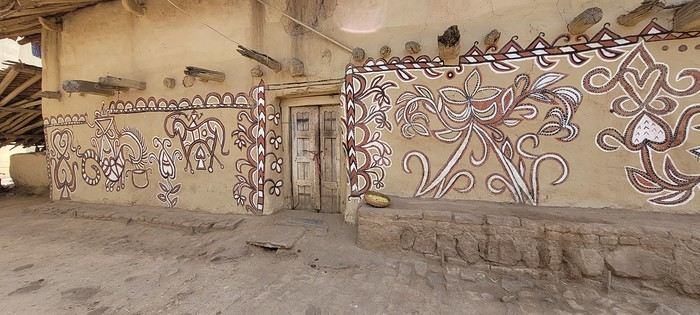
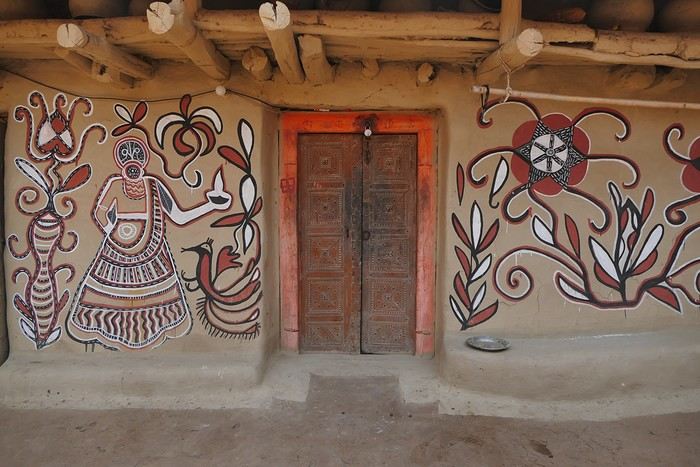
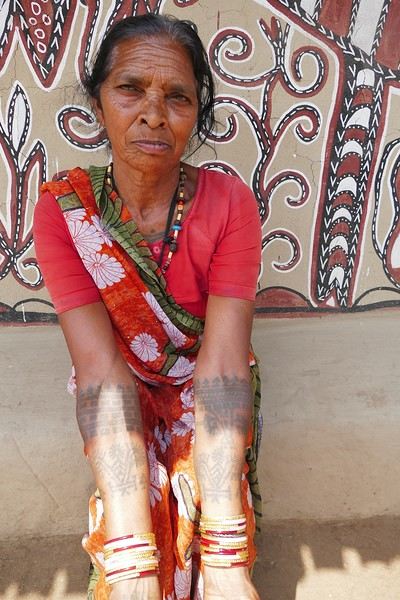
During the Sohrai festival, cattle are led into the jungle in the morning. Meanwhile, the women finish the *aripans*—these floor paintings—and continue the wall murals. Around noon, the animals return to the village, and the bulls’ horns are anointed with oil and vermilion in a gesture of gratitude, amid the vibrant colors adorning the houses. We visit several artists, including Parvat Devi, a well-known woman who has received many awards. Her arms are adorned with intriguing tattoos, which I’ll talk about in more detail later.
On another wall, the style changes completely. Here, no massive animals—just birds occupying the space, light and graceful, as if caught in mid-movement. Two silhouettes face each other, their long necks arched almost like mirrors, while their outstretched wings seem to vibrate with the patterns that compose them.
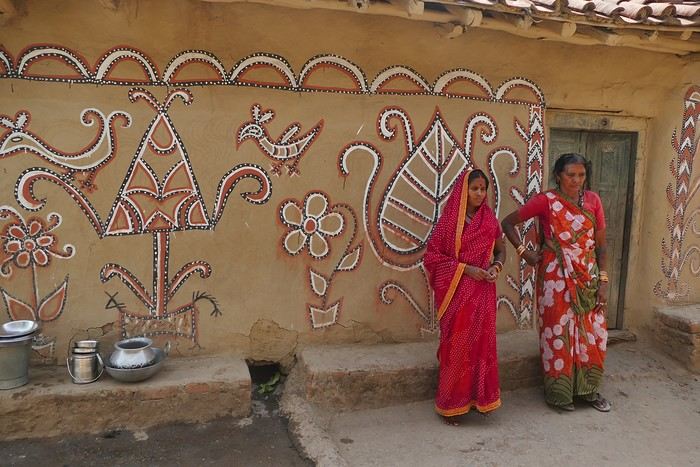
The design is more graphic, almost airy. The lines are smoother, more fluid, as if drawn in one confident stroke. The birds’ bodies aren’t solid—they’re filled with repetitive motifs like scales, stylized feathers, and spirals, giving a sense of continuous movement. Around them, everything comes to life: flowers burst open, arabesques swirl, and even the simplest shapes seem alive. What strikes me here is the sense of lightness. Where the large animals evoked stability and grounding, these birds bring something freer, almost joyful. They seem to embody movement, the circulation of life, like a breath flowing through the village.
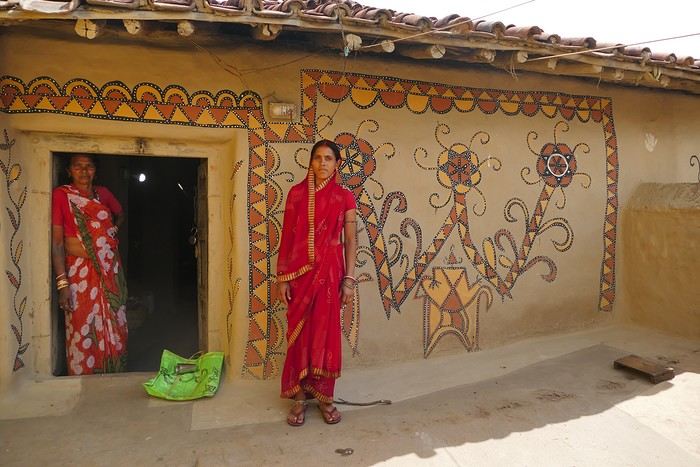
The colors remain the same—deep reds, intense blacks, and chalky white—but the rhythm is different. Faster, more spontaneous. As if each wall had its own personality, while still speaking the same language.
That’s probably why I’m so moved. I’d heard about these paintings from my friend Raja, and last year, I saw an exhibition in a village near my home. That first encounter made me want to come here. But seeing them in person is a whole different experience. These paintings are unique. This ancient art is passed down from mother to daughter, or mother-in-law to daughter-in-law, in a quiet, deeply living continuity. At first glance, it might seem almost childlike in its simplicity and pared-down forms. And yet, everything is thought out, balanced, mastered. Nothing is left to chance.
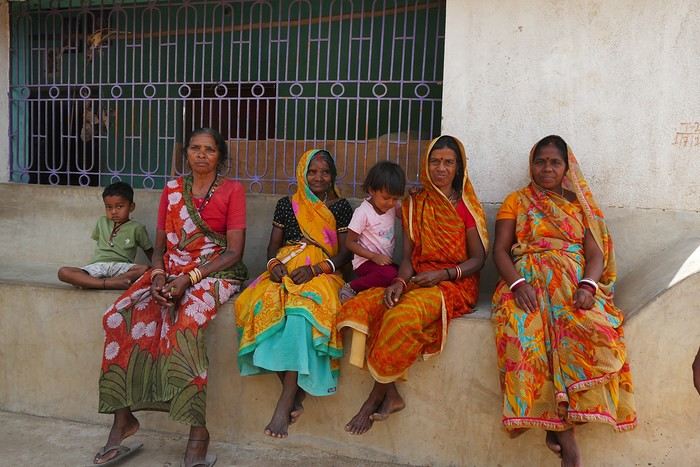
That apparent simplicity, combined with such rich symbolism, touches me deeply. There’s something sincere and essential in these walls—and that’s what moves me.
Hazaribagh I’ve got a meet-up with Adam Iman, a guide and painter. He picks me up from the hotel at 10 AM. Another traveler from Bangalore is supposed to join us, but while we wait for him to arrive, Adam takes me to see the paintings his mother and sister created at Hazaribagh station. The town became famous thanks to these murals, which can also be found in several surrounding villages. This art form has earned recognition and is now protected, a sign of its cultural importance. Once the visit is over, we go to pick up the other traveler and then head to our first village: Belwara, where Sohrai art is practiced. At the entrance, a sign proudly announces that we’re entering an artists’ village, where this art is created by women organized into micro-enterprises. Some even offer workshops for those who’d like to learn this tradition.
Sohrai art is tied to the harvest season, from October to mid-November. The motifs, in natural colors, celebrate fertility and abundance. The artists use pigments from the earth: red oxides, ochre, white kaolin, and black manganese. On the walls, you’ll see animals, fish, birds—all symbols of life and prosperity. As I look closer at the murals, I start to realize that each motif tells a story. Large animals like cows or bulls often take center stage. Their bodies are filled with intricate, almost hypnotic patterns. They symbolize wealth and prosperity for the household, as well as the deep respect for cattle, which are essential to daily life. On some facades, elephants stand out—massive and decorated with the same precision. They evoke quiet strength and protection. But it’s when I stop in front of one of the houses that I really take the time to look. The wall, a soft ochre, is entirely covered in murals. Two large animals stretch out on either side of the door, their elongated bodies fitting the length of the wall. Their silhouettes are filled with geometric patterns and incredibly fine curved lines, as if every space was patiently filled. Around them, stylized plants, flowers, and small decorative elements fill every gap. The door, dark and worn, becomes almost the silent center of the composition, framed by these living, protective forms. To the right, a more colorful motif catches the eye—a flower or a stylized lamp—like a touch of light on the earth. The whole thing gives an impression of perfect balance, between the rigor of the patterns and the freedom of the gesture.
Elsewhere, birds and freer forms bring movement. Peacocks, recognizable by their stylized silhouettes, embody beauty and vitality, while fish symbolize water, fertility, and the continuity of life.
On some paintings, the scenes become almost narrative: you can make out figures, everyday gestures, like a memory of the village inscribed in the walls. The decorative frames around the doors aren’t left to chance either—they symbolically protect the house, like a boundary between the inside and the outside world.During the Sohrai festival, cattle are led into the jungle in the morning. Meanwhile, the women finish the *aripans*—these floor paintings—and continue the wall murals. Around noon, the animals return to the village, and the bulls’ horns are anointed with oil and vermilion in a gesture of gratitude, amid the vibrant colors adorning the houses. We visit several artists, including Parvat Devi, a well-known woman who has received many awards. Her arms are adorned with intriguing tattoos, which I’ll talk about in more detail later.
On another wall, the style changes completely. Here, no massive animals—just birds occupying the space, light and graceful, as if caught in mid-movement. Two silhouettes face each other, their long necks arched almost like mirrors, while their outstretched wings seem to vibrate with the patterns that compose them.
The design is more graphic, almost airy. The lines are smoother, more fluid, as if drawn in one confident stroke. The birds’ bodies aren’t solid—they’re filled with repetitive motifs like scales, stylized feathers, and spirals, giving a sense of continuous movement. Around them, everything comes to life: flowers burst open, arabesques swirl, and even the simplest shapes seem alive. What strikes me here is the sense of lightness. Where the large animals evoked stability and grounding, these birds bring something freer, almost joyful. They seem to embody movement, the circulation of life, like a breath flowing through the village.
The colors remain the same—deep reds, intense blacks, and chalky white—but the rhythm is different. Faster, more spontaneous. As if each wall had its own personality, while still speaking the same language.
That’s probably why I’m so moved. I’d heard about these paintings from my friend Raja, and last year, I saw an exhibition in a village near my home. That first encounter made me want to come here. But seeing them in person is a whole different experience. These paintings are unique. This ancient art is passed down from mother to daughter, or mother-in-law to daughter-in-law, in a quiet, deeply living continuity. At first glance, it might seem almost childlike in its simplicity and pared-down forms. And yet, everything is thought out, balanced, mastered. Nothing is left to chance.
That apparent simplicity, combined with such rich symbolism, touches me deeply. There’s something sincere and essential in these walls—and that’s what moves me.
Peru: A Childhood Dream Finally Fulfilled
Preamble
I could have titled my travel journal like Carmen: "Some trips are born twice." Indeed, we had considered this destination back in February 2020. However, an honest tour operator advised us against traveling at that time due to the climate. So, we gave up and opted for Guatemala instead (see "On the Mayan Lands" on this site).
So, why this title? When I was in primary school, over 65 years ago, the illustrations in my history books (Machu Picchu) and geography books (Lake Titicaca) made me dream, and those images stayed in my mind. It took until 2026 to finally make this dream come true!
We prepared our trip with Tout Pérou, a French-speaking "agency." Everything was handled via email and WhatsApp exchanges with our contact: Laurent, who was both competent, friendly, and full of good advice. For 200 €, Tout Pérou provided us with drivers and guides whenever we wanted, helped us buy our domestic flights (cheaper when purchased in Peru), booked shuttles between airports and hotels, and got us a discount on the train ride to Aguas Calientes, as well as on the buses between Chivay and Puno and between Puno and Cusco. In short, Laurent took care of all the logistics and the Machu Picchu tickets. It was up to us to book our hotels. Tout Pérou provided a list, but we weren’t obliged to follow it. Another advantage of the package: we didn’t have to pay in advance; we paid the service providers directly day by day.
We didn’t meet Laurent in person because he was on vacation in Europe. Before his departure, he gave us a briefing, provided a summary table with the entire program, the service providers, their phone numbers, their fees, the schedules, and gave us plenty of advice (money, exchange, safety, etc.). After returning at the end of our stay, he kept checking in on us.
Lastly, we had also gathered information from Arnaud Lagadec, who runs a hotel in Cusco and offers tours of the region. He gave us a lot of useful information. Another contact: Thomas Montaigne, very friendly, who runs an agency in Arequipa (Agence Pérou Exclusif).
Day 1 – Paris to Lima
Foreword I’ll share our trip without any pretension—I don’t have the talent of some contributors on this forum—and I’ll illustrate it with a few photos (taken with an ordinary smartphone). My comments are personal and only reflect my own views. So, please be kind! Feel free to comment on my story as you like, but let’s avoid pointless debates.
Even though we live in the south of the Paris region, true to our habits when the flight is in the morning, we chose to spend the night before our departure in a hotel near CDG and parked our car in a parking lot in Garches. This way, we avoid the stress that often comes with traveling around Paris (accidents, roadworks, traffic jams, etc.).
Check-in and border control went smoothly on that Sunday morning. Our Air France flight was uneventful. In Lima, border control took a particularly long time, and for the first time, we didn’t get an entry visa stamped in our passports.
As planned, a driver took us to the Miraflores district, where our hotel was located. We were surprised by the numerous signs about possible tsunamis, having forgotten that Peru is prone to such events and regularly experiences earthquakes. We’d see the consequences of these during our journey.
Exhausted from the early wake-up, the 13-hour flight, and the 7-hour time difference, we had dinner at the hotel before a restful night.
Note that this day was Peru’s presidential election day. As a result, we weren’t served beer—the sale of alcohol was banned that Sunday.
I could have titled my travel journal like Carmen: "Some trips are born twice." Indeed, we had considered this destination back in February 2020. However, an honest tour operator advised us against traveling at that time due to the climate. So, we gave up and opted for Guatemala instead (see "On the Mayan Lands" on this site).
So, why this title? When I was in primary school, over 65 years ago, the illustrations in my history books (Machu Picchu) and geography books (Lake Titicaca) made me dream, and those images stayed in my mind. It took until 2026 to finally make this dream come true!
We prepared our trip with Tout Pérou, a French-speaking "agency." Everything was handled via email and WhatsApp exchanges with our contact: Laurent, who was both competent, friendly, and full of good advice. For 200 €, Tout Pérou provided us with drivers and guides whenever we wanted, helped us buy our domestic flights (cheaper when purchased in Peru), booked shuttles between airports and hotels, and got us a discount on the train ride to Aguas Calientes, as well as on the buses between Chivay and Puno and between Puno and Cusco. In short, Laurent took care of all the logistics and the Machu Picchu tickets. It was up to us to book our hotels. Tout Pérou provided a list, but we weren’t obliged to follow it. Another advantage of the package: we didn’t have to pay in advance; we paid the service providers directly day by day.
We didn’t meet Laurent in person because he was on vacation in Europe. Before his departure, he gave us a briefing, provided a summary table with the entire program, the service providers, their phone numbers, their fees, the schedules, and gave us plenty of advice (money, exchange, safety, etc.). After returning at the end of our stay, he kept checking in on us.
Lastly, we had also gathered information from Arnaud Lagadec, who runs a hotel in Cusco and offers tours of the region. He gave us a lot of useful information. Another contact: Thomas Montaigne, very friendly, who runs an agency in Arequipa (Agence Pérou Exclusif).
Day 1 – Paris to Lima
Foreword I’ll share our trip without any pretension—I don’t have the talent of some contributors on this forum—and I’ll illustrate it with a few photos (taken with an ordinary smartphone). My comments are personal and only reflect my own views. So, please be kind! Feel free to comment on my story as you like, but let’s avoid pointless debates.
Even though we live in the south of the Paris region, true to our habits when the flight is in the morning, we chose to spend the night before our departure in a hotel near CDG and parked our car in a parking lot in Garches. This way, we avoid the stress that often comes with traveling around Paris (accidents, roadworks, traffic jams, etc.).
Check-in and border control went smoothly on that Sunday morning. Our Air France flight was uneventful. In Lima, border control took a particularly long time, and for the first time, we didn’t get an entry visa stamped in our passports.
As planned, a driver took us to the Miraflores district, where our hotel was located. We were surprised by the numerous signs about possible tsunamis, having forgotten that Peru is prone to such events and regularly experiences earthquakes. We’d see the consequences of these during our journey.
Exhausted from the early wake-up, the 13-hour flight, and the 7-hour time difference, we had dinner at the hotel before a restful night.
Note that this day was Peru’s presidential election day. As a result, we weren’t served beer—the sale of alcohol was banned that Sunday.
A little piece of Sulawesi with the family: Rantepao and Selayar
I’d been wanting to discover Sulawesi for years. But then life happened—COVID, the cost of flight tickets, you name it. Long story short, years went by, but we finally set off as a family for a three-week trip in southern Sulawesi: Rammang Rammang, Rantepao, Sengkang, Bira, and Selayar.
I like to spend a good amount of time in the places I visit, giving myself the chance to really get to know the area and meet locals. So no island-hopping this time—just the south. But when I say "just," it’s not restrictive at all, given how rich this island is in landscapes, little encounters, and magical moments.
Wednesday 07/08 - Thursday 07/09: We left Montpellier for what was supposed to be five flights, though we only took four to start, landing in Jakarta. We picked up our luggage there to catch a flight to Makassar the next day. That’s the only way we could get an affordable ticket (702 €). I won’t bore you with the flight details—there’s not much to say. We arrived at 7 PM and considered heading straight to Makassar that evening. But we opted for a recovery night before taking off again. Good thing we did, because my son’s suitcase was missing... First contact with the locals was a bit stressful—a trip without your luggage isn’t exactly fun. But right away, a woman reassured us: the suitcase was just enjoying some extra time in Singapore. Maybe it was doing some last-minute shopping. Anyway, nothing serious—it was supposed to arrive at 9 AM the next day. That gave us some breathing room since our flight wasn’t until noon. So off we went to our hotel (Days Hotel & Suites) near the airport. It was cheap (40 € for three rooms—my kids are older and need their space), but it wasn’t worth much more. The place had definitely seen better days. But no big deal—we were only there for the night, and... we got to watch France beat Morocco in the World Cup live at 3 AM. That’s what really mattered!
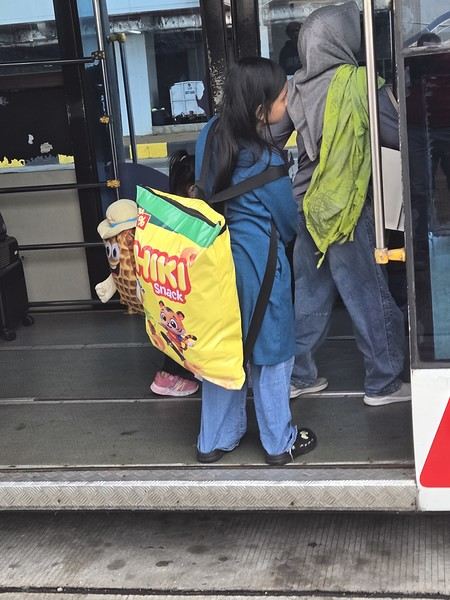
Friday 07/10: In search of the lost suitcase First challenge of the morning: finding our missing suitcase. They sent us to the airport basement, to the staff entrance. We were greeted with smiles, and an airport employee led me through the underground corridors back to the baggage claim. Right on time at 9 AM, the suitcase arrived, just like they’d promised. We were finally complete! Off we went to change terminals, grab a well-deserved meal, and board our fifth flight to Makassar. Little side note: I struggled for a while trying to book domestic flights directly on the airlines’ websites with no luck. Without meaning to advertise (though I guess I am a little), I realized it’d be easier to use sites like tiket.com or Traveloka. That turned out to be a great choice—I even ended up booking hotels through them later in the trip. 12:40 PM: We were on our way to Makassar. First good news: we were the only tourists. Well, the only European tourists on the flight, anyway. No, you’re not dreaming—the bag is full of... potato chip packets. To each their own souvenirs, I guess...
When we arrived in Makassar, a driver was waiting to take us straight to Rammang Rammang: 250,000 IDR (12 €) to our guesthouse (Rammang Rammang House). Forget about meeting people on the bus—we were headed straight to the first stop of our trip, and it was already stunning.
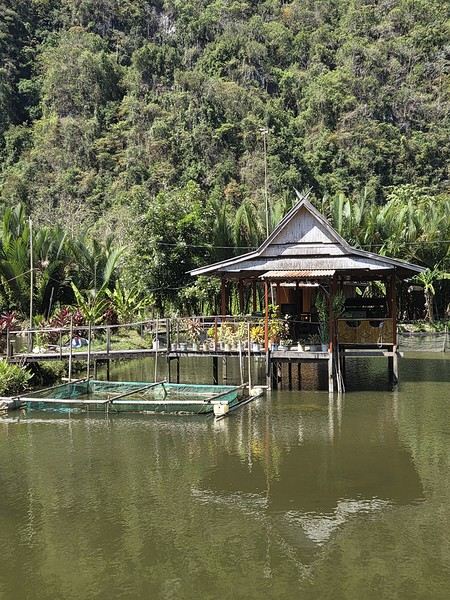
My kids’ guesthouse: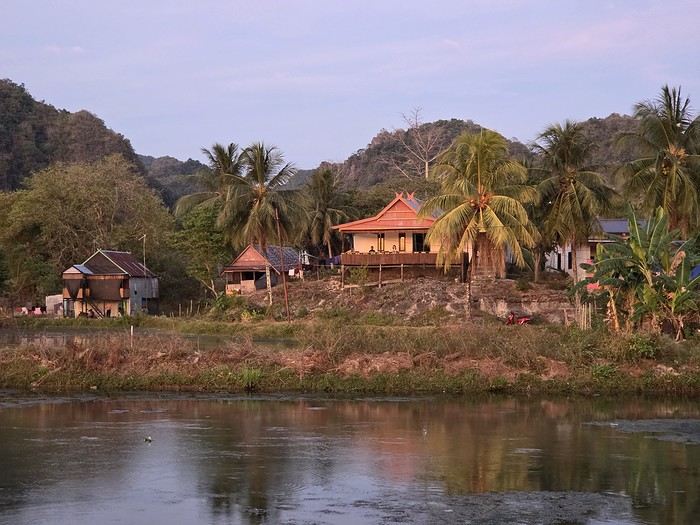
Ours: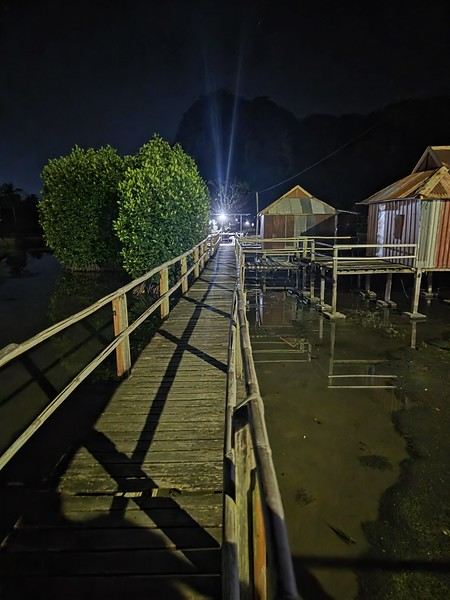
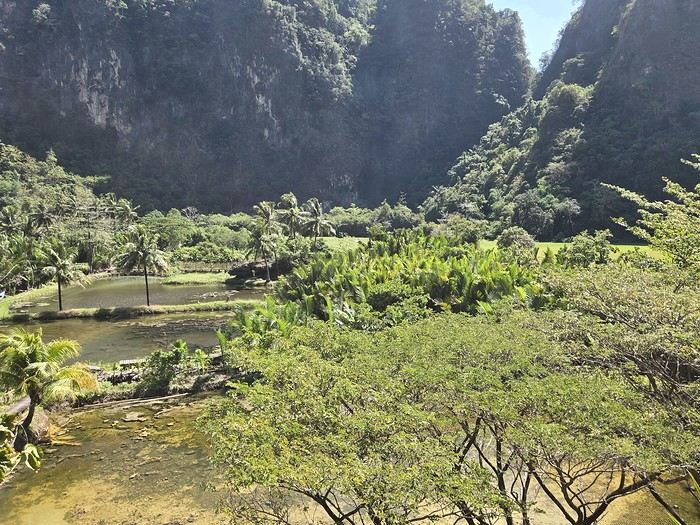
View of the little lake: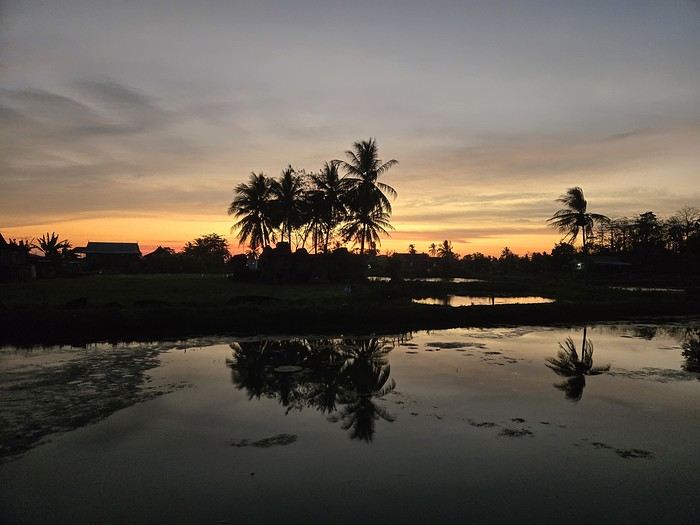
But not everything is straightforward around here. I wanted to get a local SIM card for internet and calls. I found them expensive at Jakarta’s airport (20 € for 20 GB), so I decided to wait. Well, no luck in Rammang Rammang either. You can’t just buy one from the local shop—you need a Telkomsat store (they have the best coverage). So we’d have to wait for Rantepao to get Wi-Fi... When I say "local shop," I mean the little shack around the corner. No big deal—we’d find one easily in Rantepao for 5 € and 25 GB. So there we were, offline, just the four of us enjoying the amazing view.
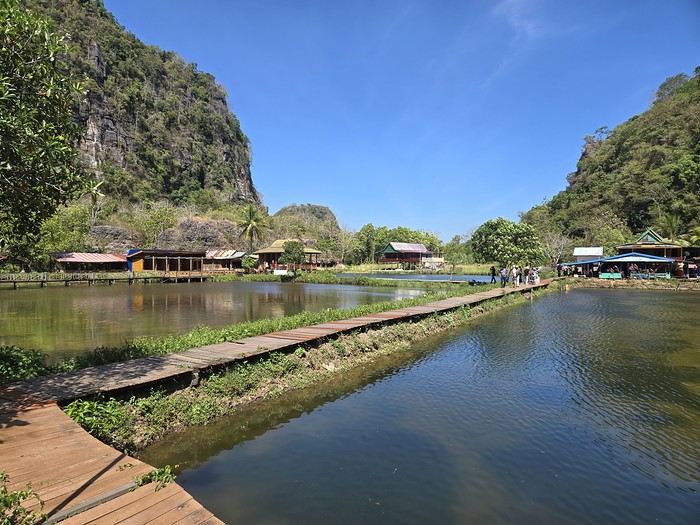
Saturday 07/11: Rammang Rammang We woke up early to the sound of wedding music blasting through the village (everyone’s invited!). Off we went to explore the area. A little walking, a little boat ride (shared with a French tourist and a Polish one—yes, there *are* tourists here, just not many; 750,000 IDR for up to 8 people) through a lovely canal, and we discovered the karst site. It was peaceful and beautiful. The river: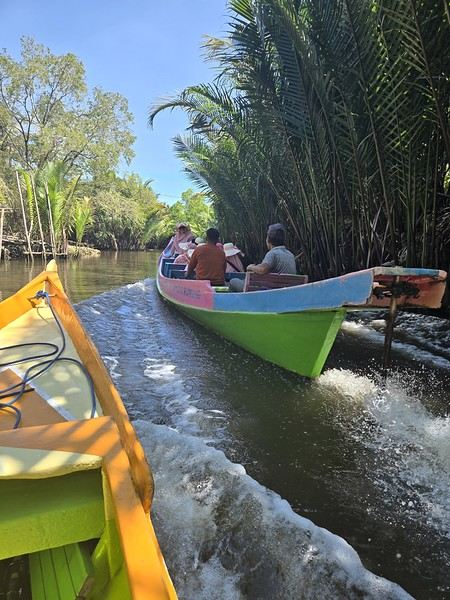 The karst site:
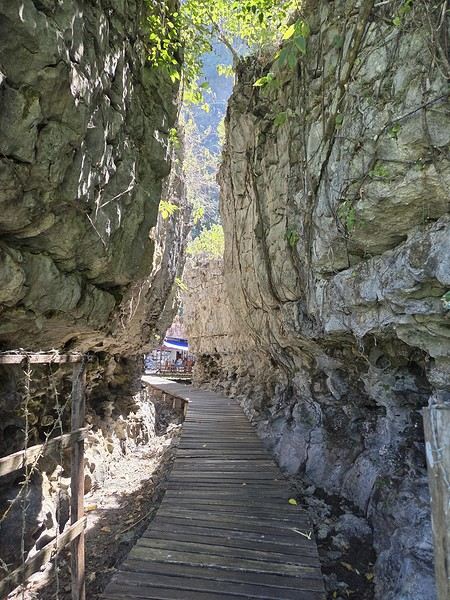
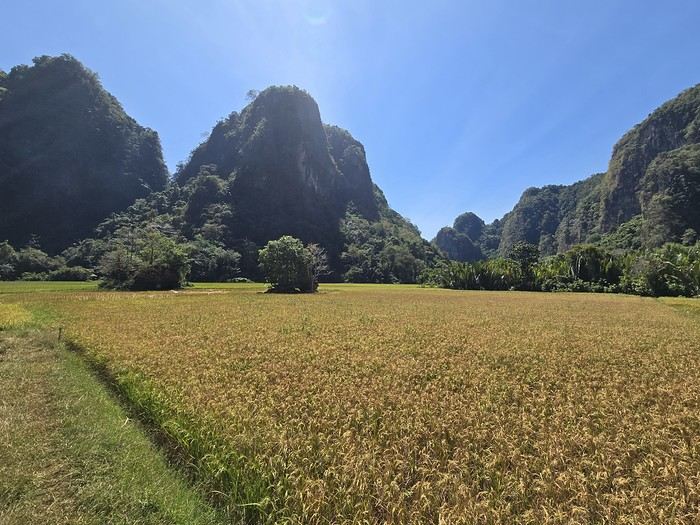
Wednesday 07/08 - Thursday 07/09: We left Montpellier for what was supposed to be five flights, though we only took four to start, landing in Jakarta. We picked up our luggage there to catch a flight to Makassar the next day. That’s the only way we could get an affordable ticket (702 €). I won’t bore you with the flight details—there’s not much to say. We arrived at 7 PM and considered heading straight to Makassar that evening. But we opted for a recovery night before taking off again. Good thing we did, because my son’s suitcase was missing... First contact with the locals was a bit stressful—a trip without your luggage isn’t exactly fun. But right away, a woman reassured us: the suitcase was just enjoying some extra time in Singapore. Maybe it was doing some last-minute shopping. Anyway, nothing serious—it was supposed to arrive at 9 AM the next day. That gave us some breathing room since our flight wasn’t until noon. So off we went to our hotel (Days Hotel & Suites) near the airport. It was cheap (40 € for three rooms—my kids are older and need their space), but it wasn’t worth much more. The place had definitely seen better days. But no big deal—we were only there for the night, and... we got to watch France beat Morocco in the World Cup live at 3 AM. That’s what really mattered!
Friday 07/10: In search of the lost suitcase First challenge of the morning: finding our missing suitcase. They sent us to the airport basement, to the staff entrance. We were greeted with smiles, and an airport employee led me through the underground corridors back to the baggage claim. Right on time at 9 AM, the suitcase arrived, just like they’d promised. We were finally complete! Off we went to change terminals, grab a well-deserved meal, and board our fifth flight to Makassar. Little side note: I struggled for a while trying to book domestic flights directly on the airlines’ websites with no luck. Without meaning to advertise (though I guess I am a little), I realized it’d be easier to use sites like tiket.com or Traveloka. That turned out to be a great choice—I even ended up booking hotels through them later in the trip. 12:40 PM: We were on our way to Makassar. First good news: we were the only tourists. Well, the only European tourists on the flight, anyway. No, you’re not dreaming—the bag is full of... potato chip packets. To each their own souvenirs, I guess...
When we arrived in Makassar, a driver was waiting to take us straight to Rammang Rammang: 250,000 IDR (12 €) to our guesthouse (Rammang Rammang House). Forget about meeting people on the bus—we were headed straight to the first stop of our trip, and it was already stunning.
My kids’ guesthouse:
Ours:
View of the little lake:
But not everything is straightforward around here. I wanted to get a local SIM card for internet and calls. I found them expensive at Jakarta’s airport (20 € for 20 GB), so I decided to wait. Well, no luck in Rammang Rammang either. You can’t just buy one from the local shop—you need a Telkomsat store (they have the best coverage). So we’d have to wait for Rantepao to get Wi-Fi... When I say "local shop," I mean the little shack around the corner. No big deal—we’d find one easily in Rantepao for 5 € and 25 GB. So there we were, offline, just the four of us enjoying the amazing view.
Saturday 07/11: Rammang Rammang We woke up early to the sound of wedding music blasting through the village (everyone’s invited!). Off we went to explore the area. A little walking, a little boat ride (shared with a French tourist and a Polish one—yes, there *are* tourists here, just not many; 750,000 IDR for up to 8 people) through a lovely canal, and we discovered the karst site. It was peaceful and beautiful. The river:
The karst site:
Off on an adventure in Namibia!
April 11 – Day 1
It was winter, a winter with beautiful weather, A season that only exists in the southwest of America, I remember very well what I told you that morning A month ago... A century ago, an eternity ago... We’ll go... wherever you want, whenever you want...
Well, yeah, back from our adventure in our enchanting American West just a month ago, we’re already taking a bite out of one of its lesser-known competitors. "Flo, if you had to pick just one reason to justify your love for the U.S., what would it be?" The greasy, dripping burgers? No, I don’t think I’m going out on a limb by saying it’d be the wide-open spaces... And that’s exactly what our new quest is taking us to—a land on the other side of the globe where the horizon also seems endless, where silence tastes like salty wind and sand, where freedom is measured in kilometers of desert tracks, where the GPS is mostly there to confirm you’re lost in the middle of nowhere... Add to that magic formula the fact that you’ll see more zebras, giraffes, wildebeest, and elephants than people per square kilometer, and you can imagine us setting foot in Southern Africa for the first time, more precisely at the small airport in Windhoek, capital of... of...? Brush up on your geography, damn it! We’re landing in Namibia!!!
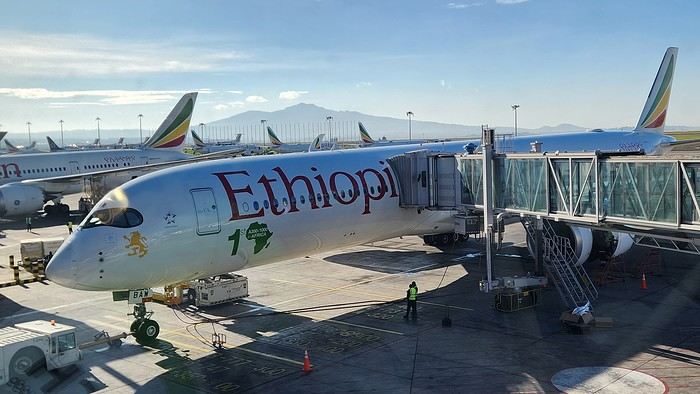
To be honest, Namibian landscapes have been flirting with me for ages. So how did I resist this island of temptation for so long? First, the budget. Let’s just say that for the same amount of effort (and kidneys), the bank lets you choose two other adventures almost anywhere else on the planet. Then there were my girls. Yeah, back then, they were too little to dose up on Malarone, the only malaria remedy at the time... Long story short, ten years later, all the planets have aligned. First, I won the Euromillions! Well, almost... Let’s just say my girls are now old enough... not to take Malarone, but to stop following me on all my adventures! Jackpot! "Flo, how about a little two-person caprice, just the two of us, tackling the Namibian tracks?"
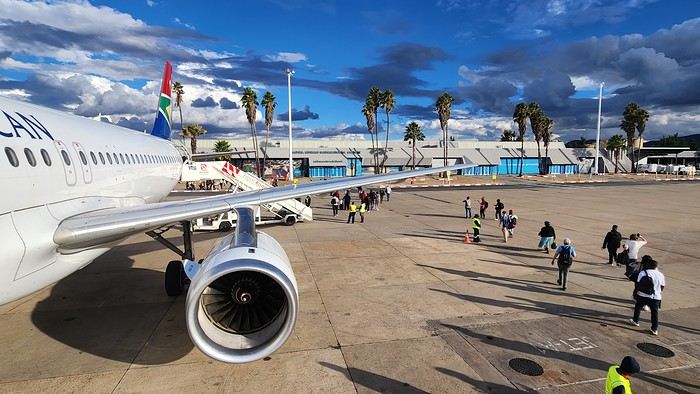
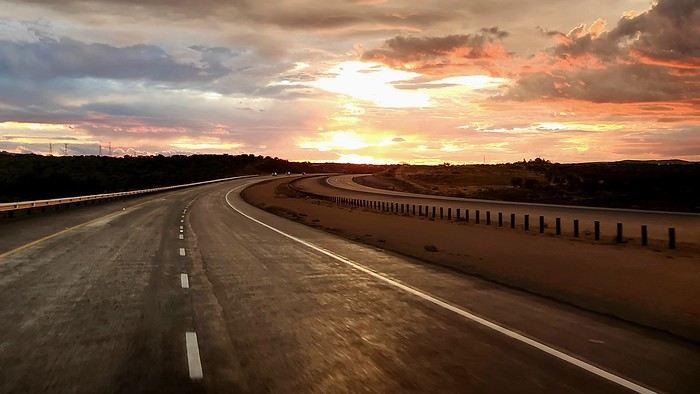
As we landed on the runway, first wow effect: The horizon is immense. It’s flat as can be, incredibly flat... So much flat space! Did I mention it was flat?... Looking into the distance, it feels like your gaze could circle the Earth without hitting a single obstacle—until you end up staring at your own backside. "Oh, what a nice view!" Well, it’s the first time I’ve seen my butt from this angle! Touching moment... Sorry, I’m rambling—must be the exhaustion from the three-flight marathon we just powered through via Ethiopia and South Africa... And yet, no time to philosophize about my anatomy. As usual, we want to rack up our first kilometers to be front and center at dawn tomorrow. After wrapping up the tedious Namibian immigration formalities and meeting the 4x4 that’ll be our companion day and night for the next fifteen days, we’re off! We’re not exactly fresh, but we’re ready to tackle the next five hundred kilometers in night mode, cruise control set due south! Just outside Windhoek, the local wildlife—a jackal—welcomes us with a smile: "Welcome to Namibia!" That’s what it said! Honest... Okay, first endless straight road, first flaming sunset, first corrugated dirt track, first Milky Way with zero light pollution... You get it—it’s definitely the day of firsts... First night camping, too, in the big trunk of our Toyota Fortuner parked by the side of the track... The real adventure, the kind that smells under the arms, can finally begin...
It was winter, a winter with beautiful weather, A season that only exists in the southwest of America, I remember very well what I told you that morning A month ago... A century ago, an eternity ago... We’ll go... wherever you want, whenever you want...
Well, yeah, back from our adventure in our enchanting American West just a month ago, we’re already taking a bite out of one of its lesser-known competitors. "Flo, if you had to pick just one reason to justify your love for the U.S., what would it be?" The greasy, dripping burgers? No, I don’t think I’m going out on a limb by saying it’d be the wide-open spaces... And that’s exactly what our new quest is taking us to—a land on the other side of the globe where the horizon also seems endless, where silence tastes like salty wind and sand, where freedom is measured in kilometers of desert tracks, where the GPS is mostly there to confirm you’re lost in the middle of nowhere... Add to that magic formula the fact that you’ll see more zebras, giraffes, wildebeest, and elephants than people per square kilometer, and you can imagine us setting foot in Southern Africa for the first time, more precisely at the small airport in Windhoek, capital of... of...? Brush up on your geography, damn it! We’re landing in Namibia!!!
To be honest, Namibian landscapes have been flirting with me for ages. So how did I resist this island of temptation for so long? First, the budget. Let’s just say that for the same amount of effort (and kidneys), the bank lets you choose two other adventures almost anywhere else on the planet. Then there were my girls. Yeah, back then, they were too little to dose up on Malarone, the only malaria remedy at the time... Long story short, ten years later, all the planets have aligned. First, I won the Euromillions! Well, almost... Let’s just say my girls are now old enough... not to take Malarone, but to stop following me on all my adventures! Jackpot! "Flo, how about a little two-person caprice, just the two of us, tackling the Namibian tracks?"
As we landed on the runway, first wow effect: The horizon is immense. It’s flat as can be, incredibly flat... So much flat space! Did I mention it was flat?... Looking into the distance, it feels like your gaze could circle the Earth without hitting a single obstacle—until you end up staring at your own backside. "Oh, what a nice view!" Well, it’s the first time I’ve seen my butt from this angle! Touching moment... Sorry, I’m rambling—must be the exhaustion from the three-flight marathon we just powered through via Ethiopia and South Africa... And yet, no time to philosophize about my anatomy. As usual, we want to rack up our first kilometers to be front and center at dawn tomorrow. After wrapping up the tedious Namibian immigration formalities and meeting the 4x4 that’ll be our companion day and night for the next fifteen days, we’re off! We’re not exactly fresh, but we’re ready to tackle the next five hundred kilometers in night mode, cruise control set due south! Just outside Windhoek, the local wildlife—a jackal—welcomes us with a smile: "Welcome to Namibia!" That’s what it said! Honest... Okay, first endless straight road, first flaming sunset, first corrugated dirt track, first Milky Way with zero light pollution... You get it—it’s definitely the day of firsts... First night camping, too, in the big trunk of our Toyota Fortuner parked by the side of the track... The real adventure, the kind that smells under the arms, can finally begin...
The 2026 Southwest USA Road Trip
Hi everyone, we're back from a DIY USA road trip we organized from July 31, 2026, to August 26, 2026.
The destination: The Southwest USA, including Texas, Arizona, and New Mexico. Roughly 7,000 kilometers covered.
The car: A Chevrolet Equinox for two, rented through BSP Auto and Avis. Inside, we had 2 suitcases, a travel bag, two carry-on bags, a Walmart cooler, photo gear, and water bottles (a 40-pack).
The route: Dallas DFW, Fort Worth, Houston, Austin, San Antonio, Alpine, El Paso, Tucson, Sedona, Albuquerque, Amarillo, and back to Dallas to finish with a departure from DFW.
The travelers: Two seniors well advanced in years (73 and 75) but still active (nothing too physically demanding—to stay alive and fund our trips), fully independent physically, though a bit less so mentally. Big USA fans, a country where anything is possible. More walkers than hikers, preferring 3-star hotels over roadside motels, Italian restaurants over US food, frequent stops for photos, museums over nothing, naps over forced marches. Not too whiny, just enough to stay French in the land of the "great Satan," as they say. Not great with languages—street English (but handy), and my Spanish is non-existent except for: "Hola! Una cerveza por favor!" That’s about it. My wife understands everything but refuses to speak.
The cost of the road trip: Around 12,000 €, including AF flights, the car, gas, gifts, visits, and everything else. Well managed, since we’d budgeted 13,500 € initially.
The positive side: A delight, with those endless open roads. Museums to discover. The realization of the Hispanic presence and its important history in this part of America. Lovely locals. Tourists who were more or less friendly. A terrible Texan accent that was hard to understand. Gas stations that were like real stores, with prepared food, alcohol sold in Arizona and New Mexico, and employees who were always up for a laugh!
The negative side: The heat throughout the trip... 43°C in Dallas at the end. Impossible to walk the streets. Lots of homeless people in downtown Dallas. Hotel breakfasts that were always the same. You get used to it.
So, it was positive overall, but the concept is starting to wear us out. We might rethink the DIY road trip model for next time. If the man upstairs grants us more time.
Next up, we’ll wait for the first batch of sorted photos to go through the wringer.
See you soon.
The destination: The Southwest USA, including Texas, Arizona, and New Mexico. Roughly 7,000 kilometers covered.
The car: A Chevrolet Equinox for two, rented through BSP Auto and Avis. Inside, we had 2 suitcases, a travel bag, two carry-on bags, a Walmart cooler, photo gear, and water bottles (a 40-pack).
The route: Dallas DFW, Fort Worth, Houston, Austin, San Antonio, Alpine, El Paso, Tucson, Sedona, Albuquerque, Amarillo, and back to Dallas to finish with a departure from DFW.
The travelers: Two seniors well advanced in years (73 and 75) but still active (nothing too physically demanding—to stay alive and fund our trips), fully independent physically, though a bit less so mentally. Big USA fans, a country where anything is possible. More walkers than hikers, preferring 3-star hotels over roadside motels, Italian restaurants over US food, frequent stops for photos, museums over nothing, naps over forced marches. Not too whiny, just enough to stay French in the land of the "great Satan," as they say. Not great with languages—street English (but handy), and my Spanish is non-existent except for: "Hola! Una cerveza por favor!" That’s about it. My wife understands everything but refuses to speak.
The cost of the road trip: Around 12,000 €, including AF flights, the car, gas, gifts, visits, and everything else. Well managed, since we’d budgeted 13,500 € initially.
The positive side: A delight, with those endless open roads. Museums to discover. The realization of the Hispanic presence and its important history in this part of America. Lovely locals. Tourists who were more or less friendly. A terrible Texan accent that was hard to understand. Gas stations that were like real stores, with prepared food, alcohol sold in Arizona and New Mexico, and employees who were always up for a laugh!
The negative side: The heat throughout the trip... 43°C in Dallas at the end. Impossible to walk the streets. Lots of homeless people in downtown Dallas. Hotel breakfasts that were always the same. You get used to it.
So, it was positive overall, but the concept is starting to wear us out. We might rethink the DIY road trip model for next time. If the man upstairs grants us more time.
Next up, we’ll wait for the first batch of sorted photos to go through the wringer.
See you soon.
3 semaines au Myanmar avec "Les Gros Sacs"! English translation pending
Bonjour tout le monde,
Nous sommes actuellement en tour du monde et venons de quitter le Myanmar il y a tout juste une semaine. Nous avons vraiment aimé ce pays et souhaitons partager cela avec vous :)
En espérant que : - ces infos puissent servir à d'autres pour organiser leur voyage - les photos vous plairont - cela vous fasse un peu sourire
Le contexte : - Du 24 septembre au 16 octobre 2016 - En couple - 2ème destination d'un tour du monde - Les Gros Sacs = Nous = Anaïs & Florent :) - Notre blog si par hasard notre style vous plait : www.lesgrossacs.com
Sommaire du carnet : - Yangon - Mandalay, Amarapura, Inwa - Bagan <3 - Trek de Kalaw au Lac Inle - Le Lac Inle - Moulmein & Hpa An - Le bilan (en chiffre et en lettres) - La vidéo - Vos critiques et insultes :D
Allez c'est parti avec la 1ère partie sur Yangon (pour info, nous venions du Sri Lanka). Bon c'est pas l'endroit que nous avons préféré et surtout on ne s'y est pas trop attardé donc ça ne sera pas la partie la plus intéressante :p
A la découverte de Yangon Dimanche 25 septembre. Grosse journée en perspective, car nous avons décidé de partir le soir même pour Mandalay, au centre du pays. Nous ne sommes pas trop grandes villes, et préférons ne pas nous attarder à Yangon.
Malgré tout, on commence à ressentir un petit dépaysement, cette « capitale » (qui n’en est plus une) a un petit quelque chose de différent des autres mégapoles asiatiques que nous connaissons. On s’affère le matin à trouver le point de départ des minibus qui nous mèneront à la station de bus principale en dehors de la ville. Et ce n’est pas gagné ! Oui, première grosse claque, ici ils ne bitent pas un mot d’anglais et nous ben… on ne bite pas un mot de birman. Ça donne lieu à des situations assez cocasses, car Flo ne se laisse jamais démonter. Exemple de conversation entre Flo et un gentil monsieur voulant aider (cette conversation a été traduite pour le bien de tous) :
Flo : Bonjour, vous savez si les minibus d’ici vont bien à la station centrale ? Gentil monsieur voulant aider : Oui, oké ! Flo : Et vous savez tout les combien de temps il passe ? Gentil monsieur voulant aider : Oké, oké ! Anaïs : Flo, il ne parle pas anglais… Flo : Il passe toutes les heures, toutes les deux heures ? Pour ce soir c’est bon ? Gentil monsieur voulant aider : Oui, oké ! Flo : Sinon, on passe ce soir, on se fait une bouffe ? Gentil monsieur voulant aider : Oké, oké !
On part donc du postulat que ca sera « oké », mais on prévoira quand même un peu de marge. On se laisse déambuler dans les rues de downtown, plutôt surprenantes par leur taille et nous imprégnons de cette toute nouvelle atmosphère. Le gros problème de Yangon, c’est sa démesure. Pour vous donner une idée, la ville fait quasiment six fois la taille de Paris. Il est donc très compliqué de la visiter à pied, qui plus est en une journée. Donc taxi oblige… tout ce qu’on déteste.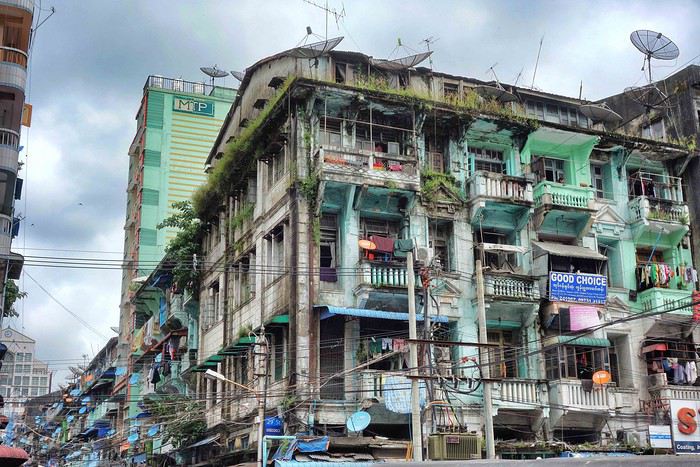 On visite notre première pagode appelée : Chauzkhtakyi pagoda (à vos souhaits). Elle abrite un des plus grands Buddha couchés du pays. Ca n’avait pas beaucoup de charme, mais c’est quand même assez impressionnant. On connaît ensuite notre première pluie de mousson (#WoopWoop). C’est la fin de la saison des pluies au Myanmar, on espérait passer entre les gouttes, c’est raté.
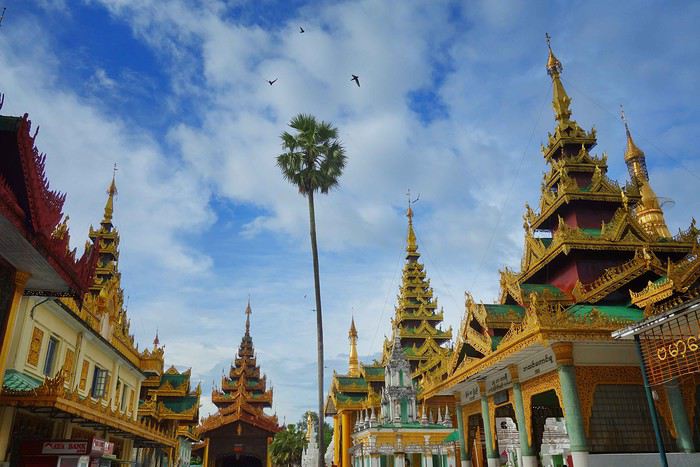
S’il y a un lieu à visiter à Yangon, il s’agit de la Shwedagon pagoda. Ce temple est incroyablement beau et l’atmosphère qui y règne avec tous ces fidèles est géniale. On vous épargne les détails de la visite, mais vraiment on recommande.
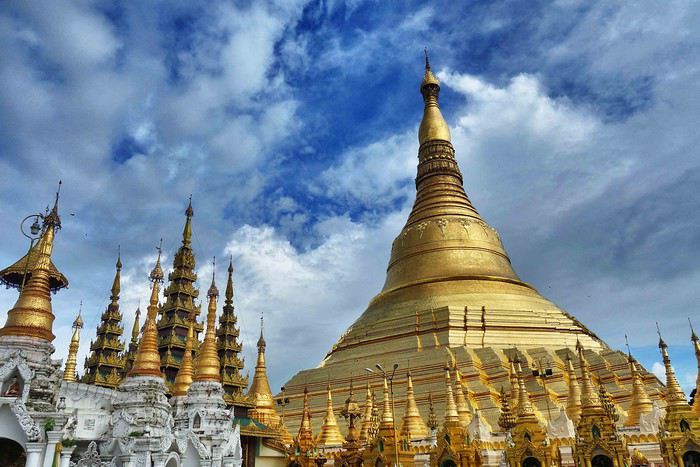
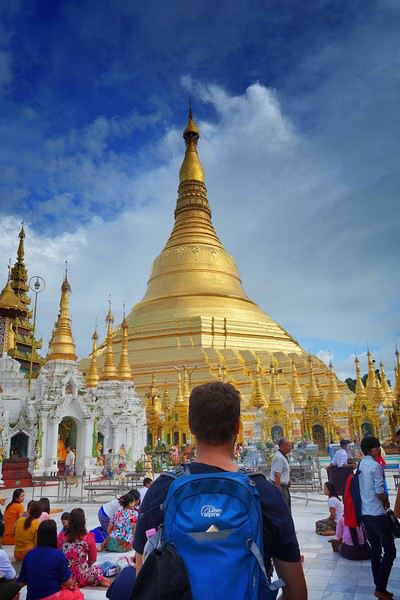
Aparté cuteness Anaïs : j’ai vécu un moment ultra trognon à la Shwedagon pagoda. J’étais assise sur l’immense escalier de la pagode en attendant Flo quand un petit bout de chou d’à peine 2 ans m’a remarqué. Il était en train de manger ses chips (enfin leur équivalent). Voyant que j’étais seule, il s’est assis à côté de moi et a partagé une énorme poignée de ses chips avec moi. Bon voilà, le moment gnangnan s’est arrêté quand Flo est arrivé, que le gamin a pris peur et qu’il s’est enfuit voir sa mère.
A la découverte de la mousson Direction l’hôtel pour récupérer nos affaires et prendre notre minibus. C’est forcément à ce moment là que le petit Jésus de la Mousson s’est dit qu’il était temps de nous baptiser. On se prend une première saucée (oui, car il y en aura une autre) pour sauter dans un taxi avec nos affaires.
On se fait larguer au point repéré le matin même, mais le déluge redouble d’intensité. Et là, aucun minibus ne veut nous prendre. En l’espace deux minutes, on est complètement trempés (chaussures & chaussettes comprises après avoir marché dans une flaque de 10cm de hauteur). Et là, gros fou-rire nerveux d’Anaïs. Impossible de s’arrêter, surtout en voyant Flo courir partout pour trouver un bus. Et comme d’habitude, il y est parvenu.
On prendra finalement un bus de ville. Les femmes du bus n’ont pas eu l’air de beaucoup apprécier Anaïs. C’est ce qu’on en a déduit après que 4 femmes d’affilé assises à sa droite aient changé de place et que la vieille dame assise à sa gauche crachait à ses pieds (j’ai vérifié, je puais même pas).
A ce moment là, on se dit « qu’est-ce qu’on fout là, alors qu’on pourrait être tranquille Emile dans notre appart vue Tour Eiffel devant la téloche en mangeant un bon morceau de morbier ?! ». C’est le paradoxe du voyageur, c’est exactement pour ça qu’on voyage. On se marrait, mais on avait surtout aussi très peur, car on savait que 8h de bus nous attendait. Et ici le bus même si c’est très confort c’est 9° pour tout le monde., pas un de plus. Finalement, nos sacs n’ont pas (trop) pris l’eau et heureusement vue la nuit polaire que l’on passera dans le bus.
Infos Pratiques
Trajet aéroport Yangon/Downtown : 6000 Kyatts (4€). Durée : 20mn (sans bouchons le soir) Entrée Shewdagon Pagoda : 8000 Kyatts (6€) Yangon – Agga Bed & Breakfast: 29750 Kyatts (21€) la nuit. Pas terrible du tout.
A suivre, Mandalay et sa région
*** Update : je vous mets le lien vers la vidéo qui retrace ce voyage en 3mn, enjoy ! www.facebook.com/...os/1334432063254398/
Nous sommes actuellement en tour du monde et venons de quitter le Myanmar il y a tout juste une semaine. Nous avons vraiment aimé ce pays et souhaitons partager cela avec vous :)
En espérant que : - ces infos puissent servir à d'autres pour organiser leur voyage - les photos vous plairont - cela vous fasse un peu sourire
Le contexte : - Du 24 septembre au 16 octobre 2016 - En couple - 2ème destination d'un tour du monde - Les Gros Sacs = Nous = Anaïs & Florent :) - Notre blog si par hasard notre style vous plait : www.lesgrossacs.com
Sommaire du carnet : - Yangon - Mandalay, Amarapura, Inwa - Bagan <3 - Trek de Kalaw au Lac Inle - Le Lac Inle - Moulmein & Hpa An - Le bilan (en chiffre et en lettres) - La vidéo - Vos critiques et insultes :D
Allez c'est parti avec la 1ère partie sur Yangon (pour info, nous venions du Sri Lanka). Bon c'est pas l'endroit que nous avons préféré et surtout on ne s'y est pas trop attardé donc ça ne sera pas la partie la plus intéressante :p
A la découverte de Yangon Dimanche 25 septembre. Grosse journée en perspective, car nous avons décidé de partir le soir même pour Mandalay, au centre du pays. Nous ne sommes pas trop grandes villes, et préférons ne pas nous attarder à Yangon.
Malgré tout, on commence à ressentir un petit dépaysement, cette « capitale » (qui n’en est plus une) a un petit quelque chose de différent des autres mégapoles asiatiques que nous connaissons. On s’affère le matin à trouver le point de départ des minibus qui nous mèneront à la station de bus principale en dehors de la ville. Et ce n’est pas gagné ! Oui, première grosse claque, ici ils ne bitent pas un mot d’anglais et nous ben… on ne bite pas un mot de birman. Ça donne lieu à des situations assez cocasses, car Flo ne se laisse jamais démonter. Exemple de conversation entre Flo et un gentil monsieur voulant aider (cette conversation a été traduite pour le bien de tous) :
Flo : Bonjour, vous savez si les minibus d’ici vont bien à la station centrale ? Gentil monsieur voulant aider : Oui, oké ! Flo : Et vous savez tout les combien de temps il passe ? Gentil monsieur voulant aider : Oké, oké ! Anaïs : Flo, il ne parle pas anglais… Flo : Il passe toutes les heures, toutes les deux heures ? Pour ce soir c’est bon ? Gentil monsieur voulant aider : Oui, oké ! Flo : Sinon, on passe ce soir, on se fait une bouffe ? Gentil monsieur voulant aider : Oké, oké !
On part donc du postulat que ca sera « oké », mais on prévoira quand même un peu de marge. On se laisse déambuler dans les rues de downtown, plutôt surprenantes par leur taille et nous imprégnons de cette toute nouvelle atmosphère. Le gros problème de Yangon, c’est sa démesure. Pour vous donner une idée, la ville fait quasiment six fois la taille de Paris. Il est donc très compliqué de la visiter à pied, qui plus est en une journée. Donc taxi oblige… tout ce qu’on déteste.
On visite notre première pagode appelée : Chauzkhtakyi pagoda (à vos souhaits). Elle abrite un des plus grands Buddha couchés du pays. Ca n’avait pas beaucoup de charme, mais c’est quand même assez impressionnant. On connaît ensuite notre première pluie de mousson (#WoopWoop). C’est la fin de la saison des pluies au Myanmar, on espérait passer entre les gouttes, c’est raté.S’il y a un lieu à visiter à Yangon, il s’agit de la Shwedagon pagoda. Ce temple est incroyablement beau et l’atmosphère qui y règne avec tous ces fidèles est géniale. On vous épargne les détails de la visite, mais vraiment on recommande.
Aparté cuteness Anaïs : j’ai vécu un moment ultra trognon à la Shwedagon pagoda. J’étais assise sur l’immense escalier de la pagode en attendant Flo quand un petit bout de chou d’à peine 2 ans m’a remarqué. Il était en train de manger ses chips (enfin leur équivalent). Voyant que j’étais seule, il s’est assis à côté de moi et a partagé une énorme poignée de ses chips avec moi. Bon voilà, le moment gnangnan s’est arrêté quand Flo est arrivé, que le gamin a pris peur et qu’il s’est enfuit voir sa mère.
A la découverte de la mousson Direction l’hôtel pour récupérer nos affaires et prendre notre minibus. C’est forcément à ce moment là que le petit Jésus de la Mousson s’est dit qu’il était temps de nous baptiser. On se prend une première saucée (oui, car il y en aura une autre) pour sauter dans un taxi avec nos affaires.
On se fait larguer au point repéré le matin même, mais le déluge redouble d’intensité. Et là, aucun minibus ne veut nous prendre. En l’espace deux minutes, on est complètement trempés (chaussures & chaussettes comprises après avoir marché dans une flaque de 10cm de hauteur). Et là, gros fou-rire nerveux d’Anaïs. Impossible de s’arrêter, surtout en voyant Flo courir partout pour trouver un bus. Et comme d’habitude, il y est parvenu.
On prendra finalement un bus de ville. Les femmes du bus n’ont pas eu l’air de beaucoup apprécier Anaïs. C’est ce qu’on en a déduit après que 4 femmes d’affilé assises à sa droite aient changé de place et que la vieille dame assise à sa gauche crachait à ses pieds (j’ai vérifié, je puais même pas).
A ce moment là, on se dit « qu’est-ce qu’on fout là, alors qu’on pourrait être tranquille Emile dans notre appart vue Tour Eiffel devant la téloche en mangeant un bon morceau de morbier ?! ». C’est le paradoxe du voyageur, c’est exactement pour ça qu’on voyage. On se marrait, mais on avait surtout aussi très peur, car on savait que 8h de bus nous attendait. Et ici le bus même si c’est très confort c’est 9° pour tout le monde., pas un de plus. Finalement, nos sacs n’ont pas (trop) pris l’eau et heureusement vue la nuit polaire que l’on passera dans le bus.
Infos Pratiques
Trajet aéroport Yangon/Downtown : 6000 Kyatts (4€). Durée : 20mn (sans bouchons le soir) Entrée Shewdagon Pagoda : 8000 Kyatts (6€) Yangon – Agga Bed & Breakfast: 29750 Kyatts (21€) la nuit. Pas terrible du tout.
A suivre, Mandalay et sa région
*** Update : je vous mets le lien vers la vidéo qui retrace ce voyage en 3mn, enjoy ! www.facebook.com/...os/1334432063254398/