Results for "douane+|+55"
22726 results found.
Voyage à Muscat (Oman) au départ de Nice (France) en voiture English translation pending
Salut a tous!!
Voila mon projet est de partir en voiture avec un ami a Oman en passant par: l'italie, slovanie, croatie, bosnie, serbie, bulgari, turquie, Syrie, jordanie, arabie saoudite, emirats arabs unis et puis enfin oman...
Je connais deja bien le moyen orient car j'ai y habite 10 ans il ya quelques annee..
Mais je veux enfaite savoir quels types de formalites jai besoin a partir de la syrie, carnet de voyage ??triptyque ??ET pour la jordanie et l'arabie saoudite de meme....Pour les visas ya pas de prob je les aient..c'est juste au niveau de la voiture si quelqun a des rensignements a me donner ou quoi, le passage en douane ca se passe comment ?? en vous remerciant...
Merci
Bonne annee a tous et je vous souhaite surtout de superbes voyages...
🙂🙂
ALex
Voila mon projet est de partir en voiture avec un ami a Oman en passant par: l'italie, slovanie, croatie, bosnie, serbie, bulgari, turquie, Syrie, jordanie, arabie saoudite, emirats arabs unis et puis enfin oman...
Je connais deja bien le moyen orient car j'ai y habite 10 ans il ya quelques annee..
Mais je veux enfaite savoir quels types de formalites jai besoin a partir de la syrie, carnet de voyage ??triptyque ??ET pour la jordanie et l'arabie saoudite de meme....Pour les visas ya pas de prob je les aient..c'est juste au niveau de la voiture si quelqun a des rensignements a me donner ou quoi, le passage en douane ca se passe comment ?? en vous remerciant...
Merci
Bonne annee a tous et je vous souhaite surtout de superbes voyages...
🙂🙂
ALex
Liban en voiture English translation pending
Bonjour, je souhaite me rendre au Liban via la Syrie avec mon vehicule personnel.
On m a dit qu il etait impossible de rentrer au Liban avec un vehicule diesel quelque soit son age, ainsi qu avec une voiture essence de + de 5 ans .Avez vous des infos a ce sujet ainsi que sur le montant des taxes a payer pour la voiture essence .
Merci d avance . Hans
On m a dit qu il etait impossible de rentrer au Liban avec un vehicule diesel quelque soit son age, ainsi qu avec une voiture essence de + de 5 ans .Avez vous des infos a ce sujet ainsi que sur le montant des taxes a payer pour la voiture essence .
Merci d avance . Hans
Cherche dispensaire au Maroc English translation pending
Je part dans qques jours pour le Maroc en camion et j ai une cargaison de medicaments.
Je crois que j ai pas trop fait les choses dans l ordre...
En fait, ces médicaments je souhaite les donner dans des dispensaires, mais j ai aucune adresse...
Ce sont des medicaments recuperes chez des medecins traitants, c est impressionnant tout ce qu ils peuvent avoir comme echantillons medical !
Mais j ai apprit aussi que si je me fait controler a la douane avec ce chargement je risque qques pb!
Alors si qqu un ou qqu une a des infos a me fournir, je voudrais bien etre utile mais pas avoir des pb, ni rester avec tout ces medocs sur le dos !!!
Merci d avance.
Nani
Taxe touristique 10 $ ou 20 $ USD en République Dominicaine? English translation pending
Combien est la taxe touristique 10 $ ou 20 $ USD en RD ? On me dit que c'est 20 $ USD maintenant, j'aimerais avoir une confirmation.
Merci
Merci
Portable en Asie? English translation pending
Bonjour,
Je vais partir avec mon portable, destination Thailande, Birmanie, Indonesie, et eventuellement, Laos, Cambodge, Vietnam. Je dois d'apres vous le declarer ou pas? Vous l'avez deja fait?
Merci pour vos reponses.
Je vais partir avec mon portable, destination Thailande, Birmanie, Indonesie, et eventuellement, Laos, Cambodge, Vietnam. Je dois d'apres vous le declarer ou pas? Vous l'avez deja fait?
Merci pour vos reponses.
Los Angeles - Baja California English translation pending
Salut tout le monde,
Je suis actuellement sur Los Angeles et dans une semaine je descends sur Baja California.
Je compte me ballader et descendre sur Cabo San Lucas rejoindre un ami.
Si il y a du monde dans le coin envoyer un mail pour voir si on a des infos a echanger ou tout simplement des bons moments a passer.
A+ francois kykylx@hotmail.com
Camescope en Birmanie? English translation pending
Est-il facile de passer le poste frontière à l'aéroport en Birmanie avec un camescope ?
Merci.😉
Merci.😉
Preuve de sortie de territoire pour entrer en Amérique latine? English translation pending
Salut tout le monde, 😉
Je prépare un voyage en amérique latine de minimun un an, en partant du mexique jusqu'au chili.
Je ne sais pas si au passage des douanes ils vont me laisser passer sans preuve de sortie.
En fait j'ai plusieurs choix pour partir et je privilégie en ce moment d'acheter un billet pas cher pour le mexique, de ne pas prendre le billet de retour et de continuer mon périple par tous les pays jusqu'au CHILI.
D'ou ma question faut il une preuve de sortie du territoire pour rentrer dans les pays d amérique latine.
Aussinon je cherche un bateau pour partir la bas depuis la France.
a+
Je prépare un voyage en amérique latine de minimun un an, en partant du mexique jusqu'au chili.
Je ne sais pas si au passage des douanes ils vont me laisser passer sans preuve de sortie.
En fait j'ai plusieurs choix pour partir et je privilégie en ce moment d'acheter un billet pas cher pour le mexique, de ne pas prendre le billet de retour et de continuer mon périple par tous les pays jusqu'au CHILI.
D'ou ma question faut il une preuve de sortie du territoire pour rentrer dans les pays d amérique latine.
Aussinon je cherche un bateau pour partir la bas depuis la France.
a+
Maroc-Sénégal en fourgon? English translation pending
salut a tous je vais au maroc bientot et je pense par la suite aller au senegal en fourgon?est ce que les douanes et la route sont difficile?plus est que ca passe si on a un chien et qu en est il des conditions sanitaire au nivau du palu fievre jaune
si certain sont interresse je pars dans 2 semaines
merci de vos reponses
Entrée sur le territoire Canadien English translation pending
Bonjour,
Je souhaite entrer au Canada par voie aérienne (aéroport de Montréal), récupérer mon véhicule personnel (une 2CV) au port (arrivée par cargo) et sortir du Canada par voie terrestre (avec ma voiture). Hors, sur certains sites, genre le site gouvernemental des affaires étrangères, il est écrit qu'il est obligatoire d'avoir une billet d'avion aller-retour (ou un aller-simple + un billet vers une autre destination) pour pouvoir entrer sur le territoire canadien. Après interrogation des douanes de Montréal, il semblerait qu'un billet aller-simple soit suffisant si l'on subit un interrogatoire des douaniers, voir d'un agent de l'immigration et que l'on puisse prouver que l'on n'est pas venu pour s'installer au Canada et que l'on va bien en sortir.
Question : quelqu'un a-t-il déjà connu cette situation ? Comment s'est passé le passage de la douane (interrogatoire...) ? Comment prouver que l'on n'est pas venu s'installer sur le teritoire ?
Merci d'avance pour vos réponses !!!
Question : quelqu'un a-t-il déjà connu cette situation ? Comment s'est passé le passage de la douane (interrogatoire...) ? Comment prouver que l'on n'est pas venu s'installer sur le teritoire ?
Merci d'avance pour vos réponses !!!
Se rendre en Syrie au départ de France English translation pending
Bonjour, je cherche par ceux qui l' ont vécu des infos pratiques en particulier sur la Syrie pour 1 voyage -Avril /Mai-en voiture depuis la region lyonnaise via l ' ex Yougoslavie, la Grece .l ' Est de la Turquie, la Syrie, puis continuation sur le Liban et -ou- Israel puis retour par la Turquie, Grece ...avec une partie en ferry depuis la Grece ou la Yougo sur l Italie, ou alors directement en ferry depuis Haifa(Israel ) sur Patras. En particulier : pbs aux frontieres (temps d attente, bakchiches..), possibilitees de campement en Syrie, "pieges" eventuels....etc .
Merci davance . Hans
Merci davance . Hans
Carte de touriste à Cuba? English translation pending
😊Bonjour,
Je pars pour cuba pour la première fois, je suis allé sur le site d'air transat et ils disent que pour aller là-bas, il faut avoir en main passeport et carte de touriste, j'ai mon passeport mais comment je me procure la carte de touriste??😕
Si quelqu'un est au courant veuillez me renseigner et me rassurer s.v.p
merci😉
Je pars pour cuba pour la première fois, je suis allé sur le site d'air transat et ils disent que pour aller là-bas, il faut avoir en main passeport et carte de touriste, j'ai mon passeport mais comment je me procure la carte de touriste??😕
Si quelqu'un est au courant veuillez me renseigner et me rassurer s.v.p
merci😉
Maroc-Mauritanie en transports en commun English translation pending
Hello !
une question (saugrenue ?) : est-il possible de rallier Maroc et MAuritanie en bus, train, ou tout transport en commun peu cher ?
Merci de vos tuyaux !
une question (saugrenue ?) : est-il possible de rallier Maroc et MAuritanie en bus, train, ou tout transport en commun peu cher ?
Merci de vos tuyaux !
Passage frontières: Niger-Tchad-Caméroun ou Niger-Nigéria-Caméroun? English translation pending
Bonjour,
Toujours dans la préparation de mon voyage en 4x4 à travers l'Afrique
puis l'Australie, je recherche des infos, témoignages récents sur
passage terrestre pour rejoindre le Caméroun.
J'ai 2 options : Pouvez-vous me donner des conseils sur 1 - Version longue Niger -Tchad - Caméroun : Nguigmi -> Tchad (par Rig-rig) ->Bol ->Mao -> N'Djamena -> Kélo -> Moundou -> Pala-> Léré et Caméroun (par Garoua)
2 - Version courte Niger - Nigéria - Caméroun :> Diffa -> Nigéria (par Maduguri) -> Caméroun (par Mora) -> Maroua
Difficulté des trajets ? Etat des routes et pistes ? Fréquentation par transports locaux, touristes ? Comment se passe le passage de douane ? Faut-il prendre des guides notamment aux alentours du lac Tchad ? Existe-t'il des coins à éviter particulièrement (sécurité) ? Merci d'avance pour tout info qui peut me permettre de me faire une idée PS : SI vous avez des infos plus "touristiques" (endroits à aller voir, personne à contacter...) je les accepte volontiers aussi !!!
A bientot, Nadine
J'ai 2 options : Pouvez-vous me donner des conseils sur 1 - Version longue Niger -Tchad - Caméroun : Nguigmi -> Tchad (par Rig-rig) ->Bol ->Mao -> N'Djamena -> Kélo -> Moundou -> Pala-> Léré et Caméroun (par Garoua)
2 - Version courte Niger - Nigéria - Caméroun :> Diffa -> Nigéria (par Maduguri) -> Caméroun (par Mora) -> Maroua
Difficulté des trajets ? Etat des routes et pistes ? Fréquentation par transports locaux, touristes ? Comment se passe le passage de douane ? Faut-il prendre des guides notamment aux alentours du lac Tchad ? Existe-t'il des coins à éviter particulièrement (sécurité) ? Merci d'avance pour tout info qui peut me permettre de me faire une idée PS : SI vous avez des infos plus "touristiques" (endroits à aller voir, personne à contacter...) je les accepte volontiers aussi !!!
A bientot, Nadine
TDM 2004 Afrique et Australie English translation pending
Bonjour,
Je prépare un périple d'un an en 4x4 à travers l'Afrique puis l'Australie.
Départ Janvier 2004
Itinéraire prévu :
Maroc -> Mauritanie -> Mali -> Burkina -> Bénin -> Togo -> Niger -> Tchad -> Caméroun -> (Bateau jusqu'en Namibie si possible) -> Namibie -> Botswana -> Zambie -> Malawi -> Tanzanie -> Madagascar (si bateau Tanzanie / Madagascar) -> Tanzanie Mozambique -> Afrique du Sud -> Nouvelle Zélande + Australie.
Plusieurs questions
1° - Frontières
Ce qui me préoccupe le plus pour l'instant, c'est le passage de frontière pour certains pays. En fait je recherche des témoignages récents ou des infos officielles sur itinéraire et postes frontières recommandés que je peux comparer avec les conseils du site diplomatique français and Co:
Pour l'Afrique de l'Ouest : Passage Niger -> Tchad -> Caméroun ou alternative possible : Niger -> Nigéria -> Caméroun
Pour l'Afrique australe : Passage Namibie -> Bostwana -> Zambie -> Tanzanie
2° - Voiture : Nous sommes en train de demander le carnet de passage en douane. Par contre, comment peut-on assurer notre véhicule sur le continent africain. Pour le Maroc, no pb, pour la Mauritanie on prendra l'assurance à la frontière. Par contre pour les pays de l'Afrique de l'Ouest ou Australe, j'e n'ai pas d'info. J'ai entendu parler d'une "carte brune". Quelles sont les possibilités de contracter une assurance auto pour ces pays ? Quelqu'un a-t'il déjà utilisé les services de la société d'assurance africaine Colina SA ou de la Compagnie Caisse nationale d'assurance du Mali ?
3° - Liaisons maritimes pour la voiture Nous comptons envoyer notre voiture par bateau à plusieurs reprises. Si vous avez des contacts ou expériences similaires pour les liaisons suivantes (cout ? durée ? périodicité des liaisons maritimes ?) : a) Depuis Caméroun (Doula ?) vers Namibie (???) ou Afrique du Sud b) Depuis Tanzanie (Dar-es-Salaam ?) -> Madagascar (???) : Aller ? retour ? c) Depuis Madagascar vers Afrique du Sud (Durban) d) Depuis Afrique du Sud (Durban) vers AUstralie (?)
4° - Billet d'avion pour nous Pendant que la voiture voguera, nous irons directement par avion à destination. Je n'ai pas du tout creusé le sujet donc tuyaux et bons plans bienvenus. : Vols prévus (en fonction des liaisons maritimes possibles ) : Caméroun -> Namibie + Tanzanie -> Madagascar + Madagascar -> Afrique du Sud + Afrique du Sud -> Nouvelle-Zélande (éventuellement Australie).
5° - L'argent Comment avez-vous prévu de vous ravitailler en argent pendant votre périple : Carte Bleu, Traveller Cheque, Liquide. Comment s'en procurer sur place.
6° - Système de navigation embarqué (GPS + informatique), système de communication (Téléphone satellite) Avez-vous envisagé un de ces systèmes ? Si oui quelques informations techniques et financières seraient fort appréciées ;-)
Bref beaucoup de questions et à mon goût pas encore assez de réponses ! Bien sûr si vous avez des conseils, des recommandations, des contacts sur une partie de notre périple, ça sera avec grand plaisir. En espérant, de mon côté, pouvoir refiler des infos !
Merci d'avance Nadine
2° - Voiture : Nous sommes en train de demander le carnet de passage en douane. Par contre, comment peut-on assurer notre véhicule sur le continent africain. Pour le Maroc, no pb, pour la Mauritanie on prendra l'assurance à la frontière. Par contre pour les pays de l'Afrique de l'Ouest ou Australe, j'e n'ai pas d'info. J'ai entendu parler d'une "carte brune". Quelles sont les possibilités de contracter une assurance auto pour ces pays ? Quelqu'un a-t'il déjà utilisé les services de la société d'assurance africaine Colina SA ou de la Compagnie Caisse nationale d'assurance du Mali ?
3° - Liaisons maritimes pour la voiture Nous comptons envoyer notre voiture par bateau à plusieurs reprises. Si vous avez des contacts ou expériences similaires pour les liaisons suivantes (cout ? durée ? périodicité des liaisons maritimes ?) : a) Depuis Caméroun (Doula ?) vers Namibie (???) ou Afrique du Sud b) Depuis Tanzanie (Dar-es-Salaam ?) -> Madagascar (???) : Aller ? retour ? c) Depuis Madagascar vers Afrique du Sud (Durban) d) Depuis Afrique du Sud (Durban) vers AUstralie (?)
4° - Billet d'avion pour nous Pendant que la voiture voguera, nous irons directement par avion à destination. Je n'ai pas du tout creusé le sujet donc tuyaux et bons plans bienvenus. : Vols prévus (en fonction des liaisons maritimes possibles ) : Caméroun -> Namibie + Tanzanie -> Madagascar + Madagascar -> Afrique du Sud + Afrique du Sud -> Nouvelle-Zélande (éventuellement Australie).
5° - L'argent Comment avez-vous prévu de vous ravitailler en argent pendant votre périple : Carte Bleu, Traveller Cheque, Liquide. Comment s'en procurer sur place.
6° - Système de navigation embarqué (GPS + informatique), système de communication (Téléphone satellite) Avez-vous envisagé un de ces systèmes ? Si oui quelques informations techniques et financières seraient fort appréciées ;-)
Bref beaucoup de questions et à mon goût pas encore assez de réponses ! Bien sûr si vous avez des conseils, des recommandations, des contacts sur une partie de notre périple, ça sera avec grand plaisir. En espérant, de mon côté, pouvoir refiler des infos !
Merci d'avance Nadine
Arnaques en Égypte? English translation pending
BOnjour tout le monde,
Voilà, je pars en Egypte mi septembre, et je voudrais savoir s il y a des choses a savoir avant de partir: arnaques, bakchichs, pb aéroport (camescope a déclarer payant?) et toute autre petits problèmes qui ont le chic de gacher quelques moments de précieuses vacances.
Je vous remercie d avance pour votre expérience de ce pays.
Pour renseignement, je pars en croisiere puis une semaine sur la mer rouge ( hurghada si vous connaissais de bonnes adresses je suis preneur aussi)
😉
Voilà, je pars en Egypte mi septembre, et je voudrais savoir s il y a des choses a savoir avant de partir: arnaques, bakchichs, pb aéroport (camescope a déclarer payant?) et toute autre petits problèmes qui ont le chic de gacher quelques moments de précieuses vacances.
Je vous remercie d avance pour votre expérience de ce pays.
Pour renseignement, je pars en croisiere puis une semaine sur la mer rouge ( hurghada si vous connaissais de bonnes adresses je suis preneur aussi)
😉
Entrer aux États-Unis sans le passeport optique English translation pending
Pour info : Ca ne s'arrange pas pour les francais qui voudraient se rendre de l'autre cote de l'Atlantique. Au dela de l'obligation de demande de visa (compter env. 8 semaines) si l'on ne dispose pas d'un modele de passeport a lecture optique (les nouveaux), voila maintenant que l'administration Bush a decrete qu'a compter du 1er octobre, pour pouvoir entrer aux Etats-Unis sans visa, les enfants devront egalement etre munis d'un passeport individuel.
Conseils pour périple africano-australien English translation pending
Bonjour
Je suis dans la phase "recueil d'informations" sur mon futur périple africano-australien :
Mon ami et moi partons en Janvier 2004 pour un périple d'un an en 4x4 à travers l'Afrique puis l'Australie.
Parcours prévu : Maroc -> Mauritanie -> Mali -> Burkina -> Bénin -> Togo -> Niger -> Tchad -> Caméroun -> (Bateau jusqu'en Namibie si possible) -> Namibie -> Botswana -> Zambie -> Malawi -> Tanzanie -> Madagascar (si bateau Tanzanie / Mada) -> Mozambique -> Afrique du
Sud -> Nouvelle Zélande + Australie.
1° - Carnet de passage en douane
Nous avons des informations assez confuses concernant le véhicule et les papiers administratifs liés. En fait nous souhaiterions savoir dans quels pays un carnet de douane est obligatoire et surtout en quoi cela consiste pour entamer au plus tot les démarches correspondantes
Je suis intéressée par tout type d'infos concernant le véhicule sur le plan administratif mais si vous voulez me faire part de votre expérience et de vos conseils sur un des pays traversés ou sur le périple en général n'hésitez pas !
Entre autre points que je commence à creuser :
2° - GPS et système de navigation
Jusqu'à maintenant nous utilisions un GPS + roadbook pour nos différentes incursions essentiellement en AFrique du Nord. On a pensé à acheter un portable PC (ou Mac) pour aller avec notre GPS (Magellan 320) mais on ne voit pas bien comme ça s'enchaine ensuite : quels logiciels ? quelles cartes numérisées ?? Comment tout ce petit monde fonctionne ensemble ?
Bref si quelqu'un pouvait nous indiquer comment démarrer et faire part de son expérience, on apprécierait beaucoup.
3 ° - Liaisons maritimes pour la voiture : Cameroun -> Namibie Tanzanie ou AFrique du Sud -> Madagascar Afrique du Sud -> Australie et Australie -> France 4 ° - Passage terrestre Niger -> Tchad -> Cameroun : est-ce risqué (coupeur de routes ?) 5° - Passage terrestre Botswana -> Zambie -> Malawi -> Tanzanie : idem Et bien sur toute autre info que vous penserez utile pour notre prochaine aventure Merci d'avance pour tous vos tuyaux Nadine
3 ° - Liaisons maritimes pour la voiture : Cameroun -> Namibie Tanzanie ou AFrique du Sud -> Madagascar Afrique du Sud -> Australie et Australie -> France 4 ° - Passage terrestre Niger -> Tchad -> Cameroun : est-ce risqué (coupeur de routes ?) 5° - Passage terrestre Botswana -> Zambie -> Malawi -> Tanzanie : idem Et bien sur toute autre info que vous penserez utile pour notre prochaine aventure Merci d'avance pour tous vos tuyaux Nadine
What documents are needed for travel to South Korea after a stay in India?
Hi there,
I’ll be arriving in Seoul on November 18th after spending about a month in India.
Do you know if I’ll need to fill out any additional documents besides the e-arrival card?
Thanks in advance for your tips!
Earthquake in Venezuela
Hi everyone, just this once I’m not posting for a travel story, but to share a thought for Venezuela.
If you didn’t know—since it’s not making headlines—the country was hit by two 7.5-magnitude earthquakes last week. Over 2,200 people have died, more than 50,000 are missing, and some coastal towns have been completely destroyed. Maybe when the scale of the humanitarian crisis becomes clear, our media will cover it a bit more... especially since earthquakes with this many casualties usually make the front page, but there’s been nothing in France.
So here’s a thought for this country, which, whatever you think of its politics, is a true jewel of South America, both for its landscapes and its people.
If you didn’t know—since it’s not making headlines—the country was hit by two 7.5-magnitude earthquakes last week. Over 2,200 people have died, more than 50,000 are missing, and some coastal towns have been completely destroyed. Maybe when the scale of the humanitarian crisis becomes clear, our media will cover it a bit more... especially since earthquakes with this many casualties usually make the front page, but there’s been nothing in France.
So here’s a thought for this country, which, whatever you think of its politics, is a true jewel of South America, both for its landscapes and its people.
Single Russia-Belarus visa and new train routes
Since last year, the unification of the Russian visa with Belarus has been in effect.
For reference, EU citizens haven’t needed a visa for Belarus for two years. However, it wasn’t possible to travel to Russia. Only Belarusian and Russian citizens could move freely within the union.
With the unified system, if you enter one of the two countries with a visa from either, you can now travel between them freely.
In the case of a Russian visa, it must be a paper visa glued into your passport—not an electronic visa.
This opens up the possibility of traveling to Russia from Lithuania via Minsk, for example, starting from Vilnius.
It also allows for travel circuits that would otherwise be difficult, despite the proximity of the cities.
So, I’m leaving on June 12th for Vilnius. A one-hour flight for around thirty euros with a carry-on bag, and from Vilnius Airport, there’s a bus to Minsk. My planned route for now is Vilnius-Minsk-Smolensk-Vitebsk-Polotsk-Pskov-Riga.
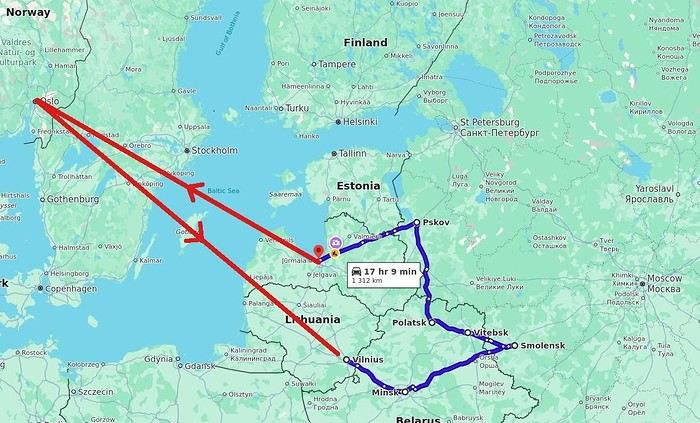
This crosses the Belarus-Russia border three times: from Minsk to Smolensk, then from Smolensk to Vitebsk, and finally from Polotsk to Pskov.
The region of this itinerary was, a thousand years ago, essentially that of the Krivichs, a local Slavic political entity. The term comes from "blood," *krew* in Polish, *krov* in Russian—basically "blood brothers." In Latvian, the word for Russians is *krievu*, by the way. Historically, the region corresponds to some of the old Russian principalities. Later, what marks Belarusian regions in general is, after the Great Schism of 1054, the division between Catholic and Orthodox zones, particularly as the Polish-Lithuanian Commonwealth expanded and contracted. In architecture, this corresponds to variations in Baroque styles, for example.
Vitebsk is known in France as the birthplace of Chagall. Born Russian, he first trained at the art school in Vitebsk, which was also attended by Malevich and Lissitzky, before completing his studies in Saint Petersburg, then moving to Berlin and later Paris. In Paris, Chagall met Cendrars, who had spent three years in Russia before and spoke enough Russian to help the newcomer get by a bit.
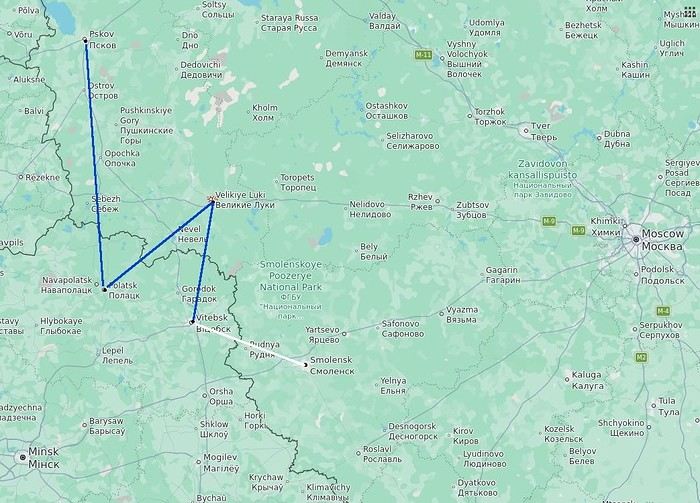
Back to the practical travel aspects: a local Pskov newspaper mentions that the Russian and Belarusian governments have a project for a Pskov-Polotsk train line. Previously, there were also plans for lines between Veliky Luki and Vitebsk, and Polotsk. A recently launched railway is Smolensk-Vitebsk, shown in white on the map, with projected lines in blue. https://pln-pskov.ru/society/583817.html https://pln-pskov.ru/society/578335.html
These will likely be "Hirondelle"—that is, *Lastochka*—the fast, spacious regional trains in Russia. Currently, all of this is done by bus, so the train is a very appealing and comfortable option. We’ll see how it goes.
With the unified system, if you enter one of the two countries with a visa from either, you can now travel between them freely.
In the case of a Russian visa, it must be a paper visa glued into your passport—not an electronic visa.
This opens up the possibility of traveling to Russia from Lithuania via Minsk, for example, starting from Vilnius.
It also allows for travel circuits that would otherwise be difficult, despite the proximity of the cities.
So, I’m leaving on June 12th for Vilnius. A one-hour flight for around thirty euros with a carry-on bag, and from Vilnius Airport, there’s a bus to Minsk. My planned route for now is Vilnius-Minsk-Smolensk-Vitebsk-Polotsk-Pskov-Riga.
This crosses the Belarus-Russia border three times: from Minsk to Smolensk, then from Smolensk to Vitebsk, and finally from Polotsk to Pskov.
The region of this itinerary was, a thousand years ago, essentially that of the Krivichs, a local Slavic political entity. The term comes from "blood," *krew* in Polish, *krov* in Russian—basically "blood brothers." In Latvian, the word for Russians is *krievu*, by the way. Historically, the region corresponds to some of the old Russian principalities. Later, what marks Belarusian regions in general is, after the Great Schism of 1054, the division between Catholic and Orthodox zones, particularly as the Polish-Lithuanian Commonwealth expanded and contracted. In architecture, this corresponds to variations in Baroque styles, for example.
Vitebsk is known in France as the birthplace of Chagall. Born Russian, he first trained at the art school in Vitebsk, which was also attended by Malevich and Lissitzky, before completing his studies in Saint Petersburg, then moving to Berlin and later Paris. In Paris, Chagall met Cendrars, who had spent three years in Russia before and spoke enough Russian to help the newcomer get by a bit.
Back to the practical travel aspects: a local Pskov newspaper mentions that the Russian and Belarusian governments have a project for a Pskov-Polotsk train line. Previously, there were also plans for lines between Veliky Luki and Vitebsk, and Polotsk. A recently launched railway is Smolensk-Vitebsk, shown in white on the map, with projected lines in blue. https://pln-pskov.ru/society/583817.html https://pln-pskov.ru/society/578335.html
These will likely be "Hirondelle"—that is, *Lastochka*—the fast, spacious regional trains in Russia. Currently, all of this is done by bus, so the train is a very appealing and comfortable option. We’ll see how it goes.
Currency searches by Estonians in Narva and fines
Estonians have become real pests at the Narva border control.
EER is the Estonian public radio and television service. They have a website, err.ee, with a section in Russian. The other day, on 26.06.2026, in Narva, a Swedish citizen was asked if she had any foreign currency. She mentioned $1,800 USD and 4,400 RUB. However, she was searched, and 21,000 SEK were found in her underwear (!) Here’s what the article says: "They eventually discovered 21,000 Swedish kronor" Maybe the stash seemed suspicious... She tried to backpedal, meaning to return to Estonia with the Swedish kronor, but was fined 280 €:
https://rus.err.ee/1610037940/tamozhenniki-v-narve-oshtrafovali-grazhdanku-shvecii-pytavshujusja-pronesti-v-nizhnem-bele-krony
Earlier this year, on 10.03.2026, a German citizen had 1,820 € found in the lining of her coat. She was denied entry and also fined 480 €.
https://rus.err.ee/1609962977/grazhdanka-germanii-pytalas-provezti-nalichnye-cherez-granicu-v-narve-no-byla-oshtrafovana
Bottom line: if you need to carry cash to exchange, only take USD—and make sure it’s brand new...
EER is the Estonian public radio and television service. They have a website, err.ee, with a section in Russian. The other day, on 26.06.2026, in Narva, a Swedish citizen was asked if she had any foreign currency. She mentioned $1,800 USD and 4,400 RUB. However, she was searched, and 21,000 SEK were found in her underwear (!) Here’s what the article says: "They eventually discovered 21,000 Swedish kronor" Maybe the stash seemed suspicious... She tried to backpedal, meaning to return to Estonia with the Swedish kronor, but was fined 280 €:
https://rus.err.ee/1610037940/tamozhenniki-v-narve-oshtrafovali-grazhdanku-shvecii-pytavshujusja-pronesti-v-nizhnem-bele-krony
Earlier this year, on 10.03.2026, a German citizen had 1,820 € found in the lining of her coat. She was denied entry and also fined 480 €.
https://rus.err.ee/1609962977/grazhdanka-germanii-pytalas-provezti-nalichnye-cherez-granicu-v-narve-no-byla-oshtrafovana
Bottom line: if you need to carry cash to exchange, only take USD—and make sure it’s brand new...
Do we need ID to spend a day in Switzerland and Italy?
Hi there,
My partner, our 8-year-old daughter, and I are going on vacation to Gex.
We’ve decided to spend one day in Switzerland and another in Italy. Will we need ID (national ID card or passport)? Do we also need ID for our daughter?
Thanks so much for your answers! 🙂
My partner, our 8-year-old daughter, and I are going on vacation to Gex.
We’ve decided to spend one day in Switzerland and another in Italy. Will we need ID (national ID card or passport)? Do we also need ID for our daughter?
Thanks so much for your answers! 🙂
From Mexico to the Wonderful Chiapas
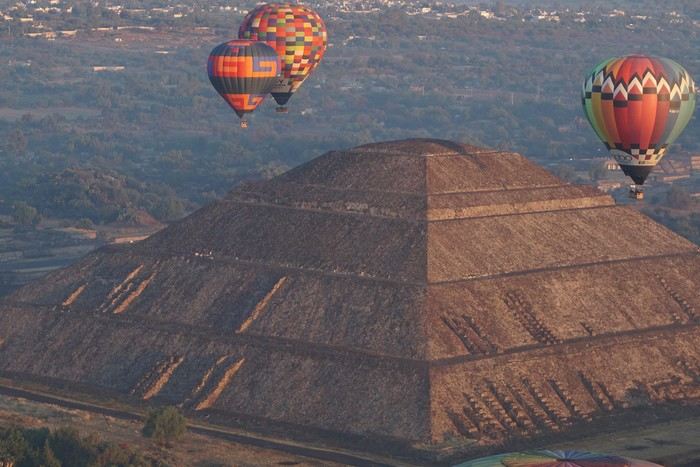
This one-month trip, from January 18 to February 17, 2026, allowed us to visit Mexico City and travel through the states of Puebla, Oaxaca, and Chiapas. We mainly used buses (ADO company) for medium and long distances and colectivos or taxis (or Uber) for shorter trips. Before leaving, I had contacted several people on the ground: Harry, a Vendéan settled in Oaxaca offering, among other things, discoveries of artisan villages or the Monte Albán site, and Oscar in Comitán de Domínguez. I’ll come back to our meeting with Oscar, who runs a local agency (CVL Travel Turismo Alternativo & Corre la voz) and owns a very pleasant hostel, a real highlight of our trip. Our journey took place in 8 stages on a loop starting from Mexico City. The connections between each were made by day or night buses depending on the trip duration. I had booked our seats in advance, either directly on the ADO company’s website or through booking platforms depending on the rates offered. Note that by planning ahead, I was able to benefit from very interesting "Early Booking" rates. There are several comfort classes. For all our trips, I had booked seats in Primera class buses, except for two in GL (Grand Luxe) class. The rates are very reasonable, and the buses turned out to be comfortable or even very comfortable (only the basic seat recline might surprise you).
Our itinerary and number of days per stage: Stage 1 – Mexico City: 4 days Stage 2 – Puebla: 2 days Stage 3 – Oaxaca: 4 days Stage 4 – San Agustinillo: 4 days Stage 5 – San Cristóbal de las Casas: 3 days Stage 6 – Comitán de Domínguez: 6 days Stage 7 – Palenque: 4 days Stage 8 – Mexico City: 2 days If I were to do it again, I’d remove one day from Palenque and add it either to Puebla or San Cristóbal to visit nearby sites or villages, or to San Agustinillo to enjoy one more day by the Pacific Ocean.
Stage 1: Mexico City (2,200 m / 9.2 million inhabitants) We arrived in the Mexican capital around 10:00 PM. The simplified customs process was very quick. After exchanging some money at the airport, we took a taxi to our youth hostel. We got around the capital on foot, of course, but also by metro. Signs are very rare, and we took the train in the wrong direction several times. After a few mistakes, we systematically asked on the platform if we were going the right way. The metro is very affordable. You need to get a rechargeable card (the Tarjeta de Movilidad Integrada) and top it up as needed. This card (less than 1 €) isn’t personal, so there’s no need to get one per person.
Mexico City: Day 1.
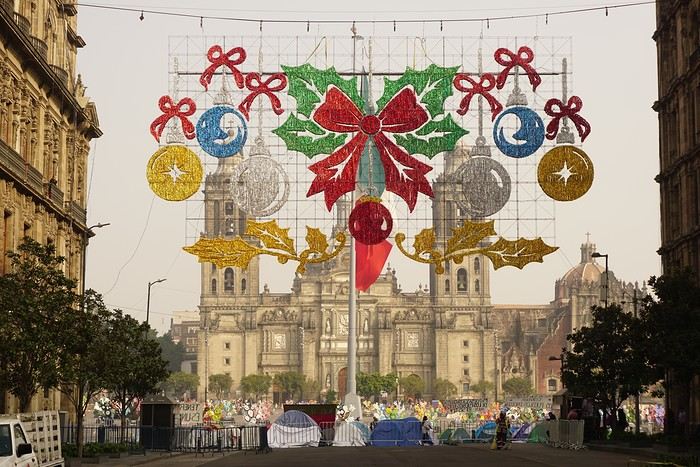
Visits and walks of the day (note: many museums are closed on Mondays): The Zócalo or Constitution Square: it’s one of the most beautiful, largest (195m x 240m), and oldest squares in the world. This is where Cortés decided to build the center of the new Spanish city on the site of the former Tenochtitlan market. Stones from the pyramids were used to pave the esplanade and build the surrounding colonial churches and buildings. During our visit, the huge square was covered with (resin) cacti, the theme of the temporary exhibition at the time. Indeed, temporary events or exhibitions take place here throughout the year. It’s also the endpoint for many protest marches.
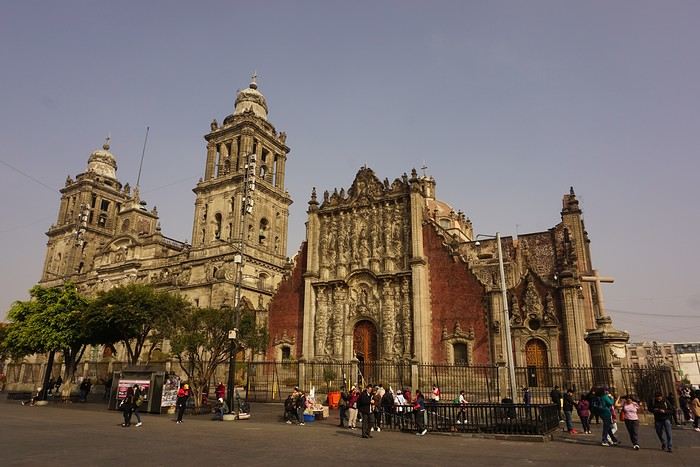
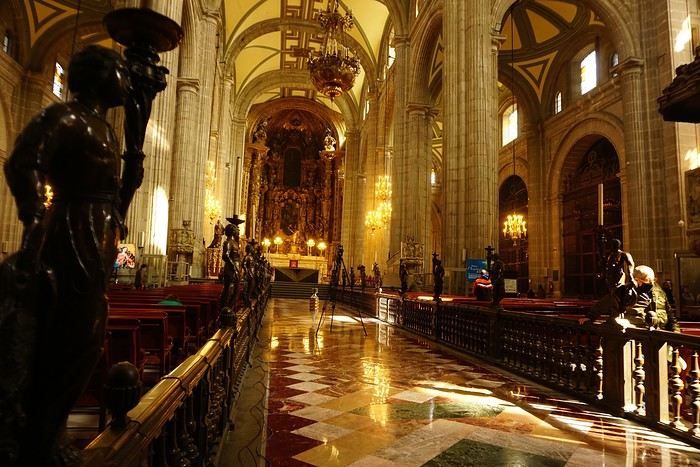


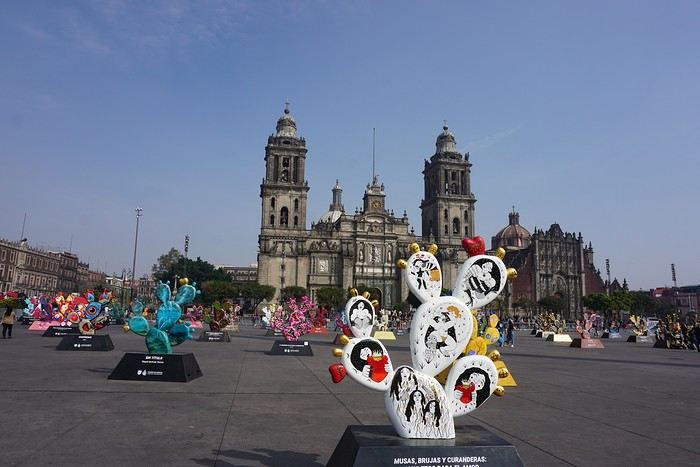
The cathedral: it’s sinking by one centimeter per year despite massive stabilization work (the collapse of many Mexican buildings—30 cm/year—is due to groundwater pumping). It was built starting in 1571 and completed in... 1813. The modest remains of the Templo Mayor (exterior view): they have high symbolic value, as this monument was the most important in the Mexica Empire.
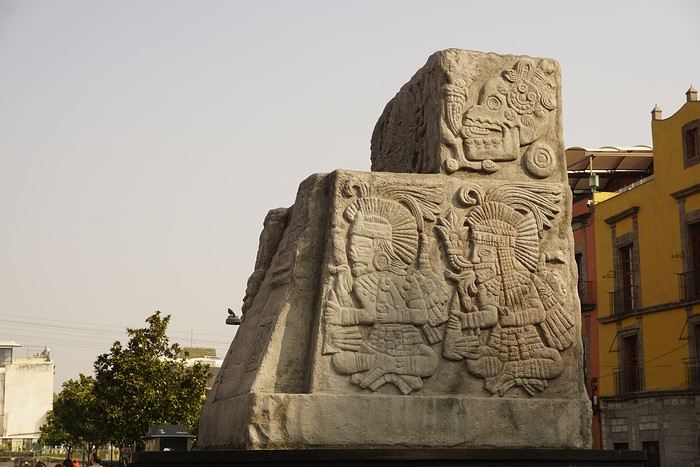 We then walked through the streets of the historic center to the Santísima Church, unfortunately closed for renovation work.
Next, we took the metro to visit one of Mexico’s most important pilgrimage sites: the Insigne y Nacional Basílicas de Santa María de Guadalupe, as well as the Capilla del Cerrito on the hill.
The first, dating from the colonial era, is really leaning a lot.
We then walked through the streets of the historic center to the Santísima Church, unfortunately closed for renovation work.
Next, we took the metro to visit one of Mexico’s most important pilgrimage sites: the Insigne y Nacional Basílicas de Santa María de Guadalupe, as well as the Capilla del Cerrito on the hill.
The first, dating from the colonial era, is really leaning a lot.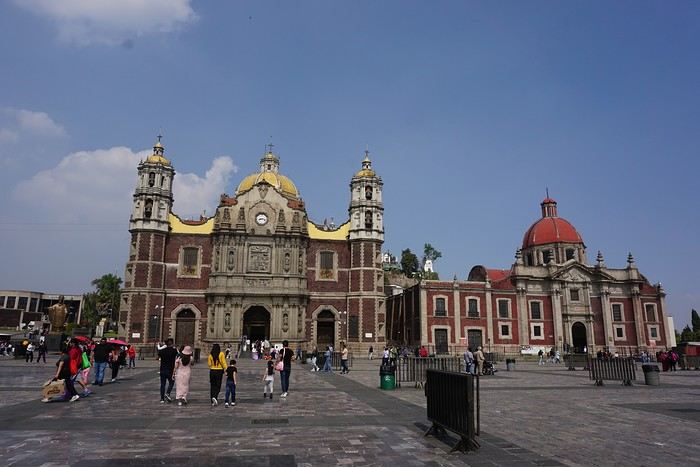
The second, shaped like a rotunda, is very impressive from the inside.
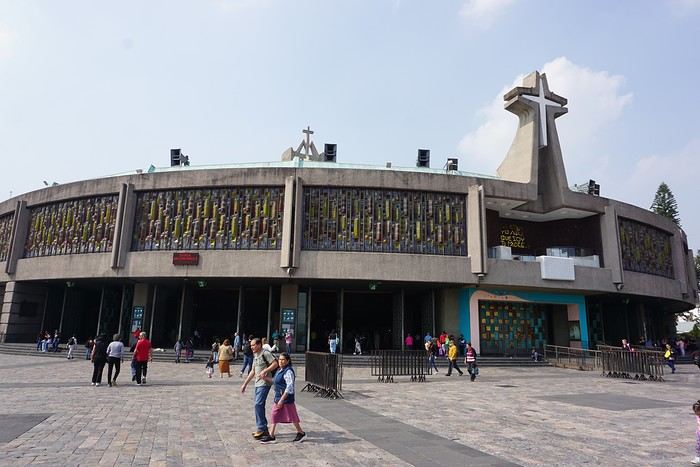
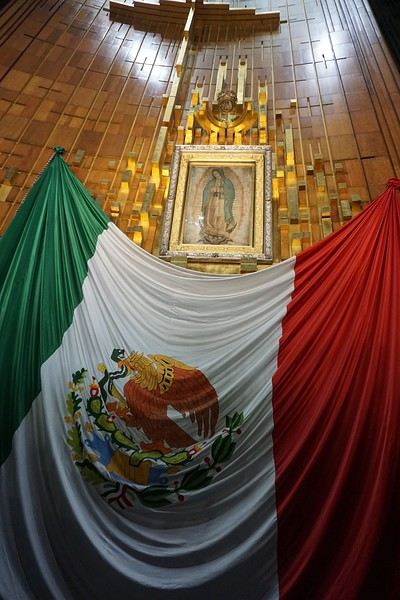
In the basement, there’s a sacred tunic where, in 1531, an image of the Virgin Mary is said to have appeared. A real mystery for scientists, the garment has never deteriorated since that date. Slow-moving conveyor belts allow pilgrims to admire it, preventing crowds from gathering in front of the image for hours. Well thought out!
 From the top of the Capilla del Cerrito, you get beautiful views of huge Mexico City.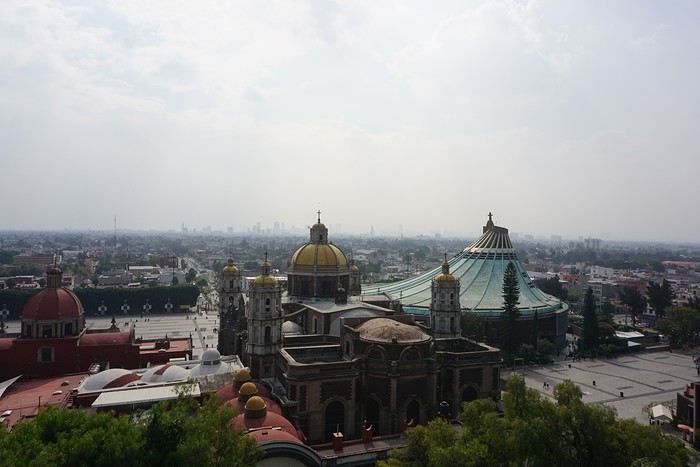
6-Month Asia Trip with a Camper Van and 2 Kids
Hi everyone,
We’re a family of four—two adults with two kids aged 4 and 7—about to embark on a year-long round-the-world trip in a camper van. I’m currently planning the Asia leg, which should last about 6 months. We’ll arrive in Thailand in January, head north, then move on to Laos. Ideally, we’d continue to Vietnam, Cambodia, and then return to Thailand to head south into Malaysia. If the budget allows, we’d love to include China and Japan. The big question after lots of research is: how easy is it to temporarily import a vehicle into these countries? The info I’ve found is outdated (2019–2020), and given how quickly regulations change, I’d love to hear from anyone currently (or recently) traveling in these countries with their vehicle. I’ve read that you need a local guide in Vietnam, local license plates in China, and that importing a vehicle into China is quite complicated—are these rules still in place? More generally, is there a recommended route for this part of the world with a camper van?
Thanks in advance!
We’re a family of four—two adults with two kids aged 4 and 7—about to embark on a year-long round-the-world trip in a camper van. I’m currently planning the Asia leg, which should last about 6 months. We’ll arrive in Thailand in January, head north, then move on to Laos. Ideally, we’d continue to Vietnam, Cambodia, and then return to Thailand to head south into Malaysia. If the budget allows, we’d love to include China and Japan. The big question after lots of research is: how easy is it to temporarily import a vehicle into these countries? The info I’ve found is outdated (2019–2020), and given how quickly regulations change, I’d love to hear from anyone currently (or recently) traveling in these countries with their vehicle. I’ve read that you need a local guide in Vietnam, local license plates in China, and that importing a vehicle into China is quite complicated—are these rules still in place? More generally, is there a recommended route for this part of the world with a camper van?
Thanks in advance!
Connecting in Cairo for a second flight to Luxor
Hi everyone,
We’re going on a Nile cruise.
My question:
We’re taking off from Brussels Airport to land in Cairo.
Then we have to catch a second flight to Luxor.
How does that work—do we pick up our luggage, do we have to exit and then re-enter the airport?
Thanks for your help, tips, and advice, etc.…
On the Roads of Costa Rica
Hello everyone, I’m happy to welcome you to this new travel journal.
We’re heading to Costa Rica together—a Central American destination that dreams are made of for many French travelers and attracts crowds from France.
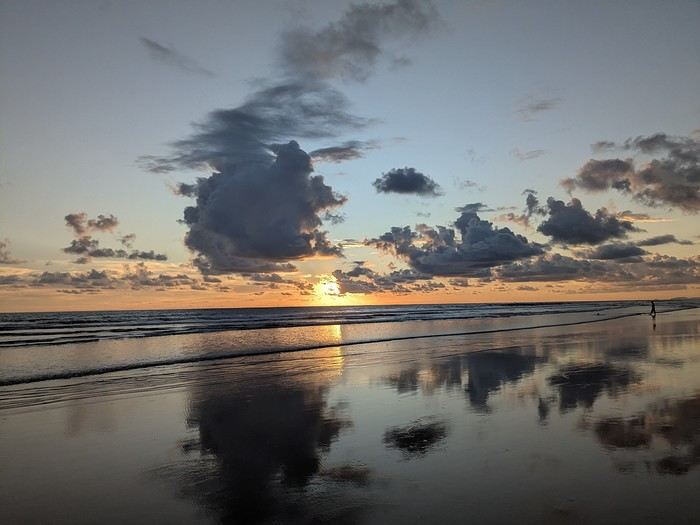
It was the country’s wild nature and safety that convinced us to go, since we’re traveling with our 7-year-old little one. We didn’t have much vacation time in February 2026 (only 12 days), so we optimized as much as possible.
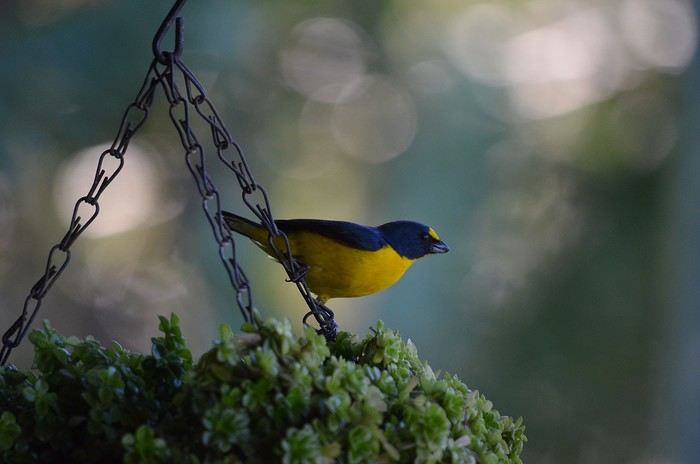
Here’s the itinerary: Wednesday, February 11: Flight from Marseille to San Jose via Paris and Atlanta Thursday, February 12: Pick up the car, drive to Poas Volcano, visit La Paz Waterfall Gardens Friday, February 13: Poas Volcano and drive to Manuel Antonio Saturday, February 14: Manuel Antonio National Park Sunday, February 15: Nauyaca Waterfall and Playa Linda Monday, February 16: Drive to Monte Verde and Santa Elena Reserve Tuesday, February 17: El Tigre Waterfall Reserve and Treetopia Park Wednesday, February 18: Monte Verde Reserve with a guide and drive to La Fortuna Thursday, February 19: Sloth guided tour, Observatory Lodge Park Friday, February 20: Arenal Volcano National Park, Termalistas del Arenal hot springs, and night tour Saturday, February 21: Return to San Jose, flight to Paris via Atlanta Sunday, February 22: Arrival in Paris and flight to Marseille. That gives us a solid 9 days in the country.
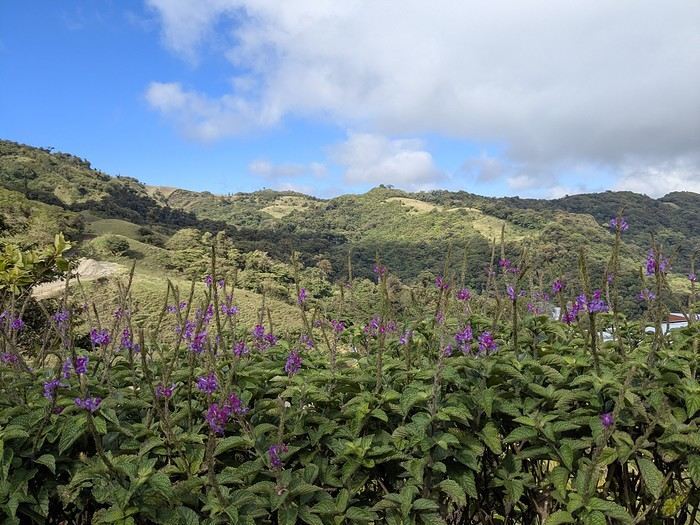
Budget breakdown: Costa Rica is an expensive country, but no more so than France. However, almost all hikes and waterfalls are paid entry, which can really add up. For meals, sodas (6–10 €) are cheaper than restaurants (10–20 € per dish).
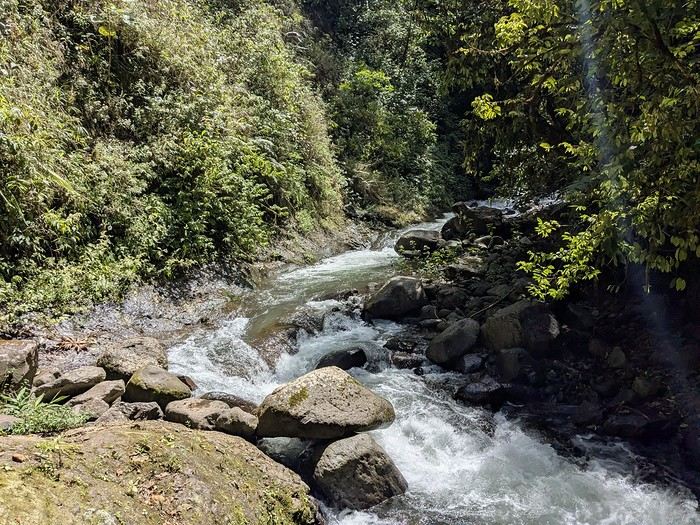
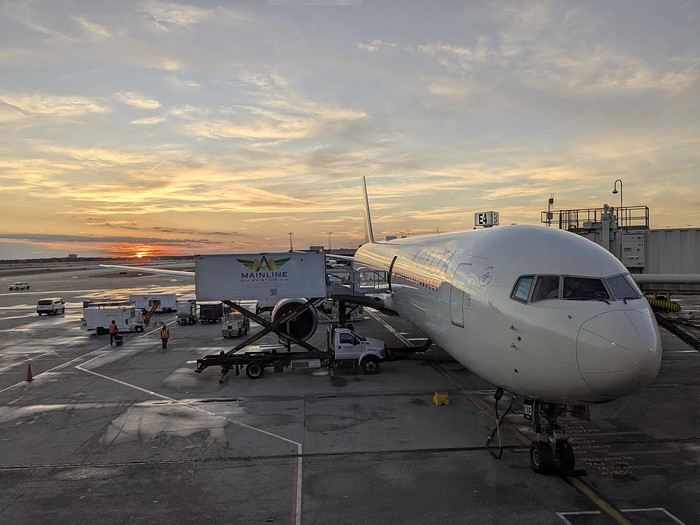
Flights: We chose Delta Airlines for the price: Marseille to San Jose was 740 € per person (modifiable, with checked baggage and seat selection included). Other direct flights from Europe were priced between 1200 € and 1600 € with more restrictive conditions. That’s 2220 € for the family.
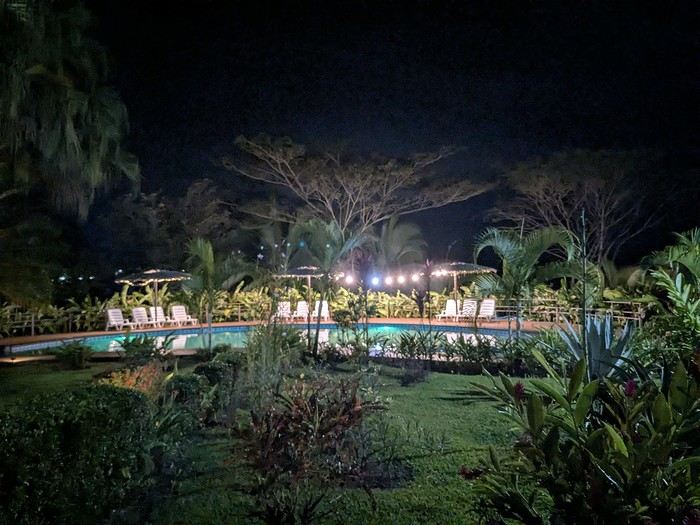
Accommodations: Alajuela, first night: 139 € (1 night) at Rodeo Estancia Boutique Hotel, with personalized airport pickup, transfer to the hotel, and a briefing from Vert Costa Rica agency the next day. Poas: 66 € (1 night) at Cabañas Tierra Fértil (entire apartment). Manuel Antonio: 394 € (3 nights) at La Palapa Ecolodge (hotel in the jungle). Monte Verde: Chalet Aloha Monteverde Cloud Forest (2 bedrooms): 125 € (2 nights). La Fortuna: Arenal Dream Garden (1 bedroom): 217 € (3 nights). Total: 941 €.
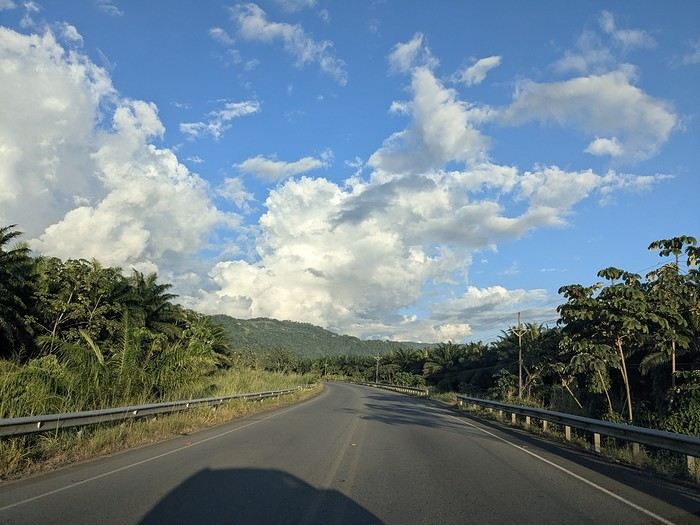
Car rental: I went through Vert Costa Rica agency (Vincent is a French expat who set up the agency in Costa Rica and makes great YouTube videos with useful tips). I rented a 4x4 that was delivered to the hotel the day after arrival and returned at the airport before the flight. The total was 772 €, including full insurance (zero deductible), a child seat, and a phone with a Costa Rican SIM and WhatsApp. The rental company was Poas Rent a Car. The vehicle was well-maintained—no complaints. Gas: 100 € for the whole trip (3 fill-ups).
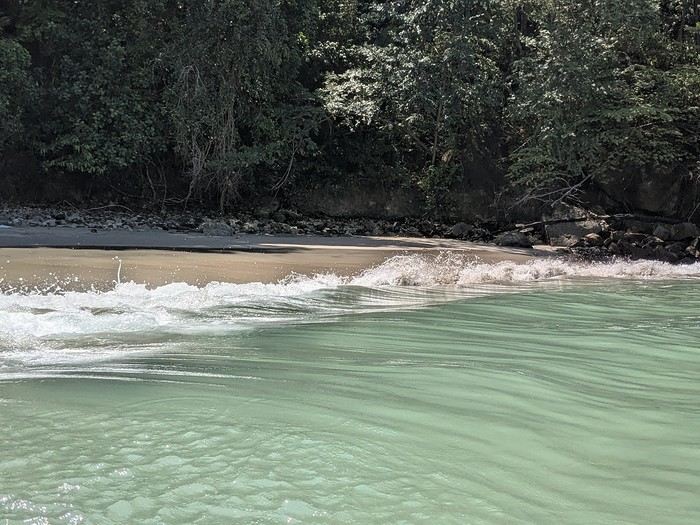
Activities: To get discounts, I bought the pass offered by Vincent, which paid for itself after just one activity. It cost me 30 € (promo since I rented the car through him). Prices are for 3 people. I’ve added stars to rate them: La Paz Waterfall Gardens ****: 112 € Poas Volcano National Park *: 33 € Manuel Antonio National Park ****: 35 € Nauyaca Waterfall ***: 25 € Santa Elena Reserve **: 45 € El Tigre Waterfall Reserve ****: 141 € (with meal) Treetopia (ziplining, suspension bridges) **: 250 € Guided tour of Monte Verde Reserve ***: 113 € Sloth guided tour (with breakfast) ***: 115 € Arenal Observatory Lodge (with meal) ****: 102 € Arenal Volcano National Park *: 34 € Termalistas del Arenal ****: 20 € Night tour ***: 116 € Total: 1171 €.
Meals: 600 € My favorite restaurants: Poas: Food court Mercaditas in Fraijanes Manuel Antonio (near La Palapa): La Langosta and also El Patio Near Nauyaca Waterfall: Ricar2 el Avión Between Manuel Antonio and Monte Verde: Soda D’Calle Santa Elena: HG’s Food Guadalupe (between Monte Verde and La Fortuna): Soda Río Piedras Arenal Observatory Lodge restaurant Arenal Oasis Ecolodge restaurant
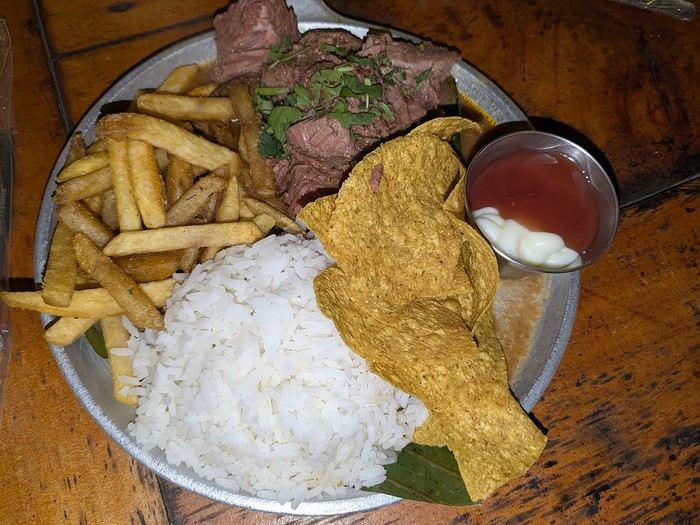
Other expenses: 300 € (groceries for breakfast, drinks, ice cream, souvenirs, etc.) Total overall: 6065 € (about 2020 € per person).
Now, here’s the day-by-day account of this beautiful trip.
https://voyageforum.com/images/posts/small/1772295011-z8mILBEUXHU8Ajz.jpg
It was the country’s wild nature and safety that convinced us to go, since we’re traveling with our 7-year-old little one. We didn’t have much vacation time in February 2026 (only 12 days), so we optimized as much as possible.
Here’s the itinerary: Wednesday, February 11: Flight from Marseille to San Jose via Paris and Atlanta Thursday, February 12: Pick up the car, drive to Poas Volcano, visit La Paz Waterfall Gardens Friday, February 13: Poas Volcano and drive to Manuel Antonio Saturday, February 14: Manuel Antonio National Park Sunday, February 15: Nauyaca Waterfall and Playa Linda Monday, February 16: Drive to Monte Verde and Santa Elena Reserve Tuesday, February 17: El Tigre Waterfall Reserve and Treetopia Park Wednesday, February 18: Monte Verde Reserve with a guide and drive to La Fortuna Thursday, February 19: Sloth guided tour, Observatory Lodge Park Friday, February 20: Arenal Volcano National Park, Termalistas del Arenal hot springs, and night tour Saturday, February 21: Return to San Jose, flight to Paris via Atlanta Sunday, February 22: Arrival in Paris and flight to Marseille. That gives us a solid 9 days in the country.
Budget breakdown: Costa Rica is an expensive country, but no more so than France. However, almost all hikes and waterfalls are paid entry, which can really add up. For meals, sodas (6–10 €) are cheaper than restaurants (10–20 € per dish).
Flights: We chose Delta Airlines for the price: Marseille to San Jose was 740 € per person (modifiable, with checked baggage and seat selection included). Other direct flights from Europe were priced between 1200 € and 1600 € with more restrictive conditions. That’s 2220 € for the family.
Accommodations: Alajuela, first night: 139 € (1 night) at Rodeo Estancia Boutique Hotel, with personalized airport pickup, transfer to the hotel, and a briefing from Vert Costa Rica agency the next day. Poas: 66 € (1 night) at Cabañas Tierra Fértil (entire apartment). Manuel Antonio: 394 € (3 nights) at La Palapa Ecolodge (hotel in the jungle). Monte Verde: Chalet Aloha Monteverde Cloud Forest (2 bedrooms): 125 € (2 nights). La Fortuna: Arenal Dream Garden (1 bedroom): 217 € (3 nights). Total: 941 €.
Car rental: I went through Vert Costa Rica agency (Vincent is a French expat who set up the agency in Costa Rica and makes great YouTube videos with useful tips). I rented a 4x4 that was delivered to the hotel the day after arrival and returned at the airport before the flight. The total was 772 €, including full insurance (zero deductible), a child seat, and a phone with a Costa Rican SIM and WhatsApp. The rental company was Poas Rent a Car. The vehicle was well-maintained—no complaints. Gas: 100 € for the whole trip (3 fill-ups).
Activities: To get discounts, I bought the pass offered by Vincent, which paid for itself after just one activity. It cost me 30 € (promo since I rented the car through him). Prices are for 3 people. I’ve added stars to rate them: La Paz Waterfall Gardens ****: 112 € Poas Volcano National Park *: 33 € Manuel Antonio National Park ****: 35 € Nauyaca Waterfall ***: 25 € Santa Elena Reserve **: 45 € El Tigre Waterfall Reserve ****: 141 € (with meal) Treetopia (ziplining, suspension bridges) **: 250 € Guided tour of Monte Verde Reserve ***: 113 € Sloth guided tour (with breakfast) ***: 115 € Arenal Observatory Lodge (with meal) ****: 102 € Arenal Volcano National Park *: 34 € Termalistas del Arenal ****: 20 € Night tour ***: 116 € Total: 1171 €.
Meals: 600 € My favorite restaurants: Poas: Food court Mercaditas in Fraijanes Manuel Antonio (near La Palapa): La Langosta and also El Patio Near Nauyaca Waterfall: Ricar2 el Avión Between Manuel Antonio and Monte Verde: Soda D’Calle Santa Elena: HG’s Food Guadalupe (between Monte Verde and La Fortuna): Soda Río Piedras Arenal Observatory Lodge restaurant Arenal Oasis Ecolodge restaurant
Other expenses: 300 € (groceries for breakfast, drinks, ice cream, souvenirs, etc.) Total overall: 6065 € (about 2020 € per person).
Now, here’s the day-by-day account of this beautiful trip.
https://voyageforum.com/images/posts/small/1772295011-z8mILBEUXHU8Ajz.jpg
Some trips are born twice - Peru April - May 2025
Some trips are born twice.
Ours was supposed to happen in 2020. Everything was ready: the itinerary, the flight tickets, hotel reservations and Machu Picchu, the rental car, dreams of high altitudes and wide-open spaces. And then the world stopped.
Like so many other plans, our trip to Peru was put on hold. Disappointment was followed by a more concrete reality: paperwork, endless back-and-forth, and battles to recover some of the costs we’d already paid.
The years went by. Life moved on, with its shifting priorities and unexpected twists. Rescheduling this trip wasn’t possible until 2025.
The itinerary stayed mostly true to what we’d imagined five years earlier. One major difference, though—in 2020, we’d planned to rent a car and explore the roads completely independently. Most importantly, we hadn’t included the three-day Ausangate trek, due to lack of time.
For 2025, our plans evolved. 4x4 rental prices had skyrocketed, and when we looked at our schedule more closely, we realized quite a few days didn’t actually need a vehicle. So we made a different choice and opted for private drivers instead. A decision we never regretted. Always punctual, thoughtful, and available... they were so much more than just drivers.
All our reservations were made in January, except for the trek, which we booked in February.
Finding reliable drivers on our own was tough, so we asked Laurent from Tout Pérou to handle it for us. Going through Tout Pérou also gave us a discount on the train ride to Aguas Calientes, so Laurent booked those tickets too. He also bought our Machu Picchu entrance tickets at the same price we would’ve paid on the official website. When comparing domestic flight prices, we found it was cheaper to book from Peru, so Laurent took care of those as well.
This time, nothing was going to stop us. Peru was waiting. And we were ready. 🙂
Ours was supposed to happen in 2020. Everything was ready: the itinerary, the flight tickets, hotel reservations and Machu Picchu, the rental car, dreams of high altitudes and wide-open spaces. And then the world stopped.
Like so many other plans, our trip to Peru was put on hold. Disappointment was followed by a more concrete reality: paperwork, endless back-and-forth, and battles to recover some of the costs we’d already paid.
The years went by. Life moved on, with its shifting priorities and unexpected twists. Rescheduling this trip wasn’t possible until 2025.
The itinerary stayed mostly true to what we’d imagined five years earlier. One major difference, though—in 2020, we’d planned to rent a car and explore the roads completely independently. Most importantly, we hadn’t included the three-day Ausangate trek, due to lack of time.
For 2025, our plans evolved. 4x4 rental prices had skyrocketed, and when we looked at our schedule more closely, we realized quite a few days didn’t actually need a vehicle. So we made a different choice and opted for private drivers instead. A decision we never regretted. Always punctual, thoughtful, and available... they were so much more than just drivers.
All our reservations were made in January, except for the trek, which we booked in February.
Finding reliable drivers on our own was tough, so we asked Laurent from Tout Pérou to handle it for us. Going through Tout Pérou also gave us a discount on the train ride to Aguas Calientes, so Laurent booked those tickets too. He also bought our Machu Picchu entrance tickets at the same price we would’ve paid on the official website. When comparing domestic flight prices, we found it was cheaper to book from Peru, so Laurent took care of those as well.
This time, nothing was going to stop us. Peru was waiting. And we were ready. 🙂
Losing your ID or passport right before a flight
Hi everyone.
I’m here to share a really reassuring experience about boarding a flight from France to Guadeloupe without an ID card or passport.
Yesterday, I met up with my friend at her place around 4:00 PM. She told me to leave my bag in my car while we ran an errand because “nothing ever happens here.”
When we got back at 8:00 PM, my car window was smashed, and my bag was stolen. In a panic about forgetting something for the trip, I’d left my whole life in that bag—ID card, passport, driver’s license, health insurance card—total meltdown. It was 8:00 PM, and our flight was at 10:00 AM the next day.
We’re on the plane right now, and I’ll tell you exactly what we did.
At 8:30 PM, we went to the police station. No one was there, but there was a number to call for night emergencies. They sent a team to take our statement. We explained that clothes weren’t the issue but that we had a flight the next day. They initially said they couldn’t file the theft report until the next morning. We pleaded a little, and they finally opened the station for us. They gave us the forms for reporting a stolen passport and ID card.
These documents are called either: *"Receipt for theft report"* *"Theft report"*
Even before we finished, we started researching online to see if this paperwork would be enough. The info we found on this forum (from 2014) and what was clearly stated on the Air Caraïbes website totally crushed us. It seemed like it was completely hopeless. Only one person said it depended on the mood of the staff we’d encounter at the airport.
Awful night, total despair.
We arrived at the airport at 6:30 AM for a 10:20 AM boarding. We went to the Air Caraïbes baggage drop-off way too early to talk to someone. We explained the problem to the first woman we saw.
She immediately reassured us that we’d be able to fly. Basically, if you have the police or gendarmerie document for the theft or loss, it’s 100% okay. No issues with that.
We had to fill out a first form swearing we were telling the truth about our checked baggage, then a second one for customs after our carry-on bags were inspected.
Didn’t report the theft or loss before arriving at the airport? No problem—there’s an office in the airport that handles that. Basically, we didn’t *have* to go to the police station.
The only really important thing is to arrive *very* early to have time to sort everything out. If you show up at customs or boarding without anything prepared beforehand, you’ll obviously be turned away.
If this post reassured or helped you, feel free to leave a comment so this forum ranks higher on Google. I wish I’d read something like this last night—I would’ve slept better. This morning, my alarm went off at 4:00 AM, and unlike usual, I had a *hard* time waking up, like I was heading to prison.
That’s it. Nico and Solène, 40 years old.
I’m here to share a really reassuring experience about boarding a flight from France to Guadeloupe without an ID card or passport.
Yesterday, I met up with my friend at her place around 4:00 PM. She told me to leave my bag in my car while we ran an errand because “nothing ever happens here.”
When we got back at 8:00 PM, my car window was smashed, and my bag was stolen. In a panic about forgetting something for the trip, I’d left my whole life in that bag—ID card, passport, driver’s license, health insurance card—total meltdown. It was 8:00 PM, and our flight was at 10:00 AM the next day.
We’re on the plane right now, and I’ll tell you exactly what we did.
At 8:30 PM, we went to the police station. No one was there, but there was a number to call for night emergencies. They sent a team to take our statement. We explained that clothes weren’t the issue but that we had a flight the next day. They initially said they couldn’t file the theft report until the next morning. We pleaded a little, and they finally opened the station for us. They gave us the forms for reporting a stolen passport and ID card.
These documents are called either: *"Receipt for theft report"* *"Theft report"*
Even before we finished, we started researching online to see if this paperwork would be enough. The info we found on this forum (from 2014) and what was clearly stated on the Air Caraïbes website totally crushed us. It seemed like it was completely hopeless. Only one person said it depended on the mood of the staff we’d encounter at the airport.
Awful night, total despair.
We arrived at the airport at 6:30 AM for a 10:20 AM boarding. We went to the Air Caraïbes baggage drop-off way too early to talk to someone. We explained the problem to the first woman we saw.
She immediately reassured us that we’d be able to fly. Basically, if you have the police or gendarmerie document for the theft or loss, it’s 100% okay. No issues with that.
We had to fill out a first form swearing we were telling the truth about our checked baggage, then a second one for customs after our carry-on bags were inspected.
Didn’t report the theft or loss before arriving at the airport? No problem—there’s an office in the airport that handles that. Basically, we didn’t *have* to go to the police station.
The only really important thing is to arrive *very* early to have time to sort everything out. If you show up at customs or boarding without anything prepared beforehand, you’ll obviously be turned away.
If this post reassured or helped you, feel free to leave a comment so this forum ranks higher on Google. I wish I’d read something like this last night—I would’ve slept better. This morning, my alarm went off at 4:00 AM, and unlike usual, I had a *hard* time waking up, like I was heading to prison.
That’s it. Nico and Solène, 40 years old.
Comoros again: trip report
Well, I still feel a bit lonely about this destination—no requests for info, no travel journals, or trip reports since I last posted over a year ago. A little disheartening.
That said, I did cross paths with slightly more tourists this time. Not a ton, but enough to notice compared to my last stay. Beyond that, not much has changed—the people are just as lovely, and every interaction, whether at the market, in the medinas, in town, or in the countryside, was positive. It was so pleasant; my "alert meter" stayed at zero the whole time (which is pretty different from some other places I visit now and then). The roads outside the cities remain dangerous, and the accident rate seems high. Best to drive during the day and take it easy (on some rough stretches, you don’t really have a choice anyway). The scattered plastic and metal waste hasn’t magically disappeared, and it’s still pretty discouraging to see the most beautiful beaches surrounded by empty bottles, straws, diapers, and rusted carcasses of an old Xantia or a skeletal Espace. When it’s not on the beach itself (since those are cleaned), it’s just a few meters away. Usually, there’s not much in the water or close to shore—the seabeds are gorgeous, with coral and a wide variety of scaly friends... But stepping back onto the hardened lava, you dodge a chip bag or a shriveled battery. Such a paradox. Honestly, it’s like this almost everywhere except on hotel beaches or those far from human settlements. But otherwise, in places like Chomoni, Bouni, Itsandra, Moya, and Domoni (on Anjouan), Nioumachoua (on Mohéli, and even on the nearby islets), it’s hard to ignore. And it unfortunately tarnishes the beauty of these otherwise stunning spots.
That said, you can still find secluded micro-bays, protected and remote, where this isn’t an issue. And where there are hotels—like in Petite Itsandra in Moroni, in front of Laka Lodge in Nioumachoua, Trou du Prophète, or even Chomoni (though the surrounding areas are so littered...)—the beaches are cleaned, so...
So why go? Why still love it despite all this? Well, first, the Comorians themselves—that’s already essential and probably the main reason. Then there’s the breathtaking topography: the imposing Karthala, the dizzying peaks and cliffs of Anjouan, vast ravines, a tortured geology covered in lush nature, and Mohéli, much more serene and gentle, blanketed in spice plants and trees with names that make you dream, like an open-air spice market. The flora across the islands—the fields, trees, scents: clove trees, cinnamon trees, lychee, mango, cardamom, nutmeg, vanilla, coconut palms, banana trees, coffee plants, cocoa... A profusion of green dotted with red, white, and yellow berries and flowers... The seabeds are stunning in many places, and there are some beautiful beaches/oceanfront spots, especially near Trou du Prophète (but not only there). The history and culture—between traditional festivals, but especially the medinas with their staircases, covered passages, palaces, and mosques that create Escher-like constructions. I love wandering through them for hours, stumbling upon an unlikely shop, a more or less philosophical saying like "pain is a warning," "a promise is a debt," or the less original "little by little, the bird makes its nest." A grocery store, women negotiating freshly caught fish (usually tuna, immediately cut and ready to sell), kids playing, old men playing checkers, a call to prayer... In Moroni, Mutsamudu, and Domoni, I spent most of my "urban" time.
If anyone’s interested—though given the hype about Comoros on the forum, I doubt it—but if you need info on accommodation across the three islands, some restaurants, or sites to visit, don’t hesitate to ask.
This message is another message in a bottle (one more, if I dare...) for the Comoros destination.
That said, I did cross paths with slightly more tourists this time. Not a ton, but enough to notice compared to my last stay. Beyond that, not much has changed—the people are just as lovely, and every interaction, whether at the market, in the medinas, in town, or in the countryside, was positive. It was so pleasant; my "alert meter" stayed at zero the whole time (which is pretty different from some other places I visit now and then). The roads outside the cities remain dangerous, and the accident rate seems high. Best to drive during the day and take it easy (on some rough stretches, you don’t really have a choice anyway). The scattered plastic and metal waste hasn’t magically disappeared, and it’s still pretty discouraging to see the most beautiful beaches surrounded by empty bottles, straws, diapers, and rusted carcasses of an old Xantia or a skeletal Espace. When it’s not on the beach itself (since those are cleaned), it’s just a few meters away. Usually, there’s not much in the water or close to shore—the seabeds are gorgeous, with coral and a wide variety of scaly friends... But stepping back onto the hardened lava, you dodge a chip bag or a shriveled battery. Such a paradox. Honestly, it’s like this almost everywhere except on hotel beaches or those far from human settlements. But otherwise, in places like Chomoni, Bouni, Itsandra, Moya, and Domoni (on Anjouan), Nioumachoua (on Mohéli, and even on the nearby islets), it’s hard to ignore. And it unfortunately tarnishes the beauty of these otherwise stunning spots.
That said, you can still find secluded micro-bays, protected and remote, where this isn’t an issue. And where there are hotels—like in Petite Itsandra in Moroni, in front of Laka Lodge in Nioumachoua, Trou du Prophète, or even Chomoni (though the surrounding areas are so littered...)—the beaches are cleaned, so...
So why go? Why still love it despite all this? Well, first, the Comorians themselves—that’s already essential and probably the main reason. Then there’s the breathtaking topography: the imposing Karthala, the dizzying peaks and cliffs of Anjouan, vast ravines, a tortured geology covered in lush nature, and Mohéli, much more serene and gentle, blanketed in spice plants and trees with names that make you dream, like an open-air spice market. The flora across the islands—the fields, trees, scents: clove trees, cinnamon trees, lychee, mango, cardamom, nutmeg, vanilla, coconut palms, banana trees, coffee plants, cocoa... A profusion of green dotted with red, white, and yellow berries and flowers... The seabeds are stunning in many places, and there are some beautiful beaches/oceanfront spots, especially near Trou du Prophète (but not only there). The history and culture—between traditional festivals, but especially the medinas with their staircases, covered passages, palaces, and mosques that create Escher-like constructions. I love wandering through them for hours, stumbling upon an unlikely shop, a more or less philosophical saying like "pain is a warning," "a promise is a debt," or the less original "little by little, the bird makes its nest." A grocery store, women negotiating freshly caught fish (usually tuna, immediately cut and ready to sell), kids playing, old men playing checkers, a call to prayer... In Moroni, Mutsamudu, and Domoni, I spent most of my "urban" time.
If anyone’s interested—though given the hype about Comoros on the forum, I doubt it—but if you need info on accommodation across the three islands, some restaurants, or sites to visit, don’t hesitate to ask.
This message is another message in a bottle (one more, if I dare...) for the Comoros destination.