Results for "Chauvet+|+127"
1652 results found.
Rencontre à Paris le 18 février 2005 au Zango English translation pending
Histoire de fêter mon prochain départ autour du monde (le 25 février déjà!), j'organise une rencontre entre voyageurs de VoyageForum, d'ABM et d'HospitalityClub. 🙂 Ce sera l'occasion de présenter un peu mon voyage et pour certains de découvrir d'autres groupes de voyageurs passionnés.
J'ai réservé le Zango pour 15 personnes (je prévois grand 😉 ) le 18 février, vers 19h. Adresse du Zango bar/restaurant: 15 rue du Cygne, 75001 PARIS
Amis voyageurs, venez nombreux!!! Je compte sur vous Victor033, Vasco, Kelair, Kairoh, Amazonegirl, etc ..........
Pfeu
J'ai réservé le Zango pour 15 personnes (je prévois grand 😉 ) le 18 février, vers 19h. Adresse du Zango bar/restaurant: 15 rue du Cygne, 75001 PARIS
Amis voyageurs, venez nombreux!!! Je compte sur vous Victor033, Vasco, Kelair, Kairoh, Amazonegirl, etc ..........
Pfeu
Broome-Darwin et Alice Springs en août (Australie) English translation pending
Bjr!
nous allons arriver sur Broome, puis Darwin, Alice springs, mais j'aimerais savoir s'il faut privilégier le kakadu ou litchfiel park? nous avons 3 enfants de 6 à 1O ans.
De Broome à AS, si qq'un l'a fait avec des enfants, qu'est ce qui leur a plu?😉
De Alice springs à Uluru, il y a je crois 400km...faut il réserver le camping à Uluru pour âout ou est il autorisé de dormir à côté d'uluru en camping-car?
Merci bcp!😎
Karine
nous allons arriver sur Broome, puis Darwin, Alice springs, mais j'aimerais savoir s'il faut privilégier le kakadu ou litchfiel park? nous avons 3 enfants de 6 à 1O ans.
De Broome à AS, si qq'un l'a fait avec des enfants, qu'est ce qui leur a plu?😉
De Alice springs à Uluru, il y a je crois 400km...faut il réserver le camping à Uluru pour âout ou est il autorisé de dormir à côté d'uluru en camping-car?
Merci bcp!😎
Karine
Branchements 110/220 V English translation pending
😊 euh, petite question débile...
est ce qu'on peut emmener n'importe quel appareil (rasoir, chargeur téléphone) et le brancher là bas tout simplement avec un adaptateur US (fiches plates)??
Merci d'avance.
est ce qu'on peut emmener n'importe quel appareil (rasoir, chargeur téléphone) et le brancher là bas tout simplement avec un adaptateur US (fiches plates)??
Merci d'avance.
Itinéraire nord du Madagascar English translation pending
Salut les voyageurs de tous bords;
J'ai un besoin URGENT !!! d'infos sur Madagascar et plus particuliérement sur le nord de l'île entre Nosy-be et Diego Suarez voir le cap d'ambre. En effet, j'envisage en une semaine de rejoindre ces deux endroits via un trek-course de grand fond mais je manque cruellement d'infos sur l'itineraire qui pourrait être le plus sympa, sur le coin et aussi sur les possibilités de logement et autres tout au long du parcours .... Si vous connaissez un itineraire sympa qui demande un peu beaucoup d'autonomie, pas de pb je serais de toute façon en bagage léger avec sac de couchage et sursac pour bivouac et j'envisage une moyenne de 30 bornes par jours en situation chemin.
Toutes les infos sur ce pays sont naturellement les bienvenues !!!!
Merci d'avance
Seb800m@yahoo.fr
http://globerrances.ifrance.com
PS Les lemuriens en photos sont de mayotte ...
J'ai un besoin URGENT !!! d'infos sur Madagascar et plus particuliérement sur le nord de l'île entre Nosy-be et Diego Suarez voir le cap d'ambre. En effet, j'envisage en une semaine de rejoindre ces deux endroits via un trek-course de grand fond mais je manque cruellement d'infos sur l'itineraire qui pourrait être le plus sympa, sur le coin et aussi sur les possibilités de logement et autres tout au long du parcours .... Si vous connaissez un itineraire sympa qui demande un peu beaucoup d'autonomie, pas de pb je serais de toute façon en bagage léger avec sac de couchage et sursac pour bivouac et j'envisage une moyenne de 30 bornes par jours en situation chemin.
Toutes les infos sur ce pays sont naturellement les bienvenues !!!!
Merci d'avance
Seb800m@yahoo.fr
http://globerrances.ifrance.com
PS Les lemuriens en photos sont de mayotte ...
Lac Baïkal - 2004 English translation pending
Voici le récit de 3 merveilleuses semaines passées au lac. Avec Laurent, ça fait déjà un mois et demi qu'on est à Moscou pour nos études. Histoire de profiter d'être déja si loin, on s'est dit " Pourquoi ne pas bouger plus loin après ? ". Et en regardant la carte, on a vu le Baïkal. On ne savait vraiment pas tout ce qui nous attendait là-bas, toutes les merveilles que nous allions découvrir...
Le Transsibérien
Tout a commence à Moscou le 20, avec ce fameux train dans lequel on pensait s’ennuyer comme jamais auparavant. En plus de 90h, il y avait vraiment moyen ! On a eu peur en arrivant de nos voisines, 2 russes qui pouffaient entre elles dès qu'on leur demandait quelque chose, se disant l’une l’autre « je n'ai pas compris... Ah Ah » . La perspective de longues conversations avec elles était donc impossible... Heureusement, de l’autre côté nous avons eu des voisins plus loquaces, tous originaires de Sibérie et parlant volontiers des us et coutumes du coin, en particulier Marina, devouchka de notre âge, fort charmante et énigmatique. Le paysage sinon était assez sympathique : forêt, forêt, forêt, et parfois une ville, tous les 100km des qu’on est entré en Sibérie, une fois passé l’Oural. Les arrêts, 20-30mn toutes les 7 ou 8h, étaient par contre plus intéressant, car chaque ville a son combinat spécialisé et donc sa production particulière. Ça se voit en descendant du train au nombre de babouchkas qui vendent la même chose : poisson séché, noix de cèdres, laines... Idéal pour tester la gastronomie locale ! Le tout accompagné de thé noir, la boisson préférée des russes, préparé à l’aide du samovar, grosse réserve à eau chaude dont sont équipées les maisons russes mais aussi notre wagon. Le 2ème soir, nous avons eu droit a un spectacle d’une rare beauté : à travers les vitres du train, nous avons assisté pendant plus de 5 heures à un déluge d’éclairs. En moyenne toutes les 4 ou 5 secondes, un éclair tombait et illuminait la taïga d’une lumière électrique et irréelle. Notre contrôleur, grand sexagénaire chauve et à la dentition émaillée d’or, est originaire de Severobaikalsk et nous invite à prendre le thé. Nous passons d’agréables moments avec lui à l’écouter parler du lac qu’il connaît bien. A un arrêt, Laurent, grand amateur de photographie, en profite pour réaliser sa plus belle photo, et nous échangeons nos adresses. Au final le voyage est passe très vite et nous ne l avons pas vu passer, excepté la journée a 35 degrés dans le wagon ! Pourtant, aux descriptions de voyageurs que j’avais pu lire auparavant, je m'attendais à une rude épreuve, nerveuse et olfactive, mais pour nous le voyage fut comme un enchantement, entraîné que nous étions vers l’inconnu et la nature a n’en plus finir.
Enfin, le lac !
Après, arrivée à Severobaikalsk. Enfin, le lac ! Un peu déçu au début, sûrement parce que j’habite à 2km de la Manche. On a trouvé un logement par l’intermédiaire de Natalia Raspoutina. Elle travaille à la toute nouvelle office de tourisme et s’exprime dans un français excellent. Nous avons passé une nuit assez sympathique dans le bungalow qu’une famille de NijniAngarsk a tout juste fini de construire pour accueillir des touristes. On a pu profiter de leur « bania », le bain russe. Il consiste en une pièce chauffée par un gros poêle à bois sur lequel sont placées des pierres. Pour faire circuler le sang, on se fouette avidement de branches de bouleaux, puis on sort dehors a défaut de douche froide, mais pas trop car des qu on a repris une température normale les moustiques arrivent. Seule déception, le comportement trop intéressé de nos hôtes :
- Venez manger ! - Merci il est 15h on a mangé à midi on n’a vraiment pas faim. - Ouh là là impossible ! On est en Russie, ça ne se refuse pas ! Vous êtes nos invités, on ne refuse pas une invitation !
...
- 100p chacun SVP. - Mais on n’a mangé qu’une soupe tellement on avait pas faim ! - Ah oui mais il a bien fallu qu’on aille au produkti et qu’on prépare et ici c’est une gastinitsa il faut payer, vous êtes Français de toute façon qu'est-ce que ça peut vous faire de nous donner ça c’est rien pour vous !
Expérience un peu décevante donc et nous avons rapidement passé notre chemin !
Le Transsibérien
Tout a commence à Moscou le 20, avec ce fameux train dans lequel on pensait s’ennuyer comme jamais auparavant. En plus de 90h, il y avait vraiment moyen ! On a eu peur en arrivant de nos voisines, 2 russes qui pouffaient entre elles dès qu'on leur demandait quelque chose, se disant l’une l’autre « je n'ai pas compris... Ah Ah » . La perspective de longues conversations avec elles était donc impossible... Heureusement, de l’autre côté nous avons eu des voisins plus loquaces, tous originaires de Sibérie et parlant volontiers des us et coutumes du coin, en particulier Marina, devouchka de notre âge, fort charmante et énigmatique. Le paysage sinon était assez sympathique : forêt, forêt, forêt, et parfois une ville, tous les 100km des qu’on est entré en Sibérie, une fois passé l’Oural. Les arrêts, 20-30mn toutes les 7 ou 8h, étaient par contre plus intéressant, car chaque ville a son combinat spécialisé et donc sa production particulière. Ça se voit en descendant du train au nombre de babouchkas qui vendent la même chose : poisson séché, noix de cèdres, laines... Idéal pour tester la gastronomie locale ! Le tout accompagné de thé noir, la boisson préférée des russes, préparé à l’aide du samovar, grosse réserve à eau chaude dont sont équipées les maisons russes mais aussi notre wagon. Le 2ème soir, nous avons eu droit a un spectacle d’une rare beauté : à travers les vitres du train, nous avons assisté pendant plus de 5 heures à un déluge d’éclairs. En moyenne toutes les 4 ou 5 secondes, un éclair tombait et illuminait la taïga d’une lumière électrique et irréelle. Notre contrôleur, grand sexagénaire chauve et à la dentition émaillée d’or, est originaire de Severobaikalsk et nous invite à prendre le thé. Nous passons d’agréables moments avec lui à l’écouter parler du lac qu’il connaît bien. A un arrêt, Laurent, grand amateur de photographie, en profite pour réaliser sa plus belle photo, et nous échangeons nos adresses. Au final le voyage est passe très vite et nous ne l avons pas vu passer, excepté la journée a 35 degrés dans le wagon ! Pourtant, aux descriptions de voyageurs que j’avais pu lire auparavant, je m'attendais à une rude épreuve, nerveuse et olfactive, mais pour nous le voyage fut comme un enchantement, entraîné que nous étions vers l’inconnu et la nature a n’en plus finir.
Enfin, le lac !
Après, arrivée à Severobaikalsk. Enfin, le lac ! Un peu déçu au début, sûrement parce que j’habite à 2km de la Manche. On a trouvé un logement par l’intermédiaire de Natalia Raspoutina. Elle travaille à la toute nouvelle office de tourisme et s’exprime dans un français excellent. Nous avons passé une nuit assez sympathique dans le bungalow qu’une famille de NijniAngarsk a tout juste fini de construire pour accueillir des touristes. On a pu profiter de leur « bania », le bain russe. Il consiste en une pièce chauffée par un gros poêle à bois sur lequel sont placées des pierres. Pour faire circuler le sang, on se fouette avidement de branches de bouleaux, puis on sort dehors a défaut de douche froide, mais pas trop car des qu on a repris une température normale les moustiques arrivent. Seule déception, le comportement trop intéressé de nos hôtes :
- Venez manger ! - Merci il est 15h on a mangé à midi on n’a vraiment pas faim. - Ouh là là impossible ! On est en Russie, ça ne se refuse pas ! Vous êtes nos invités, on ne refuse pas une invitation !
...
- 100p chacun SVP. - Mais on n’a mangé qu’une soupe tellement on avait pas faim ! - Ah oui mais il a bien fallu qu’on aille au produkti et qu’on prépare et ici c’est une gastinitsa il faut payer, vous êtes Français de toute façon qu'est-ce que ça peut vous faire de nous donner ça c’est rien pour vous !
Expérience un peu décevante donc et nous avons rapidement passé notre chemin !
Prix billet avion Philippines English translation pending
bonjour,
je pars aux philippines en janvier /fevrier pour 6 semaines.
Ma question est : faut il acheter le billet d'avion maintenant (635 a 750 euros ) ou bien attendre le dernier moment pour acheter, j'ai lu cependant qu'en janvier beaucoup de philippins revenaient aux pays passer les fetes de fin d'annee, donc vols souvent complets et tarifs plus chers ? alors ...
sinon si l'on peut me conseiller un itineraire a travers les phils pour un sejour de 6 semaines et 1500 euros de budget (avions compris) je suis ouvert a toutes les suggestions car il faut bien avouer que les philippines ne sont pas une terre de predilections pour nous autres les francais ! il y a tres peu de guide en francais traitant de ce pays, il y a bien le lonely planet mais en anglais donc bof... quand au petit fute bof bof...
2 semaines au casa marina bay English translation pending
bonjour je pars du 29 juillet au 13 aout au casa marina bay via promovacances et j'aurais besoin d'une petite information concernant l'argent qu'il faut enmener pour 15 jours en rd pour etre a l'aise sachant que les sorties en dehors de l'hotel les sports payant ainsi que les excurssions ect sont dans notre programme en quelques mot la vie est t'elle chere la bas?merci de vos reponses
Le bateau du fond des enfers English translation pending
Bonjour à tous,
Je viens de faire connaissance avec ce forum et je me suis déja régalé de quelques récits de voyage.
Alors je me permet de poster une première petite histoire.
Attention ce qui suit peut heurter la sensibilité de certains lecteurs, mais ça n'est que la stricte vérité.
Après quelques semaine passées a parcourir ce merveilleux pays qu'est la thaïlande, mon épouse (ma copine à l'époque) et moi-même souhaitions faire un saut sur Kho Tao.
Nous voila dans un premier temps sur Kho Samui où nous nous renseignons sur les modalités de la traversée vers Kho Tao. Il faut dire que pour cela la Thaïlande nous a toujours étonnée. Les route son bonne et les moyens de transports modernes... Pour autant cela n'a aucune èspèce d'incidence sur les temps de transports qui restent désespéremment long.
Vous devez d'abord emprunter un Truck, qui vous pose dans un Mini-bus, qui vous mène vers un grand bus, qui vous repose dans un mini-bus qui vous emmene sur un bateau, avec 1 heure d'attente entre chaque. Fort de cette expérience et du peu de temps qu'il nous restaient nous souhaitions emprunter le moyen de transport le plus rapide.
Nous optons donc pour le Speed-boat qui, moyennant finance, ne doit mettre qu'une heure trente là ou le ferry prend la demi journée.
Nous embarquons donc le landemain à bord d'un gros hors-bord... Ca sent le plan touriste à 2 francs, mais si cela nous permet de gagner un peu de temps... pourquoi pas.
La bateau se divise en 2 parties. L'arrière où les banquettes forment un U au grand air et où d'oivent être assis environ 8 personnes et l'abitacle du bateau légèrement en contrebas vers l'avant.
Lorsque nous arrivons des touristes Israéliens sont déja confortablement installé à l'intérieur (c'est important pour la suite) de cette formule 1 des mers.
Le moteur se met en marche et à notre grande surprise, le bateau ne cesse de sauter de vague en vague avec violence. C'est mieux que le parc d'attraction, tout le monde de marre gaiement. Chaque secousse provoque une crise d'hilarité collective à l'avant. A l'arrière les choses sont un peu différentes car chaque vague termine invariablement sa course dans la tronche des passagers. Une, 2, 3, 10... 100 autant dire que ce cinéma devient lassant. Les rires des passagers confortablement à l'abris à l'intérieur deviennent pesant... Voila 10 min que nous sommes partis, il en reste 80.
Je commence à me faire à ce petit manège, la surprise des premiers instants étant passés, le silence se fait. Mes compagnons d'infortunes et moi-même baissons la têtes et affrontons, sans mot dire, chaque vague et son lot de flotte, de sel et de frissons (c'est que y'a un peu de brise avec la vitesse). Chacun d'entre nous envie fièvreusement nos amis de l'abitacle protégés. Et regarde misérablement son sac trempé (encore que les plus gros son à l'abris à l'intérieur... ouf... encore que...).
Un allemand fini par en avoir marrer et ôte son tee-shirt noir trempé et laisse apparaître un fantastique bide à bière bien ferme et prohiminant. Il met son tee-shirt sur la tête pour faire rempart à la flotte. Le tissu gorgé d'eau tombe lourdement et épouse les forme de son crâne chauve... Ahhhh! Le bourreau! Ce gros bide avec cette espèce de cagoule noire qui tombe, ca lui fait une gueule de bourreau, je suis pété de rire. Il ne lui manque que la hache!
Je tourne les yeux et jette un oeil à l'intérieur du bateau du côté des gens bien au sec. Curieusement ce n'est pas la fête. Ils arborent tous un tein désespérément pâle malgrès la cure de soleil intensive qu'il ont dû s'offrir ces 15 dernier jours... Je comprend que l'air et les vagues dans la tronche nous ont en réalité protégés contre un mal bien plus violent : le mal de mer.
Bon bien sûr on sait ce que c'est... pas de quoi en faire un plat... Attendez et jugez par ce qui suit.
Approximativement à la 25ème minute du voyage, la première petite gerbe fait son apparition. Une charmante demoiselle fait un léger Burp et laisse échapper une partie de son copieux déjeuner qui vient choire sur les sacs à dos disposés à l'intérieur à l'abris de l'eau...
Les sacs plastiques sont sortis, le staff les approvisionne avec tout ce qu'il trouvent. Ce premier épisode à bien évidemment mis le feu aux poudres. Il convient de préciser qu'à l'intérieur il doit faire 35, 40°. L'odeur fini de convaincre ceux qui avait du mal à se décider. Il doivent être 8 à l'intérieur, et dégueulent chacun leur tour. Les sac tournent... et sont ensuite balancés à la flotte...
Je prie pour que mon sac à d'eau échappe à cet enfer, alors que les poches plastiques commencent à manquer.
L'un de nos amis de l'intérieur se traine (au sens propre) vers l'extérieur et s'allonge par terre au milieu de nous. Il empeste le vomi qui dégouline sur son tee shirt (bah oui pas évident de viser le sac avec autant de houle).
Je lui tend une petite bouteille de flotte. Il ne me regarde même pas, les yeux dans le vide et le teint cadavérique, il tatonne pour déboucher la bouteille. Je n'ose pas l'aider, j'ai trop peur qu'il me dégueule dessus.
Il s'allonge un instant après avoir trempé ses lèvres. Je me dit que la position ne dois pas être idéal pour un mec qu'a la gerbe. Sa tête tape contre le sol en cadence avec les vagues... BINGO! Ca le reprend immédiatement... Il cherche fébrilement un récipient... Sans succès. Il aggrippe le plastique qui entourrait un pack de petites bouteilles d'eau minérale... Ca ressemble à rien, c'est troué de partout. Il constate son érreur mais au même moment ses joues se remplissent. Il tente de colmatter avec ses mains... Peine perdue.
La bile se répend sur le sol du bateau. La scène a horrifié certain, notamment une Thaï que la gerbe menace également. Elle se met à genou et vomi.
Je ne sais plus si je dois me marrer ou être écoeuré. Ils ont des tronches de déterrés. Je regarde ma copine qui n'en peu plus de se marrer, ça devient convulsif.
Un autre exilé de l'intérieur tente de sortir et de se rapprocher de l'eau avant qu'il ne soit trop tard. Mais la houle est forte et l'équilibre difficile à tenir dans un état pareille de fébrillité... Trop tard il vomira dans le bateau.
Voila 45 min que nous sommes parti, je n'ai plus aucun espoir pour mon sac et celui de ma copine.
L'un des touriste est gisant au milieu... Manifestement il souffre car il n'a pas conscience de baigner dans son vomi. Puis il se dresse sur ses genous à la façon d'un mort-vivant et hurle "I go To water"
Malgrès cet anglais imprécis j'imagine qu'il a compris qu'il n'y avait pas de toilette dans ce bateau. Comme nous filons à vive allure en pleine mer, la baignade est exclue... J'en dédui donc qu'il veut de l'eau, je lui tend une nouvelle petite bouteille de flotte.
"Stop the boat! I go to Water!!". Manifestement je me suis trompé, je crains qu'il est en tête de sauter par dessus bord, mais c'est impossible. Le chef du staff demande de ralentir le bateau... "Ok Ok Slowly now... Slowly" Mais notre ami ne l'entend pas de cette oreille, il se rapproche de l'arrière et saute dans la flotte.
Là, j'écarquille les yeux... Nous sommes en pleine mer, y'a de la houle et le coin est certainement peuplé d'un nombre impessionnant de requins. Mais il flotte benoitement dans les ondes, alors que nous nous éloignons. Je n'en crois pas mes yeux!
Le bateau fait demi tour. Nous le repèchons. Le staff est mort de rire. Il se fait quant même passé un léger savon (à la Thaï) pour lui faire comprendre que c'est dangereux.
Nous reprenons notre route. De petits vomis continus à fleurir ça et là... Rien de particulier en somme.
Et bing, notre homme a lancé une mode parmis ses congnère. Un type sorti du fin fonds du puit des enfer se dirrige à l'arrière d'un air hagard et décidé, lui aussi "Go to water". Cette foi-ci j'ai pigé, m'écarte et laisse faire. Le bateau ralenti, il saute... Je me marre... Rien ne peut plus m'étonner. Il remonte, et je constate que lui avait gardé ses pompes.
Nous finissons par arriver. Je saute dans la flotte sur le bord de la plage... Ca fait du bien de sortir de là.
J'attend que l'on me tende mon sac à d'eau... Les lanières sont d'un jaune humide qui ne trompe pas.
Je ne remonterai pas dans un speed boat!
Je viens de faire connaissance avec ce forum et je me suis déja régalé de quelques récits de voyage.
Alors je me permet de poster une première petite histoire.
Attention ce qui suit peut heurter la sensibilité de certains lecteurs, mais ça n'est que la stricte vérité.
Après quelques semaine passées a parcourir ce merveilleux pays qu'est la thaïlande, mon épouse (ma copine à l'époque) et moi-même souhaitions faire un saut sur Kho Tao.
Nous voila dans un premier temps sur Kho Samui où nous nous renseignons sur les modalités de la traversée vers Kho Tao. Il faut dire que pour cela la Thaïlande nous a toujours étonnée. Les route son bonne et les moyens de transports modernes... Pour autant cela n'a aucune èspèce d'incidence sur les temps de transports qui restent désespéremment long.
Vous devez d'abord emprunter un Truck, qui vous pose dans un Mini-bus, qui vous mène vers un grand bus, qui vous repose dans un mini-bus qui vous emmene sur un bateau, avec 1 heure d'attente entre chaque. Fort de cette expérience et du peu de temps qu'il nous restaient nous souhaitions emprunter le moyen de transport le plus rapide.
Nous optons donc pour le Speed-boat qui, moyennant finance, ne doit mettre qu'une heure trente là ou le ferry prend la demi journée.
Nous embarquons donc le landemain à bord d'un gros hors-bord... Ca sent le plan touriste à 2 francs, mais si cela nous permet de gagner un peu de temps... pourquoi pas.
La bateau se divise en 2 parties. L'arrière où les banquettes forment un U au grand air et où d'oivent être assis environ 8 personnes et l'abitacle du bateau légèrement en contrebas vers l'avant.
Lorsque nous arrivons des touristes Israéliens sont déja confortablement installé à l'intérieur (c'est important pour la suite) de cette formule 1 des mers.
Le moteur se met en marche et à notre grande surprise, le bateau ne cesse de sauter de vague en vague avec violence. C'est mieux que le parc d'attraction, tout le monde de marre gaiement. Chaque secousse provoque une crise d'hilarité collective à l'avant. A l'arrière les choses sont un peu différentes car chaque vague termine invariablement sa course dans la tronche des passagers. Une, 2, 3, 10... 100 autant dire que ce cinéma devient lassant. Les rires des passagers confortablement à l'abris à l'intérieur deviennent pesant... Voila 10 min que nous sommes partis, il en reste 80.
Je commence à me faire à ce petit manège, la surprise des premiers instants étant passés, le silence se fait. Mes compagnons d'infortunes et moi-même baissons la têtes et affrontons, sans mot dire, chaque vague et son lot de flotte, de sel et de frissons (c'est que y'a un peu de brise avec la vitesse). Chacun d'entre nous envie fièvreusement nos amis de l'abitacle protégés. Et regarde misérablement son sac trempé (encore que les plus gros son à l'abris à l'intérieur... ouf... encore que...).
Un allemand fini par en avoir marrer et ôte son tee-shirt noir trempé et laisse apparaître un fantastique bide à bière bien ferme et prohiminant. Il met son tee-shirt sur la tête pour faire rempart à la flotte. Le tissu gorgé d'eau tombe lourdement et épouse les forme de son crâne chauve... Ahhhh! Le bourreau! Ce gros bide avec cette espèce de cagoule noire qui tombe, ca lui fait une gueule de bourreau, je suis pété de rire. Il ne lui manque que la hache!
Je tourne les yeux et jette un oeil à l'intérieur du bateau du côté des gens bien au sec. Curieusement ce n'est pas la fête. Ils arborent tous un tein désespérément pâle malgrès la cure de soleil intensive qu'il ont dû s'offrir ces 15 dernier jours... Je comprend que l'air et les vagues dans la tronche nous ont en réalité protégés contre un mal bien plus violent : le mal de mer.
Bon bien sûr on sait ce que c'est... pas de quoi en faire un plat... Attendez et jugez par ce qui suit.
Approximativement à la 25ème minute du voyage, la première petite gerbe fait son apparition. Une charmante demoiselle fait un léger Burp et laisse échapper une partie de son copieux déjeuner qui vient choire sur les sacs à dos disposés à l'intérieur à l'abris de l'eau...
Les sacs plastiques sont sortis, le staff les approvisionne avec tout ce qu'il trouvent. Ce premier épisode à bien évidemment mis le feu aux poudres. Il convient de préciser qu'à l'intérieur il doit faire 35, 40°. L'odeur fini de convaincre ceux qui avait du mal à se décider. Il doivent être 8 à l'intérieur, et dégueulent chacun leur tour. Les sac tournent... et sont ensuite balancés à la flotte...
Je prie pour que mon sac à d'eau échappe à cet enfer, alors que les poches plastiques commencent à manquer.
L'un de nos amis de l'intérieur se traine (au sens propre) vers l'extérieur et s'allonge par terre au milieu de nous. Il empeste le vomi qui dégouline sur son tee shirt (bah oui pas évident de viser le sac avec autant de houle).
Je lui tend une petite bouteille de flotte. Il ne me regarde même pas, les yeux dans le vide et le teint cadavérique, il tatonne pour déboucher la bouteille. Je n'ose pas l'aider, j'ai trop peur qu'il me dégueule dessus.
Il s'allonge un instant après avoir trempé ses lèvres. Je me dit que la position ne dois pas être idéal pour un mec qu'a la gerbe. Sa tête tape contre le sol en cadence avec les vagues... BINGO! Ca le reprend immédiatement... Il cherche fébrilement un récipient... Sans succès. Il aggrippe le plastique qui entourrait un pack de petites bouteilles d'eau minérale... Ca ressemble à rien, c'est troué de partout. Il constate son érreur mais au même moment ses joues se remplissent. Il tente de colmatter avec ses mains... Peine perdue.
La bile se répend sur le sol du bateau. La scène a horrifié certain, notamment une Thaï que la gerbe menace également. Elle se met à genou et vomi.
Je ne sais plus si je dois me marrer ou être écoeuré. Ils ont des tronches de déterrés. Je regarde ma copine qui n'en peu plus de se marrer, ça devient convulsif.
Un autre exilé de l'intérieur tente de sortir et de se rapprocher de l'eau avant qu'il ne soit trop tard. Mais la houle est forte et l'équilibre difficile à tenir dans un état pareille de fébrillité... Trop tard il vomira dans le bateau.
Voila 45 min que nous sommes parti, je n'ai plus aucun espoir pour mon sac et celui de ma copine.
L'un des touriste est gisant au milieu... Manifestement il souffre car il n'a pas conscience de baigner dans son vomi. Puis il se dresse sur ses genous à la façon d'un mort-vivant et hurle "I go To water"
Malgrès cet anglais imprécis j'imagine qu'il a compris qu'il n'y avait pas de toilette dans ce bateau. Comme nous filons à vive allure en pleine mer, la baignade est exclue... J'en dédui donc qu'il veut de l'eau, je lui tend une nouvelle petite bouteille de flotte.
"Stop the boat! I go to Water!!". Manifestement je me suis trompé, je crains qu'il est en tête de sauter par dessus bord, mais c'est impossible. Le chef du staff demande de ralentir le bateau... "Ok Ok Slowly now... Slowly" Mais notre ami ne l'entend pas de cette oreille, il se rapproche de l'arrière et saute dans la flotte.
Là, j'écarquille les yeux... Nous sommes en pleine mer, y'a de la houle et le coin est certainement peuplé d'un nombre impessionnant de requins. Mais il flotte benoitement dans les ondes, alors que nous nous éloignons. Je n'en crois pas mes yeux!
Le bateau fait demi tour. Nous le repèchons. Le staff est mort de rire. Il se fait quant même passé un léger savon (à la Thaï) pour lui faire comprendre que c'est dangereux.
Nous reprenons notre route. De petits vomis continus à fleurir ça et là... Rien de particulier en somme.
Et bing, notre homme a lancé une mode parmis ses congnère. Un type sorti du fin fonds du puit des enfer se dirrige à l'arrière d'un air hagard et décidé, lui aussi "Go to water". Cette foi-ci j'ai pigé, m'écarte et laisse faire. Le bateau ralenti, il saute... Je me marre... Rien ne peut plus m'étonner. Il remonte, et je constate que lui avait gardé ses pompes.
Nous finissons par arriver. Je saute dans la flotte sur le bord de la plage... Ca fait du bien de sortir de là.
J'attend que l'on me tende mon sac à d'eau... Les lanières sont d'un jaune humide qui ne trompe pas.
Je ne remonterai pas dans un speed boat!
Trajet Coban-Flores au Guatemala English translation pending
bonjour à tous!
on est un peu dans la merde....on a besoin de votre aide! on finalise notre itinéraire eton pars de guatemala ciudad pour aller vers Flores. Cependant, suite à vos suggestions, on veut arreter voir semuc champey, mais on ne sait pas s'il est possible de repartir de Lanquin le matin (vers 5 am) vers Coban (ca c'est ok) mais pour coban-flores, est-ce possible? sans prendre des bus ou il faut changer 8 fois..... si oui, les départ de copan se font à quelle heure? et ca prend combien de temps ensuite? on a véréfier dans le lonely et dans le petit futé mais c'est vraiment pas clair......svp aider moi!!!!
merci et on vous adore tous pour l'aide que vous nous apporter
Izzy, Sonia et Nadine
on est un peu dans la merde....on a besoin de votre aide! on finalise notre itinéraire eton pars de guatemala ciudad pour aller vers Flores. Cependant, suite à vos suggestions, on veut arreter voir semuc champey, mais on ne sait pas s'il est possible de repartir de Lanquin le matin (vers 5 am) vers Coban (ca c'est ok) mais pour coban-flores, est-ce possible? sans prendre des bus ou il faut changer 8 fois..... si oui, les départ de copan se font à quelle heure? et ca prend combien de temps ensuite? on a véréfier dans le lonely et dans le petit futé mais c'est vraiment pas clair......svp aider moi!!!!
merci et on vous adore tous pour l'aide que vous nous apporter
Izzy, Sonia et Nadine
C'est... English translation pending
C'est un oiseau qui délicatement se pose sur une branche, c'est une fleur qui sort de terre, c'est un ruisseau qui coule dans un son cristallin, c'est une pierre, un rocher. la pierre, mémoire vivante des siècles écoulés, que de secrets n'a-t-elle en elle, combien de pieds l'ont piétinée ou caressée... C'est le souffle du vent qui devient musique, ses notes traduisent notre pensée, c'est... C'est à portée de notre main ou de notre regard, nul besoin de partir loin, c'est là, tout prêt, il suffit d'ouvrir les yeux, d'écouter, et de se laisser fondre en Elle : la Nature, si belle et envoûtante, qui s'éveille de sa torpeur et se transforme en Déesse. Elle est là la Pureté, elle est là la Vie. La Nature nous invite à un merveilleux voyage au delà du temps...
Sandrine
Sandrine
Infos sur l'île de Fihalholi aux Maldives English translation pending
Bonjour à tous,
je dois partir le 28 mars sur l'ile de Fihalhohi, je suis a la recherche de quelqu'un qui connait cette ile pour me fournir plein de renseignements.
merci d'avance
joaquim
je dois partir le 28 mars sur l'ile de Fihalhohi, je suis a la recherche de quelqu'un qui connait cette ile pour me fournir plein de renseignements.
merci d'avance
joaquim
Visite de la Thaïlande authentique, vos conseils English translation pending
salut à tous,
je pars en thailande pour 3 semaines cet été avec mon chéri, nous avons du mal à trouver les endroits encore sauvages dans les guides.Aussi avons nous besoin de vous.L'idée de se voyage c'est de se débrouiller tous seuls avec notre sac à dos et d'avoir le plus de contacts possible avec la population.Nous cherchons surtout un trek au nord (pas à dos d'éléphant par pitié) et une île de rêve au sud .
merci à tous de votre aide, à +, stéph
Petite synthèse sur l'accès à Tortuguero (Costa Rica) English translation pending
Petite synthèse sur l'accès à Tortuguero (Costa-rica)...
Lors de notre séjour, nous avons exploré les différentes pistes pour y accéder, en voici un résumé, en espérant que cela vous permette de faire votre choix.
Tortuguero est un Mont St Michel Costa-ricain par l'affluence et l'exiguité. On y accède nécessairement en bateau ou en avion.
Voici les principales formules possibles, hors l'avion : acheter une excursion clef en main, à San José ou ailleurs, incluant ou non l'hébergement sur place. s'y rendre par ses propres moyens par le NW (via Cariari) en combinant bus et bateau publics puis organiser sur place son séjour. s'y rendre par le sud (via Limon et le port de Moin), toujours par ses propres moyens.
Trajets possibles par Cariari, en combinant 2 bus publics puis un bateau. Option la plus rapide depuis SJ, détaillé sur plusieurs sites et dans les guides. Inconvénient : le trajet en bateau fait partie de l'intérêt de Tortuguero, or il est moins long par cette voie, donc on en profite moins... C'est par là que passent le gros des tours vendus à SJ. par Limon (Moin exactement), sur la côte Caraïbes. La navigation de Moin à Tortuguero s'effectue sur un ensemble de canaux, lagunes et rios parallèles au rivage. Depuis le tremblement de terre de 1991 qui a rehaussé les fonds, seuls de petits bateaux empruntent ce chemin. La distance est d'environ 70 km, le décor somptueux. L'aller dure environ 5 heures avec les arrêts pour regarder oiseaux, caïmans ou chauve-souris naines, le retour 3 heures. Superbe si la météo est de la partie. Dans notre cas, 80% de l'intérêt de la visite à Tortuguero a été cette balade. en combinant les deux : en passant par Cariari d'abord puis en quittant Tortuguero pour aller à Moin. L'inverse serait plus intéressant mais est plus délicat à organiser, les "capitaines" de Moin ne voulant prendre que des A/R à Moin.
Les excursions ("tours") clef en main
Il en existe de deux types : pension complète et activités incluses. On vous prend à votre hôtel à SJ ou ailleurs, un mini-bus vous emmène à l'embarcadère, le bateau à votre lodge etc. Vous êtes en pension complète et faites les sorties dans le parc prévues au programme. A notre connaissance, uniquement par Cariari. Prix maximum. Le prix suit le confort hôtelier (avec ou sans jaccuzzi etc). transport simple. En général assuré par des agences plus modestes. Concerne plutôt les A/R depuis Limon et le port de Moin. Une fois sur place, vous vous débrouillez pour trouver à coucher et organisez vos activités à votre guise (sans aucune difficulté et avec bien plus de choix qu'à distance, tout au moins à la basse saison. N'avons pas testé la haute...). Tortuguero est rempli de cabinas, à des prix voisins mais allant de la cabane à lapins sentant la peinture et le moisi à du très bien (on a apprécié les cabinas et le restaurant de Miriam près de l'océan).
Tout le monde ou presque vend des "tours" au Costa-rica, en particulier pour Tortuguero : hôtels, agences etc. Les prix varient selon la période de l'année, la durée du séjour, son confort ... et votre habileté à négocier. On trouve les prix sur Internet, au moins pour les formules "tout compris". Cf sites des lodges et grandes agences. Pas de surprise : c'est cher et il peut y avoir de mauvaises surprises : gros bateaux ou horaires des visites inadéquats par exemple, cf plus bas.
Trajet par Cariari par ses propres moyens (A/R)
Nous ne l'avons pas pratiqué. La plupart des personnes rencontrées sont passées par là. Aucune n'a fait part de difficultés, qu'elles parlent espagnol ou non. C'est l'accès le plus économique à Tortuguero.
Trajet par Moin (A/R) La plus belle balade, 5 heures à l'aller avec les arrêts, 2h30 au retour. Déjà plus cher mais vaut son prix (~ 40 à 60$ / pers).
Deux manières de procéder : en réservant à l'avance un aller/retour (tout le monde en vend : hôtel, agence, laverie etc). Pas nécessairement beaucoup plus cher. en se présentant au port de Moin, vers 9 / 10 heures et en se joignant à d'autres personnes qui attendent pour négocier un passage. Le risque : ne trouver personne avec qui partager les frais. Risque faible, même à la basse saison. Nous n'avons rencontré personne qui soit resté bloqué. D'ailleurs une douzaine de personnes étaient sur le quai quand nous sommes arrivés.
Inconvénient : impossible de rester plus d'une nuit à Tortuguero. En effet, le "captain" fait le trajet, dort sur place et rentre le lendemain avec ses passagers. Si on reste plusieurs jours, on l'immobilise plusieurs nuits à Tortuguero.
il très difficile d'avoir un aller simple si on veut rentrer par Cariari (sauf à payer l'aller/retour et ne pas profiter du retour). L'A/R rapporte plus...
Pour info, j'ai compté plus de 20 bateaux dans le port, de 6 à 40 places.
Arrivée par Cariari, départ vers Moin C'est la grande boucle, durée du séjour illimitée. Les "captain" qui descendent sur Moin sont toujours heureux de charger quelques personnes en plus à Tortuguero et les emmener. Inconvénient : le retour se fait plein gaz, donc pas d'arrêt ailleurs qu'à la buvette. On voit le paysage mais pas les animaux.
Arrivée par Moin, départ vers Cariari La grande boucle, dans l'autre sens, durée du séjour illimitée. Nous n'avons pas réussi à le faire, bien que cela soit possible avec un peu de chance (c'est la loi de l'offre et la demande sur le port de Moin...). Avantage : la remontée "touristique" de 5 heures de Moin à Tortuguero.
A savoir dans tous les cas... demander la taille du bateau (pour le trajet). Plus il est petit, mieux c'est. Il en existe de 6 à 40/50 places ! Pas la peine de dire que sur un bateau-mouche de 40 places couvert vous ne verrez rien (nous étions deux sur un bateau de 6 places). Qui dit groupe ou tour dit risque de voyager sur un gros bateau. Bien demander au préalable. Evidemment s'il pleut, la balade nécessite un bon équipement (à 20 kt, çà mouille !). Dans tous les cas, prévoir un ou 2 sacs poubelle de 100 litres pour mettre à l'abri les bagages (les petits bateaux n'ont qu'un toit contre le soleil). quelle est l'heure des visites du parc. Les animaux sont actifs la nuit, donc plus tôt sont les visites, plus elles sont intéressantes. Inutile de faire des tours à 10 heures comme le font certains lodges. Départ à 5h30 ou 6 heures du matin impérativement. Là encore, la taille de l'embarcation va du canoë à 3 places jusqu'au bateau de 15/20 personnes. le mode de propulsion du bateau (pour la visite du parc). Plus il est silencieux, mieux c'est. On peut visiter en canoé, en bateau électrique .. ou au moteur 4 temps au ralenti (ce qui semble interdit mais pratiqué). On peut aussi louer des canoês. les guides. Tous semblent avoir l'oeil. Les prix et durées sont comparables (~15$ par personne). En revanche, certains sont capables de nettement plus d'explications que d'autres... Visites en Anglais ou Espagnol. On a apprécié le Canadien vivant en face de l'église et son érudition, malheureusement ce n'��tait pas à la rame... il est heureusement possible de louer un canoé et de se balader à sa guise (prévoir une carte et une boussole quand même avant de s'engager dans le parc). Une bonne formule : faire un tour guidé puis naviguer par ses propres moyens les jours suivants si vous aimez l'observation de la nature (inutile d'aller loin pour être au calme).
Ponte des tortues L'attraction numéro 1. Pourtant on peut en voir ailleurs de manière moins commerciale. Fonction de la saison. On a zappé sans regret (fin de saison). La visite s'achève à la 1ère tortue rencontrée.
Naissance des tortues Facile à voir en saison, avec un peu de chance. Il suffit de trainer le soir sur la plage (l'accès n'est interdit que la nuit). Quand la température est adéquate, les naissances surviennent. C'est rapide, en quelques minutes, tout le nid est parti pour la mer. A faire : marcher le long de la plage en cherchant la trace des premières arrivées à l'eau, remonter jusqu'au nid (demander la tête des traces sur place, c'est caractéristique) et regarder. Eventuellement chasser les chiens. A ne pas faire : creuser le nid, prendre les tortues à pleine main, les mettre à l'eau. Ce n'est pas un film de Disney ! Dixit un garde avec qui nous en avons parlé. C'est pourtant ce que font la plupart des gens (débat animé USA/Europe à ce sujet sur la plage, y'a pas des désaccords que sur l'Irak !).
Mafia ?
Une Française installée à Cahuita nous avait parlé de la mafia de Tortuguero : prix alignés, exploitation en coupe réglée du tourisme etc. Voici notre contribution au sujet.
Arrivée à Tortuguero. Notre "captain" nous présente "par hasard" un guide qui traine "par hasard" sur le quai ou nous accostons (toujours par hasard). Le guide propose de nous emmener voir les tortues le soir (10 ou 15 $ par pers) et faire un tour avec lui le lendemain matin (15$ par pers, tarif standard). On prend note sans s'engager. Il nous emmène voir des cabinas (sa sélection...). Pas de chance, aucune n'est terrible. On continue avec lui sur les talons avant de trouver. Il nous laisse. Puis on part à la pêche aux guides pour voir ce qu'ils proposent et s'il n'y en aurait pas qui articulent plus, les marmonements du premier étant assez indistincts. Tour sur la plage, naissance de tortues, dîner, retour à la cabina. On frappe à la porte. Un jeune, nous dit être envoyé par le guide et nous demande si on veut faire les visites avec lui. Réponse : "non merci". Encore quelques minutes, on refrappe à la porte. Le guide éconduit cette fois-ci. Il vient nous informer que notre "captain" a décidé de partir à 10 heures le lendemain et non 13 heures comme convenu. Nous devons donc être au bateau à 10 heures sinon on rentre à la nage. Cela nous laisse juste le temps de visiter avec lui (bin, tiens). Discussion conjugale animée, risque-t-on réellement de rester en plan ou non. Retour à notre maitre-chanteur : "où est le captain ?" "quelque part...". "Raison du départ avancé ?" ... Impossible d'en savoir plus.
Nous lui disons que le seul accord qui tienne est celui conclu en arrivant et visitons le lendemain à notre rythme avant de retrouver notre captain sur son bateau à l'heure dite.
The end
Une dernière disgression : le renvoi continuel d'ascenseur est vrai partout au CR où l'on aime beaucoup le tourisme "dirigé" (vers les tours, guides, les taxi, les copains etc). Même si cela se fait dans la bonne humeur, il arrive que cela devienne un peu pesant...
Bonne visite !
Lors de notre séjour, nous avons exploré les différentes pistes pour y accéder, en voici un résumé, en espérant que cela vous permette de faire votre choix.
Tortuguero est un Mont St Michel Costa-ricain par l'affluence et l'exiguité. On y accède nécessairement en bateau ou en avion.
Voici les principales formules possibles, hors l'avion : acheter une excursion clef en main, à San José ou ailleurs, incluant ou non l'hébergement sur place. s'y rendre par ses propres moyens par le NW (via Cariari) en combinant bus et bateau publics puis organiser sur place son séjour. s'y rendre par le sud (via Limon et le port de Moin), toujours par ses propres moyens.
Trajets possibles par Cariari, en combinant 2 bus publics puis un bateau. Option la plus rapide depuis SJ, détaillé sur plusieurs sites et dans les guides. Inconvénient : le trajet en bateau fait partie de l'intérêt de Tortuguero, or il est moins long par cette voie, donc on en profite moins... C'est par là que passent le gros des tours vendus à SJ. par Limon (Moin exactement), sur la côte Caraïbes. La navigation de Moin à Tortuguero s'effectue sur un ensemble de canaux, lagunes et rios parallèles au rivage. Depuis le tremblement de terre de 1991 qui a rehaussé les fonds, seuls de petits bateaux empruntent ce chemin. La distance est d'environ 70 km, le décor somptueux. L'aller dure environ 5 heures avec les arrêts pour regarder oiseaux, caïmans ou chauve-souris naines, le retour 3 heures. Superbe si la météo est de la partie. Dans notre cas, 80% de l'intérêt de la visite à Tortuguero a été cette balade. en combinant les deux : en passant par Cariari d'abord puis en quittant Tortuguero pour aller à Moin. L'inverse serait plus intéressant mais est plus délicat à organiser, les "capitaines" de Moin ne voulant prendre que des A/R à Moin.
Les excursions ("tours") clef en main
Il en existe de deux types : pension complète et activités incluses. On vous prend à votre hôtel à SJ ou ailleurs, un mini-bus vous emmène à l'embarcadère, le bateau à votre lodge etc. Vous êtes en pension complète et faites les sorties dans le parc prévues au programme. A notre connaissance, uniquement par Cariari. Prix maximum. Le prix suit le confort hôtelier (avec ou sans jaccuzzi etc). transport simple. En général assuré par des agences plus modestes. Concerne plutôt les A/R depuis Limon et le port de Moin. Une fois sur place, vous vous débrouillez pour trouver à coucher et organisez vos activités à votre guise (sans aucune difficulté et avec bien plus de choix qu'à distance, tout au moins à la basse saison. N'avons pas testé la haute...). Tortuguero est rempli de cabinas, à des prix voisins mais allant de la cabane à lapins sentant la peinture et le moisi à du très bien (on a apprécié les cabinas et le restaurant de Miriam près de l'océan).
Tout le monde ou presque vend des "tours" au Costa-rica, en particulier pour Tortuguero : hôtels, agences etc. Les prix varient selon la période de l'année, la durée du séjour, son confort ... et votre habileté à négocier. On trouve les prix sur Internet, au moins pour les formules "tout compris". Cf sites des lodges et grandes agences. Pas de surprise : c'est cher et il peut y avoir de mauvaises surprises : gros bateaux ou horaires des visites inadéquats par exemple, cf plus bas.
Trajet par Cariari par ses propres moyens (A/R)
Nous ne l'avons pas pratiqué. La plupart des personnes rencontrées sont passées par là. Aucune n'a fait part de difficultés, qu'elles parlent espagnol ou non. C'est l'accès le plus économique à Tortuguero.
Trajet par Moin (A/R) La plus belle balade, 5 heures à l'aller avec les arrêts, 2h30 au retour. Déjà plus cher mais vaut son prix (~ 40 à 60$ / pers).
Deux manières de procéder : en réservant à l'avance un aller/retour (tout le monde en vend : hôtel, agence, laverie etc). Pas nécessairement beaucoup plus cher. en se présentant au port de Moin, vers 9 / 10 heures et en se joignant à d'autres personnes qui attendent pour négocier un passage. Le risque : ne trouver personne avec qui partager les frais. Risque faible, même à la basse saison. Nous n'avons rencontré personne qui soit resté bloqué. D'ailleurs une douzaine de personnes étaient sur le quai quand nous sommes arrivés.
Inconvénient : impossible de rester plus d'une nuit à Tortuguero. En effet, le "captain" fait le trajet, dort sur place et rentre le lendemain avec ses passagers. Si on reste plusieurs jours, on l'immobilise plusieurs nuits à Tortuguero.
il très difficile d'avoir un aller simple si on veut rentrer par Cariari (sauf à payer l'aller/retour et ne pas profiter du retour). L'A/R rapporte plus...
Pour info, j'ai compté plus de 20 bateaux dans le port, de 6 à 40 places.
Arrivée par Cariari, départ vers Moin C'est la grande boucle, durée du séjour illimitée. Les "captain" qui descendent sur Moin sont toujours heureux de charger quelques personnes en plus à Tortuguero et les emmener. Inconvénient : le retour se fait plein gaz, donc pas d'arrêt ailleurs qu'à la buvette. On voit le paysage mais pas les animaux.
Arrivée par Moin, départ vers Cariari La grande boucle, dans l'autre sens, durée du séjour illimitée. Nous n'avons pas réussi à le faire, bien que cela soit possible avec un peu de chance (c'est la loi de l'offre et la demande sur le port de Moin...). Avantage : la remontée "touristique" de 5 heures de Moin à Tortuguero.
A savoir dans tous les cas... demander la taille du bateau (pour le trajet). Plus il est petit, mieux c'est. Il en existe de 6 à 40/50 places ! Pas la peine de dire que sur un bateau-mouche de 40 places couvert vous ne verrez rien (nous étions deux sur un bateau de 6 places). Qui dit groupe ou tour dit risque de voyager sur un gros bateau. Bien demander au préalable. Evidemment s'il pleut, la balade nécessite un bon équipement (à 20 kt, çà mouille !). Dans tous les cas, prévoir un ou 2 sacs poubelle de 100 litres pour mettre à l'abri les bagages (les petits bateaux n'ont qu'un toit contre le soleil). quelle est l'heure des visites du parc. Les animaux sont actifs la nuit, donc plus tôt sont les visites, plus elles sont intéressantes. Inutile de faire des tours à 10 heures comme le font certains lodges. Départ à 5h30 ou 6 heures du matin impérativement. Là encore, la taille de l'embarcation va du canoë à 3 places jusqu'au bateau de 15/20 personnes. le mode de propulsion du bateau (pour la visite du parc). Plus il est silencieux, mieux c'est. On peut visiter en canoé, en bateau électrique .. ou au moteur 4 temps au ralenti (ce qui semble interdit mais pratiqué). On peut aussi louer des canoês. les guides. Tous semblent avoir l'oeil. Les prix et durées sont comparables (~15$ par personne). En revanche, certains sont capables de nettement plus d'explications que d'autres... Visites en Anglais ou Espagnol. On a apprécié le Canadien vivant en face de l'église et son érudition, malheureusement ce n'��tait pas à la rame... il est heureusement possible de louer un canoé et de se balader à sa guise (prévoir une carte et une boussole quand même avant de s'engager dans le parc). Une bonne formule : faire un tour guidé puis naviguer par ses propres moyens les jours suivants si vous aimez l'observation de la nature (inutile d'aller loin pour être au calme).
Ponte des tortues L'attraction numéro 1. Pourtant on peut en voir ailleurs de manière moins commerciale. Fonction de la saison. On a zappé sans regret (fin de saison). La visite s'achève à la 1ère tortue rencontrée.
Naissance des tortues Facile à voir en saison, avec un peu de chance. Il suffit de trainer le soir sur la plage (l'accès n'est interdit que la nuit). Quand la température est adéquate, les naissances surviennent. C'est rapide, en quelques minutes, tout le nid est parti pour la mer. A faire : marcher le long de la plage en cherchant la trace des premières arrivées à l'eau, remonter jusqu'au nid (demander la tête des traces sur place, c'est caractéristique) et regarder. Eventuellement chasser les chiens. A ne pas faire : creuser le nid, prendre les tortues à pleine main, les mettre à l'eau. Ce n'est pas un film de Disney ! Dixit un garde avec qui nous en avons parlé. C'est pourtant ce que font la plupart des gens (débat animé USA/Europe à ce sujet sur la plage, y'a pas des désaccords que sur l'Irak !).
Mafia ?
Une Française installée à Cahuita nous avait parlé de la mafia de Tortuguero : prix alignés, exploitation en coupe réglée du tourisme etc. Voici notre contribution au sujet.
Arrivée à Tortuguero. Notre "captain" nous présente "par hasard" un guide qui traine "par hasard" sur le quai ou nous accostons (toujours par hasard). Le guide propose de nous emmener voir les tortues le soir (10 ou 15 $ par pers) et faire un tour avec lui le lendemain matin (15$ par pers, tarif standard). On prend note sans s'engager. Il nous emmène voir des cabinas (sa sélection...). Pas de chance, aucune n'est terrible. On continue avec lui sur les talons avant de trouver. Il nous laisse. Puis on part à la pêche aux guides pour voir ce qu'ils proposent et s'il n'y en aurait pas qui articulent plus, les marmonements du premier étant assez indistincts. Tour sur la plage, naissance de tortues, dîner, retour à la cabina. On frappe à la porte. Un jeune, nous dit être envoyé par le guide et nous demande si on veut faire les visites avec lui. Réponse : "non merci". Encore quelques minutes, on refrappe à la porte. Le guide éconduit cette fois-ci. Il vient nous informer que notre "captain" a décidé de partir à 10 heures le lendemain et non 13 heures comme convenu. Nous devons donc être au bateau à 10 heures sinon on rentre à la nage. Cela nous laisse juste le temps de visiter avec lui (bin, tiens). Discussion conjugale animée, risque-t-on réellement de rester en plan ou non. Retour à notre maitre-chanteur : "où est le captain ?" "quelque part...". "Raison du départ avancé ?" ... Impossible d'en savoir plus.
Nous lui disons que le seul accord qui tienne est celui conclu en arrivant et visitons le lendemain à notre rythme avant de retrouver notre captain sur son bateau à l'heure dite.
The end
Une dernière disgression : le renvoi continuel d'ascenseur est vrai partout au CR où l'on aime beaucoup le tourisme "dirigé" (vers les tours, guides, les taxi, les copains etc). Même si cela se fait dans la bonne humeur, il arrive que cela devienne un peu pesant...
Bonne visite !
Cambodge (Angkor) - Août 2003 English translation pending
Voici quelques infos pratiques concernant un voyage de 16 jours au Cambodge en Août 2003.
Comme pour les carnets précédents, n'y voyez là rien d'autre que le récit d'une expérience vécue, sans aucune prétention de penser que c'est ce qu'il faut faire ... Surtout pas !... A chacun d'entre vous d'interpréter ces informations en fonction de votre façon de voyager 😉 ...
Je répondrai avec plaisir à toutes vos questions complémentaires.
NOTRE PERIPLE EN 2 SEMAINES :
Mercredi 30/07 : vol Paris - Siem Reap via Singapour Jeudi 31/07 à Lundi 11/08 : Angkor (12 jours) Mardi 12/08 : transfert Siem Reap - Phnom Penh par bateau sur le Tonlé Sap Mercredi 13/08 à Vendredi 15/08 : Phnom Penh (3 jours) Samedi 16/08 : vol Phnom Penh - Paris via Singapour
Par goût et par choix, nous avons privilégié la visite du site d'Angkor. 12 jours, c'est très très large : ça permet de voir les temples dans le calme et "en profondeur". Voir § Sites plus bas.
BUDGET :
Nous n'avons pas utilisé de carte bancaire, encore peu répandue. Nous sommes partis avec des US$. Partout, on peut payer indifféremment en $ ou en Riels. Inutile donc de courir après une banque pour changer vos $ (eh oui, on a fait cette erreur 😕 !!...). On vous rend la monnaie en $ et/ou en Riels (quand c'est moins d'1$). Le cours partiqué partout était de 4 000 Riels pour 1 $. On révise sa table du 4 !! D'une manière générale, nous avons un peu négocié les prix des transports (tuk-tuk et moto taxi notamment), et très très peu (voire pas) ceux des boissons et des repas sur le site d'Angkor, les prix étant de base raisonnables.
TRANSPORT :
1. Vols Vols secs achetés auprès de Voyageurs du Monde - Sandrine Aulas : 01 42 86 17 28 - http://www.vdm.com/vdm/index.asp Vol Singapore Airlines : Paris Siem Reap / Phnom Penh Paris - Escale à Singapour - Prix : 890 Euros l'AR
2. Sur place Taxi Aéroport - Siem Reap : 5 $ Location de vélo (Angkor) : 2 $/j/p Tuk Tuk pour Banteay Srei : 15 $ Tuk Tuk pour Chong Kneas : 5 $ 1 heure de bateau à Chong Kneas : 10 $ Bateau Siem Reap/Phnom Penh : 25 $/p (transfert hôtel/embarcadère inclus) Moto taxi dans Phnom Penh : entre 1500 et 2000 Riels la course pour nous 2 Taxi pour Phnom Chiso et Tonlé Bati : 20 $ Taxi Phnom Penh - Aéroport : 5$
HEBERGEMENT :
Siem Reap : Hotel La Noria (réf GDR et LP) - http://195.13.32.235/hotel_la_noria/ - Un vrai coup de coeur 🙂 ! 39 $ ttc (après négociation) sans petit déj Petit complexe de quelques bungalows de 4 chambres chaque, répartis dans un jardin agréable, autour d'une piscine très propre et accessible en permanence (un vrai bonheur, à toute heure). Nous avions choisi une chambre avec A/C et ventilo. Nous n'avons pas réussi à obtenir mieux que 10% de discount (le coût des taxes) ... Les chambres avec ventilo seul sont à 29 $. Chambre toute simple et propre - Salle de bains avec eau chaude et jarre khmère (pour le fun) - Terrasse ou balcon individuel, avec ventilo. Ambiance décontractée, simple et chaleureuse - Plusieurs employés parlent français. Nous avions réservé la première nuit par mail et avons prolongé notre séjour une fois sur place, satisfaits des prestations.La piscine est un vrai bonheur à toute heure : le matin pour se réveiller avant de partir en visite ; au retour de la journée de visite ; le soir, à la nuit tombée, sous le vol des chauves-souris ... Le petit déjeuner est cher et sans intérêt. Nous déjeunions sur le site d'Angkor, soit de fruits achetés à droite à gauche, soit de pancakes dans un café en face d'Angkor Vat.
Phnom Penh : New York Hotel (non réf dans les guides) - 256 Monivong Blvd - http://www.cibcweb.com/NYH 22 $ ttc et petit déj buffet inclus Grand hôtel quelconque sans charme particulier mais propre et à l'ambiance souriante. Chambre spacieuse, A/C, frigo, TV, sdb avec baignore et eau chaude.
REPAS :
Sur le site d'Angkor : Des échoppes proposent partout des plats simples et copieux pour 1 à 2 $. Nous avons souvent goûté les fried noddles/rice with veg and egg. C'est très copieux : si vous avez un petit appétit, prenez un plat pour 2 ... L'eau est vendue en bouteille de 950cc pour 1000 riels La cannette de coca : 2000 riels La noix de coco : 2000 riels - d'abord le lait, puis ils vous l'ouvrent pour la pulpe, fraîche et savoureuse. L'ananas préparé : 2000 riels La quinzaine de bananes : 2000 riels Nous n'avons quasiment jamais marchandé ces prix, qui nous ont paru raisonnables.
A Siem Reap : Grand choix de restaurants, tous fort sympathiques. Le plat est entre 3 et 5 $. On a particulièrement aimé l'Amok (plat n° 61) du Bopha Angkor Restaurant (4, 50 $). L'Arun Restaurant propose aussi de très bons plats, même si le cadre est un peu tristounet. Le restaurant de La Noria est trop cher. Angkor Beer Bootle (600 ml) : entre 1 et 2 $ dans les restaurants.
A Phnom Penh : Le bord de la rivière regorge de restaurants un peu chics, sympas pour s'y reposer, mais assez chers. Très sympa aussi, le restau thaï Wangdome Restaurant (ref LP).
SITES :
Très amateurs de sites archéologiques, de civilisations anciennes, d'histoire, d'architecture ... Angkor nous a comblés ! Nous avions d'abord pris un forfait d'une semaine (60 $/p - prévoir une photo d'identité). Nous l'avons prolongé par un nouveau forfait de 3 jours (40 $/p et une nouvelle photo !). On n'a pas réussi à obtenir de discount pour cette prolongation ... Une semaine permet déjà de voir tranquillement la totalité des principaux temples. 3 jours de plus, c'était de la gourmandise 😛 ....
Nous avons visité le site à vélo. Pour 2 $/j/p, nous avons loué nos vélos (3 vitesses, petit panier à l'avant, anti-vol, selle très confortable, excellent état général) au restaurant Arun, juste à côté de notre hôtel. Contrairement à ce que dit le Guide du Routard, il n'est pas (plus ?) obligatoire d'être accompagné par un Cambodgien pour visiter le site. Du coup, le vélo devient une bonne solution : liberté totale, plaisir de rouler tranquillement sur un site ultra-plat dans une jolie campagne. Les temples sont distants de qq km que l'on couvre en qq minutes de vélo. Contrairement encore à ce que dit le GDR, on n'arrive pas exténués sur les temples : il suffit de rouler comme les nombreux Cambodgiens que l'on croise : calmement !... On a particulièrement apprécié de ne dépendre de personne. En moyenne, nous avons parcouru entre 20 et 40 km par jour. Sans effort, sans souffrance ! Que du bonheur ! Même le groupe de Roluos est accessible à vélo ... Même Banteay Samré (sur la route de Banteay Srei) ... on traverse alors des rizières magnifiques et un village de maisons sur pilotis ... Au rythme lent du vélo, on en profite vraiment ! Et pour les photos, que c'est simple !! Seule exception : Banteay Srei et Kbal Spean. Là, c'est vraiment trop loin. On a loué les services d'un tuk tuk (15$) pour voir ces 2 sites en une grosse 1/2 journée.
Le site est très étendu. Devant chaque temple, plusieurs échoppes vous vendront des boissons fraîches (dont les délicieuses noix de coco), des repas simples et copieux, des pelliculles, des souvenirs, des livres, des cartes postales, des bracelets ... Les gamins arrivent sur vous en une vraie nuée (surtout quand on est en vélo), toujours dans la bonne humeur et sans aucune agressivité. Et plus d'une fois, vous apprécierez de trouver une bouteille d'eau bien fraîche après la visite du temple. Des toilettes jalonnent discrètement tout le site. A lire le Lonely Planet, je pense que c'est assez récent. Ce sont des bâtiments enfouis dans la jungle, indiqués par un panneau blanc. L'accès y est gratuit. C'est vaste, très propre et on y trouve du papier (mais pas d'électricité ...). On peut aussi s'y rafraichir au lavabo.
Nous avons trouvé sur place un livre écrit par Maurice Glaize, grand connaisseur d'Angkor. Ce guide est totalement indigeste, sauf sur place où il devient magique ! Chaque temple est décrit dans le détail avec plan orienté (n'oubliez pas une boussole, bien pratique pour se repérer à l'intérieur des temples) . Les bas reliefs sont eux aussi décrits un à un. La visite prend alors une autre dimension. Nous n'étions partis qu'avec le Lonely Planet, bien insuffisant pour cet aspect culturel (mais après tout, ce n'est pas sa vocation). De jeunes Cambodgiens vous proposeront partout ce livre (ainsi que d'autres, en anglais). Nous l'avons payé 5 $ et il a transformé notre visite. La première partie, d'intérêt général, est elle aussi extrêmement enrichissante pour mieux comprendre cette architecture.
Les temples : non, je ne vais pas décrire nos visites ... aucun intérêt ... Maurice Glaize fait ça bien mieux que moi. Juste qq remarques. En vous donnant un peu de temps, vous pourrez voir les grands temples (Angkor Vat, le Bayon, Ta Phrom, la porte Sud d'Angkor Thom ...) seuls. Oui, oui, je dis bien seuls. A partir de 9h, Angkor Vat est vidé des touristes qui ne sont venus voir que le lever de soleil ... A midi, tous les temples sont déserts : les groupes mangent à Siem Reap. Si vous avez du temps, vous pourrez alors choisir de visiter les temples en fonction de l'affluence. Certains temples méritent plusieurs visites. Angkor Vat le premier ... Donnez-vous le temps de vous habituer à cette architecture qui, à première vue, peut heurter par son exhubérance ... Notre première visite d'Angkor Vat nous a déçus, la seconde nous a ravis, la troisième nous a envoûtés ... Comme l'oreille qui doit s'habituer à de nouvelles mélodies, l'oeil doit ici s'habituer à de nouvelles formes ... Nous avons trouvé de l'intérêt à tous les temples, tous finalement très différents ... Banteay Srei est magnifique, même si sa visite nous a un peu frustrés : une équipe d'archéologues était sur place et avait tendu des cordons autour des temples, nous empêchant d'approcher de près les fines sculptures ... c'était un peu frustrant ...
Aux pieds : des sandales (exactement celles proscrites par le Guide du Routard). Légeres, elles sèchent vite (en période de mousson, ça peut être utile) et laissent respirer les pieds. Attention quand même aux serpents (pour ça, le GDR a raison : il y en a !). Dès que vous marchez dans l'herbe, regardez où vous mettez les pieds.
La mousson : une forte pluie en fin de journée, annoncée par du vent et de gros nuages noirs. Il suffit d'attendre une vingtaine de minutes qu'elle passe. Après, c'est le bonheur : une heure de température rafraichie : c'est le moment d'aller voir la Terrasse des Eléphants ou les bas reliefs du Bayon, très ensoleillés autrement. Le soleil : il tape ... et le taux d'humidité important rend l'atmosphère épaisse et poisseuse. Avouons-le ! le climat n'est pas ce que le Cambodge a de mieux ... Soyez prêts à transpirer, même sans rien faire ... D'où cette sensation bien agréable après la pluie ... mais qui dure trop peu ...
Le village flottant de Chong Kneas : bôf, bôf ... on n'a pas trouvé cela extraordinaire ... L'excursion revient assez cher : 5 $ de tuk tuk puis 10 $ pour 1 heure de bateau. C'est un peu trop organisé à notre goût, même en louant les services d'un petit bateau et en évitant les bateaux de groupes. Par ailleurs, si vous rejoignez Phnom Penh par bateau, vous traverserez le village "gratuitement" ...
Phnom Penh : Le musée (3 $/p) est très intéressant. Un petit guide (livret) à l'entrée (2 $) détaille une douzaine d'oeuvres majeures. On y passe facilement 2 bonnes heures. Le palais royal et la pagode d'Argent (3 $/p). Attention, ça ferme entre midi et 2. Nous sommes bêtement arrivés à 10h mais nous avons pu revenir l'après-midi sans repayer. Prévoir 3 heures. On y flâne avec plaisir ... Nous n'avons pas fait le Tuol Sleng. Trop dur pour nous ...
Les environs de Phnom Penh : Phnom Chiso (2 $/p + 1 $ de parking) et Tonlé Bati (3 $/p) : un peu pauvres par rapport à Angkor ... Ca nous a occupés ... C'est une excursion qui revient quand même à 31 $ à 2 ... (20 $ de taxi + les entrées) pour une grosse matinée.
Quelques remarques : Nombreux cybercafés à Siem Reap pour 1 $ de l'heure. Les Cambodgiens ont souffert : beaucoup en portent les traces. Préparez-vous à voir beaucoup d'estropiés venir vous demander un petit billet. La plupart du temps, ils gardent le sourire. Ce qui rend la scène encore plus émouvante ... Tortures des Khmers Rouges, mines anti-personnel, poliomyélite ... ils souffrent encore ...
On a beaucoup aimé : Le site d'Angkor, dans sa globalité, qui ravira tous les amateurs de vieilles pierres. La magnifique lumière sur les visages du Bayon en fin d'après-midi. La gentillesse des Cambodgiens. Pour l'instant, il y a un vrai respect mutuel entre touristes et locaux ... pourvu que ça dure .... La mousson, rafraichissante. Se baigner, après une journée à arpenter les vestiges. C'est un petit luxe bien agréable, car c'est la seule vraie façon de faire descendre la température du corps. La douche froide ne suffit pas ... Siem Reap, petite ville provinciale, où il fait bon séjourner, et que l'on parcourt ... à vélo (encore !).
On a moins aimé ... : Le climat chaud et humide. Phnom Penh, grande capitale bruyante et chaude (mais c'est parce qu'on a beaucoup aimé Siem Reap).
Conclusion : Aimez-vous les vieilles pierres ? Oui ? Alors ne tardez pas ... 🙂
NOTRE PERIPLE EN 2 SEMAINES :
Mercredi 30/07 : vol Paris - Siem Reap via Singapour Jeudi 31/07 à Lundi 11/08 : Angkor (12 jours) Mardi 12/08 : transfert Siem Reap - Phnom Penh par bateau sur le Tonlé Sap Mercredi 13/08 à Vendredi 15/08 : Phnom Penh (3 jours) Samedi 16/08 : vol Phnom Penh - Paris via Singapour
Par goût et par choix, nous avons privilégié la visite du site d'Angkor. 12 jours, c'est très très large : ça permet de voir les temples dans le calme et "en profondeur". Voir § Sites plus bas.
BUDGET :
Nous n'avons pas utilisé de carte bancaire, encore peu répandue. Nous sommes partis avec des US$. Partout, on peut payer indifféremment en $ ou en Riels. Inutile donc de courir après une banque pour changer vos $ (eh oui, on a fait cette erreur 😕 !!...). On vous rend la monnaie en $ et/ou en Riels (quand c'est moins d'1$). Le cours partiqué partout était de 4 000 Riels pour 1 $. On révise sa table du 4 !! D'une manière générale, nous avons un peu négocié les prix des transports (tuk-tuk et moto taxi notamment), et très très peu (voire pas) ceux des boissons et des repas sur le site d'Angkor, les prix étant de base raisonnables.
TRANSPORT :
1. Vols Vols secs achetés auprès de Voyageurs du Monde - Sandrine Aulas : 01 42 86 17 28 - http://www.vdm.com/vdm/index.asp Vol Singapore Airlines : Paris Siem Reap / Phnom Penh Paris - Escale à Singapour - Prix : 890 Euros l'AR
2. Sur place Taxi Aéroport - Siem Reap : 5 $ Location de vélo (Angkor) : 2 $/j/p Tuk Tuk pour Banteay Srei : 15 $ Tuk Tuk pour Chong Kneas : 5 $ 1 heure de bateau à Chong Kneas : 10 $ Bateau Siem Reap/Phnom Penh : 25 $/p (transfert hôtel/embarcadère inclus) Moto taxi dans Phnom Penh : entre 1500 et 2000 Riels la course pour nous 2 Taxi pour Phnom Chiso et Tonlé Bati : 20 $ Taxi Phnom Penh - Aéroport : 5$
HEBERGEMENT :
Siem Reap : Hotel La Noria (réf GDR et LP) - http://195.13.32.235/hotel_la_noria/ - Un vrai coup de coeur 🙂 ! 39 $ ttc (après négociation) sans petit déj Petit complexe de quelques bungalows de 4 chambres chaque, répartis dans un jardin agréable, autour d'une piscine très propre et accessible en permanence (un vrai bonheur, à toute heure). Nous avions choisi une chambre avec A/C et ventilo. Nous n'avons pas réussi à obtenir mieux que 10% de discount (le coût des taxes) ... Les chambres avec ventilo seul sont à 29 $. Chambre toute simple et propre - Salle de bains avec eau chaude et jarre khmère (pour le fun) - Terrasse ou balcon individuel, avec ventilo. Ambiance décontractée, simple et chaleureuse - Plusieurs employés parlent français. Nous avions réservé la première nuit par mail et avons prolongé notre séjour une fois sur place, satisfaits des prestations.La piscine est un vrai bonheur à toute heure : le matin pour se réveiller avant de partir en visite ; au retour de la journée de visite ; le soir, à la nuit tombée, sous le vol des chauves-souris ... Le petit déjeuner est cher et sans intérêt. Nous déjeunions sur le site d'Angkor, soit de fruits achetés à droite à gauche, soit de pancakes dans un café en face d'Angkor Vat.
Phnom Penh : New York Hotel (non réf dans les guides) - 256 Monivong Blvd - http://www.cibcweb.com/NYH 22 $ ttc et petit déj buffet inclus Grand hôtel quelconque sans charme particulier mais propre et à l'ambiance souriante. Chambre spacieuse, A/C, frigo, TV, sdb avec baignore et eau chaude.
REPAS :
Sur le site d'Angkor : Des échoppes proposent partout des plats simples et copieux pour 1 à 2 $. Nous avons souvent goûté les fried noddles/rice with veg and egg. C'est très copieux : si vous avez un petit appétit, prenez un plat pour 2 ... L'eau est vendue en bouteille de 950cc pour 1000 riels La cannette de coca : 2000 riels La noix de coco : 2000 riels - d'abord le lait, puis ils vous l'ouvrent pour la pulpe, fraîche et savoureuse. L'ananas préparé : 2000 riels La quinzaine de bananes : 2000 riels Nous n'avons quasiment jamais marchandé ces prix, qui nous ont paru raisonnables.
A Siem Reap : Grand choix de restaurants, tous fort sympathiques. Le plat est entre 3 et 5 $. On a particulièrement aimé l'Amok (plat n° 61) du Bopha Angkor Restaurant (4, 50 $). L'Arun Restaurant propose aussi de très bons plats, même si le cadre est un peu tristounet. Le restaurant de La Noria est trop cher. Angkor Beer Bootle (600 ml) : entre 1 et 2 $ dans les restaurants.
A Phnom Penh : Le bord de la rivière regorge de restaurants un peu chics, sympas pour s'y reposer, mais assez chers. Très sympa aussi, le restau thaï Wangdome Restaurant (ref LP).
SITES :
Très amateurs de sites archéologiques, de civilisations anciennes, d'histoire, d'architecture ... Angkor nous a comblés ! Nous avions d'abord pris un forfait d'une semaine (60 $/p - prévoir une photo d'identité). Nous l'avons prolongé par un nouveau forfait de 3 jours (40 $/p et une nouvelle photo !). On n'a pas réussi à obtenir de discount pour cette prolongation ... Une semaine permet déjà de voir tranquillement la totalité des principaux temples. 3 jours de plus, c'était de la gourmandise 😛 ....
Nous avons visité le site à vélo. Pour 2 $/j/p, nous avons loué nos vélos (3 vitesses, petit panier à l'avant, anti-vol, selle très confortable, excellent état général) au restaurant Arun, juste à côté de notre hôtel. Contrairement à ce que dit le Guide du Routard, il n'est pas (plus ?) obligatoire d'être accompagné par un Cambodgien pour visiter le site. Du coup, le vélo devient une bonne solution : liberté totale, plaisir de rouler tranquillement sur un site ultra-plat dans une jolie campagne. Les temples sont distants de qq km que l'on couvre en qq minutes de vélo. Contrairement encore à ce que dit le GDR, on n'arrive pas exténués sur les temples : il suffit de rouler comme les nombreux Cambodgiens que l'on croise : calmement !... On a particulièrement apprécié de ne dépendre de personne. En moyenne, nous avons parcouru entre 20 et 40 km par jour. Sans effort, sans souffrance ! Que du bonheur ! Même le groupe de Roluos est accessible à vélo ... Même Banteay Samré (sur la route de Banteay Srei) ... on traverse alors des rizières magnifiques et un village de maisons sur pilotis ... Au rythme lent du vélo, on en profite vraiment ! Et pour les photos, que c'est simple !! Seule exception : Banteay Srei et Kbal Spean. Là, c'est vraiment trop loin. On a loué les services d'un tuk tuk (15$) pour voir ces 2 sites en une grosse 1/2 journée.
Le site est très étendu. Devant chaque temple, plusieurs échoppes vous vendront des boissons fraîches (dont les délicieuses noix de coco), des repas simples et copieux, des pelliculles, des souvenirs, des livres, des cartes postales, des bracelets ... Les gamins arrivent sur vous en une vraie nuée (surtout quand on est en vélo), toujours dans la bonne humeur et sans aucune agressivité. Et plus d'une fois, vous apprécierez de trouver une bouteille d'eau bien fraîche après la visite du temple. Des toilettes jalonnent discrètement tout le site. A lire le Lonely Planet, je pense que c'est assez récent. Ce sont des bâtiments enfouis dans la jungle, indiqués par un panneau blanc. L'accès y est gratuit. C'est vaste, très propre et on y trouve du papier (mais pas d'électricité ...). On peut aussi s'y rafraichir au lavabo.
Nous avons trouvé sur place un livre écrit par Maurice Glaize, grand connaisseur d'Angkor. Ce guide est totalement indigeste, sauf sur place où il devient magique ! Chaque temple est décrit dans le détail avec plan orienté (n'oubliez pas une boussole, bien pratique pour se repérer à l'intérieur des temples) . Les bas reliefs sont eux aussi décrits un à un. La visite prend alors une autre dimension. Nous n'étions partis qu'avec le Lonely Planet, bien insuffisant pour cet aspect culturel (mais après tout, ce n'est pas sa vocation). De jeunes Cambodgiens vous proposeront partout ce livre (ainsi que d'autres, en anglais). Nous l'avons payé 5 $ et il a transformé notre visite. La première partie, d'intérêt général, est elle aussi extrêmement enrichissante pour mieux comprendre cette architecture.
Les temples : non, je ne vais pas décrire nos visites ... aucun intérêt ... Maurice Glaize fait ça bien mieux que moi. Juste qq remarques. En vous donnant un peu de temps, vous pourrez voir les grands temples (Angkor Vat, le Bayon, Ta Phrom, la porte Sud d'Angkor Thom ...) seuls. Oui, oui, je dis bien seuls. A partir de 9h, Angkor Vat est vidé des touristes qui ne sont venus voir que le lever de soleil ... A midi, tous les temples sont déserts : les groupes mangent à Siem Reap. Si vous avez du temps, vous pourrez alors choisir de visiter les temples en fonction de l'affluence. Certains temples méritent plusieurs visites. Angkor Vat le premier ... Donnez-vous le temps de vous habituer à cette architecture qui, à première vue, peut heurter par son exhubérance ... Notre première visite d'Angkor Vat nous a déçus, la seconde nous a ravis, la troisième nous a envoûtés ... Comme l'oreille qui doit s'habituer à de nouvelles mélodies, l'oeil doit ici s'habituer à de nouvelles formes ... Nous avons trouvé de l'intérêt à tous les temples, tous finalement très différents ... Banteay Srei est magnifique, même si sa visite nous a un peu frustrés : une équipe d'archéologues était sur place et avait tendu des cordons autour des temples, nous empêchant d'approcher de près les fines sculptures ... c'était un peu frustrant ...
Aux pieds : des sandales (exactement celles proscrites par le Guide du Routard). Légeres, elles sèchent vite (en période de mousson, ça peut être utile) et laissent respirer les pieds. Attention quand même aux serpents (pour ça, le GDR a raison : il y en a !). Dès que vous marchez dans l'herbe, regardez où vous mettez les pieds.
La mousson : une forte pluie en fin de journée, annoncée par du vent et de gros nuages noirs. Il suffit d'attendre une vingtaine de minutes qu'elle passe. Après, c'est le bonheur : une heure de température rafraichie : c'est le moment d'aller voir la Terrasse des Eléphants ou les bas reliefs du Bayon, très ensoleillés autrement. Le soleil : il tape ... et le taux d'humidité important rend l'atmosphère épaisse et poisseuse. Avouons-le ! le climat n'est pas ce que le Cambodge a de mieux ... Soyez prêts à transpirer, même sans rien faire ... D'où cette sensation bien agréable après la pluie ... mais qui dure trop peu ...
Le village flottant de Chong Kneas : bôf, bôf ... on n'a pas trouvé cela extraordinaire ... L'excursion revient assez cher : 5 $ de tuk tuk puis 10 $ pour 1 heure de bateau. C'est un peu trop organisé à notre goût, même en louant les services d'un petit bateau et en évitant les bateaux de groupes. Par ailleurs, si vous rejoignez Phnom Penh par bateau, vous traverserez le village "gratuitement" ...
Phnom Penh : Le musée (3 $/p) est très intéressant. Un petit guide (livret) à l'entrée (2 $) détaille une douzaine d'oeuvres majeures. On y passe facilement 2 bonnes heures. Le palais royal et la pagode d'Argent (3 $/p). Attention, ça ferme entre midi et 2. Nous sommes bêtement arrivés à 10h mais nous avons pu revenir l'après-midi sans repayer. Prévoir 3 heures. On y flâne avec plaisir ... Nous n'avons pas fait le Tuol Sleng. Trop dur pour nous ...
Les environs de Phnom Penh : Phnom Chiso (2 $/p + 1 $ de parking) et Tonlé Bati (3 $/p) : un peu pauvres par rapport à Angkor ... Ca nous a occupés ... C'est une excursion qui revient quand même à 31 $ à 2 ... (20 $ de taxi + les entrées) pour une grosse matinée.
Quelques remarques : Nombreux cybercafés à Siem Reap pour 1 $ de l'heure. Les Cambodgiens ont souffert : beaucoup en portent les traces. Préparez-vous à voir beaucoup d'estropiés venir vous demander un petit billet. La plupart du temps, ils gardent le sourire. Ce qui rend la scène encore plus émouvante ... Tortures des Khmers Rouges, mines anti-personnel, poliomyélite ... ils souffrent encore ...
On a beaucoup aimé : Le site d'Angkor, dans sa globalité, qui ravira tous les amateurs de vieilles pierres. La magnifique lumière sur les visages du Bayon en fin d'après-midi. La gentillesse des Cambodgiens. Pour l'instant, il y a un vrai respect mutuel entre touristes et locaux ... pourvu que ça dure .... La mousson, rafraichissante. Se baigner, après une journée à arpenter les vestiges. C'est un petit luxe bien agréable, car c'est la seule vraie façon de faire descendre la température du corps. La douche froide ne suffit pas ... Siem Reap, petite ville provinciale, où il fait bon séjourner, et que l'on parcourt ... à vélo (encore !).
On a moins aimé ... : Le climat chaud et humide. Phnom Penh, grande capitale bruyante et chaude (mais c'est parce qu'on a beaucoup aimé Siem Reap).
Conclusion : Aimez-vous les vieilles pierres ? Oui ? Alors ne tardez pas ... 🙂
Seule en Inde? English translation pending
Salut tout le monde! voilà, en fait je rêve de partir en inde depuis longtemps et bientôt j'aurai enfin 18 ans et je pourrai partir seule. Je voudrais savoir si il y a des dangers pour les filles étrangères seules en Inde. Et deuxième problème : j'ai la phobie des araignées! et j'ai entendu à plusieurs reprises qu'on en trouvait des énormes là-bas. Si vous y êtes déjà allées ou que vous connaissez quelque chose à ce sujet, n'hésitez pas à me répondre! Merci d'avance.
Julie
Julie
Review of our family safari in Tanzania and Zanzibar
Jambo! I organized my trip through this kind of group, so I thought I’d share my experience here. We traveled as a group of four, including two kids aged 9 and 11. After requesting around twenty quotes, I decided to book the safari portion with MAKING MEMORIES IN AFRICA. Ally responded quickly and listened to all my requests—unlike other agencies—such as having a French-speaking guide, the order of park visits (Tarangire, Manyara, Serengeti, then Ngorongoro), and a mix of budget hotels and camping to keep costs down. There were still four agencies in the running, and price was the deciding factor. Even though they were the cheapest, I felt better taken care of than with others. For example, all meals were prepared by a Maasai chef, Louis, who accompanied us throughout the trip, while some others ate meals out of cardboard boxes. Samuel, our guide, explained so many things and answered all our questions. José drove us safely the whole way. Everything was done with great cheer!
At the end of the stay, Ally came to meet us and gave us t-shirts with the agency’s logo—we loved that they took the time to hear our feedback in person. In short, I highly recommend them +++, especially since it’s a local agency that also supports a charity for women and children.
For Zanzibar, I organized everything myself. I hesitated for a long time but eventually booked all four nights at the same place. We don’t like crowds, so I initially considered Jambiani but ended up choosing EVERGREEN BUNGALOWS in Bwejuu. We took their first airport-to-hotel transfer since we arrived at night, and it felt safer. Great value for money, in our opinion. Just be aware that it’s quite isolated—perfect for relaxing and going on excursions. There were very few beach vendors, unlike what I’d read about Zanzibar. We lived with our feet in the sand from morning to night, with a small basin of water outside our room to rinse off. Such a lovely spot!
I had asked for some excursion prices before leaving but ended up booking on-site. Not at our hotel, but at a nearby restaurant that was cheaper. After some thought, since we were based in Bwejuu, I wanted to do Blue Lagoon and Pungume (both departing from the south of Zanzibar).
Blue Lagoon: About 3 hours total, with snorkeling on a small reef full of fish (coral wasn’t great) and a stop at a spot with tons of starfish, plus local snacks, fruit, and drinks.
Pungume: An amazing day with a 50% chance of seeing dolphins (we missed them), a visit to the mangroves, then snorkeling at a spot with some nice coral and, of course, fish. We ended with a fantastic grill (tuna, shrimp, squid, lobster, and fries) on a sandbank in the shade.
Finally, before heading to Stone Town, we visited Paje Cave, which is much less known than Maalum. It’s smaller, but we saw bats, went for a swim, and fed the chickens and rabbits (great for the kids). To finish, we explored Stone Town on our own and had dinner at Forodhani Market.
For flights, we flew with Turkish Airlines from Barcelona to Kilimanjaro and back from Zanzibar—no issues there. However, I don’t recommend the Kilimanjaro-Zanzibar leg with Precision Air. Our luggage didn’t arrive, and according to the hotel, this happens often. We only got it back a day and a half later.
At the end of the stay, Ally came to meet us and gave us t-shirts with the agency’s logo—we loved that they took the time to hear our feedback in person. In short, I highly recommend them +++, especially since it’s a local agency that also supports a charity for women and children.
For Zanzibar, I organized everything myself. I hesitated for a long time but eventually booked all four nights at the same place. We don’t like crowds, so I initially considered Jambiani but ended up choosing EVERGREEN BUNGALOWS in Bwejuu. We took their first airport-to-hotel transfer since we arrived at night, and it felt safer. Great value for money, in our opinion. Just be aware that it’s quite isolated—perfect for relaxing and going on excursions. There were very few beach vendors, unlike what I’d read about Zanzibar. We lived with our feet in the sand from morning to night, with a small basin of water outside our room to rinse off. Such a lovely spot!
I had asked for some excursion prices before leaving but ended up booking on-site. Not at our hotel, but at a nearby restaurant that was cheaper. After some thought, since we were based in Bwejuu, I wanted to do Blue Lagoon and Pungume (both departing from the south of Zanzibar).
Blue Lagoon: About 3 hours total, with snorkeling on a small reef full of fish (coral wasn’t great) and a stop at a spot with tons of starfish, plus local snacks, fruit, and drinks.
Pungume: An amazing day with a 50% chance of seeing dolphins (we missed them), a visit to the mangroves, then snorkeling at a spot with some nice coral and, of course, fish. We ended with a fantastic grill (tuna, shrimp, squid, lobster, and fries) on a sandbank in the shade.
Finally, before heading to Stone Town, we visited Paje Cave, which is much less known than Maalum. It’s smaller, but we saw bats, went for a swim, and fed the chickens and rabbits (great for the kids). To finish, we explored Stone Town on our own and had dinner at Forodhani Market.
For flights, we flew with Turkish Airlines from Barcelona to Kilimanjaro and back from Zanzibar—no issues there. However, I don’t recommend the Kilimanjaro-Zanzibar leg with Precision Air. Our luggage didn’t arrive, and according to the hotel, this happens often. We only got it back a day and a half later.
Second trip to Curaçao Island
Returning to Curaçao is a bit like reopening a book whose pages still smell of sun and salt.
As soon as the plane descends toward the island, the familiar colors reappear: the dazzling turquoise of the sea, the pastel facades of Willemstad, and that unique light that seems to soften everything.
For this second trip, we no longer arrive as hesitant explorers, but as confirmed lovers of this warm island.
We already know that the warm wind will welcome us as soon as we step out of the airport, that the beaches will once again offer their infinite shades of blue, and that each day will have that unhurried pace that makes you forget the rest of the world.
Yet, despite this sense of déjà vu, Curaçao always manages to surprise. A new cove to discover, a different sunset, a smile shared with a local...
The island has that rare talent for reinventing itself without ever betraying what makes it so endearing.
This second trip isn’t a repetition, then, but a reunion: a chance to rediscover Curaçao with more attentive, more connected, and perhaps even more amazed eyes.
I invite you to keep reading this travel journal and watch the videos that will help you learn a little more about the island’s different attractions.
Just click on the video image to start watching.
To go to a specific post, here are the appropriate links:
Exploring Willemstad’s colorful neighborhoods The Most Beautiful Beaches in Curaçao Hike at Boka Sint Michiel | Flamingos & panoramic views Climbing Christoffel Mountain Den Dunki & Flamingos of Jan Thiel Must-see spots in Curaçao Snorkeling at Playa Kenepa Chiki: Turquoise Water & Tropical Fish Snorkeling at Porto Mari: One of Curaçao’s Best Spots Snorkeling at Mambo Beach, the Perfect Spot Snorkeling at Daaibooi Beach, a diverse marine world
As soon as the plane descends toward the island, the familiar colors reappear: the dazzling turquoise of the sea, the pastel facades of Willemstad, and that unique light that seems to soften everything.
For this second trip, we no longer arrive as hesitant explorers, but as confirmed lovers of this warm island.
We already know that the warm wind will welcome us as soon as we step out of the airport, that the beaches will once again offer their infinite shades of blue, and that each day will have that unhurried pace that makes you forget the rest of the world.
Yet, despite this sense of déjà vu, Curaçao always manages to surprise. A new cove to discover, a different sunset, a smile shared with a local...
The island has that rare talent for reinventing itself without ever betraying what makes it so endearing.
This second trip isn’t a repetition, then, but a reunion: a chance to rediscover Curaçao with more attentive, more connected, and perhaps even more amazed eyes.
I invite you to keep reading this travel journal and watch the videos that will help you learn a little more about the island’s different attractions.
Just click on the video image to start watching.
To go to a specific post, here are the appropriate links:
Exploring Willemstad’s colorful neighborhoods The Most Beautiful Beaches in Curaçao Hike at Boka Sint Michiel | Flamingos & panoramic views Climbing Christoffel Mountain Den Dunki & Flamingos of Jan Thiel Must-see spots in Curaçao Snorkeling at Playa Kenepa Chiki: Turquoise Water & Tropical Fish Snorkeling at Porto Mari: One of Curaçao’s Best Spots Snorkeling at Mambo Beach, the Perfect Spot Snorkeling at Daaibooi Beach, a diverse marine world
Off on a winter adventure in the American West!
Day 1 – February 14
We all have two lives. And the second one kicks off the day you realize you only have one, with the determination to spend the time you have left on what truly adds sparkle to your life, Kevin! I like to elegantly introduce a trip with a philosophical quote. First, it gives you the illusion that I’m some kind of deep thinker, and second, it lets me fill up the first few lines of my blank page when I don’t know how to tell you I’m diving back into what really lights up my life: another adventure beyond the horizon! And nearly every other year, like a toxic relationship, my horizon tends to take shape in Uncle Sam’s backyard. And this, despite his cousin Donald calling the shots. Speaking of which, it was partly that impulsive guy who pushed us to be just as impulsive and snag our four flight tickets at a ridiculously low price—a direct result of foreign tourism taking a hit from BetaMax’s repeated antics... Four tickets? Who are the other lucky ones? In this case, our lucky ones are actually lucky ladies: My Flo, always up for exploring the world with me on foot, camelback, or scooter, is obviously in on the fun. The other two seats went to our daughters, Sasha and Luna, both thrilled to be part of this new American adventure...
But what’s the American West like in February?... A gamble. Let’s call it Russian roulette since we’re not landing during peak weather season. That’s why we encouraged our transportation and accommodation to get cozy and produce a little camper van, so we can stay ultra-flexible in the face of any weather tantrums. We’ll be roaming in Kara the van with the motto "Follow the sun!" Bad weather? We bolt. Snow? We speed up. Sunny? We act like it was the plan all along and soak it up.
"Okay, but why keep coming back to the same corner of the globe? After ten American adventures, you must be tired of seeing the same things, right?" But I’m not crazy, you know!... The American West is like making love to your gorgeous wife over and over, always enjoying it just as much. And contrary to what you might think, the American West isn’t just the Grand Canyon, Monument Valley, Las Vegas, and Bryce Canyon. Proof is, after ten trips to the U.S., my retinas are still untouched by three-quarters of the places I scribbled on a napkin for this adventure... Oh, and add to that my wife, who I’ve easily converted to my religion, and boom... relapse is even easier! Because yes, we’ve landed in Los Angeles after a sunny flight over Greenland, still under Danish flag for now. And we’re already heading east through the XXL traffic of L.A.’s eight-lane highways, eager to dive into our first discoveries. But first, night is taking over the sky, and second, we’ve been officially awake for 24 hours, so I suggest wrapping up this intro. I’ll tell you more tomorrow morning. Sound good?

We all have two lives. And the second one kicks off the day you realize you only have one, with the determination to spend the time you have left on what truly adds sparkle to your life, Kevin! I like to elegantly introduce a trip with a philosophical quote. First, it gives you the illusion that I’m some kind of deep thinker, and second, it lets me fill up the first few lines of my blank page when I don’t know how to tell you I’m diving back into what really lights up my life: another adventure beyond the horizon! And nearly every other year, like a toxic relationship, my horizon tends to take shape in Uncle Sam’s backyard. And this, despite his cousin Donald calling the shots. Speaking of which, it was partly that impulsive guy who pushed us to be just as impulsive and snag our four flight tickets at a ridiculously low price—a direct result of foreign tourism taking a hit from BetaMax’s repeated antics... Four tickets? Who are the other lucky ones? In this case, our lucky ones are actually lucky ladies: My Flo, always up for exploring the world with me on foot, camelback, or scooter, is obviously in on the fun. The other two seats went to our daughters, Sasha and Luna, both thrilled to be part of this new American adventure...
But what’s the American West like in February?... A gamble. Let’s call it Russian roulette since we’re not landing during peak weather season. That’s why we encouraged our transportation and accommodation to get cozy and produce a little camper van, so we can stay ultra-flexible in the face of any weather tantrums. We’ll be roaming in Kara the van with the motto "Follow the sun!" Bad weather? We bolt. Snow? We speed up. Sunny? We act like it was the plan all along and soak it up.
"Okay, but why keep coming back to the same corner of the globe? After ten American adventures, you must be tired of seeing the same things, right?" But I’m not crazy, you know!... The American West is like making love to your gorgeous wife over and over, always enjoying it just as much. And contrary to what you might think, the American West isn’t just the Grand Canyon, Monument Valley, Las Vegas, and Bryce Canyon. Proof is, after ten trips to the U.S., my retinas are still untouched by three-quarters of the places I scribbled on a napkin for this adventure... Oh, and add to that my wife, who I’ve easily converted to my religion, and boom... relapse is even easier! Because yes, we’ve landed in Los Angeles after a sunny flight over Greenland, still under Danish flag for now. And we’re already heading east through the XXL traffic of L.A.’s eight-lane highways, eager to dive into our first discoveries. But first, night is taking over the sky, and second, we’ve been officially awake for 24 hours, so I suggest wrapping up this intro. I’ll tell you more tomorrow morning. Sound good?
A whimsical taste of coming back!
I left my heart’s country eight days ago and returned to my adopted one—or was it the other way around? Scotland-Morvan, Morvan-Scotland, I’m not quite sure anymore.
After a quarter without dragging my slippers around here, even though I’d loudly declared I had no interest left in this site, here I am again!
My imagination never stays fallow for long. Just enough time for my inner land to rest. It gets overgrown with fresh nettles, the kind you can pick without getting stung. Then, it’s time to till the fragrant earth and let the story grow.
I hesitated over where to set this story. Maybe the Highlands, maybe the Hebrides, maybe the Orkney Islands, maybe the Shetland Islands. All of Scotland is myth—easy to embroider. But in the end, no. I’d almost be too afraid to bare my soul.
The story will take place at home. Simple, practical.
1)
This morning, I was up well before dawn, feeling a bit grumpy, but nothing a bowl of coffee won’t fix. I love my bowl, and no one dares take it. It’s porcelain, edged with intertwined blue flowers. On the bottom, it says "Revol." The factory has existed long before the Revolution. It was my great-grandmother’s bowl. She drank roasted barley from it during the war, then her Leroux chicory.
Last year, a little guy dropped it. My bowl broke into three pieces. A black anger vibrated deep inside me. The little boy was so upset, on the verge of tears. How could I scold him!
I picked up the three pieces and took Little Boy in my arms. His hair smelled of the light, sweet sweat of toddlers. A gentle hug that healed—his budding sorrow and my anger—everything vanished, and time carried on.
Today, my bowl is even prettier. Man fixed it using the traditional kintsugi technique, except he didn’t use gold powder or lacquer but superglue, and he delicately painted the cracks with woad blue. And my bowl is even more beautiful now.
I’m lingering, I can tell—it’s just that a story wraps itself in life, and life can’t be told in the snap of a finger. Life is long. Like in architecture, you start with a rough sketch, called a "sous-cul" (the initial pencil drawing), then you make a tracing, which is the work itself, the one you later carefully roll up in a wooden tube. Life is like that: you erase, you start over, you use the nub of the pencil until it’s tiny, but you keep going—dreaming, loving.
"Living is a full-time occupation, a unique adventure. Always a surprise and a wonder, which sometimes turns into astonishment. And, from time to time, happiness."*
Alright, enough digressing—this introduction is definitely too long. Tomorrow, I’ll get to the heart of the matter. (I hate that expression; it feels like I’m cutting into someone’s skin.)
*Jean d’Ormesson
2)
After a quarter without dragging my slippers around here, even though I’d loudly declared I had no interest left in this site, here I am again!
My imagination never stays fallow for long. Just enough time for my inner land to rest. It gets overgrown with fresh nettles, the kind you can pick without getting stung. Then, it’s time to till the fragrant earth and let the story grow.
I hesitated over where to set this story. Maybe the Highlands, maybe the Hebrides, maybe the Orkney Islands, maybe the Shetland Islands. All of Scotland is myth—easy to embroider. But in the end, no. I’d almost be too afraid to bare my soul.
The story will take place at home. Simple, practical.
1)
This morning, I was up well before dawn, feeling a bit grumpy, but nothing a bowl of coffee won’t fix. I love my bowl, and no one dares take it. It’s porcelain, edged with intertwined blue flowers. On the bottom, it says "Revol." The factory has existed long before the Revolution. It was my great-grandmother’s bowl. She drank roasted barley from it during the war, then her Leroux chicory.
Last year, a little guy dropped it. My bowl broke into three pieces. A black anger vibrated deep inside me. The little boy was so upset, on the verge of tears. How could I scold him!
I picked up the three pieces and took Little Boy in my arms. His hair smelled of the light, sweet sweat of toddlers. A gentle hug that healed—his budding sorrow and my anger—everything vanished, and time carried on.
Today, my bowl is even prettier. Man fixed it using the traditional kintsugi technique, except he didn’t use gold powder or lacquer but superglue, and he delicately painted the cracks with woad blue. And my bowl is even more beautiful now.
I’m lingering, I can tell—it’s just that a story wraps itself in life, and life can’t be told in the snap of a finger. Life is long. Like in architecture, you start with a rough sketch, called a "sous-cul" (the initial pencil drawing), then you make a tracing, which is the work itself, the one you later carefully roll up in a wooden tube. Life is like that: you erase, you start over, you use the nub of the pencil until it’s tiny, but you keep going—dreaming, loving.
"Living is a full-time occupation, a unique adventure. Always a surprise and a wonder, which sometimes turns into astonishment. And, from time to time, happiness."*
Alright, enough digressing—this introduction is definitely too long. Tomorrow, I’ll get to the heart of the matter. (I hate that expression; it feels like I’m cutting into someone’s skin.)
*Jean d’Ormesson
2)
Tanzania: Discovering Ruaha and Nyerere (formerly Selous)
Hello,
We got back from Tanzania a month ago, on March 5th. I’ve started this trip report at the link the moderator asked me to use:
https://voyageforum.com/forum/decouverte-ruaha-nyerere-ex-selous-en-fevrier-mars-2026-d11466010/
You’ll find a video of our trip on my YouTube channel there.
Now I’ll tell you about our 10-night trip in Tanzania, with 8 nights spent in two parks we didn’t know. Tanzania isn’t new to us—it was even our first African safari destination back in 2012. https://www.youtube.com/@lolodetoul54 Since then, we’ve visited several East and Southern African countries: Kenya, South Africa, Namibia, Botswana, some of them multiple times. We usually travel in September during the dry season. We tried March 2024 for nine nights in the Okavango and loved it, except everything was dry, which wasn’t normal for the rainy season.
So for this second March trip during the wet season, we really got what we asked for… rain. But before that, we had to fight just to get to Tanzania.
Saturday, February 21, 2026:
It’s D-Day—the departure. What a hassle to organize flights to and within Tanzania! I’ll tell you all about it in another post: https://voyageforum.com/forum/toutes-compagnies-aeriennes-tanzaniennes-interdites-d10758360/ On top of that, Rwandair canceled our outbound flight a month before departure. They offered to reschedule us 3-4 days later—ridiculous for a 10-night trip we’d already booked. We had to cancel our tickets and buy new ones with Kenya Airways. We’re still waiting for our refund from Rwandair!!!!!!! So on Saturday, February 1st, our bags were packed. We headed to the Lorraine TGV station, about 30 km from home. Direct train to Roissy—just 1h15. Quick and efficient.
All that was left was to wait for our overnight flight. We took off on time, just before 11 PM. Smooth flight, nothing unusual. Arrived in Nairobi around 9 AM. A few hours’ wait, then a flight to Dar es Salaam, landing at our first destination around 12:45 PM.
Our local contact, Anne from Asanterra agency, picked us up at the airport. It was hot and humid—it was raining.
Direct train to Roissy—just 1h15. Quick and efficient.
All that was left was to wait for our overnight flight. We took off on time, just before 11 PM. Smooth flight, nothing unusual. Arrived in Nairobi around 9 AM. A few hours’ wait, then a flight to Dar es Salaam, landing at our first destination around 12:45 PM.
Our local contact, Anne from Asanterra agency, picked us up at the airport. It was hot and humid—it was raining.
Our first night was at the Alexander Hotel. That evening, we treated ourselves to fish and shellfish at the hotel restaurant:
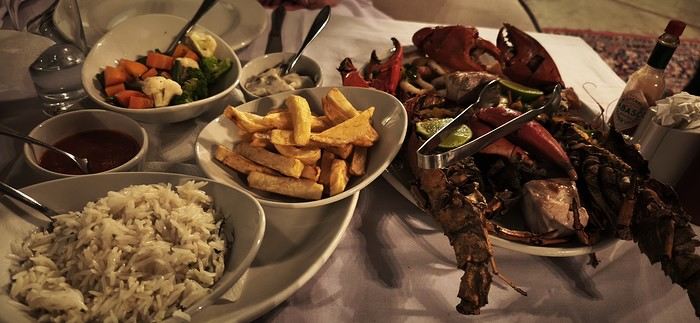
Sunday, February 22, 2026:
A driver picked us up at dawn to take us to the domestic airport so we could finally head to our first destination: Ruaha National Park. We flew with Auric.air for a 2-hour flight with two stops (Nyerere and Zkima airstrips).
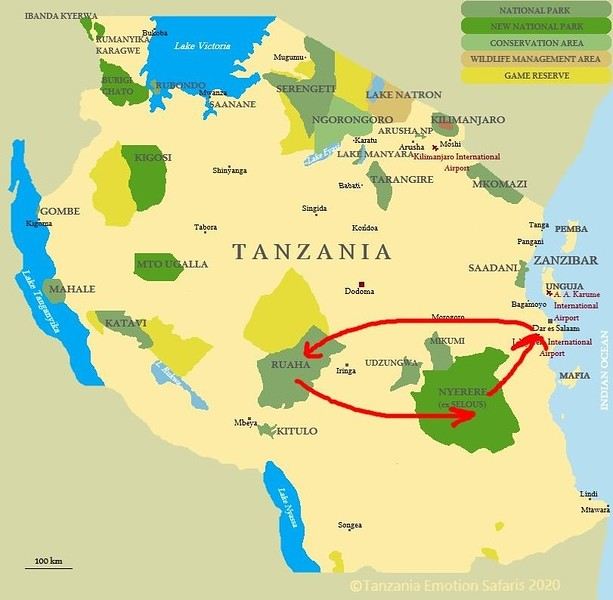
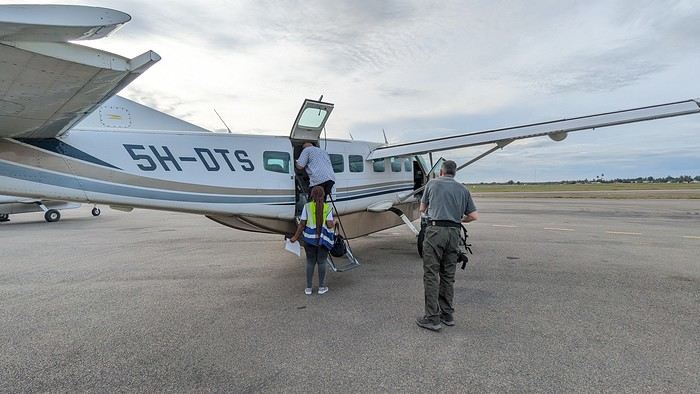
I’m always amazed at how easily these Cessnas take off and land on dirt runways—especially when they’re wet:
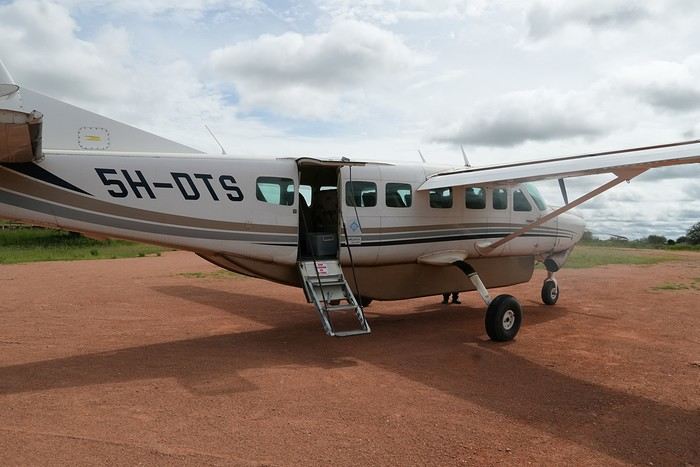
Aerial view of Zkima airstrip, where we’d landed just minutes earlier:
Flyover of Iringa, a "big" city in the country near Ruaha National Park:
We’re getting close. The plane descends and flies over the Ruaha River, which gave the park its name:
We land for the third and final time that day, reaching our destination: Msembe airstrip, the gateway to Ruaha.
We got back from Tanzania a month ago, on March 5th. I’ve started this trip report at the link the moderator asked me to use:
https://voyageforum.com/forum/decouverte-ruaha-nyerere-ex-selous-en-fevrier-mars-2026-d11466010/
You’ll find a video of our trip on my YouTube channel there.
Now I’ll tell you about our 10-night trip in Tanzania, with 8 nights spent in two parks we didn’t know. Tanzania isn’t new to us—it was even our first African safari destination back in 2012. https://www.youtube.com/@lolodetoul54 Since then, we’ve visited several East and Southern African countries: Kenya, South Africa, Namibia, Botswana, some of them multiple times. We usually travel in September during the dry season. We tried March 2024 for nine nights in the Okavango and loved it, except everything was dry, which wasn’t normal for the rainy season.
So for this second March trip during the wet season, we really got what we asked for… rain. But before that, we had to fight just to get to Tanzania.
Saturday, February 21, 2026:
It’s D-Day—the departure. What a hassle to organize flights to and within Tanzania! I’ll tell you all about it in another post: https://voyageforum.com/forum/toutes-compagnies-aeriennes-tanzaniennes-interdites-d10758360/ On top of that, Rwandair canceled our outbound flight a month before departure. They offered to reschedule us 3-4 days later—ridiculous for a 10-night trip we’d already booked. We had to cancel our tickets and buy new ones with Kenya Airways. We’re still waiting for our refund from Rwandair!!!!!!! So on Saturday, February 1st, our bags were packed. We headed to the Lorraine TGV station, about 30 km from home.
Direct train to Roissy—just 1h15. Quick and efficient.
All that was left was to wait for our overnight flight. We took off on time, just before 11 PM. Smooth flight, nothing unusual. Arrived in Nairobi around 9 AM. A few hours’ wait, then a flight to Dar es Salaam, landing at our first destination around 12:45 PM.
Our local contact, Anne from Asanterra agency, picked us up at the airport. It was hot and humid—it was raining.Our first night was at the Alexander Hotel. That evening, we treated ourselves to fish and shellfish at the hotel restaurant:
Sunday, February 22, 2026:
A driver picked us up at dawn to take us to the domestic airport so we could finally head to our first destination: Ruaha National Park. We flew with Auric.air for a 2-hour flight with two stops (Nyerere and Zkima airstrips).
I’m always amazed at how easily these Cessnas take off and land on dirt runways—especially when they’re wet:
Aerial view of Zkima airstrip, where we’d landed just minutes earlier:
Flyover of Iringa, a "big" city in the country near Ruaha National Park:
We’re getting close. The plane descends and flies over the Ruaha River, which gave the park its name:
We land for the third and final time that day, reaching our destination: Msembe airstrip, the gateway to Ruaha.
On the Roads of Costa Rica
Hello everyone, I’m happy to welcome you to this new travel journal.
We’re heading to Costa Rica together—a Central American destination that dreams are made of for many French travelers and attracts crowds from France.
It was the country’s wild nature and safety that convinced us to go, since we’re traveling with our 7-year-old little one. We didn’t have much vacation time in February 2026 (only 12 days), so we optimized as much as possible.
Here’s the itinerary: Wednesday, February 11: Flight from Marseille to San Jose via Paris and Atlanta Thursday, February 12: Pick up the car, drive to Poas Volcano, visit La Paz Waterfall Gardens Friday, February 13: Poas Volcano and drive to Manuel Antonio Saturday, February 14: Manuel Antonio National Park Sunday, February 15: Nauyaca Waterfall and Playa Linda Monday, February 16: Drive to Monte Verde and Santa Elena Reserve Tuesday, February 17: El Tigre Waterfall Reserve and Treetopia Park Wednesday, February 18: Monte Verde Reserve with a guide and drive to La Fortuna Thursday, February 19: Sloth guided tour, Observatory Lodge Park Friday, February 20: Arenal Volcano National Park, Termalistas del Arenal hot springs, and night tour Saturday, February 21: Return to San Jose, flight to Paris via Atlanta Sunday, February 22: Arrival in Paris and flight to Marseille. That gives us a solid 9 days in the country.
Budget breakdown: Costa Rica is an expensive country, but no more so than France. However, almost all hikes and waterfalls are paid entry, which can really add up. For meals, sodas (6–10 €) are cheaper than restaurants (10–20 € per dish).
Flights: We chose Delta Airlines for the price: Marseille to San Jose was 740 € per person (modifiable, with checked baggage and seat selection included). Other direct flights from Europe were priced between 1200 € and 1600 € with more restrictive conditions. That’s 2220 € for the family.
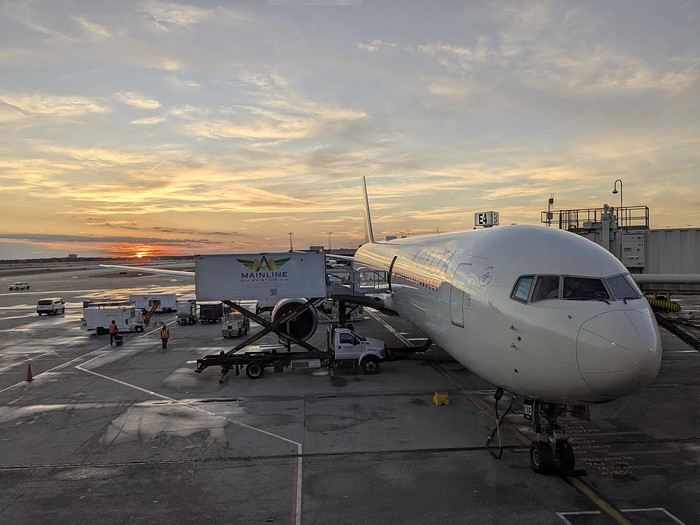
Accommodations: Alajuela, first night: 139 € (1 night) at Rodeo Estancia Boutique Hotel, with personalized airport pickup, transfer to the hotel, and a briefing from Vert Costa Rica agency the next day. Poas: 66 € (1 night) at Cabañas Tierra Fértil (entire apartment). Manuel Antonio: 394 € (3 nights) at La Palapa Ecolodge (hotel in the jungle). Monte Verde: Chalet Aloha Monteverde Cloud Forest (2 bedrooms): 125 € (2 nights). La Fortuna: Arenal Dream Garden (1 bedroom): 217 € (3 nights). Total: 941 €.
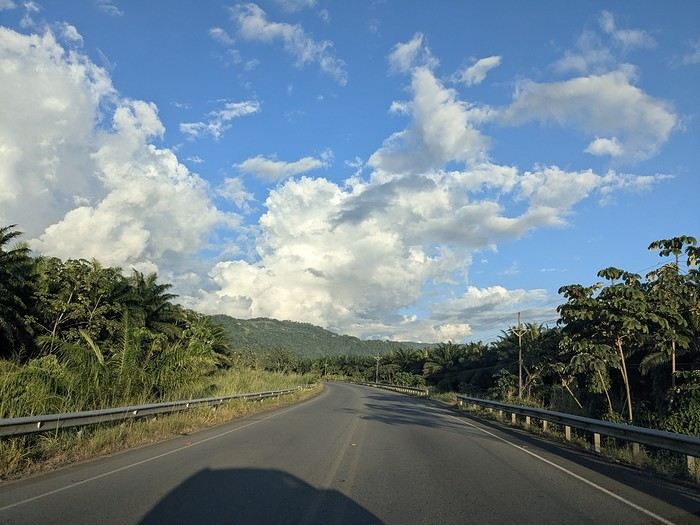
Car rental: I went through Vert Costa Rica agency (Vincent is a French expat who set up the agency in Costa Rica and makes great YouTube videos with useful tips). I rented a 4x4 that was delivered to the hotel the day after arrival and returned at the airport before the flight. The total was 772 €, including full insurance (zero deductible), a child seat, and a phone with a Costa Rican SIM and WhatsApp. The rental company was Poas Rent a Car. The vehicle was well-maintained—no complaints. Gas: 100 € for the whole trip (3 fill-ups).
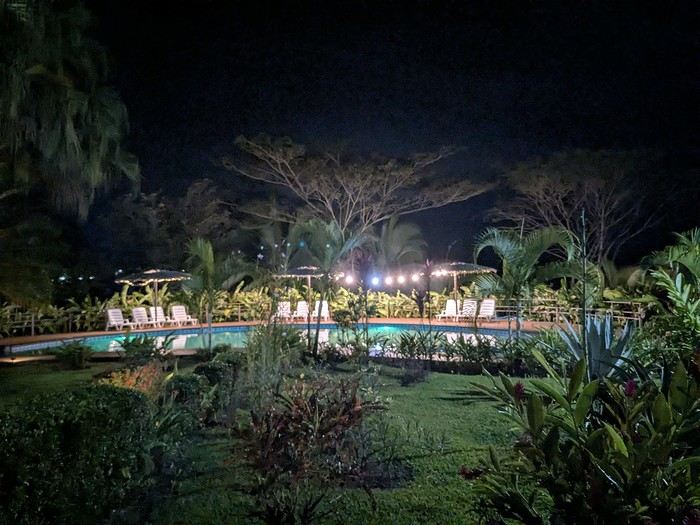
Activities: To get discounts, I bought the pass offered by Vincent, which paid for itself after just one activity. It cost me 30 € (promo since I rented the car through him). Prices are for 3 people. I’ve added stars to rate them: La Paz Waterfall Gardens ****: 112 € Poas Volcano National Park *: 33 € Manuel Antonio National Park ****: 35 € Nauyaca Waterfall ***: 25 € Santa Elena Reserve **: 45 € El Tigre Waterfall Reserve ****: 141 € (with meal) Treetopia (ziplining, suspension bridges) **: 250 € Guided tour of Monte Verde Reserve ***: 113 € Sloth guided tour (with breakfast) ***: 115 € Arenal Observatory Lodge (with meal) ****: 102 € Arenal Volcano National Park *: 34 € Termalistas del Arenal ****: 20 € Night tour ***: 116 € Total: 1171 €.
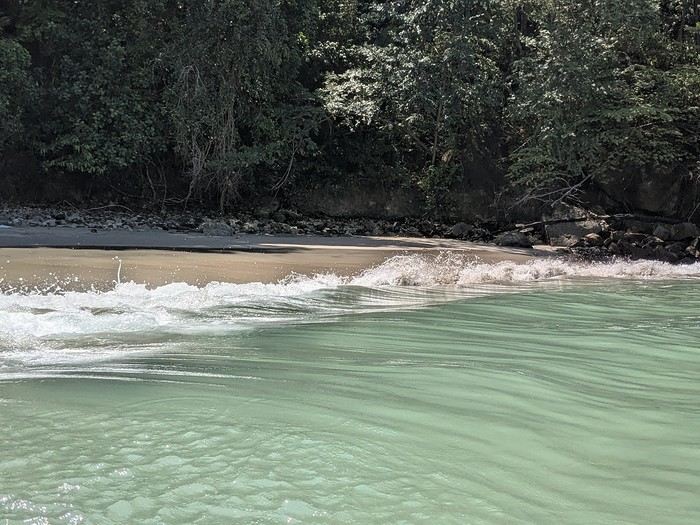
Meals: 600 € My favorite restaurants: Poas: Food court Mercaditas in Fraijanes Manuel Antonio (near La Palapa): La Langosta and also El Patio Near Nauyaca Waterfall: Ricar2 el Avión Between Manuel Antonio and Monte Verde: Soda D’Calle Santa Elena: HG’s Food Guadalupe (between Monte Verde and La Fortuna): Soda Río Piedras Arenal Observatory Lodge restaurant Arenal Oasis Ecolodge restaurant
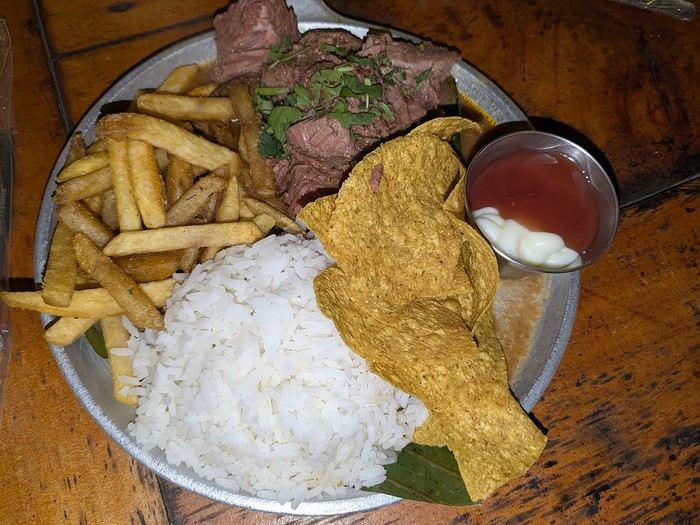
Other expenses: 300 € (groceries for breakfast, drinks, ice cream, souvenirs, etc.) Total overall: 6065 € (about 2020 € per person).
Now, here’s the day-by-day account of this beautiful trip.
https://voyageforum.com/images/posts/small/1772295011-z8mILBEUXHU8Ajz.jpg
It was the country’s wild nature and safety that convinced us to go, since we’re traveling with our 7-year-old little one. We didn’t have much vacation time in February 2026 (only 12 days), so we optimized as much as possible.
Here’s the itinerary: Wednesday, February 11: Flight from Marseille to San Jose via Paris and Atlanta Thursday, February 12: Pick up the car, drive to Poas Volcano, visit La Paz Waterfall Gardens Friday, February 13: Poas Volcano and drive to Manuel Antonio Saturday, February 14: Manuel Antonio National Park Sunday, February 15: Nauyaca Waterfall and Playa Linda Monday, February 16: Drive to Monte Verde and Santa Elena Reserve Tuesday, February 17: El Tigre Waterfall Reserve and Treetopia Park Wednesday, February 18: Monte Verde Reserve with a guide and drive to La Fortuna Thursday, February 19: Sloth guided tour, Observatory Lodge Park Friday, February 20: Arenal Volcano National Park, Termalistas del Arenal hot springs, and night tour Saturday, February 21: Return to San Jose, flight to Paris via Atlanta Sunday, February 22: Arrival in Paris and flight to Marseille. That gives us a solid 9 days in the country.
Budget breakdown: Costa Rica is an expensive country, but no more so than France. However, almost all hikes and waterfalls are paid entry, which can really add up. For meals, sodas (6–10 €) are cheaper than restaurants (10–20 € per dish).
Flights: We chose Delta Airlines for the price: Marseille to San Jose was 740 € per person (modifiable, with checked baggage and seat selection included). Other direct flights from Europe were priced between 1200 € and 1600 € with more restrictive conditions. That’s 2220 € for the family.
Accommodations: Alajuela, first night: 139 € (1 night) at Rodeo Estancia Boutique Hotel, with personalized airport pickup, transfer to the hotel, and a briefing from Vert Costa Rica agency the next day. Poas: 66 € (1 night) at Cabañas Tierra Fértil (entire apartment). Manuel Antonio: 394 € (3 nights) at La Palapa Ecolodge (hotel in the jungle). Monte Verde: Chalet Aloha Monteverde Cloud Forest (2 bedrooms): 125 € (2 nights). La Fortuna: Arenal Dream Garden (1 bedroom): 217 € (3 nights). Total: 941 €.
Car rental: I went through Vert Costa Rica agency (Vincent is a French expat who set up the agency in Costa Rica and makes great YouTube videos with useful tips). I rented a 4x4 that was delivered to the hotel the day after arrival and returned at the airport before the flight. The total was 772 €, including full insurance (zero deductible), a child seat, and a phone with a Costa Rican SIM and WhatsApp. The rental company was Poas Rent a Car. The vehicle was well-maintained—no complaints. Gas: 100 € for the whole trip (3 fill-ups).
Activities: To get discounts, I bought the pass offered by Vincent, which paid for itself after just one activity. It cost me 30 € (promo since I rented the car through him). Prices are for 3 people. I’ve added stars to rate them: La Paz Waterfall Gardens ****: 112 € Poas Volcano National Park *: 33 € Manuel Antonio National Park ****: 35 € Nauyaca Waterfall ***: 25 € Santa Elena Reserve **: 45 € El Tigre Waterfall Reserve ****: 141 € (with meal) Treetopia (ziplining, suspension bridges) **: 250 € Guided tour of Monte Verde Reserve ***: 113 € Sloth guided tour (with breakfast) ***: 115 € Arenal Observatory Lodge (with meal) ****: 102 € Arenal Volcano National Park *: 34 € Termalistas del Arenal ****: 20 € Night tour ***: 116 € Total: 1171 €.
Meals: 600 € My favorite restaurants: Poas: Food court Mercaditas in Fraijanes Manuel Antonio (near La Palapa): La Langosta and also El Patio Near Nauyaca Waterfall: Ricar2 el Avión Between Manuel Antonio and Monte Verde: Soda D’Calle Santa Elena: HG’s Food Guadalupe (between Monte Verde and La Fortuna): Soda Río Piedras Arenal Observatory Lodge restaurant Arenal Oasis Ecolodge restaurant
Other expenses: 300 € (groceries for breakfast, drinks, ice cream, souvenirs, etc.) Total overall: 6065 € (about 2020 € per person).
Now, here’s the day-by-day account of this beautiful trip.
https://voyageforum.com/images/posts/small/1772295011-z8mILBEUXHU8Ajz.jpg
7 weeks and 150 years between us on a southern Morocco road trip
We arrive in the evening in Marrakesh, and a taxi arranged by our friendly Riad is waiting for us. The driver takes us to the door, where we’re briefly greeted by our hosts. The room is heated—phew—because it’s really cold on this January 17th for our arrival. Riad Alisma, where we’re staying for 2 nights. The next morning, it’s pouring rain when we wake up, but after a good breakfast, the rain has calmed down. Off we go to the medersa, which allows for a relatively sheltered visit. We’d visited this palace 15 years ago—it’s been renovated since then.
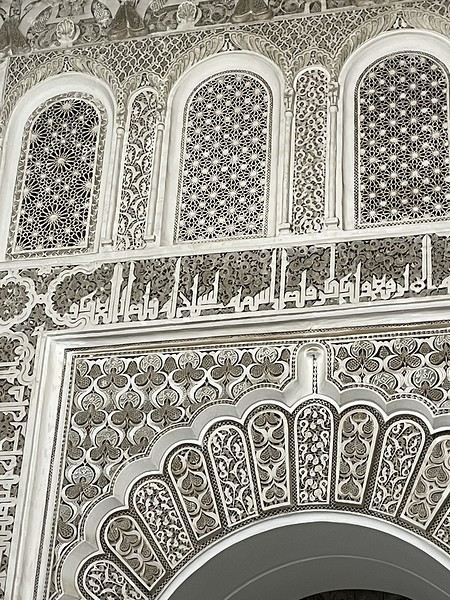
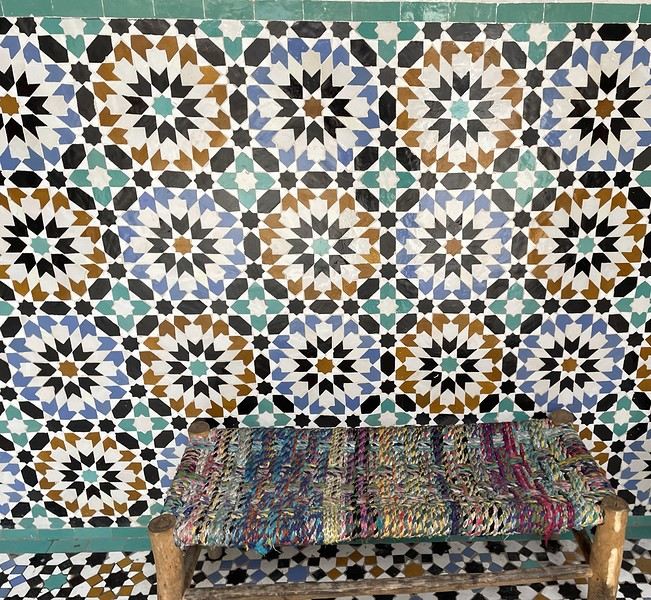
From there, without the rain, we wander aimlessly and eventually end up near the tanneries, but it’s Sunday, and there’s very little activity. Of course, we get hassled by a tout.
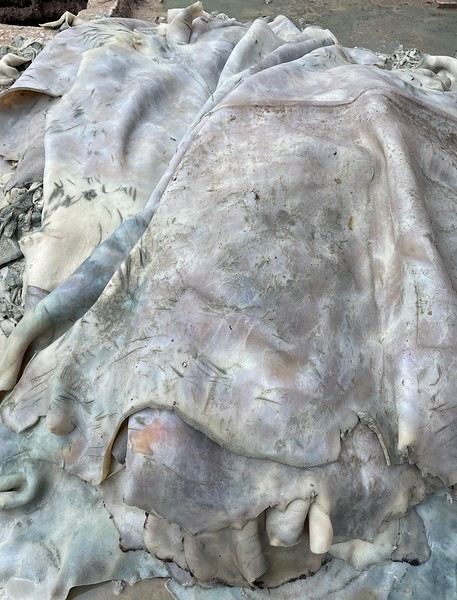
Here, the hides after being treated with lime—I love the colors.
We part ways a bit annoyed. He gets a little revenge by giving us bad directions, and we end up outside the city walls. We decide to take a taxi to the new modern art museum—60 dirhams for the 5 km, which is nothing when you think about it. That tout, who we didn’t ask for anything and made it clear we weren’t buying anything, dragged us into a shop supposedly only open that day and demanded 50 dirhams for his "services"! Let’s forget that bad moment and enjoy the exhibition at the MACAL.
The taxi on the way back drops us off at Place des Ferblantiers, not far from our Riad. We’re a little peckish—it’s worth mentioning that at lunchtime, we only ate a plate of beans from a street vendor. So, we buy a bunch of little sweets, each more delicious than the last, at Ajar. We snack while sipping mint tea and watching life go by around us. A final visit to the Museum of Moroccan Cuisine on our way back helps us dodge a few more showers. Then it’s back to the Riad. The atmosphere in the city is heating up—it’s the AFCON final tonight. The temperatures, though? Not so much. We ordered a meal at the Riad, and it was a good call—not only was it really tasty, but the rain also picked up again. Our day in Marrakesh ends under the covers with a good book and some photo sorting. Still, we managed 10,750 steps. View of our Riad
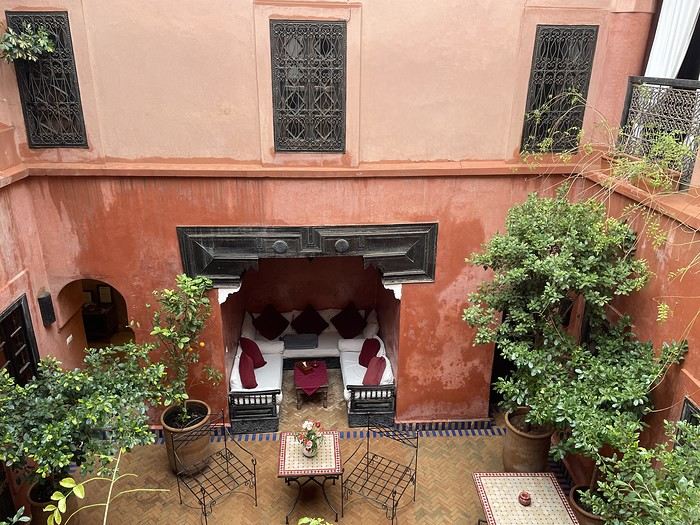
Tomorrow, we’ll pick up our rental car from Medloc and head to Essaouira.
From there, without the rain, we wander aimlessly and eventually end up near the tanneries, but it’s Sunday, and there’s very little activity. Of course, we get hassled by a tout.
Here, the hides after being treated with lime—I love the colors.
We part ways a bit annoyed. He gets a little revenge by giving us bad directions, and we end up outside the city walls. We decide to take a taxi to the new modern art museum—60 dirhams for the 5 km, which is nothing when you think about it. That tout, who we didn’t ask for anything and made it clear we weren’t buying anything, dragged us into a shop supposedly only open that day and demanded 50 dirhams for his "services"! Let’s forget that bad moment and enjoy the exhibition at the MACAL.
The taxi on the way back drops us off at Place des Ferblantiers, not far from our Riad. We’re a little peckish—it’s worth mentioning that at lunchtime, we only ate a plate of beans from a street vendor. So, we buy a bunch of little sweets, each more delicious than the last, at Ajar. We snack while sipping mint tea and watching life go by around us. A final visit to the Museum of Moroccan Cuisine on our way back helps us dodge a few more showers. Then it’s back to the Riad. The atmosphere in the city is heating up—it’s the AFCON final tonight. The temperatures, though? Not so much. We ordered a meal at the Riad, and it was a good call—not only was it really tasty, but the rain also picked up again. Our day in Marrakesh ends under the covers with a good book and some photo sorting. Still, we managed 10,750 steps. View of our Riad
Tomorrow, we’ll pick up our rental car from Medloc and head to Essaouira.
The Foam of Days
Now that the curtain has fallen on the past year, it’s time to see what’s happening around here.
It seems pretty quiet, but I’ll read more in detail later.
First, I need to tell you all an anecdote.
My eldest little girl, in her third year of law school, was really scared she wouldn’t pass the year. I told her: “Trust yourself, you’ve worked so hard, and worst case, if you fail, you’ll just redo the year.” “But I don’t think I’ll make it—they changed the rules, and if I mess up even one unit, I have to start all over.” I knew her grades weren’t exactly stellar, and with what I was about to say, I wasn’t taking much of a risk. “Here’s the deal, sweetheart: if you pass, I promise I’ll take you to India, just the two of us.” I have to admit, India is a country I’ve talked about so much to all my grandchildren that in their minds, it’s become a magical, mythical place (hmm).
July had barely begun when my phone rang, her name flashing on the screen. “Mamido, I did it!” My promise came rushing back—oh no, oh no, oh no! “Congratulations, sweetheart!” A little shyly, she said: “Is the India trip still on?”
And me, replying: “Of course it is!”
And that’s that—a promise is a promise, or you risk losing that precious trust that keeps hearts warm and at peace.
We’re leaving in February. Only 8 days—yikes, the carbon footprint! But we can’t miss her tutorials, or she’ll be kicked out. Personally, that works just fine for me.
Going to India has become a challenge for me. It’s far, it’s exhausting, I sweat, I hate mosquitoes, the spices bother my mouth when I used to love them. There’s noise all the time—at night, the dogs bark nonstop, and we almost get run over. I’ll get lost in the streets because my sense of direction has vanished. I don’t like rice anymore. All that chaos and those cultural differences that once enchanted me now just overwhelm me. But I promised.
The upside—and it’s a big one—Raman, the same driver I’ve had forever, will be at the airport with a sign with our names. We’ll stop at the same little shop for chai (or tea, plain and simple) with that aroma that intoxicates me, halfway through the trip.
It’ll be a tiny trip—staying with friends, I’ll show her a few places I love: Chidambaram, Mamallapuram, and the clinic where I worked. Then we’ll head back. My little girl will go home to her parents.
As for me, I’ll leave right away for our Scottish island with Homme for our chilly winter.
How can you love a country so much you want to live there, then suddenly reject it, no longer able to appreciate what once made it special? That’s the mystery of love, I guess.
First, I need to tell you all an anecdote.
My eldest little girl, in her third year of law school, was really scared she wouldn’t pass the year. I told her: “Trust yourself, you’ve worked so hard, and worst case, if you fail, you’ll just redo the year.” “But I don’t think I’ll make it—they changed the rules, and if I mess up even one unit, I have to start all over.” I knew her grades weren’t exactly stellar, and with what I was about to say, I wasn’t taking much of a risk. “Here’s the deal, sweetheart: if you pass, I promise I’ll take you to India, just the two of us.” I have to admit, India is a country I’ve talked about so much to all my grandchildren that in their minds, it’s become a magical, mythical place (hmm).
July had barely begun when my phone rang, her name flashing on the screen. “Mamido, I did it!” My promise came rushing back—oh no, oh no, oh no! “Congratulations, sweetheart!” A little shyly, she said: “Is the India trip still on?”
And me, replying: “Of course it is!”
And that’s that—a promise is a promise, or you risk losing that precious trust that keeps hearts warm and at peace.
We’re leaving in February. Only 8 days—yikes, the carbon footprint! But we can’t miss her tutorials, or she’ll be kicked out. Personally, that works just fine for me.
Going to India has become a challenge for me. It’s far, it’s exhausting, I sweat, I hate mosquitoes, the spices bother my mouth when I used to love them. There’s noise all the time—at night, the dogs bark nonstop, and we almost get run over. I’ll get lost in the streets because my sense of direction has vanished. I don’t like rice anymore. All that chaos and those cultural differences that once enchanted me now just overwhelm me. But I promised.
The upside—and it’s a big one—Raman, the same driver I’ve had forever, will be at the airport with a sign with our names. We’ll stop at the same little shop for chai (or tea, plain and simple) with that aroma that intoxicates me, halfway through the trip.
It’ll be a tiny trip—staying with friends, I’ll show her a few places I love: Chidambaram, Mamallapuram, and the clinic where I worked. Then we’ll head back. My little girl will go home to her parents.
As for me, I’ll leave right away for our Scottish island with Homme for our chilly winter.
How can you love a country so much you want to live there, then suddenly reject it, no longer able to appreciate what once made it special? That’s the mystery of love, I guess.
Mauritian Ti' Punch
The recipe for the cocktail: endless beaches, a dazzling palette of colors, some breathtaking hikes, and excellent cuisine...
For the tasting, follow along in the pages of this travel journal! 😉
Don’t forget your hiking shoes, a swimsuit, sunscreen, but also a sweater, your driver’s license, and your credit card...
Just over 11 hours of flight, and we’ll be setting foot on Mauritian soil!
For the tasting, follow along in the pages of this travel journal! 😉
Don’t forget your hiking shoes, a swimsuit, sunscreen, but also a sweater, your driver’s license, and your credit card...
Just over 11 hours of flight, and we’ll be setting foot on Mauritian soil!
Your recommendations for 20 days in Thailand
Hello,
Our flights are booked, and we’ll arrive in Thailand at the beginning of January.
Originally, we were supposed to spend 14 days there. But after booking the flights and seeing the prices, we’ll now be there for 20 days instead.
Our initial plan was: 2 days in Bangkok 1 day in Ayutthaya 4 days in Chiang Mai 6 days around Krabi
So we have 7 more days to fill. What do you recommend?
An extra day in Bangkok? Adding more days in the north? If so, where? Exploring another region, like Kanchanaburi or Cheow Lan Lake? Traveling north in stages instead of taking the overnight train?
A few extra details about us: For us, vacation isn’t about relaxation—we love walking, exploring, and packed days don’t bother us. Hiking for hours and doing active things is what makes us happy. That said, we also enjoy visiting villages and towns if they’re worth the detour. In Thailand, we’d like to visit temples too. We’re early risers, so our days tend to be long. 🙂 In short, we like to keep things moving during our trips. 😉
Unfortunately, seeing terraced rice fields isn’t possible in January. I read there are rice fields around Sukhothai. Are they green in January?
In the north, do you recommend Doi Inthanon, Huai Nam Dang, or Doi Chiang Dao National Parks? Which one is the most beautiful and best for January?
Our flights are booked, and we’ll arrive in Thailand at the beginning of January.
Originally, we were supposed to spend 14 days there. But after booking the flights and seeing the prices, we’ll now be there for 20 days instead.
Our initial plan was: 2 days in Bangkok 1 day in Ayutthaya 4 days in Chiang Mai 6 days around Krabi
So we have 7 more days to fill. What do you recommend?
An extra day in Bangkok? Adding more days in the north? If so, where? Exploring another region, like Kanchanaburi or Cheow Lan Lake? Traveling north in stages instead of taking the overnight train?
A few extra details about us: For us, vacation isn’t about relaxation—we love walking, exploring, and packed days don’t bother us. Hiking for hours and doing active things is what makes us happy. That said, we also enjoy visiting villages and towns if they’re worth the detour. In Thailand, we’d like to visit temples too. We’re early risers, so our days tend to be long. 🙂 In short, we like to keep things moving during our trips. 😉
Unfortunately, seeing terraced rice fields isn’t possible in January. I read there are rice fields around Sukhothai. Are they green in January?
In the north, do you recommend Doi Inthanon, Huai Nam Dang, or Doi Chiang Dao National Parks? Which one is the most beautiful and best for January?
Yet Another Travel Journal in this (Too) Familiar Rajasthan, But with Family and Kids
Prologue
This journal recounts a trip to Rajasthan that’s already over a year old and that I’ve only now found the chance to write about. The summer of 2024 marked my return to India—my tenth trip—after six long years away since my last solo wanderings in Tamil Nadu in 2018 (the journal of which is published on this site). That absence was partly (but not only) due to the long COVID and post-COVID period, which saw a complete halt and then a major slowdown in global tourism. To top it off, Voyage Forum announced its closure in an end-of-the-world atmosphere. A sad time for our favorite social activity…
A few weeks after returning from Rajasthan, I tried to motivate myself to start writing a journal to publish on a forum claiming to be VF’s successor, which I’d eventually signed up for out of desperation. But I kept hesitating and putting the project off because, for one, I no longer have the time I used to. For another, the vibe wasn’t really taking off on that forum—it was overrun with ads and not very active, contrary to what its host’s name suggested. Despite its good intentions and commendable role as a stopgap, it also turned out to be very impractical to use, especially when you don’t have much time like me. I’ll admit I’d occasionally check back on VF to see if anything was happening. But all the discussions remained frozen in time, stuck in that fateful year, 2020. Then, rumors swirled online about shady reasons behind its closure, leaving little room for hope.
And then, one fine morning, I got a message at work from Marien informing me that VF had reopened. What a huge surprise! Even though the forum’s “end” had played out in a somewhat apocalyptic atmosphere, the memories of passionate and heated discussions, the frank debates, and the useful exchanges that made this site a traveler’s goldmine and a unique hub of conviviality all came rushing back to me like a breath of fresh air. I finally saw a sign and tried to motivate myself to find the time to publish the journal of this tenth trip to India and fifth to Rajasthan. But in the end, I got bogged down in professional and family obligations and never managed to find the time to get started. That’s now fixed, though, because I had two reasons for wanting to do it: I find that looking back on a trip to tell others about it is a highly beneficial introspective exercise. Also, I thought this journal could be useful to other travelers on a few points.
Because, “do we really need yet another journal about Rajasthan?” you might rightly ask! Especially in a time when so many journals about the “Land of Kings” have been published since VF’s return, not to mention the countless stories you can already find online about this region, one of India’s most touristy. And I’d add, why go back to Rajasthan for a fifth time, where I’ve already dragged my feet more than enough—through its forts, deserts, temples, cities, villages, bumpy roads, train stations, tasty street food stalls, cheap guesthouses, and more? Where some might see just another overhyped tourist destination full of the same old *Arabian Nights* clichés, worn to a thread, that I mentioned earlier, when there’s so much else to see in India? Well, first because it’s a magnificent country I never tire of, where I started an academic study and made so many connections. It’s also packed with places where you won’t find a single tourist (right, Marie-Jo?), even in the heart of well-trodden paths and classic itineraries. And most importantly, as I said earlier, things have changed in recent years. First, after six years without traveling far, the urge to go back to India was getting stronger. But this time, no more solo trips (often) or duo adventures (sometimes)—now it’s a team of four that has to come along! And even if you can argue with that, what better place than Rajasthan to introduce India to people who’ve never seen it? To kids you want to amaze? Plus, traveling with your new little family to your favorite country isn’t the same as going solo in often spartan conditions that only affect you. It’s a different challenge, but ultimately probably much harder. So, is it really reasonable to take two kids to India, including a two-year-old baby? That’s one of the main goals of this journal (but not the only one)—to try to answer that question.
As you can tell, it’s not so much the destination but the slightly unusual setup of this trip that, in my opinion, will make this journal interesting. Despite my experience and expertise (yes, I dare say it) in India, there were plenty of questions before we finalized the plan and said, “Alright, let’s go!” The questions were flying for us parents. Is it wise to travel to India with a two-year-old? What would we do (it happened) if the kids got very sick? Would they be able to handle a road trip on Rajasthan’s bumpy, dusty roads using public transport? Could they handle the shock of such a different world—the dirt, poverty, pollution, noise (…and the smell, as they say), the spicy food, monkeys, mosquitoes, snakes, tigers, leopards, and so on? In short, all the clichés that I usually joke about suddenly became potential realities. Another concern: as a mixed Franco-African family (not me, but my partner and her oldest), wouldn’t we risk not always being well received, given what you sometimes hear about that in India? How would Indians react to seeing a mixed-race family, the ultimate taboo in a country of purity and social segregation, which would undoubtedly raise many questions for them? Of course, not everything went as expected… Because, as you know, with India—and what makes it charming for some—there are always complications: sometimes where you don’t expect them… and sometimes where you do. I’ll go into detail about that in the journal to come (not right away) and in the final review (even later). These experiences could be useful to travelers who find themselves in similar situations and have the same questions we did before embarking on such a journey. And maybe it’ll spark the curiosity of those who aren’t concerned and will read yet another Rajasthan journal, but with its own unique twists.
Despite my unchanged constraints, which mean I have little time to write this, I don’t want to rush the story, so I’ll take my time. There will probably be lulls. I hope that won’t stop people from coming to react, debate, share their impressions, or ask for information.
This journal recounts a trip to Rajasthan that’s already over a year old and that I’ve only now found the chance to write about. The summer of 2024 marked my return to India—my tenth trip—after six long years away since my last solo wanderings in Tamil Nadu in 2018 (the journal of which is published on this site). That absence was partly (but not only) due to the long COVID and post-COVID period, which saw a complete halt and then a major slowdown in global tourism. To top it off, Voyage Forum announced its closure in an end-of-the-world atmosphere. A sad time for our favorite social activity…
A few weeks after returning from Rajasthan, I tried to motivate myself to start writing a journal to publish on a forum claiming to be VF’s successor, which I’d eventually signed up for out of desperation. But I kept hesitating and putting the project off because, for one, I no longer have the time I used to. For another, the vibe wasn’t really taking off on that forum—it was overrun with ads and not very active, contrary to what its host’s name suggested. Despite its good intentions and commendable role as a stopgap, it also turned out to be very impractical to use, especially when you don’t have much time like me. I’ll admit I’d occasionally check back on VF to see if anything was happening. But all the discussions remained frozen in time, stuck in that fateful year, 2020. Then, rumors swirled online about shady reasons behind its closure, leaving little room for hope.
And then, one fine morning, I got a message at work from Marien informing me that VF had reopened. What a huge surprise! Even though the forum’s “end” had played out in a somewhat apocalyptic atmosphere, the memories of passionate and heated discussions, the frank debates, and the useful exchanges that made this site a traveler’s goldmine and a unique hub of conviviality all came rushing back to me like a breath of fresh air. I finally saw a sign and tried to motivate myself to find the time to publish the journal of this tenth trip to India and fifth to Rajasthan. But in the end, I got bogged down in professional and family obligations and never managed to find the time to get started. That’s now fixed, though, because I had two reasons for wanting to do it: I find that looking back on a trip to tell others about it is a highly beneficial introspective exercise. Also, I thought this journal could be useful to other travelers on a few points.
Because, “do we really need yet another journal about Rajasthan?” you might rightly ask! Especially in a time when so many journals about the “Land of Kings” have been published since VF’s return, not to mention the countless stories you can already find online about this region, one of India’s most touristy. And I’d add, why go back to Rajasthan for a fifth time, where I’ve already dragged my feet more than enough—through its forts, deserts, temples, cities, villages, bumpy roads, train stations, tasty street food stalls, cheap guesthouses, and more? Where some might see just another overhyped tourist destination full of the same old *Arabian Nights* clichés, worn to a thread, that I mentioned earlier, when there’s so much else to see in India? Well, first because it’s a magnificent country I never tire of, where I started an academic study and made so many connections. It’s also packed with places where you won’t find a single tourist (right, Marie-Jo?), even in the heart of well-trodden paths and classic itineraries. And most importantly, as I said earlier, things have changed in recent years. First, after six years without traveling far, the urge to go back to India was getting stronger. But this time, no more solo trips (often) or duo adventures (sometimes)—now it’s a team of four that has to come along! And even if you can argue with that, what better place than Rajasthan to introduce India to people who’ve never seen it? To kids you want to amaze? Plus, traveling with your new little family to your favorite country isn’t the same as going solo in often spartan conditions that only affect you. It’s a different challenge, but ultimately probably much harder. So, is it really reasonable to take two kids to India, including a two-year-old baby? That’s one of the main goals of this journal (but not the only one)—to try to answer that question.
As you can tell, it’s not so much the destination but the slightly unusual setup of this trip that, in my opinion, will make this journal interesting. Despite my experience and expertise (yes, I dare say it) in India, there were plenty of questions before we finalized the plan and said, “Alright, let’s go!” The questions were flying for us parents. Is it wise to travel to India with a two-year-old? What would we do (it happened) if the kids got very sick? Would they be able to handle a road trip on Rajasthan’s bumpy, dusty roads using public transport? Could they handle the shock of such a different world—the dirt, poverty, pollution, noise (…and the smell, as they say), the spicy food, monkeys, mosquitoes, snakes, tigers, leopards, and so on? In short, all the clichés that I usually joke about suddenly became potential realities. Another concern: as a mixed Franco-African family (not me, but my partner and her oldest), wouldn’t we risk not always being well received, given what you sometimes hear about that in India? How would Indians react to seeing a mixed-race family, the ultimate taboo in a country of purity and social segregation, which would undoubtedly raise many questions for them? Of course, not everything went as expected… Because, as you know, with India—and what makes it charming for some—there are always complications: sometimes where you don’t expect them… and sometimes where you do. I’ll go into detail about that in the journal to come (not right away) and in the final review (even later). These experiences could be useful to travelers who find themselves in similar situations and have the same questions we did before embarking on such a journey. And maybe it’ll spark the curiosity of those who aren’t concerned and will read yet another Rajasthan journal, but with its own unique twists.
Despite my unchanged constraints, which mean I have little time to write this, I don’t want to rush the story, so I’ll take my time. There will probably be lulls. I hope that won’t stop people from coming to react, debate, share their impressions, or ask for information.
From Southern Shikoku, between land and sea, to the blue waters of Miyakojima and finally the Tokyo metropolis
From Southern Shikoku, between land and sea, to the blue waters of Miyakojima and finally Tokyo’s megacity
Hi everyone,
I have to admit, I really hesitated before deciding to write this travel journal... Writing one takes a lot of time and energy, and since this is my 4th trip, I wondered if it would even interest anyone other than myself (both for the discovery and the writing). But after a few people asked, "Are you going to write a journal?" and especially after rediscovering the joy of reading other travelers’ journals about Japan or elsewhere on this forum, I’ve decided to share my 4th installment in the Land of the Rising Sun here.
The itinerary: 27 full days, from late May to late June 2025, right in the middle of the rainy season, including:
-->13 days in Shikoku, from Kochi (Kochi Prefecture) to Matsuyama (Ehime Prefecture)
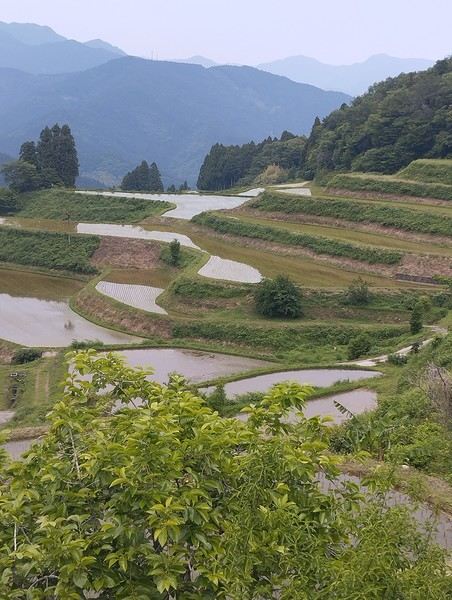
-->7 days in Miyakojima (Okinawa Prefecture)
-->7 days in Tokyo
The trip was decided on fairly last-minute again this year.
Since I regularly check flight prices to track fluctuations for this destination even without concrete plans, stumbling upon a slightly cheaper direct flight (900 €) than what I’d seen in previous months (around 1,200–1,400 € on average) for a Paris-Tokyo route with Japanese airline ANA was too tempting to resist the urge to return to this enchanting country. After much hesitation between exploring the San’in region (Matsue, Tottori, Yamaguchi) and Southern Shikoku, the decision was made—I took the plunge! The ticket is booked: Paris to Kochi with a layover in Tokyo, all with ANA, the airline I’d been dreaming of... for 1,120 € per person. Okay, it’s not cheap, but it’s better than in 2023.
Departure in 2 weeks! Now I just have to get everything ready!
Intense prep work over these next 2 weeks to:
finalize a more precise itinerary and reach an agreement—yep, because even though we both love Japan, our preferences differ slightly, and we have to choose between exploring new places or revisiting beloved spots... decide how much time to spend in each area without rushing while still exploring research places that might interest us and watch videos about Japan book accommodations: yes, it’s possible to do this on the spot, but last year, we realized that last-minute options were pretty expensive, so we’re booking ahead—though we’ll keep a few options open in case better deals pop up later reserve rental cars order yen check the weather regularly and wonder if choosing the *tsuyu* (rainy season) was really a good idea—are we going to be drenched the whole time???
"What hard work," you might say! Going to Japan for a month—what a tough life! Despite this being my 4th trip, the excitement is just as intense as the first time.
The only small downside is that when we booked the flight, there weren’t many seats left, so we’re only sitting together on the international return flight. Plus, on the way there, we have middle seats. Another lingering question: what French-language films will be available? According to the internet, the selection seems limited. Oh well, these are just minor details—it’s already time to fly! PS: I’ll be posting slowly and irregularly... so for those interested, be patient, and maybe set an alert...
Hi everyone,
I have to admit, I really hesitated before deciding to write this travel journal... Writing one takes a lot of time and energy, and since this is my 4th trip, I wondered if it would even interest anyone other than myself (both for the discovery and the writing). But after a few people asked, "Are you going to write a journal?" and especially after rediscovering the joy of reading other travelers’ journals about Japan or elsewhere on this forum, I’ve decided to share my 4th installment in the Land of the Rising Sun here.
The itinerary: 27 full days, from late May to late June 2025, right in the middle of the rainy season, including:
-->13 days in Shikoku, from Kochi (Kochi Prefecture) to Matsuyama (Ehime Prefecture)
-->7 days in Miyakojima (Okinawa Prefecture)
-->7 days in Tokyo
The trip was decided on fairly last-minute again this year.
Since I regularly check flight prices to track fluctuations for this destination even without concrete plans, stumbling upon a slightly cheaper direct flight (900 €) than what I’d seen in previous months (around 1,200–1,400 € on average) for a Paris-Tokyo route with Japanese airline ANA was too tempting to resist the urge to return to this enchanting country. After much hesitation between exploring the San’in region (Matsue, Tottori, Yamaguchi) and Southern Shikoku, the decision was made—I took the plunge! The ticket is booked: Paris to Kochi with a layover in Tokyo, all with ANA, the airline I’d been dreaming of... for 1,120 € per person. Okay, it’s not cheap, but it’s better than in 2023.
Departure in 2 weeks! Now I just have to get everything ready!
Intense prep work over these next 2 weeks to:
finalize a more precise itinerary and reach an agreement—yep, because even though we both love Japan, our preferences differ slightly, and we have to choose between exploring new places or revisiting beloved spots... decide how much time to spend in each area without rushing while still exploring research places that might interest us and watch videos about Japan book accommodations: yes, it’s possible to do this on the spot, but last year, we realized that last-minute options were pretty expensive, so we’re booking ahead—though we’ll keep a few options open in case better deals pop up later reserve rental cars order yen check the weather regularly and wonder if choosing the *tsuyu* (rainy season) was really a good idea—are we going to be drenched the whole time???
"What hard work," you might say! Going to Japan for a month—what a tough life! Despite this being my 4th trip, the excitement is just as intense as the first time.
The only small downside is that when we booked the flight, there weren’t many seats left, so we’re only sitting together on the international return flight. Plus, on the way there, we have middle seats. Another lingering question: what French-language films will be available? According to the internet, the selection seems limited. Oh well, these are just minor details—it’s already time to fly! PS: I’ll be posting slowly and irregularly... so for those interested, be patient, and maybe set an alert...
Another side of my trip to Thailand: Villages, nature, countryside, mountains...
February 9th is a pivotal day during my trip to Thailand. Up until this date, my focus had been on cities, temples, and other urban landmarks. Starting February 10th, I’ll finally leave the city behind for the outskirts—one town, one life, farther from tourism, more real, more authentic... Then comes the bucolic surroundings of Chiang Mai, nature, the countryside, the mountains.
This morning, I head to visit the ethnographic museum. I’d been told about another one, but it’s permanently closed. I wonder if it’s the same one that might have changed its name and location.
I thoroughly enjoy visiting this museum. At first, I’m a bit annoyed because the place is packed with noisy school groups blocking the display cases without even showing the slightest interest. But soon, their chaperones manage to lead them into another room, giving me some peace. They maintain this distance throughout the tour, allowing me to explore the museum in complete tranquility. I really appreciate their tact.
I’m amazed by the absolutely stunning fabric displays and the countless everyday objects, especially the very old pottery. There’s so much beautiful basketry and intricately carved wood. The statues are also incredible... After seeing all of them, I no longer feel like buying any from the shops.
On my way back, not far from my hotel, I discover a rather unique place that only serves one drink, which they’ve made their specialty: egg coffee! A pretty surprising novelty. I have to try it.

At the bottom of the cup, they pour a layer of milk, topped with a layer of liquid coffee, followed by a layer of egg yolk, and finally a top layer that turns out to be a mix of coffee and cocoa powder. It’s a cold drink that, in the end, doesn’t have much flavor, and the price is pretty steep for such a small cup. You’re paying for the exclusivity!
Later in the day, I venture once again into small alleys, something I love doing when exploring a new city—no specific goal, just wandering east of the city, outside the walls.

I encounter very few tourists there and discover unsuspected little shops overflowing with lovely items, much cheaper than what you find in the heart of the tourist district. Then I wander through the floors of Warorot Market. I discover another kind of temple there: the temple of good deals. I love finding clothes that are really original for locals, not the flood of shirts and pants that tourists love but no Thai would ever buy, which invade the shops in the "Historic Square." I stop in my tracks in front of a stall with beautiful shirts featuring stunning geometric patterns in elegant color combinations and very short sleeves. Hmm, these would be perfect for showing off my biceps, one of which is adorned with the magnificent Ganesh tattoo I got last year in Bali. "When you’ve got nice things, you’ve got to show them off!" he said. 😜🙏💪 I pick out two for 380 baht and negotiate them down to 300. But the seller won’t go any lower. I understand I’ve reached the limit of her commercial possibilities. Just as I’m leaving the shop, happy with my purchase, my ever-helpful inner voice, Petite Voix, suggests: - You didn’t try them on because you were too lazy to take off the one you’re wearing and also because of the sweat, but you could just put one on over the one you’re wearing. It’s light enough that it won’t bother you.
I go back to the two sellers, who burst out laughing when I ask to try them on. - Oh no, it’s way too small for you! It’s a women’s shirt! - But they don’t look particularly feminine in style! And I chose XXL... I put the shirt on, and of course, it won’t close. Then I notice the buttons are on the wrong side. That’s why the sleeves seemed so short!!! They put the shirts back on the rack and refund me without any fuss, commenting amid total hilarity: - Well, thank goodness you tried it on just as you were leaving the shop!
Since I don’t want to walk too much before tomorrow’s first Big Outing with the driver, I end my stroll with a visit to two very pretty temples recommended by Joël.

I’d rather not post more temple photos. But these ones smell like village and countryside...


I’ve never seen anything like Wat Ket Karam, so extravagant...


And I end my day with two other lesser-known temples: Wat Noung Kham, simple and finally free of gold and glitter,

and Wat Dap Phai, where an intimate ceremony is taking place at the end of the day.
This morning, I head to visit the ethnographic museum. I’d been told about another one, but it’s permanently closed. I wonder if it’s the same one that might have changed its name and location.
I thoroughly enjoy visiting this museum. At first, I’m a bit annoyed because the place is packed with noisy school groups blocking the display cases without even showing the slightest interest. But soon, their chaperones manage to lead them into another room, giving me some peace. They maintain this distance throughout the tour, allowing me to explore the museum in complete tranquility. I really appreciate their tact.
I’m amazed by the absolutely stunning fabric displays and the countless everyday objects, especially the very old pottery. There’s so much beautiful basketry and intricately carved wood. The statues are also incredible... After seeing all of them, I no longer feel like buying any from the shops.
On my way back, not far from my hotel, I discover a rather unique place that only serves one drink, which they’ve made their specialty: egg coffee! A pretty surprising novelty. I have to try it.
At the bottom of the cup, they pour a layer of milk, topped with a layer of liquid coffee, followed by a layer of egg yolk, and finally a top layer that turns out to be a mix of coffee and cocoa powder. It’s a cold drink that, in the end, doesn’t have much flavor, and the price is pretty steep for such a small cup. You’re paying for the exclusivity!
Later in the day, I venture once again into small alleys, something I love doing when exploring a new city—no specific goal, just wandering east of the city, outside the walls.
I encounter very few tourists there and discover unsuspected little shops overflowing with lovely items, much cheaper than what you find in the heart of the tourist district. Then I wander through the floors of Warorot Market. I discover another kind of temple there: the temple of good deals. I love finding clothes that are really original for locals, not the flood of shirts and pants that tourists love but no Thai would ever buy, which invade the shops in the "Historic Square." I stop in my tracks in front of a stall with beautiful shirts featuring stunning geometric patterns in elegant color combinations and very short sleeves. Hmm, these would be perfect for showing off my biceps, one of which is adorned with the magnificent Ganesh tattoo I got last year in Bali. "When you’ve got nice things, you’ve got to show them off!" he said. 😜🙏💪 I pick out two for 380 baht and negotiate them down to 300. But the seller won’t go any lower. I understand I’ve reached the limit of her commercial possibilities. Just as I’m leaving the shop, happy with my purchase, my ever-helpful inner voice, Petite Voix, suggests: - You didn’t try them on because you were too lazy to take off the one you’re wearing and also because of the sweat, but you could just put one on over the one you’re wearing. It’s light enough that it won’t bother you.
I go back to the two sellers, who burst out laughing when I ask to try them on. - Oh no, it’s way too small for you! It’s a women’s shirt! - But they don’t look particularly feminine in style! And I chose XXL... I put the shirt on, and of course, it won’t close. Then I notice the buttons are on the wrong side. That’s why the sleeves seemed so short!!! They put the shirts back on the rack and refund me without any fuss, commenting amid total hilarity: - Well, thank goodness you tried it on just as you were leaving the shop!
Since I don’t want to walk too much before tomorrow’s first Big Outing with the driver, I end my stroll with a visit to two very pretty temples recommended by Joël.
I’d rather not post more temple photos. But these ones smell like village and countryside...
I’ve never seen anything like Wat Ket Karam, so extravagant...
And I end my day with two other lesser-known temples: Wat Noung Kham, simple and finally free of gold and glitter,
and Wat Dap Phai, where an intimate ceremony is taking place at the end of the day.
Madagascar - June 2025
Five years of an unintended break... The closure of VF, COVID... What a joy to rediscover the pleasure of sharing!
I’ve stayed true to my habits: the following account is a collection of practical tips rather than a travel journal...
Madagascar is as big as France and Belgium combined. In three weeks, choices have to be made! It was the Great Tsingy that inspired our trip. We decided to focus on the southwest and the RN7. We skipped the Deep South and the North. Oh well...
OUR ITINERARY IN 3 WEEKS:
Fri 6 June – Direct AF flight to Tana – Flight arrives at 10:30 PM – Tana Sat – Antsirabe Sun – Miandrivazo Mon – Drive to the Masiakampy pier – Descent of the Tsiribihina River by pirogue - Bivouac Tue – Descent of the Tsiribihina River by pirogue - Bivouac Wed – Descent of the Tsiribihina River by pirogue – Bekopaka Thu – Pirogue on the Manambolo River and Small Tsingy of Bemaraha – Bekopaka Fri – Great Tsingy of Bemaraha – Bekopaka Sat – Avenue of the Baobabs – Morondava Sun – Belo sur Mer Mon – Free day – Belo sur Mer Tue – Manja Wed – Andavadoaka Thu – Free day – Andavadoaka Fri – Salary Lagoon – Mangily Sat – Ranohira Sun – Isalo National Park - Ranohira Mon – Anja Reserve - Ambalavao - Fianarantsoa Tue – FCE train canceled – Visit to a Tanala village - Manakara Wed – Pirogue on the Pangalanes Canal – Ranomafana Thu – Ranomafana NP – Ranomafana Fri – Ambositra – Antsirabe Sat 28 June – AF flight to Paris – Flight departs at 11:55 PM
TRIP ORGANIZATION: I prepared my trip using the usual guides (LP and Rough Guide), the internet, and the Freytag & Berndt map (1:1,000,000). I’m old-school—I still love visualizing my route on a paper map, even though in Madagascar, it’s misleading because some National Roads are only national in name!...
The agency: Since we couldn’t deal directly with a driver-guide (we lacked reliable info to take the plunge), we went through an agency to organize the logistics of our trip. We didn’t feel like using bush taxis (not enough time) or driving a 4x4 ourselves (neither the skills nor the boldness). The French agency connected us with a local agency, to whom I sent my detailed itinerary by email. A few exchanges via email and WhatsApp calls allowed us to finalize everything quickly after some adjustments. As you’ve gathered... we multiplied the commissions, which inflated the budget. That said, in the end, we were thrilled with our decision and our choice. Our trip was booked by the end of 2024, and reservations were made immediately. No bad surprises: the bookings in the planned hotels were honored, often with one of the best rooms. On our last day in Tana, before departure, we were lucky enough to meet the director I’d been communicating with, who helped build and validate our circuit. A very warm debriefing.
The driver-guide: The agency assigned us Faly, 33, a driver-guide for over 10 years. He stayed with us from start to finish: he picked us up at the airport on arrival and dropped us off 23 days later. A very experienced driver (which is important here), an open and cultured guide, reliable, punctual, and a great companion. And a provider of good advice throughout the trip. We made the most of the long stretches on dirt roads or highways to listen to him talk about daily life, rituals, wildlife, and flora... No time wasted! With a great playlist in the background, we combined business with pleasure! Faly’s accommodation and meals were included (quite often, hotels offer free lodging and meals to driver-guides who bring clients), as was the fuel. That didn’t stop us from inviting Faly to share a beer or our evening meal sometimes. He didn’t always accept, wanting to let us "enjoy our romantic evenings," as he put it. Present without being intrusive! Faly is fully capable of organizing a tailor-made trip directly. I recommend him without any hesitation—we were delighted with his service. I’ll gladly share his contact details via PM to anyone who asks.
Local guides: It’s the national guide’s prerogative to choose the local guides (mandatory in the parks). Thanks to his experience, Faly always booked us amazing, competent, and interesting local guides.
Hotels: I told the agency I wanted charming, comfortable accommodations, without falling into flashy luxury. We loved all the hotels (except the Hôtel Kanto in Manja). The rooms, mostly bungalows, were always spacious and clean. Unfortunately, I can’t give the prices—I didn’t get the details. Breakfast is always included, usually fresh and hearty. Very often, a small bottle of water is provided in the room.
Tana Hôtel Les 3 Métis Power cuts are common (!) in Tana. Bring a headlamp.
Antsirabe Ecolodge – Les chambres du voyageur Maybe our favorite! A few bungalows, beautifully arranged in a splendid tropical garden. The dog Kodak welcomes us warmly.
Miandrivazo Hôtel Princesse Tsiribihina Magnificent view of the valley.
Bekopaka Hôtel Orchidée du Bemaraha 2 (yes, 2) beautiful pools, a large open common room.
Morondava Hôtel Baobab Café Brand new or at least, according to Faly, just renovated. Very comfortable but without much charm (international style).
Belo sur Mer Ecolodge du Menabe The bungalows, all made of wood, bamboo, and thatch, are set on the beach. Very spacious and fully equipped! Large open-air restaurant by the sea. No hot water from the tap—it’s available in plastic bottles heated by the sun in front of each bungalow. Actually, we never used it... Another very, very beautiful spot.
Manja Hôtel Kanto The only hotel on this leg of the journey, so no choice. The owner knows it and, as a result, doesn’t bother. It’s a real dive! Tiny, dark room, a sordid bathroom with only a trickle of water—we skipped the shower! Clean sheets, though. Obviously, no Wi-Fi. The only place where I didn’t leave a tip. We were well warned about the discomfort of this stop, both by the agency and Faly. We weren’t surprised, and it even became a running joke during the trip. On the other hand, we found a nice little market in town.
Andavadoaka Manga Lodge What bliss! Especially after the horrible Hôtel Kanto. A paradise-like spot, overlooking three beautiful deserted white-sand beaches. Meals are served on the terrace facing the sea. Stunning sunset. We loved spending a day lounging here! We were the only guests and were pampered.
Mangily (Ifaty) Mangily is the "suburb" of Ifaty. Hôtel Vovo Telo A large beachfront bungalow complex. More touristy but pleasant—we spent a lovely evening there with our feet in the sand.
Ranohira Le Relais de la Reine A splendid resort built by a Frenchman, at the foot of the rocks, very well integrated into the environment. Beautiful marked trail starting from the garden.
Fianarantsoa Villa Sylvestre Contrary to what its name suggests, it’s a hotel right in the city center. Quite decent, though.
Manakara Parthenay Club Pretty bungalows in a large garden by the sea, but swimming isn’t safe—the water is too dangerous and rough.
Ranomafana Hôtel Thermal Very spacious rooms.
Meals: Not all our meals were included. It’s really not expensive. 1 meat or fish dish: around 35,000 Ar 1 full menu (starter, main, dessert): around 70,000 Ar 1 large THB beer (65 cl): between 8,000 and 12,000 Ar 1 piña colada: 15,000 Ar 1 flavored rum: 6,000 Ar (sometimes free) 1 glass of baobab juice (!): 5,000 Ar
We always ate very well. Rice is everywhere, served in large quantities. Zebu meat is quite good if not overcooked. Personally, I prefer fish, and I feasted: grouper, captain, crab, small lobsters...
We happily discovered baobab juice (especially in Belo, on the west coast). And of course, flavored rums!
We bought 2 packs of 6 bottles of mineral water at Carrefour (!) (about 5,000 Ar per large bottle) at the start of our trip. That was enough, especially since we often got water in the bungalows.
We had a few picnics included in our trip. Instead of picking up the hotel’s lunchbox, Faly prepared delicious, fresh, and varied picnics for us: tuna pasta salad, fried rice with eggs, grilled vegetables, and avocado...
An exceptional address not to miss: Mad Zébu – Belo sur Tsiribihina A highly reputed restaurant, a favorite of LP and Rough Guide, and rightly so! Gourmet cuisine, refined and elegant. Barely more expensive than elsewhere, and it’s worth it. We stopped there on our way up to Bekopaka and the Tsingy NP. Fully booked! So Faly reserved for our return, three days later. We’re still thanking him! What a treat!
THE BUDGET: Ariary exchange rate: 5,000 Ar = 1 €
Pre-trip expenses: Direct Air France flights: 930 € per person round trip Cost of the circuit with the agency: 2,880 € per person
The visa: Issued on arrival, very quickly. 35 € per person for a stay under 30 days. Super simple. Super fast.
On-site expenses: As soon as we arrived at the airport (it was nearly midnight), Faly advised us to exchange our euros for all our needs. There are few opportunities on our route to find an ATM or an open bank with a good rate. To be more comfortable, he took us to a small office under military protection just outside the airport. I exchanged 1,200 € (I had asked the agency for advice on the amount to bring) at a rate of 4,750 Ar and became a millionaire. Faly recounted all the stacks. That covered all our expenses (meals, drinks, tips) without ever feeling deprived. Personal purchases were made at the end of the trip. Convenient—it served as an adjustment variable. We spent our last million (200 €) on marquetry and vanilla. Tip: We asked for 200,000 Ar in 5,000 Ar bills for tips. That wasn’t too much—I even ran short of small bills in the last two days.
Tips: Madagascar is a poor country where every service deserves a small reward. While not mandatory, it’s customary. But no one ever demanded or expected it openly. On the contrary, I sometimes had to remind a porter to give them my small bill. We never carried our luggage—porters were always present when the car arrived or waiting at our door to watch for our departure. I gave each of them 5,000 Ar. In restaurants, I rounded up to the nearest ten and left the change. Local guides also expect a tip: I gave around 20,000 Ar per day for the two of us. Finally, the national guide also expects a gratuity. I had read online to budget 5 € per day per person. I added more since we were so happy with his services. The tip was given at the end of the trip, in euros, outside the budget.
Total budget all included (excluding personal purchases): 8,690 € Clearly, Madagascar is a country where life isn’t expensive, but travel costs add up quickly due to the need to rent a 4x4 with a driver.
HIGHLIGHTS:
· The dirt roads Yes, I’m listing them among the highlights! We loved those long hours spent driving at 20 km/h on rocky, muddy, white, red, or gray sand tracks... surrounded by tropical vegetation, palm trees, pandanus, mango trees... The experiences were sometimes thrilling: crossing a river on a ferry (just planks of wood fixed on two motorized pirogues side by side) or crossing a river without a ferry, with just a kid running ahead of the 4x4 to show the way; soft sand where the 4x4 easily gets stuck... The tracks are quite narrow, and crossing paths with a bush taxi, a zebu cart, or a herd of goats is always epic. So many beautiful images, so many beautiful photos! Much more beautiful than on asphalt. So yes, we loved those long stretches on dirt roads. For us, it was clearly part of the journey. Faly was particularly careful, and the 4x4 was comfortable. No injuries, no fatigue, even after 7 or 8 hours on rough tracks. The national roads (including the famous RN7) are badly damaged by cyclones, huge trucks, and lack of maintenance. Potholes have turned into ostrich nests, and we didn’t drive much faster than on the dirt roads.
· The landscapes, villages, encounters... We crossed a variety of stunning landscapes: mountains with slopes covered in terraced crops, rice fields from apple green to emerald green, sugarcane fields, then tropical forests, baobab forests (they deserve a special paragraph below), traveler’s tree forests. And then coastlines with white sand dunes against a backdrop of blue hues!... Magical! We also passed through many villages with houses whose architecture varied by region. The Betsileo houses display beautiful decorative brick reliefs. On the west coast, the houses are more precarious, made of bamboo with palm-thatched roofs. In the Highlands region, we found solid houses with pastel plaster. Each region has its own landscape, crops, habitat, and clothing. Zebu carts are often the only means of transport in remote villages. We saw them very frequently. Again, the cart’s decoration depends on the region. And then, we met many villagers coming out of the bush and walking to the next market, carrying their crops on their heads or shoulders. More beautiful photos!
· The descent of the Tsiribihina River We boarded around 9 AM in a long pirogue with Gana, the local guide, and two pirogue men. So, five of us. The pirogue is long but narrow, about 65 cm wide. We sat one behind the other at the front on seats padded with what would become our mattresses during the bivouacs. We only took the bare essentials for two nights. A little goodbye to Faly, whom we’d see again in three days! Don’t forget us! The river is silty—meaning orange, opaque but clean. We glided along silently. Gana showed us the trees, birds, crocodiles (we saw five—apparently, we were lucky). The pirogue men rowed to get us as close as possible to these crocs sunbathing on the roots of big trees. Yeah, right!... as soon as we got too close, *splash*, they disappeared into the water. We marveled at the mini rice fields lining the river. Every tiny plot, no matter how small, is cultivated. Above them, banana fields. And on the water, a whole life of fishermen and villagers living with and from the river. Gana warned us we’d eat on the pirogue because the journey was long. So, I expected chips... But no—fried rice and zebu steak, cooked right in the pirogue!! Incredible! In the middle of the afternoon, we reached a small beach where we disembarked. Gana led us about a hundred meters to a sublime waterfall. We were alone there. We had time to swim. We’d brought our swimsuits and a towel (bought at the Carrefour in Antsirabe on Faly’s wise advice!). This swim in this paradise-like spot remains one of our best memories. We found our pirogue again and set off until our first bivouac. We’d sailed for 7 hours today. The tents were set up on a wide beach, without a single tree. A moment of solitude... Uh, where can we go to the bathroom?... Especially since it was a full moon, so we felt like we were in the spotlight. Anyway... we did as everyone else—walked away, dug a hole, and the others turned their backs. A hearty meal on the beach before a comfortable and silent night. The next day, same program, with slightly different landscapes. The gorges widened, the trees were different. But still many colorful birds. Again, we ate on the pirogue: grilled chicken and vegetables. 9 hours of sailing. A similar bivouac. This time, we got it. On the third day, we finished the descent with 5 hours of sailing. So, 7 hours, 9 hours, 5 hours... doing nothing. It might sound boring... but it wasn’t. Like the dirt roads, these were contemplative moments. It glides, it’s calm, relaxing, and there’s a lot of life on this river, animal and human. Contemplation. Suspended time. On arrival, we disembarked at a sort of joyful, bustling river port. Of course, Faly was already there to pick us up.
· The Tsingy de Bemaraha NP (Small and Great) I have vertigo. During my research, several agencies advised me against visiting the Great Tsingy. "Stick to the Small ones," they said. Grrr, no, not what I wanted—we’ve dreamed of this for years! The agency we chose also warned me but didn’t discourage me. So we started with the Small Tsingy, quite close to Bekopaka, guided by Alisha. This forest of sharp limestone rocks is impressive. No vertigo issues here. The day was completed with a short pirogue ride on the Manambolo River and a visit to two caves with pretty formations. The next day, Faly and Alisha drove us to the Great Tsingy (a good hour on a terrible track). Arriving at the park entrance, Alisha equipped us with harnesses, carabiners, and gave us some safety instructions. Faly was also equipped. Wait? He’s coming with us? I quickly understood he was there for me—if I got stuck, he could go back with me, and Philippe could continue with Alisha. A wise precaution that delighted and reassured me. In the end, it was unnecessary since the famous bridge crossing was fully secured by the harness and carabiners. 18 meters on planks, one by one, it didn’t sway too much—I walked looking straight ahead, not a glance down. I even managed to smile in the middle of the crossing—I have a photo to prove it! I was overjoyed! The circuit in the Great Tsingy is a loop, so we didn’t have to cross the bridge again. We climbed to viewpoints offering breathtaking panoramic views. It’s extraordinary, unique, incredible. All this to say that if you have vertigo, don’t hesitate! It’s doable! It’s completely safe and really worth pushing your limits a bit! For those who’ve done treetop adventure courses, it’s similar. Also, no need to be a great athlete—just a bit of agility to climb a few ladders and high steps. Don’t censor yourself! I even had a small regret—the loop was a bit short (about 2 hours). I would’ve liked to continue or even redo it, with less apprehension. Tip: Do the Small Tsingy before the Great ones, or not at all. And if you can only do one, do the Great ones without hesitation.
· Canoeing in the Belo mangrove The Belo sur Mer ecolodge lends small individual canoes for free to go to the mangrove. We left at high tide, paddled for about twenty minutes to reach a fairly sparse forest where we could easily venture in. Very shallow water, crystal clear—we could see the roots of all these trees, schools of tiny fish... It was quite surprising. Until then, I only knew impenetrable, tangled mangroves. Here, nothing like that—we walked through an aquatic forest. We loved this adventure so much we left a bit late. The tide had gone out, and we had to carry our canoes for the last few meters... Of course, the staff came to help (probably laughing silently!). The lodge owners gave all the necessary explanations and lent a waterproof bag for the phone (because yes, it’s worth taking photos!). A very useful precaution—the canoes are small, low in the water, and paddling quickly soaks you. Again, this isn’t just for Tony Estanguet! It didn’t cause us any problems, not even sore muscles the next day. A great experience. It’ll take about 2 hours.
· Isalo NP Big surprise when we saw this huge rocky massif appear on the RN7! A massif of colored sandstone, carved with crevasses giving it a ruined look. Le Relais de la Reine is a little gem cleverly nestled in the heart of these rocks. A small marked trail starts from the garden. We picked up the description at reception and set off. Without a guide, alone following the markers, it took us 2 hours to complete this magnificent little trail, giving us a first glimpse of the massif before the hike the next day. And we enjoyed being completely alone for this walk. It’s free, easy, and well-signposted. Don’t miss it. In the evening, Faly took us to the so-called Isalo Window site—a hole in a wall through which we could see the sunset. We met all the tourists in the area here. We weren’t blown away by the show... The next day, we left early to reach the start of the hike. We met Zozoly at the guides’ office in the small town of Ranohira. During this hike, we climbed through the rocks to a viewpoint offering stunning 360° views of the massif. Then we reached a site called the "natural pool," breathtakingly beautiful, especially since we were alone again. A sort of oasis, a cascading waterfall, palm trees and tree ferns, fine sand, all nestled at the bottom of a small canyon. Paradise-like. We resisted swimming, but it was really tempting. A long walk on the plateaus then led us to a well-equipped picnic site where a local team prepared grills. Concrete tables were tiered in a spacious, shady clearing where a whole family of ring-tailed lemurs frolicked. They knew the tourists’ habits and tried to snatch food. Playful and not very shy, they amused us with their antics! We had to resist not luring them with a piece of banana!! Thousands of photos!! After the meal, we set off again with Zozoly for another landscape. This time, we were by a small river at the bottom of a canyon with high walls covered in vegetation. The trail was narrow and slippery, on a ledge of the wall. We progressed carefully. No danger, though. We first reached the Blue Pool, which only turns blue in photos (surprise!), then the Black Pool fed by a shower of waterfalls. Two magnificent spots that showed us a completely different aspect of the massif.
· Anja Reserve This ficus forest is home to many groups of lemurs. Used to humans, whom they don’t fear, they move around us, ignoring us completely. It’s almost annoying... The best place on our trip to see lemurs.
· The FCE train To the great regret of Manakara’s inhabitants, the FCE train hasn’t reached here for over a year and a half. As a result, there are far fewer tourists—the train was part of the experience. We drove there and didn’t regret coming to this port on the east coast.
· Visit to a Tanala village This visit wasn’t part of our program—it was added by the agency to compensate for the train not running. Which was the case. Not big fans of this kind of visit, where we feel like we’re at a zoo, voyeuristic, lacking authenticity, we followed the local guide with some skepticism and exchanged dubious looks. And yet... the guide’s explanations about village life and the warm, smiling welcome from the villagers charmed us and dispelled all our concerns. We learned a lot, met smiling families, and were able to enter these beautiful bamboo houses. A very pleasant surprise, rich in lessons.
· The Pangalanes Canal Arriving in Manakara, we crossed a bridge overlooking the Pangalanes Canal. A cry of surprise: the water is turquoise! We took a short pirogue ride with a team of three pirogue men and Joël, a local guide who explained the drama caused by the train’s halt. We stopped in a fishing village where Joël bought fish for the barbecue. We ended up on a beach where the team prepared the meal while we went to watch the fishermen return on the nearby beach. We admired the fishermen’s dexterity in untangling their nets, sorting their fish, cleaning their gear. On our return, we found a small table set up on the beach, in the shade of palm trees and casuarinas. Lobsters, captain fish, grilled vegetables, sautéed potatoes. A real feast (included in the trip cost).
· Ranomafana NP A 4-5 hour hike (some climbing) in a dense secondary forest to look for lemurs. As usual, we were accompanied by a local guide who, while waiting to find our furry friends, gave us lots of info on the vegetation, birds, and Tanala ethnic rituals. In the forest, we met 4 or 5 trackers, armed with radios to alert guides of their findings. In the end, we saw several lemurs of different types. Quite far, quite high... A nice complement to our lemur encounters in Isalo. Here, it rains 200 days a year. We started the hike in thick fog, but the forest’s density protected us from the humidity. Be careful—it can be a bit frustrating to see the lemurs so far away, so high. Nothing like the Anja Reserve or Isalo NP. Here, what’s fun is the hunt.
· The baobabs We were captivated by these kings of the forest, noble, imposing, majestic. We spotted them from very far away, towering over the rest of the vegetation. Alone, in small groups, or in forests, our trip allowed us to see hundreds of them! Mainly on the west coast. All different—bald, hairy, shaggy, short and stout, tall and thin, like Laurel and Hardy. Philippe took to naming them. Respectfully!
OUR FAVORITES: · The variety of landscapes. · The Tsingy NP.
OUR DISAPPOINTMENTS: · The Avenue of the Baobabs, very overrated and the only place where we saw crowds. We saw many other "forests" of baobabs that were much more impressive. · It’s hard to approach the population calmly as swarms of children run up as soon as we arrive, asking for sweets. Without any aggression, their smiles and laughter quickly made us forget this small inconvenience. We never gave out candy, clothes, or money. We left pens at a school and clothes with Faly.
IF WE WERE TO DO IT AGAIN: · Same period, same duration, same pace, same itinerary, but if we were to do it again today, I’d go through Faly directly! · Maybe we should’ve stayed in Ambalavao instead of Fianarantsoa. · Plan a longer loop in the Great Tsingy—it felt a bit too short.
MISCELLANEOUS: The welcome: ‘Samala Vazaha,’ there are many, many kids, sometimes overwhelming, never aggressive. We were impressed by the villagers’ smiles and good humor, towards us or even among themselves—laughter was everywhere. Safety: No problems. Out of (excessive?) caution, we spread all our money across several bags that we padlocked whenever we left the hotel. Bribes: We were stopped several times on the road by police or gendarmes. They checked our papers, sometimes our passports. Faly was perfectly in order. No discussion, no bribes, a cordial greeting from the officers. However, several times we found ourselves at small "tolls" on the tracks for villagers who had leveled the road or filled a hole, or for the young guy who ran through the river to show the way... Faly complied without discussion: every service deserves a small bill. Language: French is still widely spoken. Credit card: Unused. Cash: You need it! The climate at this time: Ideal—blue skies, sunshine, and mild temperatures (20-25°C) throughout our trip. Temperatures started to drop by our departure—winter was setting in. Clothing: T-shirt or polo and a vest sometimes in the evening, sandals on our feet, hiking shoes for all the hikes. Tip: We left a bag in the car (completely safe) with things we didn’t need daily and dirty laundry. The two bags to take out at each stop were much lighter. Before leaving, we left several polos and T-shirts with Faly, which, once washed, will make a few people happy. Tourist crowds at this time: Low—we were sometimes the only guests at the hotel. Faly explained that at the Isalo picnic site, in high season, you have to queue for a table, whereas we had our pick. Photos: Lots! Too many! That’s the problem with digital—we take so many! Health issues: Nothing serious, just the usual mild traveler’s diarrhea. Mosquitoes: They’re voracious. We took anti-malaria treatment. I’m still not sure if it was the right thing to do... I’m always very skeptical about such precautions. Internet: Free Wi-Fi at the lodges’ reception (except at Hôtel Kanto!), sometimes (rarely) in the bungalows. Phone: We didn’t try to get a local SIM card—the evening Wi-Fi was enough for us to make calls and send messages via WhatsApp. Make sure to turn off mobile data and switch to airplane mode (I activated it a bit late—received calls, spam ones at that, were charged...). Electricity: French plugs. Personal purchases: Beautiful wooden objects (sculptures and marquetry) or zebu horn items in Ambositra. 1 kg of vanilla (400,000 Ar – 80 € per kg) in Tana.
IN CONCLUSION: A trip of contemplation. A pause for admiration, as our local guide in Isalo NP said. Nothing else to do but walk, look, and enjoy. Here, there are no old stones, no museums—it’s a trip where nature reigns supreme. And what nature!
I’ve stayed true to my habits: the following account is a collection of practical tips rather than a travel journal...
Madagascar is as big as France and Belgium combined. In three weeks, choices have to be made! It was the Great Tsingy that inspired our trip. We decided to focus on the southwest and the RN7. We skipped the Deep South and the North. Oh well...
OUR ITINERARY IN 3 WEEKS:
Fri 6 June – Direct AF flight to Tana – Flight arrives at 10:30 PM – Tana Sat – Antsirabe Sun – Miandrivazo Mon – Drive to the Masiakampy pier – Descent of the Tsiribihina River by pirogue - Bivouac Tue – Descent of the Tsiribihina River by pirogue - Bivouac Wed – Descent of the Tsiribihina River by pirogue – Bekopaka Thu – Pirogue on the Manambolo River and Small Tsingy of Bemaraha – Bekopaka Fri – Great Tsingy of Bemaraha – Bekopaka Sat – Avenue of the Baobabs – Morondava Sun – Belo sur Mer Mon – Free day – Belo sur Mer Tue – Manja Wed – Andavadoaka Thu – Free day – Andavadoaka Fri – Salary Lagoon – Mangily Sat – Ranohira Sun – Isalo National Park - Ranohira Mon – Anja Reserve - Ambalavao - Fianarantsoa Tue – FCE train canceled – Visit to a Tanala village - Manakara Wed – Pirogue on the Pangalanes Canal – Ranomafana Thu – Ranomafana NP – Ranomafana Fri – Ambositra – Antsirabe Sat 28 June – AF flight to Paris – Flight departs at 11:55 PM
TRIP ORGANIZATION: I prepared my trip using the usual guides (LP and Rough Guide), the internet, and the Freytag & Berndt map (1:1,000,000). I’m old-school—I still love visualizing my route on a paper map, even though in Madagascar, it’s misleading because some National Roads are only national in name!...
The agency: Since we couldn’t deal directly with a driver-guide (we lacked reliable info to take the plunge), we went through an agency to organize the logistics of our trip. We didn’t feel like using bush taxis (not enough time) or driving a 4x4 ourselves (neither the skills nor the boldness). The French agency connected us with a local agency, to whom I sent my detailed itinerary by email. A few exchanges via email and WhatsApp calls allowed us to finalize everything quickly after some adjustments. As you’ve gathered... we multiplied the commissions, which inflated the budget. That said, in the end, we were thrilled with our decision and our choice. Our trip was booked by the end of 2024, and reservations were made immediately. No bad surprises: the bookings in the planned hotels were honored, often with one of the best rooms. On our last day in Tana, before departure, we were lucky enough to meet the director I’d been communicating with, who helped build and validate our circuit. A very warm debriefing.
The driver-guide: The agency assigned us Faly, 33, a driver-guide for over 10 years. He stayed with us from start to finish: he picked us up at the airport on arrival and dropped us off 23 days later. A very experienced driver (which is important here), an open and cultured guide, reliable, punctual, and a great companion. And a provider of good advice throughout the trip. We made the most of the long stretches on dirt roads or highways to listen to him talk about daily life, rituals, wildlife, and flora... No time wasted! With a great playlist in the background, we combined business with pleasure! Faly’s accommodation and meals were included (quite often, hotels offer free lodging and meals to driver-guides who bring clients), as was the fuel. That didn’t stop us from inviting Faly to share a beer or our evening meal sometimes. He didn’t always accept, wanting to let us "enjoy our romantic evenings," as he put it. Present without being intrusive! Faly is fully capable of organizing a tailor-made trip directly. I recommend him without any hesitation—we were delighted with his service. I’ll gladly share his contact details via PM to anyone who asks.
Local guides: It’s the national guide’s prerogative to choose the local guides (mandatory in the parks). Thanks to his experience, Faly always booked us amazing, competent, and interesting local guides.
Hotels: I told the agency I wanted charming, comfortable accommodations, without falling into flashy luxury. We loved all the hotels (except the Hôtel Kanto in Manja). The rooms, mostly bungalows, were always spacious and clean. Unfortunately, I can’t give the prices—I didn’t get the details. Breakfast is always included, usually fresh and hearty. Very often, a small bottle of water is provided in the room.
Tana Hôtel Les 3 Métis Power cuts are common (!) in Tana. Bring a headlamp.
Antsirabe Ecolodge – Les chambres du voyageur Maybe our favorite! A few bungalows, beautifully arranged in a splendid tropical garden. The dog Kodak welcomes us warmly.
Miandrivazo Hôtel Princesse Tsiribihina Magnificent view of the valley.
Bekopaka Hôtel Orchidée du Bemaraha 2 (yes, 2) beautiful pools, a large open common room.
Morondava Hôtel Baobab Café Brand new or at least, according to Faly, just renovated. Very comfortable but without much charm (international style).
Belo sur Mer Ecolodge du Menabe The bungalows, all made of wood, bamboo, and thatch, are set on the beach. Very spacious and fully equipped! Large open-air restaurant by the sea. No hot water from the tap—it’s available in plastic bottles heated by the sun in front of each bungalow. Actually, we never used it... Another very, very beautiful spot.
Manja Hôtel Kanto The only hotel on this leg of the journey, so no choice. The owner knows it and, as a result, doesn’t bother. It’s a real dive! Tiny, dark room, a sordid bathroom with only a trickle of water—we skipped the shower! Clean sheets, though. Obviously, no Wi-Fi. The only place where I didn’t leave a tip. We were well warned about the discomfort of this stop, both by the agency and Faly. We weren’t surprised, and it even became a running joke during the trip. On the other hand, we found a nice little market in town.
Andavadoaka Manga Lodge What bliss! Especially after the horrible Hôtel Kanto. A paradise-like spot, overlooking three beautiful deserted white-sand beaches. Meals are served on the terrace facing the sea. Stunning sunset. We loved spending a day lounging here! We were the only guests and were pampered.
Mangily (Ifaty) Mangily is the "suburb" of Ifaty. Hôtel Vovo Telo A large beachfront bungalow complex. More touristy but pleasant—we spent a lovely evening there with our feet in the sand.
Ranohira Le Relais de la Reine A splendid resort built by a Frenchman, at the foot of the rocks, very well integrated into the environment. Beautiful marked trail starting from the garden.
Fianarantsoa Villa Sylvestre Contrary to what its name suggests, it’s a hotel right in the city center. Quite decent, though.
Manakara Parthenay Club Pretty bungalows in a large garden by the sea, but swimming isn’t safe—the water is too dangerous and rough.
Ranomafana Hôtel Thermal Very spacious rooms.
Meals: Not all our meals were included. It’s really not expensive. 1 meat or fish dish: around 35,000 Ar 1 full menu (starter, main, dessert): around 70,000 Ar 1 large THB beer (65 cl): between 8,000 and 12,000 Ar 1 piña colada: 15,000 Ar 1 flavored rum: 6,000 Ar (sometimes free) 1 glass of baobab juice (!): 5,000 Ar
We always ate very well. Rice is everywhere, served in large quantities. Zebu meat is quite good if not overcooked. Personally, I prefer fish, and I feasted: grouper, captain, crab, small lobsters...
We happily discovered baobab juice (especially in Belo, on the west coast). And of course, flavored rums!
We bought 2 packs of 6 bottles of mineral water at Carrefour (!) (about 5,000 Ar per large bottle) at the start of our trip. That was enough, especially since we often got water in the bungalows.
We had a few picnics included in our trip. Instead of picking up the hotel’s lunchbox, Faly prepared delicious, fresh, and varied picnics for us: tuna pasta salad, fried rice with eggs, grilled vegetables, and avocado...
An exceptional address not to miss: Mad Zébu – Belo sur Tsiribihina A highly reputed restaurant, a favorite of LP and Rough Guide, and rightly so! Gourmet cuisine, refined and elegant. Barely more expensive than elsewhere, and it’s worth it. We stopped there on our way up to Bekopaka and the Tsingy NP. Fully booked! So Faly reserved for our return, three days later. We’re still thanking him! What a treat!
THE BUDGET: Ariary exchange rate: 5,000 Ar = 1 €
Pre-trip expenses: Direct Air France flights: 930 € per person round trip Cost of the circuit with the agency: 2,880 € per person
The visa: Issued on arrival, very quickly. 35 € per person for a stay under 30 days. Super simple. Super fast.
On-site expenses: As soon as we arrived at the airport (it was nearly midnight), Faly advised us to exchange our euros for all our needs. There are few opportunities on our route to find an ATM or an open bank with a good rate. To be more comfortable, he took us to a small office under military protection just outside the airport. I exchanged 1,200 € (I had asked the agency for advice on the amount to bring) at a rate of 4,750 Ar and became a millionaire. Faly recounted all the stacks. That covered all our expenses (meals, drinks, tips) without ever feeling deprived. Personal purchases were made at the end of the trip. Convenient—it served as an adjustment variable. We spent our last million (200 €) on marquetry and vanilla. Tip: We asked for 200,000 Ar in 5,000 Ar bills for tips. That wasn’t too much—I even ran short of small bills in the last two days.
Tips: Madagascar is a poor country where every service deserves a small reward. While not mandatory, it’s customary. But no one ever demanded or expected it openly. On the contrary, I sometimes had to remind a porter to give them my small bill. We never carried our luggage—porters were always present when the car arrived or waiting at our door to watch for our departure. I gave each of them 5,000 Ar. In restaurants, I rounded up to the nearest ten and left the change. Local guides also expect a tip: I gave around 20,000 Ar per day for the two of us. Finally, the national guide also expects a gratuity. I had read online to budget 5 € per day per person. I added more since we were so happy with his services. The tip was given at the end of the trip, in euros, outside the budget.
Total budget all included (excluding personal purchases): 8,690 € Clearly, Madagascar is a country where life isn’t expensive, but travel costs add up quickly due to the need to rent a 4x4 with a driver.
HIGHLIGHTS:
· The dirt roads Yes, I’m listing them among the highlights! We loved those long hours spent driving at 20 km/h on rocky, muddy, white, red, or gray sand tracks... surrounded by tropical vegetation, palm trees, pandanus, mango trees... The experiences were sometimes thrilling: crossing a river on a ferry (just planks of wood fixed on two motorized pirogues side by side) or crossing a river without a ferry, with just a kid running ahead of the 4x4 to show the way; soft sand where the 4x4 easily gets stuck... The tracks are quite narrow, and crossing paths with a bush taxi, a zebu cart, or a herd of goats is always epic. So many beautiful images, so many beautiful photos! Much more beautiful than on asphalt. So yes, we loved those long stretches on dirt roads. For us, it was clearly part of the journey. Faly was particularly careful, and the 4x4 was comfortable. No injuries, no fatigue, even after 7 or 8 hours on rough tracks. The national roads (including the famous RN7) are badly damaged by cyclones, huge trucks, and lack of maintenance. Potholes have turned into ostrich nests, and we didn’t drive much faster than on the dirt roads.
· The landscapes, villages, encounters... We crossed a variety of stunning landscapes: mountains with slopes covered in terraced crops, rice fields from apple green to emerald green, sugarcane fields, then tropical forests, baobab forests (they deserve a special paragraph below), traveler’s tree forests. And then coastlines with white sand dunes against a backdrop of blue hues!... Magical! We also passed through many villages with houses whose architecture varied by region. The Betsileo houses display beautiful decorative brick reliefs. On the west coast, the houses are more precarious, made of bamboo with palm-thatched roofs. In the Highlands region, we found solid houses with pastel plaster. Each region has its own landscape, crops, habitat, and clothing. Zebu carts are often the only means of transport in remote villages. We saw them very frequently. Again, the cart’s decoration depends on the region. And then, we met many villagers coming out of the bush and walking to the next market, carrying their crops on their heads or shoulders. More beautiful photos!
· The descent of the Tsiribihina River We boarded around 9 AM in a long pirogue with Gana, the local guide, and two pirogue men. So, five of us. The pirogue is long but narrow, about 65 cm wide. We sat one behind the other at the front on seats padded with what would become our mattresses during the bivouacs. We only took the bare essentials for two nights. A little goodbye to Faly, whom we’d see again in three days! Don’t forget us! The river is silty—meaning orange, opaque but clean. We glided along silently. Gana showed us the trees, birds, crocodiles (we saw five—apparently, we were lucky). The pirogue men rowed to get us as close as possible to these crocs sunbathing on the roots of big trees. Yeah, right!... as soon as we got too close, *splash*, they disappeared into the water. We marveled at the mini rice fields lining the river. Every tiny plot, no matter how small, is cultivated. Above them, banana fields. And on the water, a whole life of fishermen and villagers living with and from the river. Gana warned us we’d eat on the pirogue because the journey was long. So, I expected chips... But no—fried rice and zebu steak, cooked right in the pirogue!! Incredible! In the middle of the afternoon, we reached a small beach where we disembarked. Gana led us about a hundred meters to a sublime waterfall. We were alone there. We had time to swim. We’d brought our swimsuits and a towel (bought at the Carrefour in Antsirabe on Faly’s wise advice!). This swim in this paradise-like spot remains one of our best memories. We found our pirogue again and set off until our first bivouac. We’d sailed for 7 hours today. The tents were set up on a wide beach, without a single tree. A moment of solitude... Uh, where can we go to the bathroom?... Especially since it was a full moon, so we felt like we were in the spotlight. Anyway... we did as everyone else—walked away, dug a hole, and the others turned their backs. A hearty meal on the beach before a comfortable and silent night. The next day, same program, with slightly different landscapes. The gorges widened, the trees were different. But still many colorful birds. Again, we ate on the pirogue: grilled chicken and vegetables. 9 hours of sailing. A similar bivouac. This time, we got it. On the third day, we finished the descent with 5 hours of sailing. So, 7 hours, 9 hours, 5 hours... doing nothing. It might sound boring... but it wasn’t. Like the dirt roads, these were contemplative moments. It glides, it’s calm, relaxing, and there’s a lot of life on this river, animal and human. Contemplation. Suspended time. On arrival, we disembarked at a sort of joyful, bustling river port. Of course, Faly was already there to pick us up.
· The Tsingy de Bemaraha NP (Small and Great) I have vertigo. During my research, several agencies advised me against visiting the Great Tsingy. "Stick to the Small ones," they said. Grrr, no, not what I wanted—we’ve dreamed of this for years! The agency we chose also warned me but didn’t discourage me. So we started with the Small Tsingy, quite close to Bekopaka, guided by Alisha. This forest of sharp limestone rocks is impressive. No vertigo issues here. The day was completed with a short pirogue ride on the Manambolo River and a visit to two caves with pretty formations. The next day, Faly and Alisha drove us to the Great Tsingy (a good hour on a terrible track). Arriving at the park entrance, Alisha equipped us with harnesses, carabiners, and gave us some safety instructions. Faly was also equipped. Wait? He’s coming with us? I quickly understood he was there for me—if I got stuck, he could go back with me, and Philippe could continue with Alisha. A wise precaution that delighted and reassured me. In the end, it was unnecessary since the famous bridge crossing was fully secured by the harness and carabiners. 18 meters on planks, one by one, it didn’t sway too much—I walked looking straight ahead, not a glance down. I even managed to smile in the middle of the crossing—I have a photo to prove it! I was overjoyed! The circuit in the Great Tsingy is a loop, so we didn’t have to cross the bridge again. We climbed to viewpoints offering breathtaking panoramic views. It’s extraordinary, unique, incredible. All this to say that if you have vertigo, don’t hesitate! It’s doable! It’s completely safe and really worth pushing your limits a bit! For those who’ve done treetop adventure courses, it’s similar. Also, no need to be a great athlete—just a bit of agility to climb a few ladders and high steps. Don’t censor yourself! I even had a small regret—the loop was a bit short (about 2 hours). I would’ve liked to continue or even redo it, with less apprehension. Tip: Do the Small Tsingy before the Great ones, or not at all. And if you can only do one, do the Great ones without hesitation.
· Canoeing in the Belo mangrove The Belo sur Mer ecolodge lends small individual canoes for free to go to the mangrove. We left at high tide, paddled for about twenty minutes to reach a fairly sparse forest where we could easily venture in. Very shallow water, crystal clear—we could see the roots of all these trees, schools of tiny fish... It was quite surprising. Until then, I only knew impenetrable, tangled mangroves. Here, nothing like that—we walked through an aquatic forest. We loved this adventure so much we left a bit late. The tide had gone out, and we had to carry our canoes for the last few meters... Of course, the staff came to help (probably laughing silently!). The lodge owners gave all the necessary explanations and lent a waterproof bag for the phone (because yes, it’s worth taking photos!). A very useful precaution—the canoes are small, low in the water, and paddling quickly soaks you. Again, this isn’t just for Tony Estanguet! It didn’t cause us any problems, not even sore muscles the next day. A great experience. It’ll take about 2 hours.
· Isalo NP Big surprise when we saw this huge rocky massif appear on the RN7! A massif of colored sandstone, carved with crevasses giving it a ruined look. Le Relais de la Reine is a little gem cleverly nestled in the heart of these rocks. A small marked trail starts from the garden. We picked up the description at reception and set off. Without a guide, alone following the markers, it took us 2 hours to complete this magnificent little trail, giving us a first glimpse of the massif before the hike the next day. And we enjoyed being completely alone for this walk. It’s free, easy, and well-signposted. Don’t miss it. In the evening, Faly took us to the so-called Isalo Window site—a hole in a wall through which we could see the sunset. We met all the tourists in the area here. We weren’t blown away by the show... The next day, we left early to reach the start of the hike. We met Zozoly at the guides’ office in the small town of Ranohira. During this hike, we climbed through the rocks to a viewpoint offering stunning 360° views of the massif. Then we reached a site called the "natural pool," breathtakingly beautiful, especially since we were alone again. A sort of oasis, a cascading waterfall, palm trees and tree ferns, fine sand, all nestled at the bottom of a small canyon. Paradise-like. We resisted swimming, but it was really tempting. A long walk on the plateaus then led us to a well-equipped picnic site where a local team prepared grills. Concrete tables were tiered in a spacious, shady clearing where a whole family of ring-tailed lemurs frolicked. They knew the tourists’ habits and tried to snatch food. Playful and not very shy, they amused us with their antics! We had to resist not luring them with a piece of banana!! Thousands of photos!! After the meal, we set off again with Zozoly for another landscape. This time, we were by a small river at the bottom of a canyon with high walls covered in vegetation. The trail was narrow and slippery, on a ledge of the wall. We progressed carefully. No danger, though. We first reached the Blue Pool, which only turns blue in photos (surprise!), then the Black Pool fed by a shower of waterfalls. Two magnificent spots that showed us a completely different aspect of the massif.
· Anja Reserve This ficus forest is home to many groups of lemurs. Used to humans, whom they don’t fear, they move around us, ignoring us completely. It’s almost annoying... The best place on our trip to see lemurs.
· The FCE train To the great regret of Manakara’s inhabitants, the FCE train hasn’t reached here for over a year and a half. As a result, there are far fewer tourists—the train was part of the experience. We drove there and didn’t regret coming to this port on the east coast.
· Visit to a Tanala village This visit wasn’t part of our program—it was added by the agency to compensate for the train not running. Which was the case. Not big fans of this kind of visit, where we feel like we’re at a zoo, voyeuristic, lacking authenticity, we followed the local guide with some skepticism and exchanged dubious looks. And yet... the guide’s explanations about village life and the warm, smiling welcome from the villagers charmed us and dispelled all our concerns. We learned a lot, met smiling families, and were able to enter these beautiful bamboo houses. A very pleasant surprise, rich in lessons.
· The Pangalanes Canal Arriving in Manakara, we crossed a bridge overlooking the Pangalanes Canal. A cry of surprise: the water is turquoise! We took a short pirogue ride with a team of three pirogue men and Joël, a local guide who explained the drama caused by the train’s halt. We stopped in a fishing village where Joël bought fish for the barbecue. We ended up on a beach where the team prepared the meal while we went to watch the fishermen return on the nearby beach. We admired the fishermen’s dexterity in untangling their nets, sorting their fish, cleaning their gear. On our return, we found a small table set up on the beach, in the shade of palm trees and casuarinas. Lobsters, captain fish, grilled vegetables, sautéed potatoes. A real feast (included in the trip cost).
· Ranomafana NP A 4-5 hour hike (some climbing) in a dense secondary forest to look for lemurs. As usual, we were accompanied by a local guide who, while waiting to find our furry friends, gave us lots of info on the vegetation, birds, and Tanala ethnic rituals. In the forest, we met 4 or 5 trackers, armed with radios to alert guides of their findings. In the end, we saw several lemurs of different types. Quite far, quite high... A nice complement to our lemur encounters in Isalo. Here, it rains 200 days a year. We started the hike in thick fog, but the forest’s density protected us from the humidity. Be careful—it can be a bit frustrating to see the lemurs so far away, so high. Nothing like the Anja Reserve or Isalo NP. Here, what’s fun is the hunt.
· The baobabs We were captivated by these kings of the forest, noble, imposing, majestic. We spotted them from very far away, towering over the rest of the vegetation. Alone, in small groups, or in forests, our trip allowed us to see hundreds of them! Mainly on the west coast. All different—bald, hairy, shaggy, short and stout, tall and thin, like Laurel and Hardy. Philippe took to naming them. Respectfully!
OUR FAVORITES: · The variety of landscapes. · The Tsingy NP.
OUR DISAPPOINTMENTS: · The Avenue of the Baobabs, very overrated and the only place where we saw crowds. We saw many other "forests" of baobabs that were much more impressive. · It’s hard to approach the population calmly as swarms of children run up as soon as we arrive, asking for sweets. Without any aggression, their smiles and laughter quickly made us forget this small inconvenience. We never gave out candy, clothes, or money. We left pens at a school and clothes with Faly.
IF WE WERE TO DO IT AGAIN: · Same period, same duration, same pace, same itinerary, but if we were to do it again today, I’d go through Faly directly! · Maybe we should’ve stayed in Ambalavao instead of Fianarantsoa. · Plan a longer loop in the Great Tsingy—it felt a bit too short.
MISCELLANEOUS: The welcome: ‘Samala Vazaha,’ there are many, many kids, sometimes overwhelming, never aggressive. We were impressed by the villagers’ smiles and good humor, towards us or even among themselves—laughter was everywhere. Safety: No problems. Out of (excessive?) caution, we spread all our money across several bags that we padlocked whenever we left the hotel. Bribes: We were stopped several times on the road by police or gendarmes. They checked our papers, sometimes our passports. Faly was perfectly in order. No discussion, no bribes, a cordial greeting from the officers. However, several times we found ourselves at small "tolls" on the tracks for villagers who had leveled the road or filled a hole, or for the young guy who ran through the river to show the way... Faly complied without discussion: every service deserves a small bill. Language: French is still widely spoken. Credit card: Unused. Cash: You need it! The climate at this time: Ideal—blue skies, sunshine, and mild temperatures (20-25°C) throughout our trip. Temperatures started to drop by our departure—winter was setting in. Clothing: T-shirt or polo and a vest sometimes in the evening, sandals on our feet, hiking shoes for all the hikes. Tip: We left a bag in the car (completely safe) with things we didn’t need daily and dirty laundry. The two bags to take out at each stop were much lighter. Before leaving, we left several polos and T-shirts with Faly, which, once washed, will make a few people happy. Tourist crowds at this time: Low—we were sometimes the only guests at the hotel. Faly explained that at the Isalo picnic site, in high season, you have to queue for a table, whereas we had our pick. Photos: Lots! Too many! That’s the problem with digital—we take so many! Health issues: Nothing serious, just the usual mild traveler’s diarrhea. Mosquitoes: They’re voracious. We took anti-malaria treatment. I’m still not sure if it was the right thing to do... I’m always very skeptical about such precautions. Internet: Free Wi-Fi at the lodges’ reception (except at Hôtel Kanto!), sometimes (rarely) in the bungalows. Phone: We didn’t try to get a local SIM card—the evening Wi-Fi was enough for us to make calls and send messages via WhatsApp. Make sure to turn off mobile data and switch to airplane mode (I activated it a bit late—received calls, spam ones at that, were charged...). Electricity: French plugs. Personal purchases: Beautiful wooden objects (sculptures and marquetry) or zebu horn items in Ambositra. 1 kg of vanilla (400,000 Ar – 80 € per kg) in Tana.
IN CONCLUSION: A trip of contemplation. A pause for admiration, as our local guide in Isalo NP said. Nothing else to do but walk, look, and enjoy. Here, there are no old stones, no museums—it’s a trip where nature reigns supreme. And what nature!
Come discover the island of Aruba in the Caribbean
Aruba is a small island in the Dutch Caribbean located off the coast of Venezuela. It’s part of the ABC islands (Aruba, Bonaire, Curaçao).
After visiting the island of Curaçao a few years earlier, we decided to explore Aruba in November 2023.
We stayed for three weeks in an Airbnb-style accommodation and rented a vehicle for the entire period to visit the various tourist attractions on the island.
These are listed below.
You’ll find several supermarkets (Carrefour, Super Food, Jumbo, etc.) as well as a wide variety of restaurants.
*****
Note:
Please be aware that since July 2024, Aruba has implemented a $20 sustainable development tax for visitors arriving by air.
This tax is payable via the online ED Card platform during the ED card application process to enter Aruba.
I invite you to continue reading this travel journal and watch the videos that will help you discover this sunny destination.
*****
Videos are embedded throughout the summary. Click on the image to start the video.
To jump to a specific post, here are the relevant links:
Noord - California Lighthouse Noord - Bubali Bird Sanctuary Paradera - Casibari Rock Formations Santa Cruz - Ayo Rock Formations Bushiribana - New Natural Pool (Cave Pool) Noord - Bushiribana Gold Mill Ruins Santa Cruz - Natural Bridge Oranjestad - Hooiberg San Nicolas - Seroe Colorado Natural Bridge Spanish Lagoon Mangrove Trail Shoco Habitat - Spanish Lagoon Oranjestad - Balashi Gold Mill Ruins San Nicolas - Lourdes Grotto Arikok National Park - Daimari Beach, Boka Keto Beach (Moro), Conchi Natural Pool Arikok National Park - Boca Prins Beach Arikok National Park - Fontein Cave Arikok National Park – Quadirikiri Cave Arikok National Park – Hike to Sero Arikok Oranjestad & Noord - Walking tour San Nicolas and its murals San Nicolas and its mosaic street benches The famous seafood restaurant Zeerover Noord - Snorkeling around the Baboo shipwreck Noord - Arashi Beach Noord - Boca Catalina Beach Noord - Boca Catalina Beach - Snorkeling Noord - Snorkeling at Tres Tapi - Turtle and Ray Noord - Snorkeling at Malmok Beach - Flying gurnards Noord - Hadicurari Beach (Fishermen's Huts) Noord - Palm Beach Noord - Eagle Beach Noord – Manchebo Beach Oranjestad - Divi Beach Oranjestad - Druif Beach Oranjestad - Surfside Beach Pos Chiquito - Mangel Halto Beach Savaneta - Santo Largo Beach Savaneta - Battata Beach San Nicolas - Rodgers Beach San Nicolas - Baby Beach San Nicolas - Baby Beach - Snorkeling San Nicolas - Bachelor’s Beach (Boca Tabla) San Nicolas - Boca Grandi Beach San Nicolas - Colorado Point - Snorkeling at Bachelors Beach San Nicolas - Grapefield Beach Hike - Blackstone Beach via Natural Bridge Noord - Wariruri Beach
After visiting the island of Curaçao a few years earlier, we decided to explore Aruba in November 2023.
We stayed for three weeks in an Airbnb-style accommodation and rented a vehicle for the entire period to visit the various tourist attractions on the island.
These are listed below.
You’ll find several supermarkets (Carrefour, Super Food, Jumbo, etc.) as well as a wide variety of restaurants.
*****
Note:
Please be aware that since July 2024, Aruba has implemented a $20 sustainable development tax for visitors arriving by air.
This tax is payable via the online ED Card platform during the ED card application process to enter Aruba.
I invite you to continue reading this travel journal and watch the videos that will help you discover this sunny destination.
*****
Videos are embedded throughout the summary. Click on the image to start the video.
To jump to a specific post, here are the relevant links:
Noord - California Lighthouse Noord - Bubali Bird Sanctuary Paradera - Casibari Rock Formations Santa Cruz - Ayo Rock Formations Bushiribana - New Natural Pool (Cave Pool) Noord - Bushiribana Gold Mill Ruins Santa Cruz - Natural Bridge Oranjestad - Hooiberg San Nicolas - Seroe Colorado Natural Bridge Spanish Lagoon Mangrove Trail Shoco Habitat - Spanish Lagoon Oranjestad - Balashi Gold Mill Ruins San Nicolas - Lourdes Grotto Arikok National Park - Daimari Beach, Boka Keto Beach (Moro), Conchi Natural Pool Arikok National Park - Boca Prins Beach Arikok National Park - Fontein Cave Arikok National Park – Quadirikiri Cave Arikok National Park – Hike to Sero Arikok Oranjestad & Noord - Walking tour San Nicolas and its murals San Nicolas and its mosaic street benches The famous seafood restaurant Zeerover Noord - Snorkeling around the Baboo shipwreck Noord - Arashi Beach Noord - Boca Catalina Beach Noord - Boca Catalina Beach - Snorkeling Noord - Snorkeling at Tres Tapi - Turtle and Ray Noord - Snorkeling at Malmok Beach - Flying gurnards Noord - Hadicurari Beach (Fishermen's Huts) Noord - Palm Beach Noord - Eagle Beach Noord – Manchebo Beach Oranjestad - Divi Beach Oranjestad - Druif Beach Oranjestad - Surfside Beach Pos Chiquito - Mangel Halto Beach Savaneta - Santo Largo Beach Savaneta - Battata Beach San Nicolas - Rodgers Beach San Nicolas - Baby Beach San Nicolas - Baby Beach - Snorkeling San Nicolas - Bachelor’s Beach (Boca Tabla) San Nicolas - Boca Grandi Beach San Nicolas - Colorado Point - Snorkeling at Bachelors Beach San Nicolas - Grapefield Beach Hike - Blackstone Beach via Natural Bridge Noord - Wariruri Beach