Results for "Kaili+|+112+>+171"
1232 results found.
Séjour aux Iles Grecques English translation pending
Pouvez-vous m'aider dans le choix d'iles grecques pour un sejour de 15J en Mai-Juin 2005 ? Je recherche la beaute des paysages et des plages, la rencontre avec les locaux (la tranquillite plutot que la foule) !! J'ai deja visité Kos-Kalymnos-Nyssiros et Patmos en 92.J'aimerai eviter les hordes de touristes !! Tous les conseils, bons plans et adresses d'hebergements sympas (je ne recherche pas le luxe) sont les bienvenus !! MERCI à vous tous et bonne continuation dans vos projets.
Tanzanie ou Afrique du Sud en backpackers? English translation pending
Bonjour à tous,
j'aimerais visité l, Afrique l'été prochain mais vu les prix et budgets, je me questionne un peu. Le premier pays ayant attiré mon attention est la Tanzanie autant pour le côté safari (migration...) que le côté plongée et plage (Zanzibar). Par contre, de ce que je lis, il serait impossible de voyager en backpackers car c'est trop dangereux et que les moyens de transports sont nuls. Est-ce vrai? Quelqu'un a-t'il déjà été en backpackers. J'ai entendu dire aussi que certaines agences locales valait la peine, par contre, quels sont les prix? (Ex: Safari camping, 10-15 jours, Serengeti, le cratere Ngorongoro, lac Manyara, Kilimanjero) plus 5-7 jours Zanzibar. Avez-vous des conseils pour minimiser les prix? L'avion à partir de Montreal coûte combien pour se rendre à Nairobi(Kenia). Pour ceux de la France, combien coute un billet à partir de la France(car possibilité de partir de Paris). Merci Beaucoup de m'aider à réaliser un rêve.
De plus, j'ai entendu parler que l'Afrique du Sud se faisait bien en Pack Sak, est-ce vrai? Quel est le cout des billets d'avion? Est-ce aussi bien que la Tanzanie point de vue safari, plage et plongée. Est-ce moins cher que la Tanzanie?
Merci d'avance pour vos réponses.
PS: Si vous avez des questions vis-à-vis la Thailande, n'hésitez pas, ma blonde et moi venons de passer un mois là-bas. Merci!
j'aimerais visité l, Afrique l'été prochain mais vu les prix et budgets, je me questionne un peu. Le premier pays ayant attiré mon attention est la Tanzanie autant pour le côté safari (migration...) que le côté plongée et plage (Zanzibar). Par contre, de ce que je lis, il serait impossible de voyager en backpackers car c'est trop dangereux et que les moyens de transports sont nuls. Est-ce vrai? Quelqu'un a-t'il déjà été en backpackers. J'ai entendu dire aussi que certaines agences locales valait la peine, par contre, quels sont les prix? (Ex: Safari camping, 10-15 jours, Serengeti, le cratere Ngorongoro, lac Manyara, Kilimanjero) plus 5-7 jours Zanzibar. Avez-vous des conseils pour minimiser les prix? L'avion à partir de Montreal coûte combien pour se rendre à Nairobi(Kenia). Pour ceux de la France, combien coute un billet à partir de la France(car possibilité de partir de Paris). Merci Beaucoup de m'aider à réaliser un rêve.
De plus, j'ai entendu parler que l'Afrique du Sud se faisait bien en Pack Sak, est-ce vrai? Quel est le cout des billets d'avion? Est-ce aussi bien que la Tanzanie point de vue safari, plage et plongée. Est-ce moins cher que la Tanzanie?
Merci d'avance pour vos réponses.
PS: Si vous avez des questions vis-à-vis la Thailande, n'hésitez pas, ma blonde et moi venons de passer un mois là-bas. Merci!
Le coeur English translation pending
A l’arrêt d’un bus pour prendre d’autres passants, au détour d’une rue, dans l'ambiance d'un café, à la descente de l’avion, à la rencontre de l’inconnu…
Le cœur balance… Quand j’allais être sur le point de partir en Irlande pour y vivre un an, ma famille et mes amis… Personne ne me forçait à rester car mon choix était fait depuis longtemps mais je le sentais osciller au creux de moi…
Le coeur penche… La décision était finale, je m’en allais en Inde avec une personne que je connaissais à peine pour découvrir ce fabuleux pays… Depuis, il est resté dans cette position pour m’inciter à aller encore plus loin.
Le cœur s’épanche… Autour d’une pinte tandis que les musiciens s’acharnaient à faire résonner de plus belle le fiddle, la guitare et le bodhràn… Avec les « drink mates », on s’évertuait à refaire le monde pour en finir avec des confidences… Cette liberté de s’exprimer avec des étrangers que je ne reverrais probablement plus jamais…
Le coeur s’émoustille… A la vue de Munnar, région montagneuse au cœur du Kerala où s’étalent les plantations de thé, feuilles de nectar soigneusement recueillies par les Indiennes qui relèvent la tête par surprise pour nous observer… Comme des anges.
Le coeur sursaute… Un mendiant à Hong Kong sous les averses sans pitié… Après lui avoir donner ce qui me restait de dollars, il n’a fait qu’un bond en apercevant des personnes qui hésitaient à en faire de même par peur du regard des autres…
Le coeur s’emballe… Dans la moiteur de la jungle à Sayaxe, à la recherche de temples mayas, des grognements dignes d’un tigre ( dans mon imaginaire… Je n’en ai jamais vu et encore moins entendu ) nous avaient entraînés dans un course éperdue pour échapper à ce vorace qui grondait de plus en plus… C’était la fin, pensais-je… Qui pourrait croire que ce n’étaient que des singes hurleurs ?
Et le cœur s’arrête… Dans le pub où je travaille… Enya, un petit bout de chou de 3 ans que je voyais tous les dimanches avant de demander à être de congé ce jour… Je l’ai croisé par hasard en allant au travail pour vérifier mon emploi du temps, Enya m’a aperçue et s’est spontanément jetée dans mes bras… Cette sensation de douceur qui s’était emparée de moi ce jour-là m’a rappelée que ça faisait longtemps que je n’avais pas serré d’enfant contre moi… Et que dans ce monde de brutes, il régnait encore de la tendresse à donner…
Si je laissais mon cœur dominer par la raison, sans doute n’aurais-je jamais ressenti tout ce qu’il me dit au travers de ses tempos… Le cœur a aussi ses raisons d’être et bien que la raison soit amie, elle doit aussi s’effacer pour nous faire vivre tous ces moments…
Et vous… Votre cœur, que fait-il ? 🙂
Le cœur balance… Quand j’allais être sur le point de partir en Irlande pour y vivre un an, ma famille et mes amis… Personne ne me forçait à rester car mon choix était fait depuis longtemps mais je le sentais osciller au creux de moi…
Le coeur penche… La décision était finale, je m’en allais en Inde avec une personne que je connaissais à peine pour découvrir ce fabuleux pays… Depuis, il est resté dans cette position pour m’inciter à aller encore plus loin.
Le cœur s’épanche… Autour d’une pinte tandis que les musiciens s’acharnaient à faire résonner de plus belle le fiddle, la guitare et le bodhràn… Avec les « drink mates », on s’évertuait à refaire le monde pour en finir avec des confidences… Cette liberté de s’exprimer avec des étrangers que je ne reverrais probablement plus jamais…
Le coeur s’émoustille… A la vue de Munnar, région montagneuse au cœur du Kerala où s’étalent les plantations de thé, feuilles de nectar soigneusement recueillies par les Indiennes qui relèvent la tête par surprise pour nous observer… Comme des anges.
Le coeur sursaute… Un mendiant à Hong Kong sous les averses sans pitié… Après lui avoir donner ce qui me restait de dollars, il n’a fait qu’un bond en apercevant des personnes qui hésitaient à en faire de même par peur du regard des autres…
Le coeur s’emballe… Dans la moiteur de la jungle à Sayaxe, à la recherche de temples mayas, des grognements dignes d’un tigre ( dans mon imaginaire… Je n’en ai jamais vu et encore moins entendu ) nous avaient entraînés dans un course éperdue pour échapper à ce vorace qui grondait de plus en plus… C’était la fin, pensais-je… Qui pourrait croire que ce n’étaient que des singes hurleurs ?
Et le cœur s’arrête… Dans le pub où je travaille… Enya, un petit bout de chou de 3 ans que je voyais tous les dimanches avant de demander à être de congé ce jour… Je l’ai croisé par hasard en allant au travail pour vérifier mon emploi du temps, Enya m’a aperçue et s’est spontanément jetée dans mes bras… Cette sensation de douceur qui s’était emparée de moi ce jour-là m’a rappelée que ça faisait longtemps que je n’avais pas serré d’enfant contre moi… Et que dans ce monde de brutes, il régnait encore de la tendresse à donner…
Si je laissais mon cœur dominer par la raison, sans doute n’aurais-je jamais ressenti tout ce qu’il me dit au travers de ses tempos… Le cœur a aussi ses raisons d’être et bien que la raison soit amie, elle doit aussi s’effacer pour nous faire vivre tous ces moments…
Et vous… Votre cœur, que fait-il ? 🙂
Bruxelles - Delhi par la route English translation pending
Voilà, je me suis décidée, je repars en Inde début 05, mais par la route. (Seule ou pas.. Allo Simba? ;o))
Belgique - Italie - Grèce - Turquie - Iran - Pakistan - Inde. Le plus "facile"...
Suivant les indications lues dans les forums, je peux avoir un visa iranien en Turquie (de transit, renouvelable qques jours), et en Iran, je peux avoir un visa de transit pour le Pakistan. Entrée en Inde près d'Amritsar (merci Pyaasa:)). J'espère avoir mon visa indien au Pakistan.
En train, bateau, bus... Je ne serai pas la première... Si qqun à des infos, je prends! Merci!!! 🙂
Suivant les indications lues dans les forums, je peux avoir un visa iranien en Turquie (de transit, renouvelable qques jours), et en Iran, je peux avoir un visa de transit pour le Pakistan. Entrée en Inde près d'Amritsar (merci Pyaasa:)). J'espère avoir mon visa indien au Pakistan.
En train, bateau, bus... Je ne serai pas la première... Si qqun à des infos, je prends! Merci!!! 🙂
Ascension du Kilimandjaro en Tanzanie English translation pending
Bonjour,
J'envisage un voyage début août avec ascension du Kilimandjaro + safari/trek. Je lis dans le Guide du Routard que seuls 30 à 40%des trekkers parviennent au sommet du Kilimandjaro à cause du mal de l'altitude et de la difficulté de l'ascension. Qui peut confimrer ou infirmer cela ? Est-ce si dur que ça ? Faut-il une préparation spéciale, style haute montagne ?
Merci
Denis
J'envisage un voyage début août avec ascension du Kilimandjaro + safari/trek. Je lis dans le Guide du Routard que seuls 30 à 40%des trekkers parviennent au sommet du Kilimandjaro à cause du mal de l'altitude et de la difficulté de l'ascension. Qui peut confimrer ou infirmer cela ? Est-ce si dur que ça ? Faut-il une préparation spéciale, style haute montagne ?
Merci
Denis
Kilimandjaro seul sans guide (Tanzanie) English translation pending
Je voudrais savoir si quelqu'un à déjà fait le Kilimandjaro seul et sans guide. Car j'ai entendu qu'il fallait obligatoirement avoir un guide pour rentrer dans le parc 😠 !
Thierry Titi Robin, pour choisir... English translation pending
Namaste à tous,
Pour répondre au message de cette aprem, posté dans "sous-continent indien", je vous fait profiter de ma réponse envoyée à Fabricia, ceci est mon avis sur Titi et le votre m'interresse...j'espère que les réponses seront nombreuses...
je suis fan de Thierry Robin depuis un moment, effctivement c'est un "maitre" pour moi pour le oud, mais aussi la guitare... Pour te conseiller sur ses cd... je les ai quasiment tous je pense, sauf la compil tres recente qui vient de sortir. Donc tout depend pour toi, si tu ne souhaite qu'un album, je pense que celui-ci fera l'affaire:
"ALEZANE" - compil 2cd 35 titres dont 7 inedits CD 1 jour - CD 2 nuit, donc 2 ambiances differentes... pas écouté mais tres bel objet qui donne envie.. je risque de craquer meme si j'en ai déjà les 3/4 !
mais pour la passionné d'inde que tu es, il me semble plus indiqué l'album RAKHI avec Gulapi Sapera entendue dans l'emission, il ne faut pas s'attendre a de la musique indienne habituelle (tabla, sitar...) ce n'est pas celui que je prefere, mais il ya la voix de Gulapi que tu vas certainement apprécier...
mon préféré c'est CIEL DE CUIVRE : mélange royal de musique Tsigane, orientale, flamenco, indienne... la Musique gitane de l'Inde à l'Andalousie, en passant par le moyen orient... dans la suite logique de :
GITANS : longtemps la réference de TITI, peut-etre est ce parceque trop écouté je préfere desormais CIEL DE CUIVRE, mais l'album est excellent !
Il y a aussi KALI GADJI : plus ouvert jusqu'a l'Afrique et là Titi s'essaye a la tchache-rap, sympa mais pas le mieux pour moi...
LUTH et TABLA : Duo Oud et Tabla, excellent si on aime, moi j'adore...
Autre curiosité : AN TRI BEUR Imagine un trio improbable : Eric Marchand : chant breton dans la pure tradition du Kan a diskan - Titi : oud & bouzouq - Ahmed Khan : Tabla et ca marche !
LE REGARD NU : album intimiste experimental ou TIti "peint" avec son oud inspiré par un modèle nu...j'ai trouvé l'experience vraiment interressante
Il y a aussi un que j'ai pas, un live tiré de l'album GITANS
Voilà pour mon avis, sinon tu peux fouiner sur le oueb, tape dans google "titi robin discographie" par exemple...
Bonne écoute, si tu veux plus d'infos, n'hesite pas...
je l'ai vu 2 fois en concert (tarbes et Pau), c'est géant... s'il passe par chez toi fonçe...
Il ya a un carnet de voyage RAJASTHAN qui vient de sortir, écrit justement par TITI avec photos... et malheureusement pas de CD ! je me l'acheterai de retour du Rajasthan... bel objet !
Voilà pour Titi, ouf ! (j'ai mis quelques posts dans musiques du monde sur VF... qui parlent d'autres artistes. que je trouve incontournables...)
Et vous, qu'en pensez vous ? Dites moi comment sont les 7 inédits de la compil Alezane....
A bientot
Pour répondre au message de cette aprem, posté dans "sous-continent indien", je vous fait profiter de ma réponse envoyée à Fabricia, ceci est mon avis sur Titi et le votre m'interresse...j'espère que les réponses seront nombreuses...
je suis fan de Thierry Robin depuis un moment, effctivement c'est un "maitre" pour moi pour le oud, mais aussi la guitare... Pour te conseiller sur ses cd... je les ai quasiment tous je pense, sauf la compil tres recente qui vient de sortir. Donc tout depend pour toi, si tu ne souhaite qu'un album, je pense que celui-ci fera l'affaire:
"ALEZANE" - compil 2cd 35 titres dont 7 inedits CD 1 jour - CD 2 nuit, donc 2 ambiances differentes... pas écouté mais tres bel objet qui donne envie.. je risque de craquer meme si j'en ai déjà les 3/4 !
mais pour la passionné d'inde que tu es, il me semble plus indiqué l'album RAKHI avec Gulapi Sapera entendue dans l'emission, il ne faut pas s'attendre a de la musique indienne habituelle (tabla, sitar...) ce n'est pas celui que je prefere, mais il ya la voix de Gulapi que tu vas certainement apprécier...
mon préféré c'est CIEL DE CUIVRE : mélange royal de musique Tsigane, orientale, flamenco, indienne... la Musique gitane de l'Inde à l'Andalousie, en passant par le moyen orient... dans la suite logique de :
GITANS : longtemps la réference de TITI, peut-etre est ce parceque trop écouté je préfere desormais CIEL DE CUIVRE, mais l'album est excellent !
Il y a aussi KALI GADJI : plus ouvert jusqu'a l'Afrique et là Titi s'essaye a la tchache-rap, sympa mais pas le mieux pour moi...
LUTH et TABLA : Duo Oud et Tabla, excellent si on aime, moi j'adore...
Autre curiosité : AN TRI BEUR Imagine un trio improbable : Eric Marchand : chant breton dans la pure tradition du Kan a diskan - Titi : oud & bouzouq - Ahmed Khan : Tabla et ca marche !
LE REGARD NU : album intimiste experimental ou TIti "peint" avec son oud inspiré par un modèle nu...j'ai trouvé l'experience vraiment interressante
Il y a aussi un que j'ai pas, un live tiré de l'album GITANS
Voilà pour mon avis, sinon tu peux fouiner sur le oueb, tape dans google "titi robin discographie" par exemple...
Bonne écoute, si tu veux plus d'infos, n'hesite pas...
je l'ai vu 2 fois en concert (tarbes et Pau), c'est géant... s'il passe par chez toi fonçe...
Il ya a un carnet de voyage RAJASTHAN qui vient de sortir, écrit justement par TITI avec photos... et malheureusement pas de CD ! je me l'acheterai de retour du Rajasthan... bel objet !
Voilà pour Titi, ouf ! (j'ai mis quelques posts dans musiques du monde sur VF... qui parlent d'autres artistes. que je trouve incontournables...)
Et vous, qu'en pensez vous ? Dites moi comment sont les 7 inédits de la compil Alezane....
A bientot
Népal durant la mousson English translation pending
Salut à tous ! J'planifie un trek au Népal tout juste avant de partir vers Lhasa ensuite... par contre je serai au Népal en mi-juin et ça ne me tente pas trop trop de me mettre les deux pieds en pleine mousson... alors j'avais pensé soit aller au Mustang, Dolpo ou bien le Manang.
Par contre, je sais que ces destinations ne sont pas les plus populaires alors j'aimerais bien avoir l'avis du monde ki p-e ont déjà été... et si ils ont aimé ça et si ça vaut vraiment de la peine de faire un tour dans ces contrées à l'abris des pluies intenses.
J'avais lu qq part que ça coutait très cher se rendre en ces lieux... et les prix affichés sont faramineux et j'voudrais savoir si il y aurait des meilleurs prix dans les agences de trek locaux à Kathmandu.
Merci d'avance 😛
Gave
Par contre, je sais que ces destinations ne sont pas les plus populaires alors j'aimerais bien avoir l'avis du monde ki p-e ont déjà été... et si ils ont aimé ça et si ça vaut vraiment de la peine de faire un tour dans ces contrées à l'abris des pluies intenses.
J'avais lu qq part que ça coutait très cher se rendre en ces lieux... et les prix affichés sont faramineux et j'voudrais savoir si il y aurait des meilleurs prix dans les agences de trek locaux à Kathmandu.
Merci d'avance 😛
Gave
Chroniques indiennes English translation pending
Si ca vous interesse, je vais vous raconter de temps en temps un peu de l’Inde, pas celle des voyages mais celle que je vis tous les jours, pour vous transporter ailleurs le temps de quelques minutes.
Chapitre 1 : Monsoon wedding (un super film de Mira Nair decouvert en France. J’ai donc achete le DVD ici.. bon malheureusement c’est en hindi sous-titre hindi. Heureusement que sur la pochette il etait precise hindi sous-titre anglais !)
Hier soir j’avais un diner (succulent jugez du peu : spinach shorba, murg tikka, paneer butter masala et roti !) avec mes collegues et leur familles.
Curieuse comme tout (et gaffeuse aussi des fois !), j’ai demande au collegue avec qui je bosse le plus quand et ou il a rencontre sa femme.
« je ne l’ai pas rencontre, je l’ai connue a mon mariage ! »
et oui, le cliche des mariages arranges est encore vrai.
J’ai fait un petit sondage discret : sur environ 20 personnes dans l’equipe, au max 5 sont des mariages d’amour…
Quand le jeune homme atteint 26-28 ans (l’age moyen pour la femme est 23-24 ans), la famille commence a chercher la femme a qui le lier. On fait appel aux connaissances et connaissances de connaissances. Les familles regardent la situation sociale du futur epoux, son metier et surtout les membres de la famille. En effet les 2 familles (parents, grands parents, oncles et toutes les descendances) vont passer beaucoup de temps ensemble, il faut donc des atomes crochus !
Mon chef indien, lui a rencontre sa femme 30 minutes avant le mariage. Ils ont discute de leur vision de la vie a deux, de l’education des enfants et comme ils etaient d’accord, hop, en route pour la ceremonie !
Bref quand je dis que en France les couples restent souvent 2-3 ans ensemble avant de se marier (quand ils se marient), ca les surprend plus qu'un peu !!!
« un couple peut-il vivre sans etre marie ? »
« oui ca arrive, mais il se cache ! » ... !
Les mariages arranges sont donc encore beaucoup a la mode en Inde, un peu moins dans les grandes villes plus « occidentalisees » que dans les campagnes profondes. Souvent aussi, les epoux sont encore plus jeunes quand ils sont maries d’office (j’ai vu dans le journal des epoux de 14-16 ans !)
Un mariage d’amour cette fois ci, un autre collegue. Il est de la caste des brahmanes, sa femme d’une caste inferieure. Il a du batailler 2 ans (!) avant de reussir a convaincre ses parents et avoir l’autorisation de se marier.
Faut savoir etre patient ! Et encore ca ne marche pas a tous les coup. Mais les castes c’est une autre histoire et encore un vaste debat !...
Je comprends donc mieux pourquoi quand on me demande (en VO, c’est plus authentique !):
« are you married ? »
« no »
« how old are you ? »
« 27 »
« what, 27 and not married ! »...
Et la mousson dans tout ca? Ben c’est de pire en pire. Pleut toujours les jours ou j’ai mes tongs et jamais les jours ou j’ai mon kway ! Allez comprendre ! En tout cas, c’est « rigolo » (enfin quand on est au sec) de voir ces rivieres prendre naissance au milieu de la route, tous ces gens avec des sacs plastique en guise de chapeau, les marchandes proteger leurs colliers de fleurs avec un parapluie troue… Bref la mousson, c’est une periode tant attendue, mais aussi un peu cocase a vivre (et je ne parle par des morts a cause des arbres qui s’ecrasent sur les auto-rickshaws, c’est malheureusement encore arrive la semaine derniere…)
Chapitre 1 : Monsoon wedding (un super film de Mira Nair decouvert en France. J’ai donc achete le DVD ici.. bon malheureusement c’est en hindi sous-titre hindi. Heureusement que sur la pochette il etait precise hindi sous-titre anglais !)
Hier soir j’avais un diner (succulent jugez du peu : spinach shorba, murg tikka, paneer butter masala et roti !) avec mes collegues et leur familles.
Curieuse comme tout (et gaffeuse aussi des fois !), j’ai demande au collegue avec qui je bosse le plus quand et ou il a rencontre sa femme.
« je ne l’ai pas rencontre, je l’ai connue a mon mariage ! »
et oui, le cliche des mariages arranges est encore vrai.
J’ai fait un petit sondage discret : sur environ 20 personnes dans l’equipe, au max 5 sont des mariages d’amour…
Quand le jeune homme atteint 26-28 ans (l’age moyen pour la femme est 23-24 ans), la famille commence a chercher la femme a qui le lier. On fait appel aux connaissances et connaissances de connaissances. Les familles regardent la situation sociale du futur epoux, son metier et surtout les membres de la famille. En effet les 2 familles (parents, grands parents, oncles et toutes les descendances) vont passer beaucoup de temps ensemble, il faut donc des atomes crochus !
Mon chef indien, lui a rencontre sa femme 30 minutes avant le mariage. Ils ont discute de leur vision de la vie a deux, de l’education des enfants et comme ils etaient d’accord, hop, en route pour la ceremonie !
Bref quand je dis que en France les couples restent souvent 2-3 ans ensemble avant de se marier (quand ils se marient), ca les surprend plus qu'un peu !!!
« un couple peut-il vivre sans etre marie ? »
« oui ca arrive, mais il se cache ! » ... !
Les mariages arranges sont donc encore beaucoup a la mode en Inde, un peu moins dans les grandes villes plus « occidentalisees » que dans les campagnes profondes. Souvent aussi, les epoux sont encore plus jeunes quand ils sont maries d’office (j’ai vu dans le journal des epoux de 14-16 ans !)
Un mariage d’amour cette fois ci, un autre collegue. Il est de la caste des brahmanes, sa femme d’une caste inferieure. Il a du batailler 2 ans (!) avant de reussir a convaincre ses parents et avoir l’autorisation de se marier.
Faut savoir etre patient ! Et encore ca ne marche pas a tous les coup. Mais les castes c’est une autre histoire et encore un vaste debat !...
Je comprends donc mieux pourquoi quand on me demande (en VO, c’est plus authentique !):
« are you married ? »
« no »
« how old are you ? »
« 27 »
« what, 27 and not married ! »...
Et la mousson dans tout ca? Ben c’est de pire en pire. Pleut toujours les jours ou j’ai mes tongs et jamais les jours ou j’ai mon kway ! Allez comprendre ! En tout cas, c’est « rigolo » (enfin quand on est au sec) de voir ces rivieres prendre naissance au milieu de la route, tous ces gens avec des sacs plastique en guise de chapeau, les marchandes proteger leurs colliers de fleurs avec un parapluie troue… Bref la mousson, c’est une periode tant attendue, mais aussi un peu cocase a vivre (et je ne parle par des morts a cause des arbres qui s’ecrasent sur les auto-rickshaws, c’est malheureusement encore arrive la semaine derniere…)
Voyage Kenya-Tanzanie English translation pending
salut
nous étions en février 2004 au KENYA, TANZANIE, si quelqun a besion d'infos adresse, agence, pas de problème (KILIMANJARO, SAFARI etc…).
super voyage.@+
Etat de routes en Asie Sud-Est à vélo (hiver 2004-2005) English translation pending
Bonjour a tous et a toutes,
cet hiver, je compte faire un tour a velo en asie du sud est (malaisie, thailande, cambodge, vietnam, laos) pour 3 mois environ. comment sont les routes ? est il possible de faire du camping sauvage ou faut il aller a l'hotel ? y a t il des campings ? je prefere de loin le camping. en effet, je ne connais pas du tout ces regions, ca sera la premiere fois que j'irai en asie. jusqu'a present, j'ai decouvert l'afrique australe, l'amerique du sud et du nord et l'europe.
merci pour vos reponses🙂
cet hiver, je compte faire un tour a velo en asie du sud est (malaisie, thailande, cambodge, vietnam, laos) pour 3 mois environ. comment sont les routes ? est il possible de faire du camping sauvage ou faut il aller a l'hotel ? y a t il des campings ? je prefere de loin le camping. en effet, je ne connais pas du tout ces regions, ca sera la premiere fois que j'irai en asie. jusqu'a present, j'ai decouvert l'afrique australe, l'amerique du sud et du nord et l'europe.
merci pour vos reponses🙂
Budget pour safari en Tanzanie English translation pending
Bonjour,
J'aimerais partir en Tanzanie au mois d'aout (3 semaines dont une au Zanzibar). Je me pose pas mal de questions ... On aimerait partir sac à dos et organiser nos safaris avec des agences la bas. Qu'est ce que vous en pensez ? Quels sont les prix pratiqués par journée ? safari en lodge ou en tente ? En fait, je voudrais connaitre tout, les bon plans, le prix pour le safari, les prix des logements et bouffe (estimation) ? est ce que vous avez marché ou etiez vous tout le temps dans le 4x4 ? je veux dire par là, est ce que vous avez approché des animaux (heu... moins feroces) ?
Dernière question, j'ai vu que certaines personnes sont arrivées par Nairobi... Est ce le moyen le plus simple pour arriver directement à ARUSHA ? comment on arrive à Arusha ? quel en est le cout ?
Bon j'arrête de vous bombarder de questions ;o)
D'avance, Merci bcp pour ces infos precieuses pour moi.
J'aimerais partir en Tanzanie au mois d'aout (3 semaines dont une au Zanzibar). Je me pose pas mal de questions ... On aimerait partir sac à dos et organiser nos safaris avec des agences la bas. Qu'est ce que vous en pensez ? Quels sont les prix pratiqués par journée ? safari en lodge ou en tente ? En fait, je voudrais connaitre tout, les bon plans, le prix pour le safari, les prix des logements et bouffe (estimation) ? est ce que vous avez marché ou etiez vous tout le temps dans le 4x4 ? je veux dire par là, est ce que vous avez approché des animaux (heu... moins feroces) ?
Dernière question, j'ai vu que certaines personnes sont arrivées par Nairobi... Est ce le moyen le plus simple pour arriver directement à ARUSHA ? comment on arrive à Arusha ? quel en est le cout ?
Bon j'arrête de vous bombarder de questions ;o)
D'avance, Merci bcp pour ces infos precieuses pour moi.
Araignées au Népal durant les treks? English translation pending
Bonjour à tous !
Voilà, nous projetons de nous rendre au Népal vers octobre/novembre pour y effectuer le tour des Annapurnas. De ce fait, j'ai quelques questionq qui me trottent dans la tête : le niveau physique : quelle forme physique doit-on avoir pour réaliser ce trek ? Faut-il être des pros du trekking ? Est-ce accessible à des personnes ayant une forme physique "commune" ? les araignées (c'est pas moi qui ai peur !) : est-ce vrai qu'au cours de ce trek, il est possible de rencontrer de gigantesques araignées ?
Merci d'avance pour les informations que vous pourrez me fournir !
Calimerette
Voilà, nous projetons de nous rendre au Népal vers octobre/novembre pour y effectuer le tour des Annapurnas. De ce fait, j'ai quelques questionq qui me trottent dans la tête : le niveau physique : quelle forme physique doit-on avoir pour réaliser ce trek ? Faut-il être des pros du trekking ? Est-ce accessible à des personnes ayant une forme physique "commune" ? les araignées (c'est pas moi qui ai peur !) : est-ce vrai qu'au cours de ce trek, il est possible de rencontrer de gigantesques araignées ?
Merci d'avance pour les informations que vous pourrez me fournir !
Calimerette
Vos trois plus beaux treks...en photo si possible! English translation pending
Salut amis trekkers !😉
Venez tous nous parler de vos 3 plus beaux treks, cela nous donnera des idées pour nos prochaines randonnées !
Bon ... Je commence ...
1 - Le tour des Annapurna : Le plus varié
Pour moi c'est le plus beau trek. Tout d'abord il accuse un dénivelé de 4700 m. L'on commence à 700 m d'altitude dans la jungle tropicale, pour finir dans le monde minéral et glaciaire du col du Thorong-La ! L'on travers toutes les climats et totes les strates végétales... rizières, forêts de rhododendrons, forêts tempérées, alpages, parterre de fleurs de haute altitude ... L'on habite et mange chez l'habitant, chez ces multiples ethnies qui jalonnent le parcours avec lesquelles on partage un peu de nos vies. Bien sûr ce parcours est aussi le plus beau pour le passage du col du Thorong, tout d'abord pour sa difficulté physique, mais surtout pour le panorama unique qu'il offre sur les massifs de l'Annapurna et du Dhaulagiri. Egalement un plus, la traversée du bas-Mustang, le royaume interdit où l'on peut déguster de la viande de Yak séchée arrosée de Tchang !
2 - Le tour du Nanga-Parbat : Le plus sauvage
Tout d'abord pour la vue imposante qu'offre le massif depuis Tarshing. Ensuite parce qu'il est sauvage. L'on traverse d'immenses glaciers, croise de petits villages coupés du monde, et des villageois farouches (surtout ceux de la tribu Yashkin). Ce n'est pas un "Apple pie trek" comme les Annapurna. Les habitants vivent en autosubsistance, dans un habitat précaire hors du temps. L'on se croit parfois projeté 1000 ou 2000 ans en arrière. Ensuite la difficulté technique du col du Mazeno-La à 5399 m et sa vue sur les innombrables glaciers géants environnants. Une expérience parfois dangereuse, mais à vivre absolument.
3 - Le tour du Mont Blanc : Très physique !
C'est un trek qui a de nombreux atouts. Tout d'abord c'est près de chez nous ( ... sauf pour nos amis Canadiens du site, c'est sûr ! 🤪) Il nous fait traverser 3 pays, la France, l'Italie et la Suisse. De plus je le trouve très physique, si on le fait en autonomie ! En effet, ça monte et ça descend tout le temps, souvent sur des sentiers de transhumance. Très beau aussi pour l'odeur des fleurs d'alpage, très présente, et le côtoiement des troupeaux de vaches. Enfin il permet de voir le Mont Blanc sous toutes ses facettes (ah non, pas du coté Suisse, dommage ! )
à vous amis trekkers, parlez nous de vos plus beaux treks et donnez nous des idées pour nos prochaines randonnées !
@ + 😉
Beub le trekker
Venez tous nous parler de vos 3 plus beaux treks, cela nous donnera des idées pour nos prochaines randonnées !
Bon ... Je commence ...
1 - Le tour des Annapurna : Le plus varié
Pour moi c'est le plus beau trek. Tout d'abord il accuse un dénivelé de 4700 m. L'on commence à 700 m d'altitude dans la jungle tropicale, pour finir dans le monde minéral et glaciaire du col du Thorong-La ! L'on travers toutes les climats et totes les strates végétales... rizières, forêts de rhododendrons, forêts tempérées, alpages, parterre de fleurs de haute altitude ... L'on habite et mange chez l'habitant, chez ces multiples ethnies qui jalonnent le parcours avec lesquelles on partage un peu de nos vies. Bien sûr ce parcours est aussi le plus beau pour le passage du col du Thorong, tout d'abord pour sa difficulté physique, mais surtout pour le panorama unique qu'il offre sur les massifs de l'Annapurna et du Dhaulagiri. Egalement un plus, la traversée du bas-Mustang, le royaume interdit où l'on peut déguster de la viande de Yak séchée arrosée de Tchang !
2 - Le tour du Nanga-Parbat : Le plus sauvage
Tout d'abord pour la vue imposante qu'offre le massif depuis Tarshing. Ensuite parce qu'il est sauvage. L'on traverse d'immenses glaciers, croise de petits villages coupés du monde, et des villageois farouches (surtout ceux de la tribu Yashkin). Ce n'est pas un "Apple pie trek" comme les Annapurna. Les habitants vivent en autosubsistance, dans un habitat précaire hors du temps. L'on se croit parfois projeté 1000 ou 2000 ans en arrière. Ensuite la difficulté technique du col du Mazeno-La à 5399 m et sa vue sur les innombrables glaciers géants environnants. Une expérience parfois dangereuse, mais à vivre absolument.
3 - Le tour du Mont Blanc : Très physique !
C'est un trek qui a de nombreux atouts. Tout d'abord c'est près de chez nous ( ... sauf pour nos amis Canadiens du site, c'est sûr ! 🤪) Il nous fait traverser 3 pays, la France, l'Italie et la Suisse. De plus je le trouve très physique, si on le fait en autonomie ! En effet, ça monte et ça descend tout le temps, souvent sur des sentiers de transhumance. Très beau aussi pour l'odeur des fleurs d'alpage, très présente, et le côtoiement des troupeaux de vaches. Enfin il permet de voir le Mont Blanc sous toutes ses facettes (ah non, pas du coté Suisse, dommage ! )
à vous amis trekkers, parlez nous de vos plus beaux treks et donnez nous des idées pour nos prochaines randonnées !
@ + 😉
Beub le trekker
Quoi faire au Népal? English translation pending
je compte partir au Népal en avril 04, pour 1 mois. Je suis trés intéressée par le côté voyage culturel, et quelques petits trekks ne me rebutent pas. j'aimerai aussi des infos sur le Chitwan Park. merci
Trek au Népal version "hard" English translation pending
Salut a tous
J'ai vraiment une grosse envie de rando au Népal (projet 2004) mais je cherche un plan à forte dominante sportive(du genre "j'en chie mais c'est bon et en plus c'est beau ".
Physiquement très entrainé (Course de montagne et Trail de + de 10h avec 2000 + ou 3000+) par contre pas d'expérience de la "très" haute altitude (+de 4000). Envie de + de 6000 mais est-ce raisonnable sans pratique de l'escalade?
Quels plans pouvez vous me suggérer ?
Merci de vos réponses
Accommodation in Pokhara
Hi everyone!
I’m planning a short visit to Pokhara around mid-February 2027 (it’ll be my 4th time in Nepal 😊, over 40 years!). I’d like to book a room in advance rather than looking when I arrive. I’ve checked a bit on Bxxking.com and see lots of options. I’m used to scoping out the surroundings of places listed, just to avoid ending up in areas that are either unappealing or far from everything.
So, I see quite a few offers around the lake (Lakeside?), but every time I check what it looks like, the streets seem really uninviting. It’s kind of like a construction site with buildings everywhere… Nothing like Bhaktapur (for example) or even Thamel, where the streets seem way more pleasant.
Could anyone give me some advice?
Also, I don’t really get the impression that Pokhara is worth a visit of several days. The lake, sure, but once you’ve seen it—what else is there?
I’m planning a short visit to Pokhara around mid-February 2027 (it’ll be my 4th time in Nepal 😊, over 40 years!). I’d like to book a room in advance rather than looking when I arrive. I’ve checked a bit on Bxxking.com and see lots of options. I’m used to scoping out the surroundings of places listed, just to avoid ending up in areas that are either unappealing or far from everything.
So, I see quite a few offers around the lake (Lakeside?), but every time I check what it looks like, the streets seem really uninviting. It’s kind of like a construction site with buildings everywhere… Nothing like Bhaktapur (for example) or even Thamel, where the streets seem way more pleasant.
Could anyone give me some advice?
Also, I don’t really get the impression that Pokhara is worth a visit of several days. The lake, sure, but once you’ve seen it—what else is there?
Langtang – Trekking in the Rain
We did the Langtang trek (hike) from September 10th to 17th, with the first and last days being the trip from Kathmandu and back—so 6 days of actual walking. It’s a fairly well-known trek but certainly not as famous or crowded as those in the Annapurna or Everest regions, which is why we chose it.
In theory, it’s mandatory to have a guide for this trek. In reality, it seems there are ways to bypass the regulations: we met at least two people hiking without a guide—a South Korean, a New Zealander, and possibly also a couple of English women and an American couple, though we’re not sure if they had a guide.
The agency we booked with had told us it was an affordable trek for relatively older people in good shape—which is our case (I’m 72 myself). I have to say upfront that we found it quite challenging, maybe because we didn’t have good weather—it was the end of the monsoon season. To be clear, no matter your fitness level, I’d say doing this trek in the middle of the monsoon season would be suicidal.
Day 1 – Journey from Kathmandu to Syapru Besi
On Monday, September 8th, there had been violent protests in Kathmandu against the government, which had, among other things, blocked access to social media and been accused of nepotism and corruption. There were 19 deaths. The situation was very tense on the day of our departure, Wednesday the 10th. The agency warned us that public transport was very unreliable. So, we decided to take a jeep, at an additional cost of $100 ($160 minus what was already budgeted for the bus).
We left a little before 7 a.m. and it took us a good hour just to reach the outskirts of Kathmandu. Along the way, we saw several houses and vehicles set on fire by protesters.
The road to Syapru Besi is only 120 km, but it’s frankly awful. It’s always narrow, winds through endless mountains, and the shoulders range from bad to confusing to nonexistent. Several sections are just dirt tracks. We didn’t regret opting for the jeep, as we could stop several times at our convenience—if only to let Y (my Thai partner) throw up everything she had. She’d taken her usual motion sickness medication, but the constant turns, accelerations, and braking eventually made her terribly carsick.
In Nuwakot, we stopped for breakfast at a nice little restaurant, Jimbu. It was around 8:30 a.m., and we’d barely covered 60 km. The restaurant has a lovely garden overlooking the Trishuli Ganga, the river flowing down from Syapru Besi. First photo: the river in the bottom right corner, mist and clouds over the mountain on the other side.
An hour later, my second photo: the hills along the Trishuli Ganga. You can see the different crops—lush green rice paddies in the lower right and corn, already yellowed and likely harvested, in the foreground on the left. And of course, the mist and clouds through which you can glimpse the mountain on the other side of the river.
In theory, it’s mandatory to have a guide for this trek. In reality, it seems there are ways to bypass the regulations: we met at least two people hiking without a guide—a South Korean, a New Zealander, and possibly also a couple of English women and an American couple, though we’re not sure if they had a guide.
The agency we booked with had told us it was an affordable trek for relatively older people in good shape—which is our case (I’m 72 myself). I have to say upfront that we found it quite challenging, maybe because we didn’t have good weather—it was the end of the monsoon season. To be clear, no matter your fitness level, I’d say doing this trek in the middle of the monsoon season would be suicidal.
Day 1 – Journey from Kathmandu to Syapru Besi
On Monday, September 8th, there had been violent protests in Kathmandu against the government, which had, among other things, blocked access to social media and been accused of nepotism and corruption. There were 19 deaths. The situation was very tense on the day of our departure, Wednesday the 10th. The agency warned us that public transport was very unreliable. So, we decided to take a jeep, at an additional cost of $100 ($160 minus what was already budgeted for the bus).
We left a little before 7 a.m. and it took us a good hour just to reach the outskirts of Kathmandu. Along the way, we saw several houses and vehicles set on fire by protesters.
The road to Syapru Besi is only 120 km, but it’s frankly awful. It’s always narrow, winds through endless mountains, and the shoulders range from bad to confusing to nonexistent. Several sections are just dirt tracks. We didn’t regret opting for the jeep, as we could stop several times at our convenience—if only to let Y (my Thai partner) throw up everything she had. She’d taken her usual motion sickness medication, but the constant turns, accelerations, and braking eventually made her terribly carsick.
In Nuwakot, we stopped for breakfast at a nice little restaurant, Jimbu. It was around 8:30 a.m., and we’d barely covered 60 km. The restaurant has a lovely garden overlooking the Trishuli Ganga, the river flowing down from Syapru Besi. First photo: the river in the bottom right corner, mist and clouds over the mountain on the other side.
An hour later, my second photo: the hills along the Trishuli Ganga. You can see the different crops—lush green rice paddies in the lower right and corn, already yellowed and likely harvested, in the foreground on the left. And of course, the mist and clouds through which you can glimpse the mountain on the other side of the river.
Family Trip Itinerary for the Yucatán
Hi there,
Back in 2002, we spent two weeks in Playa del Carmen. We did day trips to Cozumel, Isla Mujeres, Chichén Itzá, Tulum, and Xcaret.
We’re heading back at Christmas with our two daughters, aged 15 and 19. I’m sure it’s changed a lot with the booming tourism.
Flights are booked: Paris-Cancún on 19/12 (arriving at 8:20 PM) and Cancún-Paris on 01/01 at 1:30 PM. We’re still finalizing the itinerary because we want to explore but don’t want to switch hotels too often. We’ll be there for 13 nights and 12 days, so we’re choosing among: - Playa del Carmen - Cozumel - Holbox - Valladolid - Tulum - Mahahual
We won’t do everything, so any tips would be great! I’m also unsure if renting a car is the best option.
Thanks in advance!
Stéphane
Back in 2002, we spent two weeks in Playa del Carmen. We did day trips to Cozumel, Isla Mujeres, Chichén Itzá, Tulum, and Xcaret.
We’re heading back at Christmas with our two daughters, aged 15 and 19. I’m sure it’s changed a lot with the booming tourism.
Flights are booked: Paris-Cancún on 19/12 (arriving at 8:20 PM) and Cancún-Paris on 01/01 at 1:30 PM. We’re still finalizing the itinerary because we want to explore but don’t want to switch hotels too often. We’ll be there for 13 nights and 12 days, so we’re choosing among: - Playa del Carmen - Cozumel - Holbox - Valladolid - Tulum - Mahahual
We won’t do everything, so any tips would be great! I’m also unsure if renting a car is the best option.
Thanks in advance!
Stéphane
Short family trek options in Nepal?
I’m heading to Nepal at the end of April 2026 with my brother, the two kids, and my mom.
My mom is 75, in good shape, she walks but isn’t a big sports enthusiast. My daughter is 16, she’s not really into hiking but with the right vibe, she’ll step up.
I’m looking for a 5-6 day trek that’s not too difficult—around 4-5 hours of walking and 500-600m of elevation gain per day. What’s our goal?
Well, like everyone, we’d love something not too crowded. We want to experience Nepali village life away from the main routes—terraced fields, all that. Some encounters, authenticity, sharing... And if we can catch a glimpse of some high peaks, even better.
Any suggestions?
Discovering Assam and Nagaland 2025
Before I begin, I’d like to thank Michèle Buisson and her "Misha’s travel journals," which really helped me plan this trip. It’s tough to find information about this part of India, which is quite different from the "more traditional India." I’m so grateful to her for introducing me to a family who hosted me for 4 nights and 3 days. I can’t wait to return the favor and welcome you all to my place in early July!
Thursday, March 20th. The alarm goes off super early, but I’m already awake—I was too worried I’d sleep through it. I leave the house at 4:00 AM. The rain has stopped, and at this hour, there aren’t many trucks on the road. I arrive at Barcelona Airport easily by 6:20 AM, let the valet know I’m there, and he quickly picks up my car. This time, I’m flying with Etihad Airways again. I booked the ticket during my trip to Cambodia: Barcelona/Kolkata, Delhi/Barcelona for 567 €. At that price, I didn’t hesitate for long—I knew I had to take it. And I’m glad I did because, by the time I returned, the price had gone up to 700 €. I can already hear the reactions: "Wow, how’d you get a ticket for that price? What site did you use? You’re amazing, MarieJo!" One thing’s for sure—I’m really happy with this deal. The flights from Barcelona to Abu Dhabi and Abu Dhabi to Kolkata go smoothly, and we arrive on time at 2:55 AM. There aren’t many people at immigration, so I get through quickly. My luggage isn’t on the carousel yet. After collecting my bag, I check in for my next flight with IndiGo, a 5:40 AM flight to Guwahati, arriving at 7:00 AM. I’m starting to feel pretty tired, so I take a taxi from the airport to Gruham Sojourn Homestay. The house is upstairs, and the neighborhood seems quiet, with restaurants lining the street. The room won’t be ready until 10:00 AM, so I rest on the bench in the meantime. Once in the room, I take a shower—it really helps me feel refreshed. I need to exchange some euros, so I look up a nearby exchange bureau on Google and head out to find it. I locate it easily, and the staff are super friendly. I get a great rate (1 € = 90 INR). I wander around the neighborhood. The train station isn’t far, and small markets line the streets. I head back to my area, walking along the main avenue. About 500 meters from my street, I discover a museum. The visit is fascinating—I see the famous Majuli masks, among other things.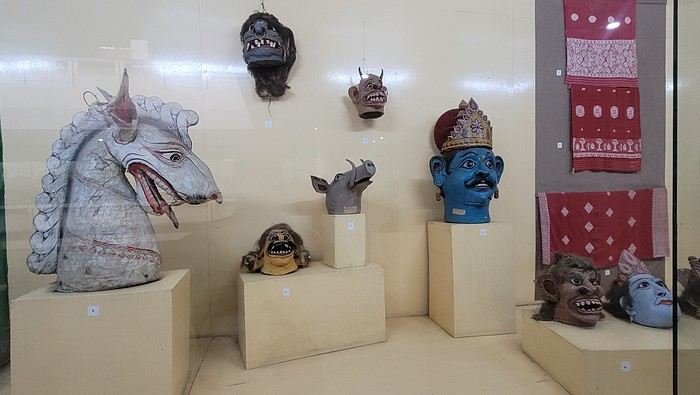

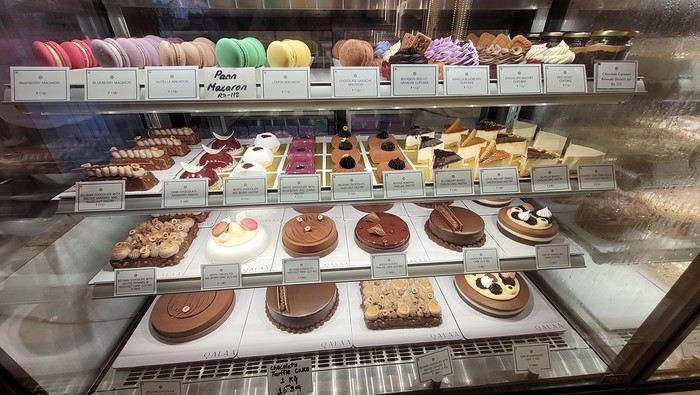
I’m not far from the Brahmaputra River, and the temptation to visit is too strong to resist. I’d hoped to find a promenade along the river, but that doesn’t exist here. I walk back calmly and notice several restaurants in my street. On the doorstep of my accommodation, I spot a pastry shop with cakes that look more like the ones we have in France than the typical ones here in India. A visit is a must, and I’m not disappointed!
Tonight, I’m dining at a restaurant in the street. The menu is a bit disappointing—burgers, pizzas, pasta—nothing very Indian. So, I’ll go with tomato pasta.
Thursday, March 20th. The alarm goes off super early, but I’m already awake—I was too worried I’d sleep through it. I leave the house at 4:00 AM. The rain has stopped, and at this hour, there aren’t many trucks on the road. I arrive at Barcelona Airport easily by 6:20 AM, let the valet know I’m there, and he quickly picks up my car. This time, I’m flying with Etihad Airways again. I booked the ticket during my trip to Cambodia: Barcelona/Kolkata, Delhi/Barcelona for 567 €. At that price, I didn’t hesitate for long—I knew I had to take it. And I’m glad I did because, by the time I returned, the price had gone up to 700 €. I can already hear the reactions: "Wow, how’d you get a ticket for that price? What site did you use? You’re amazing, MarieJo!" One thing’s for sure—I’m really happy with this deal. The flights from Barcelona to Abu Dhabi and Abu Dhabi to Kolkata go smoothly, and we arrive on time at 2:55 AM. There aren’t many people at immigration, so I get through quickly. My luggage isn’t on the carousel yet. After collecting my bag, I check in for my next flight with IndiGo, a 5:40 AM flight to Guwahati, arriving at 7:00 AM. I’m starting to feel pretty tired, so I take a taxi from the airport to Gruham Sojourn Homestay. The house is upstairs, and the neighborhood seems quiet, with restaurants lining the street. The room won’t be ready until 10:00 AM, so I rest on the bench in the meantime. Once in the room, I take a shower—it really helps me feel refreshed. I need to exchange some euros, so I look up a nearby exchange bureau on Google and head out to find it. I locate it easily, and the staff are super friendly. I get a great rate (1 € = 90 INR). I wander around the neighborhood. The train station isn’t far, and small markets line the streets. I head back to my area, walking along the main avenue. About 500 meters from my street, I discover a museum. The visit is fascinating—I see the famous Majuli masks, among other things.
I’m not far from the Brahmaputra River, and the temptation to visit is too strong to resist. I’d hoped to find a promenade along the river, but that doesn’t exist here. I walk back calmly and notice several restaurants in my street. On the doorstep of my accommodation, I spot a pastry shop with cakes that look more like the ones we have in France than the typical ones here in India. A visit is a must, and I’m not disappointed!
Tonight, I’m dining at a restaurant in the street. The menu is a bit disappointing—burgers, pizzas, pasta—nothing very Indian. So, I’ll go with tomato pasta.
Ten dream days at Disney World in Florida
Hi there!
It’s been nearly 6 years since I last posted here or on my travel blog. But I’m back, at least for one post! I’m returning with a dream trip we took in April 2023: a stay at Walt Disney World in Florida.
We went for 10 days. Ten days at an amusement park might seem like a lot, but you should know that Disney isn’t just one park—it’s 4 parks and 2 water parks (only one was open during our trip). So we split those 10 days across 5 parks, which worked out to about 2 days per park.
The four main parks each have a different vibe:
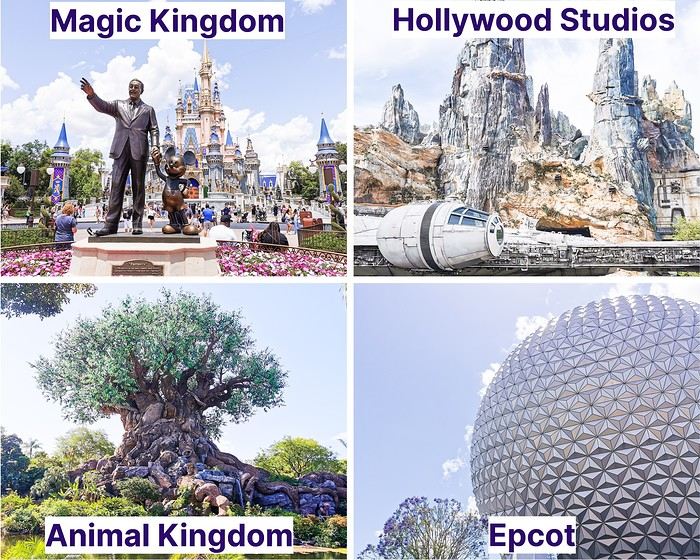
Magic Kingdom: The most famous one, the one that most resembles our Disneyland Paris. It’s home to several "lands" (Adventureland, Frontierland, Fantasyland, Tomorrowland, Liberty Square, and Main Street USA). This is the park where you’ll find the iconic castle, the symbol of the parks. Disney’s Hollywood Studios: It’s a bit like the studios at Disneyland Paris, with the well-known Tower of Terror and Toy Story Land. It also features the stunning Star Wars: Galaxy’s Edge (a must-see, even if you’re not a Star Wars fan). Animal Kingdom: A very nature-focused park, divided into several sections, including representations of Africa and Asia, as well as the breathtaking Pandora – The World of Avatar. Epcot: The park of countries, where different nations are represented around a large circular lake—including France!
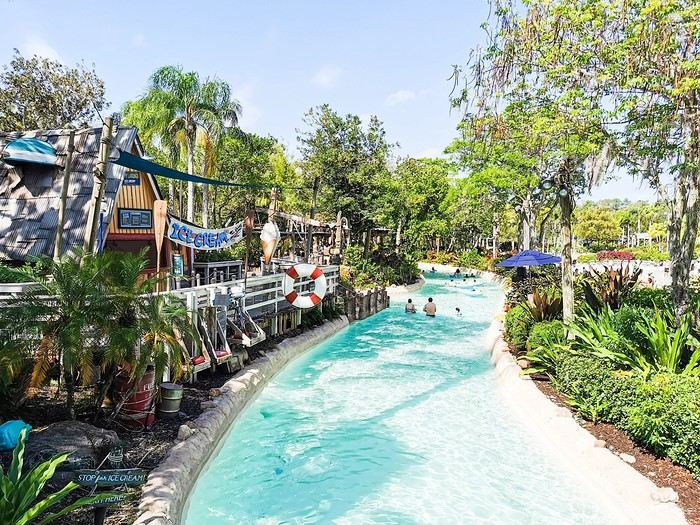
 The water park that was open during our stay was Typhoon Lagoon. We spent a morning there lounging and swimming before heading to Disney Springs (the equivalent of Disney Village in France). We’re not big on pools or chilling out, so we didn’t stay long, but there was no time limit.
 We chose to stay at the Disney’s Art of Animation hotel, a Resort (huge, like everything there!) with 4 themed areas: Nemo, Cars, The Lion King, and The Little Mermaid (where the rooms for 4 people or fewer are located).
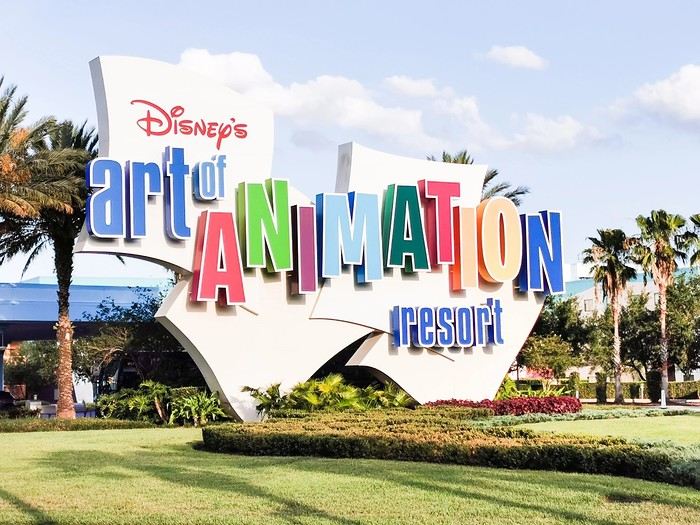
Here’s the itinerary we followed for those 10 days:
Day 1: Flight at 7:35 AM–4:40 PM (with a layover in London), stroller pickup, then shuttle bus to our hotel Day 2: Day at Magic Kingdom Day 3: Day at Hollywood Studios Day 4: Day at Animal Kingdom Day 5: Day at Epcot Day 6: Day at Hollywood Studios Day 7: Relaxing day at Typhoon Lagoon and Disney Springs Day 8: Day at Magic Kingdom Day 9: Day at Epcot Day 10: Day at Magic Kingdom Day 11: Morning at Hollywood Studios, then shuttle bus to the airport, stroller return at the airport, flight at 7:05 PM–1:50 PM (next day)
We rented the stroller from Kingdom Stroller. The rental process was super easy—everything was done online. On the day we arrived and the day we left, there was no staff at the counter, but the stroller was ready with a tag bearing our name. When we left, we just dropped it off at the designated spot, still with no one checking... We used the Mears Connect shuttle: you pick a day and time for them to pick you up at the airport and your hotel. Everything went smoothly, no surprises.
For planning, you’ll need to decide in advance which parks you’ll visit each day because a reservation is required (just like in Paris now). I’d recommend making a schedule ahead of time. Same goes for restaurants—figure out which ones you’d like to eat at beforehand. Some work like fast food and don’t require reservations, while others, the "Table Service" restaurants, operate like traditional restaurants and need to be booked in advance to guarantee a spot. These can be reserved 60 days before the first day of your visit, and that applies to all the restaurants for your entire stay (e.g., if you’re going from February 1st to 11th, you can make reservations for the whole trip 60 days before February 1st).
Not essential, but we found them super handy: MagicBands. These are connected bracelets you buy on-site (not cheap, of course) that let you, once linked to your account in the app, open your hotel room, enter the parks, validate Lightning Lane reservations at attraction entrances, and even make purchases (if you’ve linked a credit card). We got the cheapest ones and loved them!
As for the trip’s wrap-up, if I were to do it again, ... I’d do almost everything the same: The schedule and restaurant reservations I planned were perfect! ... I’d change one thing: Maybe I wouldn’t plan two full days at Epcot because it was the park we enjoyed the least. Some attractions (like the amazing Guardians of the Galaxy: Cosmic Rewind) were great, but it was really hot, the park isn’t shaded, and it felt stifling when the weather was scorching. That said, I don’t regret it because a big storm hit on our second day, forcing us back to the hotel.
That’s all for now—I’ll be back soon with photos from each park and the hotel. You’ll see, it was incredible! See you soon! :)
Magic Kingdom: The most famous one, the one that most resembles our Disneyland Paris. It’s home to several "lands" (Adventureland, Frontierland, Fantasyland, Tomorrowland, Liberty Square, and Main Street USA). This is the park where you’ll find the iconic castle, the symbol of the parks. Disney’s Hollywood Studios: It’s a bit like the studios at Disneyland Paris, with the well-known Tower of Terror and Toy Story Land. It also features the stunning Star Wars: Galaxy’s Edge (a must-see, even if you’re not a Star Wars fan). Animal Kingdom: A very nature-focused park, divided into several sections, including representations of Africa and Asia, as well as the breathtaking Pandora – The World of Avatar. Epcot: The park of countries, where different nations are represented around a large circular lake—including France!
The water park that was open during our stay was Typhoon Lagoon. We spent a morning there lounging and swimming before heading to Disney Springs (the equivalent of Disney Village in France). We’re not big on pools or chilling out, so we didn’t stay long, but there was no time limit.
We chose to stay at the Disney’s Art of Animation hotel, a Resort (huge, like everything there!) with 4 themed areas: Nemo, Cars, The Lion King, and The Little Mermaid (where the rooms for 4 people or fewer are located).Here’s the itinerary we followed for those 10 days:
Day 1: Flight at 7:35 AM–4:40 PM (with a layover in London), stroller pickup, then shuttle bus to our hotel Day 2: Day at Magic Kingdom Day 3: Day at Hollywood Studios Day 4: Day at Animal Kingdom Day 5: Day at Epcot Day 6: Day at Hollywood Studios Day 7: Relaxing day at Typhoon Lagoon and Disney Springs Day 8: Day at Magic Kingdom Day 9: Day at Epcot Day 10: Day at Magic Kingdom Day 11: Morning at Hollywood Studios, then shuttle bus to the airport, stroller return at the airport, flight at 7:05 PM–1:50 PM (next day)
We rented the stroller from Kingdom Stroller. The rental process was super easy—everything was done online. On the day we arrived and the day we left, there was no staff at the counter, but the stroller was ready with a tag bearing our name. When we left, we just dropped it off at the designated spot, still with no one checking... We used the Mears Connect shuttle: you pick a day and time for them to pick you up at the airport and your hotel. Everything went smoothly, no surprises.
For planning, you’ll need to decide in advance which parks you’ll visit each day because a reservation is required (just like in Paris now). I’d recommend making a schedule ahead of time. Same goes for restaurants—figure out which ones you’d like to eat at beforehand. Some work like fast food and don’t require reservations, while others, the "Table Service" restaurants, operate like traditional restaurants and need to be booked in advance to guarantee a spot. These can be reserved 60 days before the first day of your visit, and that applies to all the restaurants for your entire stay (e.g., if you’re going from February 1st to 11th, you can make reservations for the whole trip 60 days before February 1st).
Not essential, but we found them super handy: MagicBands. These are connected bracelets you buy on-site (not cheap, of course) that let you, once linked to your account in the app, open your hotel room, enter the parks, validate Lightning Lane reservations at attraction entrances, and even make purchases (if you’ve linked a credit card). We got the cheapest ones and loved them!
As for the trip’s wrap-up, if I were to do it again, ... I’d do almost everything the same: The schedule and restaurant reservations I planned were perfect! ... I’d change one thing: Maybe I wouldn’t plan two full days at Epcot because it was the park we enjoyed the least. Some attractions (like the amazing Guardians of the Galaxy: Cosmic Rewind) were great, but it was really hot, the park isn’t shaded, and it felt stifling when the weather was scorching. That said, I don’t regret it because a big storm hit on our second day, forcing us back to the hotel.
That’s all for now—I’ll be back soon with photos from each park and the hotel. You’ll see, it was incredible! See you soon! :)
Two Quebecers Attempting Mount Meru
In 2015, for my 50th birthday, my daughter and I went to Kenya and Tanzania for a safari. Ten years later, for my 60th, a new African adventure: returning to Tanzania, this time to attempt the ascent of Mount Meru.
After watching documentaries and films about Everest climbers, I’ve always been drawn to the idea of experiencing something like that. I’m impressed by those who risk their lives just to chase their dreams and push their limits (my partner would say they’re crazy). I’ve never pretended I could climb the roof of the world. My sights were set on Kilimanjaro instead. But when my daughter planned our adventure, she lowered my ambitions by a few meters by choosing Meru—and I get it. We’re both very active, but we’re not seasoned athletes. And our mountains in Quebec, as beautiful as they are, don’t offer the chance to climb very high to test our endurance against the lack of oxygen.
So, to prepare physically, I worked my 60-year-old legs daily by walking and climbing small hills near home. As for altitude sickness, I’ll have to trust my system and my old lungs, but it still stresses me out. The departure is approaching, and there’s no turning back—I tell myself that at worst, I’ll have tried.
February 2nd, departure day. We leave Montreal on an Air France flight as scheduled. Luckily, because we were worried, our flight times were delayed, and our layover at CDG will be tight. After a 6.5-hour flight to Paris, no messing around—we have just enough time to sit for about thirty minutes before boarding another 8.5-hour flight to Zanzibar, still with Air France. In Zanzibar, we stay on the plane while pale-faced passengers disembark, replaced by sun-kissed travelers (it’s sunny and warm in Zanzibar). We then take a short flight to Kilimanjaro Airport, our final destination. Exhausted but happy to step off the big metal bird, a driver from the agency we chose (Soaring Flamingo) waits to take us to our hotel, the Tulia in Arusha. It’s 2 AM when we finally collapse onto the mattress. Tomorrow, we’ll spend the day recovering from the sleepless flight, relaxing by a murky pool in a beautiful flower-filled courtyard, surrounded by palm trees and the everyday sounds of Africa. At that moment, I feel privileged to share this experience with my daughter, and I think about the mountain that awaits us.
To be continued...
After watching documentaries and films about Everest climbers, I’ve always been drawn to the idea of experiencing something like that. I’m impressed by those who risk their lives just to chase their dreams and push their limits (my partner would say they’re crazy). I’ve never pretended I could climb the roof of the world. My sights were set on Kilimanjaro instead. But when my daughter planned our adventure, she lowered my ambitions by a few meters by choosing Meru—and I get it. We’re both very active, but we’re not seasoned athletes. And our mountains in Quebec, as beautiful as they are, don’t offer the chance to climb very high to test our endurance against the lack of oxygen.
So, to prepare physically, I worked my 60-year-old legs daily by walking and climbing small hills near home. As for altitude sickness, I’ll have to trust my system and my old lungs, but it still stresses me out. The departure is approaching, and there’s no turning back—I tell myself that at worst, I’ll have tried.
February 2nd, departure day. We leave Montreal on an Air France flight as scheduled. Luckily, because we were worried, our flight times were delayed, and our layover at CDG will be tight. After a 6.5-hour flight to Paris, no messing around—we have just enough time to sit for about thirty minutes before boarding another 8.5-hour flight to Zanzibar, still with Air France. In Zanzibar, we stay on the plane while pale-faced passengers disembark, replaced by sun-kissed travelers (it’s sunny and warm in Zanzibar). We then take a short flight to Kilimanjaro Airport, our final destination. Exhausted but happy to step off the big metal bird, a driver from the agency we chose (Soaring Flamingo) waits to take us to our hotel, the Tulia in Arusha. It’s 2 AM when we finally collapse onto the mattress. Tomorrow, we’ll spend the day recovering from the sleepless flight, relaxing by a murky pool in a beautiful flower-filled courtyard, surrounded by palm trees and the everyday sounds of Africa. At that moment, I feel privileged to share this experience with my daughter, and I think about the mountain that awaits us.
To be continued...
Tanzania 2019 - Polé Polé
KARIBUUU
Over 5 years later, I’m finally getting around to writing the travel journal for our first trip to East Africa: Tanzania. *Polé Polé*, as they say! 😎
A trip I’d started planning just 6 years ago, in February 2019, for my post-internship exam vacation. After returning to South Africa in July 2019 with my family, this trip, planned for September 2019, would be all about discovery and a few firsts: first trip with friends, first trek, first time in East Africa. I really wanted to attempt the Kilimanjaro ascent, try to still see some of its "eternal" ice, and Alison wanted to do as much safari as possible. Unlike with the Zulus, Himbas, or San, visiting a Maasai village wasn’t on the agenda. Thanks to the Kessy Brothers agency, who were super responsive, Sandy from VF, and other members who helped prepare our trip, we settled on the following itinerary:
Day -1 (8/30): Departure from Pointe-à-Pitre Day 0 (8/31): Departure from Paris Day 1 (9/01): Arrival at Kilimanjaro Airport / Ameg Lodge (Moshi) DAY 2 (9/02): Machame gate / Machame camp DAY 3 (9/03): Shira / Shira camp DAY 4 (9/04): Baranco / Baranco camp DAY 5 (9/05): Barafu / Barafu camp DAY 6 (9/06): Barafu + Summit at midnight / Mweka camp DAY 7 (9/07): Mweka gate / Sal Salnero Hotel (Moshi) DAY 8 (9/08): Arusha National Park / Kanga camp DAY 9 (9/09): Tarangire National Park / Kanga camp DAY 10 (9/10): Tarangire National Park / Twiga Lodge DAY 11 (9/11): Lake Manyara / Twiga Lodge DAY 12 (9/12): Ngorongoro Crater / Simba campsite DAY 13 (9/13): Serengeti National Park / Seronera campsite DAY 14 (9/14): Serengeti National Park - Uoga Kuria Camp DAY 15 (9/15): Serengeti National Park / Waso campsite DAY 16 (9/16): Lake Natron / Maasai Giraffe Ecolodge DAY 17 (9/17): Kilimanjaro Airport Day 18 (9/18): Zanzibar Day 19 (9/19): Zanzibar Day 20 (9/20): Zanzibar Day 21 (9/21): Zanzibar
As I mentioned in my first travel journal about our South Africa trip, I’ve had a special connection to Tanzania for a long time. Growing up in the Indian Ocean without ever visiting Africa, those wildlife documentaries on TV when I skipped my pharmacy classes... I imagined and dreamed about this land and country so much.
The original plan was to go just the two of us with Alison, but somehow—though I don’t quite remember how—we ended up organizing the trip with our friends Mélissa and Doriane, who joined us in Arusha after our Kilimanjaro trek for the last two weeks and their very first safari. I think it was Melissa who had the idea to crash our trip, and she was right to do so! 😉 Flights: Pointe-à-Pitre-Grand Case and Grand Case-Paris with Air Caraïbes. Flights: Paris-JRO and ZNZ-Paris with Kenya Airways (layover in Nairobi). Flight: JRO-ZNZ with Air Tanzania.
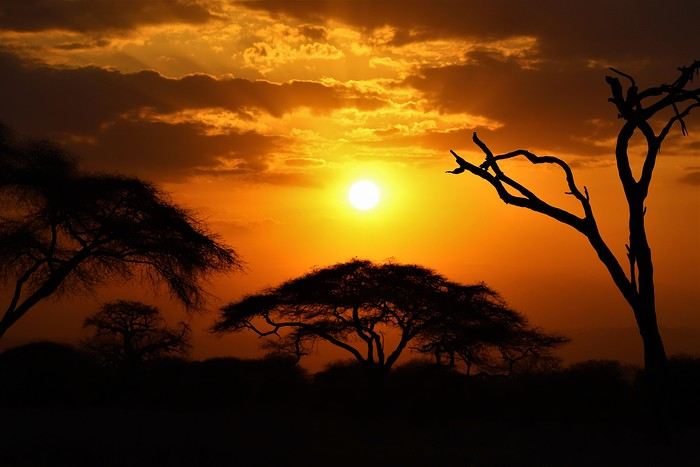
Safe travels! !
Over 5 years later, I’m finally getting around to writing the travel journal for our first trip to East Africa: Tanzania. *Polé Polé*, as they say! 😎
A trip I’d started planning just 6 years ago, in February 2019, for my post-internship exam vacation. After returning to South Africa in July 2019 with my family, this trip, planned for September 2019, would be all about discovery and a few firsts: first trip with friends, first trek, first time in East Africa. I really wanted to attempt the Kilimanjaro ascent, try to still see some of its "eternal" ice, and Alison wanted to do as much safari as possible. Unlike with the Zulus, Himbas, or San, visiting a Maasai village wasn’t on the agenda. Thanks to the Kessy Brothers agency, who were super responsive, Sandy from VF, and other members who helped prepare our trip, we settled on the following itinerary:
Day -1 (8/30): Departure from Pointe-à-Pitre Day 0 (8/31): Departure from Paris Day 1 (9/01): Arrival at Kilimanjaro Airport / Ameg Lodge (Moshi) DAY 2 (9/02): Machame gate / Machame camp DAY 3 (9/03): Shira / Shira camp DAY 4 (9/04): Baranco / Baranco camp DAY 5 (9/05): Barafu / Barafu camp DAY 6 (9/06): Barafu + Summit at midnight / Mweka camp DAY 7 (9/07): Mweka gate / Sal Salnero Hotel (Moshi) DAY 8 (9/08): Arusha National Park / Kanga camp DAY 9 (9/09): Tarangire National Park / Kanga camp DAY 10 (9/10): Tarangire National Park / Twiga Lodge DAY 11 (9/11): Lake Manyara / Twiga Lodge DAY 12 (9/12): Ngorongoro Crater / Simba campsite DAY 13 (9/13): Serengeti National Park / Seronera campsite DAY 14 (9/14): Serengeti National Park - Uoga Kuria Camp DAY 15 (9/15): Serengeti National Park / Waso campsite DAY 16 (9/16): Lake Natron / Maasai Giraffe Ecolodge DAY 17 (9/17): Kilimanjaro Airport Day 18 (9/18): Zanzibar Day 19 (9/19): Zanzibar Day 20 (9/20): Zanzibar Day 21 (9/21): Zanzibar
As I mentioned in my first travel journal about our South Africa trip, I’ve had a special connection to Tanzania for a long time. Growing up in the Indian Ocean without ever visiting Africa, those wildlife documentaries on TV when I skipped my pharmacy classes... I imagined and dreamed about this land and country so much.
The original plan was to go just the two of us with Alison, but somehow—though I don’t quite remember how—we ended up organizing the trip with our friends Mélissa and Doriane, who joined us in Arusha after our Kilimanjaro trek for the last two weeks and their very first safari. I think it was Melissa who had the idea to crash our trip, and she was right to do so! 😉 Flights: Pointe-à-Pitre-Grand Case and Grand Case-Paris with Air Caraïbes. Flights: Paris-JRO and ZNZ-Paris with Kenya Airways (layover in Nairobi). Flight: JRO-ZNZ with Air Tanzania.
Safe travels! !
14-Day Trip Report to Milos and Kimolos in September-October 2021
14-Day Trip Report to Milos and Kimolos in September-October 2021
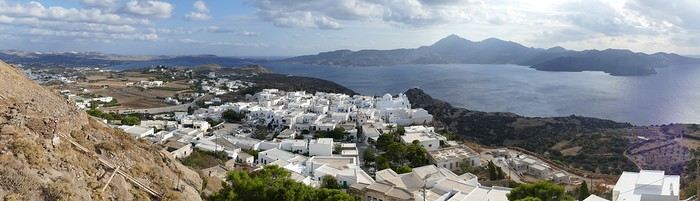
The village of Plaka in Milos
It was with great pleasure that we finally reconnected with our old habits as inveterate travelers! Greece, and more specifically the Greek islands, was the natural choice for us. After having already visited many Greek islands during around 18 trips, we decided to revisit islands we had seen over 40 years ago, like Milos, where our memories were extremely hazy. Our route was well-planned and familiar: a low-cost flight from Basel-Mulhouse to Athens, then a traditional ferry from Piraeus to Milos. Taking a speedboat, which is faster, would have forced us to spend a night in Piraeus. Plus, we felt that the traditional ferry was part of the journey, and with good weather, spending eight hours on deck wasn’t unpleasant at all. Watching the docking maneuvers with the comings and goings of trucks and cars, observing the passengers, reading a book, or admiring the scenery—all of that is part of the travel experience. Milos Island: Accommodation in Adamas We arrived quite late, around 11 PM, in Adamas, the port of Milos. No worries—the friendly couple managing the apartment was waiting for us, and it was just a 10-minute walk from the port. The first two days were spent unwinding, with swimming at the nearby beach, strolling through Adamas, and relaxing.
Discovering Plaka On the third day, we took the path along the small beach west of town toward a French military cemetery! A historical reminder of our presence here during the Crimean War, among others. The path climbs toward a beacon perched on top of a hill before disappearing into the scrubland. We returned to Adamas for lunch on our terrace.
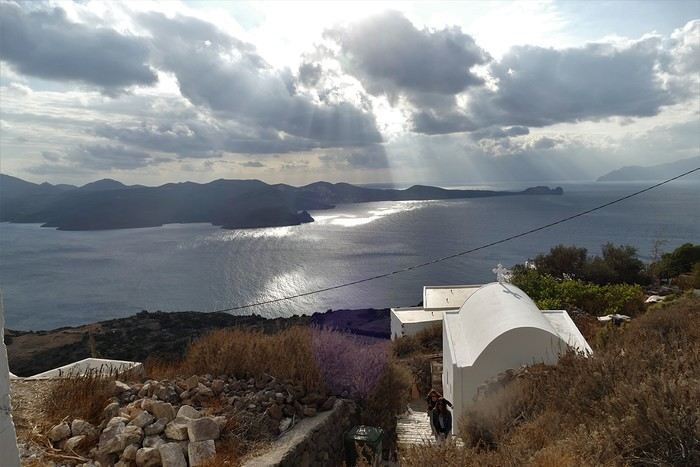
In the afternoon, we visited the hilltop village of Plaka by bus from Adamas. Plaka is the original old town, dominated by a church and, even higher up, the ruins of the Kastro. The view is magnificent. We stopped at a pastry shop in the village to enjoy excellent orange cakes and baklavas. Back in Adamas, we checked out car rental agencies to be more mobile, though the bus network seemed quite extensive. It costs around 40 € per day, plus 8 € if you want to significantly reduce the deductible. Port of Klima.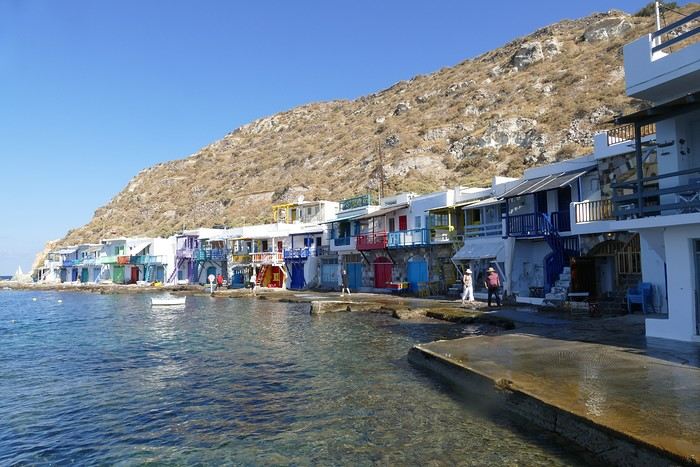
Yesterday’s weather was quite mixed with lots of clouds, but today the sun is shining again. We drove to the small port of Klima, famous for its boat garages called "sirmatas." It’s true that in the morning sun, these boat garages carved into the volcanic tuff are beautifully lit, turning the village into a colorful mosaic. Above the village, a path climbs directly to the magnificent Roman theater overlooking the surroundings and the sea.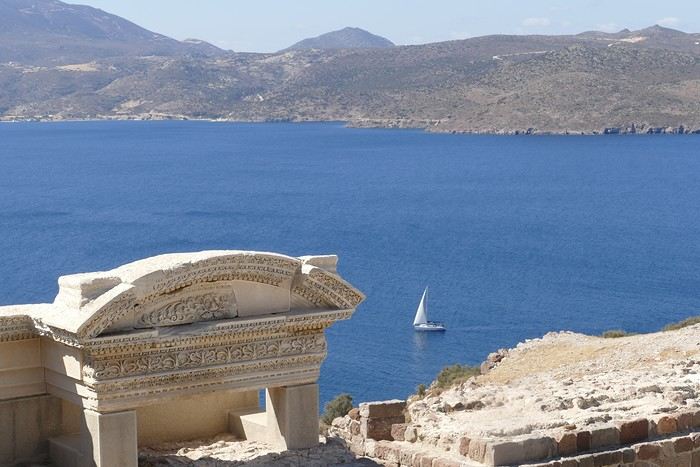 Following the well-marked path, we reached the road leading 200 meters down to the catacombs. It’s an impressive complex of 3rd and 4th-century catacombs, though only a small part is open to visitors—it’s still very moving. In the mid-afternoon, we got back in the car to visit the tiny ports of Firopotamos and Mandraki, which also have their colorful sirmatas. We took the opportunity to swim at the small beach in Mandraki, where the water was warm and calm.
Mandraki Port. We had a decent dinner at a seaside restaurant in Adamas, though you have to be selective—we had a bad experience at Kynigos on the second night!
Moving to Polonia in Eastern Milos, Sarakiniko Site
Following the well-marked path, we reached the road leading 200 meters down to the catacombs. It’s an impressive complex of 3rd and 4th-century catacombs, though only a small part is open to visitors—it’s still very moving. In the mid-afternoon, we got back in the car to visit the tiny ports of Firopotamos and Mandraki, which also have their colorful sirmatas. We took the opportunity to swim at the small beach in Mandraki, where the water was warm and calm.
Mandraki Port. We had a decent dinner at a seaside restaurant in Adamas, though you have to be selective—we had a bad experience at Kynigos on the second night!
Moving to Polonia in Eastern Milos, Sarakiniko Site
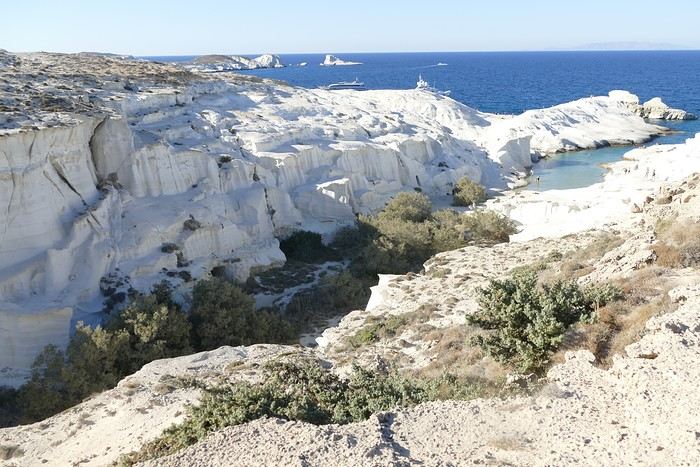
The Sarakiniko site We left Adamas for a second stay on Milos, this time in Polonia. The rental Panda was packed with the four of us and our luggage! Our apartment was in a beautiful house surrounded by a grove, so our lovely terrace was well-shaded. Luckily, there was a small beach nearby, and we went for a swim right away. Apart from us, there were only three other swimmers—definitely the end of the season!
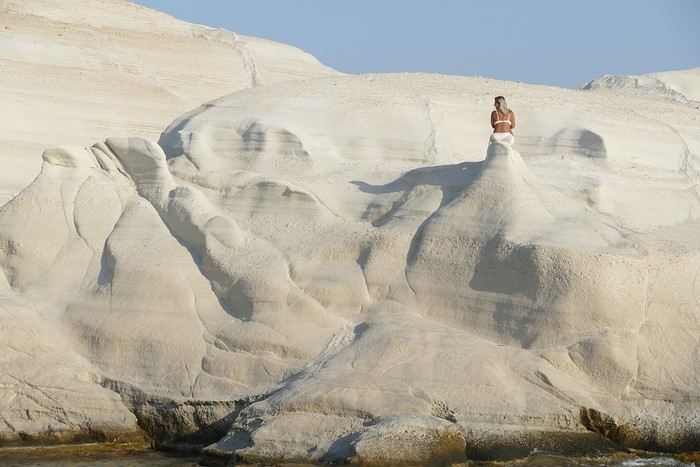
"Fairy chimney"! In the afternoon, we visited the famous Sarakiniko site, Milos’ emblematic spot. Judging by the number of cars in the parking lot, we wouldn’t be alone. As we approached, we heard an indefinable rock/punk/metal music: some young people had brought a sound system and a foghorn and were having fun diving off a fairly high cliff to impress the crowd. It definitely spoiled the visit. Most spots were taken by couples busy taking selfies, so getting photos of the site without tourists was impossible. Still, the site is magnificent, with its white cliffs looking like they’re covered in whipped cream! The sun was still very bright, reflecting strongly off the cliffs, making photography difficult due to the excessive brightness. We had a fish dinner in Polonia at the Enalion restaurant: while the octopus and squid were good, the fish soup tasted more like vegetable soup with a few fish crumbs—too bad.
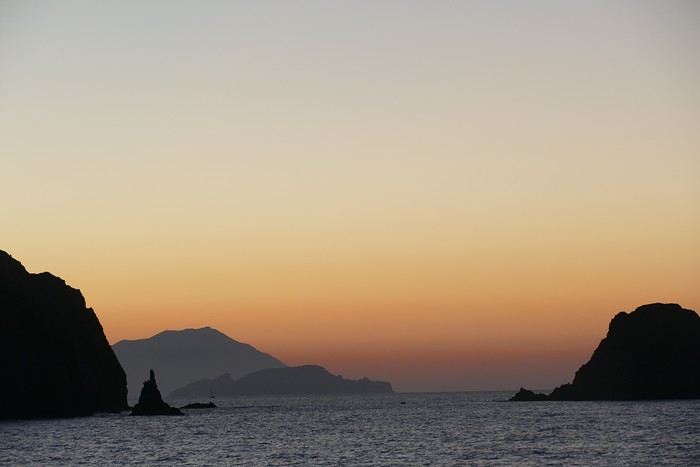
Sunset in Polonia
Ports of Papafranga and Mytikos We continued our exploration of Milos with the Papafranga gorge, a narrow and deep gorge that opens to the sea, where the water is a stunning color. Access via an unstable and dangerous path is prohibited, but that didn’t stop a couple of tourists in flip-flops from venturing in!!! We then swam in the tiny, calm, and sheltered cove of the small port of Mytikos. We returned to Polonia for lunch at Alkis: excellent moussaka. In the late afternoon, Pat and I went out to take some photos just before sunset near the Agios Nikolaos chapel, the beacon, and the new Petakoudia neighborhood next to Polonia to the north.
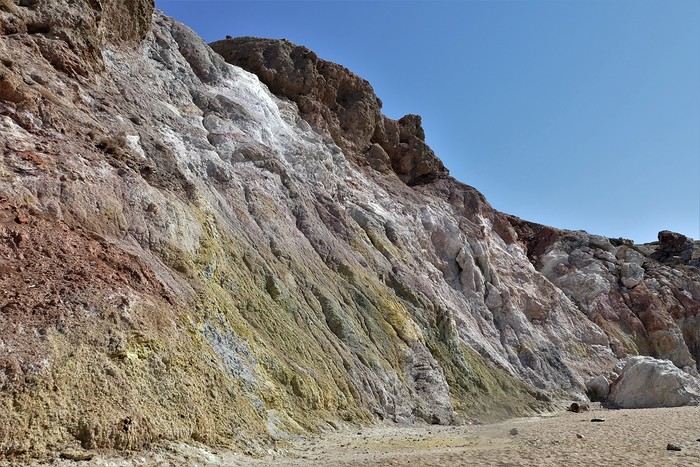
Paleochori Beach
Toward the Multicolored Beach of Paleochori Another sunny day: we still had to discover Paleochori Beach in the south of the island. It was 10:30 AM, and the beach was almost deserted! The water was pleasant, though a bit chilly when we first entered. The beach is bordered by a cliff that, in some places, displays a beautiful multicolored palette. We returned to Polonia in the late afternoon, and Pat and I headed toward Vouddhia Beach south of Polonia—bad choice. The beach is surrounded by a huge mining site served by a dusty road where lines of trucks loaded with ore cross paths. It’s the other side of the coin, and Greece still has progress to make in this area. Dinner at Alki’s was just as good as always. Return to the Sarakiniko Site Early this morning, Pat and I went back to the Sarakiniko site, hoping to take photos in better conditions. While there were fewer people, the parking lot was still full because sunrise is a must in Milos. Still, the conditions were good, and the sunrise spectators left quickly once the sun had risen above the horizon. During the day, an increasingly strong wind cooled the atmosphere, making swimming less enjoyable. Departure for Kimolos Island We changed islands and left Milos for Kimolos, a nearby island—just a 30-minute trip from Polonia’s port. Our apartment was at the entrance of the hilltop village. It’s a village with typical Cycladic architecture, featuring the remains of an old kastro, a few old churches, and windmill towers perched on the hill. We dined in a tiny tavern where the small outdoor tables were squeezed against the walls to let passersby through! As soon as the sun disappeared, it got cold, especially because of the wind. Ports of Kara and Goupa This morning, we explored the small hamlets of Kara and Goupa by Rema Beach, east of the main port. There, we found the sirmatas again—those boat garages partly carved into the volcanic tuff. The path winds between several sirmatas before climbing back up to the Praça road to return to the apartment.
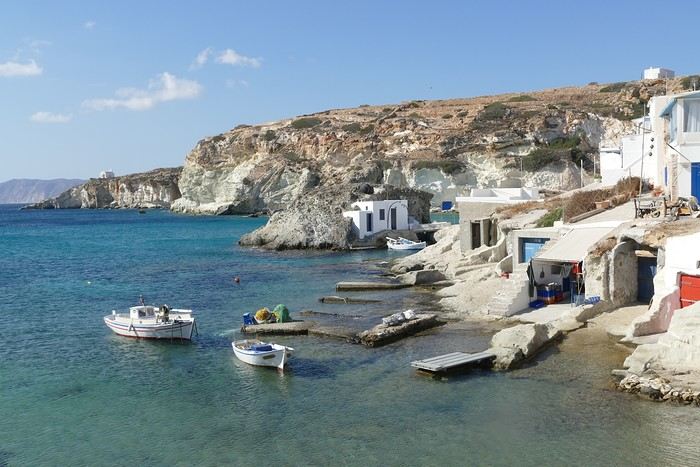
Ports of Kara and Goupa
In the afternoon, we strolled through town, and Pat and I climbed the hill overlooking the village to get a closer look at the few more or less ruined windmills dotting the ridge. Only one mill still had its complete mechanism in place under the roof; the others were empty. The view over the village, port, and sea was beautiful. That evening, we tried another restaurant in the village center, Kali Kardia Bohoris, which was well-frequented by locals, and we didn’t regret it: delicious food, efficient and friendly service, and reasonable prices.
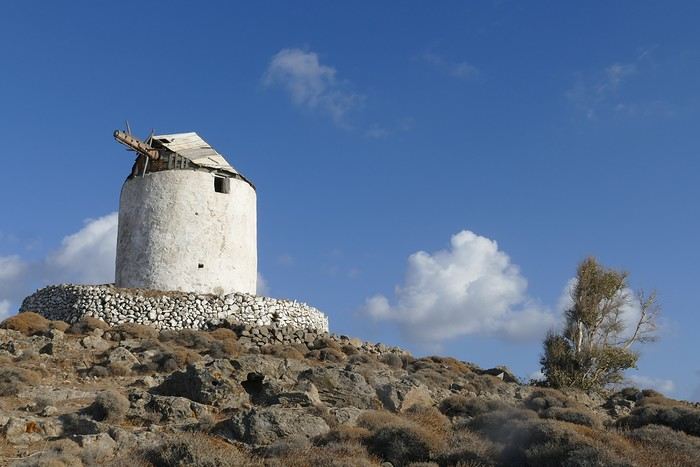
The Kastro Mill
Toward Aliki Beach We walked to Aliki Beach, west of the main village. It’s a large sandy beach shaded by tamarisk trees, but the strong wind prevented us from enjoying it. In the afternoon, I set off on a hike toward the fairy chimney at Skiadi (1.5 hours one way). The paths were very well-marked with signs indicating the trail number and the time to reach the destination. The countryside was beautiful but very dry at this time of year, and as always in Greece, many white chapels dotted the landscape. The numerous dry stone walls testify to the immense labor done by the island’s inhabitants over the centuries! For our last day in Kimolos, we decided to visit the beautiful Praça Beach, one of the most beautiful according to the guides! To get there, we took a path through the interior before joining the paved road near a large dump overflowing with various waste. It’s the flip side of the scenery, and Greece still has progress to make in this area. In the end, Praça Beach left us underwhelmed. The environment, marred by mining operations, detracts from the charm of the beautiful sandy beach. End of the Trip, Return to Piraeus and France And that’s it—we took the Zanteferries ferry back to Piraeus, arriving after a calm and sunny 10-hour journey. We had dinner at Souvlaki Street on the port and spent a good night at the Faros I Hotel in Piraeus—a great spot, close to the port, very clean, and reasonably priced. We flew from Athens to Basel-Mulhouse EuroAirport without any issues. N.B. Budget: around 1850 € all included for 14 days per couple The photo album is available by clicking this link: https://photos.app.goo.gl/wRpxRipg4erpzGj99
The village of Plaka in Milos
It was with great pleasure that we finally reconnected with our old habits as inveterate travelers! Greece, and more specifically the Greek islands, was the natural choice for us. After having already visited many Greek islands during around 18 trips, we decided to revisit islands we had seen over 40 years ago, like Milos, where our memories were extremely hazy. Our route was well-planned and familiar: a low-cost flight from Basel-Mulhouse to Athens, then a traditional ferry from Piraeus to Milos. Taking a speedboat, which is faster, would have forced us to spend a night in Piraeus. Plus, we felt that the traditional ferry was part of the journey, and with good weather, spending eight hours on deck wasn’t unpleasant at all. Watching the docking maneuvers with the comings and goings of trucks and cars, observing the passengers, reading a book, or admiring the scenery—all of that is part of the travel experience. Milos Island: Accommodation in Adamas We arrived quite late, around 11 PM, in Adamas, the port of Milos. No worries—the friendly couple managing the apartment was waiting for us, and it was just a 10-minute walk from the port. The first two days were spent unwinding, with swimming at the nearby beach, strolling through Adamas, and relaxing.
Discovering Plaka On the third day, we took the path along the small beach west of town toward a French military cemetery! A historical reminder of our presence here during the Crimean War, among others. The path climbs toward a beacon perched on top of a hill before disappearing into the scrubland. We returned to Adamas for lunch on our terrace.
In the afternoon, we visited the hilltop village of Plaka by bus from Adamas. Plaka is the original old town, dominated by a church and, even higher up, the ruins of the Kastro. The view is magnificent. We stopped at a pastry shop in the village to enjoy excellent orange cakes and baklavas. Back in Adamas, we checked out car rental agencies to be more mobile, though the bus network seemed quite extensive. It costs around 40 € per day, plus 8 € if you want to significantly reduce the deductible. Port of Klima.
Yesterday’s weather was quite mixed with lots of clouds, but today the sun is shining again. We drove to the small port of Klima, famous for its boat garages called "sirmatas." It’s true that in the morning sun, these boat garages carved into the volcanic tuff are beautifully lit, turning the village into a colorful mosaic. Above the village, a path climbs directly to the magnificent Roman theater overlooking the surroundings and the sea.
Following the well-marked path, we reached the road leading 200 meters down to the catacombs. It’s an impressive complex of 3rd and 4th-century catacombs, though only a small part is open to visitors—it’s still very moving. In the mid-afternoon, we got back in the car to visit the tiny ports of Firopotamos and Mandraki, which also have their colorful sirmatas. We took the opportunity to swim at the small beach in Mandraki, where the water was warm and calm.
Mandraki Port. We had a decent dinner at a seaside restaurant in Adamas, though you have to be selective—we had a bad experience at Kynigos on the second night!
Moving to Polonia in Eastern Milos, Sarakiniko SiteThe Sarakiniko site We left Adamas for a second stay on Milos, this time in Polonia. The rental Panda was packed with the four of us and our luggage! Our apartment was in a beautiful house surrounded by a grove, so our lovely terrace was well-shaded. Luckily, there was a small beach nearby, and we went for a swim right away. Apart from us, there were only three other swimmers—definitely the end of the season!
"Fairy chimney"! In the afternoon, we visited the famous Sarakiniko site, Milos’ emblematic spot. Judging by the number of cars in the parking lot, we wouldn’t be alone. As we approached, we heard an indefinable rock/punk/metal music: some young people had brought a sound system and a foghorn and were having fun diving off a fairly high cliff to impress the crowd. It definitely spoiled the visit. Most spots were taken by couples busy taking selfies, so getting photos of the site without tourists was impossible. Still, the site is magnificent, with its white cliffs looking like they’re covered in whipped cream! The sun was still very bright, reflecting strongly off the cliffs, making photography difficult due to the excessive brightness. We had a fish dinner in Polonia at the Enalion restaurant: while the octopus and squid were good, the fish soup tasted more like vegetable soup with a few fish crumbs—too bad.
Sunset in Polonia
Ports of Papafranga and Mytikos We continued our exploration of Milos with the Papafranga gorge, a narrow and deep gorge that opens to the sea, where the water is a stunning color. Access via an unstable and dangerous path is prohibited, but that didn’t stop a couple of tourists in flip-flops from venturing in!!! We then swam in the tiny, calm, and sheltered cove of the small port of Mytikos. We returned to Polonia for lunch at Alkis: excellent moussaka. In the late afternoon, Pat and I went out to take some photos just before sunset near the Agios Nikolaos chapel, the beacon, and the new Petakoudia neighborhood next to Polonia to the north.
Paleochori Beach
Toward the Multicolored Beach of Paleochori Another sunny day: we still had to discover Paleochori Beach in the south of the island. It was 10:30 AM, and the beach was almost deserted! The water was pleasant, though a bit chilly when we first entered. The beach is bordered by a cliff that, in some places, displays a beautiful multicolored palette. We returned to Polonia in the late afternoon, and Pat and I headed toward Vouddhia Beach south of Polonia—bad choice. The beach is surrounded by a huge mining site served by a dusty road where lines of trucks loaded with ore cross paths. It’s the other side of the coin, and Greece still has progress to make in this area. Dinner at Alki’s was just as good as always. Return to the Sarakiniko Site Early this morning, Pat and I went back to the Sarakiniko site, hoping to take photos in better conditions. While there were fewer people, the parking lot was still full because sunrise is a must in Milos. Still, the conditions were good, and the sunrise spectators left quickly once the sun had risen above the horizon. During the day, an increasingly strong wind cooled the atmosphere, making swimming less enjoyable. Departure for Kimolos Island We changed islands and left Milos for Kimolos, a nearby island—just a 30-minute trip from Polonia’s port. Our apartment was at the entrance of the hilltop village. It’s a village with typical Cycladic architecture, featuring the remains of an old kastro, a few old churches, and windmill towers perched on the hill. We dined in a tiny tavern where the small outdoor tables were squeezed against the walls to let passersby through! As soon as the sun disappeared, it got cold, especially because of the wind. Ports of Kara and Goupa This morning, we explored the small hamlets of Kara and Goupa by Rema Beach, east of the main port. There, we found the sirmatas again—those boat garages partly carved into the volcanic tuff. The path winds between several sirmatas before climbing back up to the Praça road to return to the apartment.
Ports of Kara and Goupa
In the afternoon, we strolled through town, and Pat and I climbed the hill overlooking the village to get a closer look at the few more or less ruined windmills dotting the ridge. Only one mill still had its complete mechanism in place under the roof; the others were empty. The view over the village, port, and sea was beautiful. That evening, we tried another restaurant in the village center, Kali Kardia Bohoris, which was well-frequented by locals, and we didn’t regret it: delicious food, efficient and friendly service, and reasonable prices.
The Kastro Mill
Toward Aliki Beach We walked to Aliki Beach, west of the main village. It’s a large sandy beach shaded by tamarisk trees, but the strong wind prevented us from enjoying it. In the afternoon, I set off on a hike toward the fairy chimney at Skiadi (1.5 hours one way). The paths were very well-marked with signs indicating the trail number and the time to reach the destination. The countryside was beautiful but very dry at this time of year, and as always in Greece, many white chapels dotted the landscape. The numerous dry stone walls testify to the immense labor done by the island’s inhabitants over the centuries! For our last day in Kimolos, we decided to visit the beautiful Praça Beach, one of the most beautiful according to the guides! To get there, we took a path through the interior before joining the paved road near a large dump overflowing with various waste. It’s the flip side of the scenery, and Greece still has progress to make in this area. In the end, Praça Beach left us underwhelmed. The environment, marred by mining operations, detracts from the charm of the beautiful sandy beach. End of the Trip, Return to Piraeus and France And that’s it—we took the Zanteferries ferry back to Piraeus, arriving after a calm and sunny 10-hour journey. We had dinner at Souvlaki Street on the port and spent a good night at the Faros I Hotel in Piraeus—a great spot, close to the port, very clean, and reasonably priced. We flew from Athens to Basel-Mulhouse EuroAirport without any issues. N.B. Budget: around 1850 € all included for 14 days per couple The photo album is available by clicking this link: https://photos.app.goo.gl/wRpxRipg4erpzGj99
Eastern Crete in September 2024
Travel journal in Eastern Crete from September 8th to 29th, 2024
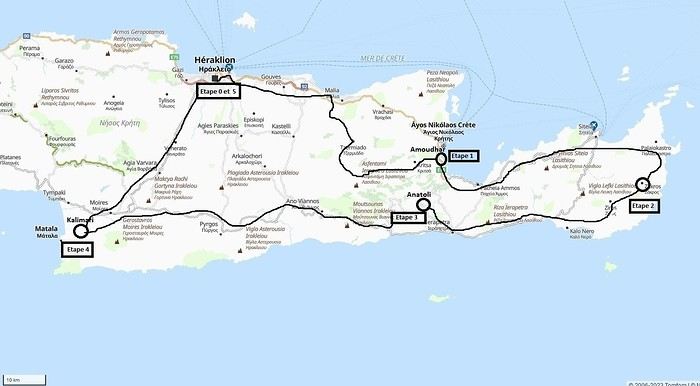 Our 21-day itinerary
Sunday, 08/09: Once again—and this is the eighth time—we’re setting off, the four of us: Patrick, Michelle, Jacques, and Monique, for the Greek islands. This time, we’ve chosen Crete. No need to wake up at 3 or 4 a.m. to reach Basel-Mulhouse Airport at dawn to catch the first flight to Greece at 6 a.m.! Given the prohibitive prices charged by EasyJet, we found flights that were half the price from Zurich Airport, which is accessible in 3 hours by train from Colmar. Pierre-Paul drives all four of us to Colmar train station, where we take the train to Basel and then, 20 minutes later, the direct train to Zurich Airport. After wandering around the airport, we go for a coffee at 6 € each! We’re in Switzerland, after all. The other dining areas all have vending machines for selecting and paying for meals—soon, there won’t be anyone left to serve you! After a short wait, we take off at 7:45 p.m. (20 minutes late) in an Aegean Airbus A321. Free in-flight meal service isn’t bad either! We land in Heraklion around 11:15 p.m. We pick up our rental car (a red Seat Ibiza) at the airport and head straight to our apartment, located 2 km from the city center. Thanks to the GPS, we find it quickly. It’s a beautiful, fully renovated apartment with all the comforts and well-equipped. On the table, there’s wine, bottles of water, jam, coffee, etc. Given the late hour, we won’t stay up long.
Monday, 09/09: To enhance our breakfast, Michelle and Monique set off to find a bakery nearby. They return with croissants and donuts—yum... Then we head to the west coast. The highway follows the coastline, but we prefer taking the old road to Malia, our first stop. We visit the major archaeological site of this Minoan city under the hot sun. The site covers a vast area, but the ruins aren’t very evocative except for a few beautiful amphorae scattered around. The explanations in a small house at the entrance are interesting and help us better understand the organization of the ancient city with its different districts. From there, we head toward the nearby mountains to see the thousand-year-old plane tree in the village of Krasi. We take the opportunity to enjoy an excellent lunch of moussaka and delicious gemista at the Krassopsychia taverna in the village center. Pleasant surprise: the prices are still reasonable, with a bill of 70 € for four, including wine and water. The friendly tradition of complimentary dessert and glasses of raki continues—great! We’ve set the bar high right away! Let’s hope the rest lives up to it! On the way back toward the Lassithi Plateau, we stop at the Kardiotisa Monastery perched high on the mountain to enjoy a magnificent view of the entire region. Just a little further, we arrive at the Lassithi Plateau: the presence of small windmills used to pump water from the ground is the typical feature of this plateau. We complete a full loop around the plateau, passing by numerous orchards and vegetable gardens that occupy the entire space. At the end of the plateau, we once again cross mountain passes via winding roads that bring us near Agios Nikolaos. Our apartment is located about ten kilometers further south in Amoudhara. The owner, who was notified, waits for us and shows us her superb apartment, whose large terrace overlooks the entire Mirabello Bay. She then gives us valuable information about the different beaches in the area. Dinner will be frugal, given our hearty lunch in Krasi!
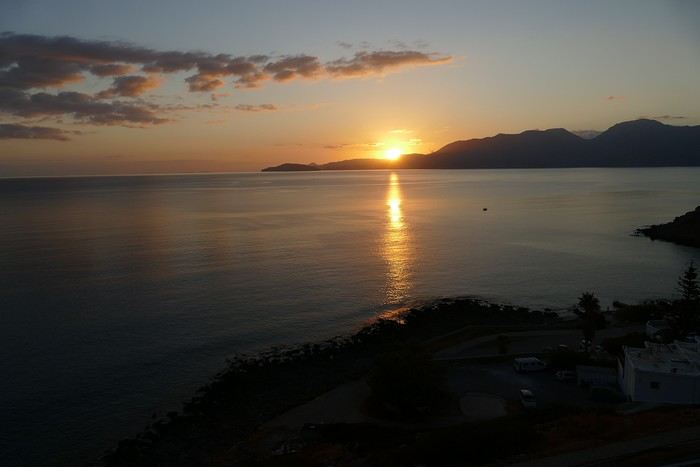 Sunset over Mirabello Bay
Tuesday, 10/09: A bit of a gray sky when we wake up around 8 a.m., but the sun will soon triumph over the scattered clouds. For our first swim, we opt for Voulisma Beach, even though our host warned us it was a bit “crowdy.” That’s understandable given the beautiful emerald color of the sea and the lovely curve of the beach. To avoid the big crowds, we move toward the eastern part of the beach, accessible via a steep staircase. The water is very warm, and this first dip is very pleasant. Before returning to the apartment, we stop at the bakery to buy spinach pies, essential ingredients to accompany our Greek salad for lunch. Of course, everything will be washed down with ouzo, which will remain our favorite drink for the next three weeks—but in moderation!!! A nap is in order after all that effort. In the late afternoon, we drive to Agios Nikolaos, the main seaside resort in Crete. We’re not too enthusiastic about visiting this mass-tourism resort, but the center of Agios, concentrated around the small inner harbor, is pleasant to see despite the plethora of shops and restaurants. We dine a little outside the harbor in the shaded courtyard of the Avli taverna: the oven-baked lamb, squid with spinach, and cuttlefish ink orzo pasta are all highly appreciated. We still stay under a 75 € bill for four.
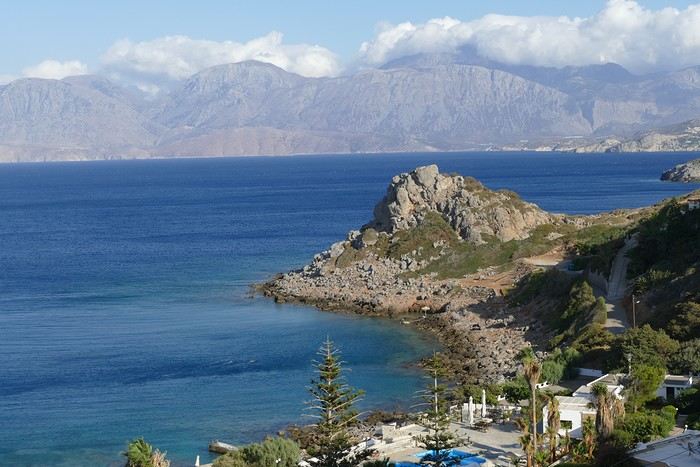 Mirabello Bay seen from our terrace
Wednesday, 11/09: At 8 a.m., the terrace is already bathed in sunlight, and it’s already quite hot. The small parasol barely gives us enough shade, but we’re not complaining! For our second swim, we head to a tiny beach recommended by our host, just 3 minutes by car from our place. The path leading to it is very discreet, and we don’t find it right away! It’s a small sandy cove with a few welcome tamarisk trees for shade. When we arrive, there are two swimmers, and there won’t be more than five or six in the morning. After lunch and a nap, we head to the beautiful village of Kritsa, just a few kilometers away. It’s too late to visit the beautiful church of Kera Panagia, which is already closed. We settle for the exterior, which is worth a look. The weather is clouding over, and big clouds are gathering. Upon arriving in Kritsa, a heavy shower forces us to take shelter in the Platanos taverna in the village center, and since it’s nearly 7 p.m., we decide to stay and dine there. Good choice—excellent meze: croquettes and stuffed zucchini flowers, gigantes beans, grilled tomatoes and feta, and pancetta as the main dish. The rain stops just as we decide to head back.
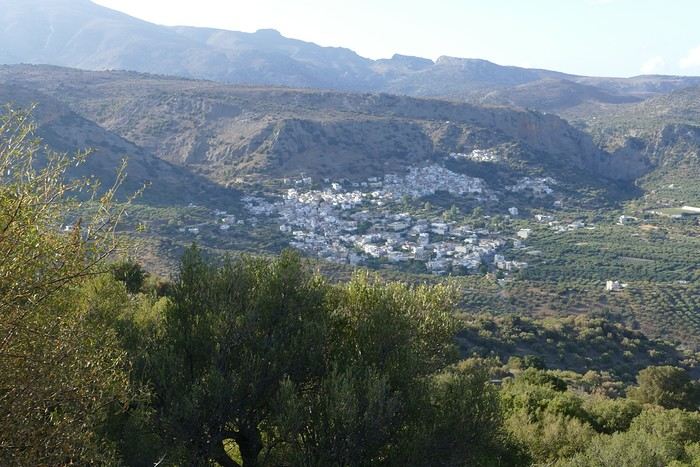 Village of Kritsa
Thursday, 12/09: Our terrace faces east, so we get to watch the sunrise around 7 a.m.—it’s truly a beautiful sight we never tire of. Around 9 a.m., we head to the village of Plaka, where boats depart for the island of Spinalonga, located north of Agios Nikolaos. We board the first boat, which sets sail at 10 a.m., and we’re not alone—the boat is practically full. After 10 minutes, we land on the island at the same time as several other boats from Elounda or Agios. Needless to say, there are already quite a few people walking through the streets of the leper village. The visit remains interesting and moving as we read the explanatory panels recounting the island’s history under Byzantine and then Turkish rule, followed by its transformation into a leper colony. As soon as we climb toward the top of the island via more or less maintained paths, there’s almost no one left. The 360° view from up there is stunning.
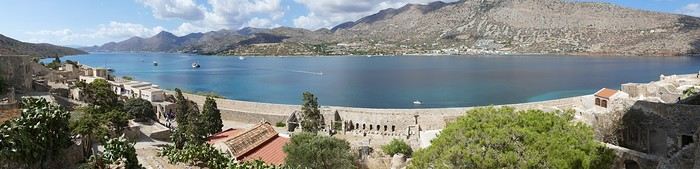
Spinalonga Island
The heat is now unbearable, and we can’t wait to get back home to have lunch on our terrace and rest. In the late afternoon, we go grocery shopping at the AB supermarket at the entrance of Agios. We had spotted another nice restaurant in our guide, but unfortunately, there’s a different one at the indicated location that doesn’t inspire us. So, we return to the Avli taverna for another dinner just as good as the first.
Friday, 13/09: We repeat yesterday’s successful program: a swim in our little cove, lunch on the terrace, a nap, and then, in the late afternoon, we discover another nearby village, Kroustas, nestled in the olive groves near Kritsa. Much less touristy than Kritsa, it’s mostly inhabited by locals, especially the elderly who are enjoying the cool air on their chairs—if you can call it cool given the still-high temperatures in the late afternoon! We then return to visit Kritsa, which we hadn’t been able to explore due to the rain. Dinner at a taverna in the village center at a very reasonable price.
Saturday, 14/09: Today, we move to our new base further east. We start with a high viewpoint at the Faneromeni Monastery, which overlooks Mirabello Bay. The monastery itself is of little interest as it’s under renovation with excessive concrete work. We continue to the village of Kavoussi to see another exceptional tree after a few kilometers on a dusty, bumpy track. It’s an olive tree said to be about 3,200 years old—impressive, and the countryside is very beautiful. It’s time to find a place for lunch. We find one in the charming little port of Mohlos, where a few tavernas surround a very nice small beach. Our choice falls on the Bogazzi taverna, where we enjoy fried fish. To reach our new base in Zakros, we still have to drive through the mountains before reaching Sitia, Paleokastro, and finally Zakros. The region is beautiful, with olive groves and rows of wind turbines taking advantage of the strong wind near the northern tip of the island. In Zakros, we’re greeted by our very friendly host. Here too, we have all the comforts and a beautiful terrace overlooking the village. The apartment has reversible air conditioners, but the overly simple instructions leave us puzzled. Thinking we’ve set it correctly, we realize a little too late that it’s blowing hot air over 30°C! After numerous attempts and testing several confusing programs, we finally succeed! Dinner on our new terrace.
Sunday, 15/09: This morning, we get up early to hike in the “Gorge of the Dead” while it’s still cool. The sky is blue as usual! We park in the nearest parking lot and start our descent via a beautiful path winding through the olive groves. A little further on, the landscape opens up, and the path, now a stony trail, begins the descent to the dry riverbed. On either side of the riverbed rise beautiful reddish cliffs.
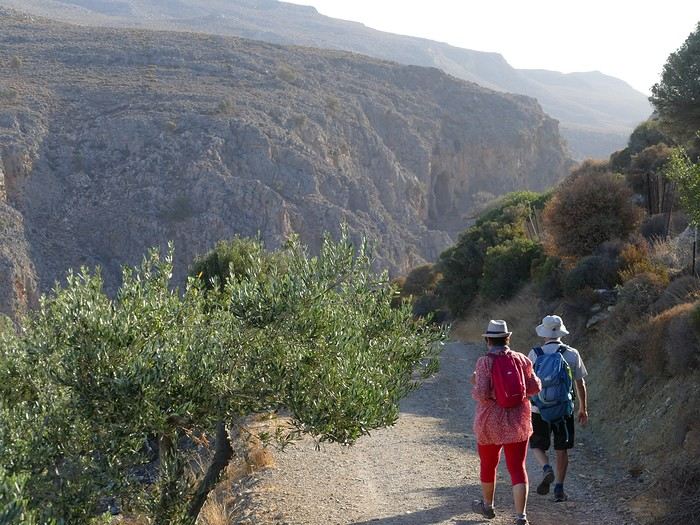
Gorge of the Dead
The trail winds its way through this narrow gorge with difficulty. It was in the many caves visible halfway up the slope that the Minoans buried their dead, hence the name “Gorge of the Dead.” The gorge opens onto a beautiful small pebble beach. A swim is welcome after this hike that made us sweat. The hike took us 1 hour and 25 minutes, and a little less on the way back. Meanwhile, Monique did some shopping and prepared an excellent lunch. In the late afternoon, we go down to dine at Platanakis, a taverna in the small village of Kato Zakros.
Monday, 16/09: This morning, we explore the northern part of the east coast near Palekastro. We start with a dip at the beautiful Hionia Beach near Palekastro. The water is still just as nice, but a light breeze is blowing—not enough to spoil our fun! Seeing all the wind turbines lining the ridges, it’s no surprise.
 Grocery shopping in Palekastro and return to Zakros. A little rain in the late afternoon and an excellent dinner at Iannis Mitsakakis’ Taverna in Adravastis. These are the kind of small tavernas we love—unpretentious, a few tables on a terrace, a warm welcome, a short menu guaranteeing freshness, tasty dishes prepared by the server’s mom, and a light bill. What more could you ask for!
Tuesday, 17/09: We head back toward Palekastro to do some shopping, but it’s also the road to the Toplou Monastery. There, we see a collection of magnificent icons dating from the 15th to the 20th century. We can also admire drawings of Orthodox religious architecture. We continue toward the Mavros Akrotiri headland to enjoy the view of the sea and rocky capes. On the way back to our place, we make a small detour to see the famous Vai palm grove. Meh... As for Vai Beach, it’s filled with paid umbrellas and sunbeds, and there are so many people that we flee. Plus, having to pay for parking is another reason to snub this trendy beach. We prefer our Hionia Beach, which we already appreciated the other day. In the late afternoon, Pat and I start the trail that begins at Kato Zakros Beach heading south. The poorly marked path crosses a plateau of sharp limestone. The paint and cairn markings are no longer very visible, and with dusk approaching, we turn back toward Kato Zakros. Dinner at the Platanakis taverna—less good than last time.
Wednesday, 18/09: To avoid the scorching sun, Pat, Mimi, and I get up earlier than usual to hike the Hohlakies Gorge. At this early hour, the sky is quite cloudy, and it’s drizzling. When we arrive in the village of Hohlakies, we park in front of a small chapel, the start of the hike. The sky is now completely clear. The trail starts among the olive groves, then after passing through a gate, we descend into the gorge filled with large rocks. We’re alone in the world, and the landscape is magnificent. A few wild goats clinging to the cliff watch us from above. After 1 hour and 15 minutes, we emerge onto the wonderful Karoumès Beach. A pleasant swim, then back to civilization! A walk in the late afternoon in Zakros to discover the beautiful springs route. Dinner in Adravastis.
Thursday, 19/09: Another move: Before heading to our next stop, we make a detour to see the beautiful Keratokampos Beach and can’t resist a swim in the still-warm, clear water. We continue our journey via Ziros, then reach the south coast and have lunch at the Stephi taverna in Ferma—excellent meal! The south coast is quite urbanized and has much less charm than the east coast we’ve just left! The numerous plastic greenhouses are partly to blame. We stop for groceries in Ierapetra. Around 3 p.m., we arrive at our destination in the small perched village of Anatoli. Our lodging is at the top of the village, and from the path leading to it, we have a magnificent view of the coastal plain, unfortunately overloaded with plastic greenhouses. It reminds us of the landscapes of El Ejido in Andalusia.
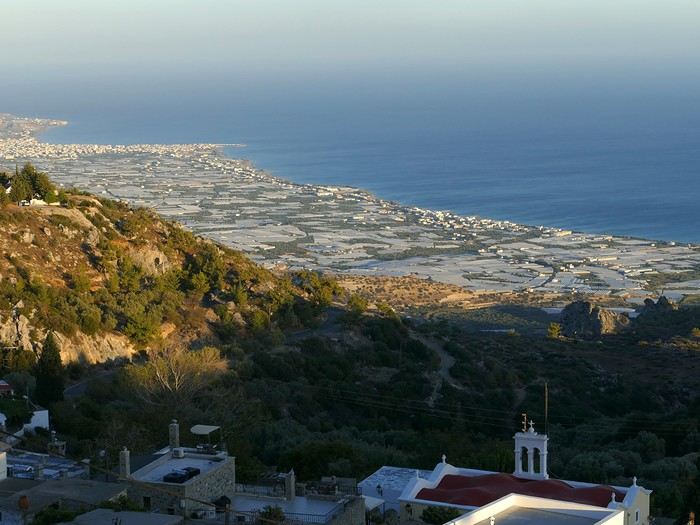 View of the Ierapetra coast from Anatoli
Friday, 20/09: A walk and discovery of the hamlet of Anatoli. There are few services—a tiny grocery store, a taverna, and that’s it. Fortunately, the traveling baker arrives and honks. We take the opportunity to buy fresh bread. Leaving the village, we take a path that should lead us to the hamlet of Drygies. The landscape is beautiful. We walk through a lovely pine forest before arriving at the hamlet. The path continues to a taverna that’s closed today, with a superb terrace overlooking the coast. Luckily, the owner arrives and informs us that the taverna will be open next Sunday and that we can enjoy barbecued meat. Noted! We head back to Anatoli via the small paved road with, fortunately, very limited traffic. Lunch on our terrace, then a dip in our private pool! The water is noticeably cooler than at the beach. Dinner at the village taverna: there’s only one menu—meze starters, souvlaki, water, wine, and bread—all for 35 €! We think we’re dreaming—was there a mistake? No.
Saturday, 21/09: We discover the beach of the village of Myrtos, a small seaside resort that’s quite touristy but on a human scale. We swim in the western part of the beach, and once again, we’re alone in the water. The best part: warm water and tamarisk trees for welcome shade. There’s even a shower to rinse off! In the late afternoon, Pat and I decide to go for a hike in the Selakano pine forest. To get there, we take a narrow, winding, and poorly paved road after the village of Christos. Plus, at this altitude, we encounter clouds clinging to the mountain, so it’s drizzling, and visibility is reduced. We decide to turn back and return to Anatoli. As compensation, we take the path that passes in front of the lodging and leads us to the Timios Stavros chapel, which crowns the summit of the nearby mountain. We arrive at the summit just in time for the sunset at 7 p.m. Breathtaking 360° panorama and magnificent colors!
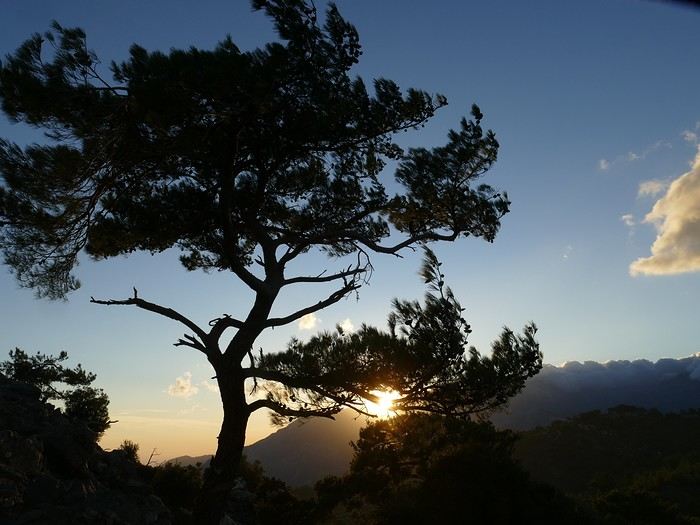 Sunset from Anatoli
Sunday, 22/09: This morning, Pat, Mimi, and I go for a hike in the Sarakina Gorge, located about 12 km from Anatoli via a beautiful road winding through irrigated olive groves. We park in the small parking lot before the trail. At the start, the path follows a levada (small irrigation canal) and quickly enters a very narrow gorge flanked by high cliffs. The riverbed is cluttered with huge rocks blocking the passage. No matter—in the technical sections, ropes or ladders allow us to overcome these obstacles with a bit of skill. You can imagine how quickly the riverbed must rise during a storm, given the narrowness of the gorge!
We progress slowly through this magnificent and impressive rocky chaos. At the exit of the gorge, we take another return path that partly follows the paved road. Back in Anatoli, we go to lunch at the Drygies taverna. We sit at the edge of the terrace under a huge tree that covers almost the entire terrace and order grilled lamb dishes prepared according to the ancient “antikristo” method.
Monday, 23/09: Departure for our last stop before Heraklion. We thought about swimming at Tertsa Beach, but it turns out to be less pleasant than expected, with pebbles and an uneven rocky plateau. So, we return to Myrtos Beach, which we know well and suits us perfectly. We head west, leaving the coast a bit. Around 3:30 p.m., we arrive at our destination in the village of Kamilari, near the famous Matala spot. We’ve rented a beautiful, modern, well-equipped apartment with a lovely shaded terrace. The owner is very friendly and explains everything necessary for a good stay. We explore the quite touristy village with its few tavernas, all full of tourists, mostly Germans.
Tuesday, 24/09: Visit to the village of Sivas, well restored thanks to the Germans, who have invested a lot here. We take the opportunity to scout out “friendly” tavernas, then go for a swim at Kalamaki Beach. Apart from a small sandy access, you have to enter the water via a chaotic limestone plateau—proof of this is that Monique trips slightly when entering the water. A group of very unfriendly German women blocks the sandy passage and doesn’t hesitate to push swimmers they deem too close. Back home, lunch, and a nap. In the late afternoon, we drive to visit the nearby Phaistos site. We benefit from very beautiful lighting. From the elevated site, we overlook the Messara Plain with a beautiful view of the olive grove checkerboards highlighted by the late afternoon sun. The site itself is quite vast, but to appreciate it, it’s better to read the explanatory panels placed throughout the different quarters. At this hour, the site is almost empty, and the beautiful light adds charm to the visit.
Wednesday, 25/09: Departure for the village of Matala, which doesn’t interest us in itself, having been there during the “hippie” era in 1976. However, going to Red Beach, only accessible by taking a path overlooking this area, appeals to us much more. We park in the large parking lot just outside the village and start our climb, which brings us to a pass from where we can admire this beautiful red-sand beach framed by beautiful cliffs plunging into the sea. The weather is magnificent, and at this early hour, there aren’t many people yet. We swim in the free part located near the cliff on the right when arriving at the beach. The sea is like glass, warm, and without a single ripple—a real treat! After half an hour, we turn back, and now there are many people rushing on this path, not at all made for feet in sandals or flip-flops, yet many vacationers venture out like this! Matala lives up to its image—a trendy place, full of shops, bars, and restaurants. You could be in any seaside resort with a standard global urbanism, lacking particular charm. Back home. In the late afternoon, a walk through the olive groves surrounding Kamilari, then dinner at Evangelina’s, who runs the Minoan Parassies taverna in the middle of the olive groves. Evangelina is quite a character: we came to reserve a table for 8 p.m. when it was only 7 p.m., but since we lingered near her restaurant, she prepares a table for us and urges us to sit down! And there she takes our order, and a little later, the meze arrive, followed by the main dishes. We finish this good dinner with several generous glasses of raki, accompanied by Evangelina’s encouragements, repeating “poya poya bravo bravo” in a loop. We’re in great shape too, by the way! We return in the middle of the night, on foot, fortunately, with the path vaguely lit by our phones...
Thursday, 26/09: This morning, we discover a new beach, Kommos Beach, not far from Kamilari either. It’s a long sandy beach, a small part of which is dedicated to paid umbrellas and sunbeds, and the rest is free. We spot a tamarisk tree to take shelter from the still-hot sun, and once again, we enjoy clear, warm water. The few swimmers spread out easily over nearly 500 meters of beach. In the late afternoon, Pat and I go to admire the sunset from the hill near our lodging. The hill, covered with olive trees, is threatened by a planned housing development of large cubic villas—trends dictate. Concrete never stops...
Friday, 27/09: We thought about leaving the car at the Odiyitria Monastery, the end of the paved road, but since the track descending to the cave remains drivable, we park 3 km further at the junction of the track leading to Kali Limenes Beach. We still have to walk for half an hour on a less drivable track, and then we’re at the entrance of the Farango Gorge. It’s a beautiful, easy hike since we follow the dry pebble riverbed. Before arriving at the beach, there’s a very beautiful small chapel sheltered under a large cliff, beautifully lit at this early hour.
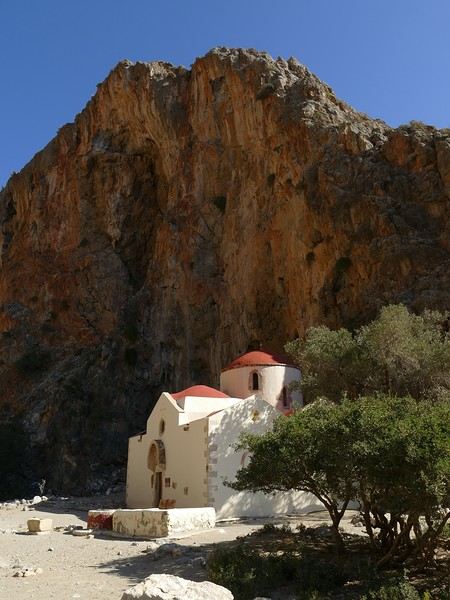
Agio Farango Chapel
A few climbers are scaling the cliff, and about ten swimmers are enjoying the sea. Return to the car under the hot sun. In the late afternoon, we all return to visit the interesting Odiyitria Monastery. Last swim at Kommos Beach and an excellent dinner at the Sigelakis taverna in Sivas.
Saturday, 28/09: There’s an end-of-vacation atmosphere... We pack our bags and head north. A short stop to see the village of Vorri, and a little over an hour later, we arrive in the big city of Heraklion. Since it’s too early to check into the apartment, we park in the city center to visit the famous archaeological museum. It’s indeed a must-see highlight of our stay in Crete. All four of us are amazed by the quantity and quality of the objects presented from the Minoan civilization. After more than 2 hours, we come out without having seen everything, but we’re a bit overwhelmed by all these wonders. Lunch at a nice little taverna very close to the Titus Church. We go to take possession of our apartment—the same as on the way there, still just as satisfying. In the late afternoon, I go alone for a walk in the historic district of the city, passing by the Morosini Fountain, which is bustling with people—some seated at café terraces, others standing and chatting. There’s a lively atmosphere here. A little further on are the Venetian loggia and the Agios Titos Church. I walk down to the old Venetian port to stroll along the jetty and admire the fortifications under beautiful late-afternoon lighting, then return to the apartment. Dinner near our place at Kiriakis, a “chic” restaurant but with very reasonable prices and excellent cuisine.
Sunday, 29/09: Wake-up at 3:30 a.m., quick coffee, and drive to the nearby airport. We leave the car in the parking lot. Already a lot of people at this early hour. Since we don’t have checked luggage, we go straight to security, which goes fairly quickly, then it’s waiting time and takeoff on time in an Airbus A321 for a 45-minute flight to Athens. We take off again in another Airbus A321 with a 50-minute delay to arrive in Zurich at 11:10 a.m. local time. Then we have to take the train to Basel and then the one to Colmar. With fewer Sunday services, we won’t arrive in Colmar until around 4 p.m.
Conclusion All four of us returned very satisfied with this stay in Crete for several reasons: - We found superb beaches with clear, warm water and often very few vacationers. - The few hikes we did were magnificent, especially those where the trails went through gorges leading to deserted beaches. - We greatly appreciated Cretan gastronomy—there were so few disappointments that we can count them on one hand. - All the accommodations we booked turned out to be superb, with the icing on the cake being the very friendly welcome from our hosts. - Generally, contacts with Cretans were always very warm despite the language barrier—we speak a little Greek. - We also appreciated the diversity of landscapes in this eastern part of Crete, with plateaus and mountains with splendid rugged reliefs.
Note: The photo album is available by clicking on this link: https://photos.app.goo.gl/hfdjQndA5eXkL5k7 Captions are only visible per photo by clicking on the circled “i” in the top right. Budget: approximately 3,300 € per couple for 21 days, including train and flights Budget details per couple: - Flight Zurich-Heraklion: 440 € - Trains Colmar-Basel-Zurich round trip for 4: 442.40 € (221 € per couple) - Accommodation: 2,431 € / 21 = 115.80 € per night for 4 (1,216 € per couple) - Car rental for 21 days: 684 € + 145 € fuel (1,150 km) (414 € per couple) - Restaurants, food, etc.: 1,009 €
Our 21-day itinerarySunday, 08/09: Once again—and this is the eighth time—we’re setting off, the four of us: Patrick, Michelle, Jacques, and Monique, for the Greek islands. This time, we’ve chosen Crete. No need to wake up at 3 or 4 a.m. to reach Basel-Mulhouse Airport at dawn to catch the first flight to Greece at 6 a.m.! Given the prohibitive prices charged by EasyJet, we found flights that were half the price from Zurich Airport, which is accessible in 3 hours by train from Colmar. Pierre-Paul drives all four of us to Colmar train station, where we take the train to Basel and then, 20 minutes later, the direct train to Zurich Airport. After wandering around the airport, we go for a coffee at 6 € each! We’re in Switzerland, after all. The other dining areas all have vending machines for selecting and paying for meals—soon, there won’t be anyone left to serve you! After a short wait, we take off at 7:45 p.m. (20 minutes late) in an Aegean Airbus A321. Free in-flight meal service isn’t bad either! We land in Heraklion around 11:15 p.m. We pick up our rental car (a red Seat Ibiza) at the airport and head straight to our apartment, located 2 km from the city center. Thanks to the GPS, we find it quickly. It’s a beautiful, fully renovated apartment with all the comforts and well-equipped. On the table, there’s wine, bottles of water, jam, coffee, etc. Given the late hour, we won’t stay up long.
Monday, 09/09: To enhance our breakfast, Michelle and Monique set off to find a bakery nearby. They return with croissants and donuts—yum... Then we head to the west coast. The highway follows the coastline, but we prefer taking the old road to Malia, our first stop. We visit the major archaeological site of this Minoan city under the hot sun. The site covers a vast area, but the ruins aren’t very evocative except for a few beautiful amphorae scattered around. The explanations in a small house at the entrance are interesting and help us better understand the organization of the ancient city with its different districts. From there, we head toward the nearby mountains to see the thousand-year-old plane tree in the village of Krasi. We take the opportunity to enjoy an excellent lunch of moussaka and delicious gemista at the Krassopsychia taverna in the village center. Pleasant surprise: the prices are still reasonable, with a bill of 70 € for four, including wine and water. The friendly tradition of complimentary dessert and glasses of raki continues—great! We’ve set the bar high right away! Let’s hope the rest lives up to it! On the way back toward the Lassithi Plateau, we stop at the Kardiotisa Monastery perched high on the mountain to enjoy a magnificent view of the entire region. Just a little further, we arrive at the Lassithi Plateau: the presence of small windmills used to pump water from the ground is the typical feature of this plateau. We complete a full loop around the plateau, passing by numerous orchards and vegetable gardens that occupy the entire space. At the end of the plateau, we once again cross mountain passes via winding roads that bring us near Agios Nikolaos. Our apartment is located about ten kilometers further south in Amoudhara. The owner, who was notified, waits for us and shows us her superb apartment, whose large terrace overlooks the entire Mirabello Bay. She then gives us valuable information about the different beaches in the area. Dinner will be frugal, given our hearty lunch in Krasi!
Sunset over Mirabello BayTuesday, 10/09: A bit of a gray sky when we wake up around 8 a.m., but the sun will soon triumph over the scattered clouds. For our first swim, we opt for Voulisma Beach, even though our host warned us it was a bit “crowdy.” That’s understandable given the beautiful emerald color of the sea and the lovely curve of the beach. To avoid the big crowds, we move toward the eastern part of the beach, accessible via a steep staircase. The water is very warm, and this first dip is very pleasant. Before returning to the apartment, we stop at the bakery to buy spinach pies, essential ingredients to accompany our Greek salad for lunch. Of course, everything will be washed down with ouzo, which will remain our favorite drink for the next three weeks—but in moderation!!! A nap is in order after all that effort. In the late afternoon, we drive to Agios Nikolaos, the main seaside resort in Crete. We’re not too enthusiastic about visiting this mass-tourism resort, but the center of Agios, concentrated around the small inner harbor, is pleasant to see despite the plethora of shops and restaurants. We dine a little outside the harbor in the shaded courtyard of the Avli taverna: the oven-baked lamb, squid with spinach, and cuttlefish ink orzo pasta are all highly appreciated. We still stay under a 75 € bill for four.
Mirabello Bay seen from our terraceWednesday, 11/09: At 8 a.m., the terrace is already bathed in sunlight, and it’s already quite hot. The small parasol barely gives us enough shade, but we’re not complaining! For our second swim, we head to a tiny beach recommended by our host, just 3 minutes by car from our place. The path leading to it is very discreet, and we don’t find it right away! It’s a small sandy cove with a few welcome tamarisk trees for shade. When we arrive, there are two swimmers, and there won’t be more than five or six in the morning. After lunch and a nap, we head to the beautiful village of Kritsa, just a few kilometers away. It’s too late to visit the beautiful church of Kera Panagia, which is already closed. We settle for the exterior, which is worth a look. The weather is clouding over, and big clouds are gathering. Upon arriving in Kritsa, a heavy shower forces us to take shelter in the Platanos taverna in the village center, and since it’s nearly 7 p.m., we decide to stay and dine there. Good choice—excellent meze: croquettes and stuffed zucchini flowers, gigantes beans, grilled tomatoes and feta, and pancetta as the main dish. The rain stops just as we decide to head back.
Village of KritsaThursday, 12/09: Our terrace faces east, so we get to watch the sunrise around 7 a.m.—it’s truly a beautiful sight we never tire of. Around 9 a.m., we head to the village of Plaka, where boats depart for the island of Spinalonga, located north of Agios Nikolaos. We board the first boat, which sets sail at 10 a.m., and we’re not alone—the boat is practically full. After 10 minutes, we land on the island at the same time as several other boats from Elounda or Agios. Needless to say, there are already quite a few people walking through the streets of the leper village. The visit remains interesting and moving as we read the explanatory panels recounting the island’s history under Byzantine and then Turkish rule, followed by its transformation into a leper colony. As soon as we climb toward the top of the island via more or less maintained paths, there’s almost no one left. The 360° view from up there is stunning.
Spinalonga Island
The heat is now unbearable, and we can’t wait to get back home to have lunch on our terrace and rest. In the late afternoon, we go grocery shopping at the AB supermarket at the entrance of Agios. We had spotted another nice restaurant in our guide, but unfortunately, there’s a different one at the indicated location that doesn’t inspire us. So, we return to the Avli taverna for another dinner just as good as the first.
Friday, 13/09: We repeat yesterday’s successful program: a swim in our little cove, lunch on the terrace, a nap, and then, in the late afternoon, we discover another nearby village, Kroustas, nestled in the olive groves near Kritsa. Much less touristy than Kritsa, it’s mostly inhabited by locals, especially the elderly who are enjoying the cool air on their chairs—if you can call it cool given the still-high temperatures in the late afternoon! We then return to visit Kritsa, which we hadn’t been able to explore due to the rain. Dinner at a taverna in the village center at a very reasonable price.
Saturday, 14/09: Today, we move to our new base further east. We start with a high viewpoint at the Faneromeni Monastery, which overlooks Mirabello Bay. The monastery itself is of little interest as it’s under renovation with excessive concrete work. We continue to the village of Kavoussi to see another exceptional tree after a few kilometers on a dusty, bumpy track. It’s an olive tree said to be about 3,200 years old—impressive, and the countryside is very beautiful. It’s time to find a place for lunch. We find one in the charming little port of Mohlos, where a few tavernas surround a very nice small beach. Our choice falls on the Bogazzi taverna, where we enjoy fried fish. To reach our new base in Zakros, we still have to drive through the mountains before reaching Sitia, Paleokastro, and finally Zakros. The region is beautiful, with olive groves and rows of wind turbines taking advantage of the strong wind near the northern tip of the island. In Zakros, we’re greeted by our very friendly host. Here too, we have all the comforts and a beautiful terrace overlooking the village. The apartment has reversible air conditioners, but the overly simple instructions leave us puzzled. Thinking we’ve set it correctly, we realize a little too late that it’s blowing hot air over 30°C! After numerous attempts and testing several confusing programs, we finally succeed! Dinner on our new terrace.
Sunday, 15/09: This morning, we get up early to hike in the “Gorge of the Dead” while it’s still cool. The sky is blue as usual! We park in the nearest parking lot and start our descent via a beautiful path winding through the olive groves. A little further on, the landscape opens up, and the path, now a stony trail, begins the descent to the dry riverbed. On either side of the riverbed rise beautiful reddish cliffs.
Gorge of the Dead
The trail winds its way through this narrow gorge with difficulty. It was in the many caves visible halfway up the slope that the Minoans buried their dead, hence the name “Gorge of the Dead.” The gorge opens onto a beautiful small pebble beach. A swim is welcome after this hike that made us sweat. The hike took us 1 hour and 25 minutes, and a little less on the way back. Meanwhile, Monique did some shopping and prepared an excellent lunch. In the late afternoon, we go down to dine at Platanakis, a taverna in the small village of Kato Zakros.
Monday, 16/09: This morning, we explore the northern part of the east coast near Palekastro. We start with a dip at the beautiful Hionia Beach near Palekastro. The water is still just as nice, but a light breeze is blowing—not enough to spoil our fun! Seeing all the wind turbines lining the ridges, it’s no surprise.
Grocery shopping in Palekastro and return to Zakros. A little rain in the late afternoon and an excellent dinner at Iannis Mitsakakis’ Taverna in Adravastis. These are the kind of small tavernas we love—unpretentious, a few tables on a terrace, a warm welcome, a short menu guaranteeing freshness, tasty dishes prepared by the server’s mom, and a light bill. What more could you ask for!Tuesday, 17/09: We head back toward Palekastro to do some shopping, but it’s also the road to the Toplou Monastery. There, we see a collection of magnificent icons dating from the 15th to the 20th century. We can also admire drawings of Orthodox religious architecture. We continue toward the Mavros Akrotiri headland to enjoy the view of the sea and rocky capes. On the way back to our place, we make a small detour to see the famous Vai palm grove. Meh... As for Vai Beach, it’s filled with paid umbrellas and sunbeds, and there are so many people that we flee. Plus, having to pay for parking is another reason to snub this trendy beach. We prefer our Hionia Beach, which we already appreciated the other day. In the late afternoon, Pat and I start the trail that begins at Kato Zakros Beach heading south. The poorly marked path crosses a plateau of sharp limestone. The paint and cairn markings are no longer very visible, and with dusk approaching, we turn back toward Kato Zakros. Dinner at the Platanakis taverna—less good than last time.
Wednesday, 18/09: To avoid the scorching sun, Pat, Mimi, and I get up earlier than usual to hike the Hohlakies Gorge. At this early hour, the sky is quite cloudy, and it’s drizzling. When we arrive in the village of Hohlakies, we park in front of a small chapel, the start of the hike. The sky is now completely clear. The trail starts among the olive groves, then after passing through a gate, we descend into the gorge filled with large rocks. We’re alone in the world, and the landscape is magnificent. A few wild goats clinging to the cliff watch us from above. After 1 hour and 15 minutes, we emerge onto the wonderful Karoumès Beach. A pleasant swim, then back to civilization! A walk in the late afternoon in Zakros to discover the beautiful springs route. Dinner in Adravastis.
Thursday, 19/09: Another move: Before heading to our next stop, we make a detour to see the beautiful Keratokampos Beach and can’t resist a swim in the still-warm, clear water. We continue our journey via Ziros, then reach the south coast and have lunch at the Stephi taverna in Ferma—excellent meal! The south coast is quite urbanized and has much less charm than the east coast we’ve just left! The numerous plastic greenhouses are partly to blame. We stop for groceries in Ierapetra. Around 3 p.m., we arrive at our destination in the small perched village of Anatoli. Our lodging is at the top of the village, and from the path leading to it, we have a magnificent view of the coastal plain, unfortunately overloaded with plastic greenhouses. It reminds us of the landscapes of El Ejido in Andalusia.
View of the Ierapetra coast from AnatoliFriday, 20/09: A walk and discovery of the hamlet of Anatoli. There are few services—a tiny grocery store, a taverna, and that’s it. Fortunately, the traveling baker arrives and honks. We take the opportunity to buy fresh bread. Leaving the village, we take a path that should lead us to the hamlet of Drygies. The landscape is beautiful. We walk through a lovely pine forest before arriving at the hamlet. The path continues to a taverna that’s closed today, with a superb terrace overlooking the coast. Luckily, the owner arrives and informs us that the taverna will be open next Sunday and that we can enjoy barbecued meat. Noted! We head back to Anatoli via the small paved road with, fortunately, very limited traffic. Lunch on our terrace, then a dip in our private pool! The water is noticeably cooler than at the beach. Dinner at the village taverna: there’s only one menu—meze starters, souvlaki, water, wine, and bread—all for 35 €! We think we’re dreaming—was there a mistake? No.
Saturday, 21/09: We discover the beach of the village of Myrtos, a small seaside resort that’s quite touristy but on a human scale. We swim in the western part of the beach, and once again, we’re alone in the water. The best part: warm water and tamarisk trees for welcome shade. There’s even a shower to rinse off! In the late afternoon, Pat and I decide to go for a hike in the Selakano pine forest. To get there, we take a narrow, winding, and poorly paved road after the village of Christos. Plus, at this altitude, we encounter clouds clinging to the mountain, so it’s drizzling, and visibility is reduced. We decide to turn back and return to Anatoli. As compensation, we take the path that passes in front of the lodging and leads us to the Timios Stavros chapel, which crowns the summit of the nearby mountain. We arrive at the summit just in time for the sunset at 7 p.m. Breathtaking 360° panorama and magnificent colors!
Sunset from AnatoliSunday, 22/09: This morning, Pat, Mimi, and I go for a hike in the Sarakina Gorge, located about 12 km from Anatoli via a beautiful road winding through irrigated olive groves. We park in the small parking lot before the trail. At the start, the path follows a levada (small irrigation canal) and quickly enters a very narrow gorge flanked by high cliffs. The riverbed is cluttered with huge rocks blocking the passage. No matter—in the technical sections, ropes or ladders allow us to overcome these obstacles with a bit of skill. You can imagine how quickly the riverbed must rise during a storm, given the narrowness of the gorge!
We progress slowly through this magnificent and impressive rocky chaos. At the exit of the gorge, we take another return path that partly follows the paved road. Back in Anatoli, we go to lunch at the Drygies taverna. We sit at the edge of the terrace under a huge tree that covers almost the entire terrace and order grilled lamb dishes prepared according to the ancient “antikristo” method.
Monday, 23/09: Departure for our last stop before Heraklion. We thought about swimming at Tertsa Beach, but it turns out to be less pleasant than expected, with pebbles and an uneven rocky plateau. So, we return to Myrtos Beach, which we know well and suits us perfectly. We head west, leaving the coast a bit. Around 3:30 p.m., we arrive at our destination in the village of Kamilari, near the famous Matala spot. We’ve rented a beautiful, modern, well-equipped apartment with a lovely shaded terrace. The owner is very friendly and explains everything necessary for a good stay. We explore the quite touristy village with its few tavernas, all full of tourists, mostly Germans.
Tuesday, 24/09: Visit to the village of Sivas, well restored thanks to the Germans, who have invested a lot here. We take the opportunity to scout out “friendly” tavernas, then go for a swim at Kalamaki Beach. Apart from a small sandy access, you have to enter the water via a chaotic limestone plateau—proof of this is that Monique trips slightly when entering the water. A group of very unfriendly German women blocks the sandy passage and doesn’t hesitate to push swimmers they deem too close. Back home, lunch, and a nap. In the late afternoon, we drive to visit the nearby Phaistos site. We benefit from very beautiful lighting. From the elevated site, we overlook the Messara Plain with a beautiful view of the olive grove checkerboards highlighted by the late afternoon sun. The site itself is quite vast, but to appreciate it, it’s better to read the explanatory panels placed throughout the different quarters. At this hour, the site is almost empty, and the beautiful light adds charm to the visit.
Wednesday, 25/09: Departure for the village of Matala, which doesn’t interest us in itself, having been there during the “hippie” era in 1976. However, going to Red Beach, only accessible by taking a path overlooking this area, appeals to us much more. We park in the large parking lot just outside the village and start our climb, which brings us to a pass from where we can admire this beautiful red-sand beach framed by beautiful cliffs plunging into the sea. The weather is magnificent, and at this early hour, there aren’t many people yet. We swim in the free part located near the cliff on the right when arriving at the beach. The sea is like glass, warm, and without a single ripple—a real treat! After half an hour, we turn back, and now there are many people rushing on this path, not at all made for feet in sandals or flip-flops, yet many vacationers venture out like this! Matala lives up to its image—a trendy place, full of shops, bars, and restaurants. You could be in any seaside resort with a standard global urbanism, lacking particular charm. Back home. In the late afternoon, a walk through the olive groves surrounding Kamilari, then dinner at Evangelina’s, who runs the Minoan Parassies taverna in the middle of the olive groves. Evangelina is quite a character: we came to reserve a table for 8 p.m. when it was only 7 p.m., but since we lingered near her restaurant, she prepares a table for us and urges us to sit down! And there she takes our order, and a little later, the meze arrive, followed by the main dishes. We finish this good dinner with several generous glasses of raki, accompanied by Evangelina’s encouragements, repeating “poya poya bravo bravo” in a loop. We’re in great shape too, by the way! We return in the middle of the night, on foot, fortunately, with the path vaguely lit by our phones...
Thursday, 26/09: This morning, we discover a new beach, Kommos Beach, not far from Kamilari either. It’s a long sandy beach, a small part of which is dedicated to paid umbrellas and sunbeds, and the rest is free. We spot a tamarisk tree to take shelter from the still-hot sun, and once again, we enjoy clear, warm water. The few swimmers spread out easily over nearly 500 meters of beach. In the late afternoon, Pat and I go to admire the sunset from the hill near our lodging. The hill, covered with olive trees, is threatened by a planned housing development of large cubic villas—trends dictate. Concrete never stops...
Friday, 27/09: We thought about leaving the car at the Odiyitria Monastery, the end of the paved road, but since the track descending to the cave remains drivable, we park 3 km further at the junction of the track leading to Kali Limenes Beach. We still have to walk for half an hour on a less drivable track, and then we’re at the entrance of the Farango Gorge. It’s a beautiful, easy hike since we follow the dry pebble riverbed. Before arriving at the beach, there’s a very beautiful small chapel sheltered under a large cliff, beautifully lit at this early hour.
Agio Farango Chapel
A few climbers are scaling the cliff, and about ten swimmers are enjoying the sea. Return to the car under the hot sun. In the late afternoon, we all return to visit the interesting Odiyitria Monastery. Last swim at Kommos Beach and an excellent dinner at the Sigelakis taverna in Sivas.
Saturday, 28/09: There’s an end-of-vacation atmosphere... We pack our bags and head north. A short stop to see the village of Vorri, and a little over an hour later, we arrive in the big city of Heraklion. Since it’s too early to check into the apartment, we park in the city center to visit the famous archaeological museum. It’s indeed a must-see highlight of our stay in Crete. All four of us are amazed by the quantity and quality of the objects presented from the Minoan civilization. After more than 2 hours, we come out without having seen everything, but we’re a bit overwhelmed by all these wonders. Lunch at a nice little taverna very close to the Titus Church. We go to take possession of our apartment—the same as on the way there, still just as satisfying. In the late afternoon, I go alone for a walk in the historic district of the city, passing by the Morosini Fountain, which is bustling with people—some seated at café terraces, others standing and chatting. There’s a lively atmosphere here. A little further on are the Venetian loggia and the Agios Titos Church. I walk down to the old Venetian port to stroll along the jetty and admire the fortifications under beautiful late-afternoon lighting, then return to the apartment. Dinner near our place at Kiriakis, a “chic” restaurant but with very reasonable prices and excellent cuisine.
Sunday, 29/09: Wake-up at 3:30 a.m., quick coffee, and drive to the nearby airport. We leave the car in the parking lot. Already a lot of people at this early hour. Since we don’t have checked luggage, we go straight to security, which goes fairly quickly, then it’s waiting time and takeoff on time in an Airbus A321 for a 45-minute flight to Athens. We take off again in another Airbus A321 with a 50-minute delay to arrive in Zurich at 11:10 a.m. local time. Then we have to take the train to Basel and then the one to Colmar. With fewer Sunday services, we won’t arrive in Colmar until around 4 p.m.
Conclusion All four of us returned very satisfied with this stay in Crete for several reasons: - We found superb beaches with clear, warm water and often very few vacationers. - The few hikes we did were magnificent, especially those where the trails went through gorges leading to deserted beaches. - We greatly appreciated Cretan gastronomy—there were so few disappointments that we can count them on one hand. - All the accommodations we booked turned out to be superb, with the icing on the cake being the very friendly welcome from our hosts. - Generally, contacts with Cretans were always very warm despite the language barrier—we speak a little Greek. - We also appreciated the diversity of landscapes in this eastern part of Crete, with plateaus and mountains with splendid rugged reliefs.
Note: The photo album is available by clicking on this link: https://photos.app.goo.gl/hfdjQndA5eXkL5k7 Captions are only visible per photo by clicking on the circled “i” in the top right. Budget: approximately 3,300 € per couple for 21 days, including train and flights Budget details per couple: - Flight Zurich-Heraklion: 440 € - Trains Colmar-Basel-Zurich round trip for 4: 442.40 € (221 € per couple) - Accommodation: 2,431 € / 21 = 115.80 € per night for 4 (1,216 € per couple) - Car rental for 21 days: 684 € + 145 € fuel (1,150 km) (414 € per couple) - Restaurants, food, etc.: 1,009 €
Touristikis à la crème de solaris English translation pending
Comme j'ai un peu de temps, je vous livre le récit d'un voyage de 2018 qui traînait sur mon ordinateur :
Il était une fois, par delà les pandémies et les crises économiques, un temps où nous pouvions voyager : 2018. En cette année béni(t)e, il n’y eut pour nous point de virée nord-atlantique dans la chaleur estivale au programme, point de douches gratuites rafraîchissantes, point de températures vivifiantes, point de gastronomie douteuse et point de prix déments. En passant, félicitations à l’Islande et ses pizzas caoutchouteuse à 30 euros. En 2018, non, on va dans un vrai pays où l’on sait ce que signifie avoir chaud, manger et glander à une terrasse : la Grèce. Et comme nous ne sommes quand même pas des stakhanovistes du 40° à l’ombre, nous avons choisi le printemps, avril plus précisément. Pour le terrain de jeu, il s'agira d'Athènes et du Péloponnèse sur un peu plus de deux semaines. A nous, les petites églises, les ruines romantiques et les oliviers scintillants !
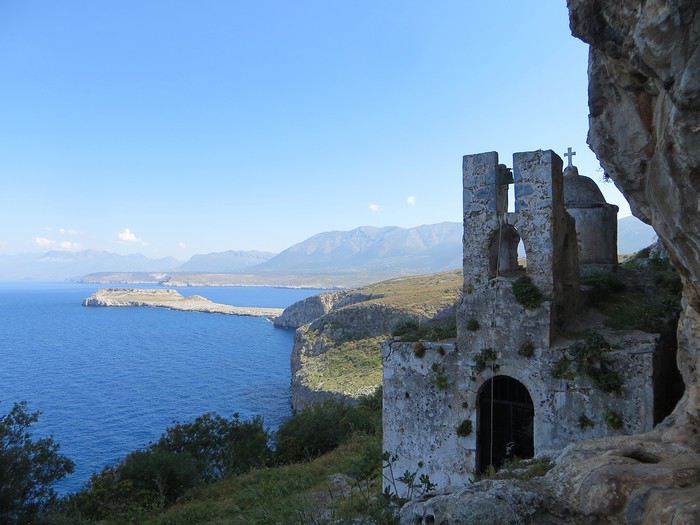 Bien choisir sa photo d'appel pour attirer le chaland. Un bon point et toute mon estime pour celui qui devine où c'est.
Avec la Grèce - pour ceux qui ont lu mes autres carnets qui sont tellement merveilleux qu’il faut les lire immédiatement et que votre vie s’en trouvera changée et éblouie - tout est chamboulé : fini les campings, les dortoirs et les piques-niques miteux de nos voyages dans le nord, place aux hôtels, aux b&b et aux restos. Et en plus, les Grecs ont le bon goût d’être accueillants.
Laissons la parole à du Ballay, parrainé par Alain Deloin et Jean-Michel Apeupré :
Heureux qui comme Ulysse a fait un beau voyage (en Grèce), Ou comme celui-là qui vit le Parthénon, Et puis est retourné, plein d'image et pâmoison, Vivre exubérant le reste de son âge
Et avant d'attaquer le vif du sujet, quelques annonces pour le public innocent : Avertissement : vous lisez ce compte-rendu à vos risques et périls. Toute indignation n’est pas de ma responsabilité. Avertissement bis : non je ne suis pas raciste non je n’ai rien contre les Néerlandais, j’ai d’ailleurs un ami néerlandais non les Grecs ne sont pas des feignants oui les Allemands ont pour passe-temps l’invasion… Ah mince une rechute.
Jour 1
Ayé, c’est parti pour une journée de transport translation Lyon-Athènes via Munich en empruntant la Lufthansa. Le vol est sans encombre, une conversation s’engage avec un voisin grec sympathique autour de la qualité douteuse de la bouffe allemande. J'en profite pour avoir une illumination : la nourriture, voilà ce qui unit les Européens (enfin ceux du sud) ! Eclair de génie, j’ai trouvé comment sauver l’Union européenne « tous unis contre la vie beurk ». Malheureusement, ça risque d’exclure les riches du nord. D’ailleurs c’est peut-être un signe : faut-il mal manger pour être riche ? Faudrait exclure les Japonais de l’équation mais sinon ça marche (pays germaniques, scandinaves et anglo-saxons même combat). Revenons au voisin grec, je tente de donner un tour sportif à la conversation mais malheureusement il n’aime pas le foot « football is shit »… Arrgghh, de quoi vais-je bien pouvoir parler alors ?! Du coup, je parle plus. Alors qu’un petit débat sur le scandale du moment, le président du PAOK Salonique et son flingue, ça, ça aurait été fun .
L’atterrissage se passe sans encombre dans cet aéroport d’Athènes qui a changé de place depuis mon unique passage dans le coin et s’est éloigné du centre-ville. Première prise de contact avec l’alphabet grec, on avait essayé pour le fun de potasser les équivalences mais c’est loin d’être évident ! Combien d'équivalents du O ont-ils dans cet alphabet ?!
Le trajet jusqu’au centre d’Athènes est long, très long et le métro/train se remplit progressivement jusqu’à être bondé à ras bord. Nous sommes tassés, compressés et pour sortir de cette fournaise, c’est la lutte finale, poussons-nous et demain, l’air sera le sauveur du genre humain (note à moi-même : éviter la prochaine fois d’arriver au moment de la sortie du travail)
La chambre chez l’habitant est bien placée, en plein centre sans être très bruyante. On profite de notre premier soir pour une approche de la cuisine grecque et un mauvais choix de commande (que de la friture…). On enchaîne sur une petite balade nocturne pour revenir sur l’impression née du voyage précédent (ie dans les années 90 la voiture reine, une ville bruyante et désagréable). Eh bien en fait, une partie du centre-ville s’est piétonnisé, il y a de la vie, des restos et des cafés avec des terrasses partout, c’est très agréable finalement.
Il était une fois, par delà les pandémies et les crises économiques, un temps où nous pouvions voyager : 2018. En cette année béni(t)e, il n’y eut pour nous point de virée nord-atlantique dans la chaleur estivale au programme, point de douches gratuites rafraîchissantes, point de températures vivifiantes, point de gastronomie douteuse et point de prix déments. En passant, félicitations à l’Islande et ses pizzas caoutchouteuse à 30 euros. En 2018, non, on va dans un vrai pays où l’on sait ce que signifie avoir chaud, manger et glander à une terrasse : la Grèce. Et comme nous ne sommes quand même pas des stakhanovistes du 40° à l’ombre, nous avons choisi le printemps, avril plus précisément. Pour le terrain de jeu, il s'agira d'Athènes et du Péloponnèse sur un peu plus de deux semaines. A nous, les petites églises, les ruines romantiques et les oliviers scintillants !
Bien choisir sa photo d'appel pour attirer le chaland. Un bon point et toute mon estime pour celui qui devine où c'est.Avec la Grèce - pour ceux qui ont lu mes autres carnets qui sont tellement merveilleux qu’il faut les lire immédiatement et que votre vie s’en trouvera changée et éblouie - tout est chamboulé : fini les campings, les dortoirs et les piques-niques miteux de nos voyages dans le nord, place aux hôtels, aux b&b et aux restos. Et en plus, les Grecs ont le bon goût d’être accueillants.
Laissons la parole à du Ballay, parrainé par Alain Deloin et Jean-Michel Apeupré :
Heureux qui comme Ulysse a fait un beau voyage (en Grèce), Ou comme celui-là qui vit le Parthénon, Et puis est retourné, plein d'image et pâmoison, Vivre exubérant le reste de son âge
Et avant d'attaquer le vif du sujet, quelques annonces pour le public innocent : Avertissement : vous lisez ce compte-rendu à vos risques et périls. Toute indignation n’est pas de ma responsabilité. Avertissement bis : non je ne suis pas raciste non je n’ai rien contre les Néerlandais, j’ai d’ailleurs un ami néerlandais non les Grecs ne sont pas des feignants oui les Allemands ont pour passe-temps l’invasion… Ah mince une rechute.
Jour 1
Ayé, c’est parti pour une journée de transport translation Lyon-Athènes via Munich en empruntant la Lufthansa. Le vol est sans encombre, une conversation s’engage avec un voisin grec sympathique autour de la qualité douteuse de la bouffe allemande. J'en profite pour avoir une illumination : la nourriture, voilà ce qui unit les Européens (enfin ceux du sud) ! Eclair de génie, j’ai trouvé comment sauver l’Union européenne « tous unis contre la vie beurk ». Malheureusement, ça risque d’exclure les riches du nord. D’ailleurs c’est peut-être un signe : faut-il mal manger pour être riche ? Faudrait exclure les Japonais de l’équation mais sinon ça marche (pays germaniques, scandinaves et anglo-saxons même combat). Revenons au voisin grec, je tente de donner un tour sportif à la conversation mais malheureusement il n’aime pas le foot « football is shit »… Arrgghh, de quoi vais-je bien pouvoir parler alors ?! Du coup, je parle plus. Alors qu’un petit débat sur le scandale du moment, le président du PAOK Salonique et son flingue, ça, ça aurait été fun .
L’atterrissage se passe sans encombre dans cet aéroport d’Athènes qui a changé de place depuis mon unique passage dans le coin et s’est éloigné du centre-ville. Première prise de contact avec l’alphabet grec, on avait essayé pour le fun de potasser les équivalences mais c’est loin d’être évident ! Combien d'équivalents du O ont-ils dans cet alphabet ?!
Le trajet jusqu’au centre d’Athènes est long, très long et le métro/train se remplit progressivement jusqu’à être bondé à ras bord. Nous sommes tassés, compressés et pour sortir de cette fournaise, c’est la lutte finale, poussons-nous et demain, l’air sera le sauveur du genre humain (note à moi-même : éviter la prochaine fois d’arriver au moment de la sortie du travail)
La chambre chez l’habitant est bien placée, en plein centre sans être très bruyante. On profite de notre premier soir pour une approche de la cuisine grecque et un mauvais choix de commande (que de la friture…). On enchaîne sur une petite balade nocturne pour revenir sur l’impression née du voyage précédent (ie dans les années 90 la voiture reine, une ville bruyante et désagréable). Eh bien en fait, une partie du centre-ville s’est piétonnisé, il y a de la vie, des restos et des cafés avec des terrasses partout, c’est très agréable finalement.
On remonte le temps: Népal 2000, Camp de base de l'Everest English translation pending
Allez on se retrouve en Asie cette fois pour tutoyer le toit du monde 😛 Là internet commençait à pointer le bout de son nez, VF en 1999 je sais pas si ça existait, en tout cas je ne connaissait pas 🙂. Il y avait la possibilité de partir tout seul et de trouver un guide, des porteurs sur place ..... J'ai préféré passer par un agence spécialisée dans le trekking pour réaliser se voyage !
C'est un voyage de 22 jours que je vais vous conter !
Le groupe est constitué de 15 personnes, dont l'age va de 23 à 62 ans. Mise à part un couple particulièrement pénible tout le monde à fait les efforts nécessaires pour que le voyage se passe bien. Des parties acharnées de Uno tous les soirs ont grandement contribué à la bonne humeur du groupe et des porteurs qui ne comprenaient pas pourquoi un jeu de carte pouvait nous faire autant rire.
Le guide un accompagnateur en haute montagne, c'est en grande partie grâce à lui si le voyage c'est aussi bien passé il a toujours était disponible pour tout le monde et il a su désamorcer tous les petits conflits, inhérent à ce type de voyage, dans l’œuf.
Vendredi 21/04/2000 : Paris Katmandou
Le rendez vous est fixé 20 heures à l'aéroport Charles de Gaulle, pour un décollage à 23h30 la compagnie que nous allons prendre est Pakistan Airlines ce qui est loin d'être le top. Nous partons finalement avec 1 heure de retard. J'adore les consignes qui sont ponctués avec un à la grâce de dieu 🤪, J'ai dormi tout le long du vol, dors du sommeil du juste jusqu'à notre première escale Islamabad, capitale du Pakistan. Maintenant j'ai plus de mal à dormir en avion pas parce que j'en ai peur, mais avec l'age j'ai besoin d'un peux plus de confort 😇
Nous allons prendre notre deuxième avion à destination de Katmandou terminus de notre voyage, bonjour les formalités dans l'aéroport 4 contrôles de passeport et des bagages de soute, alors que nous sommes toujours dans la zone franche. Nous atterrissons à l'aéroport de Katmandou, un court transfert en car nous fait découvrir la ville, les premières impressions sont la pauvreté et la pollution qui entourent la ville, nous finissons par arriver dans un magnifique Hotel, dans le centre de la ville, vers 17 h 50. Le temps de déposer nos affaires, nous descendons manger et direction le lit.
Là vous vous dites quelle mémoire, ben non faut pas croire, j'ai pris des notes pour ce voyage et je les ai encore 🙂
Pour le moment mon record d'altitude ( 5 895 m) va-t-il être battu ? Vous le saurez en me suivant
A demain
C'est un voyage de 22 jours que je vais vous conter !
Le groupe est constitué de 15 personnes, dont l'age va de 23 à 62 ans. Mise à part un couple particulièrement pénible tout le monde à fait les efforts nécessaires pour que le voyage se passe bien. Des parties acharnées de Uno tous les soirs ont grandement contribué à la bonne humeur du groupe et des porteurs qui ne comprenaient pas pourquoi un jeu de carte pouvait nous faire autant rire.
Le guide un accompagnateur en haute montagne, c'est en grande partie grâce à lui si le voyage c'est aussi bien passé il a toujours était disponible pour tout le monde et il a su désamorcer tous les petits conflits, inhérent à ce type de voyage, dans l’œuf.
Vendredi 21/04/2000 : Paris Katmandou
Le rendez vous est fixé 20 heures à l'aéroport Charles de Gaulle, pour un décollage à 23h30 la compagnie que nous allons prendre est Pakistan Airlines ce qui est loin d'être le top. Nous partons finalement avec 1 heure de retard. J'adore les consignes qui sont ponctués avec un à la grâce de dieu 🤪, J'ai dormi tout le long du vol, dors du sommeil du juste jusqu'à notre première escale Islamabad, capitale du Pakistan. Maintenant j'ai plus de mal à dormir en avion pas parce que j'en ai peur, mais avec l'age j'ai besoin d'un peux plus de confort 😇
Nous allons prendre notre deuxième avion à destination de Katmandou terminus de notre voyage, bonjour les formalités dans l'aéroport 4 contrôles de passeport et des bagages de soute, alors que nous sommes toujours dans la zone franche. Nous atterrissons à l'aéroport de Katmandou, un court transfert en car nous fait découvrir la ville, les premières impressions sont la pauvreté et la pollution qui entourent la ville, nous finissons par arriver dans un magnifique Hotel, dans le centre de la ville, vers 17 h 50. Le temps de déposer nos affaires, nous descendons manger et direction le lit.
Là vous vous dites quelle mémoire, ben non faut pas croire, j'ai pris des notes pour ce voyage et je les ai encore 🙂
Pour le moment mon record d'altitude ( 5 895 m) va-t-il être battu ? Vous le saurez en me suivant
A demain
Tour du Dhaulagiri et Jomsom-Jomsom par Thorong La / Mesokanto La English translation pending
J'ai réalisé ce trek en novembre 2012. C'était alors mon 3ieme voyage au Népal et ces voyages sont devenus roupie courante dans les années qui ont suivi.
C'est probablement une de mes meilleures expériences de trek, à tel point que j'ai remis le couvert du tour du dhaulagiri six ans plus tard mais avec une fin différente dans le massif des annapurnas.
Etape 1. Beni - Darbang Après avoir fait la route depuis Pokhara ce matin, me voilà donc au départ du trek à Beni. A l'époque le trajet en taxi ou mini bus était possible jusqu'à Darbang mais ce n'était pas encore "l'autoroute" qu'il y'a aujourd'hui (je précise: je parle bien de la section Beni-Darbang quand j'utilise le terme "autoroute" 🙂). Je décide donc de commencer ma marche ici.
La météo est superbe, et s'il fait très chaud, cela reste tout à fait supportable. Les paysages sont typiques du Népal à cette altitude (800m): rizières, bananiers. Les petites bananes du Népal sont très bonnes mais celles que j'achète dans un village sont semble t'il d'une variété particulière: de petites tailles, elles sont aussi "rondouillardes" et la chair très dense est très sucrée et parfumée: un régal !
Un des premiers villages traversé s'appelle Tatopani - pas celui très connu sur la route entre Jomsom-Beni. Comme beaucoup de lecteurs de ce récit le sauront, tatopani signifie eau chaude en népalais et c'est souvent le nom donné à un village lorsque celui-ci dispose de sources d'eau chaude. Celles-ci sont en plein milieu du village et fréquentées par nombre de népalaises aux saris colorés.
A Darbang, j'hésite: il n'est pas très tard. Je peux continuer encore un peu ou me poser dans un lodge. Ce sera tout pour aujourd'hui. Le lodge est assez sympathique, pas très éloigné de ce qu'on peut trouver sur les grands treks fréquentés du Népal. Je passe la soirée avec un couple de francais, bientôt rejoint par un américain qui prendra demain la direction de la réserve de Dhorpatan.

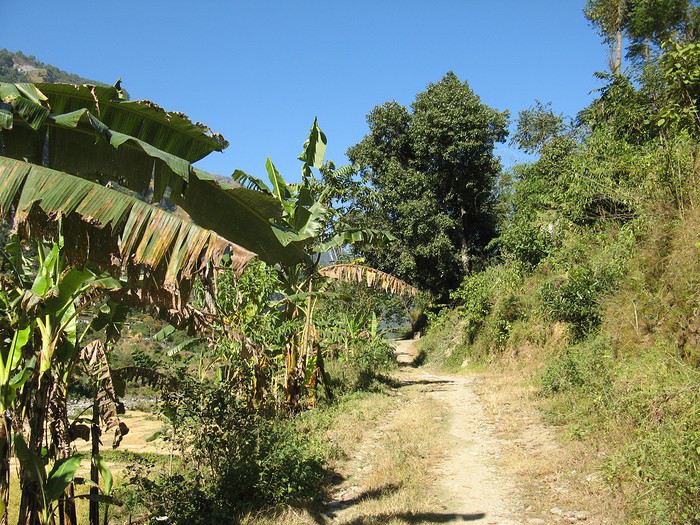
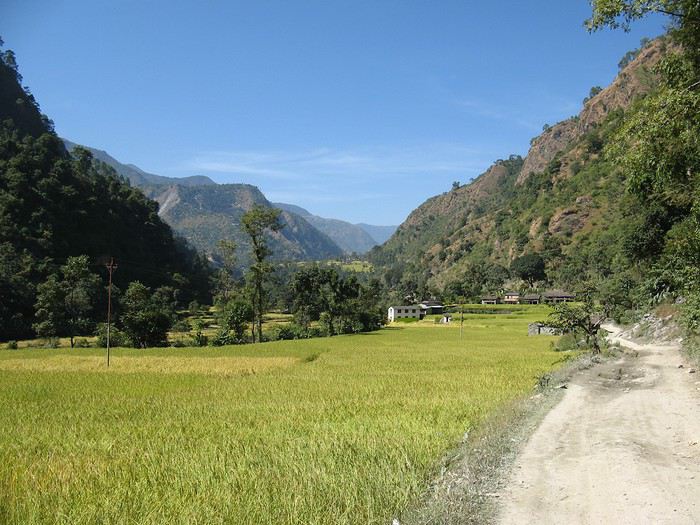
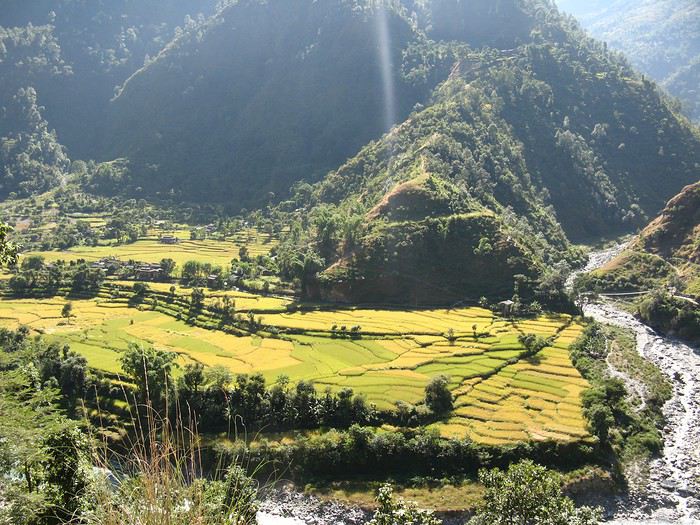
Etape 2. Darbang - Muri Le sentier à destination de Muri est en travaux pour l'élargir et permettre le passage de véhicules à 4 roues. Il offre les premières vues sur les montagnes du massif du Dhaulagiri. Toujours quelques hebergements disponibles dans les villages traversées de sorte que je m'attends à en trouver à Muri quand je prends la décision de m'y arrêter.
En fait il n'y pas pas de lodge dans ce village mais en discutant avec les villageois, on me propose une chambre chez l'habitant. Le moins que l'on puisse dire c'est que c'est très loin des standard occidentaux :-). La chambre en question est dans une vieille batisse à part assez sale et sans fenêtre. Pas grave, ça fera l'affaire pour une nuit :-)

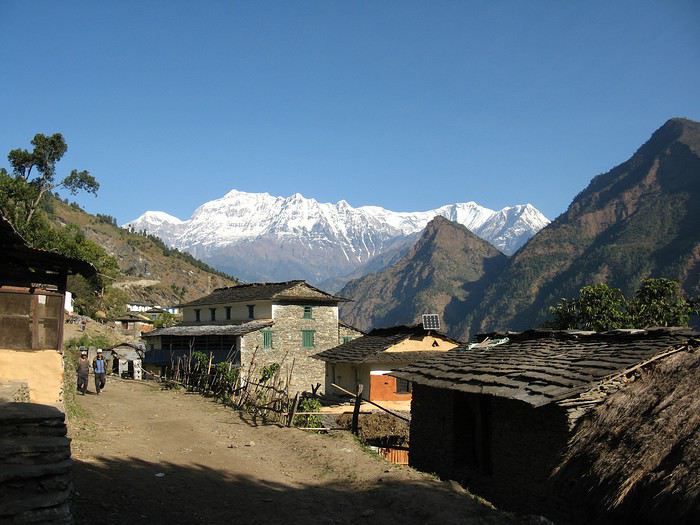
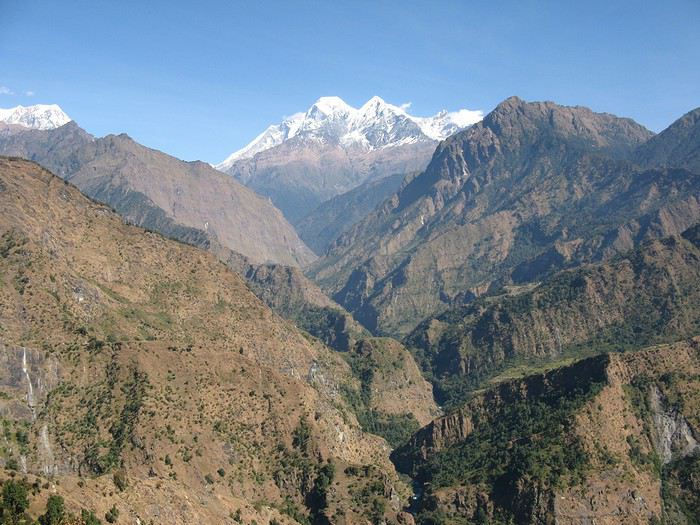
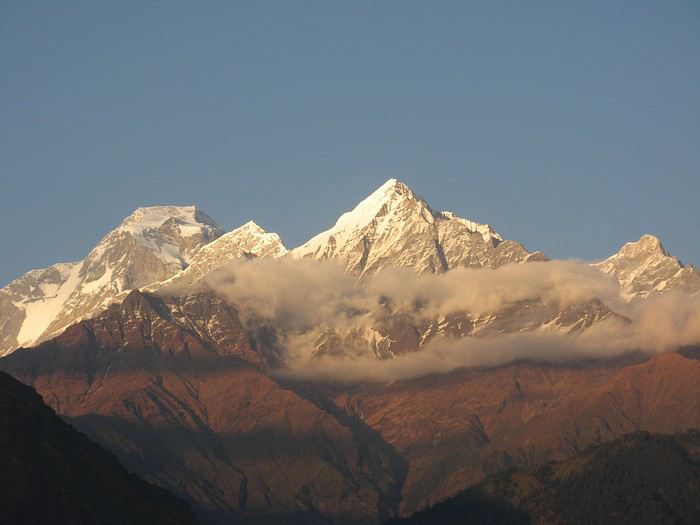
C'est probablement une de mes meilleures expériences de trek, à tel point que j'ai remis le couvert du tour du dhaulagiri six ans plus tard mais avec une fin différente dans le massif des annapurnas.
Etape 1. Beni - Darbang Après avoir fait la route depuis Pokhara ce matin, me voilà donc au départ du trek à Beni. A l'époque le trajet en taxi ou mini bus était possible jusqu'à Darbang mais ce n'était pas encore "l'autoroute" qu'il y'a aujourd'hui (je précise: je parle bien de la section Beni-Darbang quand j'utilise le terme "autoroute" 🙂). Je décide donc de commencer ma marche ici.
La météo est superbe, et s'il fait très chaud, cela reste tout à fait supportable. Les paysages sont typiques du Népal à cette altitude (800m): rizières, bananiers. Les petites bananes du Népal sont très bonnes mais celles que j'achète dans un village sont semble t'il d'une variété particulière: de petites tailles, elles sont aussi "rondouillardes" et la chair très dense est très sucrée et parfumée: un régal !
Un des premiers villages traversé s'appelle Tatopani - pas celui très connu sur la route entre Jomsom-Beni. Comme beaucoup de lecteurs de ce récit le sauront, tatopani signifie eau chaude en népalais et c'est souvent le nom donné à un village lorsque celui-ci dispose de sources d'eau chaude. Celles-ci sont en plein milieu du village et fréquentées par nombre de népalaises aux saris colorés.
A Darbang, j'hésite: il n'est pas très tard. Je peux continuer encore un peu ou me poser dans un lodge. Ce sera tout pour aujourd'hui. Le lodge est assez sympathique, pas très éloigné de ce qu'on peut trouver sur les grands treks fréquentés du Népal. Je passe la soirée avec un couple de francais, bientôt rejoint par un américain qui prendra demain la direction de la réserve de Dhorpatan.
Etape 2. Darbang - Muri Le sentier à destination de Muri est en travaux pour l'élargir et permettre le passage de véhicules à 4 roues. Il offre les premières vues sur les montagnes du massif du Dhaulagiri. Toujours quelques hebergements disponibles dans les villages traversées de sorte que je m'attends à en trouver à Muri quand je prends la décision de m'y arrêter.
En fait il n'y pas pas de lodge dans ce village mais en discutant avec les villageois, on me propose une chambre chez l'habitant. Le moins que l'on puisse dire c'est que c'est très loin des standard occidentaux :-). La chambre en question est dans une vieille batisse à part assez sale et sans fenêtre. Pas grave, ça fera l'affaire pour une nuit :-)
Janvier 1983: mon premier trek au Népal English translation pending
J'ai commencé mon tour du monde le 4 janvier a Delhi, puis Agra, Khajuraho, Bénarès et Kathmandu. Maintenant je suis a Pokhara, et je vais tenter le tour des Annapurnas, seul.
25/1 Je quitte l'hôtel Phewa au bord du lac et la civilisation a 8 heures. Directement une dure montée sur un petit sentier vers Sarangkot. J'ai acheté la carte très vague. Sur la crête déjà, j'erre un peu sur des traces le long des rizières entre les hameaux, avant de tomber sur le chemin principal. J'ai emporté un picnic. J'atteinds Naudanda a 1 heure 40 et je poursuis en côté, avec multes escaliers, jusqu'au col de Kahre a 3 heures 30.. Je passe la nuit dans mon premier lodge, grand dortoir dans la paille, je suis le seul étranger, les autres clients sont Népalais. Des musiciens ambulants donnent un concert plus tard. Dal bhat pour tout le monde le soir.
26/1 Pas de petit déjeuner dans les lodges. Thé seulement, et j'achète des biscuits. Après les nuages d'hier après midi, grand beau ce matin et belles vues en atteignant Chandrakot dans la descente. En bas a Birethanti vers 10 heures Je remonte la vallée secondaire et je m'arrête a Hille pour le dal bhat. Ensuite, il faut confronter les 600 mètres d'escaliers quasi ininterrompus vers Ulleri, ou j'arrive a 4 heures. Je ne suis pas rassuré parce que j'ai rencontré un jeune randonneur qui avait fait demi tour après avoir été agressé près d'Ulleri. Cette fois, je suis le seul client du lodge, de nouveau un grand dortoir dans de la paille.
27/1 Malgré ma peur, je pars seul dans les forêts denses jusque Ghorepani. La vue est entièrement bouchée, je décide de renoncer a Poon Hill et de gagner un jour sur le programme normal. La descente est interminable, mais j'arrive a Tatopani a 5 heures 20. Un pont suspendu est en piteux état. Je séjourne au Dhaulaghiri Lodge, mon premier lodge comme on les connait actuellement, petite chambre individuelle, menu avec des choix occidentaux comme la crêpe a la banane, et également d'autres jeunes trekkeurs et hippies.
28/1 Il pleut. Je reste un peu, Tatopani est très agréable. Mandarines. Et le bassin d'eau chaude. Quand on se retrouve entre étrangers, on se baigne nus. Le temps ne s'ameliore pas mais je pars quand même a 12 heures 20. Je croise des caravanes de mules, avec des décorations coloriées. C'est un peu loin pour atteindre Ghasa, mais j'ai emporté le matériel de camping pour traverser le Thorong La, donc je campe a un endroit isolé dans la vallée.
29/1 Le temps demeure gris et, comme cela monte en altitude vers Lete, il commence a faire froid. A 11 heures, j'attends que le dal bhat soit prêt dans un lodge a Kalopani. Je marche dans la haute vallée large et plate. Le chemin a flanc de coteau a été coupé par un glissement de terrain et il faut traverser 3 fois la rivière, sur des 'ponts' de fortune. J'arrive a 4 heures 30 a Tukuche, un village impressionnant avec ses vastes demeures en pierre autour d'une cour, d'ailleurs je dors dans l'une d'entre elles, je suis de nouveau seul.
30/1 Parti à 8 heures 30. Étape courte car je ne peux de toutes façons pas atteindre Muktinath aujourd'hui. Du coup, je fais le détour par le chemin secondaire du cote Est de la vallée via Thinigaon. A 12 heures 30, j'arrive à Jomosom et je choisis un lodge dans l'ancien village. Il fait très froid et je reste une bonne partie de l'après midi dans mon sac de couchage. Je fais un tour dans la partie administrative et moderne de Jomosom, vers l'aéroport. C'est le moins beau village depuis le départ.
31/1 Je pars à 8 heures 15 et je monte rapidement jusque Charkot. Le temps s'est mis au beau fixe. Dal bhat à Charkot et courte marche à Muktinath. Puis je vais visiter les temples. Superbe vue ici. Au lodge North Pole, grand dortoir avec des tables pour manger et un poêle. Nous sommes quatre, un couple allemand et un jeune Français. Celui-ci a tenté de traverser le Thorung Là aujourd'hui dans la neige et à fait demi tour. Il avait engagé un guide local mais celui-ci n'était pas très motivé, car il n'avait pas trop envie de retraverser le col tout seul ensuite.
1/2 J'essaye de convaincre les autres de m'accompagner dans ma tentative de traverser le Thorung La, peine perdue. Aujourd'hui acclimatation a l'altitude et reconnaissance. Je prends le sentier et, vers 4100 mètres, j'arrive au pied du col et a la neige. Je monte encore une heure. Au lodge, on mange très bien, il y a un menu, quoi que assez court.
2/2 Je pars dans l'obscurité à 5 heures 45. Je manque de chance, le vent souffle violemment. Du coup, les traces dans la neige ont disparu et je ne progresse que lentement. Je rencontre d'horribles congères, jusqu'à la taille, même jusqu'aux épaules. C'est de la poudreuse ultralegere , mais je perds beaucoup de temps. J'ai aussi dévié par rapport au chemin. Je bénéficie d'un superbe lever de soleil, le vent tombe, il fait superbe, je marche en T shirt. L'altitude me ralentit de plus en plus et vers 10 heures 30, 11 heures, je décide d'abandonner, sans doute proche de 5000 mètres. La descente est facile. Pour changer, je continue jusqu'au lodge moderne à Charkot, très bien, 3 ou 4 autres randonneurs ici.
3/2 Mauvaise nuit en contrecoup de l'altitude. Je fais un détour pour visiter le village médiéval de Kagbeni. Comme je n'ai pas utilise ma bouffe prévue pour le camping après le Thorung La, je cuisine mon déjeuner. L'après midi je dois affronter le violent vent contraire dans la vallée. J'arrive à Marpha à 3 heures, une petite chambre dans un lodge, seul. 2 Suédois ont volé une couverture tissée a la main dans le lodge de Charkot, le propriétaire les a poursuivis jusqu'ici, mais il ne va pas a la police.
4/2 Départ à 7 heures 50. Vues spectaculaires sur le Dhaulaghiri, puis le temps se dégrade. Pendant un moment, je suis sans difficulté une colonne de soldats qui font une marche forcée, une Japonaise et son guide aussi. De nouveau cuisiné mon déjeuner. Arrivée à 3 heures 30 au Mustang Lodge de Ghasa.
5/2 Descente le matin pour Tatopani en 3 heures 30. On m'a recommandé le Kamala Lodge. Repos ! Excellents repas, jardin, fleurs et potagers, bassin d'eau chaude et grande lessive ! Un peu le paradis (quand on voit a quoi Tatopani ressemble aujourd'hui ...).
6/2 Repos toute la journée, d'ailleurs je me sens fatigué. Au bain chaud. L'après midi je vais aussi à d'autres sources chaudes non développées au bord de la rivière.
7/2 Beau temps frais. J'ai décidé de varier, un autre itinéraire hors des chemins battus pour retourner à Pokhara. Pas en grande forme le matin, mais je marche sans problème sur le chemin rapide et facile dans la vallée tranquille. J'arrive à Béni à 13 heures 45. Béni est misérable et sale. J'ai emporte des pommes depuis Marpha, et quand j'en pèle une pour la manger, plusieurs enfants mendient les épluchures !
8/2 Beau temps. Je continue sur un chemin majeur, plat et rapide dans la vallée, dans l'agréable campagne tropicale. Je ne fais que de courts arrêts et à 13 heures 45, j'arrive au Friendly Hôtel à Kusma, un lodge bien plus agréable qu'a Béni.
9/2 Dernier jour ! Départ à 7 heures et montée du petit col de Karkaneta. Je marche maintenant sur un chemin majeur, avec des centaines de porteurs qui ravitaillent par ici une région très étendue dont la ville de Baglung. Les porteurs transportent du ciment (3 sacs de 20 kilos en général) ou même des canalisations de 10 mètres de long. Comme ils reviennent à vide, l'un d'entre eux veut que je l'engage comme porteur. Mais je suis en grande forme, je marche aussi vite qu'eux, on fait quasiment la course. Belle région fertile. Au sommet du col, il y a des lodges et je m'arrête pour le déjeuner, devant le panorama des Himalayas. Le dal bhat coute 15 roupies, environ 1 dollar, le the se paye en paisas. La descente est rapide mais très longue, et le chemin devient moins agréable vers Seti Dablan. Courte remontée, à 3 heures je rejoins la route Butwal Pokhara au petit bazar de Naudanda et j'attends le bus. Évidemment, il est bourré et, autre première pour moi, je voyage sur le toit jusque Pokhara. A 5 heures 30 je suis arrive a l'hôtel.
10/2 Repos, lessive, restaurants ... J'écris plusieurs cartes postales, j'ai même reçu une lettre de mes parents. Le téléphone, il ne faut pas trop y songer, un appel coûte aussi cher qu'une semaine de trek, et encore faut-il qu'on ait la ligne !
25/1 Je quitte l'hôtel Phewa au bord du lac et la civilisation a 8 heures. Directement une dure montée sur un petit sentier vers Sarangkot. J'ai acheté la carte très vague. Sur la crête déjà, j'erre un peu sur des traces le long des rizières entre les hameaux, avant de tomber sur le chemin principal. J'ai emporté un picnic. J'atteinds Naudanda a 1 heure 40 et je poursuis en côté, avec multes escaliers, jusqu'au col de Kahre a 3 heures 30.. Je passe la nuit dans mon premier lodge, grand dortoir dans la paille, je suis le seul étranger, les autres clients sont Népalais. Des musiciens ambulants donnent un concert plus tard. Dal bhat pour tout le monde le soir.
26/1 Pas de petit déjeuner dans les lodges. Thé seulement, et j'achète des biscuits. Après les nuages d'hier après midi, grand beau ce matin et belles vues en atteignant Chandrakot dans la descente. En bas a Birethanti vers 10 heures Je remonte la vallée secondaire et je m'arrête a Hille pour le dal bhat. Ensuite, il faut confronter les 600 mètres d'escaliers quasi ininterrompus vers Ulleri, ou j'arrive a 4 heures. Je ne suis pas rassuré parce que j'ai rencontré un jeune randonneur qui avait fait demi tour après avoir été agressé près d'Ulleri. Cette fois, je suis le seul client du lodge, de nouveau un grand dortoir dans de la paille.
27/1 Malgré ma peur, je pars seul dans les forêts denses jusque Ghorepani. La vue est entièrement bouchée, je décide de renoncer a Poon Hill et de gagner un jour sur le programme normal. La descente est interminable, mais j'arrive a Tatopani a 5 heures 20. Un pont suspendu est en piteux état. Je séjourne au Dhaulaghiri Lodge, mon premier lodge comme on les connait actuellement, petite chambre individuelle, menu avec des choix occidentaux comme la crêpe a la banane, et également d'autres jeunes trekkeurs et hippies.
28/1 Il pleut. Je reste un peu, Tatopani est très agréable. Mandarines. Et le bassin d'eau chaude. Quand on se retrouve entre étrangers, on se baigne nus. Le temps ne s'ameliore pas mais je pars quand même a 12 heures 20. Je croise des caravanes de mules, avec des décorations coloriées. C'est un peu loin pour atteindre Ghasa, mais j'ai emporté le matériel de camping pour traverser le Thorong La, donc je campe a un endroit isolé dans la vallée.
29/1 Le temps demeure gris et, comme cela monte en altitude vers Lete, il commence a faire froid. A 11 heures, j'attends que le dal bhat soit prêt dans un lodge a Kalopani. Je marche dans la haute vallée large et plate. Le chemin a flanc de coteau a été coupé par un glissement de terrain et il faut traverser 3 fois la rivière, sur des 'ponts' de fortune. J'arrive a 4 heures 30 a Tukuche, un village impressionnant avec ses vastes demeures en pierre autour d'une cour, d'ailleurs je dors dans l'une d'entre elles, je suis de nouveau seul.
30/1 Parti à 8 heures 30. Étape courte car je ne peux de toutes façons pas atteindre Muktinath aujourd'hui. Du coup, je fais le détour par le chemin secondaire du cote Est de la vallée via Thinigaon. A 12 heures 30, j'arrive à Jomosom et je choisis un lodge dans l'ancien village. Il fait très froid et je reste une bonne partie de l'après midi dans mon sac de couchage. Je fais un tour dans la partie administrative et moderne de Jomosom, vers l'aéroport. C'est le moins beau village depuis le départ.
31/1 Je pars à 8 heures 15 et je monte rapidement jusque Charkot. Le temps s'est mis au beau fixe. Dal bhat à Charkot et courte marche à Muktinath. Puis je vais visiter les temples. Superbe vue ici. Au lodge North Pole, grand dortoir avec des tables pour manger et un poêle. Nous sommes quatre, un couple allemand et un jeune Français. Celui-ci a tenté de traverser le Thorung Là aujourd'hui dans la neige et à fait demi tour. Il avait engagé un guide local mais celui-ci n'était pas très motivé, car il n'avait pas trop envie de retraverser le col tout seul ensuite.
1/2 J'essaye de convaincre les autres de m'accompagner dans ma tentative de traverser le Thorung La, peine perdue. Aujourd'hui acclimatation a l'altitude et reconnaissance. Je prends le sentier et, vers 4100 mètres, j'arrive au pied du col et a la neige. Je monte encore une heure. Au lodge, on mange très bien, il y a un menu, quoi que assez court.
2/2 Je pars dans l'obscurité à 5 heures 45. Je manque de chance, le vent souffle violemment. Du coup, les traces dans la neige ont disparu et je ne progresse que lentement. Je rencontre d'horribles congères, jusqu'à la taille, même jusqu'aux épaules. C'est de la poudreuse ultralegere , mais je perds beaucoup de temps. J'ai aussi dévié par rapport au chemin. Je bénéficie d'un superbe lever de soleil, le vent tombe, il fait superbe, je marche en T shirt. L'altitude me ralentit de plus en plus et vers 10 heures 30, 11 heures, je décide d'abandonner, sans doute proche de 5000 mètres. La descente est facile. Pour changer, je continue jusqu'au lodge moderne à Charkot, très bien, 3 ou 4 autres randonneurs ici.
3/2 Mauvaise nuit en contrecoup de l'altitude. Je fais un détour pour visiter le village médiéval de Kagbeni. Comme je n'ai pas utilise ma bouffe prévue pour le camping après le Thorung La, je cuisine mon déjeuner. L'après midi je dois affronter le violent vent contraire dans la vallée. J'arrive à Marpha à 3 heures, une petite chambre dans un lodge, seul. 2 Suédois ont volé une couverture tissée a la main dans le lodge de Charkot, le propriétaire les a poursuivis jusqu'ici, mais il ne va pas a la police.
4/2 Départ à 7 heures 50. Vues spectaculaires sur le Dhaulaghiri, puis le temps se dégrade. Pendant un moment, je suis sans difficulté une colonne de soldats qui font une marche forcée, une Japonaise et son guide aussi. De nouveau cuisiné mon déjeuner. Arrivée à 3 heures 30 au Mustang Lodge de Ghasa.
5/2 Descente le matin pour Tatopani en 3 heures 30. On m'a recommandé le Kamala Lodge. Repos ! Excellents repas, jardin, fleurs et potagers, bassin d'eau chaude et grande lessive ! Un peu le paradis (quand on voit a quoi Tatopani ressemble aujourd'hui ...).
6/2 Repos toute la journée, d'ailleurs je me sens fatigué. Au bain chaud. L'après midi je vais aussi à d'autres sources chaudes non développées au bord de la rivière.
7/2 Beau temps frais. J'ai décidé de varier, un autre itinéraire hors des chemins battus pour retourner à Pokhara. Pas en grande forme le matin, mais je marche sans problème sur le chemin rapide et facile dans la vallée tranquille. J'arrive à Béni à 13 heures 45. Béni est misérable et sale. J'ai emporte des pommes depuis Marpha, et quand j'en pèle une pour la manger, plusieurs enfants mendient les épluchures !
8/2 Beau temps. Je continue sur un chemin majeur, plat et rapide dans la vallée, dans l'agréable campagne tropicale. Je ne fais que de courts arrêts et à 13 heures 45, j'arrive au Friendly Hôtel à Kusma, un lodge bien plus agréable qu'a Béni.
9/2 Dernier jour ! Départ à 7 heures et montée du petit col de Karkaneta. Je marche maintenant sur un chemin majeur, avec des centaines de porteurs qui ravitaillent par ici une région très étendue dont la ville de Baglung. Les porteurs transportent du ciment (3 sacs de 20 kilos en général) ou même des canalisations de 10 mètres de long. Comme ils reviennent à vide, l'un d'entre eux veut que je l'engage comme porteur. Mais je suis en grande forme, je marche aussi vite qu'eux, on fait quasiment la course. Belle région fertile. Au sommet du col, il y a des lodges et je m'arrête pour le déjeuner, devant le panorama des Himalayas. Le dal bhat coute 15 roupies, environ 1 dollar, le the se paye en paisas. La descente est rapide mais très longue, et le chemin devient moins agréable vers Seti Dablan. Courte remontée, à 3 heures je rejoins la route Butwal Pokhara au petit bazar de Naudanda et j'attends le bus. Évidemment, il est bourré et, autre première pour moi, je voyage sur le toit jusque Pokhara. A 5 heures 30 je suis arrive a l'hôtel.
10/2 Repos, lessive, restaurants ... J'écris plusieurs cartes postales, j'ai même reçu une lettre de mes parents. Le téléphone, il ne faut pas trop y songer, un appel coûte aussi cher qu'une semaine de trek, et encore faut-il qu'on ait la ligne !