Results for "Grands+Jardins+|+128"
234139 results found.
Les merveilles de ce monde! English translation pending
- -premièrement l'histoire est une réelle passion pour moi ( bac et maitrise ultérieurement pt)..a mes yeux, l'histoire représente un formidable lieu d'évasion, un lieu ou j'adore m'égarer pendant des heures et des heures..un jour je feuilletais un bouquin d'histoire et je suis tombé sur La ville/cité de Babylone et ces splendides jardins suspendus et depuis ce jour je suis littéralement en extase devant cette merveille du monde ( et de l'histoire)...les jardins suspendus de Babylone etaient réellement une véritable merveille, j'ai regardé des centaines d'images, des images incroyables qui reppousses les limites de l'imaginaire...je suis fasciné par la ville de Babylone et ces jardins suspendus depuis ce jour...Quel est votre merveille du monde préféré??qui vous fais rêver et saliver..(je parle uniquement d'histoire ici, Merci!! de bien comprendre le sens de ma question😉)...quel merveille de ce monde captive votre imaginaire??
Freiheit!
Freiheit!
Billets d'avion pour le Mexique English translation pending
Salut,
Et oui, c'est encore moi. J'ai d'autres questions.
Existe t-il un vol direct pour paris/Cancun ? Si oui, sur quelle compagnie ?
Est-il préférable de prendre un billet paris/mex/paris ou un paris/cancun/paris ou encore un paris/mex/cancu/paris ?
Il paraît que mexico est la ville la plus polluée au monde donc je me questionne afin de savoir si je m'y attarde.
Qu'en pensez-vous ?
Merci à tous encore. Christelle
Et oui, c'est encore moi. J'ai d'autres questions.
Existe t-il un vol direct pour paris/Cancun ? Si oui, sur quelle compagnie ?
Est-il préférable de prendre un billet paris/mex/paris ou un paris/cancun/paris ou encore un paris/mex/cancu/paris ?
Il paraît que mexico est la ville la plus polluée au monde donc je me questionne afin de savoir si je m'y attarde.
Qu'en pensez-vous ?
Merci à tous encore. Christelle
Que faire et voir à Singapour? English translation pending
Qu'est ce qu'il est enteressant de faire et de voir à singapour ? BEAUCOUP d'écrivent cette ville état comme un endroit propre mais assez austère et non exotique. merci de me faire partager vos experiences.
Gwalior: au royaume des Scindia English translation pending
Au coeur du Madhya Pradesh, état de l'Inde du Nord, un voyage hors du temps.
C'est un petit avion à hélices qui nous emmène vers Gwalior, au sud de Delhi. Une heure de vol. Les moteurs font un boucan d'enfer, parmi les voyageurs (nous sommes 12 à bord...) certains habitués se sont prudemment équipés de boules Q. A basse altitude, on admire le paysage et les vestiges des civilisations si nombreux le long de la Yamuna, affluent du Gange, tout aussi sacré que le fleuve mythique.
Atterrissage impeccable d'un pilote chevronné qui manifeste visiblement son plaisir de poser l' avion comme si c'était une 2CV... Il nous fait une démonstration de la souplesse du petit zinc en traçant habilement quelques arabesques sur la piste avant de stopper devant un minuscule bâtiment perdu dans la campagne. Un vieux taxi délabré nous emmène vers l'Usha Kiran Palace. Le conducteur est un drôle de type qui nous mitraille de questions sur notre programme. Il se fait collant, insistant, exactement le genre que nous évitons à tout prix. Inutile d'en savoir davantage : nous refusons fermement ses propositions de balades. Emerveillement devant notre hôtel : cette résidence princière, tout près du palais Jaï Vilas, est située au milieu de jardins fleuris. Sa façade, très ouvragée, est sculptée de moucharabiehs. L'écrivain Pierre Loti a séjourné dans cette superbe maison où le maharajah de Gwalior recevait ses hôtes célèbres au 19ème siècle. Depuis ces temps lointains, la propriété a été rénovée et on y trouve le confort des palaces de luxe.
La chambre 206 est une vaste pièce dont les fenêtres donnent sur le parc. Un coin salon avec des fauteuils, deux grands lits avec table-coiffeuse, dressing, salle de bain de dimensions victoriennes... C'est parfait. Une douce atmosphère règne dans ce paradis à l'écart des rues surpeuplées de la vieille cité. Après-midi de farniente sous les arbres centenaires. Douceur, élégance, intimité, tout n'est que plaisir dans cette parenthèse hors du temps. Quelques clients discrets, recherchant eux-aussi la solitude, se sont éparpillés dans les jardins pour goûter la fraîcheur du crépuscule.
Une jeune fille de type indien au milieu d'une famille française : la demoiselle s'exprime parfaitement dans notre langue : forcément, elle est la fille adoptive de ce sympathique couple de bretons qui sont venus l'adopter, il y a quinze ans, au coeur de l'Inde. Et comme le dit son père avec humour : "elle est devenue plus bretonne que moi !".
Après un solide breakfast, nous n'avons ce matin que quelques mètres à parcourir à pied pour pénétrer dans le musée du Jaï Vilas Palace. Ce palais des mille et une nuits appartient au maharajah de Gwalior, Madhavrao Scindia, souverain allié à d'autres illustres familles : Baroda, Cachemire et Jaïpur. Gigantesque construction du 19ème siècle, de style baroque italien, où logent encore les propriétaires, 35 pièces (seulement...) ont été consacrées aux visiteurs. Trésors extravagants, tant en diversité qu'en originalité. Entre autres curiosités, un gramophone construit par Thomas Edison en 1877, instruments de musique traditionnels (sitars, tablas, tampuras, sarangis, pianos et violons précieux). Une collection de vasques chinoises d'une valeur inestimable, bibelots en cristal taillé, miroir à double face dédié à la reine-impératrice Victoria et au prince Albert, landau d'argent à tête de cygne, tigres empaillés morts au champ d'honneur des chasses royales...
Dans l'immense salon d'apparat, le plus grand tapis d'Asie, fabriqué par des prisonniers pendant douze années, qui mesure 33x23 mètres, entièrement brodé d'or fin. Les deux lustres de cristal les plus lourds du monde (3, 5 tonnes et 248 ampoules chacun) ont été fixés au plafond d'une solidité à toute épreuve : on a hissé dix éléphants sur la structure afin d'en éprouver les capacités - les énormes bêtes y sont restées pendant une semaine : on en a déduit que les lustres n'arracheraient pas les solives ainsi testées.
Une vaste table dans la salle à manger est préparée comme au temps des splendeurs : vaisselle d'or et d'argent, verres de cristal taillé, linge brodé de soie. Il y avait tant de domestiques dans ce palais qu'un serveur était placé derrière chaque invité. Un étonnant train miniature circulait en boucle au centre de la table devant les convives, les wagons d'argent contenant liqueurs et cigares dont les amateurs se servaient au passage...
Vertige devant cette débauche de trésors accumulés de père en fils par la dynastie, dont la fortune a réchappé des bouleversements de l'Indépendance. On sait que le souverain actuel a réussi sa reconversion dans les "affaires" et la politique. Nous sortons épuisés par tant d'abondance... Symbole éloquent de la prospérite des lieux : devant le palais, un troupeau de vaches grasses broute l'herbe d'une verte prairie.
De retour dans notre hôtel, je complimente le jardinier qui a composé de superbes bouquets qu'il vient de cueillir dans les massifs. Il sourit, flatté, et me demande le numéro de ma chambre : "Je vais monter le même bouquet rien que pour vous"... Après le déjeuner, je découvre un grand vase contenant des fleurs magnifiques posé sur la table de notre coin-salon. Le temps passe comme dans un rêve.
Matin du troisième jour consacré à la forteresse Man Singh, construite au 16ème siècle et restaurée au milieu du 19ème. Un très vieux taxi, fourni par l'hôtel, nous embarque en cahotant. Le chauffeur est une vraie brute qui conduit comme un pied, évite de peu un camion en plantant ses roues dans le fossé. Passent deux indiens qui aident le chauffeur et le guide à remettre la guimbarde sur la route. C'est bien la dernière fois que nous demanderons des taxis au réceptionniste de l'hôtel car, depuis le début du séjour, ce ne sont que tacots délabrés et chauffeurs déjantés qui nous trimbalent... Ceci ne va pas gâcher le plaisir de découvrir la merveille des merveilles, la citadelle de grès doré, aux délicates céramiques bleu turquoise.
Au sommet du promontoire qui domine la campagne, un immense palais fortifié dresse ses murailles aux teintes ocrées, rehaussées de frises sculptées de délicats motifs bleu vif, vert et or, qui étincellent sous les feux du soleil. Apparition magique, c'est éblouissant de beauté, et coupe le souffle. A l'intérieur des remparts, c'est le même luxe : le souverain-bâtisseur était le seigneur et maître de huit épouses, qui possédaient chacune sa cour, ses appartements et ses hammams. Amoureux éperdu d'une neuvième beauté, cette dernière accepta d'être sa femme à condition de posséder son propre palais. Le souverain fou d'amour céda et fit bâtir une résidence pour la belle, à quelques kilomètres de la forteresse.
Sur l'esplanade du palais, trois jeunes garçons d'une dizaine d'années nous proposent des tours de magie : ils sont irrésistibles de drôlerie, font les pitres et gagnent sans peine les roupies bien méritées. Notre guide s'avère très cultivé. Il a fait de longues études afin d'être professeur d'histoire et d'archéologie... mais le système tordu de l'administration indienne ne lui attribuera un emploi qu'à condition de verser une grosse somme qu'il est bien incapable de réunir. Injustice, corruption des fonctionnaires, dont le pouvoir cède au fric avec la complicité des autorités qui pratiquent les mêmes magouilles.
De surprenantes sculptures jaïnes, 17 mètres de hauteur, bordent la route qui mène aux temples hindous Teli-kha-Mandir. Nous invitons le guide à partager notre repas. Il raconte qu'il a tenu le rôle d'un maharajah dans une vidéo tournée par une équipe française, il y a quelques mois, dans le palais Jaï Vilas. A ce jour, je n'ai pas encore pu voir ce documentaire...
Nous allons visiter le temple d'un musicien très célèbre, Tansen, si talentueux, que ses nombreux admirateurs lui ont bâti dans les faubourgs de Gwalior. C'est un rodéo infernal d'une heure et demie dans les rues défoncées de la vieille ville pour atteindre enfin le monument. Des "tempos" monstrueux sillonnent les ruelles étroites de ce quartier surpeuplé. Ce sont des rickshaws qui peuvent transporter une douzaine de personnes dans une carcasse posée sur trois roues bringuebalantes, crachant des jets de fumée pestilentielle dans un bruit assourdissant.
De retour dans la fraîcheur et le calme de l'hôtel, attablés devant le rituel five o'clock sous les amaltashs du parc, étranges arbres au feuillage bleuté où nichent des ribambelles d'oiseaux. Aurons-nous de l'eau chaude, ce soir, dans la salle de bain ? C'est sous un jet glacial que je me suis douchée ce matin. La direction de l'hôtel qui avait stoppé la chaudière après le départ d'un groupe de touristes, a bien voulu redémarrer l'engin. C'est, hélas, notre dernière nuit à Gwalior : demain, retour à Delhi.
Dans les bureaux du petit aérodrome, un groupe d'indiens se congratule et bénéficie d'un traitement de faveur : boissons et petits gateaux leur sont servis, derrière les vitres de notre salle d'attente... Nous attendons depuis un bon moment, assoiffés et envieux... Un charmant monsieur bedonnant nous fait apporter un verre de thé et des biscuits : c'est un "pot" pour fêter son départ à la retraite, offert par ses collègues. On embarque en sa compagnie dans le petit avion qui nous avait amenés ici.
Même enchantement dans le délicieux vacarme assourdi par les petites boules Q dont nous nous sommes munis cette fois-ci. Six passagers pesés ainsi que leurs bagages. Le pilote s'amuse comme un fou, c'est un vétéran de l'armée de l'air indienne. A très basse altitude, voici la vue sublime sur le joyau : Taj Mahal d'Agra, éblouissant sous le soleil, la Yamuna serpente en scintillant dans la vallée et le Fort de grès rouge entouré de ses murailles surveille l'immense ville d'Agra. Atterrissage sur les chapeaux de roues, trois petits tours sur place pour secouer encore un peu les passagers hilares et ravis... Une ovation salue l'arrivée de l'avion à Delhi : les collègues du nouveau retraité lui rendent un hommage respectueux que nous partageons avec émotion...
C'est un petit avion à hélices qui nous emmène vers Gwalior, au sud de Delhi. Une heure de vol. Les moteurs font un boucan d'enfer, parmi les voyageurs (nous sommes 12 à bord...) certains habitués se sont prudemment équipés de boules Q. A basse altitude, on admire le paysage et les vestiges des civilisations si nombreux le long de la Yamuna, affluent du Gange, tout aussi sacré que le fleuve mythique.
Atterrissage impeccable d'un pilote chevronné qui manifeste visiblement son plaisir de poser l' avion comme si c'était une 2CV... Il nous fait une démonstration de la souplesse du petit zinc en traçant habilement quelques arabesques sur la piste avant de stopper devant un minuscule bâtiment perdu dans la campagne. Un vieux taxi délabré nous emmène vers l'Usha Kiran Palace. Le conducteur est un drôle de type qui nous mitraille de questions sur notre programme. Il se fait collant, insistant, exactement le genre que nous évitons à tout prix. Inutile d'en savoir davantage : nous refusons fermement ses propositions de balades. Emerveillement devant notre hôtel : cette résidence princière, tout près du palais Jaï Vilas, est située au milieu de jardins fleuris. Sa façade, très ouvragée, est sculptée de moucharabiehs. L'écrivain Pierre Loti a séjourné dans cette superbe maison où le maharajah de Gwalior recevait ses hôtes célèbres au 19ème siècle. Depuis ces temps lointains, la propriété a été rénovée et on y trouve le confort des palaces de luxe.
La chambre 206 est une vaste pièce dont les fenêtres donnent sur le parc. Un coin salon avec des fauteuils, deux grands lits avec table-coiffeuse, dressing, salle de bain de dimensions victoriennes... C'est parfait. Une douce atmosphère règne dans ce paradis à l'écart des rues surpeuplées de la vieille cité. Après-midi de farniente sous les arbres centenaires. Douceur, élégance, intimité, tout n'est que plaisir dans cette parenthèse hors du temps. Quelques clients discrets, recherchant eux-aussi la solitude, se sont éparpillés dans les jardins pour goûter la fraîcheur du crépuscule.
Une jeune fille de type indien au milieu d'une famille française : la demoiselle s'exprime parfaitement dans notre langue : forcément, elle est la fille adoptive de ce sympathique couple de bretons qui sont venus l'adopter, il y a quinze ans, au coeur de l'Inde. Et comme le dit son père avec humour : "elle est devenue plus bretonne que moi !".
Après un solide breakfast, nous n'avons ce matin que quelques mètres à parcourir à pied pour pénétrer dans le musée du Jaï Vilas Palace. Ce palais des mille et une nuits appartient au maharajah de Gwalior, Madhavrao Scindia, souverain allié à d'autres illustres familles : Baroda, Cachemire et Jaïpur. Gigantesque construction du 19ème siècle, de style baroque italien, où logent encore les propriétaires, 35 pièces (seulement...) ont été consacrées aux visiteurs. Trésors extravagants, tant en diversité qu'en originalité. Entre autres curiosités, un gramophone construit par Thomas Edison en 1877, instruments de musique traditionnels (sitars, tablas, tampuras, sarangis, pianos et violons précieux). Une collection de vasques chinoises d'une valeur inestimable, bibelots en cristal taillé, miroir à double face dédié à la reine-impératrice Victoria et au prince Albert, landau d'argent à tête de cygne, tigres empaillés morts au champ d'honneur des chasses royales...
Dans l'immense salon d'apparat, le plus grand tapis d'Asie, fabriqué par des prisonniers pendant douze années, qui mesure 33x23 mètres, entièrement brodé d'or fin. Les deux lustres de cristal les plus lourds du monde (3, 5 tonnes et 248 ampoules chacun) ont été fixés au plafond d'une solidité à toute épreuve : on a hissé dix éléphants sur la structure afin d'en éprouver les capacités - les énormes bêtes y sont restées pendant une semaine : on en a déduit que les lustres n'arracheraient pas les solives ainsi testées.
Une vaste table dans la salle à manger est préparée comme au temps des splendeurs : vaisselle d'or et d'argent, verres de cristal taillé, linge brodé de soie. Il y avait tant de domestiques dans ce palais qu'un serveur était placé derrière chaque invité. Un étonnant train miniature circulait en boucle au centre de la table devant les convives, les wagons d'argent contenant liqueurs et cigares dont les amateurs se servaient au passage...
Vertige devant cette débauche de trésors accumulés de père en fils par la dynastie, dont la fortune a réchappé des bouleversements de l'Indépendance. On sait que le souverain actuel a réussi sa reconversion dans les "affaires" et la politique. Nous sortons épuisés par tant d'abondance... Symbole éloquent de la prospérite des lieux : devant le palais, un troupeau de vaches grasses broute l'herbe d'une verte prairie.
De retour dans notre hôtel, je complimente le jardinier qui a composé de superbes bouquets qu'il vient de cueillir dans les massifs. Il sourit, flatté, et me demande le numéro de ma chambre : "Je vais monter le même bouquet rien que pour vous"... Après le déjeuner, je découvre un grand vase contenant des fleurs magnifiques posé sur la table de notre coin-salon. Le temps passe comme dans un rêve.
Matin du troisième jour consacré à la forteresse Man Singh, construite au 16ème siècle et restaurée au milieu du 19ème. Un très vieux taxi, fourni par l'hôtel, nous embarque en cahotant. Le chauffeur est une vraie brute qui conduit comme un pied, évite de peu un camion en plantant ses roues dans le fossé. Passent deux indiens qui aident le chauffeur et le guide à remettre la guimbarde sur la route. C'est bien la dernière fois que nous demanderons des taxis au réceptionniste de l'hôtel car, depuis le début du séjour, ce ne sont que tacots délabrés et chauffeurs déjantés qui nous trimbalent... Ceci ne va pas gâcher le plaisir de découvrir la merveille des merveilles, la citadelle de grès doré, aux délicates céramiques bleu turquoise.
Au sommet du promontoire qui domine la campagne, un immense palais fortifié dresse ses murailles aux teintes ocrées, rehaussées de frises sculptées de délicats motifs bleu vif, vert et or, qui étincellent sous les feux du soleil. Apparition magique, c'est éblouissant de beauté, et coupe le souffle. A l'intérieur des remparts, c'est le même luxe : le souverain-bâtisseur était le seigneur et maître de huit épouses, qui possédaient chacune sa cour, ses appartements et ses hammams. Amoureux éperdu d'une neuvième beauté, cette dernière accepta d'être sa femme à condition de posséder son propre palais. Le souverain fou d'amour céda et fit bâtir une résidence pour la belle, à quelques kilomètres de la forteresse.
Sur l'esplanade du palais, trois jeunes garçons d'une dizaine d'années nous proposent des tours de magie : ils sont irrésistibles de drôlerie, font les pitres et gagnent sans peine les roupies bien méritées. Notre guide s'avère très cultivé. Il a fait de longues études afin d'être professeur d'histoire et d'archéologie... mais le système tordu de l'administration indienne ne lui attribuera un emploi qu'à condition de verser une grosse somme qu'il est bien incapable de réunir. Injustice, corruption des fonctionnaires, dont le pouvoir cède au fric avec la complicité des autorités qui pratiquent les mêmes magouilles.
De surprenantes sculptures jaïnes, 17 mètres de hauteur, bordent la route qui mène aux temples hindous Teli-kha-Mandir. Nous invitons le guide à partager notre repas. Il raconte qu'il a tenu le rôle d'un maharajah dans une vidéo tournée par une équipe française, il y a quelques mois, dans le palais Jaï Vilas. A ce jour, je n'ai pas encore pu voir ce documentaire...
Nous allons visiter le temple d'un musicien très célèbre, Tansen, si talentueux, que ses nombreux admirateurs lui ont bâti dans les faubourgs de Gwalior. C'est un rodéo infernal d'une heure et demie dans les rues défoncées de la vieille ville pour atteindre enfin le monument. Des "tempos" monstrueux sillonnent les ruelles étroites de ce quartier surpeuplé. Ce sont des rickshaws qui peuvent transporter une douzaine de personnes dans une carcasse posée sur trois roues bringuebalantes, crachant des jets de fumée pestilentielle dans un bruit assourdissant.
De retour dans la fraîcheur et le calme de l'hôtel, attablés devant le rituel five o'clock sous les amaltashs du parc, étranges arbres au feuillage bleuté où nichent des ribambelles d'oiseaux. Aurons-nous de l'eau chaude, ce soir, dans la salle de bain ? C'est sous un jet glacial que je me suis douchée ce matin. La direction de l'hôtel qui avait stoppé la chaudière après le départ d'un groupe de touristes, a bien voulu redémarrer l'engin. C'est, hélas, notre dernière nuit à Gwalior : demain, retour à Delhi.
Dans les bureaux du petit aérodrome, un groupe d'indiens se congratule et bénéficie d'un traitement de faveur : boissons et petits gateaux leur sont servis, derrière les vitres de notre salle d'attente... Nous attendons depuis un bon moment, assoiffés et envieux... Un charmant monsieur bedonnant nous fait apporter un verre de thé et des biscuits : c'est un "pot" pour fêter son départ à la retraite, offert par ses collègues. On embarque en sa compagnie dans le petit avion qui nous avait amenés ici.
Même enchantement dans le délicieux vacarme assourdi par les petites boules Q dont nous nous sommes munis cette fois-ci. Six passagers pesés ainsi que leurs bagages. Le pilote s'amuse comme un fou, c'est un vétéran de l'armée de l'air indienne. A très basse altitude, voici la vue sublime sur le joyau : Taj Mahal d'Agra, éblouissant sous le soleil, la Yamuna serpente en scintillant dans la vallée et le Fort de grès rouge entouré de ses murailles surveille l'immense ville d'Agra. Atterrissage sur les chapeaux de roues, trois petits tours sur place pour secouer encore un peu les passagers hilares et ravis... Une ovation salue l'arrivée de l'avion à Delhi : les collègues du nouveau retraité lui rendent un hommage respectueux que nous partageons avec émotion...
Comment passer une semaine à Paris pour un étranger? English translation pending
Bonjour,
Je vais passer 5 ou 6 jours à Paris la prochaine semaine(arrive à Paris 18 Avril) Mais je sais pas comment ranger mon séjour. Parce qu'il y a trop de musées et lieus que j'aimrais visiter. Quels parts je dois choisir?
Et on m'a dit que la ville de Paris est dangerous, soutout pour une fille, c'est vrai?
En plus, j'apprends le francais depuis quelques mois, je peux lire et écrire en francais mais je ne peux pas comprendre bien ce qu'on parle. C'est difficile.
Prais, je l'ai su et j'aimrais y visiter depuis dix ans, mais j'ai peur maintenant avant mon départ. Qui habite à Paris ou a visité cette ville, donnez-moi un conseil, s'il vous plait.
Merci beaucoup!
Emma
Je vais passer 5 ou 6 jours à Paris la prochaine semaine(arrive à Paris 18 Avril) Mais je sais pas comment ranger mon séjour. Parce qu'il y a trop de musées et lieus que j'aimrais visiter. Quels parts je dois choisir?
Et on m'a dit que la ville de Paris est dangerous, soutout pour une fille, c'est vrai?
En plus, j'apprends le francais depuis quelques mois, je peux lire et écrire en francais mais je ne peux pas comprendre bien ce qu'on parle. C'est difficile.
Prais, je l'ai su et j'aimrais y visiter depuis dix ans, mais j'ai peur maintenant avant mon départ. Qui habite à Paris ou a visité cette ville, donnez-moi un conseil, s'il vous plait.
Merci beaucoup!
Emma
Le Paris des Parisiens et Parisiennes! English translation pending
Le Paris des Parisiens et Parisiennes!
J'adore Paris ! Je connais assez bien le Paris touristique. Toutefois, ce qui m'intéresse..., c'est le Paris des Parisiens et Parisiennes...J'aimerais bien connaître vos coups de coeur pour les arts, les restos, les parcs, les jardins, les musées, les randonnées, l'insolite... J'apprécierais beaucoup que vous puissiez partager votre Paris avec moi. En retour, si vous voulez ...je pourrais vous parler de mon coin de pays du Canada.
Au plaisir de vous lire !
FouDeParis
J'adore Paris ! Je connais assez bien le Paris touristique. Toutefois, ce qui m'intéresse..., c'est le Paris des Parisiens et Parisiennes...J'aimerais bien connaître vos coups de coeur pour les arts, les restos, les parcs, les jardins, les musées, les randonnées, l'insolite... J'apprécierais beaucoup que vous puissiez partager votre Paris avec moi. En retour, si vous voulez ...je pourrais vous parler de mon coin de pays du Canada.
Au plaisir de vous lire !
FouDeParis
Hôtel Viva Wyndam Dominicus Palace Bayahibe English translation pending
Bonjour,
Quelqu'un pourrait-il me donner des infos récentes sur cet hôtel: aéroport, transfert, plage, mer, nourriture, chambres etc.
Nous partons sans enfants pour une semaine de farniente, est-ce tranquille?
Merci d'avance
Quelqu'un pourrait-il me donner des infos récentes sur cet hôtel: aéroport, transfert, plage, mer, nourriture, chambres etc.
Nous partons sans enfants pour une semaine de farniente, est-ce tranquille?
Merci d'avance
Retour d'El Portillo pour Biloba and Co English translation pending
Bonsoir à tous, Biloba, Majordom, Marion Wylcox et Cie. Voulez-vous toujours un CR ?? J'étais en panne de Modem.
Je suis rentré il y a 5 jours. à votre dispo. Si vous etes déjà partis, pas de CR.
Je suis rentré il y a 5 jours. à votre dispo. Si vous etes déjà partis, pas de CR.
Pattaya??? HuaHin??? English translation pending
A la lecture de tous vos messages, je m'aperçois que beaucoup d'entre-vous n'apprécient pas Pattaya! Est-ce si "affreux"?
Me déconseillez-vous d'y aller ?
En ce qui concerne Hua Hin, comment est-ce ?
Comment sont les plages à HuaHin et Pattaya ? Comment est le centre ville de ces deux lieux ?
Merci de m'apporter vos avis...Ils sont très important pour moi !!!
Me déconseillez-vous d'y aller ?
En ce qui concerne Hua Hin, comment est-ce ?
Comment sont les plages à HuaHin et Pattaya ? Comment est le centre ville de ces deux lieux ?
Merci de m'apporter vos avis...Ils sont très important pour moi !!!
Canada en août 2005 English translation pending
je suis une maman de 42 ans avec 3 jeunes enfants : 10, 7 et 3 ans
mon mari et moi voulons visiter le CANADA cet été (le rejoindre par avion) et faire la visite de ce pays par le train (via-rail)
avez vous des tuyaux pour des endroits sympas avec des jeunes enfants, des conseils,
à bientôt
Bernadette
mon mari et moi voulons visiter le CANADA cet été (le rejoindre par avion) et faire la visite de ce pays par le train (via-rail)
avez vous des tuyaux pour des endroits sympas avec des jeunes enfants, des conseils,
à bientôt
Bernadette
Iberostar Dominicana English translation pending
S.V.P.! J'aimerais des commentaires, résumés, sur cet hôtel Iberostar Dominicana de Punta Cana, RD.
Plage, chambres, environnement, bouffe, bars, animation, propreté, choses à faire ou ne pas faire? Etc.....
Merci d'avance!🙂
Diama.
Plage, chambres, environnement, bouffe, bars, animation, propreté, choses à faire ou ne pas faire? Etc.....
Merci d'avance!🙂
Diama.
Enthousiasme des français pour le Québec et l’enthousiasme de québécois pour la France. English translation pending
Je ne sais pas si vous vous promener sur ce site, mais je constate que bien des français sont très enthousiasme lorsque vient le temps de préparer leurs voyages pour le Québec et que le même phénomène est aussi vrai dans le sens inverse, lorsque les québécois prépare leur voyage pour la France.
Évidemment qu’il y a un fil conducteur qui nous unis même s’il a été coupé pendant plus de 200 ans.
Comme québécois j’ai été émerveillé par l’histoire et la culture française lors de mon premier voyage en France l’été passé (Je retournerai vous voir l’été prochain dans le Languedoc-R), même si avec le temps je suis conscient que nous sommes plus les mêmes. L’Amérique est trop présente pour ne pas nous avoir influencé.
Du côté français je crois comprendre que nos espaces, notre nature (les activités extérieures) et l’évolution de notre culture métissée (française, anglaise, irlandaise, écossaise, amérindienne et autres) représente un certain intérêt.
En fait, ma question est :
Pourquoi les français s’intéressent au Québec et pourquoi le québécois s’intéressent à la France ?
Merci pour vos commentaire !!!!!!
Évidemment qu’il y a un fil conducteur qui nous unis même s’il a été coupé pendant plus de 200 ans.
Comme québécois j’ai été émerveillé par l’histoire et la culture française lors de mon premier voyage en France l’été passé (Je retournerai vous voir l’été prochain dans le Languedoc-R), même si avec le temps je suis conscient que nous sommes plus les mêmes. L’Amérique est trop présente pour ne pas nous avoir influencé.
Du côté français je crois comprendre que nos espaces, notre nature (les activités extérieures) et l’évolution de notre culture métissée (française, anglaise, irlandaise, écossaise, amérindienne et autres) représente un certain intérêt.
En fait, ma question est :
Pourquoi les français s’intéressent au Québec et pourquoi le québécois s’intéressent à la France ?
Merci pour vos commentaire !!!!!!
Barcelo Solymar à Varadero English translation pending
Bonjour!
j'aimerai aller au Barcelo Solymar . il m'a l'air impecable! j, aimerai savoir, ceux qui sont partis, comment sont les chambres dans les bungalow? je n, arrive pas a trouver de photos de chambres sur le net! je ne vois que celles de l'hotel (immeuble de 5 etages)
svp, quelqu'un peut me renseigner?
merci!
nounou
j'aimerai aller au Barcelo Solymar . il m'a l'air impecable! j, aimerai savoir, ceux qui sont partis, comment sont les chambres dans les bungalow? je n, arrive pas a trouver de photos de chambres sur le net! je ne vois que celles de l'hotel (immeuble de 5 etages)
svp, quelqu'un peut me renseigner?
merci!
nounou
De retour de l'hôtel Bananas à Playa del Carmen English translation pending
Me voilà de retour après avoir passé une semaine à Playa del Carmen et une semaine à Cuba.
L'hôtel Club Bananas est superbe, 3 étoiles seulement, mais il en mériterait plus ! Au niveau hygiène: aucun reproche: tout est propre partout, la nourriture excellente, diversifiée, et à profusion, plats mexicains et internationaux, ouvert de 12h à 16h, et 19h à 23h, pour tous les goûts+ un restaurant mexicain à la carte (l'hôtel à obtenu des prix en 2001 et 2002 pour la propreté et l'hygiène), dans un cadre charmant, décoration mexicaine sous des palapas ventilés, les piscines à côté. L'hôtel est dans un magnifique jardin tropical, très agréable d'entendre les oiseaux exotiques chanter au réveil. Des hamacs dans les jardins. Grandes chambres, avec balcons et salons, ventilateurs et climatiseurs dans les chambres. Bar à la piscine et à la plage, gratuits (eau et glaçons purifiés, nous avons assistés à un contrôle improvisé des autoritées sanitaires, ils nont analysés sur place. tout était aux normes).
La plage à 5 minutes à pied ou en bus (le bus de l'hôtel, gratuit, part toutes les trentes minutes) . Nous avions des transats et des serviettes (sans cautions) à prendre à l'accueil de l'hôtel, et changées quand on voulait. Il y a un club à la plage avec kayaks, masques et tubas. Dans la journée on pouvait faire du volley ball, streching, gymnastique, etc. La plage est propre, la mer aussi. Pas de corail, pas d'algues, l'eau est cristalline...28° c'est magnifique !!! Mais je n'ai pas vu beaucoup d'enfants dans l'hôtel, pas de club pour enfants apparement.
Le soir nous avions des animations, jeux ou karaoké avec cadeaux.
Nous n'avons jamais étés sollicités pour des excursions, il y a simplement un tableau à l'entrée avec les excursions et leurs prix, une personne certaines heures pour renseigner...et encaisser. Nous avons fait une sortie formidable en catamaran, de Cancun à Isla Mujeres, avec repas le midi sur l'ile et boissons à volonté sur le bâteau...et snorkeling 45 dollars us.
L'hôtel se trouve à 5 minutes à pied du centre de Playa del Carmen très animé, on peut y aller en taxi aussi pour 20 pesos (2 dollars us), ou en revenir.
Plusieurs taxis se trouvent sur le côté de l'hôtel 20 pesos pour Playa Del Carmen, 350 pesos (35 dollars us) pour Cancun aéroport, tarifs fixes, mais il vaut mieux demander au chauffeur avant de monter.
Pour arriver nous avions pris un transfert d'hôtel par internet, il nous attendait à l'aéroport, mais ils attendent que le fougon soit plein pour le rentabiliser (9 personnes), nous avons payés 46 dollars pour 2, (plus 2 dollars de frais bancaires), nous avions peur de ne pas trouver de transport le soir...grosse erreur, on nous harcèle à la sortie de l'aéroport jour et nuit, il faut négocier pour les fougons blancs, en anglais ou en espagnol, pour les taxis 350 pesos (35 dollars), ou le bus jusqu'à minuit, il y en a, contrairement à ce que l'on dit dans l'aéroport. Il faut sortir et longer l'aéroport à droite jusqu'au départ, et là sont les bus Riviera, 1ère classe, climatisés, films, sièges très confortables, très propres, 60 pesos(6 dollars) pour¨Playa del Carmen (gare de bus) de là, on prend un taxi (devant la gare) pour 20 pesos pour Playa del Carmen.
Le Mexique est magnifique, très coloré, les mexicains très accueillants, nous sommes allés à cuba en traversant les Caraïbes par avion, nous avons regrettés de ne pas être restés au Mexique, la nourriture Cubaine n'est pas aussi variée qu'au Mexique, en dehors des endroits touristiques règne l'insécurité, c'est compréhensible, les Cubains ne gagnent que 7 à 9 dollars us par mois...la situation du pays n'est pas la même qu'au Mexique.
Nathalie😎
L'hôtel Club Bananas est superbe, 3 étoiles seulement, mais il en mériterait plus ! Au niveau hygiène: aucun reproche: tout est propre partout, la nourriture excellente, diversifiée, et à profusion, plats mexicains et internationaux, ouvert de 12h à 16h, et 19h à 23h, pour tous les goûts+ un restaurant mexicain à la carte (l'hôtel à obtenu des prix en 2001 et 2002 pour la propreté et l'hygiène), dans un cadre charmant, décoration mexicaine sous des palapas ventilés, les piscines à côté. L'hôtel est dans un magnifique jardin tropical, très agréable d'entendre les oiseaux exotiques chanter au réveil. Des hamacs dans les jardins. Grandes chambres, avec balcons et salons, ventilateurs et climatiseurs dans les chambres. Bar à la piscine et à la plage, gratuits (eau et glaçons purifiés, nous avons assistés à un contrôle improvisé des autoritées sanitaires, ils nont analysés sur place. tout était aux normes).
La plage à 5 minutes à pied ou en bus (le bus de l'hôtel, gratuit, part toutes les trentes minutes) . Nous avions des transats et des serviettes (sans cautions) à prendre à l'accueil de l'hôtel, et changées quand on voulait. Il y a un club à la plage avec kayaks, masques et tubas. Dans la journée on pouvait faire du volley ball, streching, gymnastique, etc. La plage est propre, la mer aussi. Pas de corail, pas d'algues, l'eau est cristalline...28° c'est magnifique !!! Mais je n'ai pas vu beaucoup d'enfants dans l'hôtel, pas de club pour enfants apparement.
Le soir nous avions des animations, jeux ou karaoké avec cadeaux.
Nous n'avons jamais étés sollicités pour des excursions, il y a simplement un tableau à l'entrée avec les excursions et leurs prix, une personne certaines heures pour renseigner...et encaisser. Nous avons fait une sortie formidable en catamaran, de Cancun à Isla Mujeres, avec repas le midi sur l'ile et boissons à volonté sur le bâteau...et snorkeling 45 dollars us.
L'hôtel se trouve à 5 minutes à pied du centre de Playa del Carmen très animé, on peut y aller en taxi aussi pour 20 pesos (2 dollars us), ou en revenir.
Plusieurs taxis se trouvent sur le côté de l'hôtel 20 pesos pour Playa Del Carmen, 350 pesos (35 dollars us) pour Cancun aéroport, tarifs fixes, mais il vaut mieux demander au chauffeur avant de monter.
Pour arriver nous avions pris un transfert d'hôtel par internet, il nous attendait à l'aéroport, mais ils attendent que le fougon soit plein pour le rentabiliser (9 personnes), nous avons payés 46 dollars pour 2, (plus 2 dollars de frais bancaires), nous avions peur de ne pas trouver de transport le soir...grosse erreur, on nous harcèle à la sortie de l'aéroport jour et nuit, il faut négocier pour les fougons blancs, en anglais ou en espagnol, pour les taxis 350 pesos (35 dollars), ou le bus jusqu'à minuit, il y en a, contrairement à ce que l'on dit dans l'aéroport. Il faut sortir et longer l'aéroport à droite jusqu'au départ, et là sont les bus Riviera, 1ère classe, climatisés, films, sièges très confortables, très propres, 60 pesos(6 dollars) pour¨Playa del Carmen (gare de bus) de là, on prend un taxi (devant la gare) pour 20 pesos pour Playa del Carmen.
Le Mexique est magnifique, très coloré, les mexicains très accueillants, nous sommes allés à cuba en traversant les Caraïbes par avion, nous avons regrettés de ne pas être restés au Mexique, la nourriture Cubaine n'est pas aussi variée qu'au Mexique, en dehors des endroits touristiques règne l'insécurité, c'est compréhensible, les Cubains ne gagnent que 7 à 9 dollars us par mois...la situation du pays n'est pas la même qu'au Mexique.
Nathalie😎
Week-end à Florence English translation pending
Je pars début avril en week-end à Florence.(Il y a de super promo en ce moment en formule train-couchette + hotel). Pouvez vous m'indiquer les incontournables à visiter et à se balader. Je ne voudrais pas consacrer les 2 jours entiers à des musées.
Merci à tous.
Merci à tous.
"Cruel" et éternel dilemme? English translation pending
Comme moi vous arrive-t'il de vous demander si, comme pour les vérités, "toutes les beautés sont-elles bonnes à dire" ?
Je m'explique. Quand on voyage de façon un peu autonome, on découvre presque toujours des coins magiques : des bouts de nature qui donnent des frissons, des villages ou des quartiers non flêchés par les guides qui exhalent un parfum merveilleux, ... Bref on tombe souvent sur des "choses" et des gens exceptionnels en dehors (et parfois tout près) des chemins plus ou moins battus.
De là découlent deux grands schémas d'attitudes pour les heureux veinards que nous sommes d'avoir été les témoins de tant de beautés : Hurler à la terre entière (ou presque) qu'il existe tel ou tel pays/lieux/artisan/hammeau/(...) à ne rater sous aucun prétexte, Garder précieusement son "secret", quitte à l'emporter dans sa tombe en se disant qu'on contribue (à son modeste niveau) à la préservation de notre belle terre.
Certes, on peut adopter un peu des deux attitudes, mais de quel côté penchez-vous ? quels sont vos arguments ?
Je m'explique. Quand on voyage de façon un peu autonome, on découvre presque toujours des coins magiques : des bouts de nature qui donnent des frissons, des villages ou des quartiers non flêchés par les guides qui exhalent un parfum merveilleux, ... Bref on tombe souvent sur des "choses" et des gens exceptionnels en dehors (et parfois tout près) des chemins plus ou moins battus.
De là découlent deux grands schémas d'attitudes pour les heureux veinards que nous sommes d'avoir été les témoins de tant de beautés : Hurler à la terre entière (ou presque) qu'il existe tel ou tel pays/lieux/artisan/hammeau/(...) à ne rater sous aucun prétexte, Garder précieusement son "secret", quitte à l'emporter dans sa tombe en se disant qu'on contribue (à son modeste niveau) à la préservation de notre belle terre.
Certes, on peut adopter un peu des deux attitudes, mais de quel côté penchez-vous ? quels sont vos arguments ?
Mauritanie: aidez les enfants de l'Adrar English translation pending
Bonjour,
Si vous vous intéressez à la Mauritanie, voici l’adresse du site de l’association « Liberté par Les Chamelles » http://libertechamelles.free.fr
Vous y trouverez des infos sur les jardins d’enfants. L’association fournit ces crèches ( garçons et filles de 1 à 5 ans) en denrées alimentaires de base.
Avec 20 euros nous fournissons une bouillie à un enfant pendant 150 jours. Pour la plupart de ces enfants, cette bolée nutritive est dans leur journée le seul repas de valeur : vitamines, calories, quantité et qualité. Si vous nous y aidez d’autres enfants rempliront leur petit ventre… Grâce à l’expérience, les contacts et l’organisation mise en place par l’instigateur de l’association, qui va là-bas depuis 1983, nous sommes certains que 100% des dons sont convertis en sacs de farine (mil ou blé entier), de sucre, de sel iodé et d’arachide, et sont livrés au local fermant à clef des jardins d’enfants. Les femmes responsables de ces jardins connaissent les quantités dont elles ont besoin pour leurs petits, et que nous leur faisons livrer par des personnes de confiance. De plus chaque maire des oasis concernés est au courant.
Pour nous aider voir sur le site.
Anne l'Ardéchoise membre actif et webmaster de l'asso.
Si vous vous intéressez à la Mauritanie, voici l’adresse du site de l’association « Liberté par Les Chamelles » http://libertechamelles.free.fr
Vous y trouverez des infos sur les jardins d’enfants. L’association fournit ces crèches ( garçons et filles de 1 à 5 ans) en denrées alimentaires de base.
Avec 20 euros nous fournissons une bouillie à un enfant pendant 150 jours. Pour la plupart de ces enfants, cette bolée nutritive est dans leur journée le seul repas de valeur : vitamines, calories, quantité et qualité. Si vous nous y aidez d’autres enfants rempliront leur petit ventre… Grâce à l’expérience, les contacts et l’organisation mise en place par l’instigateur de l’association, qui va là-bas depuis 1983, nous sommes certains que 100% des dons sont convertis en sacs de farine (mil ou blé entier), de sucre, de sel iodé et d’arachide, et sont livrés au local fermant à clef des jardins d’enfants. Les femmes responsables de ces jardins connaissent les quantités dont elles ont besoin pour leurs petits, et que nous leur faisons livrer par des personnes de confiance. De plus chaque maire des oasis concernés est au courant.
Pour nous aider voir sur le site.
Anne l'Ardéchoise membre actif et webmaster de l'asso.
Hôtel Melia caribe 5* English translation pending
tout d abord bonjour a tous et joyeuse fete !!🙂 nous projetons de partir au melia caribe en republique dominicaine le 02 janvier 2004, quelq un connait il cet hotel ? auriez vous quelque commentaires a ma faire a propos de l hotel et du sites ? merci d avance !!
Cherche logement à Marrakech et trajet pour se rendre à Imesouane English translation pending
Bonjour,
Nous arrivons jeudi matin à Marrakech, pour 1 semaine seulement et nous espérons rejoindre des amis du côté de Imesouane.
Si quelqu'un peut nous donner des infos sur les hotels, bien et pas cher de la Médina, ce serais super, plus toute autre infos concernant le fait de se rendre à Imesouane.
très bonne journée et merci d'avance.
Frédérique.
Nous arrivons jeudi matin à Marrakech, pour 1 semaine seulement et nous espérons rejoindre des amis du côté de Imesouane.
Si quelqu'un peut nous donner des infos sur les hotels, bien et pas cher de la Médina, ce serais super, plus toute autre infos concernant le fait de se rendre à Imesouane.
très bonne journée et merci d'avance.
Frédérique.
Nepal Feedback
NAMASTE NEPAL! PRACTICAL INFO AND EXPERIENCE FEEDBACK
Stay from March 25 to April 16, 2025
· Flight tickets Air India (via Delhi) (via Skyscanner) = 1130 € per person · Planned budget (and respected without too many restrictions and while buying a few small gifts) = 2000 € for the stay for two. Buses, taxis, and entrance fees to various sites represent a budget to consider. Meals are cheap. Drinks like beer/Coke, however, are not cheap and cost the equivalent of a meal. · Exchange rate of the rupee during our stay = 0.0064 € (the exchange rate is almost identical everywhere, including at the airport). · At the airport, purchase of two SIM cards (phone) = 1000 NPR x 2 for 28 days. · Kathmandu: we had booked the hotel upon arrival: Kathmandu Boutique Hotel (+977 015 357 446 – email: booking@kathmanduboutiquehotel.com), very well located in a quiet alley off the street, south of Thamel, a 10-minute walk from Durbar Square. A hotel like Nepal knows how to do, where tall people will have to duck. Night + breakfast = 18 € for two. Very warm welcome, great location, excellent value for money. · Bhaktapur: we had also booked a hotel for the end of our stay because the chance of the year 2025 made the Nepali New Year and Bisket Jatra particularly festive in Bhaktapur: Manju Baha Hotel School (+977 976 7234014 – email: manjubahahotel@gmail.com) located in an old monastery. "A social enterprise transforming an old monastery into a charming hotel, offering professional hospitality training to underprivileged Nepali youth." Night + breakfast = 32 € for two. Beautifully decorated room. Very warm welcome. Don’t miss the Changunarayan site (near Bhaktapur), it’s amazing. And if you’re lucky enough to be in Bhaktapur in mid-April for 3 days, there’s the Bisket Jatra festivities (Newari festival), joyful, noisy, fun, and wild… · Pokhara (hotel recommended by the Kathmandu hotel): Hotel Green Tara, Lakeside, 10th street, set back, quiet (Tel. +977 61 462698 – email: greentara_67@hotmail.com) · Trek permit (Lower Mustang, no need for an agency or guide, permits checked at Ghasa and Jomsom) = 2000 NPR per person (2 ID photos) · Bus Kathmandu/Pokhara and return = 2000 NPR per person · Bus Pokhara/Jomsom, 2 one-way tickets = 2800 NPR. · Taxi: negotiation with a driver we recommend, Vicky (+977 984 075 599). You explain what you want, negotiate the price, and he waits for you during the visit. Very charming, we used him several times. For example: departure from our hotel at 10 AM -> Boudhanath/Pashupatinath/Patan return at 5 PM to the hotel = 6500 NPR – Swayambhunath (round trip) = 1200 NPR · Site prices: https://ntb.gov.np/plan-your-trip/before-you-come/heritage-site-entry-fees o Visitor Pass for Kathmandu Durbar Square (for the duration of the stay, show your visa) = 1000 NPR per person (1 ID photo) o Bhaktapur Durbar Square (old town) = 1800 NPR per person o Patan = 1000 NPR per person o Swayambhu Stupa = 200 NPR per person o Boudha Stupa = 200 NPR per person o Pashupatinath Temple = 1000 NPR per person (interesting to take a guide) o Changunarayan Temple (6 km north of Bhaktapur) = 400 NPR per person o Mountain Museum in Pokhara = 750 NPR per person · E-cigarettes: e-cigarettes are banned in India and confiscated whether they’re in carry-on or checked luggage. On the way there, we had kept them in our carry-on, they were confiscated in Delhi. On the way back, learning from our previous experience, we put them in our checked luggage. Someone came to get us to take them out of our bags and confiscate them… You can find e-cigarettes and products in Kathmandu.
* * *
I’m 74 years old. I went to Nepal in 1982, 1983, and the last time in 1986. I wanted to introduce this beautiful and endearing country to my husband, and it was… now or never. So we decided it was now.
I knew the trek starting from Pokhara: Naudanda/Birethanti/Ghorepani/Tatopani/Kalopani. There was no way I was going to do that trek, especially the 1000-meter staircase to reach Ghorepani… You have to stay humble with age.
Back then, the road didn’t exist. I didn’t consider, with the construction of this road (NH48) along the western bank of the Kali Gandaki, doing a trek along a windy and dusty road. Was there an alternative hiking trail on the eastern bank? No one answered my question on VoyageForum, so I did my research online. And I found this site: "Andrées de Ruiter and Prem Rai - Trekking the Annapurna Circuit, including the new NATT trails that avoid the road - A guide to one of the most beautiful trekking regions in Nepal and the world (2011) - NATT = New Annapurna Trekking Trail".
Phew! A solution was emerging. This circuit from 2011 wasn’t fully marked. The idea was to go from Jomsom to Tatopani, so we needed to make sure the path was well-marked all the way, which we did, and the path exists, marked in red and white!
So, with the walking times information, we built our 8-day circuit:
· Jomsom/Thinigaon · Thinigaon/Chimang · Chimang/Saura · Saura/Kokhetanti · Rest day or, if in good shape: loop to Sekong Lake · Kokhetanti/Jhipra Deurali · Jhipra Deurali/Kopchepani · Kopchepani/Tatopani
It’s a senior trek, after all. So the walking times noted on the sites indicated 3 hours or even 4 hours for the two longest stages. That pace suited us fine.
On March 29, we left Kathmandu (1400m), after visiting the must-see sites, by bus to Pokhara: 200 km and 8.5 hours on a chaotic road under construction. I had a memory of Pokhara where it was the first city where you could see the Himalayan range, especially Machhapuchhare. But the pollution is such, the dust raised by traffic and construction, that no horizon is visible except the first hills around Pokhara.
We stayed 24 hours in Pokhara (820m), and on March 31, we left our luggage at the hotel and set off with our lightest backpacks: change of clothes, toiletries, first aid kit, anti-chafing cream, water bottle, sleeping bag liner, and light shoes for the stages.
We took the bus to Jomsom: 160 km/7.5 hours including stops for bathroom breaks, tea, and lunch. The road is nothing but a chaos of potholes, landslides, construction, dust, rebuilding, and mudslides. In Ghasa, the bus stops, and we’re told we’re at a checkpoint and that the two foreigners in the bus, my husband and I, need to have our permits checked, which takes a few minutes. The driving is rock-and-roll, surprising, and courteous. The drivers have their codes, and on these improbable roads, they’re virtuosos.
We could have chosen the plane, but several reasons dissuaded us: if there’s too much wind, the planes don’t take off; personally, I wasn’t reassured about landing in Jomsom, and this transport has a cost.
We arrived around 2 PM in Jomsom (2720m), and despite the early wake-up, the nearly 8 hours on the bus, and the altitude, we decided to head straight to Thinigaon (2840m). At the Jomsom checkpoint, they told us it was a 30-minute walk. Great! Except we took an hour and a half on an uphill road, bent over to fight a strong wind. But the Himalayan range is there! The Dhaulagiri, the Nilgiri, the Annapurnas as a reward.
In Thinigaon, we found a room at the "Nilgiri View Hotel" run by a didi (big sister in Nepali). From the lodge’s roof, she proudly showed us the different peaks surrounding the village and told us, worried, that it hadn’t snowed here for 3 years. She said there are very few tourists, that the season is rather in September/October/November. It seems there’s not a soul in this village, yet mules pass through the narrow street paved with large flat stones, their bells ringing. We dine at 6 PM and go to bed… Room = 1200 NPR and dinner, breakfast, and drinks = 2560 NPR.
On April 1, we set off at 9 AM, not for Chimang as planned but for Marpha! The didi from the Thinigaon lodge had said it was a 3-hour walk. The first part of this stage is attractive, the mountains are magnificent and imposing, the landscape is superb, there’s no one around, a feeling of being "alone in the world." We follow Dhumbra Tal, this small green lake. The path is a rocky track that climbs steeply. Then, around a hill, we start the big descent that joins the Kali Gandaki. We face the wind head-on, and the violent gusts take our breath away, throw us off balance, and envelop us in dust. We see the road on the other side of the Kali Gandaki. We arrive in the village of Chhairo at 2 PM, completely exhausted and with blistered feet, after 5 hours of walking instead of the planned 3.5 hours.
We’re welcomed by the village nurse, who tells us there’s a lodge in the village. Chhairo is a Tibetan village, a 20-minute walk from Marpha (according to the locals, multiply by 2 or even 3 for us…). We’re going to revise our trek plan and, first of all, spend the night in Chhairo.
The lodge is quite pleasant, and Karma, the hostess, is very friendly. She asks about our plans and suggests we stay in Chhairo the next day, from where we can visit Marpha and also Chimang, a 1-hour walk away, in light mode, meaning without backpacks. She invites us to participate in a village ceremony the next evening.
We immediately accept the proposal, as our feet need rest and the welcome is so warm… Dinner and bed!
We reworked our trek plan, which was too ambitious for our untrained bodies and, let’s face it… no longer in our first youth. In the initial plan, we thought there wouldn’t be too much elevation gain following the Kali Gandaki, but checking the map, we realize there might be significant elevation changes between Sauru and Sirkung. So we plan:
· Tomorrow: visit Marpha (2670m) and Chimang (2744m) · April 3: bus from Chhairo (2700m) to Kalopani (2530m) and continue on foot to Ghasa (2010m) · April 4: Ghasa/Pairataplo (1940m) · April 5: Pairatapla/Gadpar (1580m) · April 6: Gadpar/Narchyang (1510m) · April 7: Narchyang/Tatopani (1190m) · April 8: return to Pokhara.
Normally, it’s all downhill…
April 2, a rest day then… We set off in the morning to explore Marpha. We have to take a temporary bridge because the suspension bridge is closed due to road construction. We join the road and arrive in Marpha, a village famous for its apple orchards, brandy, cider, and apple juice production. This village is magnificent with its stone houses and monastery clinging to the hillside. The road construction spared it. There are people, but very few Western tourists.
We have lunch in Marpha and go back through Chhairo to take the path to Chimang. We cross a fragrant pine forest and find the rocky path; the landscape is splendid. We walk quietly, passing peaceful buffaloes and cows, and arrive at the foot of a stone staircase… 275 steps (which we counted on the way back) leading us to the village of Chimang. Chimang is an isolated Newari village that seems a bit desolate. Despite the slopes, there are crops on every little bit of land. Thankfully, we changed our initial program because there’s no lodge in this village, contrary to what we saw on a map… We wander through the village, which seems very deserted, have coffee in a house from another world, and then head back to Chhairo.
A rest day? = 5 hours of walking!!
Dinner and village ceremony. From what we understand, this ceremony is in honor of the Dalai Lama. Men, women, and children in traditional costumes gather twice a month; they dance, make, and offer small sweet cakes with Tibetan tea (made from tea, yak butter—often rancid—water, and salt). Surprising for first-timers…
Around 10 PM, we leave the ceremony; tomorrow morning, we need to be on the roadside by 7 AM to catch the bus to Kalopani…
This village of Chhairo is very pleasant and welcoming, no tourists, just two motorcyclists who arrived in the evening, one of whom participated in the ceremony and discreetly poured his Tibetan tea outside.
Lodge: "Norsang Tibetan Guesthouse and Restaurant". Total bill for 2 nights, 2 dinners, 2 breakfasts, and drinks = 8000 NPR.
April 3: bus from Chhairo to Kalopani, about 1.5 hours for the 20 km (200 NPR per person). We descend on the right bank of the Kali Gandaki. We find the red and white markings to resume the trek toward Ghasa. We’re in a fragrant pine forest, the Dhaulagiri on one side and the Annapurnas on the other, magnificent, and the path is pleasant and easy. We get a bit lost in this forest, always looking for the markings. Near Lete, two trekkers pass us, and we meet them again a little further on with two very young children, to whom we give the 2 hard-boiled eggs I didn’t eat this morning. They accepted them without hesitation.
We arrive in a village and ask for directions to Ghasa. The young girls point the way. But we come across a forest being logged, trees cut in all directions. We turn back and ask for confirmation. They confirm… But the two young girls catch up with us and clear the way. We have to step over, go around, and cross the felled trees, with no indication at all. Through this pick-up sticks of felled trees, the girls lead us to the top of a stone staircase, indicating that was the path. It’s the only place where we saw rhododendrons in bloom.
We descend the staircase. At the bottom, to the left, there’s a bridge to go toward Choyo, and to the right, a path to Ghasa. We take the right path and join the road. We should normally find the red and white markings, but we don’t… So we continue on the western bank road of the Kali Gandaki.
A little before the village of Misi, we see fumaroles on the opposite bank that seem to come from the ground. We don’t understand. We stopped to eat in the village of Misi (noodle soup = 600 NPR), but it’s hard to communicate with the elderly people running the guesthouse.
We continued on the road, not finding the marked path parallel to the road. Landslides, both on the left and right banks, seem to have taken over the marked routes. It’s a place where the Kali Gandaki gorge narrows, and on the opposite bank, the mountain smokes more and more, and we now hear the crackling of fire. Across from us, the mountain is burning… Our initial plan had us passing on that burning bank right now…
We arrive in Ghasa at 3:30 PM, a 6.5-hour stage but with a 1-hour stop at noon. We’re at the "Florida Guesthouse and Restaurant." From our room, we see the mountain smoking on the other side of the river, and at night, we see the flames. In this village, posters show Himalayan eagles and vultures that seem to be protected species. Indeed, we saw (and heard) 3 eagles circling today.
April 4 – Today, heading to Pairothapla or Kopchepani depending on our feet, accommodation options, and simply our desires.
No more smoke on the mountain this morning. It’s chilly, 7:45 AM, the sky is clear, just a smell of smoke outside.
Price of the lodge = 1000 NPR for the night + 3580 NPR for meals.
We cross Ghasa, which stretches over more than a kilometer. We have a drink at the last guesthouse in the village, and the didi, when she learns our destination, tells us to be careful because the villages we’re going to aren’t safe. Should we distribute our rupees in different pockets? Nah, we kept going.
At the exit of Ghasa, we find the red and white markings and take the suspension bridge to cross the boiling waters of the Kali Gandaki. The passage is impressive because the river is tumultuous. Lots of climbs and even more descents. We’re back on the eastern bank. It’s hot! On the narrow path, we meet a group of buffaloes. Who has the right of way? We decide to stick as close as possible to the rock wall and move forward calmly. The buffaloes look at us, chewing placidly, with no intention of jumping on us. Phew!
After a 5-hour stage (including stops), we arrive in Pairothapla, with hot feet and firm thighs, and decide we won’t go any further. It’s a good thing because there’s a lodge, the most basic so far, but with a great welcome. We have a meal and a short nap. The buffaloes we met on the way belong to this house. They come to drink at the fountain by the path.
Our host, very pleasant, doesn’t know what to do to please us and is very attentive. He wants to chat. He has two children, a 4-year-old girl and a 7-year-old boy. Where do they go to school? Do they go? He tells us that the fires in the mountain are caused by people, but for what reason? We won’t find out, but it’s illegal. From here, we can still see smoke rising in the distance. The wife is a bit less friendly. Corn kernels dry on a woven straw mat on the ground, and the mom sorts them.
From where we are, we overlook the valley and see the road under construction winding along the mountainside on the other bank.
Dinner on the terrace of the house overlooking the path, windbreaker and fleece on: dal bhat chicken for me and chicken curry for my husband: "organic" products, at least local production. There are small vegetable gardens everywhere with all sorts of vegetables.
April 5 – While we’re having breakfast on the terrace of our lodge, 5 porters, straps on their foreheads, heavily loaded, pass by on the path. A few minutes later, a group of 9 people appears. It must be said that since the beginning of our journey, we’ve met very few hikers. Two backpackers in Chhairo, the two hikers near Lete, two female hikers passed us before Pairothapla, a solo female hiker passed us…
The lodge in Pairothapla is called "Bimala Lodge & Thakali Kitchen" – Price for night + 4 meals + 2 breakfasts = 3000 NPR.
The descent toward the Kali Gandaki involves climbs whose steps we didn’t count. Clearly, the landslides on the mountain cause changes to the official ACAP trek marked in red and white, and the marking updates can’t keep up with the pace of these landslides. It’s almost always by chance that we find the markings. Fortunately, we can follow the power line that guides us somewhat.
Drink stop in Kopchepani, the legs are fine, but the feet don’t like being tightly enclosed. A group of trekkers with porters passes on the path. We met buffaloes that we kindly let pass; the path was wide enough, but it was a staircase going up, and we didn’t want to take any risks.
Across, a view of the magnificent Rupse Waterfall on the other bank of the Kali Gandaki, at the bottom, lots of vehicles and people.
Arrival in Gadpar after crossing a rather unwelcoming small village and cultivated gardens between dry stone walls, each better built than the last.
First lodge spotted, first lodge adopted to answer the call of our feet, and a very warm welcome from the owner. Since we hadn’t eaten at noon, we had Tibetan bread/jam. 6-hour stage including 1 hour of stops. Night + dinner + breakfast + drinks = 5060 NPR
April 6 – Today, heading to Narchyang.
For several days, we’ve seen banana trees with their bunches of fruit and even a prickly pear with large fruits ripening.
This stage is quite peaceful and pleasant. We take a suspension bridge to cross a tributary of the Kali Gandaki. While we’re resting for a moment before crossing the bridge, a couple of porters, a man and a woman, arrive and start across the bridge with their wood load in a basket held by a strap on their forehead, making them bend. We set off too… lighter than them.
On the other side of the bridge… a stone staircase, and it climbs steeply. The porter couple didn’t take this staircase; they went right on the path.
At the top of the staircase, we arrive in Narchyang after a 4-hour stage. A magnificent waterfall overlooks the village. We get lost in this fairly large village looking for a lodge. After wandering around for a while, we ask for directions, and an 84-year-old man takes us through the whole village and accompanies us to a very nice lodge run by a woman.
We chat with our hostess, who asks where we’re from and where we’re going. We explain that we want to reach Tatopani the next day and then return to Pokhara. She tells us there are 4x4s going directly to Pokhara and that it would probably be easier than taking a bus that might be full in Tatopani. After a quick consultation, we decide to return to Pokhara the next day by 4x4. She finds us a 4x4 with 2 seats left, departure at 8 AM – 5 hours on the road and 1500 NPR per person. A charming didi who does everything to be pleasant and helpful.
Narchyang community lodge = night + snacks + dinner + breakfast = 3000 NPR.
There you go, our trek ends tomorrow. Many necessary changes and adaptations to our initial trek, but no regrets, it was superb and a great experience that, for my part, I won’t be able to repeat. Always this encounter with the endearing, welcoming, curious, and very kind Nepali people. It was now or never, and we did it!
* * *
In conclusion, 3 full weeks in Nepal is a duration that allows visiting Kathmandu, Patan, and Bhaktapur, enjoying the various sites, and soaking in the atmosphere and urban Nepali life.
The trek, even revised and corrected, allowed us to get close to the impressive Annapurna and Dhaulagiri peaks. One or two acclimatization days might be necessary to get the body in tune with this magical and extraordinary land.
Stay from March 25 to April 16, 2025
· Flight tickets Air India (via Delhi) (via Skyscanner) = 1130 € per person · Planned budget (and respected without too many restrictions and while buying a few small gifts) = 2000 € for the stay for two. Buses, taxis, and entrance fees to various sites represent a budget to consider. Meals are cheap. Drinks like beer/Coke, however, are not cheap and cost the equivalent of a meal. · Exchange rate of the rupee during our stay = 0.0064 € (the exchange rate is almost identical everywhere, including at the airport). · At the airport, purchase of two SIM cards (phone) = 1000 NPR x 2 for 28 days. · Kathmandu: we had booked the hotel upon arrival: Kathmandu Boutique Hotel (+977 015 357 446 – email: booking@kathmanduboutiquehotel.com), very well located in a quiet alley off the street, south of Thamel, a 10-minute walk from Durbar Square. A hotel like Nepal knows how to do, where tall people will have to duck. Night + breakfast = 18 € for two. Very warm welcome, great location, excellent value for money. · Bhaktapur: we had also booked a hotel for the end of our stay because the chance of the year 2025 made the Nepali New Year and Bisket Jatra particularly festive in Bhaktapur: Manju Baha Hotel School (+977 976 7234014 – email: manjubahahotel@gmail.com) located in an old monastery. "A social enterprise transforming an old monastery into a charming hotel, offering professional hospitality training to underprivileged Nepali youth." Night + breakfast = 32 € for two. Beautifully decorated room. Very warm welcome. Don’t miss the Changunarayan site (near Bhaktapur), it’s amazing. And if you’re lucky enough to be in Bhaktapur in mid-April for 3 days, there’s the Bisket Jatra festivities (Newari festival), joyful, noisy, fun, and wild… · Pokhara (hotel recommended by the Kathmandu hotel): Hotel Green Tara, Lakeside, 10th street, set back, quiet (Tel. +977 61 462698 – email: greentara_67@hotmail.com) · Trek permit (Lower Mustang, no need for an agency or guide, permits checked at Ghasa and Jomsom) = 2000 NPR per person (2 ID photos) · Bus Kathmandu/Pokhara and return = 2000 NPR per person · Bus Pokhara/Jomsom, 2 one-way tickets = 2800 NPR. · Taxi: negotiation with a driver we recommend, Vicky (+977 984 075 599). You explain what you want, negotiate the price, and he waits for you during the visit. Very charming, we used him several times. For example: departure from our hotel at 10 AM -> Boudhanath/Pashupatinath/Patan return at 5 PM to the hotel = 6500 NPR – Swayambhunath (round trip) = 1200 NPR · Site prices: https://ntb.gov.np/plan-your-trip/before-you-come/heritage-site-entry-fees o Visitor Pass for Kathmandu Durbar Square (for the duration of the stay, show your visa) = 1000 NPR per person (1 ID photo) o Bhaktapur Durbar Square (old town) = 1800 NPR per person o Patan = 1000 NPR per person o Swayambhu Stupa = 200 NPR per person o Boudha Stupa = 200 NPR per person o Pashupatinath Temple = 1000 NPR per person (interesting to take a guide) o Changunarayan Temple (6 km north of Bhaktapur) = 400 NPR per person o Mountain Museum in Pokhara = 750 NPR per person · E-cigarettes: e-cigarettes are banned in India and confiscated whether they’re in carry-on or checked luggage. On the way there, we had kept them in our carry-on, they were confiscated in Delhi. On the way back, learning from our previous experience, we put them in our checked luggage. Someone came to get us to take them out of our bags and confiscate them… You can find e-cigarettes and products in Kathmandu.
* * *
I’m 74 years old. I went to Nepal in 1982, 1983, and the last time in 1986. I wanted to introduce this beautiful and endearing country to my husband, and it was… now or never. So we decided it was now.
I knew the trek starting from Pokhara: Naudanda/Birethanti/Ghorepani/Tatopani/Kalopani. There was no way I was going to do that trek, especially the 1000-meter staircase to reach Ghorepani… You have to stay humble with age.
Back then, the road didn’t exist. I didn’t consider, with the construction of this road (NH48) along the western bank of the Kali Gandaki, doing a trek along a windy and dusty road. Was there an alternative hiking trail on the eastern bank? No one answered my question on VoyageForum, so I did my research online. And I found this site: "Andrées de Ruiter and Prem Rai - Trekking the Annapurna Circuit, including the new NATT trails that avoid the road - A guide to one of the most beautiful trekking regions in Nepal and the world (2011) - NATT = New Annapurna Trekking Trail".
Phew! A solution was emerging. This circuit from 2011 wasn’t fully marked. The idea was to go from Jomsom to Tatopani, so we needed to make sure the path was well-marked all the way, which we did, and the path exists, marked in red and white!
So, with the walking times information, we built our 8-day circuit:
· Jomsom/Thinigaon · Thinigaon/Chimang · Chimang/Saura · Saura/Kokhetanti · Rest day or, if in good shape: loop to Sekong Lake · Kokhetanti/Jhipra Deurali · Jhipra Deurali/Kopchepani · Kopchepani/Tatopani
It’s a senior trek, after all. So the walking times noted on the sites indicated 3 hours or even 4 hours for the two longest stages. That pace suited us fine.
On March 29, we left Kathmandu (1400m), after visiting the must-see sites, by bus to Pokhara: 200 km and 8.5 hours on a chaotic road under construction. I had a memory of Pokhara where it was the first city where you could see the Himalayan range, especially Machhapuchhare. But the pollution is such, the dust raised by traffic and construction, that no horizon is visible except the first hills around Pokhara.
We stayed 24 hours in Pokhara (820m), and on March 31, we left our luggage at the hotel and set off with our lightest backpacks: change of clothes, toiletries, first aid kit, anti-chafing cream, water bottle, sleeping bag liner, and light shoes for the stages.
We took the bus to Jomsom: 160 km/7.5 hours including stops for bathroom breaks, tea, and lunch. The road is nothing but a chaos of potholes, landslides, construction, dust, rebuilding, and mudslides. In Ghasa, the bus stops, and we’re told we’re at a checkpoint and that the two foreigners in the bus, my husband and I, need to have our permits checked, which takes a few minutes. The driving is rock-and-roll, surprising, and courteous. The drivers have their codes, and on these improbable roads, they’re virtuosos.
We could have chosen the plane, but several reasons dissuaded us: if there’s too much wind, the planes don’t take off; personally, I wasn’t reassured about landing in Jomsom, and this transport has a cost.
We arrived around 2 PM in Jomsom (2720m), and despite the early wake-up, the nearly 8 hours on the bus, and the altitude, we decided to head straight to Thinigaon (2840m). At the Jomsom checkpoint, they told us it was a 30-minute walk. Great! Except we took an hour and a half on an uphill road, bent over to fight a strong wind. But the Himalayan range is there! The Dhaulagiri, the Nilgiri, the Annapurnas as a reward.
In Thinigaon, we found a room at the "Nilgiri View Hotel" run by a didi (big sister in Nepali). From the lodge’s roof, she proudly showed us the different peaks surrounding the village and told us, worried, that it hadn’t snowed here for 3 years. She said there are very few tourists, that the season is rather in September/October/November. It seems there’s not a soul in this village, yet mules pass through the narrow street paved with large flat stones, their bells ringing. We dine at 6 PM and go to bed… Room = 1200 NPR and dinner, breakfast, and drinks = 2560 NPR.
On April 1, we set off at 9 AM, not for Chimang as planned but for Marpha! The didi from the Thinigaon lodge had said it was a 3-hour walk. The first part of this stage is attractive, the mountains are magnificent and imposing, the landscape is superb, there’s no one around, a feeling of being "alone in the world." We follow Dhumbra Tal, this small green lake. The path is a rocky track that climbs steeply. Then, around a hill, we start the big descent that joins the Kali Gandaki. We face the wind head-on, and the violent gusts take our breath away, throw us off balance, and envelop us in dust. We see the road on the other side of the Kali Gandaki. We arrive in the village of Chhairo at 2 PM, completely exhausted and with blistered feet, after 5 hours of walking instead of the planned 3.5 hours.
We’re welcomed by the village nurse, who tells us there’s a lodge in the village. Chhairo is a Tibetan village, a 20-minute walk from Marpha (according to the locals, multiply by 2 or even 3 for us…). We’re going to revise our trek plan and, first of all, spend the night in Chhairo.
The lodge is quite pleasant, and Karma, the hostess, is very friendly. She asks about our plans and suggests we stay in Chhairo the next day, from where we can visit Marpha and also Chimang, a 1-hour walk away, in light mode, meaning without backpacks. She invites us to participate in a village ceremony the next evening.
We immediately accept the proposal, as our feet need rest and the welcome is so warm… Dinner and bed!
We reworked our trek plan, which was too ambitious for our untrained bodies and, let’s face it… no longer in our first youth. In the initial plan, we thought there wouldn’t be too much elevation gain following the Kali Gandaki, but checking the map, we realize there might be significant elevation changes between Sauru and Sirkung. So we plan:
· Tomorrow: visit Marpha (2670m) and Chimang (2744m) · April 3: bus from Chhairo (2700m) to Kalopani (2530m) and continue on foot to Ghasa (2010m) · April 4: Ghasa/Pairataplo (1940m) · April 5: Pairatapla/Gadpar (1580m) · April 6: Gadpar/Narchyang (1510m) · April 7: Narchyang/Tatopani (1190m) · April 8: return to Pokhara.
Normally, it’s all downhill…
April 2, a rest day then… We set off in the morning to explore Marpha. We have to take a temporary bridge because the suspension bridge is closed due to road construction. We join the road and arrive in Marpha, a village famous for its apple orchards, brandy, cider, and apple juice production. This village is magnificent with its stone houses and monastery clinging to the hillside. The road construction spared it. There are people, but very few Western tourists.
We have lunch in Marpha and go back through Chhairo to take the path to Chimang. We cross a fragrant pine forest and find the rocky path; the landscape is splendid. We walk quietly, passing peaceful buffaloes and cows, and arrive at the foot of a stone staircase… 275 steps (which we counted on the way back) leading us to the village of Chimang. Chimang is an isolated Newari village that seems a bit desolate. Despite the slopes, there are crops on every little bit of land. Thankfully, we changed our initial program because there’s no lodge in this village, contrary to what we saw on a map… We wander through the village, which seems very deserted, have coffee in a house from another world, and then head back to Chhairo.
A rest day? = 5 hours of walking!!
Dinner and village ceremony. From what we understand, this ceremony is in honor of the Dalai Lama. Men, women, and children in traditional costumes gather twice a month; they dance, make, and offer small sweet cakes with Tibetan tea (made from tea, yak butter—often rancid—water, and salt). Surprising for first-timers…
Around 10 PM, we leave the ceremony; tomorrow morning, we need to be on the roadside by 7 AM to catch the bus to Kalopani…
This village of Chhairo is very pleasant and welcoming, no tourists, just two motorcyclists who arrived in the evening, one of whom participated in the ceremony and discreetly poured his Tibetan tea outside.
Lodge: "Norsang Tibetan Guesthouse and Restaurant". Total bill for 2 nights, 2 dinners, 2 breakfasts, and drinks = 8000 NPR.
April 3: bus from Chhairo to Kalopani, about 1.5 hours for the 20 km (200 NPR per person). We descend on the right bank of the Kali Gandaki. We find the red and white markings to resume the trek toward Ghasa. We’re in a fragrant pine forest, the Dhaulagiri on one side and the Annapurnas on the other, magnificent, and the path is pleasant and easy. We get a bit lost in this forest, always looking for the markings. Near Lete, two trekkers pass us, and we meet them again a little further on with two very young children, to whom we give the 2 hard-boiled eggs I didn’t eat this morning. They accepted them without hesitation.
We arrive in a village and ask for directions to Ghasa. The young girls point the way. But we come across a forest being logged, trees cut in all directions. We turn back and ask for confirmation. They confirm… But the two young girls catch up with us and clear the way. We have to step over, go around, and cross the felled trees, with no indication at all. Through this pick-up sticks of felled trees, the girls lead us to the top of a stone staircase, indicating that was the path. It’s the only place where we saw rhododendrons in bloom.
We descend the staircase. At the bottom, to the left, there’s a bridge to go toward Choyo, and to the right, a path to Ghasa. We take the right path and join the road. We should normally find the red and white markings, but we don’t… So we continue on the western bank road of the Kali Gandaki.
A little before the village of Misi, we see fumaroles on the opposite bank that seem to come from the ground. We don’t understand. We stopped to eat in the village of Misi (noodle soup = 600 NPR), but it’s hard to communicate with the elderly people running the guesthouse.
We continued on the road, not finding the marked path parallel to the road. Landslides, both on the left and right banks, seem to have taken over the marked routes. It’s a place where the Kali Gandaki gorge narrows, and on the opposite bank, the mountain smokes more and more, and we now hear the crackling of fire. Across from us, the mountain is burning… Our initial plan had us passing on that burning bank right now…
We arrive in Ghasa at 3:30 PM, a 6.5-hour stage but with a 1-hour stop at noon. We’re at the "Florida Guesthouse and Restaurant." From our room, we see the mountain smoking on the other side of the river, and at night, we see the flames. In this village, posters show Himalayan eagles and vultures that seem to be protected species. Indeed, we saw (and heard) 3 eagles circling today.
April 4 – Today, heading to Pairothapla or Kopchepani depending on our feet, accommodation options, and simply our desires.
No more smoke on the mountain this morning. It’s chilly, 7:45 AM, the sky is clear, just a smell of smoke outside.
Price of the lodge = 1000 NPR for the night + 3580 NPR for meals.
We cross Ghasa, which stretches over more than a kilometer. We have a drink at the last guesthouse in the village, and the didi, when she learns our destination, tells us to be careful because the villages we’re going to aren’t safe. Should we distribute our rupees in different pockets? Nah, we kept going.
At the exit of Ghasa, we find the red and white markings and take the suspension bridge to cross the boiling waters of the Kali Gandaki. The passage is impressive because the river is tumultuous. Lots of climbs and even more descents. We’re back on the eastern bank. It’s hot! On the narrow path, we meet a group of buffaloes. Who has the right of way? We decide to stick as close as possible to the rock wall and move forward calmly. The buffaloes look at us, chewing placidly, with no intention of jumping on us. Phew!
After a 5-hour stage (including stops), we arrive in Pairothapla, with hot feet and firm thighs, and decide we won’t go any further. It’s a good thing because there’s a lodge, the most basic so far, but with a great welcome. We have a meal and a short nap. The buffaloes we met on the way belong to this house. They come to drink at the fountain by the path.
Our host, very pleasant, doesn’t know what to do to please us and is very attentive. He wants to chat. He has two children, a 4-year-old girl and a 7-year-old boy. Where do they go to school? Do they go? He tells us that the fires in the mountain are caused by people, but for what reason? We won’t find out, but it’s illegal. From here, we can still see smoke rising in the distance. The wife is a bit less friendly. Corn kernels dry on a woven straw mat on the ground, and the mom sorts them.
From where we are, we overlook the valley and see the road under construction winding along the mountainside on the other bank.
Dinner on the terrace of the house overlooking the path, windbreaker and fleece on: dal bhat chicken for me and chicken curry for my husband: "organic" products, at least local production. There are small vegetable gardens everywhere with all sorts of vegetables.
April 5 – While we’re having breakfast on the terrace of our lodge, 5 porters, straps on their foreheads, heavily loaded, pass by on the path. A few minutes later, a group of 9 people appears. It must be said that since the beginning of our journey, we’ve met very few hikers. Two backpackers in Chhairo, the two hikers near Lete, two female hikers passed us before Pairothapla, a solo female hiker passed us…
The lodge in Pairothapla is called "Bimala Lodge & Thakali Kitchen" – Price for night + 4 meals + 2 breakfasts = 3000 NPR.
The descent toward the Kali Gandaki involves climbs whose steps we didn’t count. Clearly, the landslides on the mountain cause changes to the official ACAP trek marked in red and white, and the marking updates can’t keep up with the pace of these landslides. It’s almost always by chance that we find the markings. Fortunately, we can follow the power line that guides us somewhat.
Drink stop in Kopchepani, the legs are fine, but the feet don’t like being tightly enclosed. A group of trekkers with porters passes on the path. We met buffaloes that we kindly let pass; the path was wide enough, but it was a staircase going up, and we didn’t want to take any risks.
Across, a view of the magnificent Rupse Waterfall on the other bank of the Kali Gandaki, at the bottom, lots of vehicles and people.
Arrival in Gadpar after crossing a rather unwelcoming small village and cultivated gardens between dry stone walls, each better built than the last.
First lodge spotted, first lodge adopted to answer the call of our feet, and a very warm welcome from the owner. Since we hadn’t eaten at noon, we had Tibetan bread/jam. 6-hour stage including 1 hour of stops. Night + dinner + breakfast + drinks = 5060 NPR
April 6 – Today, heading to Narchyang.
For several days, we’ve seen banana trees with their bunches of fruit and even a prickly pear with large fruits ripening.
This stage is quite peaceful and pleasant. We take a suspension bridge to cross a tributary of the Kali Gandaki. While we’re resting for a moment before crossing the bridge, a couple of porters, a man and a woman, arrive and start across the bridge with their wood load in a basket held by a strap on their forehead, making them bend. We set off too… lighter than them.
On the other side of the bridge… a stone staircase, and it climbs steeply. The porter couple didn’t take this staircase; they went right on the path.
At the top of the staircase, we arrive in Narchyang after a 4-hour stage. A magnificent waterfall overlooks the village. We get lost in this fairly large village looking for a lodge. After wandering around for a while, we ask for directions, and an 84-year-old man takes us through the whole village and accompanies us to a very nice lodge run by a woman.
We chat with our hostess, who asks where we’re from and where we’re going. We explain that we want to reach Tatopani the next day and then return to Pokhara. She tells us there are 4x4s going directly to Pokhara and that it would probably be easier than taking a bus that might be full in Tatopani. After a quick consultation, we decide to return to Pokhara the next day by 4x4. She finds us a 4x4 with 2 seats left, departure at 8 AM – 5 hours on the road and 1500 NPR per person. A charming didi who does everything to be pleasant and helpful.
Narchyang community lodge = night + snacks + dinner + breakfast = 3000 NPR.
There you go, our trek ends tomorrow. Many necessary changes and adaptations to our initial trek, but no regrets, it was superb and a great experience that, for my part, I won’t be able to repeat. Always this encounter with the endearing, welcoming, curious, and very kind Nepali people. It was now or never, and we did it!
* * *
In conclusion, 3 full weeks in Nepal is a duration that allows visiting Kathmandu, Patan, and Bhaktapur, enjoying the various sites, and soaking in the atmosphere and urban Nepali life.
The trek, even revised and corrected, allowed us to get close to the impressive Annapurna and Dhaulagiri peaks. One or two acclimatization days might be necessary to get the body in tune with this magical and extraordinary land.
How many days should I plan for Nova Scotia?
Hi everyone,
I’m planning a trip to Canada this fall. I have 19 days total. The trip will start in Quebec, then continue to Gaspésie, New Brunswick, and finally Nova Scotia. I’ve already mapped out my itinerary, and it only leaves me with 3 days (including the departure day) in Nova Scotia. We’ll be flying out of Halifax for the return. That’s really not much time—just enough to see Halifax and the surrounding area.
I’d love to hear your thoughts: would it be better to cut some days from Gaspésie or New Brunswick to have more time in Nova Scotia? Do you think I’d be missing out by not spending more time in the region?
Thanks in advance to anyone who’s visited these parts and takes the time to reply.
I’m planning a trip to Canada this fall. I have 19 days total. The trip will start in Quebec, then continue to Gaspésie, New Brunswick, and finally Nova Scotia. I’ve already mapped out my itinerary, and it only leaves me with 3 days (including the departure day) in Nova Scotia. We’ll be flying out of Halifax for the return. That’s really not much time—just enough to see Halifax and the surrounding area.
I’d love to hear your thoughts: would it be better to cut some days from Gaspésie or New Brunswick to have more time in Nova Scotia? Do you think I’d be missing out by not spending more time in the region?
Thanks in advance to anyone who’s visited these parts and takes the time to reply.
5 days in Saint Petersburg in May 2019
Hello there!
Here’s the recap of a little week we spent as a couple in Saint Petersburg in early May 2019, just before the *annus horribilis* of Covid. Since then, there’s also been the war in Ukraine, which has made things quite complicated, but tourist stays in Russia are still possible (see the discussion thread for the post-2022 situation). Looking back, early May was a bit too soon in the season—the trees were just starting to bud, and the wind was pretty chilly. It’s better to go at the end of May to enjoy the gardens.
Below is our 5-day itinerary. I’d brought along the inevitable Lonely Planet and the Blue Guide to Saint Petersburg, just to get a basic understanding of the architecture of the buildings I’d be admiring. I’d prepared two complementary routes on G**gle Maps in advance to cover the essentials of the city center in two days. That left the other days completely free for the big highlights: the Hermitage Museum and Peterhof Palace. We tried to adapt based on the weather, visiting Peterhof and its gardens on what was *supposed* to be the nicest day. We’d saved the Hermitage for a day when the weather was really bad, but in the end, we had more or less the same weather every day (sunny but windy and chilly).
Itinerary:
Day 1: City center north of Nevsky Prospect, up to the fortress (Route 1 on the map) Day 2: Peterhof Day 3: City center south of Nevsky Prospect up to Mariinsky (Route 2) Day 4: Canal boat tour during the day + nighttime boat ride on the Neva Day 5: Hermitage
Evening activities:
On the 3rd day, we saw an opera at the Mariinsky I, On the 4th day, we saw a ballet at the Mariinsky II, then headed back to the embankments at half past midnight for a nighttime cruise on the Neva—magical!
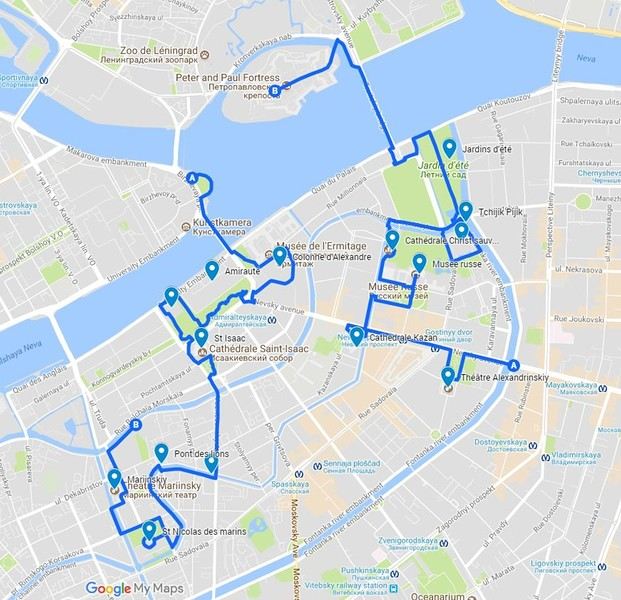
Here’s the recap of a little week we spent as a couple in Saint Petersburg in early May 2019, just before the *annus horribilis* of Covid. Since then, there’s also been the war in Ukraine, which has made things quite complicated, but tourist stays in Russia are still possible (see the discussion thread for the post-2022 situation). Looking back, early May was a bit too soon in the season—the trees were just starting to bud, and the wind was pretty chilly. It’s better to go at the end of May to enjoy the gardens.
Below is our 5-day itinerary. I’d brought along the inevitable Lonely Planet and the Blue Guide to Saint Petersburg, just to get a basic understanding of the architecture of the buildings I’d be admiring. I’d prepared two complementary routes on G**gle Maps in advance to cover the essentials of the city center in two days. That left the other days completely free for the big highlights: the Hermitage Museum and Peterhof Palace. We tried to adapt based on the weather, visiting Peterhof and its gardens on what was *supposed* to be the nicest day. We’d saved the Hermitage for a day when the weather was really bad, but in the end, we had more or less the same weather every day (sunny but windy and chilly).
Itinerary:
Day 1: City center north of Nevsky Prospect, up to the fortress (Route 1 on the map) Day 2: Peterhof Day 3: City center south of Nevsky Prospect up to Mariinsky (Route 2) Day 4: Canal boat tour during the day + nighttime boat ride on the Neva Day 5: Hermitage
Evening activities:
On the 3rd day, we saw an opera at the Mariinsky I, On the 4th day, we saw a ballet at the Mariinsky II, then headed back to the embankments at half past midnight for a nighttime cruise on the Neva—magical!
Skyscrapers, Markets, Ice Cubes, Tourism, and Waterfalls... Thailand's Excesses
A somewhat lengthy title... I could have simply written: from Bangkok to Chiang Rai, via Chiang Mai, since that was my route. But when poets embellish our travel journals with their verbal flourishes, you’ve got to try not to be too ordinary.
Skyscrapers of excess? You’ll have gathered that from the photo illustrating this journal—though it might change as the trip goes on.
The excess of markets—not so much in their size, though... Chatuchak... But in their sheer number. Day markets, night markets, floating markets, fresh produce markets, fish markets, meat markets, spice markets, fabric markets... and even... amulet markets... For luck, good fortune, protection. Not to mention, sadly, the market for girls—and boys, incidentally. I’ve even heard they’re displayed in windows. I’ve heard about that one, like you have, but I didn’t set foot in it, so I can’t say anything about it. Some even claim there’s a black-market trade in children. Disgusting! It reminded me of the book *The Parcel* by Anosh Irani, which I recommended in another journal. The story is set in India, but I’ve been told it exists in Thailand too. So, the "famous Thai markets" we’re bombarded with in paper and online guides—sure, they amazed me in the first few days, and I don’t regret visiting them. But no matter how big they were, I quickly got my fill since you saw the same things at every stall...
I had a market overdose.
Excess of tourism? I should say *tourists*, since I saw them literally swarming in the streets and those famous markets. I’d forgotten about them. I’d lost the habit, living in an Indian city for so long...
Waterfalls are a bit like markets. At this time of year, they’re not particularly spectacular, but they’re everywhere. There are the ones everyone goes to see. For example, Erawan, which I decided to skip even though it was in my original itinerary—I guessed it’d be a nightmare with the selfie circus. On the other hand, you come across them all over the place, hidden in the mountains and forests, not listed in any guide. Not to mention the ones you can find in temples or even private homes... Yes, really! Thais love waterfalls, so they install them in their gardens—and I even saw one in the middle of the city, right on the street! Sometimes they’re tiny, but very photogenic.
But what do ice cubes have to do with this? Why the excess of ice cubes? Not only are they everywhere by the ton, but they put them in *everything* you drink. You’d think they’d even put them in soup! And it’s not just one or two ice cubes—no! They fill the container to the brim, whatever it is, then pour the liquid on top to fill the gaps. They’ll make you an excellent coffee right in front of you, piping hot, then—bam! An avalanche of ice cubes in the glass. Okay, I’m exaggerating a little. They *do* sometimes ask if you prefer your coffee—or tea—hot. Everything edible, and especially everything drinkable, is refrigerated: vegetables, fruit, hot drinks (I mean, drinks that are *usually* hot), but meat and fish are left out in the open. They just wave a little whisk to shoo away the flies when they get too eager. Mind you, I never put fruit, cheese, eggs, or water in the fridge in France, but I do in India. And I refrigerate meat and fish too... Though sometimes one of those little flies sneaks into the fridge...
You won’t find practical or technical details in this journal, like addresses or prices. Others do that better than me. You also won’t find the names of obscure or unknown places I discovered, or directions to get there.
I don’t really feel like recounting what I saw day by day, following my schedule and route. There might be flashbacks, projections into the future. It’ll depend on my memories, what I felt, what I hated, what comes back to me—and maybe your questions and our exchanges. And for those who’ve never read me before, you’ll have to get used to my parentheses and digressions, maybe on a completely different subject, as my thoughts wander. Stories within stories. There’ll also be long, endless sentences—but still punctuated, so you can follow along. Though I used to curse Proust and his sentences that started on one page and ended on the next, sometimes even further. I’d have to reread them twenty times to follow and understand what he was saying. I hated Proust. But hey, I was 20. Maybe I’d like him now?
See? The digressions are starting already. Forgive me.
You’ll find few photos here. First, the number is limited, and second, photos aren’t the main purpose of either VF or a travel journal. They’re too often used to mask the poverty of the text. And, sorry to say it, but so many of them are just plain ugly! If you really want to see photos, I’ll share some links where you can browse them at your leisure
Two weeks in Bangkok: your off-the-beaten-path suggestions
Hello,
After a lot of searching, exchanging ideas, and thinking it over, I’ve decided to go back to my original plan of spending two weeks in Bangkok. From January 19th to February 2nd. I’ll also take a quick trip for one night/two days to Ayutthaya (and return to Bangkok, where I’ll have kept the apartment I booked), and possibly the same for Kanchanaburi, depending on how I feel once I’m there—whether I find something more interesting in Bangkok or nearby.
The key word is: taking my time to take photos, observe, taste, savor (in every sense of the word), and most importantly, not rushing.
Beyond the must-see tourist spots, I’d love to wander around the city and maybe within a 40 to 50 km radius for a day trip to discover unusual and lesser-known streets, houses, temples, markets, gardens, and more.
I’ll also be spending two weeks in Chiang Mai and two weeks in Nan.
I’m open to any suggestions. Thank you so much!
Da Nang and Hoi An (Vietnam)
DANANG
A big city in the midst of an economic boom. The setting is stunning, with its large bay, the Son Tra Peninsula, and the Annamite Mountains on the horizon.
Where to stay and eat? Da Nang is a bustling business hub, so hotels are pricier and often fully booked. I was lucky to find a motorbike taxi driver who, after six full hotels, took me to Mai Son Hotel, 113 Nguyen Van Linh, a spotless 2-star place. Plus, right next door, there’s a great restaurant that seems popular with locals, and a good Chinese restaurant just a 5-minute walk away, Phi Lu (178 Nguyen Van Linh), recommended by the *Guide du Routard*. So, I’d definitely recommend this hotel. For a pricier option, the very Christian Dai A Hotel, near the tiny pink cathedral, is nice, but why pay more?
Actually, why stay in Da Nang when the gorgeous Hoi An is just 34 km to the south?
What to see? - The lovely Cham Museum (small, takes at most an hour) - The climb up Son Tra Peninsula (great views of the whole area) - The “tour” of the peninsula—quotation marks because the road stops two-thirds of the way. There’s an interesting little museum on the left before reaching the base of the huge statue, the Đong Đinh (large entrance on the left side of the hill), with traditional houses in the jungle holding artifacts over 2,000 years old (Sa Huynh culture; if you’re interested, check out the small Sa Huynh Museum in Hoi An, just before the Japanese Bridge). However, the big Linh Ung Pagoda is just colorful concrete! A beautiful resort, the Son Tra Beach Resort and Spa, sits on a pristine beach and isn’t too expensive: $120 for a garden room and $200–$270 for duplexes with a pool, where you can sleep six. Before reaching the resort, you’ll find two excellent seafood restaurants with large beachfront terraces on your right. - On the way to Hoi An, Marble Mountain, where I loved the village of marble sculpture workshops, the pretty pagodas and caves, and the stunning view from the top of the last promontory (the stairs are steep!). However, you can skip the famous China Beach and its resorts—all pretentious and expensive, not to mention the ones under construction on both sides of the road (they’re multiplying like crazy!). So, when traveling from Da Nang to Hoi An, I recommend two stops: the Cham Museum and Marble Mountain. - The beautiful drive to the Hai Van Pass (there weren’t any clouds!), offering spectacular views of the Da Nang region to the south and the coast to the north. The descent leads to the fishing village and beach of Lang Co, which is lovely but destined for rampant resort development, judging by the huge projects advertised on billboards along the road after the village. - Some affordable guesthouses ($15) and big resorts, including the lovely Lang Co Beach Resort, with a large pool and great value given the beautiful gardens and elegant bungalows. Recommended in Lang Co: lunch at one of the two stilt restaurants over the lagoon—great views and fresh seafood.
The public bus to Hoi An, 34 km south of Da Nang, takes 45 minutes for 50,000 dong. There’s one every half hour.
HOI AN This is a “must-see” for so many reasons: stunning old houses, temples, and pagodas; a colorful daily open-air and covered market near the bridge; charming little streets in the old quarter—especially at night, with all the multicolored lanterns and riverside restaurant terraces, it’s very romantic. The local food is delicious, the people are friendly and kind, there are two beautiful beaches, and attractions like the Cham ruins of My Son. Some say Hoi An is overrun with tourists and should be avoided. That’s true for the historic center and An Bang Beach, but not at all once you step outside.
WHERE TO STAY For a 2-star option, I recommend Ngo House Villa (99 Nguyen Phuc Tan St), very quiet on the island just across from the Old Quarter: 3-star rooms + suites, a large “Family” room, and a nice pool, all for $20 ($40 for the “Family” room). The same charming owner has a second hotel 20 meters away (No. 74), Phan Ngô, which is older but has a large terrace and a small pool—I prefer this one. For 3 stars, Thuy Duong 3 (92 Ba Trieu) is perfect, with a pool and garden ($40–$60). A bit pricier but great is A Han on Phan Bai Chau, with a large garden and terrace restaurant.
For those with a bigger budget, I recommend two riverside spots with rooms, suites, and pools, priced at $200–$350: the secluded Coco River Resort (formerly Ancient House River, with a large wooden terrace for romantic dinners by the river) and Anantara, (formerly Heritage), with bungalows close to the old town—but pricey.
Outside the city, my favorite hotel is Villa Loan, the new place from the famous Loan of Tam Coc, very quiet in the countryside, 15 minutes by bike from Old Hoi An and An Bang Beach. Beautiful rooms ($35), a Family room with two double beds ($55), two 65 m² twins that can sleep six (two large beds + two single beds—$80), a terrace restaurant, and a lovely pool. Prices include a buffet breakfast and a bike.
Also great is Daisy Anbang on An Bang Beach, elegant with a pool and beach just 50 meters away (skip the Aira next door—too expensive).
WHERE TO EAT Hoi An is Vietnam’s culinary capital. For Vietnamese food, I recommend Dao Tien, 21 Phan Bai Chau. No surprise—the chef is a former chef at the luxury 4-star Victoria Hoi An, a solid reference. The restaurant now has a beautiful terrace by the river (take the alley on the right side of the main street Dao Tien). Plus, you’re doing a good deed: a large part of the profits goes toward educating underprivileged children—one year of free hospitality, cooking, and English training, followed by job placement in local establishments. Madame Hien Hoi An (formerly Co Mai), 2 Nguyen Thai Hoc (left of the market), is another great spot—the chef is Didier Corlou, formerly of the famous *Porte d’Annam* and *Madame Hien* in Hanoi (closed in March 2022 due to COVID, so foreign tourists are still scarce). Also worth checking out is Secret Garden, in the Phuong Minh An alley (entrance at 60 Le Loi), set in a beautiful space. One of my favorites is Madam Kieu, 43 Nguyen Phuc Chu, right on the river across from the little bridge—very elegant with excellent Vietnamese cuisine. Unfortunately, all the restaurants on this esplanade blast “music” (boom boom boom yeah yeah yeah) in the evenings, so it’s impossible to talk—go for lunch instead.
For a break from Vietnamese food, try Good Morning Vietnam, a ridiculous name for an excellent Italian restaurant (11 Le Loi). The cheerful chef is from Bologna, the “Lyon of Italy”: lasagna like an Italian *mama*’s, delicious tagliatelle ai porcini (porcini mushrooms imported from Italy), and a divine homemade tiramisu (pro tip: order a grappa and drizzle a few drops on the tiramisu). It’s also one of the few places where you can get an excellent bottle of red wine for 350,000 dong instead of the usual 600,000–800,000 dong (South African Robertson Chapel). Another gem: the Japanese restaurant Samurai Kitchen (no sushi, but divine gyoza), 21 Phan Chau Trinh—the street on the right side of the market when you turn your back to the river. Finally, Ganesh, which I consider the best Indian restaurant in Vietnam (99 Tran Hung Dao St).
At An Bang, there are plenty of beachfront restaurants. The two best are the large one at the far right of the parking lot (huge seafood selection) and the fantastic La Luna d’Autumno, owned by the same person as the Italian restaurant of the same name, once considered the best in Vietnam but closed in 2020 due to COVID. Divine pizzas, including the vegetariana.
WHAT TO VISIT The Japanese Bridge and all the old Chinese houses, temples, and pagodas in the three historic streets. Don’t miss the extraordinary gallery-museum of the great French photographer Réhahn, the Precious Heritage Museum at 26 Phan Boi Chau. His remarkable photo collection—including the famous shot of the little Cham girl with clear blue eyes—has graced the covers of many magazines. His Montagnard Museum is a wonder, with a larger collection of tribal women’s costumes than the Museum of Ethnology in Hanoi. Free entry.
THE BEACHES Cua Dai Beach has mostly disappeared, a victim of the waves, except in a few spots. The beautiful An Bang Beach remains, with great beachfront restaurants, or you can head to Cham Island.
MY SON A beautiful complex of Cham ruins surrounded by mountains, 50 km southwest of Hoi An via a scenic road. You can rent a motorbike, take a motorbike taxi, or join a half-day organized tour. It’s best to go in the afternoon—less crowded than in the morning.
CHAM ISLANDS (Cu Lao Cham) Wow, I loved it! It reminded me of St. Barts 35 years ago. The archipelago, 19 km from Hoi An, consists of eight small islands within the Cu Lao Cham Marine Reserve, declared a “Biosphere Reserve” by UNESCO. The largest and only inhabited island, Hon Lao (Pearl Island), covers 1,317 hectares, and its highest peak reaches 517 meters. Hon Lao has two villages: Bai Lang, where the boats from Hoi An dock, and the charming little fishing port of Bai Huong. Part of the island is a military zone, so only the east coast is accessible to tourists.
To get there, you have three options: - The public boat (100,000 dong) that leaves from in front of Café des Amis at 7:30 AM. The catch is it returns to Hoi An at noon, so to enjoy the charm of the place, you’ll need to spend a night on the island (which I highly recommend). - Organized tours by Cham Diving Club, with two options: diving or snorkeling only. - A private speedboat, but it’s not cheap: $200 for the day!
Note: Even if the weather seems fine, the large public boat won’t leave if the sea is too rough. The only solution is to go to the port around 7:30 AM and check (easy, since it brings all the supplies for the island’s locals—if it’s leaving, it’ll be loading up). Avoid weekends—it gets swarmed with locals.
Small coves with dreamy beaches, as they say. Two are very close to Bai Lang: one to the left (facing the village), Bai Ong, lined with restaurants, and a tiny one to the right of the village. The other two beaches, including Bai Chong and the little fishing port of Bai Huong, are accessible by motorbike or boat. I recommend renting a motorbike (biking is tough due to steep hills) and taking the road that overlooks the coast—it’s stunning.
Great diving. The Cham Diving Club is superbly organized by a very friendly Italian, Lodovico, and two French guys (www.chamislanddiving.com).
When you arrive at Bai Lang’s pier, they’ll offer you TWO family-run guesthouses in the village. There are also homestays, but they’re really basic (usually bamboo mats on wooden planks as beds), no English or French is spoken, and locals speak a dialect that’s hard to understand even if you’re decent at Vietnamese. Anyway, I don’t recommend staying in Bai Lang because of the public loudspeakers. Two options if you want a quiet night: - A small guesthouse facing the tiny rice field on the way to Bai Ong Beach. Very clean rooms and a large terrace overlooking the “rice field.” 300,000 dong, with meals available on the terrace. Nha Nghi Vu Truong Tel: 235 386 4783 Mobile: 01 67 76 63 110. - Homestays in the little fishing port of Bai Huong.
Where to stay and eat? Da Nang is a bustling business hub, so hotels are pricier and often fully booked. I was lucky to find a motorbike taxi driver who, after six full hotels, took me to Mai Son Hotel, 113 Nguyen Van Linh, a spotless 2-star place. Plus, right next door, there’s a great restaurant that seems popular with locals, and a good Chinese restaurant just a 5-minute walk away, Phi Lu (178 Nguyen Van Linh), recommended by the *Guide du Routard*. So, I’d definitely recommend this hotel. For a pricier option, the very Christian Dai A Hotel, near the tiny pink cathedral, is nice, but why pay more?
Actually, why stay in Da Nang when the gorgeous Hoi An is just 34 km to the south?
What to see? - The lovely Cham Museum (small, takes at most an hour) - The climb up Son Tra Peninsula (great views of the whole area) - The “tour” of the peninsula—quotation marks because the road stops two-thirds of the way. There’s an interesting little museum on the left before reaching the base of the huge statue, the Đong Đinh (large entrance on the left side of the hill), with traditional houses in the jungle holding artifacts over 2,000 years old (Sa Huynh culture; if you’re interested, check out the small Sa Huynh Museum in Hoi An, just before the Japanese Bridge). However, the big Linh Ung Pagoda is just colorful concrete! A beautiful resort, the Son Tra Beach Resort and Spa, sits on a pristine beach and isn’t too expensive: $120 for a garden room and $200–$270 for duplexes with a pool, where you can sleep six. Before reaching the resort, you’ll find two excellent seafood restaurants with large beachfront terraces on your right. - On the way to Hoi An, Marble Mountain, where I loved the village of marble sculpture workshops, the pretty pagodas and caves, and the stunning view from the top of the last promontory (the stairs are steep!). However, you can skip the famous China Beach and its resorts—all pretentious and expensive, not to mention the ones under construction on both sides of the road (they’re multiplying like crazy!). So, when traveling from Da Nang to Hoi An, I recommend two stops: the Cham Museum and Marble Mountain. - The beautiful drive to the Hai Van Pass (there weren’t any clouds!), offering spectacular views of the Da Nang region to the south and the coast to the north. The descent leads to the fishing village and beach of Lang Co, which is lovely but destined for rampant resort development, judging by the huge projects advertised on billboards along the road after the village. - Some affordable guesthouses ($15) and big resorts, including the lovely Lang Co Beach Resort, with a large pool and great value given the beautiful gardens and elegant bungalows. Recommended in Lang Co: lunch at one of the two stilt restaurants over the lagoon—great views and fresh seafood.
The public bus to Hoi An, 34 km south of Da Nang, takes 45 minutes for 50,000 dong. There’s one every half hour.
HOI AN This is a “must-see” for so many reasons: stunning old houses, temples, and pagodas; a colorful daily open-air and covered market near the bridge; charming little streets in the old quarter—especially at night, with all the multicolored lanterns and riverside restaurant terraces, it’s very romantic. The local food is delicious, the people are friendly and kind, there are two beautiful beaches, and attractions like the Cham ruins of My Son. Some say Hoi An is overrun with tourists and should be avoided. That’s true for the historic center and An Bang Beach, but not at all once you step outside.
WHERE TO STAY For a 2-star option, I recommend Ngo House Villa (99 Nguyen Phuc Tan St), very quiet on the island just across from the Old Quarter: 3-star rooms + suites, a large “Family” room, and a nice pool, all for $20 ($40 for the “Family” room). The same charming owner has a second hotel 20 meters away (No. 74), Phan Ngô, which is older but has a large terrace and a small pool—I prefer this one. For 3 stars, Thuy Duong 3 (92 Ba Trieu) is perfect, with a pool and garden ($40–$60). A bit pricier but great is A Han on Phan Bai Chau, with a large garden and terrace restaurant.
For those with a bigger budget, I recommend two riverside spots with rooms, suites, and pools, priced at $200–$350: the secluded Coco River Resort (formerly Ancient House River, with a large wooden terrace for romantic dinners by the river) and Anantara, (formerly Heritage), with bungalows close to the old town—but pricey.
Outside the city, my favorite hotel is Villa Loan, the new place from the famous Loan of Tam Coc, very quiet in the countryside, 15 minutes by bike from Old Hoi An and An Bang Beach. Beautiful rooms ($35), a Family room with two double beds ($55), two 65 m² twins that can sleep six (two large beds + two single beds—$80), a terrace restaurant, and a lovely pool. Prices include a buffet breakfast and a bike.
Also great is Daisy Anbang on An Bang Beach, elegant with a pool and beach just 50 meters away (skip the Aira next door—too expensive).
WHERE TO EAT Hoi An is Vietnam’s culinary capital. For Vietnamese food, I recommend Dao Tien, 21 Phan Bai Chau. No surprise—the chef is a former chef at the luxury 4-star Victoria Hoi An, a solid reference. The restaurant now has a beautiful terrace by the river (take the alley on the right side of the main street Dao Tien). Plus, you’re doing a good deed: a large part of the profits goes toward educating underprivileged children—one year of free hospitality, cooking, and English training, followed by job placement in local establishments. Madame Hien Hoi An (formerly Co Mai), 2 Nguyen Thai Hoc (left of the market), is another great spot—the chef is Didier Corlou, formerly of the famous *Porte d’Annam* and *Madame Hien* in Hanoi (closed in March 2022 due to COVID, so foreign tourists are still scarce). Also worth checking out is Secret Garden, in the Phuong Minh An alley (entrance at 60 Le Loi), set in a beautiful space. One of my favorites is Madam Kieu, 43 Nguyen Phuc Chu, right on the river across from the little bridge—very elegant with excellent Vietnamese cuisine. Unfortunately, all the restaurants on this esplanade blast “music” (boom boom boom yeah yeah yeah) in the evenings, so it’s impossible to talk—go for lunch instead.
For a break from Vietnamese food, try Good Morning Vietnam, a ridiculous name for an excellent Italian restaurant (11 Le Loi). The cheerful chef is from Bologna, the “Lyon of Italy”: lasagna like an Italian *mama*’s, delicious tagliatelle ai porcini (porcini mushrooms imported from Italy), and a divine homemade tiramisu (pro tip: order a grappa and drizzle a few drops on the tiramisu). It’s also one of the few places where you can get an excellent bottle of red wine for 350,000 dong instead of the usual 600,000–800,000 dong (South African Robertson Chapel). Another gem: the Japanese restaurant Samurai Kitchen (no sushi, but divine gyoza), 21 Phan Chau Trinh—the street on the right side of the market when you turn your back to the river. Finally, Ganesh, which I consider the best Indian restaurant in Vietnam (99 Tran Hung Dao St).
At An Bang, there are plenty of beachfront restaurants. The two best are the large one at the far right of the parking lot (huge seafood selection) and the fantastic La Luna d’Autumno, owned by the same person as the Italian restaurant of the same name, once considered the best in Vietnam but closed in 2020 due to COVID. Divine pizzas, including the vegetariana.
WHAT TO VISIT The Japanese Bridge and all the old Chinese houses, temples, and pagodas in the three historic streets. Don’t miss the extraordinary gallery-museum of the great French photographer Réhahn, the Precious Heritage Museum at 26 Phan Boi Chau. His remarkable photo collection—including the famous shot of the little Cham girl with clear blue eyes—has graced the covers of many magazines. His Montagnard Museum is a wonder, with a larger collection of tribal women’s costumes than the Museum of Ethnology in Hanoi. Free entry.
THE BEACHES Cua Dai Beach has mostly disappeared, a victim of the waves, except in a few spots. The beautiful An Bang Beach remains, with great beachfront restaurants, or you can head to Cham Island.
MY SON A beautiful complex of Cham ruins surrounded by mountains, 50 km southwest of Hoi An via a scenic road. You can rent a motorbike, take a motorbike taxi, or join a half-day organized tour. It’s best to go in the afternoon—less crowded than in the morning.
CHAM ISLANDS (Cu Lao Cham) Wow, I loved it! It reminded me of St. Barts 35 years ago. The archipelago, 19 km from Hoi An, consists of eight small islands within the Cu Lao Cham Marine Reserve, declared a “Biosphere Reserve” by UNESCO. The largest and only inhabited island, Hon Lao (Pearl Island), covers 1,317 hectares, and its highest peak reaches 517 meters. Hon Lao has two villages: Bai Lang, where the boats from Hoi An dock, and the charming little fishing port of Bai Huong. Part of the island is a military zone, so only the east coast is accessible to tourists.
To get there, you have three options: - The public boat (100,000 dong) that leaves from in front of Café des Amis at 7:30 AM. The catch is it returns to Hoi An at noon, so to enjoy the charm of the place, you’ll need to spend a night on the island (which I highly recommend). - Organized tours by Cham Diving Club, with two options: diving or snorkeling only. - A private speedboat, but it’s not cheap: $200 for the day!
Note: Even if the weather seems fine, the large public boat won’t leave if the sea is too rough. The only solution is to go to the port around 7:30 AM and check (easy, since it brings all the supplies for the island’s locals—if it’s leaving, it’ll be loading up). Avoid weekends—it gets swarmed with locals.
Small coves with dreamy beaches, as they say. Two are very close to Bai Lang: one to the left (facing the village), Bai Ong, lined with restaurants, and a tiny one to the right of the village. The other two beaches, including Bai Chong and the little fishing port of Bai Huong, are accessible by motorbike or boat. I recommend renting a motorbike (biking is tough due to steep hills) and taking the road that overlooks the coast—it’s stunning.
Great diving. The Cham Diving Club is superbly organized by a very friendly Italian, Lodovico, and two French guys (www.chamislanddiving.com).
When you arrive at Bai Lang’s pier, they’ll offer you TWO family-run guesthouses in the village. There are also homestays, but they’re really basic (usually bamboo mats on wooden planks as beds), no English or French is spoken, and locals speak a dialect that’s hard to understand even if you’re decent at Vietnamese. Anyway, I don’t recommend staying in Bai Lang because of the public loudspeakers. Two options if you want a quiet night: - A small guesthouse facing the tiny rice field on the way to Bai Ong Beach. Very clean rooms and a large terrace overlooking the “rice field.” 300,000 dong, with meals available on the terrace. Nha Nghi Vu Truong Tel: 235 386 4783 Mobile: 01 67 76 63 110. - Homestays in the little fishing port of Bai Huong.
Itinéraire d'une semaine pour visiter les lacs italiens en voiture English translation pending
Bonjour à tous
Nous envisageons d'aller visiter les lacs italiens (1ere fois) pour les vacances de la Toussaint, nous disposons d'une petite semaine à partir du 17 octobre. Nous partons en voiture depuis le Var.
J'ai commencé à planifier un petit itinéraire. Qu'en pensez vous? On hésite à inclure Milan! Nous ne savons pas encore si nous devrons rentrer le vendredi ou le samedi soir chez nous.. Donc'il y a 3 possibilités de fin de séjour...
samedi 17 : route tôt vers orta San Giulio. Lac d'orta (5h30) 493km, dejeuner tardif ;parking à l'entrée de la ville. visite village face isola San Giulio. Ascension sacré monte Di orta. . Puis route vers Stresa.30 min, 26 km. nuit à Stresa.
dimanche 18 : iles Borromées, lac Majeur – prendre des tickets pour visiter l'ensemble des îles villas et jardins. Isola Bella puis isola superiore (déjeuner) puis isola madre. nuit à Stresa
Lundi 19 : route vers Menaggio avec visite en route de la ville de Côme. 1h15 de route. Visite de Côme 3h et déjeuner sur place. Puis route vers Lenno 45 min. Arrêt à villa Olmo. Visite du bord du lac. Proximité de l'hôtel. ( ou passage par lac de Lugano avec arrêt shopping store Factory fowtown)? Vous connaissez ce leur de shopping ??
mardi 20 : visite lac de come ( villa del Balbianello. Accès en bateau ou à pied par sentier ) puis villa Carlotta. visite Menaggio en fin de journée.
mercredi 21 : transfert en bateau vers 9h30 vers Bellagio le matin pour visite et dejeuner ( jardin villa melzi, quartier de pescallo et ruelles de Bellagio) , puis l’après midi à Varenna ( village et villa monastero).
jeudi 22 : le matin, route vers Vérone. 3h de route. 200km. Visite Vérone. Puis route vers Sirmione. 40 min. Nuit à Sirmione
vendredi 23 : visite de Sirmione le matin et début après-midi puis retour maison 6h30 de route . 580 km.
Ou
Jeudi 22: route vers Sirmione avec visite de Côme puis Bergame au passage.( 3h de route au total), nuit à Sirmione
Vendredi 23: visite de Vérone et fin de visite Sirmione
Samedi 24: retour maison
Ou
Jeudi 22: route vers Milan. 1h15.,72 km. Visite Milan.
Vendredi 23: visite Milan matin et début après-midi. Retour maison 5h10. 482 km
Je n'arrive pas à me rendre compte si tout est faisable ? Merci pour vos suggestions Marie
Nous envisageons d'aller visiter les lacs italiens (1ere fois) pour les vacances de la Toussaint, nous disposons d'une petite semaine à partir du 17 octobre. Nous partons en voiture depuis le Var.
J'ai commencé à planifier un petit itinéraire. Qu'en pensez vous? On hésite à inclure Milan! Nous ne savons pas encore si nous devrons rentrer le vendredi ou le samedi soir chez nous.. Donc'il y a 3 possibilités de fin de séjour...
samedi 17 : route tôt vers orta San Giulio. Lac d'orta (5h30) 493km, dejeuner tardif ;parking à l'entrée de la ville. visite village face isola San Giulio. Ascension sacré monte Di orta. . Puis route vers Stresa.30 min, 26 km. nuit à Stresa.
dimanche 18 : iles Borromées, lac Majeur – prendre des tickets pour visiter l'ensemble des îles villas et jardins. Isola Bella puis isola superiore (déjeuner) puis isola madre. nuit à Stresa
Lundi 19 : route vers Menaggio avec visite en route de la ville de Côme. 1h15 de route. Visite de Côme 3h et déjeuner sur place. Puis route vers Lenno 45 min. Arrêt à villa Olmo. Visite du bord du lac. Proximité de l'hôtel. ( ou passage par lac de Lugano avec arrêt shopping store Factory fowtown)? Vous connaissez ce leur de shopping ??
mardi 20 : visite lac de come ( villa del Balbianello. Accès en bateau ou à pied par sentier ) puis villa Carlotta. visite Menaggio en fin de journée.
mercredi 21 : transfert en bateau vers 9h30 vers Bellagio le matin pour visite et dejeuner ( jardin villa melzi, quartier de pescallo et ruelles de Bellagio) , puis l’après midi à Varenna ( village et villa monastero).
jeudi 22 : le matin, route vers Vérone. 3h de route. 200km. Visite Vérone. Puis route vers Sirmione. 40 min. Nuit à Sirmione
vendredi 23 : visite de Sirmione le matin et début après-midi puis retour maison 6h30 de route . 580 km.
Ou
Jeudi 22: route vers Sirmione avec visite de Côme puis Bergame au passage.( 3h de route au total), nuit à Sirmione
Vendredi 23: visite de Vérone et fin de visite Sirmione
Samedi 24: retour maison
Ou
Jeudi 22: route vers Milan. 1h15.,72 km. Visite Milan.
Vendredi 23: visite Milan matin et début après-midi. Retour maison 5h10. 482 km
Je n'arrive pas à me rendre compte si tout est faisable ? Merci pour vos suggestions Marie
L'île de Bréhat, Paimpol et les environs... English translation pending
Sitôt déconfinés, on a mis le cap sur la côte bretonne, projet qui avait dû être reporté pour cause de corona.
Et dès notre arrivée, on a souhaité aller sur l'île de Bréhat pour la découvrir avec le minimum de visiteurs.
Alors, on a commencé par réserver nos billets sur le net, réservation obligatoire pour permettre d'organiser les traversées en respectant au mieux les mesures de sécurité sanitaire.
Dès 9h30, on embarquait à l'Arcouest pour une traversée de 10 minutes en direction de Bréhat.
Notre arrivée au port clos de Bréhat s'est faite dans la brume.
On a posé le pied sur une île mystérieuse.
Ne sachant pas précisément combien de temps il nous faudrait pour faire le tour de l'île à pied, on a fait le choix d'aller d'abord jusqu'au phare du Paon , au nord, à l'opposé de l'embarcadère. On a donc traversé le village, emprunté nombre de petits chemins et admiré les jardins et les sentiers fleuris. Bréhat, c'est l'île des fleurs.
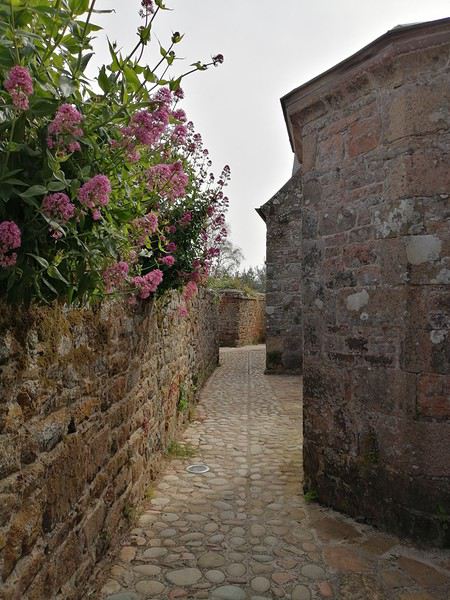
A notre arrivée au phare du Paon la brume commence à se dissiper. On découvre une côte sauvage, magnifique!
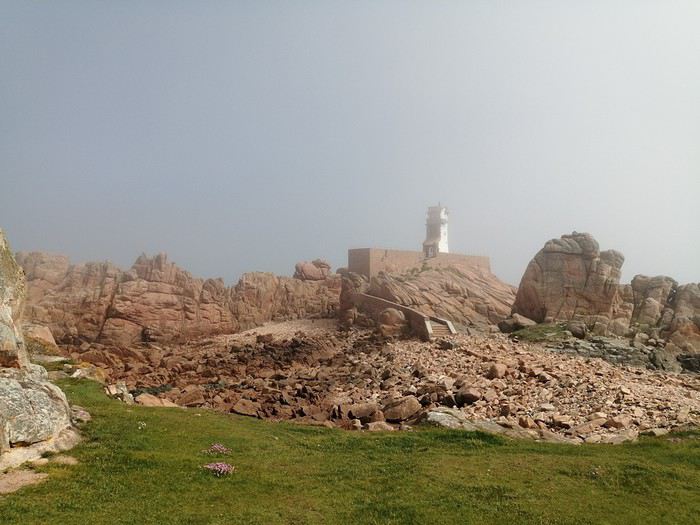
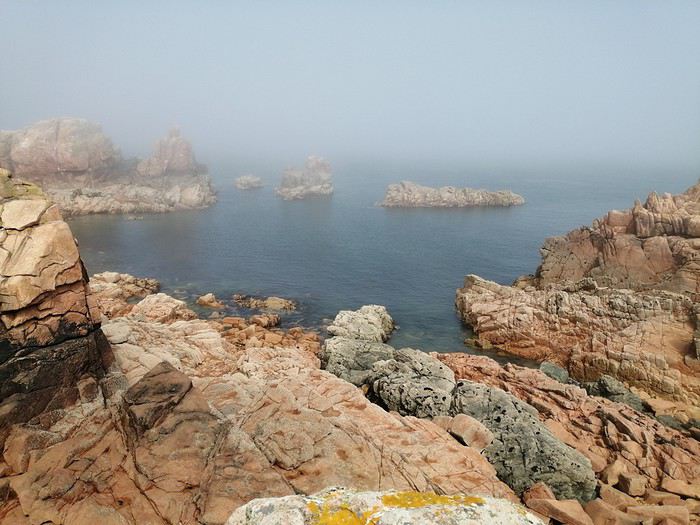
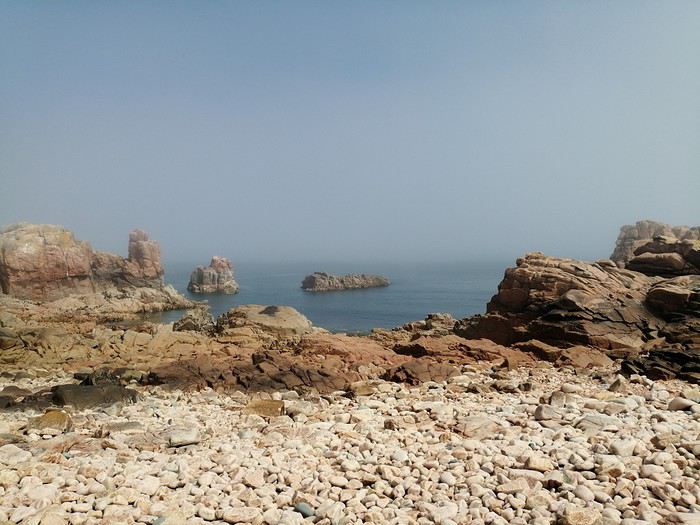
On poursuit notre découverte. Au bord d'un chemin, on complète notre pique- ni que en achetant des fraises du pays.
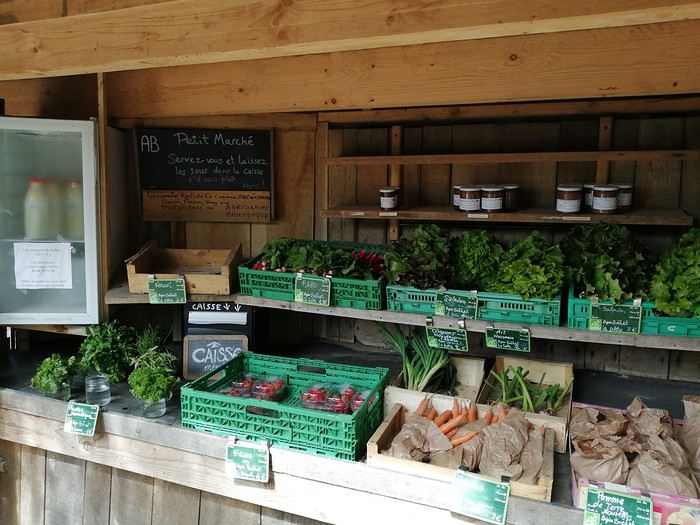 Et on s'installe sur une petite plage, pour recharger les batteries avant de repartir sur les chemins.
Ne sachant pas précisément combien de temps il nous faudrait pour faire le tour de l'île à pied, on a fait le choix d'aller d'abord jusqu'au phare du Paon , au nord, à l'opposé de l'embarcadère. On a donc traversé le village, emprunté nombre de petits chemins et admiré les jardins et les sentiers fleuris. Bréhat, c'est l'île des fleurs.
A notre arrivée au phare du Paon la brume commence à se dissiper. On découvre une côte sauvage, magnifique!
On poursuit notre découverte. Au bord d'un chemin, on complète notre pique- ni que en achetant des fraises du pays.
Et on s'installe sur une petite plage, pour recharger les batteries avant de repartir sur les chemins.27 jours à travers le Nord-ouest américain English translation pending
Plusieurs mois ont passé depuis notre retour du Nord-Ouest américain, et cette période un peu particulière est l’occasion rêvée de me consacrer enfin à la rédaction de ce carnet de voyage !
Quatrième roadtrip aux USA. C’est en Août 2019 que nous décollons pour Seattle. Cette fois, nous explorons la partie Nord-Ouest des USA, ce pays qui nous passionne depuis le premier roadtrip en 2014. 27 jours de voyage, au travers le Washington, l’Idaho, le Montana, le Wyoming et l’Oregon…ça promet encore de magnifiques découvertes 🙂 Cette année, certains grands parcs sont au programme comme Glacier NP ou encore Yellowstone (non, on ne s’en lassera jamais !), mais nous avons aussi mis sur notre parcours des State Park bien moins touristiques et des petits endroits isolés mais magnifiques comme on adore !
JOUR 1
Ma maman et mon frère sont arrivés chez moi la veille car ils vivent en province, et ce matin pas question d’avoir du retard. C’est le grand jour ! Celui qu’on prépare depuis un an !
Vers 5h du matin, nous recevons un mail de la compagnie aérienne qui nous indique 1h de retard au décollage, on se laisse donc 1h de sommeil supplémentaire.
Porte K49 - 11h10 l’avion décolle. Nous avons choisi à nouveau de voler avec Delta Airlines, et mis à part ce retard de 50min, nous n’avons, comme d’habitude rien à signaler. Les services sont au rendez-vous.
Cette année, nous avons un peu moins de chance que les voyages passés, en ce qui concerne la météo. Nous n’avons pas la chance de voir le Groenland, les côtes canadiennes.
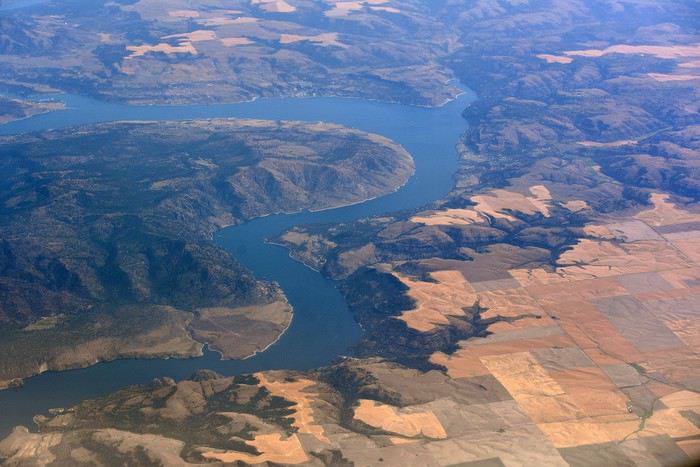
Nous atterrissons à Seattle en début d’après-midi. Il fait gris, et froid ! On attend un moment près du hangar Alaska Airlines, et ben, étant donné la météo, on pourrait se croire en Alaska 😉
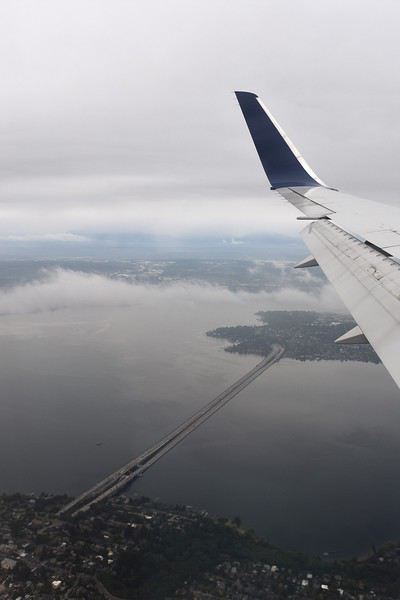
On arrive à la douane, ils nous séparent pour nous interroger un par un. Seul problème, maman parle très mal anglais, voire pas du tout ! Ce qu’on signale immédiatement, mais ils tiennent absolument à ce qu’elle réponse par elle-même aux questions. Ce qui après unpeu d’angoisse nous laisse un souvenir mémorable lorsque le douanier demande si elle a de la nourriture avec elle, sa réponse : « oui bonbonsss » 😄
Tout ça derrière nous, on se dirige vers le bâtiment qui regroupe tous les loueurs de voiture. Tout est très bien fléché dans l’aéroport de Seattle. Nous savons qu’il nous faut prendre un shuttle. Il y a la queue, et nous sommes sous la pluie ! Welcome !

Arrivé au guichet Hertz, pas d’attente. Nous sommes plutôt satisfaits de notre réservation car quelques jours avant le départ, je me reconnecte sur leur site pour vérifier que tout est en ordre. Je réalise alors que les tarifs pour notre catégorie de véhicule ont bien changé et qu’ils sont plus intéressants que lors de notre réservation il y a plusieurs mois. J’appelle Hertz qui constate également, modifie la réservation et s’engage immédiatement à rembourser les 400€ d’écart. Au guichet nous avons également une discussion concernant les assurances des passagers de la voiture. Et la personne est très à l’écoute, se renseigne plusieurs fois à notre demande, pour finalement nous éviter un surcoût, très peu courant chez les loueurs américains ça !!!
C’est donc de bonne humeur que nous descendons au parking, retrouver le véhicule qui nous est attribué. C’est un Chevrolet TAHOE. Maman fait quelques pas en arrière, stupéfaite. « Mais je ne pourrais jamais conduire cet engin !!! ». Avec mon frère Raphaël, nous, nous sommes ravis ! Après les contrôles d’usage, rayures, essuie-glace, niveaux, roue de secours… cette fois EN ROUTE !
On ne change pas les bonnes habitudes, premier arrêt, Walmart ! Il est à peine à 10min de l’aéroport. Nous arrivons sous une pluie battante, 30 secondes dehors pour rejoindre le magasin suffisent à nous tremper ! Nous sommes fatigués du voyage donc la liste de courses préparée à l’avance est bien utile. Seul petit problème, impossible de trouver une bombonne de gaz pour notre réchaud, et ce malgré l’aide d’un vendeur. Cette année, nous avons amené avec nous les barres de céréales pour les randos, on avait un mauvais souvenir des versions américaines et on a bien fait ! On arrive à la voiture, on se dit comme dans la pub, on va utiliser le pied pour ouvrir le coffre car nous sommes chargés et il pleut toujours. Mais rien ne fonctionne. La clé nous permet d’ouvrir chaque porte, chaque fenêtre, mais on ne trouve pas dans la précipitation comment ouvrir le coffre 😕 Quelques minutes plus tard, problème résolu, courses rangées… mais nous sommes trempés comme des soupes 😎
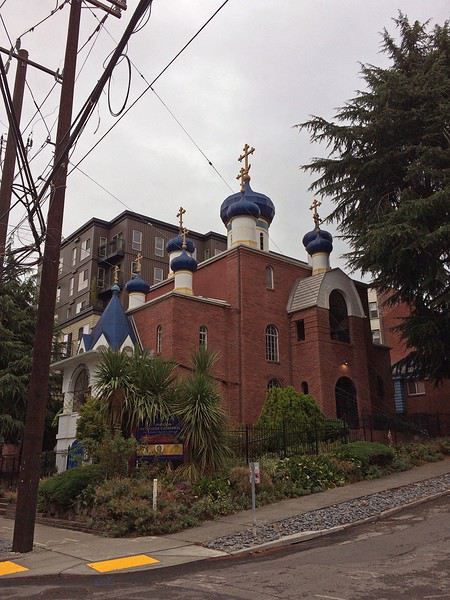
Maintenant, direction REI. C’est certainement notre seule occasion d’y faire un tour pendant ce voyage. Et puis, on a toujours besoin de gaz pour le réchaud. 25min plus tard, on arrive au parking sous-terrain, il est gratuit pendant 1h puis 2$ pour 3h. On a adoré ce magasin ! Et on a trouvé les quelques articles qui nous manquaient. Mais il est temps de partir. Nous avons décidé de ne pas dormir à Seattle, pour économiser un peu. Résultat, encore un peu de route.
Après 30min, nous arrivons au Best Value Inn de Lynnwood. Petit motel sans prétention, mais propre, personnel accueillant. Parfait pour une nuit d’après voyage. Une fois les bagages déchargés, on range les courses dans les glacières. Et on ne se fait pas prier pour se mettre au lit !
Quatrième roadtrip aux USA. C’est en Août 2019 que nous décollons pour Seattle. Cette fois, nous explorons la partie Nord-Ouest des USA, ce pays qui nous passionne depuis le premier roadtrip en 2014. 27 jours de voyage, au travers le Washington, l’Idaho, le Montana, le Wyoming et l’Oregon…ça promet encore de magnifiques découvertes 🙂 Cette année, certains grands parcs sont au programme comme Glacier NP ou encore Yellowstone (non, on ne s’en lassera jamais !), mais nous avons aussi mis sur notre parcours des State Park bien moins touristiques et des petits endroits isolés mais magnifiques comme on adore !
JOUR 1
Ma maman et mon frère sont arrivés chez moi la veille car ils vivent en province, et ce matin pas question d’avoir du retard. C’est le grand jour ! Celui qu’on prépare depuis un an !
Vers 5h du matin, nous recevons un mail de la compagnie aérienne qui nous indique 1h de retard au décollage, on se laisse donc 1h de sommeil supplémentaire.
Porte K49 - 11h10 l’avion décolle. Nous avons choisi à nouveau de voler avec Delta Airlines, et mis à part ce retard de 50min, nous n’avons, comme d’habitude rien à signaler. Les services sont au rendez-vous.
Cette année, nous avons un peu moins de chance que les voyages passés, en ce qui concerne la météo. Nous n’avons pas la chance de voir le Groenland, les côtes canadiennes.
Nous atterrissons à Seattle en début d’après-midi. Il fait gris, et froid ! On attend un moment près du hangar Alaska Airlines, et ben, étant donné la météo, on pourrait se croire en Alaska 😉
On arrive à la douane, ils nous séparent pour nous interroger un par un. Seul problème, maman parle très mal anglais, voire pas du tout ! Ce qu’on signale immédiatement, mais ils tiennent absolument à ce qu’elle réponse par elle-même aux questions. Ce qui après unpeu d’angoisse nous laisse un souvenir mémorable lorsque le douanier demande si elle a de la nourriture avec elle, sa réponse : « oui bonbonsss » 😄
Tout ça derrière nous, on se dirige vers le bâtiment qui regroupe tous les loueurs de voiture. Tout est très bien fléché dans l’aéroport de Seattle. Nous savons qu’il nous faut prendre un shuttle. Il y a la queue, et nous sommes sous la pluie ! Welcome !
Arrivé au guichet Hertz, pas d’attente. Nous sommes plutôt satisfaits de notre réservation car quelques jours avant le départ, je me reconnecte sur leur site pour vérifier que tout est en ordre. Je réalise alors que les tarifs pour notre catégorie de véhicule ont bien changé et qu’ils sont plus intéressants que lors de notre réservation il y a plusieurs mois. J’appelle Hertz qui constate également, modifie la réservation et s’engage immédiatement à rembourser les 400€ d’écart. Au guichet nous avons également une discussion concernant les assurances des passagers de la voiture. Et la personne est très à l’écoute, se renseigne plusieurs fois à notre demande, pour finalement nous éviter un surcoût, très peu courant chez les loueurs américains ça !!!
C’est donc de bonne humeur que nous descendons au parking, retrouver le véhicule qui nous est attribué. C’est un Chevrolet TAHOE. Maman fait quelques pas en arrière, stupéfaite. « Mais je ne pourrais jamais conduire cet engin !!! ». Avec mon frère Raphaël, nous, nous sommes ravis ! Après les contrôles d’usage, rayures, essuie-glace, niveaux, roue de secours… cette fois EN ROUTE !
On ne change pas les bonnes habitudes, premier arrêt, Walmart ! Il est à peine à 10min de l’aéroport. Nous arrivons sous une pluie battante, 30 secondes dehors pour rejoindre le magasin suffisent à nous tremper ! Nous sommes fatigués du voyage donc la liste de courses préparée à l’avance est bien utile. Seul petit problème, impossible de trouver une bombonne de gaz pour notre réchaud, et ce malgré l’aide d’un vendeur. Cette année, nous avons amené avec nous les barres de céréales pour les randos, on avait un mauvais souvenir des versions américaines et on a bien fait ! On arrive à la voiture, on se dit comme dans la pub, on va utiliser le pied pour ouvrir le coffre car nous sommes chargés et il pleut toujours. Mais rien ne fonctionne. La clé nous permet d’ouvrir chaque porte, chaque fenêtre, mais on ne trouve pas dans la précipitation comment ouvrir le coffre 😕 Quelques minutes plus tard, problème résolu, courses rangées… mais nous sommes trempés comme des soupes 😎
Maintenant, direction REI. C’est certainement notre seule occasion d’y faire un tour pendant ce voyage. Et puis, on a toujours besoin de gaz pour le réchaud. 25min plus tard, on arrive au parking sous-terrain, il est gratuit pendant 1h puis 2$ pour 3h. On a adoré ce magasin ! Et on a trouvé les quelques articles qui nous manquaient. Mais il est temps de partir. Nous avons décidé de ne pas dormir à Seattle, pour économiser un peu. Résultat, encore un peu de route.
Après 30min, nous arrivons au Best Value Inn de Lynnwood. Petit motel sans prétention, mais propre, personnel accueillant. Parfait pour une nuit d’après voyage. Une fois les bagages déchargés, on range les courses dans les glacières. Et on ne se fait pas prier pour se mettre au lit !
De Tokyo à Osaka en passant par Ishigaki English translation pending
En lisant le chouette carnet de voyage de Nathalie971 je me suis dit que c'était vraiment bien de partager son parcours. Bon je serai sans doute moins détaillé ;)
Jour 1 jeudi 20 fevrier. Nous partons en famille à 4 : mon conjoint et mes enfants qui ont 11 et 14 ans. Arrivée à Tokyo le soir. Nous rejoignons la famille de mon conjoint qui vit et travaille à Tokyo. Quartier de Minato-ku joli quartier résidentiel : petites rues très étroites et immeubles assez bas. Soirée donc familiale avec repas quasi français ;)
Jour 2 nous devons faire traduire nos permis à la Jaf. je conseille d'ailleurs de le faire plutôt depuis la France car cela fait perdre quand même un peu de temps. On y est vers 11 heures et ils seront prêts en fin de journée.
A pied on rejoint le Hama-rikyu gardens. On l'avait déjà beaucoup aimé lors de notre premier voyage il y a 6 ans.... Il fait très beau et on se balade entre les arbres déjà en fleurs pour certains. J'aime beaucoup ce parc : les verts intenses qui se détachent des grands immeubles qui bordent le parc. Il y a très peu de monde.
Ensuite nous prenons le Yurikamone rail pour rejoindre Odaiba. La plage est en travaux : les ouvriers préparent les gradins pour les JO de cet été. Les anneaux eux sont déjà tout prêts ! Le petit restau de plage est fermé alors On déjeune dans le centre commercial. Et c'est très bon ! avant de repartir séance photo devant le robot de 20 mètres de haut. On voulait poursuivre en bateau vers Asakusa mais on est obligé de repasser à la Jaf pour nos permis :(
On en profite pour se balader dans le quartier au pied de la Tokyo Tower.
Circuit 10 à 15 jours en voiture avec enfant de 9 ans en Belgique English translation pending
Bonjour,
Tout d'abord bonne et heureuse année 2020 et surtout beaucoup de voyages !!! 😉
Cet été, pour nous se sera la Belgique ! Et oui, mon fils de 9 ans veut voir Bruxelles et la mer du Nord !!
Je voudrais établir un circuit sur 10/15j, nous serons 3 et en voiture.
Je pensais bien sûr faire Bruxelles, Bruges, la côte (La Panne), pourquoi pas Anvers et Gand. Pourquoi pas une journée à Aix-la chapelle, il travaille sur Charlemagne...
J'hésite avec la Wallonie (Liège, Dînant) qu'en pensez-vous ? Est-ce que ça ne fera pas trop ? Est-ce que ça vaut le coup avec un enfant ?
Merci pour vos conseils
Gaëlle