Results for "Checkpoint+Charlie+|+9+>+196"
1407 results found.
La Libye en individuel depuis la Tunisie English translation pending
Bonjour
On envisage de se ballader en libye en individuel depuis la tunisie en août. Où en est-on côté formalités et conditions de voyage?
1) faut-il toujours une lettre d'invitation pour obtenir le visa en France, et qui peut la fournir?
2) je n'arrive pas à savoir si un guide local est toujours obligatoire pour deux personnes en individuel
3) quels moyens existent pour passer le frontière depuis la tunisie (bus, taxi..)
4) les moyens pour circuler en libye sur la côte sont ils commodes ou pas?
5) sinon j'ai lu que la location d'une voiture en libye était très chère : qui a des informations la-dessus?
Bon, j'aime bien les pays qui ne sont pas envahis par les touristes, mais il faut quand même que ce soit matériellement possible de se ballader :)
merci de vos infos
elias
On envisage de se ballader en libye en individuel depuis la tunisie en août. Où en est-on côté formalités et conditions de voyage?
1) faut-il toujours une lettre d'invitation pour obtenir le visa en France, et qui peut la fournir?
2) je n'arrive pas à savoir si un guide local est toujours obligatoire pour deux personnes en individuel
3) quels moyens existent pour passer le frontière depuis la tunisie (bus, taxi..)
4) les moyens pour circuler en libye sur la côte sont ils commodes ou pas?
5) sinon j'ai lu que la location d'une voiture en libye était très chère : qui a des informations la-dessus?
Bon, j'aime bien les pays qui ne sont pas envahis par les touristes, mais il faut quand même que ce soit matériellement possible de se ballader :)
merci de vos infos
elias
Date de validité des visas Inde et Népal? English translation pending
Salut
J'me posait une question: le visa indien démarre obligatoirement à la date d'emission ou il y a moyen de le faire démarrer plus tard?
Car je viens d'avoir l'ambassade au tel ils m'ont dit qu'il démarrait à l'emission mais j'avais lu l'inverse donc savoir si c'est moi qui ait pas pigé la madame ou si l'autre info est fausse.
Et sinon de KTM le délais est de combien à peu pret?
Au niveau du Népal j'arrive pas à joindre l'ambassade, y'a moyen de le prendre à l'avance le visa? Si oui ca se passe comment faut filer les dates exactes d'entrée et sortie sur le territoire ou non?
Merci Merci :)
J'me posait une question: le visa indien démarre obligatoirement à la date d'emission ou il y a moyen de le faire démarrer plus tard?
Car je viens d'avoir l'ambassade au tel ils m'ont dit qu'il démarrait à l'emission mais j'avais lu l'inverse donc savoir si c'est moi qui ait pas pigé la madame ou si l'autre info est fausse.
Et sinon de KTM le délais est de combien à peu pret?
Au niveau du Népal j'arrive pas à joindre l'ambassade, y'a moyen de le prendre à l'avance le visa? Si oui ca se passe comment faut filer les dates exactes d'entrée et sortie sur le territoire ou non?
Merci Merci :)
Birmanie en Thaïlande par voie terrestre? English translation pending
Bonjour à tous,
On se rend cet été en birmanie, en transitant par bangkok (eh oui c'est quand même moins cher comme çà, même si çà fait plus d'heures de vols!!!) et j'aimerais savoir s'il est possible de rentrer en Thaïlande par voie terrestre en venant de Birmanie et si c'est possible, à quel poste frontière. Je sais que l'inverse est difficile (d'où l'option aérienne en aller simple bangkok-rangoon) mais je n'ai vu aucune info sur le sens Birmanie -Thailande. Alors si vous avez des infos...çà nous éviterait de repasser par Rangoon!!!Merci d'avance!!!
On se rend cet été en birmanie, en transitant par bangkok (eh oui c'est quand même moins cher comme çà, même si çà fait plus d'heures de vols!!!) et j'aimerais savoir s'il est possible de rentrer en Thaïlande par voie terrestre en venant de Birmanie et si c'est possible, à quel poste frontière. Je sais que l'inverse est difficile (d'où l'option aérienne en aller simple bangkok-rangoon) mais je n'ai vu aucune info sur le sens Birmanie -Thailande. Alors si vous avez des infos...çà nous éviterait de repasser par Rangoon!!!Merci d'avance!!!
iran à ouzbzekistan English translation pending
est il simple de passer les frontieres de l'iran au turkmenistan puis à nouveau frontiere de l'ouzbekistan?
merci de vos reponses!
asmara
merci de vos reponses!
asmara
tibet, tour du kailash English translation pending
Bonjour, je pense aller au tibet cet été en juillet, je connais déjà un peu, je voudrais faire le tour du kailash, ai-je interêt à m'organiser sur Lhassa ou arriver par un autre itinéraire? qqn sait'il si on peut passer du Ladakh au Tibet dans des conditions sûres, je n'ai pas assez de temps pour prévoir des ennuis..;
éventuellement qqn a-t-il une agence locale à conseiller et avec qui je pourrais établir un contact? merci d'avance, aichatou
éventuellement qqn a-t-il une agence locale à conseiller et avec qui je pourrais établir un contact? merci d'avance, aichatou
Région de Xinjiang Urghur (Chine) English translation pending
Bonjour,
je serais en Inde en Mars 2006 et j'aimerais bien passer par la chine pour ralier le kirghizistan en passant par la region du Xinjiang urghur( Par voie terrestre) ou si pas possible directement par cette region, passer par le Tibet. ?????
Connaissez vous les points de passages ainsi que, les formalitées, visas, les cols ouvert..... bref toute les infos de cette partie du monde?
Merci
Sylvain
je serais en Inde en Mars 2006 et j'aimerais bien passer par la chine pour ralier le kirghizistan en passant par la region du Xinjiang urghur( Par voie terrestre) ou si pas possible directement par cette region, passer par le Tibet. ?????
Connaissez vous les points de passages ainsi que, les formalitées, visas, les cols ouvert..... bref toute les infos de cette partie du monde?
Merci
Sylvain
Egypte à vélo English translation pending
Il me trotte un projet en tete, plutot pour l'hiver prochain : remonter le nil en vélo du caire à abbou simbel.
Il semble qu'un piste longe le nil sur toute la route, ce qui est parfait.
Je ne sais pas en revanche si le projet est réalisable en terme de sécurité.
Si quelqu'un a des infos sur le parcours, a déjà pensé à cette idée, ou connait un peu l'Egypte, n'hésitez pas à me faire part de vos infos
box
Il semble qu'un piste longe le nil sur toute la route, ce qui est parfait.
Je ne sais pas en revanche si le projet est réalisable en terme de sécurité.
Si quelqu'un a des infos sur le parcours, a déjà pensé à cette idée, ou connait un peu l'Egypte, n'hésitez pas à me faire part de vos infos
box
Droit d'entrée pour le Tour des Annapurnas English translation pending
😎Bonjour,
Je pars avec mon ami début octobre pour faire le tour des Annapurnas sans guide ni porteurs. Nous nous demandons s'il y a la possibilité d'obtenir le droit d'entrée du Parc à Besisahar. En effet nous arrrivons à KTM le samedi et nous n'avons que 2o jours au Népal, c'est pour celà que le temps nous est précieux. Vu que le Service d'Immigration est fermé le week-end à KTM nous serions obligés d'y aller le lundi et de ne prendrel le bus pour Besisahar lque e mardi ! 3 jours de perdus 😕! quel dommage...
Quelqu'un peut-il me répondre ?
Je pars avec mon ami début octobre pour faire le tour des Annapurnas sans guide ni porteurs. Nous nous demandons s'il y a la possibilité d'obtenir le droit d'entrée du Parc à Besisahar. En effet nous arrrivons à KTM le samedi et nous n'avons que 2o jours au Népal, c'est pour celà que le temps nous est précieux. Vu que le Service d'Immigration est fermé le week-end à KTM nous serions obligés d'y aller le lundi et de ne prendrel le bus pour Besisahar lque e mardi ! 3 jours de perdus 😕! quel dommage...
Quelqu'un peut-il me répondre ?
Le Kosovo, une terre de "contraste" English translation pending
10/08/04 Ca y est ! A l’heure prévue, le bus estampillé " cars de Cornouailles 29750 Loctudy " quitte la gare routière. Je paye mon ticket en euros. Sur un immeuble, une photo géante d’un Bill Clinton hilare : que fait-il ici ? On quitte Pristina.
A 20 kilomètres au sud de la " capitale " du Kosovo, c’est Gracanica. Promenade dans la ville, les prix sont indiqués en dinars, les voitures sont immatriculées en Serbie, les panneaux sont écrits en cyrillique, on parle " yougo ". Pourtant, l’unique route qui traverse l’enclave serbe est empruntée par les véhicules albanais. Un drapeau américain flotte sur une maison. Pourquoi ? On m’a raconté que les américains soutenaient les albanais et pas les serbes. Mais des GI’s protégent le monastère de la ville, un des plus anciens du pays.
Un minibus pour Lipljan, situé 15 kilomètres au sud. Toute petites routes de campagne, détours. On tourne en rond. Les passagers parlent serbe. Le chauffeur salue d’un signe de la main les personnes qui marchent sur le bord de la route. J’imagine qu’ils sont serbes. Et que le minibus l’est lui aussi, qu’il s’agit par exemple d’un bus qui relie les enclaves serbes. Puis, au bout d’une rue, apparaissent quelques maisons sur lesquelles flotte le drapeau rouge et noir albanais. Je suppose qu’on a changé de quartier. Arrêt du minibus dans une rue coupée en deux par des barbelées. Ou est le coté serbe ? Et l’albanais ?
En fait, c’est facile à identifier : beaucoup de monde se pressent dans les rues albanaises. Chacun vaque à ses affaires : marchés, cafés, mosquées… Et personne ne se ballade dans la partie serbe (en fait une simple rue). Exceptés deux vieux qui gardent l’entrée d’une petite église. Devant l’édifice religieux, se trouve une pancarte rouillée : " souvenirs 50 m ". Mais la boutique a apparemment disparue. Tant pis, je n’achèterai pas de cartes postales de Lipljan. Près d’un jardin, ça sent la prune : les arbres sont couverts de fruits. Une jeune fille tricote, assise sur son balcon. Elle a une vue imprenable sur la grosse base irlandaise implantée dans ce " ghetto ". Les blindés sont plus nombreux que les Golfs.
Direction Mitrovica (40 km au nord de Pristina). Sur la route, j’aperçoit un petit panneau bleu : " rue de la paix " Dans cette rue est implanté un camp de soldats français.
A Mitrovica, les deux entités sont aisément identifiables, le fleuve Ibar et un pont couvert de barbelées séparent les deux communautés. Ce pont est gardé par des soldats français. " Plus qu’un mois et dix jours a passer ici " me confie l’un d’entre eux. L’ouvrage a été conçu par un français, Gustave Freyssinet, inventeur du béton précontraint. Une plaque dorée est fixée au milieu du pont en mémoire de l’ingénieur. D’un coté les mosquées, de l’autre les églises. D’un coté les pubs vantant les séjours à Durrès (Albanie), de l’autre, c’est pour Budva (Monténegro). D’un coté on écoute Méda (chanteur albanais à la mode). De l’autre c’est Ceca (chanteuse serbe kitch). Dans la partie serbe, un restaurant s’appelle " chez Pascal ". Une fille en mini jupe se balade près d’un check point gardé par des soldats allemands.
Dans la partie albanaise, les vendeurs de pastèques et de melons posent un bandage de scotch aux fruits fendus par la chaleur. Un gosse interpelle les passants : il vend des cassettes audio. Des filles en débardeur regardent l’étalage d’un vendeur de hidjabs.
A la sortie de la ville, arrêt devant un groupe de maisons. Panneau à l’entrée de ce petit village : " sultanat d’Oman village ". Plus loin, autre arrêt devant un abri bus de tôle jaune financé par l’European Reconstruction Agency.
Soirée à Pristina. Une portion d’un grand boulevard est plongée dans le noir. On ne s’entend pas parler : épiceries et autres commerces ont leur groupe électrogène en marche placé sur le trottoir. Les restos ont installés des bougies sur les tables. Romantique ! Quelques mètres plus loin, l’éclairage public marche, on se masse dans les cybercafés.
A chaque coin de rue, toujours des dizaines de taxis qui attendent l’improbable client. Toujours les 4X4 de l’ONU, l’OSCE ou Coca Cola. Il est tard, à l’hotel, l’eau ne coule plus du robinet. Avant de s’endormir, on a le choix entre RFI, la BBC, une radio italienne, une allemande…
guillaume
A 20 kilomètres au sud de la " capitale " du Kosovo, c’est Gracanica. Promenade dans la ville, les prix sont indiqués en dinars, les voitures sont immatriculées en Serbie, les panneaux sont écrits en cyrillique, on parle " yougo ". Pourtant, l’unique route qui traverse l’enclave serbe est empruntée par les véhicules albanais. Un drapeau américain flotte sur une maison. Pourquoi ? On m’a raconté que les américains soutenaient les albanais et pas les serbes. Mais des GI’s protégent le monastère de la ville, un des plus anciens du pays.
Un minibus pour Lipljan, situé 15 kilomètres au sud. Toute petites routes de campagne, détours. On tourne en rond. Les passagers parlent serbe. Le chauffeur salue d’un signe de la main les personnes qui marchent sur le bord de la route. J’imagine qu’ils sont serbes. Et que le minibus l’est lui aussi, qu’il s’agit par exemple d’un bus qui relie les enclaves serbes. Puis, au bout d’une rue, apparaissent quelques maisons sur lesquelles flotte le drapeau rouge et noir albanais. Je suppose qu’on a changé de quartier. Arrêt du minibus dans une rue coupée en deux par des barbelées. Ou est le coté serbe ? Et l’albanais ?
En fait, c’est facile à identifier : beaucoup de monde se pressent dans les rues albanaises. Chacun vaque à ses affaires : marchés, cafés, mosquées… Et personne ne se ballade dans la partie serbe (en fait une simple rue). Exceptés deux vieux qui gardent l’entrée d’une petite église. Devant l’édifice religieux, se trouve une pancarte rouillée : " souvenirs 50 m ". Mais la boutique a apparemment disparue. Tant pis, je n’achèterai pas de cartes postales de Lipljan. Près d’un jardin, ça sent la prune : les arbres sont couverts de fruits. Une jeune fille tricote, assise sur son balcon. Elle a une vue imprenable sur la grosse base irlandaise implantée dans ce " ghetto ". Les blindés sont plus nombreux que les Golfs.
Direction Mitrovica (40 km au nord de Pristina). Sur la route, j’aperçoit un petit panneau bleu : " rue de la paix " Dans cette rue est implanté un camp de soldats français.
A Mitrovica, les deux entités sont aisément identifiables, le fleuve Ibar et un pont couvert de barbelées séparent les deux communautés. Ce pont est gardé par des soldats français. " Plus qu’un mois et dix jours a passer ici " me confie l’un d’entre eux. L’ouvrage a été conçu par un français, Gustave Freyssinet, inventeur du béton précontraint. Une plaque dorée est fixée au milieu du pont en mémoire de l’ingénieur. D’un coté les mosquées, de l’autre les églises. D’un coté les pubs vantant les séjours à Durrès (Albanie), de l’autre, c’est pour Budva (Monténegro). D’un coté on écoute Méda (chanteur albanais à la mode). De l’autre c’est Ceca (chanteuse serbe kitch). Dans la partie serbe, un restaurant s’appelle " chez Pascal ". Une fille en mini jupe se balade près d’un check point gardé par des soldats allemands.
Dans la partie albanaise, les vendeurs de pastèques et de melons posent un bandage de scotch aux fruits fendus par la chaleur. Un gosse interpelle les passants : il vend des cassettes audio. Des filles en débardeur regardent l’étalage d’un vendeur de hidjabs.
A la sortie de la ville, arrêt devant un groupe de maisons. Panneau à l’entrée de ce petit village : " sultanat d’Oman village ". Plus loin, autre arrêt devant un abri bus de tôle jaune financé par l’European Reconstruction Agency.
Soirée à Pristina. Une portion d’un grand boulevard est plongée dans le noir. On ne s’entend pas parler : épiceries et autres commerces ont leur groupe électrogène en marche placé sur le trottoir. Les restos ont installés des bougies sur les tables. Romantique ! Quelques mètres plus loin, l’éclairage public marche, on se masse dans les cybercafés.
A chaque coin de rue, toujours des dizaines de taxis qui attendent l’improbable client. Toujours les 4X4 de l’ONU, l’OSCE ou Coca Cola. Il est tard, à l’hotel, l’eau ne coule plus du robinet. Avant de s’endormir, on a le choix entre RFI, la BBC, une radio italienne, une allemande…
guillaume
Vos impressions d'Israël English translation pending
Bonjour! Quelqu'un a deja ete en Israel? Quelles sont vos impressions. Que pensez-vous de Tel Aviv? Est-ce que c'est cher? Des suggestions?
:)
Merci beaucoup!
:)
:)
Merci beaucoup!
:)
Sulawesi - Sécurité (Indonésie) English translation pending
Bonjour,
Je pars à la fin de la semaine en Indonésie et plus particulièrement au Sulawesi (Celebes). J'ai établi mon parcours mais celui ci n'est pas figé et j'aimerais savoir si "ça craint" en terme de sécurité. L'ambassade de France recommande d'éviter la route entre le Pays Toraja et Poso et de faire attention à Manado. Est ce qu'un voyageur a récemment fais un tour là bas, quel impression en a t'il gardé à ce niveau ?
Merci d'avance pour vos renseignements.
Je pars à la fin de la semaine en Indonésie et plus particulièrement au Sulawesi (Celebes). J'ai établi mon parcours mais celui ci n'est pas figé et j'aimerais savoir si "ça craint" en terme de sécurité. L'ambassade de France recommande d'éviter la route entre le Pays Toraja et Poso et de faire attention à Manado. Est ce qu'un voyageur a récemment fais un tour là bas, quel impression en a t'il gardé à ce niveau ?
Merci d'avance pour vos renseignements.
Népal, Népal, Népal... English translation pending
Namaste!
Voici un extrait de mon journal de bord que je vais partager a mes amis via internet, aujourd'hui je vous le faire partager aussi.
ME revoila revenue a Kathmandu (depuis uen semaine maintenant), apres un excellent sejour a Saurah. La transition entre le calme, le vert, les animaux, la vie qui s’ecoule tranquillement et le bruit, le gris, la poullution, la foule de KTH est toujours un peu dur, je n’aime pas les “soirs de retour”…! Parfois je me dis que s’il n’y avait pas l’orphelinat et tous ces gens que j’aime ici, je ne serais a KTH que pour prendre l’avion et renouveler mon visa! Surtout les journees comme hier ou en plus d’etre malade, je me suis retrouvee bloquee ds un taxi puis un tuk tuk pendant 2h, a cause d’une greve des taxis qui bloquaient toutes les routes… c’est enervant au debut, mais après c’est amusant! Ca m’a permis d’aller ds des coins de KTH que je ne connaissais pas du tout, car le tuk tuk a pris les plus petites rues de KTH je crois et a fait d’innombrables detours!! Sortir a KTH est toujours une aventure!
Revenons a Saurah: Saurah, c’est un petit paradis, je l’ai assez repete je crois! On s’y sent bien, peut etre parce qu’on se sent loin de tout, un peu a l’ecart du monde… Il y a la tv a lorphelinat, mais je n’ai pas eu envie une seule fois de la regarder, ne serait ce que pour les informations… Et c’est pour ca aussi que les retours a KTH sont un peu durs, car ce sont des retours a la realite… Et cette derniere fois plus que jamais: dans le bus, mon voisin avait achete le “Kathmandu Post”, j’ai profite qu’il soit descendu pour passer un “check point” pour le feuilleter… A l’interieur, que de rejouissantes nouvelles du Nepal et du monde (notamment l’accident de train en Turquie, j’ai eu tres peur pour toi JB…)…, et toute une page d’editorials dans laquelle des journalistes nepalais voulaient faire connaitre la situation de leur pays… Ce fut un peu une claque… Ce qui etait ecrit, je le savais plus ou moins, je commence a connaitre la situation du Nepal et je sais que l’actualite quotidienne du monde est toujours desesperante, mais, c’est comme si je me reveillais, comme si je me rendais soudainement compte de tout ca… J’avais ete tellement bien dans ma bulle, loin de tout, que j’avais presque oublie cette realite. Et dans ces cas la, le premier sentiment que l’on ressent est de la honte… La honte de vous ecrire mon bonheur un peu plus a chaque nouvel email, la honte de me sentir si bien, dans un pays ou tres peu de personnes ont ma chance, ou tres peu de personnes peuvent connaitre ce meme bonheur. La honte d’avoir la chance d’appartenir a cette tres tres faible minorite de gens qui ont une vie si facile, quoi que vous pouviez en dire (venez ici, voyagez et vous verrez que c’est inimaginable a quel point on a tout et vraiment ecoeurant de trouver encore le moyen de se plaindre, … et je n’ai meme pas envie de m’excuser d’ecrire ca). Puis après la honte et le decouragement, c’est un sentiment plus fort, celui des vouloir tout changer, se dire qu’on ne peut pas accepter ca, mais sans se decourager, en se disant que c’est possible, il faut au moins essayer, et ne me contredisez pas, de toute facon vous ne me ferez pas changer d’avis! Il y a tellement a faire au Nepal, chaque jour lorsque en decouvrant un peu plus la situation du Nepal, il y aurait de quoi etre vraiment desespere et perdre tout optimisme: Comment esperer dans un pays ou l’esperance de vie ne depasse pas 60 ans et qui est un des rares pays ou lesperance de vie des femmes est inferieures a celle des hommes, un pays ou le taux de mortalite du nombre de femmes mettant leurs enfnats au monde est l’un des plus eleve au monde, un pays ou 80 pour cent de la population (peut etre un peu moins maintenant), vit (moi j’appelle ca plutot de la “survie”) d’une agriculture de subsistance, ne ppouvant se nourrir que grace a ce qu’ils cultivent, et beaucoup sont ceux (dans les regions tres reculees ds les montagnes surtout) qui ne peuvent manger du riz que pour de rares occasions, des fetes hindoues par exemple, je ne vous donc pas de la viande… Un pays, le taux d;alphalbetisation est tres faible, car des milliers (si ce ne sont des millions…) ne peuvent aller a l’ecole pour aider leur parent aux travaux dans les champs, et parmis ces enfnats, bcp se retrouvent ds les gdes villes, ds des familles riches, des petits et petites cendrillons du 21eme siecle (les benevoles, le premier exemple est sunita…). Un pays ou de nombreuses femmes se retrouvent seules avec leurs enfants (3 minimum en general), apres la fuite de leur mari, soit avec une autre femme, soit pour travailler a l;etranger, generallement se faire exploiter ds un pays du Golfe d’ou nombre d’entre eux ne reviennent pas… Ou bien parce qu’ils avainet peur d’etre enrole de force par les maoistes ou qu;ils se sont fait enrole. Cest pour cette raison que le nombre d’orphelinats est innombrable au Nepal et notamment a Kathmandu. DE meme que les centres d’aide pour enfants et femmes, et de nombreuses ong locales et internationale, Mais d’apres Tara, il ya cinq ans, ces ONG etait vraiment un espoir pour le pays et la situation commence a s’ameliorer, mais la corruption et le conflit lance par les maoistes a tout detruit. Il reste de nombreuses initiatives et de projets ameliorant les conditions de vie de certains, mais c’est loin d’etre suffisant. Un pays touché (pour ne pas dire ravage) par ses conflits politiques qui durent depuis trop longtemps et qui n’aboutissent qu’a la destruction progressive du pays et surtout de ses habitants. La “guerre du peuple” menee par les maoistes ne devrait pas contenir le mot peuple, car au lieu d’etre un espoir et d’aider la population, ils sement au contraire la terreur, assassinent de plus en plus de representants du gouvernement (a toutes les echelles, mais bien souvent des innocents dt la seule faute est de travailler pour le gvt: professeurs, policiers, …), detruisent des infrastructures commes des routes ou des lignes telephoniques, coupant un peu plus les regions les plus reculees du reste du pays, enlevent des hommes pour les envoyer en premiere lignes lors des combats avec l’armee pour se proteger, et maintenant, ce sont les enfants qui sont enleve, il y a qq mois, on pouvait lire un article sur leur projet de faire une armee de 50000 enfants, dans le Courrier Internationale. A cote, ou plutot en face, il ya les partis politiques et le gouvernement (ou plutot le roi car c’est lui qui controle tout). Mais les nombreuses discussions entre les 3 partis n’aboutissent jamais, chacun campe sur ses positions et aucun ne vaut faire de concession… Les maoistes veulent renverser le roi, les partis politiques veulent un plus grand pouvoir. Mais le roi n’est prêt a rien ceder… Et ce n’est pas pour rien qu’il est si impopulaire: tous les nepalais sont convaincus que c’est lui qu a complote l’assassinat de son frere et de toute sa famille il y a qq annees, un roi tres populaire et qui commence a redresser le pays par de nombreuses initiatives. Ce roi ne fait rien pour le pays, il profite de sa place pour ameliorer personnelle mais pas grand chose d’autre: pouvez vous croire que c’est LE 7 EME HOMME LE PLUS RICHE DE LA PLANETE DANS LE 2EME PAYS LE PLUS PAUVRE DU MONDE??? Incroyable non, moi aussi je n’y ai pas cru, mais plusieurs personnes m’ont confirme l’info. Pas etonnant, il a augmente par 7 les frais de la famille royale… Si le roi ne donne pas l’exemple, comment la corruption peut s’arreter ou se freiner??? Car c’est un probleme majeur au Nepal, tout fonctionne par un systeme detourne, si on a pas un peu d’argent ou de bonnes relations on ne s;en sort pas… Je vais arreter la pour les exemples.. IL y en aurait trop a enumerer et dites vosu que je connais mal la situation du Nepal, surtout la situation politique, a vrai dire, c’est assez complexe. JE ne vous parle donc pas de l’armee quia peur de se deplacer des qu’on lui parle de l’armee, de toutes ces personnes cultivees qui pourraient changer le pays, mais qui vont chercher une vis meilleure a l’etranger… Oui, tout cela est desesperant, pourrait faire tomber le pays entier dans le desespoir, mais ce n;est pas dans le nature des nepalais d’etre pessimistes et de se decourager, au contraire, ils trouvent la force d’agir, combien de personnes incroyables j’ai rencontre ces dernieres semaines: chaque nouvelle rencontre redonne de la force et du courage, c’est incroyable de voir a quel point beaucoup de nepalais veulent faire qq chose pour leur pays. Ce n’est pas seulement une simple envie d’aider qq personnes, c’est une vrai “devotion”, un passion meme je pourrais dire. Qq exemples: cette femme qui n’etait pas ecduquee, qui travaillait a faire la cuisine, la lessive et a s’occuper des gens, et qui par une enorme volonte a cree son propre orphelinat, maintenant, elle le gere avec sa fille, elles aident une cinquantaine d’enfant et sont en train de construire leur proper batiement ce qui permettra d’aider plus d’enfant. Cette autre femme qui est parti de rien, et qui avec son mari accueille une soixantaine d’enfants et qui a fait adopter une 20taine d’enftant, elle a tellement appris seule qu’elle va bientot obtenir une maitrise de droit (elle n’a qu’a passé les examens). Ou encore cette homme a SAurah, qui pourrait etre riche, mais qui a decide de ne travailler que opour aider des familles tres pauvres ds des villages du Terai, il est guide touristique et la gde nmajorite des recettes va a son organisation, il vivait dans une gde maison avec sa femme et ses enfants, mais le tourisme ayant baisse a cause de la rebellion maoiste, a decide de la vendre pour contimuer a aider ces villageois, il vit maintenant tres simplement dans une petite piece avec sa famille. ET toutes ces personnes racontent leur histoire, leur initiative tres simplemen, ce qu’ils font leur parait tout simplement naturel.
Moi, dans tout ca je suis quoi? Juste une petite francaise qui ne sait pas grand chose, qui essaie de comprendre ce qui se passe, mais difficilement, qui a envie de tellement faire, mais mieux vaut commencer doucement…! Et seule je n’y arriverais pas, il va falloir nous aider tout ce que vous etes…!!!
Lise Marie (“gori nepali”!!!)
Voici un extrait de mon journal de bord que je vais partager a mes amis via internet, aujourd'hui je vous le faire partager aussi.
ME revoila revenue a Kathmandu (depuis uen semaine maintenant), apres un excellent sejour a Saurah. La transition entre le calme, le vert, les animaux, la vie qui s’ecoule tranquillement et le bruit, le gris, la poullution, la foule de KTH est toujours un peu dur, je n’aime pas les “soirs de retour”…! Parfois je me dis que s’il n’y avait pas l’orphelinat et tous ces gens que j’aime ici, je ne serais a KTH que pour prendre l’avion et renouveler mon visa! Surtout les journees comme hier ou en plus d’etre malade, je me suis retrouvee bloquee ds un taxi puis un tuk tuk pendant 2h, a cause d’une greve des taxis qui bloquaient toutes les routes… c’est enervant au debut, mais après c’est amusant! Ca m’a permis d’aller ds des coins de KTH que je ne connaissais pas du tout, car le tuk tuk a pris les plus petites rues de KTH je crois et a fait d’innombrables detours!! Sortir a KTH est toujours une aventure!
Revenons a Saurah: Saurah, c’est un petit paradis, je l’ai assez repete je crois! On s’y sent bien, peut etre parce qu’on se sent loin de tout, un peu a l’ecart du monde… Il y a la tv a lorphelinat, mais je n’ai pas eu envie une seule fois de la regarder, ne serait ce que pour les informations… Et c’est pour ca aussi que les retours a KTH sont un peu durs, car ce sont des retours a la realite… Et cette derniere fois plus que jamais: dans le bus, mon voisin avait achete le “Kathmandu Post”, j’ai profite qu’il soit descendu pour passer un “check point” pour le feuilleter… A l’interieur, que de rejouissantes nouvelles du Nepal et du monde (notamment l’accident de train en Turquie, j’ai eu tres peur pour toi JB…)…, et toute une page d’editorials dans laquelle des journalistes nepalais voulaient faire connaitre la situation de leur pays… Ce fut un peu une claque… Ce qui etait ecrit, je le savais plus ou moins, je commence a connaitre la situation du Nepal et je sais que l’actualite quotidienne du monde est toujours desesperante, mais, c’est comme si je me reveillais, comme si je me rendais soudainement compte de tout ca… J’avais ete tellement bien dans ma bulle, loin de tout, que j’avais presque oublie cette realite. Et dans ces cas la, le premier sentiment que l’on ressent est de la honte… La honte de vous ecrire mon bonheur un peu plus a chaque nouvel email, la honte de me sentir si bien, dans un pays ou tres peu de personnes ont ma chance, ou tres peu de personnes peuvent connaitre ce meme bonheur. La honte d’avoir la chance d’appartenir a cette tres tres faible minorite de gens qui ont une vie si facile, quoi que vous pouviez en dire (venez ici, voyagez et vous verrez que c’est inimaginable a quel point on a tout et vraiment ecoeurant de trouver encore le moyen de se plaindre, … et je n’ai meme pas envie de m’excuser d’ecrire ca). Puis après la honte et le decouragement, c’est un sentiment plus fort, celui des vouloir tout changer, se dire qu’on ne peut pas accepter ca, mais sans se decourager, en se disant que c’est possible, il faut au moins essayer, et ne me contredisez pas, de toute facon vous ne me ferez pas changer d’avis! Il y a tellement a faire au Nepal, chaque jour lorsque en decouvrant un peu plus la situation du Nepal, il y aurait de quoi etre vraiment desespere et perdre tout optimisme: Comment esperer dans un pays ou l’esperance de vie ne depasse pas 60 ans et qui est un des rares pays ou lesperance de vie des femmes est inferieures a celle des hommes, un pays ou le taux de mortalite du nombre de femmes mettant leurs enfnats au monde est l’un des plus eleve au monde, un pays ou 80 pour cent de la population (peut etre un peu moins maintenant), vit (moi j’appelle ca plutot de la “survie”) d’une agriculture de subsistance, ne ppouvant se nourrir que grace a ce qu’ils cultivent, et beaucoup sont ceux (dans les regions tres reculees ds les montagnes surtout) qui ne peuvent manger du riz que pour de rares occasions, des fetes hindoues par exemple, je ne vous donc pas de la viande… Un pays, le taux d;alphalbetisation est tres faible, car des milliers (si ce ne sont des millions…) ne peuvent aller a l’ecole pour aider leur parent aux travaux dans les champs, et parmis ces enfnats, bcp se retrouvent ds les gdes villes, ds des familles riches, des petits et petites cendrillons du 21eme siecle (les benevoles, le premier exemple est sunita…). Un pays ou de nombreuses femmes se retrouvent seules avec leurs enfants (3 minimum en general), apres la fuite de leur mari, soit avec une autre femme, soit pour travailler a l;etranger, generallement se faire exploiter ds un pays du Golfe d’ou nombre d’entre eux ne reviennent pas… Ou bien parce qu’ils avainet peur d’etre enrole de force par les maoistes ou qu;ils se sont fait enrole. Cest pour cette raison que le nombre d’orphelinats est innombrable au Nepal et notamment a Kathmandu. DE meme que les centres d’aide pour enfants et femmes, et de nombreuses ong locales et internationale, Mais d’apres Tara, il ya cinq ans, ces ONG etait vraiment un espoir pour le pays et la situation commence a s’ameliorer, mais la corruption et le conflit lance par les maoistes a tout detruit. Il reste de nombreuses initiatives et de projets ameliorant les conditions de vie de certains, mais c’est loin d’etre suffisant. Un pays touché (pour ne pas dire ravage) par ses conflits politiques qui durent depuis trop longtemps et qui n’aboutissent qu’a la destruction progressive du pays et surtout de ses habitants. La “guerre du peuple” menee par les maoistes ne devrait pas contenir le mot peuple, car au lieu d’etre un espoir et d’aider la population, ils sement au contraire la terreur, assassinent de plus en plus de representants du gouvernement (a toutes les echelles, mais bien souvent des innocents dt la seule faute est de travailler pour le gvt: professeurs, policiers, …), detruisent des infrastructures commes des routes ou des lignes telephoniques, coupant un peu plus les regions les plus reculees du reste du pays, enlevent des hommes pour les envoyer en premiere lignes lors des combats avec l’armee pour se proteger, et maintenant, ce sont les enfants qui sont enleve, il y a qq mois, on pouvait lire un article sur leur projet de faire une armee de 50000 enfants, dans le Courrier Internationale. A cote, ou plutot en face, il ya les partis politiques et le gouvernement (ou plutot le roi car c’est lui qui controle tout). Mais les nombreuses discussions entre les 3 partis n’aboutissent jamais, chacun campe sur ses positions et aucun ne vaut faire de concession… Les maoistes veulent renverser le roi, les partis politiques veulent un plus grand pouvoir. Mais le roi n’est prêt a rien ceder… Et ce n’est pas pour rien qu’il est si impopulaire: tous les nepalais sont convaincus que c’est lui qu a complote l’assassinat de son frere et de toute sa famille il y a qq annees, un roi tres populaire et qui commence a redresser le pays par de nombreuses initiatives. Ce roi ne fait rien pour le pays, il profite de sa place pour ameliorer personnelle mais pas grand chose d’autre: pouvez vous croire que c’est LE 7 EME HOMME LE PLUS RICHE DE LA PLANETE DANS LE 2EME PAYS LE PLUS PAUVRE DU MONDE??? Incroyable non, moi aussi je n’y ai pas cru, mais plusieurs personnes m’ont confirme l’info. Pas etonnant, il a augmente par 7 les frais de la famille royale… Si le roi ne donne pas l’exemple, comment la corruption peut s’arreter ou se freiner??? Car c’est un probleme majeur au Nepal, tout fonctionne par un systeme detourne, si on a pas un peu d’argent ou de bonnes relations on ne s;en sort pas… Je vais arreter la pour les exemples.. IL y en aurait trop a enumerer et dites vosu que je connais mal la situation du Nepal, surtout la situation politique, a vrai dire, c’est assez complexe. JE ne vous parle donc pas de l’armee quia peur de se deplacer des qu’on lui parle de l’armee, de toutes ces personnes cultivees qui pourraient changer le pays, mais qui vont chercher une vis meilleure a l’etranger… Oui, tout cela est desesperant, pourrait faire tomber le pays entier dans le desespoir, mais ce n;est pas dans le nature des nepalais d’etre pessimistes et de se decourager, au contraire, ils trouvent la force d’agir, combien de personnes incroyables j’ai rencontre ces dernieres semaines: chaque nouvelle rencontre redonne de la force et du courage, c’est incroyable de voir a quel point beaucoup de nepalais veulent faire qq chose pour leur pays. Ce n’est pas seulement une simple envie d’aider qq personnes, c’est une vrai “devotion”, un passion meme je pourrais dire. Qq exemples: cette femme qui n’etait pas ecduquee, qui travaillait a faire la cuisine, la lessive et a s’occuper des gens, et qui par une enorme volonte a cree son propre orphelinat, maintenant, elle le gere avec sa fille, elles aident une cinquantaine d’enfant et sont en train de construire leur proper batiement ce qui permettra d’aider plus d’enfant. Cette autre femme qui est parti de rien, et qui avec son mari accueille une soixantaine d’enfants et qui a fait adopter une 20taine d’enftant, elle a tellement appris seule qu’elle va bientot obtenir une maitrise de droit (elle n’a qu’a passé les examens). Ou encore cette homme a SAurah, qui pourrait etre riche, mais qui a decide de ne travailler que opour aider des familles tres pauvres ds des villages du Terai, il est guide touristique et la gde nmajorite des recettes va a son organisation, il vivait dans une gde maison avec sa femme et ses enfants, mais le tourisme ayant baisse a cause de la rebellion maoiste, a decide de la vendre pour contimuer a aider ces villageois, il vit maintenant tres simplement dans une petite piece avec sa famille. ET toutes ces personnes racontent leur histoire, leur initiative tres simplemen, ce qu’ils font leur parait tout simplement naturel.
Moi, dans tout ca je suis quoi? Juste une petite francaise qui ne sait pas grand chose, qui essaie de comprendre ce qui se passe, mais difficilement, qui a envie de tellement faire, mais mieux vaut commencer doucement…! Et seule je n’y arriverais pas, il va falloir nous aider tout ce que vous etes…!!!
Lise Marie (“gori nepali”!!!)
Trek Langtang au Népal English translation pending
bonjour,
je pars au népal en octobre. J'avais pensé au langtang donc j'aimerais avoir des témoignages de personnes qui y sont allées.
par avance merci
calou
je pars au népal en octobre. J'avais pensé au langtang donc j'aimerais avoir des témoignages de personnes qui y sont allées.
par avance merci
calou
Nouvelles du nord du Pakistan English translation pending
Avez vous des nouvelles fraiches du nord Pakistan, risques, conseilles etc .... ?
Merci😉
Merci😉
Sécurité au Népal English translation pending
Bonjour a tous
je dois partir faire le tour des annapurnas(sans agence ni guide) début septembre, et de plus en plus je vois des articles concernant l'insecurité au nepal (dernier trek magazine ) le ministere des affaires étrangère déconseille fortement de ci rendre,
quelqu'un as t'il eu des echos a ce sujet
merci d'avance
je dois partir faire le tour des annapurnas(sans agence ni guide) début septembre, et de plus en plus je vois des articles concernant l'insecurité au nepal (dernier trek magazine ) le ministere des affaires étrangère déconseille fortement de ci rendre,
quelqu'un as t'il eu des echos a ce sujet
merci d'avance
Passage des frontières Brésil / Argentine / Chili / Pérou English translation pending
Oyez voyageurs,
Je pars avec ma femme au mois de juillet pour un périple d'environ 6 mois en Amérique du Sud et Centrale: Brésil / Argentine / Chili / Pérou puis sans doute Honduras / Guatémala / Mexique... et Etats Unis si possible. Je compte voyager exclusivement par voie terrestre (bus, trains..) sauf impossibilité.
J'ai cru comprendre que l'entrée dans chacun de ces pays ne posait pas de problèmes mais j'ai quelques doutes concernant la réelle nécessité ou non de disposer de billet retour ou de continuation pour le passage des frontières.
Cela semble officiellement obligatoire pour le Brésil et le Guatémala mais les infos ne sont pas très claires pour les autres pays.
Au final pour quels pays c'est réellement obligatoire et pour lesquelles cela risque vraiment de poser problème si on se présente à une frontière terrestre sans billet de continuation? Dans ce cas que fait on?
Je vais me rendre de France au Brésil avec un billet d'avion aller-retour. Je ne vais pas utiliser le retour et je vais quitter le Brésil pour l'Argentine par Iguazu, no problemo?
Pour certains pays faut il justifier de ressources au passage de la frontière?
Quels sont les meilleurs points de passage (site / facilité) entre le Brésil et l'argentine et entre l'argentine et le Chili?
Si quelqu'un a fait à peu près le même itinéraire que celui que je prépare, son avis est bienvenu!
Je recherche aussi un plan sympa et bon marché chez l'habitant ou en auberge de jeunesse à Rio pour commencer...
Ah, j'oubliais: le consulat des Etats Unis me dit que j'ai besoin d'un visa (je suis français) pour passer du Mexique aux Etats-Unis par voie terrestre, est-ce exact? Je sais ça parait bizare de demander confirmation d'une info émanant du consulat...
Merci de votre aide 🙂.
Je pars avec ma femme au mois de juillet pour un périple d'environ 6 mois en Amérique du Sud et Centrale: Brésil / Argentine / Chili / Pérou puis sans doute Honduras / Guatémala / Mexique... et Etats Unis si possible. Je compte voyager exclusivement par voie terrestre (bus, trains..) sauf impossibilité.
J'ai cru comprendre que l'entrée dans chacun de ces pays ne posait pas de problèmes mais j'ai quelques doutes concernant la réelle nécessité ou non de disposer de billet retour ou de continuation pour le passage des frontières.
Cela semble officiellement obligatoire pour le Brésil et le Guatémala mais les infos ne sont pas très claires pour les autres pays.
Au final pour quels pays c'est réellement obligatoire et pour lesquelles cela risque vraiment de poser problème si on se présente à une frontière terrestre sans billet de continuation? Dans ce cas que fait on?
Je vais me rendre de France au Brésil avec un billet d'avion aller-retour. Je ne vais pas utiliser le retour et je vais quitter le Brésil pour l'Argentine par Iguazu, no problemo?
Pour certains pays faut il justifier de ressources au passage de la frontière?
Quels sont les meilleurs points de passage (site / facilité) entre le Brésil et l'argentine et entre l'argentine et le Chili?
Si quelqu'un a fait à peu près le même itinéraire que celui que je prépare, son avis est bienvenu!
Je recherche aussi un plan sympa et bon marché chez l'habitant ou en auberge de jeunesse à Rio pour commencer...
Ah, j'oubliais: le consulat des Etats Unis me dit que j'ai besoin d'un visa (je suis français) pour passer du Mexique aux Etats-Unis par voie terrestre, est-ce exact? Je sais ça parait bizare de demander confirmation d'une info émanant du consulat...
Merci de votre aide 🙂.
Situation au Népal? English translation pending
Salut à tous,
Ca y est le grand arrive 😛 et lundi, je m'envole pour KTM pour un treck (camp de base de l'annapurna) avec mon pote. Je viens chercher les derniers renseignements sur la situation là-bas mais nous sommes confiant et attendons ce voyage avec impatience. Donc, si qq'un en revient ou a des infos ????
Merci et je vous raconterai plus tard....
ps: inutile de nous faire peur !!!!!😏 On en a trop envie !!!
Ca y est le grand arrive 😛 et lundi, je m'envole pour KTM pour un treck (camp de base de l'annapurna) avec mon pote. Je viens chercher les derniers renseignements sur la situation là-bas mais nous sommes confiant et attendons ce voyage avec impatience. Donc, si qq'un en revient ou a des infos ????
Merci et je vous raconterai plus tard....
ps: inutile de nous faire peur !!!!!😏 On en a trop envie !!!
Visa et sécurité au Pakistan English translation pending
Salut !!
Je voudrais savoir si qqn a des infos sur le pakistan pour l'obtention du visa à partir de l'Iran ou la Turquie, mais aussi sur la sécu ds le pays pour les routards...
Merci
Je voudrais savoir si qqn a des infos sur le pakistan pour l'obtention du visa à partir de l'Iran ou la Turquie, mais aussi sur la sécu ds le pays pour les routards...
Merci
De Chiang Rai (Thaïlande) à la frontière du Laos English translation pending
Bonsoir a tous,
je souhaiterais des détails sur la descente du mékong de Houey Say a Luang Prabang,
Comment cela se passe t'il exactement au niveau des bateaux?
Est-il préférable d'arriver la veille ou peut on arriver le matin et partir (presque) toute de suite? A quelle heure ont les lieux les départs et quel est le cout de cette descente pour aller jusqu'à Luang Prabang avec une nuit, si j'ai bien compris, à Pakbeng? Combient de personnes sur le bateau?
J'ai vu que l'on pouvait sur "le chemin" visiter les grottes de Pak Ou ? Le bateau sarrete t'il d'office ou faut-il se mettre d'accord à l'avance?Combien faut-il de temps pour relier Chiang Mai à la frontière Laotienne ? MERCI DE TOUS VOS RENSEIGNEMENTS et Conseils
je souhaiterais des détails sur la descente du mékong de Houey Say a Luang Prabang,
Comment cela se passe t'il exactement au niveau des bateaux?
Est-il préférable d'arriver la veille ou peut on arriver le matin et partir (presque) toute de suite? A quelle heure ont les lieux les départs et quel est le cout de cette descente pour aller jusqu'à Luang Prabang avec une nuit, si j'ai bien compris, à Pakbeng? Combient de personnes sur le bateau?
J'ai vu que l'on pouvait sur "le chemin" visiter les grottes de Pak Ou ? Le bateau sarrete t'il d'office ou faut-il se mettre d'accord à l'avance?Combien faut-il de temps pour relier Chiang Mai à la frontière Laotienne ? MERCI DE TOUS VOS RENSEIGNEMENTS et Conseils
Trek Kanchenjunga (Népal) English translation pending
je prévois de faire un trek dans la région du kanchenjunga l'automne prochain;j'aimerais avoir des opinions et des recommandations sur ce trek. j'ai deja l'experience de treks au népal (helambu, gokyo), à des altitudes max de 5000-5500 m
Bons plans en Égypte English translation pending
Bonjour à tous
Je viens de découvrir ce site que je trouve vraiment génial!
En février, je vais faire un voyage en Égypte (et Israël) avec mon copain. Un voyage de type "routard" (sauf une superbe croisière sur le Steam Ship Sudan, en passant, si quelqu'un à déjà fait une croisière sur ce bateau, j'aimerais bien avoir un commentaire🙂)
1- Avez vous une suggestion d'hôtel...ou d'auberge? (pas trop cher, environ 40 LE/nuit), pour le Caire (4 nuits), Assouan (3 nuits) et Louxor (1 nuit)
2- Dans tous ces endroits, quel son & lumière est le + beau?
3- Nous prévoyons aller au Marché aux dromadaires de Birqach, est ce que ça en vaut le déplacement?
4- Si j'ai une nuit à passer au Sinaï...Dahab ou Noueiba?
5- Comment est la température en Février en Égypte? et est-ce que c'est la haute ou la basse saison?
J'ai 2 guides de voyages, Géo Guide et Routard...il y a plusieurs contradictions d'un à l'autre. Je prépare l'itinéraire depuis quelques temps, mais il y a tellement de belles choses à voir en Égypte!! Il y a plein de questions qui me traversent l'esprit, mais je ne veux pas vous "bombarder" en commençant hi!hi!
Merci de voler à mon secours...🤪
En février, je vais faire un voyage en Égypte (et Israël) avec mon copain. Un voyage de type "routard" (sauf une superbe croisière sur le Steam Ship Sudan, en passant, si quelqu'un à déjà fait une croisière sur ce bateau, j'aimerais bien avoir un commentaire🙂)
1- Avez vous une suggestion d'hôtel...ou d'auberge? (pas trop cher, environ 40 LE/nuit), pour le Caire (4 nuits), Assouan (3 nuits) et Louxor (1 nuit)
2- Dans tous ces endroits, quel son & lumière est le + beau?
3- Nous prévoyons aller au Marché aux dromadaires de Birqach, est ce que ça en vaut le déplacement?
4- Si j'ai une nuit à passer au Sinaï...Dahab ou Noueiba?
5- Comment est la température en Février en Égypte? et est-ce que c'est la haute ou la basse saison?
J'ai 2 guides de voyages, Géo Guide et Routard...il y a plusieurs contradictions d'un à l'autre. Je prépare l'itinéraire depuis quelques temps, mais il y a tellement de belles choses à voir en Égypte!! Il y a plein de questions qui me traversent l'esprit, mais je ne veux pas vous "bombarder" en commençant hi!hi!
Merci de voler à mon secours...🤪
Situation et prises électriques au Népal English translation pending
Bonjour.
Je m'envole pour le Népal dans un peu plus de deux semaines, et j'ai quelques questions qui me viennent à l'esprit.
Deja, ou en est la situation politique la-bas ? Est-ce que c'est plutôt calme ou non ? Je ne vais pas ne pas partir au dernier moment, mais c'est juste pour être tenu informé ! Si certains par ici ont eu droit au racket organisé, quelles sommes vous ont été demandées ?
Enfin, je vais bien ��videmment emmener avec moi un appareil photo ( numérique d'ailleurs ) et je ne sais pas trop quoi faire : partir de Katmandou avec deux batteries bien chargées à bloc qui ne me quitteront pas afin de tenir les 10 jours de trekking ( les prises dans les hotels à Katmandou sont-elles les mêmes qu'en France ou non ? même voltage ? ), ou bien compter sur l'hypothétique présence d'une prise éléctrique pendant le trekking lui même, soit dans un lodge ou ou monastère, soit parce qu'un yack fournira de l'éléctricité en faisant tourner une roue géante à la manière d'un hamster...
Bref, que me conseillez-vous ???
J'espère que certains parmi vous sauront m'aider à bien choisir !!!
Merci :)
Népalement votre, Romain.
Sécurité en Russie sur les routes avec son propre véhicule? English translation pending
Bonjour à tous, 😉
Voilà je cherche des renseignements concernant la Russie européenne. En effet nous avons l'intention cet été d'aller faire un tour là-bas, (Saint Petersbourg, Moscou, Kazan l'anneau d'or, et enfin finir par Astrakan sur la mer Caspienne) Nous reviendrons ensuite en France par l'Ukraine. Nous voulons partir de Paris en 4x4 et nous rendre là-bas par la route. Je voudrais savoir si quelqu'un a déjà fait la Russie en voiture récemment, ou si vous avez un avis à ce sujet ? les routes craignent-elles aussi bien de jour que de nuit ?
Car on me signale que "le banditisme règne toujours encore. Assez souvent les douaniers annoncent l'arrivée de camions et voitures aux bandits. Les grandes firmes de transport se payent depuis quelques années des gardiens armés, les petites ont renoncées. Les 4x4 Toyota sont recherchés. Un gars d'ici s'est presque fait piéger l'année passée. Roulant à plusieurs 4x4 HDJ ils ont prix la fuite en heurtant une camionnette qui a fait blocage de route. Les assureurs allemands rapatriant des fois des voitures de luxe volés. A chaque fois c'est un jeu de roulette russe et pourtant le gars qui fait ce job à beaucoup de connaissances parmi la milice."
Voilà merci si vous avez des infos sur ce sujet.
Gwendolyn
http://www.chateaudebrou.com/voyages
Voilà je cherche des renseignements concernant la Russie européenne. En effet nous avons l'intention cet été d'aller faire un tour là-bas, (Saint Petersbourg, Moscou, Kazan l'anneau d'or, et enfin finir par Astrakan sur la mer Caspienne) Nous reviendrons ensuite en France par l'Ukraine. Nous voulons partir de Paris en 4x4 et nous rendre là-bas par la route. Je voudrais savoir si quelqu'un a déjà fait la Russie en voiture récemment, ou si vous avez un avis à ce sujet ? les routes craignent-elles aussi bien de jour que de nuit ?
Car on me signale que "le banditisme règne toujours encore. Assez souvent les douaniers annoncent l'arrivée de camions et voitures aux bandits. Les grandes firmes de transport se payent depuis quelques années des gardiens armés, les petites ont renoncées. Les 4x4 Toyota sont recherchés. Un gars d'ici s'est presque fait piéger l'année passée. Roulant à plusieurs 4x4 HDJ ils ont prix la fuite en heurtant une camionnette qui a fait blocage de route. Les assureurs allemands rapatriant des fois des voitures de luxe volés. A chaque fois c'est un jeu de roulette russe et pourtant le gars qui fait ce job à beaucoup de connaissances parmi la milice."
Voilà merci si vous avez des infos sur ce sujet.
Gwendolyn
http://www.chateaudebrou.com/voyages
A Bold Combo: Southern Peru, Bolivia, and Northern Chile
Hello everyone,
For our latest 3-week family trip (yes, the kids are growing up, and two of them are about to enter the working world), we’re heading to South America! For our first time on this continent, I had planned a classic 3-week loop in Peru.
But since we won’t be returning to this part of the world anytime soon, I thought: why not follow in the footsteps of Franck, aka Bibouns51, who, in 18 days, didn’t just stick to Peru but also added two of the planet’s most stunning landscapes to his itinerary... the Salar de Uyuni in Bolivia and its neighbor, the fabulous Atacama Desert in northern Chile !!
So, I set about the tricky task of limiting the regions we’d visit in Peru to those we considered must-sees, to avoid rushing too much. The visit schedules were optimized, including several comfortable overnight buses that have the huge advantage of letting us hop between regions.
So, we’re off on a somewhat adventurous trip with three domestic flights (two on the first day and one on the last), two overnight buses for quick hops, several car rentals, the services of a few drivers to make the trip more comfortable, and even a tour operator for crossing the Salar...
Our main concern is altitude sickness, and we’re bringing Diamox, aspirin, etc., just in case.
Our second worry before departure was not even getting off the ground... Yes, for once, we’re leaving from France—Marseille, to be exact. The week before our departure, with the surprise air traffic controllers’ strike, I remembered why we usually prefer to leave from abroad, like Turin or Barcelona... In the end, it wasn’t the air traffic controllers who made us nervous but the early July wildfires that paralyzed the airport a few days before our departure. Fortunately, the fires were quickly brought under control, and on the big day, everything was smooth sailing!
Detailed itinerary (which changed on Day 1 due to departure hiccups): Day 0: Flight Marseille - Madrid - Lima PERU Theoretical and abandoned Day 1: Flight Lima - Cuzco and visit Cuzco (Puka Pukara, Tambomachay, Cristo Blanco Observatory, Sacsayhuaman sunset) - Night in Cuzco Day 2: Taxi -> Chinchero - Moray - Maras Salt Mines - Ollantaytambo - Train to Aguas Calientes Day 3: Machu Picchu - Return train to Ollantaytambo Day 4: 2-day taxi -> Pisac - Tipon - Andahuaylillas - Huaro - Night in San Pedro Day 5: Palcoyo - Checacupe - Vinicunca - Return and night in Cuzco Day 6: Day in Cuzco (catch-up on Sacsayhuaman, San Blas district, Temple of the Sun) - Overnight bus to Arequipa Day 7: Rental car -> On the road to Colca Canyon, night in Cabanaconde Day 8: Descent to the bottom of Colca Canyon, night at Oasis Sangalle Day 9: Ascent from the canyon - Maca - Chivay - Return and night in Arequipa Day 10: Visit Arequipa (Santa Catalina Convent, La Recoleta Church and Monastery, La Compañía Church, Cathedral) - Overnight bus to Puno Day 11: Lake Titicaca - Night in Puno BOLIVIA Day 12: Shared taxi -> Road to La Paz, visit downtown La Paz - Night 1 in La Paz Day 13: Moon Valley and Las Animas Valley - Night 2 in La Paz Day 14: Day in La Paz - Night 3 in La Paz Day 15: Flight to Uyuni - Day 1 of Salar de Uyuni tour - Night at the edge of the Salar Day 16: Crossing the Lipez region and lagoons - Night near Laguna Colorada Day 17: Sol de Mañana CHILE Day 17 cont.: Pre-booked transfer to SPDA - 4x4 rental - Pukara de Quitor - Stargazing tour - Night 1 in SPDA Day 18: Death Valley and Moon Valley - Night 2 in SPDA Day 19: Miscanti and Miniques Lagoons, Salar de Aguas Calientes and its Piedra Roja, Tebenquiche Lagoon and Quebrada del Diablo - Night 3 in SPDA Day 20: Rainbow Valley and swim in the Puritama River - Night 4 in SPDA Day 21: Tebenquiche Lagoon - Bus to Calama - Flight to Santiago Day 22: Return Santiago - Madrid - Marseille
Day 0 - 11/07: Destination Lima
Our first flight from Marseille went smoothly to our Iberia layover in Madrid.
In Madrid, just after getting off the plane around 8 PM, and as we were walking through the terminal, we got a rude awakening!!
We saw the word "Cancelled" next to our flight number on the display boards. Thinking it must be a glitch, we checked another screen, but the system was stubborn, and the same dreaded word appeared !
So, we headed to the Iberia counter, where an agent confirmed that our Friday evening flight was canceled and rescheduled for the next morning. The reason? A breakdown and no replacement plane, even though we were in Madrid, Iberia’s home base!
To make matters worse, I remembered our super-tight schedule, planned to the minute, with no buffer day in Lima. Since I’m a bit phobic of megacities and hadn’t found anything appealing in the Peruvian capital in our guidebooks, we’d planned to leave Lima as soon as possible for Cusco, the heart of the Sacred Valley, to spend our first day there.
Bad idea, because we already knew the 4-hour buffer wouldn’t be enough, and we’d miss the domestic flight, which was, of course, non-refundable and non-changeable. So, we had to call LATAM from Madrid to find another flight for Saturday evening and negotiate a rate to recover some of our initial outlay.
After an hour on the phone with customer service, several endless holds, and three failed attempts to dictate our credit card number over the phone to a Spaniard speaking English with a thick accent, we finally managed to confirm the transaction, securing our new flight tickets for a moderate extra cost of just 150 € total.
At first, we were pretty bummed about losing a day and incurring extra fees to reschedule the domestic flight, but then, when we learned from an Iberia customer service rep that we’d receive the max compensation of 600 € per traveler, we even ended up grinning... because 3000 € in refunds for only losing the first day in Cusco? We’d sign up for that 10 times over!!
Iberia then took care of us, putting us up in a hotel where we had dinner before a short 5-hour night and an early morning departure. I took the opportunity to improvise a quick day of sightseeing in Lima, focusing on the Barranco and Miraflores districts.
For our latest 3-week family trip (yes, the kids are growing up, and two of them are about to enter the working world), we’re heading to South America! For our first time on this continent, I had planned a classic 3-week loop in Peru.
But since we won’t be returning to this part of the world anytime soon, I thought: why not follow in the footsteps of Franck, aka Bibouns51, who, in 18 days, didn’t just stick to Peru but also added two of the planet’s most stunning landscapes to his itinerary... the Salar de Uyuni in Bolivia and its neighbor, the fabulous Atacama Desert in northern Chile !!
So, I set about the tricky task of limiting the regions we’d visit in Peru to those we considered must-sees, to avoid rushing too much. The visit schedules were optimized, including several comfortable overnight buses that have the huge advantage of letting us hop between regions.
So, we’re off on a somewhat adventurous trip with three domestic flights (two on the first day and one on the last), two overnight buses for quick hops, several car rentals, the services of a few drivers to make the trip more comfortable, and even a tour operator for crossing the Salar...
Our main concern is altitude sickness, and we’re bringing Diamox, aspirin, etc., just in case.
Our second worry before departure was not even getting off the ground... Yes, for once, we’re leaving from France—Marseille, to be exact. The week before our departure, with the surprise air traffic controllers’ strike, I remembered why we usually prefer to leave from abroad, like Turin or Barcelona... In the end, it wasn’t the air traffic controllers who made us nervous but the early July wildfires that paralyzed the airport a few days before our departure. Fortunately, the fires were quickly brought under control, and on the big day, everything was smooth sailing!
Detailed itinerary (which changed on Day 1 due to departure hiccups): Day 0: Flight Marseille - Madrid - Lima PERU Theoretical and abandoned Day 1: Flight Lima - Cuzco and visit Cuzco (Puka Pukara, Tambomachay, Cristo Blanco Observatory, Sacsayhuaman sunset) - Night in Cuzco Day 2: Taxi -> Chinchero - Moray - Maras Salt Mines - Ollantaytambo - Train to Aguas Calientes Day 3: Machu Picchu - Return train to Ollantaytambo Day 4: 2-day taxi -> Pisac - Tipon - Andahuaylillas - Huaro - Night in San Pedro Day 5: Palcoyo - Checacupe - Vinicunca - Return and night in Cuzco Day 6: Day in Cuzco (catch-up on Sacsayhuaman, San Blas district, Temple of the Sun) - Overnight bus to Arequipa Day 7: Rental car -> On the road to Colca Canyon, night in Cabanaconde Day 8: Descent to the bottom of Colca Canyon, night at Oasis Sangalle Day 9: Ascent from the canyon - Maca - Chivay - Return and night in Arequipa Day 10: Visit Arequipa (Santa Catalina Convent, La Recoleta Church and Monastery, La Compañía Church, Cathedral) - Overnight bus to Puno Day 11: Lake Titicaca - Night in Puno BOLIVIA Day 12: Shared taxi -> Road to La Paz, visit downtown La Paz - Night 1 in La Paz Day 13: Moon Valley and Las Animas Valley - Night 2 in La Paz Day 14: Day in La Paz - Night 3 in La Paz Day 15: Flight to Uyuni - Day 1 of Salar de Uyuni tour - Night at the edge of the Salar Day 16: Crossing the Lipez region and lagoons - Night near Laguna Colorada Day 17: Sol de Mañana CHILE Day 17 cont.: Pre-booked transfer to SPDA - 4x4 rental - Pukara de Quitor - Stargazing tour - Night 1 in SPDA Day 18: Death Valley and Moon Valley - Night 2 in SPDA Day 19: Miscanti and Miniques Lagoons, Salar de Aguas Calientes and its Piedra Roja, Tebenquiche Lagoon and Quebrada del Diablo - Night 3 in SPDA Day 20: Rainbow Valley and swim in the Puritama River - Night 4 in SPDA Day 21: Tebenquiche Lagoon - Bus to Calama - Flight to Santiago Day 22: Return Santiago - Madrid - Marseille
Day 0 - 11/07: Destination Lima
Our first flight from Marseille went smoothly to our Iberia layover in Madrid.
In Madrid, just after getting off the plane around 8 PM, and as we were walking through the terminal, we got a rude awakening!!
We saw the word "Cancelled" next to our flight number on the display boards. Thinking it must be a glitch, we checked another screen, but the system was stubborn, and the same dreaded word appeared !
So, we headed to the Iberia counter, where an agent confirmed that our Friday evening flight was canceled and rescheduled for the next morning. The reason? A breakdown and no replacement plane, even though we were in Madrid, Iberia’s home base!
To make matters worse, I remembered our super-tight schedule, planned to the minute, with no buffer day in Lima. Since I’m a bit phobic of megacities and hadn’t found anything appealing in the Peruvian capital in our guidebooks, we’d planned to leave Lima as soon as possible for Cusco, the heart of the Sacred Valley, to spend our first day there.
Bad idea, because we already knew the 4-hour buffer wouldn’t be enough, and we’d miss the domestic flight, which was, of course, non-refundable and non-changeable. So, we had to call LATAM from Madrid to find another flight for Saturday evening and negotiate a rate to recover some of our initial outlay.
After an hour on the phone with customer service, several endless holds, and three failed attempts to dictate our credit card number over the phone to a Spaniard speaking English with a thick accent, we finally managed to confirm the transaction, securing our new flight tickets for a moderate extra cost of just 150 € total.
At first, we were pretty bummed about losing a day and incurring extra fees to reschedule the domestic flight, but then, when we learned from an Iberia customer service rep that we’d receive the max compensation of 600 € per traveler, we even ended up grinning... because 3000 € in refunds for only losing the first day in Cusco? We’d sign up for that 10 times over!!
Iberia then took care of us, putting us up in a hotel where we had dinner before a short 5-hour night and an early morning departure. I took the opportunity to improvise a quick day of sightseeing in Lima, focusing on the Barranco and Miraflores districts.
Nepal Feedback
NAMASTE NEPAL! PRACTICAL INFO AND EXPERIENCE FEEDBACK
Stay from March 25 to April 16, 2025
· Flight tickets Air India (via Delhi) (via Skyscanner) = 1130 € per person · Planned budget (and respected without too many restrictions and while buying a few small gifts) = 2000 € for the stay for two. Buses, taxis, and entrance fees to various sites represent a budget to consider. Meals are cheap. Drinks like beer/Coke, however, are not cheap and cost the equivalent of a meal. · Exchange rate of the rupee during our stay = 0.0064 € (the exchange rate is almost identical everywhere, including at the airport). · At the airport, purchase of two SIM cards (phone) = 1000 NPR x 2 for 28 days. · Kathmandu: we had booked the hotel upon arrival: Kathmandu Boutique Hotel (+977 015 357 446 – email: booking@kathmanduboutiquehotel.com), very well located in a quiet alley off the street, south of Thamel, a 10-minute walk from Durbar Square. A hotel like Nepal knows how to do, where tall people will have to duck. Night + breakfast = 18 € for two. Very warm welcome, great location, excellent value for money. · Bhaktapur: we had also booked a hotel for the end of our stay because the chance of the year 2025 made the Nepali New Year and Bisket Jatra particularly festive in Bhaktapur: Manju Baha Hotel School (+977 976 7234014 – email: manjubahahotel@gmail.com) located in an old monastery. "A social enterprise transforming an old monastery into a charming hotel, offering professional hospitality training to underprivileged Nepali youth." Night + breakfast = 32 € for two. Beautifully decorated room. Very warm welcome. Don’t miss the Changunarayan site (near Bhaktapur), it’s amazing. And if you’re lucky enough to be in Bhaktapur in mid-April for 3 days, there’s the Bisket Jatra festivities (Newari festival), joyful, noisy, fun, and wild… · Pokhara (hotel recommended by the Kathmandu hotel): Hotel Green Tara, Lakeside, 10th street, set back, quiet (Tel. +977 61 462698 – email: greentara_67@hotmail.com) · Trek permit (Lower Mustang, no need for an agency or guide, permits checked at Ghasa and Jomsom) = 2000 NPR per person (2 ID photos) · Bus Kathmandu/Pokhara and return = 2000 NPR per person · Bus Pokhara/Jomsom, 2 one-way tickets = 2800 NPR. · Taxi: negotiation with a driver we recommend, Vicky (+977 984 075 599). You explain what you want, negotiate the price, and he waits for you during the visit. Very charming, we used him several times. For example: departure from our hotel at 10 AM -> Boudhanath/Pashupatinath/Patan return at 5 PM to the hotel = 6500 NPR – Swayambhunath (round trip) = 1200 NPR · Site prices: https://ntb.gov.np/plan-your-trip/before-you-come/heritage-site-entry-fees o Visitor Pass for Kathmandu Durbar Square (for the duration of the stay, show your visa) = 1000 NPR per person (1 ID photo) o Bhaktapur Durbar Square (old town) = 1800 NPR per person o Patan = 1000 NPR per person o Swayambhu Stupa = 200 NPR per person o Boudha Stupa = 200 NPR per person o Pashupatinath Temple = 1000 NPR per person (interesting to take a guide) o Changunarayan Temple (6 km north of Bhaktapur) = 400 NPR per person o Mountain Museum in Pokhara = 750 NPR per person · E-cigarettes: e-cigarettes are banned in India and confiscated whether they’re in carry-on or checked luggage. On the way there, we had kept them in our carry-on, they were confiscated in Delhi. On the way back, learning from our previous experience, we put them in our checked luggage. Someone came to get us to take them out of our bags and confiscate them… You can find e-cigarettes and products in Kathmandu.
* * *
I’m 74 years old. I went to Nepal in 1982, 1983, and the last time in 1986. I wanted to introduce this beautiful and endearing country to my husband, and it was… now or never. So we decided it was now.
I knew the trek starting from Pokhara: Naudanda/Birethanti/Ghorepani/Tatopani/Kalopani. There was no way I was going to do that trek, especially the 1000-meter staircase to reach Ghorepani… You have to stay humble with age.
Back then, the road didn’t exist. I didn’t consider, with the construction of this road (NH48) along the western bank of the Kali Gandaki, doing a trek along a windy and dusty road. Was there an alternative hiking trail on the eastern bank? No one answered my question on VoyageForum, so I did my research online. And I found this site: "Andrées de Ruiter and Prem Rai - Trekking the Annapurna Circuit, including the new NATT trails that avoid the road - A guide to one of the most beautiful trekking regions in Nepal and the world (2011) - NATT = New Annapurna Trekking Trail".
Phew! A solution was emerging. This circuit from 2011 wasn’t fully marked. The idea was to go from Jomsom to Tatopani, so we needed to make sure the path was well-marked all the way, which we did, and the path exists, marked in red and white!
So, with the walking times information, we built our 8-day circuit:
· Jomsom/Thinigaon · Thinigaon/Chimang · Chimang/Saura · Saura/Kokhetanti · Rest day or, if in good shape: loop to Sekong Lake · Kokhetanti/Jhipra Deurali · Jhipra Deurali/Kopchepani · Kopchepani/Tatopani
It’s a senior trek, after all. So the walking times noted on the sites indicated 3 hours or even 4 hours for the two longest stages. That pace suited us fine.
On March 29, we left Kathmandu (1400m), after visiting the must-see sites, by bus to Pokhara: 200 km and 8.5 hours on a chaotic road under construction. I had a memory of Pokhara where it was the first city where you could see the Himalayan range, especially Machhapuchhare. But the pollution is such, the dust raised by traffic and construction, that no horizon is visible except the first hills around Pokhara.
We stayed 24 hours in Pokhara (820m), and on March 31, we left our luggage at the hotel and set off with our lightest backpacks: change of clothes, toiletries, first aid kit, anti-chafing cream, water bottle, sleeping bag liner, and light shoes for the stages.
We took the bus to Jomsom: 160 km/7.5 hours including stops for bathroom breaks, tea, and lunch. The road is nothing but a chaos of potholes, landslides, construction, dust, rebuilding, and mudslides. In Ghasa, the bus stops, and we’re told we’re at a checkpoint and that the two foreigners in the bus, my husband and I, need to have our permits checked, which takes a few minutes. The driving is rock-and-roll, surprising, and courteous. The drivers have their codes, and on these improbable roads, they’re virtuosos.
We could have chosen the plane, but several reasons dissuaded us: if there’s too much wind, the planes don’t take off; personally, I wasn’t reassured about landing in Jomsom, and this transport has a cost.
We arrived around 2 PM in Jomsom (2720m), and despite the early wake-up, the nearly 8 hours on the bus, and the altitude, we decided to head straight to Thinigaon (2840m). At the Jomsom checkpoint, they told us it was a 30-minute walk. Great! Except we took an hour and a half on an uphill road, bent over to fight a strong wind. But the Himalayan range is there! The Dhaulagiri, the Nilgiri, the Annapurnas as a reward.
In Thinigaon, we found a room at the "Nilgiri View Hotel" run by a didi (big sister in Nepali). From the lodge’s roof, she proudly showed us the different peaks surrounding the village and told us, worried, that it hadn’t snowed here for 3 years. She said there are very few tourists, that the season is rather in September/October/November. It seems there’s not a soul in this village, yet mules pass through the narrow street paved with large flat stones, their bells ringing. We dine at 6 PM and go to bed… Room = 1200 NPR and dinner, breakfast, and drinks = 2560 NPR.
On April 1, we set off at 9 AM, not for Chimang as planned but for Marpha! The didi from the Thinigaon lodge had said it was a 3-hour walk. The first part of this stage is attractive, the mountains are magnificent and imposing, the landscape is superb, there’s no one around, a feeling of being "alone in the world." We follow Dhumbra Tal, this small green lake. The path is a rocky track that climbs steeply. Then, around a hill, we start the big descent that joins the Kali Gandaki. We face the wind head-on, and the violent gusts take our breath away, throw us off balance, and envelop us in dust. We see the road on the other side of the Kali Gandaki. We arrive in the village of Chhairo at 2 PM, completely exhausted and with blistered feet, after 5 hours of walking instead of the planned 3.5 hours.
We’re welcomed by the village nurse, who tells us there’s a lodge in the village. Chhairo is a Tibetan village, a 20-minute walk from Marpha (according to the locals, multiply by 2 or even 3 for us…). We’re going to revise our trek plan and, first of all, spend the night in Chhairo.
The lodge is quite pleasant, and Karma, the hostess, is very friendly. She asks about our plans and suggests we stay in Chhairo the next day, from where we can visit Marpha and also Chimang, a 1-hour walk away, in light mode, meaning without backpacks. She invites us to participate in a village ceremony the next evening.
We immediately accept the proposal, as our feet need rest and the welcome is so warm… Dinner and bed!
We reworked our trek plan, which was too ambitious for our untrained bodies and, let’s face it… no longer in our first youth. In the initial plan, we thought there wouldn’t be too much elevation gain following the Kali Gandaki, but checking the map, we realize there might be significant elevation changes between Sauru and Sirkung. So we plan:
· Tomorrow: visit Marpha (2670m) and Chimang (2744m) · April 3: bus from Chhairo (2700m) to Kalopani (2530m) and continue on foot to Ghasa (2010m) · April 4: Ghasa/Pairataplo (1940m) · April 5: Pairatapla/Gadpar (1580m) · April 6: Gadpar/Narchyang (1510m) · April 7: Narchyang/Tatopani (1190m) · April 8: return to Pokhara.
Normally, it’s all downhill…
April 2, a rest day then… We set off in the morning to explore Marpha. We have to take a temporary bridge because the suspension bridge is closed due to road construction. We join the road and arrive in Marpha, a village famous for its apple orchards, brandy, cider, and apple juice production. This village is magnificent with its stone houses and monastery clinging to the hillside. The road construction spared it. There are people, but very few Western tourists.
We have lunch in Marpha and go back through Chhairo to take the path to Chimang. We cross a fragrant pine forest and find the rocky path; the landscape is splendid. We walk quietly, passing peaceful buffaloes and cows, and arrive at the foot of a stone staircase… 275 steps (which we counted on the way back) leading us to the village of Chimang. Chimang is an isolated Newari village that seems a bit desolate. Despite the slopes, there are crops on every little bit of land. Thankfully, we changed our initial program because there’s no lodge in this village, contrary to what we saw on a map… We wander through the village, which seems very deserted, have coffee in a house from another world, and then head back to Chhairo.
A rest day? = 5 hours of walking!!
Dinner and village ceremony. From what we understand, this ceremony is in honor of the Dalai Lama. Men, women, and children in traditional costumes gather twice a month; they dance, make, and offer small sweet cakes with Tibetan tea (made from tea, yak butter—often rancid—water, and salt). Surprising for first-timers…
Around 10 PM, we leave the ceremony; tomorrow morning, we need to be on the roadside by 7 AM to catch the bus to Kalopani…
This village of Chhairo is very pleasant and welcoming, no tourists, just two motorcyclists who arrived in the evening, one of whom participated in the ceremony and discreetly poured his Tibetan tea outside.
Lodge: "Norsang Tibetan Guesthouse and Restaurant". Total bill for 2 nights, 2 dinners, 2 breakfasts, and drinks = 8000 NPR.
April 3: bus from Chhairo to Kalopani, about 1.5 hours for the 20 km (200 NPR per person). We descend on the right bank of the Kali Gandaki. We find the red and white markings to resume the trek toward Ghasa. We’re in a fragrant pine forest, the Dhaulagiri on one side and the Annapurnas on the other, magnificent, and the path is pleasant and easy. We get a bit lost in this forest, always looking for the markings. Near Lete, two trekkers pass us, and we meet them again a little further on with two very young children, to whom we give the 2 hard-boiled eggs I didn’t eat this morning. They accepted them without hesitation.
We arrive in a village and ask for directions to Ghasa. The young girls point the way. But we come across a forest being logged, trees cut in all directions. We turn back and ask for confirmation. They confirm… But the two young girls catch up with us and clear the way. We have to step over, go around, and cross the felled trees, with no indication at all. Through this pick-up sticks of felled trees, the girls lead us to the top of a stone staircase, indicating that was the path. It’s the only place where we saw rhododendrons in bloom.
We descend the staircase. At the bottom, to the left, there’s a bridge to go toward Choyo, and to the right, a path to Ghasa. We take the right path and join the road. We should normally find the red and white markings, but we don’t… So we continue on the western bank road of the Kali Gandaki.
A little before the village of Misi, we see fumaroles on the opposite bank that seem to come from the ground. We don’t understand. We stopped to eat in the village of Misi (noodle soup = 600 NPR), but it’s hard to communicate with the elderly people running the guesthouse.
We continued on the road, not finding the marked path parallel to the road. Landslides, both on the left and right banks, seem to have taken over the marked routes. It’s a place where the Kali Gandaki gorge narrows, and on the opposite bank, the mountain smokes more and more, and we now hear the crackling of fire. Across from us, the mountain is burning… Our initial plan had us passing on that burning bank right now…
We arrive in Ghasa at 3:30 PM, a 6.5-hour stage but with a 1-hour stop at noon. We’re at the "Florida Guesthouse and Restaurant." From our room, we see the mountain smoking on the other side of the river, and at night, we see the flames. In this village, posters show Himalayan eagles and vultures that seem to be protected species. Indeed, we saw (and heard) 3 eagles circling today.
April 4 – Today, heading to Pairothapla or Kopchepani depending on our feet, accommodation options, and simply our desires.
No more smoke on the mountain this morning. It’s chilly, 7:45 AM, the sky is clear, just a smell of smoke outside.
Price of the lodge = 1000 NPR for the night + 3580 NPR for meals.
We cross Ghasa, which stretches over more than a kilometer. We have a drink at the last guesthouse in the village, and the didi, when she learns our destination, tells us to be careful because the villages we’re going to aren’t safe. Should we distribute our rupees in different pockets? Nah, we kept going.
At the exit of Ghasa, we find the red and white markings and take the suspension bridge to cross the boiling waters of the Kali Gandaki. The passage is impressive because the river is tumultuous. Lots of climbs and even more descents. We’re back on the eastern bank. It’s hot! On the narrow path, we meet a group of buffaloes. Who has the right of way? We decide to stick as close as possible to the rock wall and move forward calmly. The buffaloes look at us, chewing placidly, with no intention of jumping on us. Phew!
After a 5-hour stage (including stops), we arrive in Pairothapla, with hot feet and firm thighs, and decide we won’t go any further. It’s a good thing because there’s a lodge, the most basic so far, but with a great welcome. We have a meal and a short nap. The buffaloes we met on the way belong to this house. They come to drink at the fountain by the path.
Our host, very pleasant, doesn’t know what to do to please us and is very attentive. He wants to chat. He has two children, a 4-year-old girl and a 7-year-old boy. Where do they go to school? Do they go? He tells us that the fires in the mountain are caused by people, but for what reason? We won’t find out, but it’s illegal. From here, we can still see smoke rising in the distance. The wife is a bit less friendly. Corn kernels dry on a woven straw mat on the ground, and the mom sorts them.
From where we are, we overlook the valley and see the road under construction winding along the mountainside on the other bank.
Dinner on the terrace of the house overlooking the path, windbreaker and fleece on: dal bhat chicken for me and chicken curry for my husband: "organic" products, at least local production. There are small vegetable gardens everywhere with all sorts of vegetables.
April 5 – While we’re having breakfast on the terrace of our lodge, 5 porters, straps on their foreheads, heavily loaded, pass by on the path. A few minutes later, a group of 9 people appears. It must be said that since the beginning of our journey, we’ve met very few hikers. Two backpackers in Chhairo, the two hikers near Lete, two female hikers passed us before Pairothapla, a solo female hiker passed us…
The lodge in Pairothapla is called "Bimala Lodge & Thakali Kitchen" – Price for night + 4 meals + 2 breakfasts = 3000 NPR.
The descent toward the Kali Gandaki involves climbs whose steps we didn’t count. Clearly, the landslides on the mountain cause changes to the official ACAP trek marked in red and white, and the marking updates can’t keep up with the pace of these landslides. It’s almost always by chance that we find the markings. Fortunately, we can follow the power line that guides us somewhat.
Drink stop in Kopchepani, the legs are fine, but the feet don’t like being tightly enclosed. A group of trekkers with porters passes on the path. We met buffaloes that we kindly let pass; the path was wide enough, but it was a staircase going up, and we didn’t want to take any risks.
Across, a view of the magnificent Rupse Waterfall on the other bank of the Kali Gandaki, at the bottom, lots of vehicles and people.
Arrival in Gadpar after crossing a rather unwelcoming small village and cultivated gardens between dry stone walls, each better built than the last.
First lodge spotted, first lodge adopted to answer the call of our feet, and a very warm welcome from the owner. Since we hadn’t eaten at noon, we had Tibetan bread/jam. 6-hour stage including 1 hour of stops. Night + dinner + breakfast + drinks = 5060 NPR
April 6 – Today, heading to Narchyang.
For several days, we’ve seen banana trees with their bunches of fruit and even a prickly pear with large fruits ripening.
This stage is quite peaceful and pleasant. We take a suspension bridge to cross a tributary of the Kali Gandaki. While we’re resting for a moment before crossing the bridge, a couple of porters, a man and a woman, arrive and start across the bridge with their wood load in a basket held by a strap on their forehead, making them bend. We set off too… lighter than them.
On the other side of the bridge… a stone staircase, and it climbs steeply. The porter couple didn’t take this staircase; they went right on the path.
At the top of the staircase, we arrive in Narchyang after a 4-hour stage. A magnificent waterfall overlooks the village. We get lost in this fairly large village looking for a lodge. After wandering around for a while, we ask for directions, and an 84-year-old man takes us through the whole village and accompanies us to a very nice lodge run by a woman.
We chat with our hostess, who asks where we’re from and where we’re going. We explain that we want to reach Tatopani the next day and then return to Pokhara. She tells us there are 4x4s going directly to Pokhara and that it would probably be easier than taking a bus that might be full in Tatopani. After a quick consultation, we decide to return to Pokhara the next day by 4x4. She finds us a 4x4 with 2 seats left, departure at 8 AM – 5 hours on the road and 1500 NPR per person. A charming didi who does everything to be pleasant and helpful.
Narchyang community lodge = night + snacks + dinner + breakfast = 3000 NPR.
There you go, our trek ends tomorrow. Many necessary changes and adaptations to our initial trek, but no regrets, it was superb and a great experience that, for my part, I won’t be able to repeat. Always this encounter with the endearing, welcoming, curious, and very kind Nepali people. It was now or never, and we did it!
* * *
In conclusion, 3 full weeks in Nepal is a duration that allows visiting Kathmandu, Patan, and Bhaktapur, enjoying the various sites, and soaking in the atmosphere and urban Nepali life.
The trek, even revised and corrected, allowed us to get close to the impressive Annapurna and Dhaulagiri peaks. One or two acclimatization days might be necessary to get the body in tune with this magical and extraordinary land.
Stay from March 25 to April 16, 2025
· Flight tickets Air India (via Delhi) (via Skyscanner) = 1130 € per person · Planned budget (and respected without too many restrictions and while buying a few small gifts) = 2000 € for the stay for two. Buses, taxis, and entrance fees to various sites represent a budget to consider. Meals are cheap. Drinks like beer/Coke, however, are not cheap and cost the equivalent of a meal. · Exchange rate of the rupee during our stay = 0.0064 € (the exchange rate is almost identical everywhere, including at the airport). · At the airport, purchase of two SIM cards (phone) = 1000 NPR x 2 for 28 days. · Kathmandu: we had booked the hotel upon arrival: Kathmandu Boutique Hotel (+977 015 357 446 – email: booking@kathmanduboutiquehotel.com), very well located in a quiet alley off the street, south of Thamel, a 10-minute walk from Durbar Square. A hotel like Nepal knows how to do, where tall people will have to duck. Night + breakfast = 18 € for two. Very warm welcome, great location, excellent value for money. · Bhaktapur: we had also booked a hotel for the end of our stay because the chance of the year 2025 made the Nepali New Year and Bisket Jatra particularly festive in Bhaktapur: Manju Baha Hotel School (+977 976 7234014 – email: manjubahahotel@gmail.com) located in an old monastery. "A social enterprise transforming an old monastery into a charming hotel, offering professional hospitality training to underprivileged Nepali youth." Night + breakfast = 32 € for two. Beautifully decorated room. Very warm welcome. Don’t miss the Changunarayan site (near Bhaktapur), it’s amazing. And if you’re lucky enough to be in Bhaktapur in mid-April for 3 days, there’s the Bisket Jatra festivities (Newari festival), joyful, noisy, fun, and wild… · Pokhara (hotel recommended by the Kathmandu hotel): Hotel Green Tara, Lakeside, 10th street, set back, quiet (Tel. +977 61 462698 – email: greentara_67@hotmail.com) · Trek permit (Lower Mustang, no need for an agency or guide, permits checked at Ghasa and Jomsom) = 2000 NPR per person (2 ID photos) · Bus Kathmandu/Pokhara and return = 2000 NPR per person · Bus Pokhara/Jomsom, 2 one-way tickets = 2800 NPR. · Taxi: negotiation with a driver we recommend, Vicky (+977 984 075 599). You explain what you want, negotiate the price, and he waits for you during the visit. Very charming, we used him several times. For example: departure from our hotel at 10 AM -> Boudhanath/Pashupatinath/Patan return at 5 PM to the hotel = 6500 NPR – Swayambhunath (round trip) = 1200 NPR · Site prices: https://ntb.gov.np/plan-your-trip/before-you-come/heritage-site-entry-fees o Visitor Pass for Kathmandu Durbar Square (for the duration of the stay, show your visa) = 1000 NPR per person (1 ID photo) o Bhaktapur Durbar Square (old town) = 1800 NPR per person o Patan = 1000 NPR per person o Swayambhu Stupa = 200 NPR per person o Boudha Stupa = 200 NPR per person o Pashupatinath Temple = 1000 NPR per person (interesting to take a guide) o Changunarayan Temple (6 km north of Bhaktapur) = 400 NPR per person o Mountain Museum in Pokhara = 750 NPR per person · E-cigarettes: e-cigarettes are banned in India and confiscated whether they’re in carry-on or checked luggage. On the way there, we had kept them in our carry-on, they were confiscated in Delhi. On the way back, learning from our previous experience, we put them in our checked luggage. Someone came to get us to take them out of our bags and confiscate them… You can find e-cigarettes and products in Kathmandu.
* * *
I’m 74 years old. I went to Nepal in 1982, 1983, and the last time in 1986. I wanted to introduce this beautiful and endearing country to my husband, and it was… now or never. So we decided it was now.
I knew the trek starting from Pokhara: Naudanda/Birethanti/Ghorepani/Tatopani/Kalopani. There was no way I was going to do that trek, especially the 1000-meter staircase to reach Ghorepani… You have to stay humble with age.
Back then, the road didn’t exist. I didn’t consider, with the construction of this road (NH48) along the western bank of the Kali Gandaki, doing a trek along a windy and dusty road. Was there an alternative hiking trail on the eastern bank? No one answered my question on VoyageForum, so I did my research online. And I found this site: "Andrées de Ruiter and Prem Rai - Trekking the Annapurna Circuit, including the new NATT trails that avoid the road - A guide to one of the most beautiful trekking regions in Nepal and the world (2011) - NATT = New Annapurna Trekking Trail".
Phew! A solution was emerging. This circuit from 2011 wasn’t fully marked. The idea was to go from Jomsom to Tatopani, so we needed to make sure the path was well-marked all the way, which we did, and the path exists, marked in red and white!
So, with the walking times information, we built our 8-day circuit:
· Jomsom/Thinigaon · Thinigaon/Chimang · Chimang/Saura · Saura/Kokhetanti · Rest day or, if in good shape: loop to Sekong Lake · Kokhetanti/Jhipra Deurali · Jhipra Deurali/Kopchepani · Kopchepani/Tatopani
It’s a senior trek, after all. So the walking times noted on the sites indicated 3 hours or even 4 hours for the two longest stages. That pace suited us fine.
On March 29, we left Kathmandu (1400m), after visiting the must-see sites, by bus to Pokhara: 200 km and 8.5 hours on a chaotic road under construction. I had a memory of Pokhara where it was the first city where you could see the Himalayan range, especially Machhapuchhare. But the pollution is such, the dust raised by traffic and construction, that no horizon is visible except the first hills around Pokhara.
We stayed 24 hours in Pokhara (820m), and on March 31, we left our luggage at the hotel and set off with our lightest backpacks: change of clothes, toiletries, first aid kit, anti-chafing cream, water bottle, sleeping bag liner, and light shoes for the stages.
We took the bus to Jomsom: 160 km/7.5 hours including stops for bathroom breaks, tea, and lunch. The road is nothing but a chaos of potholes, landslides, construction, dust, rebuilding, and mudslides. In Ghasa, the bus stops, and we’re told we’re at a checkpoint and that the two foreigners in the bus, my husband and I, need to have our permits checked, which takes a few minutes. The driving is rock-and-roll, surprising, and courteous. The drivers have their codes, and on these improbable roads, they’re virtuosos.
We could have chosen the plane, but several reasons dissuaded us: if there’s too much wind, the planes don’t take off; personally, I wasn’t reassured about landing in Jomsom, and this transport has a cost.
We arrived around 2 PM in Jomsom (2720m), and despite the early wake-up, the nearly 8 hours on the bus, and the altitude, we decided to head straight to Thinigaon (2840m). At the Jomsom checkpoint, they told us it was a 30-minute walk. Great! Except we took an hour and a half on an uphill road, bent over to fight a strong wind. But the Himalayan range is there! The Dhaulagiri, the Nilgiri, the Annapurnas as a reward.
In Thinigaon, we found a room at the "Nilgiri View Hotel" run by a didi (big sister in Nepali). From the lodge’s roof, she proudly showed us the different peaks surrounding the village and told us, worried, that it hadn’t snowed here for 3 years. She said there are very few tourists, that the season is rather in September/October/November. It seems there’s not a soul in this village, yet mules pass through the narrow street paved with large flat stones, their bells ringing. We dine at 6 PM and go to bed… Room = 1200 NPR and dinner, breakfast, and drinks = 2560 NPR.
On April 1, we set off at 9 AM, not for Chimang as planned but for Marpha! The didi from the Thinigaon lodge had said it was a 3-hour walk. The first part of this stage is attractive, the mountains are magnificent and imposing, the landscape is superb, there’s no one around, a feeling of being "alone in the world." We follow Dhumbra Tal, this small green lake. The path is a rocky track that climbs steeply. Then, around a hill, we start the big descent that joins the Kali Gandaki. We face the wind head-on, and the violent gusts take our breath away, throw us off balance, and envelop us in dust. We see the road on the other side of the Kali Gandaki. We arrive in the village of Chhairo at 2 PM, completely exhausted and with blistered feet, after 5 hours of walking instead of the planned 3.5 hours.
We’re welcomed by the village nurse, who tells us there’s a lodge in the village. Chhairo is a Tibetan village, a 20-minute walk from Marpha (according to the locals, multiply by 2 or even 3 for us…). We’re going to revise our trek plan and, first of all, spend the night in Chhairo.
The lodge is quite pleasant, and Karma, the hostess, is very friendly. She asks about our plans and suggests we stay in Chhairo the next day, from where we can visit Marpha and also Chimang, a 1-hour walk away, in light mode, meaning without backpacks. She invites us to participate in a village ceremony the next evening.
We immediately accept the proposal, as our feet need rest and the welcome is so warm… Dinner and bed!
We reworked our trek plan, which was too ambitious for our untrained bodies and, let’s face it… no longer in our first youth. In the initial plan, we thought there wouldn’t be too much elevation gain following the Kali Gandaki, but checking the map, we realize there might be significant elevation changes between Sauru and Sirkung. So we plan:
· Tomorrow: visit Marpha (2670m) and Chimang (2744m) · April 3: bus from Chhairo (2700m) to Kalopani (2530m) and continue on foot to Ghasa (2010m) · April 4: Ghasa/Pairataplo (1940m) · April 5: Pairatapla/Gadpar (1580m) · April 6: Gadpar/Narchyang (1510m) · April 7: Narchyang/Tatopani (1190m) · April 8: return to Pokhara.
Normally, it’s all downhill…
April 2, a rest day then… We set off in the morning to explore Marpha. We have to take a temporary bridge because the suspension bridge is closed due to road construction. We join the road and arrive in Marpha, a village famous for its apple orchards, brandy, cider, and apple juice production. This village is magnificent with its stone houses and monastery clinging to the hillside. The road construction spared it. There are people, but very few Western tourists.
We have lunch in Marpha and go back through Chhairo to take the path to Chimang. We cross a fragrant pine forest and find the rocky path; the landscape is splendid. We walk quietly, passing peaceful buffaloes and cows, and arrive at the foot of a stone staircase… 275 steps (which we counted on the way back) leading us to the village of Chimang. Chimang is an isolated Newari village that seems a bit desolate. Despite the slopes, there are crops on every little bit of land. Thankfully, we changed our initial program because there’s no lodge in this village, contrary to what we saw on a map… We wander through the village, which seems very deserted, have coffee in a house from another world, and then head back to Chhairo.
A rest day? = 5 hours of walking!!
Dinner and village ceremony. From what we understand, this ceremony is in honor of the Dalai Lama. Men, women, and children in traditional costumes gather twice a month; they dance, make, and offer small sweet cakes with Tibetan tea (made from tea, yak butter—often rancid—water, and salt). Surprising for first-timers…
Around 10 PM, we leave the ceremony; tomorrow morning, we need to be on the roadside by 7 AM to catch the bus to Kalopani…
This village of Chhairo is very pleasant and welcoming, no tourists, just two motorcyclists who arrived in the evening, one of whom participated in the ceremony and discreetly poured his Tibetan tea outside.
Lodge: "Norsang Tibetan Guesthouse and Restaurant". Total bill for 2 nights, 2 dinners, 2 breakfasts, and drinks = 8000 NPR.
April 3: bus from Chhairo to Kalopani, about 1.5 hours for the 20 km (200 NPR per person). We descend on the right bank of the Kali Gandaki. We find the red and white markings to resume the trek toward Ghasa. We’re in a fragrant pine forest, the Dhaulagiri on one side and the Annapurnas on the other, magnificent, and the path is pleasant and easy. We get a bit lost in this forest, always looking for the markings. Near Lete, two trekkers pass us, and we meet them again a little further on with two very young children, to whom we give the 2 hard-boiled eggs I didn’t eat this morning. They accepted them without hesitation.
We arrive in a village and ask for directions to Ghasa. The young girls point the way. But we come across a forest being logged, trees cut in all directions. We turn back and ask for confirmation. They confirm… But the two young girls catch up with us and clear the way. We have to step over, go around, and cross the felled trees, with no indication at all. Through this pick-up sticks of felled trees, the girls lead us to the top of a stone staircase, indicating that was the path. It’s the only place where we saw rhododendrons in bloom.
We descend the staircase. At the bottom, to the left, there’s a bridge to go toward Choyo, and to the right, a path to Ghasa. We take the right path and join the road. We should normally find the red and white markings, but we don’t… So we continue on the western bank road of the Kali Gandaki.
A little before the village of Misi, we see fumaroles on the opposite bank that seem to come from the ground. We don’t understand. We stopped to eat in the village of Misi (noodle soup = 600 NPR), but it’s hard to communicate with the elderly people running the guesthouse.
We continued on the road, not finding the marked path parallel to the road. Landslides, both on the left and right banks, seem to have taken over the marked routes. It’s a place where the Kali Gandaki gorge narrows, and on the opposite bank, the mountain smokes more and more, and we now hear the crackling of fire. Across from us, the mountain is burning… Our initial plan had us passing on that burning bank right now…
We arrive in Ghasa at 3:30 PM, a 6.5-hour stage but with a 1-hour stop at noon. We’re at the "Florida Guesthouse and Restaurant." From our room, we see the mountain smoking on the other side of the river, and at night, we see the flames. In this village, posters show Himalayan eagles and vultures that seem to be protected species. Indeed, we saw (and heard) 3 eagles circling today.
April 4 – Today, heading to Pairothapla or Kopchepani depending on our feet, accommodation options, and simply our desires.
No more smoke on the mountain this morning. It’s chilly, 7:45 AM, the sky is clear, just a smell of smoke outside.
Price of the lodge = 1000 NPR for the night + 3580 NPR for meals.
We cross Ghasa, which stretches over more than a kilometer. We have a drink at the last guesthouse in the village, and the didi, when she learns our destination, tells us to be careful because the villages we’re going to aren’t safe. Should we distribute our rupees in different pockets? Nah, we kept going.
At the exit of Ghasa, we find the red and white markings and take the suspension bridge to cross the boiling waters of the Kali Gandaki. The passage is impressive because the river is tumultuous. Lots of climbs and even more descents. We’re back on the eastern bank. It’s hot! On the narrow path, we meet a group of buffaloes. Who has the right of way? We decide to stick as close as possible to the rock wall and move forward calmly. The buffaloes look at us, chewing placidly, with no intention of jumping on us. Phew!
After a 5-hour stage (including stops), we arrive in Pairothapla, with hot feet and firm thighs, and decide we won’t go any further. It’s a good thing because there’s a lodge, the most basic so far, but with a great welcome. We have a meal and a short nap. The buffaloes we met on the way belong to this house. They come to drink at the fountain by the path.
Our host, very pleasant, doesn’t know what to do to please us and is very attentive. He wants to chat. He has two children, a 4-year-old girl and a 7-year-old boy. Where do they go to school? Do they go? He tells us that the fires in the mountain are caused by people, but for what reason? We won’t find out, but it’s illegal. From here, we can still see smoke rising in the distance. The wife is a bit less friendly. Corn kernels dry on a woven straw mat on the ground, and the mom sorts them.
From where we are, we overlook the valley and see the road under construction winding along the mountainside on the other bank.
Dinner on the terrace of the house overlooking the path, windbreaker and fleece on: dal bhat chicken for me and chicken curry for my husband: "organic" products, at least local production. There are small vegetable gardens everywhere with all sorts of vegetables.
April 5 – While we’re having breakfast on the terrace of our lodge, 5 porters, straps on their foreheads, heavily loaded, pass by on the path. A few minutes later, a group of 9 people appears. It must be said that since the beginning of our journey, we’ve met very few hikers. Two backpackers in Chhairo, the two hikers near Lete, two female hikers passed us before Pairothapla, a solo female hiker passed us…
The lodge in Pairothapla is called "Bimala Lodge & Thakali Kitchen" – Price for night + 4 meals + 2 breakfasts = 3000 NPR.
The descent toward the Kali Gandaki involves climbs whose steps we didn’t count. Clearly, the landslides on the mountain cause changes to the official ACAP trek marked in red and white, and the marking updates can’t keep up with the pace of these landslides. It’s almost always by chance that we find the markings. Fortunately, we can follow the power line that guides us somewhat.
Drink stop in Kopchepani, the legs are fine, but the feet don’t like being tightly enclosed. A group of trekkers with porters passes on the path. We met buffaloes that we kindly let pass; the path was wide enough, but it was a staircase going up, and we didn’t want to take any risks.
Across, a view of the magnificent Rupse Waterfall on the other bank of the Kali Gandaki, at the bottom, lots of vehicles and people.
Arrival in Gadpar after crossing a rather unwelcoming small village and cultivated gardens between dry stone walls, each better built than the last.
First lodge spotted, first lodge adopted to answer the call of our feet, and a very warm welcome from the owner. Since we hadn’t eaten at noon, we had Tibetan bread/jam. 6-hour stage including 1 hour of stops. Night + dinner + breakfast + drinks = 5060 NPR
April 6 – Today, heading to Narchyang.
For several days, we’ve seen banana trees with their bunches of fruit and even a prickly pear with large fruits ripening.
This stage is quite peaceful and pleasant. We take a suspension bridge to cross a tributary of the Kali Gandaki. While we’re resting for a moment before crossing the bridge, a couple of porters, a man and a woman, arrive and start across the bridge with their wood load in a basket held by a strap on their forehead, making them bend. We set off too… lighter than them.
On the other side of the bridge… a stone staircase, and it climbs steeply. The porter couple didn’t take this staircase; they went right on the path.
At the top of the staircase, we arrive in Narchyang after a 4-hour stage. A magnificent waterfall overlooks the village. We get lost in this fairly large village looking for a lodge. After wandering around for a while, we ask for directions, and an 84-year-old man takes us through the whole village and accompanies us to a very nice lodge run by a woman.
We chat with our hostess, who asks where we’re from and where we’re going. We explain that we want to reach Tatopani the next day and then return to Pokhara. She tells us there are 4x4s going directly to Pokhara and that it would probably be easier than taking a bus that might be full in Tatopani. After a quick consultation, we decide to return to Pokhara the next day by 4x4. She finds us a 4x4 with 2 seats left, departure at 8 AM – 5 hours on the road and 1500 NPR per person. A charming didi who does everything to be pleasant and helpful.
Narchyang community lodge = night + snacks + dinner + breakfast = 3000 NPR.
There you go, our trek ends tomorrow. Many necessary changes and adaptations to our initial trek, but no regrets, it was superb and a great experience that, for my part, I won’t be able to repeat. Always this encounter with the endearing, welcoming, curious, and very kind Nepali people. It was now or never, and we did it!
* * *
In conclusion, 3 full weeks in Nepal is a duration that allows visiting Kathmandu, Patan, and Bhaktapur, enjoying the various sites, and soaking in the atmosphere and urban Nepali life.
The trek, even revised and corrected, allowed us to get close to the impressive Annapurna and Dhaulagiri peaks. One or two acclimatization days might be necessary to get the body in tune with this magical and extraordinary land.
South Korea Family Itinerary - Fall 2026
Hello,
We’re planning a 17-day trip to South Korea in October 2026 with my husband and our daughters, who’ll be 9 years old.
I’d love to get your thoughts on our draft itinerary.
First, some key details:
1/ Jeju Island is a must for us. I’ve personally dreamed of going there for years after reading a novel about it. 2/ Our girls are used to road-trip style travel since they were born, so this kind of trip won’t be an issue for them. 3/ We plan to travel by train, except on Jeju where we’ll rent a car (we already have an international driver’s permit).
Itinerary:
Seoul: 1 arrival day at 10 AM + 4 full days Gyeongju: 2 days Busan: 3 days Jeju: 4 days Seoul: 2 days
Thanks for your feedback! Have a great day,
Sabrina
We’re planning a 17-day trip to South Korea in October 2026 with my husband and our daughters, who’ll be 9 years old.
I’d love to get your thoughts on our draft itinerary.
First, some key details:
1/ Jeju Island is a must for us. I’ve personally dreamed of going there for years after reading a novel about it. 2/ Our girls are used to road-trip style travel since they were born, so this kind of trip won’t be an issue for them. 3/ We plan to travel by train, except on Jeju where we’ll rent a car (we already have an international driver’s permit).
Itinerary:
Seoul: 1 arrival day at 10 AM + 4 full days Gyeongju: 2 days Busan: 3 days Jeju: 4 days Seoul: 2 days
Thanks for your feedback! Have a great day,
Sabrina
Mixed (even disappointed) review of the NCL Sky Indian Ocean cruise from April 19 to May 3, 2025
Hi everyone,
I’m back from this “mixed” two-week cruise in the Indian Ocean on the Norwegian Sky.
Originally, I had booked a cruise with AIDA (also in the Indian Ocean), but unfortunately, the company decided to cancel it and offered us other options, which we declined because the dates didn’t work for us.
Since my wife really wants to do a cruise in the Indian Ocean, but very few companies offer this destination, it’s a bit complicated—especially when the dates don’t line up. Finding a good compromise between companies and timing is tough. Retirement can’t come soon enough!!!
After some research, I found a really great itinerary with Silversea (a luxury cruise line) for a 19-day cruise from Cape Town to Victoria, stopping in Madagascar (2 days), Praslin, La Digue... But my wife couldn’t get the time off. Not only was the itinerary amazing, but the price was unbeatable (5,200 € per person for a balcony suite, all-inclusive). What a shame—I would’ve loved to try this company, but maybe next time (if we’re lucky enough to have the chance).
My wife tried to take unpaid leave but wasn’t successful... Oh well!
On my end, I have more flexibility with vacation time since I travel a lot for work, so I can accumulate my days off and take them when it suits me.
So, we settled for this cruise (the only one that matched my wife’s vacation dates). Sure, we weren’t thrilled about the ship, but the itinerary wasn’t bad. We figured, why not?
I requested a quote from Logitravel, and after a discount, we paid 2,600 € per person for a balcony cabin (category BA) with the More At Sea package, which includes: 300 minutes of internet, premium drinks, 5 restaurants, and discounts on excursions...
The itinerary:
Day 1 Dubai (UAE) Boarding 11:59 PM Day 2 Abu Dhabi (UAE) 7:00 AM Day 3 Abu Dhabi (UAE) 2:00 PM Day 4 Sea day Day 5 Sea day Day 6 Sea day Day 7 Sea day Day 8 La Digue (Seychelles) 10:00 AM 8:00 PM Day 9 Mahé (Seychelles) 7:00 AM 8:00 PM Day 10 Sea day Day 11 Antsiranana (Madagascar) 7:00 AM 6:00 PM Day 12 Sea day Day 13 Pointe des Galets (Réunion) 8:00 AM 9:00 PM Day 14 Port Louis (Mauritius) 7:00 AM Day 15 Port Louis (Mauritius) 8:00 AM
After booking the cruise, I started looking for flights (Paris/Dubai and Mauritius/Paris). It’s peak Easter vacation time, so tickets are crazy expensive... I ran several simulations on Skyscanner and was shocked by the prices.
A direct flight from Paris to Dubai with Emirates is 1,400 € per person (one way), and the return from Mauritius to Paris (also with Emirates via Dubai) is 1,350 € per person.
Given these outrageous prices, I decided to book a flight with a layover. The best value I found was with Qatar (via Doha) for 650 € per person, with a 2.5-hour layover in Doha, and a direct flight from Mauritius to Paris with Corsair for 750 € per person.
With the More At Sea package, we had a 300 € credit per person for flight tickets (as long as we booked through NCL).
I requested a quote, and they offered: OUTBOUND: April 18, 2025 – Egyptair CDG-CAIRO 10:05 PM-2:30 AM February 19, 2025 – CAIRO-DUBAI 5:30 AM-10:55 AM RETURN: May 3, 2025 – Kenya Airways Port Louis-Nairobi 6:50 PM-10:10 PM, Nairobi-CDG 11:50 PM(+1)-7:30 AM (price: 950 € per person).
Sure, the price was good, but we didn’t want to fly with those airlines, and NCL didn’t have any other options. So, we booked our flights ourselves.
D-Day: Departure from Paris on April 18 with Qatar via Doha:
Two days before leaving, I checked in online and took the opportunity to buy seats near the emergency exits since my wife tends to get swollen legs on long flights. So, she prefers having extra legroom (cost: 132 € per person). It’s a bit pricey, but peace of mind is priceless.
Usually, when I have an early flight from Roissy, I always book a hotel the night before (near the airport) to avoid stress and not miss my flight. But since it was school vacation time and Good Friday, we decided to leave very early from home...
The flight was scheduled for 9:05 AM. We live 70 km from the airport and had to be there by 7:05 AM.
We barely slept... Up at 4:30 AM, and by 5:45 AM, our Uber was outside. We arrived at the airport (Roissy Terminal 1) by 6:50 AM.
Check-in was smooth—less than 10 minutes, and our bags were dropped off with boarding passes in hand.
This was my first time flying out of Roissy Terminal 1 since it was renovated for the Olympics. Wow, it’s a huge improvement—nothing like the old “camembert box” we used to know!
A few photos:
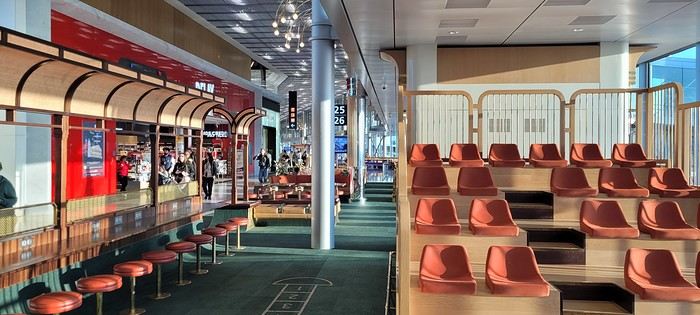
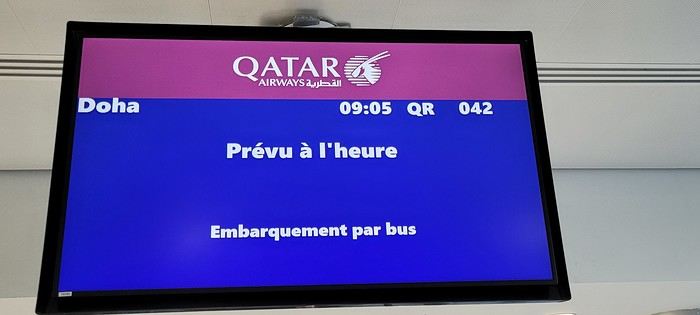
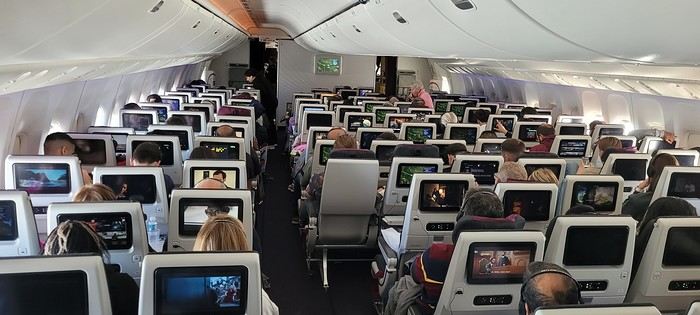
Coming up: Layover in Doha
I’m back from this “mixed” two-week cruise in the Indian Ocean on the Norwegian Sky.
Originally, I had booked a cruise with AIDA (also in the Indian Ocean), but unfortunately, the company decided to cancel it and offered us other options, which we declined because the dates didn’t work for us.
Since my wife really wants to do a cruise in the Indian Ocean, but very few companies offer this destination, it’s a bit complicated—especially when the dates don’t line up. Finding a good compromise between companies and timing is tough. Retirement can’t come soon enough!!!
After some research, I found a really great itinerary with Silversea (a luxury cruise line) for a 19-day cruise from Cape Town to Victoria, stopping in Madagascar (2 days), Praslin, La Digue... But my wife couldn’t get the time off. Not only was the itinerary amazing, but the price was unbeatable (5,200 € per person for a balcony suite, all-inclusive). What a shame—I would’ve loved to try this company, but maybe next time (if we’re lucky enough to have the chance).
My wife tried to take unpaid leave but wasn’t successful... Oh well!
On my end, I have more flexibility with vacation time since I travel a lot for work, so I can accumulate my days off and take them when it suits me.
So, we settled for this cruise (the only one that matched my wife’s vacation dates). Sure, we weren’t thrilled about the ship, but the itinerary wasn’t bad. We figured, why not?
I requested a quote from Logitravel, and after a discount, we paid 2,600 € per person for a balcony cabin (category BA) with the More At Sea package, which includes: 300 minutes of internet, premium drinks, 5 restaurants, and discounts on excursions...
The itinerary:
Day 1 Dubai (UAE) Boarding 11:59 PM Day 2 Abu Dhabi (UAE) 7:00 AM Day 3 Abu Dhabi (UAE) 2:00 PM Day 4 Sea day Day 5 Sea day Day 6 Sea day Day 7 Sea day Day 8 La Digue (Seychelles) 10:00 AM 8:00 PM Day 9 Mahé (Seychelles) 7:00 AM 8:00 PM Day 10 Sea day Day 11 Antsiranana (Madagascar) 7:00 AM 6:00 PM Day 12 Sea day Day 13 Pointe des Galets (Réunion) 8:00 AM 9:00 PM Day 14 Port Louis (Mauritius) 7:00 AM Day 15 Port Louis (Mauritius) 8:00 AM
After booking the cruise, I started looking for flights (Paris/Dubai and Mauritius/Paris). It’s peak Easter vacation time, so tickets are crazy expensive... I ran several simulations on Skyscanner and was shocked by the prices.
A direct flight from Paris to Dubai with Emirates is 1,400 € per person (one way), and the return from Mauritius to Paris (also with Emirates via Dubai) is 1,350 € per person.
Given these outrageous prices, I decided to book a flight with a layover. The best value I found was with Qatar (via Doha) for 650 € per person, with a 2.5-hour layover in Doha, and a direct flight from Mauritius to Paris with Corsair for 750 € per person.
With the More At Sea package, we had a 300 € credit per person for flight tickets (as long as we booked through NCL).
I requested a quote, and they offered: OUTBOUND: April 18, 2025 – Egyptair CDG-CAIRO 10:05 PM-2:30 AM February 19, 2025 – CAIRO-DUBAI 5:30 AM-10:55 AM RETURN: May 3, 2025 – Kenya Airways Port Louis-Nairobi 6:50 PM-10:10 PM, Nairobi-CDG 11:50 PM(+1)-7:30 AM (price: 950 € per person).
Sure, the price was good, but we didn’t want to fly with those airlines, and NCL didn’t have any other options. So, we booked our flights ourselves.
D-Day: Departure from Paris on April 18 with Qatar via Doha:
Two days before leaving, I checked in online and took the opportunity to buy seats near the emergency exits since my wife tends to get swollen legs on long flights. So, she prefers having extra legroom (cost: 132 € per person). It’s a bit pricey, but peace of mind is priceless.
Usually, when I have an early flight from Roissy, I always book a hotel the night before (near the airport) to avoid stress and not miss my flight. But since it was school vacation time and Good Friday, we decided to leave very early from home...
The flight was scheduled for 9:05 AM. We live 70 km from the airport and had to be there by 7:05 AM.
We barely slept... Up at 4:30 AM, and by 5:45 AM, our Uber was outside. We arrived at the airport (Roissy Terminal 1) by 6:50 AM.
Check-in was smooth—less than 10 minutes, and our bags were dropped off with boarding passes in hand.
This was my first time flying out of Roissy Terminal 1 since it was renovated for the Olympics. Wow, it’s a huge improvement—nothing like the old “camembert box” we used to know!
A few photos:
Coming up: Layover in Doha
Egypt trip review - April 2025
We just got back from a trip to Egypt: 2 days in Cairo, then a week on the Nile with a cruise through a tour operator.
An incredible discovery of the Pyramids of Cairo—such an emotional moment! Then a wonderful stroll along the Nile, where we leisurely soaked in the "life" along this river.
An exceptional guide who transported us back less than 4,000–5,000 years BC...
But here’s the thing—because there’s often a "BUT"—the flip side is discovering a *very* polluted country! Even on the Nile, the number of boats is staggering (I went barefoot on the boat one day, and by the end of the day, my feet were black with soot?).
In Cairo, with nearly 20 million inhabitants, there’s trash everywhere (except around the airport and villa areas). We even saw a dead cow with stray dogs eating its "innards"—but no one seemed bothered! By the way, there are *tons* of wild dogs in Egypt and very few... cats!
One day after our arrival, we had to pay our entry visa to the guide on the bus—and *only* in cash? 95 EUROS???? A disgrace, since the visa price is $25 (as stated on the visa stamp)... Someone needs to explain where that money goes???
The excursions (optional ones) are *five times* more expensive than the posted rates for tourists. There are two prices: one for Egyptians (which makes sense, given an average salary of 360 euros/month). On top of that, the cruise manager asked us to pay half in cash and half by card (we refused and paid everything in cash). First time I’ve ever seen that payment method for excursions—where *does* the money go?...
During a stop in Aswan, we wanted to visit the Nubian Museum (amazing!). We took a carriage, and before leaving, we agreed on a round-trip price of 20 euros for 4 people to take us to the museum. It was all good with the driver—who called himself "Michel" and his poor horse, Rambo. On the way back, of course, he caused a scene, demanding *much* more... We refused and gave him the 20 euros we’d agreed on. But then, as if by chance, this same carriage driver stopped for a man who asked us to exchange two 20-euro bills and 10 one-euro coins for a 50-euro bill. I pulled out my 50-euro note while talking to Michel, and the other guy claimed I’d given him a 10-euro bill?? He handed me the bill—so you get the scam!
So, be *very* careful with carriage drivers and their "colleagues"!
Drinks on board are outrageously priced—a simple beer (Stella) costs 5 euros, and the wine is undrinkable...
Tips are expected in euros—they won’t accept Egyptian pounds... and of course, you’re constantly harassed to exchange 5-euro or 10-euro bills, or even more! They end up with tons of coins, so we did it at first, but after a while, it’s just not possible—they insist way too much!
I’ll stop here—it’s already quite long. So, a mixed-feelings trip overall...
philippe
philippe
Trek in Nepal's Far West: Between Mountains and Yarsagumba Harvesting
Namaste everyone,
We went to Nepal last October and literally fell in love with this country (like so many others, it seems). During our trek, we had the chance to meet and travel with an incredible independent local guide, Apsara Luitel. She told us about a unique project she’s organizing starting mid-May, and we wanted to share it in case it interests anyone. We mentioned it on another travel forum, but just in case, we’re posting it here too to reach as many people as possible.
Apsara, who knows the Api mountain valley (a name as joyful as it is intriguing!) in Nepal’s Far West (on the border between India and Tibet, at the edge of the world) perfectly, is offering an off-the-beaten-path trek for a group of 3 to 8 people max. The program? An authentic and preserved itinerary combining homestays and small mountain lodges, all the way to the Api base camp. Once at base camp, locals will guide us to secret spots only they know, where we’ll harvest yarsagumba (those famous caterpillar-fungi, rare and prized for their medicinal properties in traditional Chinese medicine—they were going for $20,000 per kilo last year!).
Mid-May is the ideal time to discover this almost unexplored region and take part in harvesting these natural treasures. This kind of adventure, led by an inspiring young woman like Apsara, is rare, and we think it could appeal to Nepal lovers and those who enjoy authentic treks far from the usual tourist routes.
No matter how many participants there are (between 3 and 8), there will always be two guides: Apsara, who speaks English (and is learning French!), and a French-speaking guide. The dates are flexible around May 15th, depending on the availability of those who’d like to take on the adventure.
We went to Nepal last October and literally fell in love with this country (like so many others, it seems). During our trek, we had the chance to meet and travel with an incredible independent local guide, Apsara Luitel. She told us about a unique project she’s organizing starting mid-May, and we wanted to share it in case it interests anyone. We mentioned it on another travel forum, but just in case, we’re posting it here too to reach as many people as possible.
Apsara, who knows the Api mountain valley (a name as joyful as it is intriguing!) in Nepal’s Far West (on the border between India and Tibet, at the edge of the world) perfectly, is offering an off-the-beaten-path trek for a group of 3 to 8 people max. The program? An authentic and preserved itinerary combining homestays and small mountain lodges, all the way to the Api base camp. Once at base camp, locals will guide us to secret spots only they know, where we’ll harvest yarsagumba (those famous caterpillar-fungi, rare and prized for their medicinal properties in traditional Chinese medicine—they were going for $20,000 per kilo last year!).
Mid-May is the ideal time to discover this almost unexplored region and take part in harvesting these natural treasures. This kind of adventure, led by an inspiring young woman like Apsara, is rare, and we think it could appeal to Nepal lovers and those who enjoy authentic treks far from the usual tourist routes.
No matter how many participants there are (between 3 and 8), there will always be two guides: Apsara, who speaks English (and is learning French!), and a French-speaking guide. The dates are flexible around May 15th, depending on the availability of those who’d like to take on the adventure.
Denied boarding due to visa with the wrong date
Today I ended up being denied boarding at CDG. I booked the trip through a physical travel agency with no assistance for the visa application. I applied in plenty of time and got the approval. Except I put the 9th (the day I left France) as the date instead of the 10th, which is the arrival date in India. That’s what caused the denial. I’m guessing I don’t have any recourse? Thanks for your replies.