Results for "Basque+|+127"
31645 results found.
Back from 4 weeks in northern Laos, November 2023
Hi there,
I’m so glad the VoyageForum is back up. Reading 'Montagnard74’s' Laos trip report (which I read yesterday) made me want to share my own (which I already posted a year ago on another forum).
Here’s a little recap of our 3 weeks in northern Laos, plus a few days in Vientiane.
By the way, we could easily go back to the north—there’s so much to see and do; probably in a few years.
This was our 3rd trip to Laos after having already done:
1st trip in 2012 (3 weeks), a quick overview: Vientiane Vang Vieng Luang Prabang Plain of Jars
2nd trip in 2017 (1 month): Vientiane all the way to the 4,000 Islands via Thakhek, Kong Lor, the Bolaven Plateau, Savannakhet, Pakse...
Our 2023 itinerary (1 month): Vientiane Luang Prabang Muang Ngoi Nong Khiew Luang Namtha Muang Sing Boten Vang Vieng Vientiane
Some general info (2023): For those who’ve already been to Laos: everything has gone up a lot—I think prices have almost doubled for transport, accommodation, meals... everything. But Laos is still a budget-friendly country for us. As a couple, we spent 1,100 € for a month, all included (and we definitely didn’t skimp on massages :)).
Don’t trust the transport signs posted everywhere—at travel agencies, bus terminals, hotels... THEY’RE ALL WRONG (especially the schedules). They haven’t been updated since before Covid.
There are hardly any bikes for rent anymore, but scooters are easy to find everywhere. We switched our mode of transport toward the end of our stay: from bikes to scooters, which let us go farther. In Vientiane, we only saw one bike rental place, near Ong Teu Pagoda.
BCEL bank doesn’t charge a commission on foreign currency exchanges. Using ATMs is expensive due to fees. Outside Laos, Lao kip are basically worthless. There’s so much inflation that I couldn’t find a single bank or exchange office willing to swap the kip we had left. So, don’t exchange too much toward the end of your trip.
Some little tips from our experience (2023): The Muang Koua to Muang Ngoi boat still runs daily. At the dam, you have to get off and take a bus, then get back on the boat.
The boat from Muang Ngoi to Nong Khiew only leaves at 9:30 AM (don’t miss it or you’ll pay a lot for a private boat). From Nong Khiew to Muang Ngoi, there are at least two boats a day.
From Luang Namtha to Muang Sing: 4 to 5 buses a day, the last one leaves around 3:30 PM.
From Luang Namtha or Muang Sing to Nateuy or Boten (to catch the new train): 3 to 5 buses a day.
The new train is really hard to book—it’s often fully booked 48 hours in advance, even the local train (5 hours from Boten to Vientiane instead of 3 hours on the high-speed train). (That makes it tough to travel day by day, which we love... too bad.) For baggage checks: don’t bring anything flammable (sprays...) or sharp. My mosquito repellent (flammable but in a small plastic bottle) got through. Water bottles and a tiny pocketknife are okay. But it seems to depend on the station.
Some guesthouses prefer to be paid in dollars, otherwise the price is much higher.
If you’re entering Laos from Vietnam via Dien Bien Phu, you have to get your visa at the embassy in Hanoi—otherwise, you’ll be refused at the border (no e-visa or visa on arrival).
Apart from Luang Prabang, Vientiane, and Muang Ngoi/Nong Khiew, there are very few tourists.
Some bus prices (in addition to those mentioned in my trip report) (with pick-up) 2023: Luang Prabang to Luang Namtha: 320,000 kip per person, 9h LP to Phonesavan: 250,000 kip per person, 7h LP to Phongsaly: 450,000 kip per person, 13h LP to Huay Xai: 420,000 kip per person, 14h Train Nateuy to Vientiane: 400,000 kip per person LP to Chiang Rai: 780,000 kip per person, 18h LP to Hanoi: 900,000 kip per person, 24h LP to train station: 50,000 kip per person LP to airport: 100,000 kip per person Vientiane from train station: 180,000 kip by taxi
Boats: LP to Pak Beng: 300,000 kip per person, 1 day LP to Houay Xai: 500,000 kip per person, 2 days LP to Pak Ou: 180,000 kip per person, 5h
This was our 3rd trip to Laos after having already done:
1st trip in 2012 (3 weeks), a quick overview: Vientiane Vang Vieng Luang Prabang Plain of Jars
2nd trip in 2017 (1 month): Vientiane all the way to the 4,000 Islands via Thakhek, Kong Lor, the Bolaven Plateau, Savannakhet, Pakse...
Our 2023 itinerary (1 month): Vientiane Luang Prabang Muang Ngoi Nong Khiew Luang Namtha Muang Sing Boten Vang Vieng Vientiane
Some general info (2023): For those who’ve already been to Laos: everything has gone up a lot—I think prices have almost doubled for transport, accommodation, meals... everything. But Laos is still a budget-friendly country for us. As a couple, we spent 1,100 € for a month, all included (and we definitely didn’t skimp on massages :)).
Don’t trust the transport signs posted everywhere—at travel agencies, bus terminals, hotels... THEY’RE ALL WRONG (especially the schedules). They haven’t been updated since before Covid.
There are hardly any bikes for rent anymore, but scooters are easy to find everywhere. We switched our mode of transport toward the end of our stay: from bikes to scooters, which let us go farther. In Vientiane, we only saw one bike rental place, near Ong Teu Pagoda.
BCEL bank doesn’t charge a commission on foreign currency exchanges. Using ATMs is expensive due to fees. Outside Laos, Lao kip are basically worthless. There’s so much inflation that I couldn’t find a single bank or exchange office willing to swap the kip we had left. So, don’t exchange too much toward the end of your trip.
Some little tips from our experience (2023): The Muang Koua to Muang Ngoi boat still runs daily. At the dam, you have to get off and take a bus, then get back on the boat.
The boat from Muang Ngoi to Nong Khiew only leaves at 9:30 AM (don’t miss it or you’ll pay a lot for a private boat). From Nong Khiew to Muang Ngoi, there are at least two boats a day.
From Luang Namtha to Muang Sing: 4 to 5 buses a day, the last one leaves around 3:30 PM.
From Luang Namtha or Muang Sing to Nateuy or Boten (to catch the new train): 3 to 5 buses a day.
The new train is really hard to book—it’s often fully booked 48 hours in advance, even the local train (5 hours from Boten to Vientiane instead of 3 hours on the high-speed train). (That makes it tough to travel day by day, which we love... too bad.) For baggage checks: don’t bring anything flammable (sprays...) or sharp. My mosquito repellent (flammable but in a small plastic bottle) got through. Water bottles and a tiny pocketknife are okay. But it seems to depend on the station.
Some guesthouses prefer to be paid in dollars, otherwise the price is much higher.
If you’re entering Laos from Vietnam via Dien Bien Phu, you have to get your visa at the embassy in Hanoi—otherwise, you’ll be refused at the border (no e-visa or visa on arrival).
Apart from Luang Prabang, Vientiane, and Muang Ngoi/Nong Khiew, there are very few tourists.
Some bus prices (in addition to those mentioned in my trip report) (with pick-up) 2023: Luang Prabang to Luang Namtha: 320,000 kip per person, 9h LP to Phonesavan: 250,000 kip per person, 7h LP to Phongsaly: 450,000 kip per person, 13h LP to Huay Xai: 420,000 kip per person, 14h Train Nateuy to Vientiane: 400,000 kip per person LP to Chiang Rai: 780,000 kip per person, 18h LP to Hanoi: 900,000 kip per person, 24h LP to train station: 50,000 kip per person LP to airport: 100,000 kip per person Vientiane from train station: 180,000 kip by taxi
Boats: LP to Pak Beng: 300,000 kip per person, 1 day LP to Houay Xai: 500,000 kip per person, 2 days LP to Pak Ou: 180,000 kip per person, 5h
Revolut Visa Debit Card for the United States (Wyoming and Utah)
Hi
I’d like to know if anyone has used a Revolut Visa debit card to pay in Wyoming and Utah and whether it’s widely accepted.
Thanks
Renting a car across multiple islands in Indonesia
Hi everyone,
When we travel abroad, we usually rent a car to be independent with our itinerary and free with our timing. But we get the feeling that it’s not so simple in Indonesia.
Is it feasible, for example, to drive from Bali to Komodo National Park by car? What are the roads like? Can you rent and return cars on these smaller islands?
Thanks for your replies.
18 days in Cape Verde in January 2025
Hello,
We’ve just returned (2 senior couples) from 18 days in Cape Verde (21/01 to 7/02) that we really enjoyed. The temperature was great—20° to 27°—admittedly a bit windy at times, but the friendliness of the Cape Verdeans made up for it.
Paris Orly, direct flight with Transavia (cheap if you book in advance). We landed in São Vicente, with a 12 € city transfer. We had a fantastic 2-bedroom apartment in downtown Mindelo—Av. Fernando Ferreira Fortes, "Casa So Morabeza"—for 58 € per night. The owner lives in France and communicates instantly via WhatsApp.
We spent 2 days exploring the (beautiful) city of Mindelo and its port activity, plus a private taxi tour of the island (6000 CVE for the day).
Then we took the Armas ferry (recommended company—1500 CVE) to Santo Antão.
From there, a collectivo (450 CVE per person) took us to Ribeira Grande, a central base for hikes.
We stayed in a brand-new, modern, and well-equipped 2-bedroom apartment—*Apartamentos Modernos*—for 6770 CVE per night, staying 6 nights. I highly recommend it for its location in town and proximity to *aluguers* and *collectivos* for hiking.
The hikes were stunning:
- The coastal trail from Fontainhas to Cruzinha (taxi for 1500 CVE)
- The route from Corda to Coculi (taxi for 2000 CVE + 100 CVE per person for the return)
- The trail from Cova to Cidade de Pombas (taxi for 2000 CVE + 100 CVE per person for the return)
- The hike from Miradouro to Ribeira Grande (taxi for 2000 CVE)
- The coastal road from Ribeira Grande to Ponta do Sol (visit and lunch at *Mini Familiar* in the city center—excellent and affordable) for the round trip.
Ribeira Grande has plenty of restaurants, but avoid *5 de Julho*—it’s loud and slow.
We loved: *Bellcanto*, *Cantinho da Amizade*, and *Boca-Fina Churrasqueria*.
Meals with drinks cost around 800–1000 CVE.
Back to São Vicente by ferry (1500 CVE), then an airport transfer (12 €) and a flight (99 €) to Santiago’s Praia. The airport-to-city transfer was 15 €.
We stayed at *Kelly’s* in Plato, Praia, which was disappointing—not ideal for two couples—but well-located.
One day was spent visiting the massive *Suspicia* market, then a collectivo to Cidade Velha (2 x 200 CVE round trip per person). We hiked up to the fort, explored *Rua Banana*, and had lunch at *Praça do Mar* by the beach.
We rented a car for 6 days (29000 CVE) from *Slimpycar* in Praia.
On Saturday, we visited the huge *Assomada* market—don’t miss it!—then hiked to *Boa Entrada* and *Poilon*, the largest and most impressive tree we’ve ever seen.
We stayed for 2 nights (138 €) in a beautiful valley in *Picos*—a spacious, lovely house with 2 bedrooms, 2 bathrooms, and a large living area, surrounded by nature and animals.
Lina, the charming neighbor, prepared dinner (8.50 €) and breakfast (4.50 €) for us.
Next, we headed to *Tarrafal*, stopping to visit the concentration camp (500 CVE)—a must-see—before arriving.
We spent 3 nights (184 €) in a fantastic house called *"Maison Familiale"*—huge, with 3 bedrooms, 2 bathrooms, 2 kitchens, 5 toilets, and a large terrace with sea views. It was absolutely stunning and very close to the beach and numerous restaurants.
We did a beautiful 3.8 km hike to the *Farol da Ponta Preta* lighthouse.
Tarrafal’s beach is lively and pleasant, with bars, restaurants, and even acrobats!
We also explored *Ribeira da Prata* to see the *Piscina Natural de Cuba* (not easy to find).
We loved discovering isolated villages like *Ponta Furna*, *Ponta Labrão*, and *Fazenda*.
For food, I recommend *Mira Mar* at *Mama’s*.
On the way back to Praia, we took the east coast route via *Calheta de São Miguel*, *Pedra Badejo*, and *Praia Baixo*—nothing extraordinary, just a rugged, wild coastline with beaches that seemed a bit tricky to access.
Our last evening in Praia was nice. The seaside esplanade was lively, and many Cape Verdeans were swimming at *Prainha* beach, which seemed very accessible and safe.
If you’d like more info—addresses, etc.—feel free to message me privately. I’ll respond.
Jacquesler.
Proof of income for a visa extension in Thailand
Hi, what’s the amount to pay for the proof-of-income certificate for a visa extension, to make the payment?
Thanks
Thanks
Transport from São Vicente Airport to Mindelo and then ferry to Santo Antão
Hi everyone who loves Santo Antão in Cape Verde! 🙂
I’m arriving at São Vicente Airport in Cape Verde around 2:00 PM. Are there buses or *aluguer* that go to Mindelo, and is it possible to catch a ferry to Santo Antão right after, or is it better to leave the next day?
Thanks so much for your help
I’m arriving at São Vicente Airport in Cape Verde around 2:00 PM. Are there buses or *aluguer* that go to Mindelo, and is it possible to catch a ferry to Santo Antão right after, or is it better to leave the next day?
Thanks so much for your help
7-Day Oman Itinerary
7 days in OMAN
Day 1: Muscat for a few hours to gather info on diving near the Dimaniyat Islands.
Then a tour of the souks and the corniche.
The next day, we dropped our diving plans to focus on a "landscapes" vacation.
Day 2: Headed to the mountains with a picnic stop at Nakhal Fort (so renovated it feels like Disney, but really beautiful). In the afternoon, Maps led us astray on rocky paths—we got a flat, and by the time we fixed it, it was dark. We slept near WADI DAMM. Luckily, we stumbled upon a farm stay in the middle of nowhere, right by the wadi for the next day. We found a café selling amazing dhal with bread—but no utensils!—and a small shop for tea and pastries for the next morning. Day 3: WADI DAMM, a long hike up a canyon—gorgeous but very dry. On the way to Oman’s highest mountains, JEBEL SHAMS! But what Maps said would take 1.5 hours turned into hours on off-road trails. We arrived at the top at 4 PM—stunning, but the sun was already low. We hiked for 30 minutes along the corniche and turned back (Balcony Walk). We drove down to Al Hamra as night fell and found a cute hotel where the guy cooked us an incredible chicken. Day 4: Visited MISFAH, an old mountain village. We descended into the wadi and climbed up the other side for the view—absolutely breathtaking! *** Headed to NIZWA for its fort and souk—nice! Apparently, you should visit Friday morning for the camel market (to be confirmed).
Day 5: Headed to the desert, but first, a stop at WADI BANI KHALIL (great hike, even with crowds). The sandwich on the rocks and the swim before leaving were awesome. We reached the sand desert, left the car, and were taken to camp—just us and two young guys serving tea and meals. So beautiful! The walk around the camp in the dunes was fun, the photos were amazing—overall, a fantastic experience!
Day 6: Walked around the desert near camp after breakfast—gorgeous! They drove us back to the car, then we stopped at a shop for a picnic at WADI SHAB. Crossed by boat, but the hike afterward was great—had to swim in some spots, so bring a dry bag. Found a nice guesthouse by the sea nearby and a restaurant in Tiwi since it was already late.
Day 7: After a failed swimming attempt (the waves were too strong), we went to WADI TIWI—nothing special. Then WADI ARBEIEEN as we headed up the coast to the airport, where we crashed for 6 hours at a hotel before flying home!
Day 2: Headed to the mountains with a picnic stop at Nakhal Fort (so renovated it feels like Disney, but really beautiful). In the afternoon, Maps led us astray on rocky paths—we got a flat, and by the time we fixed it, it was dark. We slept near WADI DAMM. Luckily, we stumbled upon a farm stay in the middle of nowhere, right by the wadi for the next day. We found a café selling amazing dhal with bread—but no utensils!—and a small shop for tea and pastries for the next morning. Day 3: WADI DAMM, a long hike up a canyon—gorgeous but very dry. On the way to Oman’s highest mountains, JEBEL SHAMS! But what Maps said would take 1.5 hours turned into hours on off-road trails. We arrived at the top at 4 PM—stunning, but the sun was already low. We hiked for 30 minutes along the corniche and turned back (Balcony Walk). We drove down to Al Hamra as night fell and found a cute hotel where the guy cooked us an incredible chicken. Day 4: Visited MISFAH, an old mountain village. We descended into the wadi and climbed up the other side for the view—absolutely breathtaking! *** Headed to NIZWA for its fort and souk—nice! Apparently, you should visit Friday morning for the camel market (to be confirmed).
Day 5: Headed to the desert, but first, a stop at WADI BANI KHALIL (great hike, even with crowds). The sandwich on the rocks and the swim before leaving were awesome. We reached the sand desert, left the car, and were taken to camp—just us and two young guys serving tea and meals. So beautiful! The walk around the camp in the dunes was fun, the photos were amazing—overall, a fantastic experience!
Day 6: Walked around the desert near camp after breakfast—gorgeous! They drove us back to the car, then we stopped at a shop for a picnic at WADI SHAB. Crossed by boat, but the hike afterward was great—had to swim in some spots, so bring a dry bag. Found a nice guesthouse by the sea nearby and a restaurant in Tiwi since it was already late.
Day 7: After a failed swimming attempt (the waves were too strong), we went to WADI TIWI—nothing special. Then WADI ARBEIEEN as we headed up the coast to the airport, where we crashed for 6 hours at a hotel before flying home!
World Cliffs Discussion: January 2025 Contest
So, to start the year off right (Happy New Year!),
This is where we can discuss January’s theme.
With 20,000 km of French coastline (there’s a catch ;)), our beautiful country should be well represented!
Dig out those hard drives! Bruno
Dig out those hard drives! Bruno
Planning an itinerary in the Mekong Delta
Hi,
We’ve planned a week in the delta, but sometimes I wonder if that’s not too much… We’ll be there in early February, and the idea is to take a taxi straight from Saigon Airport to Ben Tre. I’m counting on 3 nights to recover and adjust after the long trip. Then I was thinking of Sadec, Can Tho, Chau Doc, Ha Tien, and back to Saigon for 3 nights before a flight to Hoi An. We’ve got 6 weeks total, so we have a bit of time. After reading different travel stories, the destinations in the delta seem a bit repetitive—I keep seeing the same excursions. On the other hand, I also think having time is a chance to get to know the local life a little better. My question really comes down to this: for those of you who travel at a relaxed pace, do you have any tips? I’ve heard the floating markets aren’t that interesting anymore. Also, motorbikes aren’t our thing.
Thanks
Review of a cruise on the Costa Fortuna – November-December 2024
I’ve finally gotten around to writing a review of our transatlantic cruise on the Costa Fortuna. We’ve always loved cruises, especially transatlantic ones. In recent years, we were MSC customers (Diamond card). But this year, we decided to return to Costa, though there was one downside: we lost all the points from our old Costa card (I think we were "Gold"). Still, since we’re former customers, the company generously gave us 1 point and the bronze card. It’s better than nothing.
Our departure nearly went wrong. The ship was leaving Marseille on Friday, December 22 at 2:00 PM, and we were told to be at the port by 10:30 AM. This unusual departure time meant we had to travel to Marseille the day before (since we live in the Paris area). So, we booked a flight from Orly to Marseille on the 21st at 5:15 PM. But December 21 was a particularly rough day in France with a big snowstorm. And as everyone knows, planes and trains don’t handle snow very well. At Orly, in the waiting area, everyone was anxious as the minutes ticked by. The departure time kept getting pushed back in 15-minute increments. They eventually let us board the plane with no guarantees. Once inside, the captain announced we were waiting for a takeoff slot. About an hour later, he said the plane needed de-icing and the wait could be long since airport staff were overwhelmed. Miraculously, after what felt like forever, the de-icing truck finally arrived, and we took off—over two hours late. When we landed in Marseille, the terminal was practically empty. Luckily, our hotel wasn’t too far away.
We later found out that passengers who took the train were even less lucky—trains were canceled. Later, at our table, we met a neighbor who had boarded in Malaga by plane because his Paris-Marseille train had turned back. He’d incurred extra costs, lost two days of the cruise, and had quite a bit of stress.
The next day in Marseille, our boarding went smoothly. We were surprised by the large number of passengers. We later learned that 1,300 people had boarded in Marseille. Since the ship wasn’t full (between 2,300 and 2,500 passengers), the French were in the majority (a rare occurrence). We noticed during the cruise that the French are just as loud as the Italians. The only upside? At least we could understand what was being said.
More to come later.....
Our departure nearly went wrong. The ship was leaving Marseille on Friday, December 22 at 2:00 PM, and we were told to be at the port by 10:30 AM. This unusual departure time meant we had to travel to Marseille the day before (since we live in the Paris area). So, we booked a flight from Orly to Marseille on the 21st at 5:15 PM. But December 21 was a particularly rough day in France with a big snowstorm. And as everyone knows, planes and trains don’t handle snow very well. At Orly, in the waiting area, everyone was anxious as the minutes ticked by. The departure time kept getting pushed back in 15-minute increments. They eventually let us board the plane with no guarantees. Once inside, the captain announced we were waiting for a takeoff slot. About an hour later, he said the plane needed de-icing and the wait could be long since airport staff were overwhelmed. Miraculously, after what felt like forever, the de-icing truck finally arrived, and we took off—over two hours late. When we landed in Marseille, the terminal was practically empty. Luckily, our hotel wasn’t too far away.
We later found out that passengers who took the train were even less lucky—trains were canceled. Later, at our table, we met a neighbor who had boarded in Malaga by plane because his Paris-Marseille train had turned back. He’d incurred extra costs, lost two days of the cruise, and had quite a bit of stress.
The next day in Marseille, our boarding went smoothly. We were surprised by the large number of passengers. We later learned that 1,300 people had boarded in Marseille. Since the ship wasn’t full (between 2,300 and 2,500 passengers), the French were in the majority (a rare occurrence). We noticed during the cruise that the French are just as loud as the Italians. The only upside? At least we could understand what was being said.
More to come later.....
10 days exploring Western Sicily (2022)
Quick recap of a getaway to Sicily (June 3–13, 2022).
Day 1: Transavia flight to Palermo from Lyon Day 2: Zingaro Reserve (14 km coastal trail round-trip, about 4 hours of hiking + coves) / Evening in Scopello Day 3: Segesta + Erice via cable car + evening in Trapani (free parking at Piazza Vit. Emmanuele) Day 3: Bike day in Favignana (Cala Rosa, Cala Azzurra) Day 4: Marsala (quick stop at the salt flats), Selinunte, and sleepover in Agrigento Day 5: Day in Agrigento: Valley of the Temples, Temple of Concordia, Temple of Hercules, Temple of Juno, Temple of Castor and Pollux Day 6: Villa Romana del Casale and Cefalù in the late afternoon Day 7: Relaxing beach day in Cefalù Day 8: Mosaics in Monreale Cathedral, then Palermo Day 9: Palermo Day 10: Return to Lyon
8 days on the ground covering 650 km, scorching heat all week (37°C in Zingaro), and a ridiculously expensive car rental (Sicily by Car).
Some truly great accommodations:
- Tre Giummare in Scopello (despite the AC breaking down the night before) - Laurus Apartments in Trapani (perfect for the Favignana ferry) - Terrazze di Montelusa in Agrigento (worth seeing—very unique!) - Rurale, Via Lancenia 22 in Cefalù (for the pool view!) - Il Giardino di Ballarò in Palermo (charming and right in the heart of the city)
Our top picks:
- Favignana (by far the highlight of the trip) - The temples in Agrigento - Palermo - The food here is amazing
No real disappointments, but Erice didn’t quite live up to expectations, and we were frustrated by the car rental prices.
Side note: make sure to specify that your card is a *credit* card (not debit). Ours was a deferred debit card, and our bank had the sense to label it "credit card"—otherwise, you’d be on the hook for an extra 200 €... those Southern Italians!
Hike in Zingaro:
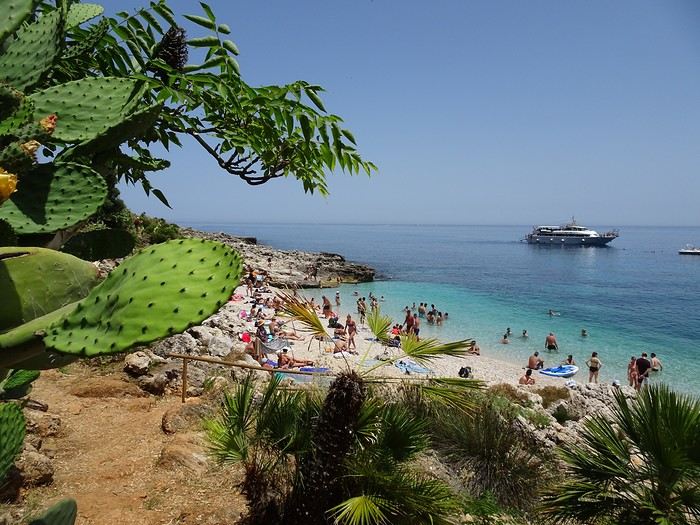
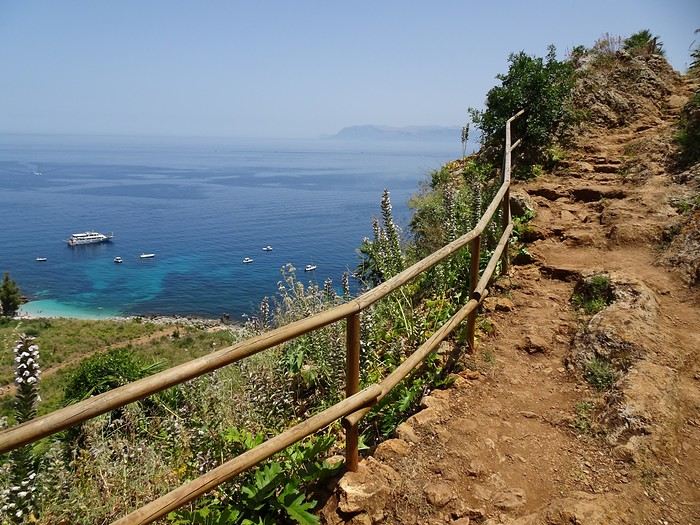
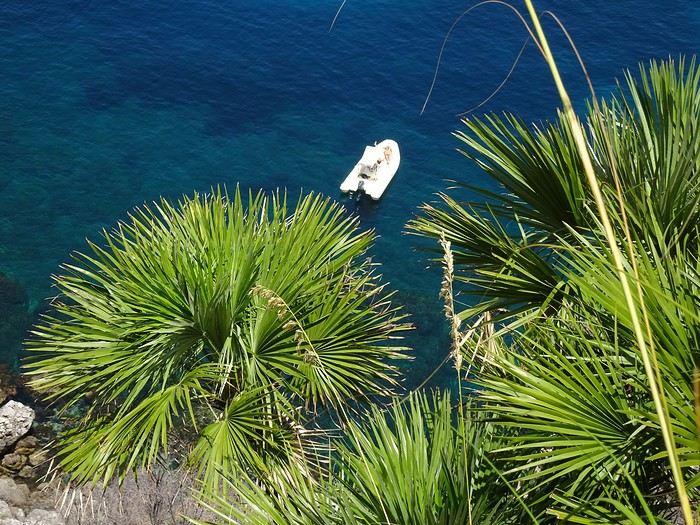
Segesta:
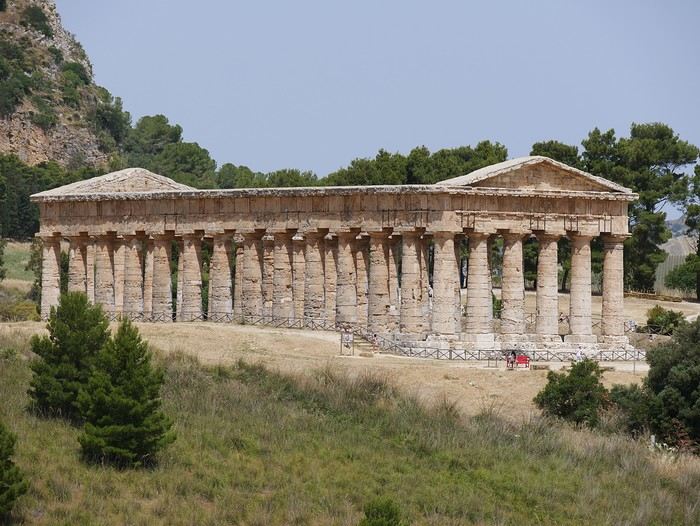
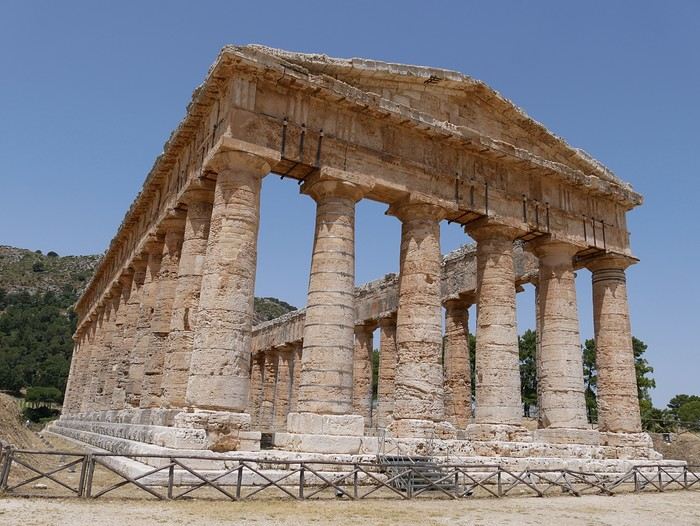
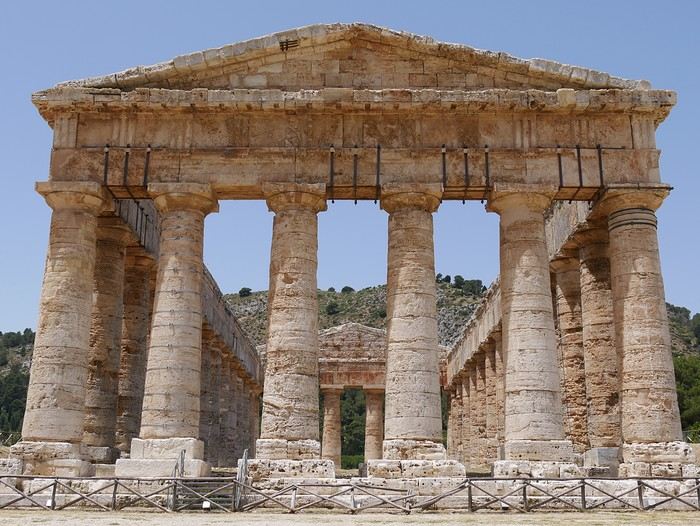
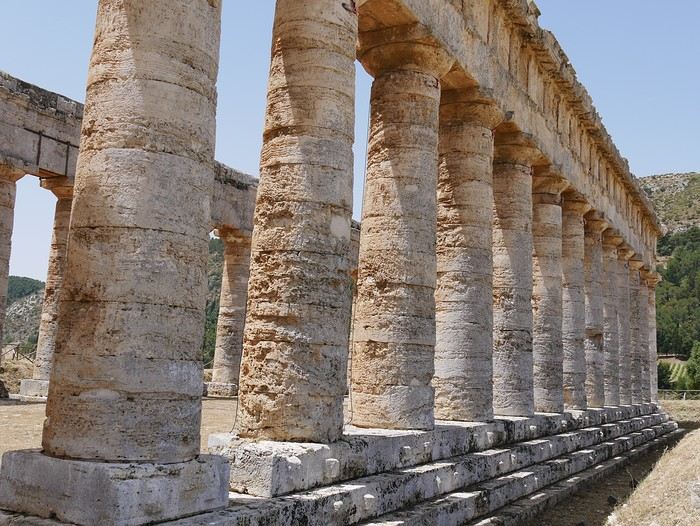
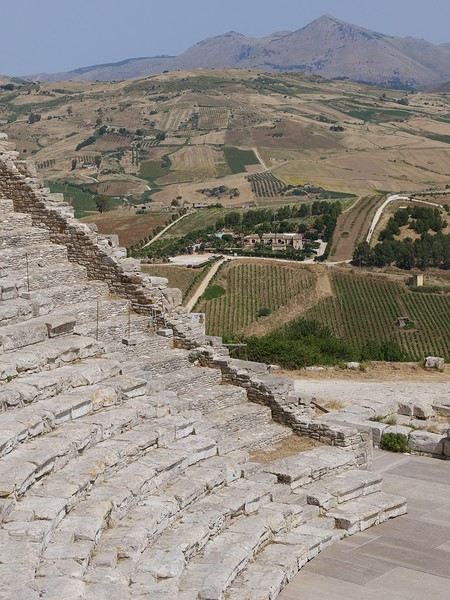
Day 1: Transavia flight to Palermo from Lyon Day 2: Zingaro Reserve (14 km coastal trail round-trip, about 4 hours of hiking + coves) / Evening in Scopello Day 3: Segesta + Erice via cable car + evening in Trapani (free parking at Piazza Vit. Emmanuele) Day 3: Bike day in Favignana (Cala Rosa, Cala Azzurra) Day 4: Marsala (quick stop at the salt flats), Selinunte, and sleepover in Agrigento Day 5: Day in Agrigento: Valley of the Temples, Temple of Concordia, Temple of Hercules, Temple of Juno, Temple of Castor and Pollux Day 6: Villa Romana del Casale and Cefalù in the late afternoon Day 7: Relaxing beach day in Cefalù Day 8: Mosaics in Monreale Cathedral, then Palermo Day 9: Palermo Day 10: Return to Lyon
8 days on the ground covering 650 km, scorching heat all week (37°C in Zingaro), and a ridiculously expensive car rental (Sicily by Car).
Some truly great accommodations:
- Tre Giummare in Scopello (despite the AC breaking down the night before) - Laurus Apartments in Trapani (perfect for the Favignana ferry) - Terrazze di Montelusa in Agrigento (worth seeing—very unique!) - Rurale, Via Lancenia 22 in Cefalù (for the pool view!) - Il Giardino di Ballarò in Palermo (charming and right in the heart of the city)
Our top picks:
- Favignana (by far the highlight of the trip) - The temples in Agrigento - Palermo - The food here is amazing
No real disappointments, but Erice didn’t quite live up to expectations, and we were frustrated by the car rental prices.
Side note: make sure to specify that your card is a *credit* card (not debit). Ours was a deferred debit card, and our bank had the sense to label it "credit card"—otherwise, you’d be on the hook for an extra 200 €... those Southern Italians!
Hike in Zingaro:
Segesta:
Trip to the Amazon
Hi everyone,
I’m planning to spend about a week in the Amazon in April or May—the dates aren’t set yet—flying in and out of Manaus.
I’d love to hear about the must-see spots in Manaus besides the theater and the Amazon Museum.
After that, I’d like to take a boat trip on the Amazon or the Rio Negro to escape the city and find some peace for a 3- or 4-day trek in the forest.
I also saw that the town of Presidente Figueiredo is worth visiting for all the waterfalls nearby.
If you’ve been to Manaus and have any recommendations, I’d love to hear them.
Have a great day, everyone.
Luang Prabang, Nong Khiaw, and Muang Ngoi (Laos) – Trip Report
Arrival at Luang Prabang Airport: Got my visa on the spot in under 5 minutes, but it cost me $40 + $1 for some "processing fee" and a photo.
First ATM withdrawal of the maximum allowed—about 82 €! Luckily, I had euros on me because each withdrawal comes with a fixed fee of 30,000 kips (like in Thailand, where it’s 200 baht per withdrawal, but here you can take out up to 800 €!).
Then I took the airport taxi service for 100,000 kips per person. It’s a minivan that drops passengers (8–10) at their hotels. The ticket booth is right at the exit—easy to spot with a sign that says "Taxi Service."
I left Luang Prabang for Nong Khiaw by minivan, paying 180,000 kips. A big tuk-tuk taxi picked us up at the hotel at 8:40 AM, and we picked up more people along the way until we reached a small minivan station. Our "minivan" was *very* mini—we still managed to squeeze in 12 people, with 2 up front + the driver, even though there wasn’t really space for 2 full seats—more like 1.5! Luggage was strapped to the roof under a tarp for the trip. Scheduled to leave at 9 AM, we finally took off at 9:30. The ride took 4 hours and 15 minutes from station to station—roads were rough, sometimes unpaved, and always full of potholes. This route is mostly used by trucks registered in China. We passed the dam that now blocks boat traffic between Luang Prabang and Nong Khiaw. About 40 km from Nong Khiaw, we turned off the main road onto a smaller one, less crowded with trucks but still rough. At the Nong Khiaw bus station, a shared taxi was waiting to drop everyone off at their hotels. I walked to mine—the Nam Ou View Villa, about 600 meters from the station. Nice room with a great view of the river.
Nong Khiaw is easy to explore on foot. One unpaved road runs along the river, lined with hotels and restaurants with terraces, while a parallel paved road has little traffic and all the shops. I loved the vibe and tranquility of the town. There are plenty of guesthouses, especially on the other side of the bridge. Restaurants everywhere, all in a calm atmosphere. I hiked up to the highest viewpoint—there are several. The climb is supposed to take 1.5 hours, but it took me 2. Time to enjoy the nature and catch my breath! No real difficulty, just a *lot* of uphill. There’s a small toll at the start of the climb—I don’t remember the exact amount, but it wasn’t expensive. The view at the top is stunning—360°! Mornings are cloudy, midday is usually clear, and evenings are all about the sunset ☀️. The descent was tougher for me—guaranteed sore muscles!
I also walked along the Nam Ou toward Muang Ngoi. The road is quiet and unpaved but often narrow with no views. Small villages along the way. In town, you can rent canoes, and agencies offer day trips or multi-day excursions. There are shops, a bank, and 2 ATMs.
Departure for Muang Ngoi—a village only accessible by private or public boat. I took the 11:30 AM public boat (sold as 11 AM) for 70,000 kips. There were so many of us that two boats were needed, and we were still packed in! We left 40 minutes late because the ticket collector didn’t check anything, and one ticket was missing. Of course, everyone insisted they’d paid—which was probably true, given the general disorganization. The trip took 1 hour and 5 minutes, going upstream against the current. Gorgeous.
Arriving at Muang Ngoi’s tiny dock, hotel owners were waiting for their guests or offering rooms to those without reservations. I’d booked the Riverview Bungalows & GH. The room was a bit worn but comfortable, and the view was amazing!
Muang Ngoi has ONE recently paved main street—all other paths are red dirt and dusty, perfect for unguided day hikes. I *loved* this village. People live their lives without worrying much about tourists, who aren’t too numerous yet. There’s no bank or ATM, and dollars are accepted (even preferred) for transport and hotels. Watch the condition of your bills—the hotelier refused one with a tiny stain I hadn’t even noticed! There are travel agencies for excursions, small shops... I often ate at Gecko (Western food, I admit) and across the street at Vita, which serves a delicious local dish called *Suzy*—a curry-like specialty. From Muang Ngoi, there are plenty of easy hikes. The trails are simple to find and follow, except for those crossing rice fields. Maps.Me helped me stay on track.
If you don’t want to walk, there are very local transport options: modified tractors with platforms for passengers and luggage. I took an excursion to Sopchem, a small village 40 minutes away by boat. I paid $20 round-trip for two people on a private boat. The ride was stunning—the river cuts through mountains in this section. Sopchem is tiny but charming, especially for buying textiles. Every house has a loom out front and a display selling their work. I bought two scarves for 60,000 kips each without bargaining—it seemed like a steal. Back in Luang Prabang, I saw the same scarves in a fancy boutique for 55,000 kips each—9 or 10 times the price!!!!
I also tried the village laundry service—everywhere lists the price as 25,000 kips per kilo. I picked the closest one to my hotel and watched from my balcony as the woman washed my clothes in the river, then hung them on her fence all day in the dust! Turns out only hotels have washing machines. Better to postpone laundry or do it yourself—my clothes didn’t smell great afterward!
For the return to Luang Prabang, I splurged on a private transfer. An agency at the dock arranged it for $100. I took the public boat to Nong Khiaw, where a driver was waiting. His vehicle was a pickup truck, and the trip took 4 hours total to my hotel in the city center. I recommend this agency (Lattanavongsa Tour Adventure)—very professional. They also run a hotel (same name) that looked nice from the outside, though not riverfront.
In Luang Prabang, I did the Mekong sunset cruise. Departed at 4:30 PM with Sasa Sunset Cruise for 245,000 kips, including one drink and spring rolls. I was lucky to see a beautiful sunset—I don’t regret it. I also visited the tiny Traditional Arts and Ethnology Centre—very interesting for learning about Laos’ ethnic groups and textile traditions, but *very* small. Of course, I visited the temples and wandered the alleys to admire the stunning houses. The sunset at Mount Phousi was nice, but *so* crowded! The night market is fun but not super interesting—vendors sell pretty much the same things you’ll find in daytime shops at the same prices. There are two food courts, one huge at the end of the market. I love the concept, but the quality of the stalls is debatable.
Luang Prabang The morning alms-giving ceremony for monks is called *Tak Bat*. This ritual has turned into a circus for Chinese tourists. I’d visited Luang Prabang 15 years ago and didn’t find the same serenity in the ceremony. In Luang Prabang, I exchanged euros at BFL BRED Bank (recommended in the *Routard* guide). Good rates and a smooth transaction. The employee spoke excellent French and offered me deals on the Sasa sunset cruise (with dinner) and a taxi to the airport. I took her up on the taxi—it was much cheaper. She explained that she works evenings at Sasa Sunset Cruise and the taxi driver is her husband.
Hope this gives you some practical tips for your next trip!
I left Luang Prabang for Nong Khiaw by minivan, paying 180,000 kips. A big tuk-tuk taxi picked us up at the hotel at 8:40 AM, and we picked up more people along the way until we reached a small minivan station. Our "minivan" was *very* mini—we still managed to squeeze in 12 people, with 2 up front + the driver, even though there wasn’t really space for 2 full seats—more like 1.5! Luggage was strapped to the roof under a tarp for the trip. Scheduled to leave at 9 AM, we finally took off at 9:30. The ride took 4 hours and 15 minutes from station to station—roads were rough, sometimes unpaved, and always full of potholes. This route is mostly used by trucks registered in China. We passed the dam that now blocks boat traffic between Luang Prabang and Nong Khiaw. About 40 km from Nong Khiaw, we turned off the main road onto a smaller one, less crowded with trucks but still rough. At the Nong Khiaw bus station, a shared taxi was waiting to drop everyone off at their hotels. I walked to mine—the Nam Ou View Villa, about 600 meters from the station. Nice room with a great view of the river.
Nong Khiaw is easy to explore on foot. One unpaved road runs along the river, lined with hotels and restaurants with terraces, while a parallel paved road has little traffic and all the shops. I loved the vibe and tranquility of the town. There are plenty of guesthouses, especially on the other side of the bridge. Restaurants everywhere, all in a calm atmosphere. I hiked up to the highest viewpoint—there are several. The climb is supposed to take 1.5 hours, but it took me 2. Time to enjoy the nature and catch my breath! No real difficulty, just a *lot* of uphill. There’s a small toll at the start of the climb—I don’t remember the exact amount, but it wasn’t expensive. The view at the top is stunning—360°! Mornings are cloudy, midday is usually clear, and evenings are all about the sunset ☀️. The descent was tougher for me—guaranteed sore muscles!
I also walked along the Nam Ou toward Muang Ngoi. The road is quiet and unpaved but often narrow with no views. Small villages along the way. In town, you can rent canoes, and agencies offer day trips or multi-day excursions. There are shops, a bank, and 2 ATMs.
Departure for Muang Ngoi—a village only accessible by private or public boat. I took the 11:30 AM public boat (sold as 11 AM) for 70,000 kips. There were so many of us that two boats were needed, and we were still packed in! We left 40 minutes late because the ticket collector didn’t check anything, and one ticket was missing. Of course, everyone insisted they’d paid—which was probably true, given the general disorganization. The trip took 1 hour and 5 minutes, going upstream against the current. Gorgeous.
Arriving at Muang Ngoi’s tiny dock, hotel owners were waiting for their guests or offering rooms to those without reservations. I’d booked the Riverview Bungalows & GH. The room was a bit worn but comfortable, and the view was amazing!
Muang Ngoi has ONE recently paved main street—all other paths are red dirt and dusty, perfect for unguided day hikes. I *loved* this village. People live their lives without worrying much about tourists, who aren’t too numerous yet. There’s no bank or ATM, and dollars are accepted (even preferred) for transport and hotels. Watch the condition of your bills—the hotelier refused one with a tiny stain I hadn’t even noticed! There are travel agencies for excursions, small shops... I often ate at Gecko (Western food, I admit) and across the street at Vita, which serves a delicious local dish called *Suzy*—a curry-like specialty. From Muang Ngoi, there are plenty of easy hikes. The trails are simple to find and follow, except for those crossing rice fields. Maps.Me helped me stay on track.
If you don’t want to walk, there are very local transport options: modified tractors with platforms for passengers and luggage. I took an excursion to Sopchem, a small village 40 minutes away by boat. I paid $20 round-trip for two people on a private boat. The ride was stunning—the river cuts through mountains in this section. Sopchem is tiny but charming, especially for buying textiles. Every house has a loom out front and a display selling their work. I bought two scarves for 60,000 kips each without bargaining—it seemed like a steal. Back in Luang Prabang, I saw the same scarves in a fancy boutique for 55,000 kips each—9 or 10 times the price!!!!
I also tried the village laundry service—everywhere lists the price as 25,000 kips per kilo. I picked the closest one to my hotel and watched from my balcony as the woman washed my clothes in the river, then hung them on her fence all day in the dust! Turns out only hotels have washing machines. Better to postpone laundry or do it yourself—my clothes didn’t smell great afterward!
For the return to Luang Prabang, I splurged on a private transfer. An agency at the dock arranged it for $100. I took the public boat to Nong Khiaw, where a driver was waiting. His vehicle was a pickup truck, and the trip took 4 hours total to my hotel in the city center. I recommend this agency (Lattanavongsa Tour Adventure)—very professional. They also run a hotel (same name) that looked nice from the outside, though not riverfront.
In Luang Prabang, I did the Mekong sunset cruise. Departed at 4:30 PM with Sasa Sunset Cruise for 245,000 kips, including one drink and spring rolls. I was lucky to see a beautiful sunset—I don’t regret it. I also visited the tiny Traditional Arts and Ethnology Centre—very interesting for learning about Laos’ ethnic groups and textile traditions, but *very* small. Of course, I visited the temples and wandered the alleys to admire the stunning houses. The sunset at Mount Phousi was nice, but *so* crowded! The night market is fun but not super interesting—vendors sell pretty much the same things you’ll find in daytime shops at the same prices. There are two food courts, one huge at the end of the market. I love the concept, but the quality of the stalls is debatable.
Luang Prabang The morning alms-giving ceremony for monks is called *Tak Bat*. This ritual has turned into a circus for Chinese tourists. I’d visited Luang Prabang 15 years ago and didn’t find the same serenity in the ceremony. In Luang Prabang, I exchanged euros at BFL BRED Bank (recommended in the *Routard* guide). Good rates and a smooth transaction. The employee spoke excellent French and offered me deals on the Sasa sunset cruise (with dinner) and a taxi to the airport. I took her up on the taxi—it was much cheaper. She explained that she works evenings at Sasa Sunset Cruise and the taxi driver is her husband.
Hope this gives you some practical tips for your next trip!
Under Antalya's Sky (Turkey)
Saturday, November 9, 2024
We left the house in the late morning, heading to the nearby airport parking lot, shuttle, formalities, and a quiet flight on a half-empty plane. Three hours eastward, we arrived in pitch-black night. Like everywhere in the world, we entered the city by crossing a vast, garish commercial zone, then the roads turned into streets, then alleys. Eventually, our driver had to stop to move poorly parked scooters so his oversized minibus could pass. We arrived in the middle of the old town, in a huge old house. We’re thrilled. The neighborhood is lively, full of atmosphere. Hungry and exhausted, we ate (very well) at the hotel restaurant, then strolled around. First impressions are promising!
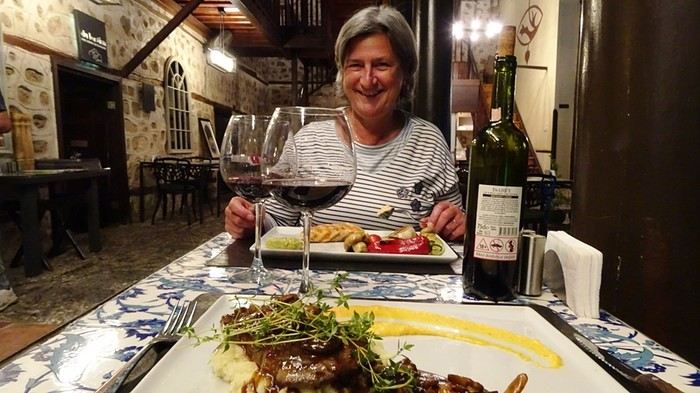
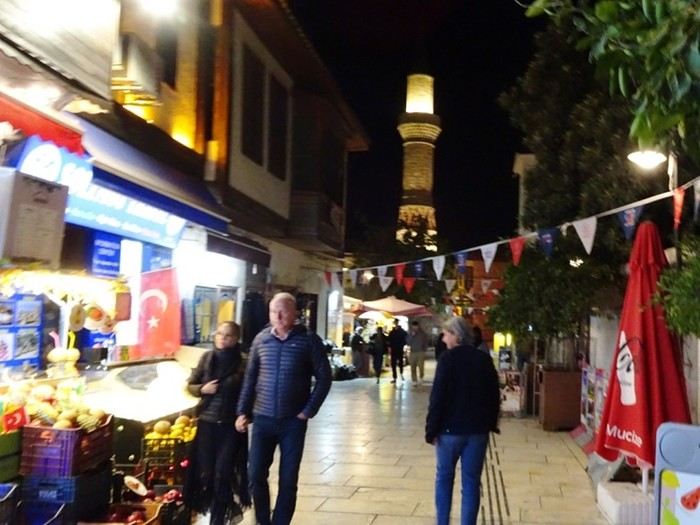
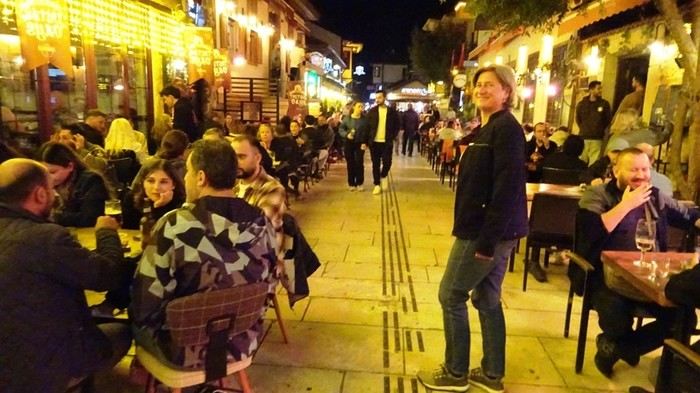
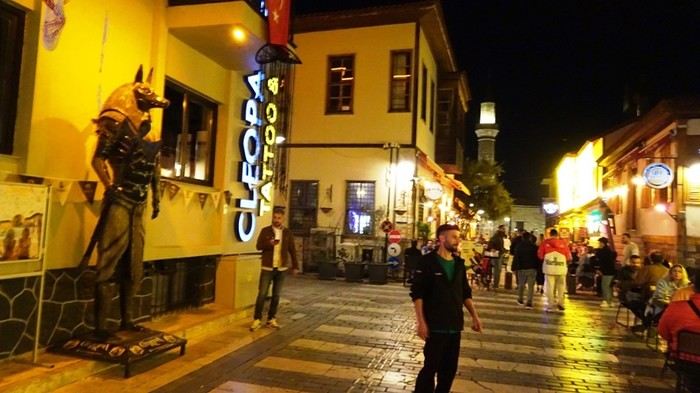
Sunday, November 10, 2024 Antalya In this part of the world, there are some quirks that don’t always suit us infidels! Here in Antalya, the religious influence is still pretty light. You can drink freely, girls can save a lot on fabric—it’s all good, no one’s gonna say anything. But there’s the muezzin. That lanky guy who belts out his tune five times a day from the top of his minaret didn’t spare us this morning. Just a heads-up, we’ve got a two-hour time difference, and this guy starts his serenade at 4 AM, right in the middle of the night. That’s early!
Anyway, we recover, have breakfast, and realize that in terms of revered figures, Atatürk doesn’t take a backseat to the prophet responsible for our nighttime disturbances. We’d already been surprised by how ubiquitous his portrait is, but on the restaurant terrace, we see it’s a full-blown cult. There’s a little altar with rose petals under his portrait. First thing in the morning, the staff lines up to pay their respects, then sings a stirring hymn while some customers stand, hand on heart.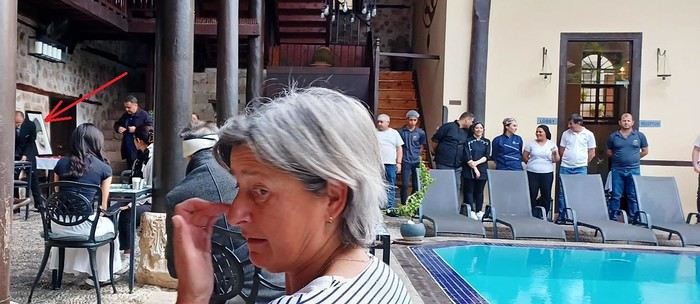
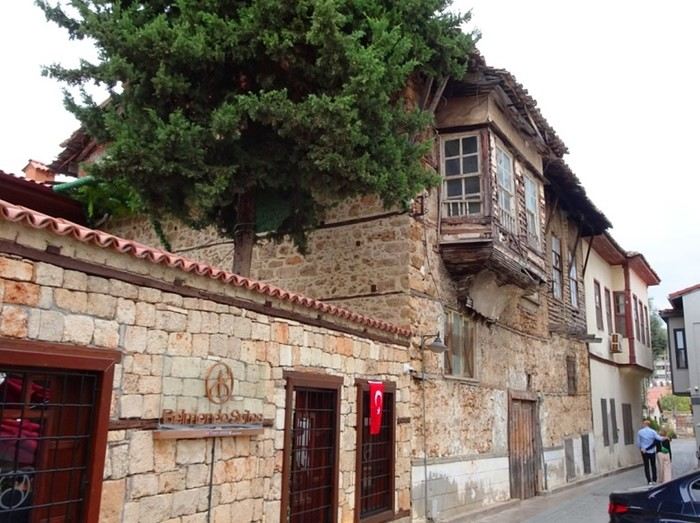
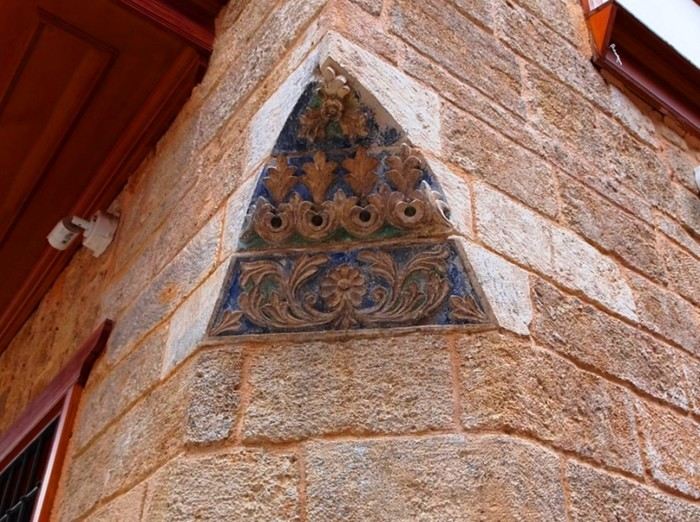
Right after breakfast, we set off like explorers through the old town. It’s incredible how many walls, monuments, and statues have survived from the glorious Greek and Roman eras. Back then, they built things to last!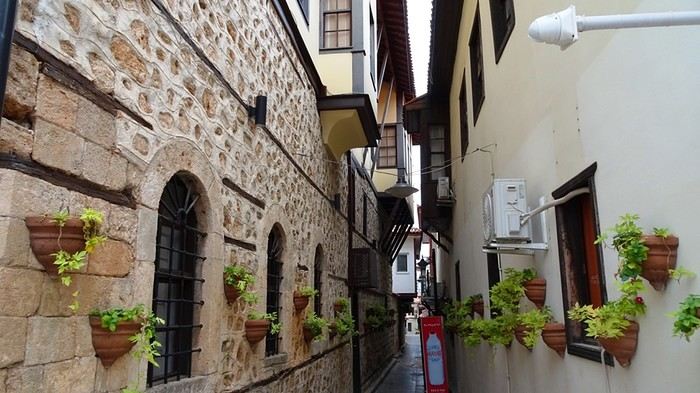


Sunday, November 10, 2024 Antalya In this part of the world, there are some quirks that don’t always suit us infidels! Here in Antalya, the religious influence is still pretty light. You can drink freely, girls can save a lot on fabric—it’s all good, no one’s gonna say anything. But there’s the muezzin. That lanky guy who belts out his tune five times a day from the top of his minaret didn’t spare us this morning. Just a heads-up, we’ve got a two-hour time difference, and this guy starts his serenade at 4 AM, right in the middle of the night. That’s early!
Anyway, we recover, have breakfast, and realize that in terms of revered figures, Atatürk doesn’t take a backseat to the prophet responsible for our nighttime disturbances. We’d already been surprised by how ubiquitous his portrait is, but on the restaurant terrace, we see it’s a full-blown cult. There’s a little altar with rose petals under his portrait. First thing in the morning, the staff lines up to pay their respects, then sings a stirring hymn while some customers stand, hand on heart.
Right after breakfast, we set off like explorers through the old town. It’s incredible how many walls, monuments, and statues have survived from the glorious Greek and Roman eras. Back then, they built things to last!
Family trip to Asia
Hello everyone,
My wife Fanny and I, along with our three kids (ages 10, 12, and 14), are planning a two-week trip to Asia during the February break. This would be our first big family trip, and we’re looking to mix discovery, a change of scenery, some relaxation, and cultural immersion. We want to avoid overly organized tours or over-touristed destinations.
Over 20 years ago, Fanny and I used to travel as a couple with backpacks, especially in India and Mongolia, but things have surely changed a lot since then. Now, we’re torn between:
• Thailand: for its diversity (beaches, temples, nature) and accessibility for a first family trip.
• Laos-Cambodia combo: for a potentially more authentic immersion, but we’re wondering if it’s well-suited for kids.
- Sri Lanka: it seems amazing and family-friendly? Is the political situation stable enough?
We have a few questions:
Which destination would you recommend for this kind of family setup? What itineraries might work for two weeks without feeling too rushed?
Logistics-wise: can we travel with a round-trip flight ticket, book a few basic hotels, and improvise the rest once we’re there? Or do we need to plan everything in advance (transport, accommodations, activities) for this time of year?
Thanks in advance for your valuable tips! Mathieu
Which destination would you recommend for this kind of family setup? What itineraries might work for two weeks without feeling too rushed?
Logistics-wise: can we travel with a round-trip flight ticket, book a few basic hotels, and improvise the rest once we’re there? Or do we need to plan everything in advance (transport, accommodations, activities) for this time of year?
Thanks in advance for your valuable tips! Mathieu
Medical insurance for the United States
.hi there
I'm looking for travel insurance for the USA for a 1-month trip as a tourist.
Could anyone give me some advice?
Thanks so much
46-Day Itinerary in Thailand
Hi everyone,
I’m a die-hard fan of India, but it’s time I discovered Thailand too to broaden my Asian horizons.
I’m heading there on January 19, 2025, for a 46-day trip (no visa needed as I’m French). I’ve pored over a few guidebooks and travel blogs. Based on what caught my interest, I’ve put together a rough itinerary and list of sights. But since I know absolutely nothing about Thailand, I’m kind of flying blind here.
Since I’m not exactly a spring chicken anymore, I’ve opted for a few bases where I’ll stay several days in the same place. That way, I won’t have to change locations and hotels every day or so, packing and unpacking my suitcase constantly. Instead, I plan to explore the surrounding area each day, within a maximum radius of 50 to 70 km.
So, first question: Is that kind of round-trip distance manageable in a day in Thailand?
In India, renting a car for a day—with a driver—currently costs around 35 to 40 € per day. Knowing that 1,300 to 1,500 THB would be my absolute max, and even then, only if I don’t rent a car every single day.
Which brings me to my second question: Am I being unrealistic?
Otherwise—third question—once I’m settled in the city I’ve chosen as my base, can I get around within that 50–70 km radius using public transport?
I’ve already booked all my hotels—with free cancellation—on booking.com at an average price of 950/1,000 THB per night. Does that put me in a good range for value for money? Or am I dreaming?
Here’s my plan:
BANGKOK (13 days, 14 nights): 1 week for exploring Bangkok – Kanchanaburi/Erawan National Park? – Ayutthaya/Lopburi? – Muang Boran – Samut – Songkram/Amphawa
Bangkok -> Chiang Mai by overnight train in first-class sleeper
CHIANG MAI (6 days/6 nights): Mae Hong Son – Hot springs – Chiang Dao – caves – Lamphun – other places to be decided on the spot based on what’s worth seeing and transport options
Chiang Mai -> Chiang Rai
CHIANG RAI (7 days/8 nights): Fang – Tha Ton – Chiang Saen – Doi Tung – Chiang Khong – Doi Ang Khang, Phu Chi Fah, etc.
Chiang Rai -> Phrae
PHRAE (4 days/5 nights): Lampang and surrounding areas, depending on what’s interesting to see
Phrae -> Loei
LOEI (4 days/5 nights): Phu Kradung – Chiang Khan and surrounding areas, depending on what’s worth seeing
Loei -> Buriram
PHIMAI (Nakhon Ratchasima/Khorat) (5 days/6 nights): Phimai – Prasat Muang Tam – Phanom Rung – Prasat Phanom Wan
Phimai -> Khorat (airport or train station) -> Bangkok (overnight in Bangkok)
Day 46: BANGKOK -> KOCHI
Thanks in advance for your thoughts and advice!
Here’s my plan:
BANGKOK (13 days, 14 nights): 1 week for exploring Bangkok – Kanchanaburi/Erawan National Park? – Ayutthaya/Lopburi? – Muang Boran – Samut – Songkram/Amphawa
Bangkok -> Chiang Mai by overnight train in first-class sleeper
CHIANG MAI (6 days/6 nights): Mae Hong Son – Hot springs – Chiang Dao – caves – Lamphun – other places to be decided on the spot based on what’s worth seeing and transport options
Chiang Mai -> Chiang Rai
CHIANG RAI (7 days/8 nights): Fang – Tha Ton – Chiang Saen – Doi Tung – Chiang Khong – Doi Ang Khang, Phu Chi Fah, etc.
Chiang Rai -> Phrae
PHRAE (4 days/5 nights): Lampang and surrounding areas, depending on what’s interesting to see
Phrae -> Loei
LOEI (4 days/5 nights): Phu Kradung – Chiang Khan and surrounding areas, depending on what’s worth seeing
Loei -> Buriram
PHIMAI (Nakhon Ratchasima/Khorat) (5 days/6 nights): Phimai – Prasat Muang Tam – Phanom Rung – Prasat Phanom Wan
Phimai -> Khorat (airport or train station) -> Bangkok (overnight in Bangkok)
Day 46: BANGKOK -> KOCHI
Thanks in advance for your thoughts and advice!
10 days in northern Vietnam
Hi there,
We’re traveling as a family of three adults for the holidays. After several iterations, here’s the itinerary we’re considering. We’d thought about including Bac Ha or Mai Chau, but in the end, we wanted to avoid excessive travel and rushing around. That’s not our style—we’d rather see less but have time to enjoy what we visit at a relaxed pace. We’ll definitely be back (in a better season) to see some of what we’ll miss this time. Just to note: we’re not motorbike riders, and we’re not the type to start our days at dawn and keep going until nightfall. We go at the pace of the day’s mood and energy. My questions: - Thoughts on the itinerary? - Ninh Binh: where’s the best place to stay to explore mostly on foot, by bike, or by taxi? - Cat Ba to Ninh Binh route: is it better to arrange it through one of our accommodations (departure or arrival) or handle it ourselves? - For the return day between Ninh Binh and Hanoi, I’d like to visit some sights rather than make a direct trip, since we’ll already spend enough time in Ninh Binh and Hanoi. I was thinking of the Perfume Pagoda and possibly Quang Phu Cau. But we’d need a car for the day. Is it better to organize in advance or on the spot? In Hanoi or Ninh Binh? Any driver recommendations? Price ideas? Other suggestions for things to see along the way?
Proposed itinerary:
### Day 1: **Monday, December 23, 2024** - Arrival in Hanoi in the late afternoon. ### Day 2: **Tuesday, December 24 – Hanoi** ### Day 3: **Wednesday, December 25 – Hanoi – Lan Ha Bay** 2-day, 1-night cruise ### Day 4: **Thursday, December 26 – Lan Ha Bay – Cat Ba** - Overnight on Cat Ba Island. ### Day 5: **Friday, December 27 – Cat Ba – Ninh Binh** ### Day 6: **Saturday, December 28 – Ninh Binh** ### Day 7: **Sunday, December 29 – Ninh Binh** ### Day 8: **Monday, December 30 – Ninh Binh – Return to Hanoi** - Stop by the Perfume Pagoda? Possibly add Quang Phu Cau? ### Day 9-10-11: **Tuesday, December 31 – Thursday, January 2** Hanoi – New Year’s Eve ### Day 12: **Friday, January 3 – Departure**
That’s a lot of text and questions... Thanks in advance if anyone has answers or ideas. Happy travels to everyone!
Yuri
We’re traveling as a family of three adults for the holidays. After several iterations, here’s the itinerary we’re considering. We’d thought about including Bac Ha or Mai Chau, but in the end, we wanted to avoid excessive travel and rushing around. That’s not our style—we’d rather see less but have time to enjoy what we visit at a relaxed pace. We’ll definitely be back (in a better season) to see some of what we’ll miss this time. Just to note: we’re not motorbike riders, and we’re not the type to start our days at dawn and keep going until nightfall. We go at the pace of the day’s mood and energy. My questions: - Thoughts on the itinerary? - Ninh Binh: where’s the best place to stay to explore mostly on foot, by bike, or by taxi? - Cat Ba to Ninh Binh route: is it better to arrange it through one of our accommodations (departure or arrival) or handle it ourselves? - For the return day between Ninh Binh and Hanoi, I’d like to visit some sights rather than make a direct trip, since we’ll already spend enough time in Ninh Binh and Hanoi. I was thinking of the Perfume Pagoda and possibly Quang Phu Cau. But we’d need a car for the day. Is it better to organize in advance or on the spot? In Hanoi or Ninh Binh? Any driver recommendations? Price ideas? Other suggestions for things to see along the way?
Proposed itinerary:
### Day 1: **Monday, December 23, 2024** - Arrival in Hanoi in the late afternoon. ### Day 2: **Tuesday, December 24 – Hanoi** ### Day 3: **Wednesday, December 25 – Hanoi – Lan Ha Bay** 2-day, 1-night cruise ### Day 4: **Thursday, December 26 – Lan Ha Bay – Cat Ba** - Overnight on Cat Ba Island. ### Day 5: **Friday, December 27 – Cat Ba – Ninh Binh** ### Day 6: **Saturday, December 28 – Ninh Binh** ### Day 7: **Sunday, December 29 – Ninh Binh** ### Day 8: **Monday, December 30 – Ninh Binh – Return to Hanoi** - Stop by the Perfume Pagoda? Possibly add Quang Phu Cau? ### Day 9-10-11: **Tuesday, December 31 – Thursday, January 2** Hanoi – New Year’s Eve ### Day 12: **Friday, January 3 – Departure**
That’s a lot of text and questions... Thanks in advance if anyone has answers or ideas. Happy travels to everyone!
Yuri
Trip report: 3 weeks in India in January 2024
Hello everyone,
Here’s a little recap of our 3-week trip to India (retired couple) in January 2024. This is our personal experience and how we felt at the time. This is the 7th time we’ve been to India, and after experiencing public transport day and night—and with age catching up—we opted for a more "chill" pace this time, prioritizing flights and taxis while slightly increasing our accommodation budget. Regarding that accommodation budget (double room), we chose a range between 30 and 40 €, and we didn’t really notice much difference compared to the lower range we used to book on previous trips (between 20 and 30 €). But prices have likely gone up since my last visit in 2018.
So here are some personal tips and opinions, good addresses, and others to avoid. Exchange rate: In January 2024, 100 rupees were worth about 1.12 euros (1 euro = 89 INR at exchange bureaus). To convert rupees to euros: X rupees divided by 89 = X euros. For simplicity, we divided the price in rupees by 100 and added about 10% to get the equivalent in euros.
Our itinerary: Mumbai/Aurangabad (Ellora and Ajanta) / Badami / Hampi / Goa (Agonda) / Mumbai Flight: With British Airways—very (too) short layover in London (2 hours in theory...) for the connection to Mumbai, but a 1-hour delay on the flight from CDG, so we had to rush in London with two shuttles to take and security to clear before reaching the departure gate. We had a 15-minute margin by speeding... same stress on the way back...
Mumbai: On the day we arrived in Mumbai, we took a flight to Aurangabad with Indigo. **Note:** Terminal change for this flight. Free buses connect T2 to T1. The flight was fine, even with a 2-hour delay...
Aurangabad: Accommodation: Hotel JP International (35 €/night): Large, "decorated" room with comfortable bedding. But the hotel is showing its age. The air conditioning is a bit noisy, and the faucets and shower have seen better days... Breakfast is included in the price with a buffet—it’s decent. You just have to ask for toast, jam, and eggs, as it’s mostly an Indian buffet... The rooftop restaurant is okay. The hotel is a bit pricey for what it is... The owner, a bit gruff at first, was helpful and assisted us with taxis for visiting the Ellora and Ajanta sites, as it’s hard to find taxis for those trips on the street—no travel agencies in this area. Restaurant: Le Great Sagar (on the main street): Close to the hotel, good food, and plenty of choices. Exchange: We struggled to exchange euros in Aurangabad. No banks exchange money (we tried five...). Only Thomas Cook does: Jalna Road near the Ramgiri Hotel.
Ellora: A magnificent site 25 km from Aurangabad. **Tip:** Arrive early (by 9 AM max) and visit the Kailasha Temple first—it’s the world’s largest monolithic structure—and it gets much busier later.
Ajanta: About a 2-hour drive. **Great tip for this visit:** Ask your taxi to drop you off at the Ajanta View Point. Not only do you get a beautiful overview of the cliff and caves, but you can also walk down gently to the site. The descent is easy with stairs and paths, and you approach the site with stunning views. Cross the bridge, and you’re there (start from the end, as it’s less crowded: after crossing the bridge and paying at the ticket counter, turn left and go to the far end to begin your visit). The taxi waited for us at the "official" entrance after we finished exploring the caves.
Badami: To get to Badami, we took an early-morning flight from Aurangabad to Hubli with Indigo (scheduled takeoff at 6:20 AM...) to arrive in Hubli in the early afternoon and find a taxi to Badami. We found a taxi quickly at Hubli Airport. About 2.5 hours (3,400 INR). Hotel: KSTDC Hotel Mayura Chalukya (38 €/night): A state-run hotel that’s a bit dated, located 15 minutes from the center but quiet compared to the chaotic main street in Badami. Large room, a bit dark, slightly worn walls, rustic bathroom... The air conditioning is very noisy. The owner was very friendly and helped with transport. The staff was also very nice. The hotel restaurant is decent, which saves you from going back "into town." A bit pricey for the quality, but it’s peaceful... The visit to the sculpted caves is worth it, as is a walk around the lake. The short climb to the top of the hill from the museum is also worth it—you pass through small gorges. A relaxing atmosphere in these places.
Hampi: Trip from Badami to Hampi by taxi (3,500 INR) – 3 hours. Booked through the Badami hotel, as we couldn’t find taxis on the street or at reasonable prices... Accommodation: Thilak Home Stay (33 €/night): Located in Hampi Bazaar, a small guesthouse with 4 rooms. Simple room with two single beds and a nightstand. The owner was very helpful, making our stay easier with services like tuk-tuks for sightseeing, laundry, bus booking to Goa, and a tuk-tuk to Hospet. A bit pricey for the room quality, but recommended for the owner’s kindness. It was hard to find accommodation in Hampi Bazaar through booking platforms, as they all offer places outside the city, several kilometers away—which is a shame. But we realized you can find places directly on-site. **You must stay in Hampi Bazaar**—the atmosphere changes from morning to night (in the evening, around 9 PM, go into the courtyard of the main temple in Hampi Bazaar, which turns into a huge dormitory—it’s impressive...). Restaurant: Archana Roof Restaurant: Small restaurant on the 1st floor overlooking a banana field with the Hampi rocks in the background. Very friendly welcome, quiet, and excellent thalis. The Hampi site is in a magical natural setting among temples, pilgrims, ochre rocks, and rice fields. We did a one-day circuit with a tuk-tuk to visit the main sites (1,500 INR). We also rented a scooter on the other side of the river (to avoid a long detour from Hampi Bazaar) for a day trip around the area. Some places we visited: Anegondi village, Durga Temple, Hanuman Temple (go early—it’s a climb...), Sanapur Lake. The accommodations on the other side of the river, called "Hippie Island," have been completely destroyed.
Goa (Agonda Beach): Trip from Hampi to Agonda: Booked a sleeper bus with two beds! (1,300 INR/person). Departure at 9 PM from Hospet, theoretical arrival at 4 AM (for us, it was 6 AM) in Canacona, then a 20-minute tuk-tuk ride to Agonda. Comfortable bus with real berths, but the many speed bumps made sleep difficult... The train would have been much longer and more complicated to reach Agonda.
Agonda: Accommodation: New Common Home (35 €/night): Business-like welcome. Decent and fairly large room, rustic bathroom. Breakfast included in the price—it was okay. We only booked one night to choose accommodation afterward, right on the beach. But we didn’t account for the Indian national holiday at the end of the week—everything was fully booked... We found Saxony (44 €/night) at the far end of the beach (left when facing the sea), but only for 2 nights—after that, it was reserved... Decent room, average bathroom, but a beautiful terrace facing the sea. Then 2 nights at Agonda Holiday Home Stay (36 €/night), not on the beach: Very average, bathroom in poor condition, almost no view—but it was all that was left... Restaurant: The Rhino for dinner (not on the beach): Excellent tandoori, chicken tikka, and masala. Great value for money. Cool and friendly atmosphere. Agonda is a beautiful, long, quiet, and family-friendly beach for relaxing, with lovely walks to take. Beautiful sunset!
Mumbai: Trip from Agonda to Mumbai: Flight: We chose Vistara because the departure was in the late afternoon, while Indigo offered flights very early or very late. Bad choice... because this Vistara flight leaves from Mopa Airport, at the very north of Goa state. And from Agonda, it’s a 3-hour taxi ride... (3,700 INR...) **Always check which airport your flight leaves from to reach Mumbai!**
Mumbai: Accommodation: Broadway Hotel Bombay (39 €/night): Very well-located hotel in Colaba, on a street perpendicular to the busy main road. Ask for quiet rooms... Friendly, helpful, and accommodating staff. Very small room with a tiny window and little space to put bags or move around... Small but clean bathroom. Mumbai is expensive for accommodation, and cleanliness often leaves something to be desired... Restaurant: Delhi Darbar, very close to the hotel on the main street. Good, clean, not too noisy... and good value for money. Sightseeing: Mumbai is a bustling city, but the traffic is completely chaotic, and the horn often replaces the brake... The architecture is quite unique and worth a look, with some must-see visits: Crawford Market and its surroundings... Null Bazar and Chor Bazar, where poverty and dirt are quite present... Mani Bhavan: Gandhi’s house in Mumbai, with a very special atmosphere... Balbunath Temple, with its religious fervor. The beautiful Jain temple (Walkeshwar Mandir), where the atmosphere is very different from other temples and full of serenity. The Dhobi Ghats, the laundry district—very impressive. For a few hundred rupees, a "guide" will take you through these washhouses and thousands of clothes. Banganga Tank: A basin surrounded by ghats with a village-like (but quite poor) atmosphere, where Indians come to pray. The dabbawallahs: Their departure around 11 AM and the transport by bicycle of hundreds of lunchboxes from Churchgate Station. **Note:** It’s not easy to find them—we almost missed them, as it seems to be disappearing. They’re on the other side of the road where taxis usually drop you off for Churchgate Station, under some trees. They’re recognizable by their white attire and a crowd. Few passersby seemed to know about them... All these visits can be done easily by taking taxis, which are really cheap—**as long as they agree to use the meter.**
So here are some great tips to share, knowing that every trip is unique, and India remains a magnificent, often disconcerting, elusive country that challenges you. It’s unlike any other country we’ve visited but so fascinating... Good luck with your preparations, and if you need more info, don’t hesitate! I really regret that the new 2024/2025 South India GDR only includes Mumbai for Maharashtra and nothing else... and nothing on Karnataka or Goa. These states don’t seem to be selling points for the GDR anymore... Guy
Here’s a little recap of our 3-week trip to India (retired couple) in January 2024. This is our personal experience and how we felt at the time. This is the 7th time we’ve been to India, and after experiencing public transport day and night—and with age catching up—we opted for a more "chill" pace this time, prioritizing flights and taxis while slightly increasing our accommodation budget. Regarding that accommodation budget (double room), we chose a range between 30 and 40 €, and we didn’t really notice much difference compared to the lower range we used to book on previous trips (between 20 and 30 €). But prices have likely gone up since my last visit in 2018.
So here are some personal tips and opinions, good addresses, and others to avoid. Exchange rate: In January 2024, 100 rupees were worth about 1.12 euros (1 euro = 89 INR at exchange bureaus). To convert rupees to euros: X rupees divided by 89 = X euros. For simplicity, we divided the price in rupees by 100 and added about 10% to get the equivalent in euros.
Our itinerary: Mumbai/Aurangabad (Ellora and Ajanta) / Badami / Hampi / Goa (Agonda) / Mumbai Flight: With British Airways—very (too) short layover in London (2 hours in theory...) for the connection to Mumbai, but a 1-hour delay on the flight from CDG, so we had to rush in London with two shuttles to take and security to clear before reaching the departure gate. We had a 15-minute margin by speeding... same stress on the way back...
Mumbai: On the day we arrived in Mumbai, we took a flight to Aurangabad with Indigo. **Note:** Terminal change for this flight. Free buses connect T2 to T1. The flight was fine, even with a 2-hour delay...
Aurangabad: Accommodation: Hotel JP International (35 €/night): Large, "decorated" room with comfortable bedding. But the hotel is showing its age. The air conditioning is a bit noisy, and the faucets and shower have seen better days... Breakfast is included in the price with a buffet—it’s decent. You just have to ask for toast, jam, and eggs, as it’s mostly an Indian buffet... The rooftop restaurant is okay. The hotel is a bit pricey for what it is... The owner, a bit gruff at first, was helpful and assisted us with taxis for visiting the Ellora and Ajanta sites, as it’s hard to find taxis for those trips on the street—no travel agencies in this area. Restaurant: Le Great Sagar (on the main street): Close to the hotel, good food, and plenty of choices. Exchange: We struggled to exchange euros in Aurangabad. No banks exchange money (we tried five...). Only Thomas Cook does: Jalna Road near the Ramgiri Hotel.
Ellora: A magnificent site 25 km from Aurangabad. **Tip:** Arrive early (by 9 AM max) and visit the Kailasha Temple first—it’s the world’s largest monolithic structure—and it gets much busier later.
Ajanta: About a 2-hour drive. **Great tip for this visit:** Ask your taxi to drop you off at the Ajanta View Point. Not only do you get a beautiful overview of the cliff and caves, but you can also walk down gently to the site. The descent is easy with stairs and paths, and you approach the site with stunning views. Cross the bridge, and you’re there (start from the end, as it’s less crowded: after crossing the bridge and paying at the ticket counter, turn left and go to the far end to begin your visit). The taxi waited for us at the "official" entrance after we finished exploring the caves.
Badami: To get to Badami, we took an early-morning flight from Aurangabad to Hubli with Indigo (scheduled takeoff at 6:20 AM...) to arrive in Hubli in the early afternoon and find a taxi to Badami. We found a taxi quickly at Hubli Airport. About 2.5 hours (3,400 INR). Hotel: KSTDC Hotel Mayura Chalukya (38 €/night): A state-run hotel that’s a bit dated, located 15 minutes from the center but quiet compared to the chaotic main street in Badami. Large room, a bit dark, slightly worn walls, rustic bathroom... The air conditioning is very noisy. The owner was very friendly and helped with transport. The staff was also very nice. The hotel restaurant is decent, which saves you from going back "into town." A bit pricey for the quality, but it’s peaceful... The visit to the sculpted caves is worth it, as is a walk around the lake. The short climb to the top of the hill from the museum is also worth it—you pass through small gorges. A relaxing atmosphere in these places.
Hampi: Trip from Badami to Hampi by taxi (3,500 INR) – 3 hours. Booked through the Badami hotel, as we couldn’t find taxis on the street or at reasonable prices... Accommodation: Thilak Home Stay (33 €/night): Located in Hampi Bazaar, a small guesthouse with 4 rooms. Simple room with two single beds and a nightstand. The owner was very helpful, making our stay easier with services like tuk-tuks for sightseeing, laundry, bus booking to Goa, and a tuk-tuk to Hospet. A bit pricey for the room quality, but recommended for the owner’s kindness. It was hard to find accommodation in Hampi Bazaar through booking platforms, as they all offer places outside the city, several kilometers away—which is a shame. But we realized you can find places directly on-site. **You must stay in Hampi Bazaar**—the atmosphere changes from morning to night (in the evening, around 9 PM, go into the courtyard of the main temple in Hampi Bazaar, which turns into a huge dormitory—it’s impressive...). Restaurant: Archana Roof Restaurant: Small restaurant on the 1st floor overlooking a banana field with the Hampi rocks in the background. Very friendly welcome, quiet, and excellent thalis. The Hampi site is in a magical natural setting among temples, pilgrims, ochre rocks, and rice fields. We did a one-day circuit with a tuk-tuk to visit the main sites (1,500 INR). We also rented a scooter on the other side of the river (to avoid a long detour from Hampi Bazaar) for a day trip around the area. Some places we visited: Anegondi village, Durga Temple, Hanuman Temple (go early—it’s a climb...), Sanapur Lake. The accommodations on the other side of the river, called "Hippie Island," have been completely destroyed.
Goa (Agonda Beach): Trip from Hampi to Agonda: Booked a sleeper bus with two beds! (1,300 INR/person). Departure at 9 PM from Hospet, theoretical arrival at 4 AM (for us, it was 6 AM) in Canacona, then a 20-minute tuk-tuk ride to Agonda. Comfortable bus with real berths, but the many speed bumps made sleep difficult... The train would have been much longer and more complicated to reach Agonda.
Agonda: Accommodation: New Common Home (35 €/night): Business-like welcome. Decent and fairly large room, rustic bathroom. Breakfast included in the price—it was okay. We only booked one night to choose accommodation afterward, right on the beach. But we didn’t account for the Indian national holiday at the end of the week—everything was fully booked... We found Saxony (44 €/night) at the far end of the beach (left when facing the sea), but only for 2 nights—after that, it was reserved... Decent room, average bathroom, but a beautiful terrace facing the sea. Then 2 nights at Agonda Holiday Home Stay (36 €/night), not on the beach: Very average, bathroom in poor condition, almost no view—but it was all that was left... Restaurant: The Rhino for dinner (not on the beach): Excellent tandoori, chicken tikka, and masala. Great value for money. Cool and friendly atmosphere. Agonda is a beautiful, long, quiet, and family-friendly beach for relaxing, with lovely walks to take. Beautiful sunset!
Mumbai: Trip from Agonda to Mumbai: Flight: We chose Vistara because the departure was in the late afternoon, while Indigo offered flights very early or very late. Bad choice... because this Vistara flight leaves from Mopa Airport, at the very north of Goa state. And from Agonda, it’s a 3-hour taxi ride... (3,700 INR...) **Always check which airport your flight leaves from to reach Mumbai!**
Mumbai: Accommodation: Broadway Hotel Bombay (39 €/night): Very well-located hotel in Colaba, on a street perpendicular to the busy main road. Ask for quiet rooms... Friendly, helpful, and accommodating staff. Very small room with a tiny window and little space to put bags or move around... Small but clean bathroom. Mumbai is expensive for accommodation, and cleanliness often leaves something to be desired... Restaurant: Delhi Darbar, very close to the hotel on the main street. Good, clean, not too noisy... and good value for money. Sightseeing: Mumbai is a bustling city, but the traffic is completely chaotic, and the horn often replaces the brake... The architecture is quite unique and worth a look, with some must-see visits: Crawford Market and its surroundings... Null Bazar and Chor Bazar, where poverty and dirt are quite present... Mani Bhavan: Gandhi’s house in Mumbai, with a very special atmosphere... Balbunath Temple, with its religious fervor. The beautiful Jain temple (Walkeshwar Mandir), where the atmosphere is very different from other temples and full of serenity. The Dhobi Ghats, the laundry district—very impressive. For a few hundred rupees, a "guide" will take you through these washhouses and thousands of clothes. Banganga Tank: A basin surrounded by ghats with a village-like (but quite poor) atmosphere, where Indians come to pray. The dabbawallahs: Their departure around 11 AM and the transport by bicycle of hundreds of lunchboxes from Churchgate Station. **Note:** It’s not easy to find them—we almost missed them, as it seems to be disappearing. They’re on the other side of the road where taxis usually drop you off for Churchgate Station, under some trees. They’re recognizable by their white attire and a crowd. Few passersby seemed to know about them... All these visits can be done easily by taking taxis, which are really cheap—**as long as they agree to use the meter.**
So here are some great tips to share, knowing that every trip is unique, and India remains a magnificent, often disconcerting, elusive country that challenges you. It’s unlike any other country we’ve visited but so fascinating... Good luck with your preparations, and if you need more info, don’t hesitate! I really regret that the new 2024/2025 South India GDR only includes Mumbai for Maharashtra and nothing else... and nothing on Karnataka or Goa. These states don’t seem to be selling points for the GDR anymore... Guy
Java - Bali Trip in Spring
Hi there,
I’m so excited to reopen the Asia/Indonesia forum! We’ve got a trip planned for spring, and we’re planning to spend a few days on Java before wrapping up in Bali.
For Java: Yogyakarta / Bromo / Ijen
For Bali: Ubud / Amed
See you all on the forum soon!
Two weeks in Uganda, solo and using public transport
Hi everyone,
I’m taking advantage of the forum’s long-awaited reopening to dive back into my memories and start my first travel journal, destination Uganda!
Why Uganda?
Choosing this destination was almost by chance. I’d already traveled to East Africa two years earlier, to Kenya, and loved the experience. Of course, I wanted to return to the region and see that abundant wildlife I’d enjoyed so much. But Uganda wasn’t really on my radar... While looking for a destination for a two-week trip in May 2023, I came across cheap flights (~400 €) with Kenya Airways to Entebbe. Why not, I thought? I started looking into the country.
How did the trip go?
Most travelers whose posts I read had organized their trip with an agency and/or rented a vehicle, with or without a driver. That’s not at all how I like to explore a country... and besides, I don’t have a license ! Digging a little deeper, I saw that it seemed possible to reach the main sights using local transport, as long as I was ready to put up with the discomfort of the journeys. Challenge accepted! On the other hand, the budget accommodations near the parks that I’d managed to find in Kenya seemed much less common here. The trip was shaping up to be expensive, especially since the highlight—gorilla trekking—requires a permit costing several hundred dollars. Yikes, sticking to a reasonable budget was going to be tricky... In the end, I found a solution. Almost all lodges offer the option to pitch a tent on their grounds for a modest price (between $10 and $20 per night). That would let me enjoy the safaris while keeping this trip "relatively" affordable.
My itinerary
After studying the Lonely Planet East Africa guide, various travel journals and blogs, and the excellent site Safari Bookings, I finally settled on an itinerary (not counting the travel days):
Entebbe – 1 day Ziwa Rhino Sanctuary – 1 day Murchison Falls National Park – 2 days Crater Lakes – 1 day Queen Elizabeth National Park – 2 days Bwindi – 3 days Lake Bunyonyi – 1 day Kampala – 1 day
See you soon for the first stop in Entebbe!
Why Uganda?
Choosing this destination was almost by chance. I’d already traveled to East Africa two years earlier, to Kenya, and loved the experience. Of course, I wanted to return to the region and see that abundant wildlife I’d enjoyed so much. But Uganda wasn’t really on my radar... While looking for a destination for a two-week trip in May 2023, I came across cheap flights (~400 €) with Kenya Airways to Entebbe. Why not, I thought? I started looking into the country.
How did the trip go?
Most travelers whose posts I read had organized their trip with an agency and/or rented a vehicle, with or without a driver. That’s not at all how I like to explore a country... and besides, I don’t have a license ! Digging a little deeper, I saw that it seemed possible to reach the main sights using local transport, as long as I was ready to put up with the discomfort of the journeys. Challenge accepted! On the other hand, the budget accommodations near the parks that I’d managed to find in Kenya seemed much less common here. The trip was shaping up to be expensive, especially since the highlight—gorilla trekking—requires a permit costing several hundred dollars. Yikes, sticking to a reasonable budget was going to be tricky... In the end, I found a solution. Almost all lodges offer the option to pitch a tent on their grounds for a modest price (between $10 and $20 per night). That would let me enjoy the safaris while keeping this trip "relatively" affordable.
My itinerary
After studying the Lonely Planet East Africa guide, various travel journals and blogs, and the excellent site Safari Bookings, I finally settled on an itinerary (not counting the travel days):
Entebbe – 1 day Ziwa Rhino Sanctuary – 1 day Murchison Falls National Park – 2 days Crater Lakes – 1 day Queen Elizabeth National Park – 2 days Bwindi – 3 days Lake Bunyonyi – 1 day Kampala – 1 day
See you soon for the first stop in Entebbe!
Visas pour un an en Asie en camping-car English translation pending
Bonjour, je voudrai savoir comment cela se passe pour les visas pour les pays qui les demande. j'aimerai partir au moins 1 an en Asie en camping car : faut-il tout prévoir à l'avance ou peut-on prendre les visas au fur et à mesure lorsqu'on on change de pays ? et si oui ou faut-il se renseigner ?Merci d'avance pour vos réponses..cdt
Coût de la vie aux Philippines en 2020 English translation pending
Salut à toutes et tous,
enfin un frenchy qui donne des chiffres "réalistes"... ça change de tous ces foreigners qui te disent que tu peux vivre pour moins de 200$/mois sous les cocotiers ! 😉
https://m.youtube.com/watch?fbclid=IwAR3S9qW-bvomF5hMKJO_pZyGBtsggKJgB1IneoxAWgqqdpxFV8cH8FOqGaM&v=5dDJZfOw0E4
enfin un frenchy qui donne des chiffres "réalistes"... ça change de tous ces foreigners qui te disent que tu peux vivre pour moins de 200$/mois sous les cocotiers ! 😉
https://m.youtube.com/watch?fbclid=IwAR3S9qW-bvomF5hMKJO_pZyGBtsggKJgB1IneoxAWgqqdpxFV8cH8FOqGaM&v=5dDJZfOw0E4
«Je ne veux plus gueuler: "Comment va le monde?" Et qu'on me réponde: «Il va comme il va» English translation pending
Dans la tiédeur d’un soir d’été, deux amies devisaient paisiblement.
Elles parlaient d’amour.
L’une de l’amour de sa compagne qui la rendait plus forte, l’autre de l’amour de son mari qui la rendait plus douce.
Elles parlaient voyages Les voyages d’autrefois où les anecdotes s’enrubannent année après année de détails sortis de leur imagination fertile et qui rendaient leurs récits plus épiques et ceux récents encore à l’état de fraîche émotion.
La bouteille de vin blanc s’embuait sur la table blanche en fer, l’herbe roussie chatouillait leurs pieds nus, elles se sentaient comblées, heureuses et libres et, sans doute pour cette raison, il leur était facile de parler du monde d’aujourd’hui, facile d’évoquer les conflits, les émeutes, les violences, les épidémies.
Epargnées, tranquilles, trempant avec gourmandise leurs lèvres dans le gewurztraminer frais, elles s’interrogeaient :
« T’as vu avec le covid on ne parle plus des guerres, c’est covid partout, encore que ça commence à ralentir, y’a le foot » « Ah oui, t’as raison, tu crois que ça pète encore en Syrie, en Lybie, au Yémen, en Somalie, au Sahel ? » « Chais pas, mais au Liban, quelle horreur cette explosion et tous ces gens morts ou sans maison » « T’as entendu les humanitaires au Niger ? » « Oui, pas les premiers pas les derniers à mourir bêtement » « Et au Brésil et en Colombie, ça c’est calmé ? » « Aucune idée » « Et à Hong-Kong et au Brésil et au Vénézuela, je me demande si ça manifeste toujours » « Chais pas, mais aux Etats-Unis entre blancs et noirs c’est pas cool, t’as vu les émeutes et ça va continuer, tu peux croire » « moi, c’qui me rend dingue c’est tous les gens dans le monde qui ont faim, qui n’ont pas de boulot ou qui l’ont perdu » « oui, c’est triste » « En tout cas, on entend plus parler des migrants, ni ceux de Lampedusa, ni ceux des jungles là-haut » « T’imagines un peu le monde entier à l’arrêt. Comment veux-tu que la terre reste en paix » « Et ceux qui se battent, qui sont en guerre, se tapent le covid en plus » « Et t’as vu en Bielorussie, pareil, ça chauffe aussi » « T’as déjà vu des révolutions pacifiques toi ? » « Ouais, c’est plus embêtant c’est pas loin d’chez nous » « Et le mec empoisonné par les russes, paraît qu’il est en Allemagne » « Chez nous ça va être chaud à la rentrée, j’te l’dis, tu verras, avec les chômeurs, le covid, les gosses à l’école, le télétravail oui et non, on va pas rire »
« Moi, j’te dis qu’il n’y a pas que les incendies de forêts qui bousillent la terre, y’a les incendies de fureur dans le coeur des hommes »
« Oh , t’as pas parlé des masques, des mesures barrières, etoussaettoussa » « Et toi de ton dada favori, l’eau, l’or du monde » « Eh ne me branche pas sur ce sujet, je suis intarissable »
« Allez, t’es pas marrante, tiens, on finit la bouteille, l’est super bon ce vin »
Ainsi, dans la tiédeur d’un soir d’été, deux amies devisaient. A l’abri sous le tilleul, comme à l’abri derrière un écran, comme sur vf, la vie défile, bouleverse, secoue, agace, exaspère ou indiffère et « passent les jours, passent les semaines.../... »
« Comment va le monde? Il est rouge sang Et à mon avis, il l'est pour longtemps Comment va la vie? Il y a des endroits Elle vaut dix dollars combien je te dois
Comment va la guerre? Elle va comme elle va Elle est planétaire, on se reverra Comment va la banque? La banque surnage Pour les grands requins y a pas de naufrage Comment va la mort? Record absolu Toujours très discrète, je n'en sais pas plus » .../… B. Lavilliers
(Vos voyages vous ont fait réfléchir sur l'art de bien voyager, de bien vivre, l'état du monde ou le sens de la vie? Partagez vos pensées et réflexions dans cette rubrique.
Euhhhh, chuis dans la bonne rubrique.)
Elles parlaient voyages Les voyages d’autrefois où les anecdotes s’enrubannent année après année de détails sortis de leur imagination fertile et qui rendaient leurs récits plus épiques et ceux récents encore à l’état de fraîche émotion.
La bouteille de vin blanc s’embuait sur la table blanche en fer, l’herbe roussie chatouillait leurs pieds nus, elles se sentaient comblées, heureuses et libres et, sans doute pour cette raison, il leur était facile de parler du monde d’aujourd’hui, facile d’évoquer les conflits, les émeutes, les violences, les épidémies.
Epargnées, tranquilles, trempant avec gourmandise leurs lèvres dans le gewurztraminer frais, elles s’interrogeaient :
« T’as vu avec le covid on ne parle plus des guerres, c’est covid partout, encore que ça commence à ralentir, y’a le foot » « Ah oui, t’as raison, tu crois que ça pète encore en Syrie, en Lybie, au Yémen, en Somalie, au Sahel ? » « Chais pas, mais au Liban, quelle horreur cette explosion et tous ces gens morts ou sans maison » « T’as entendu les humanitaires au Niger ? » « Oui, pas les premiers pas les derniers à mourir bêtement » « Et au Brésil et en Colombie, ça c’est calmé ? » « Aucune idée » « Et à Hong-Kong et au Brésil et au Vénézuela, je me demande si ça manifeste toujours » « Chais pas, mais aux Etats-Unis entre blancs et noirs c’est pas cool, t’as vu les émeutes et ça va continuer, tu peux croire » « moi, c’qui me rend dingue c’est tous les gens dans le monde qui ont faim, qui n’ont pas de boulot ou qui l’ont perdu » « oui, c’est triste » « En tout cas, on entend plus parler des migrants, ni ceux de Lampedusa, ni ceux des jungles là-haut » « T’imagines un peu le monde entier à l’arrêt. Comment veux-tu que la terre reste en paix » « Et ceux qui se battent, qui sont en guerre, se tapent le covid en plus » « Et t’as vu en Bielorussie, pareil, ça chauffe aussi » « T’as déjà vu des révolutions pacifiques toi ? » « Ouais, c’est plus embêtant c’est pas loin d’chez nous » « Et le mec empoisonné par les russes, paraît qu’il est en Allemagne » « Chez nous ça va être chaud à la rentrée, j’te l’dis, tu verras, avec les chômeurs, le covid, les gosses à l’école, le télétravail oui et non, on va pas rire »
« Moi, j’te dis qu’il n’y a pas que les incendies de forêts qui bousillent la terre, y’a les incendies de fureur dans le coeur des hommes »
« Oh , t’as pas parlé des masques, des mesures barrières, etoussaettoussa » « Et toi de ton dada favori, l’eau, l’or du monde » « Eh ne me branche pas sur ce sujet, je suis intarissable »
« Allez, t’es pas marrante, tiens, on finit la bouteille, l’est super bon ce vin »
Ainsi, dans la tiédeur d’un soir d’été, deux amies devisaient. A l’abri sous le tilleul, comme à l’abri derrière un écran, comme sur vf, la vie défile, bouleverse, secoue, agace, exaspère ou indiffère et « passent les jours, passent les semaines.../... »
« Comment va le monde? Il est rouge sang Et à mon avis, il l'est pour longtemps Comment va la vie? Il y a des endroits Elle vaut dix dollars combien je te dois
Comment va la guerre? Elle va comme elle va Elle est planétaire, on se reverra Comment va la banque? La banque surnage Pour les grands requins y a pas de naufrage Comment va la mort? Record absolu Toujours très discrète, je n'en sais pas plus » .../… B. Lavilliers
(Vos voyages vous ont fait réfléchir sur l'art de bien voyager, de bien vivre, l'état du monde ou le sens de la vie? Partagez vos pensées et réflexions dans cette rubrique.
Euhhhh, chuis dans la bonne rubrique.)
Petit tour dans le Péloponnèse English translation pending
Tous nos séjours en Grèce nous ont enchantées alors, après un séjour en Crète, à Rhodes, à Zakynthos et en Grèce centrale, pourquoi pas un tour du Péloponnèse?
Nous avons quelques hésitations quant à la chaleur possible (notamment pour les randonnées) mais finalement, hop! la réservation des billets d'avion est faite fin janvier: ce sera un départ de Bruxelles (avec Brussels airlines) le 05/07 à 7h30. Puis arrive le (la) Covid avec son lot d'incertitudes: partira? Partira pas? Partira? Partira pas? Faut-il tout annuler, reporter? Au mois de juin les règles d'ouverture des frontières changent en permanence mais il arrive un moment où il faut bien se décider car certains hébergements ne sont plus annulables. Les frontières de la Grèce doivent théoriquement ouvrir totalement le 1er juillet (sous réserve de...) on doit partir le 5 ...alors, c'est décidé, on part! ...enfin, si tout se passe comme prévu!
L'ouest du Péloponnèse ne m'inspire pas plus que ça. Par contre Cythère me tente bien, alors voilà à quoi ressemblera notre circuit (on prendra le bateau pour Cythère à Neapoli):
 Muriel
Nous avons quelques hésitations quant à la chaleur possible (notamment pour les randonnées) mais finalement, hop! la réservation des billets d'avion est faite fin janvier: ce sera un départ de Bruxelles (avec Brussels airlines) le 05/07 à 7h30. Puis arrive le (la) Covid avec son lot d'incertitudes: partira? Partira pas? Partira? Partira pas? Faut-il tout annuler, reporter? Au mois de juin les règles d'ouverture des frontières changent en permanence mais il arrive un moment où il faut bien se décider car certains hébergements ne sont plus annulables. Les frontières de la Grèce doivent théoriquement ouvrir totalement le 1er juillet (sous réserve de...) on doit partir le 5 ...alors, c'est décidé, on part! ...enfin, si tout se passe comme prévu!
L'ouest du Péloponnèse ne m'inspire pas plus que ça. Par contre Cythère me tente bien, alors voilà à quoi ressemblera notre circuit (on prendra le bateau pour Cythère à Neapoli):
MurielVol pour la Thaïlande annulé en avril et remboursement English translation pending
Bonjour à tous ,
Mon vol pour la Thaïlande réservé via eDreams avec la compagnie ETHIAD avec départ le 5 avril 2020 ayant été annulé suite au Covid
A ce jour je n'ai toujours pas été rembourser .
Y aurai t il quelqu'un dans le même cas ?
Que faire pour un remboursement et non un bon avoir ?
Merci
Mon vol pour la Thaïlande réservé via eDreams avec la compagnie ETHIAD avec départ le 5 avril 2020 ayant été annulé suite au Covid
A ce jour je n'ai toujours pas été rembourser .
Y aurai t il quelqu'un dans le même cas ?
Que faire pour un remboursement et non un bon avoir ?
Merci
Deux jours et demi pour visiter Budapest, suffisant? English translation pending
Bonjour à tous,
J'envisage d'aller passer quelques jours à Budapest début décembre pour un long week-end. Je viens de regarder les vols depuis Marseille mais je ne sais pas si cela est dû à la crise, je les trouve peu nombreux !
Pensez-vous que je puisse tout de même profiter de la ville et visiter l'essentiel en arrivant le samedi à midi et en repartant le mardi à 7h du matin ? Cela fait 2,5 jours de visite...
Merci ! Laurie
J'envisage d'aller passer quelques jours à Budapest début décembre pour un long week-end. Je viens de regarder les vols depuis Marseille mais je ne sais pas si cela est dû à la crise, je les trouve peu nombreux !
Pensez-vous que je puisse tout de même profiter de la ville et visiter l'essentiel en arrivant le samedi à midi et en repartant le mardi à 7h du matin ? Cela fait 2,5 jours de visite...
Merci ! Laurie
Getting to Khartoum (Sudan) and then traveling down the Nile to Luxor (Egypt)
Hi there,
I’m planning—when it becomes possible again—to head to Khartoum and then travel down the Nile to Luxor.
I have a few questions:
For the Sudanese visa, it says I need proof of accommodation bookings for the entire stay. Is there another way to get it, because I really don’t want to book everything in advance.
About how long (just transport time, not sightseeing) does it take to get between these two cities?
Are all the connections manageable by public transport?
Thanks.
I’m planning—when it becomes possible again—to head to Khartoum and then travel down the Nile to Luxor.
I have a few questions:
For the Sudanese visa, it says I need proof of accommodation bookings for the entire stay. Is there another way to get it, because I really don’t want to book everything in advance.
About how long (just transport time, not sightseeing) does it take to get between these two cities?
Are all the connections manageable by public transport?
Thanks.
La Baie de Somme en septembre sans masque à l'extérieur? English translation pending
Bonjour ,
Nous voulions découvrir la Baie de Somme et ses environs pendant une petite semaine entre le 13 et le 19/09 . Nous avions donc réservé un logement au Crotoy (annulable sans frais jusqu'à ce jeudi 13/08) , et une nuitée dans le centre-ville d' Amiens pour découvrir en particulier la cathédrale au retour . Compte tenu de la tournure des obligations de port du masque qui s'étendent dans la rue , voire en bord de mer , j'avoue que je suis maintenant très hésitant . Dans ces conditions , je préfèrerais retourner une semaine dans les grands espaces du Massif Central et y vivre et y respirer librement (en dehors des commerces) . À ce jour , comment risque d'évoluer la situation dans les stations du littoral picard compte tenu des dispositions réglementaires déjà prises ou envisagées à court terme ?
Pour le centre historique d' Amiens , je pense que déjà "les carottes sont cuites" ... (?)
Merci aux résidents ou familliers de la Baie bien informés 🙂
Nous voulions découvrir la Baie de Somme et ses environs pendant une petite semaine entre le 13 et le 19/09 . Nous avions donc réservé un logement au Crotoy (annulable sans frais jusqu'à ce jeudi 13/08) , et une nuitée dans le centre-ville d' Amiens pour découvrir en particulier la cathédrale au retour . Compte tenu de la tournure des obligations de port du masque qui s'étendent dans la rue , voire en bord de mer , j'avoue que je suis maintenant très hésitant . Dans ces conditions , je préfèrerais retourner une semaine dans les grands espaces du Massif Central et y vivre et y respirer librement (en dehors des commerces) . À ce jour , comment risque d'évoluer la situation dans les stations du littoral picard compte tenu des dispositions réglementaires déjà prises ou envisagées à court terme ?
Pour le centre historique d' Amiens , je pense que déjà "les carottes sont cuites" ... (?)
Merci aux résidents ou familliers de la Baie bien informés 🙂
Croisière Hurtigruten en Norvège "La magie des aurores boréales" English translation pending
bonjour,
je suis très tentée par une croisière Hurtigruten 13 j en février 2021 intitulée " la magie des aurores boréales" sur le MS Trollfjord Bergen-Cap Nord-Bergen. j'hésite avec une autre de 13j également qui s'appelle : "à la recherche des aurores boréales" Bergen-Kirkernes-Bergen. Quelqu'un peut -il m'aider a faire mon choix.
Au niveau des cabines comment choisir pas trop cher mais avec une vue dégagée ?
Merci pour vos conseils.