Results for "Blanes+|+9+>+206"
8723 results found.
Patagonie: court récit et photos English translation pending
¡Hola!
Comme je trouve pas mal d'info sur ce groupe de discussions, je vous envoie l'adresse de notre website avec notre recit et qq photos sur la Patagonie.
Nous sommes partis pour 8 mois de découvertes en Amerique Latine, et nous avons quittes la Patagonie hier. 😕
On va se poser a El Bolson, puis remonter lentement vers Mendoza. Aujourd'hui, nous sommes à Bariloche, ville de consommation par contraste avec le reste de la Patagonie. a+
Comme je trouve pas mal d'info sur ce groupe de discussions, je vous envoie l'adresse de notre website avec notre recit et qq photos sur la Patagonie.
Nous sommes partis pour 8 mois de découvertes en Amerique Latine, et nous avons quittes la Patagonie hier. 😕
On va se poser a El Bolson, puis remonter lentement vers Mendoza. Aujourd'hui, nous sommes à Bariloche, ville de consommation par contraste avec le reste de la Patagonie. a+
Itinéraire et bons plans en Australie English translation pending
Bonjour,
Je n'ai pas l'habitude des voyages, donc j'aimerais savoir en comparaison avec le Canada, les Etats-Unis, le Costa Rica et les Antilles; qu'est-ce qu'il y a d'unique en Australie qui vaut la peine du déplacement?
Quel itinéraire serait idéal si on doit partir de sydney et y revenir ( possibilité dans notre budget de deux transferts en avion ) ?
Merci à l'avance !😛
Je n'ai pas l'habitude des voyages, donc j'aimerais savoir en comparaison avec le Canada, les Etats-Unis, le Costa Rica et les Antilles; qu'est-ce qu'il y a d'unique en Australie qui vaut la peine du déplacement?
Quel itinéraire serait idéal si on doit partir de sydney et y revenir ( possibilité dans notre budget de deux transferts en avion ) ?
Merci à l'avance !😛
Sécurité au Zimbabwe? English translation pending
je pars après demain au zimbabwe (je découvre seuleùment aujourd'hui ce forum...) Qq connait-il hwange, , etv qq bons plans sur les camps là bas ?
est ce si dangereux qu'on le dit ?
Merci
Vos conseils pour le Cameroun English translation pending
Nous sommes tout un groupe de géographes à partir en Afrique et plus précisément au Cameroun en mai-juin 2004 (si tout se passe bien). Un fidèle de voyageforum aurait il des choses à nous apprendre sur ce pays très attrayant? Est-ce facile de s'adpater lorsqu'on est jamais parti dans un pays au climat tropical et equatorial?
Merci d'avance!
Snounit.🙂
Merci d'avance!
Snounit.🙂
Archipel des Radama à Madagascar? English translation pending
Bonjour,
Je repose ma question car personne n'a pu m'apporter des éléments d'information : y aurait il quelqu'un qui soit allé dans cette partie de Madagascar s'il vous plait ?
Comment aller dans l'archipel des RADAMA, à partir de quelle ville s'embarque t on ?
Quelle infrastructure peut on y trouver ? sur quelle île ?
Faut il partir avec une logistique et du matériel de camping ou vivre sur un bateau ? Quels contacts me t on me passer, sites internets etc
merci
marena
Je repose ma question car personne n'a pu m'apporter des éléments d'information : y aurait il quelqu'un qui soit allé dans cette partie de Madagascar s'il vous plait ?
Comment aller dans l'archipel des RADAMA, à partir de quelle ville s'embarque t on ?
Quelle infrastructure peut on y trouver ? sur quelle île ?
Faut il partir avec une logistique et du matériel de camping ou vivre sur un bateau ? Quels contacts me t on me passer, sites internets etc
merci
marena
Le Maroc en octobre English translation pending
Intéressé par une découverte du Maroc sac à dos en octobre, je suis à la recherche de bons plan afin de rester le + longtemps sur place.
Je pense prendre le ferry Sète-Tanger, est-ce la meilleur solution?
Pour une immersion totale, je compte voyager seul durant la majeur partie du voyage, mais je serai heureux de partager quelques jours dans ce magnifique pays (c'est mon premier trip au Maroc).
De plus, si vous avez un super plan pour découvrir les portes du desert pendant 3 à 4 jours, j'en serai ravie, merci...
Passage des frontières Inde-Bangladesh, coût du visa? English translation pending
Bonjour,
Prévoyant un voyage en 2004 dans les régions peu connues de l'Inde du Nord-Est (Nagaland, Manipur et Tripura) dont le retour est normalement prévu via Dhaka (Bangladesh), je me poses quelques questions sur le Bangladesh ? Faut-il s'acquitter de cette taxe de voyage pour juste 48 heures de présence au Bangladesh ? (le LonelyPlanet ne mentionne pas cette taxe) Est-ce que le passage des frontières est aisée (date d'ouverture, désagrément, etc..) étant donné l'inamitié persistante qui existe entre ces 2 pays ? Traversée par le poste d'Akhaura.
Je reste également surpris par le prix prohibitif du visa (62 euros pour une double entrée)
Hervé
Prévoyant un voyage en 2004 dans les régions peu connues de l'Inde du Nord-Est (Nagaland, Manipur et Tripura) dont le retour est normalement prévu via Dhaka (Bangladesh), je me poses quelques questions sur le Bangladesh ? Faut-il s'acquitter de cette taxe de voyage pour juste 48 heures de présence au Bangladesh ? (le LonelyPlanet ne mentionne pas cette taxe) Est-ce que le passage des frontières est aisée (date d'ouverture, désagrément, etc..) étant donné l'inamitié persistante qui existe entre ces 2 pays ? Traversée par le poste d'Akhaura.
Je reste également surpris par le prix prohibitif du visa (62 euros pour une double entrée)
Hervé
Balades au Togo English translation pending
Bonjour,
j'm'appelle Jérémie, je suis étudiant à Montpellier. Je pars au Togo cet été, au mois d'août. Après deux semaines de travaux bénévoles à Kpalimé, je souhaite découvrir les mystères du Togo. Je recherche donc quelques précieuses informations concernant des itinéraires de rando, des sites et paysages à découvrir. J'ai appris que les reserves naturelles n'étaient pas très fonctionnelles, est ce bien le cas?
Est ce que les récentes éléctions présidentielles n'empecheraient pas de s'aventurer dans certaines régions?
Voila si tu en connais quelquechose et que tu peux m'aider, réponds moi!
Merci d'avance😉
j'm'appelle Jérémie, je suis étudiant à Montpellier. Je pars au Togo cet été, au mois d'août. Après deux semaines de travaux bénévoles à Kpalimé, je souhaite découvrir les mystères du Togo. Je recherche donc quelques précieuses informations concernant des itinéraires de rando, des sites et paysages à découvrir. J'ai appris que les reserves naturelles n'étaient pas très fonctionnelles, est ce bien le cas?
Est ce que les récentes éléctions présidentielles n'empecheraient pas de s'aventurer dans certaines régions?
Voila si tu en connais quelquechose et que tu peux m'aider, réponds moi!
Merci d'avance😉
1er voyage au Népal English translation pending
Salut à tous,
Je projette d'aller au Népal pour la 1ère fois cette année et j'aimerais avoir votre avis sur les lieux à visiter pour un trek d'une qinzaine de jours.
D'après ce que j'ai pu voir, le tour des annapurna à l'air de me convenir (mon niveau de marche :moyen à plus soutenu). J'aimerai savoir si je peux partir vers Kathmandou et me renseigner là bas auprès d'une agence locale pour effectuer mon itinéraire avec un guide ou s'il vaut mieux partir avec une agence française qui aurait déjà tout prévu (les prix sont quand même élevés!!!).
Est ce que quelqu'un connait une agence digne de confiance ou un guide là haut ?
Je suis déjà partie dans de beaux pays en voyages "organisés", mais ai toujours été déçue d'avoir à respecter un programme parfois long ou trop rapide et supporter des anciens blasés et soucieux de leur petit confort...
Ah oui, je compte partir avec des amis, mais au cas où je partirais seule, est ce risqué pour une fille???
Merci d'avance
Anne so
Je projette d'aller au Népal pour la 1ère fois cette année et j'aimerais avoir votre avis sur les lieux à visiter pour un trek d'une qinzaine de jours.
D'après ce que j'ai pu voir, le tour des annapurna à l'air de me convenir (mon niveau de marche :moyen à plus soutenu). J'aimerai savoir si je peux partir vers Kathmandou et me renseigner là bas auprès d'une agence locale pour effectuer mon itinéraire avec un guide ou s'il vaut mieux partir avec une agence française qui aurait déjà tout prévu (les prix sont quand même élevés!!!).
Est ce que quelqu'un connait une agence digne de confiance ou un guide là haut ?
Je suis déjà partie dans de beaux pays en voyages "organisés", mais ai toujours été déçue d'avoir à respecter un programme parfois long ou trop rapide et supporter des anciens blasés et soucieux de leur petit confort...
Ah oui, je compte partir avec des amis, mais au cas où je partirais seule, est ce risqué pour une fille???
Merci d'avance
Anne so
Cherche infos sur la Côte d'Azur, l'Espagne et le Portugal English translation pending
Bonjour à tous !!!!!!!
Je suis en train de préparer un petit periple dans les pays ci-dessus.
Je sais, c'est la honte, je suis française et je ne connais pas le sud de la France... Mais cette année j'y vais!!!!
Je compte partir avec un ami en "road trip" avec ma ptite 205. Je sais, ce n'est peut-etre pas la meilleure solution, mais je pense que c'est ce qui nous permettra d'etre le plus mobile? Je serai interessee d'avoir des commentaires là-dessus si vous avez deja fait un genre de voyage similaire...
Aussi, si vous pouviez me recommander des coins à ne pas manquer pour le sud de la France, ce serait adorable! Je pense qu'on va aller d'ouest en est pour rejoindre l'espagne en direction de Barcelone.
Tous bons conseils bienvenus then, Un grand merci d'avance,
Bon surf a tous!!!
Je suis en train de préparer un petit periple dans les pays ci-dessus.
Je sais, c'est la honte, je suis française et je ne connais pas le sud de la France... Mais cette année j'y vais!!!!
Je compte partir avec un ami en "road trip" avec ma ptite 205. Je sais, ce n'est peut-etre pas la meilleure solution, mais je pense que c'est ce qui nous permettra d'etre le plus mobile? Je serai interessee d'avoir des commentaires là-dessus si vous avez deja fait un genre de voyage similaire...
Aussi, si vous pouviez me recommander des coins à ne pas manquer pour le sud de la France, ce serait adorable! Je pense qu'on va aller d'ouest en est pour rejoindre l'espagne en direction de Barcelone.
Tous bons conseils bienvenus then, Un grand merci d'avance,
Bon surf a tous!!!
Comment prévenir la dengue? English translation pending
🙁 j'ai peur d'attraper la dengue je me suis renseigneé un peu sur le net
pour d'eventuelles lotions anti moustiques mais pour ceux qui sont deja partis quelques petits trucs et conseils serait bienvenus😮
merçi
pour d'eventuelles lotions anti moustiques mais pour ceux qui sont deja partis quelques petits trucs et conseils serait bienvenus😮
merçi
Cherche guest house à Bangkok et devises English translation pending
Bonjour à tous,
Je cherche une guest house dans le centre de BKK pour le jour de mon
arrivée.
Environ 180 Baths ambiance familiale simple et sympa.
Nous sommes 3
Quelqu'un peut me renseigner à ce sujet ? et me donner une adresse?
Peu t'on changer des Euros en Baths?
Je vous remercie par avance
a+
Laurent🙂
Climat et excursions sur la Costa del Sol (Torremolinos) mi- janvier English translation pending
Bonjour!
Mon conjoint et moi partons pour un mois sur la Costa del Sol (Torremolinos)à la mi-janvier.
1)Nous aimerions savoir quels vêtements apporter pour cette période qui, dit-on est de 17 Celsius en moyenne, un imper, un manteau plus chaud, des lainages, des bermudas....ce dont je doute...mais enfin!
2)Si nous avons des excursions à faire, lesquelles privilégier avant toutes, les bons endroits pour s'inscrire à ces excursions ( rapport qualité-prix).
3) Est-ce une bonne idée d'apporter une caméra-vidéo, ref:pickpockets...
Merci pour les gens qui veulent bien nous renseigner!
Mon conjoint et moi partons pour un mois sur la Costa del Sol (Torremolinos)à la mi-janvier.
1)Nous aimerions savoir quels vêtements apporter pour cette période qui, dit-on est de 17 Celsius en moyenne, un imper, un manteau plus chaud, des lainages, des bermudas....ce dont je doute...mais enfin!
2)Si nous avons des excursions à faire, lesquelles privilégier avant toutes, les bons endroits pour s'inscrire à ces excursions ( rapport qualité-prix).
3) Est-ce une bonne idée d'apporter une caméra-vidéo, ref:pickpockets...
Merci pour les gens qui veulent bien nous renseigner!
Self-guided trip in the Orkhon Valley and the Eight Lakes
Hi everyone,
I’m planning a solo trip to Mongolia this summer, without an agency. However, I’d like to have a guide accompany me for certain parts of my journey.
From my research, I understand that most "activities," accommodations, and transportation are best arranged day by day, depending on opportunities and encounters. Without an agency, everything is organized on the spot.
I’d love to hear more opinions on this, especially regarding the Orkhon Valley.
Here’s the itinerary I’m planning: * UB -> Mörön (flight) -> Khatgal (local buses) A few days at Lake Khövsgöl * Khatgal -> Mörön -> Jargalant -> Tariat (local buses) A few days at the White Lakes * White Lakes -> Tsetserleg -> Kharkhorin (4x4 with driver) A few days in the Orkhon Valley + the Eight Lakes (horseback trekking with a guide) * Return to UB
From what I’ve gathered, the first part should be fairly straightforward, but I have questions about the Orkhon Valley. Here are my questions:
-> Tsetserleg to Kharkhorin route: Have any of you made this trip by booking a driver on the spot when arriving in Tsetserleg? Was it easy to find an available driver? And did you find it easy/difficult/impossible to find other travelers to share the ride with? Ideally, I’d like to share this leg with fellow travelers.
-> The Eight Lakes: Could you share your experience with the Eight Lakes? Did you easily find a guide directly on site? Were you able to share this experience with other travelers?
Last question for women who’ve traveled solo in Mongolia: -> How did you experience it? Do you have any specific tips or recommendations?
Thanks in advance for your feedback!
From my research, I understand that most "activities," accommodations, and transportation are best arranged day by day, depending on opportunities and encounters. Without an agency, everything is organized on the spot.
I’d love to hear more opinions on this, especially regarding the Orkhon Valley.
Here’s the itinerary I’m planning: * UB -> Mörön (flight) -> Khatgal (local buses) A few days at Lake Khövsgöl * Khatgal -> Mörön -> Jargalant -> Tariat (local buses) A few days at the White Lakes * White Lakes -> Tsetserleg -> Kharkhorin (4x4 with driver) A few days in the Orkhon Valley + the Eight Lakes (horseback trekking with a guide) * Return to UB
From what I’ve gathered, the first part should be fairly straightforward, but I have questions about the Orkhon Valley. Here are my questions:
-> Tsetserleg to Kharkhorin route: Have any of you made this trip by booking a driver on the spot when arriving in Tsetserleg? Was it easy to find an available driver? And did you find it easy/difficult/impossible to find other travelers to share the ride with? Ideally, I’d like to share this leg with fellow travelers.
-> The Eight Lakes: Could you share your experience with the Eight Lakes? Did you easily find a guide directly on site? Were you able to share this experience with other travelers?
Last question for women who’ve traveled solo in Mongolia: -> How did you experience it? Do you have any specific tips or recommendations?
Thanks in advance for your feedback!
Tanzania: Discovering Ruaha and Nyerere (formerly Selous)
Hello,
We got back from Tanzania a month ago, on March 5th. I’ve started this trip report at the link the moderator asked me to use:
https://voyageforum.com/forum/decouverte-ruaha-nyerere-ex-selous-en-fevrier-mars-2026-d11466010/
You’ll find a video of our trip on my YouTube channel there.
Now I’ll tell you about our 10-night trip in Tanzania, with 8 nights spent in two parks we didn’t know. Tanzania isn’t new to us—it was even our first African safari destination back in 2012. https://www.youtube.com/@lolodetoul54 Since then, we’ve visited several East and Southern African countries: Kenya, South Africa, Namibia, Botswana, some of them multiple times. We usually travel in September during the dry season. We tried March 2024 for nine nights in the Okavango and loved it, except everything was dry, which wasn’t normal for the rainy season.
So for this second March trip during the wet season, we really got what we asked for… rain. But before that, we had to fight just to get to Tanzania.
Saturday, February 21, 2026:
It’s D-Day—the departure. What a hassle to organize flights to and within Tanzania! I’ll tell you all about it in another post: https://voyageforum.com/forum/toutes-compagnies-aeriennes-tanzaniennes-interdites-d10758360/ On top of that, Rwandair canceled our outbound flight a month before departure. They offered to reschedule us 3-4 days later—ridiculous for a 10-night trip we’d already booked. We had to cancel our tickets and buy new ones with Kenya Airways. We’re still waiting for our refund from Rwandair!!!!!!! So on Saturday, February 1st, our bags were packed. We headed to the Lorraine TGV station, about 30 km from home.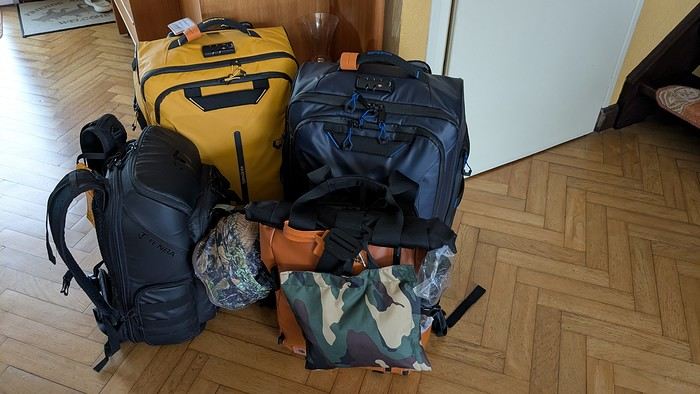 Direct train to Roissy—just 1h15. Quick and efficient.
All that was left was to wait for our overnight flight. We took off on time, just before 11 PM. Smooth flight, nothing unusual. Arrived in Nairobi around 9 AM. A few hours’ wait, then a flight to Dar es Salaam, landing at our first destination around 12:45 PM.
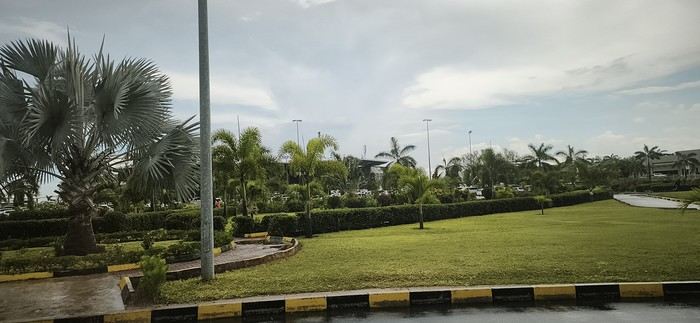
Our local contact, Anne from Asanterra agency, picked us up at the airport. It was hot and humid—it was raining.
Direct train to Roissy—just 1h15. Quick and efficient.
All that was left was to wait for our overnight flight. We took off on time, just before 11 PM. Smooth flight, nothing unusual. Arrived in Nairobi around 9 AM. A few hours’ wait, then a flight to Dar es Salaam, landing at our first destination around 12:45 PM.
Our local contact, Anne from Asanterra agency, picked us up at the airport. It was hot and humid—it was raining.
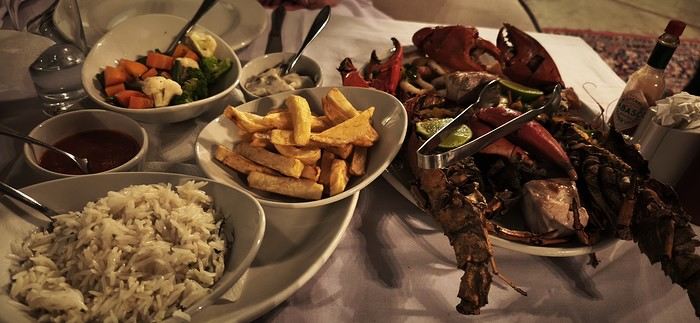
Our first night was at the Alexander Hotel. That evening, we treated ourselves to fish and shellfish at the hotel restaurant:
Sunday, February 22, 2026:
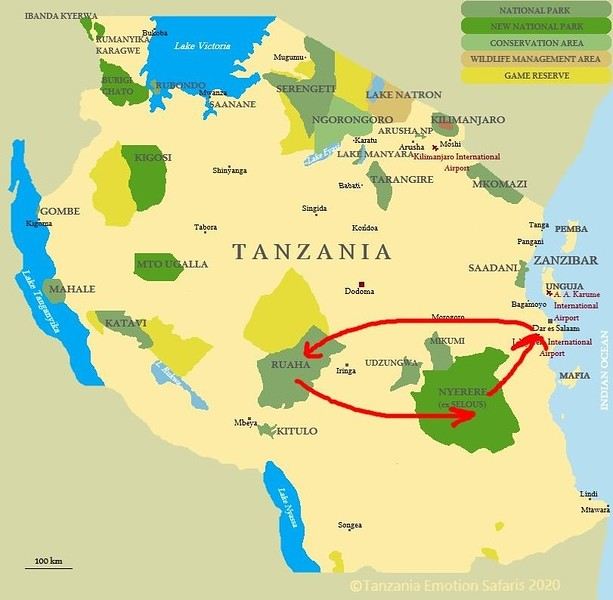
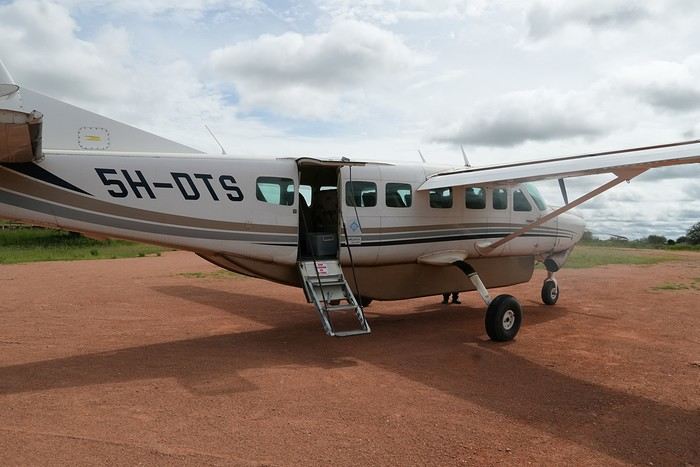
A driver picked us up at dawn to take us to the domestic airport so we could finally head to our first destination: Ruaha National Park. We flew with Auric.air for a 2-hour flight with two stops (Nyerere and Zkima airstrips).
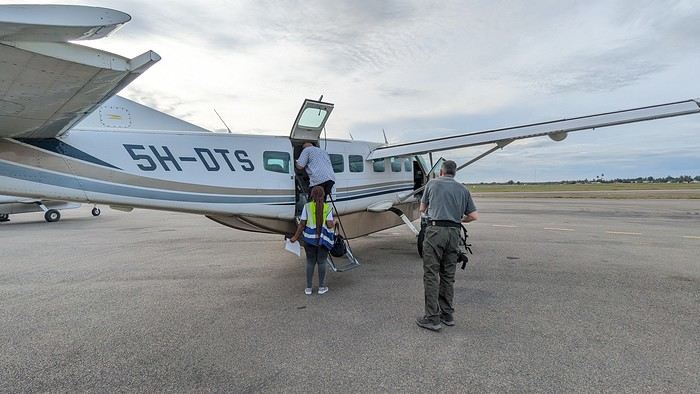
I’m always amazed at how easily these Cessnas take off and land on dirt runways—especially when they’re wet:
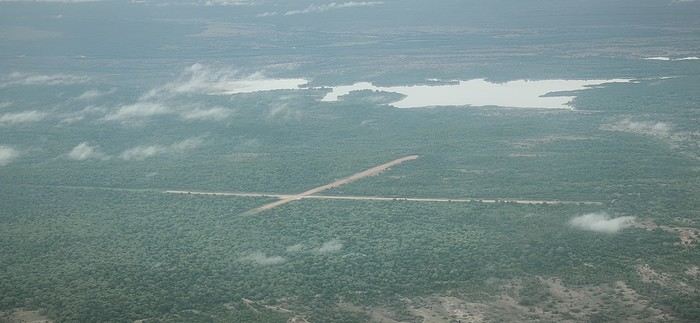
Aerial view of Zkima airstrip, where we’d landed just minutes earlier:
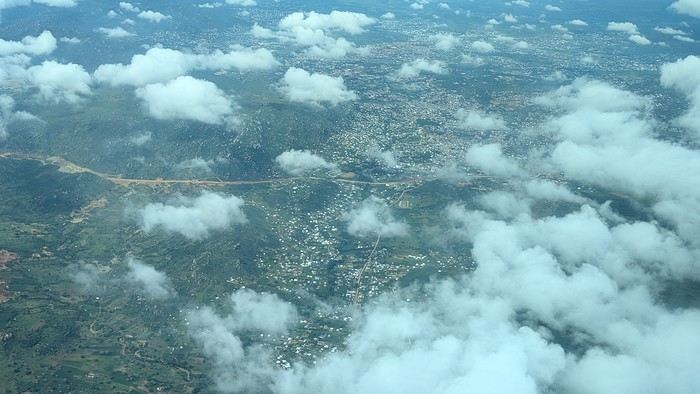
Flyover of Iringa, a "big" city in the country near Ruaha National Park:
We’re getting close. The plane descends and flies over the Ruaha River, which gave the park its name:
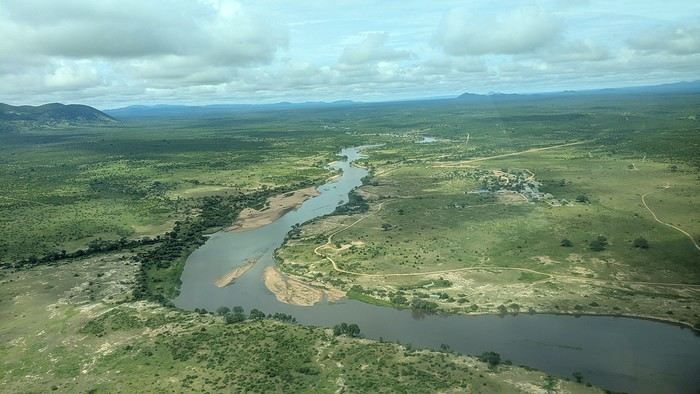
We land for the third and final time that day, reaching our destination: Msembe airstrip, the gateway to Ruaha.
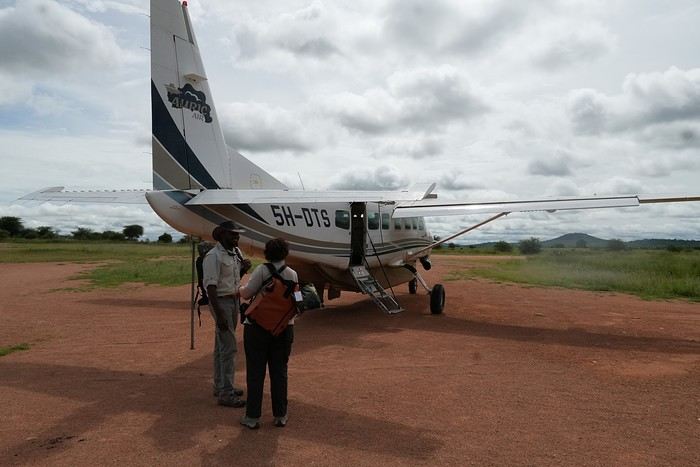
We got back from Tanzania a month ago, on March 5th. I’ve started this trip report at the link the moderator asked me to use:
https://voyageforum.com/forum/decouverte-ruaha-nyerere-ex-selous-en-fevrier-mars-2026-d11466010/
You’ll find a video of our trip on my YouTube channel there.
Now I’ll tell you about our 10-night trip in Tanzania, with 8 nights spent in two parks we didn’t know. Tanzania isn’t new to us—it was even our first African safari destination back in 2012. https://www.youtube.com/@lolodetoul54 Since then, we’ve visited several East and Southern African countries: Kenya, South Africa, Namibia, Botswana, some of them multiple times. We usually travel in September during the dry season. We tried March 2024 for nine nights in the Okavango and loved it, except everything was dry, which wasn’t normal for the rainy season.
So for this second March trip during the wet season, we really got what we asked for… rain. But before that, we had to fight just to get to Tanzania.
Saturday, February 21, 2026:
It’s D-Day—the departure. What a hassle to organize flights to and within Tanzania! I’ll tell you all about it in another post: https://voyageforum.com/forum/toutes-compagnies-aeriennes-tanzaniennes-interdites-d10758360/ On top of that, Rwandair canceled our outbound flight a month before departure. They offered to reschedule us 3-4 days later—ridiculous for a 10-night trip we’d already booked. We had to cancel our tickets and buy new ones with Kenya Airways. We’re still waiting for our refund from Rwandair!!!!!!! So on Saturday, February 1st, our bags were packed. We headed to the Lorraine TGV station, about 30 km from home.
Direct train to Roissy—just 1h15. Quick and efficient.
All that was left was to wait for our overnight flight. We took off on time, just before 11 PM. Smooth flight, nothing unusual. Arrived in Nairobi around 9 AM. A few hours’ wait, then a flight to Dar es Salaam, landing at our first destination around 12:45 PM.
Our local contact, Anne from Asanterra agency, picked us up at the airport. It was hot and humid—it was raining.Our first night was at the Alexander Hotel. That evening, we treated ourselves to fish and shellfish at the hotel restaurant:
Sunday, February 22, 2026:
A driver picked us up at dawn to take us to the domestic airport so we could finally head to our first destination: Ruaha National Park. We flew with Auric.air for a 2-hour flight with two stops (Nyerere and Zkima airstrips).
I’m always amazed at how easily these Cessnas take off and land on dirt runways—especially when they’re wet:
Aerial view of Zkima airstrip, where we’d landed just minutes earlier:
Flyover of Iringa, a "big" city in the country near Ruaha National Park:
We’re getting close. The plane descends and flies over the Ruaha River, which gave the park its name:
We land for the third and final time that day, reaching our destination: Msembe airstrip, the gateway to Ruaha.
April 2026 Photo Contest Theme: Feeling Fishy?
The 140th (wow!) edition of the contest is now live!
Since it’s April Fools’ month and I’m a diver at heart, I had to pick a theme around the sea and fish.
This month’s theme is: sea fishing 🙂. Deep-sea fishing, rockpooling, shore casting, shellfish & crustaceans—anything remotely related to sea fishing fits the bill 😉
Photos of fishing boats, fishing ports, fish auctions, seafood stalls, nets and trawls, lobster pots, fishermen, your kids collecting cockles, even those New Year’s oyster shells 😏—no limits as long as it ties into the theme 😛 And of course, a special shout-out to anglers worldwide! 🙂
I’m traveling right now, so I don’t have many photos on hand. To illustrate the theme, I’ve chosen this shot of a small Vietnamese fishing boat I spotted near the Cham Islands, returning from a dive.
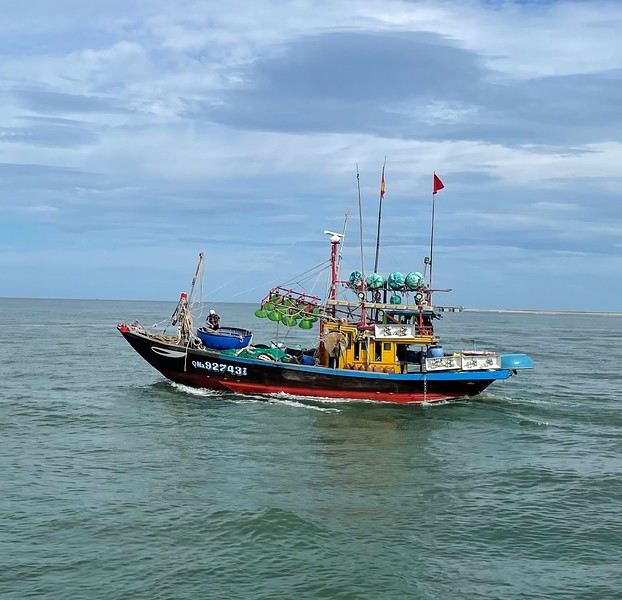
Contest rules: You can post up to three photos, each in a separate message, clearly numbering them (1, 2, or 3) and including the location where the photo was taken. Any explanations about your photos are welcome.
When voting, you’ll choose three photos, clearly stating the participant’s name followed by their photo number. The first photo in your vote gets three points, the second gets two, and the third gets one.
The winner will be the person whose photo earns the most points. In case of a tie, the winner will be the one with the most first-place votes, or if still tied, the most second-place votes. If it’s a perfect tie, the person who reached their score first wins. The winner then gets the honor of choosing and organizing May 2026’s contest theme. Ties for any other position won’t be broken. Finally, you don’t need to enter the contest to vote, but participants (and I hope there’ll be lots of you!) are *strongly* encouraged to vote!
Please only post contest photos in this thread. Starting Saturday, April 25 (00:01 Paris time), only votes should be posted.
Key dates: You can submit your photos from today until Friday, April 24, 2026 (23:59 Paris time—Xavier, you can do the math for Perth 😏). Voting starts the very next minute and ends on Thursday, April 29 (23:59 Paris time). Results will be announced on Thursday, April 30, 2026... The next host can take over on Saturday, May 2 (yeah, May 1 is a no-work day 😛)
Ready, set, shoot!
Since it’s April Fools’ month and I’m a diver at heart, I had to pick a theme around the sea and fish.
This month’s theme is: sea fishing 🙂. Deep-sea fishing, rockpooling, shore casting, shellfish & crustaceans—anything remotely related to sea fishing fits the bill 😉
Photos of fishing boats, fishing ports, fish auctions, seafood stalls, nets and trawls, lobster pots, fishermen, your kids collecting cockles, even those New Year’s oyster shells 😏—no limits as long as it ties into the theme 😛 And of course, a special shout-out to anglers worldwide! 🙂
I’m traveling right now, so I don’t have many photos on hand. To illustrate the theme, I’ve chosen this shot of a small Vietnamese fishing boat I spotted near the Cham Islands, returning from a dive.
Contest rules: You can post up to three photos, each in a separate message, clearly numbering them (1, 2, or 3) and including the location where the photo was taken. Any explanations about your photos are welcome.
When voting, you’ll choose three photos, clearly stating the participant’s name followed by their photo number. The first photo in your vote gets three points, the second gets two, and the third gets one.
The winner will be the person whose photo earns the most points. In case of a tie, the winner will be the one with the most first-place votes, or if still tied, the most second-place votes. If it’s a perfect tie, the person who reached their score first wins. The winner then gets the honor of choosing and organizing May 2026’s contest theme. Ties for any other position won’t be broken. Finally, you don’t need to enter the contest to vote, but participants (and I hope there’ll be lots of you!) are *strongly* encouraged to vote!
Please only post contest photos in this thread. Starting Saturday, April 25 (00:01 Paris time), only votes should be posted.
Key dates: You can submit your photos from today until Friday, April 24, 2026 (23:59 Paris time—Xavier, you can do the math for Perth 😏). Voting starts the very next minute and ends on Thursday, April 29 (23:59 Paris time). Results will be announced on Thursday, April 30, 2026... The next host can take over on Saturday, May 2 (yeah, May 1 is a no-work day 😛)
Ready, set, shoot!
Arusha, Tanzania - October 2025
I would wish never to go to bed where I had woken up, to wander my tent from the shores of Egypt to those of the Persian Gulf; to have no goal for the evening other than the evening itself; to traverse on foot, with my eyes and my heart, all these unknown lands, all these races of people so different from my own; to contemplate humanity, God’s finest creation, in all its forms.
Lamartine in Fatalla Sayeghir’s Account (1861)
As soon as it’s about flying, I lose all willpower. Being reasonable and thoughtful, I still lose all my composure at the mere possibility of a flight—especially if it’s piloted by F.—and even more so if that flight can take me to unexplored lands. I’ve long wanted to unravel the mystery of animal tourism, and why not in Tanzania, following up on my trip from four years ago, when I was already questioning the glaring inequalities in Zanzibar: the coastal strip sacrificed to capitalism, and the inland areas, just a hundred meters from the waves, where you find—though a bit more peaceful than elsewhere on the continent—the chaos of Africa.
I’m an adventurer at heart. When it comes to the terrain, though, it’s a whole different story. I see people setting off for months at a time; I know my endurance doesn’t last beyond three days. It’s not that I’m afraid of this unfamiliar environment when it comes to embracing different realities. I’m mostly afraid of myself—of this heightened sensitivity that makes me see things I’d rather not see and understand others that sometimes overwhelm me.
After an absolutely fantastic daytime flight, I land in Zanzibar and have to resign myself—this is the whole point of the trip—to what feels like a real spacewalk. I’m alone. My lucky star, backed up by my phone, will serve as my lifeline. I step out of the airport and breathe in the scent of Africa full-on: a mix of exotic perfumes, baked earth, and poorly refined fuel, inevitably mingled with the smell of wood smoke. So many images come flooding back. So many stories. Another world.
I head to Arusha the very next day. The gateway to the country’s northern national parks, this city of half a million offers one of those rare breath-holding dives that Africa keeps secret. As the only white person walking the streets, I know I’m visible and vulnerable, yet I move forward confidently, barely bothered. But where are all my fellow Westerners? While this city draws countless tourists, I only cross paths with one white couple in nearly three hours of walking. Because you have to hold on tight to wander here. You have to stay alert. The traffic is dense and erratic—don’t even trust the fact that in Tanzania, people drive on the left. That can change from one minute to the next, especially with motorbikes. With barely centimeters between vehicles, I weave my way through the urban jungle, trying not to stumble into the huge ditch on my left or get sideswiped by cars brushing past me on the right. Speakers blare music, ads, or political speeches at will—the explosion of yellow and green tells us we’re on the eve of the presidential election—but they barely compete with the calls to prayer, nearly nonstop on this holy Friday. The vital space is as saturated as the sound. Imagine an unbroken line of shops and stalls of every kind—supermarkets haven’t made it here yet—where you can find just about anything: phones, copper pipes, Chinese-made hardware, shoes, clothes, basins, and professional tools… The luckiest own a big store; others spend their lives trying to survive on the profits from selling toothbrushes one at a time on the streets. But maybe it’s more lucrative than spending the day slumped on the sidewalk, preferably missing a limb, trusting your survival to the mercy of passersby.
I think I’ll escape the street by slipping into the narrow alleys of the central market. Here, I know I won’t run into anyone like me! The vendors’ stalls start at waist height; the sellers, perched higher up, haggle or not while discussing prices. Here, colorful fruits and vegetables; there, huge piles of dried fish. Spices, seeds, roots. Smells. Noises. Africa. Life. Further on, the fresh fish aisle makes a right angle with the butchers’. Everywhere, flies—everywhere, the same gesture from vendors swatting blindly at these relentless pests. Aware that I’ll be eating this same meat within the hour, displayed with total disregard for basic hygiene, I reassure myself that Arusha sits at 1400m altitude. Yes, we can probably do without a fridge.
*
It’s time to leave the city and go wildlife spotting in the surrounding parks. To that end, I’ve negotiated a package deal with a local agency that prides itself on grouping solo travelers into a vehicle meant for seven. We leave behind the imposing masses of Mount Meru and Kilimanjaro, peaking at 4565m and 5895m respectively, and head west to conquer Tarangire and Ngorongoro parks. I’ve been promised a spectacle; I remain cautious. I’ve read rave reviews; I know how to temper my expectations. Above all, I know what I came for—and paradoxically, my hopes are less about animals than strictly anthropological. So I’m sure I won’t go home disappointed.
I’m in the thick of it. Since 2021, tourism has been booming: I’m one of the two million tourists who come here every year seeking thrills. I also contribute, in a small way, to the 20% of the country’s GDP generated by tourism revenue. Around 3 billion € annually… Tanzania has 16 national parks, twice as many reserves; it charges meticulously for every entry, every night, every activity, to the tune of several dozen euros. I calculated that Tarangire Park alone rakes in around 15 million € a year. Mind-boggling. Yet to get there, a dusty, rickety old track is used daily by hundreds of vehicles that literally saturate the surrounding area with white dust and exhaust fumes. At the park entrance, we wait a good hour while the driver pays the entry fees. Then it’s a free-for-all: dozens of 4x4s try to enter at the same time through the single access point, to the left of the building, while the three barriers are stuck due to a computer glitch. It’s pure chaos: no way to buy your ticket in advance—the QR code revolution hasn’t arrived; no smart layout before the barriers; nothing smooth, nothing practical, everything improvised.
So, the animals? Given the time and money involved, I’d be tempted to say it’s not worth the hassle and there’s really no need to break five legs off one of the too-many zebras we pass. Hours and hours of travel to get to Tanzania, specifically Arusha; hours and hours on the road—up to 12 hours a day—to spend barely three in the parks; at least 200 € per day for the most basic option, so 400 € in my case, and up to several thousand for those wealthy couples opting for the luxury package with a private vehicle. Sure, I saw zebras and elephants in their natural habitat, wildebeest, buffalo, and a few hippos, but I didn’t feel the thrill touted in the articles or even by my two-day trip organizer. Would I have been more satisfied if I’d seen the lion, the leopard, and the rhino? Maybe. But the story won’t be rewritten in light of those assumptions.
Yet I’m not disappointed. As I said earlier: I know what I came for. I wanted to see the world as it is with my own eyes. And the safari world fascinates me more for its anthropological aspect than for what it offers. Yes, the fact that people from all over the world come here, juggling hotels and big 4x4s—while notably avoiding the streets of cities and villages—truly fascinates me. Two worlds coexist on either side of a barely porous border. As soon as the tourist sets foot in the airport, they’re whisked away, sight unseen, into a tourist vehicle. Dropped off at the hotel, they rest there, shielded from view, until the 4x4 departs. Then they speed through those same cities and villages they scorn out of fear or disdain, leaving on the roadside the Maasai herding their flocks and all those poignant or mundane scenes that make up daily African life. In the evening, in their lodge, far from the city’s pulse, they fall asleep thinking about the images they’ve collected, those long hours on the road, the wait for the animals. And the days go by… Maybe the term *luxury*, whether for food or accommodation, refers to what we experience as utterly ordinary in the West? Forgetting that you’re there, in Africa, just steps away from poverty and a certain arbitrariness. And at the end of the journey: back to the airport, back to normal life.
Maybe we need to take a broader view. All that money seems invisible, yet it must serve the population at some point, right? The main roads are passable, the power grid seems well-maintained—I can tell by the excellent condition of the high-voltage transmission towers. Is it really too expensive to significantly improve all the infrastructure? I hoped this windfall would truly serve the people’s interests. The driver taking me back to the airport on the last evening dashes my sweet illusions: « All this is bad. Africa is bad. But you have no choice. The hospitals don’t work, the schools don’t work, the roads don’t work (just as he says this, roadworks force us onto a terrible detour for several kilometers—a rutted track, in fact), and if you say anything, if you speak up too much, they come for you and then you disappear. » That’s just one opinion. Nothing empirical. But I don’t need to be a West Point graduate to realize how rampant corruption is in these regions: while the muezzin bellows the greatness of Allah, I consider the dilapidated equipment and the energy expended by the masses just to survive here. But maybe all that money keeps the country afloat by paying civil servants’ salaries? Meanwhile, one thing is certain: regardless of where the profits go, tourism supports millions of people, and I’m in no position to judge this system too harshly. Maybe I’m too much of an aesthete to appreciate the almost exclusive use of corrugated iron at its true value…
*
I’ll give this system credit for one thing: the chance to set foot in spaces impossible to visit otherwise. At one point, in the heart of the Ngorongoro Crater—a vast 20km-wide plain topped by a 600m-high caldera—I was simply happy to be there. Barely bothered by the constant ballet of 4x4s—the space is vast—I contemplate the simple life of the local animals. Buffalo, wildebeest, zebras as numerous as the flamingos patiently standing on one leg, waiting for the day to pass. Over there, you can make out a few hyenas with vultures circling above. Finally, in a large body of water, hippos surface at regular intervals. I’m aware of my luck. I’m especially aware that, unlike all the people I’ve met there, a lot of money and a little resourcefulness greatly favor the luck factor.
I’m heading home. I soak up the last images of this improbable Africa as night falls quickly over the countryside. I’m fascinated by the number of Maasai herding their livestock along the main road. Some pass the time, globalization obliges, on an old phone; others, sometimes as young as my eldest—barely 10 years old—watch us pass, indifferent. We overtake or are overtaken; the two-lane road is the stage for a majestic ballet of semi-trailers, *dalas-dalas*, and other 4x4s, as numerous as the names of their companies: Leopard Tours, Climbing Kilimanjaro, Smiling Zebra, Nomad Life Enhanced, Elephant Roaming, Mountain Warrior, Master of the Ambush… They drop me off at the hotel, where I have an hour to shower and change into clean clothes before my return flight. Already, I’m slipping back into my own world without really seeing it, leaving behind the hotel’s glass window that African life to which nothing truly binds me. Then that chaotic, suffocating nighttime drive to the airport. Check-in; the stupid questions (« Where are you going? »); the slow police officer who, in the end, stamps my passport anywhere; the idiocy of the security agent (my empty 33cl bottle is forbidden); the rather shabby lounge at Kilimanjaro Airport. Then the return to the vessel—to the Air France plane that left Zanzibar an hour earlier—after this 72-hour spacewalk without a real lifeline. I’ve never been so happy to see F. again.
As soon as it’s about flying, I lose all willpower. Being reasonable and thoughtful, I still lose all my composure at the mere possibility of a flight—especially if it’s piloted by F.—and even more so if that flight can take me to unexplored lands. I’ve long wanted to unravel the mystery of animal tourism, and why not in Tanzania, following up on my trip from four years ago, when I was already questioning the glaring inequalities in Zanzibar: the coastal strip sacrificed to capitalism, and the inland areas, just a hundred meters from the waves, where you find—though a bit more peaceful than elsewhere on the continent—the chaos of Africa.
I’m an adventurer at heart. When it comes to the terrain, though, it’s a whole different story. I see people setting off for months at a time; I know my endurance doesn’t last beyond three days. It’s not that I’m afraid of this unfamiliar environment when it comes to embracing different realities. I’m mostly afraid of myself—of this heightened sensitivity that makes me see things I’d rather not see and understand others that sometimes overwhelm me.
After an absolutely fantastic daytime flight, I land in Zanzibar and have to resign myself—this is the whole point of the trip—to what feels like a real spacewalk. I’m alone. My lucky star, backed up by my phone, will serve as my lifeline. I step out of the airport and breathe in the scent of Africa full-on: a mix of exotic perfumes, baked earth, and poorly refined fuel, inevitably mingled with the smell of wood smoke. So many images come flooding back. So many stories. Another world.
I head to Arusha the very next day. The gateway to the country’s northern national parks, this city of half a million offers one of those rare breath-holding dives that Africa keeps secret. As the only white person walking the streets, I know I’m visible and vulnerable, yet I move forward confidently, barely bothered. But where are all my fellow Westerners? While this city draws countless tourists, I only cross paths with one white couple in nearly three hours of walking. Because you have to hold on tight to wander here. You have to stay alert. The traffic is dense and erratic—don’t even trust the fact that in Tanzania, people drive on the left. That can change from one minute to the next, especially with motorbikes. With barely centimeters between vehicles, I weave my way through the urban jungle, trying not to stumble into the huge ditch on my left or get sideswiped by cars brushing past me on the right. Speakers blare music, ads, or political speeches at will—the explosion of yellow and green tells us we’re on the eve of the presidential election—but they barely compete with the calls to prayer, nearly nonstop on this holy Friday. The vital space is as saturated as the sound. Imagine an unbroken line of shops and stalls of every kind—supermarkets haven’t made it here yet—where you can find just about anything: phones, copper pipes, Chinese-made hardware, shoes, clothes, basins, and professional tools… The luckiest own a big store; others spend their lives trying to survive on the profits from selling toothbrushes one at a time on the streets. But maybe it’s more lucrative than spending the day slumped on the sidewalk, preferably missing a limb, trusting your survival to the mercy of passersby.
I think I’ll escape the street by slipping into the narrow alleys of the central market. Here, I know I won’t run into anyone like me! The vendors’ stalls start at waist height; the sellers, perched higher up, haggle or not while discussing prices. Here, colorful fruits and vegetables; there, huge piles of dried fish. Spices, seeds, roots. Smells. Noises. Africa. Life. Further on, the fresh fish aisle makes a right angle with the butchers’. Everywhere, flies—everywhere, the same gesture from vendors swatting blindly at these relentless pests. Aware that I’ll be eating this same meat within the hour, displayed with total disregard for basic hygiene, I reassure myself that Arusha sits at 1400m altitude. Yes, we can probably do without a fridge.
*
It’s time to leave the city and go wildlife spotting in the surrounding parks. To that end, I’ve negotiated a package deal with a local agency that prides itself on grouping solo travelers into a vehicle meant for seven. We leave behind the imposing masses of Mount Meru and Kilimanjaro, peaking at 4565m and 5895m respectively, and head west to conquer Tarangire and Ngorongoro parks. I’ve been promised a spectacle; I remain cautious. I’ve read rave reviews; I know how to temper my expectations. Above all, I know what I came for—and paradoxically, my hopes are less about animals than strictly anthropological. So I’m sure I won’t go home disappointed.
I’m in the thick of it. Since 2021, tourism has been booming: I’m one of the two million tourists who come here every year seeking thrills. I also contribute, in a small way, to the 20% of the country’s GDP generated by tourism revenue. Around 3 billion € annually… Tanzania has 16 national parks, twice as many reserves; it charges meticulously for every entry, every night, every activity, to the tune of several dozen euros. I calculated that Tarangire Park alone rakes in around 15 million € a year. Mind-boggling. Yet to get there, a dusty, rickety old track is used daily by hundreds of vehicles that literally saturate the surrounding area with white dust and exhaust fumes. At the park entrance, we wait a good hour while the driver pays the entry fees. Then it’s a free-for-all: dozens of 4x4s try to enter at the same time through the single access point, to the left of the building, while the three barriers are stuck due to a computer glitch. It’s pure chaos: no way to buy your ticket in advance—the QR code revolution hasn’t arrived; no smart layout before the barriers; nothing smooth, nothing practical, everything improvised.
So, the animals? Given the time and money involved, I’d be tempted to say it’s not worth the hassle and there’s really no need to break five legs off one of the too-many zebras we pass. Hours and hours of travel to get to Tanzania, specifically Arusha; hours and hours on the road—up to 12 hours a day—to spend barely three in the parks; at least 200 € per day for the most basic option, so 400 € in my case, and up to several thousand for those wealthy couples opting for the luxury package with a private vehicle. Sure, I saw zebras and elephants in their natural habitat, wildebeest, buffalo, and a few hippos, but I didn’t feel the thrill touted in the articles or even by my two-day trip organizer. Would I have been more satisfied if I’d seen the lion, the leopard, and the rhino? Maybe. But the story won’t be rewritten in light of those assumptions.
Yet I’m not disappointed. As I said earlier: I know what I came for. I wanted to see the world as it is with my own eyes. And the safari world fascinates me more for its anthropological aspect than for what it offers. Yes, the fact that people from all over the world come here, juggling hotels and big 4x4s—while notably avoiding the streets of cities and villages—truly fascinates me. Two worlds coexist on either side of a barely porous border. As soon as the tourist sets foot in the airport, they’re whisked away, sight unseen, into a tourist vehicle. Dropped off at the hotel, they rest there, shielded from view, until the 4x4 departs. Then they speed through those same cities and villages they scorn out of fear or disdain, leaving on the roadside the Maasai herding their flocks and all those poignant or mundane scenes that make up daily African life. In the evening, in their lodge, far from the city’s pulse, they fall asleep thinking about the images they’ve collected, those long hours on the road, the wait for the animals. And the days go by… Maybe the term *luxury*, whether for food or accommodation, refers to what we experience as utterly ordinary in the West? Forgetting that you’re there, in Africa, just steps away from poverty and a certain arbitrariness. And at the end of the journey: back to the airport, back to normal life.
Maybe we need to take a broader view. All that money seems invisible, yet it must serve the population at some point, right? The main roads are passable, the power grid seems well-maintained—I can tell by the excellent condition of the high-voltage transmission towers. Is it really too expensive to significantly improve all the infrastructure? I hoped this windfall would truly serve the people’s interests. The driver taking me back to the airport on the last evening dashes my sweet illusions: « All this is bad. Africa is bad. But you have no choice. The hospitals don’t work, the schools don’t work, the roads don’t work (just as he says this, roadworks force us onto a terrible detour for several kilometers—a rutted track, in fact), and if you say anything, if you speak up too much, they come for you and then you disappear. » That’s just one opinion. Nothing empirical. But I don’t need to be a West Point graduate to realize how rampant corruption is in these regions: while the muezzin bellows the greatness of Allah, I consider the dilapidated equipment and the energy expended by the masses just to survive here. But maybe all that money keeps the country afloat by paying civil servants’ salaries? Meanwhile, one thing is certain: regardless of where the profits go, tourism supports millions of people, and I’m in no position to judge this system too harshly. Maybe I’m too much of an aesthete to appreciate the almost exclusive use of corrugated iron at its true value…
*
I’ll give this system credit for one thing: the chance to set foot in spaces impossible to visit otherwise. At one point, in the heart of the Ngorongoro Crater—a vast 20km-wide plain topped by a 600m-high caldera—I was simply happy to be there. Barely bothered by the constant ballet of 4x4s—the space is vast—I contemplate the simple life of the local animals. Buffalo, wildebeest, zebras as numerous as the flamingos patiently standing on one leg, waiting for the day to pass. Over there, you can make out a few hyenas with vultures circling above. Finally, in a large body of water, hippos surface at regular intervals. I’m aware of my luck. I’m especially aware that, unlike all the people I’ve met there, a lot of money and a little resourcefulness greatly favor the luck factor.
I’m heading home. I soak up the last images of this improbable Africa as night falls quickly over the countryside. I’m fascinated by the number of Maasai herding their livestock along the main road. Some pass the time, globalization obliges, on an old phone; others, sometimes as young as my eldest—barely 10 years old—watch us pass, indifferent. We overtake or are overtaken; the two-lane road is the stage for a majestic ballet of semi-trailers, *dalas-dalas*, and other 4x4s, as numerous as the names of their companies: Leopard Tours, Climbing Kilimanjaro, Smiling Zebra, Nomad Life Enhanced, Elephant Roaming, Mountain Warrior, Master of the Ambush… They drop me off at the hotel, where I have an hour to shower and change into clean clothes before my return flight. Already, I’m slipping back into my own world without really seeing it, leaving behind the hotel’s glass window that African life to which nothing truly binds me. Then that chaotic, suffocating nighttime drive to the airport. Check-in; the stupid questions (« Where are you going? »); the slow police officer who, in the end, stamps my passport anywhere; the idiocy of the security agent (my empty 33cl bottle is forbidden); the rather shabby lounge at Kilimanjaro Airport. Then the return to the vessel—to the Air France plane that left Zanzibar an hour earlier—after this 72-hour spacewalk without a real lifeline. I’ve never been so happy to see F. again.
Mamoudzou, Mayotte - December 2025
There exists a rare land where life expresses itself, a land where everything is destroyed, patched up, where everything is dirty and faded, yet paradoxically, each passing day is synonymous with light and joy. Seen from the sea, magnified by its translucent waters, the island is splendid; seen from inland, ochre and green dress a landscape one would wish to be pristine. As you approach the coast with the tides, countless boat wrecks never finish dying; returning from a hike, you know you’re nearing the city by the increasingly obvious proliferation of all kinds of trash. Overflowing the towns, makeshift homes made of corrugated iron stand here and there, wherever the eye lands; from a height, looking toward the horizon, you find the calm blue of the ocean and the beauty of infinity.
But where does all this corrugated iron come from? Blue, gray, red, or black, you find it pretty much everywhere—except, of course, on the island’s heights, where the heat is such that all life seems impossible. Yet, a few kilometers from the capital, more than an hour’s walk away, the corrugated iron is very much there, omnipresent, guaranteeing a land registry as hypothetical for us Europeans as it is very real for those who live there, far from civilization and comfort. I keep climbing. I’m precisely looking to meet these people who live on very little, if not nothing.
- Jéjé Mogné (Hello, sir in Shimahorais)! Where do you get water here, in this place? How do you drink, irrigate your plants?
- I wait for the rain. We have tanks that fill up well with each rainfall. But right now, it’s not raining much.
At the top of the next hill, lost in the bushes, it’s easier for me to guess the distant city, Mamoudzou, than the rest of the path, a remnant of a magnificent GR called the Island Tour, abandoned for the most part, sometimes maintained between two lost hamlets. The city, the pulse, water. Below, the ocean, running water, drinking water—despite regular interruptions; here, up high, an hour and a half’s walk away, tanks, arbitrariness. On other slopes, however, during another hike, I saw the water supply network, made of sturdy pipes tangled in the earth, right there by the path. It seems there are places where water climbs. Others not. Each to their own karma. In 2025. In a French department.
A path of misfortune, lost and regained, thanks to a sign, an inscription, or the compass’s directions. No one walks here anymore, except those who live here or come to harvest their crops. I remember that breathtaking hike in 2013, when I connected Bandrélé to Mamoudzou, passing by the peaks of Bénara (660m) and Bépilipili (643m), barely pausing at Tsararano and Vahibé: 34 km of intense effort on a rollercoaster path, along a trail that was still discernible. Today, it’s as if everything had disappeared. By also destroying the paths and vegetation, Chido* broke the last momentum of these cautious hikers: insecurity has made its way across the archipelago, and Sunday strolls are no longer the norm. Me, I keep going. I will have walked here and there during these three weeks to get an idea of the places, the people, the landscapes, and the superhuman effort required to move forward in over 40°C. To tell the truth, during my last hike, I cut my plans short and let myself be carried by a group of young people heading back to the city. The path is now just an inextricable network of small trails, the specter of Providence** comes to mind. True wisdom is knowing when to give up. I leave.
* A cyclone named "desire" (in Shona), which ravaged the island of Mayotte on December 14, 2024. ** June 2023, a very poorly prepared hike on Providence Island (Caribbean) from which I miraculously escaped.
On Petite-Terre, Marie takes me to visit some locals, white people who have lived there for a long time and make a living from their art; jewelry for her, all kinds of objects for him. We love this little shop, this oasis amid the chaos that embodies Dostoevsky’s phrase: "Beauty will save the world." It’s clean and tidy, beautiful, well-kept. Invariably, the question of insecurity resurfaces in the middle of the conversation. The woman says:
- I know someone who slipped in their bathtub. Still, I keep taking baths…
So, is this insecurity a myth or reality? I hear stories that are often true but sometimes seemingly exaggerated through the lens of misunderstanding and one-upmanship. Like that of this midwife assaulted one evening (it gets dark early) on her way home from work. Sometimes she was attacked on the path, dragged by the hair for several meters, sometimes she made it home, but it was her roommate who let the two men in. One version talks about a snatched phone and gratuitous violence, another about violence outright. In short, one thing is certain: walking around at night flaunting your phone isn’t a good idea, no more in Mamoudzou than in the rough neighborhoods of Nantes. Also, I played it safe: nothing flashy, nothing bling-bling, and always something to give if needed. I was never approached. It’s not easy to get a sense of the realities, between the hazy reports from journalists sensationalizing everything and the real lives of real people. But I know I can’t rely on these few ideas I’ve formed: I’m nobody, and above all, I don’t live here. What I do know, however, is that since my last visit to the island in 2017, over 80,000 babies have been born, and tens of thousands of immigrants have reached the archipelago’s shores. What’s also obvious is that poverty, hunger, and—let’s say it—indignity foster delinquency and insecurity. So, without taking journalists’ alarmist speeches at face value, we’ll try to keep in mind that a young person rendered orphaned by circumstances (parents expelled), poor and often hungry, involved more or less against their will in village wars and fueled by synthetic drugs*, will readily turn to violence when they truly have nothing to lose. We can trace the origin of this despair to the fact that in Mayotte, those without legal existence have virtually no hope of accessing anything.
* "Chimique" is a series of synthetic cannabinoids
Meanwhile, in the evening, it’s good to go home before the time of stone-throwing. From time to time, along the roads, gangs throw stones at vehicles and school buses, but mostly at police cars—almost all the white Dusters on the island! In front of the Mamoudzou police station, all parked vehicles—mostly Dusters—bear the scars of these attacks. Maybe it’s only at night that gangs unleash and all the burglaries happen? I saw nothing, heard nothing. I lived three weeks in a sort of bunker with no real access to outside light, protected by a fake wooden door doubled with a real metal door, both locked at all times. You don’t tempt fate. You endure it differently.
Today, extraordinarily, it’s raining. Yet, it’s the rainy season! But with my karma helping (what selfishness to want to walk dry when so many souls live off the rain) or is it climate change? The rain only falls once I’ve put on my horrible green pajamas. In front of the board outlining the program, I’m told that out of the six scheduled C-sections today (sic), they’ll probably only do two, maybe three. Because it’s raining. And when it rains, people don’t move around. Not for lack of will. Rather, for lack of means. And that ties into those sad days when the police patrol around the hospital: patients don’t come. They’ll come back tomorrow. To compensate, I’m happy at the thought of tackling the abscess program, but the sterilization unit is acting up and blocking the instrument trays. When it’s not the rain, it’s the unions. And when both finally quiet down, there’s always someone to find fault with the order of operations. You have to imagine an operating room where the question of urgency reigns supreme. Here, no surgery is scheduled more than 24 hours in advance—only emergencies, nothing but emergencies. So, following that reasonable adage that what’s done is no longer to be done, it’s sheer madness when the rain meets the interests of Force Ouvrière and the bad will of some combines with the laziness of others. To tell the truth, I’ve never seen so much energy expended to… do nothing. Hallucinating. But who am I, a small-time striver, an islander in my spare time, a temporary worker at the end of the world? I came, I saw, I was disappointed? Not really. Here again, I can’t judge a system in so little time. I can barely utter a few bitter words in front of obvious facts. But nothing will take away my joy of being here for three weeks. Here, they heal with somewhat outdated but still functional means. You do what you can with what you have, 8,000 km from the Métropole. Yes, the operating room doors hesitate, and the operating tables stutter, but in this blessed period, we lack neither medicines nor supplies. So we examine, anesthetize, and repair, far more undocumented people than French—if I may play with somewhat borderline statistics here; we deliver babies, dress wounds, and relieve pain in this hospital at the end of the world where neither white women nor Mahorais women would ever consider giving birth or getting treated.
What’s the solution? The obstetrician talks to the woman during a C-section under spinal anesthesia:
- Bouéni! (Madame, in Shimahorais) You need to think about tubal ligation. This is your fourth C-section. Your uterus is like tissue paper. Your next pregnancy will be very risky.
No answer. Culture. It’s all about culture. The funniest thing is that France also gets bogged down with the idea of other cultures’… cultures. The woman in question arrived illegally a few years ago to give birth to her first child. Since then, rejecting the very idea of contraception—her husband, for his part, will invoke God or Allah to refuse a vasectomy—she comes back every 12-14 months. And the obstetrician explains to me how his idea of making information about permanent contraception mandatory was deemed racist by associations. It’s always the same story. I suggest to the associations that they take charge of all these extra births, not only the medical costs but also the entire education, not just financial, of all these children doomed to live a life of misery on this forsaken archipelago. The probability that one of these offspring will emerge as a gifted, sensitive, and fiercely happy individual must truly be weighed against the degradation and abandonment that will invariably afflict the thousands of others living around him. In reality, simply mentioning a very real danger to the mother should be enough to impose sterilization. But we are a country whose greatness of soul is measured by the number of heads cut off to uphold the famous rights of man... Already a proponent at home of ending family allowances after the third child—you can’t subscribe to a certain idea of society and, at the same time, accept that tens of thousands of children are sacrificed on the altar of thoughtlessness and financial interest*—I will weakly advocate here for a controlled right to have children. Well, what will they say about me when I express the idea of imposing sterilization on women in irregular situations after the birth of their third child? National solidarity funds the noblest ideals? In Mayotte? Let’s be serious. It’s so much easier to hide behind the inalienable right of women to control their bodies than to acknowledge one’s own powerlessness to assume the consequences of such a policy. Because after 18 years of struggles as a second-class citizen, the young stateless person will have no choice but to live in hiding: faced with the impossibility of claiming birthright citizenship**, they will be deportable. In Mayotte, there aren’t enough schools, not enough housing, not enough projects for youth, not enough jobs, not enough money, not enough future… In Mayotte, an average of 5 children are born per woman. In reality, we never ask about the right of children to control their own lives.
* Single parent with 4 children: RSA at 1937 € + family allowances… ** Law of May 12, 2025 aiming to strengthen the conditions for accessing French nationality in Mayotte.
I live in the city in a clean apartment where air conditioning eases my aches and sweat, and where water flows abundantly, thanks to huge tanks that fill up between water cuts. On the hills of Koungou, I was struck by this image: there, women (a matriarchal society?) do the dishes in a miserable stream. Upstream of the same stream, the same image as downstream: disgusting water with bits of foam floating on it. A little further, however, there are taps with running water that children play with. Strange. In any case, water is a question. They tell me it’s drinkable; I doubt it. A system that’s regularly cut doesn’t seem reliable to me. In any case, I can’t help but think of the Canary Islands and their chronic water shortage, especially in Lanzarote. Without entering the debate on desalination plants—I’m quite ignorant about environmental repercussions—I’ll just say that in the Canary Islands, you can buy 8 L jugs of purified water for less than 2 €. Here, in Mayotte, the price of water—as is the price of gasoline—is the same everywhere: 0.65 € for a bottle of Cristaline (1 €/L)*. While I was walking up there with a couple of farmers shuttling between two remote spots, I know I hit the mark by offering them one of my two bottles I’d brought for the occasion.
* At home, we find Cristaline at 1.14 € for a 9 L pack, i.e., 0.13 € per liter.
Outside, everything is broken, abandoned, old, worn, torn, faded, heavy, dirty, forsaken. But life goes on. And that’s fascinating. At home, at 5:45 PM, people close their shutters and watch cable TV, sometimes late into the night, emptying the streets of any salutary clamor, unwittingly extinguishing the necessary pulse of life. At home, we die of boredom. In Mamoudzou, between two dying trash cans, metal frames laid on the ground are covered by the elements of a broken garden set. A bare concrete staircase, without railings, provides access to the upper floor of a dwelling. On the steps, you can read: Private space - Please take your trash with you. Metal rods protrude from the said dwelling. On the ground, it’s a festival of screws and nails… A cat passes by. It doesn’t look great. A madwoman crosses the street dancing. A slightly hurried driver brakes. A six- or seven-year-old boy comes out in his underwear from his low house made of corrugated iron. He smiles. He’s having fun doing acrobatic figures over an old mattress on the sidewalk. Forward roll, backward roll. You wonder if he eats enough. Different culture. Different customs.
I will remember for a long time this blinding morning light, a raw, vital, striking light. I almost forgot where I came from, the grayness and boredom of that continental European country where nothing really happens anymore. Here, I could join Camus, contemplating these people placed halfway between misery and the sun, resigned for the most part and, for the other part, not too unhappy with their lot. But the Mahorais discourse is unanimous: "France really screwed us over!" Today, more than half of the island’s inhabitants are undocumented; a tremendous amount of energy is spent expelling 20,000 to 25,000 of them each year; colossal sums are swallowed up to care for all these people, and the island is drifting. I talk with some gendarmes. One of them tells me:
- They intercept one kwassa* out of three… Can you explain to me why they can’t catch everyone? It’s 2025! Can’t they put the necessary boats in place?
Clearly, and this is also my opinion, this whole mess serves interests beyond us. For who can believe for a second that this glaring incompetence isn’t orchestrated? Shared interests between secret France and the Union of the Comoros? A desire to bring insecurity to its peak, either by the Comoros to eventually take back control of Mayotte, or by our own government, in a deliberate effort to see all the white people leave the archipelago and let the Mahorais fend for themselves? At one point, I’m even told about an extraordinary deposit beneath Mayotte’s soil, a promise of infinite wealth**. Not to infringe on human rights, to do some cleaning from time to time, to calm things down to avoid implosion, while waiting to go after this providential bounty? Decidedly, Mayotte hasn’t said its last word!
*What’s paradoxical is that in the early 2010s, to revive traditional fishing activity, the UN financed in Anjouan the construction of a factory to produce these light boats, 7-10m long and 1m wide, which largely served the interests of smugglers. This skiff owes its name to a Congolese dance known for being as rhythmic as it is jerky, much like the navigation experience offered during a crossing to Mayotte. ** A 2025 study revealed the existence of a gigantic magmatic reservoir located 23km beneath the archipelago. If the Icelandic experiment succeeds (Project KMT, see here), Mayotte will then possess almost unlimited energy.
Hell on earth. Paradise at sea. The world’s largest lagoon offering spectacular marine depths, Mayotte’s coral reef suffers less from the abundance of tourists* than from tropical storms**. So, let’s admit that Mayotte is best appreciated when approached from the lagoon. The heights are for old hands like me. The sea spray is rather for the snobs who shun the sun god Ra, risking too much exposure and ending up on sick leave for sunstroke! But I’m not exclusive: I twice don my snob attire and head out to tackle the waves, the seabeds, and the elusive. Because yes, underwater, we leave our landlubber reflexes behind, and flying over corals and other magnificent drop-offs, it’s as if we’re soaring, keeping in memory only what our eyes can store. Multicolored, even phosphorescent fish, sharks, rays, the immensity of the blue, and then, there, dolphins, just a few meters from me, underwater. Incredible.
* 70,000 tourists annually, mostly affinity tourism (links with family or an expatriate). ** Present almost at the water’s surface, the reefs were largely destroyed by Chido.
Paradise at sea? When you think that Mayotte comes from the Arabic Jazirat al Mawet—literally, Island of Death—because of its double coral barrier where many skiffs have run aground and continue to do so… Paradise. Eldorado. The Comoros now face an unprecedented influx of immigrants from the African Great Lakes. And Mayotte, for its part, continues to attract relentlessly, thanks to the evolution of the law*. In reality, whether hidden interests exist or not, France remains bound hand and foot by international, European, and French rules: it can’t do much. Barely has it boarded a kwassa when the one who flees by swimming cries attempted murder; barely has one been sent back to the Comoros when an association will look into their detention conditions and find a loophole; barely has one told a bouéni how her next pregnancy could be fatal when so-called human voices cry scandal.
* Regarding the Métropole, the rights of squatters and other bad payers against the notion of private property, legally violated in favor of the right to housing… ** You can read about France being condemned for its illegal practices of expelling Comorian minors. Inhumane treatment, arbitrary detention, collective expulsion.
Everyone forms their own idea of justice, and no one can claim a monopoly on good thinking. So, as long as I treat without prejudice, as long as my hands are sincerely guided by the love I bear for our humanity, I’ll allow myself to think what I think, understanding that I’m rather open to dialogue and that my opinions evolve with time and events. Today, Mayotte represents for me the failure of a model, a European one in this case, where opulence quickly meets its limits. For it’s not wrong to think that our society can’t share more than it produces, nor is it wrong to think that every human being has a right to their share of the pie; in Mayotte, you’ll find the proven result of our civilization: it doesn’t work. Exclusively financed by the right, the ideas of the left jam in Mayotte more than anywhere else: national solidarity coupled with a sense of guilt creates chaos. Political courage, or true social justice, would be to offer a future to those who have no choice—the one who’s already here, the child to be born—not to offer a present to those who can choose or to whom one can give keys to understanding—the woman of childbearing age, the candidate for exile. Ultimately, the Comoros’ coup d’état over France comes at the cost of many innocent victims, starting with the children*.
* Tens of thousands of deaths by drowning between Anjouan and Mayotte, tens of thousands of children left to fend for themselves and doomed to a non-existent future.
On the evening of the 31st, I go for my usual run and notice near a roundabout a fool in rags pedaling the wrong way. A police car passes by: the guy gets stopped. A rather quick identity check. The guy is taken away. Would he still be among us if he had ridden the right way? In the evening, the line is long in front of the club near the dock. Me, I’m just passing by, greeting my friends of the season, much more inclined to savor rest than to exhaust myself on an overheated dance floor. There, a man, thirty or forty years old, clearly in a world of his own, is searching the trash for something to eat. He’s barefoot. I console myself by thinking that at least he won’t die of cold. Out of ten children born in Mayotte, I can reasonably think that only one will be able to afford an existence that minimally meets any of our criteria.
It’s time to go home. After sweating and thinking so much about this gem of the Mozambique Channel, I spend peaceful hours by the pool at a hotel next to the airport. We checked out at 8 AM, and the flight is at 7 PM. The perfect opportunity to slack off and chat a bit more. I’m happy to get to know one of the co-pilots of tonight’s flight, staying at this hotel, while one of my flight attendant friends from this airline had already recommended me to the crew. But it’s not the captain’s day, who’s in a rather gloomy mood. I’ll travel in the back, up to the vertical of Cairo. Midnight has just struck; it’s January 2nd, my name day. Concerned about solving an unsolvable problem with a passenger, the crew asks me to give up my exit row seat and takes me to the front for the last four hours of the flight. In the end, the captain gave in? I laugh to myself: if there’s one thing I mustn’t forget, it’s that God never abandons me!
But where does all this corrugated iron come from? Blue, gray, red, or black, you find it pretty much everywhere—except, of course, on the island’s heights, where the heat is such that all life seems impossible. Yet, a few kilometers from the capital, more than an hour’s walk away, the corrugated iron is very much there, omnipresent, guaranteeing a land registry as hypothetical for us Europeans as it is very real for those who live there, far from civilization and comfort. I keep climbing. I’m precisely looking to meet these people who live on very little, if not nothing.
- Jéjé Mogné (Hello, sir in Shimahorais)! Where do you get water here, in this place? How do you drink, irrigate your plants?
- I wait for the rain. We have tanks that fill up well with each rainfall. But right now, it’s not raining much.
At the top of the next hill, lost in the bushes, it’s easier for me to guess the distant city, Mamoudzou, than the rest of the path, a remnant of a magnificent GR called the Island Tour, abandoned for the most part, sometimes maintained between two lost hamlets. The city, the pulse, water. Below, the ocean, running water, drinking water—despite regular interruptions; here, up high, an hour and a half’s walk away, tanks, arbitrariness. On other slopes, however, during another hike, I saw the water supply network, made of sturdy pipes tangled in the earth, right there by the path. It seems there are places where water climbs. Others not. Each to their own karma. In 2025. In a French department.
A path of misfortune, lost and regained, thanks to a sign, an inscription, or the compass’s directions. No one walks here anymore, except those who live here or come to harvest their crops. I remember that breathtaking hike in 2013, when I connected Bandrélé to Mamoudzou, passing by the peaks of Bénara (660m) and Bépilipili (643m), barely pausing at Tsararano and Vahibé: 34 km of intense effort on a rollercoaster path, along a trail that was still discernible. Today, it’s as if everything had disappeared. By also destroying the paths and vegetation, Chido* broke the last momentum of these cautious hikers: insecurity has made its way across the archipelago, and Sunday strolls are no longer the norm. Me, I keep going. I will have walked here and there during these three weeks to get an idea of the places, the people, the landscapes, and the superhuman effort required to move forward in over 40°C. To tell the truth, during my last hike, I cut my plans short and let myself be carried by a group of young people heading back to the city. The path is now just an inextricable network of small trails, the specter of Providence** comes to mind. True wisdom is knowing when to give up. I leave.
* A cyclone named "desire" (in Shona), which ravaged the island of Mayotte on December 14, 2024. ** June 2023, a very poorly prepared hike on Providence Island (Caribbean) from which I miraculously escaped.
On Petite-Terre, Marie takes me to visit some locals, white people who have lived there for a long time and make a living from their art; jewelry for her, all kinds of objects for him. We love this little shop, this oasis amid the chaos that embodies Dostoevsky’s phrase: "Beauty will save the world." It’s clean and tidy, beautiful, well-kept. Invariably, the question of insecurity resurfaces in the middle of the conversation. The woman says:
- I know someone who slipped in their bathtub. Still, I keep taking baths…
So, is this insecurity a myth or reality? I hear stories that are often true but sometimes seemingly exaggerated through the lens of misunderstanding and one-upmanship. Like that of this midwife assaulted one evening (it gets dark early) on her way home from work. Sometimes she was attacked on the path, dragged by the hair for several meters, sometimes she made it home, but it was her roommate who let the two men in. One version talks about a snatched phone and gratuitous violence, another about violence outright. In short, one thing is certain: walking around at night flaunting your phone isn’t a good idea, no more in Mamoudzou than in the rough neighborhoods of Nantes. Also, I played it safe: nothing flashy, nothing bling-bling, and always something to give if needed. I was never approached. It’s not easy to get a sense of the realities, between the hazy reports from journalists sensationalizing everything and the real lives of real people. But I know I can’t rely on these few ideas I’ve formed: I’m nobody, and above all, I don’t live here. What I do know, however, is that since my last visit to the island in 2017, over 80,000 babies have been born, and tens of thousands of immigrants have reached the archipelago’s shores. What’s also obvious is that poverty, hunger, and—let’s say it—indignity foster delinquency and insecurity. So, without taking journalists’ alarmist speeches at face value, we’ll try to keep in mind that a young person rendered orphaned by circumstances (parents expelled), poor and often hungry, involved more or less against their will in village wars and fueled by synthetic drugs*, will readily turn to violence when they truly have nothing to lose. We can trace the origin of this despair to the fact that in Mayotte, those without legal existence have virtually no hope of accessing anything.
* "Chimique" is a series of synthetic cannabinoids
Meanwhile, in the evening, it’s good to go home before the time of stone-throwing. From time to time, along the roads, gangs throw stones at vehicles and school buses, but mostly at police cars—almost all the white Dusters on the island! In front of the Mamoudzou police station, all parked vehicles—mostly Dusters—bear the scars of these attacks. Maybe it’s only at night that gangs unleash and all the burglaries happen? I saw nothing, heard nothing. I lived three weeks in a sort of bunker with no real access to outside light, protected by a fake wooden door doubled with a real metal door, both locked at all times. You don’t tempt fate. You endure it differently.
Today, extraordinarily, it’s raining. Yet, it’s the rainy season! But with my karma helping (what selfishness to want to walk dry when so many souls live off the rain) or is it climate change? The rain only falls once I’ve put on my horrible green pajamas. In front of the board outlining the program, I’m told that out of the six scheduled C-sections today (sic), they’ll probably only do two, maybe three. Because it’s raining. And when it rains, people don’t move around. Not for lack of will. Rather, for lack of means. And that ties into those sad days when the police patrol around the hospital: patients don’t come. They’ll come back tomorrow. To compensate, I’m happy at the thought of tackling the abscess program, but the sterilization unit is acting up and blocking the instrument trays. When it’s not the rain, it’s the unions. And when both finally quiet down, there’s always someone to find fault with the order of operations. You have to imagine an operating room where the question of urgency reigns supreme. Here, no surgery is scheduled more than 24 hours in advance—only emergencies, nothing but emergencies. So, following that reasonable adage that what’s done is no longer to be done, it’s sheer madness when the rain meets the interests of Force Ouvrière and the bad will of some combines with the laziness of others. To tell the truth, I’ve never seen so much energy expended to… do nothing. Hallucinating. But who am I, a small-time striver, an islander in my spare time, a temporary worker at the end of the world? I came, I saw, I was disappointed? Not really. Here again, I can’t judge a system in so little time. I can barely utter a few bitter words in front of obvious facts. But nothing will take away my joy of being here for three weeks. Here, they heal with somewhat outdated but still functional means. You do what you can with what you have, 8,000 km from the Métropole. Yes, the operating room doors hesitate, and the operating tables stutter, but in this blessed period, we lack neither medicines nor supplies. So we examine, anesthetize, and repair, far more undocumented people than French—if I may play with somewhat borderline statistics here; we deliver babies, dress wounds, and relieve pain in this hospital at the end of the world where neither white women nor Mahorais women would ever consider giving birth or getting treated.
What’s the solution? The obstetrician talks to the woman during a C-section under spinal anesthesia:
- Bouéni! (Madame, in Shimahorais) You need to think about tubal ligation. This is your fourth C-section. Your uterus is like tissue paper. Your next pregnancy will be very risky.
No answer. Culture. It’s all about culture. The funniest thing is that France also gets bogged down with the idea of other cultures’… cultures. The woman in question arrived illegally a few years ago to give birth to her first child. Since then, rejecting the very idea of contraception—her husband, for his part, will invoke God or Allah to refuse a vasectomy—she comes back every 12-14 months. And the obstetrician explains to me how his idea of making information about permanent contraception mandatory was deemed racist by associations. It’s always the same story. I suggest to the associations that they take charge of all these extra births, not only the medical costs but also the entire education, not just financial, of all these children doomed to live a life of misery on this forsaken archipelago. The probability that one of these offspring will emerge as a gifted, sensitive, and fiercely happy individual must truly be weighed against the degradation and abandonment that will invariably afflict the thousands of others living around him. In reality, simply mentioning a very real danger to the mother should be enough to impose sterilization. But we are a country whose greatness of soul is measured by the number of heads cut off to uphold the famous rights of man... Already a proponent at home of ending family allowances after the third child—you can’t subscribe to a certain idea of society and, at the same time, accept that tens of thousands of children are sacrificed on the altar of thoughtlessness and financial interest*—I will weakly advocate here for a controlled right to have children. Well, what will they say about me when I express the idea of imposing sterilization on women in irregular situations after the birth of their third child? National solidarity funds the noblest ideals? In Mayotte? Let’s be serious. It’s so much easier to hide behind the inalienable right of women to control their bodies than to acknowledge one’s own powerlessness to assume the consequences of such a policy. Because after 18 years of struggles as a second-class citizen, the young stateless person will have no choice but to live in hiding: faced with the impossibility of claiming birthright citizenship**, they will be deportable. In Mayotte, there aren’t enough schools, not enough housing, not enough projects for youth, not enough jobs, not enough money, not enough future… In Mayotte, an average of 5 children are born per woman. In reality, we never ask about the right of children to control their own lives.
* Single parent with 4 children: RSA at 1937 € + family allowances… ** Law of May 12, 2025 aiming to strengthen the conditions for accessing French nationality in Mayotte.
I live in the city in a clean apartment where air conditioning eases my aches and sweat, and where water flows abundantly, thanks to huge tanks that fill up between water cuts. On the hills of Koungou, I was struck by this image: there, women (a matriarchal society?) do the dishes in a miserable stream. Upstream of the same stream, the same image as downstream: disgusting water with bits of foam floating on it. A little further, however, there are taps with running water that children play with. Strange. In any case, water is a question. They tell me it’s drinkable; I doubt it. A system that’s regularly cut doesn’t seem reliable to me. In any case, I can’t help but think of the Canary Islands and their chronic water shortage, especially in Lanzarote. Without entering the debate on desalination plants—I’m quite ignorant about environmental repercussions—I’ll just say that in the Canary Islands, you can buy 8 L jugs of purified water for less than 2 €. Here, in Mayotte, the price of water—as is the price of gasoline—is the same everywhere: 0.65 € for a bottle of Cristaline (1 €/L)*. While I was walking up there with a couple of farmers shuttling between two remote spots, I know I hit the mark by offering them one of my two bottles I’d brought for the occasion.
* At home, we find Cristaline at 1.14 € for a 9 L pack, i.e., 0.13 € per liter.
Outside, everything is broken, abandoned, old, worn, torn, faded, heavy, dirty, forsaken. But life goes on. And that’s fascinating. At home, at 5:45 PM, people close their shutters and watch cable TV, sometimes late into the night, emptying the streets of any salutary clamor, unwittingly extinguishing the necessary pulse of life. At home, we die of boredom. In Mamoudzou, between two dying trash cans, metal frames laid on the ground are covered by the elements of a broken garden set. A bare concrete staircase, without railings, provides access to the upper floor of a dwelling. On the steps, you can read: Private space - Please take your trash with you. Metal rods protrude from the said dwelling. On the ground, it’s a festival of screws and nails… A cat passes by. It doesn’t look great. A madwoman crosses the street dancing. A slightly hurried driver brakes. A six- or seven-year-old boy comes out in his underwear from his low house made of corrugated iron. He smiles. He’s having fun doing acrobatic figures over an old mattress on the sidewalk. Forward roll, backward roll. You wonder if he eats enough. Different culture. Different customs.
I will remember for a long time this blinding morning light, a raw, vital, striking light. I almost forgot where I came from, the grayness and boredom of that continental European country where nothing really happens anymore. Here, I could join Camus, contemplating these people placed halfway between misery and the sun, resigned for the most part and, for the other part, not too unhappy with their lot. But the Mahorais discourse is unanimous: "France really screwed us over!" Today, more than half of the island’s inhabitants are undocumented; a tremendous amount of energy is spent expelling 20,000 to 25,000 of them each year; colossal sums are swallowed up to care for all these people, and the island is drifting. I talk with some gendarmes. One of them tells me:
- They intercept one kwassa* out of three… Can you explain to me why they can’t catch everyone? It’s 2025! Can’t they put the necessary boats in place?
Clearly, and this is also my opinion, this whole mess serves interests beyond us. For who can believe for a second that this glaring incompetence isn’t orchestrated? Shared interests between secret France and the Union of the Comoros? A desire to bring insecurity to its peak, either by the Comoros to eventually take back control of Mayotte, or by our own government, in a deliberate effort to see all the white people leave the archipelago and let the Mahorais fend for themselves? At one point, I’m even told about an extraordinary deposit beneath Mayotte’s soil, a promise of infinite wealth**. Not to infringe on human rights, to do some cleaning from time to time, to calm things down to avoid implosion, while waiting to go after this providential bounty? Decidedly, Mayotte hasn’t said its last word!
*What’s paradoxical is that in the early 2010s, to revive traditional fishing activity, the UN financed in Anjouan the construction of a factory to produce these light boats, 7-10m long and 1m wide, which largely served the interests of smugglers. This skiff owes its name to a Congolese dance known for being as rhythmic as it is jerky, much like the navigation experience offered during a crossing to Mayotte. ** A 2025 study revealed the existence of a gigantic magmatic reservoir located 23km beneath the archipelago. If the Icelandic experiment succeeds (Project KMT, see here), Mayotte will then possess almost unlimited energy.
Hell on earth. Paradise at sea. The world’s largest lagoon offering spectacular marine depths, Mayotte’s coral reef suffers less from the abundance of tourists* than from tropical storms**. So, let’s admit that Mayotte is best appreciated when approached from the lagoon. The heights are for old hands like me. The sea spray is rather for the snobs who shun the sun god Ra, risking too much exposure and ending up on sick leave for sunstroke! But I’m not exclusive: I twice don my snob attire and head out to tackle the waves, the seabeds, and the elusive. Because yes, underwater, we leave our landlubber reflexes behind, and flying over corals and other magnificent drop-offs, it’s as if we’re soaring, keeping in memory only what our eyes can store. Multicolored, even phosphorescent fish, sharks, rays, the immensity of the blue, and then, there, dolphins, just a few meters from me, underwater. Incredible.
* 70,000 tourists annually, mostly affinity tourism (links with family or an expatriate). ** Present almost at the water’s surface, the reefs were largely destroyed by Chido.
Paradise at sea? When you think that Mayotte comes from the Arabic Jazirat al Mawet—literally, Island of Death—because of its double coral barrier where many skiffs have run aground and continue to do so… Paradise. Eldorado. The Comoros now face an unprecedented influx of immigrants from the African Great Lakes. And Mayotte, for its part, continues to attract relentlessly, thanks to the evolution of the law*. In reality, whether hidden interests exist or not, France remains bound hand and foot by international, European, and French rules: it can’t do much. Barely has it boarded a kwassa when the one who flees by swimming cries attempted murder; barely has one been sent back to the Comoros when an association will look into their detention conditions and find a loophole; barely has one told a bouéni how her next pregnancy could be fatal when so-called human voices cry scandal.
* Regarding the Métropole, the rights of squatters and other bad payers against the notion of private property, legally violated in favor of the right to housing… ** You can read about France being condemned for its illegal practices of expelling Comorian minors. Inhumane treatment, arbitrary detention, collective expulsion.
Everyone forms their own idea of justice, and no one can claim a monopoly on good thinking. So, as long as I treat without prejudice, as long as my hands are sincerely guided by the love I bear for our humanity, I’ll allow myself to think what I think, understanding that I’m rather open to dialogue and that my opinions evolve with time and events. Today, Mayotte represents for me the failure of a model, a European one in this case, where opulence quickly meets its limits. For it’s not wrong to think that our society can’t share more than it produces, nor is it wrong to think that every human being has a right to their share of the pie; in Mayotte, you’ll find the proven result of our civilization: it doesn’t work. Exclusively financed by the right, the ideas of the left jam in Mayotte more than anywhere else: national solidarity coupled with a sense of guilt creates chaos. Political courage, or true social justice, would be to offer a future to those who have no choice—the one who’s already here, the child to be born—not to offer a present to those who can choose or to whom one can give keys to understanding—the woman of childbearing age, the candidate for exile. Ultimately, the Comoros’ coup d’état over France comes at the cost of many innocent victims, starting with the children*.
* Tens of thousands of deaths by drowning between Anjouan and Mayotte, tens of thousands of children left to fend for themselves and doomed to a non-existent future.
On the evening of the 31st, I go for my usual run and notice near a roundabout a fool in rags pedaling the wrong way. A police car passes by: the guy gets stopped. A rather quick identity check. The guy is taken away. Would he still be among us if he had ridden the right way? In the evening, the line is long in front of the club near the dock. Me, I’m just passing by, greeting my friends of the season, much more inclined to savor rest than to exhaust myself on an overheated dance floor. There, a man, thirty or forty years old, clearly in a world of his own, is searching the trash for something to eat. He’s barefoot. I console myself by thinking that at least he won’t die of cold. Out of ten children born in Mayotte, I can reasonably think that only one will be able to afford an existence that minimally meets any of our criteria.
It’s time to go home. After sweating and thinking so much about this gem of the Mozambique Channel, I spend peaceful hours by the pool at a hotel next to the airport. We checked out at 8 AM, and the flight is at 7 PM. The perfect opportunity to slack off and chat a bit more. I’m happy to get to know one of the co-pilots of tonight’s flight, staying at this hotel, while one of my flight attendant friends from this airline had already recommended me to the crew. But it’s not the captain’s day, who’s in a rather gloomy mood. I’ll travel in the back, up to the vertical of Cairo. Midnight has just struck; it’s January 2nd, my name day. Concerned about solving an unsolvable problem with a passenger, the crew asks me to give up my exit row seat and takes me to the front for the last four hours of the flight. In the end, the captain gave in? I laugh to myself: if there’s one thing I mustn’t forget, it’s that God never abandons me!
Traveling Against the Grain in 2026: 8 Alternatives to Overcrowded Destinations
In 2026, traveling becomes a choice. While the same destinations are buckling under mass tourism, there are still preserved alternatives, often just a few hours away from the beaten path. This guide doesn’t ban any countries but suggests different practices and destinations that still breathe.
Here are 8 experiences to reinvent for better travel this year.
1. Tanzania: Swap the jeep safari for a walking safari The classic: Setting off to see the "Big Five" and the vast savanna from a 4x4. Why rethink this: You don’t go to see wild animals just to end up in a traffic jam of Toyota Land Cruisers. The noise of engines and exhaust fumes stress the wildlife. Some observation points look like parking lots. The alternative: A walking safari in the Ngorongoro Highlands or the Serengeti, accompanied by Maasai guides. On foot, your senses sharpen: it’s an immersion that a car window blocks.
Practical tip: Opt for mobile bush camps rather than fixed lodges. Look into walking safaris that include bivouacs.
2. India: Skip Kerala’s houseboats for kayaking on secret lagoons The classic: Cruising the famous Backwaters in a houseboat. Why rethink this: Houseboats pollute and destroy the fragile ecosystem of the lagoons. Overcrowding in Alleppey drains the experience of its magic. Not to mention the noise of the engines. The alternative: Munroe Island or Valiyaparamba by canoe or kayak. These northern lagoons remain preserved. You can organize trips with local fishermen, spend a day with families from the area, and sleep in the heart of biodiversity instead of floating resorts.
Good to know: The famous Kettuvallams (houseboats) aren’t that old. Originally, they were rice transport barges. It was only in the 1990s that someone had the idea to add rooms. Authenticity is sometimes a marketing invention!
3. Portugal: Forget Lisbon and the Algarve for the Alentejo The classic: The charm of Lisbon’s azulejos and the golden beaches of the Algarve. Why rethink this: Lisbon is suffocating under Airbnbs, and the Algarve has become a forest of umbrellas and tourist complexes. The Portuguese soul is fading under mass tourism. The alternative: The Alentejo region, between Lisbon and the Algarve. Stay in a *Herdade* (traditional farm), taste amphora wine, and explore wild beaches where cliffs replace concrete. This is Portugal at a slower pace—the one with white villages and endless plains.
Good to know: The Alentejo is the world’s largest cork producer. Cork oaks are harvested only once every 9 years. It’s a region that sets its own rhythm, slow and respectful of nature.
4. Indonesia: Less Bali, more Sulawesi, Java, or Lombok The classic: Spirituality, rice terraces, and Bali’s beaches. Why rethink this: Between water shortages, "spiritual" traffic jams in Ubud, and beaches turned into clubs, Bali needs a break. The island is suffocating. The alternative: Sulawesi for the ancestral rites of the Toraja people, Java for the lunar volcanoes of the East and lost temples, or Lombok for a quieter version of Bali. You’ll rediscover Indonesia’s wild origins.
Good to know: Bali is the only predominantly Hindu island in the world’s largest Muslim country. Exploring Java or Sulawesi reveals a cultural diversity that Bali’s tourist bubble often overshadows.
5. South Korea: Shorten Seoul for Gyeongju and Suncheon Bay The classic: Futuristic modernity and K-Culture in Seoul. Why rethink this: Seoul is experiencing the "Kyoto effect." Historic neighborhoods like Bukchon are closing streets to protect residents’ privacy from the influx of tourists in rented hanboks. The alternative: Gyeongju and Suncheon Bay in the authentic south. Between Gyeongju’s millennia-old temples (the ancient capital) and Suncheon’s biosphere reserve, you’ll discover the real Korea—without the lines.
Good to know: Gyeongju is often called "the museum without walls." You’ll find tumuli (royal tombs shaped like grassy hills) right in the middle of the modern city. Ancient history coexists with the present.
6. Thailand: Escape Bangkok and the southern islands for Isan The classic: Bangkok, then off to Phuket, Phi Phi, or Koh Samui. Why rethink this: The southern islands are suffocating: marine pollution, crowded beaches, authenticity diluted in standardized resorts. The experience feels more like Ibiza than traditional Thailand. The alternative: The Northeast (Isan), the unknown region. Forgotten Khmer temples, authentic villages, colorful local markets, and preserved nature in parks like Phu Kradueng. Few Westerners, lots of authenticity.
Good to know: Isan makes up a third of Thailand but receives less than 5% of tourists. Yet it’s the birthplace of authentic Thai cuisine and preserved traditions. Prices are also two to three times lower.
7. Peru: Skip Machu Picchu for Kuelap and northern Peru The classic: Machu Picchu and the Sacred Valley. Why rethink this: Strict quotas, mandatory bookings months in advance, sky-high prices, and timed tourist flows. The experience has become administrative before it’s spiritual. The alternative: Northern Peru with Kuelap, the "Machu Picchu of the north" without the crowds. The Gocta Canyon, the Chachapoyas region, and lesser-known but equally fascinating pre-Inca cultures. The modern cable car makes access easy without the hordes.
Good to know: Kuelap is larger and older than Machu Picchu but receives 100 times fewer visitors. Its cyclopean walls reach 20 meters high, and the fortress remains shrouded in mystery.
8. Iceland: Ditch the Golden Circle for the northern fjords The classic: The Iceland tour via the Ring Road and the famous Golden Circle. Why rethink this: The Ring Road has become a single-file line of rental vans. Iconic sites (Golden Circle, Solheimasandur plane wreck, Reynisfjara Beach) are saturated, turning the quest for Icelandic solitude into a crowded parking lot experience. The alternative: The Tröllaskagi Peninsula and the northern fjords. Forget the clock to rediscover the Iceland of the sagas. This is the kingdom of mountains plunging into the sea, secret hot springs accessible only on foot, and fjords where silence reigns.
Good to know: In Iceland, you don’t "own" nature—you borrow it. Over 50% of Icelanders still believe in the existence of *Huldufólk* (the hidden people), elves who live in the rocks. To catch a glimpse of them, they say, you must leave the noise of Route 1’s engines and learn to listen to the silence of the fjords.
1. Tanzania: Swap the jeep safari for a walking safari The classic: Setting off to see the "Big Five" and the vast savanna from a 4x4. Why rethink this: You don’t go to see wild animals just to end up in a traffic jam of Toyota Land Cruisers. The noise of engines and exhaust fumes stress the wildlife. Some observation points look like parking lots. The alternative: A walking safari in the Ngorongoro Highlands or the Serengeti, accompanied by Maasai guides. On foot, your senses sharpen: it’s an immersion that a car window blocks.
Practical tip: Opt for mobile bush camps rather than fixed lodges. Look into walking safaris that include bivouacs.
2. India: Skip Kerala’s houseboats for kayaking on secret lagoons The classic: Cruising the famous Backwaters in a houseboat. Why rethink this: Houseboats pollute and destroy the fragile ecosystem of the lagoons. Overcrowding in Alleppey drains the experience of its magic. Not to mention the noise of the engines. The alternative: Munroe Island or Valiyaparamba by canoe or kayak. These northern lagoons remain preserved. You can organize trips with local fishermen, spend a day with families from the area, and sleep in the heart of biodiversity instead of floating resorts.
Good to know: The famous Kettuvallams (houseboats) aren’t that old. Originally, they were rice transport barges. It was only in the 1990s that someone had the idea to add rooms. Authenticity is sometimes a marketing invention!
3. Portugal: Forget Lisbon and the Algarve for the Alentejo The classic: The charm of Lisbon’s azulejos and the golden beaches of the Algarve. Why rethink this: Lisbon is suffocating under Airbnbs, and the Algarve has become a forest of umbrellas and tourist complexes. The Portuguese soul is fading under mass tourism. The alternative: The Alentejo region, between Lisbon and the Algarve. Stay in a *Herdade* (traditional farm), taste amphora wine, and explore wild beaches where cliffs replace concrete. This is Portugal at a slower pace—the one with white villages and endless plains.
Good to know: The Alentejo is the world’s largest cork producer. Cork oaks are harvested only once every 9 years. It’s a region that sets its own rhythm, slow and respectful of nature.
4. Indonesia: Less Bali, more Sulawesi, Java, or Lombok The classic: Spirituality, rice terraces, and Bali’s beaches. Why rethink this: Between water shortages, "spiritual" traffic jams in Ubud, and beaches turned into clubs, Bali needs a break. The island is suffocating. The alternative: Sulawesi for the ancestral rites of the Toraja people, Java for the lunar volcanoes of the East and lost temples, or Lombok for a quieter version of Bali. You’ll rediscover Indonesia’s wild origins.
Good to know: Bali is the only predominantly Hindu island in the world’s largest Muslim country. Exploring Java or Sulawesi reveals a cultural diversity that Bali’s tourist bubble often overshadows.
5. South Korea: Shorten Seoul for Gyeongju and Suncheon Bay The classic: Futuristic modernity and K-Culture in Seoul. Why rethink this: Seoul is experiencing the "Kyoto effect." Historic neighborhoods like Bukchon are closing streets to protect residents’ privacy from the influx of tourists in rented hanboks. The alternative: Gyeongju and Suncheon Bay in the authentic south. Between Gyeongju’s millennia-old temples (the ancient capital) and Suncheon’s biosphere reserve, you’ll discover the real Korea—without the lines.
Good to know: Gyeongju is often called "the museum without walls." You’ll find tumuli (royal tombs shaped like grassy hills) right in the middle of the modern city. Ancient history coexists with the present.
6. Thailand: Escape Bangkok and the southern islands for Isan The classic: Bangkok, then off to Phuket, Phi Phi, or Koh Samui. Why rethink this: The southern islands are suffocating: marine pollution, crowded beaches, authenticity diluted in standardized resorts. The experience feels more like Ibiza than traditional Thailand. The alternative: The Northeast (Isan), the unknown region. Forgotten Khmer temples, authentic villages, colorful local markets, and preserved nature in parks like Phu Kradueng. Few Westerners, lots of authenticity.
Good to know: Isan makes up a third of Thailand but receives less than 5% of tourists. Yet it’s the birthplace of authentic Thai cuisine and preserved traditions. Prices are also two to three times lower.
7. Peru: Skip Machu Picchu for Kuelap and northern Peru The classic: Machu Picchu and the Sacred Valley. Why rethink this: Strict quotas, mandatory bookings months in advance, sky-high prices, and timed tourist flows. The experience has become administrative before it’s spiritual. The alternative: Northern Peru with Kuelap, the "Machu Picchu of the north" without the crowds. The Gocta Canyon, the Chachapoyas region, and lesser-known but equally fascinating pre-Inca cultures. The modern cable car makes access easy without the hordes.
Good to know: Kuelap is larger and older than Machu Picchu but receives 100 times fewer visitors. Its cyclopean walls reach 20 meters high, and the fortress remains shrouded in mystery.
8. Iceland: Ditch the Golden Circle for the northern fjords The classic: The Iceland tour via the Ring Road and the famous Golden Circle. Why rethink this: The Ring Road has become a single-file line of rental vans. Iconic sites (Golden Circle, Solheimasandur plane wreck, Reynisfjara Beach) are saturated, turning the quest for Icelandic solitude into a crowded parking lot experience. The alternative: The Tröllaskagi Peninsula and the northern fjords. Forget the clock to rediscover the Iceland of the sagas. This is the kingdom of mountains plunging into the sea, secret hot springs accessible only on foot, and fjords where silence reigns.
Good to know: In Iceland, you don’t "own" nature—you borrow it. Over 50% of Icelanders still believe in the existence of *Huldufólk* (the hidden people), elves who live in the rocks. To catch a glimpse of them, they say, you must leave the noise of Route 1’s engines and learn to listen to the silence of the fjords.
Our Trip to Rajasthan
Hello,
We recently went to Rajasthan.
For the duration, I’d recommend about 3 weeks if you can, so you can explore the region at a relaxed pace.
We also wanted to experience "the real Indian life," and our driver showed us small markets, little temples, and his village near Ranakpur in the Marwar region.
For your info, here are some hotels where we stayed—there’s a huge hotel scene in Rajasthan. No need to book in advance; day by day works really well. You arrive, visit, and if you don’t like it, you just move on—it’s no problem in India. No upfront payment, and you can even negotiate on the spot with this approach, which gives you flexibility with your itinerary.
Here are some hotels we stayed at:
Madhuban in Jaipur (Haveli house) and also in Jaipur, the Khandela Haveli, which we preferred
In Jodhpur, the Kuchaman Haveli
In Ranakpur (Ranakpur Hill Resort) with a great pool
Bikaner: Hotel Laxmi Niwas
Udaipur: Hotel Savroopvilas
Jaisalmer: Hotel Rang Mahal
Here’s the itinerary we followed over nearly three weeks:
1 - When we arrived in Delhi, we headed straight north to Nawalgarh and Mandawa (towns with Havelis = painted houses). Along the way, we stopped in Jhunjhunu to see the Rani Sati Temple. We slept in Mandawa (we arrived in the evening and explored the next morning).
2 - Then we drove to Bikaner (Junagarh Fort, but if you have to choose, the forts in Jodhpur and Jaipur are more interesting in our opinion). After that, we took the road to Deshnoke (temple with sacred rats) and before that, we saw a small temple on the way with white rats. In Deshnoke, the rats move freely among people. We’re not too squeamish, so it was fine. Anyway, it was interesting to see.
3 - Next, we headed to Pushkar, where we took a camel ride (you have to negotiate the price; it varies depending on the camel’s quality, the saddle, and its decoration). One to two hours is more than enough. There’s always someone riding with you on the camel (at least that’s how it was for us). There are also things to see along the way.
4 - From Pushkar, we went to Jodhpur (Mehrangarh Fort, Clock Tower, Jaswant Thada). From Jodhpur, we visited villages (including our driver’s village, which was ideal for connecting with locals, having tea, and exploring the village with part of the community tagging along—I think we went into almost every house). We also did a train safari in the hills. Then Ranakpur (splendid Jain temple, Adinath Temple). With a bit of luck, you might spot Raikas, nomadic herders. Then Kumbhalgarh Fort, and after that, Udaipur. Along the way, we spent the night in a very small town called Jojawar at the Rawla Jojawar hotel, owned by the former Maharaja. A wonderful memory.
5 - In Udaipur (City Palace; Monsoon Palace = depends on the weather—if it’s not clear, you won’t see much, but if it is, the view is stunning).
6 - On the way to Jaipur: Sas-Bahu Temple; then in Jaipur: City Palace, Jantar Mantar, Hawa Mahal (Palace of the Winds), the Hanuman Temple, etc.
7 - Heading toward Agra, the Galta Valley with lots of monkeys. We finished with Fatehpur Sikri and then Agra. Agra is *very* touristy, so people are less friendly and can be pushy about selling things or offering their services as guides. You have to stay polite but firm and not let them sweet-talk you. Hotels are also pricier and there’s not always much choice. For the Taj Mahal (closed on Fridays), go very early in the morning when it opens. It’s best to arrive the evening before and spend the night at a hotel before visiting. Inside the Taj Mahal site, it’s already calmer. After that, we visited Akbar’s mausoleum (in Sikandra, near Agra) and the so-called "Baby Taj" (in Agra). For the Taj, I’ve heard they’re doing renovations, but it’s still a must-see.
8 - In Delhi, if you still have time, check out the Jama Masjid mosque and Mahatma Gandhi’s tomb. Also see Humayun’s Mausoleum (in the Nizamuddin East neighborhood).
In Jaisalmer (spend a night in the dunes after a camel ride), Chittorgarh, Bundi, Ranthambore Park, Orchha, and Khajuraho. Actually, you’ll have to make choices, or you’ll spend your whole vacation traveling. The average driving speed is about 50–60 km/h.
Our other trips in India: Gujarat (we love it and have been twice), Himachal Pradesh, Punjab, and also Haridwar and Varanasi. In the south, Kerala, Tamil Nadu, and Karnataka.
In some cities, we visited with a local guide (about two hours), and some spoke French or English.
One last thing that comes to mind: if you go to Jaisalmer, check out Gadi Sagar Lake. Also worth seeing: the Demoiselle Cranes in Kichan, not far from Jodhpur. These are thousands of common cranes that migrate near the region’s lakes during the winter months. A beautiful ornithological spectacle. And Kichan or Keechan.
Happy trip planning!
Jean
Route to Blyde River Canyon and visiting time
Hi there,
First question: We're leaving Kruger Park from Olifants camp to head to BRC.
I know the drive is long (about 4 hours, especially since I think the part through the park will be slow due to animals). We're exiting the park via Phalaborwa Gate, but I can't find a map, so it's hard to tell if we'll arrive at the top of the Canyon or via Graskop to then drive up the Panorama Route.
Second question: I booked 1 night at Forever Resort, but if we arrive from the top and then drive down the Panorama Route, I'm not sure that's the best choice.
Third question: Since we're leaving Kruger early in the morning, I think we can plan to explore the area in the afternoon. We'll sleep there, and then we need to be at our lodge in the Balule private reserve by late morning (Imagine Africa) to catch the afternoon safari. I'm worried it might be too short if we want to do a boat trip on the dam! What do you think? Should I add another night? It's still possible since I haven't planned the rest yet, and we have 7 nights left in Cape Town, including Hermanus! Do you think I should cut short the Cape Town stay? If so, I could break the BRC trip into two parts—one night after leaving Kruger before the private safari, and then come back this way (since it's not too far, I think) after the two nights on safari before heading to Cape Town. But how can I organize the visits logically?
I can already hear Michel telling me I'm overcomplicating things!! 😉
Anyway, it's all a bit confusing—don't hesitate to ask for clarification if you need it. I'd understand! Thanks, Dan
Second question: I booked 1 night at Forever Resort, but if we arrive from the top and then drive down the Panorama Route, I'm not sure that's the best choice.
Third question: Since we're leaving Kruger early in the morning, I think we can plan to explore the area in the afternoon. We'll sleep there, and then we need to be at our lodge in the Balule private reserve by late morning (Imagine Africa) to catch the afternoon safari. I'm worried it might be too short if we want to do a boat trip on the dam! What do you think? Should I add another night? It's still possible since I haven't planned the rest yet, and we have 7 nights left in Cape Town, including Hermanus! Do you think I should cut short the Cape Town stay? If so, I could break the BRC trip into two parts—one night after leaving Kruger before the private safari, and then come back this way (since it's not too far, I think) after the two nights on safari before heading to Cape Town. But how can I organize the visits logically?
I can already hear Michel telling me I'm overcomplicating things!! 😉
Anyway, it's all a bit confusing—don't hesitate to ask for clarification if you need it. I'd understand! Thanks, Dan
Tips for transport and activities in Koh Chang
Hi there,
I’ve planned to visit Koh Chang during my trip in November. I booked the Bangkok to Koh Chang route on 12go Asia with the company: Boonsiri High Speed Ferries, departing from the "Boonsiri Khao San office." Has anyone tried this company before?
Then, on Koh Chang, do you have any tips for keeping busy for 3–4 days?
Finally, I’ll need to return from Koh Chang to Bangkok to catch my flight back to France. What’s the best option?
Thanks in advance! Florent
I’ve planned to visit Koh Chang during my trip in November. I booked the Bangkok to Koh Chang route on 12go Asia with the company: Boonsiri High Speed Ferries, departing from the "Boonsiri Khao San office." Has anyone tried this company before?
Then, on Koh Chang, do you have any tips for keeping busy for 3–4 days?
Finally, I’ll need to return from Koh Chang to Bangkok to catch my flight back to France. What’s the best option?
Thanks in advance! Florent
Scams and Violence in Thailand
Hi,
If you take the bus from Bangkok Ekkamai to Pattaya, foreigners will be asked to pay an extra 20k for checked baggage, even though it’s already been paid for and listed on the ticket. They don’t even weigh it—a woman just demands you pay again, and if you refuse, she goes to get security colleagues who yell at you and threaten not to let you board. We later found out at the hotel that this is a well-known organized scam. The company is ROONG REUANG COACH, and we were about fifteen people—all foreign tourists—in the same situation. For Thai passengers, they didn’t ask for anything.
Then in Pattaya, violence and corruption rule. The next day, we learned the city is classified as "scarlet" (high-risk). A hotel guest was attacked with a knife by four Thais on a scooter—they stole his bag with his bank card and cash inside, luckily not his passport. A large hotel near ours was just shut down administratively for pedophilia. On Apple Maps, many reviews warn about how dangerous the city is. I’ve been coming to Thailand regularly for over 30 years, but I barely recognize the country since COVID. The "Land of Smiles" is turning into the "Land of Scowls," and a form of racism is emerging. For us, this will be the last time—next stop, Vietnam, and even China, which pleasantly surprised us.
Finally, China and the U.S. are advising their citizens against traveling to Thailand due to violence. Right now, most tourists here are Indians and Russians—together, they make up the majority—along with some from the Gulf (Qatar, Dubai, Oman).
If you take the bus from Bangkok Ekkamai to Pattaya, foreigners will be asked to pay an extra 20k for checked baggage, even though it’s already been paid for and listed on the ticket. They don’t even weigh it—a woman just demands you pay again, and if you refuse, she goes to get security colleagues who yell at you and threaten not to let you board. We later found out at the hotel that this is a well-known organized scam. The company is ROONG REUANG COACH, and we were about fifteen people—all foreign tourists—in the same situation. For Thai passengers, they didn’t ask for anything.
Then in Pattaya, violence and corruption rule. The next day, we learned the city is classified as "scarlet" (high-risk). A hotel guest was attacked with a knife by four Thais on a scooter—they stole his bag with his bank card and cash inside, luckily not his passport. A large hotel near ours was just shut down administratively for pedophilia. On Apple Maps, many reviews warn about how dangerous the city is. I’ve been coming to Thailand regularly for over 30 years, but I barely recognize the country since COVID. The "Land of Smiles" is turning into the "Land of Scowls," and a form of racism is emerging. For us, this will be the last time—next stop, Vietnam, and even China, which pleasantly surprised us.
Finally, China and the U.S. are advising their citizens against traveling to Thailand due to violence. Right now, most tourists here are Indians and Russians—together, they make up the majority—along with some from the Gulf (Qatar, Dubai, Oman).
Once Upon a Time in Bavani...
Imagination or reality, fiction or true story.
Everything blends together, and if the characters really existed, if their story is partly true, I freely transcribed what Surya told me in her English as precarious as mine.
Have I already posted this on vf? I can't find it. Maybe on the small forum Wapiti created to continue our wild stories that went on for pages and pages and no longer pleased anyone on vf.
No matter.
I heard from Bavani—life is crazy, isn’t it?
That’s why I’m bringing her story back.
I’m settling into the -miscellaneous- section; I like being away from the noise.
When the house is overrun with running feet, laughter, arguments, and music, I go to the barn turned into a honey house. It’s cool, it smells of wax and honey, and among the disorder of hive frames, supers, and stacked jars, I refocus.
Here, in -miscellaneous-, no one rants. I can let my fingers glide over the keyboard in peace.
Alright, enough digressions. At the end of the notebook, I’ll tell you what became of this little girl.
Bavani
“Bavani, stop daydreaming, work.”
I’m not daydreaming, I’m thinking.
My teacher is Surya, and she asked us to write a story. She doesn’t like us—I heard her talking to the teacher in the little kids’ class. She said: I stay here because the white people pay better than in government schools, but it’s a shame to teach gypsies. Filthy street urchins.
I’m not a gypsy, I’m a Narikuravar. Grandmother told me: you’re going to this school, you’ll learn English well, and when you come back, you’ll be richer than the others because you’ll beg better from the tourists. Grandmother makes necklaces and sells them, but often she sells nothing at all.
There are lots of tourists in my town, Tiruvannamalai. Before, I lived behind the temple with dad and mom. We had our spot and were happy, especially when mom cooked rice on the brazier. Then we’d lie down, and I’d press my back against mom’s huge belly, and it would move inside. One day, mom told me: stay here, I’ll be back very soon. I waited a long time, and neither dad nor mom came back. After a long time, dad came, and we went to Salem to my grandmother, who’s dad’s mom.
I asked: where’s mom? “Shut up, two was too many.” “Two what? He didn’t say.”
So I went to Salem to grandmother’s hut, and there was no rice, and Muriga came to get me with his minibus. Now I live here. We eat several times a day—yellow rice, then white rice to digest, and eggs and bananas.
And we have to study.
Papom *
.../...
Papom: in common language, it’s the equivalent of -see ya-
No matter.
I heard from Bavani—life is crazy, isn’t it?
That’s why I’m bringing her story back.
I’m settling into the -miscellaneous- section; I like being away from the noise.
When the house is overrun with running feet, laughter, arguments, and music, I go to the barn turned into a honey house. It’s cool, it smells of wax and honey, and among the disorder of hive frames, supers, and stacked jars, I refocus.
Here, in -miscellaneous-, no one rants. I can let my fingers glide over the keyboard in peace.
Alright, enough digressions. At the end of the notebook, I’ll tell you what became of this little girl.
Bavani
“Bavani, stop daydreaming, work.”
I’m not daydreaming, I’m thinking.
My teacher is Surya, and she asked us to write a story. She doesn’t like us—I heard her talking to the teacher in the little kids’ class. She said: I stay here because the white people pay better than in government schools, but it’s a shame to teach gypsies. Filthy street urchins.
I’m not a gypsy, I’m a Narikuravar. Grandmother told me: you’re going to this school, you’ll learn English well, and when you come back, you’ll be richer than the others because you’ll beg better from the tourists. Grandmother makes necklaces and sells them, but often she sells nothing at all.
There are lots of tourists in my town, Tiruvannamalai. Before, I lived behind the temple with dad and mom. We had our spot and were happy, especially when mom cooked rice on the brazier. Then we’d lie down, and I’d press my back against mom’s huge belly, and it would move inside. One day, mom told me: stay here, I’ll be back very soon. I waited a long time, and neither dad nor mom came back. After a long time, dad came, and we went to Salem to my grandmother, who’s dad’s mom.
I asked: where’s mom? “Shut up, two was too many.” “Two what? He didn’t say.”
So I went to Salem to grandmother’s hut, and there was no rice, and Muriga came to get me with his minibus. Now I live here. We eat several times a day—yellow rice, then white rice to digest, and eggs and bananas.
And we have to study.
Papom *
.../...
Papom: in common language, it’s the equivalent of -see ya-
Chiang Rai to Pai road in April
Hi there,
As we’re putting the finishing touches on our travel journal, we could really use your help, please.
We’re heading to Thailand in three weeks and will be in Chiang Rai right during the burning season...
Will the stunning road between Chiang Rai and Pai still be beautiful?
Are the landscapes green like we’d expect at this time of year, or are they dry with gray and brown mountains due to the drought?
We were planning to rent a car, but that’s a lot of time we could spend elsewhere if it’s not worth it!
Thanks for your help.
Return to "The Wave" (Coyote Buttes North Advanced Lottery): access trail questions
Hi there,
I just got the "congratulations" email last night letting me know that our first-choice access to The Wave for June 16, 2025, was approved in the March 1st lottery draw! We thought we’d missed out since we hadn’t heard anything on the 1st or 2nd of March...
It’s true that for the past two years, it’s no longer 10 and 10 people like before, but 48 and 16 who are allowed to enter the site through the two lottery processes. That helps balance out the surge in applications that must come with the place’s growing global fame...
I haven’t found any info on this, but does anyone know how many applications are typically submitted each month per date for the Advanced Lottery?
So, my somewhat lucky track record for 3 attempts: 2 successes for April 2009 and June 2025, and one miss for September 2011. We’re still a little nervous about the likely high temperatures, with hardly any shade or water on-site 😛. At Easter 2009, it had snowed a bit the day before...
From what I remember, the access trail from Route 89 to Wire Pass Trailhead was doable without a 4x4, with a bit of ground clearance and careful driving (obviously no storms). A simple Toyota RAV4, like the one we’re planning to rent, should be fine in dry conditions?
We’ll be heading there from Page on the morning of 06/16 (how long’s the drive?), then heading to Kanab for 3 nights in the evening.
Thanks for any tips you might have! 😉
White as snow: February 2025 friendly photo contest
I could just as easily have written white as marble, white as salt, white as coconut milk...
This month’s theme is white in every way imaginable.
Not just a little touch in the top right corner of the photo!
Nor a white square on a white background...
Also, black and white won’t be allowed.
For the rest, I’ll let the voters be the sole judges of whether the theme is respected!
I’m now borrowing Ragamuffin’s wording for the rules:
Every VF member can submit up to 3 photos, until Sunday, February 23 at 11:59 PM, Clermont-Ferrand time.
Each photo must be posted in a separate message, with its number (1, 2, or 3).
Don’t forget to add a little explanation (comment, location, etc.).
Voting:
Every VF member can vote for the 3 photos they think are the best, based on their own criteria and the theme.
Voting will take place from Monday, February 24 to Friday, February 28 at 2:00 PM, Clermont-Ferrand time.
The chosen photos should be listed in order of preference: - 1st photo: 3 points - 2nd: 2 points - 3rd: 1 point
The winner is the author of the photo with the most points.
Results will be published on February 28 in the late afternoon. In case of a tie, the number of first-place votes will decide. The winner will have the honor of organizing March’s contest.
Photos that have already been nominated (1st, 2nd, or 3rd) in another contest are not eligible to participate in this one.
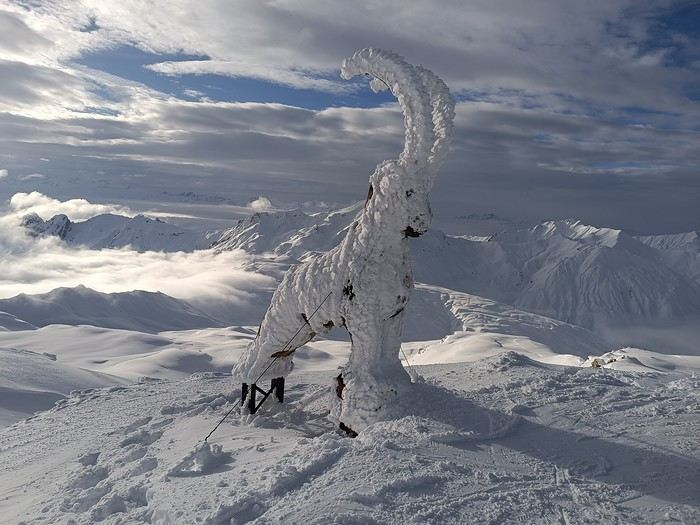
The off-topic contest discussion is happening here
This month’s theme is white in every way imaginable.
Not just a little touch in the top right corner of the photo!
Nor a white square on a white background...
Also, black and white won’t be allowed.
For the rest, I’ll let the voters be the sole judges of whether the theme is respected!
I’m now borrowing Ragamuffin’s wording for the rules:
Every VF member can submit up to 3 photos, until Sunday, February 23 at 11:59 PM, Clermont-Ferrand time.
Each photo must be posted in a separate message, with its number (1, 2, or 3).
Don’t forget to add a little explanation (comment, location, etc.).
Voting:
Every VF member can vote for the 3 photos they think are the best, based on their own criteria and the theme.
Voting will take place from Monday, February 24 to Friday, February 28 at 2:00 PM, Clermont-Ferrand time.
The chosen photos should be listed in order of preference: - 1st photo: 3 points - 2nd: 2 points - 3rd: 1 point
The winner is the author of the photo with the most points.
Results will be published on February 28 in the late afternoon. In case of a tie, the number of first-place votes will decide. The winner will have the honor of organizing March’s contest.
Photos that have already been nominated (1st, 2nd, or 3rd) in another contest are not eligible to participate in this one.
The off-topic contest discussion is happening here
White as snow, let's chat here!
And nowhere else...😉
Can you travel without an agency in Tanzania or Kenya?
Hi there! 🙂
Once again, I’m back looking for advice
So, here’s the thing: in September, I’m planning a trip to Africa. There’ll be four of us—my husband, my 24-year-old daughter, my 20-year-old son, and me.
I’ve had this idea in my head for a while, but now it’s starting to feel real. The tricky part is that I’m on team "I organize my trip without an agency and handle things on the spot." But here’s the catch—my husband, who’s usually up for anything, doesn’t want to hear about a do-it-yourself trip. From what I’ve gathered, only Namibia allows that if I’m not mistaken. But if it’s possible in Tanzania (or maybe Kenya), I think I could convince him.
Anyway, here’s my first double question—more will probably follow! Can you travel without an agency in Tanzania? If not, which agency would you recommend, given that I live in Belgium?
Thanks so much in advance for your help!
Once again, I’m back looking for advice
So, here’s the thing: in September, I’m planning a trip to Africa. There’ll be four of us—my husband, my 24-year-old daughter, my 20-year-old son, and me.
I’ve had this idea in my head for a while, but now it’s starting to feel real. The tricky part is that I’m on team "I organize my trip without an agency and handle things on the spot." But here’s the catch—my husband, who’s usually up for anything, doesn’t want to hear about a do-it-yourself trip. From what I’ve gathered, only Namibia allows that if I’m not mistaken. But if it’s possible in Tanzania (or maybe Kenya), I think I could convince him.
Anyway, here’s my first double question—more will probably follow! Can you travel without an agency in Tanzania? If not, which agency would you recommend, given that I live in Belgium?
Thanks so much in advance for your help!
Abdulrazak Gurnah, an author with a unique journey and identity (Tanzania)
(A belated tribute on this forum)
Abdulrazak Gurnah, an author with a unique journey and identity (Tanzania)
Big surprise in Stockholm: the 2021 Nobel Prize in Literature was awarded to novelist Abdulrazak Gurnah. The Tanzanian author, who writes in English, is best known for his novels Paradise (1994) and By the Sea (2001). He was recognized for his "uncompromising and compassionate portrayal of the effects of colonialism and the fate of refugees caught between cultures and continents", according to the Nobel Committee.His work moves away from "stereotypical descriptions and opens our eyes to a culturally diverse East Africa that is little known in many parts of the world".
Gurnah is the first African author since 2003 to win the prestigious prize, and the fifth from the African continent overall—following Wole Soyinka (1986), Naguib Mahfouz (1988), Nadine Gordimer (1991), and J.M. Coetzee (2003). Once again, the prize passed over Kenyan Ngugi wa Thiong’o, who has long been among the favorites for the award.
Born in Zanzibar (now part of Tanzania) in 1948, Abdulrazak Gurnah grew up in an Arab family originally from Yemen. He sought refuge in the UK in the late 1960s, a few years after independence, at a time when the Muslim minority there was being persecuted. He wasn’t able to return to Zanzibar until 1984.
Since 1987, he has published around ten novels and several short stories in English (his native language is Swahili). None have become bestsellers, but his body of work as a whole offers a different perspective on issues like immigration and cultural diversity. His work sheds light on the effects of colonialism, exile, and the plight of refugees, "speaking" of his love for Africa and his fight against neocolonialism. Though Gurnah’s stories aren’t explicitly autobiographical, they’re inspired by his life as an immigrant in the UK.
Gurnah was also a professor of English and postcolonial literature at the University of Kent in Canterbury until his recent retirement.
Does this award bring more attention to African literature? Who knows? At the very least, it might give it a boost. If African literature is less visible in the West, it’s partly because it isn’t widely accessible: Gurnah is rarely translated into French or German, and not at all into Arabic.
In Tanzania and its Zanzibar archipelago, he’s being celebrated with joy. "This means a lot for Zanzibar’s struggle for self-determination," says Ismail Jussa, a literary critic from Zanzibar. "It helps put Zanzibar back on the map." The Swedish Committee acknowledged that his work has helped understand "the divisions caused by colonialists, but also the heartbreak of being torn between the homeland one comes from and the life of exile one is forced into."
By the Sea. Bloomsbury Publishing, 2001 (Fr.: Près de la Mer. Galaade Éd., 2006)
Paradise. Bloomsbury Publishing, 1994/2004 (Fr.: Paradis. Motifs, 1999)
Desertion. Bloomsbury Publishing, 2005 (Fr.: Adieu Zanzibar. Galaade Éd., 2009)
Afterlives. Bloomsbury Publishing, 2020 (Fr.: Les vies d’après. Denoël, 2023)
Hery
Abdulrazak Gurnah, an author with a unique journey and identity (Tanzania)
Big surprise in Stockholm: the 2021 Nobel Prize in Literature was awarded to novelist Abdulrazak Gurnah. The Tanzanian author, who writes in English, is best known for his novels Paradise (1994) and By the Sea (2001). He was recognized for his "uncompromising and compassionate portrayal of the effects of colonialism and the fate of refugees caught between cultures and continents", according to the Nobel Committee.His work moves away from "stereotypical descriptions and opens our eyes to a culturally diverse East Africa that is little known in many parts of the world".
Gurnah is the first African author since 2003 to win the prestigious prize, and the fifth from the African continent overall—following Wole Soyinka (1986), Naguib Mahfouz (1988), Nadine Gordimer (1991), and J.M. Coetzee (2003). Once again, the prize passed over Kenyan Ngugi wa Thiong’o, who has long been among the favorites for the award.
Born in Zanzibar (now part of Tanzania) in 1948, Abdulrazak Gurnah grew up in an Arab family originally from Yemen. He sought refuge in the UK in the late 1960s, a few years after independence, at a time when the Muslim minority there was being persecuted. He wasn’t able to return to Zanzibar until 1984.
Since 1987, he has published around ten novels and several short stories in English (his native language is Swahili). None have become bestsellers, but his body of work as a whole offers a different perspective on issues like immigration and cultural diversity. His work sheds light on the effects of colonialism, exile, and the plight of refugees, "speaking" of his love for Africa and his fight against neocolonialism. Though Gurnah’s stories aren’t explicitly autobiographical, they’re inspired by his life as an immigrant in the UK.
Gurnah was also a professor of English and postcolonial literature at the University of Kent in Canterbury until his recent retirement.
Does this award bring more attention to African literature? Who knows? At the very least, it might give it a boost. If African literature is less visible in the West, it’s partly because it isn’t widely accessible: Gurnah is rarely translated into French or German, and not at all into Arabic.
In Tanzania and its Zanzibar archipelago, he’s being celebrated with joy. "This means a lot for Zanzibar’s struggle for self-determination," says Ismail Jussa, a literary critic from Zanzibar. "It helps put Zanzibar back on the map." The Swedish Committee acknowledged that his work has helped understand "the divisions caused by colonialists, but also the heartbreak of being torn between the homeland one comes from and the life of exile one is forced into."
By the Sea. Bloomsbury Publishing, 2001 (Fr.: Près de la Mer. Galaade Éd., 2006)
Paradise. Bloomsbury Publishing, 1994/2004 (Fr.: Paradis. Motifs, 1999)
Desertion. Bloomsbury Publishing, 2005 (Fr.: Adieu Zanzibar. Galaade Éd., 2009)
Afterlives. Bloomsbury Publishing, 2020 (Fr.: Les vies d’après. Denoël, 2023)
Hery