Results for "Carry+|+127+>+353"
6070 results found.
South Africa: Your feedback on luggage safety
Hi, we’re planning to take the scenic route back from Kruger Park (Orpen Gate) but we’ll have our two travel bags in the trunk. In some countries, there’s no rear shelf to hide the trunk. I don’t know how it works in SA—what do you think?
We have the same concern because we’d like to do the Leopard Trail, but we’ll have our stuff with us too. We’re wondering if leaving the car in the parking lot where the trail starts is somewhat monitored or not. Thanks for your feedback!
PS: Is the Kruger section starting from Orpen Gate any good? Thanks a bunch!
We have the same concern because we’d like to do the Leopard Trail, but we’ll have our stuff with us too. We’re wondering if leaving the car in the parking lot where the trail starts is somewhat monitored or not. Thanks for your feedback!
PS: Is the Kruger section starting from Orpen Gate any good? Thanks a bunch!
Which island in Thailand for snorkeling and walks over 3 days?
Hi everyone, we’ll be in Thailand from August 2nd to 21st, arriving in Bangkok on the 2nd for a visit.
From the 5th to the 8th: Angkor temples.
Then, starting on the 9th, we’re planning to head to Chiang Mai, and by the 14th or 15th, we’d like to be on an island until the 19th, when we return to Bangkok. Five days in Chiang Mai seems a bit long to us. What do you recommend between the 9th and 15th, and which island? We’re not big fans of sunbathing—we’d love to snorkel and explore the island. Ideally, I’d have liked to find a house to rent, but every time, I end up with places far from the beach, whereas we’d really like to be able to walk to the beach for strolls. By the way, are there a lot of shells? Can we collect them? It seems that in August, swimming can sometimes be tricky due to tides—is that true?
Thanks to all the contributors! 😊
What’s your definition of a nature destination?
Hi,
I’m starting this thread after a digression that began in the India section and continued in a travel journal about Kerala.
The original topic was whether India is—or isn’t—a nature destination.
I’ll let you all discuss and share your own definition of a nature destination. 🙂
I’m starting this thread after a digression that began in the India section and continued in a travel journal about Kerala.
The original topic was whether India is—or isn’t—a nature destination.
I’ll let you all discuss and share your own definition of a nature destination. 🙂
Japan: First Discovery!
Here’s a little story about my first trip to Japan with my partner.
We went for our first visit from October 29 to November 13, 2024.
I had planned this entire trip back in November 2020, but given the health situation at the time, I had to cancel...
Here’s the classic route we took: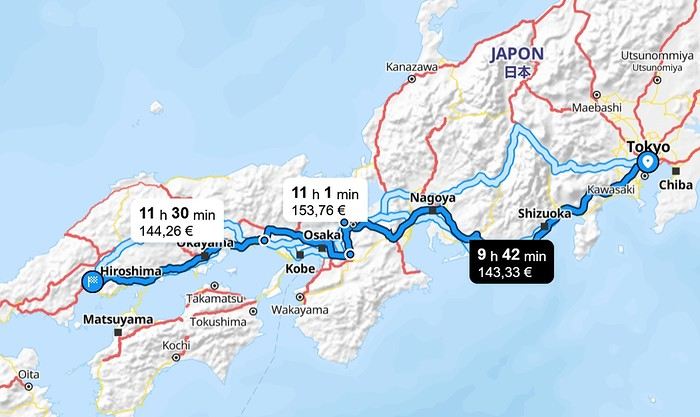
We booked everything ourselves and got a regional pass for the area from Kyoto to Hiroshima. The hotels were reserved 3 months in advance on Book... and Agod... (1030 € for 2 people for 13 nights = 80 €/night). For the flight, we chose a Qatar Airways flight with a layover to break up the long journey (950 € per person). We also got a pass on the same site (Japan-Experience) to take the train connecting Narita Airport to Shibuya Station (the N'EX Narita Express). Since the airport is 75 km from central Tokyo, we opted for this mode of transport, even though there are cheaper alternatives. After reading various posts on VoyageForum, I understood how important it was to have a Welcome Suica card to pay for public transport (subway, tram, bus, boat throughout the country), and we were able to buy one at Narita Airport. It turned out to be super useful! After a long but smooth journey, we found ourselves at Narita Airport in the evening. Even though we had a pass for the Narita Express, we had to go to a counter to make a reservation for the train (mandatory). Then, once we arrived at Shibuya Station, we took the subway for 2 stops and finally reached our hotel, exhausted (Hotel Asia Center of Japan – 270 € for 3 nights with breakfast included).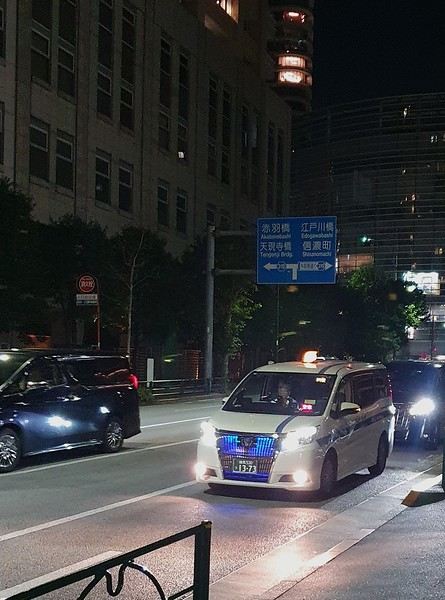
I had planned this entire trip back in November 2020, but given the health situation at the time, I had to cancel...
Here’s the classic route we took:
We booked everything ourselves and got a regional pass for the area from Kyoto to Hiroshima. The hotels were reserved 3 months in advance on Book... and Agod... (1030 € for 2 people for 13 nights = 80 €/night). For the flight, we chose a Qatar Airways flight with a layover to break up the long journey (950 € per person). We also got a pass on the same site (Japan-Experience) to take the train connecting Narita Airport to Shibuya Station (the N'EX Narita Express). Since the airport is 75 km from central Tokyo, we opted for this mode of transport, even though there are cheaper alternatives. After reading various posts on VoyageForum, I understood how important it was to have a Welcome Suica card to pay for public transport (subway, tram, bus, boat throughout the country), and we were able to buy one at Narita Airport. It turned out to be super useful! After a long but smooth journey, we found ourselves at Narita Airport in the evening. Even though we had a pass for the Narita Express, we had to go to a counter to make a reservation for the train (mandatory). Then, once we arrived at Shibuya Station, we took the subway for 2 stops and finally reached our hotel, exhausted (Hotel Asia Center of Japan – 270 € for 3 nights with breakfast included).
Luang Prabang, Nong Khiaw, and Muang Ngoi (Laos) – Trip Report
Arrival at Luang Prabang Airport: Got my visa on the spot in under 5 minutes, but it cost me $40 + $1 for some "processing fee" and a photo.
First ATM withdrawal of the maximum allowed—about 82 €! Luckily, I had euros on me because each withdrawal comes with a fixed fee of 30,000 kips (like in Thailand, where it’s 200 baht per withdrawal, but here you can take out up to 800 €!).
Then I took the airport taxi service for 100,000 kips per person. It’s a minivan that drops passengers (8–10) at their hotels. The ticket booth is right at the exit—easy to spot with a sign that says "Taxi Service."
I left Luang Prabang for Nong Khiaw by minivan, paying 180,000 kips. A big tuk-tuk taxi picked us up at the hotel at 8:40 AM, and we picked up more people along the way until we reached a small minivan station. Our "minivan" was *very* mini—we still managed to squeeze in 12 people, with 2 up front + the driver, even though there wasn’t really space for 2 full seats—more like 1.5! Luggage was strapped to the roof under a tarp for the trip. Scheduled to leave at 9 AM, we finally took off at 9:30. The ride took 4 hours and 15 minutes from station to station—roads were rough, sometimes unpaved, and always full of potholes. This route is mostly used by trucks registered in China. We passed the dam that now blocks boat traffic between Luang Prabang and Nong Khiaw. About 40 km from Nong Khiaw, we turned off the main road onto a smaller one, less crowded with trucks but still rough. At the Nong Khiaw bus station, a shared taxi was waiting to drop everyone off at their hotels. I walked to mine—the Nam Ou View Villa, about 600 meters from the station. Nice room with a great view of the river.
Nong Khiaw is easy to explore on foot. One unpaved road runs along the river, lined with hotels and restaurants with terraces, while a parallel paved road has little traffic and all the shops. I loved the vibe and tranquility of the town. There are plenty of guesthouses, especially on the other side of the bridge. Restaurants everywhere, all in a calm atmosphere. I hiked up to the highest viewpoint—there are several. The climb is supposed to take 1.5 hours, but it took me 2. Time to enjoy the nature and catch my breath! No real difficulty, just a *lot* of uphill. There’s a small toll at the start of the climb—I don’t remember the exact amount, but it wasn’t expensive. The view at the top is stunning—360°! Mornings are cloudy, midday is usually clear, and evenings are all about the sunset ☀️. The descent was tougher for me—guaranteed sore muscles!
I also walked along the Nam Ou toward Muang Ngoi. The road is quiet and unpaved but often narrow with no views. Small villages along the way. In town, you can rent canoes, and agencies offer day trips or multi-day excursions. There are shops, a bank, and 2 ATMs.
Departure for Muang Ngoi—a village only accessible by private or public boat. I took the 11:30 AM public boat (sold as 11 AM) for 70,000 kips. There were so many of us that two boats were needed, and we were still packed in! We left 40 minutes late because the ticket collector didn’t check anything, and one ticket was missing. Of course, everyone insisted they’d paid—which was probably true, given the general disorganization. The trip took 1 hour and 5 minutes, going upstream against the current. Gorgeous.
Arriving at Muang Ngoi’s tiny dock, hotel owners were waiting for their guests or offering rooms to those without reservations. I’d booked the Riverview Bungalows & GH. The room was a bit worn but comfortable, and the view was amazing!
Muang Ngoi has ONE recently paved main street—all other paths are red dirt and dusty, perfect for unguided day hikes. I *loved* this village. People live their lives without worrying much about tourists, who aren’t too numerous yet. There’s no bank or ATM, and dollars are accepted (even preferred) for transport and hotels. Watch the condition of your bills—the hotelier refused one with a tiny stain I hadn’t even noticed! There are travel agencies for excursions, small shops... I often ate at Gecko (Western food, I admit) and across the street at Vita, which serves a delicious local dish called *Suzy*—a curry-like specialty. From Muang Ngoi, there are plenty of easy hikes. The trails are simple to find and follow, except for those crossing rice fields. Maps.Me helped me stay on track.
If you don’t want to walk, there are very local transport options: modified tractors with platforms for passengers and luggage. I took an excursion to Sopchem, a small village 40 minutes away by boat. I paid $20 round-trip for two people on a private boat. The ride was stunning—the river cuts through mountains in this section. Sopchem is tiny but charming, especially for buying textiles. Every house has a loom out front and a display selling their work. I bought two scarves for 60,000 kips each without bargaining—it seemed like a steal. Back in Luang Prabang, I saw the same scarves in a fancy boutique for 55,000 kips each—9 or 10 times the price!!!!
I also tried the village laundry service—everywhere lists the price as 25,000 kips per kilo. I picked the closest one to my hotel and watched from my balcony as the woman washed my clothes in the river, then hung them on her fence all day in the dust! Turns out only hotels have washing machines. Better to postpone laundry or do it yourself—my clothes didn’t smell great afterward!
For the return to Luang Prabang, I splurged on a private transfer. An agency at the dock arranged it for $100. I took the public boat to Nong Khiaw, where a driver was waiting. His vehicle was a pickup truck, and the trip took 4 hours total to my hotel in the city center. I recommend this agency (Lattanavongsa Tour Adventure)—very professional. They also run a hotel (same name) that looked nice from the outside, though not riverfront.
In Luang Prabang, I did the Mekong sunset cruise. Departed at 4:30 PM with Sasa Sunset Cruise for 245,000 kips, including one drink and spring rolls. I was lucky to see a beautiful sunset—I don’t regret it. I also visited the tiny Traditional Arts and Ethnology Centre—very interesting for learning about Laos’ ethnic groups and textile traditions, but *very* small. Of course, I visited the temples and wandered the alleys to admire the stunning houses. The sunset at Mount Phousi was nice, but *so* crowded! The night market is fun but not super interesting—vendors sell pretty much the same things you’ll find in daytime shops at the same prices. There are two food courts, one huge at the end of the market. I love the concept, but the quality of the stalls is debatable.
Luang Prabang The morning alms-giving ceremony for monks is called *Tak Bat*. This ritual has turned into a circus for Chinese tourists. I’d visited Luang Prabang 15 years ago and didn’t find the same serenity in the ceremony. In Luang Prabang, I exchanged euros at BFL BRED Bank (recommended in the *Routard* guide). Good rates and a smooth transaction. The employee spoke excellent French and offered me deals on the Sasa sunset cruise (with dinner) and a taxi to the airport. I took her up on the taxi—it was much cheaper. She explained that she works evenings at Sasa Sunset Cruise and the taxi driver is her husband.
Hope this gives you some practical tips for your next trip!
I left Luang Prabang for Nong Khiaw by minivan, paying 180,000 kips. A big tuk-tuk taxi picked us up at the hotel at 8:40 AM, and we picked up more people along the way until we reached a small minivan station. Our "minivan" was *very* mini—we still managed to squeeze in 12 people, with 2 up front + the driver, even though there wasn’t really space for 2 full seats—more like 1.5! Luggage was strapped to the roof under a tarp for the trip. Scheduled to leave at 9 AM, we finally took off at 9:30. The ride took 4 hours and 15 minutes from station to station—roads were rough, sometimes unpaved, and always full of potholes. This route is mostly used by trucks registered in China. We passed the dam that now blocks boat traffic between Luang Prabang and Nong Khiaw. About 40 km from Nong Khiaw, we turned off the main road onto a smaller one, less crowded with trucks but still rough. At the Nong Khiaw bus station, a shared taxi was waiting to drop everyone off at their hotels. I walked to mine—the Nam Ou View Villa, about 600 meters from the station. Nice room with a great view of the river.
Nong Khiaw is easy to explore on foot. One unpaved road runs along the river, lined with hotels and restaurants with terraces, while a parallel paved road has little traffic and all the shops. I loved the vibe and tranquility of the town. There are plenty of guesthouses, especially on the other side of the bridge. Restaurants everywhere, all in a calm atmosphere. I hiked up to the highest viewpoint—there are several. The climb is supposed to take 1.5 hours, but it took me 2. Time to enjoy the nature and catch my breath! No real difficulty, just a *lot* of uphill. There’s a small toll at the start of the climb—I don’t remember the exact amount, but it wasn’t expensive. The view at the top is stunning—360°! Mornings are cloudy, midday is usually clear, and evenings are all about the sunset ☀️. The descent was tougher for me—guaranteed sore muscles!
I also walked along the Nam Ou toward Muang Ngoi. The road is quiet and unpaved but often narrow with no views. Small villages along the way. In town, you can rent canoes, and agencies offer day trips or multi-day excursions. There are shops, a bank, and 2 ATMs.
Departure for Muang Ngoi—a village only accessible by private or public boat. I took the 11:30 AM public boat (sold as 11 AM) for 70,000 kips. There were so many of us that two boats were needed, and we were still packed in! We left 40 minutes late because the ticket collector didn’t check anything, and one ticket was missing. Of course, everyone insisted they’d paid—which was probably true, given the general disorganization. The trip took 1 hour and 5 minutes, going upstream against the current. Gorgeous.
Arriving at Muang Ngoi’s tiny dock, hotel owners were waiting for their guests or offering rooms to those without reservations. I’d booked the Riverview Bungalows & GH. The room was a bit worn but comfortable, and the view was amazing!
Muang Ngoi has ONE recently paved main street—all other paths are red dirt and dusty, perfect for unguided day hikes. I *loved* this village. People live their lives without worrying much about tourists, who aren’t too numerous yet. There’s no bank or ATM, and dollars are accepted (even preferred) for transport and hotels. Watch the condition of your bills—the hotelier refused one with a tiny stain I hadn’t even noticed! There are travel agencies for excursions, small shops... I often ate at Gecko (Western food, I admit) and across the street at Vita, which serves a delicious local dish called *Suzy*—a curry-like specialty. From Muang Ngoi, there are plenty of easy hikes. The trails are simple to find and follow, except for those crossing rice fields. Maps.Me helped me stay on track.
If you don’t want to walk, there are very local transport options: modified tractors with platforms for passengers and luggage. I took an excursion to Sopchem, a small village 40 minutes away by boat. I paid $20 round-trip for two people on a private boat. The ride was stunning—the river cuts through mountains in this section. Sopchem is tiny but charming, especially for buying textiles. Every house has a loom out front and a display selling their work. I bought two scarves for 60,000 kips each without bargaining—it seemed like a steal. Back in Luang Prabang, I saw the same scarves in a fancy boutique for 55,000 kips each—9 or 10 times the price!!!!
I also tried the village laundry service—everywhere lists the price as 25,000 kips per kilo. I picked the closest one to my hotel and watched from my balcony as the woman washed my clothes in the river, then hung them on her fence all day in the dust! Turns out only hotels have washing machines. Better to postpone laundry or do it yourself—my clothes didn’t smell great afterward!
For the return to Luang Prabang, I splurged on a private transfer. An agency at the dock arranged it for $100. I took the public boat to Nong Khiaw, where a driver was waiting. His vehicle was a pickup truck, and the trip took 4 hours total to my hotel in the city center. I recommend this agency (Lattanavongsa Tour Adventure)—very professional. They also run a hotel (same name) that looked nice from the outside, though not riverfront.
In Luang Prabang, I did the Mekong sunset cruise. Departed at 4:30 PM with Sasa Sunset Cruise for 245,000 kips, including one drink and spring rolls. I was lucky to see a beautiful sunset—I don’t regret it. I also visited the tiny Traditional Arts and Ethnology Centre—very interesting for learning about Laos’ ethnic groups and textile traditions, but *very* small. Of course, I visited the temples and wandered the alleys to admire the stunning houses. The sunset at Mount Phousi was nice, but *so* crowded! The night market is fun but not super interesting—vendors sell pretty much the same things you’ll find in daytime shops at the same prices. There are two food courts, one huge at the end of the market. I love the concept, but the quality of the stalls is debatable.
Luang Prabang The morning alms-giving ceremony for monks is called *Tak Bat*. This ritual has turned into a circus for Chinese tourists. I’d visited Luang Prabang 15 years ago and didn’t find the same serenity in the ceremony. In Luang Prabang, I exchanged euros at BFL BRED Bank (recommended in the *Routard* guide). Good rates and a smooth transaction. The employee spoke excellent French and offered me deals on the Sasa sunset cruise (with dinner) and a taxi to the airport. I took her up on the taxi—it was much cheaper. She explained that she works evenings at Sasa Sunset Cruise and the taxi driver is her husband.
Hope this gives you some practical tips for your next trip!
Review of my visit to Angkor
SIEM REAP
You can now rent scooters just about everywhere in Siem Reap, but at rip-off prices—$15–18 a day instead of $5–10 like everywhere else in Indochina. The best options are tuk-tuks or, even better, electric bikes ($12, but with a 50 km range, so they won’t let you go to Banteay Srei or the River of a Thousand Lingas in the Kulen Massif, which are too far). **WARNING:** Wear a helmet, or they *will* catch you. Scooters are banned from going from SR to the stunning temple of Koh Ker in the northeast and continuing to Battambang; no idea why!
My favorite little hotel in Siem Reap? The Neth Socheata, tucked in an alley off Thnou St near the market—lovely rooms, and the owner speaks great English. Then there’s the Ivy Guesthouse with its little garden, but it’s “always full,” according to the owner. For something upscale but still affordable, a fantastic spot is the Pavillon Indochine, tucked away on a quiet side street on the way to the airport—elegant, with incredible attention to decor, a terrace restaurant, garden, pool, etc. Everything you’d want for $70 including breakfast. I also spotted a hostel for backpackers, the Angkor Thom Hostel, with small 6-bed dorms for $4 with a fan or $6 with AC (18 Wat Bo St).
Food-wise, it’s all amazing! Pub Street has turned into a noise nightmare, with speakers blasting what’s supposed to be music but is just *boom, boom, boom, boom, boom*—run away, even though the pizzas at the Italian place Il Forno are really good. The famous and excellent Tigre de Papier has changed its name to Paper Tiger and is still just as good (lunch only, though, because across the street there’s a huge bar blasting *boom boom boom*, so you won’t be able to hear each other during dinner). On the other hand, the Italian-Cambodian El Toro on Pub Street is perfect, with fantastic pizzas and divine lasagna (go to the first-floor dining room—there’s a big bar across the street blasting *boom boom boom*, but at least you can still talk). Due to the lack of customers during COVID, all the French restaurants—Barrio (three times alas!), Les Deux Sœurs, Le Bel Air, and Le Mozart—have closed. The only one left is L’Olivier, which is pricey. I also discovered a great Moroccan restaurant (though run by a Sudanese man and his French wife), Le Tajine, on Strung Thmei St, 09 68 89 78 27. **WARNING:** For tagines and couscous, you need to order at least in the morning; wine and beer are fine. To get there, turn at the corner of the Cineplex behind the big market at the start of Sivatha Boulevard.
I finally went to the Khmer dance show. Beautiful dancers and dances, but **EAT BEFORE OR AFTER**—the meal is so awful that most Westerners leave it on their plates.
THE ANGKOR TEMPLES Use the excellent *Routard Cambodia* guide. Just a few tips: - Start with the pre-Angkorian Roluos group, 15 km before Siem Reap on the road to PP—it’s the “ancestor” of the temples.
- To avoid the big crowds at Angkor Wat, Bayon, and Ta Prohm, go between noon and 2 PM when everyone’s having lunch. - Speaking of lunch, the crowds flock to the hundred or so mediocre food stalls on the left side of Angkor Wat. Instead, head to Angkor Thom after the stunning Pre Rup temples, all the way to the small Sras Srang basin. Along the basin, there are several restaurants with terraces offering first-floor views of the water, and no crowds. Afterward, cross to the other side of the basin—you’ll end up in the countryside with charming villages where locals seem to live as they did during the temples’ golden age (at its peak, the population was estimated at 600,000–800,000, making it the largest city in the world. The theory for the abandonment is water shortages caused by overpopulation).
- I climbed Phnom Bakheng for the famous sunset, but the crowd was so ridiculous that instead of seeing the temple at sunset, you just see the heads and shoulders around you.
- There are tons of small temples that most people skip, and they’re missing out. My favorites: Thommanon, Neak Pean, Ta Som, and especially Pre Rup, an amazing brick complex with 14 towers.
**Big disappointment:** You can no longer climb to the first floor of Bayon, where you used to stand magically among the giant head statues. So, admire the beautiful bas-reliefs on the outside, but there’s no point going inside—you’ll just see a dark, square corridor with nothing interesting.
ANGKOR FURTHER AFIELD The wonderful Banteay Srei temple. A gem! I couldn’t find the bas-relief stolen by Malraux in the 1920s (fun fact: what he was doing in Indochina—stealing a bas-relief to sell for a fortune in France to cover his massive gambling debts on the stock market, where he ruined his very wealthy American wife—was an open secret. But the French authorities in Saigon, who hated him for his leftist views, decided to let him do it and catch him red-handed, which worked perfectly. He avoided jail only because all the leftist intellectuals in Saint-Germain, Sartre, Beauvoir, and co. cried scandal—though the real scandal was the looting).
30 km of excellent paved road further north, a great spot: the Kulen Massif and the River of a Thousand Lingas (at one point, you’ll come to a T-junction—turn left). Along the road at the foot of the massif, on your right, there’s a great restaurant, Bourey Sovann (where the food is excellent). The trail to the river starts just before it on the left. **Warning:** There are two sites for the River of a Thousand Lingas. One is accessible via a private road, so there’s a $20 toll, and you need to arrive before 11 AM because the road is narrow and traffic flows downhill after that. You’ll end up in a site full of shops, snack stalls, and two good restaurants, including one by a beautiful waterfall. However, the thousand lingas aren’t as spectacular there.
Banteay Srei + the River of a Thousand Lingas makes for a fantastic day. **WARNING:** You used to be able to go to the river and waterfall by scooter or tuk-tuk, but it’s now forbidden. So **go by taxi**—otherwise, you’ll be hiking 12 km round trip up a steep trail.
If you leave Siem Reap early, you can even add Beng Mealea temple on the way back, making a triangular route: SR-BS-Khulen-BM-SR (or the reverse).
If you have time, visit Banteay Samré temple, 10 km west of the Angkor Thom complex. A lovely site with very few visitors.
I’ve never been to the famous Preah Khan on a hill overlooking Thailand. There’s a big dispute between the two countries—the Thais insist the temple belongs to them because the entrance is in their country. There have been serious clashes in the recent past, and landmines are still abundant off the marked paths. They even claim the entire Siem Reap province is theirs and should be returned, arguing it was Thai in the past. It takes two days (6–7 hours each way), with an overnight stay in the nearby village (small hotels and one luxury option with a garden and pool, but it’s expensive).
TONLE SAP People talk about “floating villages,” but that’s a big mistake—these are actually villages of astonishing stilt houses, 4 meters high or more, due to the lake’s major floods. The most famous is Chong Khneas, which I skipped because it’s packed with tourists. Instead, I really liked Kampong Phluk, which is much quieter. To get there, continue on the road past the Roluos group until you reach a parking lot with pirogues lined up. They’ll take you down the river, stop at this amazing village for a walk, and then take you to the Tonle Sap, a true inland sea. At one point, you’ll pass through a flooded forest that you can explore by small boat. At the junction of the river and the Tonle Sap, and on the lake itself, there are floating restaurants where the food is great. Note that in the dry season, you can reach the village by scooter.
BACK TO PHNOM PENH AND ON TO SOUTHERN VIETNAM Since I’d planned at least 15 days in the Mekong Delta between Chau Doc and Saigon, I skipped Battambang, etc. With no desire to endure the dusty road from SR to PP again, I simply loaded my bike onto a bus with the great company Rith Monty (book at their office in SR on the small square at the start of Sivatha Boulevard—$10 for the bike and $6 for me), also known as Paramount. Their buses stop on 136 St right in the middle of PP. I’ll also mention the excellent Giant Ibis, with big modern buses that always leave on time—unlike the others.
I spent the night in PP, and the next morning took the fast boat from PP to Chau Doc with Hang Chau Tourist (buying the ticket the day before is recommended—$25—either at your hotel or the port, and they’ll pick you up at your hotel by tuk-tuk to take you to the port). Departure from PP at noon, arrival in Chau Doc around 4 PM. The boat is great—comfortable and fast. A crew member takes your passports for Cambodian exit formalities, and you handle Vietnamese immigration yourself—it all takes 15–20 minutes. The route isn’t on the Mekong but on the Bassac River to the border, then a wide north-south canal to Chau Doc (the arrival is really nice). In the Chau Doc-PP direction, the boat leaves Chau Doc at 7:30 AM.
My favorite little hotel in Siem Reap? The Neth Socheata, tucked in an alley off Thnou St near the market—lovely rooms, and the owner speaks great English. Then there’s the Ivy Guesthouse with its little garden, but it’s “always full,” according to the owner. For something upscale but still affordable, a fantastic spot is the Pavillon Indochine, tucked away on a quiet side street on the way to the airport—elegant, with incredible attention to decor, a terrace restaurant, garden, pool, etc. Everything you’d want for $70 including breakfast. I also spotted a hostel for backpackers, the Angkor Thom Hostel, with small 6-bed dorms for $4 with a fan or $6 with AC (18 Wat Bo St).
Food-wise, it’s all amazing! Pub Street has turned into a noise nightmare, with speakers blasting what’s supposed to be music but is just *boom, boom, boom, boom, boom*—run away, even though the pizzas at the Italian place Il Forno are really good. The famous and excellent Tigre de Papier has changed its name to Paper Tiger and is still just as good (lunch only, though, because across the street there’s a huge bar blasting *boom boom boom*, so you won’t be able to hear each other during dinner). On the other hand, the Italian-Cambodian El Toro on Pub Street is perfect, with fantastic pizzas and divine lasagna (go to the first-floor dining room—there’s a big bar across the street blasting *boom boom boom*, but at least you can still talk). Due to the lack of customers during COVID, all the French restaurants—Barrio (three times alas!), Les Deux Sœurs, Le Bel Air, and Le Mozart—have closed. The only one left is L’Olivier, which is pricey. I also discovered a great Moroccan restaurant (though run by a Sudanese man and his French wife), Le Tajine, on Strung Thmei St, 09 68 89 78 27. **WARNING:** For tagines and couscous, you need to order at least in the morning; wine and beer are fine. To get there, turn at the corner of the Cineplex behind the big market at the start of Sivatha Boulevard.
I finally went to the Khmer dance show. Beautiful dancers and dances, but **EAT BEFORE OR AFTER**—the meal is so awful that most Westerners leave it on their plates.
THE ANGKOR TEMPLES Use the excellent *Routard Cambodia* guide. Just a few tips: - Start with the pre-Angkorian Roluos group, 15 km before Siem Reap on the road to PP—it’s the “ancestor” of the temples.
- To avoid the big crowds at Angkor Wat, Bayon, and Ta Prohm, go between noon and 2 PM when everyone’s having lunch. - Speaking of lunch, the crowds flock to the hundred or so mediocre food stalls on the left side of Angkor Wat. Instead, head to Angkor Thom after the stunning Pre Rup temples, all the way to the small Sras Srang basin. Along the basin, there are several restaurants with terraces offering first-floor views of the water, and no crowds. Afterward, cross to the other side of the basin—you’ll end up in the countryside with charming villages where locals seem to live as they did during the temples’ golden age (at its peak, the population was estimated at 600,000–800,000, making it the largest city in the world. The theory for the abandonment is water shortages caused by overpopulation).
- I climbed Phnom Bakheng for the famous sunset, but the crowd was so ridiculous that instead of seeing the temple at sunset, you just see the heads and shoulders around you.
- There are tons of small temples that most people skip, and they’re missing out. My favorites: Thommanon, Neak Pean, Ta Som, and especially Pre Rup, an amazing brick complex with 14 towers.
**Big disappointment:** You can no longer climb to the first floor of Bayon, where you used to stand magically among the giant head statues. So, admire the beautiful bas-reliefs on the outside, but there’s no point going inside—you’ll just see a dark, square corridor with nothing interesting.
ANGKOR FURTHER AFIELD The wonderful Banteay Srei temple. A gem! I couldn’t find the bas-relief stolen by Malraux in the 1920s (fun fact: what he was doing in Indochina—stealing a bas-relief to sell for a fortune in France to cover his massive gambling debts on the stock market, where he ruined his very wealthy American wife—was an open secret. But the French authorities in Saigon, who hated him for his leftist views, decided to let him do it and catch him red-handed, which worked perfectly. He avoided jail only because all the leftist intellectuals in Saint-Germain, Sartre, Beauvoir, and co. cried scandal—though the real scandal was the looting).
30 km of excellent paved road further north, a great spot: the Kulen Massif and the River of a Thousand Lingas (at one point, you’ll come to a T-junction—turn left). Along the road at the foot of the massif, on your right, there’s a great restaurant, Bourey Sovann (where the food is excellent). The trail to the river starts just before it on the left. **Warning:** There are two sites for the River of a Thousand Lingas. One is accessible via a private road, so there’s a $20 toll, and you need to arrive before 11 AM because the road is narrow and traffic flows downhill after that. You’ll end up in a site full of shops, snack stalls, and two good restaurants, including one by a beautiful waterfall. However, the thousand lingas aren’t as spectacular there.
Banteay Srei + the River of a Thousand Lingas makes for a fantastic day. **WARNING:** You used to be able to go to the river and waterfall by scooter or tuk-tuk, but it’s now forbidden. So **go by taxi**—otherwise, you’ll be hiking 12 km round trip up a steep trail.
If you leave Siem Reap early, you can even add Beng Mealea temple on the way back, making a triangular route: SR-BS-Khulen-BM-SR (or the reverse).
If you have time, visit Banteay Samré temple, 10 km west of the Angkor Thom complex. A lovely site with very few visitors.
I’ve never been to the famous Preah Khan on a hill overlooking Thailand. There’s a big dispute between the two countries—the Thais insist the temple belongs to them because the entrance is in their country. There have been serious clashes in the recent past, and landmines are still abundant off the marked paths. They even claim the entire Siem Reap province is theirs and should be returned, arguing it was Thai in the past. It takes two days (6–7 hours each way), with an overnight stay in the nearby village (small hotels and one luxury option with a garden and pool, but it’s expensive).
TONLE SAP People talk about “floating villages,” but that’s a big mistake—these are actually villages of astonishing stilt houses, 4 meters high or more, due to the lake’s major floods. The most famous is Chong Khneas, which I skipped because it’s packed with tourists. Instead, I really liked Kampong Phluk, which is much quieter. To get there, continue on the road past the Roluos group until you reach a parking lot with pirogues lined up. They’ll take you down the river, stop at this amazing village for a walk, and then take you to the Tonle Sap, a true inland sea. At one point, you’ll pass through a flooded forest that you can explore by small boat. At the junction of the river and the Tonle Sap, and on the lake itself, there are floating restaurants where the food is great. Note that in the dry season, you can reach the village by scooter.
BACK TO PHNOM PENH AND ON TO SOUTHERN VIETNAM Since I’d planned at least 15 days in the Mekong Delta between Chau Doc and Saigon, I skipped Battambang, etc. With no desire to endure the dusty road from SR to PP again, I simply loaded my bike onto a bus with the great company Rith Monty (book at their office in SR on the small square at the start of Sivatha Boulevard—$10 for the bike and $6 for me), also known as Paramount. Their buses stop on 136 St right in the middle of PP. I’ll also mention the excellent Giant Ibis, with big modern buses that always leave on time—unlike the others.
I spent the night in PP, and the next morning took the fast boat from PP to Chau Doc with Hang Chau Tourist (buying the ticket the day before is recommended—$25—either at your hotel or the port, and they’ll pick you up at your hotel by tuk-tuk to take you to the port). Departure from PP at noon, arrival in Chau Doc around 4 PM. The boat is great—comfortable and fast. A crew member takes your passports for Cambodian exit formalities, and you handle Vietnamese immigration yourself—it all takes 15–20 minutes. The route isn’t on the Mekong but on the Bassac River to the border, then a wide north-south canal to Chau Doc (the arrival is really nice). In the Chau Doc-PP direction, the boat leaves Chau Doc at 7:30 AM.
Romania with the wind in my face
Hi there,
In spring 2023, I headed to Romania by motorcycle. I’ve been going there for over 20 years—by car, bike, and plane—and I’ve really fallen for this country. I feel so at home there. The big difference this time? I had all the time in the world, no constraints at all.
I left the Paris region (IDF) and headed for the Sundgau, avoiding the motorways. I know a little hotel tucked away in the countryside there. The next day, I followed the Swiss border on a small road along the Lucelle River, which acts as the frontier. Around a bend, you cross to the other side and then back into France—kind of fun.

I crossed Switzerland via the motorway—I know the route well, so no sightseeing. I arrived in Austria, which I also know pretty well, and took the Arlberg Pass. It was deserted, everything was closed, and there was still snow.

The weather wasn’t great—it was raining—so I stopped for the night at a remote inn. Perfect for drying off! I set off in the rain the next morning and kept going. Gradually, the rain stopped. I took a detour through the Trentino-Alto Adige region and the Sella Pass. Up there, it was rain, snow, and a bit of black ice in a tunnel (wind + rain + sub-zero temps = skating rink).

I arrived in Burgenland to see the famous giant glass-and-metal grape cluster, the largest in Europe. The region is hilly, full of tiny roads, and covered in vineyards.

Burgenland

Then into Slovenia.

I stopped for the night at a winegrower’s B&B perched on a ridge straddling the Croatian border. The welcome was fantastic—I spent the evening with the owners and their friends who arrived later. The white wine was amazing! The next day, I hit the road again.

I headed for Vukovar, on the Danube, a symbol of resistance during the Balkan War. I found a really comfortable B&B by the river and stayed for two nights to explore. What a strange monument!

I visited the water tower, which you can go inside—it’s riddled with bullet holes. There’s an exhibition inside. I also checked out a museum of equipment used during the Balkan War. Since it’s in a barracks, it’s guarded. I asked if I could bring my motorcycle in, and a Croatian officer came to meet me and gave me permission, along with a sticker to put on the bike. I met some fellow bikers from Marseille riding beautiful vintage bikes.

I left Vukovar following the Danube toward Serbia. The rain caught up with me. The roads were busy, with construction causing mud everywhere and crazy truck drivers. At one point, I cut through the construction zone! I stopped for coffee in a village—it had a *Deliverance* vibe. Total silence when I walked in, and the owner gave me a suspicious look. Finally, the Romanian border... and the sun came out! The Romanian customs officer asked if I had anything to declare. "Yes—just happy to be back in Romania!" I stopped for the night at a *cabana* (mountain hut) lost in the forest. Chaos ensued—a tourist! So they rushed to get supplies, quench my thirst, give me a room, and then the owner took charge: țuică (plum brandy), omelette, beers... Everyone bent over backwards to make me happy.
I love these Romanian roads!


I passed through Băile Herculane, which isn’t as beautiful as it once was—everything’s run-down. What are they waiting for to restore this *Mittel Europa*-style spa town that’s still active?
I stopped at the birthplace of Constantin Brâncuși.

Keep your eyes peeled on the roads!

Via the Jiu Valley, I arrived in Craiova to visit my in-laws. A few days of laughs and outings. I picked up my wife at the airport.
My favorite brand

We took a trip to Horezu, a village famous for its beautiful ceramics.


After those few days together, I dropped my wife off at the airport, and the next day, I set off for Dobrogea, a region split in two after the war with Bulgaria. The road was dull—flat as far as the eye could see—but the sun was out. I followed a military convoy of about fifty vehicles, with orders not to overtake. I stopped by the roadside for some homemade *ciorbă* (sour soup). That evening, I stopped in Călărași. The next day, I crossed the Danube by ferry. There are two ferries—one goes to Bulgaria, the other stays in Romania.

A priest on board came over to bless the motorcycle, the rider, and the ferry. I arrived on the other side with some traffic. Dobrogea

It’s like that all the way to the Bulgarian border—no restaurants, hotels, or gas stations, just old collective farms. And it’s the same in Bulgaria! I stopped at Adamclisi, site of a major battle in Moesia (now Dobrogea) in 101–102 BC, one of Trajan’s most important Dacian Wars.

An oasis in the agricultural steppe.

I arrived at the Bulgarian border.

A customs officer—built like a weightlifter, shaved head, thick neck, and as square as a truck—saw me take this photo and came over to ask me to delete it. I did... but I didn’t empty the trash! The weather turned stormy. I arrived in Balchik, a resort town where the last queen of Romania, Maria, used to vacation.
The Black Sea and the Bulgarian coast

The weather wasn’t great, so I headed back to Romania to follow the coastline. Constanța and its casino

Then came the seaside resorts—just as ugly as each other: Neptun, Mangalia, Eforie Nord, Eforie Sud. I stopped at a B&B near the Danube Delta, in some random village. The welcome was nice. The next day, I headed for Dunavățu de Jos, the last stretch of tarmac in Romania. After that, it’s the Danube Delta. The area is flat and sandy, with typical houses featuring reed roofs.

Now, I’m following the Ukrainian border. I passed the last active quarantine station in Europe. I came across a funeral procession—it’s customary to honk as you pass. If you’re on foot, you cross yourself. When I arrived in Galați, it was raining. I boarded the ferry in a downpour. On board, we were packed in like sardines. As soon as the ramp hit land, the drivers rushed out, revving their engines and honking. I let them go and exited calmly. I continued toward the Székely Land. These are Hungarians who, back in the day, were border guards for the king. They’ve kept their own script (it looks like runes), their flag, and their independence streak. For them, Romania is Hungarian, despite the Treaty of Sèvres in 1920. There are still clashes between Romanians and Székely Hungarians now and then. Since I speak a bit of Romanian, I used it—logical, since it’s the language there—and it put everyone in a good mood! Székely flag

I passed through Bicaz Chei, arriving via one of my favorite kinds of roads. During a break, a bear came to check me out from a distance.

Bicaz Chei

I arrived at the "Heart of Jesus" monument, built by public subscription to thank God for sparing the village from severe flooding.

Now, I’m heading west—next stop, Transylvania, with the in-laws. On the road

Roma house

Bozorka—a Hungarian specialty... 450 grams of meat!
I made it back to France without any issues, already thinking about my next trip. Actually, I just got back from one!
I left the Paris region (IDF) and headed for the Sundgau, avoiding the motorways. I know a little hotel tucked away in the countryside there. The next day, I followed the Swiss border on a small road along the Lucelle River, which acts as the frontier. Around a bend, you cross to the other side and then back into France—kind of fun.
I crossed Switzerland via the motorway—I know the route well, so no sightseeing. I arrived in Austria, which I also know pretty well, and took the Arlberg Pass. It was deserted, everything was closed, and there was still snow.
The weather wasn’t great—it was raining—so I stopped for the night at a remote inn. Perfect for drying off! I set off in the rain the next morning and kept going. Gradually, the rain stopped. I took a detour through the Trentino-Alto Adige region and the Sella Pass. Up there, it was rain, snow, and a bit of black ice in a tunnel (wind + rain + sub-zero temps = skating rink).
I arrived in Burgenland to see the famous giant glass-and-metal grape cluster, the largest in Europe. The region is hilly, full of tiny roads, and covered in vineyards.
Burgenland
Then into Slovenia.
I stopped for the night at a winegrower’s B&B perched on a ridge straddling the Croatian border. The welcome was fantastic—I spent the evening with the owners and their friends who arrived later. The white wine was amazing! The next day, I hit the road again.
I headed for Vukovar, on the Danube, a symbol of resistance during the Balkan War. I found a really comfortable B&B by the river and stayed for two nights to explore. What a strange monument!
I visited the water tower, which you can go inside—it’s riddled with bullet holes. There’s an exhibition inside. I also checked out a museum of equipment used during the Balkan War. Since it’s in a barracks, it’s guarded. I asked if I could bring my motorcycle in, and a Croatian officer came to meet me and gave me permission, along with a sticker to put on the bike. I met some fellow bikers from Marseille riding beautiful vintage bikes.
I left Vukovar following the Danube toward Serbia. The rain caught up with me. The roads were busy, with construction causing mud everywhere and crazy truck drivers. At one point, I cut through the construction zone! I stopped for coffee in a village—it had a *Deliverance* vibe. Total silence when I walked in, and the owner gave me a suspicious look. Finally, the Romanian border... and the sun came out! The Romanian customs officer asked if I had anything to declare. "Yes—just happy to be back in Romania!" I stopped for the night at a *cabana* (mountain hut) lost in the forest. Chaos ensued—a tourist! So they rushed to get supplies, quench my thirst, give me a room, and then the owner took charge: țuică (plum brandy), omelette, beers... Everyone bent over backwards to make me happy.
I love these Romanian roads!
I passed through Băile Herculane, which isn’t as beautiful as it once was—everything’s run-down. What are they waiting for to restore this *Mittel Europa*-style spa town that’s still active?
I stopped at the birthplace of Constantin Brâncuși.
Keep your eyes peeled on the roads!
Via the Jiu Valley, I arrived in Craiova to visit my in-laws. A few days of laughs and outings. I picked up my wife at the airport.
My favorite brand
We took a trip to Horezu, a village famous for its beautiful ceramics.
After those few days together, I dropped my wife off at the airport, and the next day, I set off for Dobrogea, a region split in two after the war with Bulgaria. The road was dull—flat as far as the eye could see—but the sun was out. I followed a military convoy of about fifty vehicles, with orders not to overtake. I stopped by the roadside for some homemade *ciorbă* (sour soup). That evening, I stopped in Călărași. The next day, I crossed the Danube by ferry. There are two ferries—one goes to Bulgaria, the other stays in Romania.
A priest on board came over to bless the motorcycle, the rider, and the ferry. I arrived on the other side with some traffic. Dobrogea
It’s like that all the way to the Bulgarian border—no restaurants, hotels, or gas stations, just old collective farms. And it’s the same in Bulgaria! I stopped at Adamclisi, site of a major battle in Moesia (now Dobrogea) in 101–102 BC, one of Trajan’s most important Dacian Wars.
An oasis in the agricultural steppe.
I arrived at the Bulgarian border.
A customs officer—built like a weightlifter, shaved head, thick neck, and as square as a truck—saw me take this photo and came over to ask me to delete it. I did... but I didn’t empty the trash! The weather turned stormy. I arrived in Balchik, a resort town where the last queen of Romania, Maria, used to vacation.
The Black Sea and the Bulgarian coast
The weather wasn’t great, so I headed back to Romania to follow the coastline. Constanța and its casino
Then came the seaside resorts—just as ugly as each other: Neptun, Mangalia, Eforie Nord, Eforie Sud. I stopped at a B&B near the Danube Delta, in some random village. The welcome was nice. The next day, I headed for Dunavățu de Jos, the last stretch of tarmac in Romania. After that, it’s the Danube Delta. The area is flat and sandy, with typical houses featuring reed roofs.
Now, I’m following the Ukrainian border. I passed the last active quarantine station in Europe. I came across a funeral procession—it’s customary to honk as you pass. If you’re on foot, you cross yourself. When I arrived in Galați, it was raining. I boarded the ferry in a downpour. On board, we were packed in like sardines. As soon as the ramp hit land, the drivers rushed out, revving their engines and honking. I let them go and exited calmly. I continued toward the Székely Land. These are Hungarians who, back in the day, were border guards for the king. They’ve kept their own script (it looks like runes), their flag, and their independence streak. For them, Romania is Hungarian, despite the Treaty of Sèvres in 1920. There are still clashes between Romanians and Székely Hungarians now and then. Since I speak a bit of Romanian, I used it—logical, since it’s the language there—and it put everyone in a good mood! Székely flag
I passed through Bicaz Chei, arriving via one of my favorite kinds of roads. During a break, a bear came to check me out from a distance.
Bicaz Chei
I arrived at the "Heart of Jesus" monument, built by public subscription to thank God for sparing the village from severe flooding.
Now, I’m heading west—next stop, Transylvania, with the in-laws. On the road
Roma house
Bozorka—a Hungarian specialty... 450 grams of meat!
I made it back to France without any issues, already thinking about my next trip. Actually, I just got back from one!
4-week itinerary in Sri Lanka in March
Hi there,
I’ve sketched out a rough itinerary for Sri Lanka (from late February to late March), starting in Colombo and then going clockwise (so I’d begin with Negombo, Anuradhapura, and I don’t think I’ll head all the way north to Jaffna because that’s a lot of kilometers just for a round trip—unless you can convince me otherwise! ;)). After that, I’ll hit the Cultural Triangle and then the tea plantations in the center of the island. The east coast will depend on how much time I have left and the weather (I’ve heard March can be rough on the east coast). I’ll wrap up my trip with the beaches in the south, back to Colombo. 😊
What do you think of this 4-week itinerary? (On the map, a few points aren’t connected by lines—that means I’m not sure if I’ll go there):
https://www.google.com/maps/d/edit?mid=1TX9sgHSjh9iwINIIknOG4LtCieNdUOw&ll=7.716250171694787%2C81.39557361748045&z=7
Maybe there are a few too many stops, so I’d love some suggestions to streamline this itinerary a bit.
Thanks in advance for your feedback and advice on how many days to spend in each place! :)
10-day trip to Madagascar and Nosy Be
Hi there,
I’m looking for information about the island of Madagascar and Nosy Be. I’d like to spend 10 days there in February. Could you recommend some hotels and must-see places? Is it better to rent a car or a motorbike? What budget should I plan for? We’ll be a group of 4 people.
Thanks in advance for your tips!
I’m looking for information about the island of Madagascar and Nosy Be. I’d like to spend 10 days there in February. Could you recommend some hotels and must-see places? Is it better to rent a car or a motorbike? What budget should I plan for? We’ll be a group of 4 people.
Thanks in advance for your tips!
La symphonie du nouveau monde English translation pending
2 septembre 2095
Dans trois semaines, j’ai 85 ans. Ca va passer vite. Ce matin ma hanche me fait souffrir. Le médecin que j’ai eu en téléconsultation m’a dit qu’une intervention ne serait pas intéressante pour moi compte tenu du contexte. J’ai vu le Bourdon de la Santé Sociale se poser sur le perron d’Adrien. Depuis quelques jours ceux de la Brigade Géronte volaient en rase motte. Je vais ouvrir les volets, aérer la maison, boire mon verre d’eau et saluer Adrien, lui souhaiter bon voyage éternel.
Depuis les années 2040 les établissements pour personnes âgées et dépendantes n’existent plus et les vieillards restent chez eux jusqu’au bout de leur vie autorisée.
La grande guerre sanitaire de 2020 à 2024 a profondément modifié l’existence et, avec les changements climatiques , les forêts desséchées et les campagnes désertiques se sont multipliées. Les gouverneurs des cinq continents, l’Afrique, l’Asie, l’Europe, l’Amérique et l’Océanie ont édicté la LMN (loi du monde nouveau) et chaque habitant sur la planète s’est adapté à cette nouvelle donne. Les voyages d’agrément et d’affaires n’existent plus depuis longtemps et les sites de voyageurs se sont éteints les uns après les autres.
En ville, les gens courent en tout sens les yeux rivés sur leur écran et, en dehors du bruit sourd des voitures électriques, du bourdonnement des climatiseurs qui tournent à plein régime malgré les lourdes taxes, on dirait des villes de fantômes où les passants, visages penchés, évitent leur congénères en douceur. Durant la GGS (grande guerre sanitaire), les masques obligatoires avaient subtilement modifié les rapports, mais quand les villes avaient pu s’équiper de dômes, bulles transparentes enveloppant les cités et pulsant un air pur débarrassé de particules nocives, les gens qui craignaient l’hypercapnie avaient enfin respiré librement.
Il y a plusieurs mois que je n’y vais plus.
Pour voyager, il suffit de cliquer sur le Mur de Vie installé dans toute habitation. Il est possible de naviguer dans le passé, visiter chaque pays de l’ancien temps exactement comme si on y vivait et sans risques sanitaires. Bruits et odeurs sont diffusés et pour peu que l’on anticipe, le drone d’alimentation peut livrer des plats lyophilisés du pays choisi. Très souvent, je me projette en Inde et me promène dans les rues surpeuplées, grimpe sans fatigue les marches des temples. Un plaisir oublié sans transpiration, sans microbe, sans saleté.
Je vais sucer ma pastille de tétrahydrocannabinol. Depuis que j’ai 80 ans , j’ ai droit à 8 par mois. Dès 70 ans, j’en recevais 4, délivrées par le drone de Santé Sociale. C’est un médicament obligatoire et gratuit que chaque personne doit prendre. La vérification de l’absorption est simple. Il faut poser une infime goutte de sang dans un boîtier santé branché sur le dernier modèle de compteur Linky.
Ainsi, nous sommes tous bien pris en charge au nom de l’Egalité pour Tous inscrit dans la loi des derniers traités trans-mondiaux.
L’effet est apaisant sur ma hanche, il me ramollit le cerveau mais je vais me brancher sur les Cyclades que je ne connais pas et me laisser bercer…
A demain.
Dans trois semaines, j’ai 85 ans. Ca va passer vite. Ce matin ma hanche me fait souffrir. Le médecin que j’ai eu en téléconsultation m’a dit qu’une intervention ne serait pas intéressante pour moi compte tenu du contexte. J’ai vu le Bourdon de la Santé Sociale se poser sur le perron d’Adrien. Depuis quelques jours ceux de la Brigade Géronte volaient en rase motte. Je vais ouvrir les volets, aérer la maison, boire mon verre d’eau et saluer Adrien, lui souhaiter bon voyage éternel.
Depuis les années 2040 les établissements pour personnes âgées et dépendantes n’existent plus et les vieillards restent chez eux jusqu’au bout de leur vie autorisée.
La grande guerre sanitaire de 2020 à 2024 a profondément modifié l’existence et, avec les changements climatiques , les forêts desséchées et les campagnes désertiques se sont multipliées. Les gouverneurs des cinq continents, l’Afrique, l’Asie, l’Europe, l’Amérique et l’Océanie ont édicté la LMN (loi du monde nouveau) et chaque habitant sur la planète s’est adapté à cette nouvelle donne. Les voyages d’agrément et d’affaires n’existent plus depuis longtemps et les sites de voyageurs se sont éteints les uns après les autres.
En ville, les gens courent en tout sens les yeux rivés sur leur écran et, en dehors du bruit sourd des voitures électriques, du bourdonnement des climatiseurs qui tournent à plein régime malgré les lourdes taxes, on dirait des villes de fantômes où les passants, visages penchés, évitent leur congénères en douceur. Durant la GGS (grande guerre sanitaire), les masques obligatoires avaient subtilement modifié les rapports, mais quand les villes avaient pu s’équiper de dômes, bulles transparentes enveloppant les cités et pulsant un air pur débarrassé de particules nocives, les gens qui craignaient l’hypercapnie avaient enfin respiré librement.
Il y a plusieurs mois que je n’y vais plus.
Pour voyager, il suffit de cliquer sur le Mur de Vie installé dans toute habitation. Il est possible de naviguer dans le passé, visiter chaque pays de l’ancien temps exactement comme si on y vivait et sans risques sanitaires. Bruits et odeurs sont diffusés et pour peu que l’on anticipe, le drone d’alimentation peut livrer des plats lyophilisés du pays choisi. Très souvent, je me projette en Inde et me promène dans les rues surpeuplées, grimpe sans fatigue les marches des temples. Un plaisir oublié sans transpiration, sans microbe, sans saleté.
Je vais sucer ma pastille de tétrahydrocannabinol. Depuis que j’ai 80 ans , j’ ai droit à 8 par mois. Dès 70 ans, j’en recevais 4, délivrées par le drone de Santé Sociale. C’est un médicament obligatoire et gratuit que chaque personne doit prendre. La vérification de l’absorption est simple. Il faut poser une infime goutte de sang dans un boîtier santé branché sur le dernier modèle de compteur Linky.
Ainsi, nous sommes tous bien pris en charge au nom de l’Egalité pour Tous inscrit dans la loi des derniers traités trans-mondiaux.
L’effet est apaisant sur ma hanche, il me ramollit le cerveau mais je vais me brancher sur les Cyclades que je ne connais pas et me laisser bercer…
A demain.
Thaïlande: un cas de contamination locale détecté English translation pending
voilà l'article
https://www.thailande-fr.com/actu/106807-la-thailande-enregistre-un-nouveau-cas-de-transmission-locale-de-covid-19?utm_medium=onesignal#axzz6X3bNPcBq
ou alors il y a des étrangers "illégaux" qui ont réussi à rentrer dans le pays du côté de pataya bref mystère...par la mer n'importe qui peux arriver sur le sol thai..et reste planqué sans être découvert... (nous avons la connaissance de cas comme ça) le pays est grand ils ne peuvent pas tout surveiller par terre / mer... faut arrêter de nous prendre pour des andouilles
bon et bien croisons les doigts du coup ils vont bien voir que ce n'est pas que des étrangers qui contaminent les pays et donc faudrait espérer qu'ils ouvrent les portent du pays en exigeant une bonne assurance pour le covid, le port des masques dans les lieus publics en visitant et que la vie continue au lieu de couler des milliers d'agences et d'hôtels!!!
https://www.thailande-fr.com/actu/106807-la-thailande-enregistre-un-nouveau-cas-de-transmission-locale-de-covid-19?utm_medium=onesignal#axzz6X3bNPcBq
ou alors il y a des étrangers "illégaux" qui ont réussi à rentrer dans le pays du côté de pataya bref mystère...par la mer n'importe qui peux arriver sur le sol thai..et reste planqué sans être découvert... (nous avons la connaissance de cas comme ça) le pays est grand ils ne peuvent pas tout surveiller par terre / mer... faut arrêter de nous prendre pour des andouilles
bon et bien croisons les doigts du coup ils vont bien voir que ce n'est pas que des étrangers qui contaminent les pays et donc faudrait espérer qu'ils ouvrent les portent du pays en exigeant une bonne assurance pour le covid, le port des masques dans les lieus publics en visitant et que la vie continue au lieu de couler des milliers d'agences et d'hôtels!!!
Les 10 plats thaïs préférés des touristes English translation pending
un classement des 10 meilleurs plats thaïs que les touristes adorent !
https://vivre-en-thailande.com/les-10-plats-thais-que-les-touristes-adorent/3781/?fbclid=IwAR0MfcHq0_k7Q1u_gelyLqFerGm334fa7CsY_My04nsYY8pHQTWImgkgLZs
https://vivre-en-thailande.com/les-10-plats-thais-que-les-touristes-adorent/3781/?fbclid=IwAR0MfcHq0_k7Q1u_gelyLqFerGm334fa7CsY_My04nsYY8pHQTWImgkgLZs
Montage vélo petit budget pour traverser l'Amérique du Sud English translation pending
Bonjour,
Je voudrais transformer un VTT giant coldrock pour partir en voyage et j'ai fort besoin de conseils car je n'y connais pas grand chose. J'ai un petit budget donc j'essaie de faire au mieux avec peu de moyens. J'adore la montagne et ce qui me fait rêver c'est de traverser l'Amérique du Sud par les Andes, et j'ai bien compris que ce n'était pas le plus simple.
Pour l'instant, voilà où j'en suis : Je pense changer les roues, peut être pour ce modèle de rose bike : https://www.rosebikes.fr/rose-m-zx-19shimano-deore-610-paire-de-roues-vtt-26-717084?product_shape=standard&article_size=26%22 Pour les pneus j'hésite entre marathon tout court, marathon mondial à tringle rigide (moins solides qu'en tringle souple mais moins chers), un mix des deux ou encore mixer avec un marathon racer (très léger et plus roulant) à l'avant. Les plus et plus tour me font peur à cause de leur poids. Ce qui m'interroge le plus est la transmission : le groupe est un Shimano Exage 400 lx en bon état, cassette 13-30, plateaux biopace 28 38 48, mais je pense qu'il me faut un plus petit développement pour passer partout. Pour retrouver les types de développement qu'on voit en vélo de randonnée, à moindre frais, j'ai pensé mettre une cassette 9v 11-40. Ça existe en sunrace mais je n'ai pas idée de la qualité et je ne sais pas du tout si ça marche de mettre ça avec un triple plateau, si ça peut s'adapter au moyeu et au dérailleur (il est à chape longue). Apparemment une chaîne 9v irait avec le pédalier, au delà non. Éventuellement aussi je peux remplacer le plateau de 28 par un 26, ça se trouve d'occase, plus petit il n'y a pas. Sinon changer cassette plus pédalier, voir les autres composants, mais plus cher. Les freins sont des cantilever mais ils marchent bien donc je pense les garder pour l'instant. Aussi je vais changer le cintre et la selle et mettre des sacoches mais ça c'est moins compliqué.
Voilà désolée c'était long, si vous avez des avis des conseils n'hésitez pas !
Je voudrais transformer un VTT giant coldrock pour partir en voyage et j'ai fort besoin de conseils car je n'y connais pas grand chose. J'ai un petit budget donc j'essaie de faire au mieux avec peu de moyens. J'adore la montagne et ce qui me fait rêver c'est de traverser l'Amérique du Sud par les Andes, et j'ai bien compris que ce n'était pas le plus simple.
Pour l'instant, voilà où j'en suis : Je pense changer les roues, peut être pour ce modèle de rose bike : https://www.rosebikes.fr/rose-m-zx-19shimano-deore-610-paire-de-roues-vtt-26-717084?product_shape=standard&article_size=26%22 Pour les pneus j'hésite entre marathon tout court, marathon mondial à tringle rigide (moins solides qu'en tringle souple mais moins chers), un mix des deux ou encore mixer avec un marathon racer (très léger et plus roulant) à l'avant. Les plus et plus tour me font peur à cause de leur poids. Ce qui m'interroge le plus est la transmission : le groupe est un Shimano Exage 400 lx en bon état, cassette 13-30, plateaux biopace 28 38 48, mais je pense qu'il me faut un plus petit développement pour passer partout. Pour retrouver les types de développement qu'on voit en vélo de randonnée, à moindre frais, j'ai pensé mettre une cassette 9v 11-40. Ça existe en sunrace mais je n'ai pas idée de la qualité et je ne sais pas du tout si ça marche de mettre ça avec un triple plateau, si ça peut s'adapter au moyeu et au dérailleur (il est à chape longue). Apparemment une chaîne 9v irait avec le pédalier, au delà non. Éventuellement aussi je peux remplacer le plateau de 28 par un 26, ça se trouve d'occase, plus petit il n'y a pas. Sinon changer cassette plus pédalier, voir les autres composants, mais plus cher. Les freins sont des cantilever mais ils marchent bien donc je pense les garder pour l'instant. Aussi je vais changer le cintre et la selle et mettre des sacoches mais ça c'est moins compliqué.
Voilà désolée c'était long, si vous avez des avis des conseils n'hésitez pas !
Visa Inde: vos avis sur visamundi? English translation pending
Bonjour, je devais aller au Canada, frontières fermées... je vais me rabattre sur la Bretagne mais pour cet hiver, je veux tenter l'Inde. L'obtention du visa semble compliquée et je ne sais pas si les frontières seront ouvertes car pour l'instant, il semble que la Pandémie galope...
Pour le visa, qui a déjà essayé Visamundi ou une autre agence?
merci de vos infos
Pompe ou pas pompe? (à vélo) English translation pending
Bonjour, nous sommes en hésitation.
Contexte: plus de dépenses pour ce voyage. J'ai parcouru le forum et je suis consciente qu'il y a plein de modèles super pour le voyage, mais nous sommes contraints de faire avec ce que l'on a. On aurait du anticiper, peut-être, mais c'est comme ça. Le voyage sera en France.
Nous avons deux pompes bon marché (DKT):
-manuelle avec soit disant baromètre mais qui n'a jamais précisé la pression. C'est celle qu'on a toujours amenée. Le soucis est qu'elle n'est pas suffisante, si on n'utilisait qu'elle, on serait toujours très bas en pression, puis il y a la peur de gonfler trop. En cours de voyage on essaie de gonfler ailleurs, mais pas toujours évident. L'année dernière par exemple pas facile.
-à pied: elle fait ses 720g avec la taille d'une pompe qui ne se soucie pas de réduire l'encombrement. Mais elle permet toujours un gonflage confort. Moi je me dis qu'il y a toujours moyen de la caler sur le porte bagages, mon compagnon dit que c'est "too much", et que pour le train on se cherche une galère de plus. Moi je pense que le train ce n'est que 2 fois dans le voyage et que peut-être ça vaut le coup.
Vous feriez quoi? Par avance merci
Vous feriez quoi? Par avance merci
Les frontières resteront fermés entre le Canada et les États-Unis au moins jusqu'à la fin juin English translation pending
Si vous vous posiez la question.
À ce jour, 19 mai, on vient d'annoncer que les frontières resteront fermés entre le Canada et les USA au moins jusqu'à la fin juin. Si elles avaient à ouvrir à cette date, selon ce qui se parle, il est probable qu'elles ouvriraient d'abord entre le Canada et les USA avant de s'étendre au reste du monde. Mon avis perso (qui ne vaut rien :D ) et que les frontières ne rouvriront pas au reste de la planète avant fin automne, voir plus...Je pense qu'ils vont vouloir éviter une 2ième vague à l'automne. (d'autant que c'estl'arrivée du froid et de l'hiver.)
À ce jour, 19 mai, on vient d'annoncer que les frontières resteront fermés entre le Canada et les USA au moins jusqu'à la fin juin. Si elles avaient à ouvrir à cette date, selon ce qui se parle, il est probable qu'elles ouvriraient d'abord entre le Canada et les USA avant de s'étendre au reste du monde. Mon avis perso (qui ne vaut rien :D ) et que les frontières ne rouvriront pas au reste de la planète avant fin automne, voir plus...Je pense qu'ils vont vouloir éviter une 2ième vague à l'automne. (d'autant que c'estl'arrivée du froid et de l'hiver.)
Rockin'1000... quand la musique est internationale English translation pending
En 2015, des fans du groupe Foo Fighters réunissaient dans leur ville d'Emilie-Romagne 1000 musiciens venus, à leur frais, de toute l'Italie. Leur objectif : proposer aux Foo Fighters de venir jouer dans leur ville. Le buzz fut inimaginable. Actuellement, 53 M de vues sur Youtube.
D'autres réprésentations (plus longues) ont suivi. La prochaine devait avoir lieu au Stade de France début juillet 2020. Snif... 😕
Aujourd'hui les musiciens ne sont plus tous italiens, ils sont aussi allemands, mexicains, français, canadiens etc... La plupart du temps il s'agit d'amateurs. Si vous regardez les vidéos vous verrez qu'il y a même parmi eux des enfants.
Ci-dessous, l'invitation faite aux F.F (la première vidéo). Et d'autres reprises de tubes rock majeurs. Vous constaterez que tout le monde a l'air heureux. Je ne sais pas vous mais moi... j'adore. Bonne écoute. 🙂
https://www.youtube.com/watch?v=JozAmXo2bDE
https://www.youtube.com/watch?v=h9QPhI7UDjo
https://www.youtube.com/watch?v=Ul8vqaGGnY0
Ci-dessous, l'invitation faite aux F.F (la première vidéo). Et d'autres reprises de tubes rock majeurs. Vous constaterez que tout le monde a l'air heureux. Je ne sais pas vous mais moi... j'adore. Bonne écoute. 🙂
https://www.youtube.com/watch?v=JozAmXo2bDE
https://www.youtube.com/watch?v=h9QPhI7UDjo
https://www.youtube.com/watch?v=Ul8vqaGGnY0
Randonnée sur le GRP de la Maurienne English translation pending
Bonjour
Je prépare une rando pour cet été, en itinérant.
Je pensais d’abord au tour du Mont Thabor, et finalement bifurque vers le tour de la haute Maurienne, que l'on pourra rallonger par le tour des cerces ou du Thabor.
Voici le premier essaie de la trace:
https://www.visugpx.com/IkymZu2YXl
Quelqu'un l'à fait? Y a t'il des options sympa, ravito, est ce bien? Je prends toutes les infos.
Merci pour votre aide.
Recette du Mie Goreng à Bali English translation pending
Aujourd'hui, je vous emmène dans les cuisines de Bali pour apprendre à cuisiner le Mie Goreng.
Une recette simple à base de nouilles sautées accompagnées de légumes, d'une petite omelette coupée en lamelles et de morceaux de poulet ou de crevettes.
Le Mie Goreng (Mie signifie nouille) et le Nasi Goreng (Nasi signifie riz) sont deux plats incontournables durant un séjour à Bali.
Bon appétit !
https://www.heleneetlacledeschamps.fr/a-table/mie-goreng-bali/
Remboursement: le bras de fer entre voyagistes et IATA English translation pending
Photo depuis chez vous et description de l'ambiance dans votre rue English translation pending
À cause du connardevirus, l'immense majorité d'entre nous doit rester chez soi. Alors j'ai pensé: pourquoi ne pas faire un tour du monde (vu qu'on a des membres qui habitent partout dans le monde) sans mettre un pied dehors ?
L'idée est de poster une photo prise depuis chez vous, à la fenêtre (ce n'est pas un "concours photo", l'important c'est le témoignage.... Ceci dit si vous savez prendre de belles photos, n'hésitez pas non plus !). Accompagnez la photo d'un petit commentaire, une anecdote qui a pu avoir lieu dans votre rue, ou comment se passe le confinement dans votre quartier.
Bon, je poste ça, mais je n'ai pas encore déchargé mes propres images de mon portable (je n'ai pas d'appareil photo digne de ce nom chez moi)
J'espère que le défi vous intéresse... A vous !
L'idée est de poster une photo prise depuis chez vous, à la fenêtre (ce n'est pas un "concours photo", l'important c'est le témoignage.... Ceci dit si vous savez prendre de belles photos, n'hésitez pas non plus !). Accompagnez la photo d'un petit commentaire, une anecdote qui a pu avoir lieu dans votre rue, ou comment se passe le confinement dans votre quartier.
Bon, je poste ça, mais je n'ai pas encore déchargé mes propres images de mon portable (je n'ai pas d'appareil photo digne de ce nom chez moi)
J'espère que le défi vous intéresse... A vous !
La radio partout dans le monde English translation pending
En ces moments de confinement, sans possibilité de voyages, Le monde entier chez vous en quelques secondes
Dans ce lien apparaît un globe terrestre comme celui de Google Earth, avec une infinité de points verts.
Au bout de 2 ou 3 minutes, vous pouvez zoomer de la même manière que dans Google Earth. Chaque point vert est une station de radio locale de n'importe où dans le monde. Lorsque vous cliquez sur le point, la station de radio est entendue immédiatement avec un bon son . C'est gratuit et sans virus 😉
http://radio.garden
Au bout de 2 ou 3 minutes, vous pouvez zoomer de la même manière que dans Google Earth. Chaque point vert est une station de radio locale de n'importe où dans le monde. Lorsque vous cliquez sur le point, la station de radio est entendue immédiatement avec un bon son . C'est gratuit et sans virus 😉
http://radio.garden
Qualité du café servi dans les lodges en Namibie English translation pending
Bonjour
Je fais un circuit organisé en Namibie avec tui voyages ce mois ci et nous logeons dans des lodges 3 et 4 étoiles et je souhaite savoir si le café servi dans ce type d'hôtel est correct ?
Servent ils nos cafés expresso français ou est ce du café soluble et inbuvable ?
Merci.
Plage d'Alleppey et excursion en scooter (Inde) English translation pending
Bonjour,
Je suis actuellement à Marari beach et le homestay que j'avais réservé à Alleppey pour les 2 nuits suivantes vient d'annuler. Du coup j 'hésite à prolongr ici , où nous ne sommes pas si mal, ou à trouver un autre homestay à Alleppey.
Il fait chaud, donc question : la plage d'Alleppey est elle baignable pour nous ? J'entends en maillot de bain ;)
Si non je reste ici, je loue un scooter et je fais une simple excursion à Alleppey. Qu'en prnsent les connzisseurs SVP ?
Un mois dans la région d'Aysén English translation pending
Bonjour !
Je suis un peu en retard pour commencer ce carnet - et je n'ai d'ailleurs pas le courage de me lancer maintenant dans un récit complet...
Je vais donc vous donner quelques orientations générales : - Ayant déjà passé le mois de décembre 2018 à explorer la Carretera Austral à partir de Puerto Montt (où nous avons loué une voiture), jusqu'à Cochrane, nous avons voulu y revenir en décembre 2019 (les paysages de cette région sont extraordinaires !). - Si l'on part de Puerto Montt, il faut tout de suite prendre un ferry à Hornopiren, ce qui pose quelques problèmes : il est recommandé de réserver d'avance, ce qui n'est pas très facile (site Internet confus, infos à fournir sur la voiture, horaires non garantis, etc...). - Passé le trajet en ferry, on traverse les Parcs Pumalin et Queulat, superbes, mais... fort arrosés... Le climat est par contre beaucoup plus sec lorsqu'on arrive du côté de Coyhaique : cela se constate facilement en regardant la végétation. Notre expérience l'a confirmé. - Nous avons donc décidé de prendre l'avion jusqu'à Balmaceda (Coyhaique) et de rester autour de cette ville. Parfait ! A refaire !
Notre principe de voyage : nous organisons tout nous-mêmes, en campant 2 à 3 nuits de suite, puis en nous reposant dans une cabaña. - Cette année, nous avons campé en "sauvage" plusieurs fois (aucun danger), et les autres fois, dans des campings de Parcs Nationaux (Jeinimeini, Parque Patagonia, Reserva Tamango). Nous y étions presque toujours seuls, ou presque... Puis nous allions dans une cabaña : il y en a beaucoup, qui étaient presque toutes disponibles, à cette période de l'année. Il n'y avait qu'à choisir... - La voiture était un SUV Renault Duster, absolument parfait, car avec une bonne garde au sol. - Nous faisions nos courses dans les villages, où les prix sont certes élevés par rapport au reste du pays, mais pas plus qu'en France.
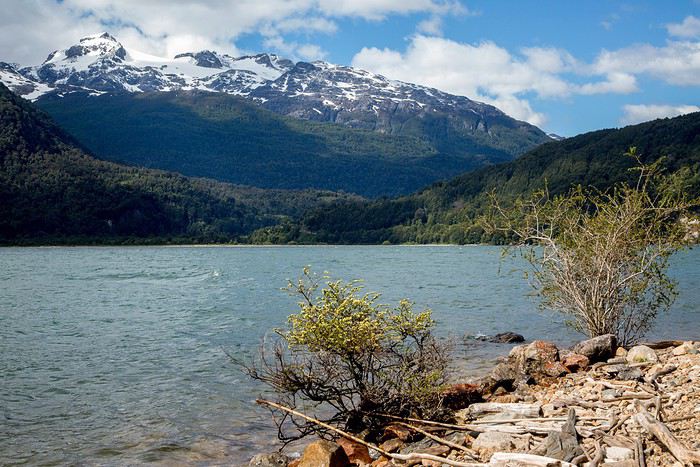
Nous sommes d'abord allés au Lago Carro :
Puis nous sommes allés passer deux nuits dans une cabaña extraordinaire, au bord du Lago Tamango :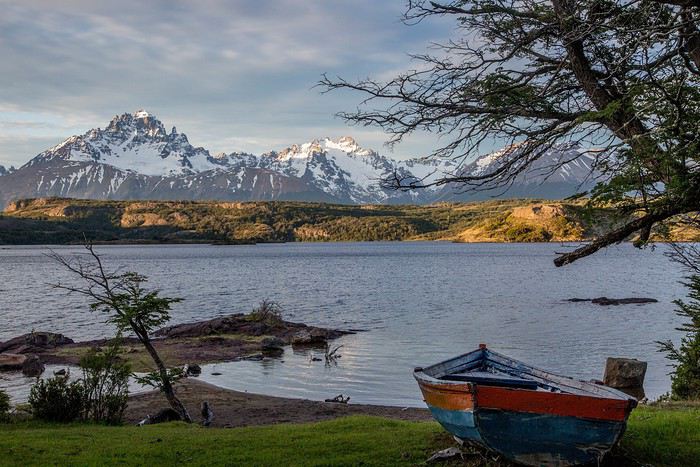
Nous voulions ensuite prendre le ferry de Puerto Ingeniero Ibanez jusqu'à Chile Chico, mais il était réservé pour un camion citerne de la COPEC... Il aurait fallu attendre le lendemain soir... Nous avons donc fait le tour du lac General Carrera. Mais, auparavant, nous avons exploré la piste menant à proximité des montagnes situées à l'Ouest : Los Leones.
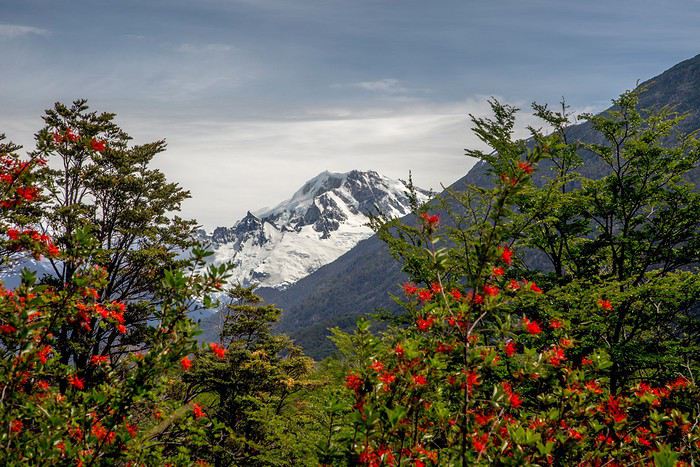
Au début de la route, nous avons campé dans une ferme, qui nous a ouvert l'accès à leurs sanitaire : parfait ! Puis nous sommes revenus sur la 7, pour prendre l'embranchement vers Chile Chico. Superbe route ! Les arrêts photo sont fréquents...
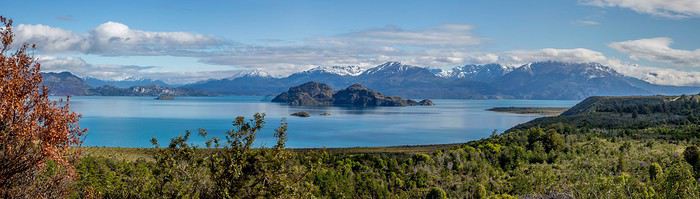
Nous sommes allés directement à la Réserve Jenimeini (qui fait maintenant partie du Parque Patagonia), où nous avons campé 3 nuits : superbe endroit !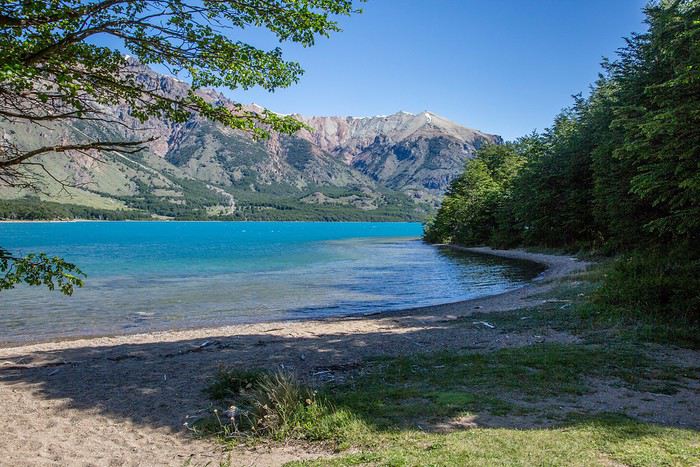
Retour sur Chile Chico, puis sur la route vers Puerto Guadal, et direction du Parque Patagonia, où nous avons d'abord campé au camping West Winds :
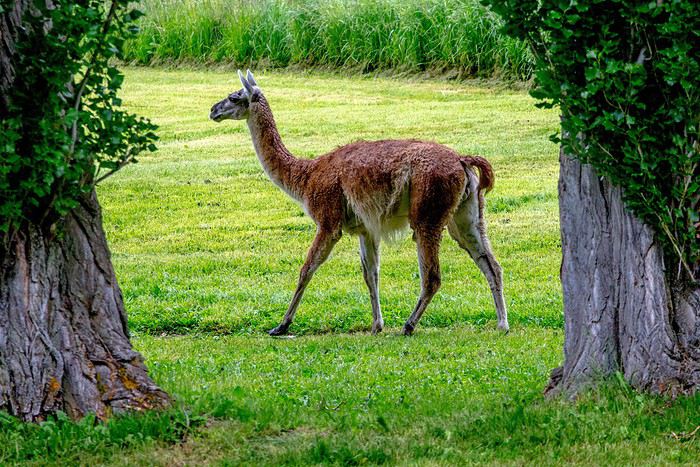
Puis, nous sommes allés camper au camping Alto Valle :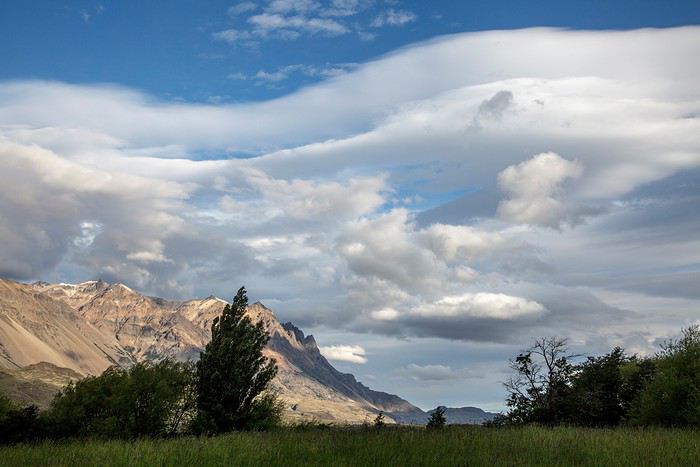
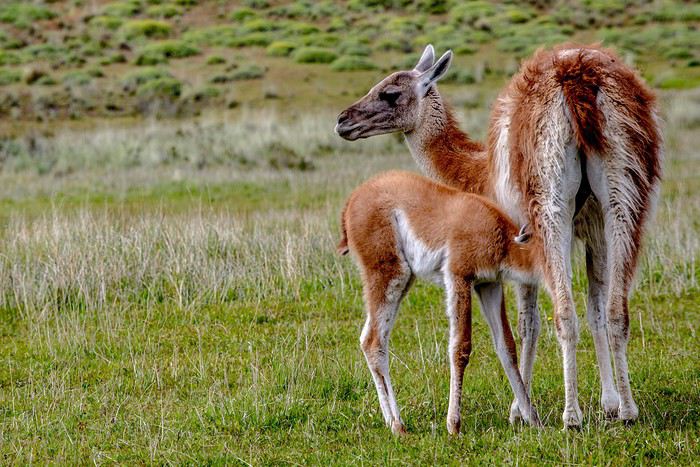
Avec de nombreux arrêts pour regarder les guanacos...
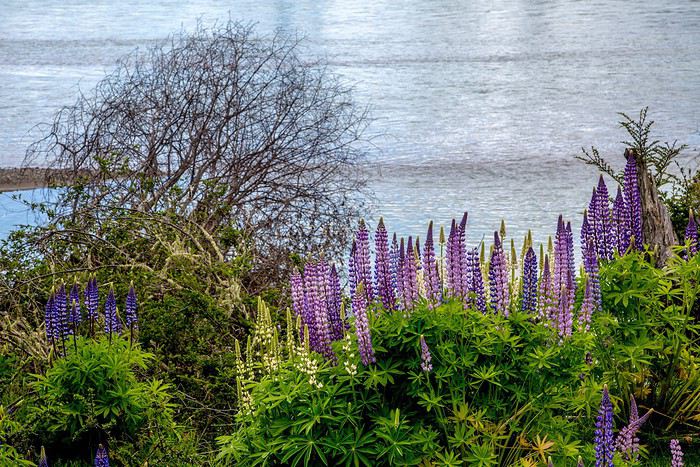
Un petit arrêt à Cochrane, pendant lequel nous avons approché le Lago Cochrane
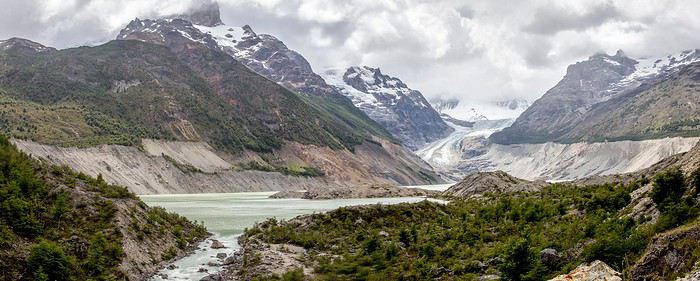
Pour aller ensuite essayer de voir le sommet du San Lorenzo... Pas facile... Nous avons même planté la tente sur le belvédère du glacier Calluqueo... mais le ciel ne s'est pas découvert... (en fait, le lendemain, il pleuvait... Dommage... Il faudra y retourner...).
 Nous avons un peu attendu que le temps s'améliore, en campant dans la vallée, dans un champ de lupins, en vain :
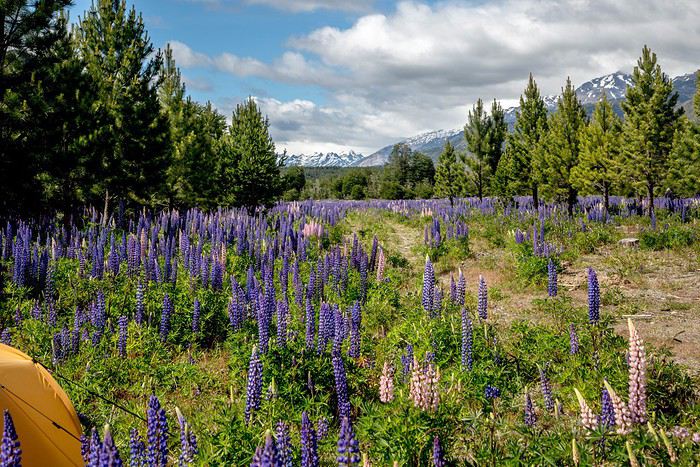 Nous sommes donc revenus à Cochrane, et de là à la réserve Tamango :
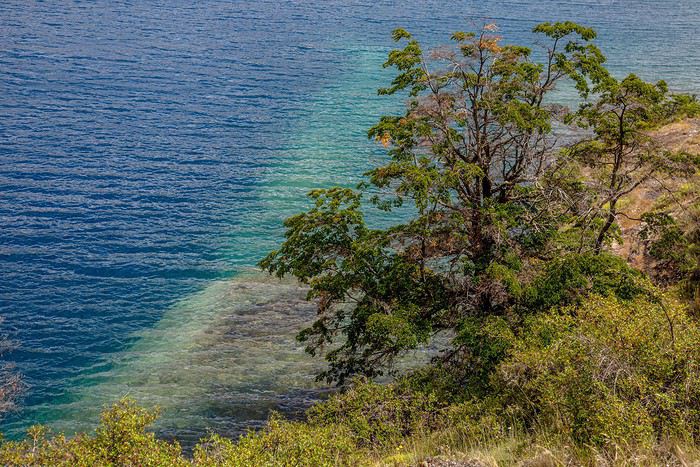
Et nous sommes allés passer deux nuits dans une cabaña où nous étions déjà restés en 2018, le long du Rio Baker. Un endroit de rêve...
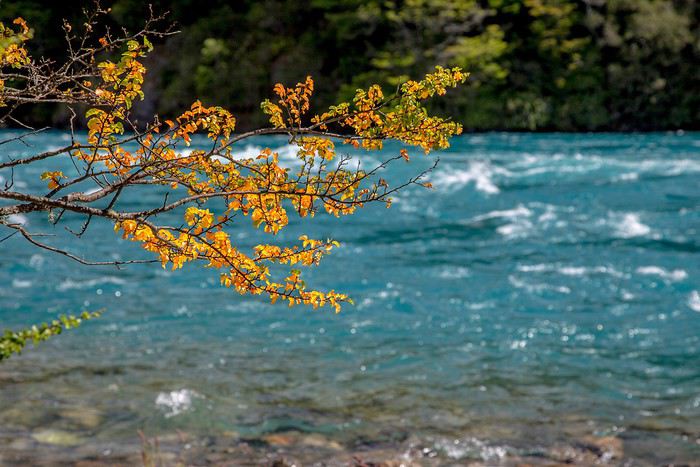
Et nous sommes repartis vers le Nord, Puerto Rio Tranquilo, Baia Murta, et Puerto Sanchez, où nous espérions trouver une cabaña. Mais il n'y a absolument rien... De plus, le temps était un peu bouché...
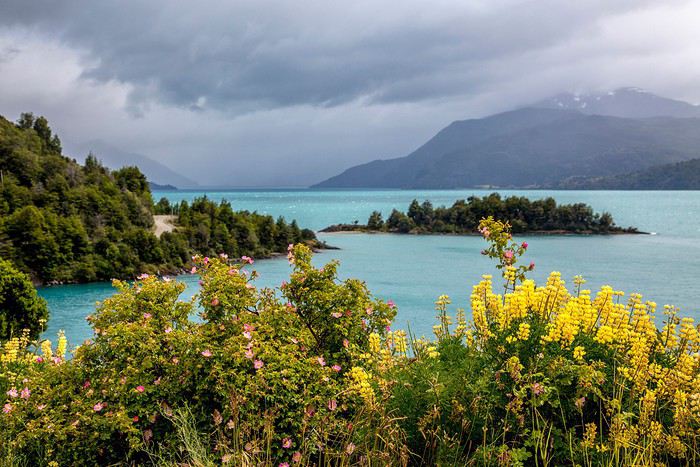
Un essai sur le route des Exploradores... mais encore un temps bouché...
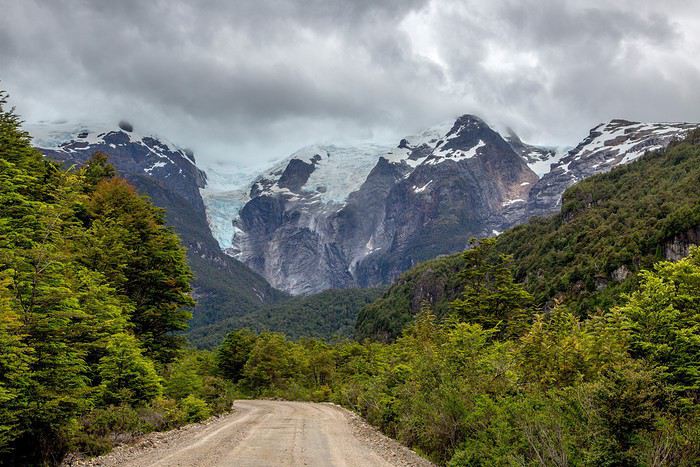 Alors, ce sera Puerto Ingeniero Ibanez, en attendant notre vol de retour, à partir de Balmaceda. Un temps chaud, superbe... Et une cabaña de rêve... Dur de partir...
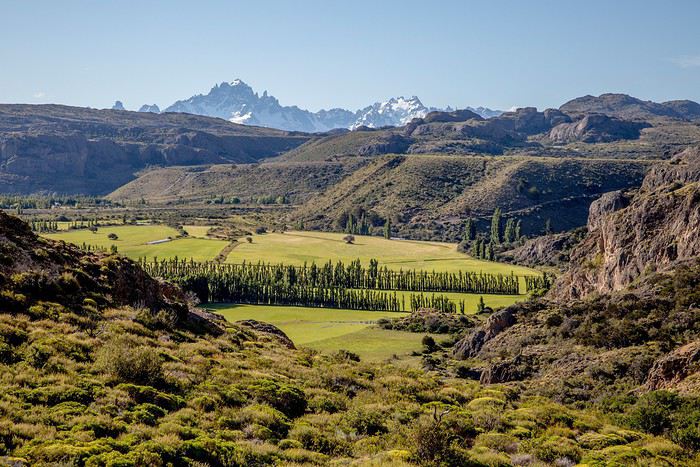
Je suis évidemment prêt à vous donner des précisions si vous le souhaitez, mais j'ai un projet en cours, qui me prendra du temps : faire un montage photo/video du type de ceux que j'ai mis sur ma chaine Vimeo (voir adresse dans ma signature). J'en ai déjà fait deux sur cette région, suite à mon voyage de 2018 : "Un Rêve ?" et "Parque Patagonia". Chacun dure une dizaine de minutes. Faites de beaux rêves ! Daniel
Je suis un peu en retard pour commencer ce carnet - et je n'ai d'ailleurs pas le courage de me lancer maintenant dans un récit complet...
Je vais donc vous donner quelques orientations générales : - Ayant déjà passé le mois de décembre 2018 à explorer la Carretera Austral à partir de Puerto Montt (où nous avons loué une voiture), jusqu'à Cochrane, nous avons voulu y revenir en décembre 2019 (les paysages de cette région sont extraordinaires !). - Si l'on part de Puerto Montt, il faut tout de suite prendre un ferry à Hornopiren, ce qui pose quelques problèmes : il est recommandé de réserver d'avance, ce qui n'est pas très facile (site Internet confus, infos à fournir sur la voiture, horaires non garantis, etc...). - Passé le trajet en ferry, on traverse les Parcs Pumalin et Queulat, superbes, mais... fort arrosés... Le climat est par contre beaucoup plus sec lorsqu'on arrive du côté de Coyhaique : cela se constate facilement en regardant la végétation. Notre expérience l'a confirmé. - Nous avons donc décidé de prendre l'avion jusqu'à Balmaceda (Coyhaique) et de rester autour de cette ville. Parfait ! A refaire !
Notre principe de voyage : nous organisons tout nous-mêmes, en campant 2 à 3 nuits de suite, puis en nous reposant dans une cabaña. - Cette année, nous avons campé en "sauvage" plusieurs fois (aucun danger), et les autres fois, dans des campings de Parcs Nationaux (Jeinimeini, Parque Patagonia, Reserva Tamango). Nous y étions presque toujours seuls, ou presque... Puis nous allions dans une cabaña : il y en a beaucoup, qui étaient presque toutes disponibles, à cette période de l'année. Il n'y avait qu'à choisir... - La voiture était un SUV Renault Duster, absolument parfait, car avec une bonne garde au sol. - Nous faisions nos courses dans les villages, où les prix sont certes élevés par rapport au reste du pays, mais pas plus qu'en France.
Nous sommes d'abord allés au Lago Carro :
Puis nous sommes allés passer deux nuits dans une cabaña extraordinaire, au bord du Lago Tamango :
Nous voulions ensuite prendre le ferry de Puerto Ingeniero Ibanez jusqu'à Chile Chico, mais il était réservé pour un camion citerne de la COPEC... Il aurait fallu attendre le lendemain soir... Nous avons donc fait le tour du lac General Carrera. Mais, auparavant, nous avons exploré la piste menant à proximité des montagnes situées à l'Ouest : Los Leones.
Au début de la route, nous avons campé dans une ferme, qui nous a ouvert l'accès à leurs sanitaire : parfait ! Puis nous sommes revenus sur la 7, pour prendre l'embranchement vers Chile Chico. Superbe route ! Les arrêts photo sont fréquents...
Nous sommes allés directement à la Réserve Jenimeini (qui fait maintenant partie du Parque Patagonia), où nous avons campé 3 nuits : superbe endroit !
Retour sur Chile Chico, puis sur la route vers Puerto Guadal, et direction du Parque Patagonia, où nous avons d'abord campé au camping West Winds :
Puis, nous sommes allés camper au camping Alto Valle :
Avec de nombreux arrêts pour regarder les guanacos...
Un petit arrêt à Cochrane, pendant lequel nous avons approché le Lago Cochrane
Pour aller ensuite essayer de voir le sommet du San Lorenzo... Pas facile... Nous avons même planté la tente sur le belvédère du glacier Calluqueo... mais le ciel ne s'est pas découvert... (en fait, le lendemain, il pleuvait... Dommage... Il faudra y retourner...).
Nous avons un peu attendu que le temps s'améliore, en campant dans la vallée, dans un champ de lupins, en vain :
Nous sommes donc revenus à Cochrane, et de là à la réserve Tamango :Et nous sommes allés passer deux nuits dans une cabaña où nous étions déjà restés en 2018, le long du Rio Baker. Un endroit de rêve...
Et nous sommes repartis vers le Nord, Puerto Rio Tranquilo, Baia Murta, et Puerto Sanchez, où nous espérions trouver une cabaña. Mais il n'y a absolument rien... De plus, le temps était un peu bouché...
Un essai sur le route des Exploradores... mais encore un temps bouché...
Alors, ce sera Puerto Ingeniero Ibanez, en attendant notre vol de retour, à partir de Balmaceda. Un temps chaud, superbe... Et une cabaña de rêve... Dur de partir...Je suis évidemment prêt à vous donner des précisions si vous le souhaitez, mais j'ai un projet en cours, qui me prendra du temps : faire un montage photo/video du type de ceux que j'ai mis sur ma chaine Vimeo (voir adresse dans ma signature). J'en ai déjà fait deux sur cette région, suite à mon voyage de 2018 : "Un Rêve ?" et "Parque Patagonia". Chacun dure une dizaine de minutes. Faites de beaux rêves ! Daniel
Choix vélo voyage (Cinelli Hobootleg, Cube Touring ou Fuji Touring) English translation pending
Bonjour
Jean marc 58 ans bientot a la retraite .
J ai besoin de vos conseils.
Je désir acheter un velo de voyage.
Mes choix
CINELLI HOBOOTLEG occasion très bon etat acier colombus frein patin
Cube touring neuf disc allu fouble butteg
Fuji touring neuf cadre acier reynols ftein patin.
Pour a peu pres le même prix enviton 800€.
D après vous lequel choisir??? Voyage prevu Asie Europe route et chemin tranquille
Merci
Merci
Vélo modulable pour toutes les activités et sorties sur route English translation pending
Bonjour à tous, et bonne année 2020.
Je vous fais part de ma petite idée, dans l'optique de n'avoir qu'un seul vélo pour toutes mes activités cyclo : Je possède un Ridgeback panorama, dont je suis plutôt satisfait. Le seul hic reste le poids, trop important malgré ma petite "épuration technique" (j'ai viré les garde-boue et a béquille). Dans un souci d'allégement pour mes sorties sur route à la journée et mes randos en mode bikepaking, J'aimerais m'acheter une seconde paire de roue, plus légère que celle montée d'origine (jantes et moyeux de marque inconnue avec pneus schwalbe marathon 700x35). Quel gain de poids est-il possible d'obtenir selon vous ? Auriez-vous des suggestion, notamment concernant les pneus ?
Merci de vos retours ;-)
Je vous fais part de ma petite idée, dans l'optique de n'avoir qu'un seul vélo pour toutes mes activités cyclo : Je possède un Ridgeback panorama, dont je suis plutôt satisfait. Le seul hic reste le poids, trop important malgré ma petite "épuration technique" (j'ai viré les garde-boue et a béquille). Dans un souci d'allégement pour mes sorties sur route à la journée et mes randos en mode bikepaking, J'aimerais m'acheter une seconde paire de roue, plus légère que celle montée d'origine (jantes et moyeux de marque inconnue avec pneus schwalbe marathon 700x35). Quel gain de poids est-il possible d'obtenir selon vous ? Auriez-vous des suggestion, notamment concernant les pneus ?
Merci de vos retours ;-)
Membre du Club Occidental Vacation Club English translation pending
Bonjour,
J'ai parcouru vos témoignages concernant les achats des semaines de vacances au Mexique. Je me suis aperçue que dans le forum, les discussions recensées s'arrêtent en 2013. Mon mari et avions signé un contrat en 2019 avec Occidental VacationClub au Mexique et lisant vos témoignages négatifs, nous avons décidé de stopper les prélèvements mensuels sur notre carte Bancaire ce jour. Nous résidons en région Parisienne, et d'après les éléments évoqués sur ce sujets dans votre forum de discussion, je pense comprendre qu'on ne risque pas de poursuites par ces organismes du fait qu'ils sont basés à l'étranger. Depuis 2013, disposez vous d'autres informations sur le sujet.
Je pense que nous avons perdu l'argent que nous avons déjà avancé. Nous avons renoncé de faire des réservations sur leur site, cette année pour le Costa rica tout simplement parce que nous n'avons aucune confiance. Merci pour votre réponse.
Bonne journée
Remonter à moto vers le nord du Vietnam à partir de Hoi An English translation pending
Bonjour et merci à tous de vos messages constructifs et proche de la population vietnamienne.
J'arrive au Vietnam le 19/01/2020 je me pose 15 nuits à Da Nang puis 7 nuits à Hoi An au CENTE DU VIETNAM . A partir de Hoi An le 10/02/2020 J'aimerais remonter en moto vers le nord du Vietnam .
Faire des poses avec un guide ou agence locale proche de la populations ; en sachant que je dois revenir à Da Nang fin avril 2020 pour mon départ . MERCI DE VOTRE AIDE ; JE NE PARLE QUE LE FRANÇAIS MERCI DIDIER 🙂🙂
Famille de Français avec enfants en bas âge vivant à Marrakech? English translation pending
Bonjour tout le monde,
Nous irons à Marrakech du 22 au 26 décembre. C’est un peu court c’est vrai ! Nous sommes déjà allés à Marrakech une fois avant qu’on ait des enfants. Cette fois-ci nous revenons avec nos deux enfants de 1ans et 3 ans et demi. Nous ne sommes pas friands des sites trop touristiques (car nous les avons déjà faits et que c’est trop touristique 😊 …), à part refaire une ballade dans la Medina.
Nous aimerions obtenir des conseils de familles françaises avec enfants en bas âge : les parcs pour enfants ? Les jeux ? Les restaurants ? Les quartiers ? Les choses à faires ? Les bonnes adresses ? Nous pensons prendre un Air b’nb à Gueliz et rester nous reposer sur Marrakech avec seulement une fois une excursion en dehors de la ville à la journée.
Merci à tous !
Nous irons à Marrakech du 22 au 26 décembre. C’est un peu court c’est vrai ! Nous sommes déjà allés à Marrakech une fois avant qu’on ait des enfants. Cette fois-ci nous revenons avec nos deux enfants de 1ans et 3 ans et demi. Nous ne sommes pas friands des sites trop touristiques (car nous les avons déjà faits et que c’est trop touristique 😊 …), à part refaire une ballade dans la Medina.
Nous aimerions obtenir des conseils de familles françaises avec enfants en bas âge : les parcs pour enfants ? Les jeux ? Les restaurants ? Les quartiers ? Les choses à faires ? Les bonnes adresses ? Nous pensons prendre un Air b’nb à Gueliz et rester nous reposer sur Marrakech avec seulement une fois une excursion en dehors de la ville à la journée.
Merci à tous !