Results for "Alès+|+127"
28194 results found.
Quelles randonnées d'une demi-journée à faire entre Fès et Marrakech English translation pending
Bonjour à tous,
Nous sommes un couple de trentenaire sans enfant et nous faisons un voyage itinérant de Fès à Marrakech sur 7 jours. Nous louerons une voiture au départ de Fès et la rendrons à Marrakech. Nous cherchons à savoir quelles randonnées de 4-6h et quelles balades ≃ 2h nous pourrions faire sur notre itinéraire. Pour infos nous passerons les nuits dans l'ordre : - A Fès (2 nuits) - A Tinghir (1 nuit) - A Ouarzazate (1 nuit) - A Ourika (1 nuit) - A Marrakech (2 nuits)
Les rando un peu sportives sont les bienvenues ! Les petites balades contemplatives aussi !
Est- il nécessaire de prendre un guide pour des rando à la demi-journée ? Quelques coups de coeur culinaires sur le chemin ?
Et si jamais vous avez une agence de location de voiture à conseiller avec un lieu de prise et de retour dans deux villes différentes...
Merci pour vos réponses !
Nous sommes un couple de trentenaire sans enfant et nous faisons un voyage itinérant de Fès à Marrakech sur 7 jours. Nous louerons une voiture au départ de Fès et la rendrons à Marrakech. Nous cherchons à savoir quelles randonnées de 4-6h et quelles balades ≃ 2h nous pourrions faire sur notre itinéraire. Pour infos nous passerons les nuits dans l'ordre : - A Fès (2 nuits) - A Tinghir (1 nuit) - A Ouarzazate (1 nuit) - A Ourika (1 nuit) - A Marrakech (2 nuits)
Les rando un peu sportives sont les bienvenues ! Les petites balades contemplatives aussi !
Est- il nécessaire de prendre un guide pour des rando à la demi-journée ? Quelques coups de coeur culinaires sur le chemin ?
Et si jamais vous avez une agence de location de voiture à conseiller avec un lieu de prise et de retour dans deux villes différentes...
Merci pour vos réponses !
Louer une voiture à Jérusalem pour visiter les villes de Palestine English translation pending
Bonjour, je pense louer une voiture à Jérusalem-Est auprès d'une compagnie indépendante arabe, la voiture aura des plaques israéliennes a priori, est-il possible de visiter les villes palestiniennes avec ? - Bethlehem, Ramallah, Jericho, Naplouse, Telkerem, etc. Merci de votre aide :)
Peut-on conduire à Taïwan en étant jeune conducteur? English translation pending
Bonsoir !
Alors voila, comme dit dans le titre, je suis jeune conductrice, cad que j'ai obtenu mon permis le 2 octobre 2019. Je pars un semestre étudier à Taiwan à partir de septembre 2020 et je commence à me renseigner sur les permis internationaux pour pouvoir conduire sur place. Ma demande a été faite auprès des administrations compétentes mais je me pose alors la question de savoir si je peux louer une voiture et conduire à Taiwan avec seulement 1 an de permis derrière moi ?
Merci d'avance pour vos réponses :)
Alors voila, comme dit dans le titre, je suis jeune conductrice, cad que j'ai obtenu mon permis le 2 octobre 2019. Je pars un semestre étudier à Taiwan à partir de septembre 2020 et je commence à me renseigner sur les permis internationaux pour pouvoir conduire sur place. Ma demande a été faite auprès des administrations compétentes mais je me pose alors la question de savoir si je peux louer une voiture et conduire à Taiwan avec seulement 1 an de permis derrière moi ?
Merci d'avance pour vos réponses :)
Guide trek autour de la vallée de l'Omo (Éthiopie) English translation pending
Bonjour à toutes et tous,
Je recherche un treck de 3 à 5 jours dans la zone de la vallée de l'Omo pour aller à les rencontres des mursis, sari....
Plus précis��ment sur la rive ouest de l'Omo, vallée de Kibish.
Un treck compris dans un circuit d'environ 15 jours dans le sud de l'Ethiopie.
Merci de me communiquer vos retours d'expérience avec si possible les coordonnées de vos guides ou agences.
Je recherche un treck de 3 à 5 jours dans la zone de la vallée de l'Omo pour aller à les rencontres des mursis, sari....
Plus précis��ment sur la rive ouest de l'Omo, vallée de Kibish.
Un treck compris dans un circuit d'environ 15 jours dans le sud de l'Ethiopie.
Merci de me communiquer vos retours d'expérience avec si possible les coordonnées de vos guides ou agences.
Escale courte à l'aéroport de Pointe-à-Pitre English translation pending
Combien faut-il prévoir de temps de transit pour ne pas être trop juste entre un vol arrivant d’orly Et celui partant pour saint Barthélémy ?
L’aéroport de pointe à pitre est-il pratique ?je ne le connais pas
J’aimerais avoir des avis pour l’escale et des informations sur l’aeroport
Merci à ceux qui prendront la peine de me renseigner
Tour de la Gaspésie à vélo sur la Voie Verte, Transcanadienne ou autre? English translation pending
Bonjour, j'aurai 2 à 3 semaines disponibles en juin, et serai à Montréal. J'aimerais profiter de cette liberté pour pédaler. J'ai pensé au tour de la Gaspésie. Auriez vous des suggestions d'itinéraires ? Pensez vous à d'autres circuits possibles au départ de Montréal, sur la voie verte, la transcanadienne ou autre ?
Merci d'avance...
Location de voiture à Montréal sans carte de crédit English translation pending
Bonjour,
Je voudrais louer une voiture a Montreal pour 16/17 jours et j'ai trouvé une offre qui me convient chez dollar. Le probleme c'est qu'il demande une carte de credit et que j'ai une carte de debit ( gold mastercard ) Je voudrais payer avec ma carte de débit et lancer les demarches pour avec une carte de credit et donc présenté ma carte de credit le jour de la location.
Pensez vous que ca passe ou ils vont demander a voir la carte avec la quel j'ai payé ? Je part dans 2 mois et j'ai peur de ne plus avoir de voiture dispo le temps d'avoir ma nouvelle carte....
Petite question en passant, je vais passer par les etats unis et si mes infos sont bonne pas besoin d'ESTA mais uniquement un formulaire ( I94 ?) a remplir quand on passe la frontiere avec photo et emprunte ( et 6$ ) . Mes infos sont elles correcte ?
Merci d'avance
Je voudrais louer une voiture a Montreal pour 16/17 jours et j'ai trouvé une offre qui me convient chez dollar. Le probleme c'est qu'il demande une carte de credit et que j'ai une carte de debit ( gold mastercard ) Je voudrais payer avec ma carte de débit et lancer les demarches pour avec une carte de credit et donc présenté ma carte de credit le jour de la location.
Pensez vous que ca passe ou ils vont demander a voir la carte avec la quel j'ai payé ? Je part dans 2 mois et j'ai peur de ne plus avoir de voiture dispo le temps d'avoir ma nouvelle carte....
Petite question en passant, je vais passer par les etats unis et si mes infos sont bonne pas besoin d'ESTA mais uniquement un formulaire ( I94 ?) a remplir quand on passe la frontiere avec photo et emprunte ( et 6$ ) . Mes infos sont elles correcte ?
Merci d'avance
Qui pour l'Algérie à vélo cette année? English translation pending
Salut,
Alors voilà, tout est dans le titre 😉
Ideas for a 3-week trip to Madagascar with a driver-guide in July/August
First trip to Madagascar (couple + 2 older teens). We’ve read quite a few posts and watched traveler videos, which helped us figure out what we could do in 3 weeks. We’d like to travel with a driver-guide. You’ll probably be able to help us with the overall duration... Are we being too ambitious, or is this reasonable? In this itinerary, are there any must-see places we shouldn’t miss?
Here’s our first draft:
Departure from Tana to the east via the RN2. Stop at the Analamazoatra Reserve RN11 to reach the Pangalanes Canal 3 or 4 days to travel south along the canal (taxi boat) The train from Manakara to Fiana RN7 toward Tulear Time for a short trek in Andringitra? I’m not sure... Isalo Park From Tulear, head north or south by pirogue to relax somewhere To get back to Tana and stay within our vacation time, I think we’ll need to fly... Will we have time left for Ampefy?
What do you think?
Departure from Tana to the east via the RN2. Stop at the Analamazoatra Reserve RN11 to reach the Pangalanes Canal 3 or 4 days to travel south along the canal (taxi boat) The train from Manakara to Fiana RN7 toward Tulear Time for a short trek in Andringitra? I’m not sure... Isalo Park From Tulear, head north or south by pirogue to relax somewhere To get back to Tana and stay within our vacation time, I think we’ll need to fly... Will we have time left for Ampefy?
What do you think?
Une semaine "plage" à Phuket ou Koh Samui? English translation pending
Bonjour à tous, nous partons du 1 au 15 décembre d'abord 4 jours à Dubaï puis 4 à Bangkok pensez-vous que ce soit assez 4 à Bangkok? Ensuite nous aimerions faire une semaine "plage", je le met entre "" car nous aimons bouger, voir des choses, ne pas rester à ne rien faire sur une plage justement… Nous voulions aller à Phuket, mais lorsque je regarde je trouve que les hôtels et paysages ont l'air bien plus beaux à Koh Samui, mais j'ai peur que l'on s'y ennuie, c'est pe ridicule et vous allez me dire qu'il n'y a pe pas grand chose à faire de plus à Phuket, que me conseillez-vous? Si vous connaissez des hôtels sympas à prix raisonnable, n'hésitez pas 😉, un grand merci pour vos conseils!!
Voyage d'une semaine à New York en famille (avec 4 enfants) English translation pending
Bonjour à Tous,
Nous envisageons un voyage d'une semaine en famille au mois d'octobre prochain.
Nous serons une grande famille de 4 adultes et 4 enfants. J'imagine que l'idéal serait de louer un appartement. Avez vous des bons plans, des suggestions pour se loger sur Manhattan ou très proche banlieu ?
Egalement quel serait le meilleurs moyen à 8 pour relier l'aéroport au centre de New York?
Merci pour votre aide
Valérie
De Cochin à Chennai en solo pour la première quinzaine de janvier English translation pending
Bonjour
je n'arrive pas à me décider sur les étapes en bus et ça presse pour les réservations...
Qatar airways pour Cochin le 1er janvier, 2 nuits (1j et demi en fait)
Pourrai-je voir les backwaters de là ?
Départ en bus de Cochin pour Periyar le 3me jour afin de visiter le lendemain. Mais hormis la ballade en bateau qu'y faire? (je ne suis pas bon marcheur, j'aime surtout la nature, les paysages)
>aurais-je dû partir plutot sur Munnar puisque les chances de voir de gros animaux à Periyar sont minimes?
>je peux toujours ajouter Munar après Périyar mais est-ce si différent et facile de passer de l'un à l'autre?
Quelle que soit l'option Madurai semble sur le chemin (1 nuit max)
Mais ensuite, par où passer afin de ne pas voir que des grandes villes genre Trichy avec des temples dont je me lasserai vite?
Je finirai par Pondichery (+Gingee?) et Mamallapuram
Si c'était à refaire j'aurais atterri à Goa et mon emploi du temps aurait été bien rempli ...
Merci de m'avoir lu
La Suède à vélo en juillet avec des enfants English translation pending
Bonjour à tous,
Nous nous posons la question d'aller en Suède cet été pour un mois de vélo avec nos trois jeunes enfants.
Le pays est très grands (et long!) et nous ne pédalerons donc que dans une petite partie. J'ai du mal à voir quelle partie serait la plus appropriée; nous ne connaissons rien de ce pays. Sachant que nous tractons encore les enfants (donc pas trop de dénivelés), que l'on préfère être un maximum près de l'eau , que l'on fait un maximum de bivouac sauvage,
Auriez vous des coins à nous conseiller ou des blogs d'autres voyageurs vers qui nous orienter?
Merci d'avance!
Héloïse
Nous nous posons la question d'aller en Suède cet été pour un mois de vélo avec nos trois jeunes enfants.
Le pays est très grands (et long!) et nous ne pédalerons donc que dans une petite partie. J'ai du mal à voir quelle partie serait la plus appropriée; nous ne connaissons rien de ce pays. Sachant que nous tractons encore les enfants (donc pas trop de dénivelés), que l'on préfère être un maximum près de l'eau , que l'on fait un maximum de bivouac sauvage,
Auriez vous des coins à nous conseiller ou des blogs d'autres voyageurs vers qui nous orienter?
Merci d'avance!
Héloïse
From Ol Pejeta to Tsavo West (Kenya)
Hello everyone,
Here’s the story of our two-week trip—13 nights, actually—in the national parks of northern and southeastern Kenya, which we took last September at the end of summer. My wife and I planned this trip with a French agency (Bel Africa, Paris), which worked with a local operator in Nairobi (Nadhy Travels & Tours). The latter provided a driver-guide and vouchers, but no aperitif🙁! Our all-inclusive package included animal safaris exclusively in a customized 4x4 vehicle (with a pop-up roof) and accommodations in high-quality lodges that we selected ourselves. It’s great for comfort, but not so much for the wallet. The cost was obviously astronomical for the services provided. But that’s just my usual take on lodging in East and Southern Africa! Our itinerary was a loop starting and ending in Nairobi, passing through Ol Pejeta, Buffalo Springs-Samburu, Meru NP, Amboseli, and Tsavo West.
Trip breakdown:
Day 1 to 3: Ol Pejeta Day 3 to 7: Buffalo Springs Day 7 to 8: Meru NP-Nairobi Day 9 to 11: Nairobi-Amboseli Day 11 to 14: Tsavo West
Photo gear we brought:
- 1 bridge camera - 2 DSLR bodies - 2 telephoto lenses: 70-200mm f/2.8 and 200-500mm f/5.6 - 2 pairs of 10x42 binoculars
What motivated this trip? We wanted to recharge and were looking for a certain tranquility that would be ideal for wildlife observation and photography—our hobbies. That immediately ruled out the parks in the southwest, which are too crowded. Plus, those would have likely been a repeat of what we experienced in Tanzania a few years earlier (see my travel journal "The Great Migration"). Buffalo Springs particularly appealed to us because of the unique animal species it’s home to. It was really their existence that drove our choices. We wanted to see animals we’d never seen before in their natural habitats.
So, on a beautiful late-summer evening, we took off from Paris-CDG for Nairobi. The overnight flight was uneventful, and we landed early in the morning at Jomo Kenyatta International Airport (NBO). But our driver-guide wasn’t waiting for us. Judging by the number of signs being held up, we must have been the only travelers in that situation. Good grief, why wasn’t he there like all the others?
Here’s the story of our two-week trip—13 nights, actually—in the national parks of northern and southeastern Kenya, which we took last September at the end of summer. My wife and I planned this trip with a French agency (Bel Africa, Paris), which worked with a local operator in Nairobi (Nadhy Travels & Tours). The latter provided a driver-guide and vouchers, but no aperitif🙁! Our all-inclusive package included animal safaris exclusively in a customized 4x4 vehicle (with a pop-up roof) and accommodations in high-quality lodges that we selected ourselves. It’s great for comfort, but not so much for the wallet. The cost was obviously astronomical for the services provided. But that’s just my usual take on lodging in East and Southern Africa! Our itinerary was a loop starting and ending in Nairobi, passing through Ol Pejeta, Buffalo Springs-Samburu, Meru NP, Amboseli, and Tsavo West.
Trip breakdown:
Day 1 to 3: Ol Pejeta Day 3 to 7: Buffalo Springs Day 7 to 8: Meru NP-Nairobi Day 9 to 11: Nairobi-Amboseli Day 11 to 14: Tsavo West
Photo gear we brought:
- 1 bridge camera - 2 DSLR bodies - 2 telephoto lenses: 70-200mm f/2.8 and 200-500mm f/5.6 - 2 pairs of 10x42 binoculars
What motivated this trip? We wanted to recharge and were looking for a certain tranquility that would be ideal for wildlife observation and photography—our hobbies. That immediately ruled out the parks in the southwest, which are too crowded. Plus, those would have likely been a repeat of what we experienced in Tanzania a few years earlier (see my travel journal "The Great Migration"). Buffalo Springs particularly appealed to us because of the unique animal species it’s home to. It was really their existence that drove our choices. We wanted to see animals we’d never seen before in their natural habitats.
So, on a beautiful late-summer evening, we took off from Paris-CDG for Nairobi. The overnight flight was uneventful, and we landed early in the morning at Jomo Kenyatta International Airport (NBO). But our driver-guide wasn’t waiting for us. Judging by the number of signs being held up, we must have been the only travelers in that situation. Good grief, why wasn’t he there like all the others?
Uganda: 20 days discovering authenticity
Preamble:
For summer 2019, the idea was to return to Africa. We had already been to Namibia in 2017 (+ a few days in Botswana and the end of the trip at Victoria Falls), which we loved, and a trip to Asia in 2018 (Borneo, Perhentian, and Singapore), a nature-focused trip but a bit disappointing due to environmental destruction. The desire to return to Africa was very strong. We wanted a change of scenery, nature, discoveries, to step out of our little comfort zone (a bit, anyway!) and experience travel differently. In short, we dreamed of authenticity, and we weren’t disappointed.
We traveled as a family of four with our daughters, aged 19 and 17. When the urge for Africa hit, Uganda quickly stood out, especially for the chance to see rare animals, particularly the famous mountain gorillas. When I looked into the budget, I was quickly disheartened. It’s really expensive. Too expensive… Then, after reading a few trip reports on "VoyageForum" (thanks Muriel J!), I decided to ask a local agency for a quote. The first contact was very friendly and responsive, and the initial offer for two weeks fit our budget :). A few images gathered from the internet (especially Sipi Falls) finally convinced us all. I asked for an adapted offer with a few more sites to extend the trip to three weeks and cover a fairly complete visit to the country (which, of course, increased the budget! To stay within an acceptable range, we prioritized activities over accommodations and regularly chose the cheapest options, with 2-3 nice lodges in between). It’s booked! We were in October 2018, and the first thing to do was reserve permits to see the gorillas and chimpanzees. Then, the agency took care of all the bookings except for the international flights, which we booked with Ethiopian Airlines. A few months of waiting to look forward to… and a little worry too! Two events didn’t reassure us: the kidnapping of an American tourist by four men at the DRC border and the Ebola outbreak in Congo, with confirmed cases in Uganda by mid-June…
Here we are in July, and departure is approaching. The suitcases are packed (warm clothes, long, short, dark, light, practical, sun, rain, hiking/trekking shoes, flip-flops—clothes for every situation! Don’t forget: headlamp (essential!), binoculars, cameras), and we’re ready.
One day before departure, our agency Mpolampola, through its manager Paul, informs us that he won’t be the one taking care of us during the trip but another guide named Moses. He has a big problem with a vehicle and can’t do otherwise. For us, as long as everything is okay, no worries, especially since I had read glowing reviews about Moses, who turned out to be a very pleasant guide, cautious (most important) on the road, clear about all the activities, and an expert on birds, his specialty. We briefly met Paul in the middle of the trip, who is also very friendly. In short, we 100% recommend this agency. Flights to Entebbe went smoothly; we arrived around 10:30 AM, filled out health forms (Ebola information signs everywhere), visas, baggage claim, and met Moses, who took us directly to the vehicle. It was in pretty good condition with huge tires (we’d understand why later!), but it had quite a few miles (400,000 on the odometer!). Just missing a seatbelt… Okay, it’s Africa!
Now, here’s our day-by-day itinerary, which I’ll summarize briefly with ratings for each activity: ****TOPISSIME (Amazing) ***Very good **Good *Meh
Day 1) Departure from the airport at 11:45 AM for some currency exchange. Stop along the way at the equator for a meal and souvenir photo! Arrival at Lake Mburo Park *** around 5:00 PM. Even before entering the park, we saw lots of antelopes, zebras, elks, etc.—it’s magnificent. On the way, we had already encountered many goats and cows, and we were impressed by their enormous horns. We enjoyed a nice game drive until about 7:00 PM, when we reached our lodge, one of the nicest of the trip, Eagle’s Nest ****, with a magnificent view, a tent with a nice bathroom/shower, and a very good meal.
Day 2) Departure at 7:00 AM for a game drive; we encountered many animals again, especially antelopes, zebras, and birds. There are no giraffes, lions, or cheetahs in this park. We didn’t get lucky enough to see a leopard… :-) Then, we continued to Lake Bunyonyi ***, where the road and views are very beautiful, but we were shocked to see locals (mostly women and children) breaking stones by hand on the mountainside in very precarious safety conditions. There are regularly dramatic accidents because, over time, entire sections detach and cause landslides. These stones are then used for road construction… Another world… This was the only place we saw this. Lake Bunyonyi is a nice stop (but less exotic in our opinion since we have many lakes back home too!). We took a boat to our accommodation, Byoona Amagara ***, which has a lot of charm. We stayed in huts called "geodomes," completely open to nature, so it was very cool at night. To reach the toilets located below, you had to be brave! The meal consisted of lake shrimp—good but a bit bland.
Day 3) After a good breakfast, departure at 9:00 AM to visit three islands. We took several nice walks with beautiful views of the lake and islands. A local meal was served on the last island. At 1:00 PM, we met Moses for the rest of the program and headed to Ruhija in Bwindi Forest****. The landscapes are breathtaking. After two hours of driving and many photo stops, we arrived at our accommodation near the trekking starting point, Ruhija Gorilla Friends Resort **. We stayed in a room instead of the initially planned tents, which was just as well because there was a lot of wind during the night. We still had time for an activity and decided to meet the Bwata pygmies despite the bad reviews in the guide… The first part of the visit was quite nice, with a visit to a school where the children gave us a very joyful welcome. We had a great time listening to them sing and dance! Then we met the Bwata pygmies who live on the edge of the forest. When Bwindi Forest was declared a national park, they had to leave their habitat because their activities weren’t compatible with nature and wildlife protection. We left on a somewhat sad note… The visit ended with a local doctor explaining different medicinal plants, and we watched the making of local beer from sorghum. Good meal. We had butterflies in our stomachs—tomorrow was a big day! I admit I was a bit stressed, not entirely confident in my physical abilities…
Day 4) After a short night due to excitement, breakfast, and departure at 7:30 AM. First, it started calmly with singing and dancing. Then, a 15-minute briefing and group assignments. No one asked if we had any physical problems or anything (when booking, I had inquired a bit, and they told me groups were assigned based on physical abilities). We were assigned to the Mukiza group. At first, I was pretty happy—it was a fairly large group with babies :). The ranger explained that for now, they didn’t know where the gorillas were… the trackers couldn’t find them… Oh… (that’s not a good sign!!!) We set off at a good pace, first on a reasonably sloped path. We were accompanied by a family of four Italians and five porters (four for us!). After an hour, the ranger stopped us and informed us they still couldn’t find them—they had fought with another group the day before and scattered throughout the forest, so they were very far away, and we needed to move faster… Hmm… we picked up the pace (we weren’t going slowly before!!!) and walked for another good hour—down, up, down again, up again, we kept going, but always more or less on paths. Then another stop. A 10-minute break waiting for news. The news wasn’t very precise, it seemed! The ranger decided to cut through the forest—machetes were used to clear the path. We descended unimaginable slopes, then climbed back up. Our stick kept getting stuck; luckily, our porter helped us, held our hands, and the terrain was vertical! An hour later, another stop: we heard gorilla cries (yay!!!). False hope—we waited again for news from the trackers, who informed our ranger that it was a non-habituated family, so we couldn’t see them. Cold shower—we had to go all the way back up and return to the starting point to maybe see another group. But time was running out… We arrived around 1:30 PM; all the other groups had already left long ago. Our guide was worried because we still had a long drive ahead. We quickly ate a banana, and off we went for another trek (I was exhausted!). Luckily, this group was close—about 45 minutes of steep descent (I was already thinking about the climb back and considering being adopted by a gorilla ). The forest was sublime, with magnificent tree ferns—the place was truly splendid. Finally, we were there. The porters stayed behind, we grabbed our cameras, and followed the ranger. The progress wasn’t easy, but suddenly, a female was in front of us, curled up in a little ball, eating—so cute. The emotion overwhelmed us. But she moved away—it’s hard to observe them; they move constantly, and the terrain is very steep and uneven. We saw a female descending from a tree with a baby on her back—too adorable. Then, here was the silverback, enormous, incredible, yet so calm and peaceful. He ate quietly and gave us a nice demonstration of nostril exploration! We could observe them for a good hour, but photographing them wasn’t easy because they kept moving, and we could barely stand! Toward the end, a large male (black back) suddenly stood up and decided to pass right where I was! I ended up in the bushes, and the male passed in front of me just a few centimeters away (he stepped on one of my daughters’ feet!) followed by the whole family. Just an exceptional moment. It was time to leave; we had to climb back up. I dreaded it because, I admit, I was exhausted. We finished the hike after 4:00 PM, exhausted but happy. The ranger gave us diplomas, and we didn’t linger because we still had a long drive—we needed to reach Ishasha before nightfall. Our guide was a bit stressed. If we were to do it again, we’d spend an extra night in Bwindi. However, it seems finishing so late is exceptional—it never happens, according to our guide! The road between Bwindi and Ishasha is sublime, with extraordinary landscapes, and despite the late hour, we regularly asked our guide to stop for photos. We arrived at Enjojo *** Lodge around 6:00 PM. The huts are located quite far from the reception and the bathrooms, a bit far from the huts, but otherwise, it was very nice.
Day 5) Departure at 8:00 AM after a good breakfast with the hope of seeing tree-climbing lions (no luck!). Overall, there weren’t many animals, and we arrived around 12:45 PM at our next stop, Parkview Safari Lodge ****, with a magnificent view, a beautiful family bungalow, and a good meal. We enjoyed a short relaxation by the lovely pool. At 4:00 PM, we left to see Kyambura Gorge *** and hike there. Unfortunately, this activity is no longer available, so we walked around the area—it was very beautiful. Back at the hotel, a little rest after the previous day wasn’t a bad idea! Reading, swimming, meals, and dances made the end of the day enjoyable.
Day 6) Departure at 6:30 AM—one of our daughters was sick (stomachache, cold sweats…). Safari in Queen Elizabeth ** (Kaseny Plains)—a bit disappointing. Stop by the salt lake with a nice view. A small market, but we weren’t thrilled by the crafts (overall, apart from some beautiful baskets/plates, there wasn’t much, and the wooden objects were, in our opinion, much less pretty than in Namibia). Then we took the crater road (27 km long) **** with magnificent landscapes. However, you absolutely must close the windows because it’s infested with tsetse flies. At noon, we arrived at Mweya, where we stayed in basic rooms, but the restaurant was well-placed with a beautiful view of the Kazinga Channel. At 2:00 PM, we enjoyed a magnificent cruise **** on the channel. Elephants, antelopes, crocodiles, hippos (including adorable babies), buffaloes, all kinds of birds. Wow!!! Two hours of pure bliss. Quiet end of the day playing cards with a view of the channel and elephants.
Day 7) Departure at 6:00 AM—still sick, we weren’t sure if it was due to the preventive treatment (Malarone) or something else… Another game drive in Queen Elizabeth (Kaseny Plains) and breakfast by the salt lake. Overall, we were a bit disappointed by this park. Then we took the road to Crater Lakes***, again with very beautiful landscapes. A hike of about an hour and a half allowed us to discover these beautiful crater lakes (the water mainly comes from the Rwenzoris). We crossed pretty villages and had nice encounters. End of the day at Tinka’s Home ****, with a family. We loved this place—very welcoming, where we took a cooking class with our hosts. A really great time. After the meal, we enjoyed African stories and dances. Really awesome.
Day 8) Departure at 7:30 AM for another highly anticipated discovery—the chimpanzees in Kibale Forest ****. We went to the meeting point and were split into groups of six, each with a guide. We saw three different groups, and for the last group, we followed a chimpanzee (slightly more comfortable running in the forest than we were!) that led us to the group. Their cries are very impressive, and we could observe them well, even though they were often high up in the trees. We were lucky enough to see two on the ground, very close to us. It was magnificent. End of the encounter and return to the starting point—it was noon. We went back to Tinka’s Home for the meal (delicious!). At 2:00 PM, we hiked in Bigodi Swamp ***, a marsh surrounded by beautiful vegetation, especially huge papyrus, and inhabited by many birds and monkeys. We saw, among others, black-and-white colobus monkeys, red colobus monkeys, and vervet monkeys. We also visited a basket-weaving workshop where we bought two beautiful baskets. Then a short stop in Fort Portal, where we stayed for two nights at Ruwenzori View Guesthouse ***, a nice place with a family room and very good communal meals.
Day 9) Departure at 8:00 AM for a hike in the Rwenzori****—it was a bit chaotic today. First, we had to exchange shillings because we wouldn’t have another chance in the following days. At the bank, employees went to get the bills by motorcycle from other buildings—it was quite surreal! And it took time! Then there was a misunderstanding between the organizer and me… I really wanted to see the region where chameleons are found in the Rwenzori—this region is south of the mountain range, and we were in the north! Anyway, the program included an ascent in the northern part with a positive elevation gain of over 1,500 meters… Talking to the guide scheduled for this hike (Noah), we explained that we really wanted to discover the vegetation and these famous chameleons, not necessarily achieve a physical feat… (we’d had enough!). The decision was made to go south, which meant quite a bit of driving. The hike was really enjoyable, with magnificent vegetation by the river. We saw three of the four chameleon species present, including the famous three-horned chameleon. The region is superb. We ended with a drink at Ruboni Camp, which has a magnificent view of the region (ideally, we should have stayed there). Two hours of driving to finish, and a good meal :).
Day 10) Departure at 8:00 AM—we had a long drive to Ziwa Rhino Ranch****. We passed through Hoima, had lunch in Masindi, and arrived in time for the rhino tracking walk. We could approach them closely on foot—it was impressive. We saw eight. Since we were staying on-site in the guesthouse **, we received precise safety instructions for moving between the rooms and the restaurant. And we quickly understood why!
Day 11) Departure at 6:00 AM for breakfast—surprise, in front of our room, several large rhinos were sleeping (we had also heard a lot of animal noises during the night—rhinos but also what seemed to be predators). So we had to take a detour to reach the restaurant! Second surprise—next to the restaurant, just three meters away at most, two mothers and their baby were also sleeping! Memorable! Then we had an appointment for the shoebill trek and canoe ride **** (package with the previous day’s walk). So there we were, in our boots, splashing through 30 cm of water in search of the shoebill (I really wanted to see one :))! It was really fun, and luck was on our side—a shoebill had just landed in the distance! We approached as best we could and observed it from afar. What a strange bird! There are very few left, and Uganda is one of the countries where the chances of seeing one are quite good. The tour continued with a canoe cruise where we saw a herd of cows (the famous ones with enormous horns) being swum as a dowry to the father of the future bride! A funny spectacle. This stop wasn’t the most anticipated, but we all thought it was really worth the detour. Road to Murchison Falls Park, and arrival around noon at Red Chili Rest Camp **, where we stayed for two nights (family banda). Good meal. Then a cruise to Murchison Falls*** where we disembarked and continued on foot. It was pretty. Back to Red Chili.
Day 12) This morning, early departure for a cruise in search of the shoebill*** (booked in case we didn’t see one at Ziwa). The landscapes were pretty, but there weren’t many birds in the end. We spotted the chosen one from afar after the first 10 minutes—so the suspense didn’t last long :-) It was a nice activity but quite long—5 hours. In the afternoon, safari in Murchison Park****—this park is sublime, the landscapes fabulous. Really one of our favorite parts of the trip. Lots of animals and even a leopard spotted with binoculars because it was far away! Night at Red Chili.
Day 13) Departure for the first morning ferry—it was drizzling, the sky was threatening at first, so the landscape was spectacular! Beautiful contrasts. In the middle of the morning, we were lucky to observe a whole group of lions, first from afar, then with a little patience, the whole group approached until they passed beside and in front of our vehicle. What emotion and excitement! We could then observe large groups of giraffes. They were magnificent. The morning was incredible. Then we headed to our lodge, Fort Murchison ****, and on the way, we saw a whole group of elephants—the view was magnificent. We had a very good meal and enjoyed the pool a bit. We also met Paul, the organizer of our trip. Very nice :). In the late afternoon, off for a short safari in the park. We slept in very well-equipped tents.
Day 14) Today, we had a long drive to Kidepo Park. It was raining, which didn’t help our guide—according to him, the tracks near Kidepo turn to mud with rain and become difficult to navigate. We saw, among other things, a bus in a bad situation in the ditch. Some sections were really tricky, and we were glad to have a driver. The end of the trip—the landscape was spectacular and original, and we saw some traditional villages. We arrived at Kidepo quite late. Short safari in the park before reaching the accommodation. We booked two simple bandas in the park camp**. It was clean but didn’t hold up well in the rain . The restaurant was very nice, though.
Day 15) The day was dedicated to discovering Kidepo Park **** where the landscapes were again superb. First encounter with a lioness resting on a rock. We saw other lions later and observed them for a long time. There were almost no other tourists in the park. Our daughter wasn’t feeling well, and by the time we arrived at the lodge, she had a temperature of 39.5°C (103.1°F)… A nap was necessary. In the late afternoon, we returned to the spot where we had seen the lions that morning, and they were still there—they weren’t happy because rain was threatening! It was a great photo opportunity. Then came the downpour, and our driver urged us to return quickly because the tracks were becoming impassable. Indeed, a jeep was in the ditch… The return was eventful, and several times we slid without being able to do anything… Wow, what a day!
Day 16) No safari this morning because of impassable tracks—the road to Kotido*** was longer than expected as we had to take a detour. The landscapes along the way were surprising. We finally arrived around 1:00 PM at the accommodation and left at 3:00 PM to visit the largest manyatta in East Africa with two translators. It was incredible—a very beautiful experience. The manyatta is immense and has 28,000 inhabitants. Night at Karamojaarts guesthouse*—very average meal.
Day 17) Departure for Moroto****—on the way, we saw many bird species. Moroto doesn’t look like other Ugandan cities. Life there seems very pleasant. We arrived at Kara-Tunga and had a bite to eat. At 4:00 PM, we left to visit a Karamojong village. We enjoyed beautiful dances and watched communal games—it was fun and so authentic. Then we headed to a kraal (where shepherds and herds are) to set up our camp. Moses had to get used to the idea of sleeping in the tribe in a tent! It was incredible to find ourselves in this universe. The place was beautiful, and we had a great time with the Karamojong. Some had never seen white people… had never been in a car… Their culture is incredible. During the evening, around the fire, to our guide’s dismay (a bird enthusiast), they grilled hornbills! On our side, we ate a meal prepared by Kara-Tunga for our sensitive stomachs! Night in a tent.
Day 18) Dawn wake-up in the fog—the atmosphere was quite strange. Our daughter was attacked by a cow—fortunately, more fear than harm, but she ended up with a lot of thorns in her buttocks and thighs ! Then we left for the Mount Elgon region, specifically Sipi Falls****. Lacam Lodge****, perched on the edge of the cliff with a direct view of one of the falls, was just magnificent. The view and landscapes were fabulous. Big favorite. We had dinner and then went for a hike to visit the three falls in the region, partly in the rain. The landscapes were breathtaking! Sunset at Lacam Lodge with the sun setting over the waterfall. We couldn’t get enough and stayed to admire until nightfall!
Day 19) Visit to coffee plantations*** where we were given all the useful explanations to understand the culture and the incredible work required for this product, which is ultimately not very glorified. The visit was very interesting, and we drank very good coffee with the owners. Last photos at Lacam Lodge, and then departure for Jinja, where we arrived in the middle of the afternoon. We took a small cruise to see the source of the Nile*. Very touristy and not at all to our taste… Then a meal at Jinja Base Camp** where we enjoyed guacamole. Our guide Moses left us because another group was waiting for him!
Day 20) Road to Kampala***, the market, the Gaddafi Mosque. Short but interesting visit. Last meal in Entebbe by Lake Victoria, where we almost felt like we were by the sea. Transfer to the airport and return to Switzerland…
Epilogue: All four of us were enchanted by this trip, which will undoubtedly remain one of the most beautiful we’ve ever taken. Talking about it gives me chills and brings tears to my eyes. It was simply a magnificent experience. However, I wouldn’t recommend this trip to everyone because you often have to overlook small inconveniences like toilets (the worst of my life) and certain comfort details that, for us, remain details but could be important to others.
Our favorites: - The gorilla trek - The cruise on Kazinga Channel - The Fort Portal region - The Rwenzori Mountains - The chimpanzee trek - Murchison Falls - Kidepo - Spending time with the Karamojong tribe - The Sipi Falls region - The accommodations: Eagle’s Nest, Byonna Amagara, Parkview Lodge, Tinka’s Home, Rwenzori Guesthouse, Fort Murchison, Night in the kraal, and Lacam Lodge
What we liked less: - Queen Elizabeth Park - Jinja - The accommodations: Ziwa Rhino Ranch, Karamojaarts Guesthouse
I’ll try to post some photos later. If you have any questions about a future trip, I’d be happy to answer them.
For summer 2019, the idea was to return to Africa. We had already been to Namibia in 2017 (+ a few days in Botswana and the end of the trip at Victoria Falls), which we loved, and a trip to Asia in 2018 (Borneo, Perhentian, and Singapore), a nature-focused trip but a bit disappointing due to environmental destruction. The desire to return to Africa was very strong. We wanted a change of scenery, nature, discoveries, to step out of our little comfort zone (a bit, anyway!) and experience travel differently. In short, we dreamed of authenticity, and we weren’t disappointed.
We traveled as a family of four with our daughters, aged 19 and 17. When the urge for Africa hit, Uganda quickly stood out, especially for the chance to see rare animals, particularly the famous mountain gorillas. When I looked into the budget, I was quickly disheartened. It’s really expensive. Too expensive… Then, after reading a few trip reports on "VoyageForum" (thanks Muriel J!), I decided to ask a local agency for a quote. The first contact was very friendly and responsive, and the initial offer for two weeks fit our budget :). A few images gathered from the internet (especially Sipi Falls) finally convinced us all. I asked for an adapted offer with a few more sites to extend the trip to three weeks and cover a fairly complete visit to the country (which, of course, increased the budget! To stay within an acceptable range, we prioritized activities over accommodations and regularly chose the cheapest options, with 2-3 nice lodges in between). It’s booked! We were in October 2018, and the first thing to do was reserve permits to see the gorillas and chimpanzees. Then, the agency took care of all the bookings except for the international flights, which we booked with Ethiopian Airlines. A few months of waiting to look forward to… and a little worry too! Two events didn’t reassure us: the kidnapping of an American tourist by four men at the DRC border and the Ebola outbreak in Congo, with confirmed cases in Uganda by mid-June…
Here we are in July, and departure is approaching. The suitcases are packed (warm clothes, long, short, dark, light, practical, sun, rain, hiking/trekking shoes, flip-flops—clothes for every situation! Don’t forget: headlamp (essential!), binoculars, cameras), and we’re ready.
One day before departure, our agency Mpolampola, through its manager Paul, informs us that he won’t be the one taking care of us during the trip but another guide named Moses. He has a big problem with a vehicle and can’t do otherwise. For us, as long as everything is okay, no worries, especially since I had read glowing reviews about Moses, who turned out to be a very pleasant guide, cautious (most important) on the road, clear about all the activities, and an expert on birds, his specialty. We briefly met Paul in the middle of the trip, who is also very friendly. In short, we 100% recommend this agency. Flights to Entebbe went smoothly; we arrived around 10:30 AM, filled out health forms (Ebola information signs everywhere), visas, baggage claim, and met Moses, who took us directly to the vehicle. It was in pretty good condition with huge tires (we’d understand why later!), but it had quite a few miles (400,000 on the odometer!). Just missing a seatbelt… Okay, it’s Africa!
Now, here’s our day-by-day itinerary, which I’ll summarize briefly with ratings for each activity: ****TOPISSIME (Amazing) ***Very good **Good *Meh
Day 1) Departure from the airport at 11:45 AM for some currency exchange. Stop along the way at the equator for a meal and souvenir photo! Arrival at Lake Mburo Park *** around 5:00 PM. Even before entering the park, we saw lots of antelopes, zebras, elks, etc.—it’s magnificent. On the way, we had already encountered many goats and cows, and we were impressed by their enormous horns. We enjoyed a nice game drive until about 7:00 PM, when we reached our lodge, one of the nicest of the trip, Eagle’s Nest ****, with a magnificent view, a tent with a nice bathroom/shower, and a very good meal.
Day 2) Departure at 7:00 AM for a game drive; we encountered many animals again, especially antelopes, zebras, and birds. There are no giraffes, lions, or cheetahs in this park. We didn’t get lucky enough to see a leopard… :-) Then, we continued to Lake Bunyonyi ***, where the road and views are very beautiful, but we were shocked to see locals (mostly women and children) breaking stones by hand on the mountainside in very precarious safety conditions. There are regularly dramatic accidents because, over time, entire sections detach and cause landslides. These stones are then used for road construction… Another world… This was the only place we saw this. Lake Bunyonyi is a nice stop (but less exotic in our opinion since we have many lakes back home too!). We took a boat to our accommodation, Byoona Amagara ***, which has a lot of charm. We stayed in huts called "geodomes," completely open to nature, so it was very cool at night. To reach the toilets located below, you had to be brave! The meal consisted of lake shrimp—good but a bit bland.
Day 3) After a good breakfast, departure at 9:00 AM to visit three islands. We took several nice walks with beautiful views of the lake and islands. A local meal was served on the last island. At 1:00 PM, we met Moses for the rest of the program and headed to Ruhija in Bwindi Forest****. The landscapes are breathtaking. After two hours of driving and many photo stops, we arrived at our accommodation near the trekking starting point, Ruhija Gorilla Friends Resort **. We stayed in a room instead of the initially planned tents, which was just as well because there was a lot of wind during the night. We still had time for an activity and decided to meet the Bwata pygmies despite the bad reviews in the guide… The first part of the visit was quite nice, with a visit to a school where the children gave us a very joyful welcome. We had a great time listening to them sing and dance! Then we met the Bwata pygmies who live on the edge of the forest. When Bwindi Forest was declared a national park, they had to leave their habitat because their activities weren’t compatible with nature and wildlife protection. We left on a somewhat sad note… The visit ended with a local doctor explaining different medicinal plants, and we watched the making of local beer from sorghum. Good meal. We had butterflies in our stomachs—tomorrow was a big day! I admit I was a bit stressed, not entirely confident in my physical abilities…
Day 4) After a short night due to excitement, breakfast, and departure at 7:30 AM. First, it started calmly with singing and dancing. Then, a 15-minute briefing and group assignments. No one asked if we had any physical problems or anything (when booking, I had inquired a bit, and they told me groups were assigned based on physical abilities). We were assigned to the Mukiza group. At first, I was pretty happy—it was a fairly large group with babies :). The ranger explained that for now, they didn’t know where the gorillas were… the trackers couldn’t find them… Oh… (that’s not a good sign!!!) We set off at a good pace, first on a reasonably sloped path. We were accompanied by a family of four Italians and five porters (four for us!). After an hour, the ranger stopped us and informed us they still couldn’t find them—they had fought with another group the day before and scattered throughout the forest, so they were very far away, and we needed to move faster… Hmm… we picked up the pace (we weren’t going slowly before!!!) and walked for another good hour—down, up, down again, up again, we kept going, but always more or less on paths. Then another stop. A 10-minute break waiting for news. The news wasn’t very precise, it seemed! The ranger decided to cut through the forest—machetes were used to clear the path. We descended unimaginable slopes, then climbed back up. Our stick kept getting stuck; luckily, our porter helped us, held our hands, and the terrain was vertical! An hour later, another stop: we heard gorilla cries (yay!!!). False hope—we waited again for news from the trackers, who informed our ranger that it was a non-habituated family, so we couldn’t see them. Cold shower—we had to go all the way back up and return to the starting point to maybe see another group. But time was running out… We arrived around 1:30 PM; all the other groups had already left long ago. Our guide was worried because we still had a long drive ahead. We quickly ate a banana, and off we went for another trek (I was exhausted!). Luckily, this group was close—about 45 minutes of steep descent (I was already thinking about the climb back and considering being adopted by a gorilla ). The forest was sublime, with magnificent tree ferns—the place was truly splendid. Finally, we were there. The porters stayed behind, we grabbed our cameras, and followed the ranger. The progress wasn’t easy, but suddenly, a female was in front of us, curled up in a little ball, eating—so cute. The emotion overwhelmed us. But she moved away—it’s hard to observe them; they move constantly, and the terrain is very steep and uneven. We saw a female descending from a tree with a baby on her back—too adorable. Then, here was the silverback, enormous, incredible, yet so calm and peaceful. He ate quietly and gave us a nice demonstration of nostril exploration! We could observe them for a good hour, but photographing them wasn’t easy because they kept moving, and we could barely stand! Toward the end, a large male (black back) suddenly stood up and decided to pass right where I was! I ended up in the bushes, and the male passed in front of me just a few centimeters away (he stepped on one of my daughters’ feet!) followed by the whole family. Just an exceptional moment. It was time to leave; we had to climb back up. I dreaded it because, I admit, I was exhausted. We finished the hike after 4:00 PM, exhausted but happy. The ranger gave us diplomas, and we didn’t linger because we still had a long drive—we needed to reach Ishasha before nightfall. Our guide was a bit stressed. If we were to do it again, we’d spend an extra night in Bwindi. However, it seems finishing so late is exceptional—it never happens, according to our guide! The road between Bwindi and Ishasha is sublime, with extraordinary landscapes, and despite the late hour, we regularly asked our guide to stop for photos. We arrived at Enjojo *** Lodge around 6:00 PM. The huts are located quite far from the reception and the bathrooms, a bit far from the huts, but otherwise, it was very nice.
Day 5) Departure at 8:00 AM after a good breakfast with the hope of seeing tree-climbing lions (no luck!). Overall, there weren’t many animals, and we arrived around 12:45 PM at our next stop, Parkview Safari Lodge ****, with a magnificent view, a beautiful family bungalow, and a good meal. We enjoyed a short relaxation by the lovely pool. At 4:00 PM, we left to see Kyambura Gorge *** and hike there. Unfortunately, this activity is no longer available, so we walked around the area—it was very beautiful. Back at the hotel, a little rest after the previous day wasn’t a bad idea! Reading, swimming, meals, and dances made the end of the day enjoyable.
Day 6) Departure at 6:30 AM—one of our daughters was sick (stomachache, cold sweats…). Safari in Queen Elizabeth ** (Kaseny Plains)—a bit disappointing. Stop by the salt lake with a nice view. A small market, but we weren’t thrilled by the crafts (overall, apart from some beautiful baskets/plates, there wasn’t much, and the wooden objects were, in our opinion, much less pretty than in Namibia). Then we took the crater road (27 km long) **** with magnificent landscapes. However, you absolutely must close the windows because it’s infested with tsetse flies. At noon, we arrived at Mweya, where we stayed in basic rooms, but the restaurant was well-placed with a beautiful view of the Kazinga Channel. At 2:00 PM, we enjoyed a magnificent cruise **** on the channel. Elephants, antelopes, crocodiles, hippos (including adorable babies), buffaloes, all kinds of birds. Wow!!! Two hours of pure bliss. Quiet end of the day playing cards with a view of the channel and elephants.
Day 7) Departure at 6:00 AM—still sick, we weren’t sure if it was due to the preventive treatment (Malarone) or something else… Another game drive in Queen Elizabeth (Kaseny Plains) and breakfast by the salt lake. Overall, we were a bit disappointed by this park. Then we took the road to Crater Lakes***, again with very beautiful landscapes. A hike of about an hour and a half allowed us to discover these beautiful crater lakes (the water mainly comes from the Rwenzoris). We crossed pretty villages and had nice encounters. End of the day at Tinka’s Home ****, with a family. We loved this place—very welcoming, where we took a cooking class with our hosts. A really great time. After the meal, we enjoyed African stories and dances. Really awesome.
Day 8) Departure at 7:30 AM for another highly anticipated discovery—the chimpanzees in Kibale Forest ****. We went to the meeting point and were split into groups of six, each with a guide. We saw three different groups, and for the last group, we followed a chimpanzee (slightly more comfortable running in the forest than we were!) that led us to the group. Their cries are very impressive, and we could observe them well, even though they were often high up in the trees. We were lucky enough to see two on the ground, very close to us. It was magnificent. End of the encounter and return to the starting point—it was noon. We went back to Tinka’s Home for the meal (delicious!). At 2:00 PM, we hiked in Bigodi Swamp ***, a marsh surrounded by beautiful vegetation, especially huge papyrus, and inhabited by many birds and monkeys. We saw, among others, black-and-white colobus monkeys, red colobus monkeys, and vervet monkeys. We also visited a basket-weaving workshop where we bought two beautiful baskets. Then a short stop in Fort Portal, where we stayed for two nights at Ruwenzori View Guesthouse ***, a nice place with a family room and very good communal meals.
Day 9) Departure at 8:00 AM for a hike in the Rwenzori****—it was a bit chaotic today. First, we had to exchange shillings because we wouldn’t have another chance in the following days. At the bank, employees went to get the bills by motorcycle from other buildings—it was quite surreal! And it took time! Then there was a misunderstanding between the organizer and me… I really wanted to see the region where chameleons are found in the Rwenzori—this region is south of the mountain range, and we were in the north! Anyway, the program included an ascent in the northern part with a positive elevation gain of over 1,500 meters… Talking to the guide scheduled for this hike (Noah), we explained that we really wanted to discover the vegetation and these famous chameleons, not necessarily achieve a physical feat… (we’d had enough!). The decision was made to go south, which meant quite a bit of driving. The hike was really enjoyable, with magnificent vegetation by the river. We saw three of the four chameleon species present, including the famous three-horned chameleon. The region is superb. We ended with a drink at Ruboni Camp, which has a magnificent view of the region (ideally, we should have stayed there). Two hours of driving to finish, and a good meal :).
Day 10) Departure at 8:00 AM—we had a long drive to Ziwa Rhino Ranch****. We passed through Hoima, had lunch in Masindi, and arrived in time for the rhino tracking walk. We could approach them closely on foot—it was impressive. We saw eight. Since we were staying on-site in the guesthouse **, we received precise safety instructions for moving between the rooms and the restaurant. And we quickly understood why!
Day 11) Departure at 6:00 AM for breakfast—surprise, in front of our room, several large rhinos were sleeping (we had also heard a lot of animal noises during the night—rhinos but also what seemed to be predators). So we had to take a detour to reach the restaurant! Second surprise—next to the restaurant, just three meters away at most, two mothers and their baby were also sleeping! Memorable! Then we had an appointment for the shoebill trek and canoe ride **** (package with the previous day’s walk). So there we were, in our boots, splashing through 30 cm of water in search of the shoebill (I really wanted to see one :))! It was really fun, and luck was on our side—a shoebill had just landed in the distance! We approached as best we could and observed it from afar. What a strange bird! There are very few left, and Uganda is one of the countries where the chances of seeing one are quite good. The tour continued with a canoe cruise where we saw a herd of cows (the famous ones with enormous horns) being swum as a dowry to the father of the future bride! A funny spectacle. This stop wasn’t the most anticipated, but we all thought it was really worth the detour. Road to Murchison Falls Park, and arrival around noon at Red Chili Rest Camp **, where we stayed for two nights (family banda). Good meal. Then a cruise to Murchison Falls*** where we disembarked and continued on foot. It was pretty. Back to Red Chili.
Day 12) This morning, early departure for a cruise in search of the shoebill*** (booked in case we didn’t see one at Ziwa). The landscapes were pretty, but there weren’t many birds in the end. We spotted the chosen one from afar after the first 10 minutes—so the suspense didn’t last long :-) It was a nice activity but quite long—5 hours. In the afternoon, safari in Murchison Park****—this park is sublime, the landscapes fabulous. Really one of our favorite parts of the trip. Lots of animals and even a leopard spotted with binoculars because it was far away! Night at Red Chili.
Day 13) Departure for the first morning ferry—it was drizzling, the sky was threatening at first, so the landscape was spectacular! Beautiful contrasts. In the middle of the morning, we were lucky to observe a whole group of lions, first from afar, then with a little patience, the whole group approached until they passed beside and in front of our vehicle. What emotion and excitement! We could then observe large groups of giraffes. They were magnificent. The morning was incredible. Then we headed to our lodge, Fort Murchison ****, and on the way, we saw a whole group of elephants—the view was magnificent. We had a very good meal and enjoyed the pool a bit. We also met Paul, the organizer of our trip. Very nice :). In the late afternoon, off for a short safari in the park. We slept in very well-equipped tents.
Day 14) Today, we had a long drive to Kidepo Park. It was raining, which didn’t help our guide—according to him, the tracks near Kidepo turn to mud with rain and become difficult to navigate. We saw, among other things, a bus in a bad situation in the ditch. Some sections were really tricky, and we were glad to have a driver. The end of the trip—the landscape was spectacular and original, and we saw some traditional villages. We arrived at Kidepo quite late. Short safari in the park before reaching the accommodation. We booked two simple bandas in the park camp**. It was clean but didn’t hold up well in the rain . The restaurant was very nice, though.
Day 15) The day was dedicated to discovering Kidepo Park **** where the landscapes were again superb. First encounter with a lioness resting on a rock. We saw other lions later and observed them for a long time. There were almost no other tourists in the park. Our daughter wasn’t feeling well, and by the time we arrived at the lodge, she had a temperature of 39.5°C (103.1°F)… A nap was necessary. In the late afternoon, we returned to the spot where we had seen the lions that morning, and they were still there—they weren’t happy because rain was threatening! It was a great photo opportunity. Then came the downpour, and our driver urged us to return quickly because the tracks were becoming impassable. Indeed, a jeep was in the ditch… The return was eventful, and several times we slid without being able to do anything… Wow, what a day!
Day 16) No safari this morning because of impassable tracks—the road to Kotido*** was longer than expected as we had to take a detour. The landscapes along the way were surprising. We finally arrived around 1:00 PM at the accommodation and left at 3:00 PM to visit the largest manyatta in East Africa with two translators. It was incredible—a very beautiful experience. The manyatta is immense and has 28,000 inhabitants. Night at Karamojaarts guesthouse*—very average meal.
Day 17) Departure for Moroto****—on the way, we saw many bird species. Moroto doesn’t look like other Ugandan cities. Life there seems very pleasant. We arrived at Kara-Tunga and had a bite to eat. At 4:00 PM, we left to visit a Karamojong village. We enjoyed beautiful dances and watched communal games—it was fun and so authentic. Then we headed to a kraal (where shepherds and herds are) to set up our camp. Moses had to get used to the idea of sleeping in the tribe in a tent! It was incredible to find ourselves in this universe. The place was beautiful, and we had a great time with the Karamojong. Some had never seen white people… had never been in a car… Their culture is incredible. During the evening, around the fire, to our guide’s dismay (a bird enthusiast), they grilled hornbills! On our side, we ate a meal prepared by Kara-Tunga for our sensitive stomachs! Night in a tent.
Day 18) Dawn wake-up in the fog—the atmosphere was quite strange. Our daughter was attacked by a cow—fortunately, more fear than harm, but she ended up with a lot of thorns in her buttocks and thighs ! Then we left for the Mount Elgon region, specifically Sipi Falls****. Lacam Lodge****, perched on the edge of the cliff with a direct view of one of the falls, was just magnificent. The view and landscapes were fabulous. Big favorite. We had dinner and then went for a hike to visit the three falls in the region, partly in the rain. The landscapes were breathtaking! Sunset at Lacam Lodge with the sun setting over the waterfall. We couldn’t get enough and stayed to admire until nightfall!
Day 19) Visit to coffee plantations*** where we were given all the useful explanations to understand the culture and the incredible work required for this product, which is ultimately not very glorified. The visit was very interesting, and we drank very good coffee with the owners. Last photos at Lacam Lodge, and then departure for Jinja, where we arrived in the middle of the afternoon. We took a small cruise to see the source of the Nile*. Very touristy and not at all to our taste… Then a meal at Jinja Base Camp** where we enjoyed guacamole. Our guide Moses left us because another group was waiting for him!
Day 20) Road to Kampala***, the market, the Gaddafi Mosque. Short but interesting visit. Last meal in Entebbe by Lake Victoria, where we almost felt like we were by the sea. Transfer to the airport and return to Switzerland…
Epilogue: All four of us were enchanted by this trip, which will undoubtedly remain one of the most beautiful we’ve ever taken. Talking about it gives me chills and brings tears to my eyes. It was simply a magnificent experience. However, I wouldn’t recommend this trip to everyone because you often have to overlook small inconveniences like toilets (the worst of my life) and certain comfort details that, for us, remain details but could be important to others.
Our favorites: - The gorilla trek - The cruise on Kazinga Channel - The Fort Portal region - The Rwenzori Mountains - The chimpanzee trek - Murchison Falls - Kidepo - Spending time with the Karamojong tribe - The Sipi Falls region - The accommodations: Eagle’s Nest, Byonna Amagara, Parkview Lodge, Tinka’s Home, Rwenzori Guesthouse, Fort Murchison, Night in the kraal, and Lacam Lodge
What we liked less: - Queen Elizabeth Park - Jinja - The accommodations: Ziwa Rhino Ranch, Karamojaarts Guesthouse
I’ll try to post some photos later. If you have any questions about a future trip, I’d be happy to answer them.
Quel parc d'attractions choisir à Orlando en Floride? (avec adolescents) English translation pending
Bonjour à tous,
Pendant les prochaines vacances de Février nous passerons 10 jours en Floride avec nos petits enfants de 14 et 12 ans. Nous souhaitons passer une journée entière dans un des parcs d'attractions d'Orlando mais le choix est tellement vaste que nous ne savons pour lequel opter... Pouvez-vous m'aider à faire le bon choix pour des ados ? Avez-vous réservé les billets à l'avance sur internet ? Merci beaucoup pour vos informations
M Jo
Bonne adresse de logement à Bangkok English translation pending
slt a tous , je part mi janvier , je vais rester 2 ou 3 jours a bangkok et apres je file vers l isan : j arrive pas a trouver un logement sans avis negatif max 60 euros / nuit . si vous avez une bonne adresse , n hesitez pas !!! a+
Logement Kruger à cinq (dont trois enfants) et réserve privée English translation pending
Bonjour,
Je lis avec plaisir depuis deux semaines toutes les discussions, carnets de route, etc... sur l'Afrique du sud.
Nous allons voyager mon compagnon, mes 3 enfants de 10, 8 et 8 ans et moi du 4 au 20 avril. Nous voulons passer 3 nuits dans le Kruger et 1 dans une réserve privée. Nous viendrons du sud (je ne sais pas encore d'où avec exactitude) et irons ensuite au blyde river canyon. Sachant que celle de 10 est prudente et que ceux de 8 n'ont peur de rien.
1) Quel est le (ou les vu que je pars en Avril et que certains camps sont déjà complets) meilleur camp avec des enfants? Est il préférable de prendre un logement familial ou deux unités séparées sont elles envisageables? Je sais déjà que Skukuza sera ma dernière option mais que Olifant (qui me tentait bien) n'a pas de logement pour 5.
2) Pour la réserve privée, est il préférable de commencer ou de finir par cette option?
Merci à tous, Sophie
Je lis avec plaisir depuis deux semaines toutes les discussions, carnets de route, etc... sur l'Afrique du sud.
Nous allons voyager mon compagnon, mes 3 enfants de 10, 8 et 8 ans et moi du 4 au 20 avril. Nous voulons passer 3 nuits dans le Kruger et 1 dans une réserve privée. Nous viendrons du sud (je ne sais pas encore d'où avec exactitude) et irons ensuite au blyde river canyon. Sachant que celle de 10 est prudente et que ceux de 8 n'ont peur de rien.
1) Quel est le (ou les vu que je pars en Avril et que certains camps sont déjà complets) meilleur camp avec des enfants? Est il préférable de prendre un logement familial ou deux unités séparées sont elles envisageables? Je sais déjà que Skukuza sera ma dernière option mais que Olifant (qui me tentait bien) n'a pas de logement pour 5.
2) Pour la réserve privée, est il préférable de commencer ou de finir par cette option?
Merci à tous, Sophie
La meilleure univeristé à Montréal ou au Québec en STAPS English translation pending
Bonjour à tous! 🙂 je suis une étudiante française, j'envisage de faire ma 3eme année de baccalauréat en Staps profil enseignement de l'éducation physique et de la santé à Montréal ou a coté.
Déja, je voudrai savoir quelle université à la meilleur réputation ? Quelle est la fac la plus performante à ce niveauet qui a les meilleures infrastructures pour ? dans quelle université les prof sont-ils les plus disponibles pour les élèves? j'aimerai m'orienté vers une fac où l'esprit est "zen" où il est vraiment agréable d'étudier! Comment les cours sont évalués?
Enfin, en gros, j'attends tout ce que vous pouvez me dire dessus! Quelle fac est plus tournée vers mon domaine
Déja, je voudrai savoir quelle université à la meilleur réputation ? Quelle est la fac la plus performante à ce niveauet qui a les meilleures infrastructures pour ? dans quelle université les prof sont-ils les plus disponibles pour les élèves? j'aimerai m'orienté vers une fac où l'esprit est "zen" où il est vraiment agréable d'étudier! Comment les cours sont évalués?
Enfin, en gros, j'attends tout ce que vous pouvez me dire dessus! Quelle fac est plus tournée vers mon domaine
Escale Cathay Pacific à Hong Kong judicieuse en ce moment? English translation pending
bonjour
Nous envisageons de partir en Asie en mai 2020. Pour l'instant le meilleur rapport qualité prix est avec la compagnie Cathay Pacific avec bien sur une escale à Hong Kong.
Mais au vu des événements actuels à Hong Kong je me demande si c'est bien raisonnable, j'organise ce voyage pour plusieurs personnes, je n'aimerais pas que nous nous retrouvions coincé à l'aéroport ou que le voyage soit annulé.
Merci de me donner votre avis
Autumn trip from Puglia to Naples via Basilicata...
Hi everyone!!!
I’m finally getting around to writing about this 20-day trip to southern Italy: we didn’t travel this summer, and luckily, we found beautiful light and dreamy weather there at the end of September.
First, here’s the context of the trip: we’re both "confirmed seniors" but still curious and alert enough to enjoy the itinerary we’d imagined! We wanted a mix of discoveries—culture, cities, and nature—with guaranteed sunshine and the occasional short hike... We’re flying to Naples, round-trip, because the flight times work better for us. We rented a car online, picked it up at the airport (details to come... and it won’t be the highlight of the trip!), and booked our hotels in advance.
A quick overview of the itinerary: leaving Naples on September 15th, early in the morning, we’ll drive straight across the boot of Italy to Bari. After 11 days in Puglia, we’ll head back toward our starting point, taking our time: Matera in Basilicata, Maratea by the sea, and finally Paestum with its incredible temples.
Day 1: Brussels-Naples flight (Brussels Airlines) went smoothly; it landed an hour early, and we were thrilled, thinking we could use that time for a quick visit or two... Everything went well until we left the airport. We took the shuttle to the car rental offices, and at first glance, we realized this wouldn’t be smooth sailing!!! In front of every office (they’re side by side), there were already lines and kids sitting on suitcases—everyone looked exhausted... We resigned ourselves to waiting: nothing moved until tempers flared at the counters, and two people nearly came to blows. Things sped up a little, and after 2 (two...) hours of waiting, we finally got our chariot: a black Fiat Tipo, dirty, with a few dents and scratches that we made sure to note in the contract... but it ran!
Off to Bari, then: no time for sightseeing along the way! From there, we headed straight to our hotel in the countryside near Polignano a Mare.
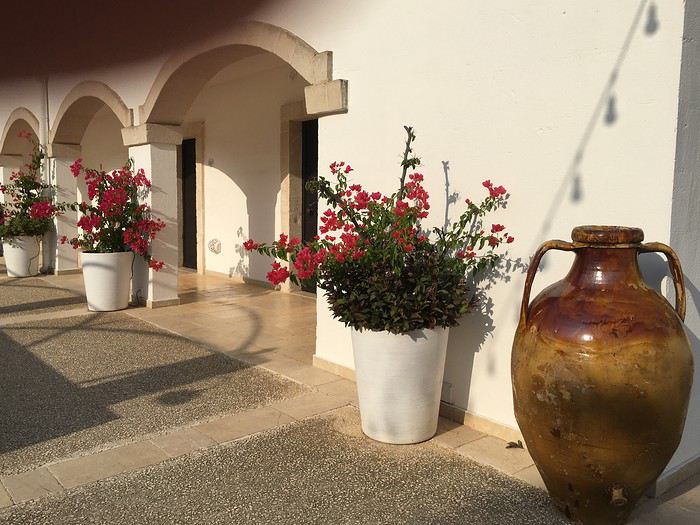
A recurring detail: this happened constantly during our travels. We’d installed our own GPS, fully updated... In recent years, many dirt roads have become drivable, and lots of hotels and hostels have opened in the outskirts of towns. It was extremely rare for our ‘guide’ to recognize the street—let alone the number—we entered. Often, we got by calling the hotel reception: it might seem like a small thing, but it happened so often it became frustrating. In hindsight, it seems like without Google Maps, we’d have been lost!
Anyway, we were beautifully settled, with a terrace overlooking olive groves and the sea in the distance: all was well.
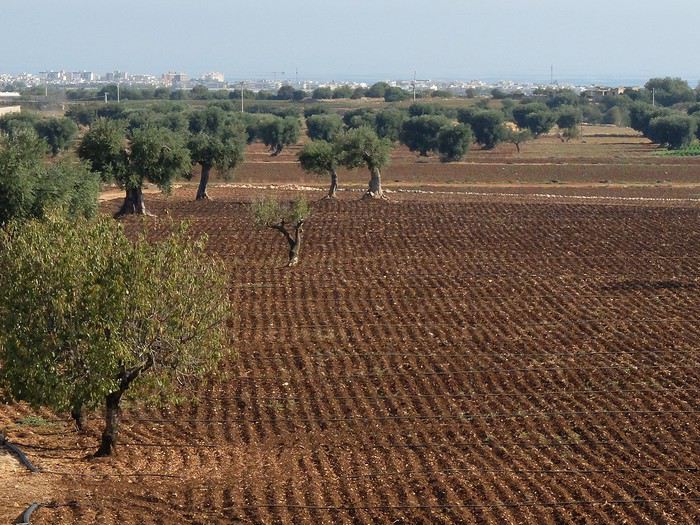
To be continued...
I’m finally getting around to writing about this 20-day trip to southern Italy: we didn’t travel this summer, and luckily, we found beautiful light and dreamy weather there at the end of September.
First, here’s the context of the trip: we’re both "confirmed seniors" but still curious and alert enough to enjoy the itinerary we’d imagined! We wanted a mix of discoveries—culture, cities, and nature—with guaranteed sunshine and the occasional short hike... We’re flying to Naples, round-trip, because the flight times work better for us. We rented a car online, picked it up at the airport (details to come... and it won’t be the highlight of the trip!), and booked our hotels in advance.
A quick overview of the itinerary: leaving Naples on September 15th, early in the morning, we’ll drive straight across the boot of Italy to Bari. After 11 days in Puglia, we’ll head back toward our starting point, taking our time: Matera in Basilicata, Maratea by the sea, and finally Paestum with its incredible temples.
Day 1: Brussels-Naples flight (Brussels Airlines) went smoothly; it landed an hour early, and we were thrilled, thinking we could use that time for a quick visit or two... Everything went well until we left the airport. We took the shuttle to the car rental offices, and at first glance, we realized this wouldn’t be smooth sailing!!! In front of every office (they’re side by side), there were already lines and kids sitting on suitcases—everyone looked exhausted... We resigned ourselves to waiting: nothing moved until tempers flared at the counters, and two people nearly came to blows. Things sped up a little, and after 2 (two...) hours of waiting, we finally got our chariot: a black Fiat Tipo, dirty, with a few dents and scratches that we made sure to note in the contract... but it ran!
Off to Bari, then: no time for sightseeing along the way! From there, we headed straight to our hotel in the countryside near Polignano a Mare.
A recurring detail: this happened constantly during our travels. We’d installed our own GPS, fully updated... In recent years, many dirt roads have become drivable, and lots of hotels and hostels have opened in the outskirts of towns. It was extremely rare for our ‘guide’ to recognize the street—let alone the number—we entered. Often, we got by calling the hotel reception: it might seem like a small thing, but it happened so often it became frustrating. In hindsight, it seems like without Google Maps, we’d have been lost!
Anyway, we were beautifully settled, with a terrace overlooking olive groves and the sea in the distance: all was well.
To be continued...
Combien de sacoches pour un premier voyage à vélo en France? English translation pending
Bonjour à vous tous,
Je me permets d'ouvrir un sujet pour vous demander votre avis concernant le nombre de sacoches à prévoir pour mon premier voyage à vélo.
Nous seront deux et prévoyons de partir une dizaine de jours sur la côte bretonne à l'été prochain (donc il ne devrait pas faire trop moche ni trop froid). Il ne s'agit pas d'un itinéraire nécessitant une grande autonomie je pense, nous serons toujours relativement proche des points de réapprovisionnement pour les produits de première nécessité et de l'eau/nourriture. Nous passerons nos nuits en tente (camping ou camping sauvage).
Mon vélo est équipé d'un porte-bagages et je possède une paire de sacoches Ortlieb 2x20L. Le vélo de ma compagne dispose également d'un porte bagage mais qui supportera, à mon avis, pas beaucoup de poids... donc possibilité d'y fixer la tente ou un sac à dos avec les affaires légères mais pas une paire de sacoches. Ma question est donc de savoir si une paire de sacoches plus un sac à dos de taille moyenne (une 40aine de litres) seraient suffisant pour ce voyage ou devrais-je prévoir l'achat d'un porte-bagages avant et donc d'une seconde paire de sacoches ?
Merci de votre aide !
Je me permets d'ouvrir un sujet pour vous demander votre avis concernant le nombre de sacoches à prévoir pour mon premier voyage à vélo.
Nous seront deux et prévoyons de partir une dizaine de jours sur la côte bretonne à l'été prochain (donc il ne devrait pas faire trop moche ni trop froid). Il ne s'agit pas d'un itinéraire nécessitant une grande autonomie je pense, nous serons toujours relativement proche des points de réapprovisionnement pour les produits de première nécessité et de l'eau/nourriture. Nous passerons nos nuits en tente (camping ou camping sauvage).
Mon vélo est équipé d'un porte-bagages et je possède une paire de sacoches Ortlieb 2x20L. Le vélo de ma compagne dispose également d'un porte bagage mais qui supportera, à mon avis, pas beaucoup de poids... donc possibilité d'y fixer la tente ou un sac à dos avec les affaires légères mais pas une paire de sacoches. Ma question est donc de savoir si une paire de sacoches plus un sac à dos de taille moyenne (une 40aine de litres) seraient suffisant pour ce voyage ou devrais-je prévoir l'achat d'un porte-bagages avant et donc d'une seconde paire de sacoches ?
Merci de votre aide !
Hôtel dans le quartier Malate à Manille English translation pending
Bonjour,
Nous sommes à la recherche d'un hôtel dans le quartier de Malate pour notre arrivée à Manille début janvier.
A l'occasion de nos deux précédents voyages, nous étions au Chill-Out mais nous n'arrivons pas à les joindre ni par mail qui nous est retourné, ni via les sites de réservation sur internet. Certains d'entre vous savent-ils si cet hôtel est toujours en fonctionnement?
Sinon, connaissez-vous un hôtel économique et similaire dans le quartier de Malate?
Merci!
Nous sommes à la recherche d'un hôtel dans le quartier de Malate pour notre arrivée à Manille début janvier.
A l'occasion de nos deux précédents voyages, nous étions au Chill-Out mais nous n'arrivons pas à les joindre ni par mail qui nous est retourné, ni via les sites de réservation sur internet. Certains d'entre vous savent-ils si cet hôtel est toujours en fonctionnement?
Sinon, connaissez-vous un hôtel économique et similaire dans le quartier de Malate?
Merci!
Résumé du trek Choquequirao fin septembre 2019 English translation pending
Bonjour à tous!
On a fait le trek du Choquequirao en itinérant de Cachora à Yanama là en septembre. Comme on avait pleins de questions avant, je vous fais un petit résumé, peut-être cela intéresse quelqu'un...
On voulait absolument faire ce trek en itinérant et non aller/ retour de Cachora, mais on avait pas mal de doutes si on serait capable de le faire vue les dénivelées importantes... (mais sans partir avec une grande agence). Finalement, on est tombé sur une adresse mail d'un gars qui proposait de partir avec une mule plus muletier (kuychuy22@hotmail.com). Si vous tombez sur cette adresse mail, laissez tomber!! On l'a fait et le mec n'est pas fiable!! Il nous a laissé tomber et c'est son frère (qui était malade et plus vraiment capable de faire de telle marche) qui est parti avec nous, le pauvre. On ne s'est rendu compte que sur le chemin de son état de santé et c'est lui qui voulait absolument continuer de nous accompagner...
Mais: pour nous (autour de 50 ans, nous bougeons régulièrement sans être des super sportifs), la mule était la bonne solution de partir un peu plus léger. Et on le recommande, même si on a trouvé des gens qui ont porté leurs gros sacs et qui y sont aussi arrivés.
Je n'indique pas les distances et dénivelées en détail. Il y a toutes les infos sur novo-monde.com. Leur page est vraiment super et complet!
Si c'était à refaire, je partirais le premier jour vers 10 heures de Cusco (on n'est pas obligé de partir en bus, il y a pleins de collectivos qui partent à Cachora toute la matinée pour 15 soles), arrivée vers 14 h à Cachora. De là, il y a 10 km avec peu de dénivelée jusqu'à l'entrée du parc où on peut dormir (aire de camping ou petites cabanes en bois). Comme ca, on gagne quelques kilomètres le lendemain sur une étappe assez longue.
J 2, une longue descente jusqu'à la rivière plus la montée, soit jusqu'à Santa Rosa Baja (où on s'est arrêtés) et pour ceux qui ont encore le courage encore une heure de plus jusqu'à Marampata. Quand nous, on est passé, il pleuvait, mais ca a l'air plus sympa que Santa Rosa. En plus, on est plus vite au Choque le lendemain...
J 3 Départ de Santa Rosa (ou Marampata) au site du Choque. De Santa Rosa, on a marché 3 heures jusqu'au camping du Choque avec pleins de pauses photo ;-)
On a visité le site à partir de midi environ.
J 4 comme on avait vraiment envie de "tout voir", on a visité le reste du site jusqu'à 14 h environ. Il faut se rendre compte qu'on fait facilement 1000 m de dénivelée en visitant ce site. Ce n'est pas une journée de repos dans le vrai sens du terme. Mais c'est magnifique, car les quelques personnes qu'on était, on était tout le temps seuls ou presque à un endroit...
Dans l'après midi on a marché encore 3 heures jusqu'au site du Pichaunioc. Un site archéologique (des terrasses) au milieu de la cambrousse. Il y a les terrasses, une source et basta. C'est génial!!
J 5 comme on s'est arrêté la veille au Pichaunioc, l'étappe vers Maizal était plutôt petite mais avec une dénivelée importante. Vers midi on était arrivé. L'après midi tranquille. Du repos, ca fait du bien aussi!
J 6 Maizal- Yanama par le Col de San Juan à 4100 m. La montée est dure mais pas très raide. Mais on dépasse quand même les 4000 m... Une fois arrivé à Yanama, on a le choix entre plusieurs campings. Pour nous, ca s'est arrêté là. Le lendemain, on a pris un collectivo à Santa Teresa. Mais les paysages restent beaux. Donc ceux, qui on le temps, je pense que ca vaut toujours le coup de continuer à marcher....
Voilà, comme disaient déjà les autres: jusqu'à Marampata, on trouve régulièrement des tiendas et quoi à manger (aussi des plats chauds). Du Choquequirao jusqu'à Maizal, il n'y a rien, à Maizal deux campings où on peut aussi avoir un plat. Et à Yanama aussi, bien sûr...
Si vous avez des questions, j'essaie de vous répondre.
En transit à l'aéroport de Kiev Boryspil English translation pending
Bonjour,
je vous contacte parce que soit je suis nulle en internet, soit je n'ai vraiment pas trouvé ma réponse 😄.
Je pars en Ukraine du 1er au 16 novembre, et bien sur comme je veux aller au fin fond de ce pays, j'ai une escale à faire à Kiev Boryspil de 10h. (Ah oui, quand j'ai pris mes billets de dernières minutes je gagnais 200€ à faire une plus longue escale). Je passe par la même compagnie et je sais déjà que mes bagages en soute seront transféré d'un avion à l'autre sans que je m'en occupe.
Ma question est de savoir si pendant ces 10h d'attente je pouvais naviguer d'un étage à un autre (je ne voudrai pas mourir de faim entre 5h le départ du premier avion et 21h arrivée du deuxième avion). J'ai vu avec le plan interactif de l'aéroport que les arrivées se font au rez-de-chaussée, les vols nationaux au 1er et les vols internationaux au 2è. Cependant les restaurants et les bureaux de changes sont au 2è étage et que mon vol (avec la zone de transit) se trouve au 1er 😕. C'est la première fois que je voyage avec une escale et un changement d'avion dans un pays que je ne connais pas. J'ai déjà fait une escale à Pointe-à-Pitre quand je suis revenue de République Dominicaine car grève de kérosène, nous étions descendue mais ça n'avait duré que 2h et nous avions un repas de prévu par la compagnie en vol, donc pas d'inquiétude à ce moment là 😎.
Merci de vos réponses.
je vous contacte parce que soit je suis nulle en internet, soit je n'ai vraiment pas trouvé ma réponse 😄.
Je pars en Ukraine du 1er au 16 novembre, et bien sur comme je veux aller au fin fond de ce pays, j'ai une escale à faire à Kiev Boryspil de 10h. (Ah oui, quand j'ai pris mes billets de dernières minutes je gagnais 200€ à faire une plus longue escale). Je passe par la même compagnie et je sais déjà que mes bagages en soute seront transféré d'un avion à l'autre sans que je m'en occupe.
Ma question est de savoir si pendant ces 10h d'attente je pouvais naviguer d'un étage à un autre (je ne voudrai pas mourir de faim entre 5h le départ du premier avion et 21h arrivée du deuxième avion). J'ai vu avec le plan interactif de l'aéroport que les arrivées se font au rez-de-chaussée, les vols nationaux au 1er et les vols internationaux au 2è. Cependant les restaurants et les bureaux de changes sont au 2è étage et que mon vol (avec la zone de transit) se trouve au 1er 😕. C'est la première fois que je voyage avec une escale et un changement d'avion dans un pays que je ne connais pas. J'ai déjà fait une escale à Pointe-à-Pitre quand je suis revenue de République Dominicaine car grève de kérosène, nous étions descendue mais ça n'avait duré que 2h et nous avions un repas de prévu par la compagnie en vol, donc pas d'inquiétude à ce moment là 😎.
Merci de vos réponses.
Sorties natures à proximité de Santa Lucia (Afrique du Sud) English translation pending
Bonjour nous sommes à Santa lucia pour 4j et voulons faire des sorties ornithologiques avec guides expérimentés et faire 1 ou 2 parcs sans trop rouler en voiture je suis preneuse de tous vos conseils merci
Itinéraire 20 jours à la rencontre des ethnies peuplant le nord du Laos English translation pending
Bonjour à tous,
Je prépare un voyage de près de trois semaines exclusivement dans le Nord du Laos avec mes parents (arrivée Luang Prabang / retour depuis Vientiane).
Il y a quelques années, nous avions été enchanté par la semaine passée à la rencontre des ethnies peuplant le Nord-Vietnam et souhaiterions revivre ce type d'expérience au Laos.
Je souhaitais avoir quelques avis et conseils divers. Voilà en gros l’itinéraire et les quelques questions que je me pose. En principe, nous réserverons à l’avance uniquement les nuits à Luang Prabang et un Bungalow chez Noy (Nam Nga Bungalow). Que pensez-vous de cet itinéraire?
J1. Arrivée à LUANG PRABANG
J2. LUANG PRABANG
J3. LUANG PRABANG
J4. LUANG PRABANG – PAKBENG en bateau
J5. PAKBENG – OUDOMXAI / MUANG LA / BAN YOR ? question 1- entre Pakbeng et Pak Nam Noi, on souhaite s'arrêter une nuit pour couper cette étape en deux. Du coup je m'interroge, à quel endroit est-il préférable de passer la nuit : Oudomxay (Namkat Yorla Resort ?), Muang La ou un petit village (Ban Yor : quelqu’un a-t-il des infos ?) ?
J6/7/8/9. TREK DANS LA REGION SUD DE PHONGSALY – Massif de l’Elephant (PhuSang) question 2 : Je souhaite éviter (pour des questions de longueur de transport) de me rendre à Phongsaly mais il semble que la région du sud soit accessible depuis BounTai ou NamLy. Quelqu’un qui est passé dans cette région a-t-il des conseils à me donner ? question 3 : Connaissez-vous un guide local francophone ou anglophone susceptible d’organiser un voyage dans cette région ? ou bien une agence à recommander ?question 4 : Si je passe par une agence, à quel endroit est-il préférable que je réserve : PhongSaly, Oudomxai, Muang La, Pak Nam Noy, Boun Tai ?
J9. Fin du TREK - MUANG KOUA - MUANG NGOI en bateau question 5 : Je ne trouve pas beaucoup d’infos mais il semble qu’il n’y ait des départs que le matin vers Muang Ngoi ?
J10. MUANG NGOI question 6 : Plutôt que de dormir deux nuits à Muang Ngoi, je pensais y dormir la première, et passer la seconde dans un village alentour avant de revenir à Muang Ngoi le lendemain et repartir pour Nong Khiaw le même jour. Est-ce envisageable?
J11. MUANG NGOI – NONG KHIAW en bateauJ12. NONG KHIAW
J13. NONG KHIAW – NAM NGA BUNGALOW (chez Noy : www.namngabungalowslaos.com/)
J14. NAM NGA BUNGALOW
J15. NAM NGA BUNGALOW
J16. NAM NGA BUNGALOW - LUANG PRABANG - VANG VIENG question 7 : On pensait, en fonction du budget pour un véhicule avec chauffeur, louer directement une une voiture depuis Luang Prabang jusqu’à Ventiane.
J17. VANG VIENG question 8 : En discutant, je trouve des avis très divers sur Vang Vieng, je suis moi-même passé par le Laos en 2012 en venant de Chine et j'avais décidé de continuer vers la Thailande sans descendre plus bas que Luang Prabang. Les commentaires que j'en avais eus par les voyageurs rencontrés étaient souvent très négatifs. Il semble néanmoins que depuis quelques années il y a eu un effort de la part du gouvernement pour transformer ce bourg en coin paisible... Je trouve aujourd'hui de très bons avis avec des personnes qui ont trouvé les alentours de Vang Vieng très beaux et toujours "authentiques"... On pensait donc y consacrer une ou deux journée à se balader dans la campagne environnante. Et vous, vous y retournerez ?
question 9 : Sinon, entre LP et Vientiane, avez-vous d'autres coins à nous recommander? Ou bien une route particulière à emprunter pour profiter des paysages et d’arrêts le long du chemin ?
18 VANG VIENG
19 VANG VIENG - VIENTIANE
20 VIENTIANE avion retour Voila pour l'itinéraire, c'est le fruit d'une synthèse des différentes lectures sur des forums et blog mais je suis ouvert à la critique, rien n'est encore vraiment réservé (à part l'avion) donc les modifications sont encore possibles :)
Au plaisir de vous lire, Bonne soirée
Je prépare un voyage de près de trois semaines exclusivement dans le Nord du Laos avec mes parents (arrivée Luang Prabang / retour depuis Vientiane).
Il y a quelques années, nous avions été enchanté par la semaine passée à la rencontre des ethnies peuplant le Nord-Vietnam et souhaiterions revivre ce type d'expérience au Laos.
Je souhaitais avoir quelques avis et conseils divers. Voilà en gros l’itinéraire et les quelques questions que je me pose. En principe, nous réserverons à l’avance uniquement les nuits à Luang Prabang et un Bungalow chez Noy (Nam Nga Bungalow). Que pensez-vous de cet itinéraire?
J1. Arrivée à LUANG PRABANG
J2. LUANG PRABANG
J3. LUANG PRABANG
J4. LUANG PRABANG – PAKBENG en bateau
J5. PAKBENG – OUDOMXAI / MUANG LA / BAN YOR ? question 1- entre Pakbeng et Pak Nam Noi, on souhaite s'arrêter une nuit pour couper cette étape en deux. Du coup je m'interroge, à quel endroit est-il préférable de passer la nuit : Oudomxay (Namkat Yorla Resort ?), Muang La ou un petit village (Ban Yor : quelqu’un a-t-il des infos ?) ?
J6/7/8/9. TREK DANS LA REGION SUD DE PHONGSALY – Massif de l’Elephant (PhuSang) question 2 : Je souhaite éviter (pour des questions de longueur de transport) de me rendre à Phongsaly mais il semble que la région du sud soit accessible depuis BounTai ou NamLy. Quelqu’un qui est passé dans cette région a-t-il des conseils à me donner ? question 3 : Connaissez-vous un guide local francophone ou anglophone susceptible d’organiser un voyage dans cette région ? ou bien une agence à recommander ?question 4 : Si je passe par une agence, à quel endroit est-il préférable que je réserve : PhongSaly, Oudomxai, Muang La, Pak Nam Noy, Boun Tai ?
J9. Fin du TREK - MUANG KOUA - MUANG NGOI en bateau question 5 : Je ne trouve pas beaucoup d’infos mais il semble qu’il n’y ait des départs que le matin vers Muang Ngoi ?
J10. MUANG NGOI question 6 : Plutôt que de dormir deux nuits à Muang Ngoi, je pensais y dormir la première, et passer la seconde dans un village alentour avant de revenir à Muang Ngoi le lendemain et repartir pour Nong Khiaw le même jour. Est-ce envisageable?
J11. MUANG NGOI – NONG KHIAW en bateauJ12. NONG KHIAW
J13. NONG KHIAW – NAM NGA BUNGALOW (chez Noy : www.namngabungalowslaos.com/)
J14. NAM NGA BUNGALOW
J15. NAM NGA BUNGALOW
J16. NAM NGA BUNGALOW - LUANG PRABANG - VANG VIENG question 7 : On pensait, en fonction du budget pour un véhicule avec chauffeur, louer directement une une voiture depuis Luang Prabang jusqu’à Ventiane.
J17. VANG VIENG question 8 : En discutant, je trouve des avis très divers sur Vang Vieng, je suis moi-même passé par le Laos en 2012 en venant de Chine et j'avais décidé de continuer vers la Thailande sans descendre plus bas que Luang Prabang. Les commentaires que j'en avais eus par les voyageurs rencontrés étaient souvent très négatifs. Il semble néanmoins que depuis quelques années il y a eu un effort de la part du gouvernement pour transformer ce bourg en coin paisible... Je trouve aujourd'hui de très bons avis avec des personnes qui ont trouvé les alentours de Vang Vieng très beaux et toujours "authentiques"... On pensait donc y consacrer une ou deux journée à se balader dans la campagne environnante. Et vous, vous y retournerez ?
question 9 : Sinon, entre LP et Vientiane, avez-vous d'autres coins à nous recommander? Ou bien une route particulière à emprunter pour profiter des paysages et d’arrêts le long du chemin ?
18 VANG VIENG
19 VANG VIENG - VIENTIANE
20 VIENTIANE avion retour Voila pour l'itinéraire, c'est le fruit d'une synthèse des différentes lectures sur des forums et blog mais je suis ouvert à la critique, rien n'est encore vraiment réservé (à part l'avion) donc les modifications sont encore possibles :)
Au plaisir de vous lire, Bonne soirée
Lieu ou activité pour New York à Noël English translation pending
Bonjour à tous,
Oui je sais c'est du déjà vu sur le forum mais j'aurais aimé vos conseils, vos adresses, vos coins cachés pour découvrir au mieux New York à Noël. Nous y avons déjà été 2 fois mais jamais à Noël.
Alors si certains ont déjà fait l'expérience et pense à un lieu ou une activité en particuliers, nous sommes preneurs.
Merci
Oui je sais c'est du déjà vu sur le forum mais j'aurais aimé vos conseils, vos adresses, vos coins cachés pour découvrir au mieux New York à Noël. Nous y avons déjà été 2 fois mais jamais à Noël.
Alors si certains ont déjà fait l'expérience et pense à un lieu ou une activité en particuliers, nous sommes preneurs.
Merci
Road trip à vélo de France jusqu'en Thaïlande: l'Asie en période de mousson? English translation pending
Bonjour à tous,
Nous suivons ce forum depuis quelques temps déjà en préparation de notre road-trip à vélo France-Thaïlande sur 14 mois, et départ prévu juillet 2020.
Ceci est notre premier message.
Dans l'élaboration de notre itinéraire, nous arriverions à priori en Inde autour du mois de février. Nous souhaitons ensuite contourner le Bangladesh, pour rejoindre la Birmanie puis la Thaïlande.
Or, la période suivant notre arrivée en Inde va correspondre à la période de mousson.
Voici nos questions: -est-ce que certains d'entre vous ont déjà voyagé dans ces pays durant cette saison? et si oui, est-ce "praticable" sans que ce soit complètement rédhibitoire? (surtout à vélo)
-est-ce qu'il vaudrait mieux partir via le Sud de l'Inde vers le Sri Lanka, et de là, envisager une traversée vers la Thaïlande, afin d'éviter la période de mousson, et rallonger notre périple vers la Malaisie ensuite...? Si oui, existe-t-il des lignes maritimes de l'Inde ou du Sri Lanka vers la Thaïlande?
Il ne nous est pas possible de décaler notre départ en raison des dates d'examens de deux de nos enfants (Baccalauréat et Brevet).
Bien qu'ayant vu des discussions abordant plus ou moins le sujet, nous sommes encore aujourd'hui sans réponses précises.
Merci d'avance pour vos retours
Perrine et Christophe de 8 à vélo
Nous suivons ce forum depuis quelques temps déjà en préparation de notre road-trip à vélo France-Thaïlande sur 14 mois, et départ prévu juillet 2020.
Ceci est notre premier message.
Dans l'élaboration de notre itinéraire, nous arriverions à priori en Inde autour du mois de février. Nous souhaitons ensuite contourner le Bangladesh, pour rejoindre la Birmanie puis la Thaïlande.
Or, la période suivant notre arrivée en Inde va correspondre à la période de mousson.
Voici nos questions: -est-ce que certains d'entre vous ont déjà voyagé dans ces pays durant cette saison? et si oui, est-ce "praticable" sans que ce soit complètement rédhibitoire? (surtout à vélo)
-est-ce qu'il vaudrait mieux partir via le Sud de l'Inde vers le Sri Lanka, et de là, envisager une traversée vers la Thaïlande, afin d'éviter la période de mousson, et rallonger notre périple vers la Malaisie ensuite...? Si oui, existe-t-il des lignes maritimes de l'Inde ou du Sri Lanka vers la Thaïlande?
Il ne nous est pas possible de décaler notre départ en raison des dates d'examens de deux de nos enfants (Baccalauréat et Brevet).
Bien qu'ayant vu des discussions abordant plus ou moins le sujet, nous sommes encore aujourd'hui sans réponses précises.
Merci d'avance pour vos retours
Perrine et Christophe de 8 à vélo
Bon plan pour garer sa voiture à Roissy-CDG English translation pending
Bonjour à tous.
J'aurai besoin d'un bon plan pour un parking à proximité de CDG sachant que l'on doit arriver à l'aéroport à 8h. Je n'ai jamais fait garder ma voiture car d'habitude on nous dépose alors est ce vraiment sécurisé, et à quoi doit-on faire attention avant de réserver car il y a à profusion d'offre et de prix.
Et bien entendu je privilégie le rapport qualité -prix.
Merci
J'aurai besoin d'un bon plan pour un parking à proximité de CDG sachant que l'on doit arriver à l'aéroport à 8h. Je n'ai jamais fait garder ma voiture car d'habitude on nous dépose alors est ce vraiment sécurisé, et à quoi doit-on faire attention avant de réserver car il y a à profusion d'offre et de prix.
Et bien entendu je privilégie le rapport qualité -prix.
Merci