Results for "Colonia+|+4+>+135"
6375 results found.
Santana beach villa bavaro dorado club et la Tambora English translation pending
je pars en fevrier en rep dom et dans mon circuit 5 hotels sont prévus qui les connait? santana beach, villa bavaro, dorado club, la tambora, et le mercure a st domingue, quelles sont les excursions les plus interressantes à faire à partir de ces hotels? un grand merci d'avance pour vos reponses qui j'espere me feront rever avant d'entreprendre mon 1er voyage à plus de 500km de chez moi...
France-Mozambique en bateau? English translation pending
Est-ce que partir de france en bâteau pour le mozambique est une folie ? Y aurait-il une personne qui l'a fait ?J'aimerais avoir beaucoups d'informations pour entreprendre ce voyage.merci
Hôtel Maritim Holguin, Tryp Cayo Coco ou Iberostar Cayo Guillermo? English translation pending
J'ésite entre le maritim à holguin, le tryp cayo coco et l'Ibérostar à Cayo Guillermo.Nous ne faisons pas beaucoup d'excursions, mais faisons beaucoup de plage. Nous voyageons avec un enfant de 7ans. Nous savons que la nourriture n'est pas exeptionnel à Cuba mais nous ne sommes pas difficile. Que nous proposez-vous?Merci de votre aide.
Hôtel el Mandarin Riviera Maya English translation pending
Qui est allé a riviera maya.L'hotel el mandarin? ou dite moi ce que vous pensée de cette endroit.
Voyage au Bénin English translation pending
Bienvenu au coeur du Benin, en ce qui concerne les infos sur mon pays, vous êtes à la bonne adresse!!
Questions sur certaines villes d'Inde English translation pending
salut,
encore quelques questions...
est-ce qu'Alappuzha (alleppey) est sympa pour rester quelques jours (en dehors de le croisiere en house boat, juste sur place)?
y a t il un train direct entre kochi et goa? combien de temps ça prend?
quelle plage preferez vous entre kovalam et varkala?
Pondichery vaut-elle le coup de faire un detour? c'est comment par rapport à Kochi?
combien de jours minimum faut-il consacrer aux villes comme calcutta varanasi delhi ou bombay selon vous?
merci d'avance pour vos réponses 😏
encore quelques questions...
est-ce qu'Alappuzha (alleppey) est sympa pour rester quelques jours (en dehors de le croisiere en house boat, juste sur place)?
y a t il un train direct entre kochi et goa? combien de temps ça prend?
quelle plage preferez vous entre kovalam et varkala?
Pondichery vaut-elle le coup de faire un detour? c'est comment par rapport à Kochi?
combien de jours minimum faut-il consacrer aux villes comme calcutta varanasi delhi ou bombay selon vous?
merci d'avance pour vos réponses 😏
Quelqu'un est-il déjà allé au Brunei, East Tmor et Philippines English translation pending
Bonjour
Quelqu'un est-il déjà allé au : Brunei Darussalam ? East Timor ? Philippines ?
C'est comment ? Qu'y faire ? Qu'y voir ?
Comment sont les gens ? Les transports ?
Est-ce cher ?
Beaucoup de touristes ? de routards ?
Quelqu'un est-il déjà allé au : Brunei Darussalam ? East Timor ? Philippines ?
C'est comment ? Qu'y faire ? Qu'y voir ?
Comment sont les gens ? Les transports ?
Est-ce cher ?
Beaucoup de touristes ? de routards ?
Afrique du sud/Namibie en aout-septembre English translation pending
Ca y est, c'est fini! et je dois dire que la namibie c'est GRANDIOSE, ENORME
je remercie toutes les personnes qui m'ont données des conseils avant de partir. Voilà le parcours effectué en 28 jours avec un toyota Condor (2*4) et camping. La cap-houtbay-le cap de bonne espérance…..des baleines….des baleines. C’est magnifique Le cap-Springbock, route de transition (départ 13h arrivée 19h).Froid de canard. springbock-fishriver canyon et nuit parmi le sbaboons du camping du canyon. fishriver-sesriem par C27 (route magnifique…) et nuit au camping sans réservation !!!!! sossuvlei-deadvlei-dune 45……puis direction camping du Park du Naukluft (superbe camping et gens super sympa) Olive trail dans Naukluft (zevbrz de hatmenn, kudus….) Naukluft_Walvis bay (ENORME colonie de flamands roses)-Swakopmund (quad, ne vaut le coup que pour la vue sur le désert). Camping à swakop horrible ! swakop-capecross (milliers d’otaries et des chacals) brandberg est. white lady et éléphants dans le lit de la rivière huab. brandberg-Khorixas-sesfontein. Très déçu par sesfontein et prix exorbitants pour aller à la rencontre des éléphants…. sesfontein-opuwo(pas d’intérêt)-epupa falls. La piste est très bonne sur les 3/4, et devient limite sur la fin. A certain endroits, il faut rouler au pas avec un 2*4 surélevé. Je ne sais pas si ça passe en 2*4 normal ?! epupafalls (grandiose) epupafalls et croco trail et villages himbas. epupa-etosha (okakuejo). Oh une route goudronnée ! ça fait bizarre ! Etosha-environs de okakuejo (hallucinant) okakuejo-halali (1 lion et un troupeau de 28 éléphants !!!!) halali-namutoni (5 lions, un troupeau de 38 éléphants et 3 rhinos….sur le m^me plan d’eau) etosha-rundu-ngepi camp près de divundu. Et popa falls (cascade inexistante en septembre) réserve de Mahango (après Etosha c’est fade).Hippos et des crocos, mais réserve a souffert des feux de brousse. visite des villages typique de cette région. intéressants car différents de tout ce que nous avons vu auparavant. Boat cruise pour voir les hippos. divundu-Waterberg waterberg (ça vaut le déplacement) waterberg-keetmanshop. Visite kokerboom forest et camping sur site. Attention cobra... Kettmanshop-Augrabies falls Nat Park augrabies falls ( site exceptionnel, le lonely n’en parle pas beaucoup ?!) Augrabies-hermanus (couché de soleil sur baleines) bateau pour observation des baleines ( à peu près50 dans la baie quand nous étions) et plongée avec grand requin blancPrix approx par pers (nous étions 4) 14 000 F. 9000 Km . Camping. Deux restaus, sinon sandwich le midi et grillades le soir.
Les campings sont tellement douillets que je ne vois pas l’intérêt d’aller en lodge (prix très élevé). De plus, lorsqu’on campe on peut profiter des piscines, bars…des lodges sans surplus.
Le plus couteux a donc été la voiture, avec esssence.....
voilà,
en espérant que cela puisse aider.
Tchao
je remercie toutes les personnes qui m'ont données des conseils avant de partir. Voilà le parcours effectué en 28 jours avec un toyota Condor (2*4) et camping. La cap-houtbay-le cap de bonne espérance…..des baleines….des baleines. C’est magnifique Le cap-Springbock, route de transition (départ 13h arrivée 19h).Froid de canard. springbock-fishriver canyon et nuit parmi le sbaboons du camping du canyon. fishriver-sesriem par C27 (route magnifique…) et nuit au camping sans réservation !!!!! sossuvlei-deadvlei-dune 45……puis direction camping du Park du Naukluft (superbe camping et gens super sympa) Olive trail dans Naukluft (zevbrz de hatmenn, kudus….) Naukluft_Walvis bay (ENORME colonie de flamands roses)-Swakopmund (quad, ne vaut le coup que pour la vue sur le désert). Camping à swakop horrible ! swakop-capecross (milliers d’otaries et des chacals) brandberg est. white lady et éléphants dans le lit de la rivière huab. brandberg-Khorixas-sesfontein. Très déçu par sesfontein et prix exorbitants pour aller à la rencontre des éléphants…. sesfontein-opuwo(pas d’intérêt)-epupa falls. La piste est très bonne sur les 3/4, et devient limite sur la fin. A certain endroits, il faut rouler au pas avec un 2*4 surélevé. Je ne sais pas si ça passe en 2*4 normal ?! epupafalls (grandiose) epupafalls et croco trail et villages himbas. epupa-etosha (okakuejo). Oh une route goudronnée ! ça fait bizarre ! Etosha-environs de okakuejo (hallucinant) okakuejo-halali (1 lion et un troupeau de 28 éléphants !!!!) halali-namutoni (5 lions, un troupeau de 38 éléphants et 3 rhinos….sur le m^me plan d’eau) etosha-rundu-ngepi camp près de divundu. Et popa falls (cascade inexistante en septembre) réserve de Mahango (après Etosha c’est fade).Hippos et des crocos, mais réserve a souffert des feux de brousse. visite des villages typique de cette région. intéressants car différents de tout ce que nous avons vu auparavant. Boat cruise pour voir les hippos. divundu-Waterberg waterberg (ça vaut le déplacement) waterberg-keetmanshop. Visite kokerboom forest et camping sur site. Attention cobra... Kettmanshop-Augrabies falls Nat Park augrabies falls ( site exceptionnel, le lonely n’en parle pas beaucoup ?!) Augrabies-hermanus (couché de soleil sur baleines) bateau pour observation des baleines ( à peu près50 dans la baie quand nous étions) et plongée avec grand requin blancPrix approx par pers (nous étions 4) 14 000 F. 9000 Km . Camping. Deux restaus, sinon sandwich le midi et grillades le soir.
Les campings sont tellement douillets que je ne vois pas l’intérêt d’aller en lodge (prix très élevé). De plus, lorsqu’on campe on peut profiter des piscines, bars…des lodges sans surplus.
Le plus couteux a donc été la voiture, avec esssence.....
voilà,
en espérant que cela puisse aider.
Tchao
Hôtel de charme à Hanoi English translation pending
Bonjour,
Je suis à la reecherche d'un hôtel de charme, charmant, cosy à Hanoi...
Aucun guide n'est capable de me donner cette info
Quelqu'un aurait-il découvert la perle rare et serait prêt à la partager
Merci à tous et à toutes
stephane
Hôtel Tryp Cayo Coco English translation pending
Bonjour,
Je viens tout juste de réserver le Tryp Cayo Coco Formule VIP pour la fin Janvier 2005 en Réserver Tôt.
C'est la première fois que je vais sur un des Cayos, J'ai fait Varadéro, Holguin et La Havane.
J'aimerais savoir si j'ai fait un bon choix pour cet hotel ? Animation, Bouffe, Excursions à faire etc.???
Aussi j'aimerais savoir si c'est possible même sur les Cayos d'avoir des contactes avec les Cubains, petit village ou autres, j'aime apporter des petites gateries aux enfants, Alors dite moi tout j'apprécierais beaucoup.
C'est ici que commence mon voyage.
Merci
Cubajo
C'est la première fois que je vais sur un des Cayos, J'ai fait Varadéro, Holguin et La Havane.
J'aimerais savoir si j'ai fait un bon choix pour cet hotel ? Animation, Bouffe, Excursions à faire etc.???
Aussi j'aimerais savoir si c'est possible même sur les Cayos d'avoir des contactes avec les Cubains, petit village ou autres, j'aime apporter des petites gateries aux enfants, Alors dite moi tout j'apprécierais beaucoup.
C'est ici que commence mon voyage.
Merci
Cubajo
Voyage de noces au Kantenah Palladium English translation pending
Bonjour à tous,
J'ai une petite chose qui me turlupine et j'aurais besoin de vos expériences personnelles.
Voilà, ma femme et moi avons selectionné cet hotel pour notre voyage de noces et en demandant à notre agence de voyages, celle-ci nous annonce un surclassment en suite, corbeille de fruits et tutti quanti 🙂, seulement voilà, ce n'est pas écrit dans la brochure du tour operator et aucune autre agence ne propose celà.
Ya t'il parmi cette grande communauté quelqu'un qui a profité de ceci, ou alors est-ce que je dois m'attendsre à une désillusion?
Question subsidiaire : Les critiques sont globalement unanime en disant que ce resort est ultra-méga-fantastico génial (bon d'accord j'exagère un peu🤪 ) alors, il est où le piège ???
Merci de vos réponses.
J'ai une petite chose qui me turlupine et j'aurais besoin de vos expériences personnelles.
Voilà, ma femme et moi avons selectionné cet hotel pour notre voyage de noces et en demandant à notre agence de voyages, celle-ci nous annonce un surclassment en suite, corbeille de fruits et tutti quanti 🙂, seulement voilà, ce n'est pas écrit dans la brochure du tour operator et aucune autre agence ne propose celà.
Ya t'il parmi cette grande communauté quelqu'un qui a profité de ceci, ou alors est-ce que je dois m'attendsre à une désillusion?
Question subsidiaire : Les critiques sont globalement unanime en disant que ce resort est ultra-méga-fantastico génial (bon d'accord j'exagère un peu🤪 ) alors, il est où le piège ???
Merci de vos réponses.
Retrait argent Namibie English translation pending
Salut à tous,
Pourriez vous m'indiquer quels sont les moyens les plus simples et les moins risqués pour "transporter" mon argent en Namibie ? En effet, faut il prendre des travellers, du cash (en Euros ?), du $ namibien ? Il y a t il des distributeurs dans la cambrousse ou uniquement dans les grandes villes ? merci !
Pourriez vous m'indiquer quels sont les moyens les plus simples et les moins risqués pour "transporter" mon argent en Namibie ? En effet, faut il prendre des travellers, du cash (en Euros ?), du $ namibien ? Il y a t il des distributeurs dans la cambrousse ou uniquement dans les grandes villes ? merci !
Distance et durée du trajet Chachapoyas-Lima en bus? English translation pending
Salut à tous
Je voudrais 1 renseignement sur la distance et la durée du trajet chachapoyas - Lima en bus.
Et si il y a de belles étapes sur la route, ça sera effectivement la fin de mon voyage
Visitant l'Equateur, et le Nord Pérou, je préférerais prendre mon billet retour à Lima, plutôt qu'à Guayaquil!
Merci d'avance lorphy-
Je voudrais 1 renseignement sur la distance et la durée du trajet chachapoyas - Lima en bus.
Et si il y a de belles étapes sur la route, ça sera effectivement la fin de mon voyage
Visitant l'Equateur, et le Nord Pérou, je préférerais prendre mon billet retour à Lima, plutôt qu'à Guayaquil!
Merci d'avance lorphy-
Hébergement à Pemba (Mozambique) English translation pending
Recherche hébergement ( hotel / chambre d'hote /table d'hote etc ...proche plage /prix et conseils
période 15/08 au 22/ 08
merci de votre collaboration
JPP/ REUNION
période 15/08 au 22/ 08
merci de votre collaboration
JPP/ REUNION
Cours d'espagnol au Mexique? English translation pending
Salut!
Je pars au Mexique pour quelques semaines cet été et je veux prendre des cours pour perfectionner mon espagnol. J'ai pensé à la ville d'Oaxaca, mais si vous avez d'autres suggestions... Pas trop loin vers le sud car ma premiere destination est l'état d'Hidalgo. SVP, répondez moi si vous connaissez de bonnes écoles ou des gens qui donnent des cours privés (ou semi-privés)
Merci beaucoup!
Situation Hôtel Gran Bahia et plage English translation pending
Nous sommes tentés par cet hôtel sur Promovacances sauf que la plage a l'air inexistante ?? Dans le commentaire de Promovac. on comprend que pour se baigner il faut aller se baigner à Cayo Leventado ?? qu'en est-il exactement ??
cet Hôtel est-il bruyant (musique toute la journée, etc... nous n'aimons pas les animations à outrance.....)
De plus où est-il situé exactement, près de Samana, de Las Terrenas, de Las Galeras ?? Quelles excursions possibles (en passant ou non par l'hôtel ..??)
Merci d'avance pour vos réponses.
a et jp
cet Hôtel est-il bruyant (musique toute la journée, etc... nous n'aimons pas les animations à outrance.....)
De plus où est-il situé exactement, près de Samana, de Las Terrenas, de Las Galeras ?? Quelles excursions possibles (en passant ou non par l'hôtel ..??)
Merci d'avance pour vos réponses.
a et jp
Adresses de restaurants à Florence et Rome English translation pending
😉allo !
Si vous connaissez de bon resto pas chère a Florence et Rome je suis a l'écoute.
Je dois y ètre au mois de mai.
Merçi ! bye
Si vous connaissez de bon resto pas chère a Florence et Rome je suis a l'écoute.
Je dois y ètre au mois de mai.
Merçi ! bye
Que visiter au Caire en Egypte? English translation pending
J'ai la possibilité de me rendre pendant 7 à 10 jours au Caire. Pendant cette période, qu'est-il conseillé de voir ? Faut-il rester sur place ou aller dans d'autres villes ? Quels sont les coins sympa pour sortir le soir ?
Merci
Merci
Itinéraire au Sri Lanka? English translation pending
Hello,
Je pars au Sri Lanka le 11 février. J'aurais besoin d'infos sur un itinéraire sympa à faire pendant 15 jours, avec quand même une bonne halte plage !
Est ce que quelqu'un pourrais m'aider car il semble y avoir beaucoup de choses à voir et à faire au Sri Lanka.
Comment est le temps en ce moment ?
Merci d'avance pour vos bons tuyaux.
Je pars au Sri Lanka le 11 février. J'aurais besoin d'infos sur un itinéraire sympa à faire pendant 15 jours, avec quand même une bonne halte plage !
Est ce que quelqu'un pourrais m'aider car il semble y avoir beaucoup de choses à voir et à faire au Sri Lanka.
Comment est le temps en ce moment ?
Merci d'avance pour vos bons tuyaux.
Où manger à Venise? English translation pending
j'aimerai connaitre quelques bons plans pour manger pas cher à venise, pendant le carnaval du 22 au 25 février 2004
D'autre renseignements sont les bienvenus
merci
D'autre renseignements sont les bienvenus
merci
Las galeras ou Las terranas? English translation pending
nous reflechissons a notre prochain voyage
las terranas ou las galeras ?
merci pour vos commentaires
las terranas ou las galeras ?
merci pour vos commentaires
Air Namibia English translation pending
Quelqu'un est-il déjà parti par Air Namibia ?
Ca n'a pas l'air d'une grosse compagnie. En Europe, elle ne part que de Francfort...
J'ai trouvé un Paris-Francfort-Windhoek (acheminement avec Air France) pour 975 euros TTC en juillet 2004, soit 200 euros de moins que Air France, South African Airways ou Lufthansa.
Ca présente en plus l'avantage d'être le trajet le plus cours entre Paris et Windhoek.
Mais j'hésite...
Bons plans au nord du Pérou English translation pending
bonjour!voila, de retour du sud en direction de Piura, les chorros de la capitale ont eu la delicatesse de voler le sac de MI NOVIA, avec toutes ses affaires et le GUIDE DU ROUTARD, qui nous servais fortement, nous voila a l extreme nord, a TUMBES, un jour ferie, sans savoir ou se trouve les bons plans sur la cote entre l equateur et perou..ou aller? que faire?..
Le passe vite et la date du retour se rapproche.Panique a bord!!!
nous esperons avoir des reponses de routards experimentes MERCI ..
Pablos
Bons plans au Mexique English translation pending
hello,
avec une amie nous pensons aller faire un petit sejour au mexique et si quelqu'un a des bons plans (sites interessants a visiter ou logements pas chers, ...) merci d'me repondre.
avec une amie nous pensons aller faire un petit sejour au mexique et si quelqu'un a des bons plans (sites interessants a visiter ou logements pas chers, ...) merci d'me repondre.
Marakele with family: a wonderful discovery at the park's doorstep
I wanted to share a great discovery in the Marakele area because, in the end, this park doesn’t get talked about much compared to Kruger, even though it’s really worth the detour.
We discovered Cypiro Leopard Lodge, right next to Marakele National Park in the Waterberg. It’s a small property with just a few villas and suites, so it’s nothing like the big, crowded lodges. What we loved most was the feeling of being truly at the end of the world—lots of space, silence, and almost no one around.
And yet, it’s only about 3 hours from Johannesburg. Once you leave Joburg, the road is pretty straightforward, and you quickly find yourself in a much wilder Africa.
Marakele National Park was a huge surprise for us. There are plenty of animals, the Big Five are present, but best of all, very few people. At times, we drove for quite a while without seeing another car. It’s such a change from parks where you sometimes end up with 15 cars around one animal.
The landscapes are also stunning, with the Waterberg mountains, plains, and beautiful views from some of the trails.
We also learned on-site that Marakele is known for its very large Cape vulture colony—around 800 breeding pairs. When you climb into the mountains and see them soaring above, it’s pretty impressive.
The entire Waterberg region is actually a UNESCO-recognized biosphere reserve, and you quickly understand why once you’re there.
As for Cypiro, it’s a lodge that was recently taken over by French owners—really nice and approachable. The place is quite exclusive since there are very few accommodations. The villas and suites each have their own private pool, a wood-fired hot bath (like a KolKol), a braai, and an outdoor fireplace.
Evenings are especially lovely, especially with the peace and quiet all around.
Another thing we found really convenient: you can organize your stay however you like.
You can come self-catering and cook for yourself. There’s a supermarket in the nearby small town, practically on the way in, so you can do your shopping before arriving without making a big detour.
Or you can ask them to organize everything with breakfasts, lunches, and dinners. Their chef, Ernest, cooks really well, and it lets you completely unwind for a few days.
We liked being able to alternate: some quiet meals on our own and others prepared for us.
That’s actually one of the things we appreciated here—it’s not an ultra-formal lodge where everything is scheduled at fixed times. You can head out early to Marakele, come back for lunch, enjoy the pool, go back out in the late afternoon, then have a braai or a relaxed dinner in the evening.
In terms of price, we also found the value for money really good for this level of accommodation and especially for the very private feel of the place. Sometimes it feels like you’re in a much more expensive lodge.
If you’re looking for lots of activity and dozens of people around you, this probably isn’t the right spot.
But for peace, wildlife, nature, wide-open spaces, and that feeling of being a little alone in the world, we absolutely loved it.
I’ll add a few photos with this post—it’ll probably be more telling! 😊
And if anyone knows Marakele or the Waterberg well, I’d love to hear about other spots to discover in the area.
We discovered Cypiro Leopard Lodge, right next to Marakele National Park in the Waterberg. It’s a small property with just a few villas and suites, so it’s nothing like the big, crowded lodges. What we loved most was the feeling of being truly at the end of the world—lots of space, silence, and almost no one around.
And yet, it’s only about 3 hours from Johannesburg. Once you leave Joburg, the road is pretty straightforward, and you quickly find yourself in a much wilder Africa.
Marakele National Park was a huge surprise for us. There are plenty of animals, the Big Five are present, but best of all, very few people. At times, we drove for quite a while without seeing another car. It’s such a change from parks where you sometimes end up with 15 cars around one animal.
The landscapes are also stunning, with the Waterberg mountains, plains, and beautiful views from some of the trails.
We also learned on-site that Marakele is known for its very large Cape vulture colony—around 800 breeding pairs. When you climb into the mountains and see them soaring above, it’s pretty impressive.
The entire Waterberg region is actually a UNESCO-recognized biosphere reserve, and you quickly understand why once you’re there.
As for Cypiro, it’s a lodge that was recently taken over by French owners—really nice and approachable. The place is quite exclusive since there are very few accommodations. The villas and suites each have their own private pool, a wood-fired hot bath (like a KolKol), a braai, and an outdoor fireplace.
Evenings are especially lovely, especially with the peace and quiet all around.
Another thing we found really convenient: you can organize your stay however you like.
You can come self-catering and cook for yourself. There’s a supermarket in the nearby small town, practically on the way in, so you can do your shopping before arriving without making a big detour.
Or you can ask them to organize everything with breakfasts, lunches, and dinners. Their chef, Ernest, cooks really well, and it lets you completely unwind for a few days.
We liked being able to alternate: some quiet meals on our own and others prepared for us.
That’s actually one of the things we appreciated here—it’s not an ultra-formal lodge where everything is scheduled at fixed times. You can head out early to Marakele, come back for lunch, enjoy the pool, go back out in the late afternoon, then have a braai or a relaxed dinner in the evening.
In terms of price, we also found the value for money really good for this level of accommodation and especially for the very private feel of the place. Sometimes it feels like you’re in a much more expensive lodge.
If you’re looking for lots of activity and dozens of people around you, this probably isn’t the right spot.
But for peace, wildlife, nature, wide-open spaces, and that feeling of being a little alone in the world, we absolutely loved it.
I’ll add a few photos with this post—it’ll probably be more telling! 😊
And if anyone knows Marakele or the Waterberg well, I’d love to hear about other spots to discover in the area.
3 weeks in Laos, stress-free
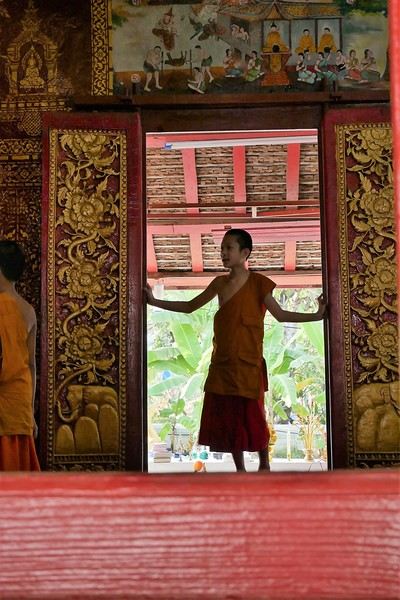 Come along, I'm taking you to this country where it's so nice to wander and slow down...
This trip was in 2023, but when I wanted to write my travel journal, VF was still closed to contributions... So, now that I've just finished my Japan travel journal here, I figured it was high time to honor this destination we came back from so enchanted. Disclaimer 1: This is a written travel journal. There’ll be text! Too much, for some! Disclaimer 2: This is an illustrated travel journal. There’ll be photos! Too many, for some!
I have to say, every time I try to discipline myself, to keep it shorter, to include fewer photos... I end up adding more. It feels like my dear Aunt Nicole, who exhausted us with her slide-show evenings in the 70s/80s, decided to take her revenge. The upside for you, readers, is that you can slip away anytime without offending Aunt Nicole. I won’t even notice!
Anyway, since I love maps, here’s one to give you an idea of where I’m taking you. As you can see, we only saw a tiny part of Laos (the areas circled in red); we only had 3 weeks for ourselves (my husband’s newly retired, I still work), and we prefer taking our time over rushing around like crazy.
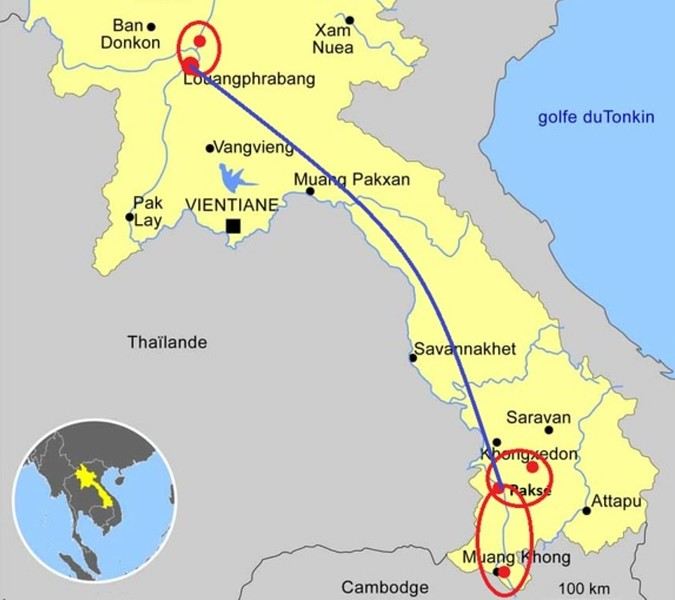
In broad strokes, it was very classic:
First, we “settled in” at Luang Prabang (8 days), because we wanted and needed to. From there, we took three days to venture a little further north—not far in kilometers, but as we know, distances aren’t just about km! Then we flew south to Paksé, letting ourselves drift down to the 4,000 Islands while stopping by the pre-Angkorian archaeological sites. We wrapped up with the Bolaven Plateau.
A few practical notes: We arrived via Bangkok, then took a Bangkok-Luang Prabang flight, having picked up our luggage in Bangkok to check it in for Luang Prabang. No issues—the Bangkok airport, which many of you know, is very well organized. We got our visas on arrival in Luang Prabang. Quick, but to be fair, we were on a “small” plane, and the big flights had arrived earlier, so we weren’t too crowded in line! At the end of our trip, we didn’t fly out of Paksé but from the nearby airport in Thailand, Ubon Ratchathani (a 2.5-hour drive from Paksé), then Bangkok and Paris. You’ll notice we skipped Vientiane to stay longer in Luang Prabang. That said, there’s now a high-speed train between Vientiane and Luang Prabang—good to know—and soon the (Chinese) train will go all the way to Bangkok and even Kuala Lumpur!
With that intro out of the way, let’s dive into the heart of the matter. To be continued: Slowing down the pace... in Luang Prabang
Africa: A Heartfelt Love for a Continent
“When the Whites came to Africa, we had the land and they had the Bible. They taught us to pray with our eyes closed: when we opened them, the Whites had the land and we had the Bible.” Jomo Kenyatta (p.7)
The Maggi cube, an unchallenged hegemony, and so much more
“The hopeless continent,” headlined The Economist, a British magazine, in July 2000 about Africa. Eleven years later, the same magazine headlined “Africa rising” instead. Images of Africa in the prosperous North constantly oscillate between apocalyptic scenarios and enthusiastic projections. A key issue with such images lies in the generalization they entail. If you look at the continent, considerable contrasts emerge depending on space and time. It’s no surprise that a region of the world encompassing such diverse ecological zones, maintaining such varied ties with other continents, comprising nearly fifty nation-states in sub-Saharan Africa alone, and characterized by a great diversity of languages, belief systems, and historical paths, doesn’t share a single destiny.
And yet, for many people outside Africa, as well as for many Africans, the continent constitutes a single entity, defined by criteria such as skin color, a colonial past, poverty, and the art of survival. Until now, these perspectives were generally accompanied by the idea that Africa had to—or should have—followed a single path together, sometimes called development, sometimes modernization, sometimes liberation, then a market economy. None of these paths delivered on their promises.
The two writers Alain Mabanckou and Abdourahman Waberi—one from Congo, the other raised in Djibouti, both long settled in France and now professors at renowned North American universities (Los Angeles, Washington)—have had enough of pessimistic scenarios: “We are aware that Africa is in the world and the world is in Africa. The same goes for all other continents, as our destinies are inextricably linked for better or worse. We refuse to see Africa as a reservoir of misfortunes or a continent cursed by atavistic misfortune and characterized by ethnic conflicts. [...] It’s this passionate flame we wanted to capture in a book [...] a kind of stroll through African cultures, without any demands, each letter of the alphabet leading us to a notion, a practice, a concept, a moment in history, literature, painting, politics, economics, cuisine, etc.” (p.10-11). Africa, they write, is on the verge of “imposing a signature, a style, a way of being in the world and in relation to the rest of the world.” (p.11) To put words to the continent’s diversity and dynamism, the two authors created a “rambling ABC,” a kind of portrait—or more precisely, a mythography—that lets you see and feel the pulse of a vast continent whose cultural power is unfolding before our eyes. Once marginalized or even mocked, the voice and importance of the Continent in global affairs are now undeniable” (p.11), containing over a hundred entries, mostly concise, written in a relaxed and casual style. The optimistic, even exuberant tone is set from the brief introduction. The duo of authors wants to “sing a love song to the cultures of our continent, to its inhabitants past and present, to its exceptional resources and its spectacular globalization despite a certain pollution that still clouds our skies due to the unmatched duration of dictatorships in some of our regions.” (p.12) In doing so, they don’t want to be too distracted by today’s Afewerki-Biya-Bongo-Déby & Co. ...
Of course, you’ll find tributes to great precursors like Frantz Fanon (“[...] it was a love story and admiration that wasn’t dimmed by the four decades separating his birth from ours. Let’s add that we were born while the native of Fort-de-France had left the world’s stage four years earlier, in the prime of life” p.141), Mongo Beti (“You must read and reread Mongo Beti, a genius who used his fame to support often just causes in Africa, like defending oppressed groups. His place is already in History. His oppressors, like the dictators Ahmadou Ahidjo and Paul Biya, can’t compete in the same category” p.64), the Malian Amadou Hampâté Bâ
(“Posterity remembers him mainly as an tireless defender of African cultures. His plea for the collection and preservation of traditional African knowledge remains a major event for all men and women of good will. One day in 1960, at the UNESCO podium, the native of Bandiagara sounded the alarm: ‘[...] Since we’ve admitted that the humanity of each people is the heritage of all humanity, if African traditions aren’t collected in time and written down, they’ll one day be missing from the universal archives of humanity.’” p.51),
Kwame Nkrumah, “one of the founders of Pan-Africanism, father of Ghana’s independence” (p.239), as well as the historian Cheikh Anta Diop, the writer, poet, and politician Aimé Césaire, and the economist and thinker Samir Amin, but also very warm tributes to certain contemporary African intellectuals like Souleymane Bachir Diagne and Achille Mbembe
(“A few years ago, in dominant economic circles, a rumor often resurfaced, usually disguised as a cold and scientifically proven analysis: Africa is useless. It’s a burden for the rest of the human community. With its 2% share in world trade, it would disappear from stock market radars without anyone noticing. So? Maybe it’ll be pulled up by other continents. Wanting to surpass itself is a crazy bet for Africans, they concluded. Arrogant or clueless, President Nicolas Sarkozy declared before an audience of students and teachers at Cheikh Anta Diop University in Dakar: ‘The African man hasn’t entered history enough [...] He only knows the eternal repetition of time marked by the endless repetition of the same gestures and words.’ That was in 2007. For decades, armed only with reason, an intellectual often steps up to debunk prejudices, lazy readings, and dishonest frameworks used as false fronts by those who, like Nicolas Sarkozy or former journalist Stephen Smith, out of ignorance, contempt, or condescension, distort African reality. This intellectual is none other than the historian and political scientist Achille Mbembe. This heir of Frantz Fanon, Amílcar Cabral, Jean-Marc Ela, and Fabien Eboussi-Boulaga was born in 1957 in Cameroon, in the Bassa region. Marked early by the upheavals of a fratricidal war, Achille Mbembe became the guardian of the memory of martyrs. After brilliant studies in Paris, he went on to teach at the best American universities, but the call of the Continent was stronger than anything else. In Dakar, he once directed CODESRIA (Council for the Development of Social Science Research in Africa) before joining the University of the Witwatersrand in Johannesburg, South Africa. Even though the author of *Critique of Black Reason* (Éditions La Découverte, 2015) spends a few months at Duke University in North Carolina, his observation post remains South Africa. From Johannesburg, Achille Mbembe scrutinizes Africa and the whole world. A lucid observer with an elegant and generous pen, Achille Mbembe knows how to blend big and small history: ‘I was born one day in July, as the month was drawing to a close. It was 1957, in that part of Africa recently named ‘Cameroon,’ a memory of the wonder that seized Portuguese sailors in the 15th century when, sailing up the river near Douala, they couldn’t help but note the presence of a multitude of crustaceans, and named it *Rio dos Camarões*, meaning ‘River of Shrimp.’ I grew up in the shadow of this nameless land, since, in a way, the name it bears is only the product of someone else’s astonishment: a lexical mistake, if you will.’ From this mistake or wound, he made leaven, a springboard to compose a rich work, recognized worldwide. To denounce barriers and barbarians too. But that’s not enough. Among his peers in circles of thought and action, Achille Mbembe passionately and consistently defends human dignity and the beauty of the world. In doing so, he fulfills the mission Frantz Fanon entrusted to him.” (p.227-229),
as well as entries dedicated to lesser-known artists and intellectuals, like the French journalist and activist Rokhaya Diallo, daughter of Senegalese and Gambian parents, or the Ethiopian filmmaker Haile Gerima, who has long lived in the United States. Other names from politics, sports, music, art, and literature: Kofi Annan, p.36; Barack Obama, p.243; Thomas Sankara, p.277; Ousmane Sow, p.285; Yambo Ouologuem, p.250; Léopold Sédar Senghor, p.282; Muhammad Ali, p.30; Nuruddin Farah, p.146; Salif Keita, p.203; Ahmadou Kourouma, p.206; Ngũgĩ wa Thiong’o, p.236; Winnie Mandela, p.224; Kylian Mbappé, p.226 ...
The authors, who resolutely commit to a “mythography” (p.11) of Africa, also pay special attention to local social movements, cultural events, and aspects of daily life. *Y’en a marre*, “which also meant ‘we’re fed up with sitting on our hands’” (p.320-321), emerged about a decade ago in Senegal as a citizen movement of peaceful resistance and symbolizes, the authors emphasize, the fact that African youth are increasingly fed up “with the political circus deployed in Africa since independence, as our parents would say, ‘since the White man left’...” (p.321). A full entry is dedicated to the Maggi bouillon cube, which has flooded African markets for about forty years and enjoys immense popularity (“It’s everywhere in Africa, from Dakar to Djibouti, and from Tangier to Cape Town. It’s in every pot, every stew. Little hands put it in every sauce, every local or adapted dish. An unchallenged hegemony! You’ll find it in diasporas too. The culinary strolls in Paris, in the [...] neighborhood” p.90). Critics blame it not only for impoverishing the aromatic diversity of local dishes but also for being harmful to health. And yet, “he poorest Africans, those who eat only once a day, a few spoonfuls of white beans and a ball of *foufou*, for example, are the most fervent users of the magic cube.” (p.92-93)
For *fonio*, “the new trendy cereal. [...] From the millet family, fonio is probably the oldest cereal cultivated in West Africa, and mainly in its sub-Saharan part, for millennia. [...] Easy to grow, water-efficient, fonio grows everywhere except on clay soils. Long neglected because it was considered the poor man’s crop, fonio is now a source of pride for the farmers who cultivate it and cherish it like the apple of their eye” (p.156-157), the authors immediately offer a detailed recipe, letting the reader know that “e can’t resist sharing this fonio with chicken recipe from Mali with you:
Ingredients: 1 chicken 3 large ripe red tomatoes 4 tbsp tomato paste 4 large onions 1 garlic clove 1/2 cup oil 2 Maggi cubes or salt 2 large carrots 1 turnip 1 large cabbage 2 large potatoes 1 celery stalk 1 packet pre-cooked fonio 4 okra (or okra powder) salt, pepper
Preparation: 1. Prepare the sauce: wash and cut the chicken. Peel the onions, garlic, and vegetables. 2. In a pot, fry the chicken pieces. 3. Dice the onions, tomatoes, carrots, and turnip very small and add them to the pot. 4. Add the tomato paste, salt, and pepper. 5. Simmer for 15 min, then add 2 L of water and the cooked chicken pieces. 6. Simmer for 30 min, then add the crushed garlic and celery, plus the cabbage cut into 4 and the potatoes cut in half. 7. Prepare the fonio: cover it with warm water, let it rest for 15 min, and cook it over low heat. 8. In a small pot, boil the okra and crush them. 9. Mix the crushed okra with the cooked fonio, then salt. Serve hot.” (p.158-159)
The comedy *Black Mic Mac*, released in French theaters in 1986 and addressing France’s increasingly restrictive immigration policy at the time, also gets an entry, as do *Tintin in the Congo*, the popular comic, and *Jip’s Café* (“[...] a little Africa in the heart of Paris, with passersby stopping to admire the ‘ambianceurs’ on the dance floor or attend the cultural events offered by the place” (p.194), an African establishment in Paris that Alain Mabanckou already immortalized in one of his novels.
The duo of authors also tackles thorny subjects like jihadism (p.119), the Rwandan genocide (p.272), the CFA franc (p.82), and dictatorship (p.110). While the two strike the right tone here, many entries leave a slightly bitter taste. Two examples: why doesn’t the text on Barack Obama mention the great disappointment of many people in Africa, who expected more from the African policy of the first U.S. president with African roots than just occasional warm words? Why do the comments on Winnie Mandela gloss over the fact that she was a highly controversial icon of the anti-apartheid movement due to her involvement in kidnappings, acts of torture, and murders of alleged apartheid collaborators? Instead, there’s a compassion that brings tears to the eyes: “She was often reduced to a secondary role, the wife of a great man” or “When victory came, she didn’t taste its fruits. Divorced, isolated. She would never be a ‘first lady’ in an evening gown, posing before a bed of chrysanthemums. They’d keep her far from the circles of power” (p.224-225). At this point, I would’ve liked the authors to take a slightly more critical stance...
That said, these “weaknesses” (if you can call them that) shouldn’t overshadow the book as a whole. It remains an informative, sometimes very entertaining, and often even original work in its own way.
Book information (the original French and the German translation):
Alain Mabanckou/Abdourahman Waberi. Dictionnaire enjoué des cultures africaines. Fayard, 2019. Alain Mabanckou/Abdourahman Waberi. Der Puls Afrikas. Eine Liebeserklärung von A bis Z. Reclam, 2022.
Hery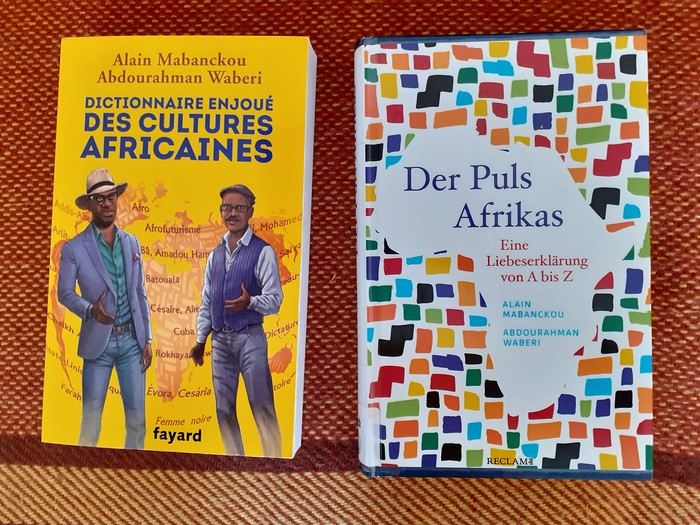
The Maggi cube, an unchallenged hegemony, and so much more
“The hopeless continent,” headlined The Economist, a British magazine, in July 2000 about Africa. Eleven years later, the same magazine headlined “Africa rising” instead. Images of Africa in the prosperous North constantly oscillate between apocalyptic scenarios and enthusiastic projections. A key issue with such images lies in the generalization they entail. If you look at the continent, considerable contrasts emerge depending on space and time. It’s no surprise that a region of the world encompassing such diverse ecological zones, maintaining such varied ties with other continents, comprising nearly fifty nation-states in sub-Saharan Africa alone, and characterized by a great diversity of languages, belief systems, and historical paths, doesn’t share a single destiny.
And yet, for many people outside Africa, as well as for many Africans, the continent constitutes a single entity, defined by criteria such as skin color, a colonial past, poverty, and the art of survival. Until now, these perspectives were generally accompanied by the idea that Africa had to—or should have—followed a single path together, sometimes called development, sometimes modernization, sometimes liberation, then a market economy. None of these paths delivered on their promises.
The two writers Alain Mabanckou and Abdourahman Waberi—one from Congo, the other raised in Djibouti, both long settled in France and now professors at renowned North American universities (Los Angeles, Washington)—have had enough of pessimistic scenarios: “We are aware that Africa is in the world and the world is in Africa. The same goes for all other continents, as our destinies are inextricably linked for better or worse. We refuse to see Africa as a reservoir of misfortunes or a continent cursed by atavistic misfortune and characterized by ethnic conflicts. [...] It’s this passionate flame we wanted to capture in a book [...] a kind of stroll through African cultures, without any demands, each letter of the alphabet leading us to a notion, a practice, a concept, a moment in history, literature, painting, politics, economics, cuisine, etc.” (p.10-11). Africa, they write, is on the verge of “imposing a signature, a style, a way of being in the world and in relation to the rest of the world.” (p.11) To put words to the continent’s diversity and dynamism, the two authors created a “rambling ABC,” a kind of portrait—or more precisely, a mythography—that lets you see and feel the pulse of a vast continent whose cultural power is unfolding before our eyes. Once marginalized or even mocked, the voice and importance of the Continent in global affairs are now undeniable” (p.11), containing over a hundred entries, mostly concise, written in a relaxed and casual style. The optimistic, even exuberant tone is set from the brief introduction. The duo of authors wants to “sing a love song to the cultures of our continent, to its inhabitants past and present, to its exceptional resources and its spectacular globalization despite a certain pollution that still clouds our skies due to the unmatched duration of dictatorships in some of our regions.” (p.12) In doing so, they don’t want to be too distracted by today’s Afewerki-Biya-Bongo-Déby & Co. ...
Of course, you’ll find tributes to great precursors like Frantz Fanon (“[...] it was a love story and admiration that wasn’t dimmed by the four decades separating his birth from ours. Let’s add that we were born while the native of Fort-de-France had left the world’s stage four years earlier, in the prime of life” p.141), Mongo Beti (“You must read and reread Mongo Beti, a genius who used his fame to support often just causes in Africa, like defending oppressed groups. His place is already in History. His oppressors, like the dictators Ahmadou Ahidjo and Paul Biya, can’t compete in the same category” p.64), the Malian Amadou Hampâté Bâ
(“Posterity remembers him mainly as an tireless defender of African cultures. His plea for the collection and preservation of traditional African knowledge remains a major event for all men and women of good will. One day in 1960, at the UNESCO podium, the native of Bandiagara sounded the alarm: ‘[...] Since we’ve admitted that the humanity of each people is the heritage of all humanity, if African traditions aren’t collected in time and written down, they’ll one day be missing from the universal archives of humanity.’” p.51),
Kwame Nkrumah, “one of the founders of Pan-Africanism, father of Ghana’s independence” (p.239), as well as the historian Cheikh Anta Diop, the writer, poet, and politician Aimé Césaire, and the economist and thinker Samir Amin, but also very warm tributes to certain contemporary African intellectuals like Souleymane Bachir Diagne and Achille Mbembe
(“A few years ago, in dominant economic circles, a rumor often resurfaced, usually disguised as a cold and scientifically proven analysis: Africa is useless. It’s a burden for the rest of the human community. With its 2% share in world trade, it would disappear from stock market radars without anyone noticing. So? Maybe it’ll be pulled up by other continents. Wanting to surpass itself is a crazy bet for Africans, they concluded. Arrogant or clueless, President Nicolas Sarkozy declared before an audience of students and teachers at Cheikh Anta Diop University in Dakar: ‘The African man hasn’t entered history enough [...] He only knows the eternal repetition of time marked by the endless repetition of the same gestures and words.’ That was in 2007. For decades, armed only with reason, an intellectual often steps up to debunk prejudices, lazy readings, and dishonest frameworks used as false fronts by those who, like Nicolas Sarkozy or former journalist Stephen Smith, out of ignorance, contempt, or condescension, distort African reality. This intellectual is none other than the historian and political scientist Achille Mbembe. This heir of Frantz Fanon, Amílcar Cabral, Jean-Marc Ela, and Fabien Eboussi-Boulaga was born in 1957 in Cameroon, in the Bassa region. Marked early by the upheavals of a fratricidal war, Achille Mbembe became the guardian of the memory of martyrs. After brilliant studies in Paris, he went on to teach at the best American universities, but the call of the Continent was stronger than anything else. In Dakar, he once directed CODESRIA (Council for the Development of Social Science Research in Africa) before joining the University of the Witwatersrand in Johannesburg, South Africa. Even though the author of *Critique of Black Reason* (Éditions La Découverte, 2015) spends a few months at Duke University in North Carolina, his observation post remains South Africa. From Johannesburg, Achille Mbembe scrutinizes Africa and the whole world. A lucid observer with an elegant and generous pen, Achille Mbembe knows how to blend big and small history: ‘I was born one day in July, as the month was drawing to a close. It was 1957, in that part of Africa recently named ‘Cameroon,’ a memory of the wonder that seized Portuguese sailors in the 15th century when, sailing up the river near Douala, they couldn’t help but note the presence of a multitude of crustaceans, and named it *Rio dos Camarões*, meaning ‘River of Shrimp.’ I grew up in the shadow of this nameless land, since, in a way, the name it bears is only the product of someone else’s astonishment: a lexical mistake, if you will.’ From this mistake or wound, he made leaven, a springboard to compose a rich work, recognized worldwide. To denounce barriers and barbarians too. But that’s not enough. Among his peers in circles of thought and action, Achille Mbembe passionately and consistently defends human dignity and the beauty of the world. In doing so, he fulfills the mission Frantz Fanon entrusted to him.” (p.227-229),
as well as entries dedicated to lesser-known artists and intellectuals, like the French journalist and activist Rokhaya Diallo, daughter of Senegalese and Gambian parents, or the Ethiopian filmmaker Haile Gerima, who has long lived in the United States. Other names from politics, sports, music, art, and literature: Kofi Annan, p.36; Barack Obama, p.243; Thomas Sankara, p.277; Ousmane Sow, p.285; Yambo Ouologuem, p.250; Léopold Sédar Senghor, p.282; Muhammad Ali, p.30; Nuruddin Farah, p.146; Salif Keita, p.203; Ahmadou Kourouma, p.206; Ngũgĩ wa Thiong’o, p.236; Winnie Mandela, p.224; Kylian Mbappé, p.226 ...
The authors, who resolutely commit to a “mythography” (p.11) of Africa, also pay special attention to local social movements, cultural events, and aspects of daily life. *Y’en a marre*, “which also meant ‘we’re fed up with sitting on our hands’” (p.320-321), emerged about a decade ago in Senegal as a citizen movement of peaceful resistance and symbolizes, the authors emphasize, the fact that African youth are increasingly fed up “with the political circus deployed in Africa since independence, as our parents would say, ‘since the White man left’...” (p.321). A full entry is dedicated to the Maggi bouillon cube, which has flooded African markets for about forty years and enjoys immense popularity (“It’s everywhere in Africa, from Dakar to Djibouti, and from Tangier to Cape Town. It’s in every pot, every stew. Little hands put it in every sauce, every local or adapted dish. An unchallenged hegemony! You’ll find it in diasporas too. The culinary strolls in Paris, in the [...] neighborhood” p.90). Critics blame it not only for impoverishing the aromatic diversity of local dishes but also for being harmful to health. And yet, “he poorest Africans, those who eat only once a day, a few spoonfuls of white beans and a ball of *foufou*, for example, are the most fervent users of the magic cube.” (p.92-93)
For *fonio*, “the new trendy cereal. [...] From the millet family, fonio is probably the oldest cereal cultivated in West Africa, and mainly in its sub-Saharan part, for millennia. [...] Easy to grow, water-efficient, fonio grows everywhere except on clay soils. Long neglected because it was considered the poor man’s crop, fonio is now a source of pride for the farmers who cultivate it and cherish it like the apple of their eye” (p.156-157), the authors immediately offer a detailed recipe, letting the reader know that “e can’t resist sharing this fonio with chicken recipe from Mali with you:
Ingredients: 1 chicken 3 large ripe red tomatoes 4 tbsp tomato paste 4 large onions 1 garlic clove 1/2 cup oil 2 Maggi cubes or salt 2 large carrots 1 turnip 1 large cabbage 2 large potatoes 1 celery stalk 1 packet pre-cooked fonio 4 okra (or okra powder) salt, pepper
Preparation: 1. Prepare the sauce: wash and cut the chicken. Peel the onions, garlic, and vegetables. 2. In a pot, fry the chicken pieces. 3. Dice the onions, tomatoes, carrots, and turnip very small and add them to the pot. 4. Add the tomato paste, salt, and pepper. 5. Simmer for 15 min, then add 2 L of water and the cooked chicken pieces. 6. Simmer for 30 min, then add the crushed garlic and celery, plus the cabbage cut into 4 and the potatoes cut in half. 7. Prepare the fonio: cover it with warm water, let it rest for 15 min, and cook it over low heat. 8. In a small pot, boil the okra and crush them. 9. Mix the crushed okra with the cooked fonio, then salt. Serve hot.” (p.158-159)
The comedy *Black Mic Mac*, released in French theaters in 1986 and addressing France’s increasingly restrictive immigration policy at the time, also gets an entry, as do *Tintin in the Congo*, the popular comic, and *Jip’s Café* (“[...] a little Africa in the heart of Paris, with passersby stopping to admire the ‘ambianceurs’ on the dance floor or attend the cultural events offered by the place” (p.194), an African establishment in Paris that Alain Mabanckou already immortalized in one of his novels.
The duo of authors also tackles thorny subjects like jihadism (p.119), the Rwandan genocide (p.272), the CFA franc (p.82), and dictatorship (p.110). While the two strike the right tone here, many entries leave a slightly bitter taste. Two examples: why doesn’t the text on Barack Obama mention the great disappointment of many people in Africa, who expected more from the African policy of the first U.S. president with African roots than just occasional warm words? Why do the comments on Winnie Mandela gloss over the fact that she was a highly controversial icon of the anti-apartheid movement due to her involvement in kidnappings, acts of torture, and murders of alleged apartheid collaborators? Instead, there’s a compassion that brings tears to the eyes: “She was often reduced to a secondary role, the wife of a great man” or “When victory came, she didn’t taste its fruits. Divorced, isolated. She would never be a ‘first lady’ in an evening gown, posing before a bed of chrysanthemums. They’d keep her far from the circles of power” (p.224-225). At this point, I would’ve liked the authors to take a slightly more critical stance...
That said, these “weaknesses” (if you can call them that) shouldn’t overshadow the book as a whole. It remains an informative, sometimes very entertaining, and often even original work in its own way.
Book information (the original French and the German translation):
Alain Mabanckou/Abdourahman Waberi. Dictionnaire enjoué des cultures africaines. Fayard, 2019. Alain Mabanckou/Abdourahman Waberi. Der Puls Afrikas. Eine Liebeserklärung von A bis Z. Reclam, 2022.
Hery
Quick feedback on Marakele NP
Hi there,
My month in South Africa went really well. The itinerary revisits some places I’ve already seen—even a few times over...
Joburg – Marakele – Waterberg – Mapungubwe – Northern Kruger – Panorama Route – Southern Kruger – Eswatini (Hlane) – Maputaland (Sodwana Bay) – St Lucia – Joburg via Richards Bay.
I’ll skip some spots and focus on others.
Today’s topic: Marakele.
Back in 2009, I spent a day there, and since then... I’ve tried several times to go back.
The park isn’t very big—nowhere near as lush as Kruger—but it has a lot going for it. Even back then, there was a split between the western section, where you wouldn’t find any “dangerous” animals like elephants or buffalo (though rhinos were around), and the eastern section, the Big Five zone. Nowadays, the western part is open to mountain biking, and the campsite is completely unfenced, which pretty much confirms that the big animals aren’t there—no rhinos either (I didn’t see a single dung pile). The western section didn’t seem all that interesting to me... with vervet monkeys everywhere in the campsite. In the eastern part, there’s the Topli tented camp, right by a dam. It’s small but charming, with a great view and a loosely fenced perimeter (there are now lions and wild dogs in this area). No facilities—no restaurant, no pool (except at the campsite), no shop, no fuel, nothing...
View from the “chalet” terrace... nice and relaxed...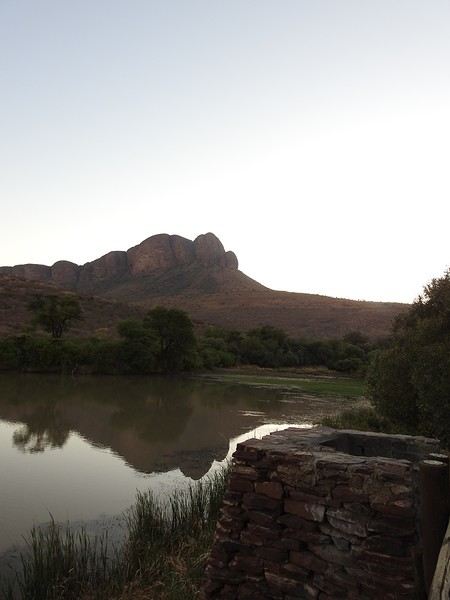

So, a terrace with a view for the lucky ones...
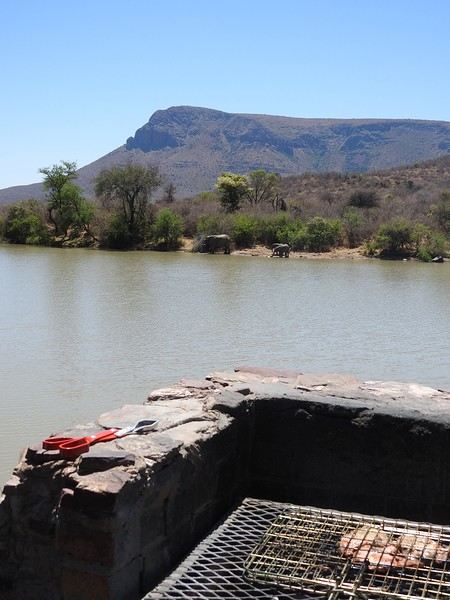
Bedroom and bathroom, separate and equipped kitchen. It can get windy. It must be cold in winter... but it’s hot this October.
Some lovely little roads... though some sections are 4x4-friendly.


A viewpoint at the top—you’re supposed to see the vulture colony from there... still haven’t seen it, as far as I’m concerned.

The animals?
My month in South Africa went really well. The itinerary revisits some places I’ve already seen—even a few times over...
Joburg – Marakele – Waterberg – Mapungubwe – Northern Kruger – Panorama Route – Southern Kruger – Eswatini (Hlane) – Maputaland (Sodwana Bay) – St Lucia – Joburg via Richards Bay.
I’ll skip some spots and focus on others.
Today’s topic: Marakele.
Back in 2009, I spent a day there, and since then... I’ve tried several times to go back.
The park isn’t very big—nowhere near as lush as Kruger—but it has a lot going for it. Even back then, there was a split between the western section, where you wouldn’t find any “dangerous” animals like elephants or buffalo (though rhinos were around), and the eastern section, the Big Five zone. Nowadays, the western part is open to mountain biking, and the campsite is completely unfenced, which pretty much confirms that the big animals aren’t there—no rhinos either (I didn’t see a single dung pile). The western section didn’t seem all that interesting to me... with vervet monkeys everywhere in the campsite. In the eastern part, there’s the Topli tented camp, right by a dam. It’s small but charming, with a great view and a loosely fenced perimeter (there are now lions and wild dogs in this area). No facilities—no restaurant, no pool (except at the campsite), no shop, no fuel, nothing...
View from the “chalet” terrace... nice and relaxed...
So, a terrace with a view for the lucky ones...
Bedroom and bathroom, separate and equipped kitchen. It can get windy. It must be cold in winter... but it’s hot this October.
Some lovely little roads... though some sections are 4x4-friendly.
A viewpoint at the top—you’re supposed to see the vulture colony from there... still haven’t seen it, as far as I’m concerned.
The animals?
A summer in the sun in... Iceland!!
Ah, Iceland and us—it’s quite the story, or rather, a long wait... The first time we considered going was already 7-8 years ago, after reading travel journals describing breathtaking landscapes, countless active and dormant volcanoes, glaciers, and waterfalls with extraordinary flows. In short, this island, made of fire and ice, right at Europe’s doorstep with its own unique culture, had nothing but advantages, and it was urgent to visit without delay 😇
My *Routard* guidebook is actually from 2016. So why did Iceland make us wait so long before we finally gave in to its charms? Yes, why indeed?
Simply because reading other travel journals revealed the cost of living there—and especially the harsh climate, even in the middle of July 🤪! Some journals described entire weeks of rain and foggy weather, making it tricky to explore the island. The budget wasn’t spared either, because in the most touristy areas, especially in the south and around Myvatn, accommodation prices are downright indecent—even outright robbery. 😕
Plus, in the Highlands, there’s literally no permanent lodging, and the only way to spend several nights there is to camp. And camping in winter conditions wasn’t exactly part of our plans... 😄
So, year after year, this trip kept getting postponed...
until August 2023, when prices for Southern Africa, North or South America, or even Asia were all way too high for summer 2024!
That’s when I turned my attention back to the Land of Fire and Ice and scoured all the comparison sites for the best accommodation deals across the country. Planning for 20 nights, I found 13 nights in "proper" lodging for 5 people at an average cost of under 200 €! A miracle, considering that in the southern glacier region, around Vik or Myvatn, prices range from 300 to 1000 € per night 😮 😮!
Still, that means we’ll have to camp for 7 nights, mostly in the Highlands, near Askja or Landmannalaugar. 😎
For once, I built the daily itinerary entirely around the decently priced lodgings I found 11 months in advance! The shortage of places to stay in some areas forced me to plan a few long transition days and make some tough choices. No big deal, though—there’s so much to do on this island 🙂!
Once the main itinerary was set, everyone agreed to the plan: 2/3 in proper lodging and 1/3 camping, even the most camping-averse among us! *Follow my gaze...*
By the time we bought the flight tickets, I had to tweak the itinerary a bit because one or two places were already booked! Plus, it was impossible to wait for a more refined plan to adjust reservations, since almost all bookings are non-refundable!! The harsh law of supply and demand...
For the car rental, we booked a Hyundai Tucson, approved for the Highlands, from Lava Car Rental—a company I’d read good reviews about in a Facebook group—for a cool 2500 € with full insurance. A real 4x4, like a Defender, would’ve been more than double...! Welcome to Iceland 😕...
Activities and excursions also required some tough choices. We had two must-dos: whale watching in Húsavík (60 € pp on Getyourguide) and a Glacier and Summer Treasure Glacier Walk with BlueIceland (165 € pp with discount codes on Getyourguide).
For the baths, we skipped the Blue Lagoon—too expensive—in favor of the Secret Lagoon and the Myvatn Baths, the Blue Lagoon’s equivalent but half the price.
Two baths for the price of one... and even more, since I spotted several free hot-water swimming spots.
Itinerary: Day 1: Arrival in Reykjavik - Hraunfossar Waterfall - Surtshellir Cave Day 2: Grábrók Crater - Snæfellsnes Peninsula Day 3: Stykkishólmur - Sturlungalaug Hot Springs Day 4: Northwest Coast - Akureyri - Goðafoss Day 5: Myvatn Day 6: Myvatn - Dettifoss - Selfoss - Rauðhólar Day 7: Húsavík Whale Watching - Dettifoss - Selfoss Day 8: Stuðlagil Canyon - Seyðisfjörður Day 9: Puffin colony - Störurð Hike Day 10: Hengifoss - East Fjords, Mjóifjörður Day 11: Viking Village - Jökulsárlón - Fjallsárlón Day 12: Glacier Excursion - Svartifoss Day 13: Fjaðrárgljúfur Canyon - Vík Day 14: Þakgil - Lava Show Vík Day 15: Southern Waterfalls Day Day 16: Landmannalaugar - Skalli Hike Day 17: Landmannalaugar - Bláhnjúkur - Brennisteinsalda Day 18: Secret Lagoon, Kerlingarfjöll, and Gullfoss Day 19: Geysir - Reykjavik Day 20: Bruarfoss - Þingvellir - Kerid Crater - Krýsuvík Geothermal Area Day 21: Reykjanes Peninsula
Friday, July 5, 2024, is our last workday before driving up to Alsace overnight to leave the cockers at Grandpa’s for boarding. Then, at 1:30 AM, we’ll head to Frankfurt, where a direct flight to Iceland awaits.
We arrive at 4 AM. Since we leave at 7 AM, the "night" will only last the equivalent of a 30-minute nap 🤪... just enough to get us in the road-trip mood 😏!!
My *Routard* guidebook is actually from 2016. So why did Iceland make us wait so long before we finally gave in to its charms? Yes, why indeed?
Simply because reading other travel journals revealed the cost of living there—and especially the harsh climate, even in the middle of July 🤪! Some journals described entire weeks of rain and foggy weather, making it tricky to explore the island. The budget wasn’t spared either, because in the most touristy areas, especially in the south and around Myvatn, accommodation prices are downright indecent—even outright robbery. 😕
Plus, in the Highlands, there’s literally no permanent lodging, and the only way to spend several nights there is to camp. And camping in winter conditions wasn’t exactly part of our plans... 😄
So, year after year, this trip kept getting postponed...
until August 2023, when prices for Southern Africa, North or South America, or even Asia were all way too high for summer 2024!
That’s when I turned my attention back to the Land of Fire and Ice and scoured all the comparison sites for the best accommodation deals across the country. Planning for 20 nights, I found 13 nights in "proper" lodging for 5 people at an average cost of under 200 €! A miracle, considering that in the southern glacier region, around Vik or Myvatn, prices range from 300 to 1000 € per night 😮 😮!
Still, that means we’ll have to camp for 7 nights, mostly in the Highlands, near Askja or Landmannalaugar. 😎
For once, I built the daily itinerary entirely around the decently priced lodgings I found 11 months in advance! The shortage of places to stay in some areas forced me to plan a few long transition days and make some tough choices. No big deal, though—there’s so much to do on this island 🙂!
Once the main itinerary was set, everyone agreed to the plan: 2/3 in proper lodging and 1/3 camping, even the most camping-averse among us! *Follow my gaze...*
By the time we bought the flight tickets, I had to tweak the itinerary a bit because one or two places were already booked! Plus, it was impossible to wait for a more refined plan to adjust reservations, since almost all bookings are non-refundable!! The harsh law of supply and demand...
For the car rental, we booked a Hyundai Tucson, approved for the Highlands, from Lava Car Rental—a company I’d read good reviews about in a Facebook group—for a cool 2500 € with full insurance. A real 4x4, like a Defender, would’ve been more than double...! Welcome to Iceland 😕...
Activities and excursions also required some tough choices. We had two must-dos: whale watching in Húsavík (60 € pp on Getyourguide) and a Glacier and Summer Treasure Glacier Walk with BlueIceland (165 € pp with discount codes on Getyourguide).
For the baths, we skipped the Blue Lagoon—too expensive—in favor of the Secret Lagoon and the Myvatn Baths, the Blue Lagoon’s equivalent but half the price.
Two baths for the price of one... and even more, since I spotted several free hot-water swimming spots.
Itinerary: Day 1: Arrival in Reykjavik - Hraunfossar Waterfall - Surtshellir Cave Day 2: Grábrók Crater - Snæfellsnes Peninsula Day 3: Stykkishólmur - Sturlungalaug Hot Springs Day 4: Northwest Coast - Akureyri - Goðafoss Day 5: Myvatn Day 6: Myvatn - Dettifoss - Selfoss - Rauðhólar Day 7: Húsavík Whale Watching - Dettifoss - Selfoss Day 8: Stuðlagil Canyon - Seyðisfjörður Day 9: Puffin colony - Störurð Hike Day 10: Hengifoss - East Fjords, Mjóifjörður Day 11: Viking Village - Jökulsárlón - Fjallsárlón Day 12: Glacier Excursion - Svartifoss Day 13: Fjaðrárgljúfur Canyon - Vík Day 14: Þakgil - Lava Show Vík Day 15: Southern Waterfalls Day Day 16: Landmannalaugar - Skalli Hike Day 17: Landmannalaugar - Bláhnjúkur - Brennisteinsalda Day 18: Secret Lagoon, Kerlingarfjöll, and Gullfoss Day 19: Geysir - Reykjavik Day 20: Bruarfoss - Þingvellir - Kerid Crater - Krýsuvík Geothermal Area Day 21: Reykjanes Peninsula
Friday, July 5, 2024, is our last workday before driving up to Alsace overnight to leave the cockers at Grandpa’s for boarding. Then, at 1:30 AM, we’ll head to Frankfurt, where a direct flight to Iceland awaits.
We arrive at 4 AM. Since we leave at 7 AM, the "night" will only last the equivalent of a 30-minute nap 🤪... just enough to get us in the road-trip mood 😏!!
Poutine, souvenirs, and must-see spots in Quebec City?
Hi everyone! We’re nearing the end of our trip and have 3 nights in Quebec City. What are your must-try spots for a good poutine? Our previous attempts haven’t gone well, and where’s the best place to buy souvenirs that actually scream "Quebec"? Also, what are your top picks for sights and walks? We’re thinking Old Quebec, Lévis, and Montmorency Falls. We’ll be there for 3 nights but only have 2 full days. Thanks in advance for your ideas!