Results for "Route+Napoléon+|+127"
167739 results found.
Your "On the Road" Playlist
Hi everyone,
I recently read a graphic novel called Hippie Trail about travel, which came with a playlist (available on a site via QR code, but that’s not the main point). The music is from the 60s/70s, and we all know the classics from that era on the theme of the road (or at least I imagine so). That’s why I thought I’d ask you for your ideal playlist—with some more recent and lesser-known tracks. I was thinking of a list of ten songs, as varied as possible, to broaden our horizons (that’s the point of travel, right?). So: old and new songs, hits and hidden gems, tracks in French or other languages, sounds from the West, the East, Africa, the Americas, or elsewhere—jazz, classical, rock… Personally, I’ll admit I’m not super musically cultured, which is why I’m turning to you to help fill in the gaps
Here’s my On the Road playlist (no particular order):
- Hit the Road Jack, by Ray Charles - In the Steppes of Central Asia, by Borodin - Barcarolle, by Offenbach - Al Otro Lado Del Río, by Jorge Drexler - Nationale 7, by Charles Trenet - On ira, by Zaz - On the Road Again, by Bernard Lavilliers - Emmenez-moi, by Charles Aznavour - Sur la route, by Raphaël - Clandestino, by Manu Chao
What’s yours?
I recently read a graphic novel called Hippie Trail about travel, which came with a playlist (available on a site via QR code, but that’s not the main point). The music is from the 60s/70s, and we all know the classics from that era on the theme of the road (or at least I imagine so). That’s why I thought I’d ask you for your ideal playlist—with some more recent and lesser-known tracks. I was thinking of a list of ten songs, as varied as possible, to broaden our horizons (that’s the point of travel, right?). So: old and new songs, hits and hidden gems, tracks in French or other languages, sounds from the West, the East, Africa, the Americas, or elsewhere—jazz, classical, rock… Personally, I’ll admit I’m not super musically cultured, which is why I’m turning to you to help fill in the gaps
Here’s my On the Road playlist (no particular order):
- Hit the Road Jack, by Ray Charles - In the Steppes of Central Asia, by Borodin - Barcarolle, by Offenbach - Al Otro Lado Del Río, by Jorge Drexler - Nationale 7, by Charles Trenet - On ira, by Zaz - On the Road Again, by Bernard Lavilliers - Emmenez-moi, by Charles Aznavour - Sur la route, by Raphaël - Clandestino, by Manu Chao
What’s yours?
État de la route pour se rendre au désert de Tabernas en camping-car (Espagne) English translation pending
bonsoir
mon mari et moi aimerions nous rendre dans le désert de TABERNAS
Je voulais savoir si la route est praticable , pas trop accidentée
nous avions fait le désert des BARDENAS l année dernière , notre camping car et nous avons étés bien secoués
je vous remercie par avance
DADO 38
État de la route entre Tchita et Vladivostok (Russie, à vélo) English translation pending
Bonjour,
Je voudrais savoir si l'état de la route entre Tchita et Vladivostok s'est amélioré depuis 2010. J'ai en effet vu sur ce forum des conversations disant que la route y était en très mauvais état. Y a-t-il eu des travaux depuis ?
Merci
Je voudrais savoir si l'état de la route entre Tchita et Vladivostok s'est amélioré depuis 2010. J'ai en effet vu sur ce forum des conversations disant que la route y était en très mauvais état. Y a-t-il eu des travaux depuis ?
Merci
Roadworks on the Baracoa to Moa route (Cuba)
Good news for tourists traveling this route.
The 59 km section in poor condition is currently being repaired. Everything should be finished in August.
This will make the connection between Guantánamo, Baracoa, Moa, and Holguín much easier.
This will make the connection between Guantánamo, Baracoa, Moa, and Holguín much easier.
État de la route entre Zagora et Guelmim (à moto) English translation pending
Bonjour à tous,
Je prépare pour fin septembre, si les conditions sanitaires le permettent, un périple qui passera par Zagora, Foum Zguid, Tissint, Tata, Akka, Icht, Assa, et Guelmim, j'aimerais connaître l'état de la route sur cette portion, ensuite je poursuivrai par Sidi Ifni, Tiznit etc....
Je suis également intéressé par des bonnes adresses sur ce parcours, hébergements, restaurants.
Merci pour vos réponses.
Road conditions for cycling to Cayo Jutias (Cuba)
This message is for folks who’ve been to Cayo Jutias in the past year, especially this past winter. I’d love to hear about the road conditions on the way there. Are the last few kilometers to the beach still in terrible shape, full of potholes?
Same question about the road through La Sabana toward Santa Lucia—was it still in rough condition?
How’s the road to Minas de Matahambre and Pons?
And what about the route from Santa Lucia to Mantua and then Sandino?
Thanks in advance.
Same question about the road through La Sabana toward Santa Lucia—was it still in rough condition?
How’s the road to Minas de Matahambre and Pons?
And what about the route from Santa Lucia to Mantua and then Sandino?
Thanks in advance.
On the Silk Road: Chronicles of a Sixty-Something Traveling Completely Independently
From Beijing to Khiva: China, Kyrgyzstan, Tajikistan, Uzbekistan
Chronicle of anecdotes, highlights, and other adventures that marked this eight-week journey in 2018.
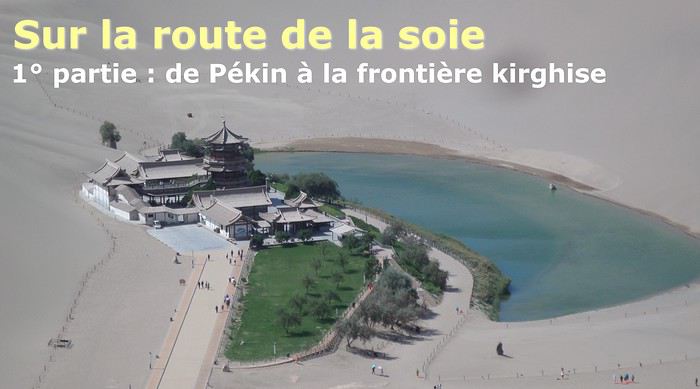
The Chinese Far West More than 30 years after my first trip to eastern China, I finally fulfilled an old dream: traveling solo from Beijing to the far west, discovering Xinjiang, the Uyghur people and the oppression they endure, the oases of Turpan and Kashgar, the Taklamakan Desert, the end of the Great Wall... The route was covered by train.
MENU PART 1: CHINA
1- Beijing (Jiankou) : the authentic Great Wall, without tourists 2- Cycling in Beijing, the best way to get around 3- Beijing : departure for the far west 4- Jiayuguan : getting by without English 5- Jiayuguan : scams and heritage 6- Dunhuang : abundance in the middle of the desert 7- Turpan : the Uyghurs under heavy surveillance 8- Kashgar : love at first sight for the old city 9- Kashgar : China’s recipe for controlling the populace 10- Tashkurgan : what on earth was I thinking going there! Kyrgyz border: a surreal epic Photo album from the 80s, contributions from other travelers (page 2)
1- JIANKOU Finding the authentic Great Wall, without tourists or a guide Friday, August 24, 2018 Thirty years later, I didn’t feel like revisiting the Great Wall at Badaling or any other overcrowded site. I chose to explore it at Jiankou, in its wildest, most authentic, and unrestored section, starting from a lost village deep in a valley—though it wasn’t *that* lost, since it had everything for communication.
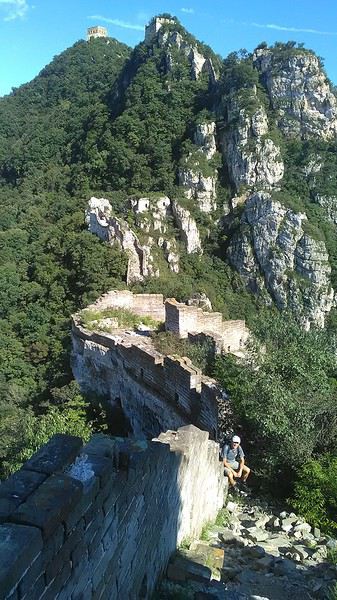
No need to pay for a taxi to get there—by timing it right, you can take the bus for just a few yuan. You have to get off at Xizhazi, the bus terminus. Be careful, there are only two buses a day in each direction. At the Xizhazi bus stop, I met a young couple who’d arrived with zero information about what to expect. We hiked the three of us toward the restored section of Mutianyu.
Still, be cautious With GPS and a topographic map (OpenTopoMap), you can set off without a problem or guide. The trail up to Jiankou is easy and well-marked. The trails down are too. But be careful—once you’re on the Wall, it’s real mountain hiking, with easy but dangerous climbing sections (over sheer drops). Not for amateurs or those afraid of heights! But what a reward. The Wall all to yourself, where it’s at its most daring. Truly mesmerizing.
More photos...
2- BEIJING The best way to get around the capital Sunday, August 26 The best way to explore the city is still by bike. Most are in a bike-share system, but you need to use an app—WeChat, the app that does everything, like monitoring your every move. No way I was installing that.
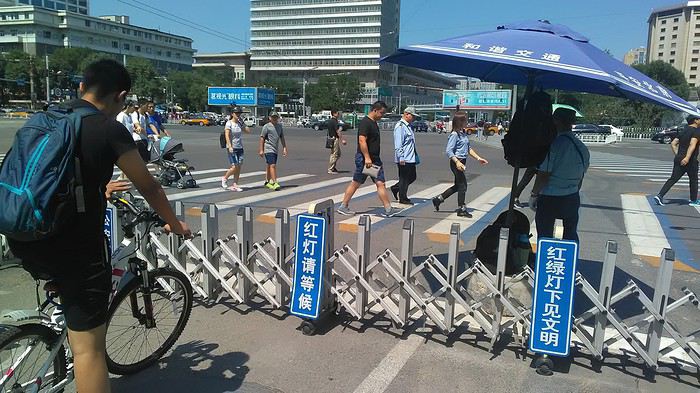
I found one at a rental shop near the hostel. The key is to quickly learn local traffic customs to minimize risks. Bike lanes are wide along the avenues.
But you still have to: - Watch out for anything parked on the bike paths—the most annoying are people napping or talking on the phone in their cars - Keep an eye on everything coming the wrong way—the list is long - The worst is right turns on red, which in Chinese traffic rules seem to have priority Once you get the hang of it, it’s fine. The city is huge but flat, so you can just wing it.
3- BEIJING By train to the far west Sunday, August 26 Beijing West Station is the size and operates like an airport. With your e-ticket from the agency, you first have to pick up your ticket at the special "English" counter, after passing through security. With your ticket in hand, you have to exit and enter through the boarding waiting area—not the platform—after a second security check.
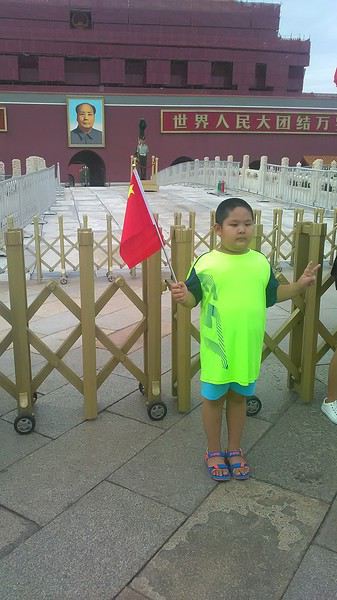 Then you find the right hall and wait for the sign to finally access the platform. In the end, it works pretty well given the incredible number of passengers to manage. Everywhere in Beijing, I saw that the Chinese have mastered crowd flow management.
Nice surprise: second-class carriages are clean, air-conditioned, and bright. Perfect, since I was in for 20 hours. One uniformed attendant per carriage, mobile meal service—luxury! Small downside: no luggage space. Hauling your suitcase up to the top bunk is quite a workout. I was in the middle, so it wasn’t too bad. The landscape, though, whether rural or urban, is pretty bleak. That should change once we leave the eastern plains.
Of course, I got my first police visit, with a thorough passport check and bag search. I was warned—going to the Chinese far west exposes you to this kind of hassle. But they were polite and respectful.
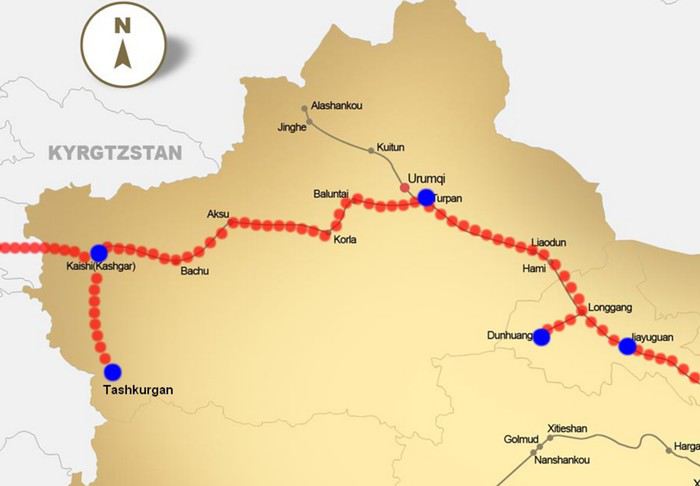 The Chinese Far West
4- JIAYUGUAN Getting by without English Monday, August 27 At the gates of two deserts (Gobi and Taklamakan) and at the foot of the Tibetan highlands, the Great Wall ends at Jiayuguan. Here, I found the deeper China I’d somewhat rediscovered during my bike ride, even if now everyone gets around on electric bikes and I’m no longer stared at like an alien.
Prices are nothing like Beijing: you can find a full meal for 2 €, and my bike cost 7 € for two days. Plus, few people speak English—neither the owner of the HI hostel where I stayed, nor the ticket sellers at the sites, let alone the servers at the small eateries where I ate. Everything is written in Chinese. So I had to use the little Chinese I know to communicate about essentials. It makes the locals laugh to see a European trying to speak their language, but it earns respect. With Google Translate’s help, I managed.
Rant: With their avenues blocked for construction for kilometers without warning, and new roads not yet on maps, I must’ve taken 15 km of detours. More photos...
5- JIAYUGUAN Scams and heritage Tuesday, August 28 The Great Wall doesn’t exactly end at the fort I visited yesterday but 10 km further, at the entrance to a river gorge at the foot of the mountains. All that’s left is a badly damaged tower (more like a mound of earth) and a section of clay wall, similar to the one I biked yesterday.
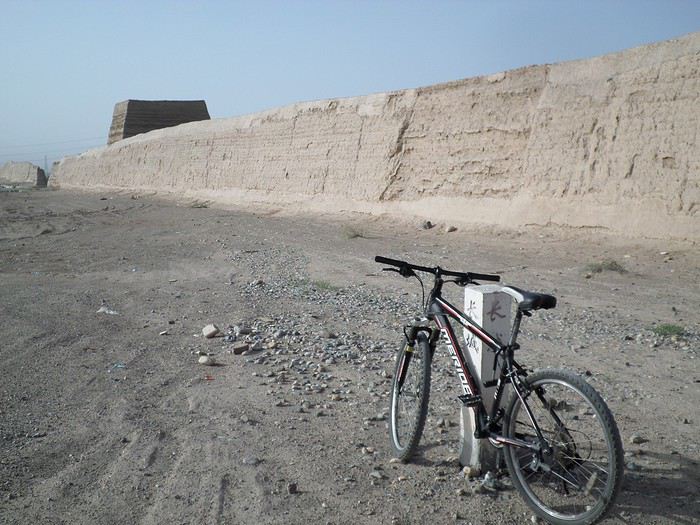
This morning, I hopped on my bike, determined to venture into the desert to see this highly symbolic site. First, you access it via a wide, brand-new road with not a soul in sight. Just before the site, I came across a grand welcome gate, very period-style, but it’s actually the inevitable toll booth.
Behind the gate, the road continues straight to the site, which you can see in the distance—at least 2 km away—the remains of the tower and wall. I had to leave my bike here. Fine. I went to the ticket counter and asked the price: 120 yuan! I couldn’t believe it—over 15 € for a simple mound of earth.
I showed my displeasure to the attendant, who couldn’t care less, and immediately turned back. 120 yuan—that’s the price for a new road, a fancy gate planted 2 km before the site just to force you to take a shuttle, and employees with nothing to do all day... Now I understand why I didn’t meet anyone!
Heritage China is a bit pricey Generally, sites are expensive for the country’s standard of living, but travelers are supposed to have money, so why hold back? I even gave up on the Forbidden City—reservations required days in advance (or on the black market at an impossible price). I prefer to keep the memory of my first visit, when entry must’ve cost a few dozen cents, and there were only a handful of visitors.
This morning, I took a taxi to see remarkable tombs of common people from the 3rd to 6th centuries. They’re small vaulted caves made of painted bricks, depicting scenes of daily life. Very pretty and moving. But even here, though the price was more reasonable, I was left wanting—only one of the 16 tombs is open to visitors, and it’s apparently not the most beautiful.
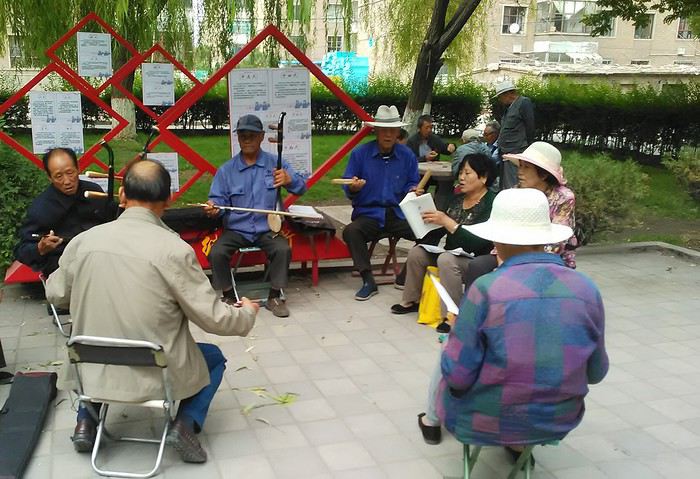
The authentic China—at least what’s left of it... Wandering the impersonal avenues of the city, you stumble upon a market. There, you still find traditional China—small shops with questionable hygiene, Go players, musicians, and even a dental prosthetist. The last refuge for those untouched by modernity. More photos...
6- DUNHUANG Abundance in the middle of the desert Wednesday, August 29 Well, I thought the landscape would be less bleak as I headed west. Nope. The only distraction in this expanse of dark, clayey sand is the forests of pylons and wind turbines, plus wild camels racing each other.
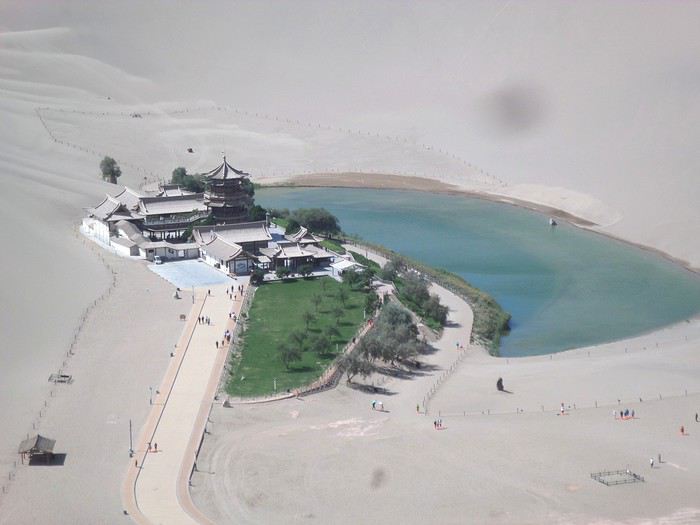 However, Dunhuang, the gateway to the Taklamakan, is by far the most pleasant Chinese city I know. There’s a real city center you can explore on foot. It’s hot but not unbearable, with a light, dry breeze. Much nicer than Beijing. The Han Chinese are still the majority, but the Muslim Uyghurs are more numerous, and the muezzin’s call to prayer echoes around the mosque.
The most surprising thing is the abundance and diversity of fruits and vegetables. You wonder how it all grows here. Well-irrigated, the desert sands are very fertile. Here, raisins have subtle, mysterious flavors, and the lamb really tastes like lamb.
Today, I visited the must-see Mingshashan, a dune complex next to which Pila is a molehill. The Basque Country, but covered in sand... More photos...
7- TURPAN The Uyghurs under heavy surveillance Friday, August 31 Surveillance cameras everywhere in the city, armed police stationed at intersections, in front of public buildings, at the entrance and inside tourist sites, police stations on every corner, patrols on foot or by car, khaki uniforms even for middle schoolers... here, the Han Chinese are in the minority, and you can feel it. Turpan feels like a city under siege.
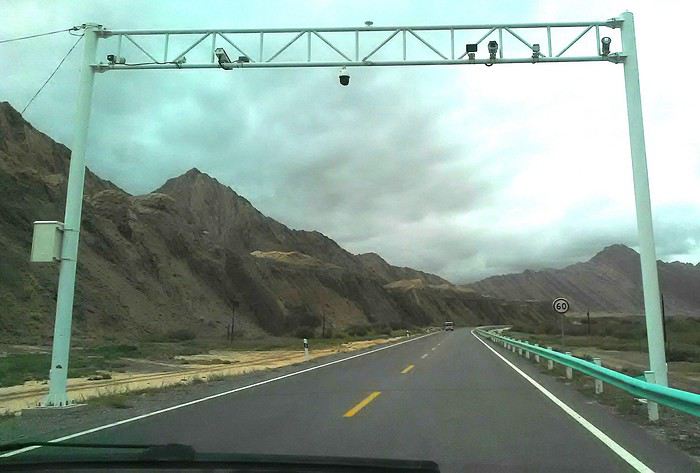
To enter the youth hostel where I stayed, there’s even a security gate, and the receptionist (a Han, like everyone in tourism) wears a bulletproof vest! Reassuring. Still, you don’t feel particularly threatened here, especially as a European. The troublemakers are the Chinese, not the Uyghurs. Generally, China is a very safe country for visitors.
Smile, you’re on camera! I was biking on an avenue when the car in front of me got flashed for driving slowly. I quickly understood why when I got flashed too.
Here, the official time is Beijing time, but it gets dark two hours later. It’ll be even worse in Kashgar. Trickier to manage: everything is displayed in Chinese and Arabic. Nothing in English. Choosing a menu is a shot in the dark. Apart from a few young Chinese, no one here speaks English, and my Chinese doesn’t seem very understandable...
Mogao, the end of the road for the Han Yesterday, near Dunhuang, I went to Mogao, a complex of decorated caves with Buddha sculptures and paintings. Stunning, but so crowded! Luckily, here in Turpan, Chinese tourists barely venture out. So I visited a Silk Road ghost town with only a handful of other visitors and under a howling wind.
The modern Chinese city is swallowing up the old Uyghur neighborhoods—only a museum-like district remains in the center, and pockets of resistance on the outskirts are doomed to disappear soon. More photos...
8- KASHGAR A (relative) love at first sight for the old city Sunday, September 2 After three overnight trains, here I am in the far west of China, nearly 4,000 km from the capital. Despite the omnipresent police and an old city preserved UNESCO-style, Kashgar is my Chinese love at first sight.
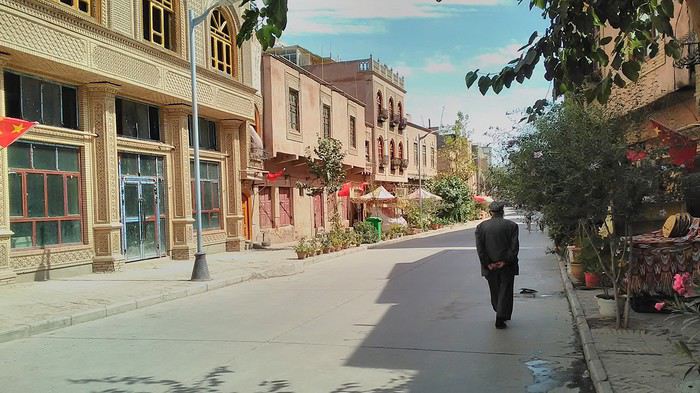
Finally, Chinese... well, sort of, because we’re in Uyghur territory here—a Turkic people with nothing culturally in common with the Han, the eastern Chinese. It started badly yesterday at Turfan station, where after three security gate passes, at least five passport checks, and a bag search, three adorable policewomen confiscated my antibacterial lotion because it had a flammable logo...
Then came the welcoming committee of armed cops at Kashgar station. Once all that was over, they left me alone—except you still have to go through security checks like everyone else to enter the old city, the bazaar, the livestock market... The further west you go, the more the siege mentality is evident. Luckily, the border isn’t far...
Despite the inevitable destruction-reconstruction, the city center has been well preserved. Thankfully, because it’s a very original style, a mix of local and colonial. I love it, even if it’s a bit too artificial, sanitized, and watered-down, and rather empty of residents. On the Silk Road, the city was famous for its great food. And it still is—rarely have I seen such richness and abundance of food! And not just scorpions or snakes. More photos...
9- KASHGAR China’s recipe for controlling the populace Saturday, September 1 Xinjiang, along with Tibet, is a "sensitive" area of rebellion in the eyes of Chinese authorities. As a result, the state has these regions and their populations under total control. Tourists also feel the consequences, even if they’re not at risk of re-education camps.
 - Putting barbed wire and anti-ramming barriers around sensitive sites (schools, big hotels, government buildings...)
- Installing traffic surveillance gates with cameras and photo flashes (for all vehicles passing, including bikes) throughout the city and even in the countryside
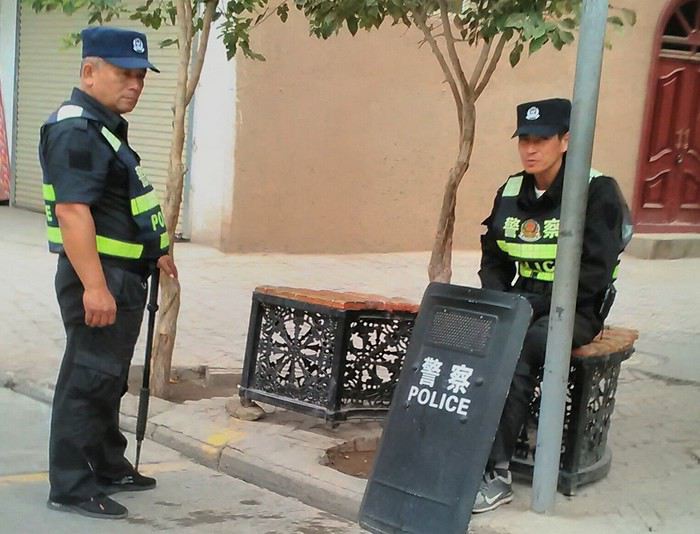
- Posting uniformed guards with tasers, batons, or huge baseball bats every 100 meters
- Training the Han population (ethnic Chinese) in self-defense with sticks, preferably in the morning on the street. Men and women of all ages
- Starting school with the national anthem, doing military exercises, and receiving political indoctrination, all neatly lined up in the courtyard. (The dream school for any teacher)
- Placing a snitch in uniform (a pseudo-guard) in public gathering places, like youth hostels. Mine spends the day loafing around the courtyard
- Putting Chinese flags everywhere on the streets to remind everyone who’s in charge
- Installing security gates at every entrance to areas frequented by tourists (thanks for that) but not just there
- Never photographing cops, or else! I tried, but it’s not easy...
- Putting barbed wire and anti-ramming barriers around sensitive sites (schools, big hotels, government buildings...)
- Installing traffic surveillance gates with cameras and photo flashes (for all vehicles passing, including bikes) throughout the city and even in the countryside
- Posting uniformed guards with tasers, batons, or huge baseball bats every 100 meters
- Training the Han population (ethnic Chinese) in self-defense with sticks, preferably in the morning on the street. Men and women of all ages
- Starting school with the national anthem, doing military exercises, and receiving political indoctrination, all neatly lined up in the courtyard. (The dream school for any teacher)
- Placing a snitch in uniform (a pseudo-guard) in public gathering places, like youth hostels. Mine spends the day loafing around the courtyard
- Putting Chinese flags everywhere on the streets to remind everyone who’s in charge
- Installing security gates at every entrance to areas frequented by tourists (thanks for that) but not just there
- Never photographing cops, or else! I tried, but it’s not easy...
With all that, you can stroll around safely Not much crime! As for the amount the Chinese state spends to maintain such a system, it’s staggering! A third of the Han living in Xinjiang work in security. Today, I wandered freely around old Kashgar, which is quite large after all. More photos...
10- TASHKURGAN What on earth was I thinking going there! Wednesday, September 5 First, there’s the taxi—pretty crappy, with a driver who doesn’t speak a word of English and won’t stop smoking. Over six hours in that... shared with a completely out-of-it American.
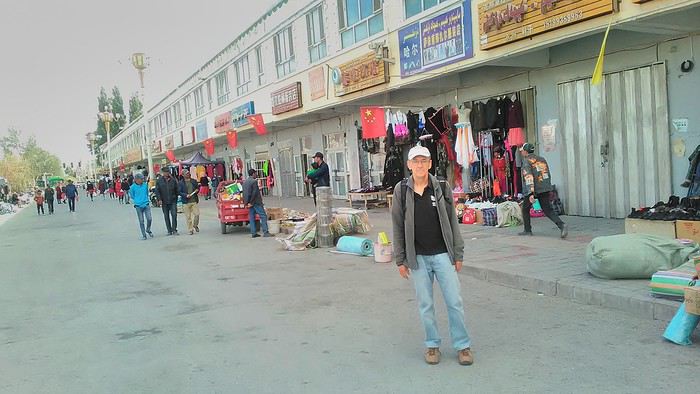
Then there are all the checkpoints along the way. I won’t go on—you know the drill by now.
After that, there’s Tashkurgan—a town with nothing to see, nothing to do. Deserted as soon as night falls. There’s this huge youth hostel and a few lost Chinese tapping away on their smartphones, chain-smoking. This lost American-European crowd, swapping tips on how to enter Pakistan or Tajikistan.
Luckily, there’s the Chinese Pamir Highway, lined with peaks over 7,000m. There’s the feeling of no longer being in China, with a population whose features are Middle Eastern. And these Tajik women with their stunning hairstyles and vibrant costumes. There’s the fact of having reached the westernmost Chinese city, far from crowds and tourist sites. A sort of end of the world. More photos...
11- KYRGYZ BORDER A surreal epic Thursday, September 6 The road from Kashgar to the Kyrgyzstan border is a little over 200 km and passes through beautiful landscapes of colorful, desert-like mountains with acrobatic folds. That’s the bucolic part of the trip.
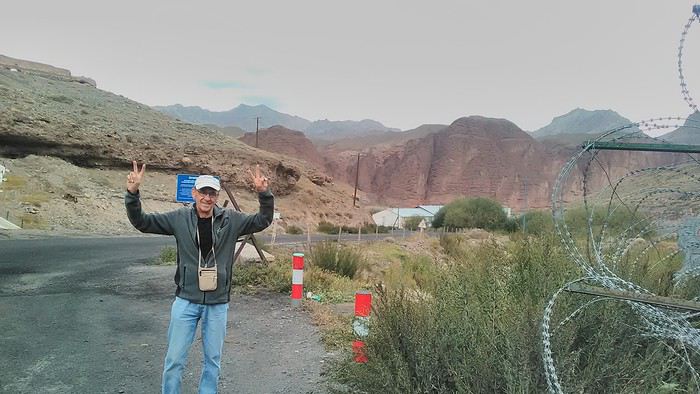 Yesterday, I managed to gather four people to rent a minibus to reach the border more easily: a Spaniard and an Argentine I’d already met in Turpan, and two New Zealanders who responded to the ad left at the hostel.
Absurdity and paranoia of Chinese authorities The highlight was crossing the town of Wuqia, 50 km past Kashgar. After tallying up with my fellow sufferers, we must’ve passed about ten checkpoints with: - Passport checks: 14 times, sometimes by two cops side by side - Bag checks: 4 times - Smartphone checks: 2 times, with deletion of "non-compliant" photos, and registration of your IMEI in the exit log!... Absurd and surreal at the same time, since my camera stayed in my bag, my apps are in French, and my photos have been online for ages...
With all that, we arrived just as the last checkpoint before the no man’s land marking the border between the two countries was on lunch break. And bam! Another 1.5-hour wait, alongside truckers who were much more used to this than we were.
What to think? The cops themselves aren’t fooled. They play the role they’re asked to, but sometimes you can coax a smile out of them—they realize how ridiculous the situation is.
What’s the point? That’s the big question my companions and I were tempted to answer with "to piss people off." To show you your place isn’t here, but with the other tourists, over there in the east, in Shanghai, Xi’an, or Guangzhou.
As for you, a traveler from a democratic country, you really experience this as aggression, humiliation, a violation of your private space. And yet, I’m respected, they speak to me properly. Today, I better understand what a Palestinian or a citizen of an occupied country might feel daily. A unique experience! Thanks, China.
And to top it off, the cherry on the cake! It’s still this glowing button you press to rate your passage after clearing the last obstacle before the exit stamp. I was so surprised it turned off before I could react. The Spaniard, with great humor and irony, had time to vote "excellent." In the end, he wasn’t wrong—you can hardly do better!
PS: I ditched my buddies at the border. They didn’t want to pay for a taxi to continue. So I took a direct taxi to Osh. The first 100 km are fabulous. I couldn’t take many photos, but I’ll be back on Monday to go to Tajikistan.
More photos...
The rest of the Silk Road, Part 2, in these travel journals: Kyrgyzstan, Tajikistan, Uzbekistan.
The Chinese Far West More than 30 years after my first trip to eastern China, I finally fulfilled an old dream: traveling solo from Beijing to the far west, discovering Xinjiang, the Uyghur people and the oppression they endure, the oases of Turpan and Kashgar, the Taklamakan Desert, the end of the Great Wall... The route was covered by train.
MENU PART 1: CHINA
1- Beijing (Jiankou) : the authentic Great Wall, without tourists 2- Cycling in Beijing, the best way to get around 3- Beijing : departure for the far west 4- Jiayuguan : getting by without English 5- Jiayuguan : scams and heritage 6- Dunhuang : abundance in the middle of the desert 7- Turpan : the Uyghurs under heavy surveillance 8- Kashgar : love at first sight for the old city 9- Kashgar : China’s recipe for controlling the populace 10- Tashkurgan : what on earth was I thinking going there! Kyrgyz border: a surreal epic Photo album from the 80s, contributions from other travelers (page 2)
1- JIANKOU Finding the authentic Great Wall, without tourists or a guide Friday, August 24, 2018 Thirty years later, I didn’t feel like revisiting the Great Wall at Badaling or any other overcrowded site. I chose to explore it at Jiankou, in its wildest, most authentic, and unrestored section, starting from a lost village deep in a valley—though it wasn’t *that* lost, since it had everything for communication.
No need to pay for a taxi to get there—by timing it right, you can take the bus for just a few yuan. You have to get off at Xizhazi, the bus terminus. Be careful, there are only two buses a day in each direction. At the Xizhazi bus stop, I met a young couple who’d arrived with zero information about what to expect. We hiked the three of us toward the restored section of Mutianyu.
Still, be cautious With GPS and a topographic map (OpenTopoMap), you can set off without a problem or guide. The trail up to Jiankou is easy and well-marked. The trails down are too. But be careful—once you’re on the Wall, it’s real mountain hiking, with easy but dangerous climbing sections (over sheer drops). Not for amateurs or those afraid of heights! But what a reward. The Wall all to yourself, where it’s at its most daring. Truly mesmerizing.
More photos...
2- BEIJING The best way to get around the capital Sunday, August 26 The best way to explore the city is still by bike. Most are in a bike-share system, but you need to use an app—WeChat, the app that does everything, like monitoring your every move. No way I was installing that.
I found one at a rental shop near the hostel. The key is to quickly learn local traffic customs to minimize risks. Bike lanes are wide along the avenues.
But you still have to: - Watch out for anything parked on the bike paths—the most annoying are people napping or talking on the phone in their cars - Keep an eye on everything coming the wrong way—the list is long - The worst is right turns on red, which in Chinese traffic rules seem to have priority Once you get the hang of it, it’s fine. The city is huge but flat, so you can just wing it.
3- BEIJING By train to the far west Sunday, August 26 Beijing West Station is the size and operates like an airport. With your e-ticket from the agency, you first have to pick up your ticket at the special "English" counter, after passing through security. With your ticket in hand, you have to exit and enter through the boarding waiting area—not the platform—after a second security check.
Then you find the right hall and wait for the sign to finally access the platform. In the end, it works pretty well given the incredible number of passengers to manage. Everywhere in Beijing, I saw that the Chinese have mastered crowd flow management.Nice surprise: second-class carriages are clean, air-conditioned, and bright. Perfect, since I was in for 20 hours. One uniformed attendant per carriage, mobile meal service—luxury! Small downside: no luggage space. Hauling your suitcase up to the top bunk is quite a workout. I was in the middle, so it wasn’t too bad. The landscape, though, whether rural or urban, is pretty bleak. That should change once we leave the eastern plains.
Of course, I got my first police visit, with a thorough passport check and bag search. I was warned—going to the Chinese far west exposes you to this kind of hassle. But they were polite and respectful.
The Chinese Far West4- JIAYUGUAN Getting by without English Monday, August 27 At the gates of two deserts (Gobi and Taklamakan) and at the foot of the Tibetan highlands, the Great Wall ends at Jiayuguan. Here, I found the deeper China I’d somewhat rediscovered during my bike ride, even if now everyone gets around on electric bikes and I’m no longer stared at like an alien.
Prices are nothing like Beijing: you can find a full meal for 2 €, and my bike cost 7 € for two days. Plus, few people speak English—neither the owner of the HI hostel where I stayed, nor the ticket sellers at the sites, let alone the servers at the small eateries where I ate. Everything is written in Chinese. So I had to use the little Chinese I know to communicate about essentials. It makes the locals laugh to see a European trying to speak their language, but it earns respect. With Google Translate’s help, I managed.
Rant: With their avenues blocked for construction for kilometers without warning, and new roads not yet on maps, I must’ve taken 15 km of detours. More photos...
5- JIAYUGUAN Scams and heritage Tuesday, August 28 The Great Wall doesn’t exactly end at the fort I visited yesterday but 10 km further, at the entrance to a river gorge at the foot of the mountains. All that’s left is a badly damaged tower (more like a mound of earth) and a section of clay wall, similar to the one I biked yesterday.
This morning, I hopped on my bike, determined to venture into the desert to see this highly symbolic site. First, you access it via a wide, brand-new road with not a soul in sight. Just before the site, I came across a grand welcome gate, very period-style, but it’s actually the inevitable toll booth.
Behind the gate, the road continues straight to the site, which you can see in the distance—at least 2 km away—the remains of the tower and wall. I had to leave my bike here. Fine. I went to the ticket counter and asked the price: 120 yuan! I couldn’t believe it—over 15 € for a simple mound of earth.
I showed my displeasure to the attendant, who couldn’t care less, and immediately turned back. 120 yuan—that’s the price for a new road, a fancy gate planted 2 km before the site just to force you to take a shuttle, and employees with nothing to do all day... Now I understand why I didn’t meet anyone!
Heritage China is a bit pricey Generally, sites are expensive for the country’s standard of living, but travelers are supposed to have money, so why hold back? I even gave up on the Forbidden City—reservations required days in advance (or on the black market at an impossible price). I prefer to keep the memory of my first visit, when entry must’ve cost a few dozen cents, and there were only a handful of visitors.
This morning, I took a taxi to see remarkable tombs of common people from the 3rd to 6th centuries. They’re small vaulted caves made of painted bricks, depicting scenes of daily life. Very pretty and moving. But even here, though the price was more reasonable, I was left wanting—only one of the 16 tombs is open to visitors, and it’s apparently not the most beautiful.
The authentic China—at least what’s left of it... Wandering the impersonal avenues of the city, you stumble upon a market. There, you still find traditional China—small shops with questionable hygiene, Go players, musicians, and even a dental prosthetist. The last refuge for those untouched by modernity. More photos...
6- DUNHUANG Abundance in the middle of the desert Wednesday, August 29 Well, I thought the landscape would be less bleak as I headed west. Nope. The only distraction in this expanse of dark, clayey sand is the forests of pylons and wind turbines, plus wild camels racing each other.
However, Dunhuang, the gateway to the Taklamakan, is by far the most pleasant Chinese city I know. There’s a real city center you can explore on foot. It’s hot but not unbearable, with a light, dry breeze. Much nicer than Beijing. The Han Chinese are still the majority, but the Muslim Uyghurs are more numerous, and the muezzin’s call to prayer echoes around the mosque.The most surprising thing is the abundance and diversity of fruits and vegetables. You wonder how it all grows here. Well-irrigated, the desert sands are very fertile. Here, raisins have subtle, mysterious flavors, and the lamb really tastes like lamb.
Today, I visited the must-see Mingshashan, a dune complex next to which Pila is a molehill. The Basque Country, but covered in sand... More photos...
7- TURPAN The Uyghurs under heavy surveillance Friday, August 31 Surveillance cameras everywhere in the city, armed police stationed at intersections, in front of public buildings, at the entrance and inside tourist sites, police stations on every corner, patrols on foot or by car, khaki uniforms even for middle schoolers... here, the Han Chinese are in the minority, and you can feel it. Turpan feels like a city under siege.
To enter the youth hostel where I stayed, there’s even a security gate, and the receptionist (a Han, like everyone in tourism) wears a bulletproof vest! Reassuring. Still, you don’t feel particularly threatened here, especially as a European. The troublemakers are the Chinese, not the Uyghurs. Generally, China is a very safe country for visitors.
Smile, you’re on camera! I was biking on an avenue when the car in front of me got flashed for driving slowly. I quickly understood why when I got flashed too.
Here, the official time is Beijing time, but it gets dark two hours later. It’ll be even worse in Kashgar. Trickier to manage: everything is displayed in Chinese and Arabic. Nothing in English. Choosing a menu is a shot in the dark. Apart from a few young Chinese, no one here speaks English, and my Chinese doesn’t seem very understandable...
Mogao, the end of the road for the Han Yesterday, near Dunhuang, I went to Mogao, a complex of decorated caves with Buddha sculptures and paintings. Stunning, but so crowded! Luckily, here in Turpan, Chinese tourists barely venture out. So I visited a Silk Road ghost town with only a handful of other visitors and under a howling wind.
The modern Chinese city is swallowing up the old Uyghur neighborhoods—only a museum-like district remains in the center, and pockets of resistance on the outskirts are doomed to disappear soon. More photos...
8- KASHGAR A (relative) love at first sight for the old city Sunday, September 2 After three overnight trains, here I am in the far west of China, nearly 4,000 km from the capital. Despite the omnipresent police and an old city preserved UNESCO-style, Kashgar is my Chinese love at first sight.
Finally, Chinese... well, sort of, because we’re in Uyghur territory here—a Turkic people with nothing culturally in common with the Han, the eastern Chinese. It started badly yesterday at Turfan station, where after three security gate passes, at least five passport checks, and a bag search, three adorable policewomen confiscated my antibacterial lotion because it had a flammable logo...
Then came the welcoming committee of armed cops at Kashgar station. Once all that was over, they left me alone—except you still have to go through security checks like everyone else to enter the old city, the bazaar, the livestock market... The further west you go, the more the siege mentality is evident. Luckily, the border isn’t far...
Despite the inevitable destruction-reconstruction, the city center has been well preserved. Thankfully, because it’s a very original style, a mix of local and colonial. I love it, even if it’s a bit too artificial, sanitized, and watered-down, and rather empty of residents. On the Silk Road, the city was famous for its great food. And it still is—rarely have I seen such richness and abundance of food! And not just scorpions or snakes. More photos...
9- KASHGAR China’s recipe for controlling the populace Saturday, September 1 Xinjiang, along with Tibet, is a "sensitive" area of rebellion in the eyes of Chinese authorities. As a result, the state has these regions and their populations under total control. Tourists also feel the consequences, even if they’re not at risk of re-education camps.
- Putting barbed wire and anti-ramming barriers around sensitive sites (schools, big hotels, government buildings...)
- Installing traffic surveillance gates with cameras and photo flashes (for all vehicles passing, including bikes) throughout the city and even in the countryside
- Posting uniformed guards with tasers, batons, or huge baseball bats every 100 meters
- Training the Han population (ethnic Chinese) in self-defense with sticks, preferably in the morning on the street. Men and women of all ages
- Starting school with the national anthem, doing military exercises, and receiving political indoctrination, all neatly lined up in the courtyard. (The dream school for any teacher)
- Placing a snitch in uniform (a pseudo-guard) in public gathering places, like youth hostels. Mine spends the day loafing around the courtyard
- Putting Chinese flags everywhere on the streets to remind everyone who’s in charge
- Installing security gates at every entrance to areas frequented by tourists (thanks for that) but not just there
- Never photographing cops, or else! I tried, but it’s not easy...With all that, you can stroll around safely Not much crime! As for the amount the Chinese state spends to maintain such a system, it’s staggering! A third of the Han living in Xinjiang work in security. Today, I wandered freely around old Kashgar, which is quite large after all. More photos...
10- TASHKURGAN What on earth was I thinking going there! Wednesday, September 5 First, there’s the taxi—pretty crappy, with a driver who doesn’t speak a word of English and won’t stop smoking. Over six hours in that... shared with a completely out-of-it American.
Then there are all the checkpoints along the way. I won’t go on—you know the drill by now.
After that, there’s Tashkurgan—a town with nothing to see, nothing to do. Deserted as soon as night falls. There’s this huge youth hostel and a few lost Chinese tapping away on their smartphones, chain-smoking. This lost American-European crowd, swapping tips on how to enter Pakistan or Tajikistan.
Luckily, there’s the Chinese Pamir Highway, lined with peaks over 7,000m. There’s the feeling of no longer being in China, with a population whose features are Middle Eastern. And these Tajik women with their stunning hairstyles and vibrant costumes. There’s the fact of having reached the westernmost Chinese city, far from crowds and tourist sites. A sort of end of the world. More photos...
11- KYRGYZ BORDER A surreal epic Thursday, September 6 The road from Kashgar to the Kyrgyzstan border is a little over 200 km and passes through beautiful landscapes of colorful, desert-like mountains with acrobatic folds. That’s the bucolic part of the trip.
Yesterday, I managed to gather four people to rent a minibus to reach the border more easily: a Spaniard and an Argentine I’d already met in Turpan, and two New Zealanders who responded to the ad left at the hostel.Absurdity and paranoia of Chinese authorities The highlight was crossing the town of Wuqia, 50 km past Kashgar. After tallying up with my fellow sufferers, we must’ve passed about ten checkpoints with: - Passport checks: 14 times, sometimes by two cops side by side - Bag checks: 4 times - Smartphone checks: 2 times, with deletion of "non-compliant" photos, and registration of your IMEI in the exit log!... Absurd and surreal at the same time, since my camera stayed in my bag, my apps are in French, and my photos have been online for ages...
With all that, we arrived just as the last checkpoint before the no man’s land marking the border between the two countries was on lunch break. And bam! Another 1.5-hour wait, alongside truckers who were much more used to this than we were.
What to think? The cops themselves aren’t fooled. They play the role they’re asked to, but sometimes you can coax a smile out of them—they realize how ridiculous the situation is.
What’s the point? That’s the big question my companions and I were tempted to answer with "to piss people off." To show you your place isn’t here, but with the other tourists, over there in the east, in Shanghai, Xi’an, or Guangzhou.
As for you, a traveler from a democratic country, you really experience this as aggression, humiliation, a violation of your private space. And yet, I’m respected, they speak to me properly. Today, I better understand what a Palestinian or a citizen of an occupied country might feel daily. A unique experience! Thanks, China.
And to top it off, the cherry on the cake! It’s still this glowing button you press to rate your passage after clearing the last obstacle before the exit stamp. I was so surprised it turned off before I could react. The Spaniard, with great humor and irony, had time to vote "excellent." In the end, he wasn’t wrong—you can hardly do better!
PS: I ditched my buddies at the border. They didn’t want to pay for a taxi to continue. So I took a direct taxi to Osh. The first 100 km are fabulous. I couldn’t take many photos, but I’ll be back on Monday to go to Tajikistan.
More photos...
The rest of the Silk Road, Part 2, in these travel journals: Kyrgyzstan, Tajikistan, Uzbekistan.
Sur la Route de la soie et autres voyages English translation pending
Chine, Kirghizistan, Tadjikistan, Ouzbékistan. Les carnets de route d'un sexagénaire en autonomie totale sur la route de la soie.
Et aussi Andalousie, Amérique du Nord, Scandinavie à vélo.
https://papydo2706.blogspot.com
État de la route 307 au Maroc (en 4x4) English translation pending
Svp, qui peut me donner l'etat de la route 307, je vais l'emprunter le 03/03 en logan, merci.
État de la route/piste (en 4x4) entre Anezal et Askaoun (Maroc) English translation pending
Bonjour à tou(te)s !
Je pense retourner au Maroc en novembre et j'ai bien du mal à reconnaitre sur les différents supports à ma disposition quelles routes sont en fait des pistes et quelles pistes sont en fait des expéditions 4x4...
Je voudrais donc savoir s'il est raisonnablement possible de rejoindre Taliouine en venant de Télouet en passant par la route/piste entre Anezal et Askaoun.
Je louerai un Duster 4x4.
D'autres idées d'itinéraires pour rejoindre ces deux étapes ?
Merci🙂
Je pense retourner au Maroc en novembre et j'ai bien du mal à reconnaitre sur les différents supports à ma disposition quelles routes sont en fait des pistes et quelles pistes sont en fait des expéditions 4x4...
Je voudrais donc savoir s'il est raisonnablement possible de rejoindre Taliouine en venant de Télouet en passant par la route/piste entre Anezal et Askaoun.
Je louerai un Duster 4x4.
D'autres idées d'itinéraires pour rejoindre ces deux étapes ?
Merci🙂
La plus belle route entre Zurich et Lauterbrunnen (à moto) English translation pending
bonjour,
nous serons en Suisse a l'été et J'aimerais connaitre la plus belle route pour se rendre de Zurich a Lauterbrunnen en voiture.
merci
Véhicule pour faire la route 40 Cachi - Cafayate en octobre English translation pending
Bonjour,
Nous serons fin Octobre 2020 dans la région de Salta, aprés avoir fait la boucle nord, nous souhaitons nous rendre à Cafayate, mais par Cachi Route 33 avec une nuit à Cachi, puis Cachi /cafayate par la route 40 qui est une piste. Je ne connais pas l'état de la piste à cette période de l'année. Le véhicule que nous allons louer à Salta est un Duster (SUV Renault) , je pense que ce n'est pas le bon véhicule pour ce type de route. Quelqu'un peut-il me conseiller. Je sais que la route 68 (Salta/cafayate) est revêtue. Les paysages sont certainement tout aussi beaux et que voir de différent par rapport à la route 40 Cachi/Cafayate).
merci de vos réponses
Nous serons fin Octobre 2020 dans la région de Salta, aprés avoir fait la boucle nord, nous souhaitons nous rendre à Cafayate, mais par Cachi Route 33 avec une nuit à Cachi, puis Cachi /cafayate par la route 40 qui est une piste. Je ne connais pas l'état de la piste à cette période de l'année. Le véhicule que nous allons louer à Salta est un Duster (SUV Renault) , je pense que ce n'est pas le bon véhicule pour ce type de route. Quelqu'un peut-il me conseiller. Je sais que la route 68 (Salta/cafayate) est revêtue. Les paysages sont certainement tout aussi beaux et que voir de différent par rapport à la route 40 Cachi/Cafayate).
merci de vos réponses
15 jours sur la Route N°1 en Islande English translation pending
Bonjour,
Nous sommes partis 15 jours en ISLANDE (un de mes rêves) à 2 couples en Octobre 2019. Je ne vais pas faire de carnet de voyage mais simplement, avec l'aide de quelques photos, essayer de vous faire rêver et surtout vous faire envie d'aller découvrir cette île de beauté 😉 Nous avons loué un DUSTER 4X4 chez Blue Car Rental par l'intermédiaire de Touraeuro (très très bons commentaires sur ce site) et tout s'est parfaitement bien passé. Nous avions des pneus cloutés et le coffre assez grand pour 4 valises. Je ne vais pas trop parler de prix car, c'est un sujet qui fâche 😉 car il faut savoir qu'en ISLANDE, tout, tout, est cher. Un petit exemple la location de voiture pour 15 jours nous a coûté presque 1500 euros (toutes assurances incluses et je peux vous dire que cela est indispensable au vu des conditions de certaines routes (trous et surtout graviers lorsque la route est en réfection sur des kms !!!). Cependant la route n°1 est très bonne. Ce n'est que lorsque vous sortez (très peu car au mois d'Octobre les routes secondaires sont souvent interdites)… et que vous empruntez les pistes "ouvertes" bien entendu. Après une nuit à REYKJAVIK nous sommes partis vers le Cercle d'Or. Nous avons pris la route en direction d'UTHLID (où nous avions notre hébergement Uthlid Cottages…). Nous sommes passés par le merveilleux Parc National de Thingvellir...
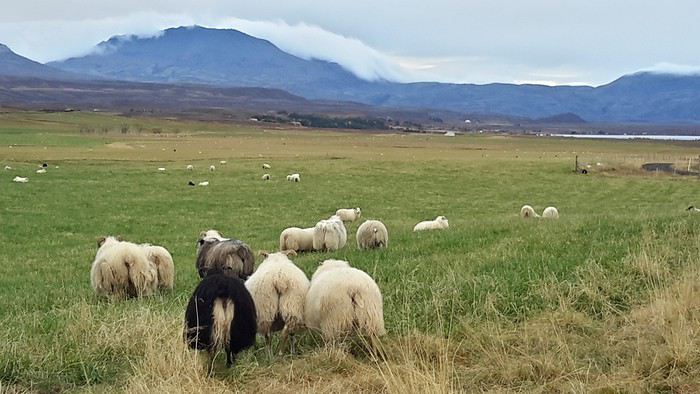 Les moutons que nous avions décidés d'appeler nos doudounes de par l'épaisseur de la laine sur leur dos 😄
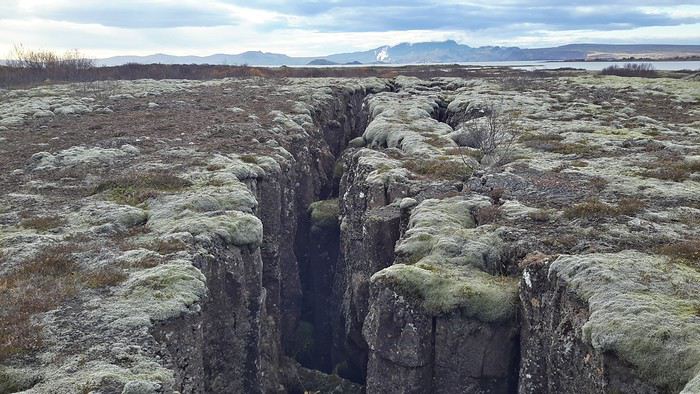 faille très spectaculaire dont les bords sont recouverts de lichens
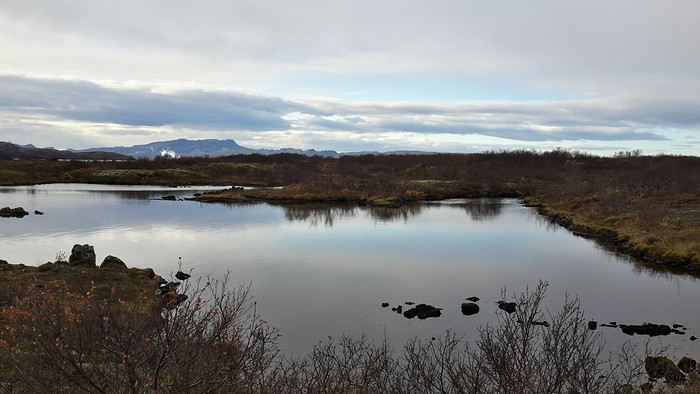 beaucoup d'eau… beaucoup de lacs...
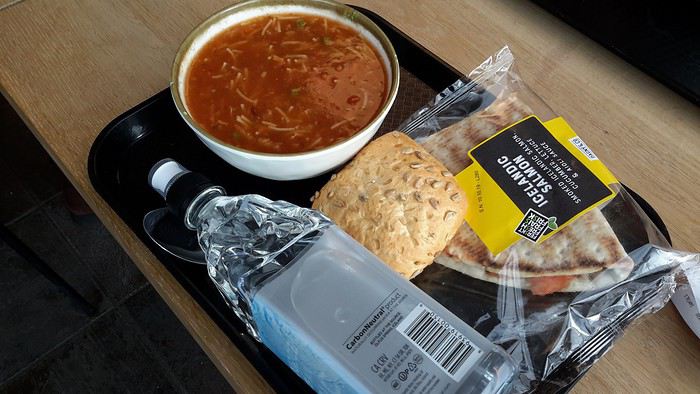 Notre premier déjeuner (soupe) sur la route dans un relais station-service…
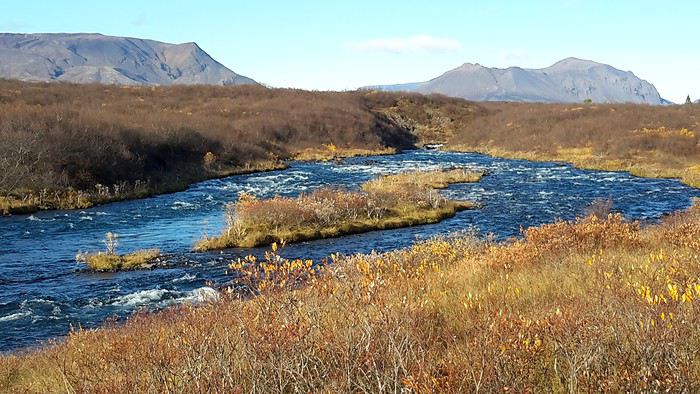 Balade bien vivifiante vers une petite cascade le long de notre route...
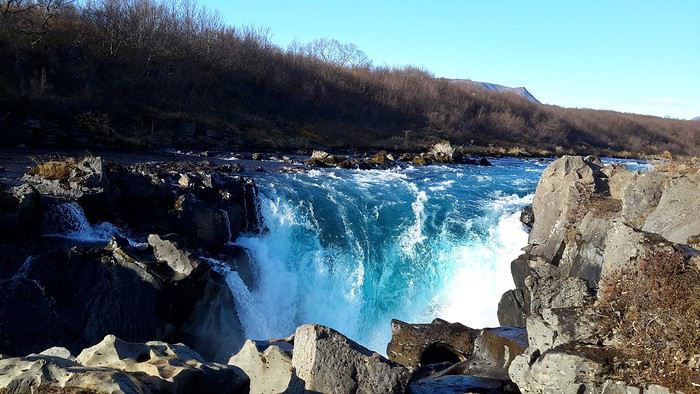
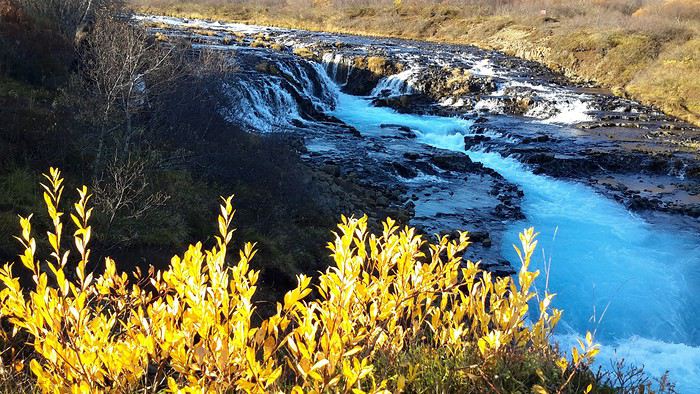
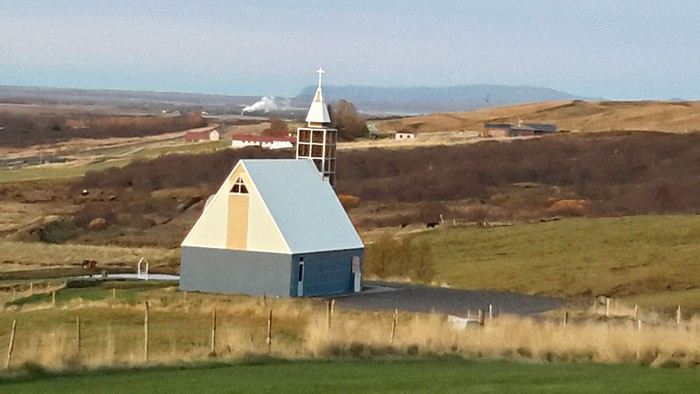 Petite église tout près de notre cottage...
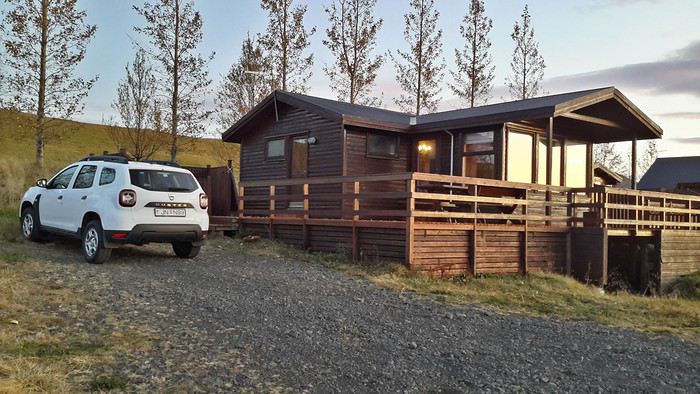 Notre superbe hébergement !!! en pleine campagne islandaise… un rêve...
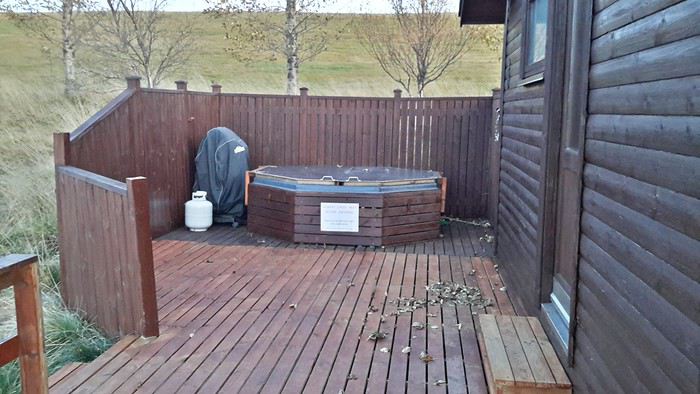 avec notre bain à remous privé !!! un pur régal !!! 😏😏😏
A suivre….
Nous sommes partis 15 jours en ISLANDE (un de mes rêves) à 2 couples en Octobre 2019. Je ne vais pas faire de carnet de voyage mais simplement, avec l'aide de quelques photos, essayer de vous faire rêver et surtout vous faire envie d'aller découvrir cette île de beauté 😉 Nous avons loué un DUSTER 4X4 chez Blue Car Rental par l'intermédiaire de Touraeuro (très très bons commentaires sur ce site) et tout s'est parfaitement bien passé. Nous avions des pneus cloutés et le coffre assez grand pour 4 valises. Je ne vais pas trop parler de prix car, c'est un sujet qui fâche 😉 car il faut savoir qu'en ISLANDE, tout, tout, est cher. Un petit exemple la location de voiture pour 15 jours nous a coûté presque 1500 euros (toutes assurances incluses et je peux vous dire que cela est indispensable au vu des conditions de certaines routes (trous et surtout graviers lorsque la route est en réfection sur des kms !!!). Cependant la route n°1 est très bonne. Ce n'est que lorsque vous sortez (très peu car au mois d'Octobre les routes secondaires sont souvent interdites)… et que vous empruntez les pistes "ouvertes" bien entendu. Après une nuit à REYKJAVIK nous sommes partis vers le Cercle d'Or. Nous avons pris la route en direction d'UTHLID (où nous avions notre hébergement Uthlid Cottages…). Nous sommes passés par le merveilleux Parc National de Thingvellir...
Les moutons que nous avions décidés d'appeler nos doudounes de par l'épaisseur de la laine sur leur dos 😄
faille très spectaculaire dont les bords sont recouverts de lichens
beaucoup d'eau… beaucoup de lacs...
Notre premier déjeuner (soupe) sur la route dans un relais station-service…
Balade bien vivifiante vers une petite cascade le long de notre route...
Petite église tout près de notre cottage...
Notre superbe hébergement !!! en pleine campagne islandaise… un rêve...
avec notre bain à remous privé !!! un pur régal !!! 😏😏😏A suivre….
Temps de route pour Walvis Bay - Brandberg White Lady Lodge (Namibie) English translation pending
Bonjour,
je me demandais si en faisant le matin, l'excursion Kayak pour voir les otaries a Walvis Bay, nous avions le temps de rejoindre le brandberg lady lodge en fin d'aprem ou nous devons passer la nuit ? Combien faut il compter de temps de route ?
merci :-) Elodie
je me demandais si en faisant le matin, l'excursion Kayak pour voir les otaries a Walvis Bay, nous avions le temps de rejoindre le brandberg lady lodge en fin d'aprem ou nous devons passer la nuit ? Combien faut il compter de temps de route ?
merci :-) Elodie
Alger-Tamanrasset par "la route" en voiture particulière ou ma 2CV English translation pending
Bonjour,
Quelqu'un pourrait il me dire si aujourd'hui c'est possible administrativement et question sécurité ?
Nous projettons février mars de cette année
Merci
Merci
Refuges sur la route du Tizi-n-Test (Maroc) English translation pending
bonjour désirant dormir au col pourriez vous me donner les coordonnées ( tel) ou un site merci
Recherche compagnons de route pour le Maroc à moto du 8 au 30 mai 2020 English translation pending
Bonjour,
Nous sommes 2 Motards, Père & Fils et vous prévoyons de faire le Maroc en moto au mois de Mai Pour 3 Semaines du 8 au 30 en partant de Tours, rejoindre le sud de l'Espagne et prévoir 10 jours de road trip à travers le Maroc
Nous recherchons des motards voulant vivre cette expérience avec nous
Dans l'attente de vos retours
Romain & Daniel
Nous sommes 2 Motards, Père & Fils et vous prévoyons de faire le Maroc en moto au mois de Mai Pour 3 Semaines du 8 au 30 en partant de Tours, rejoindre le sud de l'Espagne et prévoir 10 jours de road trip à travers le Maroc
Nous recherchons des motards voulant vivre cette expérience avec nous
Dans l'attente de vos retours
Romain & Daniel
Escale croisière la route Serpentine en voiture et Kotor au Monténégro English translation pending
Bonjour,
Etant à kotor en escale pendant 8 heures, nous aimerions faire la route serpentine en voiture de location le matin et en fin d'après midi visiter la ville de Kotor est ce jouable ? Merci pour vos réponses
Etant à kotor en escale pendant 8 heures, nous aimerions faire la route serpentine en voiture de location le matin et en fin d'après midi visiter la ville de Kotor est ce jouable ? Merci pour vos réponses
État de la route Lâayoune - Smara - Tan-Tan English translation pending
Bonjour,
Nous souhaiterions avoir des informations sur l'état de la route qui relie ces 3 villes.
S'agit il d'une route goudronnée tout le long ?
Est elle goudronnée sur les 2 voies ou bien sur une voie avec déport sur le côté au croisement d'autres véhicules ?
Merci pour vos lumières ! 😉
État de la route de Kiffa à Bamako English translation pending
Bonjour à ous,
Je compte parir bientôt à Bamako (MALI) de la France en traversant par Barcelone-Tanger Med, le Maroc, la Mauritanie (route de l'esoir) pour arriver à Bamako.
Et pour cela que j'aurais voulu avoir des renseignements sur l'état de la route, de Kiffa à Bamako parce qu'en septembre 2018 la route surtout Bamako- Kiffa était dans un état déplorable.
En outre, s'il y a des personnes qui veulent passer de mi-janvier à mi-février pour voir les possibilités de traverser ensemble chacun dans son véhicule.
Bien cordialement à vous lire
La meilleure route pour aller de Mraux-U vers Bagan à moto English translation pending
Bonjour,
Je fais le tour de la Birmanie en moto et je cherche des voyageurs qui ont fait en moto la route pour aller de MRAUK-U vers BAGAN. Existe-t-il une piste directe entre les deux ou faut-il faire impérativement un crochet vers le Sud ?
Merci par avance,
Alain
Aventures sur la Route 66 de Chicago à Los Angeles en juillet 2019 English translation pending
Bonjour aux voyageurs.
J'espère vous éclairer sur la R66 avec ce post.
L'été dernier ma femme et moi avons voyagé sur la route 66 en 16 jours de Chicago à Los Angeles (Santa Monica) en Harley Davidson (sens historique)
J'ai tout organisé moi-même sans problème, avec des livres et sur internet et ici même.
Notre voyage complet a duré un mois, nous avons visité le musée Harley de Milwaukee et Chicago avant de partir sur la route. Nous avons ensuite visité l'Ouest après notre renouvellement de voeux à Las Vegas (Nevada).
Nous avons aimé tout le parcours, mais l'arrivée à Los Angeles est difficile, 110 Km de ville à 25 km/h de moyenne, pas facile.
Cette route est un jeu de piste pour en découvrir tous les clichés. j'ai fait le choix de suivre la route originelle, celle qui passe par Santa Fe, même si je me suis permis quelques sauts sur des itinéraires plus récents, selon ce que je voulais voir.
Sur le parcours on est parfois obligé de prendre la highway (c'est moins fun) la route originelle se trouvant en dessous ou ayant disparue à côté. La majeure partie du temps on suit la voie ferrée.
Concernant la chaleur, au centre des USA nous avons subi une canicule entre 95 et 100° F, mais on a eu moins chaud en altitude, et oui on monte à plus de 2000 mètres sur la route 66. Le désert de Mojave est le plus chaud avec 117° F à Needles et un peu moins à Barstow, à comparer, l'arrivée sur la côte pacifique est fraîche.
Nous avons fait les détours de Las Vegas (Nouveau Mexique), du meteor crater et grand canyon.
Tout compris le voyage concernant la R66 nous a coûté à quelque chose près 8300 €, la location de la moto étant de 3800 € tout compris (non retour et assurances) Nous avons choisi les motels ou hôtels les moins cher avec si possible le ptit dej. Nous sommes allés quelques fois au restaurant, mais la plupart du temps c'était picnic.
Si vous voulez voyager avec nous, voici le lien de la vidéo du premier jour.
https://www.youtube.com/watch?v=qUmS5cQajUw&t=63s
État de la route et temps de trajet San Jose - Cahuita (Costa Rica) English translation pending
Quelqu'un peut - il me dire comment est la route de San José à Cahuita ? L'an dernier au mois de mars, le trajet Limon - San josé (en bus) nous avait pris beaucoup de temps à cause de travaux en cours. Où en est - on maintenant ? Merci d'avance.
Relief de la route entre Santiago et Puerto Montt (à vélo) English translation pending
Bonjour cyclovoyageurs
On cherche l info suivante : A quoi ressemble le relief entre Santiago et Puerto Montt ? Histoire de commencer à faire un petit calendrier pour arriver vers février dans le sud de la Patagonie. On est partis de Guyane française il y a huit mois.
Merci pour l’ info.
Etat de la route côtière Abidjan - San Pedro et location de voiture English translation pending
Bonjour
Nous partons cet hiver en février en Cote d'Ivoire pendant 8 jours. J'avais prévu de visiter Abidjan-Yamoussoukro--Man-San Pedro et de revenir sur Abidjan par la route cotière tranquillement en visitant sur 3-4 jours Sassandra -Grand Lahou et Jacqueville.Mais il semblerait que la route cotière soit impraticable. Avez vous des nouvelles récentes de personnes l'ayant empruntée récemment?
Par ailleurs avez vous des bons plans pour louer une voiture pour 6 personnes?
Cordialement, Thierry
Nous partons cet hiver en février en Cote d'Ivoire pendant 8 jours. J'avais prévu de visiter Abidjan-Yamoussoukro--Man-San Pedro et de revenir sur Abidjan par la route cotière tranquillement en visitant sur 3-4 jours Sassandra -Grand Lahou et Jacqueville.Mais il semblerait que la route cotière soit impraticable. Avez vous des nouvelles récentes de personnes l'ayant empruntée récemment?
Par ailleurs avez vous des bons plans pour louer une voiture pour 6 personnes?
Cordialement, Thierry
Existe-t-il une route côtière entre Hua Hin et Bang Saphan Yai? English translation pending
Bonjour,
Nous partons bientôt en Thaïlande en famille (avec nos 2 enfants de 7 et 9 ans). Nous allons louer une voiture à Hua Hin pour partir directement à Bang Saphan Yai puis remonter en passant par Prachuap Khiri Khan et Pranburi en 15 jours. Ma question est de savoir s'il existe une route côtière entre ces lieux plutôt que d'emprunter la 4 voies ? Et si oui, combien faut il de temps pour faire Hua Hin/Bang Saphan Yai par la côte ?
Robscilla: Sur la route des explorateurs! English translation pending
Coucou tout le monde !
Je m'appelle Priscilla et mon compagnon, c'est Robin. Ensemble, nous partons régulièrement à la découverte de notre beau patrimoine qu'il soit naturel ou culturel.
Nous tenons à vous faire partager nos aventures en vous dirigeant vers notre site :
robscillatrip.zd.fr/index.html
Notre prochain voyage est prévu pour Noël de cette année. Nous allons passer une semaine à Moscou et Saint-Pétersbourg où nous espérons passer de merveilleux moments sous la neige si possible 😉
Notre aventure sera par la suite intégrée à notre site (vidéo, photos) alors n'hésitez pas à le garder dans vos marque-pages ! 🙂
Bon voyage à tous !
Je m'appelle Priscilla et mon compagnon, c'est Robin. Ensemble, nous partons régulièrement à la découverte de notre beau patrimoine qu'il soit naturel ou culturel.
Nous tenons à vous faire partager nos aventures en vous dirigeant vers notre site :
robscillatrip.zd.fr/index.html
Notre prochain voyage est prévu pour Noël de cette année. Nous allons passer une semaine à Moscou et Saint-Pétersbourg où nous espérons passer de merveilleux moments sous la neige si possible 😉
Notre aventure sera par la suite intégrée à notre site (vidéo, photos) alors n'hésitez pas à le garder dans vos marque-pages ! 🙂
Bon voyage à tous !
Camping sur la route du Rhône, de Andermatt à Genève (à vélo) English translation pending
Bonjour
je réfléchis à un voyage vélo de Andermatt à Genève (puis la partie Française ) , en solo . . Je suis preneuse de tout renseignement à propos des campings sur le trajet partie Suisse ( pas de guide sur cette partie) . Si vous avez réalisé ce périple , tous les conseils sont les bienvenus .
Merci beaucoup
Sur la Route de la soie en camping-car 2019 English translation pending
Bonjour,
nous avons parcourus 21 000 km sur une partie de la route de la soie en trois mois. Nous avons réalisés un blog: http://asie-centrale-en-c-car-2019.eklablog.com.
Bonne lecture
Bonne lecture
Excursion "La Route de l'or" à Paraty avec un voyagiste English translation pending
Notre voyagiste- Marco Vasco- nous propose une excursion intitulée "la route de l'or".
Quelqu'un l'a-t-il faite et est ce qu'elle en vaut la peine? est-ce une bonne manière de découvrir l'endroit? Merci d'avance pour tous commentaires.
Henri