Results for "Montpellier+|+101+>+209"
3936 results found.
Vente de voiture en Mauritanie English translation pending
Salut a tous, je compte descendre au Senegal en voiture, tout au moins en Mauritanie et la vendre a Nouakchott : c'est une BX essence boite automatique; est-ce que j'ai une chance de vendre ce genre de bagnole en Afrique? qqun peut-il me donner un avis fiable a ce sujet ? merci d'avance . Eric.
Tour du monde en camping car et en famille English translation pending
Nous revenons d'un tour du monde de 4 ans en famille et en camping-car.
Si ça intéresse quelques voyageurs, voici notre site :
periple.fr.st
N'hésitez pas pour les questions.
Team
Si ça intéresse quelques voyageurs, voici notre site :
periple.fr.st
N'hésitez pas pour les questions.
Team
Inde du Sud, direction Madras English translation pending
Bonsoir,
Je désire partir pour l'Inde du Sud en Novembre en partant de Toulouse direction Madras. Mon souci est d'arriver si possible à Madras dans le courant de l'après midi et non à 23 h comme me propose l'ensemble des compagnies aériennes, m'affirmant que c'est impossible !!!!! Qui aurait un tuyau à me fournir non percé si possible quitte à faire un stop dans un pays arabe ou autre afin de parvenir à mes fins
Avec mes remerciements
Je désire partir pour l'Inde du Sud en Novembre en partant de Toulouse direction Madras. Mon souci est d'arriver si possible à Madras dans le courant de l'après midi et non à 23 h comme me propose l'ensemble des compagnies aériennes, m'affirmant que c'est impossible !!!!! Qui aurait un tuyau à me fournir non percé si possible quitte à faire un stop dans un pays arabe ou autre afin de parvenir à mes fins
Avec mes remerciements
Infos Mauritanie-Maroc-Espagne English translation pending
😎 si vous desirez des infos sur la descente depuis l'europe vers l'afrique, contactez moi...fabrice depuis nouadhibou du monde....l'essentiel en quelques lignes: les autoroutes sont certes payantes mais plus en securité, de perpignan, ma ville natale à nouadhibou, environs 4500 km, il faut savoir menager sa monture et soit même, verifier les niveaux du vehicule tous les matins et n'oubliez pas aussi de boire vous même surtout dans cette periode d'été...tout les chemins menent à rome, ceci dit j'utilise l'autoroute de la côte pour l'espagne pour arriver à algesiras puis ceuta en bateau, de là je redescend sur l'autoroute de larache jusqu'à casablanca, pour ceux qui n'ont pas le visas de la mauritanie, c'est le moment, consulat mauritanien, rte jedida, pres du camping l'oasis et enfin retour vers la côte en passant par marrakech, un petit jus d'orange et puis agadir...laayoune...tan tan...ligne droite jusqu'à la frontiere, à droite le desert, à gauche les falaises, pour ceux qui ont un petit budjet avec une canne à pêche, on fait des miracles. n'hesitez pas pour plus d'infos, fabrice
l'Albanie, ça vaut le coup? English translation pending
Salut,
On prévoit faire un petit détour par l'Albanie avant d'aller en Grèce cet été. Est-ce que ça vaut le coup?
Ce qui nous intéresse c'est la montagne et la mer.
Pierre
On prévoit faire un petit détour par l'Albanie avant d'aller en Grèce cet été. Est-ce que ça vaut le coup?
Ce qui nous intéresse c'est la montagne et la mer.
Pierre
Seule en Chine English translation pending
Bonjour,
N'ayant trouvé personne pour m'accompagner en Chine et notamment à Pekin, j'ai décidé de partir seule - à votre avis, réalisable sans problème? 😉 Merci d'avance pour vos conseils/expériences!
A bientôt🙂
N'ayant trouvé personne pour m'accompagner en Chine et notamment à Pekin, j'ai décidé de partir seule - à votre avis, réalisable sans problème? 😉 Merci d'avance pour vos conseils/expériences!
A bientôt🙂
Tarifs et départ des ferry Détroit de Gilbratar-Maroc? English translation pending
SALUT, SALUT
EST CE QUE QQU UN POURRAIT ME RENSEIGNER SUR LES TARIFS ET LES DEPARTS DES CAR-FERRY QUI TRAVRSENT LE DETROIT DE GIBRALTAR VERS LE MAROC. JE PRECISE QUE C EST AVEC UN VEHICULE VOLUMINEUX. OU PREND ON LES BILLETS, QUEL EST LE BON PRIX, EST CE QU IL FAUT MIEUX PRENDRE TOUT DE SUITE UN ALLER-RETOUR MEME SI ON NE CONNAIT PAS LA DATE DE RETOUR ? ET JUSTEMENT EST CE QUE LA DATE DU RETOUR PEUT ETRE LIBRE COMME POUR UN BILLET D AVION ? IL Y A PLUSIEURS PORT POUR LA TRAVERSEE : ALGESIRA, TARIFA, ... QUELLE EST LA DIFFERENCE ? JE PARS EN DEBUT D ANNEE PROCHAINE.
MERCI NANI
EST CE QUE QQU UN POURRAIT ME RENSEIGNER SUR LES TARIFS ET LES DEPARTS DES CAR-FERRY QUI TRAVRSENT LE DETROIT DE GIBRALTAR VERS LE MAROC. JE PRECISE QUE C EST AVEC UN VEHICULE VOLUMINEUX. OU PREND ON LES BILLETS, QUEL EST LE BON PRIX, EST CE QU IL FAUT MIEUX PRENDRE TOUT DE SUITE UN ALLER-RETOUR MEME SI ON NE CONNAIT PAS LA DATE DE RETOUR ? ET JUSTEMENT EST CE QUE LA DATE DU RETOUR PEUT ETRE LIBRE COMME POUR UN BILLET D AVION ? IL Y A PLUSIEURS PORT POUR LA TRAVERSEE : ALGESIRA, TARIFA, ... QUELLE EST LA DIFFERENCE ? JE PARS EN DEBUT D ANNEE PROCHAINE.
MERCI NANI
Cherche boutique de narghilé English translation pending
Hello à tous ...
Je sait que le narguilé n'est pas vriament un plat gastronomique, mais sela fait partie des plaisirs de la vie (et dans certain pays un objet centrale de la vie), je suis à la recherche de boutique en france, principalement sur paris, grenoble ou genèves qui vendent pas mal de melasse différente, pas seulement les bateaux que sont la pomme et autres ...
Merci d'avance a tous ceux qui pourront m'aidé ...
Ciao et bon evnt à tous ...
Philo
Je sait que le narguilé n'est pas vriament un plat gastronomique, mais sela fait partie des plaisirs de la vie (et dans certain pays un objet centrale de la vie), je suis à la recherche de boutique en france, principalement sur paris, grenoble ou genèves qui vendent pas mal de melasse différente, pas seulement les bateaux que sont la pomme et autres ...
Merci d'avance a tous ceux qui pourront m'aidé ...
Ciao et bon evnt à tous ...
Philo
Rando dans l'Atlas marocain en décembre-janvier English translation pending
Bonjour à tous,
nous partons à 2 pendant 3 semaines en decembre-janvier, et voulons faire un voyage le plus possible en indépendant.
Nous voudrions connaître les possibilités de randos dans l'Atlas à cette période (neige?). De manière générale, est-il facile de marcher en indépendant, sans guide? Rapport avec les habitants? Que nous conseillez-vous?
D'autrepart, pour la Vallée du Drâa, puis le désert, est-il possible de partir sans guide, pour quelques jours? Quelqu'un a-t-il déjà fait cela?
Tout bon plan pour voyageurs aventuriers souhaitant découvrir le Maroc à petit budget est bienvenue!
Guillaume
nous partons à 2 pendant 3 semaines en decembre-janvier, et voulons faire un voyage le plus possible en indépendant.
Nous voudrions connaître les possibilités de randos dans l'Atlas à cette période (neige?). De manière générale, est-il facile de marcher en indépendant, sans guide? Rapport avec les habitants? Que nous conseillez-vous?
D'autrepart, pour la Vallée du Drâa, puis le désert, est-il possible de partir sans guide, pour quelques jours? Quelqu'un a-t-il déjà fait cela?
Tout bon plan pour voyageurs aventuriers souhaitant découvrir le Maroc à petit budget est bienvenue!
Guillaume
Bon plans pour 1er voyage en Thailande... English translation pending
Bonjour, 🙂
Je pars le même jour que Pistache, en Thailande pour la première fois.
Moi non plus, je n'ai rien réservé, je compte me débrouiller sur place.
En gros, j'arrive à BKK, j'y reste une nuit avant de partir pour Chiang Mai et le Triangle d'Or. Puis, avion pour Phuket: destination les iles de la mer d'Andaman jusqu'à Kho Lipe. Puis, retour sur BKK pour shopping et visite (2 jours).
Bon, j'ai quand- même besoin de votre expérience:
Que voir particulièrement dans le Triangle d'Or ?😇
Quelles iles me conseillez- vous en Adaman ?😎
Et, SVP, des bonnes adresses dodo à Chiang Mai, Tirangle d'Or, et iles d'andaman... ?
J'en demande beaucoup. Mais, c'est ça les femmes !😛
Merci beaucoup.
Audrey
Je pars le même jour que Pistache, en Thailande pour la première fois.
Moi non plus, je n'ai rien réservé, je compte me débrouiller sur place.
En gros, j'arrive à BKK, j'y reste une nuit avant de partir pour Chiang Mai et le Triangle d'Or. Puis, avion pour Phuket: destination les iles de la mer d'Andaman jusqu'à Kho Lipe. Puis, retour sur BKK pour shopping et visite (2 jours).
Bon, j'ai quand- même besoin de votre expérience:
Que voir particulièrement dans le Triangle d'Or ?😇
Quelles iles me conseillez- vous en Adaman ?😎
Et, SVP, des bonnes adresses dodo à Chiang Mai, Tirangle d'Or, et iles d'andaman... ?
J'en demande beaucoup. Mais, c'est ça les femmes !😛
Merci beaucoup.
Audrey
Cout avion Delhi->Ktm /Camping et Tekking English translation pending
Bonjour à tous
Comme bcp de monde, je compte partir au Nepal à la mi-octobre, mais comme je me suis decidé un peut tard, les billets restant sont les plus $$$. Par contre, j'ai trouvé des billets a destination de Delhi pour 680€ (partance de Munich, puisque je serai en Allemagne à la mi octobre) et je voulais avoir une idée des prix pour rejoindre Ktm à partir de Delhi. Pour l'avion, des recherches sur le net m'ont donné environ 250€ aller-retour, plus visas divers ... quand un billet Munich-> Ktm donne 1100€. Est ce que ça vaut la peine de s'embeter? Et par la route ça donne quoi, tout en sachant que c'est l'occasion de trainer en Inde du Nord un petit peu. Je compte partir environ 40 jours (20 octobre->mi-decembre).
La seconde question, c'est par rapport à un post lu plus bas, à savoir que sur les treks moins touristiques, on trouvait moins de lodges, et que le camping etait la solution de secours. Est ce que ça veut dire amener sa propre tente/louer, rechaud, où est on autorisé à camper, ... J'ai essayé de trouver des plus post anciens traitant du sujet, mais point n'en ai trouvé😐. Merci d'avance à tous
La seconde question, c'est par rapport à un post lu plus bas, à savoir que sur les treks moins touristiques, on trouvait moins de lodges, et que le camping etait la solution de secours. Est ce que ça veut dire amener sa propre tente/louer, rechaud, où est on autorisé à camper, ... J'ai essayé de trouver des plus post anciens traitant du sujet, mais point n'en ai trouvé😐. Merci d'avance à tous
Recherche colocataires sur Tahiti English translation pending
Salut à tous!! 😉
Voilà c'est fait j'ai mon billet pour Tahiti, départ prévu le 28 novembre, c'est un aller retour (retour open) donc je peux rester sur place une année si je veux pour le même prix, moins de 25 ans donc avantages sur Air France.
J'ai déja posté des messages sur ce site, mais je suis toujours à la recherche de colocataires sur Tahiti ainsi que des "compagnons" de voyage (j'espère rester sur place plusieurs mois en y trouvant un petit boulot).
Donc si vous avez un billet pour un départ le 28 nov et que vous avez le même projet que moi (avoir un autre style de vie, mieux comprendre la culture polynésienne et profiter des merveilles de la polynésie...) contactez moi pour en discuter.🙂
De même, si vous partez un peu avant ou un peu après et que vous espérez trouver des colocataires, là aussi on peut en discuter.
J'espère à bientôt!! 😎
Voilà c'est fait j'ai mon billet pour Tahiti, départ prévu le 28 novembre, c'est un aller retour (retour open) donc je peux rester sur place une année si je veux pour le même prix, moins de 25 ans donc avantages sur Air France.
J'ai déja posté des messages sur ce site, mais je suis toujours à la recherche de colocataires sur Tahiti ainsi que des "compagnons" de voyage (j'espère rester sur place plusieurs mois en y trouvant un petit boulot).
Donc si vous avez un billet pour un départ le 28 nov et que vous avez le même projet que moi (avoir un autre style de vie, mieux comprendre la culture polynésienne et profiter des merveilles de la polynésie...) contactez moi pour en discuter.🙂
De même, si vous partez un peu avant ou un peu après et que vous espérez trouver des colocataires, là aussi on peut en discuter.
J'espère à bientôt!! 😎
Flamenco English translation pending
bonjour à tous,
d'origine espagnole et ayant déjà testé plusieurs styles de danses ( classique évidemment mais aussi jazz, hip-hop, salsa et orientale) j'aimerais savoir si vous connaissez un cours de danse flamenco potable (attention: pas de sévillanes!) sur Paris et pas trop cher tant qu'à faire.
J'essaie d'écouter également de la musique flamenco mais mon répertoire reste limité étant donné que je ne m'y connais pas encore vraiment...
Merci de m'ouvrir musicalement parlant ! 😉
d'origine espagnole et ayant déjà testé plusieurs styles de danses ( classique évidemment mais aussi jazz, hip-hop, salsa et orientale) j'aimerais savoir si vous connaissez un cours de danse flamenco potable (attention: pas de sévillanes!) sur Paris et pas trop cher tant qu'à faire.
J'essaie d'écouter également de la musique flamenco mais mon répertoire reste limité étant donné que je ne m'y connais pas encore vraiment...
Merci de m'ouvrir musicalement parlant ! 😉
Quoi visiter en France? English translation pending
Bonjour,
Je suis une québécoise qui veut découvrir la France et ces merveilles au mois d'août. Je quitte Montréal le 5 août pour arriver sur Paris, puis je vais visiter des amis en Belgique puis vers le 12 aout je reviens sur Paris. Mon départ se fait sur Marseille le 26 août pour revenir à Montréal. Perpignan m'intéresse, les Calanques aussi, le reste je suis ouverte.
Avez-vous des idées? Voudriez-vous vous joindre? 🙂
Je suis une québécoise qui veut découvrir la France et ces merveilles au mois d'août. Je quitte Montréal le 5 août pour arriver sur Paris, puis je vais visiter des amis en Belgique puis vers le 12 aout je reviens sur Paris. Mon départ se fait sur Marseille le 26 août pour revenir à Montréal. Perpignan m'intéresse, les Calanques aussi, le reste je suis ouverte.
Avez-vous des idées? Voudriez-vous vous joindre? 🙂
Quels pays pour 3 semaines en Europe? English translation pending
bonjour! nous sommes 2 etudiants de 22 ans de montreal.. et nous souhaitons faire un voyage de 3 semaines cet ete... destination vers l'europe! nous sommes un peu confu face a toutes les destinations possibles... France? Italie? Espagne?...? tout a l'air si interessant.
Nous voulons decourvrir de beaux endroits et en fait on a pas bcp de criteres sauf s'amuser evidemment 😛
nous avions penser visiter 2 ou 3 pays... avec une passe de train (ferry)
budget de 3000$ chacun canadien 😕 (donc 2000 chaque parceque 1000 pour avions)
si vous avez queqlues suggestions pour nous.. elle seront les bienvenue! vous devez vous mettre dans la peau de 2 personnes qui n'ont jamais mi le pied en europe 😮
dates : 6 juillet au 26 juillet
Nous voulons decourvrir de beaux endroits et en fait on a pas bcp de criteres sauf s'amuser evidemment 😛
nous avions penser visiter 2 ou 3 pays... avec une passe de train (ferry)
budget de 3000$ chacun canadien 😕 (donc 2000 chaque parceque 1000 pour avions)
si vous avez queqlues suggestions pour nous.. elle seront les bienvenue! vous devez vous mettre dans la peau de 2 personnes qui n'ont jamais mi le pied en europe 😮
dates : 6 juillet au 26 juillet
Infos sur le Maroc en camping-car? English translation pending
Salut, nous envisageons de partir au Maroc pendant les 2 mois d'été avec notre C.Car et nos enfants (3 filles 16, 15, 13 ans et 1 garçon 9 ans). Nous aimerions avoir tous les renseignements possibles quant aux traversées, Sète ou traversée de l'Espagne (qui parait-il n'est pas très sûre)? La compagnie maritime la moins chère ? Les bons tuyaux ???
Et, une fois au Maroc avez vous des conseils à nous donner, sur les coins à visiter, les coins à éviter, la sureté du véhicule, des personnes, le gardiennage, l'approvisionnement en eau, l'évacuation des eaux, etc...
Peut-on dormir dans des endroits non aménagés ou doit-on absolument se rassembler en C.Car ? Quels conseils à ce sujet ?
Est-ce que nous trouverons des piscines pour les enfants ? La côte atlantique est-elle sûre pour se baigner ?
Y-a-t-il des fêtes pendant la période où nous sommes au Maroc ? Y-a-t-il quelque chose à faire de particulier, à ne pas manquer.
Pouvez vous aussi nous indiquer ce que nous pouvons amener là bas et que nous pourrions offrir à certaines personnes pour les remercier de leur gentillesse...ou pour troquer...
Pour l'argent, comment faire ? amener des euros ? carte de crédit ? chéquier ?
Nous sommes avides de tous renseignements pouvant nous aider et vous remercions par avance.
Et, une fois au Maroc avez vous des conseils à nous donner, sur les coins à visiter, les coins à éviter, la sureté du véhicule, des personnes, le gardiennage, l'approvisionnement en eau, l'évacuation des eaux, etc...
Peut-on dormir dans des endroits non aménagés ou doit-on absolument se rassembler en C.Car ? Quels conseils à ce sujet ?
Est-ce que nous trouverons des piscines pour les enfants ? La côte atlantique est-elle sûre pour se baigner ?
Y-a-t-il des fêtes pendant la période où nous sommes au Maroc ? Y-a-t-il quelque chose à faire de particulier, à ne pas manquer.
Pouvez vous aussi nous indiquer ce que nous pouvons amener là bas et que nous pourrions offrir à certaines personnes pour les remercier de leur gentillesse...ou pour troquer...
Pour l'argent, comment faire ? amener des euros ? carte de crédit ? chéquier ?
Nous sommes avides de tous renseignements pouvant nous aider et vous remercions par avance.
The 2026 Southwest USA Road Trip
Hi everyone, we're back from a DIY USA road trip we organized from July 31, 2026, to August 26, 2026.
The destination: The Southwest USA, including Texas, Arizona, and New Mexico. Roughly 7,000 kilometers covered.
The car: A Chevrolet Equinox for two, rented through BSP Auto and Avis. Inside, we had 2 suitcases, a travel bag, two carry-on bags, a Walmart cooler, photo gear, and water bottles (a 40-pack).
The route: Dallas DFW, Fort Worth, Houston, Austin, San Antonio, Alpine, El Paso, Tucson, Sedona, Albuquerque, Amarillo, and back to Dallas to finish with a departure from DFW.
The travelers: Two seniors well advanced in years (73 and 75) but still active (nothing too physically demanding—to stay alive and fund our trips), fully independent physically, though a bit less so mentally. Big USA fans, a country where anything is possible. More walkers than hikers, preferring 3-star hotels over roadside motels, Italian restaurants over US food, frequent stops for photos, museums over nothing, naps over forced marches. Not too whiny, just enough to stay French in the land of the "great Satan," as they say. Not great with languages—street English (but handy), and my Spanish is non-existent except for: "Hola! Una cerveza por favor!" That’s about it. My wife understands everything but refuses to speak.
The cost of the road trip: Around 12,000 €, including AF flights, the car, gas, gifts, visits, and everything else. Well managed, since we’d budgeted 13,500 € initially.
The positive side: A delight, with those endless open roads. Museums to discover. The realization of the Hispanic presence and its important history in this part of America. Lovely locals. Tourists who were more or less friendly. A terrible Texan accent that was hard to understand. Gas stations that were like real stores, with prepared food, alcohol sold in Arizona and New Mexico, and employees who were always up for a laugh!
The negative side: The heat throughout the trip... 43°C in Dallas at the end. Impossible to walk the streets. Lots of homeless people in downtown Dallas. Hotel breakfasts that were always the same. You get used to it.
So, it was positive overall, but the concept is starting to wear us out. We might rethink the DIY road trip model for next time. If the man upstairs grants us more time.
Next up, we’ll wait for the first batch of sorted photos to go through the wringer.
See you soon.
The destination: The Southwest USA, including Texas, Arizona, and New Mexico. Roughly 7,000 kilometers covered.
The car: A Chevrolet Equinox for two, rented through BSP Auto and Avis. Inside, we had 2 suitcases, a travel bag, two carry-on bags, a Walmart cooler, photo gear, and water bottles (a 40-pack).
The route: Dallas DFW, Fort Worth, Houston, Austin, San Antonio, Alpine, El Paso, Tucson, Sedona, Albuquerque, Amarillo, and back to Dallas to finish with a departure from DFW.
The travelers: Two seniors well advanced in years (73 and 75) but still active (nothing too physically demanding—to stay alive and fund our trips), fully independent physically, though a bit less so mentally. Big USA fans, a country where anything is possible. More walkers than hikers, preferring 3-star hotels over roadside motels, Italian restaurants over US food, frequent stops for photos, museums over nothing, naps over forced marches. Not too whiny, just enough to stay French in the land of the "great Satan," as they say. Not great with languages—street English (but handy), and my Spanish is non-existent except for: "Hola! Una cerveza por favor!" That’s about it. My wife understands everything but refuses to speak.
The cost of the road trip: Around 12,000 €, including AF flights, the car, gas, gifts, visits, and everything else. Well managed, since we’d budgeted 13,500 € initially.
The positive side: A delight, with those endless open roads. Museums to discover. The realization of the Hispanic presence and its important history in this part of America. Lovely locals. Tourists who were more or less friendly. A terrible Texan accent that was hard to understand. Gas stations that were like real stores, with prepared food, alcohol sold in Arizona and New Mexico, and employees who were always up for a laugh!
The negative side: The heat throughout the trip... 43°C in Dallas at the end. Impossible to walk the streets. Lots of homeless people in downtown Dallas. Hotel breakfasts that were always the same. You get used to it.
So, it was positive overall, but the concept is starting to wear us out. We might rethink the DIY road trip model for next time. If the man upstairs grants us more time.
Next up, we’ll wait for the first batch of sorted photos to go through the wringer.
See you soon.
From Avignon to Casamance Without Flying
Hi there,
Last February, I made a trip using "public transport" from France to southern Senegal via Spain, Morocco, Western Sahara, and Mauritania.
It’s a journey of about 5,000 km, where I took trains (as far as Marrakech), ferries (to cross Gibraltar and then to reach Casamance from Dakar), and mostly buses on the long desert straightaways. I hadn’t planned any stops in advance or booked any hotels, except for the very first train to Spain, which left plenty of room for the unexpected. Why travel by land and sea? In recent years, flight-free travel has been gaining popularity. On social media, posts explaining how to cross Europe by train as quickly as possible go viral. Traveling without flying—and making sure people know about it—has become a great way to earn a badge of eco-responsibility: an essential totem for anyone wanting to prove both their dedication to the ecological cause and the wisdom of slow travel. I haven’t flown in years, and this journey to West Africa could easily be filed under "responsible travel." But it wouldn’t be honest to say that: in reality, it wasn’t really my aversion to flying that motivated this long trek. I see overland travel primarily as a way to experience the world’s geography at a grounded, earthly pace—the pace of the locals. Besides, I’ll be flying back, which disqualifies any claim to being a model of sustainability. So no eco-badge, and no adventurer’s badge either: you won’t find any heroic tales of camel rides in lost lands or mineral train wagons in this account (popular with influencers, the Mauritania iron ore train now attracts tourists from all over the world, turning "the experience" into something you "have to do at least once in your life"). This five-part story, written on the road, has no other ambition than to recount a journey through places and people, and to share the thoughts they inspire in me. As simply and, I hope, as humbly as possible.
I’m posting the episodes here, which you can also find on my blog (with more photos) at the following links:
Episode 1: Spain, from Avignon to Algeciras
Episode 2: Morocco, from Tangier to Tarfaya
Episode 3: Western Sahara, from Tarfaya to Guerguerat
Episode 4: Mauritania, from Guerguerat to Nouakchott
Episode 5: Senegal, from Rosso to Saloulou
To help those who might want to make the same trip, I’ve also put together a summary of the route with recommendations—you can read it at the end of the story and on the blog: From France to Senegal Without Flying: Route and Itinerary Recommendations
Happy reading, and safe travels!
Last February, I made a trip using "public transport" from France to southern Senegal via Spain, Morocco, Western Sahara, and Mauritania.
It’s a journey of about 5,000 km, where I took trains (as far as Marrakech), ferries (to cross Gibraltar and then to reach Casamance from Dakar), and mostly buses on the long desert straightaways. I hadn’t planned any stops in advance or booked any hotels, except for the very first train to Spain, which left plenty of room for the unexpected. Why travel by land and sea? In recent years, flight-free travel has been gaining popularity. On social media, posts explaining how to cross Europe by train as quickly as possible go viral. Traveling without flying—and making sure people know about it—has become a great way to earn a badge of eco-responsibility: an essential totem for anyone wanting to prove both their dedication to the ecological cause and the wisdom of slow travel. I haven’t flown in years, and this journey to West Africa could easily be filed under "responsible travel." But it wouldn’t be honest to say that: in reality, it wasn’t really my aversion to flying that motivated this long trek. I see overland travel primarily as a way to experience the world’s geography at a grounded, earthly pace—the pace of the locals. Besides, I’ll be flying back, which disqualifies any claim to being a model of sustainability. So no eco-badge, and no adventurer’s badge either: you won’t find any heroic tales of camel rides in lost lands or mineral train wagons in this account (popular with influencers, the Mauritania iron ore train now attracts tourists from all over the world, turning "the experience" into something you "have to do at least once in your life"). This five-part story, written on the road, has no other ambition than to recount a journey through places and people, and to share the thoughts they inspire in me. As simply and, I hope, as humbly as possible.
I’m posting the episodes here, which you can also find on my blog (with more photos) at the following links:
Episode 1: Spain, from Avignon to Algeciras
Episode 2: Morocco, from Tangier to Tarfaya
Episode 3: Western Sahara, from Tarfaya to Guerguerat
Episode 4: Mauritania, from Guerguerat to Nouakchott
Episode 5: Senegal, from Rosso to Saloulou
To help those who might want to make the same trip, I’ve also put together a summary of the route with recommendations—you can read it at the end of the story and on the blog: From France to Senegal Without Flying: Route and Itinerary Recommendations
Happy reading, and safe travels!
From the Awakening to Travel to Morocco in the 90s
As I’ve mentioned elsewhere, I inherited my love of travel from my parents and some of my grandparents. A strong passion, but one that was unfortunately limited by our family’s modest resources. Back then, living in northern Alsace, a simple trip to the southern part of the region—with the Wine Route as our destination—felt like an extraordinary journey to a land of plenty for the little boy I was in the late 60s and early 70s.
Everything seemed so huge when you were still just a kid.
Back then, I was overwhelmed by countless sensations—I was already highly sensitive, with a keen mind and a nose and taste buds that were developing like a pro’s. Which, as I’d later realize, wasn’t always an advantage.
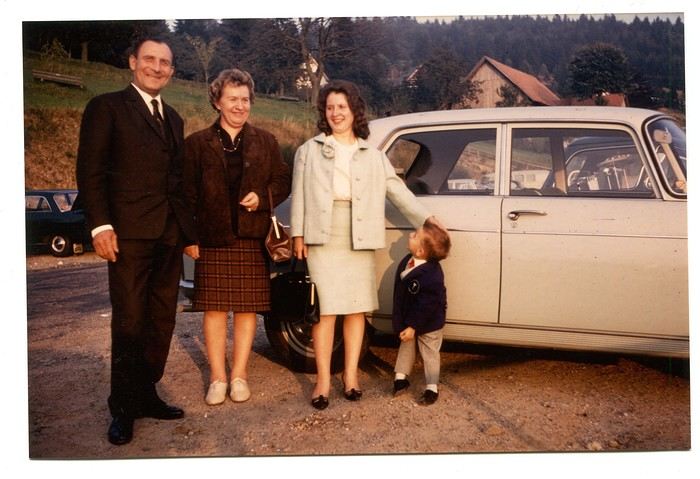
Those magical days always began with a gentle late-spring or midsummer morning. The interior of the white Peugeot 404, license plate 210 LZ 67, had already soaked up the sun before the engine purred to life, and the cabin gave off a scent I could still recognize today—a fragrance I found so pleasant. Back then, I had no idea it was just the smell of warm plastic from the car’s interior. Yes, the scents of the 404 on sunny days became my madeleine de Proust... What’s more, the whole family was unusually cheerful because those moments of relaxation and leisure were rare. Everyone worked, and no one had an easy job or was well paid. Without the *Trente Glorieuses*, these experiences might never have happened.
Once we crossed the canton’s borders, I felt like I was light-years away from my everyday surroundings, and every kilometer plunged me deeper into *terra incognita*. It was thrilling. Far from my so-called "medium-sized" town, wheat fields, cornfields, and cabbage patches stretched out, punctuated by tall poles connected by long wires and topped with vegetation—like giant clotheslines without laundry, where magical beanstalks might grow to touch the sky. Back then, I was still far from tasting their product, which was simply beer. At the time, there was still a significant local hop production. Fun fact: it wasn’t until 2002 that Anglo-Saxon scientists proved hops and cannabis belong to the same biological family.
After the fields, the landscape took another step up as it rolled past the little boy’s eyes, often glued to the windows. First came modest hills, then a succession of rolling slopes that soon formed an unbroken chain. Their 700 meters in altitude felt like Himalayan peaks to me—impressive, inert giants, a whole new world. Gazing at them, an intense emotion welled up somewhere between my stomach and lungs, nearly taking my breath away. What mysteries, what treasures did these heights hold? And then there were the cherries on top—the crowning touch that made the scene even more magical: proud, majestic castles perched on the summits like impassive sentinels. Monuments from the past, yet firmly rooted in the present on their rocky spurs. The little boy’s eyes sparkled—he’d been given a castle for Christmas, complete with battlements, towers, a drawbridge, and fully armed knights. He’d watched and lived *Ivanhoe* on the only French TV channel that existed back then.
Only once did my paternal grandfather join us on one of these trips. A tall, intelligent man with a face that could shift from stern to mischievous, clearly full of humor and charisma. Sadly, his relationship with alcohol had taken a toll on his life and, by extension, those of his loved ones. He had a strong personality—if his boss crossed the line, he wouldn’t hesitate to punch him, which meant he went through a lot of different jobs. Back then, you could quit one job and easily find another. It was quite something to see him in his final stages, hallucinating pink elephants and even drinking perfume when he had nothing else left. The last time I saw him, he’d slipped away from the doctors and nurses while hospitalized in pretty bad shape—at least, I assume his liver was the issue. We were sitting down for a family lunch when the door burst open, and there he stood in his pajamas, eyes twinkling with mischief, clearly pleased with the dramatic entrance. That theatrical moment didn’t spare us from burying him a few months later at the age of 71. One day, my mother told me the family doctor had quietly remarked that it was a shame—with his robust constitution, he could’ve lived to be a hundred. Yes, the family doctor—this was the man who’d come treat you any day, at almost any hour, just for a phone call. It really existed, it’s not a myth!
That day, his wife—my paternal grandmother—was also along for the ride. Everyone agreed that Jeannette was a good woman. She worked as a waitress at *Le Tigre*, the biggest brasserie in town, right in the center. Most customers preferred to be served by her, including local dignitaries and even the mayor. As a kid, I didn’t find her very fun, open, or warm—she seemed a bit stern. Back then, women in their fifties already had the face and build of grandmothers. Same went for men, don’t get me wrong. I had no idea about the struggles she faced because of her husband. I didn’t know that 30 years earlier, she’d had to flee Alsace while pregnant, under threat from Nazi fighter-bombers. I didn’t know she’d had several miscarriages, and that my father—her only surviving child, born prematurely in March 1940 at the other end of France—weighed less than a kilo at birth and was so tiny he could fit in a shoebox. Hard to imagine he’d grow into a strapping man nearly 1.80 meters tall, tipping the scales at 100 kilos. When you come back from summer camp in early August and ask why she didn’t pick you up with your parents, and they gently tell you she’s "in heaven," you don’t realize she passed away at 54 after suffering greatly from stomach cancer that had spread.
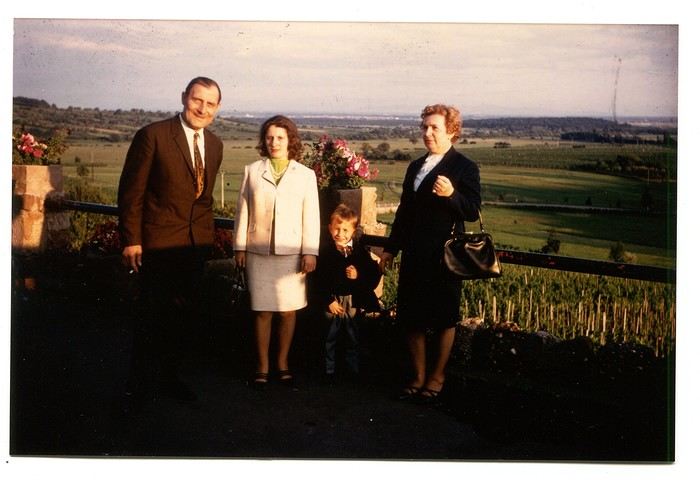
Back to that family outing, that enchanted parenthesis. I even remembered where we’d had lunch when I passed through Dambach-la-Ville decades later. One of those charming, flower-filled towns Alsace produces in abundance—and preserves so well. This one sits high on a hill, and I was a bit stunned on the parking lot because the view stretched far, revealing the Alsace plain below—its fields, villages, hills, and forests. The world seemed so vast and enticing that day, even though I was only glimpsing a tiny fraction of it.
The region was already very touristy, but I wouldn’t notice the downsides until much later. That Sunday noon, I discovered a large restaurant filled with diners. I can still see the enormous piece of meat they served me, decorated with a little wooden skewer topped with a flag. I kept that one for a long time. Those were the golden days of rich, flowing, thick sauces—so flavorful—and the era of the world’s best fries, made on the spot with the best potatoes. To top it off, I was *exceptionally* allowed a small bottle of apple juice, Orangina, or—even better if possible—Sinalco. Yes, Sinalco—like Orangina, but better. A brand that must’ve disappeared in the 70s, but why, and what a shame! Since then, Orangina’s little bubbles have taken the brand to the other side of the planet—it’s now Japanese.
Year after year, I’d eagerly await that ecstatic moment when the most beautiful castle in Alsace, the Haut-Koenigsbourg, appeared in my field of vision. The perfect model, the archetype that blended into the landscape at the height of a child’s dreams. The trip home always felt like a reality check—less jarring than an alarm clock, but more diffuse and melancholic. From then on, there was only one wish: *When do we leave again?*
Those magical days always began with a gentle late-spring or midsummer morning. The interior of the white Peugeot 404, license plate 210 LZ 67, had already soaked up the sun before the engine purred to life, and the cabin gave off a scent I could still recognize today—a fragrance I found so pleasant. Back then, I had no idea it was just the smell of warm plastic from the car’s interior. Yes, the scents of the 404 on sunny days became my madeleine de Proust... What’s more, the whole family was unusually cheerful because those moments of relaxation and leisure were rare. Everyone worked, and no one had an easy job or was well paid. Without the *Trente Glorieuses*, these experiences might never have happened.
Once we crossed the canton’s borders, I felt like I was light-years away from my everyday surroundings, and every kilometer plunged me deeper into *terra incognita*. It was thrilling. Far from my so-called "medium-sized" town, wheat fields, cornfields, and cabbage patches stretched out, punctuated by tall poles connected by long wires and topped with vegetation—like giant clotheslines without laundry, where magical beanstalks might grow to touch the sky. Back then, I was still far from tasting their product, which was simply beer. At the time, there was still a significant local hop production. Fun fact: it wasn’t until 2002 that Anglo-Saxon scientists proved hops and cannabis belong to the same biological family.
After the fields, the landscape took another step up as it rolled past the little boy’s eyes, often glued to the windows. First came modest hills, then a succession of rolling slopes that soon formed an unbroken chain. Their 700 meters in altitude felt like Himalayan peaks to me—impressive, inert giants, a whole new world. Gazing at them, an intense emotion welled up somewhere between my stomach and lungs, nearly taking my breath away. What mysteries, what treasures did these heights hold? And then there were the cherries on top—the crowning touch that made the scene even more magical: proud, majestic castles perched on the summits like impassive sentinels. Monuments from the past, yet firmly rooted in the present on their rocky spurs. The little boy’s eyes sparkled—he’d been given a castle for Christmas, complete with battlements, towers, a drawbridge, and fully armed knights. He’d watched and lived *Ivanhoe* on the only French TV channel that existed back then.
Only once did my paternal grandfather join us on one of these trips. A tall, intelligent man with a face that could shift from stern to mischievous, clearly full of humor and charisma. Sadly, his relationship with alcohol had taken a toll on his life and, by extension, those of his loved ones. He had a strong personality—if his boss crossed the line, he wouldn’t hesitate to punch him, which meant he went through a lot of different jobs. Back then, you could quit one job and easily find another. It was quite something to see him in his final stages, hallucinating pink elephants and even drinking perfume when he had nothing else left. The last time I saw him, he’d slipped away from the doctors and nurses while hospitalized in pretty bad shape—at least, I assume his liver was the issue. We were sitting down for a family lunch when the door burst open, and there he stood in his pajamas, eyes twinkling with mischief, clearly pleased with the dramatic entrance. That theatrical moment didn’t spare us from burying him a few months later at the age of 71. One day, my mother told me the family doctor had quietly remarked that it was a shame—with his robust constitution, he could’ve lived to be a hundred. Yes, the family doctor—this was the man who’d come treat you any day, at almost any hour, just for a phone call. It really existed, it’s not a myth!
That day, his wife—my paternal grandmother—was also along for the ride. Everyone agreed that Jeannette was a good woman. She worked as a waitress at *Le Tigre*, the biggest brasserie in town, right in the center. Most customers preferred to be served by her, including local dignitaries and even the mayor. As a kid, I didn’t find her very fun, open, or warm—she seemed a bit stern. Back then, women in their fifties already had the face and build of grandmothers. Same went for men, don’t get me wrong. I had no idea about the struggles she faced because of her husband. I didn’t know that 30 years earlier, she’d had to flee Alsace while pregnant, under threat from Nazi fighter-bombers. I didn’t know she’d had several miscarriages, and that my father—her only surviving child, born prematurely in March 1940 at the other end of France—weighed less than a kilo at birth and was so tiny he could fit in a shoebox. Hard to imagine he’d grow into a strapping man nearly 1.80 meters tall, tipping the scales at 100 kilos. When you come back from summer camp in early August and ask why she didn’t pick you up with your parents, and they gently tell you she’s "in heaven," you don’t realize she passed away at 54 after suffering greatly from stomach cancer that had spread.
Back to that family outing, that enchanted parenthesis. I even remembered where we’d had lunch when I passed through Dambach-la-Ville decades later. One of those charming, flower-filled towns Alsace produces in abundance—and preserves so well. This one sits high on a hill, and I was a bit stunned on the parking lot because the view stretched far, revealing the Alsace plain below—its fields, villages, hills, and forests. The world seemed so vast and enticing that day, even though I was only glimpsing a tiny fraction of it.
The region was already very touristy, but I wouldn’t notice the downsides until much later. That Sunday noon, I discovered a large restaurant filled with diners. I can still see the enormous piece of meat they served me, decorated with a little wooden skewer topped with a flag. I kept that one for a long time. Those were the golden days of rich, flowing, thick sauces—so flavorful—and the era of the world’s best fries, made on the spot with the best potatoes. To top it off, I was *exceptionally* allowed a small bottle of apple juice, Orangina, or—even better if possible—Sinalco. Yes, Sinalco—like Orangina, but better. A brand that must’ve disappeared in the 70s, but why, and what a shame! Since then, Orangina’s little bubbles have taken the brand to the other side of the planet—it’s now Japanese.
Year after year, I’d eagerly await that ecstatic moment when the most beautiful castle in Alsace, the Haut-Koenigsbourg, appeared in my field of vision. The perfect model, the archetype that blended into the landscape at the height of a child’s dreams. The trip home always felt like a reality check—less jarring than an alarm clock, but more diffuse and melancholic. From then on, there was only one wish: *When do we leave again?*
The Foam of Days
Now that the curtain has fallen on the past year, it’s time to see what’s happening around here.
It seems pretty quiet, but I’ll read more in detail later.
First, I need to tell you all an anecdote.
My eldest little girl, in her third year of law school, was really scared she wouldn’t pass the year. I told her: “Trust yourself, you’ve worked so hard, and worst case, if you fail, you’ll just redo the year.” “But I don’t think I’ll make it—they changed the rules, and if I mess up even one unit, I have to start all over.” I knew her grades weren’t exactly stellar, and with what I was about to say, I wasn’t taking much of a risk. “Here’s the deal, sweetheart: if you pass, I promise I’ll take you to India, just the two of us.” I have to admit, India is a country I’ve talked about so much to all my grandchildren that in their minds, it’s become a magical, mythical place (hmm).
July had barely begun when my phone rang, her name flashing on the screen. “Mamido, I did it!” My promise came rushing back—oh no, oh no, oh no! “Congratulations, sweetheart!” A little shyly, she said: “Is the India trip still on?”
And me, replying: “Of course it is!”
And that’s that—a promise is a promise, or you risk losing that precious trust that keeps hearts warm and at peace.
We’re leaving in February. Only 8 days—yikes, the carbon footprint! But we can’t miss her tutorials, or she’ll be kicked out. Personally, that works just fine for me.
Going to India has become a challenge for me. It’s far, it’s exhausting, I sweat, I hate mosquitoes, the spices bother my mouth when I used to love them. There’s noise all the time—at night, the dogs bark nonstop, and we almost get run over. I’ll get lost in the streets because my sense of direction has vanished. I don’t like rice anymore. All that chaos and those cultural differences that once enchanted me now just overwhelm me. But I promised.
The upside—and it’s a big one—Raman, the same driver I’ve had forever, will be at the airport with a sign with our names. We’ll stop at the same little shop for chai (or tea, plain and simple) with that aroma that intoxicates me, halfway through the trip.
It’ll be a tiny trip—staying with friends, I’ll show her a few places I love: Chidambaram, Mamallapuram, and the clinic where I worked. Then we’ll head back. My little girl will go home to her parents.
As for me, I’ll leave right away for our Scottish island with Homme for our chilly winter.
How can you love a country so much you want to live there, then suddenly reject it, no longer able to appreciate what once made it special? That’s the mystery of love, I guess.
First, I need to tell you all an anecdote.
My eldest little girl, in her third year of law school, was really scared she wouldn’t pass the year. I told her: “Trust yourself, you’ve worked so hard, and worst case, if you fail, you’ll just redo the year.” “But I don’t think I’ll make it—they changed the rules, and if I mess up even one unit, I have to start all over.” I knew her grades weren’t exactly stellar, and with what I was about to say, I wasn’t taking much of a risk. “Here’s the deal, sweetheart: if you pass, I promise I’ll take you to India, just the two of us.” I have to admit, India is a country I’ve talked about so much to all my grandchildren that in their minds, it’s become a magical, mythical place (hmm).
July had barely begun when my phone rang, her name flashing on the screen. “Mamido, I did it!” My promise came rushing back—oh no, oh no, oh no! “Congratulations, sweetheart!” A little shyly, she said: “Is the India trip still on?”
And me, replying: “Of course it is!”
And that’s that—a promise is a promise, or you risk losing that precious trust that keeps hearts warm and at peace.
We’re leaving in February. Only 8 days—yikes, the carbon footprint! But we can’t miss her tutorials, or she’ll be kicked out. Personally, that works just fine for me.
Going to India has become a challenge for me. It’s far, it’s exhausting, I sweat, I hate mosquitoes, the spices bother my mouth when I used to love them. There’s noise all the time—at night, the dogs bark nonstop, and we almost get run over. I’ll get lost in the streets because my sense of direction has vanished. I don’t like rice anymore. All that chaos and those cultural differences that once enchanted me now just overwhelm me. But I promised.
The upside—and it’s a big one—Raman, the same driver I’ve had forever, will be at the airport with a sign with our names. We’ll stop at the same little shop for chai (or tea, plain and simple) with that aroma that intoxicates me, halfway through the trip.
It’ll be a tiny trip—staying with friends, I’ll show her a few places I love: Chidambaram, Mamallapuram, and the clinic where I worked. Then we’ll head back. My little girl will go home to her parents.
As for me, I’ll leave right away for our Scottish island with Homme for our chilly winter.
How can you love a country so much you want to live there, then suddenly reject it, no longer able to appreciate what once made it special? That’s the mystery of love, I guess.
Very short layover at Doha Airport
Hi there
I completely forgot the transit procedure at Doha Airport and I’m a bit worried because I only have 1h30 to change planes, since my first flight was rescheduled. My flights: Barcelona/Doha: arrival at 6:15 AM Doha/Bangkok: departure at 7:50 AM
We only have carry-on luggage. Will they be checked again? Do we have to go through security again? Are the connections smooth and well signposted? Finally, is it common in this situation to ask a flight attendant for help?
Thanks! 🙂
I completely forgot the transit procedure at Doha Airport and I’m a bit worried because I only have 1h30 to change planes, since my first flight was rescheduled. My flights: Barcelona/Doha: arrival at 6:15 AM Doha/Bangkok: departure at 7:50 AM
We only have carry-on luggage. Will they be checked again? Do we have to go through security again? Are the connections smooth and well signposted? Finally, is it common in this situation to ask a flight attendant for help?
Thanks! 🙂
The Two of Us in Istanbul: A Turkish Blue Round
Hello everyone,
I’m not really a regular contributor to VoyageForum, but every time Kate and I travel, she encourages me to write a travel journal and publish it. And I must admit, it’s a very enjoyable intellectual exercise, though not always easy. As a VF contributor whose journals I’ve read once said, this retrospective work not only helps preserve memories but also provides a fruitful moment of introspection by bringing back emotions and feelings.
Kate and I spent a week in Istanbul. For her, who had already visited, it was a return; for me, it was a discovery.
As we’ve now made a habit of, I write the texts, and she posts her photos. We hope this illustrated story, crafted together, will revive beautiful sensations for those who know the city and inspire others to discover it. Here we go!
I’m not really a regular contributor to VoyageForum, but every time Kate and I travel, she encourages me to write a travel journal and publish it. And I must admit, it’s a very enjoyable intellectual exercise, though not always easy. As a VF contributor whose journals I’ve read once said, this retrospective work not only helps preserve memories but also provides a fruitful moment of introspection by bringing back emotions and feelings.
Kate and I spent a week in Istanbul. For her, who had already visited, it was a return; for me, it was a discovery.
As we’ve now made a habit of, I write the texts, and she posts her photos. We hope this illustrated story, crafted together, will revive beautiful sensations for those who know the city and inspire others to discover it. Here we go!
Hitchhiking in the 70s-80s
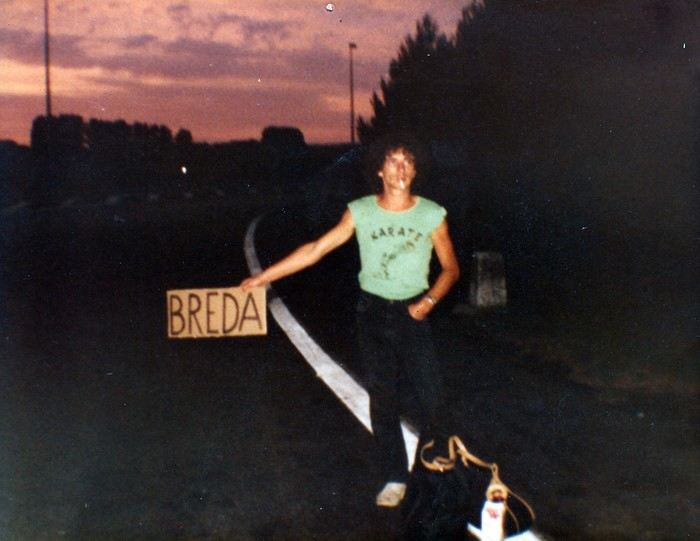
“Hey, your Marker... - My Marker? - The one you used to make hitchhiking signs.”
The marker in question is sitting proudly on the kitchen table. Marielle found it at the bottom of a moving box.
I’ve been meaning to tell the long story of my love affair with hitchhiking for years. Here we go.
To be honest, I’m not quite sure when it started. My earliest memory goes back to a fair with a bike race in my maternal grandparents’ village. I was with my cousin, my little sister, and three girl cousins. There were six of us, ages ranging from six or seven to thirteen or fourteen. Our parents stayed at the fair, and we’d had enough. So we decided to walk home. Only it was four kilometers away. So we hitchhiked. A guy driving an old car picked us all up and dropped us off at the farm. He probably found it amusing to see us thumbing a ride by the side of the road, but maybe it also worried him a bit. With everything you read in the papers...
Around fifteen or sixteen, I started hitchhiking regularly, alone or with a friend, to go to the nearby town. But it was especially when I started boarding school in Orléans that it became more regular. The first year, I’d leave Monday morning and come back Saturday noon by bus. It was an old, uncomfortable bus where we froze in winter. To make matters worse, I often got motion sickness if, as was too often the case, I ended up sitting in the back. In the spring, a high school friend suggested I hitchhike back. It meant a slight detour, but the advantage was taking only national roads.
So that’s how, from the end of tenth grade to twelfth grade, I’d thumb a ride every Saturday on the Pont de Bourgogne. Drivers were used to seeing young people hitchhiking, and it worked pretty well. Our biggest fear? Soldiers! At that time, military service was still mandatory, and on weekends, it wasn’t rare to see them competing with us. They’d keep their uniforms on to go home. That gave people confidence—with everything you read in the papers—and they’d rarely wait more than five minutes. We, with our long hair, were definitely less popular. From time to time, three big red-faced guys in a van coming back from a construction site would flip us off, yelling things like “go get a haircut, you bums!” Those were the good old days.
We still had a good laugh, though. Patrice, the friend I’d hitchhike back from school with on Saturdays, is a musician—I’d later discover he’s an excellent composer. A die-hard Beatles fan, he knows their repertoire by heart and spends his time singing at the top of his lungs while we thumb a ride. One Saturday late morning, we’d been waiting for a while at the exit of Châteauneuf-sur-Loire when a little lady came up to him and asked if he could please sing a little quieter: a baby was sleeping in the house. He put on the most sorry face: “Oh, sorry ma’am, we didn’t realize.” No sooner had the lady gone back inside than he started again. Luckily, a car stopped just then, sparing me the embarrassment of seeing the lady come back out.
Saturday was also the day when the cigarette pack was dangerously low. So before leaving, we’d go buy some “Parisiennes,” the “P4s” as we called them back then. They were slightly thinner cigarettes with a mix of tobacco scraps. Sometimes they tasted like light tobacco, sometimes like dark. Not great, but by the end of the week, our pocket money was gone. They were sold in small packs of four, hence the name P4. We’d only pay 20 centimes. On Saturdays, it was rare for the two of us to manage to scrape together 1.50 F to buy a whole pack of Gauloises...
The last twenty kilometers, I’d usually do alone, Patrice having reached his destination. From time to time, luck would smile on me: an acquaintance would just happen to pass by and stop. One January Saturday, at the exit of Gien, I ran into another guy from Argenton whom I knew a little. That day, the weather was nice, but the temperature was well below zero. It was around noon, and it was the off-peak hour. We were shivering, stamping our feet by the side of the road, when a Citroën “Tube” arrived: it was his father’s boss’s, a mason. They were both sitting in the front, but since they were obese, they had us climb onto the open back. Even though we huddled against the cab to shelter from the wind, the twenty kilometers felt very long, especially since we were only going sixty kilometers an hour. Our hands and cheeks were blue when we finally arrived.
The year I took my baccalaureate, a friend with a 2CV would take me Monday mornings with one or two others we’d pick up in nearby villages. We’d share the gas costs, but it was still cheaper than the bus. And in winter, the bus was my nightmare. You had to get up at five to catch it at six. Not enough sleep, and outside it was freezing or raining—or both. The 2CV was luxury. Plus, Philippe would pick me up at home. On the other hand, since I didn’t have class Saturday mornings—well, I did, but we only had PE the first two hours and nothing after—I’d skip class and slip out right after breakfast to thumb a ride at the Pont de Bourgogne.
Those three high school years were formative in this optional subject that was hitchhiking. Little by little, I learned the rules of the game. First, you shouldn’t walk along the road while thumbing. Cars go too fast and can’t stop easily. Accepting a ride that’s too short is also a no-go. The guy who offers to take you a little way but drops you off at some vague crossroads in the middle of nowhere? No thanks. You need to get dropped off in a town. If it’s a fairly big city, you often have to cross it from one end to the other, but it’s better. At the exit, you have to choose your spot well. Actually, you have to put yourself in the driver’s shoes: they need to see you early enough, not be going too fast, and be able to stop easily without risking an accident. So when leaving a city, it’s better not to go too far. It’s wiser to find a spot where cars go slowly and can stop easily. And preferably near a café. The café is for when you still have a few coins for a coffee and need to warm up. From time to time, you’d run into someone nice who’d make a detour to drop you off at a better spot to start again. Finally, if possible, avoid hitchhiking on Sundays. Cars are packed with whole families who, most of the time, aren’t going far. And then there’s the little worry of those people who rarely leave home: with everything you read in the papers...
During those high school years, it was only short trips, rarely exceeding a hundred kilometers. Later, I aimed bigger, and things were a bit different. In 1973-74, I crossed part of France for the first time on two or three occasions, coming back from the German border or returning to Bordeaux, where we lived briefly. Since there weren’t many highways back then, we took national roads. It was during these trips that I realized it was better to leave in the evening. As I said earlier, Sunday is to be avoided, but on weekdays, there’s another problem: if you leave in the morning, you only make short hops. First, it often takes longer to get going because drivers are people going to work nearby. Which brings us back to those who drop you off in a bad spot, far from everything. There, you have to know how to refuse. You thank the driver for stopping—oh, if only everyone could be like you—while explaining why you’d rather stay put. People don’t take offense, by the way. Those who pick up hitchhikers often hitchhiked themselves when they were in the military or before they had a car. In the late afternoon, you’d often run into salespeople or truckers, in other words, people who drive a lot. At that time, salespeople no longer had appointments and were more relaxed. They wanted to talk about something other than the merits of their products. On the radio, it was time for *Les Grosses Têtes*. You’d also quite often run into small business owners, professionals, or even hippies. The conversations were pleasant and often enriching. A little later in the evening, truckers would take over. They’d already driven a few hundred kilometers, and the depot or customs was still far away. So they’d gladly take a hitchhiker to stay awake at the wheel and chat. The radio with Max Ménier’s show *Les routiers sont sympas*, you’d eventually get tired of it. So a hitchhiker was a change. Others, who’d hit the road at midnight to be at their destination by morning, were nice and offered to let you lie down on the bunk while they drove. When you’d been hitchhiking since six in the evening, freezing in the wind between two vehicles, you weren’t unhappy to take a little nap.
Speaking of Max Ménier, he’d often make announcements for hitchhikers. One evening, I called him. It was getting late, and I still had quite a way to go. No luck: the show had ended for good the day before!
In short, it’s better not to rush, sleep in, and leave after lunch, or better yet, in the late afternoon. Obviously, I’m talking about when you have several hundred kilometers to cover. That’s when you have to play it pro.
First thing, especially at night, but it also applies in the middle of summer when the light is blinding: dress to be seen from far away. I’ll admit I have an advantage over most other hitchhikers: I’m small and don’t scare people. To balance that out, racist drivers often take me for an Arab and are less likely to pick me up, but overall, the balance tips in my favor. Back to the need to be seen: at night, I wear light-colored clothes. In headlights, you can see me from far away.
Second thing: travel light. Forget the big backpack with a frame. Drivers don’t always have room in the trunk or on the back seat, especially if it’s rained and the ground is wet. Plus, it forces them to get out of the car. If they’re nice enough to pick up a hitchhiker, you shouldn’t ask for too much either.
Third thing: bring a cardboard sign and a big marker—like the ones in the photo at the start of this post—to write the name of your destination. In the early 80s, I ran a tourist house in the Cher, but I lived in the Netherlands. In the off-season, it was only open on weekends. On Fridays, I’d leave Holland and return on Mondays. 1200 km round trip. On the way there, in Paris, I’d stand at Porte de la Chapelle. At that spot, the road is very wide, and drivers could stop easily. Obviously, on the sign, I didn’t write Eindhoven, which not everyone knows, and even less Amsterdam because of its seedy reputation. In that case, you’d expect to see a police car stop and two officers in kepis ask for your papers. So as a first destination, I’d write Compiègne. We were well out of Paris, and since it wasn’t too far, a trucker or salesperson was less reluctant to stop. Once past Compiègne, I’d take out my Lille sign. Once in Belgium, it wasn’t really necessary to use a sign anymore, since everyone was going in the same direction. Usually, the guy who picked me up at Porte de la Chapelle would say he wasn’t going far but could take me a little way. Before that, I’d still ask if there was a gas station on the highway where he could drop me off before exiting. While talking, the guy would realize he wasn’t dealing with a dangerous criminal. He’d pretend to check his watch, think for a moment, then say that actually, he was going to Belgium and could take me to the border or a little beyond. To leave Paris on the way back, I’d take the train to Melun, where it was easier to hitchhike than at Porte d’Italie.
Over all those years, I think I was pretty lucky. Or maybe philosophical enough not to imagine a car would stop after a few minutes. An hour’s wait was average. Sure, I sometimes waited three, four, or five hours. Most often at odd hours and in terrible weather. When it doesn’t work, it doesn’t work. But there’s always a moment when things pick up. Sure, when you’re soaked in freezing rain in the early morning after a sleepless night, you’re less philosophical than when I’m writing these lines comfortably at my computer, but it still holds true.
Earlier, I mentioned clothing and the importance of being well-rested before leaving. When you’ve eaten well and just gotten out of the shower, shaved, you’re in a better mood. And somehow, drivers sense it. Or at least, that’s the impression I’ve always had. It’s better to look in shape than disgusted at standing there, half-heartedly thumbing a ride. In short, when I’d start to get fed up with waiting, I’d go into the first café I saw for a coffee. Coming back out, I’d be refreshed, and most of the time, a car would stop within minutes. I’ve often said that when I stood by the side of the road thumbing a ride, I felt a bit like a gambler in front of a slot machine. It was a matter of giving luck a chance. And well, it worked out pretty well.
Then, there are countries where hitchhiking works really well and others where it’s harder. In the 70s-80s, it worked best in Germany and England. In the late afternoon, it wasn’t rare to be invited for tea. Well, that was in England. Tea meant being offered room and board. In Germany, they’d offer you coffee. Once there, they’d first show you the guest room and point out the bathroom before sitting you down in front of a big plate of cold cuts. In the evening, they’d go out in town, and the next morning, they’d usually drop you off at a good spot for hitchhiking. On the other hand, in Mediterranean and Scandinavian countries, you’d better be patient. In Spain or Italy, it’s better to take the train, which was dirt cheap back then. However, if you’re a couple traveling light, it’s already easier in most countries.
In 1982, I went on a trip around Turkey with my girlfriend. We only had two small bags, which was plenty. It was November-December, and we wore our warm, bulky clothes. Leaving Eindhoven at nine in the morning, we arrived in Graz, near the Yugoslav border, at eleven at night. 1300 km in a day! In just four or five vehicles. One to the German border, about fifty kilometers from Eindhoven, the second to Hagen in the Ruhr, the third to Salzburg, and the last to Graz at the Yugoslav border. Record broken. During the night crossing of Yugoslavia, we ran into a trucker close to retirement who lent us the truck’s bunk. So we arrived fresh and rested near Skopje the next morning. We continued to Thessaloniki in northern Greece before taking the train to Istanbul. In Turkey, we traveled a good part of the country by hitchhiking too. With truckers in old, overloaded, slow trucks that climbed hills at fifteen kilometers an hour, but also in cars where five or six people were already crammed in. And every time, we were invited for tea. Once, we were even picked up by a big shot in his Mercedes with a chauffeur. Until then, the average speed was around fifty kilometers an hour. There, we were going two hundred. On a national road, not a nice European highway.
I’ve also hitchhiked in Nepal, from Lumbini, Buddha’s birthplace, to a village on the way to Pokhara. It must have been midday. No bus until the next day. I gave it a try. A small truck overloaded with rice sacks, with two or three young people already perched on top, stopped. I rode on the roof of the cab. At fifty kilometers an hour when it was going well, with a breathtaking view. Coming back from India, I also crossed part of Iran by hitchhiking, from Tehran to the Turkish border. I did this trip with an Austrian I met at the hotel who, like me, had to watch his pennies. We gave it a shot. There was almost no traffic, but to our great surprise, the first car that passed in the area would always stop. They’d just ask for a modest contribution for gas, and it cost next to nothing.
Sometimes, you get scared too. After leaving Turkey in early December 82, we spent about two weeks in the southern Peloponnese harvesting olives. A few days before Christmas, we hitchhiked back to Holland. A girl picked us up in her little Fiat 500. We were driving on a mountain road, and that morning there was a bit of black ice. After crossing a pass, we saw the old Ford Taunus ahead of us at fifty meters start to skid. The driver let out a “heeee!” while grabbing my knees. I reflexively grabbed the wheel. Finally, the Taunus got back on track. And we didn’t swerve. But those few seconds felt very long.
In January 77, while I’d been living in Germany for a few months, I decided to spend a few days in Italy. By hitchhiking, of course. I left in the early afternoon, and by ten at night, I wasn’t far from Frankfurt. I saw a big Mercedes stop. The four or five young people crammed inside were listening to Schlager at full volume. Beer cans littered the floor. They didn’t have a precise destination, and as long as they were going south, that was fine with me. They’d finished their military service that very day and had clearly already celebrated their discharge. The driver was going 160, zigzagging dangerously from one side of the highway to the other. I should have realized he wasn’t entirely sober either. Luckily, there was almost no traffic. Finally, I managed to get dropped off at a gas station just before Frankfurt, relieved. I hope their trip didn’t end tragically.
Another time, coming back from Holland with my wife, we were picked up early in the morning near Senlis by two guys from Lille. They were going to work near Tours and could drop us off at Porte d’Italie. Apparently, they were coworkers but barely knew each other. The driver offered us a beer—at six in the morning, sure!—before opening another can for himself. He was clearly having trouble staying in the right lane. We politely declined, the passenger too. Everyone was tense. Luckily, it was rush hour on the ring road, and we were going slowly. When we got out of the car, the passenger said goodbye with the look of a guy being offered the condemned man’s rum and cigarette.
Finally, there are the annoying remarks from drivers who are either gay when you’re alone or turned on by the sight of your girlfriend when you’re a couple. In those cases, I’d get in the back so the guy wouldn’t feel too confident. And if the conversation got a little too suggestive, we’d deflect until we got dropped off.
And luckily, there are the times, not so rare after all, when you run into really nice people who invite you to eat and sleep at their place and drive you to a good spot the next morning. In Germany and England, that was common. And then there are the big strokes of luck, like during our trip to Turkey when we crossed most of Germany in one car, or that other time when some Germans drove me from the exit of Geneva all the way to the Costa Brava.
Going back to “with everything you read in the papers” and its variant “with everything you see on TV”—and now on the internet—it’s always left me perplexed. Personally, I’ve never heard of hitchhikers assaulting drivers, even if it may have happened. On the other hand, what was most common were hitchhikers being assaulted, especially girls. Anyway, even armed, it seems a bit stupid to assault the driver—wouldn’t that risk causing an accident?
Finally, since that time, I’ve occasionally wanted to hitchhike somewhere far away in France. Most often, too busy with work, it never happened, but the nostalgia hasn’t completely disappeared.
* * *
Other Hitchhikers
And then one day, I... settled down to become a driver myself. Ten years had passed, and you saw fewer and fewer hitchhikers. Or maybe I saw fewer because I had a regular job and wasn’t traveling the same way. And then I understood a few things.
Several times, I was tempted to pick up a hitchhiker, but they didn’t meet the required conditions. They were walking along the road instead of staying at the exit of the previous town. Hard to stop without risking an accident. Or the guy looked really scruffy. Or he was sulking, if not both. Then you think of that famous “with everything you read in the papers.” Not that I was scared, but unfortunately, the few hitchhikers I did pick up later were rarely interesting.
A few years ago, we picked up a young guy at the exit of a small town in Sologne. Not an easy spot for hitchhiking. Bad luck, he was a pretentious little jerk. He was barely 20 or 25 and talked like a bitter old man. He was a waiter in a restaurant. According to him, it was lucky he was there, otherwise the boss would have closed up shop long ago. You’d think he had thirty or forty years of professional experience behind him. As we approached Blois, he started ranting about Arabs, blaming them for all evils. And he laid it on thick. That morning, we were going to a teenager’s funeral who had just committed suicide, so he really got on our nerves, Mr. Know-It-All. Out of anger, I dropped him off next to a shopping center a few kilometers from downtown. Not nice, but it felt good.
Some time ago, we were driving around the Limousin on a Sunday to try out the used Twingo we’d just bought. We picked up a guy in his forties. A German who spoke French well. He started talking about the environment. He was a green Khmer. He got worked up all by himself with his pseudo-eco rant and, after a few kilometers, was almost yelling at us. As we were about to leave the main road for a small one, I dropped him off at a crossroads in the middle of nowhere. Normally, I would have made a little detour to take him to a better spot, but this time, I didn’t feel like doing the... eco-warrior a favor.
On the other hand, I’ve still done my good deed a few times. One June morning, coming back from Orléans, I saw a man in his sixties hitchhiking. The poor guy had had a rough time. He was from Montpellier and was coming back from Caen, where he’d been promised a job. Once there, they bluntly told him the position was already taken, and he had to go back. Except he didn’t have enough money left for the train. He’d spent the night hitchhiking without success. I could only take him as far as Lamotte-Beuvron, where I dropped him off near the fire station. Apparently, there was some vague shelter there or something, but it only opened a few hours later. In the meantime, he settled on the grass in a corner to sleep a little. While he was doing that, I quickly went to the train station to check the price of a ticket to Montpellier. It was within my means. Since he was sound asleep, I slipped the train ticket and 100 francs into his pocket. I couldn’t imagine him continuing to hitchhike all the way to Montpellier. And I bet he didn’t even have a piece of cardboard and a marker!
When we go to Brazil, we usually rent a small car. One day, we were coming back from Paracuru to Fortaleza when we saw a whole family hitchhiking. Two adults and two or three small children. Here near the equator, the sun sets very quickly, and it would soon be night. There was little traffic, and trucks wouldn’t stop because there was no room in the cab. As for the rich people driving big 4x4s, they wouldn’t stoop to picking up the lower classes. The only hope for this kind of family was usually a farmer or artisan who’d let them ride in the back of his pickup. Obviously, they were a bit surprised to see us. Everyone crammed in as best they could in the back of our little car. When we dropped them off, we got a whole string of “Deus lhes abençõe”—God bless you.
Still in Brazil, we were on the road from Barreirinhas to São Luís do Maranhão. About 150 km of deserted road with an isolated mud house here and there. A young woman flagged us down. She was very pregnant and had to get to the clinic twenty or thirty kilometers away to give birth. Someone was supposed to drive her, but the first signs of labor started earlier than expected, and the driver was unavailable. Even driving fast, we weren’t feeling great: it would be just our luck if she gave birth in the car!
Today, we’re in the age of smartphones and carpooling apps. Safety. With everything you see on TV... Three or four years ago, we signed up on a platform. Our first, and only, “client” was a little jerk who didn’t say a word the whole trip. No hello, no goodbye, and certainly no thank you. The next day, we found his Ray-Bans in the car. We didn’t run after him to give them back. Ha!
A Scandinavian Tour - Summer 2025
Off on new adventures!!!
For my wife’s 60th birthday, I’m really making her happy. While I usually pick warm, sunny destinations, she’s more tempted by places where you don’t suffer from the heat.
So, it’s off to Norway!! A real challenge for me—a southern guy who’s as cold-sensitive as they come.
I keep telling anyone who’ll listen (well, just myself, really) that these aren’t the countries for me, that rain will be our travel companion, that we’ll have to face polar bears, navigate between icebergs, that there are still Vikings around, and all sorts of other things.
Of course, not wanting to make it easy, we’re driving from the Lyon area where we live.
Friends who’ve visited the country told us it’s pretty expensive to eat out (among other things), so we’re bringing supplies—especially enough for apéritifs the whole trip!!!
It’s not a camper van, but a "hotel-car" we’ll be doing! We’ll see how it goes!
As usual, I’ll try to narrate the journey with my two-cent comments, plus some little tips to avoid our mistakes—assuming I don’t lose any fingers to the cold!
Every night, I’ll count them to make sure I still have all ten! We’re not in *Ch’tis* territory but even farther Noooorth (as Galabru would say).
Note that I’m traveling with a synovial effusion in my knee! The old man’s not in great shape!!
Here we go!!
PS: As always, I’m a filmmaker, so I’ve made an effort with a few photos from my phone.
PS: As always, I’m a filmmaker, so I’ve made an effort with a few photos from my phone.
What budget should I plan for 3 weeks on the US West Coast?
Hi everyone,
I’m a total USA addict. I’ve already done several road trips, including the East Coast and West Coast. I’m here today because I’m planning to go back for another road trip on the West Coast. Possibly with one of my sisters and a couple of friends. It’s still just a plan for now, but I’m working on an itinerary in the meantime. Ideally, I’d leave in 2026, but I don’t have the exact dates yet—maybe April-May or September-October. My last trip to the West Coast was in September 2014. We went for 2 weeks, but this time it’d be 3 weeks. What made me want to go back was simply a colleague who just left today. As I’m writing this, he’s on the plane. I’m so happy for him, but now all I can think about is going back.
Since I recently went to NY, I noticed that prices have really gone up. I assume the same is true for the West Coast? For 2 people over 3 weeks, what budget should I expect? We’re the type to watch our spending and find great tips. I think we’ll arrive in San Francisco like the first time and leave from either Los Angeles or Las Vegas.
Thanks to everyone for your advice and help.
I’m a total USA addict. I’ve already done several road trips, including the East Coast and West Coast. I’m here today because I’m planning to go back for another road trip on the West Coast. Possibly with one of my sisters and a couple of friends. It’s still just a plan for now, but I’m working on an itinerary in the meantime. Ideally, I’d leave in 2026, but I don’t have the exact dates yet—maybe April-May or September-October. My last trip to the West Coast was in September 2014. We went for 2 weeks, but this time it’d be 3 weeks. What made me want to go back was simply a colleague who just left today. As I’m writing this, he’s on the plane. I’m so happy for him, but now all I can think about is going back.
Since I recently went to NY, I noticed that prices have really gone up. I assume the same is true for the West Coast? For 2 people over 3 weeks, what budget should I expect? We’re the type to watch our spending and find great tips. I think we’ll arrive in San Francisco like the first time and leave from either Los Angeles or Las Vegas.
Thanks to everyone for your advice and help.
West USA Road Trip August 2022
Hello everyone,
I’m starting a travel journal about the amazing round trip I took in August 2022 with a big circuit through the US West.
Here’s what I posted on another travel forum back when VoyageForum hadn’t yet regained its freedom. 😉
Hello!
We got back yesterday in the middle of the afternoon, and here’s a quick first take on the 2022 round trip.
Has America changed? You could say that, yeah. For better? For worse? Who knows. A massive circuit—nearly 8,000 kilometers, actually around 5,000–6,000 miles.
Round-trip flights went smoothly, except for Air France on the way back, which let a rather large dog in the cabin with an owner who let it roam around the plane. Cool, Air France... Outrageous!
The rough itinerary: Salt Lake City. Jackson Hole–Grand Teton. Yellowstone. Cody. Rock Springs. Moab–Arches–Canyonlands. Monument Valley. Grand Canyon. Bryce Canyon. Zion Park. Las Vegas. Death Valley. Mammoth Lakes. Tioga Road. Mariposa. Yosemite Valley. San Francisco.
Tourists on site—a sociological study:
Italians: Always nice but just as loud as ever! Hispanics: Same as the Italians, just a different language. Germans: *Ein, zwei, ach mein Gott!* Order and discipline! Americans: Still no manners whatsoever. Pathetic. I’m only talking about the tourists, not the locals who work there. Quebecers: Pure joy! English-speaking Canadians: Same as the Americans. Asians: For the Japanese, it’s perfect. But the others from the Middle Kingdom... Let’s not start a war over this. There’s already Ukraine going on. And yet... Israelis: Still no manners. The Kibbutz kids are the bane of this country. French: Some excellent, some very good, some good, and some... not much.
Note that tourists in the northern part of the trip were much better behaved than those in the south. "Hello," "Goodbye," offering a hand? Etc. Few Asians in Grand Teton and Yellowstone. Lots of locals. The same goes for hotel staff in the northern part—more attentive. Really cool!
On the other hand, we were pretty surprised not to encounter any African-American locals in Montana, Wyoming, Utah, or even Arizona—whether tourists or employees. It’s quite striking, to be honest.
The Hotels:
Holiday Inn - 206 South West Temple, Salt Lake City, UT 84101, United States. A modern but soulless hotel. Basically, a place to pass through. Minimal breakfast.
Miller Park Lodge - 155 North Jackson Street - Jackson Hole, Wyoming. Not a hotel but a luxury motel. 750 € for two nights!! No breakfast. Huge room where you could hold a tea dance!! Well-located. No staff. Only room of the month-long stay that was fully redone during those two days.
Best Western Weston Inn. 103 Gibbon Avenue, West Yellowstone, MT 59758 Well-located, not far from the park entrance. Minimal breakfast. Friendly staff. Room refreshed every two days.
Best Western Sunset Inn. 1601 8th St, Cody, 82414-4134 Very good. Quiet. Good breakfast. Friendly staff.
Baymont by Wyndham 2717 Dewar Drive, Rock Springs, WY 82901 Very good. Quiet. Good breakfast. Friendly staff. Too many pets that should be "not allowed." Hello, hygiene!
Wingate by Wyndham Moab. 126 South Highway 191, Moab, 84532 End of the "family" hotels. Start of the tourist hotels. Too many pets that should be "not allowed." Hello, hygiene! Minimal breakfast.
Hampton Inn Kayenta. US Highway 160, Kayenta, AZ 86033, United States A stopover hotel run by the Navajos. Friendly staff wearing masks. Lots of people. Too many pets that should be "not allowed." Hello, hygiene! Minimal breakfast.
La Quinta by Wyndham Williams. 1100 Cataract Lake Rd, Williams, AZ 86046, United States Finally, Route 66 for 500 meters! The staff is there. Nothing more. Too many pets that should be "not allowed." Hello, hygiene! Minimal breakfast.
BEST WESTERN PLUS Ruby's Inn. 26 South Main Street, Bryce Canyon City, UT 84764, United States A factory!!! Great Hispanic or Romanian staff! A liquor store in the hotel! Awesome! Very good breakfast, but go early because the crowd—and the jerks—are there! Too many pets that should be "not allowed." Hello, hygiene!
BEST WESTERN Casino Royale - 3411 Las Vegas Boulevard South, Strip, Las Vegas Good hotel at a reasonable price. No breakfast, but Denny’s is next door. Quiet hotel despite the casino. Friendly staff. No memory of seeing any pets!
Shilo Inn Mammoth Lake. 2963 Main Street, Mammoth Lake Disastrous! Ineffective security system. Fire doors propped open with wooden wedges. Tiny breakfast room. No staff in the room. Tables not cleaned. Minimal breakfast. Gross pool. Rooms need work. No, the whole hotel needs to be redone. They say they’re renovating. They’d be better off tearing it down. Too many pets that should be "not allowed." Hello, hygiene! Very bad memory. Apparently, there’s supposed to be staff in this hotel.
Quality Inn Yosemite Valley Gateway. 4994 Bullion Street, Mariposa, CA 95338 Hotel or motel? Booking should clean up its listings! No room refresh! Minimal breakfast. The staff is there. Nothing more.
Comfort Inn by the Bay. 775 Van Ness Avenue, Marina District, San Francisco No room refresh in four days! Minimal breakfast. Friendly and helpful staff. Well-located. Depends on what for, but well-located.
And then there are those who steal apples from the breakfast to put in their bags in the morning, those who fill up their famous US water bottles with orange juice from the breakfast pump, those who don’t clear their tables—I could go on. And also, those who don’t say hello or respond to a greeting!
Met some super nice French people (in the northern parks)! They’ll recognize themselves!
And the magic phrase that opens doors with Americans: "Do you speak French? OK, good!" Laughter guaranteed!
Don’t try that with Asians who run souvenir shops in big cities—they have no sense of humor unless it’s about the color of the green bill.
The park rangers are always available! Great!
And 5,000 photos to sort and organize, plus a few hours of dashcam videos!
See you soon.
Until the next update...
I’m starting a travel journal about the amazing round trip I took in August 2022 with a big circuit through the US West.
Here’s what I posted on another travel forum back when VoyageForum hadn’t yet regained its freedom. 😉
Hello!
We got back yesterday in the middle of the afternoon, and here’s a quick first take on the 2022 round trip.
Has America changed? You could say that, yeah. For better? For worse? Who knows. A massive circuit—nearly 8,000 kilometers, actually around 5,000–6,000 miles.
Round-trip flights went smoothly, except for Air France on the way back, which let a rather large dog in the cabin with an owner who let it roam around the plane. Cool, Air France... Outrageous!
The rough itinerary: Salt Lake City. Jackson Hole–Grand Teton. Yellowstone. Cody. Rock Springs. Moab–Arches–Canyonlands. Monument Valley. Grand Canyon. Bryce Canyon. Zion Park. Las Vegas. Death Valley. Mammoth Lakes. Tioga Road. Mariposa. Yosemite Valley. San Francisco.
Tourists on site—a sociological study:
Italians: Always nice but just as loud as ever! Hispanics: Same as the Italians, just a different language. Germans: *Ein, zwei, ach mein Gott!* Order and discipline! Americans: Still no manners whatsoever. Pathetic. I’m only talking about the tourists, not the locals who work there. Quebecers: Pure joy! English-speaking Canadians: Same as the Americans. Asians: For the Japanese, it’s perfect. But the others from the Middle Kingdom... Let’s not start a war over this. There’s already Ukraine going on. And yet... Israelis: Still no manners. The Kibbutz kids are the bane of this country. French: Some excellent, some very good, some good, and some... not much.
Note that tourists in the northern part of the trip were much better behaved than those in the south. "Hello," "Goodbye," offering a hand? Etc. Few Asians in Grand Teton and Yellowstone. Lots of locals. The same goes for hotel staff in the northern part—more attentive. Really cool!
On the other hand, we were pretty surprised not to encounter any African-American locals in Montana, Wyoming, Utah, or even Arizona—whether tourists or employees. It’s quite striking, to be honest.
The Hotels:
Holiday Inn - 206 South West Temple, Salt Lake City, UT 84101, United States. A modern but soulless hotel. Basically, a place to pass through. Minimal breakfast.
Miller Park Lodge - 155 North Jackson Street - Jackson Hole, Wyoming. Not a hotel but a luxury motel. 750 € for two nights!! No breakfast. Huge room where you could hold a tea dance!! Well-located. No staff. Only room of the month-long stay that was fully redone during those two days.
Best Western Weston Inn. 103 Gibbon Avenue, West Yellowstone, MT 59758 Well-located, not far from the park entrance. Minimal breakfast. Friendly staff. Room refreshed every two days.
Best Western Sunset Inn. 1601 8th St, Cody, 82414-4134 Very good. Quiet. Good breakfast. Friendly staff.
Baymont by Wyndham 2717 Dewar Drive, Rock Springs, WY 82901 Very good. Quiet. Good breakfast. Friendly staff. Too many pets that should be "not allowed." Hello, hygiene!
Wingate by Wyndham Moab. 126 South Highway 191, Moab, 84532 End of the "family" hotels. Start of the tourist hotels. Too many pets that should be "not allowed." Hello, hygiene! Minimal breakfast.
Hampton Inn Kayenta. US Highway 160, Kayenta, AZ 86033, United States A stopover hotel run by the Navajos. Friendly staff wearing masks. Lots of people. Too many pets that should be "not allowed." Hello, hygiene! Minimal breakfast.
La Quinta by Wyndham Williams. 1100 Cataract Lake Rd, Williams, AZ 86046, United States Finally, Route 66 for 500 meters! The staff is there. Nothing more. Too many pets that should be "not allowed." Hello, hygiene! Minimal breakfast.
BEST WESTERN PLUS Ruby's Inn. 26 South Main Street, Bryce Canyon City, UT 84764, United States A factory!!! Great Hispanic or Romanian staff! A liquor store in the hotel! Awesome! Very good breakfast, but go early because the crowd—and the jerks—are there! Too many pets that should be "not allowed." Hello, hygiene!
BEST WESTERN Casino Royale - 3411 Las Vegas Boulevard South, Strip, Las Vegas Good hotel at a reasonable price. No breakfast, but Denny’s is next door. Quiet hotel despite the casino. Friendly staff. No memory of seeing any pets!
Shilo Inn Mammoth Lake. 2963 Main Street, Mammoth Lake Disastrous! Ineffective security system. Fire doors propped open with wooden wedges. Tiny breakfast room. No staff in the room. Tables not cleaned. Minimal breakfast. Gross pool. Rooms need work. No, the whole hotel needs to be redone. They say they’re renovating. They’d be better off tearing it down. Too many pets that should be "not allowed." Hello, hygiene! Very bad memory. Apparently, there’s supposed to be staff in this hotel.
Quality Inn Yosemite Valley Gateway. 4994 Bullion Street, Mariposa, CA 95338 Hotel or motel? Booking should clean up its listings! No room refresh! Minimal breakfast. The staff is there. Nothing more.
Comfort Inn by the Bay. 775 Van Ness Avenue, Marina District, San Francisco No room refresh in four days! Minimal breakfast. Friendly and helpful staff. Well-located. Depends on what for, but well-located.
And then there are those who steal apples from the breakfast to put in their bags in the morning, those who fill up their famous US water bottles with orange juice from the breakfast pump, those who don’t clear their tables—I could go on. And also, those who don’t say hello or respond to a greeting!
Met some super nice French people (in the northern parks)! They’ll recognize themselves!
And the magic phrase that opens doors with Americans: "Do you speak French? OK, good!" Laughter guaranteed!
Don’t try that with Asians who run souvenir shops in big cities—they have no sense of humor unless it’s about the color of the green bill.
The park rangers are always available! Great!
And 5,000 photos to sort and organize, plus a few hours of dashcam videos!
See you soon.
Until the next update...
Louisiana - Mississippi - Tennessee - Arkansas - April 2024
The context:
The urge to return to the USA, to explore a new part of the country. I don’t need much convincing to go back to Uncle Sam’s land. My wife’s on board too.
So, off we go for my 9th trip to the USA! (I didn’t take notes, so this is from memory)
Day 1: The departure: Flight with two layovers. I usually avoid layovers in the US before the final destination because of immigration. This time, my flight was Lyon/Munich, then Munich/Chicago, and finally Chicago/New Orleans. The layover in Chicago was 3 hours, and since I’d been through this airport twice before and found it super efficient both times, I wasn’t too worried when I booked my tickets—especially with Lufthansa. Unfortunately, there were several flight changes before departure, the last one leaving us with only a 2h14 layover in Chicago. I called Lufthansa to check if that would be enough, and they told me immigration in Chicago takes about an hour and 45 minutes (according to their calculations). So, I left feeling confident. A 15-minute delay leaving Lyon, then a 1-hour delay leaving Munich—now I’m starting to worry. When we arrived in Chicago, we rushed, cut in line, and made it to immigration. And then—an impossible queue. Game over, we missed our last flight. Of course, Lufthansa rebooked us for the next morning, arriving around 10 AM, and booked us a hotel. I found someone to call Alamo in New Orleans to make sure my rental car would still be there. Everything’s sorted—except our luggage, which we have no idea where it is! My little worry is that we land at 9:45 AM the next morning, and we’ve booked a tour at 11 AM at Laura Plantation, which is about an hour’s drive away! Wait and see…
The +: We're back in the USA The -: Once again, flight delays
Day 1: The departure: Flight with two layovers. I usually avoid layovers in the US before the final destination because of immigration. This time, my flight was Lyon/Munich, then Munich/Chicago, and finally Chicago/New Orleans. The layover in Chicago was 3 hours, and since I’d been through this airport twice before and found it super efficient both times, I wasn’t too worried when I booked my tickets—especially with Lufthansa. Unfortunately, there were several flight changes before departure, the last one leaving us with only a 2h14 layover in Chicago. I called Lufthansa to check if that would be enough, and they told me immigration in Chicago takes about an hour and 45 minutes (according to their calculations). So, I left feeling confident. A 15-minute delay leaving Lyon, then a 1-hour delay leaving Munich—now I’m starting to worry. When we arrived in Chicago, we rushed, cut in line, and made it to immigration. And then—an impossible queue. Game over, we missed our last flight. Of course, Lufthansa rebooked us for the next morning, arriving around 10 AM, and booked us a hotel. I found someone to call Alamo in New Orleans to make sure my rental car would still be there. Everything’s sorted—except our luggage, which we have no idea where it is! My little worry is that we land at 9:45 AM the next morning, and we’ve booked a tour at 11 AM at Laura Plantation, which is about an hour’s drive away! Wait and see…
The +: We're back in the USA The -: Once again, flight delays
3 weeks in Colombia (August 2023)
Why Colombia?
It's quite simple. For the past few years, my daughter has been living with a Colombian from Bogotá. The idea was to discover his country, meet his family, and do part of the trip all four of us together.
We’re heading out first as scouts, then they’ll join us to continue the journey.
The itinerary was shared in another post—now it’s time for the impressions.
No photos, as for me, it’s video and nothing more!
Day 1: The big departure What was planned: A flight from Lyon Saint-Exupéry late morning heading to Frankfurt. Two hours of waiting in Frankfurt (just enough time to eat a pretzel!!) and then off to Bogotá for an arrival around 7 PM local time. I hadn’t done the Check-Mig (to be done 72 hours before the flight). I did it on my phone, giving a fake arrival date in Colombia, and the attendant told me there wouldn’t be any issues in Bogotá. Actually, two hours of delay at departure in Lyon because a sick passenger was on the plane—they had to evacuate him, and the ambulance that was supposed to be there didn’t have permission to come near the plane. Ah, French administrative formalities!!!!! Flight to Frankfurt with Lufthansa went smoothly. A sprint through the airport—very well organized. Connection secured, so we boarded the plane, and two hours later than scheduled, we took off for an 11-hour flight! Arrival in Bogotá, and the immigration process took over an hour and a half because of the crowds. However, no issues with the Check-Mig—they barely glanced at it. Our daughter’s father-in-law ended up waiting over 3 hours at the airport because of this!!! Surprise: No luggage. Luckily, we had packed essentials in our carry-ons! Quick administrative paperwork, and Lufthansa informed me our bags would be on the next flight, so no big deal. Off to our hotel in La Candelaria and a good night’s rest.
The plus: We’re in Bogotá! The minus: Flight delays are becoming more and more common.
Day 1: The big departure What was planned: A flight from Lyon Saint-Exupéry late morning heading to Frankfurt. Two hours of waiting in Frankfurt (just enough time to eat a pretzel!!) and then off to Bogotá for an arrival around 7 PM local time. I hadn’t done the Check-Mig (to be done 72 hours before the flight). I did it on my phone, giving a fake arrival date in Colombia, and the attendant told me there wouldn’t be any issues in Bogotá. Actually, two hours of delay at departure in Lyon because a sick passenger was on the plane—they had to evacuate him, and the ambulance that was supposed to be there didn’t have permission to come near the plane. Ah, French administrative formalities!!!!! Flight to Frankfurt with Lufthansa went smoothly. A sprint through the airport—very well organized. Connection secured, so we boarded the plane, and two hours later than scheduled, we took off for an 11-hour flight! Arrival in Bogotá, and the immigration process took over an hour and a half because of the crowds. However, no issues with the Check-Mig—they barely glanced at it. Our daughter’s father-in-law ended up waiting over 3 hours at the airport because of this!!! Surprise: No luggage. Luckily, we had packed essentials in our carry-ons! Quick administrative paperwork, and Lufthansa informed me our bags would be on the next flight, so no big deal. Off to our hotel in La Candelaria and a good night’s rest.
The plus: We’re in Bogotá! The minus: Flight delays are becoming more and more common.
Flight ticket reservation confirmation issue: what to do?
Hi there,
I’m starting this thread to ask for your advice on a tricky situation I recently ran into. Maybe you’ve been through something similar?
After booking my tickets for this summer, I realized I never received an email, payment confirmation, or reservation number (well, the number did appear on the page after payment, but I didn’t write it down, assuming I’d get it in the confirmation email that usually arrives right after). Even though I was charged, I have no other proof of purchase since I don’t have anything to back it up...
At the time, I wasn’t too worried—email delays had happened to me before. Worst case, I’d get it an hour later.
Except after a full day, I still hadn’t received anything, and the reservation still doesn’t show up in my personal account on the airline’s website.
What should I do?
I contacted support via message: still no reply (and they guarantee a response within two hours). I called them, but no one picked up (and on top of that, I was charged 7.5 € for 15 minutes on hold). Now I’m starting to lose my patience...
Has this ever happened to you?
Thanks in advance,
I’m starting this thread to ask for your advice on a tricky situation I recently ran into. Maybe you’ve been through something similar?
After booking my tickets for this summer, I realized I never received an email, payment confirmation, or reservation number (well, the number did appear on the page after payment, but I didn’t write it down, assuming I’d get it in the confirmation email that usually arrives right after). Even though I was charged, I have no other proof of purchase since I don’t have anything to back it up...
At the time, I wasn’t too worried—email delays had happened to me before. Worst case, I’d get it an hour later.
Except after a full day, I still hadn’t received anything, and the reservation still doesn’t show up in my personal account on the airline’s website.
What should I do?
I contacted support via message: still no reply (and they guarantee a response within two hours). I called them, but no one picked up (and on top of that, I was charged 7.5 € for 15 minutes on hold). Now I’m starting to lose my patience...
Has this ever happened to you?
Thanks in advance,
Alleppey - Dental Tourism - Testimonial (India)
Given the extreme difficulty of getting a dentist appointment in my area (Lot/Aveyron—even traveling 2 hours each way by train to Toulouse, even with the dentist I’ve been a client of for years in my small town of Capdenac)—and considering the cost of dental implants in France, I decided to get a full dental overhaul during my annual stay of several months in Kerala (I’ve been spending time in Alleppey from late October to late March for several years now).
My Indian friends in Alleppey recommended a private dental clinic (I was pleasantly surprised that this clinic was qualified to place implants, as I thought I’d have to make multiple trips to Ernakulam/Cochin—60 km each way on a road that’s pretty rough right now due to massive construction stretching for dozens of kilometers). Results of the check-up on November 5, 2024: - 1 canine and an adjacent premolar slightly chipped at the top → need root canal treatment before covering them with a crown - 1 molar next to those two teeth already had a root canal → also needs a crown - 1 other canine broken deep down → needs to be extracted and replaced with an implant - 4 molars completely extracted years ago → 4 dental implants.
Here are the procedures I’ve already had (from November 5 to 22, 2024): - First session: initial assessment by the lead dentist (multiple X-rays displayed on a large screen, which he used to explain what he could do and what he recommended. For each implant, he showed me the required bone depth, and since I have very strong jaws, he remarked that I was an ideal candidate for implants). A dental assistant then outlined the proposed treatment timeline and the cost of each major procedure on a piece of paper (I took a photo of the notes so I wouldn’t lose track of the details). - Second session: placement of dental implants on the 4 molars in about an hour and a half (under local anesthesia—long but not painful at all during the procedure, though I had a bad headache all day afterward and a dull but manageable ache for a few days. Medication to take for 5 days, including an antibiotic. Obviously, no chewing hard foods for a while—soup, mashed potatoes, rice, yogurt for two days, then gradually more varied meals). Stitches for the gums around the 4 molars. - Third session: root canal treatment for a canine and a premolar (very long but absolutely painless under local anesthesia) + extraction of the deeply broken canine (a bit painful despite the anesthesia, but bearable—the lead dentist had to apply force and try three times. An assistant held my head from behind, but it was more unsettling than painful). - Fourth session: preparation of the canine, premolar, and adjacent molar for two crowns and a bridge. Removal of stitches around the 4 implants already placed. - Fifth session: impressions for the 2 crowns and bridge - Sixth session: placement of the 2 crowns and bridge - Seventh session scheduled for December 6: placement of a 5th implant where the canine was extracted - Late February: placement of the 5 crowns on the 5 implants
Meanwhile, my 85-year-old mother had a loose tooth extracted that had been bothering her since mid-September 2024 (her French dentist wouldn’t give her an appointment before January 2025, and she even traveled to a dentist in Toulouse who ultimately refused to extract it, even though the tooth was barely holding on and I’d sent the list of medications she takes in advance. My mother was furious about the wasted trip, and so was I, though I tried to stay calm!). At the Alleppey dental clinic, the assistants reviewed her medication list, looked them up online to identify them, and weren’t concerned. Another dentist extracted her tooth (under local anesthesia, of course) in barely 30 seconds. My mother immediately trusted them and decided on the spot to get a full lower denture. It was delivered to her definitively on Friday, November 22 (I think it took 4 or 5 sessions total). After two days of use, she’s happy with it and has a follow-up appointment next week for a check-up and adjustments if needed (though major modifications aren’t possible after the teeth are fixed to the denture). The session where the young dentist shaped the denture in real time was impressively precise and professional (the base had already been made from an impression, and the dentist added at least ten layers of softened paste with a flame, testing each addition in her mouth. Each time, he asked her to move her tongue from cheek to cheek, stick out her tongue, talk for 15 seconds, and swallow to ensure the denture wasn’t uncomfortable—about 45 minutes total).
Ballpark costs of the procedures: - Tooth extraction: around 2000 ₹ - Root canal treatment: around 5000 ₹ - Ceramic crown placement: around 15,000 ₹ - Titanium implant placement (made by Nobel Biocare): around 35,000 ₹ (Total for implant + tooth: around 50,000 ₹) - Lower denture fabrication: just under 20,000 ₹. Three material options—my mother chose the best for a rigid denture. She didn’t want to get 2 implants to secure it better (she didn’t feel the need with her old, very worn denture).
General impressions: This dental clinic is very well-regarded in Alleppey (according to all my Indian friends). There are two operating chairs on the ground floor and at least four on the first floor. The lead dentist (quite young) owns the clinic and handles the most delicate procedures (like implants) while occasionally overseeing work done by colleagues (after another dentist performed the root canal on my two teeth, he not only visually inspected it but also gave it a final touch with the drill). How many dentists handle more routine procedures? I’m not sure, but they’re all fairly young—men and a few young women. There are also many assistants: some prepare tools or operate the saliva suction, while others, more qualified, process images (X-rays or scans) on screen and explain things to me using those images. Others spent ten minutes briefing my mother in the waiting room on how to use and care for her new denture. During more delicate procedures, the operating dentist is assisted by two others. Two receptionists handle payments and appointments at the front desk. The welcome is always efficient and attentive, thanks to the dental assistants who guide us and provide explanations (the two receptionists don’t speak English). Appointments are always quick, even though the clinic seems busy (the waiting room is often full of Indian clients, though patients rarely come alone—they’re usually accompanied by a family member who stays close during the procedure). All the dentists speak English (since my mother doesn’t, I sat near the operating chair during each session to translate). So far, no complaints—I’m looking forward to March 2025 for the final result after the 5 teeth are placed on my 5 implants (the two crowns and bridge already fitted are perfect for me). 🙂
My Indian friends in Alleppey recommended a private dental clinic (I was pleasantly surprised that this clinic was qualified to place implants, as I thought I’d have to make multiple trips to Ernakulam/Cochin—60 km each way on a road that’s pretty rough right now due to massive construction stretching for dozens of kilometers). Results of the check-up on November 5, 2024: - 1 canine and an adjacent premolar slightly chipped at the top → need root canal treatment before covering them with a crown - 1 molar next to those two teeth already had a root canal → also needs a crown - 1 other canine broken deep down → needs to be extracted and replaced with an implant - 4 molars completely extracted years ago → 4 dental implants.
Here are the procedures I’ve already had (from November 5 to 22, 2024): - First session: initial assessment by the lead dentist (multiple X-rays displayed on a large screen, which he used to explain what he could do and what he recommended. For each implant, he showed me the required bone depth, and since I have very strong jaws, he remarked that I was an ideal candidate for implants). A dental assistant then outlined the proposed treatment timeline and the cost of each major procedure on a piece of paper (I took a photo of the notes so I wouldn’t lose track of the details). - Second session: placement of dental implants on the 4 molars in about an hour and a half (under local anesthesia—long but not painful at all during the procedure, though I had a bad headache all day afterward and a dull but manageable ache for a few days. Medication to take for 5 days, including an antibiotic. Obviously, no chewing hard foods for a while—soup, mashed potatoes, rice, yogurt for two days, then gradually more varied meals). Stitches for the gums around the 4 molars. - Third session: root canal treatment for a canine and a premolar (very long but absolutely painless under local anesthesia) + extraction of the deeply broken canine (a bit painful despite the anesthesia, but bearable—the lead dentist had to apply force and try three times. An assistant held my head from behind, but it was more unsettling than painful). - Fourth session: preparation of the canine, premolar, and adjacent molar for two crowns and a bridge. Removal of stitches around the 4 implants already placed. - Fifth session: impressions for the 2 crowns and bridge - Sixth session: placement of the 2 crowns and bridge - Seventh session scheduled for December 6: placement of a 5th implant where the canine was extracted - Late February: placement of the 5 crowns on the 5 implants
Meanwhile, my 85-year-old mother had a loose tooth extracted that had been bothering her since mid-September 2024 (her French dentist wouldn’t give her an appointment before January 2025, and she even traveled to a dentist in Toulouse who ultimately refused to extract it, even though the tooth was barely holding on and I’d sent the list of medications she takes in advance. My mother was furious about the wasted trip, and so was I, though I tried to stay calm!). At the Alleppey dental clinic, the assistants reviewed her medication list, looked them up online to identify them, and weren’t concerned. Another dentist extracted her tooth (under local anesthesia, of course) in barely 30 seconds. My mother immediately trusted them and decided on the spot to get a full lower denture. It was delivered to her definitively on Friday, November 22 (I think it took 4 or 5 sessions total). After two days of use, she’s happy with it and has a follow-up appointment next week for a check-up and adjustments if needed (though major modifications aren’t possible after the teeth are fixed to the denture). The session where the young dentist shaped the denture in real time was impressively precise and professional (the base had already been made from an impression, and the dentist added at least ten layers of softened paste with a flame, testing each addition in her mouth. Each time, he asked her to move her tongue from cheek to cheek, stick out her tongue, talk for 15 seconds, and swallow to ensure the denture wasn’t uncomfortable—about 45 minutes total).
Ballpark costs of the procedures: - Tooth extraction: around 2000 ₹ - Root canal treatment: around 5000 ₹ - Ceramic crown placement: around 15,000 ₹ - Titanium implant placement (made by Nobel Biocare): around 35,000 ₹ (Total for implant + tooth: around 50,000 ₹) - Lower denture fabrication: just under 20,000 ₹. Three material options—my mother chose the best for a rigid denture. She didn’t want to get 2 implants to secure it better (she didn’t feel the need with her old, very worn denture).
General impressions: This dental clinic is very well-regarded in Alleppey (according to all my Indian friends). There are two operating chairs on the ground floor and at least four on the first floor. The lead dentist (quite young) owns the clinic and handles the most delicate procedures (like implants) while occasionally overseeing work done by colleagues (after another dentist performed the root canal on my two teeth, he not only visually inspected it but also gave it a final touch with the drill). How many dentists handle more routine procedures? I’m not sure, but they’re all fairly young—men and a few young women. There are also many assistants: some prepare tools or operate the saliva suction, while others, more qualified, process images (X-rays or scans) on screen and explain things to me using those images. Others spent ten minutes briefing my mother in the waiting room on how to use and care for her new denture. During more delicate procedures, the operating dentist is assisted by two others. Two receptionists handle payments and appointments at the front desk. The welcome is always efficient and attentive, thanks to the dental assistants who guide us and provide explanations (the two receptionists don’t speak English). Appointments are always quick, even though the clinic seems busy (the waiting room is often full of Indian clients, though patients rarely come alone—they’re usually accompanied by a family member who stays close during the procedure). All the dentists speak English (since my mother doesn’t, I sat near the operating chair during each session to translate). So far, no complaints—I’m looking forward to March 2025 for the final result after the 5 teeth are placed on my 5 implants (the two crowns and bridge already fitted are perfect for me). 🙂