Results for "Allinges+|+127"
604 results found.
Arrivée à Delhi de nuit: hôtel ou aéroport? English translation pending
Bonjour à tous,
J'arriverai de nuit à delhi (vers 3h) sachant que je ne souhaite pas y rester mais me rendre a rishikesh, que me conseillez vous? de reserver un hotel pour ensuite au reveil prendre un taxi direction station de bus...de dormir a l'aeroport et prendre un taxi pour la station de bus...
cette question car je n'ai aucune idee des distances et des inconvenients de delhi.
Merci d'avance.
J'arriverai de nuit à delhi (vers 3h) sachant que je ne souhaite pas y rester mais me rendre a rishikesh, que me conseillez vous? de reserver un hotel pour ensuite au reveil prendre un taxi direction station de bus...de dormir a l'aeroport et prendre un taxi pour la station de bus...
cette question car je n'ai aucune idee des distances et des inconvenients de delhi.
Merci d'avance.
Compte rendu Casa del Mar 17 juin - 24 juin English translation pending
Coucou,
Comme promis voici un compte rendu de mon séjour au Casa del Mar à Bayahibe du 17 juin au 24 juin avec l'agence Marsans:
En route pour les Caraibes... Départ le vendredi 17 juin à Roissy à 13h45 pour un décollage prévu à 16h10 avec la compagnie Star Airlines. Nous sommes dans les derniers à passer au comptoir de l'agence pour récupérer les billets d'avions. Ensuite commence une interminable attente (1h15) pour l'enregistrement des bagages. A 15h30 environ, l'embarquement commence (tout aussi interminable) mais l'avion est à l'heure et nous finissons par décoller à 16h40. Nous avons embarqué à bord d'un A330, très joli d'extérieur et à l'intérieur mais alors très très peu confortable ! 🤪 Ce sont 3 rangées de 3 places, il y a très peu de place pour les jambes, bref c'était un peu l'enfer car 9h30 d'avion c'est long...En + nous étions en plus dégoutés avec mon copain car nous n'étions meme pas assis l'un à coté de l'autre, un couloir nous séparait alors qu'on avait bien stipulé à etre ensemble, et nous n'étions pas les seuls apparemment dans ce cas. Sinon personnel agréable, repas moyen. Arrivée à l'aéroport La Romana vers 19h30, il faisait déjà nuit ! Chaleur étouffante à la sortie de l'avion ! Encore un moment d'attente pour récupérer les bagages et départ dans un mini bus pour le Casa del Mar qui se trouve à 20 min de l'aéroport, ce qui est très appréciable.Arrivée au Casa del Mar...
L'entrée de l'hotel est magnifique. On vous sert un petit cocktail de bienvenue en attendant de vous donner les clés de chambre. La chambre: Nous étions au Bloc 3 1er étage. J'avais envoyé un email à l'hotel quelques jours avant pour dire que je souhaitais une chambre à cet endroit car on m'avait dit que c'était bien placé, mais j'avais reçu un message d'erreur donc je ne savais pas si mon email était arrivé à destination mais j'avais bien la chambre que je souhaitais ! Magnifique chambre avec un lit Kingsize, joliment décorée, équipée d'une TV, table et fer à repasser (ce qui m'a étonné), un petit frigo rempli de bouteilles d'eau, bières, cocas (remplis quotidiennement), une cafetière avec café. Nous avions pris un coffre fort pour 3$ par jour. IL yavait également un petit balconnet avec vue sur la piscine, avec chaises où nous avons pu faire sécher maillots de bain. La salle de bain était magnifique, spacieuse, équipée d'un sèche cheveux. NOus avons été très contents de la chambre, seul petit pb, la femme de ménage passait la nettoyer assez tard (parfois meme 15h/16h) La piscine: superbe piscine avec un petit bassin pour enfant et un jacuzzi à côté. Nous y allions tôt la matin (vers 8h vu que nous étions encore à l'heure française) et c'était très calme. Par contre dans l'après midi il commence vraiment à y avoir du monde. La plage: Nous avons été très déçus par la plage et la mer. La plage est artificielle (ca je le savais et c'est pas vraiment le pb) mais elle est surtt très petite. Ya des transats partout et il est difficile de trouver un coin de sable blanc tranquille. L'eau de la mer est trouble, voire marron clair et pas du tout transparente comme je me l'étais imaginée. Il y avait pas mal d'algues au début et quand on va plus loin on a l'impression de marcher sur de la vase, pas un sable blanc fin ... Les restaurants: J'ai adoré les ptits dej ! Mais par contre, le reste c'était sans plus... le buffet est pas mal mais pas très varié, j'ai trouvé les repas très répétitifs et bcp de plats à base de riz. Nous avons testé le restau italien qui est moyen, on s'attendait à avoir des pizzas mais il n'y en avait pas. Le Saona Grill n'est pas mauvais mais sans plus. Les animations: je ne pourrais pas trop parler des animations car nous y sommes allés 2 fois et à chaque fois ca ne nous a pas trop plu. En début de soirée il y a une animation pour les enfants mais c'était toujours les meme chansons. Excursion : nous avons fait l'excursion de l'ile de Saona avec Marsans (69$) et avons été extremement décus (tout comme certaines personnes présentes lors de l'excursion). Je vous explique en gros comment s'est déroulée la journée: à 9h30 nous partons à bord d'un speed boat (seul truc sympa de l'excursion à la limite) pour récupérer d'autres touristes français venus d'autres hotels au Port de Bayahibé. NOus partons à 3 speed boat. A peine on démarre qu'on nous arrete près du port pour admirer les poissones avec les tubas et masques. La moitié des personnes qui se décident à plonger se heurtent aux rochers qui sont trop nbreux et l'eau est trop peu profonde, limite les gens se cognent les uns aux autres. Ensuite on nous "largue" dans la piscine naturelle, on nous fait gouter la Vitamina et on nous laisse juste le temps de prendre qques photos avec des étoiles de mer. Après nous atteignons enfin l'ile de Saona qui n'est pas si paradisiaque que ca finalement, ...l'eau est belle, la plage a un beau sable blanc mais le lieu ne tarde pas à être saccagé de touristes (bcp trop touristique à mon gout)...bref arrivée à 11h30, déjeuner à 13h, départ de l'ile à 14h15, plutot rapide comme excursion...Sur place à peine nous étions allongés sur la plage qu'une femme veut nous faire un massage pour quelques dollars, une autre arrive pour faire des tresses, une autre arrive pour vendre je ne sais quel truc...une vraie usine à touristes ! Le déjeuner sur place n'est pas très agréable, nous étions tous parqués les uns à coté des autres et le peu de temps que nous avons pu passer sur la plage, nous avons eu la fumée et l'odeur du barbecue du déjeuner...Le retour était catastrophique: + de 2h pour rentrer en catamaran (en plus il faisait mauvais temps), il y avait très peu de place pour tout le monde et nous étions complètement serrés, les uns sur les autres.Avec mon copain nous avons tenté de longer la plage pour rejoindre le village de Bayahibé, mais au fur et à mesure que nous avançions, la plage ressemblait de plus en plus à un dépotoir, nous n'étions pas encore arrivés dans le village qu'on nous avait deja proposé 10 excursions, qu'on a voulu nous vendre je ne sais combien de trucs, on a malgré tout acheté quelques objets à un gars qui avait l'air sympa. Et puis on a fini par rebrousser chemin à la vue de l'entrée du village, nous n'avons pas osé nous y aventurer ! La météo: il ne faut pas regarder les prévisions météo sur internet car nous n'avons pas eu le meme tps.. quelques jours avant j'angoissais car ils annoncaient que de la pluie et sur une semaine nous avons eu 5 jours de beau temps ! Le soleil tape très fort et j'ai moi meme apprécié les nuages parfois tellement le solait tapait ! Malheureusement le mercredi après midi le temps a commencé à se gater avec quelques orages, jeudi pluie non stop, vendredi orage, un peu de soleil et le soir nous sommes partis de la Romana sous la pluie et avons meme eu un retour en avion difficile avec d'incessantes turbulences...Dans l'ensemble je dirais que le cadre est très agréable, l'hotel en lui meme est magnifique, bcp de végétation, de magnifiques flamands roses dans un jardin, superbe piscine, malgré une plage pas terrible. Mais au delà de ca on a pas trop aimé l'ambiance de l'hotel qui à mes yeux est davantage concu pour des séjours en famille qu'en couple. La moyenne d'age n'est pas très jeune. Nous avons discuté avec quelques francais pdt le séjour qui vantaient davantage les mérites de l'Ocean Bavaro à Punta Cana, hotel que j'avais initialement choisi et je regrette un peu. Ce n'est pas un hotel où je retournerais pour ma part.
N'hésitez pas si vous avez des questions ! 🙂
Lizou
Comme promis voici un compte rendu de mon séjour au Casa del Mar à Bayahibe du 17 juin au 24 juin avec l'agence Marsans:
En route pour les Caraibes... Départ le vendredi 17 juin à Roissy à 13h45 pour un décollage prévu à 16h10 avec la compagnie Star Airlines. Nous sommes dans les derniers à passer au comptoir de l'agence pour récupérer les billets d'avions. Ensuite commence une interminable attente (1h15) pour l'enregistrement des bagages. A 15h30 environ, l'embarquement commence (tout aussi interminable) mais l'avion est à l'heure et nous finissons par décoller à 16h40. Nous avons embarqué à bord d'un A330, très joli d'extérieur et à l'intérieur mais alors très très peu confortable ! 🤪 Ce sont 3 rangées de 3 places, il y a très peu de place pour les jambes, bref c'était un peu l'enfer car 9h30 d'avion c'est long...En + nous étions en plus dégoutés avec mon copain car nous n'étions meme pas assis l'un à coté de l'autre, un couloir nous séparait alors qu'on avait bien stipulé à etre ensemble, et nous n'étions pas les seuls apparemment dans ce cas. Sinon personnel agréable, repas moyen. Arrivée à l'aéroport La Romana vers 19h30, il faisait déjà nuit ! Chaleur étouffante à la sortie de l'avion ! Encore un moment d'attente pour récupérer les bagages et départ dans un mini bus pour le Casa del Mar qui se trouve à 20 min de l'aéroport, ce qui est très appréciable.Arrivée au Casa del Mar...
L'entrée de l'hotel est magnifique. On vous sert un petit cocktail de bienvenue en attendant de vous donner les clés de chambre. La chambre: Nous étions au Bloc 3 1er étage. J'avais envoyé un email à l'hotel quelques jours avant pour dire que je souhaitais une chambre à cet endroit car on m'avait dit que c'était bien placé, mais j'avais reçu un message d'erreur donc je ne savais pas si mon email était arrivé à destination mais j'avais bien la chambre que je souhaitais ! Magnifique chambre avec un lit Kingsize, joliment décorée, équipée d'une TV, table et fer à repasser (ce qui m'a étonné), un petit frigo rempli de bouteilles d'eau, bières, cocas (remplis quotidiennement), une cafetière avec café. Nous avions pris un coffre fort pour 3$ par jour. IL yavait également un petit balconnet avec vue sur la piscine, avec chaises où nous avons pu faire sécher maillots de bain. La salle de bain était magnifique, spacieuse, équipée d'un sèche cheveux. NOus avons été très contents de la chambre, seul petit pb, la femme de ménage passait la nettoyer assez tard (parfois meme 15h/16h) La piscine: superbe piscine avec un petit bassin pour enfant et un jacuzzi à côté. Nous y allions tôt la matin (vers 8h vu que nous étions encore à l'heure française) et c'était très calme. Par contre dans l'après midi il commence vraiment à y avoir du monde. La plage: Nous avons été très déçus par la plage et la mer. La plage est artificielle (ca je le savais et c'est pas vraiment le pb) mais elle est surtt très petite. Ya des transats partout et il est difficile de trouver un coin de sable blanc tranquille. L'eau de la mer est trouble, voire marron clair et pas du tout transparente comme je me l'étais imaginée. Il y avait pas mal d'algues au début et quand on va plus loin on a l'impression de marcher sur de la vase, pas un sable blanc fin ... Les restaurants: J'ai adoré les ptits dej ! Mais par contre, le reste c'était sans plus... le buffet est pas mal mais pas très varié, j'ai trouvé les repas très répétitifs et bcp de plats à base de riz. Nous avons testé le restau italien qui est moyen, on s'attendait à avoir des pizzas mais il n'y en avait pas. Le Saona Grill n'est pas mauvais mais sans plus. Les animations: je ne pourrais pas trop parler des animations car nous y sommes allés 2 fois et à chaque fois ca ne nous a pas trop plu. En début de soirée il y a une animation pour les enfants mais c'était toujours les meme chansons. Excursion : nous avons fait l'excursion de l'ile de Saona avec Marsans (69$) et avons été extremement décus (tout comme certaines personnes présentes lors de l'excursion). Je vous explique en gros comment s'est déroulée la journée: à 9h30 nous partons à bord d'un speed boat (seul truc sympa de l'excursion à la limite) pour récupérer d'autres touristes français venus d'autres hotels au Port de Bayahibé. NOus partons à 3 speed boat. A peine on démarre qu'on nous arrete près du port pour admirer les poissones avec les tubas et masques. La moitié des personnes qui se décident à plonger se heurtent aux rochers qui sont trop nbreux et l'eau est trop peu profonde, limite les gens se cognent les uns aux autres. Ensuite on nous "largue" dans la piscine naturelle, on nous fait gouter la Vitamina et on nous laisse juste le temps de prendre qques photos avec des étoiles de mer. Après nous atteignons enfin l'ile de Saona qui n'est pas si paradisiaque que ca finalement, ...l'eau est belle, la plage a un beau sable blanc mais le lieu ne tarde pas à être saccagé de touristes (bcp trop touristique à mon gout)...bref arrivée à 11h30, déjeuner à 13h, départ de l'ile à 14h15, plutot rapide comme excursion...Sur place à peine nous étions allongés sur la plage qu'une femme veut nous faire un massage pour quelques dollars, une autre arrive pour faire des tresses, une autre arrive pour vendre je ne sais quel truc...une vraie usine à touristes ! Le déjeuner sur place n'est pas très agréable, nous étions tous parqués les uns à coté des autres et le peu de temps que nous avons pu passer sur la plage, nous avons eu la fumée et l'odeur du barbecue du déjeuner...Le retour était catastrophique: + de 2h pour rentrer en catamaran (en plus il faisait mauvais temps), il y avait très peu de place pour tout le monde et nous étions complètement serrés, les uns sur les autres.Avec mon copain nous avons tenté de longer la plage pour rejoindre le village de Bayahibé, mais au fur et à mesure que nous avançions, la plage ressemblait de plus en plus à un dépotoir, nous n'étions pas encore arrivés dans le village qu'on nous avait deja proposé 10 excursions, qu'on a voulu nous vendre je ne sais combien de trucs, on a malgré tout acheté quelques objets à un gars qui avait l'air sympa. Et puis on a fini par rebrousser chemin à la vue de l'entrée du village, nous n'avons pas osé nous y aventurer ! La météo: il ne faut pas regarder les prévisions météo sur internet car nous n'avons pas eu le meme tps.. quelques jours avant j'angoissais car ils annoncaient que de la pluie et sur une semaine nous avons eu 5 jours de beau temps ! Le soleil tape très fort et j'ai moi meme apprécié les nuages parfois tellement le solait tapait ! Malheureusement le mercredi après midi le temps a commencé à se gater avec quelques orages, jeudi pluie non stop, vendredi orage, un peu de soleil et le soir nous sommes partis de la Romana sous la pluie et avons meme eu un retour en avion difficile avec d'incessantes turbulences...Dans l'ensemble je dirais que le cadre est très agréable, l'hotel en lui meme est magnifique, bcp de végétation, de magnifiques flamands roses dans un jardin, superbe piscine, malgré une plage pas terrible. Mais au delà de ca on a pas trop aimé l'ambiance de l'hotel qui à mes yeux est davantage concu pour des séjours en famille qu'en couple. La moyenne d'age n'est pas très jeune. Nous avons discuté avec quelques francais pdt le séjour qui vantaient davantage les mérites de l'Ocean Bavaro à Punta Cana, hotel que j'avais initialement choisi et je regrette un peu. Ce n'est pas un hotel où je retournerais pour ma part.
N'hésitez pas si vous avez des questions ! 🙂
Lizou
Thaïlande: choisir une île English translation pending
Laquelle???????????
Bonjour,
Je viens d'acheter mon billet pour la thailande (YYYYeeees......), j'y vais tout le mois de septembre avec ma copine. On commence a prendre des infos a droite a gauche, en vue de se faire un petit plan de route a travers le pays. La classique, quoi...😛
Et a la vue des photos des iles, on se dit qu'a la fin du voyage on passerait bien une semaine complete sur une ile histoire de se (re)poser et en gros de se la couler douce! Dc on reve d'un petit coin de paradis ou on pourrait degoter un bengalow pas trop cher au bord d'une plage. A priori, facile en Thailande!! reste q'on voudrait bien eviter les coins ac une full moon party tous les 2 jours 😐
Et c'est la qu'on a besoin de conseils: j'ai lu pas mal de trucs contradictoires sur koh Samui, Koh Phi Phi, ou encore Koh Chang. Peut etre que des experts en la matiere (les veinards...) pourront nous aider:
1) Flots de touristes: pr etre tranquilles, une de ces iles est elle a (de)conseiller? (Sachant qu'on va pas non plus jouer les robinsons, un peu d'animation fait du bien...) D'ailleurs en septembre, moins de touristes?
2) Tsunami: Quelle est la situation a Koh Phi Phi? quelqu'un y est alle recemment?
3) Quelqu'un a-t-il eu un coup de coeur pour un coin, une adresse exceptionnelle a faire partager, immanquable?
Si je vous demande tt ca c que si on y reste un semaine autant que ca soit sympa...🙂 Merci d'avance!
Alexis
Bonjour,
Je viens d'acheter mon billet pour la thailande (YYYYeeees......), j'y vais tout le mois de septembre avec ma copine. On commence a prendre des infos a droite a gauche, en vue de se faire un petit plan de route a travers le pays. La classique, quoi...😛
Et a la vue des photos des iles, on se dit qu'a la fin du voyage on passerait bien une semaine complete sur une ile histoire de se (re)poser et en gros de se la couler douce! Dc on reve d'un petit coin de paradis ou on pourrait degoter un bengalow pas trop cher au bord d'une plage. A priori, facile en Thailande!! reste q'on voudrait bien eviter les coins ac une full moon party tous les 2 jours 😐
Et c'est la qu'on a besoin de conseils: j'ai lu pas mal de trucs contradictoires sur koh Samui, Koh Phi Phi, ou encore Koh Chang. Peut etre que des experts en la matiere (les veinards...) pourront nous aider:
1) Flots de touristes: pr etre tranquilles, une de ces iles est elle a (de)conseiller? (Sachant qu'on va pas non plus jouer les robinsons, un peu d'animation fait du bien...) D'ailleurs en septembre, moins de touristes?
2) Tsunami: Quelle est la situation a Koh Phi Phi? quelqu'un y est alle recemment?
3) Quelqu'un a-t-il eu un coup de coeur pour un coin, une adresse exceptionnelle a faire partager, immanquable?
Si je vous demande tt ca c que si on y reste un semaine autant que ca soit sympa...🙂 Merci d'avance!
Alexis
Que vaut le Newrotel de Bangkok? English translation pending
Salut tousd le monde voila je vais descendre en arrivant à Bangkok au Newrotel situé au 1216/1 Cha Roen Krung Road, dites moisi vous connaissez, et ce qu'il ya tout près pour sortir le soir et s'amuser.
L'hotel se situe entre l'oriental Hotel et le Royal orchidee hotel.
Je sais que c'est tout près de Silom road, qu'il ya t'il par là svp?
Merci pour vos réponses, @++
L'hotel se situe entre l'oriental Hotel et le Royal orchidee hotel.
Je sais que c'est tout près de Silom road, qu'il ya t'il par là svp?
Merci pour vos réponses, @++
Couteau suisse ou outil multifonctions? English translation pending
Bonjour.
Tout est dans le titre.
Pour m'aider à faire mon choix:Lequel préfèrez-vous pour le voyage(camping).
Et de plus pour la mécanique vélo basique en randonnée que me conseillez vous?
Merci
Francis
recette de cocktail en RD English translation pending
Bonjour a tous
Je suis allée a bayahibe au viva dominicus palace.Jai bu un cocktail le blue hawai (couleur chtrouf) merci de me dire ce qui il y a dedans et les doses merci d'avance a+.
Je suis allée a bayahibe au viva dominicus palace.Jai bu un cocktail le blue hawai (couleur chtrouf) merci de me dire ce qui il y a dedans et les doses merci d'avance a+.
Retour de Puerto Plata English translation pending
😏 Je viens de passer une magnifique semaine à Puerto Plata au Riu Merengue.
Aucun problème de retard avec Corsair. Aller et retour impeccable.
En ce qui concerne l'Hôtel : très propre, chambre spacieuse, repas variés et très bons, piscine pas immense mais correcte. Possibilité d'utiliser celle du Bachata qui est plus grande et la mer est juste à côté.Trois Excursions réalisées avec Nouvelles frontières : Hispaniola explorer. Rencontre avec la population dominicaine et d'un village haitien Dominicana Jones. Découverte d'une journée de l'arrière pays de Puerto Plata en camionette tout terrain. Marche de 25 mn dans la forêt tropicale qui vous amène aux cascades de Damajagua avec possibilité de les escalader. Déjuner typique, promenade à cheval... Découverte de Puerto PlataTemps magnifique, juste 1 nuit de pluie. Le retour est d'autant plus difficile avec la grisaille parisienne.
Je reste à votre disposition, si vous avez des questions.
Aucun problème de retard avec Corsair. Aller et retour impeccable.
En ce qui concerne l'Hôtel : très propre, chambre spacieuse, repas variés et très bons, piscine pas immense mais correcte. Possibilité d'utiliser celle du Bachata qui est plus grande et la mer est juste à côté.Trois Excursions réalisées avec Nouvelles frontières : Hispaniola explorer. Rencontre avec la population dominicaine et d'un village haitien Dominicana Jones. Découverte d'une journée de l'arrière pays de Puerto Plata en camionette tout terrain. Marche de 25 mn dans la forêt tropicale qui vous amène aux cascades de Damajagua avec possibilité de les escalader. Déjuner typique, promenade à cheval... Découverte de Puerto PlataTemps magnifique, juste 1 nuit de pluie. Le retour est d'autant plus difficile avec la grisaille parisienne.
Je reste à votre disposition, si vous avez des questions.
Assoauan - Louxor en felouque (Egypte)? English translation pending
Bonjour
Pour mon périple en egypte, je pense descendre le nil par la route jusqu au lac nasser puis faire le trajet retour de Assouan à Louxor en felouque
Est ce possible ? j ai lu dans differents post que c etait possible ca sera notre " croisiere " mais j ai besoin de votre experience pour la réalisation pratique
globalement comment cela se passe t il ? quand on utilise la felouque y a til des visites possibles sur le trajet ?
Cela pour éviter de visiter à l aller ce que je pourras faire en felouque au retour !!!
Avez vous des bon plans pour la felouque ?
Merci de votre aide et de vos suggestions
a bientot
Typhaine
Pour mon périple en egypte, je pense descendre le nil par la route jusqu au lac nasser puis faire le trajet retour de Assouan à Louxor en felouque
Est ce possible ? j ai lu dans differents post que c etait possible ca sera notre " croisiere " mais j ai besoin de votre experience pour la réalisation pratique
globalement comment cela se passe t il ? quand on utilise la felouque y a til des visites possibles sur le trajet ?
Cela pour éviter de visiter à l aller ce que je pourras faire en felouque au retour !!!
Avez vous des bon plans pour la felouque ?
Merci de votre aide et de vos suggestions
a bientot
Typhaine
Retour de voyage Pérou-Bolivie-Chili English translation pending
Bon voilà, j'en reviens juste, (depuis dimanche) et j'en ai pris plein les yeux.
Premier constat, ces 3 pays ont vraiment des paysages magnifiques.
Ensuite, viens la reflexion sur ce que j'ai aimé et pas aimé :
J'ai adoré : Arequipa, Canon de Colca, Salar de Uyuni, Ile du Soleil(Titicaca)
J'ai aimé : Cuzco, Machu Pichu, Vallee Sacrée et Region de Atacama, Copacabana
J'ai pas aimé : Lima, La Paz, Uyuni et le bordel dans l'aeroport de Caracas.
A la base, on etait parti pour faire uniquement le Perou sur 3 semaines.
Mais au fur et a mesure de notre periple, on s'est pris au jeu de descendre vers le Sud Lipez, réputé pour ses Lagunas.
Voici le detail de notre trajet en 3 semaines :
Lima - Cuzco - Puno - Copacabana - La Paz - Potosi - Uyuni - San Pedro de Atacama - Arica - Arequipa - Lima
La 1ere semaine a été axée autour de Cusco et sa region (Machu Pichu, Vallee Sacree).
La 2eme semaine a été consacrée à la Bolivie et la descente vers le Chili.
La 3eme semaine a été magnifique, geniale, bref que du bonheur sur Arequipa et le Canyon de Colca.
3 semaines a bloc, mais beaucoup d'emotions ( chute dans un ravin avec un bus bolivien, visite des mines de Potosi, on etait perdus avec le guide à 18h sans les mineurs, blocage de la reserve du Sud Lipez par les locaux qui reclamaient un droit de passage, annulation d'un vol Nuevo Continente entre Arequipa et Lima la veille : le President peruvien en personne a condamné la compagnie à ne plus voler pour raisons de narco trafics)
Bref, le Perou ca a été grandiose, la Bolivie moins, et le Chili reste assez cher je trouve.
CIAO
Premier constat, ces 3 pays ont vraiment des paysages magnifiques.
Ensuite, viens la reflexion sur ce que j'ai aimé et pas aimé :
J'ai adoré : Arequipa, Canon de Colca, Salar de Uyuni, Ile du Soleil(Titicaca)
J'ai aimé : Cuzco, Machu Pichu, Vallee Sacrée et Region de Atacama, Copacabana
J'ai pas aimé : Lima, La Paz, Uyuni et le bordel dans l'aeroport de Caracas.
A la base, on etait parti pour faire uniquement le Perou sur 3 semaines.
Mais au fur et a mesure de notre periple, on s'est pris au jeu de descendre vers le Sud Lipez, réputé pour ses Lagunas.
Voici le detail de notre trajet en 3 semaines :
Lima - Cuzco - Puno - Copacabana - La Paz - Potosi - Uyuni - San Pedro de Atacama - Arica - Arequipa - Lima
La 1ere semaine a été axée autour de Cusco et sa region (Machu Pichu, Vallee Sacree).
La 2eme semaine a été consacrée à la Bolivie et la descente vers le Chili.
La 3eme semaine a été magnifique, geniale, bref que du bonheur sur Arequipa et le Canyon de Colca.
3 semaines a bloc, mais beaucoup d'emotions ( chute dans un ravin avec un bus bolivien, visite des mines de Potosi, on etait perdus avec le guide à 18h sans les mineurs, blocage de la reserve du Sud Lipez par les locaux qui reclamaient un droit de passage, annulation d'un vol Nuevo Continente entre Arequipa et Lima la veille : le President peruvien en personne a condamné la compagnie à ne plus voler pour raisons de narco trafics)
Bref, le Perou ca a été grandiose, la Bolivie moins, et le Chili reste assez cher je trouve.
CIAO
Déçu par la Thaïlande English translation pending
Je reviens d'un séjour en Asie(Thaïlande et Cambodge) et je dois avouer que la Thaïlande c'est assez décevant...Trop, trop touristique...tout est surfait, aucune place pour la surprise ou l'aventure!Le sourire légendaire des Thaï, je l'ai pas trop vu, pas d'émotion et Bangkok bof, bof...
Le Cambodge par contre très bien!!!😉🙁
Humanitaire en France! English translation pending
Bon je sent que je vais pas me faire que des amis mais la j'en peut plus ...
Sa me soul un peut de voir tous le monde dire, qu'il veut partire faire de l'humanitaire a l'autre bout du monde, alors que à côté de chez lui il y'as des personnes qui souffre !!!, Attention je ne dit pas que c'est pas bien de partire a l'autre bout du monde, mais il me parraitrais important que avant d'aller a l'autre bout du monde on face quelque chose chez soit (en combinée) ...
Je sait que l'état en france est riche, mais apparament il ne remplit pas tous les rôle qui selon la constitution lui imcombe, alors il faut y pallier !!!!
Désolée, je suis un peut énervé, mais je vient de voir un reportage sur des clandestins (autre sujet de conversation) qui soufrait en france de la faim, vous imaginé (je pense églement aux SDF, mais la c'est le reportage) ...
Vous aller me direque je retourne ma vest, c'est pas forcément ce queje disait il y'as quelques mois, c'est vraie, mais la réalité et la pseudisagesse de l'age ma fait avance de ce côté la !!!!!
Bon bas lachez vous !!!
Philo
Sa me soul un peut de voir tous le monde dire, qu'il veut partire faire de l'humanitaire a l'autre bout du monde, alors que à côté de chez lui il y'as des personnes qui souffre !!!, Attention je ne dit pas que c'est pas bien de partire a l'autre bout du monde, mais il me parraitrais important que avant d'aller a l'autre bout du monde on face quelque chose chez soit (en combinée) ...
Je sait que l'état en france est riche, mais apparament il ne remplit pas tous les rôle qui selon la constitution lui imcombe, alors il faut y pallier !!!!
Désolée, je suis un peut énervé, mais je vient de voir un reportage sur des clandestins (autre sujet de conversation) qui soufrait en france de la faim, vous imaginé (je pense églement aux SDF, mais la c'est le reportage) ...
Vous aller me direque je retourne ma vest, c'est pas forcément ce queje disait il y'as quelques mois, c'est vraie, mais la réalité et la pseudisagesse de l'age ma fait avance de ce côté la !!!!!
Bon bas lachez vous !!!
Philo
Casa Marina Bay à Samana English translation pending
BONSOIR,
nous avons réservé pour le mois de juillet pour le casa marina, cet hotel avait plutot bonne réputation, mais notre TO nous a demandé de changer d hotel car il aurait des problèmes avec cet etablissement, nous avons trouvé ca un peu bizare !! apres reflexion nous ne changerons pas d'hotel, nous restons sur notre choix, voila merci de nous donner des infos sur cet hotel, par avance merci 😉 cathy
nous avons réservé pour le mois de juillet pour le casa marina, cet hotel avait plutot bonne réputation, mais notre TO nous a demandé de changer d hotel car il aurait des problèmes avec cet etablissement, nous avons trouvé ca un peu bizare !! apres reflexion nous ne changerons pas d'hotel, nous restons sur notre choix, voila merci de nous donner des infos sur cet hotel, par avance merci 😉 cathy
Hésitation entre Occidental Grand Flamenco, Barcelo Villa Bavaro et le Melao English translation pending
😛 Bonjour
Connaissez-vous ces hôtels ? Notre choix c'est porté sur nouvelles frontières et sur punta cana...nous ne recherchons pas le super luxe mais un minimum : belle plage, chambre correcte, animation sympa et nourriture correcte.
Merci à tous ceux qui pourront nous aider à faire notre choix définitif.
Ps : nous partons début juillet 😎
Connaissez-vous ces hôtels ? Notre choix c'est porté sur nouvelles frontières et sur punta cana...nous ne recherchons pas le super luxe mais un minimum : belle plage, chambre correcte, animation sympa et nourriture correcte.
Merci à tous ceux qui pourront nous aider à faire notre choix définitif.
Ps : nous partons début juillet 😎
Japonais en Inde: Le choc des cultures: histoire vécue à la gare de Old Delhi English translation pending
Vous qui avez sillonné sans répit les routes du mondes, vous les avez déjà rencontrés…
Ils parcours également les 4 coins du globes, souriants et l’air candide… Il suffit qu’ils entrent dans une boutique pour que votre présence ne soit plus qu’un vague souvenir pour le vendeur qui s’évertuait à vous convaincre de donner un dernier coup de grâce à votre portefeuille. Il nous ressemble à nous autres occidentaux car nous partageons un fond de culture commune basée sur la consommation, mais ils sont tellement différent.
Je veux bien évidemment parlé des Japonais.
J’ai une profonde admiration pour la culture japonaise. Ce sentiment se confond intensément avec le mystère de cette société. Je ne veux pas parler du mystère qu’évoque les paysages de la baie d’Ha long terrestres sur lesquelles se serait posé un dragon il y a quelques siècles. Non, Je veux parler d’inconnue ou d’incompréhension au sens propre.
La culture japonaise évoque pour moi le contraste le plus fort qui soit. Contraste entre la violence extrême de cette société et les usages les plus policés qui puissent exister. Contraste entre les codes de la guerre qui furent en usage et la mièvrerie des sentiments. Contraste entre la tenue des cadres citadins et la mode disco punk outrancière de certain jeunes… Tout cela reste bien mystérieux.
N’ayant pas les moyens de m’offrir un voyage dans ce pays, je prend toujours soin d’observer les jeunes japonais qui partent nombreux sur les routes du monde une fois leurs études terminées et avant d’affronter les dizaines d’année de travail acharné qui les attends.
Notre première rencontre avec le japonais en vacance eut lieu en Inde à la gare centrale d’Old Delhi.
A vrai dire nous sommes allés en Inde de façon candide. Après un rapide tour d’horizon du prix des billets d’avion, la seule destination lointaine qui s’offrait à nous était l’Inde. Nous préparions notre voyage en nous gavant l’imaginaire des récits merveilleux du Rajasthan. Oubliant presque que le sous-continent indien avait évoluée.
Arrivés à Delhi, il nous fallut quelques jours pour émerger et nous défaire de nos réflexes fondamentaux, afin de pouvoir affronter notre voyage.
Passé 2 jours dans la mégalopole, nous mettons le cap vers Jaipour. Nous devons nous rendre à la gare de Old Delhi pour prendre le train de 6h du matin.
4 heure, notre réveil sonne. Nous nous réveillons dans cette petite chambre triste aux murs sales. Il nous faut trouver un Rickshaw pour nous conduire à la gare. Il fait nuit noire dans cette rue défoncée. Ca et là des personnes dorment à même le sol ou sur le plateau des chariots qu’ils tirent durant la journée. Nous réveillons un chauffeur qui dormait dans sont tricycle à moteur. Il se frotte les yeux et nous fait signe de monter. Nous lui proposons un prix, il incline la tête de droite à gauche (j’ai encore du mal à comprendre que cela veut dire oui), nous montons.
La traversée de la ville se fait sans un mot. L’angoisse me tord le cou. C’est un dédale de petites rues crasseuses que la nuit recouvre de mystères et de fantasmes. Les kilomètres de trottoirs sont occupés par les gens endormis. Des enfants s’activent à lessiver les tables des restaurants de rue. Je ne sais plus quoi pensé je suis perdu. Le travail des enfants, la misère, dormir sur le trottoir… Que faire ? Rien… je regarde et je m’étouffe des odeurs nauséabondes refoulées par les cours d’eau dans lesquelles pourrissent les ordure de plus de 10 millions de personnes.
La peur ne me quitte pas depuis la veille. Ce triporteur n’offre aucune sécurité. Nous devons avoir environ 500 francs en liquide, plusieurs mois de salaire pour cet homme. Il serait tellement simple de nous conduire vers nulle part pour nous dévaliser. Moi-même, pour nourrir mes enfants, je n’hésiterais certainement pas longtemps. Et ce serait probablement justice.
Mais il y a peu de violence physique contre les étrangers en Indes. Nous arrivons à bon port comme nous y arriverons toujours au cours de ce voyage.
La gare de Old Delhi se dresse devant nous. C’est un cafarnaum comme je n’en ai encore jamais vu. Hommes, femmes, enfants, valides, estropiés, mendiants, moines, chèvres, vaches, tous se pressent autour de ce centre névralgique de la vielle ville. Dans toutes les positions, assis, debout ou allongés, habillés ou nus, c’est presque toutes l’inde qui nous attends. Ce petit Rickshaw qui incarnait encore mes angoisses il y a 30 secondes me semble maintenant le seul lien avec notre petite chambre d’hôtel qui était mon unique reperd. Il s’en va. Nous restons. Nous nous sentons comme ce spationaute de 2001 l’odyssée de l’espace dont le cordon avec l’humanité a été rompu et qui est condamnée à dériver dans le grand vide de l’univers, vers une mort certaine.
Nous sommes bousculés et finissons par accéder au Hall central. Des centaines de personnes sont allongées le long des murs et dorment paisiblement. Des estropiés, des indigents, mais aussi des familles qui attendent leur trains, des travailleurs en costume 3 pièces et attaché-case. Nous trouvons notre chemin entre les corps assoupis pour nous rapprocher du tableau des départs.
Notre train n’est pas encore annoncé. Devant les dizaines de guichets vides, nous renonçons à prendre un billet. Nous tenterons de le prendre directement auprès du contrôleur.
Il nous faut reprendre notre souffle. Nous trouvons un recoin où poser nos fesses. Nous regardons le spectacle incroyable de cette immense gare indienne à 5 heure du matin, en tentant de nous rendre invisibles.
Là arrivent 3 touristes japonais d’une vingtaine d’année. Mini-disc dernier cri à la ceinture, et appareils photo autour du cou. Ils avancent, têtes en l’air, la mine un rien perdue. Ils s’arrêtent en plein milieu du Hall et ouvrent leur sac pour en sortir un guide. Echangent quelques mots…. Tournent sur eux-même tentant certainement de trouver un uniforme ou une silhouette rassurante qui pourra leur ouvrir la voie. Mais rien…
J’imagine qu’ils se rendent dans la même ville que nous, premier stop obligé pour un tour du Rajasthan. Je me lève et vais à leur rencontre. Leur anglais est light et le mien bien rouillé. Je comprend tout de même qu’ils vont à Jaipour. Je leur indique que le train sera indiqué sur cet immense tableau devant eux au dessus de leurs têtes. Ils n’ont pas vus le tableau et avance en direction de mon doigt. Je ne comprend pas. Ils s’arrêtent devant la vitre d’un petit guichet et approchent leur nez de ce qui doit certainement être une petite note de service collée là il y a 20 ans. C’est écrit en Hindi.
Là le doute m’étreint. Comment ces gars peuvent s’imaginer que les quais sont indiqués sur un vieux bout de papier scotché sur une vitre que la crasse rend presque opaque. Je regarde autour de moi. Il doit y avoir plus de 500 affichette différentes collées de cette façon dans ce Hall.
Je me rapproche d’eux pour leur indiquer à nouveau le panneau. Ils me sourient et me remercie. Jettent un œil au tableau d’affichage et partent vers le quai. Je les arrête pour leur demander où ils vont. Ils ne savent pas bien. Je leur explique que le quai n’est pas encore indiqué. Ils me remercient une nouvelle fois et vont s’assoire dans un coin.
Une fois le quai annoncé, je leur fait signe de nous suivre.
Nous traversons les voies ferrées au milieu de la foule sur un pont en poutrelles métalliques qui desserre les différents quais. Le jour commence à poindre. Enfin.
Le nombre des futurs passagers rend difficile l’accès au quai. Nous nous faufilons pour tenter de gagner l’autre extrémité, moins surpeuplée.
Nous attendons le train au milieu de la cohue nous demandant si nous allons pouvoir monter dedans.
Un femme transportant un petit autel portatif nous propose de nous asperger de fumée d’encens et de nous dessiner un point au milieu du front moyennant finance. Nous refusons poliment. Elle n’insiste pas car nos 3 amis font une bien meilleurs cibles qu’elle s’empresse de solliciter. Ils n’ont pas compris ce quelle leur dit. Pour cause, elle ne parle pas anglais. Ils se regardent interdits alors qu’elle plonge sont doigt dans son petit pot de poudre coloré, et avant qu’ils n’aient pu dire un mot, ils se retrouvent tous avec la trace de son pouce au milieu du front.
Ils se regardent à nouveau et explosent de rire en se voyant affublés de ce nouvel attribut typiquement indien. Ils remercient celle qui leur a joué ce drôle de tour. Mais elle ne bouge pas et tend la main au premier. Son pote lui fait comprendre qu’elle veut des sous. Ahh ! ! ! Ils cherchent frénétiquement dans leurs poches, mais pas une pièce. Ils haussent les épaules d’un air dépité, tentant de faire comprendre qu’ils n’ont pas de monnaie. Elle pointe alors du doigt un sac à dos. L’un de nos amis l’ouvre et en sort un portefeuille.
Il cherche les roupies qu’il a du planquer derrière la centaine de dollars qui sort de la poche à billet. Là je m’étrangle ! Ce type est en train d’ouvrir son portefeuille au milieu d’un quai bondé et passe en revue tout son pognon à la recherche de quelque roupies. Il fini par trouver un petit billet qu’il donne à cette femme en lui faisant signe qu’il paye pour les 3. Mais comme c’est un jeune homme poli, il lui demande si elle est d’accord. Et comme elle, est une vieille femme futée, elle ne l’est pas… d’accord. Il faut que chacun paye et farfouille dans sa poche à billet pour faire une offrande. Je suis pété de rire. Elle a dû toucher l’équivalent de 2 semaines…. Trop forte la vieille !
Le train fini par arriver. Il n’est pas vide. Il a voyagé toute la nuit. Les portes s’ouvrent, l’odeur qui s’en échappe est intenable. Des hommes, des femmes, des enfants, mais aussi des animaux sortent des wagons. Ma copine m’attrape par la manche en me disant qu’elle veut impérativement monter en première. Nous finissons par trouver une place. Nous payons notre billet au contrôleur et nous nous endormons.
Arrivé à notre hôtel nous prenons une douche puis je sort sur le pas de la porte fumer une cigarette, en repensant à cette matinée. Cela fait bien 45 min. que nous somme là, quant arrivent, complètement liquéfiés, nos 3 amis japonais. Ils dessinent un large sourire en me voyant.
Ca ne fait que quelques jours qu’il sont en Indes… Courage les gars !
Ils parcours également les 4 coins du globes, souriants et l’air candide… Il suffit qu’ils entrent dans une boutique pour que votre présence ne soit plus qu’un vague souvenir pour le vendeur qui s’évertuait à vous convaincre de donner un dernier coup de grâce à votre portefeuille. Il nous ressemble à nous autres occidentaux car nous partageons un fond de culture commune basée sur la consommation, mais ils sont tellement différent.
Je veux bien évidemment parlé des Japonais.
J’ai une profonde admiration pour la culture japonaise. Ce sentiment se confond intensément avec le mystère de cette société. Je ne veux pas parler du mystère qu’évoque les paysages de la baie d’Ha long terrestres sur lesquelles se serait posé un dragon il y a quelques siècles. Non, Je veux parler d’inconnue ou d’incompréhension au sens propre.
La culture japonaise évoque pour moi le contraste le plus fort qui soit. Contraste entre la violence extrême de cette société et les usages les plus policés qui puissent exister. Contraste entre les codes de la guerre qui furent en usage et la mièvrerie des sentiments. Contraste entre la tenue des cadres citadins et la mode disco punk outrancière de certain jeunes… Tout cela reste bien mystérieux.
N’ayant pas les moyens de m’offrir un voyage dans ce pays, je prend toujours soin d’observer les jeunes japonais qui partent nombreux sur les routes du monde une fois leurs études terminées et avant d’affronter les dizaines d’année de travail acharné qui les attends.
Notre première rencontre avec le japonais en vacance eut lieu en Inde à la gare centrale d’Old Delhi.
A vrai dire nous sommes allés en Inde de façon candide. Après un rapide tour d’horizon du prix des billets d’avion, la seule destination lointaine qui s’offrait à nous était l’Inde. Nous préparions notre voyage en nous gavant l’imaginaire des récits merveilleux du Rajasthan. Oubliant presque que le sous-continent indien avait évoluée.
Arrivés à Delhi, il nous fallut quelques jours pour émerger et nous défaire de nos réflexes fondamentaux, afin de pouvoir affronter notre voyage.
Passé 2 jours dans la mégalopole, nous mettons le cap vers Jaipour. Nous devons nous rendre à la gare de Old Delhi pour prendre le train de 6h du matin.
4 heure, notre réveil sonne. Nous nous réveillons dans cette petite chambre triste aux murs sales. Il nous faut trouver un Rickshaw pour nous conduire à la gare. Il fait nuit noire dans cette rue défoncée. Ca et là des personnes dorment à même le sol ou sur le plateau des chariots qu’ils tirent durant la journée. Nous réveillons un chauffeur qui dormait dans sont tricycle à moteur. Il se frotte les yeux et nous fait signe de monter. Nous lui proposons un prix, il incline la tête de droite à gauche (j’ai encore du mal à comprendre que cela veut dire oui), nous montons.
La traversée de la ville se fait sans un mot. L’angoisse me tord le cou. C’est un dédale de petites rues crasseuses que la nuit recouvre de mystères et de fantasmes. Les kilomètres de trottoirs sont occupés par les gens endormis. Des enfants s’activent à lessiver les tables des restaurants de rue. Je ne sais plus quoi pensé je suis perdu. Le travail des enfants, la misère, dormir sur le trottoir… Que faire ? Rien… je regarde et je m’étouffe des odeurs nauséabondes refoulées par les cours d’eau dans lesquelles pourrissent les ordure de plus de 10 millions de personnes.
La peur ne me quitte pas depuis la veille. Ce triporteur n’offre aucune sécurité. Nous devons avoir environ 500 francs en liquide, plusieurs mois de salaire pour cet homme. Il serait tellement simple de nous conduire vers nulle part pour nous dévaliser. Moi-même, pour nourrir mes enfants, je n’hésiterais certainement pas longtemps. Et ce serait probablement justice.
Mais il y a peu de violence physique contre les étrangers en Indes. Nous arrivons à bon port comme nous y arriverons toujours au cours de ce voyage.
La gare de Old Delhi se dresse devant nous. C’est un cafarnaum comme je n’en ai encore jamais vu. Hommes, femmes, enfants, valides, estropiés, mendiants, moines, chèvres, vaches, tous se pressent autour de ce centre névralgique de la vielle ville. Dans toutes les positions, assis, debout ou allongés, habillés ou nus, c’est presque toutes l’inde qui nous attends. Ce petit Rickshaw qui incarnait encore mes angoisses il y a 30 secondes me semble maintenant le seul lien avec notre petite chambre d’hôtel qui était mon unique reperd. Il s’en va. Nous restons. Nous nous sentons comme ce spationaute de 2001 l’odyssée de l’espace dont le cordon avec l’humanité a été rompu et qui est condamnée à dériver dans le grand vide de l’univers, vers une mort certaine.
Nous sommes bousculés et finissons par accéder au Hall central. Des centaines de personnes sont allongées le long des murs et dorment paisiblement. Des estropiés, des indigents, mais aussi des familles qui attendent leur trains, des travailleurs en costume 3 pièces et attaché-case. Nous trouvons notre chemin entre les corps assoupis pour nous rapprocher du tableau des départs.
Notre train n’est pas encore annoncé. Devant les dizaines de guichets vides, nous renonçons à prendre un billet. Nous tenterons de le prendre directement auprès du contrôleur.
Il nous faut reprendre notre souffle. Nous trouvons un recoin où poser nos fesses. Nous regardons le spectacle incroyable de cette immense gare indienne à 5 heure du matin, en tentant de nous rendre invisibles.
Là arrivent 3 touristes japonais d’une vingtaine d’année. Mini-disc dernier cri à la ceinture, et appareils photo autour du cou. Ils avancent, têtes en l’air, la mine un rien perdue. Ils s’arrêtent en plein milieu du Hall et ouvrent leur sac pour en sortir un guide. Echangent quelques mots…. Tournent sur eux-même tentant certainement de trouver un uniforme ou une silhouette rassurante qui pourra leur ouvrir la voie. Mais rien…
J’imagine qu’ils se rendent dans la même ville que nous, premier stop obligé pour un tour du Rajasthan. Je me lève et vais à leur rencontre. Leur anglais est light et le mien bien rouillé. Je comprend tout de même qu’ils vont à Jaipour. Je leur indique que le train sera indiqué sur cet immense tableau devant eux au dessus de leurs têtes. Ils n’ont pas vus le tableau et avance en direction de mon doigt. Je ne comprend pas. Ils s’arrêtent devant la vitre d’un petit guichet et approchent leur nez de ce qui doit certainement être une petite note de service collée là il y a 20 ans. C’est écrit en Hindi.
Là le doute m’étreint. Comment ces gars peuvent s’imaginer que les quais sont indiqués sur un vieux bout de papier scotché sur une vitre que la crasse rend presque opaque. Je regarde autour de moi. Il doit y avoir plus de 500 affichette différentes collées de cette façon dans ce Hall.
Je me rapproche d’eux pour leur indiquer à nouveau le panneau. Ils me sourient et me remercie. Jettent un œil au tableau d’affichage et partent vers le quai. Je les arrête pour leur demander où ils vont. Ils ne savent pas bien. Je leur explique que le quai n’est pas encore indiqué. Ils me remercient une nouvelle fois et vont s’assoire dans un coin.
Une fois le quai annoncé, je leur fait signe de nous suivre.
Nous traversons les voies ferrées au milieu de la foule sur un pont en poutrelles métalliques qui desserre les différents quais. Le jour commence à poindre. Enfin.
Le nombre des futurs passagers rend difficile l’accès au quai. Nous nous faufilons pour tenter de gagner l’autre extrémité, moins surpeuplée.
Nous attendons le train au milieu de la cohue nous demandant si nous allons pouvoir monter dedans.
Un femme transportant un petit autel portatif nous propose de nous asperger de fumée d’encens et de nous dessiner un point au milieu du front moyennant finance. Nous refusons poliment. Elle n’insiste pas car nos 3 amis font une bien meilleurs cibles qu’elle s’empresse de solliciter. Ils n’ont pas compris ce quelle leur dit. Pour cause, elle ne parle pas anglais. Ils se regardent interdits alors qu’elle plonge sont doigt dans son petit pot de poudre coloré, et avant qu’ils n’aient pu dire un mot, ils se retrouvent tous avec la trace de son pouce au milieu du front.
Ils se regardent à nouveau et explosent de rire en se voyant affublés de ce nouvel attribut typiquement indien. Ils remercient celle qui leur a joué ce drôle de tour. Mais elle ne bouge pas et tend la main au premier. Son pote lui fait comprendre qu’elle veut des sous. Ahh ! ! ! Ils cherchent frénétiquement dans leurs poches, mais pas une pièce. Ils haussent les épaules d’un air dépité, tentant de faire comprendre qu’ils n’ont pas de monnaie. Elle pointe alors du doigt un sac à dos. L’un de nos amis l’ouvre et en sort un portefeuille.
Il cherche les roupies qu’il a du planquer derrière la centaine de dollars qui sort de la poche à billet. Là je m’étrangle ! Ce type est en train d’ouvrir son portefeuille au milieu d’un quai bondé et passe en revue tout son pognon à la recherche de quelque roupies. Il fini par trouver un petit billet qu’il donne à cette femme en lui faisant signe qu’il paye pour les 3. Mais comme c’est un jeune homme poli, il lui demande si elle est d’accord. Et comme elle, est une vieille femme futée, elle ne l’est pas… d’accord. Il faut que chacun paye et farfouille dans sa poche à billet pour faire une offrande. Je suis pété de rire. Elle a dû toucher l’équivalent de 2 semaines…. Trop forte la vieille !
Le train fini par arriver. Il n’est pas vide. Il a voyagé toute la nuit. Les portes s’ouvrent, l’odeur qui s’en échappe est intenable. Des hommes, des femmes, des enfants, mais aussi des animaux sortent des wagons. Ma copine m’attrape par la manche en me disant qu’elle veut impérativement monter en première. Nous finissons par trouver une place. Nous payons notre billet au contrôleur et nous nous endormons.
Arrivé à notre hôtel nous prenons une douche puis je sort sur le pas de la porte fumer une cigarette, en repensant à cette matinée. Cela fait bien 45 min. que nous somme là, quant arrivent, complètement liquéfiés, nos 3 amis japonais. Ils dessinent un large sourire en me voyant.
Ca ne fait que quelques jours qu’il sont en Indes… Courage les gars !
Star Airlines English translation pending
Je precise que c est un cas isolé.
Je suis revennu il y a 3 jours, 5 heures de retard car en RD il y avait un pb de vanne sur le reacteur droit de l Airbus. Le mecano local etait perdu, il a fallu attendre un outil special preté par une compagnie allemande, le copi s est fait faxé les plans et a passé 3 heures dans ce maudit reacteur, a essayer de remettre le circuit en pression. Tout ca se passait sous les yeux des passagers en salle d embarquement. Ensuite embarquement express ( en 10 min); sauf que la evidemment un groupe de personnes refusait d embarquer sans explications ( claires). L hotesse au sol, une canadienne, tres desagreable, menacait les gens qui ne voulaient pas monter, et racontait une version puis une autre sur les causes de la pannes Tout le monde demandait au pilote de venir et de s expliquer, 20 min apres le pilote arrive, il ne parle qu espagnol, et est employé la compagnie ibero..quelque chose. Il sort une autre histoire de vanne sur une pompe qui permet au reacteur de s ouvrir... Ce qu il faut savoir c est qu il y avait une enorme flaque de liquide sous le reacteur.
Enfin d apres lui pas de pb pour passer 8 heures en l air et au dessus de l eau... Qu il etait lui aussi dans l avion, que la reparation a été faite par un mecano anglais experimenté(???!!!) ect...Bref tout le monde embarque...pas tres rassurer...
Tiens ma place est sur un hublot a droite du coté de ce maudit reacteur, je regarde pendant le vol et je vois un volet decalé par rapport a l aile durant tout le vol(compensait la trajectoire???) Et a un moment le pilote mettait les gaz...les diminuait au max...les remettait, tout ca pendant 5 minutes... ( remettre le circuit en pression???). Je voyage souvent et je n avais jamais vu ça.
Arriver a paris il nous a fait un aterrissage aux petits oignons et tout le monde etait content d arriver, on se gare et la direct une camionette de maintenance de Star arrive et se fout a coté du reacteur...
La semaine d avant, dans le sens aller l avion a atteri en espagne pour faire le plein donc 1 heures et quelques de retard.
Pour ce qui est des ecouteurs, 4 euros a l aller et gratos au retour, si ils sont achetés a l aller on les conserve pour le retour.
Sinon PNC super sympas, mais bouffe Beurk🙁
L année derniere avec Aeris on avait eclaté un pneu a Colombo, et ce meme vol avait deja eclaté un pneu 12 heures avant a mulhouse et un tobogan s etait déclanché a Punta cana la veille... C est ce meme vol qui etait passé au info quelques semaines plus tard pour 24 ou 36 heures de retard.
De toutes facons ces compagnies sont la pour faire tourner leurs avions et les rentabiliser au max.
Je suis revennu il y a 3 jours, 5 heures de retard car en RD il y avait un pb de vanne sur le reacteur droit de l Airbus. Le mecano local etait perdu, il a fallu attendre un outil special preté par une compagnie allemande, le copi s est fait faxé les plans et a passé 3 heures dans ce maudit reacteur, a essayer de remettre le circuit en pression. Tout ca se passait sous les yeux des passagers en salle d embarquement. Ensuite embarquement express ( en 10 min); sauf que la evidemment un groupe de personnes refusait d embarquer sans explications ( claires). L hotesse au sol, une canadienne, tres desagreable, menacait les gens qui ne voulaient pas monter, et racontait une version puis une autre sur les causes de la pannes Tout le monde demandait au pilote de venir et de s expliquer, 20 min apres le pilote arrive, il ne parle qu espagnol, et est employé la compagnie ibero..quelque chose. Il sort une autre histoire de vanne sur une pompe qui permet au reacteur de s ouvrir... Ce qu il faut savoir c est qu il y avait une enorme flaque de liquide sous le reacteur.
Enfin d apres lui pas de pb pour passer 8 heures en l air et au dessus de l eau... Qu il etait lui aussi dans l avion, que la reparation a été faite par un mecano anglais experimenté(???!!!) ect...Bref tout le monde embarque...pas tres rassurer...
Tiens ma place est sur un hublot a droite du coté de ce maudit reacteur, je regarde pendant le vol et je vois un volet decalé par rapport a l aile durant tout le vol(compensait la trajectoire???) Et a un moment le pilote mettait les gaz...les diminuait au max...les remettait, tout ca pendant 5 minutes... ( remettre le circuit en pression???). Je voyage souvent et je n avais jamais vu ça.
Arriver a paris il nous a fait un aterrissage aux petits oignons et tout le monde etait content d arriver, on se gare et la direct une camionette de maintenance de Star arrive et se fout a coté du reacteur...
La semaine d avant, dans le sens aller l avion a atteri en espagne pour faire le plein donc 1 heures et quelques de retard.
Pour ce qui est des ecouteurs, 4 euros a l aller et gratos au retour, si ils sont achetés a l aller on les conserve pour le retour.
Sinon PNC super sympas, mais bouffe Beurk🙁
L année derniere avec Aeris on avait eclaté un pneu a Colombo, et ce meme vol avait deja eclaté un pneu 12 heures avant a mulhouse et un tobogan s etait déclanché a Punta cana la veille... C est ce meme vol qui etait passé au info quelques semaines plus tard pour 24 ou 36 heures de retard.
De toutes facons ces compagnies sont la pour faire tourner leurs avions et les rentabiliser au max.
Villages around Hazaribagh in West Bengal
Wednesday, April 1st
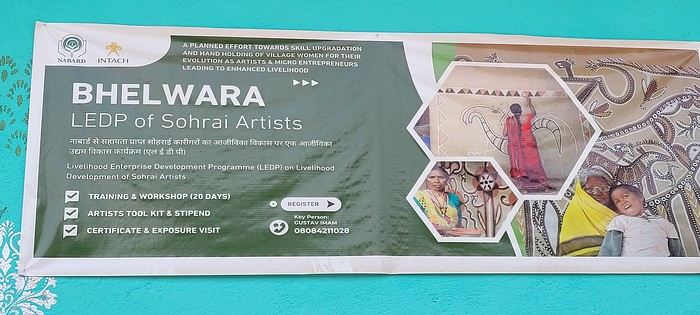
Hazaribagh I’ve got a meet-up with Adam Iman, a guide and painter. He picks me up from the hotel at 10 AM. Another traveler from Bangalore is supposed to join us, but while we wait for him to arrive, Adam takes me to see the paintings his mother and sister created at Hazaribagh station. The town became famous thanks to these murals, which can also be found in several surrounding villages. This art form has earned recognition and is now protected, a sign of its cultural importance. Once the visit is over, we go to pick up the other traveler and then head to our first village: Belwara, where Sohrai art is practiced. At the entrance, a sign proudly announces that we’re entering an artists’ village, where this art is created by women organized into micro-enterprises. Some even offer workshops for those who’d like to learn this tradition.
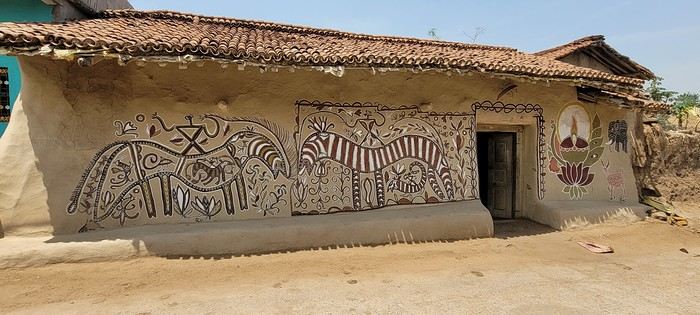
Sohrai art is tied to the harvest season, from October to mid-November. The motifs, in natural colors, celebrate fertility and abundance. The artists use pigments from the earth: red oxides, ochre, white kaolin, and black manganese. On the walls, you’ll see animals, fish, birds—all symbols of life and prosperity. As I look closer at the murals, I start to realize that each motif tells a story. Large animals like cows or bulls often take center stage. Their bodies are filled with intricate, almost hypnotic patterns. They symbolize wealth and prosperity for the household, as well as the deep respect for cattle, which are essential to daily life. On some facades, elephants stand out—massive and decorated with the same precision. They evoke quiet strength and protection. But it’s when I stop in front of one of the houses that I really take the time to look. The wall, a soft ochre, is entirely covered in murals. Two large animals stretch out on either side of the door, their elongated bodies fitting the length of the wall. Their silhouettes are filled with geometric patterns and incredibly fine curved lines, as if every space was patiently filled. Around them, stylized plants, flowers, and small decorative elements fill every gap. The door, dark and worn, becomes almost the silent center of the composition, framed by these living, protective forms. To the right, a more colorful motif catches the eye—a flower or a stylized lamp—like a touch of light on the earth. The whole thing gives an impression of perfect balance, between the rigor of the patterns and the freedom of the gesture.
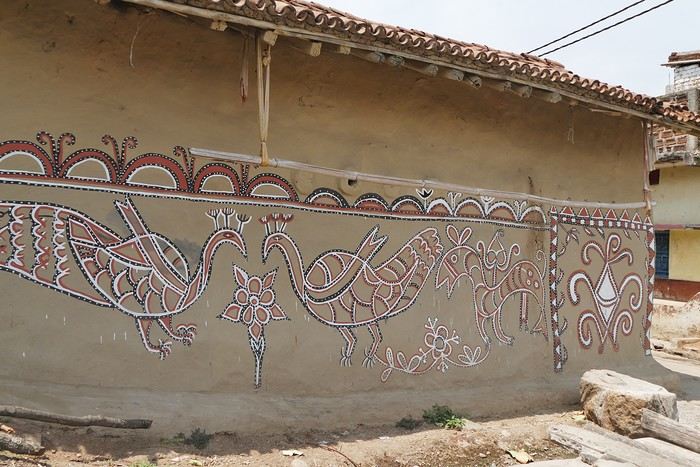
Elsewhere, birds and freer forms bring movement. Peacocks, recognizable by their stylized silhouettes, embody beauty and vitality, while fish symbolize water, fertility, and the continuity of life.
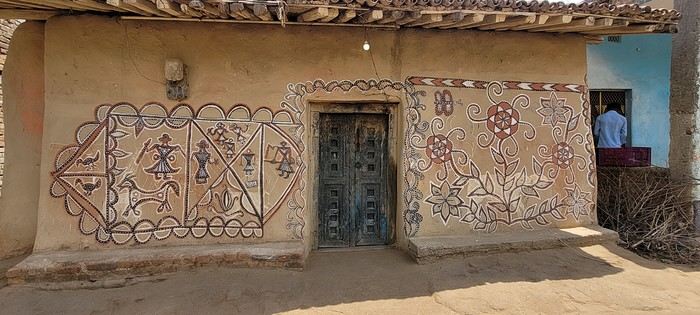
 On some paintings, the scenes become almost narrative: you can make out figures, everyday gestures, like a memory of the village inscribed in the walls. The decorative frames around the doors aren’t left to chance either—they symbolically protect the house, like a boundary between the inside and the outside world.
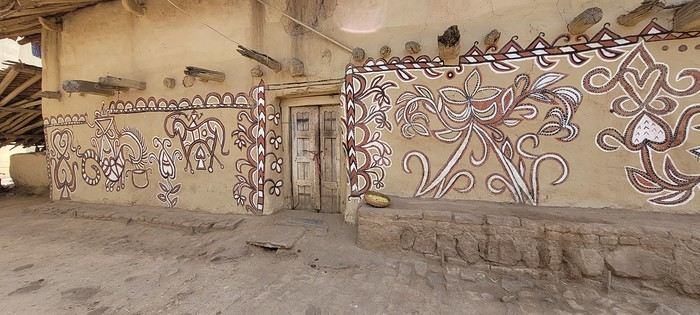
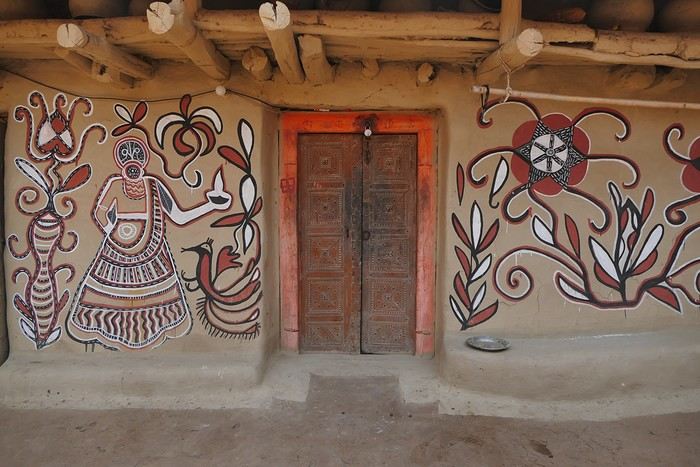
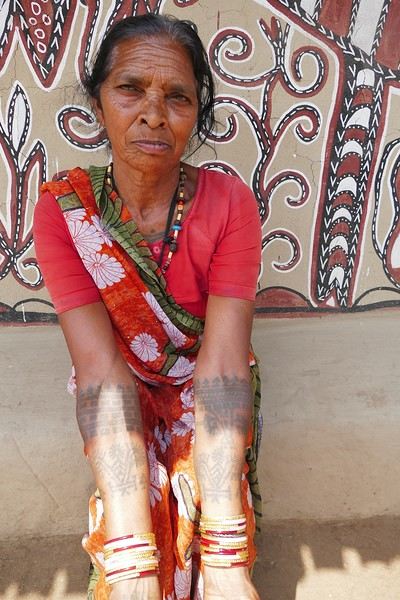
During the Sohrai festival, cattle are led into the jungle in the morning. Meanwhile, the women finish the *aripans*—these floor paintings—and continue the wall murals. Around noon, the animals return to the village, and the bulls’ horns are anointed with oil and vermilion in a gesture of gratitude, amid the vibrant colors adorning the houses. We visit several artists, including Parvat Devi, a well-known woman who has received many awards. Her arms are adorned with intriguing tattoos, which I’ll talk about in more detail later.
On another wall, the style changes completely. Here, no massive animals—just birds occupying the space, light and graceful, as if caught in mid-movement. Two silhouettes face each other, their long necks arched almost like mirrors, while their outstretched wings seem to vibrate with the patterns that compose them.
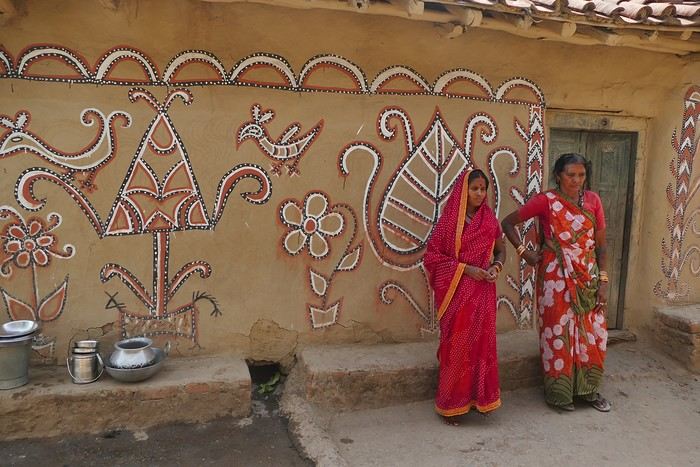
The design is more graphic, almost airy. The lines are smoother, more fluid, as if drawn in one confident stroke. The birds’ bodies aren’t solid—they’re filled with repetitive motifs like scales, stylized feathers, and spirals, giving a sense of continuous movement. Around them, everything comes to life: flowers burst open, arabesques swirl, and even the simplest shapes seem alive. What strikes me here is the sense of lightness. Where the large animals evoked stability and grounding, these birds bring something freer, almost joyful. They seem to embody movement, the circulation of life, like a breath flowing through the village.
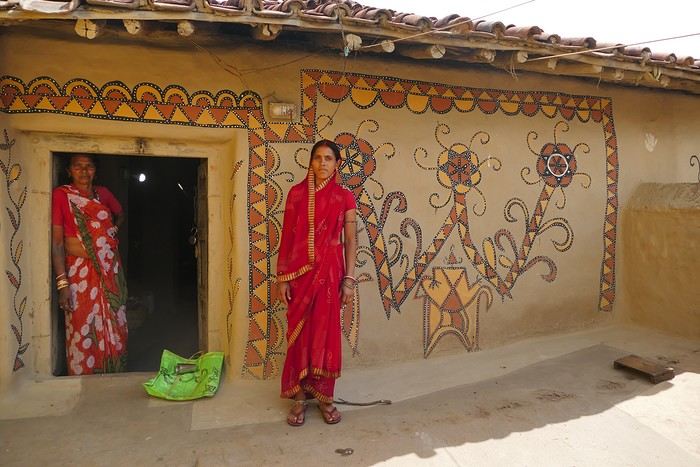
The colors remain the same—deep reds, intense blacks, and chalky white—but the rhythm is different. Faster, more spontaneous. As if each wall had its own personality, while still speaking the same language.
That’s probably why I’m so moved. I’d heard about these paintings from my friend Raja, and last year, I saw an exhibition in a village near my home. That first encounter made me want to come here. But seeing them in person is a whole different experience. These paintings are unique. This ancient art is passed down from mother to daughter, or mother-in-law to daughter-in-law, in a quiet, deeply living continuity. At first glance, it might seem almost childlike in its simplicity and pared-down forms. And yet, everything is thought out, balanced, mastered. Nothing is left to chance.
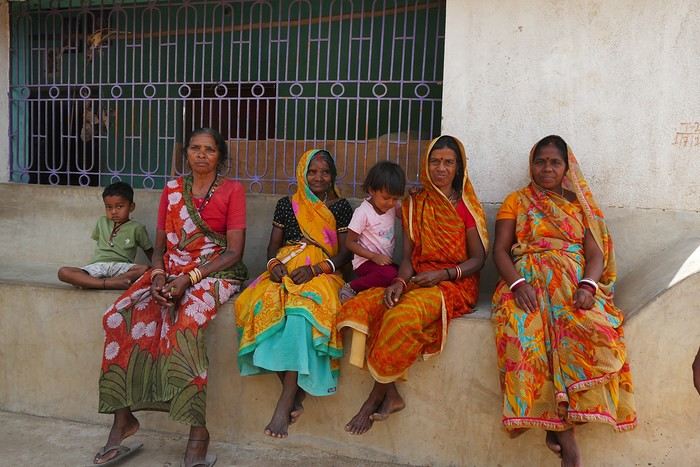
That apparent simplicity, combined with such rich symbolism, touches me deeply. There’s something sincere and essential in these walls—and that’s what moves me.
Hazaribagh I’ve got a meet-up with Adam Iman, a guide and painter. He picks me up from the hotel at 10 AM. Another traveler from Bangalore is supposed to join us, but while we wait for him to arrive, Adam takes me to see the paintings his mother and sister created at Hazaribagh station. The town became famous thanks to these murals, which can also be found in several surrounding villages. This art form has earned recognition and is now protected, a sign of its cultural importance. Once the visit is over, we go to pick up the other traveler and then head to our first village: Belwara, where Sohrai art is practiced. At the entrance, a sign proudly announces that we’re entering an artists’ village, where this art is created by women organized into micro-enterprises. Some even offer workshops for those who’d like to learn this tradition.
Sohrai art is tied to the harvest season, from October to mid-November. The motifs, in natural colors, celebrate fertility and abundance. The artists use pigments from the earth: red oxides, ochre, white kaolin, and black manganese. On the walls, you’ll see animals, fish, birds—all symbols of life and prosperity. As I look closer at the murals, I start to realize that each motif tells a story. Large animals like cows or bulls often take center stage. Their bodies are filled with intricate, almost hypnotic patterns. They symbolize wealth and prosperity for the household, as well as the deep respect for cattle, which are essential to daily life. On some facades, elephants stand out—massive and decorated with the same precision. They evoke quiet strength and protection. But it’s when I stop in front of one of the houses that I really take the time to look. The wall, a soft ochre, is entirely covered in murals. Two large animals stretch out on either side of the door, their elongated bodies fitting the length of the wall. Their silhouettes are filled with geometric patterns and incredibly fine curved lines, as if every space was patiently filled. Around them, stylized plants, flowers, and small decorative elements fill every gap. The door, dark and worn, becomes almost the silent center of the composition, framed by these living, protective forms. To the right, a more colorful motif catches the eye—a flower or a stylized lamp—like a touch of light on the earth. The whole thing gives an impression of perfect balance, between the rigor of the patterns and the freedom of the gesture.
Elsewhere, birds and freer forms bring movement. Peacocks, recognizable by their stylized silhouettes, embody beauty and vitality, while fish symbolize water, fertility, and the continuity of life.
On some paintings, the scenes become almost narrative: you can make out figures, everyday gestures, like a memory of the village inscribed in the walls. The decorative frames around the doors aren’t left to chance either—they symbolically protect the house, like a boundary between the inside and the outside world.During the Sohrai festival, cattle are led into the jungle in the morning. Meanwhile, the women finish the *aripans*—these floor paintings—and continue the wall murals. Around noon, the animals return to the village, and the bulls’ horns are anointed with oil and vermilion in a gesture of gratitude, amid the vibrant colors adorning the houses. We visit several artists, including Parvat Devi, a well-known woman who has received many awards. Her arms are adorned with intriguing tattoos, which I’ll talk about in more detail later.
On another wall, the style changes completely. Here, no massive animals—just birds occupying the space, light and graceful, as if caught in mid-movement. Two silhouettes face each other, their long necks arched almost like mirrors, while their outstretched wings seem to vibrate with the patterns that compose them.
The design is more graphic, almost airy. The lines are smoother, more fluid, as if drawn in one confident stroke. The birds’ bodies aren’t solid—they’re filled with repetitive motifs like scales, stylized feathers, and spirals, giving a sense of continuous movement. Around them, everything comes to life: flowers burst open, arabesques swirl, and even the simplest shapes seem alive. What strikes me here is the sense of lightness. Where the large animals evoked stability and grounding, these birds bring something freer, almost joyful. They seem to embody movement, the circulation of life, like a breath flowing through the village.
The colors remain the same—deep reds, intense blacks, and chalky white—but the rhythm is different. Faster, more spontaneous. As if each wall had its own personality, while still speaking the same language.
That’s probably why I’m so moved. I’d heard about these paintings from my friend Raja, and last year, I saw an exhibition in a village near my home. That first encounter made me want to come here. But seeing them in person is a whole different experience. These paintings are unique. This ancient art is passed down from mother to daughter, or mother-in-law to daughter-in-law, in a quiet, deeply living continuity. At first glance, it might seem almost childlike in its simplicity and pared-down forms. And yet, everything is thought out, balanced, mastered. Nothing is left to chance.
That apparent simplicity, combined with such rich symbolism, touches me deeply. There’s something sincere and essential in these walls—and that’s what moves me.
Love at First Sight in Kenya
Hello,
After several years, I’ve finally decided to repost a travel journal on the forum. We returned a few weeks ago from an incredible trip to Kenya, and it’s reignited my desire to share our emotions in the face of these animals.
Kenya wasn’t originally a priority for us in terms of safari—we had the impression it was too touristy. So, we started with other destinations: Namibia, Tanzania, Botswana, and South Africa. But as I did more research, especially on the forum (thanks in part to Sylvie’s many trips), I eventually convinced myself that Kenya could be magnificent, as long as we chose our itinerary carefully and avoided peak seasons.
We ended up going in January, from the 17th to the 31st. We worked with a travel agency (TP) that crafted a custom itinerary for us: Samburu-Ol Pejeta-Naivasha-Maji Moto-Maasai Mara-Diani. They partnered with a local French-speaking agency, and everything was perfectly organized. Our trip exceeded all our expectations, and none of it would’ve been as amazing without our guide, Alfred. He accompanied us for 10 days and was a fantastic travel companion—professional, respectful of the animals, and always in good spirits. We formed a great bond with him in such a short time.
- **January 17th** After meeting up with Juliette and Charlotte in Rennes the night before, we left at 4 AM for Roissy Charles de Gaulle Airport. The thick fog made the drive pretty rough, but we arrived safely around 7:45 AM. A Blue Valet driver was waiting to take our car. Check-in went smoothly, and we waited patiently for our 10:40 AM flight. Unfortunately, despite boarding on time, a passenger was missing, and we had to find a replacement last minute. Then, another passenger who had checked in and dropped off their luggage wasn’t on the plane, so they had to unload their bags. After a long period of uncertainty and spotty communication from the crew, we finally took off over an hour late.
We arrived in Nairobi in the late afternoon, 45 minutes behind schedule. The administrative formalities were endless—it took nearly 1.5 hours from landing to leaving the airport with our luggage. When we stepped out, Alfred, our guide, was waiting with a big smile and drove us to the Eka Hotel, not far from the airport. Exhausted from the long journey, we fell asleep quickly.
- **January 18th** Alfred met us at 7 AM for a long drive to Samburu Reserve. We had a peaceful night, unlike the girls, who barely slept because their neighbors were talking loudly all night. Things even escalated when Charlotte started shouting insults to get them to quiet down, but it didn’t work.
It was Sunday, so traffic around Nairobi and along the route was light. Aside from a quick "technical stop," we drove straight through and arrived in Samburu after just under 6 hours. Because of the lower altitude (around 1,000m on average), it was hot—over 30°C in mid-January.
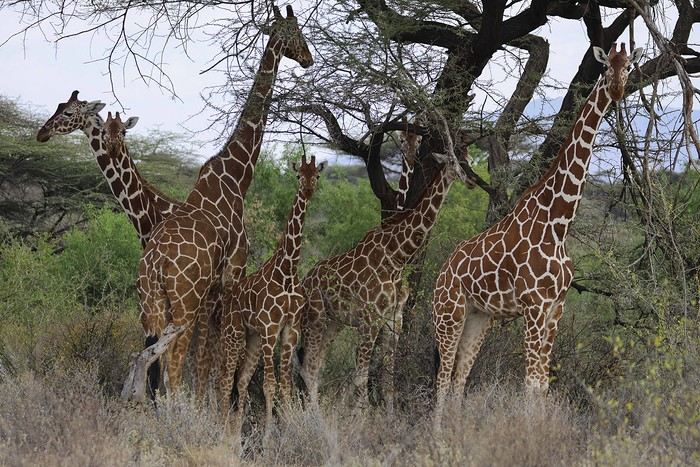
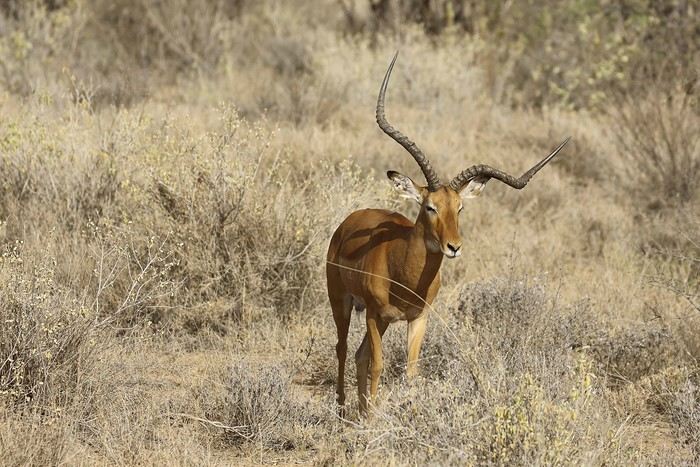
As soon as we entered the reserve, we spotted some impalas and quickly came across one of the region’s endemic species: the reticulated giraffe, which is absolutely stunning.
While heading to our camp for lunch, Alfred crossed paths with another vehicle and learned that a leopard was nearby. We started searching, and a few minutes later, Anny spotted a shape in a tree—it was our leopard!
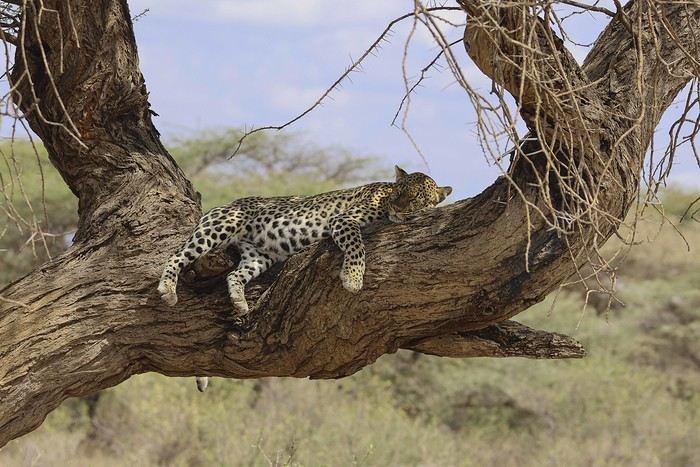
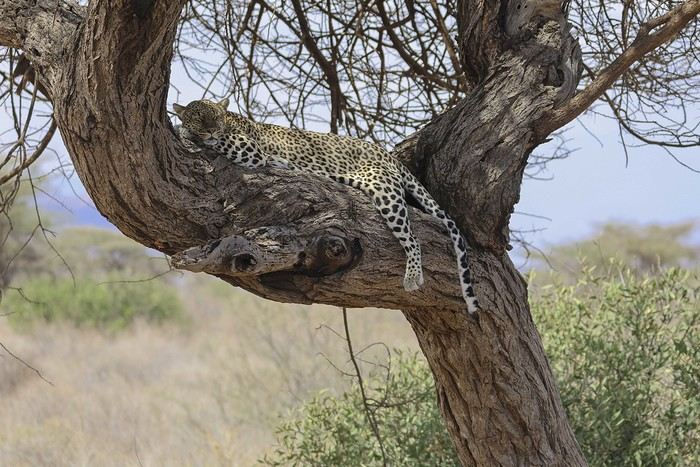
There were actually two of them—a mother and her adolescent. The young one was perched high in the tree, in the shade. We got to observe them for a good half-hour in excellent conditions, with just one other vehicle nearby.
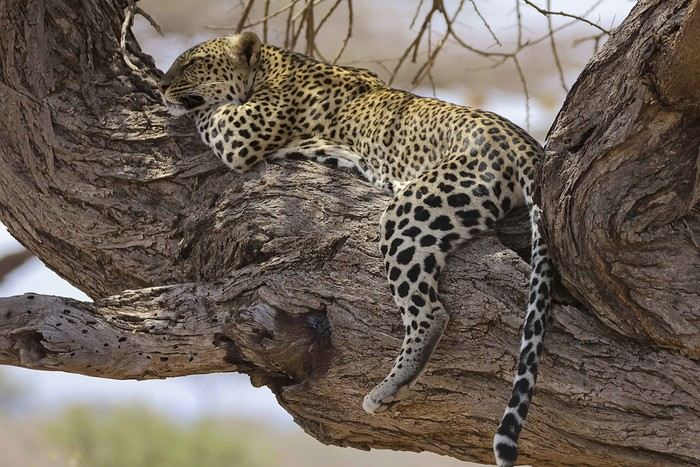
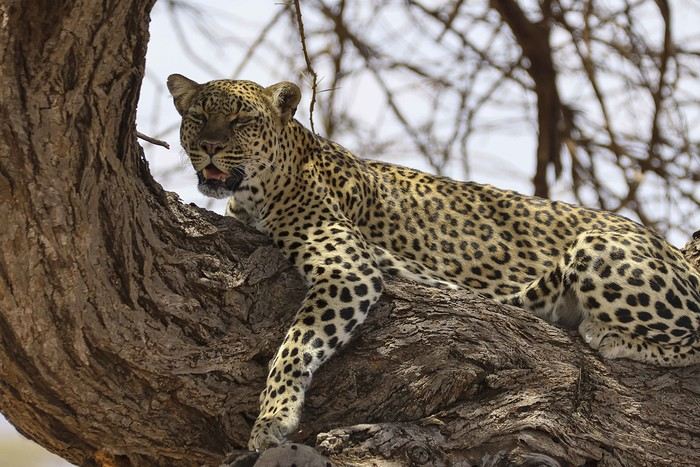
Alfred also noticed that the mother had hidden prey (a gerenuk gazelle) in the vegetation, away from prying eyes.
It was time to head to our camp, the Ashnil Samburu Camp, located in the Buffalo Springs area, by the river, in an idyllic setting surrounded by the region’s typical vegetation.
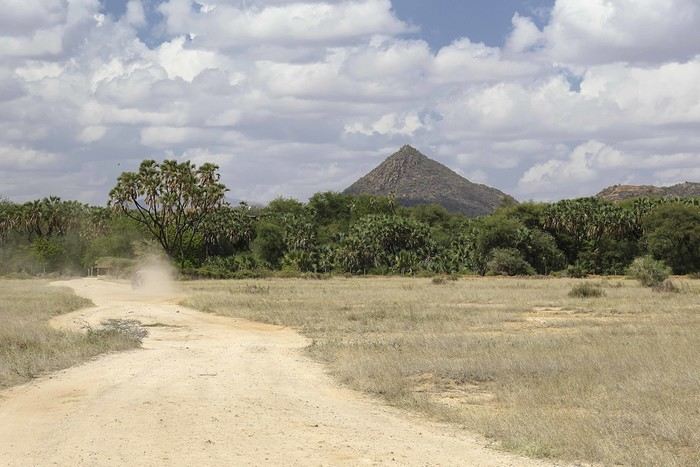
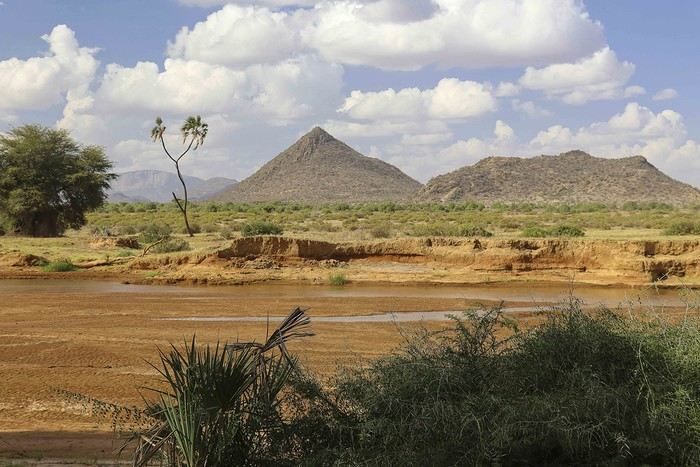
The welcome was fantastic—we immediately felt at home, and that feeling lasted throughout our 3-day stay in the reserve. It was 2 PM, but no one rushed us to the table. Our waitress, Sheila, who took care of us the whole time, was as lovely as the rest of the team. Barely seated, we were invited to watch an elephant passing right by the camp, in front of the restaurant. This trip was off to a great start!
After lunch, we relaxed by the pool. Monkeys, especially vervets, were everywhere, and a camp employee was assigned to keep an eye on them and shoo them away if needed (especially the baboons).
A little before 4 PM, we met up with Alfred for our first game drive. Just outside the camp, a few elephants were in the valley near the river.
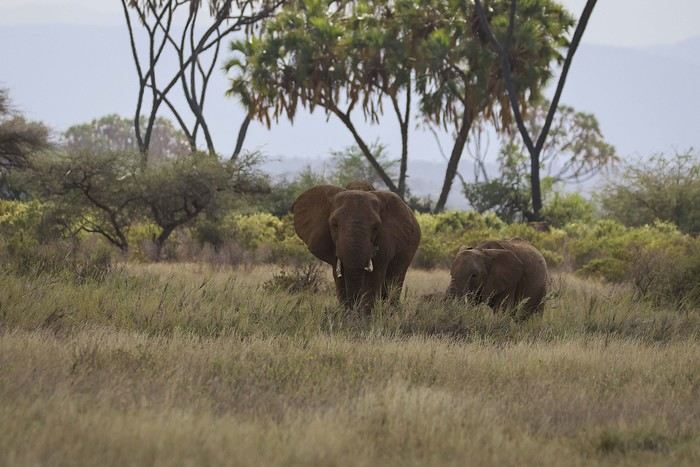
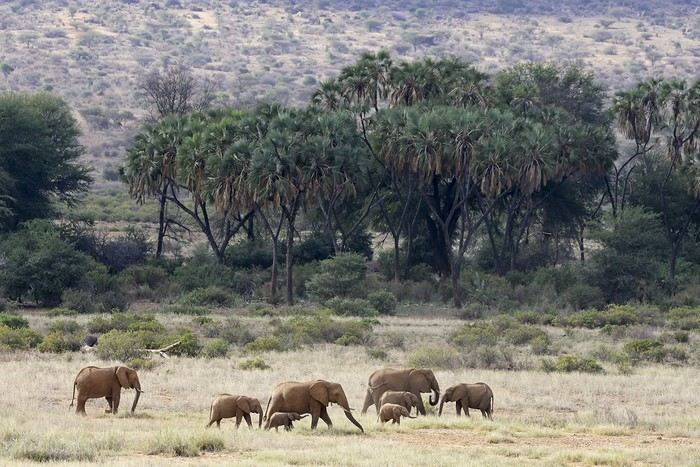
We’d see them in the same area almost every day. We also spotted some gazelles.
After several years, I’ve finally decided to repost a travel journal on the forum. We returned a few weeks ago from an incredible trip to Kenya, and it’s reignited my desire to share our emotions in the face of these animals.
Kenya wasn’t originally a priority for us in terms of safari—we had the impression it was too touristy. So, we started with other destinations: Namibia, Tanzania, Botswana, and South Africa. But as I did more research, especially on the forum (thanks in part to Sylvie’s many trips), I eventually convinced myself that Kenya could be magnificent, as long as we chose our itinerary carefully and avoided peak seasons.
We ended up going in January, from the 17th to the 31st. We worked with a travel agency (TP) that crafted a custom itinerary for us: Samburu-Ol Pejeta-Naivasha-Maji Moto-Maasai Mara-Diani. They partnered with a local French-speaking agency, and everything was perfectly organized. Our trip exceeded all our expectations, and none of it would’ve been as amazing without our guide, Alfred. He accompanied us for 10 days and was a fantastic travel companion—professional, respectful of the animals, and always in good spirits. We formed a great bond with him in such a short time.
- **January 17th** After meeting up with Juliette and Charlotte in Rennes the night before, we left at 4 AM for Roissy Charles de Gaulle Airport. The thick fog made the drive pretty rough, but we arrived safely around 7:45 AM. A Blue Valet driver was waiting to take our car. Check-in went smoothly, and we waited patiently for our 10:40 AM flight. Unfortunately, despite boarding on time, a passenger was missing, and we had to find a replacement last minute. Then, another passenger who had checked in and dropped off their luggage wasn’t on the plane, so they had to unload their bags. After a long period of uncertainty and spotty communication from the crew, we finally took off over an hour late.
We arrived in Nairobi in the late afternoon, 45 minutes behind schedule. The administrative formalities were endless—it took nearly 1.5 hours from landing to leaving the airport with our luggage. When we stepped out, Alfred, our guide, was waiting with a big smile and drove us to the Eka Hotel, not far from the airport. Exhausted from the long journey, we fell asleep quickly.
- **January 18th** Alfred met us at 7 AM for a long drive to Samburu Reserve. We had a peaceful night, unlike the girls, who barely slept because their neighbors were talking loudly all night. Things even escalated when Charlotte started shouting insults to get them to quiet down, but it didn’t work.
It was Sunday, so traffic around Nairobi and along the route was light. Aside from a quick "technical stop," we drove straight through and arrived in Samburu after just under 6 hours. Because of the lower altitude (around 1,000m on average), it was hot—over 30°C in mid-January.
As soon as we entered the reserve, we spotted some impalas and quickly came across one of the region’s endemic species: the reticulated giraffe, which is absolutely stunning.
While heading to our camp for lunch, Alfred crossed paths with another vehicle and learned that a leopard was nearby. We started searching, and a few minutes later, Anny spotted a shape in a tree—it was our leopard!
There were actually two of them—a mother and her adolescent. The young one was perched high in the tree, in the shade. We got to observe them for a good half-hour in excellent conditions, with just one other vehicle nearby.
Alfred also noticed that the mother had hidden prey (a gerenuk gazelle) in the vegetation, away from prying eyes.
It was time to head to our camp, the Ashnil Samburu Camp, located in the Buffalo Springs area, by the river, in an idyllic setting surrounded by the region’s typical vegetation.
The welcome was fantastic—we immediately felt at home, and that feeling lasted throughout our 3-day stay in the reserve. It was 2 PM, but no one rushed us to the table. Our waitress, Sheila, who took care of us the whole time, was as lovely as the rest of the team. Barely seated, we were invited to watch an elephant passing right by the camp, in front of the restaurant. This trip was off to a great start!
After lunch, we relaxed by the pool. Monkeys, especially vervets, were everywhere, and a camp employee was assigned to keep an eye on them and shoo them away if needed (especially the baboons).
A little before 4 PM, we met up with Alfred for our first game drive. Just outside the camp, a few elephants were in the valley near the river.
We’d see them in the same area almost every day. We also spotted some gazelles.
Trip to Thailand and Laos
Hello! 🙂
January 2026 Here we go again for new adventures and the pleasure of sharing them with you here! First of all, I’d like to thank everyone who helped me with the preparations, even with some last-minute improvisations just days before departure. Thanks to Montagnard74, Jojoone1, Songsam, Attila, Dennis2, NadegerFERM, and the authors whose travel journals about Laos inspired me (Montagnard74, Muriel18, Mavietongs...).
In this story, written by Richard and illustrated by me, we’ll tell you about the journey of four friends: Catherine, Richard, Nathalie, and Bruno. A reinvented but overall successful trip, filled with discoveries and surprises, the scents of spices and frangipani flowers, (too) spicy food, sunsets, and... one big mess.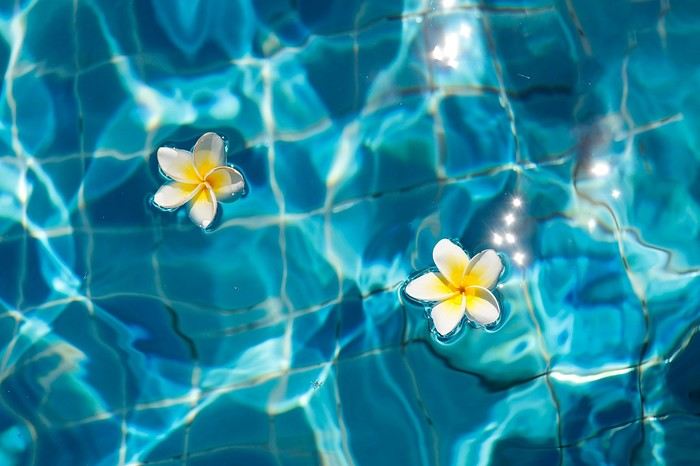
January 2026 Here we go again for new adventures and the pleasure of sharing them with you here! First of all, I’d like to thank everyone who helped me with the preparations, even with some last-minute improvisations just days before departure. Thanks to Montagnard74, Jojoone1, Songsam, Attila, Dennis2, NadegerFERM, and the authors whose travel journals about Laos inspired me (Montagnard74, Muriel18, Mavietongs...).
In this story, written by Richard and illustrated by me, we’ll tell you about the journey of four friends: Catherine, Richard, Nathalie, and Bruno. A reinvented but overall successful trip, filled with discoveries and surprises, the scents of spices and frangipani flowers, (too) spicy food, sunsets, and... one big mess.
Old Burmese Adventures (oh, so many!)
Hey everyone,
Yesterday, I checked the Thailand forum to see if there were any questions to answer, but not much was happening—it was pretty quiet. Then I scrolled through the Southeast Asia section and realized that, even though Burma (Myanmar) was included, there weren’t many posts about it... I’ve only been there once, back in 1987, so it’s hard to create a photo thread about multiple trips like I sometimes do for Thailand. Still, that one trip was packed with unusual adventures, so I thought I’d share a few stories from it.
Since I didn’t take any notes at the time, this is all from memory—it’s not an exhaustive travel journal and isn’t meant to help plan a future trip to Myanmar.
Don’t expect photos; there won’t be any. I have some, but they’re slides that would need scanning and editing one by one to fix the wear and tear of time—way too much work.
The Context.
Back then (reminder: 1987), I was volunteering in Paris at the counter of a travel agency on Rue des Écoles. The agency was part of a well-known organization based in Mulhouse that mostly offered scheduled flights to Asia, charter flights to the Mediterranean, and flights to Mali with their own plane. They also had a few rare "roots"-style trips to certain destinations—trips where you didn’t bring your tennis racket but were ready to soak in everything, even if it meant tough conditions.
I’d already been to Thailand, Indonesia, and the Philippines in Asia. The director knew this, so he asked me to accompany a group to Burma. At the time, tours to Burma were already being sold by competitors, but they all had to go through the state-run agency, Touristburma (buses and hotels for tourists, and they only showed you what they wanted you to see—kind of like traveling in North Korea today). The service was only payable in dollars at the official exchange rate (which was six times worse than the black market rate, mind you...), and since it went through the state agency, all the money ended up with the junta.
My job was to do everything *without* going through Touristburma, which was completely illegal there. Nothing would be booked in advance. Back then, the Burmese visa was only valid for 8 days/7 nights, and since clients were paying for the experience, the itinerary was planned ahead. I’d have to find transport and a guide on the black market as soon as I arrived.
The clients weren’t misled—they knew from the start that the trip would be off the books, that officially we’d be a small group of friends (not an agency), unlike the truth (Touristburma wasn’t mandatory for individual travelers), and that it would be challenging. They also knew their trip would cost 3-4 times less while giving them a much better experience of Burma. As for pretending to be a group of friends, there were only six of us, so it worked out.
To cover all expenses (accommodation, transport, excursions), the agency gave me a sufficient budget. They also gave me the *same* budget a second time, which was strictly for bribing officials who might cause trouble, for backshish (tips), and, if needed, to "help" me get out of prison.
Before I left, I was thoroughly briefed by another guy who’d led the previous trip (he’d dealt with all the initial challenges). He explained everything I needed to know, what to watch out for, and advised me on what to bring as "gifts" (samples of well-known perfumes, specific cigarette and whisky brands, etc.). For the perfume samples, I rallied my family, friends, and even stores. For the rest, I’d pick things up at the duty-free shops in Don Muang (Bangkok’s only airport at the time)—I had the budget for it.
I couldn’t wait to leave...
Yesterday, I checked the Thailand forum to see if there were any questions to answer, but not much was happening—it was pretty quiet. Then I scrolled through the Southeast Asia section and realized that, even though Burma (Myanmar) was included, there weren’t many posts about it... I’ve only been there once, back in 1987, so it’s hard to create a photo thread about multiple trips like I sometimes do for Thailand. Still, that one trip was packed with unusual adventures, so I thought I’d share a few stories from it.
Since I didn’t take any notes at the time, this is all from memory—it’s not an exhaustive travel journal and isn’t meant to help plan a future trip to Myanmar.
Don’t expect photos; there won’t be any. I have some, but they’re slides that would need scanning and editing one by one to fix the wear and tear of time—way too much work.
The Context.
Back then (reminder: 1987), I was volunteering in Paris at the counter of a travel agency on Rue des Écoles. The agency was part of a well-known organization based in Mulhouse that mostly offered scheduled flights to Asia, charter flights to the Mediterranean, and flights to Mali with their own plane. They also had a few rare "roots"-style trips to certain destinations—trips where you didn’t bring your tennis racket but were ready to soak in everything, even if it meant tough conditions.
I’d already been to Thailand, Indonesia, and the Philippines in Asia. The director knew this, so he asked me to accompany a group to Burma. At the time, tours to Burma were already being sold by competitors, but they all had to go through the state-run agency, Touristburma (buses and hotels for tourists, and they only showed you what they wanted you to see—kind of like traveling in North Korea today). The service was only payable in dollars at the official exchange rate (which was six times worse than the black market rate, mind you...), and since it went through the state agency, all the money ended up with the junta.
My job was to do everything *without* going through Touristburma, which was completely illegal there. Nothing would be booked in advance. Back then, the Burmese visa was only valid for 8 days/7 nights, and since clients were paying for the experience, the itinerary was planned ahead. I’d have to find transport and a guide on the black market as soon as I arrived.
The clients weren’t misled—they knew from the start that the trip would be off the books, that officially we’d be a small group of friends (not an agency), unlike the truth (Touristburma wasn’t mandatory for individual travelers), and that it would be challenging. They also knew their trip would cost 3-4 times less while giving them a much better experience of Burma. As for pretending to be a group of friends, there were only six of us, so it worked out.
To cover all expenses (accommodation, transport, excursions), the agency gave me a sufficient budget. They also gave me the *same* budget a second time, which was strictly for bribing officials who might cause trouble, for backshish (tips), and, if needed, to "help" me get out of prison.
Before I left, I was thoroughly briefed by another guy who’d led the previous trip (he’d dealt with all the initial challenges). He explained everything I needed to know, what to watch out for, and advised me on what to bring as "gifts" (samples of well-known perfumes, specific cigarette and whisky brands, etc.). For the perfume samples, I rallied my family, friends, and even stores. For the rest, I’d pick things up at the duty-free shops in Don Muang (Bangkok’s only airport at the time)—I had the budget for it.
I couldn’t wait to leave...
Road Trip USA 2023 - Part 2
HIGHWAY 1
Highway 1 runs along the Pacific coast of California from Leggett in the north to Dana Point in the south. It's the longest state route in California, stretching 1,050 km.
It's famous for its breathtaking ocean views. That’s actually why it’s become such a popular route for road trips, with tons of attractions and points of interest all along the way.
After crossing the U.S. interior on our way out (see Road Trip USA 2023 - Part 1), we’re starting our return trip along this route from Leggett.
Videos are embedded throughout the summary. Please click on the image to start the video. To jump to a specific post, here are the appropriate links:
CALIFORNIA:
Scenic Overlooks on Route 1 Between Leggett and Fort Bragg The Pudding Creek Trestle Bridge in Fort Bragg Glass Beach - Fort Bragg Jenner Lookout Point - Highway 1 Goat Rock Beach - Sonoma Coast State Park - Jenner Point Reyes National Seashore - White House Pool Trail Point Reyes National Seashore - Limantour Beach Point Reyes National Seashore - Point Reyes Shipwreck Point Reyes National Seashore - Kehoe Beach Trail Point Reyes National Seashore - McClures Beach Trail Point Reyes National Seashore - Cypress Tree Tunnel Point Reyes National Seashore - Point Reyes Beach North Point Reyes National Seashore - Elephant Seals on Drakes Beach Point Reyes National Seashore - Point Reyes Beach South Point Reyes National Seashore – Elephant Seals Overlooks Point Reyes National Seashore - Chimney Rock Trail Point Reyes National Seashore - Point Reyes Lighthouse Trail Point Reyes National Seashore – Tule Elk Observation Point Bonita Lighthouse Trail - Sausalito Hawk Hill - Sausalito Battery Spencer Trail - Sausalito Rodeo Beach - Sausalito Point Cavallo - Golden Gate View - Sausalito Exploring Downtown Sausalito Visiting Sausalito’s Houseboats Crossing the Golden Gate Bridge - San Francisco Golden Gate Bridge Viewpoints - San Francisco Cruise to Alcatraz Island - San Francisco Visiting Alcatraz Island - San Francisco Civic Center - Downtown San Francisco Market Street & Yerba Buena Gardens - Downtown San Francisco Union Square & Financial District - Downtown San Francisco Fisherman's Wharf, Pier 39 & Embarcadero - San Francisco Sea Lion Observation - Pier 39 - San Francisco Lombard Street & Cable Car - Russian Hill - San Francisco Macondray Lane Historic District - Russian Hill - San Francisco Grace Cathedral & Huntington Park - Nob Hill - San Francisco Telegraph Hill - San Francisco Chinatown - San Francisco Alamo Square & Painted Ladies - Western Addition - San Francisco Palace of Fine Arts - Marina District - San Francisco Presidio of San Francisco California Coastal Trail - Lincoln Park - San Francisco California Palace of the Legion of Honor - Lincoln Park - San Francisco Sutro Baths - Lincoln Park - San Francisco Queen Wilhelmina Garden - Golden Gate Park - San Francisco Bison Paddock - Golden Gate Park - San Francisco Portals of the Past - Golden Gate Park - San Francisco Strawberry Hill - Golden Gate Park – San Francisco Prayerbook Cross & Robin Williams Meadow - Golden Gate Park - San Francisco Hidden Garden Steps & 16th Avenue Tiled Steps - San Francisco Grandview Park - San Francisco Hike - Twin Peaks Three Summits - San Francisco Longboarding Down Twin Peaks Blvd in San Francisco Haight-Ashbury - San Francisco Corona Heights Park - San Francisco Mission Dolores - San Francisco Mural Frescoes (Part 1) - Mission District - San Francisco Mural Frescoes (Part 2) - Mission District - San Francisco Devil's Slide Bunker - Pacifica Mavericks Beach - Half Moon Bay Martins Beach - Half Moon Bay Pigeon Point Lighthouse State Historic Park - Pescadero What to See in Santa Cruz Visiting Capitola What to See in Monterey Carmel-by-the-Sea Lovers Point Park - Pacific Grove Castle Rock, Hurricane Point & Little Sur River Viewpoints Pfeiffer Falls Trail Julia Pfeiffer Burns State Park Vista Point & McWay Falls Highway 1 - Big Sur Viewpoints Salmon Creek Falls San Carpoforo Creek Trail Elephant Seal Vista Point - San Simeon San Simeon Pier Moonstone Beach Boardwalk Shipwreck - Estero Bluffs State Park Surfing Competition in Morro Bay Port San Luis Pier - San Luis Obispo Pismo Beach Monarch Butterfly Grove - Pismo State Beach Nojoqui Falls Park - Solvang Arroyo Hondo Vista Point Solvang, a Charming Danish Town in California Chumash Painted Cave - Santa Barbara Goleta San Marcos Rd & Cachuma Lake Vista Points - Santa Barbara Old Santa Barbara Mission Walking Tour of Santa Barbara’s Historic Downtown West Beach - Santa Barbara What to See in Ventura Paradise Falls - Wildwood Regional Park - Thousand Oaks Sandy Dune & El Matador State Beach - Malibu Point Dume Nature Reserve - Malibu Malibu Pier Road Trip in the Malibu Mountains Los Liones Trail - Santa Monica Santa Monica Pier Rodeo Drive - Beverly Hills Greystone Mansion - Beverly Hills Hollywood Walk of Fame - Los Angeles Griffith Observatory - Los Angeles Hollywood Forever Cemetery - Los Angeles What to See in Venice Beach Venice Beach Skatepark ShoreLine Aquatic Park - Long Beach Alamitos Beach - Long Beach Naples Island - Long Beach Crescent Bay Point Park & Helser Park Kiosk - Laguna Beach Shell Beach at Twin Points - Laguna Beach Prairie Dogs at Agra Vista Point Top Gun House & Oceanside Pier Annie's Canyon Trail - Solana Beach (Via North Rios Trailhead Loop) Old Town San Diego La Jolla Coastal Trail - San Diego Balboa Park - San Diego Pacific Beach - San Diego Mission Beach - San Diego Ocean Beach Tide Pools - San Diego Sunset Cliffs Natural Park - San Diego Tuna Harbor Park - San Diego Seaport Village & Embarcadero Marina Park - San Diego Gaslamp Quarter - Downtown San Diego Coronado Island - San Diego Dead Dolly Lane - Alpine Galleta Meadows Metal Sculptures - Borrego Springs What to See in Palm Springs Robolights - Palm Springs Andreas Canyon Trail - Indian Canyons - Palm Springs Palm Canyon Trail - Indian Canyons - Palm Springs West Fork Falls Trail - Indian Canyons - Palm Springs Tahquitz Canyon Loop Trail - Indian Canyons - Palm Springs Desert Christ Park - Yucca Valley Pioneertown Salvation Mountain - Niland Slab City - Niland
Highway 1 runs along the Pacific coast of California from Leggett in the north to Dana Point in the south. It's the longest state route in California, stretching 1,050 km.
It's famous for its breathtaking ocean views. That’s actually why it’s become such a popular route for road trips, with tons of attractions and points of interest all along the way.
After crossing the U.S. interior on our way out (see Road Trip USA 2023 - Part 1), we’re starting our return trip along this route from Leggett.
Videos are embedded throughout the summary. Please click on the image to start the video. To jump to a specific post, here are the appropriate links:
CALIFORNIA:
Scenic Overlooks on Route 1 Between Leggett and Fort Bragg The Pudding Creek Trestle Bridge in Fort Bragg Glass Beach - Fort Bragg Jenner Lookout Point - Highway 1 Goat Rock Beach - Sonoma Coast State Park - Jenner Point Reyes National Seashore - White House Pool Trail Point Reyes National Seashore - Limantour Beach Point Reyes National Seashore - Point Reyes Shipwreck Point Reyes National Seashore - Kehoe Beach Trail Point Reyes National Seashore - McClures Beach Trail Point Reyes National Seashore - Cypress Tree Tunnel Point Reyes National Seashore - Point Reyes Beach North Point Reyes National Seashore - Elephant Seals on Drakes Beach Point Reyes National Seashore - Point Reyes Beach South Point Reyes National Seashore – Elephant Seals Overlooks Point Reyes National Seashore - Chimney Rock Trail Point Reyes National Seashore - Point Reyes Lighthouse Trail Point Reyes National Seashore – Tule Elk Observation Point Bonita Lighthouse Trail - Sausalito Hawk Hill - Sausalito Battery Spencer Trail - Sausalito Rodeo Beach - Sausalito Point Cavallo - Golden Gate View - Sausalito Exploring Downtown Sausalito Visiting Sausalito’s Houseboats Crossing the Golden Gate Bridge - San Francisco Golden Gate Bridge Viewpoints - San Francisco Cruise to Alcatraz Island - San Francisco Visiting Alcatraz Island - San Francisco Civic Center - Downtown San Francisco Market Street & Yerba Buena Gardens - Downtown San Francisco Union Square & Financial District - Downtown San Francisco Fisherman's Wharf, Pier 39 & Embarcadero - San Francisco Sea Lion Observation - Pier 39 - San Francisco Lombard Street & Cable Car - Russian Hill - San Francisco Macondray Lane Historic District - Russian Hill - San Francisco Grace Cathedral & Huntington Park - Nob Hill - San Francisco Telegraph Hill - San Francisco Chinatown - San Francisco Alamo Square & Painted Ladies - Western Addition - San Francisco Palace of Fine Arts - Marina District - San Francisco Presidio of San Francisco California Coastal Trail - Lincoln Park - San Francisco California Palace of the Legion of Honor - Lincoln Park - San Francisco Sutro Baths - Lincoln Park - San Francisco Queen Wilhelmina Garden - Golden Gate Park - San Francisco Bison Paddock - Golden Gate Park - San Francisco Portals of the Past - Golden Gate Park - San Francisco Strawberry Hill - Golden Gate Park – San Francisco Prayerbook Cross & Robin Williams Meadow - Golden Gate Park - San Francisco Hidden Garden Steps & 16th Avenue Tiled Steps - San Francisco Grandview Park - San Francisco Hike - Twin Peaks Three Summits - San Francisco Longboarding Down Twin Peaks Blvd in San Francisco Haight-Ashbury - San Francisco Corona Heights Park - San Francisco Mission Dolores - San Francisco Mural Frescoes (Part 1) - Mission District - San Francisco Mural Frescoes (Part 2) - Mission District - San Francisco Devil's Slide Bunker - Pacifica Mavericks Beach - Half Moon Bay Martins Beach - Half Moon Bay Pigeon Point Lighthouse State Historic Park - Pescadero What to See in Santa Cruz Visiting Capitola What to See in Monterey Carmel-by-the-Sea Lovers Point Park - Pacific Grove Castle Rock, Hurricane Point & Little Sur River Viewpoints Pfeiffer Falls Trail Julia Pfeiffer Burns State Park Vista Point & McWay Falls Highway 1 - Big Sur Viewpoints Salmon Creek Falls San Carpoforo Creek Trail Elephant Seal Vista Point - San Simeon San Simeon Pier Moonstone Beach Boardwalk Shipwreck - Estero Bluffs State Park Surfing Competition in Morro Bay Port San Luis Pier - San Luis Obispo Pismo Beach Monarch Butterfly Grove - Pismo State Beach Nojoqui Falls Park - Solvang Arroyo Hondo Vista Point Solvang, a Charming Danish Town in California Chumash Painted Cave - Santa Barbara Goleta San Marcos Rd & Cachuma Lake Vista Points - Santa Barbara Old Santa Barbara Mission Walking Tour of Santa Barbara’s Historic Downtown West Beach - Santa Barbara What to See in Ventura Paradise Falls - Wildwood Regional Park - Thousand Oaks Sandy Dune & El Matador State Beach - Malibu Point Dume Nature Reserve - Malibu Malibu Pier Road Trip in the Malibu Mountains Los Liones Trail - Santa Monica Santa Monica Pier Rodeo Drive - Beverly Hills Greystone Mansion - Beverly Hills Hollywood Walk of Fame - Los Angeles Griffith Observatory - Los Angeles Hollywood Forever Cemetery - Los Angeles What to See in Venice Beach Venice Beach Skatepark ShoreLine Aquatic Park - Long Beach Alamitos Beach - Long Beach Naples Island - Long Beach Crescent Bay Point Park & Helser Park Kiosk - Laguna Beach Shell Beach at Twin Points - Laguna Beach Prairie Dogs at Agra Vista Point Top Gun House & Oceanside Pier Annie's Canyon Trail - Solana Beach (Via North Rios Trailhead Loop) Old Town San Diego La Jolla Coastal Trail - San Diego Balboa Park - San Diego Pacific Beach - San Diego Mission Beach - San Diego Ocean Beach Tide Pools - San Diego Sunset Cliffs Natural Park - San Diego Tuna Harbor Park - San Diego Seaport Village & Embarcadero Marina Park - San Diego Gaslamp Quarter - Downtown San Diego Coronado Island - San Diego Dead Dolly Lane - Alpine Galleta Meadows Metal Sculptures - Borrego Springs What to See in Palm Springs Robolights - Palm Springs Andreas Canyon Trail - Indian Canyons - Palm Springs Palm Canyon Trail - Indian Canyons - Palm Springs West Fork Falls Trail - Indian Canyons - Palm Springs Tahquitz Canyon Loop Trail - Indian Canyons - Palm Springs Desert Christ Park - Yucca Valley Pioneertown Salvation Mountain - Niland Slab City - Niland
From Southern Shikoku, between land and sea, to the blue waters of Miyakojima and finally the Tokyo metropolis
From Southern Shikoku, between land and sea, to the blue waters of Miyakojima and finally Tokyo’s megacity
Hi everyone,
I have to admit, I really hesitated before deciding to write this travel journal... Writing one takes a lot of time and energy, and since this is my 4th trip, I wondered if it would even interest anyone other than myself (both for the discovery and the writing). But after a few people asked, "Are you going to write a journal?" and especially after rediscovering the joy of reading other travelers’ journals about Japan or elsewhere on this forum, I’ve decided to share my 4th installment in the Land of the Rising Sun here.
The itinerary: 27 full days, from late May to late June 2025, right in the middle of the rainy season, including:
-->13 days in Shikoku, from Kochi (Kochi Prefecture) to Matsuyama (Ehime Prefecture)
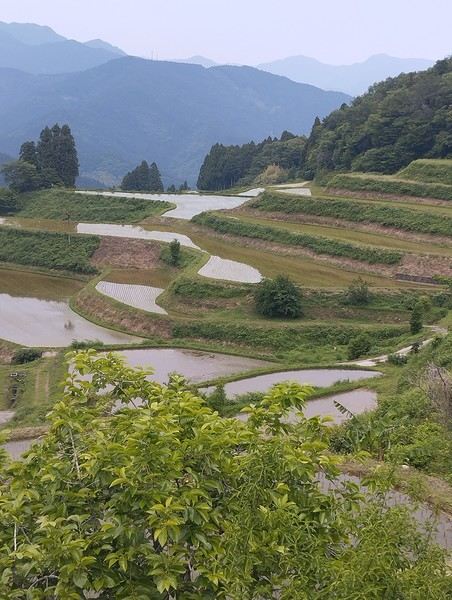
-->7 days in Miyakojima (Okinawa Prefecture)
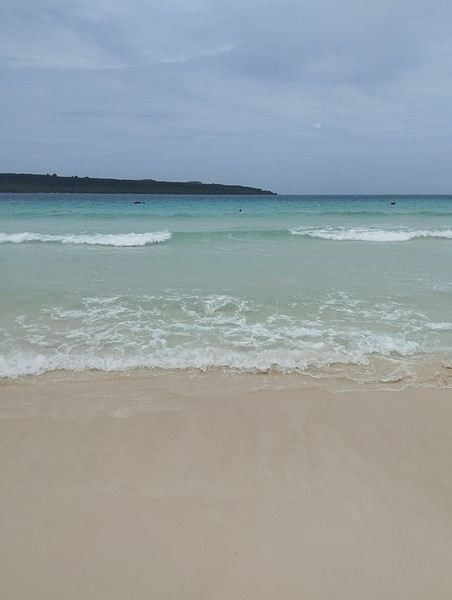
-->7 days in Tokyo
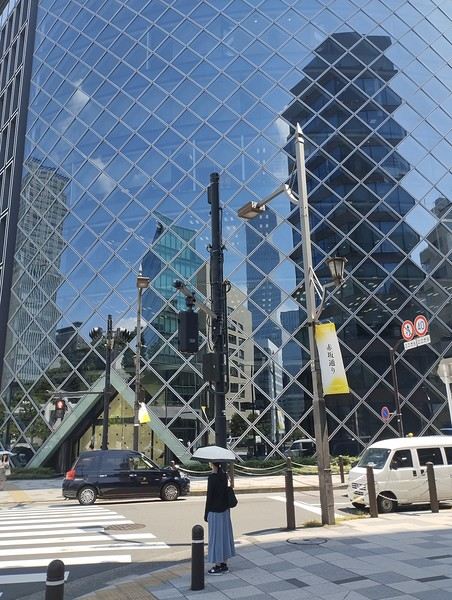
The trip was decided on fairly last-minute again this year.
Since I regularly check flight prices to track fluctuations for this destination even without concrete plans, stumbling upon a slightly cheaper direct flight (900 €) than what I’d seen in previous months (around 1,200–1,400 € on average) for a Paris-Tokyo route with Japanese airline ANA was too tempting to resist the urge to return to this enchanting country. After much hesitation between exploring the San’in region (Matsue, Tottori, Yamaguchi) and Southern Shikoku, the decision was made—I took the plunge! The ticket is booked: Paris to Kochi with a layover in Tokyo, all with ANA, the airline I’d been dreaming of... for 1,120 € per person. Okay, it’s not cheap, but it’s better than in 2023.
Departure in 2 weeks! Now I just have to get everything ready!
Intense prep work over these next 2 weeks to:
finalize a more precise itinerary and reach an agreement—yep, because even though we both love Japan, our preferences differ slightly, and we have to choose between exploring new places or revisiting beloved spots... decide how much time to spend in each area without rushing while still exploring research places that might interest us and watch videos about Japan book accommodations: yes, it’s possible to do this on the spot, but last year, we realized that last-minute options were pretty expensive, so we’re booking ahead—though we’ll keep a few options open in case better deals pop up later reserve rental cars order yen check the weather regularly and wonder if choosing the *tsuyu* (rainy season) was really a good idea—are we going to be drenched the whole time???
"What hard work," you might say! Going to Japan for a month—what a tough life! Despite this being my 4th trip, the excitement is just as intense as the first time.
The only small downside is that when we booked the flight, there weren’t many seats left, so we’re only sitting together on the international return flight. Plus, on the way there, we have middle seats. Another lingering question: what French-language films will be available? According to the internet, the selection seems limited. Oh well, these are just minor details—it’s already time to fly! PS: I’ll be posting slowly and irregularly... so for those interested, be patient, and maybe set an alert...
Hi everyone,
I have to admit, I really hesitated before deciding to write this travel journal... Writing one takes a lot of time and energy, and since this is my 4th trip, I wondered if it would even interest anyone other than myself (both for the discovery and the writing). But after a few people asked, "Are you going to write a journal?" and especially after rediscovering the joy of reading other travelers’ journals about Japan or elsewhere on this forum, I’ve decided to share my 4th installment in the Land of the Rising Sun here.
The itinerary: 27 full days, from late May to late June 2025, right in the middle of the rainy season, including:
-->13 days in Shikoku, from Kochi (Kochi Prefecture) to Matsuyama (Ehime Prefecture)
-->7 days in Miyakojima (Okinawa Prefecture)
-->7 days in Tokyo
The trip was decided on fairly last-minute again this year.
Since I regularly check flight prices to track fluctuations for this destination even without concrete plans, stumbling upon a slightly cheaper direct flight (900 €) than what I’d seen in previous months (around 1,200–1,400 € on average) for a Paris-Tokyo route with Japanese airline ANA was too tempting to resist the urge to return to this enchanting country. After much hesitation between exploring the San’in region (Matsue, Tottori, Yamaguchi) and Southern Shikoku, the decision was made—I took the plunge! The ticket is booked: Paris to Kochi with a layover in Tokyo, all with ANA, the airline I’d been dreaming of... for 1,120 € per person. Okay, it’s not cheap, but it’s better than in 2023.
Departure in 2 weeks! Now I just have to get everything ready!
Intense prep work over these next 2 weeks to:
finalize a more precise itinerary and reach an agreement—yep, because even though we both love Japan, our preferences differ slightly, and we have to choose between exploring new places or revisiting beloved spots... decide how much time to spend in each area without rushing while still exploring research places that might interest us and watch videos about Japan book accommodations: yes, it’s possible to do this on the spot, but last year, we realized that last-minute options were pretty expensive, so we’re booking ahead—though we’ll keep a few options open in case better deals pop up later reserve rental cars order yen check the weather regularly and wonder if choosing the *tsuyu* (rainy season) was really a good idea—are we going to be drenched the whole time???
"What hard work," you might say! Going to Japan for a month—what a tough life! Despite this being my 4th trip, the excitement is just as intense as the first time.
The only small downside is that when we booked the flight, there weren’t many seats left, so we’re only sitting together on the international return flight. Plus, on the way there, we have middle seats. Another lingering question: what French-language films will be available? According to the internet, the selection seems limited. Oh well, these are just minor details—it’s already time to fly! PS: I’ll be posting slowly and irregularly... so for those interested, be patient, and maybe set an alert...
Discovering Assam and Nagaland 2025
Before I begin, I’d like to thank Michèle Buisson and her "Misha’s travel journals," which really helped me plan this trip. It’s tough to find information about this part of India, which is quite different from the "more traditional India." I’m so grateful to her for introducing me to a family who hosted me for 4 nights and 3 days. I can’t wait to return the favor and welcome you all to my place in early July!
Thursday, March 20th. The alarm goes off super early, but I’m already awake—I was too worried I’d sleep through it. I leave the house at 4:00 AM. The rain has stopped, and at this hour, there aren’t many trucks on the road. I arrive at Barcelona Airport easily by 6:20 AM, let the valet know I’m there, and he quickly picks up my car. This time, I’m flying with Etihad Airways again. I booked the ticket during my trip to Cambodia: Barcelona/Kolkata, Delhi/Barcelona for 567 €. At that price, I didn’t hesitate for long—I knew I had to take it. And I’m glad I did because, by the time I returned, the price had gone up to 700 €. I can already hear the reactions: "Wow, how’d you get a ticket for that price? What site did you use? You’re amazing, MarieJo!" One thing’s for sure—I’m really happy with this deal. The flights from Barcelona to Abu Dhabi and Abu Dhabi to Kolkata go smoothly, and we arrive on time at 2:55 AM. There aren’t many people at immigration, so I get through quickly. My luggage isn’t on the carousel yet. After collecting my bag, I check in for my next flight with IndiGo, a 5:40 AM flight to Guwahati, arriving at 7:00 AM. I’m starting to feel pretty tired, so I take a taxi from the airport to Gruham Sojourn Homestay. The house is upstairs, and the neighborhood seems quiet, with restaurants lining the street. The room won’t be ready until 10:00 AM, so I rest on the bench in the meantime. Once in the room, I take a shower—it really helps me feel refreshed. I need to exchange some euros, so I look up a nearby exchange bureau on Google and head out to find it. I locate it easily, and the staff are super friendly. I get a great rate (1 € = 90 INR). I wander around the neighborhood. The train station isn’t far, and small markets line the streets. I head back to my area, walking along the main avenue. About 500 meters from my street, I discover a museum. The visit is fascinating—I see the famous Majuli masks, among other things.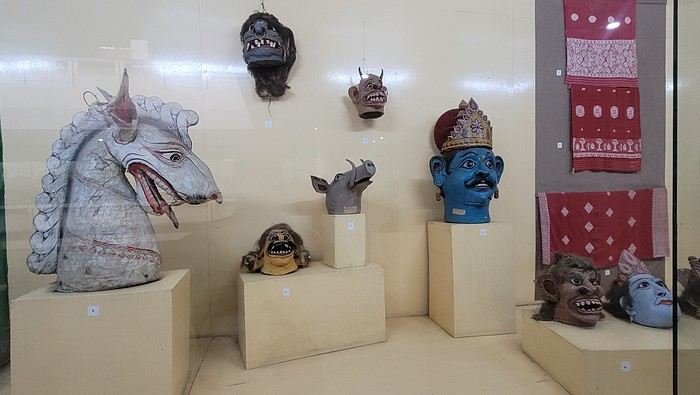

I’m not far from the Brahmaputra River, and the temptation to visit is too strong to resist. I’d hoped to find a promenade along the river, but that doesn’t exist here. I walk back calmly and notice several restaurants in my street. On the doorstep of my accommodation, I spot a pastry shop with cakes that look more like the ones we have in France than the typical ones here in India. A visit is a must, and I’m not disappointed!
Tonight, I’m dining at a restaurant in the street. The menu is a bit disappointing—burgers, pizzas, pasta—nothing very Indian. So, I’ll go with tomato pasta.
Thursday, March 20th. The alarm goes off super early, but I’m already awake—I was too worried I’d sleep through it. I leave the house at 4:00 AM. The rain has stopped, and at this hour, there aren’t many trucks on the road. I arrive at Barcelona Airport easily by 6:20 AM, let the valet know I’m there, and he quickly picks up my car. This time, I’m flying with Etihad Airways again. I booked the ticket during my trip to Cambodia: Barcelona/Kolkata, Delhi/Barcelona for 567 €. At that price, I didn’t hesitate for long—I knew I had to take it. And I’m glad I did because, by the time I returned, the price had gone up to 700 €. I can already hear the reactions: "Wow, how’d you get a ticket for that price? What site did you use? You’re amazing, MarieJo!" One thing’s for sure—I’m really happy with this deal. The flights from Barcelona to Abu Dhabi and Abu Dhabi to Kolkata go smoothly, and we arrive on time at 2:55 AM. There aren’t many people at immigration, so I get through quickly. My luggage isn’t on the carousel yet. After collecting my bag, I check in for my next flight with IndiGo, a 5:40 AM flight to Guwahati, arriving at 7:00 AM. I’m starting to feel pretty tired, so I take a taxi from the airport to Gruham Sojourn Homestay. The house is upstairs, and the neighborhood seems quiet, with restaurants lining the street. The room won’t be ready until 10:00 AM, so I rest on the bench in the meantime. Once in the room, I take a shower—it really helps me feel refreshed. I need to exchange some euros, so I look up a nearby exchange bureau on Google and head out to find it. I locate it easily, and the staff are super friendly. I get a great rate (1 € = 90 INR). I wander around the neighborhood. The train station isn’t far, and small markets line the streets. I head back to my area, walking along the main avenue. About 500 meters from my street, I discover a museum. The visit is fascinating—I see the famous Majuli masks, among other things.
I’m not far from the Brahmaputra River, and the temptation to visit is too strong to resist. I’d hoped to find a promenade along the river, but that doesn’t exist here. I walk back calmly and notice several restaurants in my street. On the doorstep of my accommodation, I spot a pastry shop with cakes that look more like the ones we have in France than the typical ones here in India. A visit is a must, and I’m not disappointed!
Tonight, I’m dining at a restaurant in the street. The menu is a bit disappointing—burgers, pizzas, pasta—nothing very Indian. So, I’ll go with tomato pasta.
From Delhi to Agra and the extraordinary stay in Chhattisgarh
My train to Mathura is at 2 PM, and we’ll arrive an hour late—all good. I booked a hotel on booking, but unfortunately, it’s really far from the ghats. Walking there is out of the question—what a shame.
The hotel itself is fine, and there are several restaurants right across the street, which will be handy for dinner. This won’t be an exception, though—starting at 10 PM, they must wake up because I can hear them talking loudly, and music is playing along. My room faces the entrance, so it’s going to be tough. At midnight, I ask them to lower the volume, but they don’t listen. By 1 AM, I lose my temper, and this time, everything stops. Finally, I can get some sleep—until 4 AM, when they start up again for a little while before quiet returns until 6 AM. But when do they sleep? The noise never seems to bother them—it’s unbelievable, and I’m finding it harder and harder to tolerate. It makes a huge difference.
The next morning, as I leave, they tell me they’ll give me another room for the following night. Oh, two nights like that wouldn’t be possible—I’m exhausted.
I head out to explore the ghats and take a rickshaw, which I share with a family, to Vrindavan, a city of temples dedicated to Krishna. I visit several while wandering through the lively streets, surrounded by a crowd of devotees. By 1 PM, I’m near the Bankey Bihari Temple, but I can’t go in—it just closed. Nearby, there are restaurants, so I take the opportunity to grab my usual aloo paratha with a lassi.

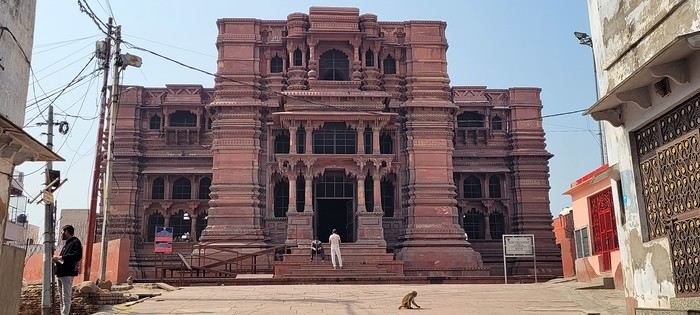
The work women do here is incredibly hard, and their pay must be miserable.

I want to leave Vrindavan for Govardhan. Two young guys on a motorcycle in front of the temple approach me, and the driver offers to take me part of the way. I’m pretty skeptical, but he insists, and I eventually agree. I didn’t fully understand what was happening. Once on the bike, his friend hops on too, and suddenly I’m sandwiched between them for a multi-kilometer ride—*travel Indian-style*. We quickly drop off the friend, and I breathe easier for the rest of the trip. At an intersection, he stops—Govardhan is straight ahead, but to get to his village, he needs to turn right. We wait for the bus for a few minutes, and he flags it down so I can hop on and continue my journey. What an adventure.
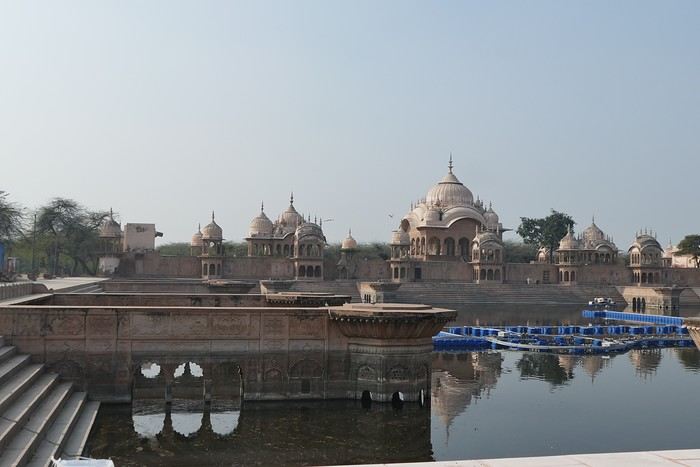
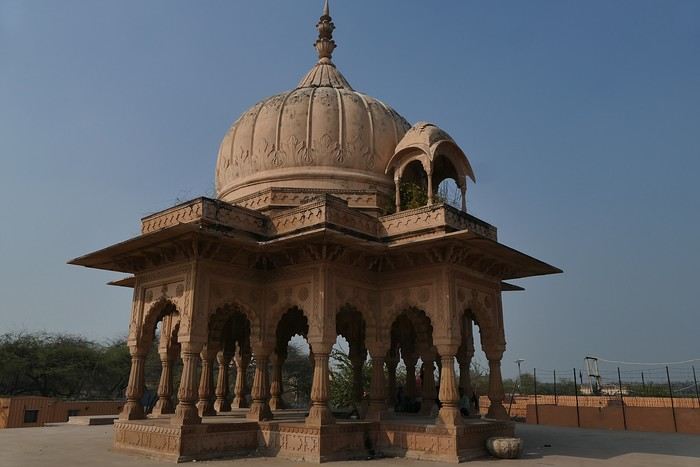
the neighbor with its beautiful dome.
The work women do here is incredibly hard, and their pay must be miserable.
I want to leave Vrindavan for Govardhan. Two young guys on a motorcycle in front of the temple approach me, and the driver offers to take me part of the way. I’m pretty skeptical, but he insists, and I eventually agree. I didn’t fully understand what was happening. Once on the bike, his friend hops on too, and suddenly I’m sandwiched between them for a multi-kilometer ride—*travel Indian-style*. We quickly drop off the friend, and I breathe easier for the rest of the trip. At an intersection, he stops—Govardhan is straight ahead, but to get to his village, he needs to turn right. We wait for the bus for a few minutes, and he flags it down so I can hop on and continue my journey. What an adventure.
the neighbor with its beautiful dome.
A month in Cambodia in November 2024
Here we go!!!
I left home at 4 AM on October 31st and headed to Barcelona. Driving through Barcelona on the ring road stresses me out a bit, but at 6 AM the traffic is smooth, and I arrive at the airport without any issues. I call the valet, who quickly comes to pick up my car. He takes photos of it from all angles before letting me go.
Baggage check-in hasn’t started yet, and there are already several of us waiting.
Once free, everything happens very quickly. The flight to Abu Dhabi is on time and goes smoothly. I’ve never had any problems with this airline, which I’ve been using for several years.
The flight to Bangkok arrives at 7 AM as scheduled. This is my first time in Thailand and Bangkok. I’m used to traveling in India, and I notice that everything here is well organized—the customs process is quick, and the luggage is already on the carousel.
I booked a taxi on Booking. All I have to do is find the right exit and door based on the agency’s instructions. A large sign with the names of people who booked is posted on a wall. A hostess greets me and calls the taxi, which arrives 5 minutes later. I booked one night at the Lost Inn BKK hotel in the Phra Nakhon district, and we arrive at 9 AM. The welcome isn’t warm, and I have to wait until noon, sitting on a chair, before I can check into my room. I’m exhausted, and sleeping sitting up isn’t ideal. Noon finally arrives—the room is small but clean, which is fine for one night. I quickly take a shower to wake up because I plan to spend the afternoon visiting the Grand Palace. First, I need to exchange some money, and the banks are all close together on the same street, which is very convenient. When I enter one, a hostess gives me a ticket and invites me to sit down. There are about twenty counters, and I wait quietly until my number is called. The exchange is quick, so I can head out to find the Royal Palace. It’s actually very easy, and the walk is pleasant.
Entry to the Royal Palace (500 baht).
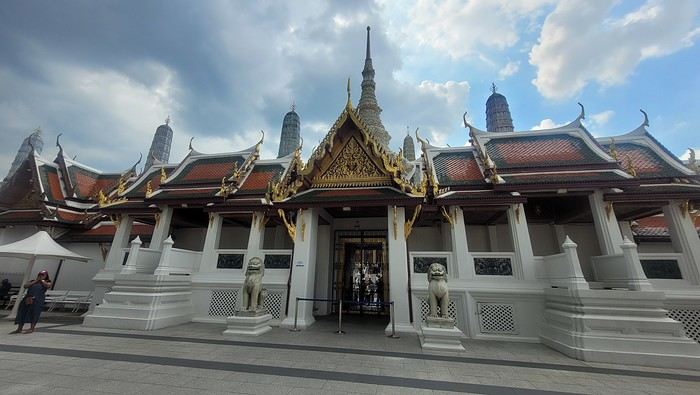
It’s magnificent and grand, and there are quite a few of us visiting. The sky is gray, it’s very humid, and a shower interrupts the visit. It’s a vast complex of temples and palaces. The buildings are colorful and sparkling, with a great sense of serenity (without the tourists, of course). I quietly enjoy the place and try to take photos without tourists, which isn’t easy.
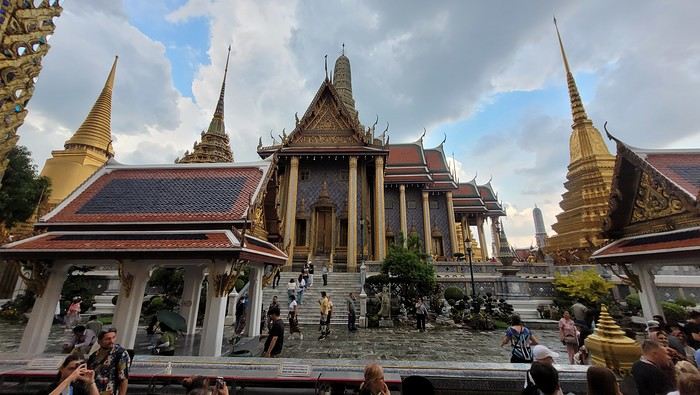
Very close to the Grand Palace is Wat Pho, one of the oldest Buddhist temples in the capital.
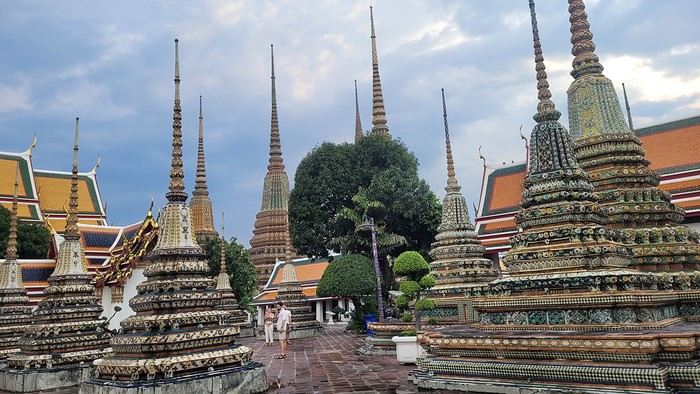
It’s very famous for its 46-meter-long reclining Buddha statue.
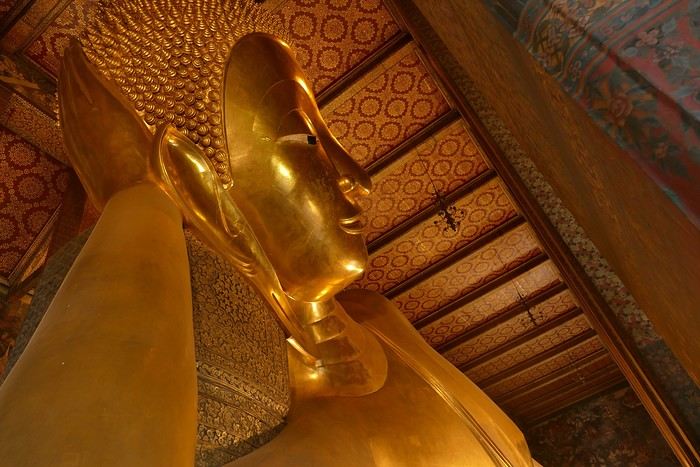
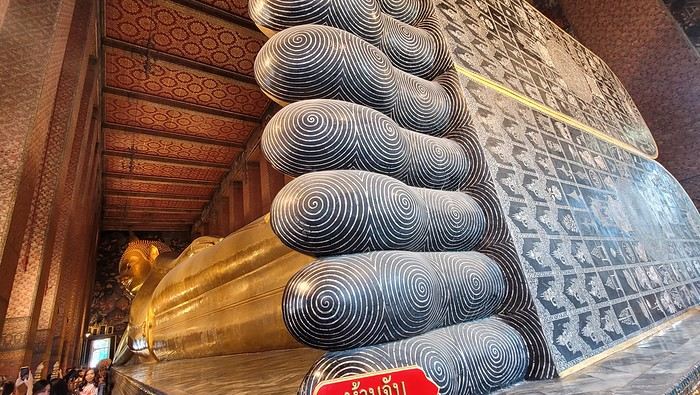
Walking around the temple, you can see different representations of Buddha, all covered in gold leaf.
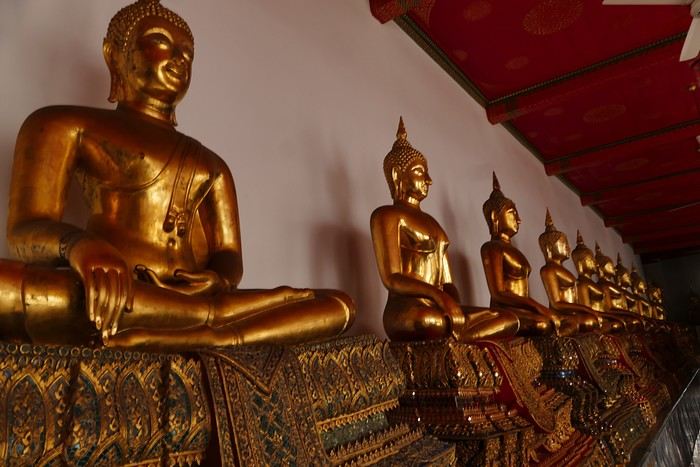
Inside the temple, on one side, monks recite their prayers, while the other side is reserved for tourists who come to meditate in silence.
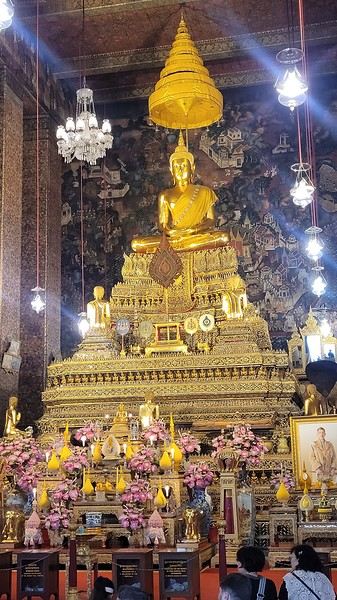
Before returning to the hotel, I have dinner at an Indian restaurant. I go to bed early because tomorrow’s wake-up call will be very early again.
Saturday, November 2nd Wake-up at 4 AM, departure from the hotel at 4:30 AM. The taxi I booked via Booking is waiting for me and takes me to the airport. The trip is fairly quick—he takes small roads, and at this hour, there’s no traffic.
The flight to Phnom Penh is on time. Before boarding, I realize I left my fleece jacket on the carousel, but it’s too late to go back for it.
The flight goes well, and customs is quick.
At the exit, I take a tuk-tuk to Julieka’s GH near the museum. The welcome is friendly. I won’t be able to check into my room until noon, so I take the opportunity to exchange some euros on the market street. The street is lined with restaurants, and I’ll have my first meal there.
The museum is right across the street, so I don’t waste any time visiting it.
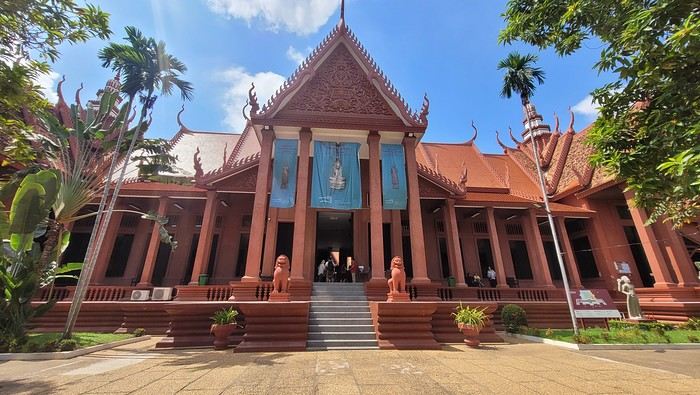
The representations of Hindu deities are very different from those in India, and I don’t recognize them. Many beautiful Buddhas are on display.
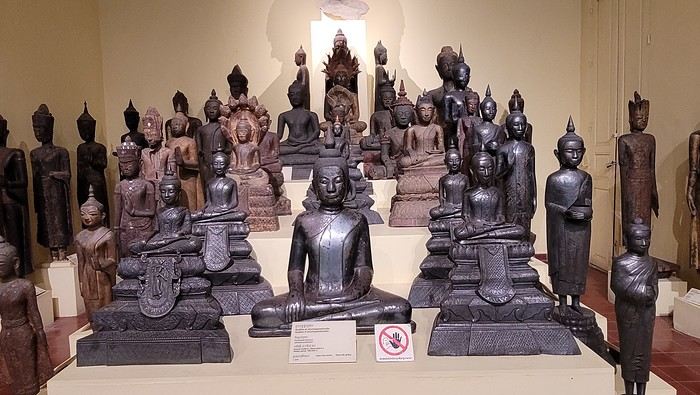
The museum is very pleasant, and there aren’t too many people, which is a plus.
At the exit, I return to the GH, settle into my room—which is decent and clean.
The Royal Palace is 1 km away. I walk along a garden, and at the end of the street is the Tonlé Sap, but I turn right. I arrive at a large esplanade and see the buildings with tiered roofs and glazed tiles. The entrance to the palace is a little further away.
At the entrance, I notice there isn’t the same crowd as at the one in BKK.
Khmer architecture is magnificent. The complex consists of gardens, palaces, pagodas with golden roofs, and slender spires.
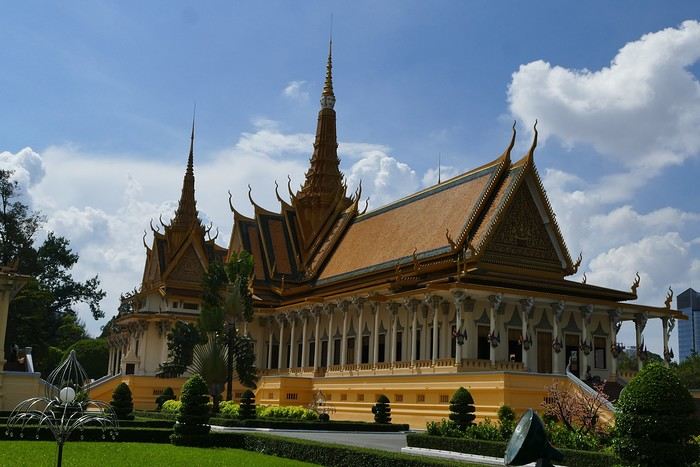
The Silver Pagoda houses the small Emerald Buddha, which is actually made of jade. The silver flooring is covered with carpets. Photos are not allowed.
The walls surrounding the pagoda are covered with frescoes depicting scenes from the Ramayana.
Baggage check-in hasn’t started yet, and there are already several of us waiting.
Once free, everything happens very quickly. The flight to Abu Dhabi is on time and goes smoothly. I’ve never had any problems with this airline, which I’ve been using for several years.
The flight to Bangkok arrives at 7 AM as scheduled. This is my first time in Thailand and Bangkok. I’m used to traveling in India, and I notice that everything here is well organized—the customs process is quick, and the luggage is already on the carousel.
I booked a taxi on Booking. All I have to do is find the right exit and door based on the agency’s instructions. A large sign with the names of people who booked is posted on a wall. A hostess greets me and calls the taxi, which arrives 5 minutes later. I booked one night at the Lost Inn BKK hotel in the Phra Nakhon district, and we arrive at 9 AM. The welcome isn’t warm, and I have to wait until noon, sitting on a chair, before I can check into my room. I’m exhausted, and sleeping sitting up isn’t ideal. Noon finally arrives—the room is small but clean, which is fine for one night. I quickly take a shower to wake up because I plan to spend the afternoon visiting the Grand Palace. First, I need to exchange some money, and the banks are all close together on the same street, which is very convenient. When I enter one, a hostess gives me a ticket and invites me to sit down. There are about twenty counters, and I wait quietly until my number is called. The exchange is quick, so I can head out to find the Royal Palace. It’s actually very easy, and the walk is pleasant.
Entry to the Royal Palace (500 baht).
It’s magnificent and grand, and there are quite a few of us visiting. The sky is gray, it’s very humid, and a shower interrupts the visit. It’s a vast complex of temples and palaces. The buildings are colorful and sparkling, with a great sense of serenity (without the tourists, of course). I quietly enjoy the place and try to take photos without tourists, which isn’t easy.
Very close to the Grand Palace is Wat Pho, one of the oldest Buddhist temples in the capital.
It’s very famous for its 46-meter-long reclining Buddha statue.
Walking around the temple, you can see different representations of Buddha, all covered in gold leaf.
Inside the temple, on one side, monks recite their prayers, while the other side is reserved for tourists who come to meditate in silence.
Before returning to the hotel, I have dinner at an Indian restaurant. I go to bed early because tomorrow’s wake-up call will be very early again.
Saturday, November 2nd Wake-up at 4 AM, departure from the hotel at 4:30 AM. The taxi I booked via Booking is waiting for me and takes me to the airport. The trip is fairly quick—he takes small roads, and at this hour, there’s no traffic.
The flight to Phnom Penh is on time. Before boarding, I realize I left my fleece jacket on the carousel, but it’s too late to go back for it.
The flight goes well, and customs is quick.
At the exit, I take a tuk-tuk to Julieka’s GH near the museum. The welcome is friendly. I won’t be able to check into my room until noon, so I take the opportunity to exchange some euros on the market street. The street is lined with restaurants, and I’ll have my first meal there.
The museum is right across the street, so I don’t waste any time visiting it.
The representations of Hindu deities are very different from those in India, and I don’t recognize them. Many beautiful Buddhas are on display.
The museum is very pleasant, and there aren’t too many people, which is a plus.
At the exit, I return to the GH, settle into my room—which is decent and clean.
The Royal Palace is 1 km away. I walk along a garden, and at the end of the street is the Tonlé Sap, but I turn right. I arrive at a large esplanade and see the buildings with tiered roofs and glazed tiles. The entrance to the palace is a little further away.
At the entrance, I notice there isn’t the same crowd as at the one in BKK.
Khmer architecture is magnificent. The complex consists of gardens, palaces, pagodas with golden roofs, and slender spires.
The Silver Pagoda houses the small Emerald Buddha, which is actually made of jade. The silver flooring is covered with carpets. Photos are not allowed.
The walls surrounding the pagoda are covered with frescoes depicting scenes from the Ramayana.
4x4 Expeditions in Southern Africa
Hi there,
Here’s a quick summary of six trips across Southern Africa, covering South Africa, Namibia, Botswana, Zimbabwe, and more. I traveled for a total of 23 months, over 100,000 km, and crossed 9 countries from South Africa to Tanzania. To do this, I bought an old Land Cruiser—a 1989 BJ 75 with a long chassis and a 3.4L turbo engine—which I converted into a bush camper set up for self-sufficiency in Africa: dual fuel tanks (235 L total) plus 2 x 20-liter jerry cans of diesel, 2 spare tires, a compressor, a toolbox with repair gear, a 50-liter water tank plus 2 x 30-liter and 2 x 10-liter jerry cans, a roof tent, multiple storage boxes, a sturdy roof rack, and even a paramotor. I also packed a first-aid kit and shipped the camper to South Africa by freight. My son joined me for part of the journey.
Key countries and highlights: South Africa in every direction, including its wildlife parks; in Namibia, the classics like Etosha, Fish River, Sossusvlei, Kaudum, but especially Damaraland and Kaokoland; in Botswana, a full loop of the Okavango, crossing the Makgadikgadi Pan, Moremi Park, the Linyanti River; and a tour of Zimbabwe with its national parks. During the last trip in 2020, due to COVID, we found refuge on a 250 km² Namibian farm with its own wildlife reserve. While crossing Damaraland and Kaokoland, we were completely self-sufficient, with supplies for over a month and 130 L of water.
In South Africa and Namibia, one issue that surprised us was the fences stretching for millions of kilometers along the tracks. Namibia is one and a half times the size of France but has a population of only about 2.5 million, mostly concentrated in a dozen small towns of 10,000 to 50,000 people—except for the capital, Windhoek (296,000). Paradoxically, compared to France, the space for freedom is extremely limited. Everything is private and requires payment. Even the Namib Desert is fenced... and you need a permit just to pick up a rock! For someone used to wild camping, it can get frustrating. Sometimes we ignored the rules, but the best solution is to ask a farmer (a real one, like a sheep or cattle rancher—not the ones with 3-meter electrified fences, which are lodges or private reserves) if you can camp on their land.
To truly enjoy freedom in Namibia, you need to venture into the northwest, along the Skeleton Coast, in Damaraland and Kaokoland. However, it’s essential to know your vehicle inside out, be a good mechanic, bring spare parts, and plan for potential breakdowns. Take care of your ride because a major issue out there can be a matter of survival. My motto: "Don’t break down, don’t break down, don’t break down..." Safari pros only venture into this region with two 4x4s. In Messum Crater, we met a couple waiting for rescue (thanks to a satellite device from their rental company) after their driveshaft broke. Keep in mind that in these areas, you’ll cover about 80 km in 8 hours.
Here are some of the issues we faced: a broken rear suspension leaf, several broken bolts on the front leaf springs, the spare tire mount breaking multiple times (replaced on the spot), a cracked water radiator in 1998 causing overheating and a seized valve stem in its guide, plus a bent rocker arm (field repair, valve adjustment, damaged head gasket, daily radiator refills, and a scratched cylinder—engine fully rebuilt upon return). Five roof rack mounts broke and were repaired at a technical high school in South Africa. The battery mount also broke (fixed with a steel plate found on the trail). The fuel filter clogged several times (changed or cleaned on the spot). A huge impact on the windshield from a piece of coal falling from a power plant supply truck (temporary repair with Araldite). The brake master cylinder failed in Marienfluss (repaired, seals replaced in Tsumeb). Multiple flat tires from acacia thorns. The rear door latch broke (homemade aluminum rod repair in Franschhoek). The voltmeter and ammeter failed (repaired on the spot). During the freight trip, despite locking the doors and having a partition between the front and back, someone managed to get in through the small side window, forced open the locks on two accessible storage boxes, and stole my tools (replaced later). A ball joint on the paramotor frame came loose mid-flight, damaging the wing and propeller (propeller shipped from France, homemade repair).
Health issues on the way to Tanzania: a painful sciatica and many sleepless nights (cortisone injection in Dodoma).
Kaokoland, Namibia—the northwest region: https://youtu.be/DzGepFsrnZs
Damaraland: https://youtu.be/DITQj8NvLZ4
Botswana: https://youtu.be/TEvDG0S62hg
Kaudom and Mohembo Parks: https://youtu.be/wq_Yf7jNLhw
Here’s a quick summary of six trips across Southern Africa, covering South Africa, Namibia, Botswana, Zimbabwe, and more. I traveled for a total of 23 months, over 100,000 km, and crossed 9 countries from South Africa to Tanzania. To do this, I bought an old Land Cruiser—a 1989 BJ 75 with a long chassis and a 3.4L turbo engine—which I converted into a bush camper set up for self-sufficiency in Africa: dual fuel tanks (235 L total) plus 2 x 20-liter jerry cans of diesel, 2 spare tires, a compressor, a toolbox with repair gear, a 50-liter water tank plus 2 x 30-liter and 2 x 10-liter jerry cans, a roof tent, multiple storage boxes, a sturdy roof rack, and even a paramotor. I also packed a first-aid kit and shipped the camper to South Africa by freight. My son joined me for part of the journey.
Key countries and highlights: South Africa in every direction, including its wildlife parks; in Namibia, the classics like Etosha, Fish River, Sossusvlei, Kaudum, but especially Damaraland and Kaokoland; in Botswana, a full loop of the Okavango, crossing the Makgadikgadi Pan, Moremi Park, the Linyanti River; and a tour of Zimbabwe with its national parks. During the last trip in 2020, due to COVID, we found refuge on a 250 km² Namibian farm with its own wildlife reserve. While crossing Damaraland and Kaokoland, we were completely self-sufficient, with supplies for over a month and 130 L of water.
In South Africa and Namibia, one issue that surprised us was the fences stretching for millions of kilometers along the tracks. Namibia is one and a half times the size of France but has a population of only about 2.5 million, mostly concentrated in a dozen small towns of 10,000 to 50,000 people—except for the capital, Windhoek (296,000). Paradoxically, compared to France, the space for freedom is extremely limited. Everything is private and requires payment. Even the Namib Desert is fenced... and you need a permit just to pick up a rock! For someone used to wild camping, it can get frustrating. Sometimes we ignored the rules, but the best solution is to ask a farmer (a real one, like a sheep or cattle rancher—not the ones with 3-meter electrified fences, which are lodges or private reserves) if you can camp on their land.
To truly enjoy freedom in Namibia, you need to venture into the northwest, along the Skeleton Coast, in Damaraland and Kaokoland. However, it’s essential to know your vehicle inside out, be a good mechanic, bring spare parts, and plan for potential breakdowns. Take care of your ride because a major issue out there can be a matter of survival. My motto: "Don’t break down, don’t break down, don’t break down..." Safari pros only venture into this region with two 4x4s. In Messum Crater, we met a couple waiting for rescue (thanks to a satellite device from their rental company) after their driveshaft broke. Keep in mind that in these areas, you’ll cover about 80 km in 8 hours.
Here are some of the issues we faced: a broken rear suspension leaf, several broken bolts on the front leaf springs, the spare tire mount breaking multiple times (replaced on the spot), a cracked water radiator in 1998 causing overheating and a seized valve stem in its guide, plus a bent rocker arm (field repair, valve adjustment, damaged head gasket, daily radiator refills, and a scratched cylinder—engine fully rebuilt upon return). Five roof rack mounts broke and were repaired at a technical high school in South Africa. The battery mount also broke (fixed with a steel plate found on the trail). The fuel filter clogged several times (changed or cleaned on the spot). A huge impact on the windshield from a piece of coal falling from a power plant supply truck (temporary repair with Araldite). The brake master cylinder failed in Marienfluss (repaired, seals replaced in Tsumeb). Multiple flat tires from acacia thorns. The rear door latch broke (homemade aluminum rod repair in Franschhoek). The voltmeter and ammeter failed (repaired on the spot). During the freight trip, despite locking the doors and having a partition between the front and back, someone managed to get in through the small side window, forced open the locks on two accessible storage boxes, and stole my tools (replaced later). A ball joint on the paramotor frame came loose mid-flight, damaging the wing and propeller (propeller shipped from France, homemade repair).
Health issues on the way to Tanzania: a painful sciatica and many sleepless nights (cortisone injection in Dodoma).
Kaokoland, Namibia—the northwest region: https://youtu.be/DzGepFsrnZs
Damaraland: https://youtu.be/DITQj8NvLZ4
Botswana: https://youtu.be/TEvDG0S62hg
Kaudom and Mohembo Parks: https://youtu.be/wq_Yf7jNLhw
Bike trip: from Carcans Maubuisson to Plaisir (Yvelines)
Monday, August 21, 2023 - Rochefort - Marans
No journal for the first two days. Day 1 - CARCANS-ROYAN Day 2 - ROYAN - ROCHEFORT Tonight I'm in MARANS in the "dry marsh" according to the campsite manager—it’s the first time I’ve heard of a "dry marsh"?!
Photos from the first two days
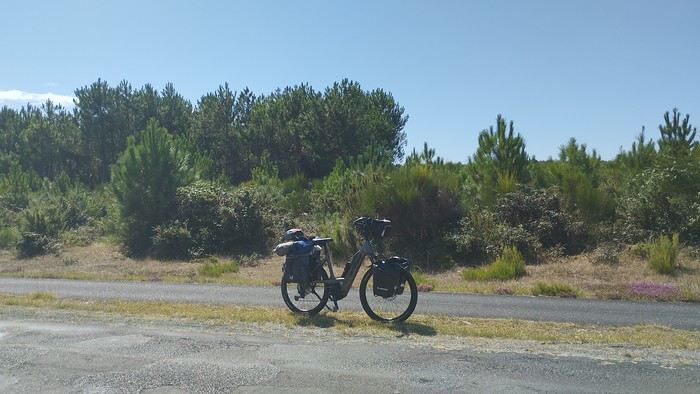 My gear
The Landes region—nothing extraordinary, but the calm and serenity are nice.

Le Verdon
The wild coast
This marsh isn’t dry, though.
Today is the third day of my trip, and I’m writing to you from a campsite in Marans. I’ve set out to bike from Carcans Maubuisson back to Plaisir. Why Carcans? Because we spent a week there as a family—a great week that lets everyone reconnect for a long stretch. Also, on Saturday, we all headed home—some by car, and me by bike. This journey is about 850 km via bike paths and small cycling roads. It’s not a sporting feat, just a nice long ride for fun. As the old Chinese sage says, "The destination doesn’t matter—it’s the journey that counts." But he also told me, "Traveling is great, but what’s the point if you don’t share it?" You see, this old sage has told me a lot of things—he often keeps me company when I’m biking. Of course, he doesn’t pedal, but we travel in harmony. Sure, he can be a bit annoying sometimes, but we still get along. All this to say I’ve created a group to share my story. I’d be happy to share this experience with you—it’s an adventure for me. On Saturday, I wasn’t sure I’d even leave because I’d been dealing with sciatica for days. Luckily, Juliette, a friend of the old Chinese sage, recommended a lifesaving remedy: Alternately stretching your legs with an elastic band under your foot. Obviously, a jam jar rubber band won’t cut it.
From Marans - The mosquitoes are attacking; time to head back to shelter.
The first two legs took me to Royan and then Rochefort. The Sèvre Niortaise flows nearby, and I followed a canal from La Rochelle. You could say the area is as dry as the marsh, judging by the state of the crops.
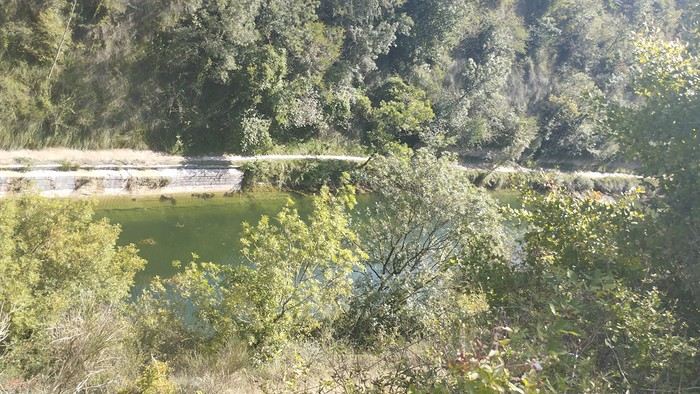
As I mentioned, it’s the third day, and if Jesus rose again on this day, for me it was more like the crucifixion. The scorching heat—only bearable when you’re moving—combined with rough trail conditions, and the old Chinese sage says, "Terrible roads, slow speed, and watch your limbs." I set out to do 60 km but ended up doing 80, and the last 20 were tough. I kept checking the GPS to see how much farther until the campsite. Today: Rochefort to Marans, sticking to the coast until La Rochelle, then no notable towns after that—just a constant canal. But since the sky isn’t too low, it hasn’t gotten lost. I’ve still got plenty of anecdotes to share, but it’s pitch black out, and the mosquitoes are still around. This morning, I counted ten in my tent, all full of my blood. Yesterday, at the end of the leg to Rochefort, I was really looking forward to crossing the Charente using the transporter bridge, but a sneaky GPS conspiracy led me far from it. I ended up crossing the Charente on a completely ordinary bridge, watching the transporter bridge in the distance with disappointment.
End of the first episode. Until tomorrow, if you’d like!
No journal for the first two days. Day 1 - CARCANS-ROYAN Day 2 - ROYAN - ROCHEFORT Tonight I'm in MARANS in the "dry marsh" according to the campsite manager—it’s the first time I’ve heard of a "dry marsh"?!
Photos from the first two days
My gearThe Landes region—nothing extraordinary, but the calm and serenity are nice.
Le Verdon
The wild coast
This marsh isn’t dry, though.
Today is the third day of my trip, and I’m writing to you from a campsite in Marans. I’ve set out to bike from Carcans Maubuisson back to Plaisir. Why Carcans? Because we spent a week there as a family—a great week that lets everyone reconnect for a long stretch. Also, on Saturday, we all headed home—some by car, and me by bike. This journey is about 850 km via bike paths and small cycling roads. It’s not a sporting feat, just a nice long ride for fun. As the old Chinese sage says, "The destination doesn’t matter—it’s the journey that counts." But he also told me, "Traveling is great, but what’s the point if you don’t share it?" You see, this old sage has told me a lot of things—he often keeps me company when I’m biking. Of course, he doesn’t pedal, but we travel in harmony. Sure, he can be a bit annoying sometimes, but we still get along. All this to say I’ve created a group to share my story. I’d be happy to share this experience with you—it’s an adventure for me. On Saturday, I wasn’t sure I’d even leave because I’d been dealing with sciatica for days. Luckily, Juliette, a friend of the old Chinese sage, recommended a lifesaving remedy: Alternately stretching your legs with an elastic band under your foot. Obviously, a jam jar rubber band won’t cut it.
From Marans - The mosquitoes are attacking; time to head back to shelter.
The first two legs took me to Royan and then Rochefort. The Sèvre Niortaise flows nearby, and I followed a canal from La Rochelle. You could say the area is as dry as the marsh, judging by the state of the crops.
As I mentioned, it’s the third day, and if Jesus rose again on this day, for me it was more like the crucifixion. The scorching heat—only bearable when you’re moving—combined with rough trail conditions, and the old Chinese sage says, "Terrible roads, slow speed, and watch your limbs." I set out to do 60 km but ended up doing 80, and the last 20 were tough. I kept checking the GPS to see how much farther until the campsite. Today: Rochefort to Marans, sticking to the coast until La Rochelle, then no notable towns after that—just a constant canal. But since the sky isn’t too low, it hasn’t gotten lost. I’ve still got plenty of anecdotes to share, but it’s pitch black out, and the mosquitoes are still around. This morning, I counted ten in my tent, all full of my blood. Yesterday, at the end of the leg to Rochefort, I was really looking forward to crossing the Charente using the transporter bridge, but a sneaky GPS conspiracy led me far from it. I ended up crossing the Charente on a completely ordinary bridge, watching the transporter bridge in the distance with disappointment.
End of the first episode. Until tomorrow, if you’d like!
Été Covid, un ferry pour la Grèce (en famille) English translation pending
Bonjour à tous,
Voici mon carnet de voyage lors de cet été un peu spécial. Je limite volontairement sur vf à une ou deux photos par jour (certains trouveront que c'est encore trop...) C'est parti 🙂
Les billets étaient pris depuis novembre. Très incertain depuis ce printemps marqué par l'épidémie, ce voyage en Grèce est une bouffée d'air (chaud) après cette période de confinement et d'immobilisme. Nous reprenons donc la route en camion, vers la Grèce continentale. Routes montagneuses, sites antiques, eaux cristallines et ports de pêche, voici en quelques mots les contours d'un voyage riche en couleurs et en saveurs... Les cigales ? Elles ne s'arrêtent qu'à la nuit tombée...
18/07/2020 Jour : 478 km Total : 478 km Départ traditionnel et tardif de Vendée après une quinzaine de jours de vacances.
La cathédrale de Nantes est en feu, le périphérique est bloqué. Challans, Niort, Montluçon, nous prenons la poudre d'escampette en dehors des sentiers battus afin d'éviter le coût exorbitant des péages français. Petit parking très au calme à Rocles quelque part dans l'Allier entre La Prugnole et Blanchetière. Pour celles et ceux qui ne visualisent pas, nous sommes à une trentaine de kilomètres au sud-ouest de Moulins. Les enfants ramassent des bâtons qu'ils jettent dans le lac tandis que mes talents de bricoleur se confirment: le mitigeur nouvellement installé inonde le camion.
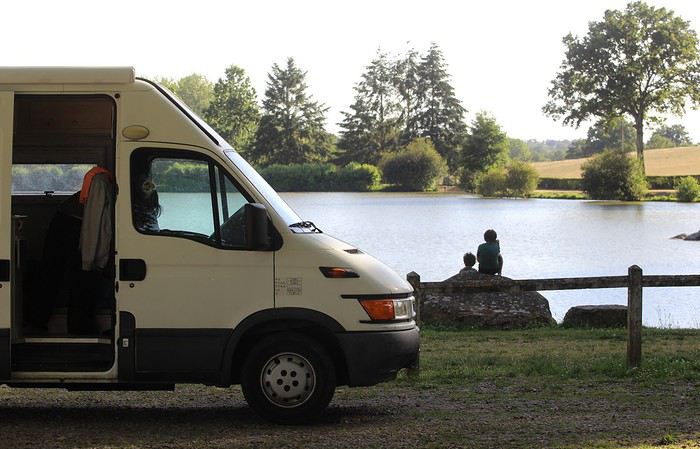
Voici mon carnet de voyage lors de cet été un peu spécial. Je limite volontairement sur vf à une ou deux photos par jour (certains trouveront que c'est encore trop...) C'est parti 🙂
Les billets étaient pris depuis novembre. Très incertain depuis ce printemps marqué par l'épidémie, ce voyage en Grèce est une bouffée d'air (chaud) après cette période de confinement et d'immobilisme. Nous reprenons donc la route en camion, vers la Grèce continentale. Routes montagneuses, sites antiques, eaux cristallines et ports de pêche, voici en quelques mots les contours d'un voyage riche en couleurs et en saveurs... Les cigales ? Elles ne s'arrêtent qu'à la nuit tombée...
18/07/2020 Jour : 478 km Total : 478 km Départ traditionnel et tardif de Vendée après une quinzaine de jours de vacances.
La cathédrale de Nantes est en feu, le périphérique est bloqué. Challans, Niort, Montluçon, nous prenons la poudre d'escampette en dehors des sentiers battus afin d'éviter le coût exorbitant des péages français. Petit parking très au calme à Rocles quelque part dans l'Allier entre La Prugnole et Blanchetière. Pour celles et ceux qui ne visualisent pas, nous sommes à une trentaine de kilomètres au sud-ouest de Moulins. Les enfants ramassent des bâtons qu'ils jettent dans le lac tandis que mes talents de bricoleur se confirment: le mitigeur nouvellement installé inonde le camion.
Discussion autour du concours de juillet 2020: Verticale(s) English translation pending
Pour discuter autour du concours de juillet 2020, Verticale(s), ça se passe ici.
Vos meilleures plages en voyage English translation pending
Bonjour
Avec le confinement j'ai pris le temps de faire un gros tri dans mes photos. Beaucoup étaient des photos de plages qui m'ont rappelé de magnifiques souvenirs.
Donc je me demandais qu'elles sont les 3 plages qui vous viennent à l'esprit quand vous y pensez et qui vous ont marqué d'une manière ou d'une autre.
Personnellement 3 me viennent à l'esprit car elles étaient calmes, pas aménagées, en pleine nature et quasiment personnes dessus.
1) plage barra velha sur l'île de Marajo au Brésil (en plus j'ai pu louer une petite cabane sur pilotis pendant 1 semaine sur cette plage)
2)Mission beach dans l'état du Queensland en Australie
3) La plage du parc de Cahuita au Costa rica
Personnellement 3 me viennent à l'esprit car elles étaient calmes, pas aménagées, en pleine nature et quasiment personnes dessus.
1) plage barra velha sur l'île de Marajo au Brésil (en plus j'ai pu louer une petite cabane sur pilotis pendant 1 semaine sur cette plage)
2)Mission beach dans l'état du Queensland en Australie
3) La plage du parc de Cahuita au Costa rica
Happiness Settles in the Heart of the Maasai Mara
(October 2018).
This account of a short stay in Kenya was originally meant for our friends and family, but to pass the time—for both us and you—and to add some content to the increasingly quiet columns of Voyage Forum during these weeks of confinement, when travelers can only journey in their minds, we decided to share the 25 pages of my ramblings, illustrated with Yolande’s photos, from an extraordinary stay in the Maasai Mara National Reserve. We waited until the two previous discussions on this same topic, filled with stunning photos and started by Régis and then Claire—sometimes in agreement, sometimes differing but always full of insights—had quieted down a bit before jumping in. Well, we’ll give it a try.
Let’s clarify: one of us claims to be a beginner photographer, and the other is just an unrepentant dreamer and modest writer. We often pursued our passions separately—Yolande with her mentor and me with an incomparable tracker—so sometimes the photos don’t quite match the text, or vice versa.
We hope you enjoy reading this lengthy post, which is longer than usual in VF’s sections (except, of course, for Mr. Voyajou). A thousand apologies for straying off the beaten path.
Alright, here we go!
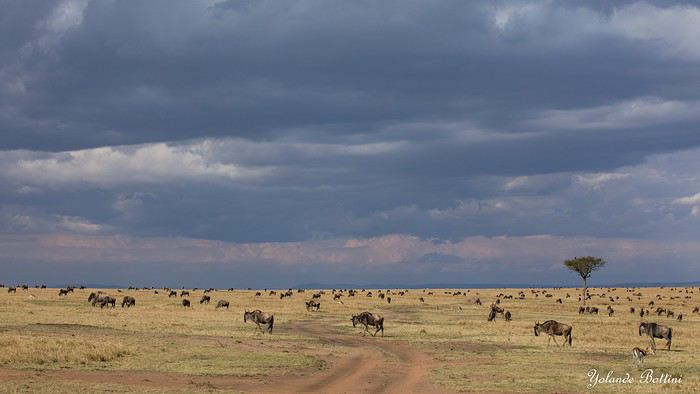
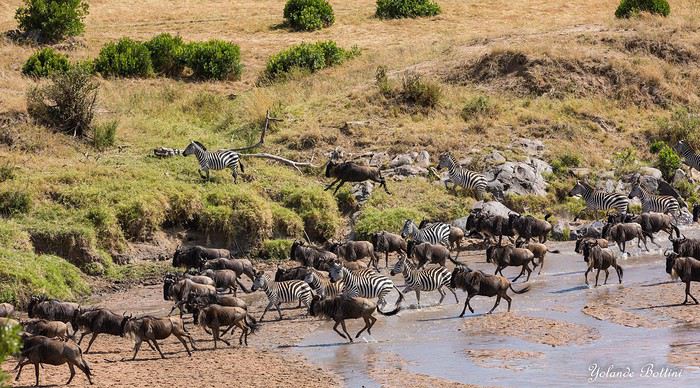
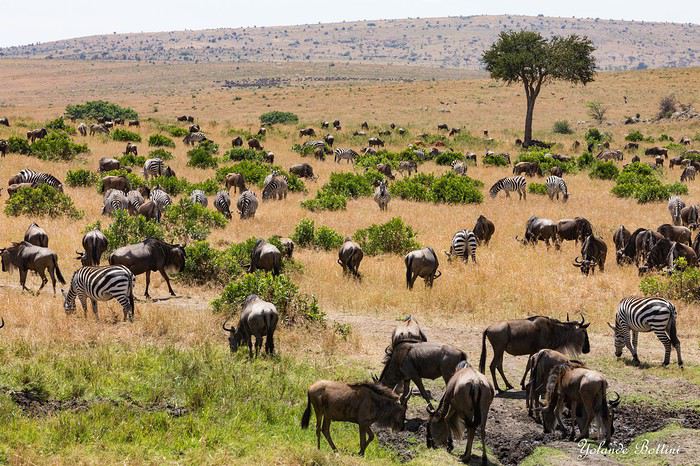
This account of a short stay in Kenya was originally meant for our friends and family, but to pass the time—for both us and you—and to add some content to the increasingly quiet columns of Voyage Forum during these weeks of confinement, when travelers can only journey in their minds, we decided to share the 25 pages of my ramblings, illustrated with Yolande’s photos, from an extraordinary stay in the Maasai Mara National Reserve. We waited until the two previous discussions on this same topic, filled with stunning photos and started by Régis and then Claire—sometimes in agreement, sometimes differing but always full of insights—had quieted down a bit before jumping in. Well, we’ll give it a try.
Let’s clarify: one of us claims to be a beginner photographer, and the other is just an unrepentant dreamer and modest writer. We often pursued our passions separately—Yolande with her mentor and me with an incomparable tracker—so sometimes the photos don’t quite match the text, or vice versa.
We hope you enjoy reading this lengthy post, which is longer than usual in VF’s sections (except, of course, for Mr. Voyajou). A thousand apologies for straying off the beaten path.
Alright, here we go!