Results for "Monts+Cantal+|+127"
68992 results found.
Africantreck English translation pending
Hello tous,
Une ptit question, comme sa en passant, est ce que vous savez si africantreck des époux poussin (lui avait déjas écrit deux bouquin avec un de ses potes), et si par hazard quelqu'un la lu, il ets comment ???
think, see you
Philo
Une ptit question, comme sa en passant, est ce que vous savez si africantreck des époux poussin (lui avait déjas écrit deux bouquin avec un de ses potes), et si par hazard quelqu'un la lu, il ets comment ???
think, see you
Philo
Voyage en Namibie English translation pending
Bonjour,
j'envisage un voyage d'un mois en Namibie en août prochain. J'hésite entre 2 formules: tout faire par moi-même (réservation depuis la France d'un 4x4 équipé pour le camping et de qq campings dans les parcs nationaux) ou passer par une agence basée à Windhoek. Cette dernière propose le plus souvent un itinéraire et s'occupe des réservations, et j'en ai trouvé deux sur le Web: Namikala (http://www.namikala-safaris.com/namibie/) et Tourmaline (http://www.planet-terre.com/). Quelqu'un est-il déjà par eux (ou une autre agence), et qu'en pensez-vous ?
En vous remerciant pour vos conseils,
Patrick
j'envisage un voyage d'un mois en Namibie en août prochain. J'hésite entre 2 formules: tout faire par moi-même (réservation depuis la France d'un 4x4 équipé pour le camping et de qq campings dans les parcs nationaux) ou passer par une agence basée à Windhoek. Cette dernière propose le plus souvent un itinéraire et s'occupe des réservations, et j'en ai trouvé deux sur le Web: Namikala (http://www.namikala-safaris.com/namibie/) et Tourmaline (http://www.planet-terre.com/). Quelqu'un est-il déjà par eux (ou une autre agence), et qu'en pensez-vous ?
En vous remerciant pour vos conseils,
Patrick
Parcs nationaux en Tanzanie et Zanzibar English translation pending
Je souhaite aller en Tanzanie cet été avec mon amie,
Je voudrais rester une semaine dans les grands parcs nationaux puis me rendre une semaine à Zanzibar.
Est il possible de voyager seulement à deux avec un guide afin de profiter pleinement de la nature (car je constate que la plupart des circuits proposer se font à une 10aine de personnes)? Quel est le budget moyen a prevoir pour ce type de sejour?
j'aimerai aussi avoir vos avis au sujet de Zanzibar?
merci d'avance
😎😎😎
Je voudrais rester une semaine dans les grands parcs nationaux puis me rendre une semaine à Zanzibar.
Est il possible de voyager seulement à deux avec un guide afin de profiter pleinement de la nature (car je constate que la plupart des circuits proposer se font à une 10aine de personnes)? Quel est le budget moyen a prevoir pour ce type de sejour?
j'aimerai aussi avoir vos avis au sujet de Zanzibar?
merci d'avance
😎😎😎
Conseils sur la Namibie English translation pending
Nous envisageons de visiter ce pays en aout ou septembre de cette année.
Que faut il savoir sur ce pays?
protection sanitaire, sécurité, endroits à visiter....
Peut on partir sac a dos ?
tous les conseils sont les bienvenus.
Tibet: épopée très longue avec photos English translation pending
En fait avec Marsu (c Ivo qui ecrit la), on a ete faire un tour au Tibet, et on s'est dit qu'on allait raconter toutes ces belles choses. Alors on s'est laisse aller sur un clavier, il y a 6 pages. On espere que ca va vous plaire, et surtout vous donner envie d'aller faire un tour sur le pays du toit du monde.
Un rayon matinal éclaire doucement les terrasses de la vallée de KTM. Le vert éclatant mélangé aux couleurs dorées des tiges de riz coupées accompagnent notre regard sur la longue route menant à la terre interdite du Tibet. Nos corps ballottés de tous côtés sentent à peine les vibrations du bus tellement nos sens sont en éveil. Partout où notre regard se pose, nos yeux volent un instant de vie, captent un geste, un sourire, une moue pleine de rides jetant un regard tendre sur un petit enfant. Le travail des champs ne peux attendre, le riz doit être battu. D’un mouvement habile une femme au corps velouté dans son sari chatoyant, fait tournoyer autour de sa tête un long bâton, qu’elle abat de manière régulière sur les gerbes de riz posées a ses pieds. Mouvement lent, langoureusement rythmé, simplement naturel.
C’est le début du voyage, on a oublié la course poursuite dans Thamel, les taxis, la poussière, les combats de klaxons, les Tata imposants dans la lumière matinale, l’agitation qui les entoure, les visages curieux fixés sur les quelques occidentaux que nous sommes. Le Tata, c’est un monstre moderne qui trimballe les voyageurs et la marchandise, qui passe partout ou presque, coloré et chromé, au klaxon puissant, moyen de transport fonctionnel et multiforme, qui s’impose par sa présence à l’arrêt comme sur la route.
Des gens partout, sur les sièges, debout dans la travée, assis sur le toit, des hommes au teint couleur terre, des femmes portant des tissus aux milles nuances, des enfants souriants dans le vide, nous détaillant. Ce sont pour la plupart des gens de la terre, aux paniers chargés et aux mains calleuses, qui voyagent à travers le pays. L’aide du chauffeur, qui fait office de contrôleur, rameute les voyageurs en criant par la porte entrouverte, accroché d’une main, penché au dessus de la route. Il monte sur le toit pour encaisser le trajet, les billets croisés entre ses doigts, tape du poing sur la cabine pour signifier les arrêts au chauffeur, siffle pour aider à la manœuvre dans les parties délicates. Il est jeune et agile, son visage et lisse et souriant, il a de la prestance lorsqu’il se glisse par la porte. À l’approche d’un village, une jeune fille s’apprête à descendre : elle est jeune aussi, porte une robe punjabi aux couleurs miroitantes, elle se tient à coté de la porte, ses cheveux longs lâchés brillent dans le courant d’air, elle tient son sac d’une main, se tenant de l’autre, son bras frôlant le visage du jeune qui regarde dehors. Le Tata file, loin dessous c’est la rivière, des parcelles de riz, devant un village s’approche. Klaxon tonitruant, on rentre a vive allure, le jeune tape du poing. Freinage brusque, balancement des corps dans tout le bus, le coude de la jeune fille vient frapper le visage du jeune. Dans le même élan, elle descend du bus, son bras tendu vient laisser une caresse douce sur la joue du garçon, avec tendresse, pour s’excuser du choc, et plus encore car tout deux sont jeunes, mais enfermés dans la rigueur d’une société. Une fois sortie, c’est le plus beau de ses sourires qu’elle lui offre. Témoignage d’une jeunesse cloîtrée qui demande à vivre, ailleurs que dans l’instant furtif.
Un nuage de poussière s’élève devant nous laissant passer un rayon de lumière qui éclaire les montagnes drues et arides. Les strates semblables à des coulées de lave forment les montagnes des plateaux tibétains. La lumière glisse langoureusement dans les sillons de l’érosion de la dernière saison des pluies.
On a changé de monde, même si on garde en tête la longue montée dans la gorge, la rivière plusieurs centaines de mètres en contre bas, les pentes escarpées et encore boisées, la piste sinueuse accrochée aux flancs, l’eau qui ruisselle sur la roche. À quel moment sont apparues les premières pierres, quand ont disparus arbres, bambous plantes, terre grasse? L’aridité prend le dessus, la poussière s’élève derrière le véhicule, et malgré les cahots, les yeux parcourent chaque détail de ce nouveau monde, de ce grand vide qui nous aspire, de cet instant sorti du néant des mémoires et de l’imagination. Le toit du monde est sec, recouvrant d’une toile bleue tendue vers l’infini des pierres semées par un petit Poucet errant depuis l’éternité, laissant à penser que ici tout est sans repères. Ce petit Poucet, c’est celui que vous croiserez au bord de la route, jouant avec une roue de vélo, tirant sur un mégot ou bien que vous apercevrez sous l’habit d’un petit berger fouettant un âne, dirigeant un troupeau de chèvres, flattant un yack. C’est peut être la petite fille venant vous voir dans un village avec sa petite figure sale, ses yeux noirs de profondeur, mais éclatants d’une beauté intérieure. Le petit Poucet, c’est celui qui marche au fond de vous, qui vous cherche.
Shigatse
À l’aurore, l’air est frais à 4200 mètres, les rayons de soleil bataillent doucement pour réchauffer les parcelles de terre gelée. L’immense allée de bowling de 987 mètres de long par 24 de large, flanquée de part et d’autre de boutiques en tous genres, se dresse devant nous en jurant dans le décor. Lorsqu’on jette un coup d’œil à l’intérieur, nos yeux se butent sur des locaux vides, derrières les belles devantures à la gloire du communisme, les dépotoirs s’accumulent. Les tibétains avec leur allure rustre et sans façons font presque vulgaires dans ce décor aseptisé, leur beauté naturelle rehaussée par les rouges, turquoises et ambres ornant leurs cheveux n’arrivant pas à compenser cette incongruité. Caché entre deux majestueuses devantures, un discret bouiboui pointe devant une bande de joyeux nomades jouant avec ardeur à un jeu de dés sans signification pour nous. Ils font peu cas de notre passage, l’attrait du jeu étant plus fort. Nos pas nous mènent de nouveau devant une grande allée, plus sobre, bordée de pèlerins aux coiffures complexes et aux habits divers. Les moulins tournent, les Om mani padme hum fusent et sous nos yeux éblouis par la forte lumière des couleurs ocres, blanches et jaunes, le monastère de TashiLompo s’élève fier et majestueux devant nous.
Le chemin des pèlerins parsemé d’arbres divers nous entraîne dans son sillage, à l’assaut d’une bâtisse orange feu, précédée d’un escalier pentu et glissant menant à une porte masquée d’une tenture. Dans le désordre, les pèlerins surgissent du passage, le visage composé en prosternations, les lèvres marmonnant les Om mani padme hum de façon incessante, aucune cohésion dans la descente, tout le monde se lance de manière désordonnée, concentrés dans leur dévotion. On attaque l’escalier essayant de se faire un chemin au travers des pèlerins, intrus que nous sommes, je ressens une forme de rejet, spécialement lorsque nous arrivons à l’intérieur et que je nous sens coincés entre l’énorme Bouddha de 26 mètres et les pèlerins qui sont tous à leur adoration. Impressionnée par le regard perçant de Bouddha et l’émotion de la ferveur des pèlerins, je suis assaillie d’un sentiment de gène et de voyeurisme, qui me pousse à contourner respectueusement par la gauche et avec humilité cette immense force de spiritualité pour retourner à ma place, au grand air.
Un groupe attire le regard, ils sont une dizaine entre enfants, adultes et le Monk de la famille. Ils tranchent parmi les autres avec leurs cheveux scintillants finement tressés, ornés de parures de turquoises et d’ambres pour les femmes. Les hommes portent entremêlés dans leur grosses tresses de minces fils rouges ou noirs qui attirent l’œil comme un aimant, parfois au centre un énorme anneau en os de yack est glissé dans l’enroulement complexe de leur chevelure. Les gros manteaux doublés en fourrure de yack sont portés avec élégance, leurs habits sont simples mais raffinés, nomades de l’est ils se doivent d’être à l’abris des intempéries et des vents violents, ils sont beaux, plein de prestance, se tiennent droit pour montrer qu’ils sont fiers de leurs origines. Une seule manche couvre leur corps tandis que l’autre est artistiquement nouée autour de la taille. Difficile de deviner leur forme sous ces épaisseurs mais on arrive tout de même à percevoir leur grâce.
Parmi eux une petite princesse des hauts plateaux virevolte en tous sens avec espièglerie comme tous les enfants de son âge. Un petit manteau de soie rose lui cintre la taille, tombant en cascade de froufrou sur ses frêles chevilles. Ses délicates tresses remontées comme ceux de la princesse Léa contraste avec les cheveux noirs de jais du reste de la troupe par un semblant de reflets blond-roux. Un sourire resplendissant d’innocence reste suspendu à ses lèvres pendant qu’elle titille sa grand-mère au regard attendri appuyée sur un bâton qui supporte le poids de son âge.
Contraste entre âge et innocence, entre technologie et temps passé, entre Occident et Asie qui se mélangent dans une même dévotion. À leur suite deux personnes arrivent pour continuer le pèlerinage, pour mettre les dissemblances plus en évidence. Une jeune fille aux habits modernes, jeans moulant, pull échancré, coupe stylé, tient dans une main le beurre de yack qui sert à entretenir le feu des offrandes. De l’autre, elle soutient avec tendresse une autre main, plus usée, plus foncée, plus marquée par la vie. Lorsqu’on lève les yeux sur cette main on découvre une femme sans âge, aux rides souriantes cachées derrière une grosse paire de lunettes sortie d’une autre époque. Elle prend son bol nacré usé par les années pour puiser l’eau de la fontaine sacrée tandis que la jeune fille utilise sans broncher une vieille bouteille de Pepsi machouillée pour exécuter le même geste.
Les pas résonnent dans les petites ruelles du monastère, nous voilà entourés de jeunes, de vieux, de tibétains sans âge. Des voix rauques, des yeux curieux, une odeur de yack rance emplit leur aura comme une deuxième peau. Le croisement Asie-Occident se soude, les sourires se font hésitants, puis plein de franchise à la limite de la rigolade de part et d’autre. Échange de mots via le guide, échange d’écriture, curiosité dans les deux camps. L’un essayant de prononcer tant bien que mal dans la langue de l’autre. Intérêt des différences, les piercing, les cheveux blonds, les bijoux lourds, les vêtements tout est susceptible d’attirer l’attention de l’autre sans permettre d’en comprendre les significations profondes. Jeunesse insouciante qui prend le temps de connaître l’autre, de lire au fond de lui pour y trouver ce qu’il y a de meilleur, qui porte une attention sincère sans arrière pensée. Les adieux sont émouvants, l’impression d’avoir touché un bout de vie, d’âme, d’avoir trouvé des amis sincères qui n’attendent rien d’autre qu’un sourire provenant du cœur.
La cœur lourd, la tête pleine de sourire, de joie on découvre sous un nuage de poussière la petite ville de Gyatse. Ici tout est simple et grandiose de simplicité. Pas de fioriture à l’essence chinoise, juste la simplicité tibétaine malgré l’imposant fort dominant la ville. Le monastère dégage une atmosphère de grandeur, de sérénité qui nous prend dans ses filets. Les murs noirs aux mille représentations de Bouddha nous clouent sur place, nos petites lampes arrivent à peine a rendre la splendeur du lieu. Les pèlerins profitent de cette parcelle de lumière pour vénérer avec encore plus d’émotion ce dieu de la générosité.
Lhassa
Cinq jours que nos corps subissent les contre coups de la piste défoncée que notre jeep suit sans fin. Un sourire éclaire tout a coup le visage de notre chauffeur sans nom car malgré nos efforts la communication est impossible. Un sourire parce que devant nous se dresse enfin Lhassa, le but ultime de cette longue route. On a eu beau se le faire dire, on a essayé de se préparer mentalement mais le choc est grand, Lhassa n’est pas le reflet d’une petite ville paisible avec un temple aux consonances magiques, nous ramenant aux textes féeriques de Henrich Harrer ou Alexandra David-Neel, flanqué au centre de la ville comme on l’imaginait. C’est la première ville du Tibet autonome où il y a le moins de tibétains, son centre et ses environs sont remplis de chinois, l’allure en est chinoise. Cachées derrière les grandes devantures de magasins à rayons vides de monde, se dressent les petites rues sinueuses et pleines de vie du quartier tibétain dans une ville dite tibétaine. Découvrir les grandes artères chinoises nous donne l’impression de vivre dans deux univers parallèles, où les longs trottoirs luisants sont habités par les nomades mendiants qui regardent devant eux les fringues des boutiques de luxe comme s’il s’agissait d’habits d’extra-terrestre.
Une petite porte s’ouvre sur un grand couloir à ciel ouvert, la pénombre se mélange à la fumée et semble nous envelopper dans un doux cocon . Une rumeur s’élève au loin presque indescriptible, un petit chant imperceptible, des mots éparses incompréhensibles, les mains rudes pleines de sillons, sales, presque sans forme, se tendent vers nous. Dans l’autre main dans un tourbillon incessant, un moulin à prière tourne presque sans effort comme si une force ultime aidait au roulement. Au bout de la voie une essence de pin s’insinue dans nos narines, des dizaines de pèlerins assis de façon éparse, en structure finie mais chaotique, tournent d’un même rythme lancinant leur moulins tout en répétant de manière imperceptible le chant de leurs offrandes. Leurs regards sont souriants et accueillants, nos pas glissent doucement entre eux comme si nous nous promenions sur un nuage, le bien-être s’emparent de nous, sans nous sentir intrus ou malvenus. Nous laissons nos regards se fondre dans leurs yeux malins où toute une vie tient. Leur peau mate, durcie par le soleil, recueille les mystères d’une vie de nomade perdu au milieu des plateaux vides et silencieux. Les mains tendues égrainant les chapelets nous dirigent avec bonté vers l’immense moulin à prière tourné avec ferveur par des doigts calleux. De nouveau la pénombre nous oblige a plisser les yeux pour voir et sentir au travers des effluves les pèlerins assis en rond autour des moines à la voix sourde entonnant les prières. Des sourires invitant nous attirent a l’intérieur pour un tour dans un autre monde…..
On touche le cœur du Tibet, celui des anciens et des fervents religieux, force tranquille et combien reposante quand on connaît l’histoire ensanglantée du pays. Ces gens, cette cours des miracles fantastique, leur nombre, le mouvement des moulins omniprésent dans les yeux, leur son dans les oreilles, le balancement des corps, les bouches qui ruminent et mâchent, glaviots et chicots. Rentrer dans ce lieu, c’est renouer avec le Tibet antique, avec ses couleurs et ses traditions religieuses : il y a un sentiment très fort a vivre cela, a sentir tous ces regards pointés sur soi, cette bienveillance dont ils sont chargés alors que nous sommes des intrus. La bâche qui recouvre l’assemblée devient une tenture, les chaudrons fument de thé salé, et partout tournent les moulins, les tissus sont des trônes, les cartons deviennent tapis, ils sont beaux de leur age, de leur saleté, de leur difformités, et nous, nous sommes choquant de notre modernité, de notre regard pacifique et si éloigné de ce qu’ils connaissent. Nous sommes bercés du son des moulins, de ce marmonnement sorti de ces nombreuses bouches, de ces regards encore et toujours fixés sur nous. Cette tranquillité qu’ils sont capables de transmettre, laminant tout ce que nous croyons savoir, sur nous, sur les autres. Mon souhait le plus profond a alors été de ressentir cela au plus profond de moi, d’être en communion avec cette assemblée, en paix avec moi même également, avec les raisons du voyage. Nous n’avons pas su comment décrire, transmettre cet instant, ou bien plutôt ces instant, si forts que nous y sommes revenus, de même que nous n’avons pas voulu trahir le bien-être et la confiance de ces pèlerins en prenant des images qui n’auraient été que des reflets vides de sens.
Soir
On roule depuis des heures, les kilomètres s’accumulent au ralenti, la vallée s’allonge loin devant nous, bordée de collines. Des collines devant, des montagnes derrières, des sommets posés sur l’infini du plateau tibétain. Nous sommes assis, le programme télé dans le pare-brise est différent de celui des vitres arrières et des portières, le ronronnement du moteur, les vibrations et les cahots encore et toujours sont les seuls éléments réels. Dehors, c’est l’explosion des teintes, le grand feu d’artifice pour notre retour dans les plaines du Népal, la route du retour que nous avions parcourue au petit matin il y a peu, vers l’avant, en direction de Lhassa. Les rivières sont sages, gelées dans leur lit, les berges blanches de glace sont le présage d’un hiver proche et rude, bloquant la route et les cols, isolant cette partie du monde sous une cloche de froidure. On se croirait sur Mars, la planète rouge, le sol parsemé de caillasses, de rochers, modulé par les glissements de terrain sur les pentes arides, aux lignes cassées par les empilements en équilibres sur les promontoires, et si ce n’était des ruines ou bien des troupeaux éparpillés, on pourrait croire toute vie absente. Il faut imaginer une sorte de couloir, le fond de vallée, qui s’étire langoureusement en de larges virages, cerné par une haute dentelle décharnée, accessible par des pentes empierrées, des talus abrupts. Ces broderies semblent avoir été arrachées par des doigts géants, déchirées d’un mouvement brusque, laissant des cicatrices dans chaque profil de la roche, ouvrant des brèches, déformant les strates colorées, remontant du plus profond de la terre des couleurs chaudes et douces. Le soleil couchant renforce la teinte qui se nuance à l’infini, palette magique et folle, oxyde de fer, érosion, terres soulevées durant des siècles, offertes en pâture aux éléments naturels, aujourd`hui spectacle magique pour touristes en mal de vie. L’homme comme nous le connaissons ne peut vivre ici, mais on ne s’étonne plus de trouver ses maisons colorées, ses troupeaux éparpillés dans les collines, des enfants marchant dans la poussière, un panier en osier sur le dos. On regarde avec normalité un chariot chargé, un tracteur transportant vers nulle part une quinzaine de personnes, un cavalier tendu sur sa montures, des bottes colorées aux pieds. Mais nous nous émerveillons toujours autant, le charme agit toujours, comme des enfants à qui on raconte encore une même histoire. Nous sommes sans voix face à ce dernier cadeau, à ces couleurs, ces ombres, ces nappes de soleil surgissant dans un recoin, isolées dans l’ombre. Le lendemain, c’est le dernier col, les derniers nomades, devant nous en arc de cercle et chargés de blanc, les sommets du Tibet, du Népal et de l’Inde, pesant de tout leur poids sur le tissus de velours qui se tend au sol, creux et rondeurs, courbes de femme allongée, la peau brunie par le soleil, lissée par les ages. Pas de vent, les drapeaux de prières se laissent aller dans cet instant de répit, attendant la neige prochaine et le calme du plateau durant la période d’hiver. Quant à nous, nous amorçons notre descente vers la frontière, les gorges embrumées, les arbres suspendus au dessus du vide, les rizières et nous nous réjouissons de retrouver le Népal, avec au fond de la bouche, des yeux et du cœur des sensations éternelles.
Escapade au Tibet, 3 novembre - 15 novembre 2003
Marsu et Ivo pour Luc, Maeva, Ismaël, Chantal, Yves 😉
Un rayon matinal éclaire doucement les terrasses de la vallée de KTM. Le vert éclatant mélangé aux couleurs dorées des tiges de riz coupées accompagnent notre regard sur la longue route menant à la terre interdite du Tibet. Nos corps ballottés de tous côtés sentent à peine les vibrations du bus tellement nos sens sont en éveil. Partout où notre regard se pose, nos yeux volent un instant de vie, captent un geste, un sourire, une moue pleine de rides jetant un regard tendre sur un petit enfant. Le travail des champs ne peux attendre, le riz doit être battu. D’un mouvement habile une femme au corps velouté dans son sari chatoyant, fait tournoyer autour de sa tête un long bâton, qu’elle abat de manière régulière sur les gerbes de riz posées a ses pieds. Mouvement lent, langoureusement rythmé, simplement naturel.
C’est le début du voyage, on a oublié la course poursuite dans Thamel, les taxis, la poussière, les combats de klaxons, les Tata imposants dans la lumière matinale, l’agitation qui les entoure, les visages curieux fixés sur les quelques occidentaux que nous sommes. Le Tata, c’est un monstre moderne qui trimballe les voyageurs et la marchandise, qui passe partout ou presque, coloré et chromé, au klaxon puissant, moyen de transport fonctionnel et multiforme, qui s’impose par sa présence à l’arrêt comme sur la route.
Des gens partout, sur les sièges, debout dans la travée, assis sur le toit, des hommes au teint couleur terre, des femmes portant des tissus aux milles nuances, des enfants souriants dans le vide, nous détaillant. Ce sont pour la plupart des gens de la terre, aux paniers chargés et aux mains calleuses, qui voyagent à travers le pays. L’aide du chauffeur, qui fait office de contrôleur, rameute les voyageurs en criant par la porte entrouverte, accroché d’une main, penché au dessus de la route. Il monte sur le toit pour encaisser le trajet, les billets croisés entre ses doigts, tape du poing sur la cabine pour signifier les arrêts au chauffeur, siffle pour aider à la manœuvre dans les parties délicates. Il est jeune et agile, son visage et lisse et souriant, il a de la prestance lorsqu’il se glisse par la porte. À l’approche d’un village, une jeune fille s’apprête à descendre : elle est jeune aussi, porte une robe punjabi aux couleurs miroitantes, elle se tient à coté de la porte, ses cheveux longs lâchés brillent dans le courant d’air, elle tient son sac d’une main, se tenant de l’autre, son bras frôlant le visage du jeune qui regarde dehors. Le Tata file, loin dessous c’est la rivière, des parcelles de riz, devant un village s’approche. Klaxon tonitruant, on rentre a vive allure, le jeune tape du poing. Freinage brusque, balancement des corps dans tout le bus, le coude de la jeune fille vient frapper le visage du jeune. Dans le même élan, elle descend du bus, son bras tendu vient laisser une caresse douce sur la joue du garçon, avec tendresse, pour s’excuser du choc, et plus encore car tout deux sont jeunes, mais enfermés dans la rigueur d’une société. Une fois sortie, c’est le plus beau de ses sourires qu’elle lui offre. Témoignage d’une jeunesse cloîtrée qui demande à vivre, ailleurs que dans l’instant furtif.
Un nuage de poussière s’élève devant nous laissant passer un rayon de lumière qui éclaire les montagnes drues et arides. Les strates semblables à des coulées de lave forment les montagnes des plateaux tibétains. La lumière glisse langoureusement dans les sillons de l’érosion de la dernière saison des pluies.
On a changé de monde, même si on garde en tête la longue montée dans la gorge, la rivière plusieurs centaines de mètres en contre bas, les pentes escarpées et encore boisées, la piste sinueuse accrochée aux flancs, l’eau qui ruisselle sur la roche. À quel moment sont apparues les premières pierres, quand ont disparus arbres, bambous plantes, terre grasse? L’aridité prend le dessus, la poussière s’élève derrière le véhicule, et malgré les cahots, les yeux parcourent chaque détail de ce nouveau monde, de ce grand vide qui nous aspire, de cet instant sorti du néant des mémoires et de l’imagination. Le toit du monde est sec, recouvrant d’une toile bleue tendue vers l’infini des pierres semées par un petit Poucet errant depuis l’éternité, laissant à penser que ici tout est sans repères. Ce petit Poucet, c’est celui que vous croiserez au bord de la route, jouant avec une roue de vélo, tirant sur un mégot ou bien que vous apercevrez sous l’habit d’un petit berger fouettant un âne, dirigeant un troupeau de chèvres, flattant un yack. C’est peut être la petite fille venant vous voir dans un village avec sa petite figure sale, ses yeux noirs de profondeur, mais éclatants d’une beauté intérieure. Le petit Poucet, c’est celui qui marche au fond de vous, qui vous cherche.
Shigatse
À l’aurore, l’air est frais à 4200 mètres, les rayons de soleil bataillent doucement pour réchauffer les parcelles de terre gelée. L’immense allée de bowling de 987 mètres de long par 24 de large, flanquée de part et d’autre de boutiques en tous genres, se dresse devant nous en jurant dans le décor. Lorsqu’on jette un coup d’œil à l’intérieur, nos yeux se butent sur des locaux vides, derrières les belles devantures à la gloire du communisme, les dépotoirs s’accumulent. Les tibétains avec leur allure rustre et sans façons font presque vulgaires dans ce décor aseptisé, leur beauté naturelle rehaussée par les rouges, turquoises et ambres ornant leurs cheveux n’arrivant pas à compenser cette incongruité. Caché entre deux majestueuses devantures, un discret bouiboui pointe devant une bande de joyeux nomades jouant avec ardeur à un jeu de dés sans signification pour nous. Ils font peu cas de notre passage, l’attrait du jeu étant plus fort. Nos pas nous mènent de nouveau devant une grande allée, plus sobre, bordée de pèlerins aux coiffures complexes et aux habits divers. Les moulins tournent, les Om mani padme hum fusent et sous nos yeux éblouis par la forte lumière des couleurs ocres, blanches et jaunes, le monastère de TashiLompo s’élève fier et majestueux devant nous.
Le chemin des pèlerins parsemé d’arbres divers nous entraîne dans son sillage, à l’assaut d’une bâtisse orange feu, précédée d’un escalier pentu et glissant menant à une porte masquée d’une tenture. Dans le désordre, les pèlerins surgissent du passage, le visage composé en prosternations, les lèvres marmonnant les Om mani padme hum de façon incessante, aucune cohésion dans la descente, tout le monde se lance de manière désordonnée, concentrés dans leur dévotion. On attaque l’escalier essayant de se faire un chemin au travers des pèlerins, intrus que nous sommes, je ressens une forme de rejet, spécialement lorsque nous arrivons à l’intérieur et que je nous sens coincés entre l’énorme Bouddha de 26 mètres et les pèlerins qui sont tous à leur adoration. Impressionnée par le regard perçant de Bouddha et l’émotion de la ferveur des pèlerins, je suis assaillie d’un sentiment de gène et de voyeurisme, qui me pousse à contourner respectueusement par la gauche et avec humilité cette immense force de spiritualité pour retourner à ma place, au grand air.
Un groupe attire le regard, ils sont une dizaine entre enfants, adultes et le Monk de la famille. Ils tranchent parmi les autres avec leurs cheveux scintillants finement tressés, ornés de parures de turquoises et d’ambres pour les femmes. Les hommes portent entremêlés dans leur grosses tresses de minces fils rouges ou noirs qui attirent l’œil comme un aimant, parfois au centre un énorme anneau en os de yack est glissé dans l’enroulement complexe de leur chevelure. Les gros manteaux doublés en fourrure de yack sont portés avec élégance, leurs habits sont simples mais raffinés, nomades de l’est ils se doivent d’être à l’abris des intempéries et des vents violents, ils sont beaux, plein de prestance, se tiennent droit pour montrer qu’ils sont fiers de leurs origines. Une seule manche couvre leur corps tandis que l’autre est artistiquement nouée autour de la taille. Difficile de deviner leur forme sous ces épaisseurs mais on arrive tout de même à percevoir leur grâce.
Parmi eux une petite princesse des hauts plateaux virevolte en tous sens avec espièglerie comme tous les enfants de son âge. Un petit manteau de soie rose lui cintre la taille, tombant en cascade de froufrou sur ses frêles chevilles. Ses délicates tresses remontées comme ceux de la princesse Léa contraste avec les cheveux noirs de jais du reste de la troupe par un semblant de reflets blond-roux. Un sourire resplendissant d’innocence reste suspendu à ses lèvres pendant qu’elle titille sa grand-mère au regard attendri appuyée sur un bâton qui supporte le poids de son âge.
Contraste entre âge et innocence, entre technologie et temps passé, entre Occident et Asie qui se mélangent dans une même dévotion. À leur suite deux personnes arrivent pour continuer le pèlerinage, pour mettre les dissemblances plus en évidence. Une jeune fille aux habits modernes, jeans moulant, pull échancré, coupe stylé, tient dans une main le beurre de yack qui sert à entretenir le feu des offrandes. De l’autre, elle soutient avec tendresse une autre main, plus usée, plus foncée, plus marquée par la vie. Lorsqu’on lève les yeux sur cette main on découvre une femme sans âge, aux rides souriantes cachées derrière une grosse paire de lunettes sortie d’une autre époque. Elle prend son bol nacré usé par les années pour puiser l’eau de la fontaine sacrée tandis que la jeune fille utilise sans broncher une vieille bouteille de Pepsi machouillée pour exécuter le même geste.
Les pas résonnent dans les petites ruelles du monastère, nous voilà entourés de jeunes, de vieux, de tibétains sans âge. Des voix rauques, des yeux curieux, une odeur de yack rance emplit leur aura comme une deuxième peau. Le croisement Asie-Occident se soude, les sourires se font hésitants, puis plein de franchise à la limite de la rigolade de part et d’autre. Échange de mots via le guide, échange d’écriture, curiosité dans les deux camps. L’un essayant de prononcer tant bien que mal dans la langue de l’autre. Intérêt des différences, les piercing, les cheveux blonds, les bijoux lourds, les vêtements tout est susceptible d’attirer l’attention de l’autre sans permettre d’en comprendre les significations profondes. Jeunesse insouciante qui prend le temps de connaître l’autre, de lire au fond de lui pour y trouver ce qu’il y a de meilleur, qui porte une attention sincère sans arrière pensée. Les adieux sont émouvants, l’impression d’avoir touché un bout de vie, d’âme, d’avoir trouvé des amis sincères qui n’attendent rien d’autre qu’un sourire provenant du cœur.
La cœur lourd, la tête pleine de sourire, de joie on découvre sous un nuage de poussière la petite ville de Gyatse. Ici tout est simple et grandiose de simplicité. Pas de fioriture à l’essence chinoise, juste la simplicité tibétaine malgré l’imposant fort dominant la ville. Le monastère dégage une atmosphère de grandeur, de sérénité qui nous prend dans ses filets. Les murs noirs aux mille représentations de Bouddha nous clouent sur place, nos petites lampes arrivent à peine a rendre la splendeur du lieu. Les pèlerins profitent de cette parcelle de lumière pour vénérer avec encore plus d’émotion ce dieu de la générosité.
Lhassa
Cinq jours que nos corps subissent les contre coups de la piste défoncée que notre jeep suit sans fin. Un sourire éclaire tout a coup le visage de notre chauffeur sans nom car malgré nos efforts la communication est impossible. Un sourire parce que devant nous se dresse enfin Lhassa, le but ultime de cette longue route. On a eu beau se le faire dire, on a essayé de se préparer mentalement mais le choc est grand, Lhassa n’est pas le reflet d’une petite ville paisible avec un temple aux consonances magiques, nous ramenant aux textes féeriques de Henrich Harrer ou Alexandra David-Neel, flanqué au centre de la ville comme on l’imaginait. C’est la première ville du Tibet autonome où il y a le moins de tibétains, son centre et ses environs sont remplis de chinois, l’allure en est chinoise. Cachées derrière les grandes devantures de magasins à rayons vides de monde, se dressent les petites rues sinueuses et pleines de vie du quartier tibétain dans une ville dite tibétaine. Découvrir les grandes artères chinoises nous donne l’impression de vivre dans deux univers parallèles, où les longs trottoirs luisants sont habités par les nomades mendiants qui regardent devant eux les fringues des boutiques de luxe comme s’il s’agissait d’habits d’extra-terrestre.
Une petite porte s’ouvre sur un grand couloir à ciel ouvert, la pénombre se mélange à la fumée et semble nous envelopper dans un doux cocon . Une rumeur s’élève au loin presque indescriptible, un petit chant imperceptible, des mots éparses incompréhensibles, les mains rudes pleines de sillons, sales, presque sans forme, se tendent vers nous. Dans l’autre main dans un tourbillon incessant, un moulin à prière tourne presque sans effort comme si une force ultime aidait au roulement. Au bout de la voie une essence de pin s’insinue dans nos narines, des dizaines de pèlerins assis de façon éparse, en structure finie mais chaotique, tournent d’un même rythme lancinant leur moulins tout en répétant de manière imperceptible le chant de leurs offrandes. Leurs regards sont souriants et accueillants, nos pas glissent doucement entre eux comme si nous nous promenions sur un nuage, le bien-être s’emparent de nous, sans nous sentir intrus ou malvenus. Nous laissons nos regards se fondre dans leurs yeux malins où toute une vie tient. Leur peau mate, durcie par le soleil, recueille les mystères d’une vie de nomade perdu au milieu des plateaux vides et silencieux. Les mains tendues égrainant les chapelets nous dirigent avec bonté vers l’immense moulin à prière tourné avec ferveur par des doigts calleux. De nouveau la pénombre nous oblige a plisser les yeux pour voir et sentir au travers des effluves les pèlerins assis en rond autour des moines à la voix sourde entonnant les prières. Des sourires invitant nous attirent a l’intérieur pour un tour dans un autre monde…..
On touche le cœur du Tibet, celui des anciens et des fervents religieux, force tranquille et combien reposante quand on connaît l’histoire ensanglantée du pays. Ces gens, cette cours des miracles fantastique, leur nombre, le mouvement des moulins omniprésent dans les yeux, leur son dans les oreilles, le balancement des corps, les bouches qui ruminent et mâchent, glaviots et chicots. Rentrer dans ce lieu, c’est renouer avec le Tibet antique, avec ses couleurs et ses traditions religieuses : il y a un sentiment très fort a vivre cela, a sentir tous ces regards pointés sur soi, cette bienveillance dont ils sont chargés alors que nous sommes des intrus. La bâche qui recouvre l’assemblée devient une tenture, les chaudrons fument de thé salé, et partout tournent les moulins, les tissus sont des trônes, les cartons deviennent tapis, ils sont beaux de leur age, de leur saleté, de leur difformités, et nous, nous sommes choquant de notre modernité, de notre regard pacifique et si éloigné de ce qu’ils connaissent. Nous sommes bercés du son des moulins, de ce marmonnement sorti de ces nombreuses bouches, de ces regards encore et toujours fixés sur nous. Cette tranquillité qu’ils sont capables de transmettre, laminant tout ce que nous croyons savoir, sur nous, sur les autres. Mon souhait le plus profond a alors été de ressentir cela au plus profond de moi, d’être en communion avec cette assemblée, en paix avec moi même également, avec les raisons du voyage. Nous n’avons pas su comment décrire, transmettre cet instant, ou bien plutôt ces instant, si forts que nous y sommes revenus, de même que nous n’avons pas voulu trahir le bien-être et la confiance de ces pèlerins en prenant des images qui n’auraient été que des reflets vides de sens.
Soir
On roule depuis des heures, les kilomètres s’accumulent au ralenti, la vallée s’allonge loin devant nous, bordée de collines. Des collines devant, des montagnes derrières, des sommets posés sur l’infini du plateau tibétain. Nous sommes assis, le programme télé dans le pare-brise est différent de celui des vitres arrières et des portières, le ronronnement du moteur, les vibrations et les cahots encore et toujours sont les seuls éléments réels. Dehors, c’est l’explosion des teintes, le grand feu d’artifice pour notre retour dans les plaines du Népal, la route du retour que nous avions parcourue au petit matin il y a peu, vers l’avant, en direction de Lhassa. Les rivières sont sages, gelées dans leur lit, les berges blanches de glace sont le présage d’un hiver proche et rude, bloquant la route et les cols, isolant cette partie du monde sous une cloche de froidure. On se croirait sur Mars, la planète rouge, le sol parsemé de caillasses, de rochers, modulé par les glissements de terrain sur les pentes arides, aux lignes cassées par les empilements en équilibres sur les promontoires, et si ce n’était des ruines ou bien des troupeaux éparpillés, on pourrait croire toute vie absente. Il faut imaginer une sorte de couloir, le fond de vallée, qui s’étire langoureusement en de larges virages, cerné par une haute dentelle décharnée, accessible par des pentes empierrées, des talus abrupts. Ces broderies semblent avoir été arrachées par des doigts géants, déchirées d’un mouvement brusque, laissant des cicatrices dans chaque profil de la roche, ouvrant des brèches, déformant les strates colorées, remontant du plus profond de la terre des couleurs chaudes et douces. Le soleil couchant renforce la teinte qui se nuance à l’infini, palette magique et folle, oxyde de fer, érosion, terres soulevées durant des siècles, offertes en pâture aux éléments naturels, aujourd`hui spectacle magique pour touristes en mal de vie. L’homme comme nous le connaissons ne peut vivre ici, mais on ne s’étonne plus de trouver ses maisons colorées, ses troupeaux éparpillés dans les collines, des enfants marchant dans la poussière, un panier en osier sur le dos. On regarde avec normalité un chariot chargé, un tracteur transportant vers nulle part une quinzaine de personnes, un cavalier tendu sur sa montures, des bottes colorées aux pieds. Mais nous nous émerveillons toujours autant, le charme agit toujours, comme des enfants à qui on raconte encore une même histoire. Nous sommes sans voix face à ce dernier cadeau, à ces couleurs, ces ombres, ces nappes de soleil surgissant dans un recoin, isolées dans l’ombre. Le lendemain, c’est le dernier col, les derniers nomades, devant nous en arc de cercle et chargés de blanc, les sommets du Tibet, du Népal et de l’Inde, pesant de tout leur poids sur le tissus de velours qui se tend au sol, creux et rondeurs, courbes de femme allongée, la peau brunie par le soleil, lissée par les ages. Pas de vent, les drapeaux de prières se laissent aller dans cet instant de répit, attendant la neige prochaine et le calme du plateau durant la période d’hiver. Quant à nous, nous amorçons notre descente vers la frontière, les gorges embrumées, les arbres suspendus au dessus du vide, les rizières et nous nous réjouissons de retrouver le Népal, avec au fond de la bouche, des yeux et du cœur des sensations éternelles.
Escapade au Tibet, 3 novembre - 15 novembre 2003
Marsu et Ivo pour Luc, Maeva, Ismaël, Chantal, Yves 😉
Où s'installer au Canada anglophone? English translation pending
Bonjour,
Je vais partir au Canada pour une durée d'un an. Dans un premier temps, je souhaiterai m'établir dans une zone anglophone. Quelle ville, grande ou petite, me conseilleriez-vous pour une durée d'environ 6 mois pendant lesquels je ferai des excursions de quelques jours aux alentours?
Vancouver et Toronto sont-ils incontournables?
Je vais partir au Canada pour une durée d'un an. Dans un premier temps, je souhaiterai m'établir dans une zone anglophone. Quelle ville, grande ou petite, me conseilleriez-vous pour une durée d'environ 6 mois pendant lesquels je ferai des excursions de quelques jours aux alentours?
Vancouver et Toronto sont-ils incontournables?
Paris en une semaine English translation pending
Bonjour,
j'ai la chance d'avoir un congrès en France plus précisément à Batz-sur-Mer et donc de ne pas avoir à payer mon billet d'avion. Je prend donc une semaine de vacance à Paris après mon congrès. Nous sommes 2 filles de 23-24 ans qui voulons visiter Paris. Une semaine ce n'est pas beaucoup alors nous voudrions savoir ce qui vaut vraiment la peine d'être visité. De plus nous sommes étudiantes alors nous avons un budget plutôt limité. Des suggestions de resto pas trop cher seraient aussi appréciées. Nous logerons à l'auberge internationale des jeunes à Paris (dans le coin de la Bastille).
Merci
Genevieve
j'ai la chance d'avoir un congrès en France plus précisément à Batz-sur-Mer et donc de ne pas avoir à payer mon billet d'avion. Je prend donc une semaine de vacance à Paris après mon congrès. Nous sommes 2 filles de 23-24 ans qui voulons visiter Paris. Une semaine ce n'est pas beaucoup alors nous voudrions savoir ce qui vaut vraiment la peine d'être visité. De plus nous sommes étudiantes alors nous avons un budget plutôt limité. Des suggestions de resto pas trop cher seraient aussi appréciées. Nous logerons à l'auberge internationale des jeunes à Paris (dans le coin de la Bastille).
Merci
Genevieve
Danger Turquie = prison pour les touristes English translation pending
c’est en réponse à une certaine Anne vivant en Turquie et qui considère que c’est une affabulation que de dire que l’on peux aller en prison pour un simple fossile d’oursin acheté légalement dans une boutique à touriste.
Je suis désolé de la contrarier, je m’appel Marc et c’est à moi que cette histoire est arrivée. Je viens de sortir de prison grâce à une caution de 6000 euros que m’on père à du payer pour m’a libération.
Vous allez croire peut-être, que j’avais acheté une véritable antiquité d’une valeur inestimable et bien non c’était un simple fossile d’oursin qui se vend par centaines pour une valeur entre 1 et 5 millions de livres turque. Notre guide ne nous a rien dit, pourtant il en connaissait les conséquence. La vente est interdite, pourtant les commerçants non jamais été inquiété. La seul chose que je sais, s’est qu’a l’aéroport d’Antalya on a fouillé mes bagages, que l’on a sorti mon fossile et que l’on m’a arrêté.
La première nuit j’ai dormi sur une planche en bois. Le lendemain j’ai du subir tout se que l’on fait subir aux pires criminels. Après quoi on m’a jeté dans la prison D’Antalya. Nous étions 15 dans la cellules que des étranger. C’est là que j’ai appris qu’il était monnaie courante que d’arrêter de temps en temps un touriste pour ces raisons. Une centaine par an pas plus n’y moins.
J’encourais une peine de prison allant de 5 à 10 ans et que seul mon jugement déterminerait si l’on m’accorderai de sortir ou pas en payant une caution de 6000 euros.Vous devinerez les angoisses que j’ai du subir pendant les 43 jours que j’ai attendu avant d’être jugé. Pas le droit de téléphoner pas le droit d’écrir sauf en Turc un isolement total accompagné de malnutrition, racket, la douche tout les 10 jours il fallait tout payer même son électricité.
Un Allemand de 37 ans s’est pendu dans la cellule. Il avait ramassé un caillou, non, pas une pierre antique, non un caillou et s’était là, la raison de son incarcération.
Mon avocat sur place a fait un très bon travail, il a rassemblé beaucoup de preuves, il est même retourné en Cappadoce prendre des photos des étalages des commerçants. Accompagné de la police et d’un arquéologue il a fait faire une déposition au vendeur qui m’avait vendu le fossile.
Mais tout ça n’a servi a rien.Le but final de se complot était de me soutirer 6000 euros. Mais cette histoire m’a coûté bien plus, 12000 euros, un casier judiciaire et un préjudice morale et physique du au condition de tétention.
Marc
Marc
Courir après quoi, après soi? English translation pending
Bonjour à tous,
Ce soir j'ai envie de dire à tout le monde que la vie vaut la peine d'être vécue, que la vie est belle si l'on s'en donne les moyens. On dit souvent cela mais quoi de plus vrai? Tout le monde est capable de réaliser de grandes choses s'il en a vraiment envie..VIVRE....
Alors, partir pour de nouveaux horizons...quoi de plus exitant?
Mais simplement, qu'est-ce que l'on recherche en partant ailleurs? J'ai l'impression de n'être bien qu'ailleurs, loin des miens alors que je m'entend très bien avec ma famille et mes amis proches. Mon grand père a fait le tour du monde. J'en suis fière et pourtant lui n'en parle pas beaucoup (c'était en temps de guerres, il était mécanicien dans la marine)...Qu'est-ce qui me pousse aujourd'hui à vouloir "partir" sans cesse? J'ai toujours besoin de découvrir de nouvelles choses, de nouvelles personnes...Tout est tellement plus fort ailleurs..Mais le meilleur moment est celui de la découverte..et puis après?? Partir toujours partir, j'ai peur de passer à côté de ma vie.
En y réfléchissant, à chaque fois que je pars pour une nouvelle destination, c'est un petit peu de moi qui se dévoile au contact des autres...Tout est plus facile ailleurs, l'image que l'on renvoie...J'ai besoin de découvrir de nouveaux horizons pour me connaître chaque fois un peu plus ...c'est peut être ça la clef...?
Ce soir j'ai envie de dire à tout le monde que la vie vaut la peine d'être vécue, que la vie est belle si l'on s'en donne les moyens. On dit souvent cela mais quoi de plus vrai? Tout le monde est capable de réaliser de grandes choses s'il en a vraiment envie..VIVRE....
Alors, partir pour de nouveaux horizons...quoi de plus exitant?
Mais simplement, qu'est-ce que l'on recherche en partant ailleurs? J'ai l'impression de n'être bien qu'ailleurs, loin des miens alors que je m'entend très bien avec ma famille et mes amis proches. Mon grand père a fait le tour du monde. J'en suis fière et pourtant lui n'en parle pas beaucoup (c'était en temps de guerres, il était mécanicien dans la marine)...Qu'est-ce qui me pousse aujourd'hui à vouloir "partir" sans cesse? J'ai toujours besoin de découvrir de nouvelles choses, de nouvelles personnes...Tout est tellement plus fort ailleurs..Mais le meilleur moment est celui de la découverte..et puis après?? Partir toujours partir, j'ai peur de passer à côté de ma vie.
En y réfléchissant, à chaque fois que je pars pour une nouvelle destination, c'est un petit peu de moi qui se dévoile au contact des autres...Tout est plus facile ailleurs, l'image que l'on renvoie...J'ai besoin de découvrir de nouveaux horizons pour me connaître chaque fois un peu plus ...c'est peut être ça la clef...?
Différente forme de voyage de regard.... English translation pending
Salut a tous,
Voilà Francois je me décide enfin a acquieser a ta demande🙂 et je met quelqu'uns de mes textes sur ton site. Les trois plus diversifiés, le style étant différent dans chacun des cas.
Bonne lecture.
Voilà Francois je me décide enfin a acquieser a ta demande🙂 et je met quelqu'uns de mes textes sur ton site. Les trois plus diversifiés, le style étant différent dans chacun des cas.
Bonne lecture.
Itinerary in the works for 3 weeks in southern Chile and Argentina
Hi there,
Three years after exploring northern Argentina and Chile, my two travel buddies and I want to discover the southern part of these two countries. We’re traveling on a budget, backpacker-style, favoring public transport and modest accommodations, but we don’t hesitate to splurge a little when it’s worth it. The classic spots that have been fueling our dreams: Bariloche, the lakes, Chiloé, El Chaltén, Torres del Paine, Perito Moreno, El Calafate, Fitz Roy, Ushuaia and Tierra del Fuego, and wrapping up in Valparaíso. We’ll take a round-trip flight to Santiago, then I’m thinking of a one-way flight from Santiago to Punta Arenas. From there, we’ll explore and do several day hikes in the south, including Ushuaia and, if possible, Tierra del Fuego. Then we’ll head back north by bus to Bariloche and the lakes, followed by Chiloé, then a bus to Santiago and Valparaíso. Based on your experience, could you help me figure out the best way to structure this trip and maybe suggest some ideas? Thanks in advance. Didier
Three years after exploring northern Argentina and Chile, my two travel buddies and I want to discover the southern part of these two countries. We’re traveling on a budget, backpacker-style, favoring public transport and modest accommodations, but we don’t hesitate to splurge a little when it’s worth it. The classic spots that have been fueling our dreams: Bariloche, the lakes, Chiloé, El Chaltén, Torres del Paine, Perito Moreno, El Calafate, Fitz Roy, Ushuaia and Tierra del Fuego, and wrapping up in Valparaíso. We’ll take a round-trip flight to Santiago, then I’m thinking of a one-way flight from Santiago to Punta Arenas. From there, we’ll explore and do several day hikes in the south, including Ushuaia and, if possible, Tierra del Fuego. Then we’ll head back north by bus to Bariloche and the lakes, followed by Chiloé, then a bus to Santiago and Valparaíso. Based on your experience, could you help me figure out the best way to structure this trip and maybe suggest some ideas? Thanks in advance. Didier
Questions about exploring the Carretera Austral
Hi there,
I’ve got my flight ticket sorted—departing in mid-November and returning in mid-March. I’ll arrive in Santiago and leave from Buenos Aires. I’ve already been to southern Argentina, specifically Torres del Paine National Park, and I’d love to go back to do the full W trek (I only did the shorter version last time). I also want to do some hiking and maybe even tackle a summit. I climb and occasionally do some mountaineering, so I’ll definitely be going with a guide.
I plan to start around Temuco in Chile, with the idea of heading toward the lakes, then taking the Carretera Austral. I’m not sure if I’ll go all the way to Ushuaia—it’s supposed to not be *that* worth it, except for the bragging rights of saying you’ve been to the end of the world.
I saw there are lakes in Argentina too.
I don’t have a precise itinerary, but what I’d love is, once I reach the southernmost point of my trip, to take a mini-cruise to see some wildlife. Any tips for that?
What kind of sleeping bag did you take? Is a 0°C (32°F) one enough? And one last question: white gas stove or can I get by with my gas stove?
Nath
I’ve got my flight ticket sorted—departing in mid-November and returning in mid-March. I’ll arrive in Santiago and leave from Buenos Aires. I’ve already been to southern Argentina, specifically Torres del Paine National Park, and I’d love to go back to do the full W trek (I only did the shorter version last time). I also want to do some hiking and maybe even tackle a summit. I climb and occasionally do some mountaineering, so I’ll definitely be going with a guide.
I plan to start around Temuco in Chile, with the idea of heading toward the lakes, then taking the Carretera Austral. I’m not sure if I’ll go all the way to Ushuaia—it’s supposed to not be *that* worth it, except for the bragging rights of saying you’ve been to the end of the world.
I saw there are lakes in Argentina too.
I don’t have a precise itinerary, but what I’d love is, once I reach the southernmost point of my trip, to take a mini-cruise to see some wildlife. Any tips for that?
What kind of sleeping bag did you take? Is a 0°C (32°F) one enough? And one last question: white gas stove or can I get by with my gas stove?
Nath
A Slightly Less Touristy Japan
Hi everyone, I’m Patrick, 67 years old, a seasoned traveler (already 22 trips outside Europe).
In autumn 2025, I took my first 3-week trip to Japan, with stops in Tokyo, Kamakura, Matsumoto, Kamikochi, Takayama, Kanazawa, Kyoto, Nara, Osaka, Koyasan, Tokyo again, and Nikko.
I wanted to go back in May 2026 and explore some lesser-known places to complement my first trip.
Last year, there were four of us traveling together to discover Japan (a fairly classic itinerary). This time, I’ll be traveling solo for part of the trip and with a couple of French friends for the rest.
The weather was gorgeous in May, averaging around 25°C, with two very hot days in Kyoto and only two rainy days.
As usual, I organized everything myself, gathering plenty of information from various sites, including this one.
Transportation: An ICOCA card is essential. I got a 5-day Kansai-Hiroshima pass because I took the shinkansen between Hiroshima and Osaka three times, and it paid for itself quickly.
Accommodations: Mostly through Booking. No issues at all. Average cost was 46 € per night.
Meals: For breakfast, I alternated between buying food at a konbini to eat in my room or on the train and grabbing something at local cafés. For lunch and dinner, I tried to vary my meals as much as possible—lots of sashimi, sushi, and ramen. Okonomiyaki in Osaka and Hiroshima. Oysters in every form (raw, grilled, fried) in Onomichi and Hiroshima. A variety of seafood (shrimp, shellfish) in Hiroshima and Matsumoto. Fish whose names often escaped me, but notably mackerel and eel (unagi). Tempura and gyoza. Chicken skewers (yakitori) and one teppanyaki meal. One omakase meal (9 different dishes). In the end, not much meat aside from a few yakitori skewers. No splurges on super expensive wagyu or Kobe beef. Average dinner cost: 4,800 yen, drinks included.
The Itinerary: Day 1: Departure from Brussels Day 2: Arrival in Osaka Day 3: To Himeji, then Kurashiki Day 4: To Fukuyama, then Tomo no Ura, then Onomichi Day 5: Cycling the Shimanami Kaido Day 6: To Takahara, then Hiroshima Day 7: To Kyoto to attend the Aoi Matsuri parade Day 8: To Miyajima Day 9: Hiroshima, then Kyoto Day 10: Southern Kyoto Day 11: Northern Kyoto Day 12: Final day in Kyoto, then to Nagatsugawa Day 13: Start of the Nakasendo Trail (Magome to Tsumago) Day 14: Second day of the trail (Kiso Fukushima) Day 15: Third day of the trail (Narai), then Matsumoto Day 16: To Mt. Fuji (Kawaguchiko) Day 17: To Tokyo Day 18: Excursion to Enoshima and Kamakura Day 19: Flight home, with a 10-hour layover in Hong Kong Day 20: Arrival in Brussels
Transportation: An ICOCA card is essential. I got a 5-day Kansai-Hiroshima pass because I took the shinkansen between Hiroshima and Osaka three times, and it paid for itself quickly.
Accommodations: Mostly through Booking. No issues at all. Average cost was 46 € per night.
Meals: For breakfast, I alternated between buying food at a konbini to eat in my room or on the train and grabbing something at local cafés. For lunch and dinner, I tried to vary my meals as much as possible—lots of sashimi, sushi, and ramen. Okonomiyaki in Osaka and Hiroshima. Oysters in every form (raw, grilled, fried) in Onomichi and Hiroshima. A variety of seafood (shrimp, shellfish) in Hiroshima and Matsumoto. Fish whose names often escaped me, but notably mackerel and eel (unagi). Tempura and gyoza. Chicken skewers (yakitori) and one teppanyaki meal. One omakase meal (9 different dishes). In the end, not much meat aside from a few yakitori skewers. No splurges on super expensive wagyu or Kobe beef. Average dinner cost: 4,800 yen, drinks included.
The Itinerary: Day 1: Departure from Brussels Day 2: Arrival in Osaka Day 3: To Himeji, then Kurashiki Day 4: To Fukuyama, then Tomo no Ura, then Onomichi Day 5: Cycling the Shimanami Kaido Day 6: To Takahara, then Hiroshima Day 7: To Kyoto to attend the Aoi Matsuri parade Day 8: To Miyajima Day 9: Hiroshima, then Kyoto Day 10: Southern Kyoto Day 11: Northern Kyoto Day 12: Final day in Kyoto, then to Nagatsugawa Day 13: Start of the Nakasendo Trail (Magome to Tsumago) Day 14: Second day of the trail (Kiso Fukushima) Day 15: Third day of the trail (Narai), then Matsumoto Day 16: To Mt. Fuji (Kawaguchiko) Day 17: To Tokyo Day 18: Excursion to Enoshima and Kamakura Day 19: Flight home, with a 10-hour layover in Hong Kong Day 20: Arrival in Brussels
The Pearl of Africa - July-August 2026
Preamble:
Africa was calling to me, so a year ago, with our usual travel companions, we decided to return to the continent we love so much.
Where to go?
Uganda quickly caught our attention—wildlife we’re used to seeing, plus gorillas and the shoebill we missed in Zambia.
We got in touch with Paul, who’s been mentioned several times on the forum back in September, booked our flight tickets, secured the gorilla permits, and by early October, the most important things were done.
We still had plenty of time to hold our "prep meetings" for the final itinerary.
Three days before departure, I sprained my ankle (my weak spot, as you’ll recall from our Colombia trip). I wasn’t in great spirits, but after a year of waiting, nothing was going to stop me. We’d see how it goes! Off we went for our new adventures
Three days before departure, I sprained my ankle (my weak spot, as you’ll recall from our Colombia trip). I wasn’t in great spirits, but after a year of waiting, nothing was going to stop me. We’d see how it goes! Off we went for our new adventures
A little piece of Sulawesi with the family: Rantepao and Selayar
I’d been wanting to discover Sulawesi for years. But then life happened—COVID, the cost of flight tickets, you name it. Long story short, years went by, but we finally set off as a family for a three-week trip in southern Sulawesi: Rammang Rammang, Rantepao, Sengkang, Bira, and Selayar.
I like to spend a good amount of time in the places I visit, giving myself the chance to really get to know the area and meet locals. So no island-hopping this time—just the south. But when I say "just," it’s not restrictive at all, given how rich this island is in landscapes, little encounters, and magical moments.
Wednesday 07/08 - Thursday 07/09: We left Montpellier for what was supposed to be five flights, though we only took four to start, landing in Jakarta. We picked up our luggage there to catch a flight to Makassar the next day. That’s the only way we could get an affordable ticket (702 €). I won’t bore you with the flight details—there’s not much to say. We arrived at 7 PM and considered heading straight to Makassar that evening. But we opted for a recovery night before taking off again. Good thing we did, because my son’s suitcase was missing... First contact with the locals was a bit stressful—a trip without your luggage isn’t exactly fun. But right away, a woman reassured us: the suitcase was just enjoying some extra time in Singapore. Maybe it was doing some last-minute shopping. Anyway, nothing serious—it was supposed to arrive at 9 AM the next day. That gave us some breathing room since our flight wasn’t until noon. So off we went to our hotel (Days Hotel & Suites) near the airport. It was cheap (40 € for three rooms—my kids are older and need their space), but it wasn’t worth much more. The place had definitely seen better days. But no big deal—we were only there for the night, and... we got to watch France beat Morocco in the World Cup live at 3 AM. That’s what really mattered!
Friday 07/10: In search of the lost suitcase First challenge of the morning: finding our missing suitcase. They sent us to the airport basement, to the staff entrance. We were greeted with smiles, and an airport employee led me through the underground corridors back to the baggage claim. Right on time at 9 AM, the suitcase arrived, just like they’d promised. We were finally complete! Off we went to change terminals, grab a well-deserved meal, and board our fifth flight to Makassar. Little side note: I struggled for a while trying to book domestic flights directly on the airlines’ websites with no luck. Without meaning to advertise (though I guess I am a little), I realized it’d be easier to use sites like tiket.com or Traveloka. That turned out to be a great choice—I even ended up booking hotels through them later in the trip. 12:40 PM: We were on our way to Makassar. First good news: we were the only tourists. Well, the only European tourists on the flight, anyway. No, you’re not dreaming—the bag is full of... potato chip packets. To each their own souvenirs, I guess...
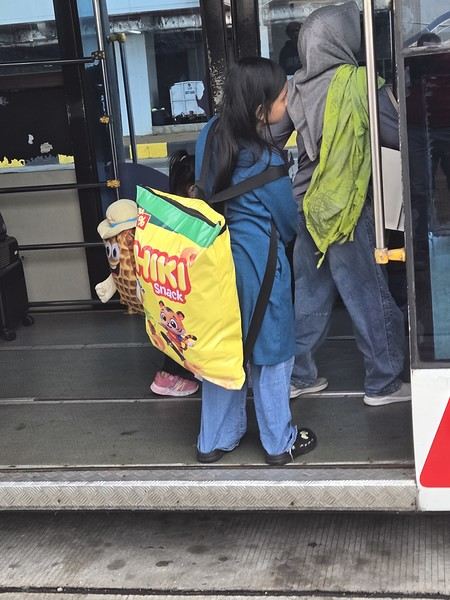
When we arrived in Makassar, a driver was waiting to take us straight to Rammang Rammang: 250,000 IDR (12 €) to our guesthouse (Rammang Rammang House). Forget about meeting people on the bus—we were headed straight to the first stop of our trip, and it was already stunning.
My kids’ guesthouse: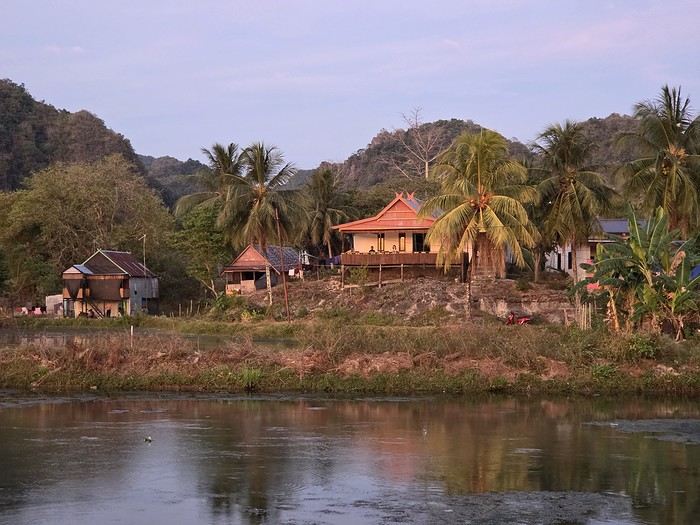
Ours: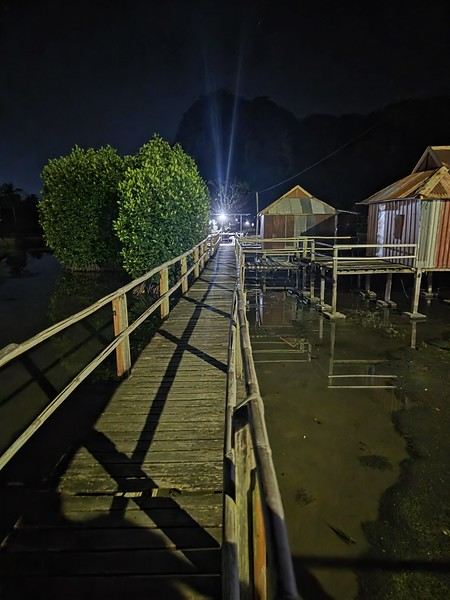
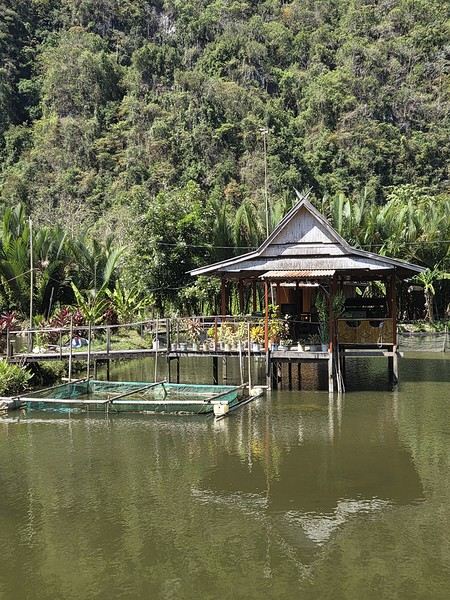
View of the little lake: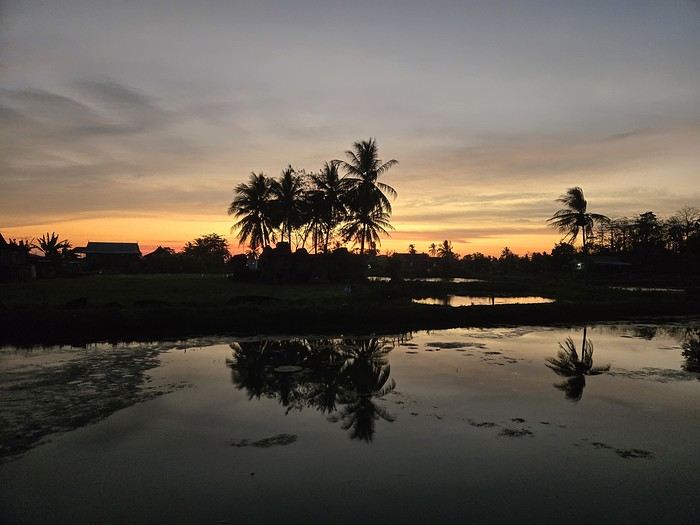
But not everything is straightforward around here. I wanted to get a local SIM card for internet and calls. I found them expensive at Jakarta’s airport (20 € for 20 GB), so I decided to wait. Well, no luck in Rammang Rammang either. You can’t just buy one from the local shop—you need a Telkomsat store (they have the best coverage). So we’d have to wait for Rantepao to get Wi-Fi... When I say "local shop," I mean the little shack around the corner. No big deal—we’d find one easily in Rantepao for 5 € and 25 GB. So there we were, offline, just the four of us enjoying the amazing view.
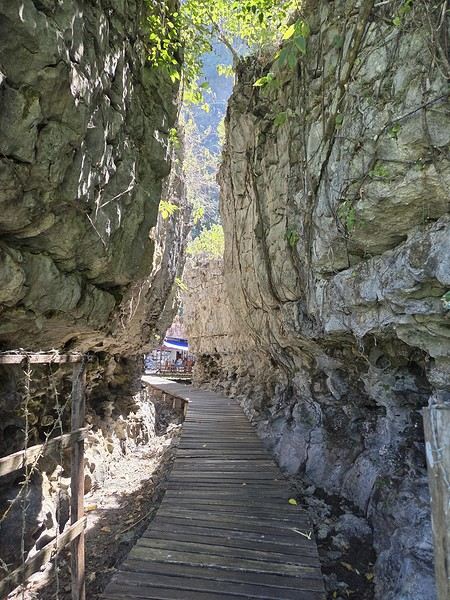
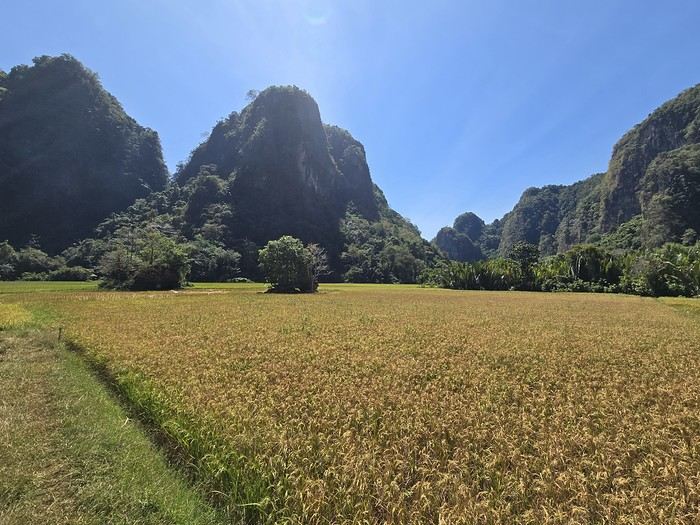
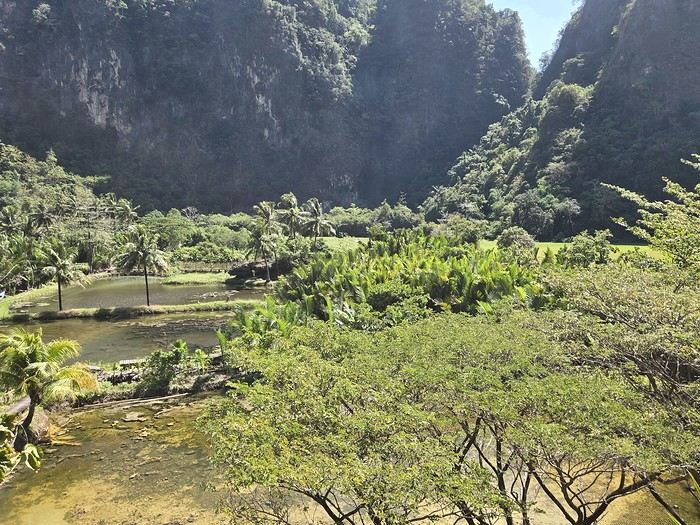
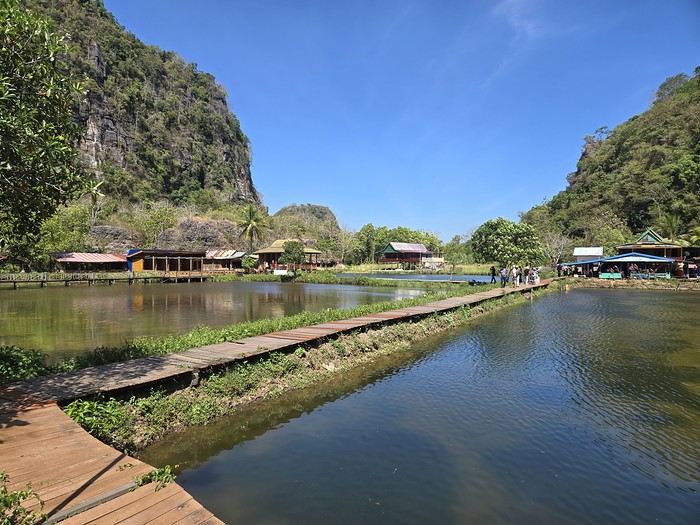
Saturday 07/11: Rammang Rammang We woke up early to the sound of wedding music blasting through the village (everyone’s invited!). Off we went to explore the area. A little walking, a little boat ride (shared with a French tourist and a Polish one—yes, there *are* tourists here, just not many; 750,000 IDR for up to 8 people) through a lovely canal, and we discovered the karst site. It was peaceful and beautiful. The river: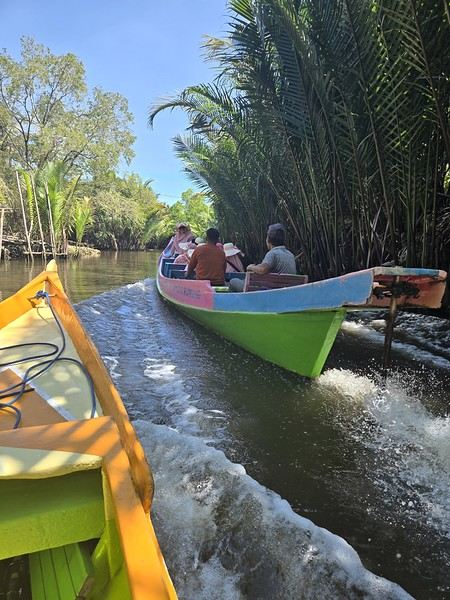 The karst site:
Wednesday 07/08 - Thursday 07/09: We left Montpellier for what was supposed to be five flights, though we only took four to start, landing in Jakarta. We picked up our luggage there to catch a flight to Makassar the next day. That’s the only way we could get an affordable ticket (702 €). I won’t bore you with the flight details—there’s not much to say. We arrived at 7 PM and considered heading straight to Makassar that evening. But we opted for a recovery night before taking off again. Good thing we did, because my son’s suitcase was missing... First contact with the locals was a bit stressful—a trip without your luggage isn’t exactly fun. But right away, a woman reassured us: the suitcase was just enjoying some extra time in Singapore. Maybe it was doing some last-minute shopping. Anyway, nothing serious—it was supposed to arrive at 9 AM the next day. That gave us some breathing room since our flight wasn’t until noon. So off we went to our hotel (Days Hotel & Suites) near the airport. It was cheap (40 € for three rooms—my kids are older and need their space), but it wasn’t worth much more. The place had definitely seen better days. But no big deal—we were only there for the night, and... we got to watch France beat Morocco in the World Cup live at 3 AM. That’s what really mattered!
Friday 07/10: In search of the lost suitcase First challenge of the morning: finding our missing suitcase. They sent us to the airport basement, to the staff entrance. We were greeted with smiles, and an airport employee led me through the underground corridors back to the baggage claim. Right on time at 9 AM, the suitcase arrived, just like they’d promised. We were finally complete! Off we went to change terminals, grab a well-deserved meal, and board our fifth flight to Makassar. Little side note: I struggled for a while trying to book domestic flights directly on the airlines’ websites with no luck. Without meaning to advertise (though I guess I am a little), I realized it’d be easier to use sites like tiket.com or Traveloka. That turned out to be a great choice—I even ended up booking hotels through them later in the trip. 12:40 PM: We were on our way to Makassar. First good news: we were the only tourists. Well, the only European tourists on the flight, anyway. No, you’re not dreaming—the bag is full of... potato chip packets. To each their own souvenirs, I guess...
When we arrived in Makassar, a driver was waiting to take us straight to Rammang Rammang: 250,000 IDR (12 €) to our guesthouse (Rammang Rammang House). Forget about meeting people on the bus—we were headed straight to the first stop of our trip, and it was already stunning.
My kids’ guesthouse:
Ours:
View of the little lake:
But not everything is straightforward around here. I wanted to get a local SIM card for internet and calls. I found them expensive at Jakarta’s airport (20 € for 20 GB), so I decided to wait. Well, no luck in Rammang Rammang either. You can’t just buy one from the local shop—you need a Telkomsat store (they have the best coverage). So we’d have to wait for Rantepao to get Wi-Fi... When I say "local shop," I mean the little shack around the corner. No big deal—we’d find one easily in Rantepao for 5 € and 25 GB. So there we were, offline, just the four of us enjoying the amazing view.
Saturday 07/11: Rammang Rammang We woke up early to the sound of wedding music blasting through the village (everyone’s invited!). Off we went to explore the area. A little walking, a little boat ride (shared with a French tourist and a Polish one—yes, there *are* tourists here, just not many; 750,000 IDR for up to 8 people) through a lovely canal, and we discovered the karst site. It was peaceful and beautiful. The river:
The karst site:
Off on an adventure in Réunion!
Week 1 - July 2026
Traveling with just one spare pair of underwear, considering a hot shower a miracle, never staying in the same place too long by sleeping wherever night catches us, taking whatever local, improbable, and rickety transport we can find—this is the DNA of us wanderers. Except this time, the script for our movie is going to be a whole different genre. On paper, the destination doesn’t exactly scream epic adventure: Réunion! And what’s more... we won’t be two, or four, or even ten. We’ll be a solid thirty. All from the same family. Yes, thirty. At this point, it’s not just a trip—it’s a summer camp on the move! Why inflict this on such a peaceful island? Because my brother decided to get married there with his lovely bride. A great idea, you might say... especially when it involves relocating the equivalent of a small Ardennes village 10,000 kilometers from home for three weeks! So who’s stepping up to be the guide and wave the little flag?
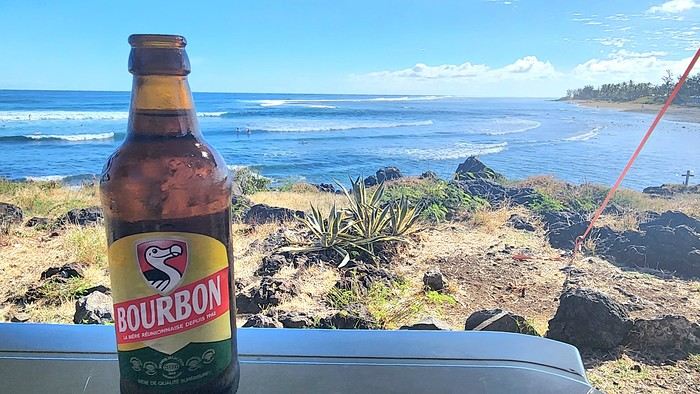
So, for an exceptional trip, exceptional stories! Don’t worry, the debates at the supermarket over whether to choose plain chips or roast chicken chips, the beach picnics washed down with ti’ punch, and other rougail sausages to digest by the pool will only make it into the family archives. Here, I’ll stick to the tales of our beautiful escapes, the ones where we explore the wild corners of this little volcanic rock planted in the middle of the Indian Ocean. So where exactly are we headed?
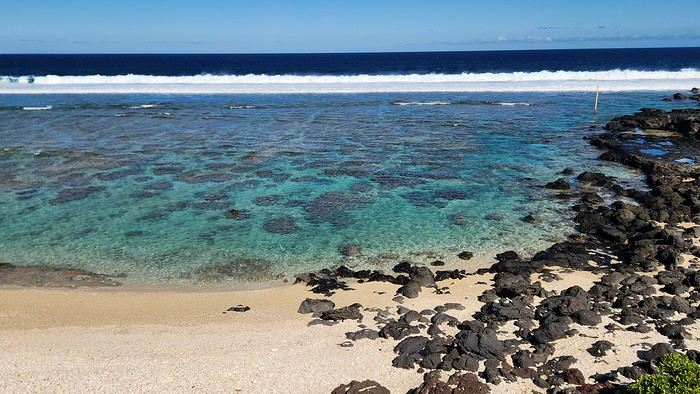
For the first week—the subject of this first installment—we’re taking it easy. We’ll start by rediscovering the coastline, from the Souffleur in Saint-Leu to the Hermitage lagoon, before a little trip to the Cirque de Cilaos and its legendary road with 400 turns, just to get our legs warmed up.
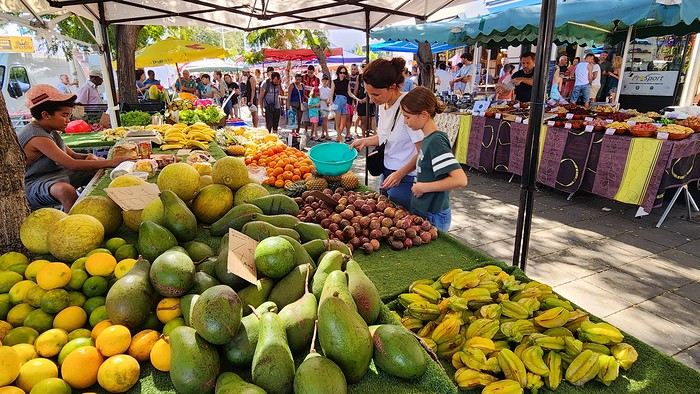
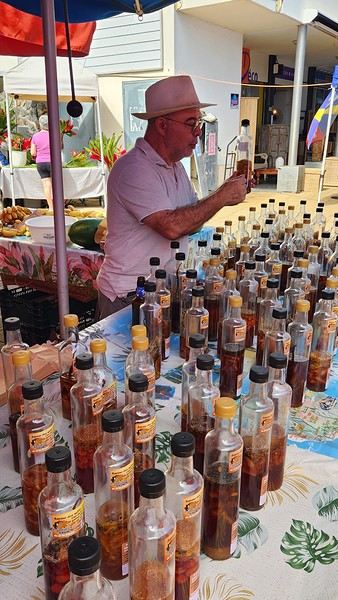
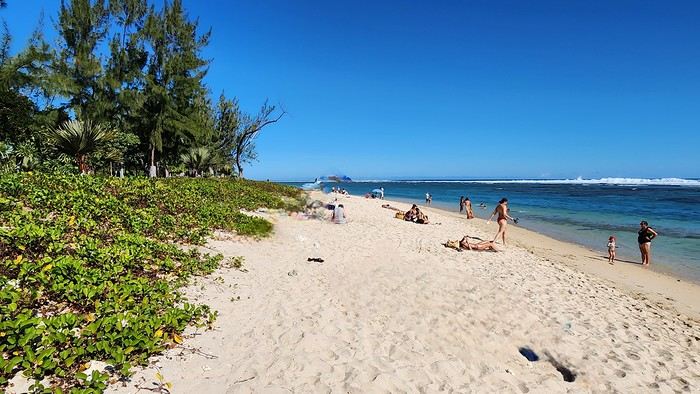
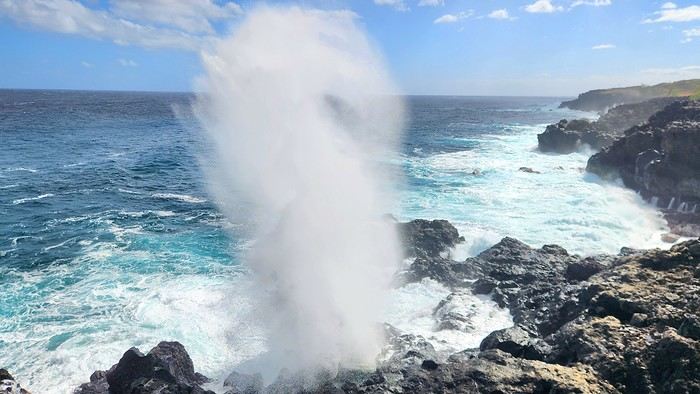
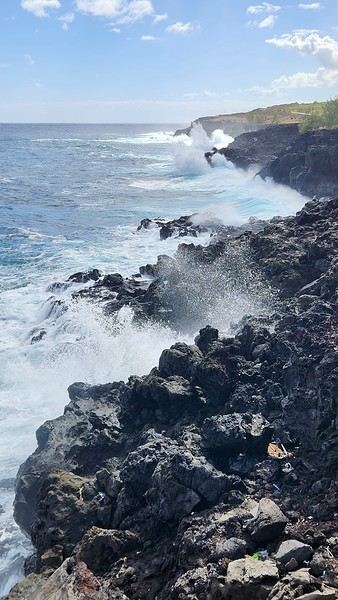
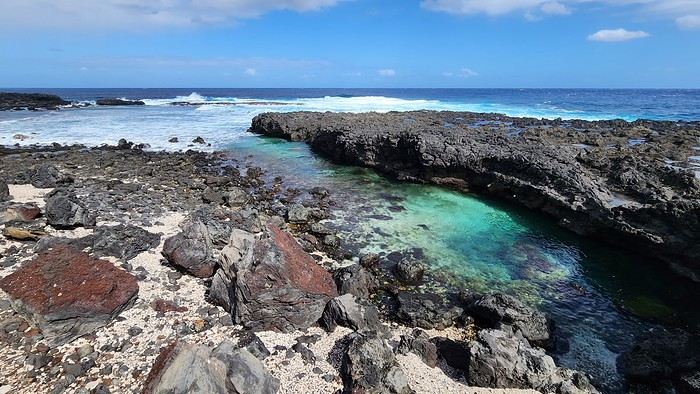
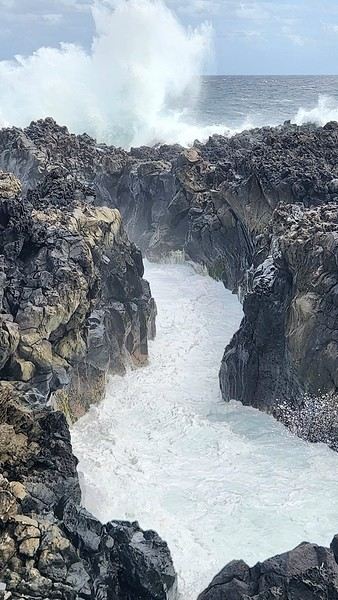
Traveling with just one spare pair of underwear, considering a hot shower a miracle, never staying in the same place too long by sleeping wherever night catches us, taking whatever local, improbable, and rickety transport we can find—this is the DNA of us wanderers. Except this time, the script for our movie is going to be a whole different genre. On paper, the destination doesn’t exactly scream epic adventure: Réunion! And what’s more... we won’t be two, or four, or even ten. We’ll be a solid thirty. All from the same family. Yes, thirty. At this point, it’s not just a trip—it’s a summer camp on the move! Why inflict this on such a peaceful island? Because my brother decided to get married there with his lovely bride. A great idea, you might say... especially when it involves relocating the equivalent of a small Ardennes village 10,000 kilometers from home for three weeks! So who’s stepping up to be the guide and wave the little flag?
So, for an exceptional trip, exceptional stories! Don’t worry, the debates at the supermarket over whether to choose plain chips or roast chicken chips, the beach picnics washed down with ti’ punch, and other rougail sausages to digest by the pool will only make it into the family archives. Here, I’ll stick to the tales of our beautiful escapes, the ones where we explore the wild corners of this little volcanic rock planted in the middle of the Indian Ocean. So where exactly are we headed?
For the first week—the subject of this first installment—we’re taking it easy. We’ll start by rediscovering the coastline, from the Souffleur in Saint-Leu to the Hermitage lagoon, before a little trip to the Cirque de Cilaos and its legendary road with 400 turns, just to get our legs warmed up.
Mamoudzou, Mayotte - December 2025
There exists a rare land where life expresses itself, a land where everything is destroyed, patched up, where everything is dirty and faded, yet paradoxically, each passing day is synonymous with light and joy. Seen from the sea, magnified by its translucent waters, the island is splendid; seen from inland, ochre and green dress a landscape one would wish to be pristine. As you approach the coast with the tides, countless boat wrecks never finish dying; returning from a hike, you know you’re nearing the city by the increasingly obvious proliferation of all kinds of trash. Overflowing the towns, makeshift homes made of corrugated iron stand here and there, wherever the eye lands; from a height, looking toward the horizon, you find the calm blue of the ocean and the beauty of infinity.
But where does all this corrugated iron come from? Blue, gray, red, or black, you find it pretty much everywhere—except, of course, on the island’s heights, where the heat is such that all life seems impossible. Yet, a few kilometers from the capital, more than an hour’s walk away, the corrugated iron is very much there, omnipresent, guaranteeing a land registry as hypothetical for us Europeans as it is very real for those who live there, far from civilization and comfort. I keep climbing. I’m precisely looking to meet these people who live on very little, if not nothing.
- Jéjé Mogné (Hello, sir in Shimahorais)! Where do you get water here, in this place? How do you drink, irrigate your plants?
- I wait for the rain. We have tanks that fill up well with each rainfall. But right now, it’s not raining much.
At the top of the next hill, lost in the bushes, it’s easier for me to guess the distant city, Mamoudzou, than the rest of the path, a remnant of a magnificent GR called the Island Tour, abandoned for the most part, sometimes maintained between two lost hamlets. The city, the pulse, water. Below, the ocean, running water, drinking water—despite regular interruptions; here, up high, an hour and a half’s walk away, tanks, arbitrariness. On other slopes, however, during another hike, I saw the water supply network, made of sturdy pipes tangled in the earth, right there by the path. It seems there are places where water climbs. Others not. Each to their own karma. In 2025. In a French department.
A path of misfortune, lost and regained, thanks to a sign, an inscription, or the compass’s directions. No one walks here anymore, except those who live here or come to harvest their crops. I remember that breathtaking hike in 2013, when I connected Bandrélé to Mamoudzou, passing by the peaks of Bénara (660m) and Bépilipili (643m), barely pausing at Tsararano and Vahibé: 34 km of intense effort on a rollercoaster path, along a trail that was still discernible. Today, it’s as if everything had disappeared. By also destroying the paths and vegetation, Chido* broke the last momentum of these cautious hikers: insecurity has made its way across the archipelago, and Sunday strolls are no longer the norm. Me, I keep going. I will have walked here and there during these three weeks to get an idea of the places, the people, the landscapes, and the superhuman effort required to move forward in over 40°C. To tell the truth, during my last hike, I cut my plans short and let myself be carried by a group of young people heading back to the city. The path is now just an inextricable network of small trails, the specter of Providence** comes to mind. True wisdom is knowing when to give up. I leave.
* A cyclone named "desire" (in Shona), which ravaged the island of Mayotte on December 14, 2024. ** June 2023, a very poorly prepared hike on Providence Island (Caribbean) from which I miraculously escaped.
On Petite-Terre, Marie takes me to visit some locals, white people who have lived there for a long time and make a living from their art; jewelry for her, all kinds of objects for him. We love this little shop, this oasis amid the chaos that embodies Dostoevsky’s phrase: "Beauty will save the world." It’s clean and tidy, beautiful, well-kept. Invariably, the question of insecurity resurfaces in the middle of the conversation. The woman says:
- I know someone who slipped in their bathtub. Still, I keep taking baths…
So, is this insecurity a myth or reality? I hear stories that are often true but sometimes seemingly exaggerated through the lens of misunderstanding and one-upmanship. Like that of this midwife assaulted one evening (it gets dark early) on her way home from work. Sometimes she was attacked on the path, dragged by the hair for several meters, sometimes she made it home, but it was her roommate who let the two men in. One version talks about a snatched phone and gratuitous violence, another about violence outright. In short, one thing is certain: walking around at night flaunting your phone isn’t a good idea, no more in Mamoudzou than in the rough neighborhoods of Nantes. Also, I played it safe: nothing flashy, nothing bling-bling, and always something to give if needed. I was never approached. It’s not easy to get a sense of the realities, between the hazy reports from journalists sensationalizing everything and the real lives of real people. But I know I can’t rely on these few ideas I’ve formed: I’m nobody, and above all, I don’t live here. What I do know, however, is that since my last visit to the island in 2017, over 80,000 babies have been born, and tens of thousands of immigrants have reached the archipelago’s shores. What’s also obvious is that poverty, hunger, and—let’s say it—indignity foster delinquency and insecurity. So, without taking journalists’ alarmist speeches at face value, we’ll try to keep in mind that a young person rendered orphaned by circumstances (parents expelled), poor and often hungry, involved more or less against their will in village wars and fueled by synthetic drugs*, will readily turn to violence when they truly have nothing to lose. We can trace the origin of this despair to the fact that in Mayotte, those without legal existence have virtually no hope of accessing anything.
* "Chimique" is a series of synthetic cannabinoids
Meanwhile, in the evening, it’s good to go home before the time of stone-throwing. From time to time, along the roads, gangs throw stones at vehicles and school buses, but mostly at police cars—almost all the white Dusters on the island! In front of the Mamoudzou police station, all parked vehicles—mostly Dusters—bear the scars of these attacks. Maybe it’s only at night that gangs unleash and all the burglaries happen? I saw nothing, heard nothing. I lived three weeks in a sort of bunker with no real access to outside light, protected by a fake wooden door doubled with a real metal door, both locked at all times. You don’t tempt fate. You endure it differently.
Today, extraordinarily, it’s raining. Yet, it’s the rainy season! But with my karma helping (what selfishness to want to walk dry when so many souls live off the rain) or is it climate change? The rain only falls once I’ve put on my horrible green pajamas. In front of the board outlining the program, I’m told that out of the six scheduled C-sections today (sic), they’ll probably only do two, maybe three. Because it’s raining. And when it rains, people don’t move around. Not for lack of will. Rather, for lack of means. And that ties into those sad days when the police patrol around the hospital: patients don’t come. They’ll come back tomorrow. To compensate, I’m happy at the thought of tackling the abscess program, but the sterilization unit is acting up and blocking the instrument trays. When it’s not the rain, it’s the unions. And when both finally quiet down, there’s always someone to find fault with the order of operations. You have to imagine an operating room where the question of urgency reigns supreme. Here, no surgery is scheduled more than 24 hours in advance—only emergencies, nothing but emergencies. So, following that reasonable adage that what’s done is no longer to be done, it’s sheer madness when the rain meets the interests of Force Ouvrière and the bad will of some combines with the laziness of others. To tell the truth, I’ve never seen so much energy expended to… do nothing. Hallucinating. But who am I, a small-time striver, an islander in my spare time, a temporary worker at the end of the world? I came, I saw, I was disappointed? Not really. Here again, I can’t judge a system in so little time. I can barely utter a few bitter words in front of obvious facts. But nothing will take away my joy of being here for three weeks. Here, they heal with somewhat outdated but still functional means. You do what you can with what you have, 8,000 km from the Métropole. Yes, the operating room doors hesitate, and the operating tables stutter, but in this blessed period, we lack neither medicines nor supplies. So we examine, anesthetize, and repair, far more undocumented people than French—if I may play with somewhat borderline statistics here; we deliver babies, dress wounds, and relieve pain in this hospital at the end of the world where neither white women nor Mahorais women would ever consider giving birth or getting treated.
What’s the solution? The obstetrician talks to the woman during a C-section under spinal anesthesia:
- Bouéni! (Madame, in Shimahorais) You need to think about tubal ligation. This is your fourth C-section. Your uterus is like tissue paper. Your next pregnancy will be very risky.
No answer. Culture. It’s all about culture. The funniest thing is that France also gets bogged down with the idea of other cultures’… cultures. The woman in question arrived illegally a few years ago to give birth to her first child. Since then, rejecting the very idea of contraception—her husband, for his part, will invoke God or Allah to refuse a vasectomy—she comes back every 12-14 months. And the obstetrician explains to me how his idea of making information about permanent contraception mandatory was deemed racist by associations. It’s always the same story. I suggest to the associations that they take charge of all these extra births, not only the medical costs but also the entire education, not just financial, of all these children doomed to live a life of misery on this forsaken archipelago. The probability that one of these offspring will emerge as a gifted, sensitive, and fiercely happy individual must truly be weighed against the degradation and abandonment that will invariably afflict the thousands of others living around him. In reality, simply mentioning a very real danger to the mother should be enough to impose sterilization. But we are a country whose greatness of soul is measured by the number of heads cut off to uphold the famous rights of man... Already a proponent at home of ending family allowances after the third child—you can’t subscribe to a certain idea of society and, at the same time, accept that tens of thousands of children are sacrificed on the altar of thoughtlessness and financial interest*—I will weakly advocate here for a controlled right to have children. Well, what will they say about me when I express the idea of imposing sterilization on women in irregular situations after the birth of their third child? National solidarity funds the noblest ideals? In Mayotte? Let’s be serious. It’s so much easier to hide behind the inalienable right of women to control their bodies than to acknowledge one’s own powerlessness to assume the consequences of such a policy. Because after 18 years of struggles as a second-class citizen, the young stateless person will have no choice but to live in hiding: faced with the impossibility of claiming birthright citizenship**, they will be deportable. In Mayotte, there aren’t enough schools, not enough housing, not enough projects for youth, not enough jobs, not enough money, not enough future… In Mayotte, an average of 5 children are born per woman. In reality, we never ask about the right of children to control their own lives.
* Single parent with 4 children: RSA at 1937 € + family allowances… ** Law of May 12, 2025 aiming to strengthen the conditions for accessing French nationality in Mayotte.
I live in the city in a clean apartment where air conditioning eases my aches and sweat, and where water flows abundantly, thanks to huge tanks that fill up between water cuts. On the hills of Koungou, I was struck by this image: there, women (a matriarchal society?) do the dishes in a miserable stream. Upstream of the same stream, the same image as downstream: disgusting water with bits of foam floating on it. A little further, however, there are taps with running water that children play with. Strange. In any case, water is a question. They tell me it’s drinkable; I doubt it. A system that’s regularly cut doesn’t seem reliable to me. In any case, I can’t help but think of the Canary Islands and their chronic water shortage, especially in Lanzarote. Without entering the debate on desalination plants—I’m quite ignorant about environmental repercussions—I’ll just say that in the Canary Islands, you can buy 8 L jugs of purified water for less than 2 €. Here, in Mayotte, the price of water—as is the price of gasoline—is the same everywhere: 0.65 € for a bottle of Cristaline (1 €/L)*. While I was walking up there with a couple of farmers shuttling between two remote spots, I know I hit the mark by offering them one of my two bottles I’d brought for the occasion.
* At home, we find Cristaline at 1.14 € for a 9 L pack, i.e., 0.13 € per liter.
Outside, everything is broken, abandoned, old, worn, torn, faded, heavy, dirty, forsaken. But life goes on. And that’s fascinating. At home, at 5:45 PM, people close their shutters and watch cable TV, sometimes late into the night, emptying the streets of any salutary clamor, unwittingly extinguishing the necessary pulse of life. At home, we die of boredom. In Mamoudzou, between two dying trash cans, metal frames laid on the ground are covered by the elements of a broken garden set. A bare concrete staircase, without railings, provides access to the upper floor of a dwelling. On the steps, you can read: Private space - Please take your trash with you. Metal rods protrude from the said dwelling. On the ground, it’s a festival of screws and nails… A cat passes by. It doesn’t look great. A madwoman crosses the street dancing. A slightly hurried driver brakes. A six- or seven-year-old boy comes out in his underwear from his low house made of corrugated iron. He smiles. He’s having fun doing acrobatic figures over an old mattress on the sidewalk. Forward roll, backward roll. You wonder if he eats enough. Different culture. Different customs.
I will remember for a long time this blinding morning light, a raw, vital, striking light. I almost forgot where I came from, the grayness and boredom of that continental European country where nothing really happens anymore. Here, I could join Camus, contemplating these people placed halfway between misery and the sun, resigned for the most part and, for the other part, not too unhappy with their lot. But the Mahorais discourse is unanimous: "France really screwed us over!" Today, more than half of the island’s inhabitants are undocumented; a tremendous amount of energy is spent expelling 20,000 to 25,000 of them each year; colossal sums are swallowed up to care for all these people, and the island is drifting. I talk with some gendarmes. One of them tells me:
- They intercept one kwassa* out of three… Can you explain to me why they can’t catch everyone? It’s 2025! Can’t they put the necessary boats in place?
Clearly, and this is also my opinion, this whole mess serves interests beyond us. For who can believe for a second that this glaring incompetence isn’t orchestrated? Shared interests between secret France and the Union of the Comoros? A desire to bring insecurity to its peak, either by the Comoros to eventually take back control of Mayotte, or by our own government, in a deliberate effort to see all the white people leave the archipelago and let the Mahorais fend for themselves? At one point, I’m even told about an extraordinary deposit beneath Mayotte’s soil, a promise of infinite wealth**. Not to infringe on human rights, to do some cleaning from time to time, to calm things down to avoid implosion, while waiting to go after this providential bounty? Decidedly, Mayotte hasn’t said its last word!
*What’s paradoxical is that in the early 2010s, to revive traditional fishing activity, the UN financed in Anjouan the construction of a factory to produce these light boats, 7-10m long and 1m wide, which largely served the interests of smugglers. This skiff owes its name to a Congolese dance known for being as rhythmic as it is jerky, much like the navigation experience offered during a crossing to Mayotte. ** A 2025 study revealed the existence of a gigantic magmatic reservoir located 23km beneath the archipelago. If the Icelandic experiment succeeds (Project KMT, see here), Mayotte will then possess almost unlimited energy.
Hell on earth. Paradise at sea. The world’s largest lagoon offering spectacular marine depths, Mayotte’s coral reef suffers less from the abundance of tourists* than from tropical storms**. So, let’s admit that Mayotte is best appreciated when approached from the lagoon. The heights are for old hands like me. The sea spray is rather for the snobs who shun the sun god Ra, risking too much exposure and ending up on sick leave for sunstroke! But I’m not exclusive: I twice don my snob attire and head out to tackle the waves, the seabeds, and the elusive. Because yes, underwater, we leave our landlubber reflexes behind, and flying over corals and other magnificent drop-offs, it’s as if we’re soaring, keeping in memory only what our eyes can store. Multicolored, even phosphorescent fish, sharks, rays, the immensity of the blue, and then, there, dolphins, just a few meters from me, underwater. Incredible.
* 70,000 tourists annually, mostly affinity tourism (links with family or an expatriate). ** Present almost at the water’s surface, the reefs were largely destroyed by Chido.
Paradise at sea? When you think that Mayotte comes from the Arabic Jazirat al Mawet—literally, Island of Death—because of its double coral barrier where many skiffs have run aground and continue to do so… Paradise. Eldorado. The Comoros now face an unprecedented influx of immigrants from the African Great Lakes. And Mayotte, for its part, continues to attract relentlessly, thanks to the evolution of the law*. In reality, whether hidden interests exist or not, France remains bound hand and foot by international, European, and French rules: it can’t do much. Barely has it boarded a kwassa when the one who flees by swimming cries attempted murder; barely has one been sent back to the Comoros when an association will look into their detention conditions and find a loophole; barely has one told a bouéni how her next pregnancy could be fatal when so-called human voices cry scandal.
* Regarding the Métropole, the rights of squatters and other bad payers against the notion of private property, legally violated in favor of the right to housing… ** You can read about France being condemned for its illegal practices of expelling Comorian minors. Inhumane treatment, arbitrary detention, collective expulsion.
Everyone forms their own idea of justice, and no one can claim a monopoly on good thinking. So, as long as I treat without prejudice, as long as my hands are sincerely guided by the love I bear for our humanity, I’ll allow myself to think what I think, understanding that I’m rather open to dialogue and that my opinions evolve with time and events. Today, Mayotte represents for me the failure of a model, a European one in this case, where opulence quickly meets its limits. For it’s not wrong to think that our society can’t share more than it produces, nor is it wrong to think that every human being has a right to their share of the pie; in Mayotte, you’ll find the proven result of our civilization: it doesn’t work. Exclusively financed by the right, the ideas of the left jam in Mayotte more than anywhere else: national solidarity coupled with a sense of guilt creates chaos. Political courage, or true social justice, would be to offer a future to those who have no choice—the one who’s already here, the child to be born—not to offer a present to those who can choose or to whom one can give keys to understanding—the woman of childbearing age, the candidate for exile. Ultimately, the Comoros’ coup d’état over France comes at the cost of many innocent victims, starting with the children*.
* Tens of thousands of deaths by drowning between Anjouan and Mayotte, tens of thousands of children left to fend for themselves and doomed to a non-existent future.
On the evening of the 31st, I go for my usual run and notice near a roundabout a fool in rags pedaling the wrong way. A police car passes by: the guy gets stopped. A rather quick identity check. The guy is taken away. Would he still be among us if he had ridden the right way? In the evening, the line is long in front of the club near the dock. Me, I’m just passing by, greeting my friends of the season, much more inclined to savor rest than to exhaust myself on an overheated dance floor. There, a man, thirty or forty years old, clearly in a world of his own, is searching the trash for something to eat. He’s barefoot. I console myself by thinking that at least he won’t die of cold. Out of ten children born in Mayotte, I can reasonably think that only one will be able to afford an existence that minimally meets any of our criteria.
It’s time to go home. After sweating and thinking so much about this gem of the Mozambique Channel, I spend peaceful hours by the pool at a hotel next to the airport. We checked out at 8 AM, and the flight is at 7 PM. The perfect opportunity to slack off and chat a bit more. I’m happy to get to know one of the co-pilots of tonight’s flight, staying at this hotel, while one of my flight attendant friends from this airline had already recommended me to the crew. But it’s not the captain’s day, who’s in a rather gloomy mood. I’ll travel in the back, up to the vertical of Cairo. Midnight has just struck; it’s January 2nd, my name day. Concerned about solving an unsolvable problem with a passenger, the crew asks me to give up my exit row seat and takes me to the front for the last four hours of the flight. In the end, the captain gave in? I laugh to myself: if there’s one thing I mustn’t forget, it’s that God never abandons me!
But where does all this corrugated iron come from? Blue, gray, red, or black, you find it pretty much everywhere—except, of course, on the island’s heights, where the heat is such that all life seems impossible. Yet, a few kilometers from the capital, more than an hour’s walk away, the corrugated iron is very much there, omnipresent, guaranteeing a land registry as hypothetical for us Europeans as it is very real for those who live there, far from civilization and comfort. I keep climbing. I’m precisely looking to meet these people who live on very little, if not nothing.
- Jéjé Mogné (Hello, sir in Shimahorais)! Where do you get water here, in this place? How do you drink, irrigate your plants?
- I wait for the rain. We have tanks that fill up well with each rainfall. But right now, it’s not raining much.
At the top of the next hill, lost in the bushes, it’s easier for me to guess the distant city, Mamoudzou, than the rest of the path, a remnant of a magnificent GR called the Island Tour, abandoned for the most part, sometimes maintained between two lost hamlets. The city, the pulse, water. Below, the ocean, running water, drinking water—despite regular interruptions; here, up high, an hour and a half’s walk away, tanks, arbitrariness. On other slopes, however, during another hike, I saw the water supply network, made of sturdy pipes tangled in the earth, right there by the path. It seems there are places where water climbs. Others not. Each to their own karma. In 2025. In a French department.
A path of misfortune, lost and regained, thanks to a sign, an inscription, or the compass’s directions. No one walks here anymore, except those who live here or come to harvest their crops. I remember that breathtaking hike in 2013, when I connected Bandrélé to Mamoudzou, passing by the peaks of Bénara (660m) and Bépilipili (643m), barely pausing at Tsararano and Vahibé: 34 km of intense effort on a rollercoaster path, along a trail that was still discernible. Today, it’s as if everything had disappeared. By also destroying the paths and vegetation, Chido* broke the last momentum of these cautious hikers: insecurity has made its way across the archipelago, and Sunday strolls are no longer the norm. Me, I keep going. I will have walked here and there during these three weeks to get an idea of the places, the people, the landscapes, and the superhuman effort required to move forward in over 40°C. To tell the truth, during my last hike, I cut my plans short and let myself be carried by a group of young people heading back to the city. The path is now just an inextricable network of small trails, the specter of Providence** comes to mind. True wisdom is knowing when to give up. I leave.
* A cyclone named "desire" (in Shona), which ravaged the island of Mayotte on December 14, 2024. ** June 2023, a very poorly prepared hike on Providence Island (Caribbean) from which I miraculously escaped.
On Petite-Terre, Marie takes me to visit some locals, white people who have lived there for a long time and make a living from their art; jewelry for her, all kinds of objects for him. We love this little shop, this oasis amid the chaos that embodies Dostoevsky’s phrase: "Beauty will save the world." It’s clean and tidy, beautiful, well-kept. Invariably, the question of insecurity resurfaces in the middle of the conversation. The woman says:
- I know someone who slipped in their bathtub. Still, I keep taking baths…
So, is this insecurity a myth or reality? I hear stories that are often true but sometimes seemingly exaggerated through the lens of misunderstanding and one-upmanship. Like that of this midwife assaulted one evening (it gets dark early) on her way home from work. Sometimes she was attacked on the path, dragged by the hair for several meters, sometimes she made it home, but it was her roommate who let the two men in. One version talks about a snatched phone and gratuitous violence, another about violence outright. In short, one thing is certain: walking around at night flaunting your phone isn’t a good idea, no more in Mamoudzou than in the rough neighborhoods of Nantes. Also, I played it safe: nothing flashy, nothing bling-bling, and always something to give if needed. I was never approached. It’s not easy to get a sense of the realities, between the hazy reports from journalists sensationalizing everything and the real lives of real people. But I know I can’t rely on these few ideas I’ve formed: I’m nobody, and above all, I don’t live here. What I do know, however, is that since my last visit to the island in 2017, over 80,000 babies have been born, and tens of thousands of immigrants have reached the archipelago’s shores. What’s also obvious is that poverty, hunger, and—let’s say it—indignity foster delinquency and insecurity. So, without taking journalists’ alarmist speeches at face value, we’ll try to keep in mind that a young person rendered orphaned by circumstances (parents expelled), poor and often hungry, involved more or less against their will in village wars and fueled by synthetic drugs*, will readily turn to violence when they truly have nothing to lose. We can trace the origin of this despair to the fact that in Mayotte, those without legal existence have virtually no hope of accessing anything.
* "Chimique" is a series of synthetic cannabinoids
Meanwhile, in the evening, it’s good to go home before the time of stone-throwing. From time to time, along the roads, gangs throw stones at vehicles and school buses, but mostly at police cars—almost all the white Dusters on the island! In front of the Mamoudzou police station, all parked vehicles—mostly Dusters—bear the scars of these attacks. Maybe it’s only at night that gangs unleash and all the burglaries happen? I saw nothing, heard nothing. I lived three weeks in a sort of bunker with no real access to outside light, protected by a fake wooden door doubled with a real metal door, both locked at all times. You don’t tempt fate. You endure it differently.
Today, extraordinarily, it’s raining. Yet, it’s the rainy season! But with my karma helping (what selfishness to want to walk dry when so many souls live off the rain) or is it climate change? The rain only falls once I’ve put on my horrible green pajamas. In front of the board outlining the program, I’m told that out of the six scheduled C-sections today (sic), they’ll probably only do two, maybe three. Because it’s raining. And when it rains, people don’t move around. Not for lack of will. Rather, for lack of means. And that ties into those sad days when the police patrol around the hospital: patients don’t come. They’ll come back tomorrow. To compensate, I’m happy at the thought of tackling the abscess program, but the sterilization unit is acting up and blocking the instrument trays. When it’s not the rain, it’s the unions. And when both finally quiet down, there’s always someone to find fault with the order of operations. You have to imagine an operating room where the question of urgency reigns supreme. Here, no surgery is scheduled more than 24 hours in advance—only emergencies, nothing but emergencies. So, following that reasonable adage that what’s done is no longer to be done, it’s sheer madness when the rain meets the interests of Force Ouvrière and the bad will of some combines with the laziness of others. To tell the truth, I’ve never seen so much energy expended to… do nothing. Hallucinating. But who am I, a small-time striver, an islander in my spare time, a temporary worker at the end of the world? I came, I saw, I was disappointed? Not really. Here again, I can’t judge a system in so little time. I can barely utter a few bitter words in front of obvious facts. But nothing will take away my joy of being here for three weeks. Here, they heal with somewhat outdated but still functional means. You do what you can with what you have, 8,000 km from the Métropole. Yes, the operating room doors hesitate, and the operating tables stutter, but in this blessed period, we lack neither medicines nor supplies. So we examine, anesthetize, and repair, far more undocumented people than French—if I may play with somewhat borderline statistics here; we deliver babies, dress wounds, and relieve pain in this hospital at the end of the world where neither white women nor Mahorais women would ever consider giving birth or getting treated.
What’s the solution? The obstetrician talks to the woman during a C-section under spinal anesthesia:
- Bouéni! (Madame, in Shimahorais) You need to think about tubal ligation. This is your fourth C-section. Your uterus is like tissue paper. Your next pregnancy will be very risky.
No answer. Culture. It’s all about culture. The funniest thing is that France also gets bogged down with the idea of other cultures’… cultures. The woman in question arrived illegally a few years ago to give birth to her first child. Since then, rejecting the very idea of contraception—her husband, for his part, will invoke God or Allah to refuse a vasectomy—she comes back every 12-14 months. And the obstetrician explains to me how his idea of making information about permanent contraception mandatory was deemed racist by associations. It’s always the same story. I suggest to the associations that they take charge of all these extra births, not only the medical costs but also the entire education, not just financial, of all these children doomed to live a life of misery on this forsaken archipelago. The probability that one of these offspring will emerge as a gifted, sensitive, and fiercely happy individual must truly be weighed against the degradation and abandonment that will invariably afflict the thousands of others living around him. In reality, simply mentioning a very real danger to the mother should be enough to impose sterilization. But we are a country whose greatness of soul is measured by the number of heads cut off to uphold the famous rights of man... Already a proponent at home of ending family allowances after the third child—you can’t subscribe to a certain idea of society and, at the same time, accept that tens of thousands of children are sacrificed on the altar of thoughtlessness and financial interest*—I will weakly advocate here for a controlled right to have children. Well, what will they say about me when I express the idea of imposing sterilization on women in irregular situations after the birth of their third child? National solidarity funds the noblest ideals? In Mayotte? Let’s be serious. It’s so much easier to hide behind the inalienable right of women to control their bodies than to acknowledge one’s own powerlessness to assume the consequences of such a policy. Because after 18 years of struggles as a second-class citizen, the young stateless person will have no choice but to live in hiding: faced with the impossibility of claiming birthright citizenship**, they will be deportable. In Mayotte, there aren’t enough schools, not enough housing, not enough projects for youth, not enough jobs, not enough money, not enough future… In Mayotte, an average of 5 children are born per woman. In reality, we never ask about the right of children to control their own lives.
* Single parent with 4 children: RSA at 1937 € + family allowances… ** Law of May 12, 2025 aiming to strengthen the conditions for accessing French nationality in Mayotte.
I live in the city in a clean apartment where air conditioning eases my aches and sweat, and where water flows abundantly, thanks to huge tanks that fill up between water cuts. On the hills of Koungou, I was struck by this image: there, women (a matriarchal society?) do the dishes in a miserable stream. Upstream of the same stream, the same image as downstream: disgusting water with bits of foam floating on it. A little further, however, there are taps with running water that children play with. Strange. In any case, water is a question. They tell me it’s drinkable; I doubt it. A system that’s regularly cut doesn’t seem reliable to me. In any case, I can’t help but think of the Canary Islands and their chronic water shortage, especially in Lanzarote. Without entering the debate on desalination plants—I’m quite ignorant about environmental repercussions—I’ll just say that in the Canary Islands, you can buy 8 L jugs of purified water for less than 2 €. Here, in Mayotte, the price of water—as is the price of gasoline—is the same everywhere: 0.65 € for a bottle of Cristaline (1 €/L)*. While I was walking up there with a couple of farmers shuttling between two remote spots, I know I hit the mark by offering them one of my two bottles I’d brought for the occasion.
* At home, we find Cristaline at 1.14 € for a 9 L pack, i.e., 0.13 € per liter.
Outside, everything is broken, abandoned, old, worn, torn, faded, heavy, dirty, forsaken. But life goes on. And that’s fascinating. At home, at 5:45 PM, people close their shutters and watch cable TV, sometimes late into the night, emptying the streets of any salutary clamor, unwittingly extinguishing the necessary pulse of life. At home, we die of boredom. In Mamoudzou, between two dying trash cans, metal frames laid on the ground are covered by the elements of a broken garden set. A bare concrete staircase, without railings, provides access to the upper floor of a dwelling. On the steps, you can read: Private space - Please take your trash with you. Metal rods protrude from the said dwelling. On the ground, it’s a festival of screws and nails… A cat passes by. It doesn’t look great. A madwoman crosses the street dancing. A slightly hurried driver brakes. A six- or seven-year-old boy comes out in his underwear from his low house made of corrugated iron. He smiles. He’s having fun doing acrobatic figures over an old mattress on the sidewalk. Forward roll, backward roll. You wonder if he eats enough. Different culture. Different customs.
I will remember for a long time this blinding morning light, a raw, vital, striking light. I almost forgot where I came from, the grayness and boredom of that continental European country where nothing really happens anymore. Here, I could join Camus, contemplating these people placed halfway between misery and the sun, resigned for the most part and, for the other part, not too unhappy with their lot. But the Mahorais discourse is unanimous: "France really screwed us over!" Today, more than half of the island’s inhabitants are undocumented; a tremendous amount of energy is spent expelling 20,000 to 25,000 of them each year; colossal sums are swallowed up to care for all these people, and the island is drifting. I talk with some gendarmes. One of them tells me:
- They intercept one kwassa* out of three… Can you explain to me why they can’t catch everyone? It’s 2025! Can’t they put the necessary boats in place?
Clearly, and this is also my opinion, this whole mess serves interests beyond us. For who can believe for a second that this glaring incompetence isn’t orchestrated? Shared interests between secret France and the Union of the Comoros? A desire to bring insecurity to its peak, either by the Comoros to eventually take back control of Mayotte, or by our own government, in a deliberate effort to see all the white people leave the archipelago and let the Mahorais fend for themselves? At one point, I’m even told about an extraordinary deposit beneath Mayotte’s soil, a promise of infinite wealth**. Not to infringe on human rights, to do some cleaning from time to time, to calm things down to avoid implosion, while waiting to go after this providential bounty? Decidedly, Mayotte hasn’t said its last word!
*What’s paradoxical is that in the early 2010s, to revive traditional fishing activity, the UN financed in Anjouan the construction of a factory to produce these light boats, 7-10m long and 1m wide, which largely served the interests of smugglers. This skiff owes its name to a Congolese dance known for being as rhythmic as it is jerky, much like the navigation experience offered during a crossing to Mayotte. ** A 2025 study revealed the existence of a gigantic magmatic reservoir located 23km beneath the archipelago. If the Icelandic experiment succeeds (Project KMT, see here), Mayotte will then possess almost unlimited energy.
Hell on earth. Paradise at sea. The world’s largest lagoon offering spectacular marine depths, Mayotte’s coral reef suffers less from the abundance of tourists* than from tropical storms**. So, let’s admit that Mayotte is best appreciated when approached from the lagoon. The heights are for old hands like me. The sea spray is rather for the snobs who shun the sun god Ra, risking too much exposure and ending up on sick leave for sunstroke! But I’m not exclusive: I twice don my snob attire and head out to tackle the waves, the seabeds, and the elusive. Because yes, underwater, we leave our landlubber reflexes behind, and flying over corals and other magnificent drop-offs, it’s as if we’re soaring, keeping in memory only what our eyes can store. Multicolored, even phosphorescent fish, sharks, rays, the immensity of the blue, and then, there, dolphins, just a few meters from me, underwater. Incredible.
* 70,000 tourists annually, mostly affinity tourism (links with family or an expatriate). ** Present almost at the water’s surface, the reefs were largely destroyed by Chido.
Paradise at sea? When you think that Mayotte comes from the Arabic Jazirat al Mawet—literally, Island of Death—because of its double coral barrier where many skiffs have run aground and continue to do so… Paradise. Eldorado. The Comoros now face an unprecedented influx of immigrants from the African Great Lakes. And Mayotte, for its part, continues to attract relentlessly, thanks to the evolution of the law*. In reality, whether hidden interests exist or not, France remains bound hand and foot by international, European, and French rules: it can’t do much. Barely has it boarded a kwassa when the one who flees by swimming cries attempted murder; barely has one been sent back to the Comoros when an association will look into their detention conditions and find a loophole; barely has one told a bouéni how her next pregnancy could be fatal when so-called human voices cry scandal.
* Regarding the Métropole, the rights of squatters and other bad payers against the notion of private property, legally violated in favor of the right to housing… ** You can read about France being condemned for its illegal practices of expelling Comorian minors. Inhumane treatment, arbitrary detention, collective expulsion.
Everyone forms their own idea of justice, and no one can claim a monopoly on good thinking. So, as long as I treat without prejudice, as long as my hands are sincerely guided by the love I bear for our humanity, I’ll allow myself to think what I think, understanding that I’m rather open to dialogue and that my opinions evolve with time and events. Today, Mayotte represents for me the failure of a model, a European one in this case, where opulence quickly meets its limits. For it’s not wrong to think that our society can’t share more than it produces, nor is it wrong to think that every human being has a right to their share of the pie; in Mayotte, you’ll find the proven result of our civilization: it doesn’t work. Exclusively financed by the right, the ideas of the left jam in Mayotte more than anywhere else: national solidarity coupled with a sense of guilt creates chaos. Political courage, or true social justice, would be to offer a future to those who have no choice—the one who’s already here, the child to be born—not to offer a present to those who can choose or to whom one can give keys to understanding—the woman of childbearing age, the candidate for exile. Ultimately, the Comoros’ coup d’état over France comes at the cost of many innocent victims, starting with the children*.
* Tens of thousands of deaths by drowning between Anjouan and Mayotte, tens of thousands of children left to fend for themselves and doomed to a non-existent future.
On the evening of the 31st, I go for my usual run and notice near a roundabout a fool in rags pedaling the wrong way. A police car passes by: the guy gets stopped. A rather quick identity check. The guy is taken away. Would he still be among us if he had ridden the right way? In the evening, the line is long in front of the club near the dock. Me, I’m just passing by, greeting my friends of the season, much more inclined to savor rest than to exhaust myself on an overheated dance floor. There, a man, thirty or forty years old, clearly in a world of his own, is searching the trash for something to eat. He’s barefoot. I console myself by thinking that at least he won’t die of cold. Out of ten children born in Mayotte, I can reasonably think that only one will be able to afford an existence that minimally meets any of our criteria.
It’s time to go home. After sweating and thinking so much about this gem of the Mozambique Channel, I spend peaceful hours by the pool at a hotel next to the airport. We checked out at 8 AM, and the flight is at 7 PM. The perfect opportunity to slack off and chat a bit more. I’m happy to get to know one of the co-pilots of tonight’s flight, staying at this hotel, while one of my flight attendant friends from this airline had already recommended me to the crew. But it’s not the captain’s day, who’s in a rather gloomy mood. I’ll travel in the back, up to the vertical of Cairo. Midnight has just struck; it’s January 2nd, my name day. Concerned about solving an unsolvable problem with a passenger, the crew asks me to give up my exit row seat and takes me to the front for the last four hours of the flight. In the end, the captain gave in? I laugh to myself: if there’s one thing I mustn’t forget, it’s that God never abandons me!
Which neighborhood to choose for staying in Bangkok?
Hi,
I’m heading to Thailand for the first time in early 2026 and I’m really struggling to pick a neighborhood to stay in Bangkok. Apart from being close to public transport (metro, skytrain, BRT), I’m torn between several areas. I don’t mind using public transport or walking long distances, but if every trip takes 45 minutes or an hour, it’ll quickly become a hassle given our relatively short time there.
We’ll be in Bangkok twice during our trip: first for a “short” 2-night stopover (arriving from France in the mid-afternoon, then leaving the day after next for southern Thailand by plane), and then again for 3 nights before flying back to France (arriving at the airport in the late afternoon, 3 nights there, then departing for France in the late morning).
I’ve seen so many different recommendations that I’m having a hard time deciding. I’ve read that staying near the river is great for sightseeing, and that taking the boat to get around is really pleasant. But I’m worried about being a bit isolated for evening outings (eating at a cheap little restaurant, having a drink—nothing too wild!).
Chinatown is tempting for the food—it looks amazing—and it doesn’t seem too far from the main sights with public transport. But I’ve read that it’s very noisy because it’s super touristy and there’s constant truck traffic. My friend isn’t thrilled about it, especially since another neighborhood interests her because she has a great discount at a hotel near Victory Monument/Phaya Thai (the Pullman hotel). Even though it’s close to public transport, I’ve seen that it’s mostly a shopping district? And even with transport, isn’t it a long trip to visit places like the Grand Palace?
We also had a plan to stay at an ibis near BTS Nana station in the Sukhumvit area, but again, I get the feeling it’s mostly a shopping district?
Anyway, I’d love to hear your thoughts because I’m really torn!
It’s also true that I haven’t really planned our Bangkok stays yet. I’d like to do the “classic” tourist sights like the Grand Palace and eat really well! Someone told me that the big shopping malls also have amazing food 🙂
Thanks for your input!
We’ll be in Bangkok twice during our trip: first for a “short” 2-night stopover (arriving from France in the mid-afternoon, then leaving the day after next for southern Thailand by plane), and then again for 3 nights before flying back to France (arriving at the airport in the late afternoon, 3 nights there, then departing for France in the late morning).
I’ve seen so many different recommendations that I’m having a hard time deciding. I’ve read that staying near the river is great for sightseeing, and that taking the boat to get around is really pleasant. But I’m worried about being a bit isolated for evening outings (eating at a cheap little restaurant, having a drink—nothing too wild!).
Chinatown is tempting for the food—it looks amazing—and it doesn’t seem too far from the main sights with public transport. But I’ve read that it’s very noisy because it’s super touristy and there’s constant truck traffic. My friend isn’t thrilled about it, especially since another neighborhood interests her because she has a great discount at a hotel near Victory Monument/Phaya Thai (the Pullman hotel). Even though it’s close to public transport, I’ve seen that it’s mostly a shopping district? And even with transport, isn’t it a long trip to visit places like the Grand Palace?
We also had a plan to stay at an ibis near BTS Nana station in the Sukhumvit area, but again, I get the feeling it’s mostly a shopping district?
Anyway, I’d love to hear your thoughts because I’m really torn!
It’s also true that I haven’t really planned our Bangkok stays yet. I’d like to do the “classic” tourist sights like the Grand Palace and eat really well! Someone told me that the big shopping malls also have amazing food 🙂
Thanks for your input!
Bright red and a headache
Hello 🙂
I should be serving a warming drink to the participants in the discussion about gardens and parks that provide us with beautiful photos, I could mention the delicious buttery scent wafting from bakeries in the thread about returning to France, but my heart, its powerful pulse that nourishes my entire being, is elsewhere.
Dasht-e Lut, Yazd, Esfahan, Bam, Kerman, Qeshm, Hormuz—a melody, a prayer at the heart of desire.
A dream, an unattainable fantasy? No. Not anymore. A very serious Italian travel agency is organizing this trip for 6 people this winter. I’m signed up, I’m going, I’m living. Maybe.
"But you’re completely crazy!!!!"
I know... I know that every civilization, every society has a vital need to create scapegoats to define and justify itself, pathetically. And Iran is one of them, top of the list. I laugh or sigh, and it doesn’t bother me.
But that unchanging red, deep red and garnet, so beautiful in itself, in all the Western chancelleries repeats, whispers, shouts: don’t go, don’t go, don’t go, you’re putting yourself in danger and we can’t do anything for you. You’ll be turned into mere bargaining chips, into arguments for endless negotiations. Fear must be instilled, its power absolutely preserved, no concessions made to the enemy. The information (how many French hostages, real or fake, compared to the number of travelers?) is always lacking.
Traveling becomes a merciless confrontation between desire, the vital pulse, and anxiety, its ghosts.
Catherine
I should be serving a warming drink to the participants in the discussion about gardens and parks that provide us with beautiful photos, I could mention the delicious buttery scent wafting from bakeries in the thread about returning to France, but my heart, its powerful pulse that nourishes my entire being, is elsewhere.
Dasht-e Lut, Yazd, Esfahan, Bam, Kerman, Qeshm, Hormuz—a melody, a prayer at the heart of desire.
A dream, an unattainable fantasy? No. Not anymore. A very serious Italian travel agency is organizing this trip for 6 people this winter. I’m signed up, I’m going, I’m living. Maybe.
"But you’re completely crazy!!!!"
I know... I know that every civilization, every society has a vital need to create scapegoats to define and justify itself, pathetically. And Iran is one of them, top of the list. I laugh or sigh, and it doesn’t bother me.
But that unchanging red, deep red and garnet, so beautiful in itself, in all the Western chancelleries repeats, whispers, shouts: don’t go, don’t go, don’t go, you’re putting yourself in danger and we can’t do anything for you. You’ll be turned into mere bargaining chips, into arguments for endless negotiations. Fear must be instilled, its power absolutely preserved, no concessions made to the enemy. The information (how many French hostages, real or fake, compared to the number of travelers?) is always lacking.
Traveling becomes a merciless confrontation between desire, the vital pulse, and anxiety, its ghosts.
Catherine
Review of Renaissance Cruise (Iberian Flavors) from October 18 to 29, 2025
Hi there,
Here’s a little review of our cruise on the Renaissance from October 18 to 29, 2025 (11 nights). It was our first experience with CFC.
Some other forum members were on board too, so we can probably compare notes and correct me if I’m wrong!
The stops were as follows: 10/18 departure from Marseille 10/19 at sea 10/20 Cartagena 10/21 Almería 10/22 Gibraltar 10/23 Cádiz 10/24 at sea 10/25 Leixões (Porto) 10/26 Vigo 10/27 at sea 10/28 at sea 10/29 Dunkirk
First, a quick intro. We’re a family of four with two kids, ages 8 and 11. We booked this cruise in January 2025, right when it went on sale. At the time, it was priced at 763 € per adult (+ 99 € in tips) and 114.45 € per child (under 12, no tips to pay) for an ocean-view cabin (all ocean-view categories were the same price). Since there was also a single-parent offer (meaning one paying adult in the cabin was enough to get the child rate for the accompanying kid), I asked if we could take advantage of this offer to get two double cabins at the same price as one quadruple cabin (to have more space), and yes, it was possible. So we booked two premium ocean-view double cabins side by side. It was the same price as a quadruple. We booked directly through CFC because my husband had a promotional code from his works council. In total, for the four of us, we paid 1830 €, tips included. It’s true we booked early, but the rate was good, and we had the constraint of traveling as a family of four, so cabin choices were more limited. It’s also worth noting that the single-parent offer is limited.
Now, about embarkation: 10/18 Marseille Coming from the north, we took the direct TGV that morning at 7:22 AM, scheduled to arrive in Marseille at 12:24 PM. The trip went smoothly, great weather, and we arrived just one minute late. I had planned to get to the port using the free 35T shuttle from Joliette. To get to the bus stop, there were two options: the metro or walking. Since the weather was beautiful and the kids needed to stretch their legs, we opted for the second option. The route is all downhill, so it was pretty easy even with the suitcases. But I wouldn’t do it the other way around! We arrived at Joliette around 12:50 PM, just in time for the 1:00 PM shuttle, which arrived a few minutes late. Other cruisers got on board too. That day, there were two Costa ships and one MSC ship at the port as well. Traffic was heavy, and the shuttle arrived at the port entrance at 1:30 PM. We were scheduled for 2:30 PM. We were lucky to be at the closest embarkation terminal. So we were among those who had the least walking to do. We dropped off our suitcases and headed to the check-in counter. There were plenty of desks and almost no passengers. So we quickly completed the embarkation formalities—in just a few minutes—and when we boarded, it wasn’t even 2:00 PM yet. We headed to the buffet, where there weren’t many people. As we finished lunch, it was around 3:00 PM when they announced the cabins were ready. We went down to drop off our luggage in the cabins and then went up to the top deck to take some photos. The ship’s daily program said the safety drill would be at 4:00 PM. So we went to deck 6 at the scheduled time. But later, they announced it would actually be at 4:30 PM! In short, we waited 30 minutes for nothing because of a difference between the scheduled and actual time! The drill itself was long. Gathering everyone took about 20 minutes, I think. Just as we finished, they announced the departure, originally scheduled for 5:00 PM, was delayed until 9:00 PM due to latecomers. We went to check out the library, which had tons of board games and books—more than we’d ever seen. What stood out on this first day was that, for the first time, we had a French-speaking embarkation, announcements only in French (except for the safety drill), French-speaking servers, a paper daily program in French, books in French (which we’d never find on another ship), and menus in French. To wrap up the day, we had dinner at Vatel. I had requested the first seating (6:30 PM) and a table for four, and we got it. We were seated upstairs near the window—a very pleasant table that we’d occupy every evening. What was a little surprising, but we got used to it, was that you had to order everything you wanted at once. The portions weren’t big, but you could choose what you wanted. The cheese was French and excellent.
To be continued...
The stops were as follows: 10/18 departure from Marseille 10/19 at sea 10/20 Cartagena 10/21 Almería 10/22 Gibraltar 10/23 Cádiz 10/24 at sea 10/25 Leixões (Porto) 10/26 Vigo 10/27 at sea 10/28 at sea 10/29 Dunkirk
First, a quick intro. We’re a family of four with two kids, ages 8 and 11. We booked this cruise in January 2025, right when it went on sale. At the time, it was priced at 763 € per adult (+ 99 € in tips) and 114.45 € per child (under 12, no tips to pay) for an ocean-view cabin (all ocean-view categories were the same price). Since there was also a single-parent offer (meaning one paying adult in the cabin was enough to get the child rate for the accompanying kid), I asked if we could take advantage of this offer to get two double cabins at the same price as one quadruple cabin (to have more space), and yes, it was possible. So we booked two premium ocean-view double cabins side by side. It was the same price as a quadruple. We booked directly through CFC because my husband had a promotional code from his works council. In total, for the four of us, we paid 1830 €, tips included. It’s true we booked early, but the rate was good, and we had the constraint of traveling as a family of four, so cabin choices were more limited. It’s also worth noting that the single-parent offer is limited.
Now, about embarkation: 10/18 Marseille Coming from the north, we took the direct TGV that morning at 7:22 AM, scheduled to arrive in Marseille at 12:24 PM. The trip went smoothly, great weather, and we arrived just one minute late. I had planned to get to the port using the free 35T shuttle from Joliette. To get to the bus stop, there were two options: the metro or walking. Since the weather was beautiful and the kids needed to stretch their legs, we opted for the second option. The route is all downhill, so it was pretty easy even with the suitcases. But I wouldn’t do it the other way around! We arrived at Joliette around 12:50 PM, just in time for the 1:00 PM shuttle, which arrived a few minutes late. Other cruisers got on board too. That day, there were two Costa ships and one MSC ship at the port as well. Traffic was heavy, and the shuttle arrived at the port entrance at 1:30 PM. We were scheduled for 2:30 PM. We were lucky to be at the closest embarkation terminal. So we were among those who had the least walking to do. We dropped off our suitcases and headed to the check-in counter. There were plenty of desks and almost no passengers. So we quickly completed the embarkation formalities—in just a few minutes—and when we boarded, it wasn’t even 2:00 PM yet. We headed to the buffet, where there weren’t many people. As we finished lunch, it was around 3:00 PM when they announced the cabins were ready. We went down to drop off our luggage in the cabins and then went up to the top deck to take some photos. The ship’s daily program said the safety drill would be at 4:00 PM. So we went to deck 6 at the scheduled time. But later, they announced it would actually be at 4:30 PM! In short, we waited 30 minutes for nothing because of a difference between the scheduled and actual time! The drill itself was long. Gathering everyone took about 20 minutes, I think. Just as we finished, they announced the departure, originally scheduled for 5:00 PM, was delayed until 9:00 PM due to latecomers. We went to check out the library, which had tons of board games and books—more than we’d ever seen. What stood out on this first day was that, for the first time, we had a French-speaking embarkation, announcements only in French (except for the safety drill), French-speaking servers, a paper daily program in French, books in French (which we’d never find on another ship), and menus in French. To wrap up the day, we had dinner at Vatel. I had requested the first seating (6:30 PM) and a table for four, and we got it. We were seated upstairs near the window—a very pleasant table that we’d occupy every evening. What was a little surprising, but we got used to it, was that you had to order everything you wanted at once. The portions weren’t big, but you could choose what you wanted. The cheese was French and excellent.
To be continued...
Road Trip USA 2023 - Part 2
HIGHWAY 1
Highway 1 runs along the Pacific coast of California from Leggett in the north to Dana Point in the south. It's the longest state route in California, stretching 1,050 km.
It's famous for its breathtaking ocean views. That’s actually why it’s become such a popular route for road trips, with tons of attractions and points of interest all along the way.
After crossing the U.S. interior on our way out (see Road Trip USA 2023 - Part 1), we’re starting our return trip along this route from Leggett.
Videos are embedded throughout the summary. Please click on the image to start the video. To jump to a specific post, here are the appropriate links:
CALIFORNIA:
Scenic Overlooks on Route 1 Between Leggett and Fort Bragg The Pudding Creek Trestle Bridge in Fort Bragg Glass Beach - Fort Bragg Jenner Lookout Point - Highway 1 Goat Rock Beach - Sonoma Coast State Park - Jenner Point Reyes National Seashore - White House Pool Trail Point Reyes National Seashore - Limantour Beach Point Reyes National Seashore - Point Reyes Shipwreck Point Reyes National Seashore - Kehoe Beach Trail Point Reyes National Seashore - McClures Beach Trail Point Reyes National Seashore - Cypress Tree Tunnel Point Reyes National Seashore - Point Reyes Beach North Point Reyes National Seashore - Elephant Seals on Drakes Beach Point Reyes National Seashore - Point Reyes Beach South Point Reyes National Seashore – Elephant Seals Overlooks Point Reyes National Seashore - Chimney Rock Trail Point Reyes National Seashore - Point Reyes Lighthouse Trail Point Reyes National Seashore – Tule Elk Observation Point Bonita Lighthouse Trail - Sausalito Hawk Hill - Sausalito Battery Spencer Trail - Sausalito Rodeo Beach - Sausalito Point Cavallo - Golden Gate View - Sausalito Exploring Downtown Sausalito Visiting Sausalito’s Houseboats Crossing the Golden Gate Bridge - San Francisco Golden Gate Bridge Viewpoints - San Francisco Cruise to Alcatraz Island - San Francisco Visiting Alcatraz Island - San Francisco Civic Center - Downtown San Francisco Market Street & Yerba Buena Gardens - Downtown San Francisco Union Square & Financial District - Downtown San Francisco Fisherman's Wharf, Pier 39 & Embarcadero - San Francisco Sea Lion Observation - Pier 39 - San Francisco Lombard Street & Cable Car - Russian Hill - San Francisco Macondray Lane Historic District - Russian Hill - San Francisco Grace Cathedral & Huntington Park - Nob Hill - San Francisco Telegraph Hill - San Francisco Chinatown - San Francisco Alamo Square & Painted Ladies - Western Addition - San Francisco Palace of Fine Arts - Marina District - San Francisco Presidio of San Francisco California Coastal Trail - Lincoln Park - San Francisco California Palace of the Legion of Honor - Lincoln Park - San Francisco Sutro Baths - Lincoln Park - San Francisco Queen Wilhelmina Garden - Golden Gate Park - San Francisco Bison Paddock - Golden Gate Park - San Francisco Portals of the Past - Golden Gate Park - San Francisco Strawberry Hill - Golden Gate Park – San Francisco Prayerbook Cross & Robin Williams Meadow - Golden Gate Park - San Francisco Hidden Garden Steps & 16th Avenue Tiled Steps - San Francisco Grandview Park - San Francisco Hike - Twin Peaks Three Summits - San Francisco Longboarding Down Twin Peaks Blvd in San Francisco Haight-Ashbury - San Francisco Corona Heights Park - San Francisco Mission Dolores - San Francisco Mural Frescoes (Part 1) - Mission District - San Francisco Mural Frescoes (Part 2) - Mission District - San Francisco Devil's Slide Bunker - Pacifica Mavericks Beach - Half Moon Bay Martins Beach - Half Moon Bay Pigeon Point Lighthouse State Historic Park - Pescadero What to See in Santa Cruz Visiting Capitola What to See in Monterey Carmel-by-the-Sea Lovers Point Park - Pacific Grove Castle Rock, Hurricane Point & Little Sur River Viewpoints Pfeiffer Falls Trail Julia Pfeiffer Burns State Park Vista Point & McWay Falls Highway 1 - Big Sur Viewpoints Salmon Creek Falls San Carpoforo Creek Trail Elephant Seal Vista Point - San Simeon San Simeon Pier Moonstone Beach Boardwalk Shipwreck - Estero Bluffs State Park Surfing Competition in Morro Bay Port San Luis Pier - San Luis Obispo Pismo Beach Monarch Butterfly Grove - Pismo State Beach Nojoqui Falls Park - Solvang Arroyo Hondo Vista Point Solvang, a Charming Danish Town in California Chumash Painted Cave - Santa Barbara Goleta San Marcos Rd & Cachuma Lake Vista Points - Santa Barbara Old Santa Barbara Mission Walking Tour of Santa Barbara’s Historic Downtown West Beach - Santa Barbara What to See in Ventura Paradise Falls - Wildwood Regional Park - Thousand Oaks Sandy Dune & El Matador State Beach - Malibu Point Dume Nature Reserve - Malibu Malibu Pier Road Trip in the Malibu Mountains Los Liones Trail - Santa Monica Santa Monica Pier Rodeo Drive - Beverly Hills Greystone Mansion - Beverly Hills Hollywood Walk of Fame - Los Angeles Griffith Observatory - Los Angeles Hollywood Forever Cemetery - Los Angeles What to See in Venice Beach Venice Beach Skatepark ShoreLine Aquatic Park - Long Beach Alamitos Beach - Long Beach Naples Island - Long Beach Crescent Bay Point Park & Helser Park Kiosk - Laguna Beach Shell Beach at Twin Points - Laguna Beach Prairie Dogs at Agra Vista Point Top Gun House & Oceanside Pier Annie's Canyon Trail - Solana Beach (Via North Rios Trailhead Loop) Old Town San Diego La Jolla Coastal Trail - San Diego Balboa Park - San Diego Pacific Beach - San Diego Mission Beach - San Diego Ocean Beach Tide Pools - San Diego Sunset Cliffs Natural Park - San Diego Tuna Harbor Park - San Diego Seaport Village & Embarcadero Marina Park - San Diego Gaslamp Quarter - Downtown San Diego Coronado Island - San Diego Dead Dolly Lane - Alpine Galleta Meadows Metal Sculptures - Borrego Springs What to See in Palm Springs Robolights - Palm Springs Andreas Canyon Trail - Indian Canyons - Palm Springs Palm Canyon Trail - Indian Canyons - Palm Springs West Fork Falls Trail - Indian Canyons - Palm Springs Tahquitz Canyon Loop Trail - Indian Canyons - Palm Springs Desert Christ Park - Yucca Valley Pioneertown Salvation Mountain - Niland Slab City - Niland
Highway 1 runs along the Pacific coast of California from Leggett in the north to Dana Point in the south. It's the longest state route in California, stretching 1,050 km.
It's famous for its breathtaking ocean views. That’s actually why it’s become such a popular route for road trips, with tons of attractions and points of interest all along the way.
After crossing the U.S. interior on our way out (see Road Trip USA 2023 - Part 1), we’re starting our return trip along this route from Leggett.
Videos are embedded throughout the summary. Please click on the image to start the video. To jump to a specific post, here are the appropriate links:
CALIFORNIA:
Scenic Overlooks on Route 1 Between Leggett and Fort Bragg The Pudding Creek Trestle Bridge in Fort Bragg Glass Beach - Fort Bragg Jenner Lookout Point - Highway 1 Goat Rock Beach - Sonoma Coast State Park - Jenner Point Reyes National Seashore - White House Pool Trail Point Reyes National Seashore - Limantour Beach Point Reyes National Seashore - Point Reyes Shipwreck Point Reyes National Seashore - Kehoe Beach Trail Point Reyes National Seashore - McClures Beach Trail Point Reyes National Seashore - Cypress Tree Tunnel Point Reyes National Seashore - Point Reyes Beach North Point Reyes National Seashore - Elephant Seals on Drakes Beach Point Reyes National Seashore - Point Reyes Beach South Point Reyes National Seashore – Elephant Seals Overlooks Point Reyes National Seashore - Chimney Rock Trail Point Reyes National Seashore - Point Reyes Lighthouse Trail Point Reyes National Seashore – Tule Elk Observation Point Bonita Lighthouse Trail - Sausalito Hawk Hill - Sausalito Battery Spencer Trail - Sausalito Rodeo Beach - Sausalito Point Cavallo - Golden Gate View - Sausalito Exploring Downtown Sausalito Visiting Sausalito’s Houseboats Crossing the Golden Gate Bridge - San Francisco Golden Gate Bridge Viewpoints - San Francisco Cruise to Alcatraz Island - San Francisco Visiting Alcatraz Island - San Francisco Civic Center - Downtown San Francisco Market Street & Yerba Buena Gardens - Downtown San Francisco Union Square & Financial District - Downtown San Francisco Fisherman's Wharf, Pier 39 & Embarcadero - San Francisco Sea Lion Observation - Pier 39 - San Francisco Lombard Street & Cable Car - Russian Hill - San Francisco Macondray Lane Historic District - Russian Hill - San Francisco Grace Cathedral & Huntington Park - Nob Hill - San Francisco Telegraph Hill - San Francisco Chinatown - San Francisco Alamo Square & Painted Ladies - Western Addition - San Francisco Palace of Fine Arts - Marina District - San Francisco Presidio of San Francisco California Coastal Trail - Lincoln Park - San Francisco California Palace of the Legion of Honor - Lincoln Park - San Francisco Sutro Baths - Lincoln Park - San Francisco Queen Wilhelmina Garden - Golden Gate Park - San Francisco Bison Paddock - Golden Gate Park - San Francisco Portals of the Past - Golden Gate Park - San Francisco Strawberry Hill - Golden Gate Park – San Francisco Prayerbook Cross & Robin Williams Meadow - Golden Gate Park - San Francisco Hidden Garden Steps & 16th Avenue Tiled Steps - San Francisco Grandview Park - San Francisco Hike - Twin Peaks Three Summits - San Francisco Longboarding Down Twin Peaks Blvd in San Francisco Haight-Ashbury - San Francisco Corona Heights Park - San Francisco Mission Dolores - San Francisco Mural Frescoes (Part 1) - Mission District - San Francisco Mural Frescoes (Part 2) - Mission District - San Francisco Devil's Slide Bunker - Pacifica Mavericks Beach - Half Moon Bay Martins Beach - Half Moon Bay Pigeon Point Lighthouse State Historic Park - Pescadero What to See in Santa Cruz Visiting Capitola What to See in Monterey Carmel-by-the-Sea Lovers Point Park - Pacific Grove Castle Rock, Hurricane Point & Little Sur River Viewpoints Pfeiffer Falls Trail Julia Pfeiffer Burns State Park Vista Point & McWay Falls Highway 1 - Big Sur Viewpoints Salmon Creek Falls San Carpoforo Creek Trail Elephant Seal Vista Point - San Simeon San Simeon Pier Moonstone Beach Boardwalk Shipwreck - Estero Bluffs State Park Surfing Competition in Morro Bay Port San Luis Pier - San Luis Obispo Pismo Beach Monarch Butterfly Grove - Pismo State Beach Nojoqui Falls Park - Solvang Arroyo Hondo Vista Point Solvang, a Charming Danish Town in California Chumash Painted Cave - Santa Barbara Goleta San Marcos Rd & Cachuma Lake Vista Points - Santa Barbara Old Santa Barbara Mission Walking Tour of Santa Barbara’s Historic Downtown West Beach - Santa Barbara What to See in Ventura Paradise Falls - Wildwood Regional Park - Thousand Oaks Sandy Dune & El Matador State Beach - Malibu Point Dume Nature Reserve - Malibu Malibu Pier Road Trip in the Malibu Mountains Los Liones Trail - Santa Monica Santa Monica Pier Rodeo Drive - Beverly Hills Greystone Mansion - Beverly Hills Hollywood Walk of Fame - Los Angeles Griffith Observatory - Los Angeles Hollywood Forever Cemetery - Los Angeles What to See in Venice Beach Venice Beach Skatepark ShoreLine Aquatic Park - Long Beach Alamitos Beach - Long Beach Naples Island - Long Beach Crescent Bay Point Park & Helser Park Kiosk - Laguna Beach Shell Beach at Twin Points - Laguna Beach Prairie Dogs at Agra Vista Point Top Gun House & Oceanside Pier Annie's Canyon Trail - Solana Beach (Via North Rios Trailhead Loop) Old Town San Diego La Jolla Coastal Trail - San Diego Balboa Park - San Diego Pacific Beach - San Diego Mission Beach - San Diego Ocean Beach Tide Pools - San Diego Sunset Cliffs Natural Park - San Diego Tuna Harbor Park - San Diego Seaport Village & Embarcadero Marina Park - San Diego Gaslamp Quarter - Downtown San Diego Coronado Island - San Diego Dead Dolly Lane - Alpine Galleta Meadows Metal Sculptures - Borrego Springs What to See in Palm Springs Robolights - Palm Springs Andreas Canyon Trail - Indian Canyons - Palm Springs Palm Canyon Trail - Indian Canyons - Palm Springs West Fork Falls Trail - Indian Canyons - Palm Springs Tahquitz Canyon Loop Trail - Indian Canyons - Palm Springs Desert Christ Park - Yucca Valley Pioneertown Salvation Mountain - Niland Slab City - Niland
The Two of Us in Istanbul: A Turkish Blue Round
Hello everyone,
I’m not really a regular contributor to VoyageForum, but every time Kate and I travel, she encourages me to write a travel journal and publish it. And I must admit, it’s a very enjoyable intellectual exercise, though not always easy. As a VF contributor whose journals I’ve read once said, this retrospective work not only helps preserve memories but also provides a fruitful moment of introspection by bringing back emotions and feelings.
Kate and I spent a week in Istanbul. For her, who had already visited, it was a return; for me, it was a discovery.
As we’ve now made a habit of, I write the texts, and she posts her photos. We hope this illustrated story, crafted together, will revive beautiful sensations for those who know the city and inspire others to discover it. Here we go!
I’m not really a regular contributor to VoyageForum, but every time Kate and I travel, she encourages me to write a travel journal and publish it. And I must admit, it’s a very enjoyable intellectual exercise, though not always easy. As a VF contributor whose journals I’ve read once said, this retrospective work not only helps preserve memories but also provides a fruitful moment of introspection by bringing back emotions and feelings.
Kate and I spent a week in Istanbul. For her, who had already visited, it was a return; for me, it was a discovery.
As we’ve now made a habit of, I write the texts, and she posts her photos. We hope this illustrated story, crafted together, will revive beautiful sensations for those who know the city and inspire others to discover it. Here we go!
10 Days in Afghanistan with the Taliban
Hi, I’m not sure if this belongs here.
The videos aren’t mine—they’re from a YouTuber.
I find his trip mind-blowing and totally different from what we see on TV!
So far, two 1-hour-12-minute videos have been released, but there’ll be at least one more!
Some French journalists and politicians have been tearing him apart lately. At the same time, the guy put in insane work without any funding...
Personally, I’m really impressed by what he’s done...
Here are the links. Sorry if this feels like an ad, but I genuinely think his trip is great—and most importantly, judgment-free. The only other thing I’d seen from him was his trip to Transnistria.
I Lived 10 Days with the Taliban 🇦🇫
Under Taliban Sharia in Afghanistan 🇦🇫
I find his trip mind-blowing and totally different from what we see on TV!
So far, two 1-hour-12-minute videos have been released, but there’ll be at least one more!
Some French journalists and politicians have been tearing him apart lately. At the same time, the guy put in insane work without any funding...
Personally, I’m really impressed by what he’s done...
Here are the links. Sorry if this feels like an ad, but I genuinely think his trip is great—and most importantly, judgment-free. The only other thing I’d seen from him was his trip to Transnistria.
I Lived 10 Days with the Taliban 🇦🇫
Under Taliban Sharia in Afghanistan 🇦🇫
From Southern Shikoku, between land and sea, to the blue waters of Miyakojima and finally the Tokyo metropolis
From Southern Shikoku, between land and sea, to the blue waters of Miyakojima and finally Tokyo’s megacity
Hi everyone,
I have to admit, I really hesitated before deciding to write this travel journal... Writing one takes a lot of time and energy, and since this is my 4th trip, I wondered if it would actually interest anyone other than myself (both for the discovery and the writing). But after a few "Are you going to write a journal?" requests and especially the renewed pleasure from reading other travelers’ travel journals about Japan or elsewhere on this forum or elsewhere, I’ve decided to share this 4th installment in the Land of the Rising Sun here.
The itinerary: 27 full days, from late May to late June 2025, right in the middle of the rainy season, including:
-->13 days in Shikoku, from Kochi (Kochi Prefecture) to Matsuyama (Ehime Prefecture)
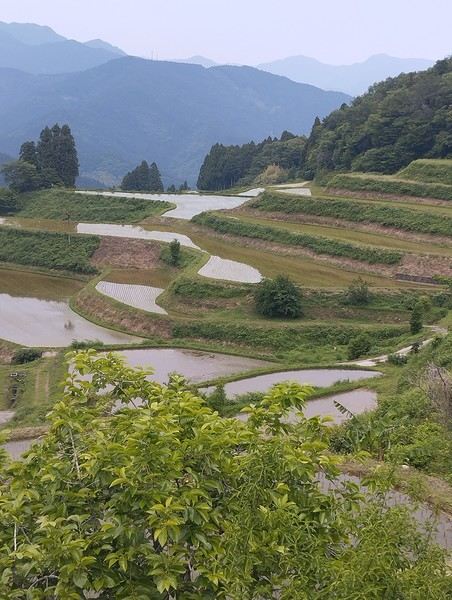
-->7 days in Miyakojima (Okinawa Prefecture)
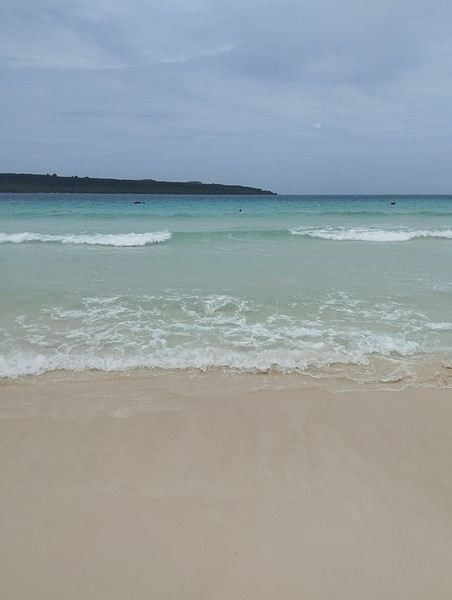
-->7 days in Tokyo
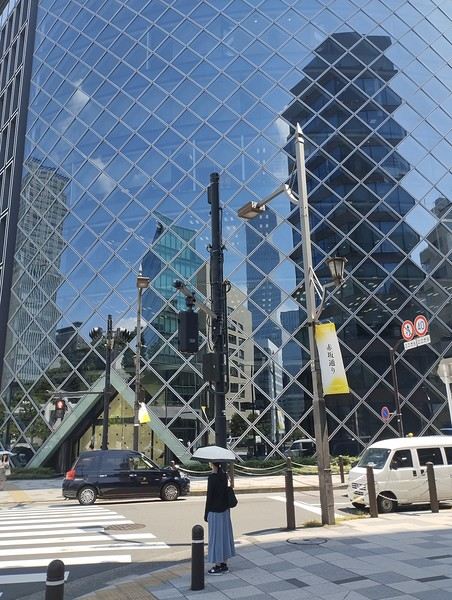
The trip was decided on fairly last-minute this year, as usual.
I regularly check flight prices to track fluctuations for this destination, even without concrete plans. Finding a slightly cheaper direct flight (900 €) than what I’d seen in previous months (around 1,200–1,400 € on average) for a Paris-Tokyo route with Japanese airline ANA was too tempting to resist the urge to return to this enchanting country. After long hesitations between exploring the San’in region (Matsue, Tottori, Yamaguchi) and southern Shikoku, the decision was made—I took the plunge! The tickets are booked: Paris to Kochi with a layover in Tokyo, all with ANA, the airline I’d been dreaming of... for 1,120 € per person. Okay, it’s not cheap, but it’s still better than in 2023.
We leave in 2 weeks!! Now it’s just a matter of getting everything ready!
Intense work ahead in these 2 weeks to:
finalize a more precise itinerary and reach an agreement—yep, because even though we both love Japan, our preferences differ slightly, and we have to choose between exploring new places or taking time to revisit beloved spots... decide how much time to spend in each selected area without rushing while still exploring research places that might interest us and watch videos about Japan book accommodations: yes, it’s possible to do this on the spot as we go, but last year, we noticed that last-minute options were pretty expensive, so we’re booking ahead—even if it means keeping a few options open while we decide or see if better deals pop up later reserve rental cars order yen check the weather regularly and wonder if choosing the *tsuyu* (rainy season) was really a good idea—and whether we’ll be stuck in non-stop rain???
What a tough job, right? Traveling to Japan for a month—such a hard life! Despite this being my 4th trip, the excitement is just as intense as the first time.
The only small downside is that when we booked the flight tickets, there were only a few seats left, so we’re only sitting together on the international return flight. Plus, on the outbound flight, we’ve got the middle seats. Another lingering question: what French-language films will be available? According to the internet, the selection seems limited. Oh well, these are just minor details—it’s almost time to fly!
PS: I’ll be posting slowly and irregularly... so for those interested, be patient or maybe set an alert...
Hi everyone,
I have to admit, I really hesitated before deciding to write this travel journal... Writing one takes a lot of time and energy, and since this is my 4th trip, I wondered if it would actually interest anyone other than myself (both for the discovery and the writing). But after a few "Are you going to write a journal?" requests and especially the renewed pleasure from reading other travelers’ travel journals about Japan or elsewhere on this forum or elsewhere, I’ve decided to share this 4th installment in the Land of the Rising Sun here.
The itinerary: 27 full days, from late May to late June 2025, right in the middle of the rainy season, including:
-->13 days in Shikoku, from Kochi (Kochi Prefecture) to Matsuyama (Ehime Prefecture)
-->7 days in Miyakojima (Okinawa Prefecture)
-->7 days in Tokyo
The trip was decided on fairly last-minute this year, as usual.
I regularly check flight prices to track fluctuations for this destination, even without concrete plans. Finding a slightly cheaper direct flight (900 €) than what I’d seen in previous months (around 1,200–1,400 € on average) for a Paris-Tokyo route with Japanese airline ANA was too tempting to resist the urge to return to this enchanting country. After long hesitations between exploring the San’in region (Matsue, Tottori, Yamaguchi) and southern Shikoku, the decision was made—I took the plunge! The tickets are booked: Paris to Kochi with a layover in Tokyo, all with ANA, the airline I’d been dreaming of... for 1,120 € per person. Okay, it’s not cheap, but it’s still better than in 2023.
We leave in 2 weeks!! Now it’s just a matter of getting everything ready!
Intense work ahead in these 2 weeks to:
finalize a more precise itinerary and reach an agreement—yep, because even though we both love Japan, our preferences differ slightly, and we have to choose between exploring new places or taking time to revisit beloved spots... decide how much time to spend in each selected area without rushing while still exploring research places that might interest us and watch videos about Japan book accommodations: yes, it’s possible to do this on the spot as we go, but last year, we noticed that last-minute options were pretty expensive, so we’re booking ahead—even if it means keeping a few options open while we decide or see if better deals pop up later reserve rental cars order yen check the weather regularly and wonder if choosing the *tsuyu* (rainy season) was really a good idea—and whether we’ll be stuck in non-stop rain???
What a tough job, right? Traveling to Japan for a month—such a hard life! Despite this being my 4th trip, the excitement is just as intense as the first time.
The only small downside is that when we booked the flight tickets, there were only a few seats left, so we’re only sitting together on the international return flight. Plus, on the outbound flight, we’ve got the middle seats. Another lingering question: what French-language films will be available? According to the internet, the selection seems limited. Oh well, these are just minor details—it’s almost time to fly!
PS: I’ll be posting slowly and irregularly... so for those interested, be patient or maybe set an alert...
Another side of my trip to Thailand: Villages, nature, countryside, mountains...
February 9th is a pivotal day during my trip to Thailand. Up until this date, my focus had been on cities, temples, and other urban landmarks. Starting February 10th, I’ll finally leave the city behind for the outskirts—one town, one life, farther from tourism, more real, more authentic... Then comes the bucolic surroundings of Chiang Mai, nature, the countryside, the mountains.
This morning, I head to visit the ethnographic museum. I’d been told about another one, but it’s permanently closed. I wonder if it’s the same one that might have changed its name and location.
I thoroughly enjoy visiting this museum. At first, I’m a bit annoyed because the place is packed with noisy school groups blocking the display cases without even showing the slightest interest. But soon, their chaperones manage to lead them into another room, giving me some peace. They maintain this distance throughout the tour, allowing me to explore the museum in complete tranquility. I really appreciate their tact.
I’m amazed by the absolutely stunning fabric displays and the countless everyday objects, especially the very old pottery. There’s so much beautiful basketry and intricately carved wood. The statues are also incredible... After seeing all of them, I no longer feel like buying any from the shops.
On my way back, not far from my hotel, I discover a rather unique place that only serves one drink, which they’ve made their specialty: egg coffee! A pretty surprising novelty. I have to try it.

At the bottom of the cup, they pour a layer of milk, topped with a layer of liquid coffee, followed by a layer of egg yolk, and finally a top layer that turns out to be a mix of coffee and cocoa powder. It’s a cold drink that, in the end, doesn’t have much flavor, and the price is pretty steep for such a small cup. You’re paying for the exclusivity!
Later in the day, I venture once again into small alleys, something I love doing when exploring a new city—no specific goal, just wandering east of the city, outside the walls.

I encounter very few tourists there and discover unsuspected little shops overflowing with lovely items, much cheaper than what you find in the heart of the tourist district. Then I wander through the floors of Warorot Market. I discover another kind of temple there: the temple of good deals. I love finding clothes that are really original for locals, not the flood of shirts and pants that tourists love but no Thai would ever buy, which invade the shops in the "Historic Square." I stop in my tracks in front of a stall with beautiful shirts featuring stunning geometric patterns in elegant color combinations and very short sleeves. Hmm, these would be perfect for showing off my biceps, one of which is adorned with the magnificent Ganesh tattoo I got last year in Bali. "When you’ve got nice things, you’ve got to show them off!" he said. 😜🙏💪 I pick out two for 380 baht and negotiate them down to 300. But the seller won’t go any lower. I understand I’ve reached the limit of her commercial possibilities. Just as I’m leaving the shop, happy with my purchase, my ever-helpful inner voice, Petite Voix, suggests: - You didn’t try them on because you were too lazy to take off the one you’re wearing and also because of the sweat, but you could just put one on over the one you’re wearing. It’s light enough that it won’t bother you.
I go back to the two sellers, who burst out laughing when I ask to try them on. - Oh no, it’s way too small for you! It’s a women’s shirt! - But they don’t look particularly feminine in style! And I chose XXL... I put the shirt on, and of course, it won’t close. Then I notice the buttons are on the wrong side. That’s why the sleeves seemed so short!!! They put the shirts back on the rack and refund me without any fuss, commenting amid total hilarity: - Well, thank goodness you tried it on just as you were leaving the shop!
Since I don’t want to walk too much before tomorrow’s first Big Outing with the driver, I end my stroll with a visit to two very pretty temples recommended by Joël.

I’d rather not post more temple photos. But these ones smell like village and countryside...


I’ve never seen anything like Wat Ket Karam, so extravagant...


And I end my day with two other lesser-known temples: Wat Noung Kham, simple and finally free of gold and glitter,

and Wat Dap Phai, where an intimate ceremony is taking place at the end of the day.
This morning, I head to visit the ethnographic museum. I’d been told about another one, but it’s permanently closed. I wonder if it’s the same one that might have changed its name and location.
I thoroughly enjoy visiting this museum. At first, I’m a bit annoyed because the place is packed with noisy school groups blocking the display cases without even showing the slightest interest. But soon, their chaperones manage to lead them into another room, giving me some peace. They maintain this distance throughout the tour, allowing me to explore the museum in complete tranquility. I really appreciate their tact.
I’m amazed by the absolutely stunning fabric displays and the countless everyday objects, especially the very old pottery. There’s so much beautiful basketry and intricately carved wood. The statues are also incredible... After seeing all of them, I no longer feel like buying any from the shops.
On my way back, not far from my hotel, I discover a rather unique place that only serves one drink, which they’ve made their specialty: egg coffee! A pretty surprising novelty. I have to try it.
At the bottom of the cup, they pour a layer of milk, topped with a layer of liquid coffee, followed by a layer of egg yolk, and finally a top layer that turns out to be a mix of coffee and cocoa powder. It’s a cold drink that, in the end, doesn’t have much flavor, and the price is pretty steep for such a small cup. You’re paying for the exclusivity!
Later in the day, I venture once again into small alleys, something I love doing when exploring a new city—no specific goal, just wandering east of the city, outside the walls.
I encounter very few tourists there and discover unsuspected little shops overflowing with lovely items, much cheaper than what you find in the heart of the tourist district. Then I wander through the floors of Warorot Market. I discover another kind of temple there: the temple of good deals. I love finding clothes that are really original for locals, not the flood of shirts and pants that tourists love but no Thai would ever buy, which invade the shops in the "Historic Square." I stop in my tracks in front of a stall with beautiful shirts featuring stunning geometric patterns in elegant color combinations and very short sleeves. Hmm, these would be perfect for showing off my biceps, one of which is adorned with the magnificent Ganesh tattoo I got last year in Bali. "When you’ve got nice things, you’ve got to show them off!" he said. 😜🙏💪 I pick out two for 380 baht and negotiate them down to 300. But the seller won’t go any lower. I understand I’ve reached the limit of her commercial possibilities. Just as I’m leaving the shop, happy with my purchase, my ever-helpful inner voice, Petite Voix, suggests: - You didn’t try them on because you were too lazy to take off the one you’re wearing and also because of the sweat, but you could just put one on over the one you’re wearing. It’s light enough that it won’t bother you.
I go back to the two sellers, who burst out laughing when I ask to try them on. - Oh no, it’s way too small for you! It’s a women’s shirt! - But they don’t look particularly feminine in style! And I chose XXL... I put the shirt on, and of course, it won’t close. Then I notice the buttons are on the wrong side. That’s why the sleeves seemed so short!!! They put the shirts back on the rack and refund me without any fuss, commenting amid total hilarity: - Well, thank goodness you tried it on just as you were leaving the shop!
Since I don’t want to walk too much before tomorrow’s first Big Outing with the driver, I end my stroll with a visit to two very pretty temples recommended by Joël.
I’d rather not post more temple photos. But these ones smell like village and countryside...
I’ve never seen anything like Wat Ket Karam, so extravagant...
And I end my day with two other lesser-known temples: Wat Noung Kham, simple and finally free of gold and glitter,
and Wat Dap Phai, where an intimate ceremony is taking place at the end of the day.
USA Road Trip 2023 - Part 1
In January 2023, we started our second road trip across the United States. We stayed from January to mid-March, which gave us plenty of time to visit several cities, attractions, and parks in multiple states.
This travel journal will be split into two parts due to the considerable number of places we visited.
This first journal covers the following states: Ohio, Indiana, Missouri, Oklahoma, Texas, New Mexico, Arizona, Nevada, and California, and takes you through the outbound leg of our road trip.
The second journal will showcase the attractions we visited on the return trip, which mainly follows the famous Highway 1 along the Pacific coast.
So, I invite you to keep reading this first journal, which serves as a long recap to help you discover the various attractions we explored throughout this road trip.
Videos are included throughout the recap. Please click on the image to start the video.
Here are the links to jump to a specific post:
OHIO:
WinterLand - Christmas Lights at Cleveland Public Square Lake View Cemetery - Cleveland - Part 1 Lake View Cemetery - Cleveland - Part 2 Stroll through Columbus Upper Falls to Lower Falls via Buckeye Trail - Hocking Hills State Park – Logan Cedar Falls & Whispering Falls Hiking Trail - Hocking Hills State Park – Logan Ash Cave Hiking Trail - Hocking Hills State Park – Logan Exploring Cincinnati
INDIANA:
Visiting Indianapolis
MISSOURI:
Exploring St. Louis
OKLAHOMA:
Catoosa Blue Whale Discovering Tulsa Exploring Oklahoma City
TEXAS:
Exploring Shamrock Discovering McLean Exploring Amarillo
NEW MEXICO:
Ancestral Sites Trail - Pecos National Historical Park Discovering Santa Fe The Santuario de Chimayó Stroll through Los Cerrillos Walk through the village of Madrid San Francisco de Asis Catholic Church & The Bottle House - Golden Albuquerque Murals 66 Diner - Albuquerque Stroll through Old Town (Albuquerque) Rinconada Canyon Trail - Petroglyph National Monument Mesa Point Trail - Boca Negra Canyon - Petroglyph National Monument Macaw Trail - Boca Negra Canyon - Petroglyph National Monument Cliff Base Trail - Boca Negra Canyon - Petroglyph National Monument Piedras Marcadas Canyon - Petroglyph National Monument Sandstone Bluffs & Ventana Natural Arch - El Malpais National Monument
ARIZONA:
Stewart's Petrified Wood Shop – Holbrook Stroll through Holbrook Discovering Joseph City Exploring Winslow Grand Falls (The "Chocolate Falls") – Leupp Island Trail - Walnut Canyon National Monument Rim Trail - Walnut Canyon National Monument Wukoki Pueblo Trail – Wupatki National Monument Wupatki Pueblo Trail – Wupatki National Monument Doney Mountain Trail – Wupatki National Monument Citadel & Nalakihu Pueblos Trail – Wupatki National Monument Lomaki & Box Canyon Pueblos Trail – Wupatki National Monument Discovering Flagstaff On the way to Sedona Slide Rock State Park – Sedona Midgley Bridge Trail – Wilson Canyon – Sedona Tlaquepaque Arts & Shopping Village Walking Tour - Sedona Chapel of the Holy Cross - Sedona Hiking at Cathedral Rock - Sedona Hiking the Bell Rock Trail - Sedona Hiking the Airport Loop Trail - Sedona Amitabha Stupa and Peace Park - Sedona Hiking the Boynton Canyon Vortex Trail - Sedona Hiking the Devil's Bridge Trail - Sedona Hiking the Birthing Cave Trail - Sedona Bell Rock Inn - Sedona On the roads of Sedona - Part 1 On the roads of Sedona - Part 2 Keyhole Sink Hiking Trail - Kaibab National Forest Discovering Williams Exploring Ash Fork Discovering Kingman Ramada by Wyndham Kingman Davis Camp Park - Bullhead City Discovering Yucca Lake Havasu Boardwalk Tour A duck catches a lobster – Lake Havasu Boardwalk
CALIFORNIA:
Exploring Needles Discovering Goffs Discovering Amboy Visiting the famous Bagdad Cafe - Newberry Springs Exploring Barstow Vehicles from Hell (Mad Max Cars) - Barstow Peggy Sue's 50's Diner - Yermo Liberty Sculpture Park - Yermo Lake Dolores Water Park - Newberry Springs ZZYZX Road - Mojave National Preserve Alien Fresh Jerky - Baker Kelso Dunes Trail - Mojave National Preserve Hole-in-the-Wall Rings Trail - Mojave National Preserve Visiting Mitchell Caverns - Mojave National Preserve Dante's View - Death Valley National Park Zabriskie Point - Death Valley National Park Golden Canyon - Death Valley National Park Artists Drive & Artists Palette - Death Valley National Park Devil's Golf Course - Death Valley National Park Natural Bridge Trail - Death Valley National Park Badwater Basin - Death Valley National Park Harmony Borax Works - Death Valley National Park Devil's Cornfield - Death Valley National Park Mesquite Flat Sand Dunes - Death Valley National Park Mosaic Canyon Trail - Death Valley National Park On the road - Death Valley National Park
NEVADA:
Cleveland Clinic Lou Ruvo Center for Brain Health - Las Vegas Exploring Downtown Las Vegas SlotZilla Zipline - Fremont Street Experience – Downtown Las Vegas Viva Vision Light Show 1 - Fremont Street Experience - Downtown Las Vegas Viva Vision Light Show 2 - Fremont Street Experience - Downtown Las Vegas Viva Vision Light Show 3 - Fremont Street Experience - Downtown Las Vegas Viva Vision Light Show 4 - Fremont Street Experience - Downtown Las Vegas Free Live Music – Fremont Street Experience - Downtown Las Vegas Chucky – Fremont Street Experience - Downtown Las Vegas Las Vegas Strip - Part 1 Las Vegas Strip - Part 2 Las Vegas Strip - Part 3 Las Vegas Strip - Part 4 Las Vegas Strip - Part 5 Tom Devlin's Monster Museum - Boulder City Hoover Dam Lake Mead - Lakeview Overlook - Boulder City Nelson Ghost Town - Searchlight
CALIFORNIA:
Scenic Route through Joshua Tree National Park via the North Entrance Hidden Valley Trail - Joshua Tree National Park Barker Dam Trail - Joshua Tree National Park Cap Rock Trail - Joshua Tree National Park Keys View Trail - Joshua Tree National Park Hall of Horrors Trail - Joshua Tree National Park Skull Rock Trail - Joshua Tree National Park Arch Rock Trail - Joshua Tree National Park Cholla Cactus Garden Trail - Joshua Tree National Park Lone Pine - Owens Valley Miss Alabama & Shark Fin - Alabama Hills - Owens Valley Lone Ranger Canyon - Alabama Hills - Owens Valley Mobius Arch Loop Trail (Heart Arch & Lathe Arch) - Alabama Hills - Owens Valley Eye of the Alabama Hills Arch - Alabama Hills - Owens Valley Boot & Cyclops Arches - Alabama Hills - Owens Valley One Mile Arch, Bowling Ball and Pins & Gunga Din Area - Alabama Hills - Owens Valley Whitney Portal Arch Trailhead - Alabama Hills - Owens Valley Fish Rocks & Trona Pinnacles - Mojave Desert Red Cliffs Trail - Red Rock Canyon State Park Hagen Canyon Nature Trail - Red Rock Canyon State Park Tour of Historic Downtown Tehachapi View of the Tehachapi Loop – Monolith César E. Chávez National Monument – Keene Discovering Bakersfield Kern County Museum – Bakersfield Bravo Farms, Tree House & Petting Zoo - Traver Walking Tour of Kingsburg Exploring Fresno Simonian Farms & Soul Consoling Japanese Internment Tower - Fresno Duncan Ceramic Products (iLoveToCreate) - Fresno Walking Tour of Modesto Wat Dhammararam Buddhist Temple - Stockton Walking Tour of Stockton Discovering Stockton University of the Pacific - Stockton Visiting Lodi Sutter's Fort State Historic Park - Sacramento California State Capitol - Sacramento Walking Tour - Sacramento Walking Tour - Winters Walking Tour - Napa The Chandelier Tree In Drive-Thru Tree Park - Leggett One Log House - Garberville Grandfather Tree - Piercy The Living Chimney Tree - Avenue of the Giants Stephens Grove Loop Trail - Avenue of the Giants Gould Grove Nature Loop Trail - Avenue of the Giants Fleishmann Grove Trail - Avenue of the Giants Mahan Plaque Trail - Avenue of the Giants Founders Grove Nature Loop Trail - Avenue of the Giants Eternal Tree House & Immortal Tree - Avenue of the Giants Drury-Chaney Loop Trail - Avenue of the Giants Walking Tour - Redcrest
COMING UP NEXT:
USA Road Trip 2023 - Part 2
This travel journal will be split into two parts due to the considerable number of places we visited.
This first journal covers the following states: Ohio, Indiana, Missouri, Oklahoma, Texas, New Mexico, Arizona, Nevada, and California, and takes you through the outbound leg of our road trip.
The second journal will showcase the attractions we visited on the return trip, which mainly follows the famous Highway 1 along the Pacific coast.
So, I invite you to keep reading this first journal, which serves as a long recap to help you discover the various attractions we explored throughout this road trip.
Videos are included throughout the recap. Please click on the image to start the video.
Here are the links to jump to a specific post:
OHIO:
WinterLand - Christmas Lights at Cleveland Public Square Lake View Cemetery - Cleveland - Part 1 Lake View Cemetery - Cleveland - Part 2 Stroll through Columbus Upper Falls to Lower Falls via Buckeye Trail - Hocking Hills State Park – Logan Cedar Falls & Whispering Falls Hiking Trail - Hocking Hills State Park – Logan Ash Cave Hiking Trail - Hocking Hills State Park – Logan Exploring Cincinnati
INDIANA:
Visiting Indianapolis
MISSOURI:
Exploring St. Louis
OKLAHOMA:
Catoosa Blue Whale Discovering Tulsa Exploring Oklahoma City
TEXAS:
Exploring Shamrock Discovering McLean Exploring Amarillo
NEW MEXICO:
Ancestral Sites Trail - Pecos National Historical Park Discovering Santa Fe The Santuario de Chimayó Stroll through Los Cerrillos Walk through the village of Madrid San Francisco de Asis Catholic Church & The Bottle House - Golden Albuquerque Murals 66 Diner - Albuquerque Stroll through Old Town (Albuquerque) Rinconada Canyon Trail - Petroglyph National Monument Mesa Point Trail - Boca Negra Canyon - Petroglyph National Monument Macaw Trail - Boca Negra Canyon - Petroglyph National Monument Cliff Base Trail - Boca Negra Canyon - Petroglyph National Monument Piedras Marcadas Canyon - Petroglyph National Monument Sandstone Bluffs & Ventana Natural Arch - El Malpais National Monument
ARIZONA:
Stewart's Petrified Wood Shop – Holbrook Stroll through Holbrook Discovering Joseph City Exploring Winslow Grand Falls (The "Chocolate Falls") – Leupp Island Trail - Walnut Canyon National Monument Rim Trail - Walnut Canyon National Monument Wukoki Pueblo Trail – Wupatki National Monument Wupatki Pueblo Trail – Wupatki National Monument Doney Mountain Trail – Wupatki National Monument Citadel & Nalakihu Pueblos Trail – Wupatki National Monument Lomaki & Box Canyon Pueblos Trail – Wupatki National Monument Discovering Flagstaff On the way to Sedona Slide Rock State Park – Sedona Midgley Bridge Trail – Wilson Canyon – Sedona Tlaquepaque Arts & Shopping Village Walking Tour - Sedona Chapel of the Holy Cross - Sedona Hiking at Cathedral Rock - Sedona Hiking the Bell Rock Trail - Sedona Hiking the Airport Loop Trail - Sedona Amitabha Stupa and Peace Park - Sedona Hiking the Boynton Canyon Vortex Trail - Sedona Hiking the Devil's Bridge Trail - Sedona Hiking the Birthing Cave Trail - Sedona Bell Rock Inn - Sedona On the roads of Sedona - Part 1 On the roads of Sedona - Part 2 Keyhole Sink Hiking Trail - Kaibab National Forest Discovering Williams Exploring Ash Fork Discovering Kingman Ramada by Wyndham Kingman Davis Camp Park - Bullhead City Discovering Yucca Lake Havasu Boardwalk Tour A duck catches a lobster – Lake Havasu Boardwalk
CALIFORNIA:
Exploring Needles Discovering Goffs Discovering Amboy Visiting the famous Bagdad Cafe - Newberry Springs Exploring Barstow Vehicles from Hell (Mad Max Cars) - Barstow Peggy Sue's 50's Diner - Yermo Liberty Sculpture Park - Yermo Lake Dolores Water Park - Newberry Springs ZZYZX Road - Mojave National Preserve Alien Fresh Jerky - Baker Kelso Dunes Trail - Mojave National Preserve Hole-in-the-Wall Rings Trail - Mojave National Preserve Visiting Mitchell Caverns - Mojave National Preserve Dante's View - Death Valley National Park Zabriskie Point - Death Valley National Park Golden Canyon - Death Valley National Park Artists Drive & Artists Palette - Death Valley National Park Devil's Golf Course - Death Valley National Park Natural Bridge Trail - Death Valley National Park Badwater Basin - Death Valley National Park Harmony Borax Works - Death Valley National Park Devil's Cornfield - Death Valley National Park Mesquite Flat Sand Dunes - Death Valley National Park Mosaic Canyon Trail - Death Valley National Park On the road - Death Valley National Park
NEVADA:
Cleveland Clinic Lou Ruvo Center for Brain Health - Las Vegas Exploring Downtown Las Vegas SlotZilla Zipline - Fremont Street Experience – Downtown Las Vegas Viva Vision Light Show 1 - Fremont Street Experience - Downtown Las Vegas Viva Vision Light Show 2 - Fremont Street Experience - Downtown Las Vegas Viva Vision Light Show 3 - Fremont Street Experience - Downtown Las Vegas Viva Vision Light Show 4 - Fremont Street Experience - Downtown Las Vegas Free Live Music – Fremont Street Experience - Downtown Las Vegas Chucky – Fremont Street Experience - Downtown Las Vegas Las Vegas Strip - Part 1 Las Vegas Strip - Part 2 Las Vegas Strip - Part 3 Las Vegas Strip - Part 4 Las Vegas Strip - Part 5 Tom Devlin's Monster Museum - Boulder City Hoover Dam Lake Mead - Lakeview Overlook - Boulder City Nelson Ghost Town - Searchlight
CALIFORNIA:
Scenic Route through Joshua Tree National Park via the North Entrance Hidden Valley Trail - Joshua Tree National Park Barker Dam Trail - Joshua Tree National Park Cap Rock Trail - Joshua Tree National Park Keys View Trail - Joshua Tree National Park Hall of Horrors Trail - Joshua Tree National Park Skull Rock Trail - Joshua Tree National Park Arch Rock Trail - Joshua Tree National Park Cholla Cactus Garden Trail - Joshua Tree National Park Lone Pine - Owens Valley Miss Alabama & Shark Fin - Alabama Hills - Owens Valley Lone Ranger Canyon - Alabama Hills - Owens Valley Mobius Arch Loop Trail (Heart Arch & Lathe Arch) - Alabama Hills - Owens Valley Eye of the Alabama Hills Arch - Alabama Hills - Owens Valley Boot & Cyclops Arches - Alabama Hills - Owens Valley One Mile Arch, Bowling Ball and Pins & Gunga Din Area - Alabama Hills - Owens Valley Whitney Portal Arch Trailhead - Alabama Hills - Owens Valley Fish Rocks & Trona Pinnacles - Mojave Desert Red Cliffs Trail - Red Rock Canyon State Park Hagen Canyon Nature Trail - Red Rock Canyon State Park Tour of Historic Downtown Tehachapi View of the Tehachapi Loop – Monolith César E. Chávez National Monument – Keene Discovering Bakersfield Kern County Museum – Bakersfield Bravo Farms, Tree House & Petting Zoo - Traver Walking Tour of Kingsburg Exploring Fresno Simonian Farms & Soul Consoling Japanese Internment Tower - Fresno Duncan Ceramic Products (iLoveToCreate) - Fresno Walking Tour of Modesto Wat Dhammararam Buddhist Temple - Stockton Walking Tour of Stockton Discovering Stockton University of the Pacific - Stockton Visiting Lodi Sutter's Fort State Historic Park - Sacramento California State Capitol - Sacramento Walking Tour - Sacramento Walking Tour - Winters Walking Tour - Napa The Chandelier Tree In Drive-Thru Tree Park - Leggett One Log House - Garberville Grandfather Tree - Piercy The Living Chimney Tree - Avenue of the Giants Stephens Grove Loop Trail - Avenue of the Giants Gould Grove Nature Loop Trail - Avenue of the Giants Fleishmann Grove Trail - Avenue of the Giants Mahan Plaque Trail - Avenue of the Giants Founders Grove Nature Loop Trail - Avenue of the Giants Eternal Tree House & Immortal Tree - Avenue of the Giants Drury-Chaney Loop Trail - Avenue of the Giants Walking Tour - Redcrest
COMING UP NEXT:
USA Road Trip 2023 - Part 2
Join me in discovering Gran Canaria
Introduction
We stayed on the island of Gran Canaria during the first three months of 2024. It’s the third Canary Island we’ve visited, after Tenerife and Lanzarote.
We rented an apartment in Temisas. By staying in the same place for such a long period, the total price dropped by 50%.
We also rented a vehicle to make getting around the island easier.
Why the Canary Islands, and Gran Canaria in particular? For its pleasant climate, the nature and diversity of its landscapes, the charming villages, and especially the beauty of its many beaches.
In this travel journal, you’ll find a list of the many activities we did during our stay to explore the different attractions of this island.
These attractions are categorized to make it easier to find what interests you.
Videos are included throughout the summary. Click on the image to start the video.
To jump to a specific post, here are the relevant links:
HIKES:
Roque Nublo Maspalomas Dunes - Part 1 Maspalomas Dunes - Part 2 Los Azulejos de Veneguera Barranco de Las Vacas Ventana del Bentayga (Arco del Aserrador) Caves of the King Ventana de Morro (Ventana de la Ganifa) The Dog of Bentayga Cave of the Four Doors Ventana del Nublo Artenera - Caves of Acusa Seca Temisas - El Gigante Cave Fortress of Ansite Puerto de Las Nieves - Roque de Las Nieves Temisas - Cuevas de la Audiencia Roque Bentayga Guayadeque Ravine (Guayadeque Hermitage) Guayadeque Ravine (Cueva de Bartalo) El Zumacal - Barranco Tauco Casablanca Dam (Los Dolores Dam) Ayagaures - La Angostura Dam & Gambuesa Dam Santa Brígida - Alonso Ravine & Centennial Dragon Tree Pino Santo Hike in the Azuaje Ravine Gáldar - Red Lands of Samarrita Tejeda - Charco de La Paloma Bandama Boiler (Camino Borde de Caldera Bandama) Teror - Alamo Ravine Trail – SL-4 Telde - Calasio Caves Special Natural Reserve of Los Tilos de Moya Los Azulejos - Charco de Las Aneas Fataga Ravine Arinaga Military Battery Trail Maspalomas - Las Fuentes and del Canizo Ravines Mogán - Tauro Mountain Trail Tamabada - Llanos de La Mimbre & Sobre la Cueva Viewpoints Trail Hike to the Coronadero Arch via Barranco Hondo Barranco de Silva - Hike to the Jerez Caves Gáldar - Samson Cave - La Atalaya Peak Agaete - Roque Guayedra and Guayedra Ravine Artenara - Caballero Caves Arucas - Bufadero Salt Flats Barranco de Pino Gordo - Natural Pools Telde - Los Cernícalos Ravine Las Cruces - Toba Caves & Picón Puerto de Las Nieves - Moro Cave Agüimes - Morros de Ávila Caves Juncalillo del Sur - Laguna & Salinas de Abajo Caves of Camino de San Felipe Cruz de Tejeda, Cruz Chico and Degollada Viewpoint Hike on the Patalavaca Circuit Motor Grande - Puerto Rico Arch El Montañón - Los Hornos Dam Seafront Walk - Amadores Beach – Puerto Rico Beach Las Niñas Dam El Hornillo - Omega & Omicron Caves Arteara Necropolis Mogán - El Mulato Dam Las Garzas - El Regante Dam La Plata Route - Cho Flores Dam & El Charco Hondo Vega de Acusa - La Candelaria Dam Candelaria Hermitage – Acusa Seca Viewpoint Valsequillo de Gran Canaria – Roque La Vela Ayagaures Dam – GC-602 Lomo del Palo - Monte Pavón Trail Lugar La Laguna - Levada Fataga Dam & Ravine
BEACHES:
Mogán Beach Taurito Beach Tauro Beach Amadores Beach Puerto Rico Beach Anfi del Mar Beach Patalavaca Beach Meloneras Beach Maspalomas Beach English Beach (Playa del Inglés) Las Burras Beach San Agustin Beach Las Alcaravaneras Beach Las Canteras Beach (La Cicer) Las Canteras Beach (La Puntilla) Las Canteras Beach (Santa Catalina) Aquamarina Beach El Agujero - Bocabarranco Beach Hoya Del Pozo Beach Hoya Del Pozo Beach - Lizard with amputated tail El Cabron Beach Ojos de Garza Beach El Burrero Beach
NATURAL POOLS:
Charco Azul - El Risco Agaete Salt Flats Charco de Los Espejos - Sardina del Norte Natural Pools of Punta de Gáldar Snorkeling in the natural pool of Punta de Gáldar Natural Pool La Furnia o El Clavo - Gáldar Natural Pool of Los Dos Roques Emiliano Natural Pool - El Agujero Natural Pool of El Agujero Natural Pools of Roque Prieto Natural Pool El Altillo Los Charcones de Bañaderos – Arucas Natural Pools of El Charco de Las Palomas – Arucas Natural Pools of La Laja - Las Palmas de Gran Canaria Cueva de la Reina Mora - La Garita Natural Pools of Castillo del Romeral
TOWNS:
Center
Santa Brigida Vega de San Mateo Tejeda Artenara Vallesco Teror
Southwest
Santa Lucia de Tirajana Fataga San Bartolomé de Tirajana Puerto de Mogán La Aldea de San Nicolas
North
Arucas Firgas Moya Santa Maria de Guia Gáldar Agaete Puerto de Las Nieves
East
Vegueta - Las Palmas de Gran Canaria Triana - Las Palmas de Gran Canaria Ciudad Jardin - Las Palmas de Gran Canaria Canteras - Las Palmas de Gran Canaria Telde Valsequillo de Gran Canaria Ingenio Agüimes Temisas
VIEWPOINTS:
GC-60 Route (or nearby) GC-210 Route (or nearby) GC-210 Route between the tunnel and La Aldea de San Nicolás GC-215 & GC-65 Routes (or nearby) GC-200 Route (or nearby) GC-130 Route (or nearby) & GC-605 GC-70 Route (or nearby) & GC-21 Sheep herd on GC-70 Route GC-150, GC-240, GC-305, GC-350 & GC-301 Routes GC-606, GC-295, GC-231 and GC-41 Routes (or nearby) Viewpoints – GC-1 Route (or nearby) Viewpoints - Las Palmas de Gran Canaria Viewpoints - GC-2, GC-21, GC-15, GC-216 and GC-132 Routes (or nearby) Viewpoints - GC-503 & GC-217 Routes Viewpoints - GC-604, GC-505, GC-132, GC-42 and GC-802 Routes
MISCELLANEOUS:
San Rafael Aqueduct - Telde Abandoned San Rafael Estate - La Higuera Cenobio de Valerón La Cesta - Tejeda Puerto de la Aldea Scenic Route GC-671 to El Espinillo Scenic Route GC-607 to El Chorrillo The Galdar Cube (Santiago Quarry) Scenic Route GC-504 to Ayagaures Abandoned seaside resort in the Azuaje Ravine El Bufadero de La Garita – Telde GC-505 Route Abandoned Finca Las Haciendas (Los Mocanes) – Las Vegas de Valsequillo Ruins of San Juan Battery - Las Palmas de Gran Canaria Viera y Clavijo Canarian Botanical Garden - Las Palmas de Gran Canaria Tenefé Salt Flats Los Pérez, Lugarejos & Las Hoyas Dams Monte Pavón, Gran Canaria’s little Ireland Valleseco Lagoon Recreational Area Climbing - Fataga Ravine Surfing – El Agujero El Cairete Restaurant - Carrizal de Tejeda Paragliding flight observation - Los Giles La Cuevita Ayagaures Restaurant Statues and Murals - Cruce de Arinaga Aviation Monument (Las Majoreras) & Murals – Carrizal Artistic recycling by Antonio Peñita - Ojos de Garza Rainbows
We stayed on the island of Gran Canaria during the first three months of 2024. It’s the third Canary Island we’ve visited, after Tenerife and Lanzarote.
We rented an apartment in Temisas. By staying in the same place for such a long period, the total price dropped by 50%.
We also rented a vehicle to make getting around the island easier.
Why the Canary Islands, and Gran Canaria in particular? For its pleasant climate, the nature and diversity of its landscapes, the charming villages, and especially the beauty of its many beaches.
In this travel journal, you’ll find a list of the many activities we did during our stay to explore the different attractions of this island.
These attractions are categorized to make it easier to find what interests you.
Videos are included throughout the summary. Click on the image to start the video.
To jump to a specific post, here are the relevant links:
HIKES:
Roque Nublo Maspalomas Dunes - Part 1 Maspalomas Dunes - Part 2 Los Azulejos de Veneguera Barranco de Las Vacas Ventana del Bentayga (Arco del Aserrador) Caves of the King Ventana de Morro (Ventana de la Ganifa) The Dog of Bentayga Cave of the Four Doors Ventana del Nublo Artenera - Caves of Acusa Seca Temisas - El Gigante Cave Fortress of Ansite Puerto de Las Nieves - Roque de Las Nieves Temisas - Cuevas de la Audiencia Roque Bentayga Guayadeque Ravine (Guayadeque Hermitage) Guayadeque Ravine (Cueva de Bartalo) El Zumacal - Barranco Tauco Casablanca Dam (Los Dolores Dam) Ayagaures - La Angostura Dam & Gambuesa Dam Santa Brígida - Alonso Ravine & Centennial Dragon Tree Pino Santo Hike in the Azuaje Ravine Gáldar - Red Lands of Samarrita Tejeda - Charco de La Paloma Bandama Boiler (Camino Borde de Caldera Bandama) Teror - Alamo Ravine Trail – SL-4 Telde - Calasio Caves Special Natural Reserve of Los Tilos de Moya Los Azulejos - Charco de Las Aneas Fataga Ravine Arinaga Military Battery Trail Maspalomas - Las Fuentes and del Canizo Ravines Mogán - Tauro Mountain Trail Tamabada - Llanos de La Mimbre & Sobre la Cueva Viewpoints Trail Hike to the Coronadero Arch via Barranco Hondo Barranco de Silva - Hike to the Jerez Caves Gáldar - Samson Cave - La Atalaya Peak Agaete - Roque Guayedra and Guayedra Ravine Artenara - Caballero Caves Arucas - Bufadero Salt Flats Barranco de Pino Gordo - Natural Pools Telde - Los Cernícalos Ravine Las Cruces - Toba Caves & Picón Puerto de Las Nieves - Moro Cave Agüimes - Morros de Ávila Caves Juncalillo del Sur - Laguna & Salinas de Abajo Caves of Camino de San Felipe Cruz de Tejeda, Cruz Chico and Degollada Viewpoint Hike on the Patalavaca Circuit Motor Grande - Puerto Rico Arch El Montañón - Los Hornos Dam Seafront Walk - Amadores Beach – Puerto Rico Beach Las Niñas Dam El Hornillo - Omega & Omicron Caves Arteara Necropolis Mogán - El Mulato Dam Las Garzas - El Regante Dam La Plata Route - Cho Flores Dam & El Charco Hondo Vega de Acusa - La Candelaria Dam Candelaria Hermitage – Acusa Seca Viewpoint Valsequillo de Gran Canaria – Roque La Vela Ayagaures Dam – GC-602 Lomo del Palo - Monte Pavón Trail Lugar La Laguna - Levada Fataga Dam & Ravine
BEACHES:
Mogán Beach Taurito Beach Tauro Beach Amadores Beach Puerto Rico Beach Anfi del Mar Beach Patalavaca Beach Meloneras Beach Maspalomas Beach English Beach (Playa del Inglés) Las Burras Beach San Agustin Beach Las Alcaravaneras Beach Las Canteras Beach (La Cicer) Las Canteras Beach (La Puntilla) Las Canteras Beach (Santa Catalina) Aquamarina Beach El Agujero - Bocabarranco Beach Hoya Del Pozo Beach Hoya Del Pozo Beach - Lizard with amputated tail El Cabron Beach Ojos de Garza Beach El Burrero Beach
NATURAL POOLS:
Charco Azul - El Risco Agaete Salt Flats Charco de Los Espejos - Sardina del Norte Natural Pools of Punta de Gáldar Snorkeling in the natural pool of Punta de Gáldar Natural Pool La Furnia o El Clavo - Gáldar Natural Pool of Los Dos Roques Emiliano Natural Pool - El Agujero Natural Pool of El Agujero Natural Pools of Roque Prieto Natural Pool El Altillo Los Charcones de Bañaderos – Arucas Natural Pools of El Charco de Las Palomas – Arucas Natural Pools of La Laja - Las Palmas de Gran Canaria Cueva de la Reina Mora - La Garita Natural Pools of Castillo del Romeral
TOWNS:
Center
Santa Brigida Vega de San Mateo Tejeda Artenara Vallesco Teror
Southwest
Santa Lucia de Tirajana Fataga San Bartolomé de Tirajana Puerto de Mogán La Aldea de San Nicolas
North
Arucas Firgas Moya Santa Maria de Guia Gáldar Agaete Puerto de Las Nieves
East
Vegueta - Las Palmas de Gran Canaria Triana - Las Palmas de Gran Canaria Ciudad Jardin - Las Palmas de Gran Canaria Canteras - Las Palmas de Gran Canaria Telde Valsequillo de Gran Canaria Ingenio Agüimes Temisas
VIEWPOINTS:
GC-60 Route (or nearby) GC-210 Route (or nearby) GC-210 Route between the tunnel and La Aldea de San Nicolás GC-215 & GC-65 Routes (or nearby) GC-200 Route (or nearby) GC-130 Route (or nearby) & GC-605 GC-70 Route (or nearby) & GC-21 Sheep herd on GC-70 Route GC-150, GC-240, GC-305, GC-350 & GC-301 Routes GC-606, GC-295, GC-231 and GC-41 Routes (or nearby) Viewpoints – GC-1 Route (or nearby) Viewpoints - Las Palmas de Gran Canaria Viewpoints - GC-2, GC-21, GC-15, GC-216 and GC-132 Routes (or nearby) Viewpoints - GC-503 & GC-217 Routes Viewpoints - GC-604, GC-505, GC-132, GC-42 and GC-802 Routes
MISCELLANEOUS:
San Rafael Aqueduct - Telde Abandoned San Rafael Estate - La Higuera Cenobio de Valerón La Cesta - Tejeda Puerto de la Aldea Scenic Route GC-671 to El Espinillo Scenic Route GC-607 to El Chorrillo The Galdar Cube (Santiago Quarry) Scenic Route GC-504 to Ayagaures Abandoned seaside resort in the Azuaje Ravine El Bufadero de La Garita – Telde GC-505 Route Abandoned Finca Las Haciendas (Los Mocanes) – Las Vegas de Valsequillo Ruins of San Juan Battery - Las Palmas de Gran Canaria Viera y Clavijo Canarian Botanical Garden - Las Palmas de Gran Canaria Tenefé Salt Flats Los Pérez, Lugarejos & Las Hoyas Dams Monte Pavón, Gran Canaria’s little Ireland Valleseco Lagoon Recreational Area Climbing - Fataga Ravine Surfing – El Agujero El Cairete Restaurant - Carrizal de Tejeda Paragliding flight observation - Los Giles La Cuevita Ayagaures Restaurant Statues and Murals - Cruce de Arinaga Aviation Monument (Las Majoreras) & Murals – Carrizal Artistic recycling by Antonio Peñita - Ojos de Garza Rainbows
USA 2022 Road Trip
During our first road trip across the United States, we covered 23,000 km and crossed 28 states in 53 days.
Originally, we had planned to drive Route 66 all the way to Oatman in Arizona and visit various national parks in the American West over a two-month period.
This itinerary was planned before our departure, and all the relevant information had been gathered to stick to the schedule.
Everything went so smoothly that we finished visiting the national parks well ahead of our planned return date.
It helped that having a bed, a portable toilet, and a cooler in our vehicle gave us some autonomy since we didn’t have to worry about accommodation.
So, we decided to extend our road trip to the cities of Nashville and Memphis in Tennessee.
We then headed to Louisiana to visit Baton Rouge and New Orleans.
We crossed Mississippi and Alabama before driving along Florida’s west coast all the way to Key West.
We returned via Florida’s east coast and then crossed the eastern U.S. states to get back to Quebec through the Jackman border crossing in Maine.
So, I invite you to keep reading this long recap, which will let you discover the different attractions we visited throughout this amazing journey.
Videos are included throughout the recap. Click on the image to start the video.
To jump to a specific post, here are the relevant links:
Route 66 - Illinois & Missouri Route 66 - St. Louis (Missouri) - Gateway Arch National Park Route 66 - Cuba (Missouri) - City Murals Route 66 - Springfield (Missouri) - Fantastic Caverns Route 66 - Kansas & Oklahoma Route 66 - Texas & Arizona Route 66 - Texas - The Stations of the Cross in Groom Route 66 - Texas - Panhandle - VW Slug Bug Ranch Texas - Palo Duro Canyon State Park - Juniper Trails Texas - Palo Duro Canyon State Park - The Lighthouse Trail Route 66 - Texas - Amarillo - Cadillac Ranch Route 66 - New Mexico - Santa Rosa Blue Hole New Mexico - Bandelier National Monument - Alcove House Trail via Main Loop Trail New Mexico - Bandelier National Monument - Tsankawi Ruins Trail New Mexico - White Rock Overlook Route 66 - New Mexico - Albuquerque - Old Town New Mexico - White Sands National Park New Mexico - White Sands National Park - Dune Life Nature Trail New Mexico - White Sands National Park - Playa Trail New Mexico - White Sands National Park - Interdune Boardwalk New Mexico - Gila Cliff Dwellings National Monument New Mexico - Grants - Ice Cave & Bandera Volcano New Mexico - Gallup - Pyramide Rock Trail & Church Rock Trail Arizona - Holbrook - Painted Desert Arizona - Petrified Forest National Park - Puerco Pueblo & Newspaper Rock Viewpoint Arizona - Petrified Forest National Park - Blue Mesa Arizona - Petrified Forest National Park - The Teepees, Agate Bridge & Jasper Forest Overlook Arizona - Petrified Forest National Park - Crystal Forest Trail Arizona - Petrified Forest National Park - Giant Logs Trail Arizona - Winslow - Two Guns Ghost Town Arizona - Cameron - Little Colorado River Gorge Overlooks Arizona - Grand Canyon National Park - Shoshone Point Trail Arizona - Grand Canyon National Park - Desert View Drive Arizona - Grand Canyon National Park - Rim Route (Orange) & Village Route (Blue) Arizona - Grand Canyon National Park - Hermit Route (Red Line) Route 66 - Arizona - Historic Town of Oatman Arizona - Bullhead City Community Park Nevada - Red Rock Canyon - Calico I & II & Sandstone Quarry Nevada - Red Rock Canyon - Willow Springs Nevada - Red Rock Canyon Lookouts Nevada - Valley of Fire State Park - White Domes Trail Nevada - Valley of Fire State Park - Seven Wonders Trail, Pink Canyon, Fire Wave Nevada - Valley of Fire State Park - Rainbow Vista Trail Nevada - Valley of Fire State Park - Mouse's Tank Trail Nevada - Valley of Fire State Park - Rock Formations Nevada - Valley of Fire State Park - Scenic Routes Nevada - Cathedral Gorge State Park - Slot Canyons Nevada - Cathedral Gorge State Park - Eagle Point & Miller Point Utah - Bryce Canyon National Park - Mossy Cave & Tropic Ditch Waterfall Trail Utah - Bryce Canyon National Park - Scenic Drive Utah - Zion National Park - Pa'rus Trail Utah - Zion National Park - Sand Bench Trail Utah - Zion National Park - Emerald Pools Trail Utah - Zion National Park - West Rim Trail (Trail connecting to Angels Landing) Utah - Zion National Park - Riverside Walk Utah - Zion National Park - Court of The Patriarchs & Big Bend Utah - Zion National Park - Mount Carmel Highway Scenic Drive Utah - Kanab - Jackson Flat Reservoir Utah - Toadstools Trail in Grand Staircase-Escalante National Monument Arizona - Page - Glen Canyon Dam Overlook Arizona - Page - Glen Canyon National Recreation Area Arizona - Page - Horseshoe Bend Overlook Arizona - Page - Upper Antelope Canyon Arizona - Page - Navajo Canyon Boat Tour at Lake Powell Arizona - Page - Antelope Canyon X Arizona - Canyon de Chelly National Monument - Chelly Canyon Arizona - Canyon de Chelly National Monument - Canyon del Muerto Arizona - Monument Valley Navajo Tribal Park Utah - Mexican Hat Utah - Mexican Hat - Goosenecks State Park Utah - Mexican Hat - Valley of the Gods Utah - The Moki Dugway Scenic Backway Utah - Blanding - Natural Bridges National Monument Utah - Lake Powell - Hite Crossing Bridge Utah - Lake Powell - Glen Canyon National Recreation Area - Hite Overlook Utah - Capitol Reef National Park - Chimney Rock Loop Trail Utah - Capitol Reef National Park - Hickman Bridge Trail Utah - Capitol Reef National Park - Grand Wash Trail Utah - Capitol Reef National Park - Sunset Point Trail Utah - Capitol Reef National Park - Goosenecks Trail Utah - Capitol Reef National Park - Viewpoints - Fruita Area Utah - Capitol Reef National Park - Viewpoints - Scenic Drive Utah - Capitol Reef National Park - Cassidy Arch Trail Utah - Capitol Reef National Park - On the way to Capitol Gorge Trailhead Utah - Capitol Reef National Park - Capitol Gorge Trailhead Utah - Monroe - Mystic Hot Springs Utah - Scenic Overlooks on UT-24, UT-119 & I-70 Utah - Arches National Park - Park Avenue Trail Utah - Arches National Park - Courthouse Towers Section's Viewpoints Utah - Arches National Park - Balanced Rock, Pothole Arch, Ham Rock & Garden of Eden Utah - Arches National Park - Double Arch Trail, Cove Arch, Cove of Caves & Panorama Point Utah - Arches National Park - Windows Loop & Turret Arch Trail Utah - Arches National Park - Delicate Arch Trail Utah - Arches National Park - Upper Delicate Arch Viewpoint Trail Utah - Arches National Park - Fiery Furnace Section - Viewpoints Utah - Arches National Park - Sand Dune Arch Trail Utah - Arches National Park - Skyline Arch Trail Utah - Arches National Park - Devils Garden Trail Utah - Dead Horse Point State Park - West Rim Trail Utah - Dead Horse Point State Park - East Rim Trail Utah - Moab - Utah State Route 279 (Potash Road) Utah - Moab - Shafer Trail - Potash Evaporation Ponds Utah - Moab - Potash Road Dinosaur Tracks and Petroglyphs Utah - Moab - Potash Road - Corona, Bowtie & Pinto Arches Trail Utah - Moab - Potash Road - Wall Street Climbing Area Utah - Moab - Kane Springs Road Utah - Moab - Kane Springs Road - Side By Side Adventure Utah - Moab - Kane Springs Road to Moab Utah - Canyonlands National Park - Island in the Sky - Mesa Arch Trail Utah - Canyonlands National Park - Island in the Sky - Aztec Butte Trail Utah - Canyonlands National Park - Island in the Sky - Whale Rock Trail Utah - Canyonlands National Park - Island in the Sky - Upheaval Dome Trail Utah - Canyonlands National Park - Island in the Sky - Grand View Point Overlook Trail Utah - Canyonlands National Park - Island in the Sky - White Rim Overlook Trail Utah - Canyonlands National Park - Island in the Sky - Overlooks Utah - Moab - Wilson Arch Utah - Monticello - Newspaper Rock State Historical Monument Utah - Canyonlands National Park - The Needles - Road Side Ruin Trail Utah - Canyonlands National Park - The Needles - Cave Spring Trail Utah - Canyonlands National Park - The Needles - Pothole Point Trail Utah - Canyonlands National Park - The Needles - Big Spring Canyon Overlook Trail Utah - Canyonlands National Park - The Needles - Overlooks Colorado - Mesa Verde National Park - Mesa Top Ruins Road Colorado - Mesa Verde National Park - Chapin Mesa Road Colorado - Mesa Verde National Park - Mesa Top Loop Colorado - Mesa Verde National Park - Wetherill Mesa Road Colorado - Great Sand Dunes National Park Colorado - Mosca - Zapata Falls Colorado - Colorado Springs - Garden of the Gods Colorado - Black Canyon of the Gunnison National Park Colorado - Gunnison - Curecanti National Recreation Area Colorado - Gunnison - Blue Mesa Dam & Reservoir Colorado - Lake Pueblo State Park (Pueblo Reservoir) Kentucky - Mayfield, 5 months after an EF4 tornado Tennessee - Nashville - Downtown Walking Tour Tennessee - Graceland Mansion - Home of Elvis Presley Tennessee - Graceland - Lisa Marie & Hound Dog II Jets Tennessee - Graceland - Elvis Presley Automobile Museum & Exhibits Tennessee - Exploring Memphis Louisiana - Exploring Baton Rouge Louisiana - Exploring Lafayette Louisiana - Exploring Houma Louisiana - New Orleans - French Quarter Tour Louisiana - New Orleans - Garden District Tour Louisiana - New Orleans - Creole Queen Mississippi River Cruise Florida - Clearwater Beach Florida - Sanibel Island - Bowman's Beach Florida - Siesta Key Beach Florida - Captiva Island - Turner Beach Florida - Key Largo - Sunset Florida - Key West - Smathers Beach Florida - Miami Beach - Art Deco District Florida - Miami Beach South Carolina - Myrtle Beach Virginia - Virginia Beach Maine - Scarborough - Pine Point Beach
Originally, we had planned to drive Route 66 all the way to Oatman in Arizona and visit various national parks in the American West over a two-month period.
This itinerary was planned before our departure, and all the relevant information had been gathered to stick to the schedule.
Everything went so smoothly that we finished visiting the national parks well ahead of our planned return date.
It helped that having a bed, a portable toilet, and a cooler in our vehicle gave us some autonomy since we didn’t have to worry about accommodation.
So, we decided to extend our road trip to the cities of Nashville and Memphis in Tennessee.
We then headed to Louisiana to visit Baton Rouge and New Orleans.
We crossed Mississippi and Alabama before driving along Florida’s west coast all the way to Key West.
We returned via Florida’s east coast and then crossed the eastern U.S. states to get back to Quebec through the Jackman border crossing in Maine.
So, I invite you to keep reading this long recap, which will let you discover the different attractions we visited throughout this amazing journey.
Videos are included throughout the recap. Click on the image to start the video.
To jump to a specific post, here are the relevant links:
Route 66 - Illinois & Missouri Route 66 - St. Louis (Missouri) - Gateway Arch National Park Route 66 - Cuba (Missouri) - City Murals Route 66 - Springfield (Missouri) - Fantastic Caverns Route 66 - Kansas & Oklahoma Route 66 - Texas & Arizona Route 66 - Texas - The Stations of the Cross in Groom Route 66 - Texas - Panhandle - VW Slug Bug Ranch Texas - Palo Duro Canyon State Park - Juniper Trails Texas - Palo Duro Canyon State Park - The Lighthouse Trail Route 66 - Texas - Amarillo - Cadillac Ranch Route 66 - New Mexico - Santa Rosa Blue Hole New Mexico - Bandelier National Monument - Alcove House Trail via Main Loop Trail New Mexico - Bandelier National Monument - Tsankawi Ruins Trail New Mexico - White Rock Overlook Route 66 - New Mexico - Albuquerque - Old Town New Mexico - White Sands National Park New Mexico - White Sands National Park - Dune Life Nature Trail New Mexico - White Sands National Park - Playa Trail New Mexico - White Sands National Park - Interdune Boardwalk New Mexico - Gila Cliff Dwellings National Monument New Mexico - Grants - Ice Cave & Bandera Volcano New Mexico - Gallup - Pyramide Rock Trail & Church Rock Trail Arizona - Holbrook - Painted Desert Arizona - Petrified Forest National Park - Puerco Pueblo & Newspaper Rock Viewpoint Arizona - Petrified Forest National Park - Blue Mesa Arizona - Petrified Forest National Park - The Teepees, Agate Bridge & Jasper Forest Overlook Arizona - Petrified Forest National Park - Crystal Forest Trail Arizona - Petrified Forest National Park - Giant Logs Trail Arizona - Winslow - Two Guns Ghost Town Arizona - Cameron - Little Colorado River Gorge Overlooks Arizona - Grand Canyon National Park - Shoshone Point Trail Arizona - Grand Canyon National Park - Desert View Drive Arizona - Grand Canyon National Park - Rim Route (Orange) & Village Route (Blue) Arizona - Grand Canyon National Park - Hermit Route (Red Line) Route 66 - Arizona - Historic Town of Oatman Arizona - Bullhead City Community Park Nevada - Red Rock Canyon - Calico I & II & Sandstone Quarry Nevada - Red Rock Canyon - Willow Springs Nevada - Red Rock Canyon Lookouts Nevada - Valley of Fire State Park - White Domes Trail Nevada - Valley of Fire State Park - Seven Wonders Trail, Pink Canyon, Fire Wave Nevada - Valley of Fire State Park - Rainbow Vista Trail Nevada - Valley of Fire State Park - Mouse's Tank Trail Nevada - Valley of Fire State Park - Rock Formations Nevada - Valley of Fire State Park - Scenic Routes Nevada - Cathedral Gorge State Park - Slot Canyons Nevada - Cathedral Gorge State Park - Eagle Point & Miller Point Utah - Bryce Canyon National Park - Mossy Cave & Tropic Ditch Waterfall Trail Utah - Bryce Canyon National Park - Scenic Drive Utah - Zion National Park - Pa'rus Trail Utah - Zion National Park - Sand Bench Trail Utah - Zion National Park - Emerald Pools Trail Utah - Zion National Park - West Rim Trail (Trail connecting to Angels Landing) Utah - Zion National Park - Riverside Walk Utah - Zion National Park - Court of The Patriarchs & Big Bend Utah - Zion National Park - Mount Carmel Highway Scenic Drive Utah - Kanab - Jackson Flat Reservoir Utah - Toadstools Trail in Grand Staircase-Escalante National Monument Arizona - Page - Glen Canyon Dam Overlook Arizona - Page - Glen Canyon National Recreation Area Arizona - Page - Horseshoe Bend Overlook Arizona - Page - Upper Antelope Canyon Arizona - Page - Navajo Canyon Boat Tour at Lake Powell Arizona - Page - Antelope Canyon X Arizona - Canyon de Chelly National Monument - Chelly Canyon Arizona - Canyon de Chelly National Monument - Canyon del Muerto Arizona - Monument Valley Navajo Tribal Park Utah - Mexican Hat Utah - Mexican Hat - Goosenecks State Park Utah - Mexican Hat - Valley of the Gods Utah - The Moki Dugway Scenic Backway Utah - Blanding - Natural Bridges National Monument Utah - Lake Powell - Hite Crossing Bridge Utah - Lake Powell - Glen Canyon National Recreation Area - Hite Overlook Utah - Capitol Reef National Park - Chimney Rock Loop Trail Utah - Capitol Reef National Park - Hickman Bridge Trail Utah - Capitol Reef National Park - Grand Wash Trail Utah - Capitol Reef National Park - Sunset Point Trail Utah - Capitol Reef National Park - Goosenecks Trail Utah - Capitol Reef National Park - Viewpoints - Fruita Area Utah - Capitol Reef National Park - Viewpoints - Scenic Drive Utah - Capitol Reef National Park - Cassidy Arch Trail Utah - Capitol Reef National Park - On the way to Capitol Gorge Trailhead Utah - Capitol Reef National Park - Capitol Gorge Trailhead Utah - Monroe - Mystic Hot Springs Utah - Scenic Overlooks on UT-24, UT-119 & I-70 Utah - Arches National Park - Park Avenue Trail Utah - Arches National Park - Courthouse Towers Section's Viewpoints Utah - Arches National Park - Balanced Rock, Pothole Arch, Ham Rock & Garden of Eden Utah - Arches National Park - Double Arch Trail, Cove Arch, Cove of Caves & Panorama Point Utah - Arches National Park - Windows Loop & Turret Arch Trail Utah - Arches National Park - Delicate Arch Trail Utah - Arches National Park - Upper Delicate Arch Viewpoint Trail Utah - Arches National Park - Fiery Furnace Section - Viewpoints Utah - Arches National Park - Sand Dune Arch Trail Utah - Arches National Park - Skyline Arch Trail Utah - Arches National Park - Devils Garden Trail Utah - Dead Horse Point State Park - West Rim Trail Utah - Dead Horse Point State Park - East Rim Trail Utah - Moab - Utah State Route 279 (Potash Road) Utah - Moab - Shafer Trail - Potash Evaporation Ponds Utah - Moab - Potash Road Dinosaur Tracks and Petroglyphs Utah - Moab - Potash Road - Corona, Bowtie & Pinto Arches Trail Utah - Moab - Potash Road - Wall Street Climbing Area Utah - Moab - Kane Springs Road Utah - Moab - Kane Springs Road - Side By Side Adventure Utah - Moab - Kane Springs Road to Moab Utah - Canyonlands National Park - Island in the Sky - Mesa Arch Trail Utah - Canyonlands National Park - Island in the Sky - Aztec Butte Trail Utah - Canyonlands National Park - Island in the Sky - Whale Rock Trail Utah - Canyonlands National Park - Island in the Sky - Upheaval Dome Trail Utah - Canyonlands National Park - Island in the Sky - Grand View Point Overlook Trail Utah - Canyonlands National Park - Island in the Sky - White Rim Overlook Trail Utah - Canyonlands National Park - Island in the Sky - Overlooks Utah - Moab - Wilson Arch Utah - Monticello - Newspaper Rock State Historical Monument Utah - Canyonlands National Park - The Needles - Road Side Ruin Trail Utah - Canyonlands National Park - The Needles - Cave Spring Trail Utah - Canyonlands National Park - The Needles - Pothole Point Trail Utah - Canyonlands National Park - The Needles - Big Spring Canyon Overlook Trail Utah - Canyonlands National Park - The Needles - Overlooks Colorado - Mesa Verde National Park - Mesa Top Ruins Road Colorado - Mesa Verde National Park - Chapin Mesa Road Colorado - Mesa Verde National Park - Mesa Top Loop Colorado - Mesa Verde National Park - Wetherill Mesa Road Colorado - Great Sand Dunes National Park Colorado - Mosca - Zapata Falls Colorado - Colorado Springs - Garden of the Gods Colorado - Black Canyon of the Gunnison National Park Colorado - Gunnison - Curecanti National Recreation Area Colorado - Gunnison - Blue Mesa Dam & Reservoir Colorado - Lake Pueblo State Park (Pueblo Reservoir) Kentucky - Mayfield, 5 months after an EF4 tornado Tennessee - Nashville - Downtown Walking Tour Tennessee - Graceland Mansion - Home of Elvis Presley Tennessee - Graceland - Lisa Marie & Hound Dog II Jets Tennessee - Graceland - Elvis Presley Automobile Museum & Exhibits Tennessee - Exploring Memphis Louisiana - Exploring Baton Rouge Louisiana - Exploring Lafayette Louisiana - Exploring Houma Louisiana - New Orleans - French Quarter Tour Louisiana - New Orleans - Garden District Tour Louisiana - New Orleans - Creole Queen Mississippi River Cruise Florida - Clearwater Beach Florida - Sanibel Island - Bowman's Beach Florida - Siesta Key Beach Florida - Captiva Island - Turner Beach Florida - Key Largo - Sunset Florida - Key West - Smathers Beach Florida - Miami Beach - Art Deco District Florida - Miami Beach South Carolina - Myrtle Beach Virginia - Virginia Beach Maine - Scarborough - Pine Point Beach
Newfoundland - Hikes in the Avalon Peninsula
The Avalon Peninsula, located in the southeast of Newfoundland Island, isn't just a picturesque place—it's also teeming with natural wonders: icebergs, whales, migratory seabirds, and wild caribou.
It was the first region of the province to be settled. Moreover, it's rich in legends, traditions, and the history of the early adventurers who conquered the New World.
St. John's, the capital, is one of the oldest and easternmost cities in North America. With its colorful houses nestled in the heart of steep rocky hills, it has the traditional charm of a small port town.
Below are the hikes we did in this region. A link is attached to each hike to give you quicker access to the relevant information.
Videos are embedded throughout the summary. Please click on the image to start the video.
Chance Cove Coastal Hiking Trail Cape St. Mary's Ecological Reserve Holyrood - Salmonier Nature Park La Manche Provincial Park - Suspension Bridge Trail Cape Spear - Lighthouse Trail St. John's - Deadman's Bay Trail Quidi Vidi - Sugarloaf Trail St. John's - Signal Hill National Historic Site St. John's - North Head Trail Loop - Signal Hill Salmon Cove - Salmon Cove Sands Provincial Park
It was the first region of the province to be settled. Moreover, it's rich in legends, traditions, and the history of the early adventurers who conquered the New World.
St. John's, the capital, is one of the oldest and easternmost cities in North America. With its colorful houses nestled in the heart of steep rocky hills, it has the traditional charm of a small port town.
Below are the hikes we did in this region. A link is attached to each hike to give you quicker access to the relevant information.
Videos are embedded throughout the summary. Please click on the image to start the video.
Chance Cove Coastal Hiking Trail Cape St. Mary's Ecological Reserve Holyrood - Salmonier Nature Park La Manche Provincial Park - Suspension Bridge Trail Cape Spear - Lighthouse Trail St. John's - Deadman's Bay Trail Quidi Vidi - Sugarloaf Trail St. John's - Signal Hill National Historic Site St. John's - North Head Trail Loop - Signal Hill Salmon Cove - Salmon Cove Sands Provincial Park
Aloha State: Hawaii February 2025
Alright, I'm diving into this Hawaiian travel journal!
I hope lots of you will follow along because the destination is absolutely charming. 🙂
Just a heads-up—I might take a while to finish it.
The trip took place from February 20th to March 3rd, 2025 (11 days total, with 9 days on-site). It was a trip with my friend Christelle, with whom I’ve already traveled to Iceland and Morocco in recent years. We’re totally on the same wavelength, with the same expectations and desires, which makes things a lot easier (and, as a bonus, it helps cut down the final bill). Being the generous soul I am, I asked Christelle which country she wanted to visit. Her answer: Asia, since I’ve never been, or Namibia... Hawaii is basically the same thing, right?!! All thanks to the search comparator—I stumbled upon round-trip tickets from Paris to Honolulu for 580 € per person during school holidays, with a layover in Canada (I don’t get to choose my vacation dates). We jumped on it on August 28th (didn’t take much convincing). For info, I always check flight tickets during the last week of August or the first half of September because there are always amazing deals.
Nine days on-site is short, so we had to make some tough choices for the islands we’d visit (I’m only listing the main ones): - Oahu: the most urbanized but also home to Honolulu, Pearl Harbor, and some stunning beaches.
Kauai: the Garden Isle. It’s the island from *Jurassic Park*, with lush vegetation—so it’s pretty rainy. Big Island: volcanoes, volcanoes, and more, but also things like night snorkeling with manta rays. Maui: very touristy, with a magnificent volcano, the Road to Hana, and the ultimate spot for whale watching (and we were there right in the middle of whale season).
We limited ourselves to two islands to avoid rushing, and in the end, we picked Kauai (non-negotiable) and Oahu (which saved us an extra domestic flight and, since we were there in winter, let us experience the BIG WAVES on the North Shore). We would’ve loved to visit Big Island, but we’d already seen volcanoes in Iceland, and the island is huge—we just didn’t have enough time. Maui was recently hit by a major wildfire and is also the most expensive island (along with Kauai). We were really hoping to see humpback whales (my favorite animal) on both Oahu and Kauai. Hawaii is far, and it’s worth the effort. The journey went smoothly. I took a 40-minute bus ride and a 1h32 RER trip just to get to Roissy, then a 9h15 flight to Calgary, with a two-hour layover before a 6h45 flight to Honolulu. 11 hours of time difference, arriving at 10 PM local time. And you know what? (spoiler alert) I’d do it a thousand times if I got the chance.
Alright, let’s go—here we go!
The trip took place from February 20th to March 3rd, 2025 (11 days total, with 9 days on-site). It was a trip with my friend Christelle, with whom I’ve already traveled to Iceland and Morocco in recent years. We’re totally on the same wavelength, with the same expectations and desires, which makes things a lot easier (and, as a bonus, it helps cut down the final bill). Being the generous soul I am, I asked Christelle which country she wanted to visit. Her answer: Asia, since I’ve never been, or Namibia... Hawaii is basically the same thing, right?!! All thanks to the search comparator—I stumbled upon round-trip tickets from Paris to Honolulu for 580 € per person during school holidays, with a layover in Canada (I don’t get to choose my vacation dates). We jumped on it on August 28th (didn’t take much convincing). For info, I always check flight tickets during the last week of August or the first half of September because there are always amazing deals.
Nine days on-site is short, so we had to make some tough choices for the islands we’d visit (I’m only listing the main ones): - Oahu: the most urbanized but also home to Honolulu, Pearl Harbor, and some stunning beaches.
Kauai: the Garden Isle. It’s the island from *Jurassic Park*, with lush vegetation—so it’s pretty rainy. Big Island: volcanoes, volcanoes, and more, but also things like night snorkeling with manta rays. Maui: very touristy, with a magnificent volcano, the Road to Hana, and the ultimate spot for whale watching (and we were there right in the middle of whale season).
We limited ourselves to two islands to avoid rushing, and in the end, we picked Kauai (non-negotiable) and Oahu (which saved us an extra domestic flight and, since we were there in winter, let us experience the BIG WAVES on the North Shore). We would’ve loved to visit Big Island, but we’d already seen volcanoes in Iceland, and the island is huge—we just didn’t have enough time. Maui was recently hit by a major wildfire and is also the most expensive island (along with Kauai). We were really hoping to see humpback whales (my favorite animal) on both Oahu and Kauai. Hawaii is far, and it’s worth the effort. The journey went smoothly. I took a 40-minute bus ride and a 1h32 RER trip just to get to Roissy, then a 9h15 flight to Calgary, with a two-hour layover before a 6h45 flight to Honolulu. 11 hours of time difference, arriving at 10 PM local time. And you know what? (spoiler alert) I’d do it a thousand times if I got the chance.
Alright, let’s go—here we go!